
I style shararas for three kinds of people at almost every wedding: the bride, her sisters and bridesmaids, and the guests. The silhouette works for all of them because those wide legs move like a skirt but let you sit, climb steps and dance freely, and the same cut can look regal at the ceremony or playful at a mehndi. These 20 Sharara Wedding Dress Ideas are complete outfits, from bridal red and velvet to prints, mirror work and capes, each with notes on the kurta, pants, dupatta, jewelry and shoes. I’ve also flagged who each one suits best and what to check at the fitting, so you can match the look to your venue, season and role.
Bride, Sister or Guest: How Much Embroidery Each Should Wear
The same sharara cut can suit the whole wedding party, but the amount of work on it should drop as you move away from the bride. It keeps her the focus in group photos and stops guests from feeling overdressed.
- The bride: the heaviest embroidery, the fullest flare and usually two dupattas. Red, maroon, ivory or gold for the main ceremony.
- Sisters and bridesmaids: a coordinated palette rather than identical sets. Same color family, different necklines and embroidery suit different bodies.
- Guests: moderate embroidery, one dupatta and lighter fabrics. Avoid bridal red, and check before wearing white, ivory or black.
When I coordinate a bridal party, I fix the color story first and then let each woman choose her own top shape, peplum, crop, kurti or cape. It looks planned in photos and nobody ends up in a silhouette she hates.
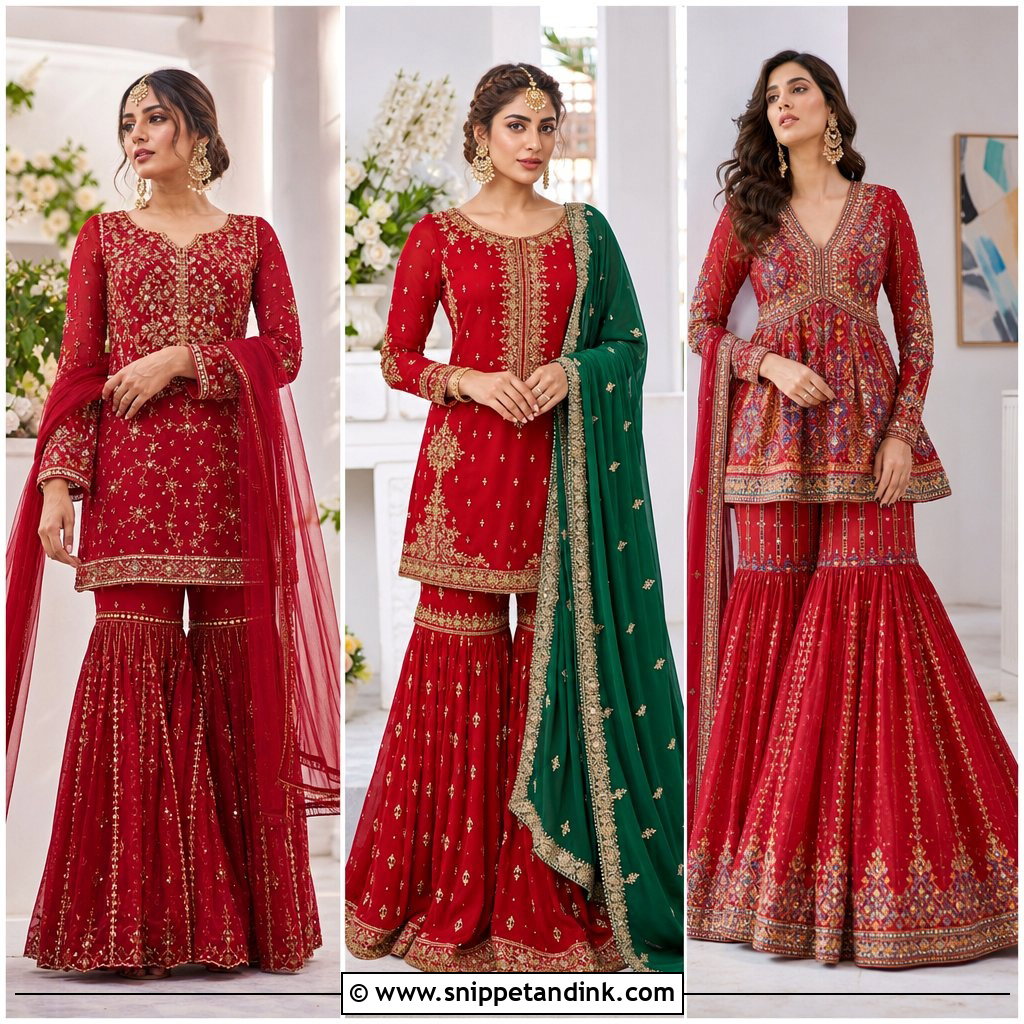
1. Red Bridal Sharara Wedding Dress
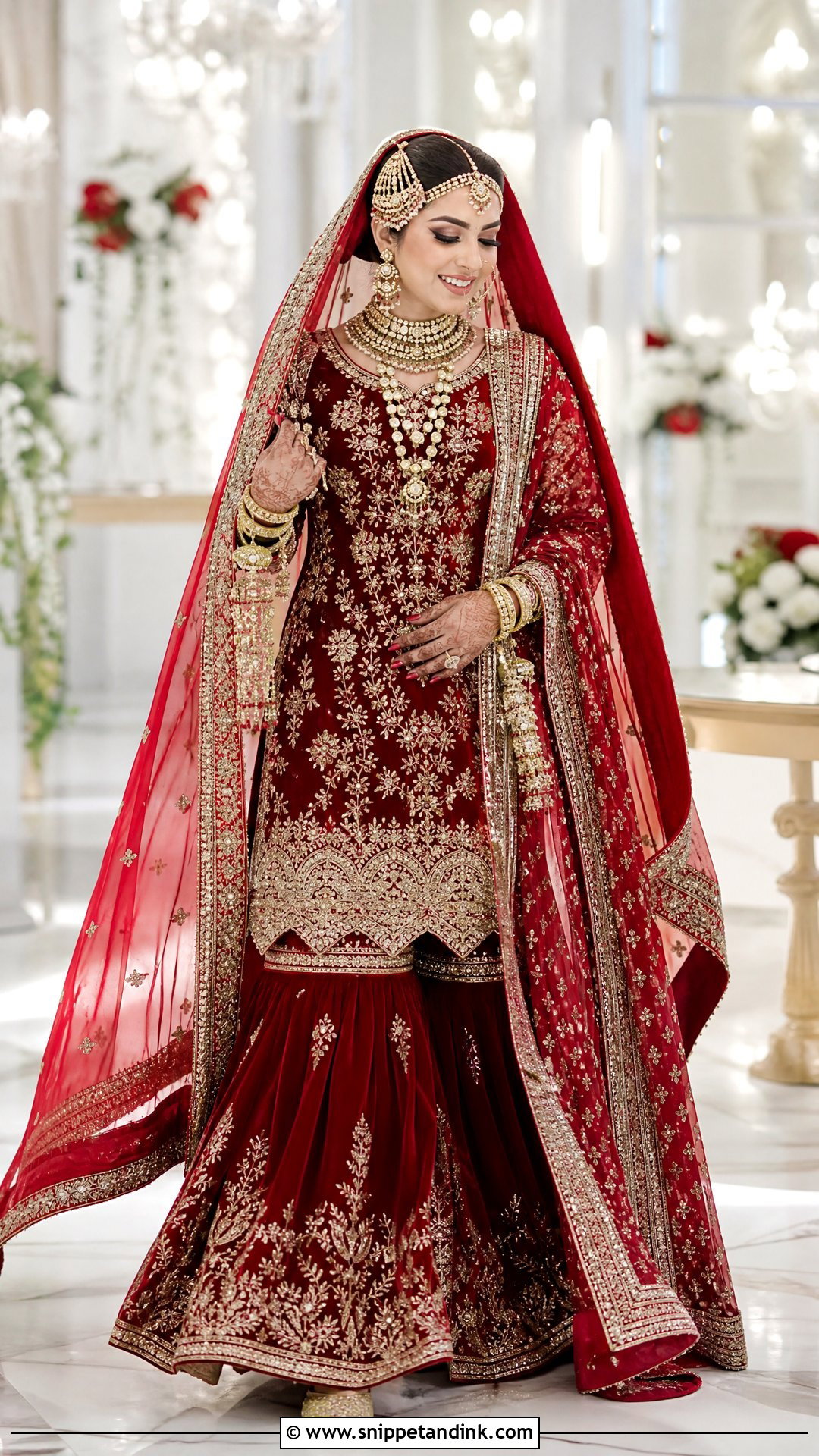
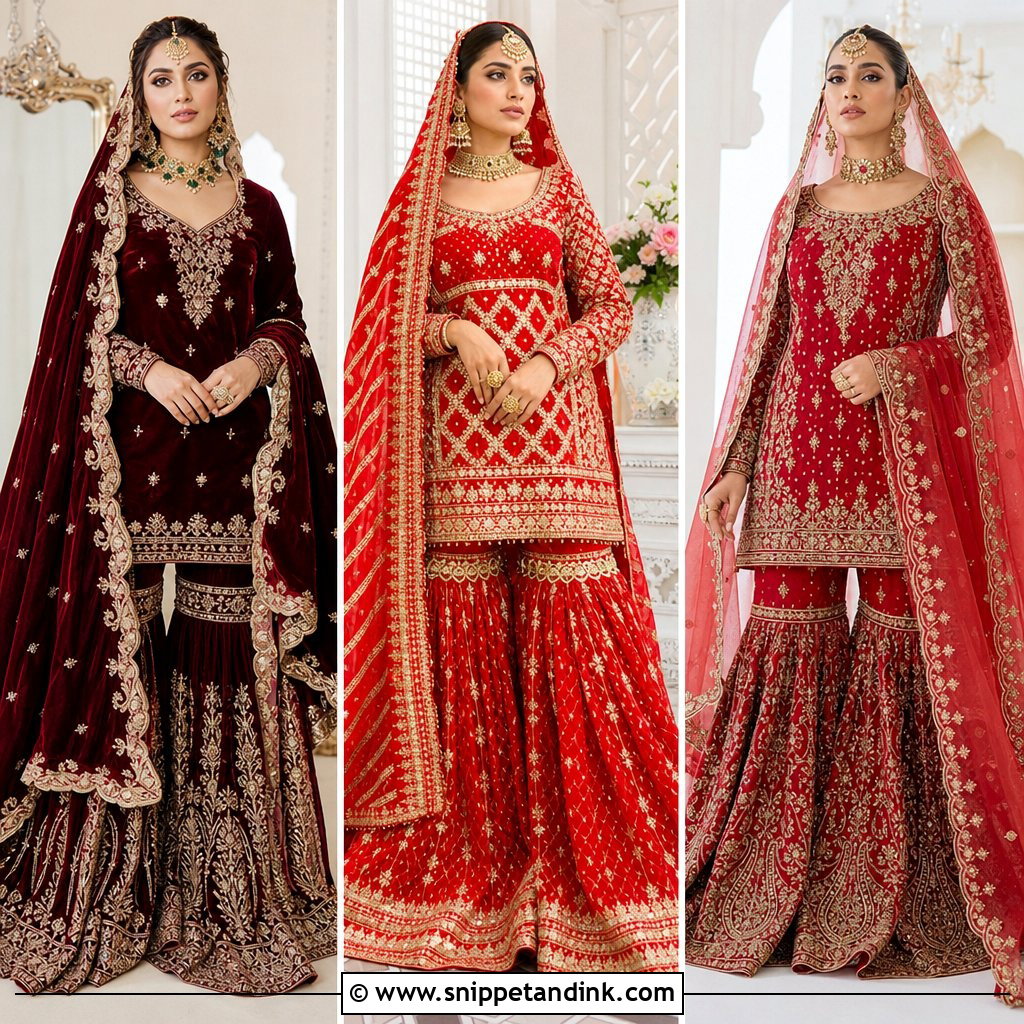
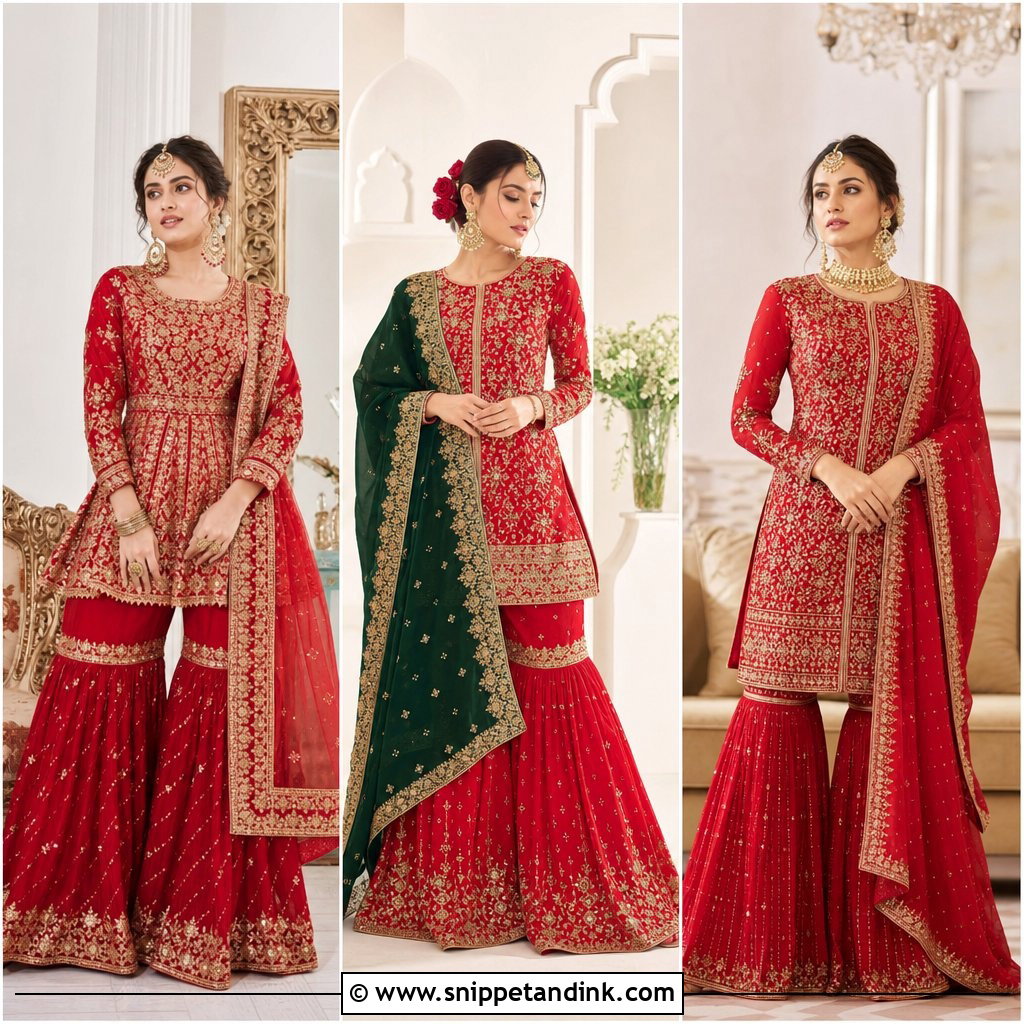
A rich red sharara gives a bride all the presence of a lehenga with far more freedom to move. A short velvet or raw silk kurta in antique gold zardozi, dabka or fine sequins, over full pants with worked knees and ornate borders, is the classic build. Embroidered knees look rich but add real weight, so I ask the tailor for a firm waistband that won’t roll as the weight pulls down. A red net dupatta with a wide gold edge goes over the head and a lighter one on the shoulder. Choker, long necklace, matha patti and gold juttis complete it.
2. Ivory Bridal Sharara Wedding Dress
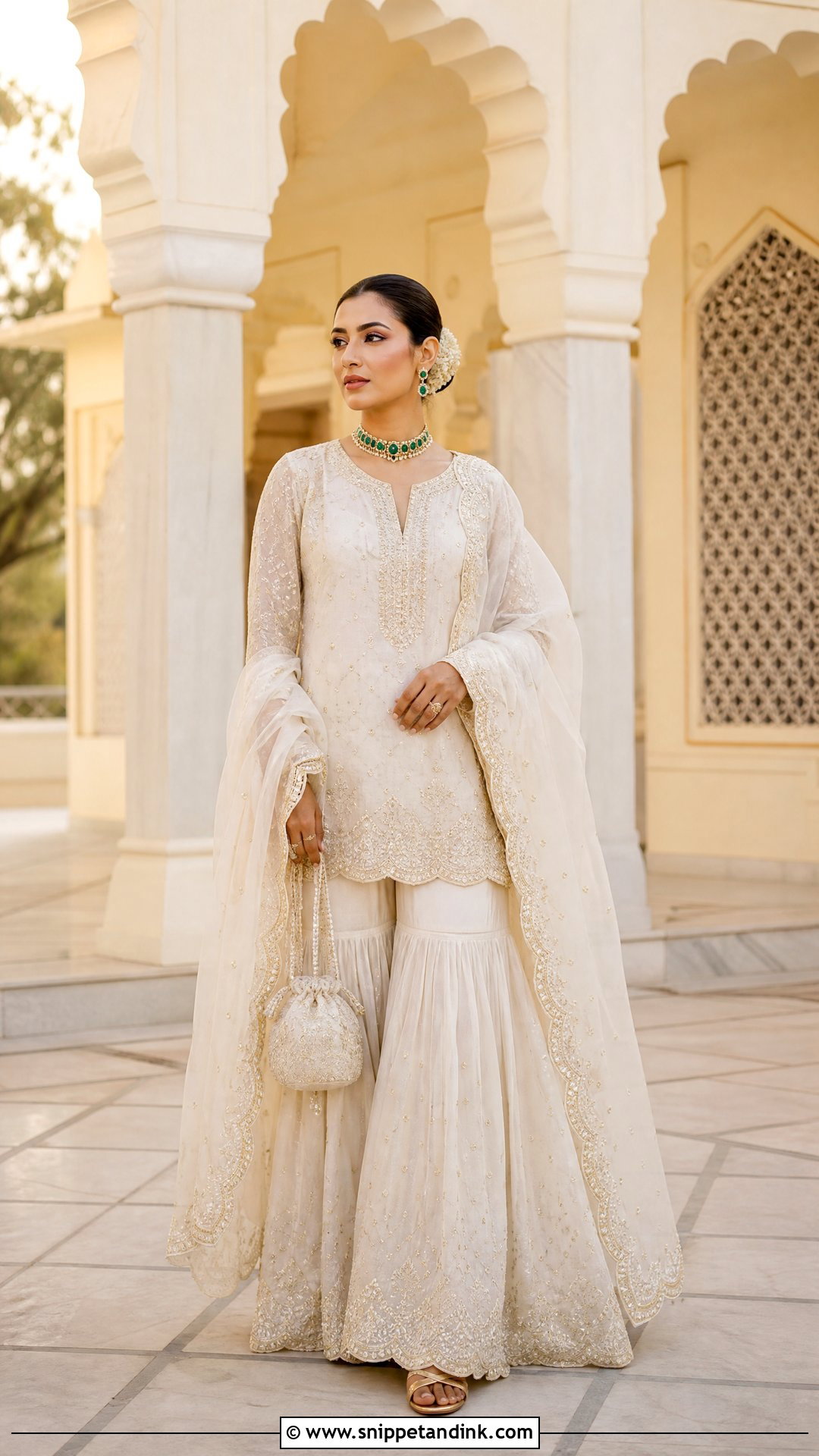
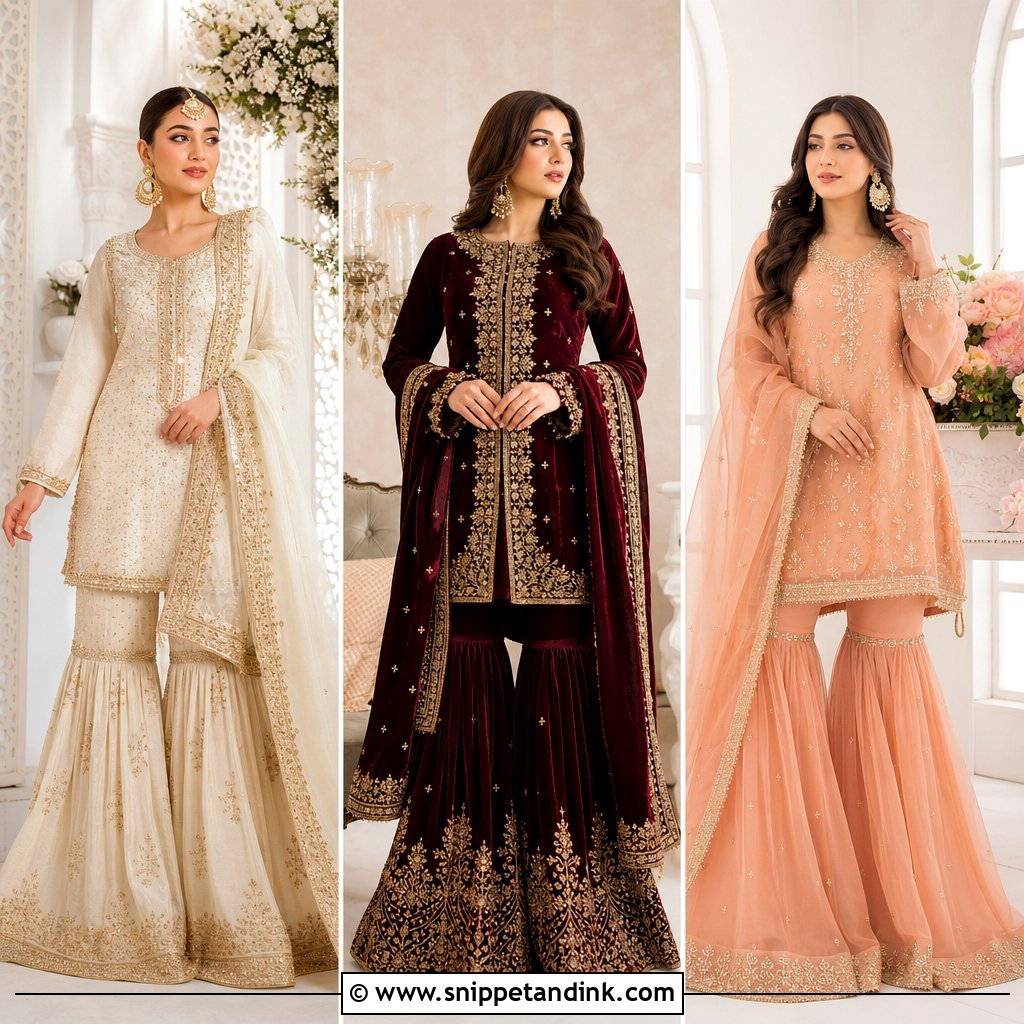
Ivory with pearls and gold accents gives a bride a bright, quietly dramatic look that suits a daytime ceremony or an indoor wedding. An ivory silk kurta with tonal embroidery and wide pants with scalloped hems keep it moving rather than heavy. A sheer organza dupatta over the head lets the embroidered border frame the face. Emerald jewelry gives contrast; pearls keep it monochrome. Ivory sits close to white, and in some families that’s reserved or carries mourning associations, so I’d raise it with elders early. Metallic heels or juttis and a low bun finish it.
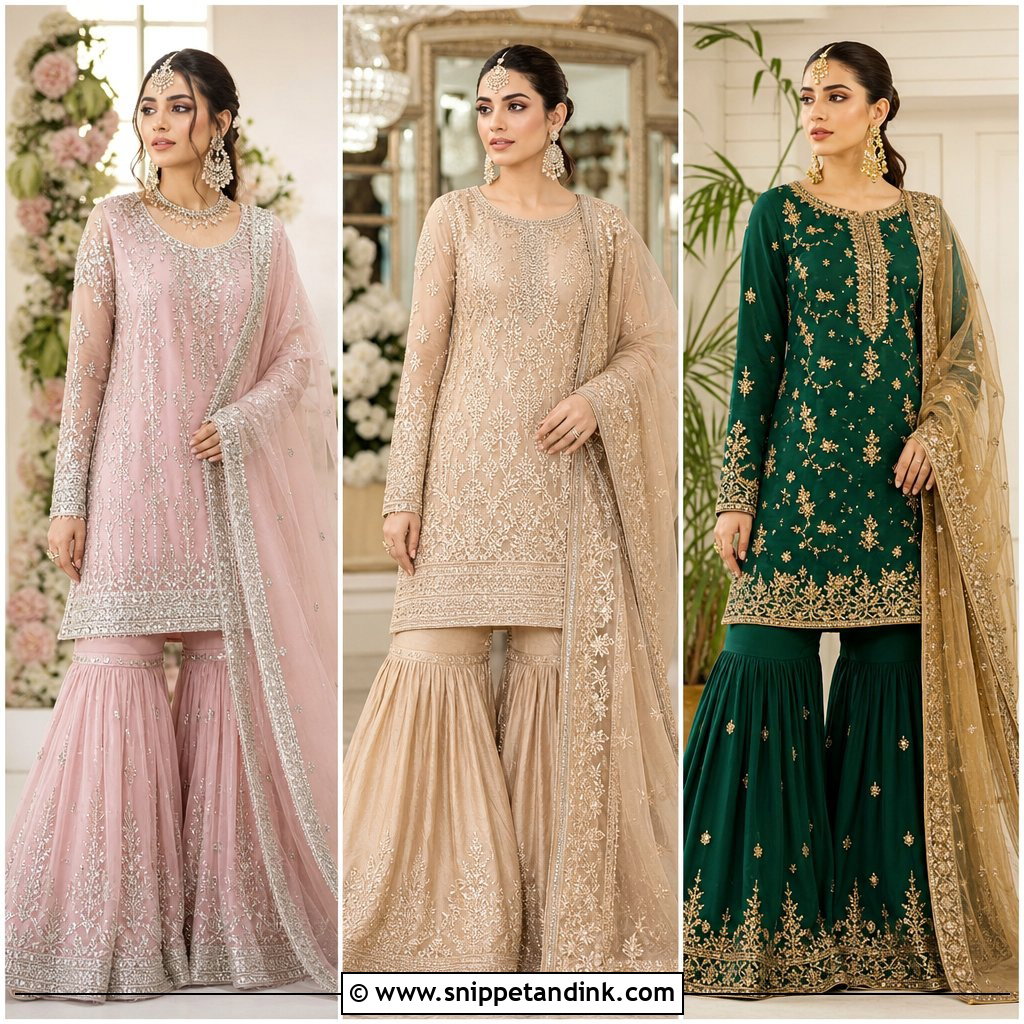
3. Pink Embroidered Sharara Wedding Dress
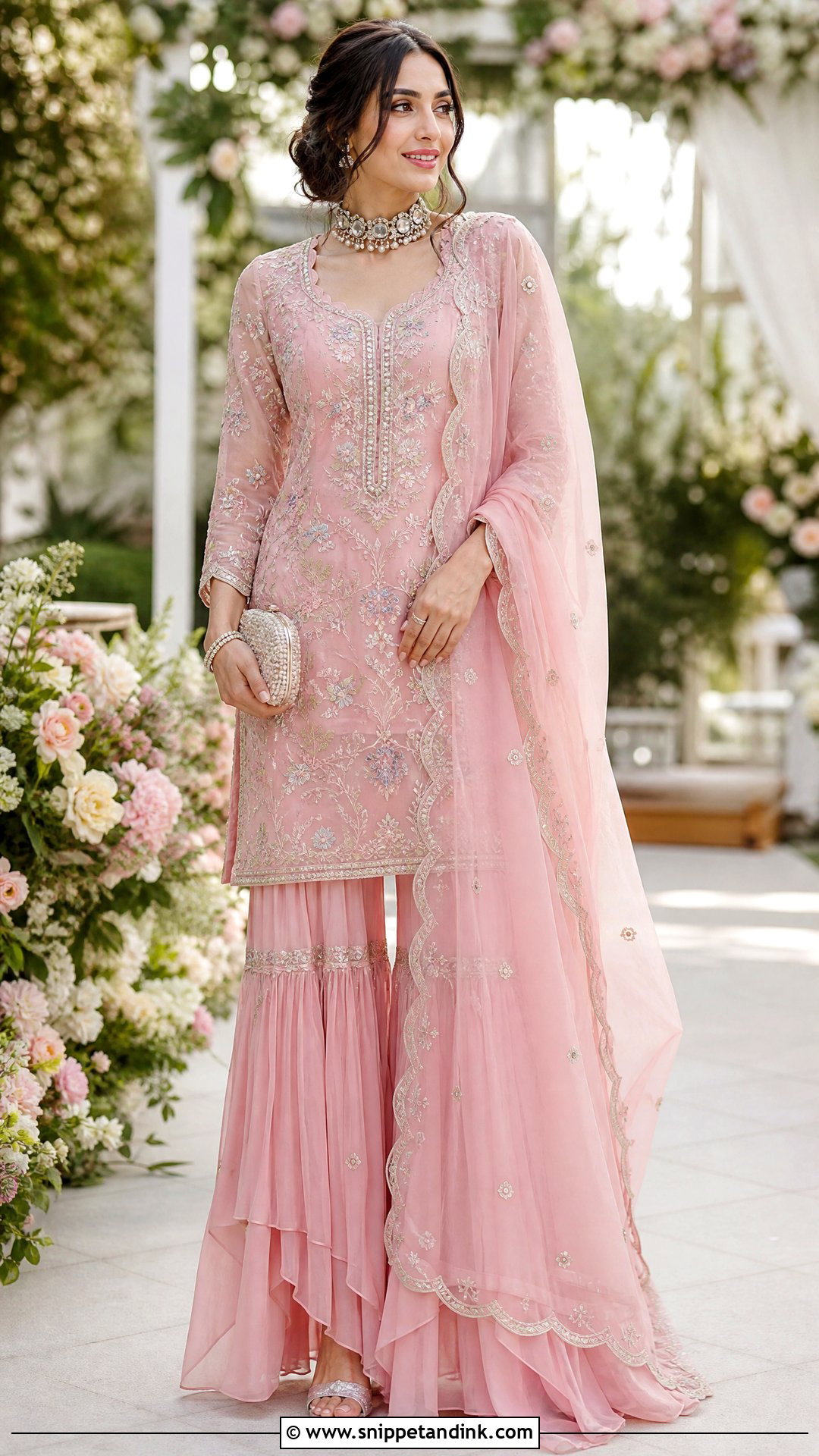
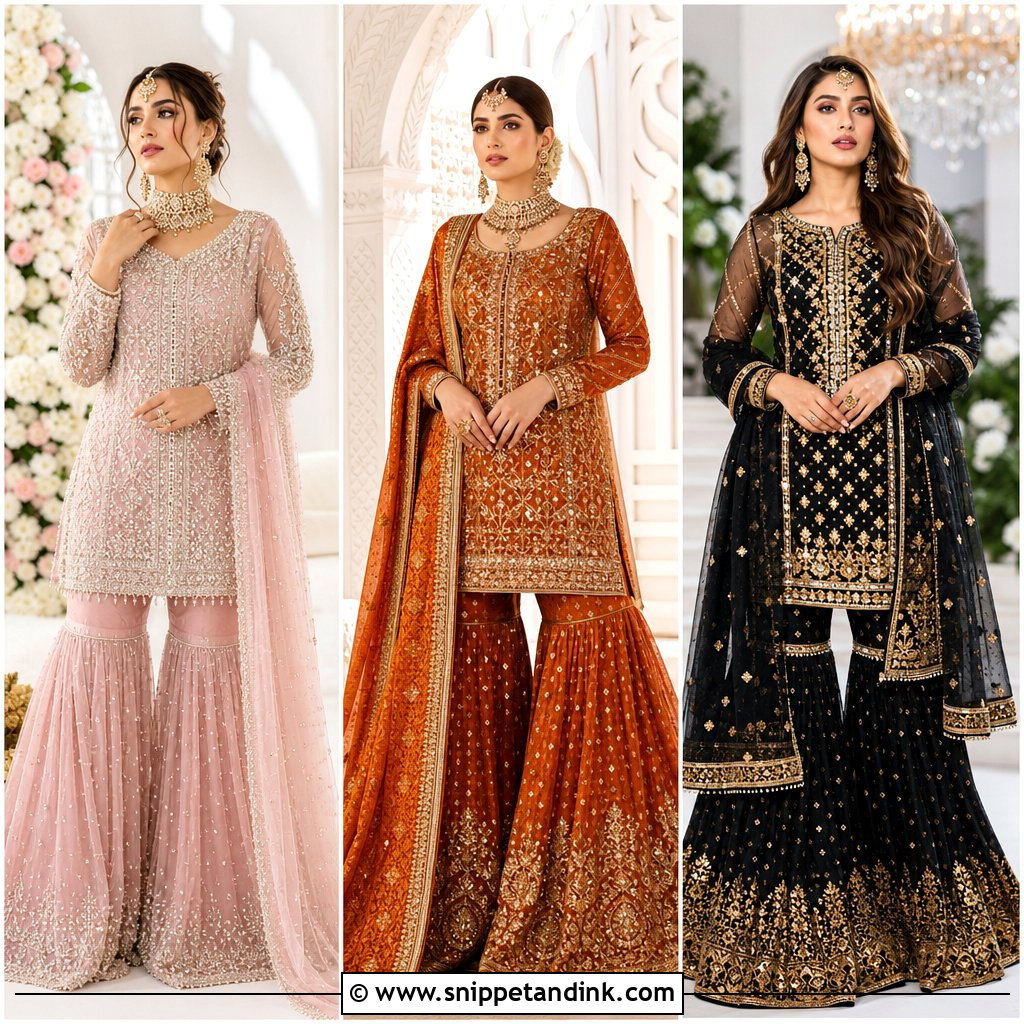
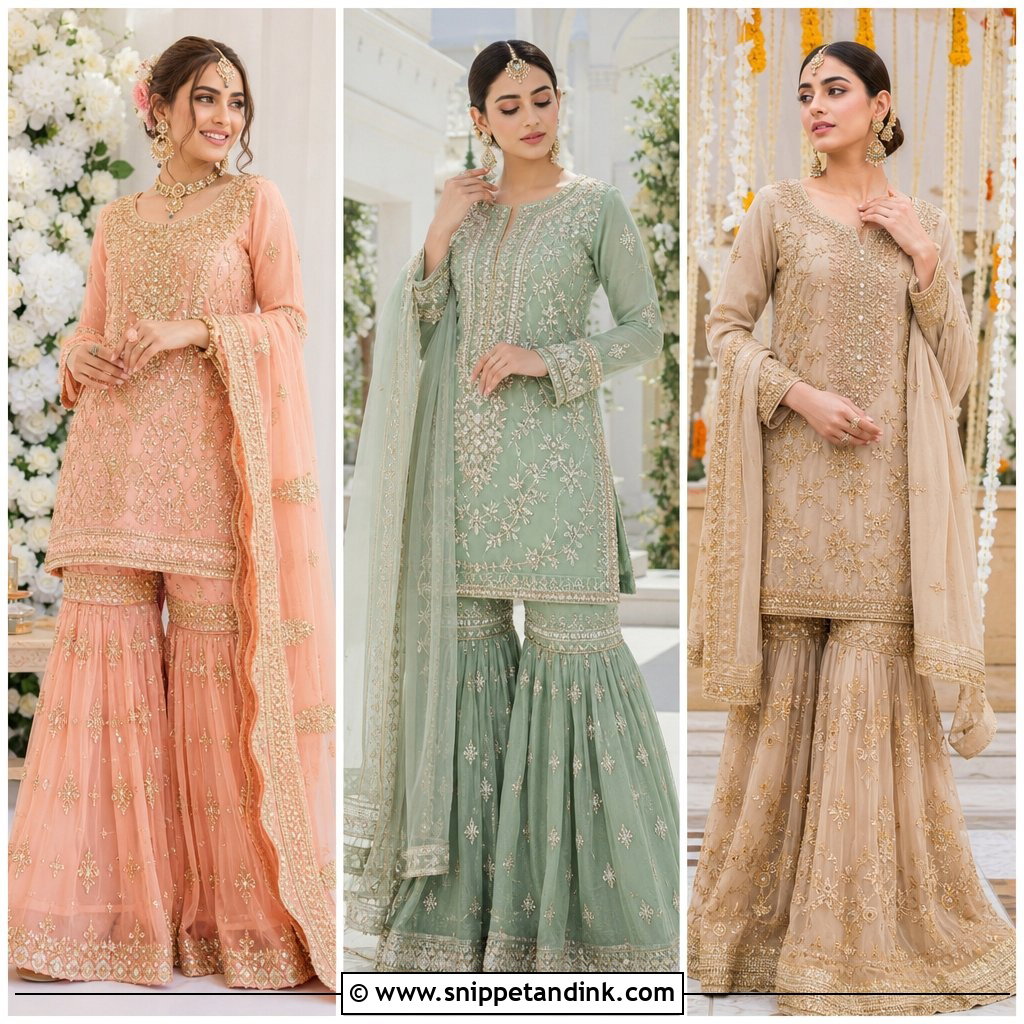
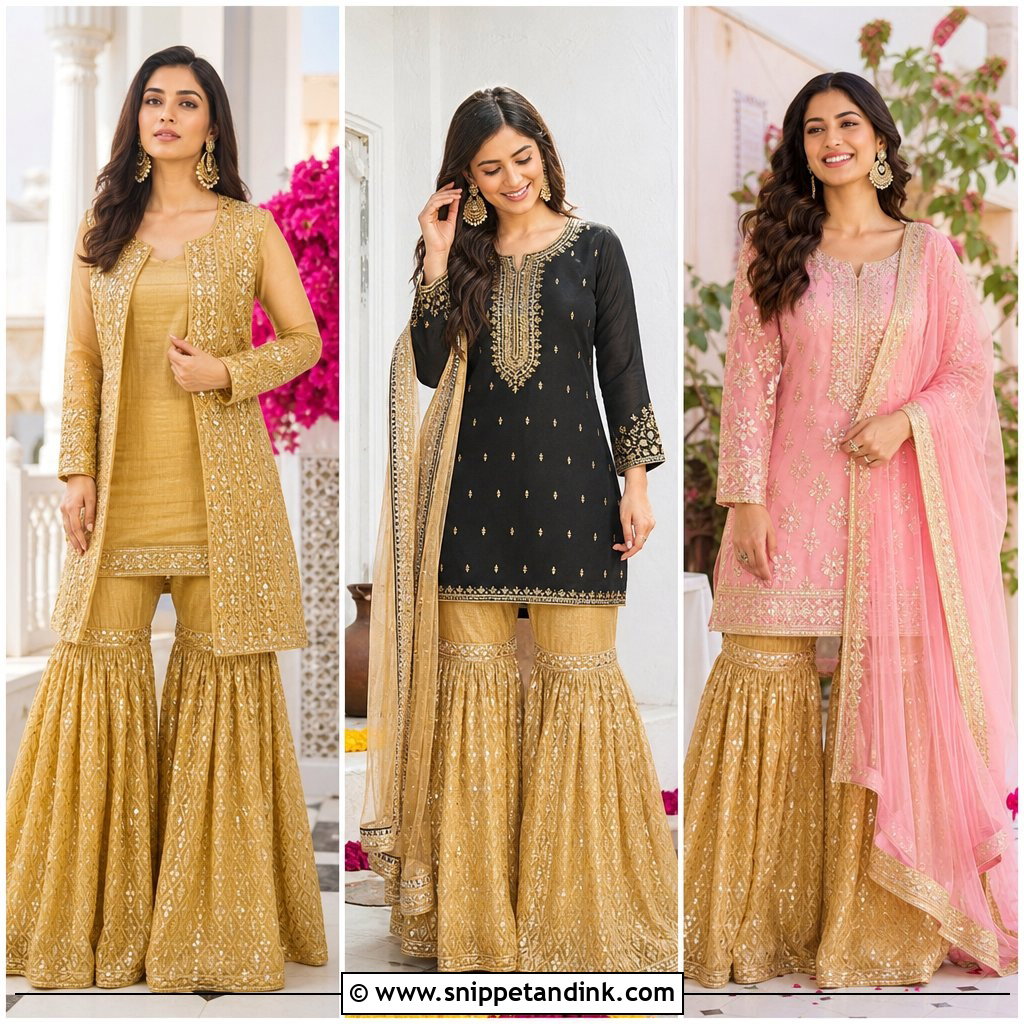
Blush embroidery reads romantic without leaning on sparkle, which is why I suggest it for bridesmaids and close family. A fitted short kurta with floral threadwork, pearls and a few silver sequins goes over layered georgette pants that flare hard below the knee. Layered georgette is the detail to ask about: two or three layers give the swing in photos, one layer looks limp. A scalloped pink dupatta, kundan earrings, a delicate choker and one statement ring are plenty. Metallic sandals give height while the flare hides them. Rosy makeup and a beaded clutch finish it.
4. Green Mehndi Sharara Wedding Dress
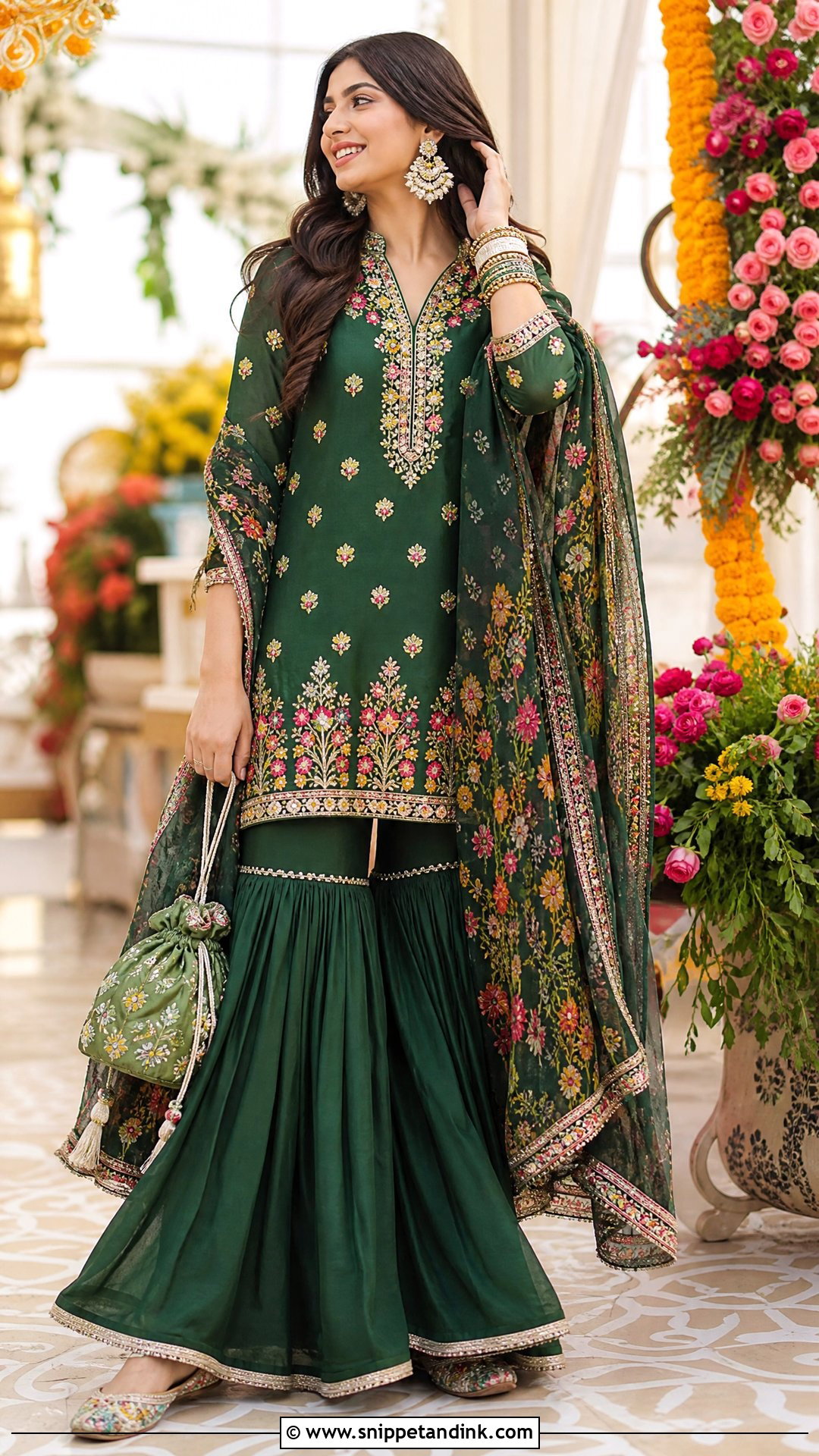
Green is the mehndi color for a reason: it sits well beside henna and yellow marigold decor. Parrot green or emerald on a short kurta with multicolored threadwork, gota or small mirrors works over matching pants, or a teal or lime bottom for contrast. Keep the dupatta light and printed so you can move, and keep sleeves above the wrist if you’re getting henna applied. Floral earrings, colorful bangles and cushioned juttis for dancing. A braid with flower accents stays put through the evening, and peach blush keeps the face fresh.
5. Yellow Haldi Sharara Wedding Dress
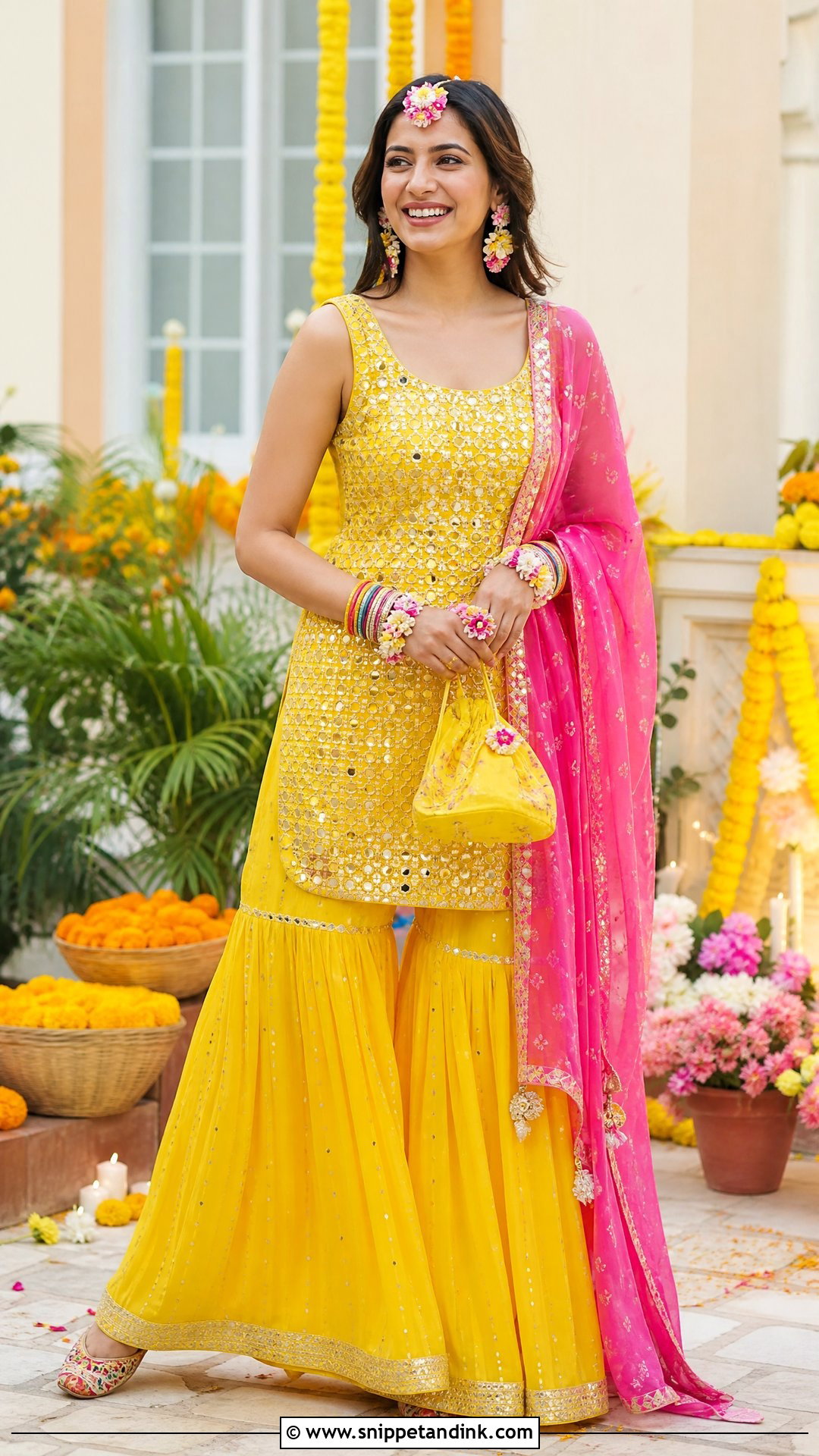
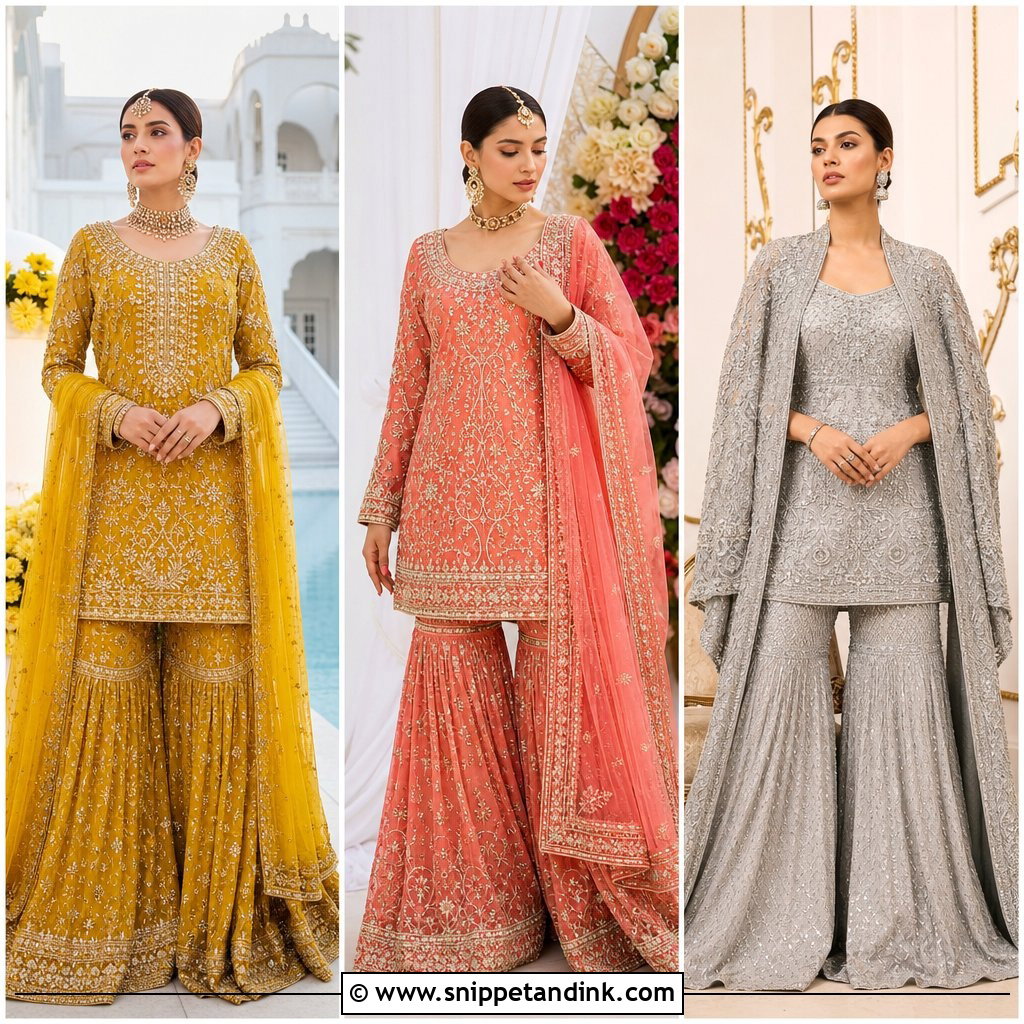
Bright yellow fabric belongs at the haldi, and I keep this outfit simple because it will meet turmeric paste. A sleeveless or short-sleeved kurta with light floral embroidery and a square neck, over cotton-silk or georgette pants, is easy to wash and easy to move in. A contrasting pink, orange or white dupatta adds depth in photos. Wear flat juttis and floral jewelry, carry a small fabric potli, and choose a secure braid or low bun. Minimal base, waterproof eye products and a tinted lip survive the splashes.
6. Navy Blue Sequin Sharara Wedding Dress
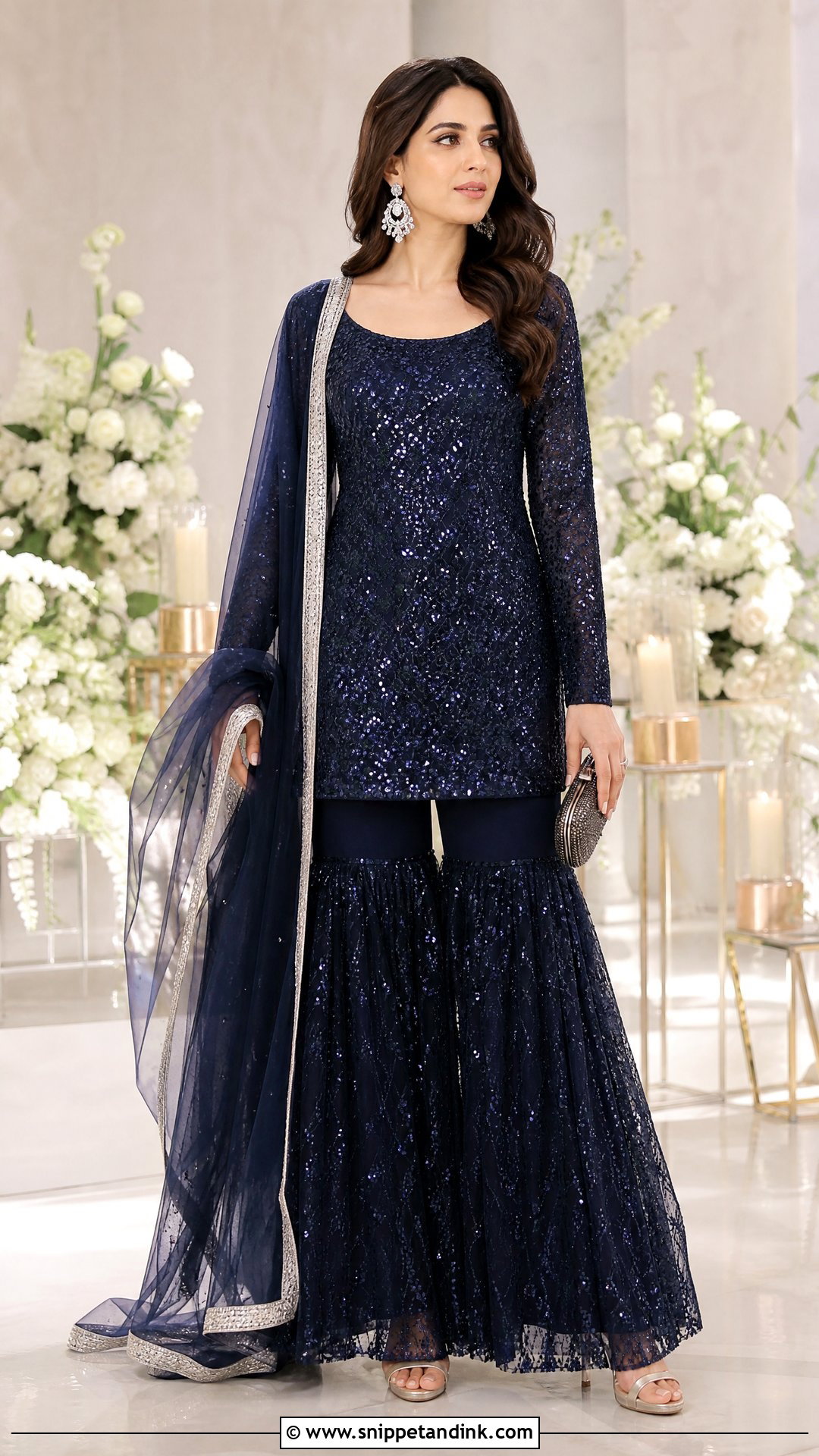
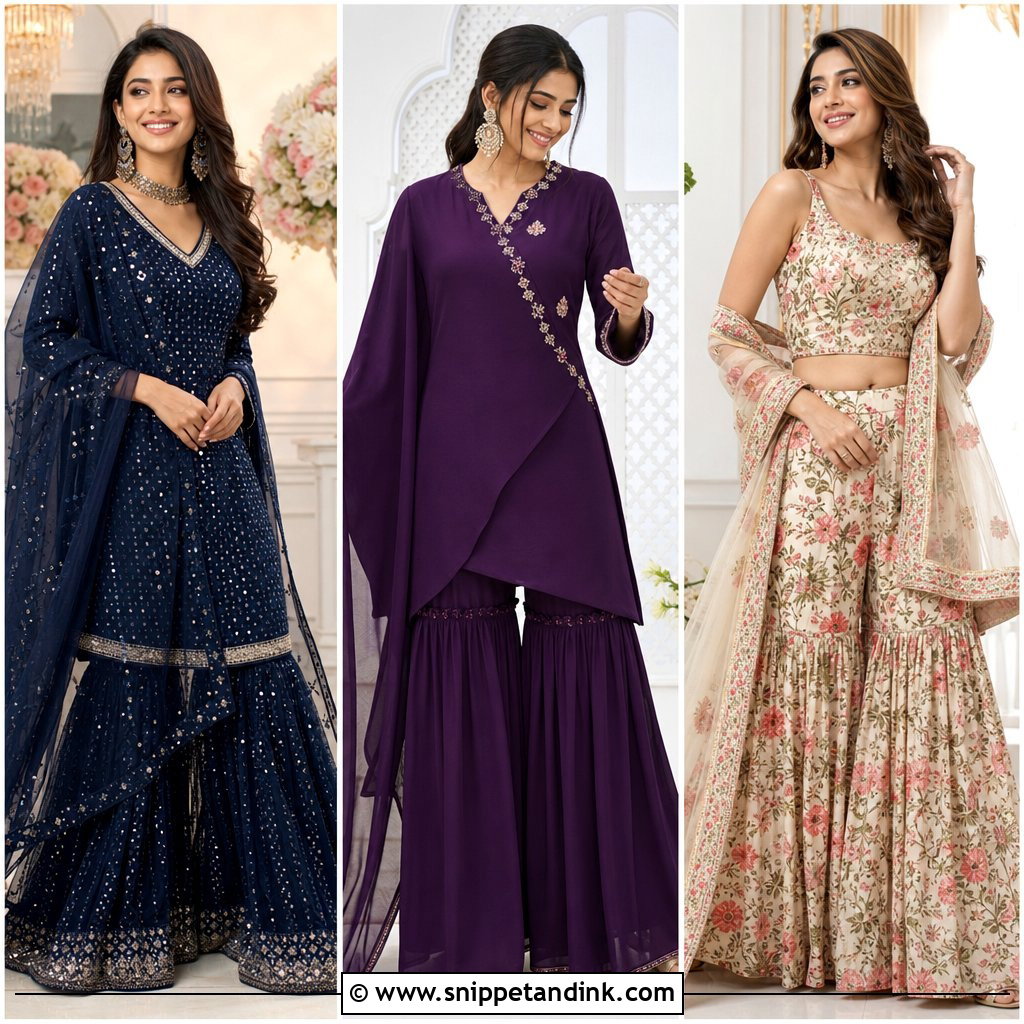
Navy sequins give an evening reception depth and sparkle without the starkness of black. A fitted kurta with scattered sequins, metallic threadwork and a structured neckline sits over pants with lighter work at the top and a decorated hem. Sequins on the underside of the sleeves rub the skin raw during a long night of dancing, so I check that the inner arm is plain or lined. A sheer navy dupatta with a silver border, crystal earrings and a gunmetal clutch complete it. Pointed metallic heels lengthen the line; embellished flats are fine too.
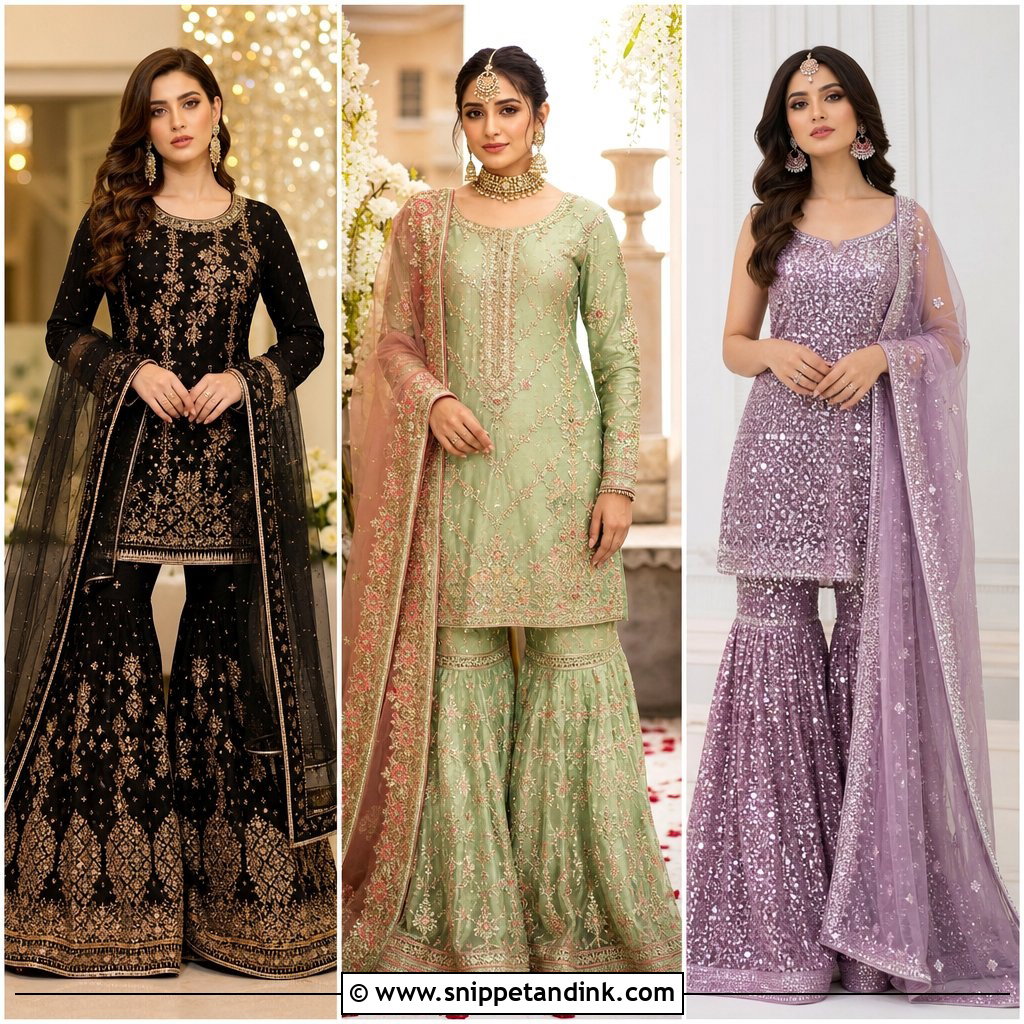
7. Black And Gold Sharara Wedding Dress
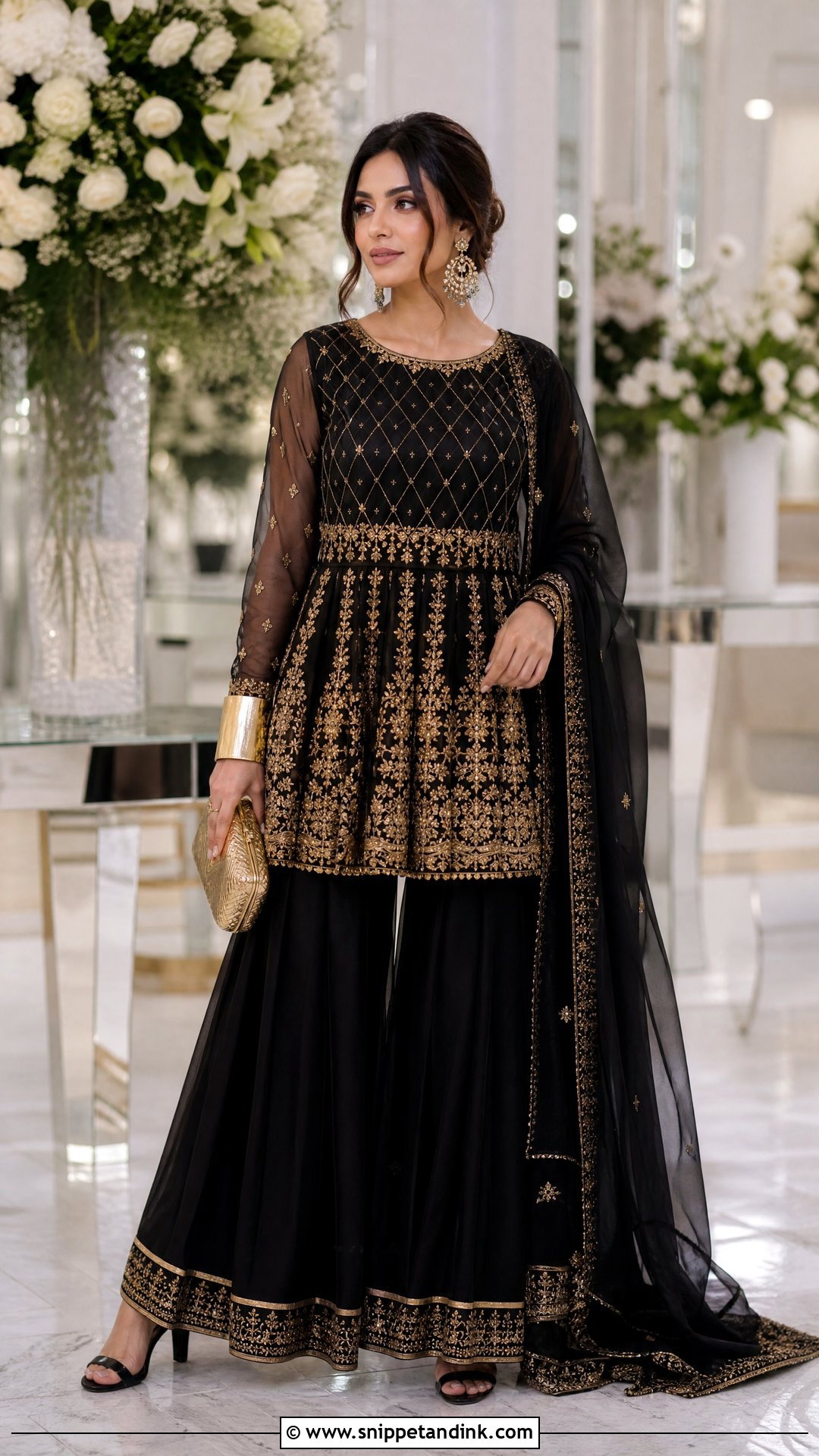
Black with gold is bold, and I’d only style it for a reception or evening event, after checking that the family is comfortable with black at a wedding. A black peplum kurta with antique gold embroidery at the neck, waist and sleeves, over black pants with embroidered panels or a brocade border, keeps the gold where it counts. Drape the sheer black dupatta across one shoulder so it doesn’t cover the work. Black heels continue the line from waist to floor. Statement gold earrings, a cuff, a sleek low bun and bronzed cheeks finish it.
8. Pastel Blue Sharara Wedding Dress
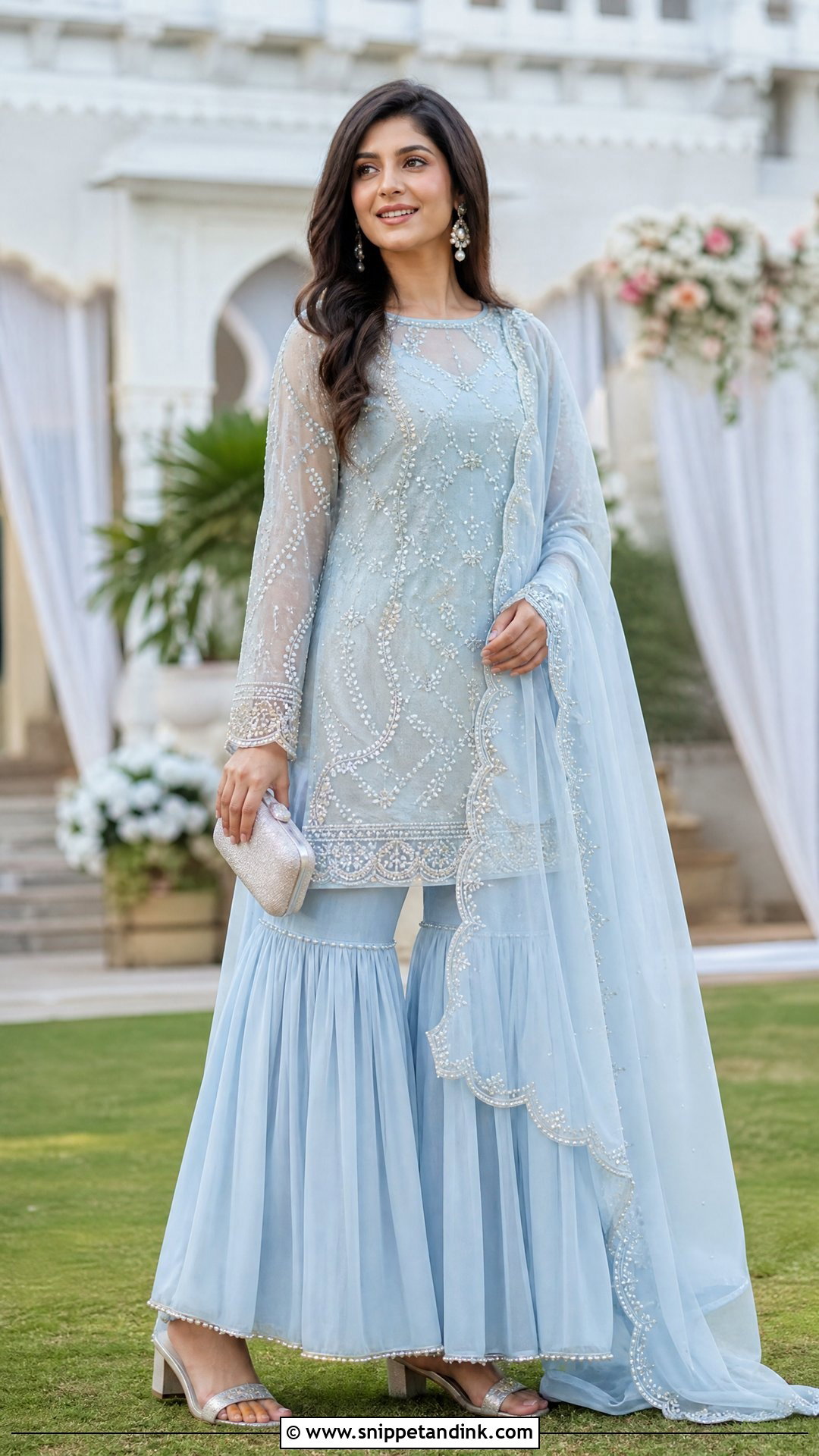
Pastel blue suits a daytime wedding, especially outdoors. A short organza or georgette kurta with white threadwork and pearls, over softly layered pants, gives volume without swallowing a smaller frame. Pastel blue can turn grey under fluorescent indoor lighting, so it’s happiest in daylight. A matching scalloped dupatta, pearl drops, a slim bracelet and a pale silver clutch keep it gentle. On a lawn I’d choose silver block heels over stilettos, which sink. Loose curls or a half-up style suit it.
9. Purple Velvet Sharara Wedding Dress
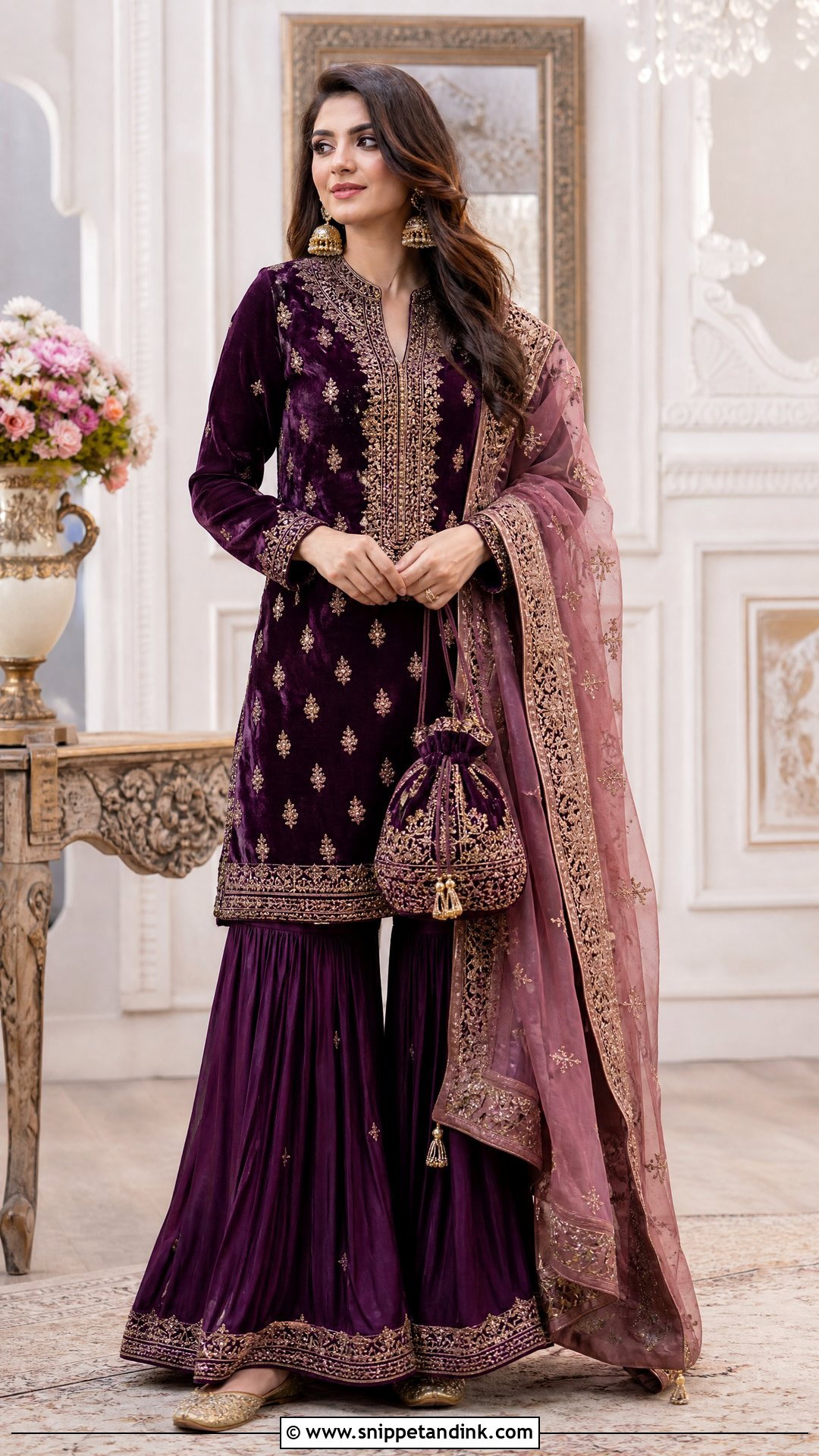
Plum or aubergine velvet is for cool-weather weddings, and velvet should stay on the kurta. Make the pants in silk or georgette, or the whole set gets heavy and warm. Antique gold embroidery at the neck, cuffs and hem picks up candlelight well. A mauve or dusty pink dupatta softens the dark color and stops it reading as a single block in photos. Traditional jhumkas, a bold ring, gold juttis and a sleek center-parted bun let the fabric lead. Store velvet hanging, never folded tightly, or the pile crushes.
10. Orange Mirror Work Sharara Wedding Dress
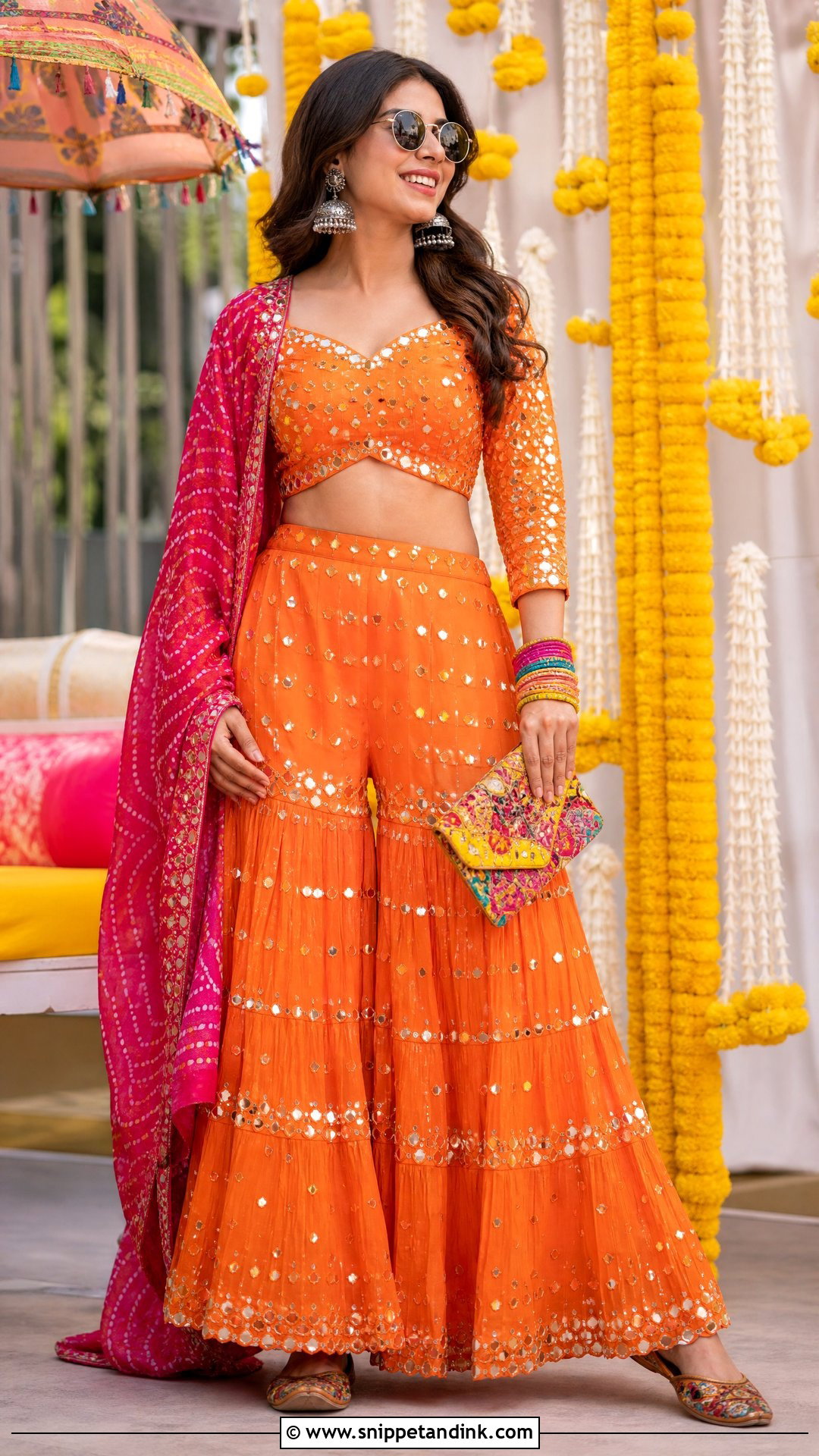
Orange with mirror work is warm and lively, and it’s a great guest or sister outfit for a daytime function. A cropped or waist-length kurta with small mirrors and colorful threadwork over tiered orange pants keeps it light. A fuchsia or turquoise dupatta adds a second color without fighting the mirrors. Tiered pants catch your heel more than straight-cut ones, so flat embroidered juttis are the safer pick for dancing. Oxidized silver earrings, stacked bangles, a textured braid and coral makeup complete it.
11. Maroon Zardozi Sharara Wedding Dress
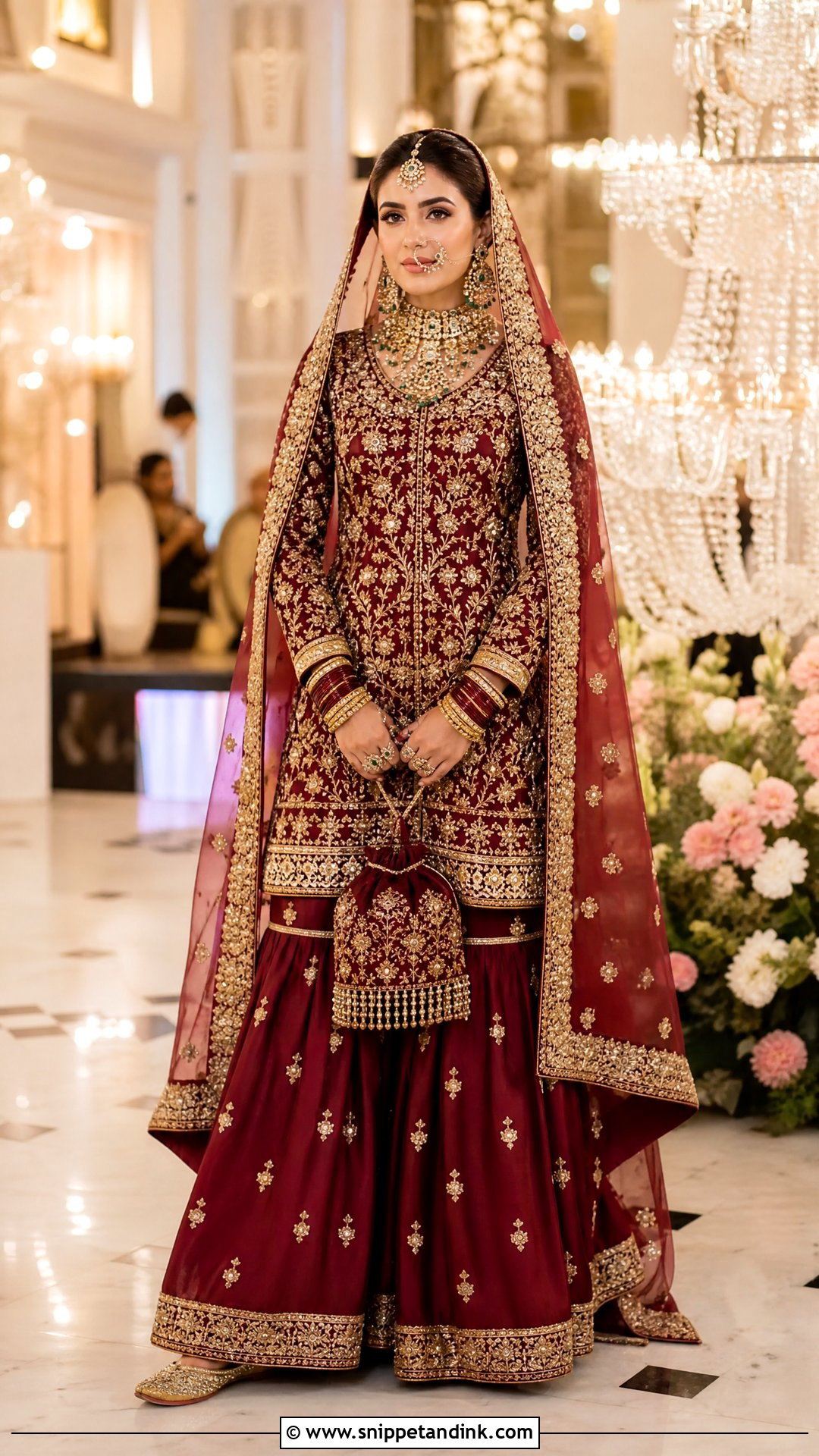
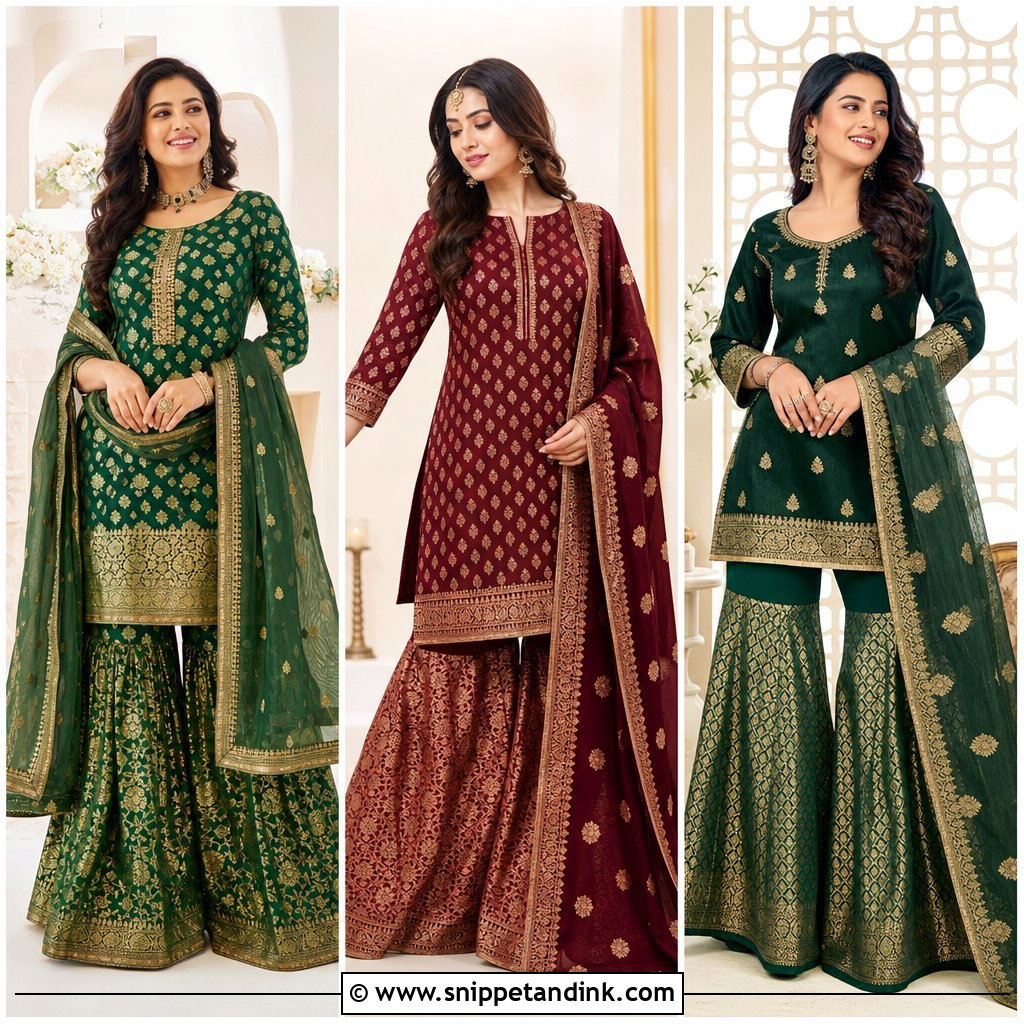
Maroon has the depth of bridal red with a moodier finish, and it suits a bride or a close family member at a formal ceremony. A raw silk kurta with intricate antique gold zardozi on the bodice, sleeves and lower border, over structured pants flaring neatly from the knee, keeps it traditional. Raw silk has slubs and a slight texture that hides minor creases better than smooth silk. A maroon net dupatta with a heavy border frames everything. Kundan, maroon bangles, a gold potli and embroidered juttis complete it.
12. Floral Print Sharara Wedding Dress
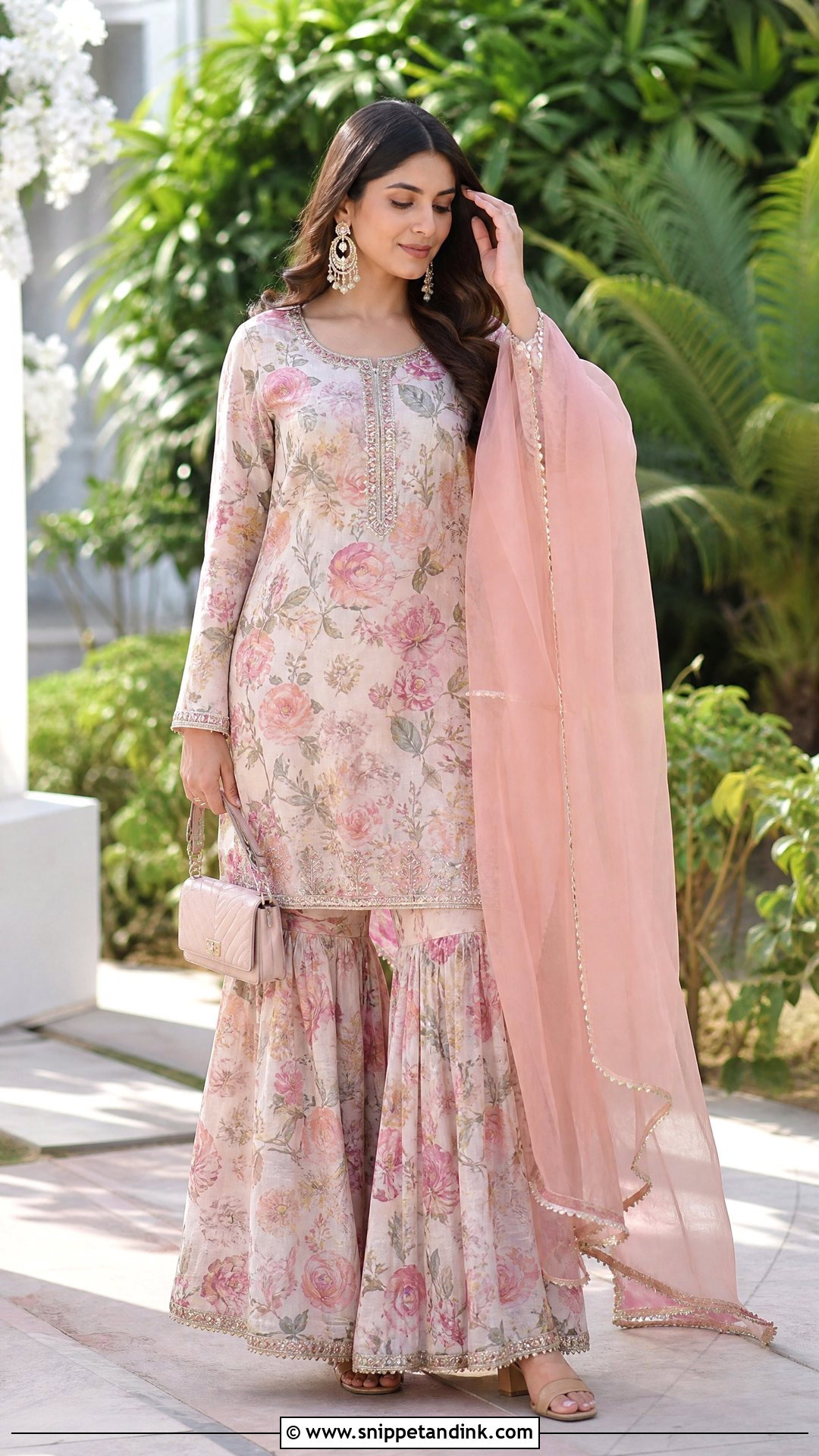
Floral print is the relaxed option, ideal for a garden wedding, a destination event or daytime functions. A short printed kurta in soft pink, sage, peach or powder blue with a little beadwork at the neck pairs with matching pants so the prints don’t fight. One solid organza dupatta in a color pulled from the print gives the eye a resting place. On grass, decorative flats beat heels; on stone or tile, block heels are fine. Printed cotton-silk is also the easiest set here to rewear later, which makes it good value.
13. Gold Silk Sharara Wedding Dress
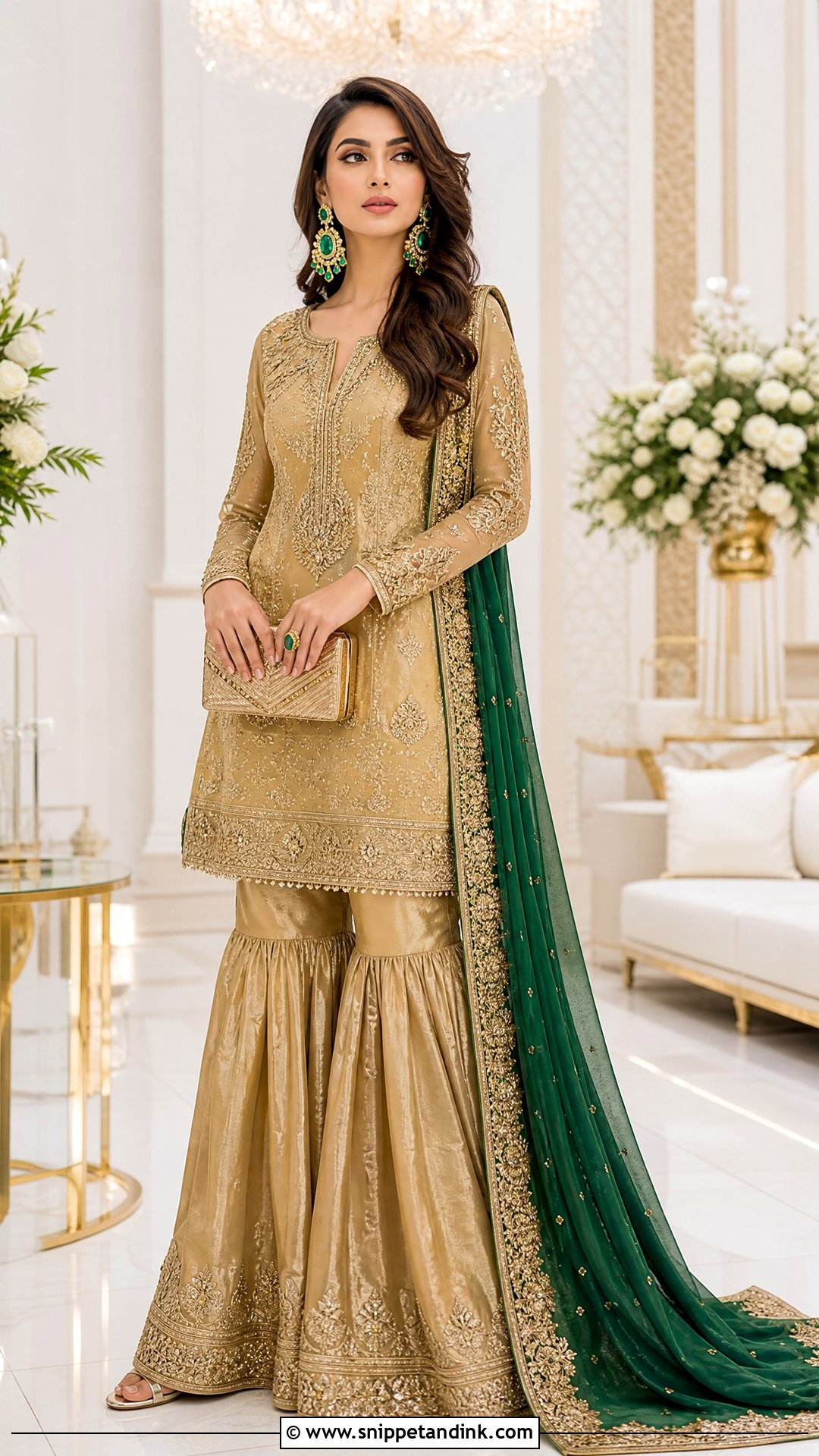
Gold silk is luminous at an evening reception or a formal wedding dinner. A structured kurta with tonal embroidery and beading and a neckline open enough for jewelry, over fluid gold pants that catch the light as you move, looks rich. All-gold can go flat in photos, so add a muted dupatta in ivory, blush or deep green. Emerald earrings and a ring add color against the metal. Silk shows sweat marks at the underarm, so I’d ask for dress shields sewn into the kurta. A sleek bun and bronzed makeup finish it.
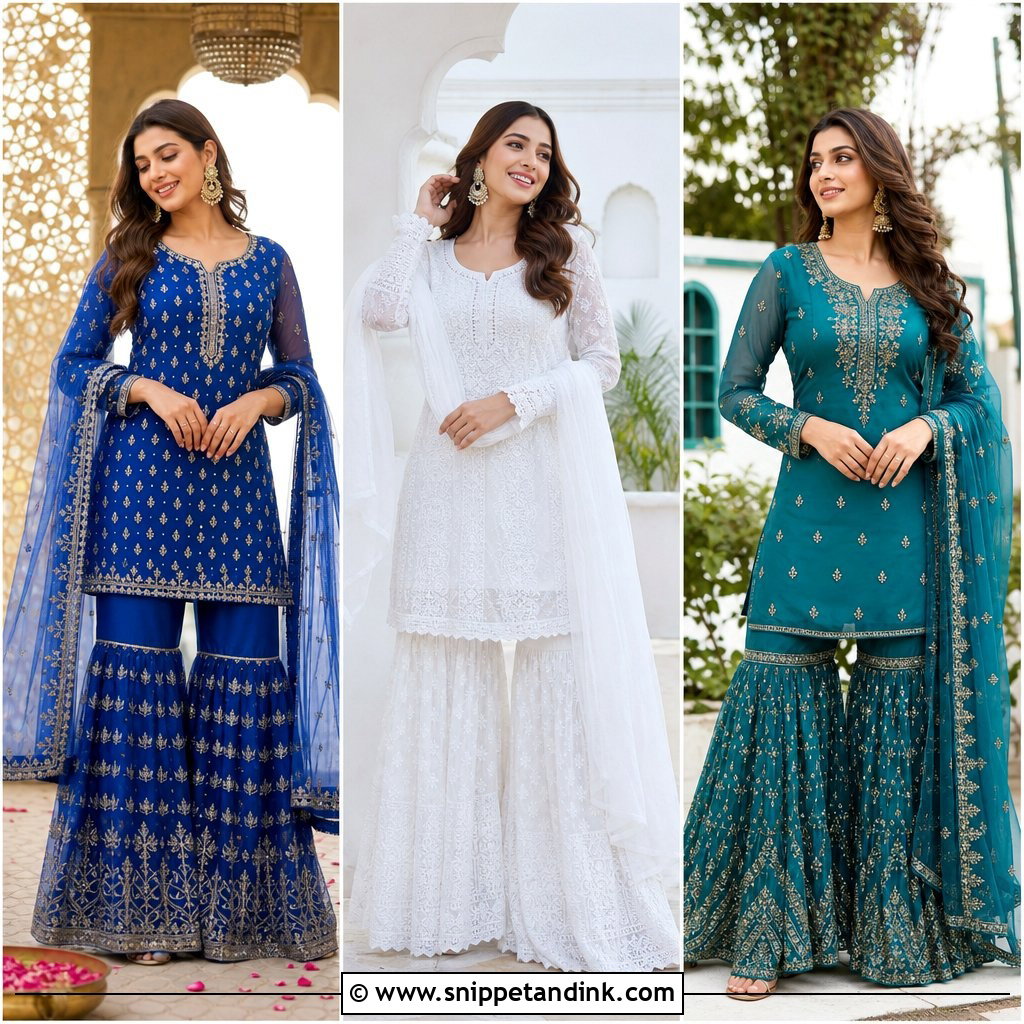
14. White Chikankari Sharara Wedding Dress
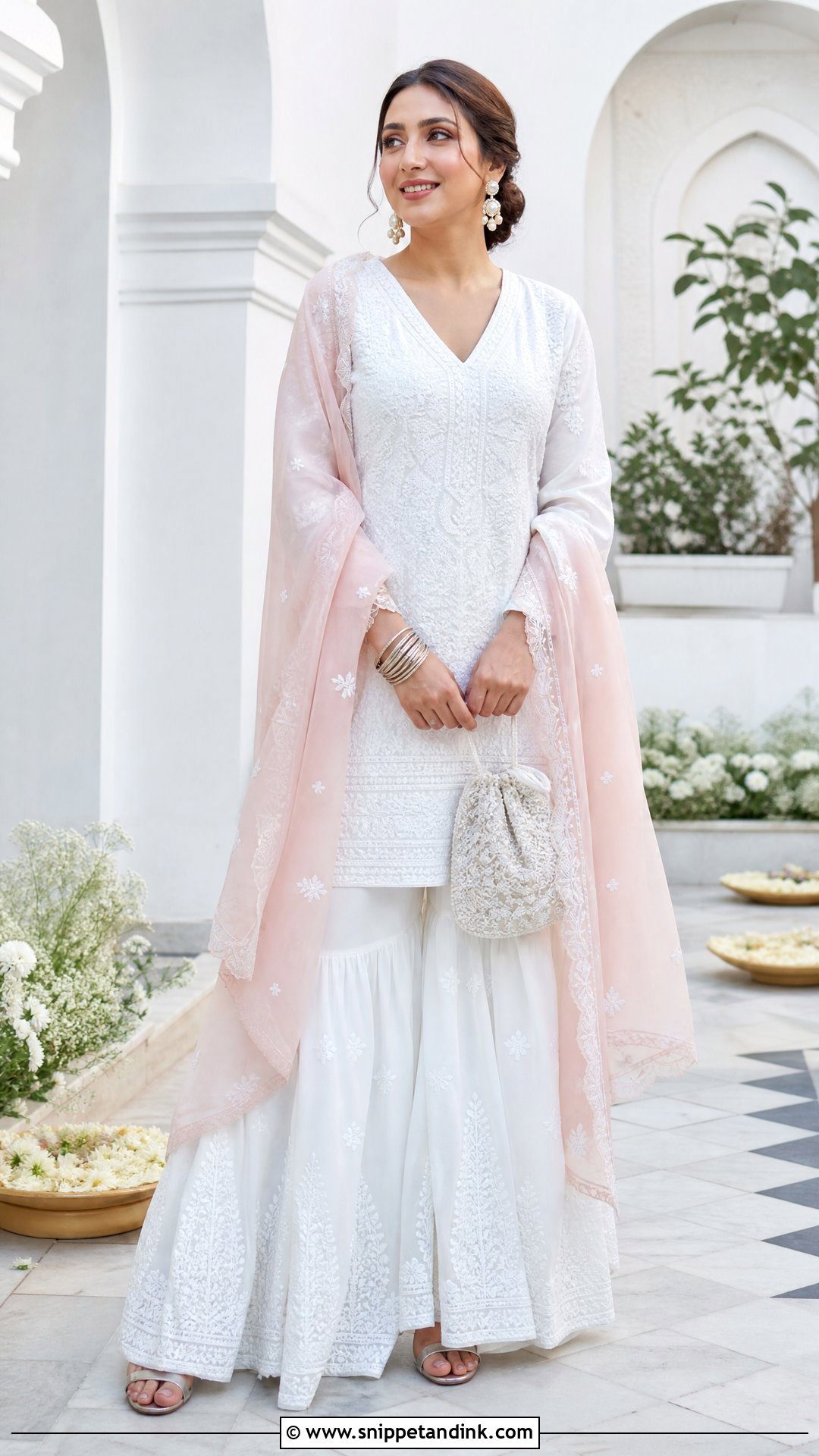
White chikankari is clean and graceful for a daytime function. Cotton-silk or georgette with tonal embroidery and a few pearls or sequins dresses it up. White pants must be lined properly, or they’ll show through in sunlight and in flash. A pastel dupatta in blush, mint or lavender adds a little color; white organza keeps it monochrome. Pearl earrings, silver bangles and metallic flats or low block heels suit long wear. A soft bun with face-framing pieces and rosy makeup complete it.
15. Teal Cape Sharara Wedding Dress
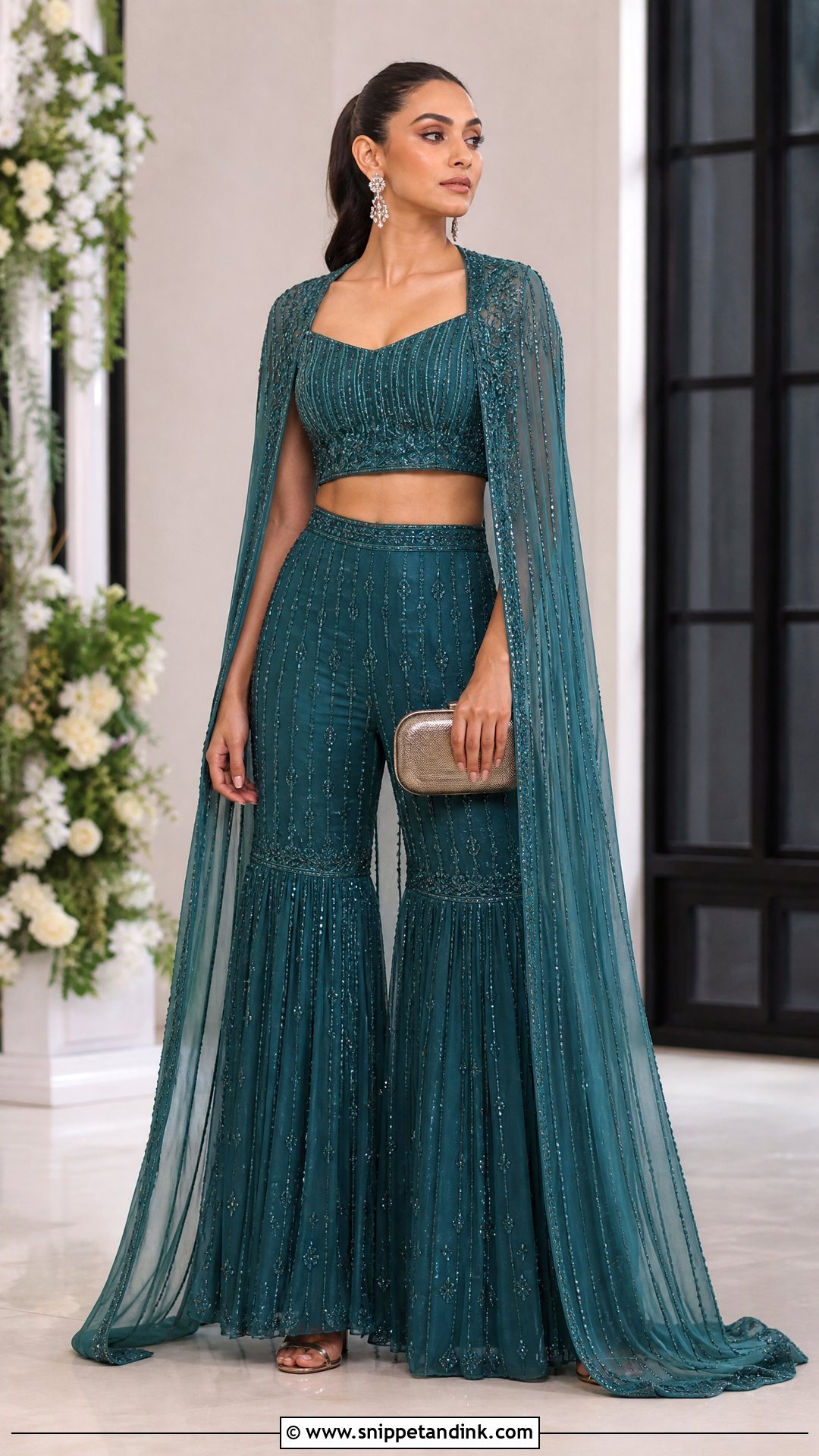
A teal cape set is modern and easy, and it suits a sangeet or a stylish reception. Wear a fitted sleeveless blouse or short kurta that sits smoothly under the cape, with high-waisted pants of controlled volume. The cape should stop at the hip or knee so the sharara still shows. I check that the cape’s embroidered edge doesn’t catch on bangles or rings, since sequins and prongs snag easily. Crystal earrings, a slim clutch and pewter heels, a smooth ponytail and a berry lip keep the neckline clear.
16. Peach Peplum Sharara Wedding Dress
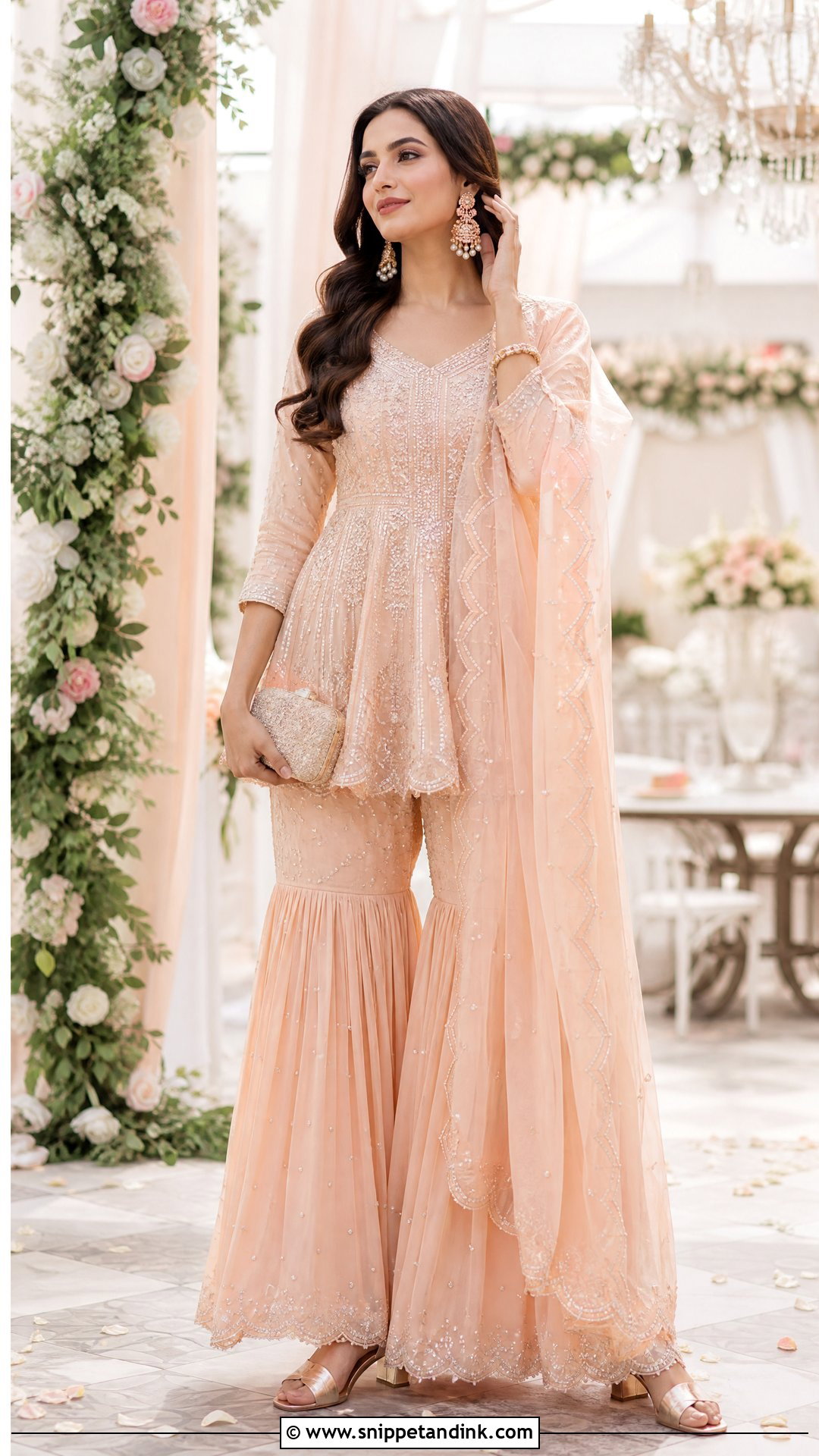
A peach peplum bridges a fitted top and dramatic pants. The peplum should start at your natural waist and flare gently, with floral embroidery and pearls, over georgette pants widening from the knee. This is a shape I recommend often to bridesmaids with different body types, because the waist definition flatters most figures when the seam is placed correctly. A sheer peach dupatta, rose-gold earrings and nude block heels keep it soft and lengthen the leg. Polished waves and a satin nude lip finish it.
17. Royal Blue Jacket Sharara Wedding Dress
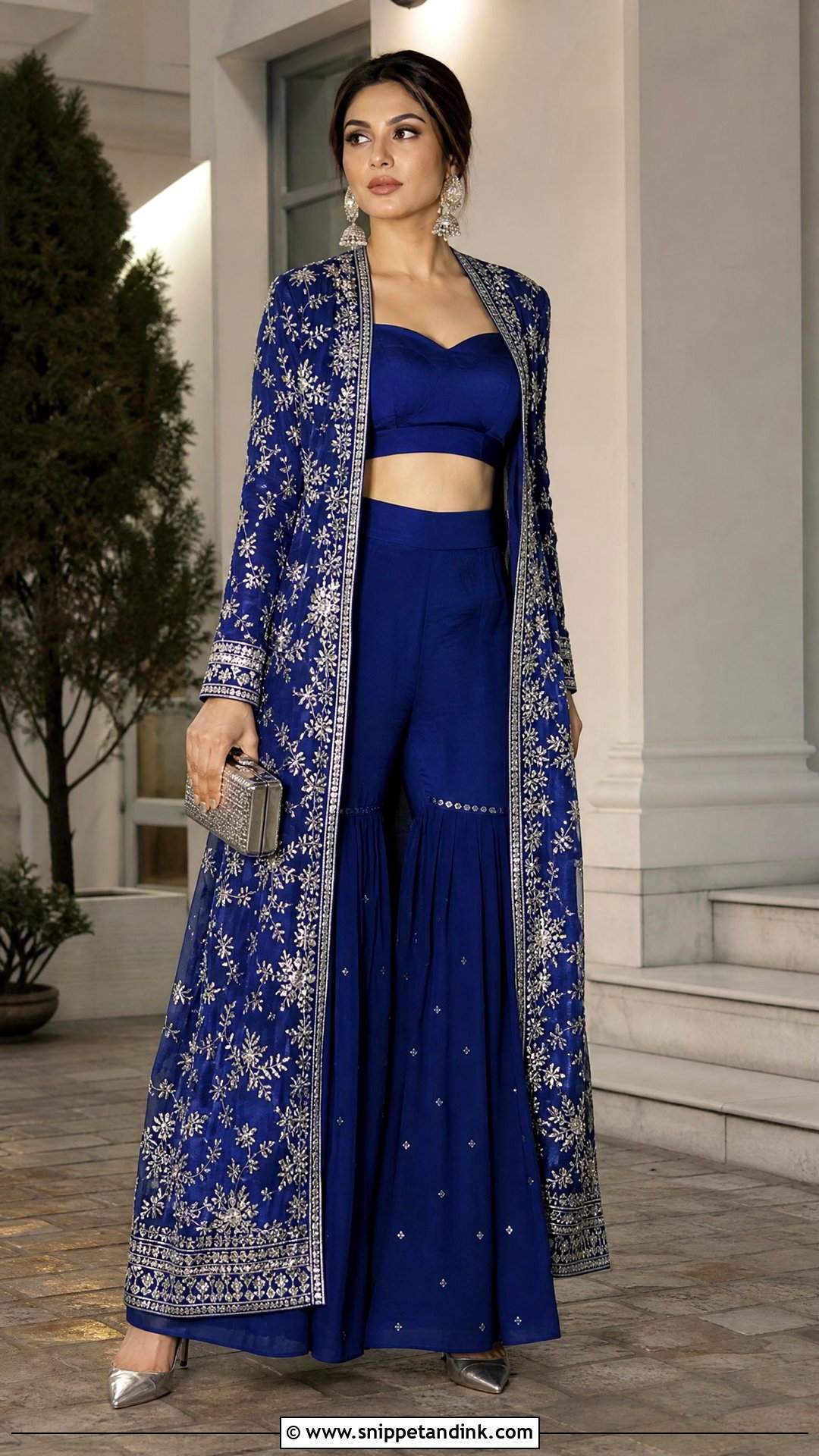
A long embroidered jacket turns royal blue into a strong Indo-Western look. Layer it over a fitted blouse or short kurta, open at the front so the high waist of the pants shows. Tonal embroidery with silver, gold or crystal touches suits the evening. The jacket gives movement and coverage, so the dupatta becomes optional. Long jackets should stop a little short of the floor so they don’t catch on stairs. Statement earrings, a metallic box clutch, pointed heels and a sleek ponytail sharpen it; a berry lip balances the blue.
18. Lavender Pearl Sharara Wedding Dress
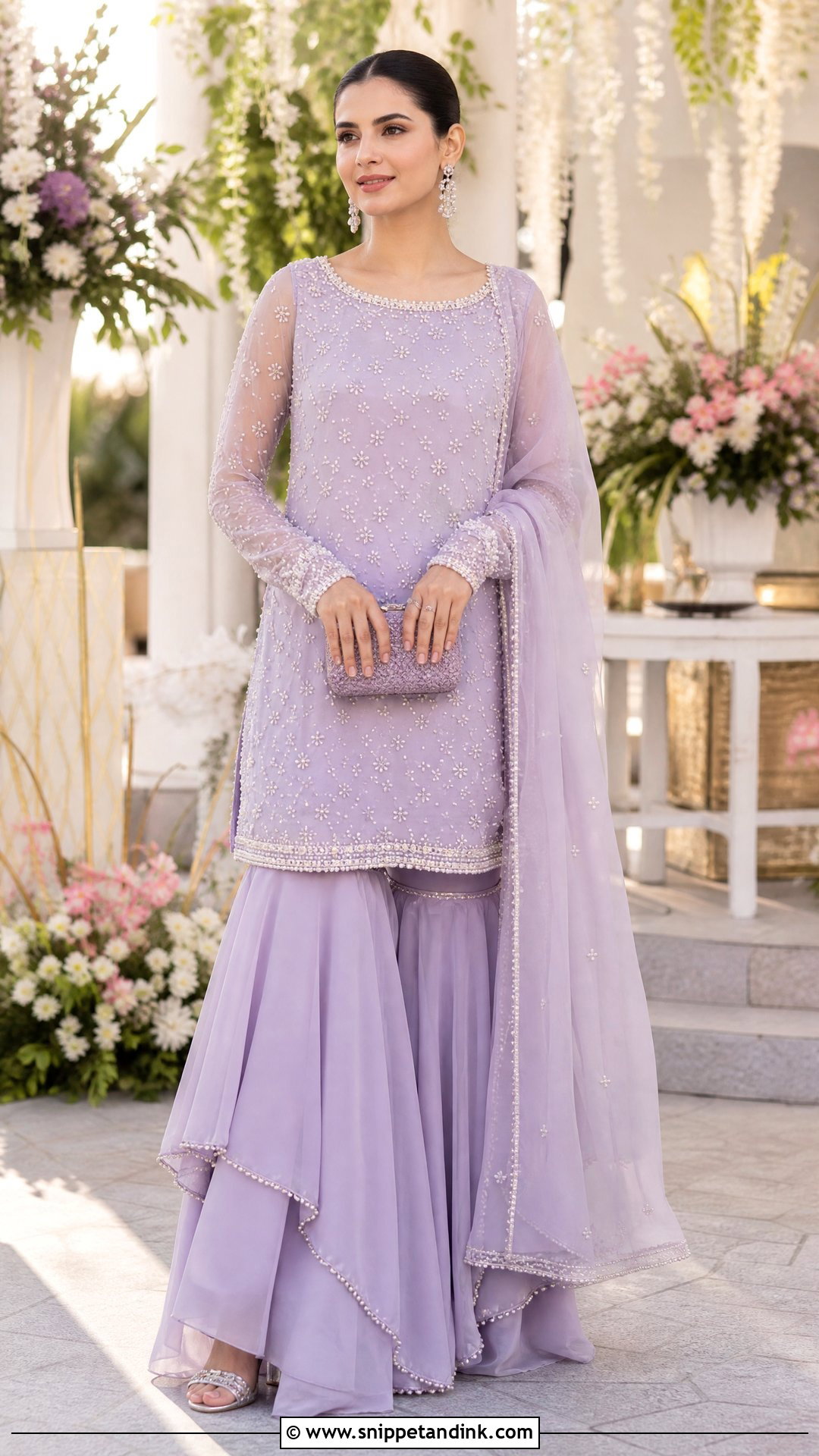
Lavender with pearls looks soft in natural daylight, which makes it a lovely bridesmaid and guest choice for afternoon events. A short kurta with pearl clusters, tonal threadwork and sheer sleeves, over layered georgette pants with a narrow pearl border, keeps it delicate. Pearl trims are hand-sewn and can pop loose, so I bring a needle and matching thread on the day. A matching organza dupatta, pearl drops, low metallic heels and a loose bun complete it, with cool pink blush and a mauve lip.
19. Champagne Sequin Sharara Wedding Dress
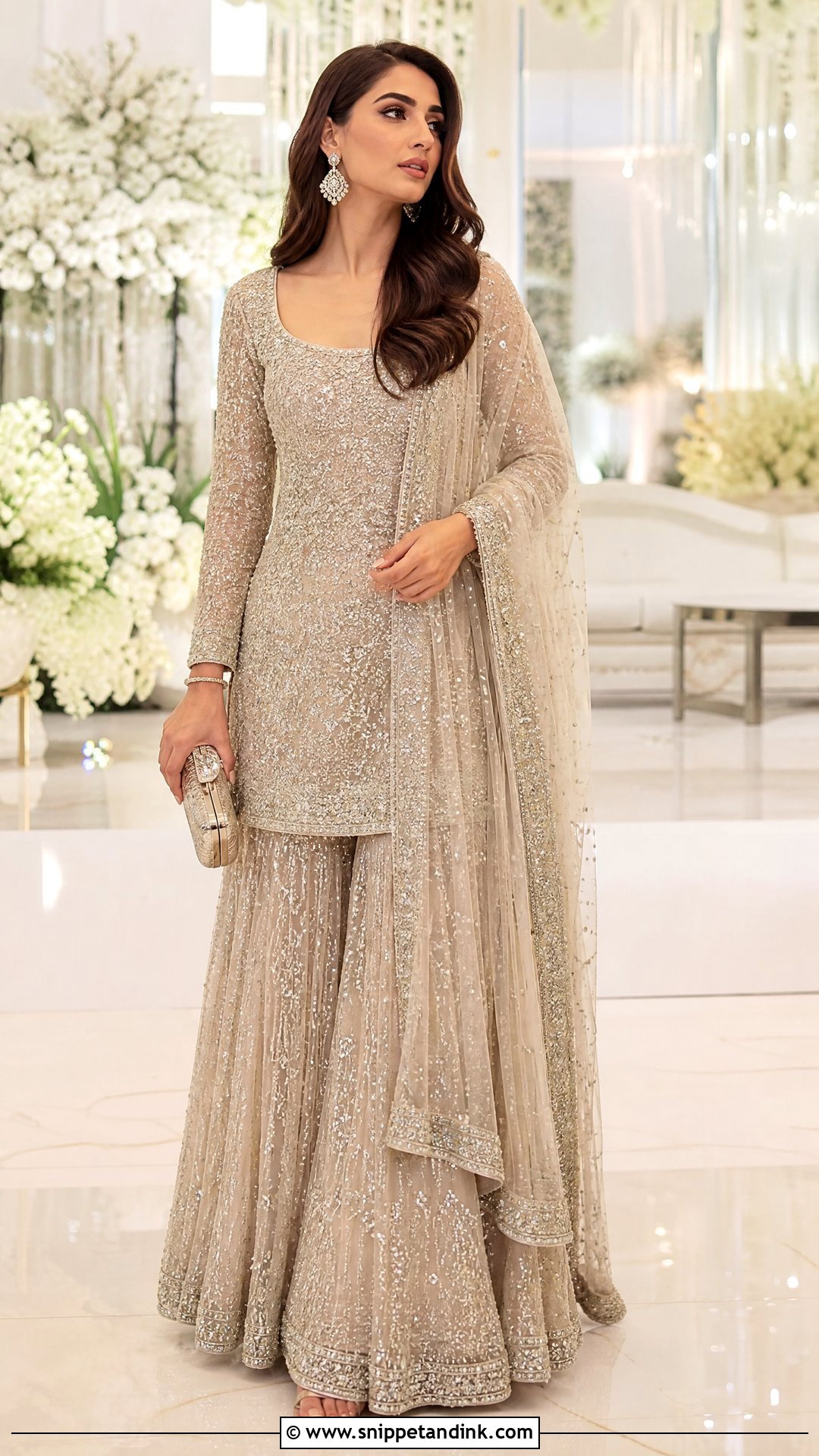
Champagne sequins sparkle without the punch of bright gold or silver. Evenly spread sequins on a fitted short kurta with a simple neckline, and vertical lines of embellishment on the pants, draw the eye down the length of the flare. Keep the dupatta sheer with only a narrow beaded edge; two heavy sequin layers rubbing together can tangle and snag. Crystal earrings, a slim bracelet, a structured clutch and nude heels keep it refined. Smooth waves or a low bun and a soft rose lip suit a formal reception.
20. Multicolor Bandhani Sharara Wedding Dress
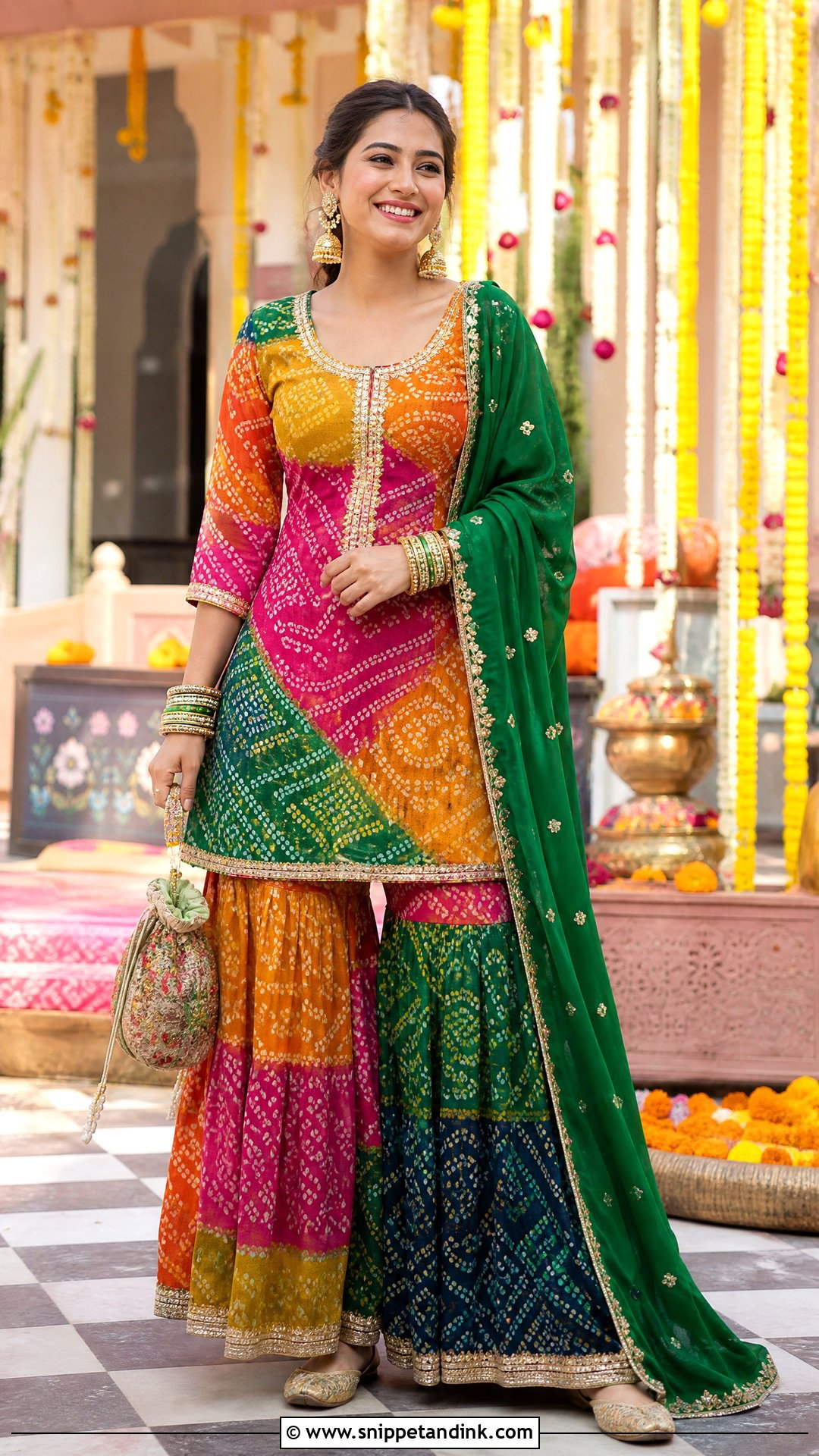
A multicolor Bandhani sharara brings pattern and handmade character to a lively function like the mehndi or sangeet. Start with a short bandhani kurta in red, pink, green or yellow with gota at the neck and sleeves, and pants that repeat the print or pick up its main color. A solid contrast dupatta keeps the pattern readable. True bandhani dye can bleed if it gets damp, so keep it away from water play and wet henna. Jhumkas, stacked bangles, gold juttis and a coral lip finish it.
The Order I Dress a Bride on the Morning
Getting into a heavy sharara outfit in the wrong order means redoing the dupatta two or three times. This is the sequence I follow, and it saves a lot of pinning.
- Hair and makeup first, wearing a button-front shirt so nothing goes over the head afterwards.
- Shoes on before the sharara, so the hem falls at its real length and you can check it.
- Sharara pants, waistband fastened firmly at the natural waist.
- Kurta, then the dress shields and any safety pins at the shoulders.
- Jewelry, starting with the necklace and earrings, then the matha patti or tikka.
- Dupatta last, pinned to the hair and to the kurta at both shoulders.
Bathroom breaks without undoing everything
Shararas are easier than lehengas here, but the dupatta still gets in the way. Take a bridesmaid with you to hold the dupatta and the back of the kurta, and gather the flare of each leg up at the thigh. If the waistband is a drawstring, ask the tailor to add a hook as well, so it can be fastened again quickly without retying a knot.
Proportion Is What Makes a Sharara Look Regal
Red, maroon, velvet and zardozi give formal bridal looks; prints, pastels and chikankari are lighter for daytime; capes, jackets and peplums are the modern alternatives. Whichever you pick, the details that decide how it looks are the same: kurta length against the flare, the weight of the dupatta, and the heel height you hem to. Settle those before final alterations and add jewelry and a practical bag afterwards. Then adjust colors, embroidery and accessories to your role in the day, bride, sister or guest.
You'll Like These Ideas:


Leave a Reply