
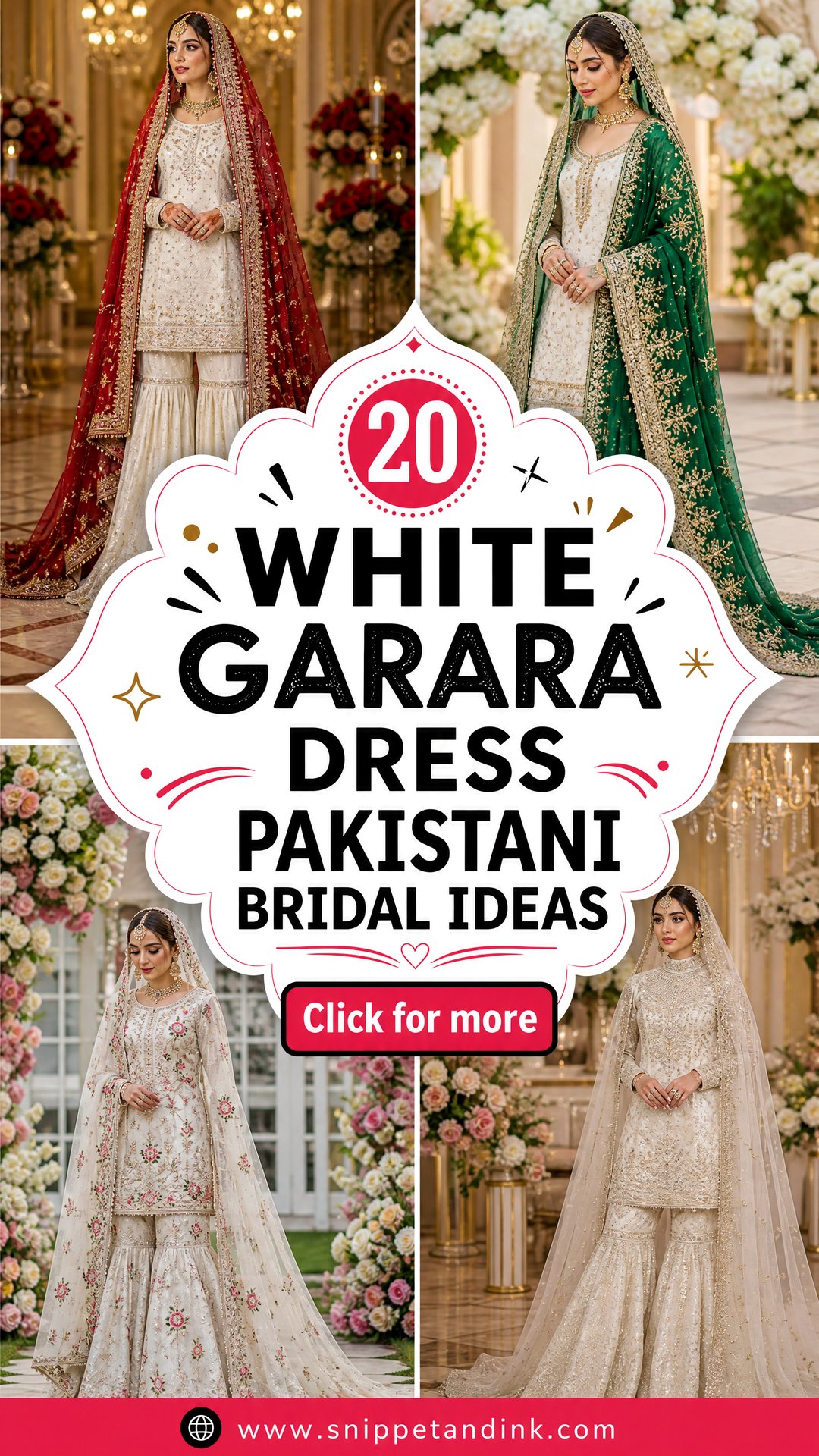
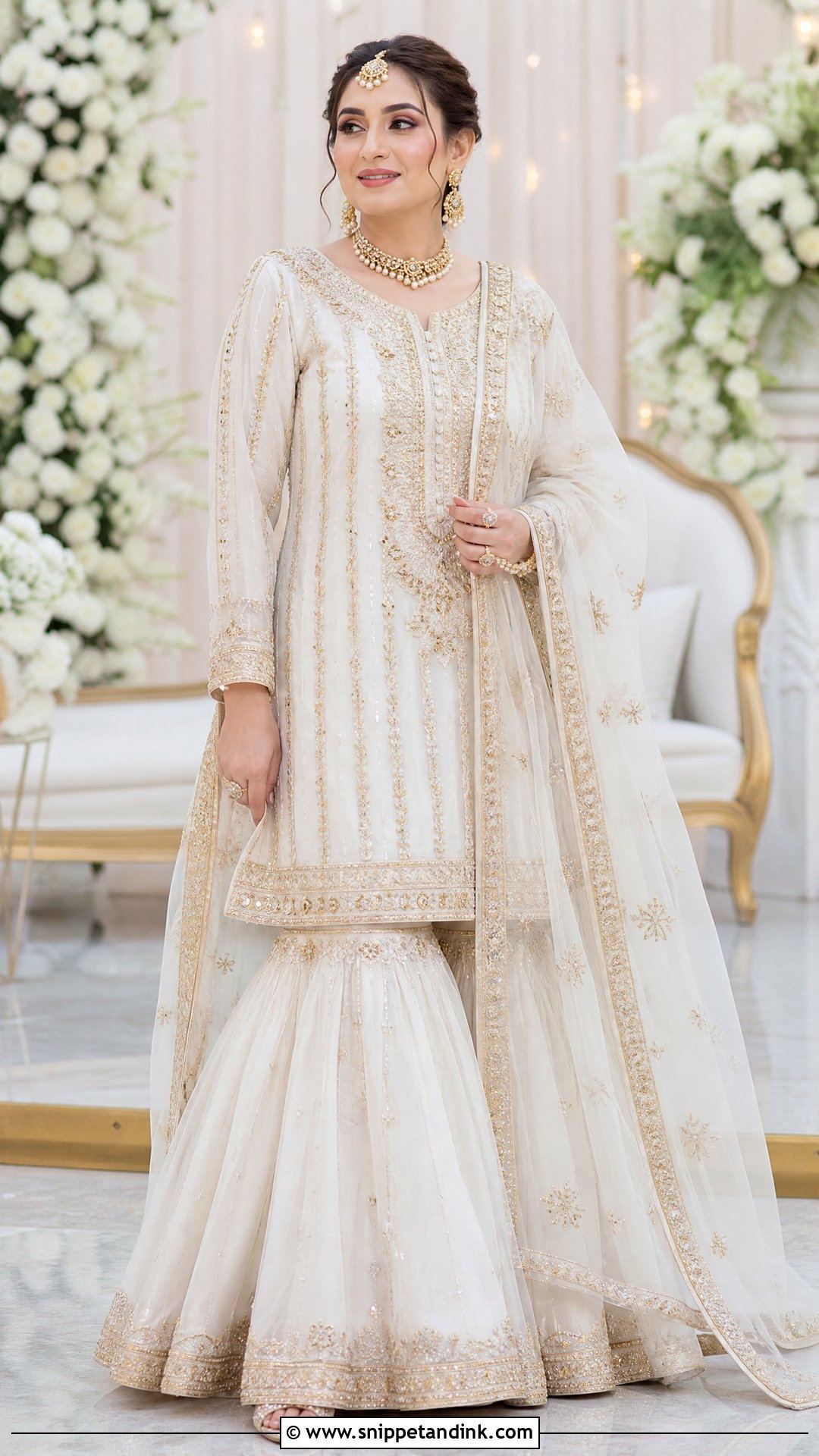
A white garara is one of my favourite briefs for a Nikah or Walima, because it carries all the drama of the traditional silhouette in a colour that feels calm and daytime-friendly. The garara itself is only half the outfit, though. Below I’ve put together complete looks with short kurtis, long shirts, peplum tops, farshi silhouettes, jackets and capes, plus the jewellery, shoes and makeup I’d put with each. Pure white reads crisp, ivory softer, off-white warmer; your skin tone should decide between them more than the trend does.
Where the Knee Joint of a Garara Should Fall
A garara is fitted from waist to knee, then joined at the knee to a wide flared section. That joint is usually covered with a gota or embroidered band, and it is the single measurement that decides whether the outfit looks right. Too high, and you look as if you’re wearing a skirt with legs. Too low, and the flare starts at the shin and drags.
- Measure waist to the centre of your kneecap while standing, in the underwear you’ll wear on the day.
- Measure knee to floor wearing your wedding shoes. Changing from khussas to heels after ordering changes the hem.
- Sit and kneel in the toile or first fitting. The fitted upper part must allow you to sit cross-legged or on a low stage without straining the seams.
Couture gararas are usually made to order, and hand embroidery takes time. Ask your designer for the realistic lead time before you fall in love with a design, and allow room for at least two fittings.
1. White And Gold Garara Bridal Dress
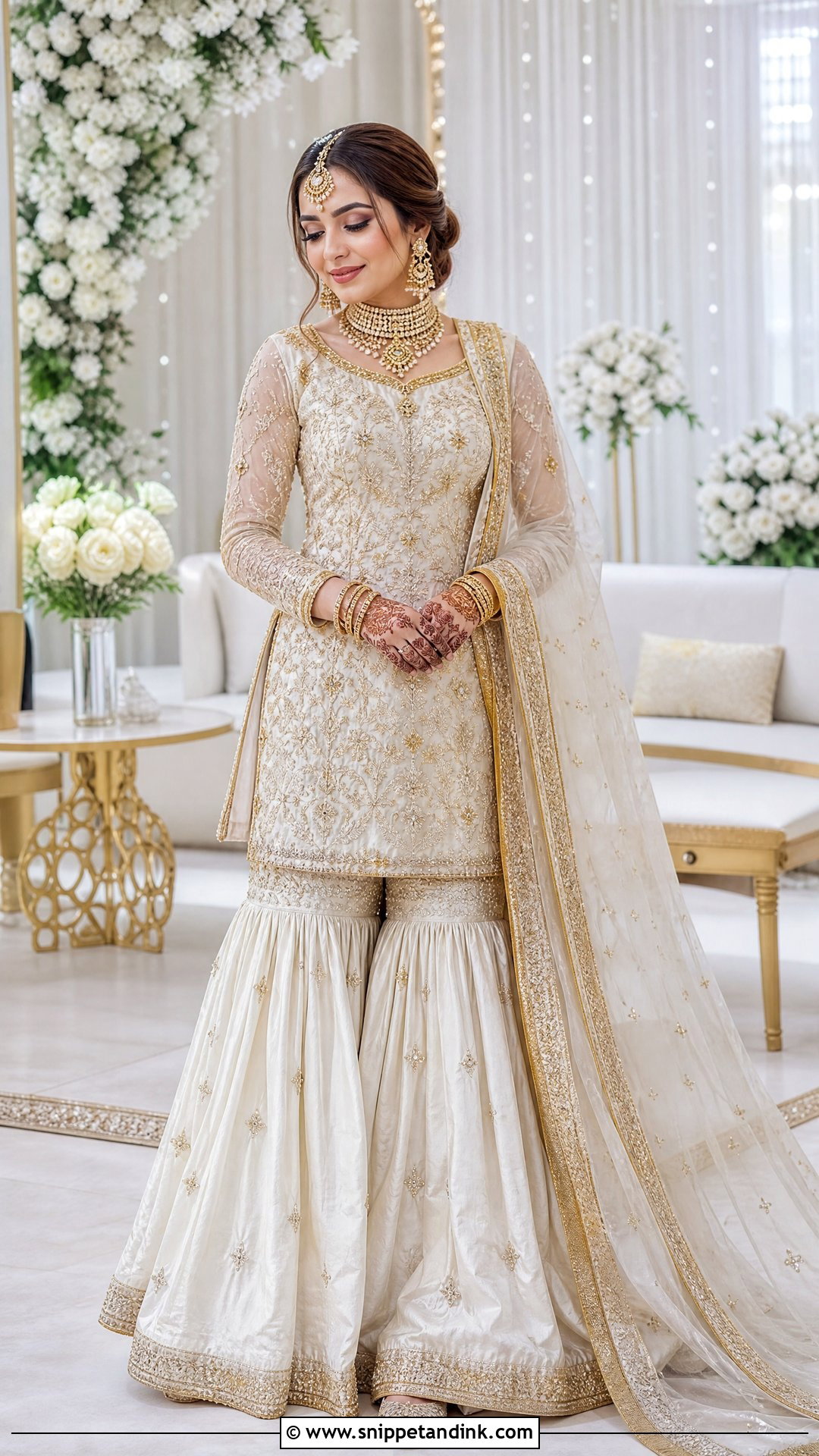
Gold on white is the safe classic, and it’s safe for a reason. A fitted kurti with zari, dabka and sequins over a full raw silk garara with a wide gold border at the knee and hem. Raw silk holds the flare without a stiff lining, which is why most good gararas use it. Choose a sheer organza dupatta so the embroidery underneath still shows. A gold choker, jhumkas, a tikka, slim bangles and gold khussas. Defined eyes, peach blush and a rose lip for a daytime Nikah.
2. White Pearl Garara Nikah Dress
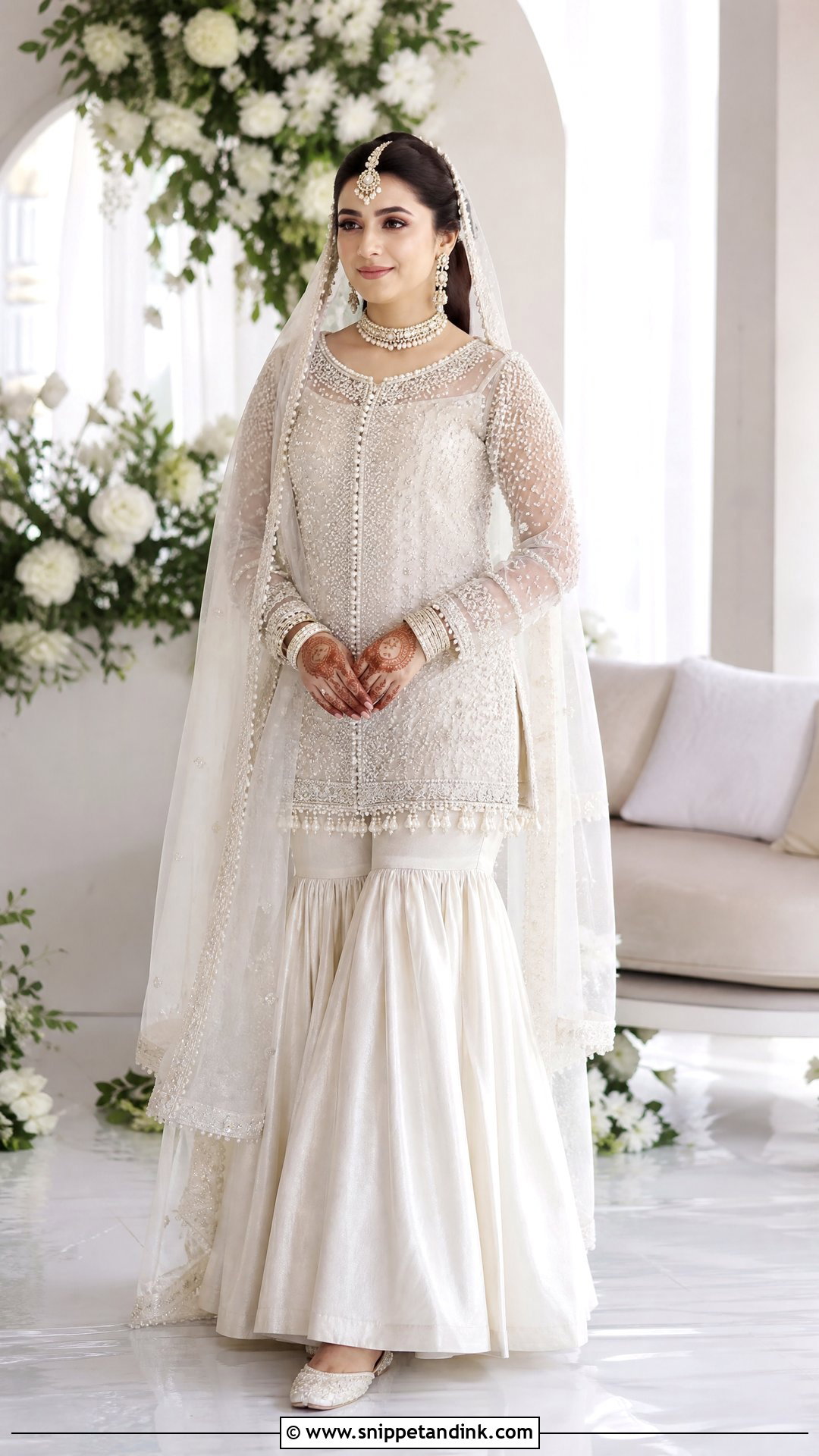
Pearls catch light softly rather than flashing like crystals, so they suit a bride who wants detail without glare in the photographs. Look for a short organza shirt with pearl cuffs and neckline, and scattered beads across the front, then small pearl motifs on a raw silk garara to tie the bottom in. One practical point: pearls are heavier than they look. A pearl-tasselled net dupatta over the head needs proper pinning to the hair, not just a couple of bobby pins. A pearl choker, earrings, simple tikka, white khussas and soft waves.
3. White And Silver Garara Bridal Dress
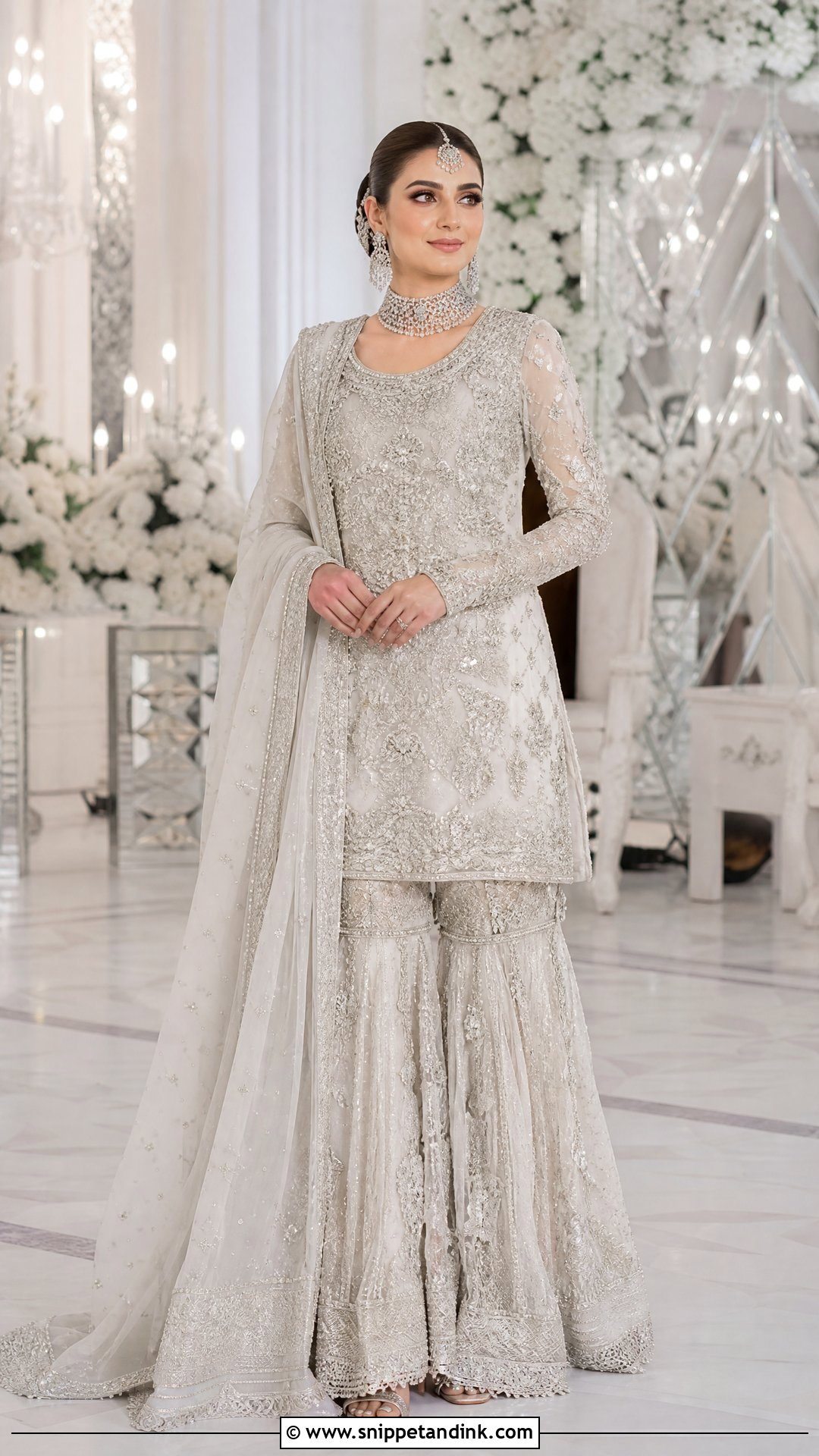
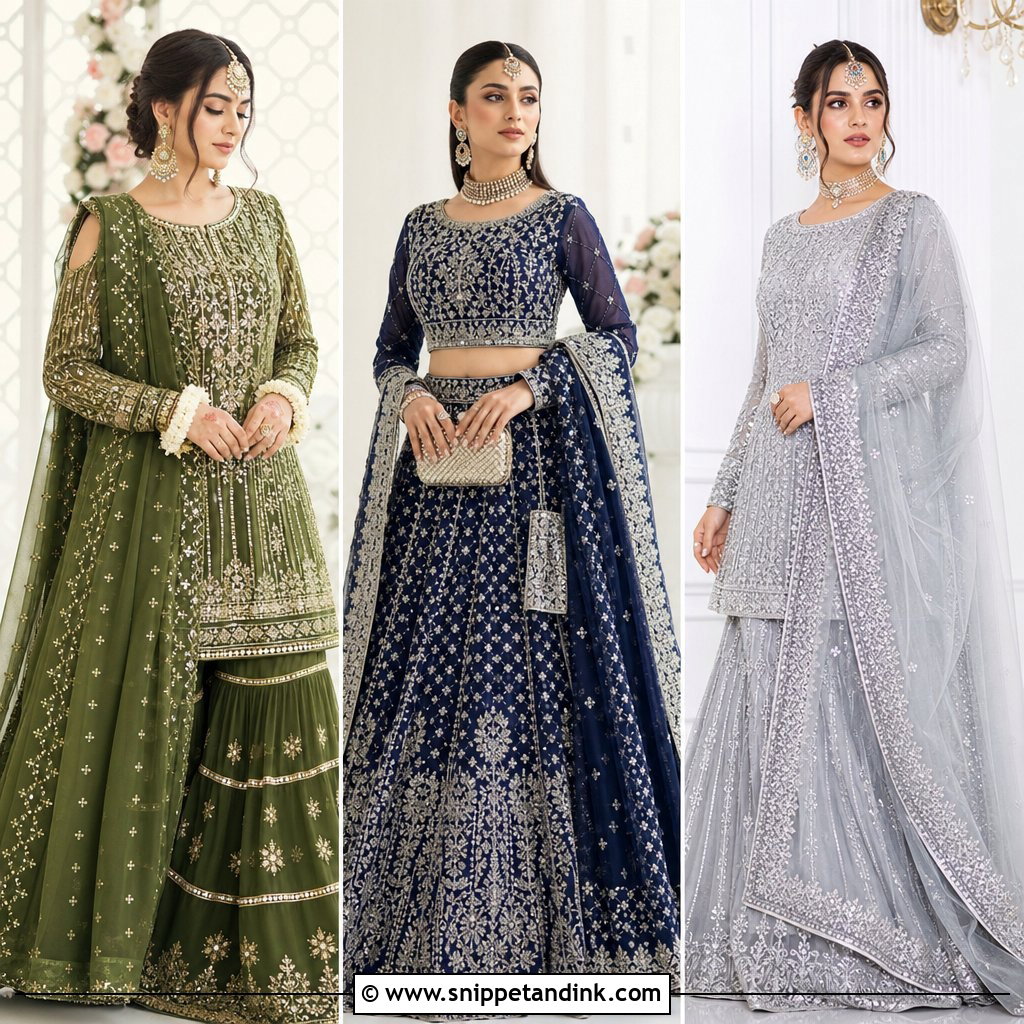
Silver makes white look cooler and more modern than gold does, and it suits pink or neutral undertones especially well. A medium-length shirt with silver zardozi, crystal, and cutdana work at the neckline, sleeves and hem, over a structured garara with silver panels and a sharp knee seam. Silver block heels are fine if the garara covers them; otherwise flat khussas keep the line. Crystal drops, a silver choker, a slim tikka, a sleek low bun and a mauve lip for the Walima.
4. White Farshi Garara With Short Kurti
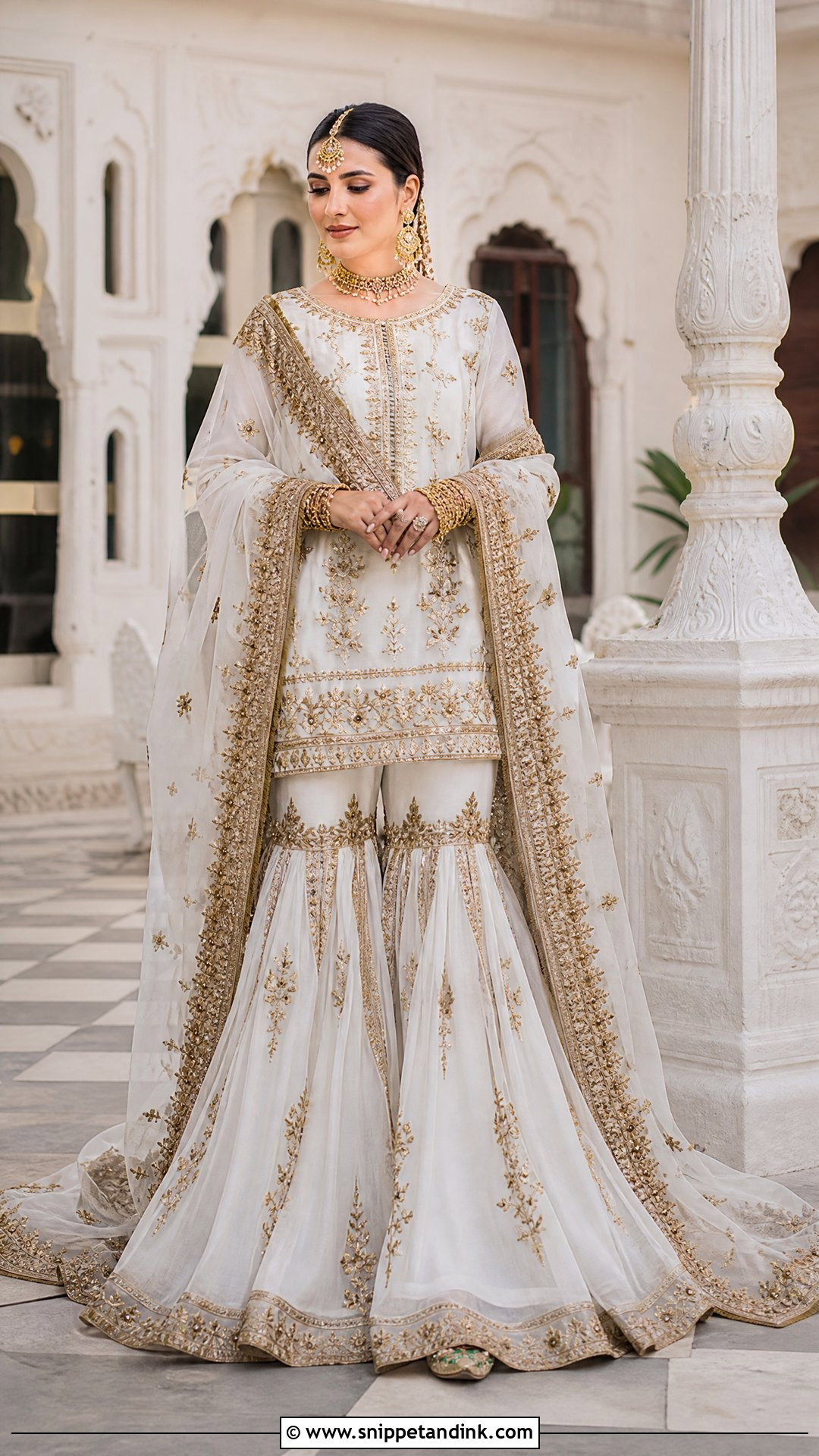
The farshi garara pools on the floor, and that trail is the whole point. It’s also the hardest version to walk in. I always tell brides to practise with the actual garara: you lift the front panels slightly with both hands rather than kicking forward, and someone should follow you on stairs. Balance all that fabric with a short, fitted kurti heavy with gold at the neck, sleeves and hem. Paisleys and scalloped panels on the trail stay visible when you sit. A wide organza dupatta, one end over the head, the other over the arm. Choker, jhumar, tikka, jhumkas, gold khussas and a centre-parted bun.
5. White Peplum Garara Bridal Dress
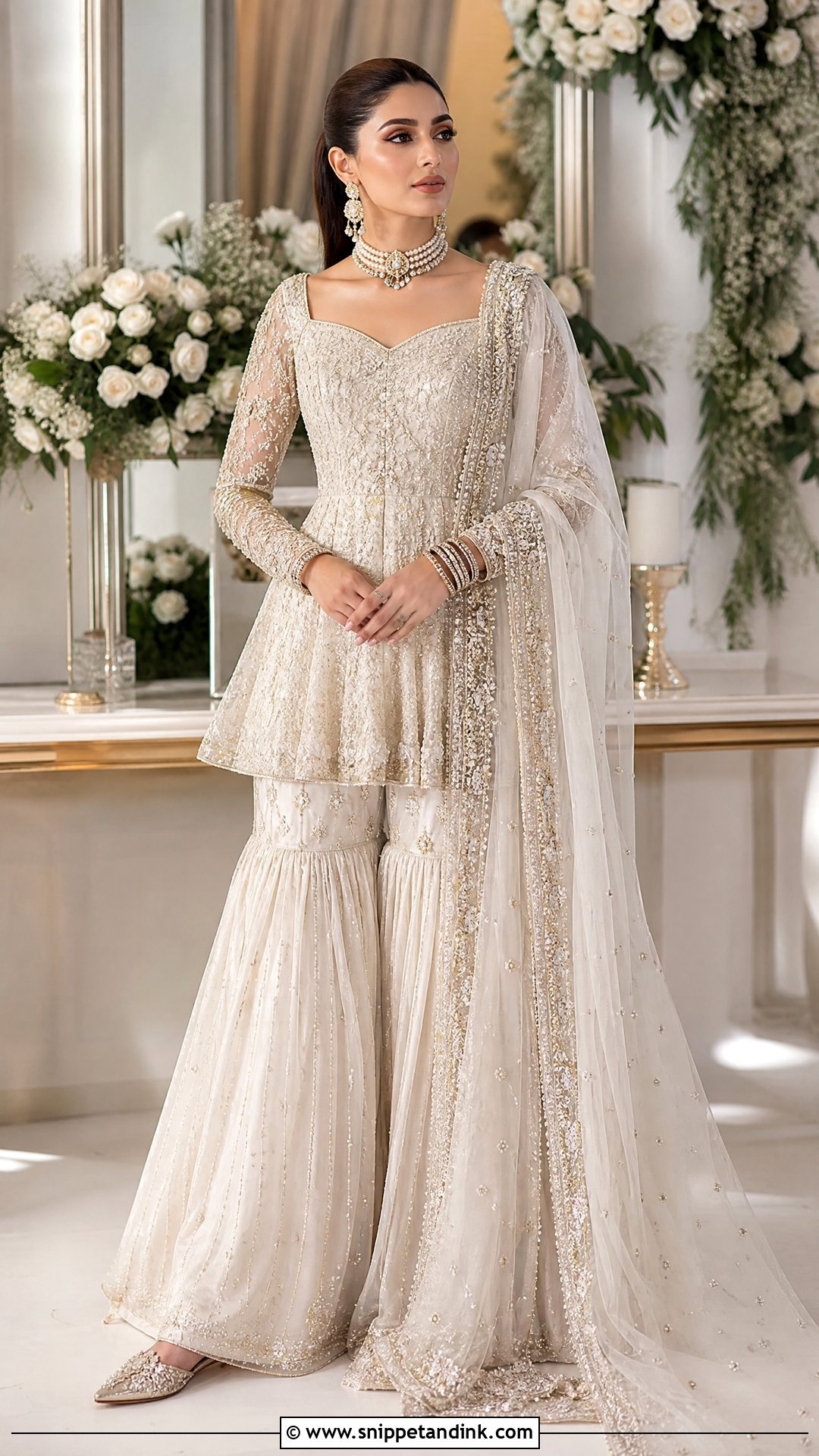
A structured peplum top over a classic white garara is the modern take. The peplum needs to sit exactly at the waist and stop just over the hips; if it ends too low, it fights with the garara’s flare and shortens your legs. Ivory raw silk with tonal threadwork, pearls and a touch of gold. Keep the garara plain apart from heavy knee bands. A narrow-edged sheer dupatta, pearl drops, a delicate choker and pointed mules. A low ponytail and softly smoked eyes keep it current.
6. White Garara With Long Embroidered Shirt
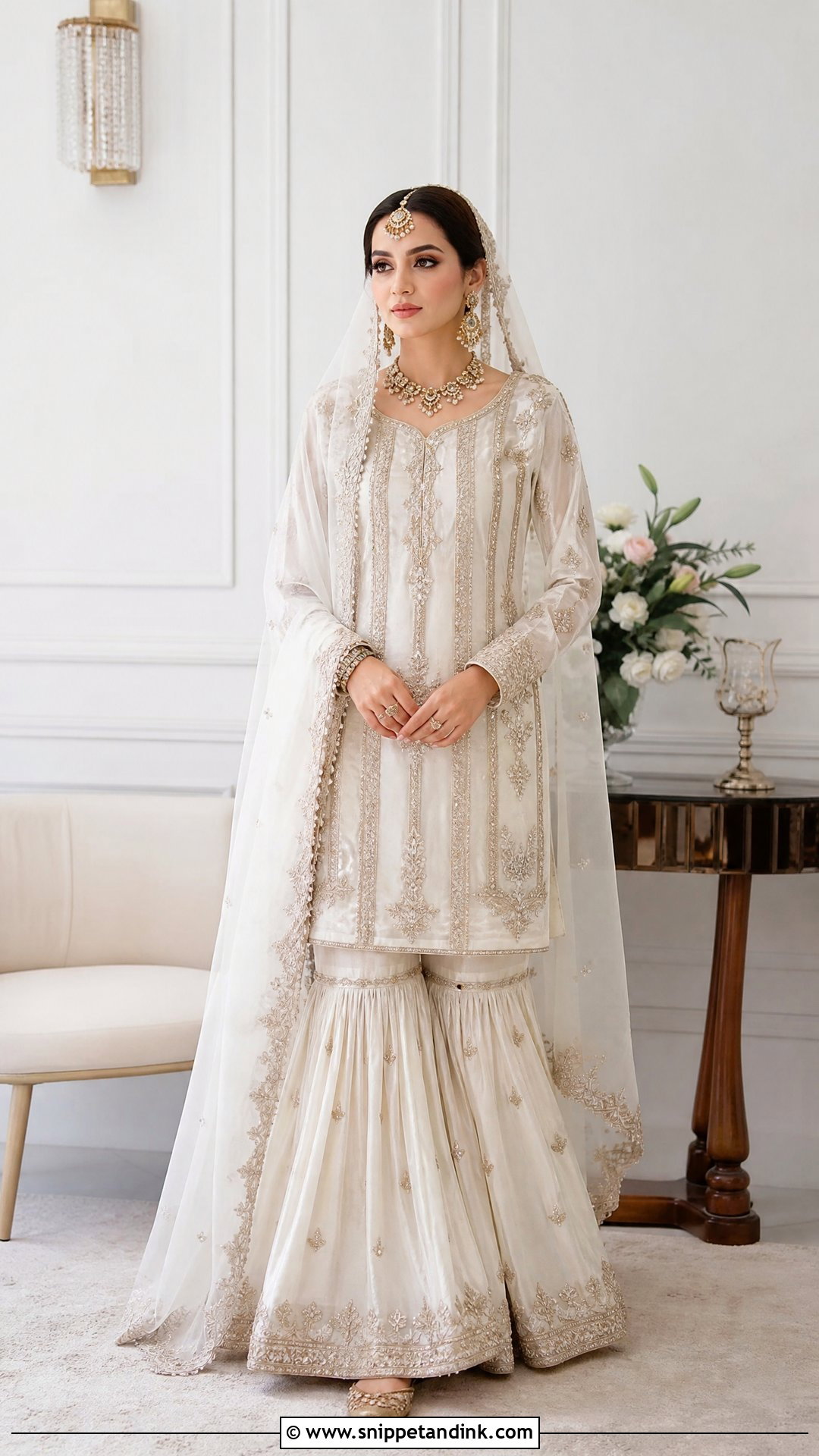
A knee-length shirt gives more coverage and suits brides of almost any age or shape. Vertical embroidery down the front makes you look taller. The garara underneath should be only moderately flared, so the knee seam and hem still show below the shirt; a very full garara under a long kameez just looks bulky. Gold or champagne detailing warms the white. A light organza dupatta over the head for the ceremony, then over a shoulder. A medium necklace, statement earrings, tikka, gold khussas and a smooth bun.
7. White Garara With Red Bridal Dupatta
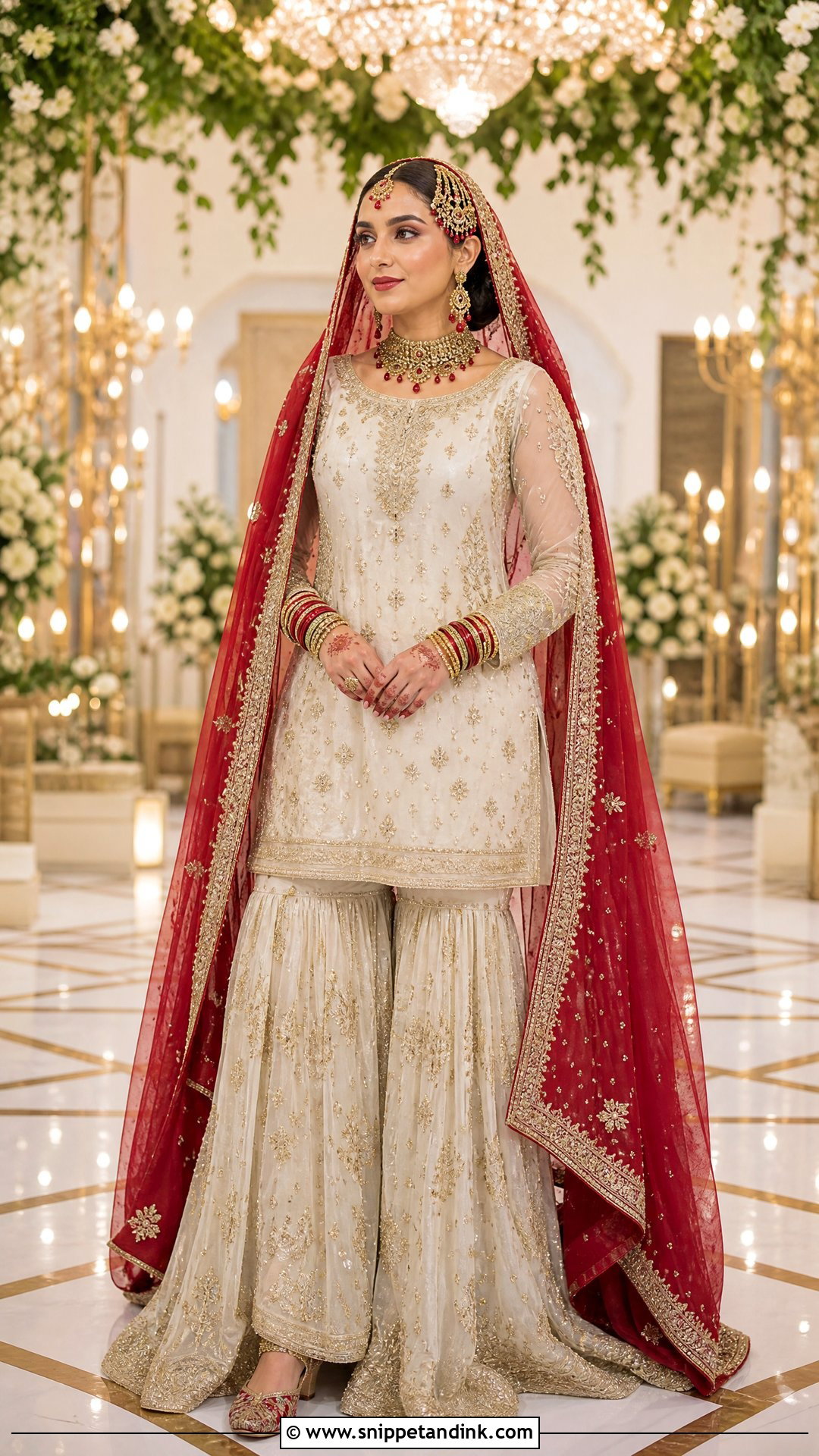
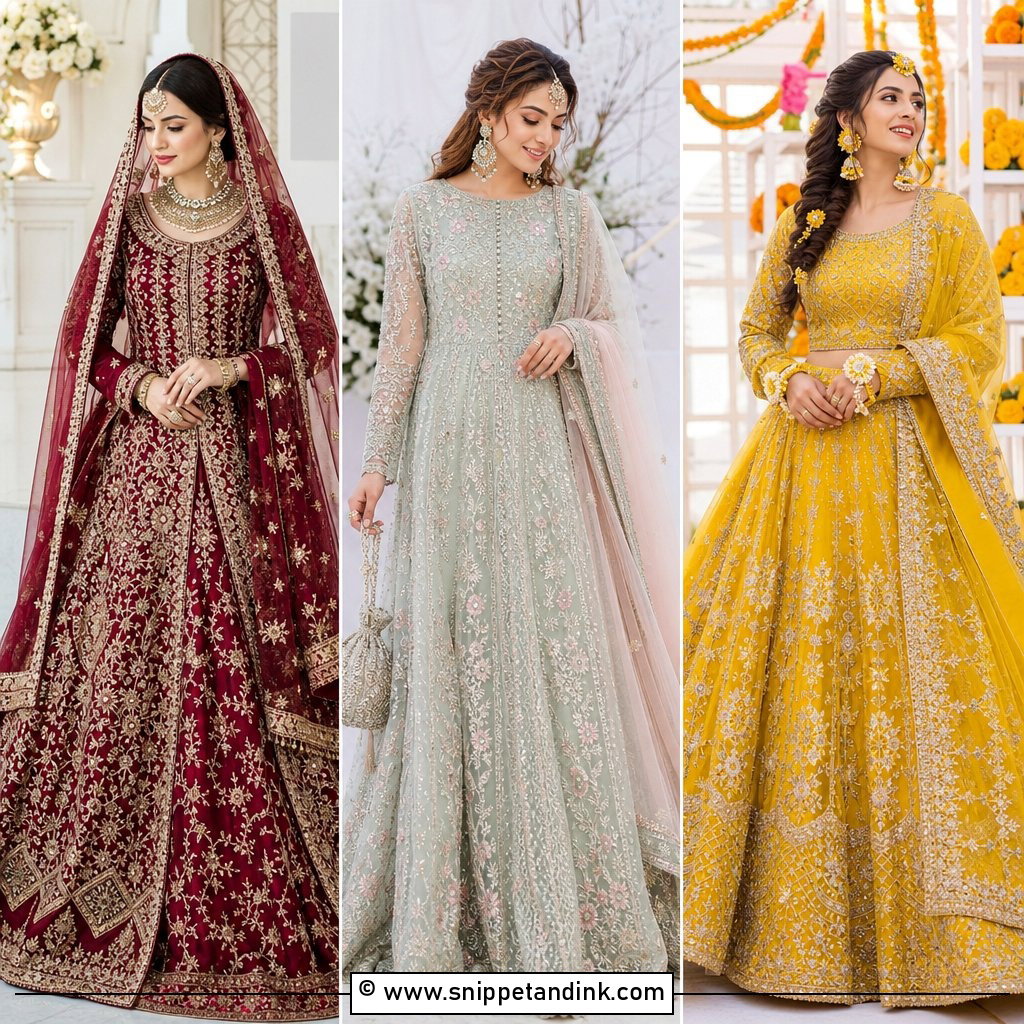
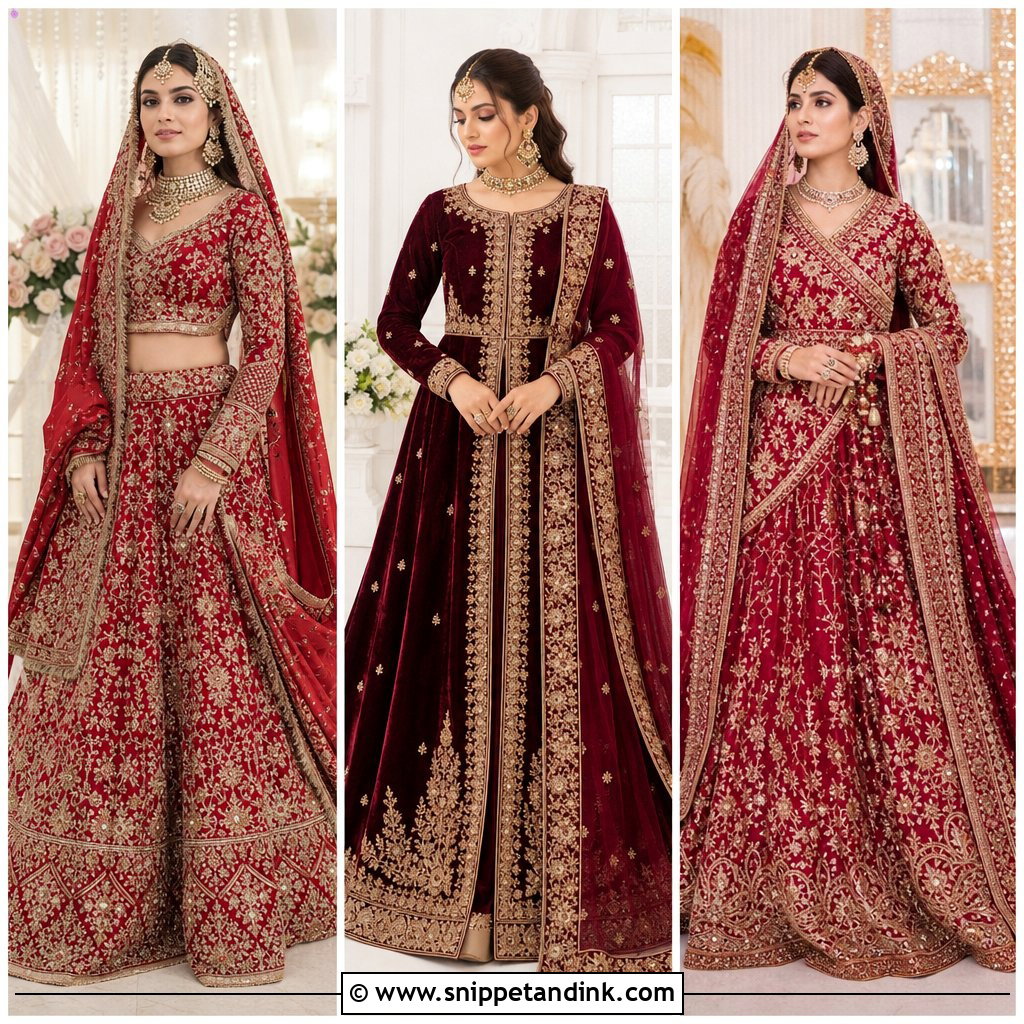
A red dupatta over white is a nod to the traditional red bridal outfit without wearing it head to toe. Keep the kurti and garara ivory or off-white with antique gold, which sits better next to red than bright yellow gold. A red net or organza dupatta with a heavy border frames your face when worn over the head. Antique gold with ruby-toned stones, red and gold khussas, a classic bun and a rich red lip. Check the red dupatta for colour bleeding before it touches white fabric on a hot day.
8. White Garara With Blush Pink Dupatta
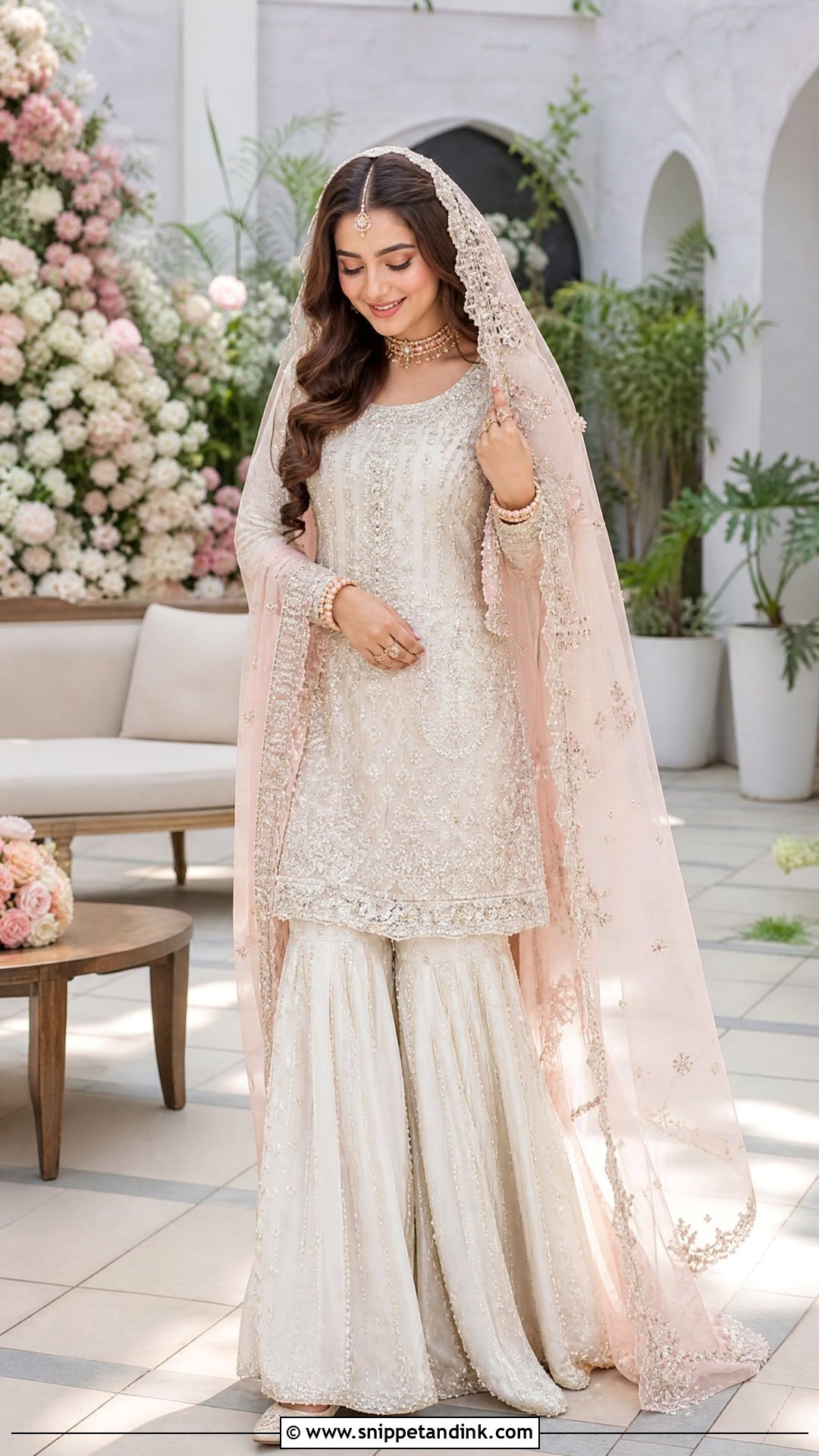
Blush is the gentlest colour you can add. An ivory garara with a fitted kurti in pearl, crystal and pale gold, then a sheer blush dupatta with a scalloped white edge and small flowers. Rose gold jewellery, a pearl choker, a small tikka and blush bangles. Ivory khussas with pink thread are a nice small match. In my experience pale pink can disappear on very fair skin in bright daylight, so hold the swatch to your face outdoors before ordering. Loose waves or a soft low bun suit a spring Nikah.
9. White Garara With Green Dupatta
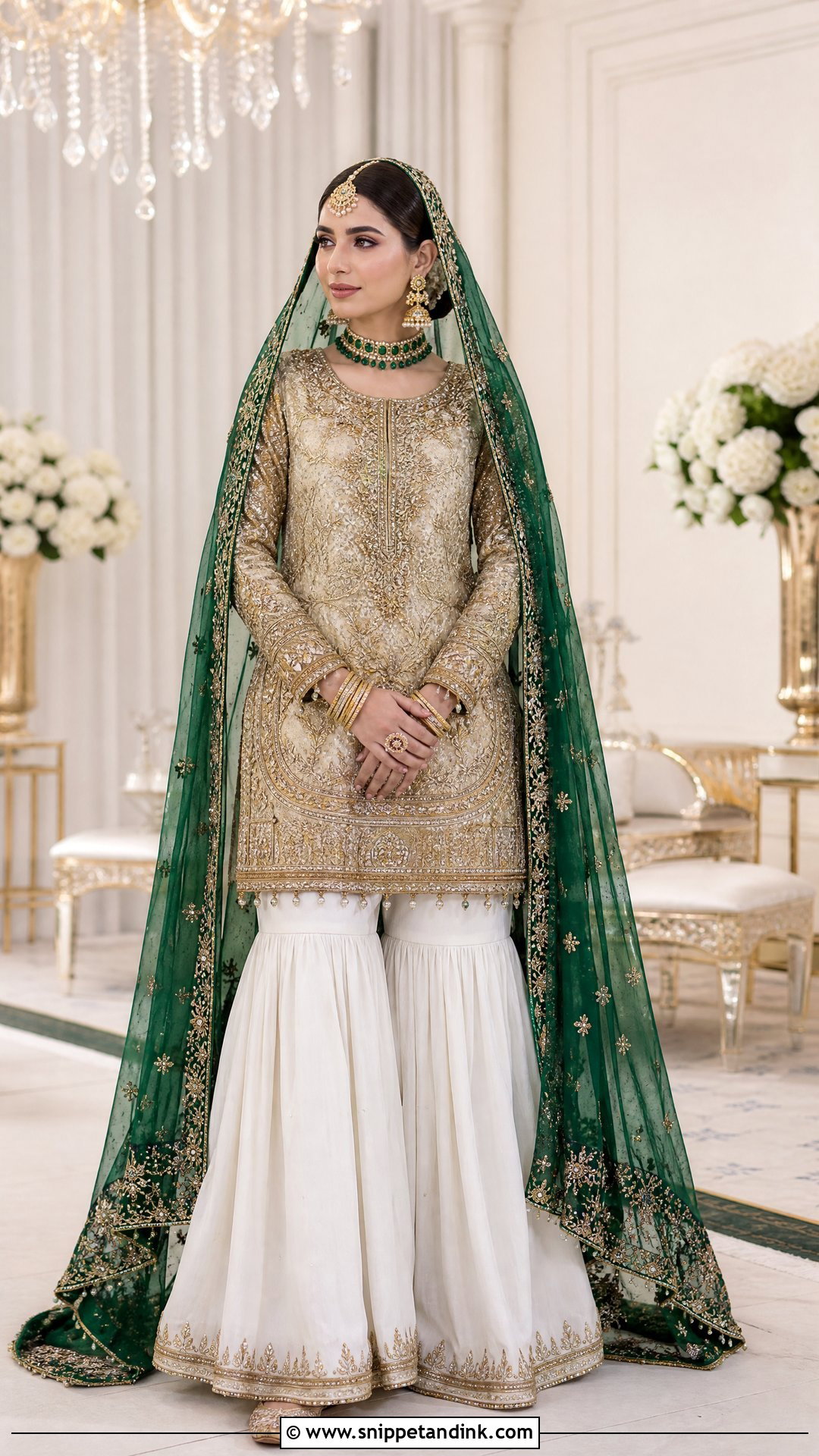
Green over an embroidered white garara has deep roots in South Asian wedding dressing. Emerald feels ceremonial; sage is the lighter daytime version. I’d let the kurti carry antique gold with small green stones and keep the garara mostly white with gold borders. Wear the dupatta over the head so the green falls down both sides. Emerald jewellery, gold jhumkas, tikka, bangles and gold khussas with a hint of green. With a bold dupatta, keep the face simple: kohl, peach blush and a warm nude lip.
10. White And Champagne Garara Bridal Dress
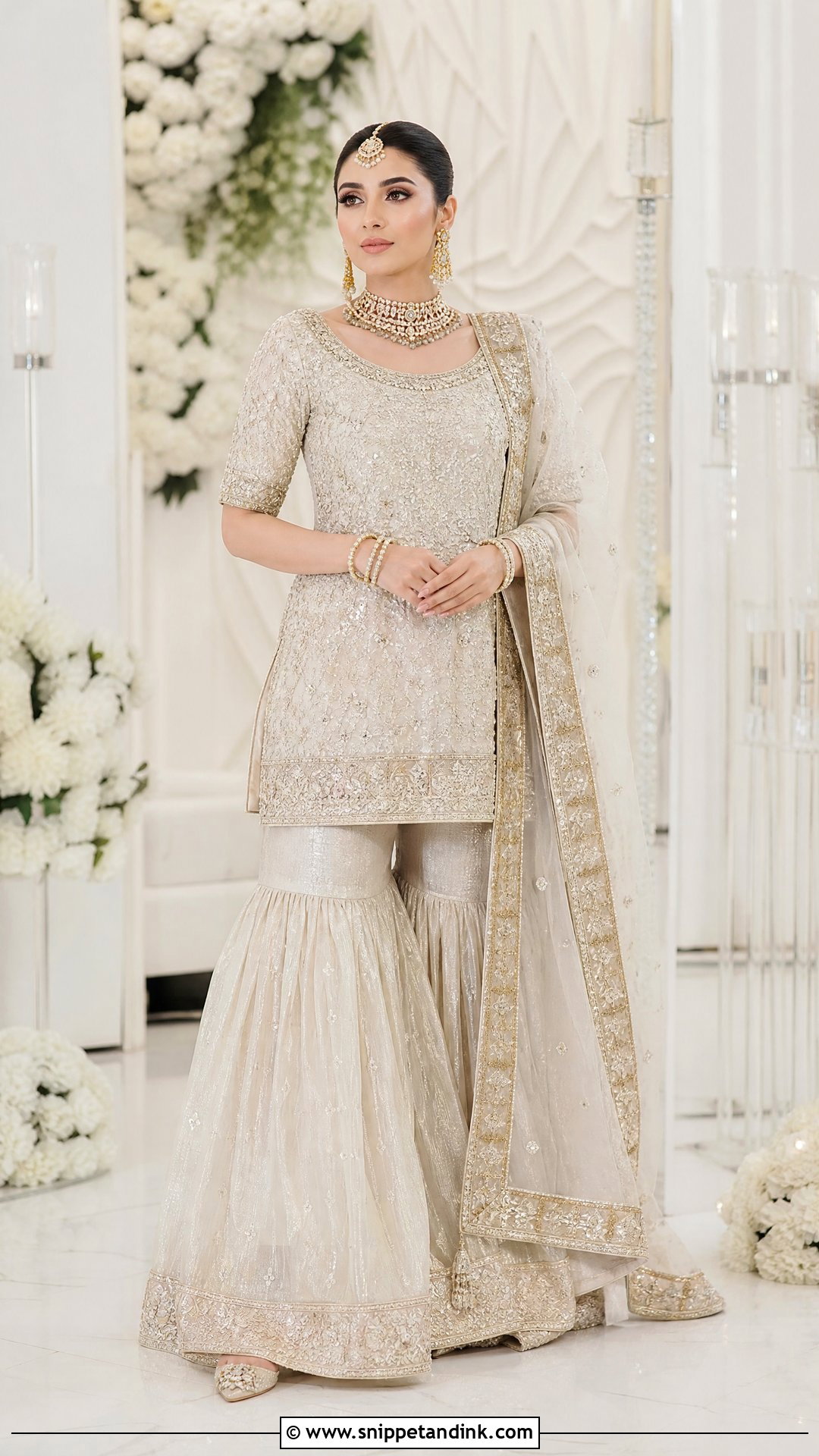
Champagne is what I suggest to brides who find yellow gold too loud against their skin. An off-white tissue or raw silk garara with champagne zari borders, and a short structured kurti mixing champagne sequins, pearls and thread. Tissue fabric has a metallic sheen and creases sharply, so steam it on the day rather than days ahead. An organza dupatta with a wide metallic border, a polki choker, drops and a small tikka. Heels or khussas depending on garara length. A low bun, bronzed eyes and a caramel-pink lip for a Walima or evening Nikah.
11. White Mirror Work Garara Bridal Dress
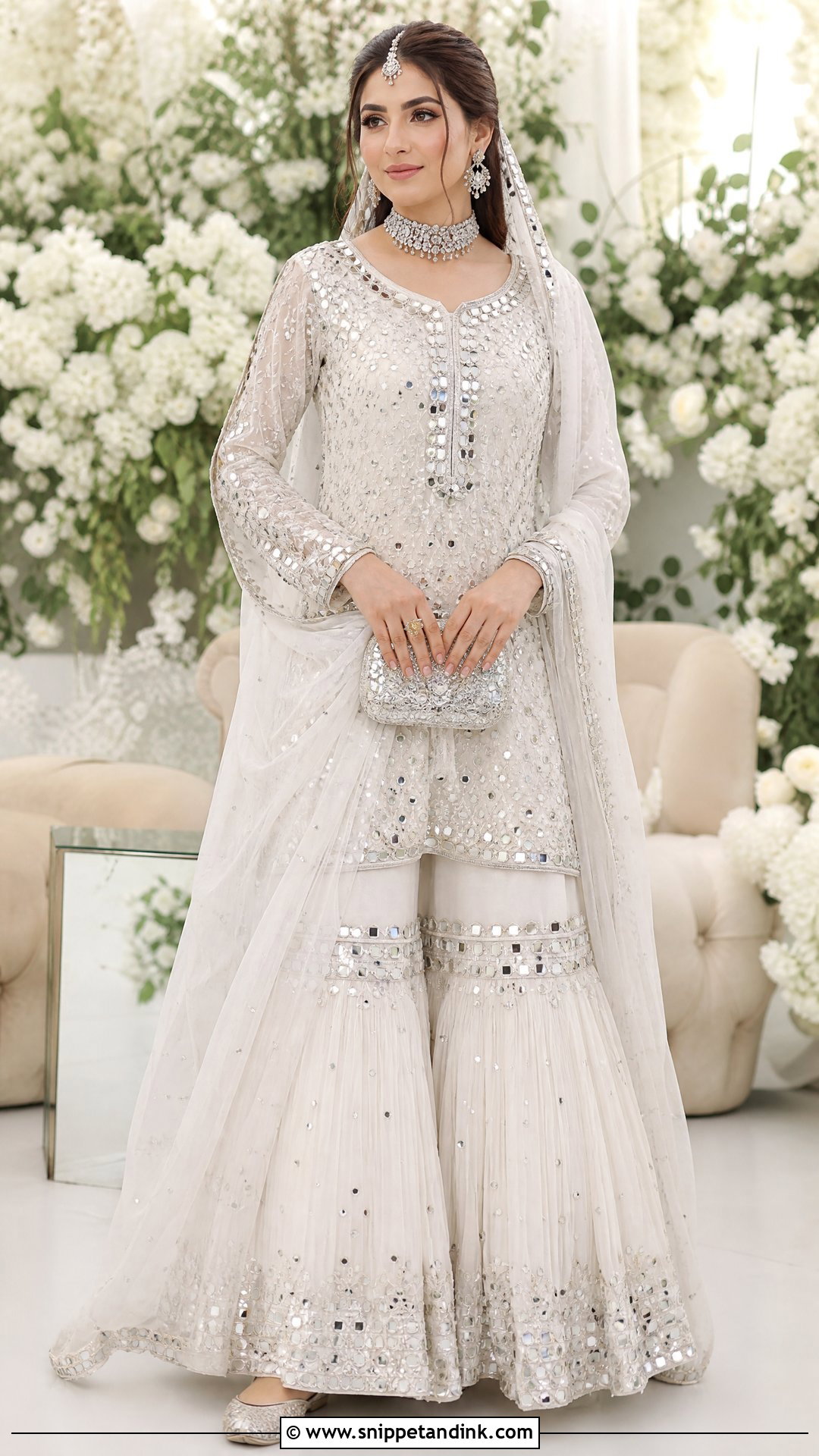
Mirror work moves when you move, so a little goes a long way. A cropped or waist-length kurti with mirrors in symmetrical patterns at the neck, sleeves and hem, and a white garara with mirror-edged knee bands rather than all-over shine. Mirrors are small, hard and slightly sharp at the edges; check the inside of the sleeves is properly lined so they don’t scratch your arms over a long day. A plain organza dupatta with a mirror edge, crystal earrings, a simple silver choker, silver khussas and a compact clutch. Silver-grey eyes and a cool pink lip.
12. White Chikankari Garara Nikah Dress
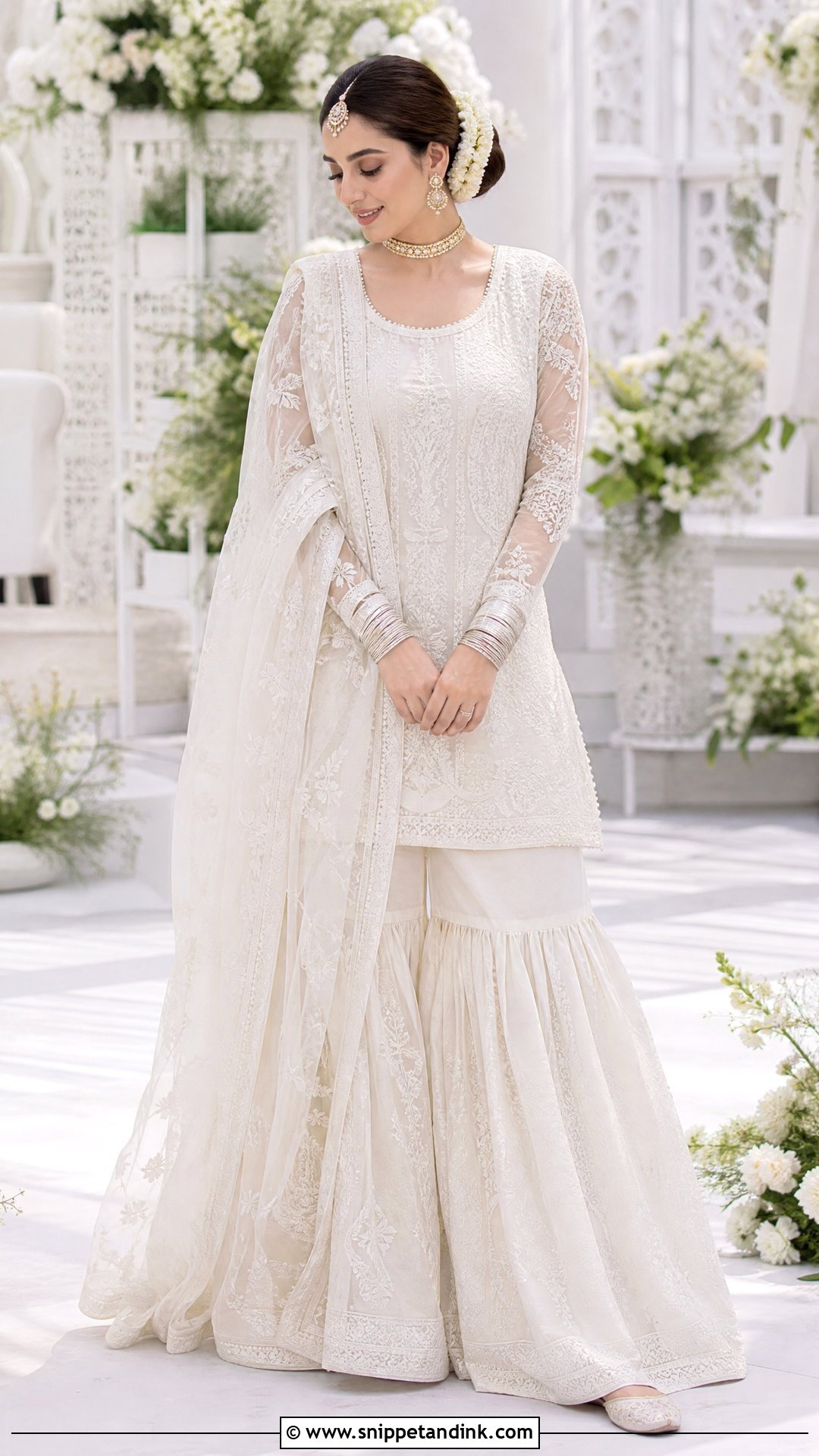
Chikankari is about texture rather than sparkle. A white cotton-silk or organza kurti with fine tonal stitching, lightly embellished cuffs, and a soft raw silk garara with embroidered knee panels and a scalloped hem. Hand chikankari is delicate, so I’d avoid it if you’ll be hugged by a hundred relatives with embellished outfits catching on the threads; machine versions are more robust. A sheer chikankari-bordered dupatta, pearl earrings, a small choker, tikka and slim silver bangles. White khussas, a rose lip and a low bun with white flowers.
13. White Kamdani Garara Bridal Dress
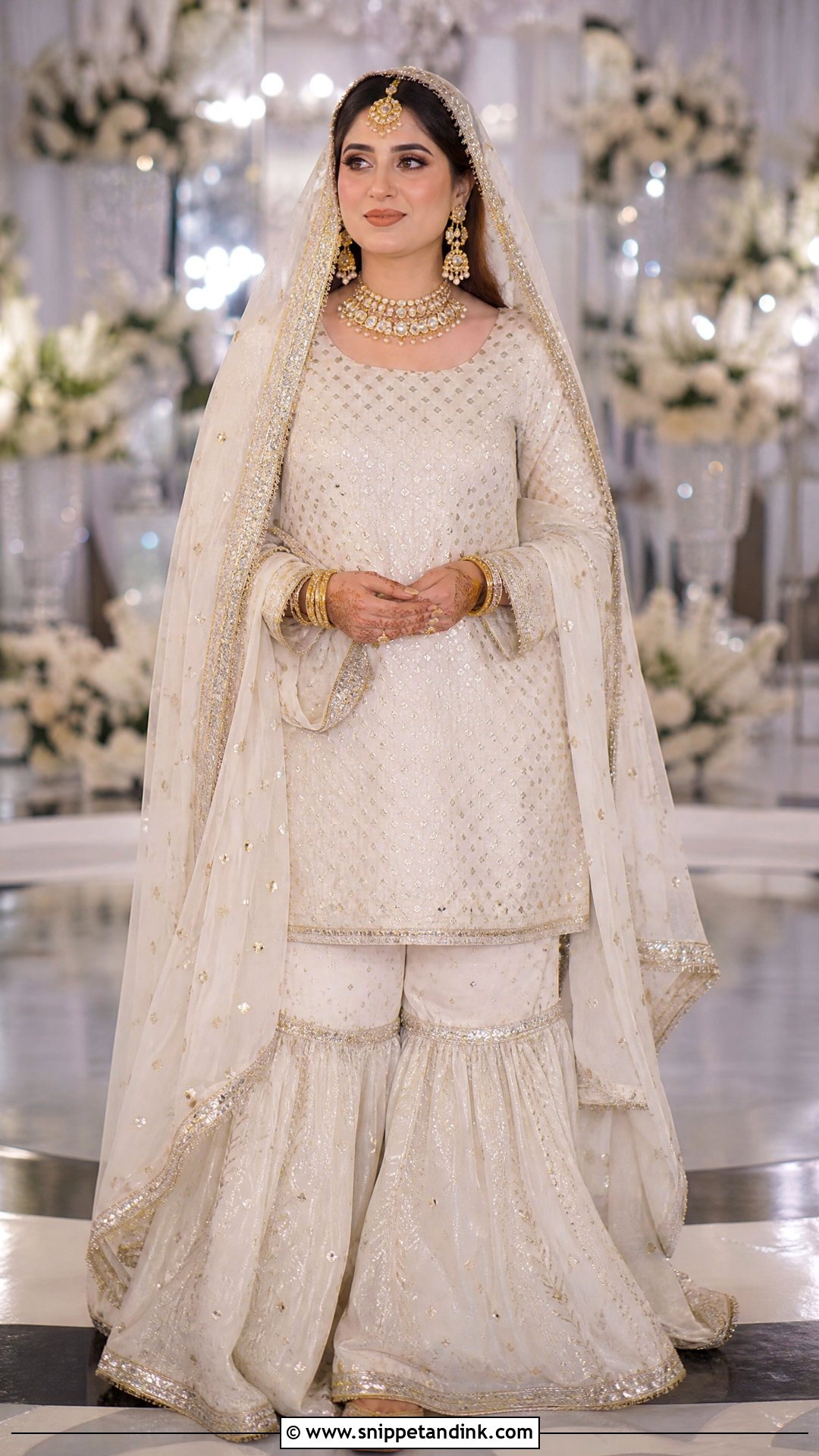
Kamdani is fine metal wire pressed into tiny dots across the fabric, and it gives a scattered starlight shimmer. A silk kurti with dense work at the neck and lighter dots across the body, and a wide garara with evenly spaced motifs and an ornate border. A net dupatta in the same work, over the head. Because kamdani is real metal, it can tarnish if stored damp. A polki choker, long earrings, a centred tikka, gold khussas and a neat middle-parted bun, with smoked brown eyes for an evening Nikah.
14. White Gota Patti Garara Bridal Dress
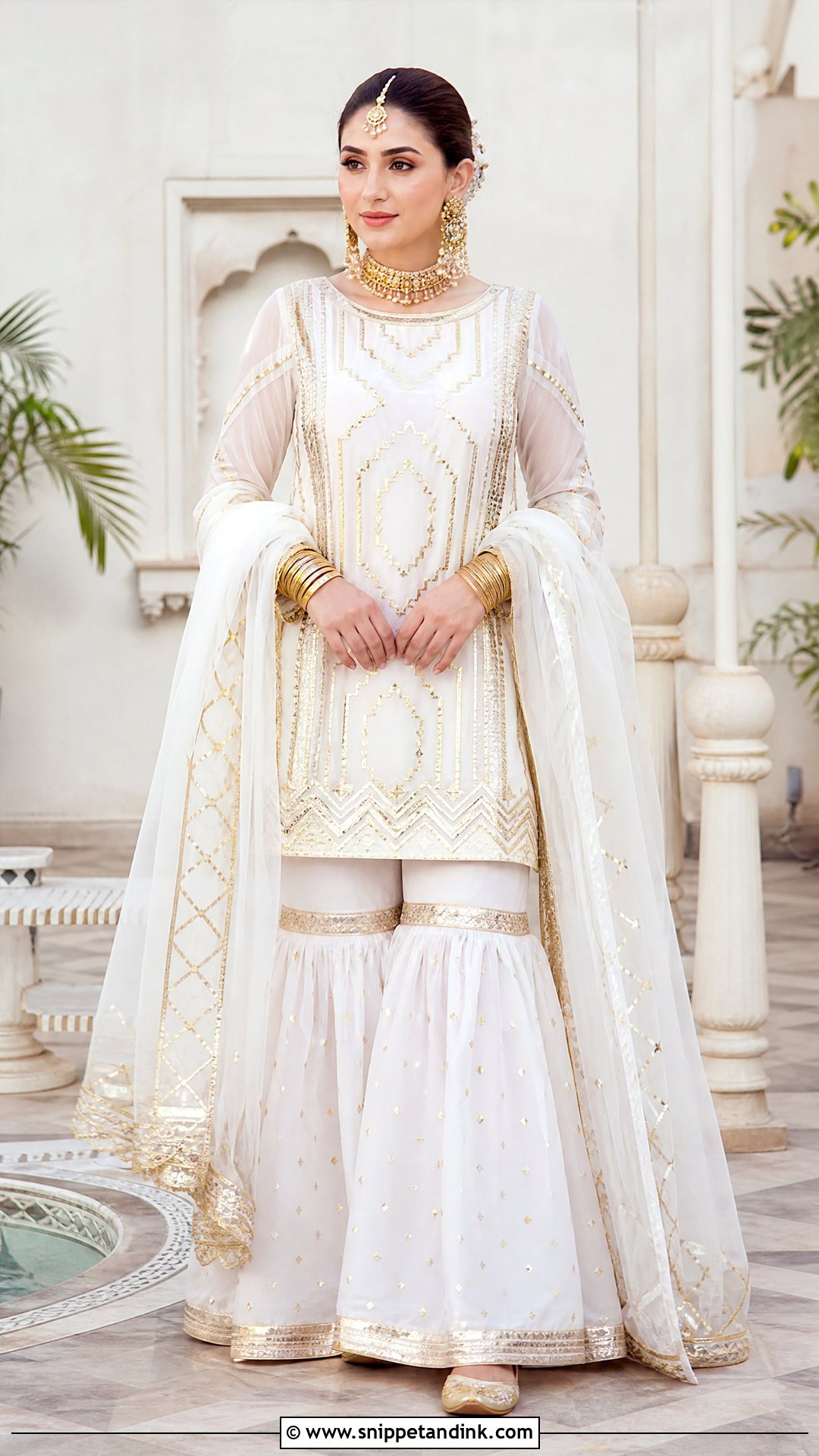
Gota patti is ribbon appliqué, traditionally made from metallic tape, and it has a bolder texture than embroidery. A short white kurti with geometric gota borders and a full garara with broad metallic knee bands and small gota motifs across the flare. An organza dupatta with a heavy gota edge gives the bride enough visual weight. With this much shine I keep each jewellery piece refined: gold choker, jhumkas, tikka, stacked bangles, gold khussas. A braided low bun suits a daytime Nikah.

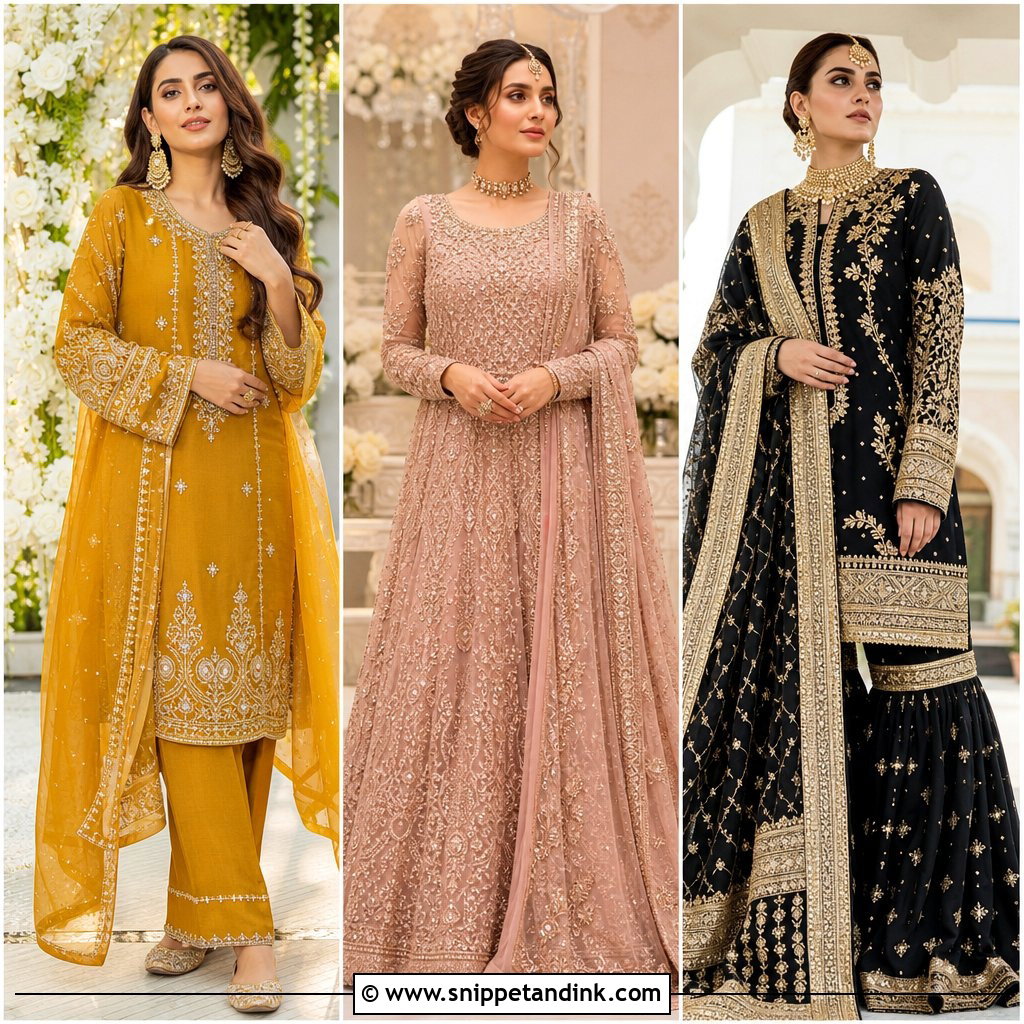

15. White Floral Garara Bridal Dress
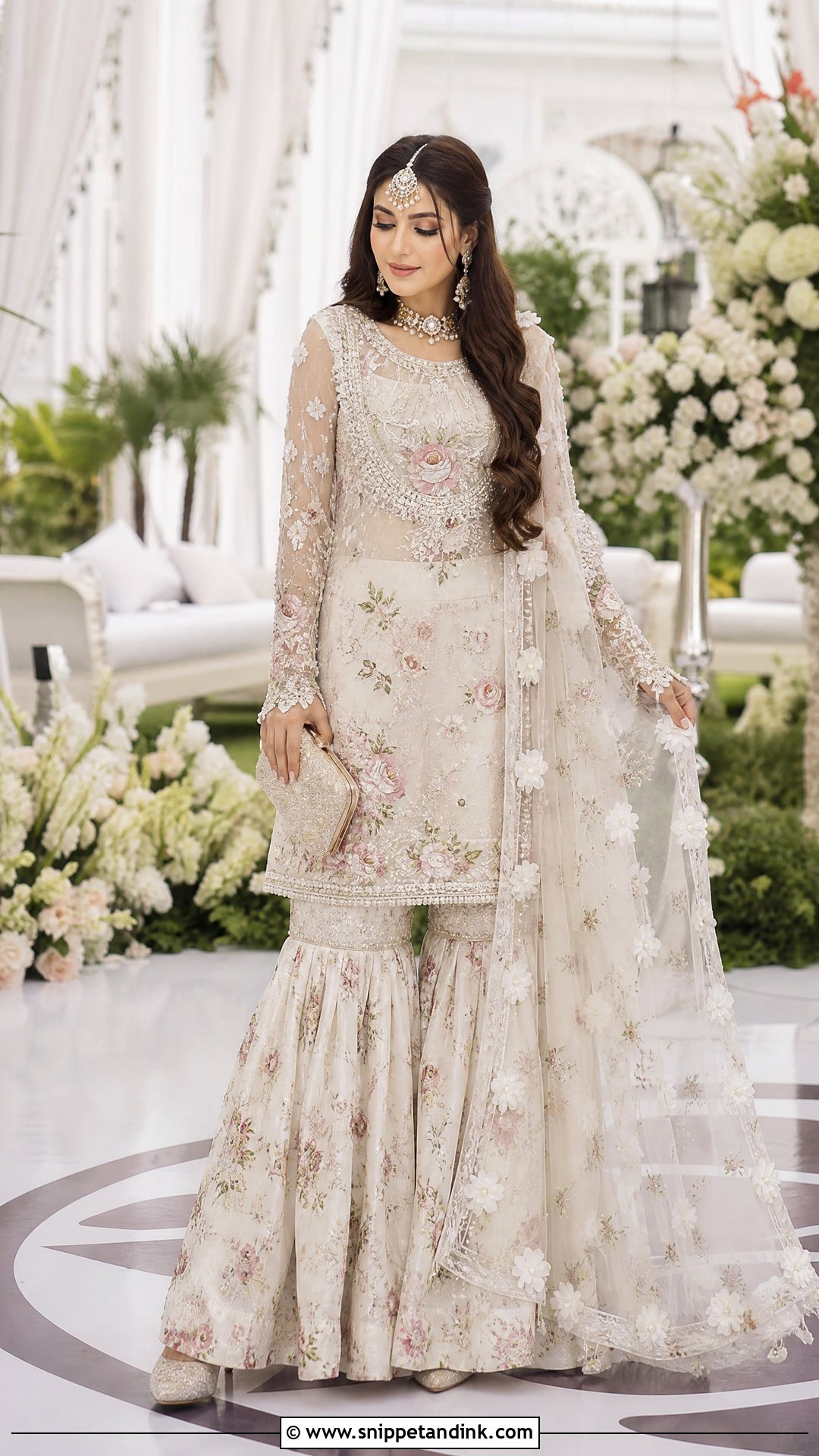
Three-dimensional flowers soften the garara’s structured shape, but they need breathing room. An ivory organza kurti with small embroidered flowers, pearls and a few fabric petals, and a garara with flowers only near the knee and hem. Fabric petals crush when you sit; ask your designer to place them where you won’t be leaning. A sheer floral dupatta, pearl and crystal jewellery, ivory pointed mules, a pearl clutch and minimal bangles. Soft curls and a petal-pink lip for a spring or summer Nikah.
16. White Garara With Embroidered Jacket
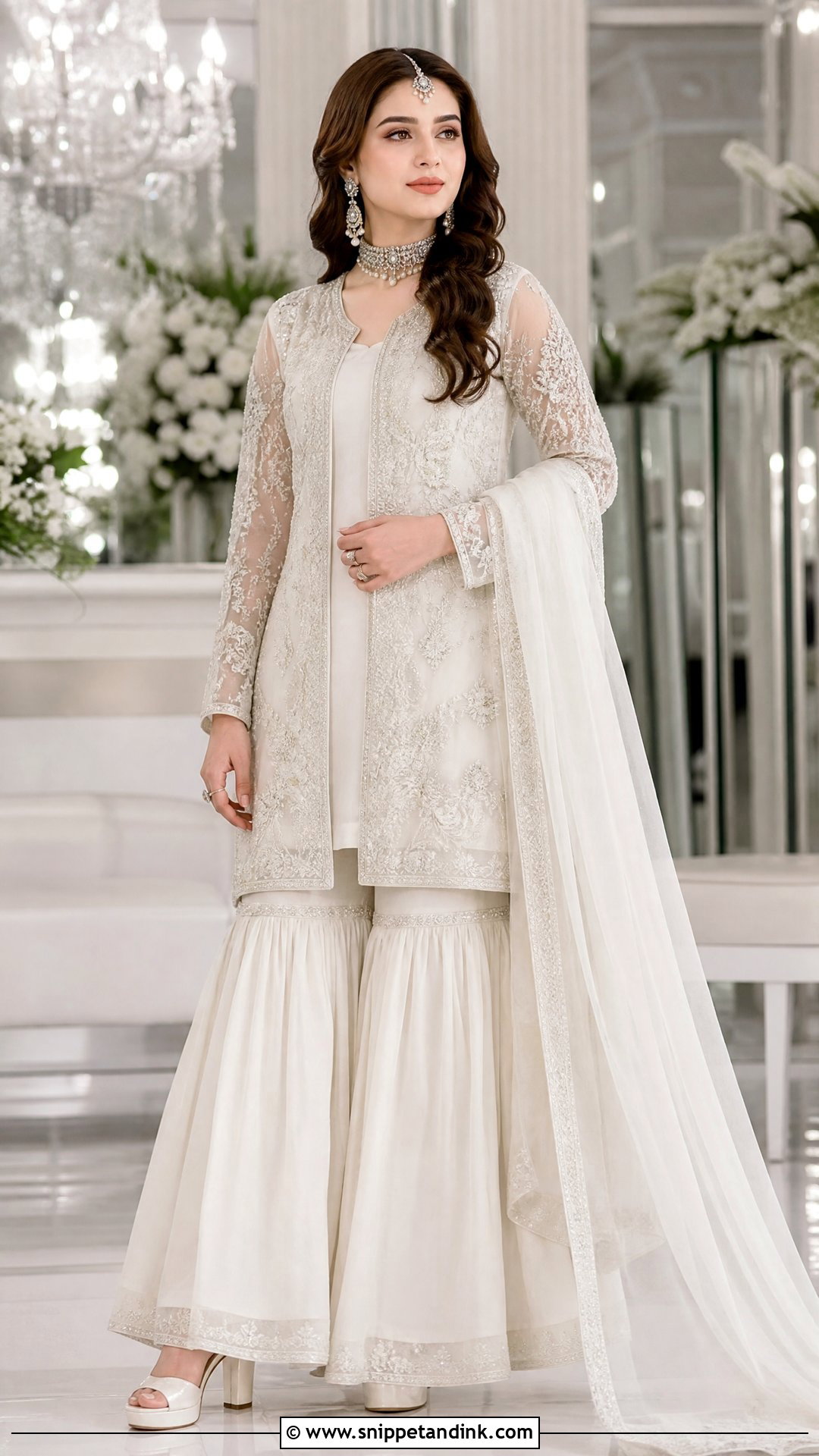
The jacket layer turns the garara into something closer to fashion than tradition. A simple sleeveless or cap-sleeve inner kurti with an open-front organza jacket to the knee, the jacket carrying the borders, vertical motifs and embellished cuffs. Keep the garara lighter so they don’t compete. A long jacket is warmer than it looks; for a summer Walima in a hot hall, choose the finest organza. A narrow dupatta over one arm, drop earrings, a slim choker, small tikka, white block heels and a sleek low bun.
17. White Garara With Bridal Cape
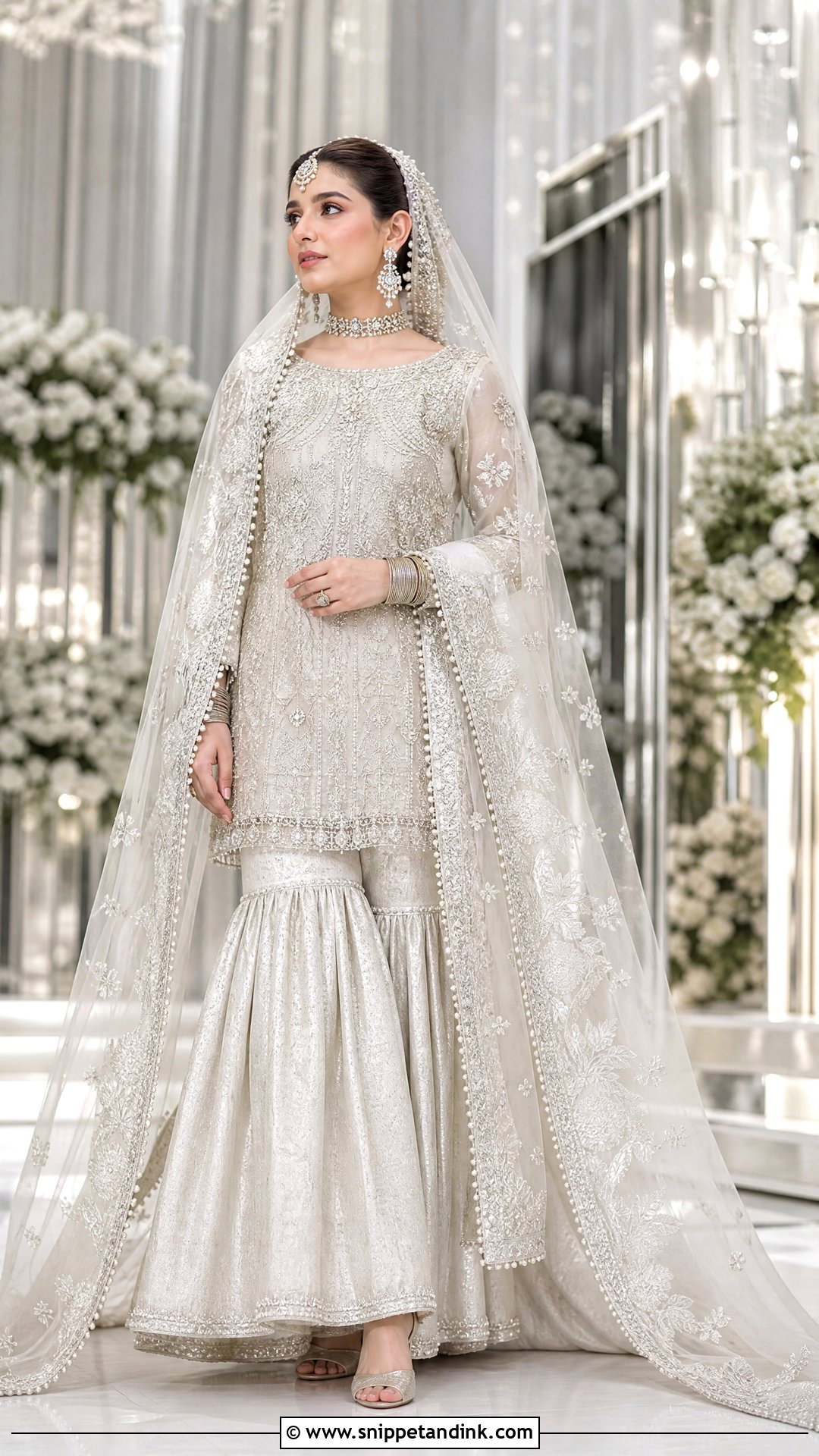
A sheer cape gives drama and arm coverage without a dupatta to manage all day. A fitted white kurti, a flared raw silk garara, and a floor-length organza cape with pearl shoulders and crystal motifs thinning toward the hem. The cape’s weight sits on your shoulders, so heavy pearl work there needs a well-fitted inner kurti underneath to stop it sliding back. Crystal earrings, a delicate choker, centred tikka, silver-white heels, a polished bun and a satin rose lip for the reception.
18. White High Neck Garara Bridal Dress
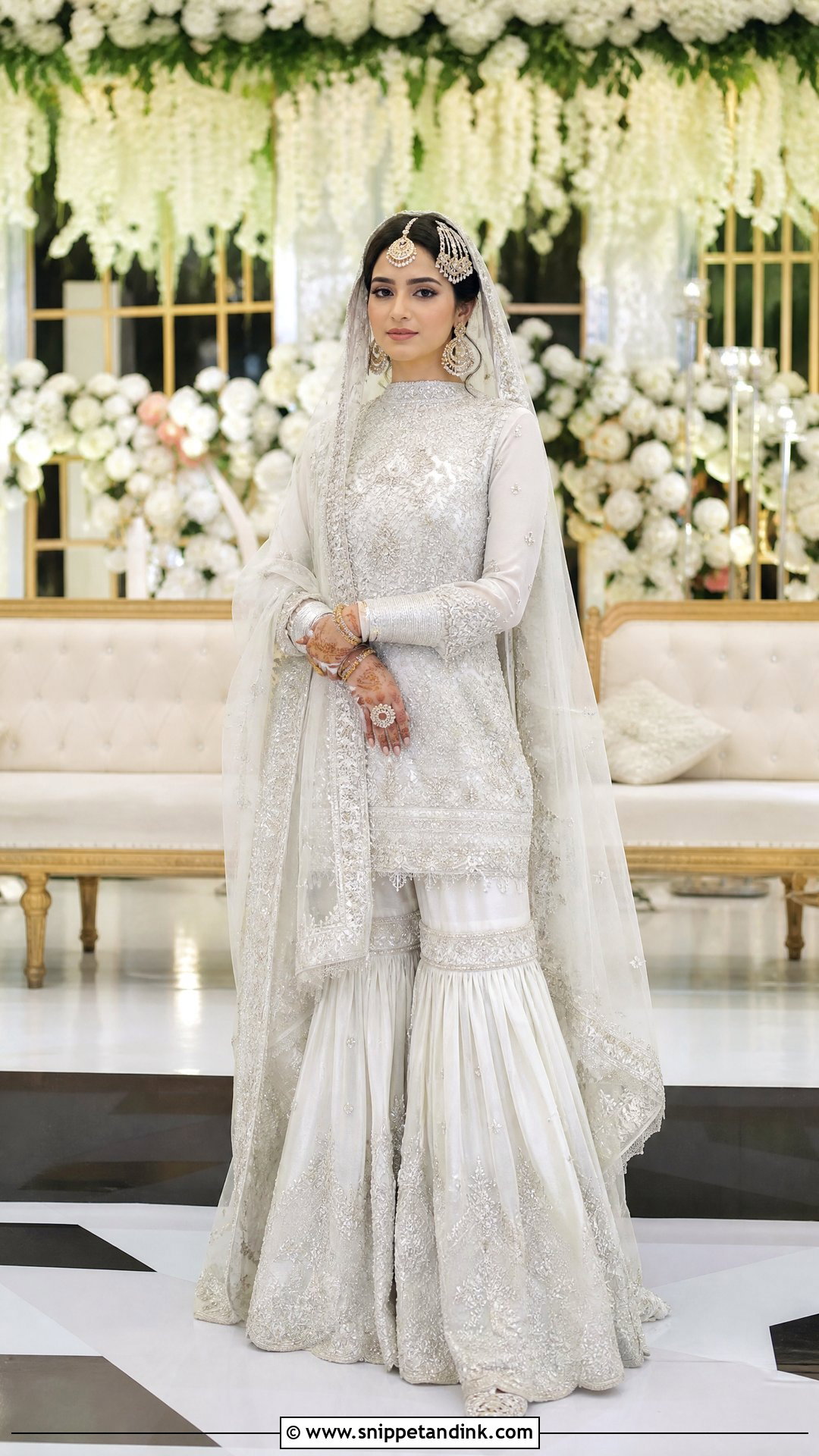
High necks look regal and give embroidery a strong frame. A fitted white shirt with a high collar, full sleeves and silver or antique gold at the shoulders and cuffs, over a wide garara with matching knee bands. Skip the necklace; the collar is the necklace. Wear statement earrings, tikka and jhumar instead. Foundation transfers onto a white collar very easily, so set your makeup well and put the shirt on before the final powder. A light dupatta over the head that doesn’t cover the collar, embroidered khussas and a berry lip.
19. White A-Line Garara Bridal Dress
An A-line kurti is the shape I reach for when a bride is unsure what suits her. It fits through the shoulders, then widens gently over waist and hips, and works with most body shapes. Vertical gold embroidery and a heavy lower border keep it polished. The garara should sit comfortably at the waist and only flare below the knee. A dupatta with embellished corners, a medium necklace, earrings, a delicate tikka. Low block heels or supportive khussas for a long ceremony, and a side-parted bun.

20. Minimal White Garara Nikah Dress
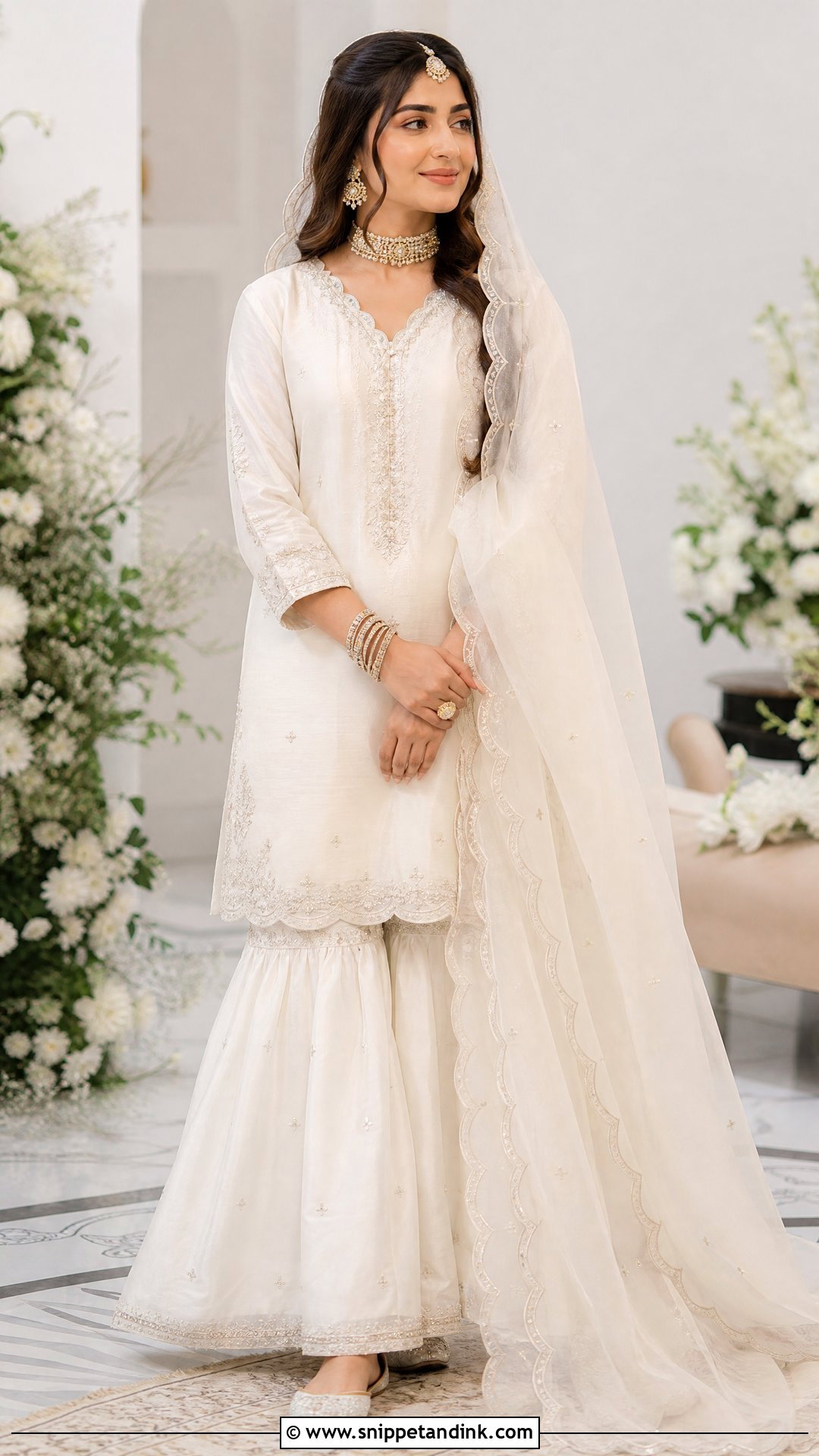
Minimal works when each detail is chosen on purpose. A clean raw silk kurti with fine embroidery only at the neckline, cuffs and hem, and a softly flared garara with a narrow knee band and tonal motifs. The fabric quality shows more in a plain outfit, so this is where I’d spend on good raw silk rather than embellishment. A sheer organza dupatta with a scalloped border. A pearl choker, earrings, a small tikka, a few bangles and white khussas. Fresh makeup and a rose lip suit a small Nikah.
White Raw Silk Versus Mehndi, Foundation and Perfume
White shows everything, and a few habits protect it. Fresh mehndi transfers colour onto white cuffs for a day or two after application, so if your mehndi is close to the Nikah, ask for sleeves that end above the wrist or keep hands clear of the fabric while the stain develops.
Spray perfume before you dress, never onto the outfit. The alcohol and oils can mark silk and dull zari and kamdani over time. The same goes for hairspray once the dupatta is on.
If something does land on the outfit during the day, blot it with a clean white tissue and leave it. Rubbing with water on raw silk tends to leave a ring that is harder to remove than the original mark, and scrubbing embroidery pulls threads loose. A cleaner can deal with most food and makeup marks later, as long as they haven’t been worked into the weave.
After the wedding, have the outfit professionally cleaned by someone used to handwork, then store it folded in soft white cotton or muslin, not plastic, with tissue between the folds of embroidery. Refold it along different lines every few months so the creases don’t set into the raw silk.
Proportion Decides Which White Garara Suits You
A white garara works best when the proportions are right for your body and the ceremony. Short kurtis show off the garara; long shirts, jackets, capes and A-lines give more coverage. Gold reads traditional, silver crisp, pearls soft, and a red, green or blush dupatta brings colour without losing the white. Finish with jewellery that suits your neckline, shoes you can walk in and a dupatta pinned securely, and wear the outfit around the house once before the day.
You'll Like These Ideas:







Leave a Reply