
A gharara is the one bridal silhouette I can recognise from across a hall: fitted through the upper leg, gathered at the knee, then flaring out to the floor. Worn with a short kurti and dupatta, it carries heavy zardozi, dabka, resham and gota patti better than most cuts, because the flare gives the embroidery room to move. Red brings its own decision. Scarlet reads bright and young in daylight, while crimson and maroon hold their depth under warm evening lights, so I always ask where and when the ceremony happens before we talk about shade. The outfits below run from heirloom zardozi to quiet nikah pieces, and for each one I’ve noted what I’d check at the fitting.
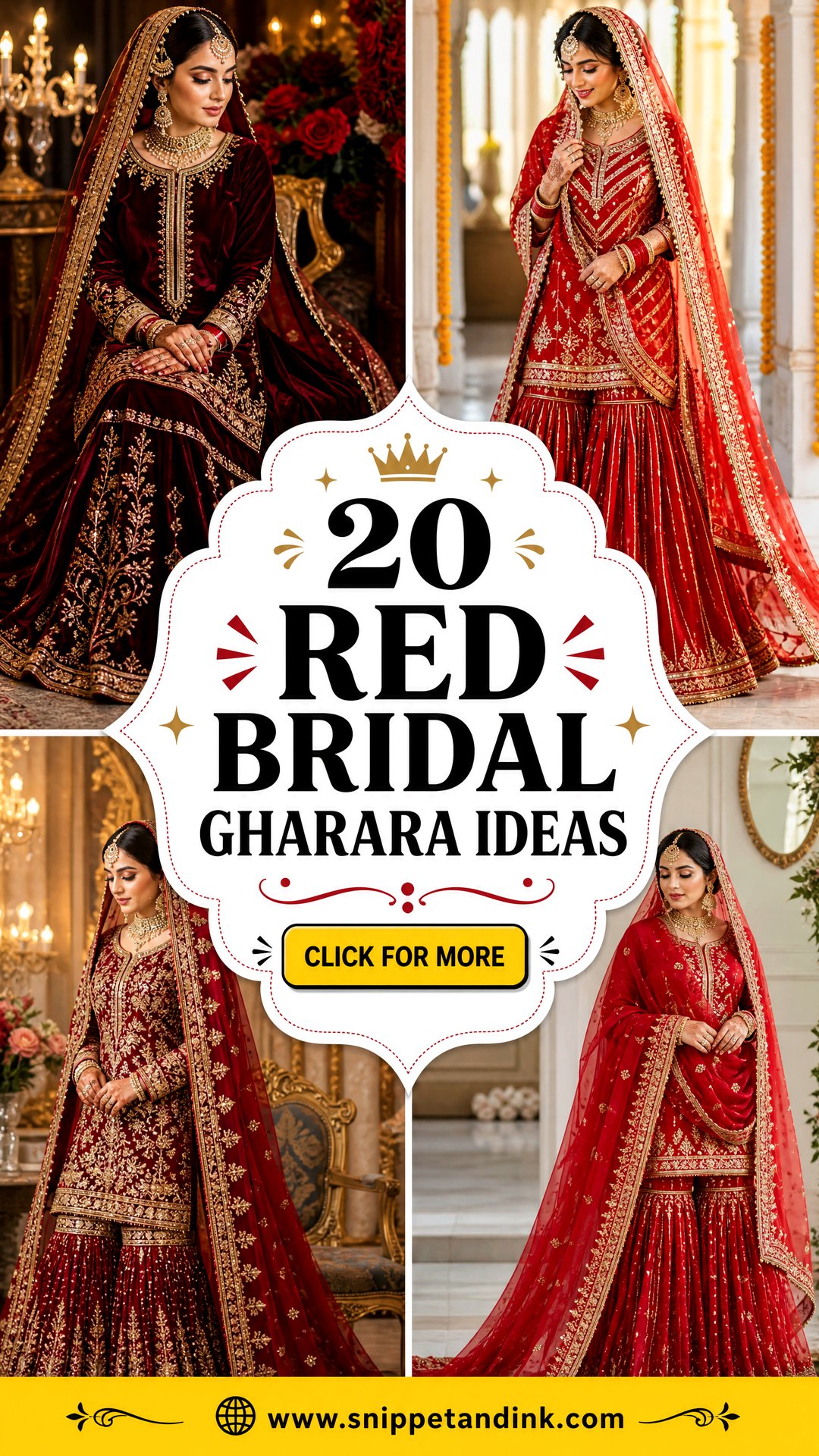
The Knee Join Is Where Every Gharara Fitting Starts
Each leg of a gharara is built in two parts: a fitted upper section, then a gathered or pleated lower flare joined at the knee, usually with an embroidered band covering the seam. If that join sits in the wrong place, nothing else rescues the outfit. Too high and it shortens you; too low and the gather catches your calf so you can’t take a normal step.
At a fitting, these are the things I check before anyone talks about embroidery:
- Join height: the band should sit at or just below your actual knee, measured while you stand in your wedding shoes.
- Upper leg ease: fitted to look at, but loose enough to sit on a low seat without the seam straining.
- Flare length: the hem should brush the floor in those shoes, or extend behind you for a farshi cut.
- Kurti hem: it needs to finish a clear hand’s width above the knee band so the gather stays visible.
- Waistband: many ghararas use a drawstring, but with a heavy flare I ask for a wider band with hooks so the weight doesn’t roll it down.
Heavily embroidered bridal pieces are made to order, and handwork is slow. Many workshops ask for several months’ notice, though it varies a lot by maker and season. Plan at least two fittings: one to set the knee join and kurti length, and a last one in your shoes with the dupatta pinned and your actual jewelry on, because a heavy choker changes how a neckline sits.
1. Red Bridal Gharara With Gold Zardozi
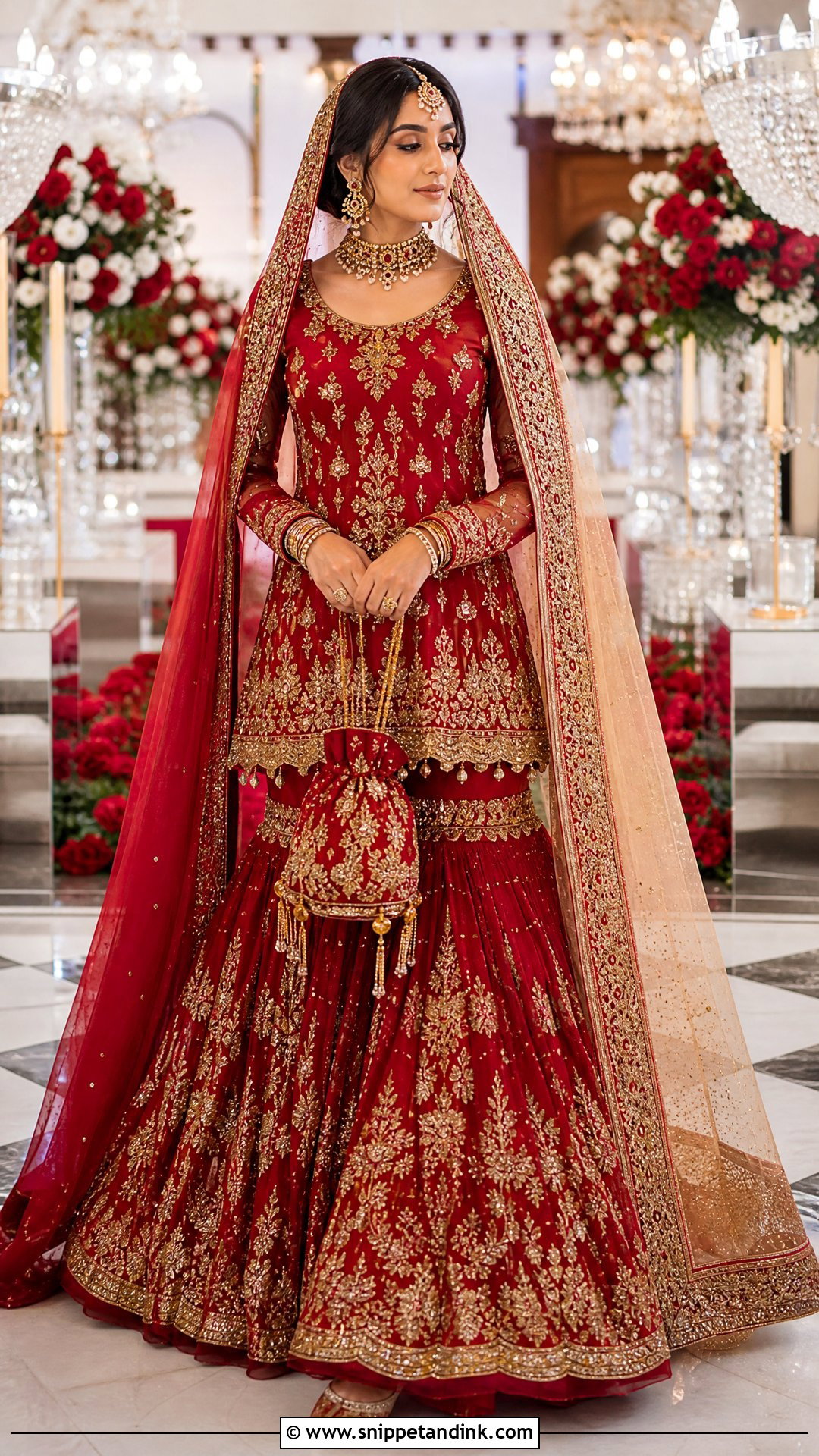
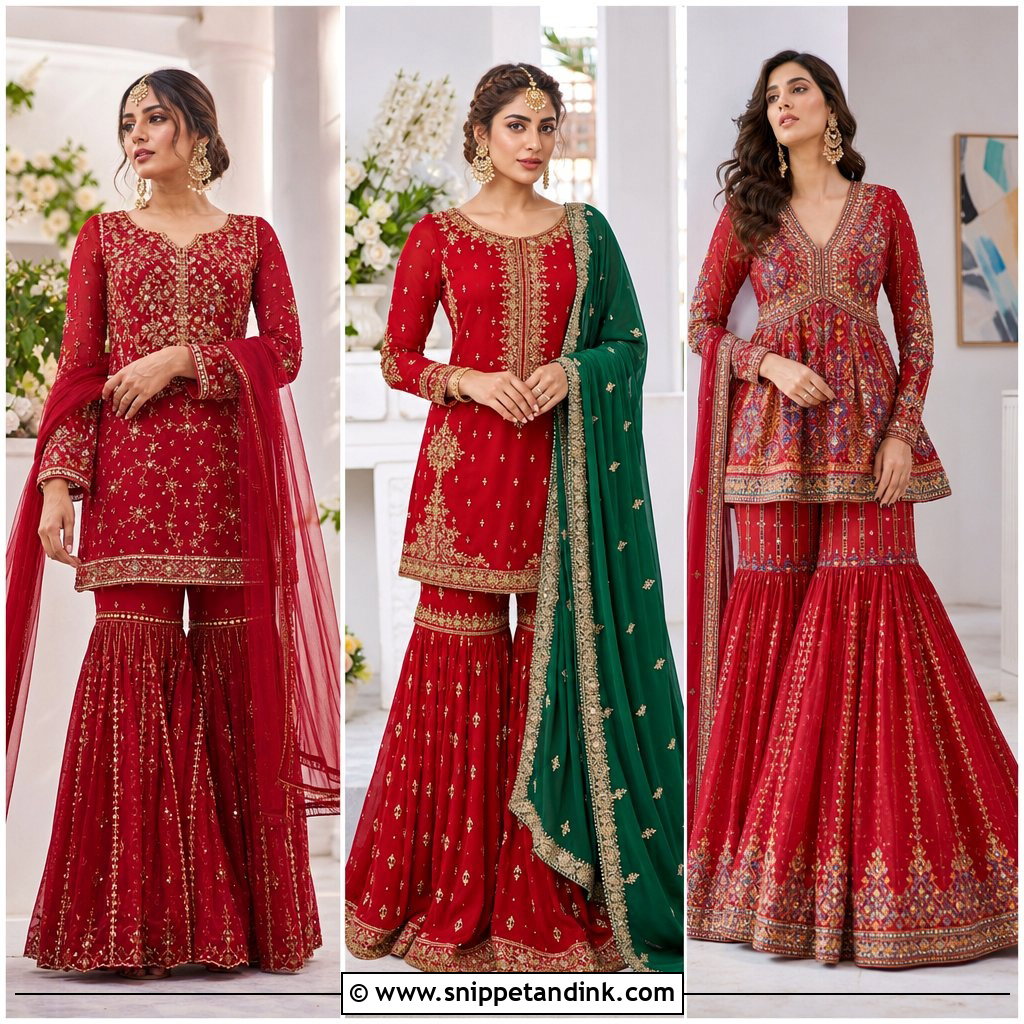
Gold zardozi on red is the version most families picture first, and it looks richest when the embroidery is placed with some discipline. I keep the motifs light above the knee and save the dense work for the flare border. Zardozi is worked in metal wire, and weight at the hem actually helps the flare hang and swing. A short silk kurti with a defined neckline, fitted sleeves and work concentrated at its hem sits on top, with a red net dupatta carrying a wide gold edge. Kundan choker, earrings, maang tikka and stacked bangles keep it classic. I’d choose gold embroidered juttis over visible heels, since a narrow heel catching a heavy border halfway through a long ceremony is a real risk.
2. Maroon Bridal Gharara With Velvet Kurti
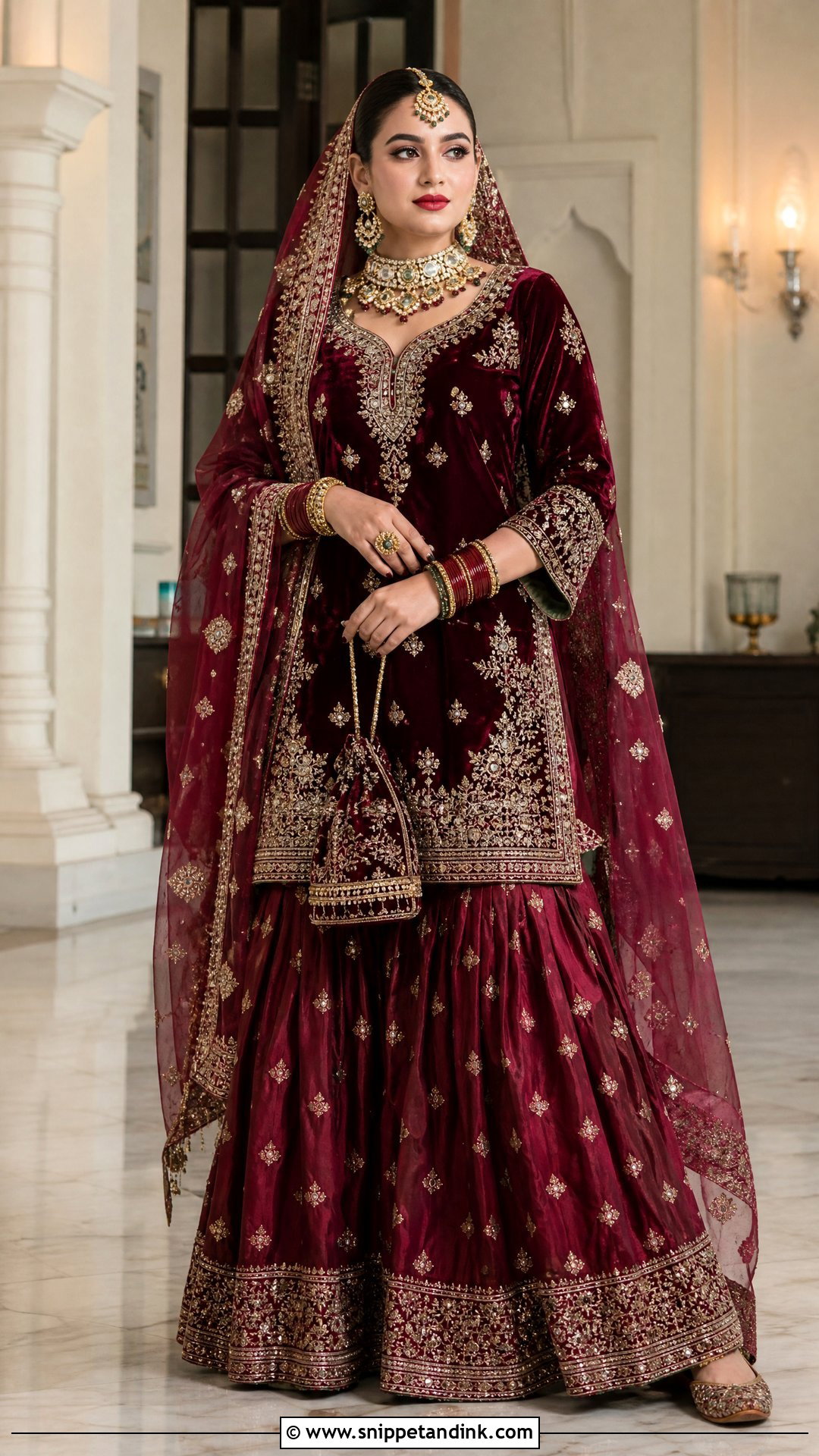
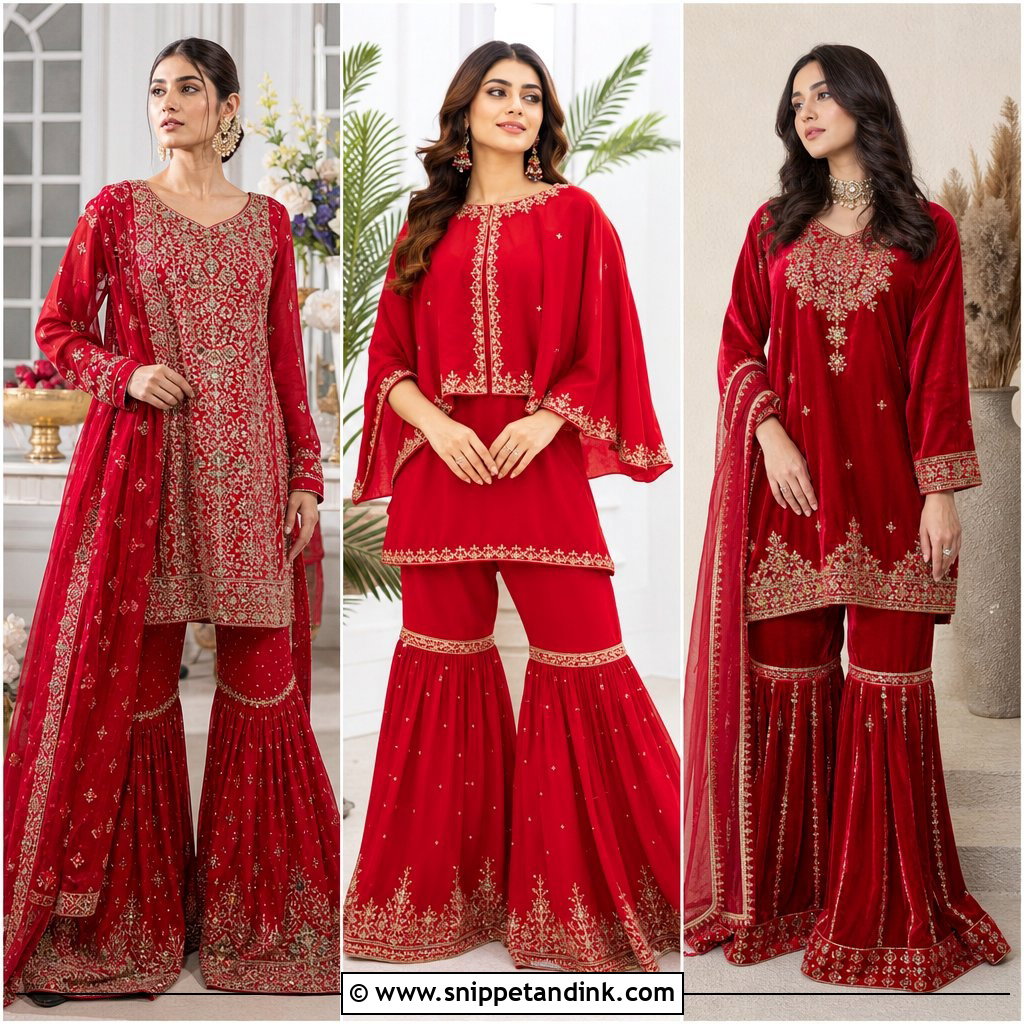
Velvet is a cool-season fabric, full stop. I wouldn’t put a bride in a velvet kurti for an outdoor summer function, because the pile traps heat and shows sweat at the underarm far faster than silk. For an evening winter ceremony, though, a structured hip-length maroon kurti with full sleeves and antique gold dabka at the neckline, cuffs and hem looks rich and deep. Pair it with silk or jamawar in the same maroon family rather than more velvet, which would make the outfit heavy both to wear and to look at. An organza dupatta, antique gold jewelry, a centred tikka, embroidered juttis and a compact potli finish it. Want more coverage? Lengthen the kurti, but stop the hem above the gathered knee or the gharara loses its shape.
3. Ruby Red Bridal Gharara With Jamawar
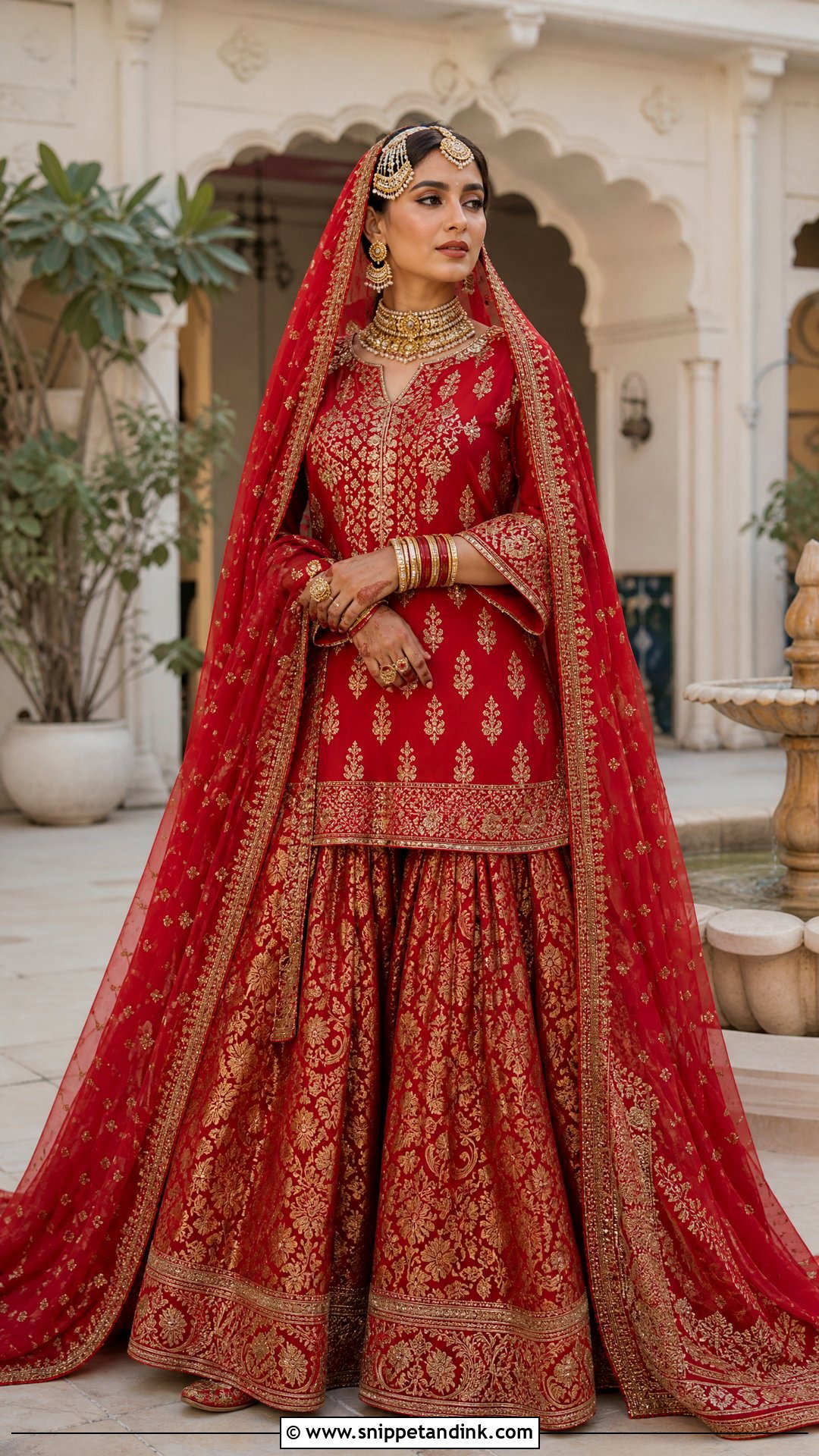
Jamawar is a woven pattern rather than embroidery, so it gives you texture without the weight. That makes it a smart base under a plain silk short kurti with an embroidered neckline, scattered floral sprays, decorated cuffs and a wide antique gold hem. Underneath, a ruby jamawar gharara with small gold motifs and a defined border at the flare picks up light every time you walk. Woven metallic jamawar can feel scratchy against bare legs, so I ask for a soft lining right down to the knee join. Drape a matching dupatta with scattered bootis over the head and let it fall along one shoulder, then add a gold choker, jhumkas, a matha patti, bangles and embroidered footwear.
4. Red Farshi Gharara With Long Train
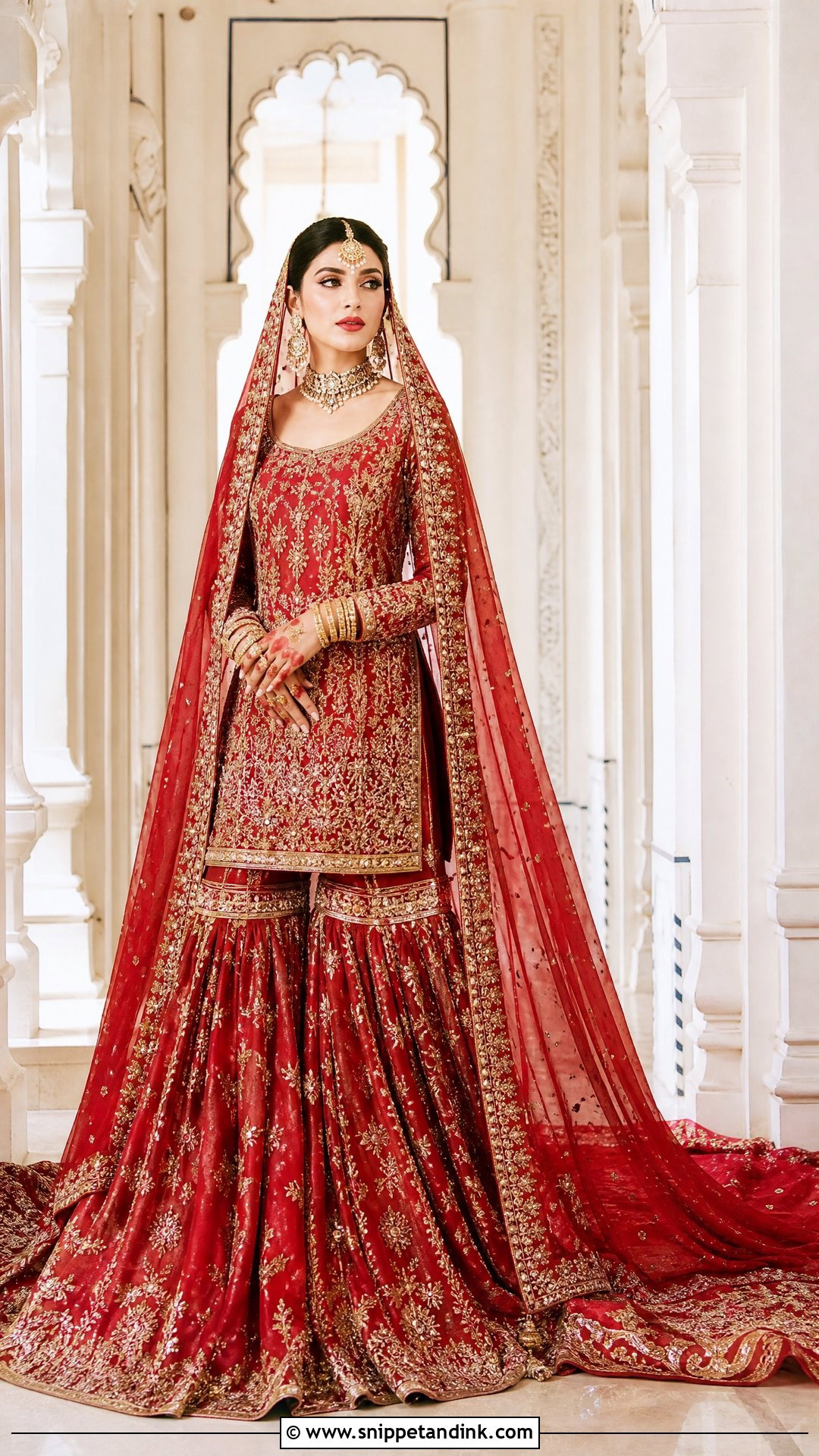
Do you want a bridal entrance with maximum drama? A red farshi gharara extends past the feet and sweeps the floor like a short train. It is also the hardest version to live in. Someone needs to lift the back on stairs, and the bride has to learn to kick the hem forward as she walks rather than stepping into it. Keep the kurti short and fitted so all that volume has something to balance against, and put the zardozi, resham, dabka or gota around the knee joins and sweeping edge. A lightweight silk lining helps the fabric slide over carpet. Pin one dupatta neatly on the head and let a second sheer one rest across the arms. Platform sandals stay hidden under the hem and lift you a little clear of the floor.
5. Scarlet Red Bridal Gharara With Gota Patti
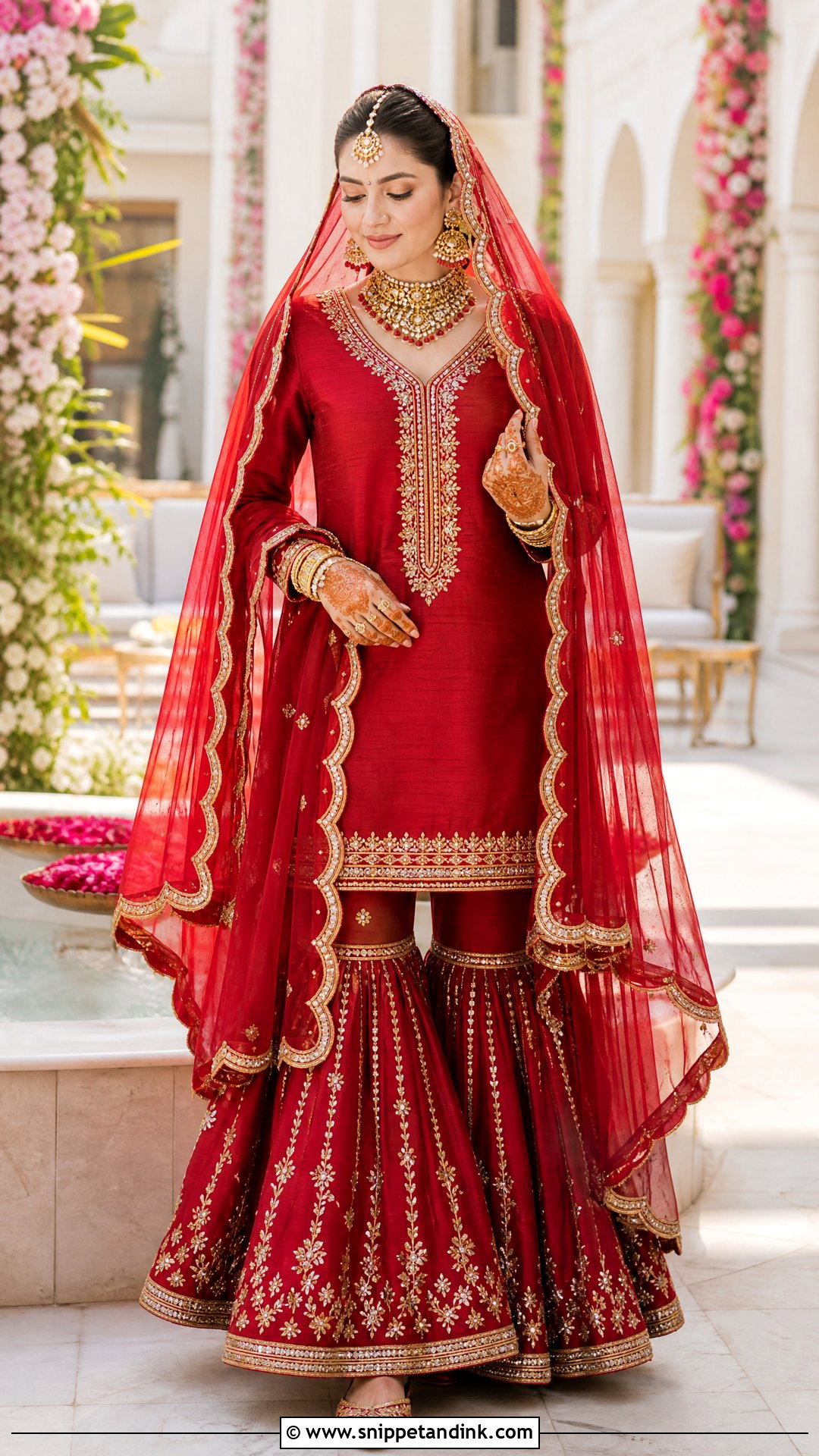
Scarlet is a daylight red. Under a midday sky it stays clean and bright, and gota patti, metallic ribbon stitched onto the fabric, flashes each time you turn. I’d start with a short raw silk kurti carrying geometric gota at the neckline, sleeves and hem, then narrow gota bands above the knee and wider panels across the lower flare. Gota stiffens a hem, so a soft chiffon dupatta with a scalloped border keeps the top half from looking armoured. A medium gold necklace, jhumkas, bangles, a small tikka and red-and-gold juttis are enough. Ask your makeup artist to match the red lip against the fabric in the same light, not from a swatch indoors.
6. Crimson Bridal Gharara With Dabka And Naqshi
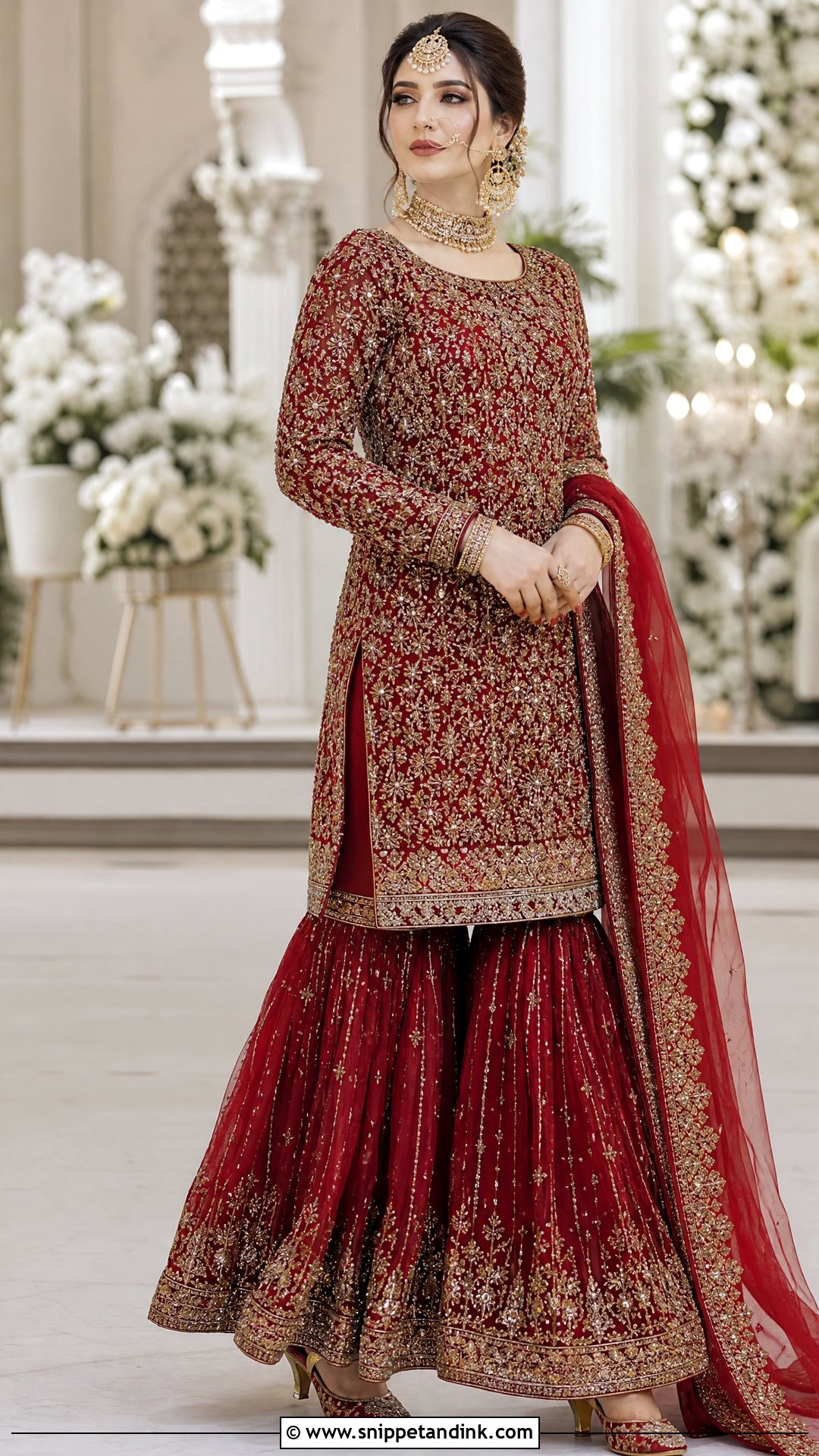
Dabka is coiled metal wire and naqshi is a fine metallic thread work, and on crimson the two give a raised, carved look that reads even from the back of a hall. Ask for small motifs across the upper gharara and dense work at the gathered knees and flared hems, because that is where the eye lands when you walk. Sequins and stones should be scattered, not poured on, or the dimension of the dabka vanishes under glitter. Have the embroidery continue around the back of the kurti too; guests spend much of the ceremony looking at your back. A sheer crimson dupatta, antique gold jewelry, a fine nose ring and embroidered heels finish it, with a sleek centre-parted bun keeping focus on the neckline.
7. Deep Red Bridal Gharara With Antique Gold
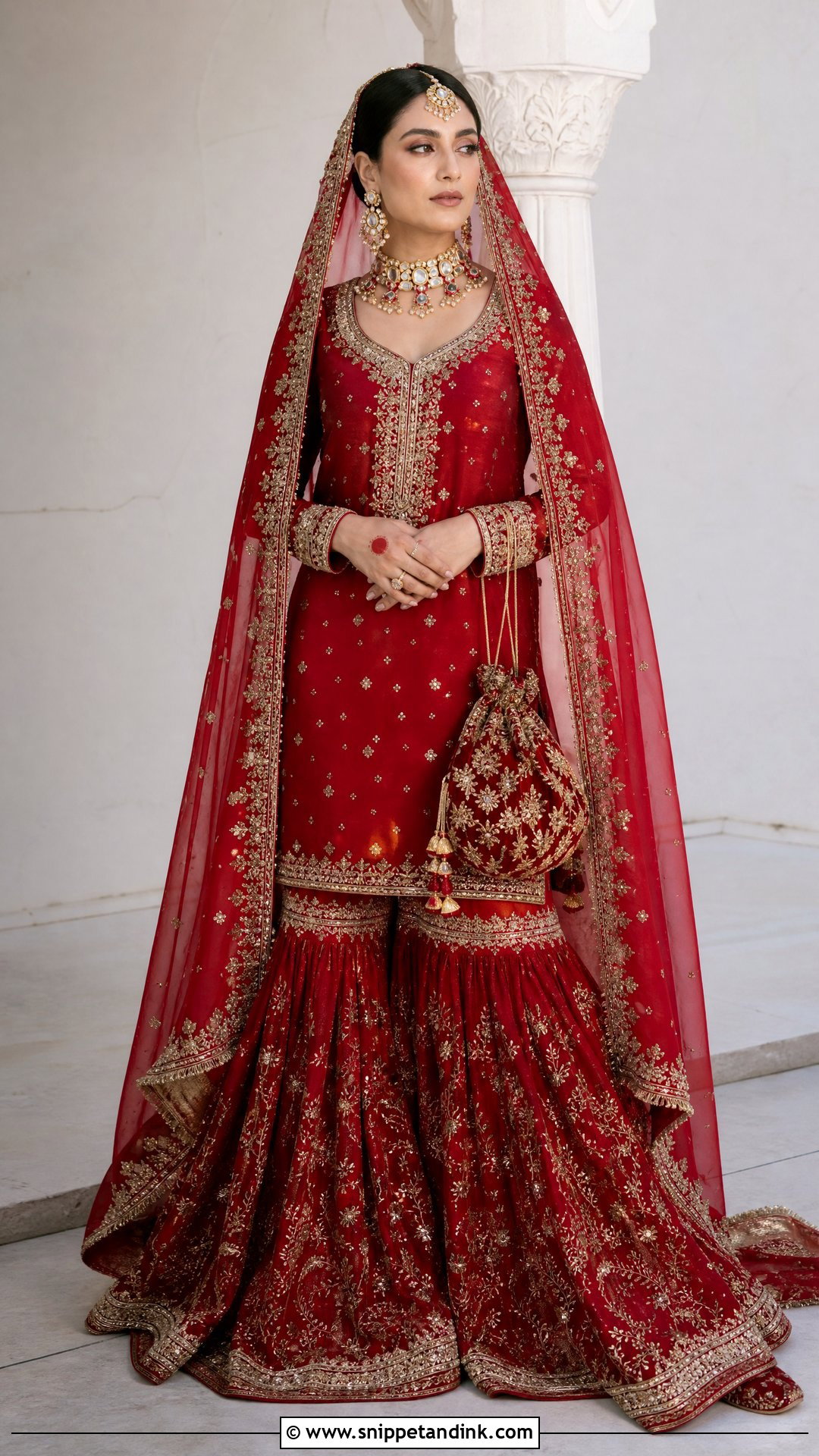
Antique gold suits the bride who finds bright yellow gold a little loud. The threadwork, muted sequins and small beads on the silk kurti have a softer, aged tone, and that same finish should carry through the gharara knee bands and broad lower borders. Accessories go wrong here more than anywhere else. A polished yellow gold set makes aged embroidery look dull beside it, so I steer brides toward antique gold with uncut stones, pearls or a touch of deep green. A sheer red dupatta with an antique border over the head, one end falling over the arm, a structured potli and dark red juttis complete it.
8. Red Bridal Gharara With Silver Embroidery
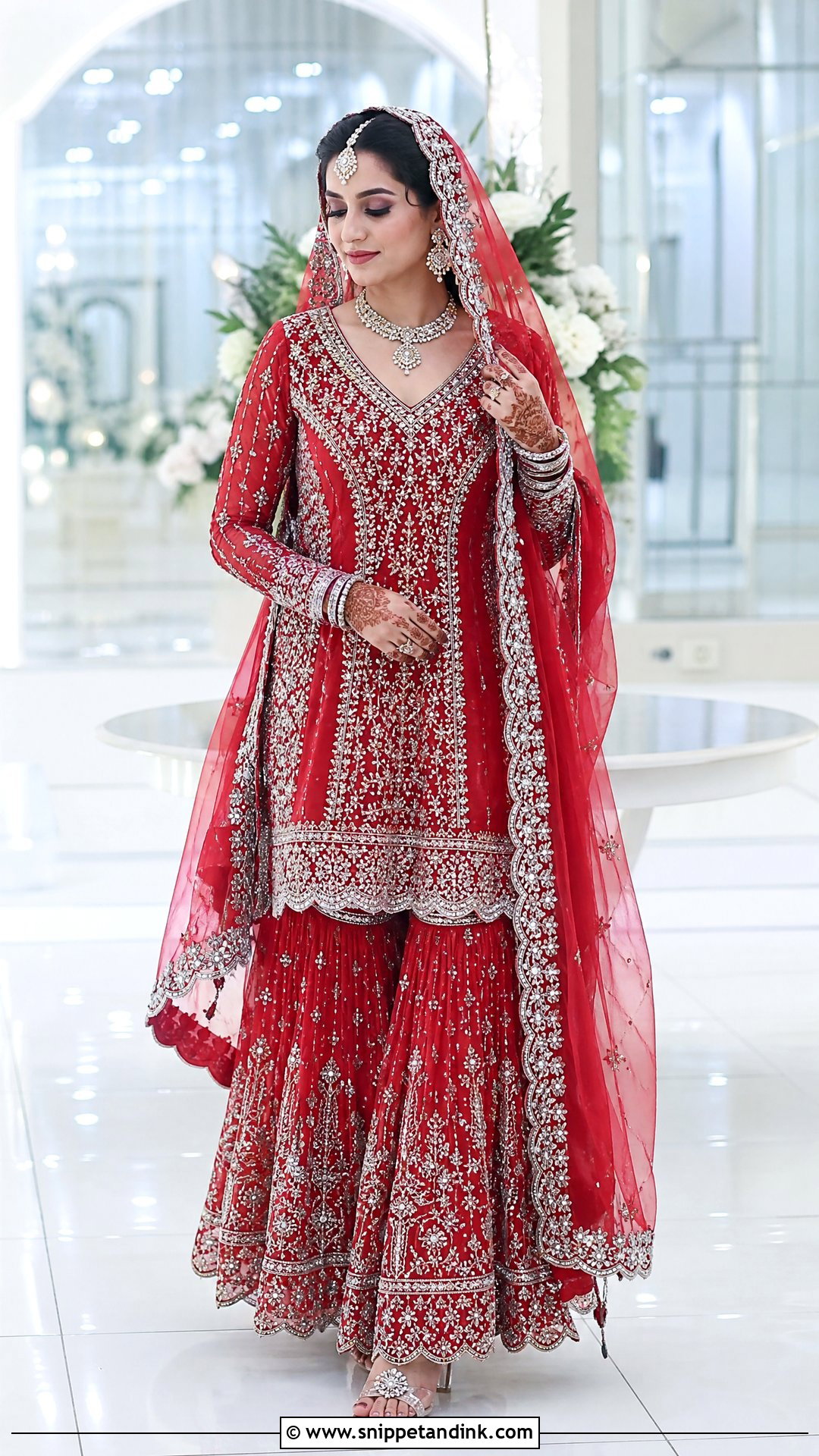
Silver on red feels cooler and more current, and it rewards bright indoor light, where zari and crystals look crisp against saturated fabric. Under warm yellow bulbs, silver can turn slightly grey, so I like to see the venue lighting, or photos taken there, before committing. Wear a clean V-neck or round-neck kurti worked in silver zari, crystals and fine sequins, over a red gharara with narrow knee bands and a scalloped hem. A lightweight net dupatta with silver edging keeps the palette consistent. Diamond-style jewelry, silver-toned bangles and crystal heels follow naturally, with cool rose blush and a neutral red lip.
9. Red Bridal Gharara With Floral Resham Work
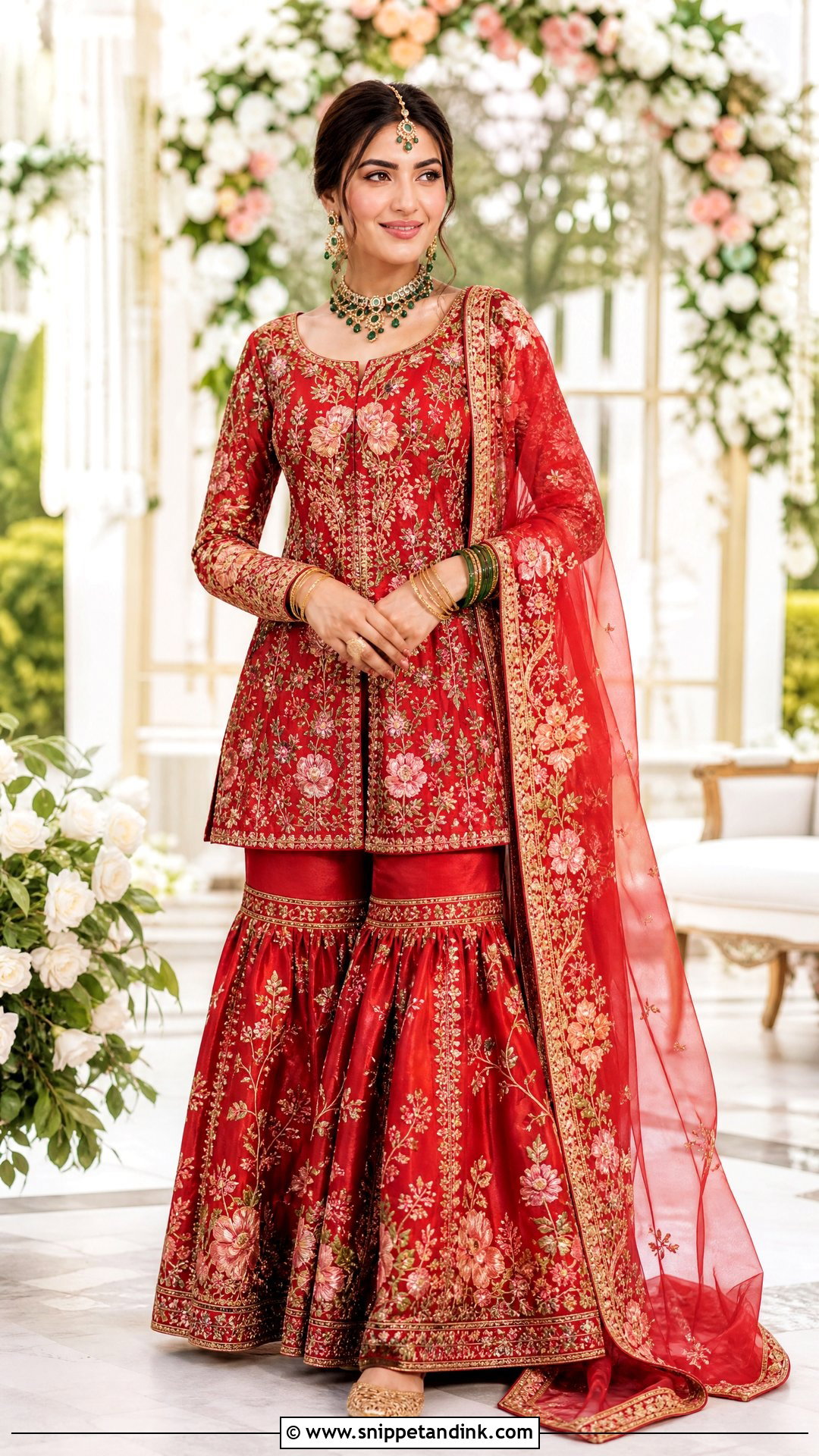
Resham is silk thread, and floral resham is where personality comes through: vines and blossoms in muted pink, green, coral and gold on a short silk kurti, with smaller repeats at the knee joints and lower flare. The red ground has to stay dominant so the outfit still reads bridal from a distance. My rule with this one is to stop adding sparkle. Crystals laid over thread embroidery flatten it, and hours of handwork disappear. A sheer red dupatta with a floral border ties top and bottom together, while emerald earrings or a green-stone necklace pick up the embroidered leaves. Gold bangles and juttis keep it warm.
10. Red Bridal Gharara With Tone-On-Tone Embroidery
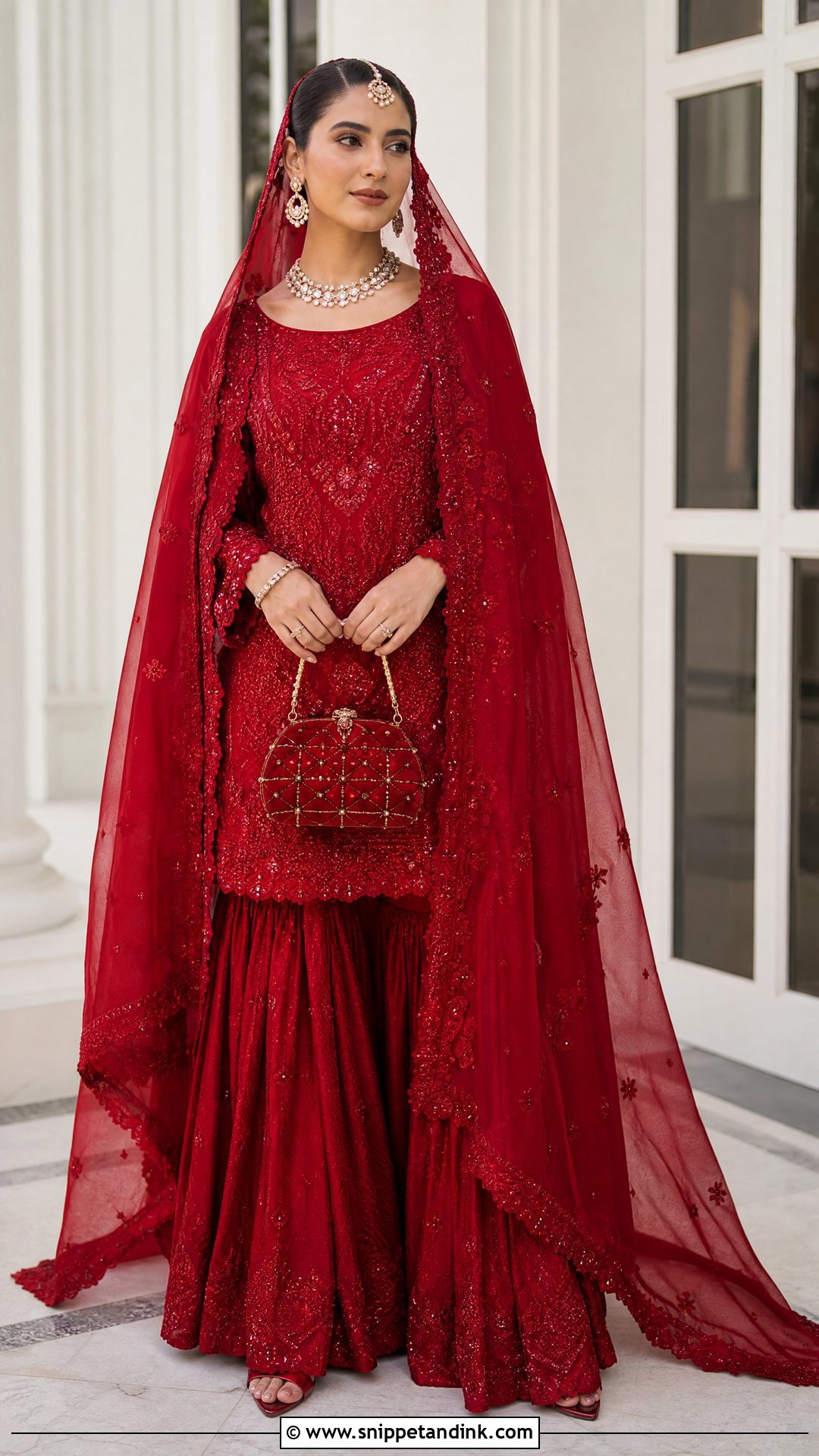
Red on red works when the embroidery has enough relief to cast its own small shadow. Flat tonal work disappears on camera, so I look for raised crimson resham, tonal beads and a few subtle sequins on a red raw silk kurti, with raised floral patterns around the gharara knees and hem. The result is modern and quiet while staying completely bridal. Swap the heavy metallic dupatta border for a red organza dupatta with a narrow embroidered edge. Contrast then comes from the jewelry, in pearls, diamonds or antique gold. Red embellished shoes and a small structured bag finish it for the bride who wants richness without yellow gold covering every inch of fabric.
11. Red Bridal Gharara With Peplum Kurti
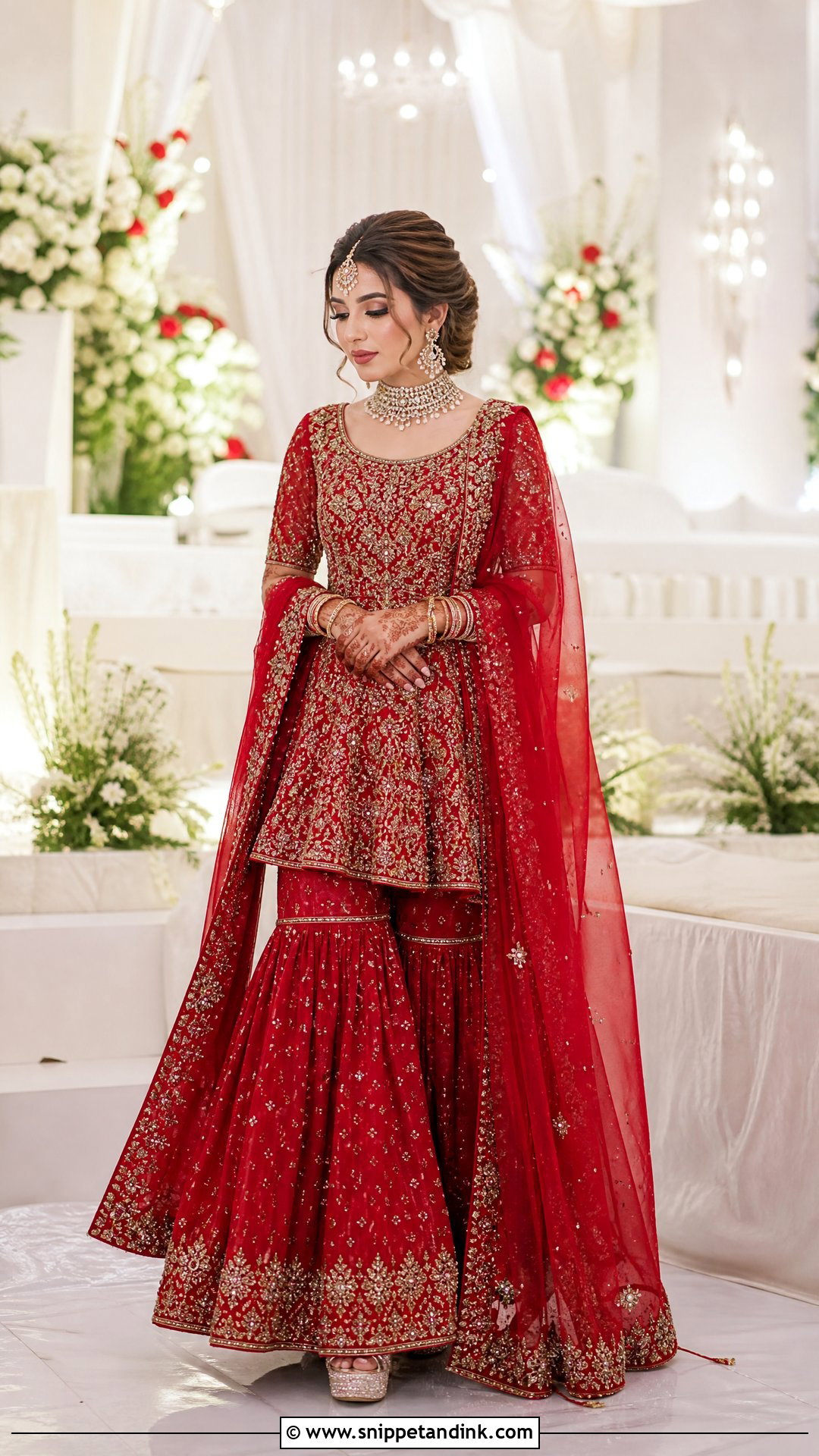
Peplum and gharara are both volume, so one of them has to stay quiet. I keep the peplum controlled, flaring gently from the natural waist and ending above the knee, because a wide peplum over a full flare starts to look like stacked tiers. Embroidery belongs at the neckline, waist seam and peplum edge, with the gharara simpler on the upper leg and ornate at the knee bands and hems. Check that waist seam sitting down. A fitted bodice that feels fine standing can dig in after an hour on the stage. A sheer dupatta over one shoulder or pinned lightly on the head, a choker, drop earrings, bangles and platform heels complete it.
12. Red Bridal Gharara With Long Kurta
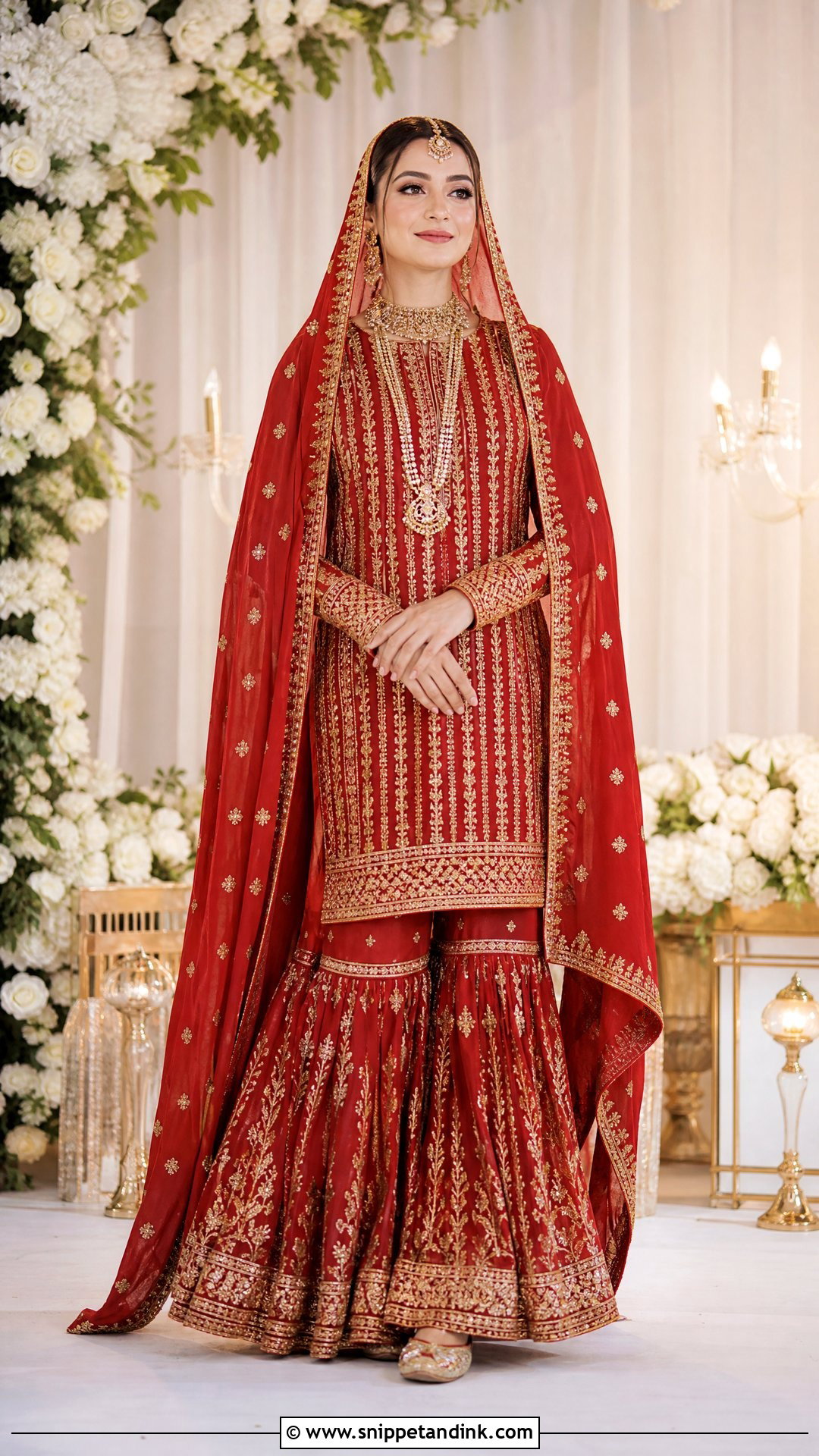
A long kurta is the modest option, and its length is everything. It should end just above the gathered knee, never on it, otherwise the gharara reads as a straight trouser with a frill at the bottom. Side slits let the flare move and show. Vertical zardozi or resham lines lengthen the body, and repeating that embroidery at the gharara hems ties the two pieces together. Full sleeves and a high round neck give coverage while still looking formal. Drape a light dupatta over the head with both sides falling evenly. Keep the jewelry streamlined with a long necklace, matching earrings, a maang tikka and comfortable juttis, since a choker squeezed against a high neckline looks cramped.
13. Red Bridal Gharara With Embroidered Jacket
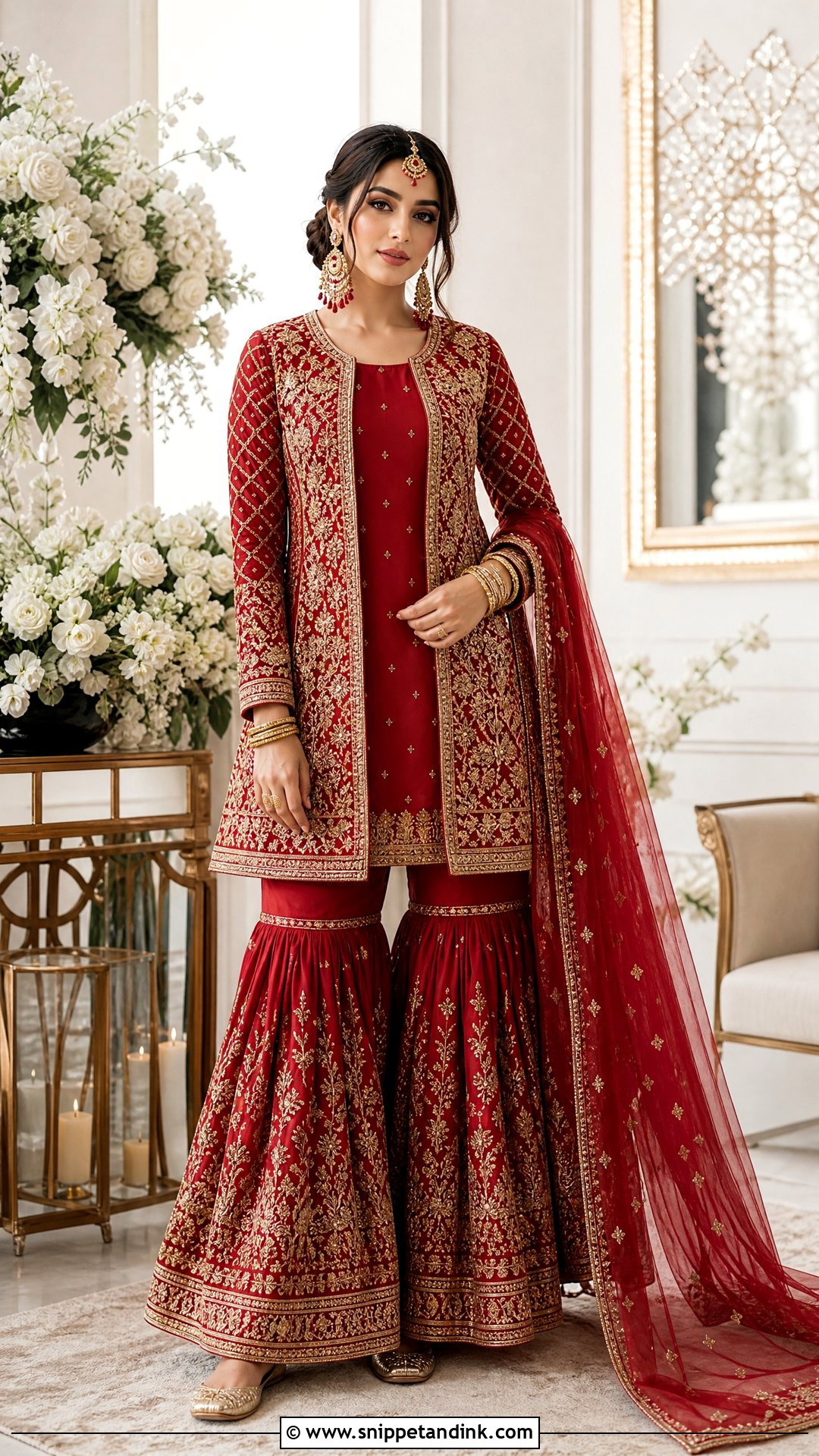
A jacket gives you coverage you can take off, which I find useful when a formal ceremony turns into an evening of dancing. Start with a simple sleeveless or short-sleeved red kurti and matching gharara, then layer an open-front fitted jacket ending at the waist or upper hip. Longer jackets hide both the kurti and the knee detailing, and the knee is the whole point of a gharara. Put the gold vines, architectural borders or floral motifs on the jacket and keep the gharara comparatively plain. Carry a sheer red dupatta on one arm or pin it behind the shoulders, with statement earrings, a small tikka, bangles and gold juttis. Have the jacket fitted with your arms raised; heavy embroidered jackets pull across the back every time you hug someone.
14. Red Bridal Gharara With Double Dupatta
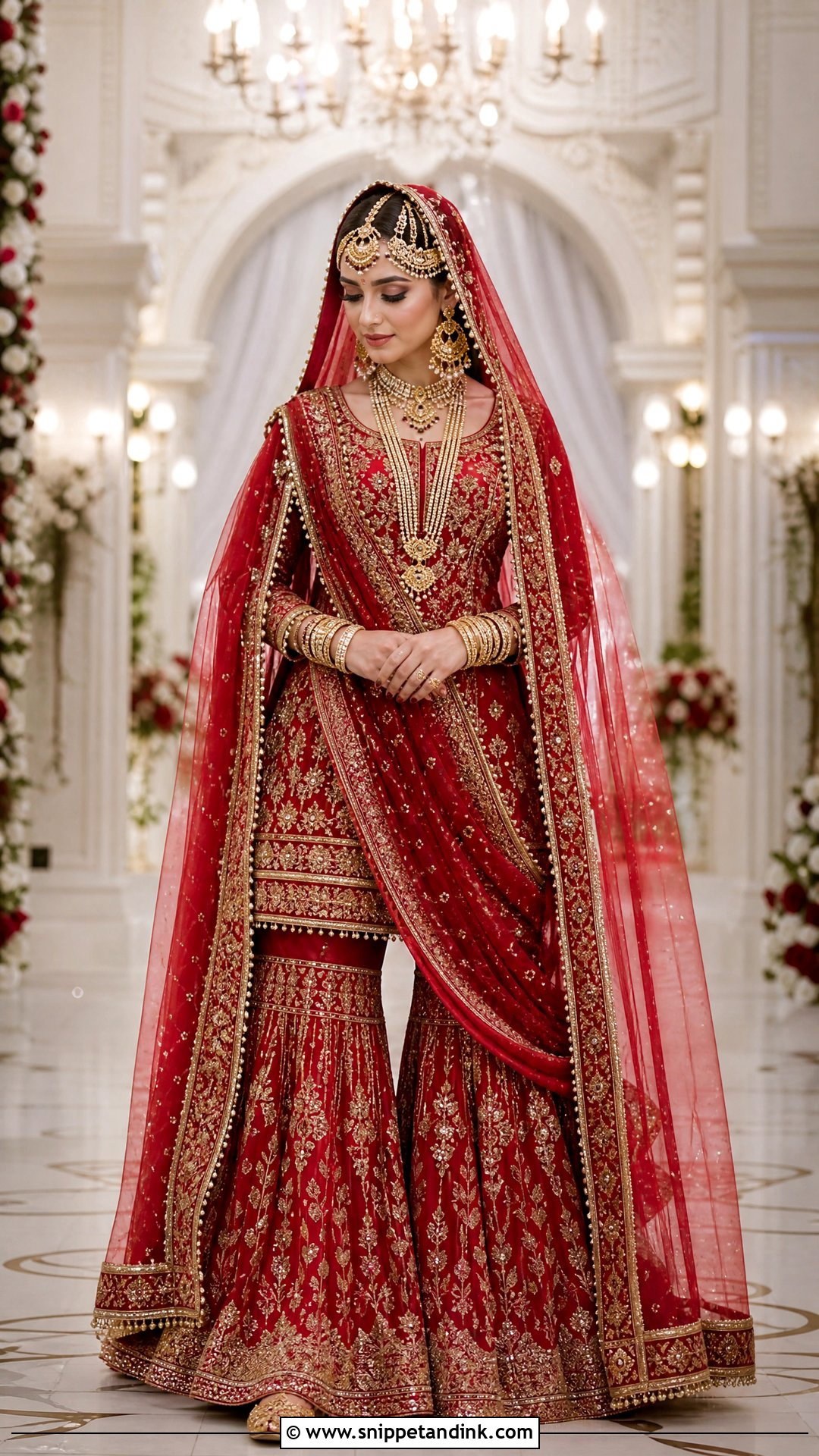
Two dupattas means two jobs. The lightweight net one goes on the head, pinned around the bun and at the shoulders, while a slightly heavier one crosses one shoulder and drapes diagonally to the waist. Matching red works, and so does crimson with deep maroon. Keep one of them nearly plain, because two heavily worked dupattas plus a choker and a long necklace bury the kurti. Weight is the real issue. A head dupatta anchored to the bun pulls on the hair for hours, so I insist on a full pinning rehearsal with the hairstylist, using the actual dupattas, worn for at least an hour. Add earrings, a matha patti and bangles once the drape feels secure.
15. Red Bridal Gharara With Organza Dupatta
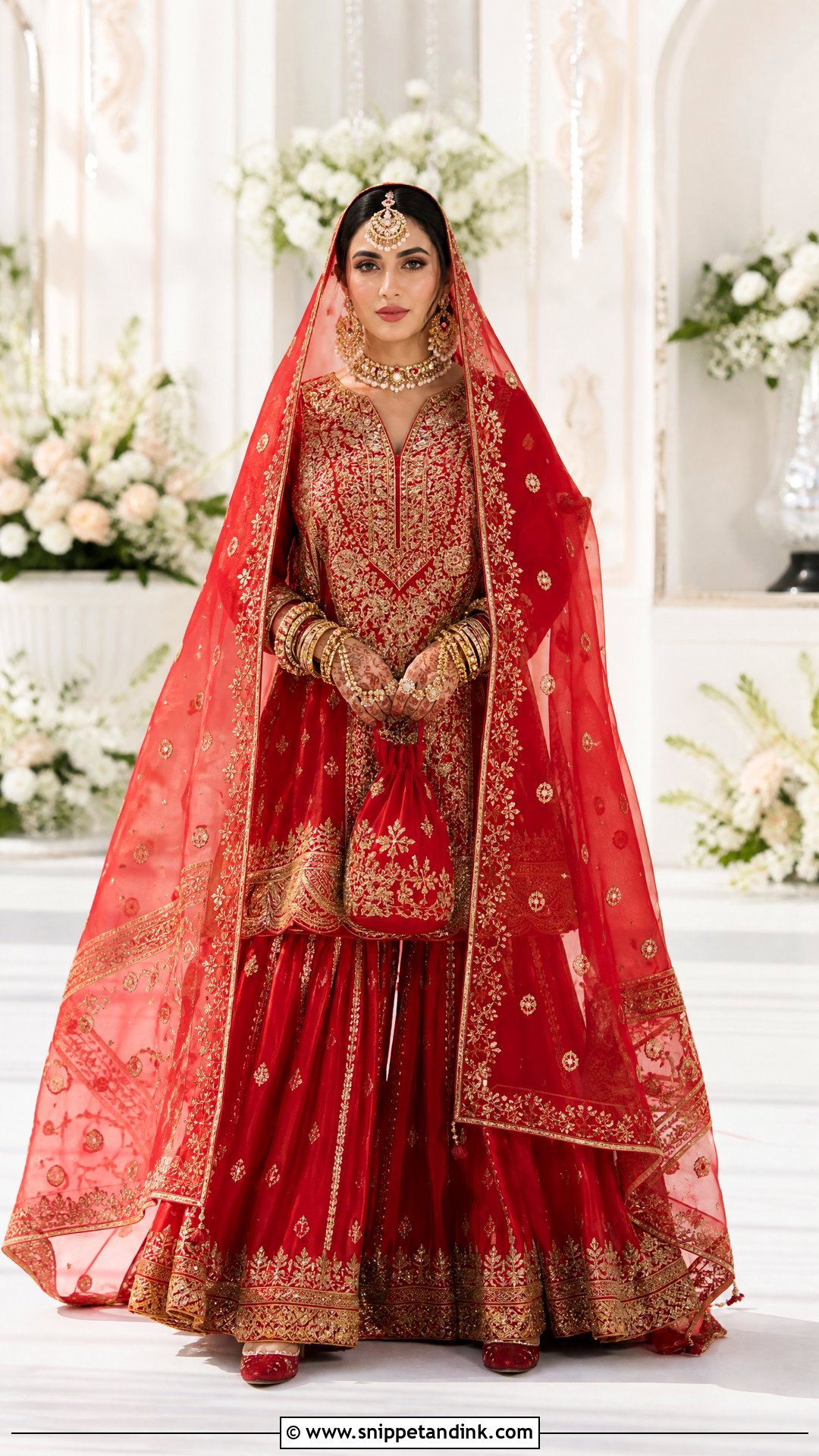
Organza is crisp, so it holds a shape around the face instead of collapsing onto the hair. That is why I like it over a detailed silk kurti and gharara, scattered with gold bootis and finished with a careful border. The border width matters more than people expect. A very wide, stiff border won’t fold, and the drape shifts every time you turn your head, so a scalloped embroidered edge is the better choice. Organza also creases sharply when crushed in a bag; steam it on the morning rather than packing it folded. Kundan jewelry, a centred tikka, stacked bangles and red embroidered heels finish it. Leave one side longer for a clean vertical line in photographs.
16. Red Bridal Gharara With Bandhani Dupatta
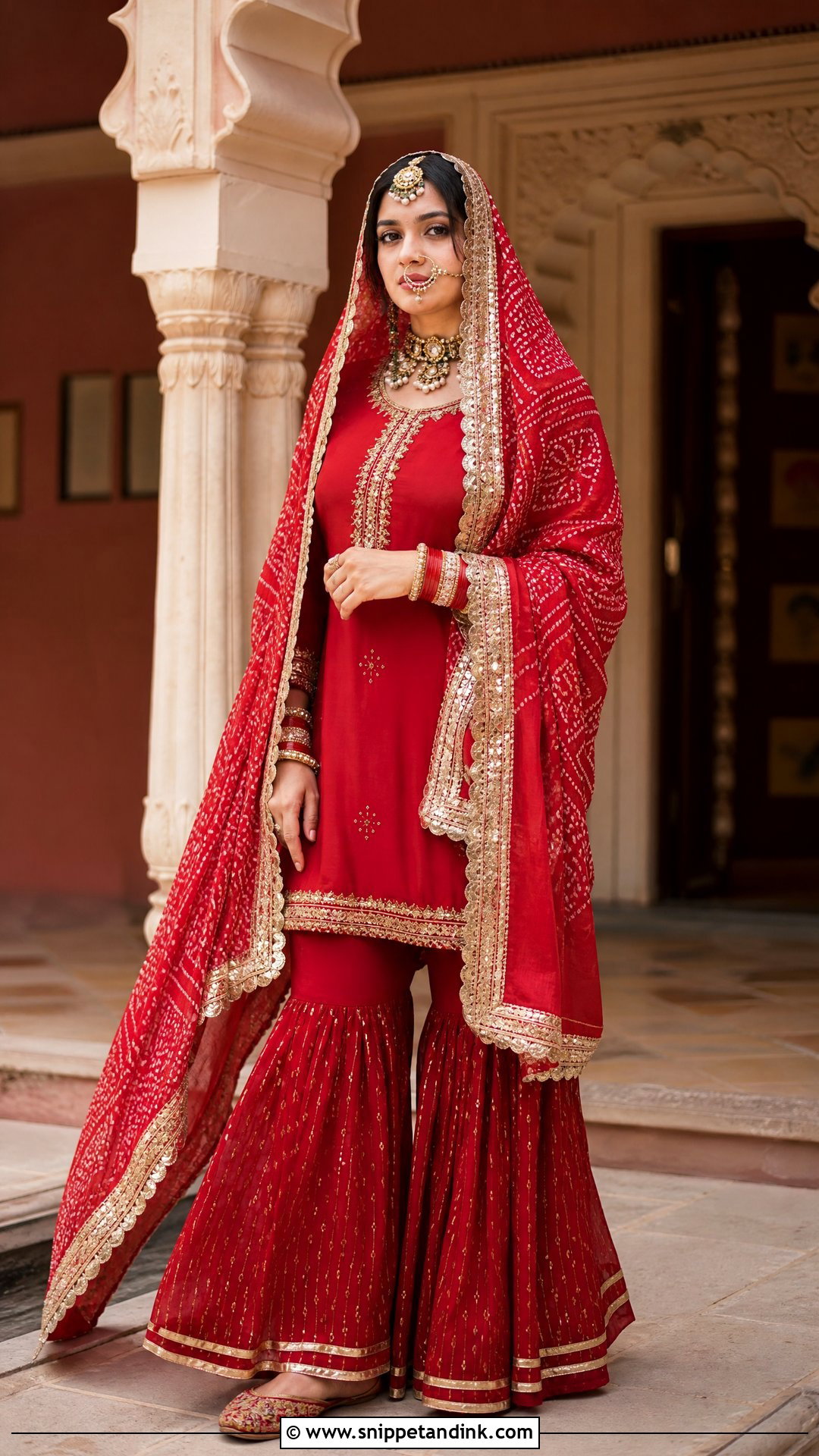
A red bandhani dupatta brings the tie-dyed dot pattern of western India into the outfit, and once it’s there, everything else should calm down. Start with a fairly simple red silk kurti embroidered at the neckline, cuffs and hem, plus a matching gharara with traditional gota bands and small motifs on the flare. The dupatta, ideally with a broad gold edge, stays the only patterned piece. Hand-dyed bandhani can bleed when it gets damp, so keep it away from mehndi that is still wet and from spilled drinks. Drape it over the head with plenty showing across one shoulder, then add gold jewelry, a statement nose ring, bangles and embroidered juttis.
17. Red Bridal Gharara With Green Dupatta
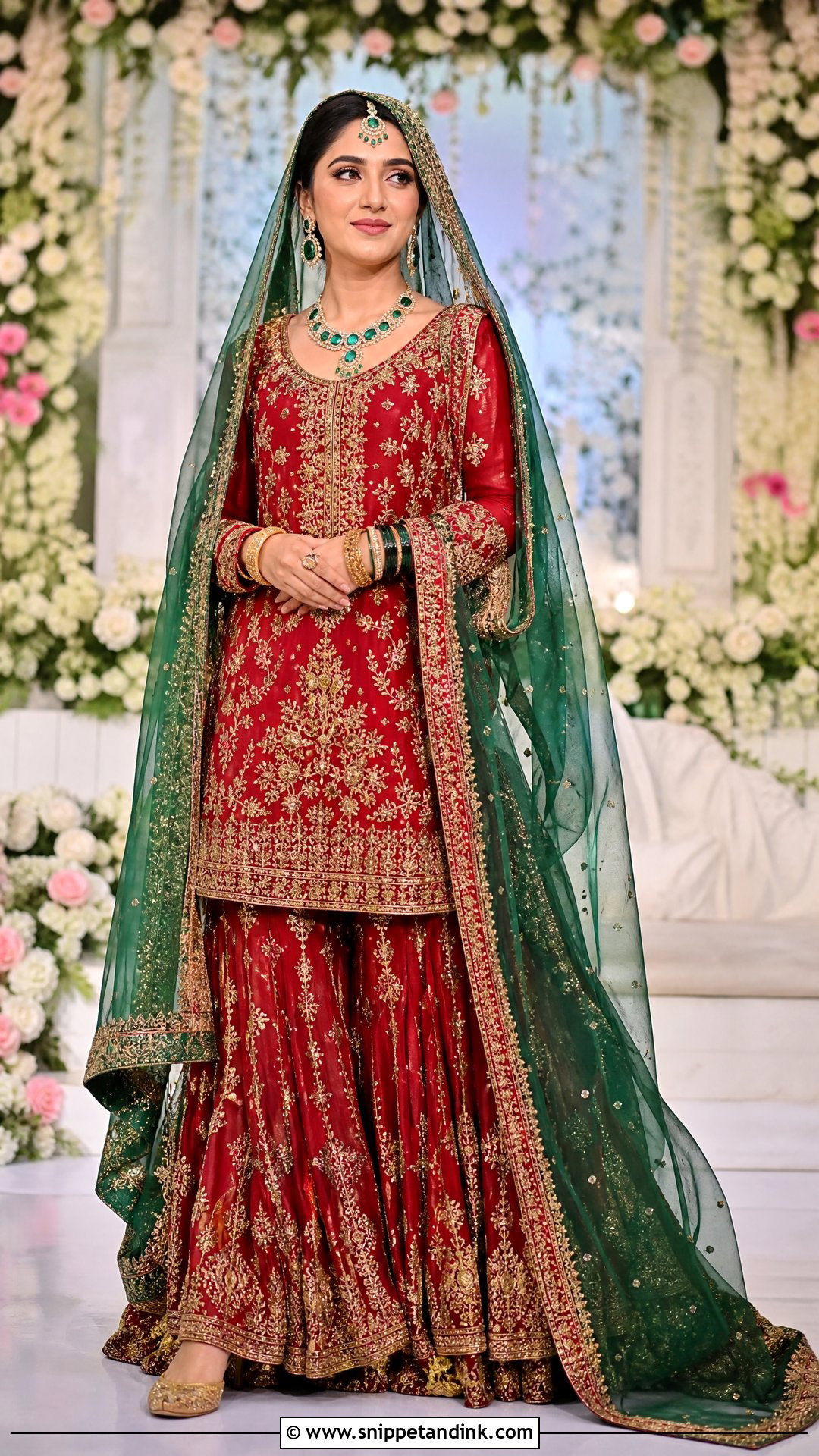
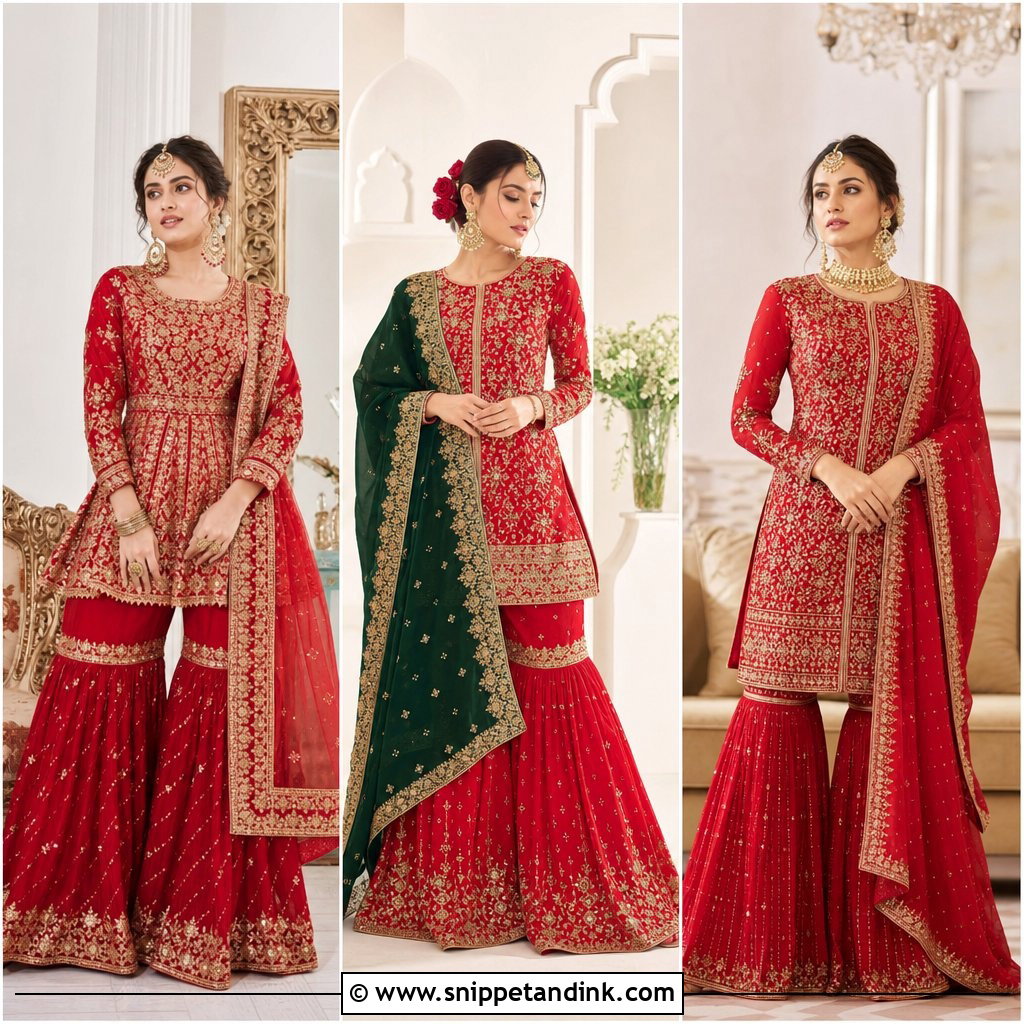
Red and emerald is a traditional pairing, but it only works when both shades have similar depth. A bright green beside a deep red makes the red look tired, and the reverse makes the dupatta look borrowed from another outfit. I hold the two fabrics together in daylight before anything is ordered. Decorate the red kurti and gharara with gold and small green thread accents, then add a deep green organza, chiffon or net dupatta with a red-and-gold border. It can cover the head, or rest on one shoulder if you want the red neckline visible. Limit emeralds to a few deliberate pieces and finish with gold heels or red juttis.
18. Red Bridal Gharara With Ivory Dupatta
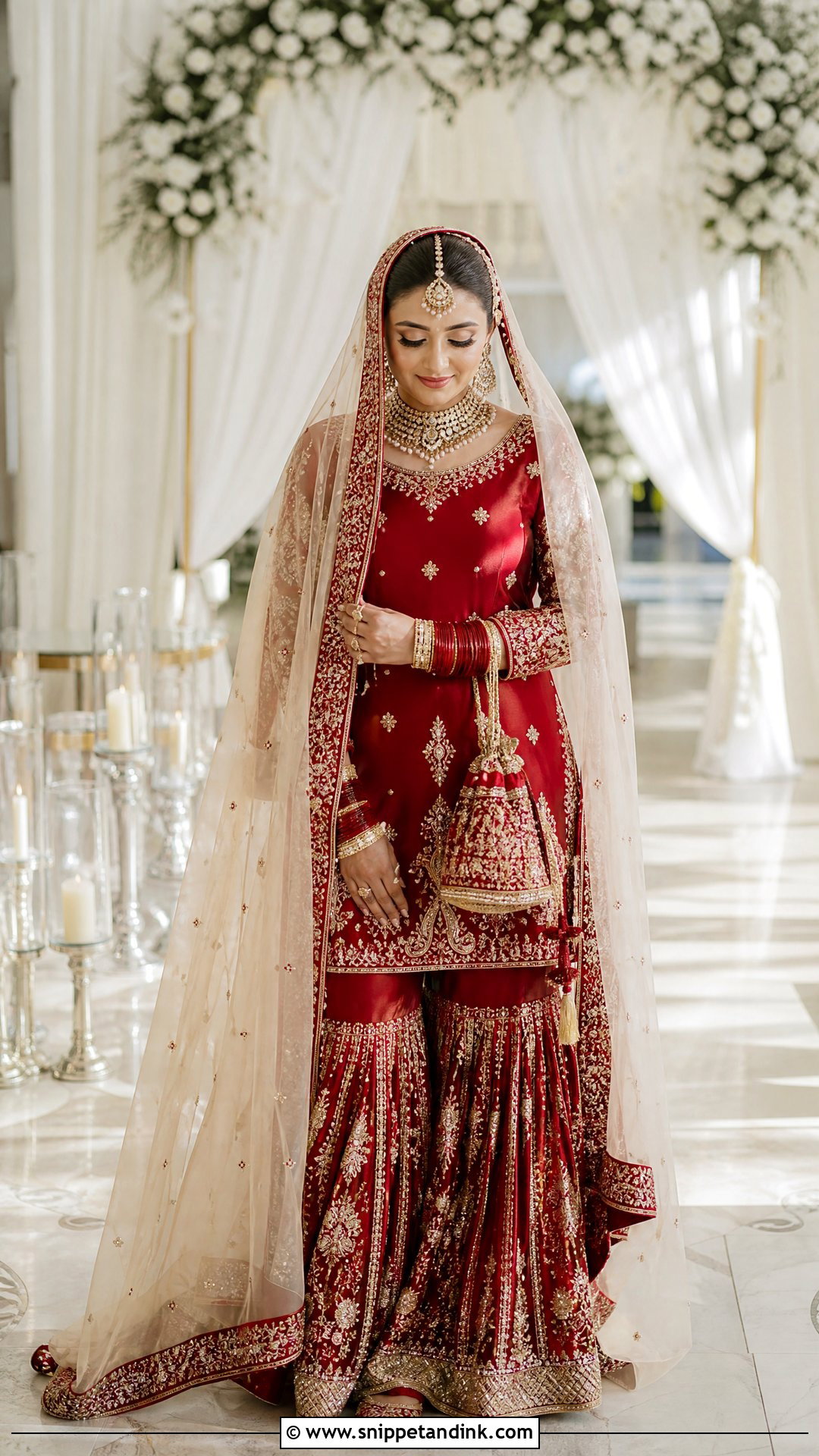
Ivory near the face lightens a heavy red outfit, and in photographs it bounces a little light back onto the skin. Wear a deep red silk kurti with ivory resham, pearl and antique gold embroidery, and repeat those lighter motifs around the gharara knees and flares. The ivory dupatta needs enough transparency to show red underneath, with a red border and scattered bootis. Pearl-and-kundan jewelry suits the softer contrast, while red bangles and shoes return to the base colour. Pin the head drape close to the face. Ivory shows foundation transfer quickly, so carry blotting papers and avoid touching the edge with your fingers.
19. Minimal Red Bridal Gharara For Nikah
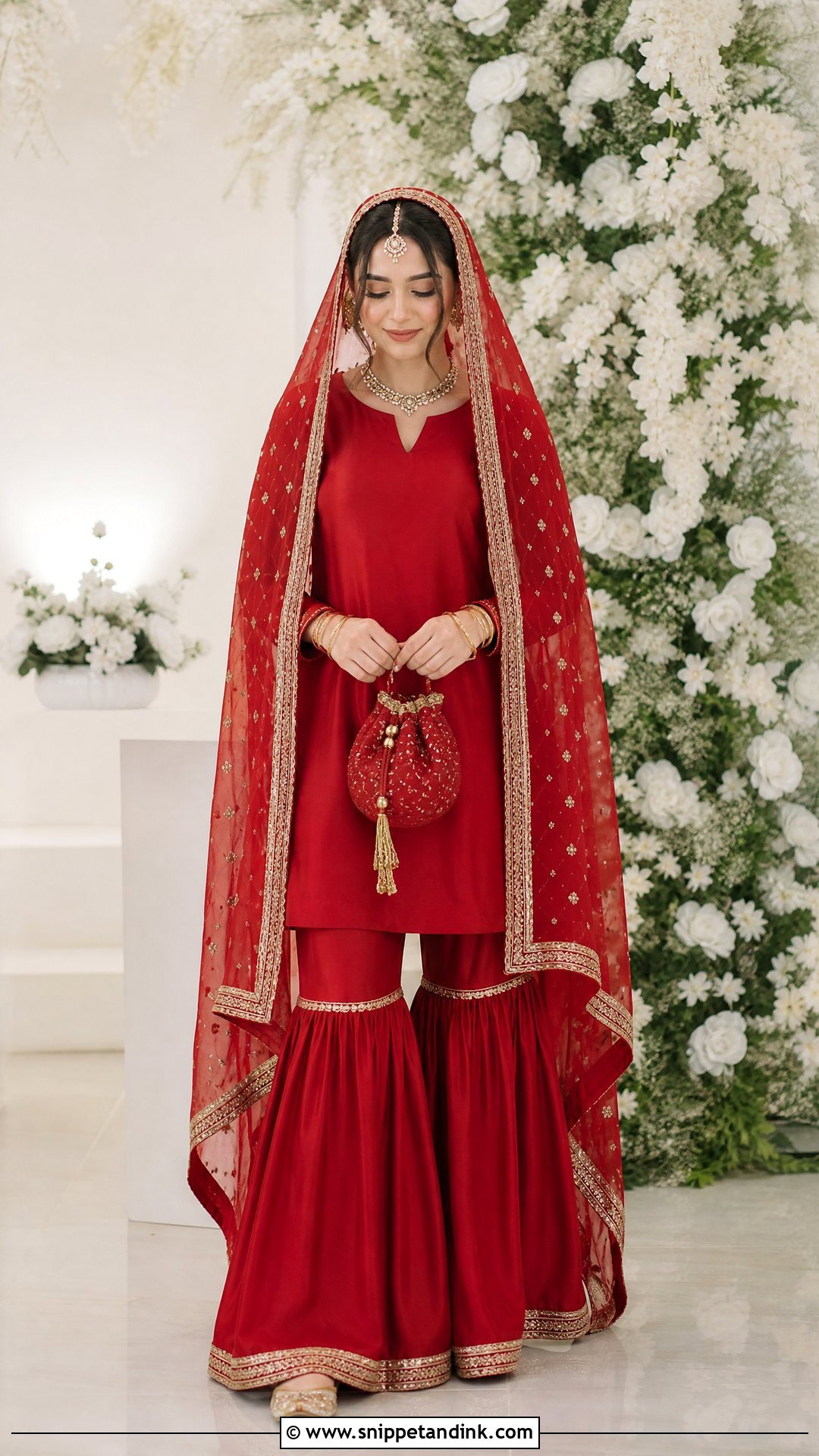
A nikah often happens in a smaller room, seated on the floor or a low settee, so a lighter gharara is a practical choice as much as a style one. Choose clean raw silk for the kurti, with a flattering neckline, full or three-quarter sleeves and fine gold detailing at the edges, over a fluid gharara with subtle knee bands and a lightly embellished hem. A sheer dupatta with scattered bootis gives the ceremonial finish. With so little embroidery, the tailoring shows everything. Shoulder seams, sleeve length, the kurti hem and the gather at the knee all need adjusting at a final fitting. One necklace, earrings, a small tikka, a few bangles, cushioned juttis and a compact potli are plenty.
20. Plus-Size Red Bridal Gharara With Short Kurti
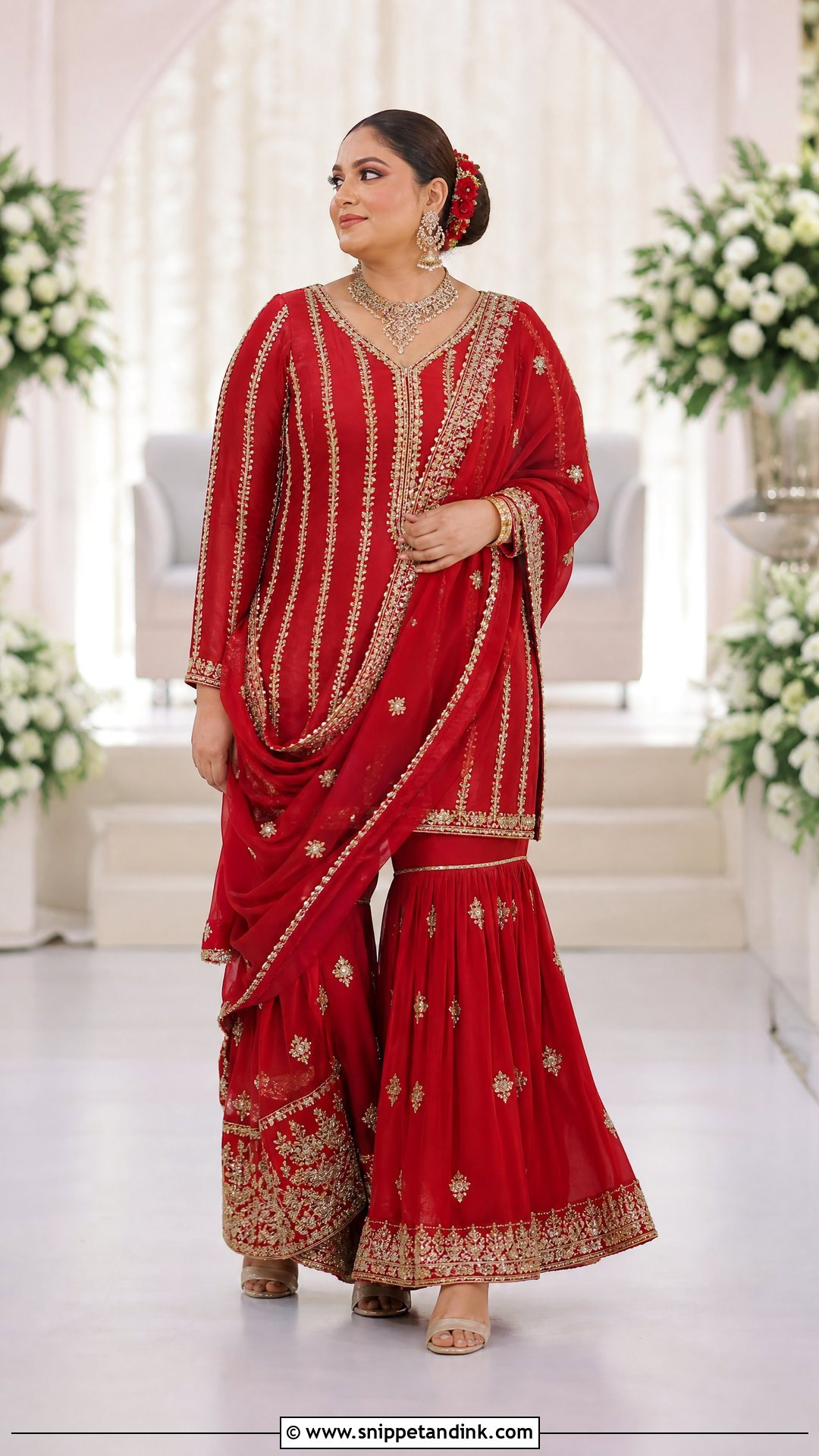
For plus-size brides, a short kurti over a gharara is often more comfortable than a heavy lehenga, because the flare starts at the knee and there is far less fabric bunching around the hip. The kurti should skim, not cling, with a soft V-neck, vertical embroidery and sleeves ending near the wrist. I place its hem at the upper thigh so it clears the gathered knee and shows the full flare. Fluid silk or georgette moves well, with firmer lining only where you want structure. A medium-border dupatta draped diagonally keeps the front open. Then add a supportive necklace, statement earrings, cushioned block heels and a secure hairstyle. Size labels on bridal wear vary wildly between makers, so trust your measured tailoring over the number.
Sitting, Stairs and the Rukhsati in a Full Flare
The hours after the entrance are where a gharara proves itself. When you sit, gather the flare from both knees and sweep it forward before lowering yourself, or you’ll end up sitting on the back panel and crushing the border. On stairs, lift from the knee band rather than the hem; it keeps the heavy lower section from swinging into your feet.
Give one person the job of managing your dupatta and flare during the rukhsati, when you’ll be walking, hugging and climbing into a car all at once. Restroom trips are easier than in a lehenga since a gharara is divided, but practise once so you know exactly which dupatta pin to release.
Packing Heavy Zardozi Away Without Crushing It
Metal embroidery tarnishes when it meets moisture and air. Air the outfit indoors for a day after the wedding, away from direct sun, which can fade red silk unevenly. Then take it to a dry cleaner who handles bridal embroidery and point out any perfume or makeup marks, since they set with time.
- Wrap each piece in white muslin or acid-free tissue, never plastic, which traps humidity against the metal.
- Lay it folded with tissue in the creases; hanging a heavy gharara stretches the waistband and drags the knee join.
- Keep the kurti and gharara in separate wraps so sequins don’t snag on each other.
- Refold along new lines every few months so the wire work doesn’t crack at the same fold.
Embroidery Placement Decides How a Gharara Moves
Every gharara here comes down to the same few decisions: where the embroidery sits, how long the kurti is, how full the flare runs and how heavy the dupatta gets. Gold zardozi gives the classic grandeur, while tonal threadwork, structured jackets and peplum kurtis point somewhere more modern. A green, ivory or bandhani dupatta adds personality without taking the red away. Whatever you pick, wear it properly before the day. Walk in it, sit in it, climb a few stairs and test every dupatta pin with your hair done, because that is when the real problems show themselves.
You'll Like These Ideas:


Leave a Reply