
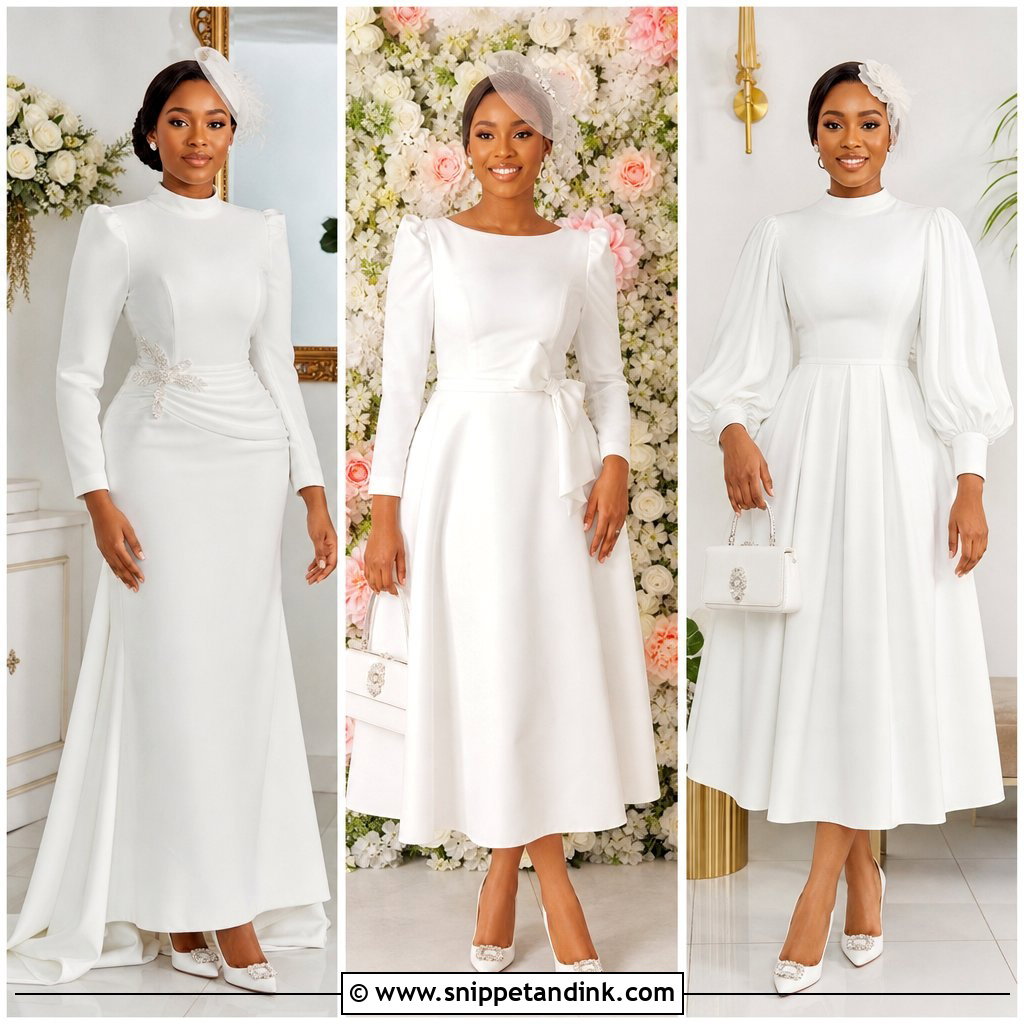
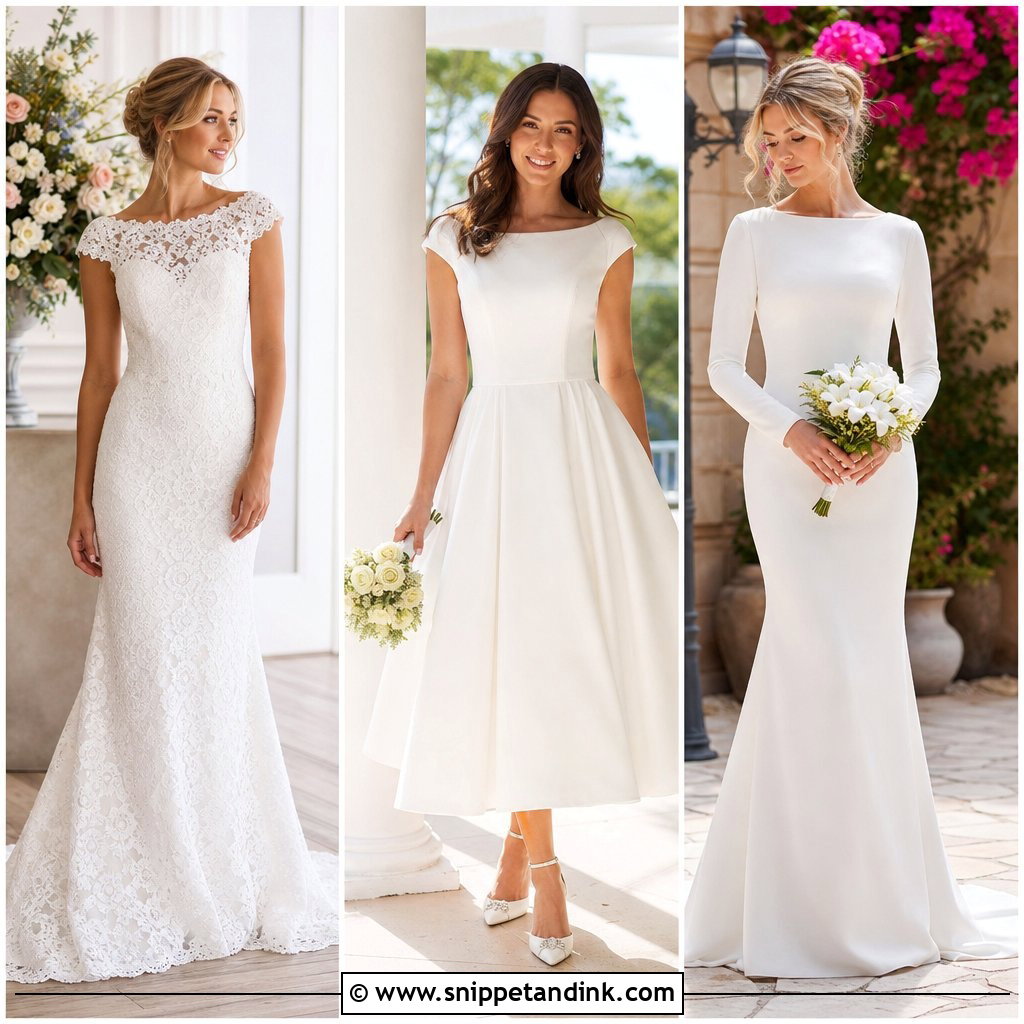
A church wedding puts different demands on a dress than a garden party does. You’ll stand for a long service, possibly kneel, walk a long aisle on stone, and hug relatives who notice what’s covered and what isn’t. The gowns below were chosen with a faith-centered celebration in mind: plain satin, detailed lace, real sleeves, higher necklines and trains with presence. I’ve styled each one as a full outfit, because the veil, shoes and jewelry decide whether a covered gown looks deliberate or just careful. Think about your season and your church’s expectations before you shop, and remember that a skilled seamstress can add sleeves or raise a neckline on a dress you already love.
What a Church Service Asks of Your Dress
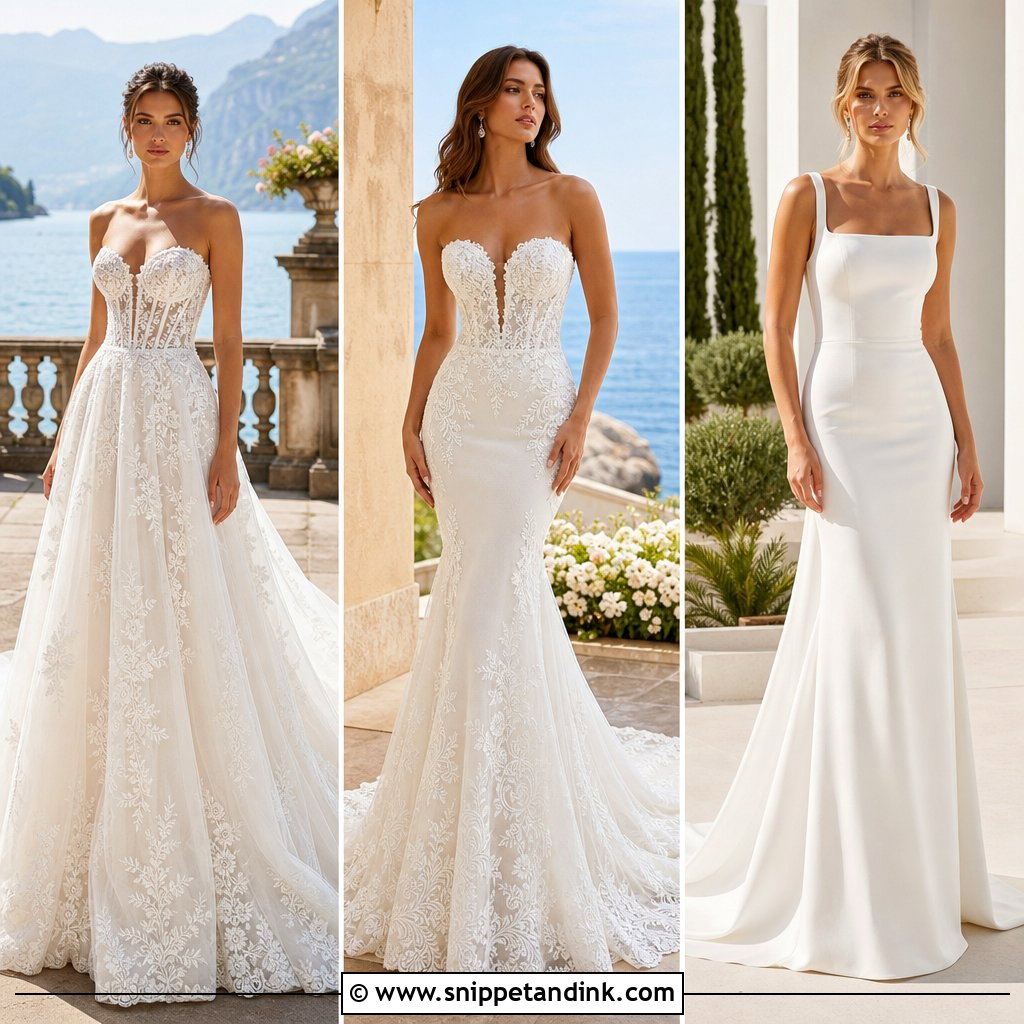
Expectations vary a lot from one church to another. Some congregations don’t mind bare shoulders at all; others, particularly many Catholic and Orthodox churches, prefer shoulders covered inside the sanctuary. Ask the officiant or wedding coordinator at your first meeting, before you shop, not after you’ve bought a strapless gown.
If you already love a dress with less coverage, you have options. A bolero, a lace jacket or a long cathedral veil worn over the shoulders can cover you during the service and come off for the reception. Seamstresses can also add sleeves or a sheer illusion neckline; bring the gown to them early, because matching lace may need to be ordered.
Practical details I check for church weddings
- Aisle length: a long aisle shows off a cathedral train, but a short chapel aisle can make a long train look cramped.
- Floor surface: stone and marble are slippery, so scuff the soles of new shoes or add grip pads.
- Temperature: old churches can be cold even in late spring, which makes sleeves a comfort as well as a style choice.
- The back view: guests spend most of the service looking at your back, so buttons, lacing or a long veil deserve attention.
1. Long Sleeve Lace A-Line Wedding Gown
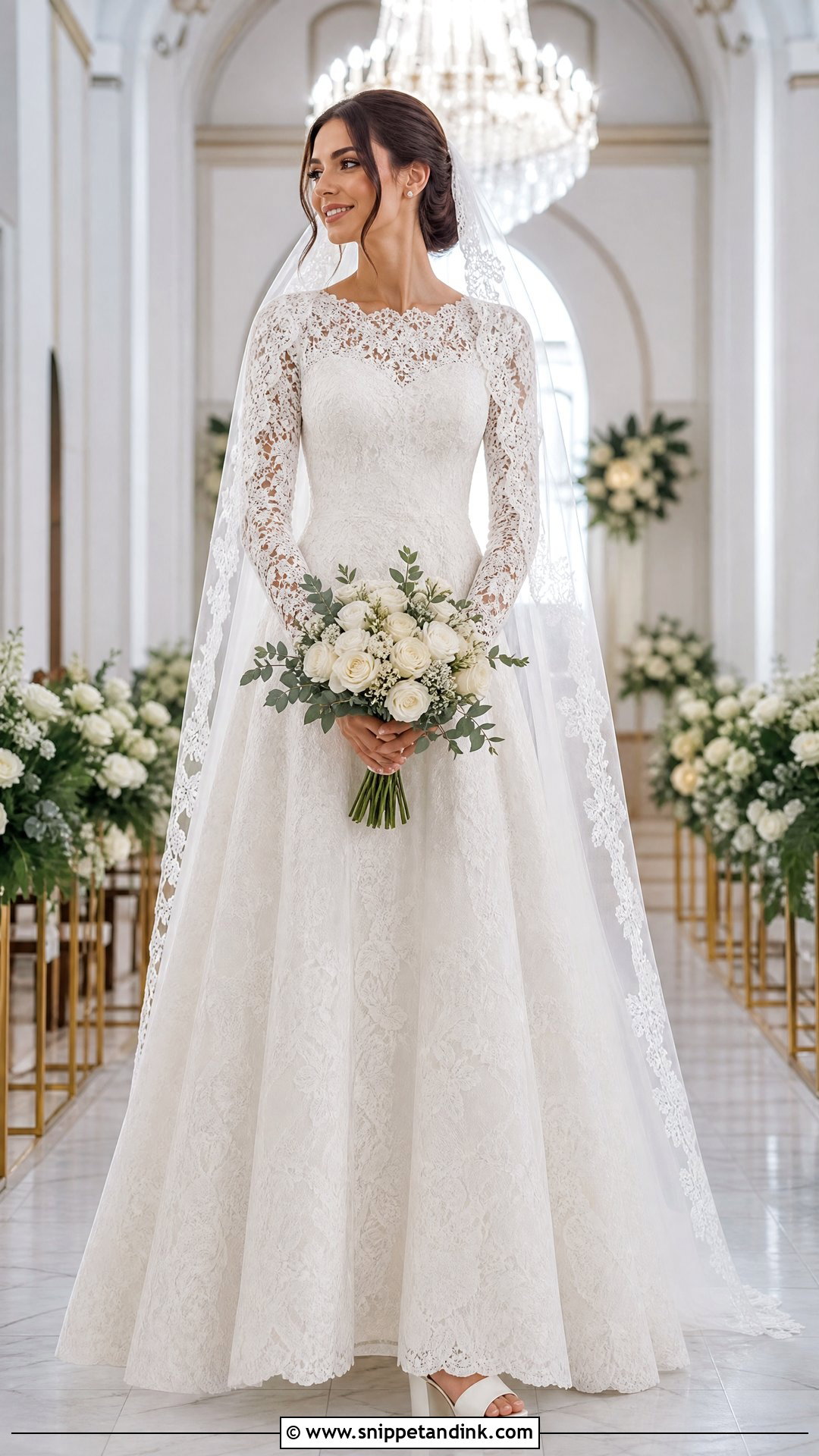
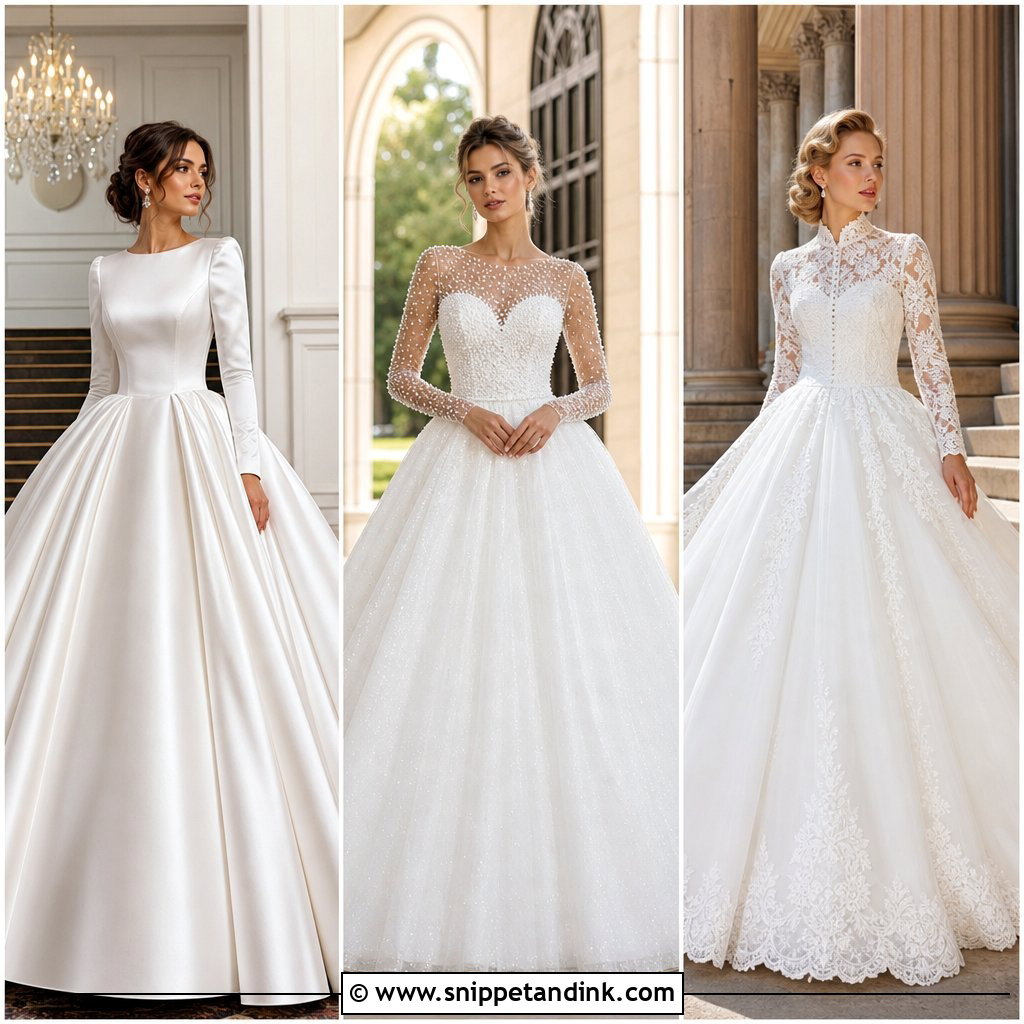
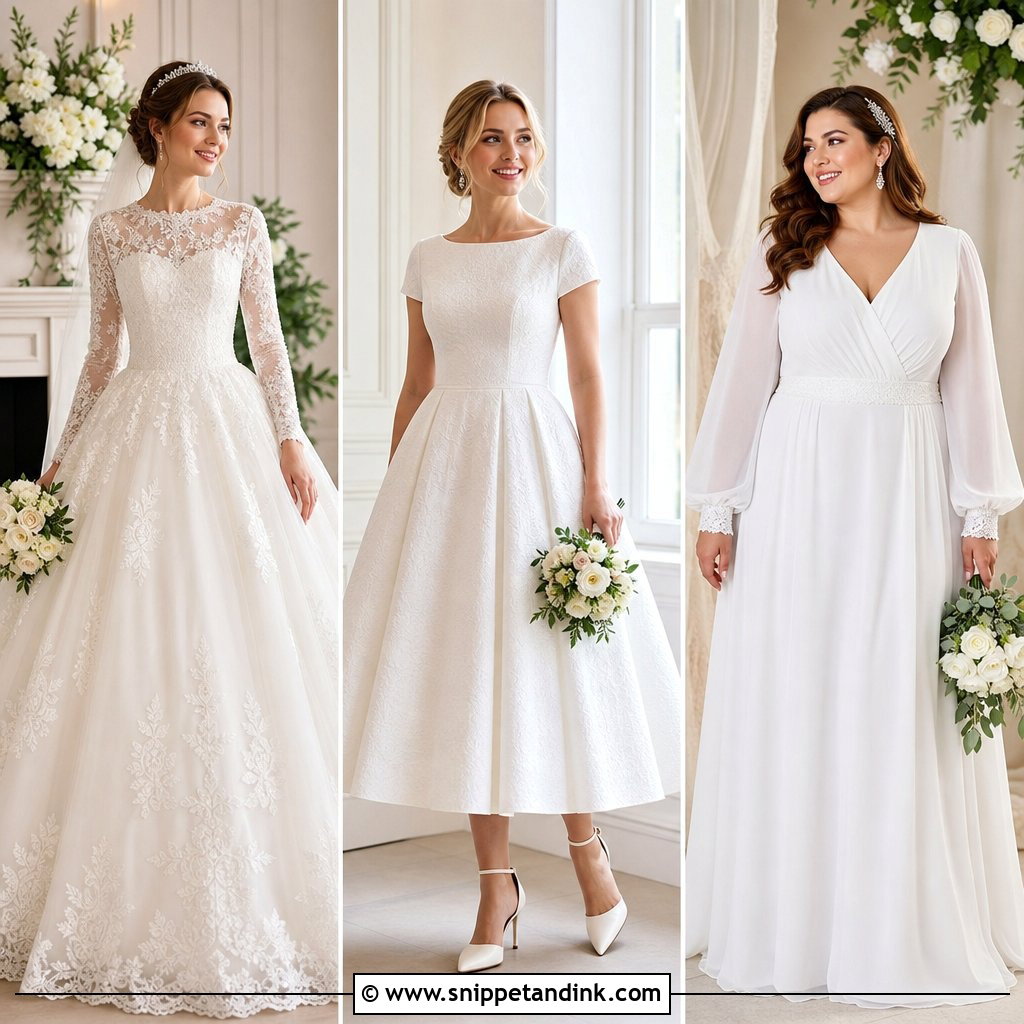
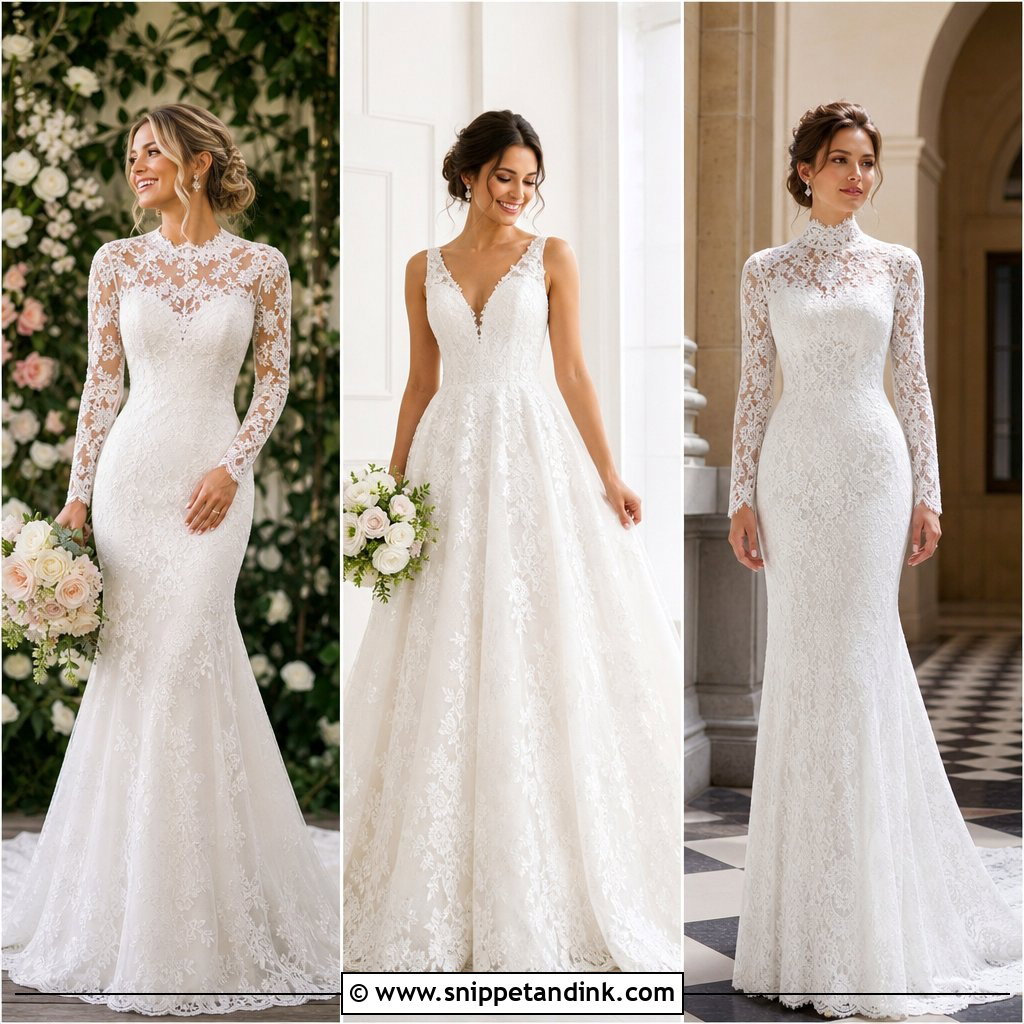
Long lace sleeves on an A-line are probably the most requested shape I see for a church service, and for good reason. The fully lined bodice can carry a bateau, jewel or gently curved neckline, with lace running from the shoulders into a fitted waist and down the skirt. I’d pair it with a fingertip veil edged in the same lace, pearl studs, low block heels and white roses with greenery. The waist is defined but the skirt stays loose, so you aren’t fighting the fabric when you kneel. Do one test at fittings: hold your hands out as if for the rings. If the sleeve tugs across the back, it needs more room at the armhole.
2. High Neck Satin Ball Gown
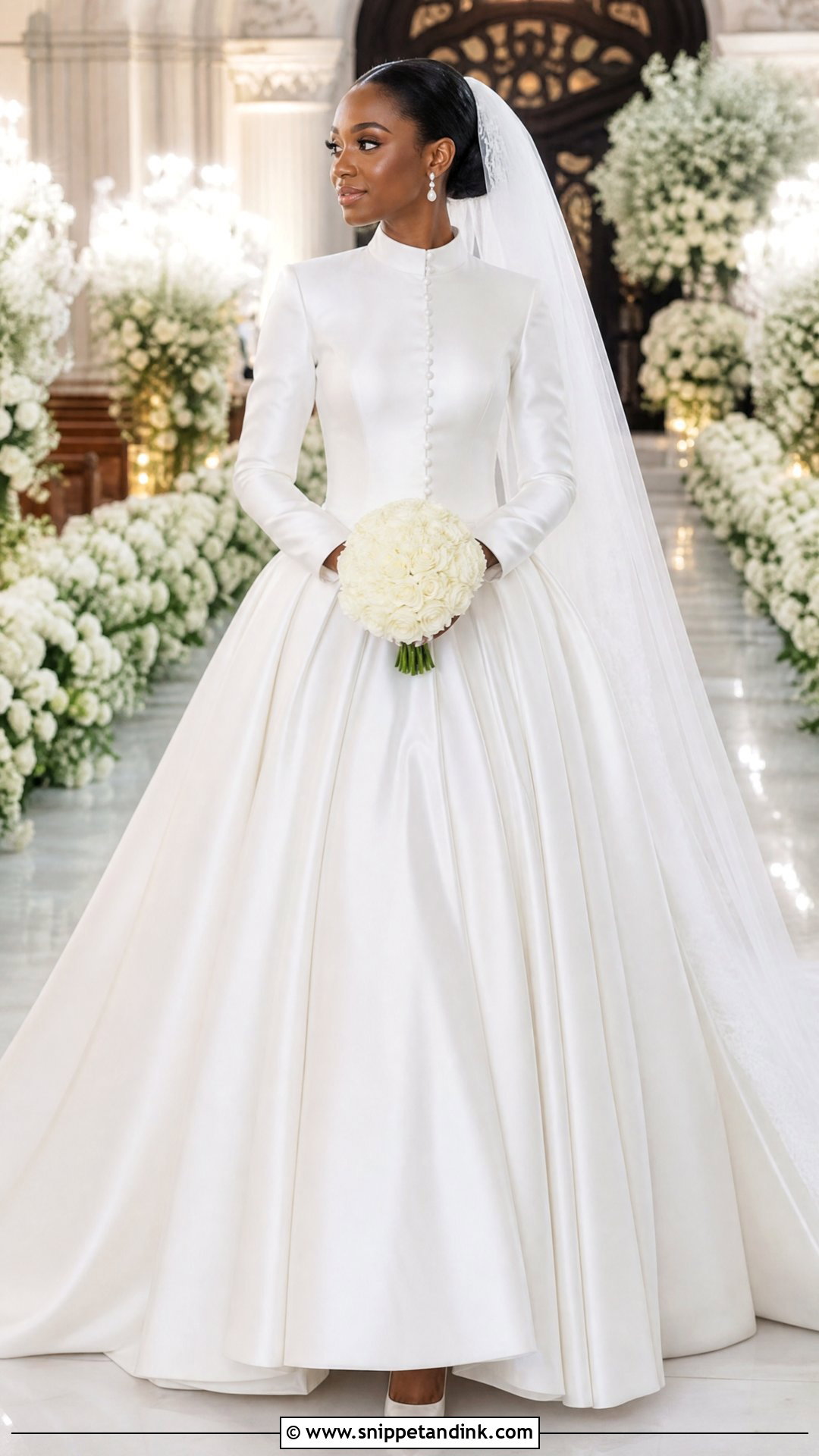
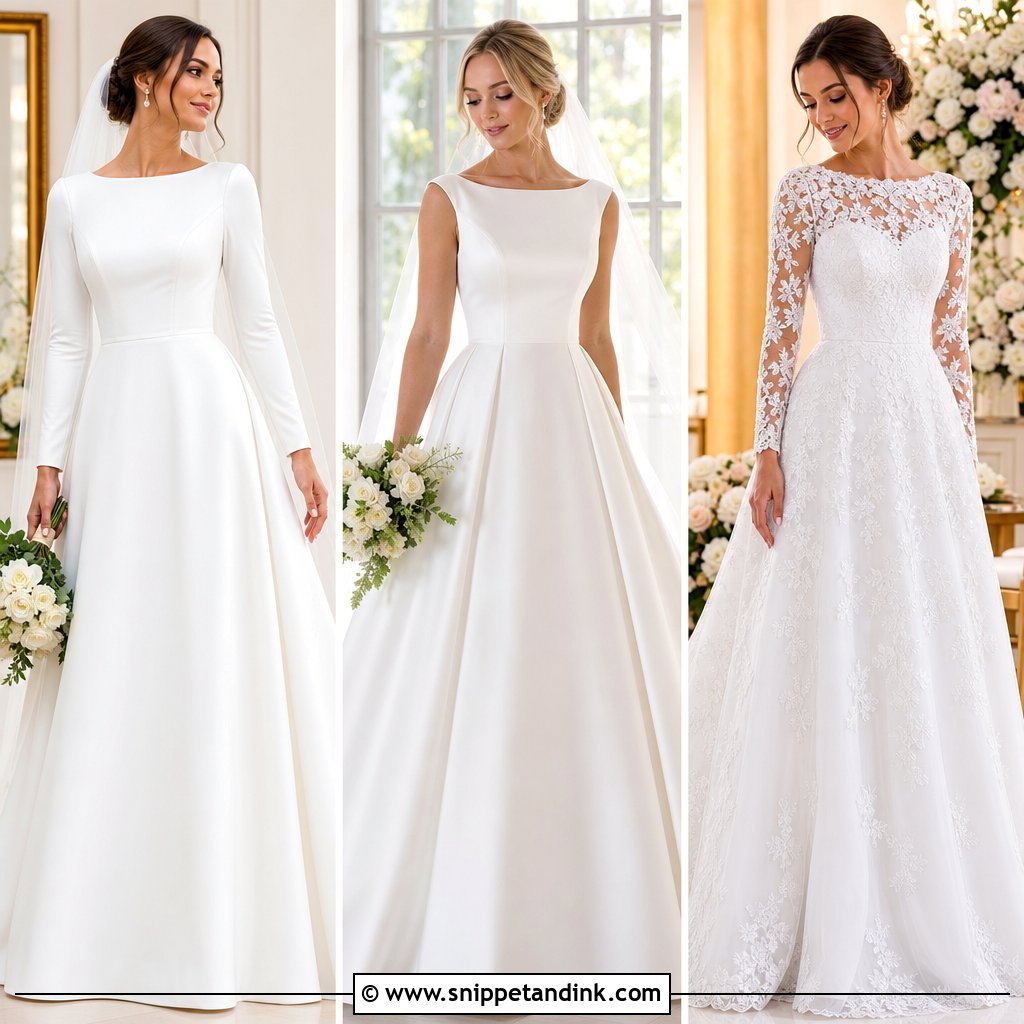
High-neck satin ball gowns rely on tailoring, not decoration. Satin reflects light, so any wrinkle at the collar or shoulder shows from the back pews. Look for a structured bodice, natural waist and a full skirt with clean pleats, with covered buttons down the back for a traditional finish. A cathedral veil, small pearl drops, pointed satin pumps and a compact bouquet of ranunculus or roses keep it formal. If you want more skirt volume, add a soft petticoat, but sit in it before you commit. A stiff crinoline pushes the skirt up into your lap in a pew.
3. Boat Neck Crepe Wedding Gown
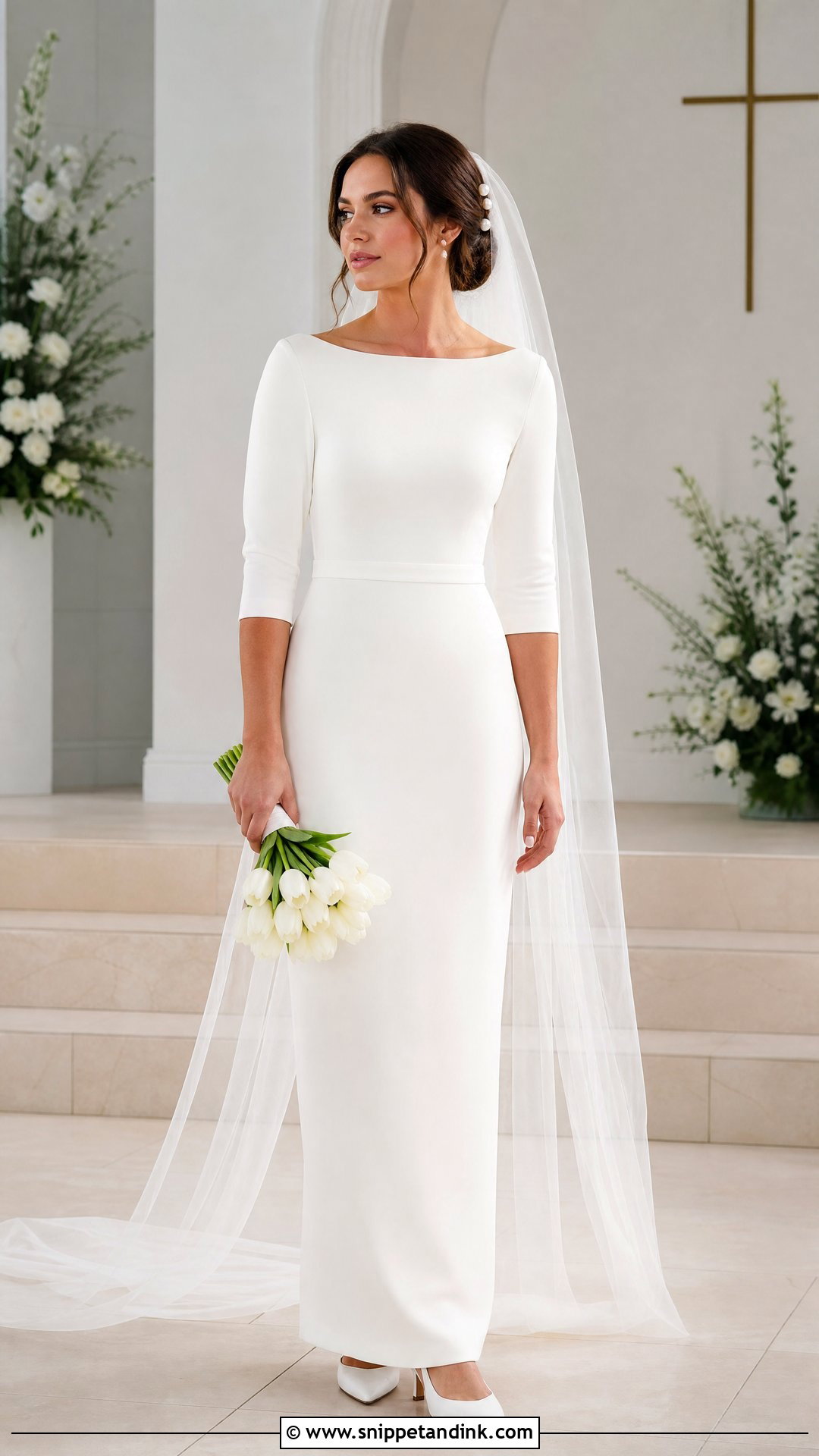
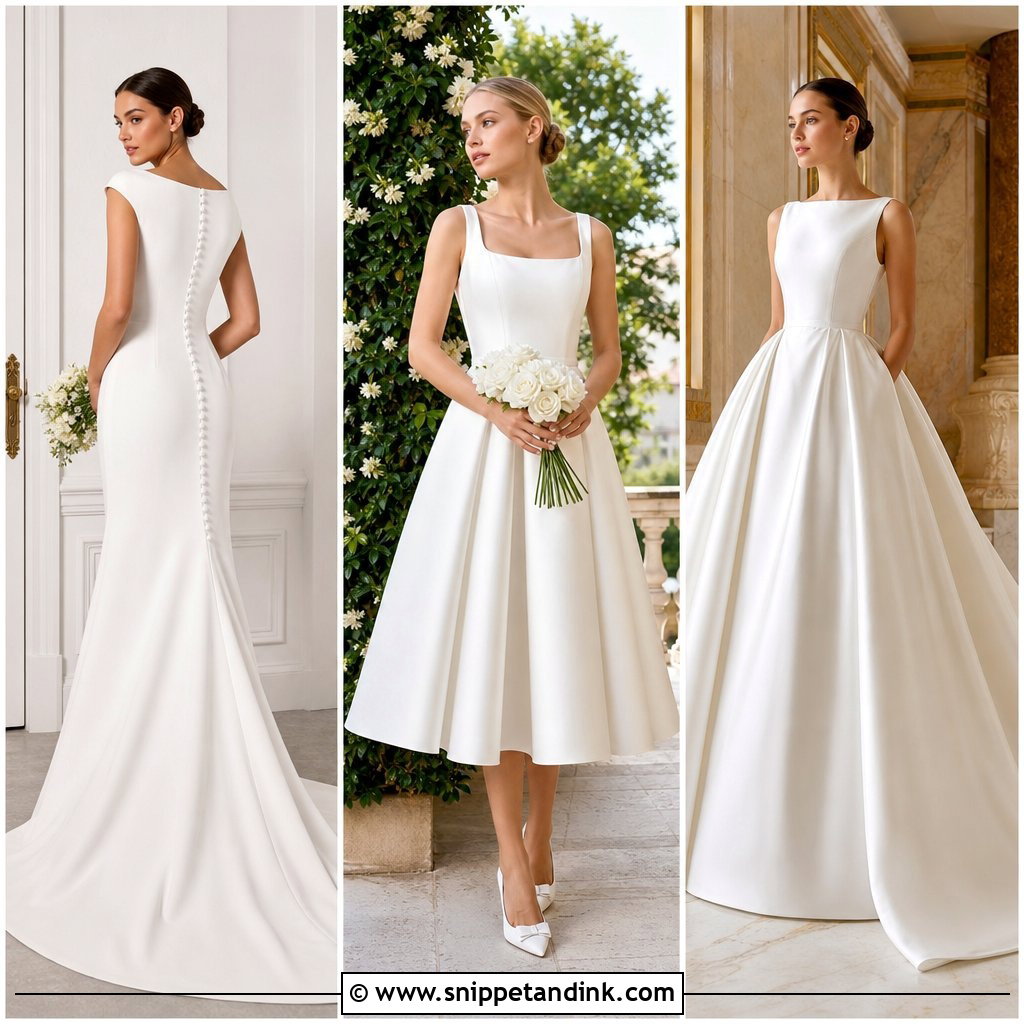
Clean-lined brides tend to love a boat neck crepe wedding gown. The wide neckline shows the collarbone while covering the chest completely. Three-quarter or full sleeves, a soft waist and a column or gentle A-line skirt keep it minimal; add a chapel veil, pearl hairpins, closed-toe slingbacks and white tulips. Crepe sits closer to the body than stiff satin, so it shows what’s underneath. Seam-free underwear and precise alterations matter more here than with any other fabric. A detachable fabric belt defines the waist if you’d rather not have sparkle.
4. Square Neck Lace Wedding Gown
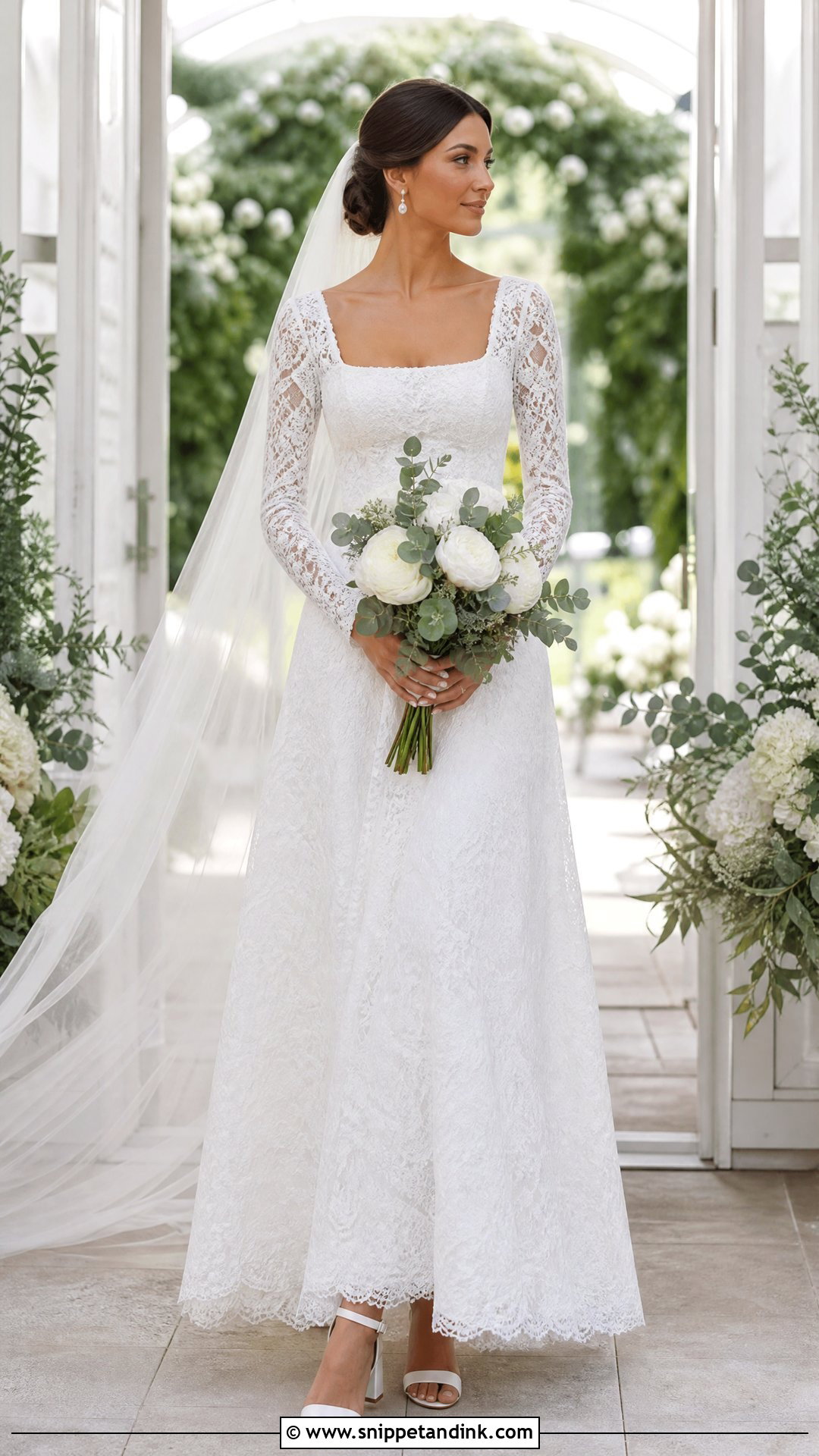
Square necklines give a lace gown a clean architectural frame without dipping low. I like wide-set shoulders, lined lace panels and fitted long sleeves, with an A-line or soft flare below. Style it with a plain tulle veil, pearl-and-crystal earrings, white ankle-strap block heels and loose peonies with eucalyptus. Fuller busts are well supported by a properly built square neckline. Petite brides should look for smaller lace motifs, since big florals swallow a small frame. Check the neckline when you sit: it should lie flat, not gape at the corners.
5. Three Quarter Sleeve Mikado Wedding Gown
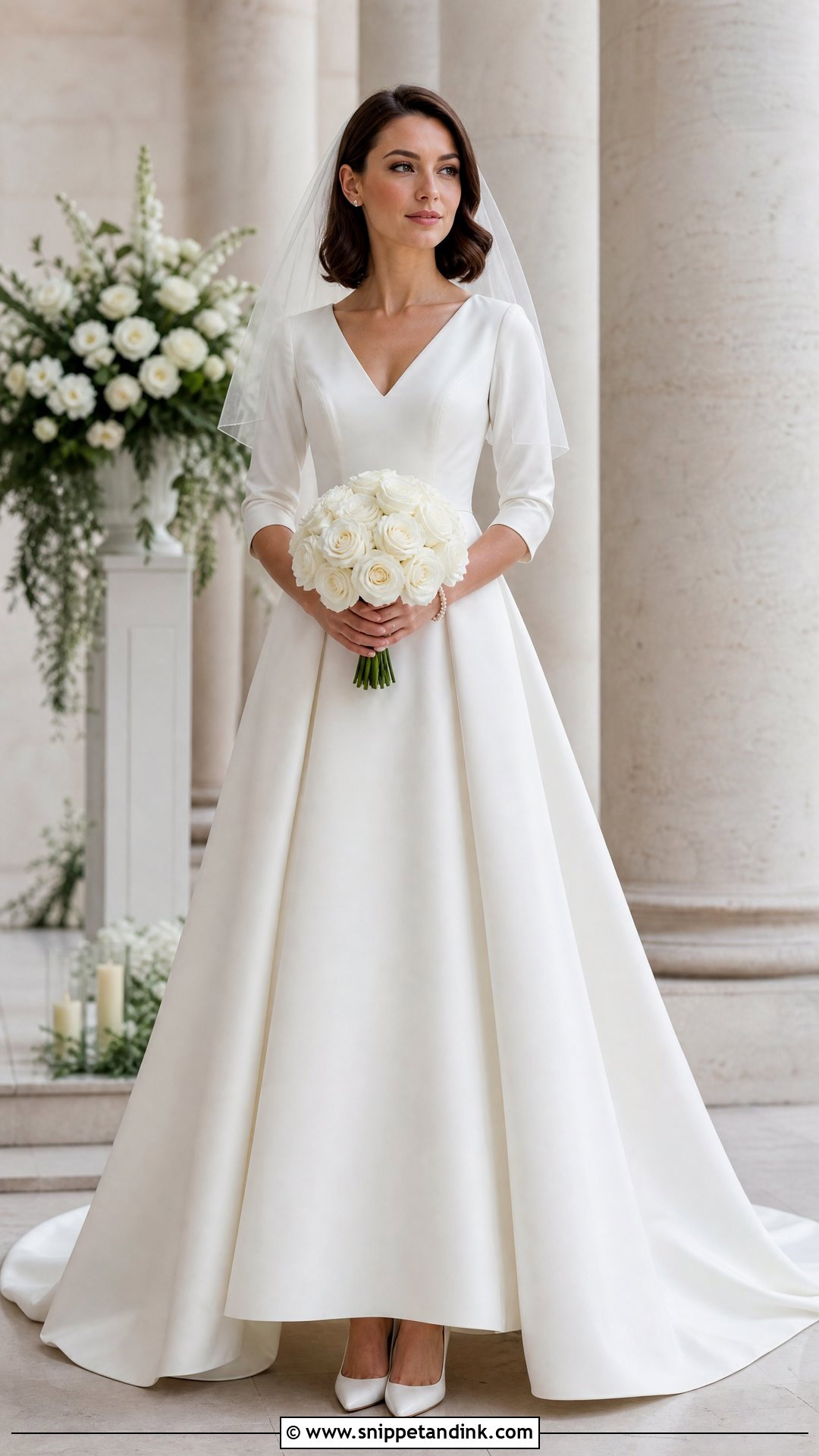
Crisp Mikado fabric holds its shape like paper, which is why it suits a sleeve that stops above the wrist. A fitted bodice with a modest V or round neck flows into a box-pleated A-line skirt and chapel train. Three-quarter sleeves leave room for a fine pearl bracelet, especially a borrowed or family piece. Finish with a shoulder-length veil, crystal studs, low pointed pumps and a round bouquet of white roses. Because mikado doesn’t stretch, check elbow movement carefully. Bend your arm fully at fittings; if the sleeve cuts in, ask for a little ease at the elbow. Hidden pockets are a welcome extra in this fabric.
6. Cape Sleeve White Wedding Gown
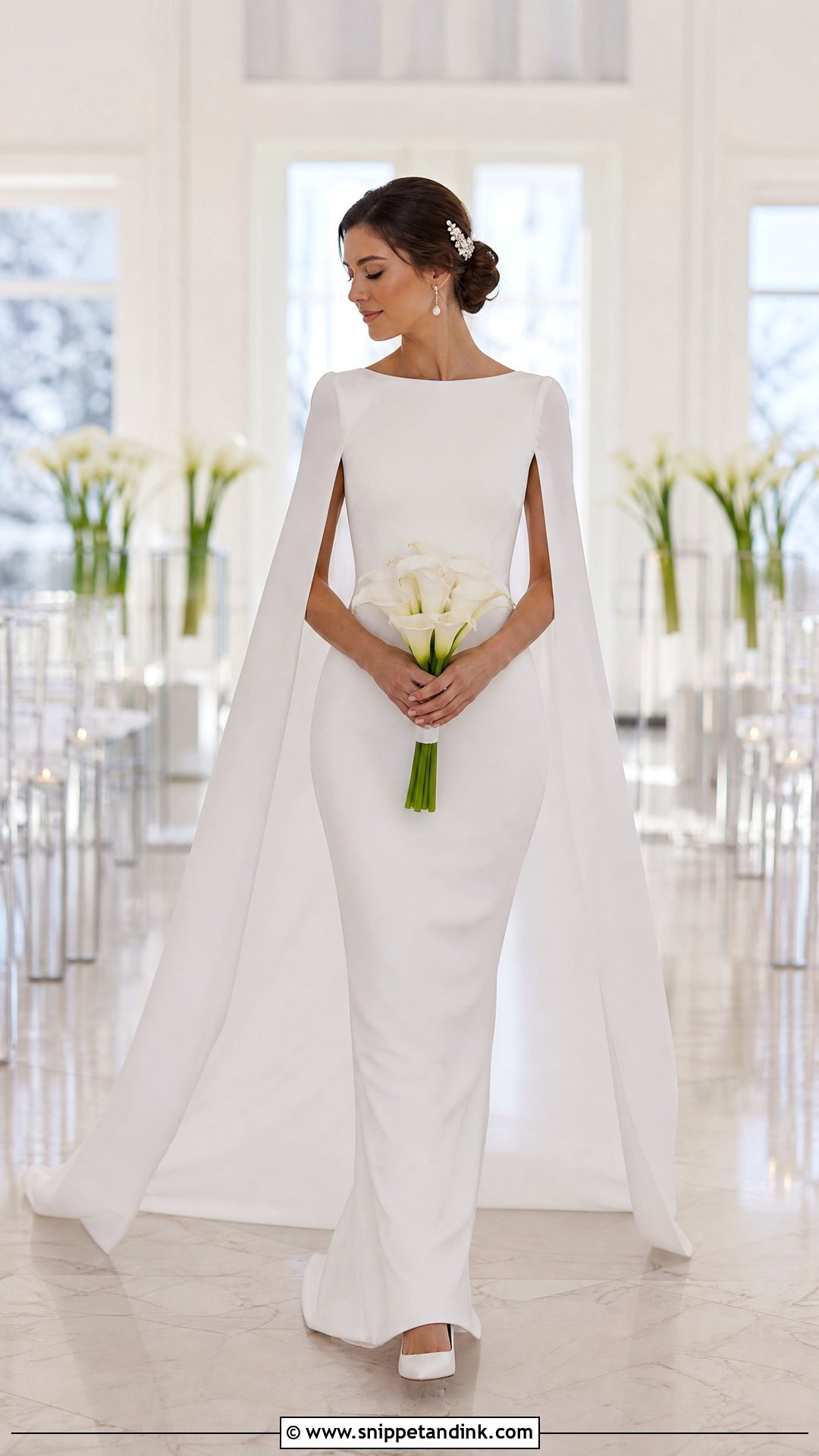
Cape sleeves add movement to a simple dress. Start with a fully lined sheath or A-line with a high bateau neck and clean waist seam, then let soft chiffon panels fall from the shoulder to the wrist or all the way to the train. A low bun, pearl comb, drop earrings, pointed pumps and slim calla lilies suit the long lines. The cape has to stay light. If it hangs over your hands during the vows, it’ll get in the way of the ring exchange. Skip a detailed veil; a plain fingertip veil, or no veil at all, lets the cape be the feature.
7. Basque Waist Satin Wedding Gown
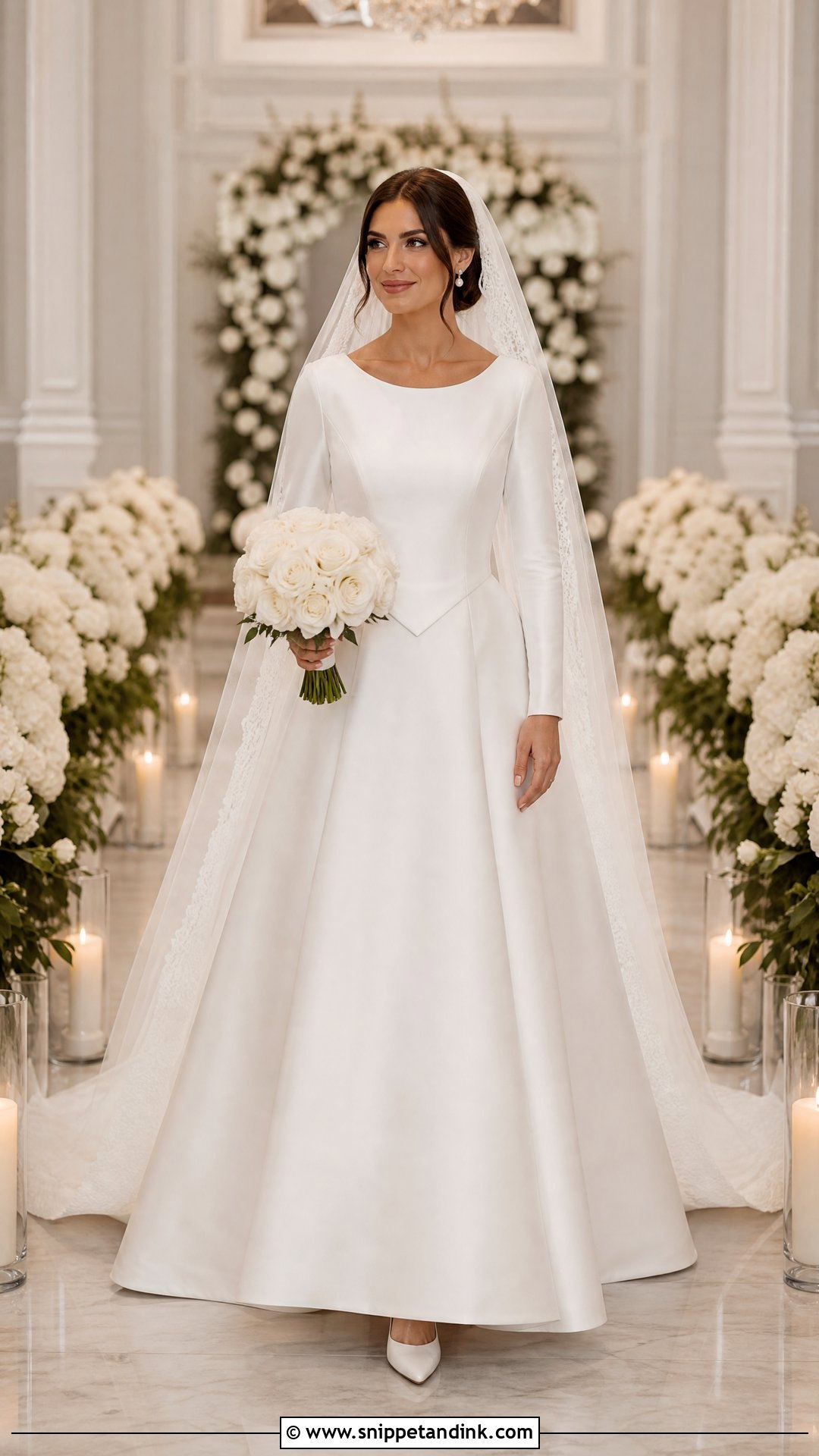
The basque waist dips into a soft V below the natural waist, making the torso look longer before the skirt opens out. It reads as vintage, especially in satin with a modest scoop neckline and covered buttons down the back. A chapel veil, pearl earrings, satin pumps and a structured rose bouquet are enough; the waistline is already the detail, so keep jewelry quiet. Proportion is everything. Shorter torsos look best with a shallow point, while taller brides can wear a deep one. Sit down at fittings and watch whether the point buckles; if it does, the bodice needs shortening.
8. Modest Mermaid Lace Wedding Gown
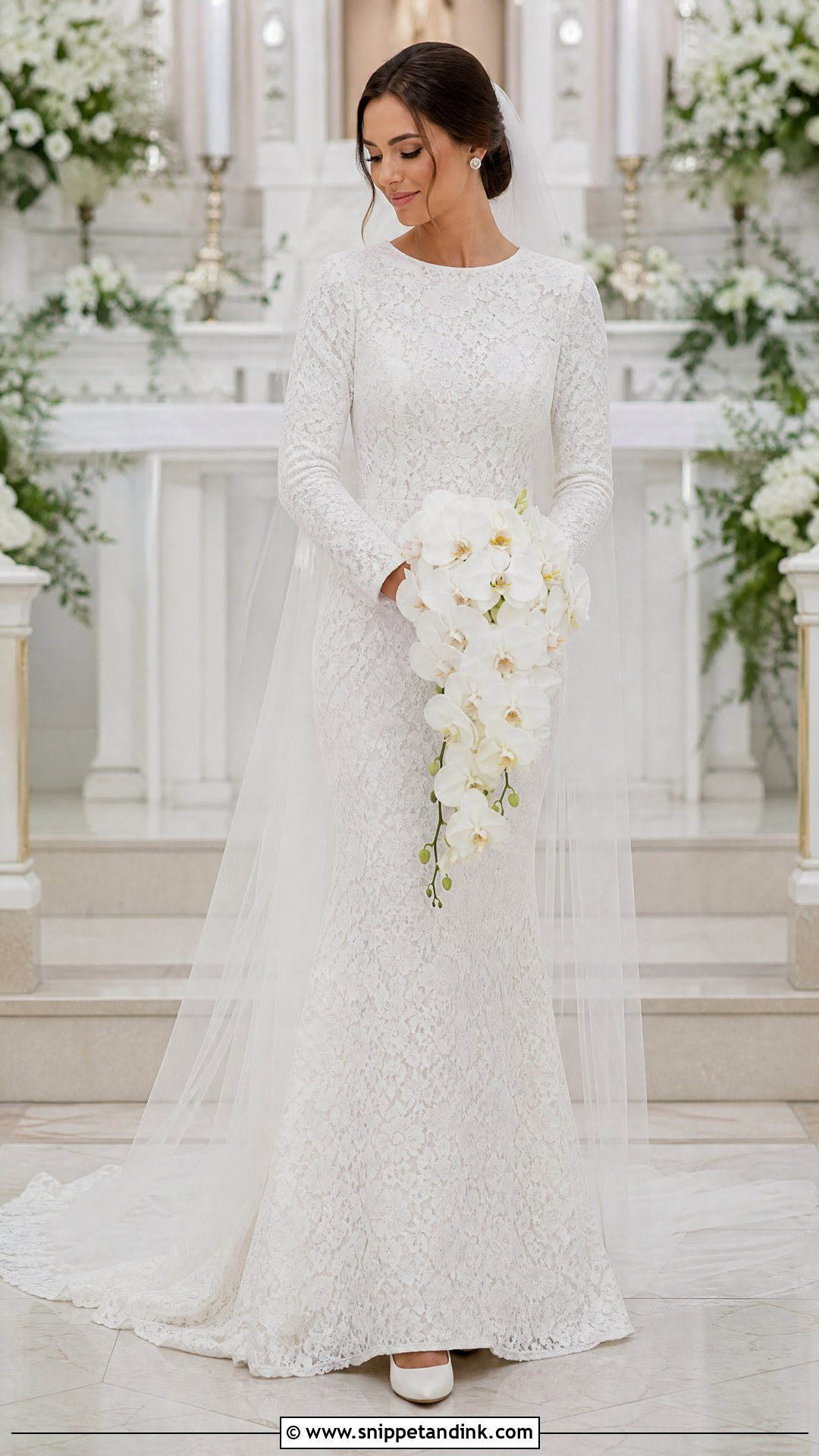
Covered mermaids do exist, and they’re a good answer for a bride who wants shape without exposure. The bodice should be lined with long sleeves, a high scoop or bateau neck and firm inner support. The skirt hugs the hips and flares near the knee. Pair it with a plain cathedral veil, crystal studs, low block heels and a cascading bouquet of orchids or roses. Kneeling is the hard part in a mermaid, so practise it, along with steps and sitting, before final alterations. If the skirt won’t let you kneel, a fit-and-flare cut gives the same impression with far more room.
9. Princess Ball Gown With Cathedral Veil
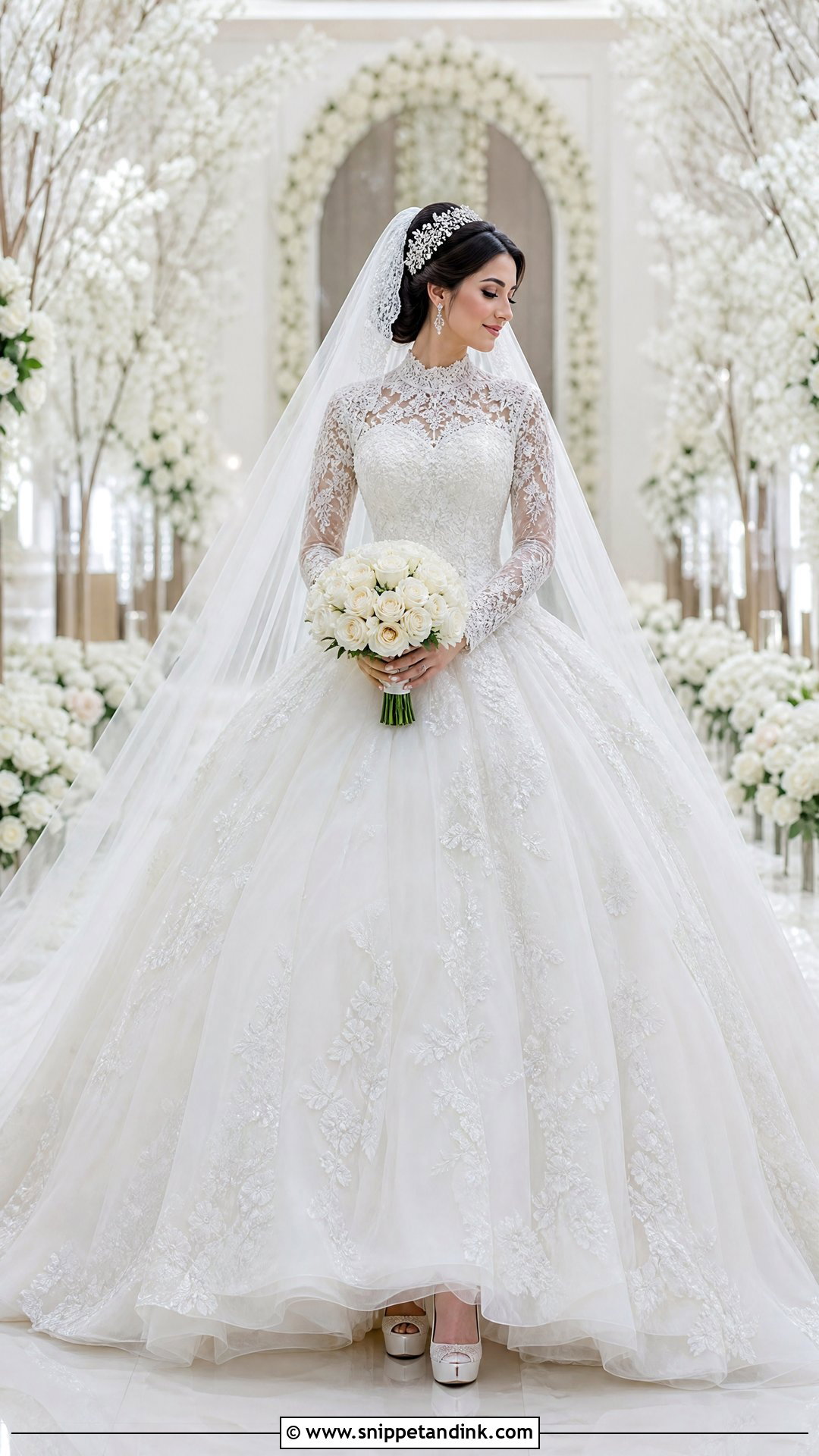
A princess ball gown with a cathedral veil fills a church aisle like little else. Choose a covered lace bodice, long fitted sleeves and a full layered skirt with a few appliqués, held in at a natural waist so the volume doesn’t swamp you. Add a crystal comb, small pearls, cushioned block heels and medium roses with trailing greenery. The veil can carry a narrow lace edge that echoes the dress. Turning around at the altar with this much fabric behind you takes practice, so rehearse with both pieces on. Bustle the train after the service so you can move freely at the reception.
10. Simple Chiffon A-Line Wedding Gown
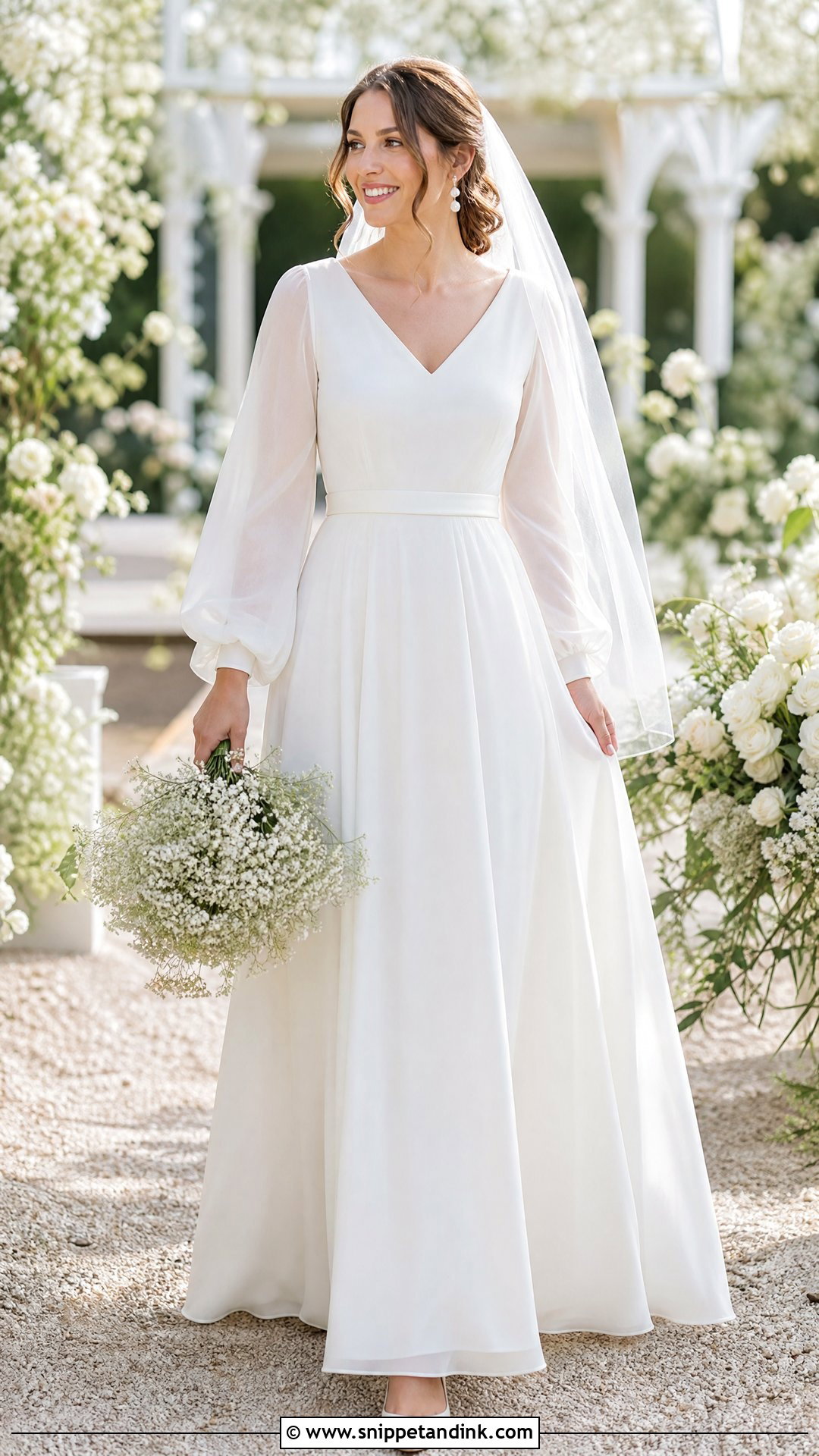
Chiffon makes a gown soft rather than structured, and it’s my first suggestion for summer weddings in older churches without air conditioning. Look for a lined A-line with a gathered waist, bishop sleeves with fitted cuffs and a modest V-neck. Style it with a fingertip veil, pearl drops, ballet flats or low heels and a loose bunch of baby’s breath and garden roses. The skirt breathes because it needs no stiff layers underneath. One check matters most: make sure the lining reaches the hem. Chiffon turns sheer in strong window light, and stained-glass churches can be surprisingly bright. A slim satin band adds a waistline.
11. Vintage Lace White Wedding Gown
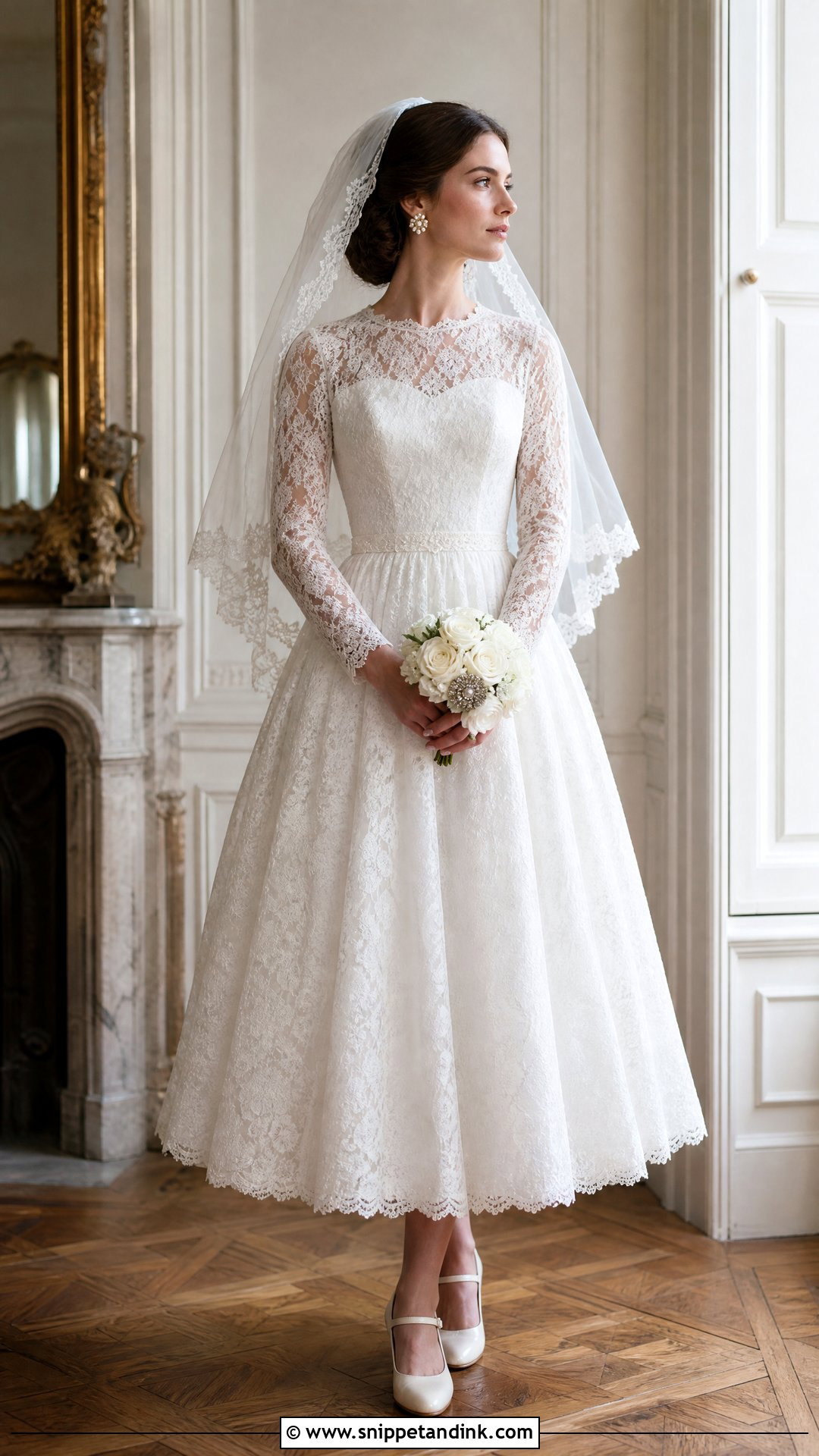
Vintage lace adds character, but the line between heirloom and costume is fine. A fitted lace bodice with a jewel neckline, covered buttons and long scalloped sleeves is the classic version, over a gathered A-line or slim column skirt. A lace-trimmed elbow veil, pearl cluster earrings, ivory Mary Janes and a small rose bouquet suit it, with a low chignon to keep the neckline clear. Run your hand over the inside of the lace before buying; some vintage-style lace is backed with scratchy netting. A family brooch pinned to the bouquet wrap is a quiet way to carry someone with you.
12. Pearl Embellished White Wedding Gown
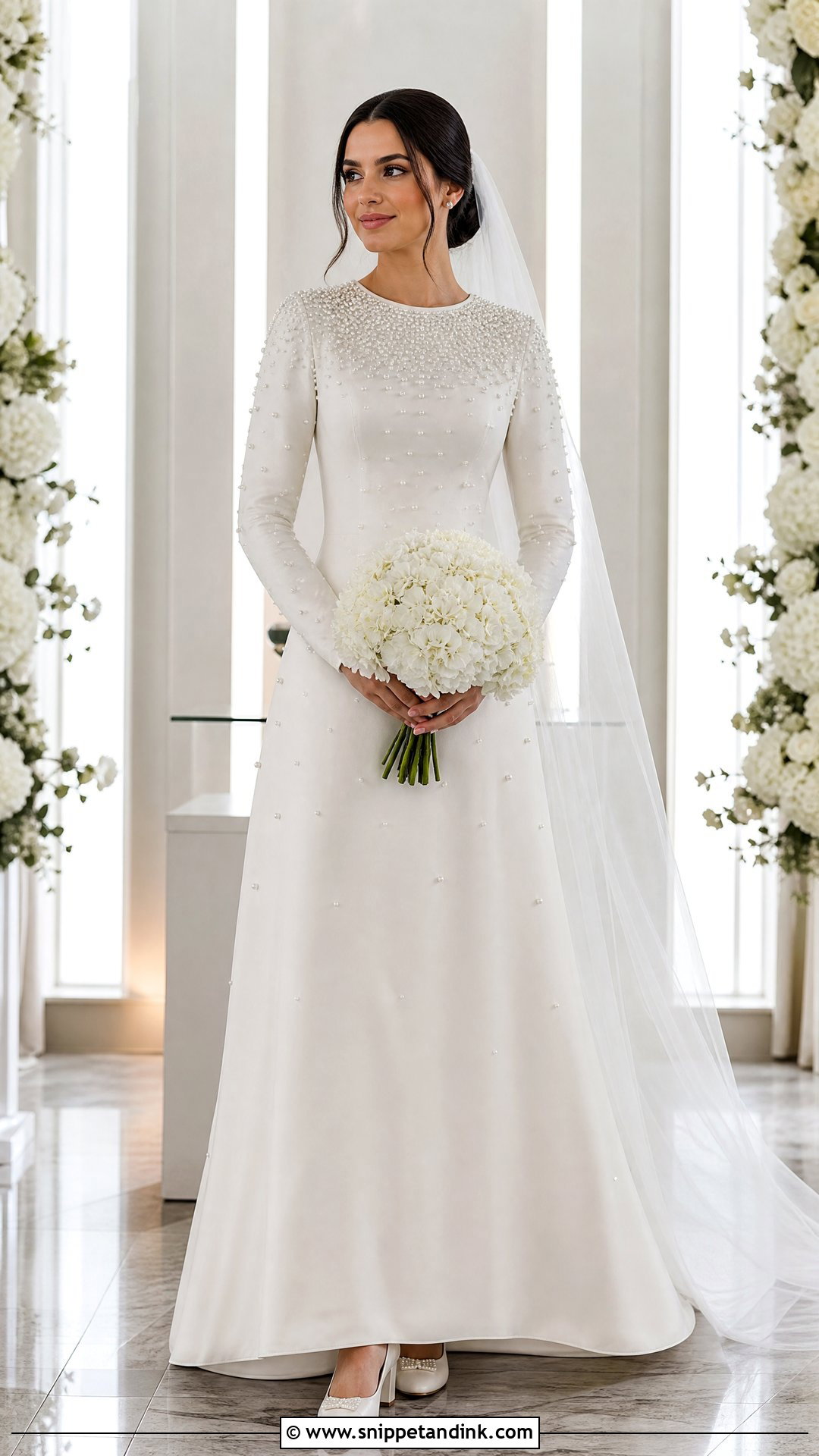
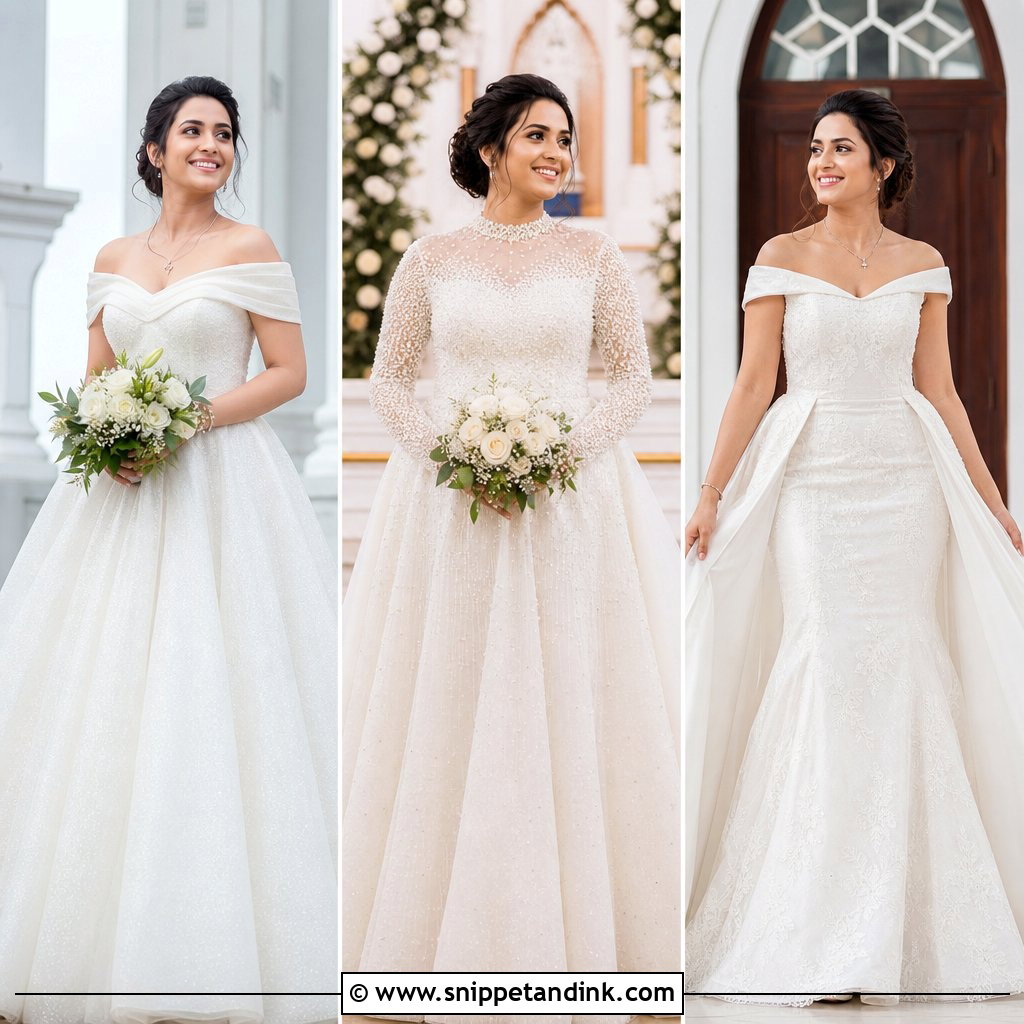
Tiny pearls catch candlelight softly, without the glare of crystal. A fully lined A-line with a high round neck, fitted sleeves and pearls concentrated at the bodice and cuffs keeps it balanced; leave the skirt plain. A plain tulle veil, pearl studs, satin block heels and white hydrangeas finish it. Don’t add a pearl necklace if the neckline is already beaded, as bare skin at the collar balances the decoration. Pearls under the arm can rub, so sit and move your arms during fittings and check that every bead is stitched flat.
13. Detachable Overskirt Wedding Gown
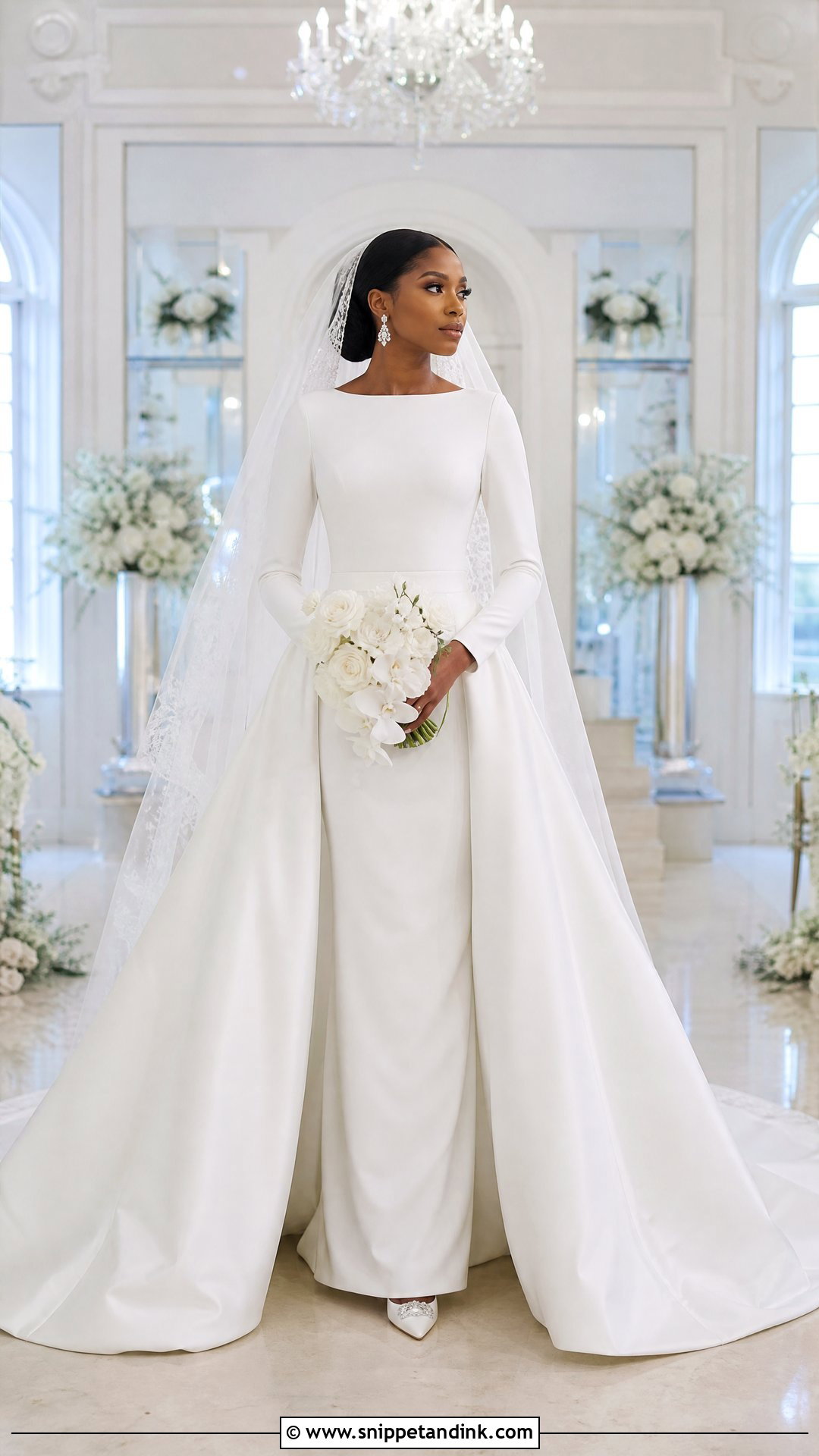
A detachable overskirt gives you two silhouettes in one outfit. The base is a covered crepe or lace gown with long sleeves; for the service, a full satin overskirt clips on at the waist and turns it into a ball gown with a train. Style it with a chapel veil, crystal earrings, pointed pumps and a structured bouquet. After the formal photographs, the overskirt comes off and you can dance in the slimmer dress. The fastening must be invisible from the front and sides. Have the seamstress show you how it works, then choose one trusted person to do the change on the day.
14. Puff Sleeve White Wedding Gown
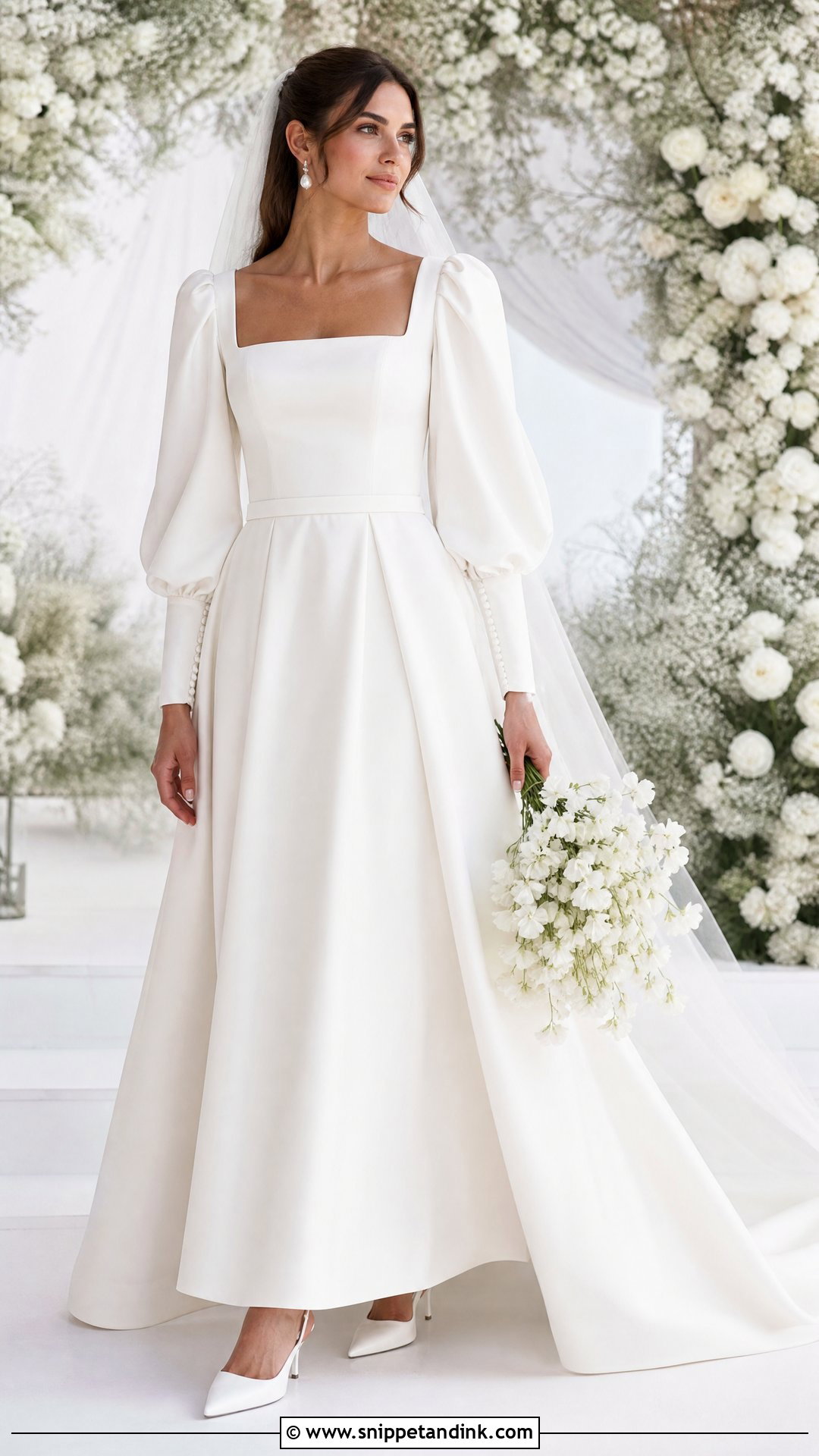
Puff sleeves have volume at the shoulder and taper into a fitted cuff. On a square neckline, structured bodice and A-line skirt, they create a balanced shape. A narrow belt, fingertip veil, pearl drops, slingbacks and a hand-tied bunch of sweet peas and roses complete it. Volume needs judgment: broad shoulders look best with a small puff, while narrow shoulders can carry a fuller one. Check the elastic or inner band at the cuff and armhole, because a tight band leaves red marks by the end of a long service. This is an easy dress to personalise with a family veil.

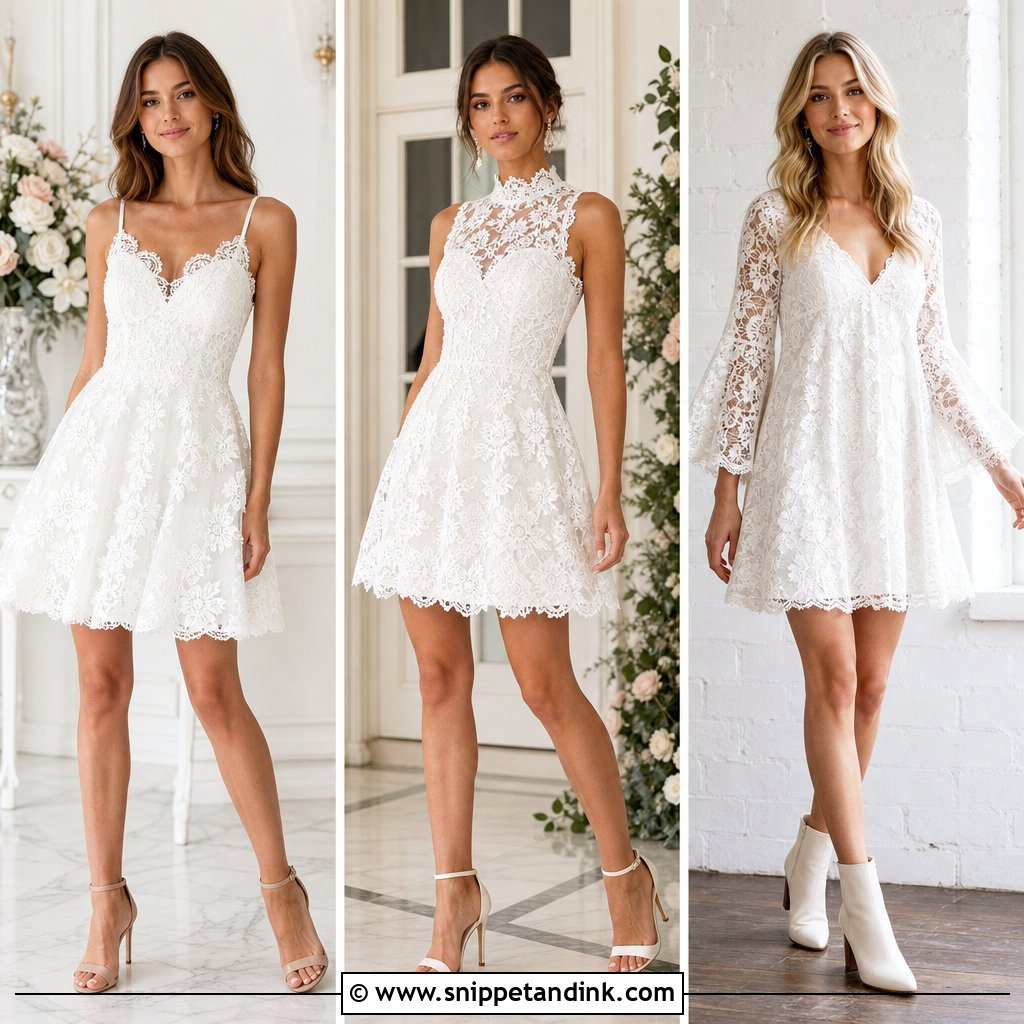
15. Tea Length White Wedding Gown
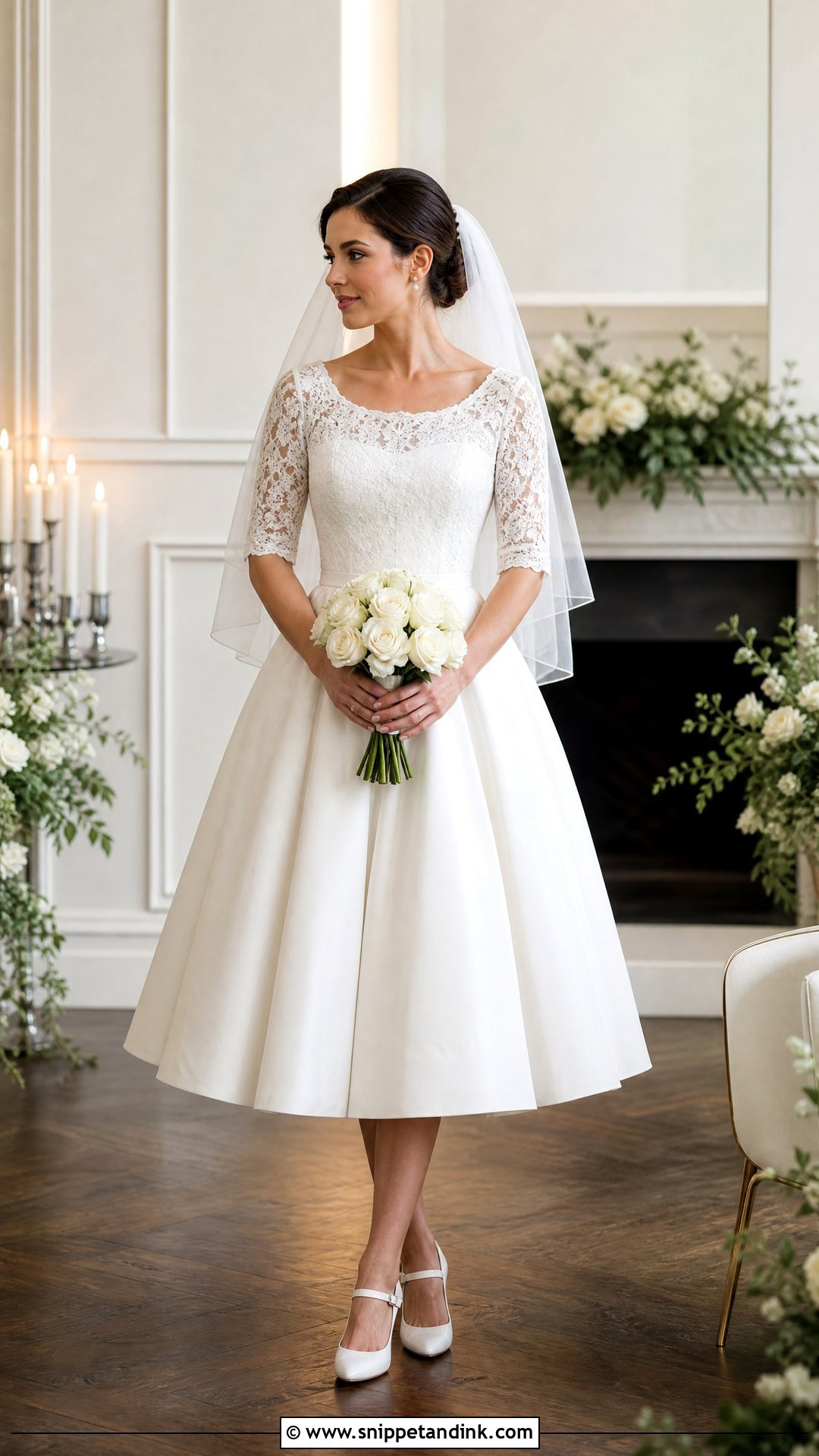
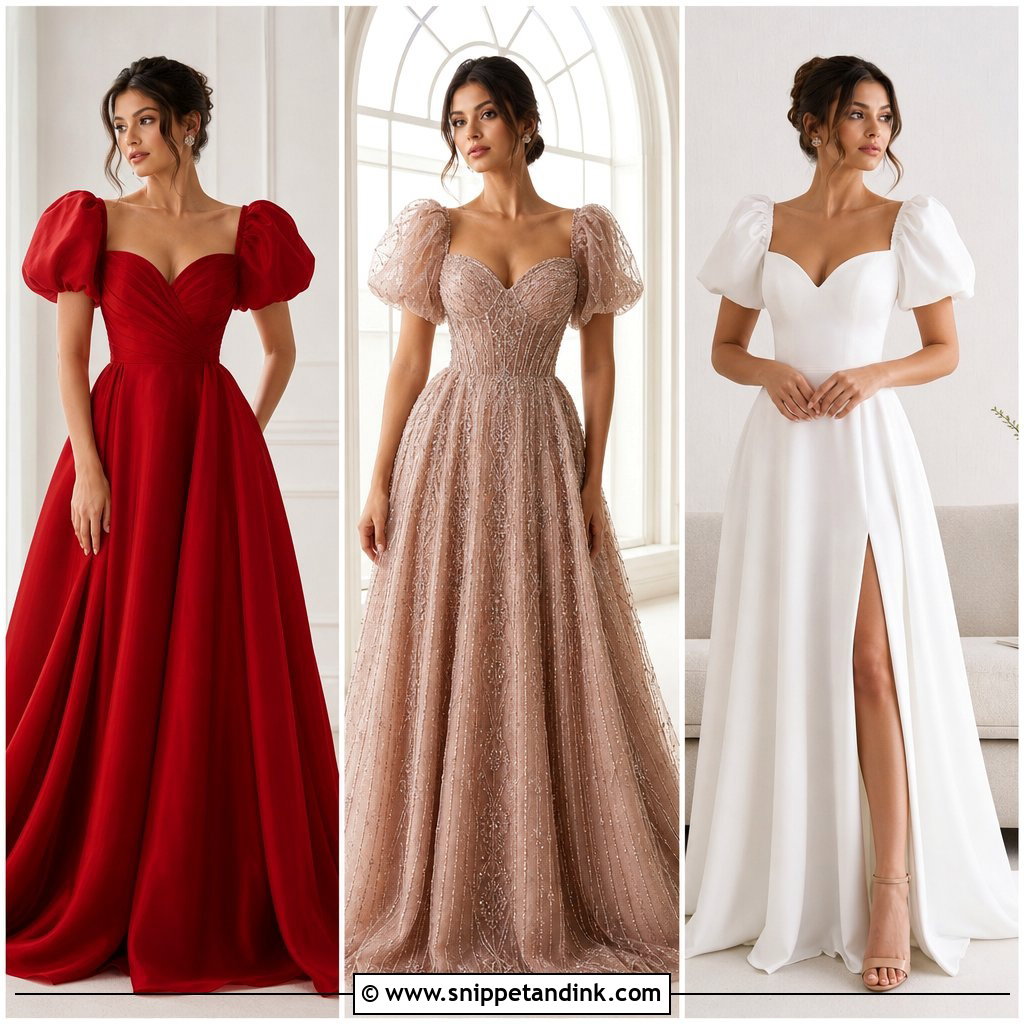
Tea length is my suggestion for a smaller chapel or a registry blessing. A fitted lace bodice, elbow sleeves and a modest scoop neck keep it covered; the hem lands between calf and ankle. The shoes show, so they deserve thought: pearl-trimmed pumps, white block heels or satin Mary Janes. Add a birdcage or shoulder-length veil, pearl studs and compact roses. A structured underskirt gives some volume, while a soft lining hangs more relaxed. Have the hem set while wearing your actual shoes, because an inch changes how the proportions read.
16. Empire Waist Chiffon Wedding Gown
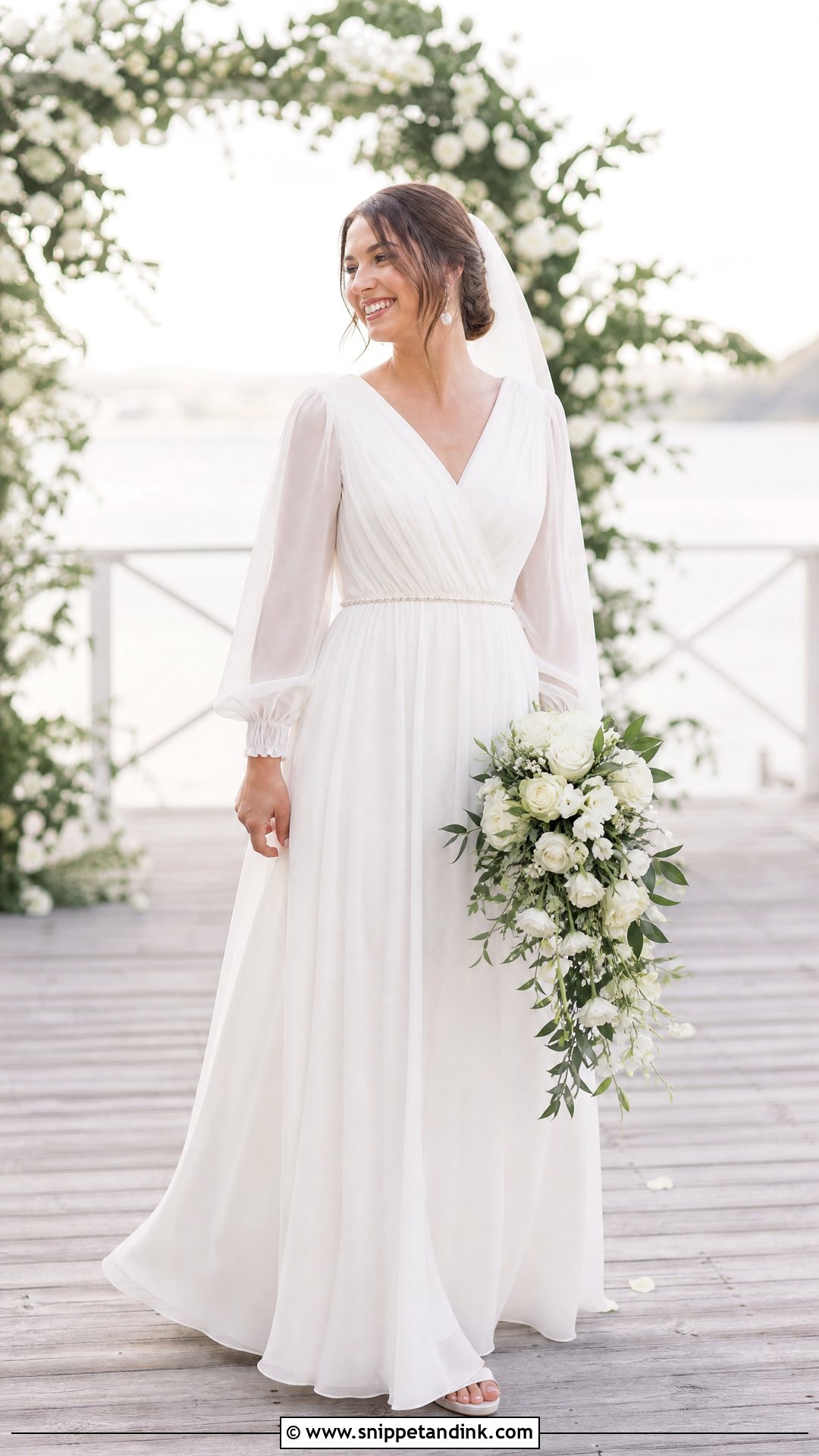
The empire waist sits just under the bust and lets the skirt fall loosely over the waist and hips. A lined V-neck, gathered crossover bodice and sheer-look sleeves with opaque lining give coverage. Pair it with a simple chapel veil, small drops, low heels and a cascading bouquet. Brides who are pregnant, or anyone who hates pressure at the waist, often find this cut the most comfortable. The seam should rest under the bust without pressing into the ribs. Avoid heavy decoration at the bust, and add a narrow pearl belt if you want definition.
17. Drop Waist White Wedding Gown
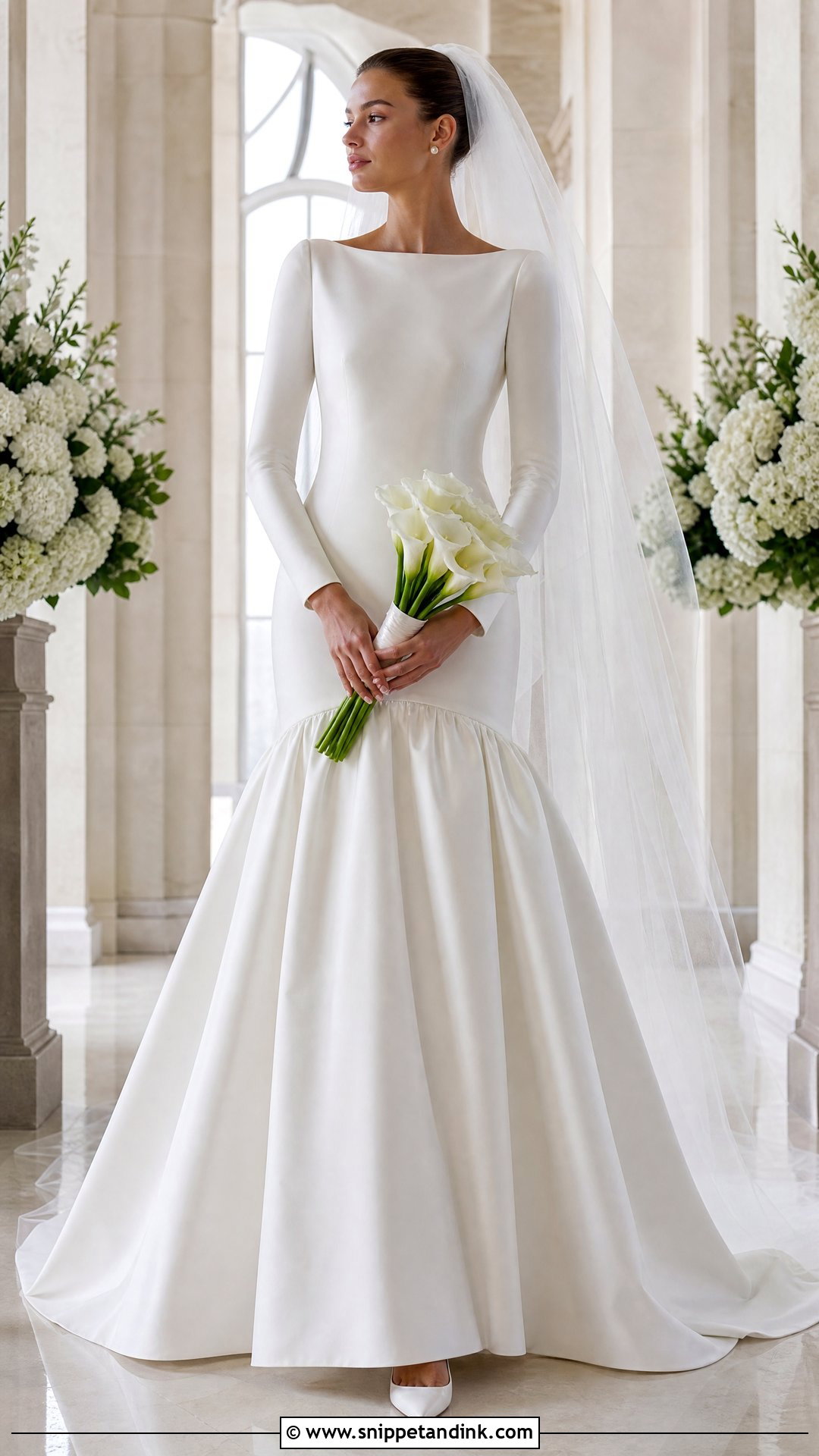
A drop waist lengthens the torso before the skirt opens. A structured satin bodice with a boat neckline, long sleeves and seams below the natural waist works best with a gentle flare, as huge volume competes with the long bodice. A plain cathedral veil, pearl studs, pointed pumps and slim calla lilies keep it sleek. This is a hard shape to fit. The seam must line up with your hip, and shorter torsos usually need it raised a little. Smooth foundation garments let the satin lie flat.
18. Pleated Satin White Wedding Gown
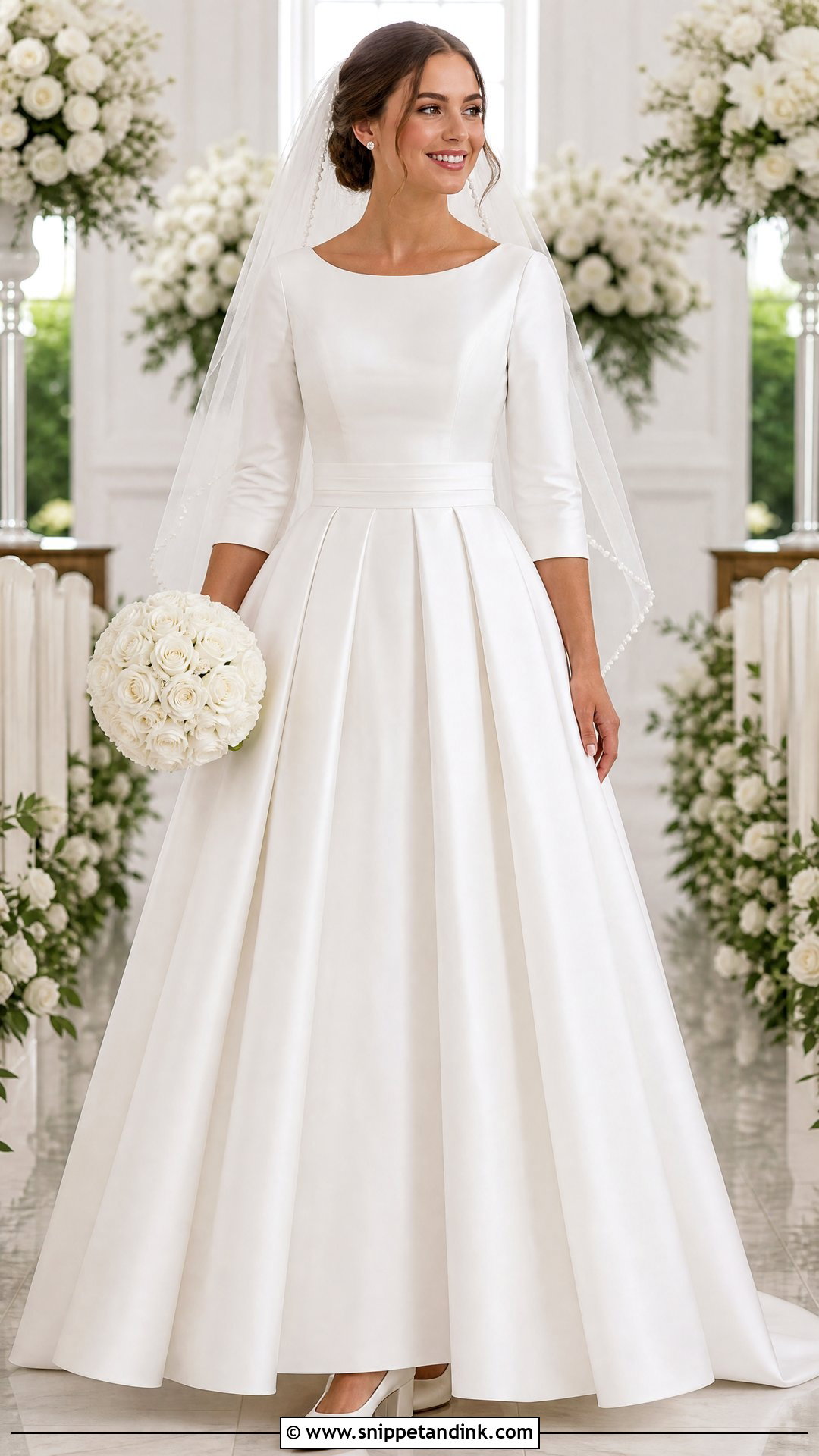
Pleats give satin movement. Picture a fitted bodice with a high scoop neckline, three-quarter sleeves and a wide waistband, with box pleats from the waist creating fullness while the front stays flat. A pearl-edged fingertip veil, crystal studs, satin block heels and round roses go well with it. Pockets can hide in the side seams, though anything heavy in them pulls the pleats out of line. At fittings, check that the pleats fall evenly and stay centred on the bodice. Keep the hair simple, a low bun, so the construction stays the focus.
19. Floral Appliqué White Wedding Gown
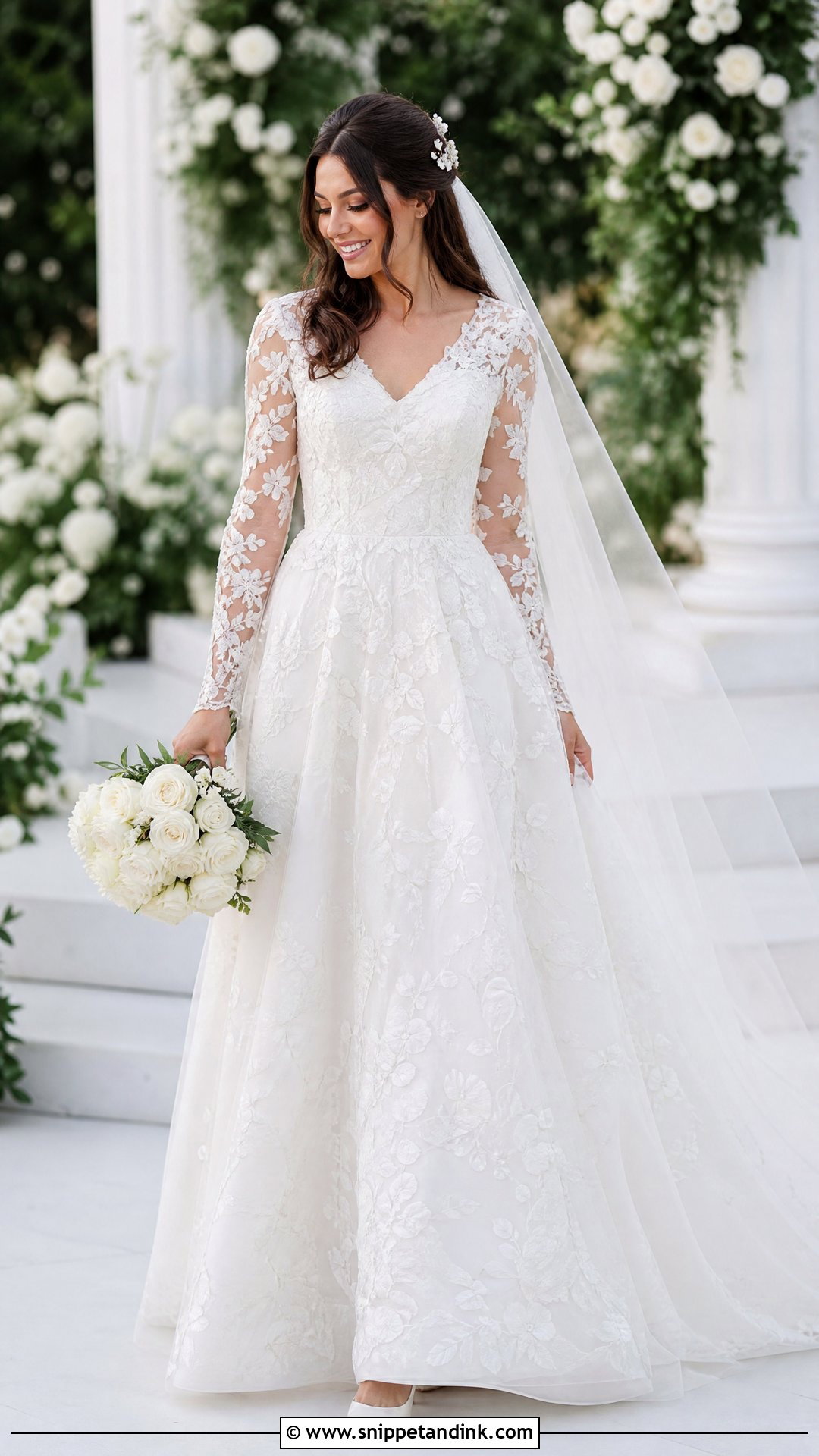
Floral appliqués add texture without any sparkle. An A-line with carefully lined illusion sleeves, a modest V-neck and flowers clustered on the bodice and upper skirt works well; leave the lower skirt lighter. A plain tulle veil, floral pins, low satin heels and loose white roses with greenery are plenty. Skip a complicated bouquet, since the dress already provides texture. Raised flowers near the waist and underarms can fold or catch, so have the seamstress check those spots. A few loose appliqués stitched onto the veil tie the two together.



20. Plus Size Structured A-Line Wedding Gown
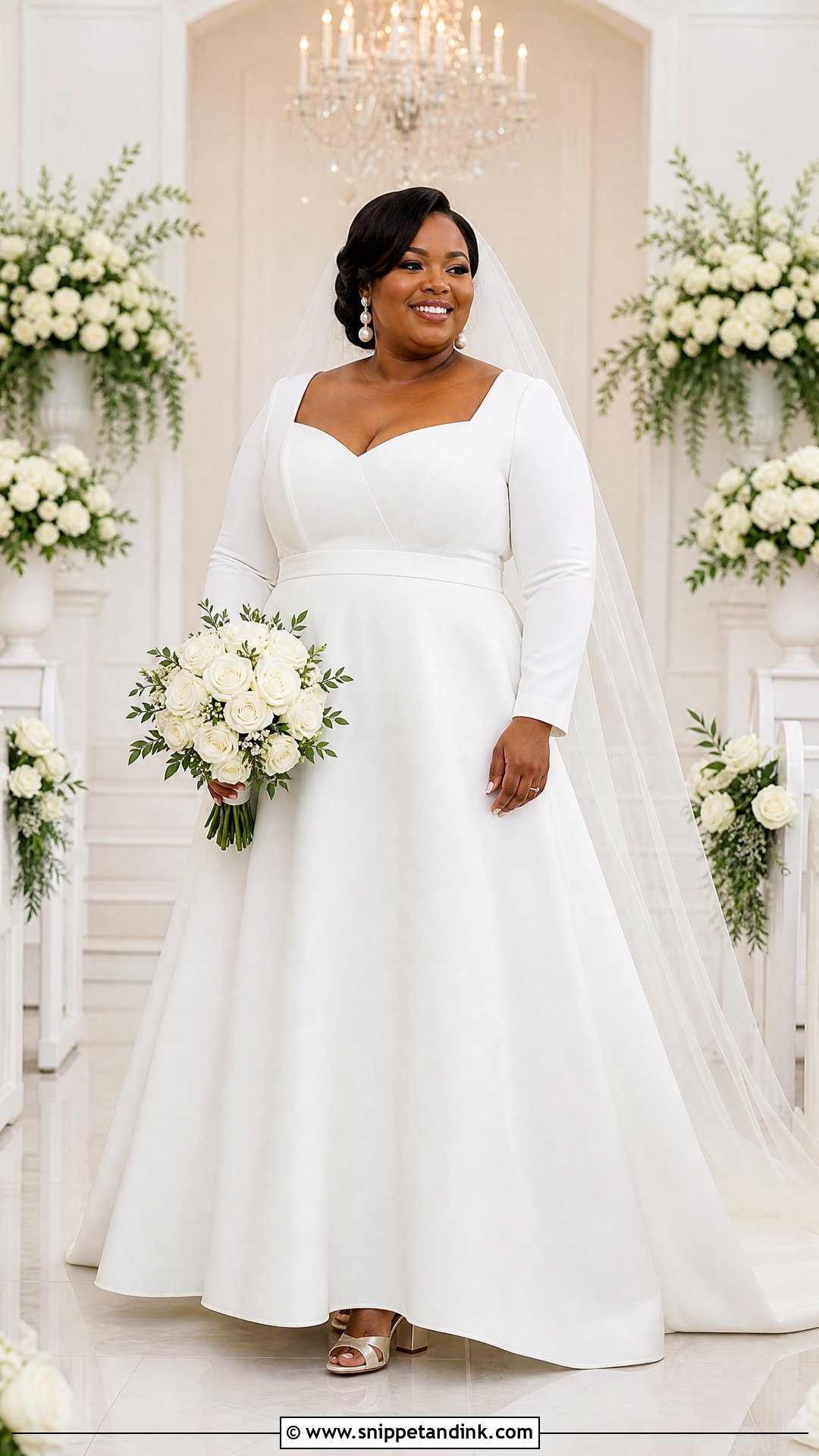
A structured A-line in plus sizes should support you and still let you move. Look for a fully built bodice with wide straps or long sleeves, a modest sweetheart overlay and an inner support system. A smooth waistband and flowing skirt give a clean shape that doesn’t cling to the hips. A chapel veil, pearl statement earrings, cushioned block heels and a bouquet scaled to the skirt complete the outfit. Buy for the body you have now, not one you might have later; altering a dress down is far easier than letting it out. Bring your exact undergarments and shoes to every fitting, and test arm movement, bust support and comfort while seated.
Rehearse the Kneeling Before the Wedding Day
Many services include kneeling at the altar, often for several minutes, and that’s where a gown that felt fine in the salon can let you down. At your second fitting, kneel on a cushion and then stand up without using your hands. A skirt that pins your knees or a bodice that digs in when you bend forward needs adjusting while there’s still time.
When you kneel, the soles of your shoes face the congregation. Some brides have a small message painted or a decal added there; at the very least, peel off price stickers. Your maid of honour should know how to spread the train behind you as you kneel and gather it as you rise, and how to lift the veil off your shoulders so it doesn’t catch under your knees.
If you’ll take communion, think about the veil and sleeves too. Long bell sleeves can drag across a chalice or candle, and a blusher veil needs lifting before you receive. A quick walk-through at the rehearsal, wearing your shoes and a practice veil, takes ten minutes and saves a lot of fumbling in front of your guests.
Will You Be Able to Kneel, Sit and Dance in It?
Coverage and comfort aren’t in tension with looking like a bride; every dress above shows that in a different way. Long lace sleeves feel romantic, satin ball gowns feel formal, chiffon feels light and crepe feels modern. Let the veil, shoes and jewelry support the gown rather than compete with it. Above all, pick a dress you can live in for the whole day, from the service to the last dance. Ask your church about any expectations early, give alterations enough time, and practise moving in the full outfit at least once before the wedding.
You'll Like These Ideas:


Leave a Reply