
Satin, Faille, Organza or Crepe: How Each Behaves by Evening
Most of the gowns below come in the same handful of fabrics, and the fabric affects your day more than the neckline does. I always ask a bride to touch, crush and sit in a swatch or sample before she commits, because each one ages differently over ten hours.
- Satin: rich sheen and a smooth drape, but it creases where you sit and shows water marks. Plan a quick steam before the reception entrance.
- Mikado and faille: heavier, crisp and matte to semi-matte. They hold structured shapes well and resist creasing better than satin, but they are warm.
- Organza: light and shape-holding, with a soft shimmer. Crushes easily in transport, so it needs to travel hanging.
- Crepe: fluid and matte, shows the fit clearly and creases little. It needs the most careful tailoring.
- Silk chiffon and lace: the lightest to wear. Chiffon snags easily; lace hides small wrinkles and minor fit issues.
Flash photography also treats fabrics differently. Shiny satin can bounce light and look whiter in photos than in person, while matte crepe and faille photograph closer to their true shade.
1. Satin A-Line Wedding Dress
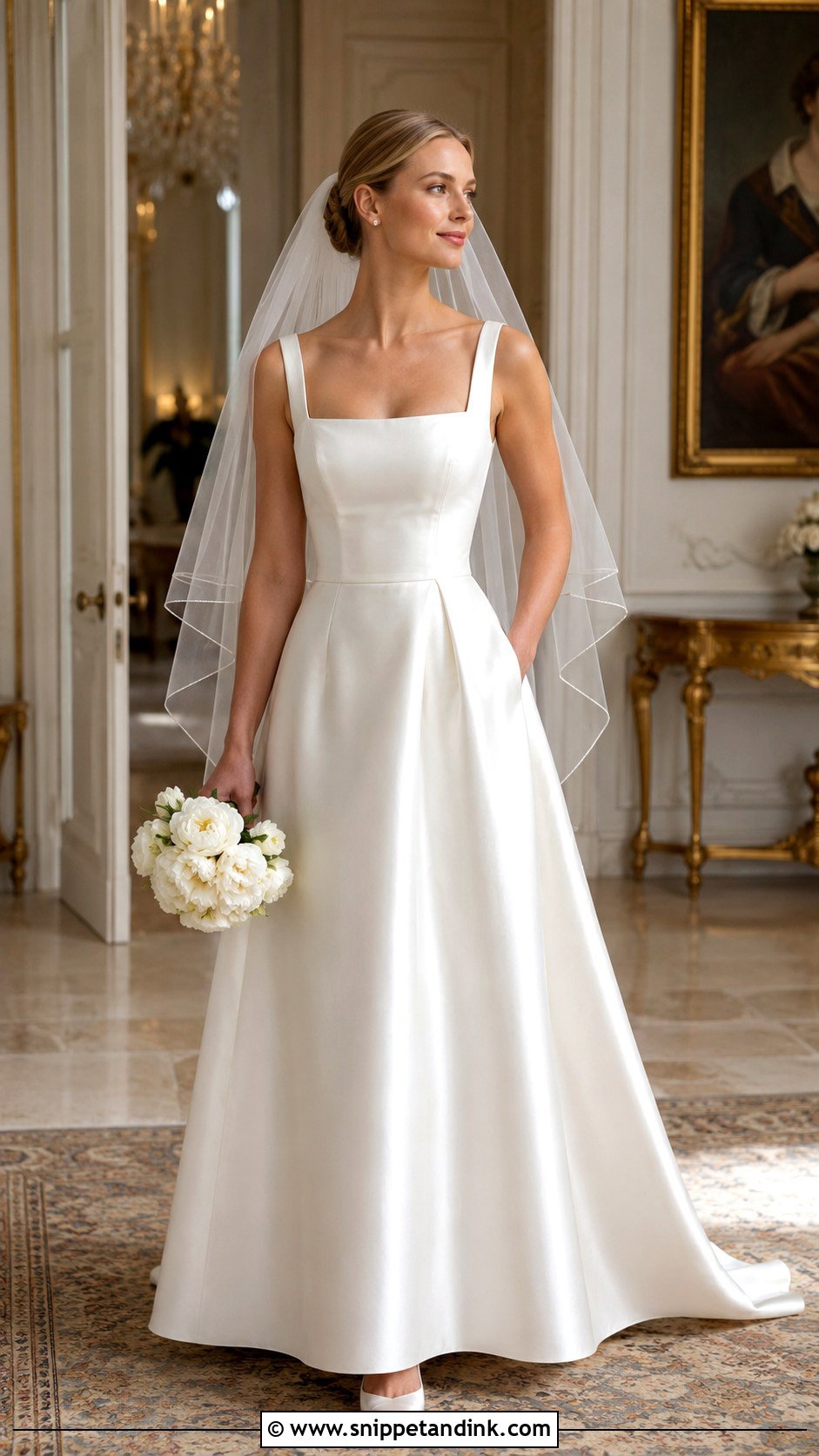
Start here if you want to see how little a classical dress needs. A fitted bodice, a natural waist and a skirt that widens slowly to the floor in ivory satin, with no beading at all, gets its depth from the way satin catches light. A fingertip veil, pearl studs and pointed satin pumps are enough, with a neat chignon to keep the neckline clear. Ballrooms, hotels, formal gardens and historic houses all suit it. At the hemming fitting, I watch the skirt as the bride walks and sits; satin should glide, and a hem even slightly too long will catch the toe of every step.
2. Long Sleeve Lace Ball Gown Wedding Dress
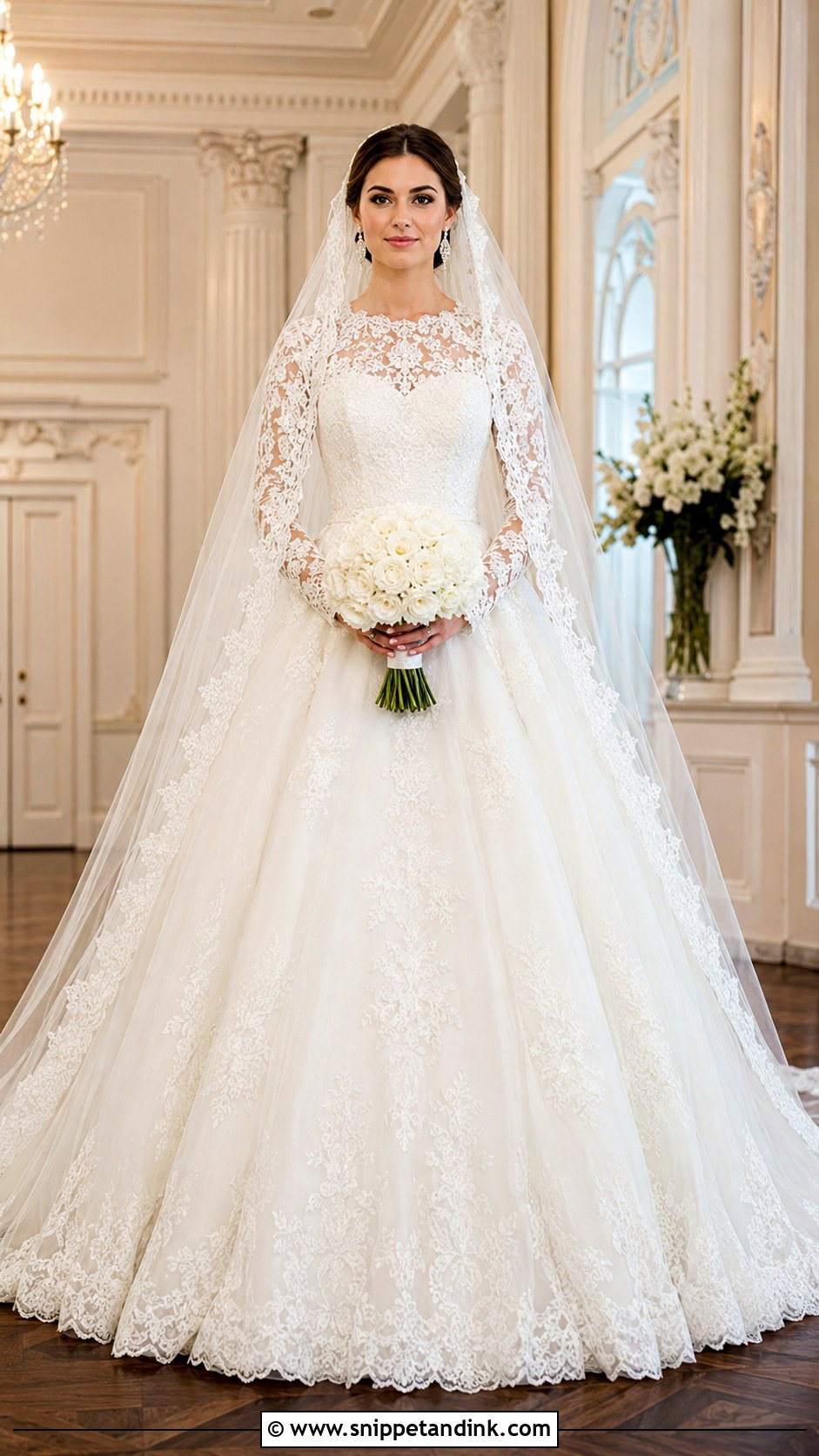
Lace with a full skirt is about as recognizably bridal as a gown gets. On a long sleeve lace ball gown I want a lined bodice, a fitted waist and appliqué that carries down into the skirt, so top and bottom feel like one piece. Sheer sleeves look lighter; opaque ones feel more traditional and warmer. A cathedral veil with a narrow lace border, simple drop earrings and closed-toe ivory heels finish it. Lace already has a lot going on, so keep the bouquet structured and restrained, the clutch smooth and hair decoration to a minimum. Cool-weather ceremonies in grand rooms suit it best.
3. Strapless Satin Ball Gown Wedding Dress
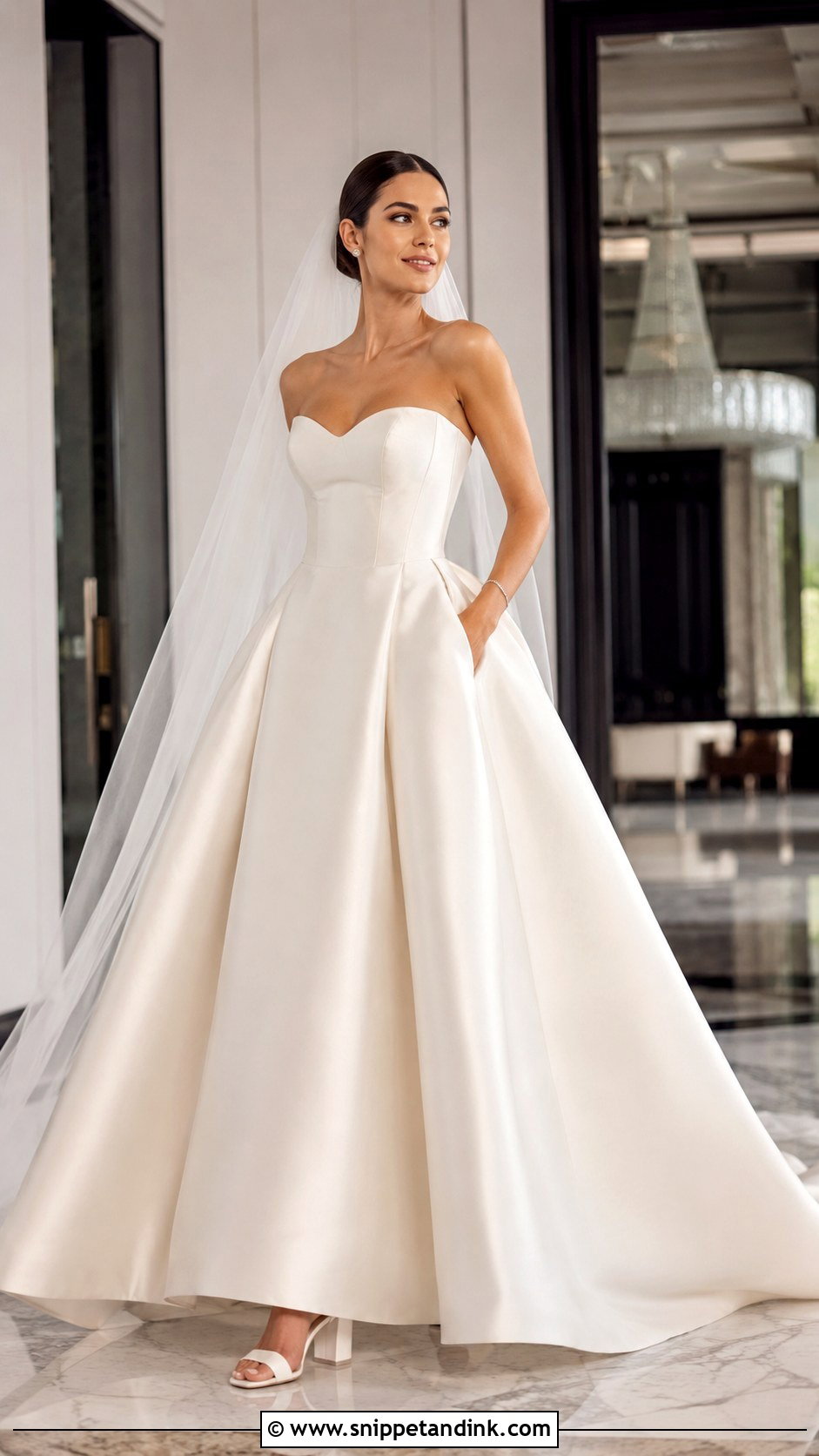
Clean architectural lines are the whole appeal of a strapless satin ball gown. The softly curved neckline frames the shoulders, but the real work happens inside: an internal corset keeps the bodice from slipping as you hug guests and sit for dinner. A long plain veil leaves the satin uninterrupted. Crystal studs, a slim tennis bracelet and satin block heels add a little sparkle, with a sleek low bun or polished waves tucked behind the ears. Practice walking, turning and sitting at the final fitting, and ask about a discreet bustle. The result is formal and majestic, made for a ballroom, a museum or an evening wedding.
4. Bateau Neck Wedding Dress
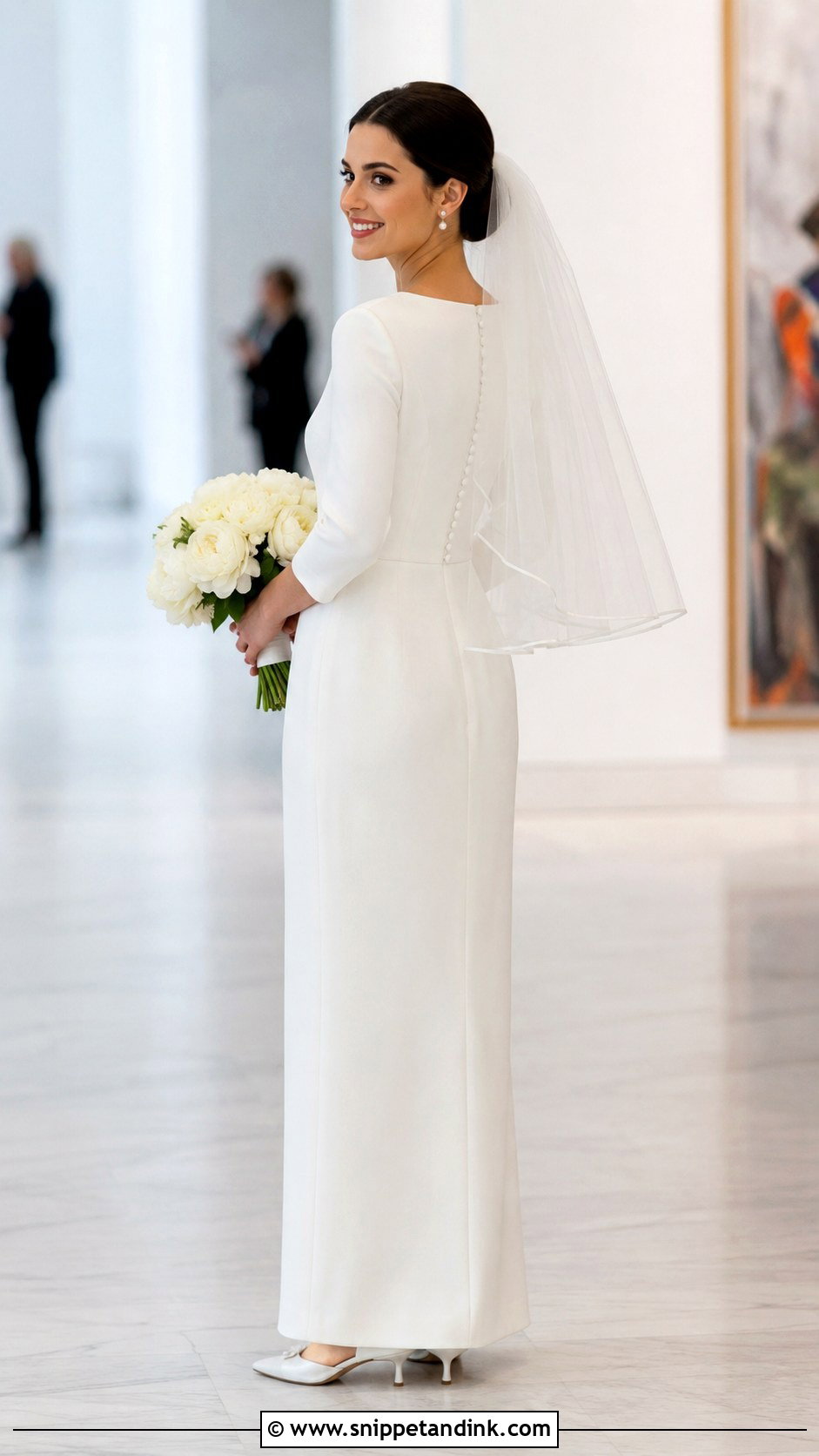
A bateau neckline draws a calm line across the collarbone, and it suits an A-line or a column in silk, satin or structured crepe. Three-quarter sleeves make it feel especially polished; sleeveless is lighter for warm days. Pearl button earrings, ivory kitten heels and a waist-length veil under a smooth updo complete it. With such a modest front, I often suggest a low V-back or covered buttons for interest from behind. A heavy necklace would fight the wide neckline. It works for city ceremonies, daytime formals and understated black tie.
5. Sweetheart A-Line Wedding Dress
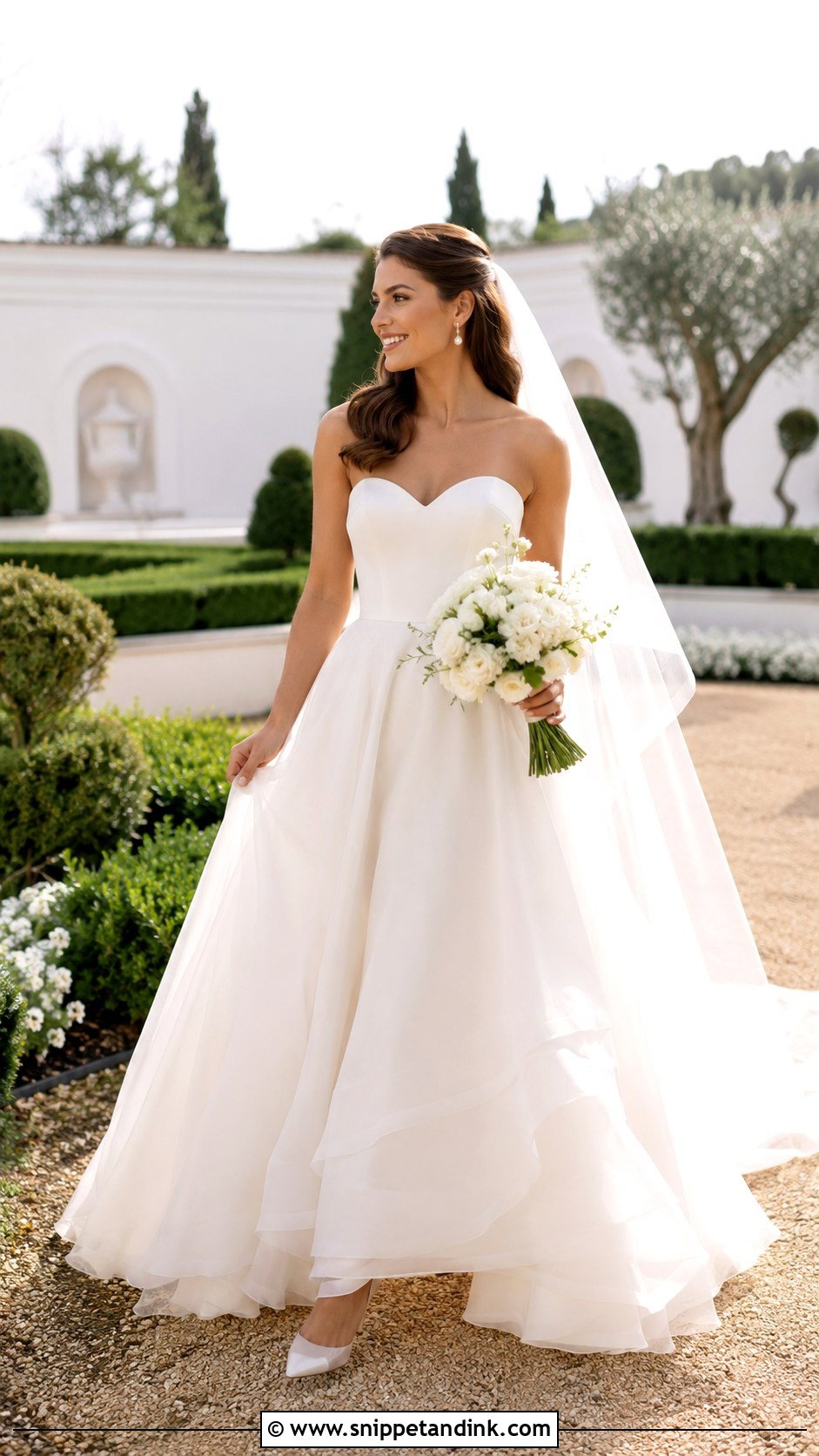
Sweetheart A-lines are among the easiest gowns to fit across different bodies, which is why I recommend them so often. The bodice should follow your shape without pinching, balanced by a flowing skirt in satin, Mikado, organza or layered tulle. Detachable straps add support for the reception while the ceremony stays strapless. A chapel veil, small pearl drops and low pointed heels you can stand in for hours finish it, with a half-up style in smooth waves. Put the embellishment either on the bodice or on the veil, never both, or the look gets crowded.
6. Off Shoulder Wedding Dress
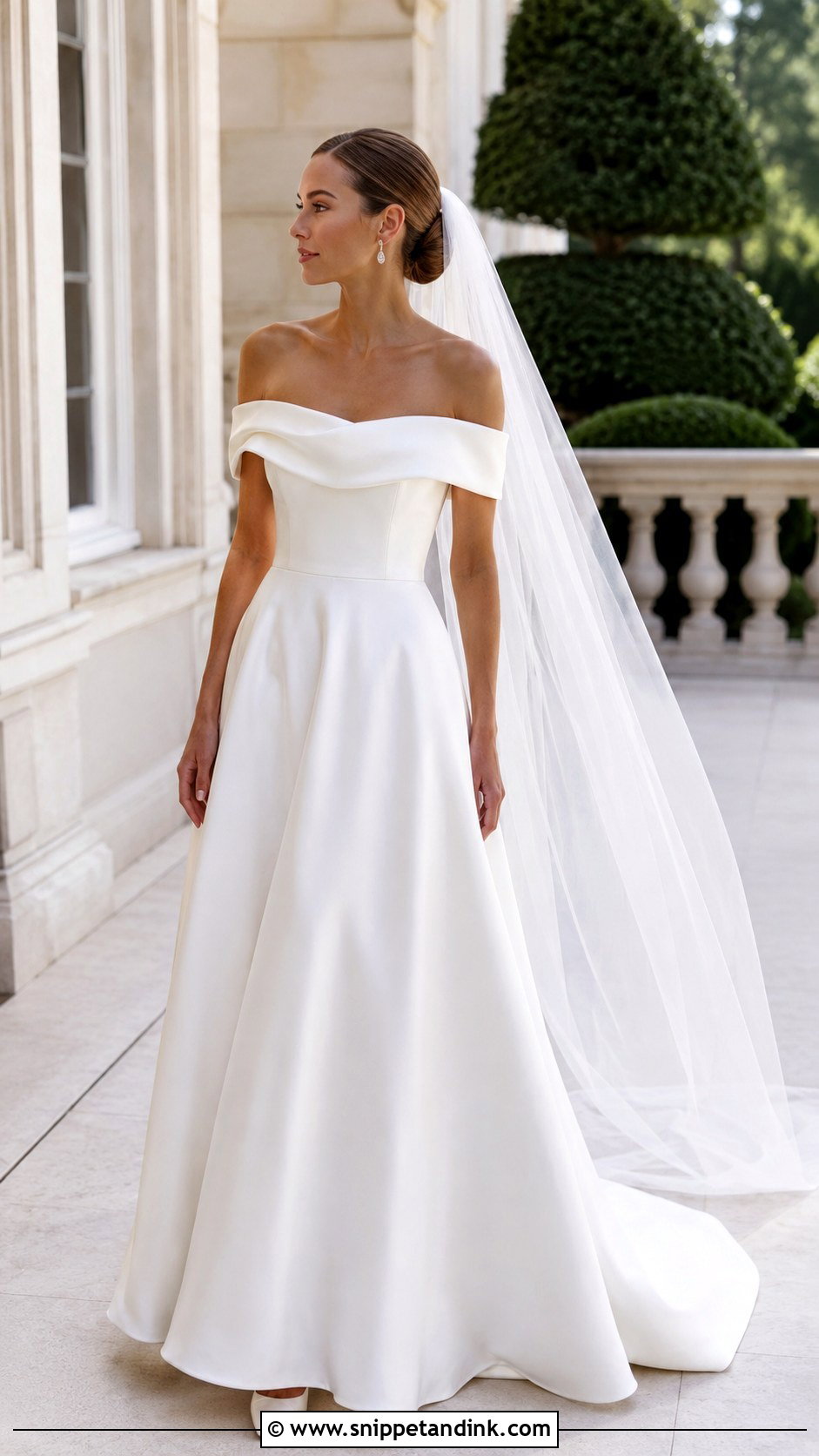
The off-shoulder neckline is lovely and a little demanding. A fold-over band or soft draped sleeve has to sit securely without pinning your arms to your sides, and satin gives a sculpted finish where lace adds texture. A clean chapel veil, teardrop earrings and moderate closed-toe pumps suit it, with a softly pinned low bun. Earrings usually balance it better than a necklace. I make every bride raise her arms, hug someone and sit during the fitting, because this is the neckline most likely to ride up or dig in. Get it right and it suits garden terraces, estates and evening receptions.
7. High Neck Lace Wedding Dress
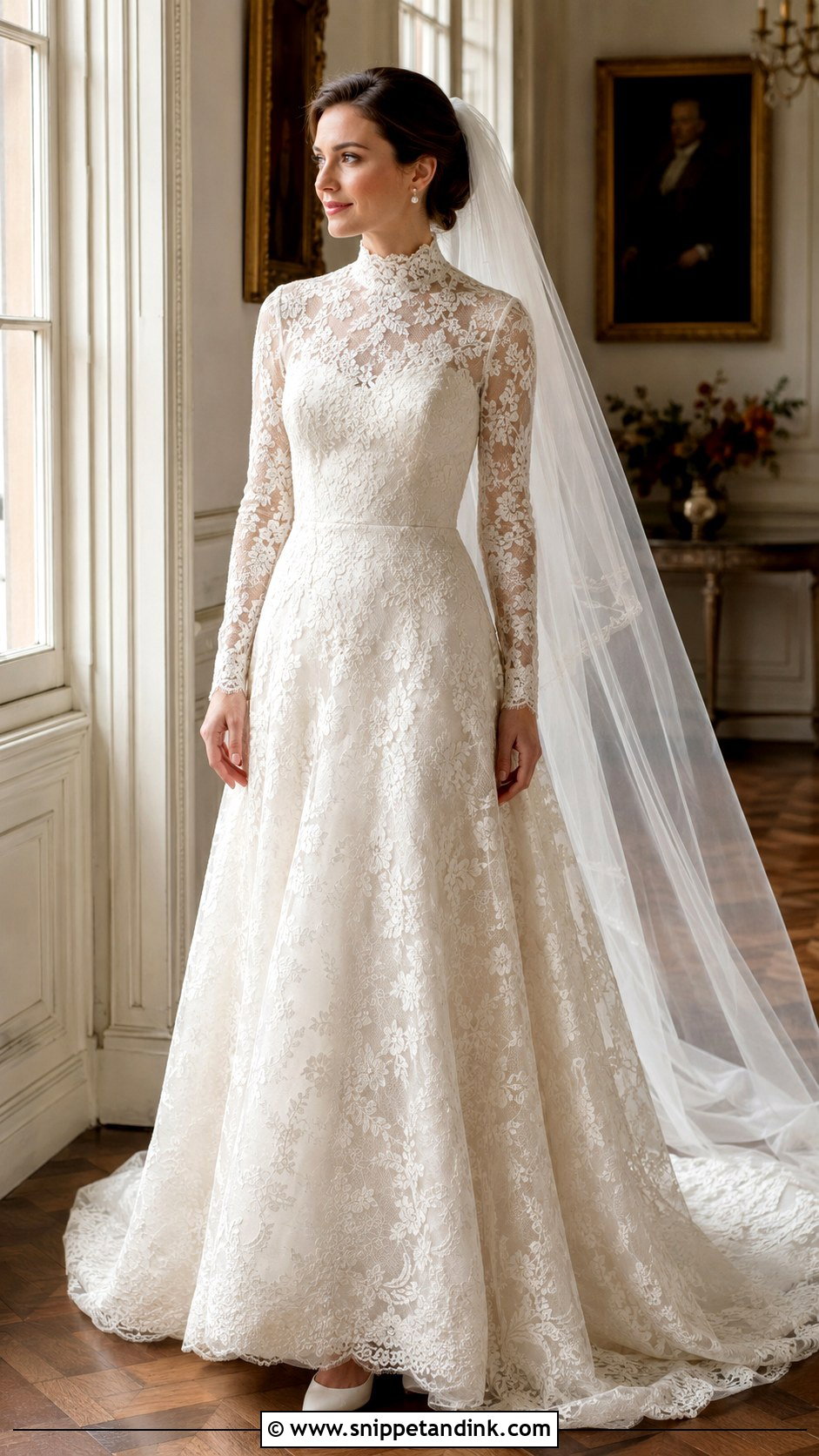
With a high lace neck, the pattern scale matters. Fine lace with a clear, delicate motif keeps the neckline from looking heavy close to the face. A fitted bodice over an A-line skirt balances it, and long sleeves deepen the traditional mood. Pearl studs, ivory pumps and a plain tulle veil under a low chignon are enough; skip the necklace and keep hair pieces small. A light lining behind the lace makes the pattern stand out and gives reliable coverage under bright lights. Covered buttons down the back pair well with it. Autumn, winter and formal indoor weddings are its natural home.
8. Square Neck Wedding Dress
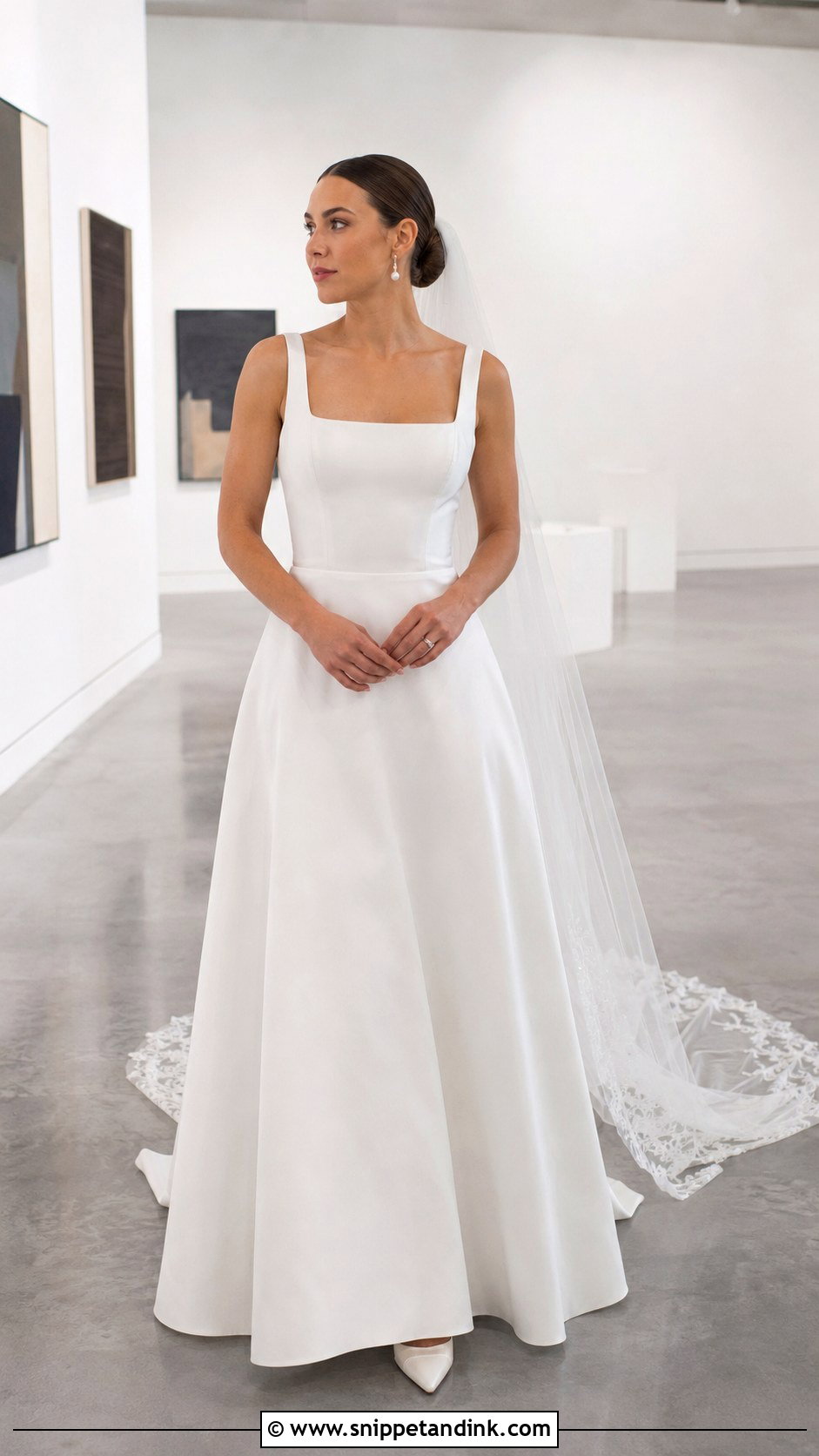
Straps decide whether a square neck works. Wide straps, set at the right point on the shoulder, keep the corners flat; set them too far out and the neckline gaps whenever you move your shoulders. I ask the tailor to check it with the bride rolling her shoulders forward and back. Matte satin, silk faille or smooth crepe over a structured bodice and gently flared A-line skirt give a clean, tailored result. A narrow cathedral veil, pearl drops, almond-toe ivory shoes and a low bun or soft twist suit it. Want more detail? Use covered buttons or seaming, not heavy beading. It fits galleries, gardens and historic houses alike.
9. V-Neck A-Line Wedding Dress
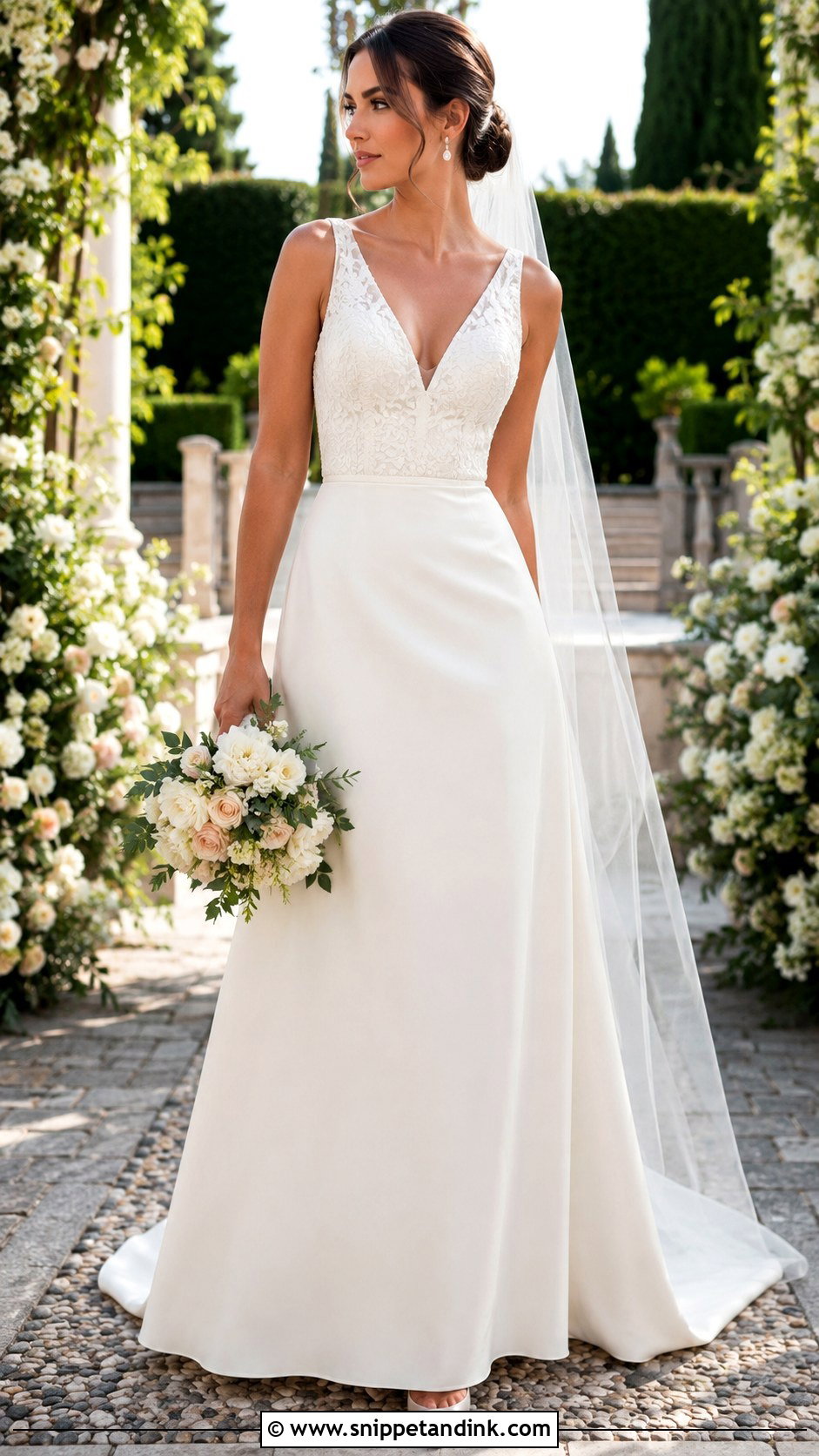
A V-neck A-line keeps the outfit soft while drawing a long line through the body. Choose a depth you’re comfortable with, and ask about hidden mesh or extra lining if you’d like more coverage. A silk or satin skirt moves smoothly, with optional lace at the bodice for texture. A simple tulle veil, delicate drops and pointed heels finish it, with a low twisted bun or side-parted waves. If the neckline already has lace edging, the necklace can stay at home. For more support, wider straps and a firmly structured bodice help. It moves easily between gardens, formal rooms and destination venues.
10. Basque Waist Ball Gown Wedding Dress
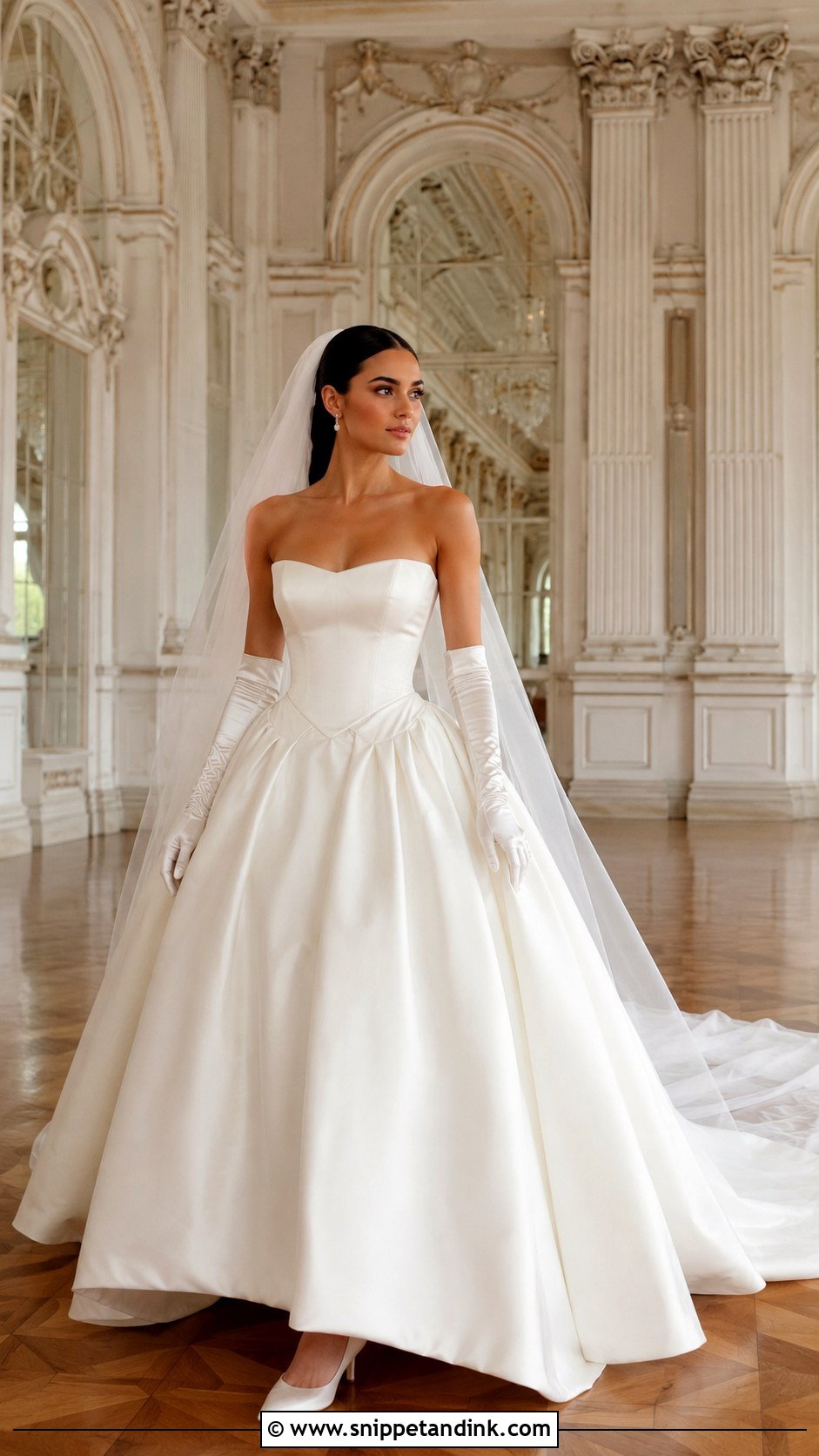
A basque waist runs the bodice past the natural waist into a soft V-shaped point, then meets a full skirt. That point is a historic detail that has come back into favor, and it makes the waist look smaller and the skirt grander. Smooth satin looks regal; brocade for subtle woven texture gives a richer surface. A cathedral veil, pearl earrings, long satin gloves and low heels hidden under the skirt complete it, with a polished bun. The point has to lie flat against the body without pulling, which takes careful tailoring, so I’d allow an extra fitting. Grand ballrooms and estates suit it.
11. Empire Waist Wedding Dress
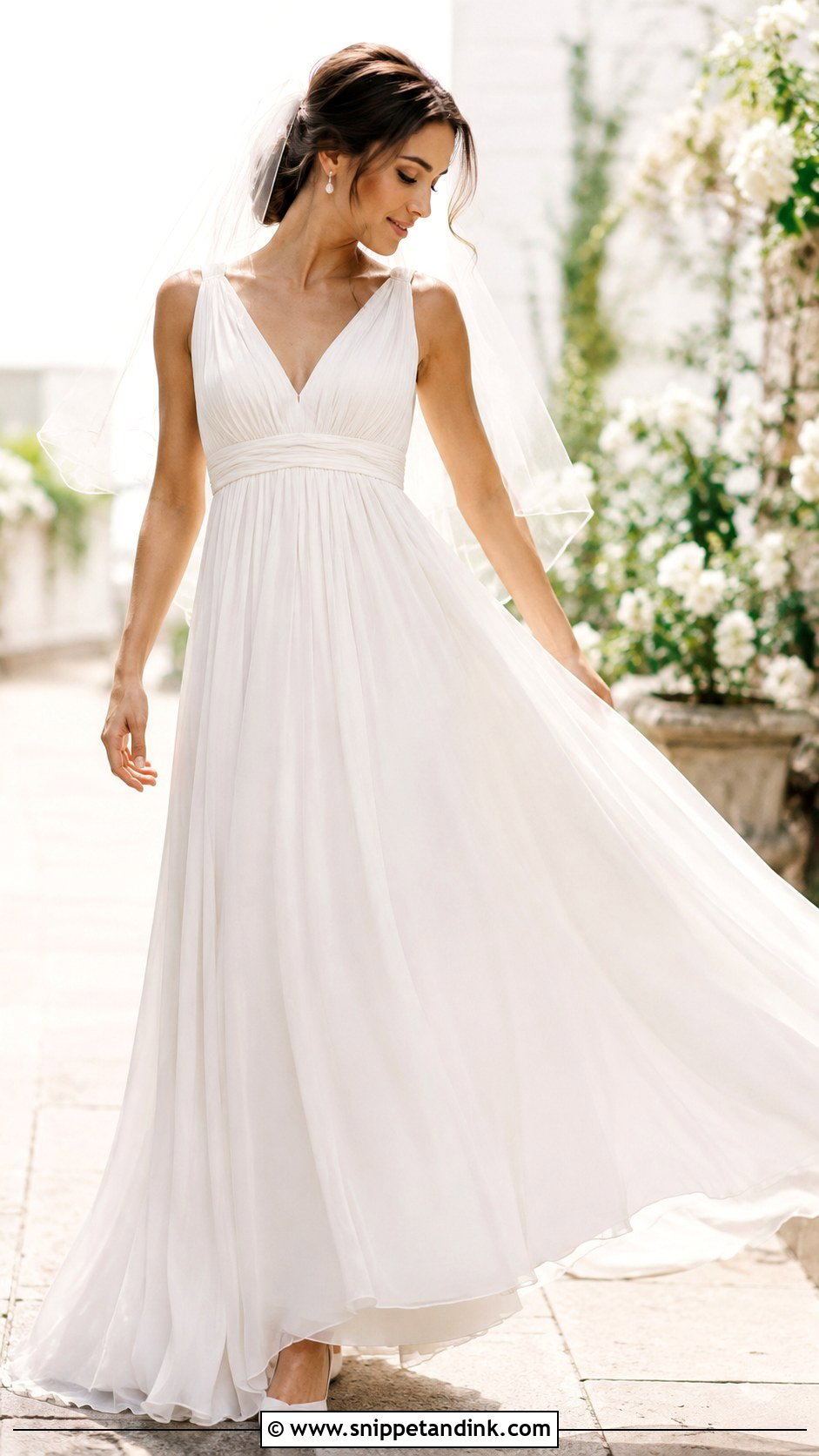
Empire waists are the comfortable choice on this list. The seam sits under the bust, nothing presses on the natural waist, and the skirt falls long and fluid. Silk chiffon, soft crepe or lightweight satin work, but only if the short bodice has real internal support. A shoulder-length veil, delicate earrings and low satin sandals or closed pumps suit it, with soft gathered hair or a smooth half-up style. Add interest through fine pleating, a narrow sash or small pearl buttons rather than big accessories. Spring gardens, coastal venues and relaxed estates suit it where a ball gown would feel heavy.
12. Lace Mermaid Wedding Dress
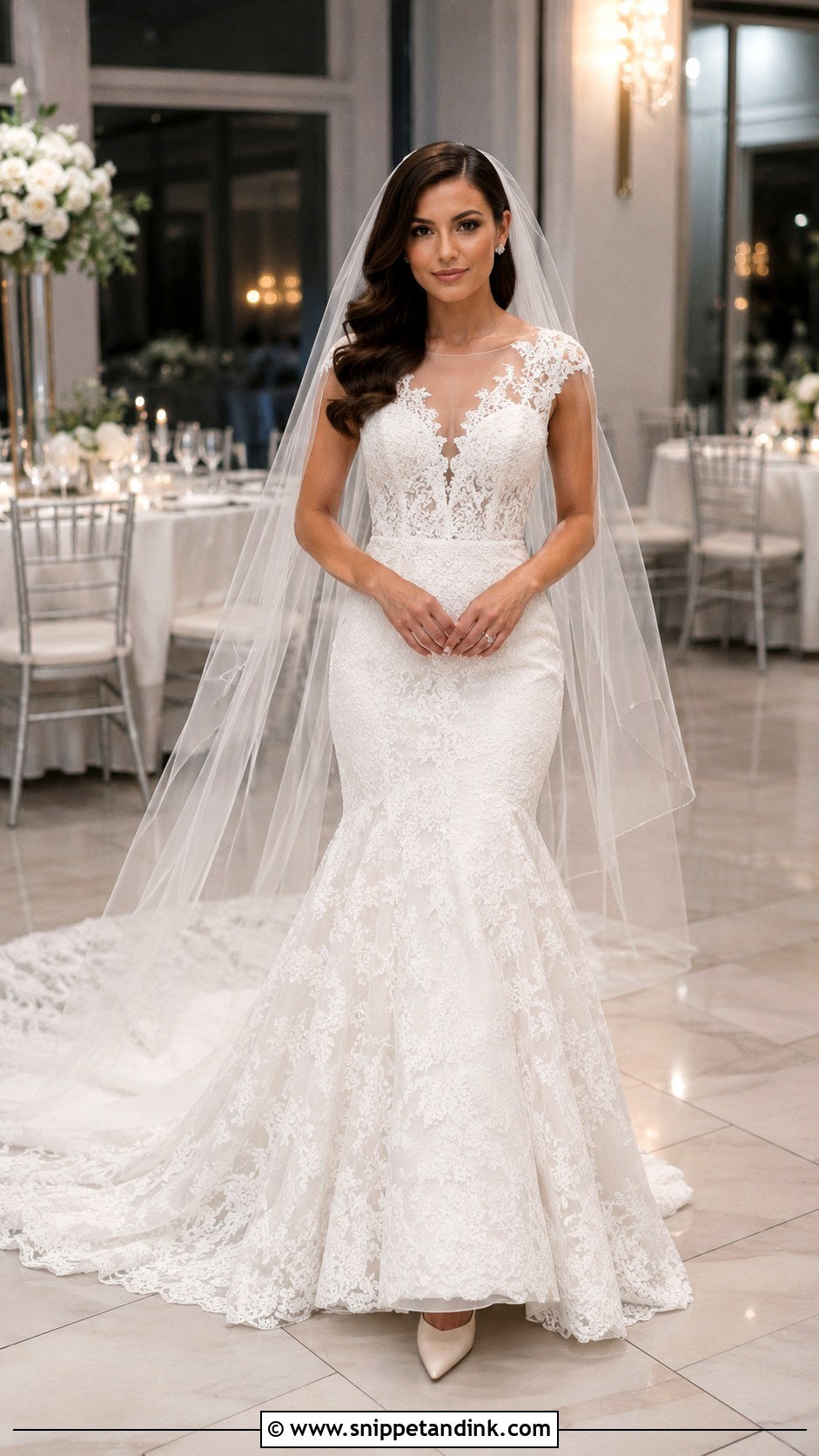
A lace mermaid follows the torso and hips and widens around the knee. That flare point is everything: too low and you can barely climb a step. Choose lace with a consistent motif and a lined bodice, and a chapel train that’s dramatic but manageable. A plain fingertip veil, crystal studs and pointed heels that support your posture finish it, with a low bun or brushed waves. Practice sitting, climbing steps and dancing at each fitting, and plan a hidden bustle for the reception. Lace on a fitted shape looks crisp under bright evening event lighting.
13. Crepe Sheath Wedding Dress
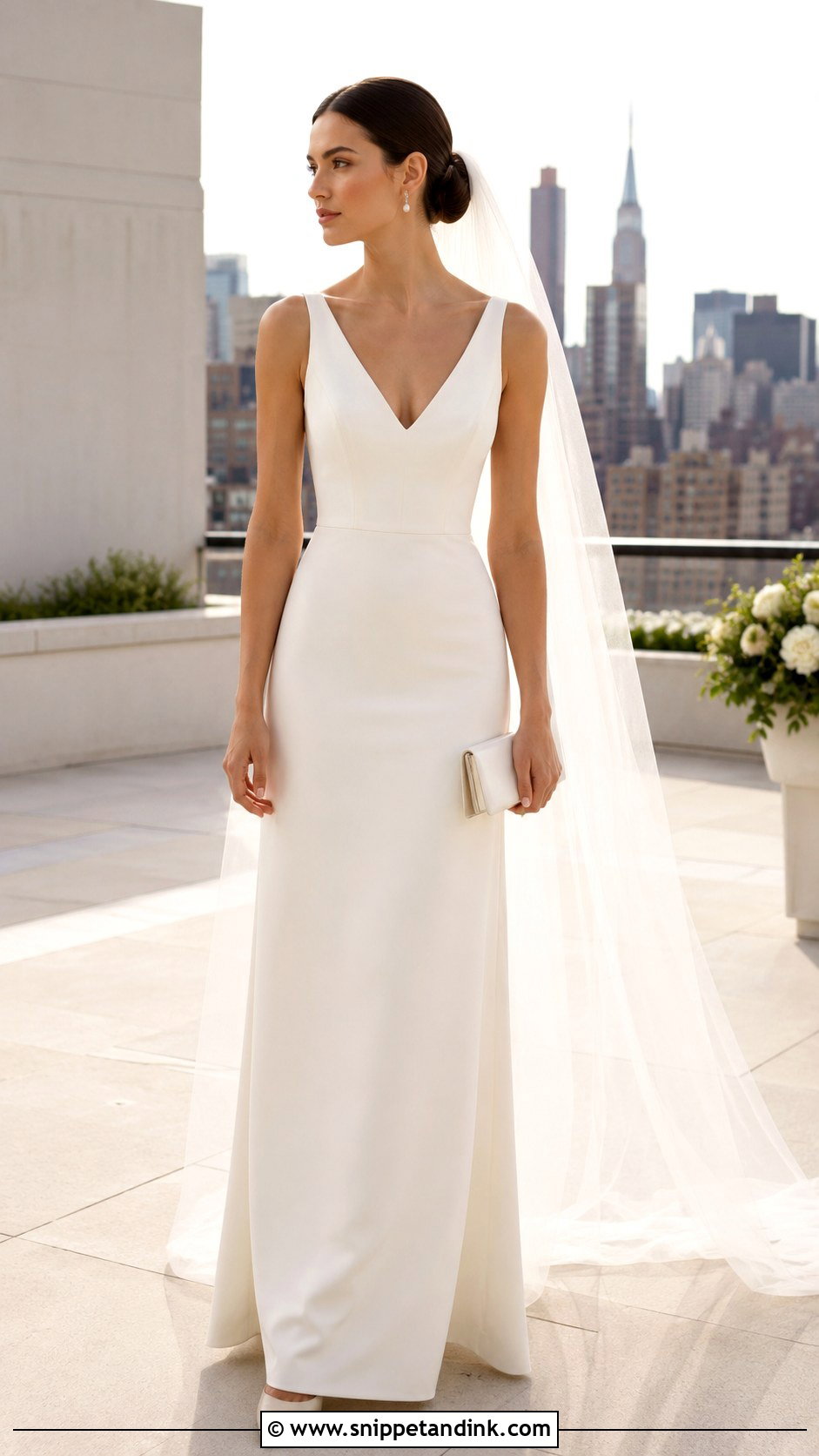
Crepe sheaths are the honest dress. With no lace or layers, every seam and the lining show through the fit, so I spend more time on seaming and lining quality here than on anything else. The fabric should skim, falling straight from bodice to floor, under a bateau, square or modest V-neck. A long sheer veil, pearl earrings, pointed pumps and a small structured bag for the reception suit it, with a sleek bun or side-parted waves. Hem it to clear the floor for safe walking without cutting the long line. City hotels and rooftops are where the tailoring speaks loudest.
14. Silk Slip Wedding Dress
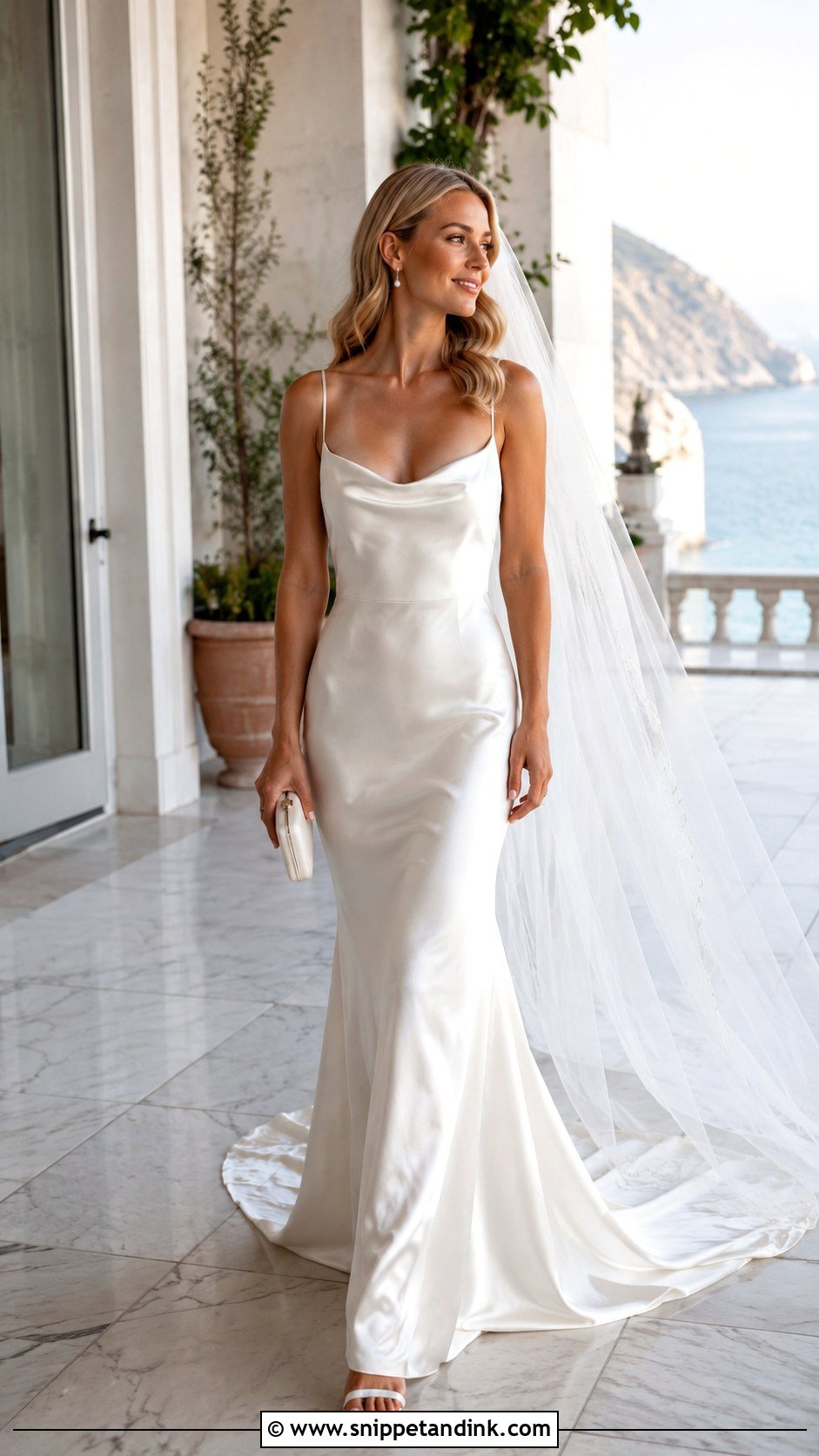
Silk slips show that classical can be quiet. Bias-cut silk follows the body, with a softly draped neckline or a straight bodice. The details that matter most are invisible: a good lining and straps placed so the dress stays secure while you dance. Wear a cathedral veil for the ceremony, then take it off to show the clean shape. Pearl drops, satin sandals and a small ivory clutch complete it, with a neat bun or glossy Old Hollywood waves. The slip has been a minimalist favorite for decades for good reason. It suits modern hotels, coastal venues and refined outdoor weddings.
15. Tea Length Wedding Dress
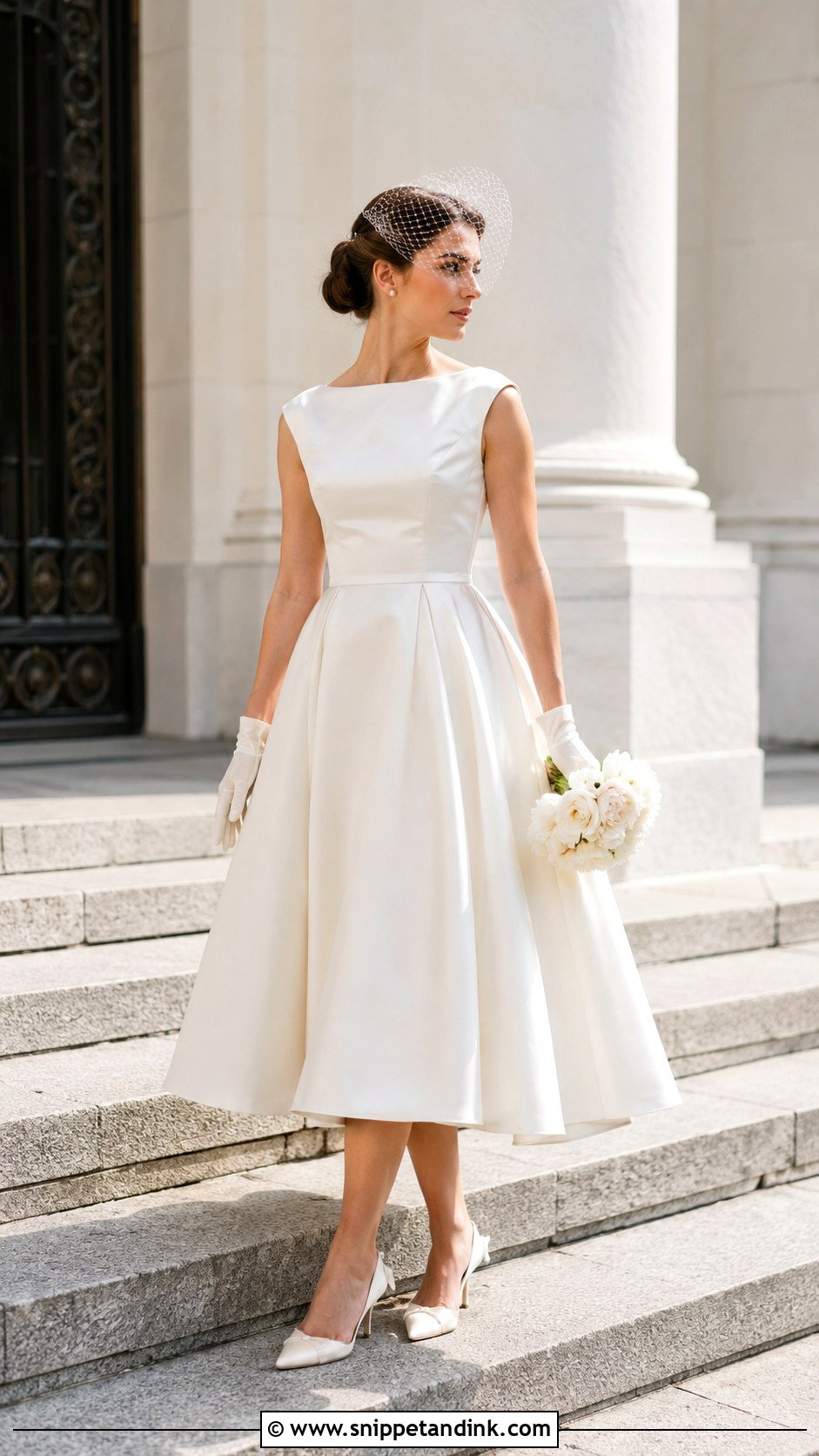
A tea length wedding dress moves lightly and brings vintage charm. The hem falls between knee and ankle, so your shoes are part of the look. A fitted bodice with a bateau, sweetheart or scoop neck and a softly flared skirt in satin, lace or organza works well. Pointed kitten heels, short gloves, pearl studs and a birdcage or shoulder-length veil suit it, with a smooth updo or curled bob. Pick shoes that match the dress’s formality and that you can stand in; they’re on display all day. Courthouses and daytime celebrations suit it.
16. Cap Sleeve Lace Wedding Dress
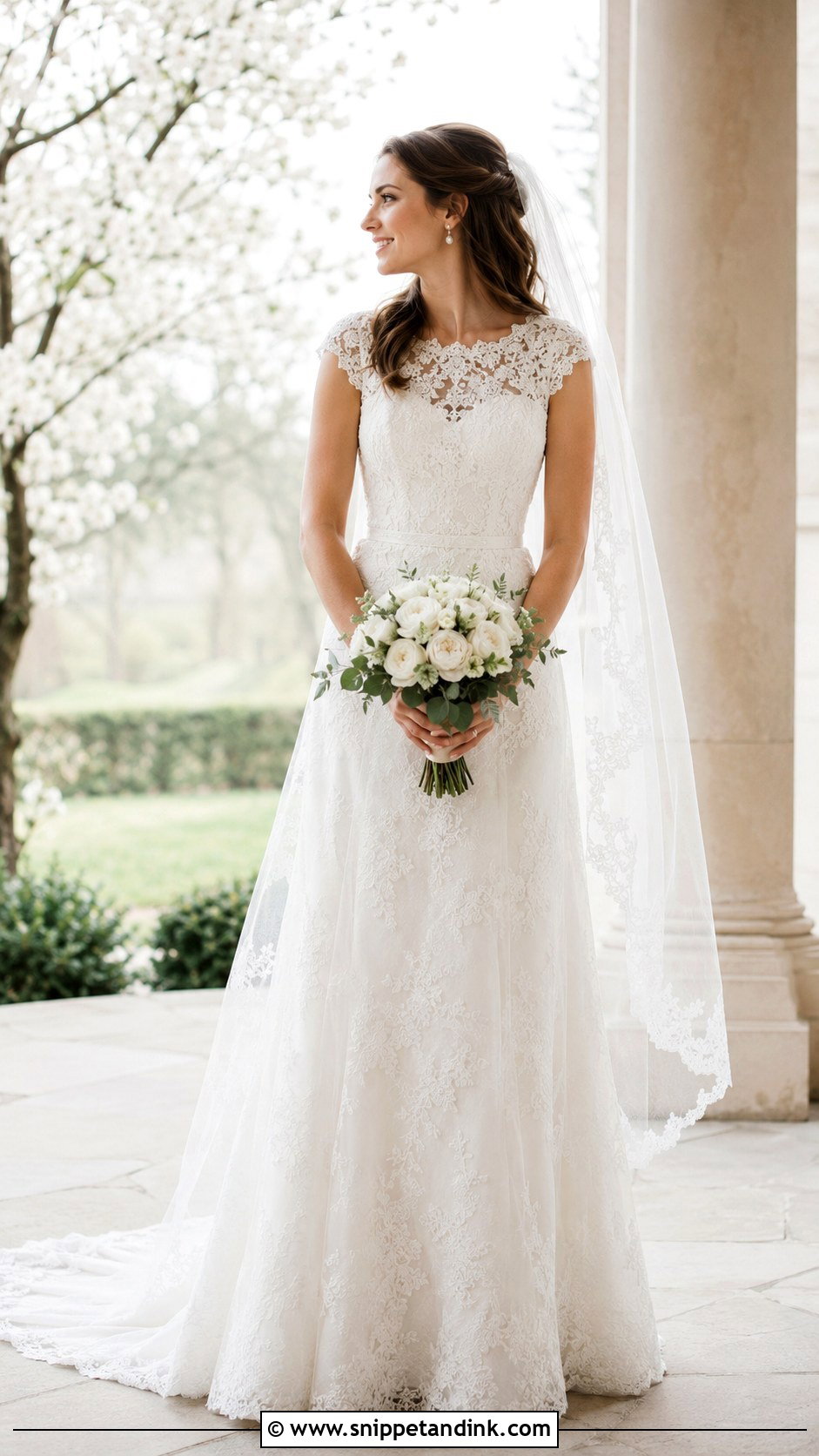
Cap sleeves give a little shoulder coverage without the weight of a long sleeve. On a lace bodice with a defined waist and an A-line skirt in matching lace, tulle or smooth satin, the look stays classical. The sleeve has to sit flat and let the arm move freely, so check its placement at every alteration fitting. A chapel veil, pearl earrings and stable closed-toe heels suit it, with a soft low bun or half-up style. Detailed lace calls for a simple bouquet and jewelry. A lined bodice gives consistent coverage in photos. Spring gardens and historic estates fit it nicely.
17. Portrait Collar Satin Wedding Dress
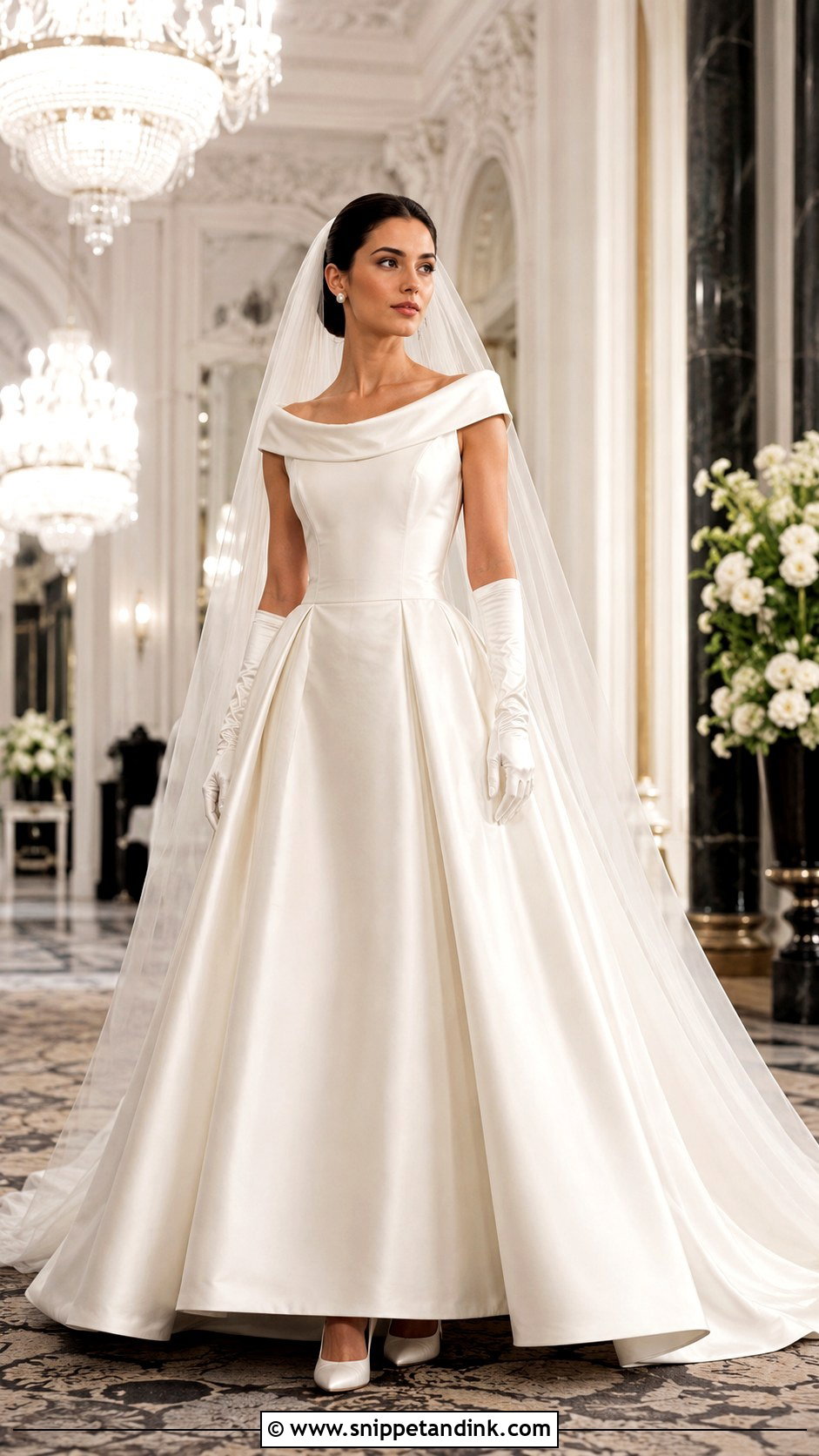
A portrait collar satin wedding dress folds a wide band around the shoulders and frames the face formally. It’s strongest on a structured A-line or full ball gown with a clear waist. Luminous satin or Mikado keeps the fold crisp all day, while a soft fabric lets it collapse. A plain cathedral veil, button earrings and ivory pumps complete it; long gloves can come off for the reception. A polished bun keeps the collar visible from every side, and a large necklace has no place here. Ballrooms and historic mansions suit it.
18. Pleated Organza Wedding Dress
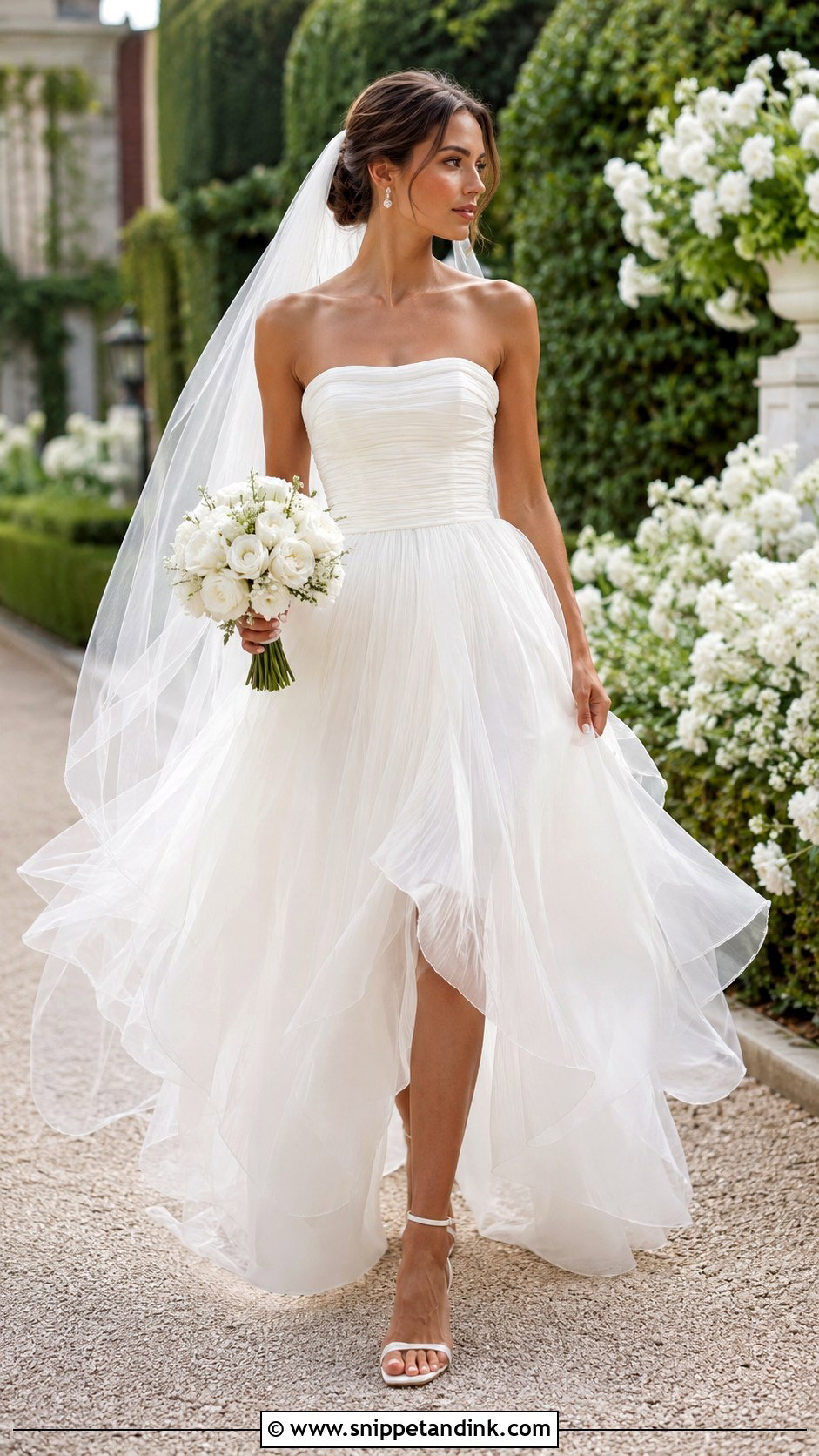
Organza looks airy but holds shape, so a pleated organza gown gives volume without the weight of satin. Choose an A-line or ball gown with neatly arranged pleats through bodice and skirt, and an opaque lining underneath, since the fabric is semi-sheer. A raw-edge veil, delicate crystal earrings and satin heels with ankle support suit it, along with a soft chignon. A compact bouquet keeps the front of the skirt visible. Organza creases when crushed, so I have it travel on a hanger at full length, never folded in a car boot. Give the skirt room at the hips for natural walking.
19. Pearl Embellished Wedding Dress
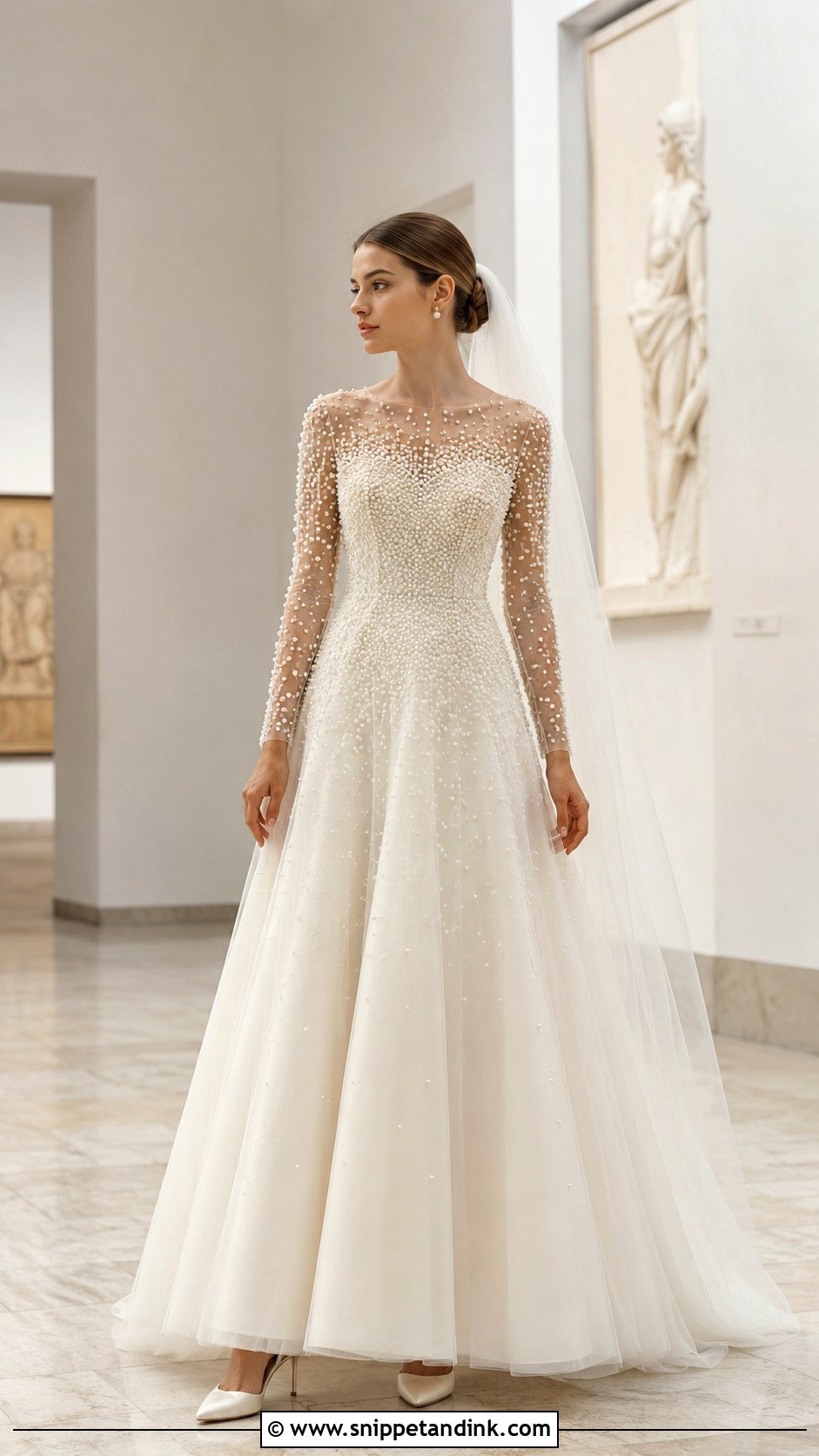
Pearls placed with intent look more refined than pearls everywhere. On a simple A-line, sheath or ball gown, I prefer them gathered across the bodice, sleeves or upper skirt. Plain satin heels, a clean tulle veil and small pearl earrings echo the gown without competing. Keep hair in a low twist or soft bun and skip a heavily jeweled headpiece. Check that every pearl is sewn securely and doesn’t catch on the veil or bouquet ribbon. A smooth lining keeps embellishment threads off your skin. Evening weddings and formal hotels with crisp lighting suit it.

20. Cathedral Train Wedding Dress
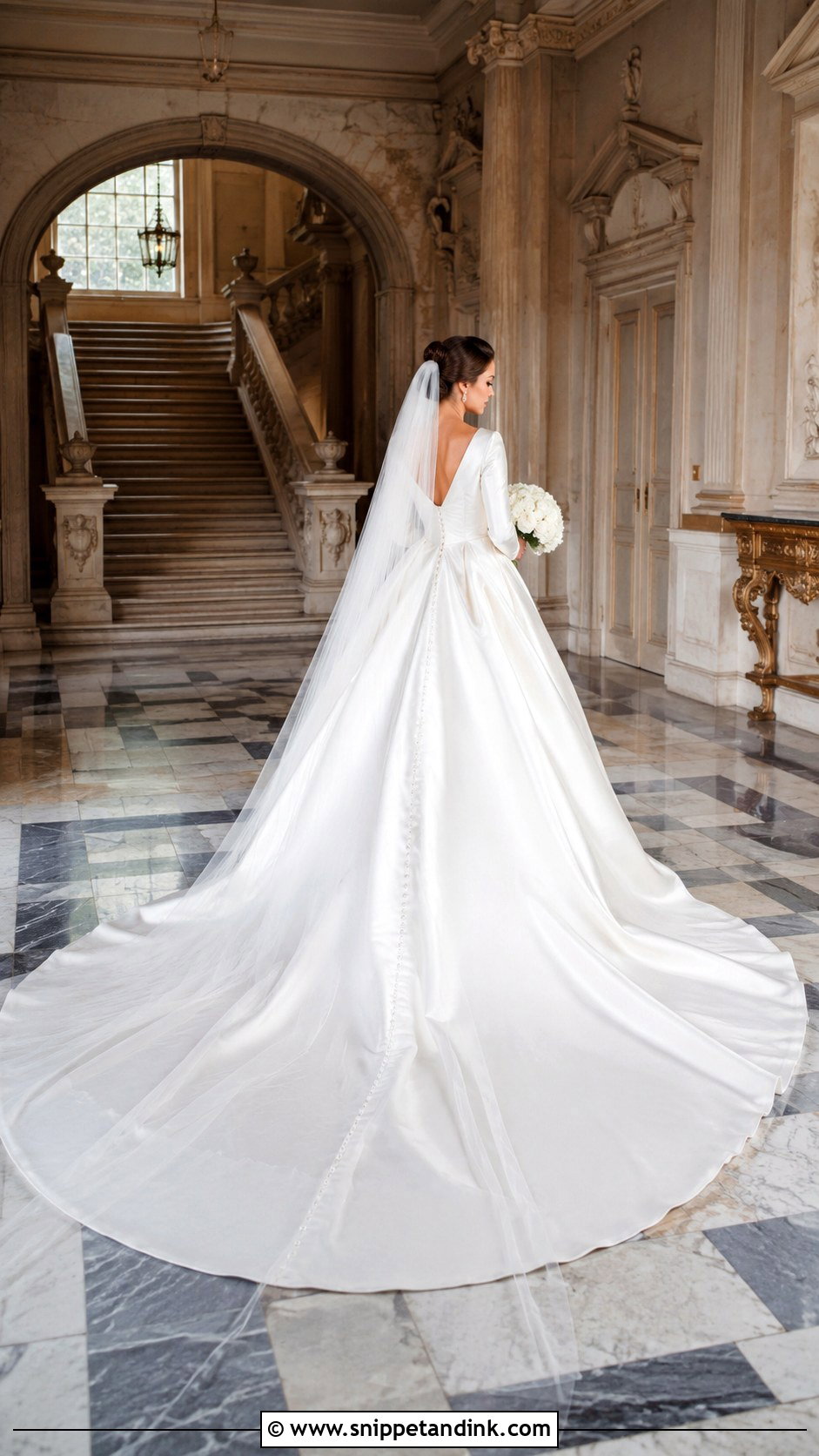
A cathedral train is the most ceremonial finish of all. It can extend from a satin ball gown, a lace A-line or a fitted crepe gown, so settle the gown shape first, then the length. The veil can match the train’s lace or stay completely plain for contrast. Pearl studs, closed-toe pumps and a polished updo keep it formal. Ask your tailor for a secure bustle and teach a trusted attendant to fasten it. If your aisle has stairs or tight corners, practice turning with the train beforehand, because a long train turns slowly. It needs room to spread, so save it for big halls and large ceremony spaces.
Matching Veil Length to the Train Behind You
A regal gown often comes with a regal veil, and the two need to agree. As a rough guide, a fingertip veil ends around the fingertips with arms relaxed, a chapel veil just brushes the floor behind you, and a cathedral veil extends well past it. Exact lengths vary between makers, so ask the salon for measurements in inches or centimeters.
- With a long train, a veil a little longer than the train looks intentional. One that stops a short way short of the train’s end looks like a mistake.
- A plain-edged veil over a lace train shows the lace through it. A lace-edged veil over plain satin adds a frame.
- Heavy cathedral veils pull on the hair. Tell your hairstylist the veil’s length and weight so they can build a secure base for the comb.
- Decide in advance when the veil comes off, usually after the ceremony or portraits, and who will remove it without disturbing your updo.
On windy days outdoors, a long sheer veil can wrap around you or blow forward over your face. Some brides add small weights to the hem, others save the longest veil for a few indoor portraits.
A Ball Gown, a Slip or Something in Between
Classical bridal style is less about one shape and more about a few good decisions made in order. Start with the silhouette you can move in naturally. Then decide on fabric, neckline, sleeves and train length. Add shoes you can stand in, a veil that suits the gown and jewelry that stays in the background. Tailoring matters as much as design, because even the simplest dress depends on secure support and balanced proportions. Satin A-lines, lace ball gowns, silk slips and cathedral trains all show that tradition can still feel personal for a bride today.
You'll Like These Ideas:











Leave a Reply