
Looking at a gown on a hanger tells you very little. I’d much rather show a bride complete looks, with the shoes, the veil and the jewellery, because that’s how the dress will actually be seen. Below you’ll find twenty of them, from lace A-lines and satin ball gowns to mermaids, sheaths, tea length and separates, with my notes on what to pair and where each one tends to cause trouble. The gown that works is the one that suits your personality and still lets you sit, walk and dance without thinking about it.
Three Photos, the Right Bra and an Open Mind
A first bridal appointment usually runs an hour to ninety minutes, and you’ll try on more than you expect. I get far more done when a bride arrives prepared.
- Bring two or three photos of gowns you love and one you dislike. The dislike often tells me more.
- Wear a smooth nude strapless bra or bring shapewear you’d actually wear on the day.
- Bring shoes close to your wedding heel height, so hems and trains look right in the mirror.
- Know your venue and season. A barn in July and a hotel in December rule out different fabrics.
- Limit your group to two or three people whose taste you trust. Large groups produce conflicting opinions.
Samples are usually one standard size and clipped to fit you, so a gown will look looser or tighter than your finished dress. Judge the shape and the fabric, not the fit.
1. Lace A-Line Marriage Gown
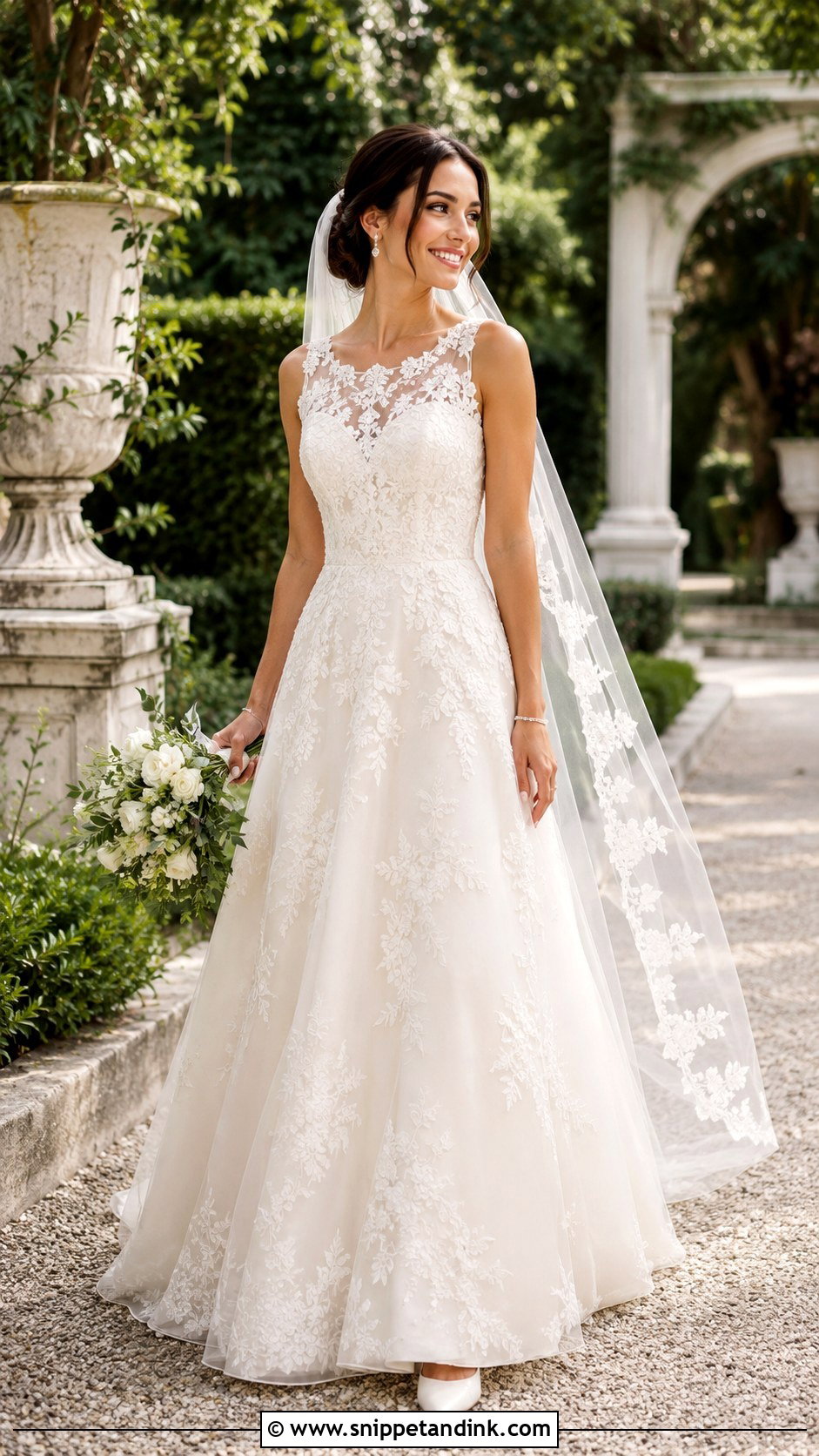
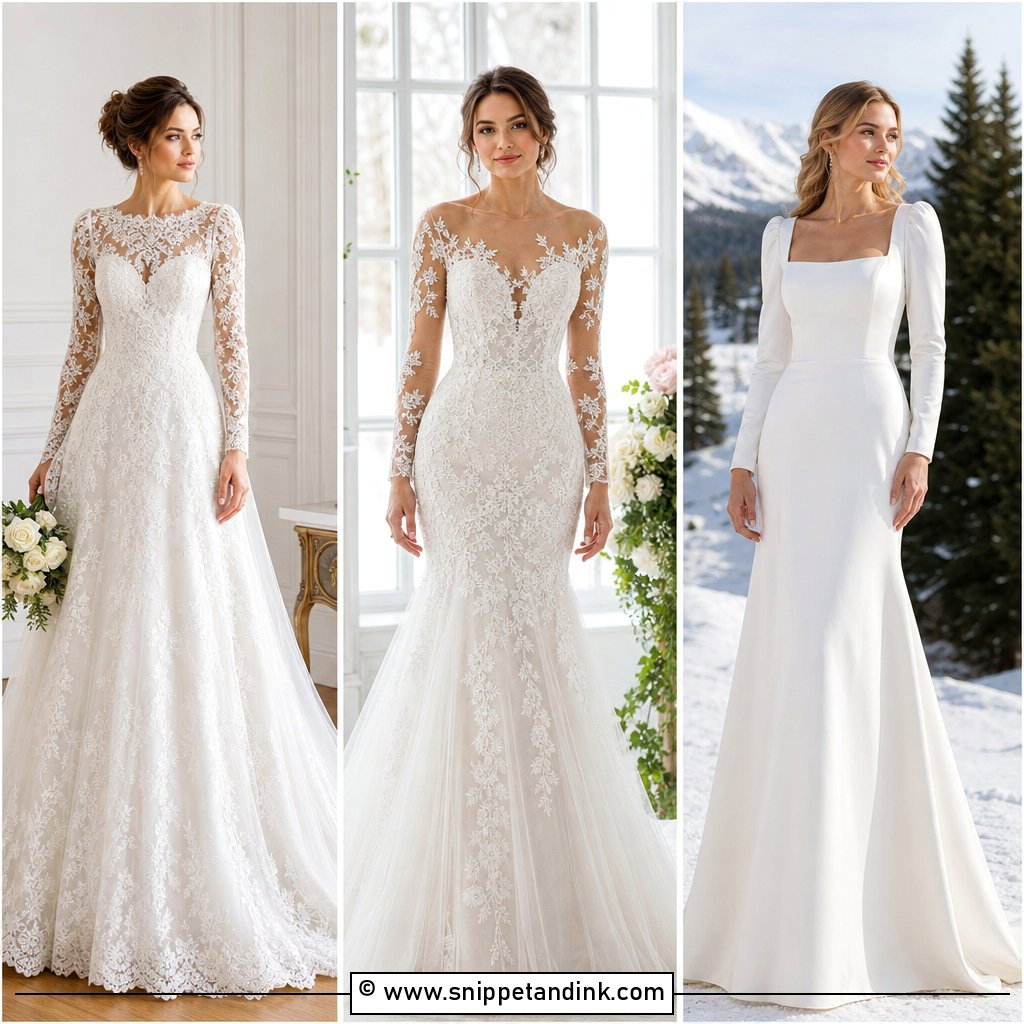
Lace A-lines flatter so many shapes because the skirt starts widening right at the waist and skims everything below. I’d pick a fitted bodice with real straps, a defined natural waist and floral lace over a soft ivory lining so the pattern shows. Pointed satin pumps, pearl drops and a fingertip veil edged in similar lace complete it. Hem it in your wedding shoes. The skirt should hover just off the floor; if you have to lift it to walk, it’s too long.
2. Satin Ball Gown Marriage Gown
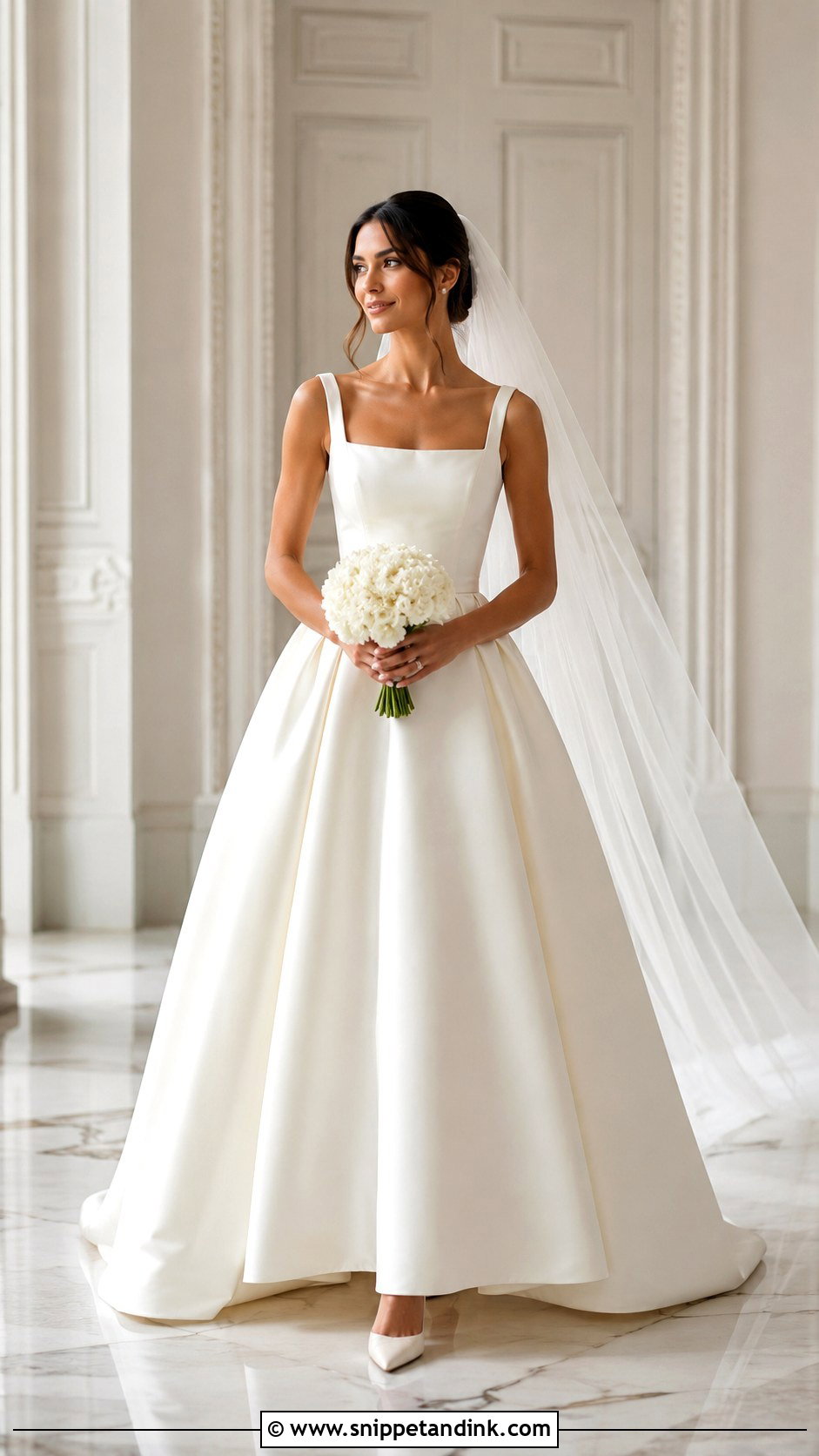
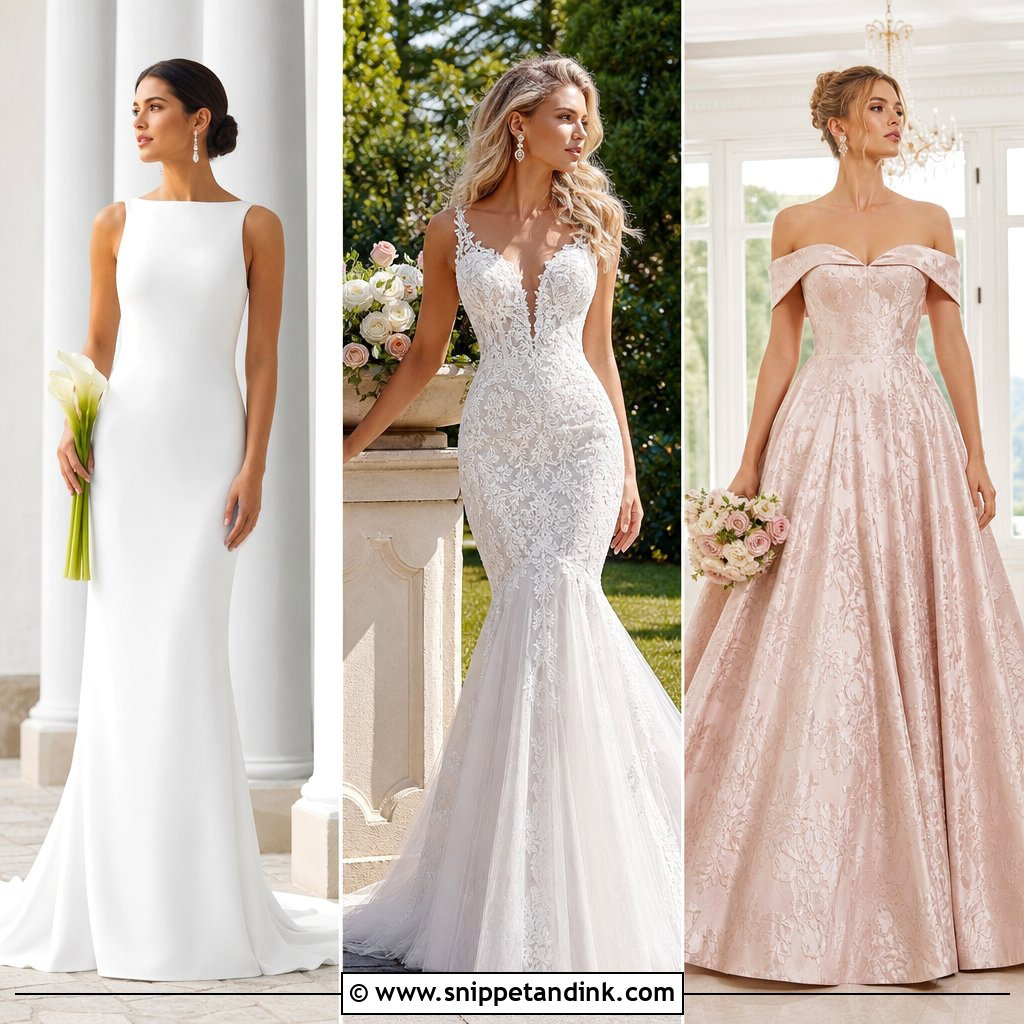
Plain satin makes a ball gown look clean and grand at once. A ball gown gets its presence from the contrast between a fitted upper body and a very full skirt, which is why it’s still the classic choice for formal ballrooms and cathedrals. Inside, I want a structured bodice and a waist stay carrying the skirt’s weight. A soft curve or square neckline keeps it from feeling overwhelming. Crystal studs, a sleek bun, pointed heels, a long plain veil and a compact bouquet suit the scale. If the skirt feels heavy, ask whether a petticoat layer can be removed; many can be, and you’ll notice the difference by the first dance.
3. Mermaid Marriage Gown
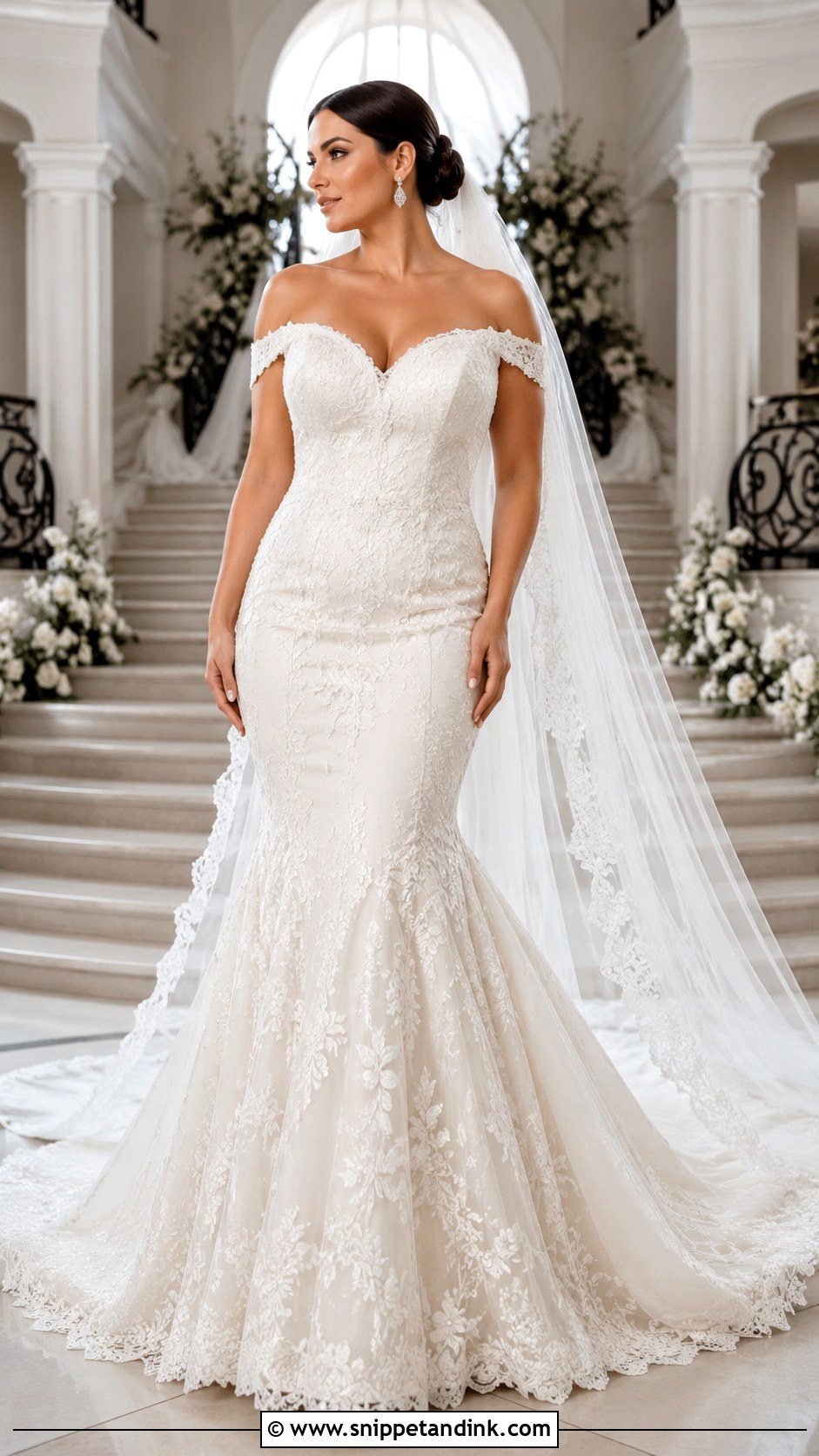
Here’s my honest verdict on mermaids: they look incredible standing and demand the most from you moving. The fit hugs the torso and hips before flaring near the knee, so look for strong lining, flexible boning and some stretch. Almond-toe heels, a plain cathedral veil, sparkling earrings and a low bun suit it; skip the necklace if the neckline already has lace or draping. In the sample, walk, sit and climb a few steps. The flare point should suit your stride. Even half an inch of alteration changes how this shape sits, so choose a seamstress experienced with fitted gowns.
4. Long Sleeve Lace Marriage Gown
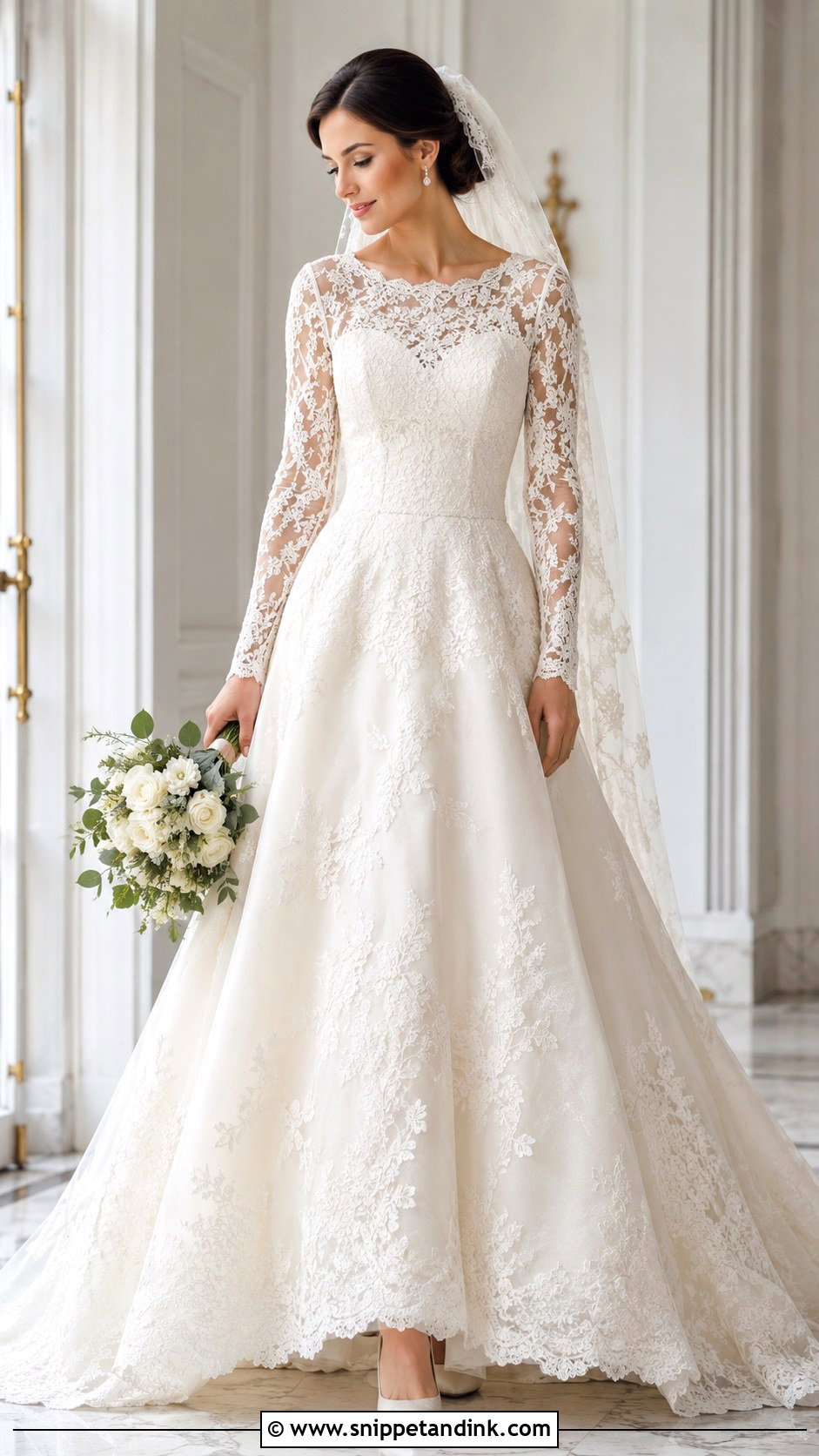
Sheer lace sleeves give coverage with texture. The thing that ruins them is tension: a sleeve set too tight pulls across the shoulder blades and stops your elbow bending. A lined bodice and a soft flare balance the delicate arms. Closed pumps, pearl earrings, a comb-secured veil and a polished chignon finish it. With a high neck, I leave the necklace off entirely. At every fitting I ask brides to hold an imaginary bouquet at the waist and then hug me; if either feels tight, the seamstress lets out the underarm.
5. Square Neck Marriage Gown
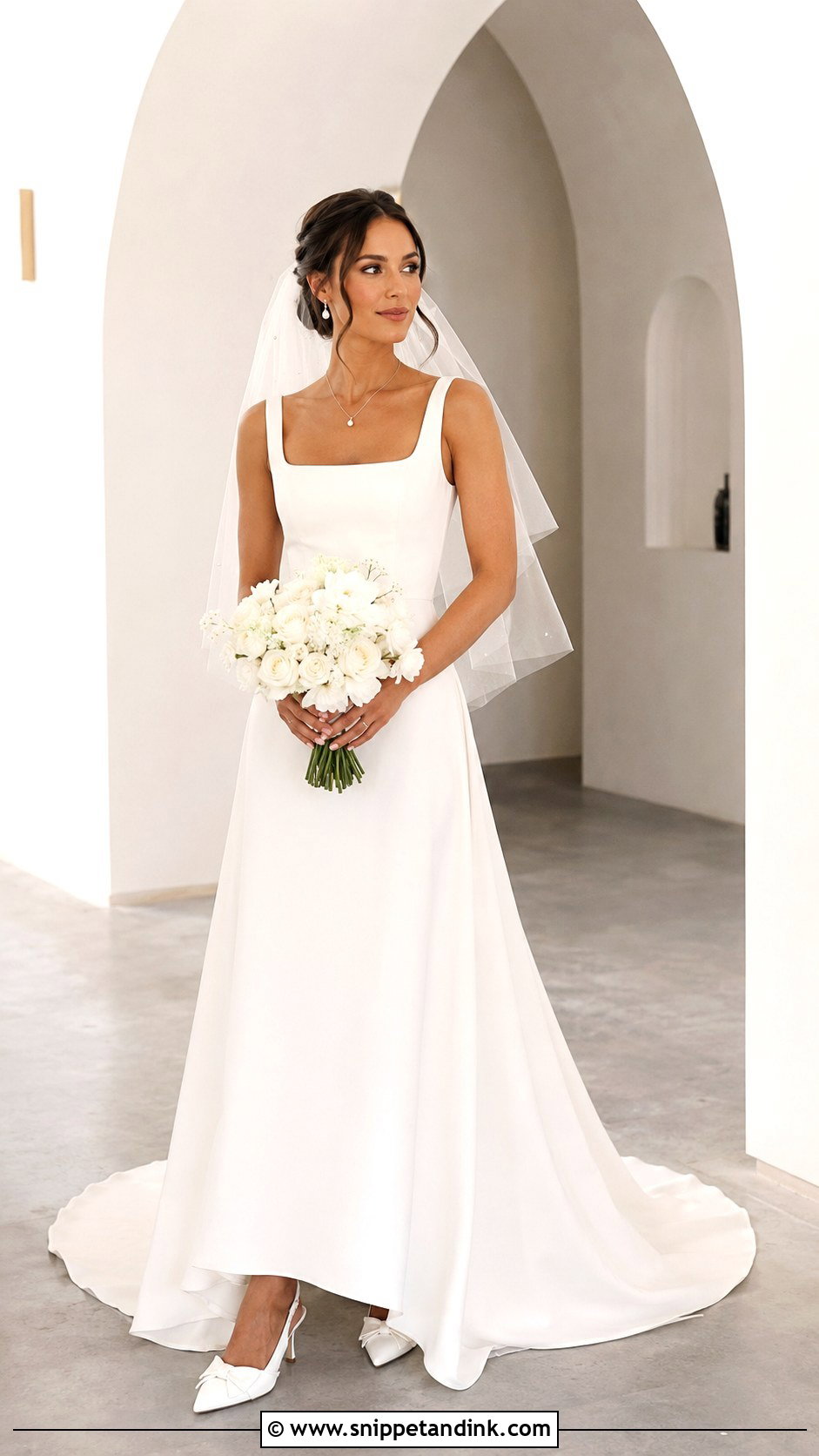
The square neck frames the collarbone with crisp straight lines and suits both matte crepe and formal satin. Wide straps and a shaped waist over an A-line or softly fitted skirt keep it current. A delicate pendant, small drops, ivory slingbacks and a mid-length veil complete it, with hair low or half-up. Strap placement is the detail people overlook. Straps set too wide slip off the shoulder every time you raise an arm, and I’d ask for small hidden snaps to anchor bra straps. Heirloom jewellery sits naturally in that open neckline.
6. Off Shoulder Marriage Gown
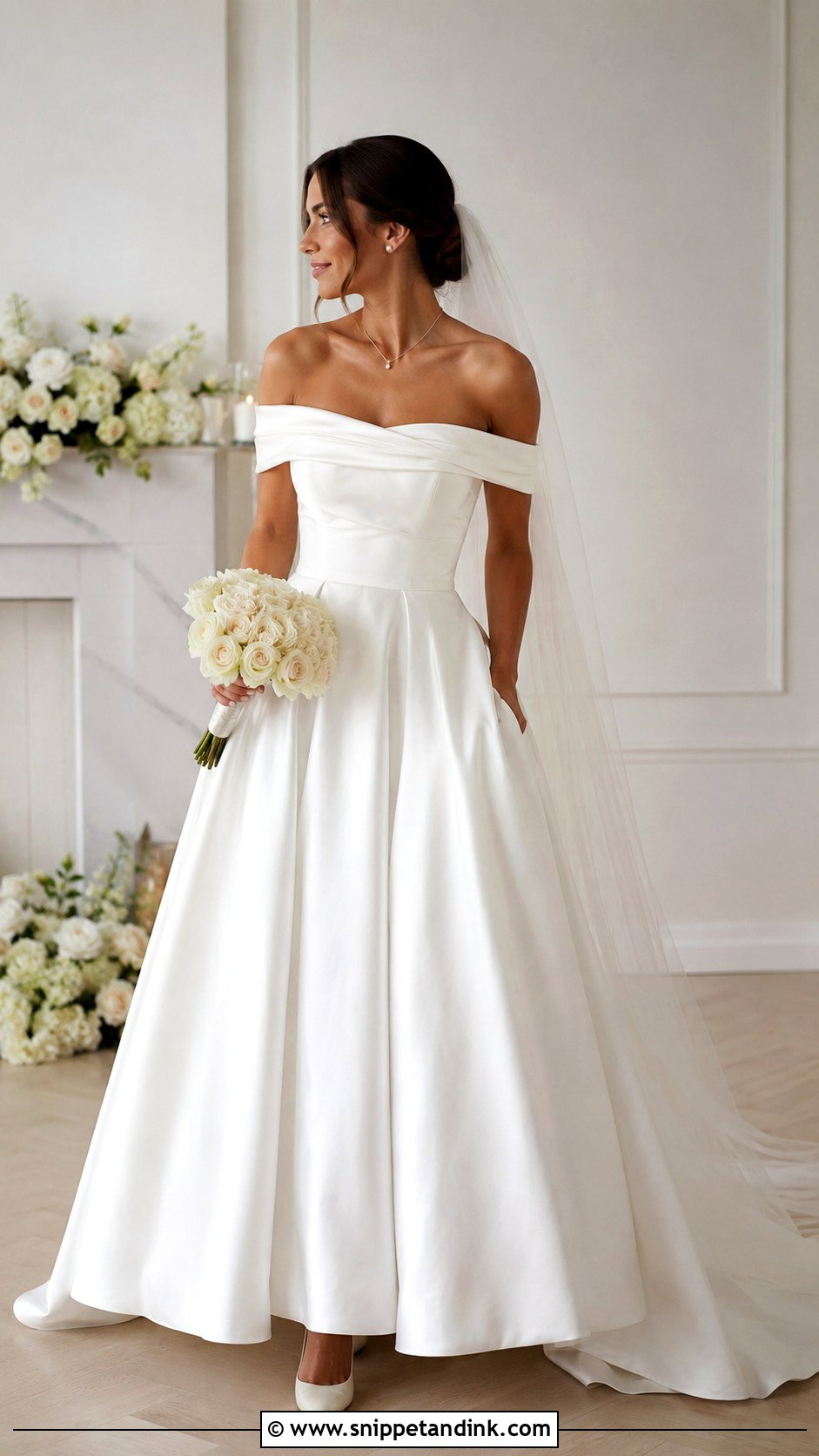
Off-shoulder sleeves are decoration, never support. The gown needs a fitted inner bodice that stays up on its own, otherwise you’ll keep hitching it. Draped satin bands suit a full skirt, lace bands a fitted one. A short necklace, pearl studs, pointed heels and a sheer veil under a low updo finish the look; bracelets tend to catch on the sleeve fabric. If lifting your arms forces the bands up, detachable straps give you the look for the ceremony and freedom later.
7. Strapless Basque Waist Marriage Gown
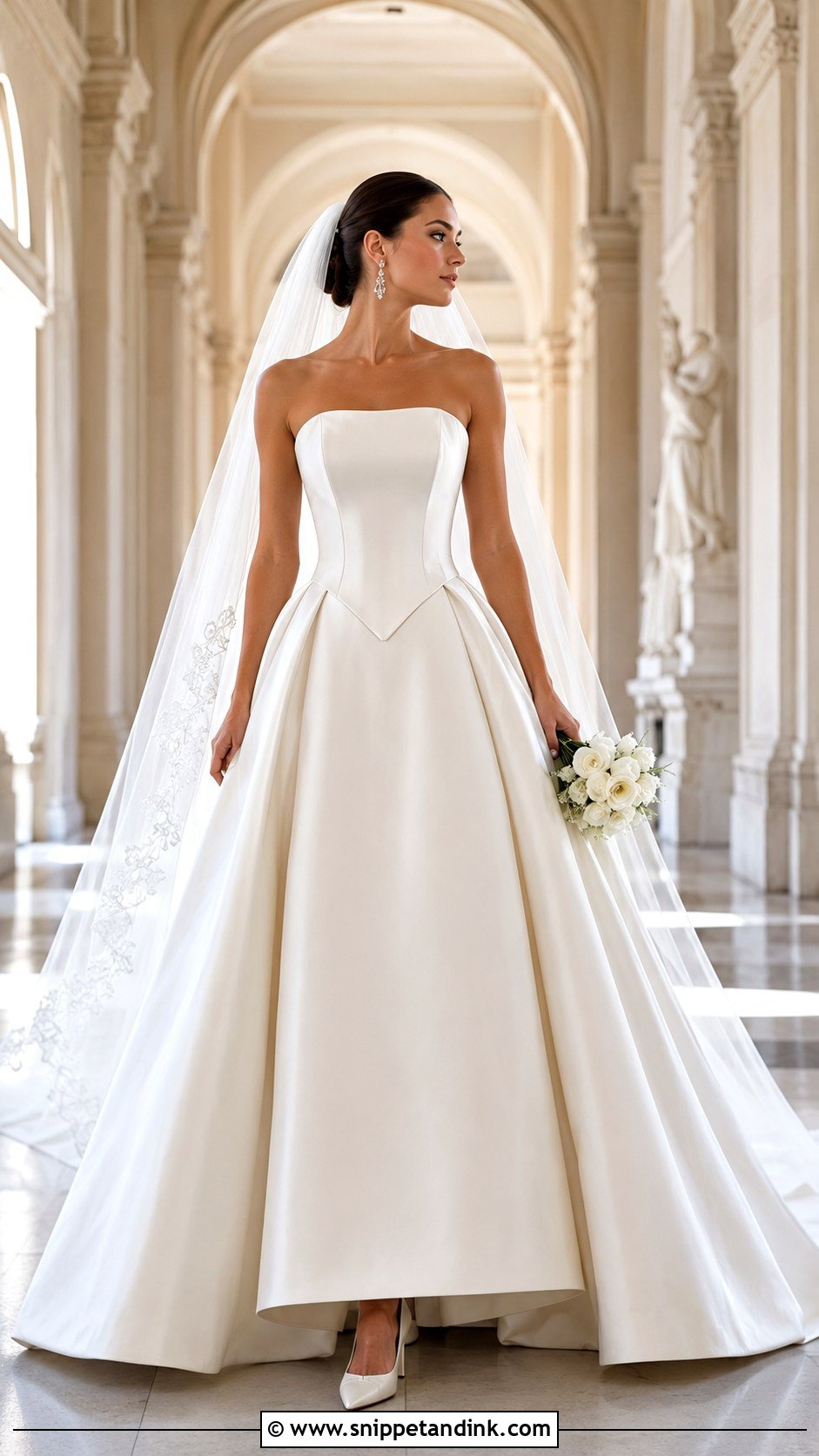
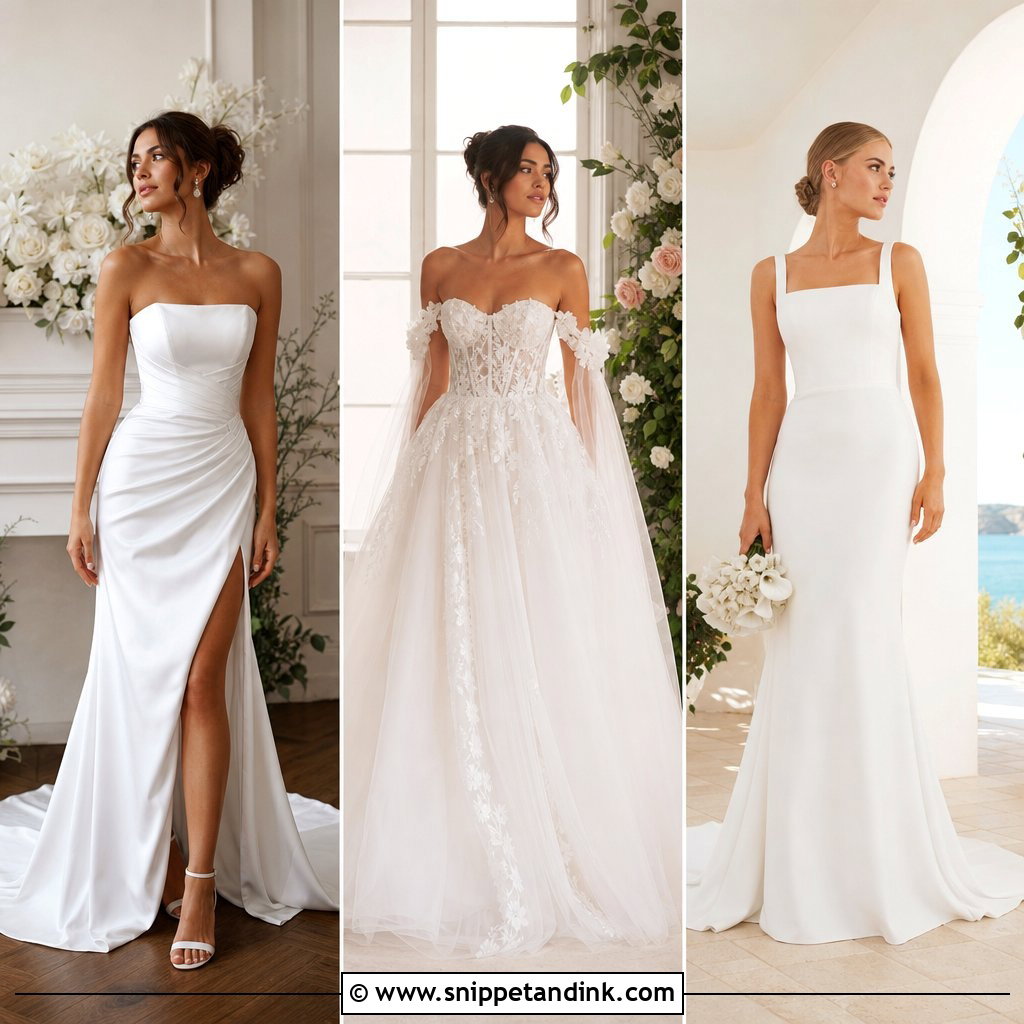
A strapless basque waist marriage gown pairs a sculpted bodice with a waistline that dips into a gentle point, and I’m seeing this structured shape return alongside very sleek minimal gowns. The point narrows the waist and makes a satin or tulle skirt look fuller. Inside, I look for boning, proper cups and a stable waist stay. A cathedral veil, crystal earrings, a refined updo and block-heel pumps hidden under the skirt complete it. Leave the necklace off when the bodice is draped. A strapless bodice should stay in place through a hug without you touching it; if it doesn’t, it needs taking in at the top edge.
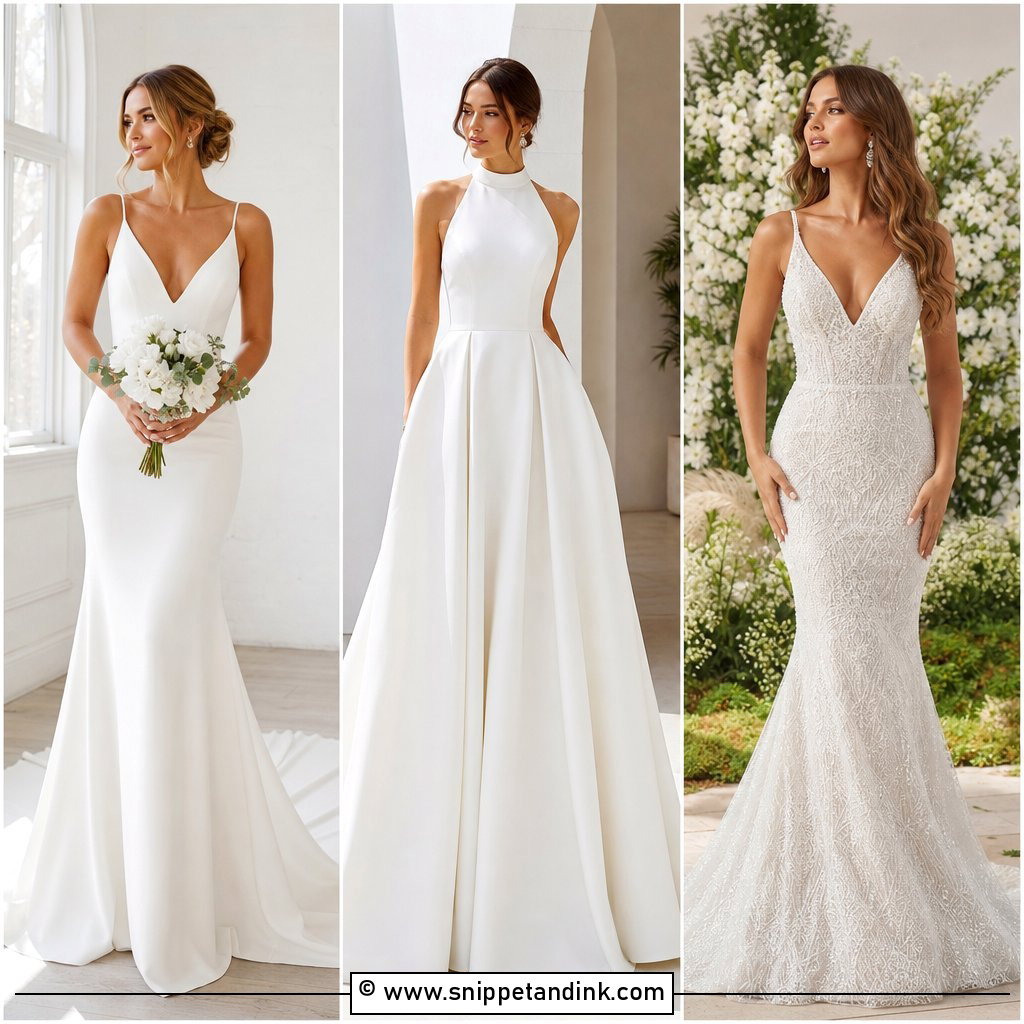
8. Minimal Sheath Marriage Gown
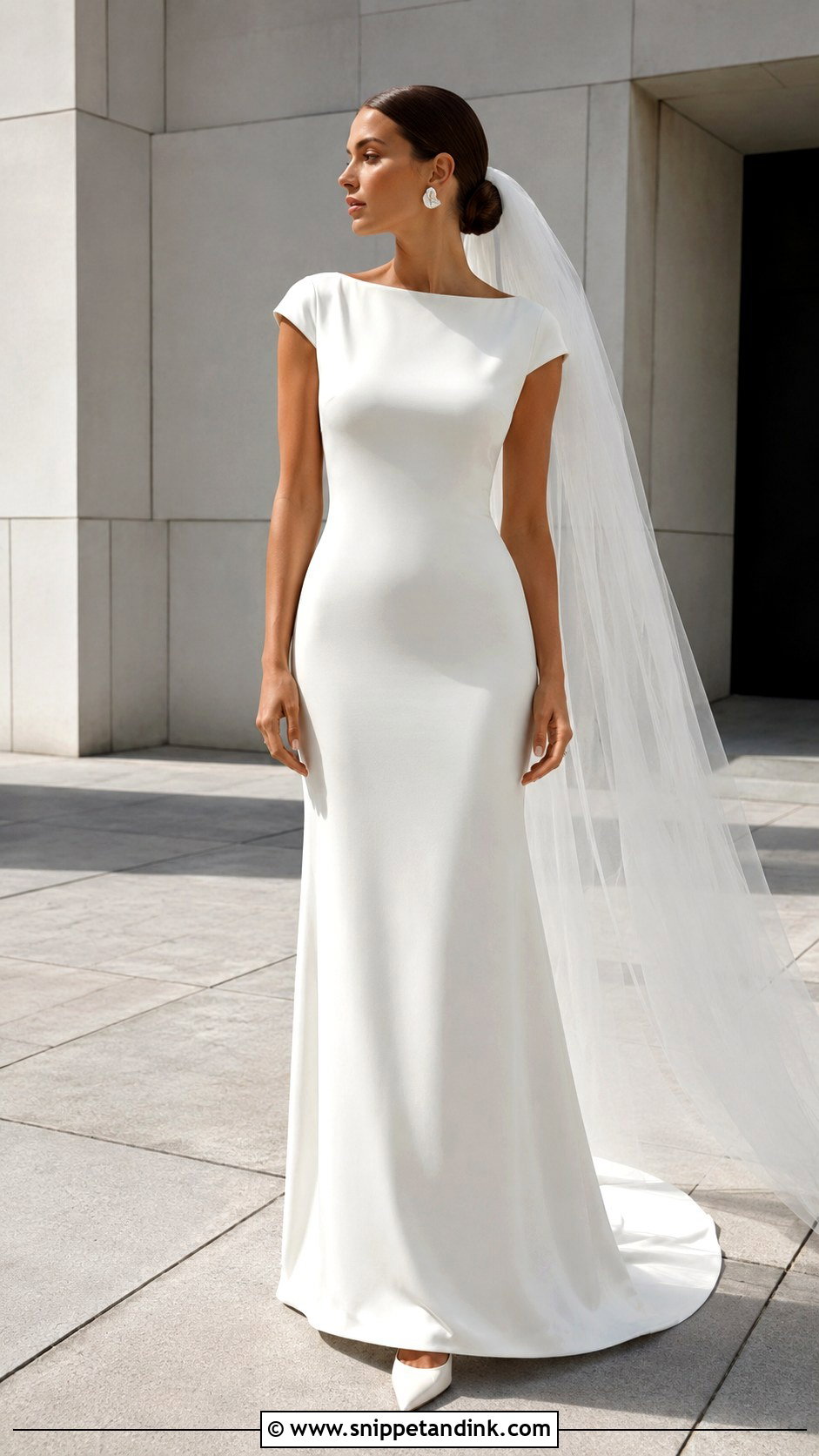
A minimal sheath marriage gown has nowhere to hide a poor fit, so I spend more fitting time on these than on ball gowns. Crepe or satin should skim the waist and hip without clinging. A bateau, scoop or soft drape at the neck keeps it understated, with pointed pumps, sculptural earrings, a sleek clutch and a long plain veil. A smooth bun or glossy waves suit it. Seam placement, lining and underwear all show through simple fabric. For an outdoor ceremony I’d choose a short sweep train, which handles grass and boardwalks far better than anything longer.
9. Empire Waist Marriage Gown
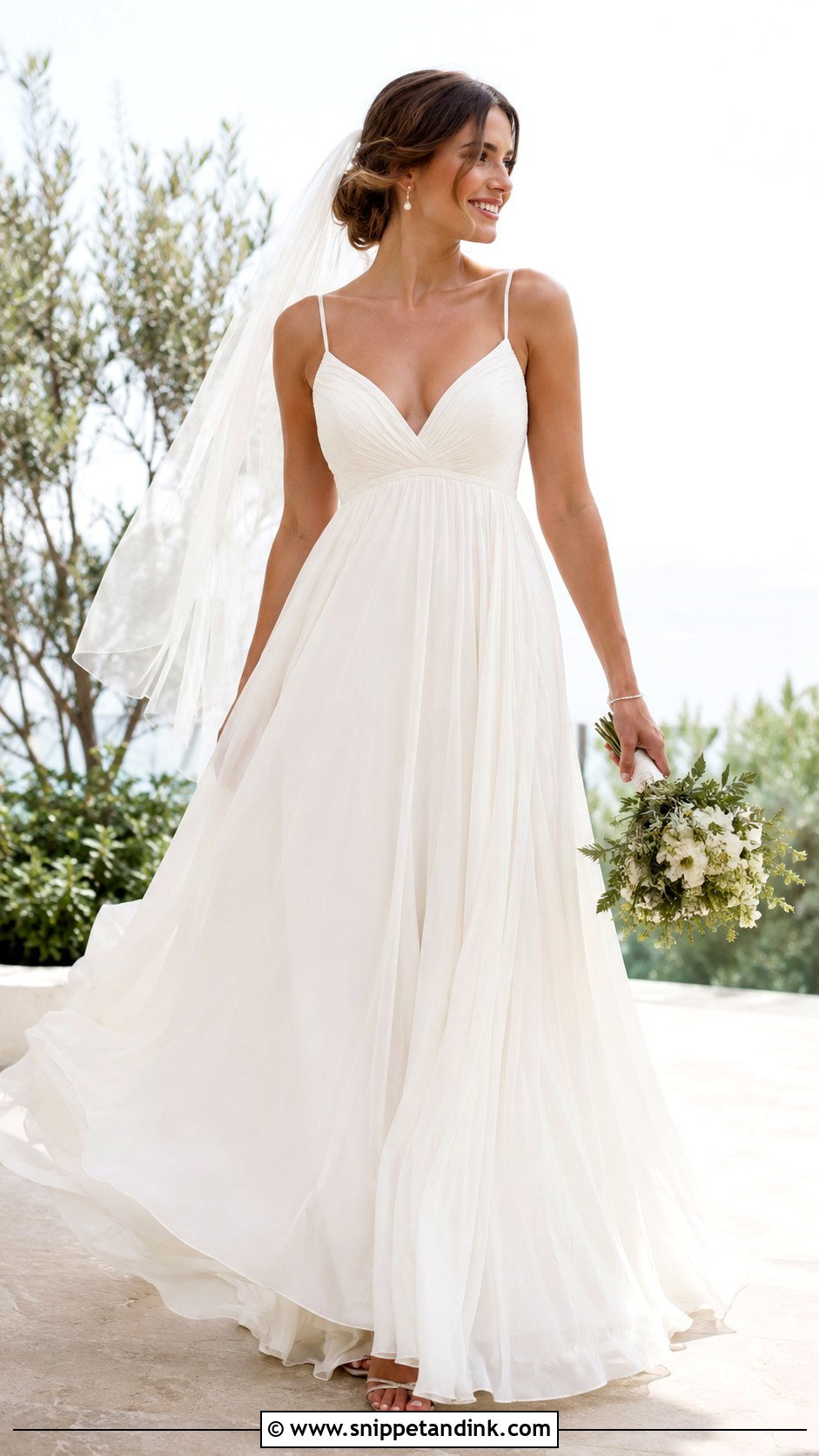
Comfort is the main reason brides choose an empire waist. The seam sits under the bust and the skirt falls straight, so nothing presses on the stomach through a long hot day. Use fluid fabric like chiffon, soft tulle or crepe; stiff fabric makes it look like a tent. Delicate sandals, a narrow bracelet, small earrings, a light veil and soft curls suit it. Check the seam position carefully. Even a small drift above or below the bust line throws off the proportion, and the bodice still needs proper support built in.
10. Tea Length Marriage Gown
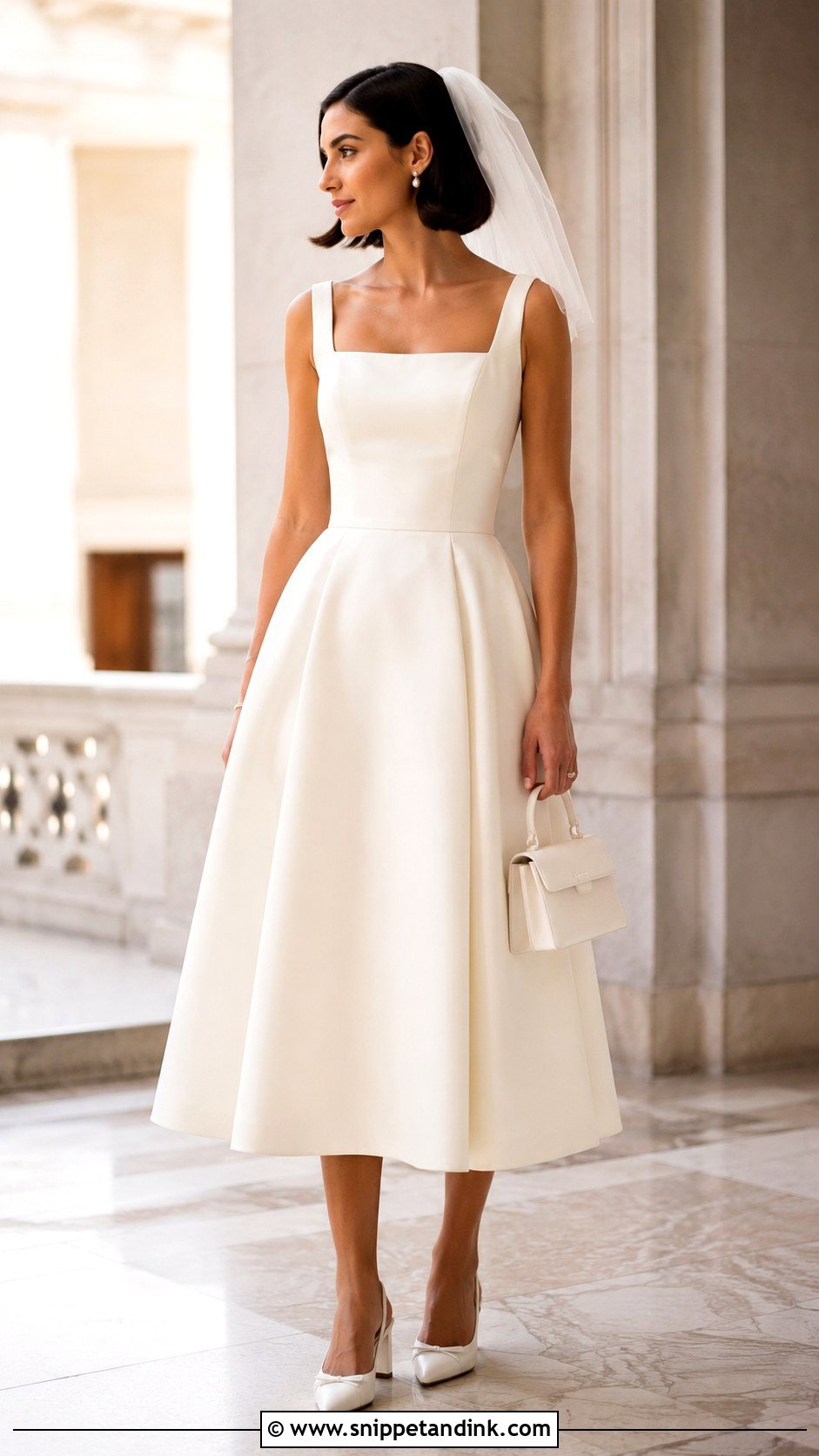
Tea length shows your shoes, so the hem and the footwear are planned together. A fitted bodice and softly flared skirt give a neat vintage shape. Pointed slingbacks, pearl earrings, a short veil and a structured mini bag for later photos complete it. A tidy bun, soft waves or a polished bob suits the shorter line. Choose shoes that look special but grip well, since everyone will see you dancing in them. Walk and spin at the fitting to make sure a full skirt doesn’t flip up higher than you’d like.
11. High Low Marriage Gown
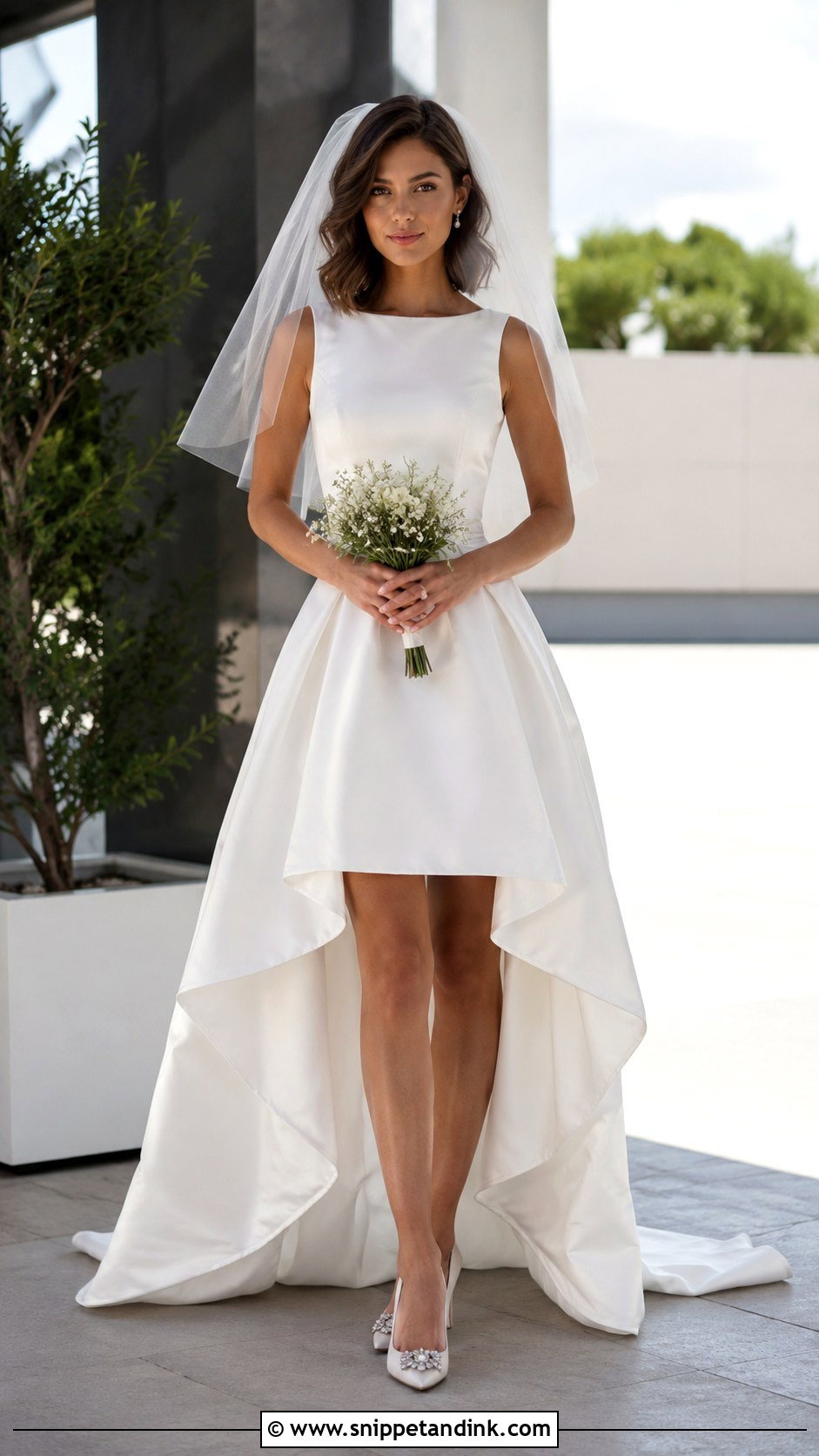
High-low hems work best with a gentle drop from front to back. A dramatic step looks more like a party dress than a bridal gown. A structured strapless or sleeveless bodice keeps the uneven hem balanced. Embellished pumps, simple earrings, a small bouquet and a shoulder-length veil suit it, but plain shoes if the gown has lace or beading. I set the front hem just at or below the knee so the whole shoe shows, and the back usually still needs a small bustle.
12. Boho Lace Marriage Gown
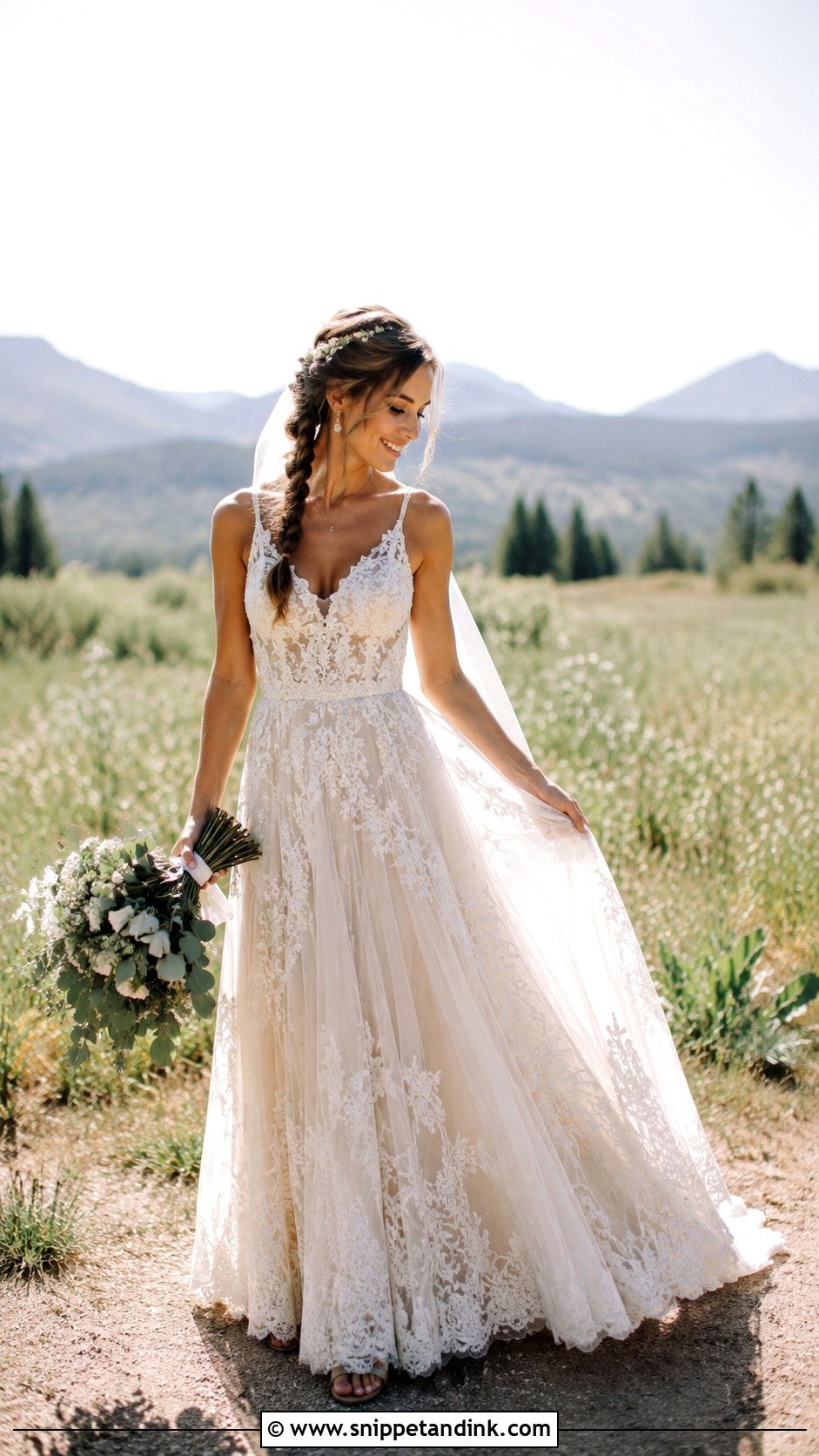
Botanical lace and a relaxed shape make a boho gown. I’d choose a lightly fitted bodice with comfortable straps, an open back and a flowing, unstructured skirt. A nude or warm ivory lining makes the lace pattern stand out. Low block heels, delicate earrings, a loose braid and a plain tulle veil complete it, with a loose bouquet full of greenery. Since the lace is already busy, stop there with accessories. Outdoors, choose a short train, pin the veil firmly against wind, and ask for a breathable lining; long lace dresses get warm by midday.
13. Plus Size A-Line Marriage Gown
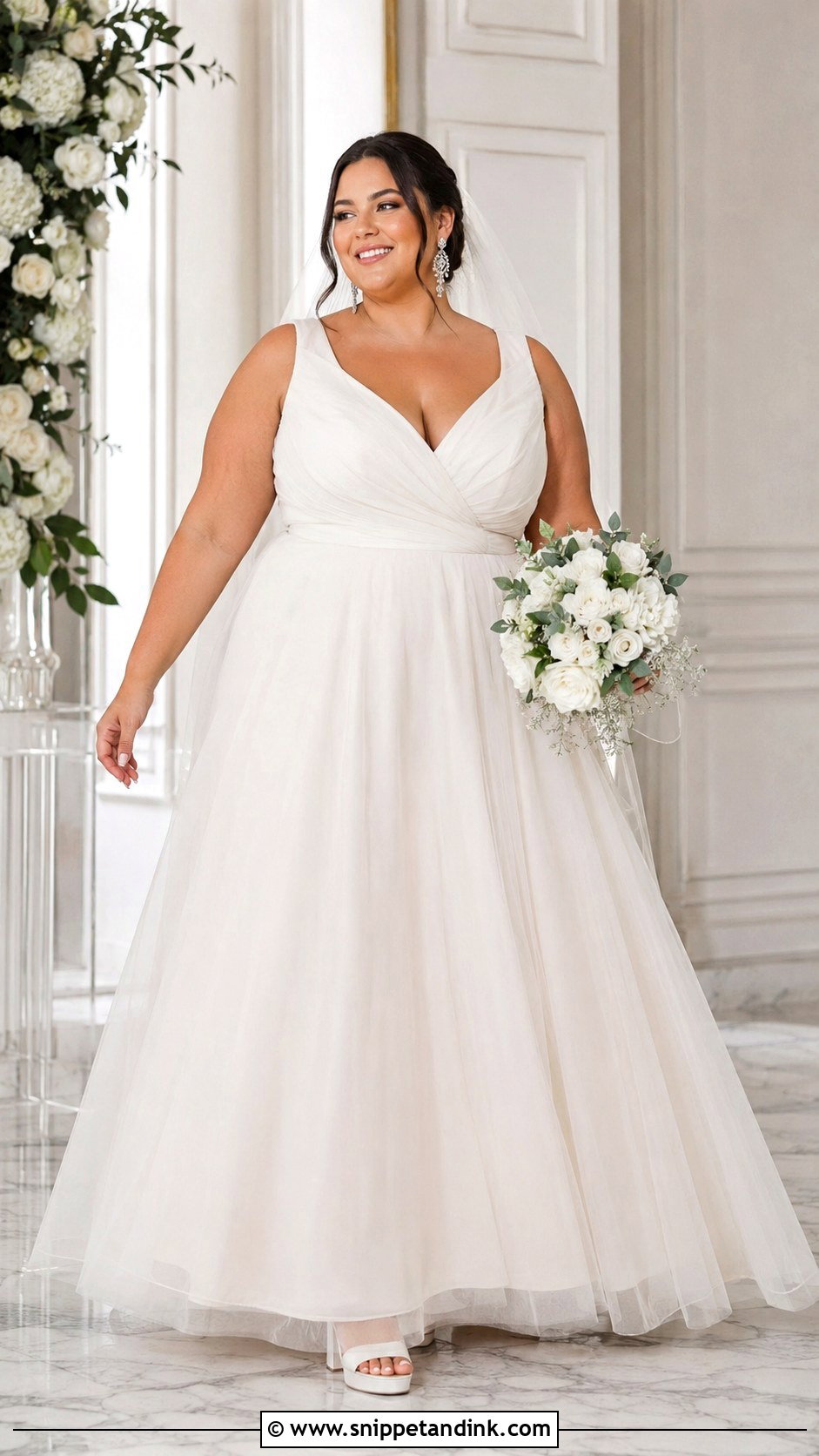
For a plus-size A-line, support comes first and everything else follows. I look for a structured bodice, cups positioned correctly, supportive straps and a waist seam at the natural waist, not cutting across the tummy. Satin, chiffon or layered tulle gives a balanced skirt without excess volume. Stable block heels, statement earrings, a fingertip veil and a bouquet scaled to your frame complete it. Ignore old body-shape rules; necklines, lace placement and sleeve length can all be adjusted. Sit, raise your arms and turn at every fitting. You should be able to breathe and eat comfortably.
14. Petite Column Marriage Gown
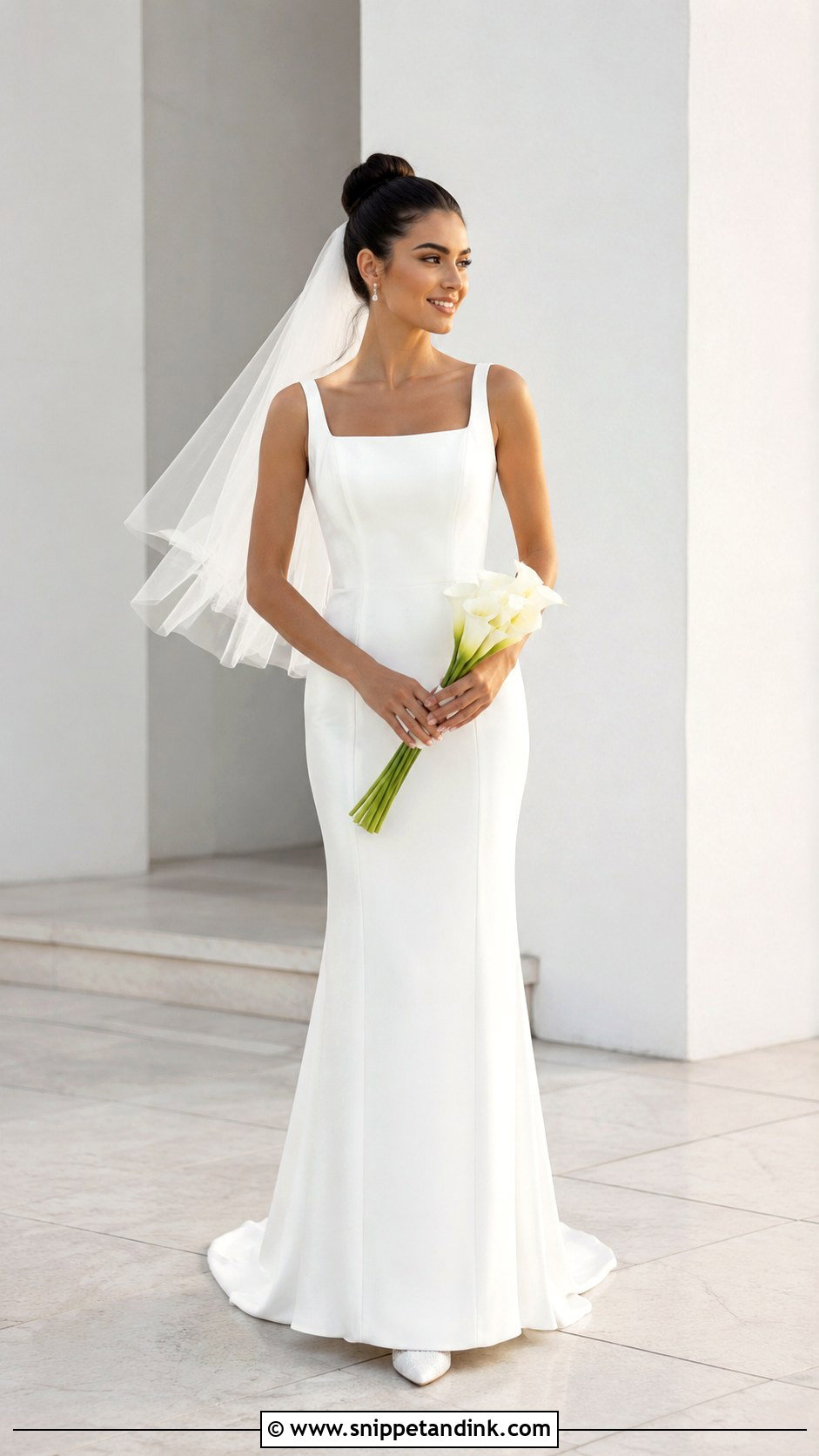
Columns lengthen a petite frame because they keep one unbroken vertical line. Vertical seams, restrained embellishment and a waistline placed for your proportions help. Big skirts and long bodices swamp a shorter figure, so alterations matter. Pointed heels, small drops, a narrow bouquet, a light veil that falls in one line and a high bun all add height. I’d choose a short sweep train rather than cathedral. Shop for fit, not for the size on the label; a skilled seamstress can move straps, waist, hem and train.

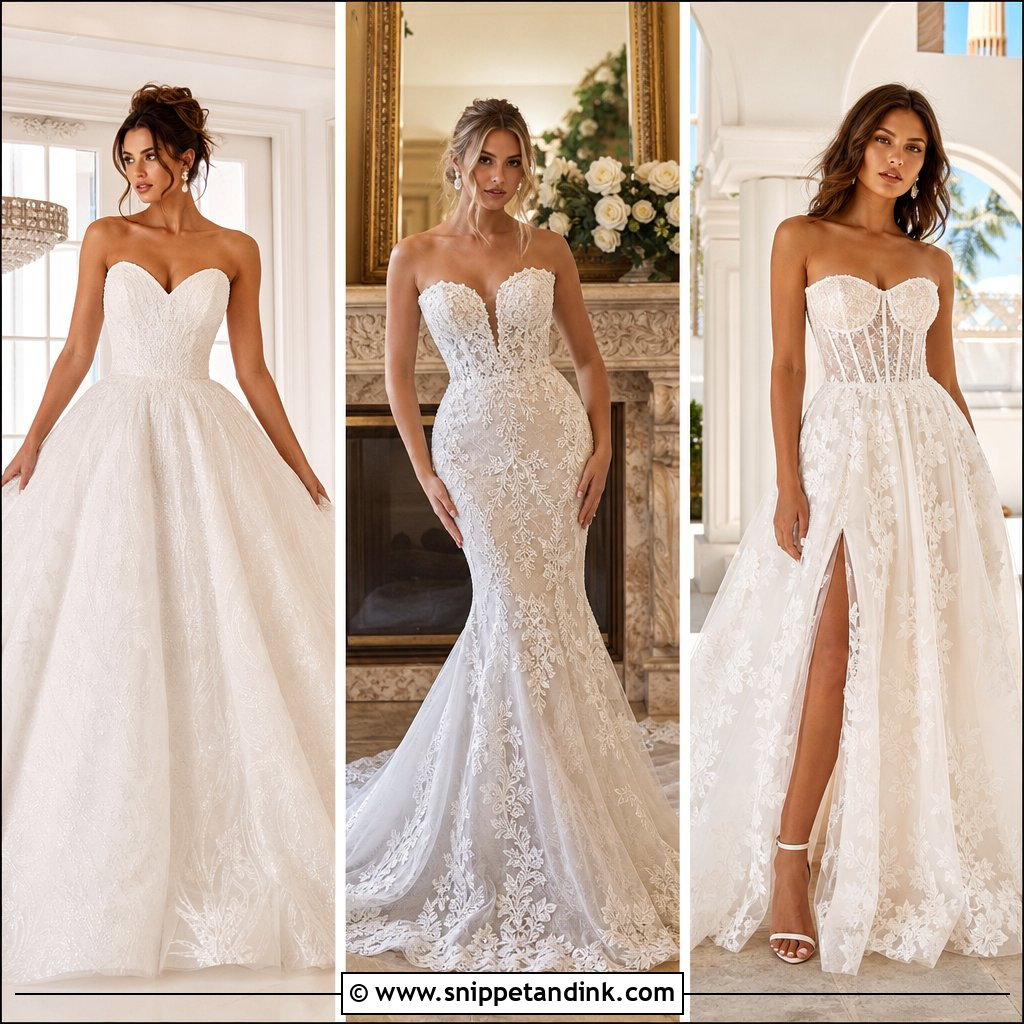

15. Modest High Neck Marriage Gown
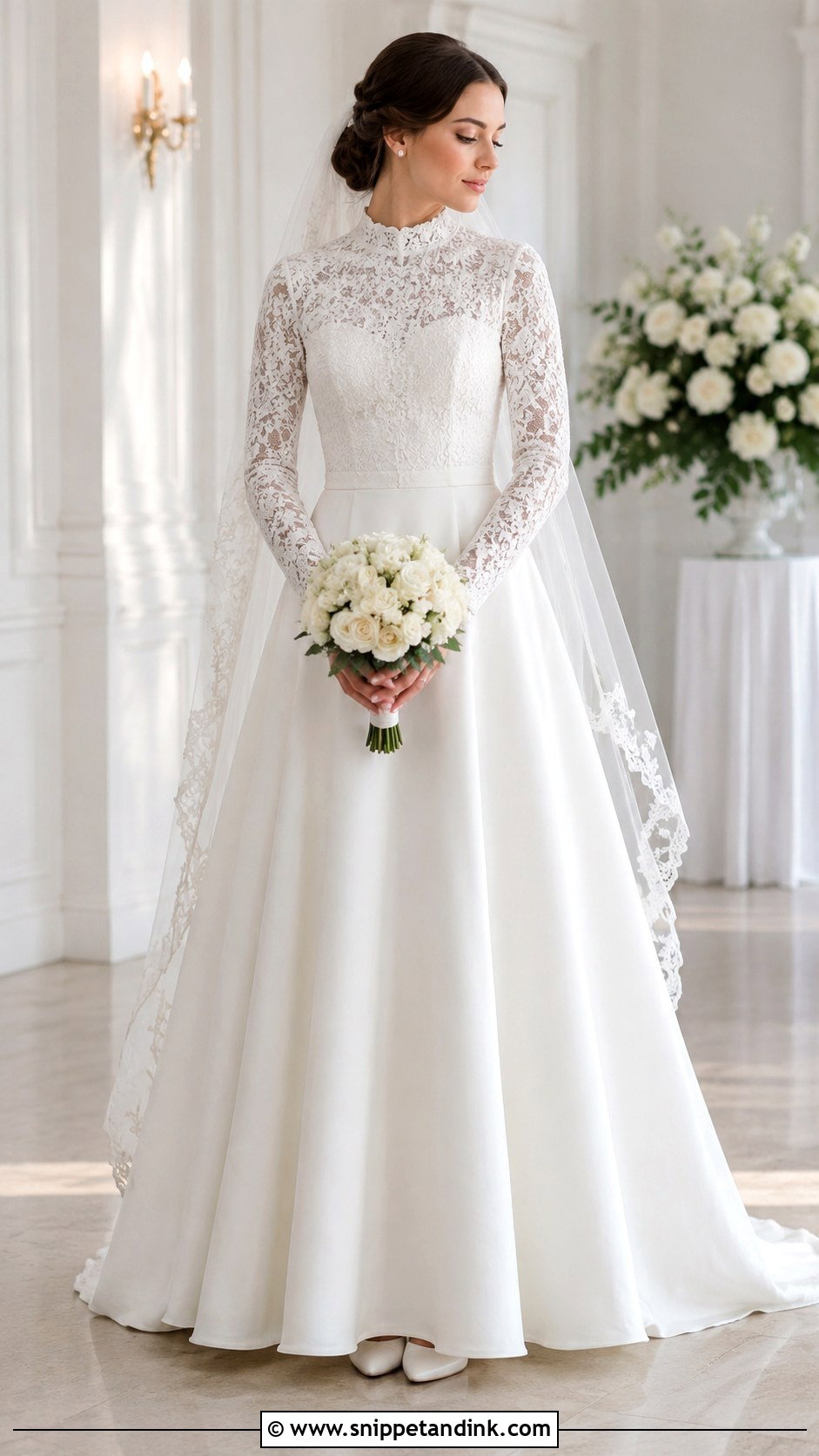
A modest high neck can still feel light. I’d choose a fitted lace or crepe bodice, lined at the front, with comfortable armholes and long sleeves or a softly capped shoulder, over an A-line skirt. Pearl studs, closed pumps, a low bun and a veil secured under the hair complete it. No necklace. In summer, ask for a breathable lining, because high collars trap heat. Turn your head at fittings to check the collar doesn’t rub. Covered cuffs or small buttons add interest without taking away from the simplicity.
16. Beaded Glamour Marriage Gown
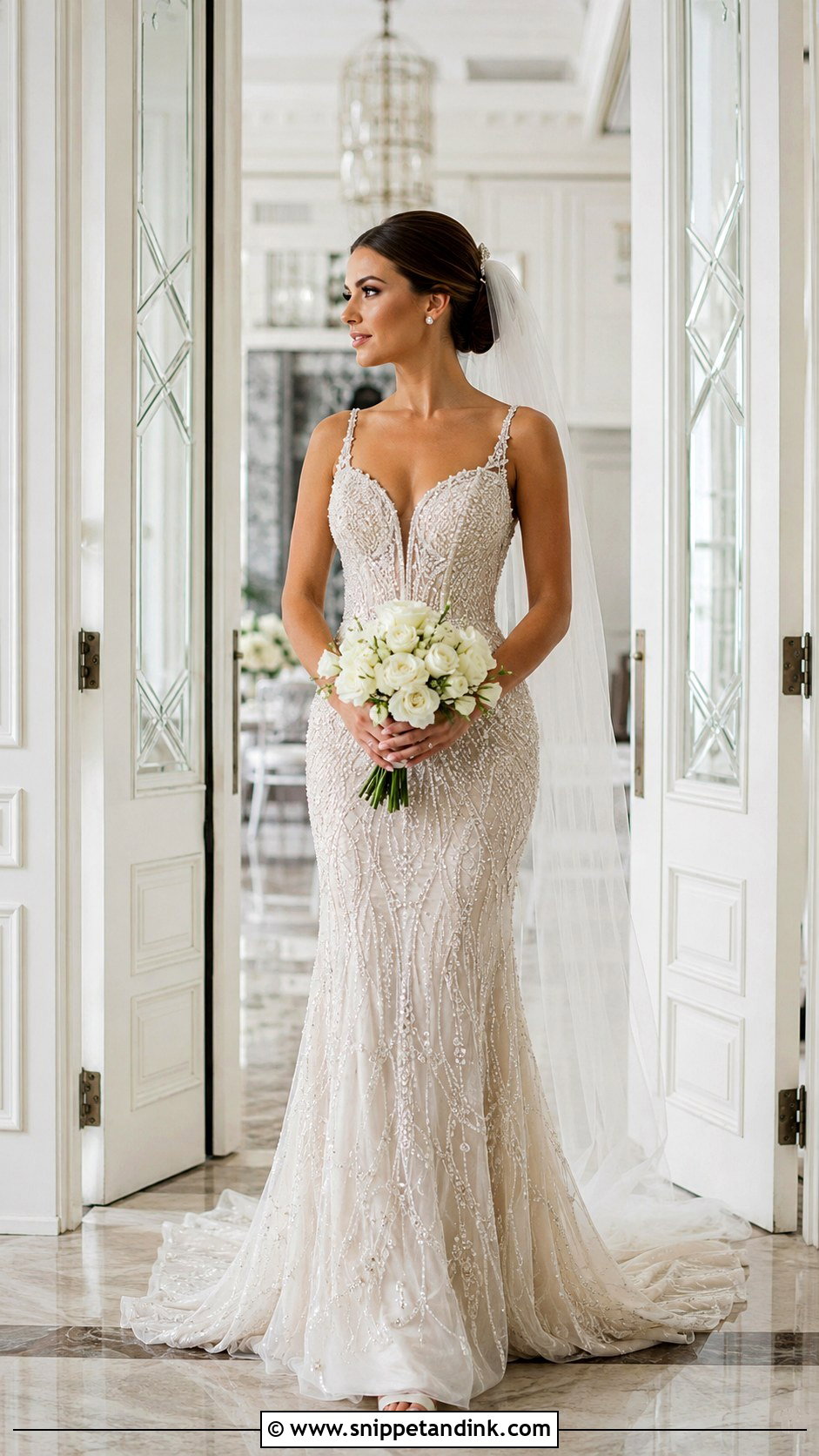
Choose one area for the beading, such as the bodice, the sleeves or the skirt, and keep everything else plain. A fully beaded column looks sleek; a beaded bodice over a flowing skirt is softer. Plain satin heels, understated studs, a smooth veil and a structured updo let the beadwork lead. Beaded gowns weigh more than people expect, so I ask brides to wear the sample for ten minutes before deciding. Feel the inside for rough stitching against skin. A beaded train also needs a reinforced bustle, since the extra weight can pull the hooks out.
17. Detachable Overskirt Marriage Gown
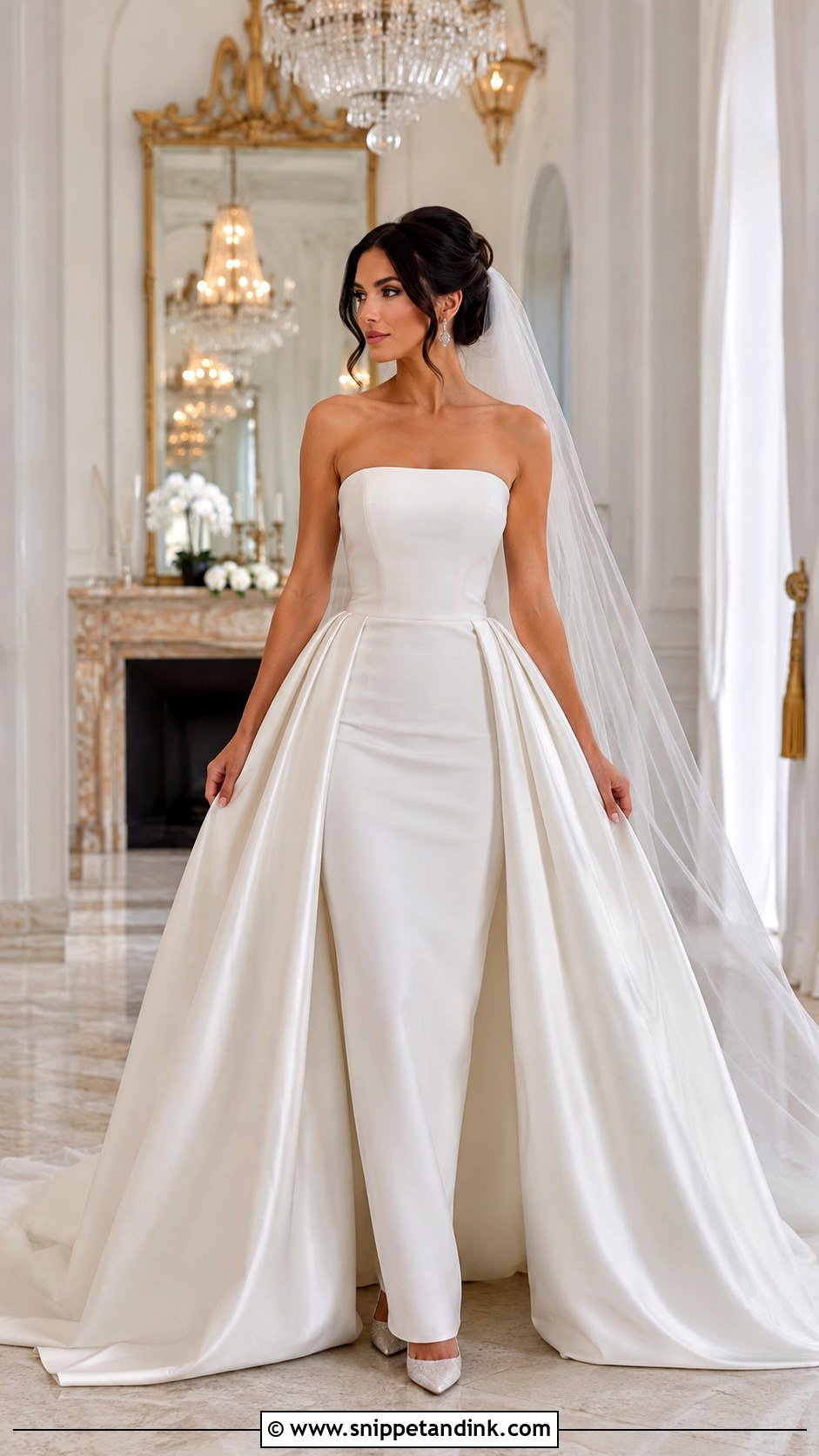
A detachable overskirt marriage gown gives two looks with no full change. Start with a fitted sheath, column or mermaid, and add a full satin or tulle overskirt for the ceremony with a long veil, drop earrings, pointed heels and an updo. After the ceremony, the skirt and veil come off for a lighter reception look. The join should sit flat at the waist with no gaps or bulky fasteners. Practise removing it in advance. Sometimes the base gown and the overskirt each need their own bustle, so mention both to your seamstress early.
18. Bridal Cape Marriage Gown
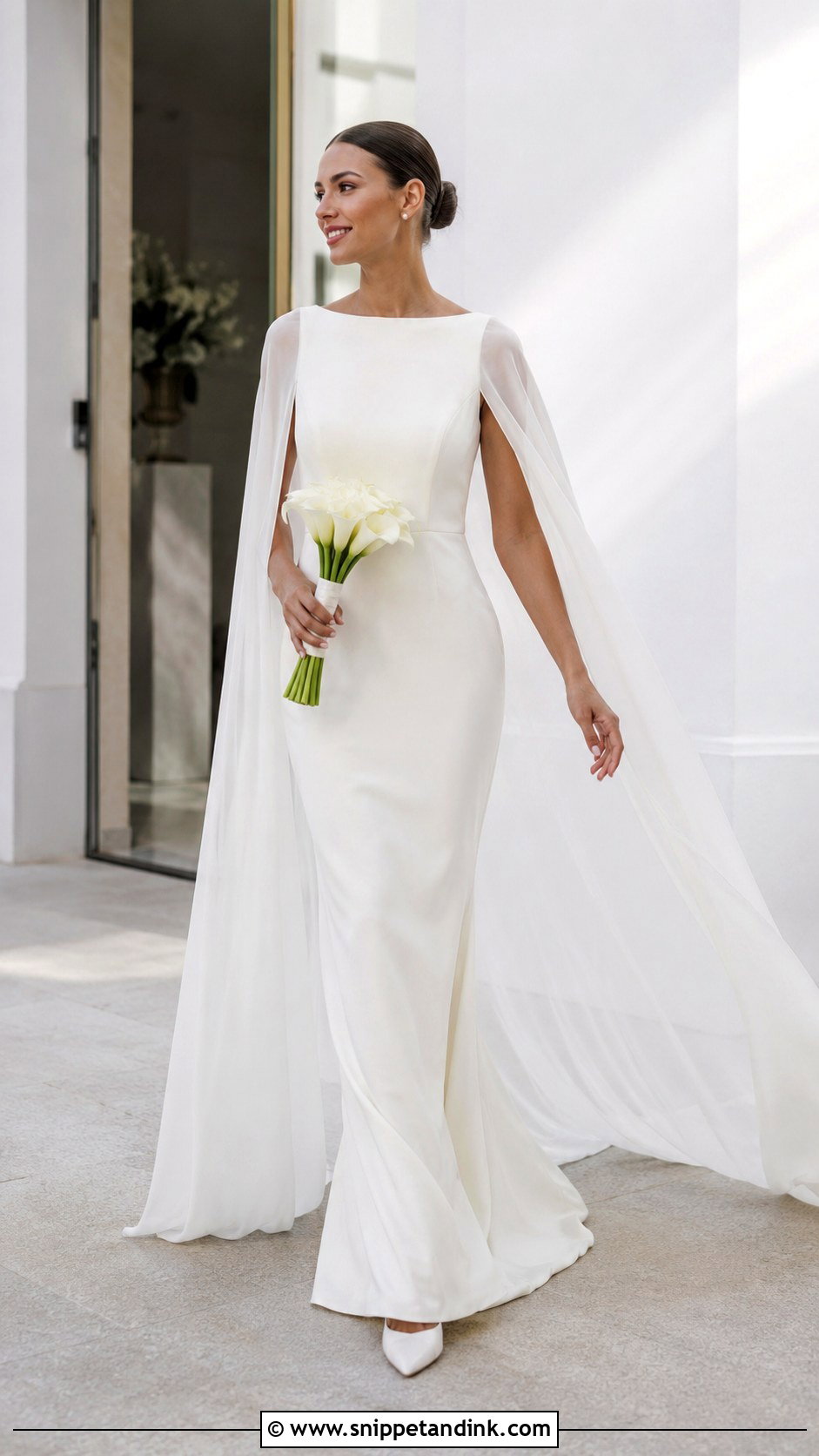
A cape can replace a veil, and it moves beautifully when you walk. A sheer floor-length cape suits a clean sheath, a shorter lace cape suits a simple A-line. Keep the neckline underneath uncluttered so the two layers don’t fight. Sleek pumps, small earrings and a tidy bun that shows the cape’s fastening finish it, and avoid necklaces that snag. Wind catches light cape fabric outdoors, so test it in a breeze before the portraits. A detachable design comes off neatly for dinner.
19. Blush Pink Marriage Gown
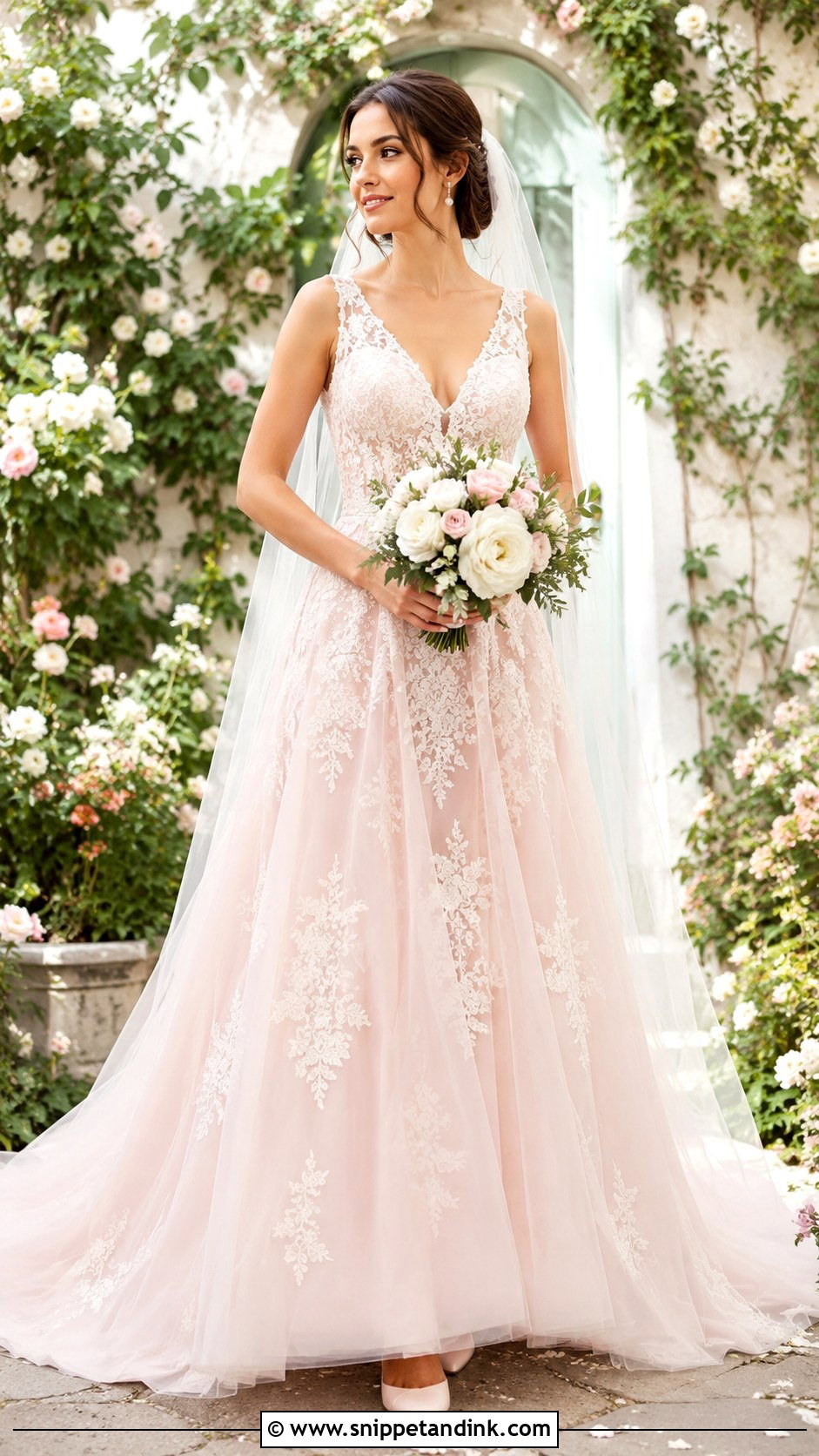
Blush can run through the main fabric or sit as a lining under ivory lace, which gives only a hint of colour. Try several shades against your skin by a window; pale pink shifts under warm indoor lights and flash. Neutral satin heels, rose-gold or pearl earrings, a soft ivory veil and white and muted pink flowers complete it. Blush works with ball gowns, A-lines, sheaths and tulle alike. I always ask for a fabric swatch to take shoe and veil shopping, since matching from memory rarely works.
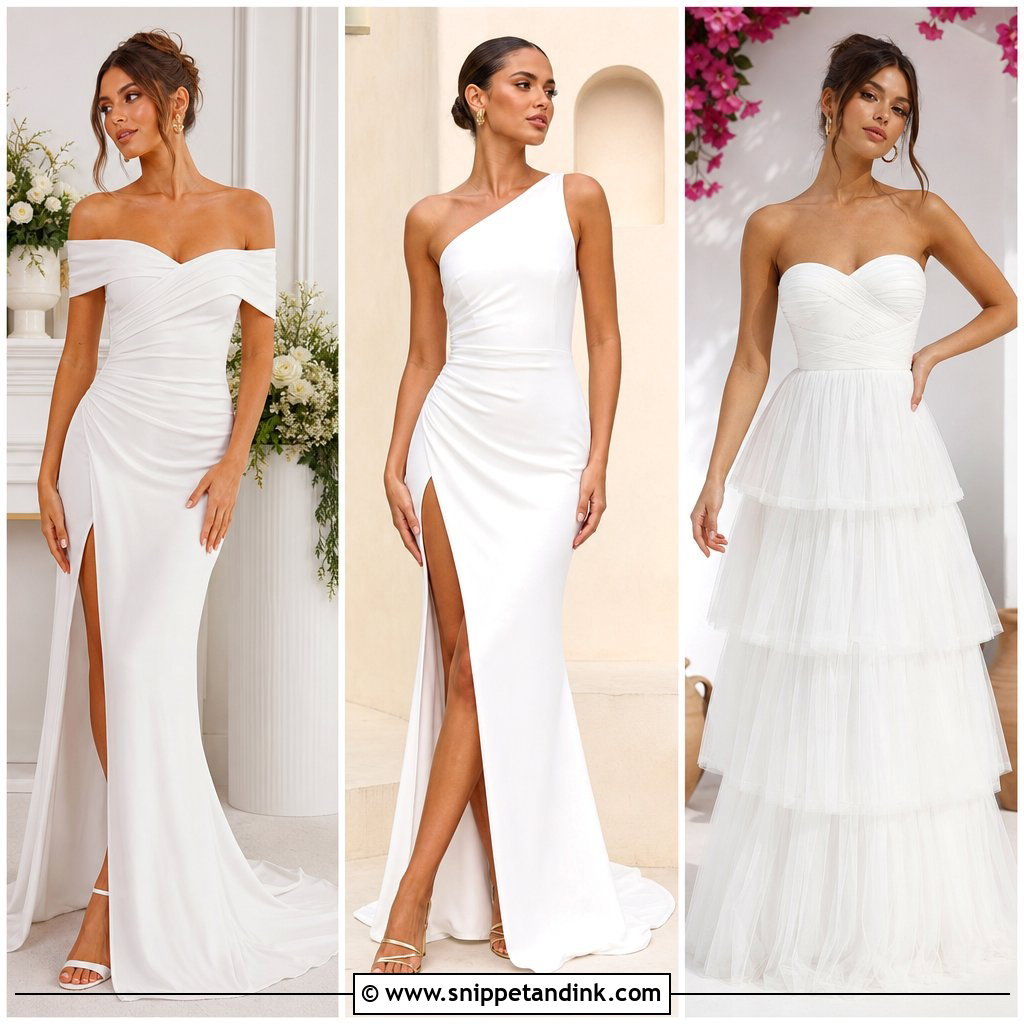

20. Floral Applique Marriage Gown
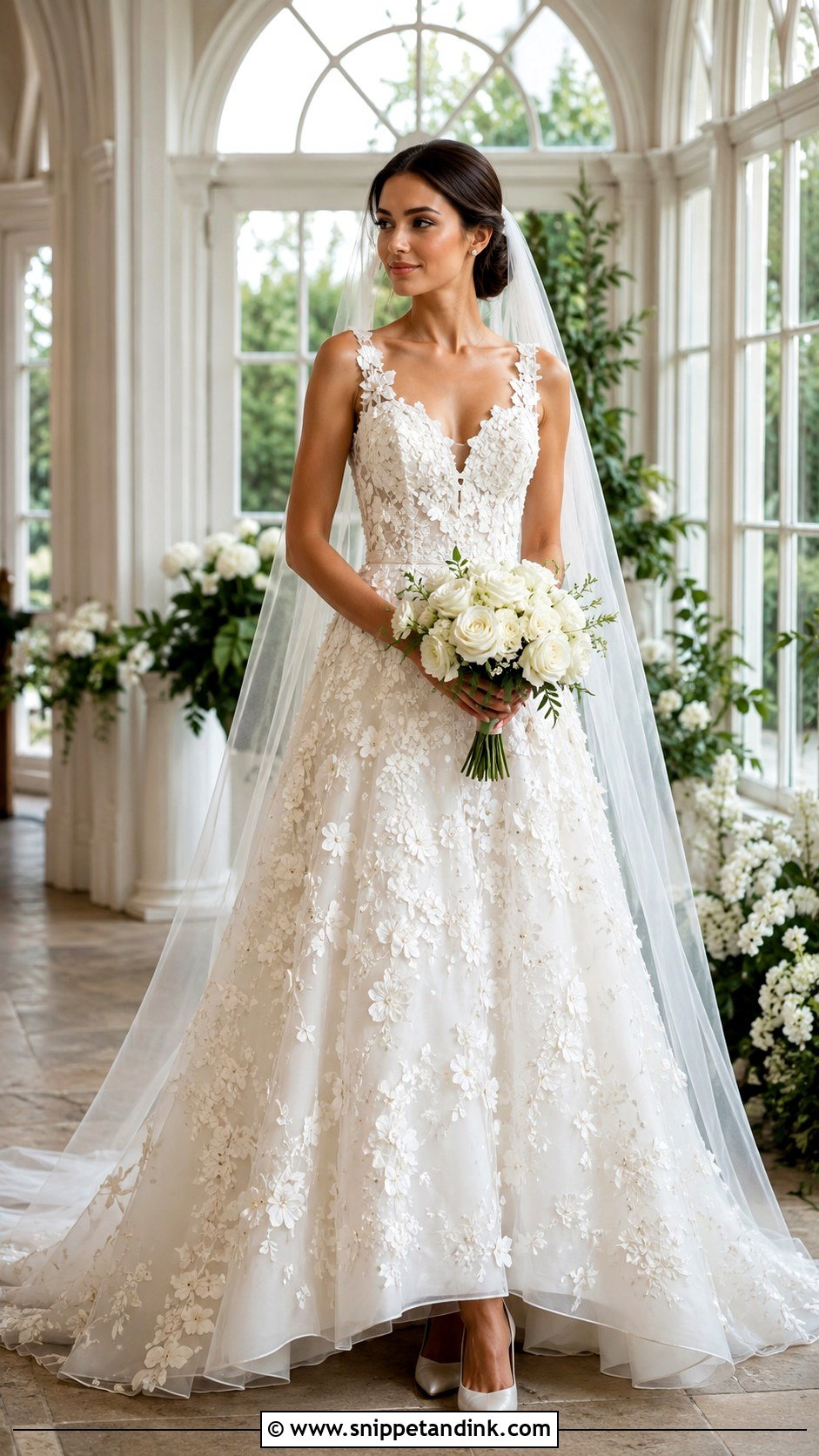
Dimensional appliqués can be scattered down an A-line skirt, concentrated at the neckline and train, or spread across a fitted bodice. Large tonal flowers on smooth fabric look modern; small lace blossoms look traditional. Make sure they’re stitched flat and don’t scratch your inner arms. Plain ivory heels, delicate studs, a simple veil, a polished style and a restrained bouquet keep the focus on the flowers. Look at the dress from every angle, because raised details change the silhouette. When the bustle is planned, check it doesn’t crush the best appliqués into a fold.
French, American or Ballroom: Which Bustle Suits Your Train
Most gowns in this list mention a bustle, and few brides realise there are several types. A bustle lifts the train off the floor for the reception, and the right one depends on the fabric and how long the train is.
American (over) bustle
The train is lifted and hooked to the back of the gown at one or more points. It’s quick to do and suits lace and lighter fabrics, though heavy trains can pull on the hooks.
French (under) bustle
The train is folded under and tied with numbered ribbons inside the skirt. It makes soft folds at the back and suits satin and heavier fabric well. Colour-coded ribbons make it easier for whoever does it on the day.
Ballroom bustle
The train is tucked under at several points so the hem looks almost level all round, as if there were never a train. It suits ball gowns and anyone who plans to dance a lot, but it takes longer to tie.
I’d have your maid of honour attend the final fitting and bustle the dress herself twice while the seamstress watches. Reception lighting is dim and everyone’s in a hurry, so practice saves a lot of fumbling.
Start With How the Dress Moves
A good gown comes down to your taste, sound construction, the right proportions and comfort. Across these twenty you have classic shapes, modern details, colour and convertible designs. Begin with the silhouettes that make you stand taller, then compare fabric, neckline, support, train and movement. Take your actual shoes and underwear to every alteration appointment. Keep accessories in service of the dress. The bride who can move freely and forget about her gown always looks the most at ease in her photos.
You'll Like These Ideas:










Leave a Reply