
The train is the part of a wedding dress you never see yourself, and it’s the part your guests look at longest. Length is only half of it. Fabric decides how a train moves, the venue decides whether it can be seen, and the bustle decides whether you can dance afterwards. A short sweep feels easy and modern, while a cathedral or royal train gives the aisle real ceremony. Detachable trains, overskirts and capes have become popular in my fittings because they let one gown play two roles. Here are the train styles I work with, and what I tell brides about living in each one for a full day.
Train Lengths in Feet, and What Your Venue Floor Will Do to Them
Designers don’t measure trains identically, so treat these as rough guides, measured from where the train leaves the body to the tip:
- Sweep and brush: from just touching the floor to roughly a foot behind you.
- Court: around a foot or a little more, often starting at the waist.
- Chapel: roughly three to four feet.
- Semi-cathedral and cathedral: roughly five to seven feet or more.
- Royal: longer again, often ten feet and up.
Then picture the actual floor. Grass stains and sheds onto pale fabric, sand gets into every layer of tulle, and gravel paths snag lace. Old stone churches are often dusty, and a cathedral train collects all of it. If your ceremony is outdoors, I’d lean shorter or detachable, or plan for an aisle runner.
Measure the aisle, too. A long train looks best when it can lie flat and fully extended at the altar, and a narrow aisle with chairs right up to it will hide most of it. Ask the venue for the width and whether there are any steps up to the ceremony spot.
1. Sweep Train Wedding Dress
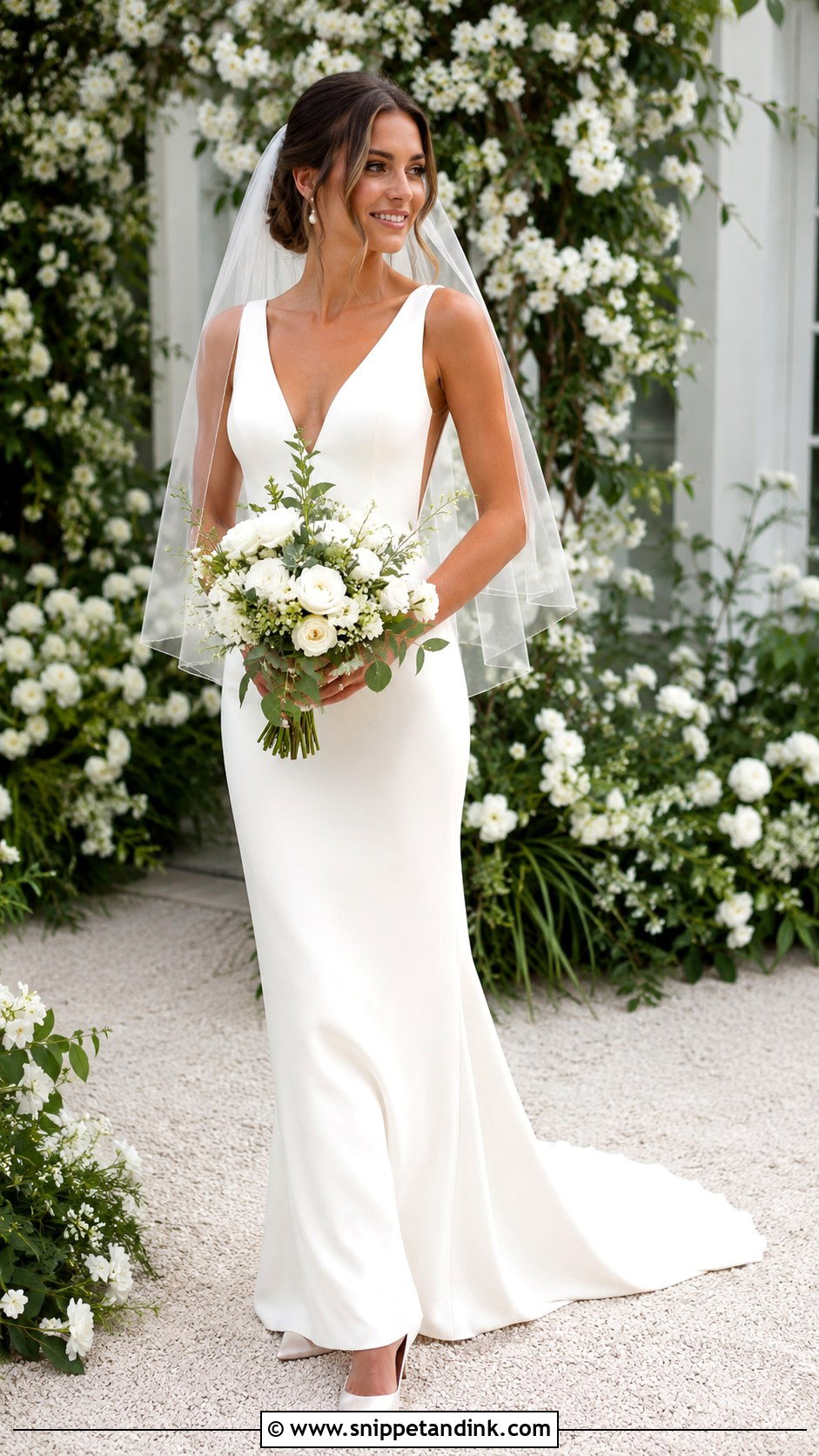
The sweep is the shortest true train, barely brushing the floor behind you, and it’s the one I recommend most to brides who are nervous about managing fabric. You can walk, turn and climb steps without anyone holding it. It sits naturally on crepe sheaths, satin slips and simple A-lines. Because it’s short, it usually needs no bustle at all, which saves an alteration. Gardens, beaches and small venues suit it, since a longer train there just collects grass or sand.
2. Brush Train Wedding Dress
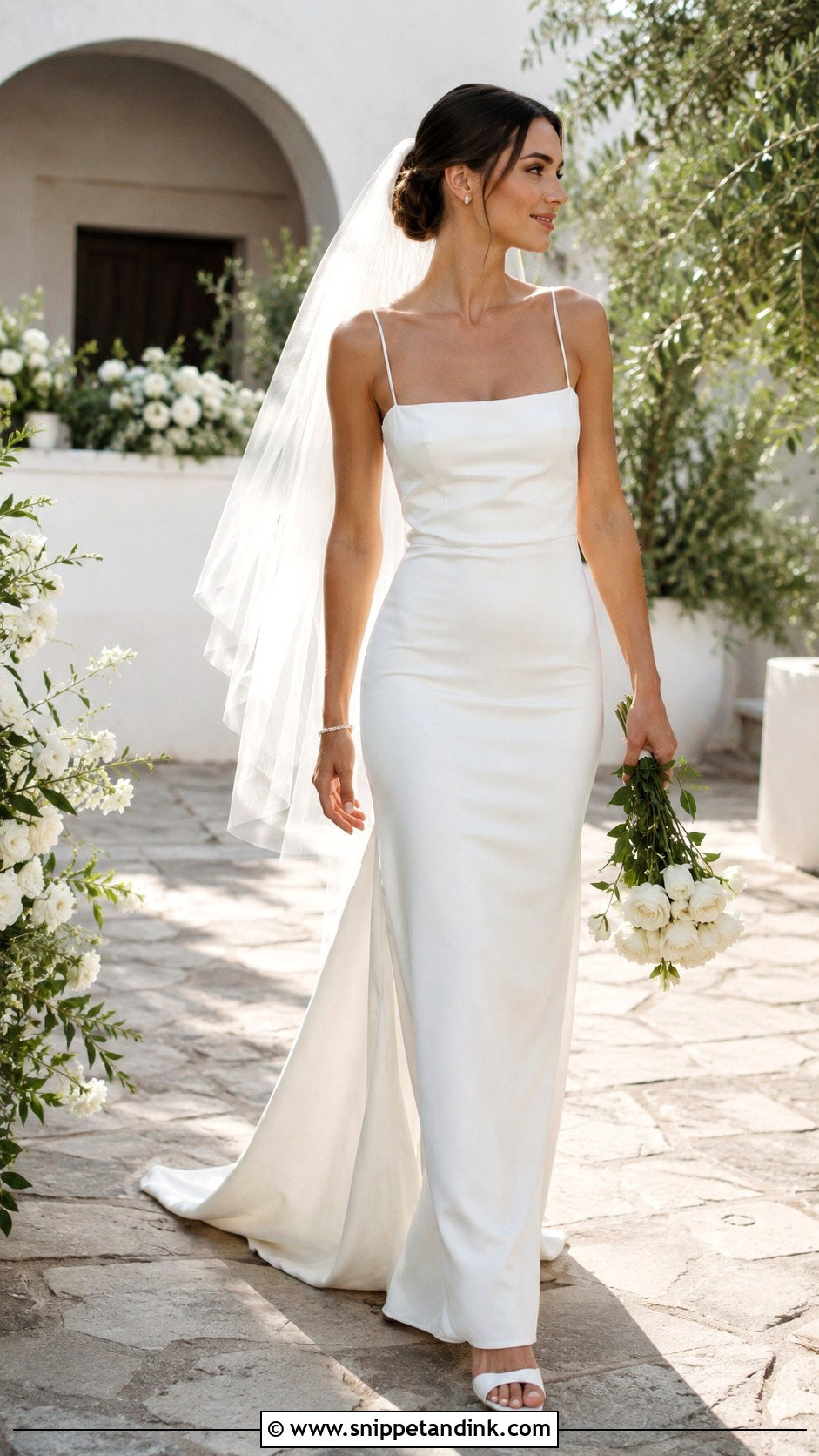
A brush train adds a little more length than a sweep, enough to trail and move behind you as you walk. Think of it as polish without an entrance. On a satin column it looks clean and modern; on a lace fit-and-flare it softens. Outdoors, I’d pair it with block heels rather than stilettos, because a thin heel sinking into grass will catch the hem. It’s still short enough to leave down for the reception if the floor is clean.
3. Court Train Wedding Dress
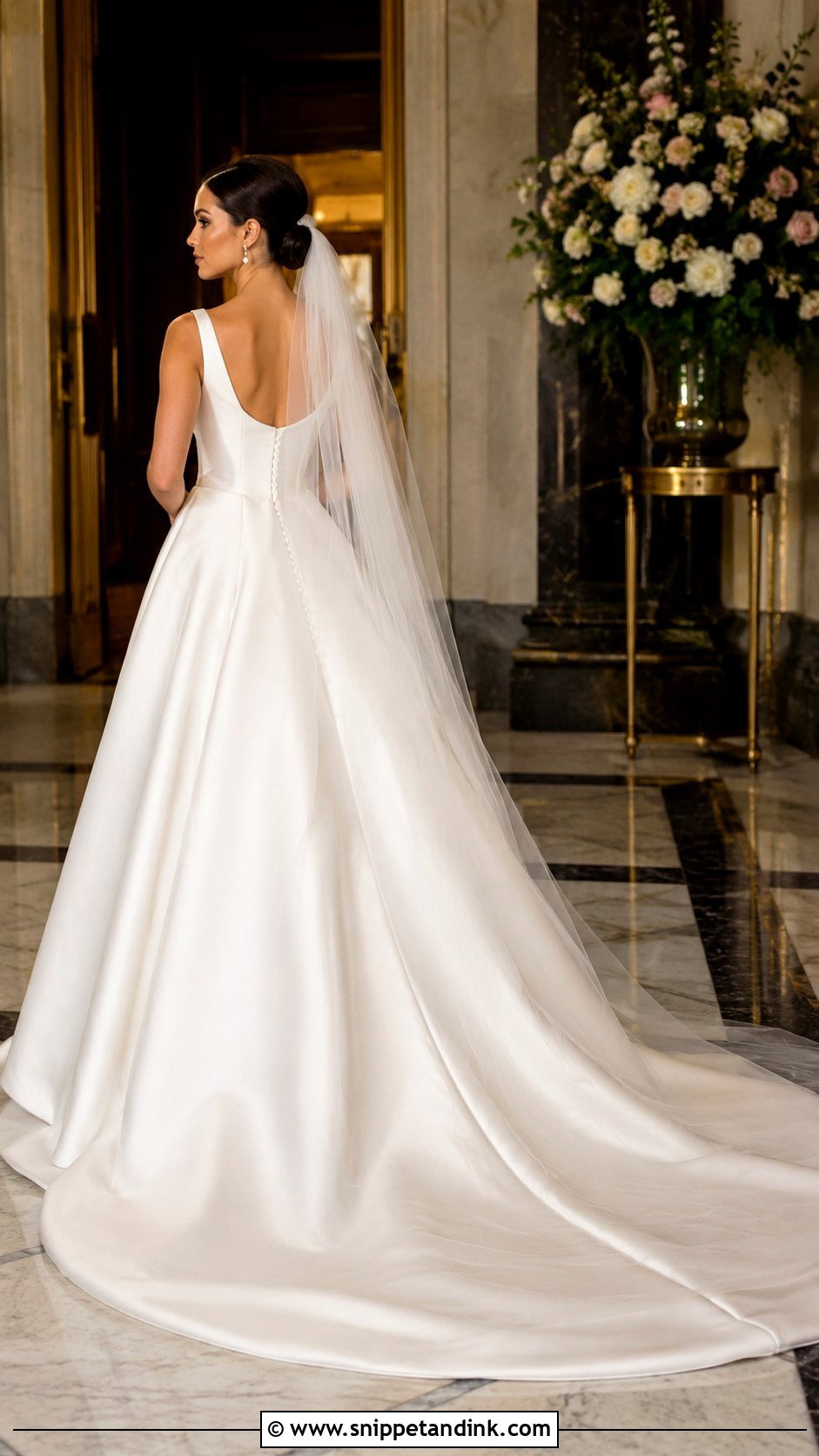
Here’s where a train starts to be noticed. A court train extends a little further, usually starting from the waist or back skirt, and gives the gown a formal outline without the commitment of a chapel length. I like it on structured ball gowns and classic satin A-lines in hotel ballrooms and estate rooms. Seen from behind, it frames the bride neatly at the altar. Most court trains need a simple bustle, often just one or two points.
4. Chapel Train Wedding Dress
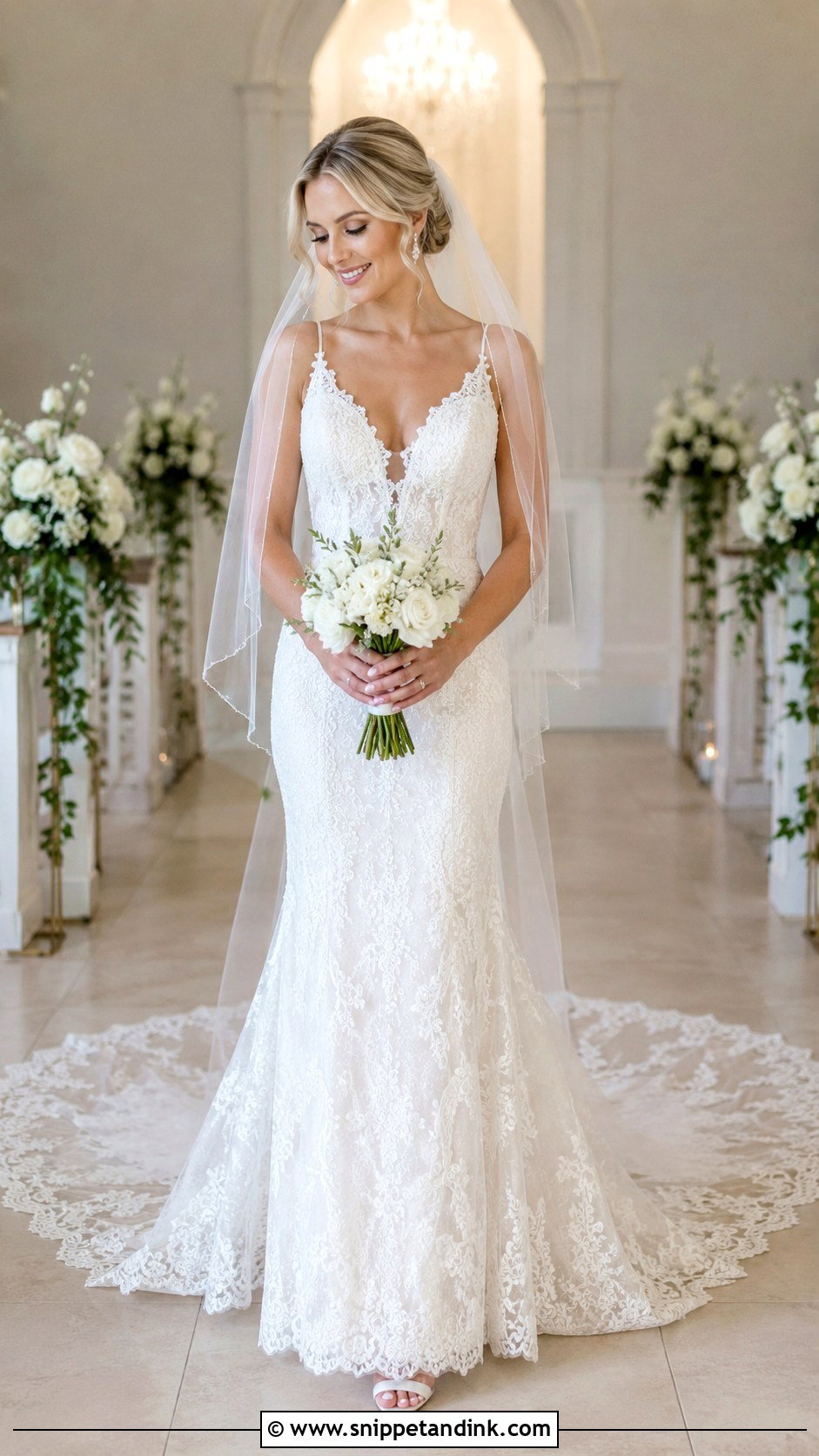
If I had to name one train that suits almost every silhouette, it would be the chapel. Mermaid, ball gown, sheath, A-line: it balances all of them, and it’s long enough to look bridal at the altar without becoming a project. Lace appliqué, a soft veil and a small bouquet make it classic; smooth crepe with a square neckline and minimal jewellery makes it modern. Expect a bustle with a handful of points. I’d have the person who’ll do it practise at the final fitting.
5. Semi Cathedral Train Wedding Dress
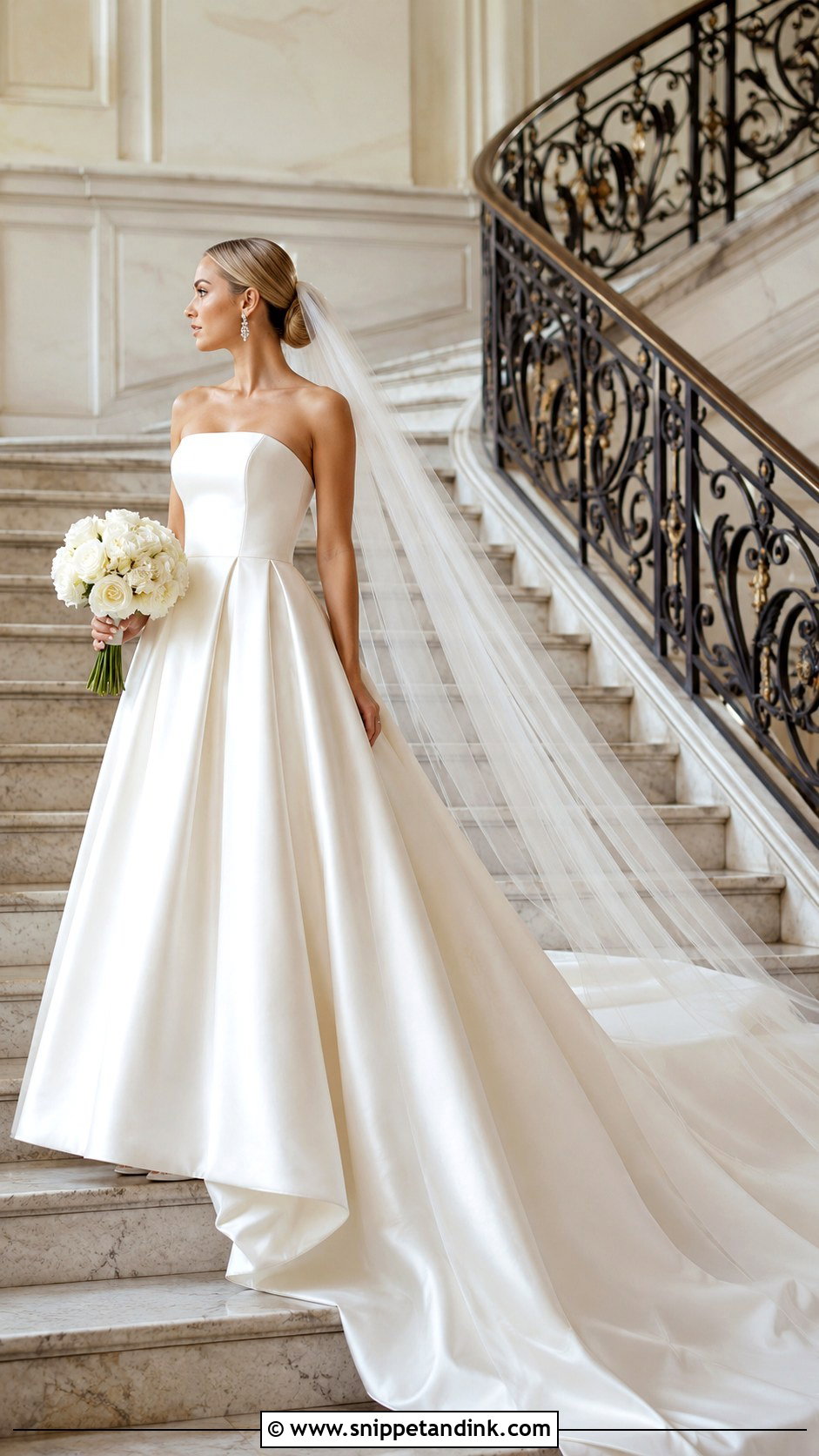
The semi-cathedral sits between chapel and cathedral and gives real aisle presence while staying manageable. It holds its shape best in structured fabrics, so I see it most often with mikado, long sleeves or a heavily laced bodice. With this much length, the bustle stops being optional. Raise it at your first fitting, not your last, because a heavy train can need extra points sewn in. A long veil and a polished updo keep the proportions right in a ballroom or historic venue.
6. Cathedral Train Wedding Dress
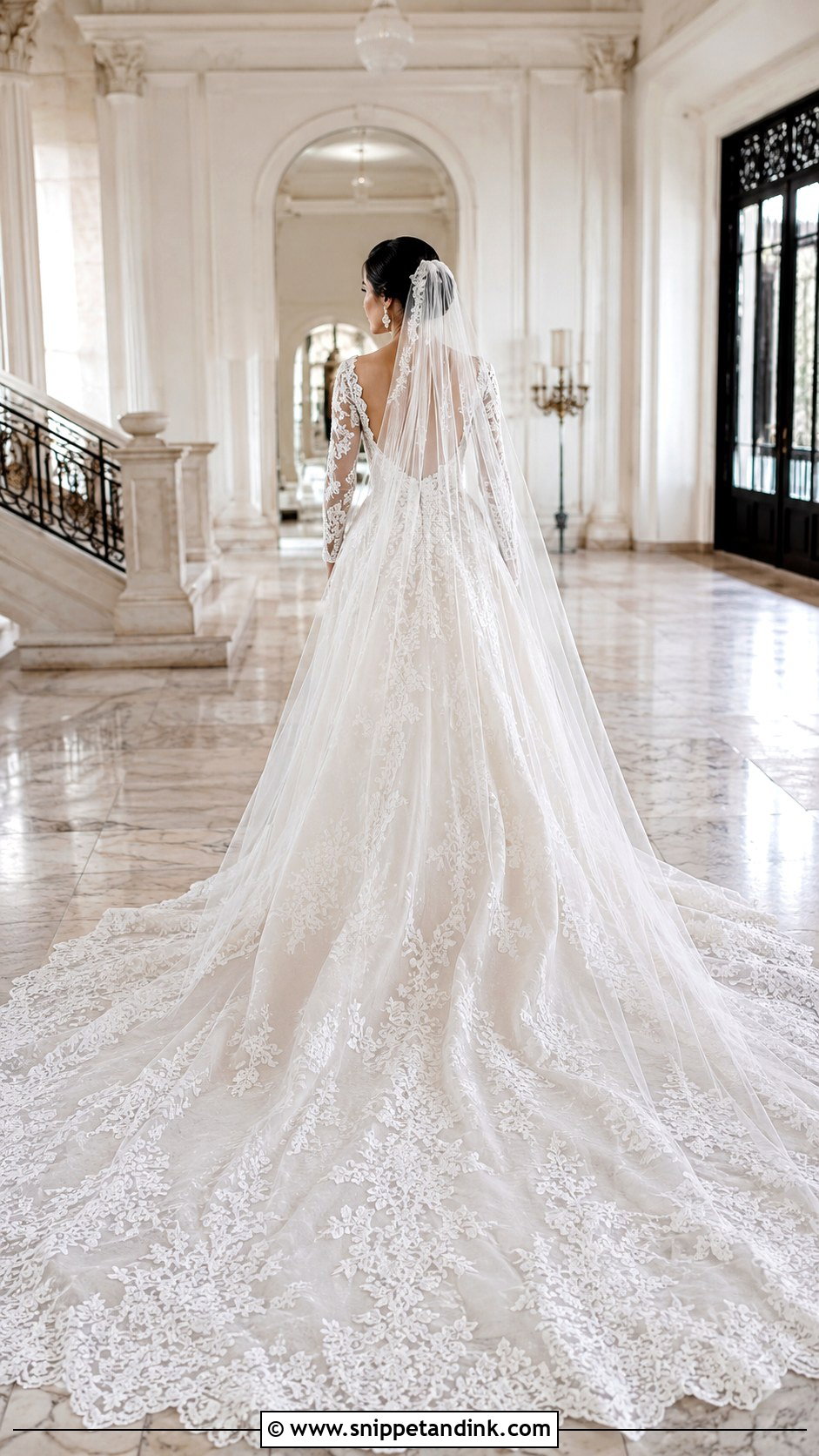
A cathedral train needs space to be seen: a wide aisle, a long walk and a venue big enough that guests can watch it unfold. In a narrow room, half of it ends up bunched behind the front pew. Lace cathedral trains feel regal; plain satin or mikado versions look architectural. Before the walk, someone has to lay it out flat behind you, so choose that person in advance. A restrained bouquet and supportive heels help, since you’ll be pulling real weight behind you.
7. Royal Train Wedding Dress
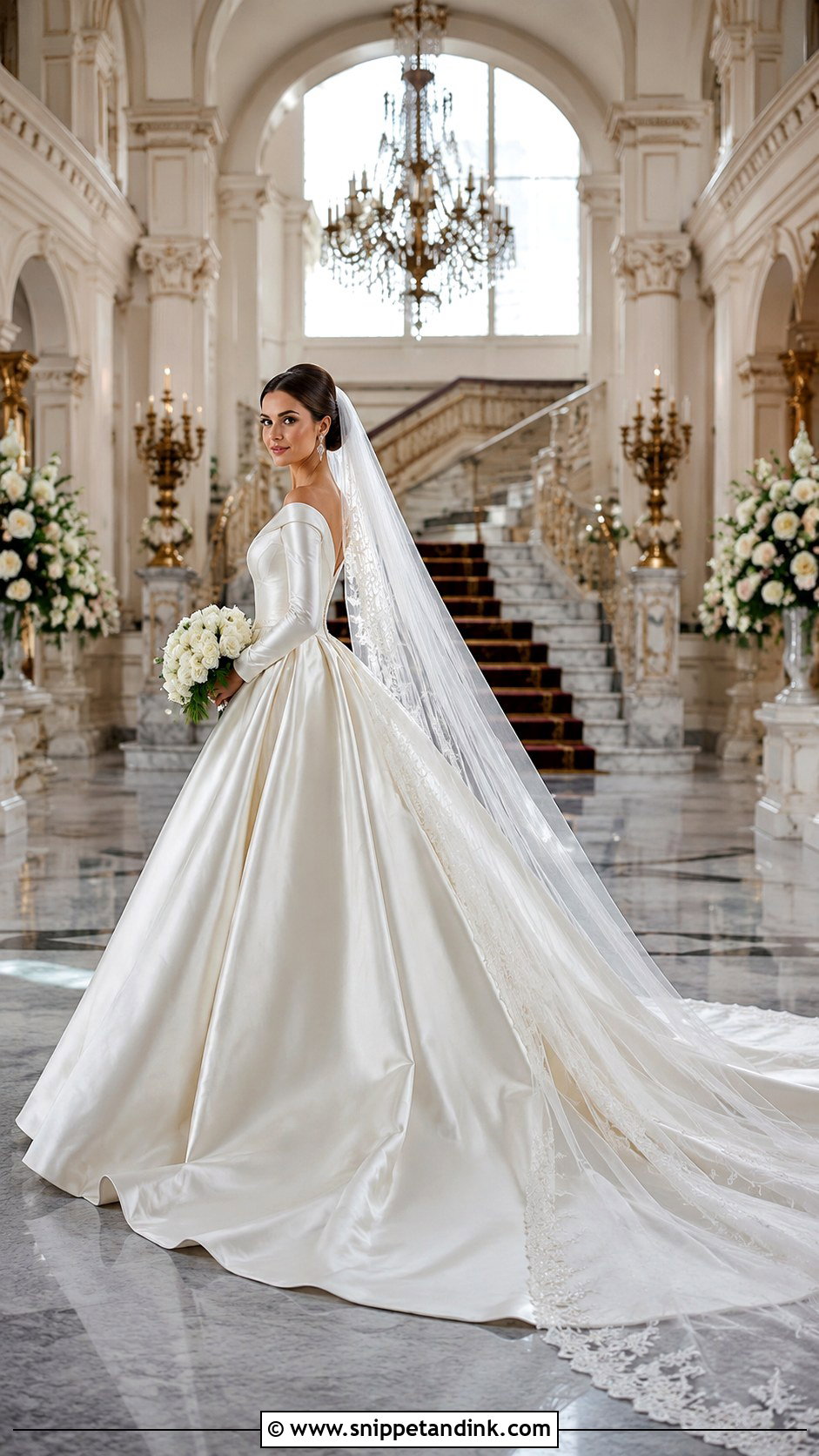
The royal train is the most dramatic length there is, extending many feet behind the gown. It’s a big commitment. It needs a large, formal space, fabric heavy enough to carry it (luxury satin, ornate lace or embroidery), and help at nearly every step: walking, turning for photos, bustling. I’d only recommend it if the ceremony venue genuinely has room and you’re happy to be assisted. When those conditions are met, few things in bridalwear have the same presence.
8. Detachable Train Wedding Dress
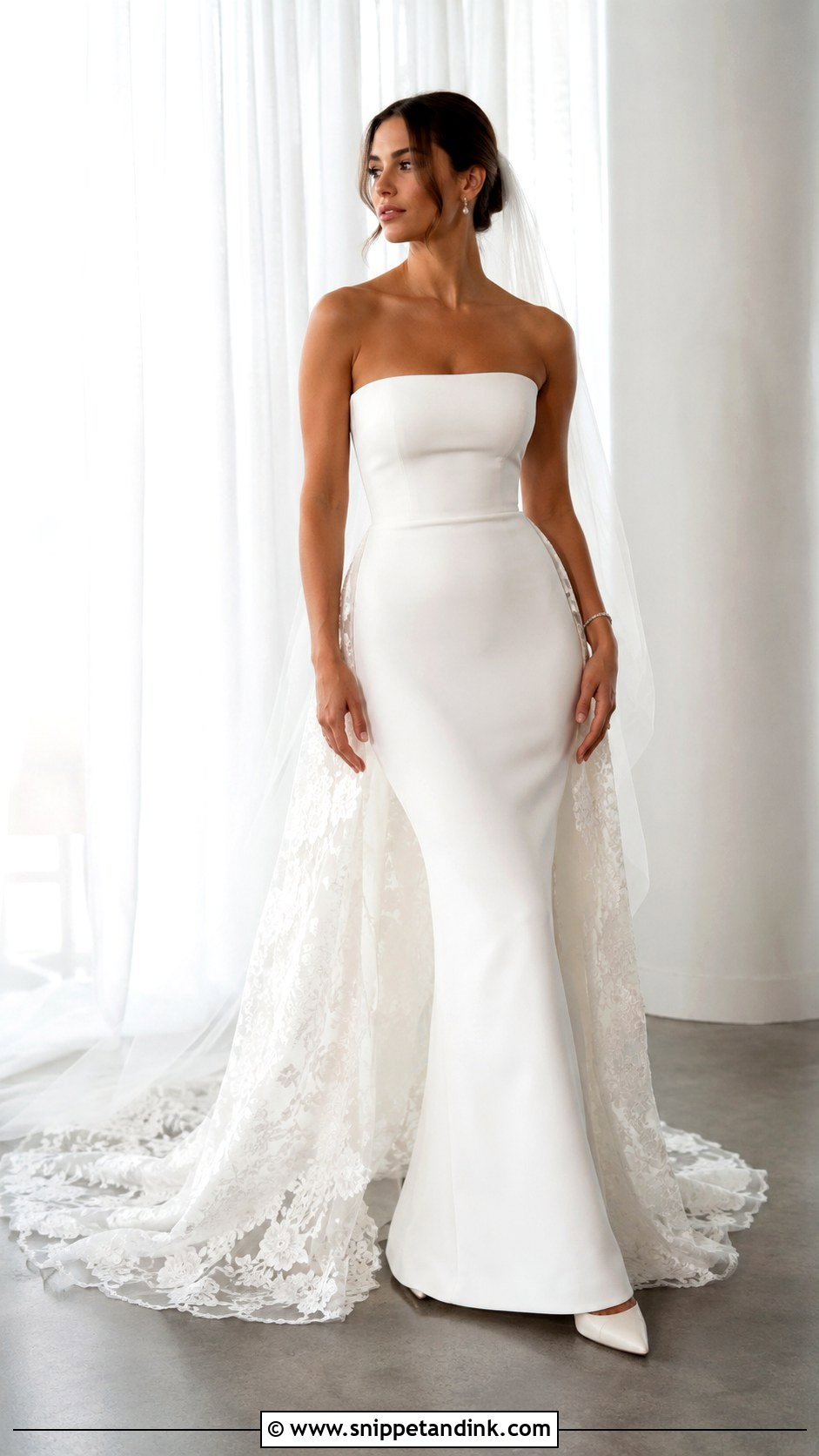
Detachable trains solve the oldest problem in bridalwear: wanting drama for the vows and freedom for the dancing. The train fixes on with hidden buttons, snaps, hooks or a separate waistband and comes off in minutes. It works over sheaths, fitted crepe gowns, even mini dresses. Trains come in lace, tulle, satin, organza or embellished fabric. My one test at the fitting: have someone gently step on the train and see what happens to the waist. Snaps should release cleanly instead of tearing the dress underneath.
9. Detachable Overskirt Train Wedding Dress
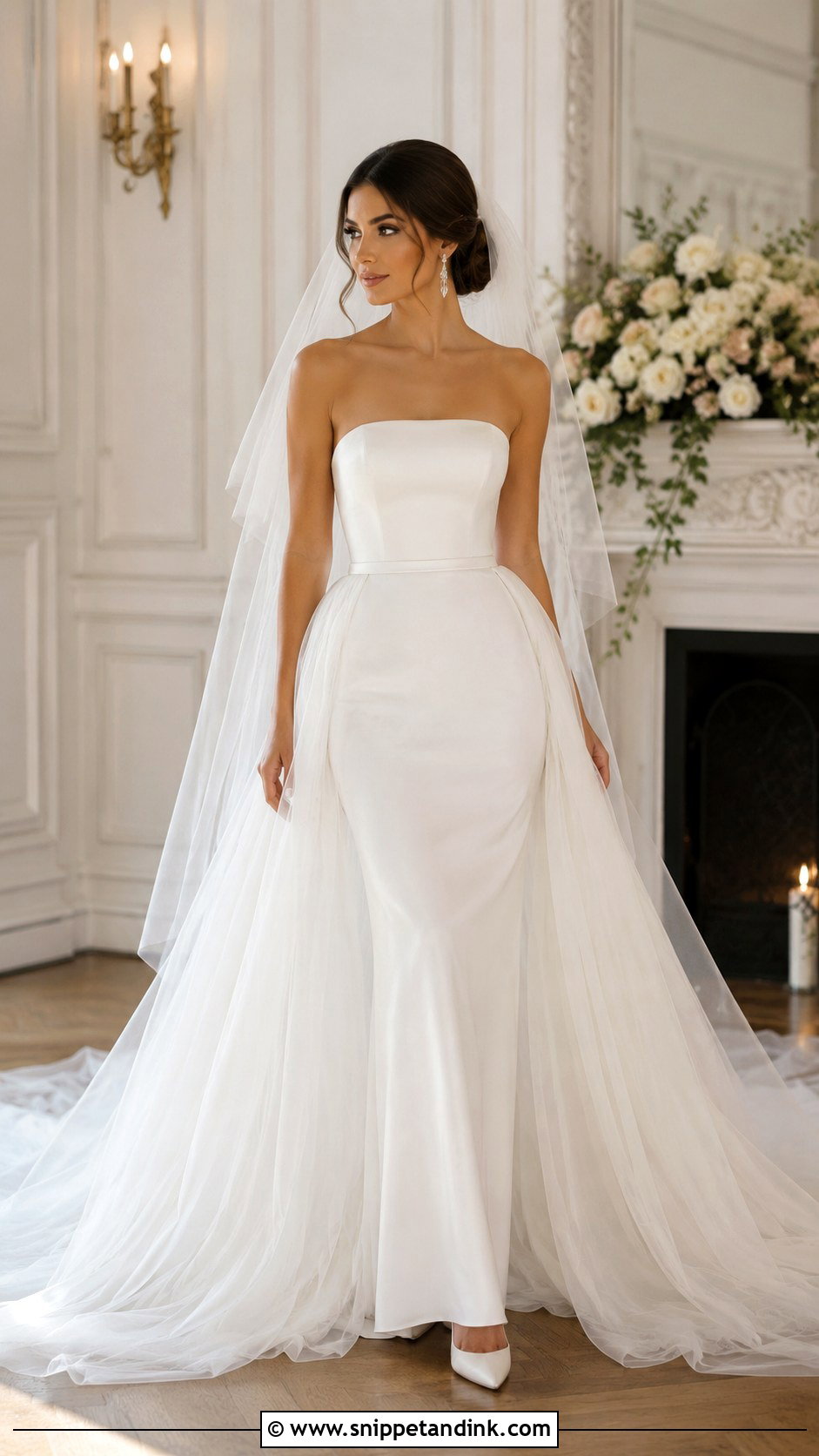
A detachable overskirt train gives you a full ball-gown effect for the aisle and a slim dress underneath for later. It wraps around the waist and flows back into a train, in tulle, satin, organza or lace. The base dress needs a smooth, flat waist for the overskirt to sit properly, so I fit the two together. Once removed, the sleek gown underneath feels like a new outfit. Plan where the overskirt goes afterwards, ideally straight onto a hanger.
10. Watteau Train Wedding Dress
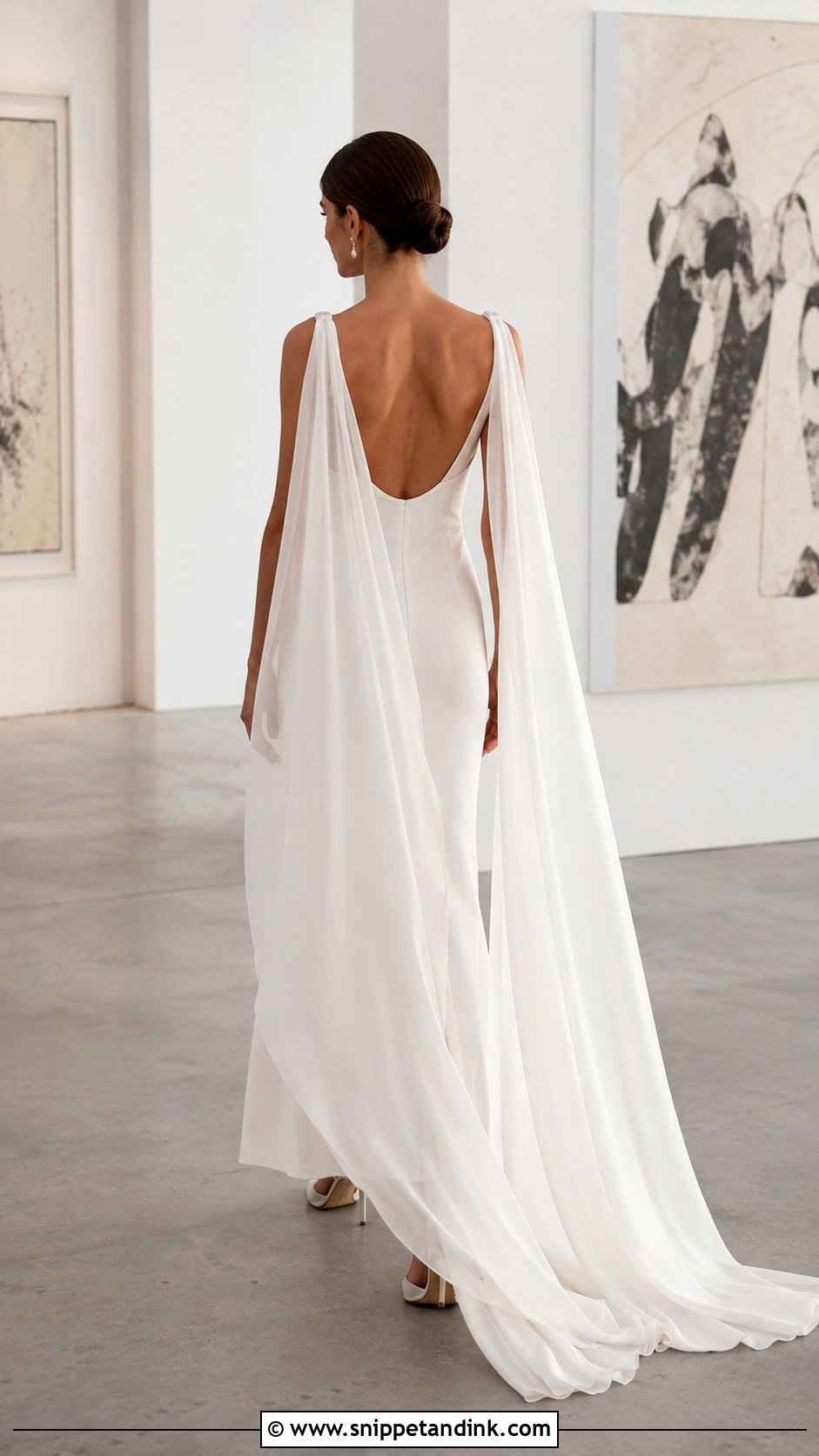
A Watteau train falls from the shoulders or upper back rather than the skirt, so it acts like a cape without being one. Because it doesn’t change the skirt shape, it sits well on sheath gowns, column dresses and other clean modern lines. Chiffon floats; satin hangs heavier and pulls the shoulders back. I always check the attachment points during a fitting, because a long Watteau can drag the neckline backwards if it’s anchored too low.
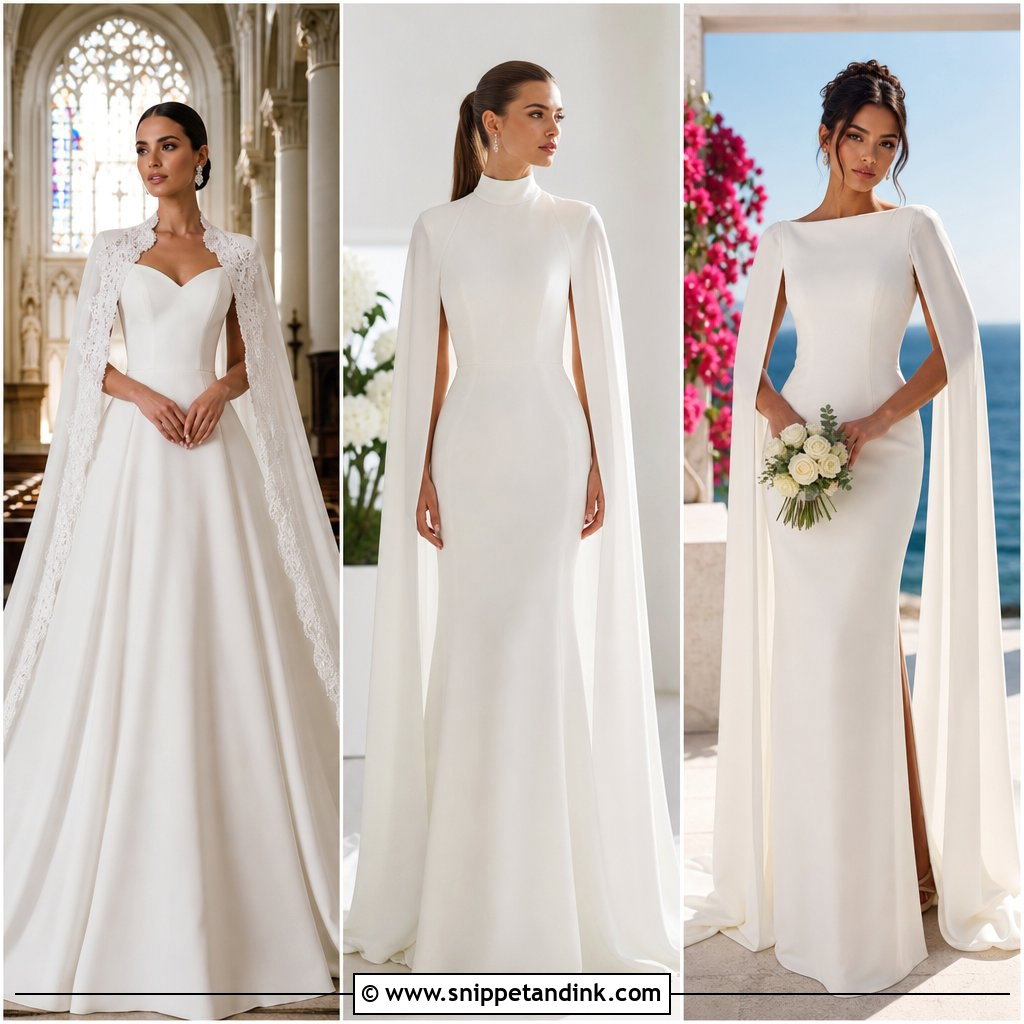
11. Cape Train Wedding Dress
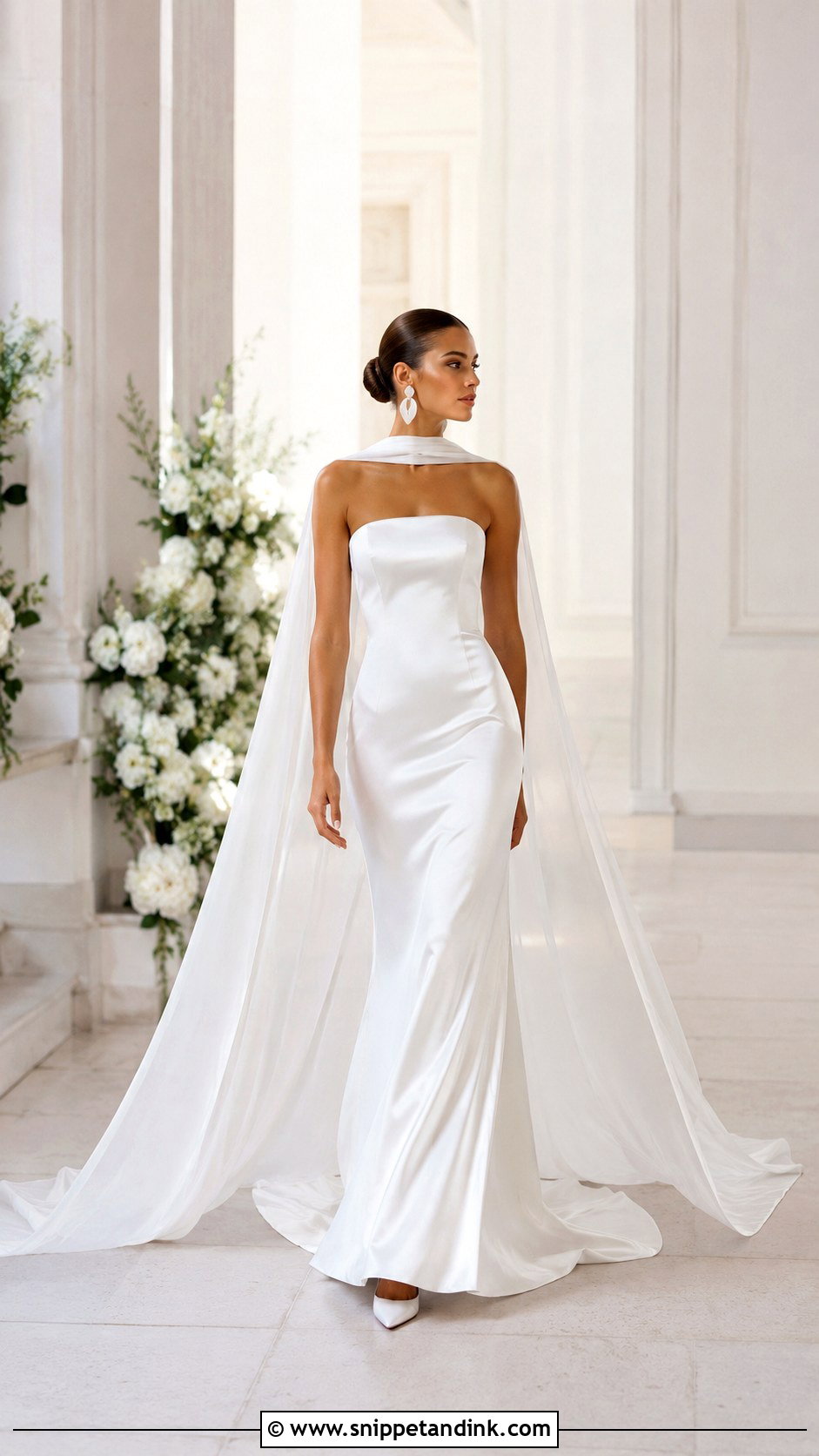
Cape trains give coverage and drama at once. They start at the shoulders, neckline or back and flow into a train, in sheer tulle for softness or crepe and satin for a sharper, editorial line. They pair well with strapless gowns and simple columns, and you can often take them off after the ceremony. Fasten it with hooks rather than pins if you’re wearing it all day. Pins work loose with every hug.
12. Lace Train Wedding Dress
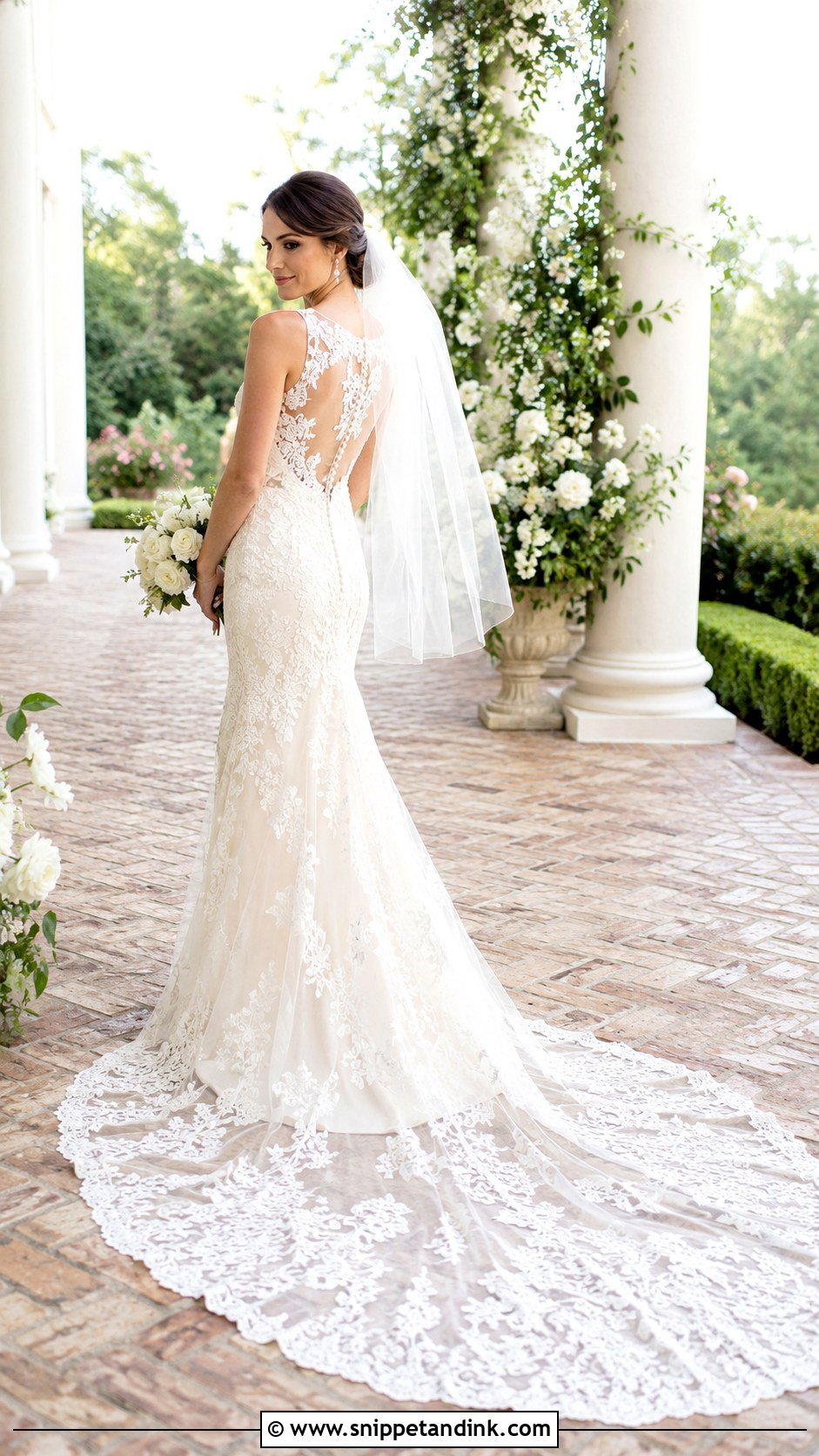
Lace changes character with its pattern. Floral, vine-like, geometric and beaded laces each give a different mood, and a lace train shows that pattern at full size. A chapel length in lace feels classic; a cathedral length looks formal. Choose a bouquet that doesn’t hide the bodice and a veil sheer enough for the lace to show through. One practical point: lace edges snag on rough floors and heel tips, so check the venue surface.
13. Tulle Train Wedding Dress
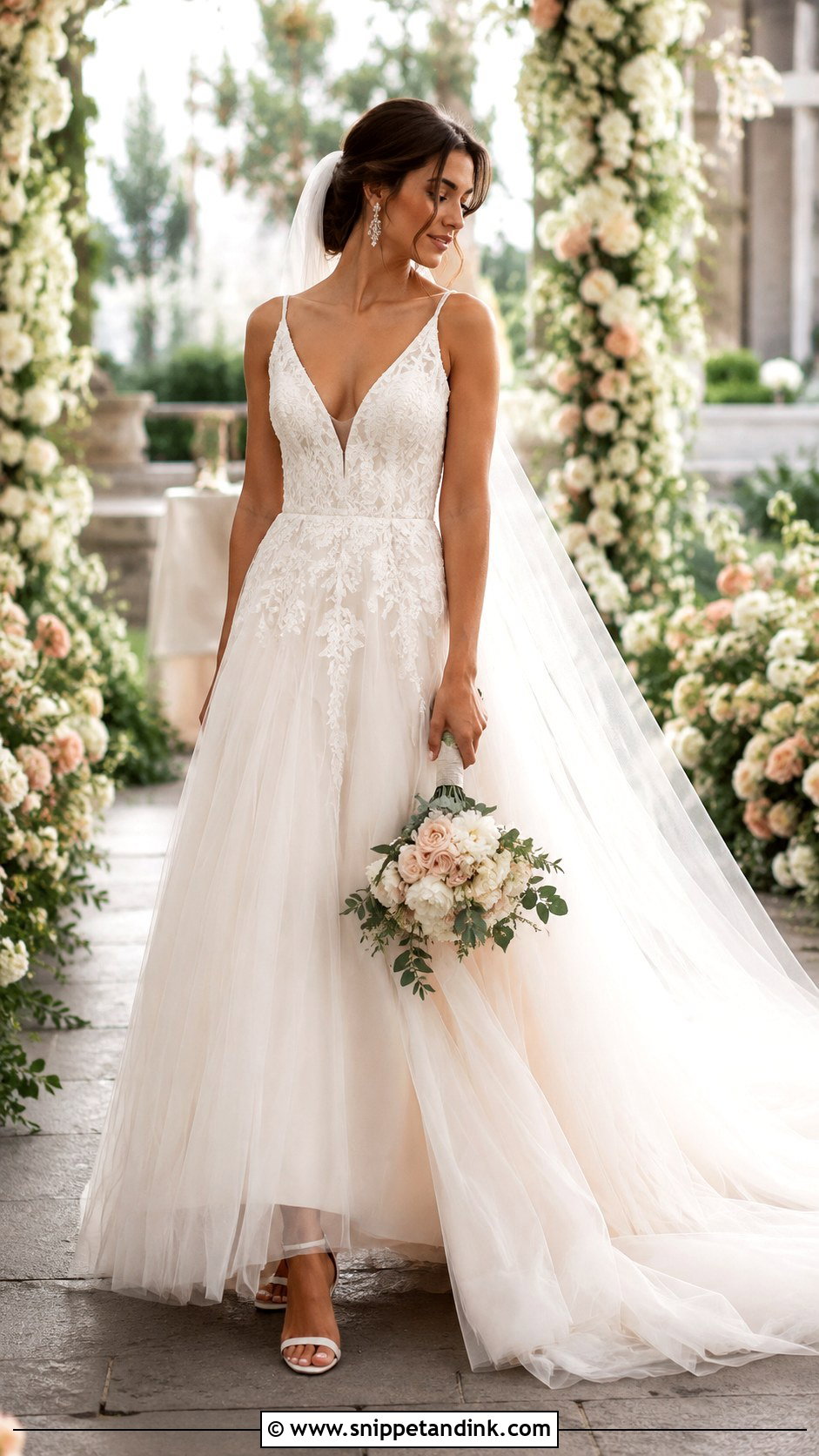
Tulle is the lightest way to get volume. A tulle train floats and lifts in a breeze outdoors, so it suits gardens, estates and ballrooms equally. It’s also the fabric that catches most. Heel tips, rose thorns, a chair leg. I’d keep shoes with a closed or covered heel and avoid metallic embellishment on your bracelet that could hook the layers. With a layered tulle train, a lighter bouquet keeps the shape balanced.
14. Satin Train Wedding Dress
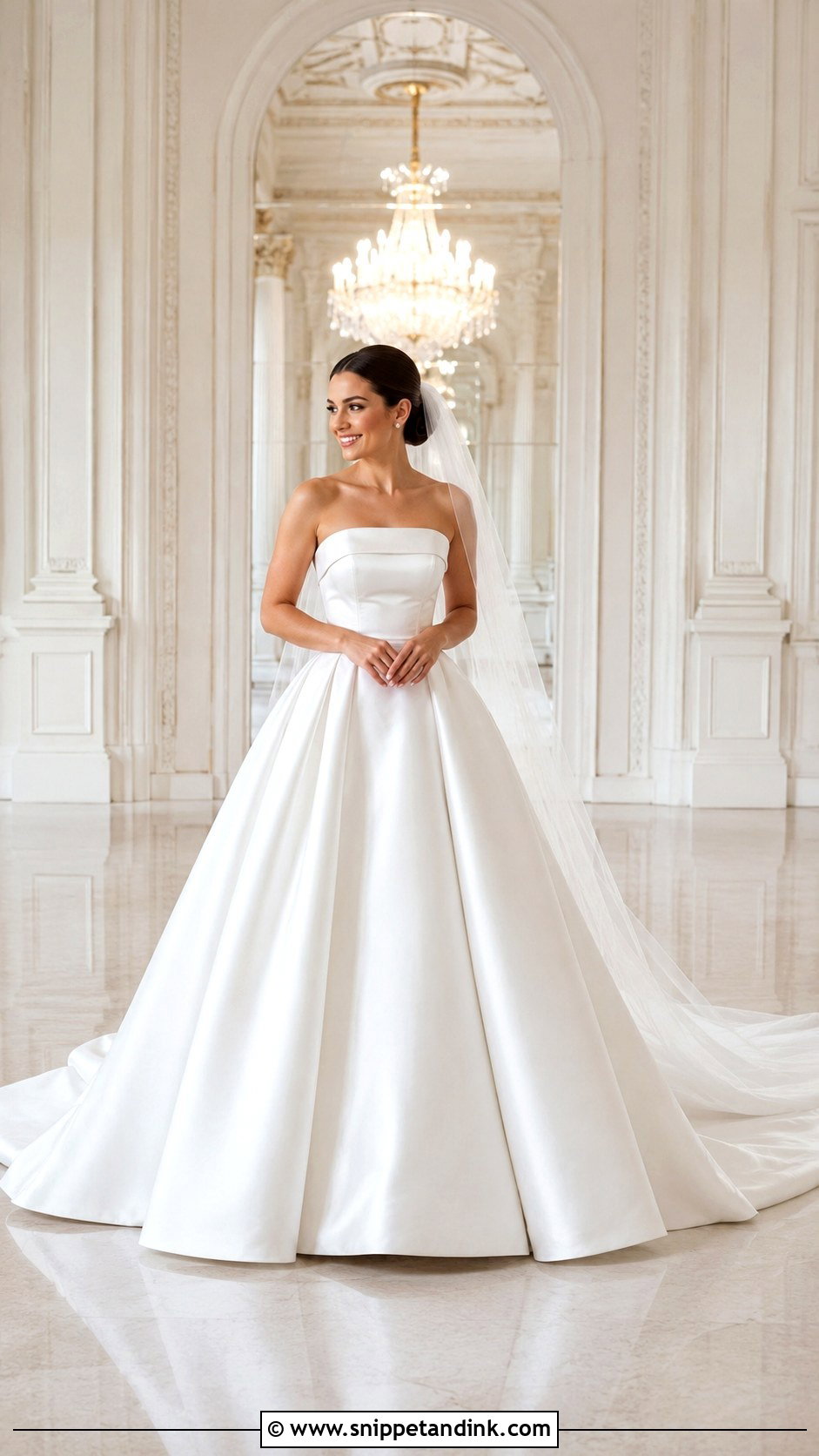
Satin carries a train with weight and shine, even without a single bead. A satin ball gown with a cathedral train feels regal; a satin fit-and-flare with a chapel train feels sleek. The catch is creasing. Satin shows every fold from the car journey and the dressing room bench, so plan for a professional steam on the day and lay the train out flat before you walk. Pearl studs, a structured veil and a polished bun keep the look clean.
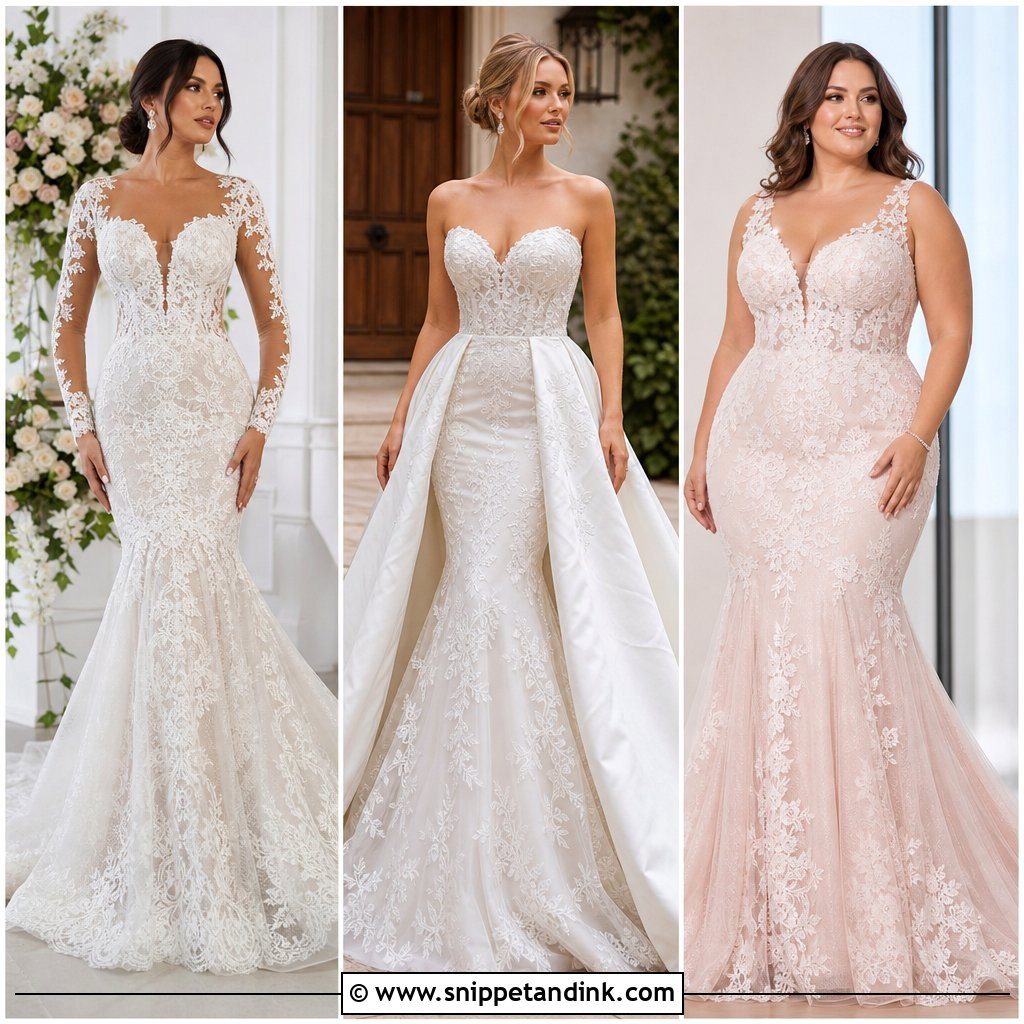

15. Crepe Train Wedding Dress
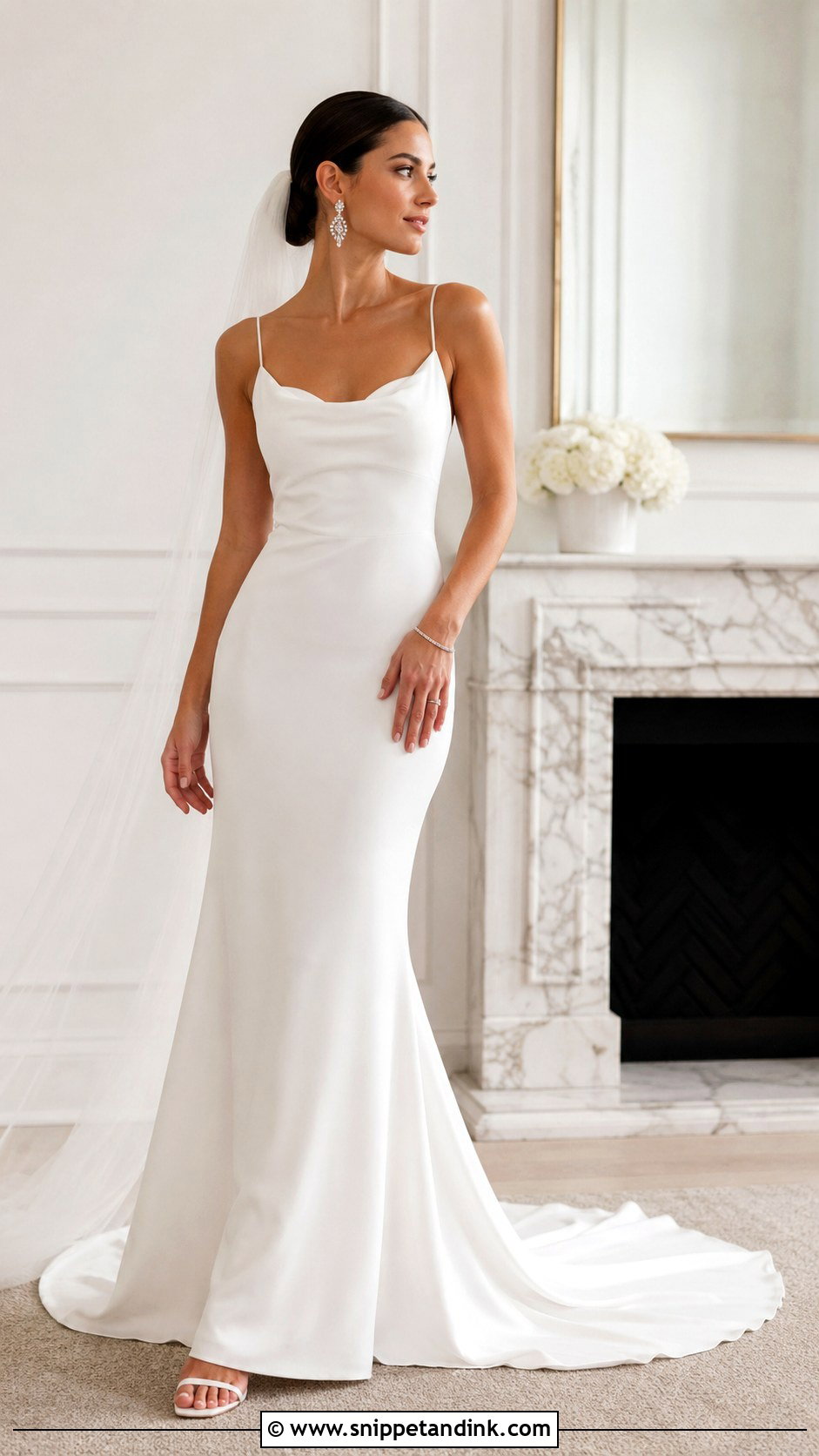
Crepe gives shape rather than decoration. Its soft matte surface hugs the body without shine, so it shows up on sheath, mermaid and fit-and-flare gowns, usually with a chapel or sweep train. Crepe is honest fabric: it shows seams, uneven hems and undergarment lines, which makes tailoring the most important part of the budget. Sleek hair, a simple veil and strappy heels suit its minimal mood.
16. Organza Train Wedding Dress
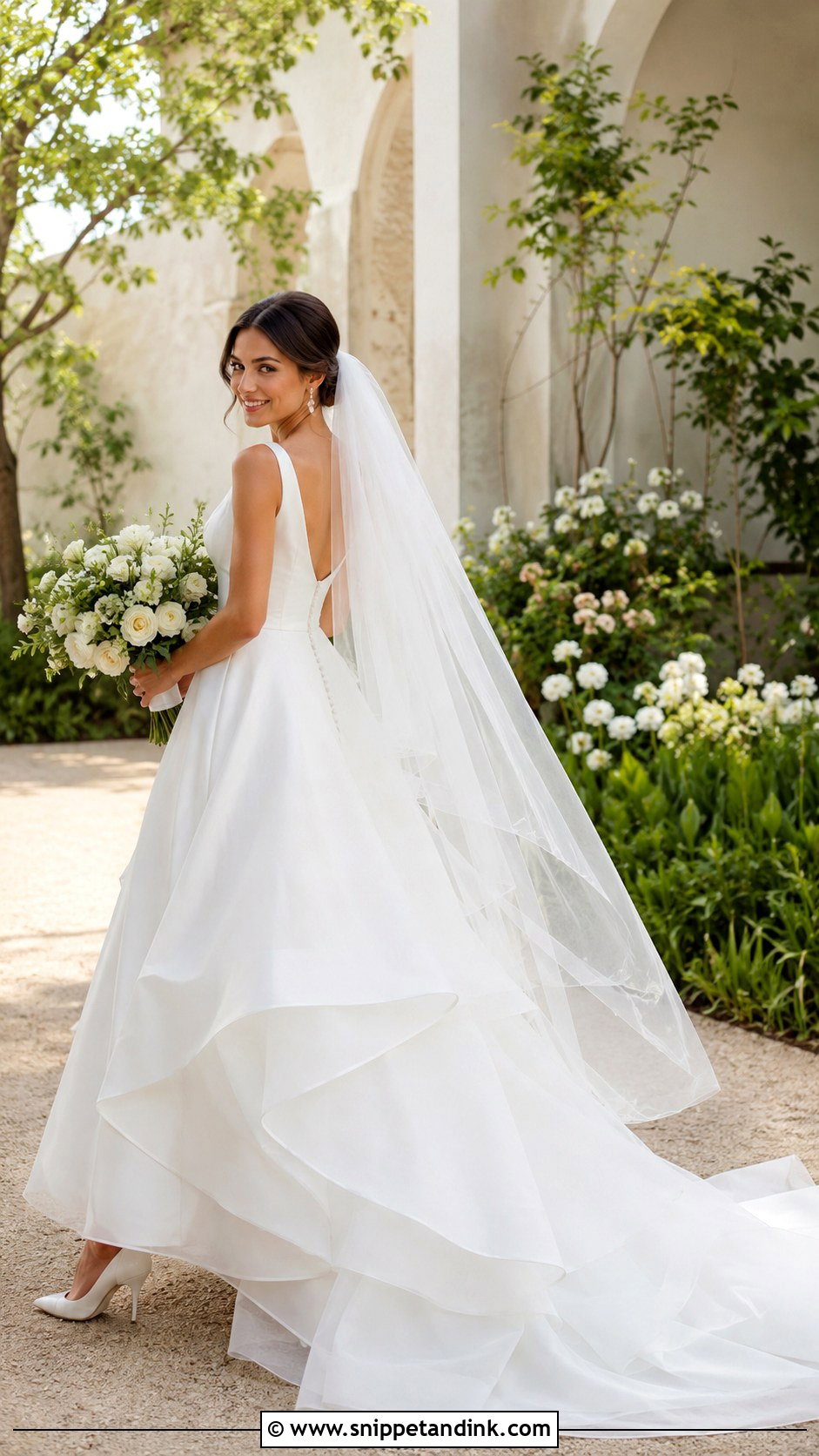
Organza is sheerer and stiffer than tulle, so it holds a shape where tulle collapses. That makes it good for overskirts, detachable trains and layered ball gowns. Left plain, it feels fresh and modern; with floral appliqué, romantic. It’s light enough for spring and summer while still looking formal. Organza does crease sharply, though, so I’d have it steamed on the morning and avoid sitting on the train during the car ride.
17. Ruffled Train Wedding Dress
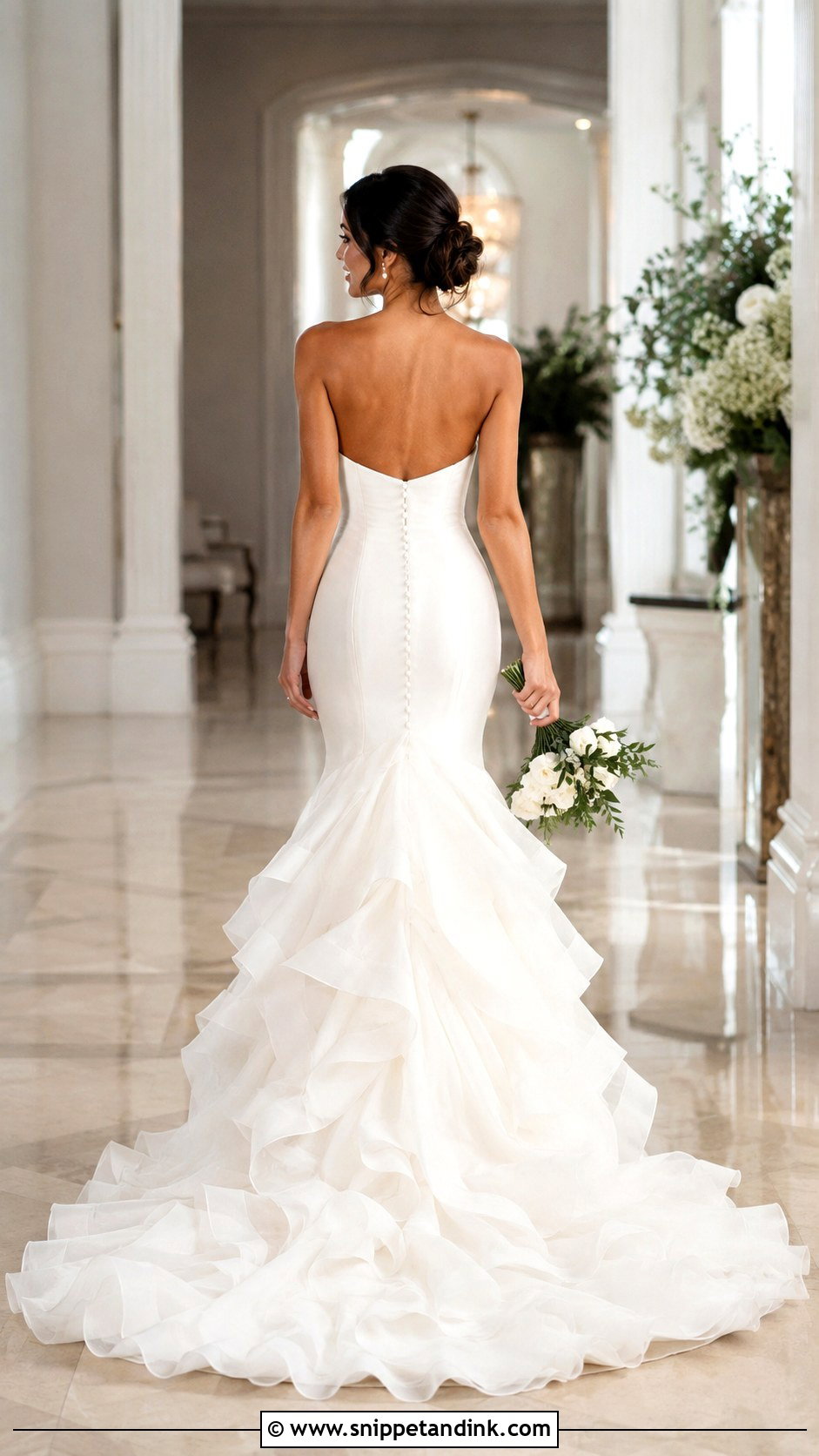
Ruffles bring movement and volume to the back of a dress, either cascading softly or standing in structured tiers. Mermaid, trumpet and layered ball gowns show them off most. With a full ruffled train, I simplify the bodice, otherwise the dress reads busy front and back. Ruffles also make bustling trickier because the tiers have to lift without crushing, so ask your seamstress how she’ll do it before you commit.
18. Bow Train Wedding Dress
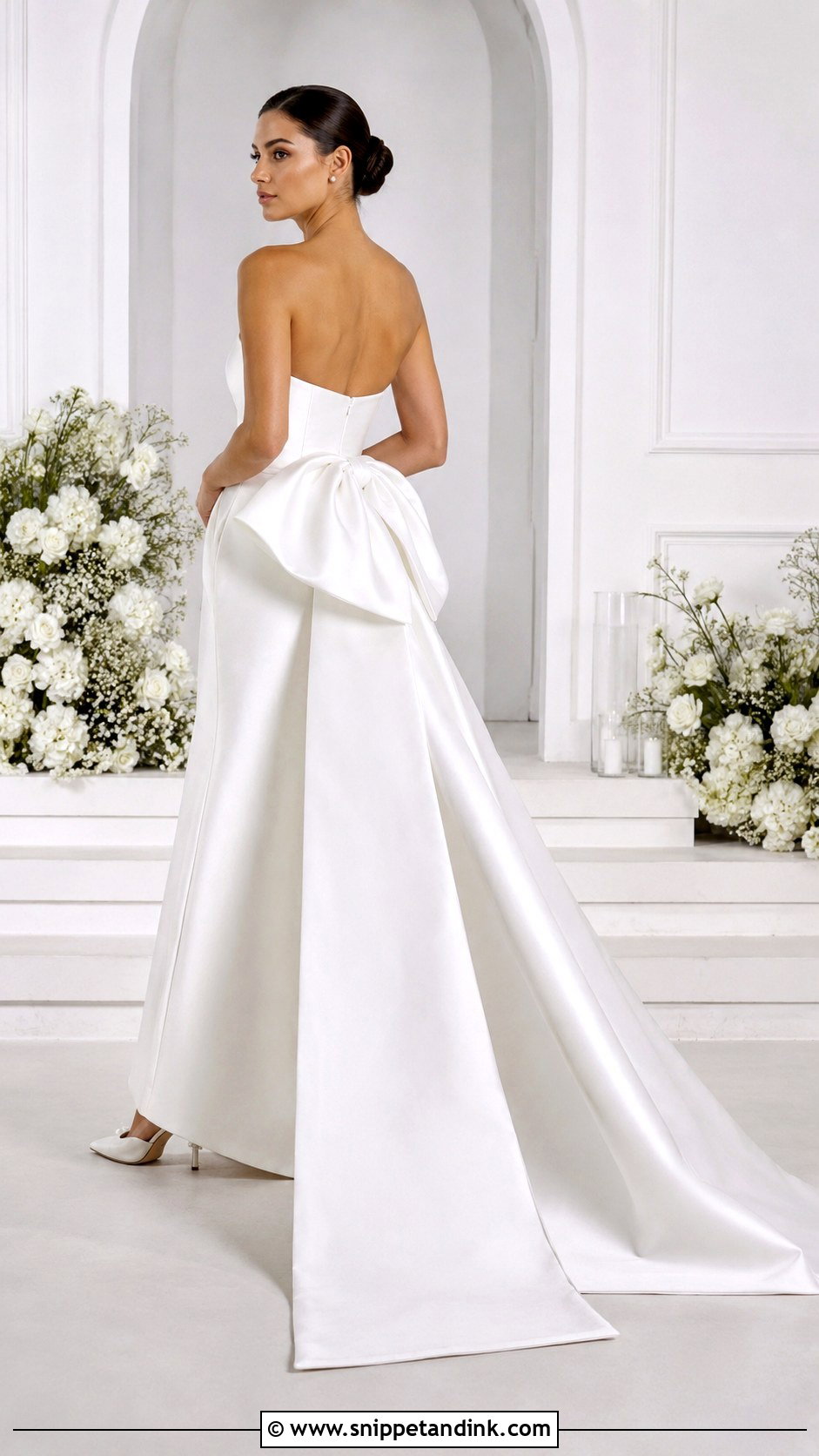
A bow can sit at the lower back, waist or shoulders and run into long panels that form the train. In tulle it reads soft; in satin or mikado it holds a crisp sculptural shape. I’d pair it with a strapless or square neckline and keep everything else minimal: pearl studs, a sleek bun, plain ivory heels. Have the bow tacked in place on the inside. Otherwise it slowly drops and loosens over the course of the day.
19. Beaded Train Wedding Dress
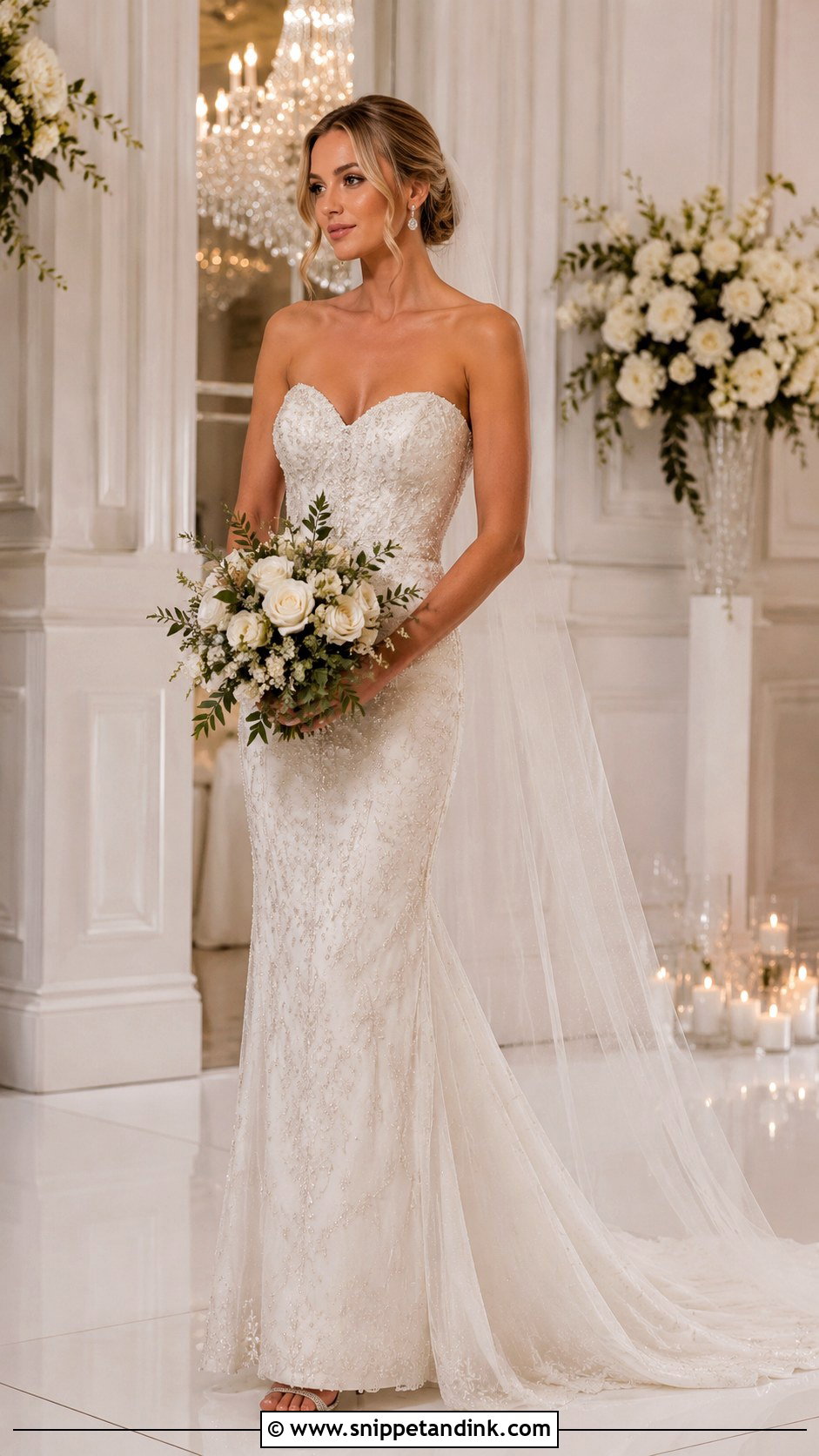
Beading catches the light with every step, from a subtle hem border to a train covered in pearls, sequins or crystals. It shines brightest at evening weddings in formal venues. Weight is the real issue. A heavily beaded train pulls on the waist and needs a stronger bustle with more attachment points, so discuss comfort and bustle placement early in fittings. Keep your jewellery simple and let the train carry the sparkle.
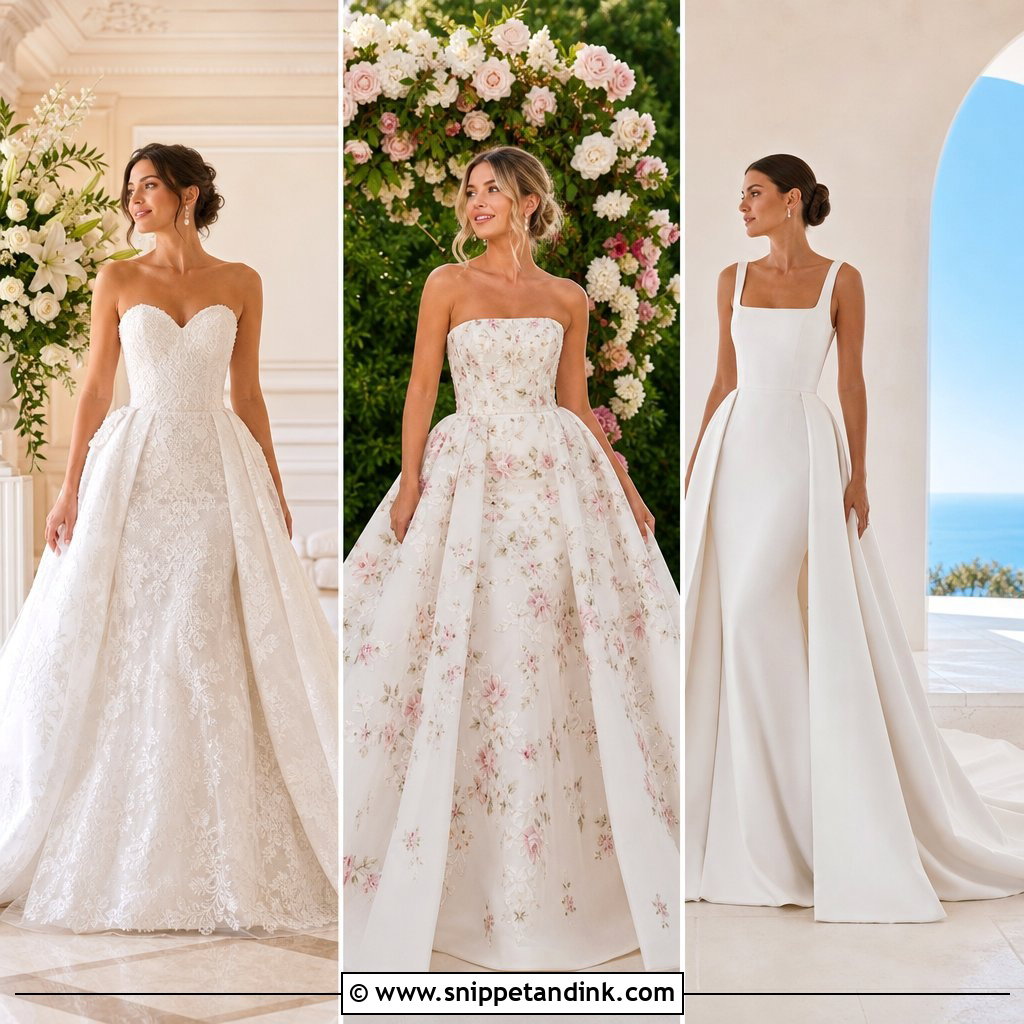
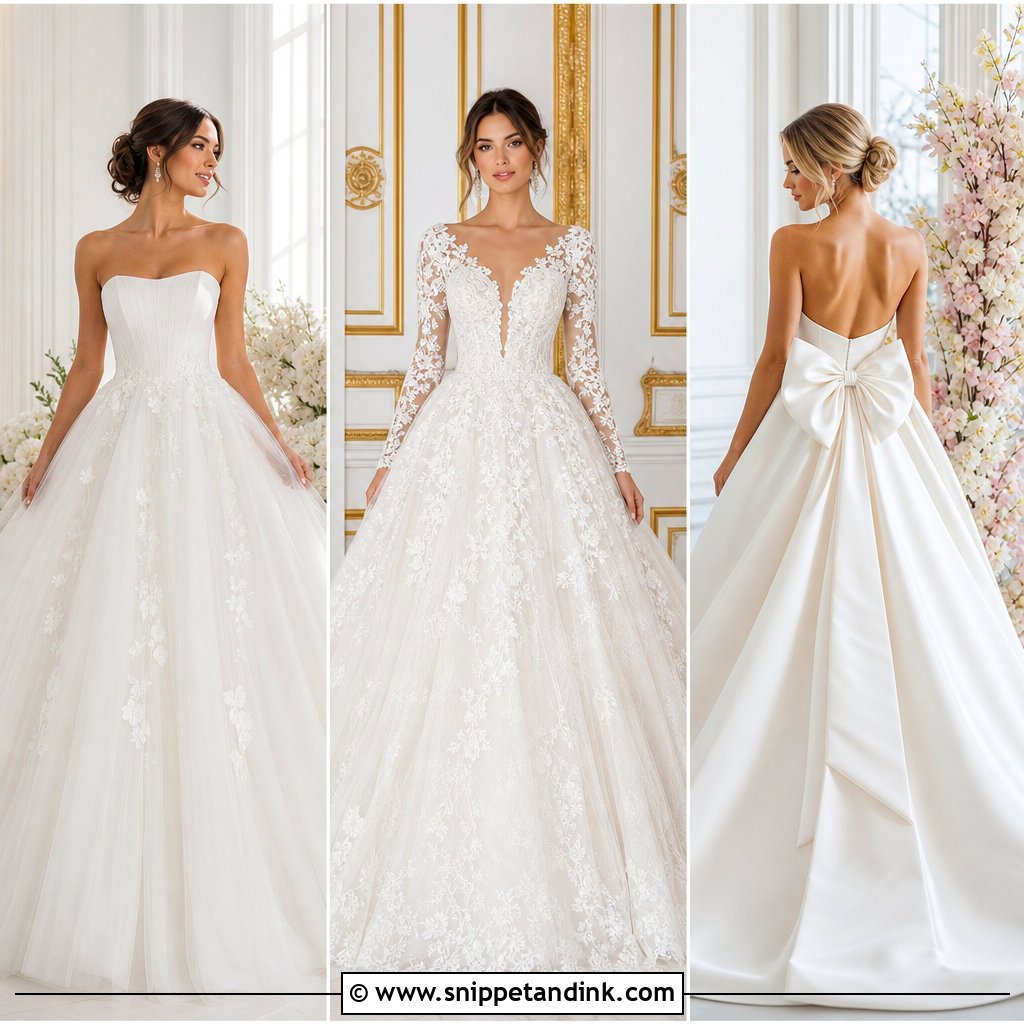
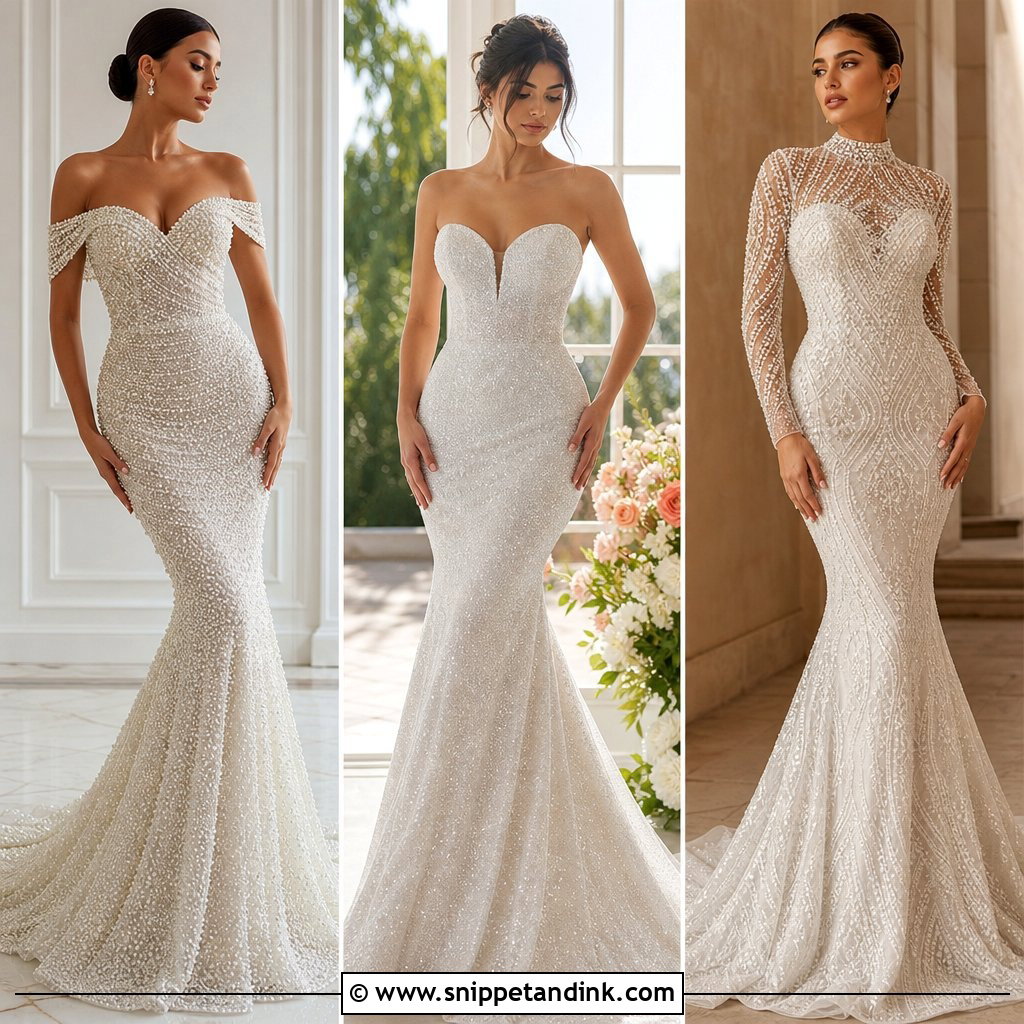
20. Embroidered Train Wedding Dress
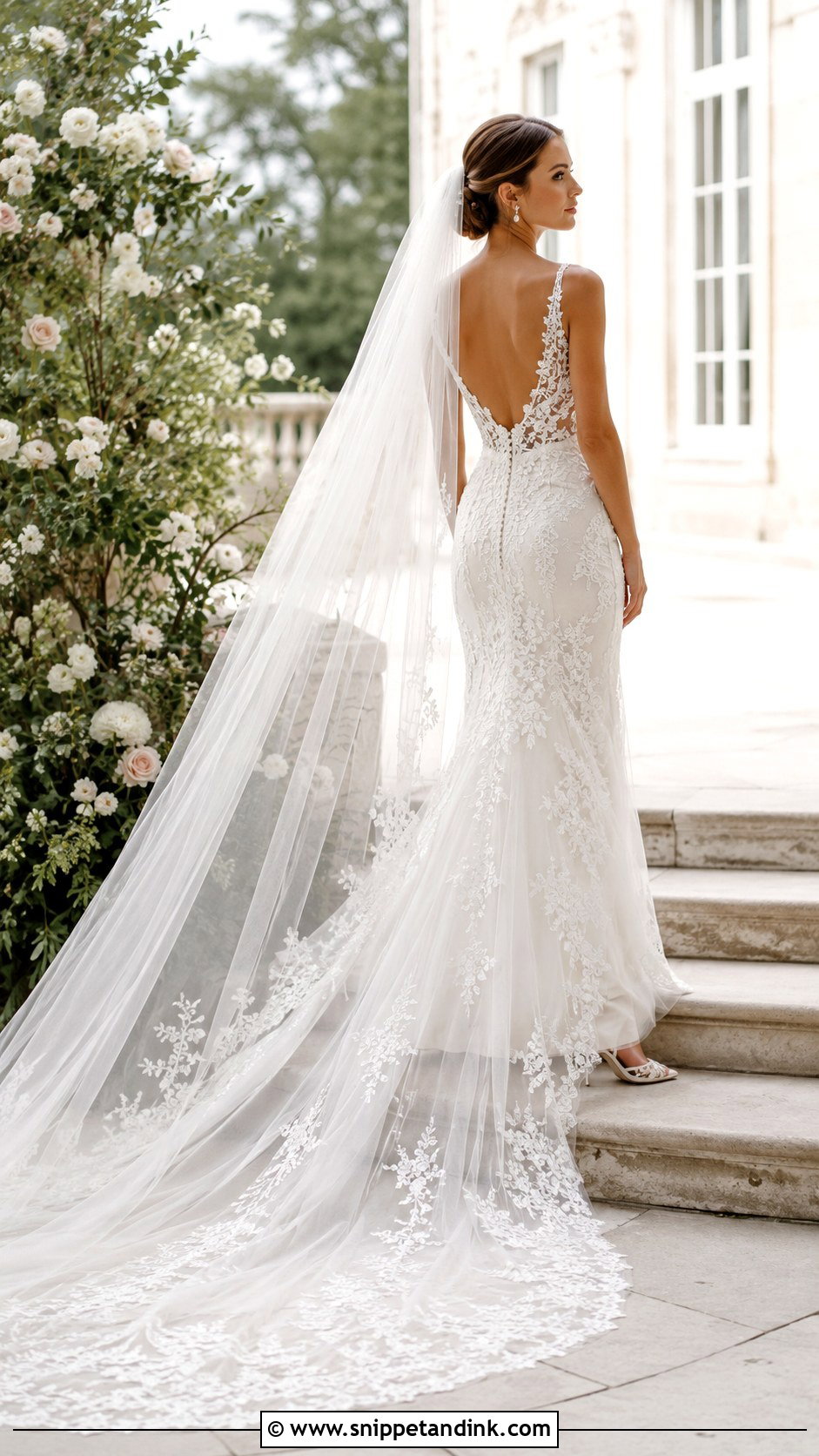
Embroidery gives a train a handmade feel: floral vines, botanical motifs, scrollwork, pearls or a little metallic thread. It sits on tulle, lace, organza or satin and gives the back of the gown real depth. Choose a veil sheer enough not to hide it, or one that ends before the embroidery begins. A bouquet in soft colours keeps the attention on the needlework, which deserves a dedicated portrait from behind.
21. Floral Applique Train Wedding Dress
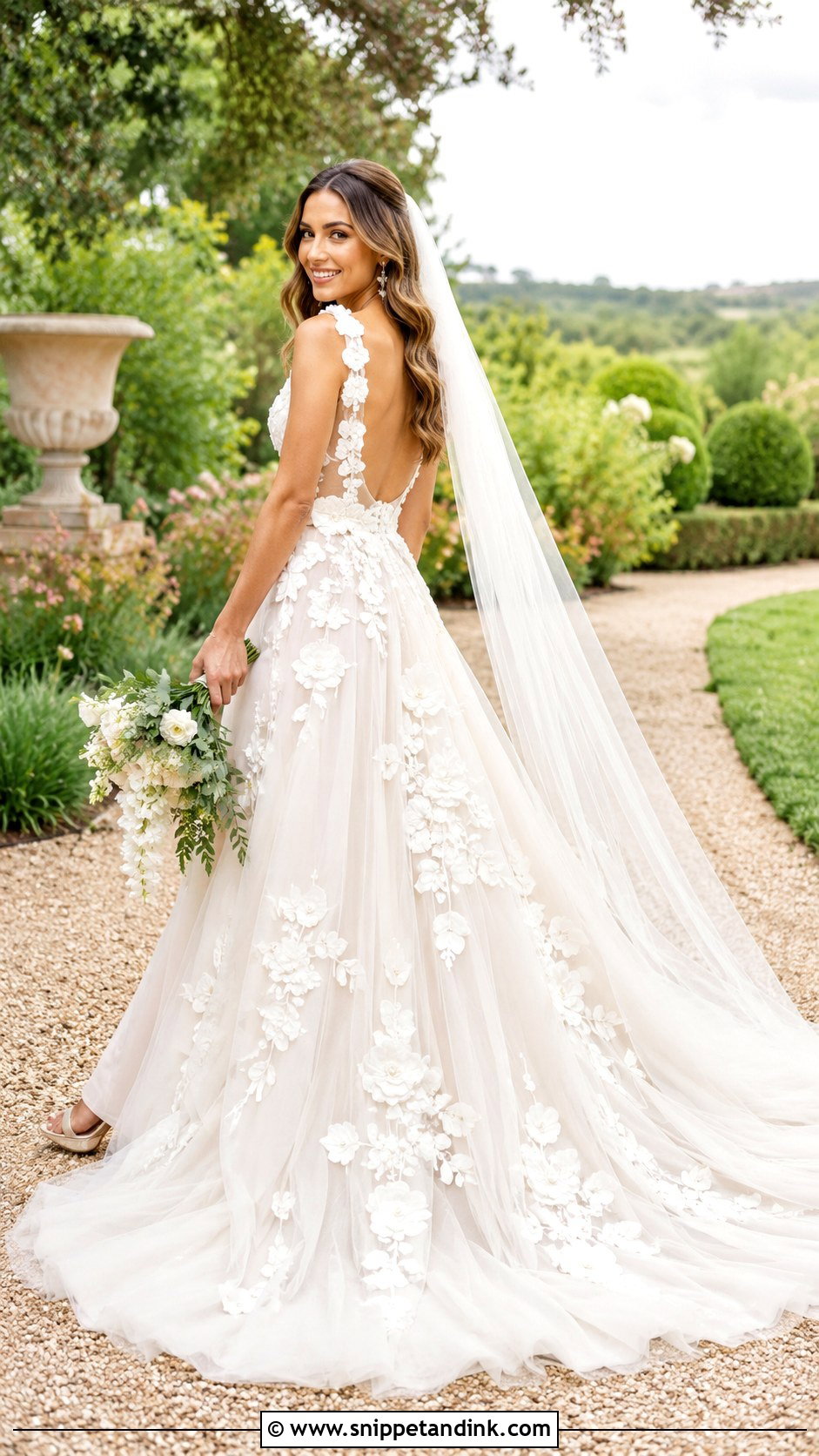
Floral appliqué gives the train dimension, from flat lace flowers to raised 3D petals scattered across tulle. It fits gardens, estates and spring or summer ceremonies. Raised petals crush if you sit on them, so I’d tell you to sweep the train aside every time you sit down during the day. Soft waves and a veil that complements rather than covers the flowers suit it. The fuller the skirt, the more fairytale it becomes.
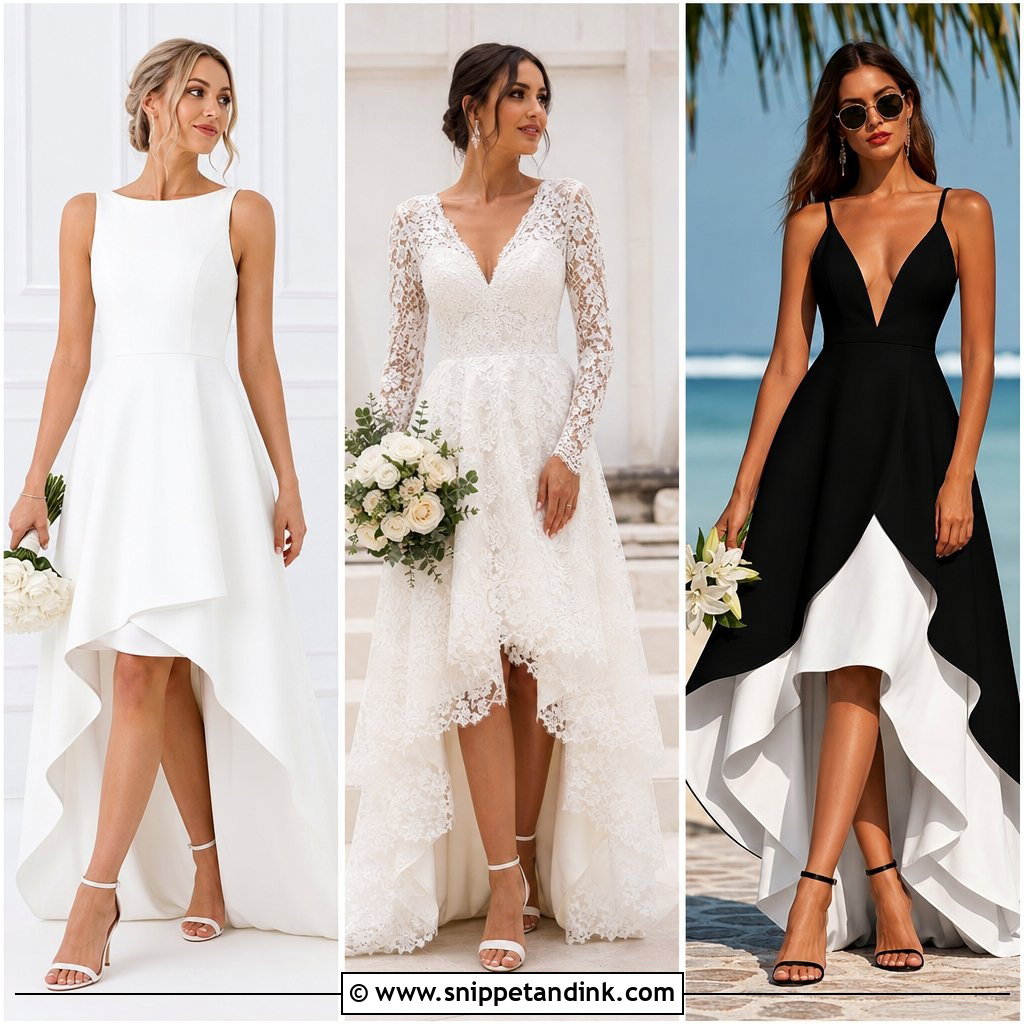
22. High Low Train Wedding Dress
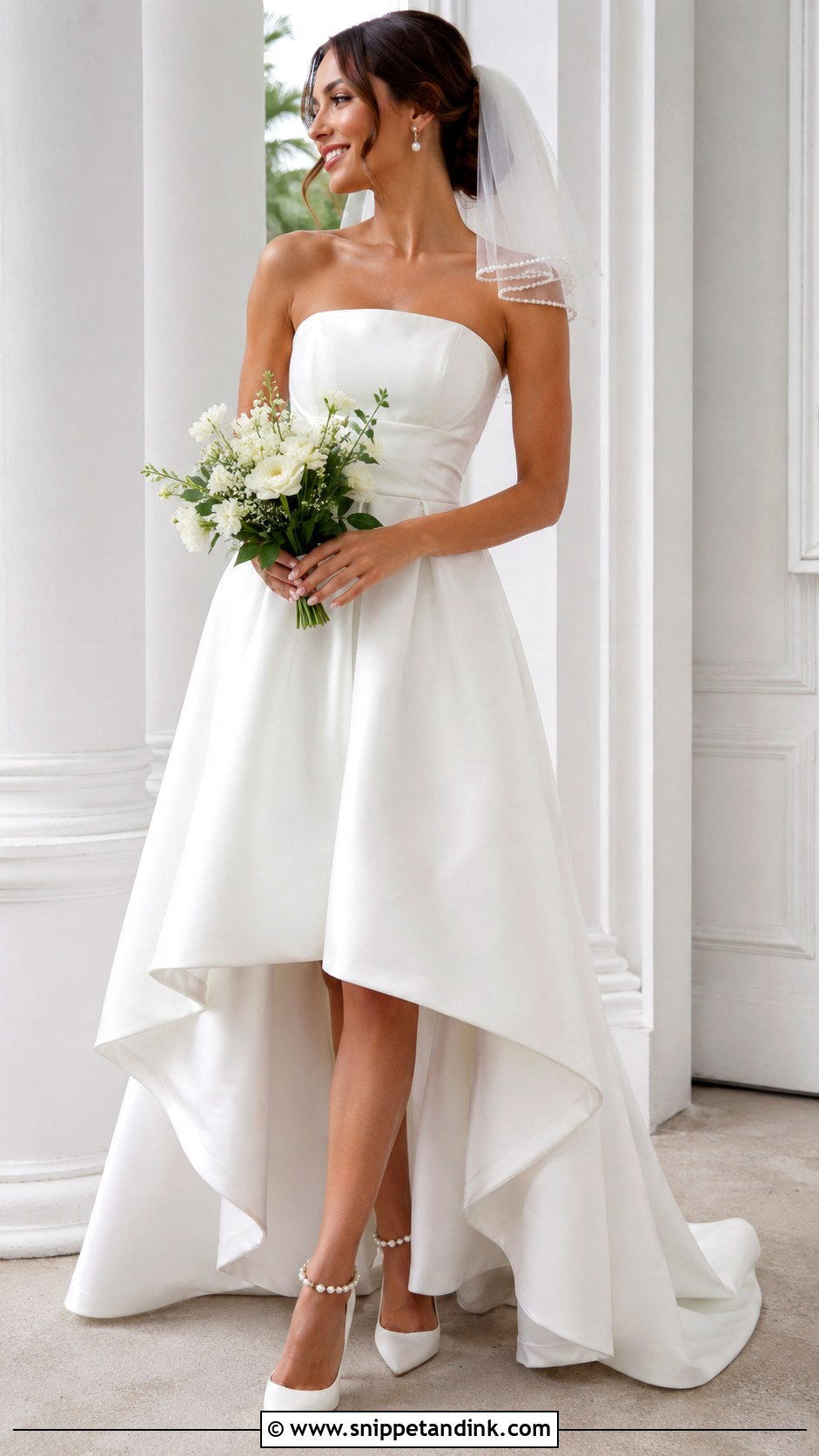
The high-low trades a full hem for a shorter front and a train at the back, which puts your shoes on show. That makes it playful and easy to move in for courthouse, outdoor and destination ceremonies. Mikado, satin, organza and layered tulle all hold the shape. Since everyone will see your shoes, choose them with as much care as the dress, and check the hem doesn’t catch on the heel when you walk briskly.
23. Mermaid Train Wedding Dress
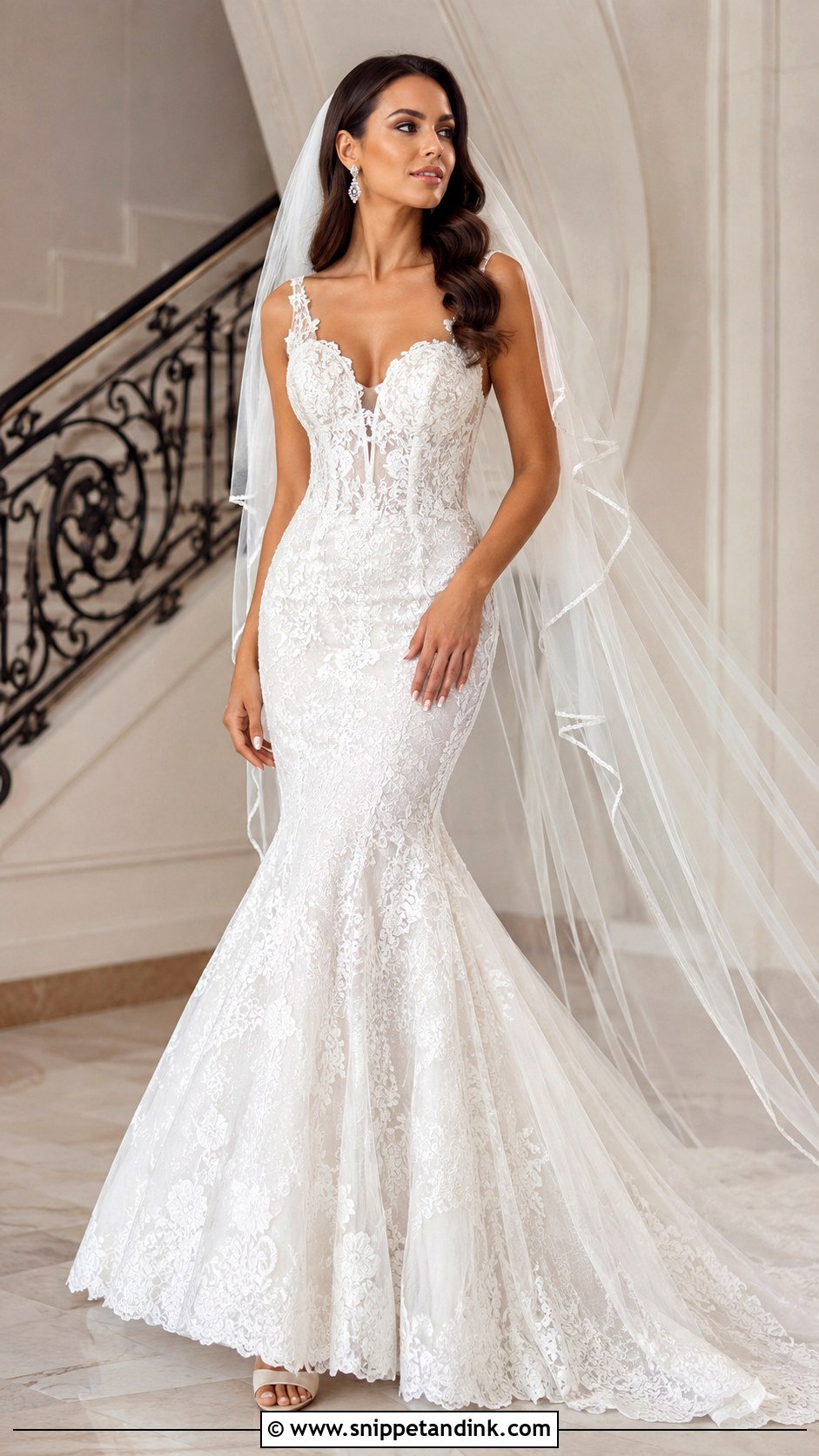
The mermaid hugs the body to the knee and flares out, and the train balances that fitted line from behind. Lace mermaid trains feel romantic; crepe and satin feel sleek. Fit is everything here. If the flare starts in the wrong place, it hobbles you, so I always have brides walk the length of the room and climb a step at each fitting. Supportive heels and a structured veil complete it for formal and evening venues.
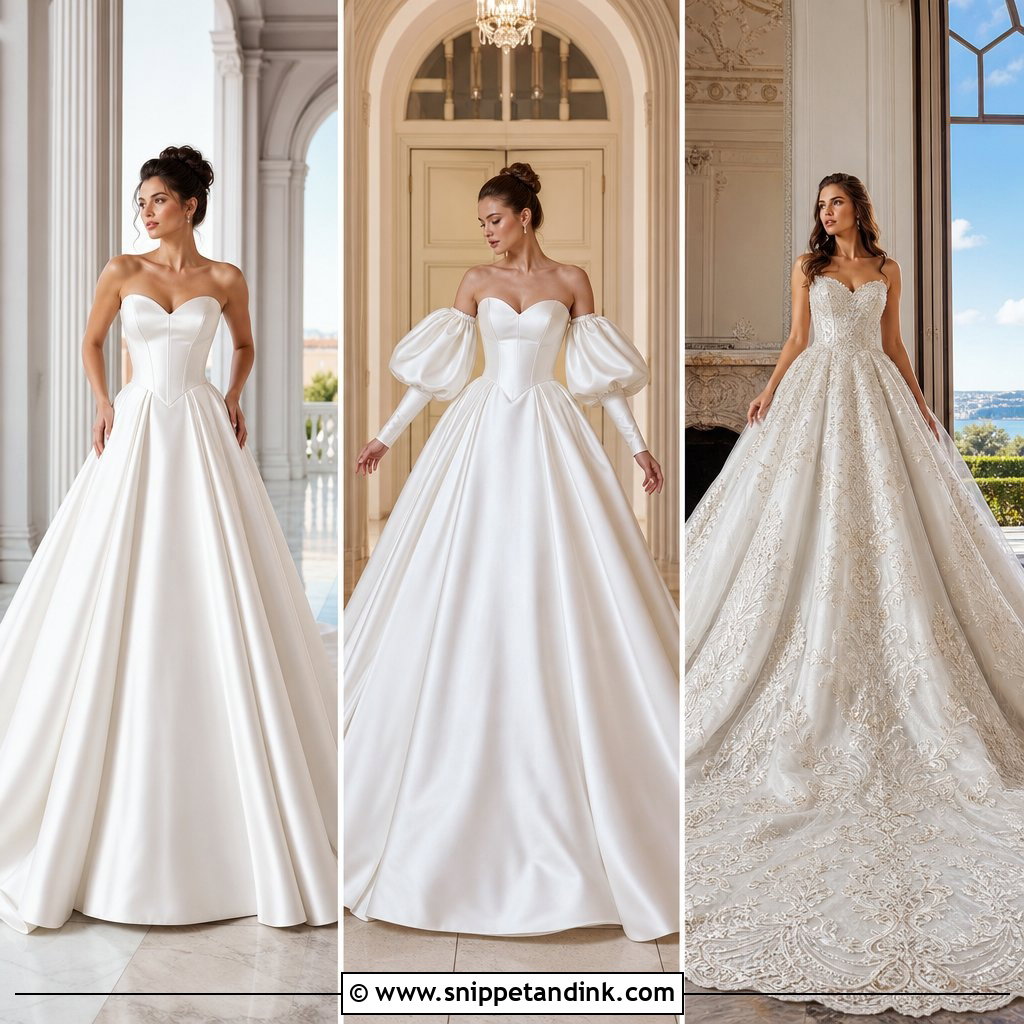
24. Ball Gown Train Wedding Dress
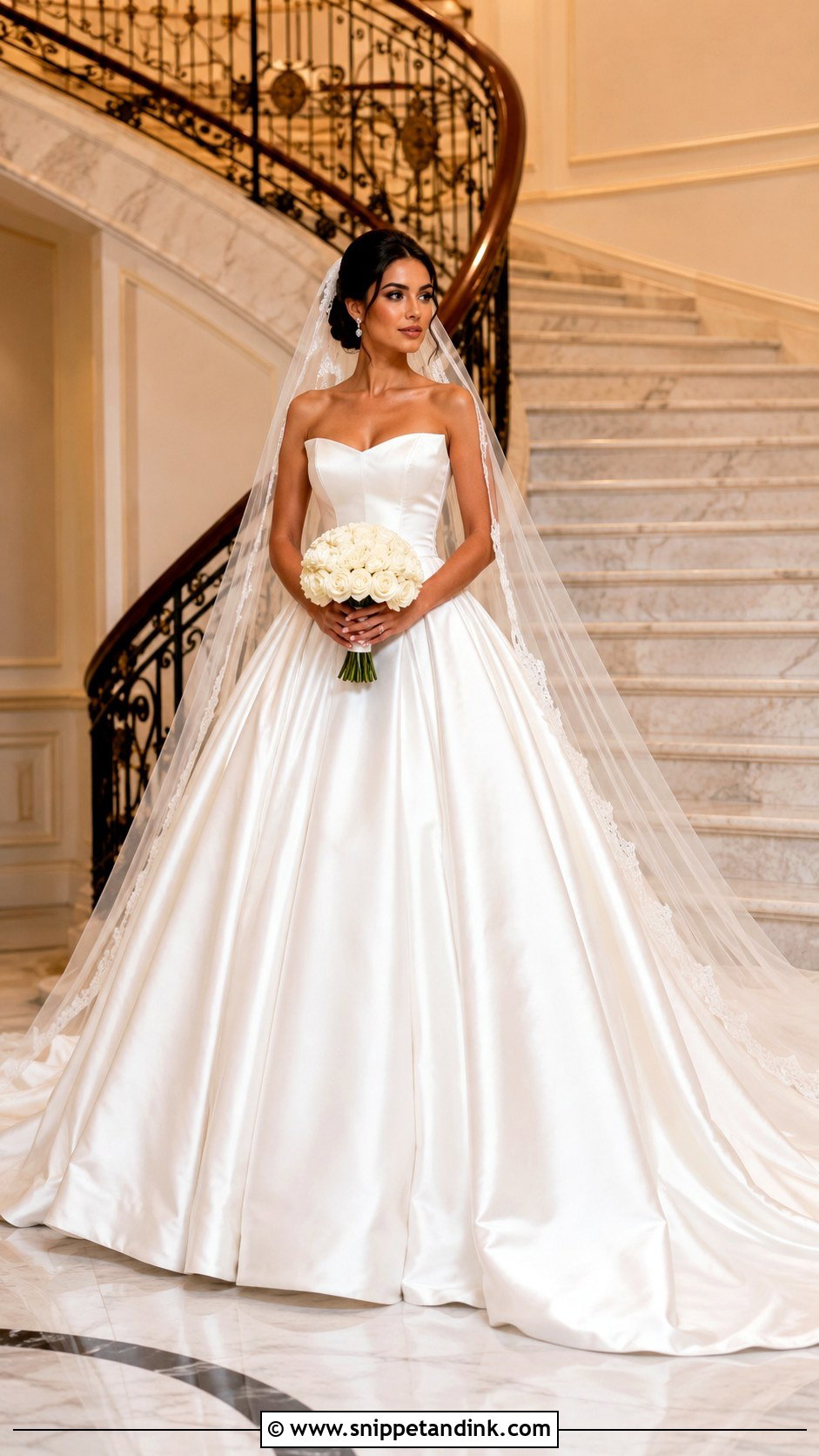
A full skirt naturally carries a longer train, whether chapel, cathedral or royal. Satin ball gowns feel regal, tulle versions feel soft, and lace feels romantic. Volume does change practical things. You’ll need help through doorways and into the car, and the bouquet should be proportional to the skirt rather than tiny. Hidden comfortable heels are a gift to yourself. Grand staircases and large rooms show this train at its best.
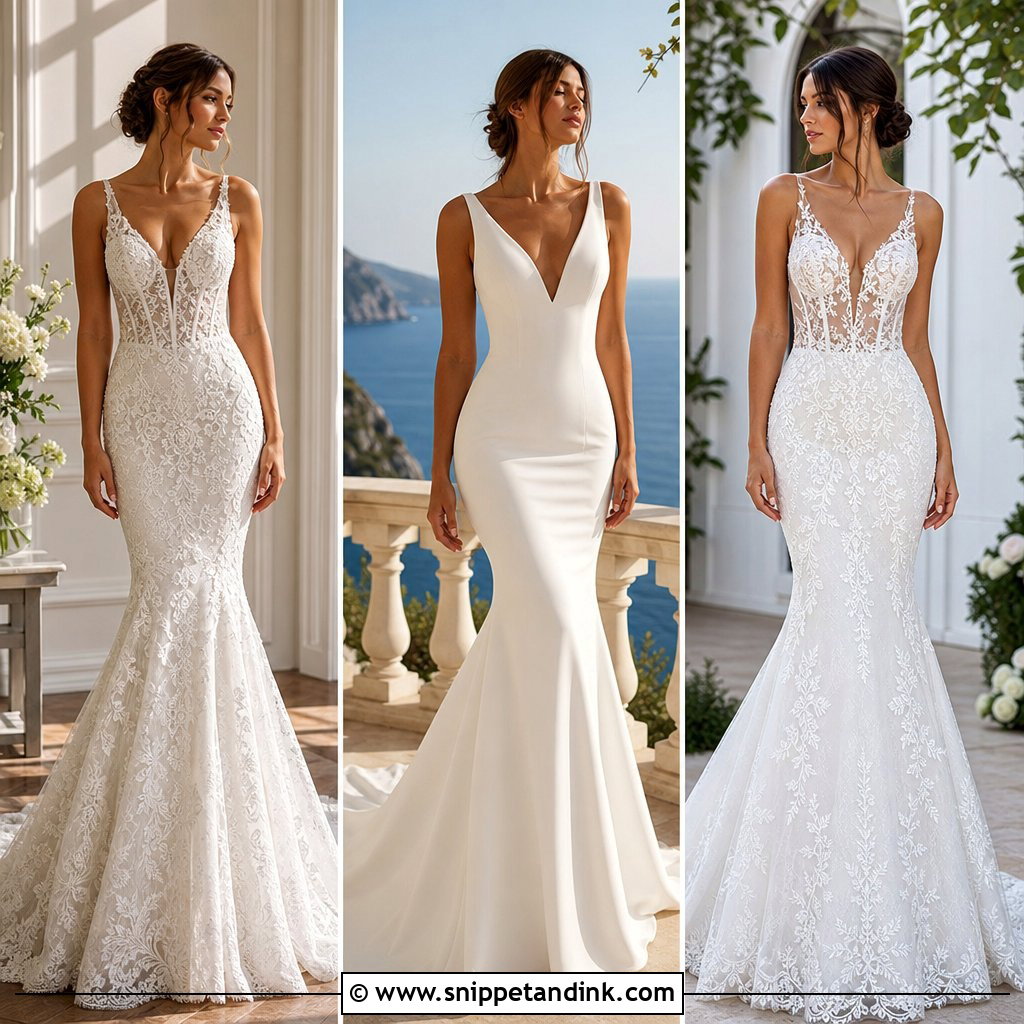
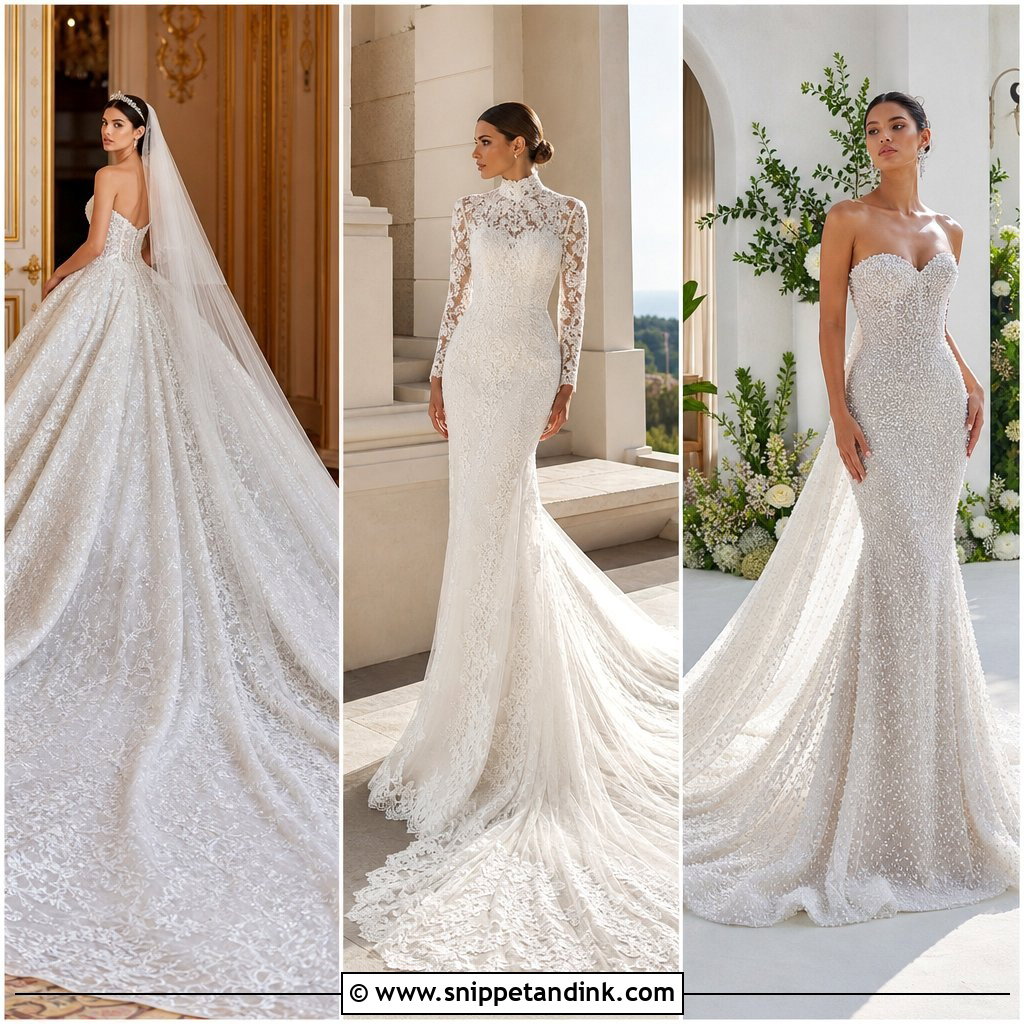
25. Minimal Train Wedding Dress
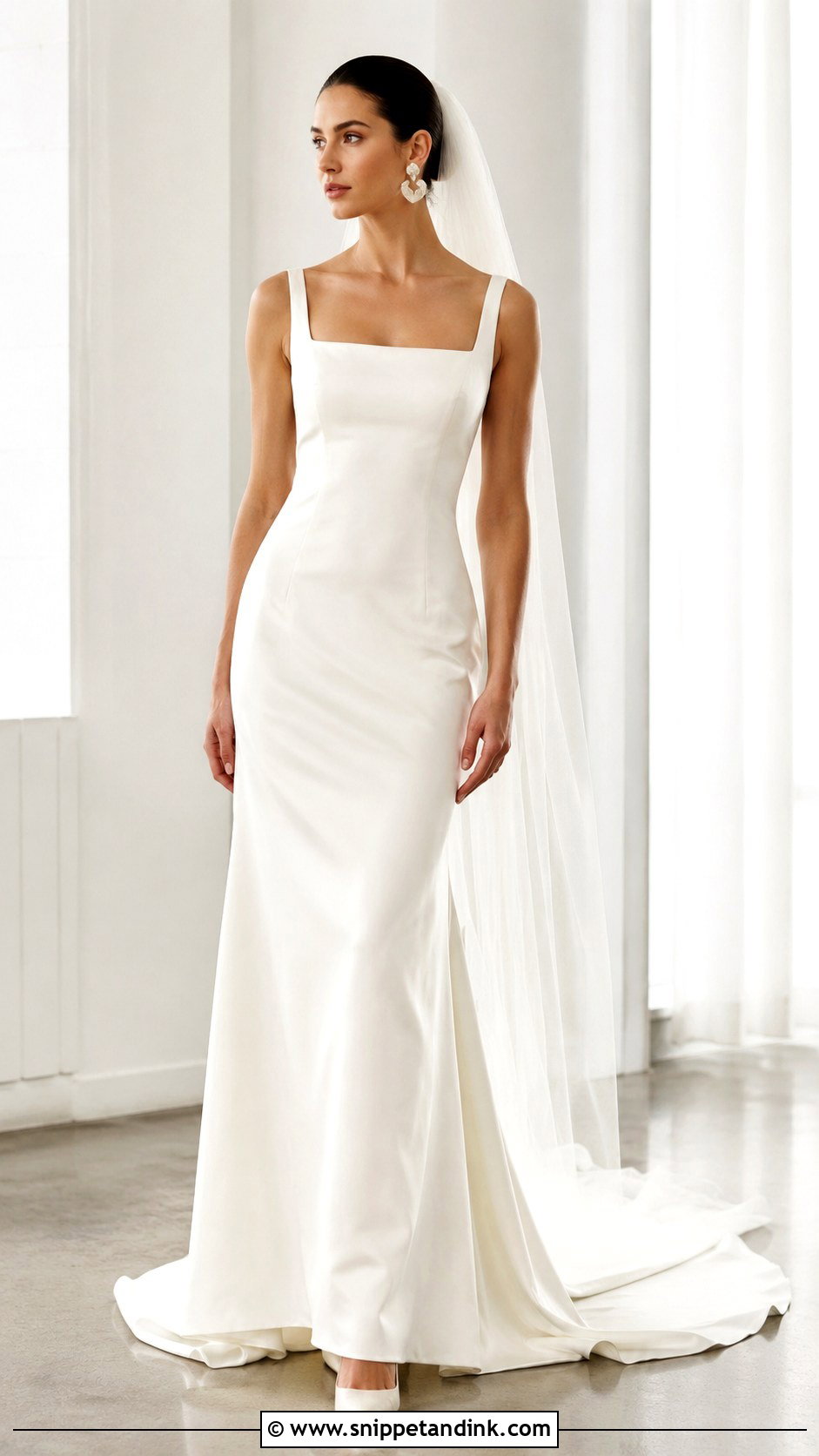
A minimal train wedding dress relies on fabric and fit instead of decoration. Expect clean crepe, satin, silk or mikado with a subtle sweep or chapel train. Square necklines, strapless bodices and long-sleeved columns all suit it. Because nothing distracts the eye, any wobble in the hem or a crooked train is obvious, so I check the train lies straight with the bride standing still. Sculptural earrings and sleek hair finish the look in modern and city venues.
Who Lifts the Train After the Vows, and How
Almost every train beyond a brush length needs a bustle, which gathers the fabric up so you can walk and dance. Your seamstress adds it during alterations, and the style depends on the dress.
- Over bustle: the train lifts and hooks onto the back of the skirt, so it drapes over the top. Good for lighter fabrics and simple trains.
- Under bustle: the train folds up underneath and ties inside, often with numbered or colour-coded ribbons. Clean from behind and common on satin.
- Ballroom bustle: the train tucks under all round so the dress looks floor length with no visible train.
Pick one person to do it on the day, usually a bridesmaid or your mum, and bring her to the final fitting so the seamstress can show her. Ribbons with a dozen ties look simple in a fitting room and impossible in a dim corridor after the ceremony. I’d have her take a short video on her phone while she practises.
Give her a moment in the timeline as well. Bustling a long train takes a few minutes, and it’s best done right after photos and before you enter the reception. Then ask her to check it again after the first dance, since hooks can work loose.
The Train Should Still Work at Midnight
The best train isn’t the longest one. It’s the one that suits your aisle, your venue floor and the way you want to spend the evening. Sweep and brush trains feel relaxed and need almost no help; chapel and cathedral lengths bring tradition and need a bustle and a helper. Detachable trains, overskirts, capes and bows let you have the aisle moment without dragging fabric all night. Think through the walk, the photos, the dancing and the drive home, and the right length usually becomes obvious.
You'll Like These Ideas:








Leave a Reply