
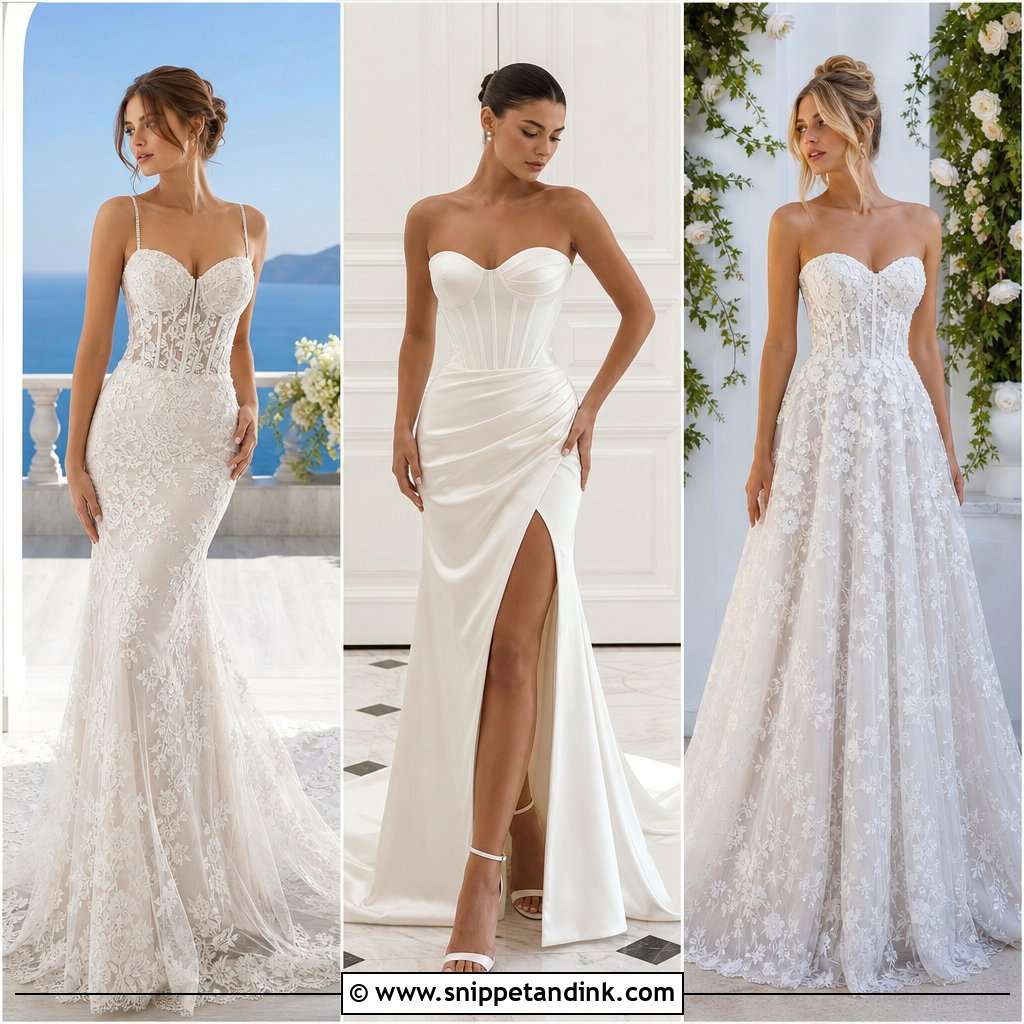
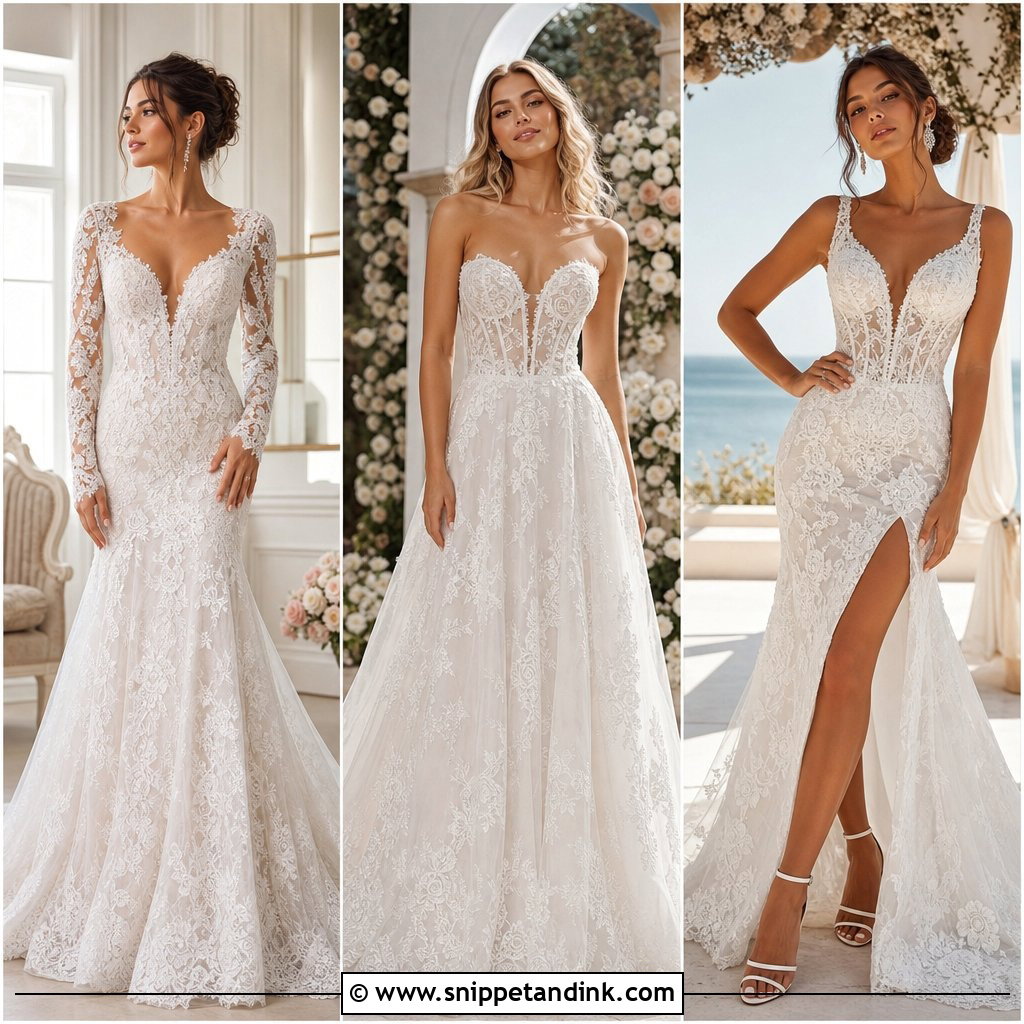
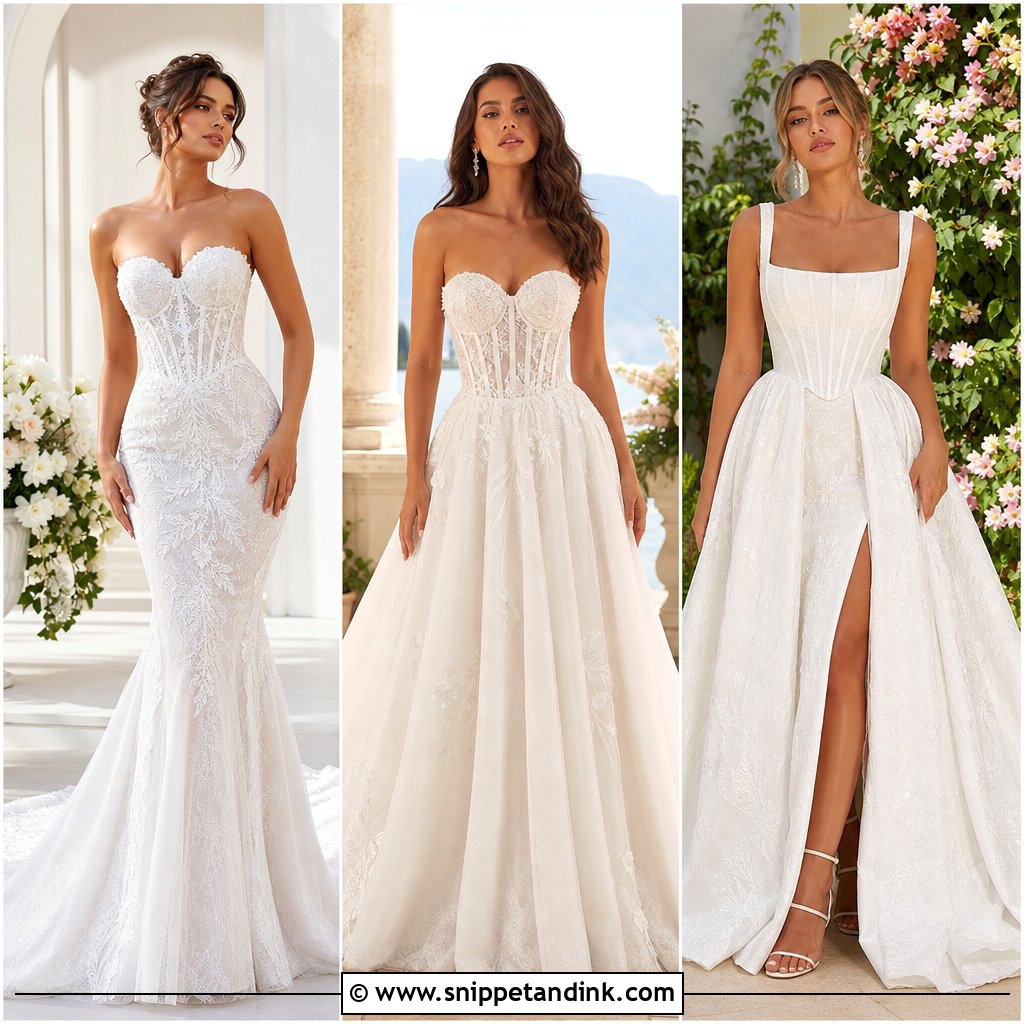
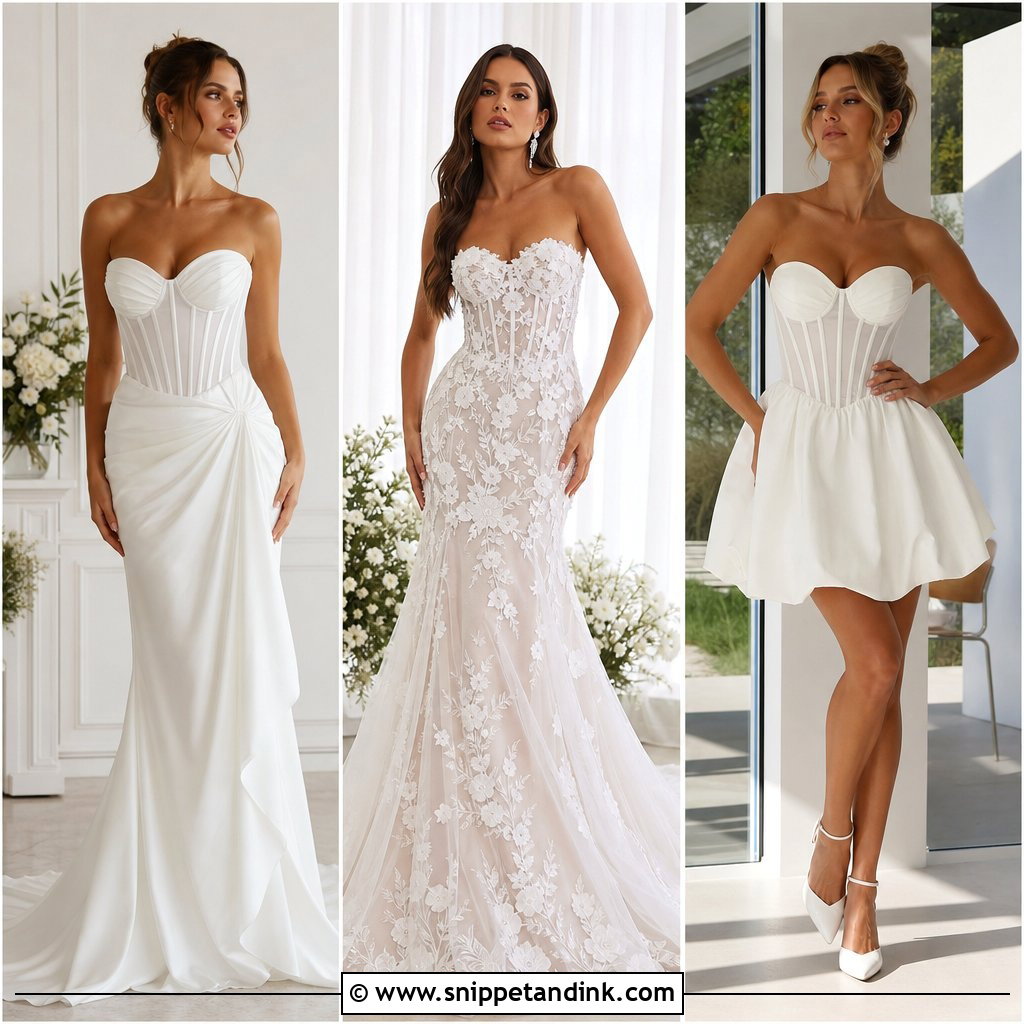
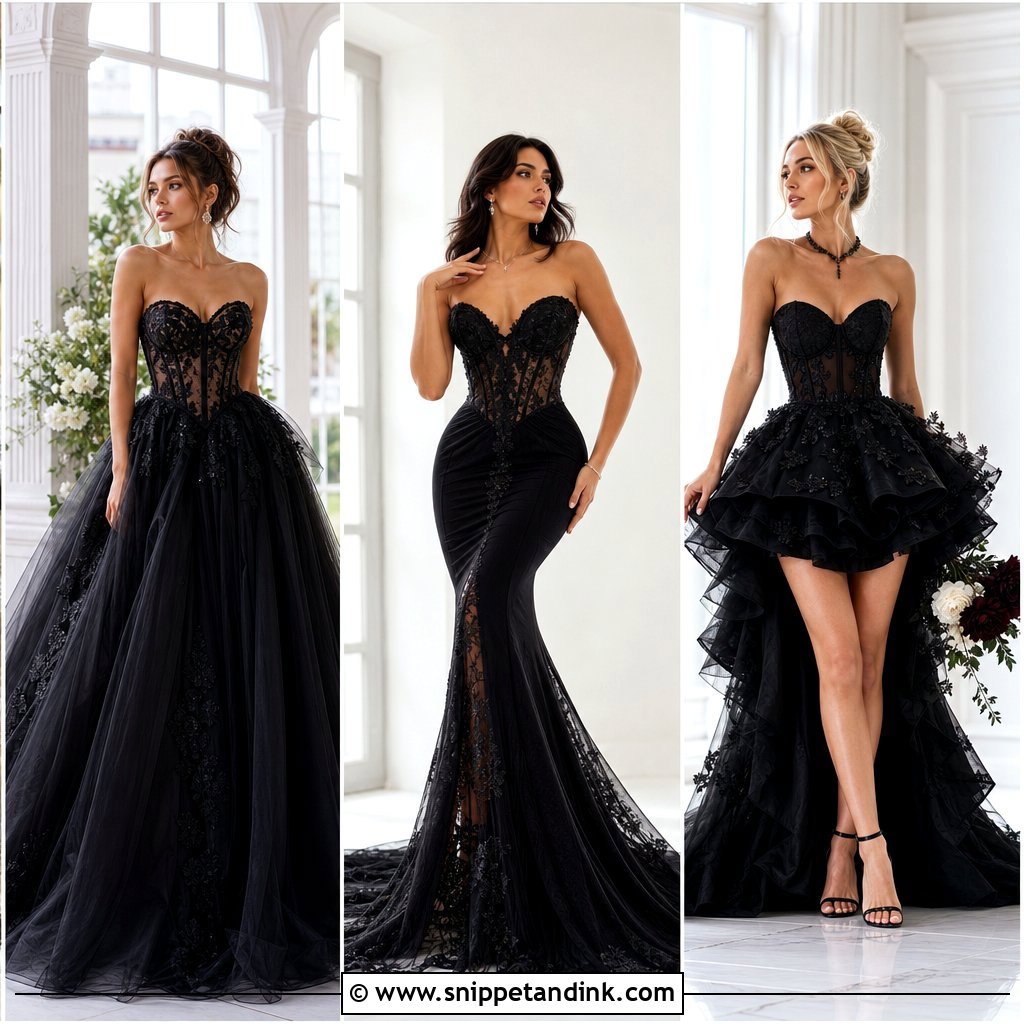
A corset bodice changes how a gown sits on you more than any other construction detail. Below are twenty long corset dresses, from plain satin ball gowns to lace mermaids. The longline versions are the interesting ones: the boning runs past the natural waist toward the hip, ending in a pointed Basque, a soft drop waist or a straight line. That extra length makes the torso look longer and gives the skirt a dramatic place to start. Designers are pairing it with full skirts, fitted shapes, raised lace and removable layers, so the look stretches further than you might think. For each dress I have added what I watch for in the fitting room.
Spiral Steel or Plastic Boning, and Why You Should Ask
Two bodices can look identical on a hanger and behave completely differently by the second hour. The difference is almost always inside. Many bridal gowns use flat plastic boning, which is light and cheap but can warp into a bend at the waist once it warms up against the body. Better gowns use spiral steel, which flexes as you bend and springs back, often with flat steel at the center back where lacing pulls.
You can feel the difference in a sample. Press a bone gently. Spiral steel feels firm and slightly springy; plastic feels lighter and bends easily under a fingertip. I also look for:
- A waist tape, a firm ribbon sewn inside at the waistline, which takes the strain so the outer fabric does not.
- A strength layer of tightly woven cotton under the fashion fabric, so satin or lace is not carrying the tension.
- Boning that stops short of the top edge, so it does not press into the bust or underarm.
- Grommets or loops evenly spaced, with a modesty panel behind lacing.
None of this means plastic boning is a deal-breaker on a light chiffon bodice. On a heavy satin ball gown, or for a fuller bust, I would want steel.
1. Satin Basque Waist Corset Ball Gown
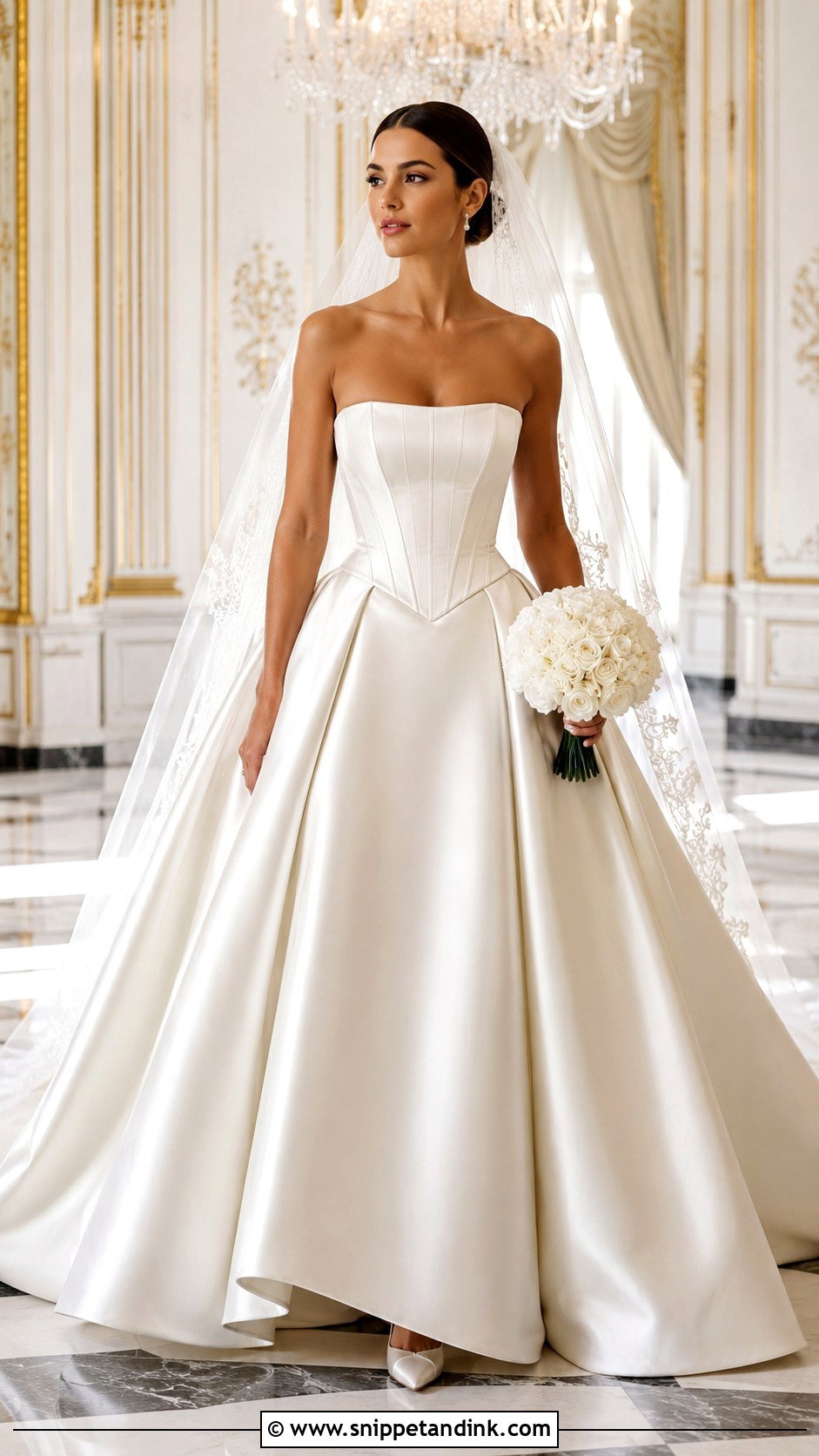
This is the classic, and the pointed waist is what makes it. A satin Basque waist corset ball gown in duchess satin or Mikado holds a gathered skirt without needing a single bead. My first check is the tip of the point. When you sit, it should slide over the lap, not jab into it; if it digs, the point needs shortening by a fraction or the boning there needs to be softer. Pearl drops, pointed ivory pumps and a cathedral veil with a plain satin edge are all it needs, plus a small bunch of white roses. Ballrooms, museums and formal estates suit it. Supportive, never restrictive: that is the standard.
2. Lace Longline Corset A-Line Dress
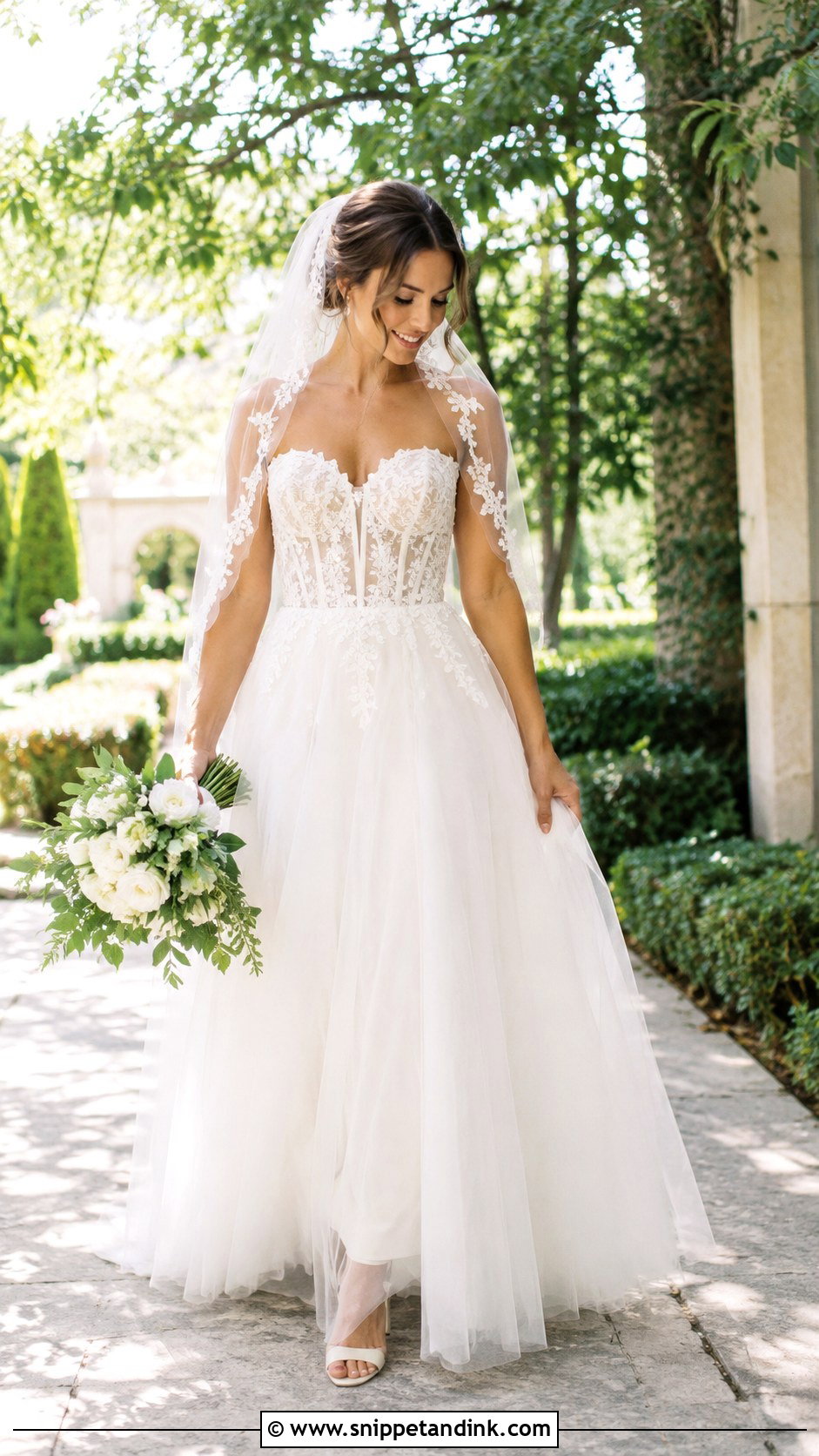
Lace softens a longline corset without losing the shape, as long as the boning that extends below the waist sits under the lace and not on top of it. A light tulle or organza skirt keeps the A-line airy, and a gentle sweetheart suits the proportions. The lining color is a real decision here. Ivory lining looks classic; a nude lining makes the lace pattern and the corset seams show clearly, which some brides love and some find too revealing. See both. Ivory block heels, crystal studs, a fingertip lace veil and a loose white bouquet suit gardens and historic venues.
3. Strapless Sweetheart Corset Wedding Dress
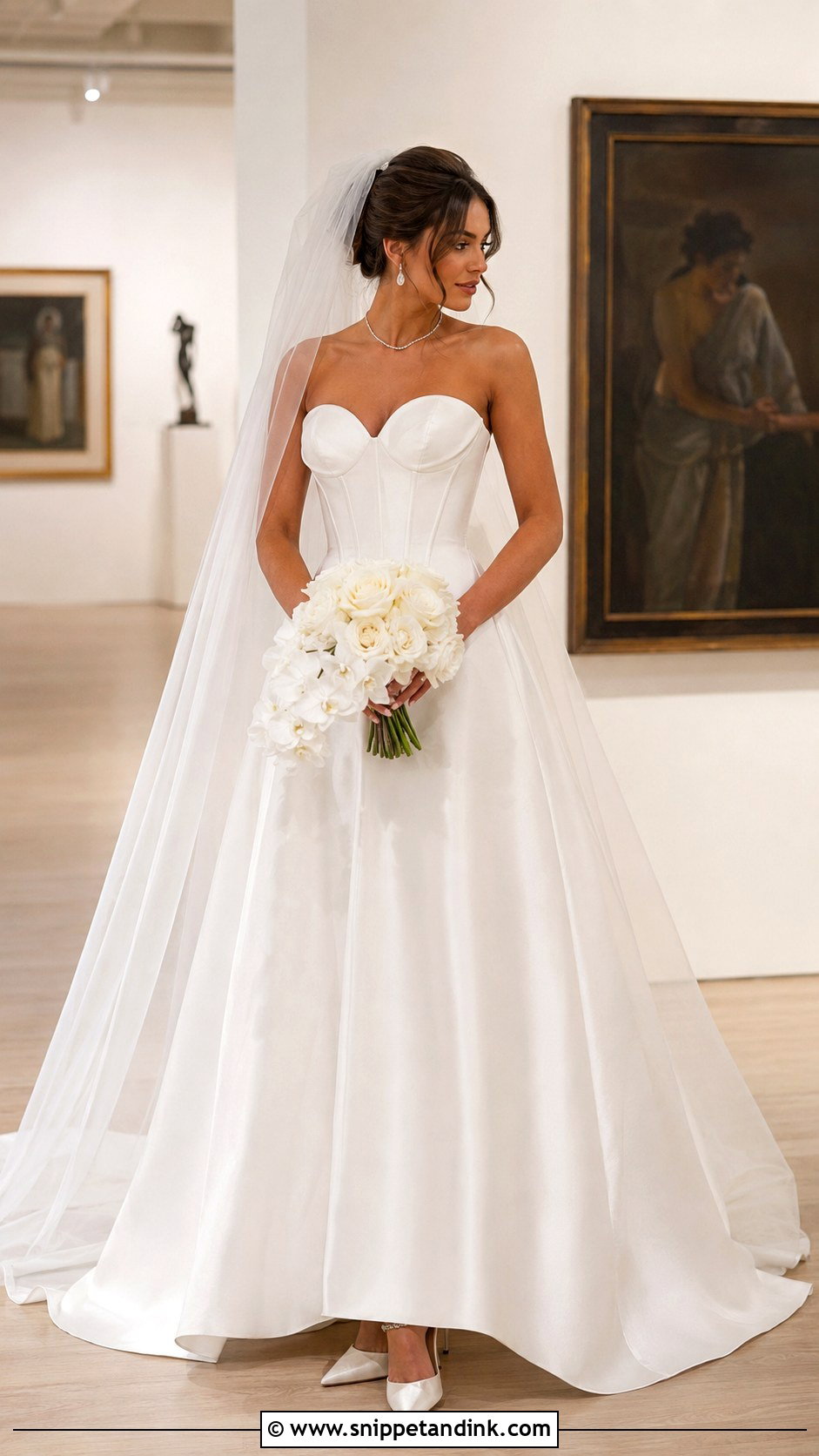
A strapless sweetheart needs the corset to do all the holding, and that only works if the bodice is fitted to your ribcage, not just your bust. I ask brides to lift both arms over their head in the fitting room. If the neckline slips even slightly, it needs taking in at the side seams before anything else. Clean satin keeps it minimal; embroidered tulle adds texture. A tennis necklace, teardrop earrings, ivory slingbacks and a long veil under a low bun finish it, with a structured bouquet echoing the construction. Detachable off-shoulder straps or a sheer wrap are a good backup for a cold church.
4. Off-Shoulder Long Sleeve Corset Gown
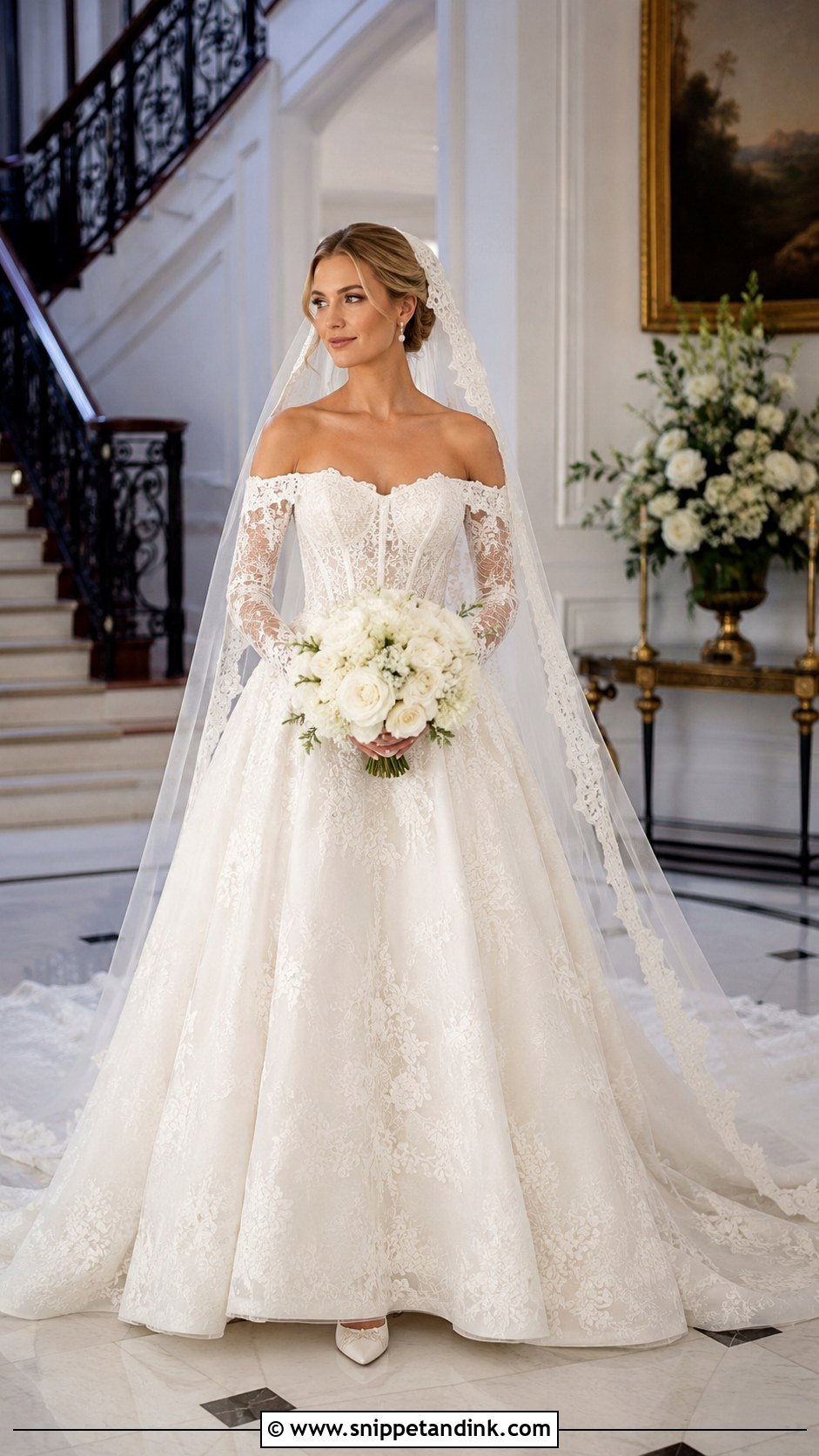
Off-shoulder with long sleeves is beautiful and also the hardest combination to move in. The sleeves anchor across the upper arm, so the arms cannot lift far. Stretch lace, a little elastic at the shoulder band or buttoned cuffs that open give back some range, and I insist on testing a hug and a reach before alterations finish. The boned bodice and long train carry the formality. Pearl earrings, closed-toe satin pumps and a lace-edged cathedral veil suit it, with a low chignon to leave the shoulders clear. No heavy necklace. It is my pick for cooler seasons and formal rooms.
5. Corset Mermaid Wedding Dress With Train
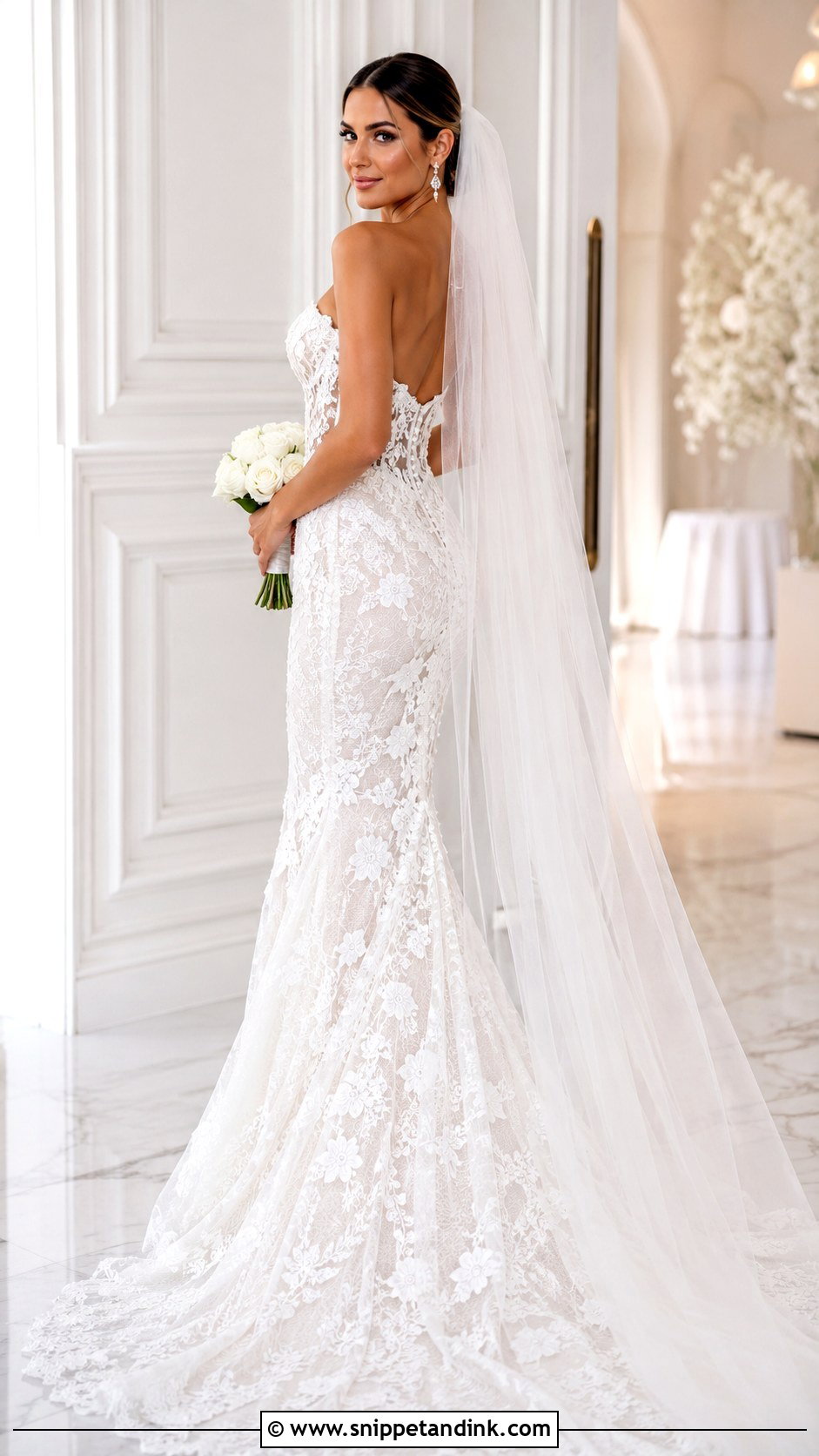
Mermaid plus corset is the most sculpted shape on this list. The longline bodice runs down over the hips and the skirt opens near the knee. Where it flares decides whether you can climb stairs, so I watch brides walk up a step before signing off on the hem. Lace appliqués soften the line; smooth crepe makes it modern. A chapel train is the sensible length, dramatic but manageable. Crystal drops, pointed pumps, a sleek updo and a narrow cathedral veil keep it clean, with a simple bouquet. Ask for a sturdy bustle so the reception is not spent stepping on the train.
6. Square Neck Corset Wedding Dress
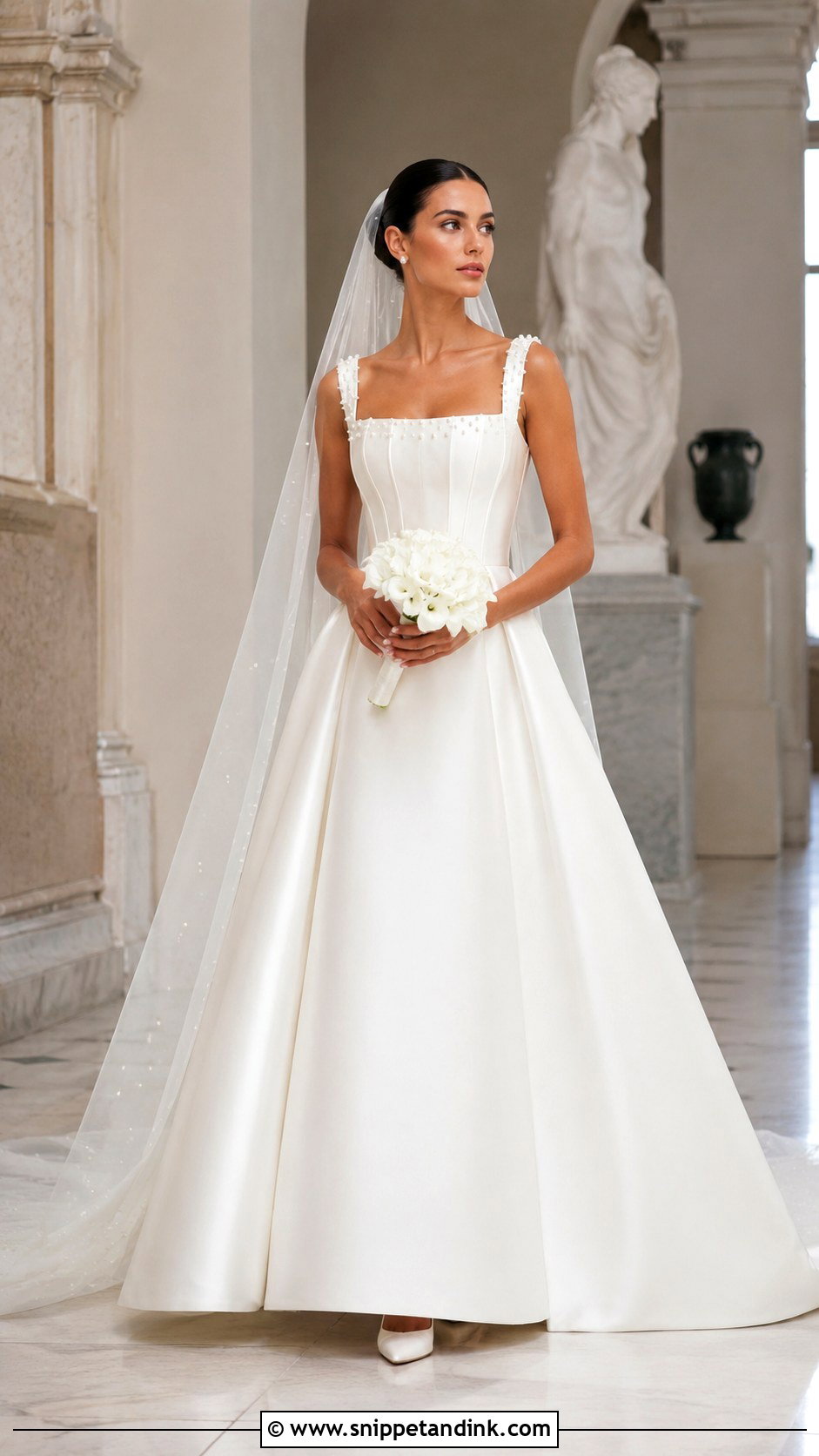
Square necks look architectural on a corset, and the wide straps give real security, which many brides who distrust strapless gowns appreciate. Matte satin, Mikado and textured jacquard hold the corners crisp. The straps should lie flat and not cut into the shoulder; when they do, the bodice is usually too short in the torso and the straps are compensating. A smooth chapel veil, pearl studs, a small structured bouquet and closed-toe ivory heels suit it, with a low bun or polished waves. A pair of hidden pockets fits neatly into the A-line skirt without spoiling the line.
7. Scoop Neck Drop Waist Corset Gown
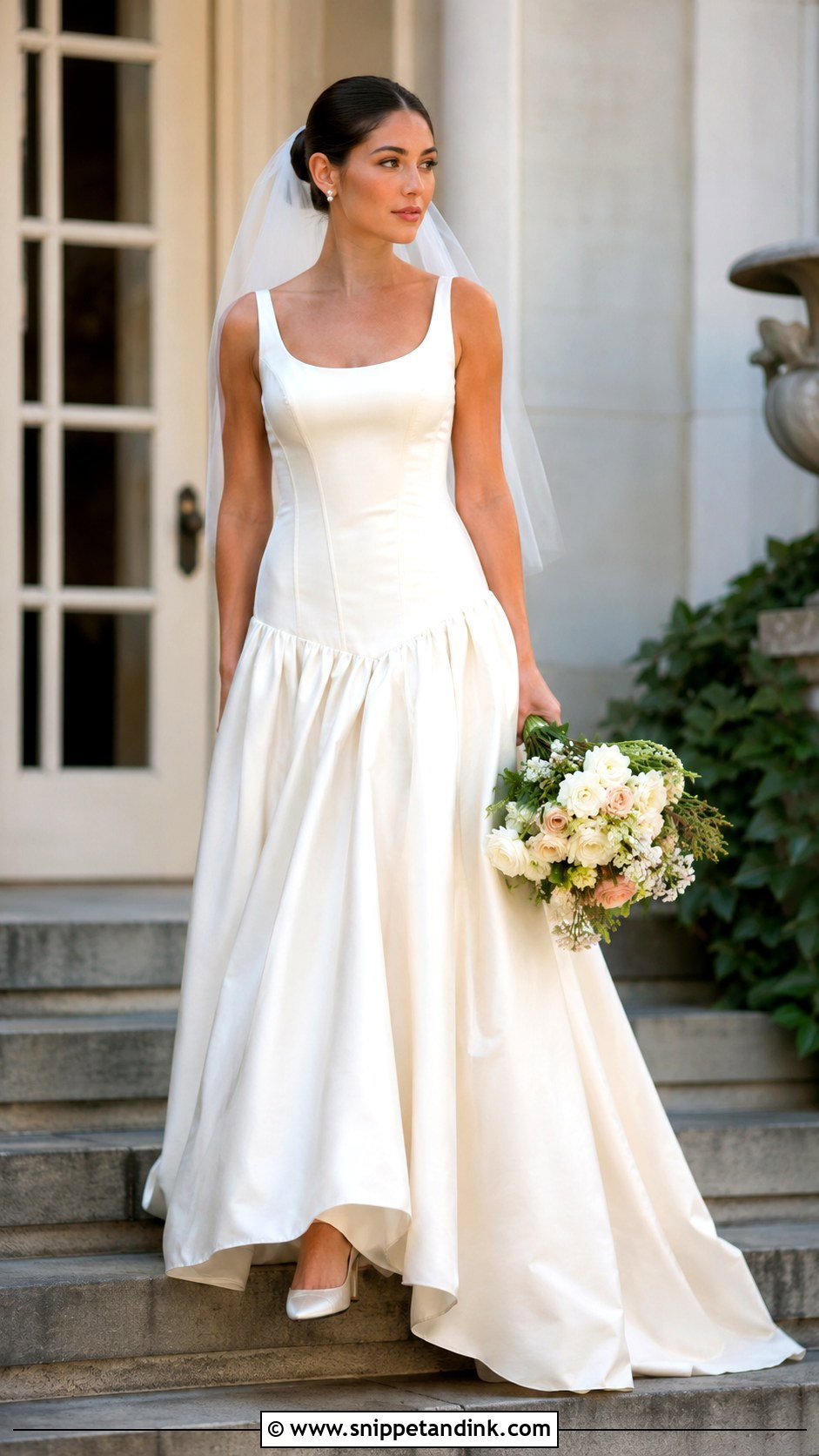
A scoop neck with a drop waist is the softer cousin of the pointed Basque. The rounded neckline is kind to a fuller bust, and the long waist gives an unbroken line to the hip. Gathered satin or silk faille in the skirt adds volume without fuss. The seam where the skirt starts is the thing to watch: too high and it cuts you at the widest point, too low and the skirt pulls into horizontal folds. A good tailor can move the torso length so it lands right. Plain tulle veil, round pearl earrings, low ivory heels and white garden flowers keep the mood relaxed for hotels, estates and galleries.
8. Sheer Boned Corset Tulle Ball Gown
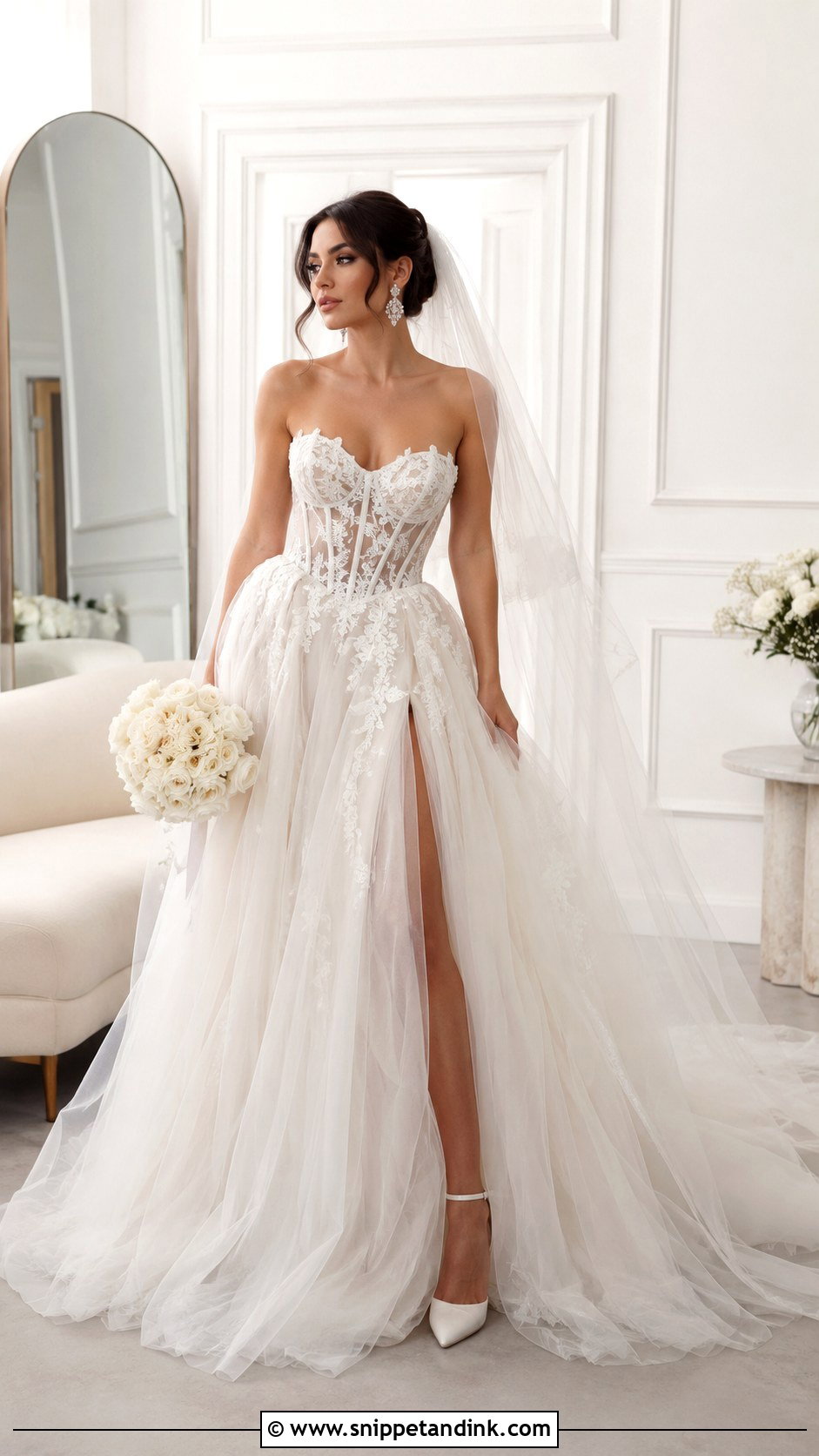
Visible boning under sheer mesh is a construction detail turned into decoration, so it has to be done well. Channels should be straight and evenly spaced; wavy channels look cheap the moment light hits them. Cups and scattered lace appliqués give support and some modesty, and a tulle ball gown skirt keeps it light. If you want more coverage, ask for matching lining across the cups or back. It rarely hides the corset shape. Sheer nude mesh can look different in daylight than in a salon, so view it by a window too. Plain cathedral veil, crystal earrings and satin ankle straps finish it.
9. Mikado Corset Wedding Dress With Pockets
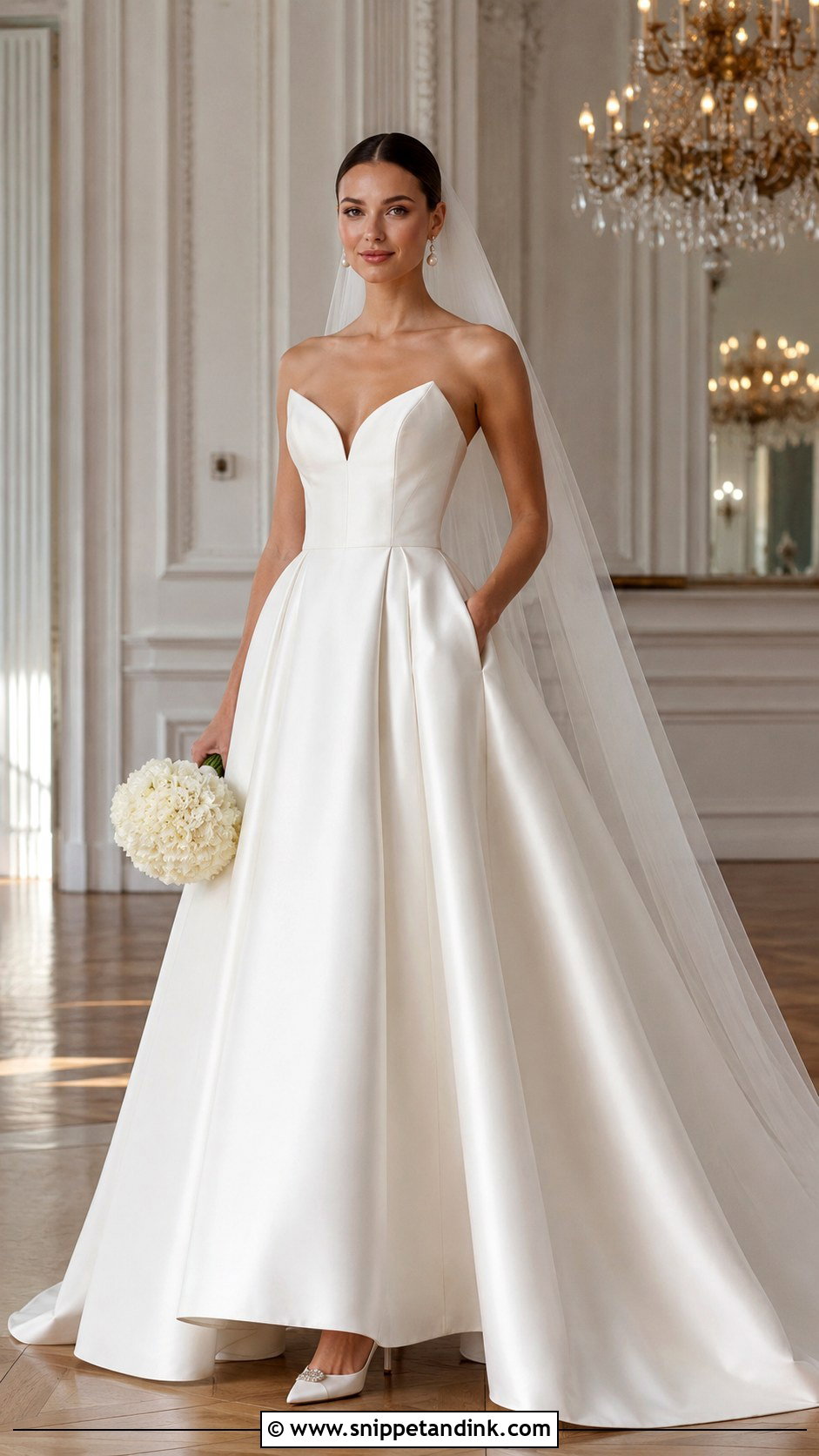
Mikado is the fabric I reach for when a bride wants structure without embellishment. It is crisp, slightly ribbed and holds a big skirt on its own. A longline bodice with a softened point, a strapless or square neck and a full skirt with pockets is the whole design. Pockets in Mikado are tricky, though. If they sit too far forward, they gape when empty and spoil the skirt, so I have brides stand still with hands out of them to check. Pearl drops, a long plain veil, pointed satin pumps and a compact white bouquet are enough. Mikado is heavy, so plan a strong bustle.
10. Pearl Beaded Corset Wedding Dress
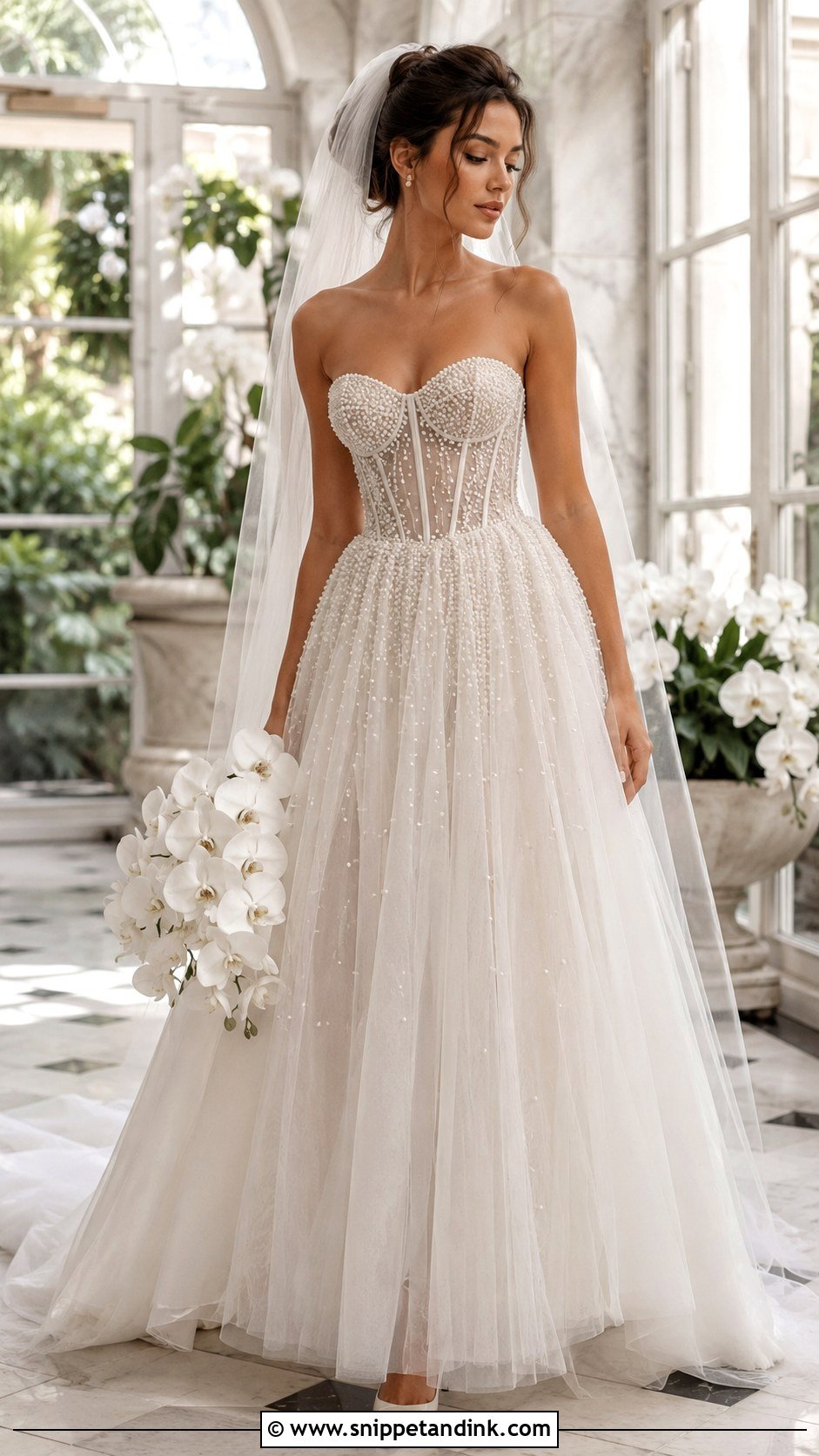
Tiny pearls scattered over a sheer boned bodice give a soft glow that photographs warmly. The longline waist keeps it from looking too traditional. Beadwork adds weight, so the cups and straps need to be fitted to carry it. A heavier bodice that is underfitted starts sliding down by the reception. Inspect how the pearls are sewn on: individually knotted beads hold up; long chain-stitched runs can unravel if one thread breaks. Ask whether spare pearls come with the gown. Simple pearl studs, ivory pumps and a plain veil that will not snag finish it, with a white orchid or rose bouquet. Hold back on extra pearl accessories.
11. Floral Appliqué Corset Wedding Dress
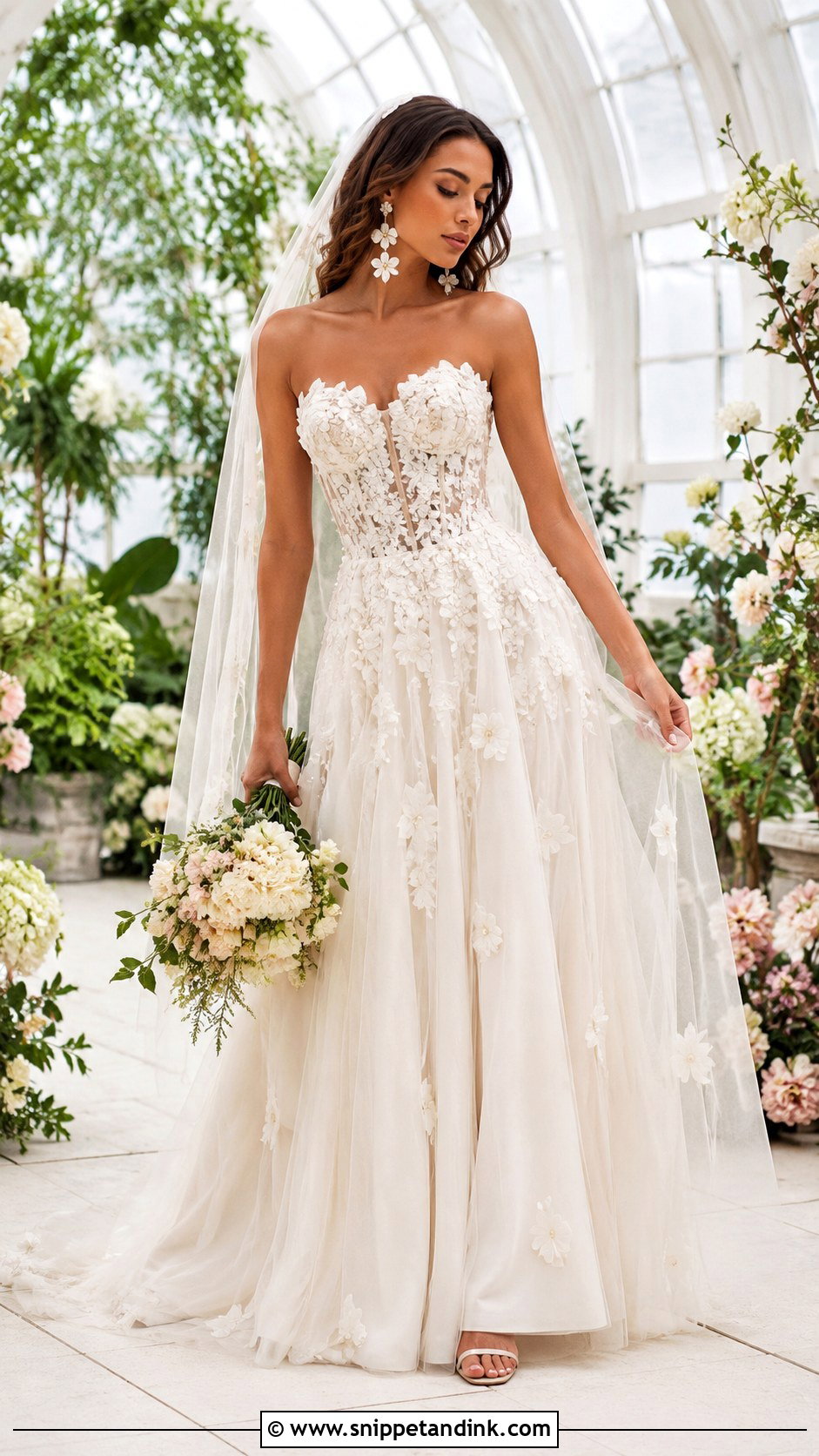
Raised floral appliqués turn a structured bodice into something that looks grown rather than built. Clustered at the neckline and point, thinning across a tulle skirt, they read as one design. The underarm is the problem area. Raised flowers there rub on every arm swing, and by evening the skin can be raw. I ask the seamstress to flatten or move any piece sitting at the arm, or back it with soft lining. Floral earrings, plain ivory sandals, a light veil and a bouquet echoing the dress flowers suit gardens and conservatories. A low textured bun keeps the hair relaxed but secure.
12. Vintage Chantilly Lace Corset Gown
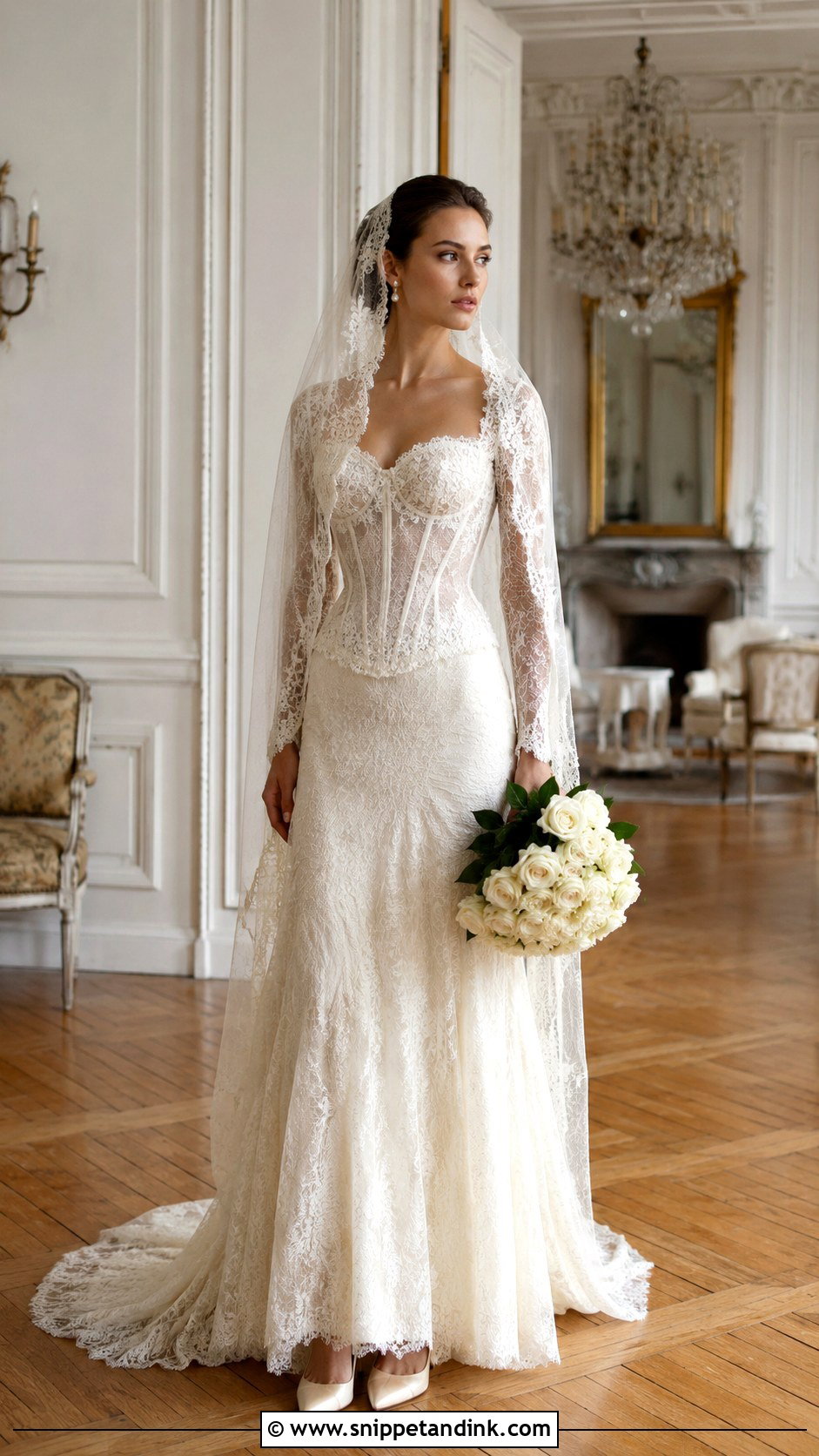
Chantilly is one of the finest laces made, with delicate outlined flowers on a sheer net ground. That fineness is why it needs help on a corset. Lace cannot take the strain at the zipper, lacing and waist seams by itself, so ask how those points are reinforced; a strong backing fabric underneath should be doing the work. Exposed boning, a subtle Basque waist and a skirt over a neutral lining suit it, with long sleeves or slim straps. Pearl earrings, ivory pumps, a lace-trimmed veil and roses complete it, with a softly waved updo. Echo the veil lace loosely, not exactly, or the outfit gets busy.
13. Minimal Crepe Corset Wedding Dress
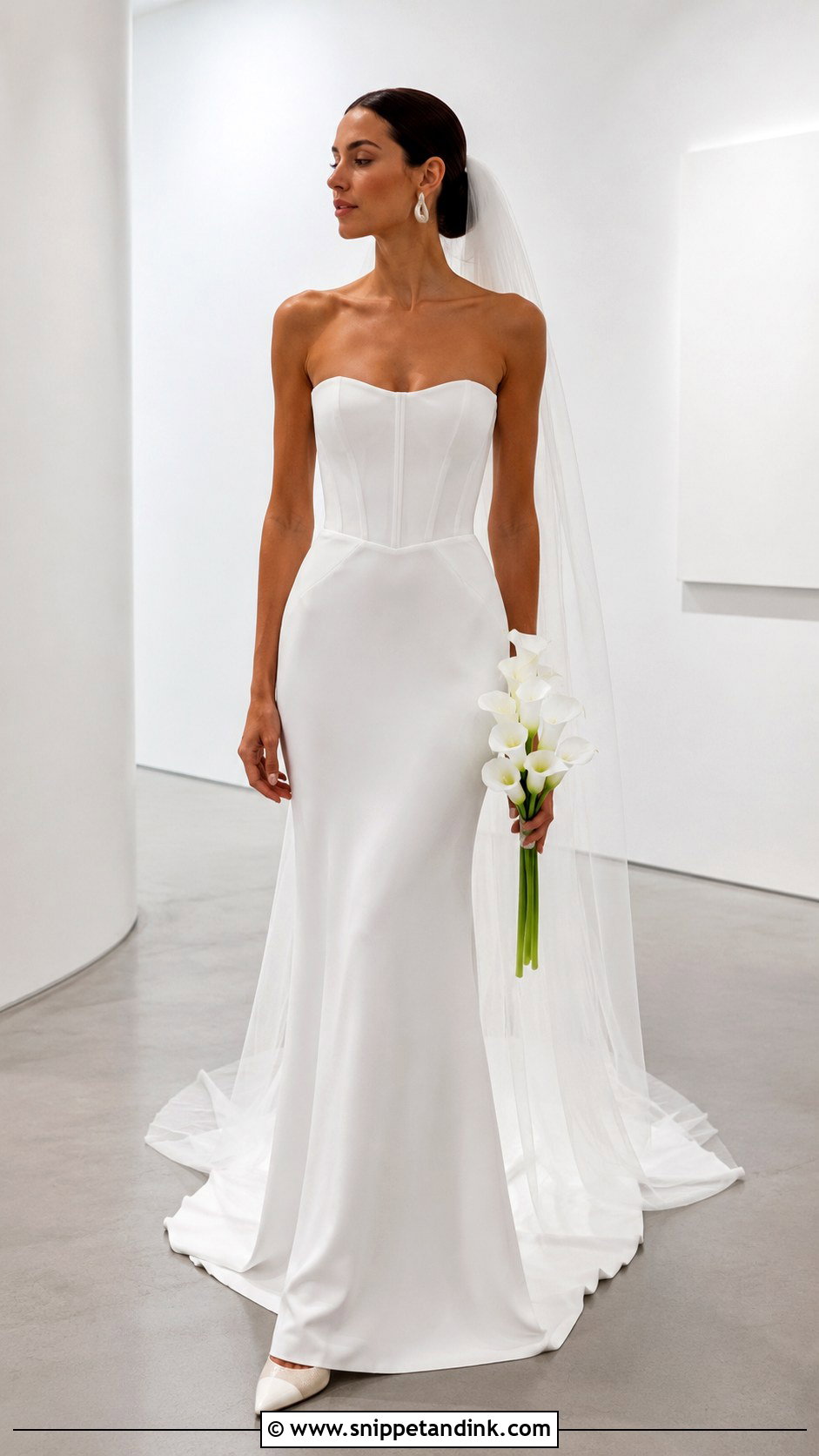
Crepe has nowhere to hide. It is matte and smooth, so every boning channel, uneven cup edge or ripple at the waist shows through. That is why a minimal crepe corset gown tells you most about the quality of construction. Run your hand over the bodice: it should feel even. A longline bodice, clean seams and a skirt with a gentle flare give a sleek shape. Sculptural earrings, pointed ivory heels, a plain floor-length veil and calla lilies suit it, with a low ponytail or chignon. Most well-fitted corset bodices need no separate bra. A detachable train can add ceremony drama and come off later.
14. Corset Wedding Dress With Detachable Overskirt
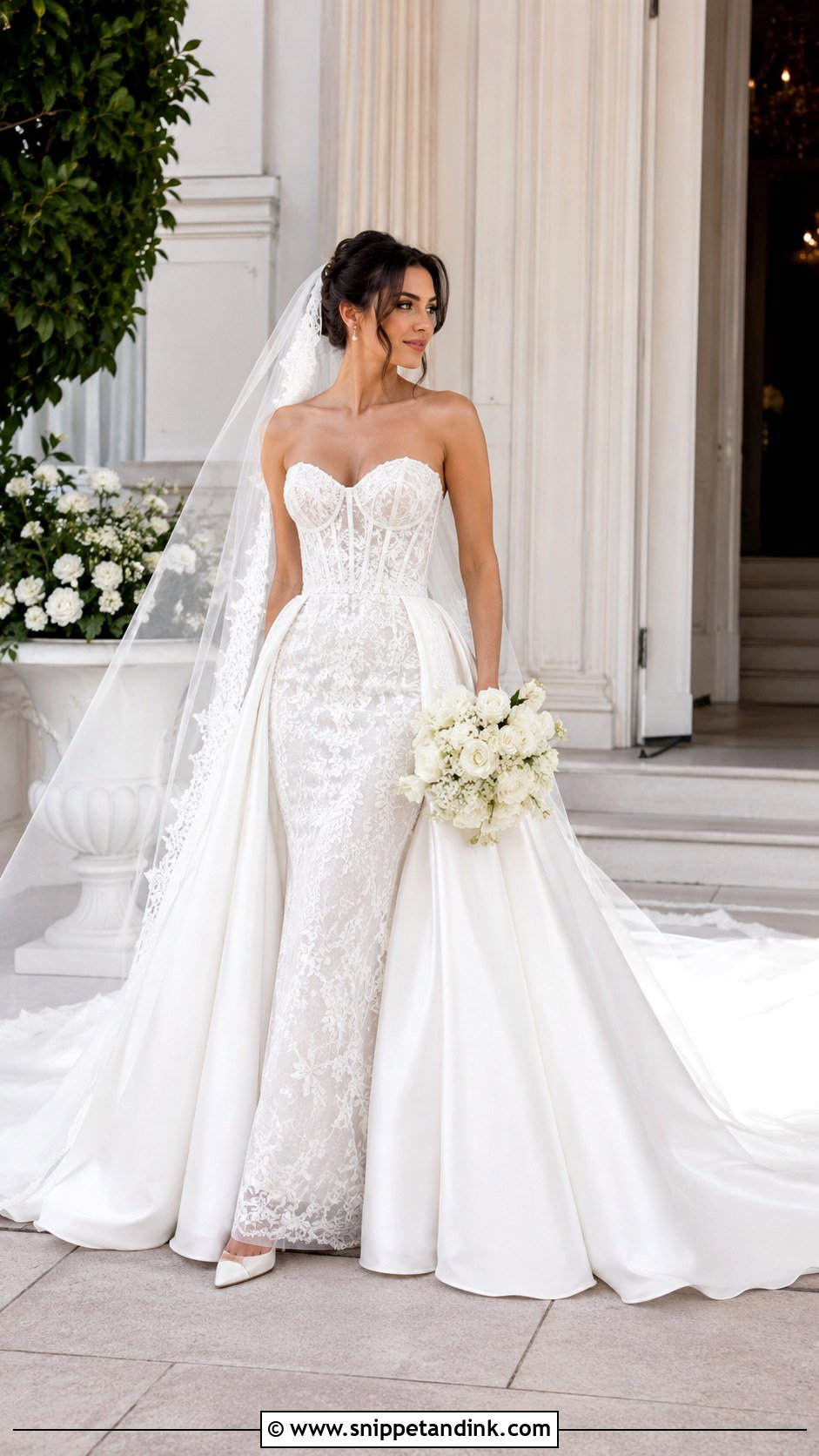
One gown, two looks. A fitted longline corset dress in lace, crepe or satin becomes a ceremony gown once a full overskirt with a train is fastened at the waist. Cathedral veil, pearl earrings and pointed pumps for the vows; a decorative comb in place of the veil once the overskirt comes off. The weak spot is the attachment. An overskirt with a train is heavy, and if the hooks pull on the corset waist they distort it. I prefer a separate waistband that sits over the bodice. Have an attendant practice the removal so the change takes minutes and the hairstyle survives.


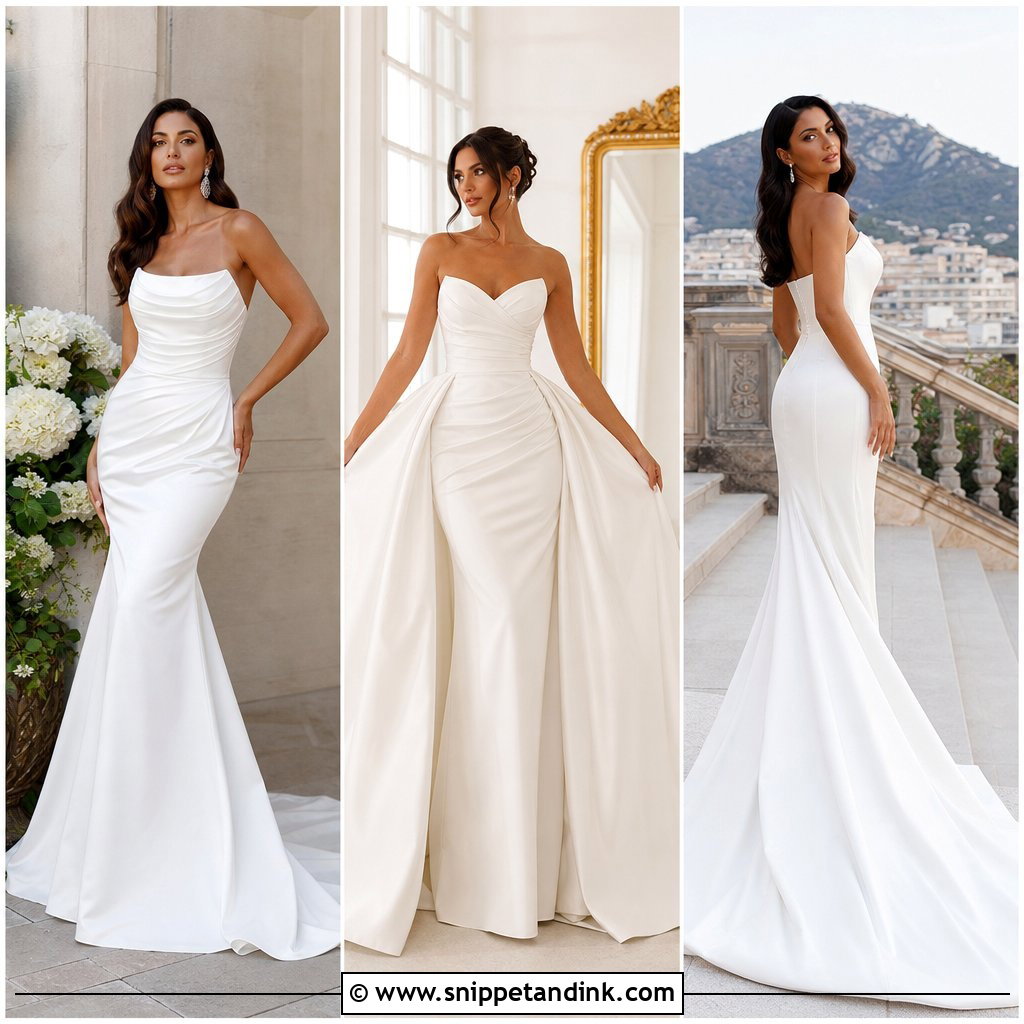
15. Two-Piece Corset Wedding Dress
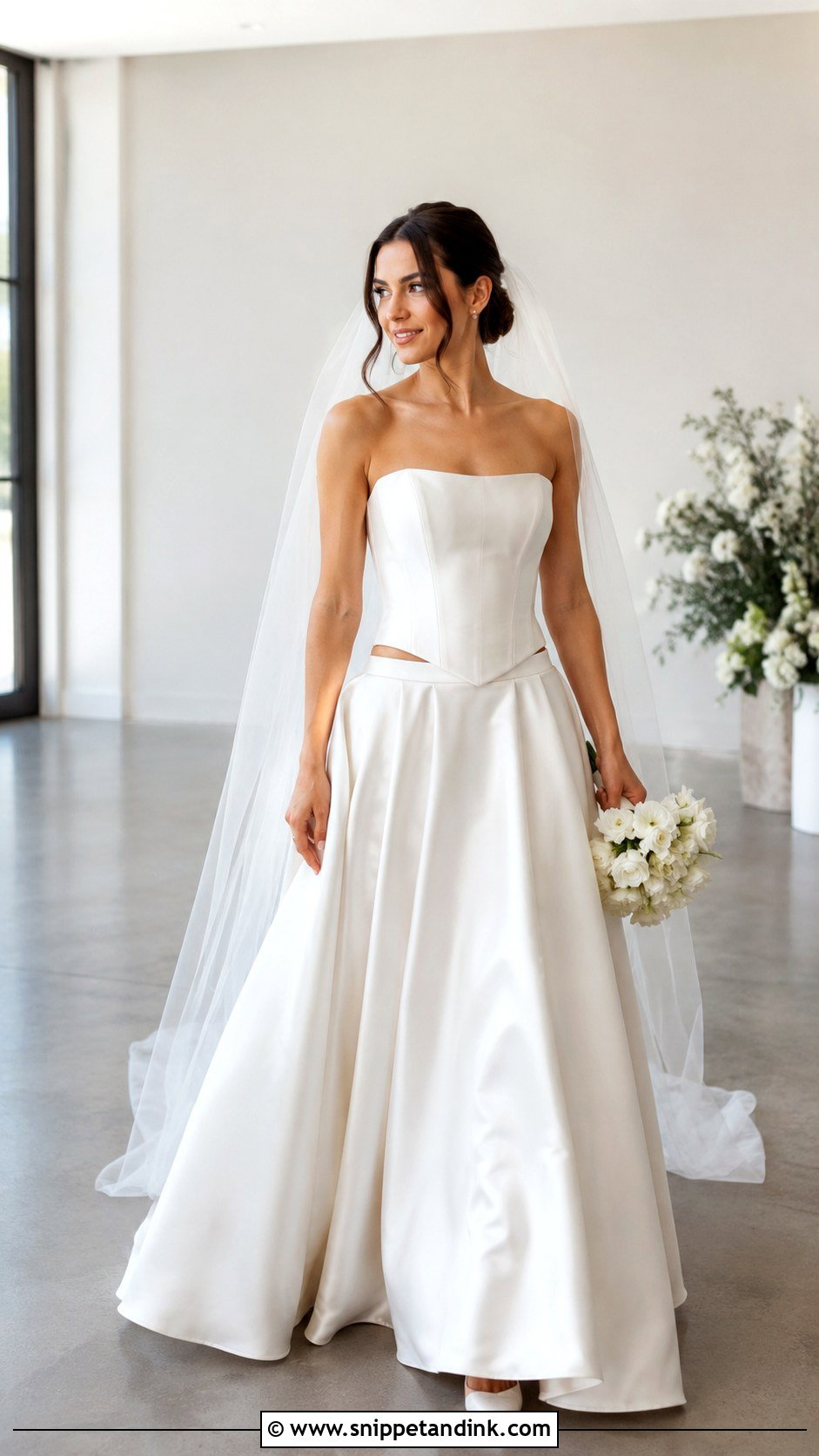
A two-piece corset outfit looks like one gown when the top overlaps the skirt waistband. A pointed hem on the corset mimics a Basque waist, and matching satin or lace ties the pieces together. The skirt can be fitted, A-line or full. Each piece is altered separately, which helps brides whose top and bottom sit in different sizes. The risk is a gap. Sit down and raise your arms in the fitting; if skin shows between the pieces, ask for hidden snaps linking them. Fingertip veil, small earrings, ivory heels and a little white bouquet keep it uncomplicated.
16. Corset Wedding Dress With Cape
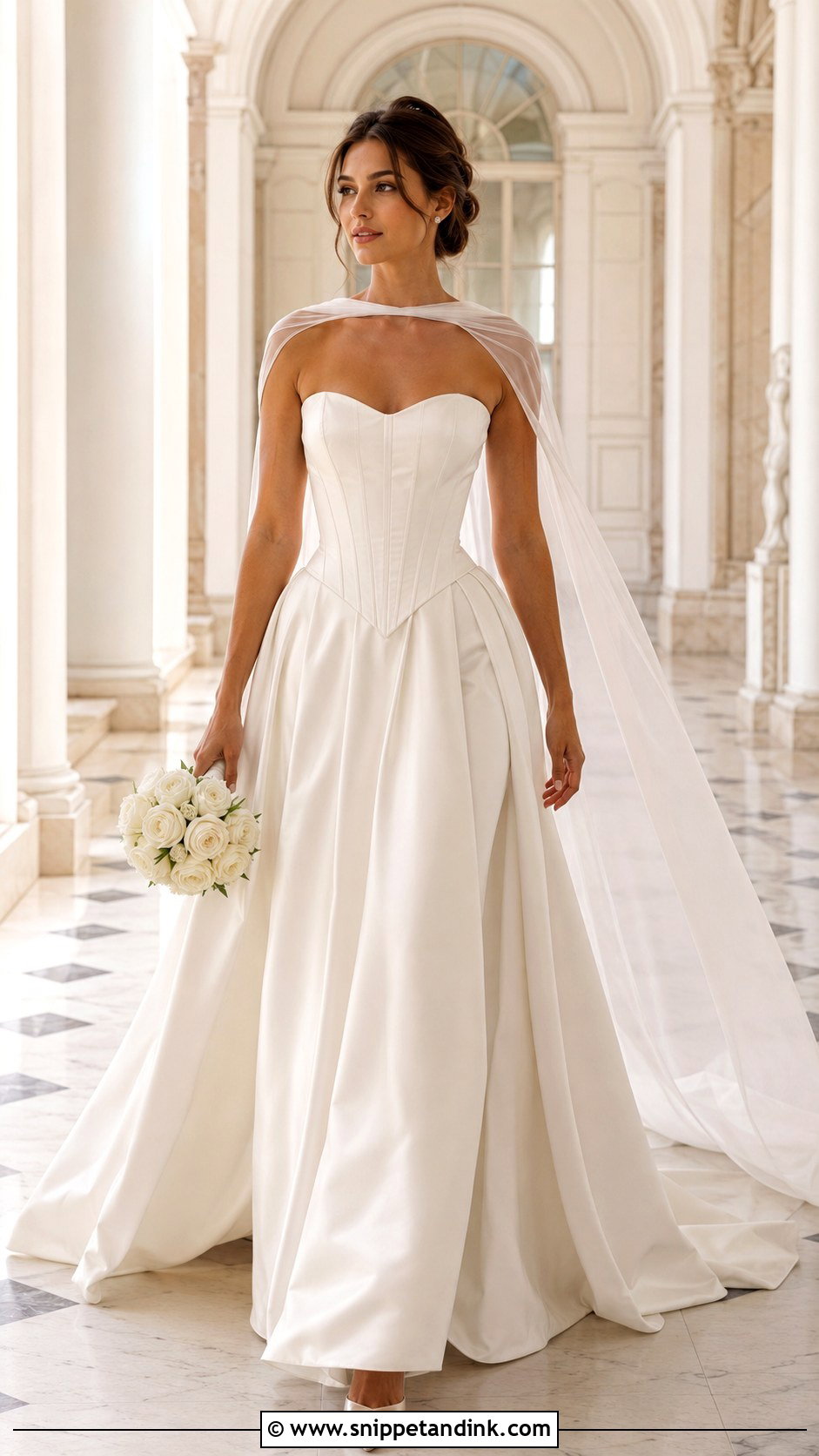
Pairing a strapless corset gown with a floor-length cape looks regal and modern at once. The cape replaces the veil, so skip the veil entirely. What brides do not expect is the pull. A cape attached at the shoulders drags the neckline backward and down, especially on a strapless bodice. Keep the cape light, and attach it so the weight sits on the bodice structure rather than the neckline edge. Embroidered edges or a few pearls can link it to the dress. Practice walking and turning so it clears the train. Pearl studs, ivory pumps and a compact bouquet finish it for large rooms and windy outdoor settings.
17. Corset Wedding Dress With Slit
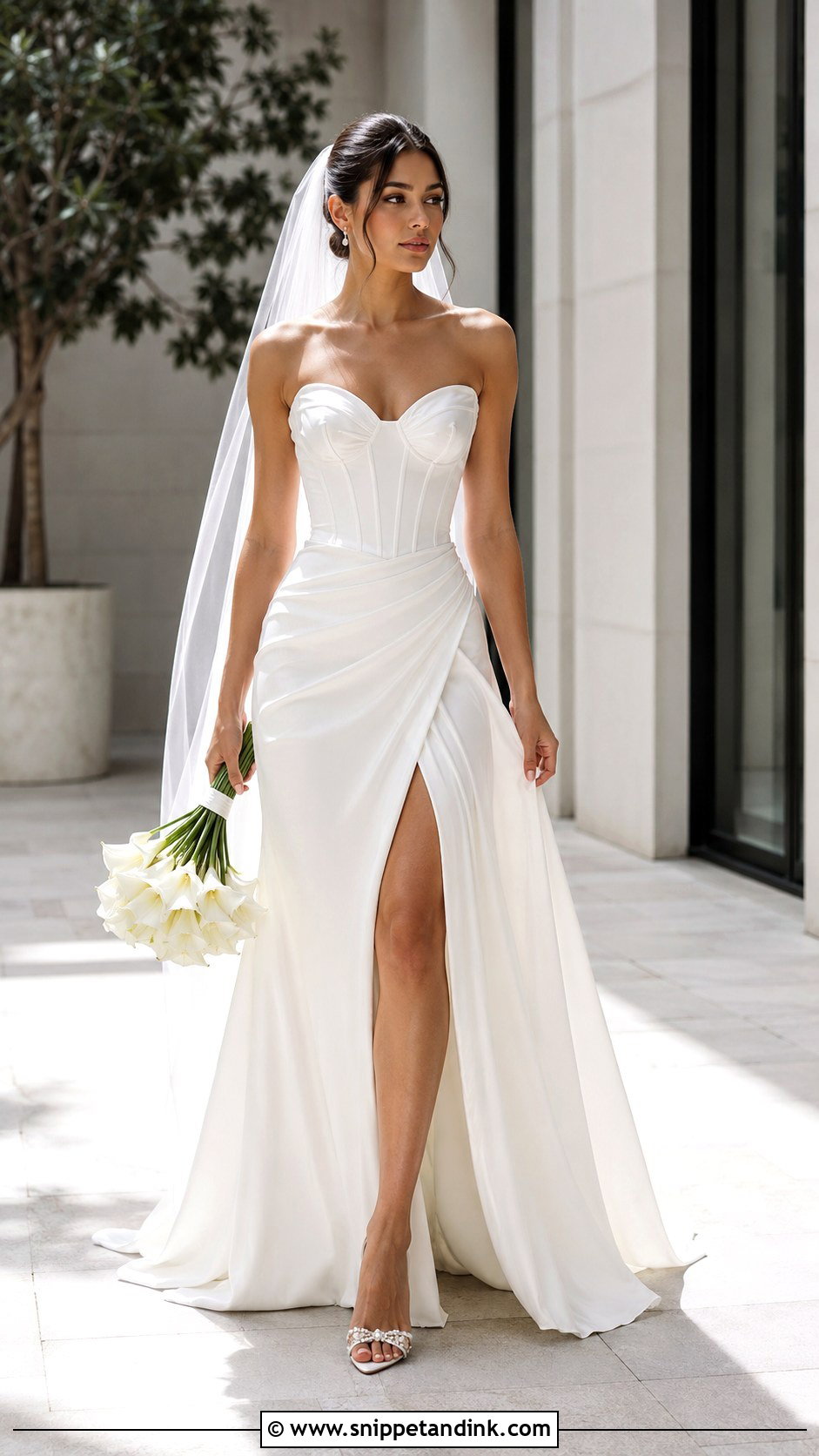
A slit adds movement to a structured bodice and makes the whole gown feel younger. An elongated satin corset, a straight or sweetheart neck and an A-line skirt with a controlled thigh-high slit is the formula. The slit should open as you walk and close when you stand. Sit down during the fitting and check where it falls; a slit that is fine standing can open alarmingly on a chair. An inner panel gives coverage without losing the detail. Pointed pumps or embellished sandals, small drop earrings, a light chapel veil and a sleek bouquet keep the mood modern.
18. Plus Size Corset Wedding Ball Gown
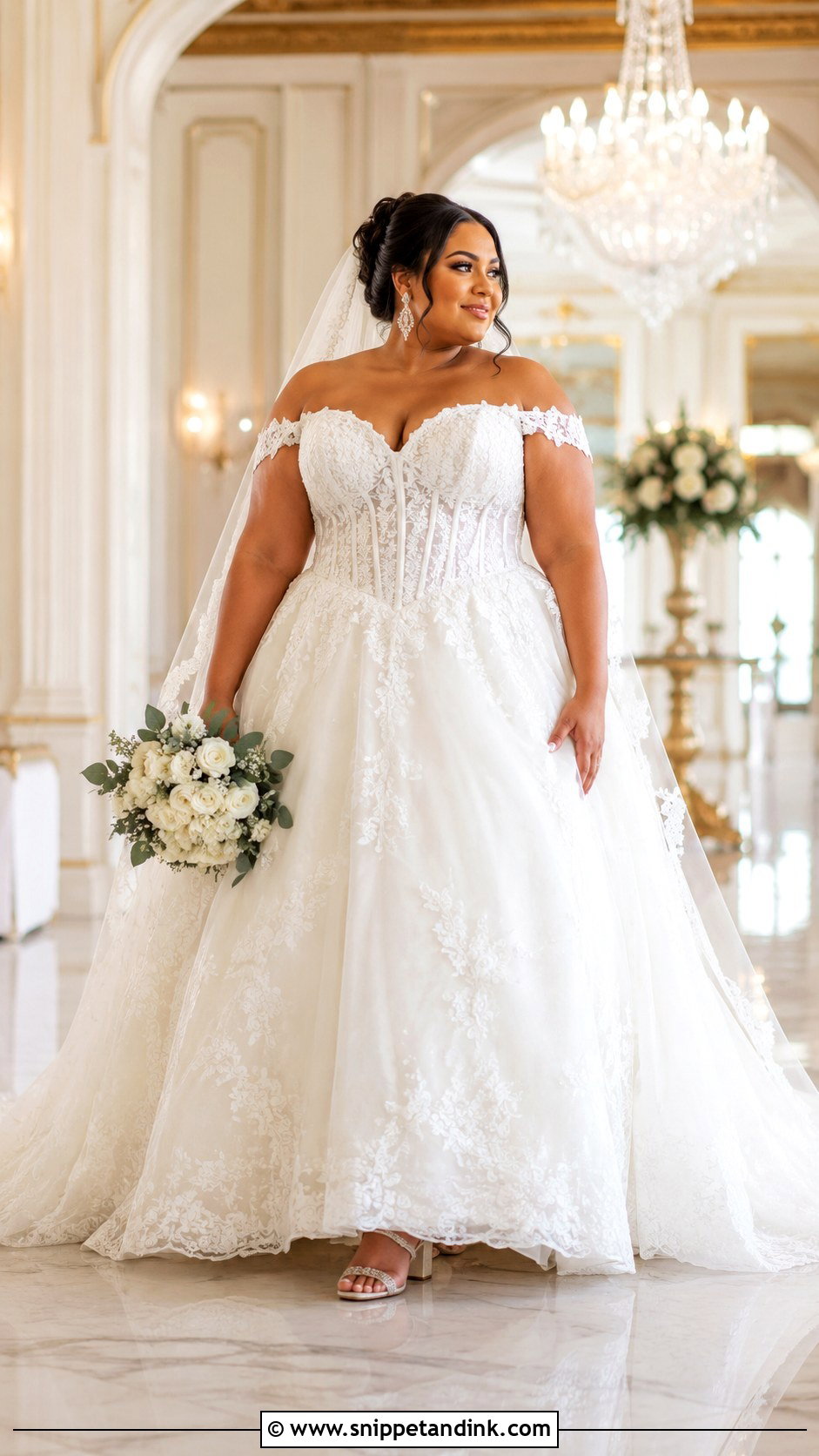
A well-built corset is one of the most supportive things a bride of any size can wear, because the support is engineered in rather than borrowed from straps. For curvier brides I look for flexible spiral steel boning that bends with the body, cups shaped for a fuller bust, a reinforced back and a skirt starting where the hips are comfortable. A lace-up back allows small adjustments, and a modesty panel covers the lacing. Choose the neckline for support, not by body-shape rules. Bring the exact undergarments and shoes to every fitting. A chapel veil, statement earrings, block heels and a medium bouquet balance the volume.
19. Modest Long Sleeve Corset Wedding Dress
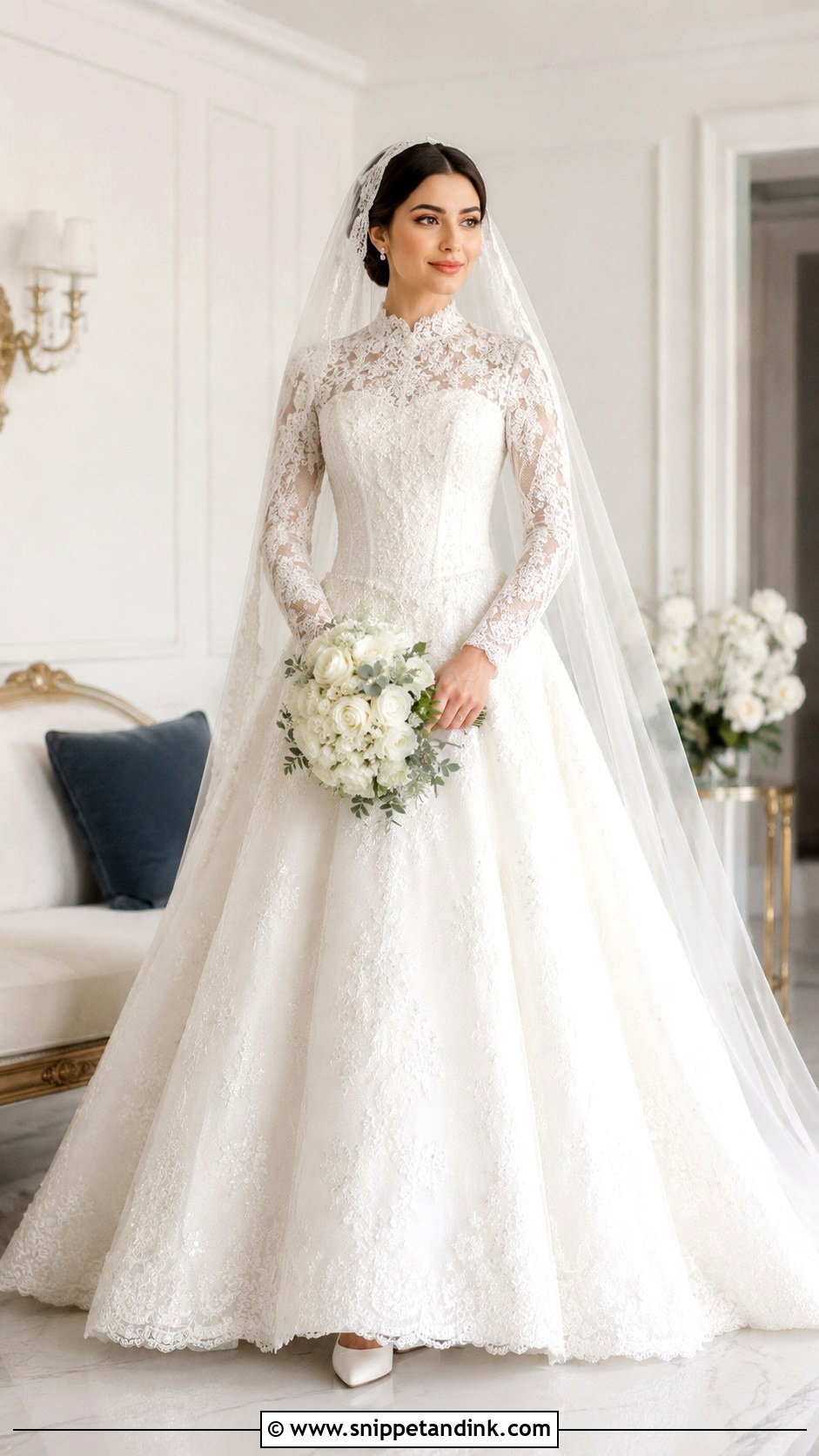
Full coverage and a corset bodice work well together. The boning shapes the figure even under a high illusion neckline and fitted lace sleeves. An opaque longline bodice, a pointed Basque waist and a full A-line skirt give a formal outline, and covered buttons down the back add detail without sparkle. Check that the lining under the lace gives the coverage you expect in bright light; some linings go see-through in flash. Stretch fabric under the arms helps movement. Match the mesh tone to your skin. Pearl studs, closed-toe ivory shoes, a chapel veil and white flowers finish it.



20. Blush Corset Wedding Dress
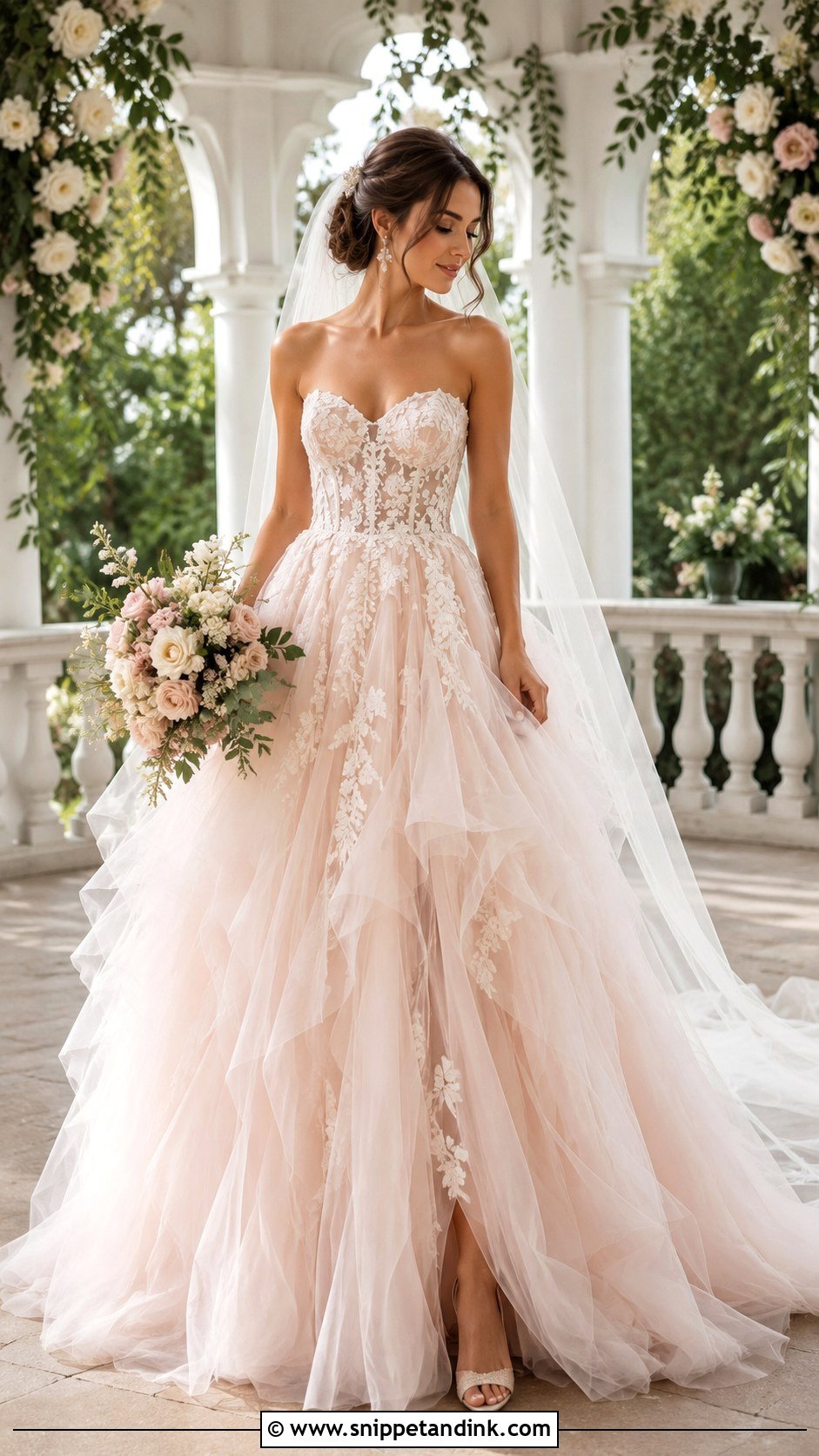
Blush under ivory lace adds color without stepping away from bridal. The lining does the coloring, so the lace pattern and boned seams stand out. An elongated sweetheart with a layered tulle ball gown skirt keeps it romantic. My advice is to compare three or four lining shades against your skin, in daylight and under warm indoor light, because blush is the most changeable color I work with. A warm champagne can turn golden; a cool blush reads clearly pink. Rose-gold earrings, ivory heels, a plain veil and a bouquet with soft color keep the accessories quiet so the shading shows.
Lacing Up on the Morning Itself
A lace-up back is only as good as the person tightening it, and on the day that is usually a bridesmaid who has never done it. Ask the salon to show her at the final fitting, and have her practice twice.
- Stand straight with your weight even. Leaning forward to help makes the bodice set looser than it should.
- Tighten from the middle of the back first, working up and down from the waist, not from the top.
- Leave an even gap at the back. A gown fitted to close completely leaves no room to adjust once you have eaten.
- Tuck the ends inside the modesty panel, never tied in a bow that can slip during dancing.
Expect to feel held, not squeezed. You should be able to take a full breath into your belly, eat a normal meal and sit for speeches. If you cannot, the gown is too small at the waist, and that is an alteration issue rather than something to endure for twelve hours.
Plan the bathroom before you need it
A corset bodice does not need to come off for a bathroom trip, but a full skirt does need managing. Try it in the fitting room with the train bustled. Some brides step into the skirt backward while a friend holds the layers; others wear a skirt-gathering slip under the gown. Knowing which works for your dress saves a lot of panic at the reception.
The Fitting Room Test Every Corset Has to Pass
Satin ball gowns read clean and regal; lace, pearls and floral appliqués go softer. Mermaids show the figure, A-lines move easily, and detachable overskirts give you two dresses. Whatever you lean toward, judge the bodice sitting, walking and with your arms raised, because that is how you will spend the day. Ask about lining color, bustle placement, the type of boning, cup support and how much can be altered. Wear the same shoes and underwear to every fitting. A corset that has been fitted properly feels like support you forget about by the time dinner is served.
You'll Like These Ideas:








Leave a Reply