
The bodice does more work than any other part of a wedding dress. It holds you up, sets the waistline, and decides whether the gown feels like armour or a second skin. A structured corset gives a dramatic, couture shape, while soft ruching, illusion lace or draping feels lighter. Sculpted corsetry, Basque waists, dropped seams, dimensional florals and sheer panels are all options worth knowing. How it looks is only half of it. I ask brides about the venue, the neckline they lean toward, the skirt, what they’ll wear underneath, how much they plan to dance and how much coverage they want. A good bodice stays put without stopping you breathing or sitting, and the 20 dresses below show how differently that can be done.
Inside a Bodice, From Boning Channels to the Waist Stay
Two dresses can look identical on the hanger and wear completely differently, and the reason is almost always inside. When a bride is torn between gowns, I turn both bodices inside out. This is what I’m looking at.
Boning
Spiral steel boning flexes in two directions, so it follows the curve of the ribs and moves when you sit. Flat plastic boning is lighter and cheaper, but it can kink or take a permanent bend from body heat over a long day. Either works in a lightly structured bodice. For a strapless corset that has to hold itself up, I want steel.
The waist stay
A waist stay is a firm band, usually grosgrain ribbon, hooked closed at your natural waist inside the dress. It anchors the gown so the skirt’s weight pulls on your waist instead of dragging the neckline down. If a strapless gown doesn’t have one, ask your seamstress to add it; it’s a small job that changes how the whole dress sits.
Cups and lining
Sewn-in cups shaped to your bust stop the top edge from gaping. A soft cotton lining against the skin is more comfortable over hours than a slippery synthetic, and a good lining also hides the ridges of the boning channels from the outside, which matters most on plain satin.
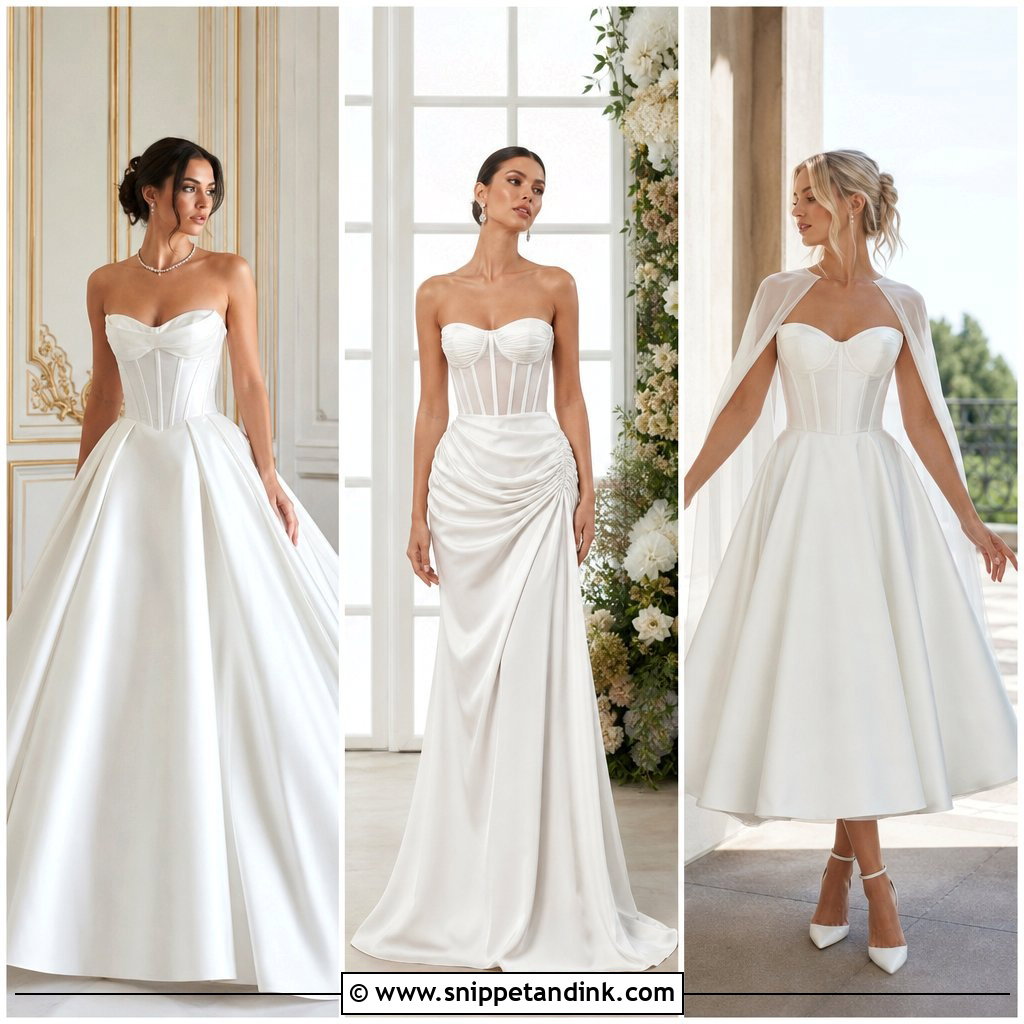
1. Strapless Corset Bodice Wedding Dress
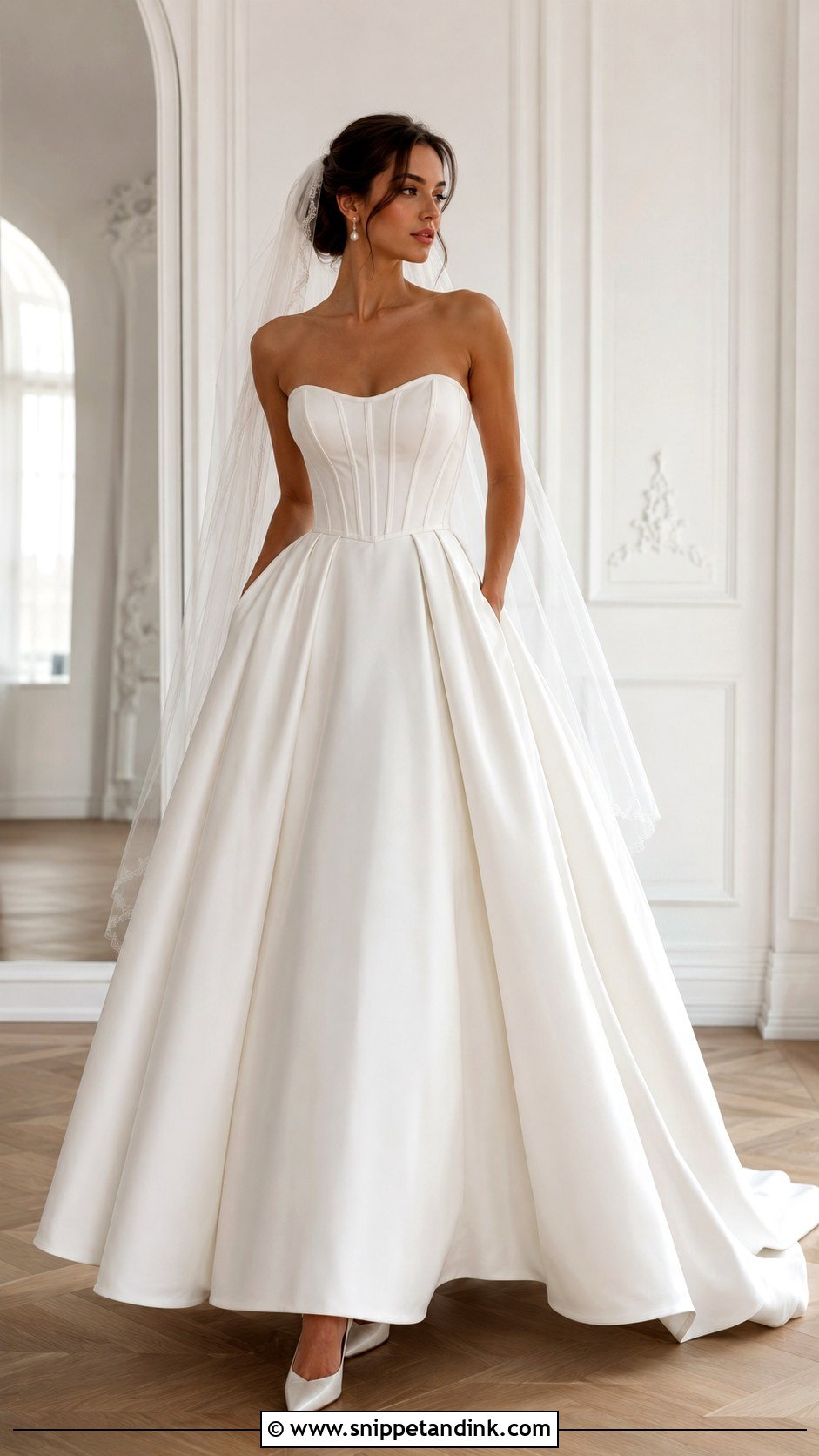
Strapless corset bodices give the cleanest, most defined shape, and they pair with almost any skirt. Visible boning with a softly curved neckline looks modern and couture; covered internal structure looks traditional. Over a satin ball gown skirt the fitted top feels dramatic, while an A-line moves more easily. Pointed ivory pumps, pearl drops and a fingertip veil with a simple edge finish it. The real question is whether you’ll be tugging it up all night. Have your seamstress watch the neckline while you sit, raise your arms and walk. The weight should hang from a waist stay, not from the top edge, and sewn-in cups stop the neckline gaping when you lean forward.
2. Lace Basque Bodice Wedding Dress
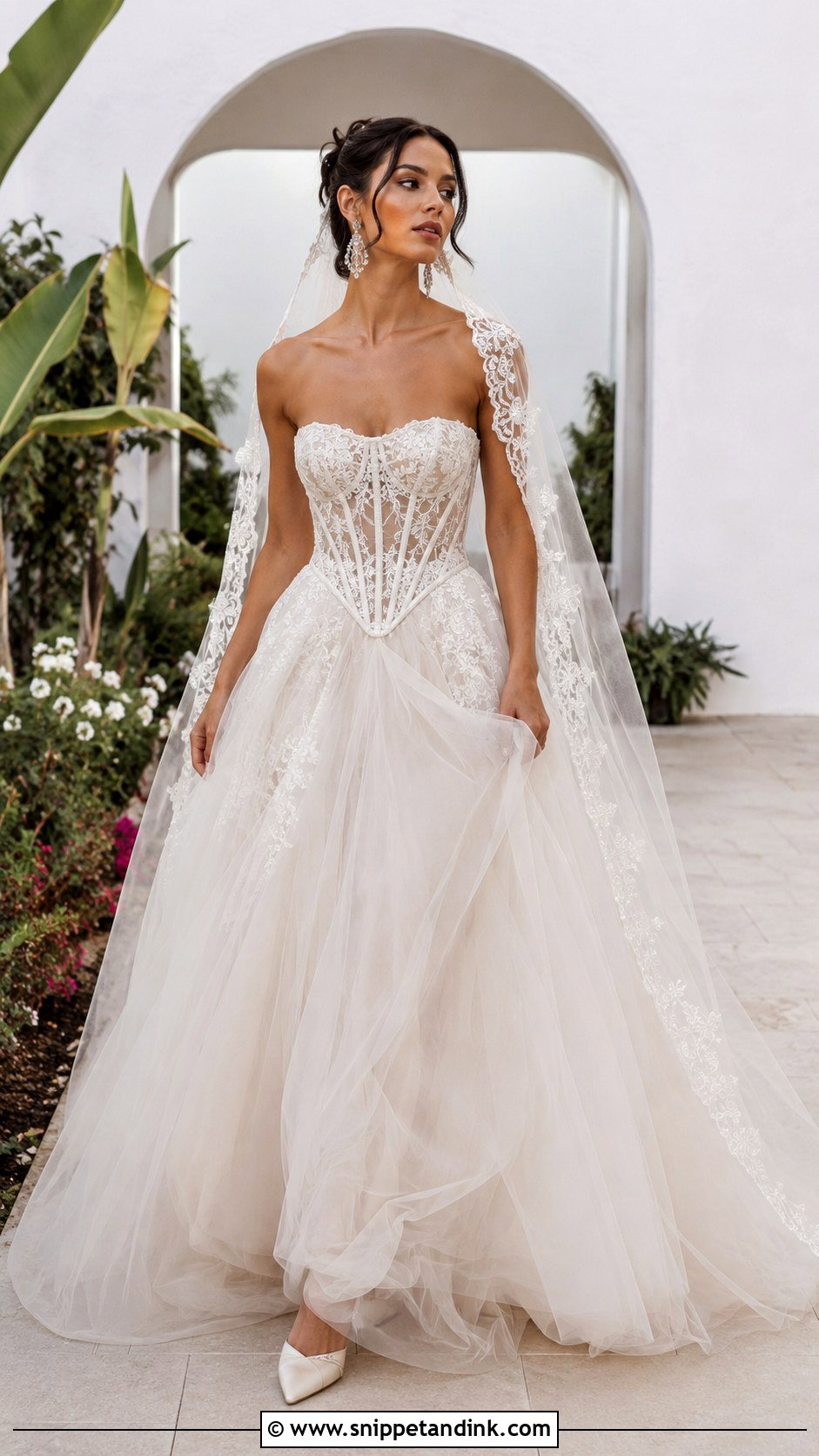
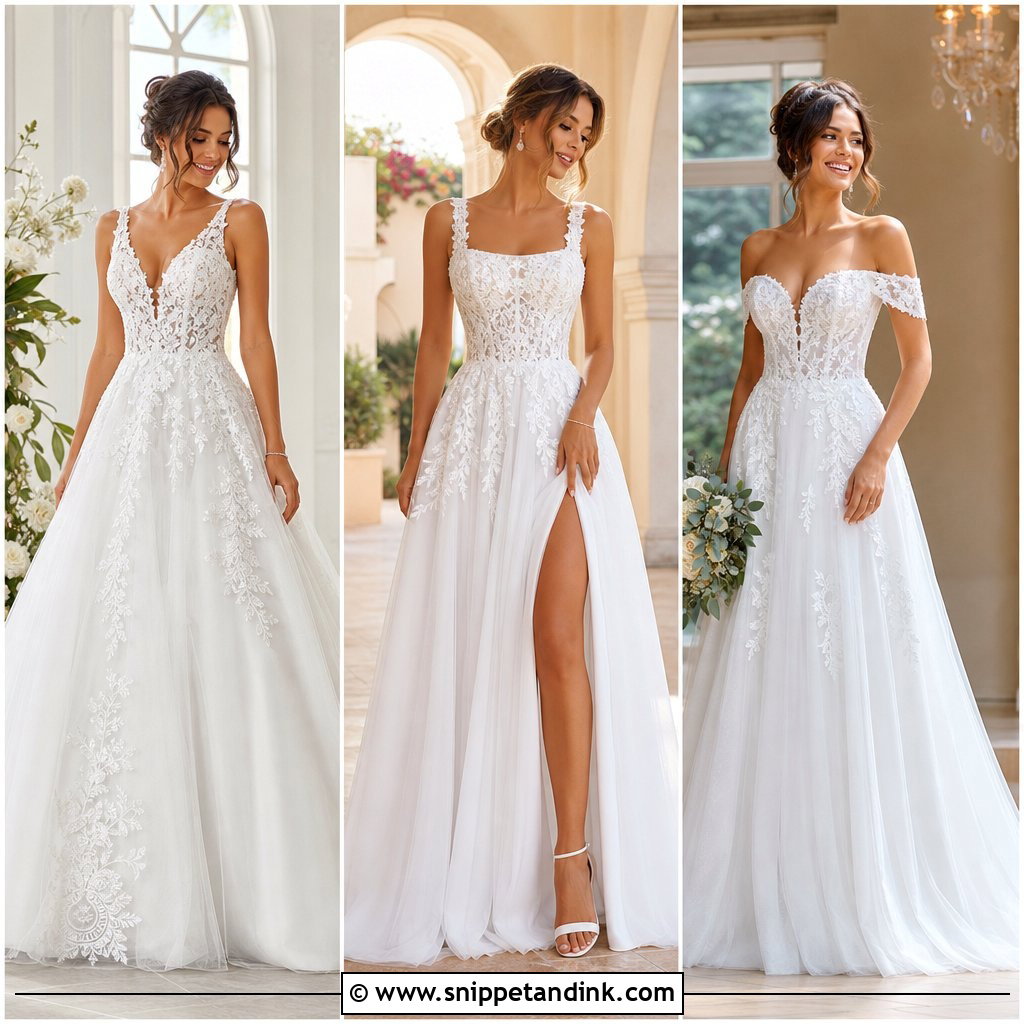
Lace and a Basque point make a romantic pair: the texture softens the structure, and the waistline dips into a V that lengthens the torso. It looks most cohesive when the lace continues lightly onto a full tulle or organza skirt. Small botanical lace reads soft, larger motifs bolder. With corset construction and a full skirt, it becomes properly dramatic. Satin slingbacks, a lace-edged veil and small crystal earrings finish it, and everything else should stay restrained. I watch exactly where the point ends at every fitting. Slightly too low and it digs in when you sit; too high and the lengthening effect disappears.
3. Sweetheart Bodice A-Line Wedding Dress
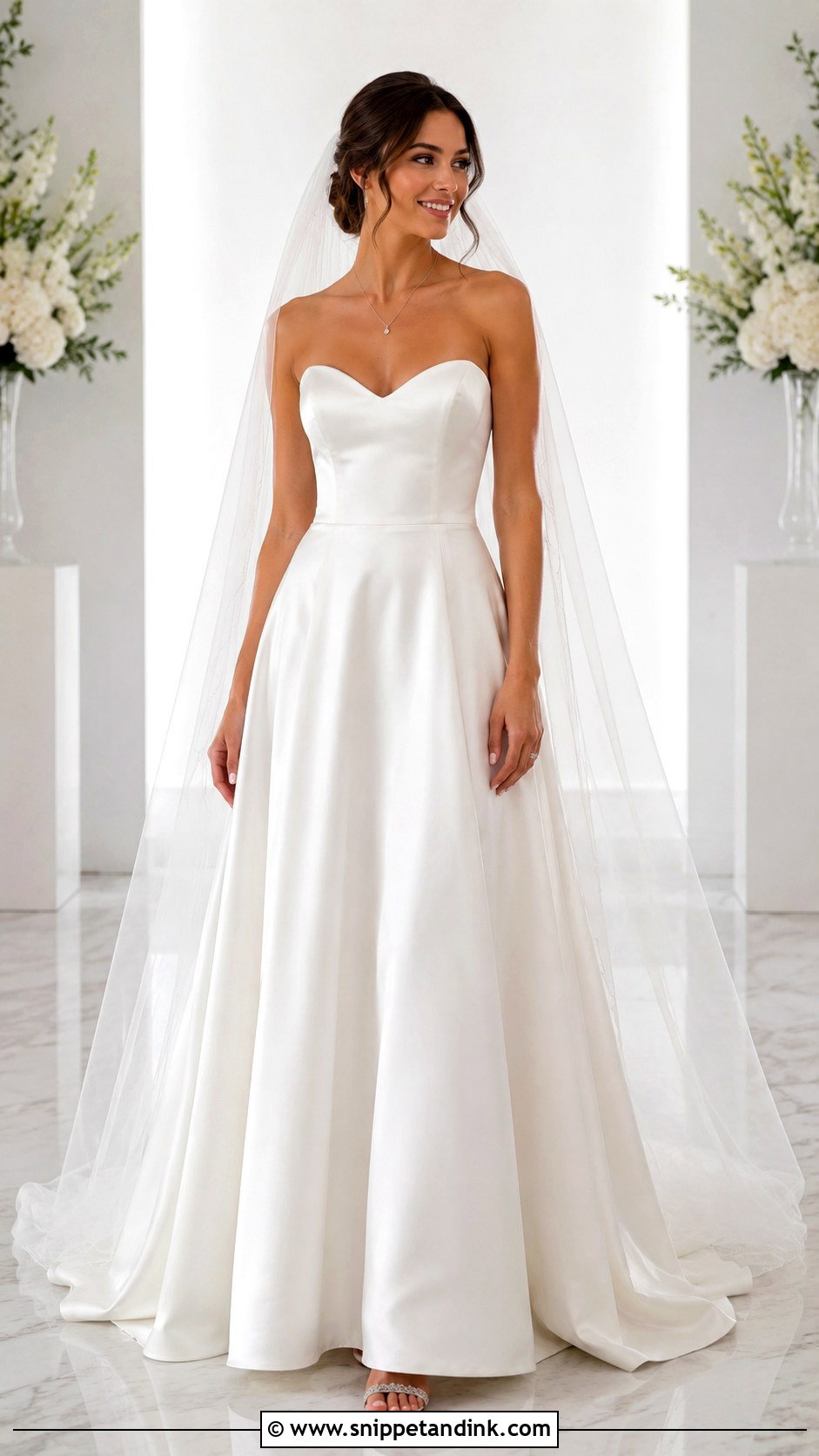
A sweetheart neckline over an A-line skirt is the most forgiving bodice on this list. The curve frames the collarbone, the fitted top flows into a skirt that widens gradually, and with the right support it suits most bust sizes. Matte satin or mikado with little embellishment keeps it classic; embroidered lace, tiny pearls or appliqués along the neckline add detail. A fine pendant works here because the open neckline leaves room for it. Low crystal heels, a chapel veil and a softly waved updo or polished bun complete it. Look hard at the centre dip. If it lifts away from the breastbone when you breathe in, it needs taking in there, and detachable off-the-shoulder straps add security without changing the look.
4. Illusion Lace Bodice Wedding Dress
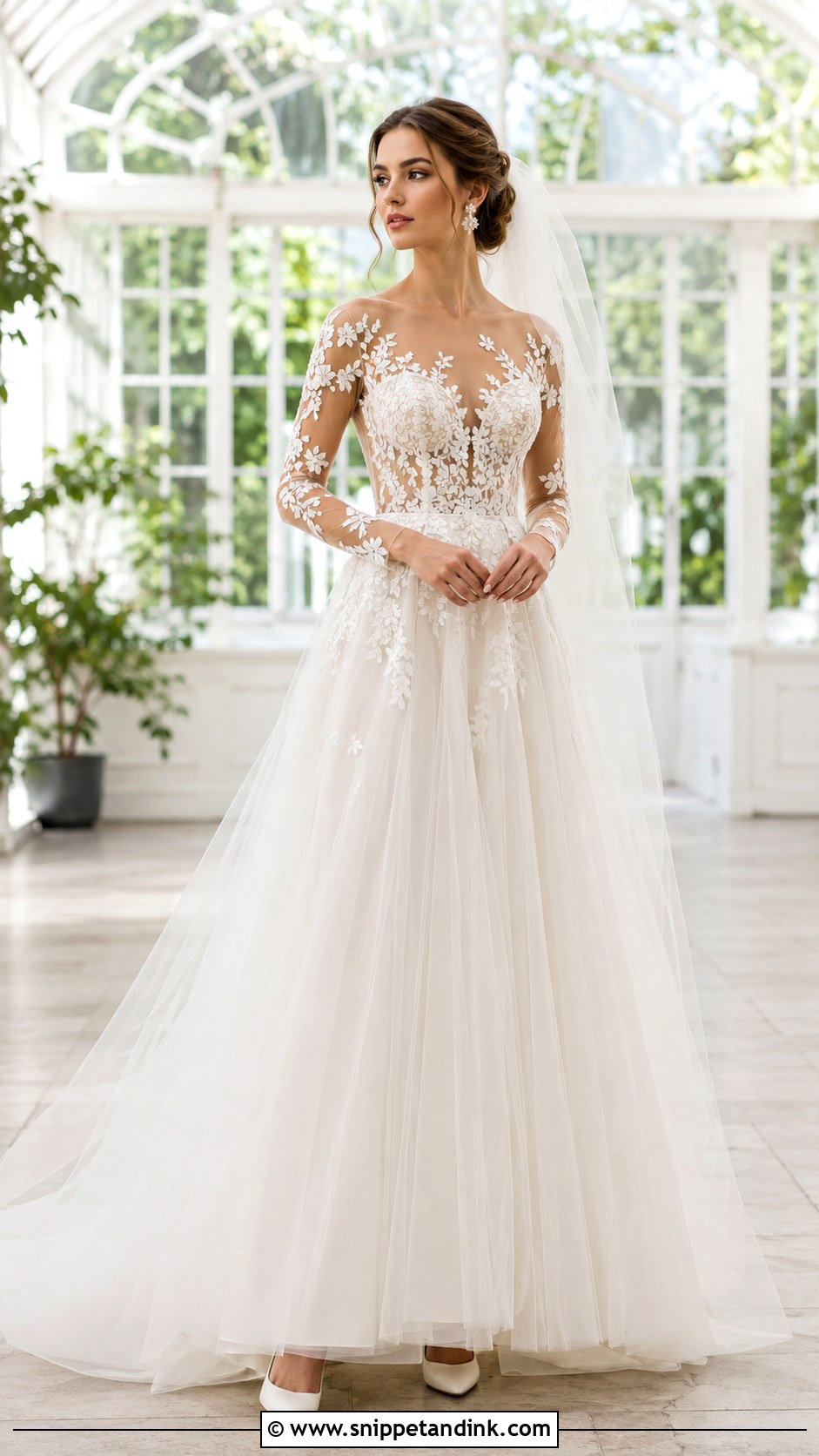
An illusion lace bodice makes appliqués look as if they’re floating on skin. Sheer mesh can form the neckline, back or sleeves and gives far more coverage than strapless. The mesh has to be close to your skin tone, otherwise the illusion fails and you just see a panel. A flowing chiffon or layered tulle skirt balances the detail. Closed-toe pumps, floral earrings and a sheer veil without heavy edging keep the accessories out of the lace’s way. Look at the mesh in daylight and indoor light. Mesh puckers easily at the armholes when a bodice is taken in, so ask your seamstress how she’ll adjust the fit without distorting the sheer panels.
5. Off-the-Shoulder Draped Bodice Wedding Dress
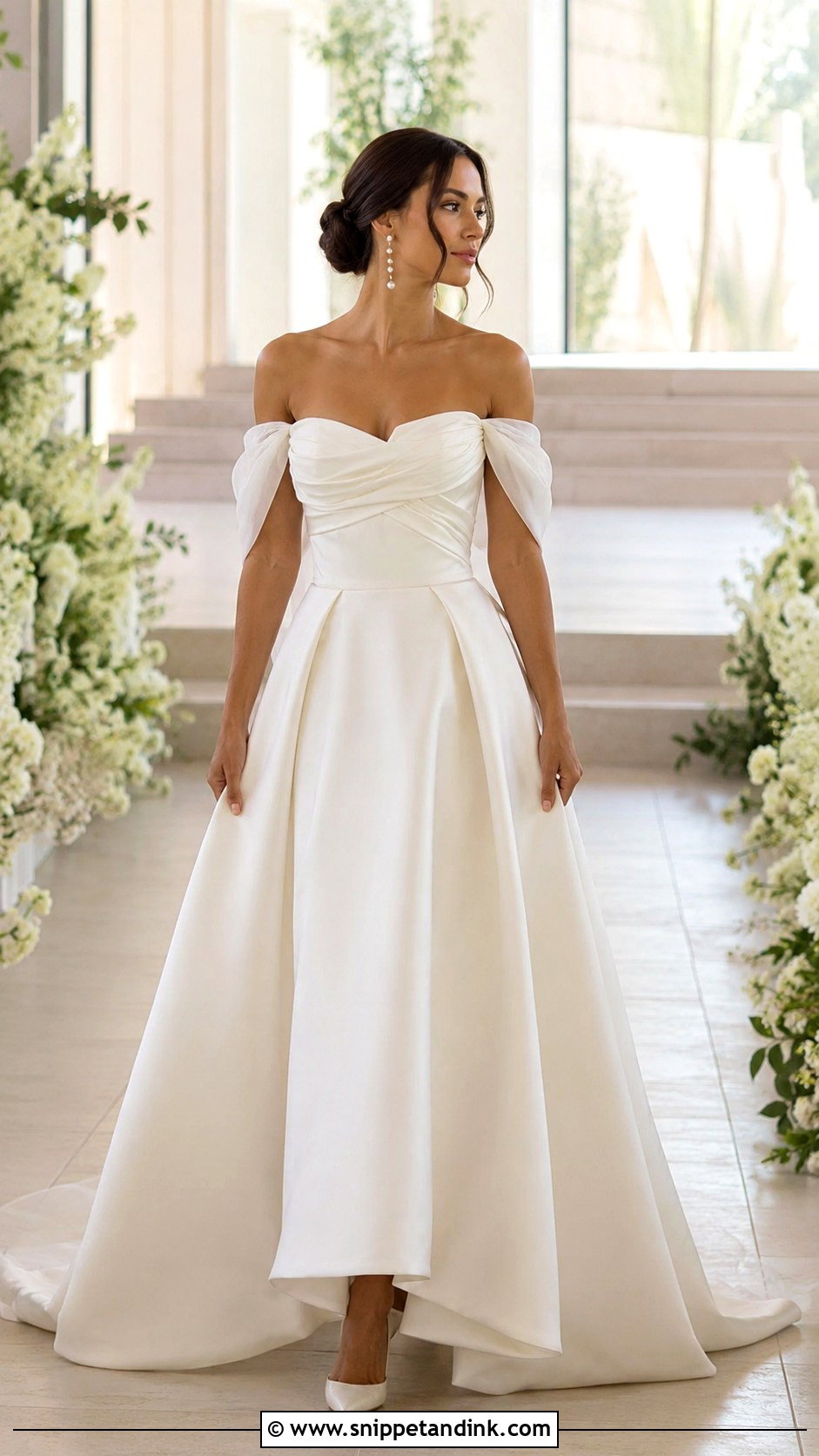
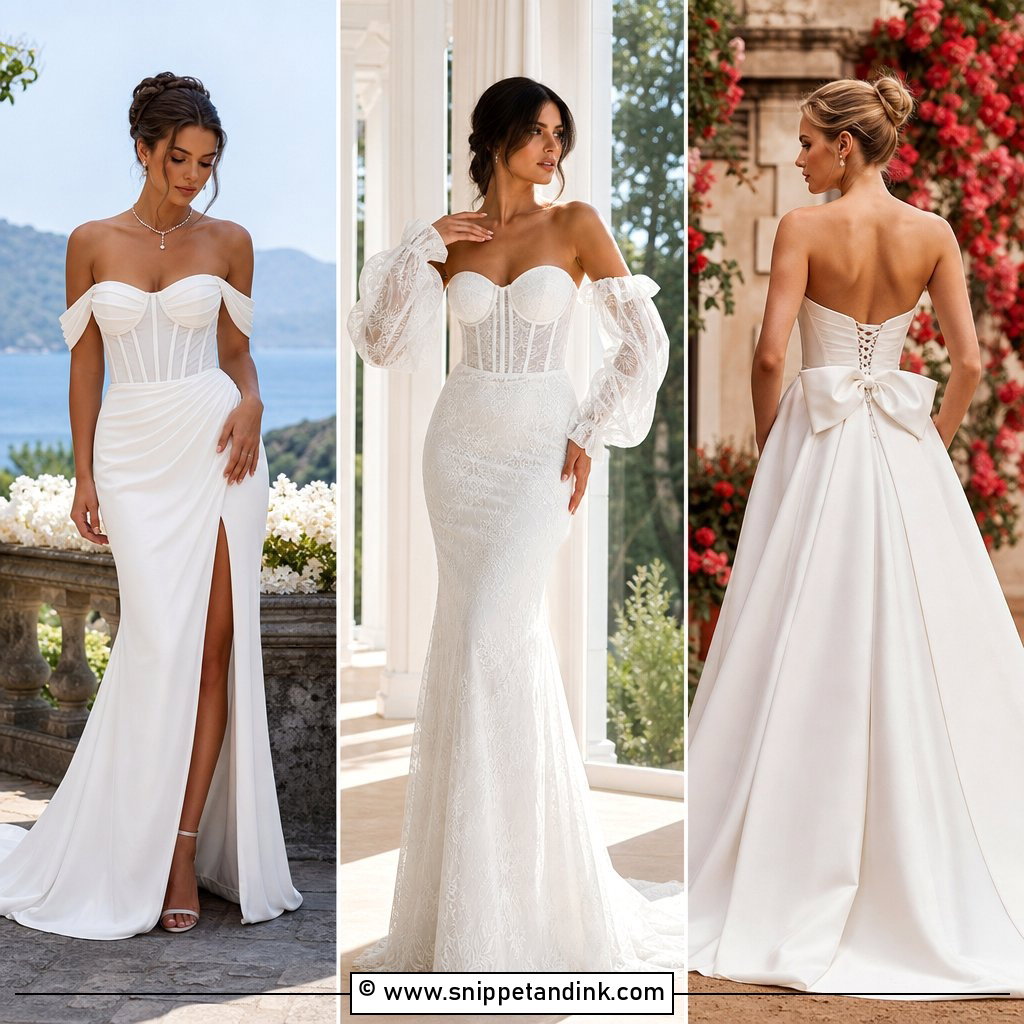
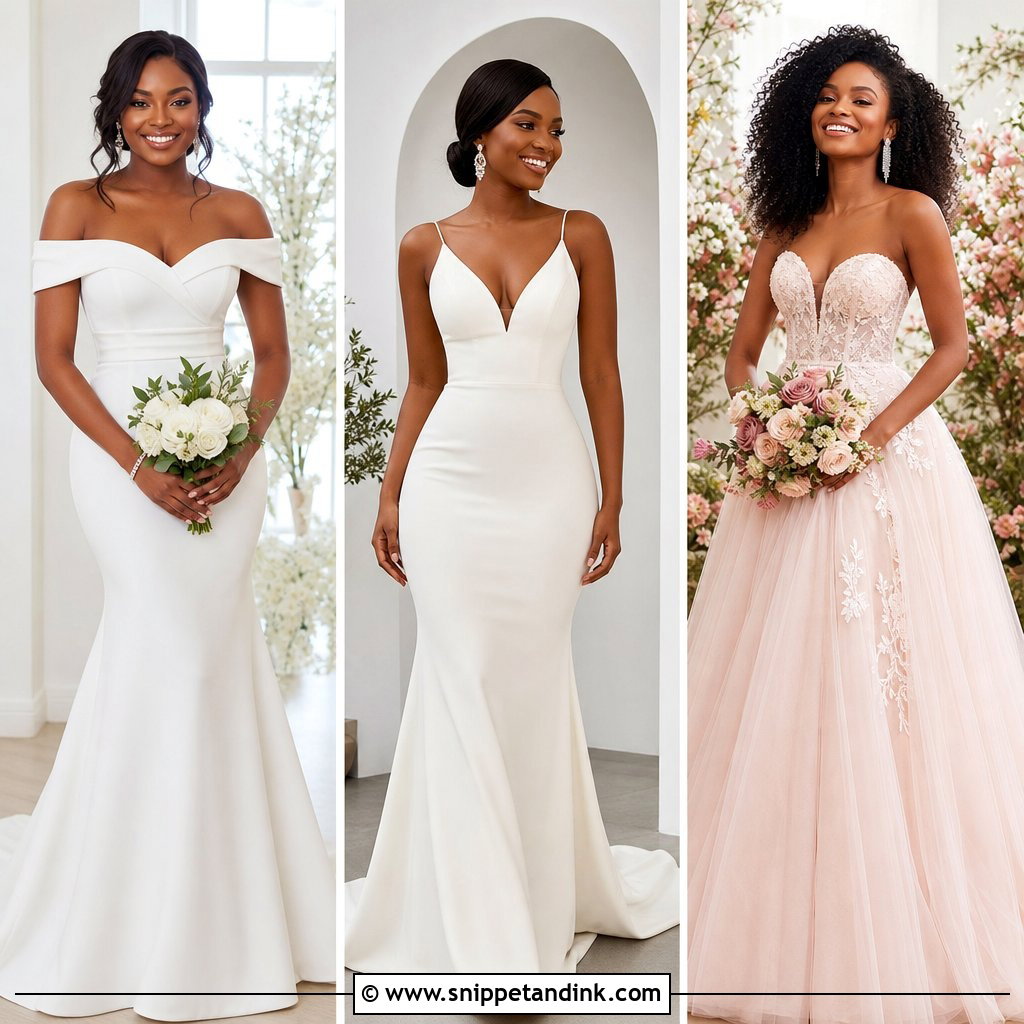
Drape does the decorating on an off-the-shoulder bodice. Soft folds of satin, crepe or tulle cross the front and run into sleeves that sit below the shoulders. A structured A-line balances it; a slim fit-and-flare makes it more sculpted. Long drop earrings, a low chignon and pointed satin heels suit it, with no necklace if the drape already frames the collarbone. Here’s the catch: sleeves resting on the upper arm hold your arms down. You’ll feel it the first time you try to hug someone, so practise reaching and dancing at the fitting. Detachable draped sleeves let you wear the neckline for the ceremony and take it off for the party.
6. Square Neck Bodice Wedding Dress
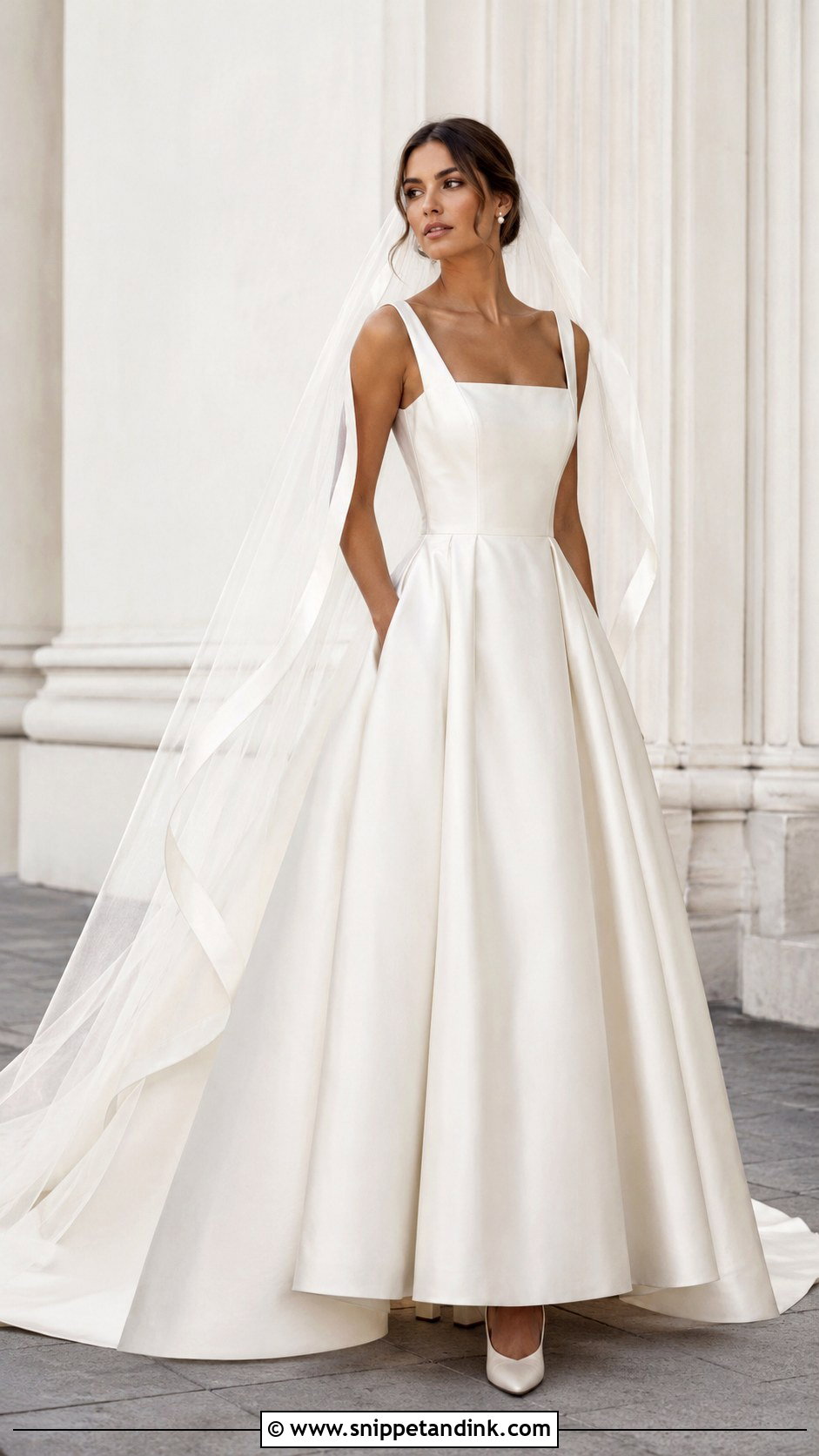
A square neckline looks architectural. Wide straps, princess seams and a smooth fabric like mikado, satin or structured crepe suit it best, over a full pleated skirt for a formal room or a streamlined A-line for a quieter feel. Pearl studs, a sleek bun, block-heel pumps and a cathedral veil with a narrow satin edge finish it. There’s room for a short necklace, though I think it looks more modern bare. Corners are the fitting challenge. Each one should lie flat, and if a corner lifts or caves in, the fix is usually at the side seams rather than the neckline itself. Check, too, that the straps don’t press into your shoulders.
7. High Neck Lace Bodice Wedding Dress
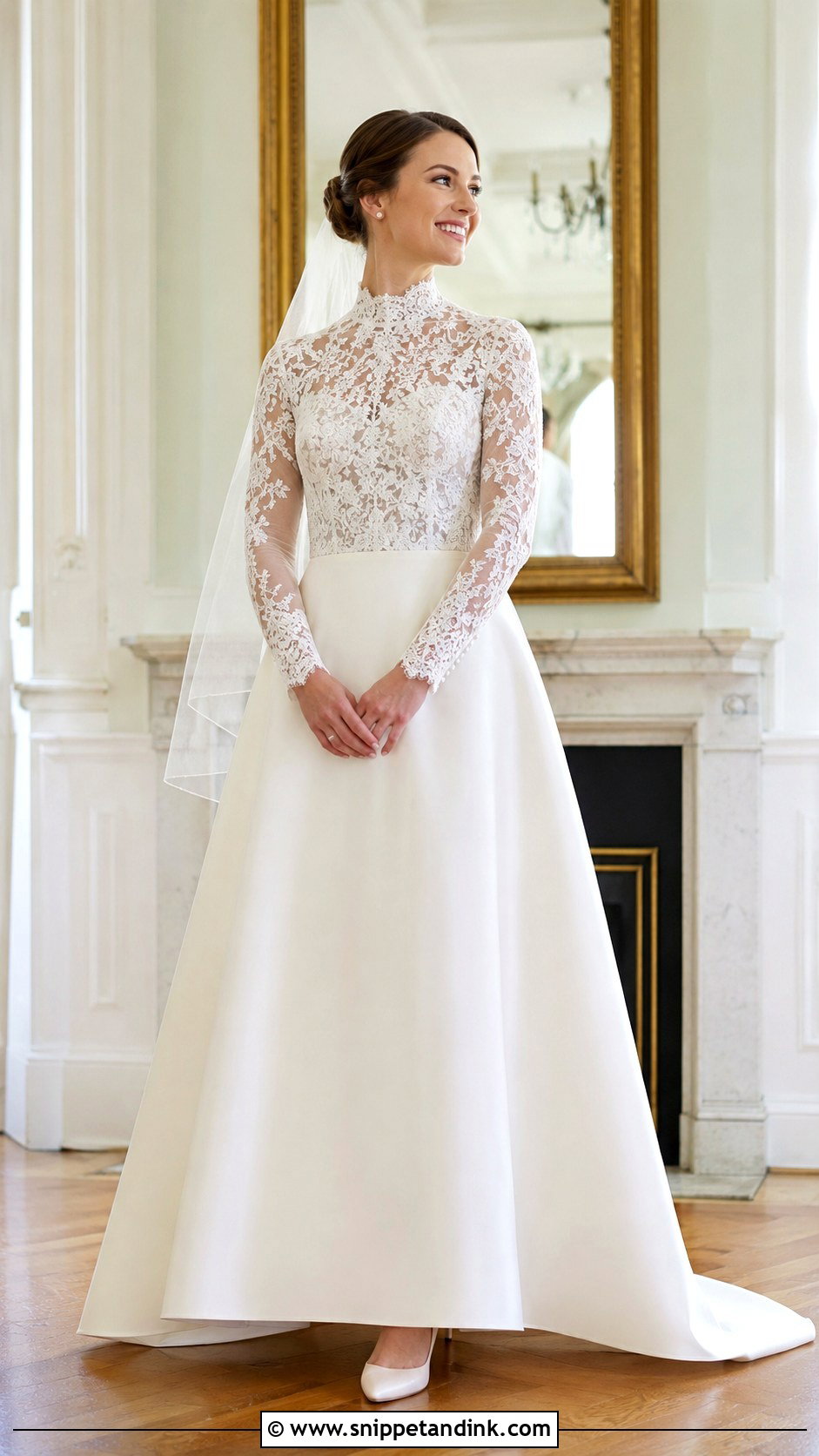
High necks give coverage while staying light, provided the lace is fine. I’d choose delicate Chantilly-inspired lace over illusion mesh rather than anything stiff around the throat. A fitted bodice and soft A-line skirt balance the proportions, and long sheer sleeves add a classic finish. Pearl buttons, low satin pumps, a neat bun and a veil attached below the hairstyle complete it. No necklace, just small pearl or diamond earrings. In the fitting room, turn your head side to side and look down at your feet; the collar shouldn’t rub or ride up. A row of covered buttons or a discreet back opening makes dressing much easier.
8. Scoop Neck Satin Bodice Wedding Dress
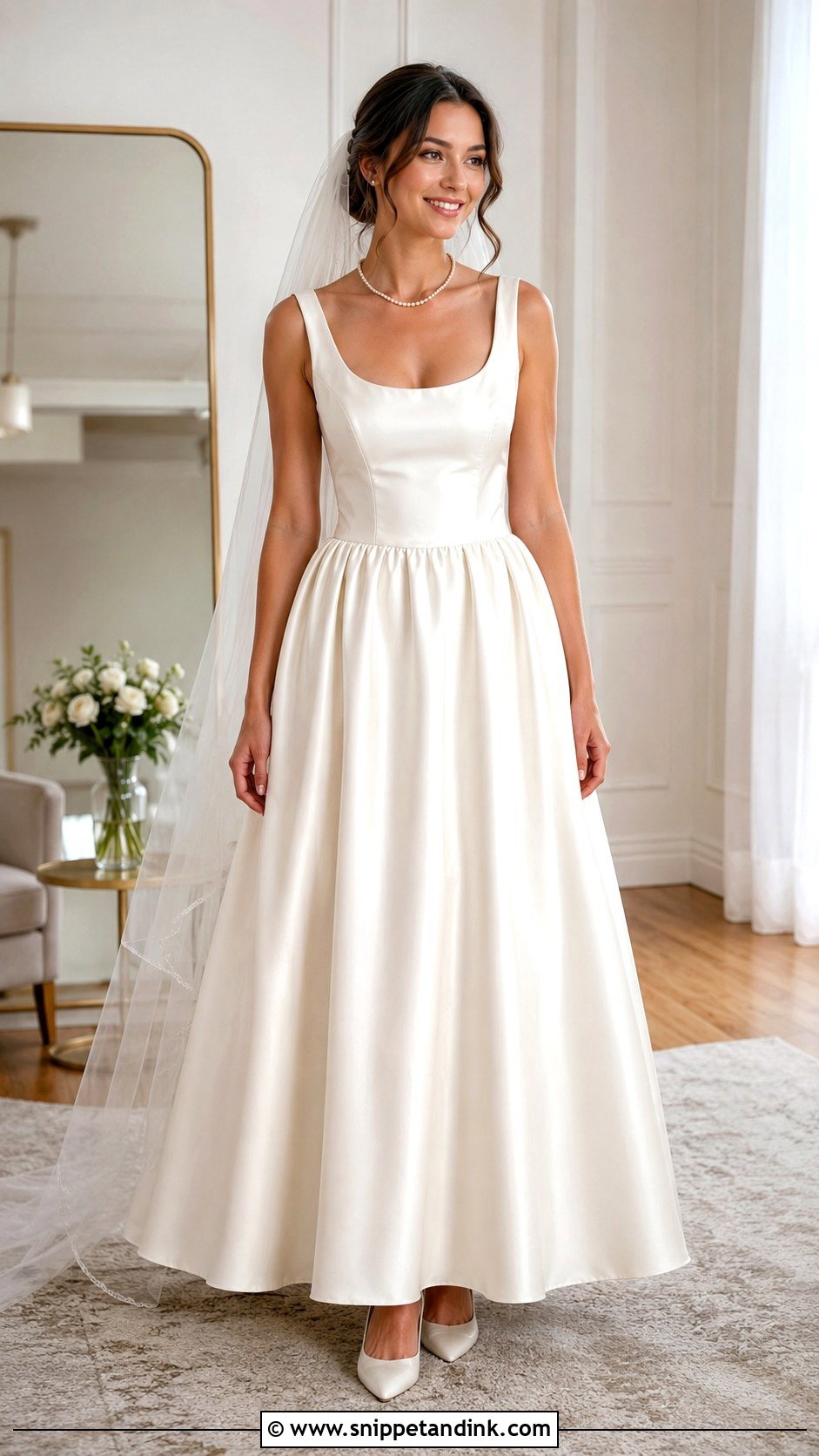
Scoop necks are soft without being fussy. The rounded line shows the collarbone and suits wide straps or short sleeves. Smooth satin with curved seams makes a simple gown over a softly gathered ball skirt or a clean A-line. This is one bodice where a short strand of pearls genuinely works, with classic pumps and a sheer chapel veil, and a small structured bag is handy for getting-ready portraits. Support under the bust is what stops a scoop from moving. Without it, the neckline gapes every time you lean over to sign the register or reach for a glass, so lean and sit in front of the mirror before signing off.
9. Sheer Long Sleeve Bodice Wedding Dress
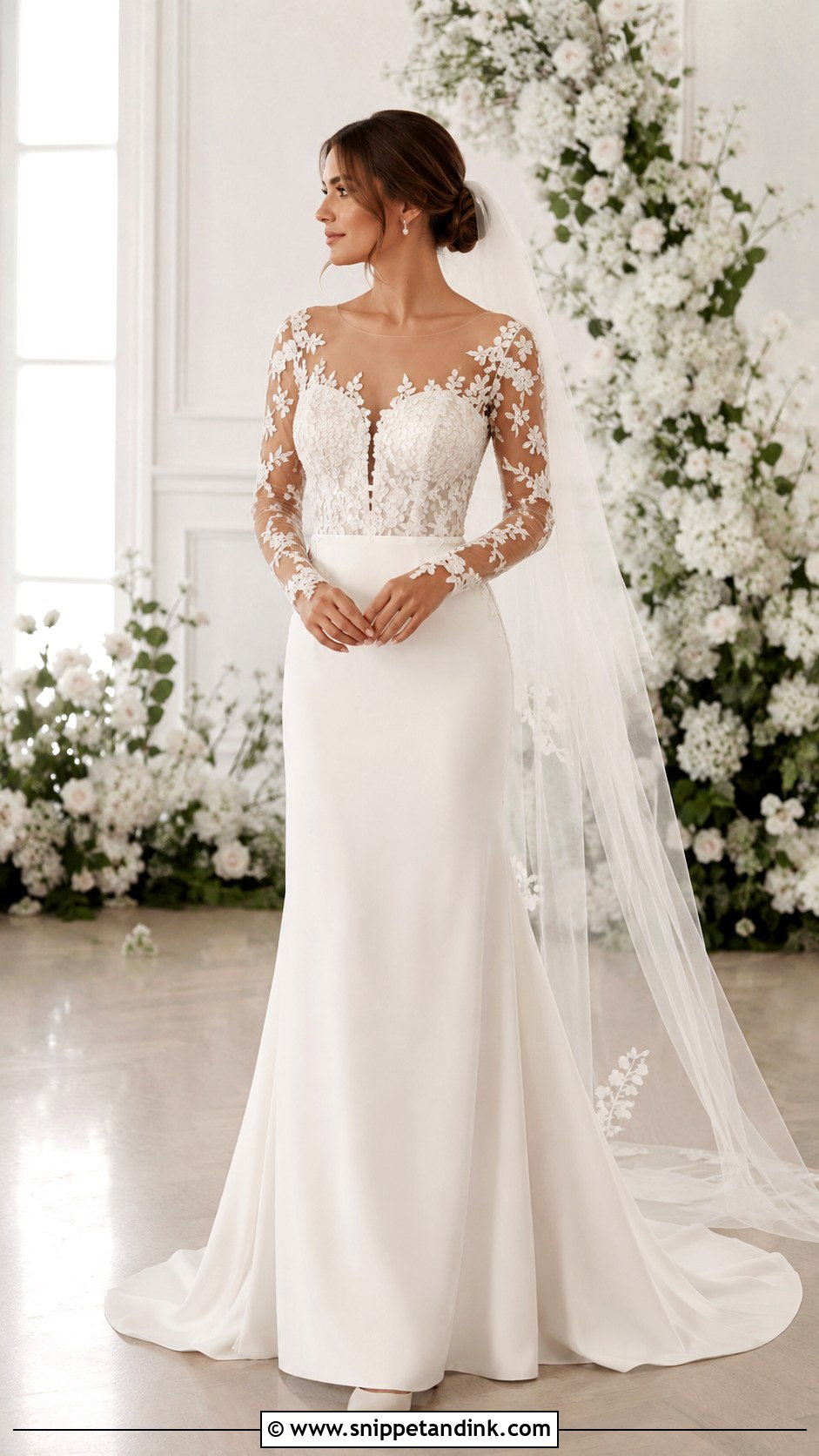
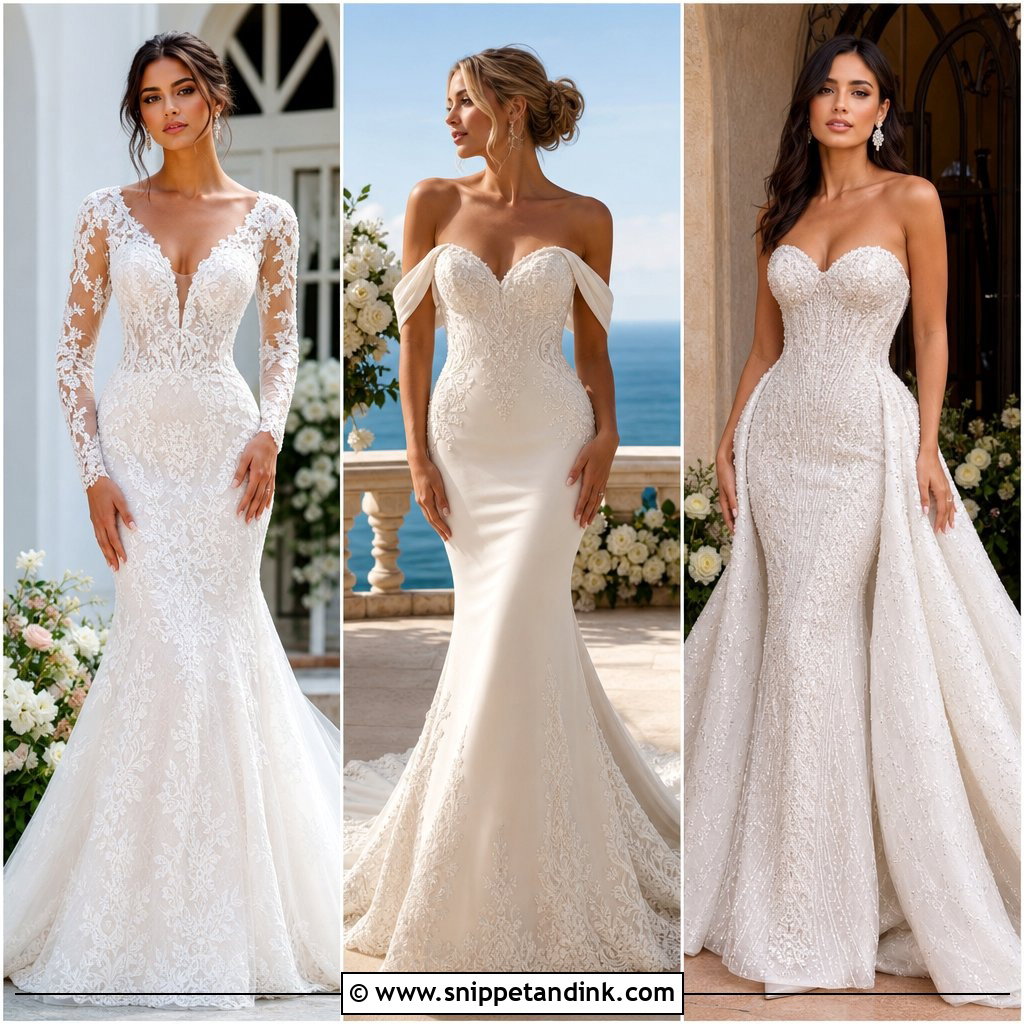
Sheer long sleeves are made for cool weather and formal venues. Fine illusion mesh covered in lace, beads or appliqués gives coverage without visual weight. Contrast it with a plain crepe skirt, or carry the lace down onto a flowing A-line. Closed-toe heels, understated earrings and a light veil under a low bun finish it. Bend your elbows and wrists at the fitting, because embellishment at the inner elbow is where scratching and catching start. A tailor can narrow the sleeves or trim appliqués back from the hands. If the day might turn warm, choose breathable mesh and skip unnecessary lining through the whole bodice.
10. Beaded Bodice Mermaid Wedding Dress
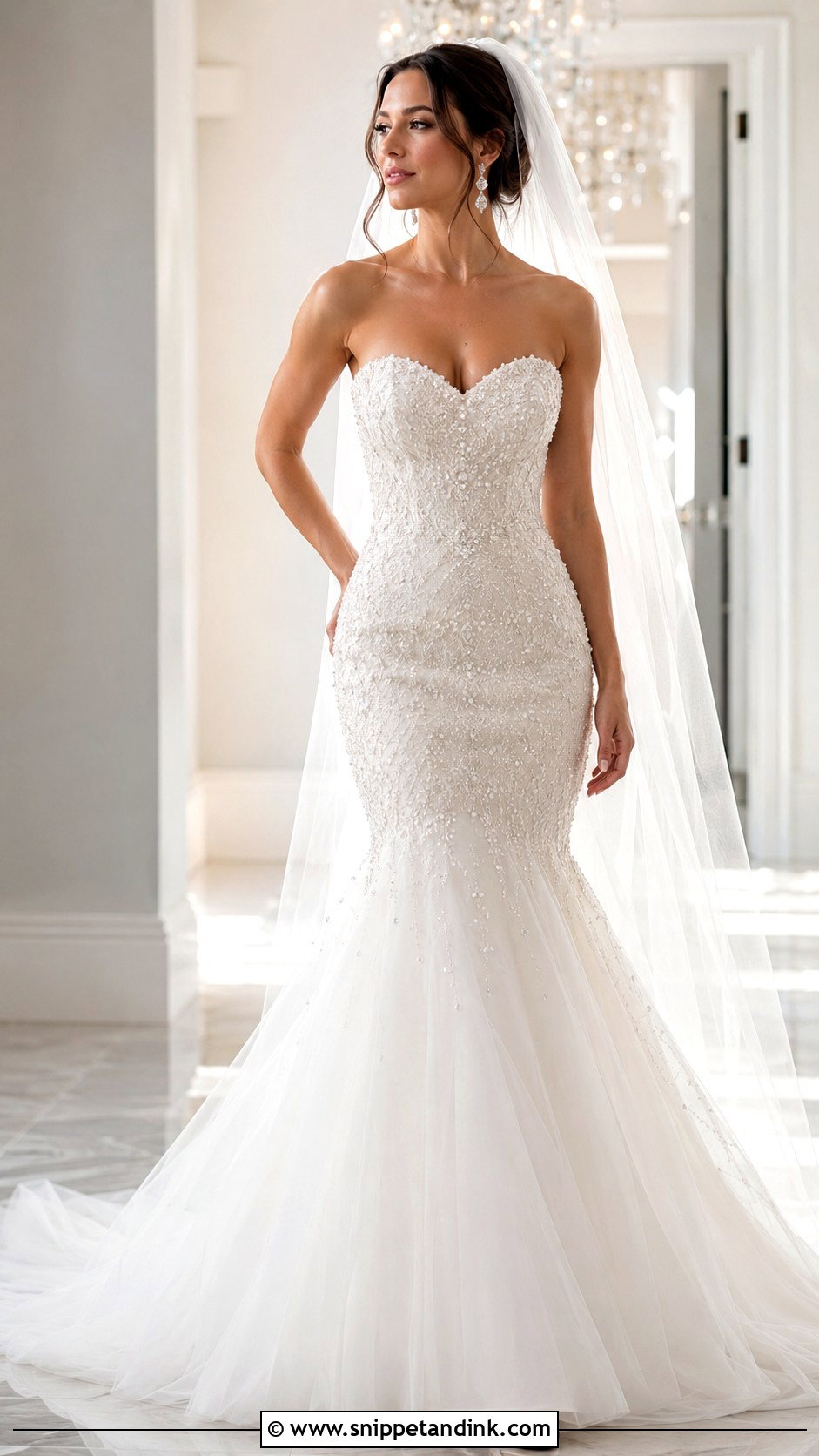
Beading on a mermaid bodice adds sparkle to an already long, defined shape. The placement I like best is concentrated at the neckline and waist, then fading toward the hips, so the embellishment flows into the skirt rather than stopping at a hard line. Pair it with a flared crepe, tulle or satin skirt and a manageable sweep train. Metallic or crystal drops, simple heels and a plain veil avoid clutter. Lift the dress off the hanger before you fall for it. Heavy beadwork feels very different at hour six than at minute five, and smooth lining, secure boning and finished armholes are what make it wearable. Drag the veil across the beads to check for snags.
11. Floral Appliqué Bodice Wedding Dress
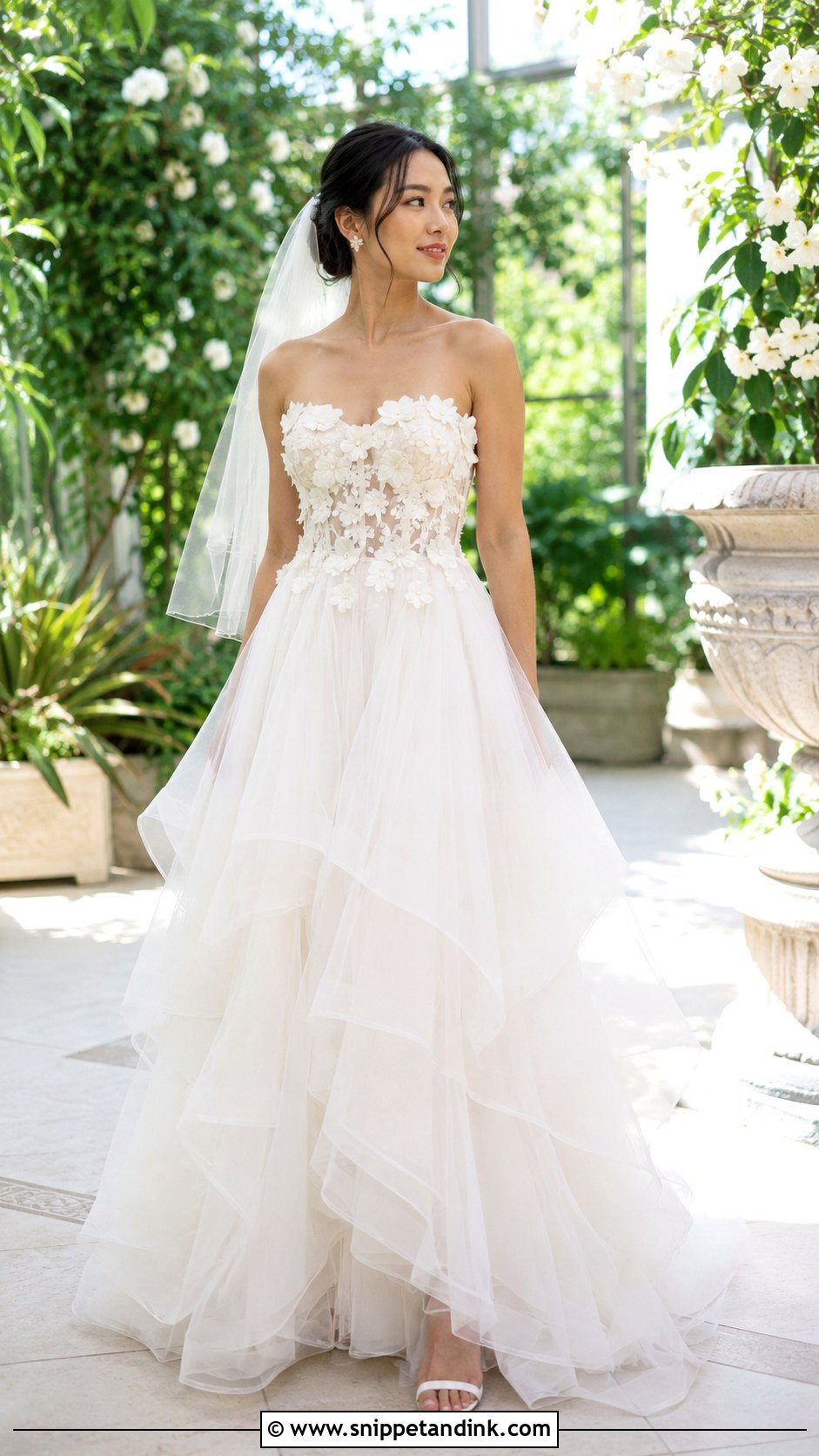
Dimensional flowers make an appliqué bodice romantic from every angle. The best versions begin around the neckline and scatter gradually onto a tulle skirt, bridging top and bottom. Strapless or sleeveless keeps the flowers from overwhelming you, and a soft layered A-line keeps the whole thing airy. Floral studs, ivory sandals and a plain veil let the texture show, and a simple bouquet shape avoids competing with it. Run your fingers along each appliqué’s edges at alterations. Flowers at the waist, underarms and zipper get bent and caught the most, and a lifted petal there is easy to tack down before the day and hard to fix during it.
12. Ruched Bodice Ball Gown Wedding Dress
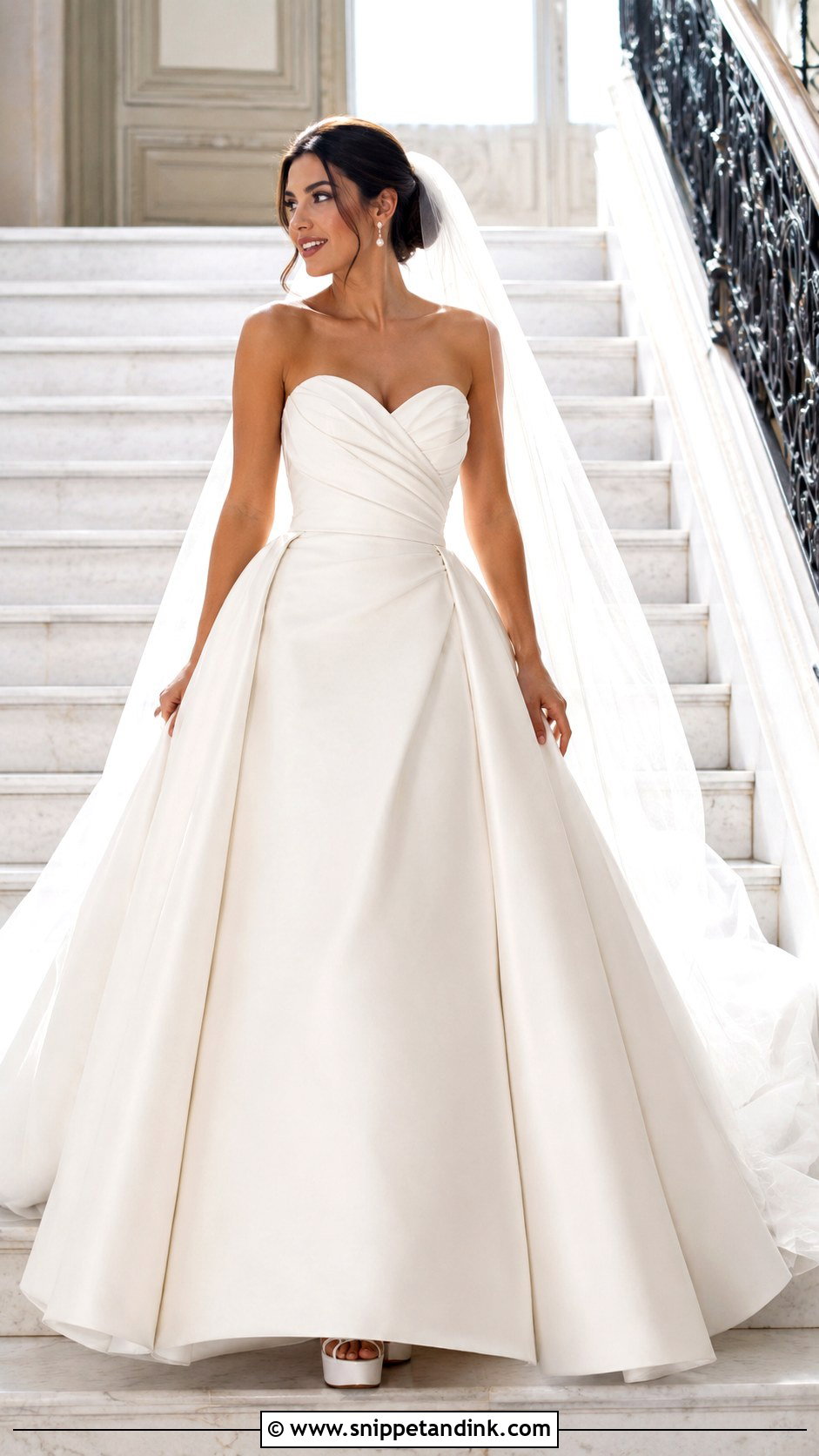
A ruched bodice ball gown pairs soft texture with a grand skirt. Diagonal or crossed folds define the waist and give satin, chiffon or tulle movement. A strapless sweetheart neckline feels romantic, a gently scooped one cleaner. The skirt should begin smoothly at the waist without bunching. Pearl drops, platform bridal shoes and a simple cathedral veil finish it. Ruching should look deliberate, never loose. The folds are usually stitched over a firm inner foundation, and when a gown is taken in they can shift or crowd together, so check the front and both sides after every alteration.
13. Asymmetrical Bodice Wedding Dress
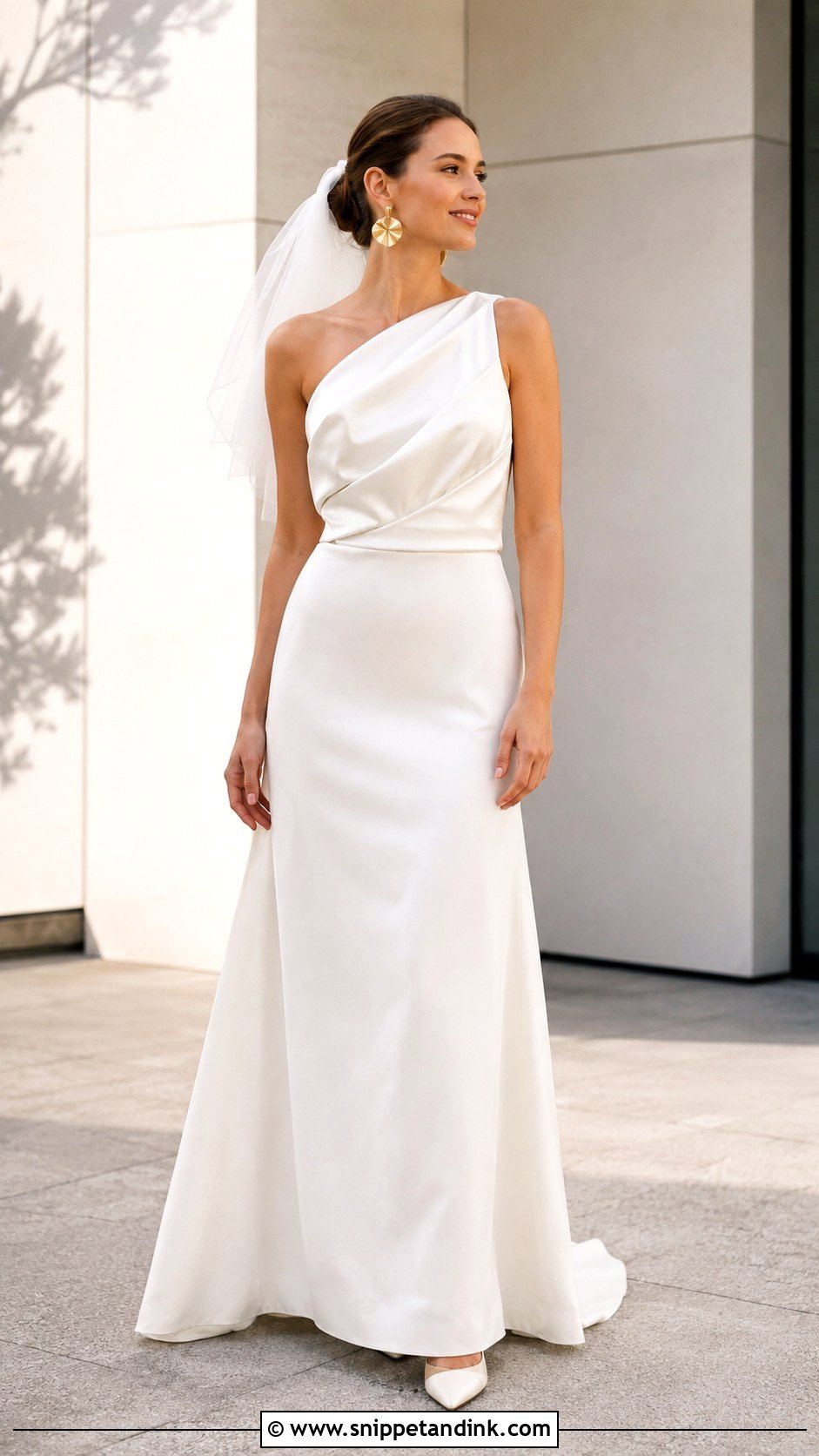
Asymmetry modernises a bodice. A one-shoulder cut, diagonal draping or an angled folded panel brings movement to an otherwise minimal gown, and satin or structured crepe keeps those lines crisp. A fitted column feels sleek; a gently flared A-line is easier to walk in. Sculptural earrings, pointed pumps and a smooth low bun suit it, and a short veil or modern tulle bow beats heavy accessories. One-shoulder bodices want to rotate. With a single strap carrying the weight, the dress can twist toward that side, so balanced boning and a firm waist fit are what keep it square. Lift both arms at the fitting and watch the centre seam.
14. Halter Bodice Column Wedding Dress
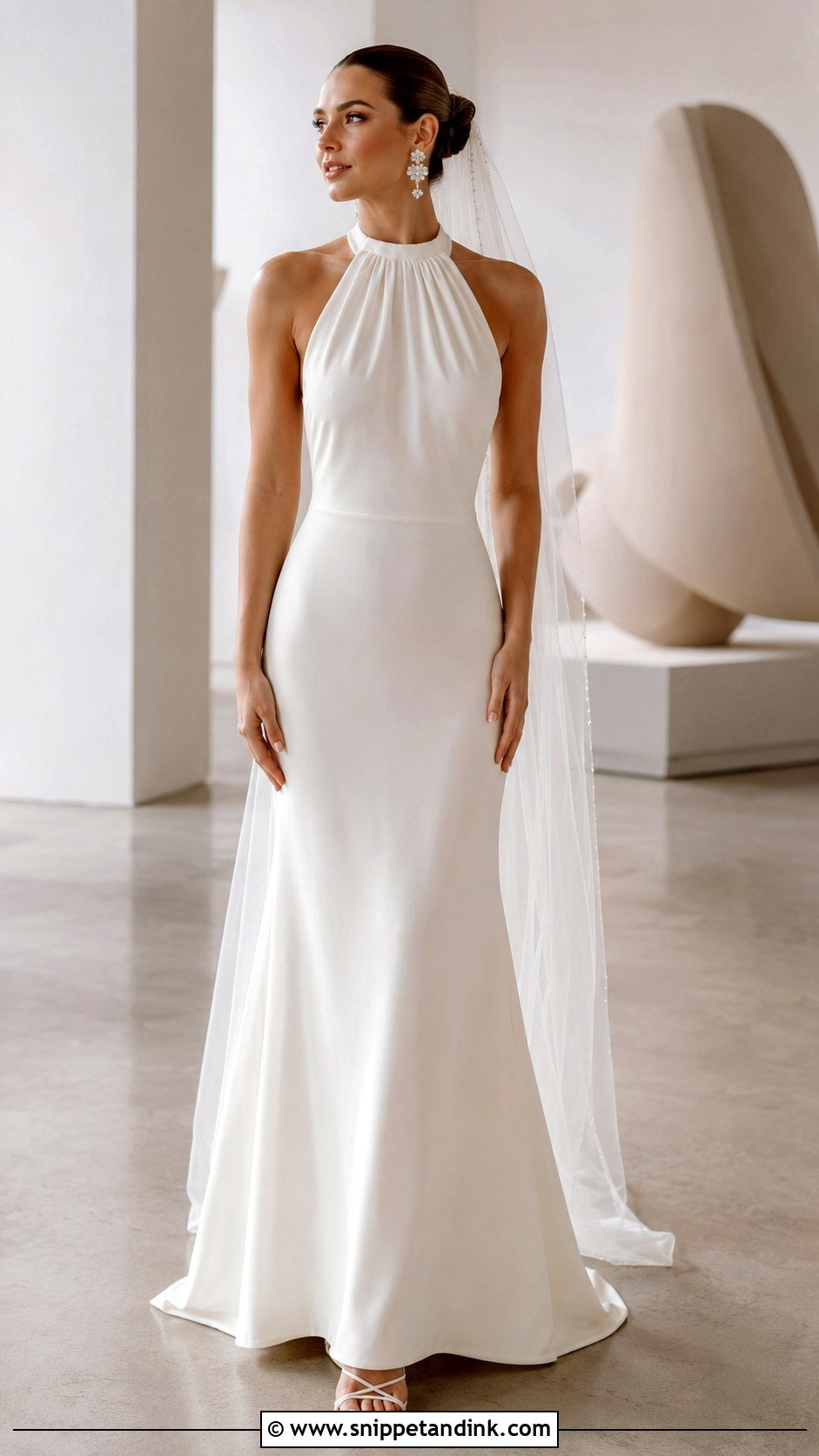
A halter column draws one long line from neck to hem. The halter itself can be draped, gathered or cut as a clean band, and fluid crepe or satin should skim the body rather than cling. An open back adds contrast while the front stays polished. Statement earrings, strappy ivory heels, a sleek updo and a narrow fingertip veil, with nothing at the neck. Halters hang weight from the back of the neck, which can leave you with a sore neck by evening if the bodice isn’t carrying its share. Check that pressure, and make sure the armholes aren’t cut so low that the side of the bust shows. Built-in cups solve the strap question.
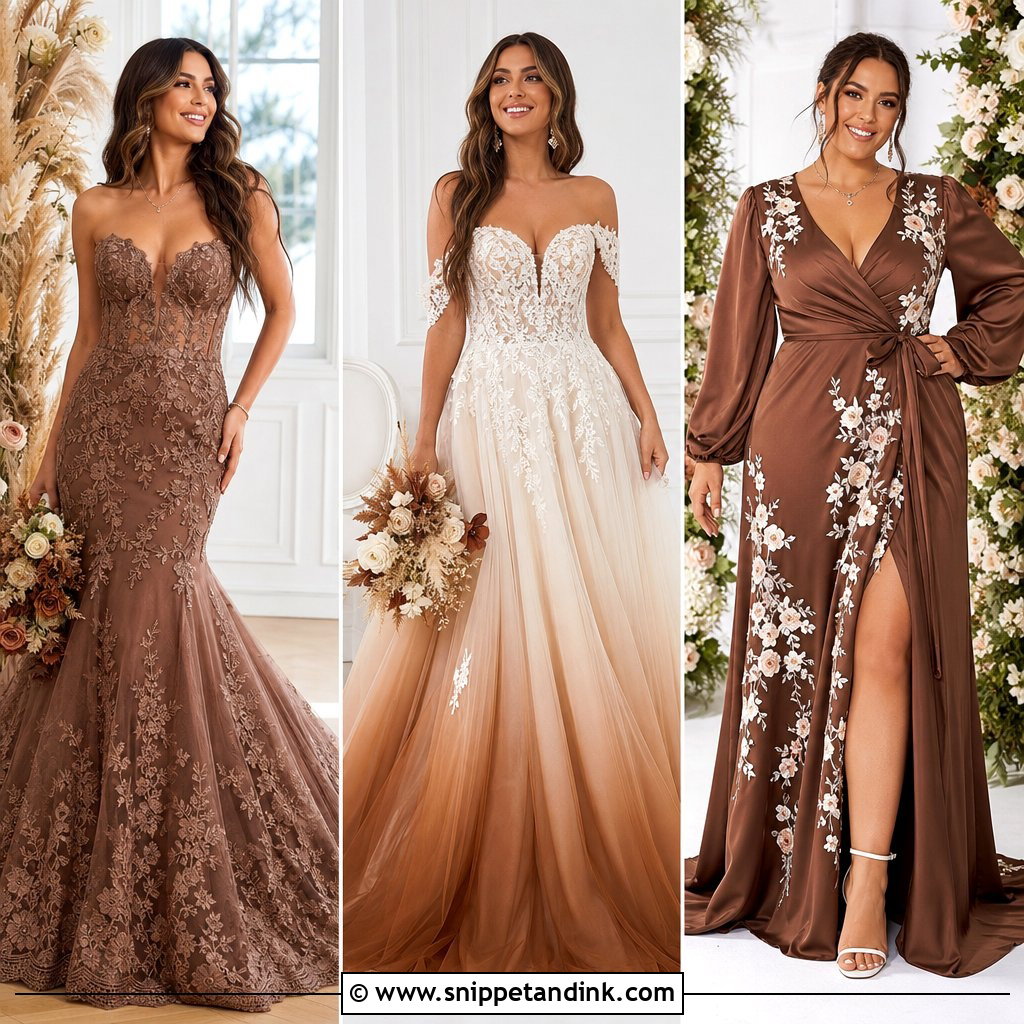
15. Plunging V-Neck Bodice Wedding Dress
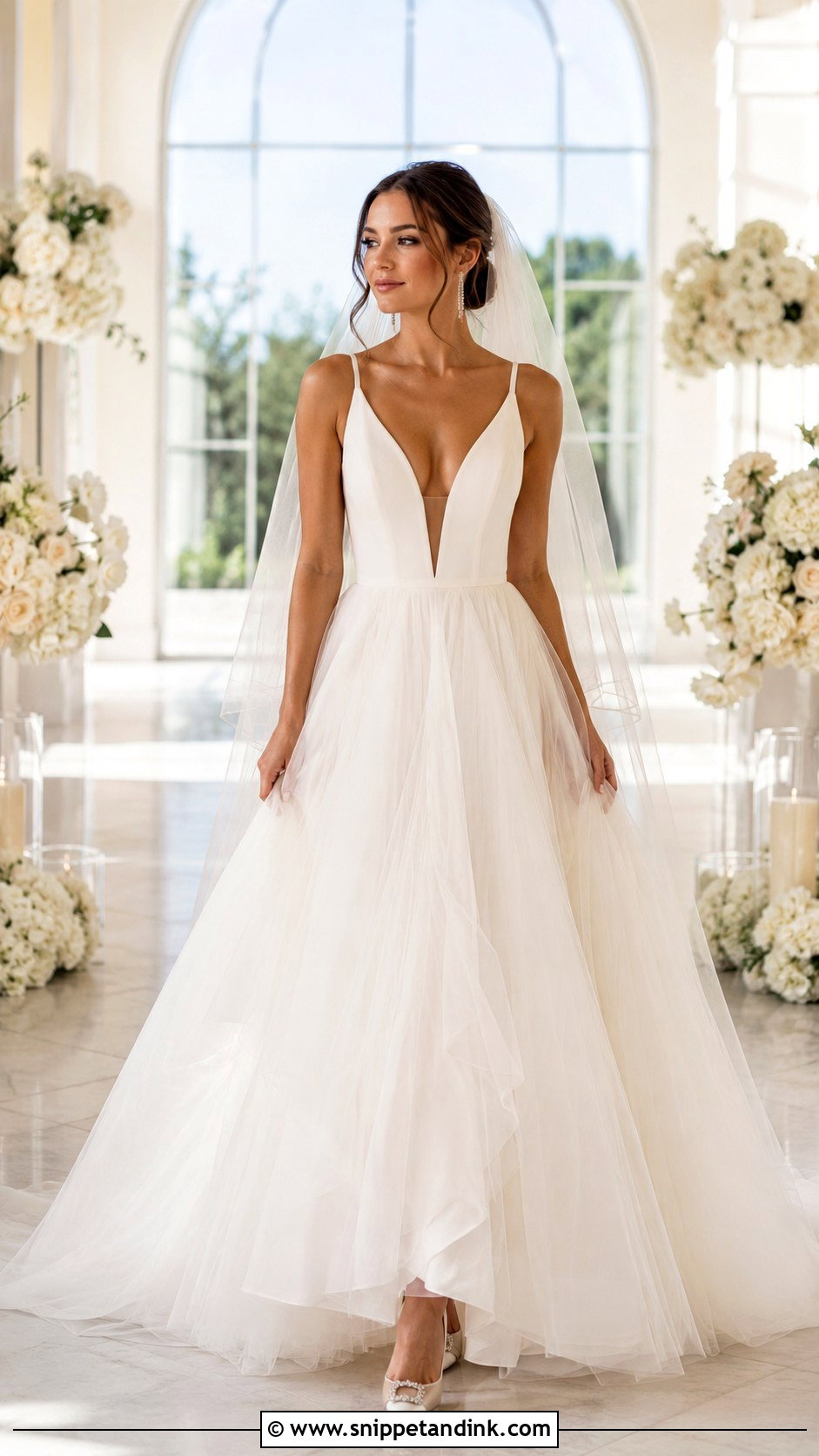
A plunging V-neck bodice wedding dress makes a strong statement and, built properly, still supports well. Look for illusion mesh through the centre, firm side panels and internal boning that holds the V where it belongs. A full A-line or soft layered tulle skirt balances the sharp line. Long earrings, pointed heels and a minimally embellished veil finish it; a necklace would only break the line. For more coverage, a seamstress can add mesh, lace appliqués or a modesty panel. Walk, bend and sit in it. Fashion tape is a backup, not a fix, because its grip fades with body heat over a long day.
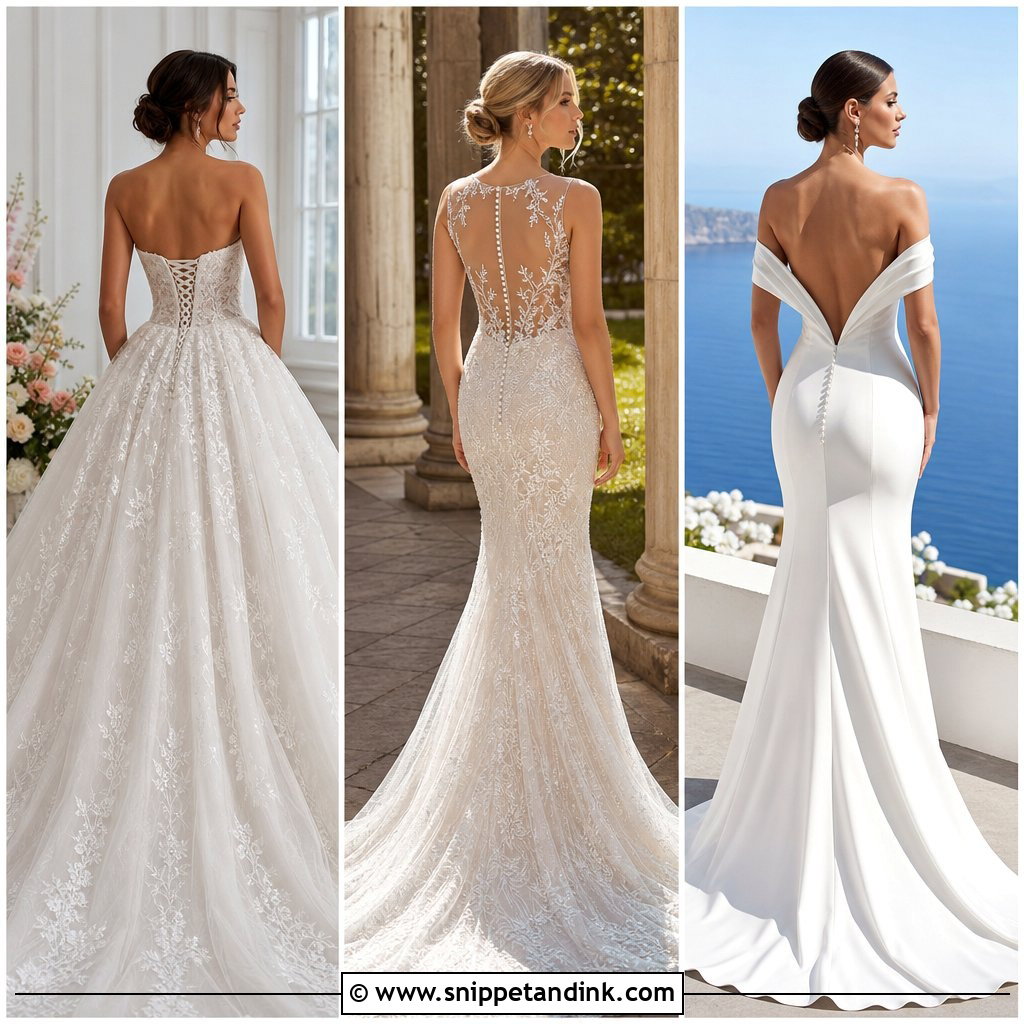
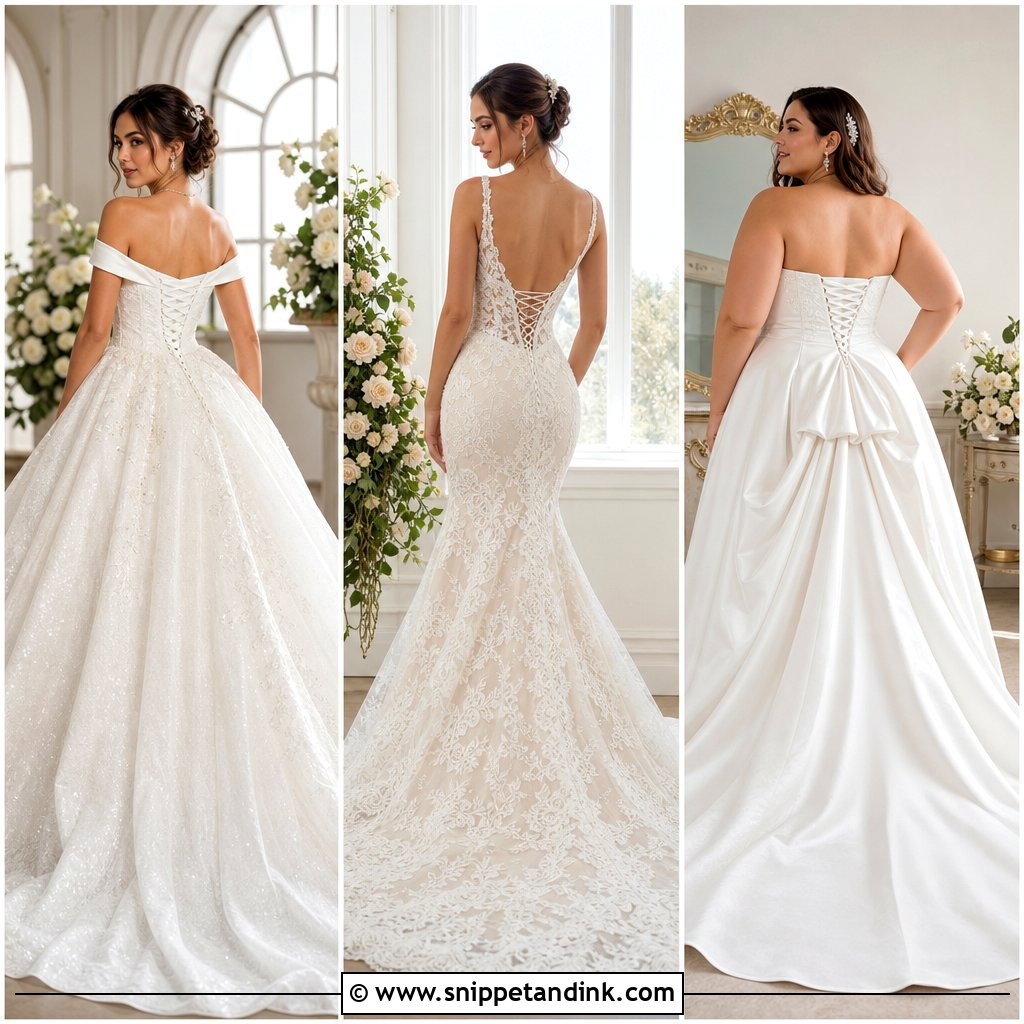
16. Corset Back Bodice Wedding Dress
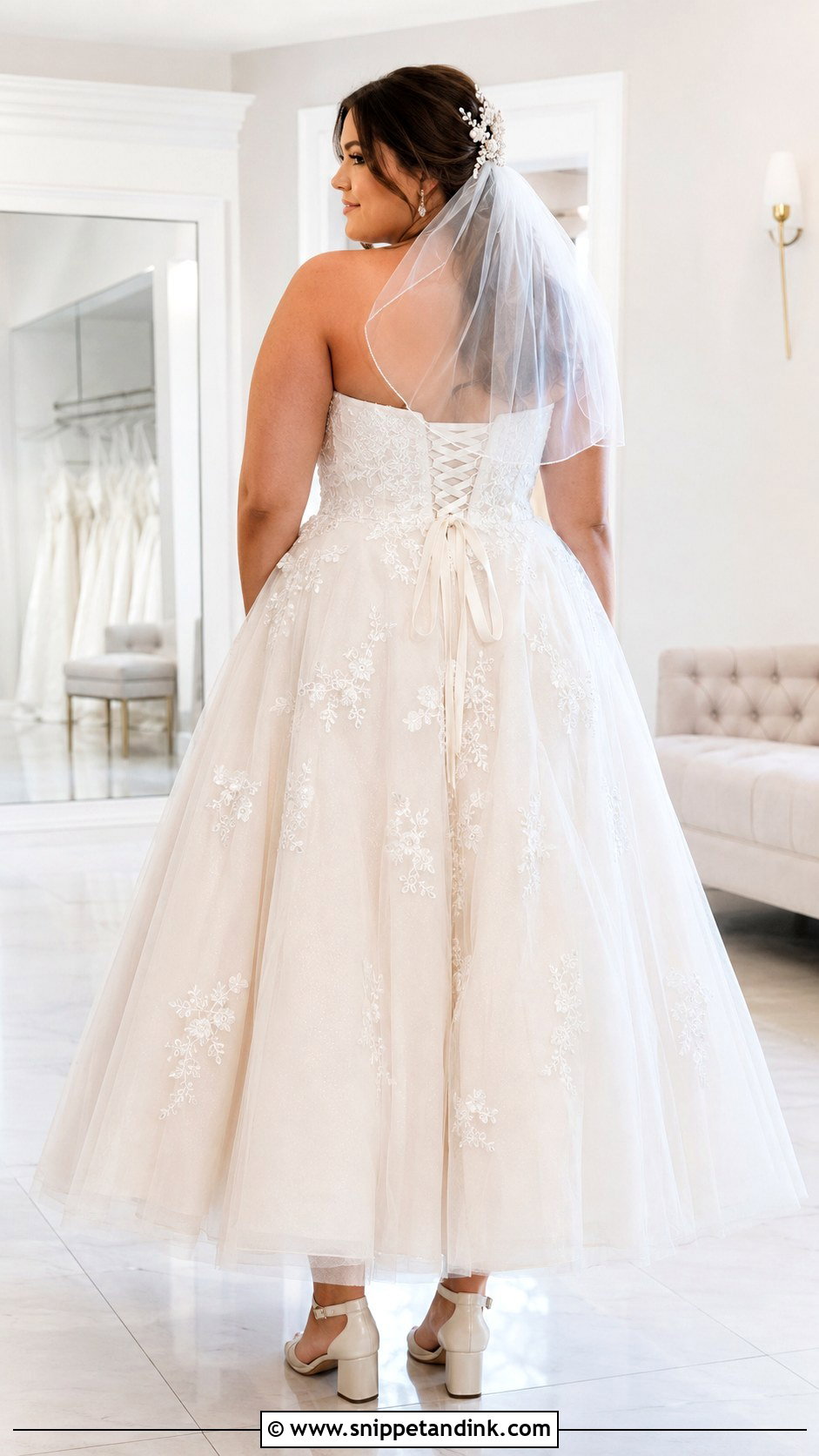
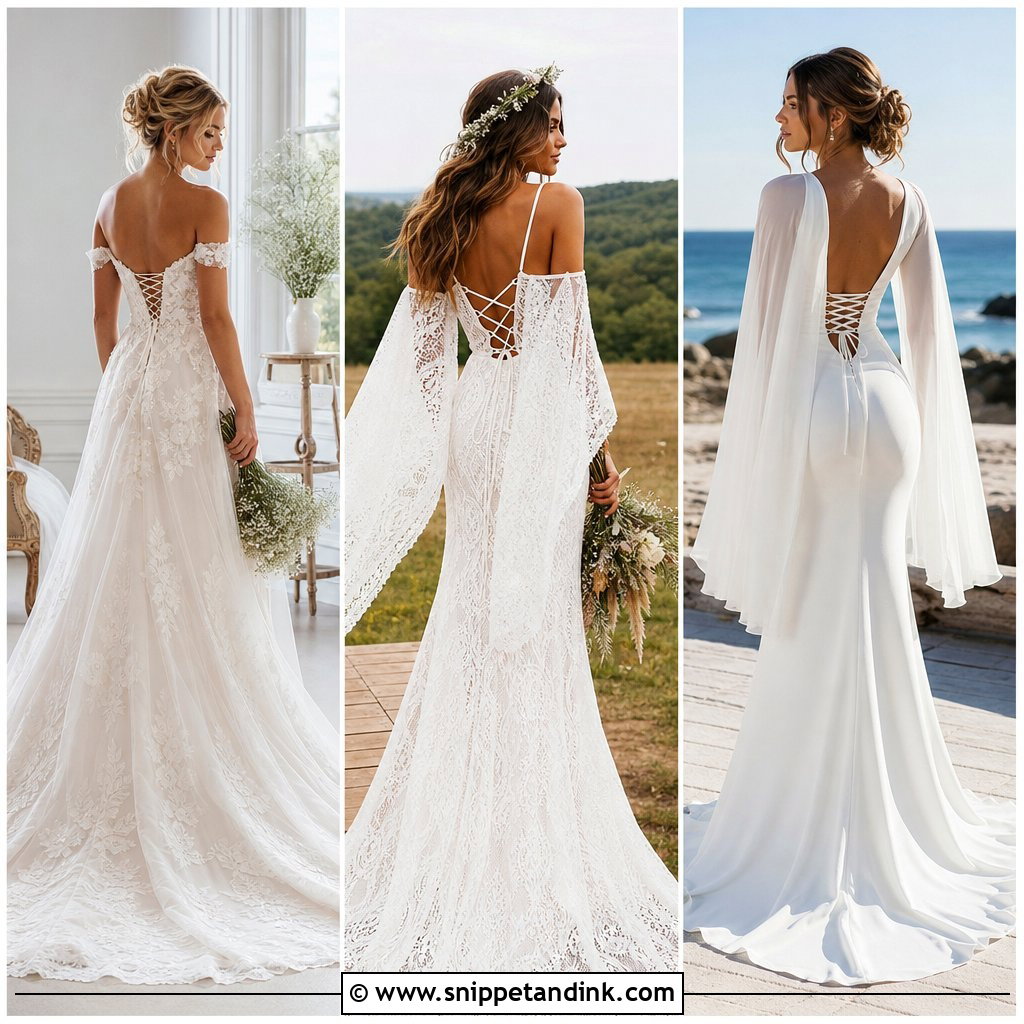
A corset back laces up, which makes it the most adjustable bodice there is. It suits sweetheart, scoop or off-the-shoulder necklines. A satin A-line keeps it classic, an embroidered tulle ball gown adds texture. Add a pearl hair comb, comfortable block heels and a veil that ends above or below the lacing so the detail stays visible. The ribbon or covered lacing should match the dress closely. Someone from the wedding party has to practise lacing you up beforehand. I show them to tighten from the waist outward with even tension, so the gaps stay parallel from top to bottom, and a modesty panel underneath gives smooth coverage.
17. Pearl Bodice Wedding Dress
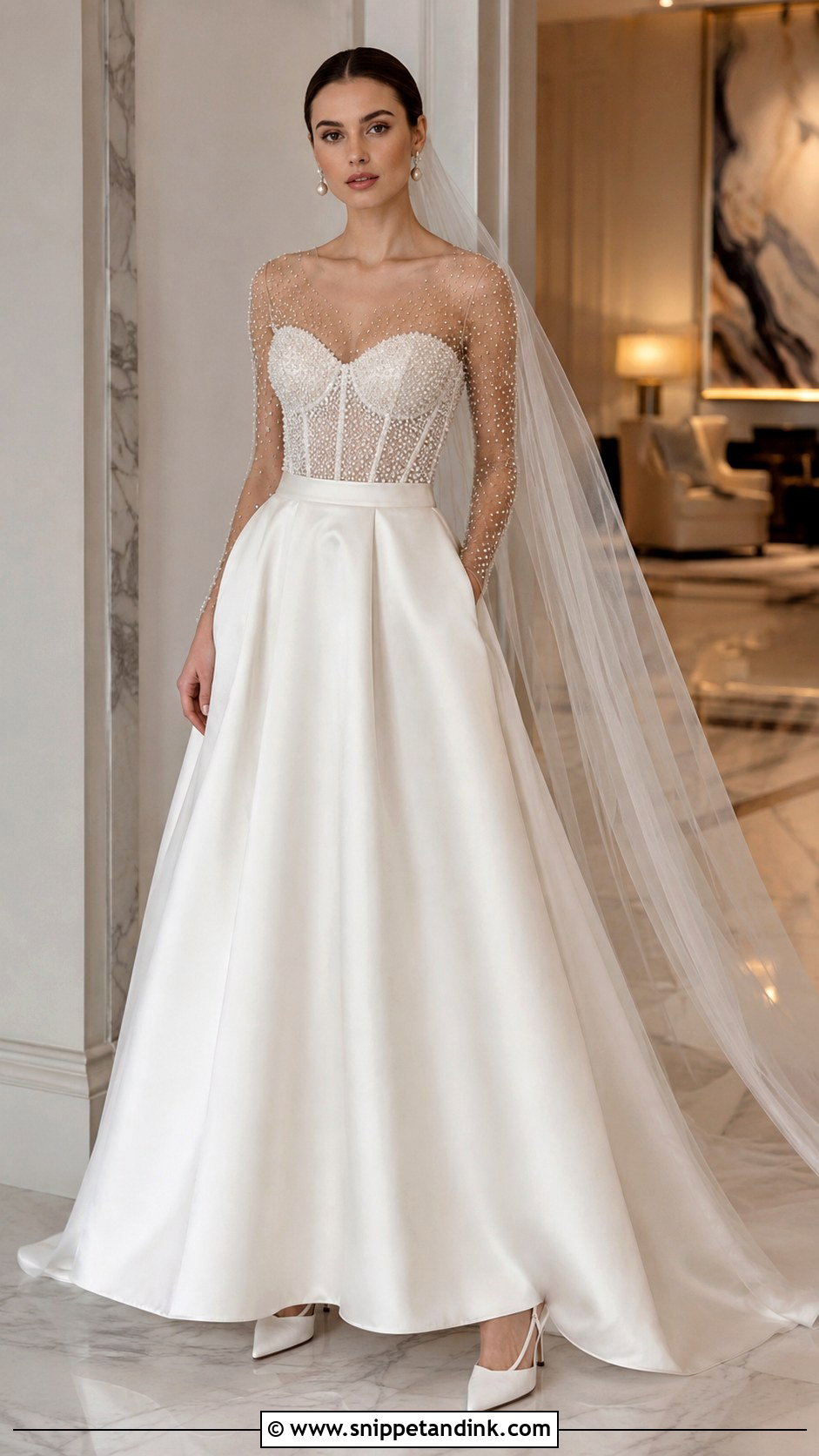
Tiny pearls give a bodice glow rather than sparkle. They can be scattered over sheer tulle, lined along corset seams or mixed with embroidery. A smooth satin skirt keeps the whole gown from tipping into overdecorated, and a softly fitted A-line suits formal and relaxed venues alike. Pearl earrings, ivory slingbacks and an unembellished veil finish it. Mixed pearl sizes add depth if the placement stays balanced. Before the final fitting, check that each pearl is firmly attached and that none rub the inner arm. Afterwards, store the dress in a breathable bag with tissue between the layers, since raised pearls snag mesh, lace and veil fabric when they’re pressed together.
18. Detachable Sleeve Bodice Wedding Dress
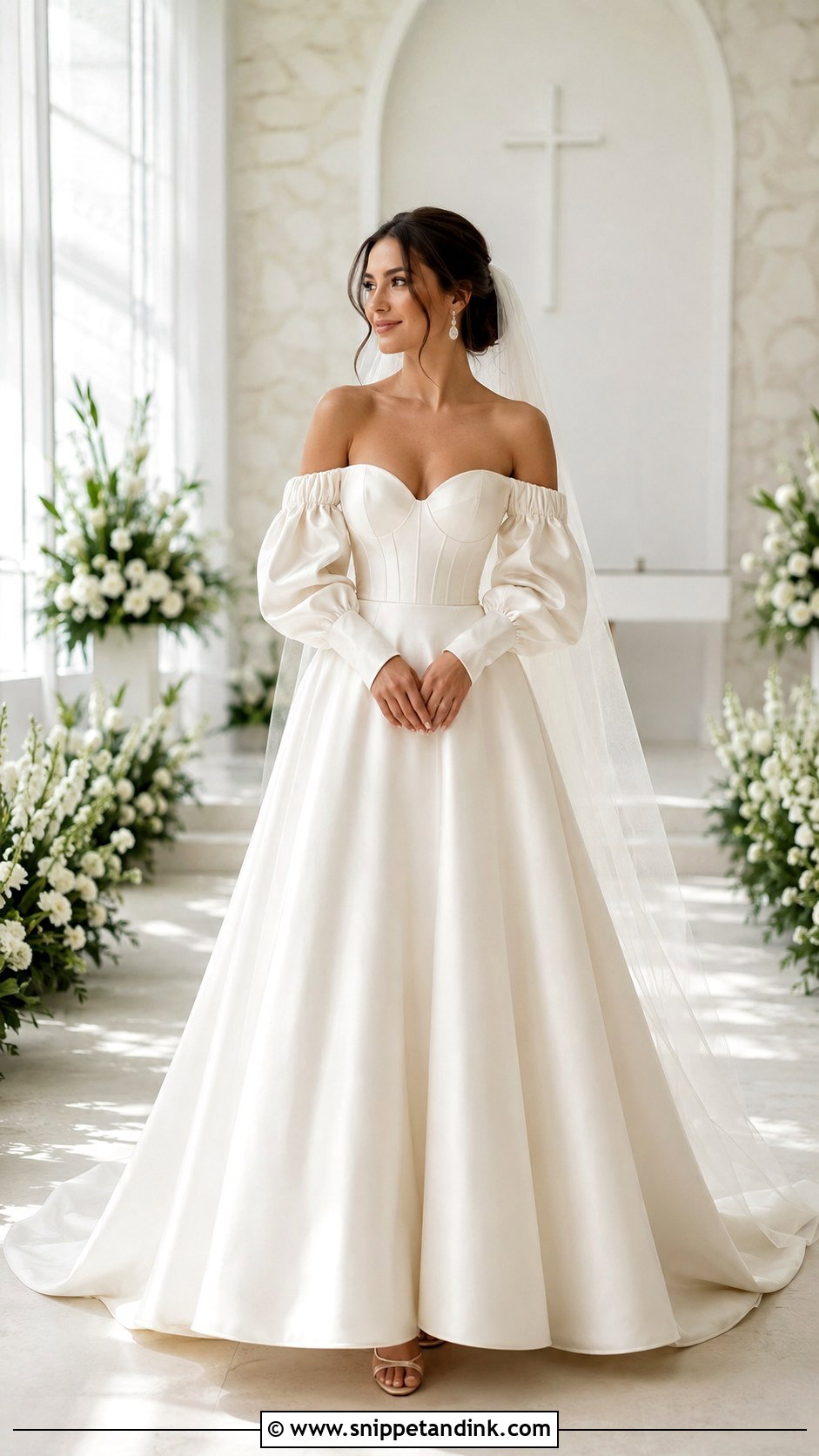
Detachable sleeves change the look without a second gown. Start with a fitted strapless corset or sweetheart bodice, then add puff sleeves, fitted lace sleeves or soft off-the-shoulder drapes for the ceremony. A full satin or tulle skirt with a train suited to the venue, drop earrings, stable heels and a chapel veil complete it. After the ceremony, take the sleeves off and bustle the train for the party. The closures should be hidden, secure and simple enough for someone else to work. I always look at the strapless bodice on its own at the final fitting, because if it was only ever fitted with the sleeves attached, it can look unfinished without them.
19. Minimalist Boned Bodice Wedding Dress
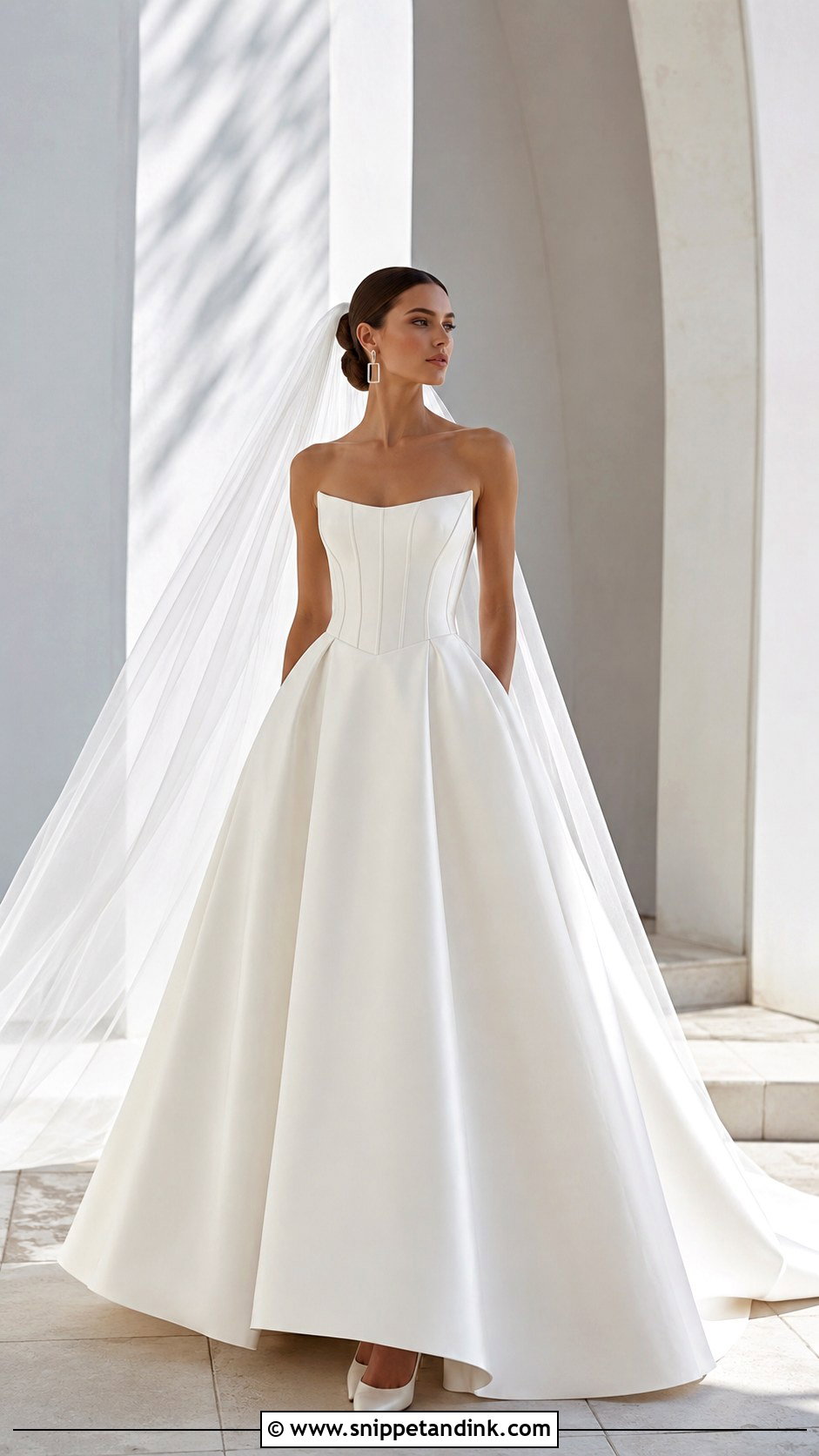
Structure is the whole design on a minimalist boned bodice. Clean satin, mikado or crepe, precise seams, no lace or beads. A straight, curved or subtle sweetheart neckline keeps it refined, and a full skirt adds drama through shape alone. Polished pumps, geometric earrings, a smooth bun and a plain cathedral veil suit it. Every seam is on show, so construction has to be exact. Check that the boning follows your body without flaring out at the top edge or pressing into your ribs, and let a tailor refine the cups, waist and neckline. Steam it carefully. Crisp fabrics like mikado can water-spot, so use a pressing cloth or work from the inside.
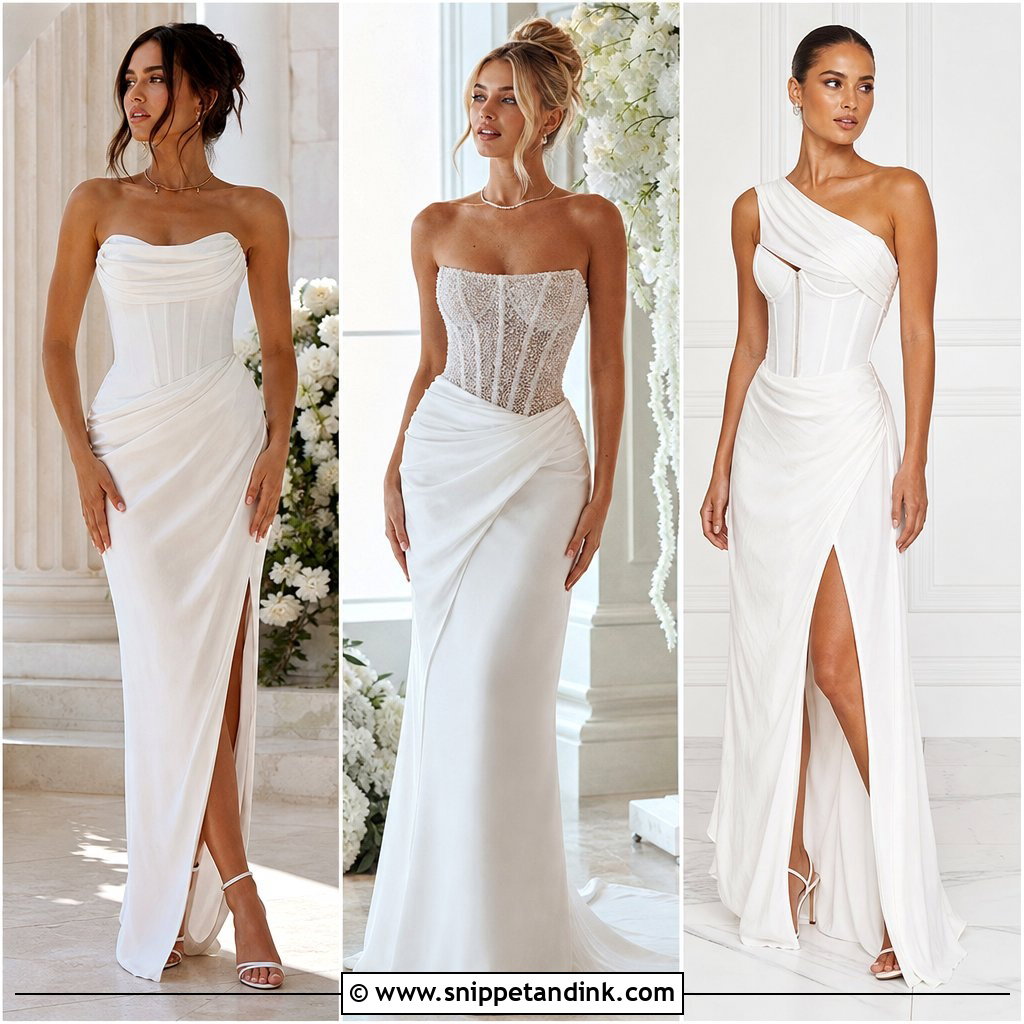
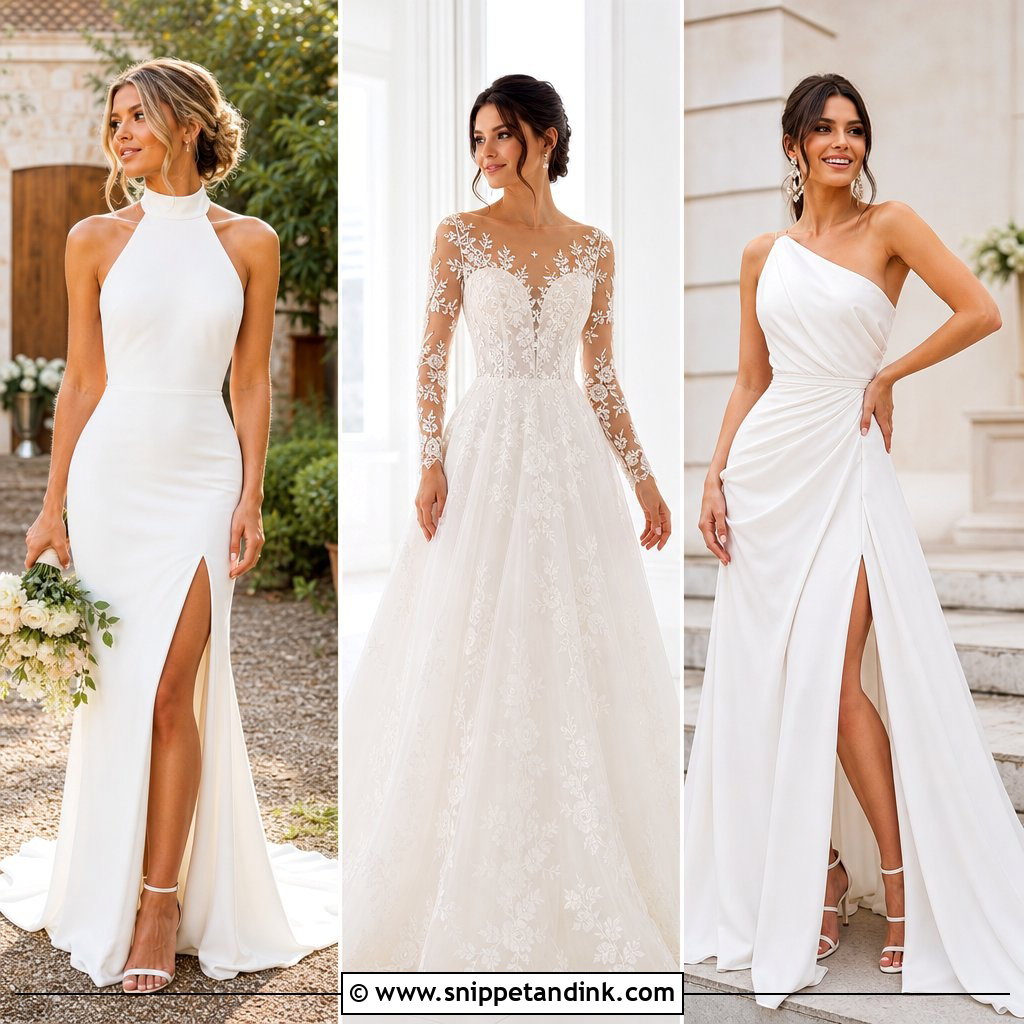
20. Drop Waist Bodice Wedding Dress
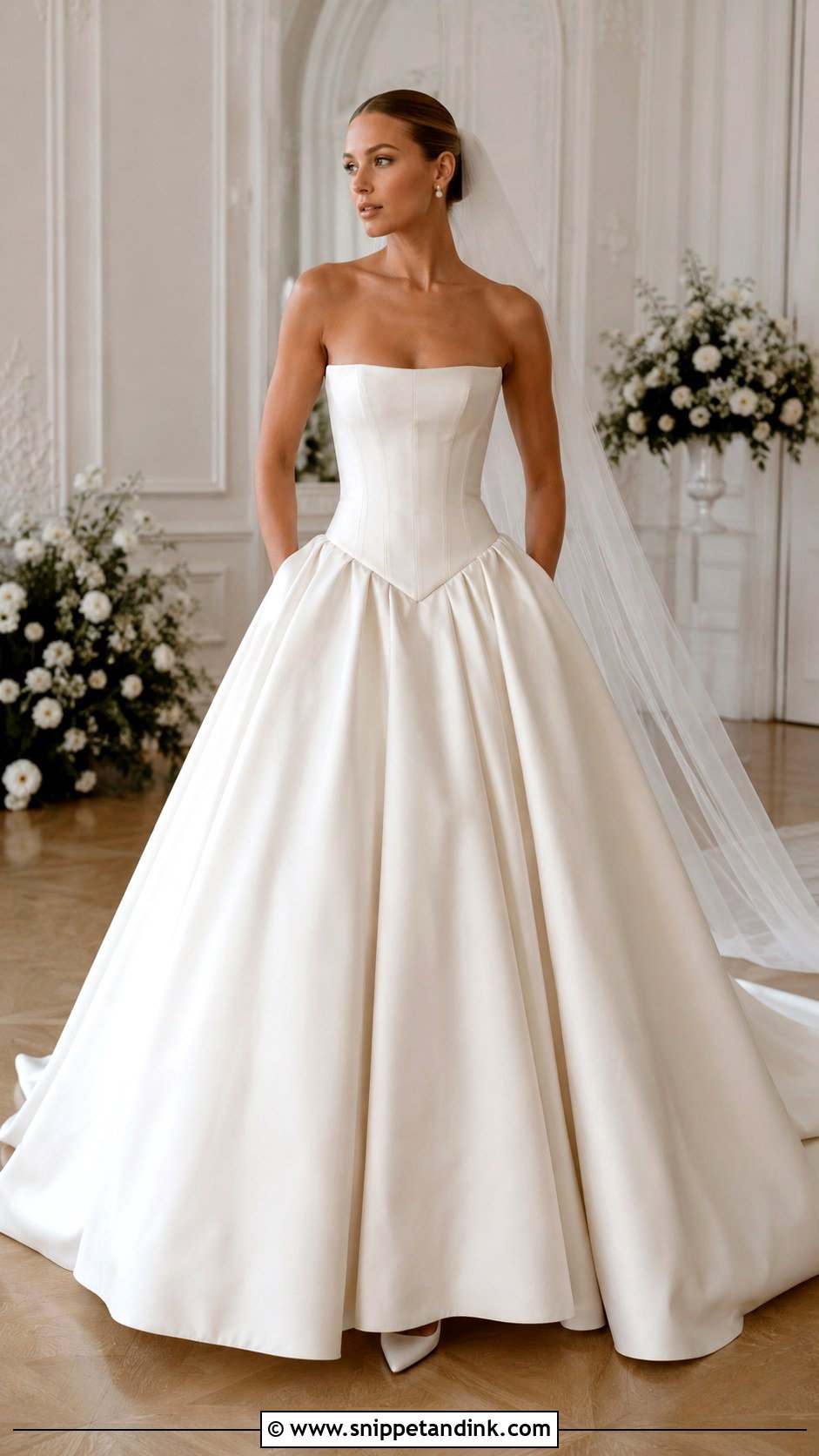
A drop waist runs the bodice below the natural waist before the skirt opens, making a long, distinctive line. Clean satin corsets and lace-covered bodices with curved seams are both common versions. Over a big ball-gown skirt the contrast is dramatic; a gentler A-line feels more relaxed. Pearl earrings, pointed satin shoes and a sheer veil that leaves the long bodice visible finish it. The seam has to be set for your torso, not a standard measurement. A long bodice can press into the hips and tops of the thighs when you sit, so sit at every fitting and let a skilled seamstress adjust the seam without losing the proportions.
How Tight Is Too Tight for a Fitted Bodice?
A bodice should feel snug at the final fitting, not tight. My test is simple: you should be able to take a full breath, sit down to a plated dinner and laugh without the top edge digging in. If you can only stand comfortably in it, it’s too small, and the day will feel very long.
Why the last fitting sits close to the date
Bodies shift a little in the weeks before a wedding, through stress, training or simply a change in routine. That’s why I like the final fitting near the date, so the bodice is fitted to the body you’ll actually have. Tell your seamstress early about any planned changes. Taking a bodice in is easier than letting it out, and some gowns have very little seam allowance to give.
Small things that help on the day
- Eat a proper breakfast before you get dressed, sitting down in a robe.
- A laced back can be eased off slightly after dinner; ask whoever laced you to loosen the middle section a touch.
- Zipped bodices can’t be adjusted on the day, so if you’re between two fits at the last appointment, choose the more comfortable one.
- Keep safety pins and double-sided fashion tape in the emergency kit for a strap or edge that shifts.
Structure First, Decoration Second
No single detail should decide your bodice. Compare necklines, fabrics, waist placements, sleeves and skirts together. A corset gives definition; ruching, lace and draping soften it; illusion panels add coverage; detachable pieces let one dress do two jobs. Test every option sitting, walking, raising your arms and in your planned shoes. Tailoring usually makes the biggest difference of all, so treat the ideas here as a starting point and let your seamstress adapt your favourite to your proportions and your venue.
You'll Like These Ideas:




Leave a Reply