
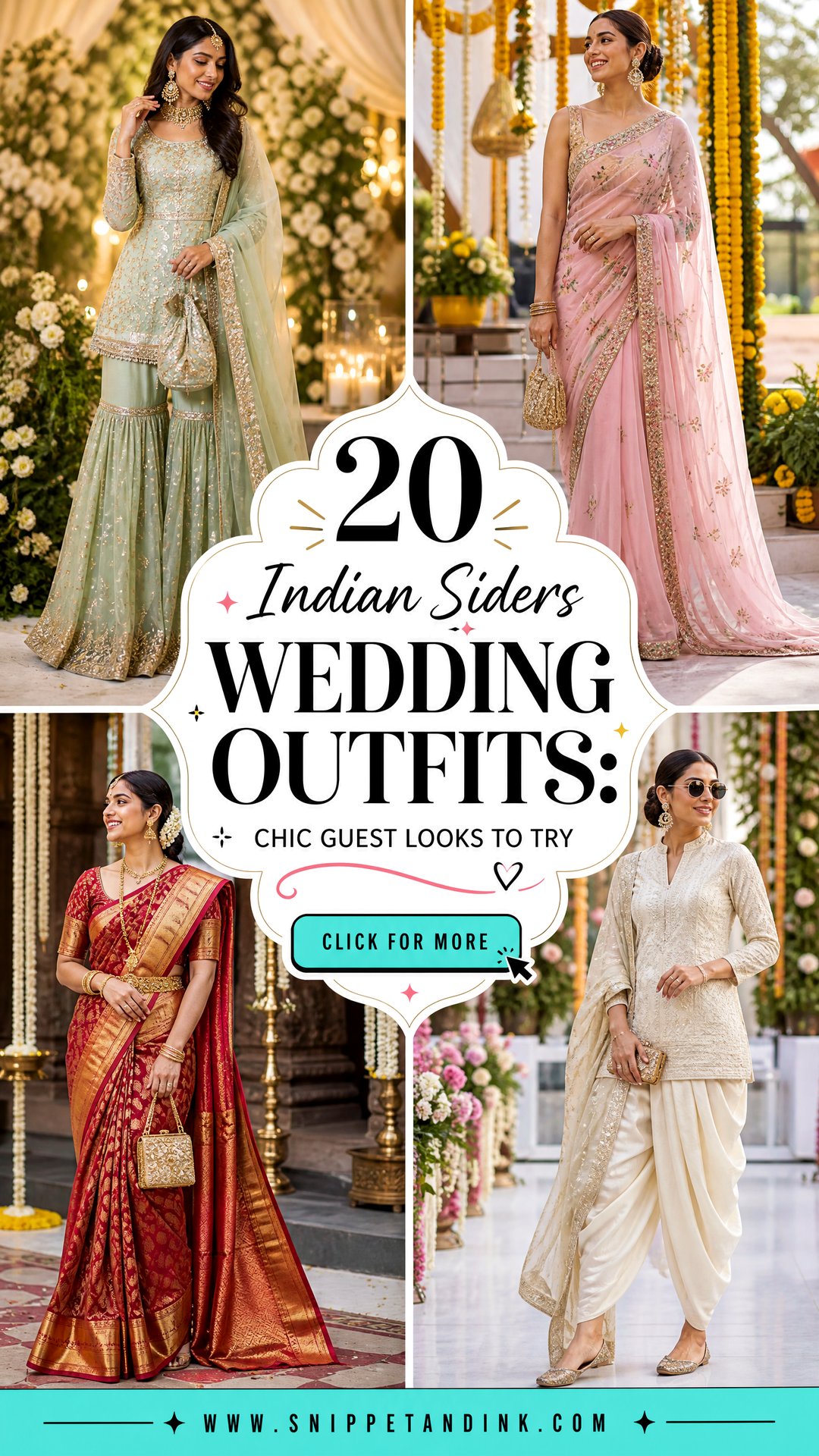
The bride’s or groom’s sister has the hardest dressing job at an Indian wedding. You’re in half the photos, you’re dancing at the sangeet, and you’re also the one running to find the missing kalire or the safety pins. So your clothes need to look festive and stay put while you work. Over several functions, each with its own level of color and formality, my rule for sisters is simple: pick up the wedding palette, but never copy the bride’s exact shade or match her bridal embroidery. The outfits below run from sarees and lehengas to shararas and draped sets, one for every event.
Five Functions, Two Lehengas and a Borrowed Saree
Sisters often feel they need a new outfit for every event. I’d rather build a small wardrobe that rotates, because what people remember is how you looked on the wedding day and at the sangeet, not whether you repeated a skirt at the puja.
Mix the separates
One lehenga skirt can carry two looks with a second blouse and a different dupatta. A plain silk blouse works under a saree at one event and with a sharara at another. Ask the tailor to make the blouse a little more versatile, with a neckline that suits both a dupatta and a necklace.
Spend where the cameras are
The wedding ceremony and the sangeet get the most photos and the closest look, so that’s where I’d put most of the budget. Haldi and small pujas deserve cheaper, washable outfits. A mother’s or aunt’s silk saree with a new blouse in a fresh cut often looks better than a new one and means more to the family.
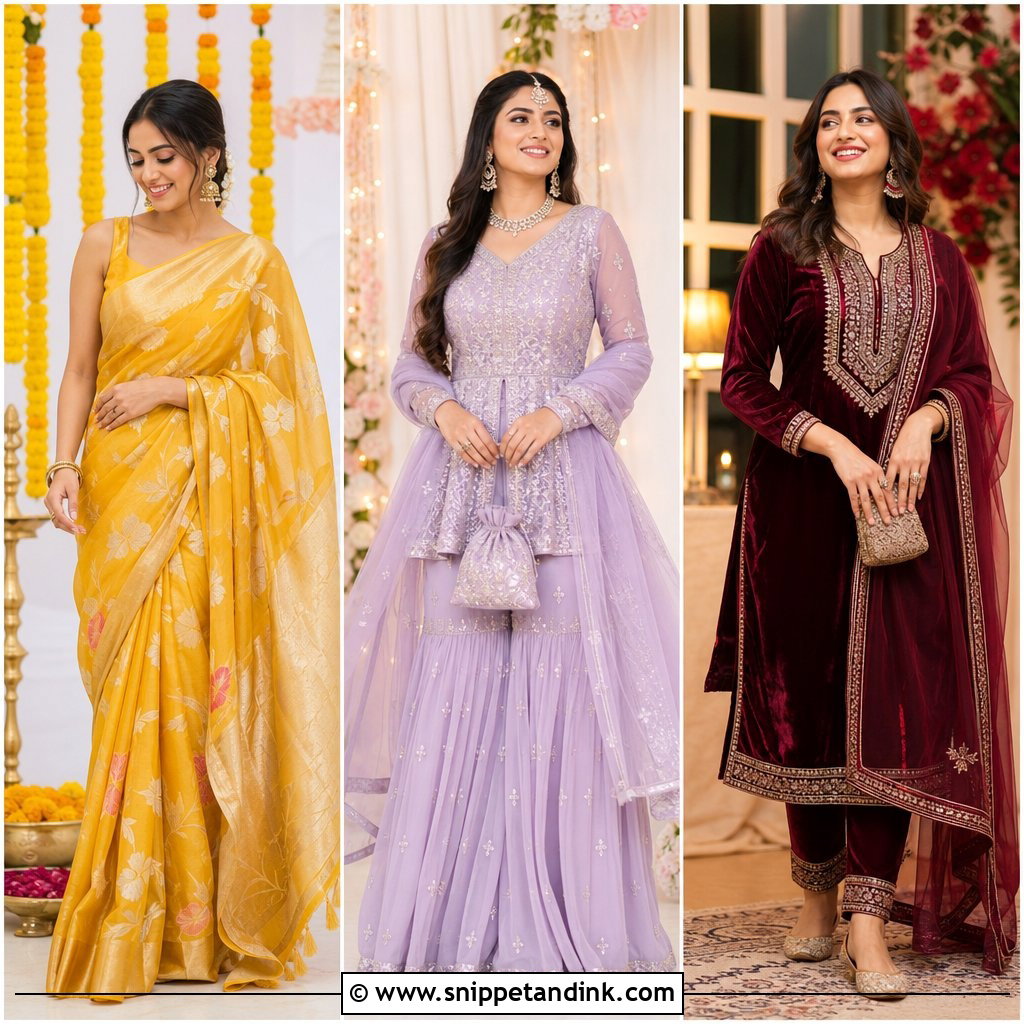
1. Yellow Sharara Outfit For Haldi
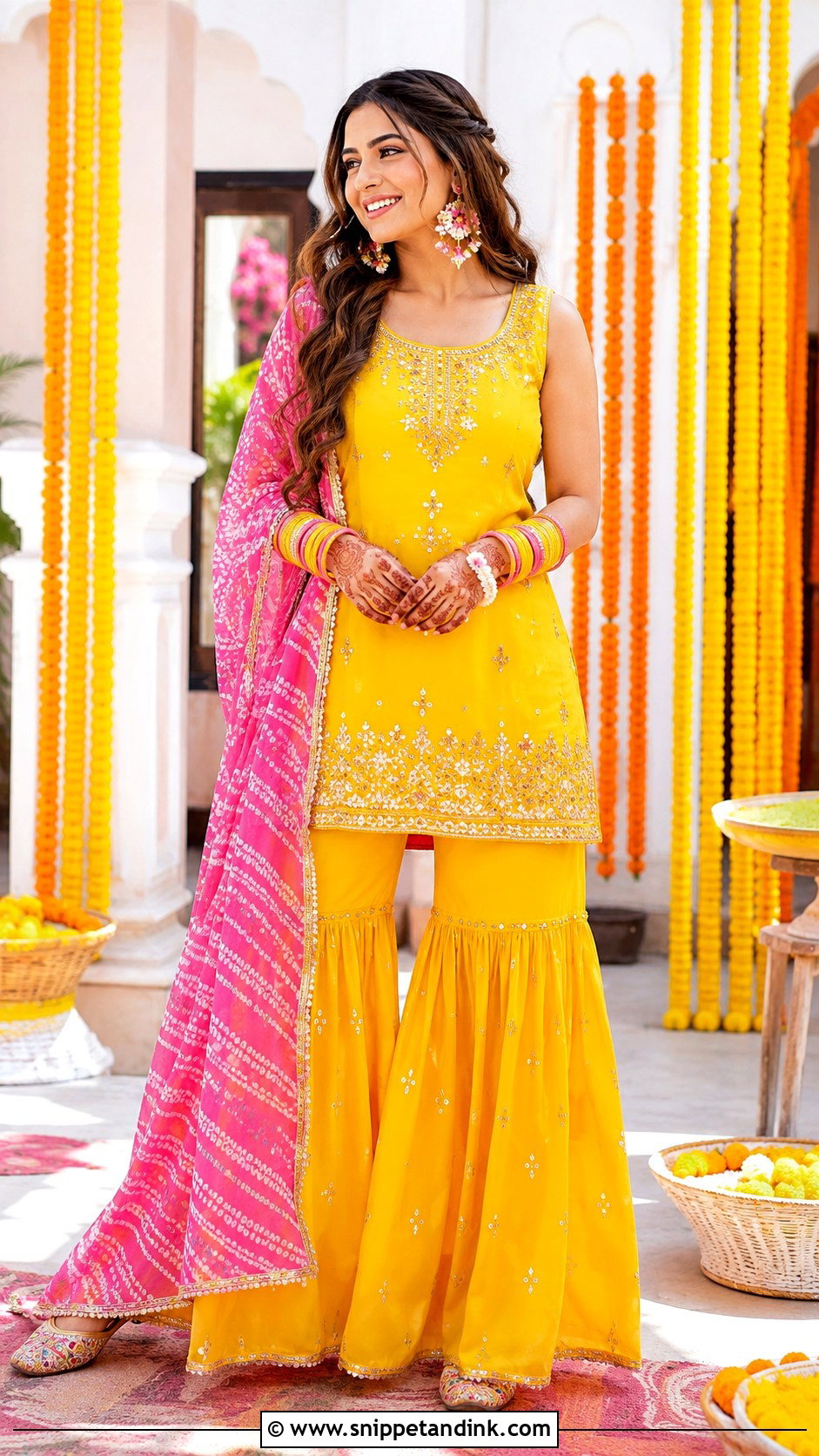
Haldi is the one function where I tell sisters to dress for the mess. Turmeric paste stains cotton and silk alike, and it’s very hard to wash out, so leave anything heirloom at home. A yellow sharara set works: a short embroidered kurta over a gently flared sharara, not an extra-wide one that drags through the paste on the floor. Cotton silk, chanderi or light georgette, with a white, lime or pink bandhani dupatta for contrast. Floral earrings, simple bangles, flat embellished juttis, and a braided ponytail or soft bun.
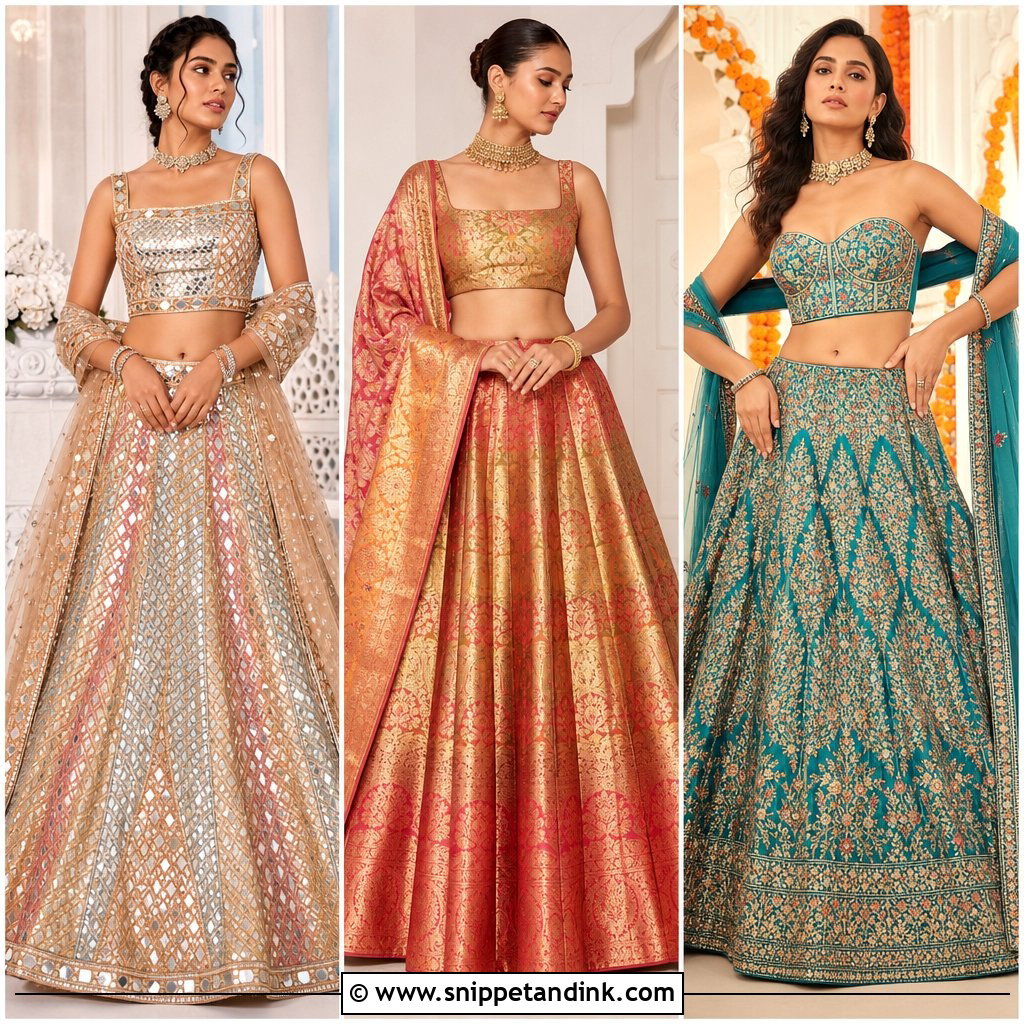
2. Green Lehenga Outfit For Mehndi
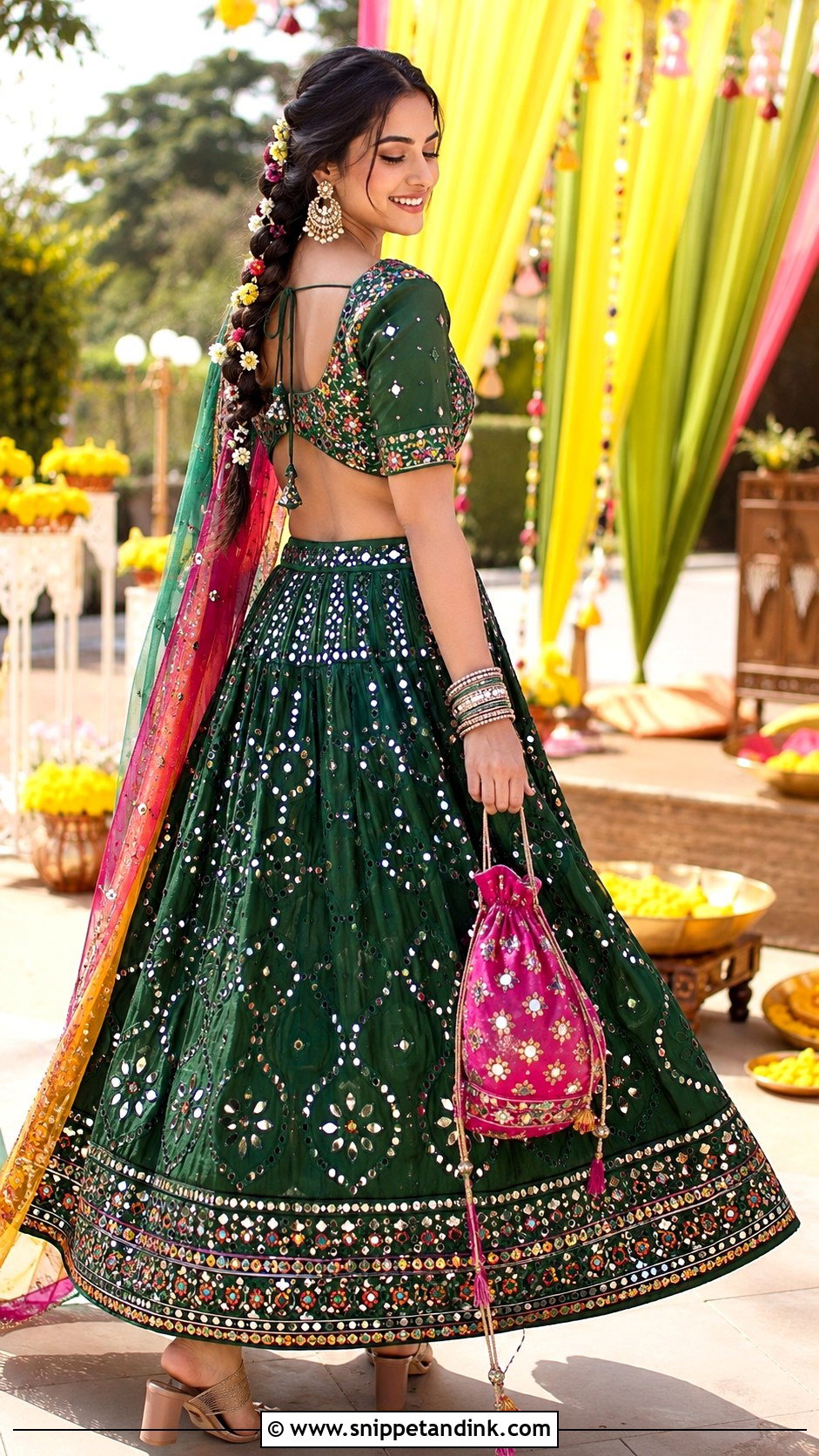
Green is a natural pick for a colorful mehndi celebration, and the sister’s practical problem is henna. If you’re getting mehndi done too, it stays wet and fragile for hours, so I keep sleeves short and the dupatta pinned well clear of the hands. A lightweight skirt with mirror work, threadwork or small florals rather than dense bridal work, and a fitted blouse with secure straps or sleeves for dancing. A pink, yellow or multicolor dupatta, statement earrings, colorful bangles, a small potli, and block heels or flats. A loose braid with tiny flowers keeps hair off the drying henna.
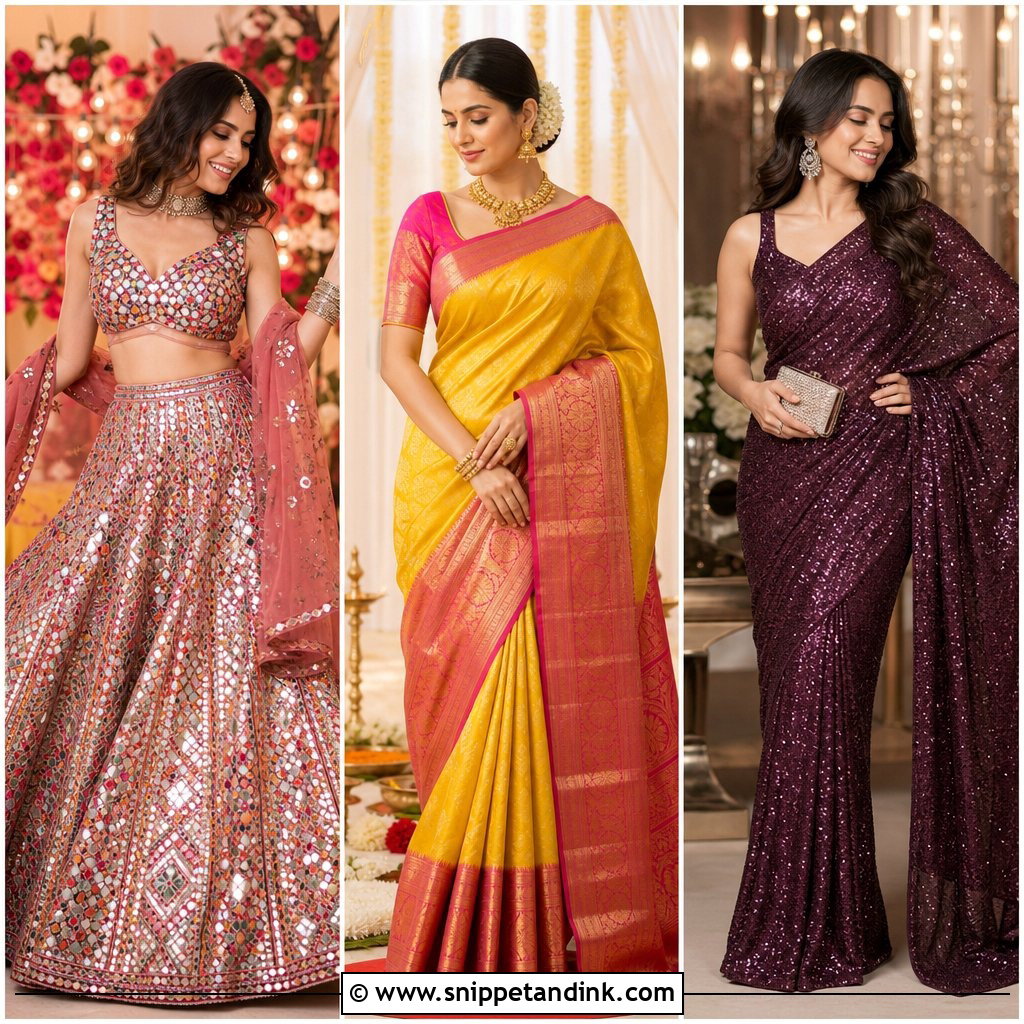
3. Mirror Work Lehenga Outfit For Sangeet
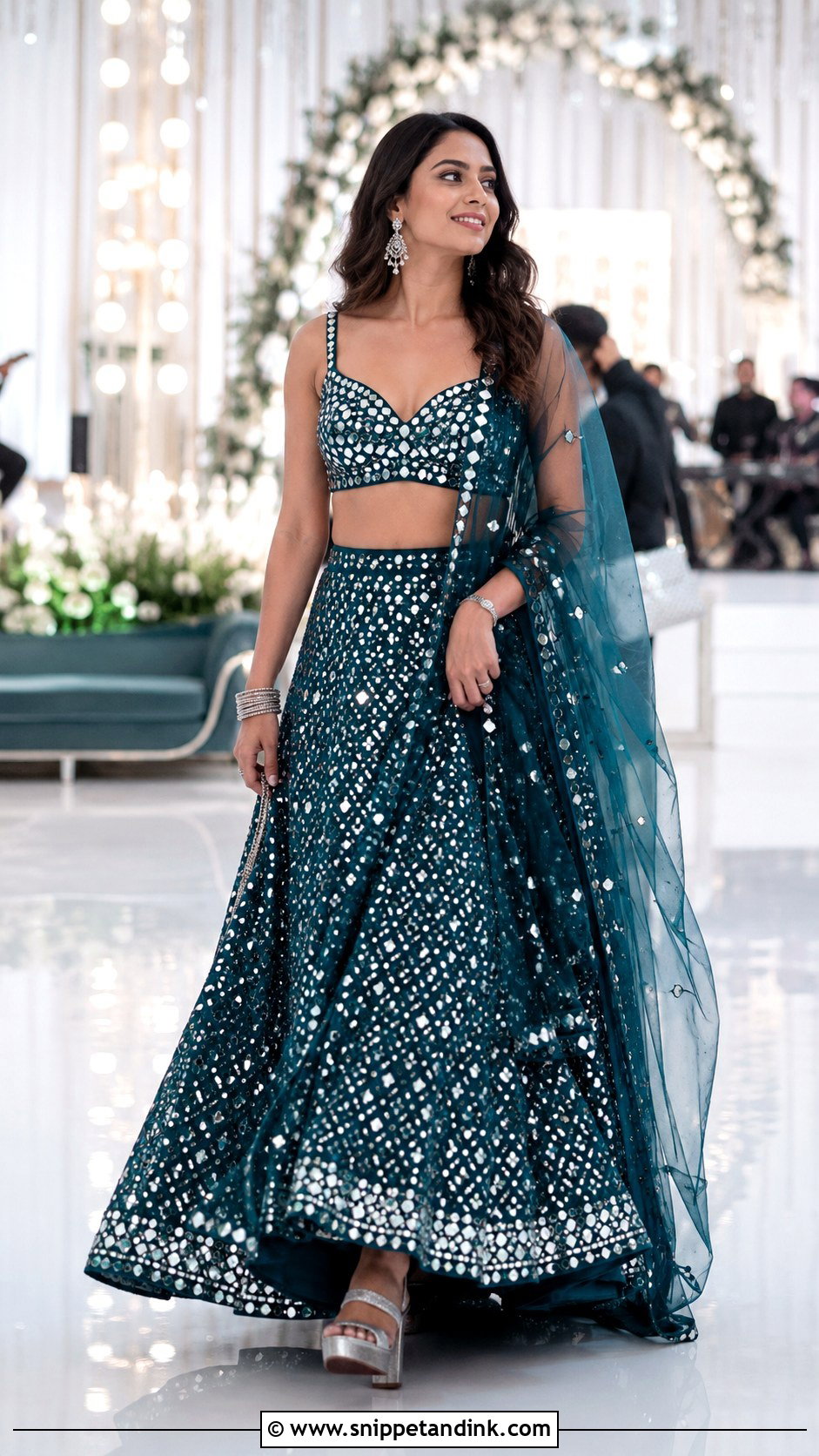
Sangeet night is when sisters perform, so the outfit has to dance. A mirror work lehenga in navy, teal, plum or deep purple sparkles under stage lights and stays clear of bridal red. Keep the skirt flare moderate, the blouse structured, and pin the dupatta at one shoulder so your hands are free for choreography. A wristlet beats a handbag you’ll have to put down somewhere. Cushioned block heels give height with far more stability than stilettos on a wooden stage. Practice the routine once in the full outfit; mirror work is heavier than it looks and shifts the skirt as you turn.
4. Pastel Anarkali Outfit For Engagement
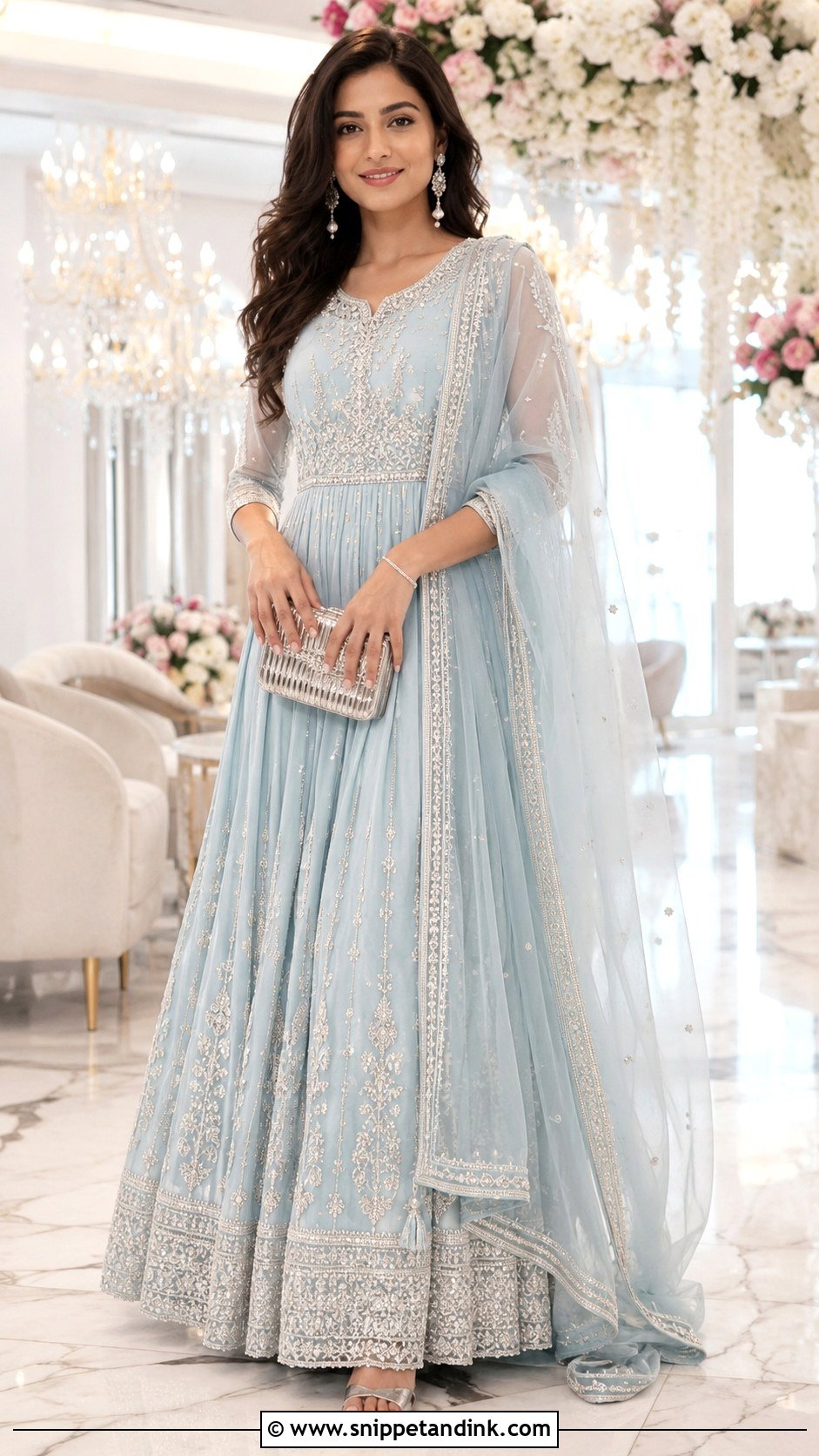
An engagement is usually a daytime, sit-and-greet event, and a pastel Anarkali gives a sister grace without a heavy skirt to manage. Powder blue, blush, mint, lilac or peach in a floor-length cut with a fitted bodice and a manageable flare. Sequins, pearls or tonal embroidery keep it polished but clearly not bridal. A sheer dupatta over one shoulder, pearl drops, a slim bracelet and a structured clutch. Kitten heels or low block heels. Soft waves and balanced makeup keep it fresh against airy daytime light.
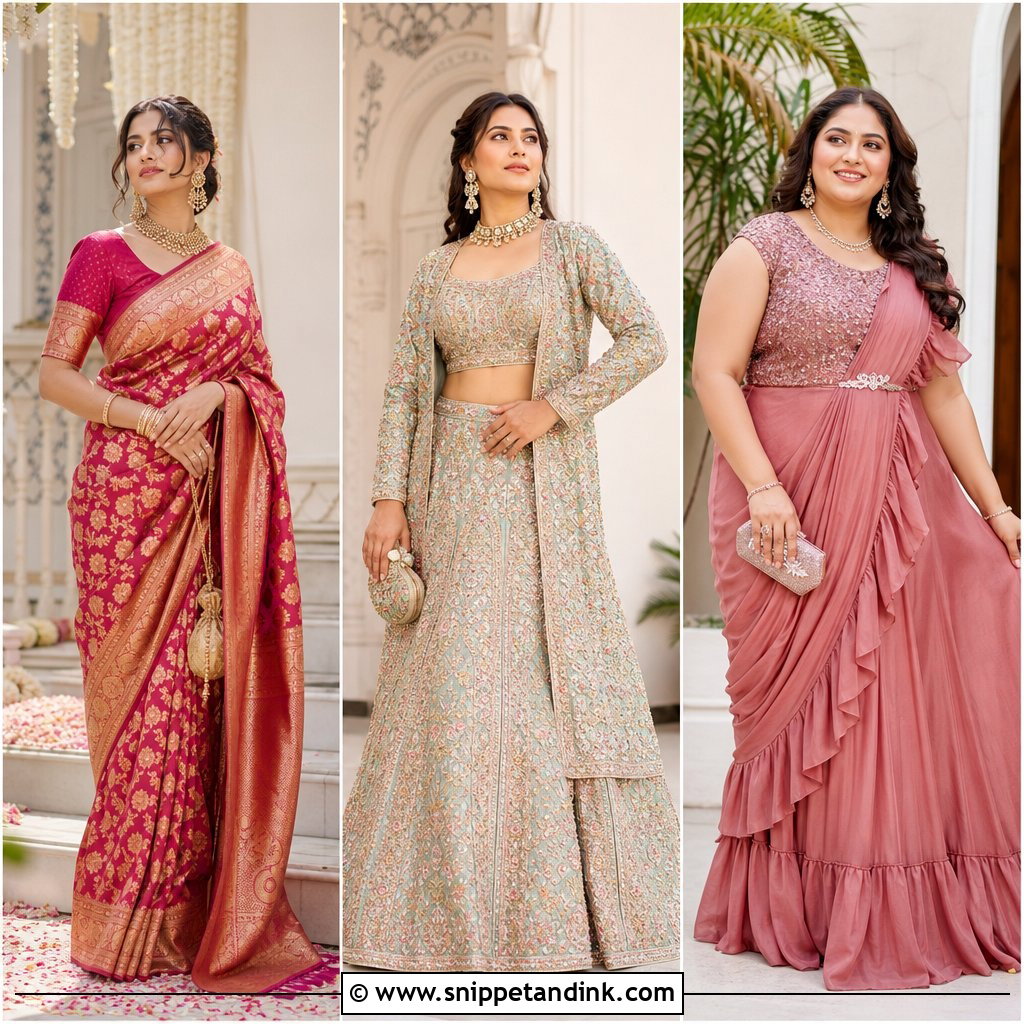
5. Banarasi Silk Saree Wedding Outfit
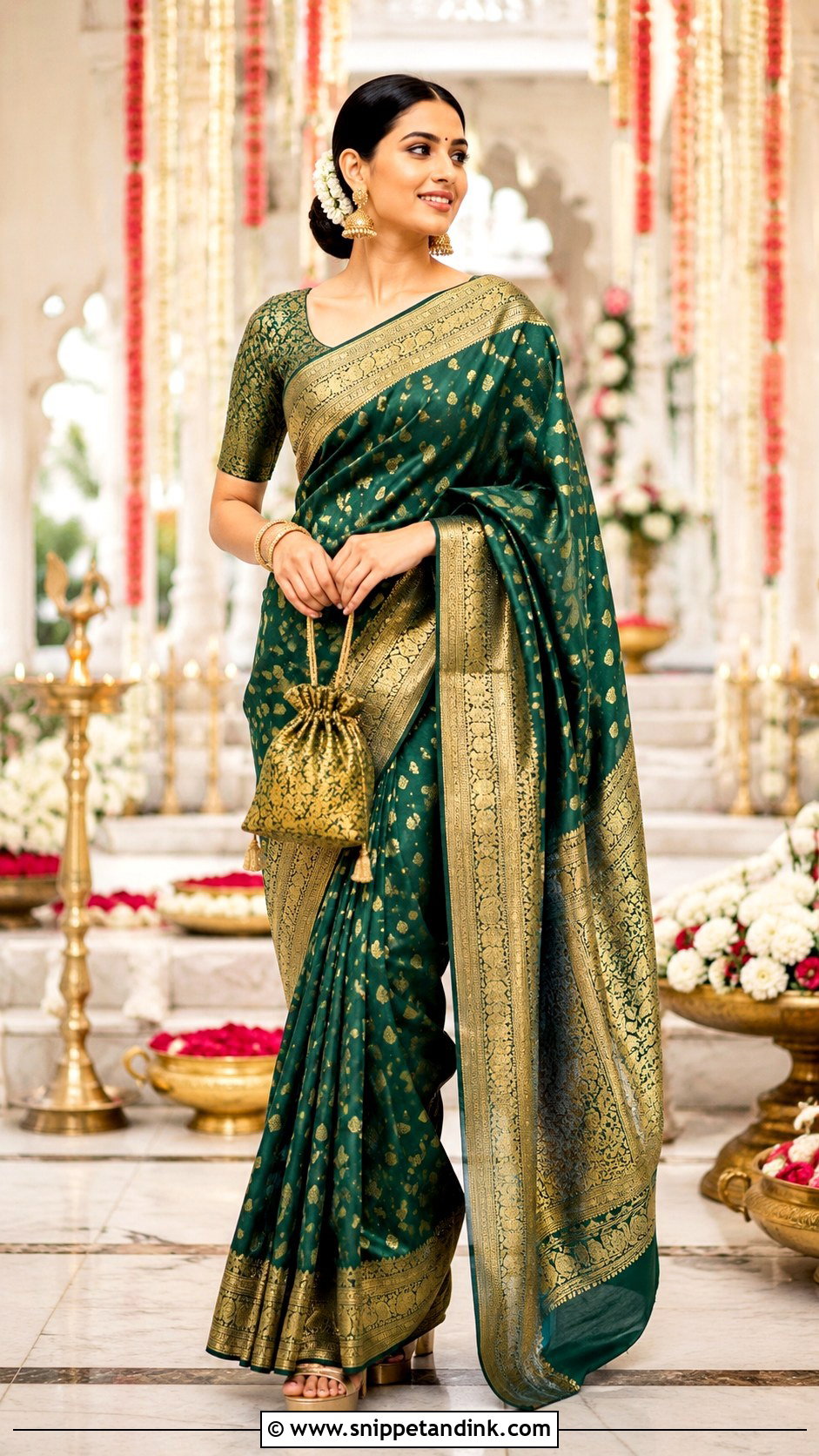
For the wedding itself, I steer sisters to Banarasi in emerald, royal blue, magenta or deep purple. Those colors look festive and leave the bride’s red or maroon unmistakably hers. A well-fitted brocade or velvet blouse with elbow sleeves, gold jhumkas, slim bangles and a small potli. Platform sandals or block heels hidden under the hem. Have the pleats pinned by someone experienced, because Banarasi silk is heavy and you’ll be up and down through the pheras, the photos and the vidaai. A low bun with fresh flowers suits the fabric.
6. Floral Lehenga Outfit For Day Wedding
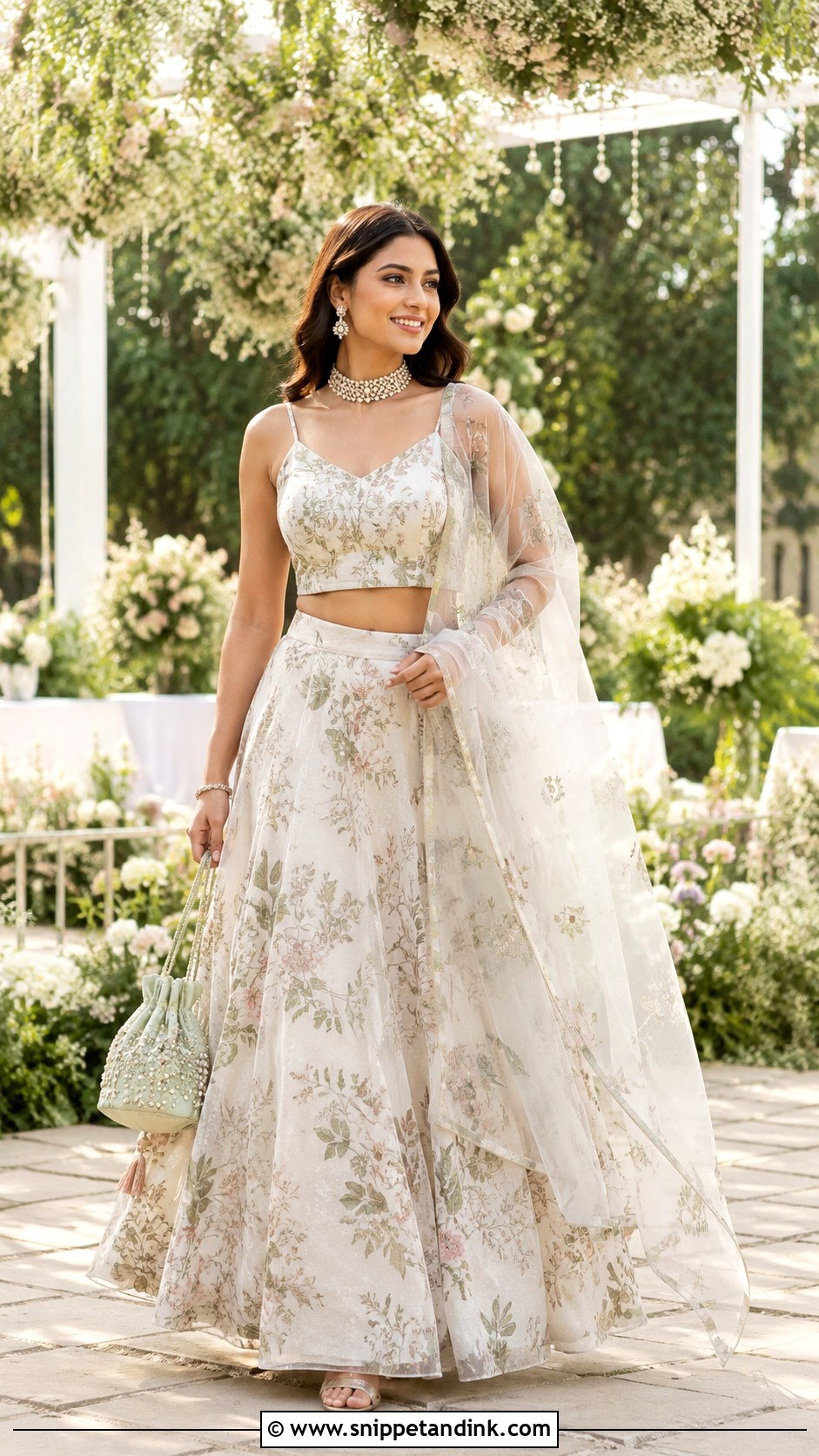
Pale colors at a day wedding need one quick check: ask whether the couple has a dress code, because some families keep ivory or very light shades for the bride or her side only. Assuming you’re clear, a printed or embroidered floral lehenga in ivory, sage, powder blue or peach suits a garden ceremony or daytime pheras. A coordinated blouse, light organza dupatta, pearl earrings, a delicate choker and a pastel potli. Low metallic heels handle grass and uneven paving. Keep the embroidery moderate so you still read as family, not as the bride.
7. Indo Western Pant Saree Outfit
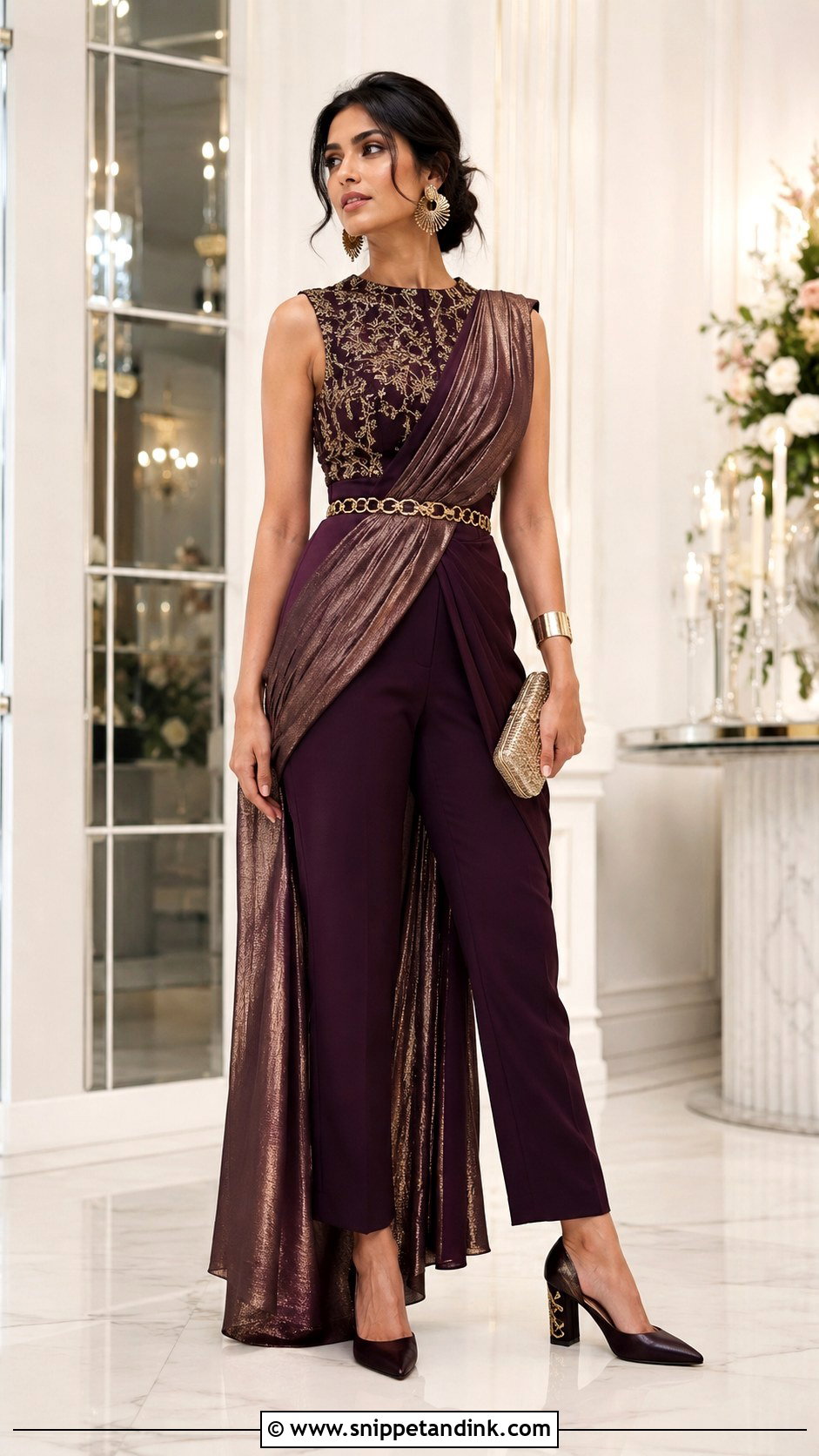
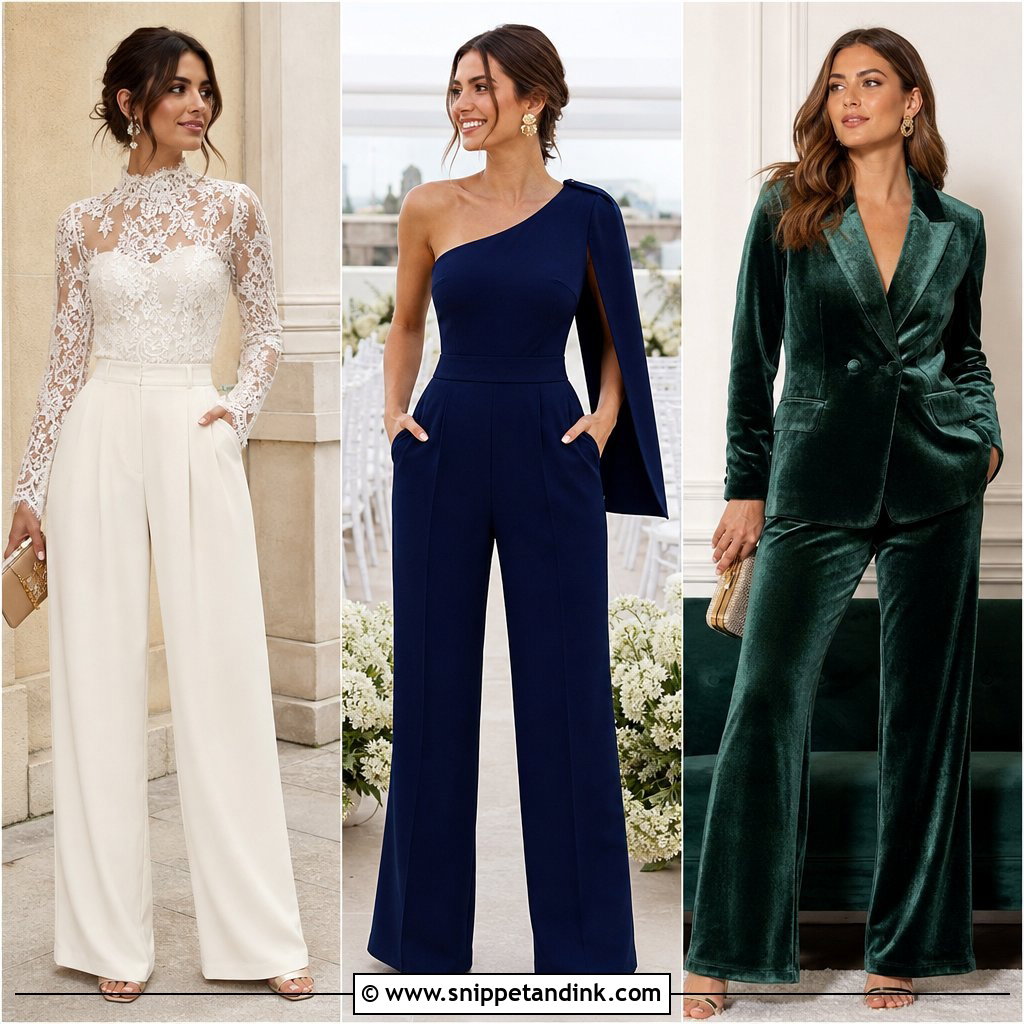
A pre-draped pant saree is the outfit I hand to sisters who’ll be doing more running around than posing. The drape is attached to tailored trousers, so there are no pleats to step on while you climb stairs with a tray of sweets. Jewel tones or metallics, a structured blouse with supportive straps or sleeves, and an embroidered belt to hold the drape at the waist. Sculptural earrings, a cuff, pointed block heels and a compact clutch. A straight ponytail or low bun. It suits a cocktail evening, welcome dinner or reception.
8. Embroidered Gharara Outfit For Nikah
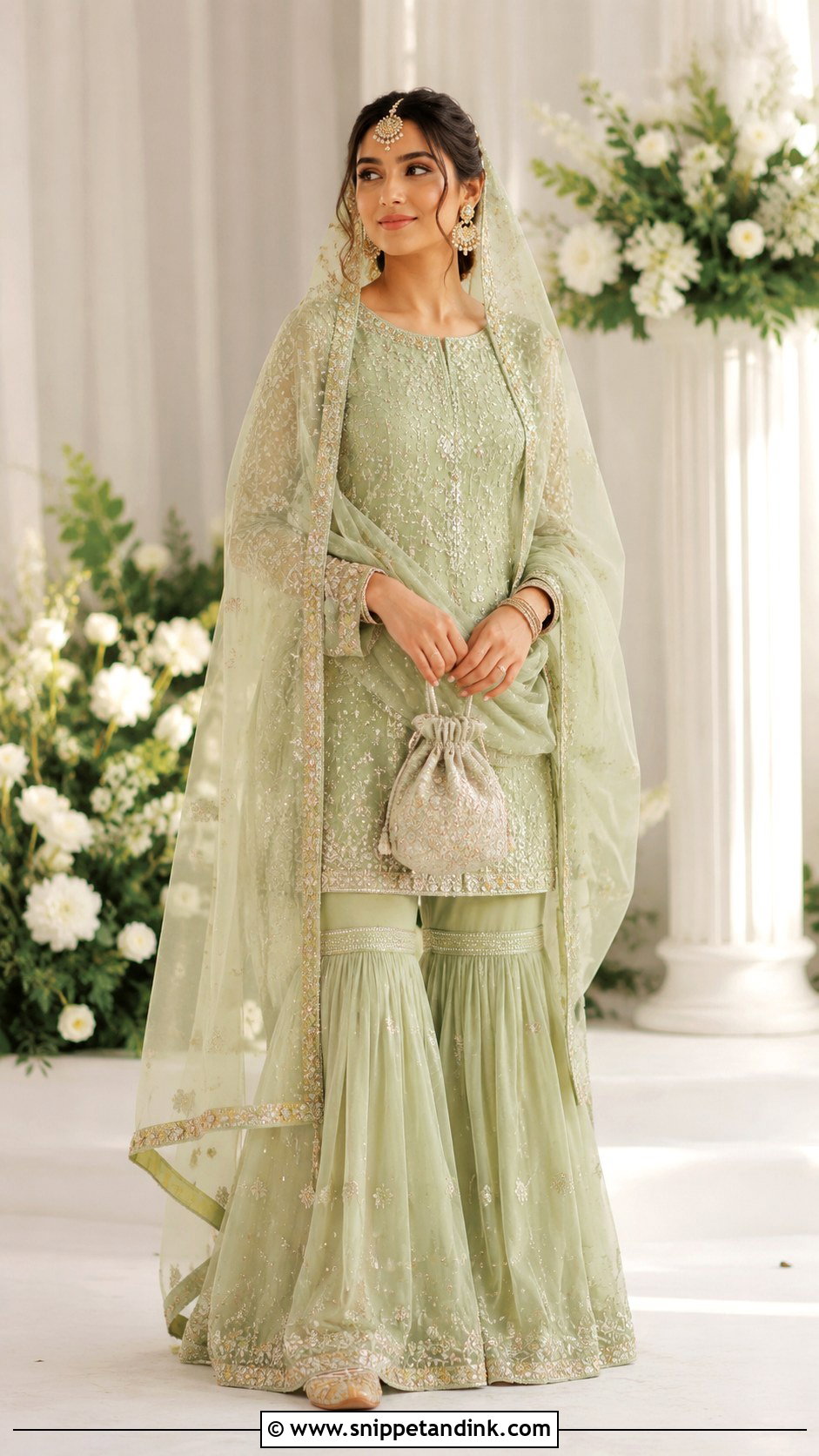
For a nikah, the ceremony is long and largely seated, so the waistband matters more than the embroidery. Choose a short kurti with zari, pearl or resham work over gharara pants with defined knee seams, and check that the waistband sits comfortably when you sit cross-legged. Ivory, pistachio, dusty rose, powder blue or muted gold. A coordinated dupatta over the head or shoulders as family custom asks. A delicate passa, drop earrings, bangles and an embroidered potli; closed-toe juttis or stable block heels. A center-parted low bun suits the mood.
9. Velvet Lehenga Outfit For Winter Wedding
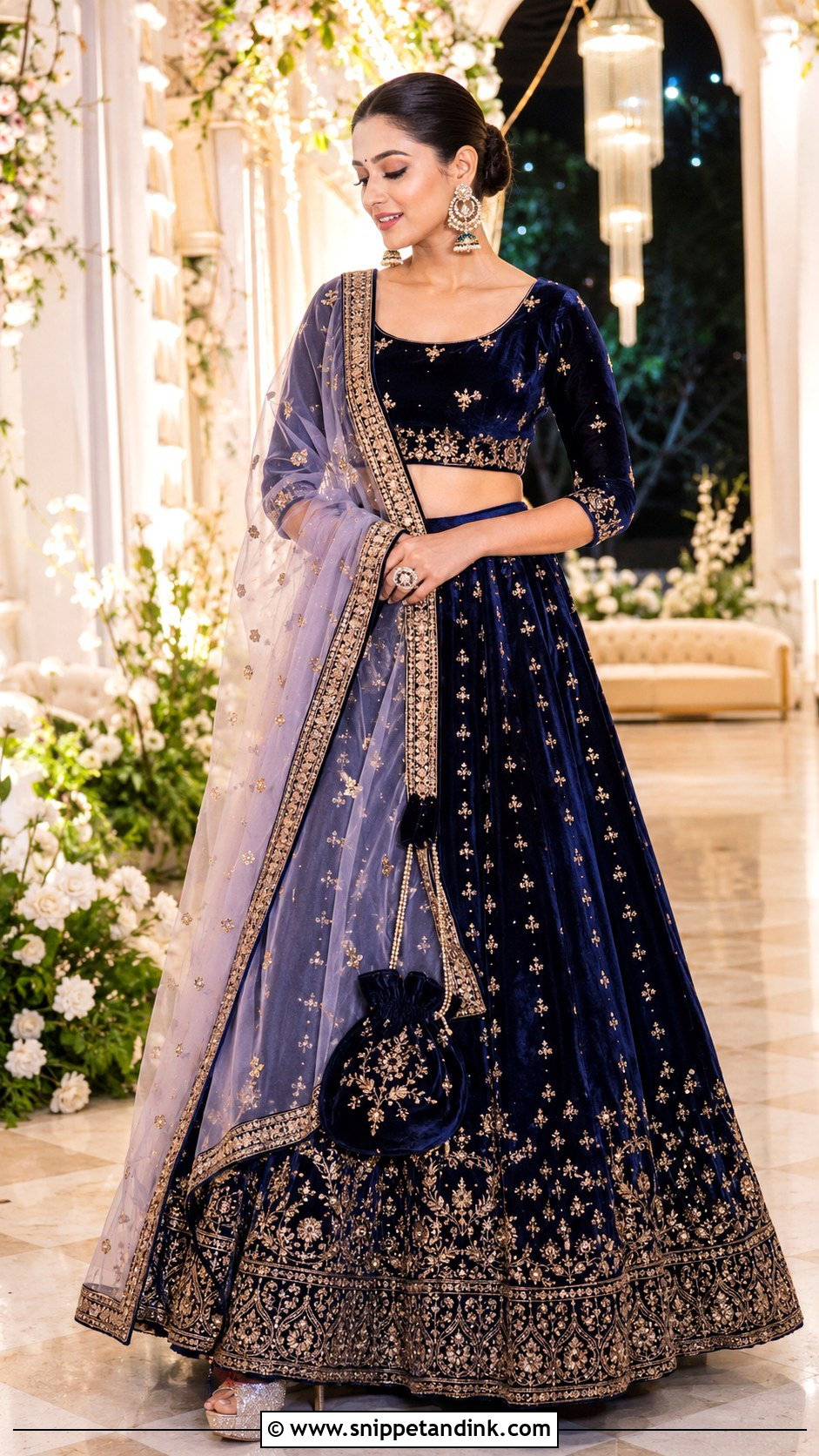
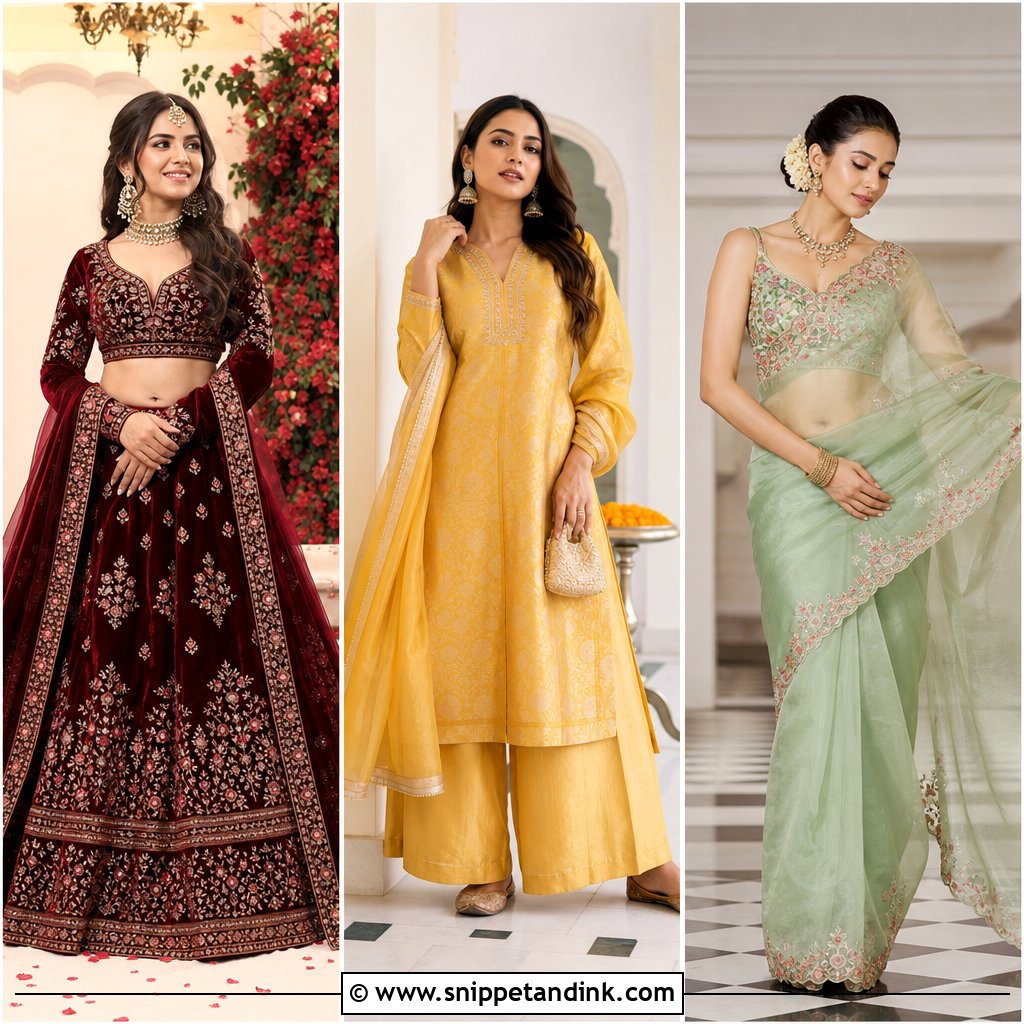
Velvet is my winter-wedding pick for sisters, as long as the venue isn’t overheated. Deep green, midnight blue, burgundy or aubergine look rich and steer clear of the bride’s reds. A fitted blouse with full or three-quarter sleeves balances the heavy skirt and keeps you warm outdoors. Choose a net or organza dupatta, never more velvet. Controlled embroidery at the border, waistband or neckline is enough on a fabric this deep. Kundan earrings, one statement ring, a small velvet potli and closed-toe platforms. Neat bun and a satin-finish lip.
10. Chiffon Saree Outfit For Summer Wedding
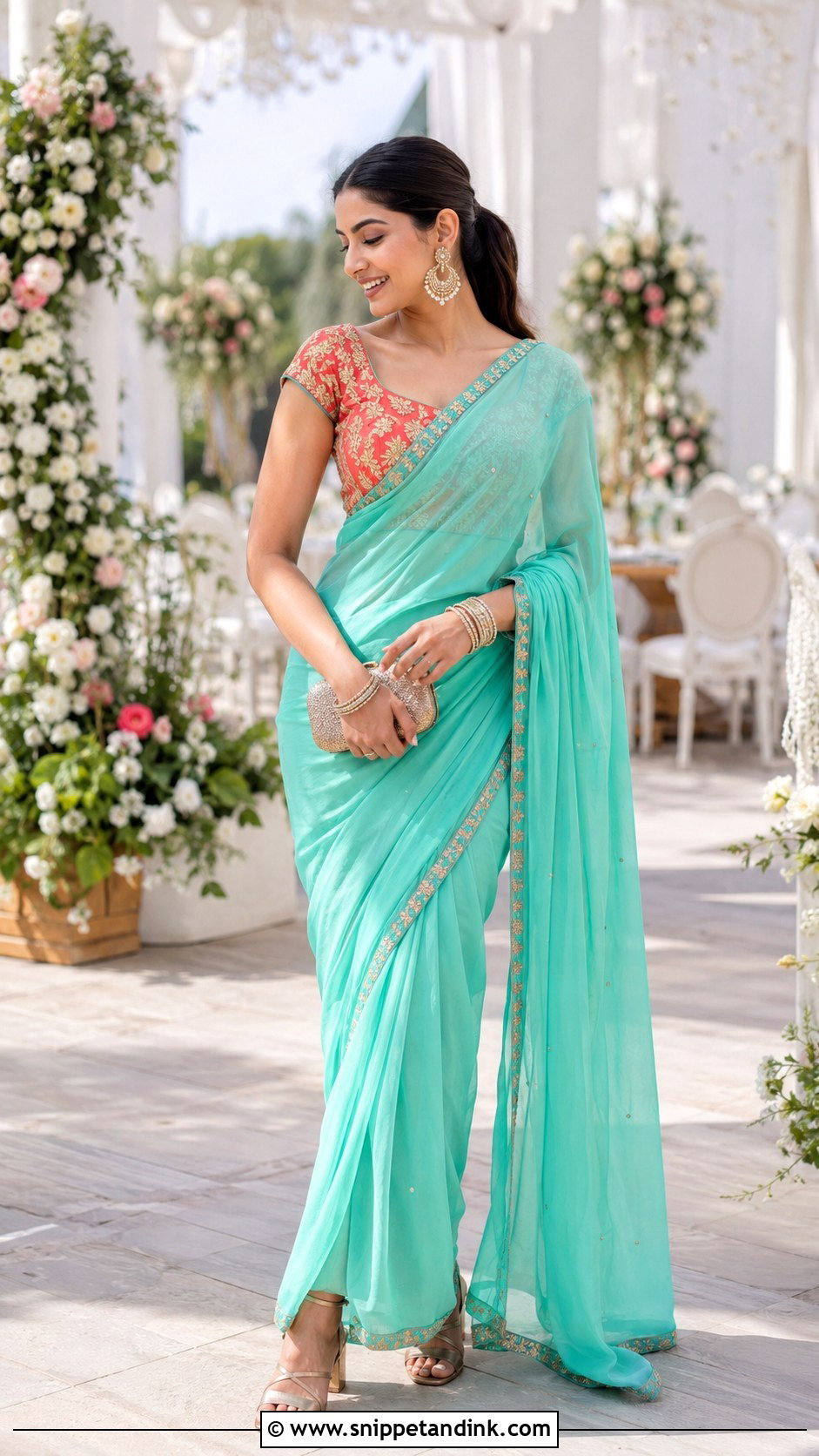
Chiffon is the summer answer, but thin fabric can look washed out in photos unless the color is strong. I go for saturated turquoise, coral, fuchsia or leaf green. A contrasting embroidered blouse or a tonal one with subtle sequins. Chiffon slides, so pin the shoulder drape and front pleats well, or you’ll be re-tucking all ceremony. Light chandbalis, slim bangles, a small clutch and cushioned sandals. A smooth ponytail or low bun keeps your neck cool. Waterproof eye makeup and a matte base hold up in heat.
11. Cape Lehenga Outfit For Cocktail Party
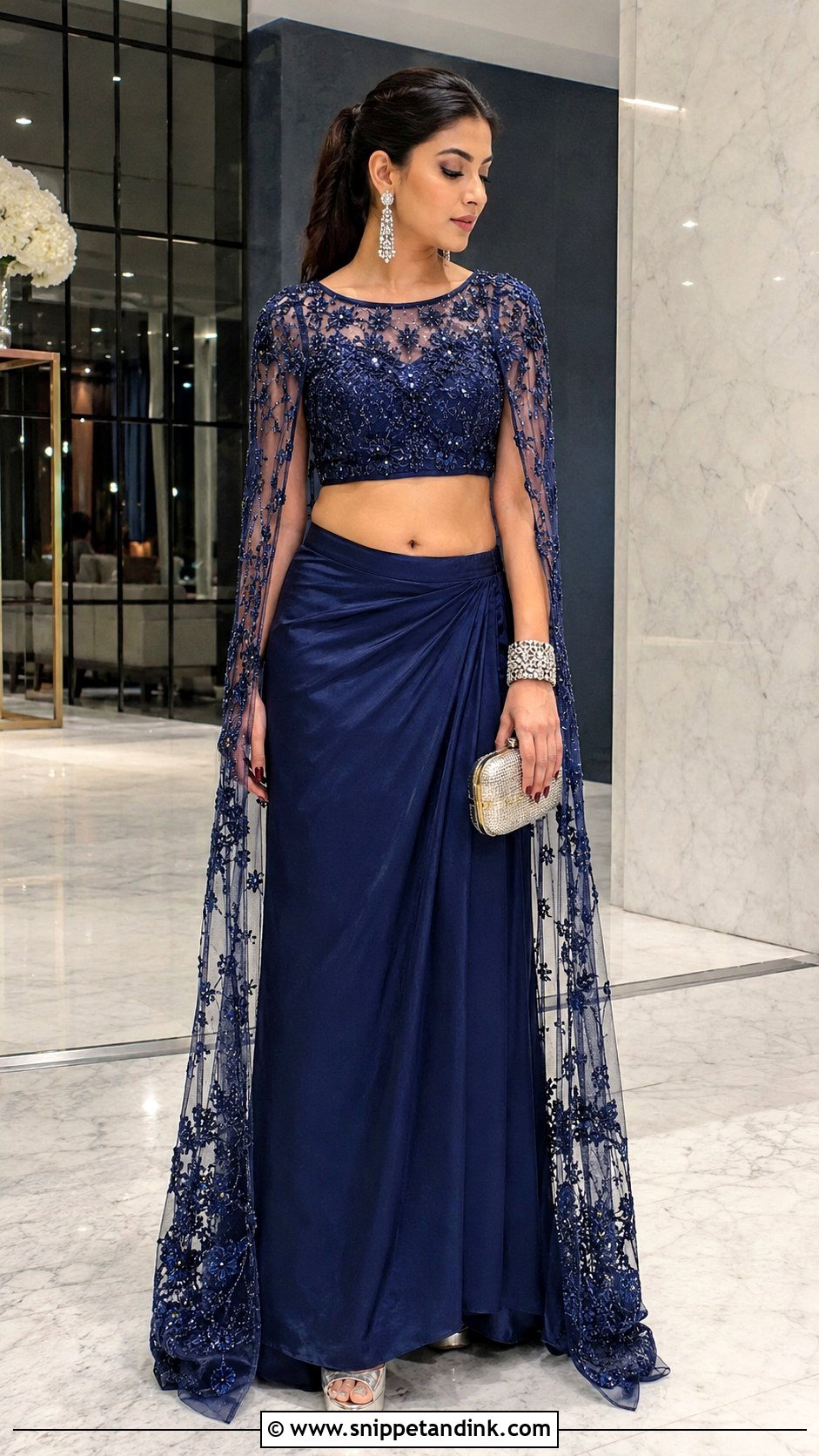
Cocktail parties are where a cape lehenga makes sense: no dupatta to put down, and the cape still moves when you walk. A sleek, moderately flared skirt with a fitted blouse and a sheer embroidered cape. Black can work at some modern parties, but emerald, sapphire, plum, silver or champagne usually suits more families and more photos. One statement accessory, long earrings or a jeweled cuff, so the cape stays the focus. Check the cape’s length in your shoes; a floor-length one catches under a heel on the first dance.
12. Kanjeevaram Saree Outfit For South Indian Wedding
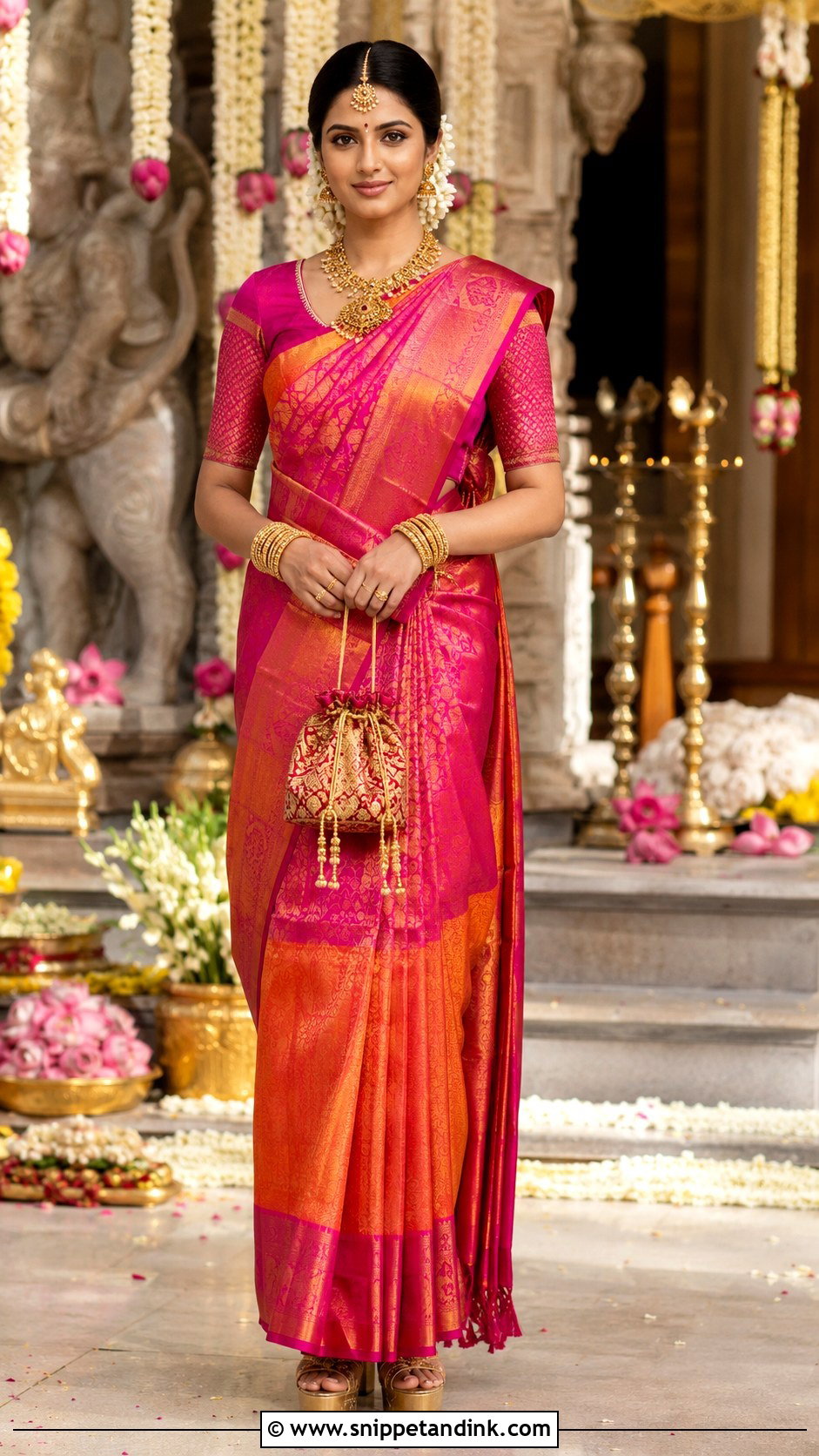
A Kanjeevaram saree for a South Indian wedding should coordinate with the family palette without matching the bride, so a dual-tone weave or a contrasting border works well. An elbow-sleeve blouse balances the heavy silk. Temple-style earrings, a short necklace, bangles and a small silk potli. Gold block heels or platforms under the hem. Kanjeevaram has real body, so the pleats must be precise and pinned or they’ll fan out by midday. Sit down in it before the day; long rituals on the floor are where an over-tight drape starts to hurt. A jasmine-wrapped bun completes it.
13. Peplum Sharara Outfit For Sangeet
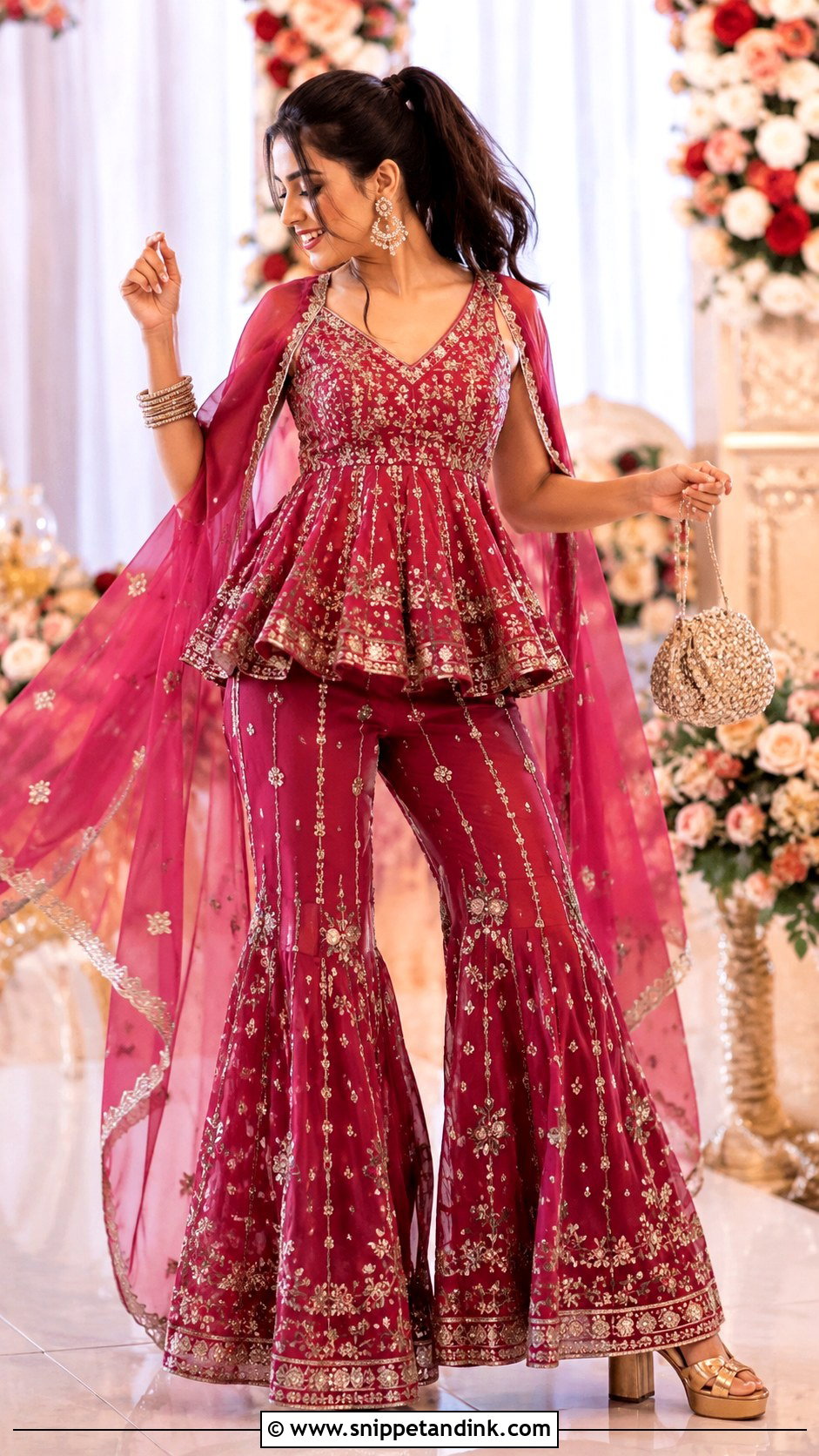
If you’d rather dance without a dupatta, a peplum sharara set is the safe bet for a sangeet performance. The fitted peplum top with an embellished neckline stays put, and the sharara starts flaring below the thigh so it swings on every turn. Teal, raspberry, cobalt or lavender read well on stage. If the set includes a dupatta, pin it behind the shoulders or swap it for a light cape. Bold earrings, stacked bangles, a wristlet and sturdy block heels. A high ponytail keeps hair off the blouse details. Rehearse in the full outfit so you know the hem and shoes will let you move.
14. Organza Saree Outfit For Reception
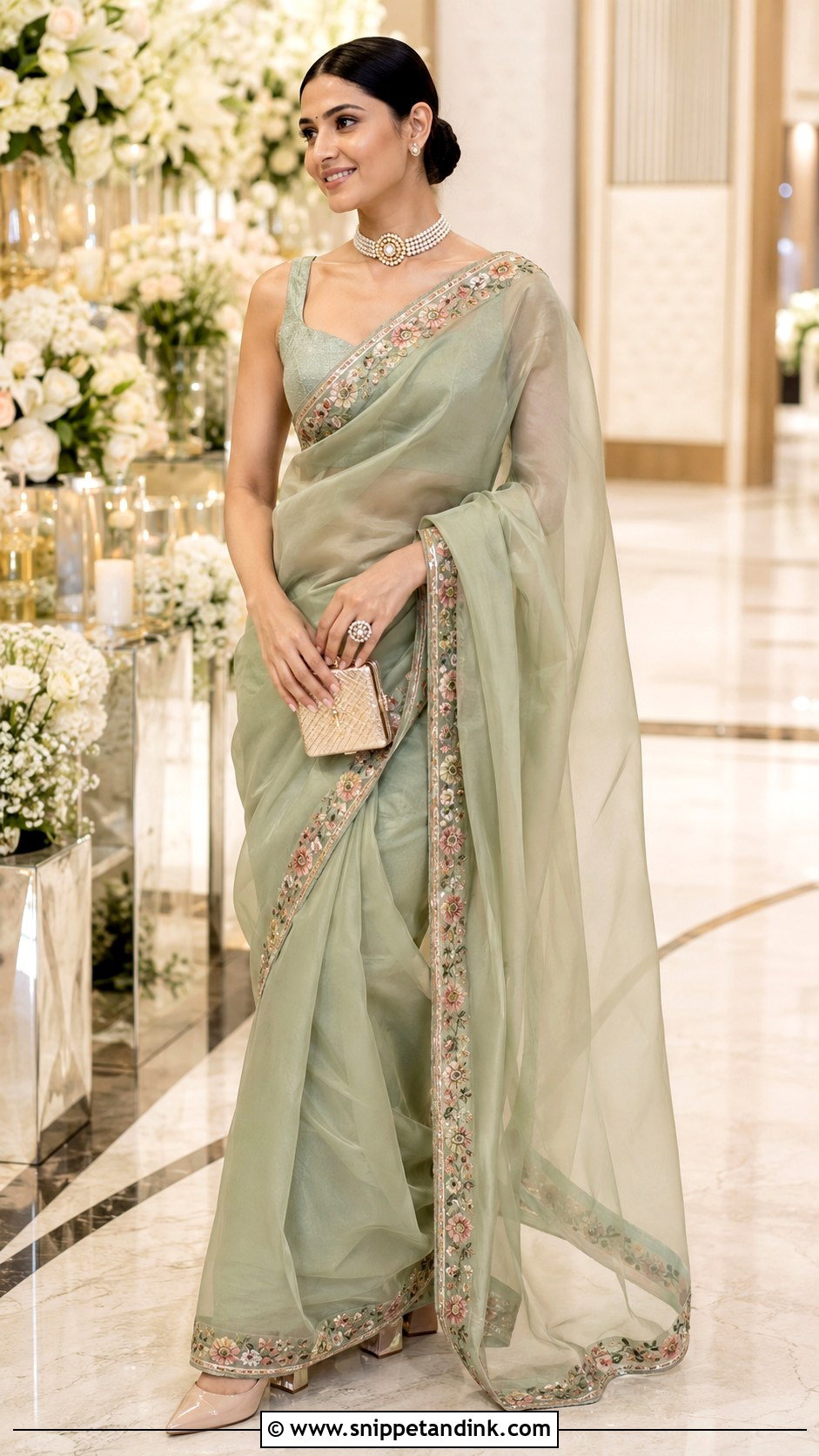
Organza looks crisp at a reception, but it’s semi-transparent, so the blouse underneath has to be cleanly finished. I check the inside seams on every organza look because uneven stitching shows straight through. A floral border, scattered sequins or subtle metallic work in mauve, sage, ice blue or deep wine. Narrow pleats keep the volume under control, and the pallu pinned neatly stops it ballooning over your frame. A pearl choker, small earrings, a cocktail ring and a box clutch. A sleek low bun and a muted lip.
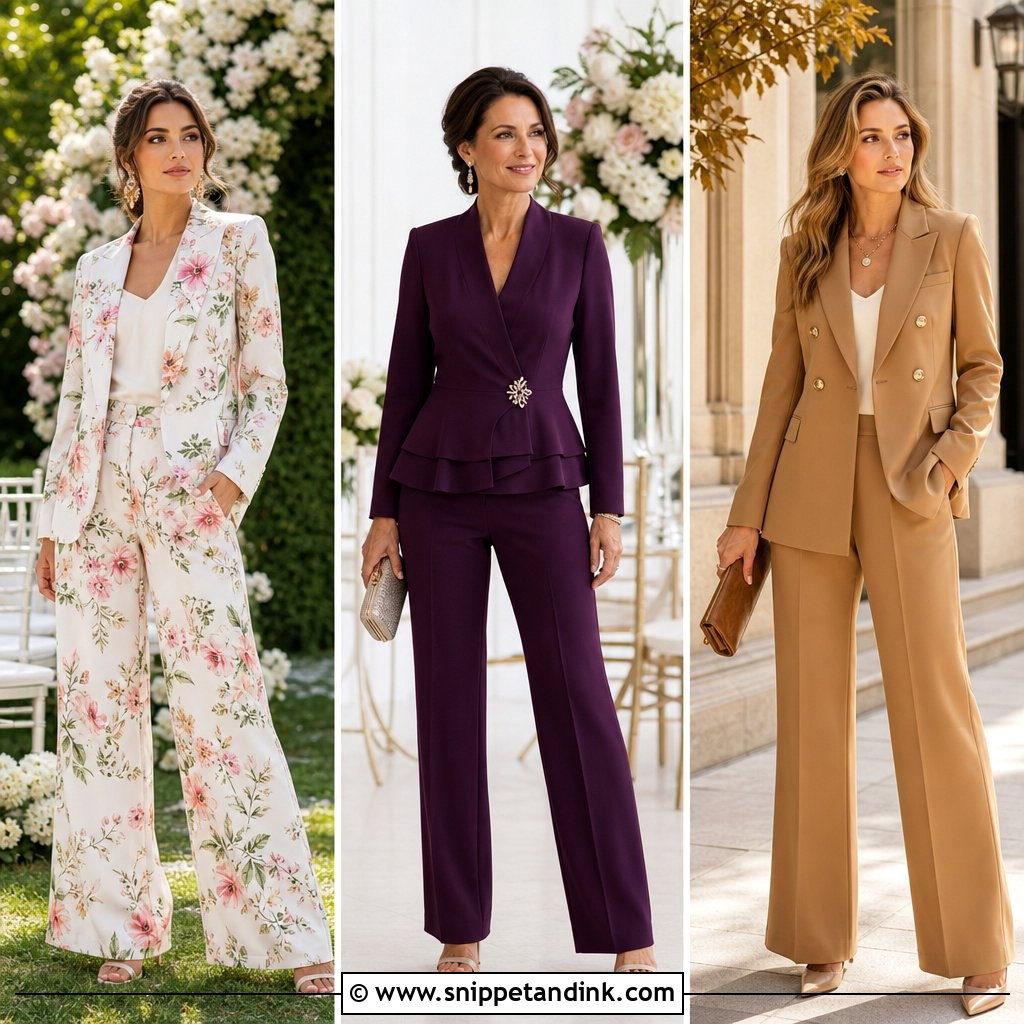
15. Jacket Lehenga Outfit For Winter Reception
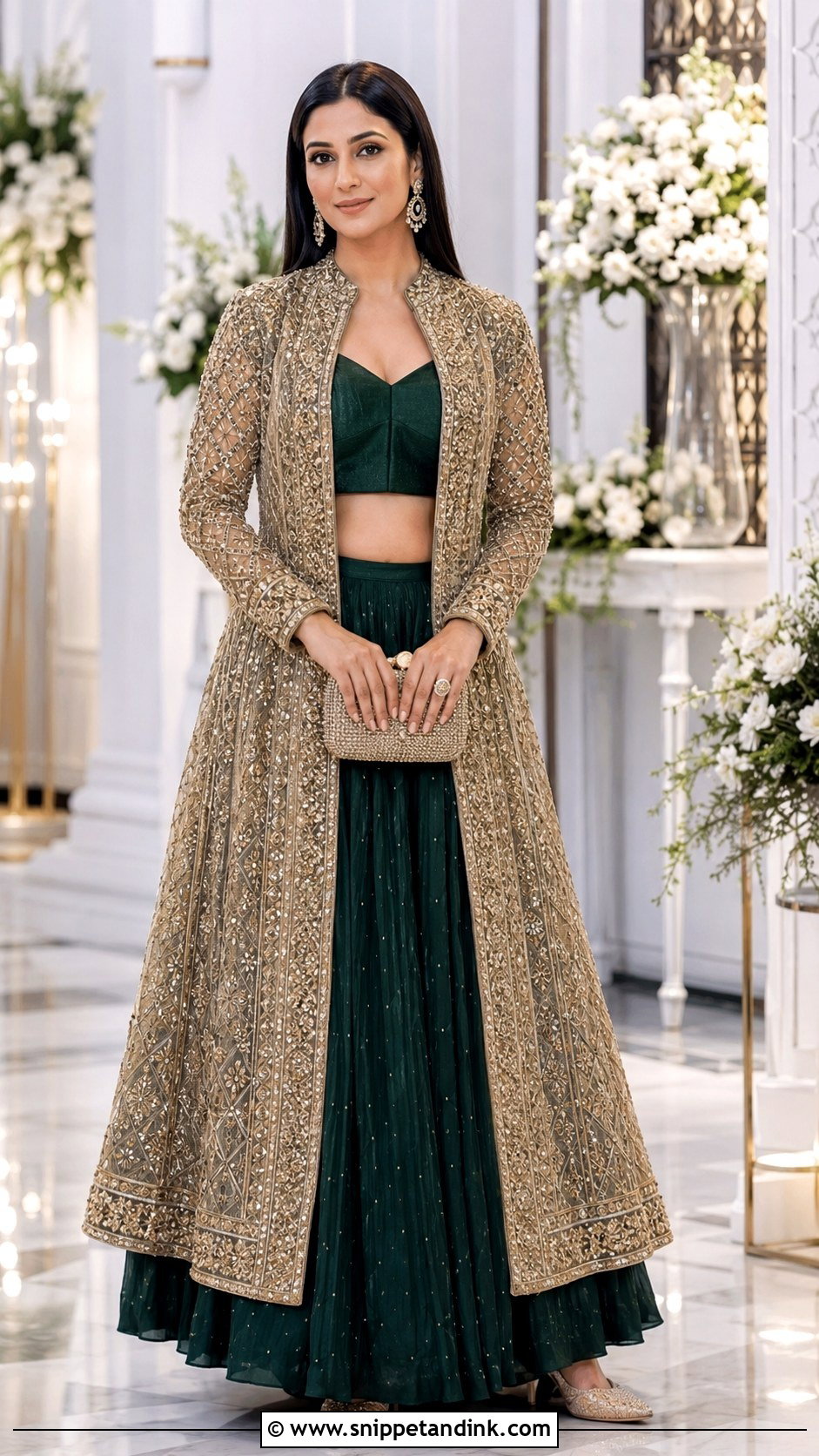
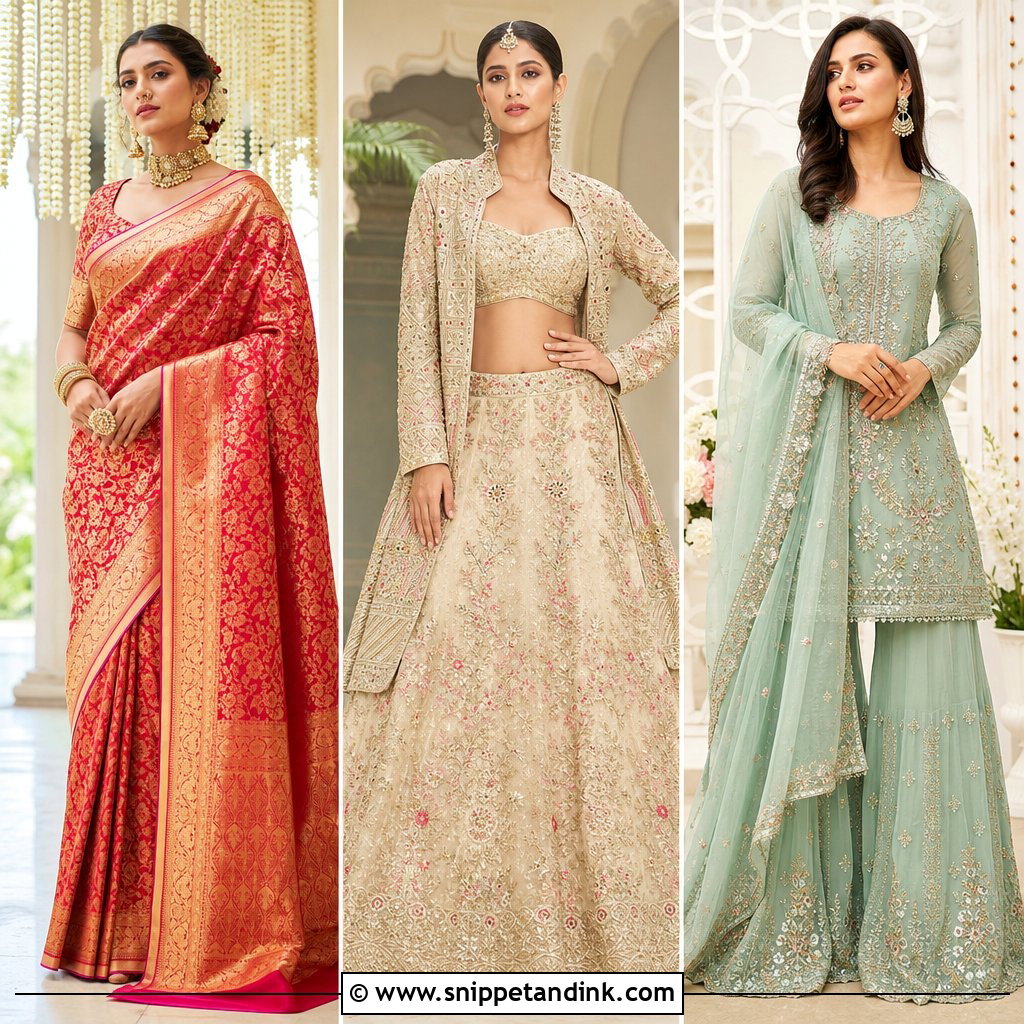
A jacket lehenga is the outfit for a cold reception or an outdoor evening. The long embroidered jacket keeps you warm and replaces the dupatta, which leaves one less thing to hold. Build it on a streamlined skirt and fitted blouse in navy, forest green, wine, charcoal or antique gold, and keep the skirt quiet if the jacket is heavily worked. Drop earrings, a statement ring, a structured clutch and closed-toe heels. The jacket front should open enough to show the blouse and waistband, or the outfit reads as a coat.
16. Dhoti Pants And Kurta Wedding Outfit
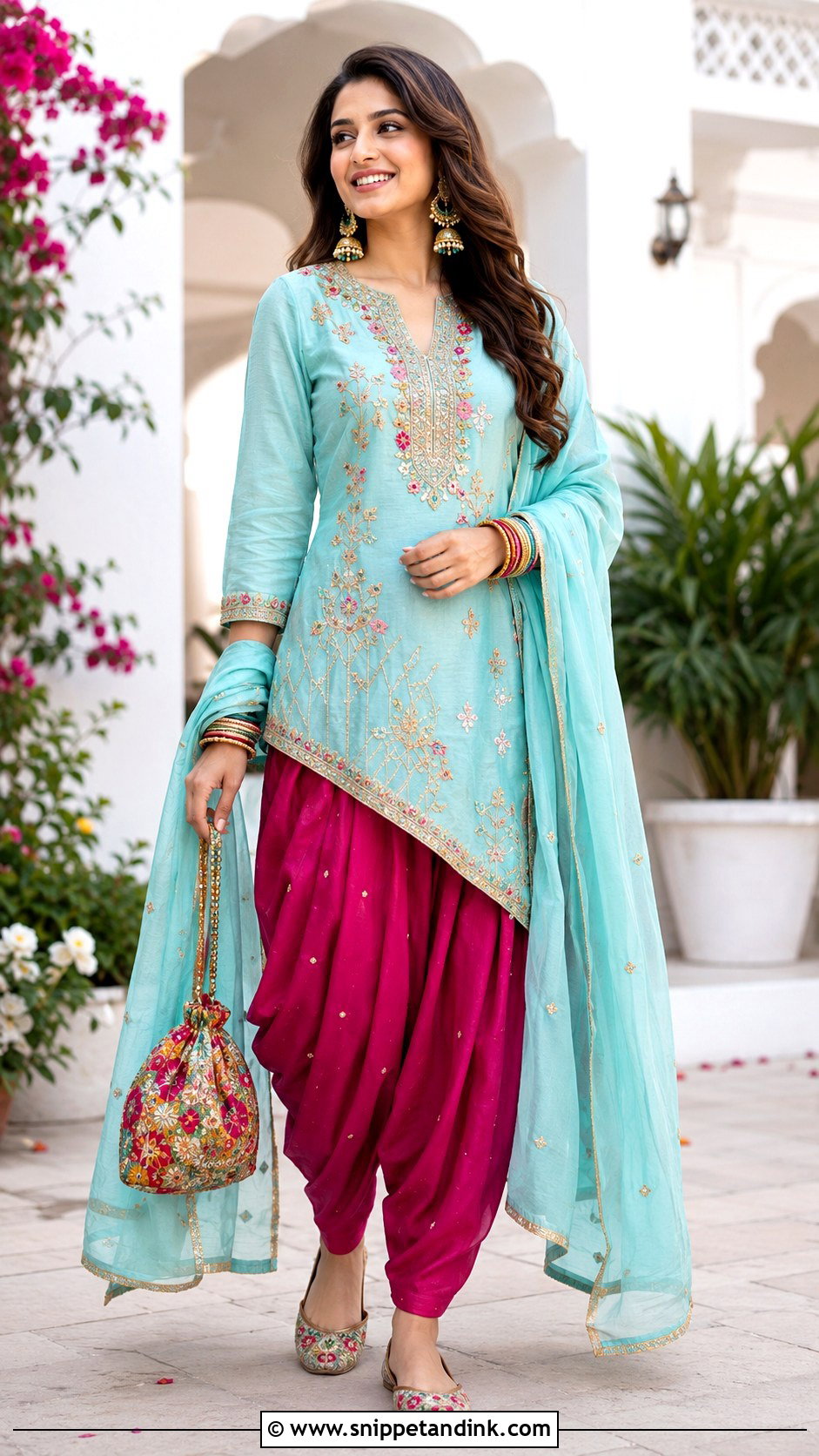
For the small pre-wedding events, the puja, a family lunch, setting up the mehndi, dhoti pants and a short kurta let you work in comfort and still look dressed. Silk-blend dhoti pants with controlled pleats, an embroidered kurta, peplum blouse or asymmetric tunic. Mustard, magenta, aqua and ivory suit daytime. A light dupatta only if the event is traditional. Jhumkas, stacked bangles, a potli and embellished juttis. The waist must sit securely and the pants should taper neatly at the ankle, so you can kneel, lift and carry without adjusting.
17. Ruffle Saree Outfit For Cocktail Event
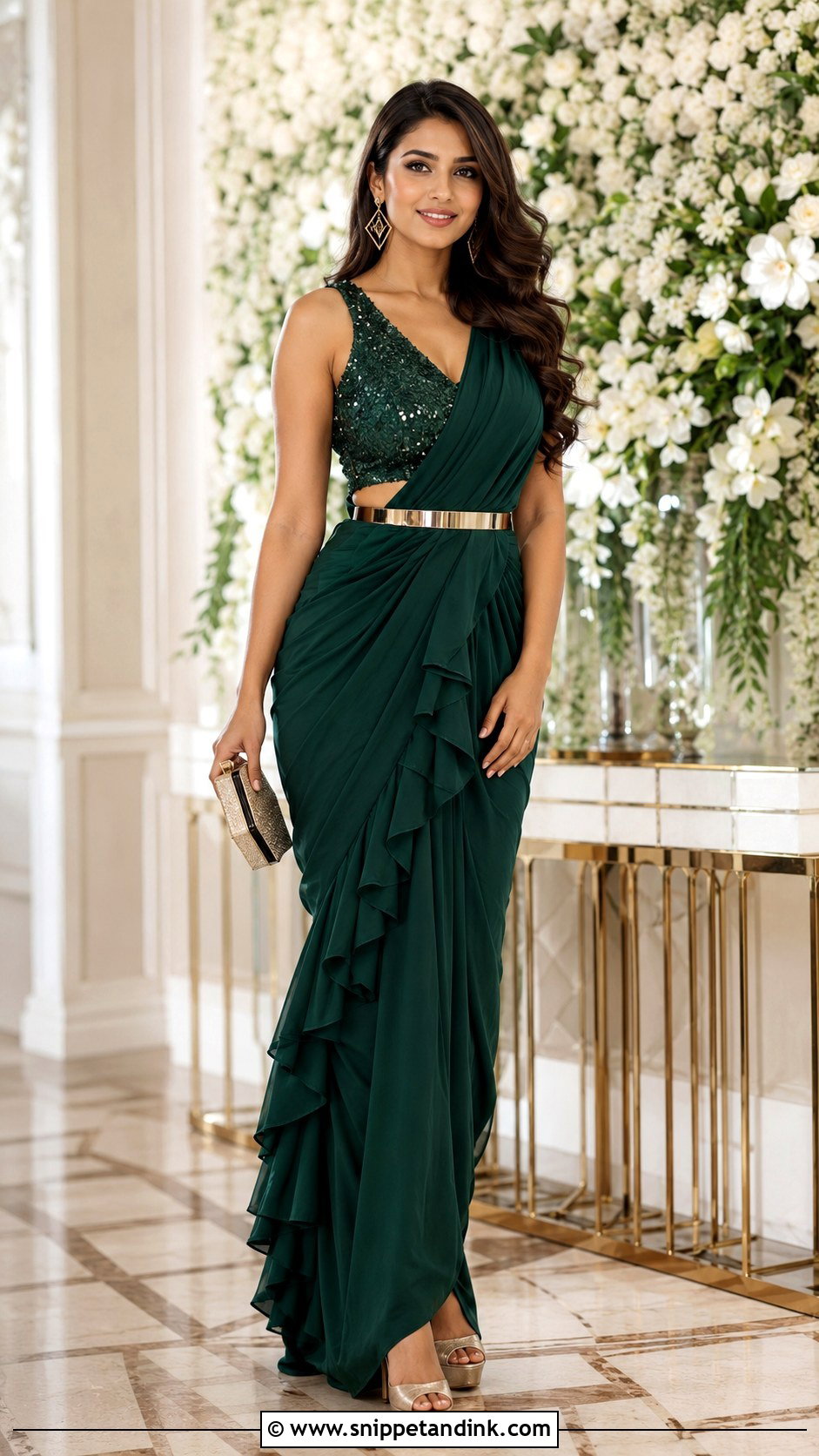
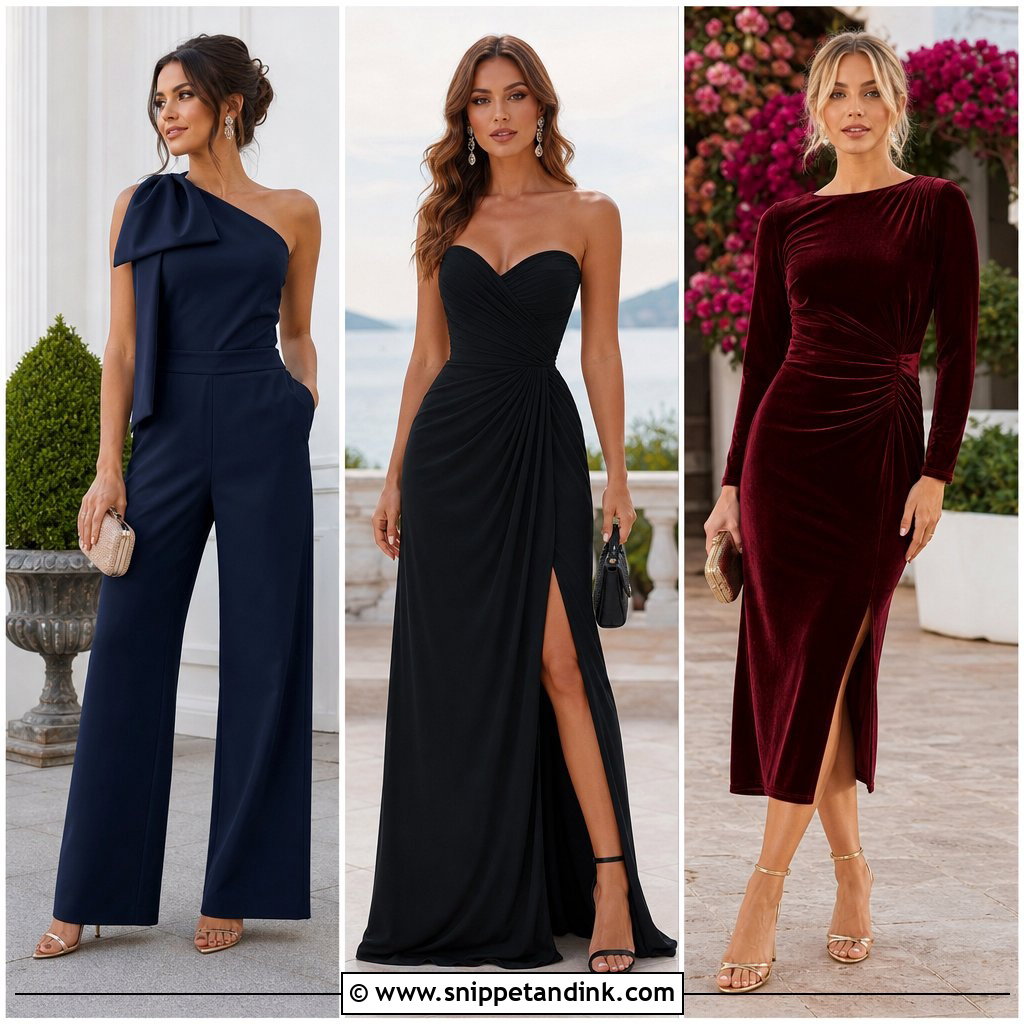
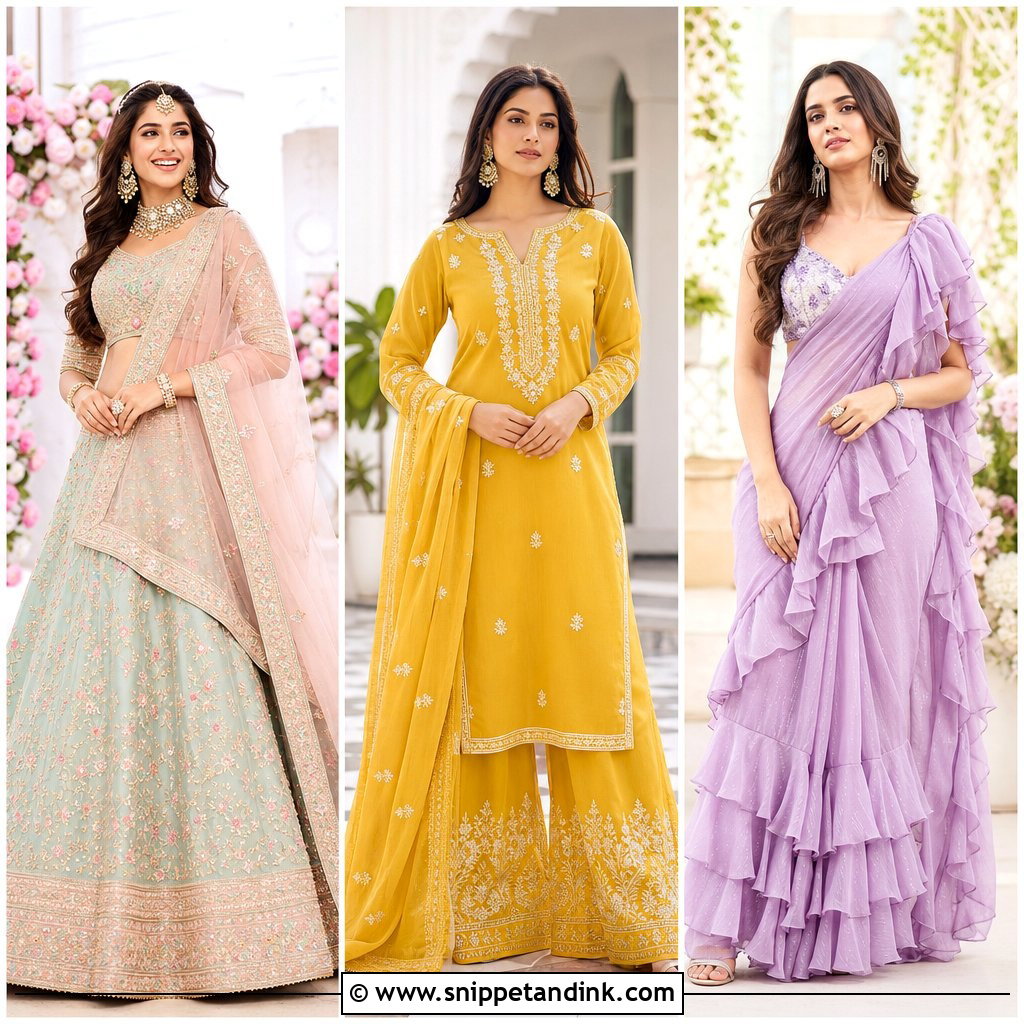
A ruffle saree is cocktail wear, and the ruffles do enough that everything else should be smooth. Choose a pre-draped style in emerald, berry, navy or muted metallics with ruffles along the border only; ruffles all over add volume everywhere. A simple sequined blouse, a corset-style top or a fitted long-sleeve blouse depending on how much coverage you want, and a slim belt to hold the drape and define the waist. Geometric earrings, a small clutch and platform heels. A sleek ponytail or polished waves, edited jewelry and clean makeup.
18. Palazzo Suit Outfit For Wedding Lunch
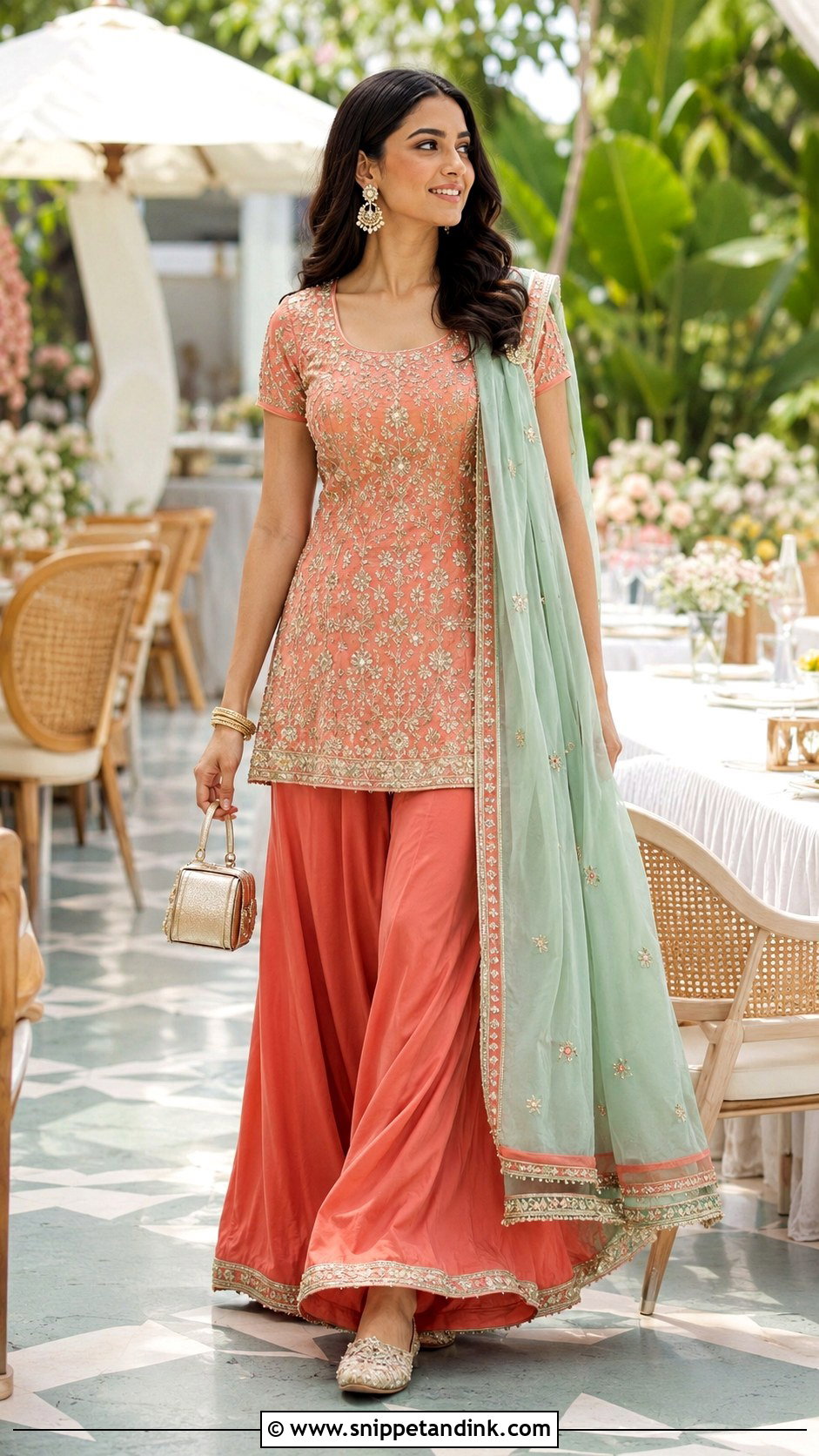
A palazzo suit is my pick for the wedding lunch, the welcome gathering or a morning ceremony when you’ll be greeting arriving guests at the door. Wide-leg pants with a fitted or gently flared kurta ending above the knee, in chanderi, georgette or a silk blend for enough structure. Coral, mint, yellow, blue or prints for daytime. Pin the light dupatta at the shoulder with a hidden pin. Medium earrings, delicate bangles, a small bag and embroidered flats or low wedges. Check the palazzo hem clears the floor, because you’ll be climbing stairs and walking outdoors far more than the guests.
19. Draped Skirt And Crop Top Outfit
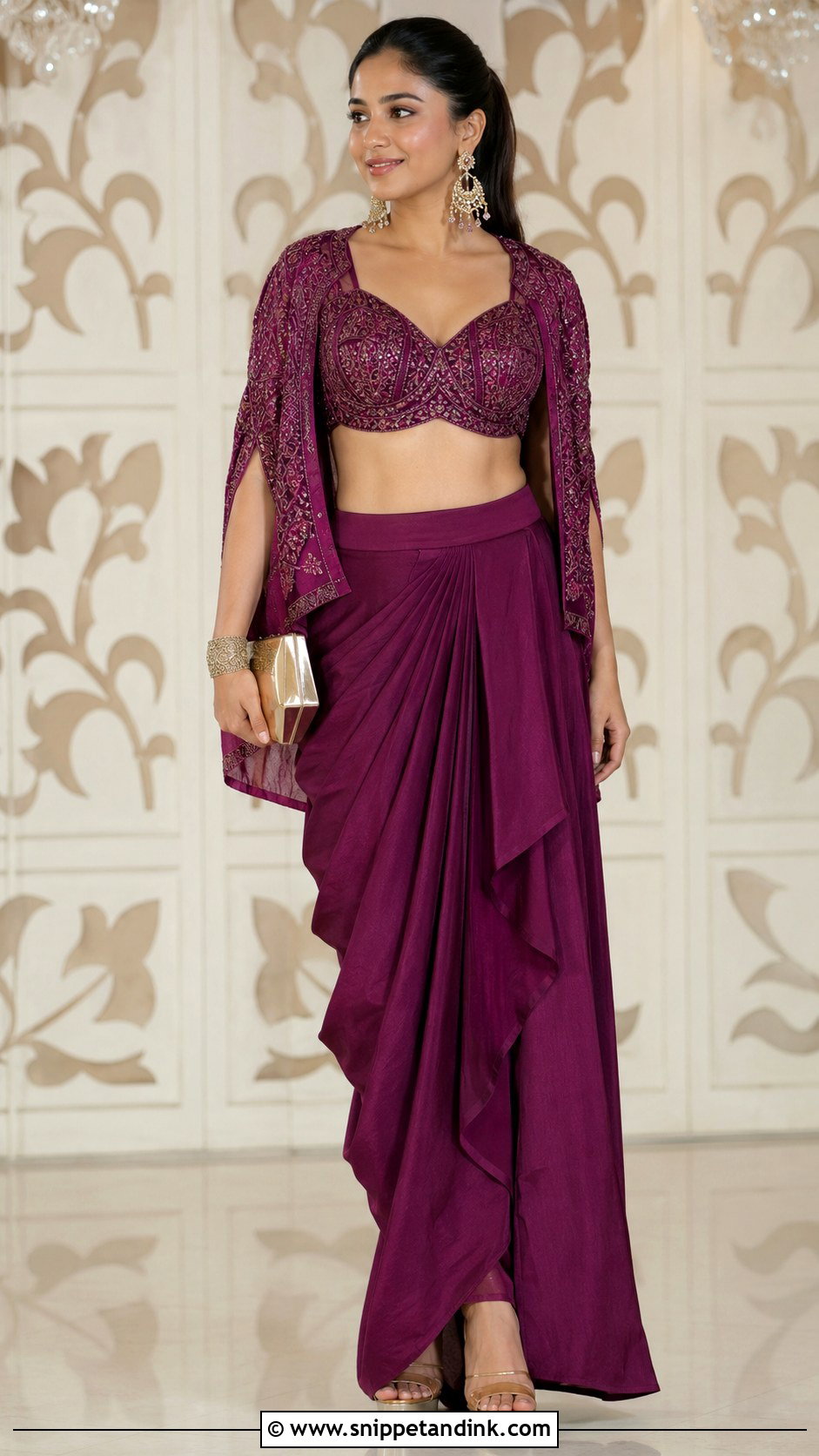
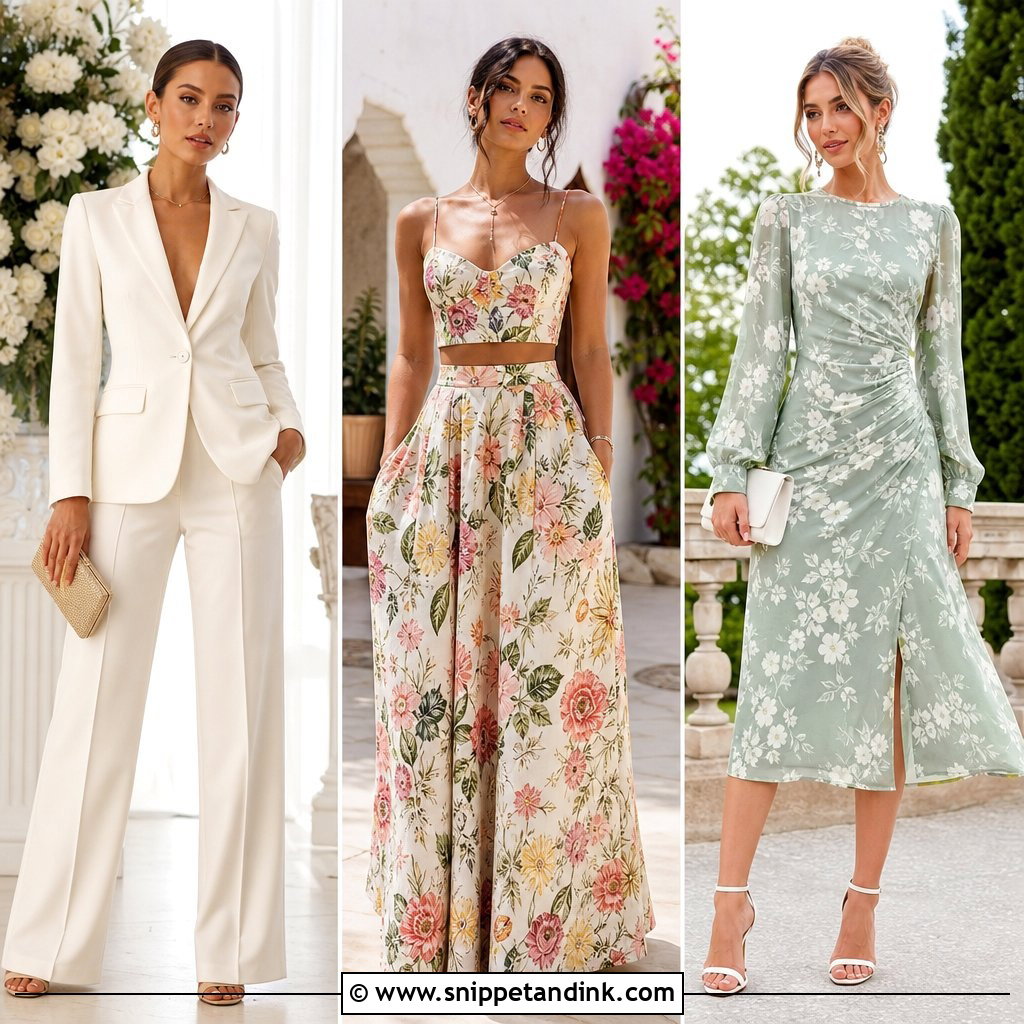
A draped skirt with a crop top is a sleek stand-in for a lehenga at a sangeet, reception or cocktail. A skirt with soft pleats or an attached side drape, and a structured embroidered top that fits securely. Jewel tones, dusky pastels or metallics. Add a shoulder drape, short cape or fitted jacket for coverage. Statement earrings, a slim cuff, a box clutch and platforms. I’d keep the drape short and the waistband comfortable; if you have to lift the fabric every time you stand up, it’s too long for a sister’s evening.
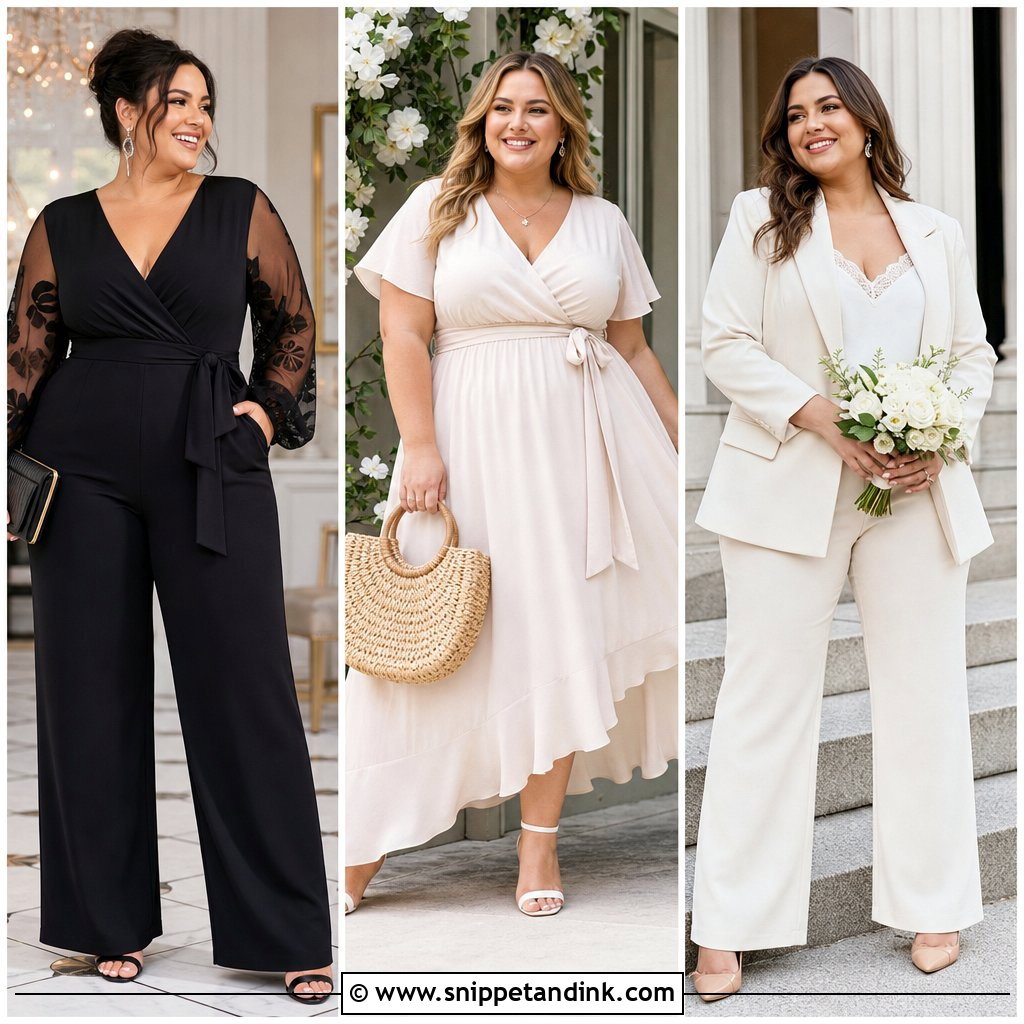
20. Embellished Saree Gown Reception Outfit
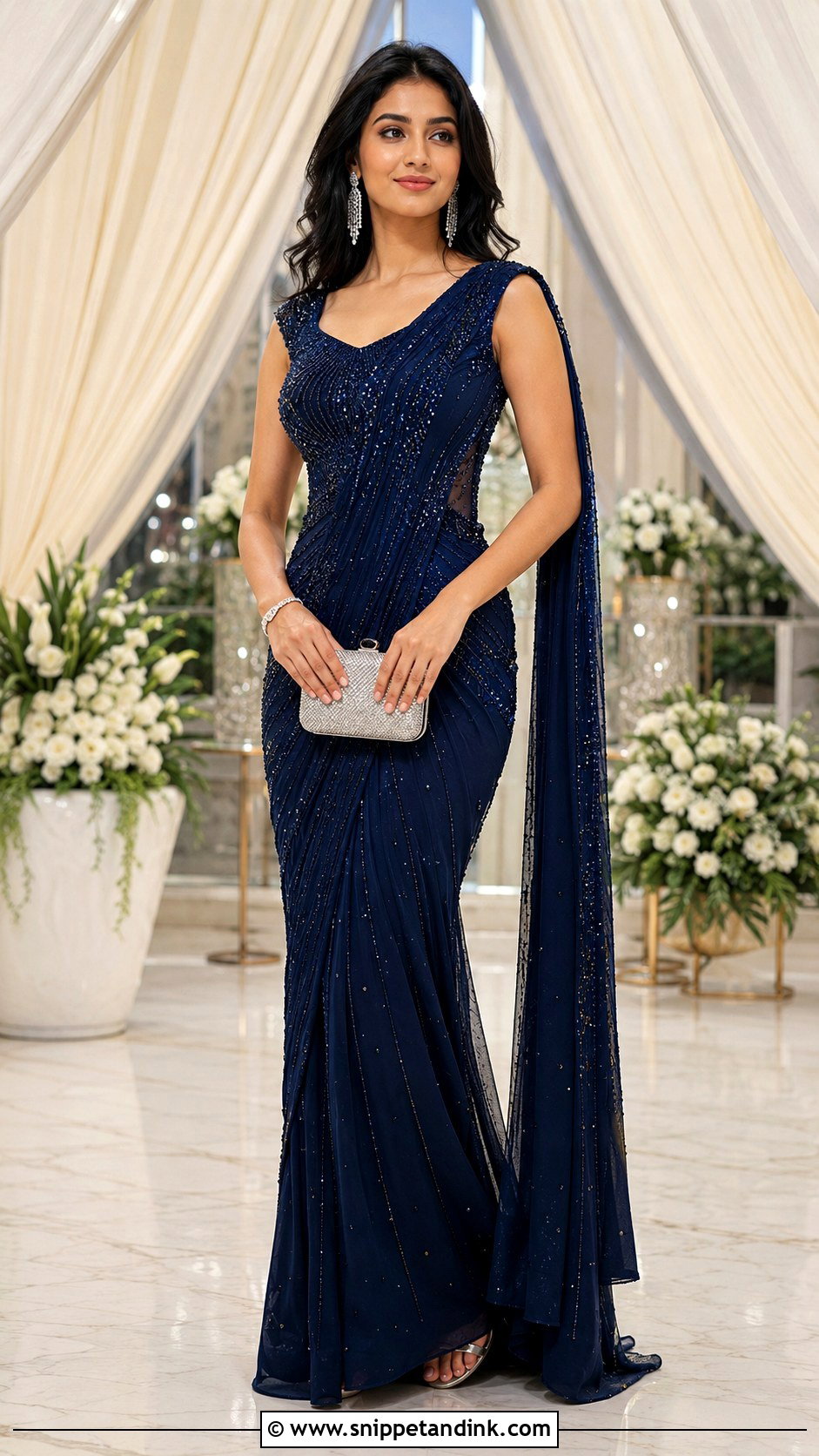
A saree gown gives the look of a full drape with none of the pleating, which is why I like it for a sister at the reception who has to mingle, pose and keep moving between tables. Sapphire, emerald, plum, rose gold or silver, with controlled beadwork and a clearly defined waist. The attached drape should fall smoothly from the shoulder without trailing behind. Chandelier earrings, one bracelet, a structured clutch and stable heels; no heavy necklace over a worked neckline. Because bodice, waist, hem and drape are one piece, every fitting matters; a gown altered in one place can pull in another.
A Kit for the Sister Who Fixes Everything
Whatever you wear, someone will come to you with a dropped pleat, a broken hook or a lost earring back. I pack a small pouch for every sister I dress, separate from her own potli, and it gets used at almost every function.
- Safety pins in three sizes and a strip of bobby pins in dark and light colors
- A threaded needle in red, gold and white, plus a few spare hooks
- Double-sided fashion tape for necklines and slipping dupattas
- Spare earring backs and a couple of bindis
- Blotting papers, a small comb and lip color in the bride’s shade
- A phone charger and a pair of foldable flats for the end of the night
Keep the pouch with someone who stays near the bride during the ceremony, or in the getting-ready room, so it’s within reach when the dupatta comes loose ten minutes before the entry.
Dressing for the Photos and the Running Around
A sister’s wedding wardrobe has to balance celebration, comfort, family expectations and your own taste, across sarees, lehengas, shararas, draped sets and fusion looks. Before you buy anything, confirm the couple’s palette, each event’s setting and the dress code. Coordinate with the bride or groom without copying their outfit or signature details. Comfortable shoes, secure draping, good tailoring and edited accessories make every look wearable. Then you can dance, join the rituals and help your family without spending the night fixing your clothes.
You'll Like These Ideas:



Leave a Reply