
Spell it lengha or lehenga, this three-piece outfit stretches from a bride’s ceremony to a guest’s sangeet look, and the difference is mostly weight, color and how much jewelry goes with it. Designers lately have leaned toward softer pastels, lighter construction, structured blouses, capes, jackets and pieces you can wear again, while traditional red, silk, velvet, zari and mirror work haven’t gone anywhere. Below, bridal and guest ideas sit side by side. When I style either, I treat skirt, blouse, dupatta, jewelry, shoes and beauty as one outfit, because a lehenga that looks right on a hanger can look unfinished with the wrong earrings or a dupatta of the wrong weight.
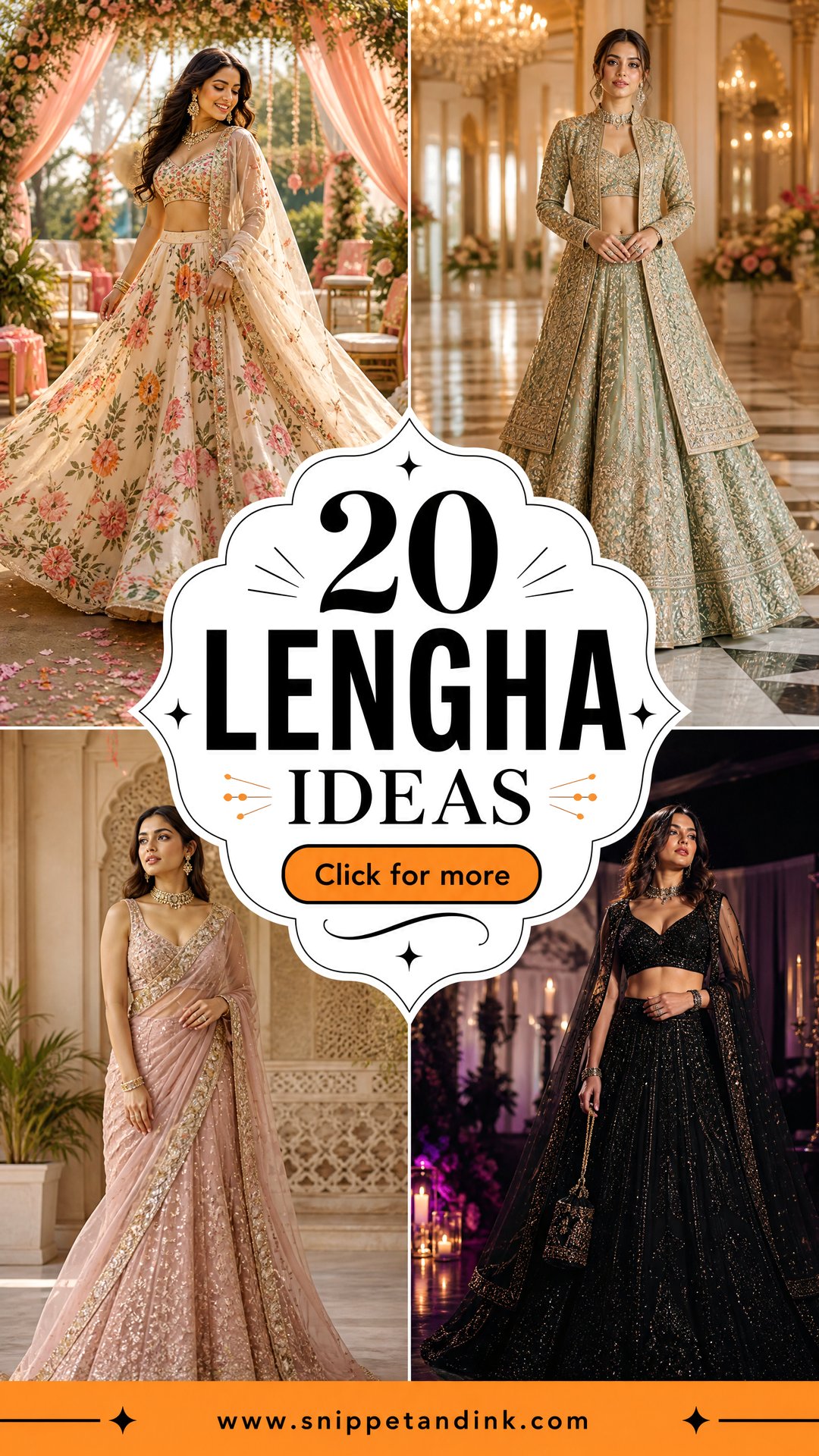
Which Function Calls for Which Lehenga
Most Indian weddings stretch over several events, and each one asks something different of an outfit. This is how I think about them, for brides and guests alike:
- At the mehndi, light fabrics and short dupattas. You’ll sit low to the ground, and wet henna is everywhere.
- At the haldi, anything yellow you won’t mind staining, worn with flat shoes.
- At the sangeet, movement comes first: secure blouses, belts, and mirror work or sequins that wake up when you dance.
- At the wedding ceremony, the most traditional piece. Brides wear their heaviest work here, and guests should stay a clear step lighter.
- At the reception, evening fabrics take over, with sequins, velvet in winter, jackets and capes.
Guests have one extra job, which is not competing with the bride. Avoid deep bridal red and very heavily worked lehengas unless the family asks for them. Some families also avoid white or black at auspicious ceremonies, so ask the hosts or a cousin if you’re unsure. A short message beforehand is much easier than changing outfits halfway through the day.
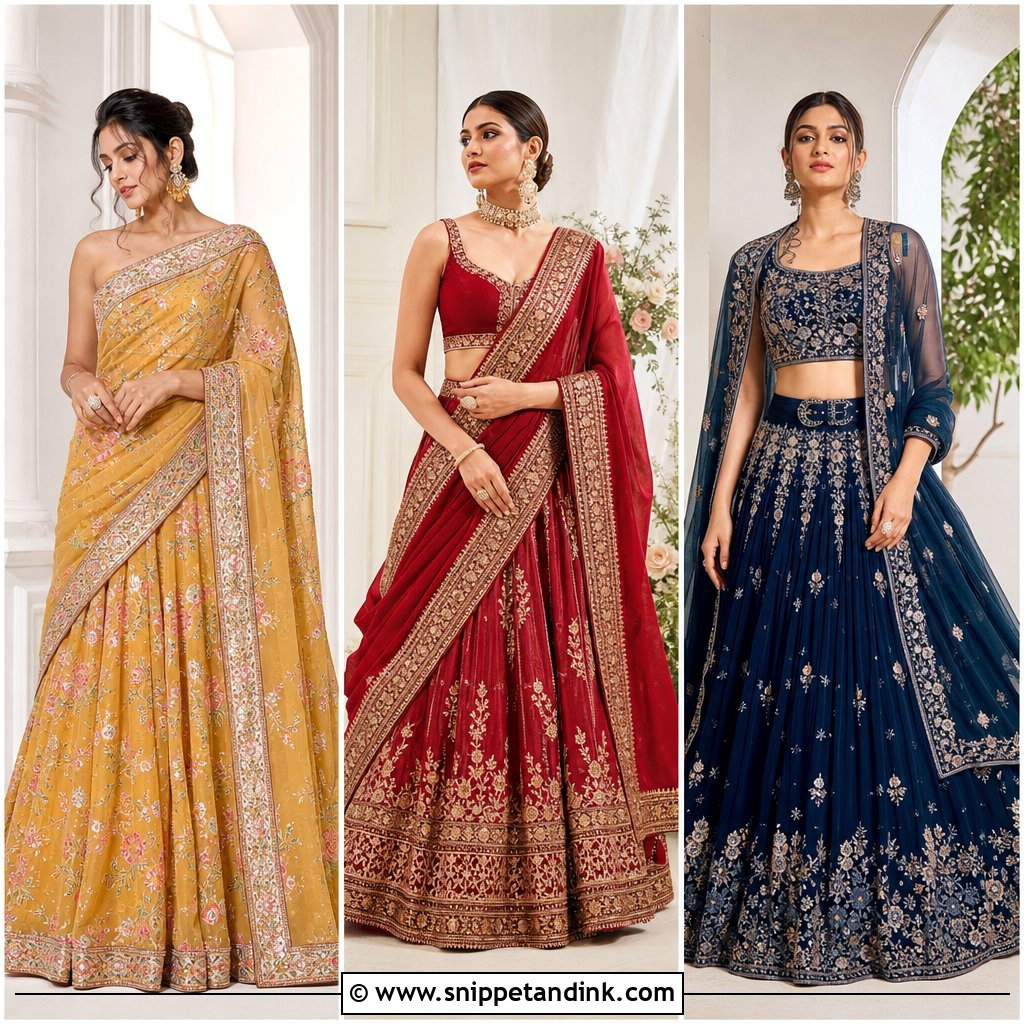
1. Red Bridal Lehenga Outfit
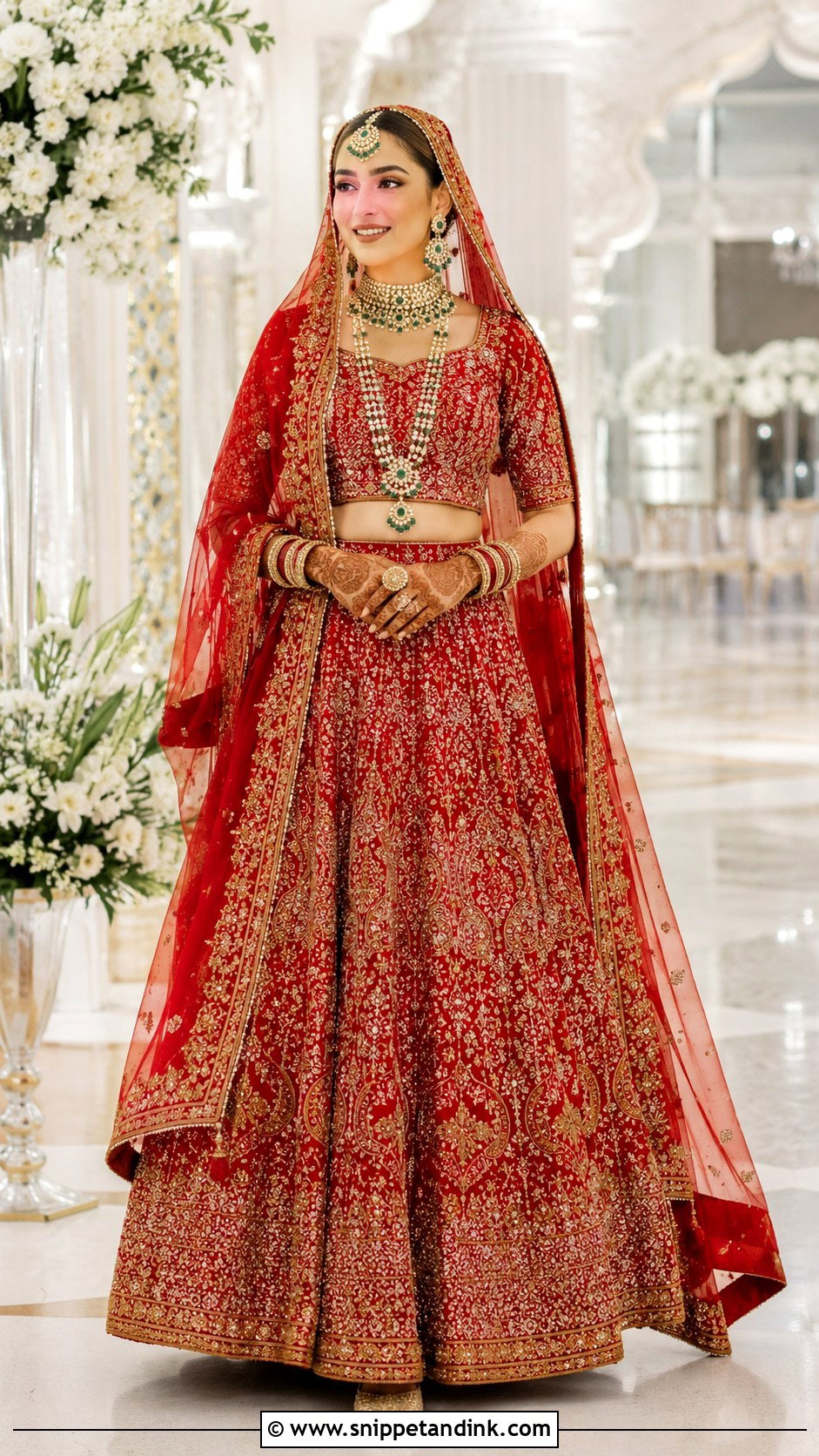
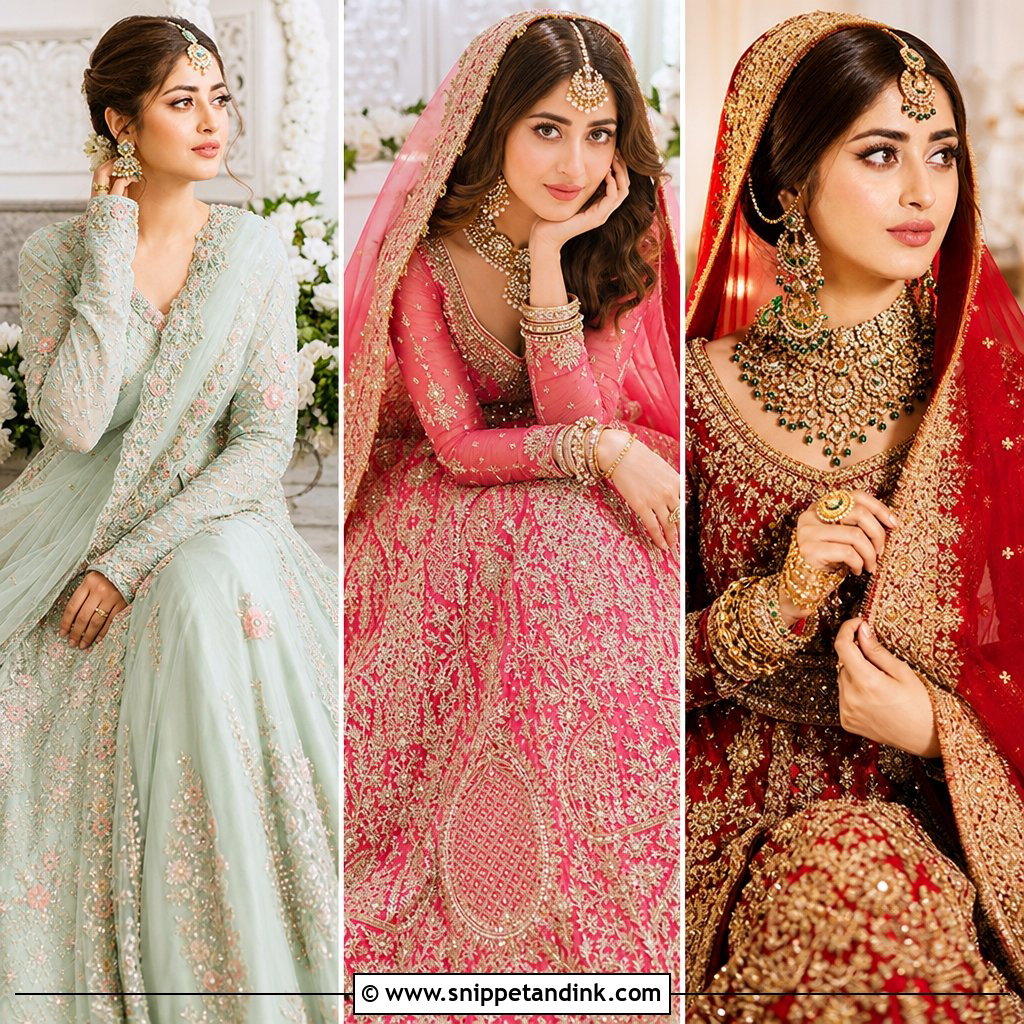
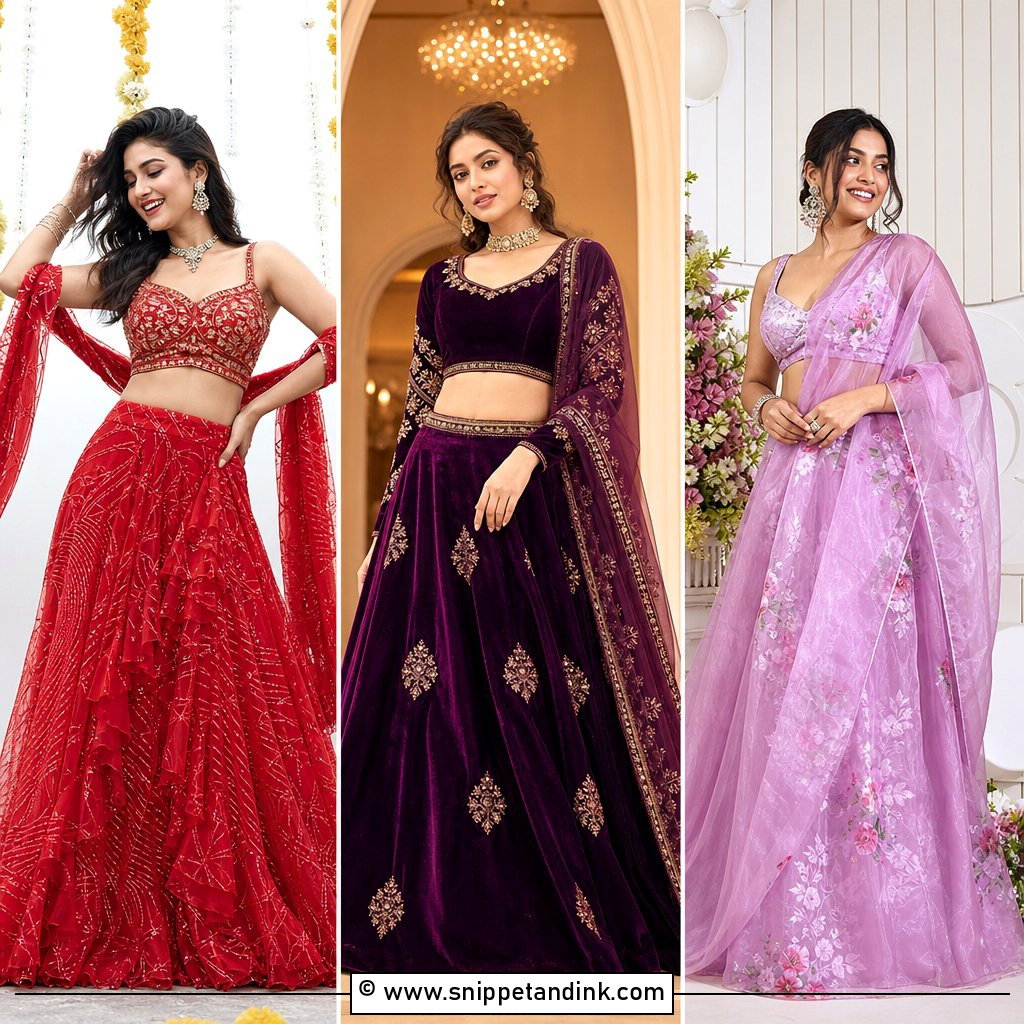
Red is the ceremonial default for good reason: it reads as bridal from across a crowded mandap, and some shade of it suits almost every skin tone. The skill is choosing that shade, since orange-reds glow on warm undertones and blue-reds flatter cooler ones. Choose a high-waisted skirt with gold zardozi, zari or floral embroidery and a fitted short-sleeve blouse. A red dupatta over the head and a lighter one across a shoulder give both tradition and movement. If you’re wearing a kundan choker, a longer necklace, maang tikka and bangles, keep the blouse neckline plain enough that the two necklaces don’t collide. Cushioned embroidered juttis and a neat bun or soft waves finish it.
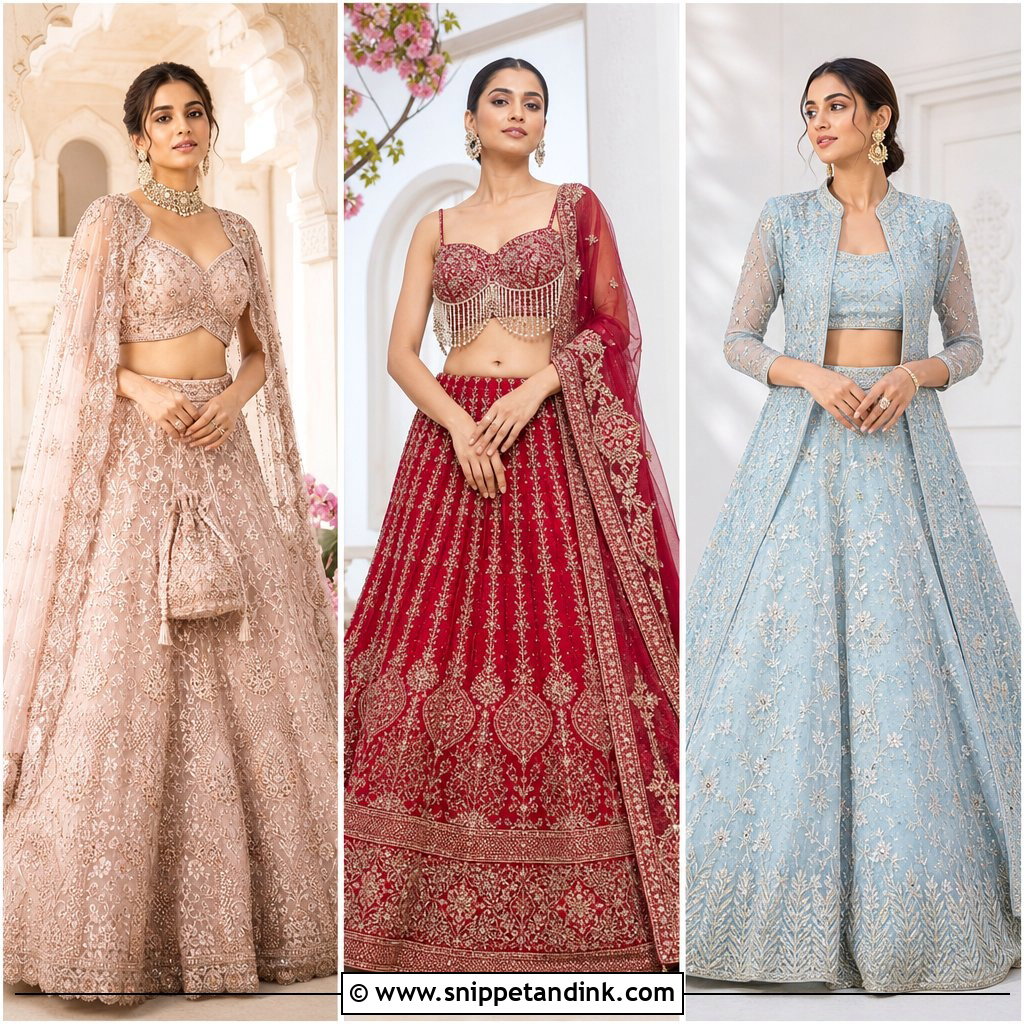
2. Pastel Pink Embroidered Lehenga Outfit
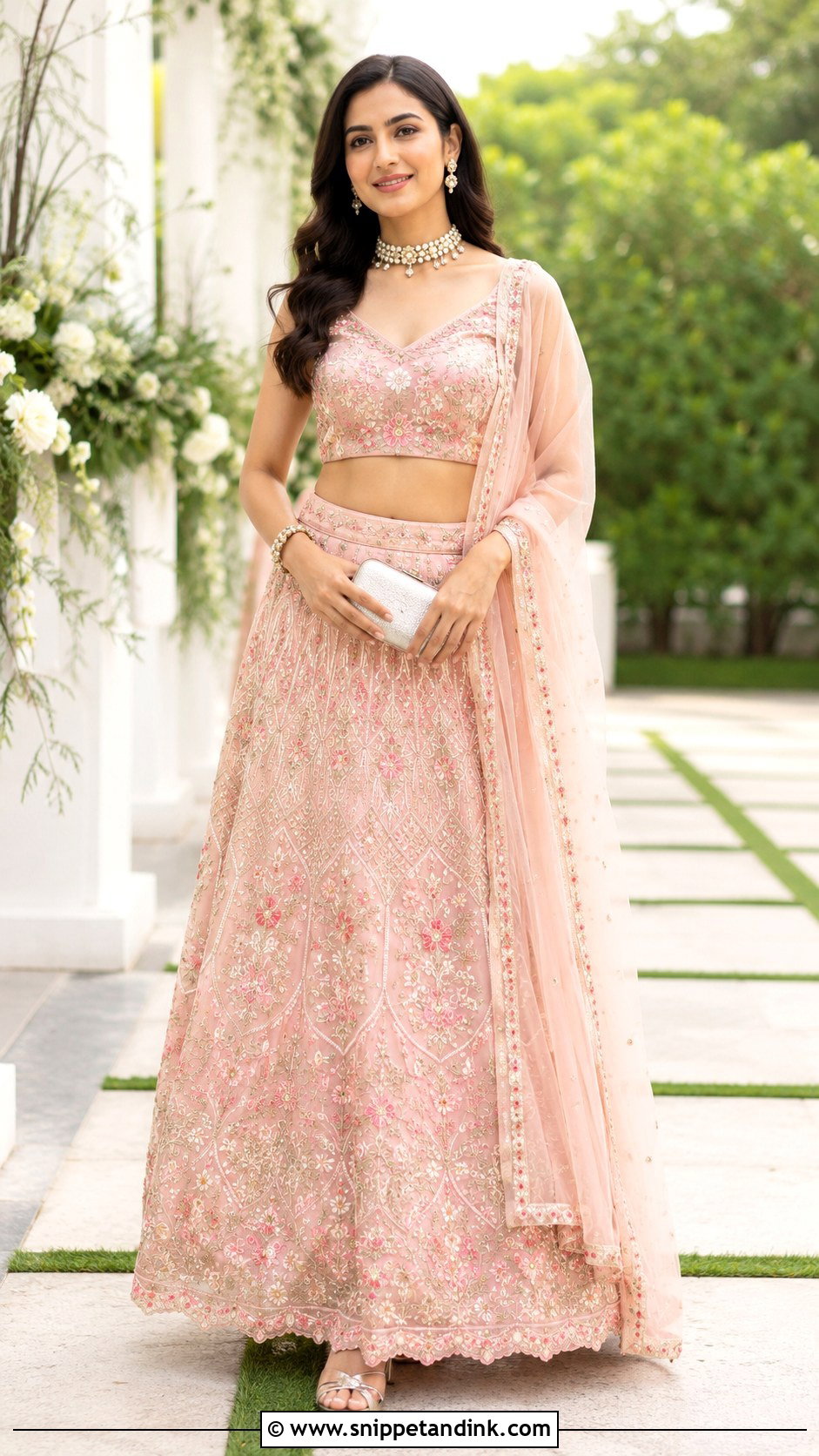
Pastel pink is the guest outfit I suggest most for daytime weddings and engagements, since it’s festive without drifting toward bridal red. A blush or dusty-pink skirt with fine threadwork, pearls, sequins or tonal florals pairs with a blouse in the same family and a sheer dupatta with a narrow border. Pearl earrings, a delicate choker and a small metallic clutch keep it light. Champagne or nude block heels add height without fighting the color, and rosy cheeks with a soft pink lip tie it together. Pale pink shows makeup transfer at the neckline, so press foundation in well and blot rather than rub through the day.
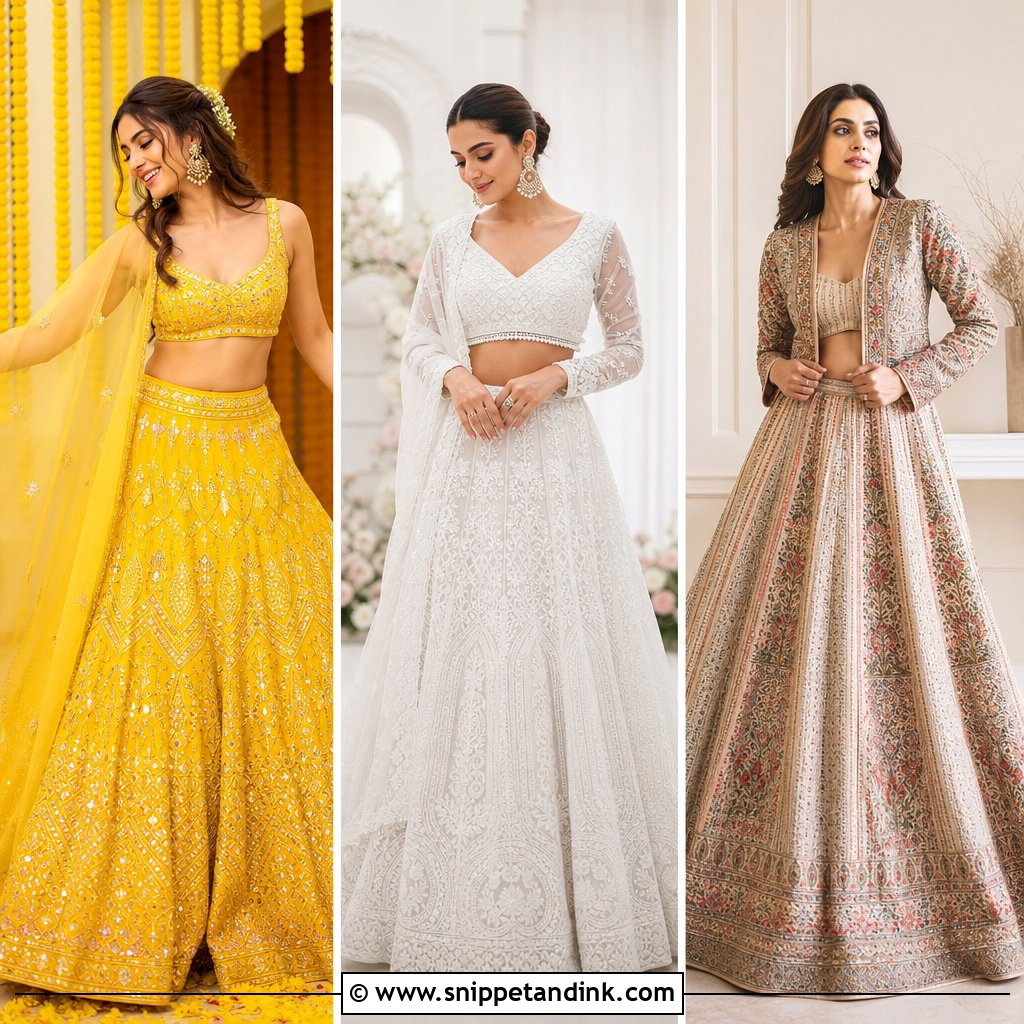
3. Ivory And Gold Lehenga Outfit
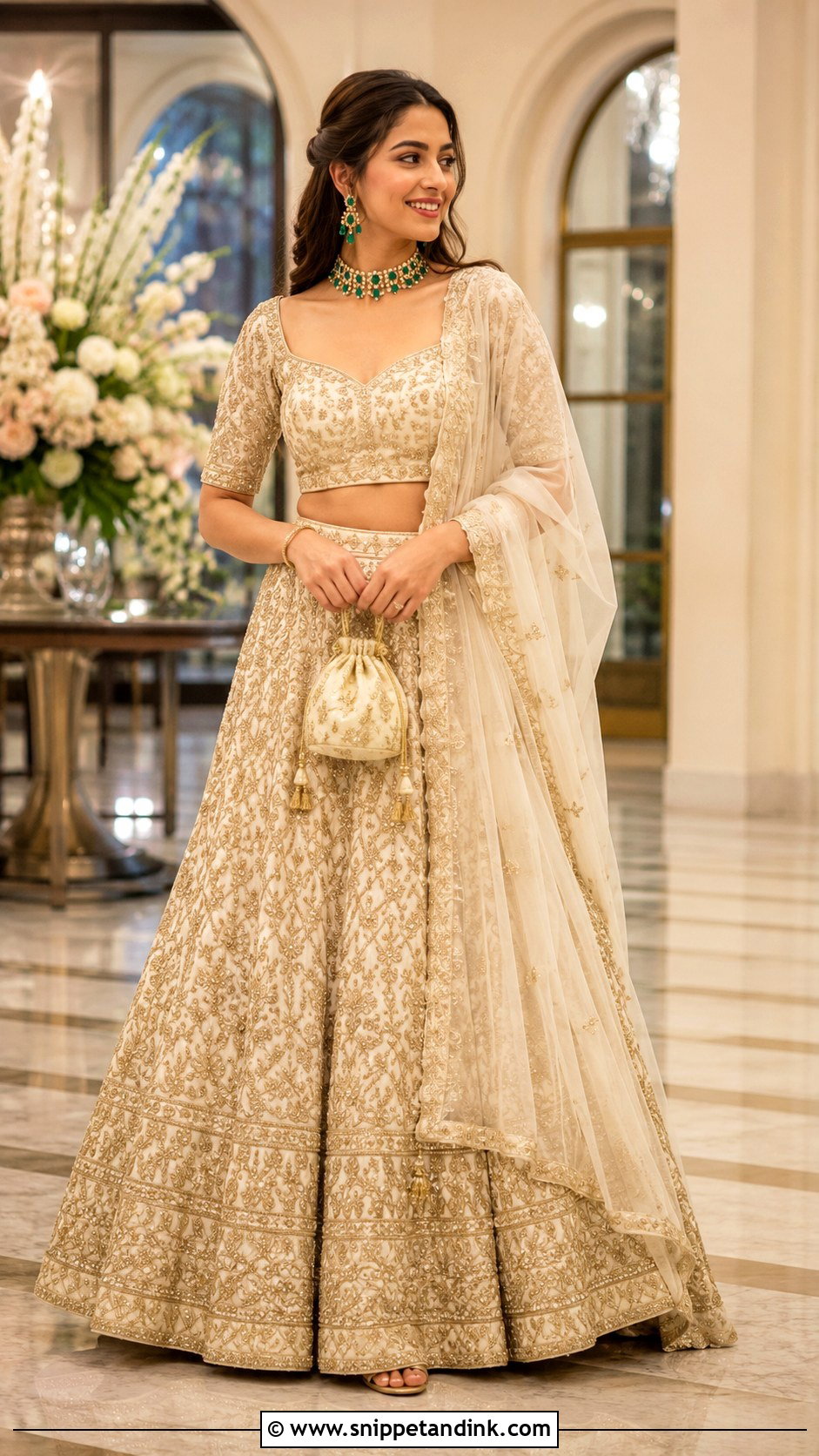
Ivory and gold suits a reception or a formal family dinner. I’d pick an ivory skirt with antique-gold embroidery or placed motifs instead of dense work everywhere, because on a pale ground heavy embroidery can look patchy wherever it thins. A structured blouse with elbow sleeves balances the pale skirt. Drape a sheer ivory dupatta with a gold border from one shoulder to the opposite wrist. Emerald earrings or a green stone choker add contrast, with gold sandals and a small potli. Ivory can wash out under flash, which is why textured fabric and varied embroidery matter: they keep the detail visible. As a guest, check first that the families don’t consider pale outfits off limits.
4. Green Mehndi Lehenga Outfit
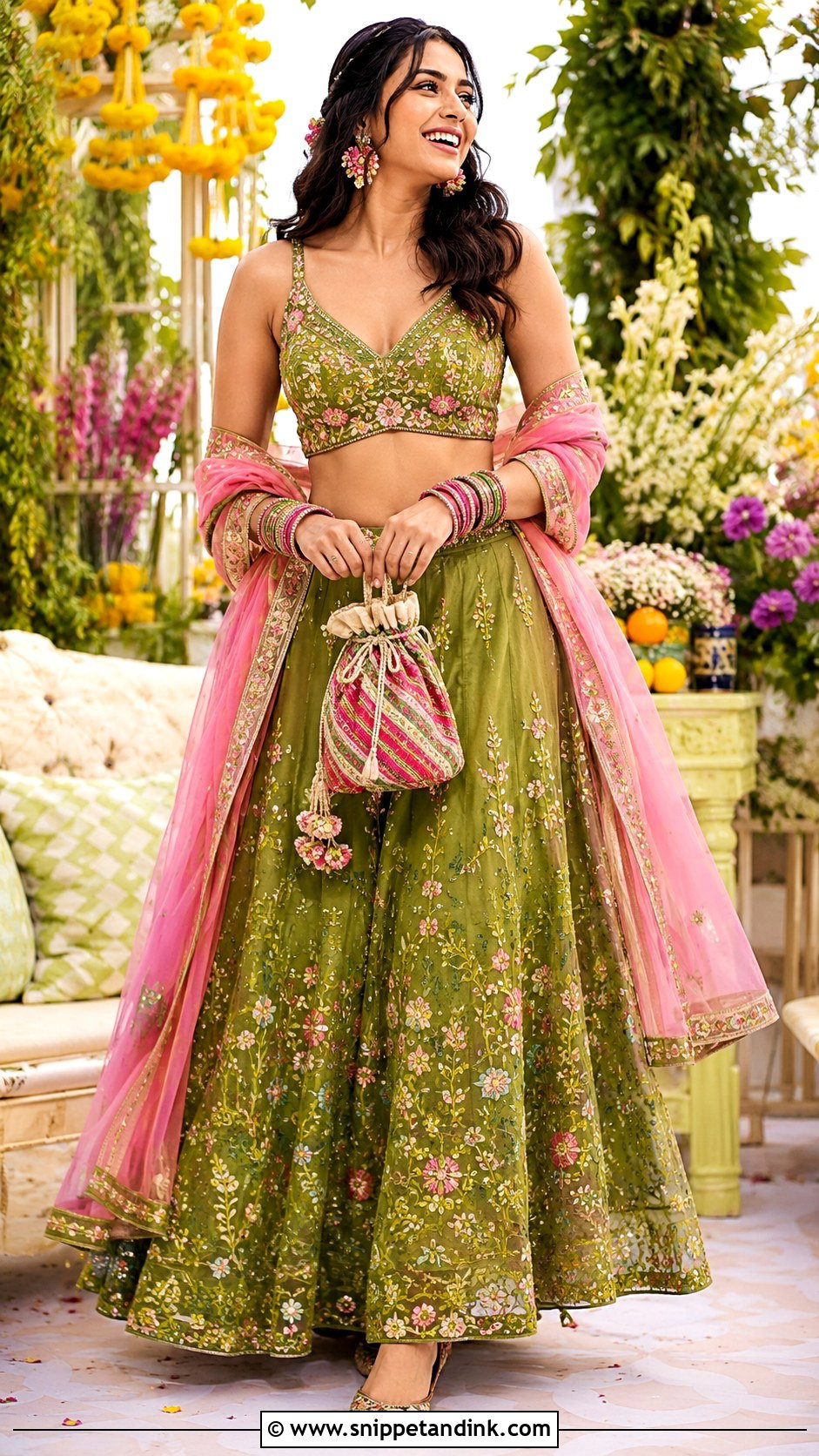
Mehndi nights mean sitting on low cushions, dancing and a lot of wet henna, so the outfit has to be light and forgiving. Pick a lime, parrot, emerald or leaf-green lehenga with floral appliqué, gota work or playful multicolored embroidery, with secure straps or sleeves if you’ll dance. A pink, orange or yellow dupatta brings more energy. Cushioned juttis beat heels on grass and rugs. Keep the dupatta short enough not to trail through anyone’s drying henna, and skip big rings and bangles if your own hands are being done, since they’ll have to come off. A braid with tiny flowers keeps hair out of the way.
5. Yellow Haldi Lehenga Outfit
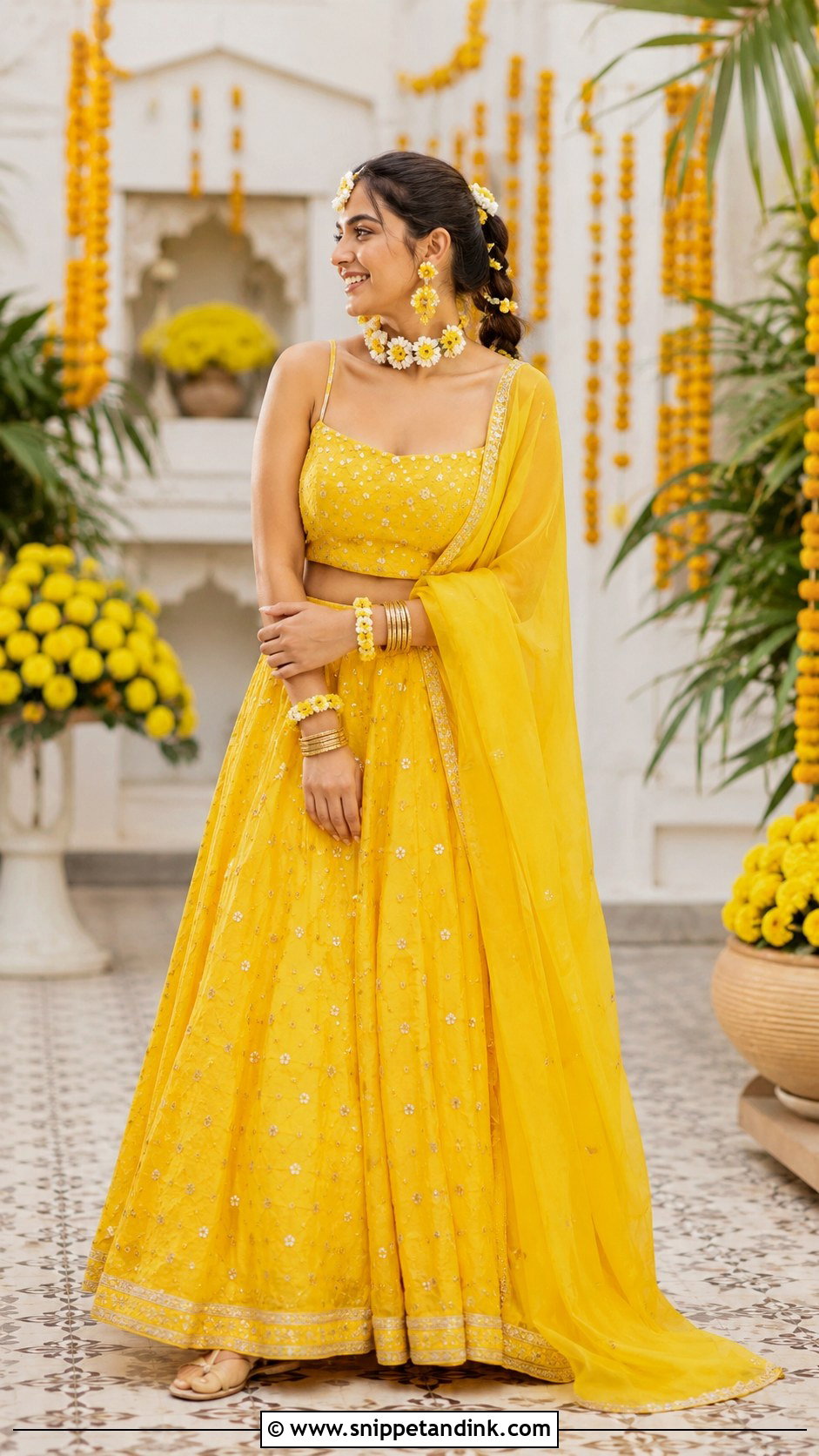
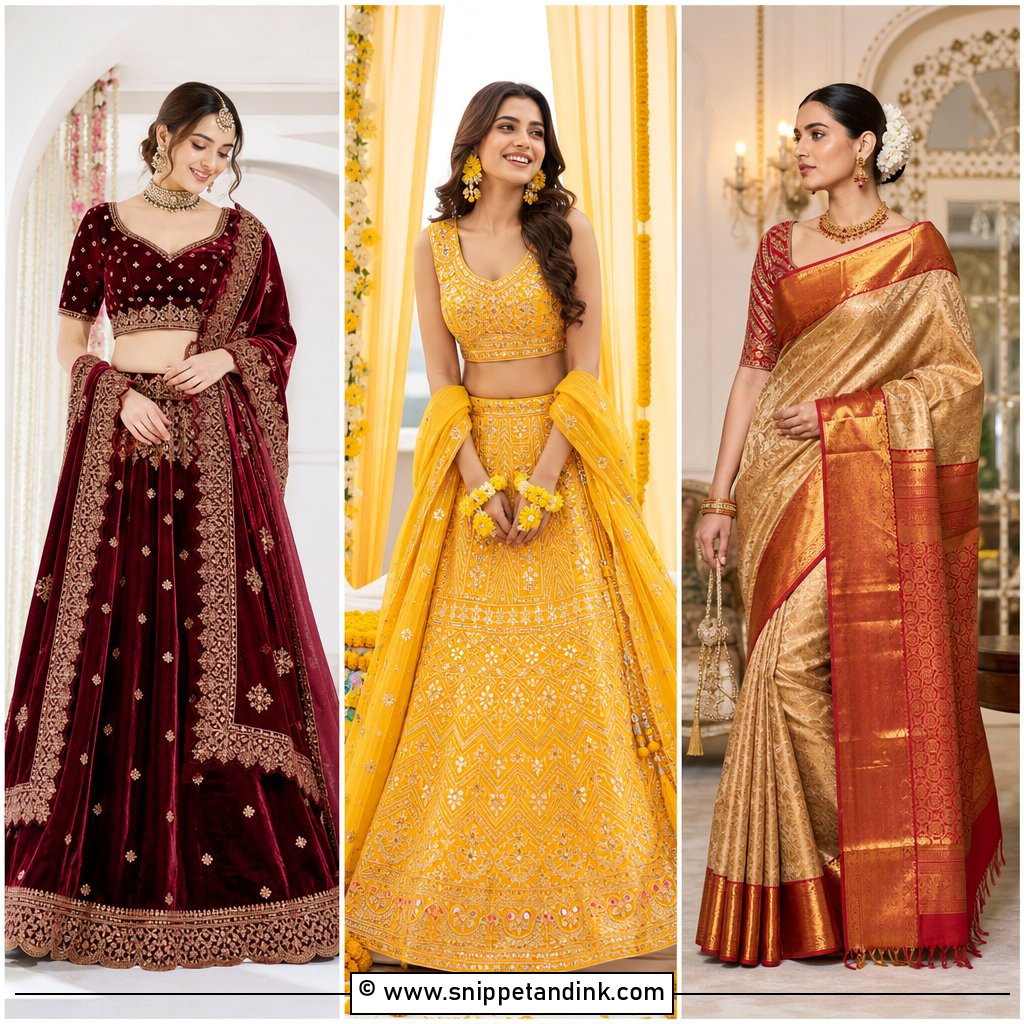
Turmeric stains, and on most fabrics it stains for good. So a yellow haldi lehenga should be one you’re happy to risk, in cotton-silk, georgette or organza in marigold, sunflower or soft lemon. Small floral prints, mirror details or a narrow gota border decorate it without making it precious. A simple fitted blouse and a light dupatta you can pin or take off are enough. Floral jewelry, gold-toned bangles and flat sandals keep it easy, as floors get slippery once the paste starts flying. A braided ponytail or low bun stays neat in the heat. If paste lands on fabric, let it dry and brush it off rather than wiping it wet, which spreads the color.
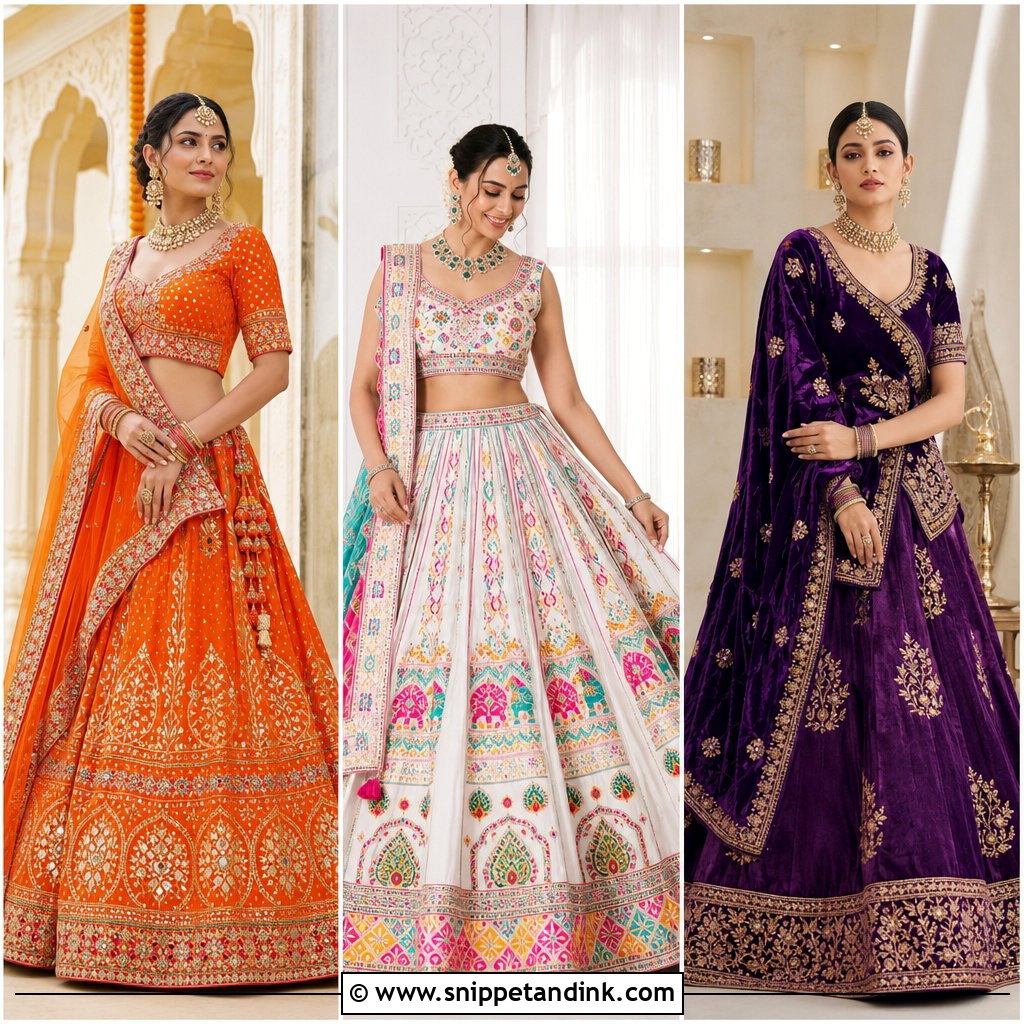
6. Mirror Work Sangeet Lehenga Outfit
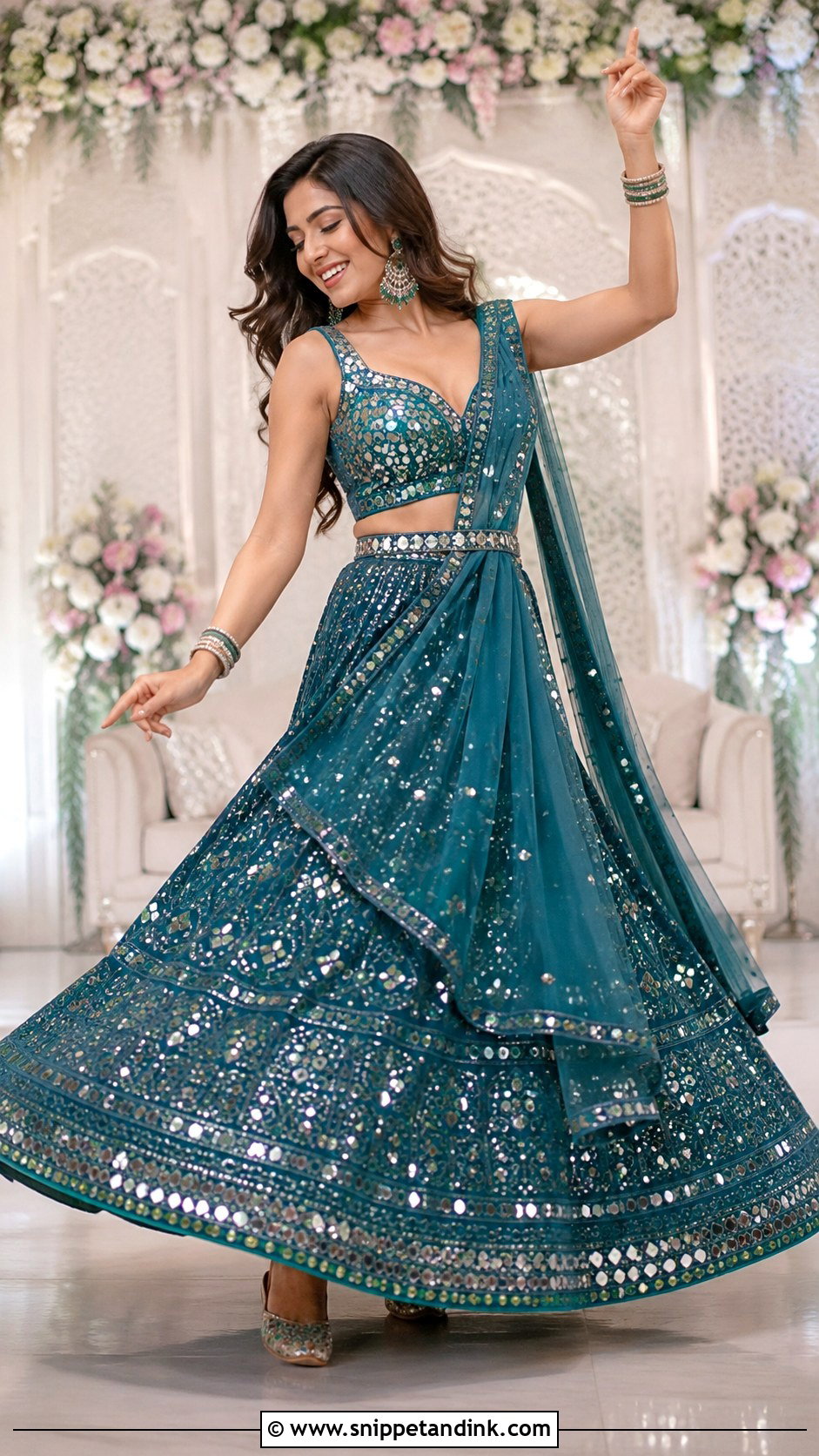
Mirror work earns its place at a sangeet because it only really sparkles when you move. Choose a jewel tone such as purple, teal, navy or deep pink, with mirrors spread evenly through the thread embroidery. The blouse matters most here. You’ll be lifting your arms for choreography, so test the straps and neckline with full arm movements at the fitting. A light chiffon dupatta over one shoulder, held by a waist belt, keeps your hands free. Statement earrings, slim bangles and low block heels or embellished juttis are enough, and skip a heavy necklace if the blouse is mirrored too. A sleek ponytail survives dancing far better than open waves.
7. Sequin Reception Lehenga Outfit
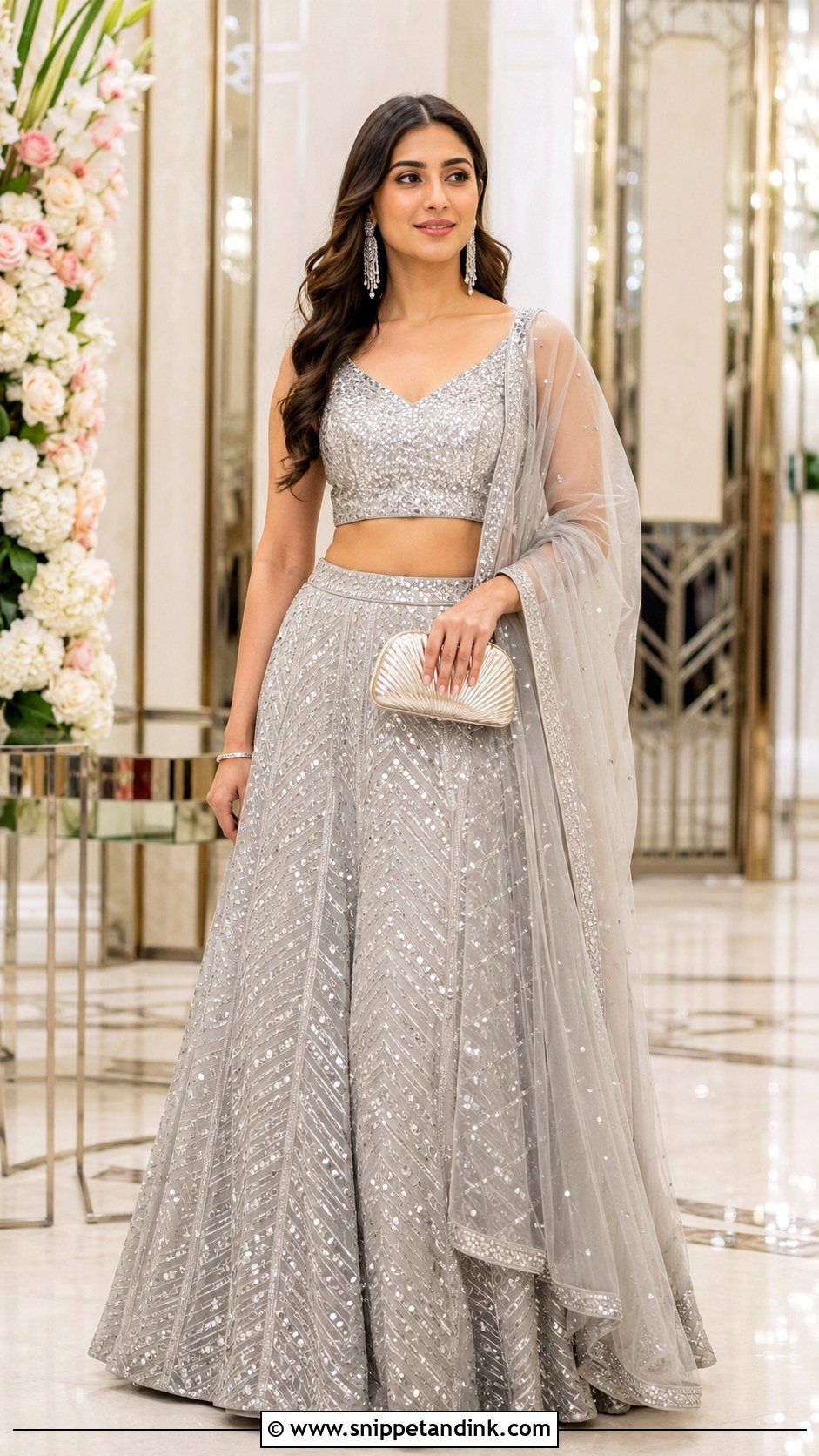
Sequins sit between traditional dress and evening glamour, which makes them a natural reception pick. Charcoal, silver, champagne, navy or muted rose with sequins laid in lines, waves or tonal patterns looks modern. Keep the blouse embellishment lighter than the skirt so it doesn’t bulk up the bust. A soft net or chiffon dupatta with a clean border, carried over one arm, balances all that shine. Crystal earrings, a slim bracelet, metallic heels and a structured clutch finish it, with a low bun or polished waves. Sequin edges snag delicate lace and mesh, so avoid pairing them with a fragile dupatta.
8. Floral Print Day Wedding Lehenga Outfit
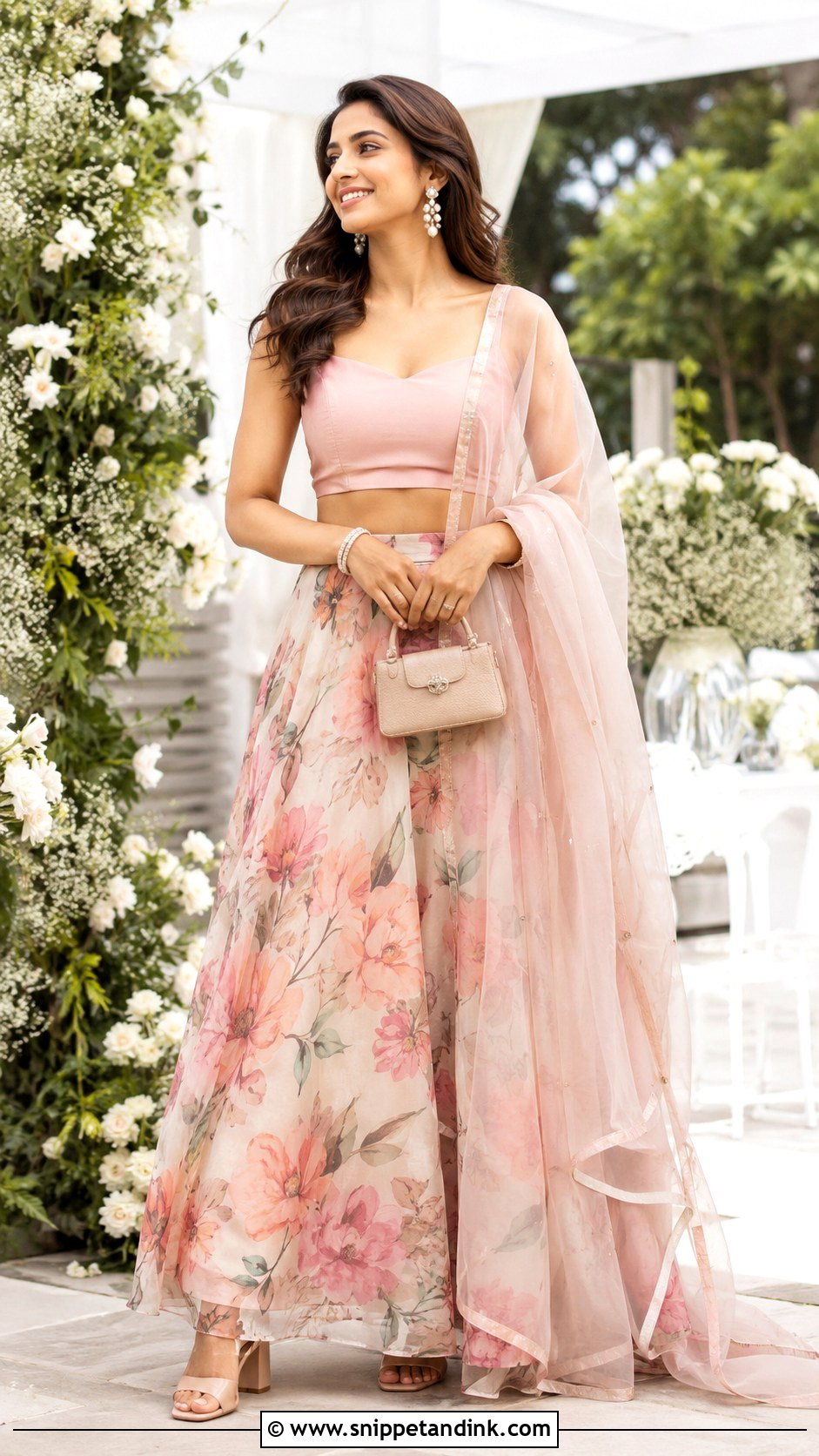
A floral lehenga is at its best in daylight; under warm evening lighting, soft prints tend to look muddy. In sun, an organza, chiffon or crepe skirt with watercolor flowers, small botanicals or larger placed blooms looks fresh. Pick a solid blouse in one color from the print so the outfit looks coordinated rather than busy, and a sheer solid dupatta with delicate edging. Pearl or pastel stone earrings, a small bag and nude block heels keep it light. Loose waves or a braided half-up style suit the softness. Outdoors, have the hem cut just clear of the ground; a skirt that skims grass collects mud and petals by noon.
9. Banarasi Silk Lehenga Outfit
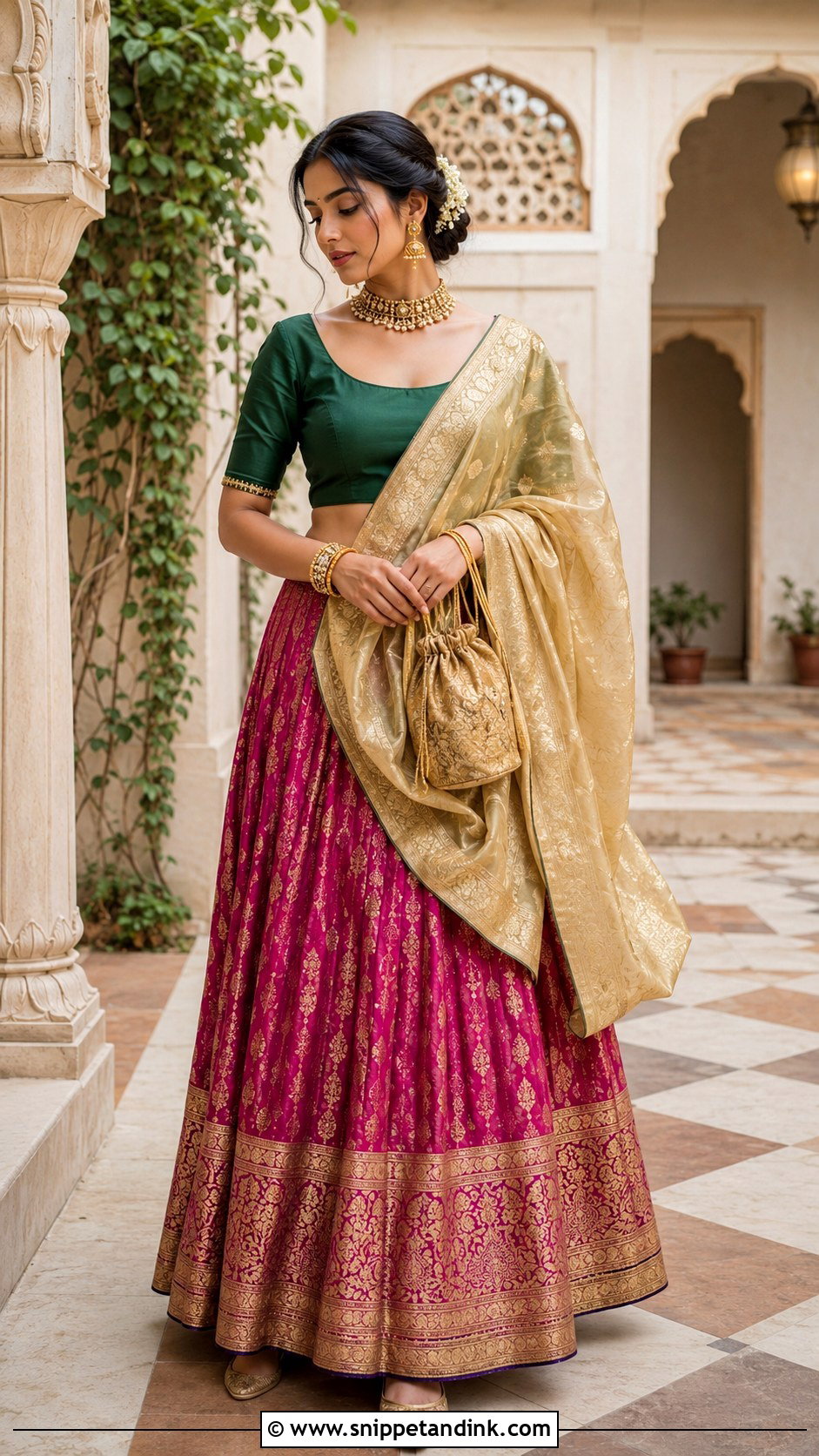
Woven motifs carry the whole outfit here. Rich Banarasi silk in magenta, royal blue, deep green or maroon gives texture and heritage without extra sequins or surface embroidery, and a paneled skirt shows the weave as it moves. Pair it with a solid silk blouse in a complementary shade with elbow sleeves, and keep the dupatta light in tissue or organza so the outfit doesn’t get heavy. Traditional gold earrings, a choker, bangles and embroidered juttis suit the fabric. Carry a brocade potli that echoes rather than matches the skirt. A center-parted bun with fresh flowers finishes it, and the skirt will look just as right at the next family wedding.
10. Velvet Winter Wedding Lehenga Outfit
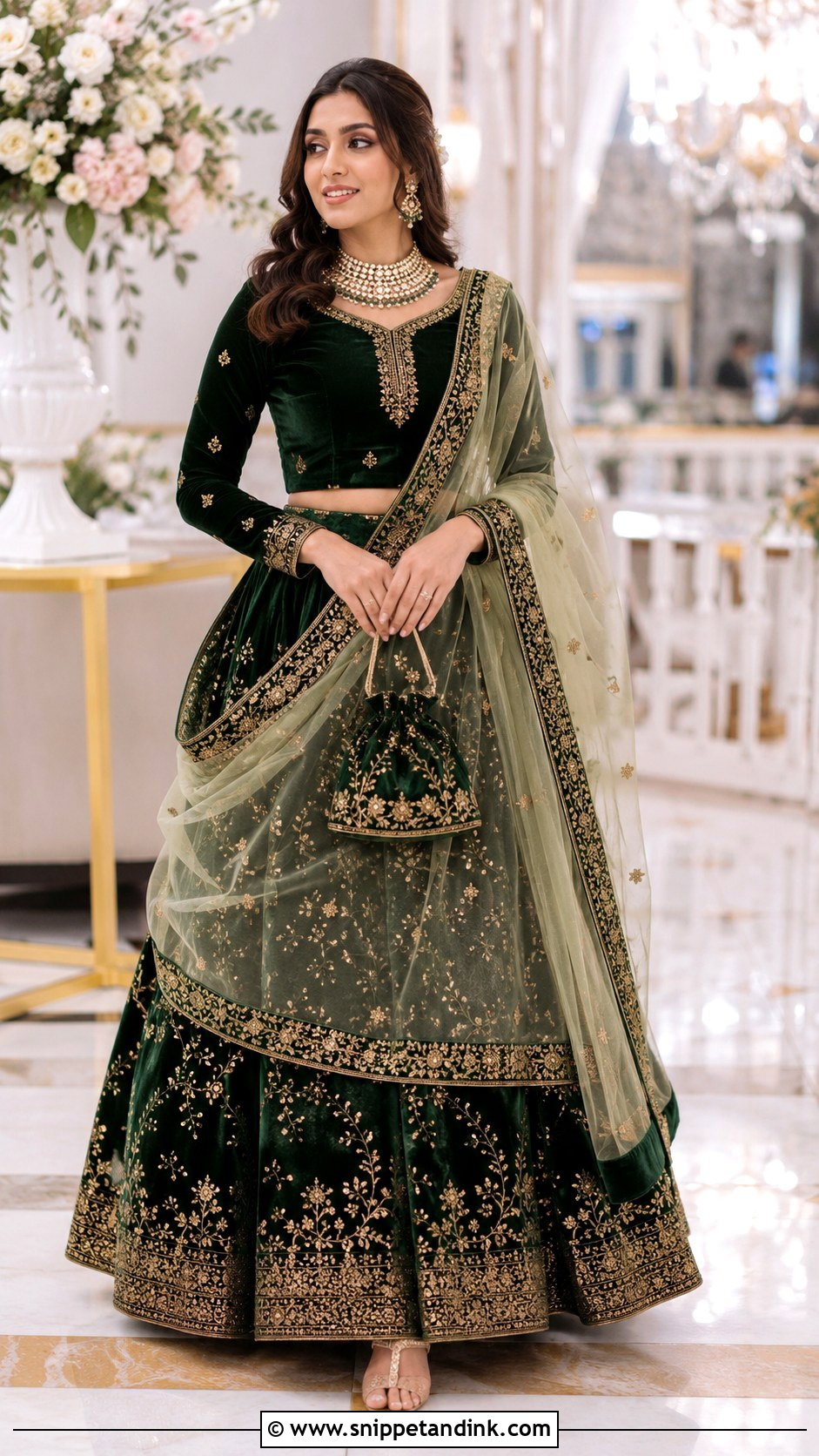
Velvet is a cold-weather fabric and nothing else; in a warm hall it turns heavy fast. Burgundy, bottle green, midnight blue or plum with restrained antique-gold embroidery looks rich. The velvet blouse should fit smoothly with no gathering at the waist, because the pile adds visible bulk wherever it bunches. Long sleeves add coverage and formality. A lighter net or organza dupatta gives contrast to the pile. Kundan earrings, a short necklace, gold block heels and a compact embroidered bag are plenty, since velvet already has presence. Before the event, hang it in a steamy bathroom or steam it from the inside instead of ironing, which crushes the pile flat.
11. Jacket Style Lehenga Outfit
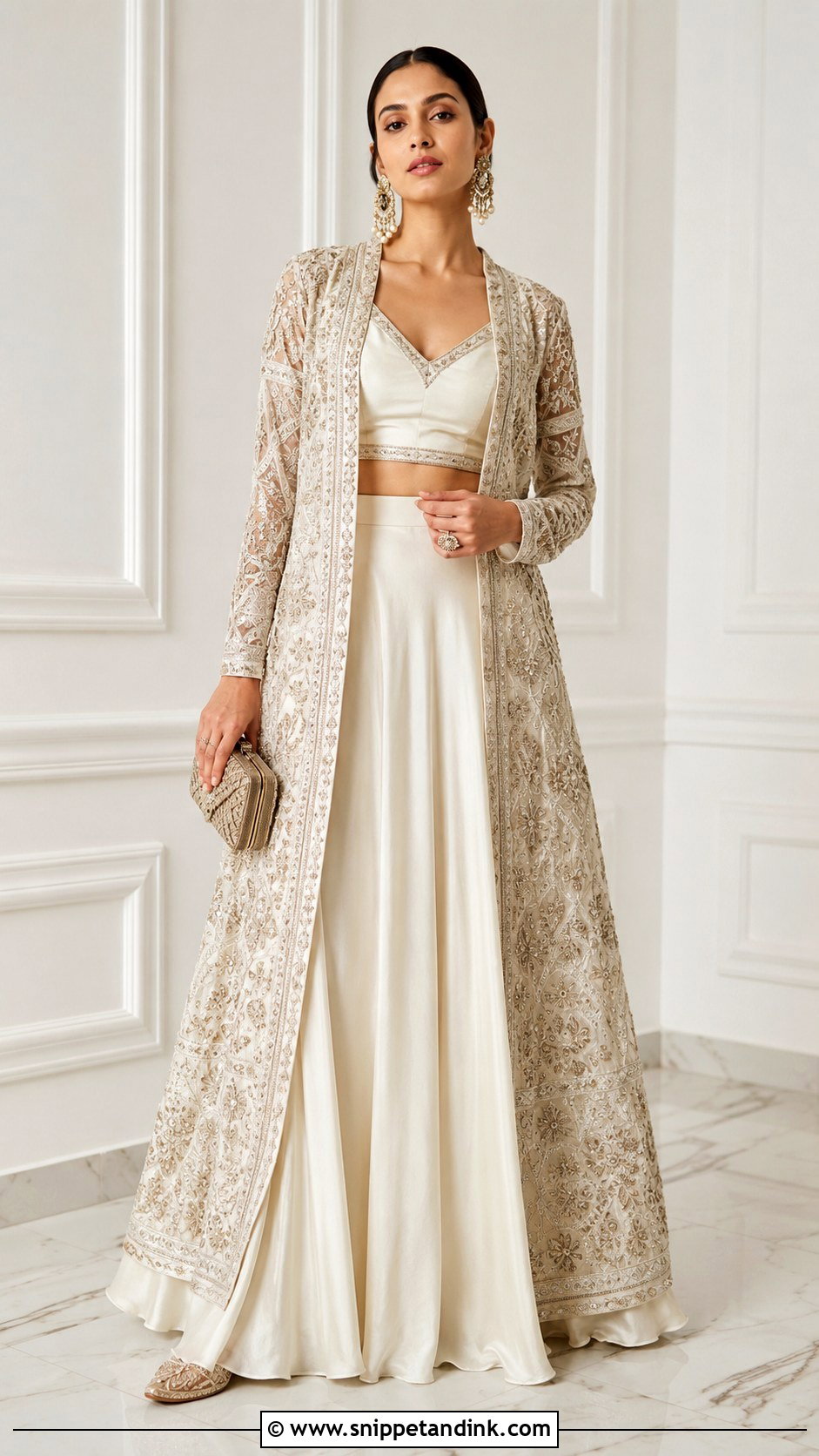
Jackets are my go-to for guests who don’t want to wrangle a dupatta all evening. Start with a simple flowing skirt and fitted blouse in related colors, then add a long embroidered open-front jacket so the waist and skirt movement still show. Depending on how worked the jacket is, skip the dupatta or carry one lightly over an arm. Long earrings, a statement ring and pointed juttis or comfortable heels suit the line. Keep the necklace minimal so it doesn’t fight the jacket neckline. A jacket is warm, so save it for winter events and formal receptions, with a smooth hairstyle and a structured clutch.
12. Cape Blouse Lehenga Outfit
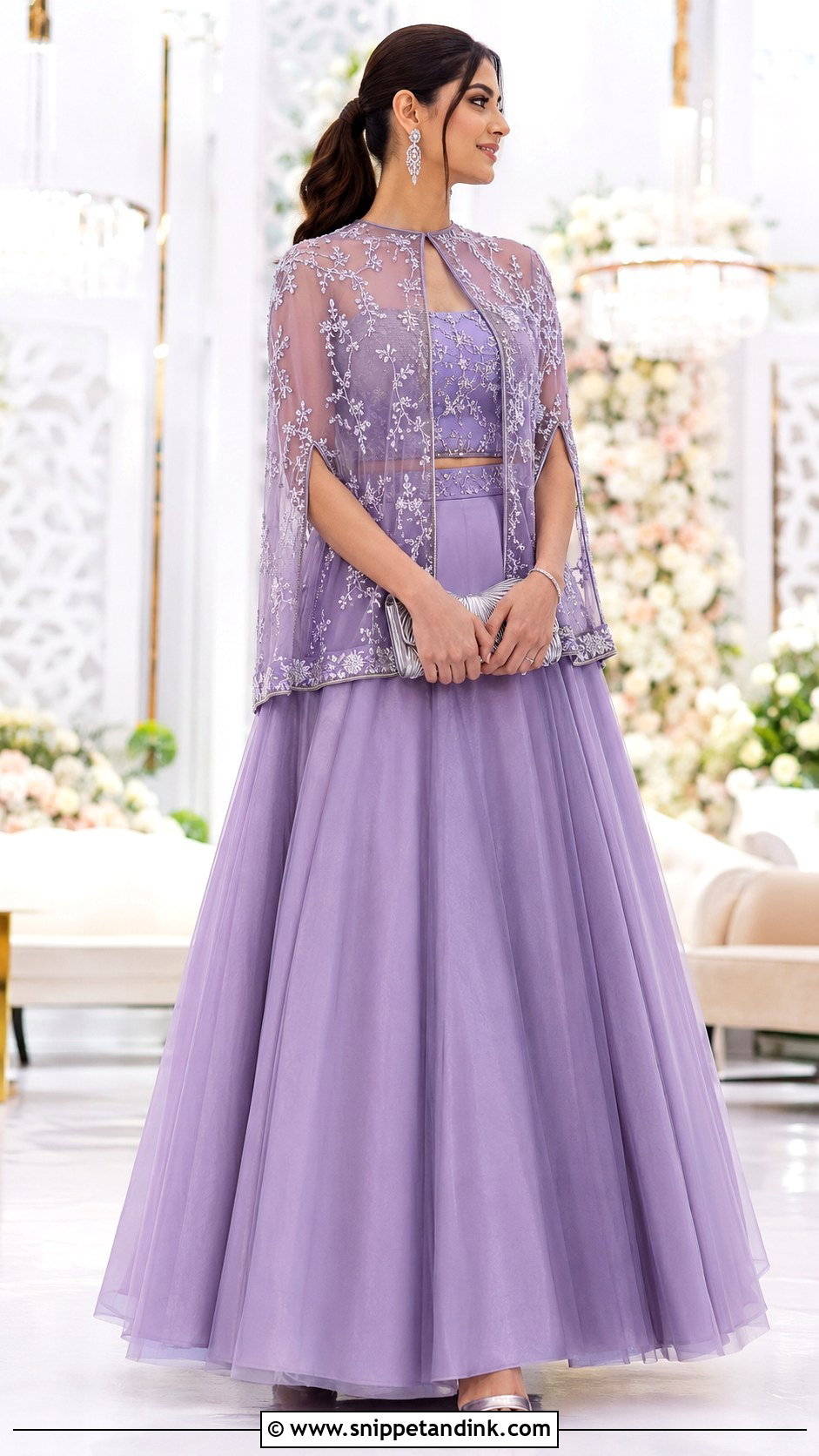
A cape blouse modernizes a familiar lehenga and settles the dupatta question at the same time. Pair a clean A-line or circular skirt with a fitted inner blouse and a sheer embroidered cape over it. Hip length moves softly; a shorter cape keeps the waist defined. Drop earrings, a slim bangle, metallic heels and a small clutch finish it. Pull your hair into a low ponytail or bun so the shoulder line shows. Avoid big necklaces and claw-set bracelets, because their prongs catch sheer cape fabric and pull threads. It suits receptions, engagements and contemporary sangeets when you want your arms covered but the outfit light.
13. Corset Blouse Lehenga Outfit
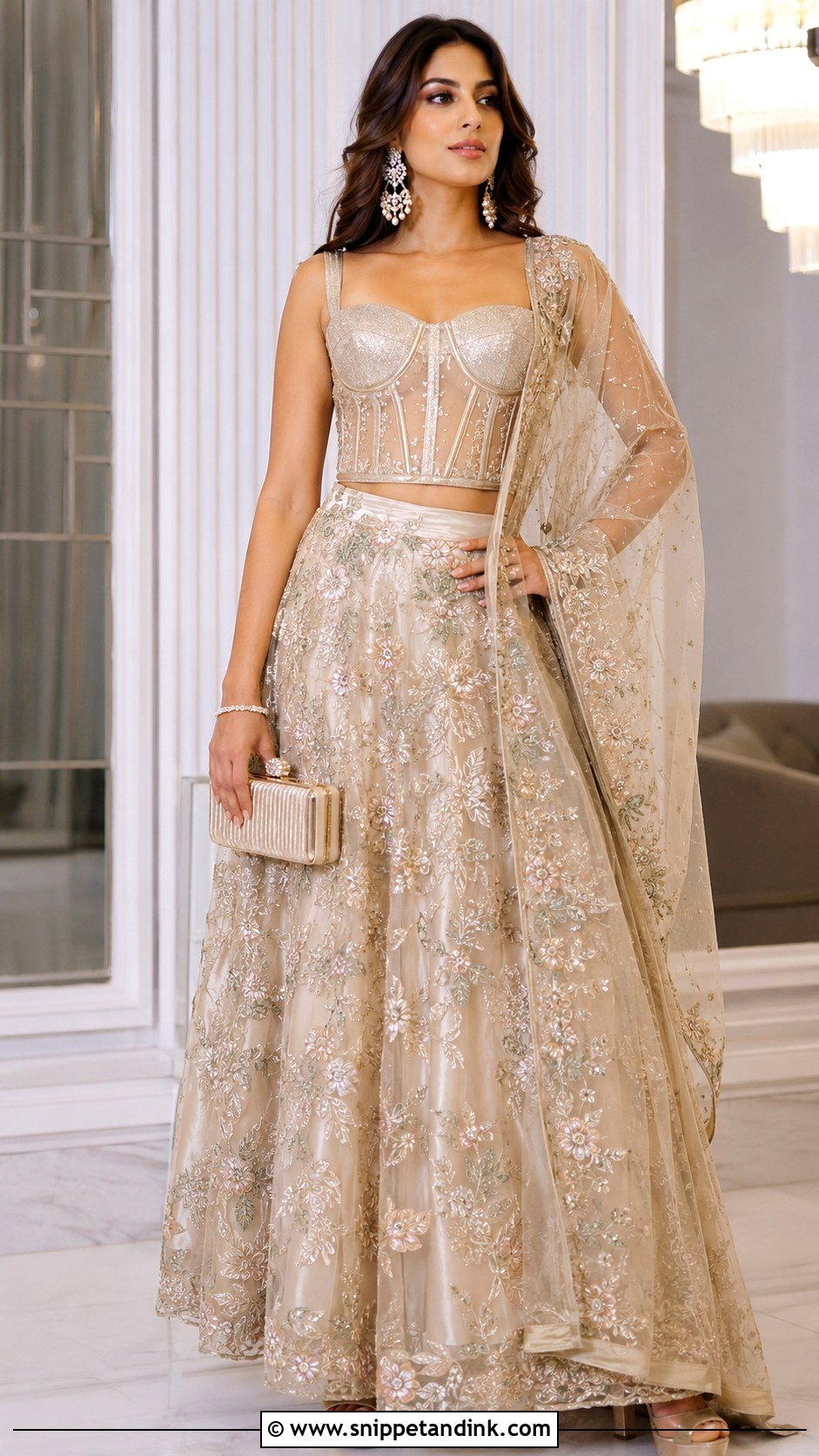
A corset blouse gives structure, but only a properly built one is wearable for a full evening. I look for boning that lies flat, a neckline that stays put when you lean forward, and room to sit and eat. The skirt waistband should meet the bodice cleanly, so have both fitted at the same appointment. A high-waisted skirt in satin, raw silk, organza or embroidered net suits it, with a soft dupatta over one shoulder to ease the sharp bodice line. Crystal earrings, a delicate bracelet, good block heels and a structured clutch keep the mood modern, with a sleek bun or straight hair. If you’re tugging at it by dinner, the fit is wrong.
14. Peplum Blouse Lehenga Outfit
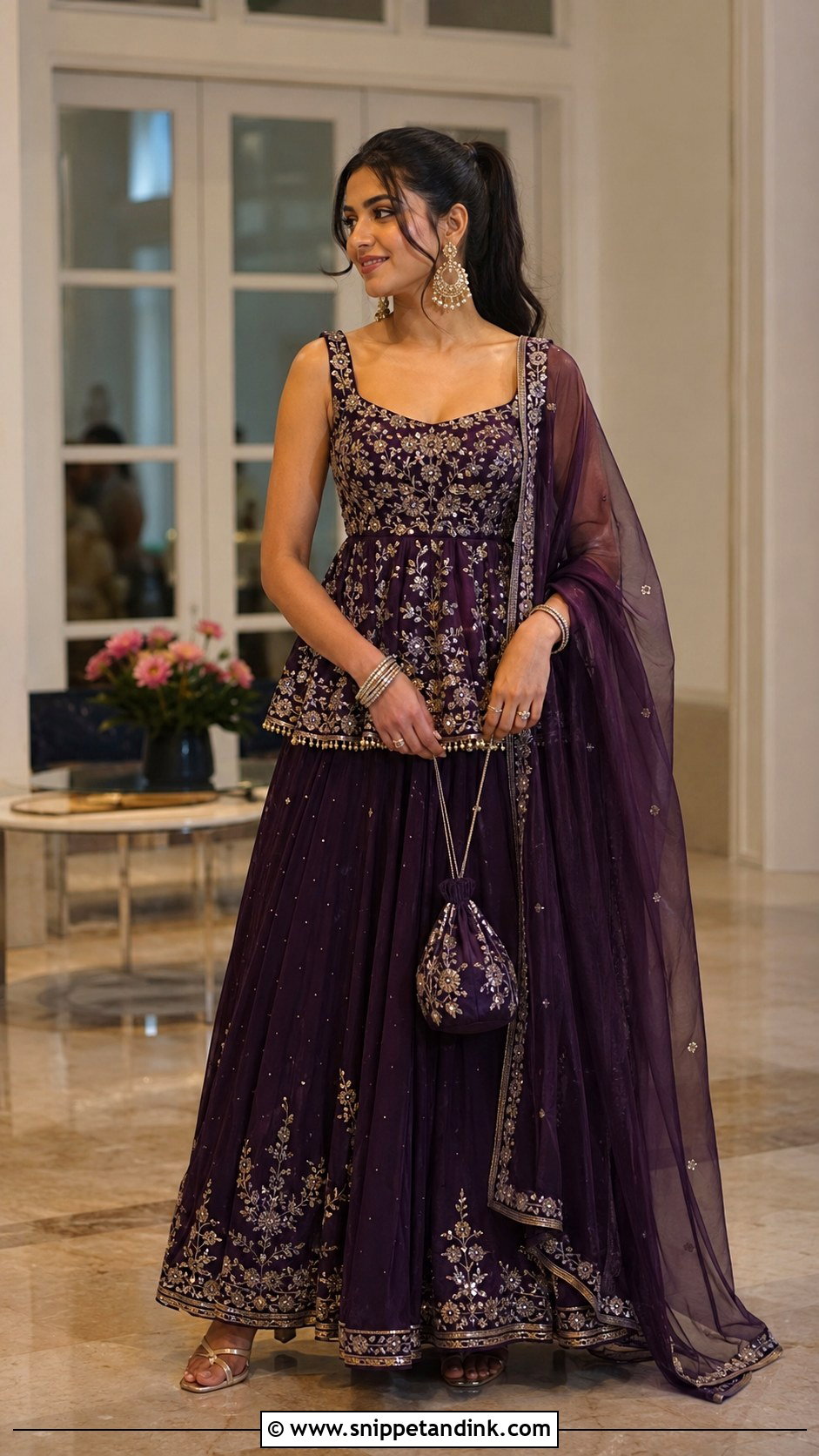
A peplum covers the midsection and smooths the line into the skirt, which is why I suggest it to guests who’d rather not show a bare waist. A waist-length or hip-length peplum works best over a moderately flared skirt; too much volume beneath it adds width. Repeat the embroidery across both pieces so they look made together. Wear a sheer dupatta over one shoulder, or skip it if the sleeves are dramatic. Medium earrings, stacked bangles, a potli and low heels or juttis finish it. Because a tailor can adjust the peplum’s length and flare, it works across a wide range of sizes, and a high ponytail keeps the neckline clear.
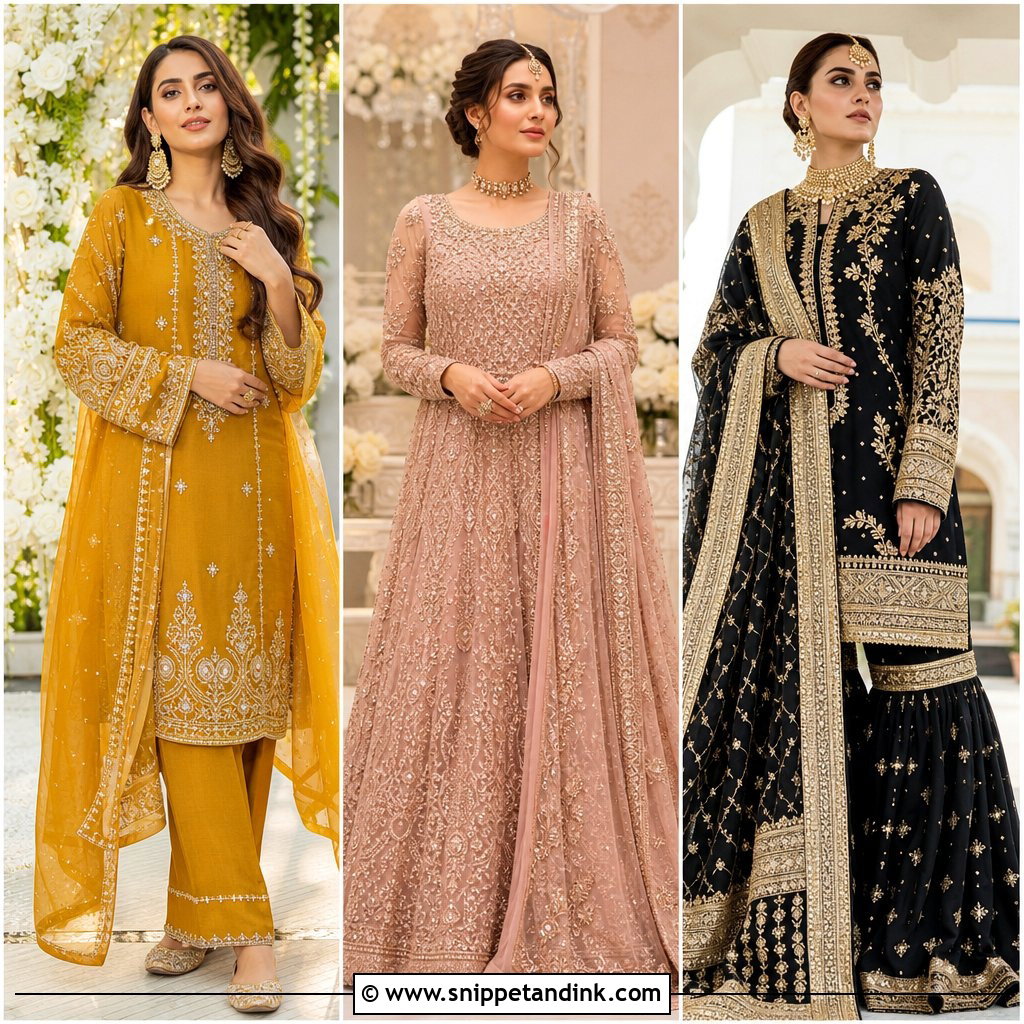
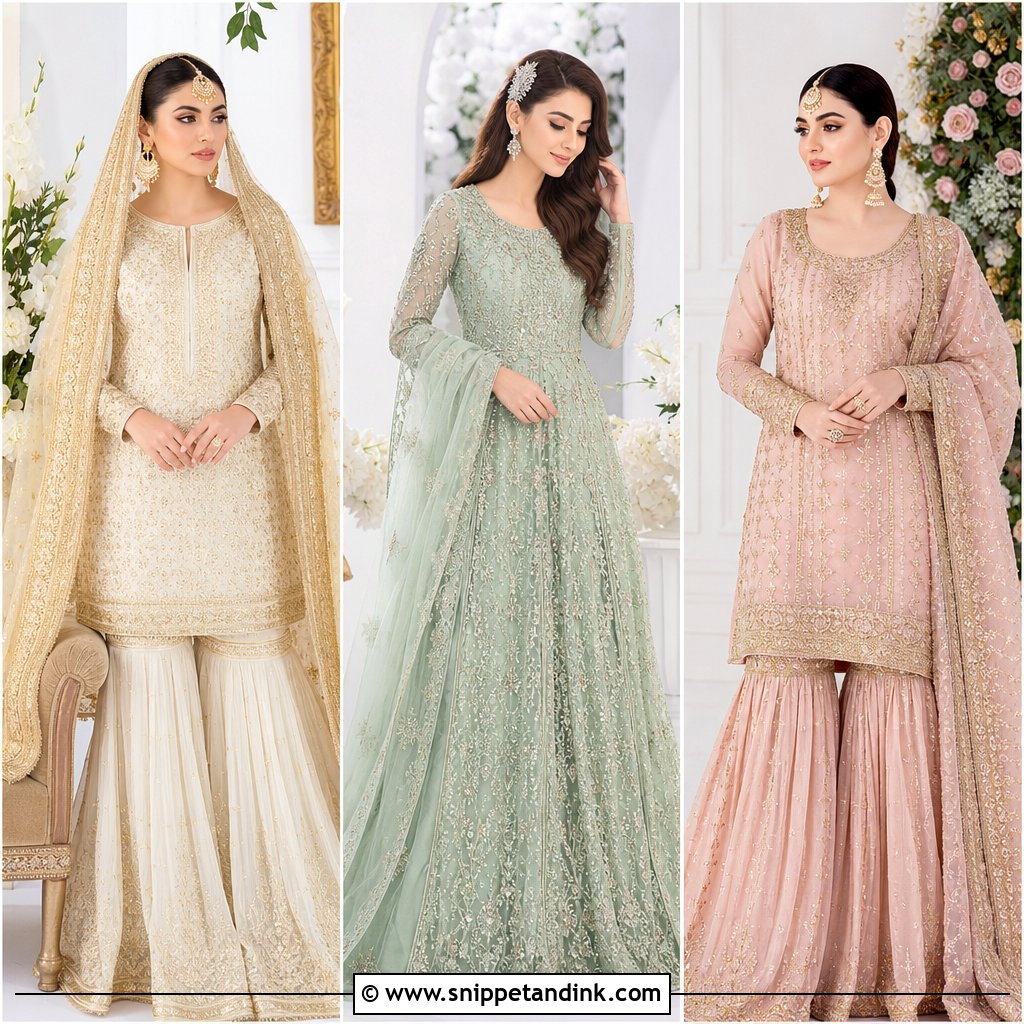

15. Crop Top Lehenga Outfit
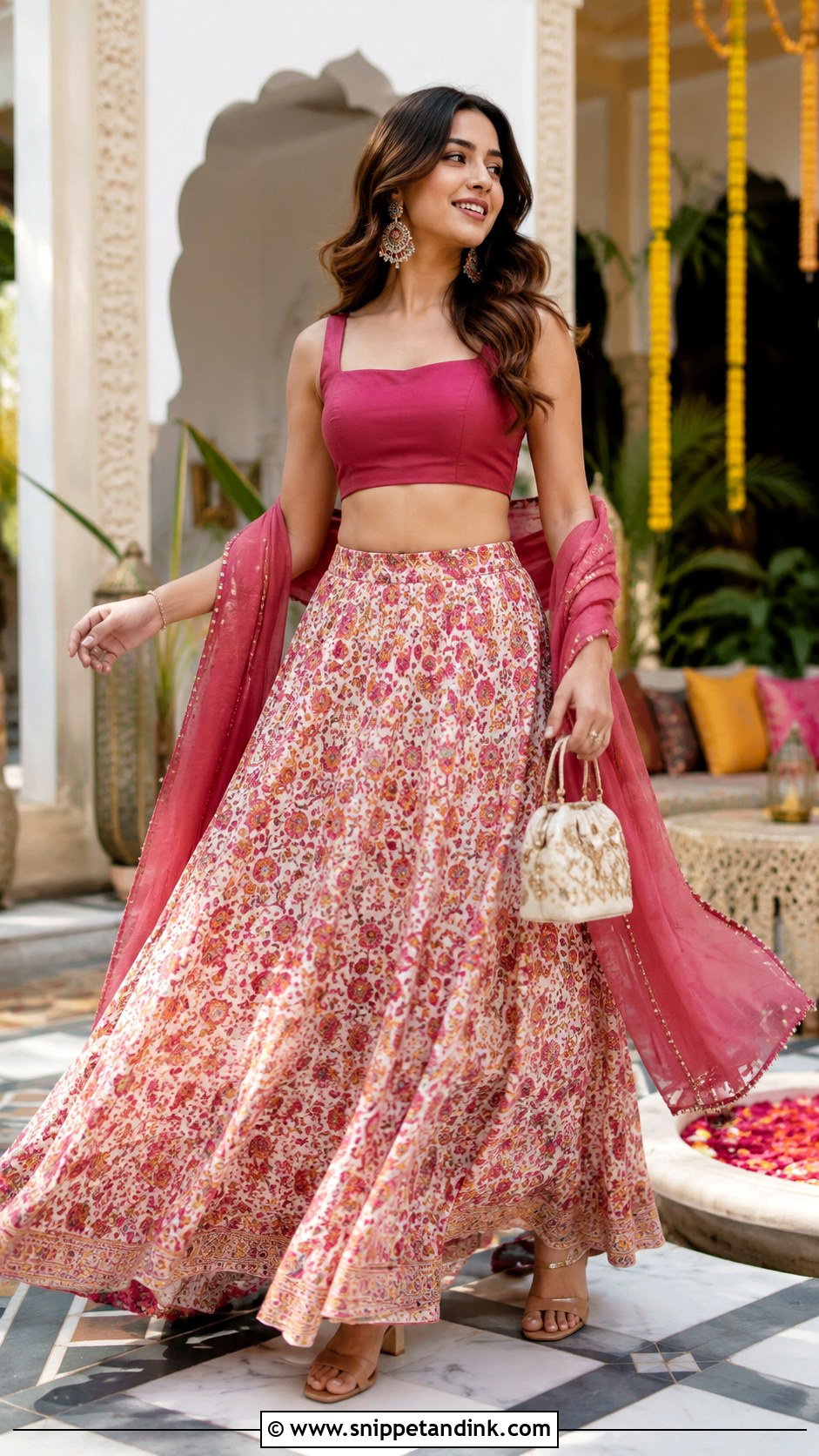
For a younger guest, a crop top lehenga is one of the easiest outfits to get right. Choose a high-waisted skirt with gentle volume and a crop top ending near the waistband, so only a narrow band of skin shows. Sleeved, square-neck, halter-style or modest scoop tops all work if the proportions stay balanced. Matching fabrics give a streamlined set; a solid top over a printed skirt feels more casual. Add a light dupatta, statement earrings, block heels and a compact bag. Do the arms-up test at home, and if dancing lifts the top well above the waistband, have it lengthened or choose a higher skirt.
16. Saree Style Lehenga Outfit
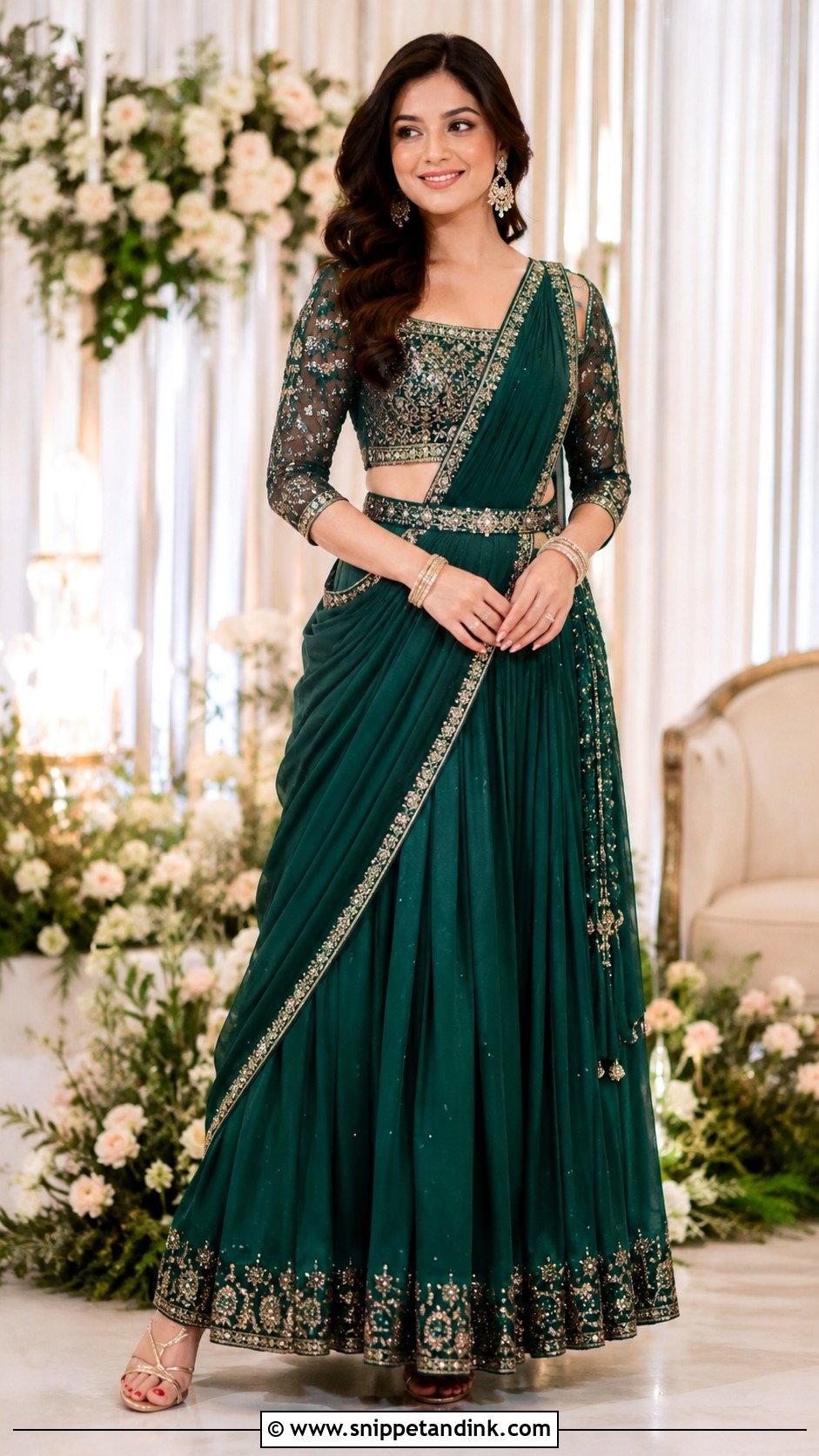
Saree-style lehengas give you the sweep of a pallu without pleating six yards of fabric. A fitted blouse and a flowing skirt form the base, and a long dupatta runs from the waist across the torso and over one shoulder. Discreet pins plus a slim embellished belt keep it stable. Pick a lighter dupatta here, as heavy fabric drags the shoulder down and pulls the waistline out of place. Traditional earrings, bangles and heeled sandals that won’t catch the hem suit it, with a low bun or side-parted waves. I recommend it to guests who love sarees but want something easier to dance in.
17. Black Party Lehenga Outfit
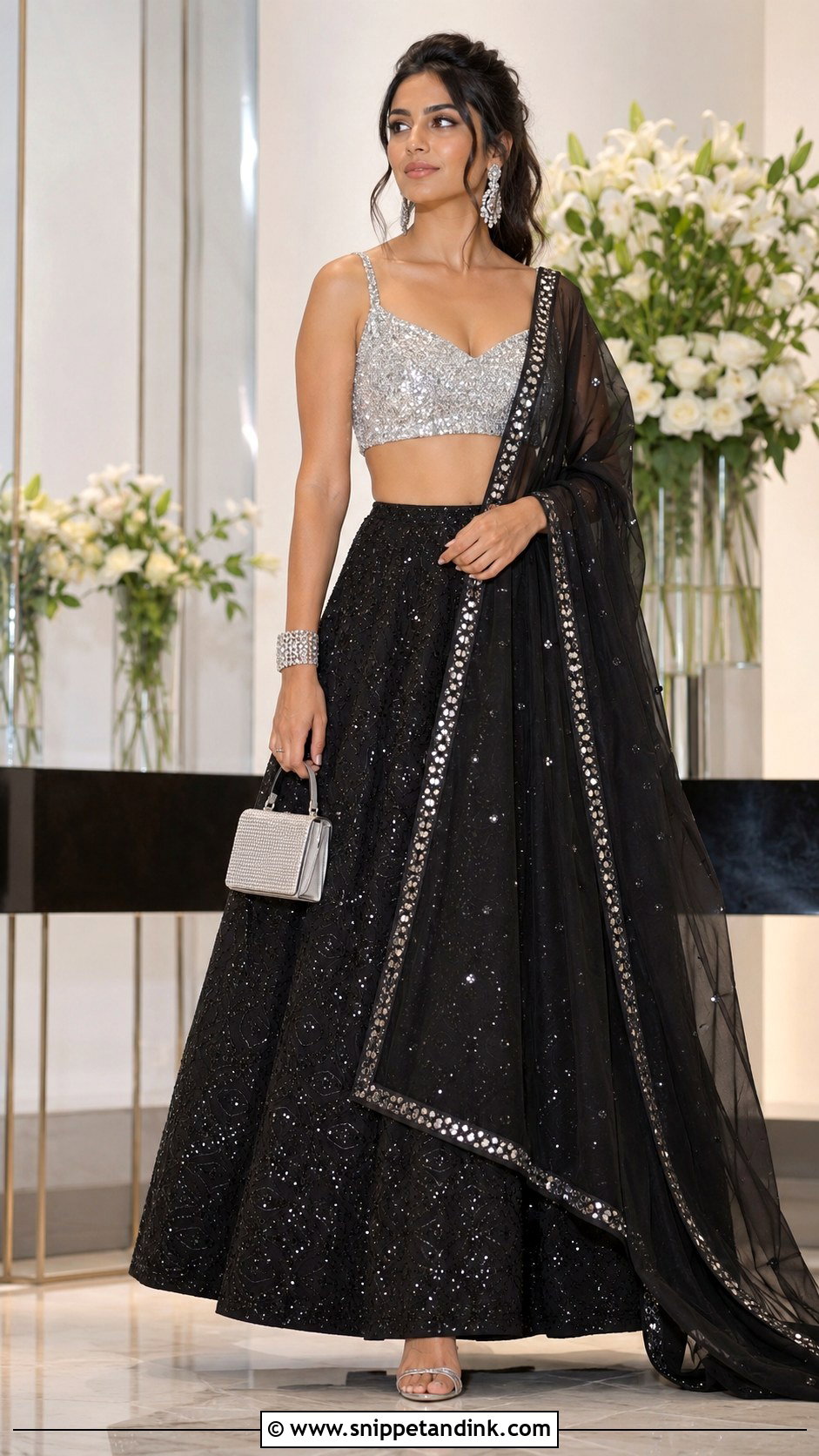
Black looks striking at a reception, but check before wearing it to a ceremony. In many Indian families black is avoided at auspicious events, and a quick word with the hosts saves an awkward moment. For parties, a black skirt with silver embroidery, tonal sequins or understated mirror work looks sharp. A matching black blouse is classic, while a metallic silver bodice adds contrast. A sheer dupatta with a narrow embellished edge softens the dark palette. Crystal earrings, a cuff, silver heels and a structured mini bag finish it, with sleek hair, defined eyes and a softer lip.
18. Blue Wedding Guest Lehenga Outfit
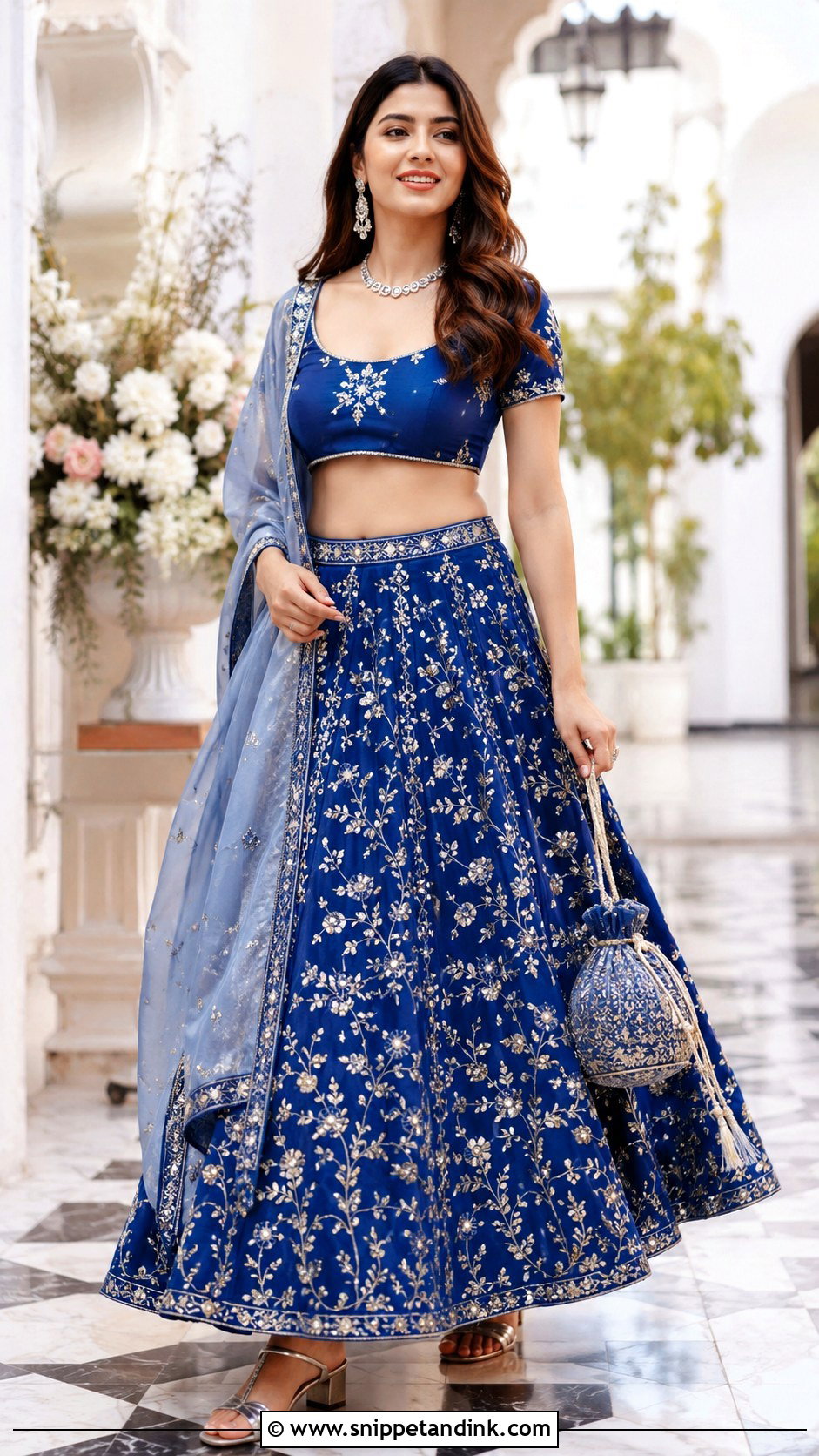
Blue is a safe bet for a guest who wants real color without looking bridal. Powder blue suits daytime, cobalt a lively celebration and navy an evening reception. Pair an embroidered or printed blue skirt with a blouse in silk, velvet or lightly embellished net, and add a silver, pale pink or matching blue dupatta. Stone earrings, a slim necklace, metallic block heels and a small potli or clutch are enough. Keep your jewelry clearly lighter than the bride’s ceremonial set, especially if the lehenga is heavily worked. Comfortable tailoring matters too, since wedding functions involve long stretches of sitting and standing.
19. High Waisted Plus Size Lehenga Outfit
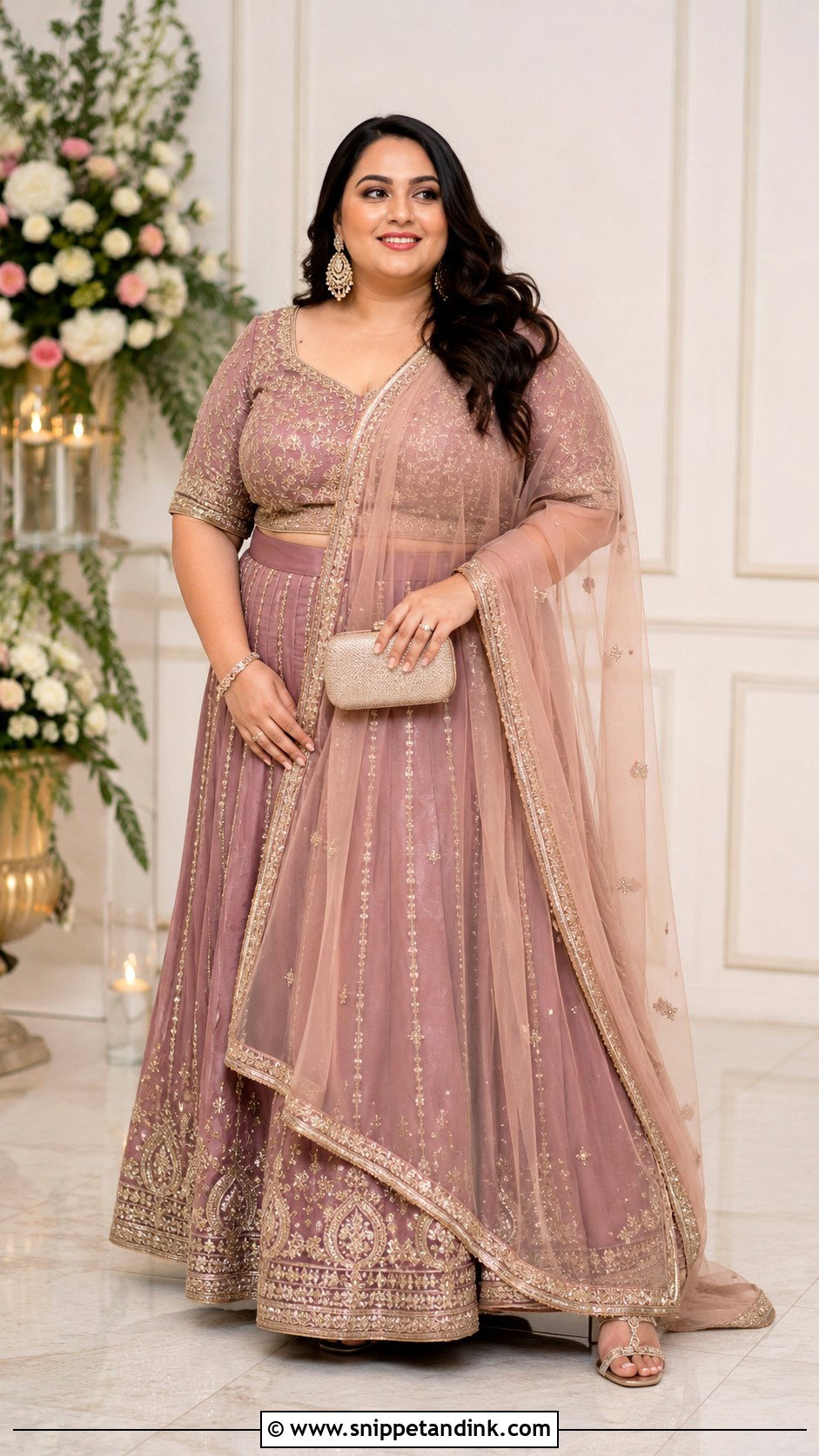
A high waistband is the foundation I build plus-size lehenga looks on, as long as it sits at the natural waist without digging in or rolling over. Ask for a wide, interfaced waistband; it holds its shape far better than a thin drawstring. Softly structured fabrics and vertical panels give movement without bulk. The blouse needs real support, a neckline you like and the sleeve coverage you want, all custom fitted. A lightweight dupatta draped diagonally or from one shoulder creates a long, unbroken line. Statement earrings, cushioned block heels and a bag in proportion to you finish it. Alterations matter more than any rule, so fit the blouse and hem wearing your actual shoes.

20. Minimal Organza Lehenga Outfit
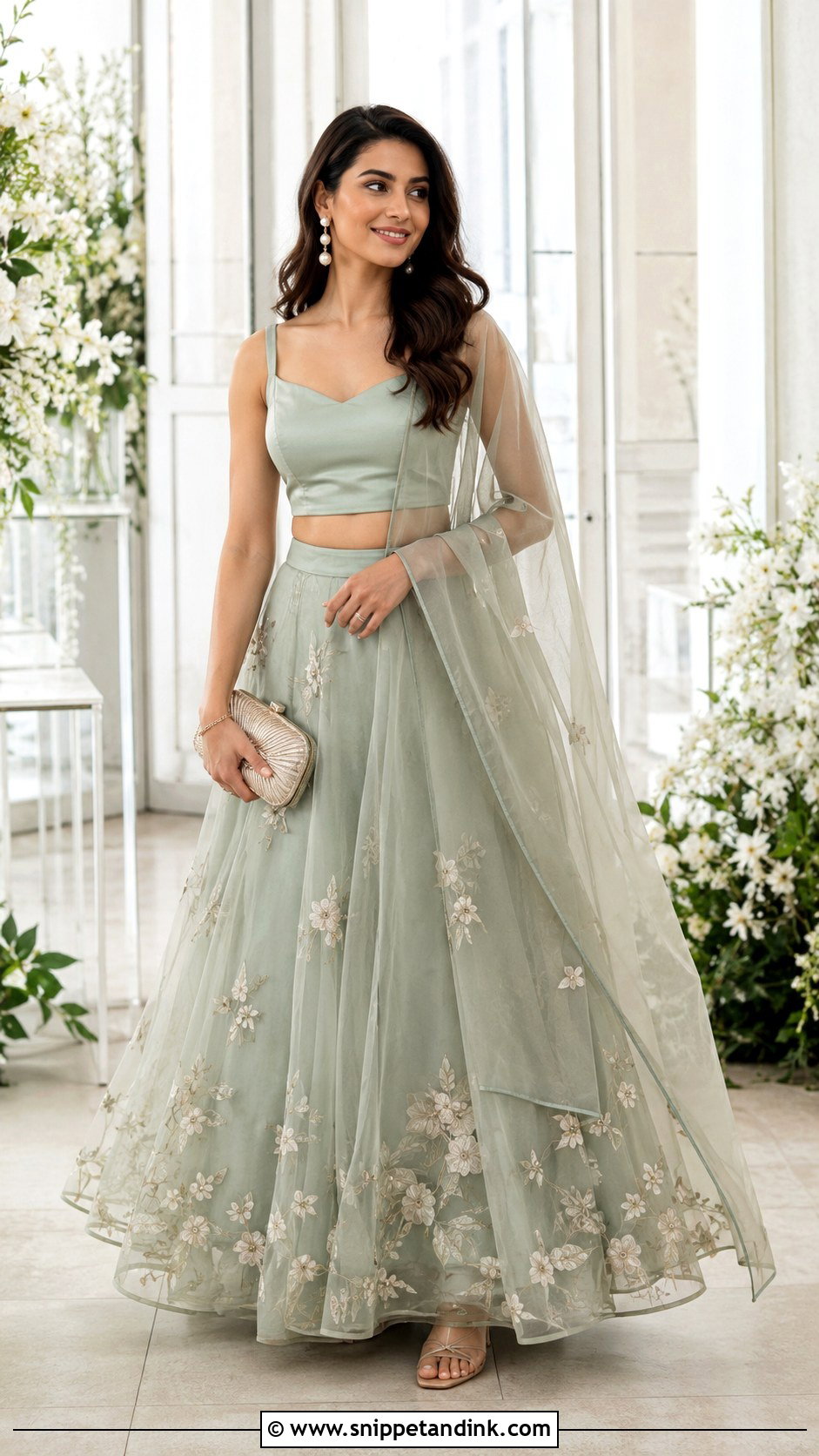
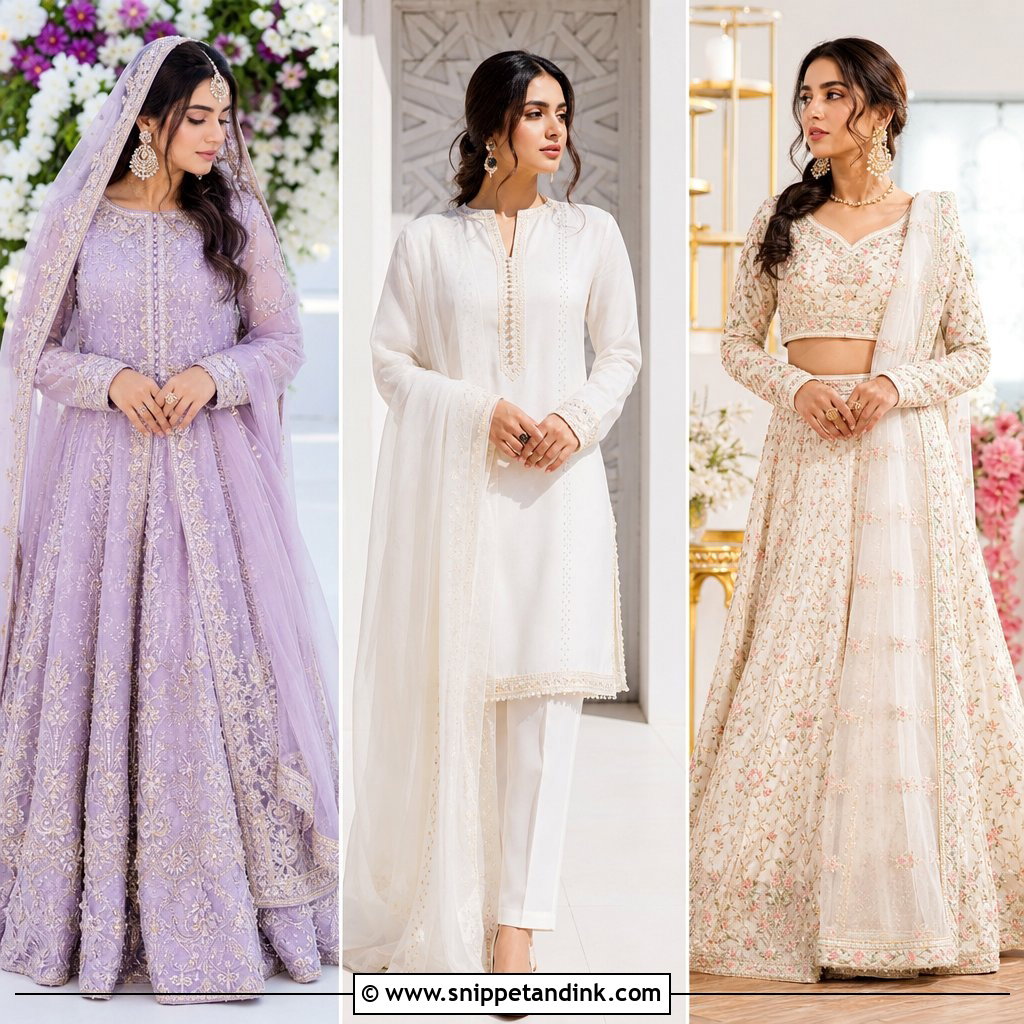
Organza is crisp and light, which makes a minimal lehenga in lilac, peach, sage or powder blue an easy choice for a day function or a guest outfit you’ll wear again. Delicate floral appliqué, scattered beads or a narrow border add detail without weight. Organza holds volume, so ask for controlled pleats at the waist, or the skirt stands out wider than you expect. A fitted blouse in matching satin or raw silk and a sheer organza dupatta over one shoulder complete it. Pearl earrings, a small bracelet, neutral heels and a compact clutch keep it simple, with loose waves or a low bun. Organza creases sharply when sat on, so steam it right before leaving.
Getting Three Events Out of One Lehenga
A good lehenga doesn’t have to be worn once. I plan a lot of second and third looks around pieces a bride or guest already owns, because swapping a single element changes the whole impression.
Change the blouse first. A heavily embroidered skirt with a plain silk blouse reads as a guest outfit, and the same skirt with a corset or cape blouse becomes a reception look. Then change the dupatta, or replace it with a long jacket, which alters the silhouette more than any jewelry swap could.
Jewelry is the cheapest swap of all. Heavy kundan for the ceremony, then pearls or one pair of statement earrings for the reception, shifts the mood without touching the outfit, and switching from a bun to open waves does the rest.
Later, the skirt works on its own with a fitted shirt or a simple crop top for festivals, and a good blouse pairs with a saree. When the blouse is first made, ask your tailor to leave extra seam allowance inside. That small step means it can be let out for a future wedding instead of replaced.
Same Silhouette, Very Different Evenings
One silhouette stretches across a remarkable range of colors, fabrics, body types and functions. Start with secure tailoring and easy movement, then make the blouse, skirt and dupatta feel connected. Shoes should suit the finished hem length, and jewelry should support the embroidery rather than compete with it. Brides might lean toward ceremonial red, Banarasi or layered dupattas; guests have florals, pastels, organza, jackets and crop tops to play with. Above all, wear something that suits you and the event’s expectations. When everything works together, the lehenga feels right from the first photo to the last dance.
You'll Like These Ideas:





Leave a Reply