
Doing a bride’s hair means I also see a lot of guests on the day, usually the ones whose styles didn’t last through the morning. A South Indian wedding asks a lot of your hair: silk against your neck, an early muhurtham, long rituals, a meal on a banana leaf, then photos and maybe dancing in the evening. As a guest you want to look festive without drifting into bridal territory. Polished braids, soft buns, half-up styles and a little jasmine all do that with sarees, lehengas, anarkalis or gowns. These fifteen looks are ones I’d trust to hold up, with notes on how to make each one last.
A Dawn Muhurtham and No Salon Appointment
Most guests style their own hair, often in a hotel room or a relative’s house while the queue for the bathroom grows. Early muhurtham timings make that harder. The fix is to do half the work the night before.
- Wash your hair the evening before, not that morning. It dries fully overnight and holds pins far better on the day.
- If you want waves, plait damp hair into two loose braids before bed. Undo them in the morning and you have texture without heat.
- Lay out everything you need in one pouch: U-pins, bobby pins in your hair colour, small elastics, a tail comb and a travel hairspray.
- Pick a style you’ve practised at least once. A wedding morning is the worst time to attempt a fishtail for the first time.
Give yourself twenty minutes more than you think you need. Silk sarees take time to drape, and the hair always gets squeezed when that runs long.
1. South Indian Wedding Guest Jasmine Braid
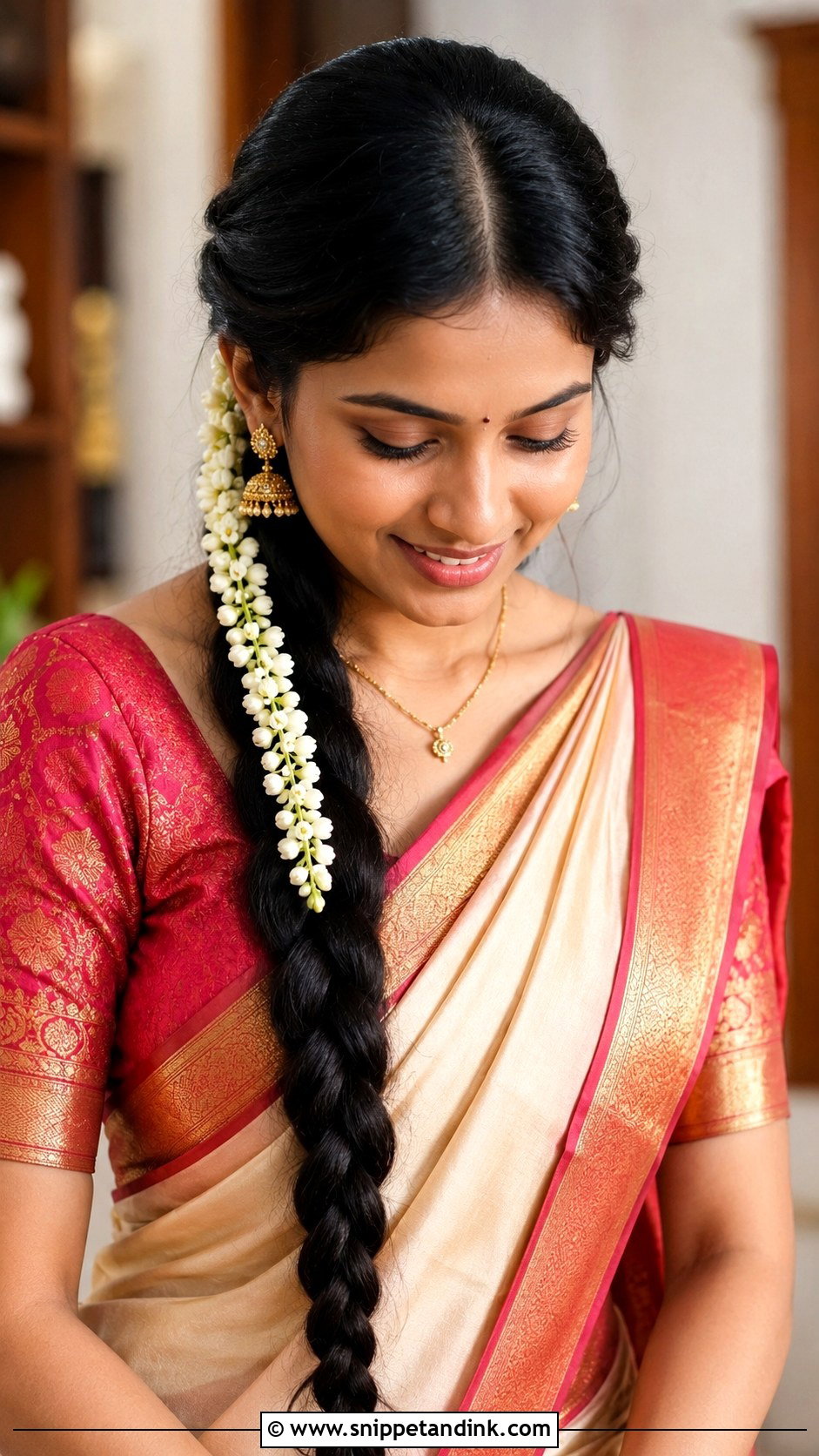
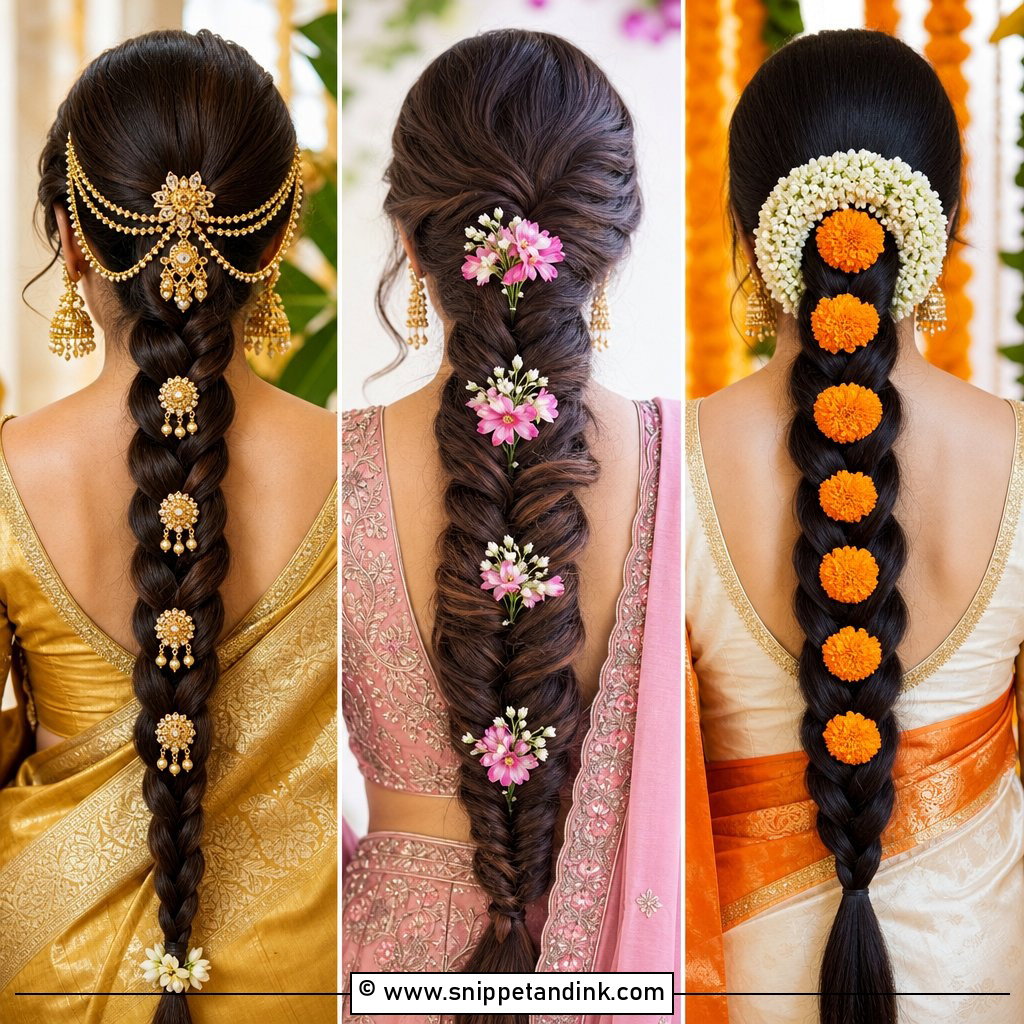
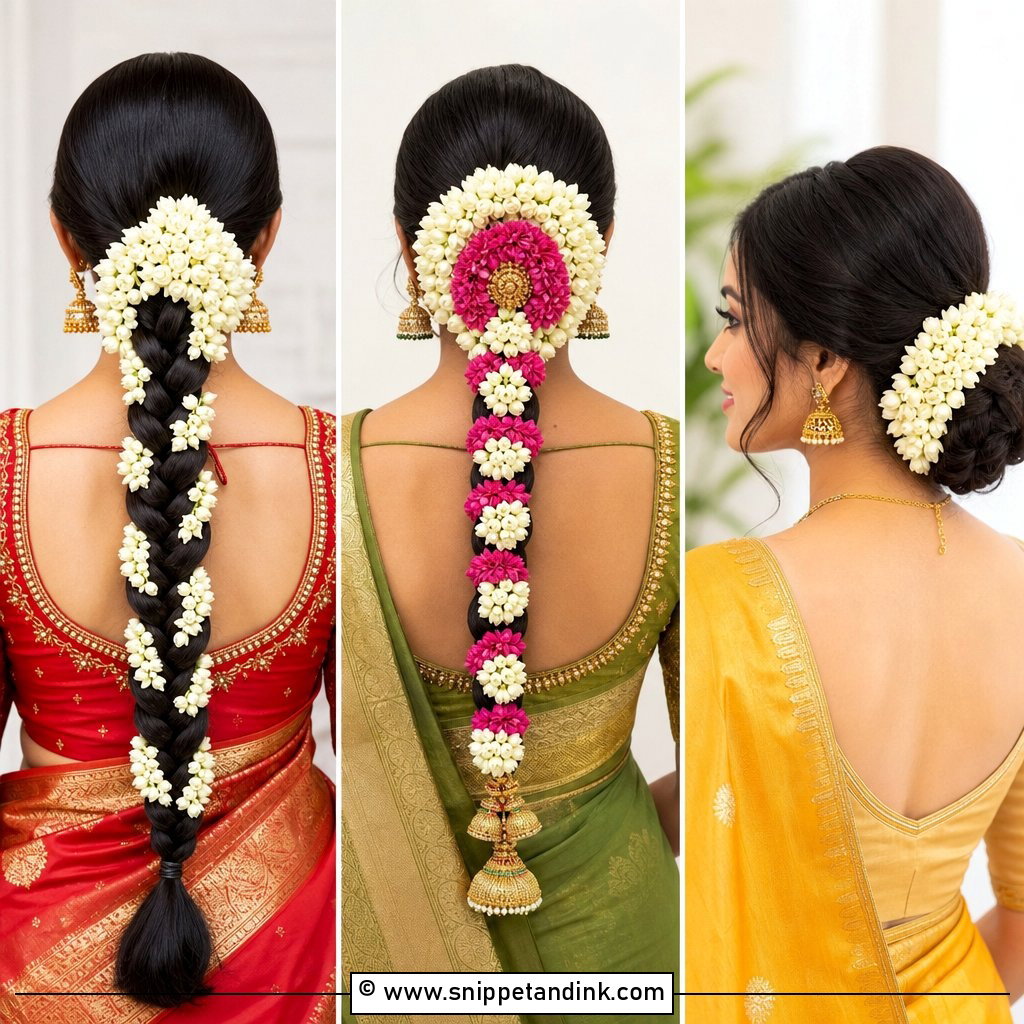
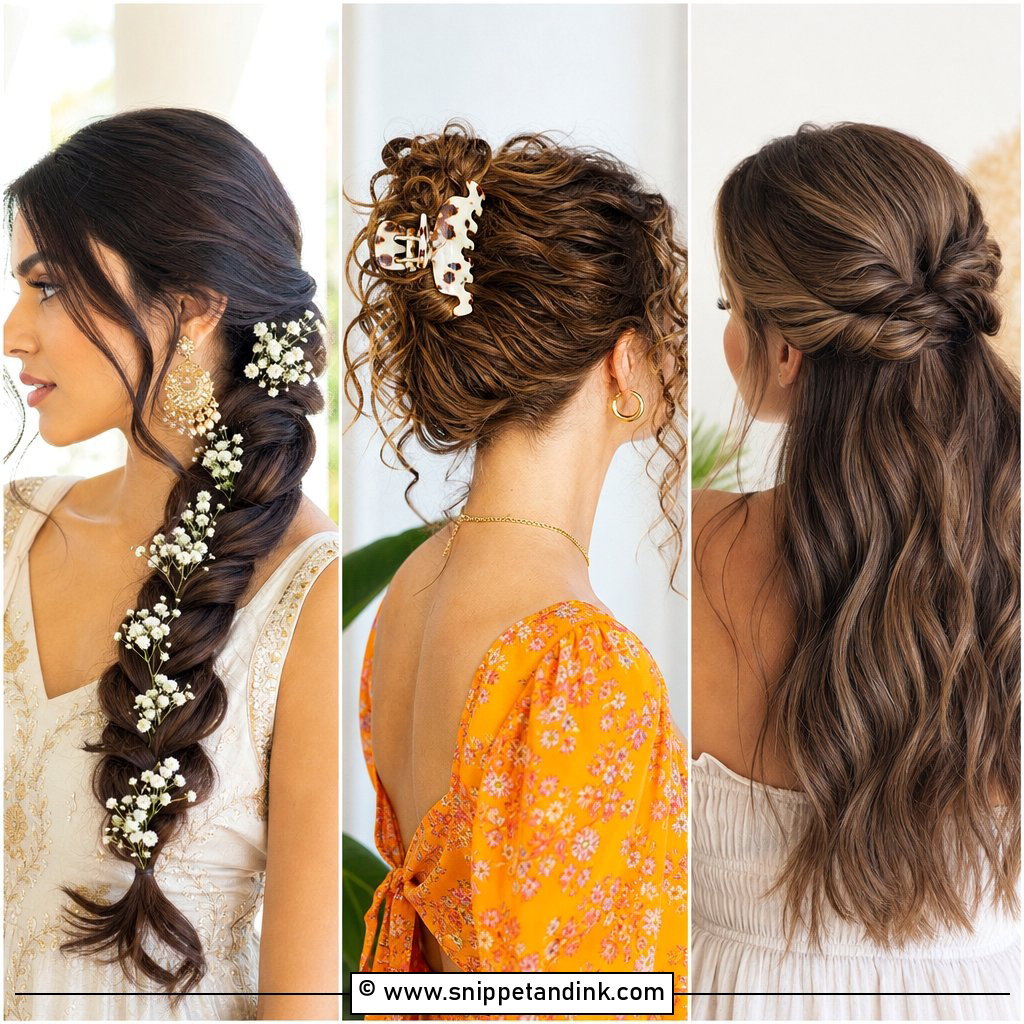
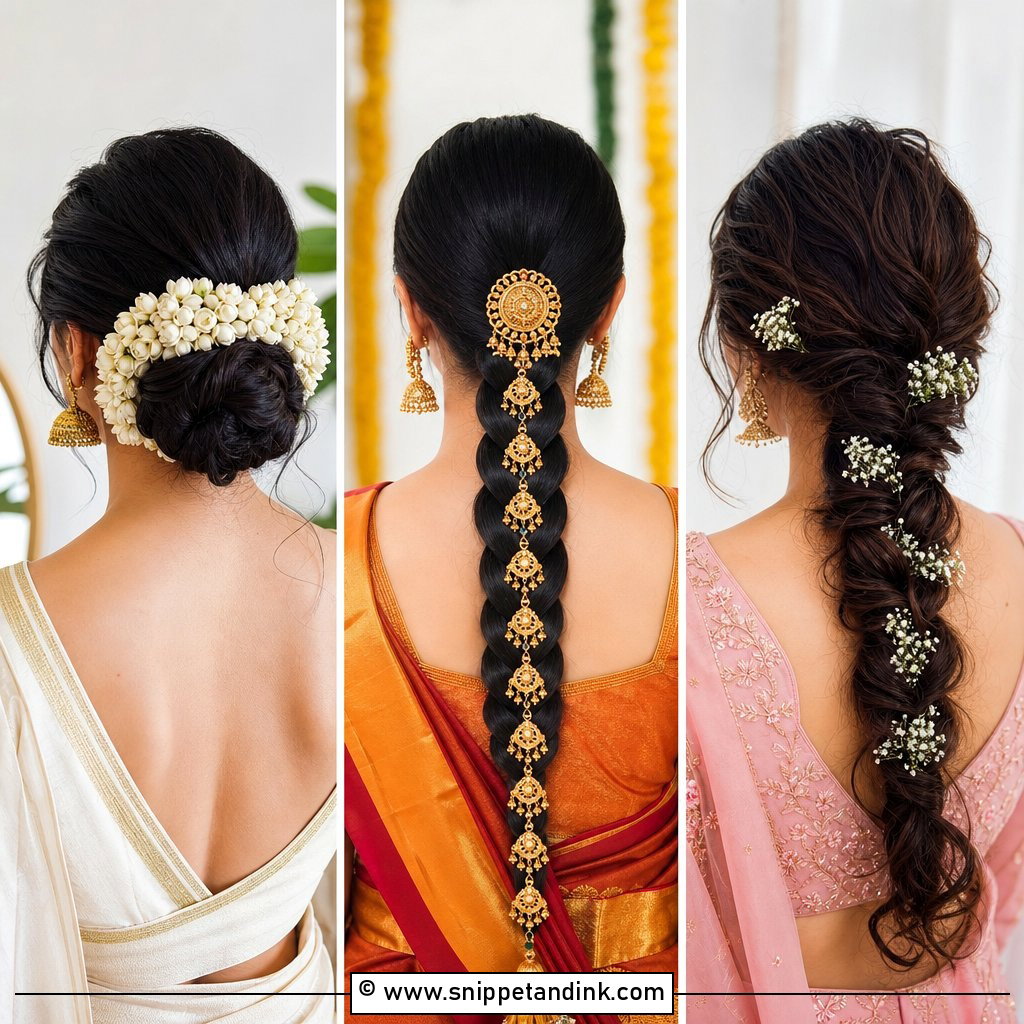
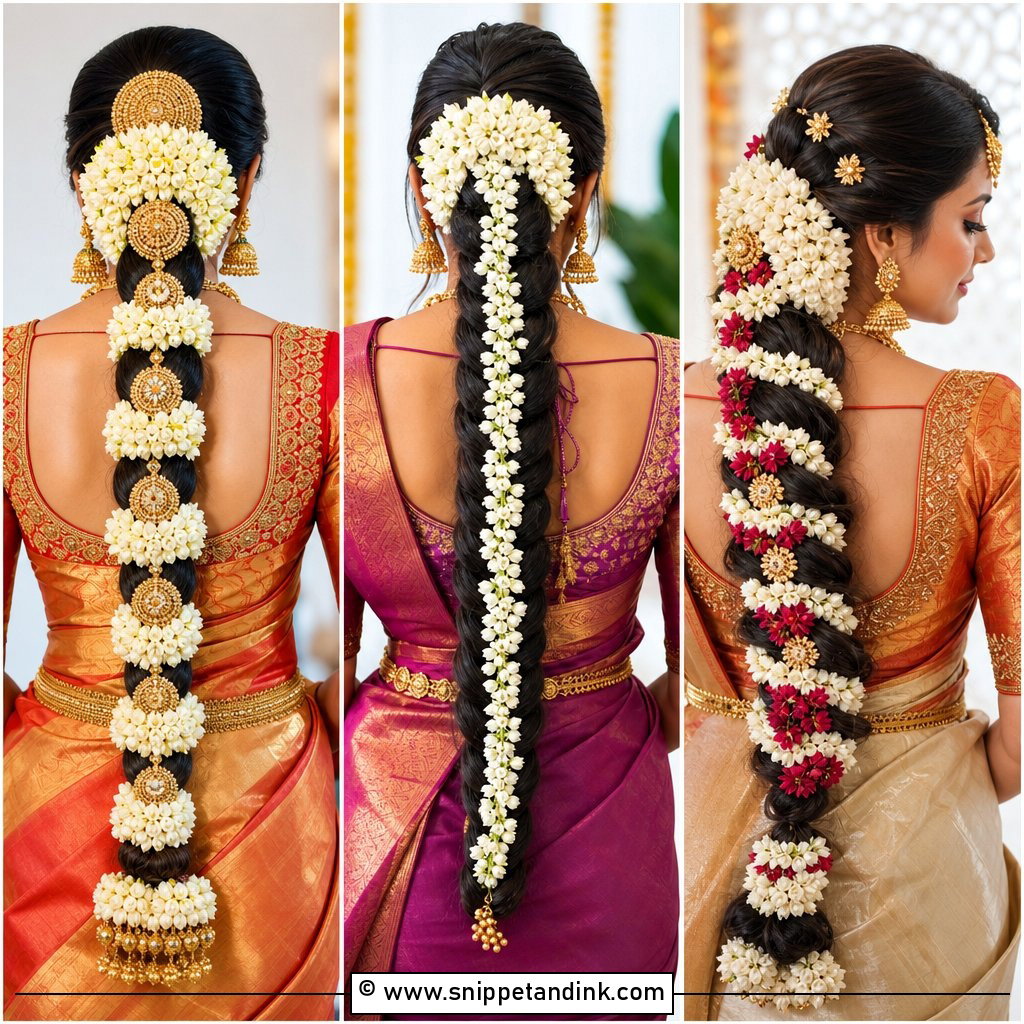
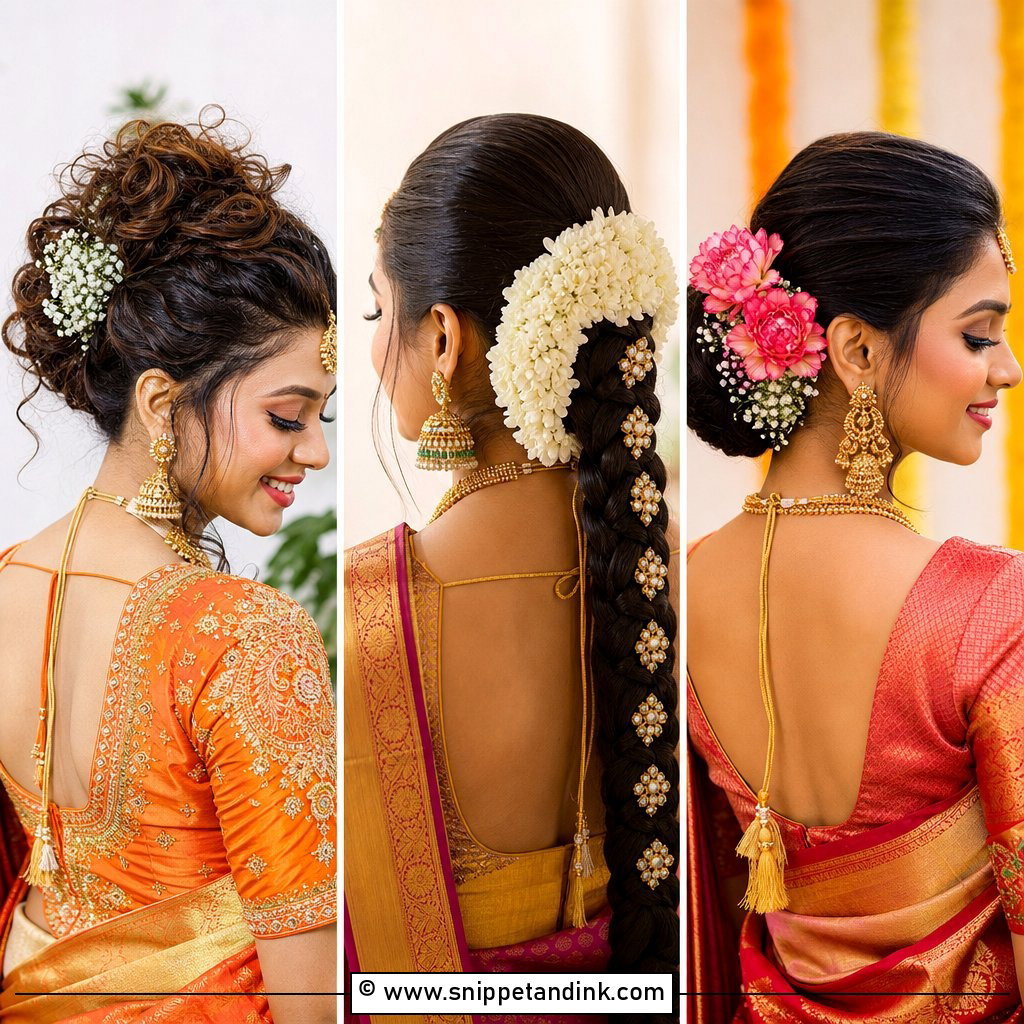
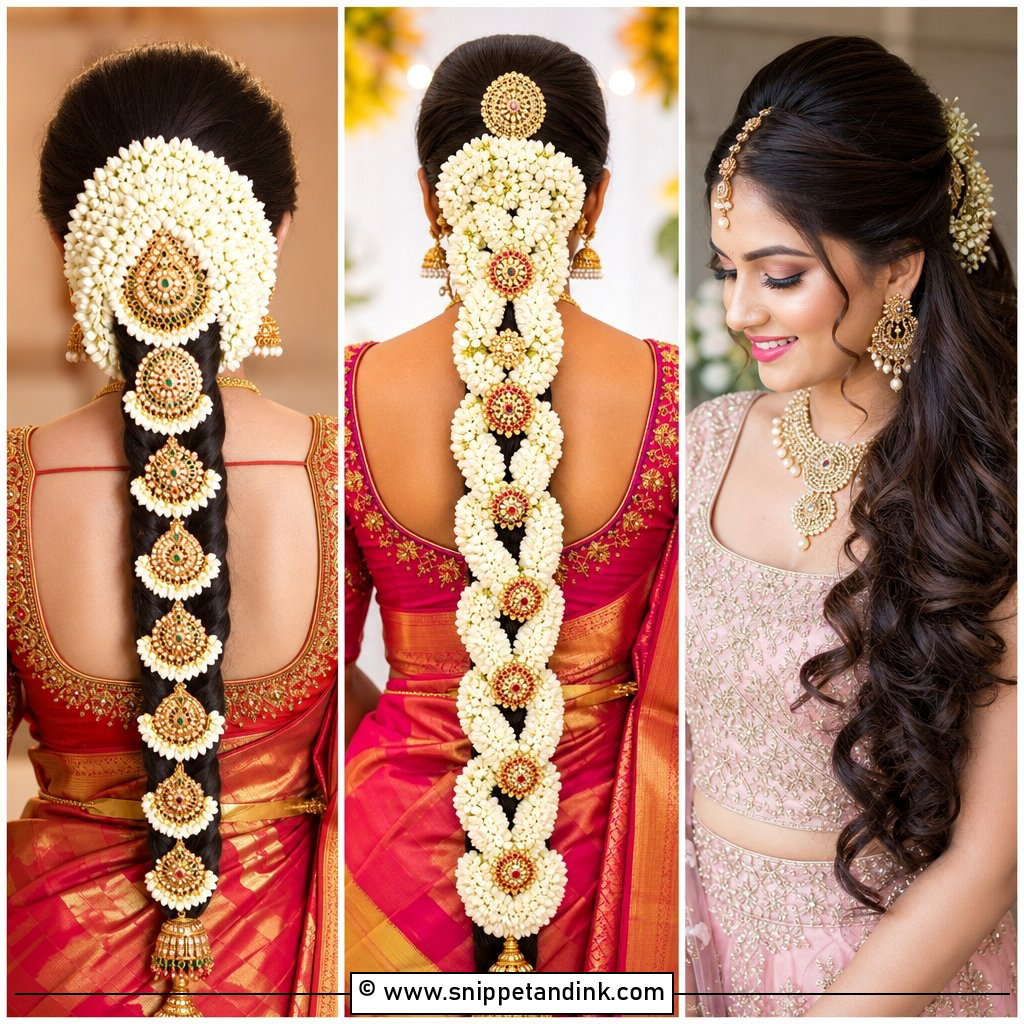
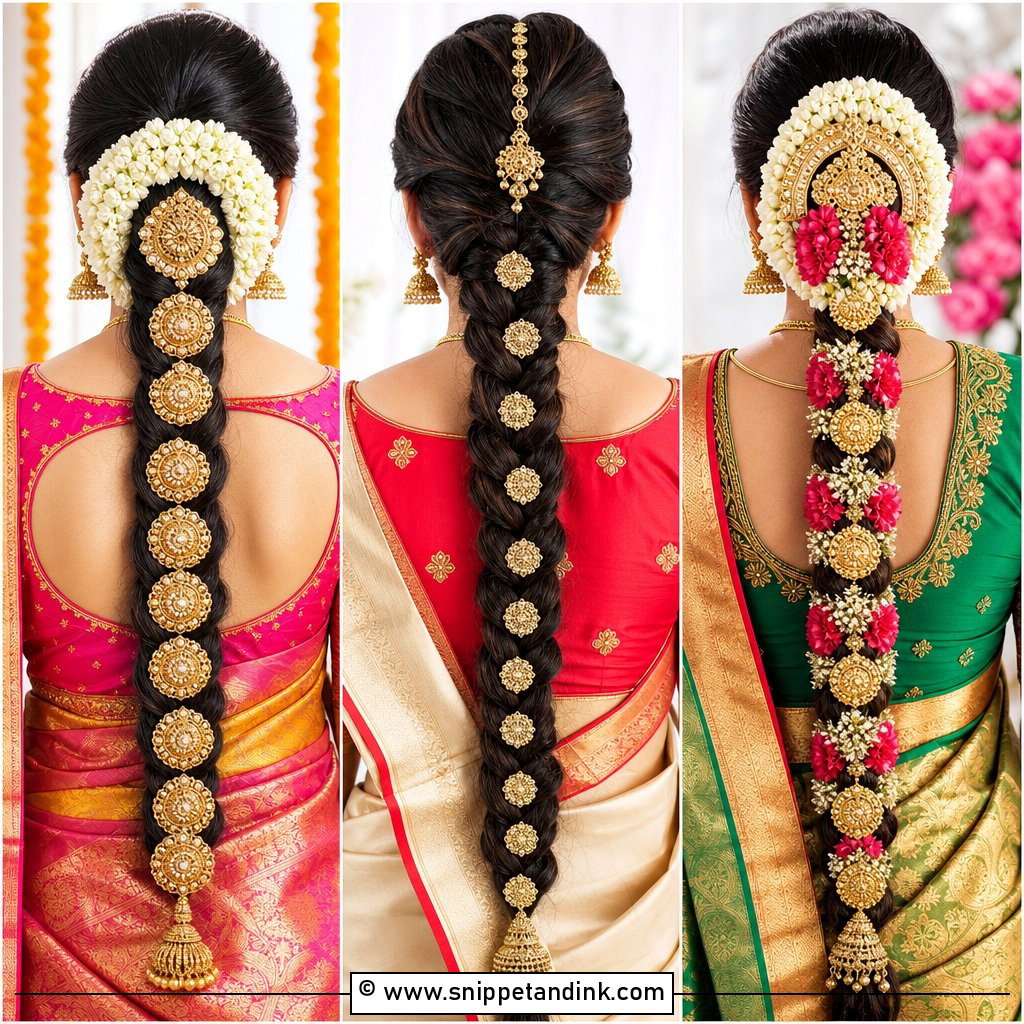
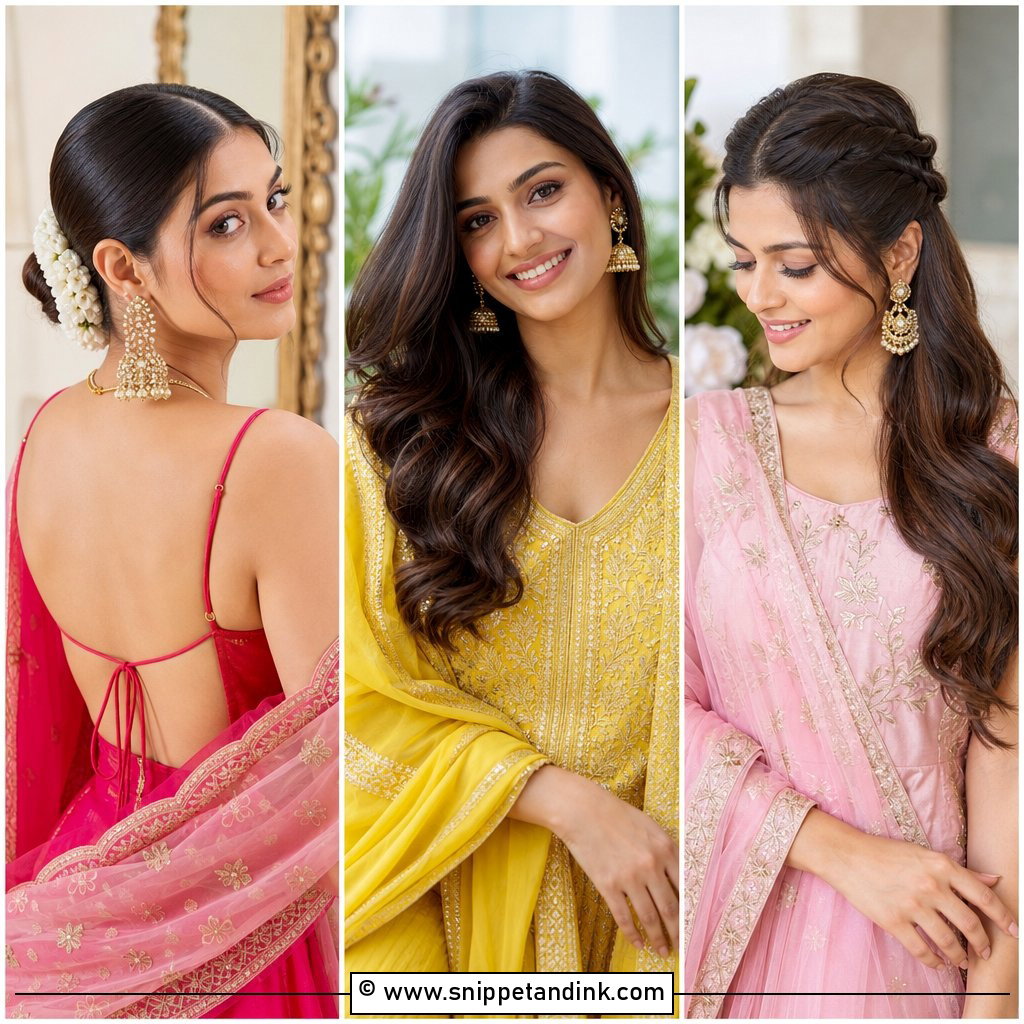
A jasmine braid feels traditional without the weight of a full flower braid, and it’s my first suggestion for a silk saree or half-saree. Medium to long hair suits it. I keep the braid neat, then add only a short line of jasmine at the top or along one side. Covering the whole length starts to read as bridal, and that’s the one line a guest shouldn’t cross. A centre part and a small bindi finish it. Mist the hairspray from a distance, since a close blast can brown the petals.
2. South Indian Wedding Guest Low Bun
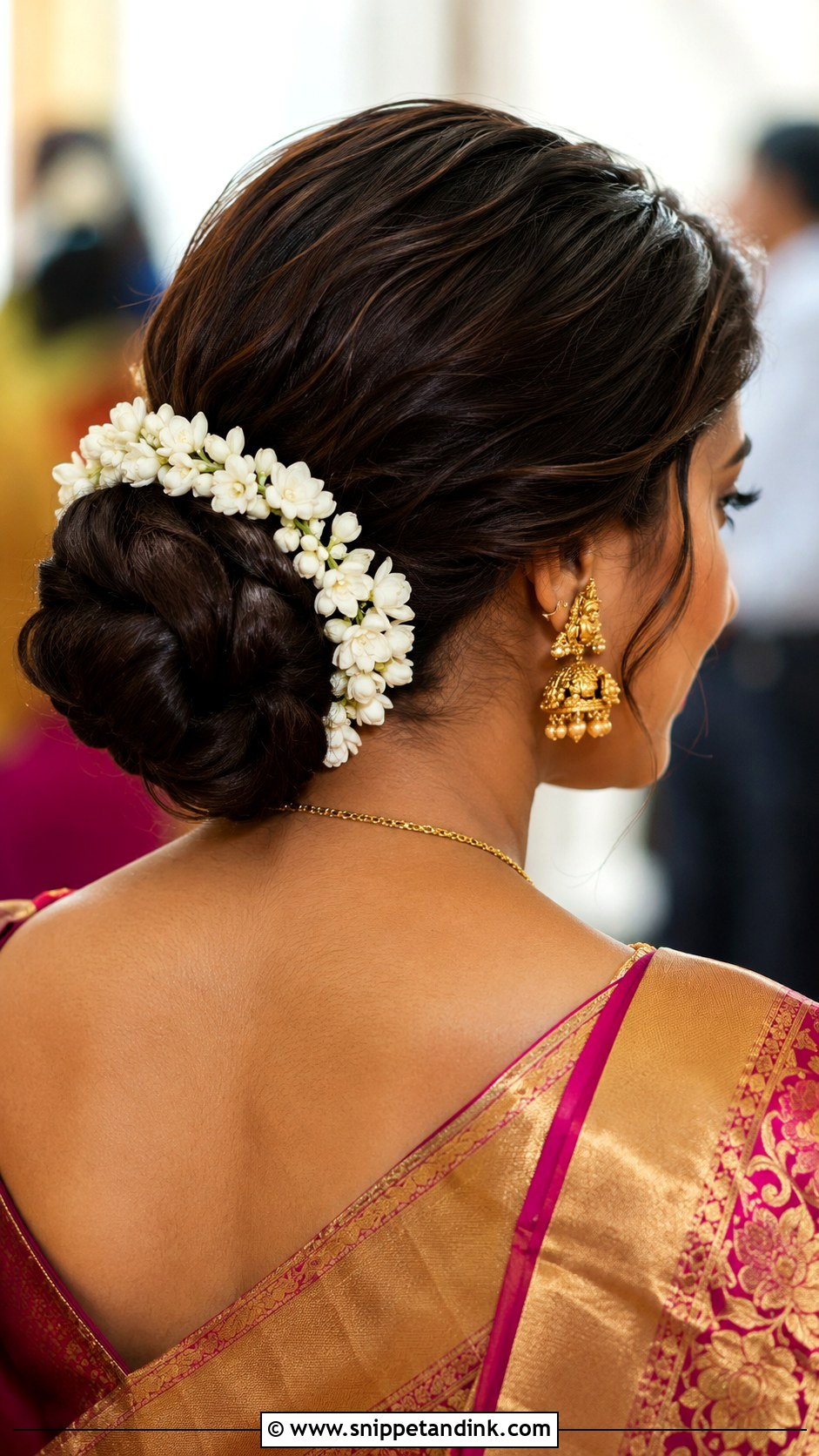
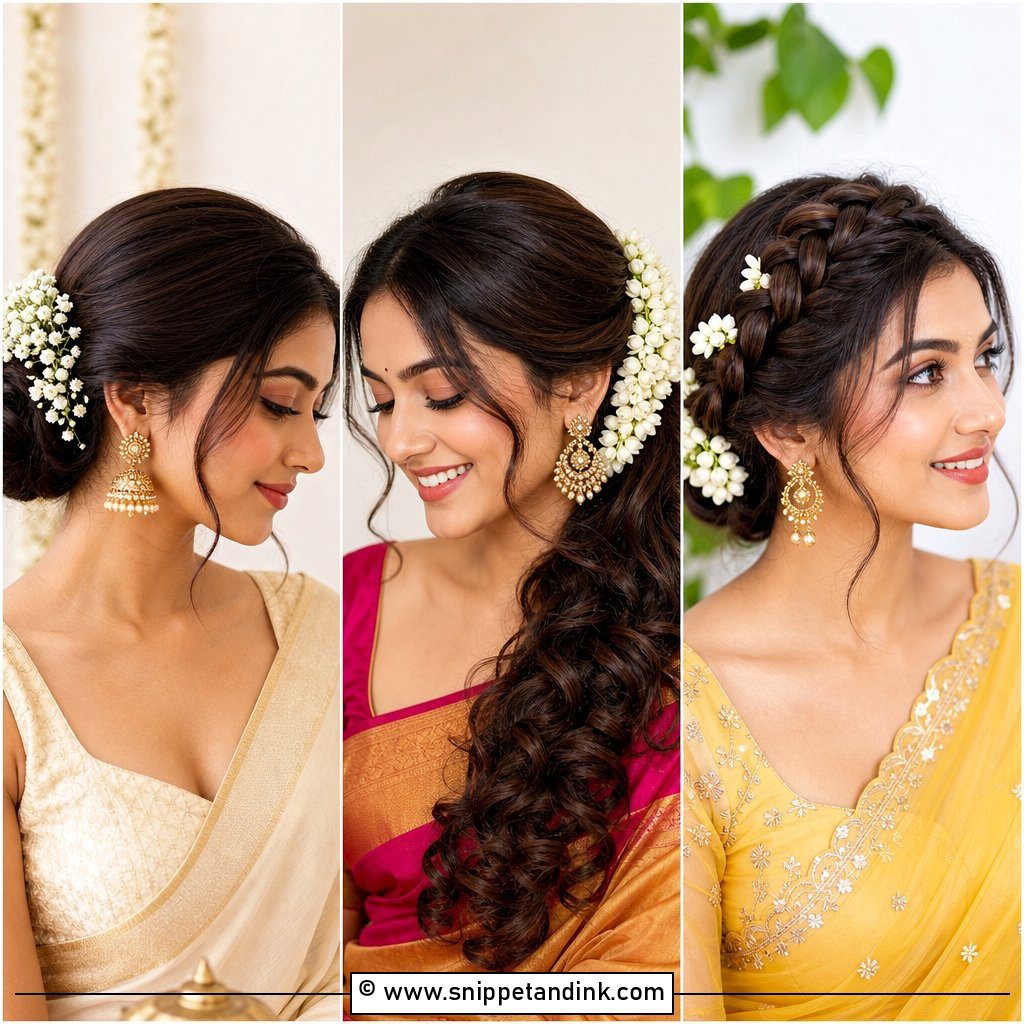
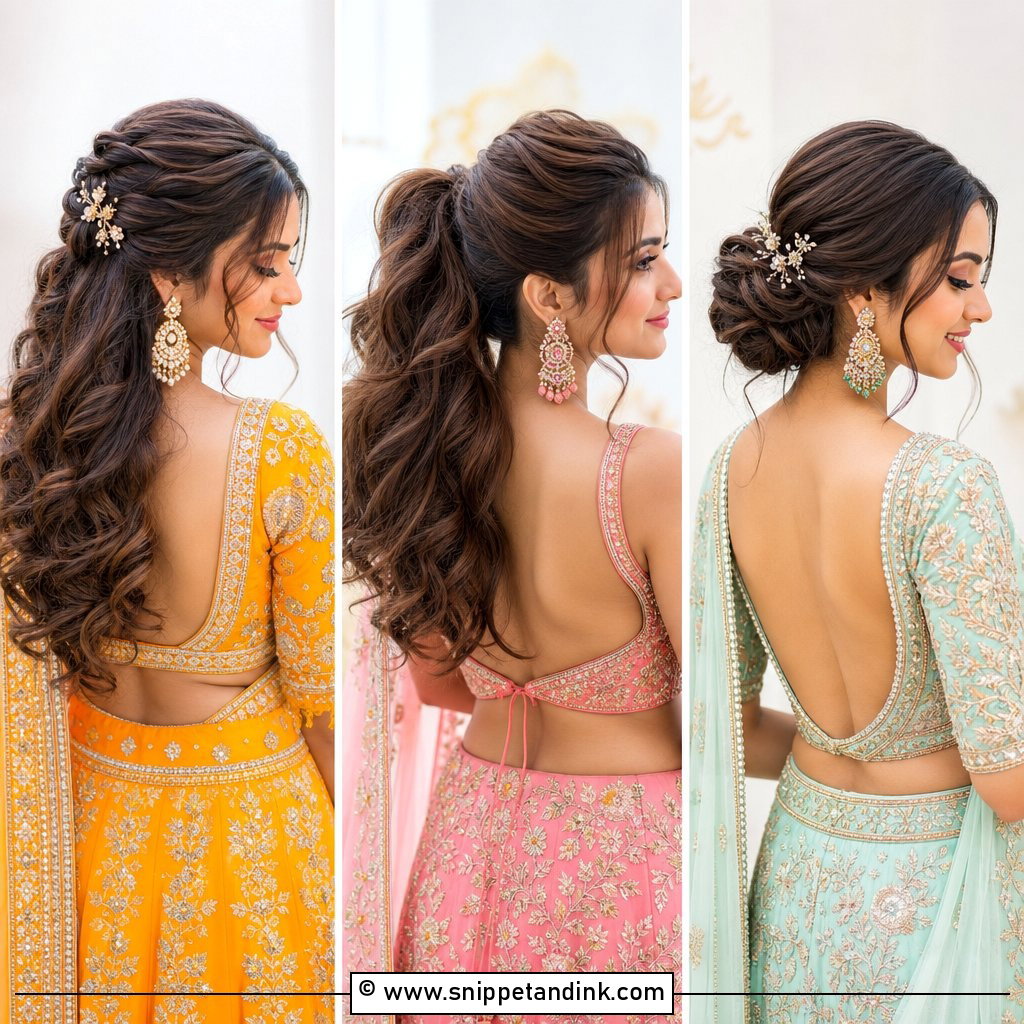
Sitting at the nape, a low bun stays put through a long day and shows off long earrings and blouse backs. For a South Indian wedding guest look, keep it smooth but not tight; a scraped bun gives a headache by lunch. A small gajra on one side or a few gold pins add the festive touch. In warm weather it’s the most sensible choice here, keeping hair off your neck. Put the pins in crossing each other, not side by side, and they won’t work loose when you lean forward to eat.
3. South Indian Wedding Guest Half Up Curls
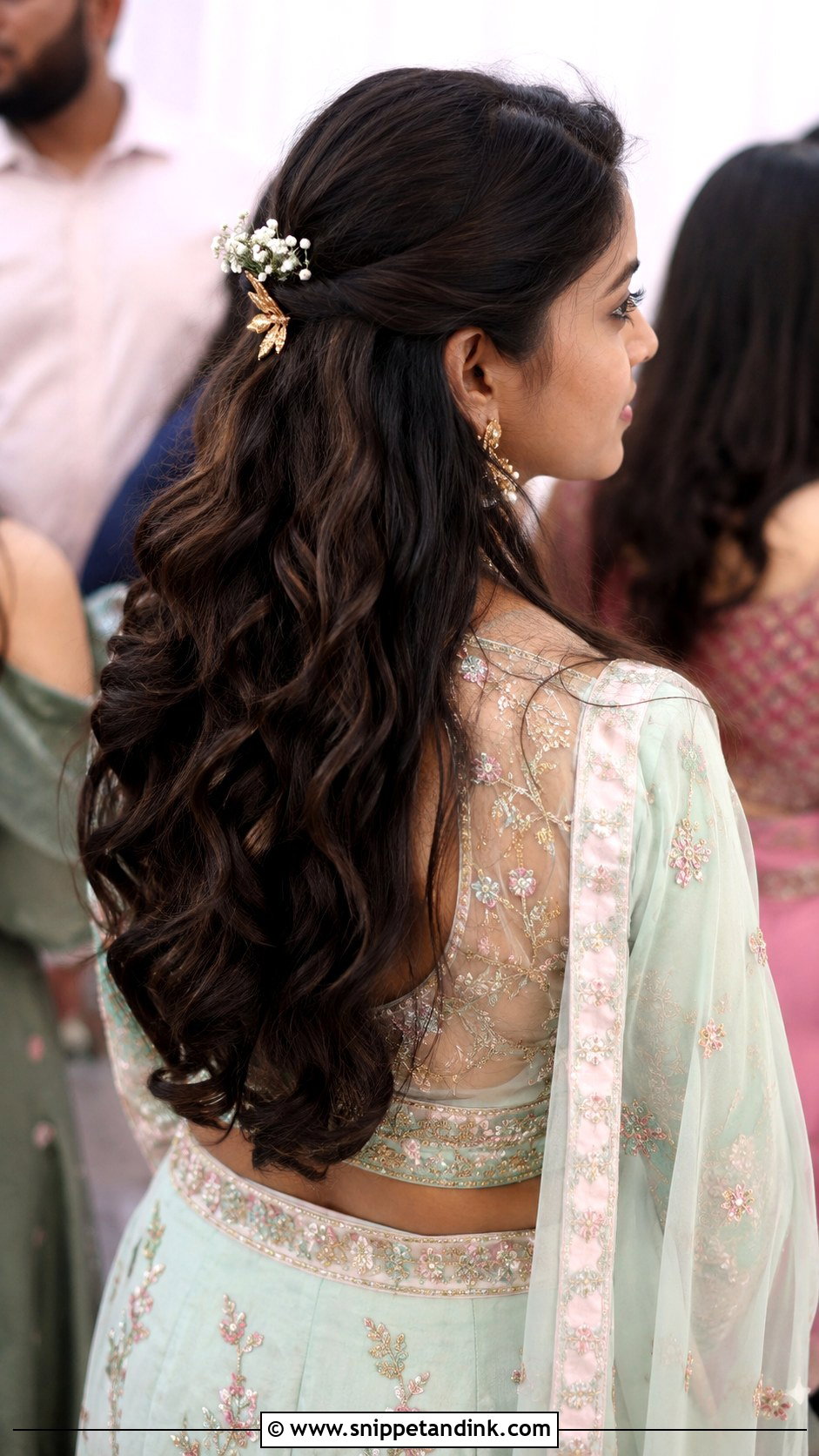
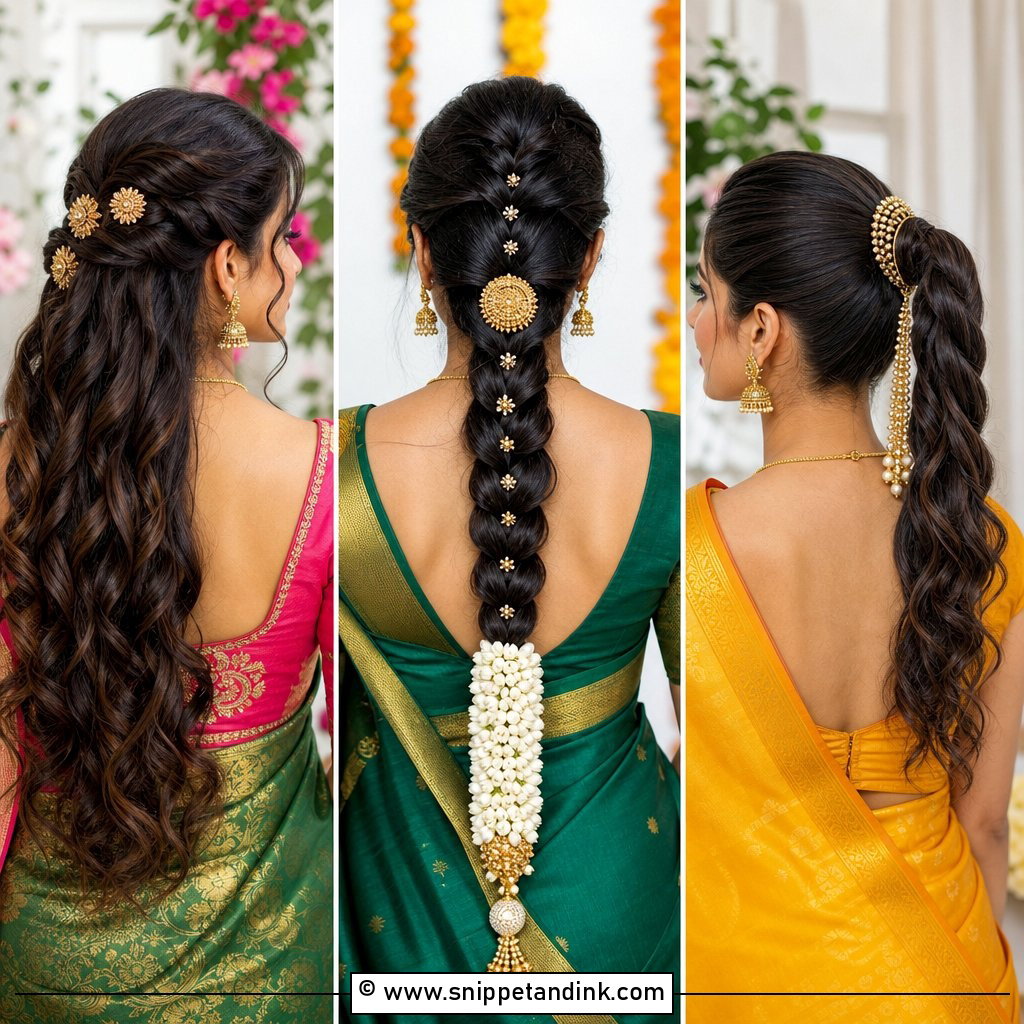
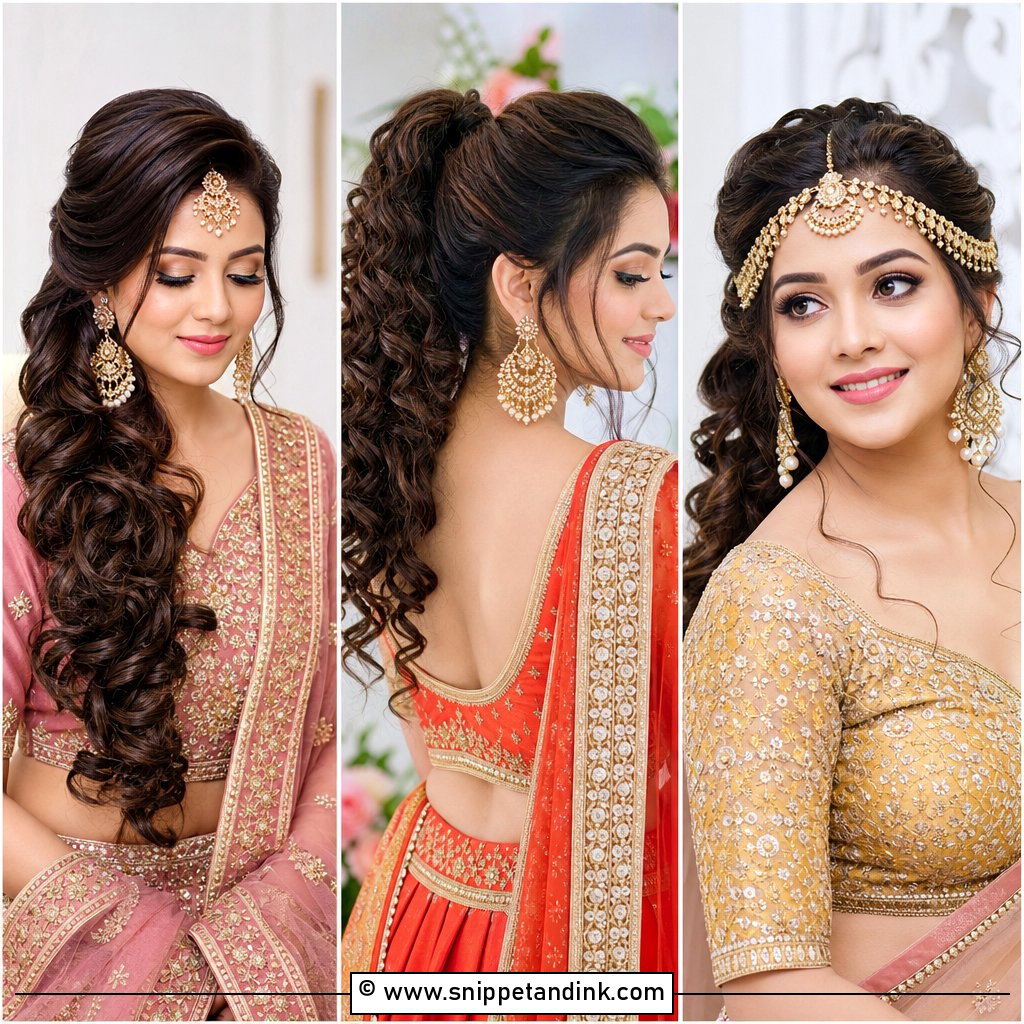
If you want your hair down but under control, half-up curls do that. The crown gets volume while the front sections are pinned away from your face. I’d wear them to receptions, engagements and sangeet-style evenings where the dress code is a little more modern, with lehengas, gowns or lighter sarees. tiny jasmine buds or a small gold clip at the back add a South Indian touch. Brush the curls out with fingers, not a paddle brush, so they stay soft rather than turning into frizz.
4. South Indian Wedding Guest Side Braid
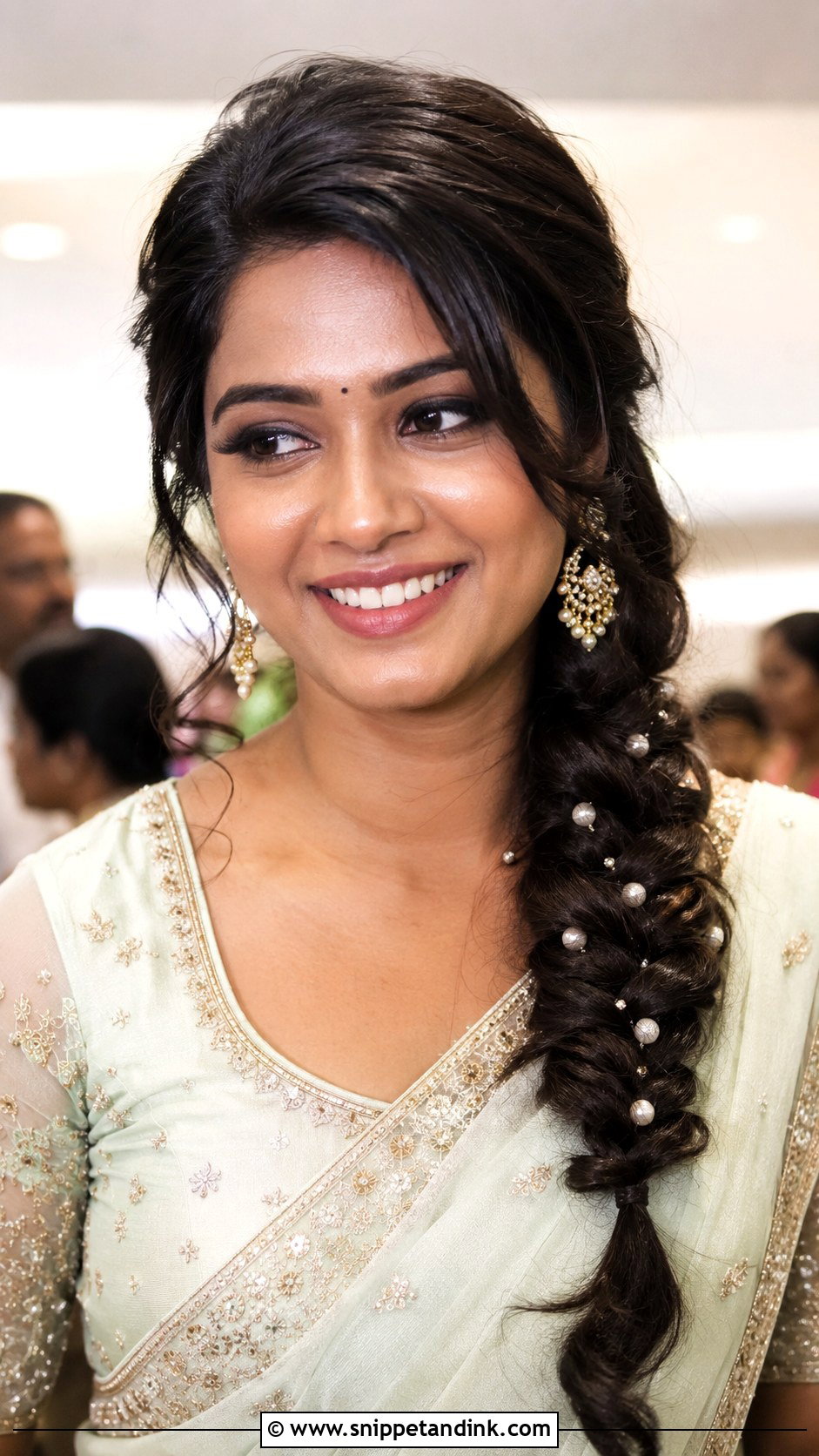
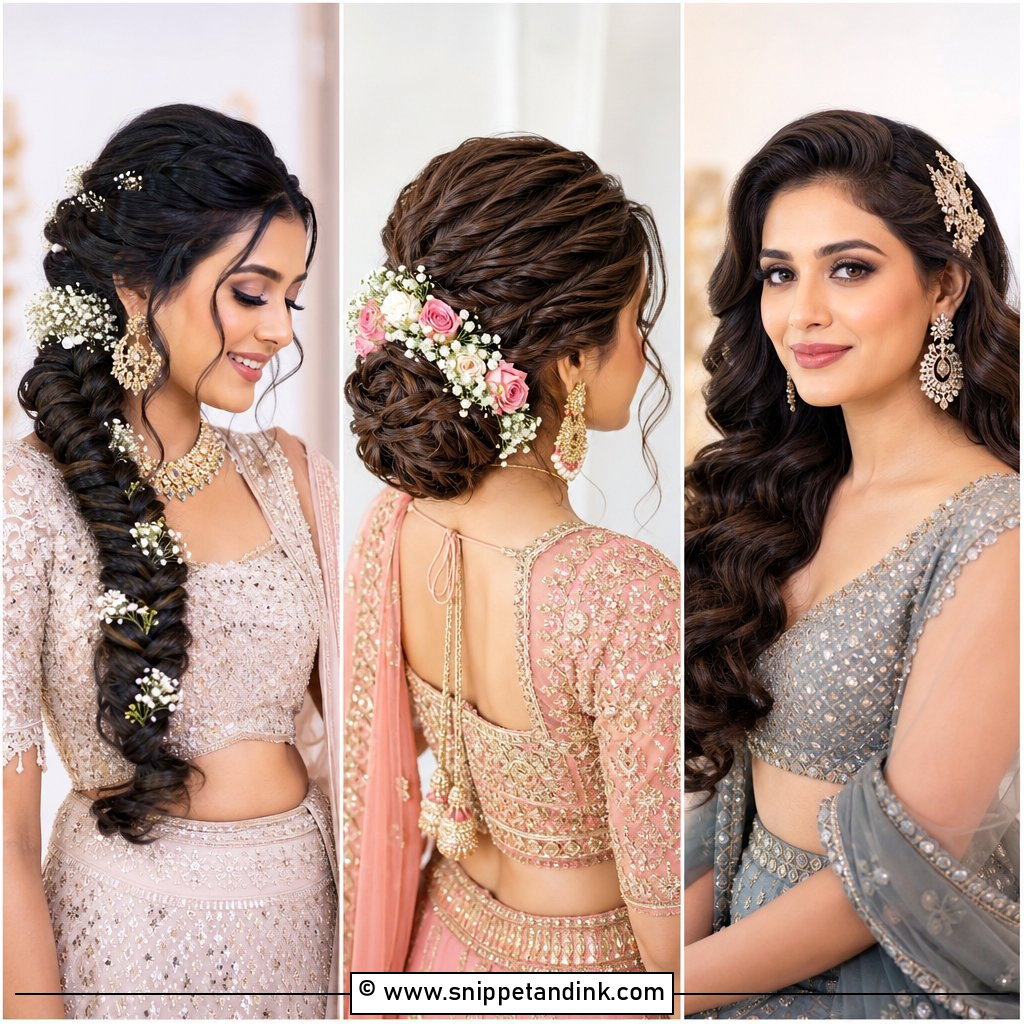
Pulled over one shoulder, a braid is softer than a classic back braid, and it actually appears in front-facing photos. I start with a side part, add gentle waves through the length and braid loosely. Small jasmine flowers, pearl pins or a fine gold accessory dress it up. It leaves one side of the neck open, which suits embroidered blouses and statement earrings. In a crowded hall or outdoors it also keeps long hair from catching on other people’s sarees and jewellery.
5. South Indian Wedding Guest Flower Bun
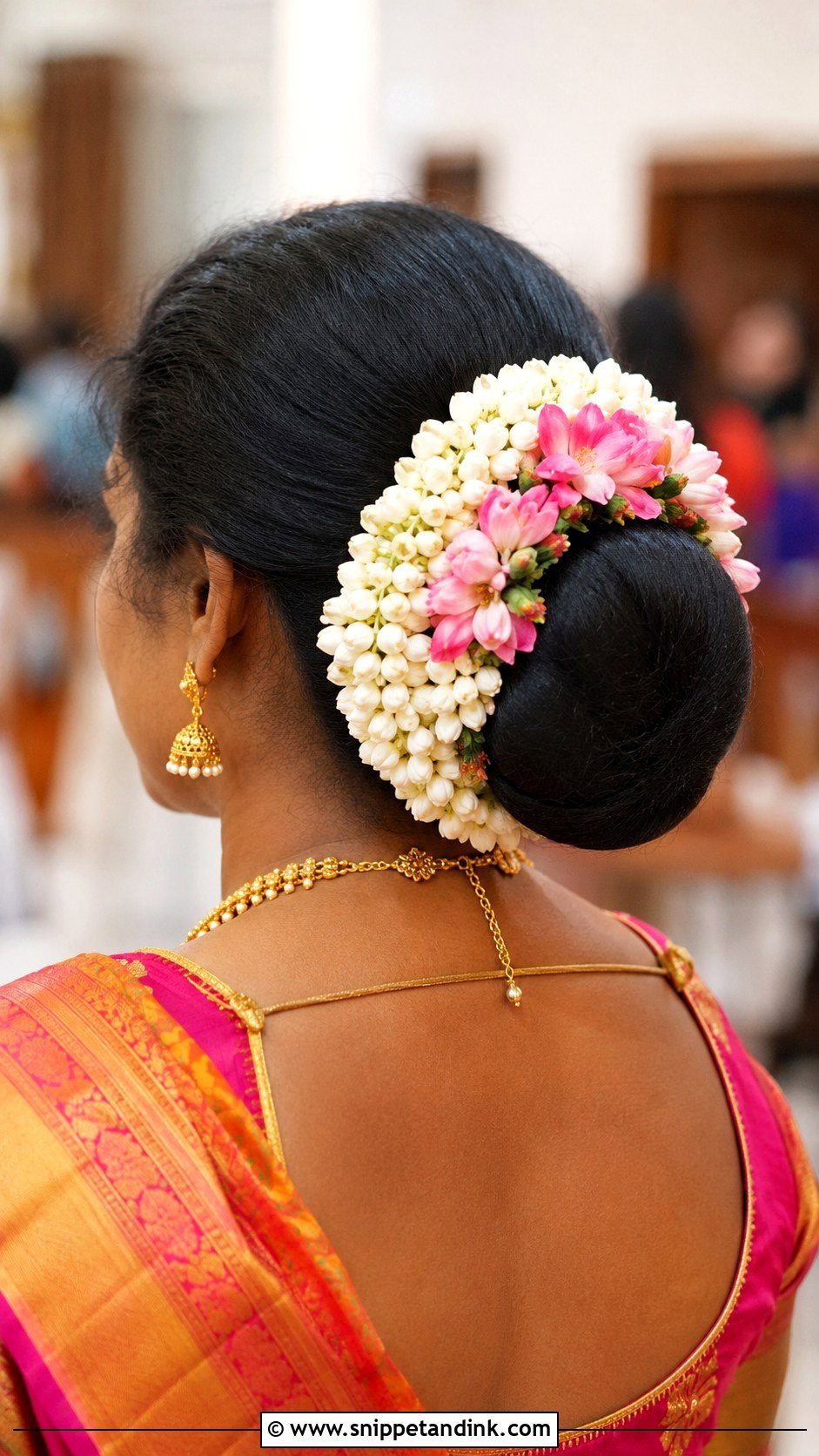
Guests can absolutely wear a flower bun; the trick is keeping the flowers smaller than the bride’s. A round bun with jasmine just around the base looks right with a Kanjeevaram and temple jewellery. With a pastel outfit, mix white jasmine with a few small pink or orange blooms. Thick hair makes this easy, and a bun padding fills it out if yours is finer. Pin it firmly if you’ll be travelling between venues, since car headrests flatten an unsupported bun faster than anything.
6. South Indian Wedding Guest Loose Waves
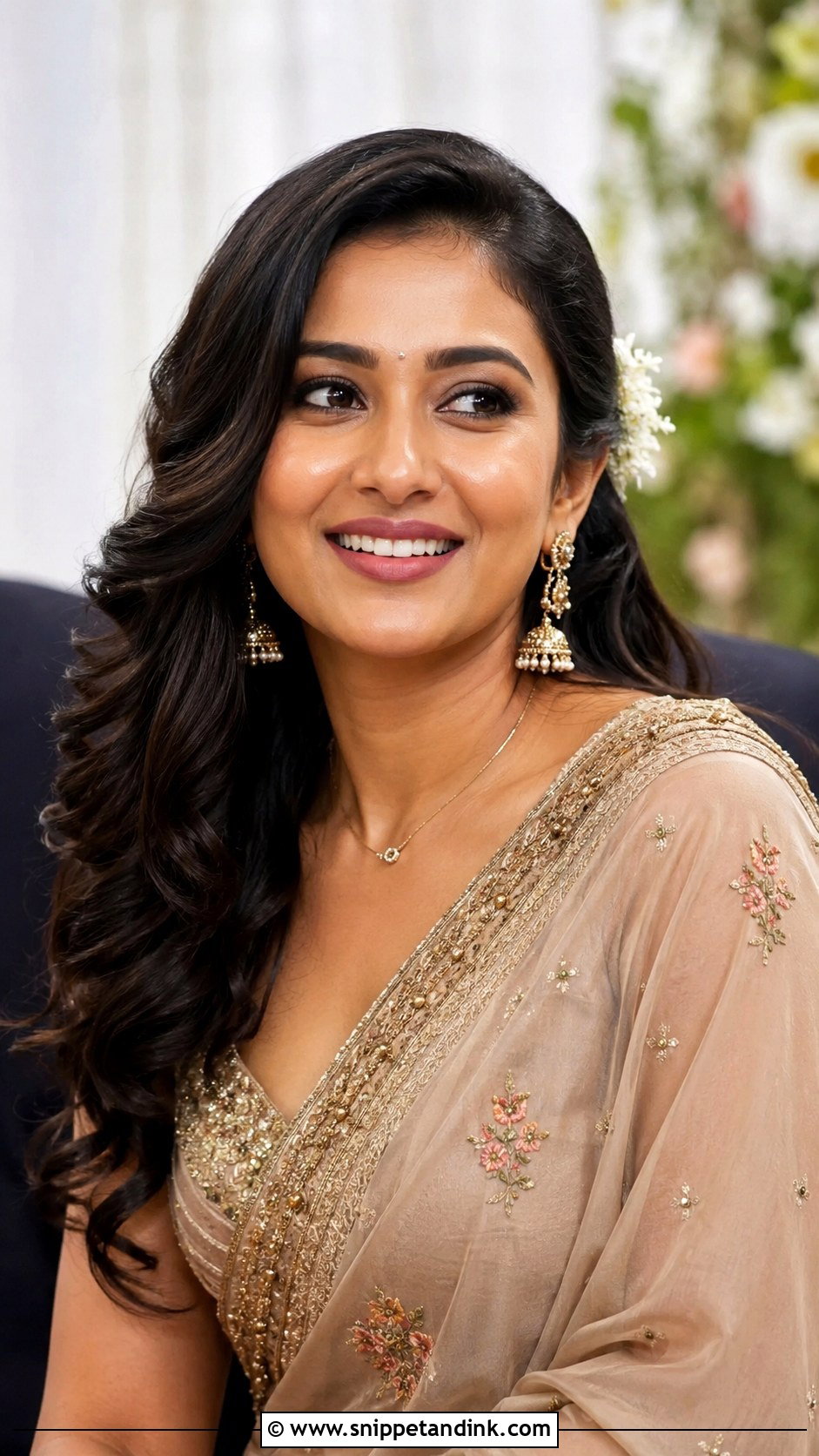
Waves give a modern look for reception evenings, cocktail-style events and lighter functions. They should be smooth and defined, not beachy. Pick a middle or side part to suit your face, then add a small maang tikka, a clip or a flower behind one ear. Flowy sarees, pre-draped sarees and contemporary lehengas suit it. Humidity is the catch: waves on thick or wavy hair can turn fuzzy within the hour, so apply anti-frizz serum before heat-styling, not after.
7. South Indian Wedding Guest Braided Bun
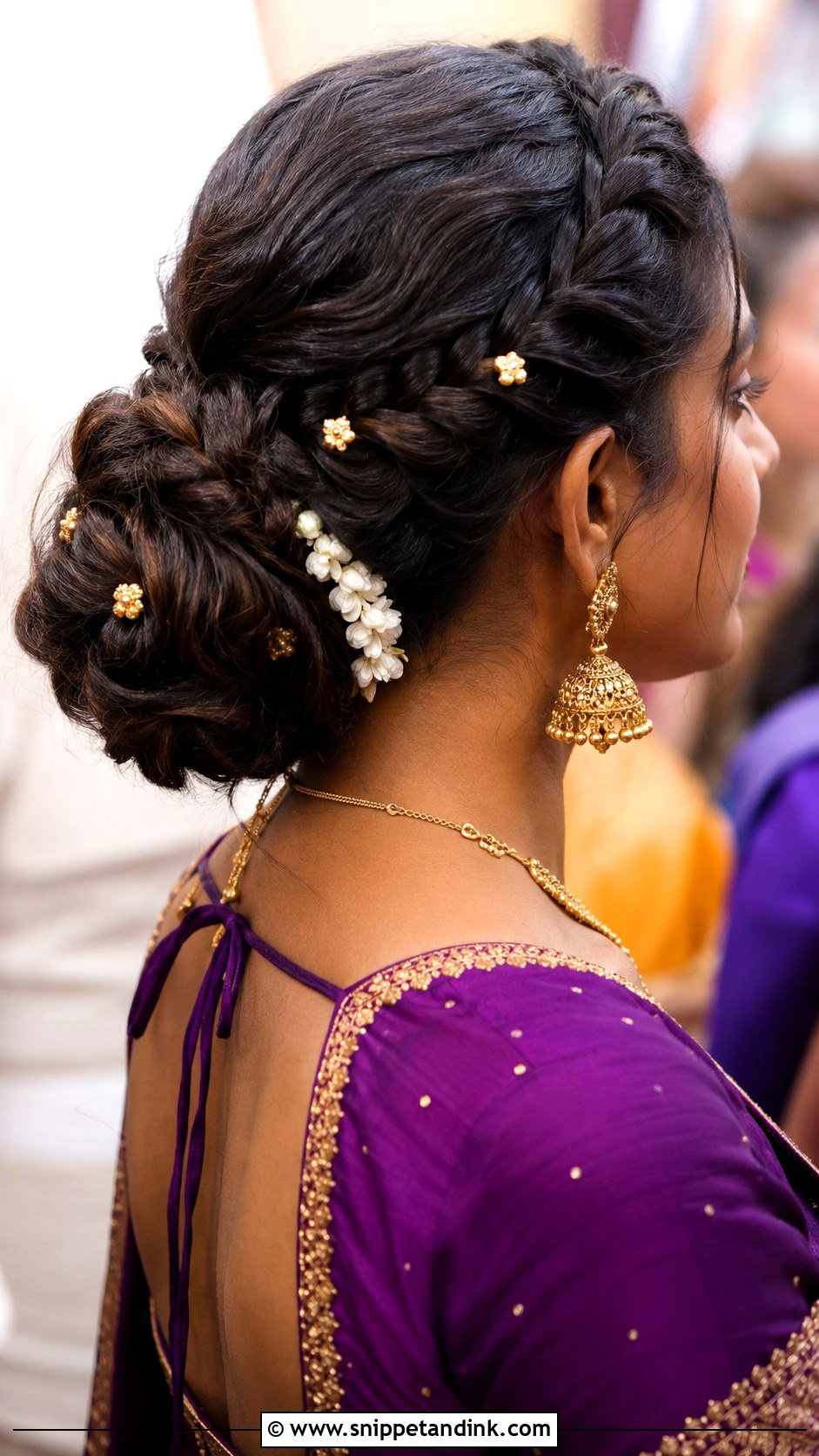
Wrapping a braid around a bun, or feeding it in from one side, gives you an updo with more texture than a plain coil. A small gajra, pearl pins or gold accessories link it to your outfit. With a high-neck blouse or heavy earrings it keeps the neckline clear. I like it most on thick hair, because the braid controls volume and needs fewer pins. On fine hair, gently pull the braid loops wider before pinning so the bun doesn’t look skimpy.
8. South Indian Wedding Guest Sleek Ponytail
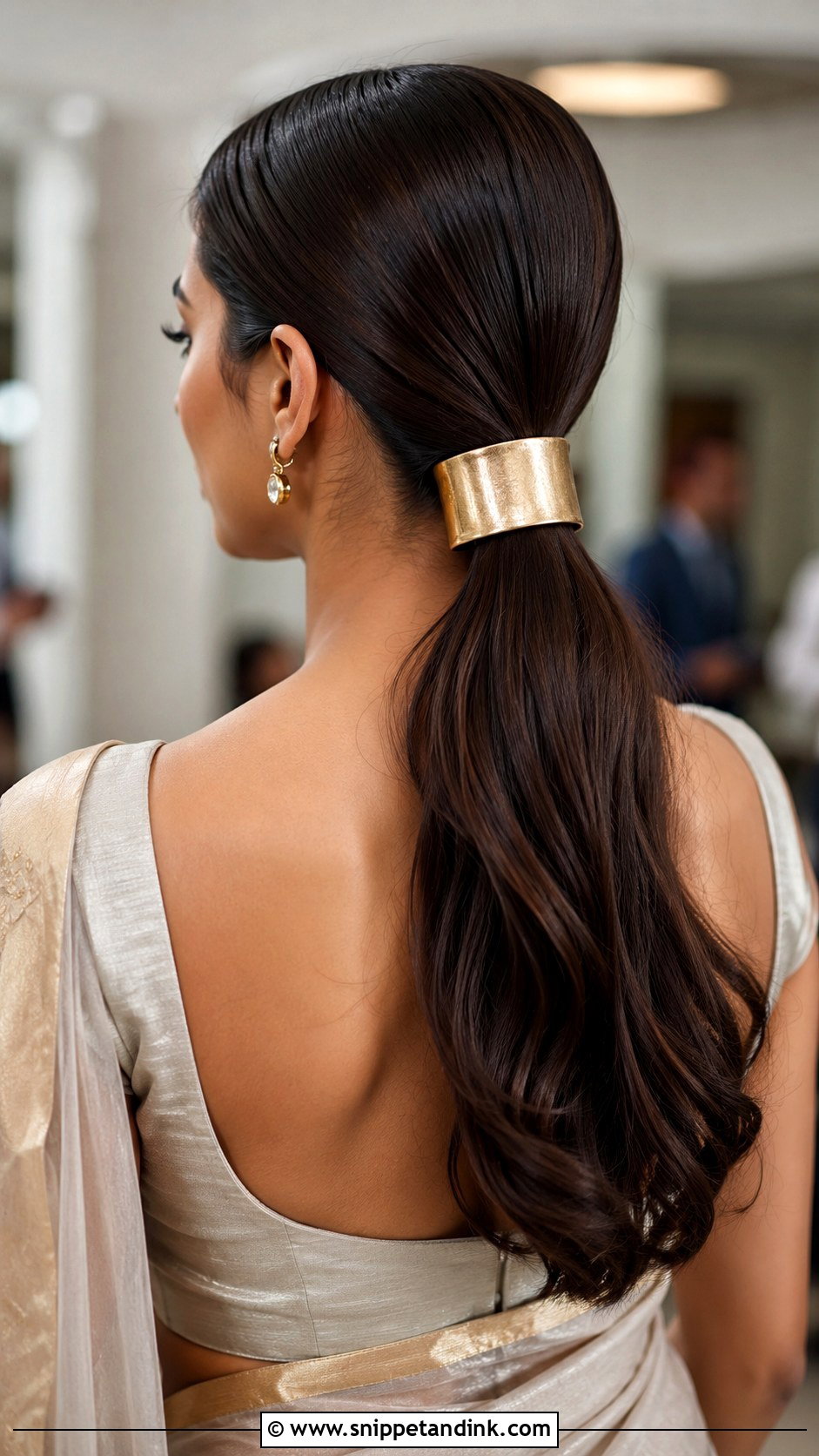
Contemporary sarees, cape blouses and structured lehengas all suit a sleek ponytail. I smooth the crown with a middle or soft side part and gather it low or at mid-height. Curl the ends for movement or leave them straight for a sharper line. A gold cuff, pearl tie or decorative pin makes it wedding-ready. Wrap a small strand of hair around the elastic to hide it; a visible band is the detail that makes a polished ponytail look like a gym one.
9. South Indian Wedding Guest Open Hair With Gajra
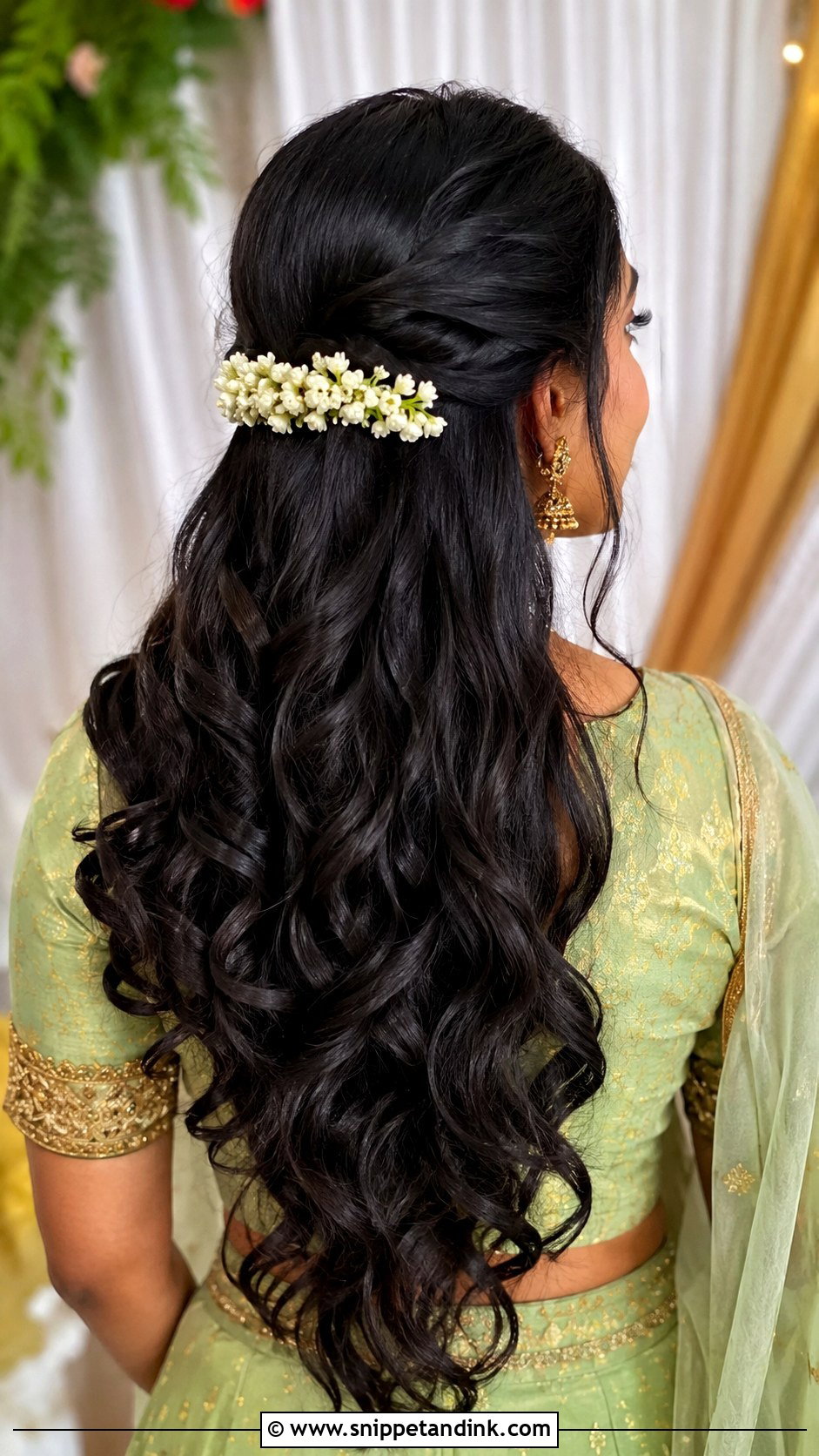
Open hair with a gajra blends a modern finish with tradition: a single jasmine string pinned across the back like a hair accessory, with the rest curled, waved or blow-dried smooth. Younger guests, bridesmaids and close family often choose it. Long or medium hair and lighter jewellery work best. Pin the string at both ends and once in the middle, or it slides down as your hair moves. Tuck the front sections so they stay out of your face through greetings and the meal.
10. South Indian Wedding Guest Fishtail Braid
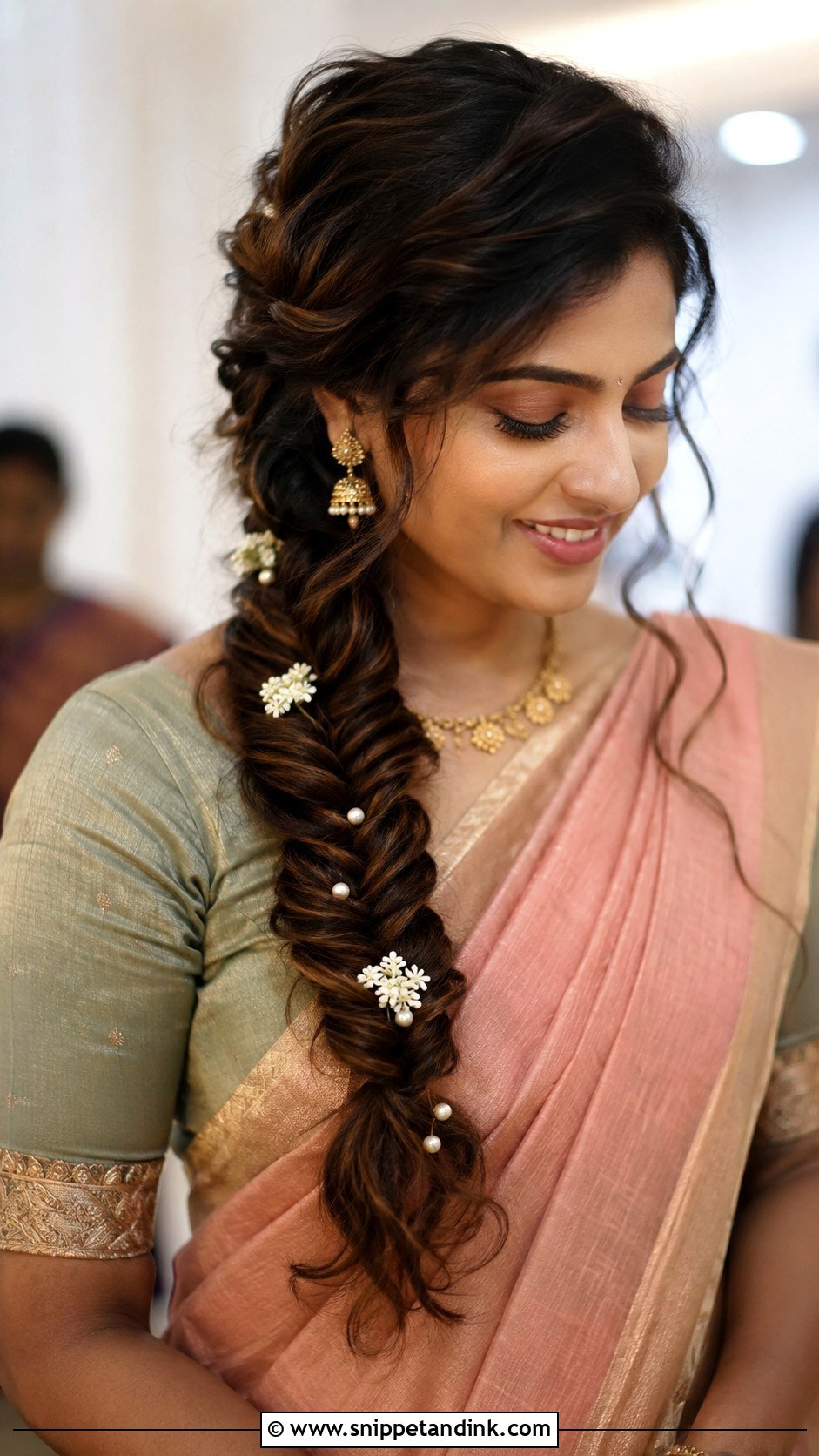
A fishtail braid has more texture than a three-strand plait and still sits comfortably with a traditional crowd. Wear it down the back or over one shoulder. Small jasmine buds, pearl pins or gold beads can be spaced lightly through it. Keep it slim, though, because very decorated braids can look bridal. Freshly washed, silky hair slips out of a fishtail, so do it on second-day hair or with some texture spray.
11. South Indian Wedding Guest Messy Bun
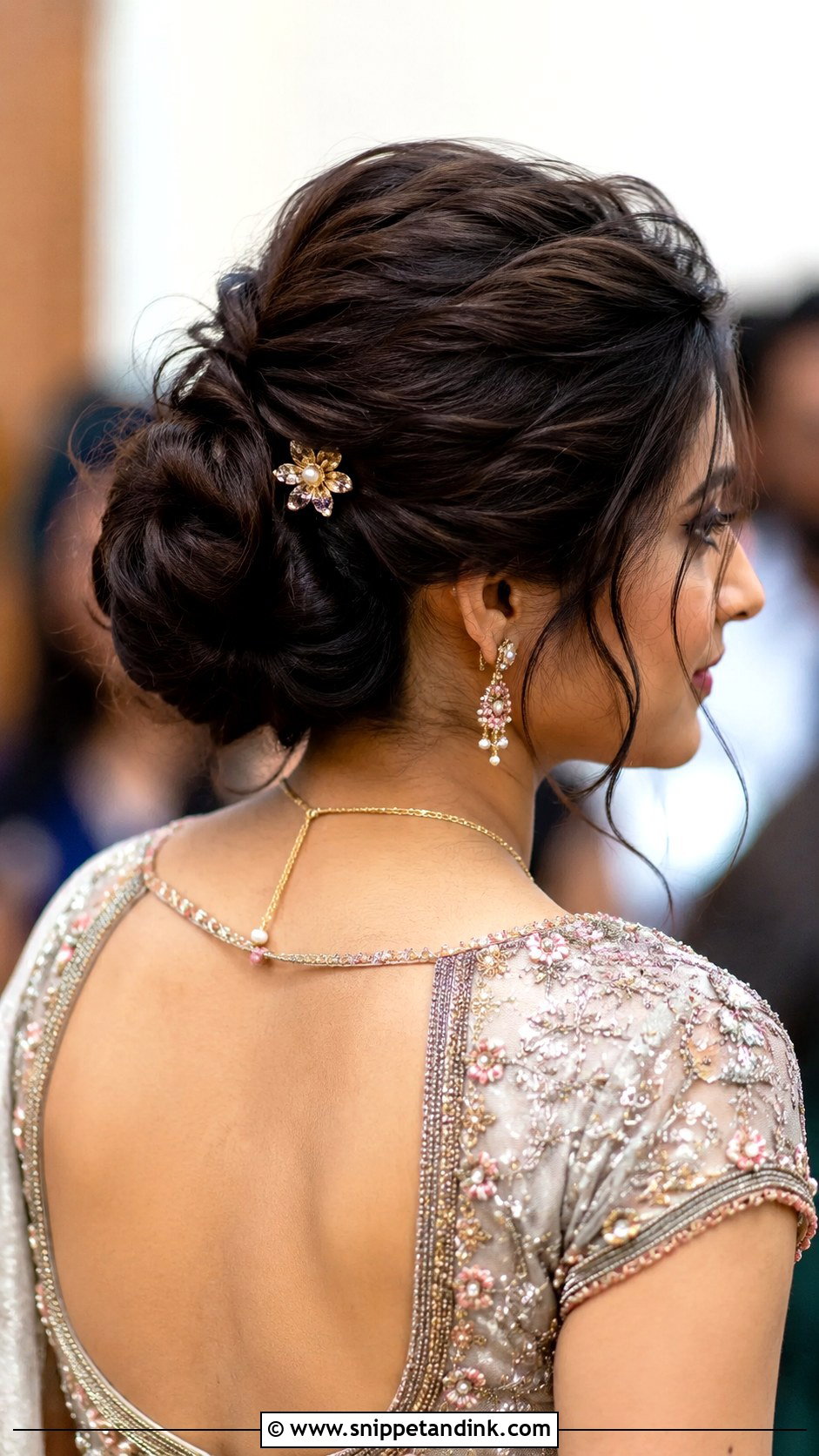
Done properly, a messy bun is a soft romantic updo, not an everyday knot. Build volume at the crown, leave a few face-framing pieces loose and pin the bun low or slightly to one side. A small flower cluster or a gold pin makes it festive. It suits receptions and evening events. Natural waves or a little frizz actually help here, since the texture is already built in.
12. South Indian Wedding Guest Crown Braid
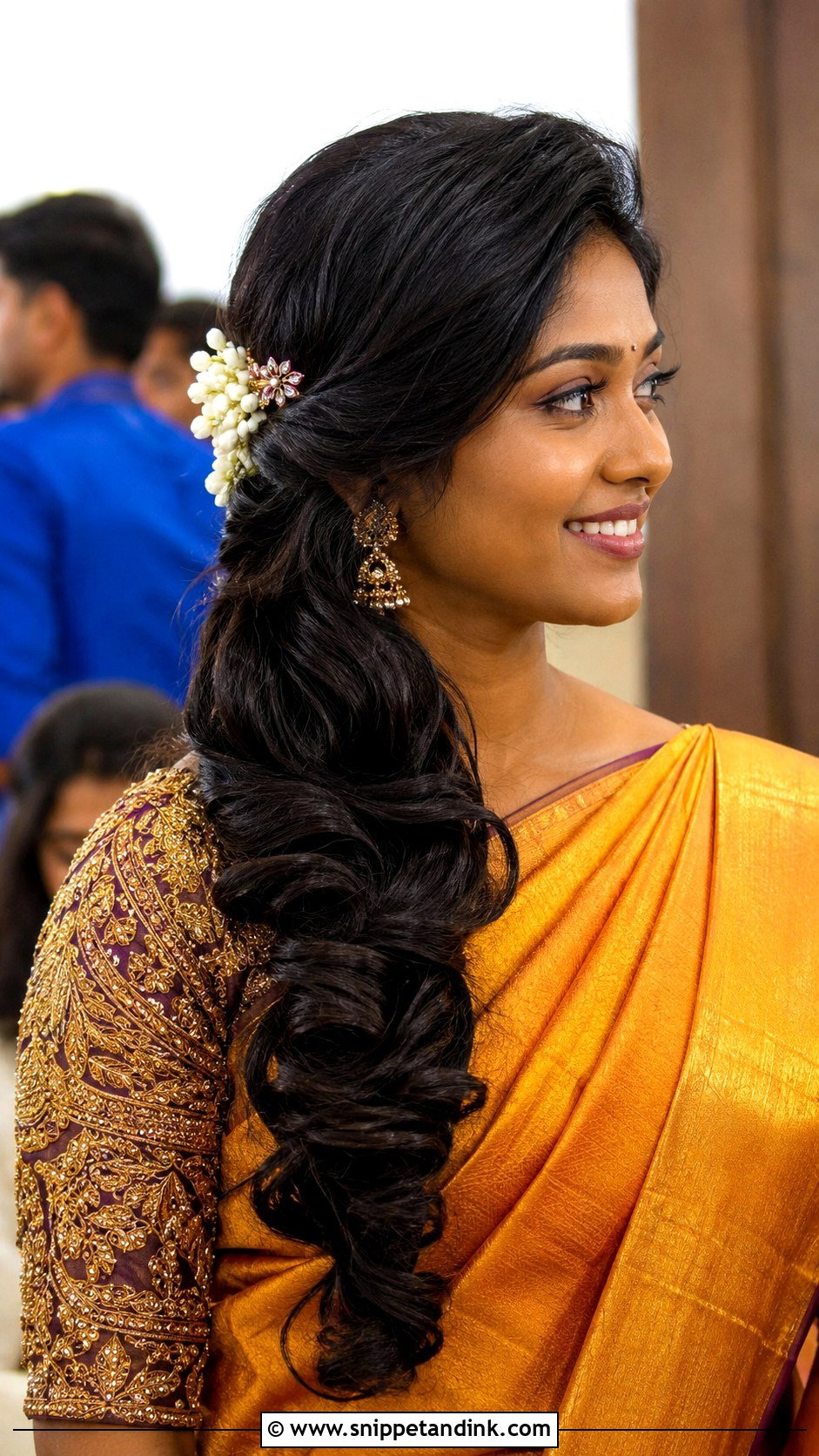
Braiding a crown around the face keeps everything secure through a long day. Go for a full braided crown or two side braids pinned toward the back, with the rest in a bun, a braid or waves. The braid is the detail, so simple jewellery is enough, and tiny flowers only if your outfit is understated. It’s my pick for humid weather because the front sections are locked in. Pin each section where it crosses the head, not only at the ends.
13. South Indian Wedding Guest Straight Hair
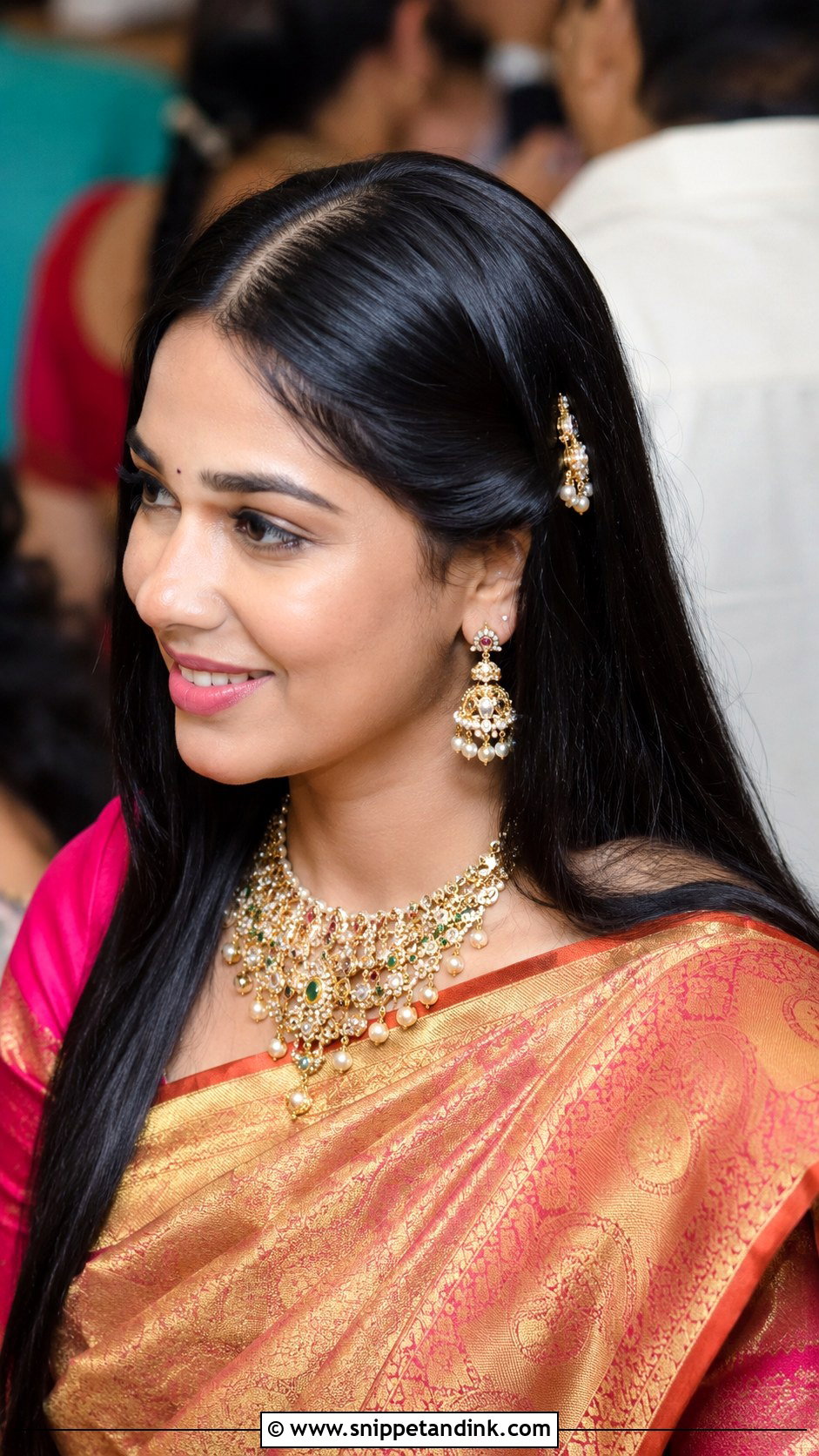
Sleek, shiny straight hair looks refined at a South Indian wedding when it’s finished with the right accessories. A centre part with hair tucked behind the ears, or pinned softly at one side, keeps it simple. A small maang tikka, a temple-style clip or a fresh flower makes it festive. Because it doesn’t compete, it suits bold sarees, statement necklaces and heavy earrings. Use heat protectant before straightening and a drop of shine serum after. Very straight hair shows every stray hair under hall lighting, so carry a small comb.
14. South Indian Wedding Guest Bubble Braid
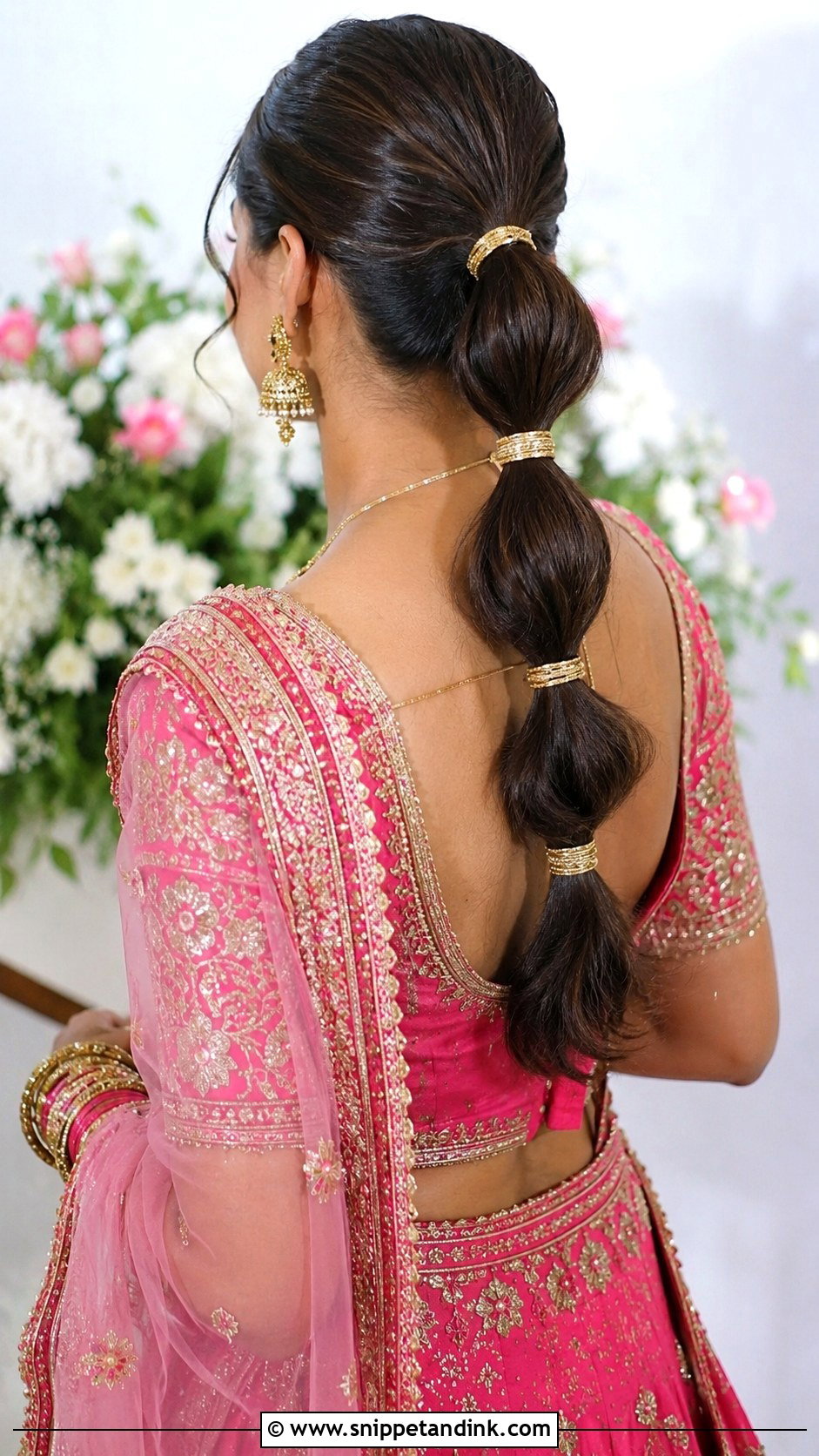
A bubble braid brings playful length and drama without much skill. Make a smooth ponytail, add elastics down the length and gently puff out each section. Wrap thin strands around the elastics or use small gold cuffs for a cleaner look. Keep the decoration light and skip anything resembling bridal pieces. It suits mehndi, the reception and pre-wedding events, and it’s one of the few styles here that thin hair can carry well, since puffing each section makes the length look fuller.
15. South Indian Wedding Guest Side Swept Curls
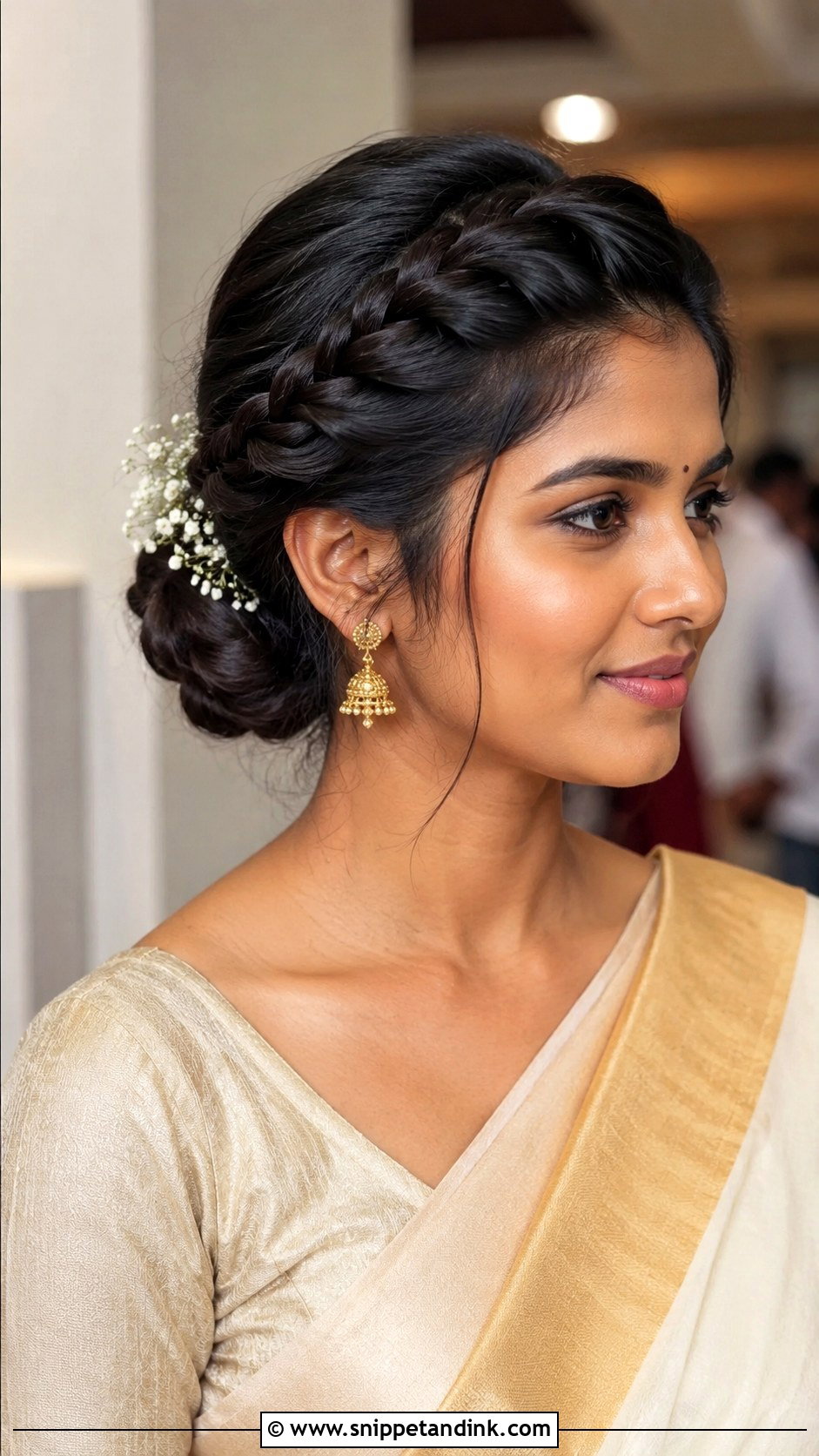
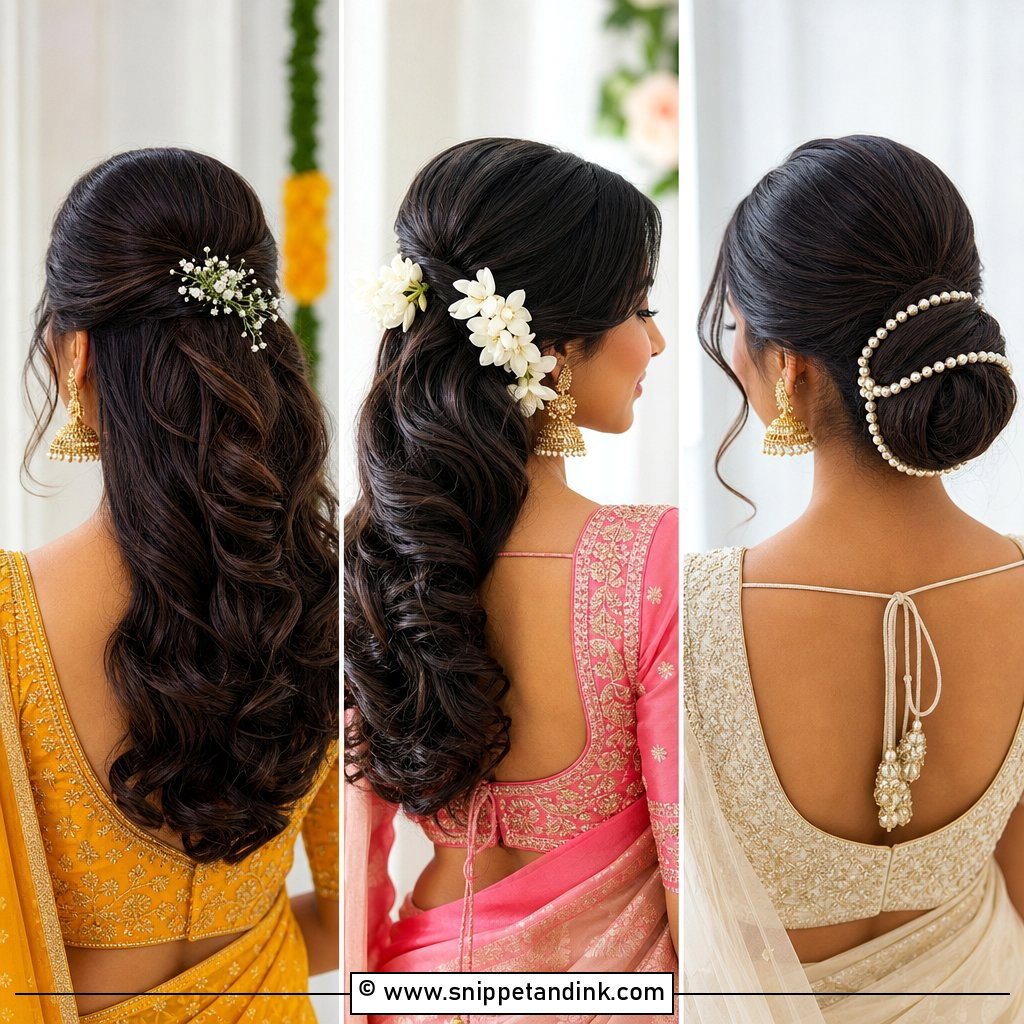
Curled, brushed into smooth waves and pinned to one side so they fall over the shoulder, side-swept curls are the most glamorous option here. They work with sarees, lehengas and gowns, and they show off earrings and the blouse neckline. A small jewelled clip or a few fresh flowers near the pinned side adds a South Indian touch. Pin the anchoring side with two crossed pins hidden under the curls. That side carries all the weight, and it’s the first to give way when you hug people.
Jasmine at the Entrance and Other Guest Etiquette
At many South Indian weddings, the hosts hand jasmine strings to women guests as they arrive. It’s a warm welcome, and wearing them is part of joining in. So if you plan to wear flowers, keep yours light, or leave a clear spot near your bun or braid where a fresh string can go. A couple of spare U-pins in your bag let you add it neatly in seconds.
Beyond that, a few things keep a guest look appropriate. Avoid a full flower-covered braid or a heavy gold jada, since those belong to the bride. At a temple wedding you may sit on the floor for a long time and bend to receive blessings, so a style that hangs forward will be in your way. And at the meal, where you lean over a leaf to eat, anything loose at the front will end up in the sambar. Tuck it back.
If the bride’s family has asked for a colour theme or matching flowers for close relatives, follow it, even if it means changing your plans. It shows in the family photos for years.
A Guest Look That Lasts From Muhurtham to Banana-Leaf Lunch
The guest styles that work best match your outfit, suit the occasion and stay comfortable for hours. A jasmine braid, a low bun, soft curls, a sleek ponytail or a bubble braid can all be right, depending on the function and how you like to look. Flowers, gold pins, waves and braids are all welcome on guests. The only real rule is to keep things a step lighter than the bride. Prep your hair the night before, pin securely and carry a few spares, and you’ll look as polished at the farewell as you did in the first photo.
You'll Like These Ideas:


Leave a Reply