
A Pakistani wedding isn’t one day of hair, it’s several. There’s the Mehndi with its dancing and flowers, the Barat with the heaviest jewelry you’ll ever wear, and the Walima where everything finally gets lighter. Each one asks something different of the style I build: it has to carry a tikka or jhumar, sit comfortably under a dupatta for hours, and still look right when an aunt hugs you for the twentieth time. The Pakistani wedding hairstyles below run from gajra buns and paranda braids to soft Walima waves, and for each one I’ve noted which jewelry and which event it genuinely suits.
Three Events, One Head of Hair
The part nobody warns you about is what back-to-back functions do to your hair. By the Walima it may have been curled, teased, sprayed and pinned three times in four days. A little planning keeps it looking fresh for the last event, not just the first.
- Skip the oil massage for at least a day before any styled event. Oiled hair is good for your scalp, but my pins slide straight out of it and curls fall flat.
- Wash after each function if you can. Layers of spray and dry shampoo make the next style look dull and heavy.
- Use the Mehndi to your advantage. Sleeping in a loose braid afterwards gives soft waves the next day and cuts down on heat.
- If you’re using clip-in extensions for volume, have them color-matched and washed a week ahead, and bring the same set to every booking.
Many brides book a different stylist for each event, which is fine, but share photos of the earlier looks so the Walima doesn’t accidentally repeat the Barat. And if you’re getting ready at home with a crowd of cousins, I always ask for the bride to go first. A padded bridal bun with jewelry placement can easily take over an hour.
1. Pakistani Bridal Bun
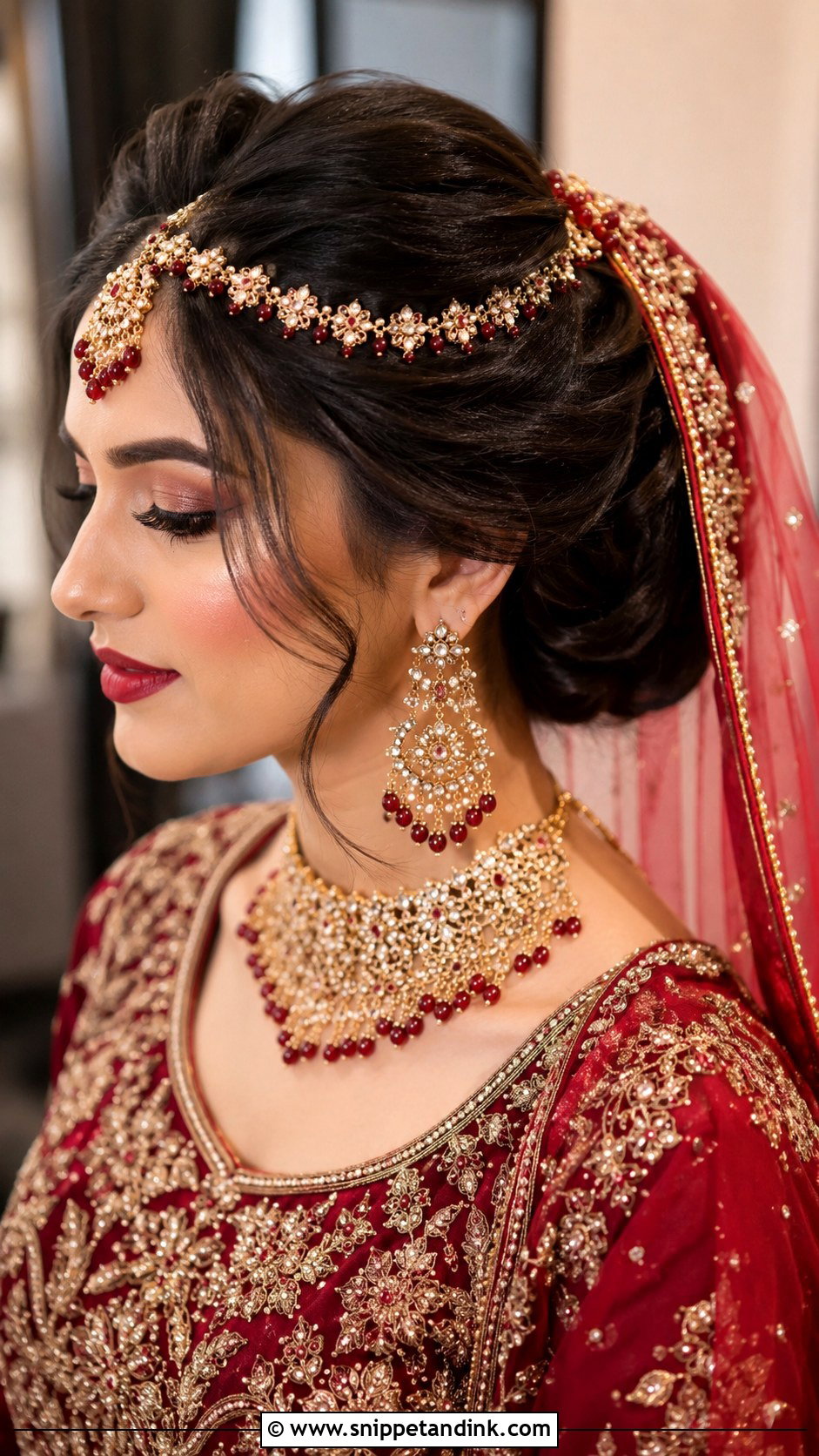
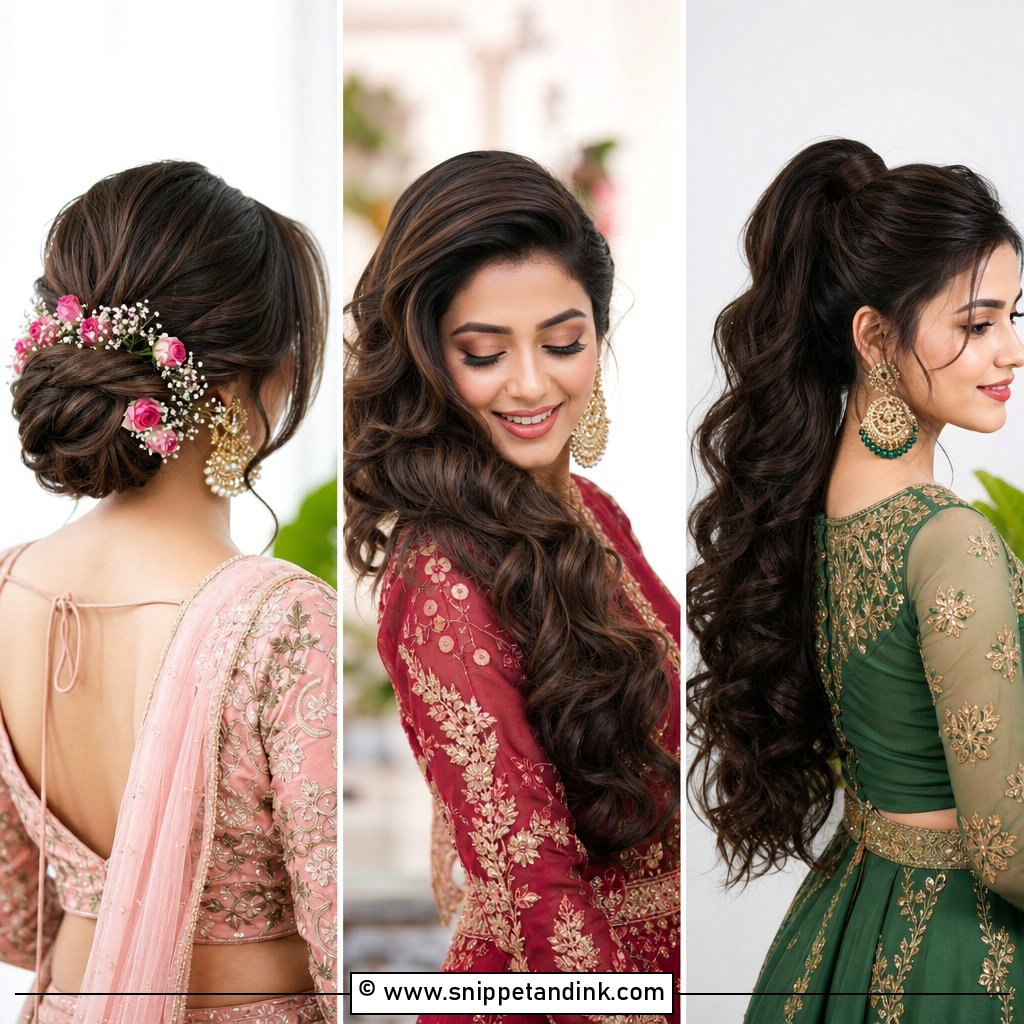
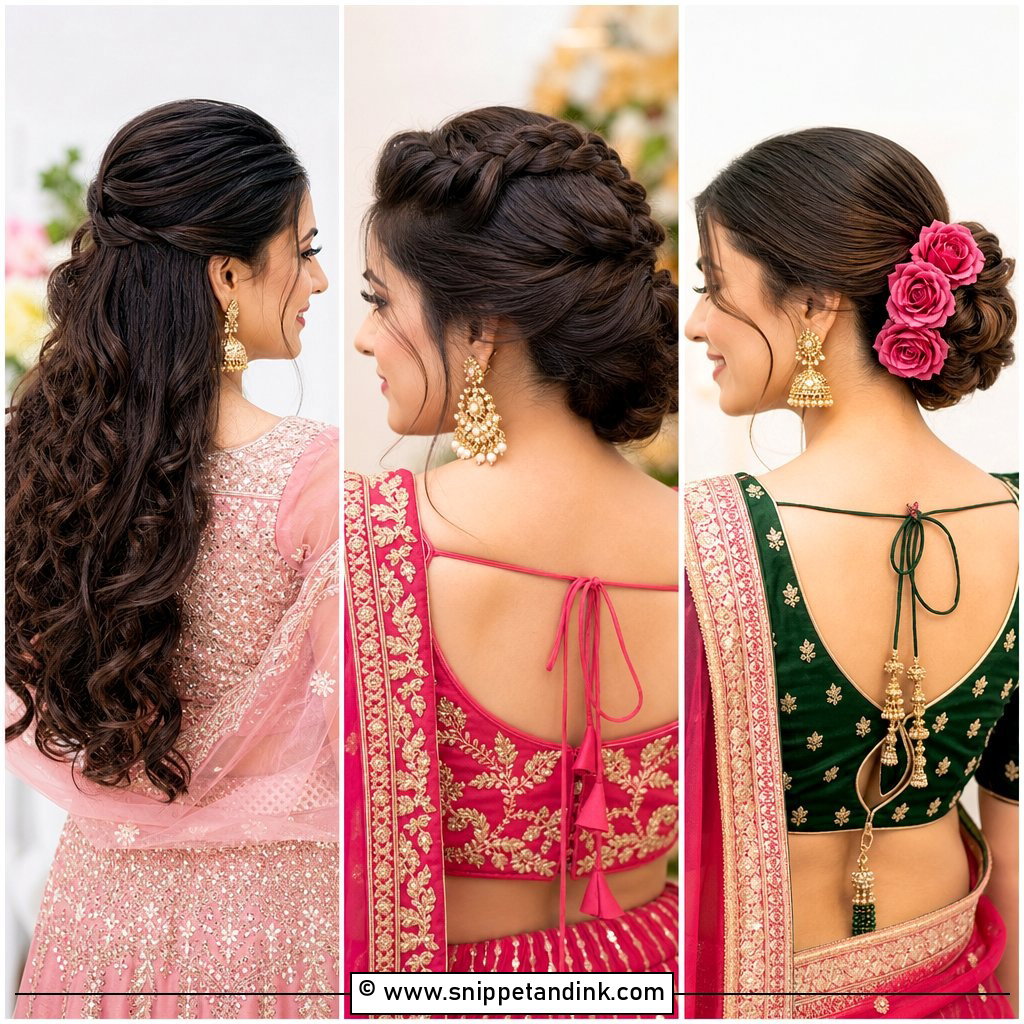
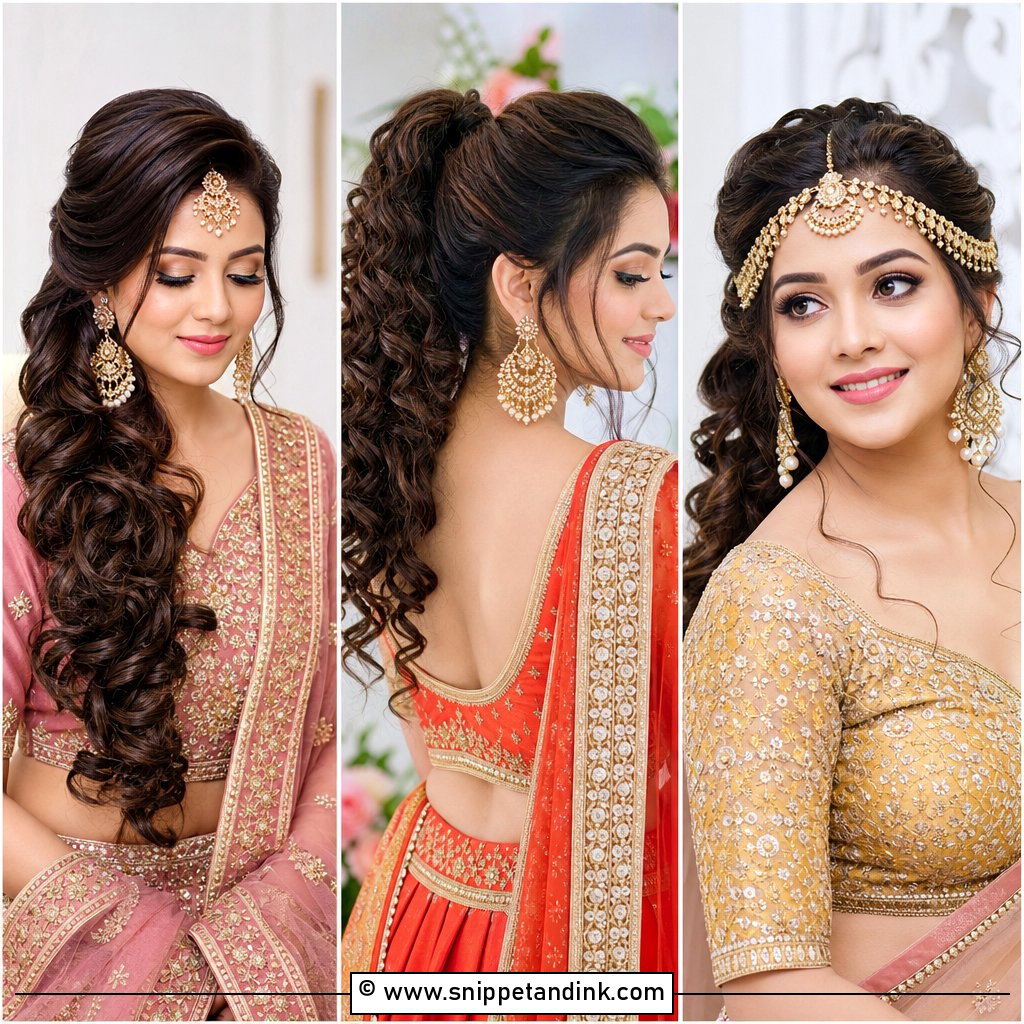
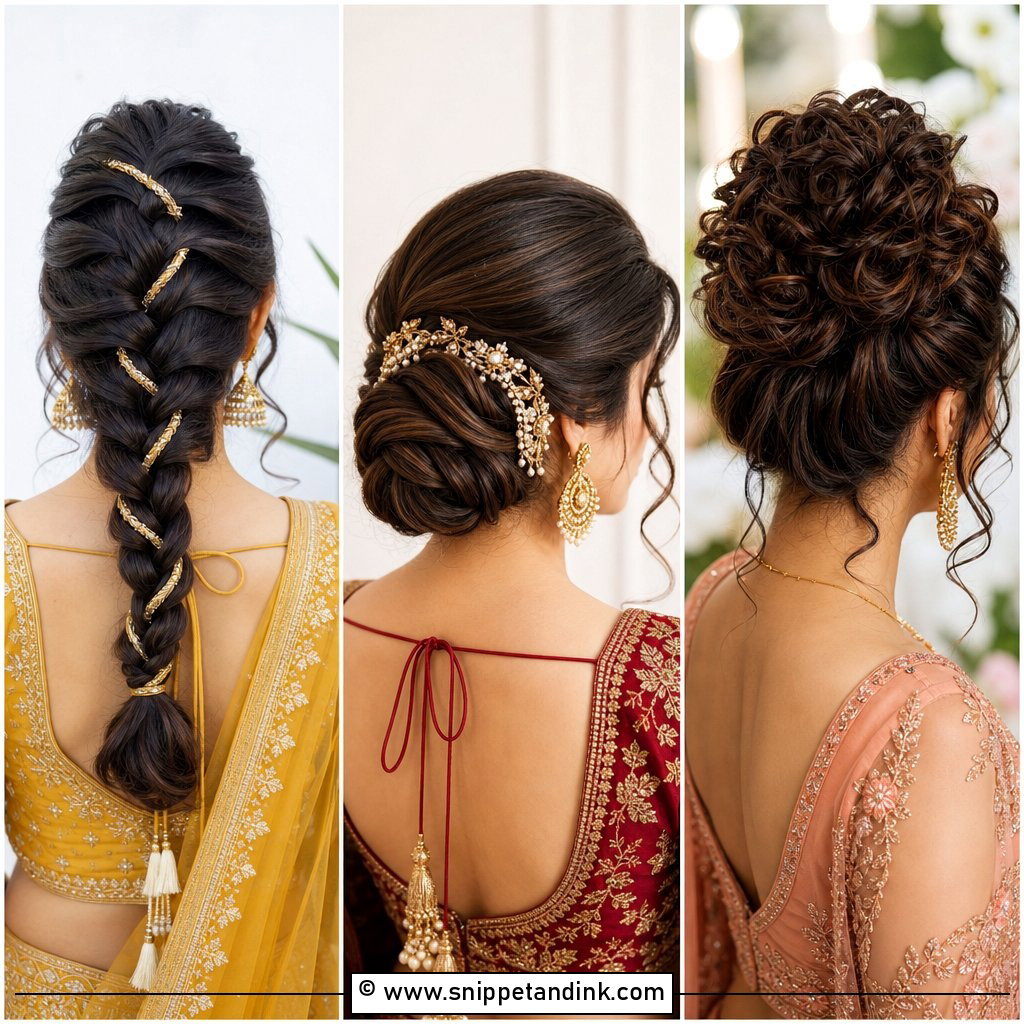
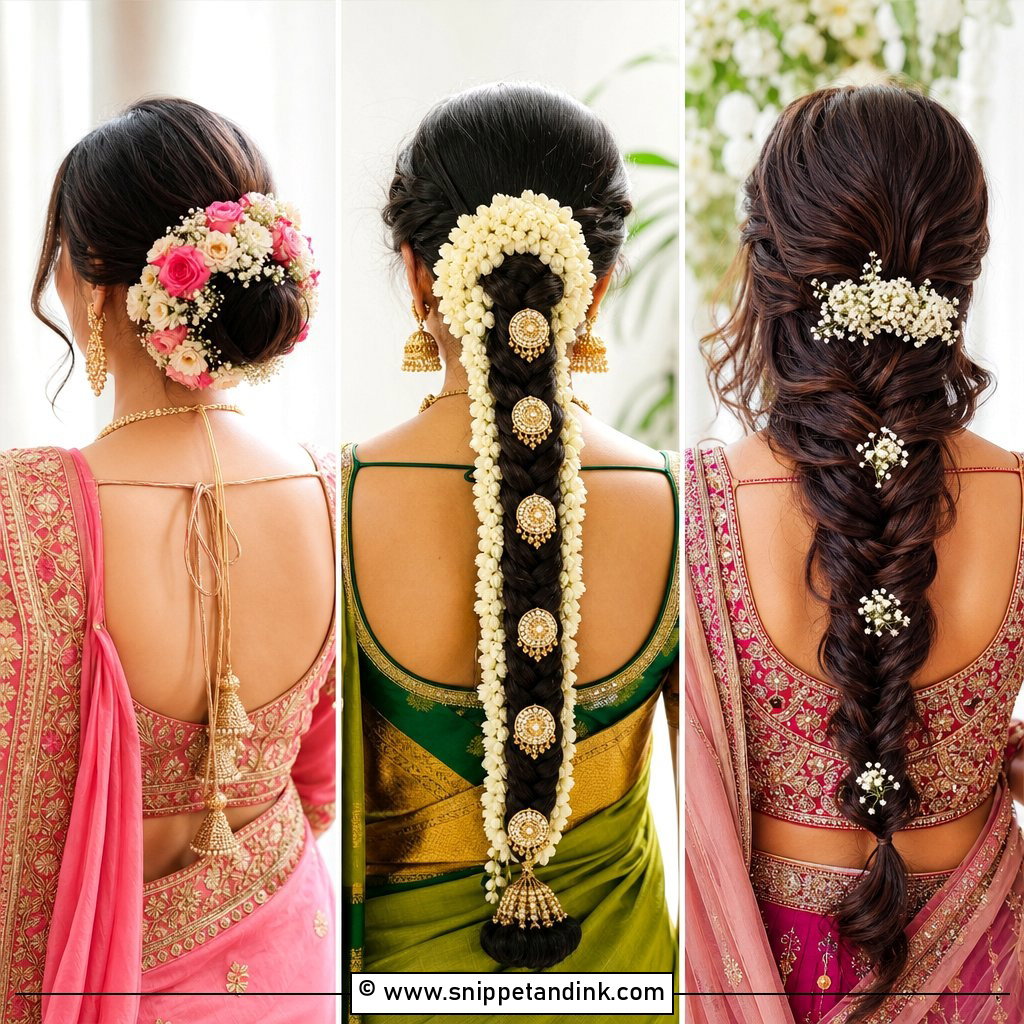
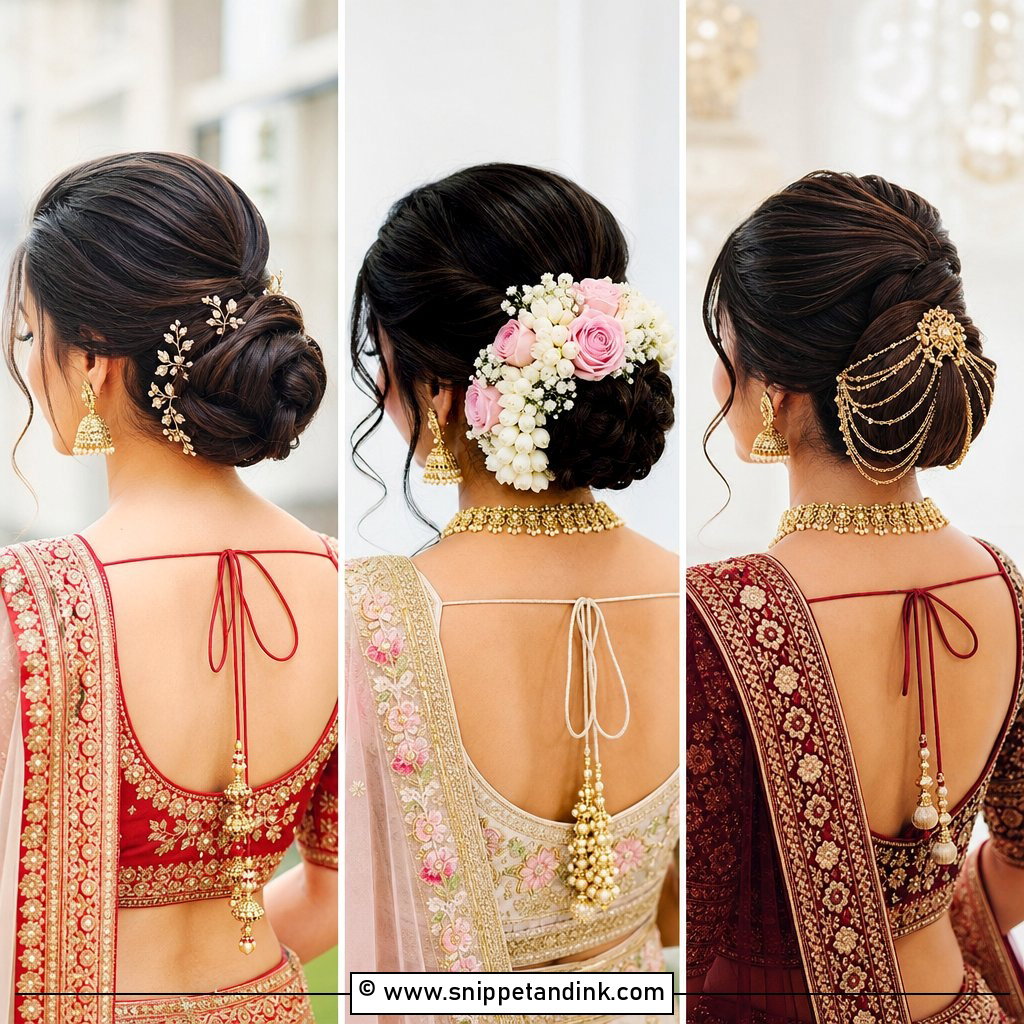
For a Barat or a formal Nikkah, the bridal bun is the style I trust most, because it gives the dupatta, the jewelry and the face one solid base to balance on. I place it low at the nape for a high or heavily embroidered neckline, and a little higher toward the crown when the face is round and needs lift. Smooth, twisted, braided or softly textured all work; the finish matters less than what’s inside it. I use a doughnut or hidden padding on finer hair and cross-pin it into a firm ponytail base, so the dupatta can be pinned to the bun without flattening the volume at the front. Matha patti, jhumar and a red or maroon lehenga sit naturally with it.
2. Pakistani Wedding Open Curls
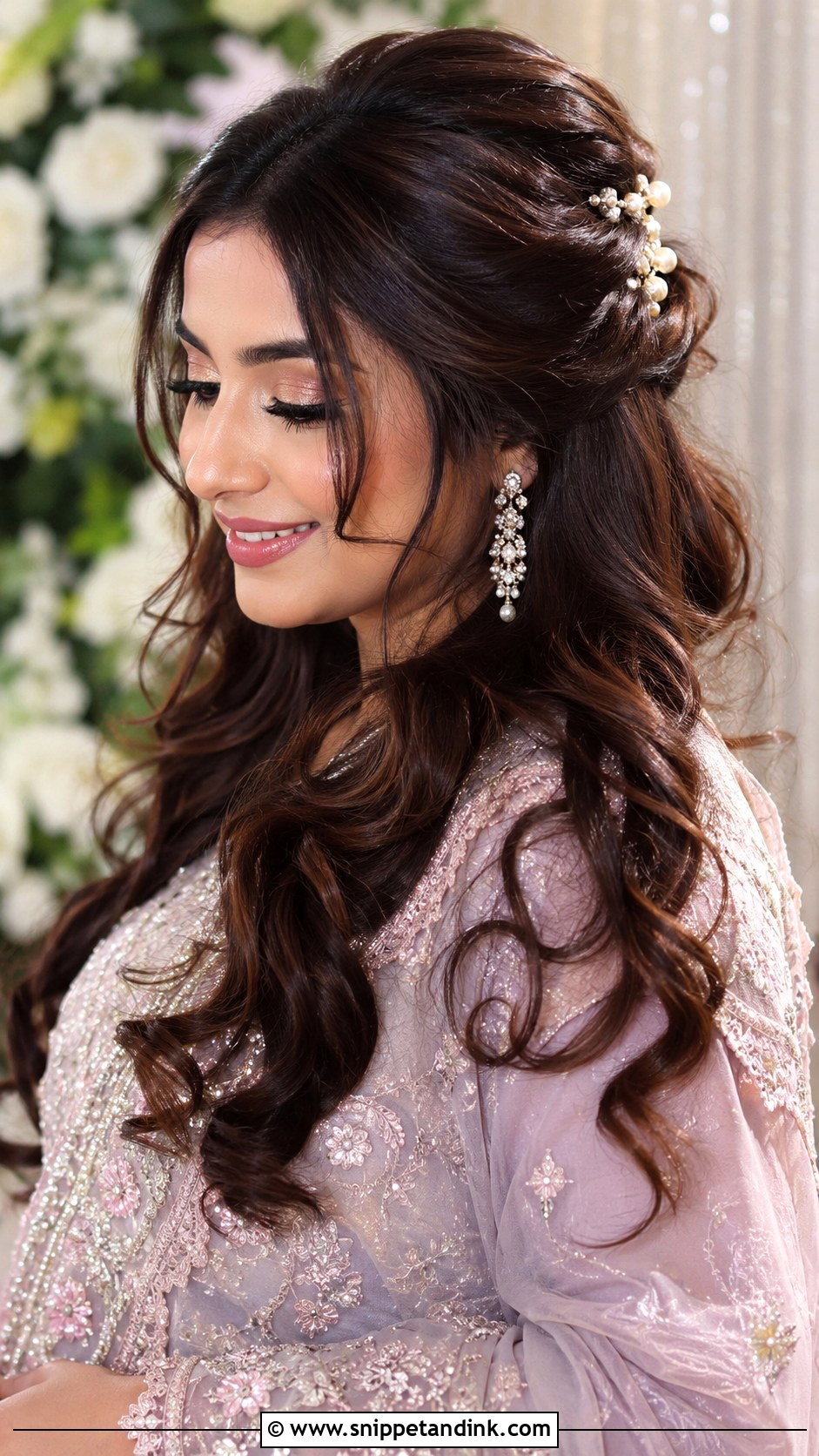
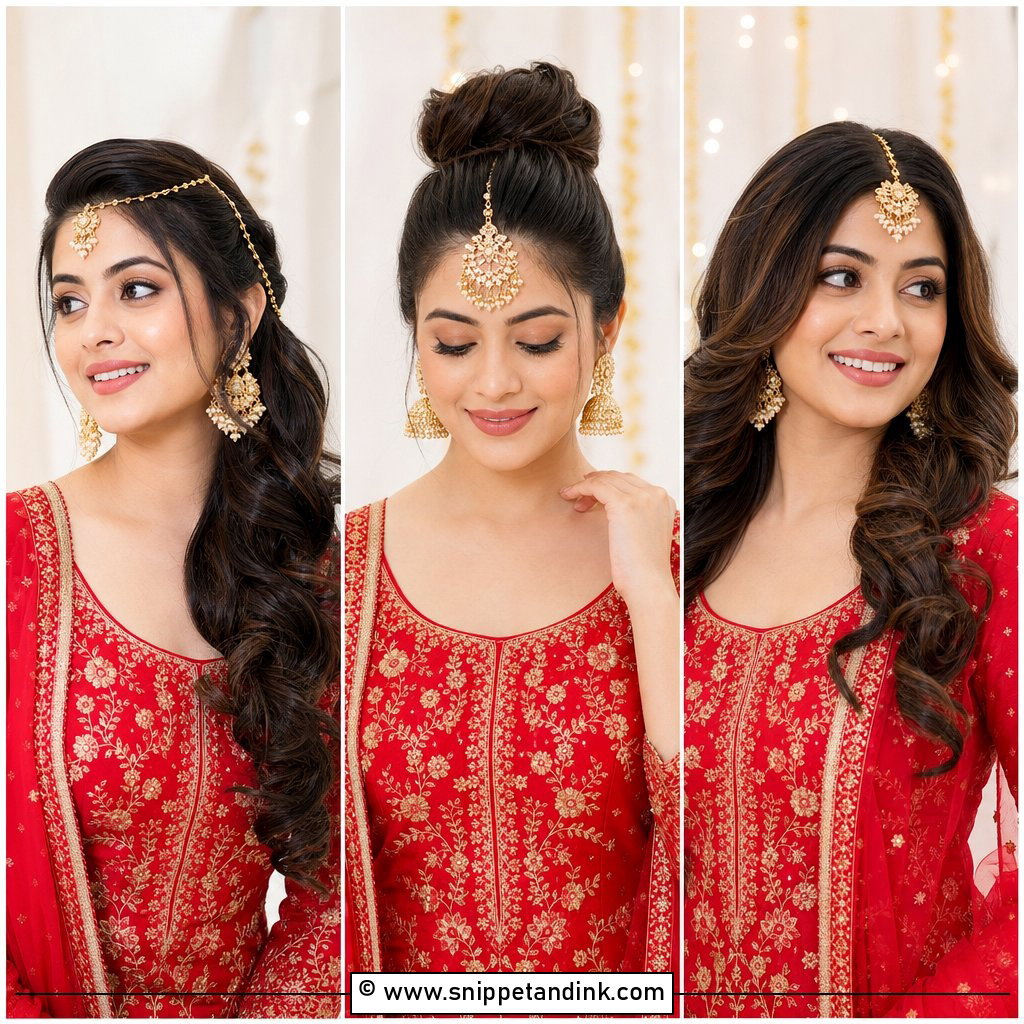
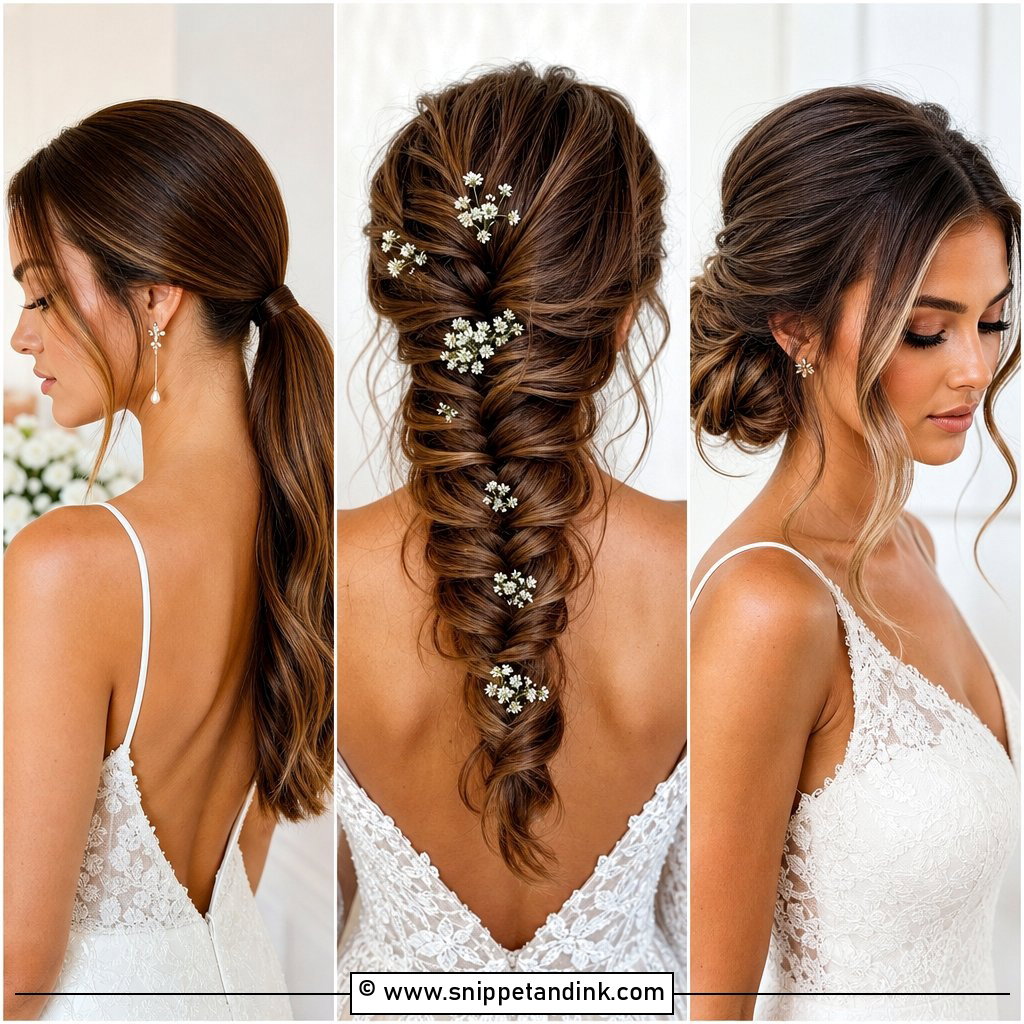
Open curls suit an engagement, Mehndi, Walima or a guest outfit, and they’re the softest thing on this list. I set defined curls or brushed-out waves with volume at the crown and a few face-framing pieces, then let a side tikka, a few pins or a light dupatta behind the head do the decorating. A modern blouse, a gown-style pishwas or a pastel Walima dress pair well with it. The honest warning: open curls are the style most likely to drop in a hot, crowded hall. I set them with a humidity-resistant spray and keep heavy serums away, because serum weighs a curl down within the hour.
3. Pakistani Mehndi Braid
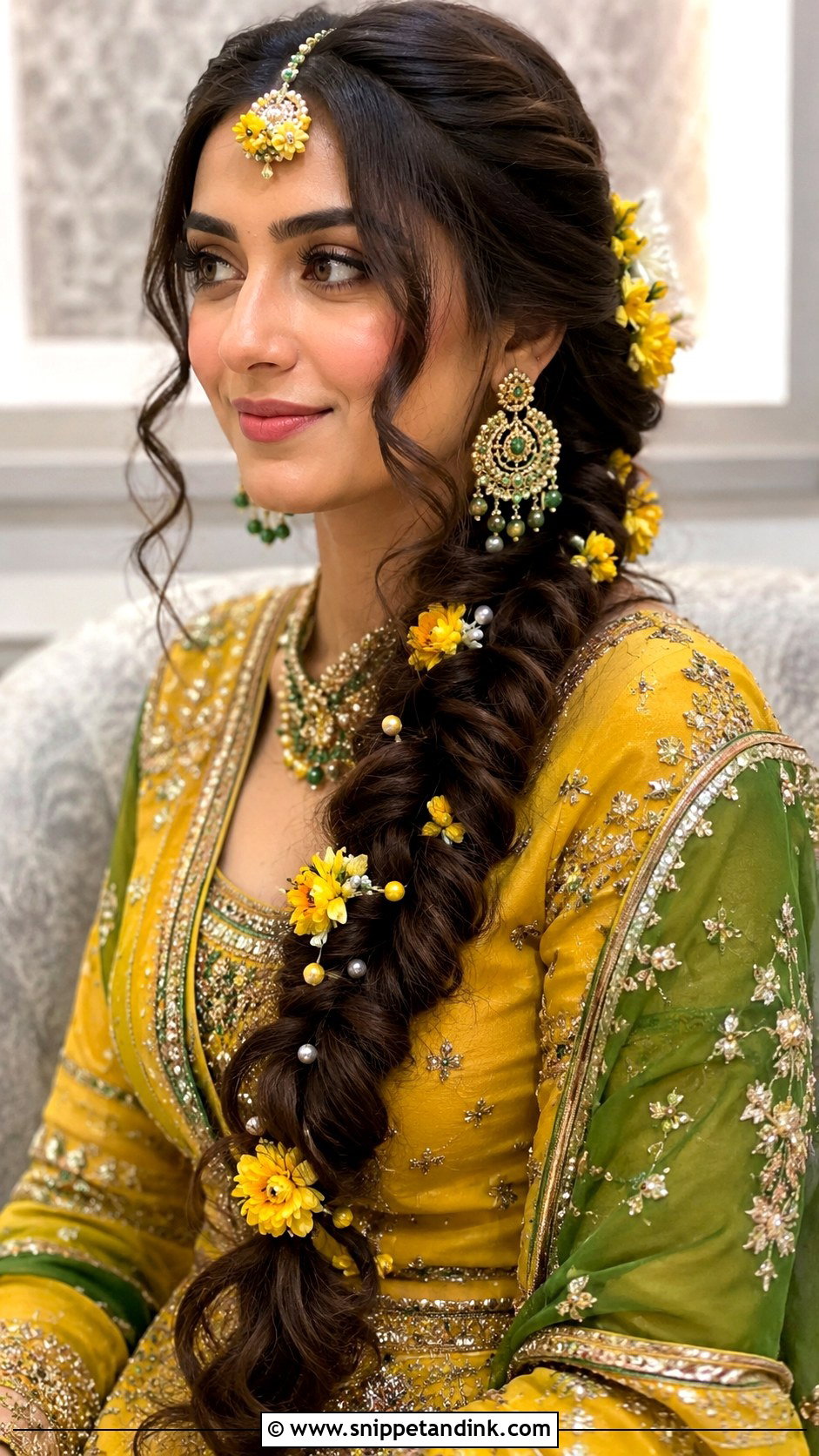
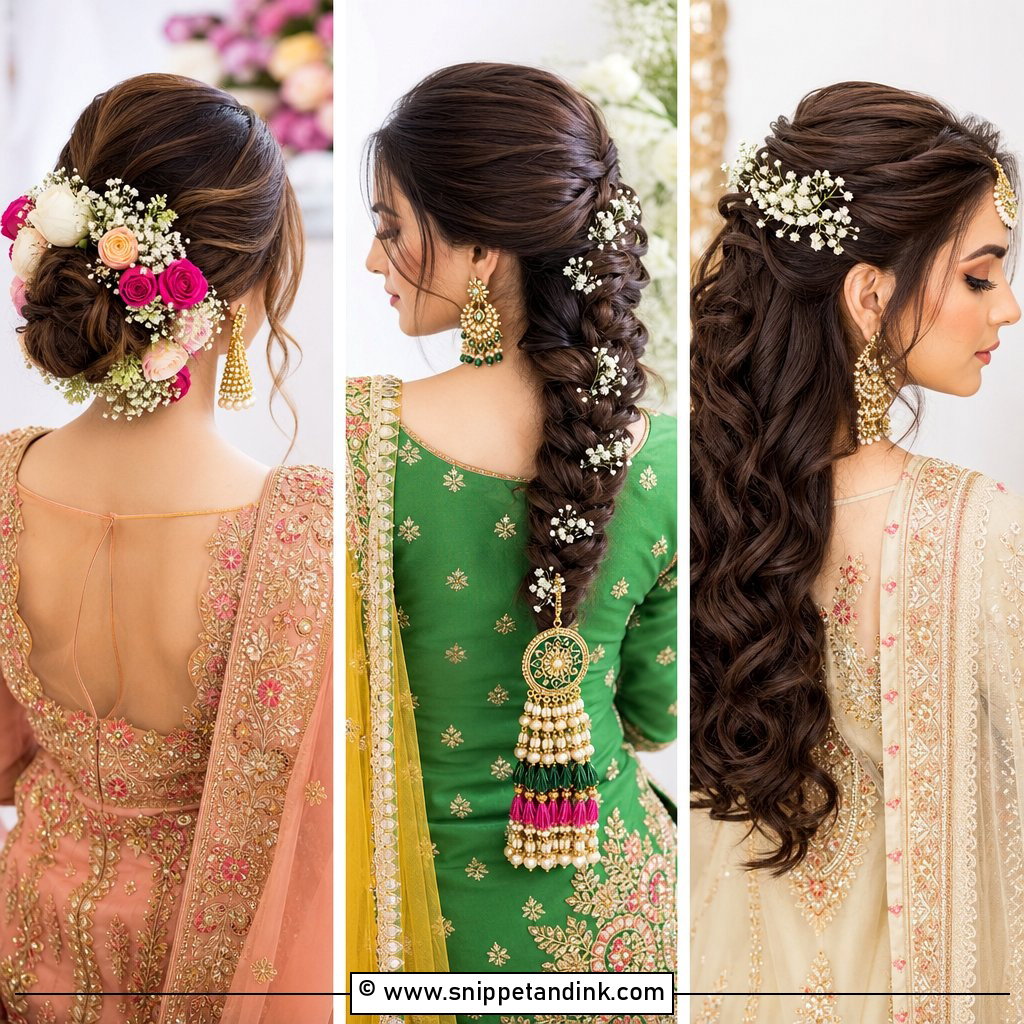
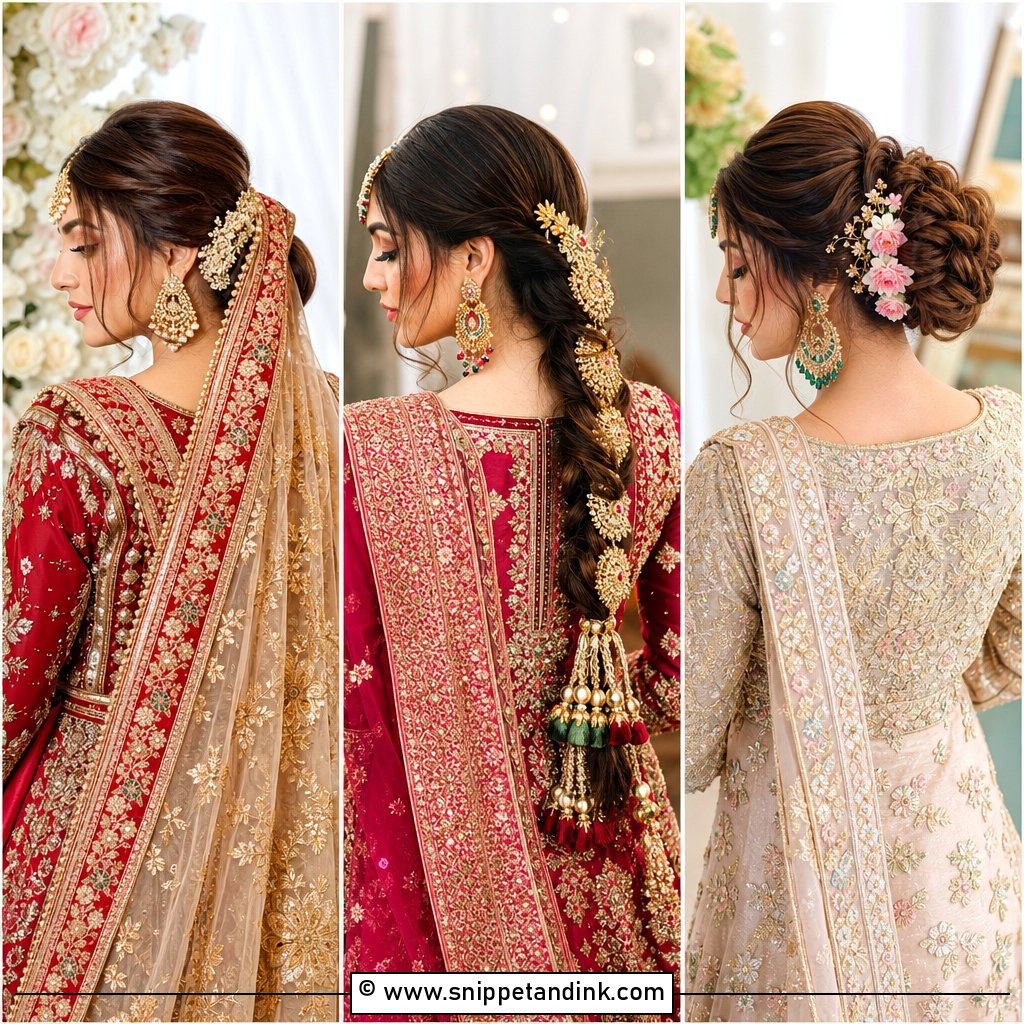
At a Mehndi, a braid is the most practical thing I can give a bride who wants movement while she dances without her hair ending up in her face or her mehndi. Over one shoulder, down the back or as a loose fishtail, it takes flowers, gota, a paranda, beads or pearl pins without any extra structure. Yellow, green, coral and multi-color Mehndi outfits all suit it. I build volume at the crown before braiding and leave a few tendrils at the front, because a scraped-back braid looks severe next to such bright clothes. One practical note: if your hands are freshly done, someone else needs to fix the braid all evening, so I pin the end extra securely.
4. Pakistani Barat Bun
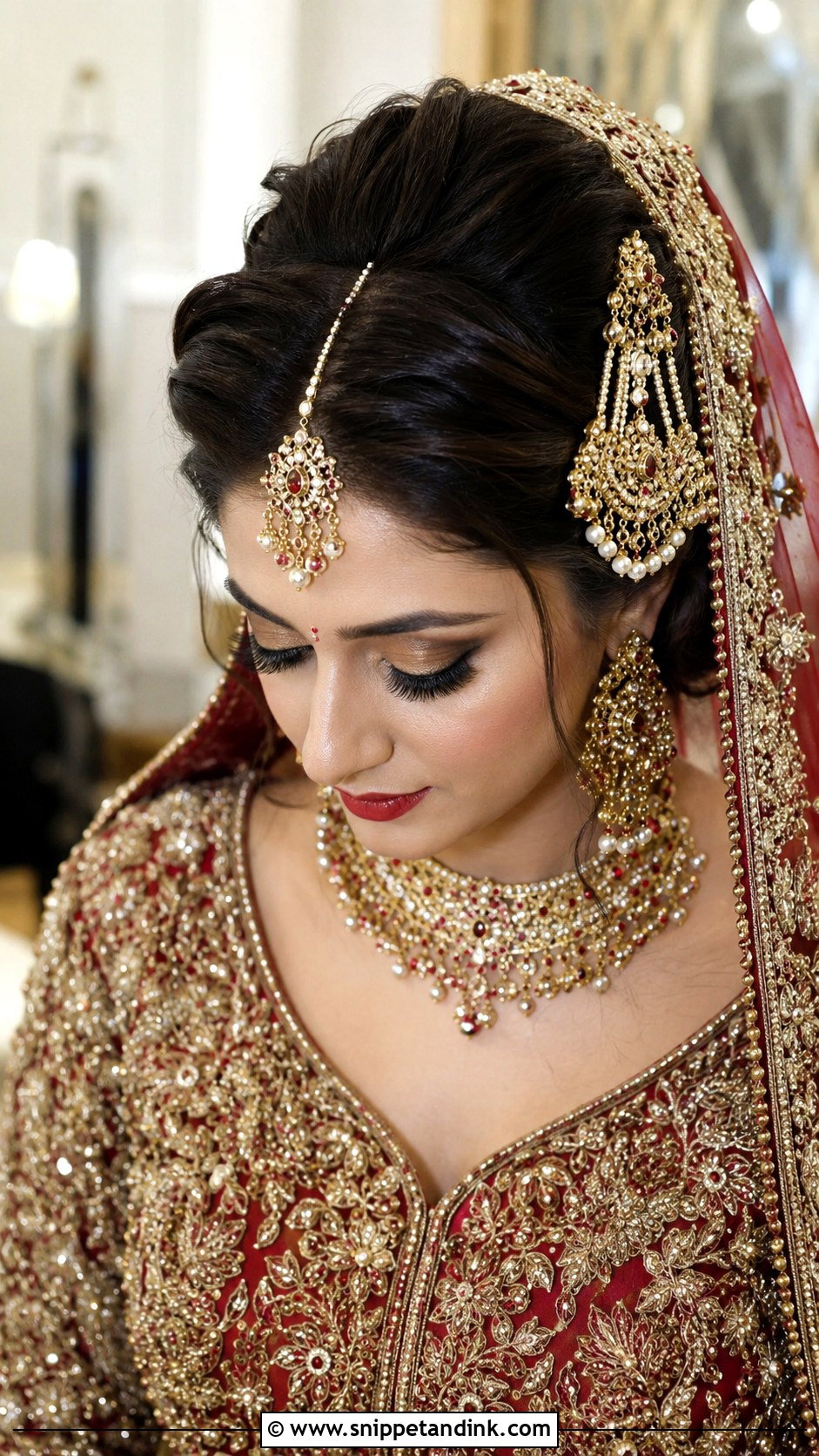
The Pakistani Barat bun is bigger and more structured than a party bun for one reason: it has to hold heavier jewelry and a formal dupatta for hours. I give it a lifted crown, a smooth front and a firm bun built on a padded base. Before I start, I ask for the jhumar and matha patti on the table, because their placement decides where my parting and pins go, and changing that afterwards means restyling. Red, maroon, rust and antique gold outfits carry it best. Polished shouldn’t mean stiff, so I usually leave a few soft pieces at the temples to keep the face gentle.
5. Pakistani Walima Waves
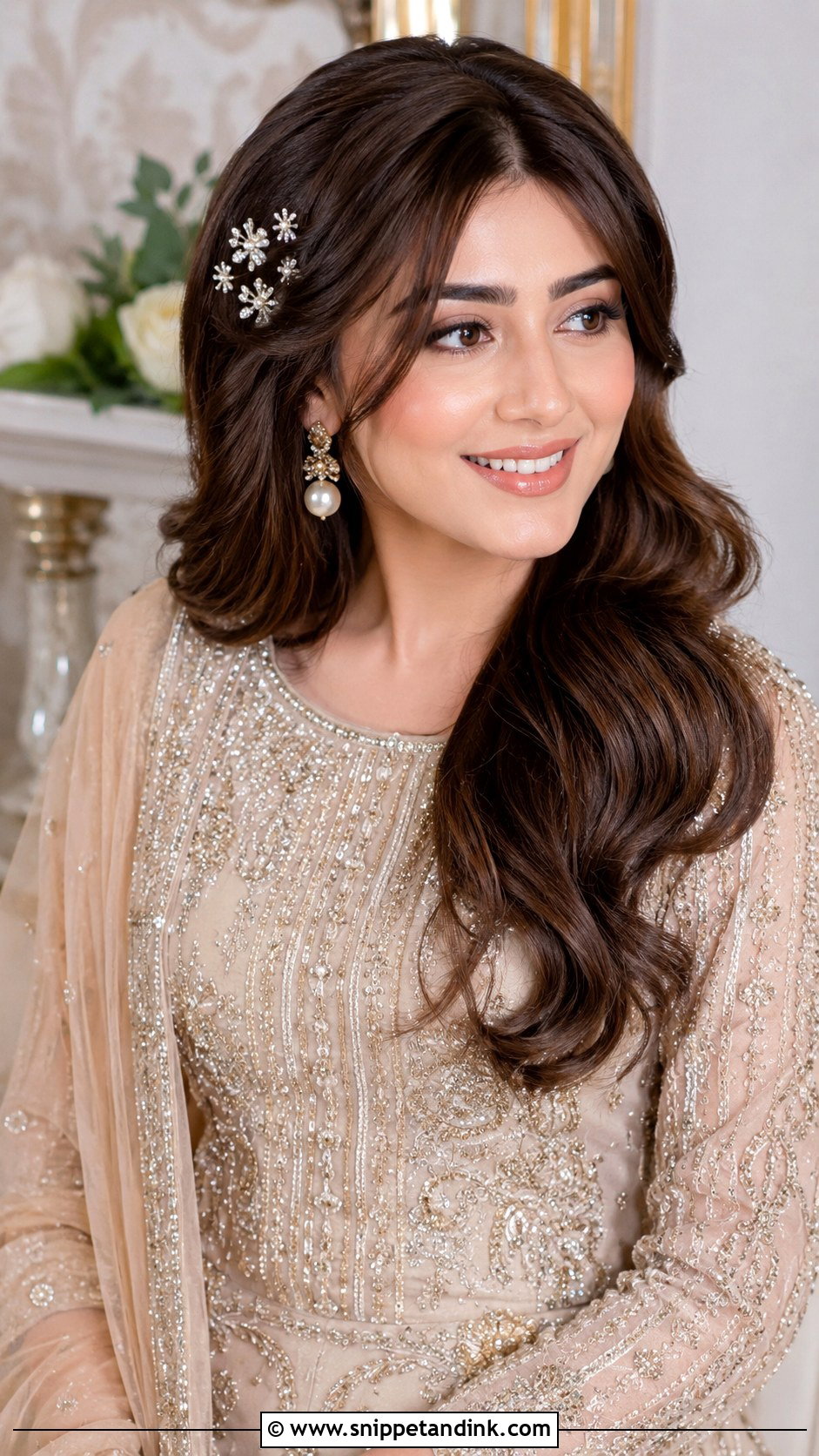
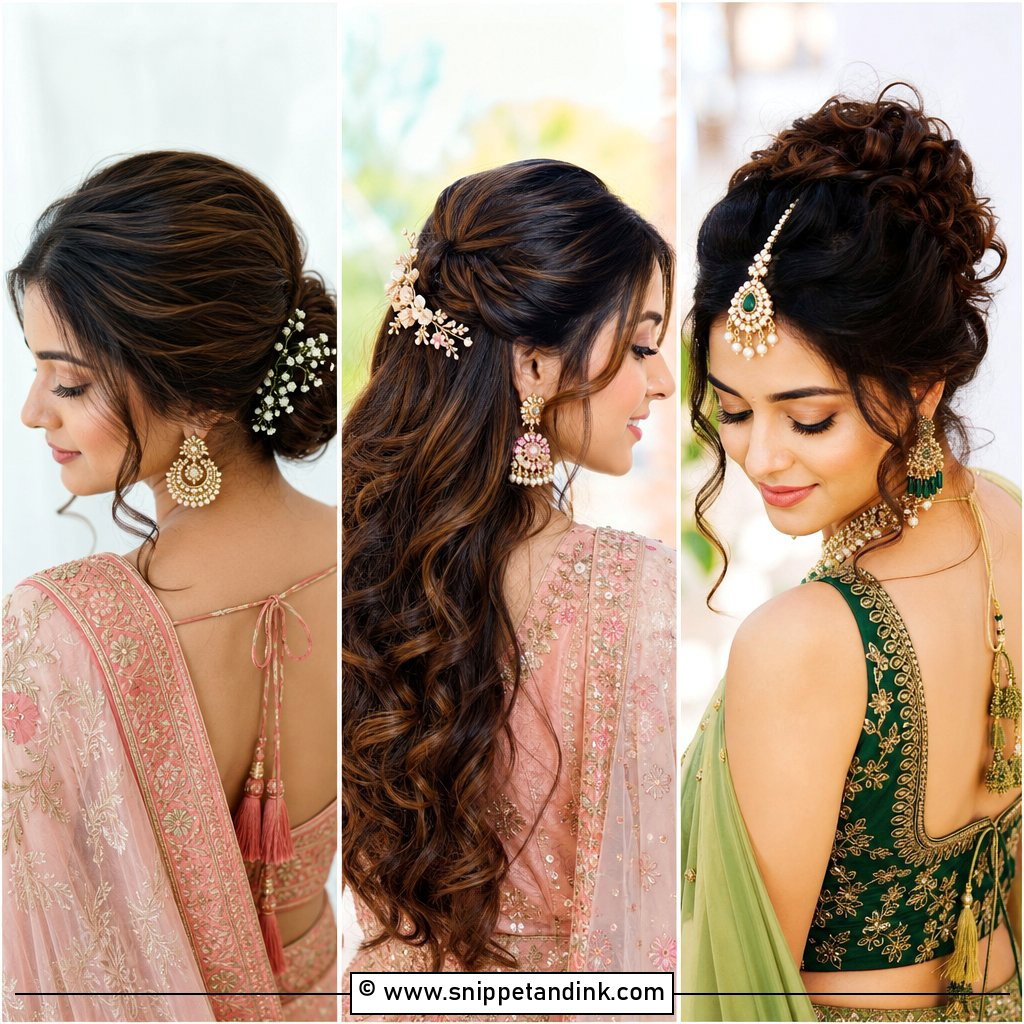
Walima waves are where a bride’s hair finally gets to relax after the weight of the Barat. Pastel, ivory, champagne, blush and powder blue outfits all suit soft movement better than a structured bun. I curl in large sections, brush them into smooth waves with shine and flexible hold, and keep a little lift at the crown so a sheer dupatta set at the back doesn’t flatten the top. Side or center part both work. Crystal pins or pearl clips are plenty; this is not the night to add more jewelry. If the hair has been teased and sprayed for two days, I’d ask for a proper wash first or the waves look dull.
6. Pakistani Nikkah Hijab Hairstyle
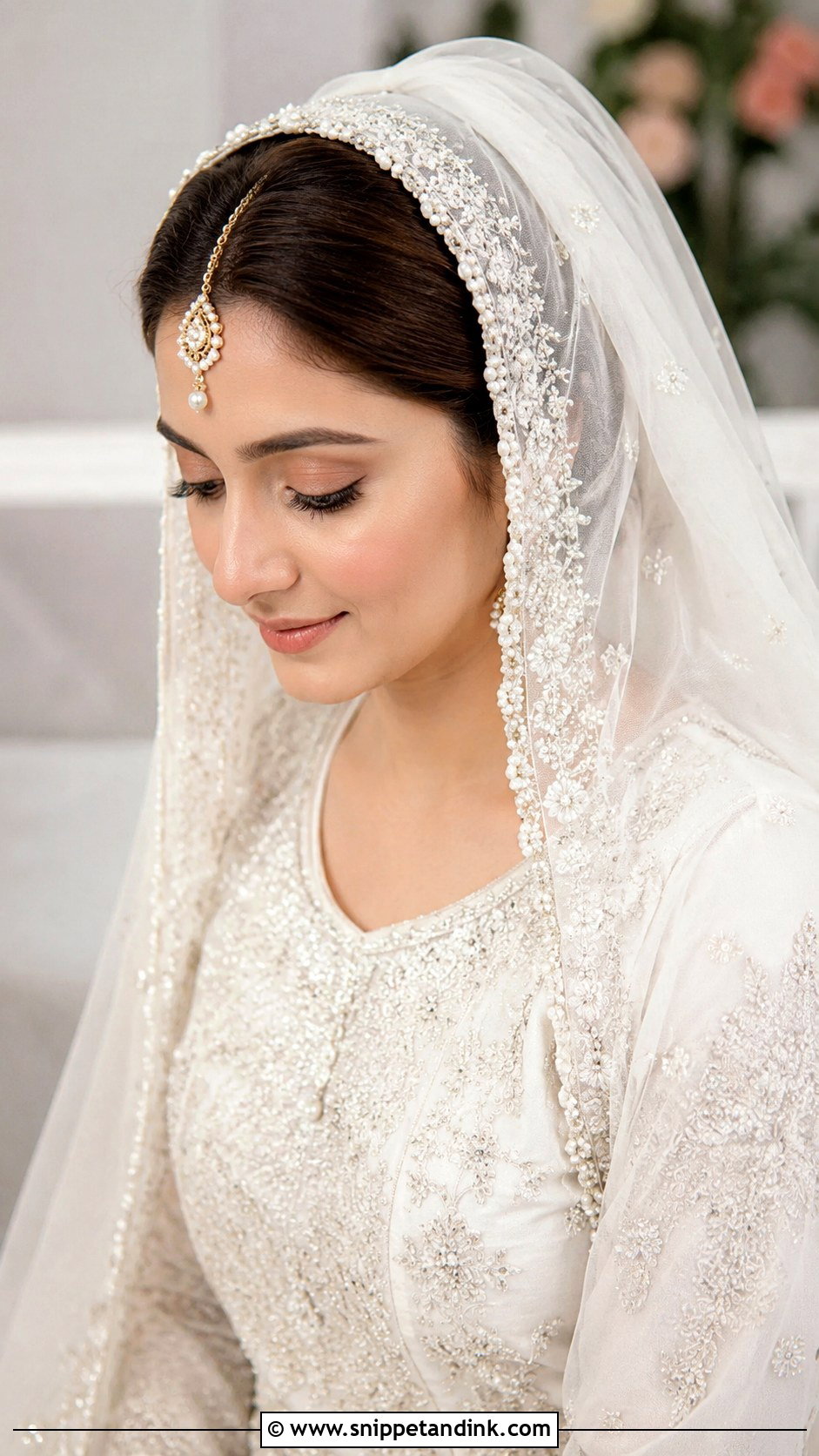
Under a Nikkah hijab, my whole job is the base. I smooth the hair back into a low bun or a flat twist placed exactly where the scarf will sit, because a bun set too high pushes the hijab into an odd peak and one set too low creates a bump at the neck. I keep pins away from the temples and behind the ears, where a scarf presses them into the skin over a long ceremony. A mosque Nikkah, an intimate home event or any modest bridal look suits it. A tikka, side jhumar, pearl trim or embroidered border can then be placed over the hijab, pinned to the fabric rather than through it into the hair.
7. Pakistani Side Braid
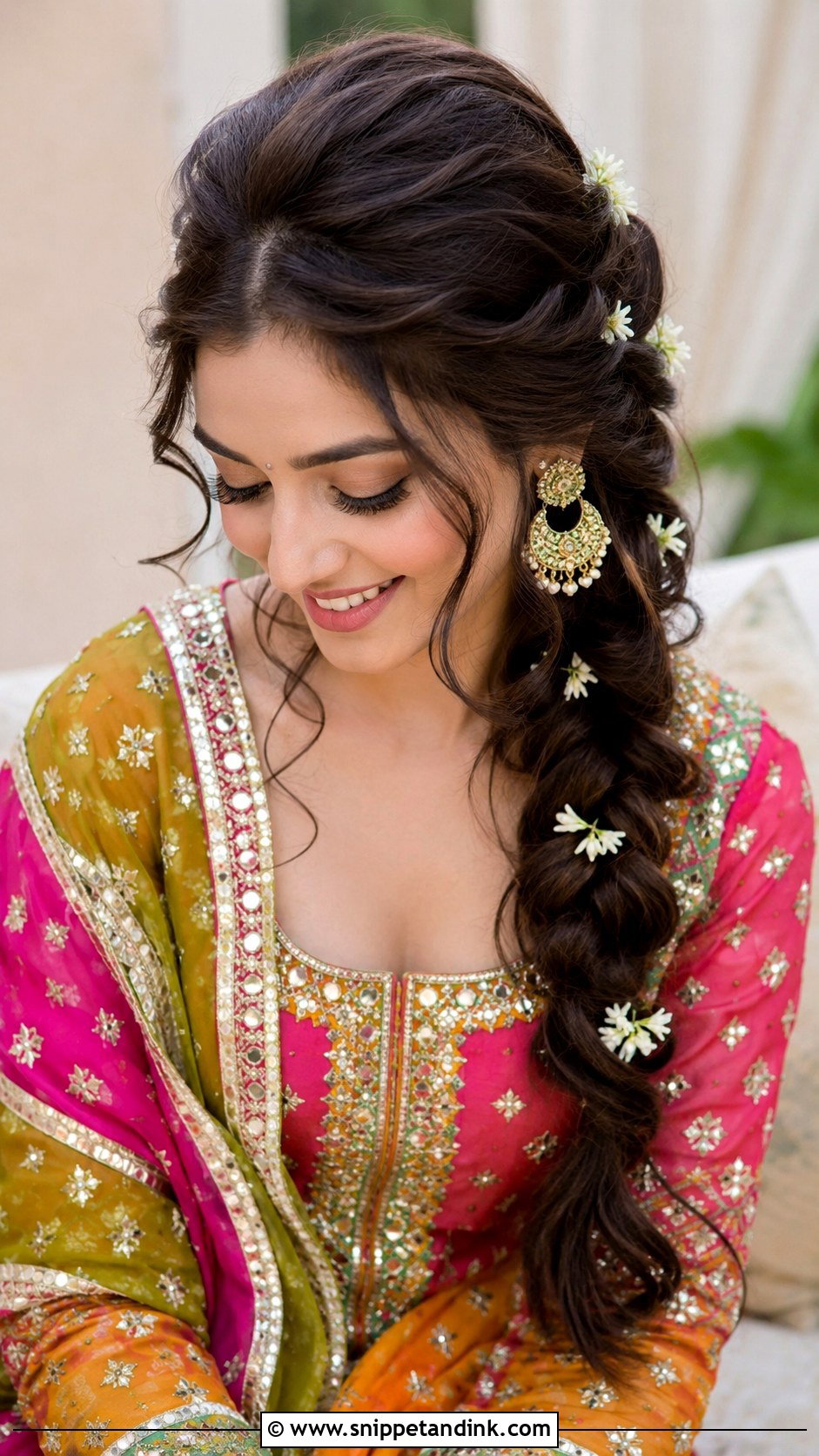
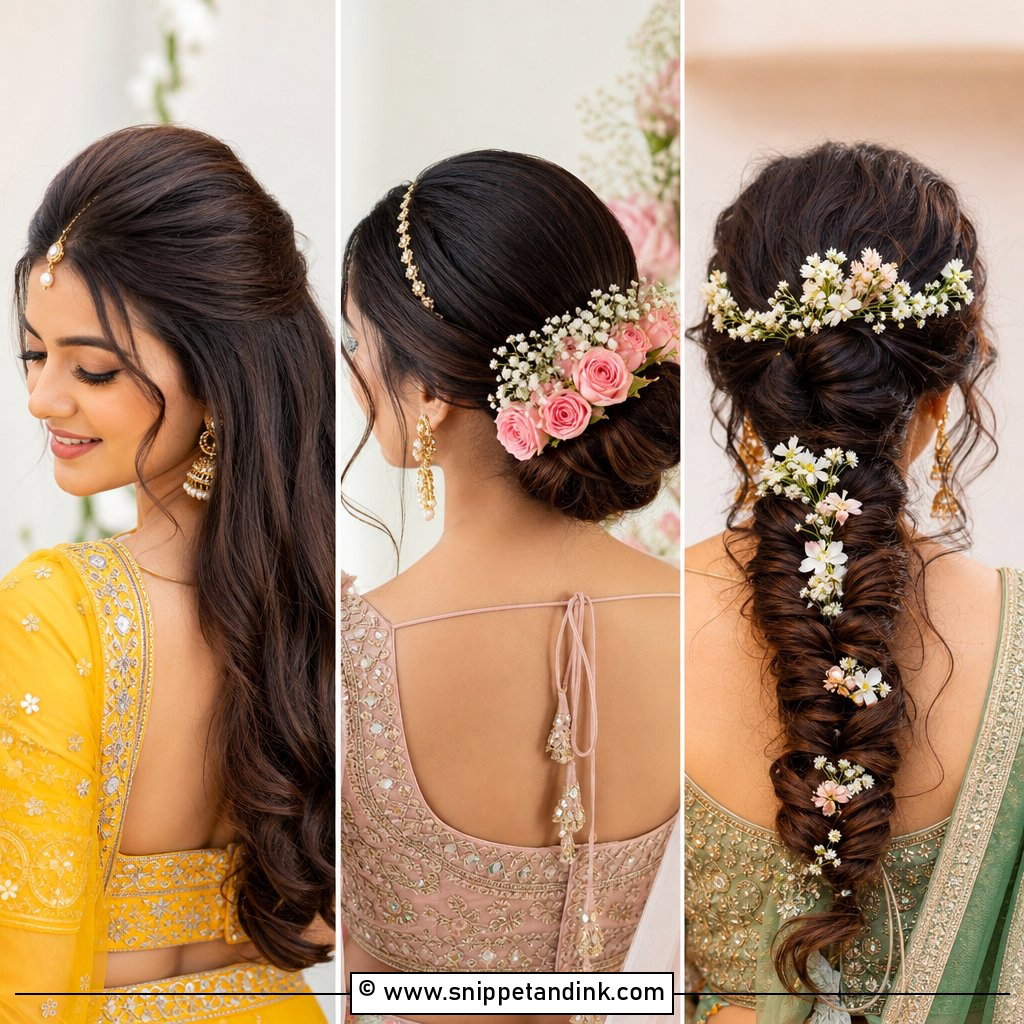
A Pakistani side braid works for Mehndi, Mayun, Dholki or a colorful guest look, and it draws the eye to the neckline, earrings and dupatta while keeping the hair under control. Loose and textured, polished and thick, or threaded with baby’s breath, roses, jasmine, pearls or a paranda, it adapts easily. I especially like it with ghararas, shararas and short choli outfits, where it adds length to the silhouette. On fine hair I backcomb lightly at the crown and pancake each loop before pinning, since a thin braid over one shoulder looks flat in photos.
8. Pakistani Low Bun
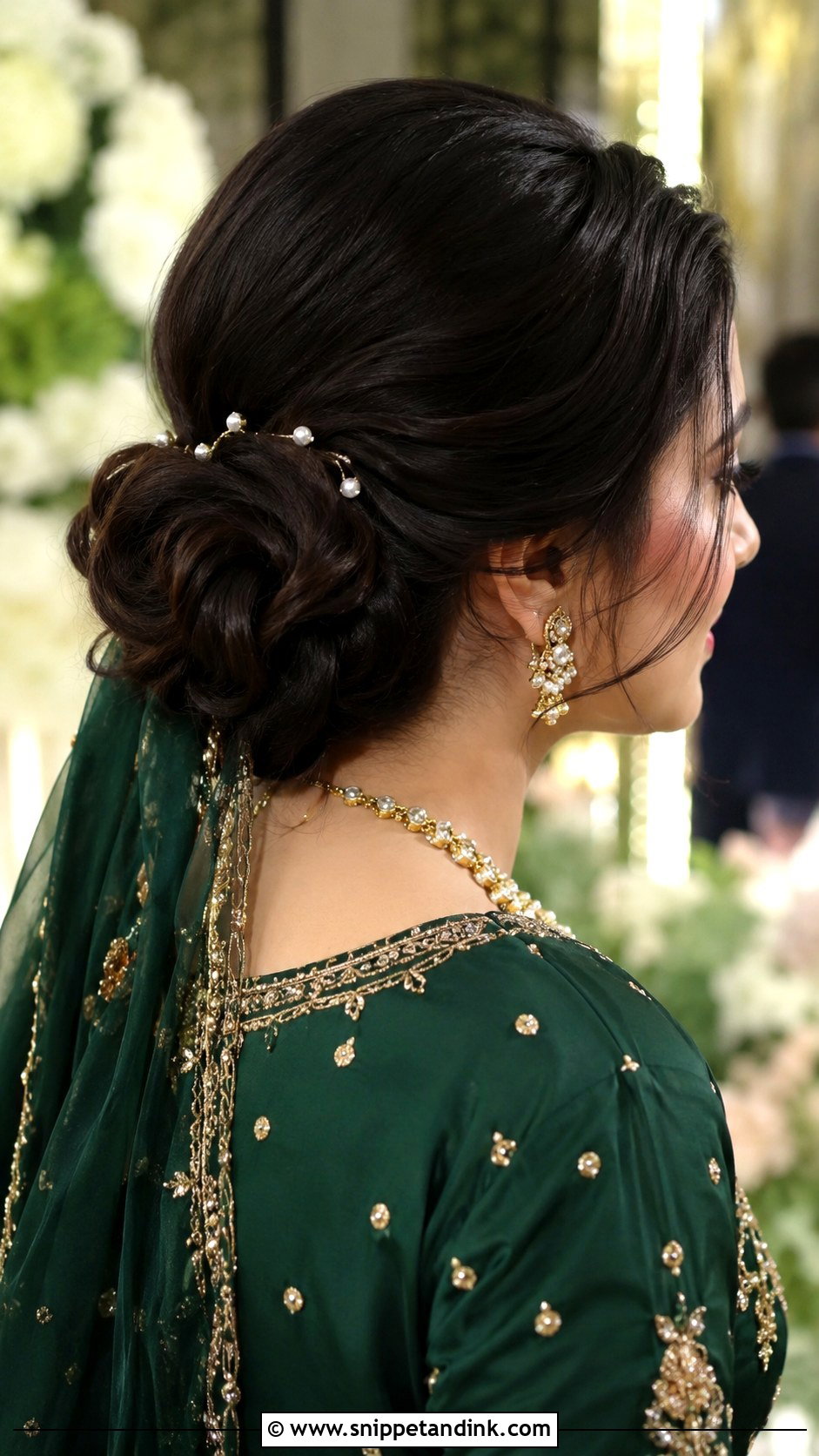
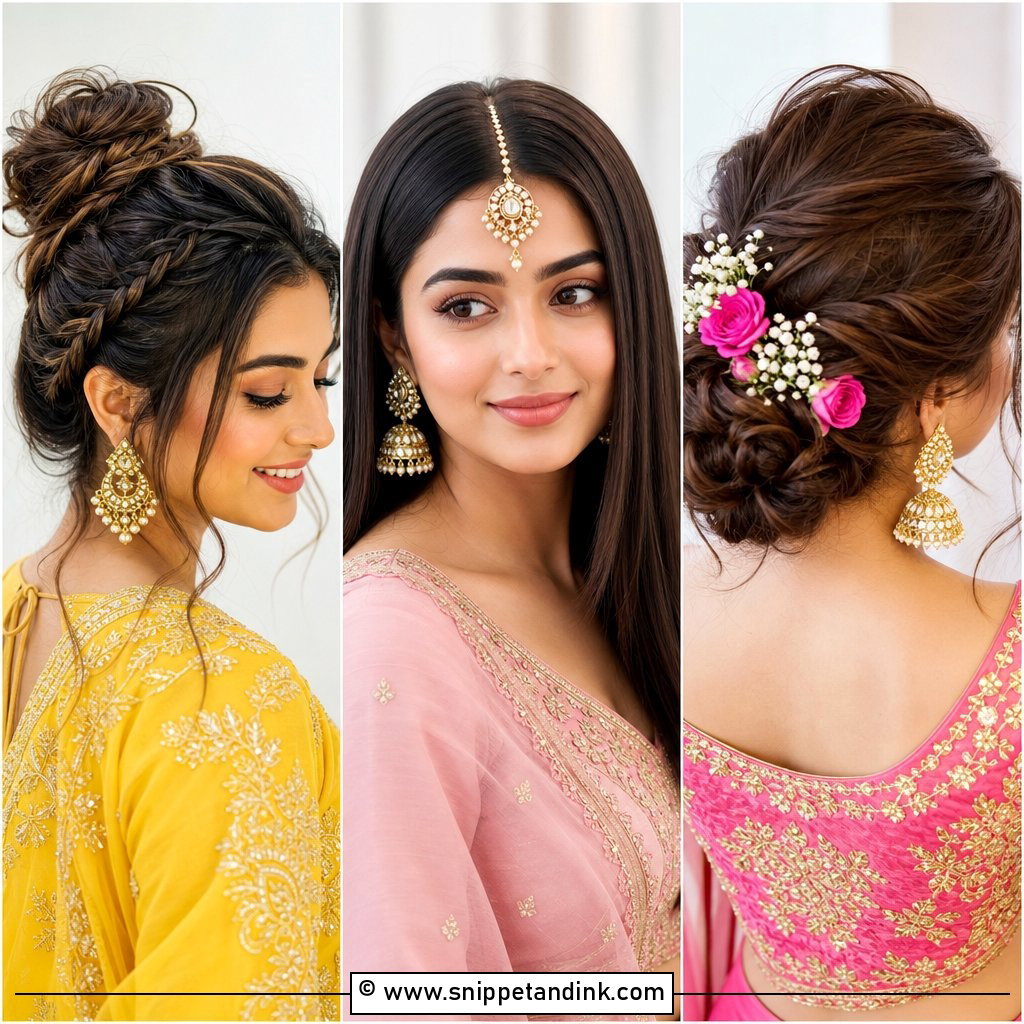
If someone isn’t sure what to wear, a low bun is my safest recommendation, for brides, bridesmaids, mothers and guests alike. It sits close to the nape, so dupattas, sari pallu draping, heavy necklaces and statement earrings all have room. A middle part reads traditional, a side part softer, and a slight lift at the front adds balance for a long face. When the outfit is already heavily embroidered, this is the one I choose, because clean hair stops the whole look from competing with itself. Fresh gajra, pearl pins or a jeweled comb add detail, and it lasts through the longest ceremonies.
9. Pakistani Half Up Hairstyle
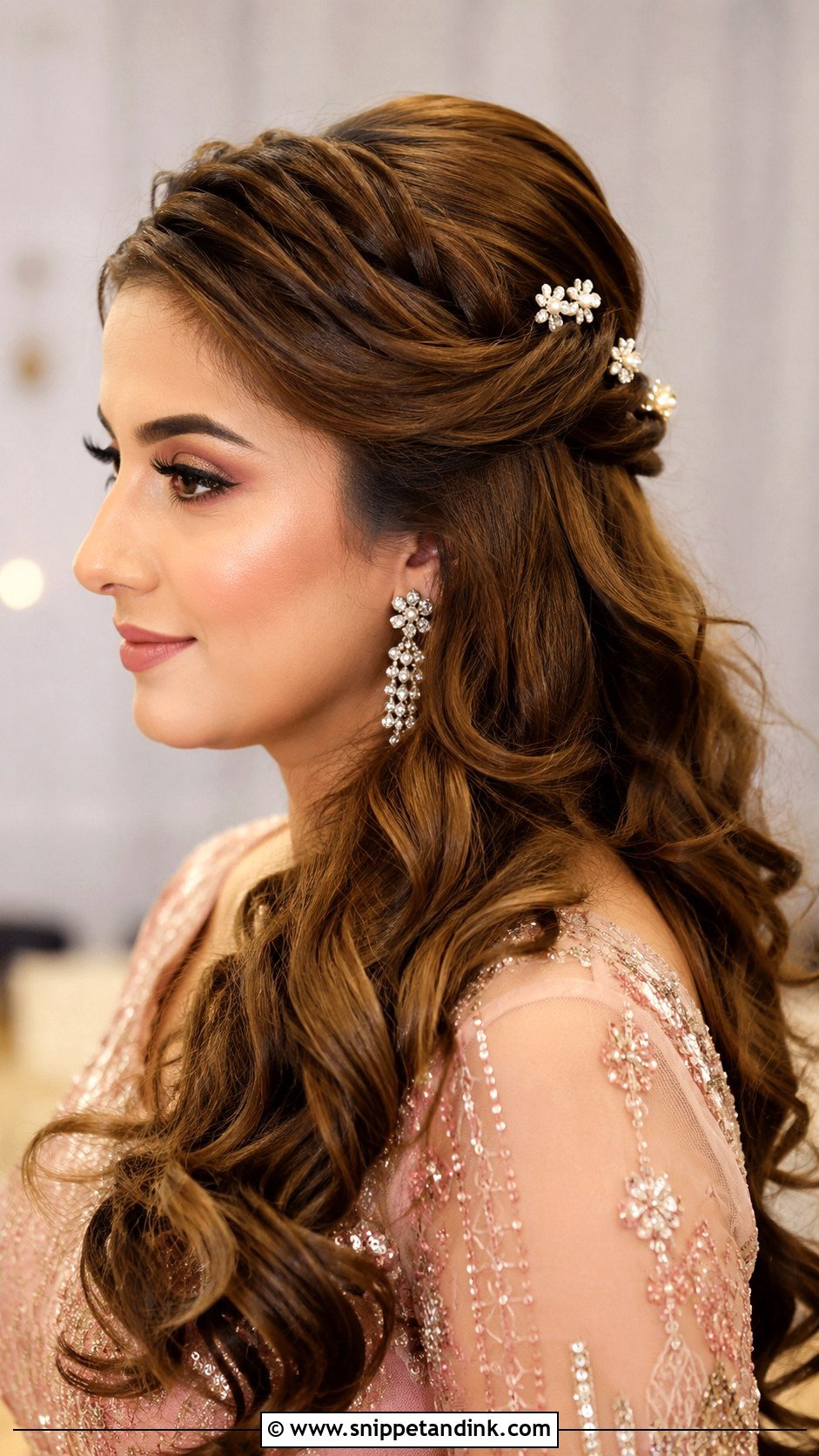
Half-up styling gives you the softness of open hair with a pinned top section that keeps it out of your face. I twist, braid, puff or clip that top section back and curl the rest. Engagements, Nikkahs, Walimas and smaller family weddings all suit it, especially with medium to long hair and outfits with a romantic feel. The mistake I see most is an over-teased crown, which looks dated fast, so I keep the lift light. A tikka sits well with it because the pinned section gives the chain something to anchor into.
10. Pakistani Gajra Bun
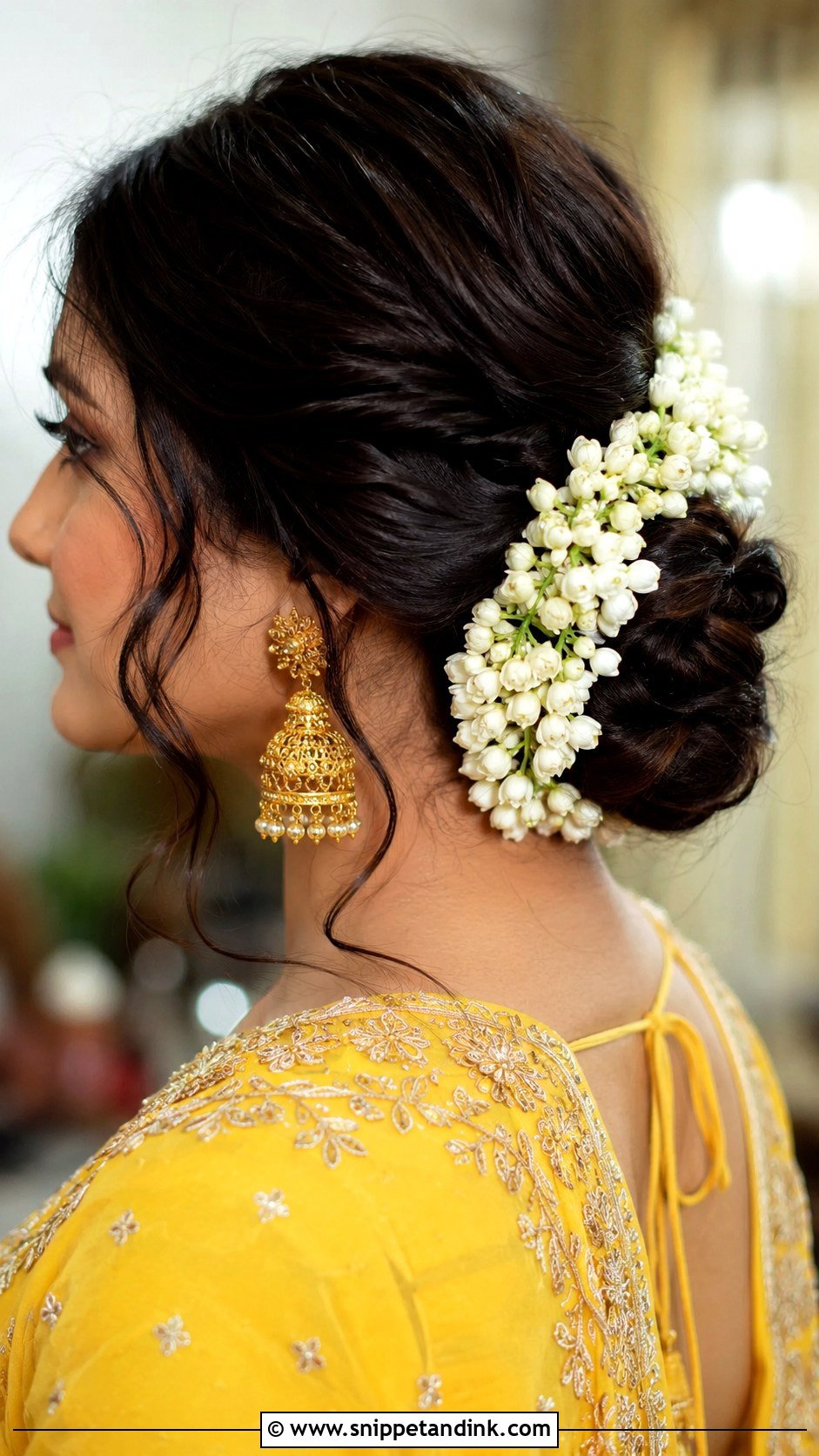
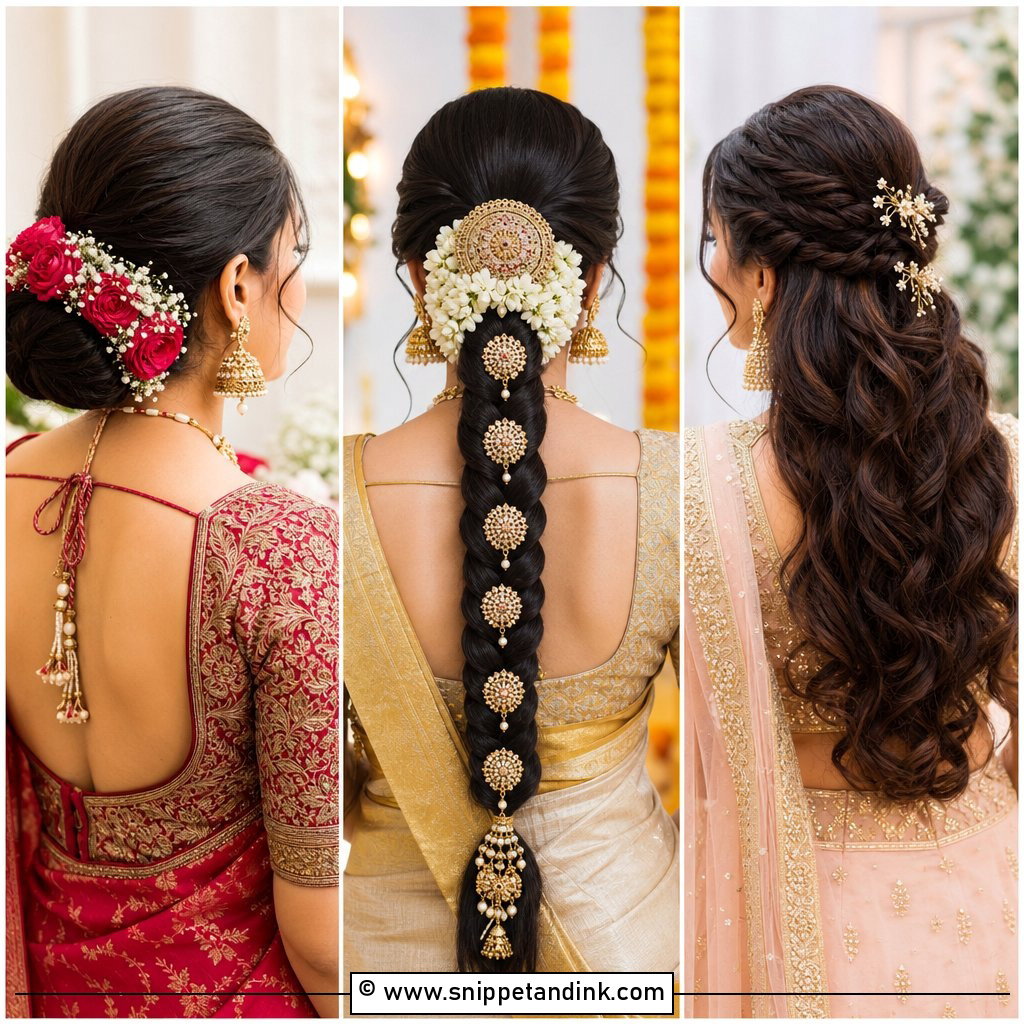
Nothing smells more like a wedding than jasmine wrapped around a bun. I wrap fresh gajra around a low or mid bun for Mehndi, Mayun, Dholki or classic bridal events, and it suits yellow, green, white, gold and pastel outfits. Smooth or slightly textured both work. Buy the flowers on the day and keep them wrapped in a damp cloth in the fridge until I pin them, since jasmine browns quickly in heat. I secure the strand with U-pins through the thread every few inches, firm but not tight, so the flowers sit on the bun rather than crushing it. The gajra should frame the outfit, not swallow the bun.
11. Pakistani Front Puff Hairstyle
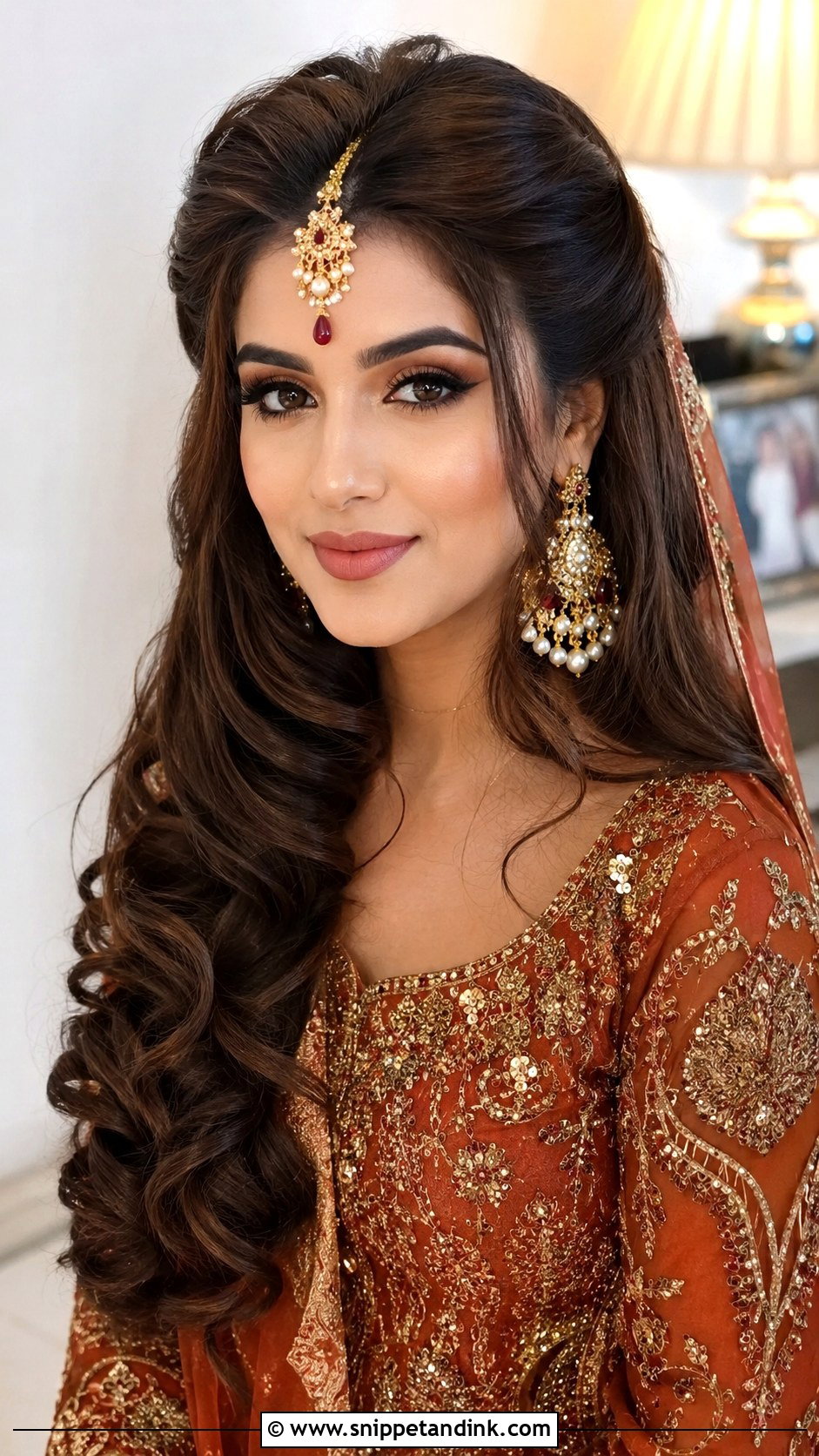
The front puff is a classic for a reason: it adds height, balances the face and gives heavy jewelry some breathing room. I pair it with curls, a bun or a long braid depending on the event. Under a matha patti or big earrings, the lifted front stops the face looking crowded, and it gives a dupatta set behind the crown something to rest on. The trick is a soft, blended puff, never a tall stiff one. I backcomb only the underside of the front section, smooth the top layer over it and tame baby hairs with a little gel. Barat, engagement and formal guest outfits all suit it.
12. Pakistani Jhumar Hairstyle
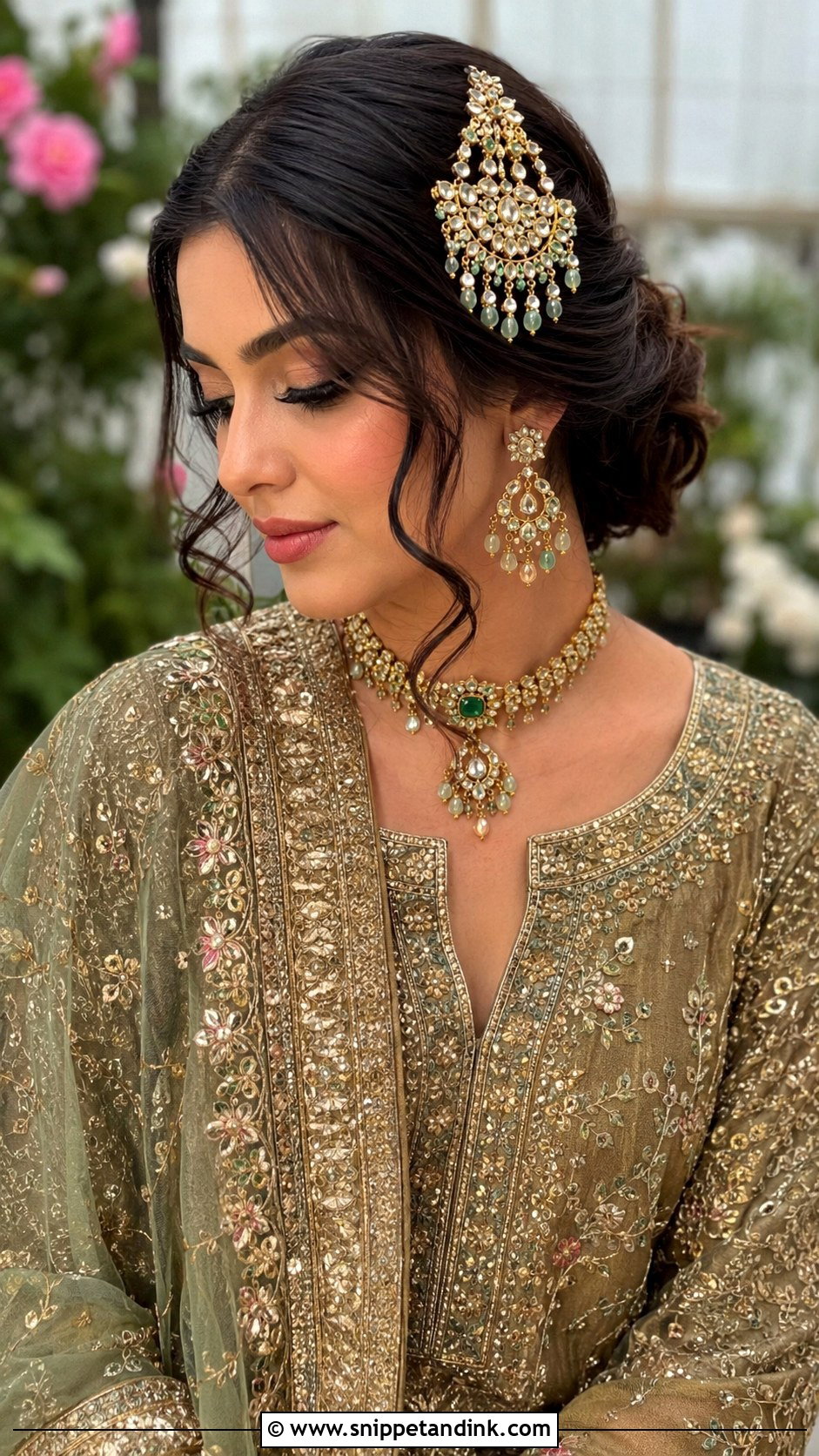
With a jhumar, the accessory decides everything, so I plan the parting, volume and pinning around it before I touch a curling iron. Usually that means a side part with soft waves, a low bun, or open curls with the jhumar side slightly lifted. The chain should anchor into a small braid or twist, not loose hair, or it pulls and tilts as you move. Traditional bridal outfits, ghararas, shararas and heavily embroidered dupattas carry it well. Keep the rest of the hair calm so the jhumar stays the focus, and if your earrings are large too, I’d choose soft face framing over extra hair accessories.
13. Pakistani Matha Patti Hairstyle
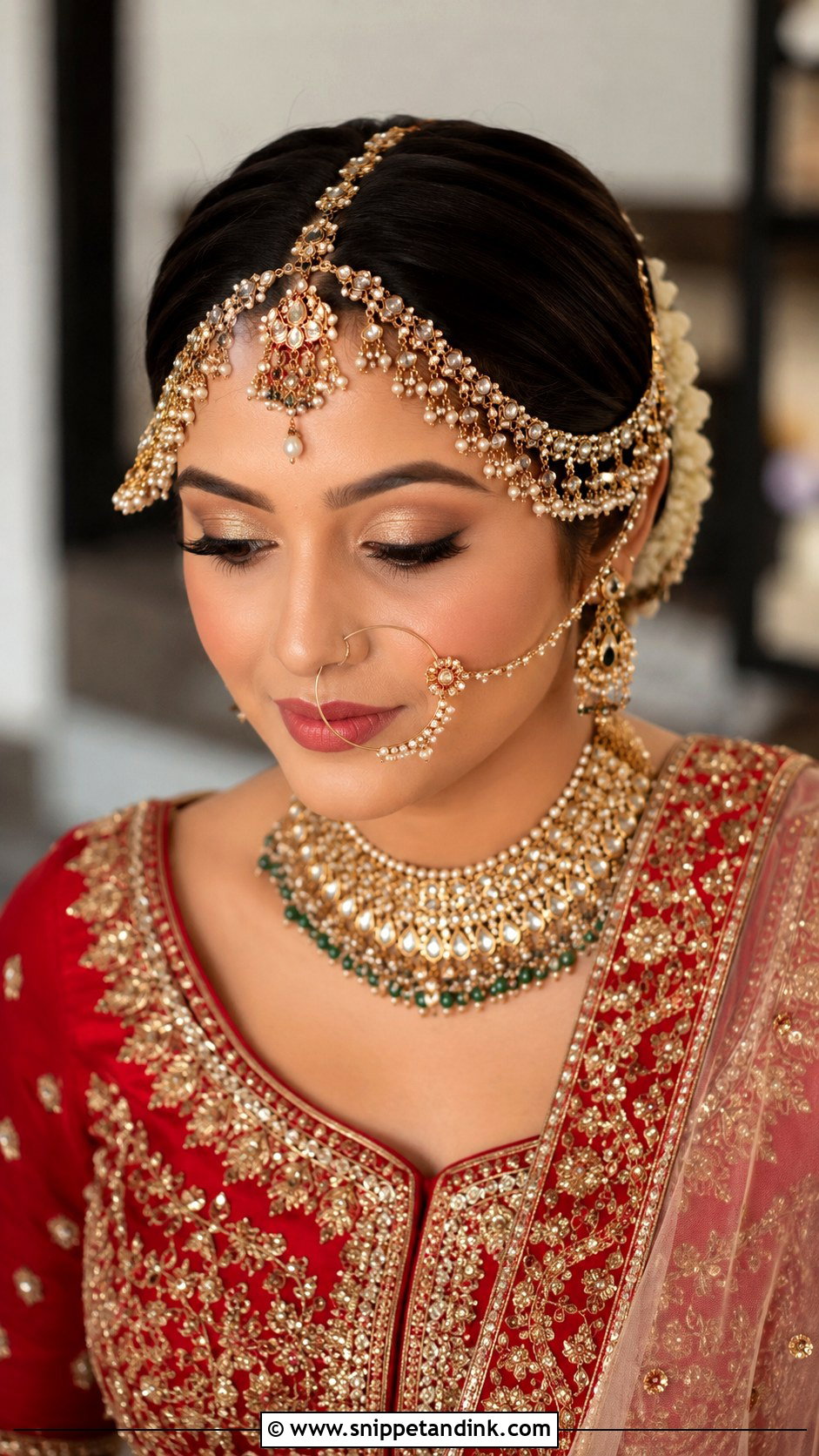
A Pakistani matha patti hairstyle needs a clean base because the piece runs along the hairline and frames the whole face. I work from a center part and a smooth crown, then finish with a bun, a braid or soft open curls. It’s a favorite for a royal, traditional Barat or Nikkah. The matha patti has to lie flat and even, so I keep front texture to a minimum underneath it. A petite face usually suits a finer design, while a grand, heavily worked outfit can carry a fuller piece. Either way, the hairstyle should take the weight so your head doesn’t ache by dinner.
14. Pakistani Sleek Bun
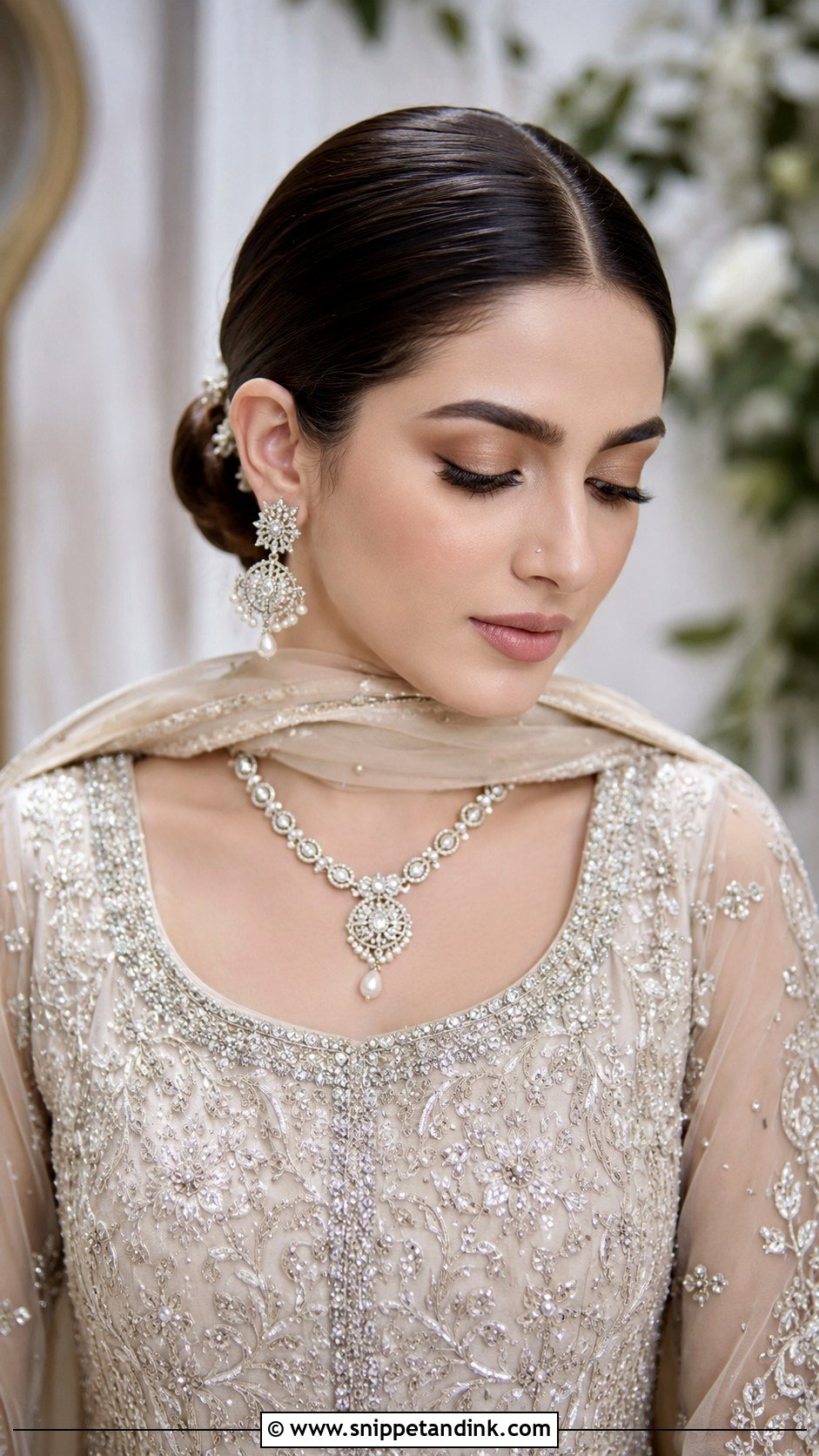
A sleek bun is the modern choice, and it’s less forgiving than it looks. I smooth the hair into a sharp center or side part and gather it into a tight low bun, which puts makeup, earrings, necklace details and the neckline in full view. Silk, organza, chiffon and heavily embroidered formal wear all suit it. Because there’s no texture to hide behind, the part has to be perfectly straight and the shine even. I use a strong-hold gel or cream with a light hand and a fine-tooth comb, since too much product reads wet or greasy under hall lighting. One accessory, a gajra or a veil placement brings it back to a traditional finish.
15. Pakistani Loose Bun
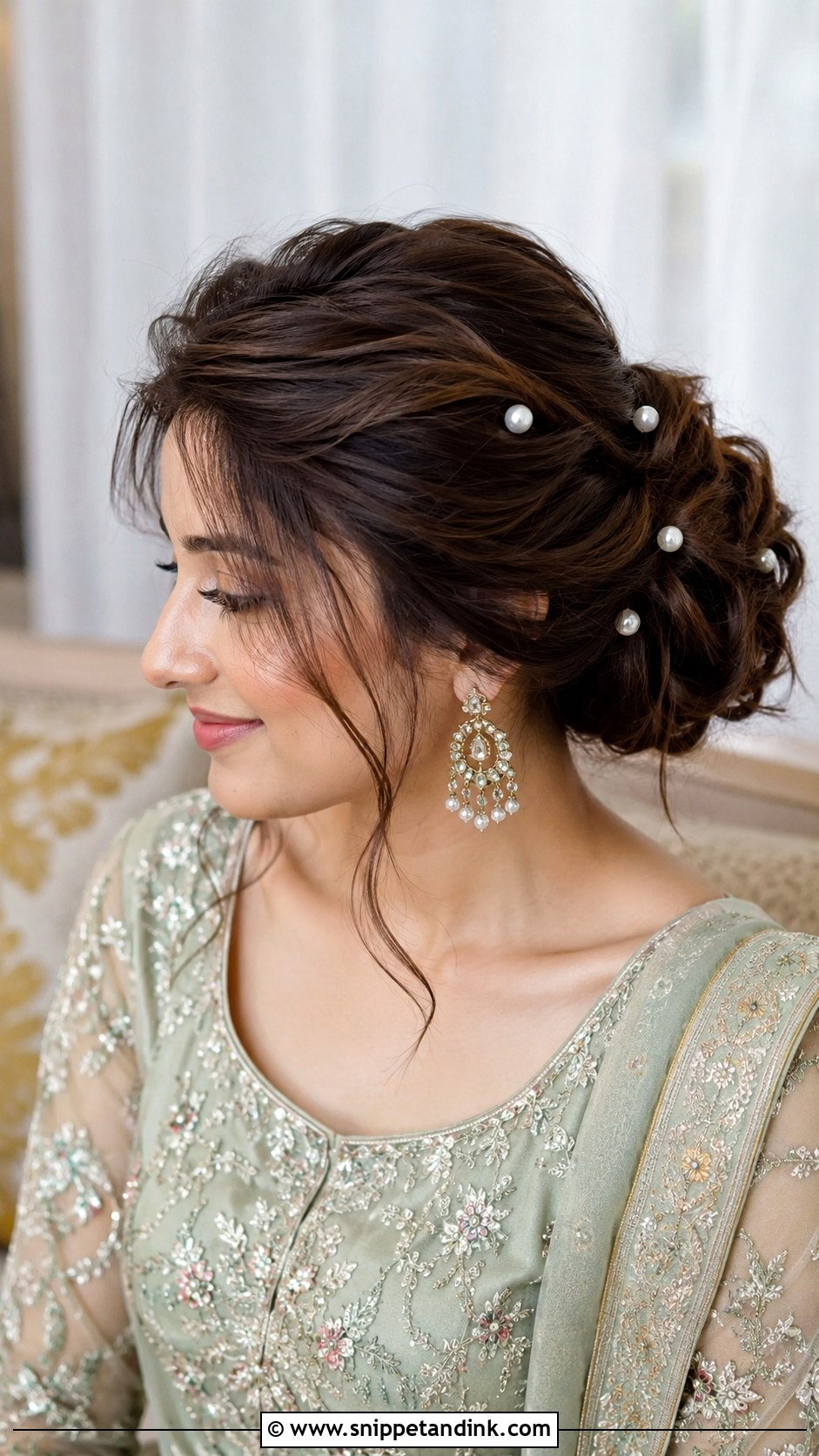
A loose bun keeps a wedding look formal without the severity of a slicked one. I place it low with soft twists, loose texture and a few face-framing strands, which suits Walima, engagement, Nikkah or a guest outfit. Pastel colors, pearl jewelry, delicate dupattas and soft glam makeup sit well with it. Because nothing is pulled tight, it flatters most face shapes and doesn’t tug at the scalp over a long evening. The risk with any loose style is collapse, so I build it on hidden pins and a small anchor ponytail; it should look relaxed and stay exactly where I put it.
Headaches, Pins and the Long Barat Evening
A full Barat look can mean a padded bun, a matha patti, a jhumar, a heavy embroidered dupatta and dozens of pins, all worn for six hours or more. It looks royal, but it’s also where most brides start feeling a pounding scalp by the time dinner is served.
Spreading the weight
I pin the dupatta to the bun and to the hair around it, not just at the crown, so the fabric’s weight is shared instead of hanging off one spot. The jhumar chain anchors into a braid or twist rather than loose hair. If anything pinches at the trial, tell me then. A pin that’s mildly annoying at 4pm feels like a nail by 10.
Undoing it all after the rukhsati
Don’t pull pins out in the car. Take the jewelry off first, then find pins by feeling along the bun, and let someone help with the back. Once it’s down, work a generous amount of conditioner or oil through the dry hair and finger-comb from the ends upward before you even think about a brush. Teased hair knots badly, and ripping through it is how brides lose a surprising amount of hair before the Walima.
Let the Jewelry Decide the Parting
What makes these styles work is how closely they follow the event. A flower-wrapped Mehndi braid feels joyful, a Barat bun under a matha patti feels rich and regal, and loose Walima waves let a pastel outfit breathe. The right one for you comes down to your outfit, your jewelry, how heavy the dupatta is, your hair length and how much weight you can comfortably carry for a long evening. I place every accessory at the trial, not on the day: tikka, jhumar, hijab pins and gajra all change where the parting and volume need to sit. Get that right and the hair holds up as well in the hall as it does in the photos.
You'll Like These Ideas:


Leave a Reply