
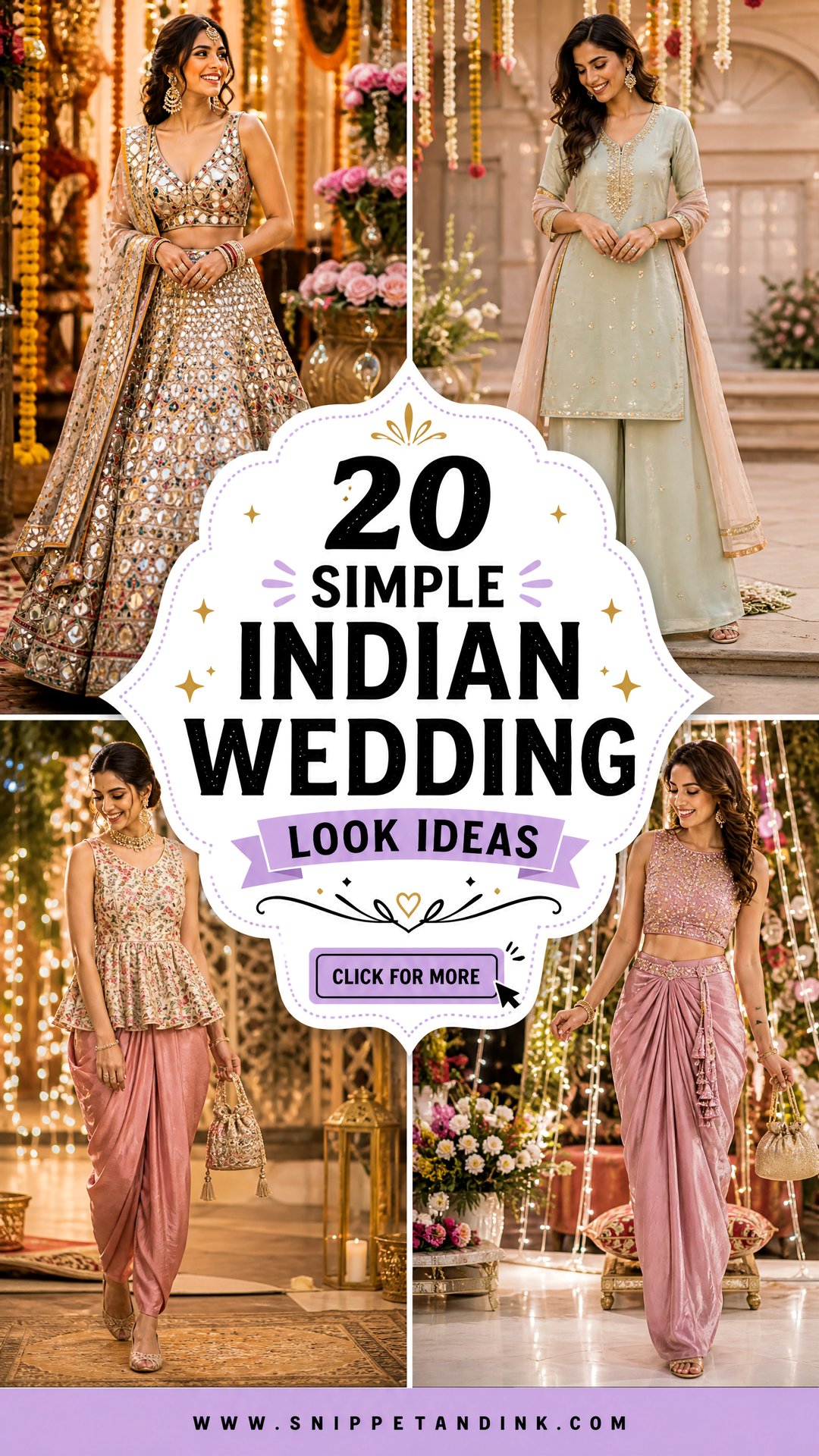
A multi-day Indian wedding can mean four outfits in three days, and the temptation is to go heavier each time. Most guests I dress end up happier in lighter, simpler pieces they can actually move, eat and dance in. The looks below are complete outfits: classic sarees, light lehengas, anarkalis, shararas and a few fusion sets, each with notes on jewelry, shoes, bags, hair and colour. Swap fabrics, sleeves and accessories to suit your age, your shape, your taste and your role in the family. Daytime ceremony or evening reception, there’s something here that wears well for hours.
Reading the Invitation Before You Shop
Every event in an Indian wedding has its own mood, and the invitation or the family’s message usually hints at it. I match outfit weight to the event, not to the bride’s budget.
- Haldi: a morning function with turmeric everywhere. Cotton, yellow or bright colours, nothing you’d be sad to stain.
- Mehndi: relaxed and long. Florals, light lehengas, shararas and greens are common, with comfortable seating-friendly clothes.
- Sangeet: the dance night. Light lehengas, pre-draped sarees, shararas and fusion sets you can move in.
- Wedding ceremony: the most traditional. Silk sarees, suits and lehengas, covered enough for a temple or gurdwara if that’s the venue.
- Reception: the most Western-leaning. Gowns, capes, jumpsuits and evening sarees all fit.
Colours and coverage to check with the family
In many communities red and heavy bridal maroon are left to the bride, and all-black or all-white can read as mourning at a ceremony, though plenty of modern families don’t mind. At a gurdwara or many temples you’ll cover your head and remove your shoes, so carry a dupatta and wear footwear that slips off easily. When in doubt, ask someone in the family. Nobody minds the question, and it saves an awkward moment at the door.
1. Simple Silk Saree Wedding Look
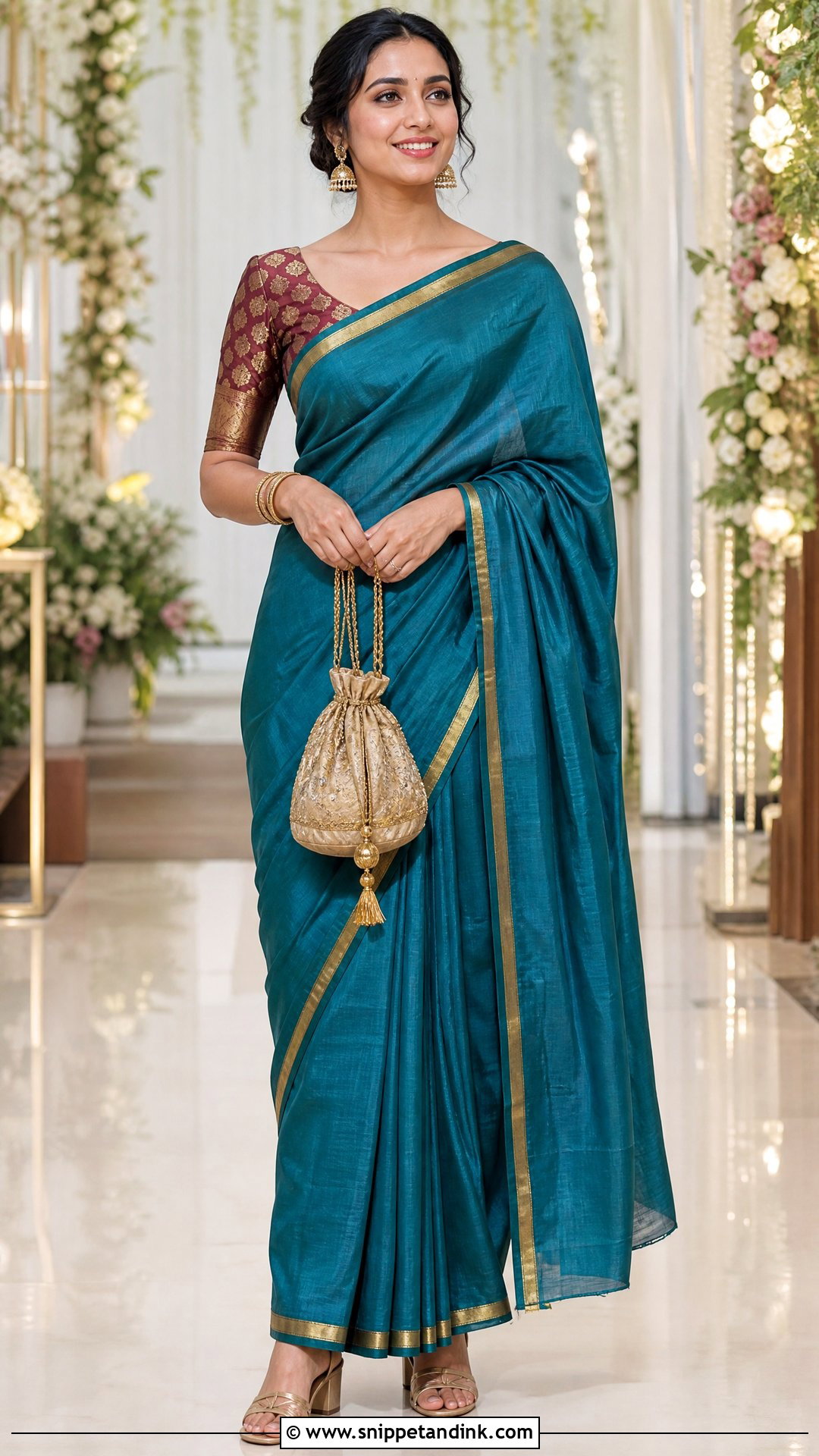
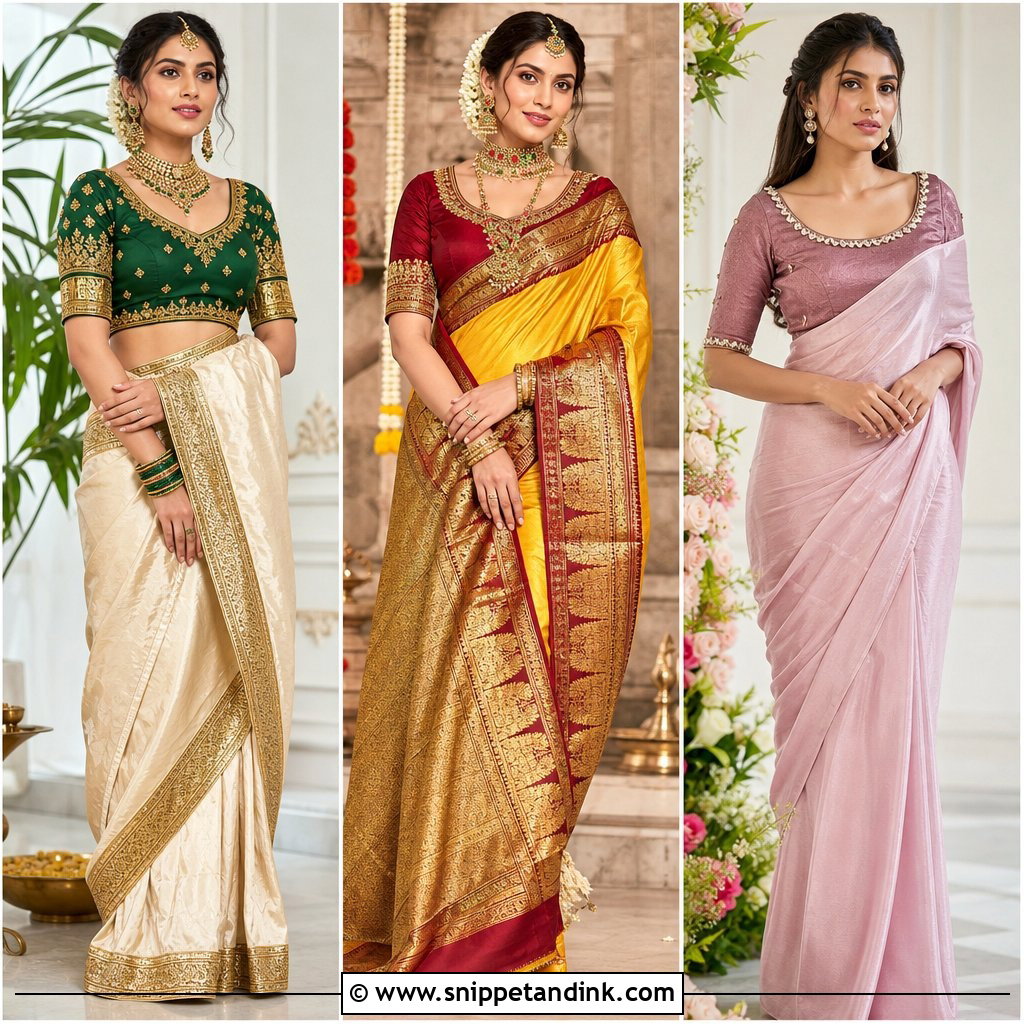
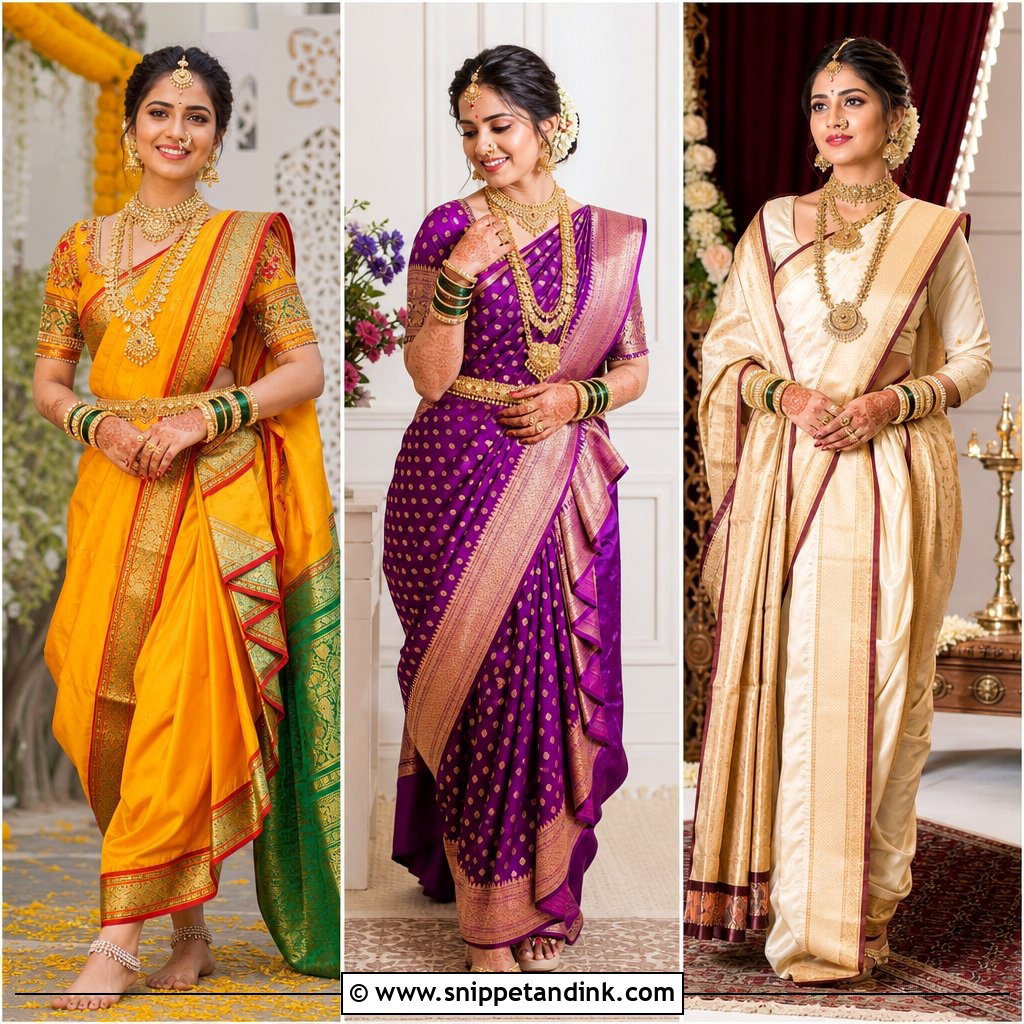
Light silk is the guest saree I recommend most, because it drapes cleanly and holds pleats without the weight of a bridal Kanjeevaram. Teal, plum, mustard or deep blue with a slim metallic border, and a short-sleeve blouse in a matching or contrast colour. Small jhumkas, two or three bangles and a structured potli are enough. Block heels or embellished flats keep you steady through a long ceremony. A neat bun with fresh flowers or soft curls both suit it. Pin the pleats at the waist and the pallu at the shoulder seam, since silk is slippery and loosens as you sit and stand. It belongs at the main ceremony and traditional venues.
2. Pastel Organza Saree Wedding Look
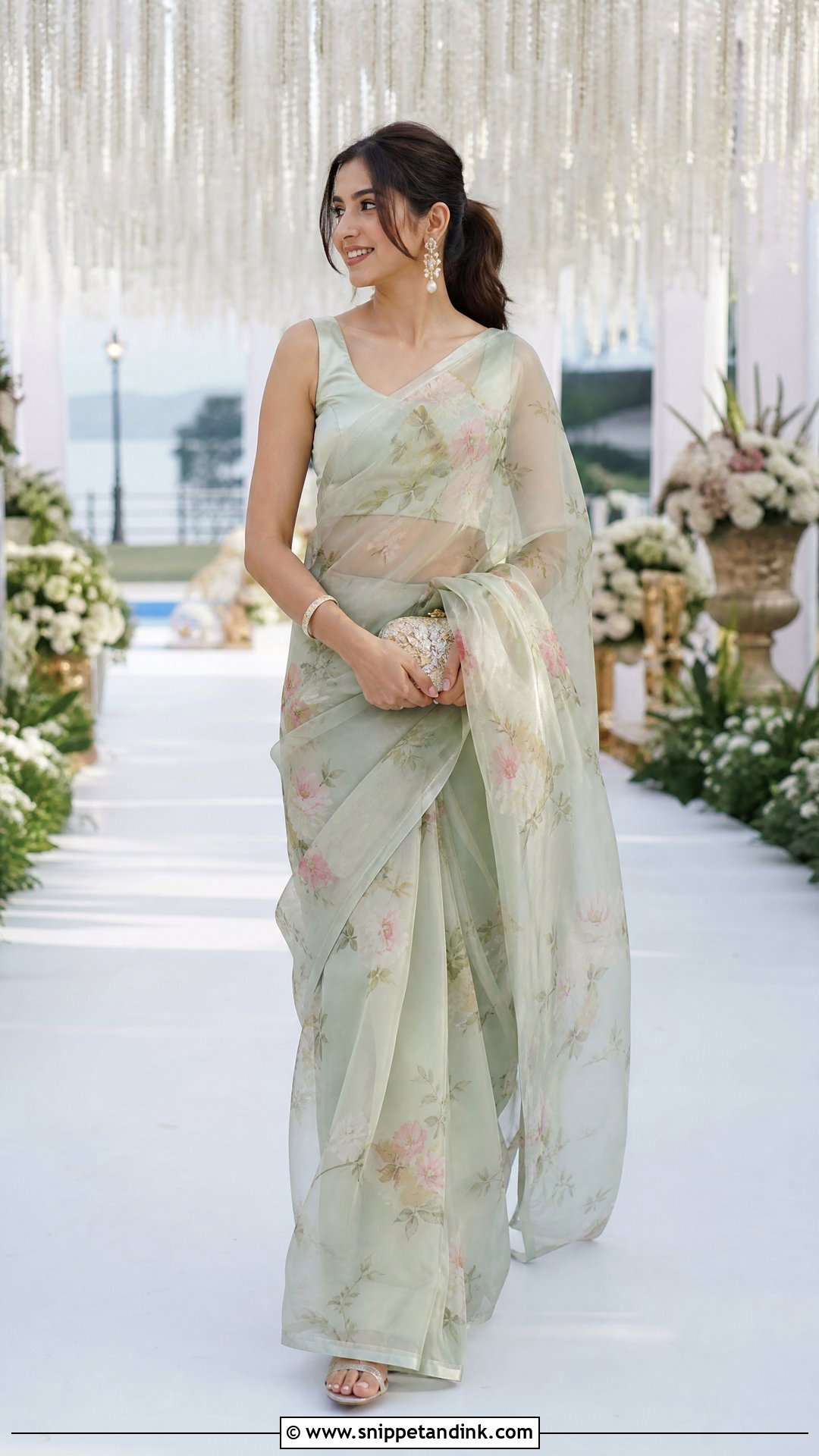
Organza is crisp and slightly sheer, and that stiffness is why it looks so neat in daylight. Choose a pastel saree in sage, powder blue, peach or lilac with fine floral embroidery or a narrow border, and a simple satin blouse to soften the texture. Pearl drops, a fine bracelet and a compact clutch are plenty. Kitten heels or low wedges give height without wobble on a lawn. Organza holds a pleat, so press the pleats once and let the pallu fall over one shoulder. Finish with a low ponytail, soft makeup and a small bindi. One caution: it scratches the inner arm if the border is heavily embroidered, so feel the edge before you buy.
3. Chiffon Saree With Statement Blouse
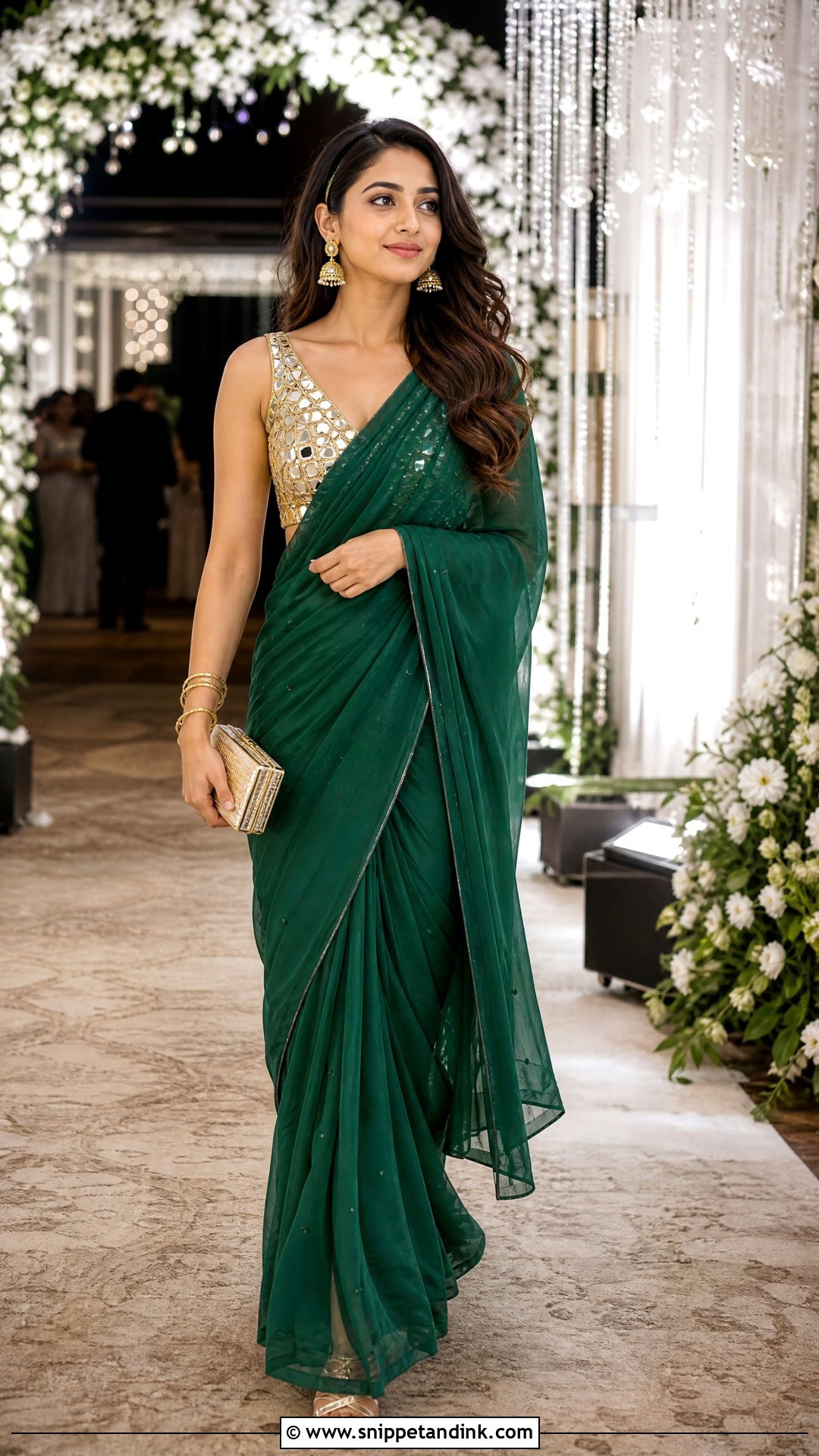
Chiffon clings and flows, so the blouse does the dressing up. Take a plain jewel-tone saree and pair it with a blouse in mirror work, sequins, embroidery or textured sleeves: emerald with gold, navy with silver, berry with antique metal. Keep the drape simple and pin it at the shoulder. Medium earrings and a slim bangle stack are better than a necklace that fights the blouse. A metallic box clutch and low heels complete it, with side-swept waves. Chiffon shows every line underneath, so I’d invest in a well-cut shapewear petticoat; it changes how the saree falls more than any pleating trick.
4. Pre-Draped Saree Wedding Look
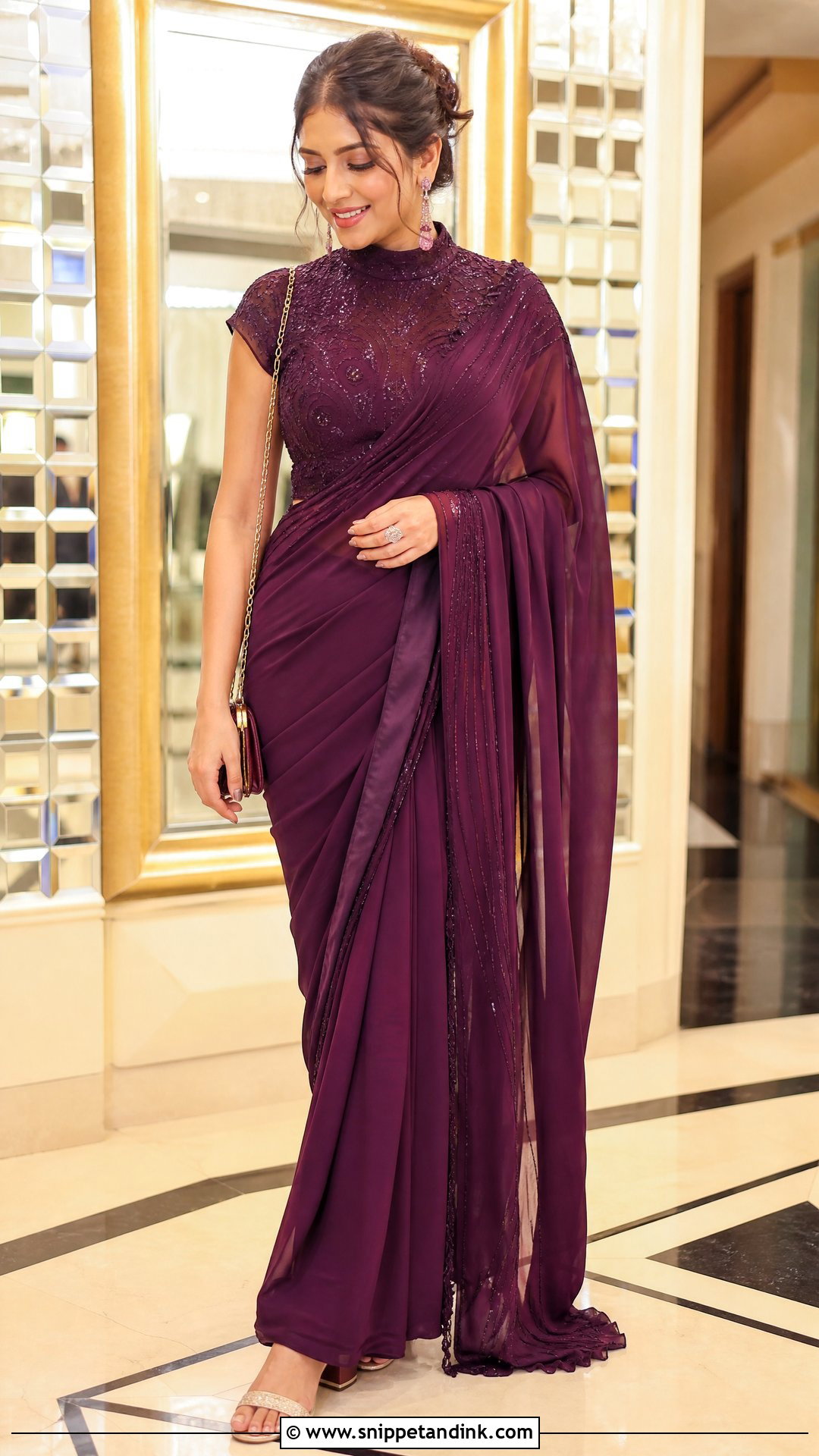
Can’t drape a saree? A pre-draped saree gives you the pleats and pallu already stitched, so you zip in and go. Georgette, crepe or light satin in a rich solid colour with restrained beadwork all work. Pair it with an elbow-sleeve, sleeveless or high-neck blouse, depending on how much coverage you want. Statement earrings and one cocktail ring add sparkle; a small shoulder bag and block heels keep you practical. A sleek bun or polished ponytail suits the modern shape. Because nothing is tucked, it won’t unravel while you greet guests or dance, which makes it my reception and sangeet default.
5. Floral Lehenga Wedding Look
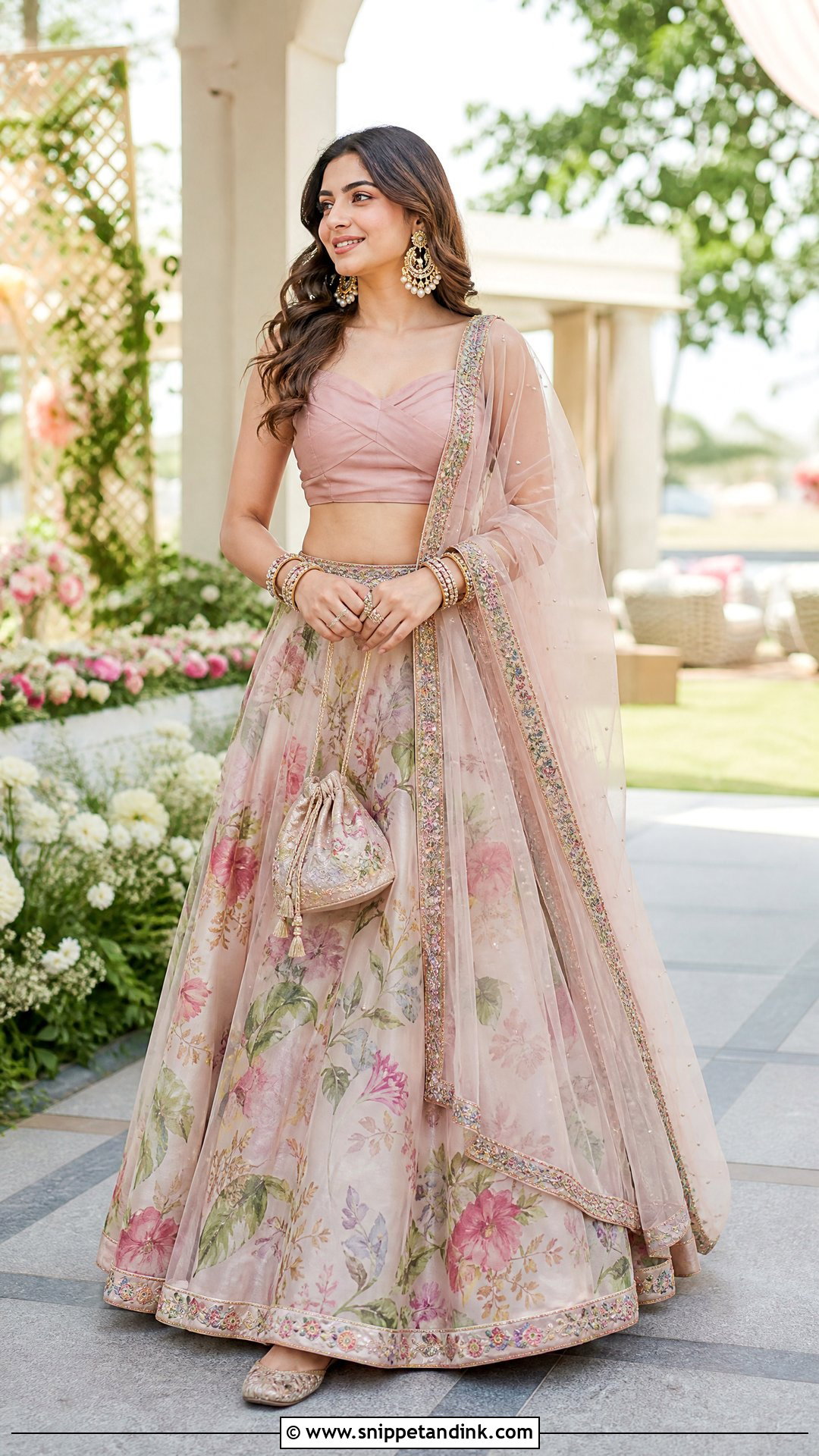
Florals give colour without the weight of heavy embroidery. Pick a printed skirt in silk, organza or georgette, a solid fitted blouse and a sheer dupatta with a narrow border. Pastel prints suit daytime; deeper botanicals carry into the evening. Chandbalis, a few bangles and a small potli are enough, and embellished juttis are the easiest shoes under a long skirt. Loose waves or a relaxed braid finish it. With prints, I keep jewelry smaller than you’d expect; a big necklace against a busy floral reads cluttered from across a room. It’s an easy choice for bridesmaids, sisters, cousins and guests.
6. Mirror Work Lehenga Wedding Look
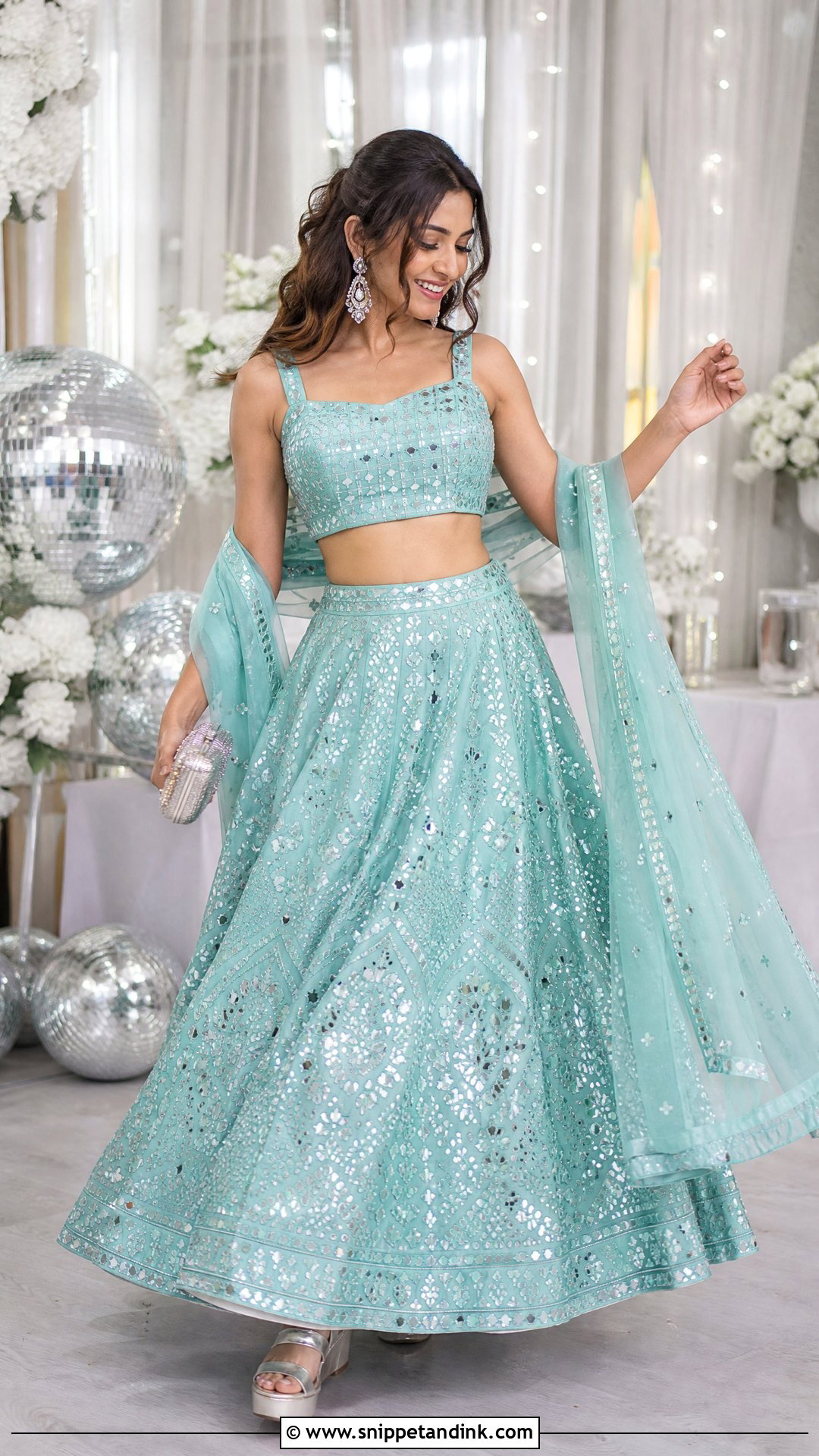
Mirror work is sparkle that doesn’t need extra jewelry. Choose a lehenga in one colour, such as turquoise, mauve, olive or midnight, rather than a set with several competing patterns. A clean blouse and a light dupatta over one shoulder balance it. Under sangeet lighting, small mirrors bounce light everywhere, so slim drops, one bracelet and a metallic clutch are plenty. Cushioned juttis or platform sandals will carry you through hours of dancing. Keep hair up in a high ponytail, braid or pinned waves. Real mirror work adds weight at the hem, so lift the skirt on the hanger before you buy.
7. Plain Lehenga With Embroidered Dupatta
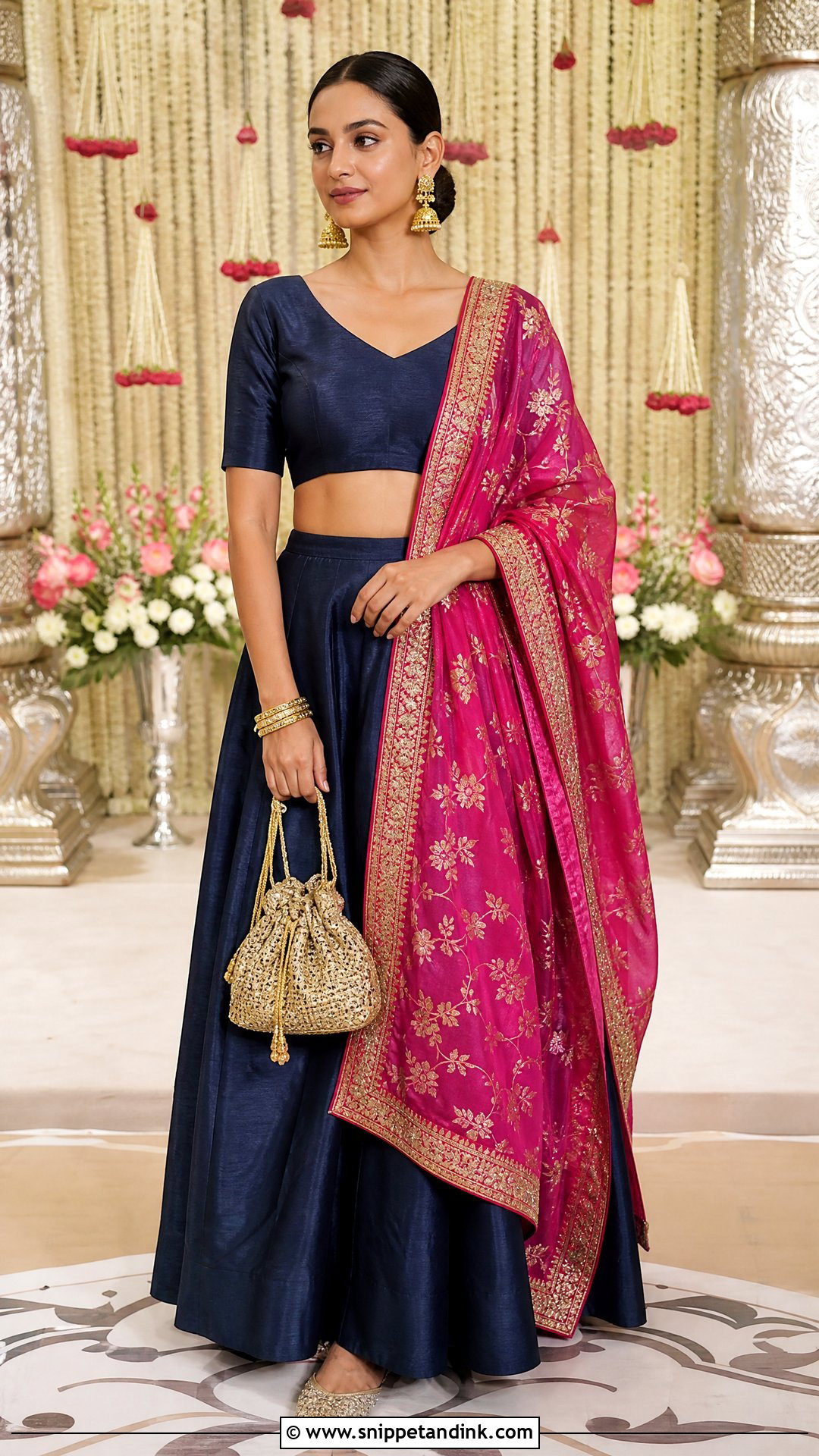
Put the detail on the dupatta and the rest can stay plain. Start with a solid skirt and blouse in silk, raw silk, crepe or velvet, depending on season, then add a contrast dupatta with gota, threadwork or a decorative border. Drape it diagonally for definition, or pin it to one shoulder if you’ll be busy. Match jhumkas, bangles and a small drawstring bag to the dupatta’s metal tone. Pointed juttis or low block heels keep it practical. A centre-parted bun reads traditional; brushed-out waves read relaxed. The plain separates are the reason I like this look: they rewear with a different blouse or dupatta for years.
8. Pastel Anarkali Wedding Look
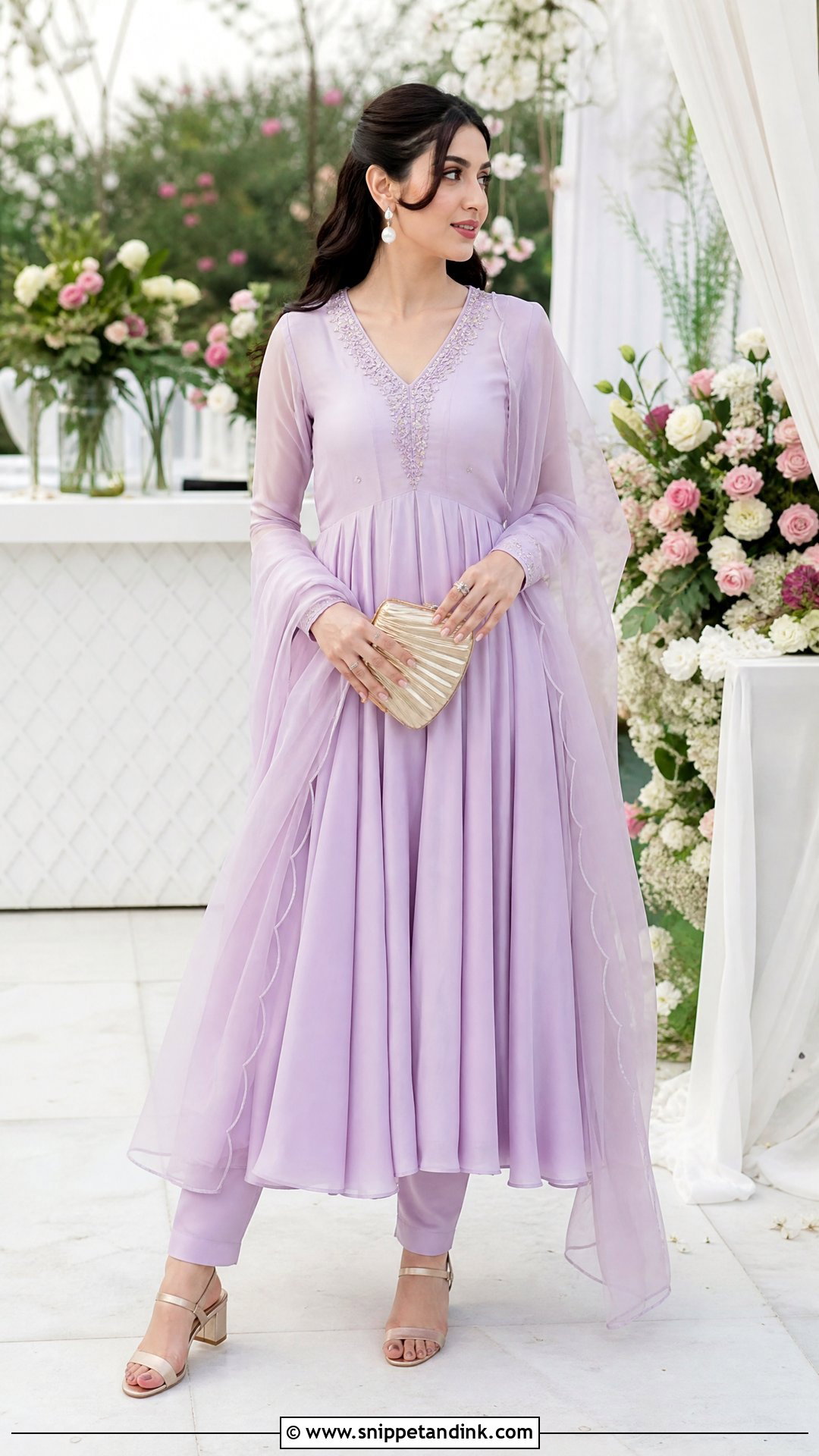
An Anarkali covers well, flows from the waist and stays comfortable through a long day, so it suits almost every age and shape. In pastel, choose blush, mint, lavender or light blue, floor-skimming or ankle length, with subtle threadwork at the neck and cuffs. Fitted pants and a sheer dupatta over both arms or one shoulder complete the base. Pearl earrings, a fine ring and a pale metallic clutch keep the palette light; champagne, silver or nude heels add length. A half-up style and fresh makeup finish it. Pastel shows sweat marks under the arms in heat, so I suggest a lined bodice or dress shields for summer weddings.
9. Floor-Length Anarkali Wedding Look
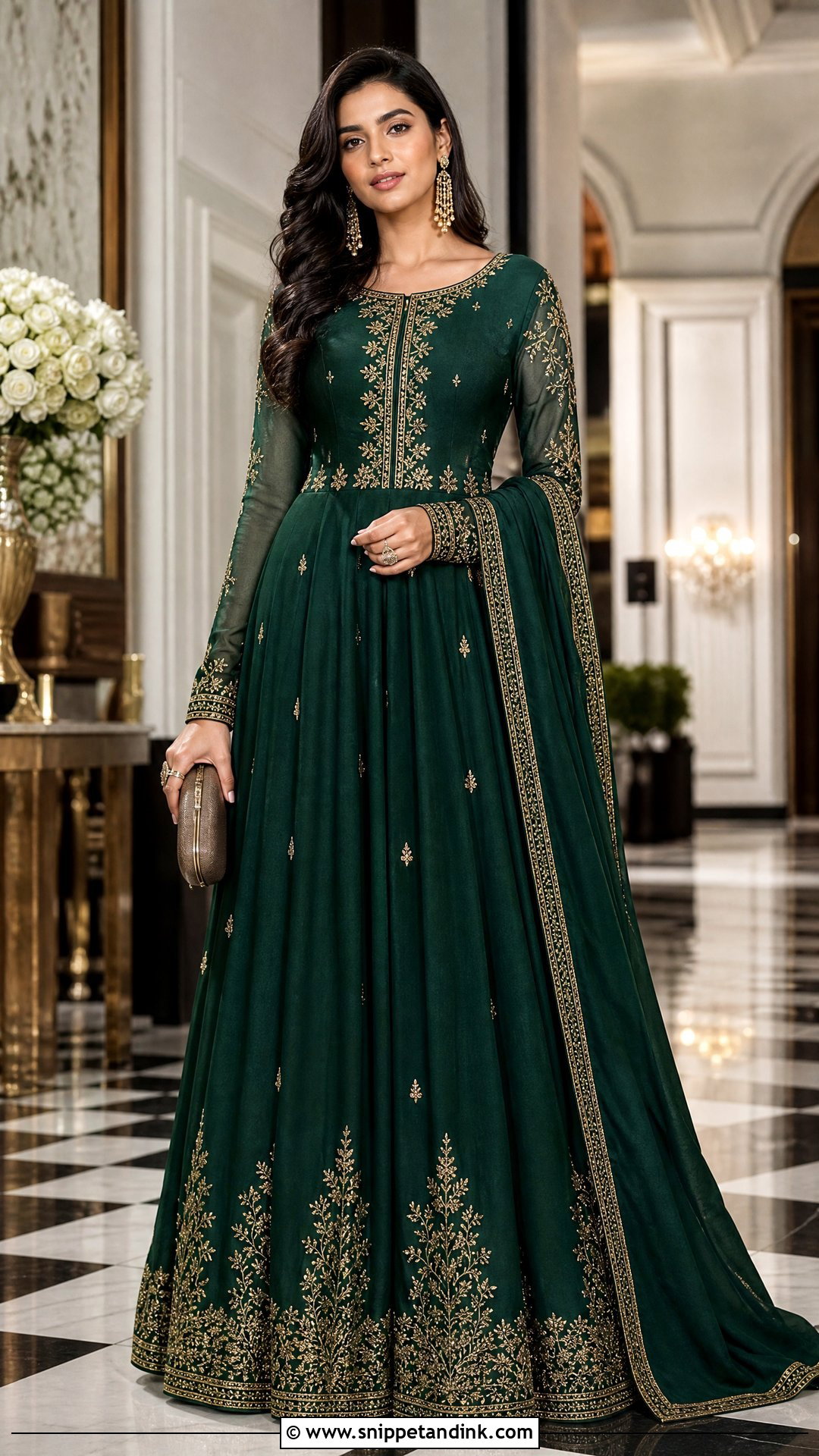
At an evening reception, a floor-length Anarkali has all the drama of a gown with a traditional line. Navy, wine, forest green or aubergine, with embroidery concentrated at the neck, waist or hem. A lightly structured bodice and flowing skirt need no layers of jewelry: long earrings, a slim ring and a hard-case clutch, and no necklace if the neckline is worked. Block heels hidden under the skirt give lift without pain. A low bun or glossy side-parted waves suit the formal mood. Have the hem set with your shoes on, or you’ll spend the evening holding the skirt up.
10. Sharara Suit Wedding Look
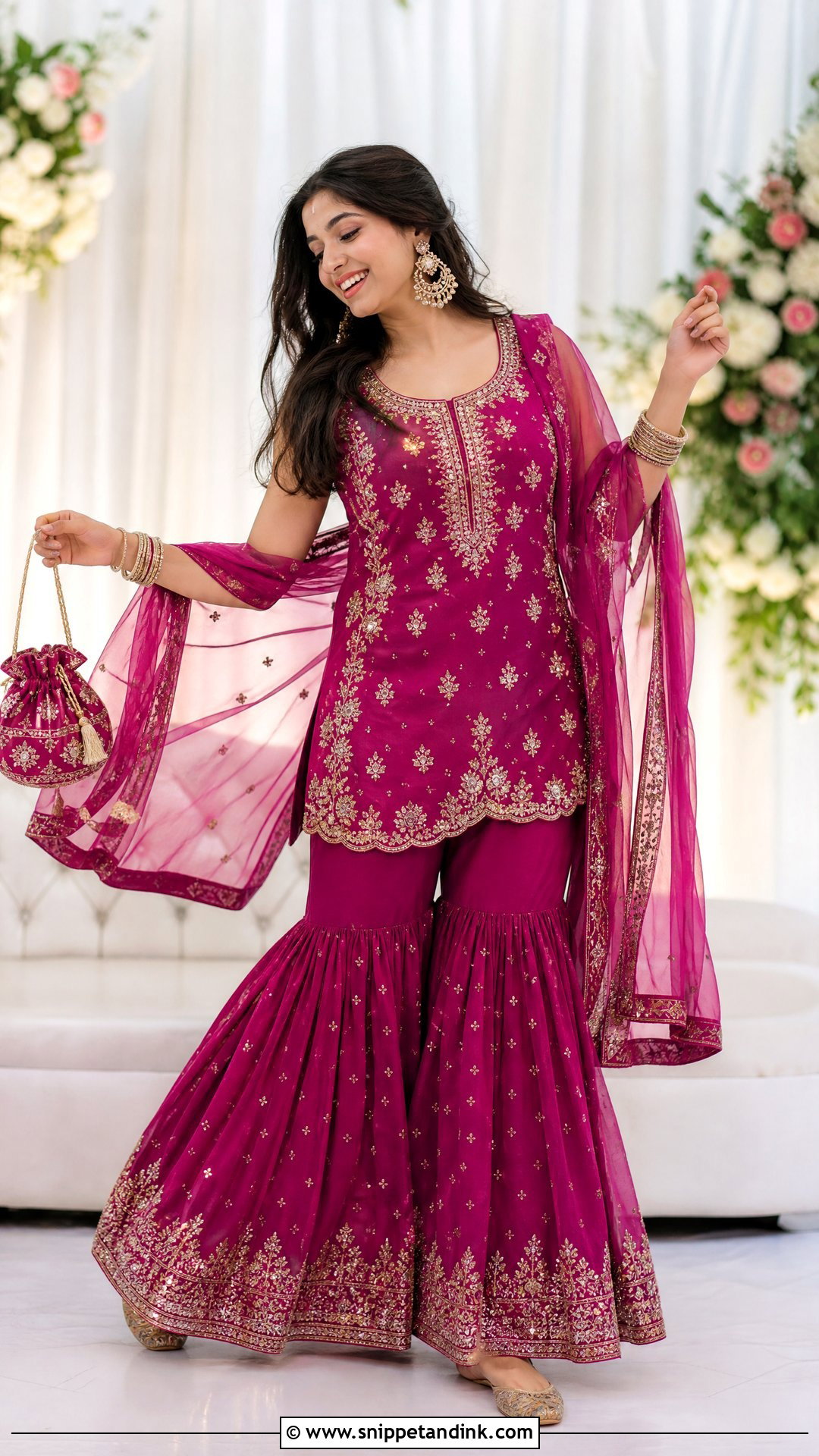
When the night is mostly music and dancing, a sharara suit is the easy answer. A short embroidered kurta, wide flared pants and a light dupatta. Georgette or crepe breathes in warm weather; soft silk suits an indoor evening. Monochrome looks long and streamlined; a contrast dupatta brightens it. Chandbalis, a few bangles and a wristlet or potli complete it. Under wide pants, juttis, platforms or block heels are safer than stilettos, which catch in the hem. Keep hair back in a braided ponytail or half-up style. Sharara pants are surprisingly heavy when fully lined, so check the weight if the sangeet is outdoors in summer.
11. Gharara Suit Wedding Look
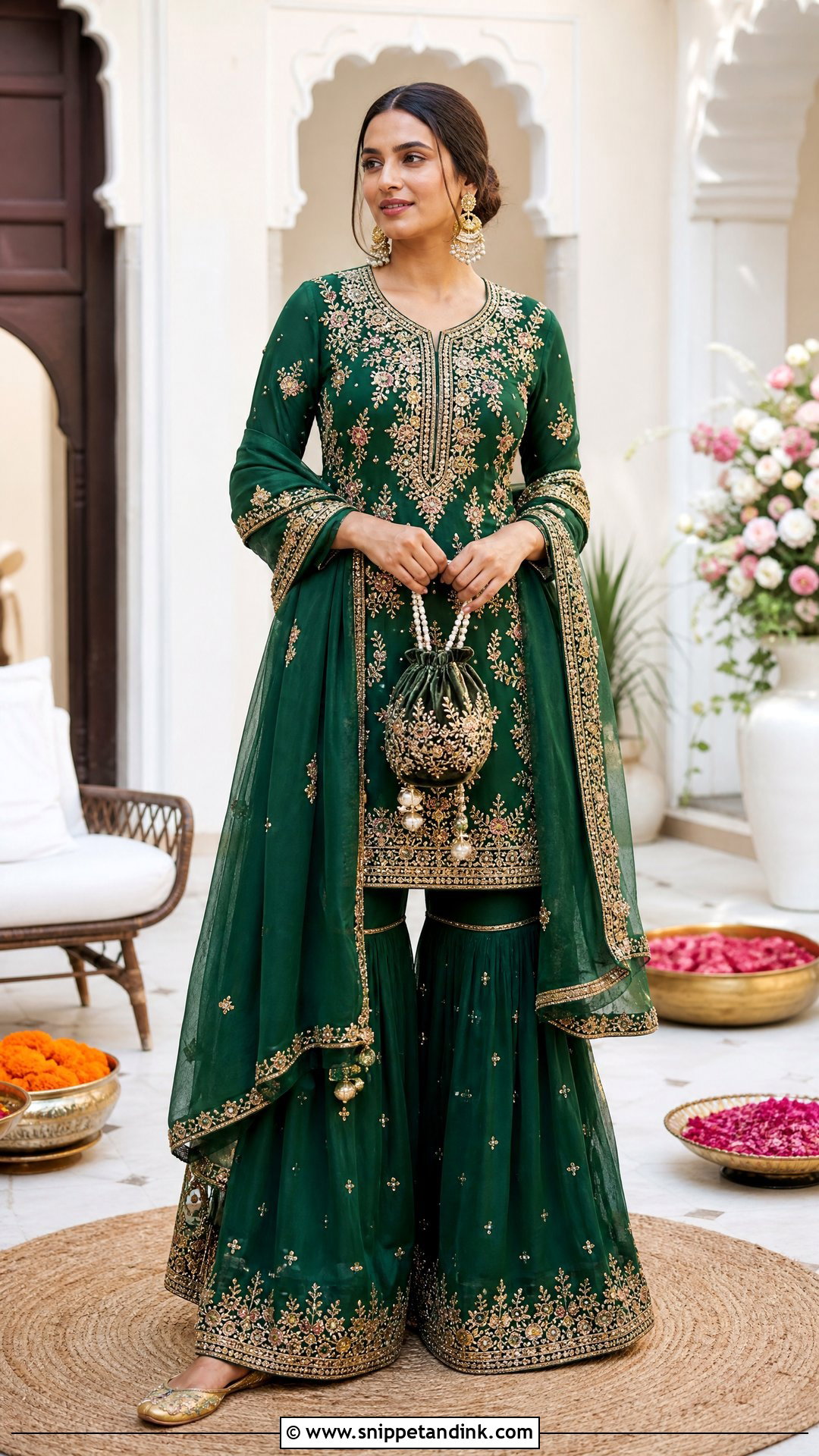
Gharara pants are seamed at the knee and flare out below, which gives even a simple kurta an occasion feel. Choose a knee-length kurta with subtle embroidery, gharara pants that flare from the knee, and a chiffon dupatta with a detailed border. Rust, emerald, royal blue and magenta are rich; muted pastels lighten it for daytime. Wear a small maang tikka or statement earrings, not both, for a minimal finish. Embroidered juttis and a beaded potli complete it, with a centre-parted low bun. The knee seam should sit just at or below your knee; too high and walking feels restricted. It suits a mehndi, sangeet or family dinner.
12. Kurta And Palazzo Wedding Look
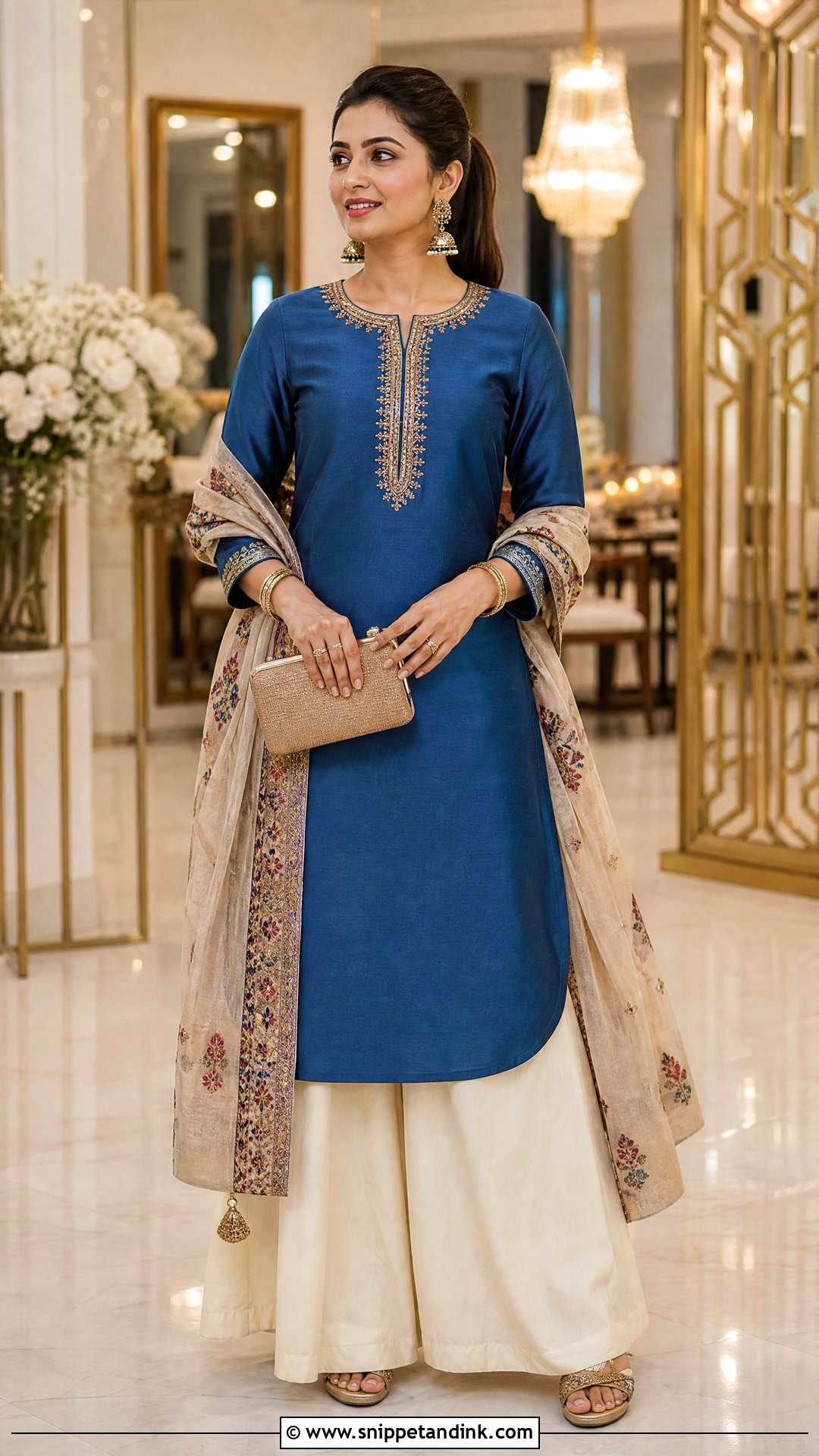
A straight kurta and palazzos is the outfit I suggest to guests who want coverage and freedom without a drape or a big skirt. Choose a silk or chanderi kurta with a decorated neckline, woven pattern or small motifs, coordinated palazzos and a contrast dupatta. A longer kurta looks streamlined; a shorter one shows off the wide leg. Medium jhumkas, stacked bangles and a structured clutch are enough. Wedges or block heels keep the palazzo hems off the floor. A sleek ponytail or soft curls finish it. Chanderi is light and slightly sheer, so a cotton lining underneath keeps the kurta from looking flimsy in daylight.
13. Brocade Kurta And Trousers Wedding Look
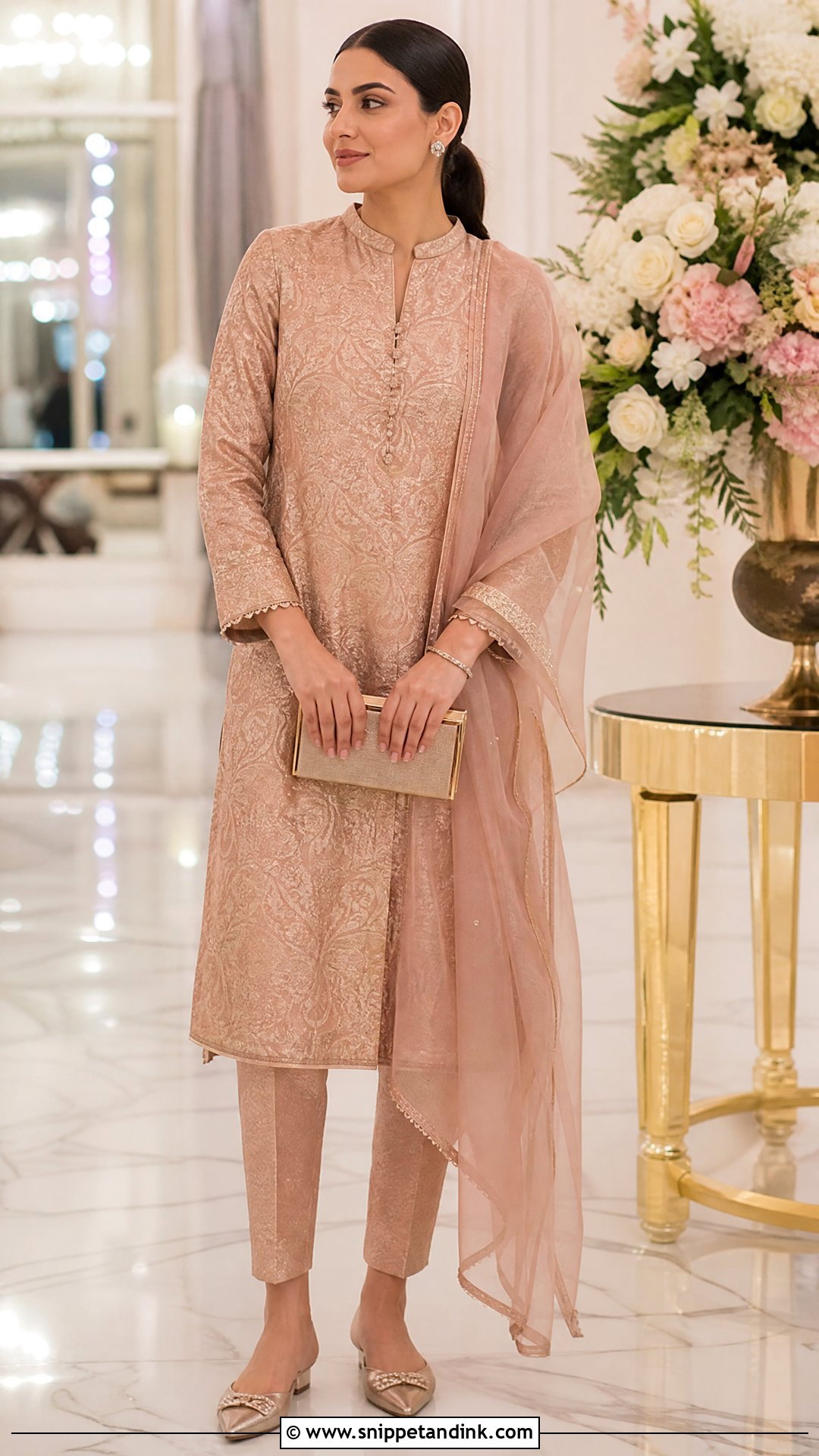
Brocade is woven with the pattern in the cloth, so it looks festive without a single sequin. Wear a brocade kurta in gold, navy, green or rose with cigarette trousers in a solid complementary shade. A straight or gently flared cut ending below the knee gives a good proportion. A plain organza dupatta softens the stiff fabric. Studded earrings, a slim bracelet and a rectangular clutch keep it tailored, with pointed flats or low mules. A smooth low ponytail or bun and understated makeup with one defined feature complete it. Brocade is stiff and can feel warm, so I keep it for evening events and cooler months. It suits older guests and anyone who prefers a neat silhouette.
14. Cape Lehenga Wedding Look
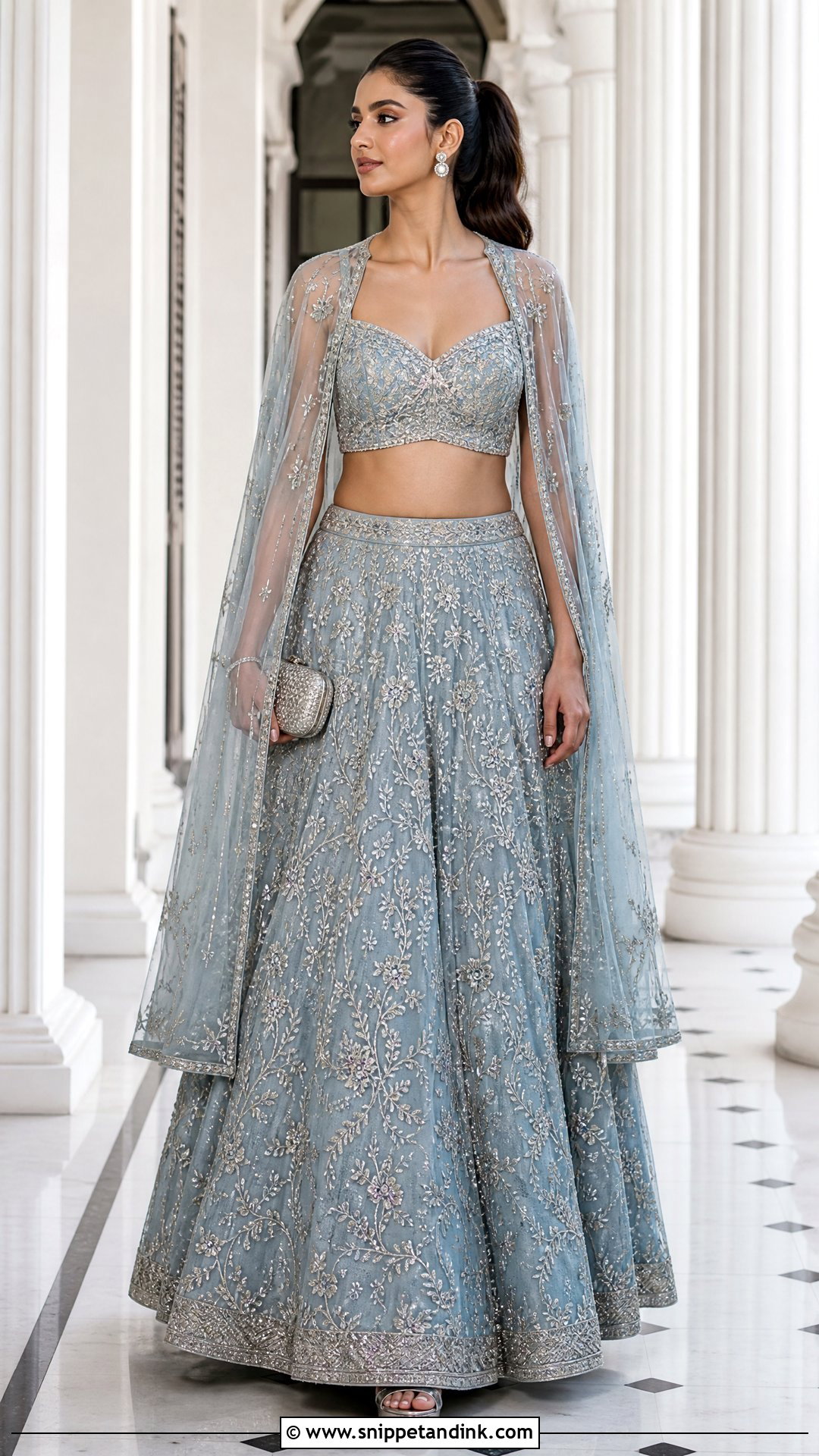
A cape lehenga solves the dupatta problem: nothing to arrange, nothing to slip. Start with a lightly embellished skirt and simple fitted blouse, then layer a sheer embroidered cape ending at the waist, hip or calf. A tonal set in dusty blue, mauve, sage or champagne gives a long, smooth line. Skip the big necklace since the cape frames the upper body; small earrings, a metallic clutch and cushioned platform sandals are enough. A polished ponytail stops long hair tangling in the cape’s embroidery, which happens more often than you’d think. It works well at a cocktail night or reception.
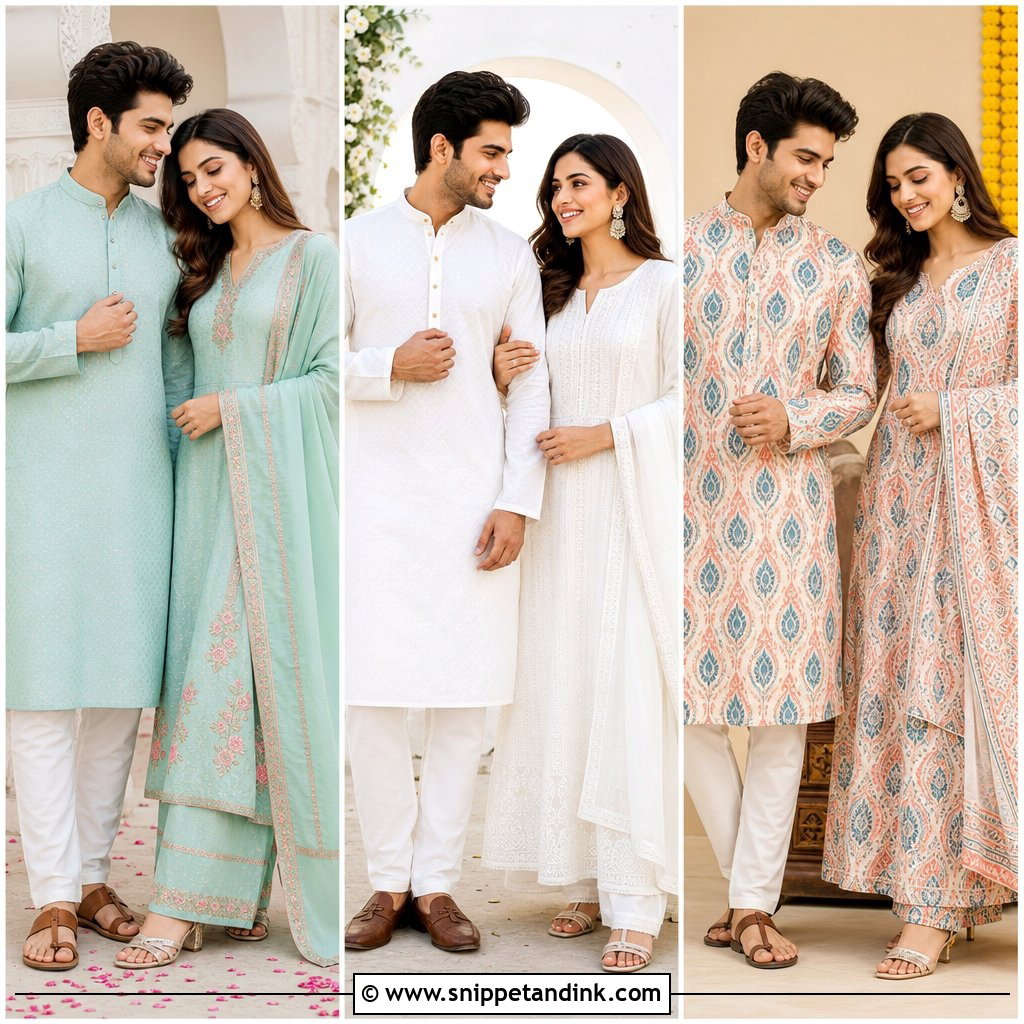

15. Peplum Top And Dhoti Pants Wedding Look
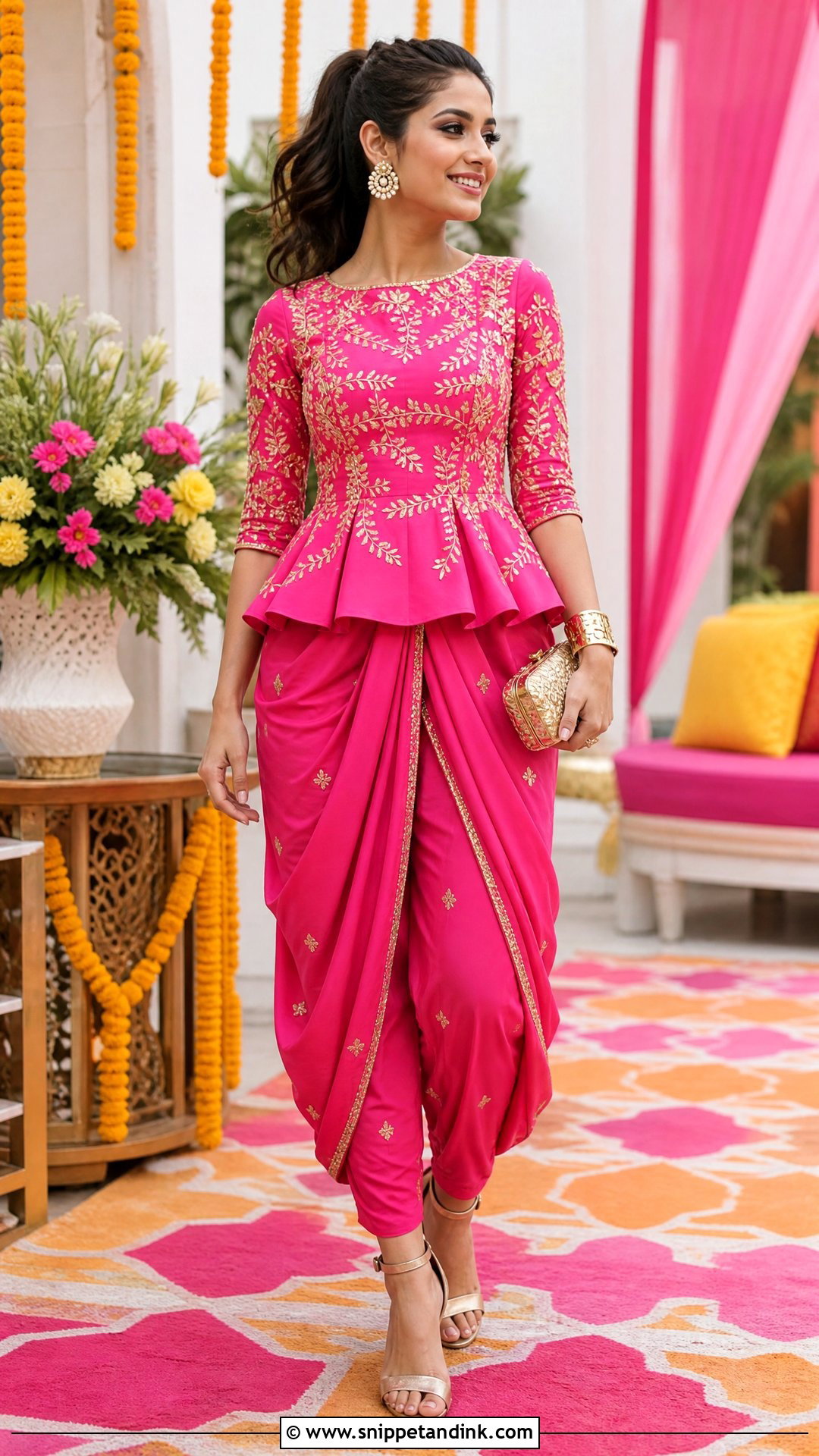
Peplum and dhoti pants is fusion that dances well. The defined peplum waist balances the relaxed lower half, and you can stride, squat and spin without thinking. Pick a coordinated set in bright pink, turquoise, purple or marigold, or a neutral base with colourful embroidery. Add a narrow dupatta only if the event is traditional. Large studs, a cuff bracelet and a compact clutch are enough, and the cropped pants show your shoes, so choose embellished flats, juttis or ankle-strap heels. A high ponytail or soft bun keeps the line clean. Dhoti drapes are bulky at the hip, so I’d keep the peplum short and fitted to avoid adding width.
16. Long Jacket And Skirt Wedding Look
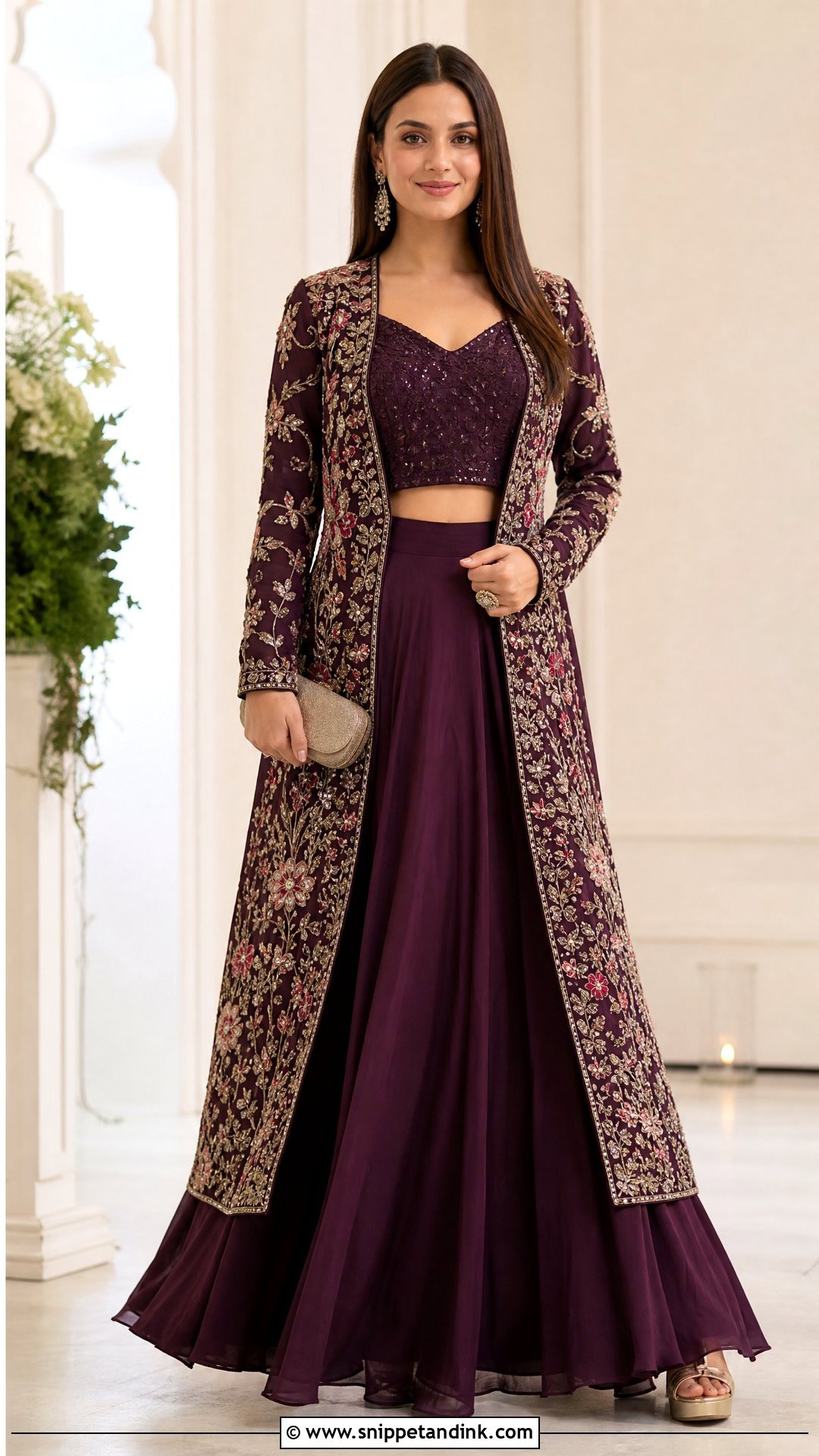
A long embroidered jacket over a plain blouse and skirt looks impressive with almost no styling. Choose a solid flowing skirt and fitted top, then an open-front jacket in threadwork, brocade or light sequins. Keep all three in one colour family for a long line, or let the jacket be the contrast. Small drop earrings, a ring and a simple clutch keep the jacket in focus, with platform sandals or low heels. Straight hair, a low ponytail or a smooth bun echoes the jacket’s vertical line. The jacket gives arm and torso coverage, which makes this my suggestion for air-conditioned halls and winter evenings.
17. Draped Skirt And Crop Top Wedding Look
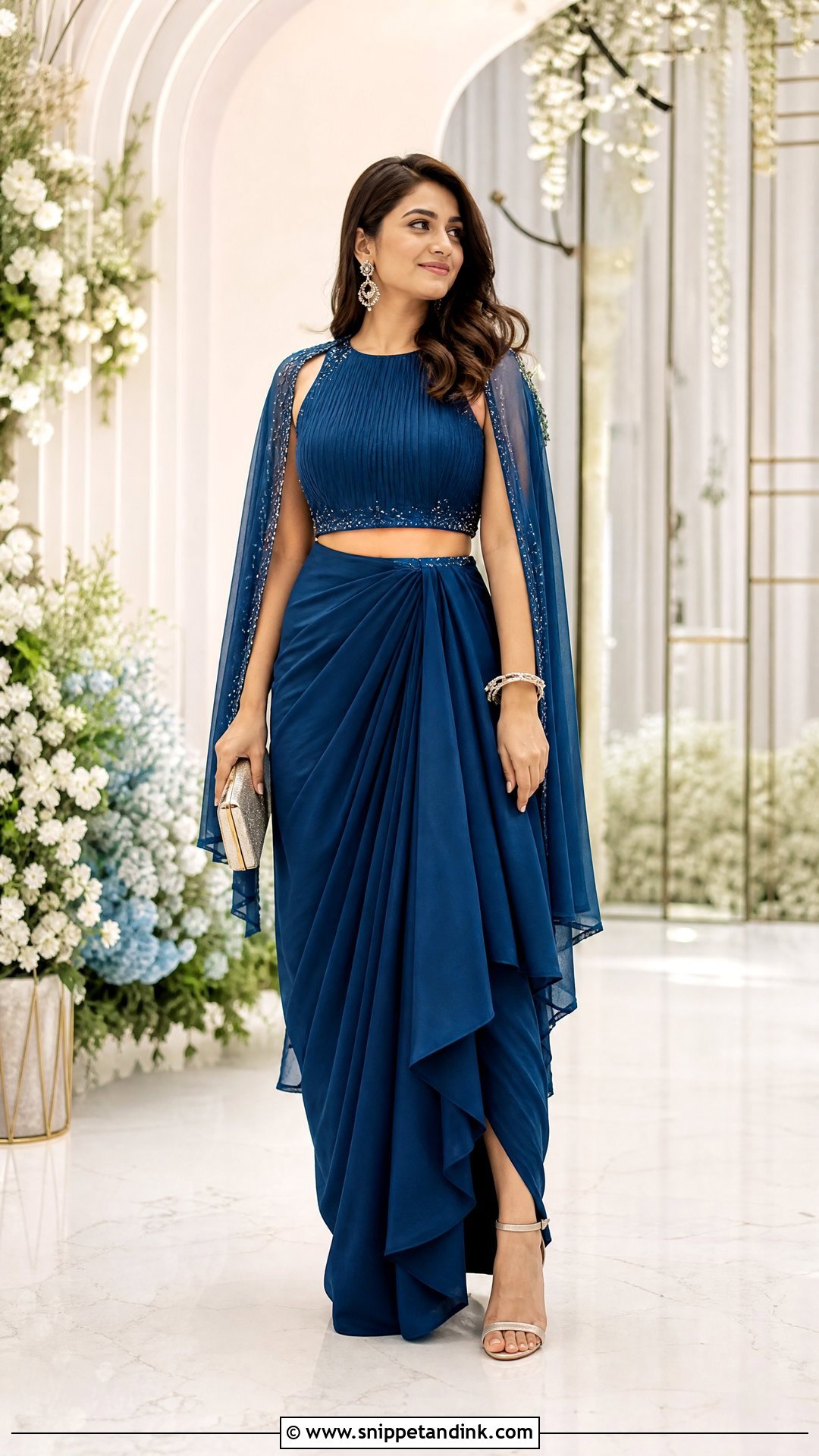
A draped skirt gives you the movement of a saree without learning the drape. Look for soft pleats or an attached side panel that falls asymmetrically, and a crop top with as much midriff and sleeve coverage as you’re comfortable with. Jewel tones, muted metallics and rich pastels all work. Shoulder-grazing earrings, a slim bracelet and an envelope clutch suit it, with heeled sandals or decorated flats depending on length. A side-parted ponytail or loose waves keep it modern. For a modest version, layer a light cape or long jacket. The attached drape is often just tacked at the waist, so check it’s stitched firmly before a night of dancing.
18. Silk Salwar Suit Wedding Look
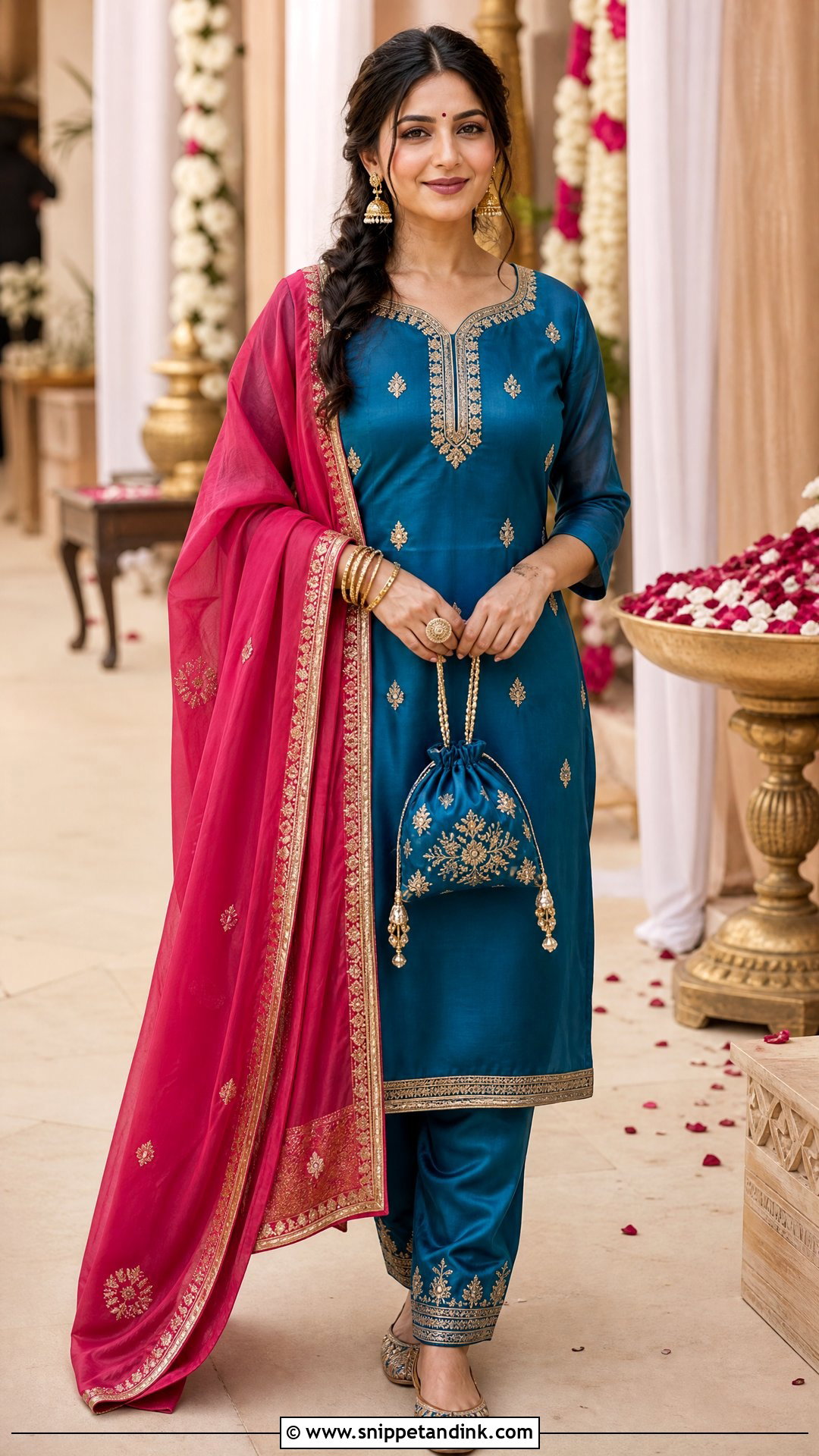
Sometimes the easiest outfit is also the one people remember. A silk salwar suit pairs a softly tailored kameez with pleated pants and a dupatta. Choose peacock blue, fuchsia, mustard or bottle green with fine gold details, and a contrast dupatta if you want another colour without heavy work. Traditional jhumkas, a small bindi, bangles and embroidered juttis complete it, with a potli that repeats one shade. A loose braid, low bun or soft curls keep it classic. The pleated salwar is what makes it so comfortable for seated rituals. It suits women of every age, cut relaxed, straight or fitted.
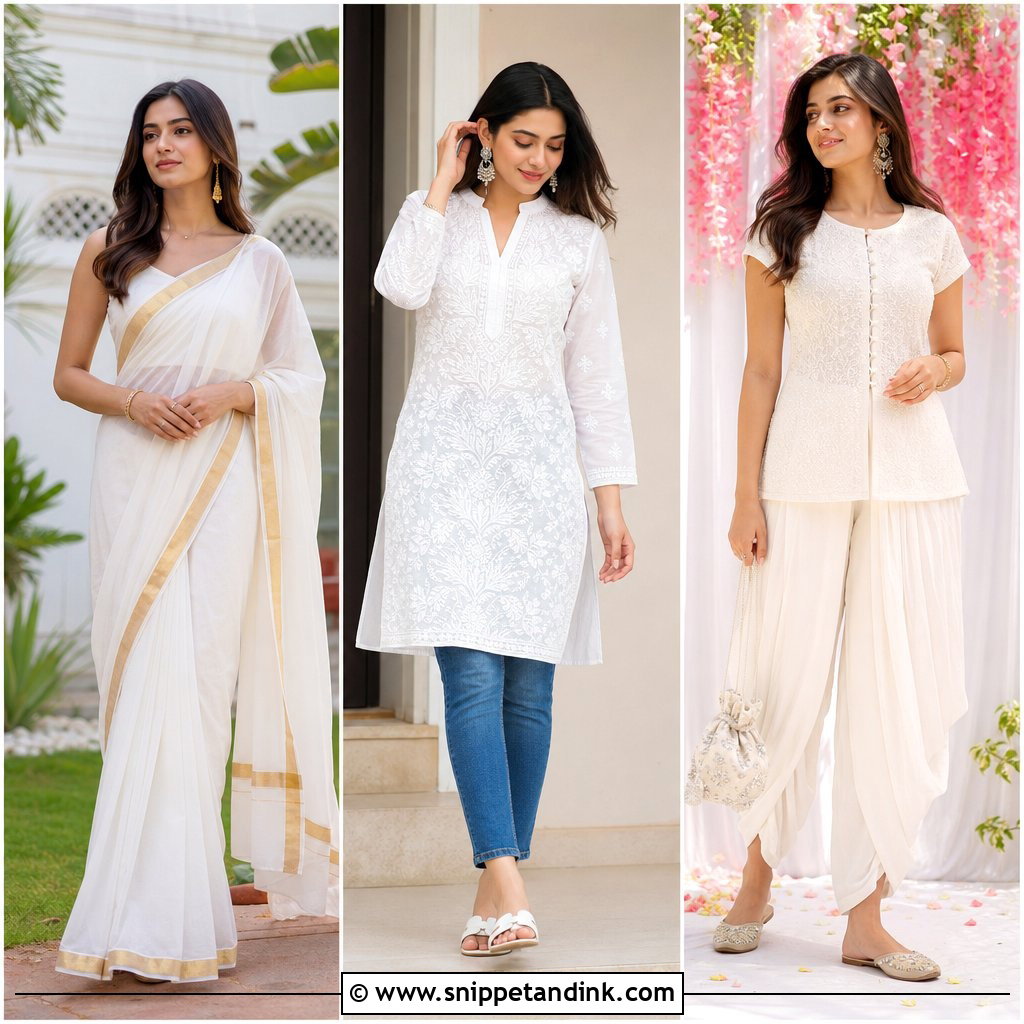
19. Kasavu Saree Wedding Look
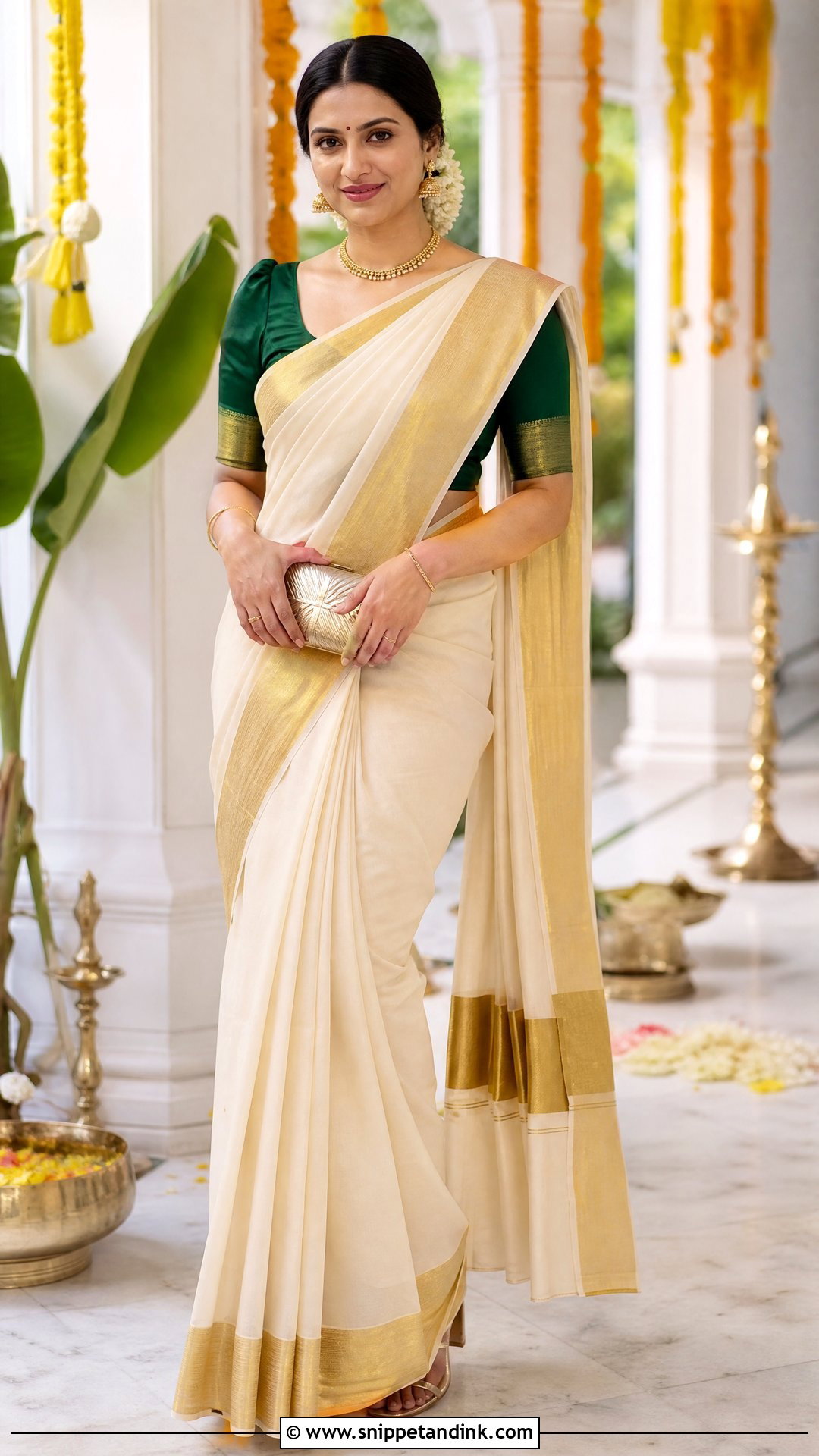
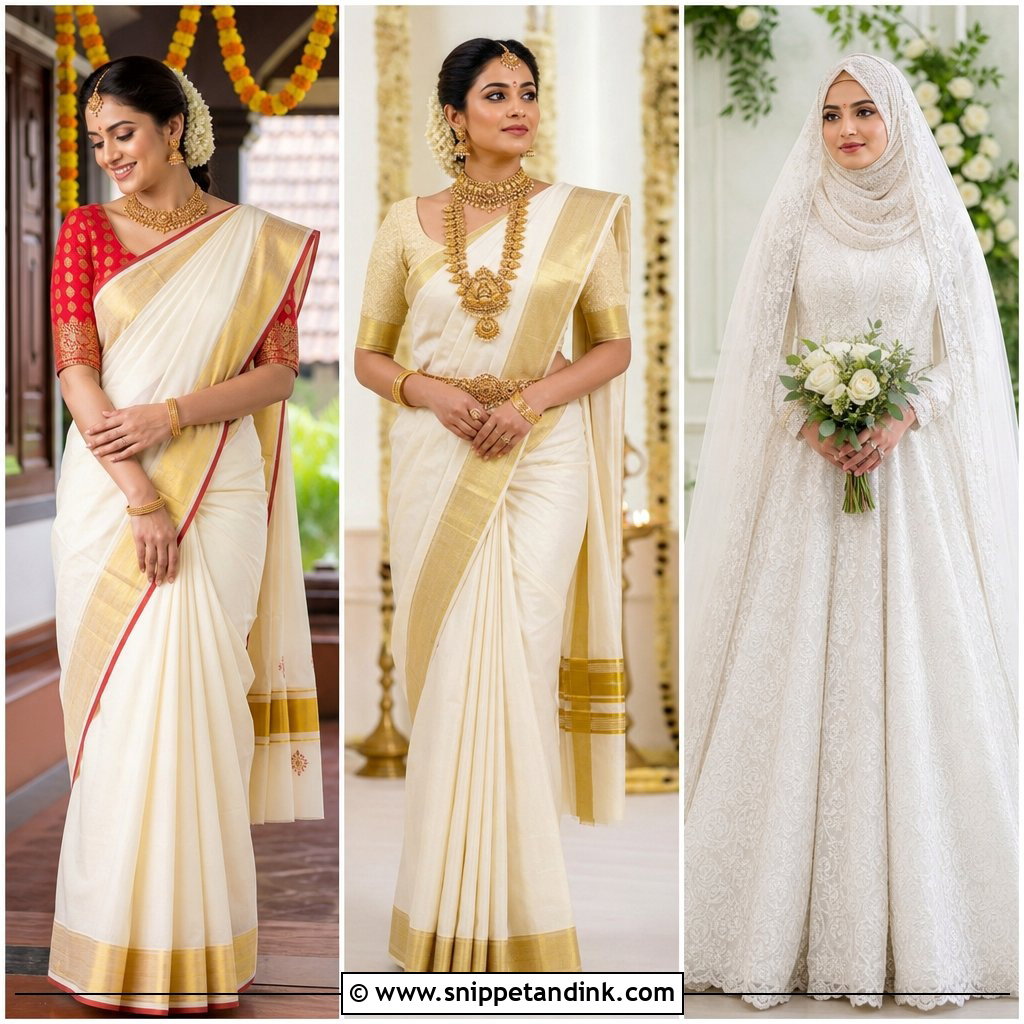
A cream kasavu saree with a gold border is the calm, traditional choice for a daytime or South Indian wedding. Pair it with a green, pink, maroon or gold blouse to bring in colour. Gold jhumkas, a short necklace and a slim bangle stack echo the border. A small woven or metallic clutch and low gold sandals keep it comfortable. A centre-parted bun with jasmine is classic; a neat braid is just as appropriate. Kasavu is handloom cotton, so it creases and the pleats soften as the day warms. I starch it lightly and pin the pleats twice for seated rituals. The restrained palette still feels festive when fabric, drape and jewelry line up.

20. Jumpsuit With Dupatta Wedding Look
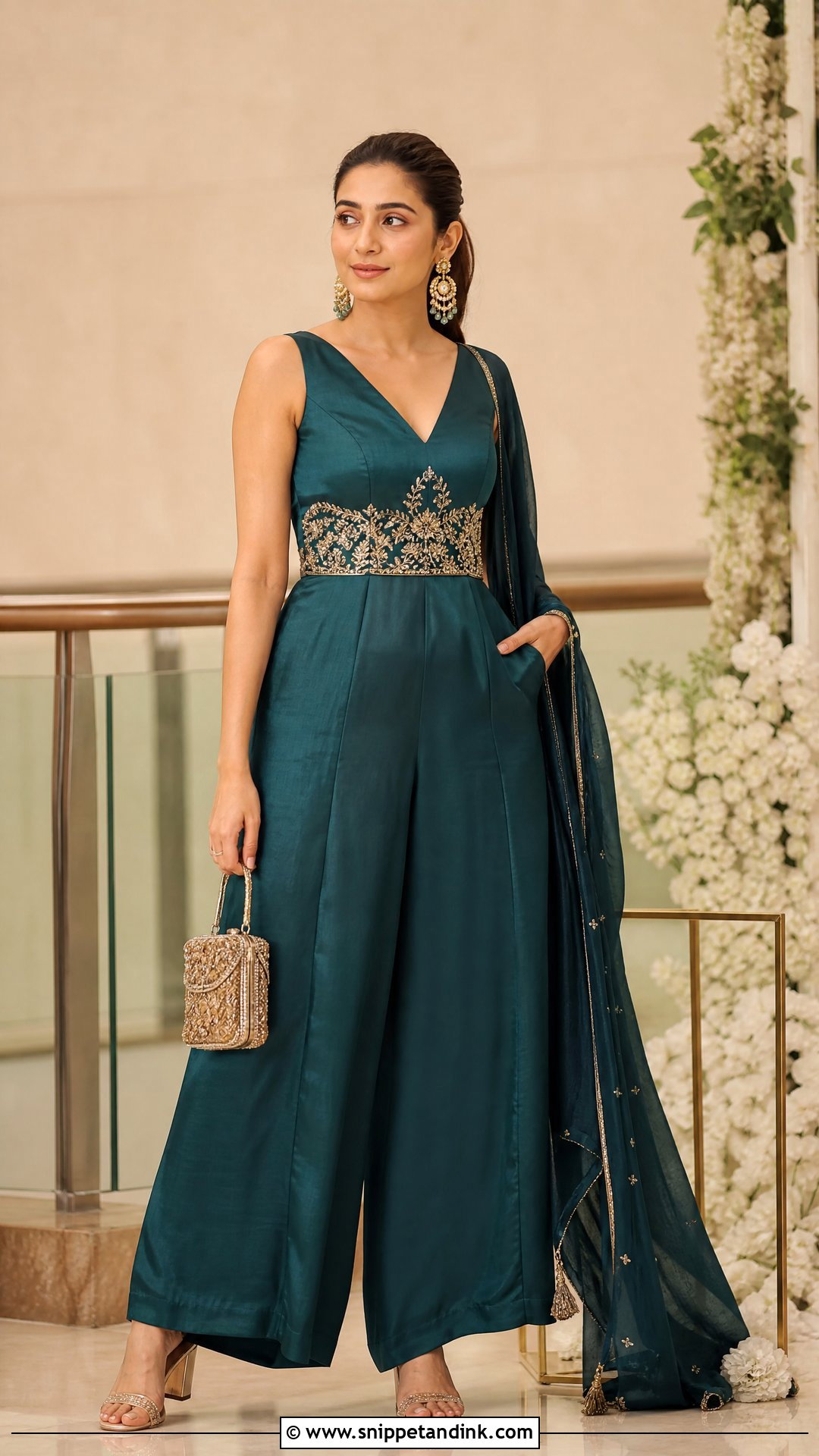
A tailored jumpsuit works at an Indian wedding once you add festive details. Choose a wide-leg cut in satin, crepe or silk with embroidery at the neck or waist, and a light dupatta over one shoulder, or one with an attached drape. Emerald, navy, magenta and deep teal suit the evening; peach and powder blue suit daytime. Statement earrings, a small embellished bag and block heels finish it, with a sleek ponytail or smooth waves. The defined waist gives shape and the wide legs give comfort. Before you commit, check with the hosts or a family member that fusion wear is welcome at that particular event; at most receptions it is, at some religious ceremonies it isn’t.
Packing Silk, Sequins and Lehengas for a Destination Wedding
Many of these outfits travel badly unless you pack them with care. A few habits keep them wearable when you unzip the case.
- Fold sarees in their original fold lines and wrap each one in a cotton cloth or old dupatta so zari doesn’t snag on other clothes.
- Turn embellished lehenga skirts inside out, fold them loosely in thirds and lay them flat on top. Never stuff a can-can skirt into a corner.
- Put each outfit’s jewelry, pins and blouse in one labelled pouch, so you dress for each event from one bag.
- Pack a travel steamer or ask the hotel for one. Ironing directly on sequins or mirror work can melt or scratch them.
- Carry a kit with safety pins, a small sewing set, double-sided fashion tape, blotting papers and a spare blouse hook.
- Hand-carry the most important outfit if you’re flying. Lost luggage is a far bigger problem the night before the ceremony.
Unpack the moment you arrive and hang everything in the bathroom while you shower; the steam drops most creases from silk and georgette overnight.
Does the Outfit Let You Sit, Eat and Dance?
A good wedding outfit is the one you forget about once the celebration starts. Traditional sarees, suits, light lehengas and fusion sets each have their place across the events. Begin with the venue, the time of day, the dress code, the weather and how much moving you’ll be doing. Then build one balanced look with matching shoes, jewelry, a practical bag and a hairstyle that holds. You don’t need the heaviest embroidery or biggest jewelry to look ready for a wedding. Considered colour, good tailoring, breathable fabric and comfortable shoes are what make a simple outfit feel right on the day.
You'll Like These Ideas:



Leave a Reply