
A Pakistani bride rarely buys one outfit. The mehndi, nikkah, baraat and walima each ask for something different, and the outfits have to work as a set as well as on their own. Pakistani bridal fashion gives you plenty to work with: lehenga cholis, ghararas, shararas, sarees, long shirts and floor-length gowns, from classic baraat red to an ivory nikkah pishwas. Below are twenty outfits I’d consider across those events, each with the jewelry, dupatta placement, footwear and beauty look that completes it. Some lean on heritage handwork, others on a cleaner modern line.
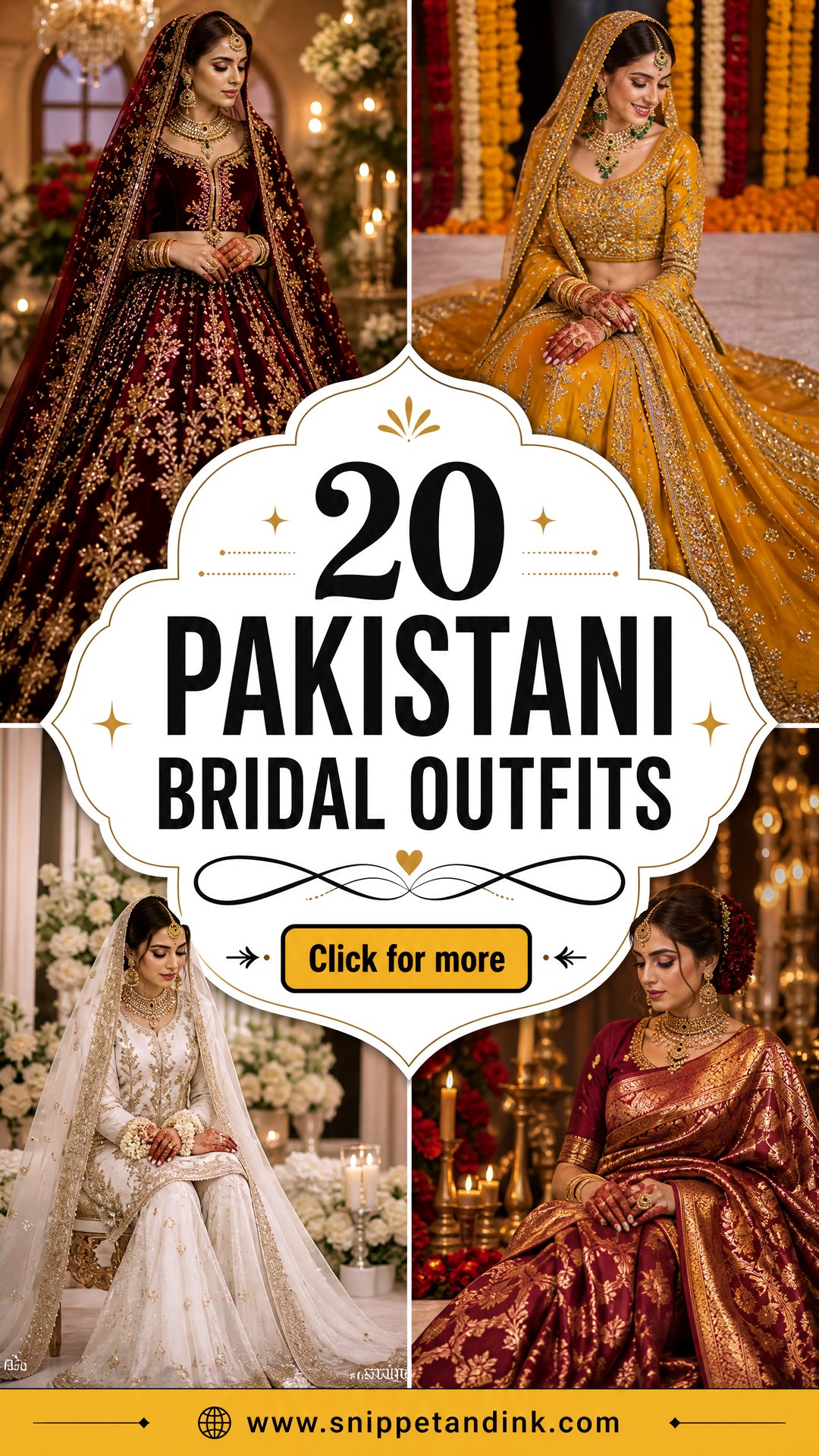
Planning Four Outfits So the Album Doesn’t Repeat Itself
When I plan a full bridal wardrobe, we lay all four events side by side before choosing anything. Picking one outfit at a time is how brides end up with three pastel looks and photos that blur together.
- Give each event its own color family. If the baraat is red, keep the walima well away from maroon and burgundy.
- Vary the silhouette as well. A sharara for the mehndi, a pishwas for the nikkah, a lehenga for the baraat and a gown or saree for the walima read as four distinct looks.
- Rotate the jewelry metals: kundan and antique gold for the heavier events, pearls or silver for the lighter ones.
- Share each color with the groom’s family early, so his sherwani or suit complements yours instead of matching it exactly.
Order the baraat outfit first, since heavy handwork has the longest lead time, and plan the other three around it.
1. Red Pakistani Bridal Lehenga
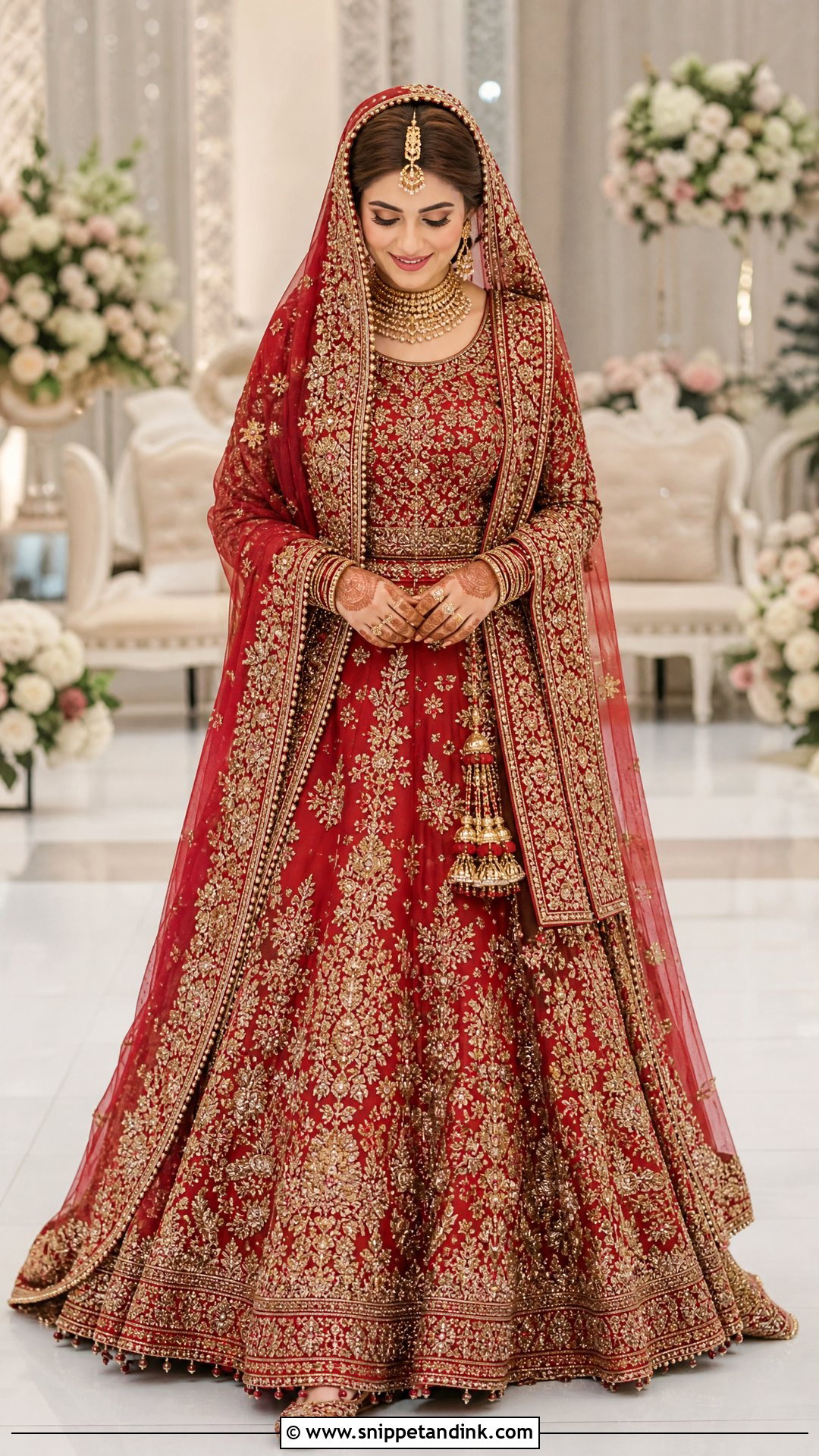
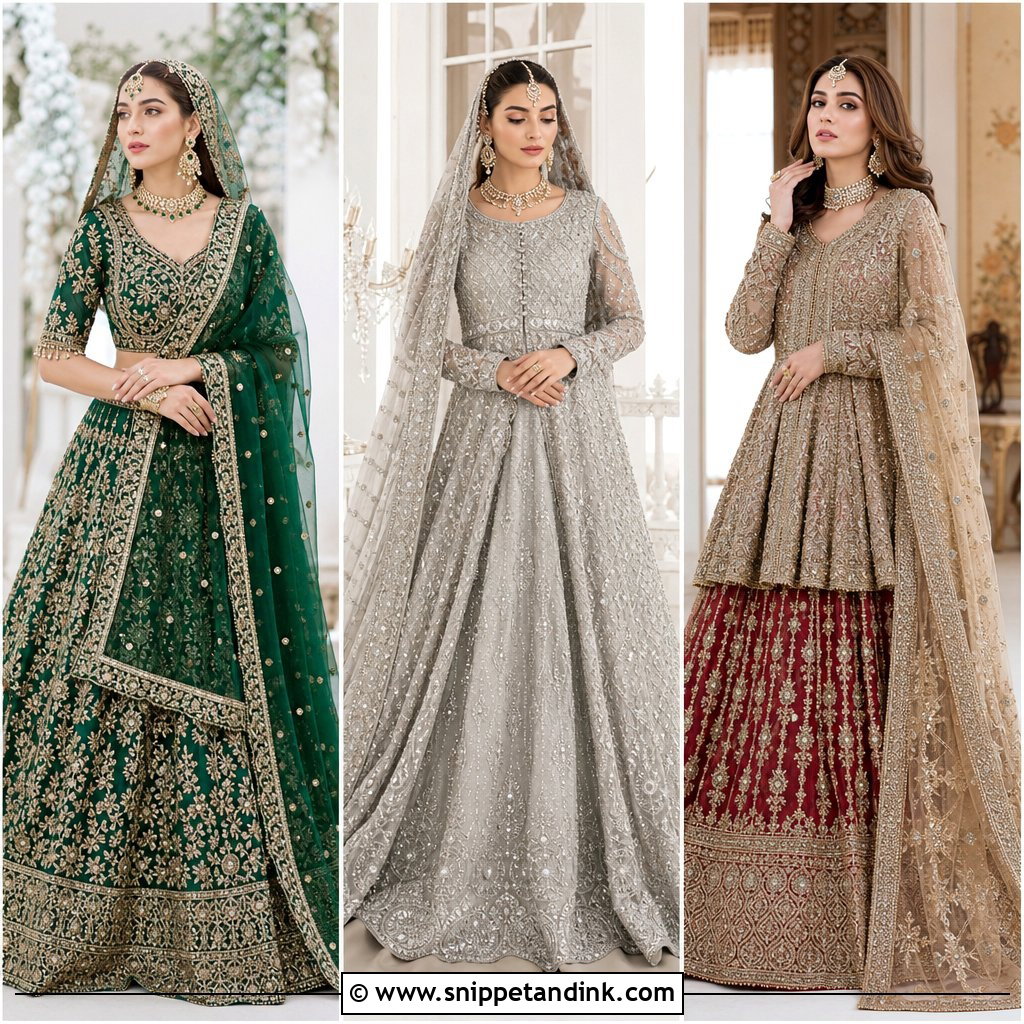
For a baraat lehenga, the base fabric decides how the embroidery sits. Velvet swallows light and makes gold zardozi glow; raw silk and jamawar show more of their own texture between motifs. Pair the full skirt with a fitted blouse or a modest long choli, and keep the dabka, naqshi and sequins in proportion to the fabric rather than burying it. One embroidered dupatta goes over the head and a lighter second one across the shoulder. Matha patti, layered necklace, jhumkas, bangles and khussas. A neat bun and softly defined eyes. I always fit the skirt volume and blouse length to the bride’s frame rather than copying the sample.
2. Maroon Velvet Pakistani Bridal Lehenga
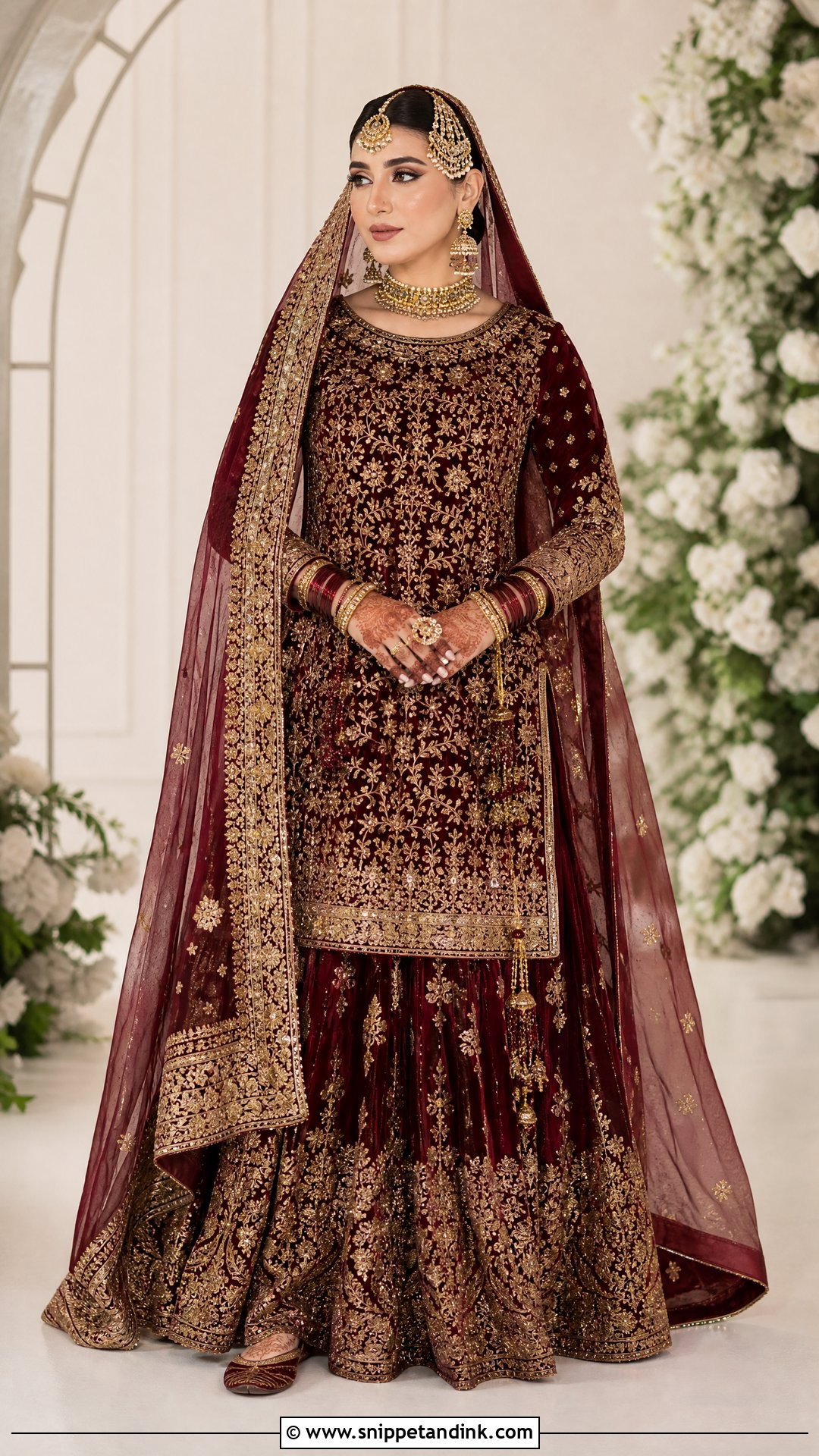
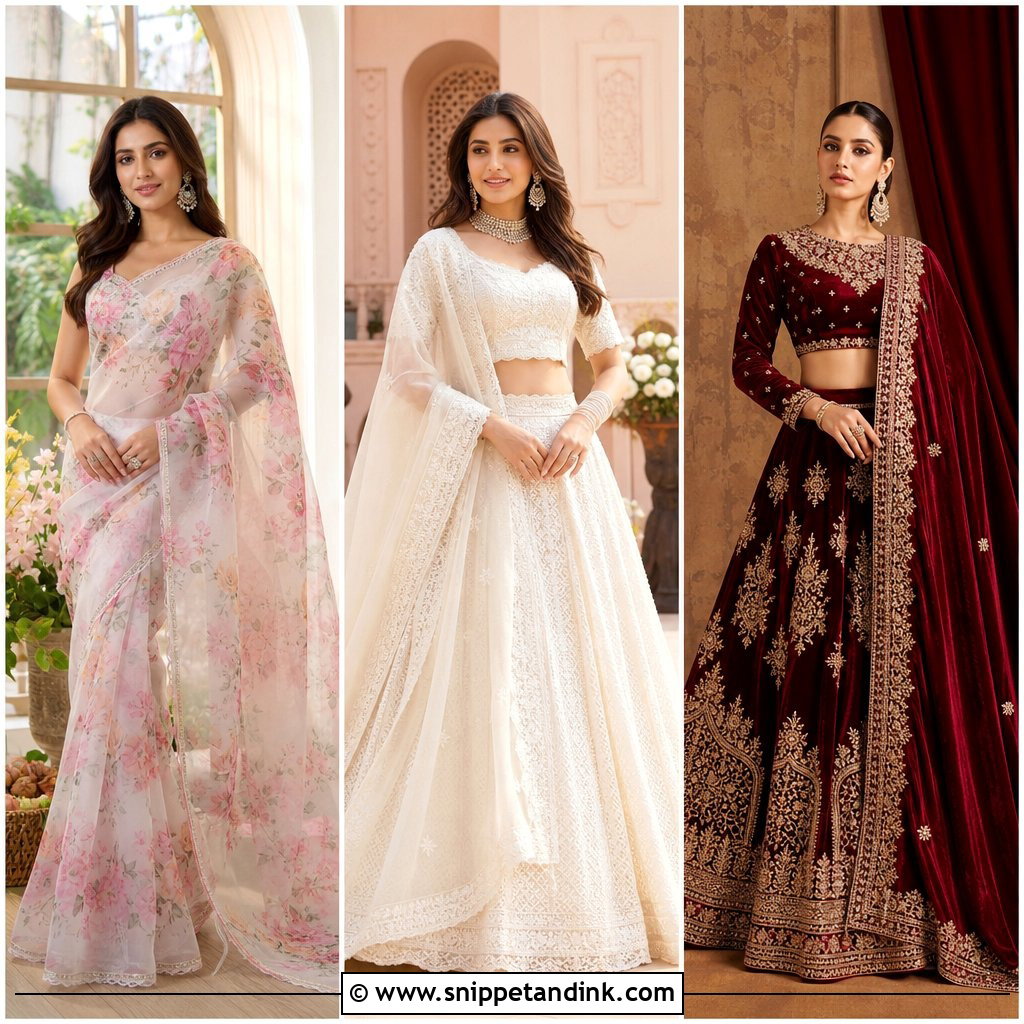
Put the weight at the hem. On a structured maroon velvet lehenga, antique gold embroidery concentrated near the bottom swings as you walk and keeps the bodice comfortable, while all-over work turns velvet stiff. A long velvet blouse or fitted knee-length shirt gives coverage. An organza dupatta with a broad border keeps the top half from feeling heavy. Antique gold jewelry, a passa, stacked bangles and maroon khussas. I’d skip the handbag during the ceremony and let someone else hold your phone. Against neutral decor, the maroon carries the photos on its own.
3. Ivory Pakistani Bridal Pishwas
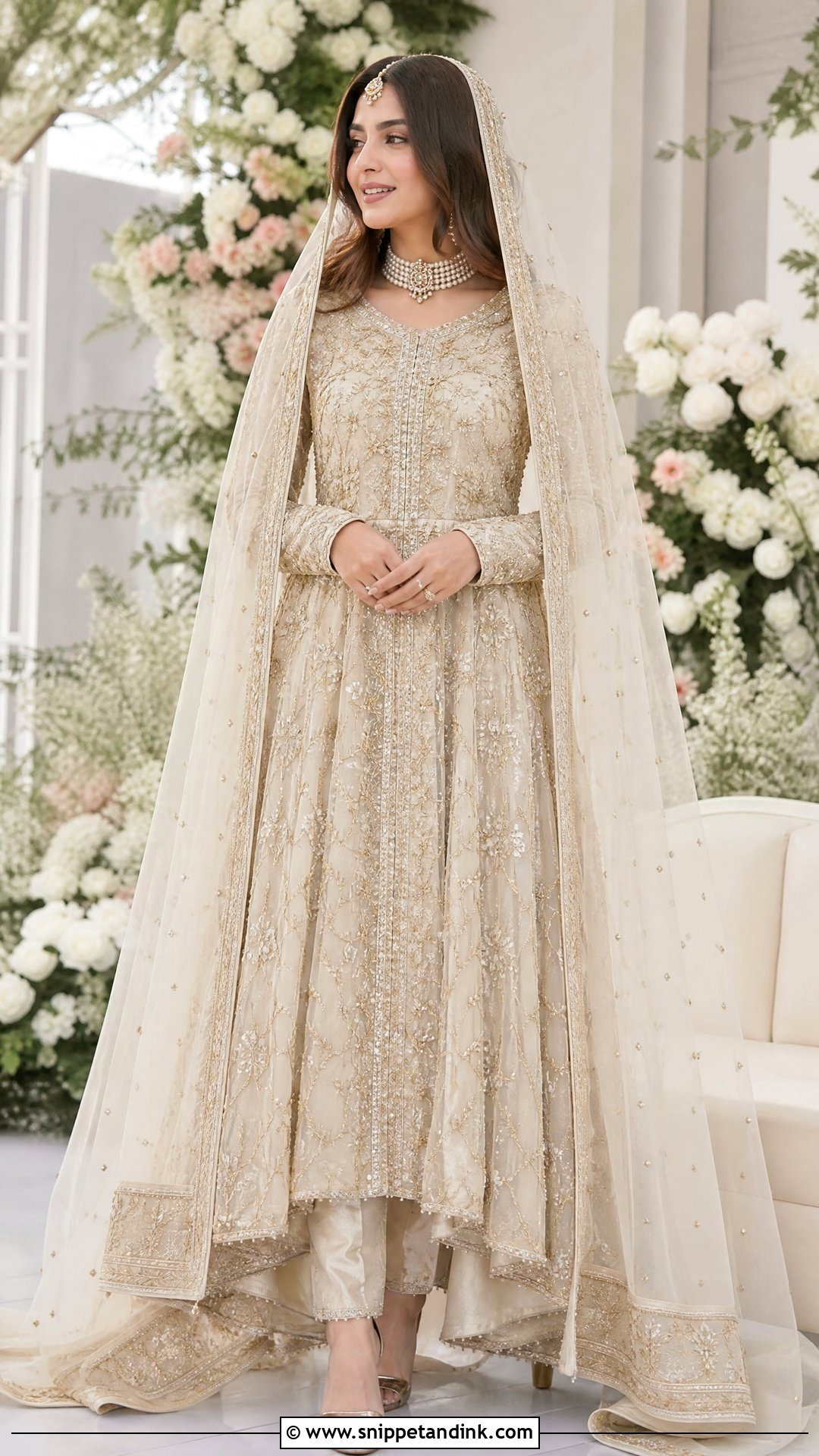
A wide circular hem on an ivory pishwas moves well, but it can swing open when you step up onto a stage, so wear straight silk trousers underneath. Full sleeves and a fitted bodice keep it right for a daytime nikkah. Look for gold, pearl or silver embroidery along the neckline, cuffs, panels and border, and nothing heavier. A matching organza dupatta over the head, plus a second light veil from one shoulder. Pearl earrings, a small tikka, a choker, metallic heels and a petite potli. Ivory can wash out the face, so I’d go a little warmer on blush than you think you need.
4. Blush Pink Pakistani Bridal Gown
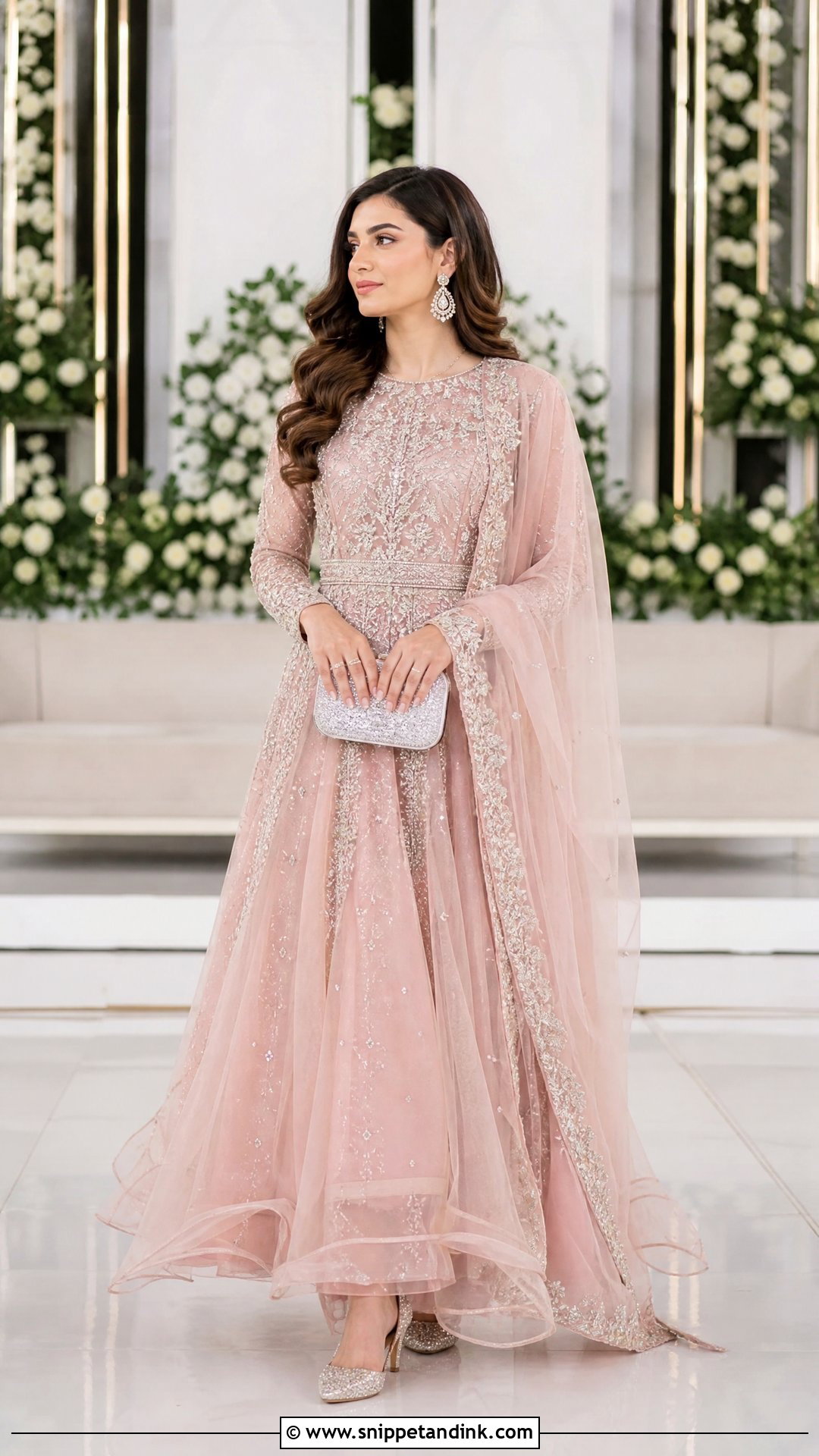
Skip the very wide ballgown version of this. A blush pink gown works better in a bright walima hall with a fitted upper body, a defined waist and a gently flared skirt. Tulle, tissue or organza over a comfortable lining, finished with silver embroidery, crystals or tonal threadwork. Tulle snags on crystal-studded bracelets, so keep wrist jewelry smooth. Full sleeves and a higher neckline balance the pastel. Attach the sheer dupatta at the shoulders or carry it over one arm. Diamond-style jewelry, crystal heels and a silver clutch, loose waves or a polished bun, rosy makeup and a manicure close to the gown’s shade.
5. Gold Farshi Gharara Bridal Outfit
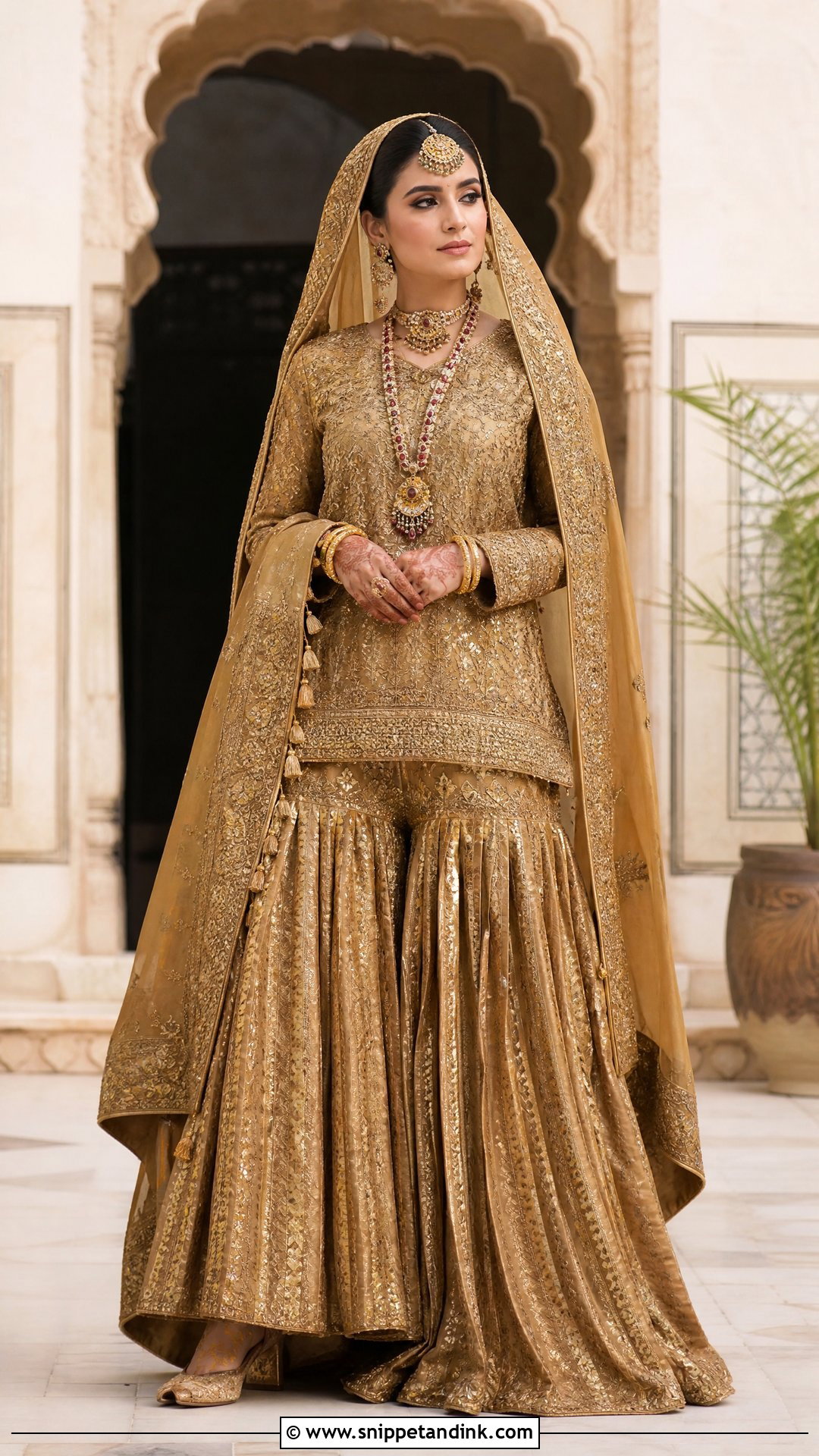
The farshi gharara is fitted through the upper leg and widens below the knee into a long sweep across the floor. Keep the kameez short or mid-length so that shape stays visible. Antique gold on its own can look flat, so bring in muted champagne panels and a little maroon, with dabka, resham, beads and fine sequins on the borders. A coordinating dupatta goes over the head. A passa, choker, long necklace, jhumkas and block-heel khussas. I have the final length measured in the exact shoes the bride will wear, because even a small change in heel height alters how the sweep lies on the floor.
6. Emerald Green Mehndi Sharara
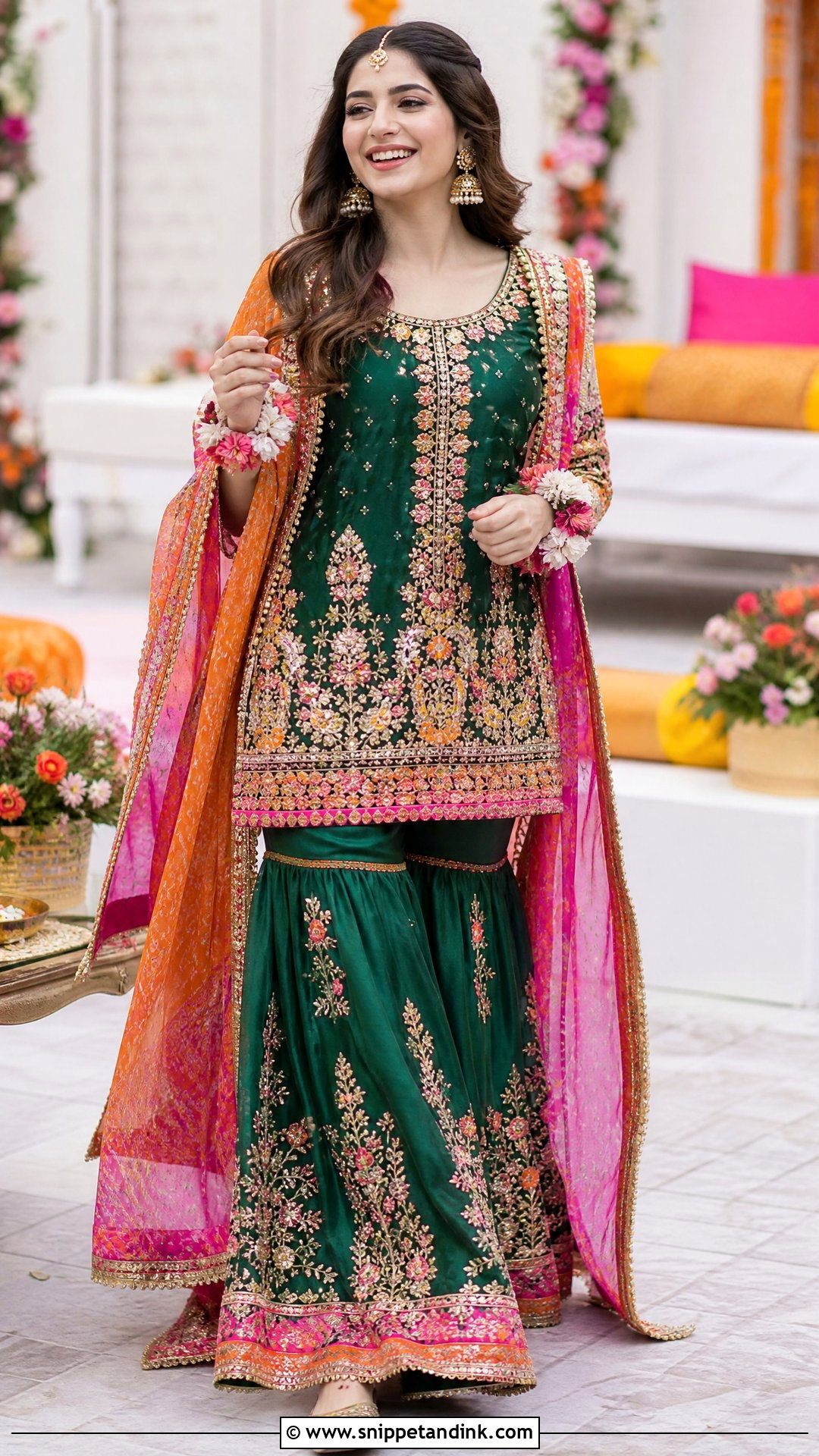
Yellow isn’t compulsory at a mehndi. Emerald gives the outfit richness, and a fluid sharara with wide, uninterrupted legs is the most dance-friendly bottom you can wear. Put a short embroidered kurti on top, with lime, pink, orange or gold coming in through threadwork, mirrors, tassels and borders. A light contrasting dupatta adds energy. Gold jhumkas, floral bangles, a small tikka and flat khussas, since narrow heels and a dhol don’t mix. A side braid with small flowers holds through the dancing. Fresh skin, with a brighter lip or colored shadow picking up the embroidery.
7. Mustard Pakistani Bridal Lehenga Choli
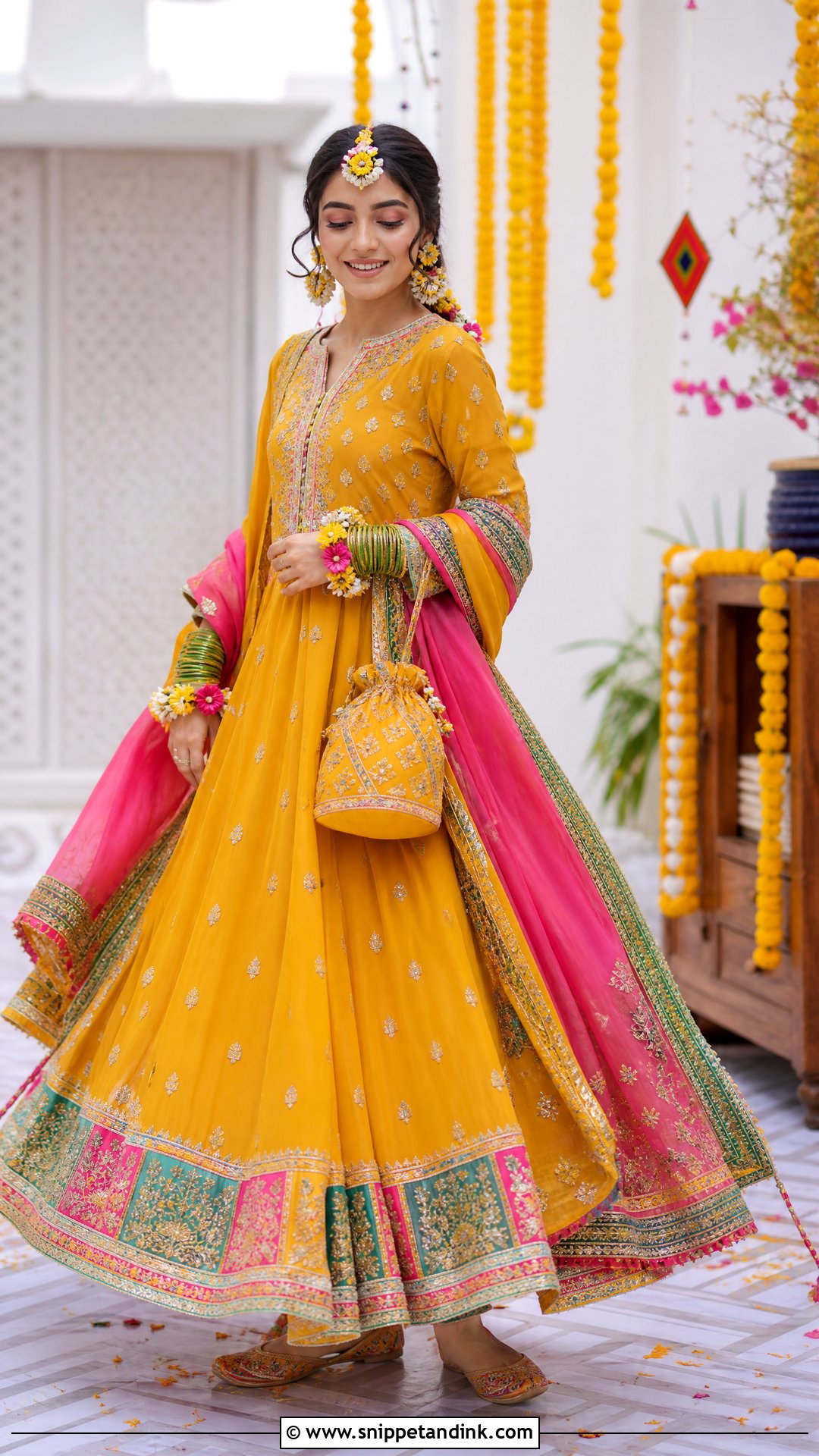
Mustard is an earthy shade and can look dull in harsh midday sun. At a daytime mayon or mehndi celebration, contrast embroidery in green, hot pink, orange and antique gold brings it to life. Choose a lightweight lehenga with enough flare to move, and a fitted choli or waist-length kurti with sleeves that stay put. A multicolored border running through skirt, blouse and dupatta ties the colors together so they don’t look random. Floral jewelry, colorful bangles, a small potli, flat embroidered shoes, a loose braid and natural makeup. For more coverage, swap the choli for a hip-length peplum.
8. Teal Angrakha Bridal Pishwas
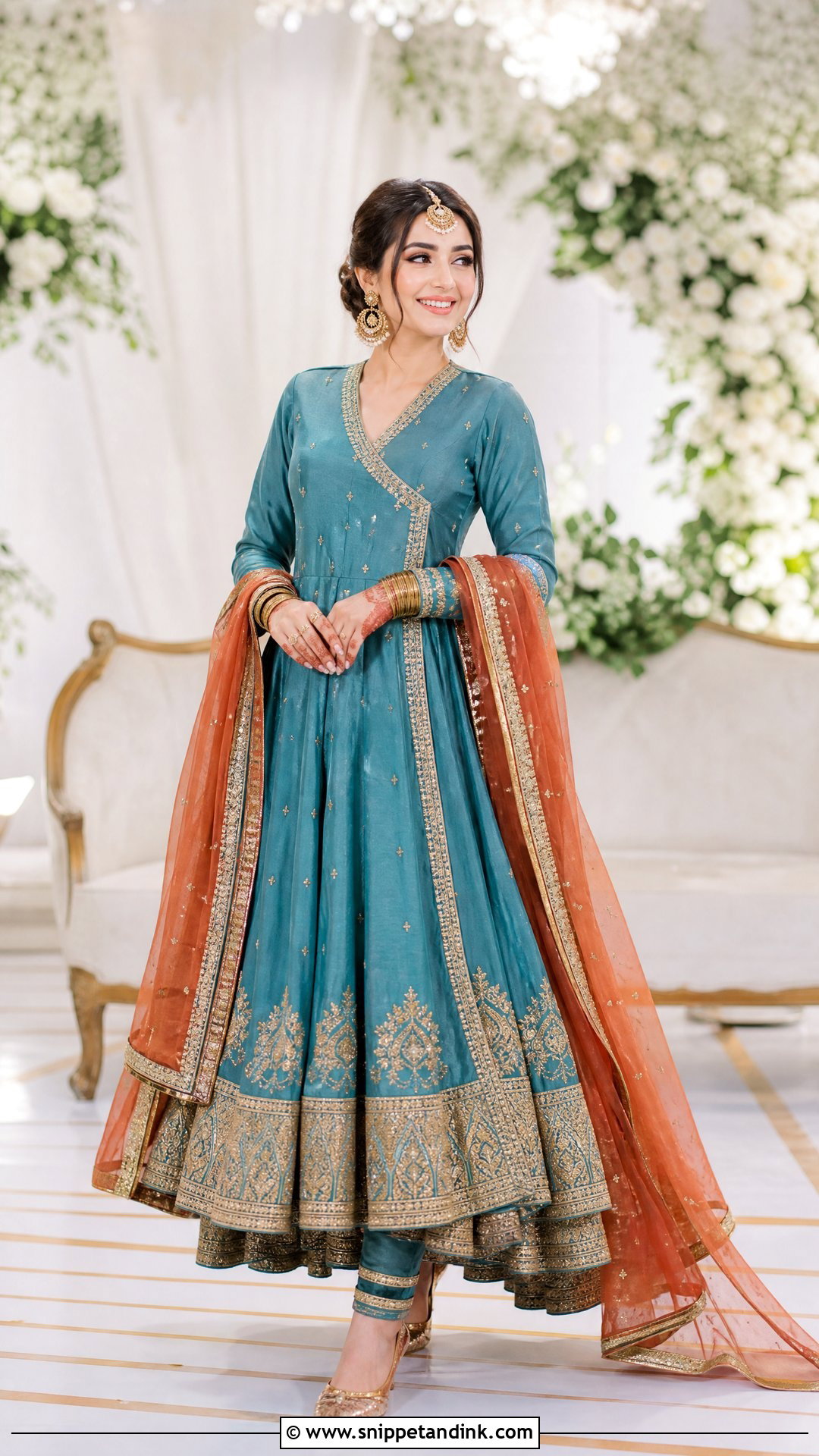
The angrakha’s diagonal neckline is the natural home for the outfit’s best detail, whether that’s an embroidered border, decorative buttons or handmade tassels. In jewel-toned teal silk, chiffon or organza, carry gold, coral or rust through the cuffs and hem, with fitted trousers underneath. A rust or coral dupatta over one shoulder adds contrast and leaves the wrap neckline uncovered. I insist on a firm inside tie or hook: a crossover held only by its outer tie loosens after an hour of hugging guests. Gold earrings, a centered tikka, stacked bangles, low metallic heels, a sleek middle-parted bun and softly bronzed makeup.
9. Champagne Pakistani Bridal Maxi
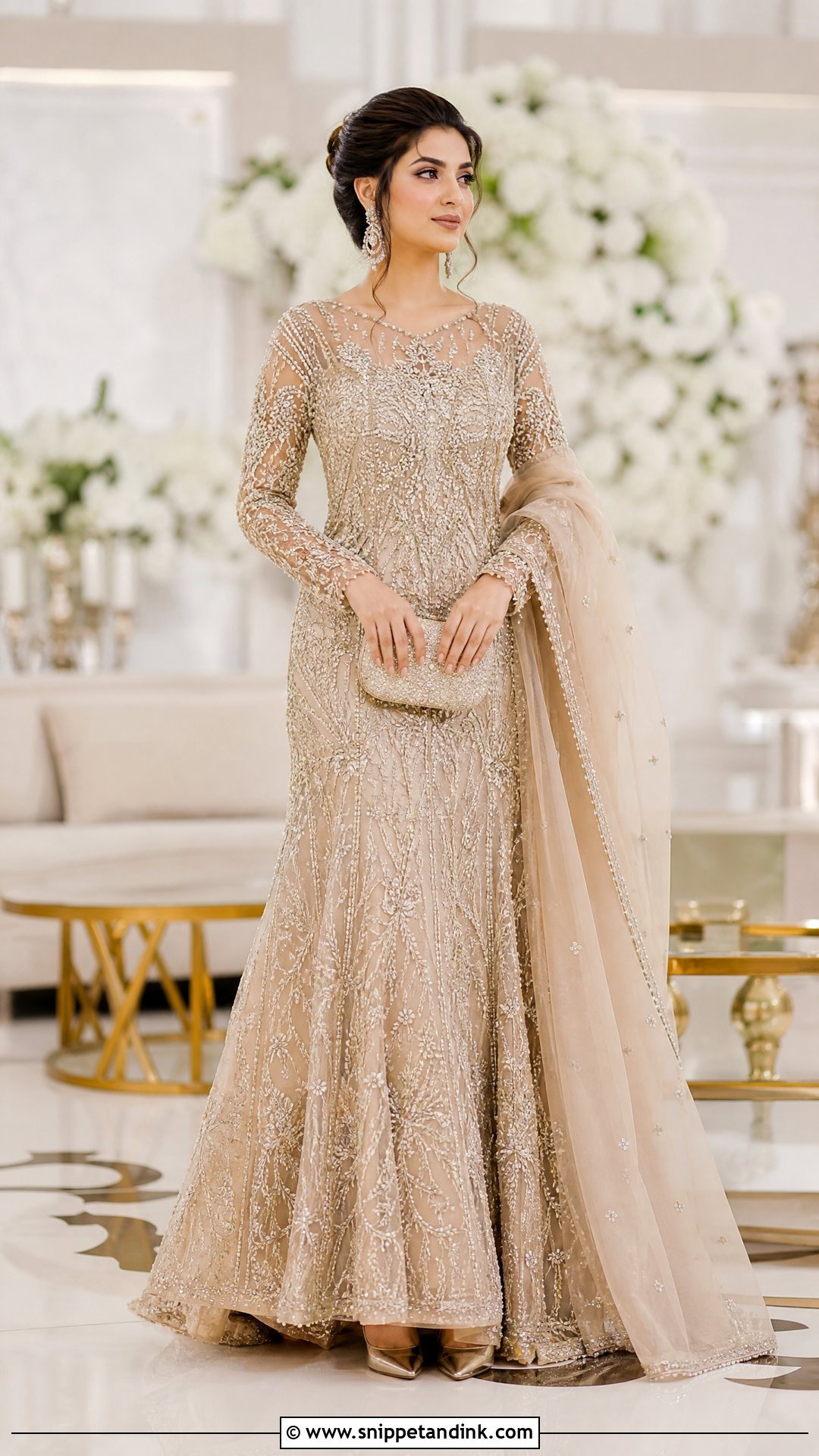
A champagne maxi suits a bride who wants a clean walima line with the sparkle kept in check. Fitted bodice, defined waist, softly flared skirt. Embroidery in silver, pale gold, pearl and crystal blends into the fabric instead of sitting on top of it, and sheer full sleeves give coverage without weight. A matching net dupatta goes over the arms or neatly on the head. Crystal earrings, a delicate necklace, metallic pointed heels and a compact clutch. Finish with soft brown eye makeup, a neutral lip and polished waves. Champagne leans gold or pink depending on the dye, so approve a real fabric swatch, never a photo on a screen.
10. Silver Gray Pakistani Bridal Saree
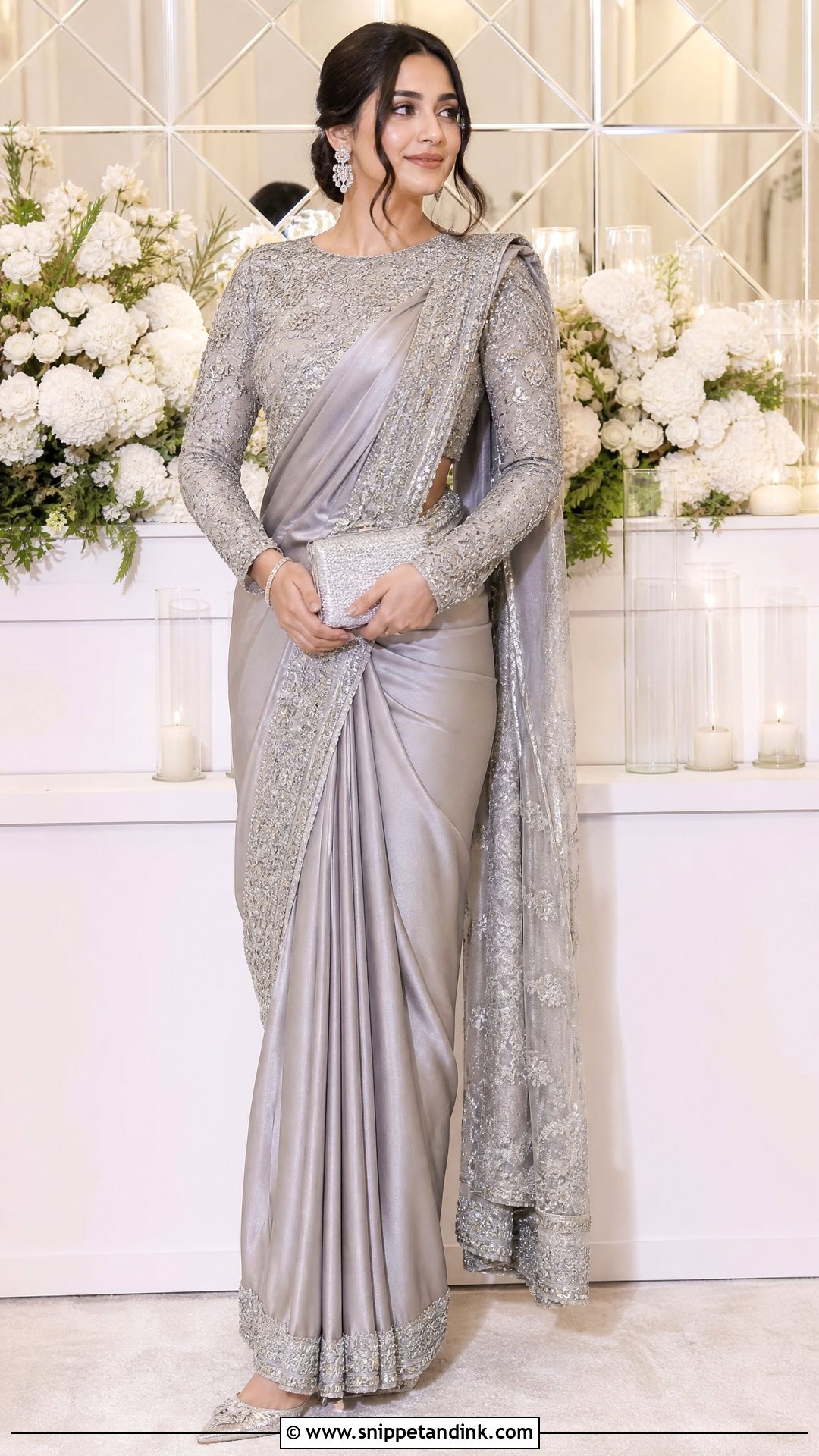
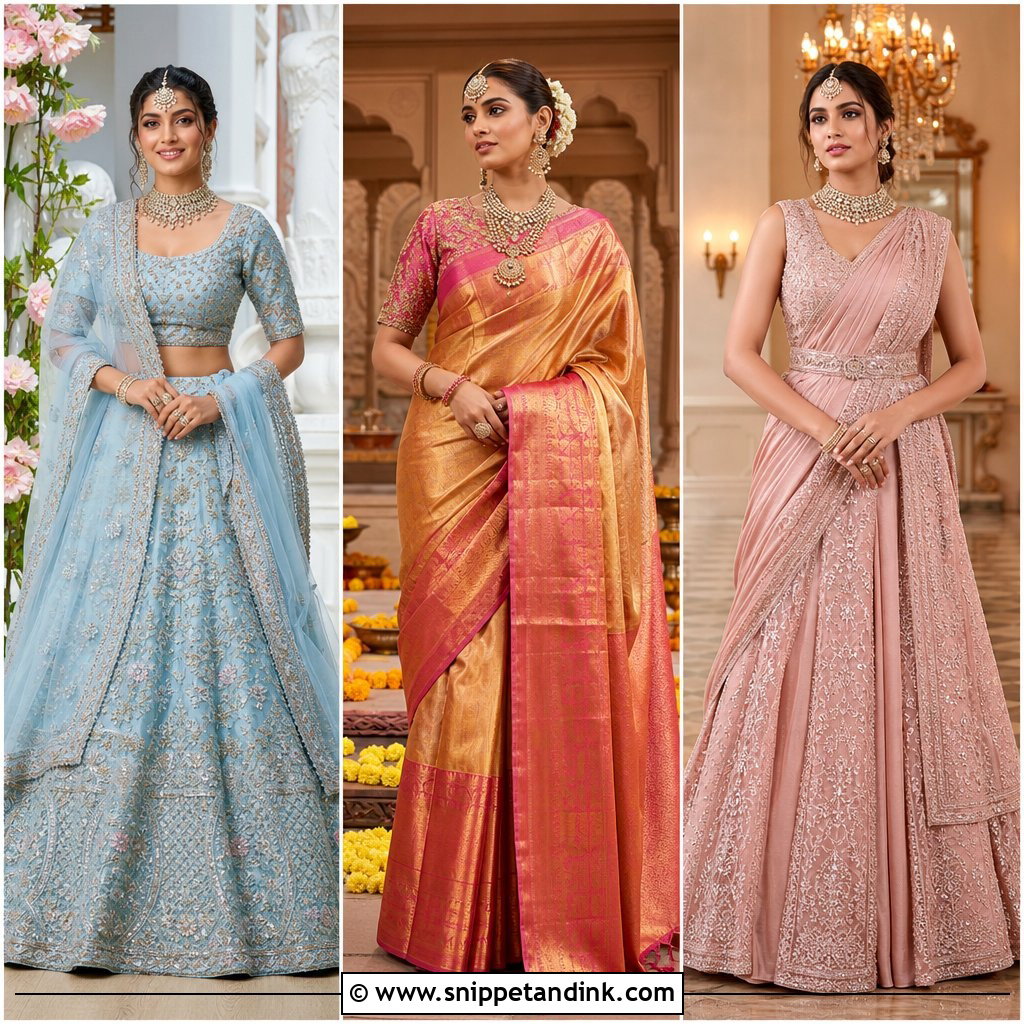
A saree is the slimmest silhouette on this list, and silver gray tissue, silk or organza with fine border and pallu embroidery keeps it modern. Pair it with a fitted full-sleeve blouse long enough for the coverage you want. Metallic fabric is slippery, so either have the saree professionally pleated and pinned or order a pre-stitched version that holds through a long reception. Hem it to just brush the top of your heels; any longer and tissue folds and drags. Diamond-style earrings, a slim bracelet, silver heels, a structured clutch, a smooth bun, a soft pink lip and a touch of highlighter.
11. Pastel Blue Organza Bridal Lehenga
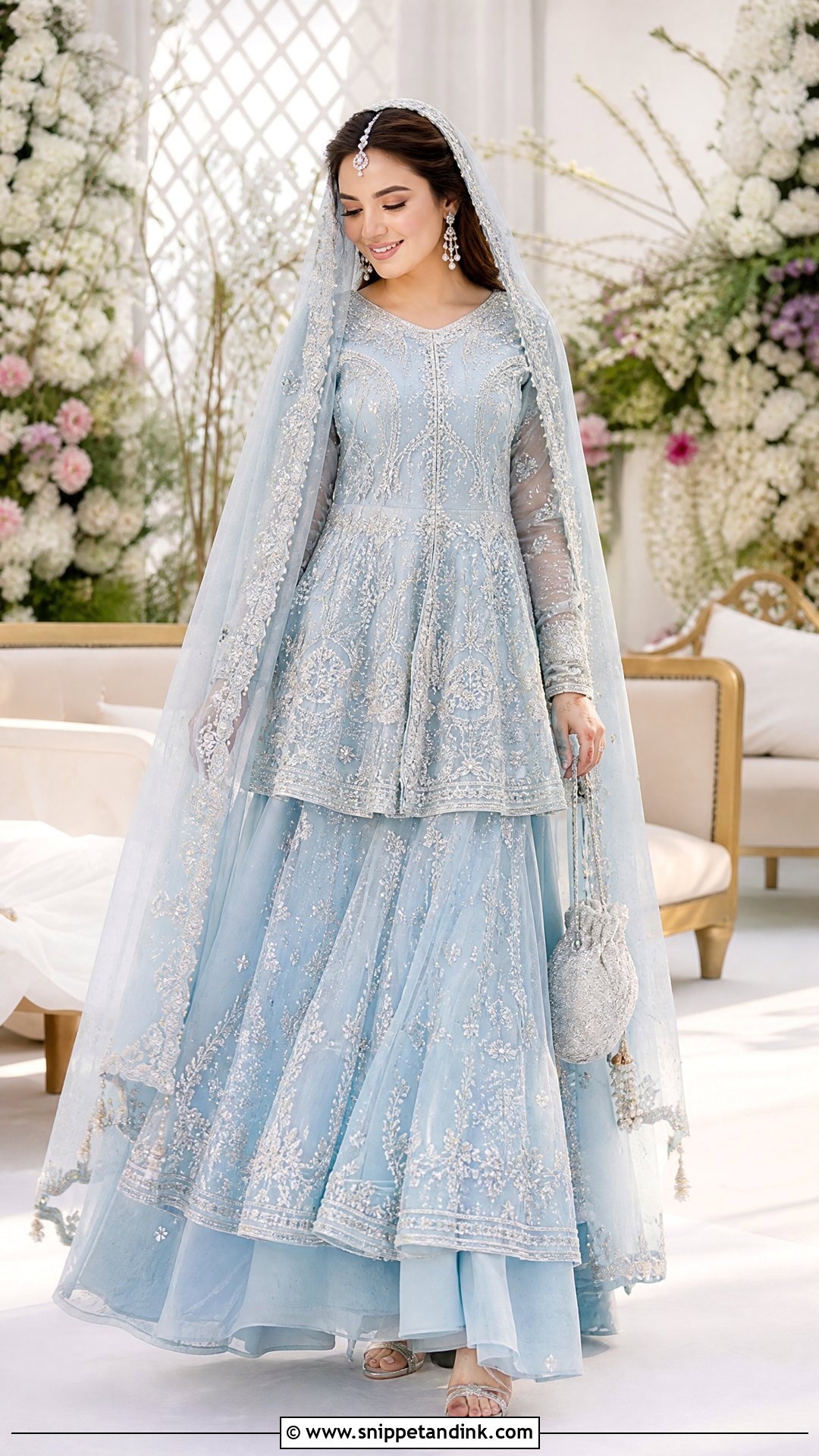
Organza in daylight shows whatever is underneath it, so the first thing I’d check on this lehenga is the lining: stand by a window and look. Pastel blue suits a daytime walima or a formal nikkah reception, with delicately embroidered panels in silver thread, pearls, crystals and pale florals. A long blouse or fitted peplum top gives structure above the skirt. Drape a sheer matching dupatta over the head or across both arms, depending on the ceremony. Pearl drops, a delicate tikka, silver heels and a small embellished bag. A low textured bun and cool-toned makeup.
12. Dusty Rose Long Shirt With Lehenga
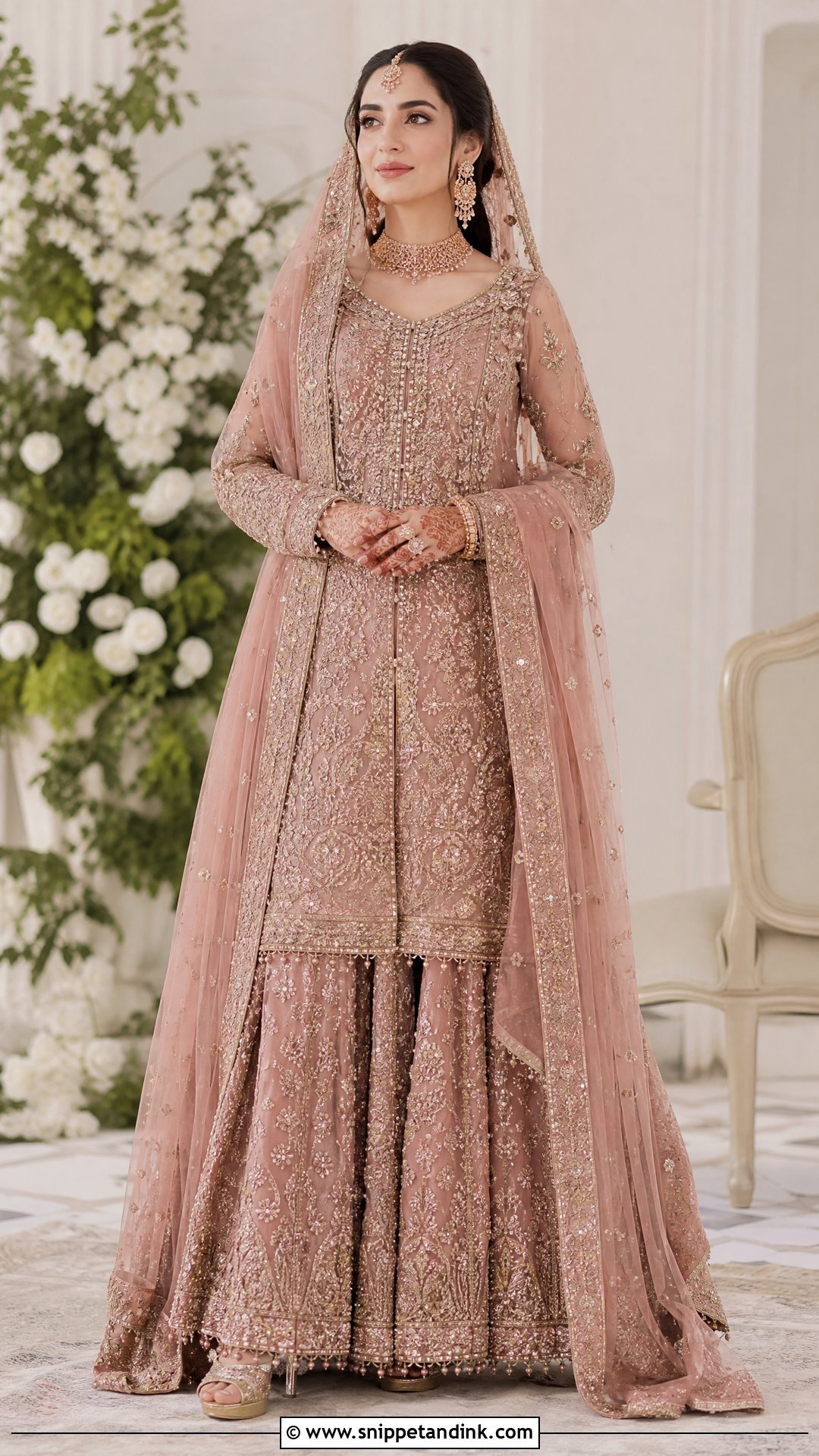
Coverage and length are what this pairing does well. The dusty rose shirt should reach below the knee with side slits for movement, over a moderately flared lehenga that carries matching embroidery at its lower border. Tonal threadwork, pale gold dabka, pearls and fine sequins are enough. Let one side of the light dupatta fall straight down from the head to stretch the line further. Rose-gold earrings, a choker, bangles and embellished heels, with a neat bun or side-parted waves. Ask for stronger waist shaping if you want definition, or a straighter cut if you’d rather the shirt skim.
13. Rust Pakistani Bridal Gharara
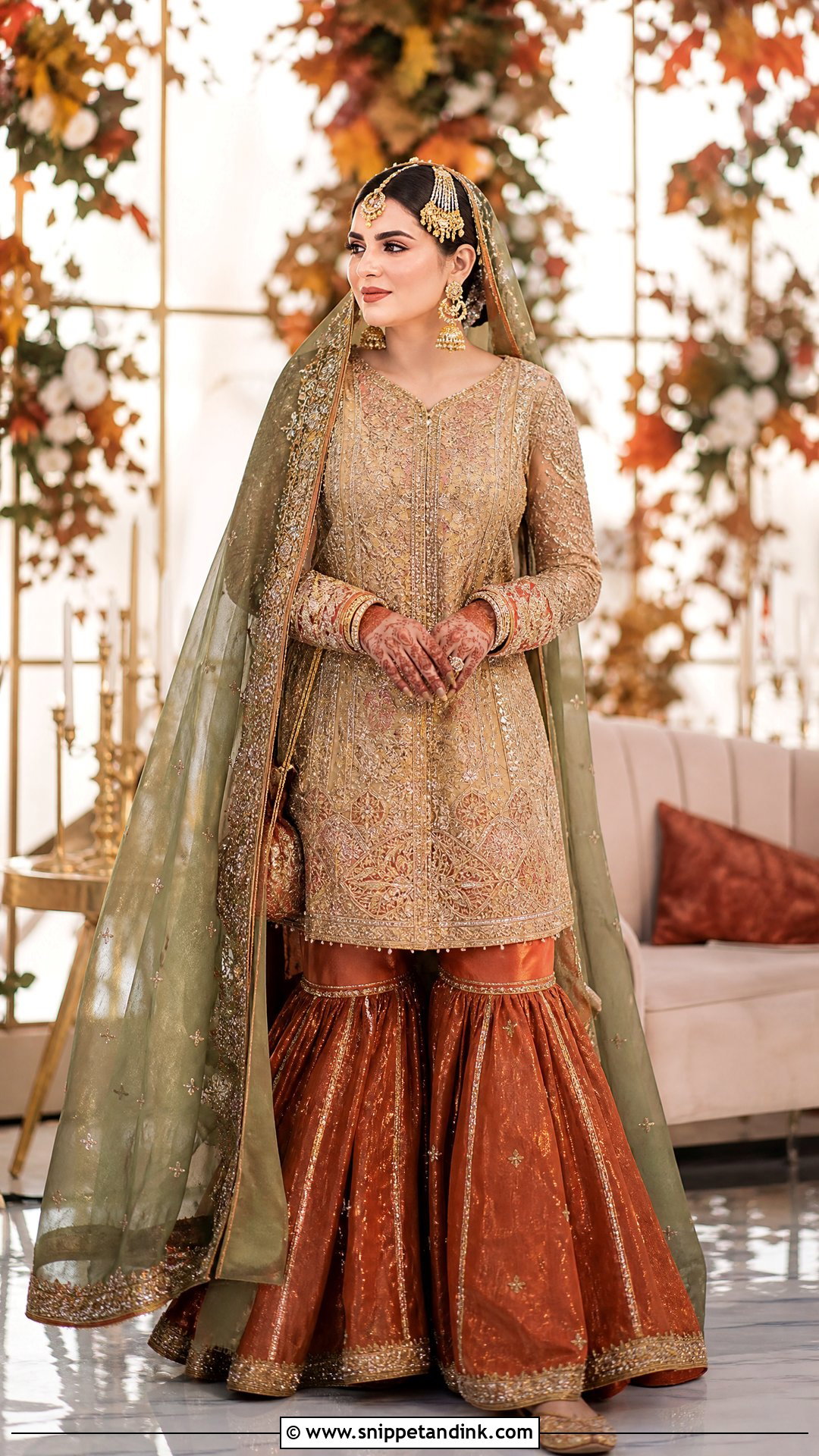
Rust is an autumn color, warm and deep, and it suits an evening event. A short kameez over a flared gharara keeps the gathered knee and sweeping lower section on show. Antique gold embroidery with touches of olive, maroon or burnt orange gives a layered tonal effect, and an olive or muted gold organza dupatta adds contrast without leaving the earthy palette. The knee seam is the pressure point. Thick with embellishment, it won’t bend when you sit, so I ask the tailor to keep that band flexible. Antique jhumkas, a passa, bangles, padded khussas, a center-parted bun and warm brown makeup.
14. White And Gold Nikkah Gharara
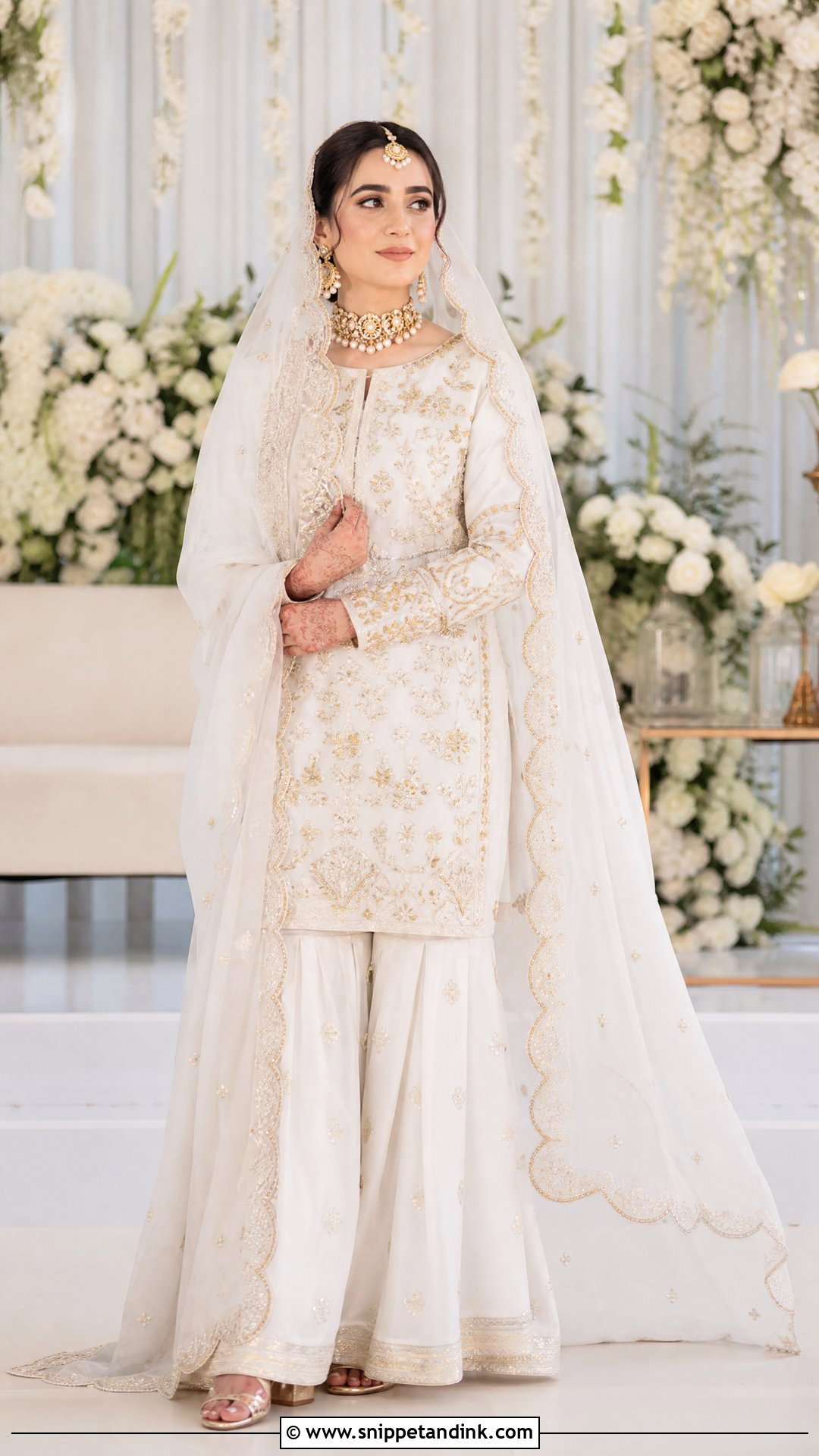
White under flash can turn see-through if the lining is thin, and that’s the detail I’d confirm before anything else. Choose an opaque lining for the structured white kameez with fine gold embroidery at the neckline, sleeves and hem, and for the matching gharara with its narrow gold borders. A sheer organza dupatta with scalloped edges goes over the head, with a second light drape if you want depth. Pearl-and-gold jewelry: a small tikka, earrings and a refined choker. Metallic block heels or embroidered khussas, fresh skin, softly lined eyes and a muted rose lip.
15. Deep Plum Velvet Bridal Pishwas
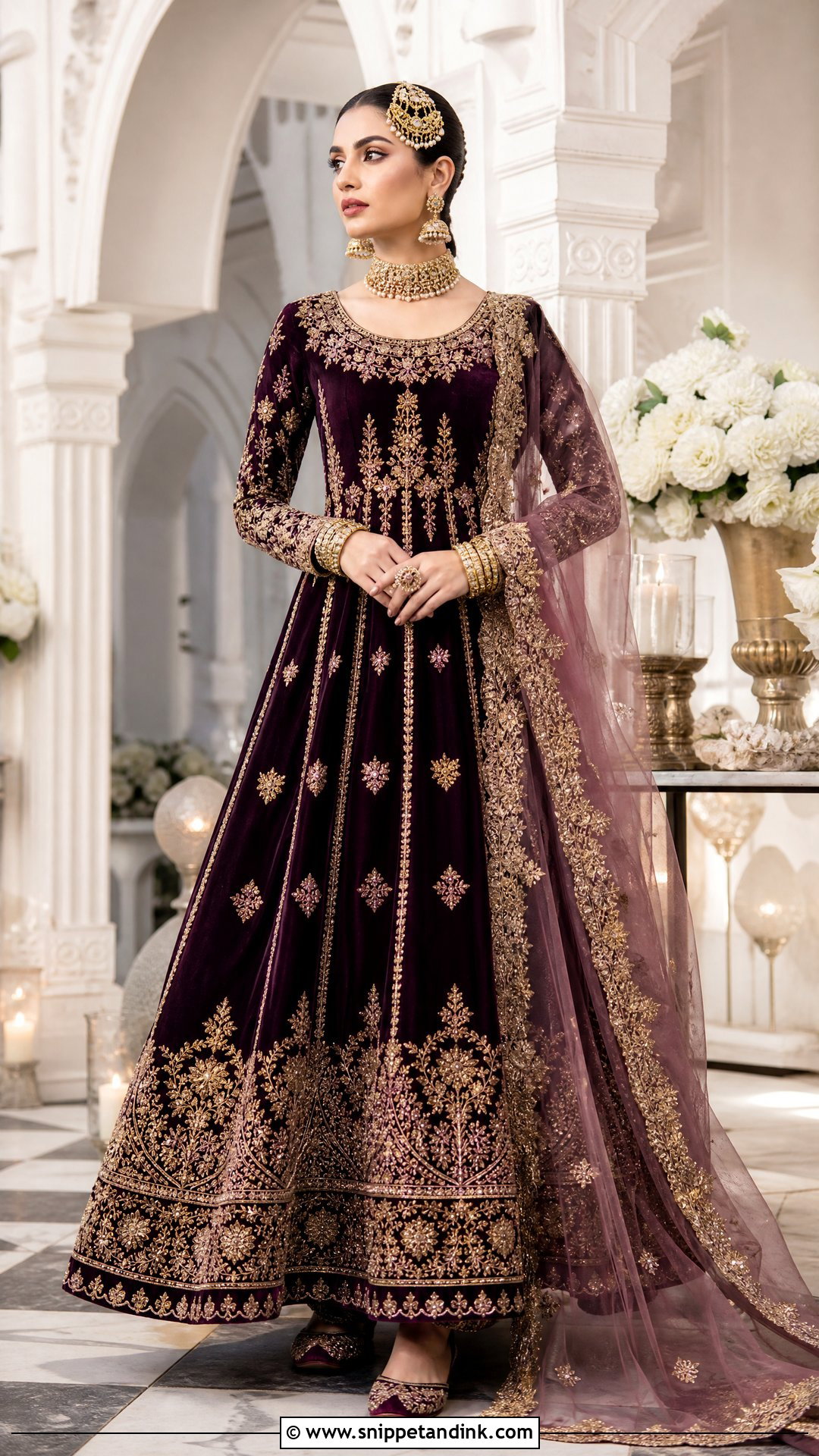
Deep plum answers the bride who wants drama without repeating traditional red. Velvet in a paneled pishwas shows off its texture as the panels fall. Keep the antique gold embroidery to the bodice, cuffs and lower border, since velvet stiffens under heavy work. A lighter organza dupatta in plum, gold or dusty pink balances the weight. Traditional gold jewelry, a bold choker, a passa and velvet khussas. A low middle-parted bun keeps your head steady under the passa. Velvet is warm, so save it for a cool season or an air-conditioned evening hall.
16. Coral Floral Pakistani Bridal Lehenga
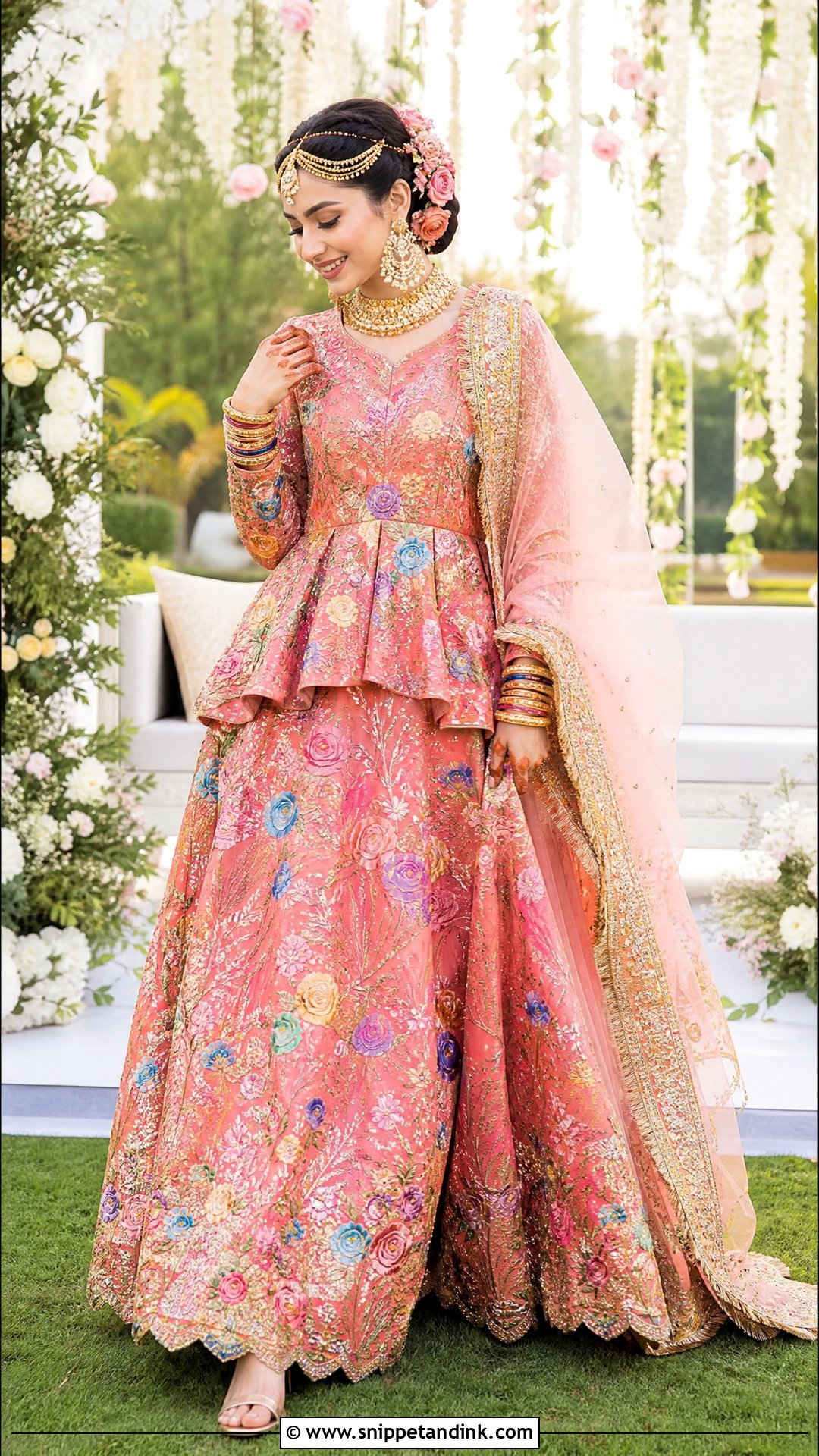
Coral is brighter than blush and gentler than red. On a flowing lehenga, spaced floral embroidery in pink, peach, green and gold looks fresh; packed too tightly, florals turn into one blur from a few feet away. Repeat the motifs on a smaller scale on the blouse or peplum. A peach or pale pink dupatta softens the skirt. Gold earrings, a delicate matha patti, colorful bangles and metallic heels. A braided bun with a few fresh flowers, luminous makeup and peach blush. With this much floral work, I hold back on extra accessories.
17. Mint Green Peplum Sharara
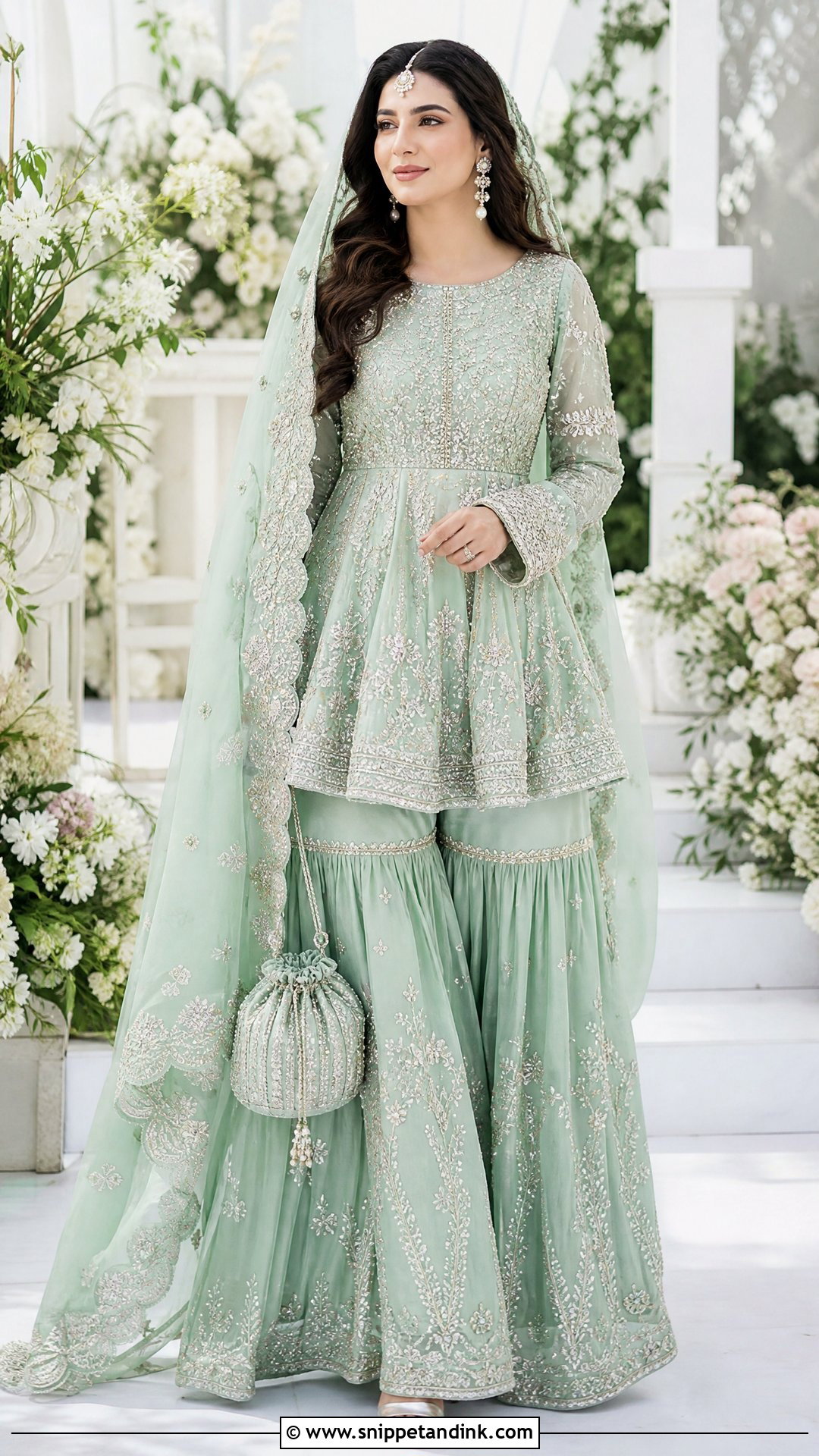
Mint fits a nikkah, a mehndi or a small daytime event. Pair a structured peplum top with wide sharara trousers that fall smoothly from the waist; the peplum defines the middle and balances the volume below. Pearl, silver and pale gold embroidery with a few blush or lavender details is plenty. A sheer organza dupatta with scalloped edging keeps it light. Pearl earrings, a slim tikka, a small potli and silver block heels, with soft curls or a low bun. For more coverage, lengthen the peplum and add full sleeves; the proportions still hold.
18. Navy Blue Pakistani Bridal Gown
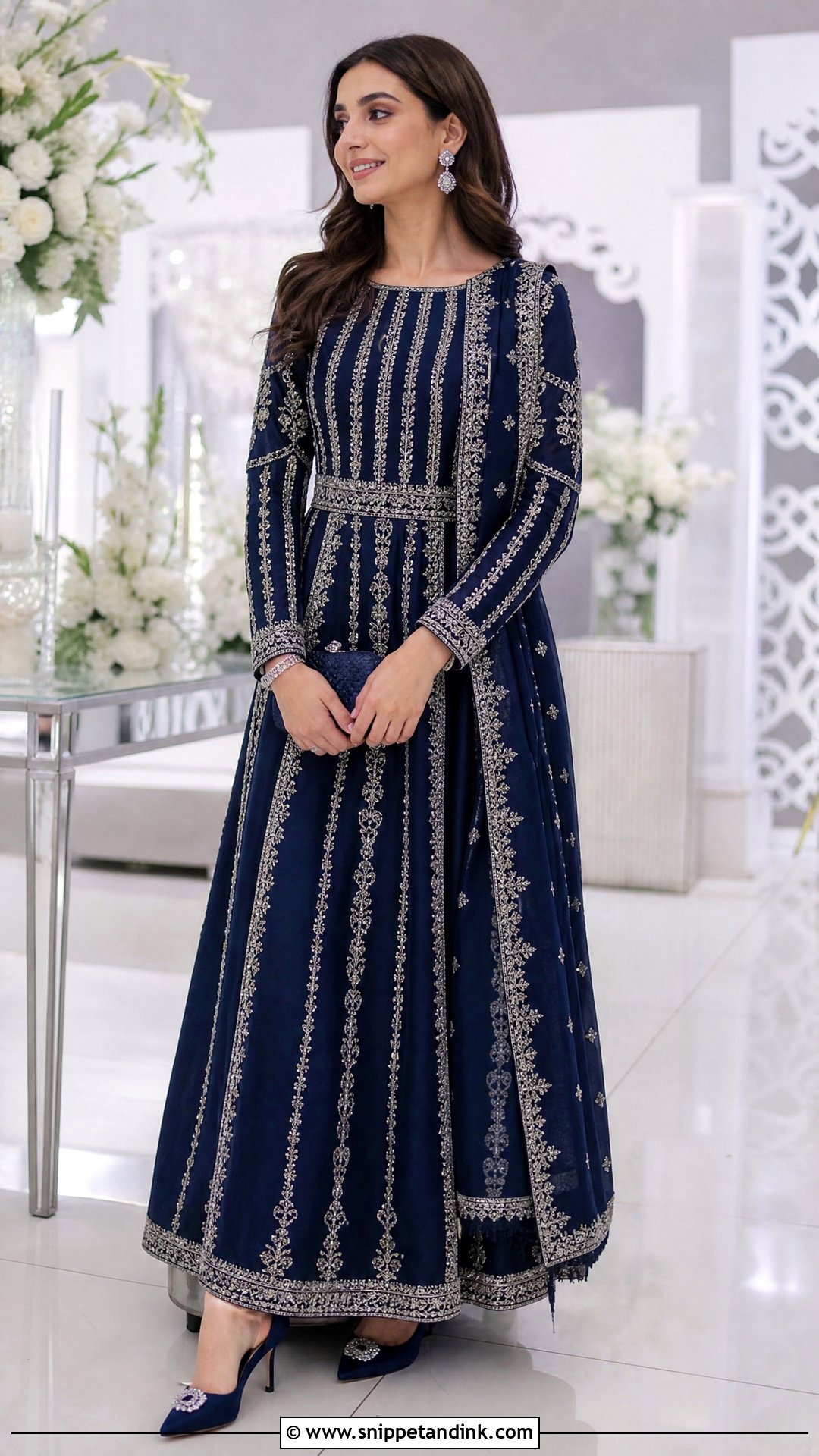
Navy is one of the few dark colors that feels right at a walima, and silver embroidery under evening lights is the reason. Choose a floor-length gown with a defined waist, full sleeves and a softly structured skirt. Vertical embroidery lengthens the body; decorated cuffs and neckline frame the face. A matching sheer dupatta with a silver border sits lightly on the head or over the arms. Crystal earrings, a silver bracelet, pointed heels and a navy clutch, a polished bun and a soft smoky eye. Walk the route from entrance to stage before the day, because stairs, thick carpet and a long train are a bad combination.
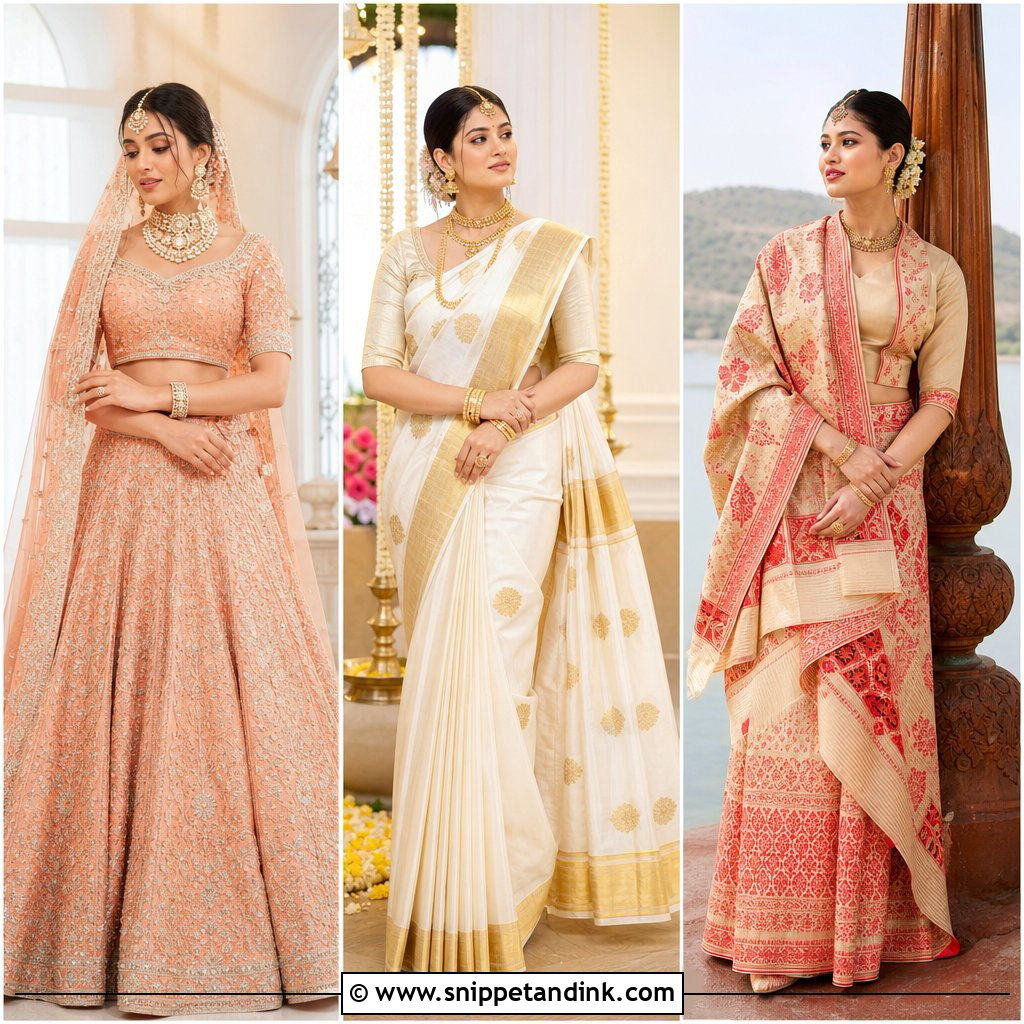
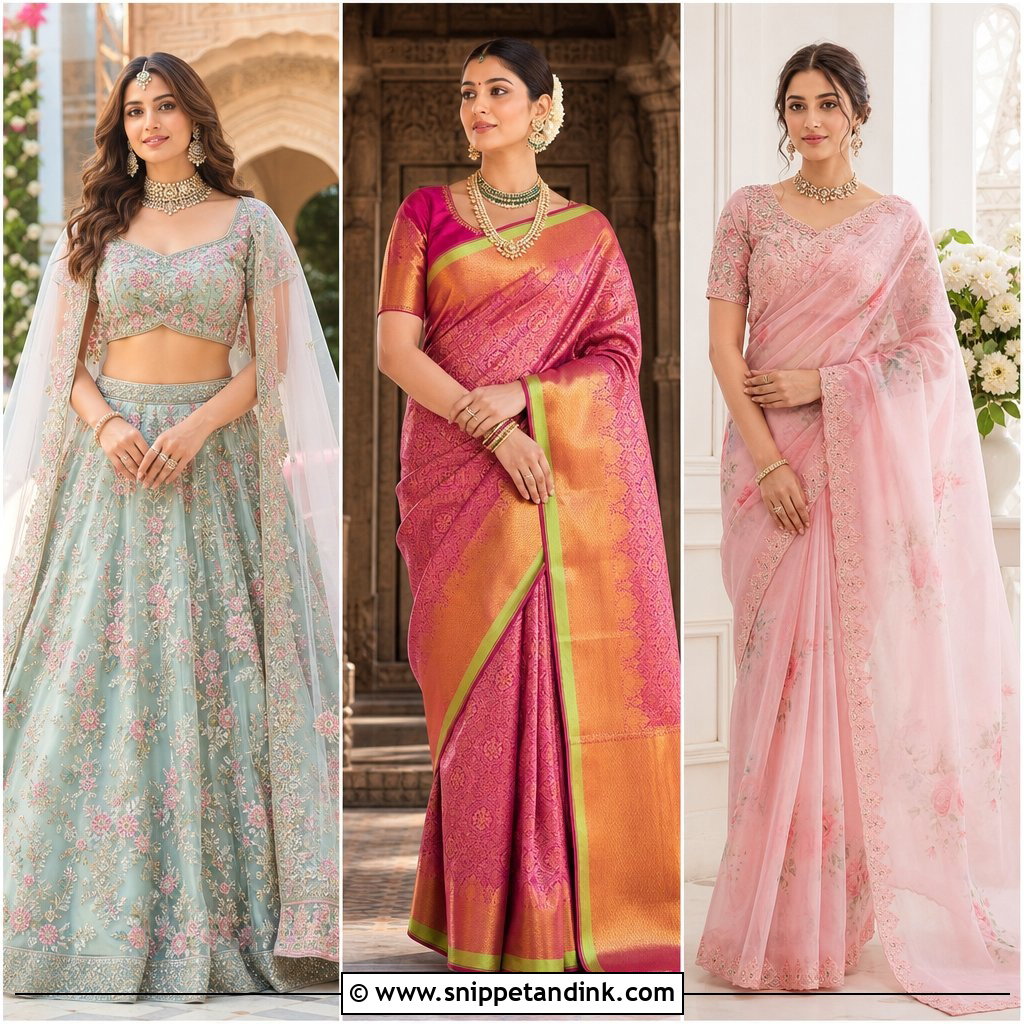
19. Banarasi Silk Pakistani Bridal Saree
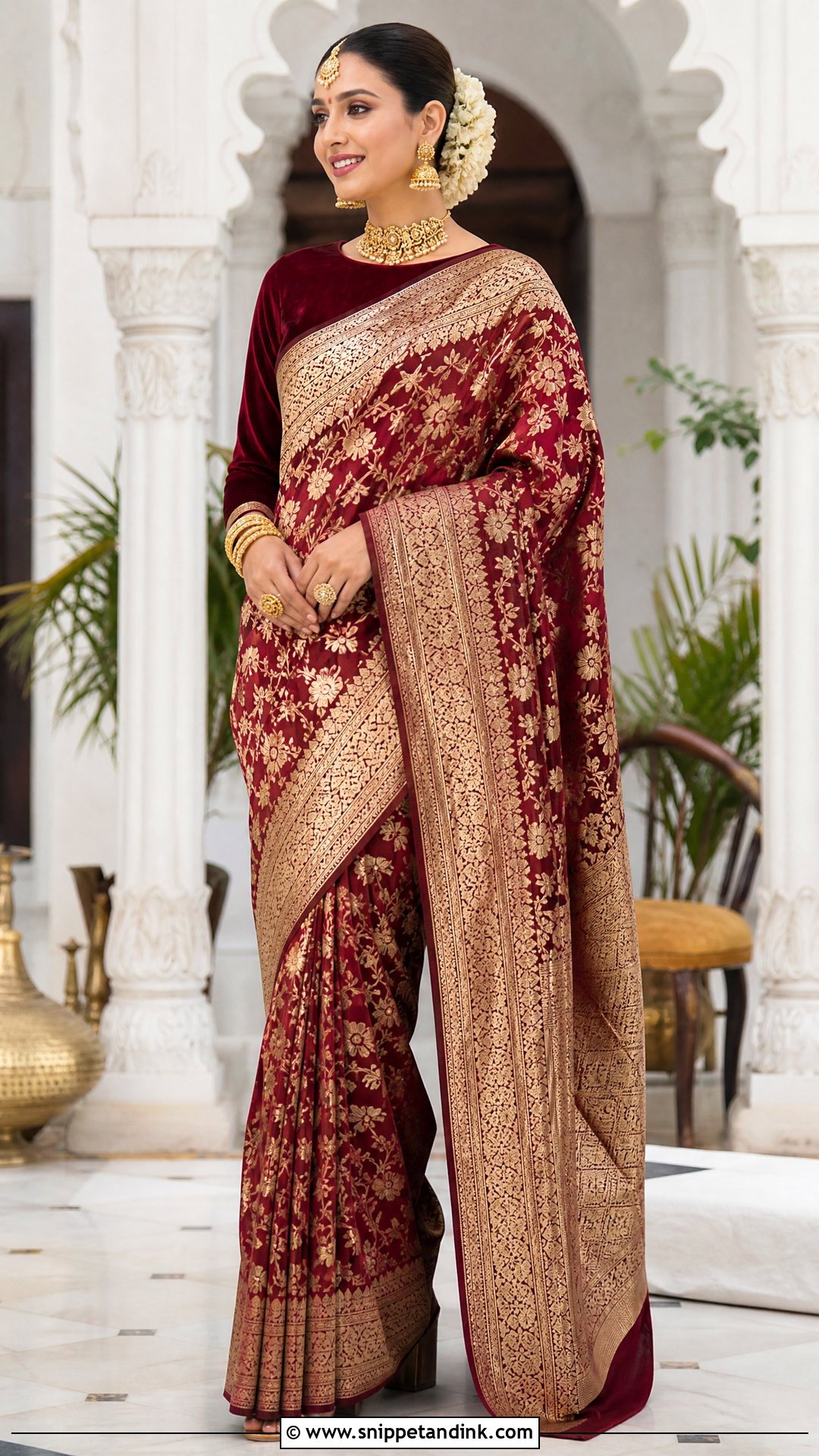
Banarasi silk is woven with its gold motifs, so the saree carries the formality without added embroidery. Red, maroon, plum or emerald all work. Pair it with a modest blouse in matching silk or contrasting velvet, with full sleeves and a defined neckline. Pin the pleats firmly at the waist; Banarasi is heavier than chiffon and drags under-pinned pleats loose within an hour. Let the pallu fall over one shoulder where its woven pattern shows. Gold jhumkas, a choker, bangles, a tikka, block-heel sandals, a sleek bun with fresh flowers and classic eyeliner.
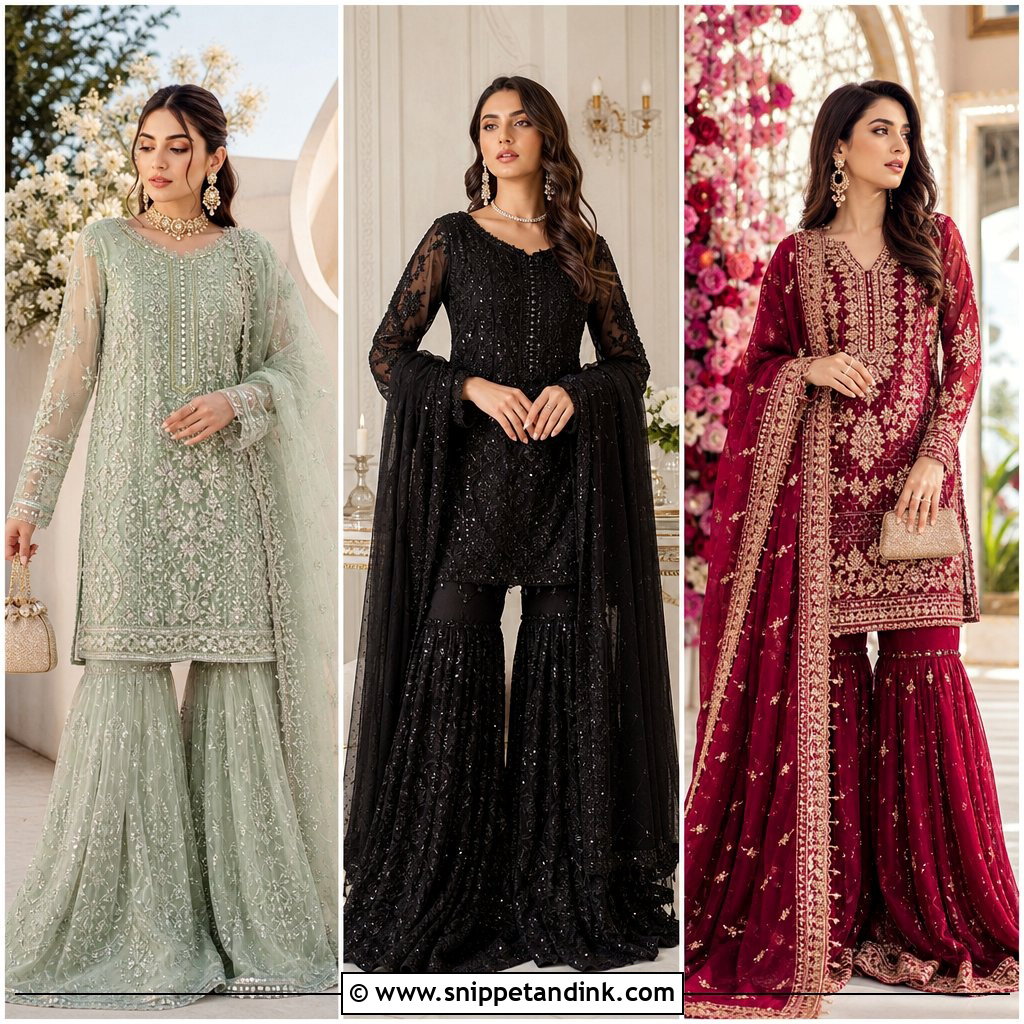
20. Heirloom Pakistani Bridal Lehenga
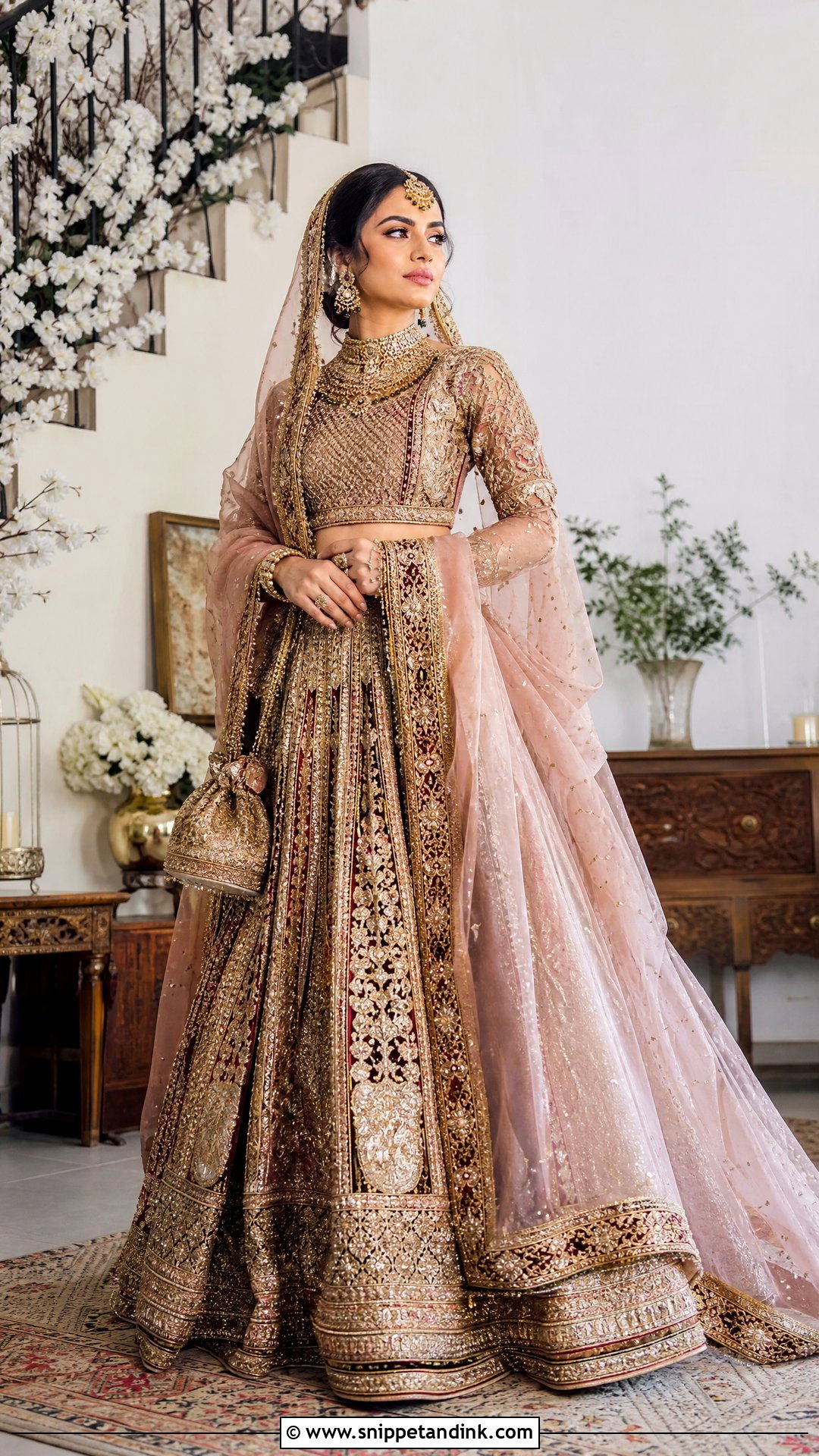
Wearing a mother’s or grandmother’s lehenga, dupatta or saree is the most personal choice here, and the one that needs the most care. Have an experienced tailor inspect the fabric before anyone cuts it, since old silk can split along fold lines that look fine until they’re under strain. Keep the distinctive borders and handwork, and update the blouse fit, lining, waistband or sleeves. If the skirt is damaged, its embroidered panels can be moved onto a new lehenga. Add a fresh dupatta in a coordinating shade, jewelry that suits the garment’s era, traditional khussas and a structured potli. Change as little as you can; the point is that the family recognizes it.
Lasting a Long Baraat Day in a Heavy Lehenga
A fully worked baraat lehenga with its dupatta can be surprisingly heavy, and most of that weight sits on your waist and head for hours. Lift the complete outfit at your final fitting so the weight isn’t a surprise, then plan around it.
Sitting on the stage
Before you sit, have someone spread the skirt behind and around you so you aren’t sitting on the embroidery. A can-can that’s too stiff pushes the front of the skirt up when you’re seated, so test that at the fitting too.
Bathroom breaks
Nobody mentions this until the day. Take one trusted person with you every time, unpin the main dupatta first, and let her gather the skirt and can-can. It takes several minutes, so go before the stage photos begin rather than in the middle of them.
What your helper should carry
- Safety pins in two sizes, and bobby pins in your hair color
- A needle already threaded in the outfit’s main color
- Double-sided fashion tape for a lifting dupatta edge or blouse strap
- Blotting papers and your lip color
- Water with a straw, so your lipstick survives
The Heaviest Outfit Is Rarely the Right One
Start with the ceremony, season, venue and how much tradition you want, and the list narrows quickly. A red lehenga or velvet pishwas carries a baraat, ivory ghararas and pastel pishwas dresses sit calmly at a nikkah, and champagne gowns, sarees and cool-toned lehengas suit the walima. Whatever you pick, put secure dupatta placement, supportive shoes, a breathable lining and careful tailoring ahead of extra embroidery, and let the jewelry and makeup support the outfit. The heaviest option is rarely the one brides remember fondly. The one they could move and laugh in usually is.
You'll Like These Ideas:


Leave a Reply