
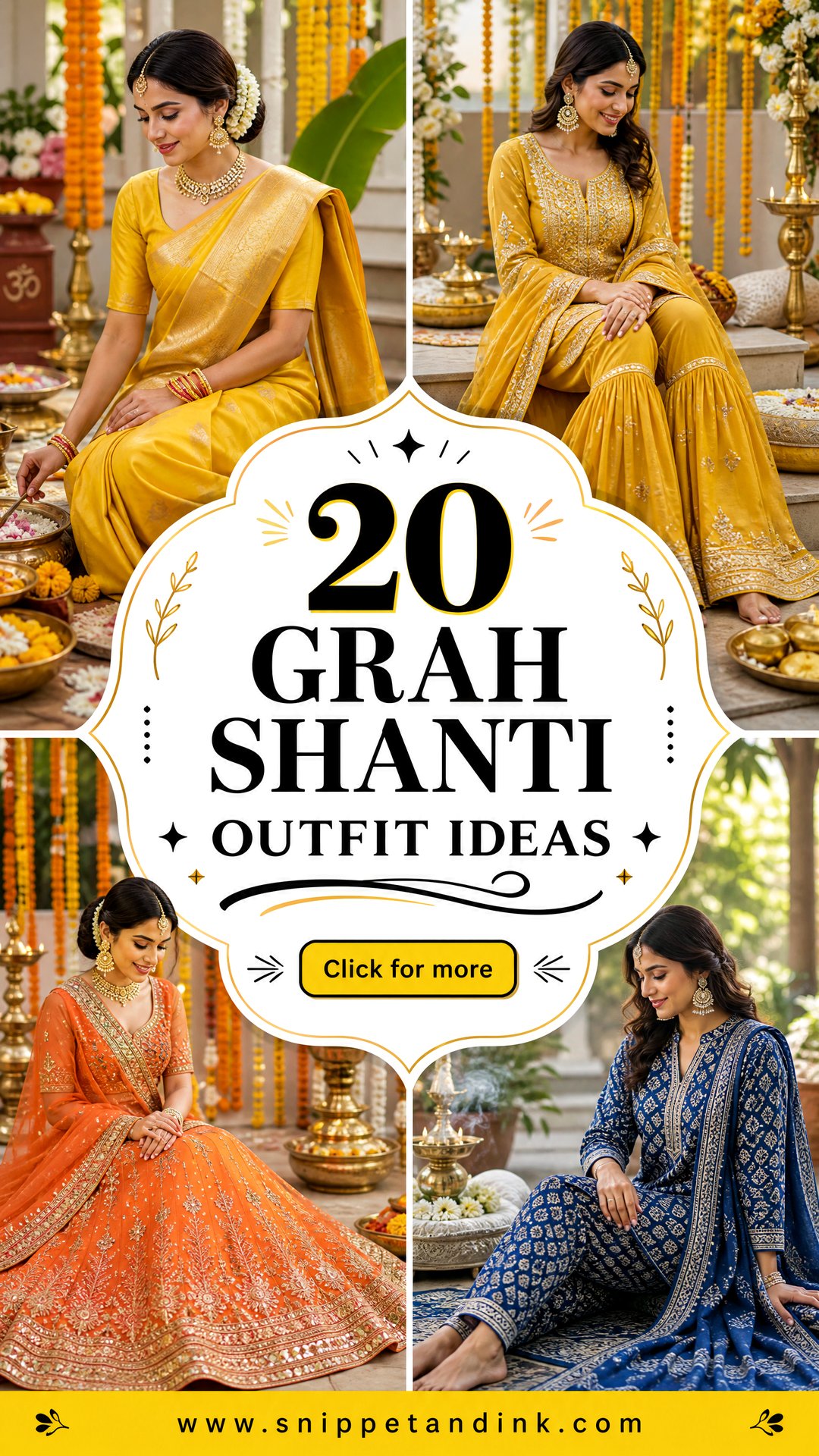
A Grah Shanti is a working ceremony. You’ll sit on the floor near the havan, stand to make offerings, bend to touch elders’ feet and then sit again, often for a whole morning, and the clothes have to cope with every one of those movements. That’s why I dress this puja differently from the wedding itself: breathable fabric, modest coverage, sleeves you can raise your arms in, and colour that feels auspicious. Sarees, salwar suits, lehengas and Anarkalis all belong here, and yellow, orange, red, green and pink sit naturally in the setting. Heavy embroidery, tight blouses and complicated drapes are the things I talk brides out of first. The bride can go richer in fabric and jewellery while guests and relatives wear lighter versions, and anyone unsure about white, black or an unconventional look should ask the family before buying. The twenty outfits below are sorted by how they actually behave on the day.
Sitting Cross-Legged by the Havan for a Whole Morning
Most Grah Shanti outfits fail in the same way: they look right standing in the shop and fight you the moment you sit on the floor. The puja often runs two to three hours, with the bride and her parents seated close to the fire for most of it. Before any outfit is final, I ask the bride to do a sitting test at home.
- Sit cross-legged on the floor for ten minutes in the full outfit. Notice where the waistband digs in, whether a straight kurta pulls across the knees, and whether a saree’s pleats spring open.
- Stand up without using your hands. If you step on the hem or the skirt twists, the length or flare needs changing.
- Raise both arms as if making an offering. A blouse with tight armholes lifts and shows skin at the back; the tailor can let it out or add a little sleeve ease.
- Lean forward toward an imaginary thali. Anything that swings forward, from a loose dupatta to long tassels, is something to pin or shorten.
Fabric near the fire
This is the part people forget. Cotton, silk and silk-cotton tend to scorch or char if a spark lands, while polyester georgette, nylon net and synthetic organza can melt and stick. If you’re sitting at the havan, I’d keep the fabric closest to the fire natural, pin the dupatta or pallu so it can’t drift, and save the synthetic chiffon for relatives sitting further back.
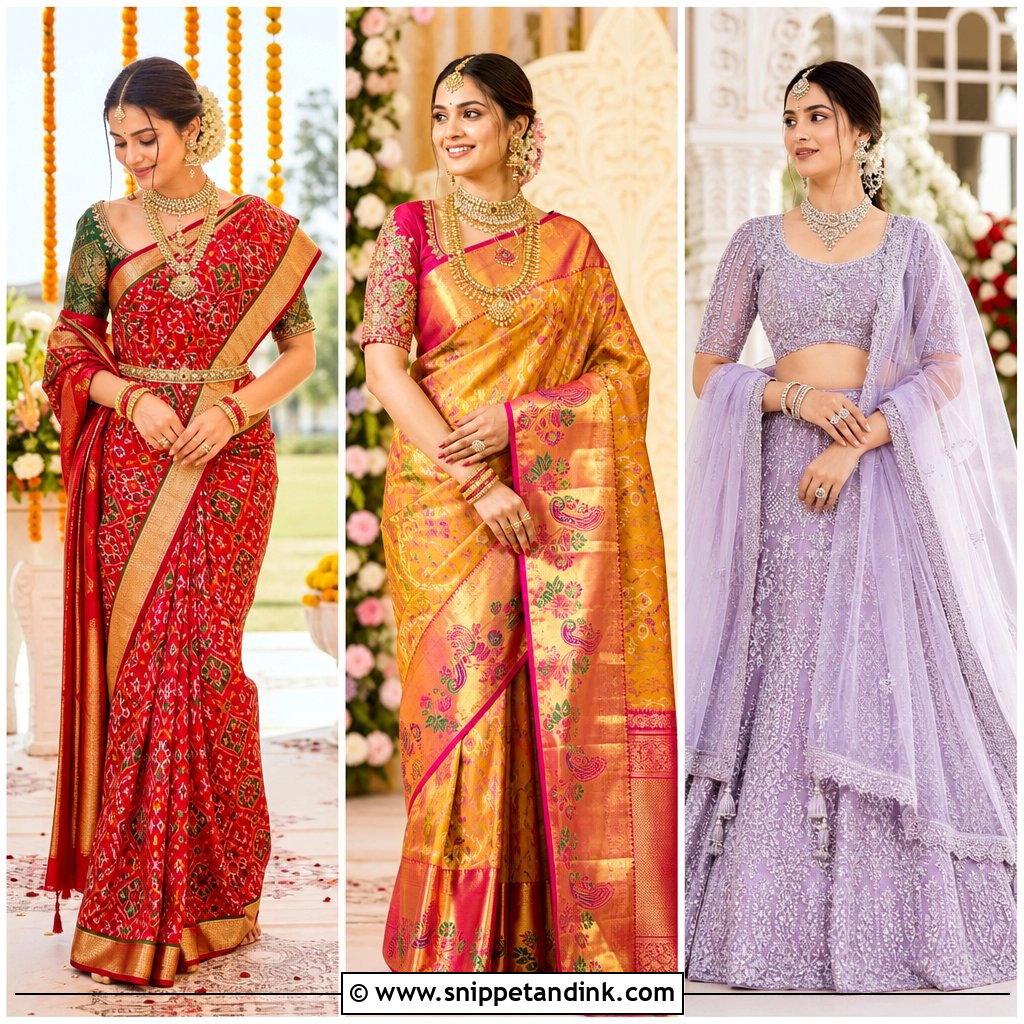
1. Yellow Silk Saree Grah Shanti Outfit
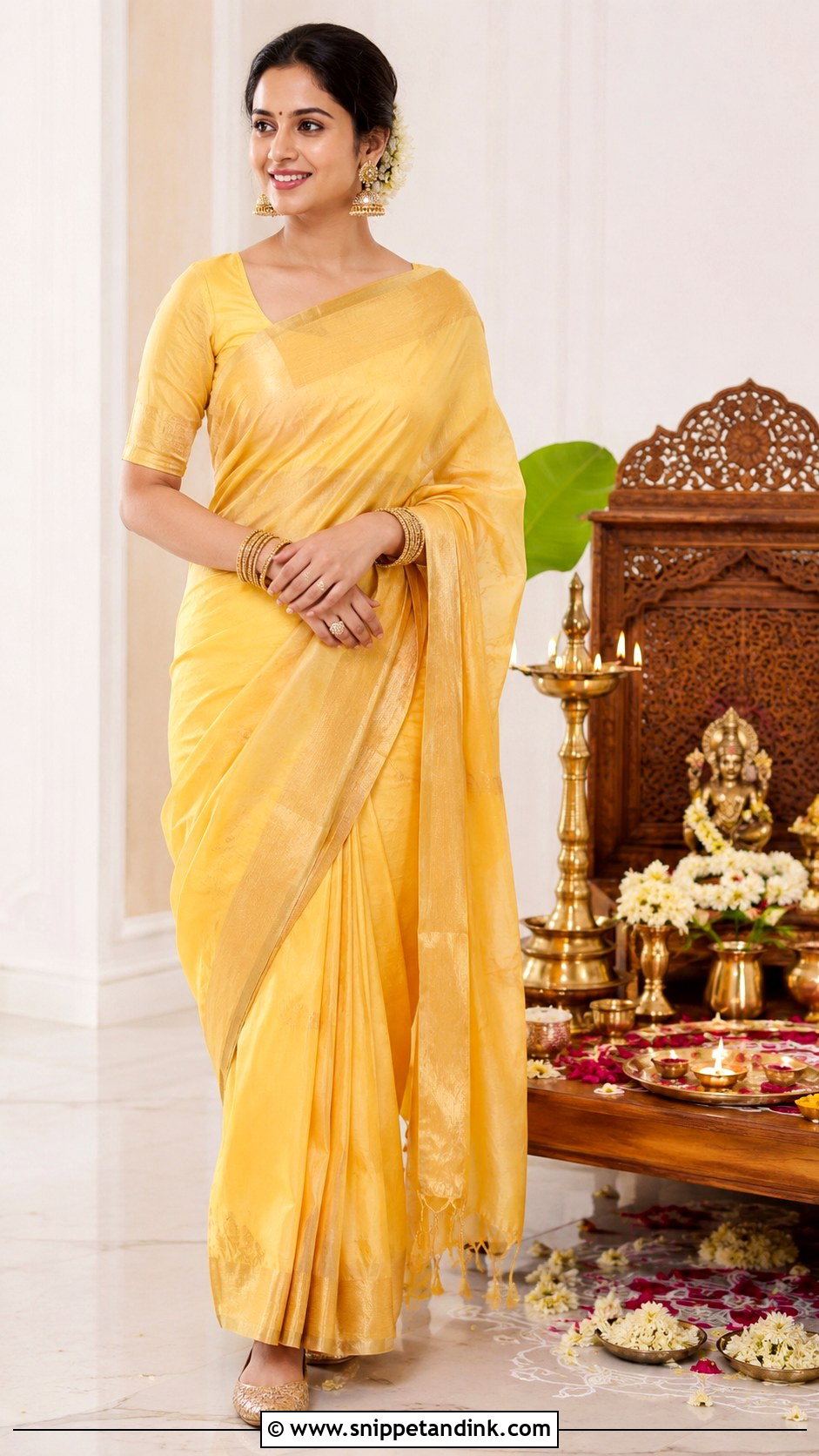
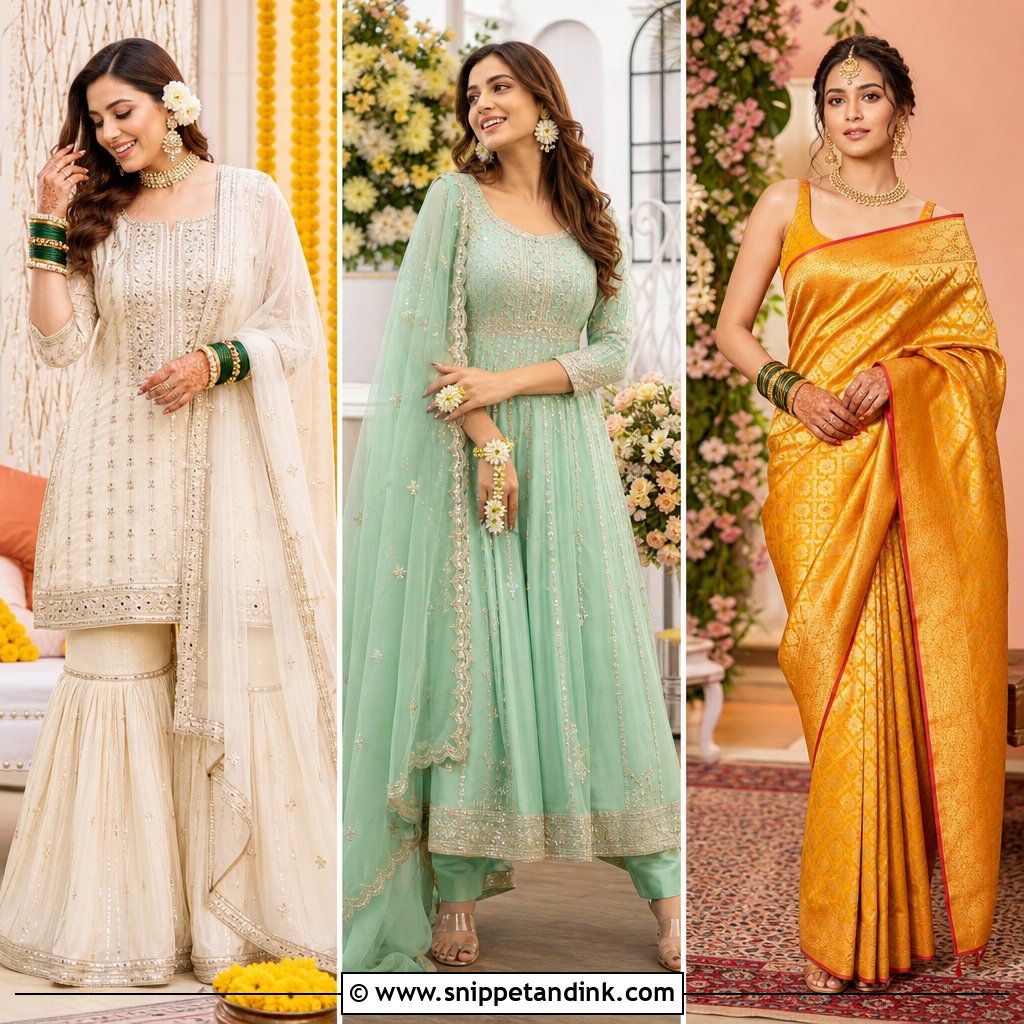
Yellow is the colour most families expect at a Grah Shanti, and silk carries it well in morning light. The fabric choice matters more than the shade: a stiff Kanjeevaram-weight weave fights you every time you sit, whereas soft silk, Chanderi or a silk-cotton blend folds into your lap and lies flat again when you stand. I’d pair it with an elbow-sleeve blouse, a slim gold border or small woven motifs, gold jhumkas, a couple of bangles and a simple pendant. A low bun with fresh flowers, cushioned gold flats or juttis instead of heels, and two discreet pins on the pallu (one at the shoulder, one at the waist) keep it in place through the puja.
2. Red Bandhani Saree Grah Shanti Outfit
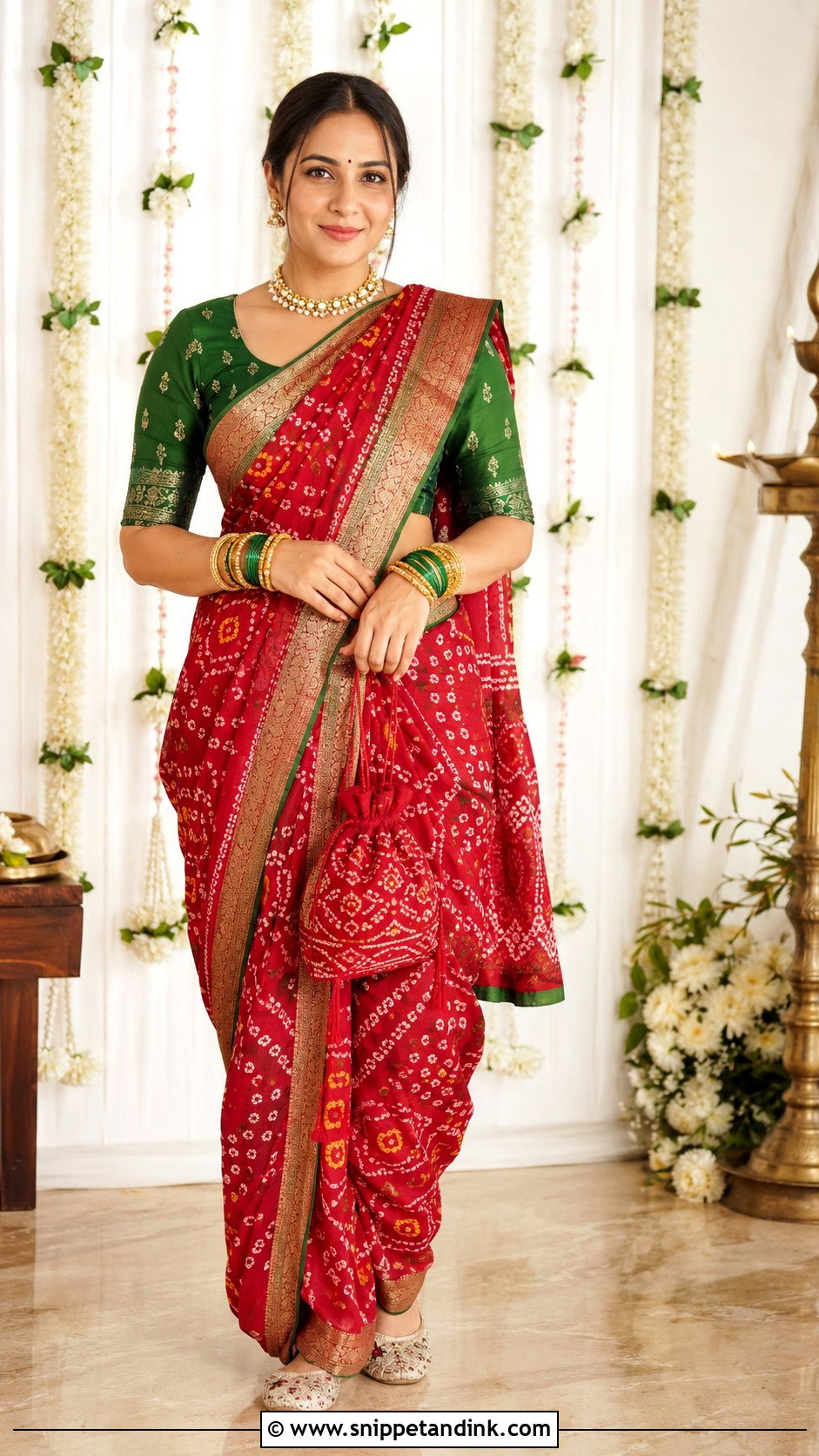
Bandhani belongs at a Gujarati or Rajasthani Grah Shanti, and red tie-dye on silk or georgette reads as festive without any embroidery at all. The dots are the decoration, so I keep the blouse plain in red, maroon or a contrasting green, with sleeves you can lift your arms in. Pleat the pallu neatly; loose Bandhani tends to slide off the shoulder because the crinkled surface has very little grip. A small bindi, gold earrings, glass bangles and a compact potli finish it. Close family can add a delicate choker, guests can stop at earrings. Soft-soled mojaris, and if the border is bright, keep everything else quiet.
3. Green Chanderi Suit Grah Shanti Outfit
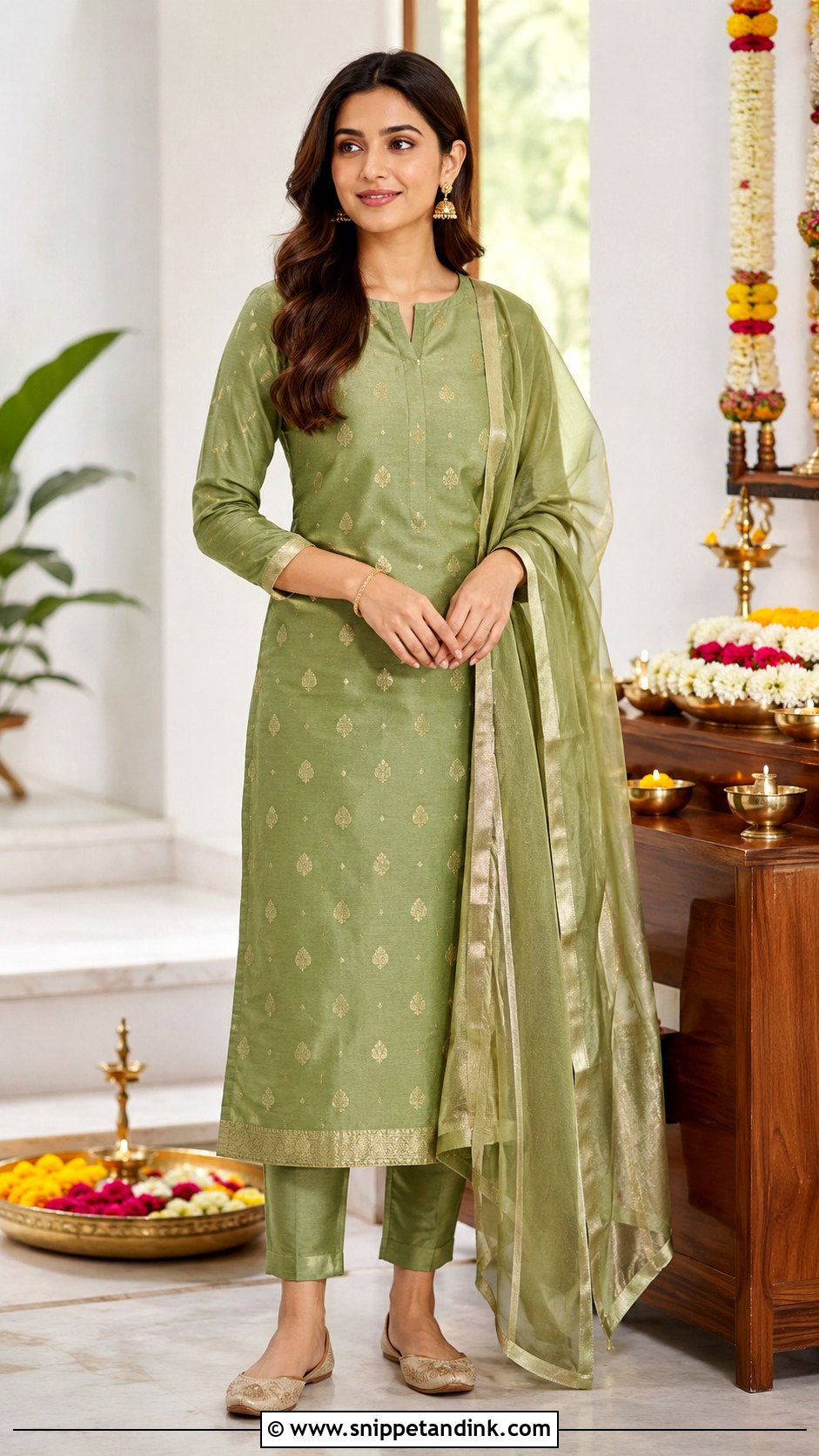
Green reads as calm and celebratory at once, and a Chanderi suit has enough body to look crisp without the weight of silk. I’d go for a straight kurta with three-quarter sleeves, slim pants and a soft dupatta, with small gold butis or a woven border rather than heavy threadwork. One thing I check at fittings is the side slit: on a straight kurta it needs to reach the hip, or the hem pulls tight across the knees when you sit cross-legged. Wear the dupatta over both shoulders during the rituals and move it to one side afterwards. Gold drops, a slim kada and juttis are plenty. Sisters, cousins and mothers who’d rather not manage a saree on a busy morning tend to be happiest in this.
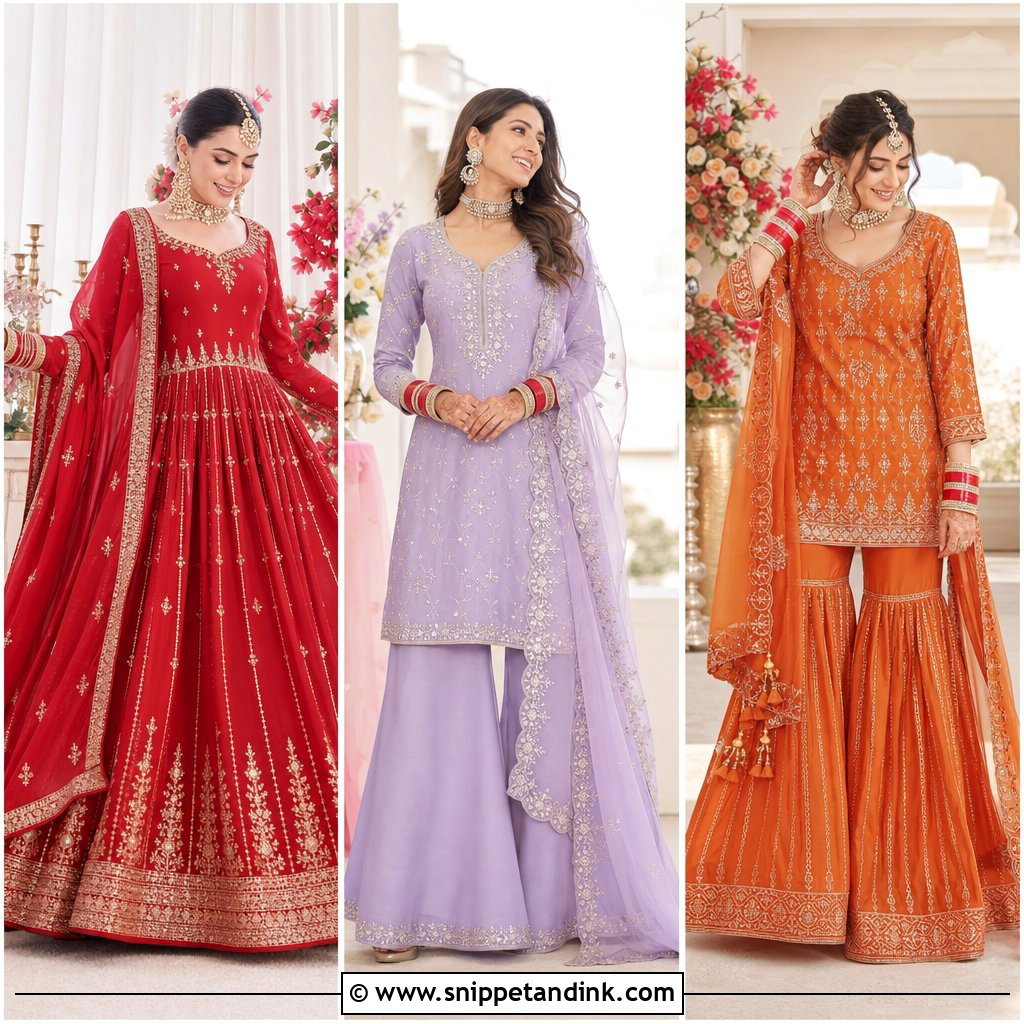
4. Peach Anarkali Grah Shanti Outfit
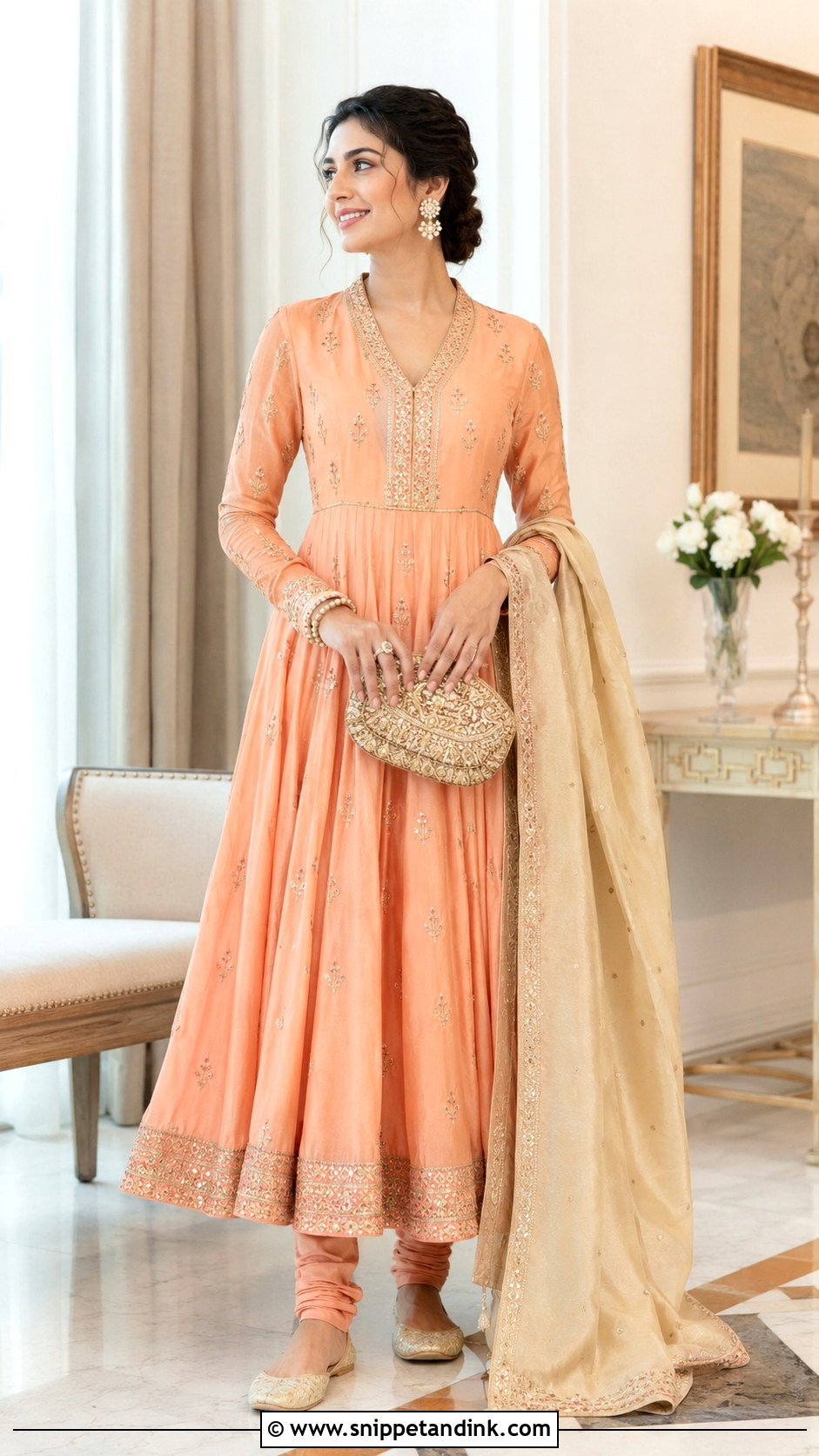
Peach is the softer route for a spring or summer daytime puja. A calf- or ankle-length Anarkali in cotton silk, Chanderi or light georgette sits well on the floor because the flare simply pools around you instead of pulling. Watch the kali panels, though: very heavy embroidery at the hem drags the skirt down and makes it twist when you stand. Fitted churidar, a matching or pale gold dupatta, and embroidery kept to the neckline and cuffs are enough. Pearl earrings, fine gold bangles, a small clutch and cream or peach juttis finish it, with a half-up style or low braided bun.
5. Mustard Sharara Grah Shanti Outfit
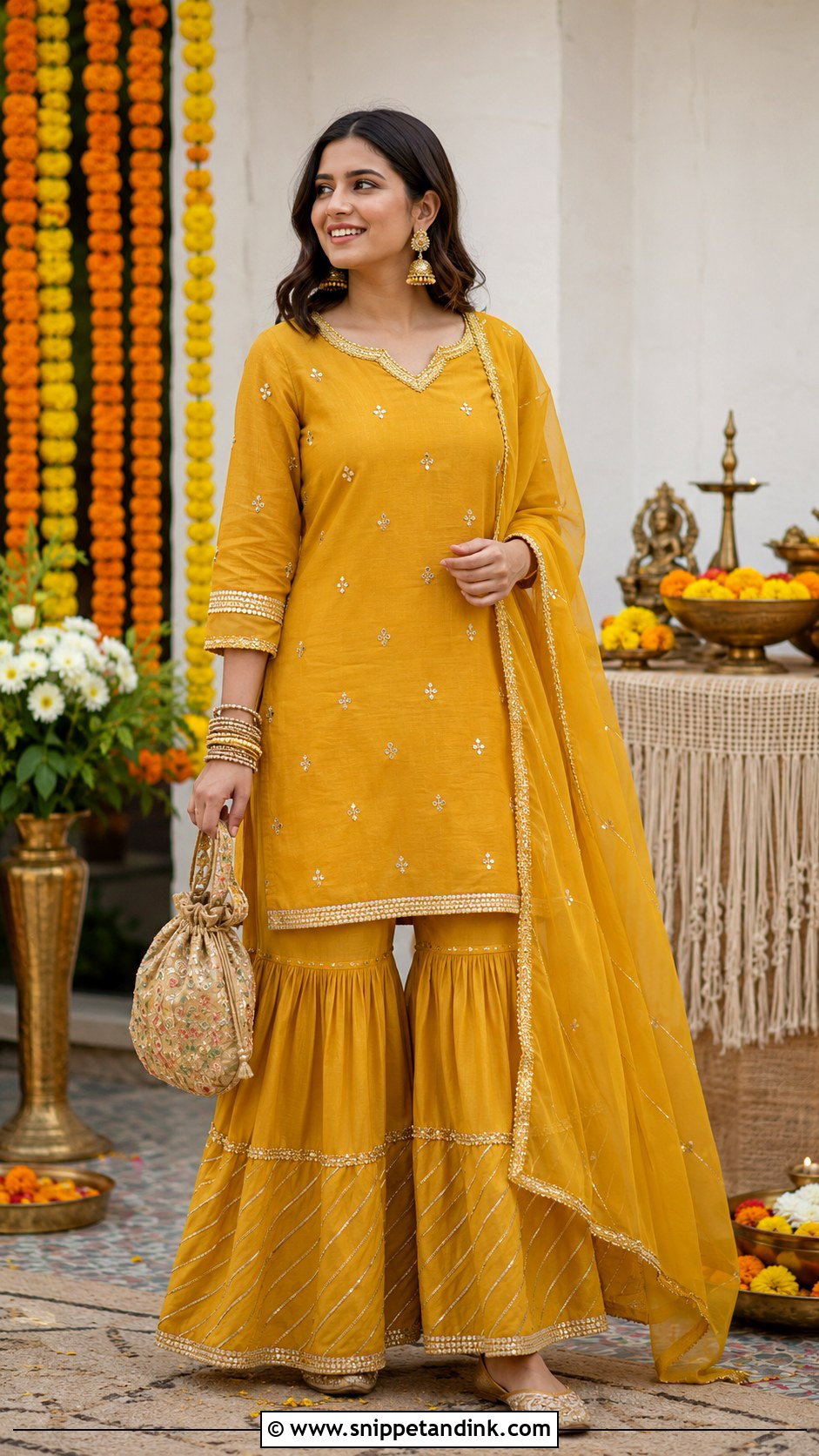
Mustard picks up gold, green and deep pink, which makes it easy to style with jewellery you already own. A knee-length kurta with a moderately flared sharara gives far more room than a churidar when you sit cross-legged, and that’s the main reason I suggest it for long pujas. Keep the trim delicate: gota, small mirrors or tonal thread. Antique jhumkas and stacked bangles add the festive note, and a small potli holds your phone. Cushioned juttis or flat sandals. Pin the dupatta firmly at one shoulder so the loose end can’t swing towards the lamps or the sacred fire.
6. Pink Palazzo Suit Grah Shanti Outfit
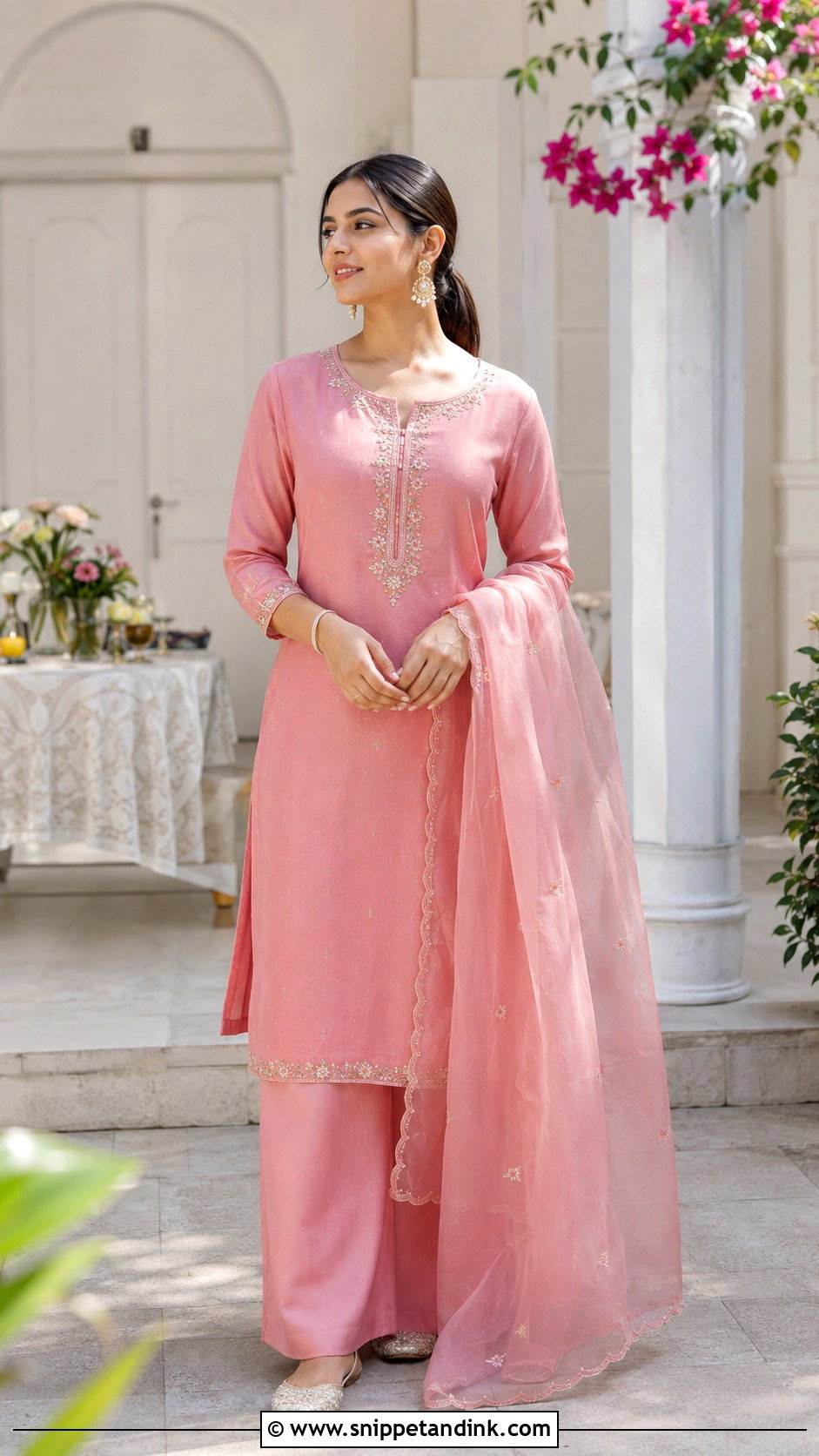
A pink palazzo suit is the outfit I’d hand to anyone who’ll be fetching, serving and helping the family all morning. A knee-length straight kurta, flowing palazzos and a light organza or chiffon dupatta give you full movement. Rose, rani and coral all suit the cheerful mood. A little floral embroidery or a narrow gold border makes it ceremonial without tipping into evening wear. Pearl-and-gold earrings, slim bangles and neutral embroidered flats. Pin the dupatta at the shoulder and let it fall down the back, and tie hair into a sleek ponytail, soft braid or low bun so it stays out of the way.
7. Orange Lehenga Grah Shanti Outfit
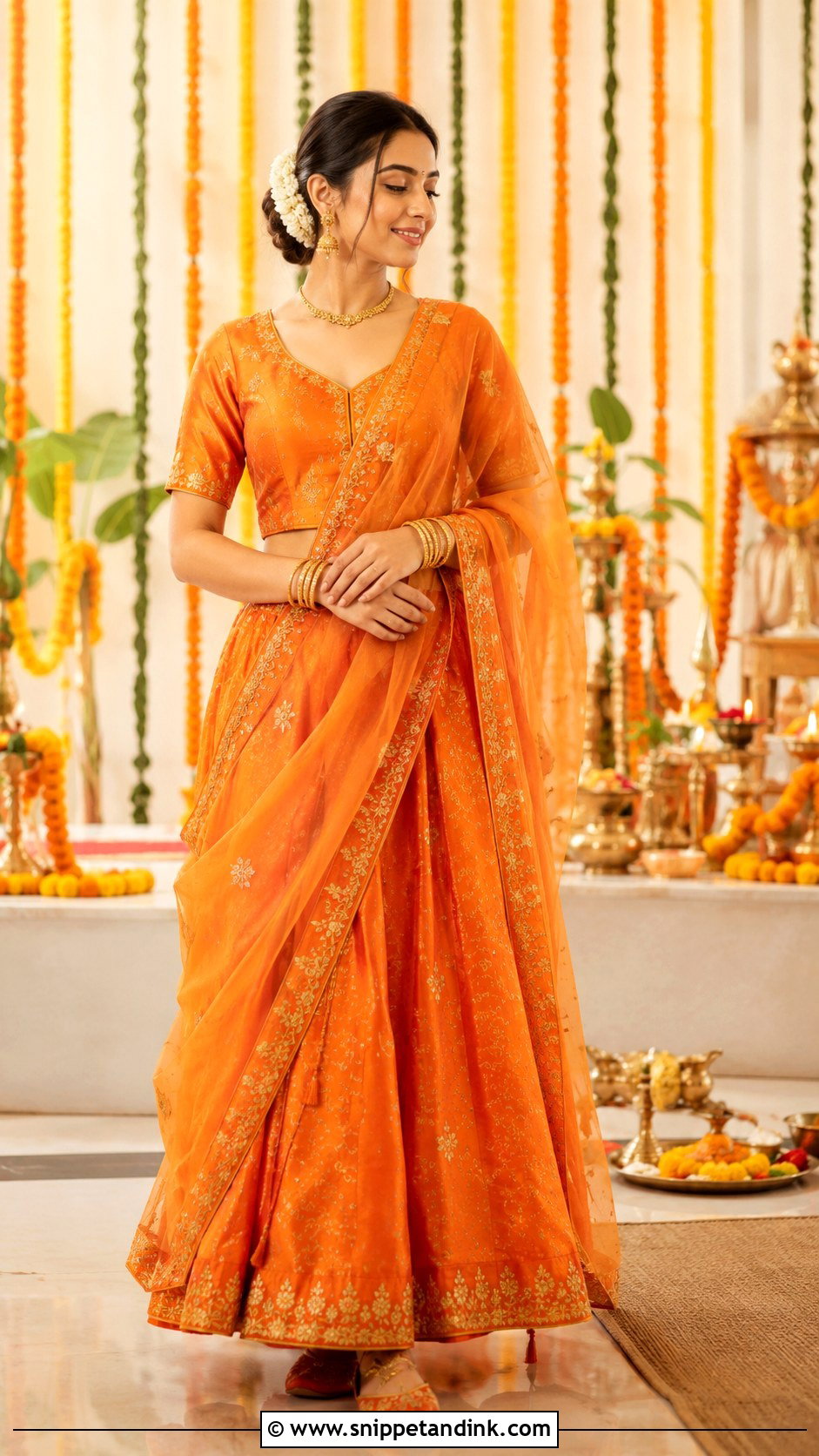
Orange gives the bride a vivid look for this ceremony that won’t compete with the wedding lehenga. Choose a softly flared skirt in silk cotton, georgette or organza rather than a can-can-supported one; anything with real volume becomes a tent on the floor and a trip hazard when you stand. A modest blouse, fine zari motifs or a slim border, and a dupatta across the front or over both shoulders keep it right for the rituals. A short gold necklace, jhumkas, bangles and embroidered juttis. A flower bun suits the colour, and I keep the lip soft so the orange does the talking.
8. Ivory And Gold Saree Grah Shanti Outfit
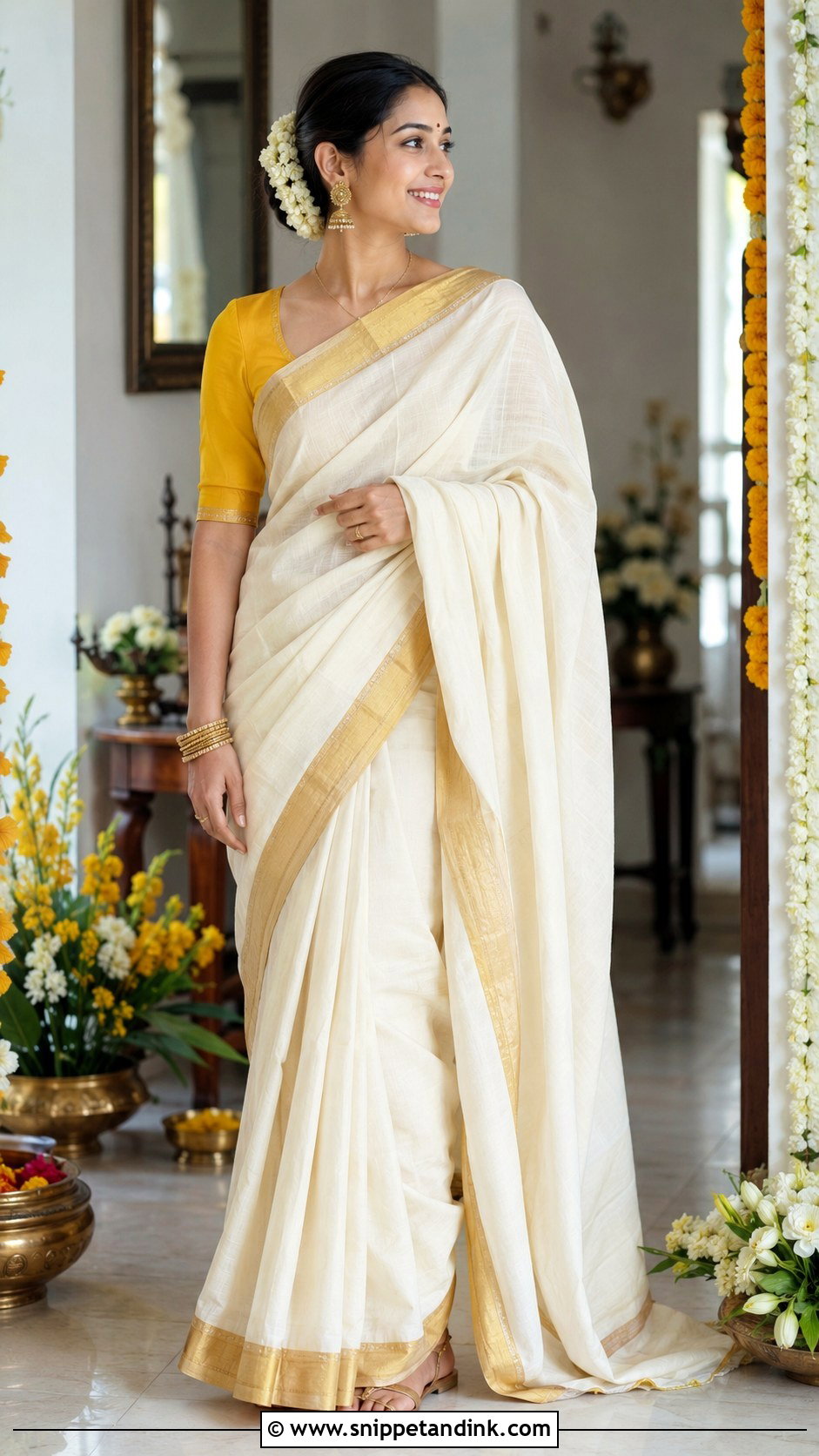
Ivory and gold is serene, but it’s the one outfit on this list I won’t let anyone wear without asking first, because some families keep white and off-white for mourning. If it’s welcome, a Kasavu-inspired saree, a silk-cotton drape or a plain handloom with a gold border is quietly right. The blouse is where I add the auspicious colour: yellow, green, pink or red. Temple earrings, a small bindi and gold bangles suit the border. Brides can layer necklaces; guests usually keep to a chain. Tan or gold flats, a low bun and a few strands of jasmine.
9. Purple Kurta Skirt Grah Shanti Outfit
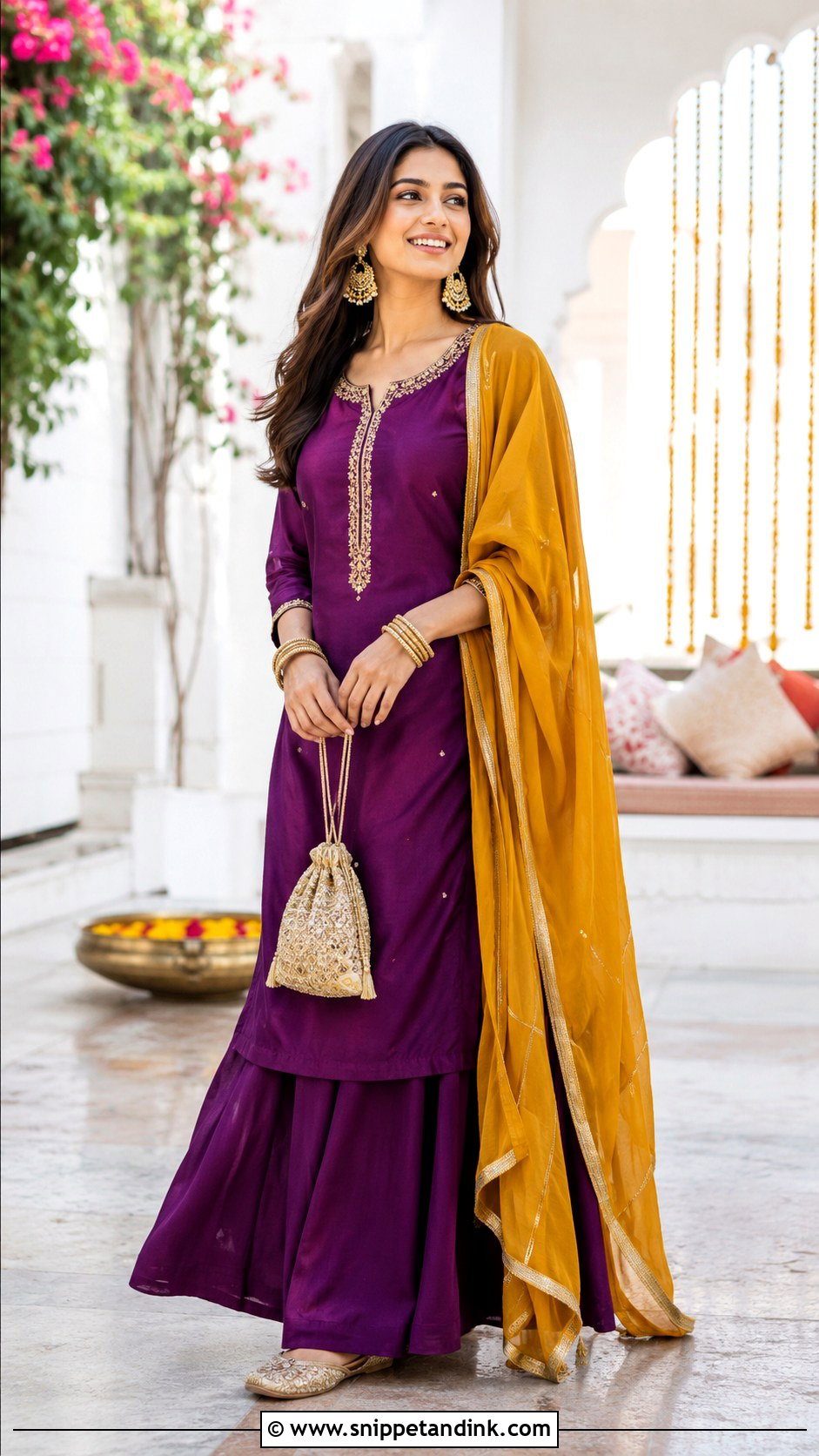
Purple is less expected at a Grah Shanti, which is exactly why this kurta-and-skirt combination stands out. A silk kurta with a modest neckline and three-quarter sleeves over an ankle-length flared skirt gives the line of a lehenga, but the two pieces are lighter and you can fix the kurta independently if it rides up when you sit. A contrasting pink, mustard or gold dupatta brings in the ceremonial colour. I’d choose woven motifs or subtle zari over sequins, which catch on the dupatta. Gold chandbalis, a few bangles and embroidered juttis. Wear the dupatta over one shoulder and across the torso. Sisters and friends who want more than a plain suit tend to love it.
10. Blue Ajrakh Suit Grah Shanti Outfit
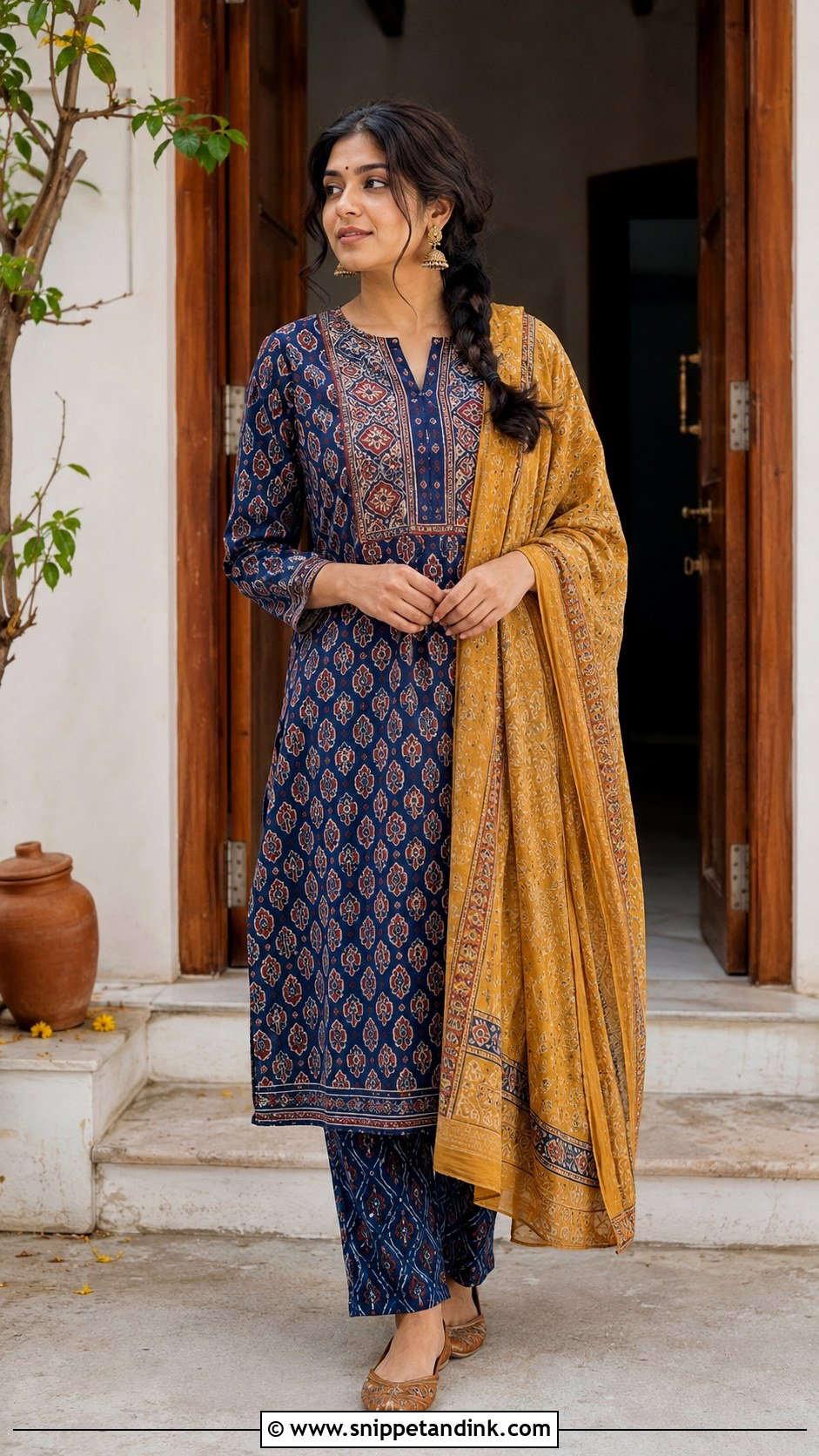
Ajrakh is block-printed on both sides of the cloth, so a dupatta in it looks finished however it falls, which is handy when it keeps shifting during the puja. An indigo-and-rust kurta with straight pants needs no embellishment; the print already carries a lot. Oxidised silver gives an earthy feel, antique gold a more traditional festive one. A small bindi, tan or rust juttis, and a loose braid or low bun. It sits best on guests at a relaxed home ceremony. If the family prefers bright colours, add mustard, orange or red through the dupatta, shoes or bangles.
11. Maroon Banarasi Saree Grah Shanti Outfit
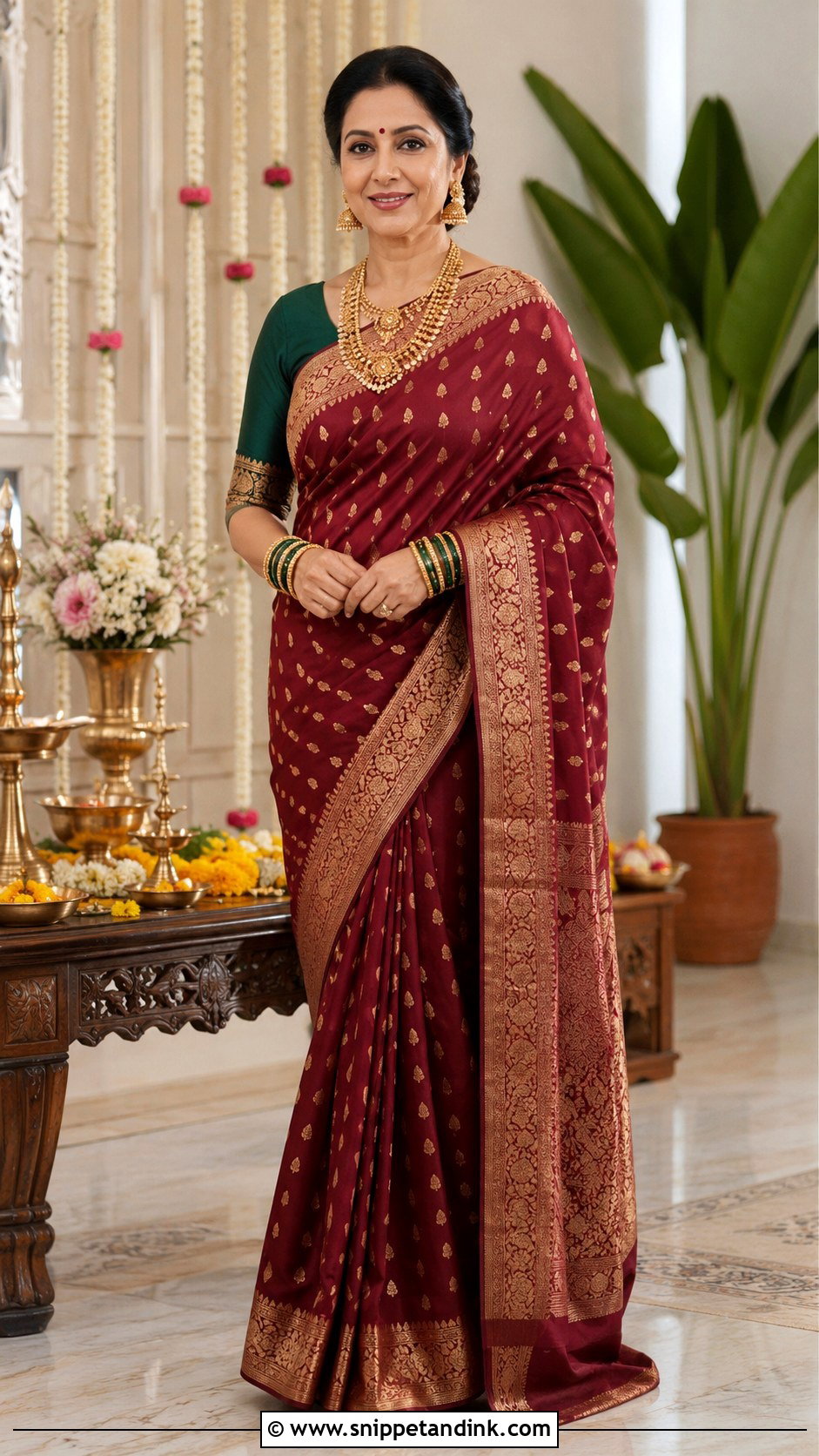
Maroon Banarasi gives the bride, her mother or another close relative real presence, but for a morning puja I steer toward small woven buttis rather than a full bridal border. Heavy zari is stiff, and it scratches the inside of the forearm when the pallu keeps brushing it. Match the blouse or contrast it in bottle green or mustard. Gold jhumkas, a mid-length necklace and stacked bangles. A secure bun keeps the pallu and jewellery visible, and flat gold sandals keep you steady. Banarasi has body, so have the pleats set and pinned before you leave home; it then holds its shape every time you sit down in front of the camera.
12. Mint Organza Saree Grah Shanti Outfit
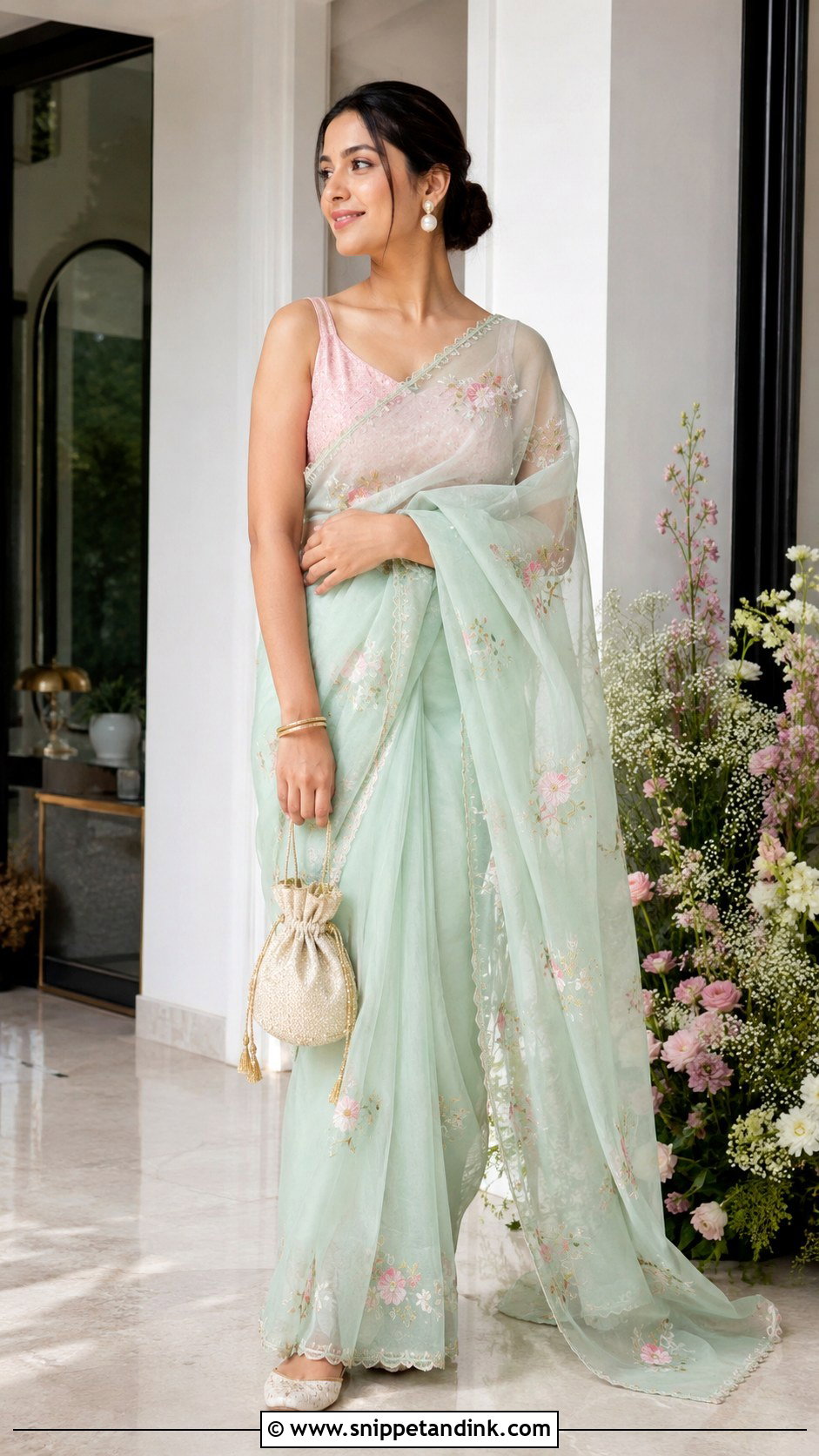
Mint organza is airy and modern, but it’s slippery and springs back out of pleats, so this is the saree that needs the most pins. I set the pleats at the waist with two and anchor the pallu at the shoulder with one more. A version with small embroidered flowers, a scalloped edge or a narrow zari border is enough decoration. Wear a matching blouse for a soft monochrome look or a pink one for contrast. Pearl earrings, a fine necklace, thin bangles, cream juttis and a structured potli. Keep the hair to a low ponytail or smooth bun. I’d give this one to guests and relatives; organza near a lamp also needs watching, as synthetic versions can melt rather than char.
13. Coral Angrakha Suit Grah Shanti Outfit
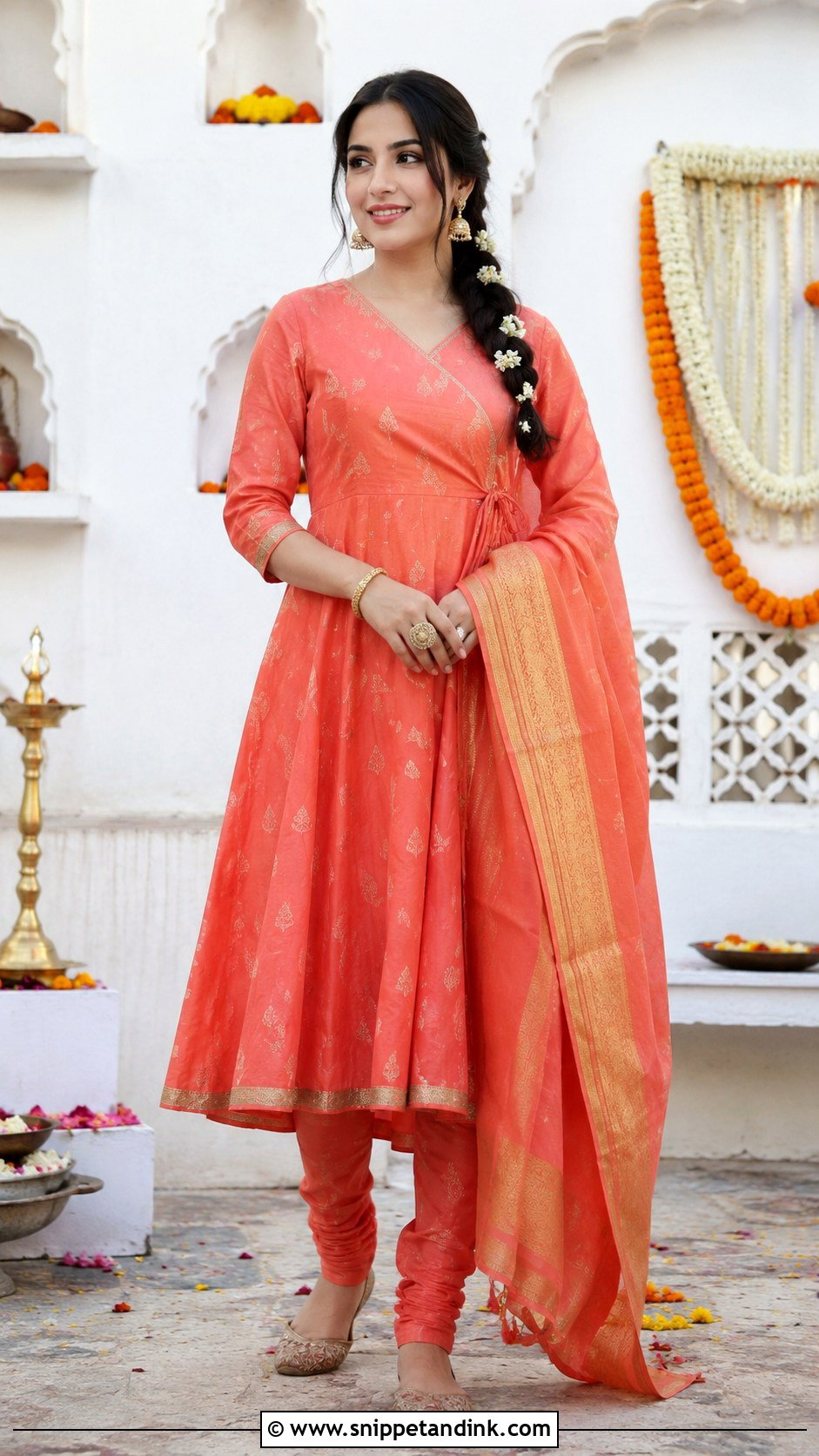
The Angrakha’s crossover front is the detail people notice, so the jewellery can stay small. Look for an ankle-length kurta with gentle flare, three-quarter sleeves and tie accents, worn with churidar and a light dupatta with a gold or printed border. Check the tassels before the day: long latkans dangle into the havan area or the thali when you lean forward, so I have them shortened to sit above the hip. Small jhumkas, a delicate bracelet and one statement ring. Gold or beige juttis, and a soft braid with fresh flowers. Coral looks joyful in daylight without the intensity of bright red or neon orange.
14. Teal Gharara Grah Shanti Outfit
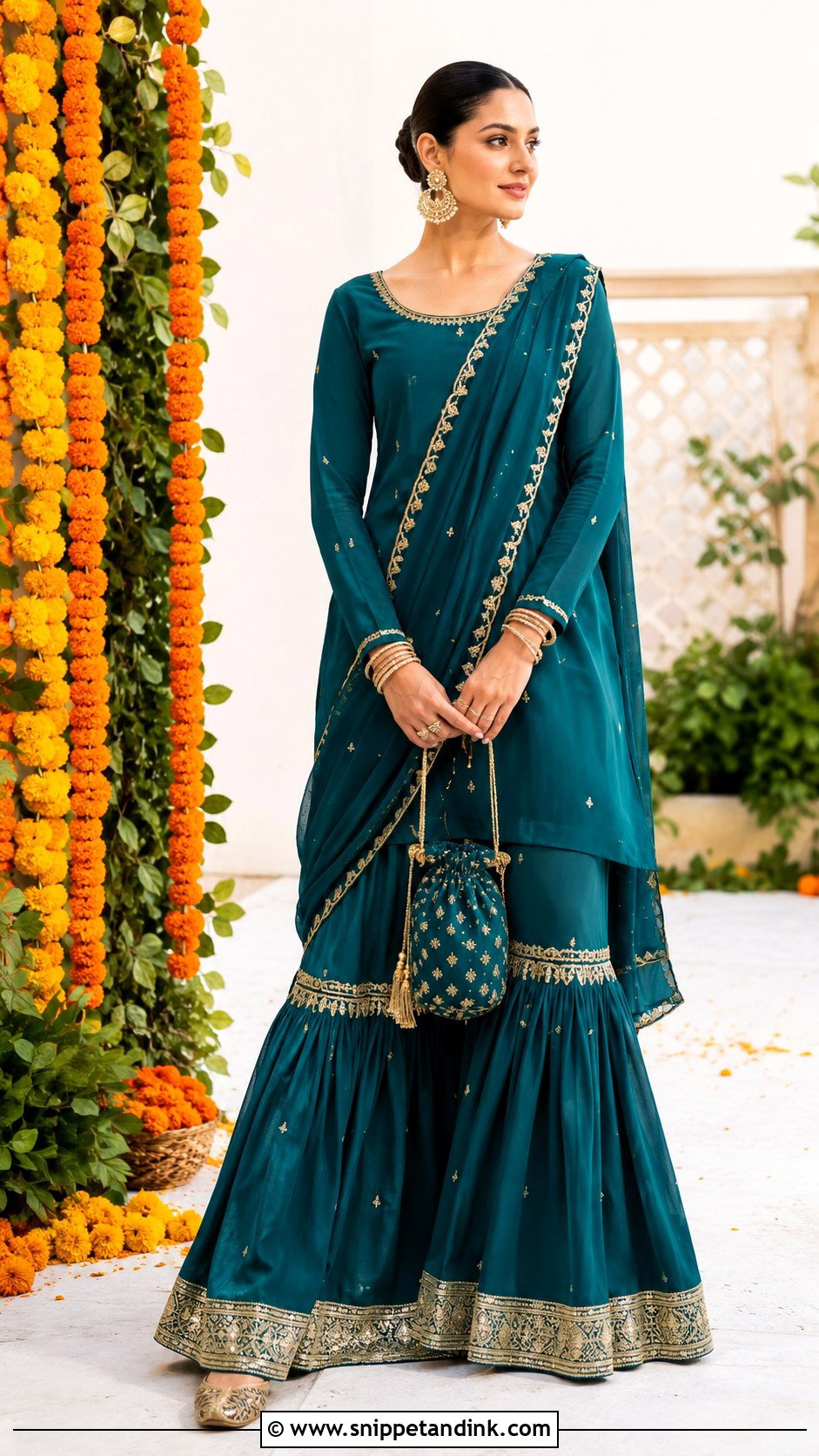
Teal is rich without reading as bridal, which suits sisters, cousins and guests who want colour but don’t want to compete with the bride. A short or knee-length kurta over traditional ghararas, plus a light dupatta, is the base. Ghararas already have a lot of fabric below the knee joint, so keep the kurta streamlined and the fabric soft enough to fold when you sit. Fine gold embroidery at the neckline and the knee seam defines the shape. Gold chandbalis, a few bangles, a matching potli and flat mojaris. Drape the dupatta across the chest for the religious part, and wear hair in a centre-parted low bun or simple braid.
15. Magenta Patiala Suit Grah Shanti Outfit
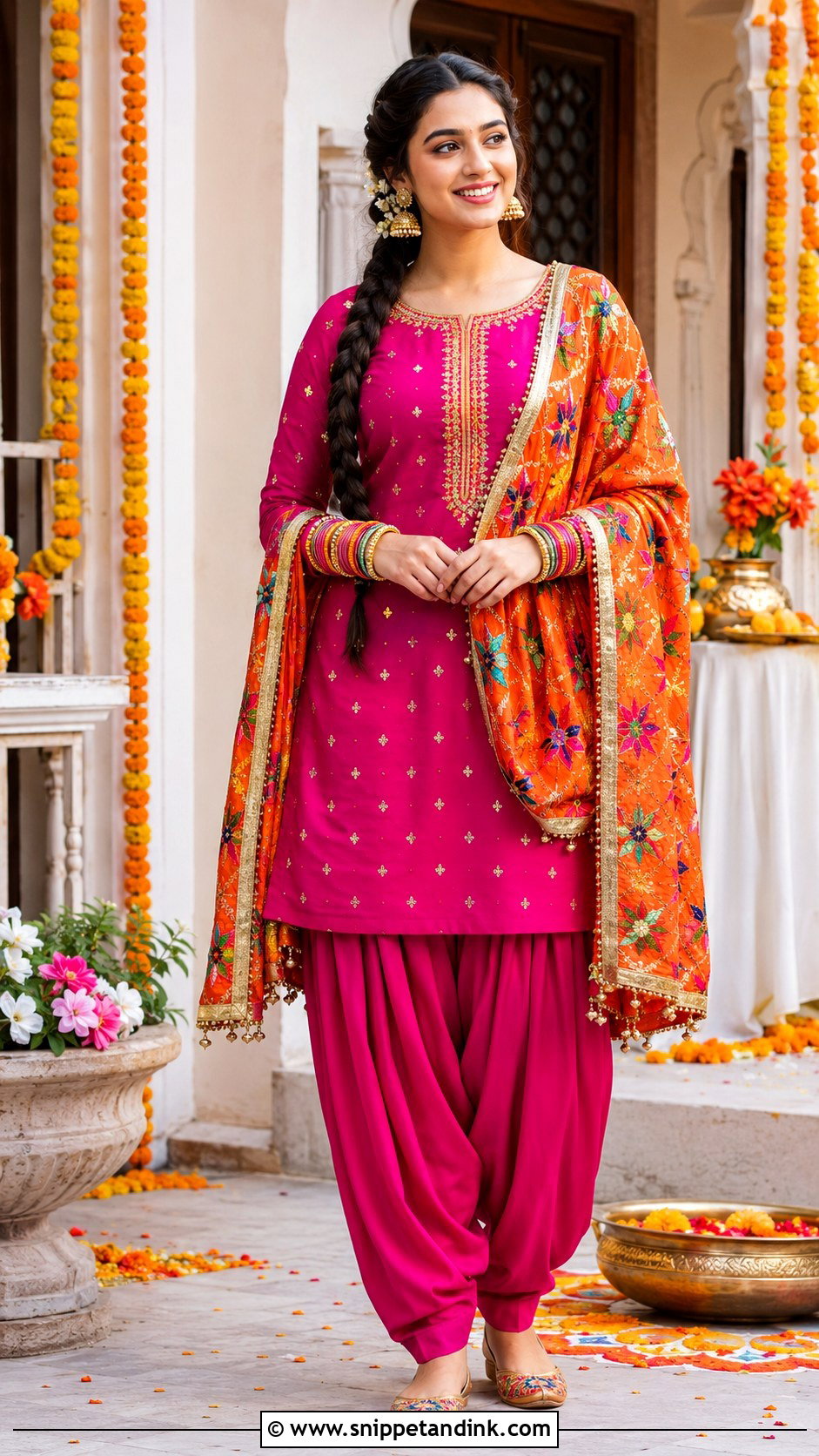
Magenta and a traditional Patiala suit are a natural match for a lively family celebration. The pleated salwar is the most comfortable bottom on this list for floor seating, because the fabric is all there to give. A knee-length kurta with a contrasting orange, yellow or green dupatta completes it. Phulkari is gorgeous, but heavy versions are warm, so pick a lighter dupatta for a summer morning. Gold jhumkas, colourful bangles and Punjabi juttis. A paranda braid makes it more traditional, a low ponytail simpler. Keep the neckline modest, and skip wide bell sleeves anywhere near the lamps.
16. Rust Cotton Silk Saree Grah Shanti Outfit
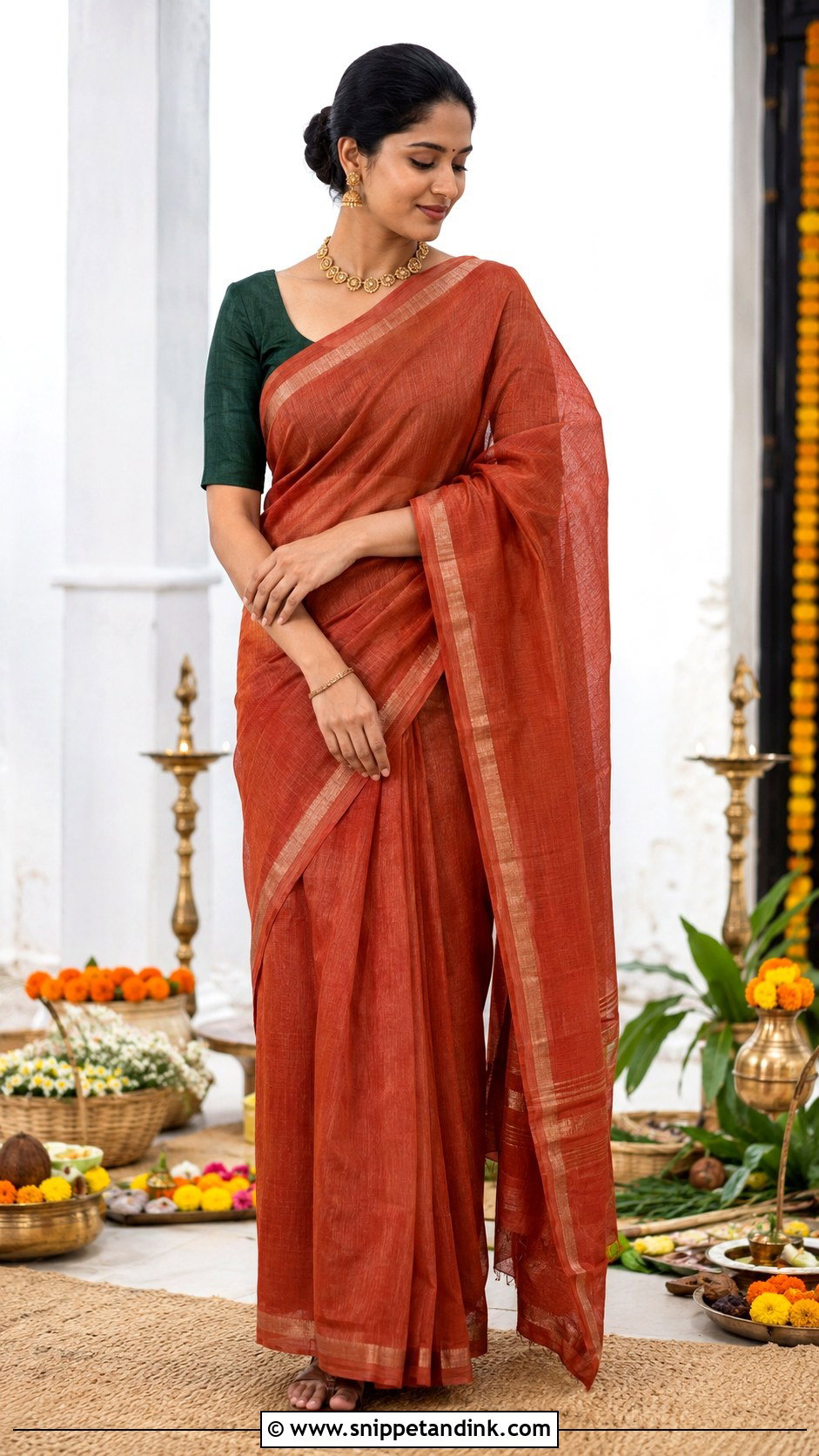
Rust cotton silk is the saree I’d suggest for a cooler month or an air-conditioned hall, because it’s warm in tone and still breathes. Look for a subtle woven border, block print or fine gold motifs, and build the palette with a mustard, maroon or forest green blouse. Cotton silk creases where you sit, which is fine; it reads as handloom rather than untidy. Antique gold earrings, a short necklace and a simple bindi. A secure pleated drape and a pinned pallu save constant adjusting. Brown or gold flats, a smooth bun or a long braid. Women who prefer muted tones still look properly festive in it.
17. Lavender Peplum Sharara Grah Shanti Outfit
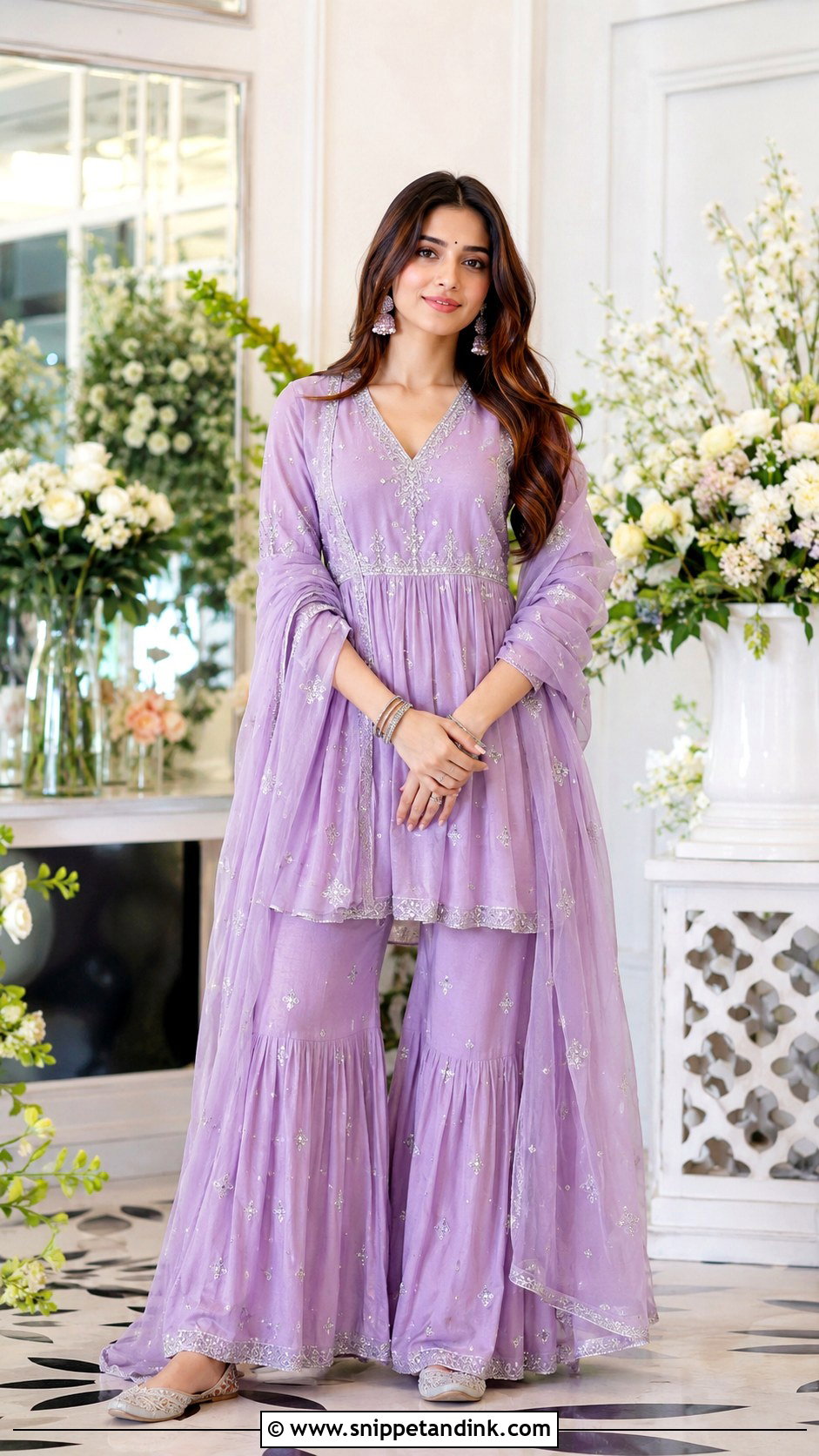
Lavender is the softer, contemporary option, and a peplum kurta and sharara keep it tied to occasion wear. The peplum is where I’m picky: a stiff, interlined one sticks out at the waist when you sit and crushes into odd folds. A softer, hip-length peplum with elbow sleeves sits flat. Pair it with a light flared sharara, fine thread or pearl work, and a sheer dupatta pinned across the front during the puja. Pearl drops, silver-toned bangles and pale juttis, with fresh makeup and a small bindi. It suits younger relatives and guests who want fashion without disrespect.
18. Yellow Floral Lehenga Grah Shanti Outfit
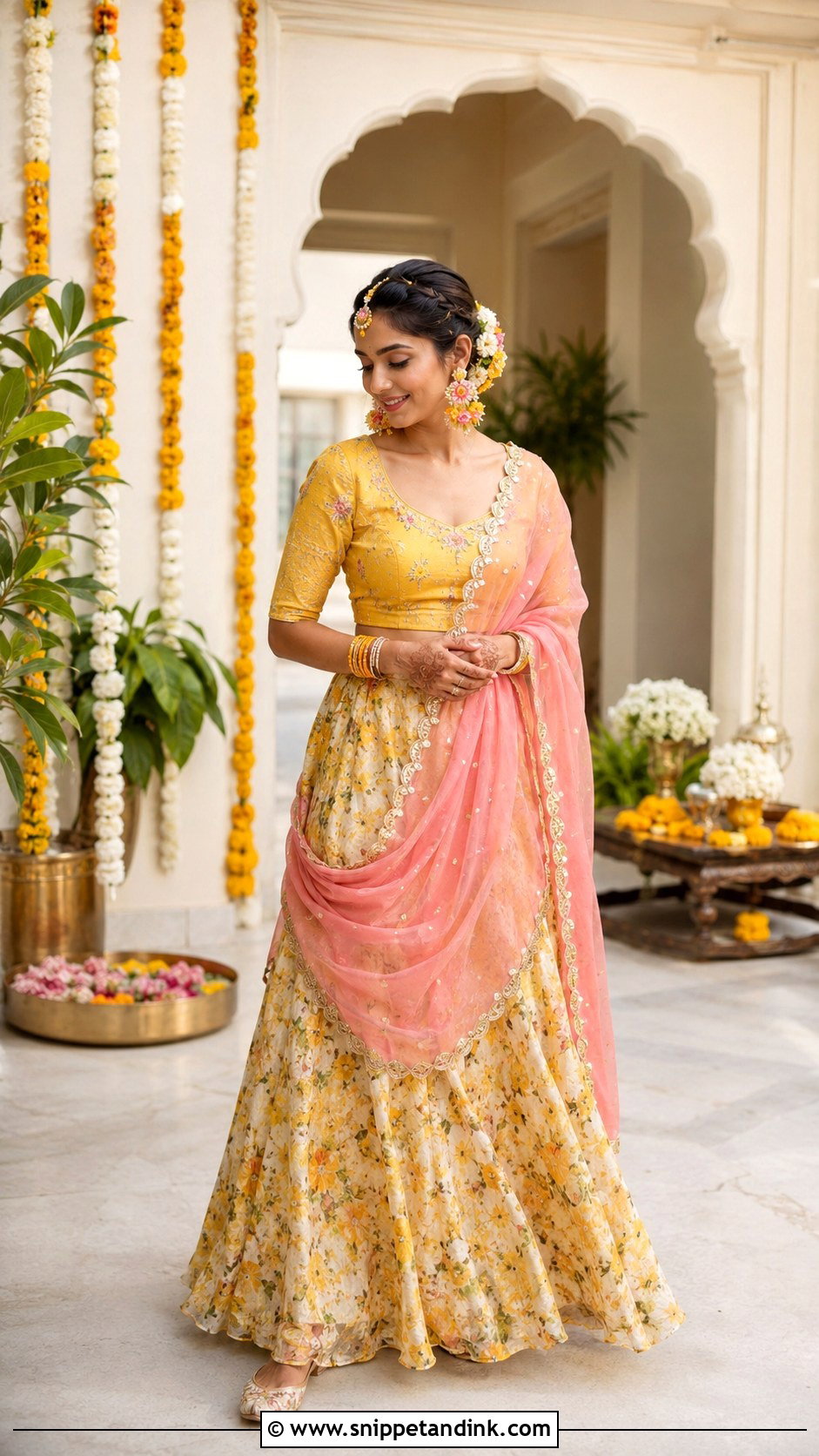
Yellow florals look sunny in daylight and are far lighter to wear than a beaded bridal skirt. Choose printed silk, organza or cotton with a manageable flare, a coordinating elbow-sleeve blouse, and a plain yellow or contrasting pink dupatta. Small prints feel delicate; large botanicals feel more contemporary. Flower-shaped earrings, slim bangles and cream or gold juttis. A bride can add a fine maang tikka, while guests are better without head jewellery. Drape the dupatta over both shoulders or across the front for the ritual. A braided bun with fresh blooms ties in the print, and the whole look is easy to manage at home.
19. Green Silk Salwar Suit Grah Shanti Outfit
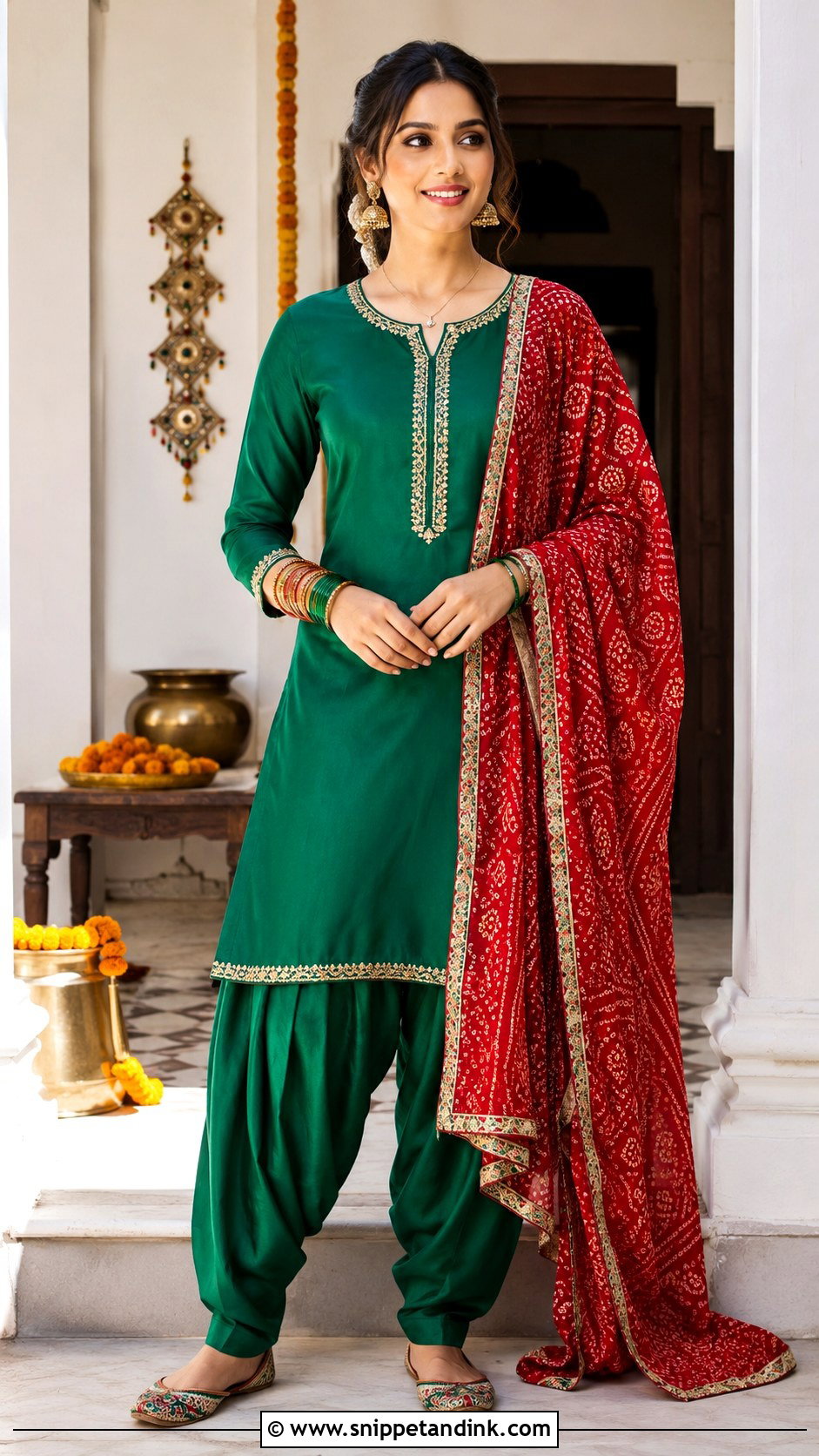
When someone tells me they just want to get dressed and forget about it, I suggest a green silk salwar suit. Emerald, parrot or leaf green with matching salwar and a contrasting Bandhani or Banarasi dupatta needs almost no adjusting once it’s on. A straight or slightly flared kurta leaves room to sit, and gold piping or light embroidery makes it festive. Studs or jhumkas, a slim necklace, coordinated bangles and embroidered flats suit a home or temple. Pin the dupatta at one shoulder and drape it across the chest. Kurta length, sleeves and salwar volume are all easy for a tailor to adjust, so it suits most ages and builds.

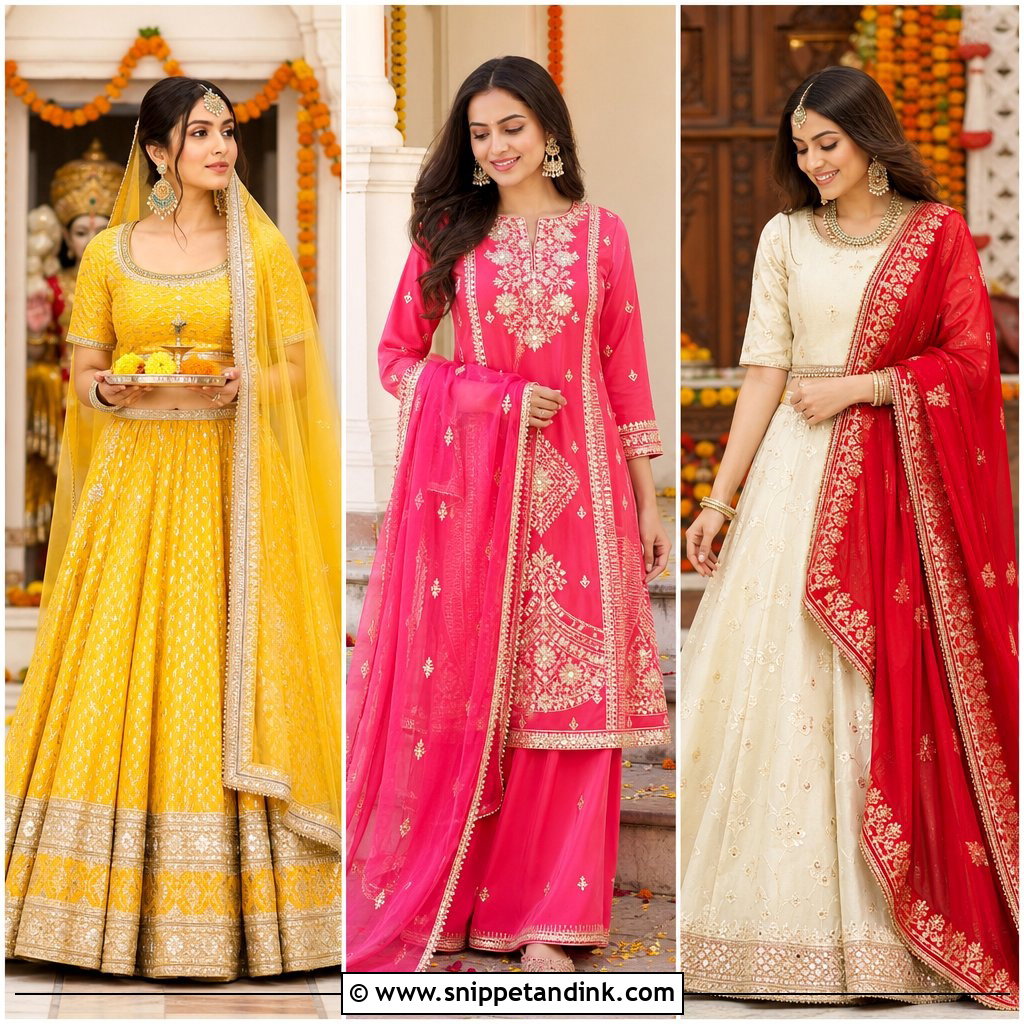
20. Red And Orange Chaniya Choli Grah Shanti Outfit
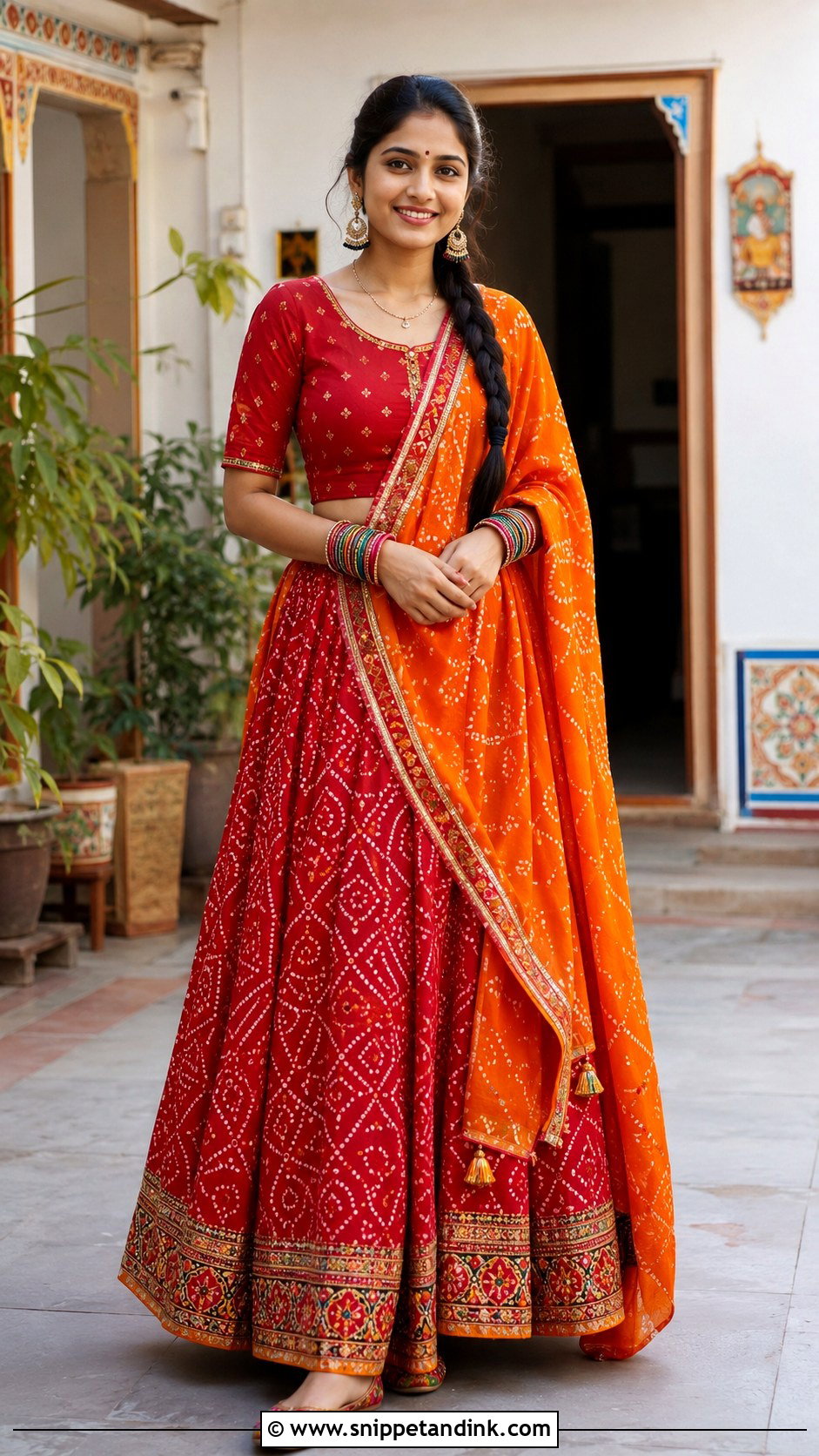
A red and orange chaniya choli is the joyful pick for a Gujarati Grah Shanti. A moderately flared skirt with Bandhani, block printing or a little mirror work is plenty. Heavy mirror work is hot, and the mirrors press into your legs when you sit for long, so I keep it to the border. A modest choli with comfortable sleeves, and a dupatta long enough to cover the front securely. Oxidised gold earrings, colourful bangles and flat embroidered mojaris; brides and close family can add a delicate necklace or maang tikka. A low bun or long braid keeps it neat from the prayers right through to lunch afterwards.
Colours Some Families Ask Guests to Skip
Customs differ widely between communities, and even between branches of the same family. Black is avoided at auspicious ceremonies by many households, and white or off-white is kept for mourning in some. Others are relaxed about both, and some Maharashtrian and South Indian families are perfectly happy with ivory and gold. A few families like the bride alone to wear red or a specific shade on the day. A quick message to the host is all it takes, and it saves you from a dress that has to stay in the cupboard.
Safety Pins, Spare Bindis and a Cotton Handkerchief
I put together a tiny kit for every family puja, because the same few things go wrong each time and none of them need a tailor.
- Six or eight small safety pins in two sizes, for a pallu that slips or a dupatta that needs anchoring again after lunch.
- A spare strip of bindis and a few bobby pins for hair loosened by the heat of the havan.
- A soft cotton handkerchief. The smoke and the warmth near the fire make eyes water and foreheads shine, and tissues leave lint on silk.
- Clear nail polish or a needle and matching thread for a snagged border. Zari catches on bangles more often than you’d expect.
- Socks or a small pair of slip-on chappals if the ceremony is at a temple where footwear stays outside, especially on hot stone floors.
Will It Still Feel Right After Three Hours on the Floor?
Comfort, family custom and the length of the ceremony should decide this outfit more than any trend. Lightweight sarees, salwar suits, Anarkalis, shararas and easy lehengas all suit the puja when the coverage is modest and the shoes are flat. Yellow, orange, green, pink, red and coral feel naturally auspicious. Keep the embellishment lighter than the wedding day, pin the dupatta or pallu before you leave the house, and make sure you can sit on the floor in it. Brides and close relatives can go richer while guests keep it simple. Above all, ask the family about their dress code first, and the outfit will feel right for a sacred morning.
You'll Like These Ideas:


Leave a Reply