
Most lehenga decisions go wrong for one reason: the outfit gets chosen from a photo, before anyone has thought about which function it is for, how long it will be worn, or how much it weighs. I start every consultation with the event list instead. A bride usually needs something heavy and ceremonial for the wedding itself, something she can dance in for the sangeet, and something she can sit cross-legged in for the mehendi. Bridesmaids, sisters and guests need lighter work than the bride, and the whole look has to hold together down to the shoes. Below are twenty lehengas I would actually put on a client, with notes on what each one asks of you, covering the main ceremony, mehendi celebrations, sangeet evenings, receptions and daytime weddings.
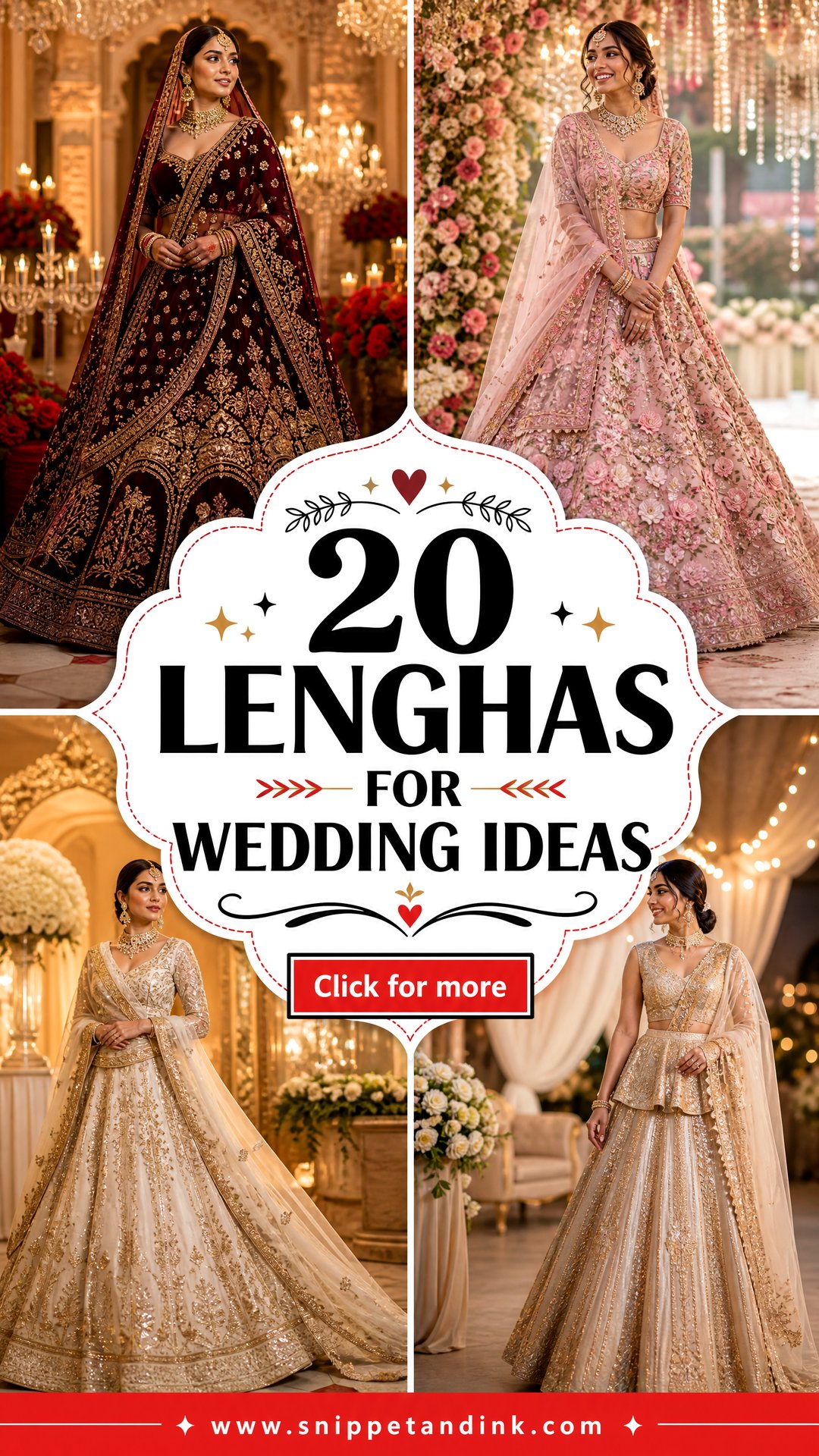
Kalis, Can-Can and Waistband Height Decide How a Lehenga Wears
The pictures below show colour and embroidery, but the comfort of a lehenga is decided by construction you cannot see in a photo. When I assess a skirt at a fitting, I check three things before I look at the work on it.
Panel count
A kalidar skirt is cut from many triangular panels, called kalis, stitched together. More panels give more flare at the hem without bunching fabric at the waist. A skirt with few panels and lots of gathered fabric will look fuller in a photo but sits bulkier on the hips.
The can-can layer
Most bridal skirts have a stiff net layer stitched inside to hold the shape out. It is what makes a lehenga stand, but it is also scratchy and adds weight. I ask for it to be attached lower down, not right at the waist, so it does not rub the skin when you sit. For a sangeet or mehendi outfit, you often do not need it at all.
Where the waistband sits
Heavy skirts pull downward through the evening. If the waistband sits at or just above the natural waist, your hips help hold it up; if it sits lower, it will slide and the hem will start catching under your shoes by the reception. For any bridal lehenga, I also ask the tailor for a hook and a drawstring, not one or the other.
1. Red Bridal Lehenga With Double Dupatta
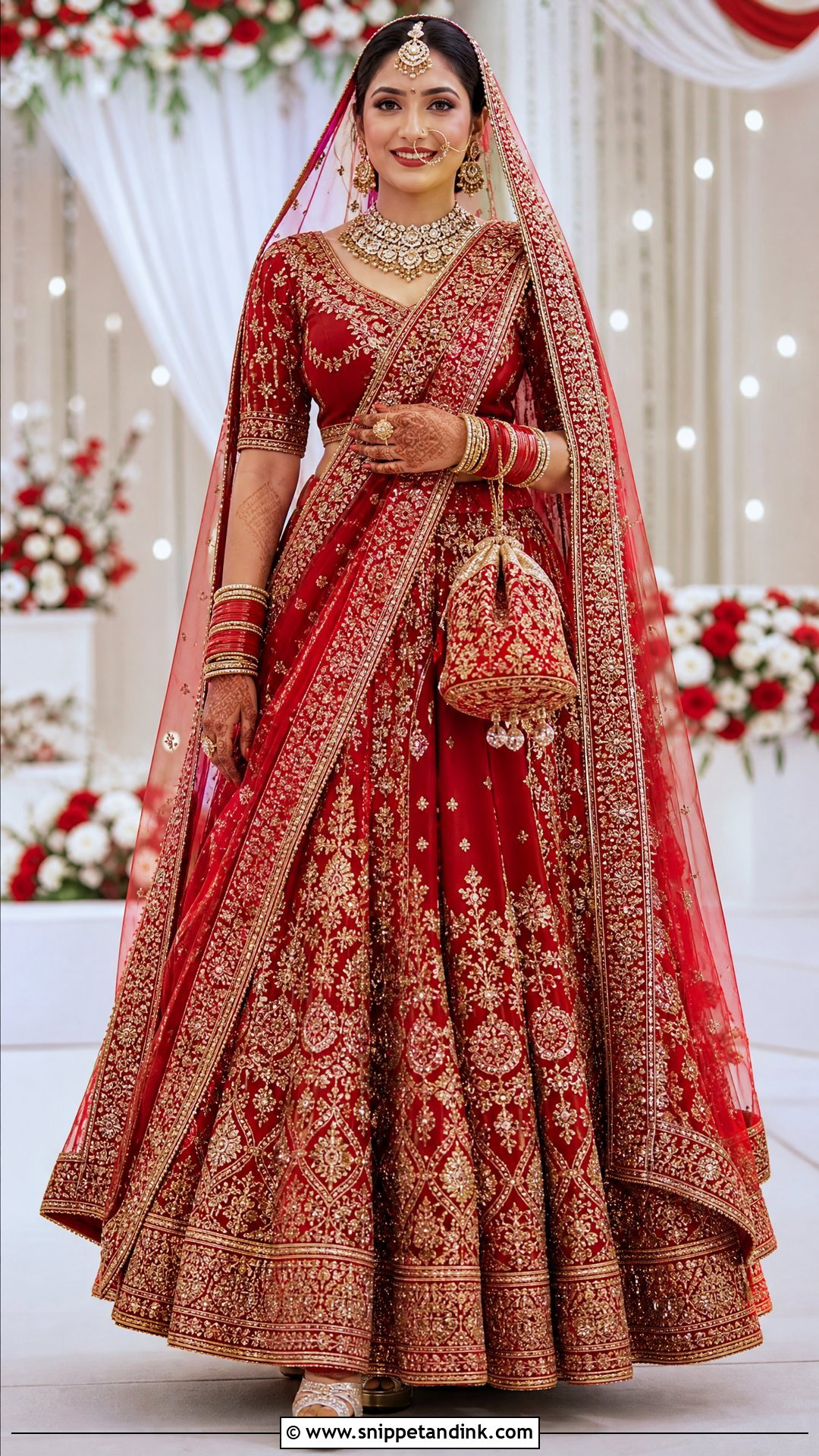
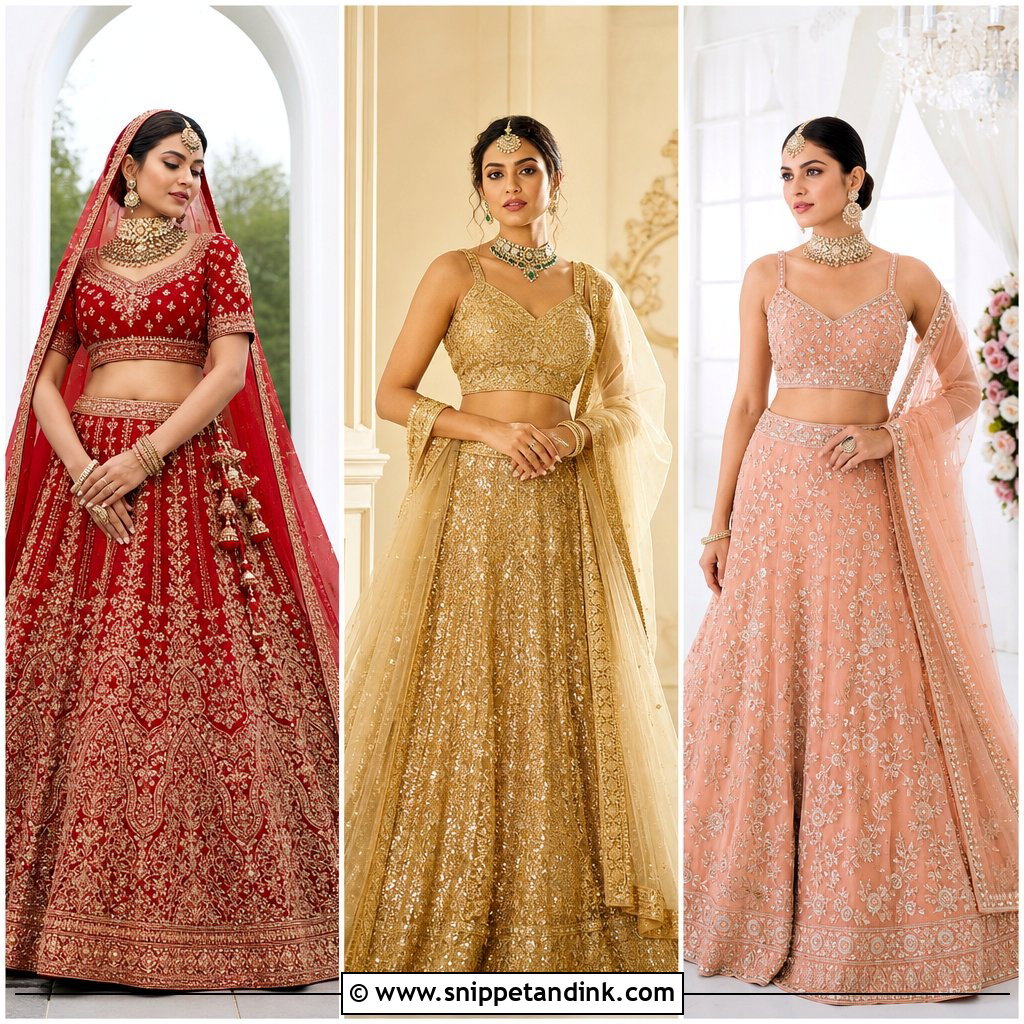
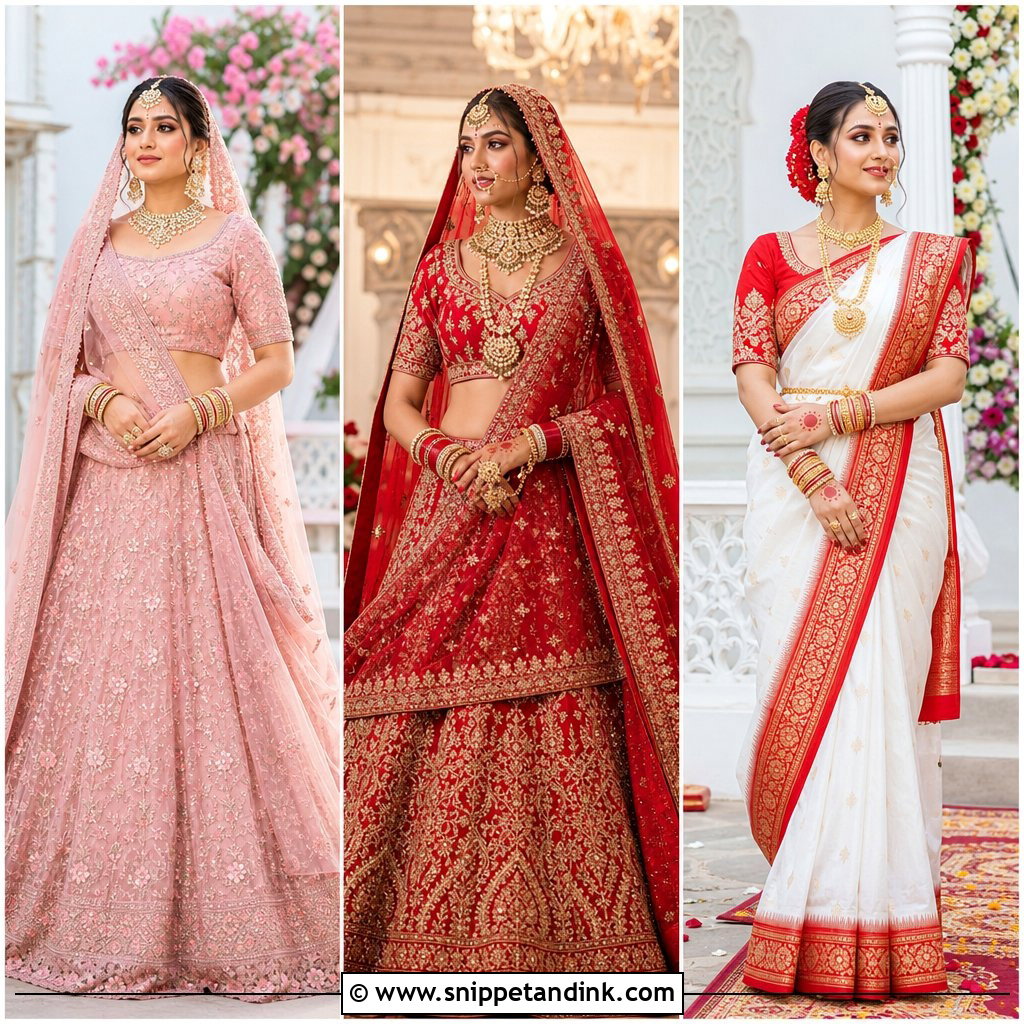
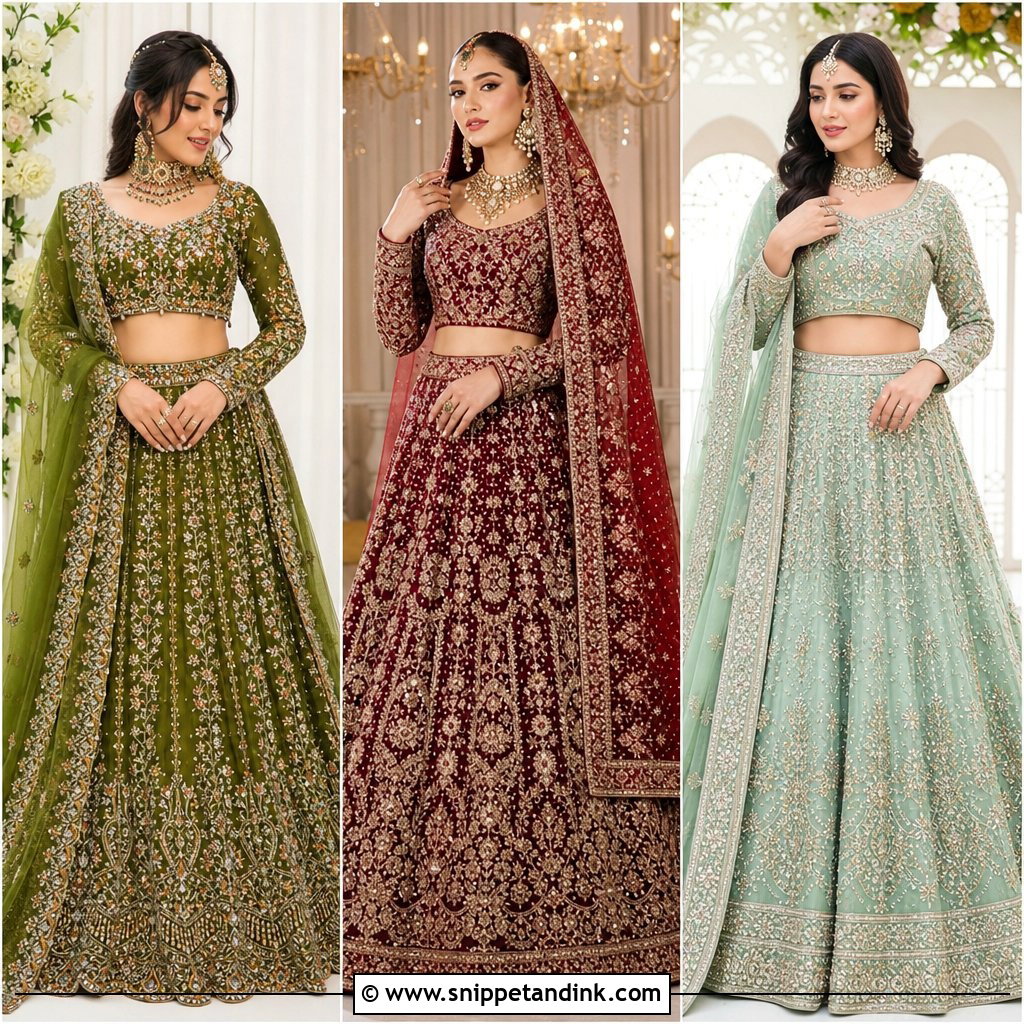
Red still carries the ceremony for a lot of families, and the double dupatta is what makes it feel considered rather than default. One dupatta goes over the head and gets pinned into the hairstyle; the second crosses the torso or sits on one shoulder. Plan for that at the blouse fitting, because the shoulder drape needs a firm seam to pin into. Gold zari or fine threadwork on a high-waisted skirt, a sweetheart or square neck, kundan and a potli will finish it. I always ask brides to wear gold platforms rather than stilettos under a full circular skirt, since you cannot see your feet on the stairs. If the flare feels like too much, a structured A-line keeps the formality with far less fabric to manage.
2. Maroon Velvet Bridal Lehenga
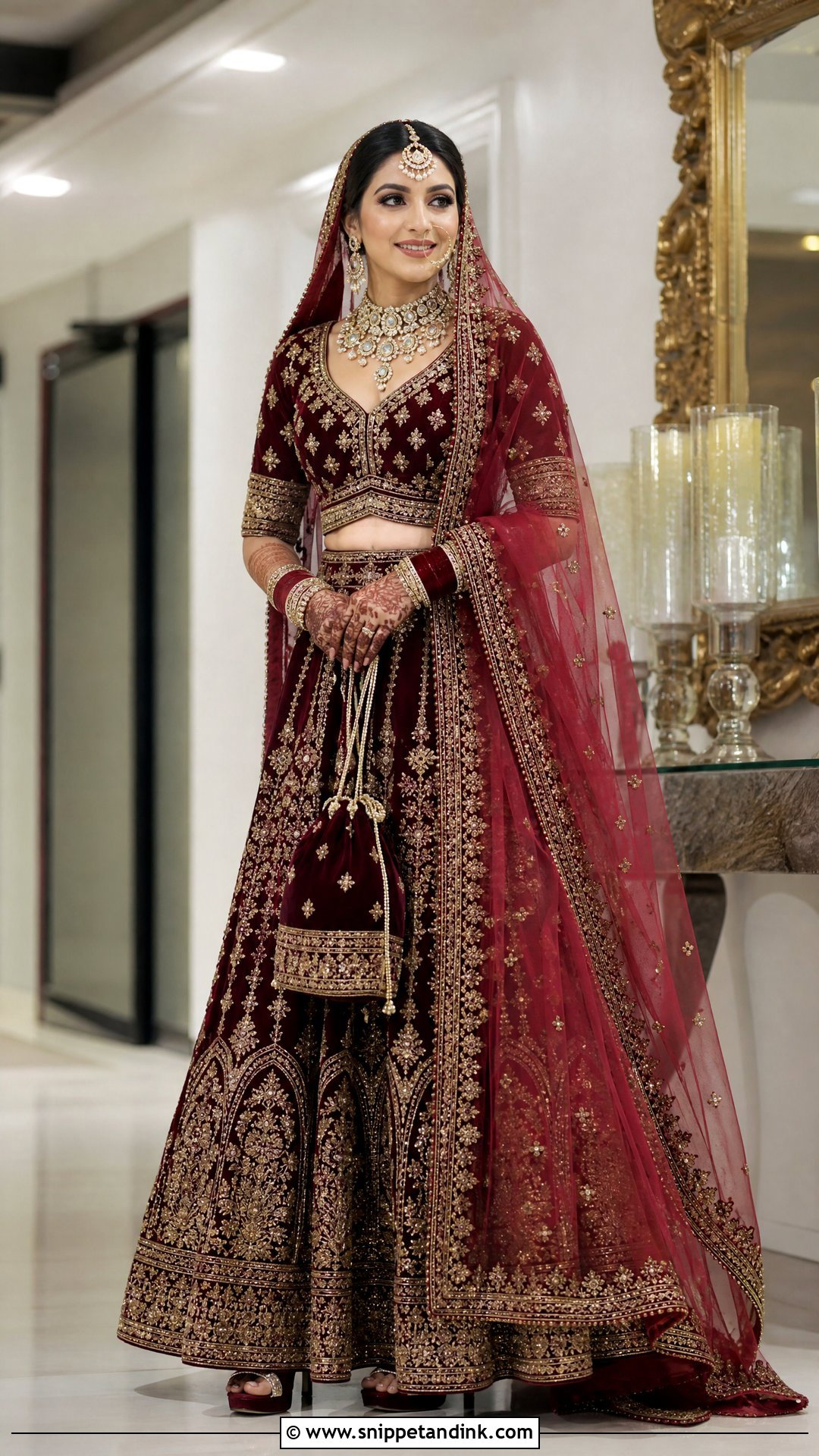
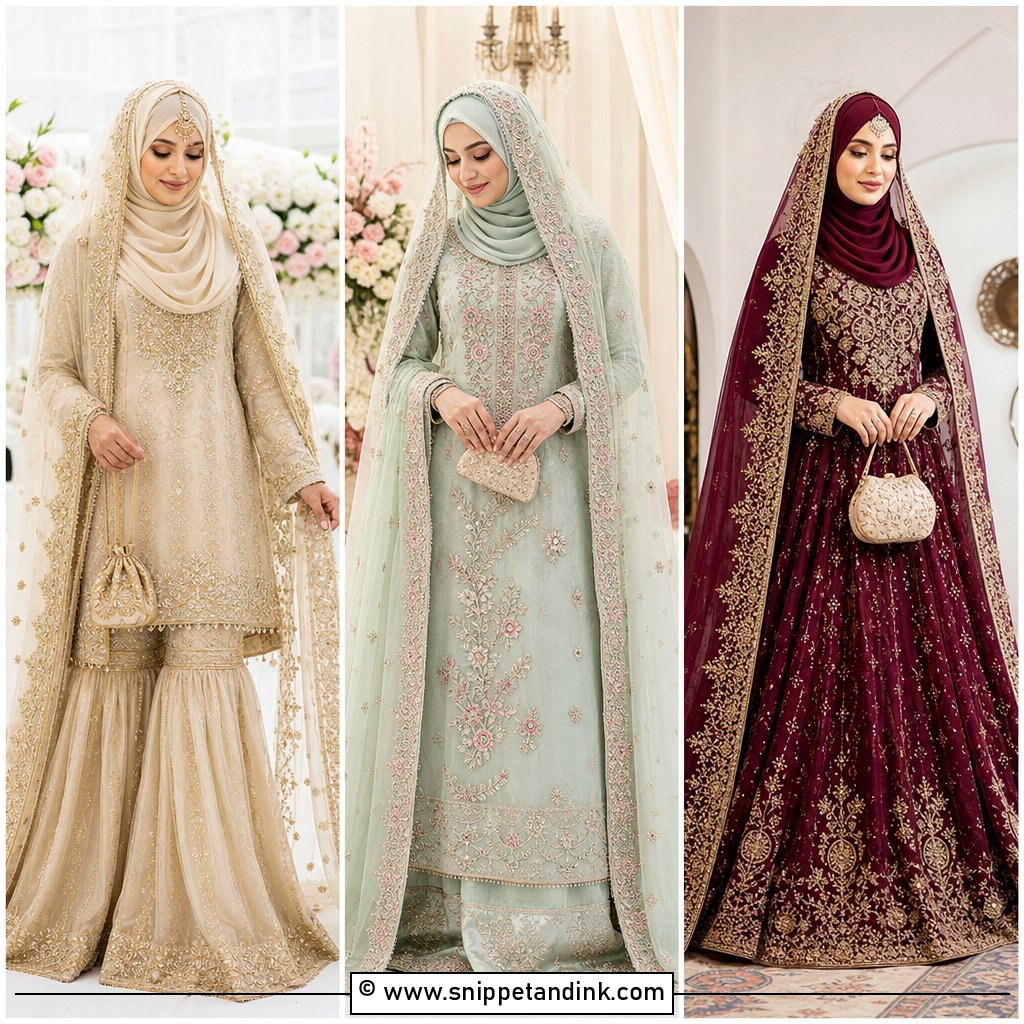
Velvet is a winter fabric, full stop. It holds heat, and in a hot banquet hall a velvet lehenga becomes uncomfortable within the first hour. In the cold, though, nothing shows antique-gold zardozi better, because the pile sits dark around the metal threads and makes them read sharply. Pair the paneled skirt with an elbow-sleeve blouse and keep the dupatta in sheer net so the outfit does not look like a wall of maroon. Polki, a small maang tikka and deep red bangles suit the palette. Keep the hair low and neat. A tall, voluminous hairstyle fights with the weight of velvet and the whole silhouette starts to look top-heavy.
3. Blush Pink Floral Bridal Lehenga
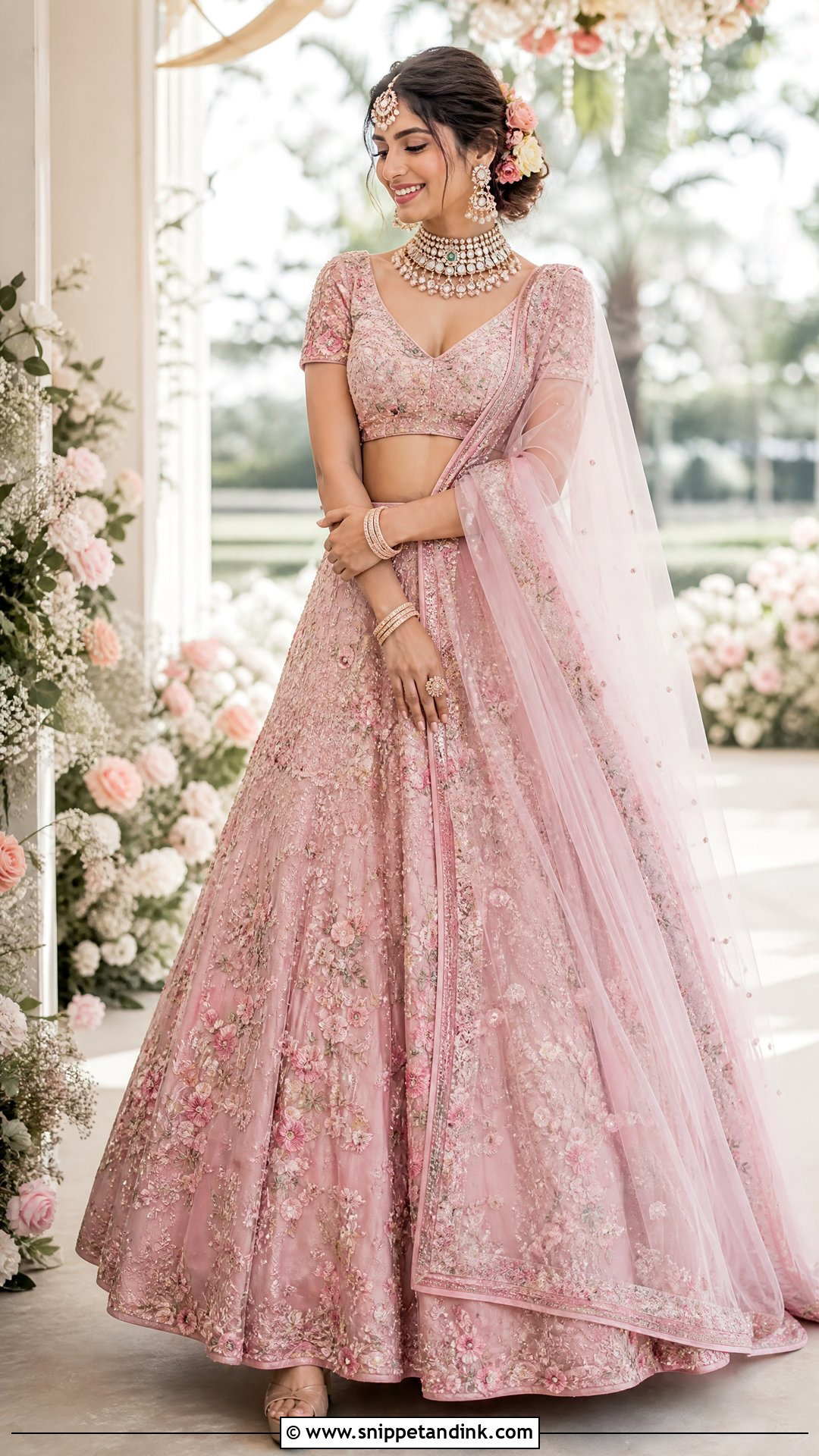
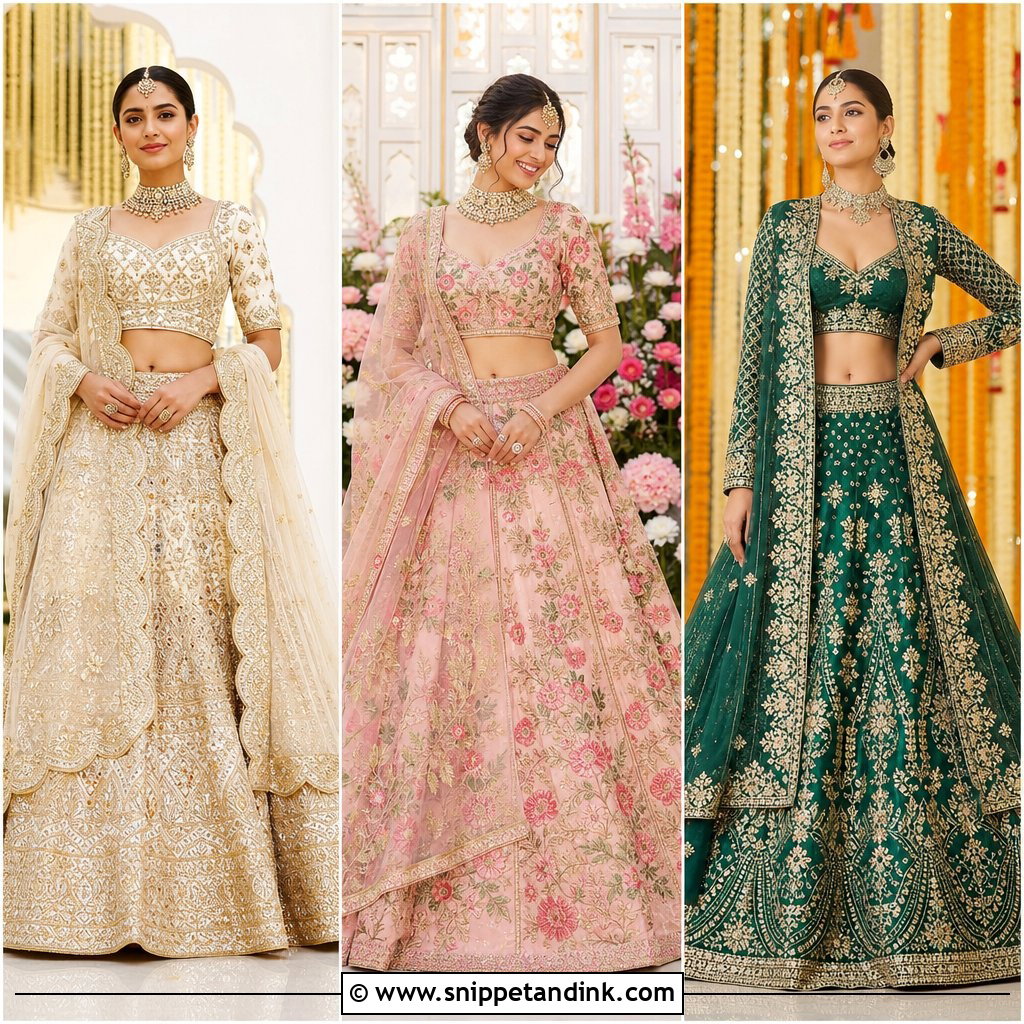
For a daytime ceremony, a blush pink floral lehenga reads fresh in natural light in a way that red sometimes does not. Tonal thread flowers and a few raised appliqués give it depth without needing heavy metal work. Keep the dupatta sheer with a narrow border; a heavily worked veil on top of three-dimensional florals is where these outfits tip into costume. Pearl and kundan, pale bangles and nude platforms carry the colour through. One warning from fittings: blush can wash out on very fair skin under flash, so I hold the fabric to the bride’s face in daylight before we commit.
4. Ivory And Gold Wedding Lehenga
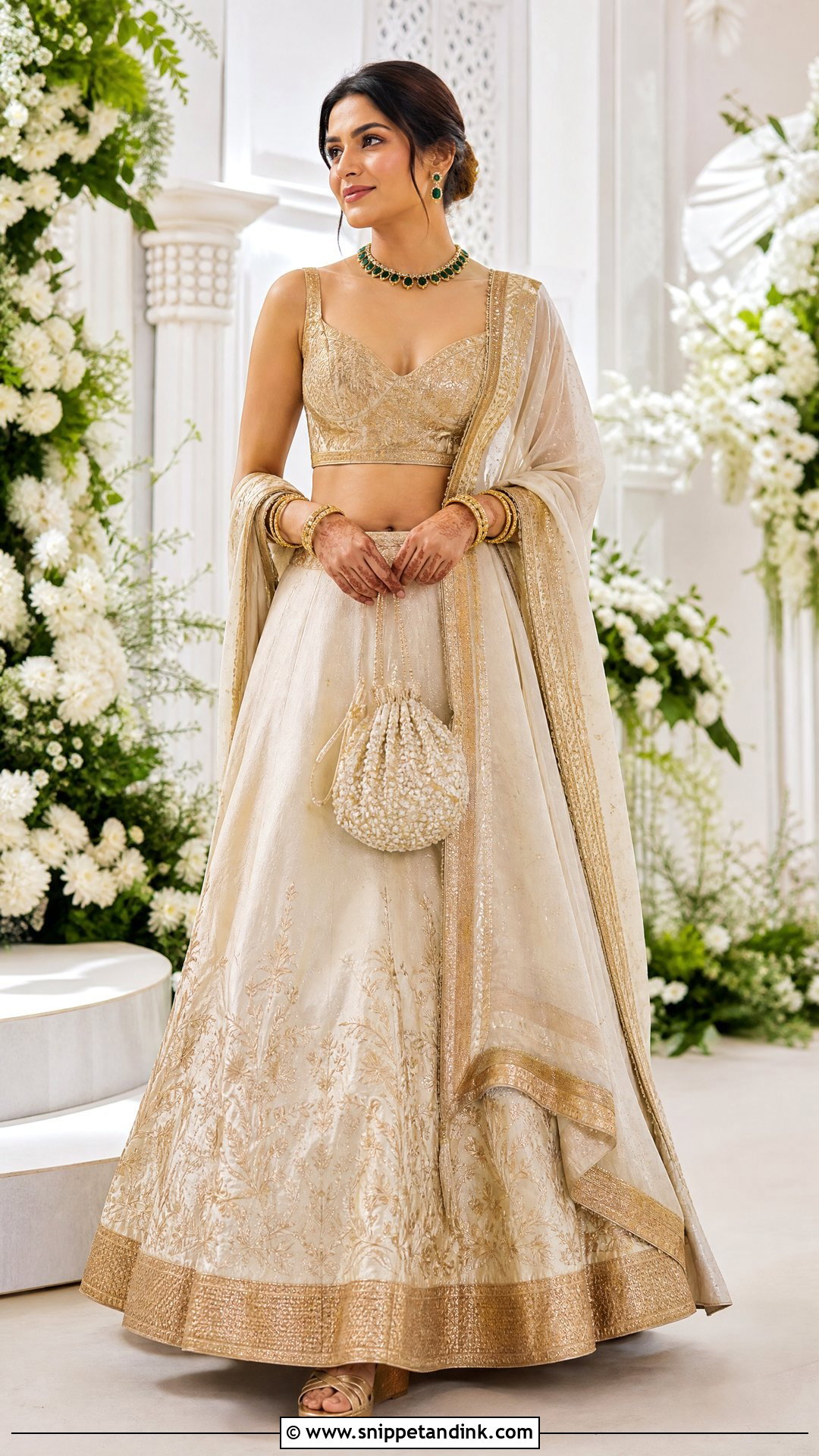
Ivory and gold is the colour story I double-check with the family before anything else. In some communities ivory or white is tied to mourning, and that conversation is easier at the swatch stage than after the skirt is stitched. If everyone is happy, raw silk takes antique-gold embroidery very well and photographs with a soft glow. A fitted gold blouse or an ivory one covered in tonal beads keeps it cohesive, and emerald earrings add the one note of contrast it needs. Raw silk marks easily, so I tell brides to keep pens, mehendi and lipstick away from the skirt until the photos are done.
5. Emerald Green Silk Wedding Lehenga
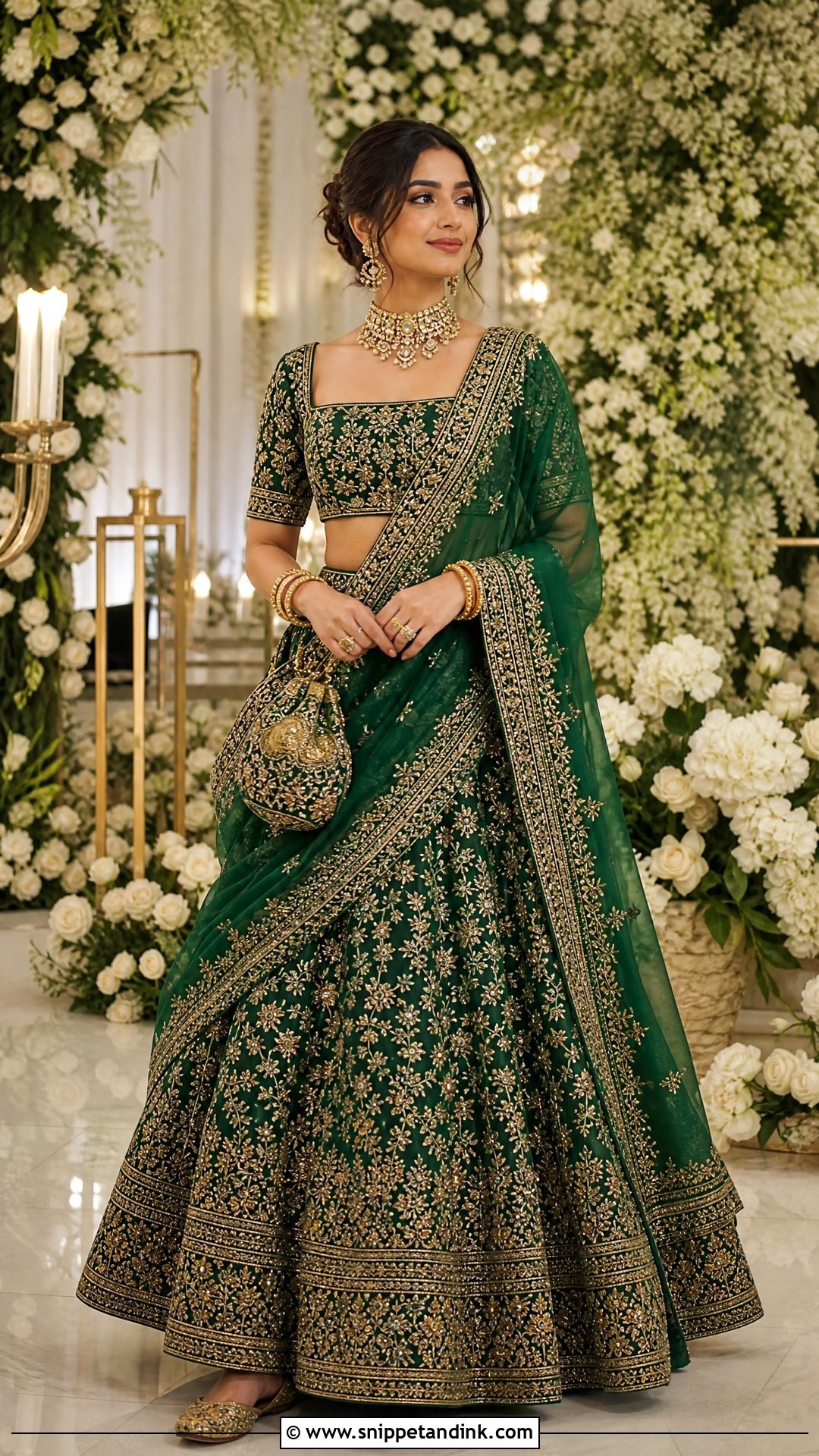
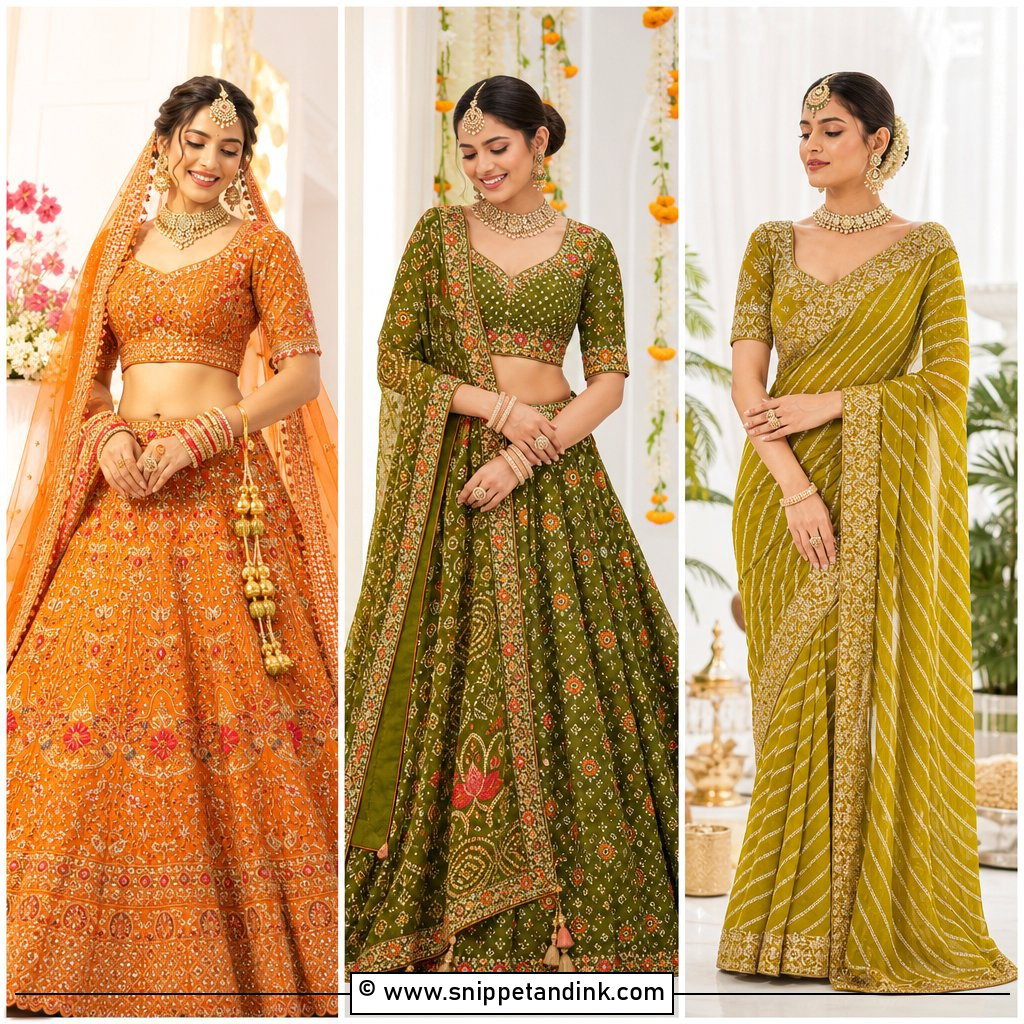
Emerald silk is one of the colours I reach for most for evening functions, because it holds up under warm artificial light without turning muddy. Put the gold work at the hem and waistband so the skirt has weight at both ends and the A-line hangs straight. A square-neck blouse with short or three-quarter sleeves suits most frames. Drape the sheer dupatta diagonally across the waist rather than over both shoulders, so the blouse still shows. Uncut stones, a choker and cushioned gold juttis will carry you through a night of dancing. A smooth bun with a few small white flowers softens the depth of the green.
6. Royal Blue Sequin Sangeet Lehenga
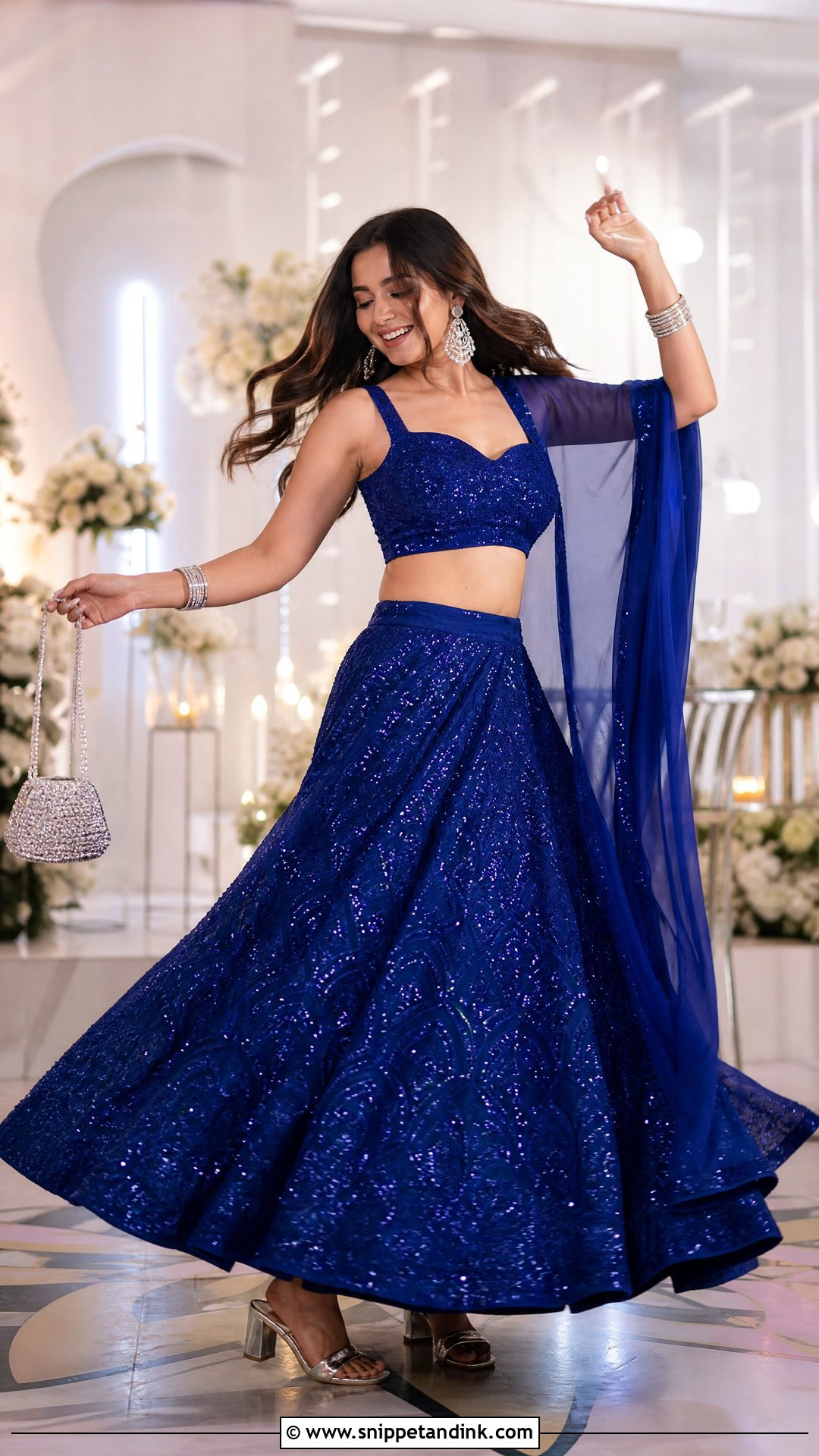
Sequins on georgette behave very differently from sequins on net. Georgette is soft enough that evenly spaced sequins move with you, while dense all-over work turns the skirt stiff and scratchy against the inner arm. For a sangeet in royal blue, I look for the spaced version. A blouse with wide straps or short sleeves keeps everything secure when you are dancing, and a narrow dupatta pinned at one shoulder and tucked at the waist stays out of the way. Silver earrings and a small crystal bag are enough sparkle. Have the hem finished with your actual shoes on so it clears the floor by a finger’s width.
7. Yellow Gota Patti Mehendi Lehenga
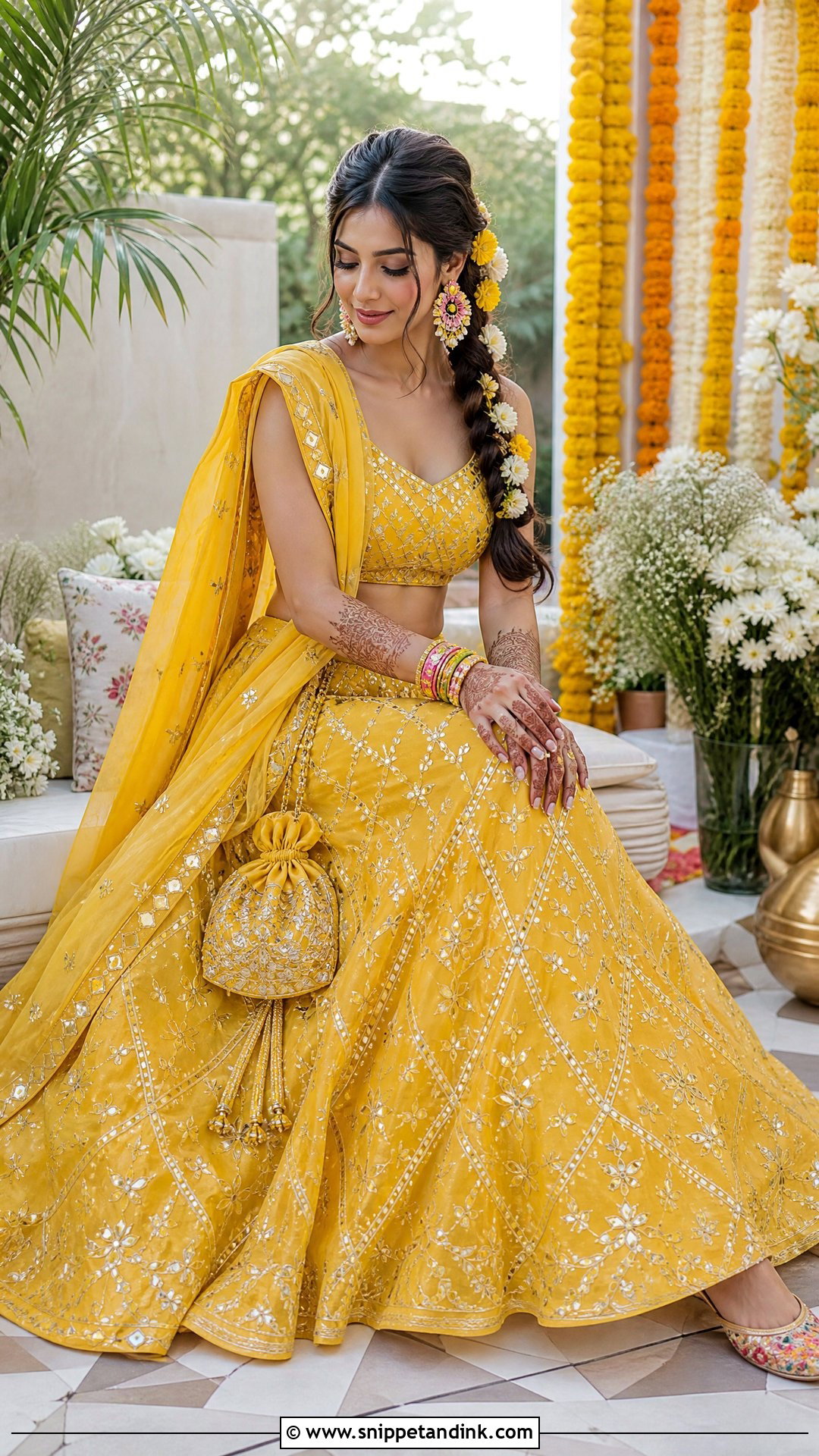
Yellow gota patti suits a daytime mehendi celebration because gota is a flat ribbon of metallic tissue: it catches light without adding the weight of zardozi. That matters when you will be sitting for hours with your hands out. Choose cotton silk or georgette with a medium flare, and a blouse in yellow, green or soft pink. Pin the dupatta behind the blouse so it never falls onto wet henna. Flat juttis, floral earrings and a small potli finish the look, and a braid keeps hair off the paste while it dries.
8. Orange Mirror Work Haldi Lehenga
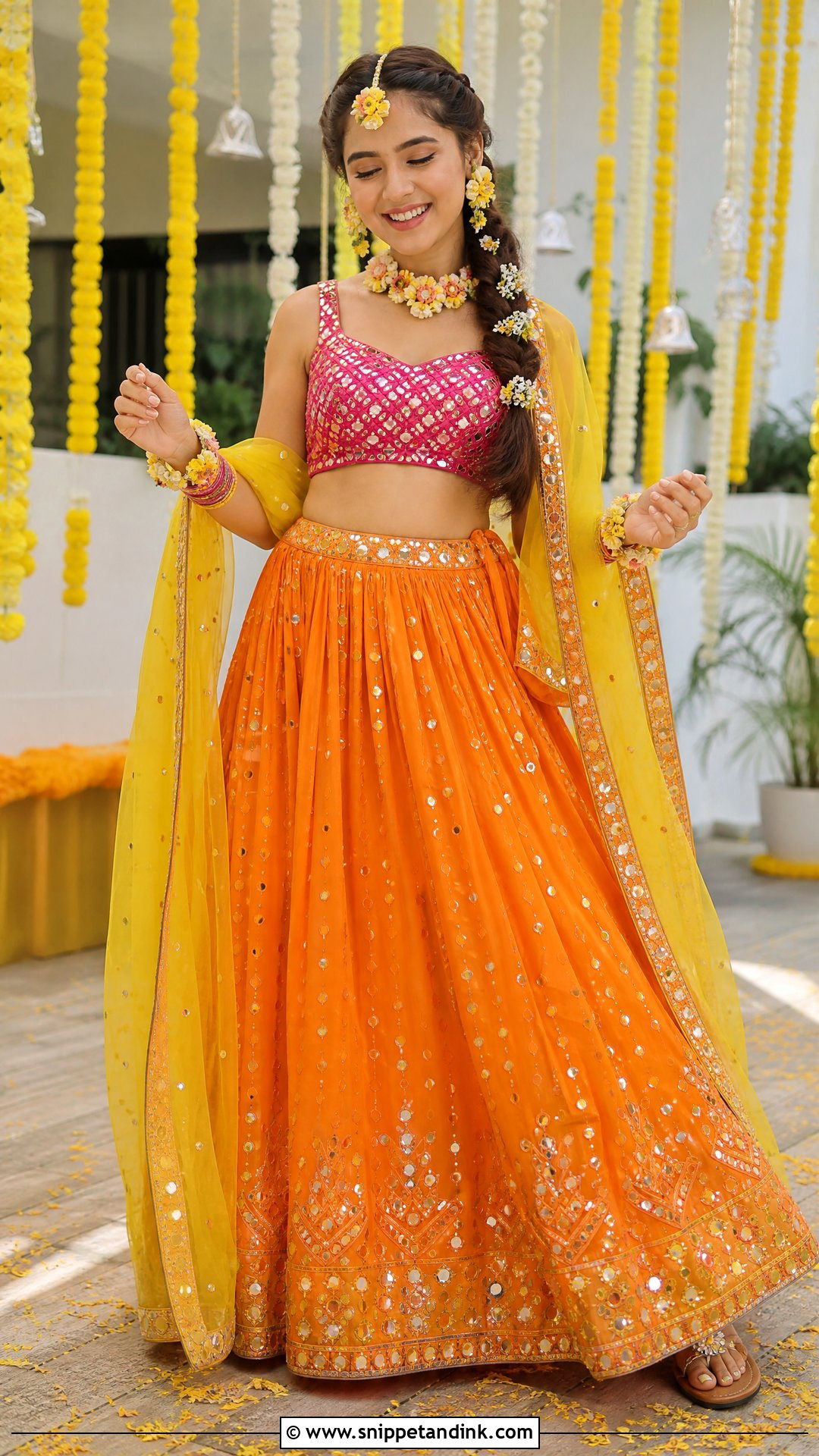
Orange is a smart swap for the usual yellow at a haldi, and a warm, energetic haldi outfit like this one also hides turmeric splashes better than pastels. Small mirror details and a simple border are plenty. A cropped blouse in orange or fuchsia with a sheer yellow dupatta layers the colour nicely. Turmeric stains are hard to remove, so I never put an heirloom or a silk you plan to rewear into a haldi. Flower jewellery, enamel bangles and flat juttis keep it light, and a braided ponytail dressed with fresh flowers survives the paste far better than open hair.
9. Lavender Organza Wedding Lehenga
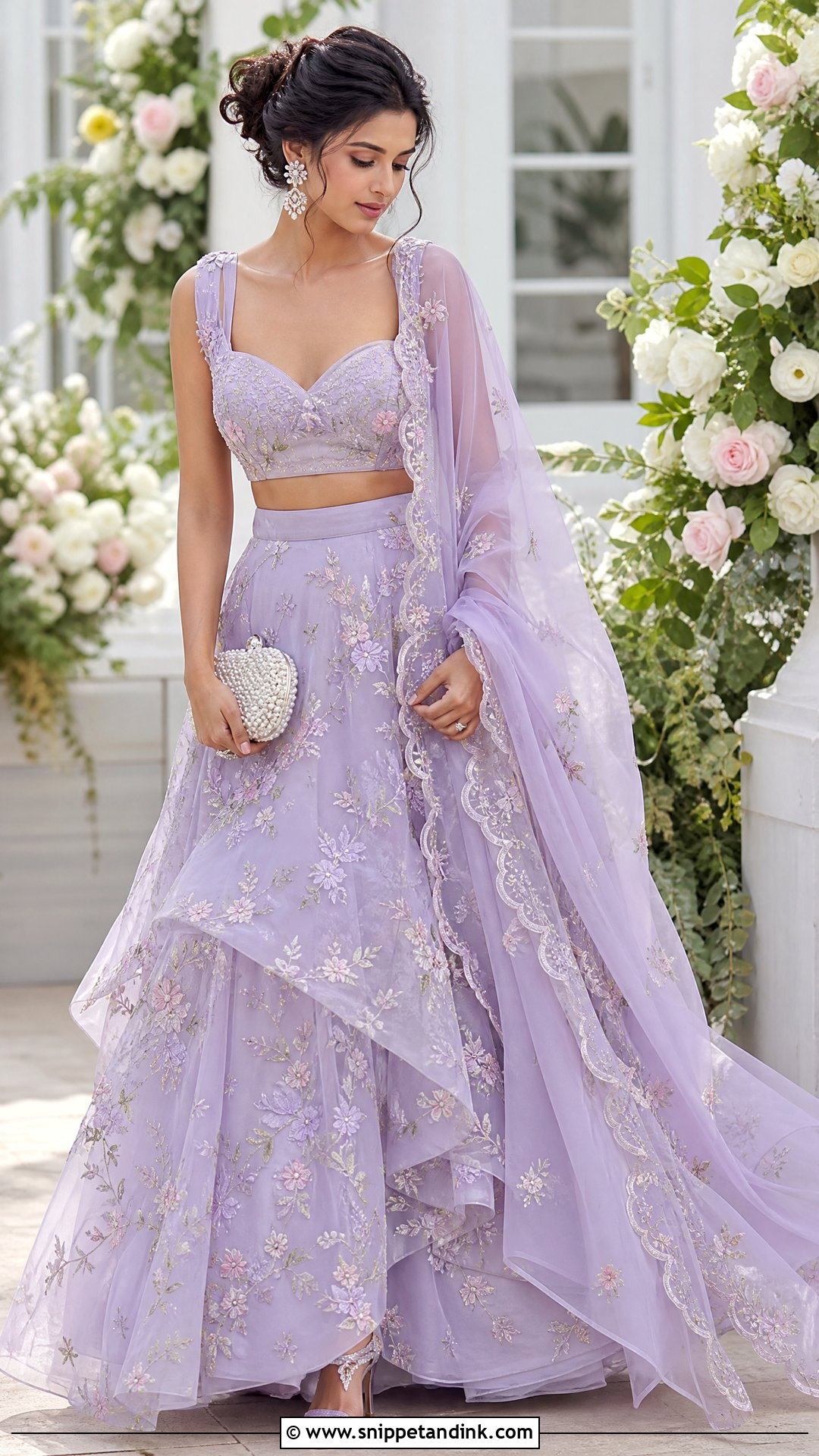
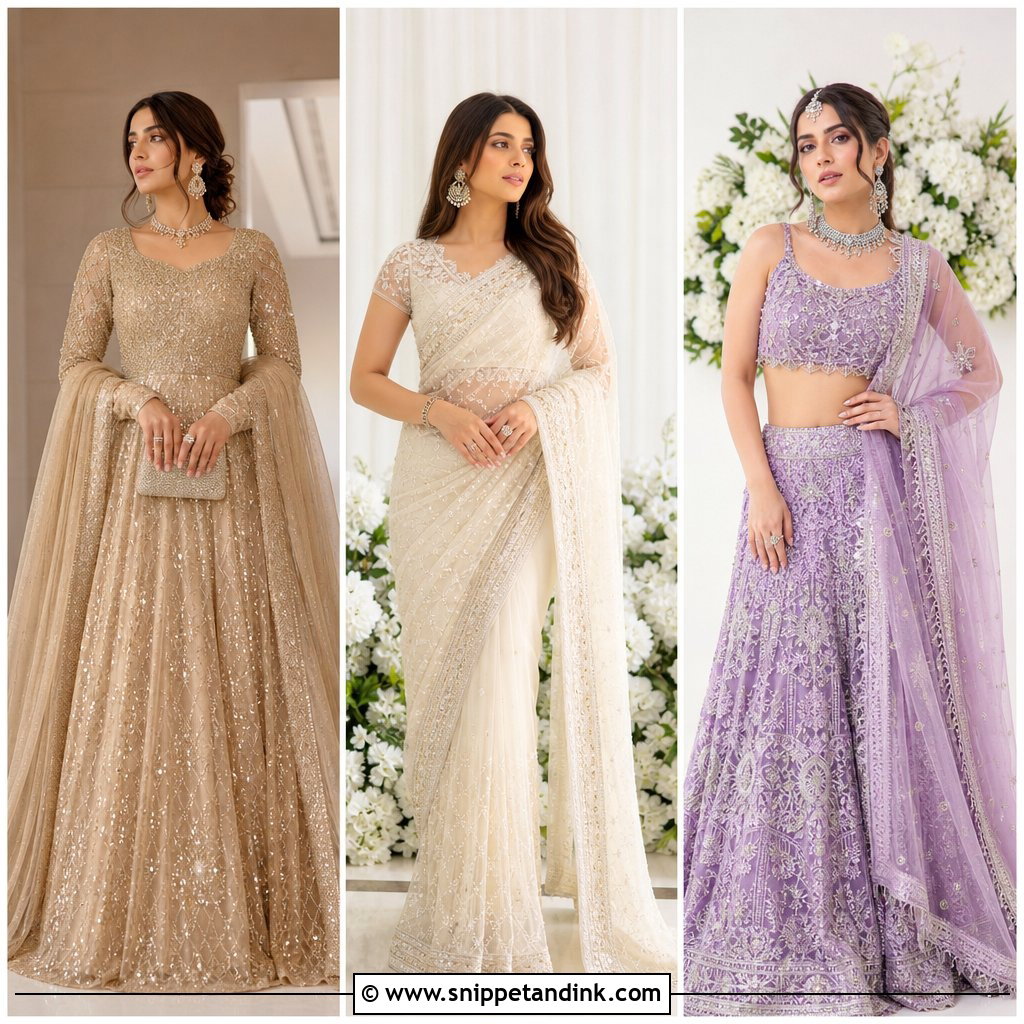
Organza holds air, which is why a lavender organza skirt looks so light in spring and summer, and also why it can make a petite frame look wider than expected. If you are under about five foot three, ask for fewer layers and a slightly narrower flare. Scattered floral embroidery and a defined waistband keep the shape tidy, and a sweetheart blouse balances the volume. Drape the scalloped dupatta from one shoulder to the opposite wrist. Silver jewellery and crystal earrings suit the cool undertone, and metallic silver sandals keep the footwear from looking heavy under so much pale fabric.
10. Champagne Sequin Reception Lehenga
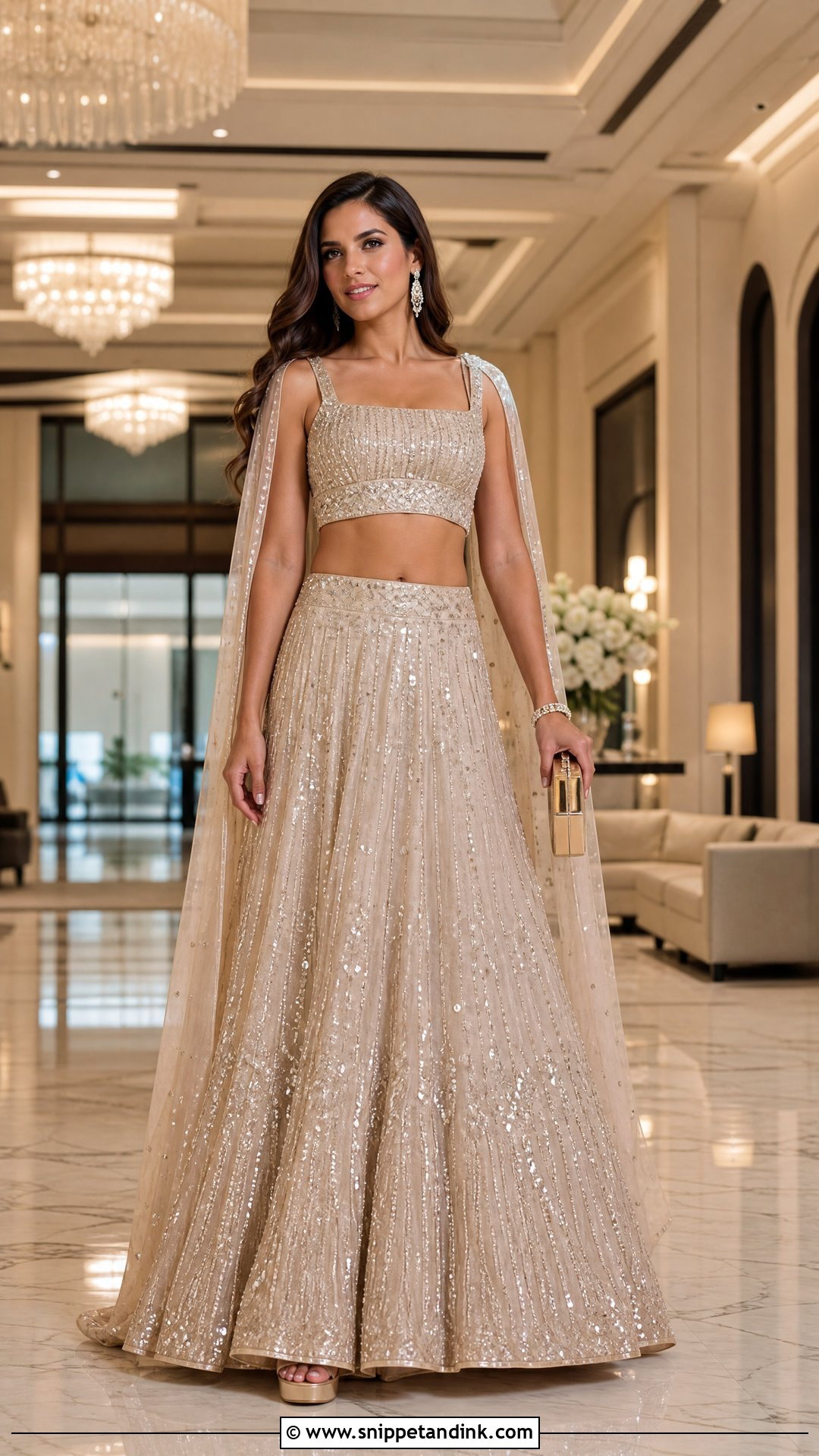
Champagne is a reception colour for brides who are done with red after the ceremony. The thing I watch with tonal sequins is direction: vertical rows or embellishment that thins toward the waist lengthen the body, while horizontal bands shorten it. A structured blouse, perhaps a longer corset shape, gives support under a fluid skirt. Skip the traditional drape and pin a light dupatta behind the shoulders or carry it on one arm. Crystal drops and a metallic box clutch are plenty, because a reflective skirt already supplies the shine.
11. Sage Green Embroidered Guest Lehenga
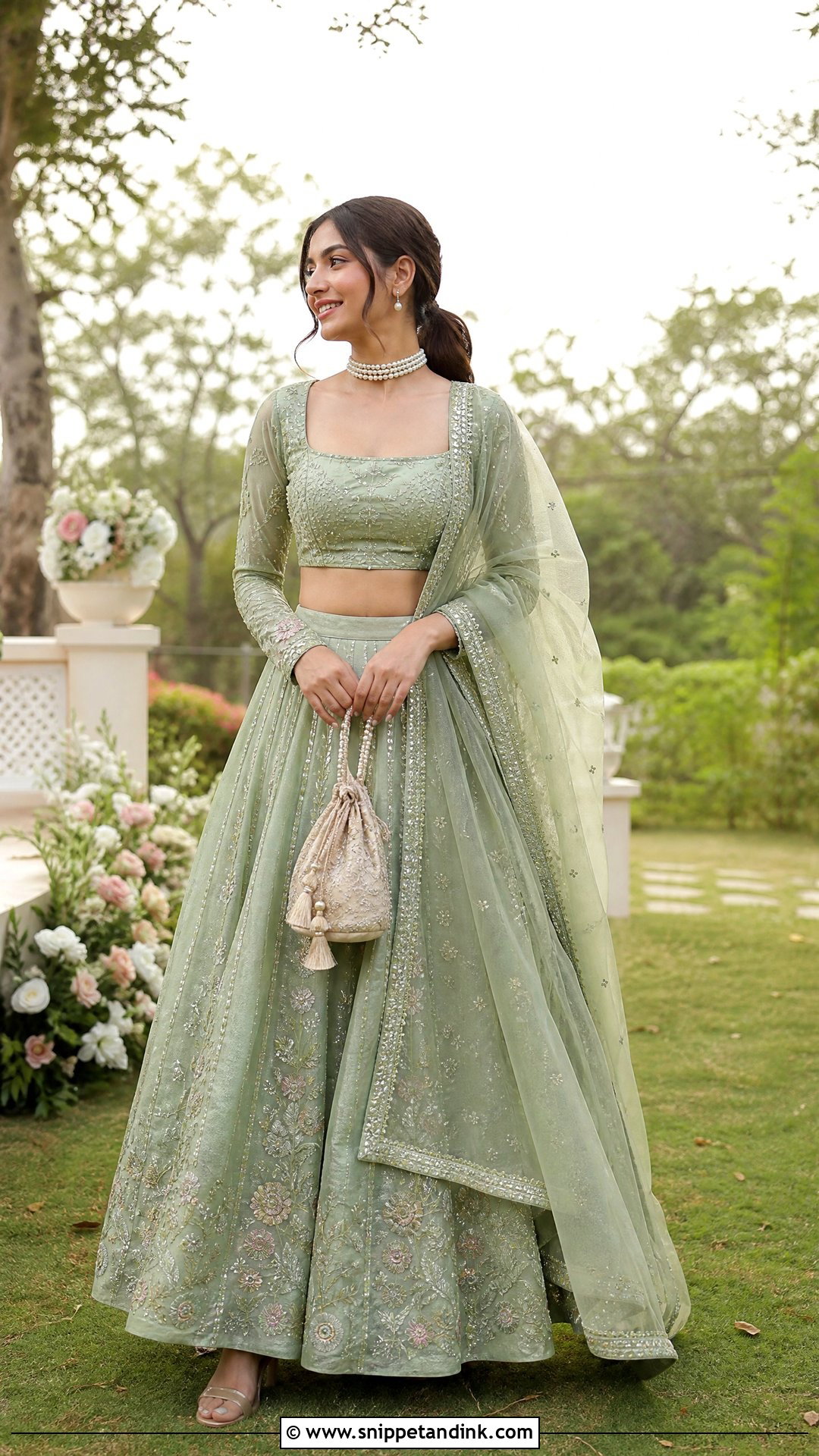
Sage green is my favourite answer when a guest asks what will look festive without competing with the bride. It sits quietly next to bridal red and gold, and it holds its colour well in daylight garden venues. Keep the embroidery light, a few small sequins and fine threadwork, and wear the matching dupatta for a clean one-colour look. Pearl earrings and a cream potli lift it. Think about the ground: block heels or embroidered flats on grass, never stilettos. A pale pink dupatta is a good way to add contrast if the all-sage version feels flat on you.
12. Powder Blue Georgette Guest Lehenga
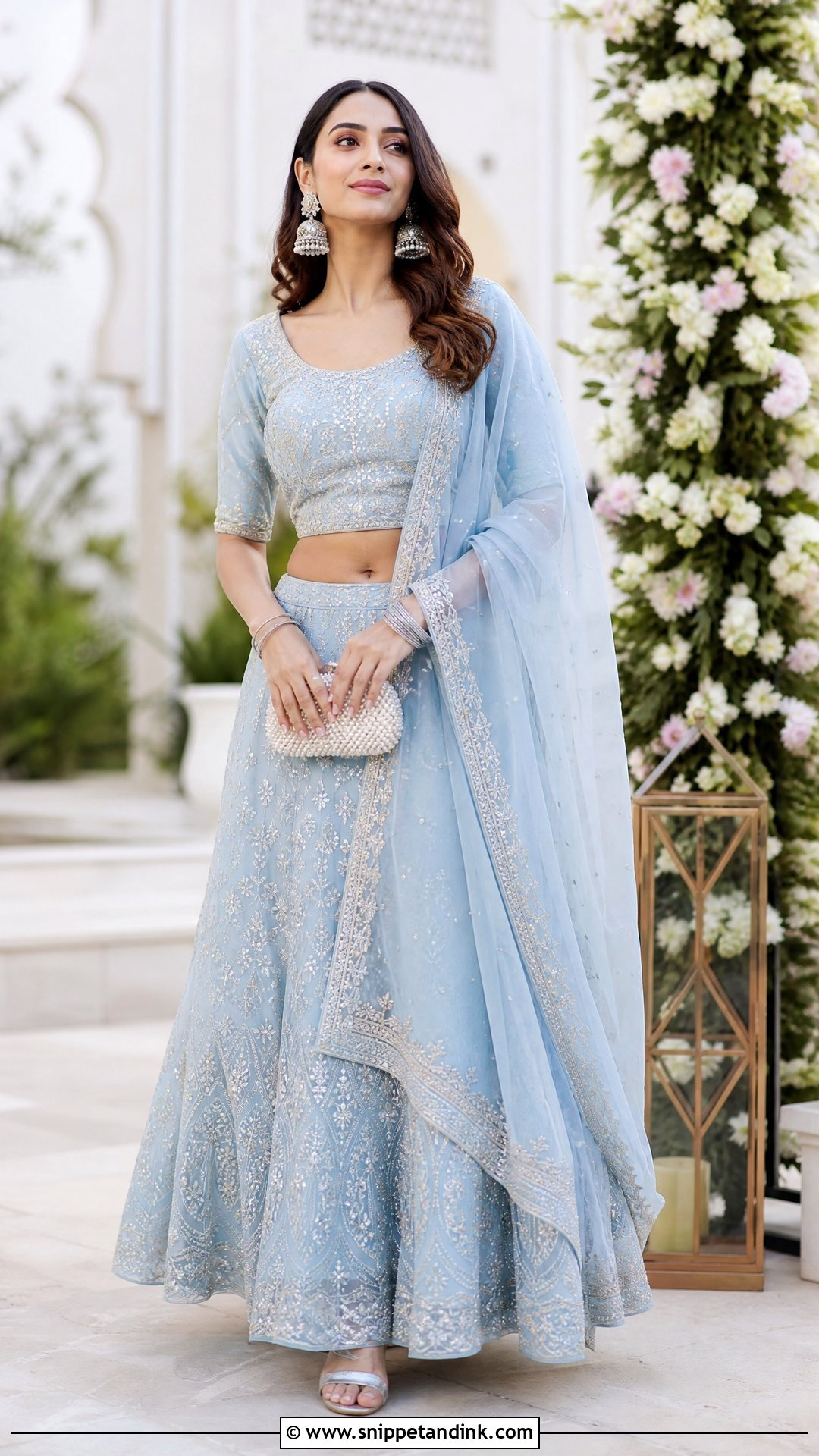
Georgette is the most forgiving fabric on this list for long days on your feet. It drapes rather than stands, so a powder blue skirt moves easily through ceremonies and dancing without bulk at the hips. Silver threadwork or scattered sequins keep it understated. For coverage, an elbow-sleeve blouse; for heat, a sleeveless square neck. Silver jhumkas and low block heels suit it, and the dupatta over one shoulder finishes the classic three-piece set. I often suggest this colour for pastel dress codes and outdoor receptions, where darker shades can look heavy in sunlight.
13. Navy Blue Embroidered Reception Lehenga
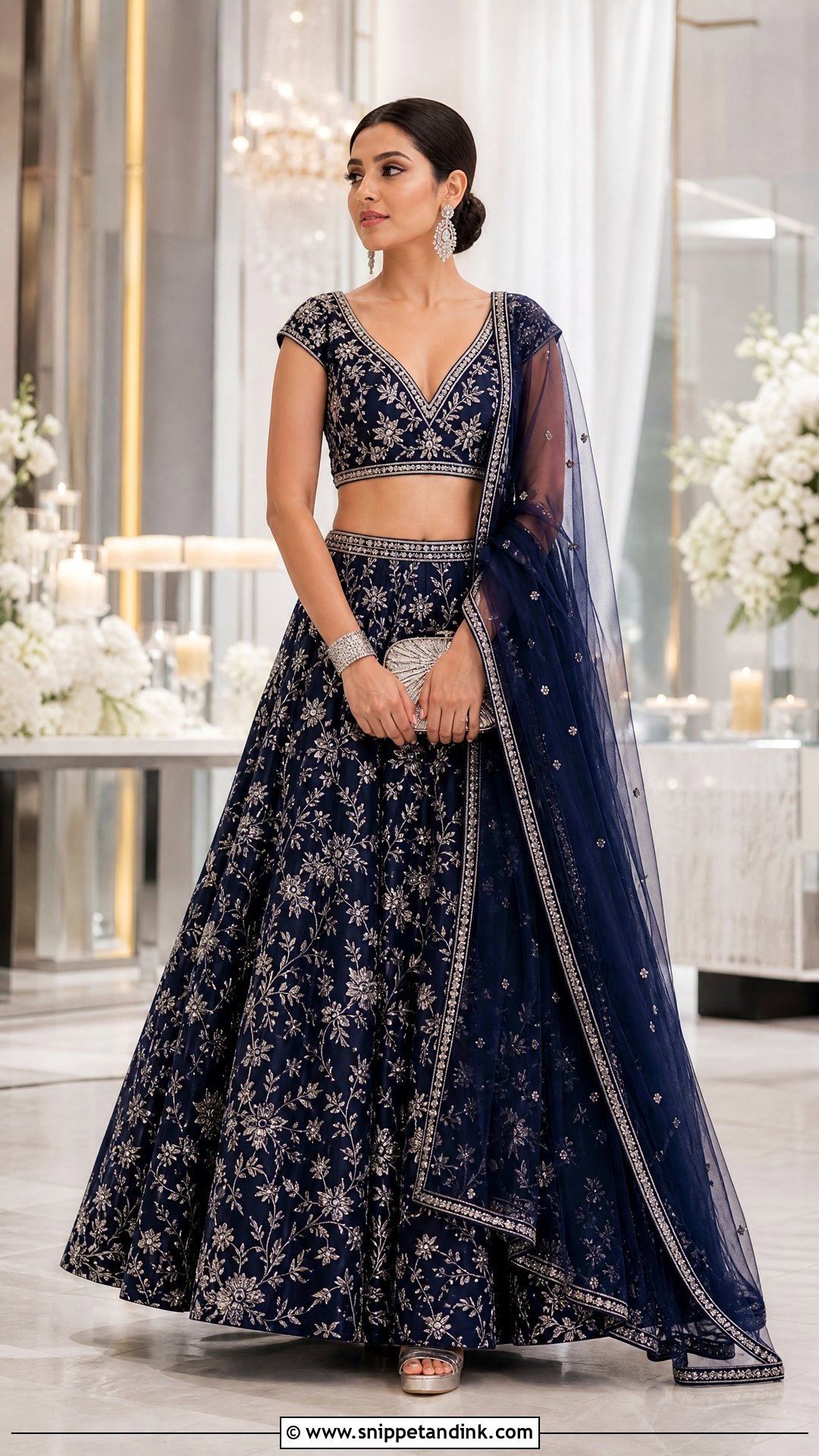
Navy is the colour I suggest when someone wants evening formality without black. Silver or antique-gold detailing both work on it, and concentrating the embroidery around the hem keeps the skirt anchored. A modest V-neck or an asymmetric neckline with elbow sleeves gives it a contemporary line. Guests should hold back on embellishment; brides wearing navy to their own reception can go denser, add a statement necklace or even a detachable embellished veil. Velvet versions are warmer and heavier than silk, so check the venue before choosing the fabric.
14. Pastel Printed Day Wedding Lehenga
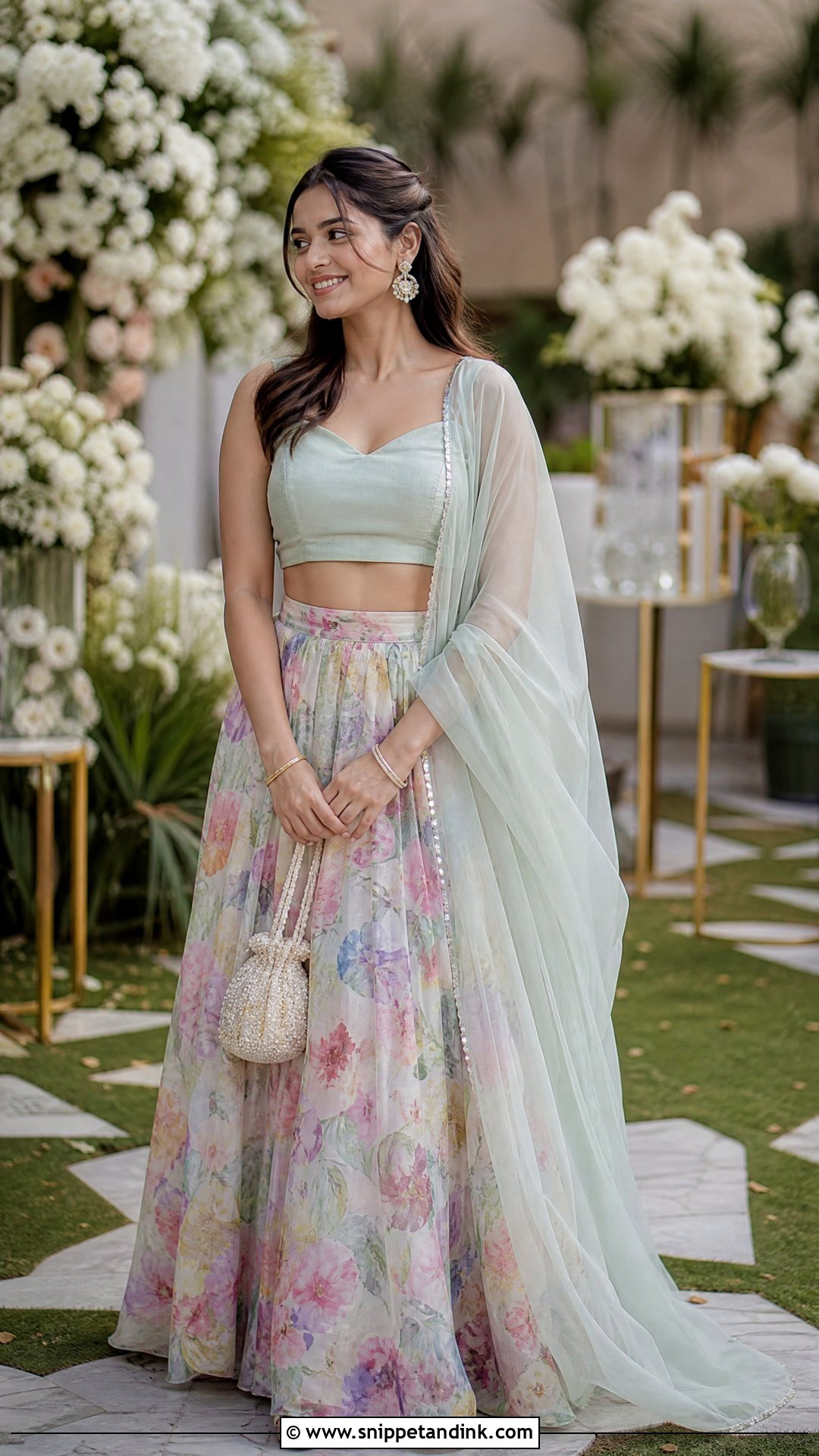
Prints are the most rewearable thing in a wedding wardrobe, and that is the honest reason I like them for day functions. A watercolour floral skirt in silk, organza or cotton blend can later go with a plain crop top or a tailored jacket. Match the blouse to one shade in the print and keep the organza dupatta plain, otherwise the outfit gets busy fast. On lawns I send clients out in nude wedges rather than narrow heels, because heels sink. Pearl earrings, a few bangles and soft waves keep the styling relaxed.


15. Banarasi Silk Wedding Lehenga
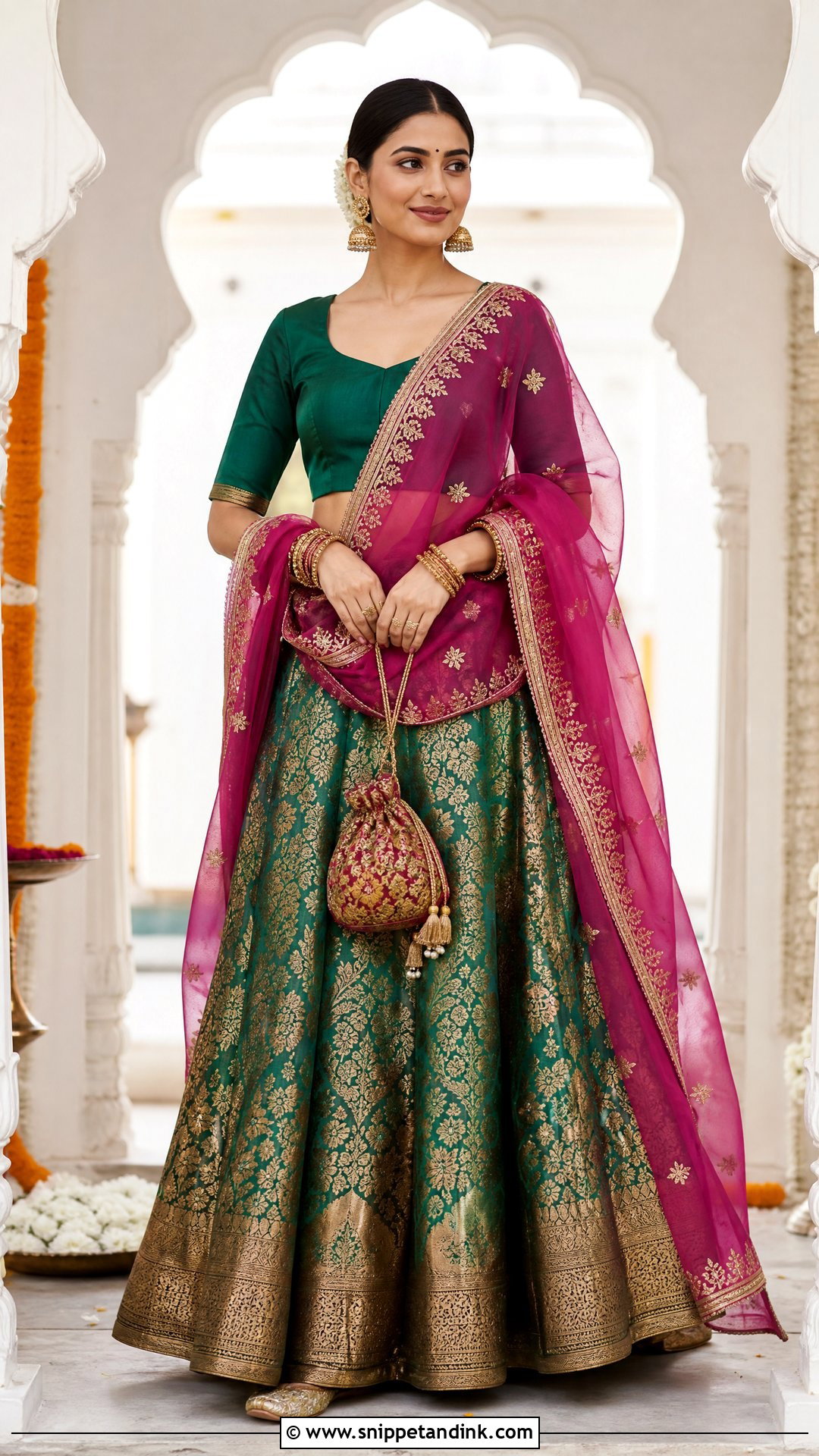
With Banarasi silk, the weave is the decoration, so my job is mostly to stop people adding more. A jewel-toned woven skirt in red, green, magenta or purple needs a plain raw-silk blouse in a contrasting colour and a lightweight organza dupatta that lets the brocade show through. Gold jhumkas, stacked bangles and cushioned juttis suit it. Heavy necklaces fight with the woven border at the neckline, so keep the neck light. Genuine handwoven Banarasi is heavier than it looks; try the full skirt on for at least twenty minutes before deciding you can wear it through a long ceremony.
16. Peplum Blouse Wedding Lehenga
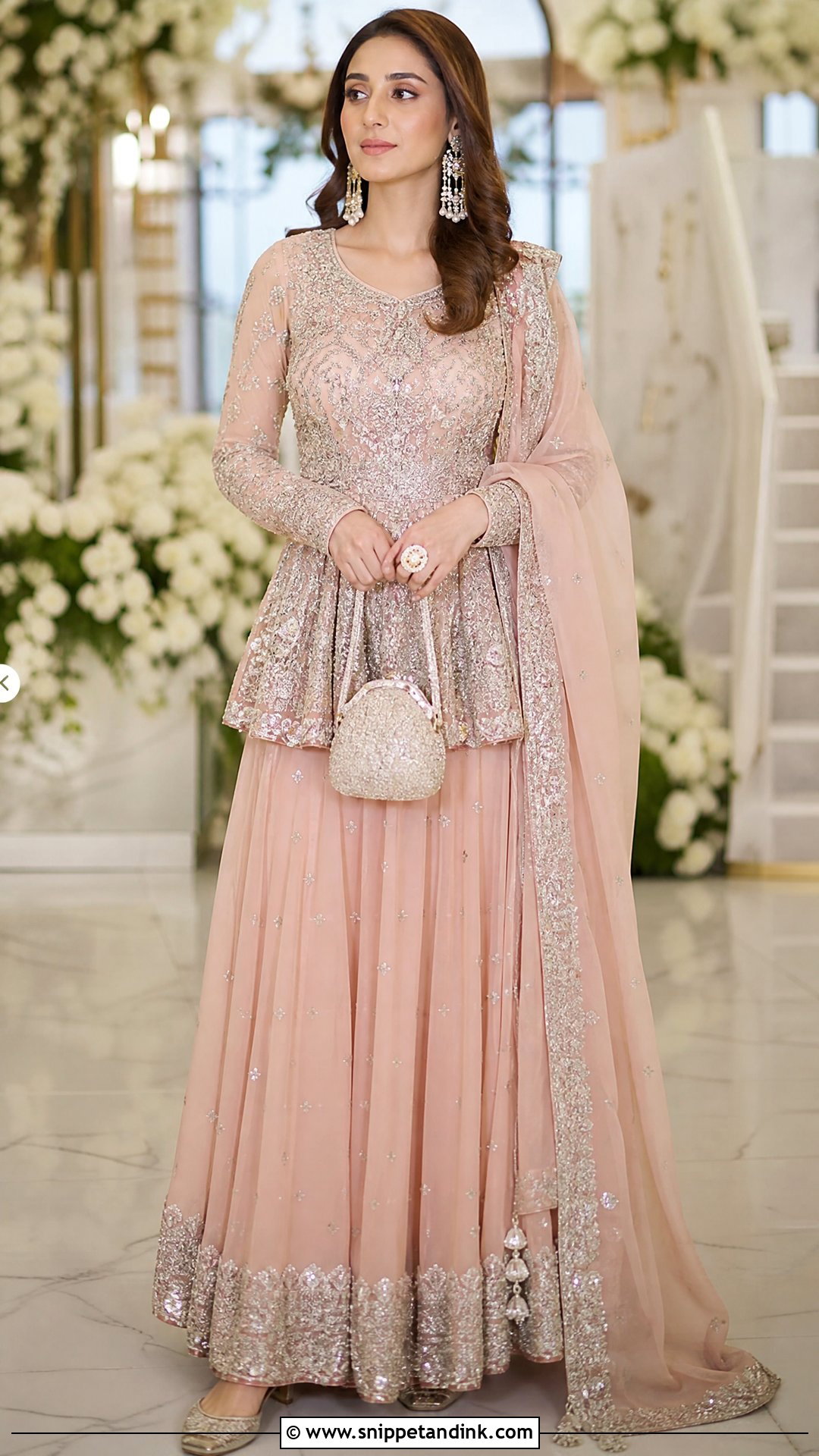
A peplum blouse and lehenga combination solves the most common worry I hear from mothers and aunts at fittings: covering the midriff without hiding under a dupatta all night. The peplum should finish just below the natural waist. Any longer and it swallows the skirt’s waistband, which is what gives the outfit its shape. Repeat the embroidery at the peplum hem, sleeves and neckline so blouse and skirt connect. A dupatta over one shoulder or tucked behind the arms keeps the line clean, and drop earrings plus one ring are enough.
17. Jacket Style Wedding Lehenga
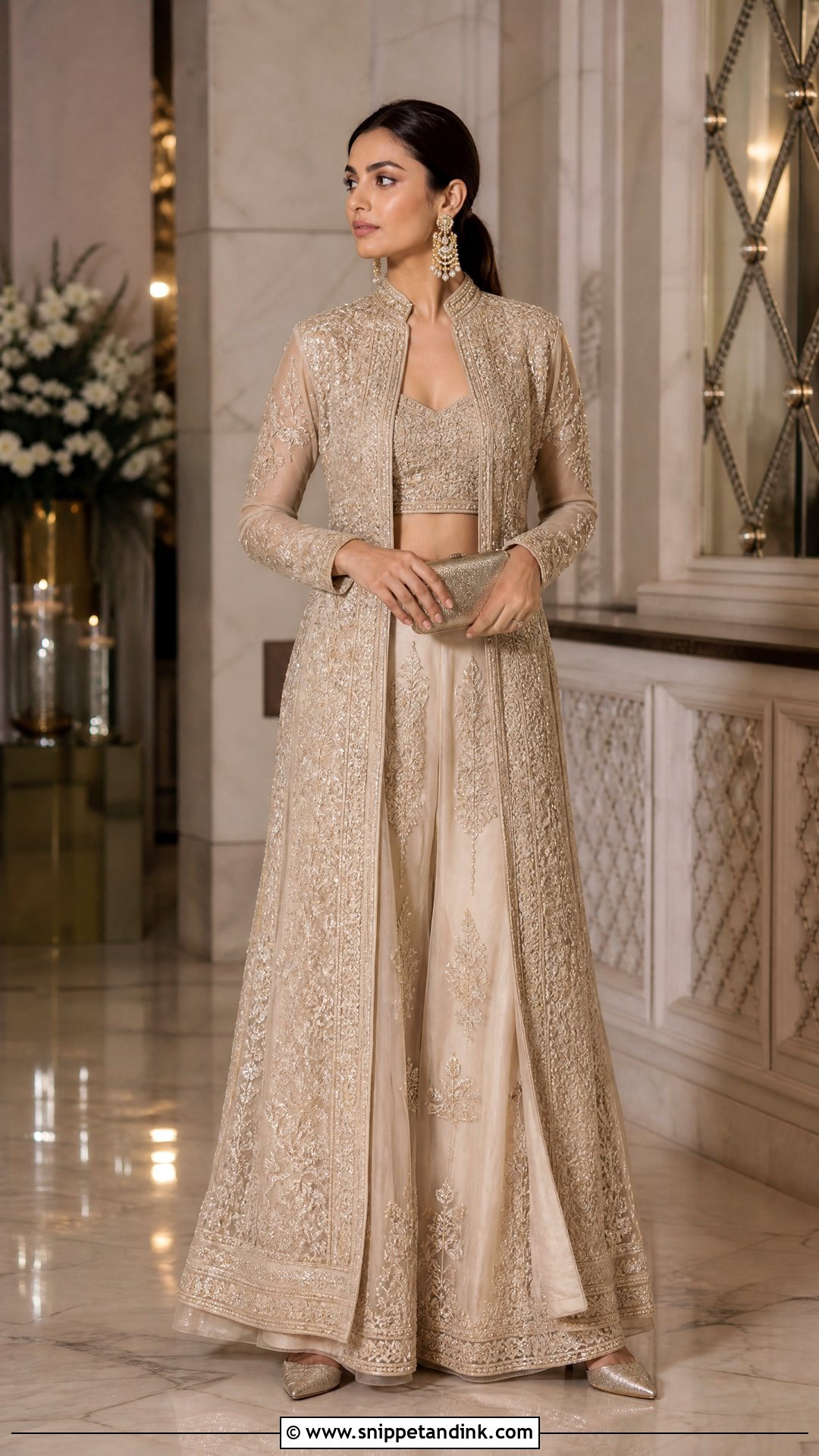
A long sheer jacket over a plain skirt and blouse gives you the drama of a heavy outfit with very little weight on the body. I like side slits in the jacket so the skirt still swings when you walk. Embroidery on the front panels and a defined shoulder keep the structure. You can drop the dupatta entirely, and you should drop the heavy necklace too; statement earrings and a sleek clutch are enough. Cooler venues and evening receptions suit this layer best. Pointed flats or metallic heels keep the long line unbroken.
18. Cape Blouse Wedding Lehenga
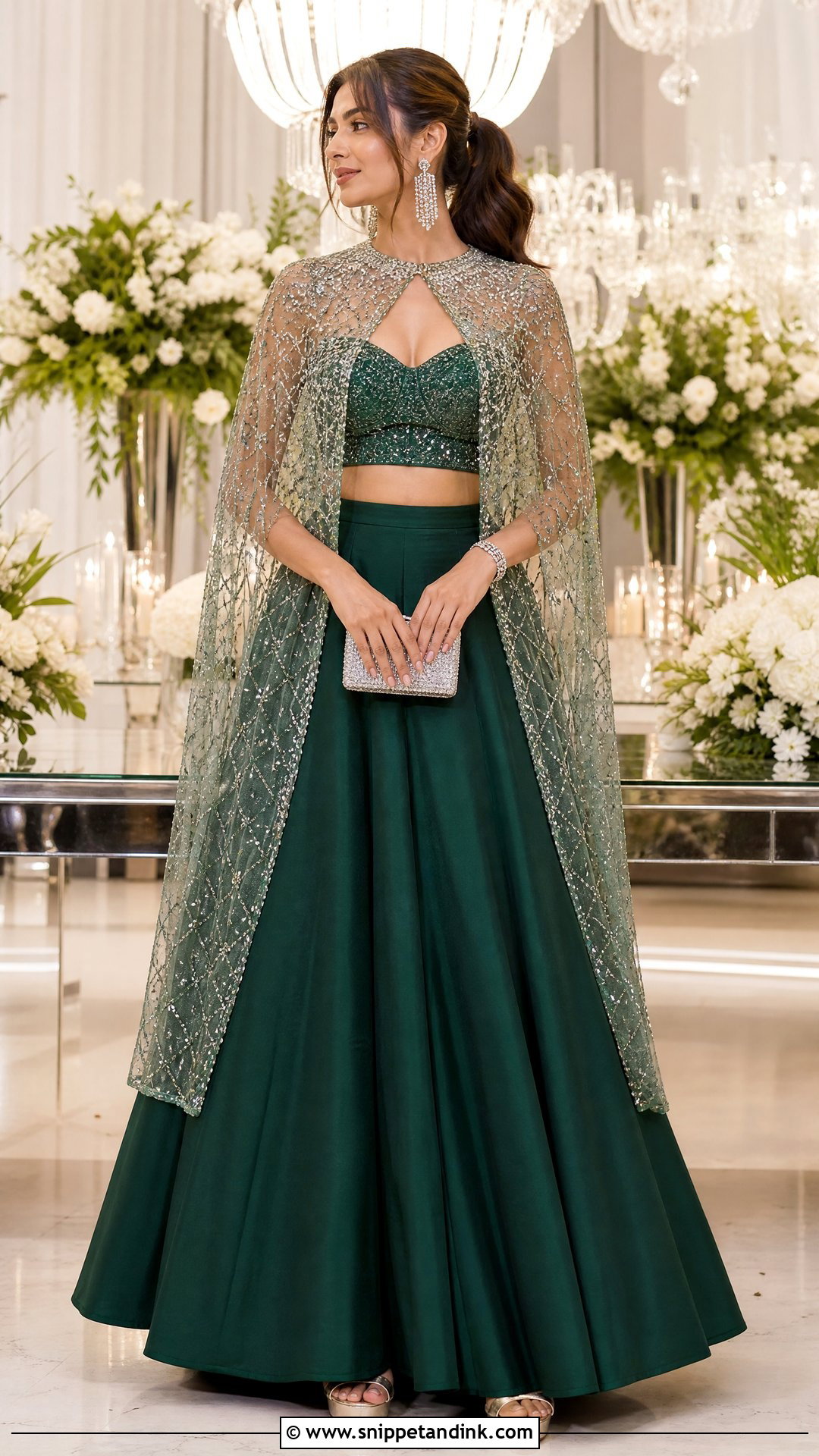
The cape blouse is the easiest outfit on this list to wear for a whole evening, because there is no dupatta to keep fixing. Keep the cape around hip length so it moves freely without hiding the skirt. A sheer embellished cape over a fitted blouse covers the shoulders and upper arms lightly, which many guests appreciate. Long earrings, a crystal bracelet and platform sandals finish it. Wear the hair up, otherwise the cape neckline disappears. In my experience tonal colours like navy, emerald, lavender or champagne give the cleanest result, since a contrasting cape can look like a separate garment.
19. Corset Blouse Wedding Lehenga
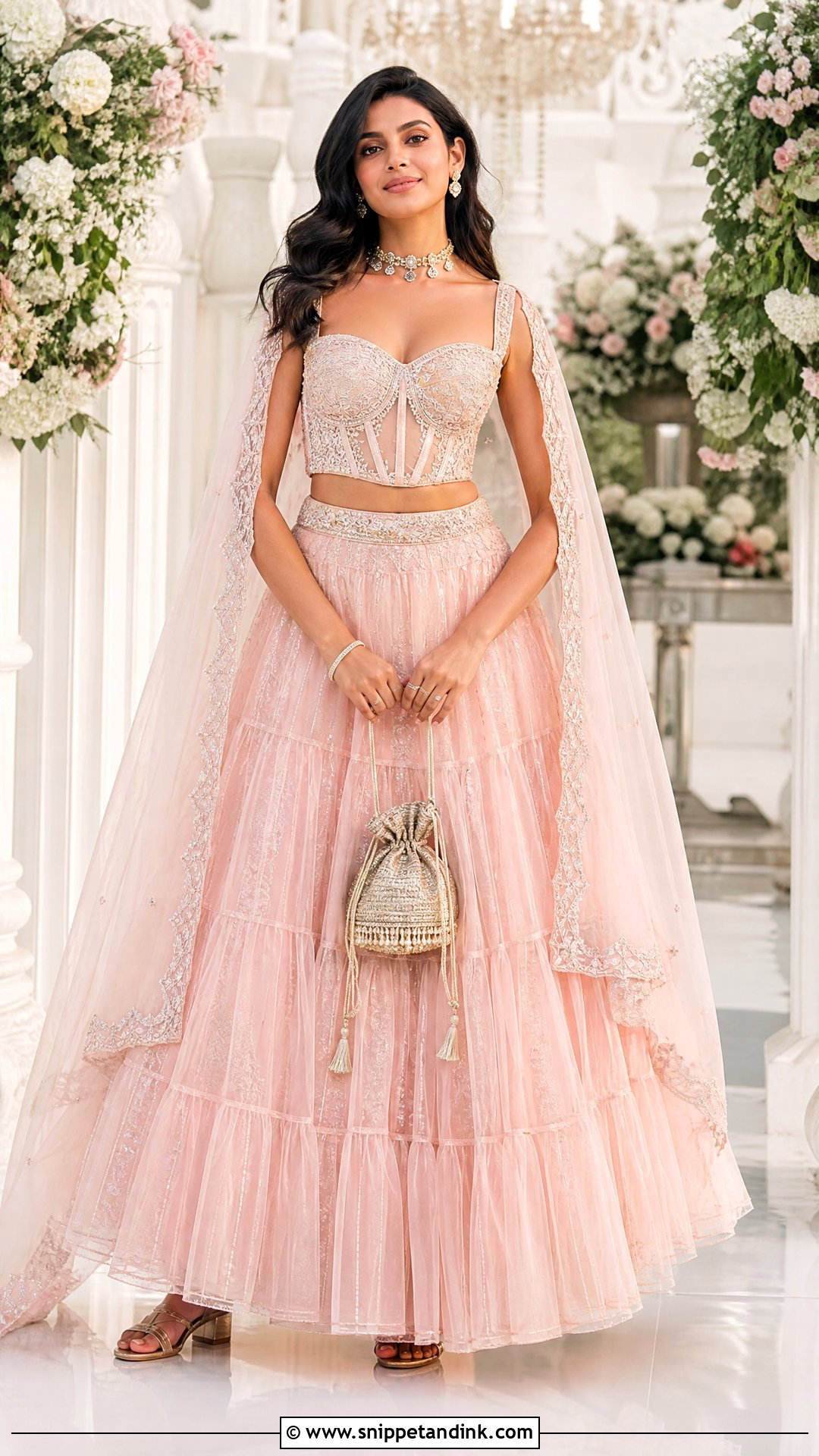
Corset blouses are where I am strictest about tailoring. Boning that is too stiff or cut a little short digs in when you sit down to eat, and wide straps matter more than people expect once you start dancing. Have the fitter check you seated, not only standing. Pair the corset with a high-waisted silk or organza skirt and coordinated embroidery; drape the sheer dupatta over the arms or diagonally for a more traditional finish. Pastels give a softer read, jewel tones a stronger evening one. A choker and small earrings keep the neckline clear.



20. Minimal Monochrome Wedding Lehenga
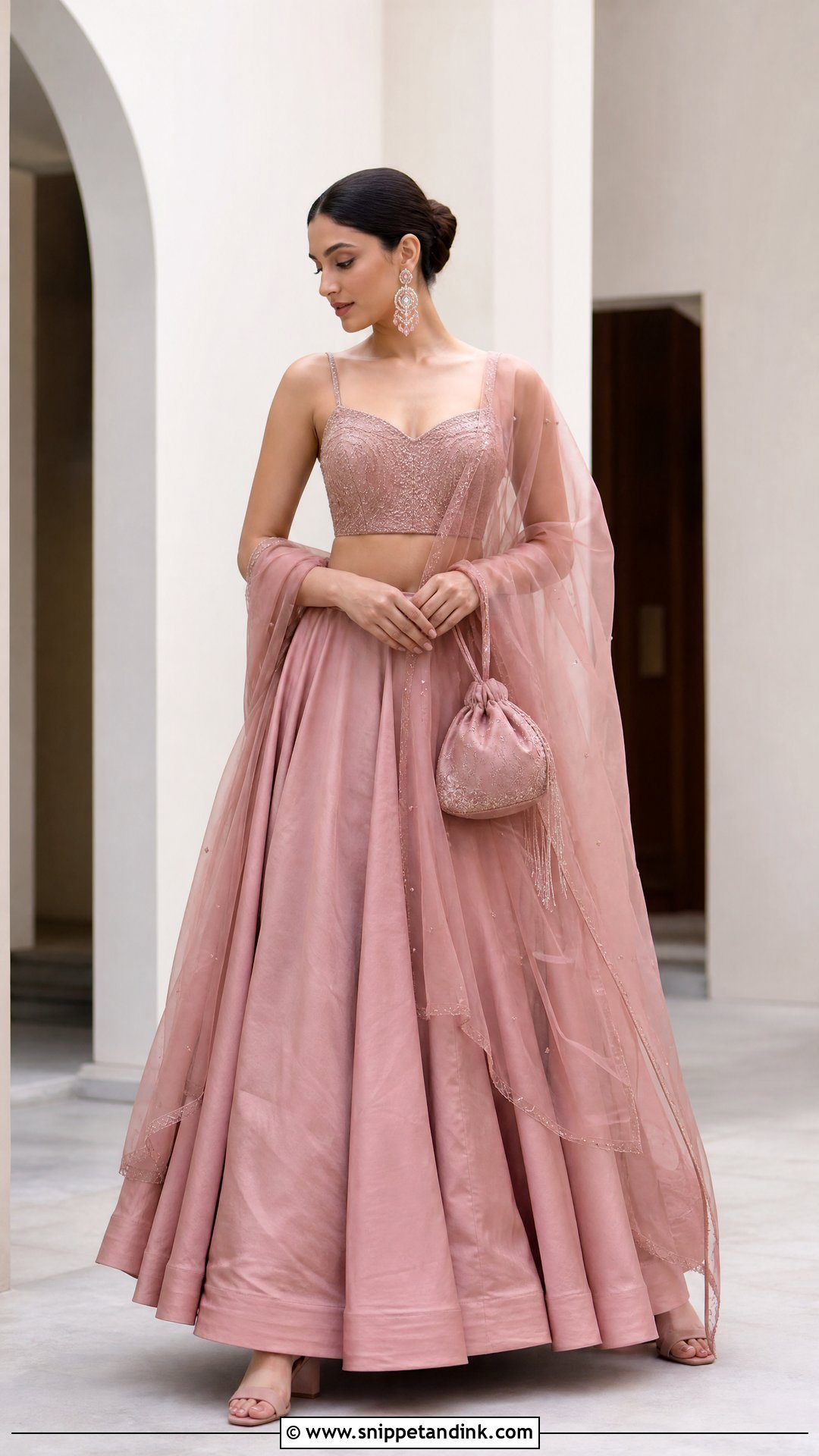
A monochrome lehenga relies on texture, not embroidery, to look finished. A silk skirt, a lightly beaded blouse and a sheer organza dupatta in one shade of dusty rose, teal or mauve give the eye three surfaces to read. Then pick one statement accessory, a sculptural choker or oversized earrings, and stop there. Tonal potli, matching block heels or metallic juttis, and a sleek bun keep it clean. The risk with simple outfits is that poor tailoring shows immediately, so I treat the fitting for a plain set more seriously than for an embroidered one.
Why Zari Tarnishes in a Plastic Garment Bag
Most lehengas are worn for a few hours and then stored for years, and that is where the damage happens. Zari and zardozi are metallic threads, and moisture trapped inside a plastic cover is what dulls and blackens them. Here is the routine I give every bride the week after the wedding.
- Air the outfit flat or on a wide padded hanger for a day before putting it away, so any sweat in the blouse lining evaporates.
- Spot-check for makeup, mehendi or food stains and take it to a cleaner who handles embroidered bridal wear. Do not attempt heavy stains yourself; household stain removers can strip the colour around the metal work.
- Wrap the skirt and dupatta separately in clean, soft cotton or muslin and store them in a dry cupboard. Keep the blouse flat, not on a hanger, because the weight of embroidery stretches the shoulder seams.
- Refold along different lines every few months. Folds left in one place on heavy work can crack the thread and leave permanent lines.
- Keep mothballs away from direct contact with the fabric; if you use them, wrap them in a separate pouch.
A lehenga stored this way can be altered and worn again by you or passed down, which is half the reason people invest in a good one in the first place.
One Full Dress Rehearsal Before the Wedding Week
The right lehenga is the one that fits your role and the function, and that you can sit, eat and dance in. If you would like more colour inspiration before deciding, my round-up of 20 Lenghas for Wedding Ideas is a good next stop. Whatever you choose, try it on once with everything: shoes, jewellery, shapewear and both dupattas if you have them. Walk across the room, sit down and lift your arms over your head. Brides can carry richer work and ceremonial draping; guests should step down a level in colour and embellishment.
You'll Like These Ideas:







Leave a Reply