
A haldi outfit has a job most wedding clothes never face: it will probably be smeared with wet turmeric paste. That’s the first thing I tell anyone dressing for one, whether they’re the bride, among the bridesmaids, sisters, relatives or a guest at the edge of the courtyard. Yellow is traditional, but marigold, mustard, ivory, coral, lime and florals all have their place. Breathable fabric and a relaxed cut matter more than embellishment, because you’ll be sitting on the floor, dancing and leaning in for the rituals. The twenty suits below run from simple cotton sets to dressier Anarkalis, and for each I’ve noted how it copes with turmeric, heat and a long morning.
Which Fabrics Forgive Turmeric and Which Never Do
Turmeric’s colour comes from a natural dye that grips plant and animal fibres readily. It’s the reason haldi paste stains so well, and the reason I plan every haldi outfit around where the paste will go.
- Cotton and mulmul: they stain, but they also wash. With quick treatment most marks fade a lot, and a yellow cotton suit hides what’s left.
- Polyester georgette and crepe: synthetic fibres hold the dye less firmly, so fresh splashes often rinse out well if you act the same day.
- Pure silk: the worst choice near the paste. Silk takes the stain readily, water itself can leave rings, and scrubbing damages the sheen.
- Zari, gota and mirror work: paste sits in the gaps of metallic embroidery and dulls it, and the work can’t be scrubbed. Keep it on the parts of the outfit that stay out of reach.
Colour helps too. Deep yellow, mustard and marigold disguise stains, while white, ivory and pastels show every fingerprint. If you’re the bride or one of the people applying the paste, choose the outfit you’d be happy to never wear again, or one that’s easy to wash.
1. Yellow Sharara Suit for Haldi Ceremony
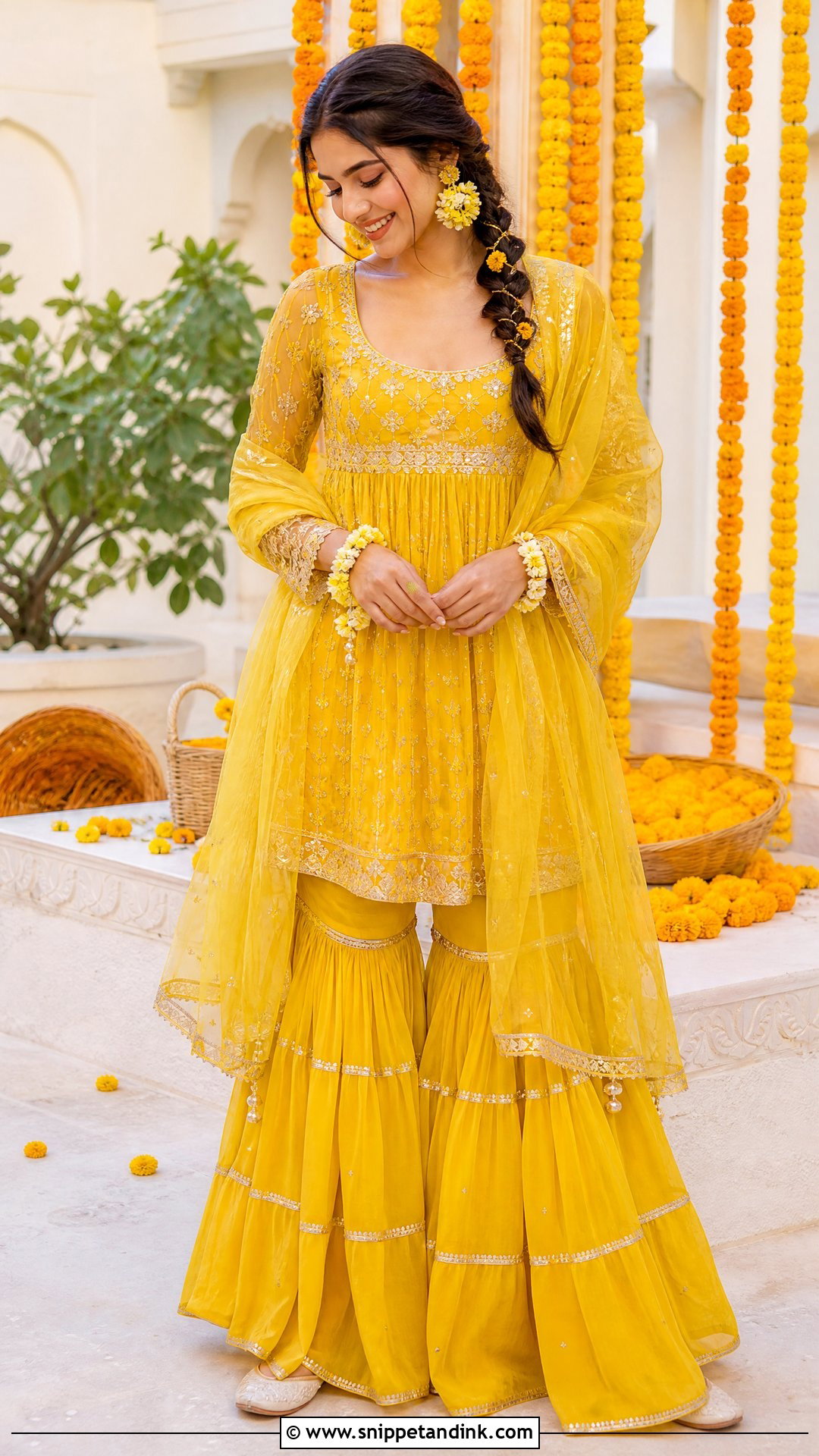
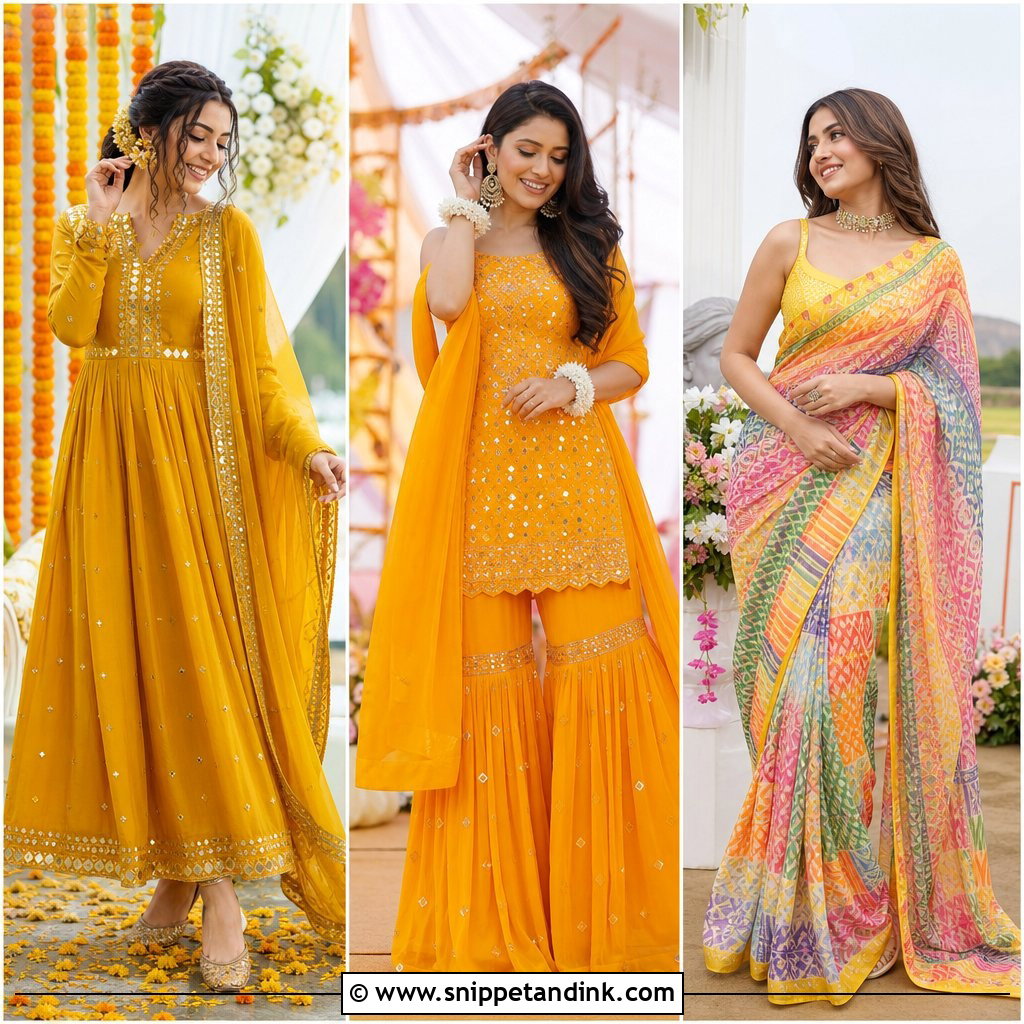
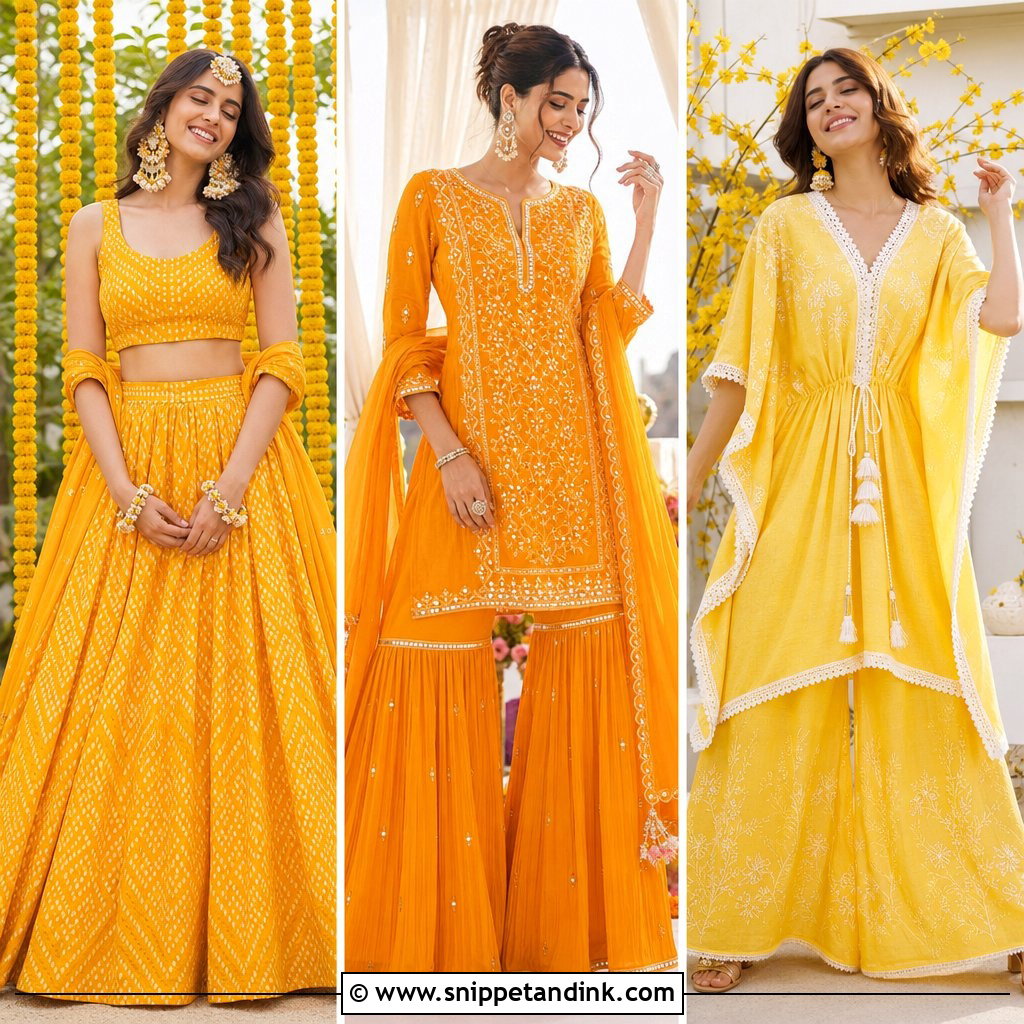
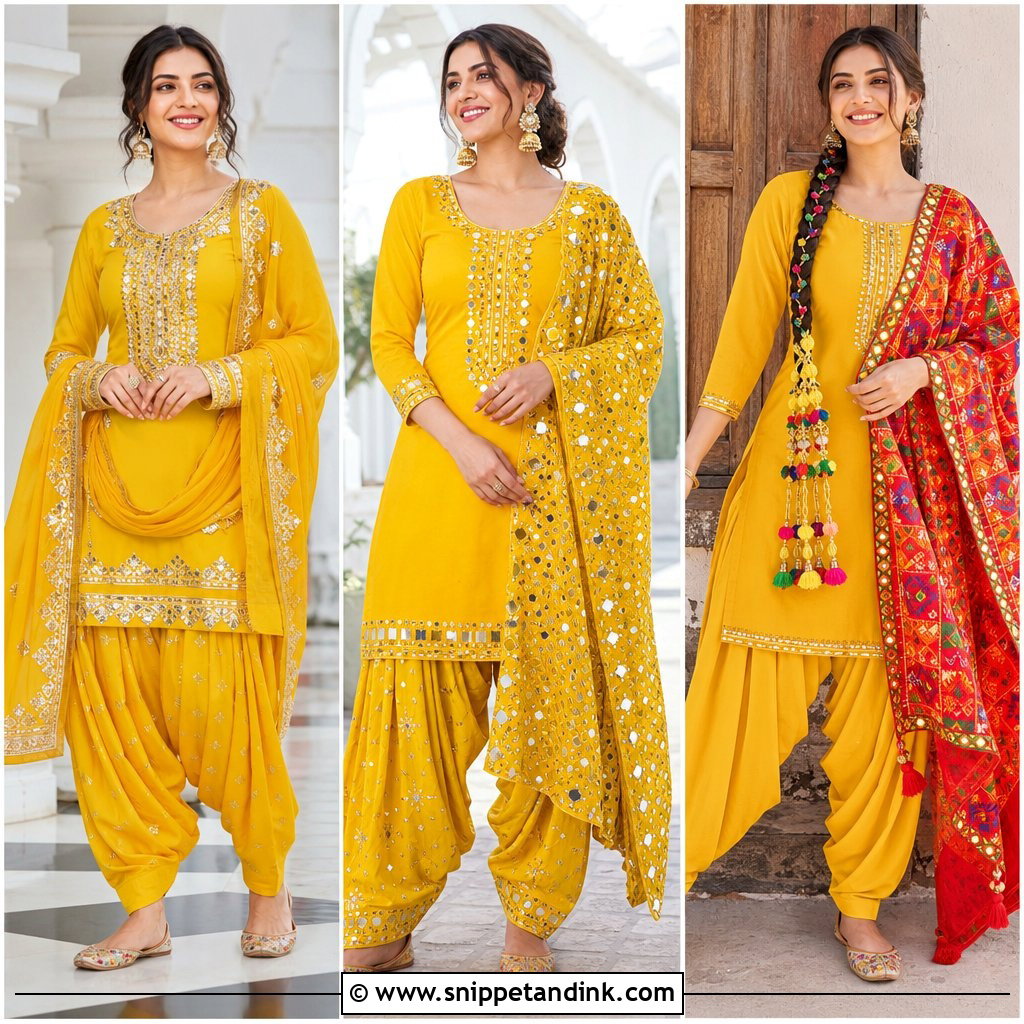
A sharara is a natural fit for a haldi because the wide legs let you sit cross-legged on the floor without the strain a fitted bottom puts on the knees. Pair a short or mid-length yellow kurta with light thread embroidery, mirror accents or a narrow gota border. Pin a light dupatta on one shoulder so it stays out of the paste bowl. Floral earrings, a small maang tikka and ivory juttis keep it festive. The bride can go for a more worked neckline, while guests often prefer cotton or georgette. I’d have the hem set just above the floor, since a sharara that touches the ground collects every spill and marigold petal. A braid finishes it.
2. Mustard Anarkali Suit for Haldi Ceremony
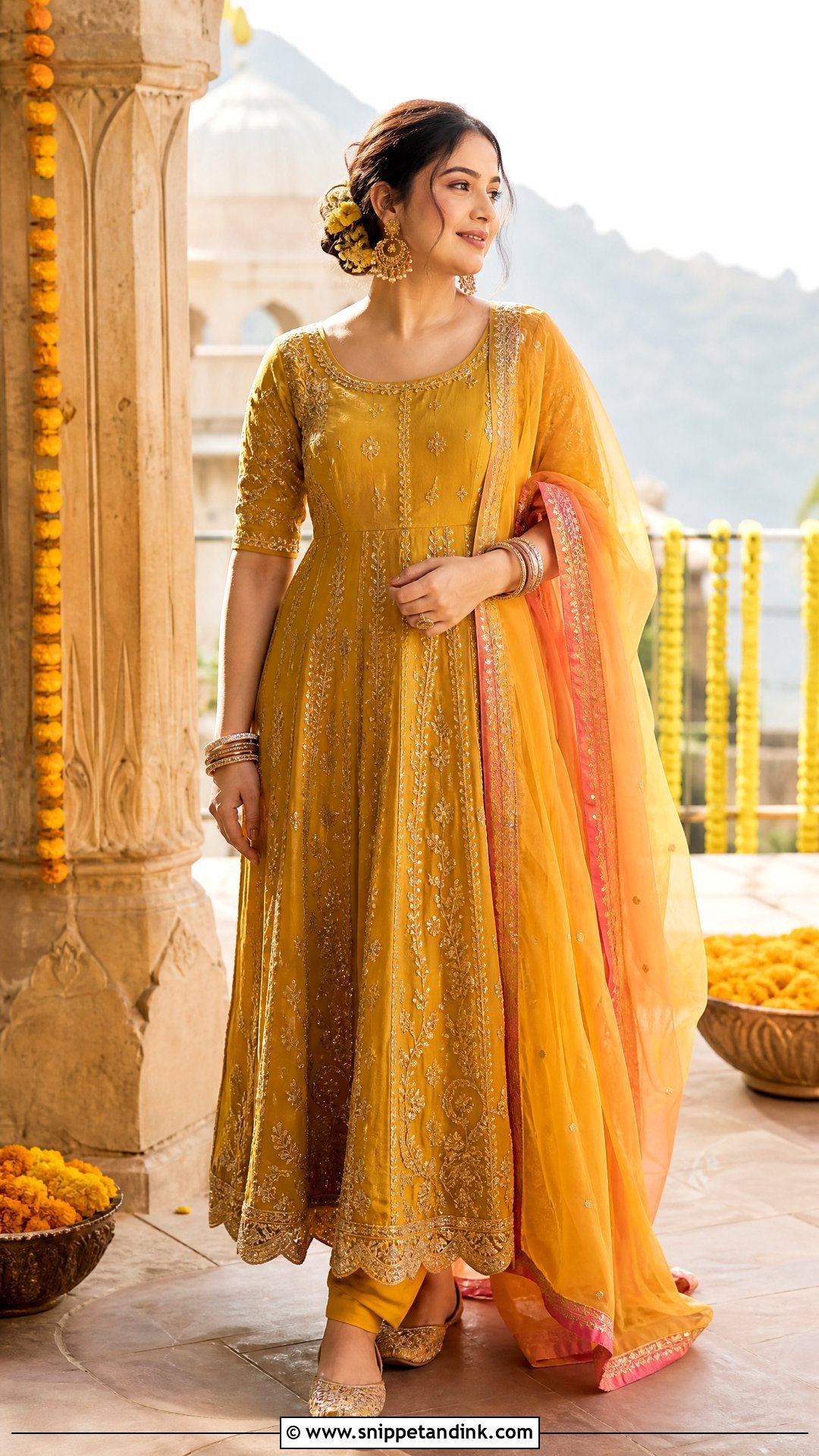
Mustard is the shade I suggest to anyone whose skin looks washed out next to lemon yellow. An ankle-length Anarkali with an empire waist, comfortable lining and a moderate flare is graceful without being heavy. Keep embellishment to fine zari edging, small mirrors or tonal embroidery. Fitted pants and a chiffon dupatta in mustard, rust or soft pink complete it, with antique gold earrings, simple bangles and embroidered flats. The flowing skirt is comfortable around the waist and hips, but watch the hem: a very long Anarkali pools around you when you sit on the floor and soaks up turmeric. A low bun with yellow flowers is the traditional finish.
3. Yellow Palazzo Suit for Haldi Ceremony
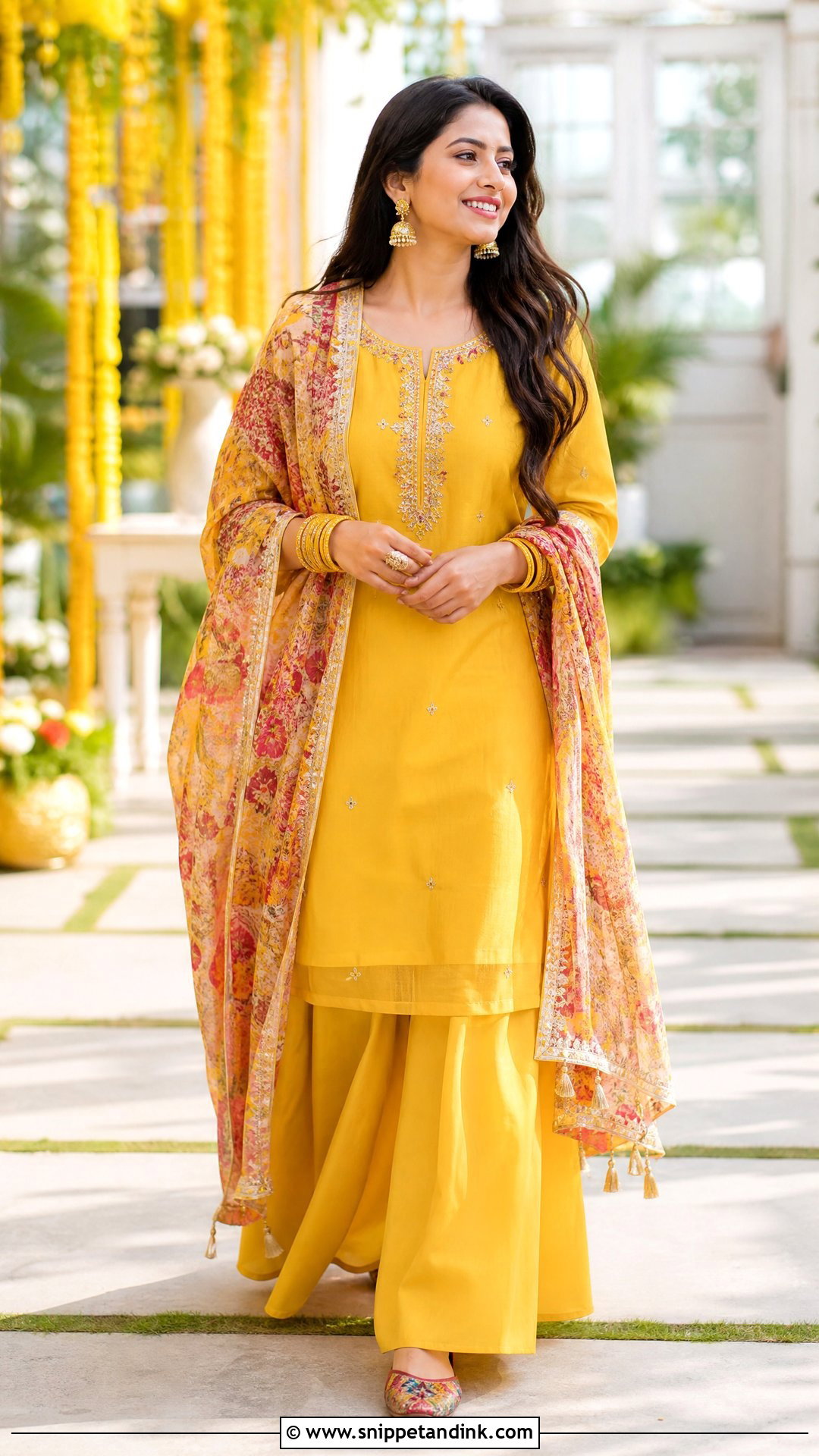
If you’re helping run the ceremony, a palazzo suit lets you crouch, carry trays and sit without thinking about your clothes. A straight kurta over wide-leg palazzos in cotton, rayon or cotton silk breathes well. Vertical embroidery at the neckline lengthens the frame, and side slits make bending easier. A printed dupatta with pink, green or orange accents gives contrast. Block heels or flat juttis depend on whether the venue is indoors or on grass. Medium jhumkas and stacked bangles are plenty of detail. Ask for an elastic or drawstring waist; a haldi often runs into lunch, and a tight waistband becomes the only thing you think about.
4. Yellow Chikankari Suit for Haldi Ceremony
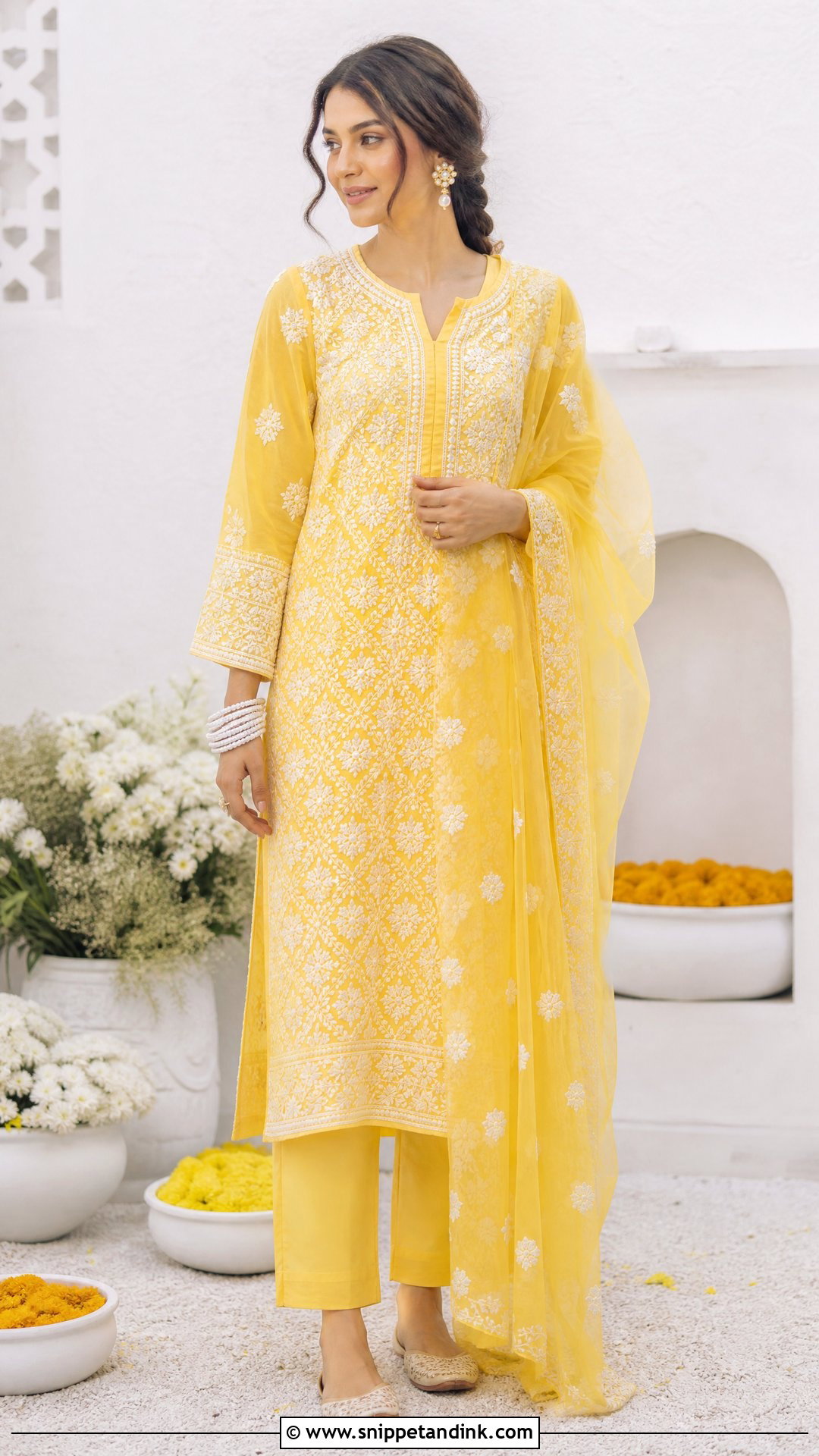
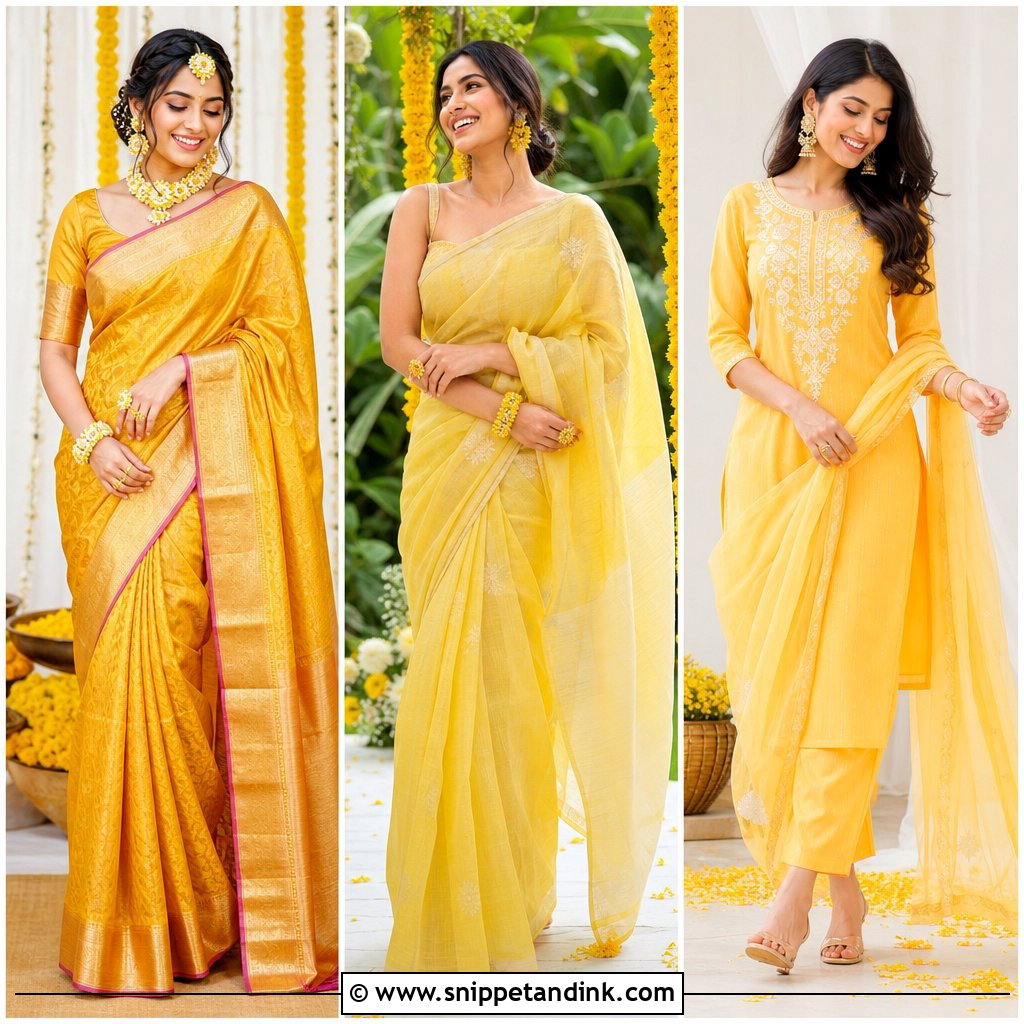
Chikankari adds texture to a yellow Haldi suit through hand embroidery rather than heavy embellishment, and it’s one of the coolest options in warm weather. A cotton or georgette kurta with a breathable lining, straight pants and an organza or chiffon dupatta keep it airy. White threadwork reads fresh; tonal yellow is quieter. Pearl earrings, white bangles and neutral juttis suit it. Chikankari cotton is often slightly sheer, so a matching cotton slip is a must, ideally in the exact shade, not white. One caution: turmeric settles into the fine embroidery and is hard to wash out, so I’d keep this one for guests standing a little back from the rituals.
5. Marigold Gharara Suit for Haldi Ceremony
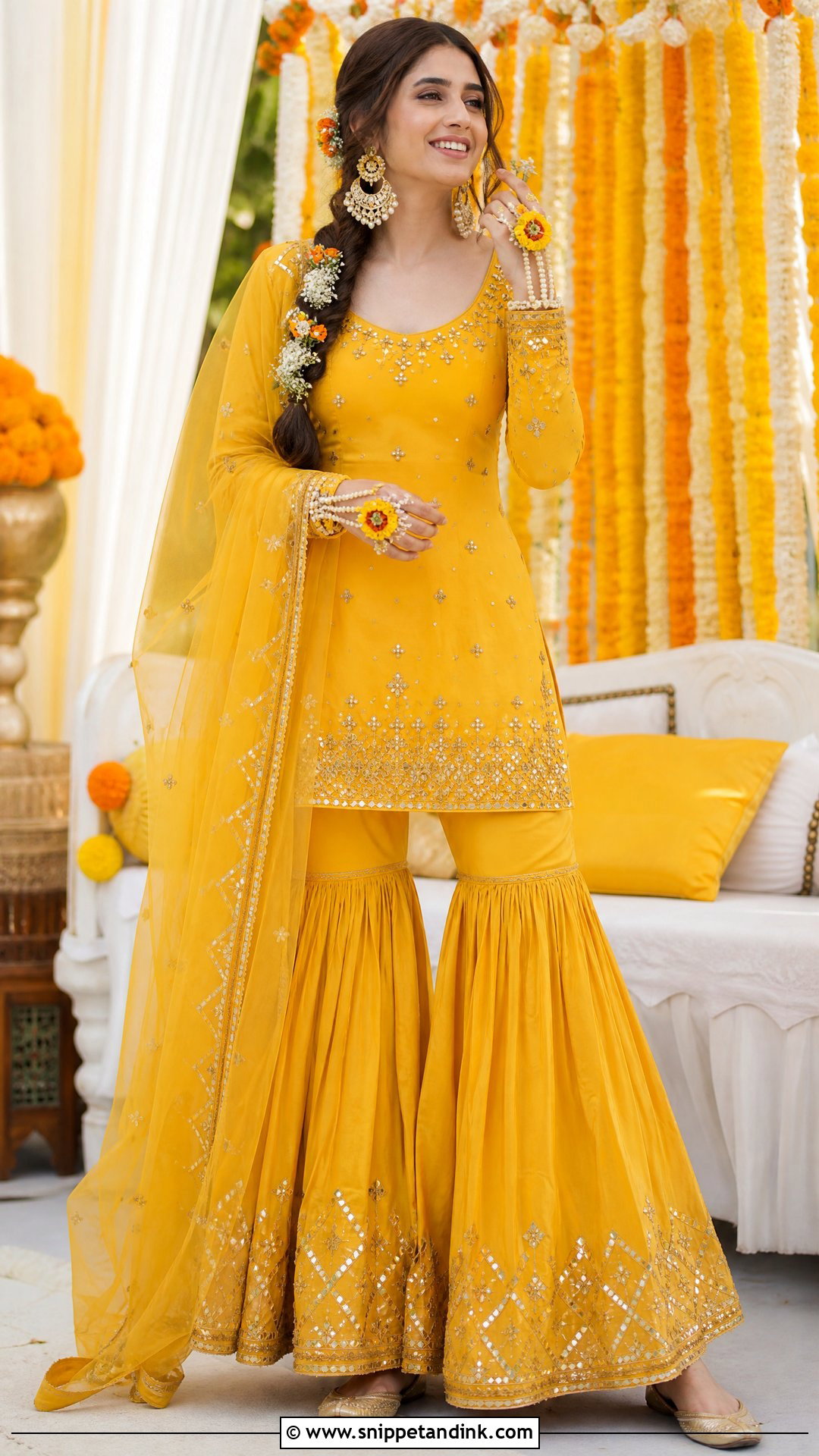
Marigold is the colour of the flowers that usually decorate a haldi, so a gharara in that shade blends with the setting in photos. Look for a kurta ending around the upper thigh and gharara pants with a defined knee seam, which is where the fitted section meets the flare. Small gota motifs or narrow metallic borders highlight that joint. A sheer dupatta with matching edging balances the full bottom. Chandbali earrings, a few slim bangles and cushioned gold or beige juttis complete it. The bride can add floral hand jewellery; guests can keep accessories minimal. Ghararas already have plenty of movement, so I’d avoid a heavily layered neckline.
6. Floral Print Suit for Haldi Ceremony
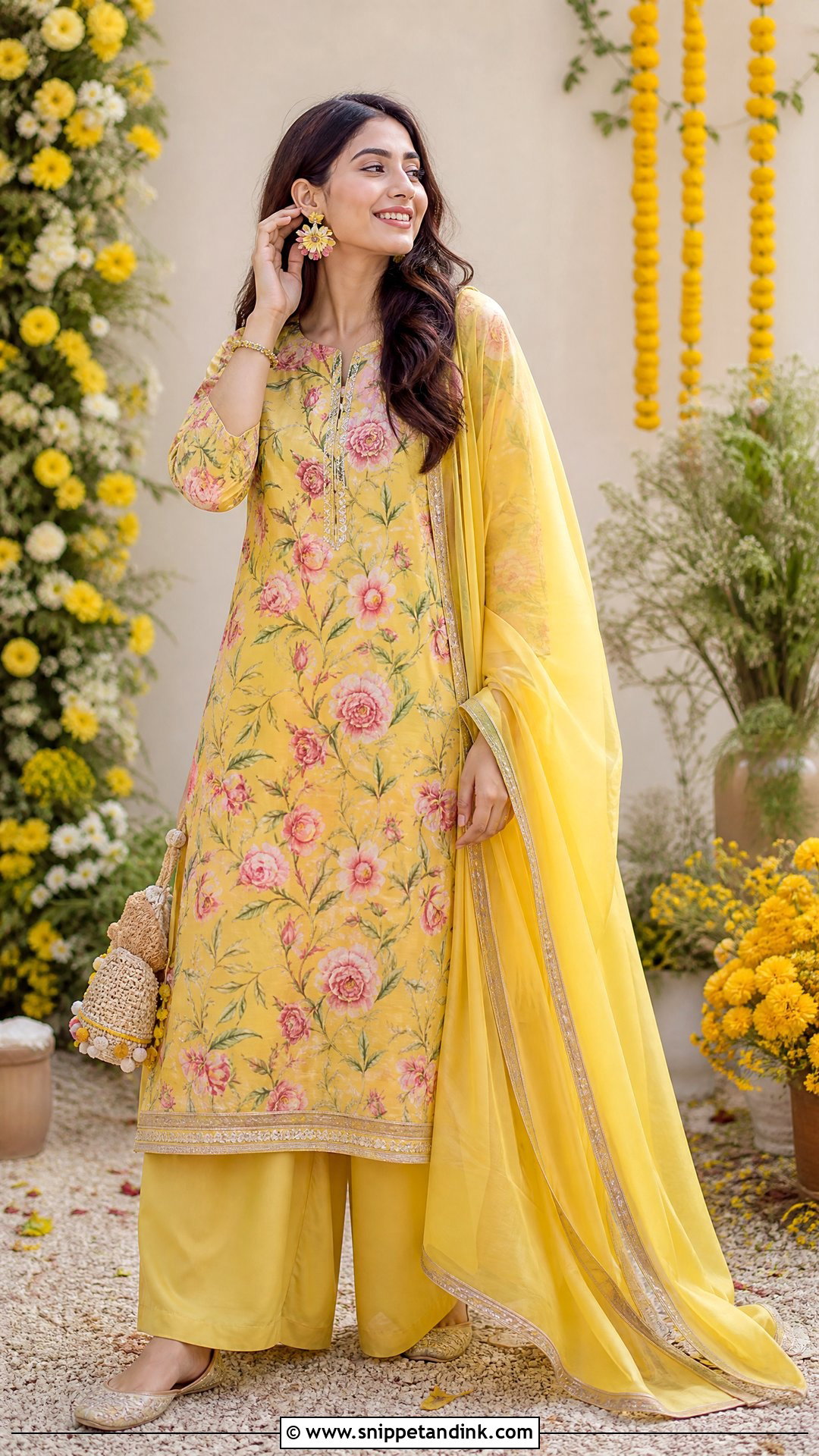
Florals are the most rewearable choice here. A yellow or ivory kurta with small marigold, pink or green motifs, solid straight pants or palazzos and a plain dupatta with a printed border is something you’ll actually wear again after the wedding. Cotton and mulmul are cool in warm weather; cotton silk looks dressier. Floral earrings, a woven potli and light flats suit a garden setting. A busy print also hides turmeric splashes far better than a solid pale colour, which is a practical reason to pick it if you’ll be close to the action. Keep makeup fresh and hair in a relaxed braid.
7. Peplum Sharara Suit for Haldi Ceremony
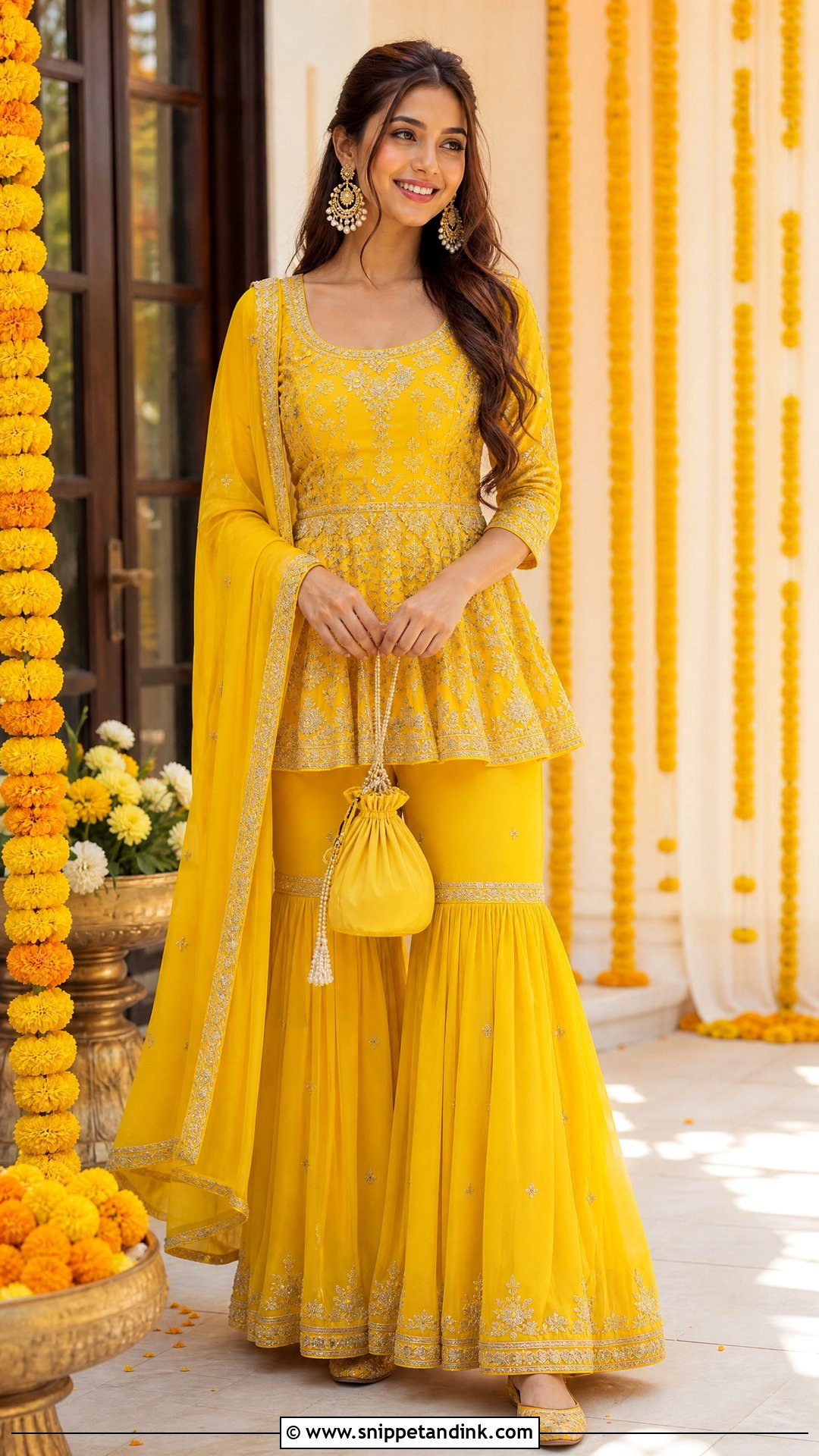
A peplum kurta over a sharara gives a more modern shape while staying traditional. The peplum should sit at your natural waist with a flared hem that falls neatly over the pants. Lemon, sunflower or mustard all work. In heavy fabric, a peplum plus a sharara gets bulky when you sit on the floor, so I’d keep both layers light. Drape a matching dupatta around the arms or pin it to one shoulder. Statement earrings, a compact potli and embroidered juttis finish it. Keep the jewellery near the face, since the peplum and flare already give the lower half plenty of interest. It’s a good pick for bridesmaids and sisters who want something different from the rest of the family.
8. Yellow Straight Pant Suit for Haldi Ceremony
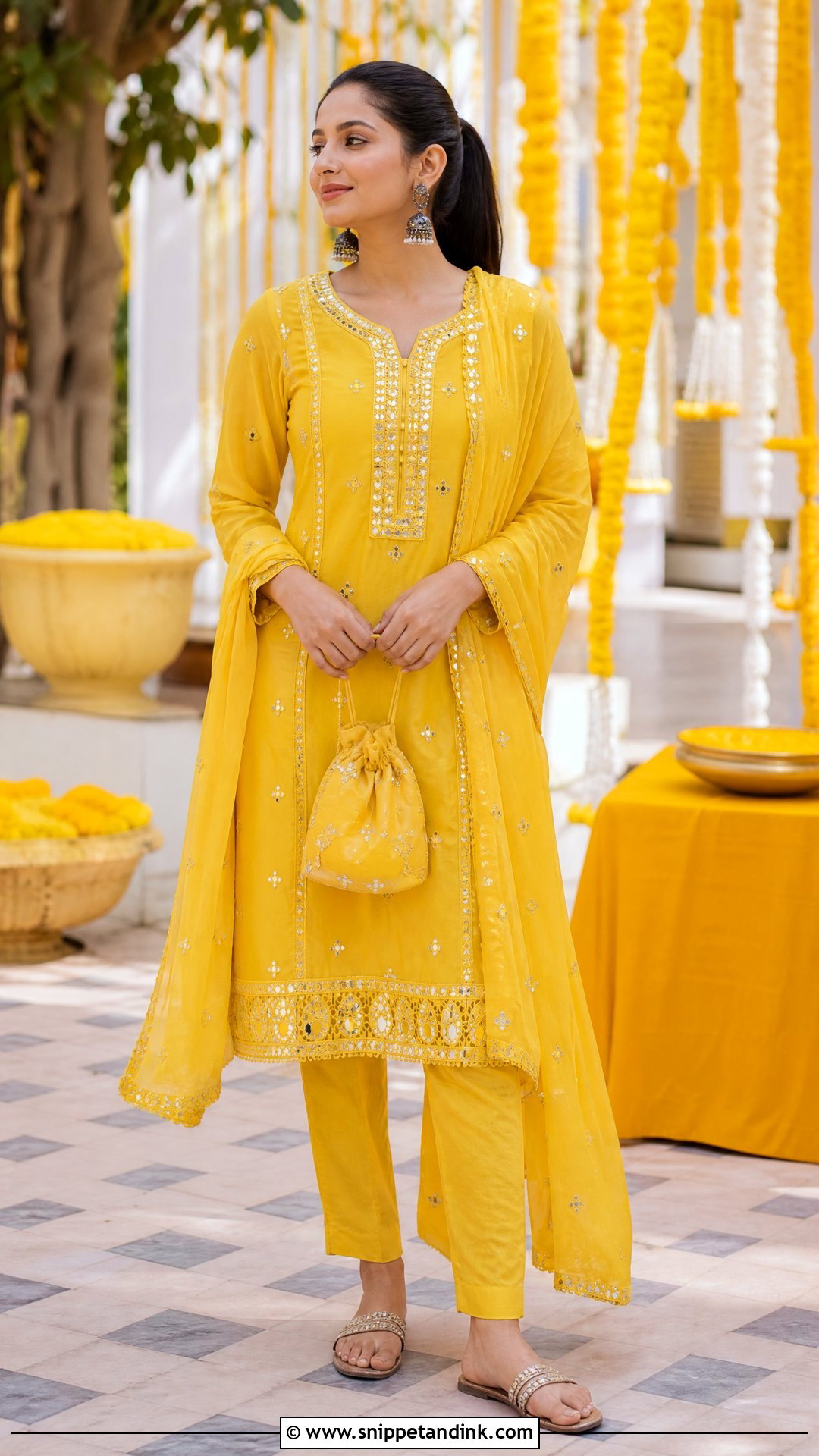
A straight pant suit is the most practical outfit for anyone who’ll be busy all morning, greeting guests or carrying trays. A knee-length yellow kurta with side slits, slim straight pants and a light dupatta create one uninterrupted vertical line that suits most frames. A scalloped neckline, embroidered cuffs or small mirrors add festive interest. Oxidised silver earrings give contrast; gold reads more traditional. Flat sandals and a crossbody potli keep your hands free. Bridesmaids can coordinate in different shades of yellow rather than identical suits, which looks more natural in group photos. A sleek ponytail or braided bun stays put through active rituals.
9. Yellow Dhoti Pant Suit for Haldi Ceremony
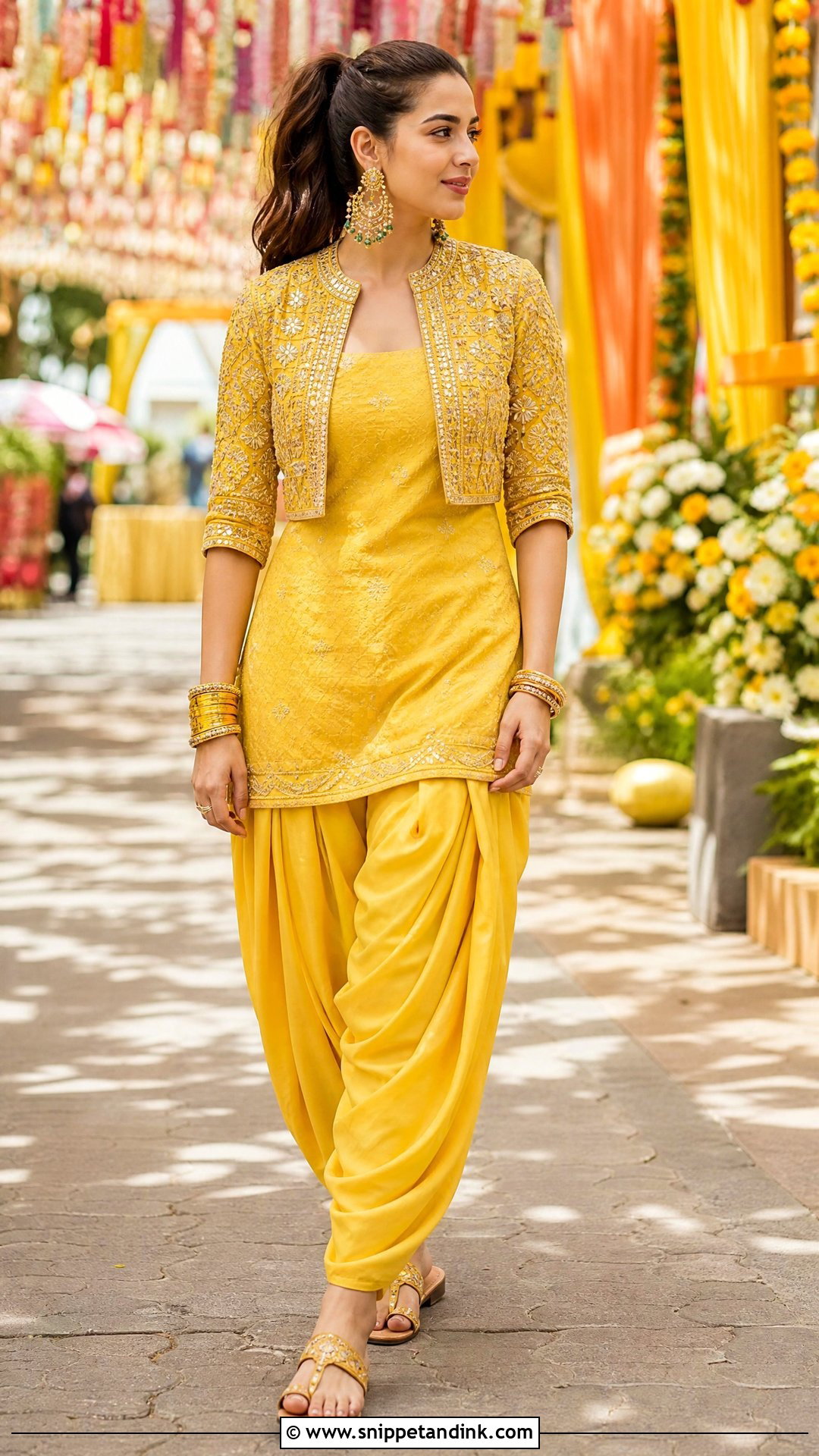
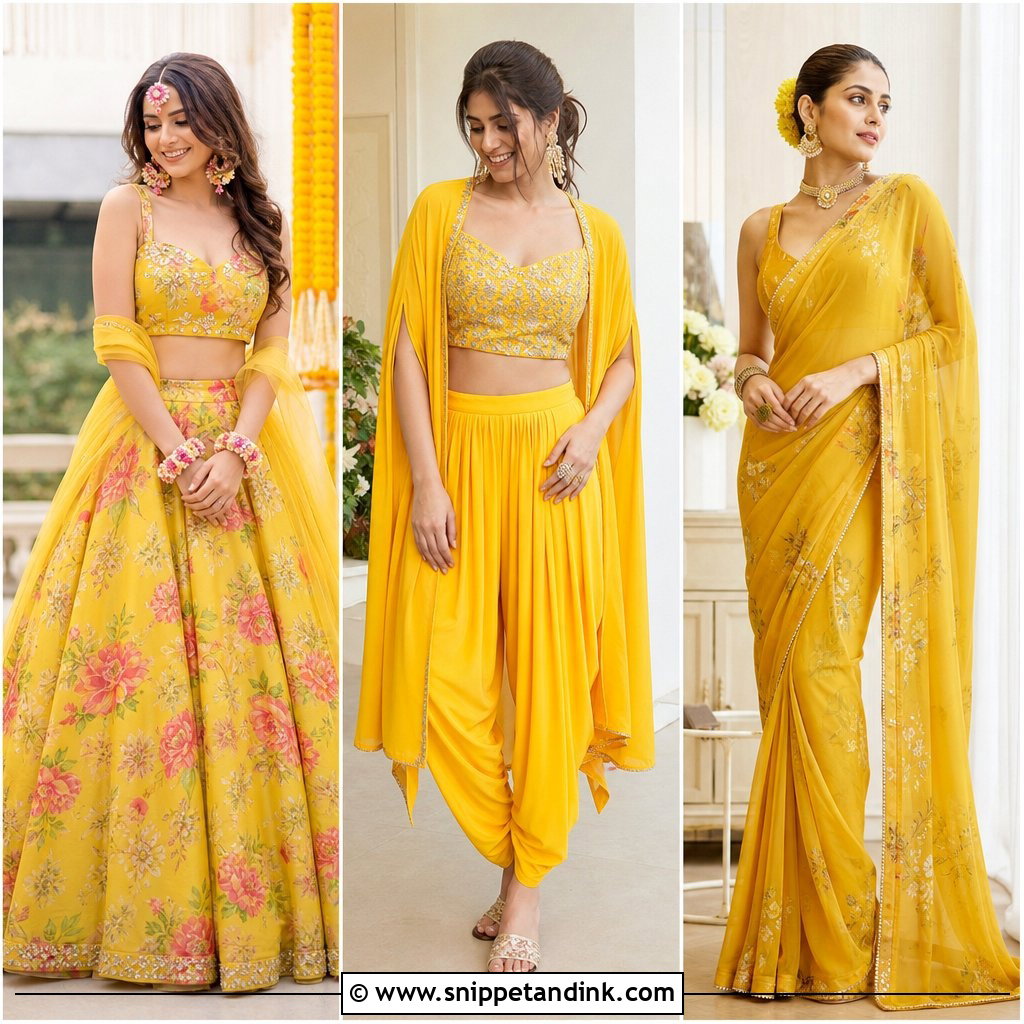
Dhoti pants give a short yellow kurta a modern twist and are very comfortable for sitting and dancing. The gathered drape is roomy through the hip and tapers at the ankle. A kurta with a structured neckline or embroidered yoke balances the relaxed bottom. A cropped jacket or light dupatta adds a layer. Bold earrings, stacked bangles and flat Kolhapuri-style sandals suit the mood. The fit checks I’d make: the waist must be secure, since dhoti pants carry a lot of fabric, and the kurta must stop above the drape or it hides the whole shape. A high ponytail or textured braid keeps it lively.
10. Yellow Angrakha Suit for Haldi Ceremony
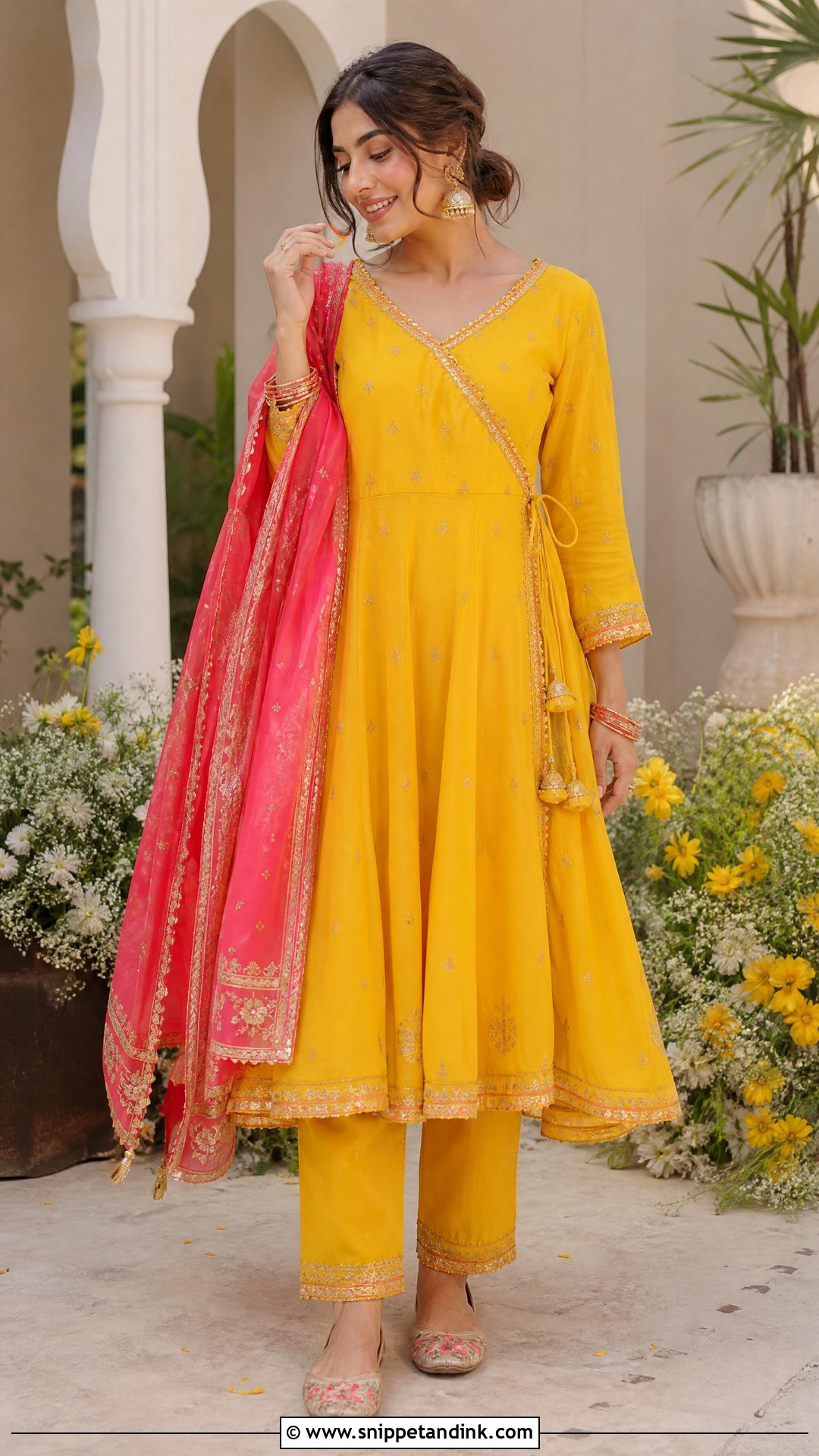
The overlapping wrap front of an Angrakha suit defines the waist and can be adjusted as the day goes on. An A-line or lightly flared kurta with side ties, tassels and fine embroidery along the wrap pairs with straight pants or a soft churidar. A contrast dupatta in pink, orange or green adds colour in photos. Small jhumkas, thin bangles and juttis that match the border complete it. The detail I always check on an angrakha is the tie: if it’s knotted loosely, the overlap opens when you lean forward to apply haldi, so secure it firmly and keep the tassels short enough not to dip into the paste. Soft curls or a side braid suit the curved lines.
11. Yellow Mirror Work Suit for Haldi Ceremony
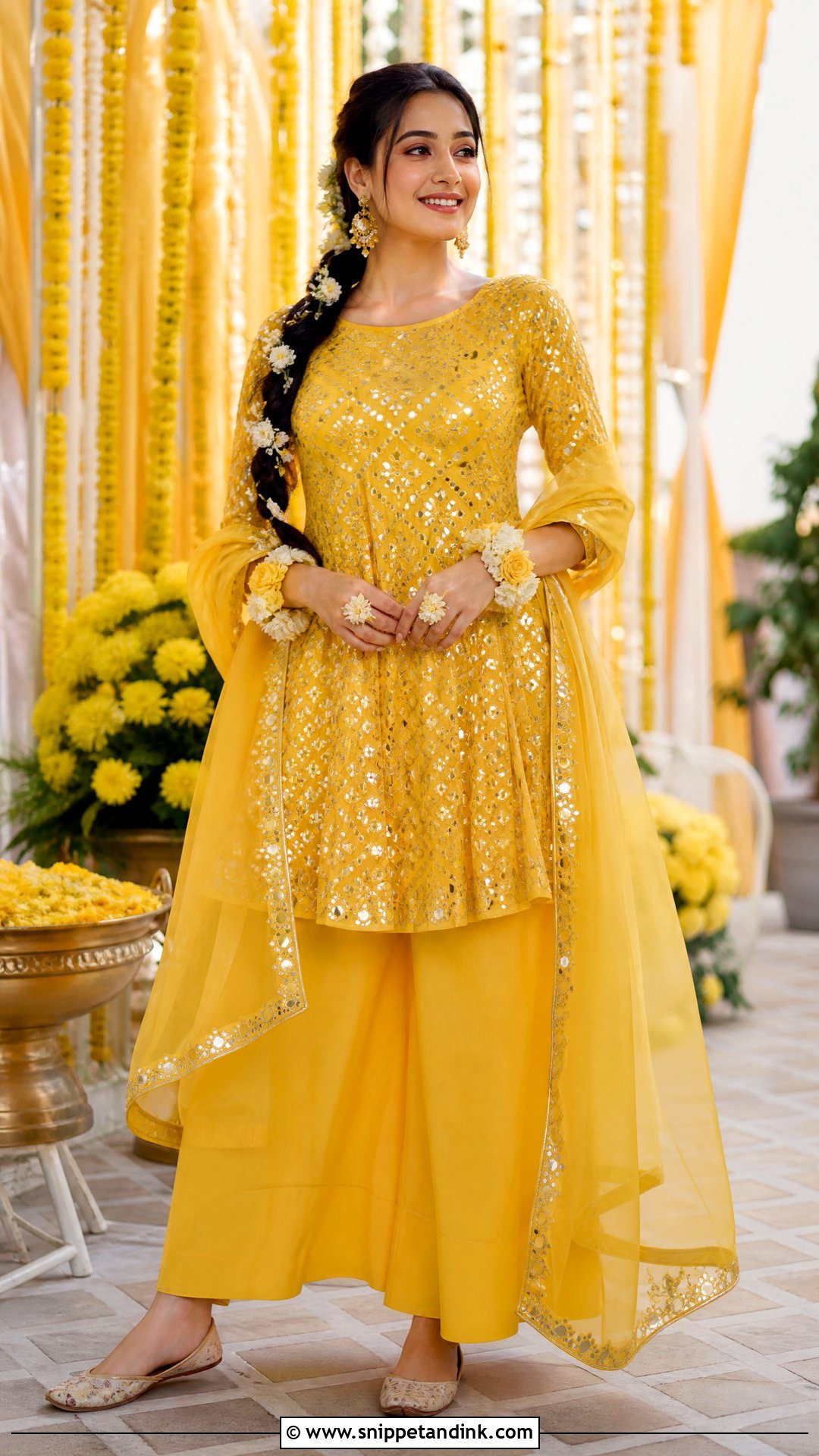
Mirror work catches daylight and adds sparkle without heavy jewellery. A straight kurta or short Anarkali with small, firmly stitched mirrors at the neckline and sleeves pairs with plain palazzos so the outfit doesn’t get busy. A chiffon dupatta with a narrow mirror border ties it together. Simple gold hoops, a few bangles and neutral embroidered flats are enough. The bride can choose denser work; guests should keep it lighter. Run a finger around each mirror edge before you wear it, especially at the inner arm and waist, where rough edges rub and snag. A braid with small yellow flowers finishes it.
12. White and Yellow Suit for Haldi Ceremony
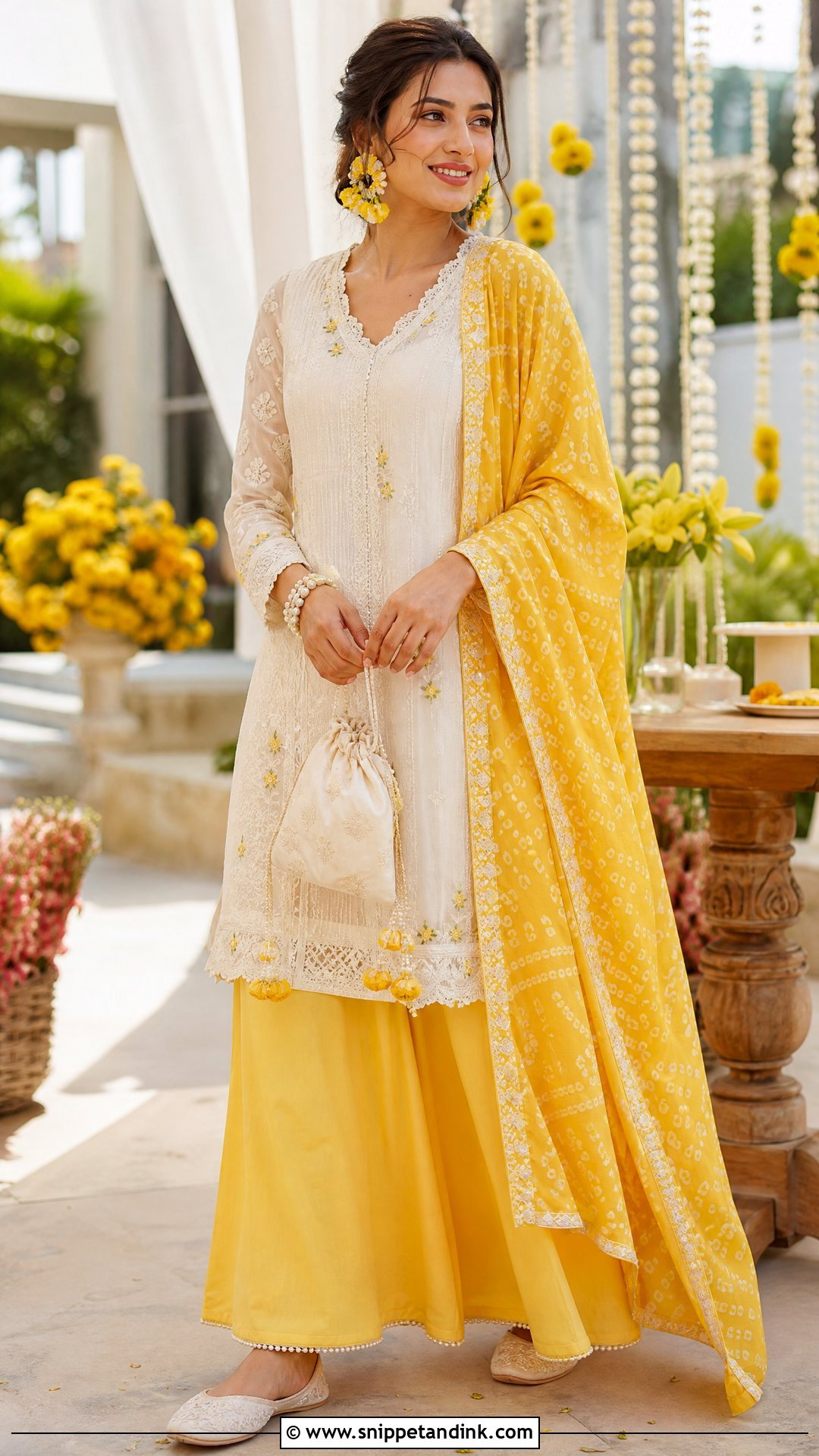
White and yellow look crisp in daylight, but pale fabric and wet turmeric are a risky pairing. An ivory or white kurta with yellow embroidery over yellow palazzos or straight pants lets a Bandhani, leheriya or floral yellow dupatta take the lead. I’d steer the bride and close family who’ll be applying paste away from this one and suggest it for guests who’ll be watching. Yellow floral earrings, pearl bangles, ivory juttis and a small potli with a secure closure complete it. Soft makeup and a low floral bun keep the look light.
13. Orange and Yellow Suit for Haldi Ceremony
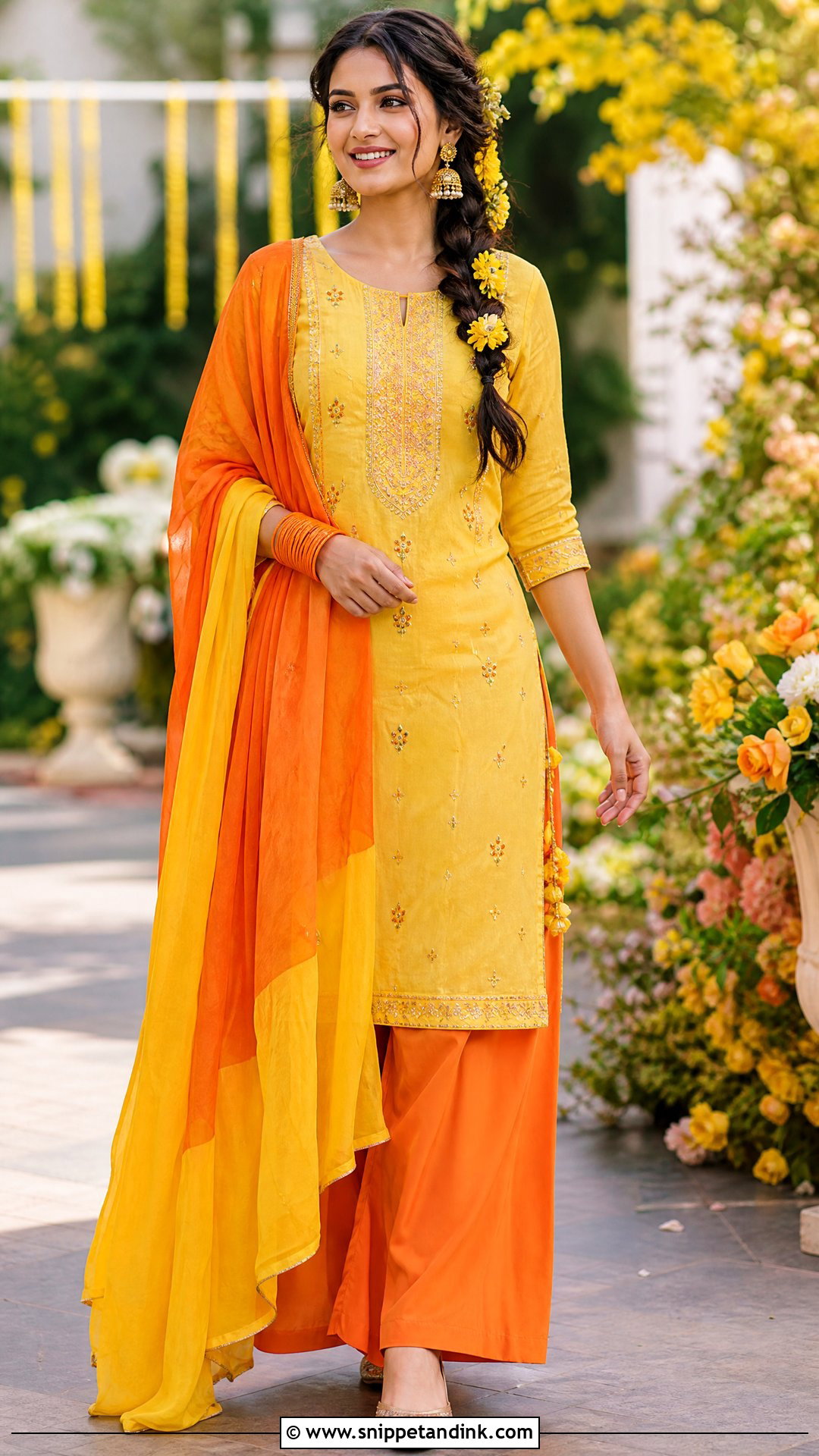
Orange and yellow together are about as warm as a palette gets, and they stay vivid in outdoor light against marigold decor. Pair a yellow kurta with orange palazzos, or reverse it for stronger contrast; a dupatta with both shades makes the pairing look intended. Keep embellishment to light gota or small embroidered motifs, since the colour does the work. Gold jhumkas, orange bangles and tan juttis suit the palette. Keep the silhouette simple so the colour pairing stays the focal point. A long braid with yellow flowers or a sleek low bun finishes it.
14. Pink and Yellow Suit for Haldi Ceremony
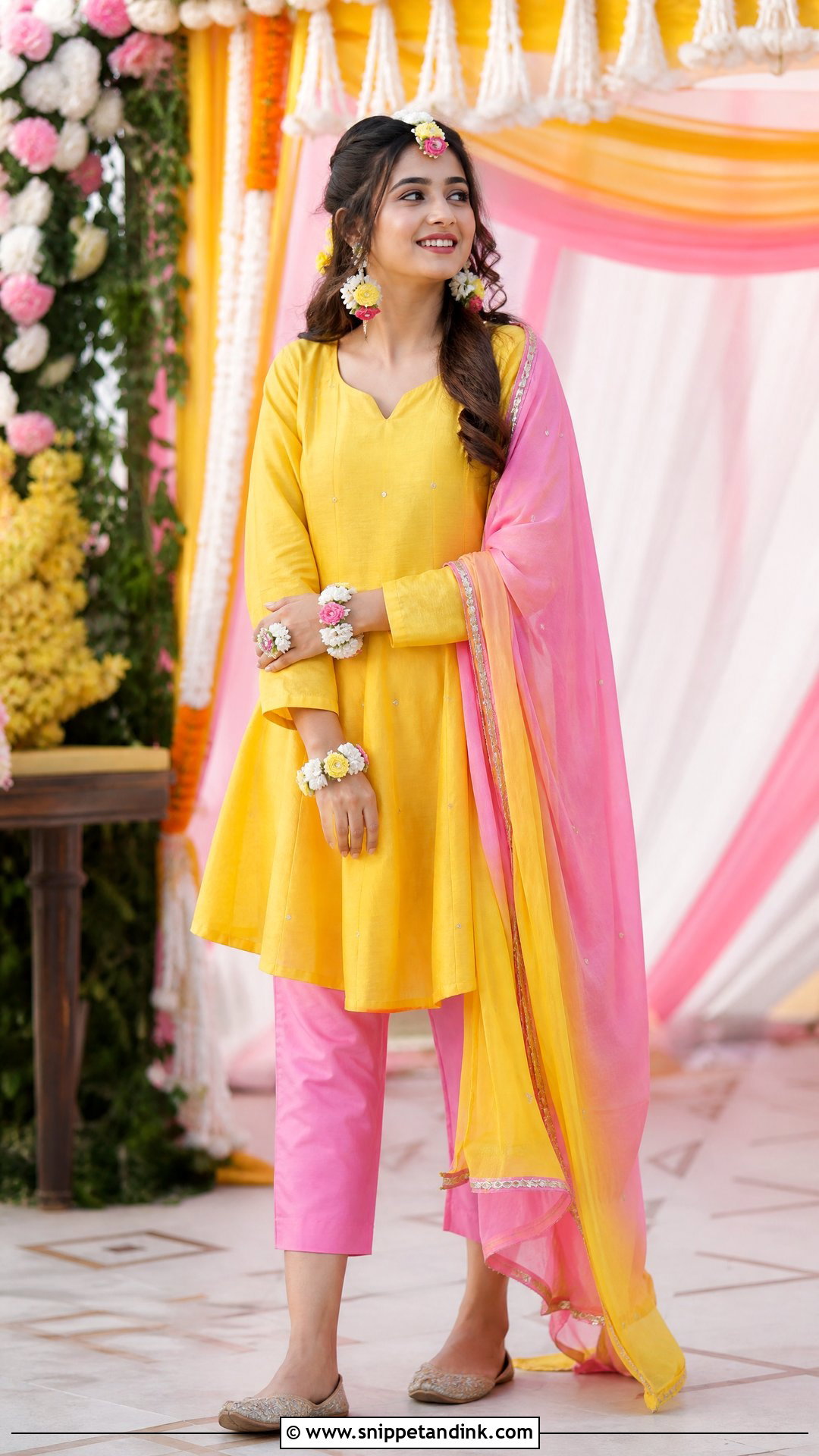
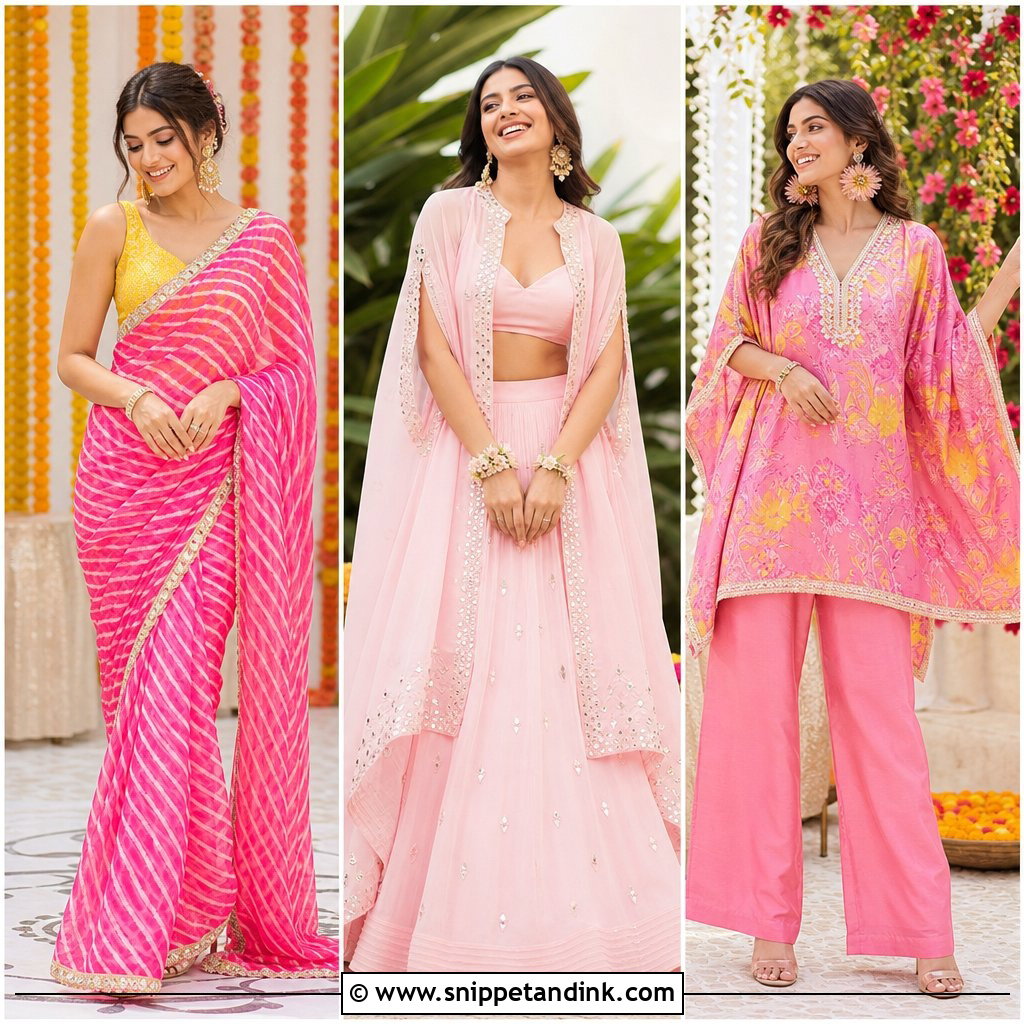
Pink softens yellow and is a good way to look festive without wearing head-to-toe yellow. A yellow A-line kurta with pink straight pants and a dupatta in both colours works well; a pink kurta with yellow florals is an option if the family is relaxed about colour. Small gota accents add festivity without weight. Gold earrings, pink bangles and beige or metallic juttis complete it. Floral jewellery in both colours ties bridesmaids together. Be aware that turmeric on bright pink cotton can leave an orange-brown mark that’s very visible, so pin the dupatta well back when the paste comes round.


15. Green and Yellow Suit for Haldi Ceremony
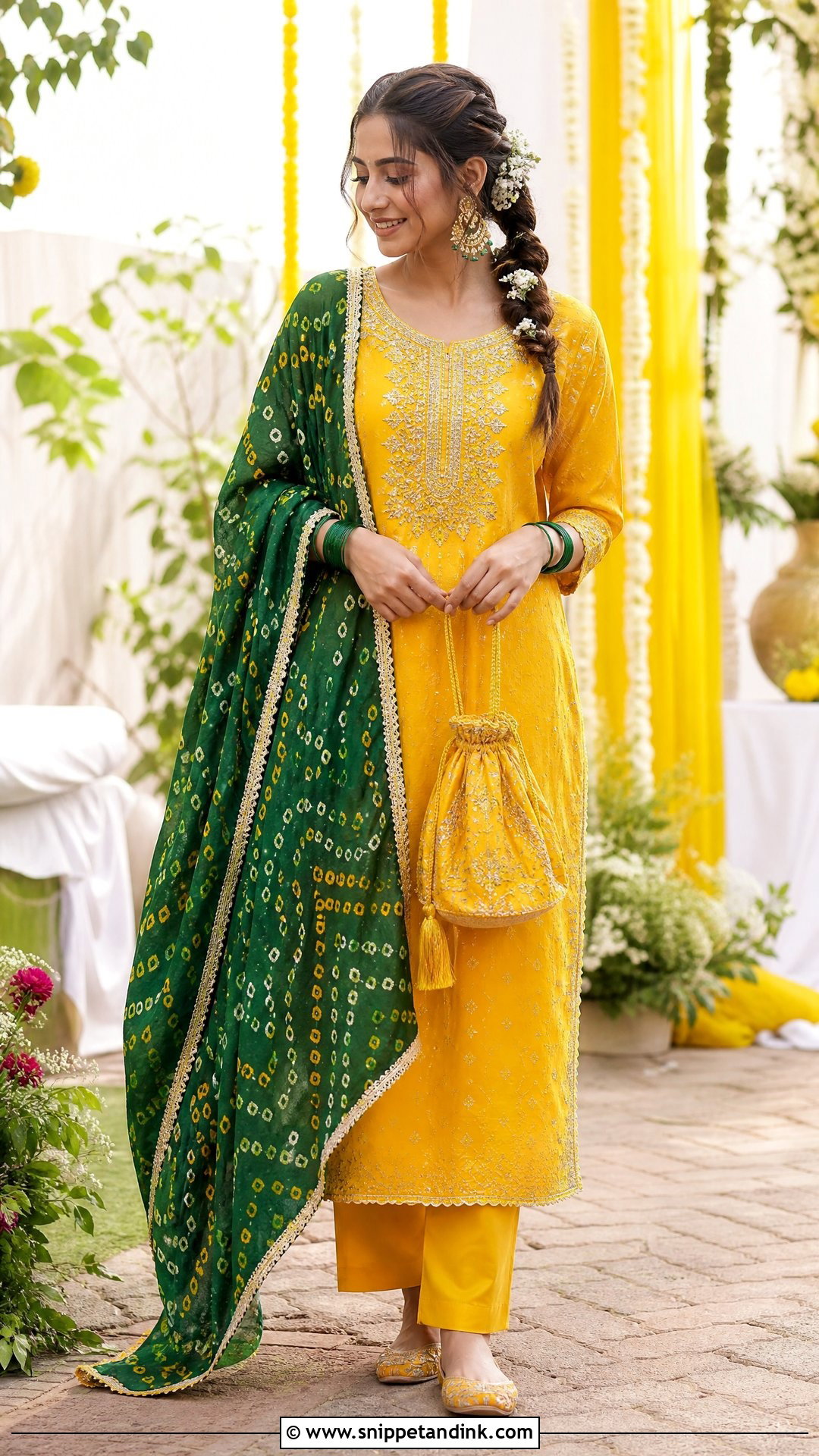
Green with yellow suits a garden or courtyard haldi, where it picks up the leaves around you. A yellow kurta with green floral embroidery, matching yellow pants and a green Bandhani or organza dupatta keep it traditional; a lime kurta with yellow palazzos is a bolder colour-block. Gold or oxidised earrings both work, depending on the embroidery. Green bangles, a yellow potli and flat juttis complete it. Keep the kurta itself simple since the contrast is already strong. It’s a good shared palette for bridesmaids, letting each pick her own balance of the two colours.
16. Yellow Cape Suit for Haldi Ceremony
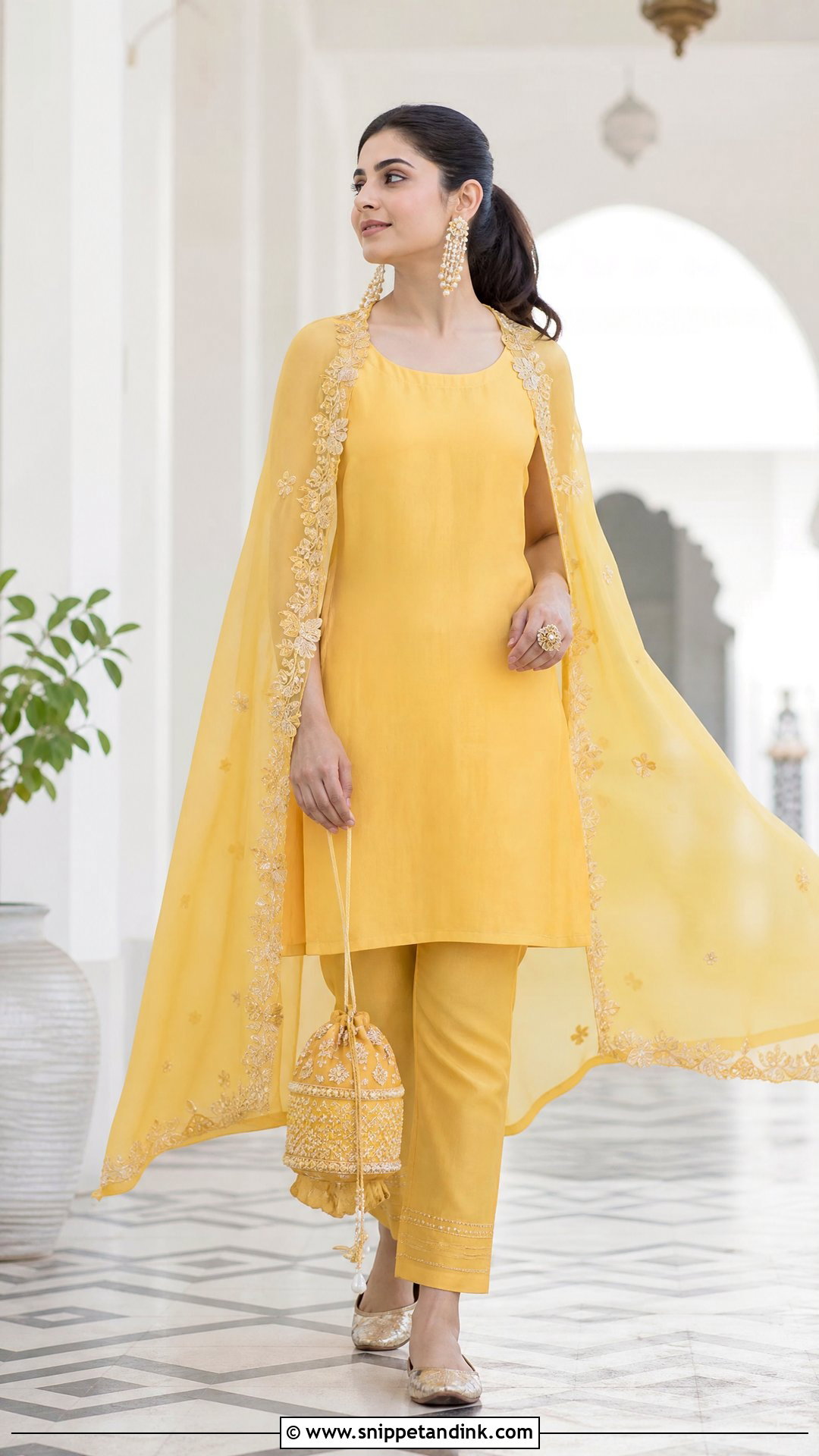
A cape replaces the dupatta and leaves both hands free, which is useful when you’re applying haldi or holding a tray. A sleeveless or short-sleeved yellow kurta with straight pants or palazzos, plus a sheer embroidered cape ending at the knee, gives drama without bulk. The cape must be light and open at the front. Tonal embroidery is refined; small mirrors add sparkle. Long earrings, a statement ring and metallic flats are enough. Skip a shoulder bag, as the strap drags the cape off the shoulder; carry a small handheld potli instead. A sleek ponytail shows the neckline.
17. Yellow Jacket Suit for Haldi Ceremony
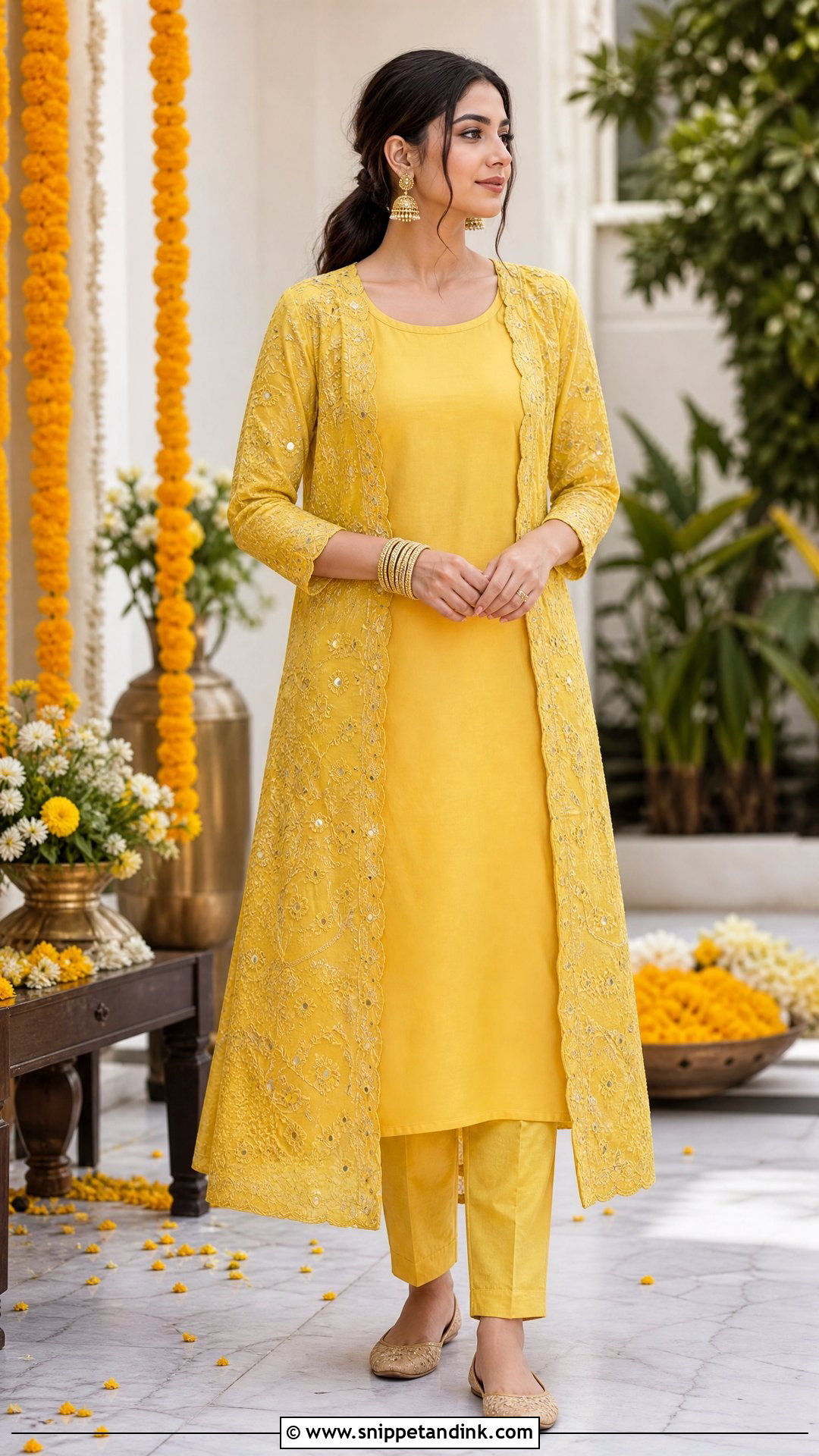
A long sleeveless jacket over a plain yellow suit lets you dress up for the photos and strip back once the paste starts flying. Begin with a simple kurta and straight pants, then layer a printed, embroidered or lightly mirrored long jacket worn open. Sleeveless is airy outdoors; three-quarter sleeves give more coverage. Skip the dupatta if the jacket is detailed. Medium jhumkas, stacked bangles and neutral juttis finish it. Taking the jacket off before the haldi itself keeps the most decorated piece clean, which is the real advantage of this layering. A low ponytail or bun keeps the neckline clear.
18. Yellow Bandhani Suit for Haldi Ceremony
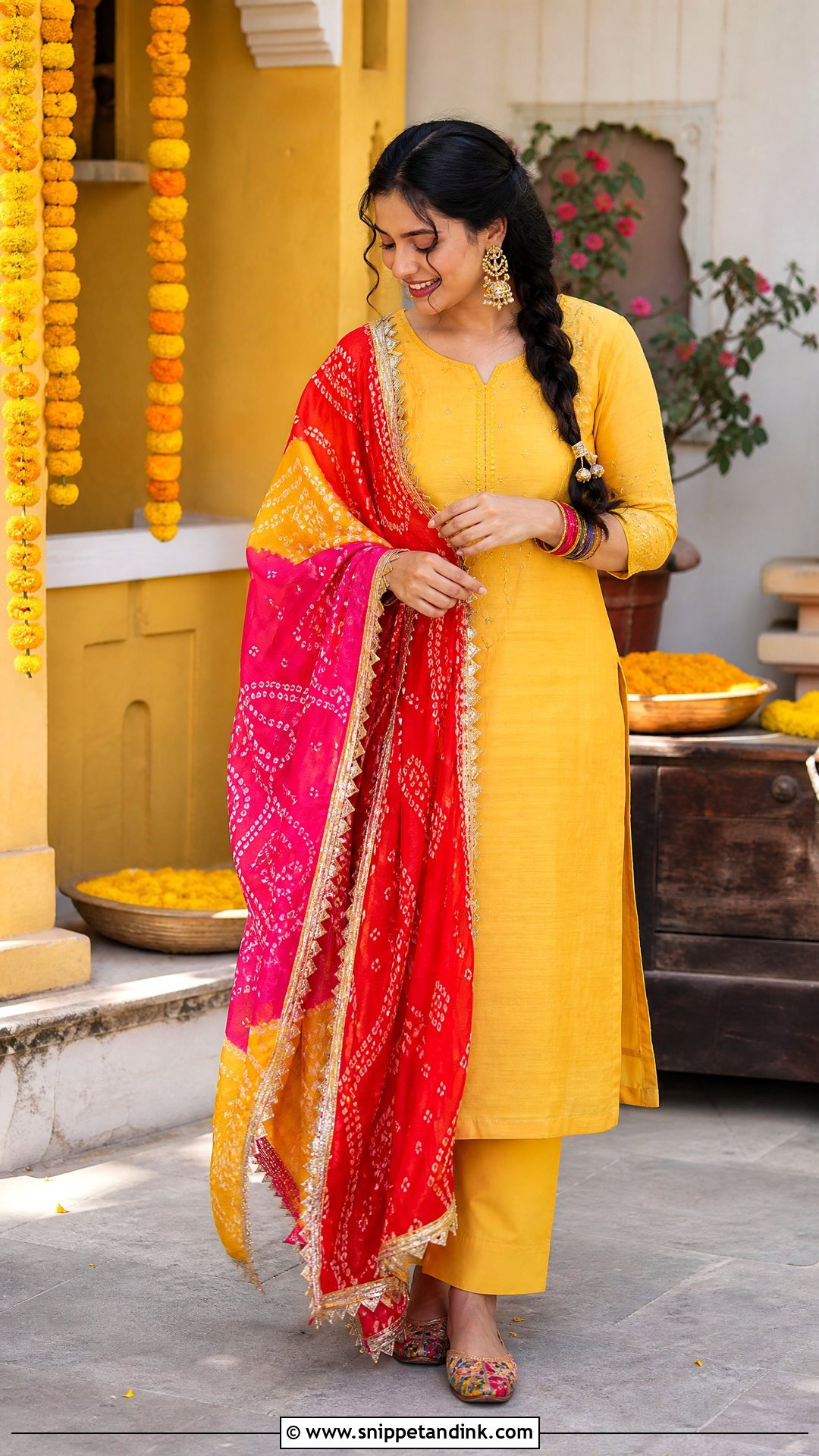
Bandhani is a tie-dye craft from western India, made by binding tiny points of cloth before dyeing, and it brings pattern and regional character to a haldi. A plain yellow kurta with solid pants and a red, pink or green Bandhani dupatta is the classic pairing; for more impact, choose a fully printed bandhani kurta with plain bottoms. Gota edging or tassels are enough decoration. Antique gold earrings, colourful bangles and embroidered juttis suit it. Pin the dupatta discreetly so it stays put during dancing. Real Bandhani dyes can run when wet, so rinse it separately in cold water if paste gets on it.
19. Yellow Silk Blend Suit for Haldi Ceremony
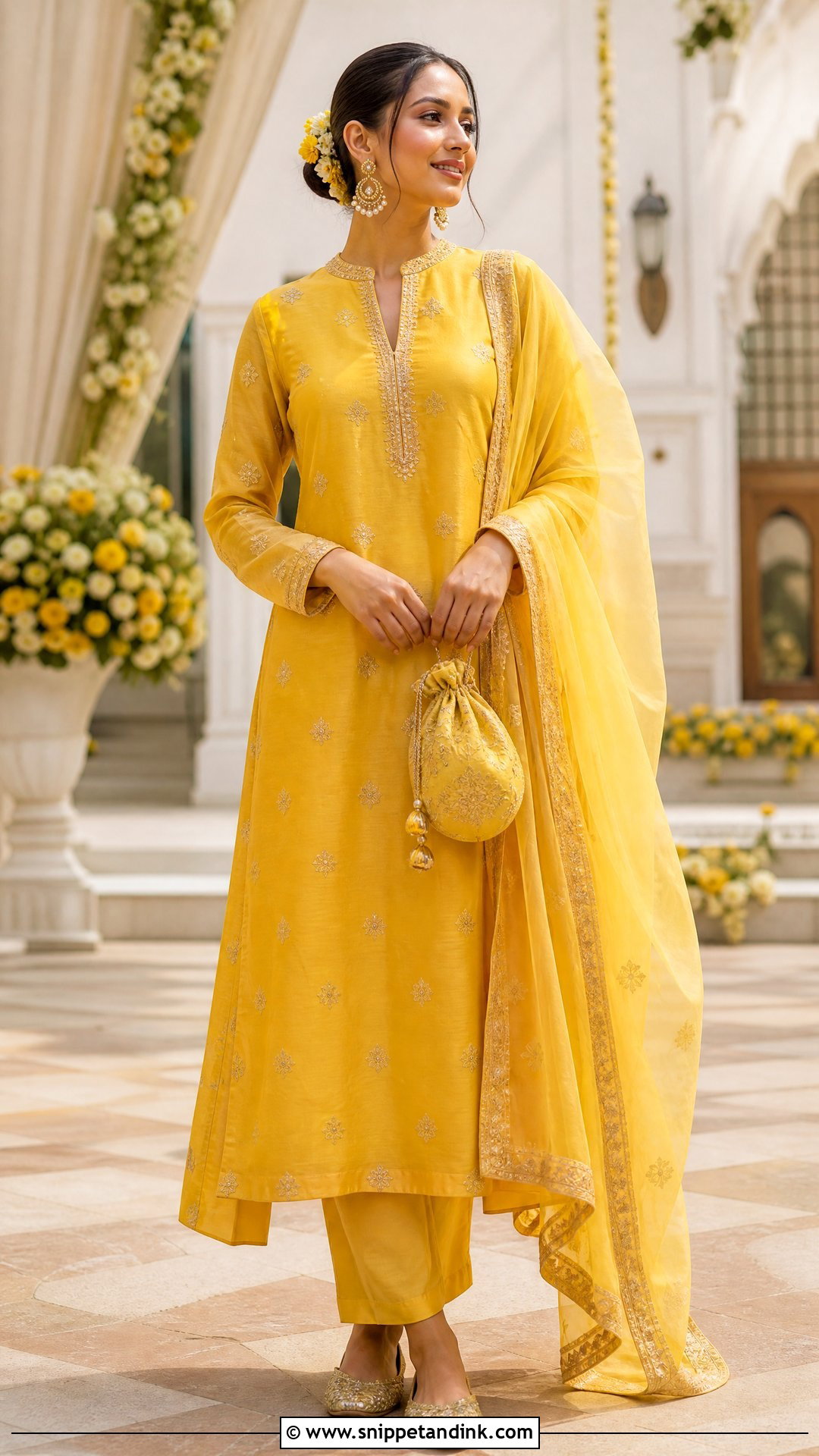
A silk-blend suit suits a more formal haldi where the family wants a little more structure and shine. A mustard or golden-yellow A-line kurta, straight pants and a light organza dupatta with subtle zari borders or woven motifs look ceremonial without dense embroidery. I suggest a blend over pure silk for anyone near the paste, as pure silk water-marks easily and turmeric is very hard to lift from it. Traditional gold earrings, a small potli and cushioned brocade juttis complete it. Keep the hem at ankle length and the sleeves close at the wrist, since loose cuffs dip into everything. A sleek bun with fresh flowers suits it.

20. Yellow Cotton Suit for Haldi Ceremony
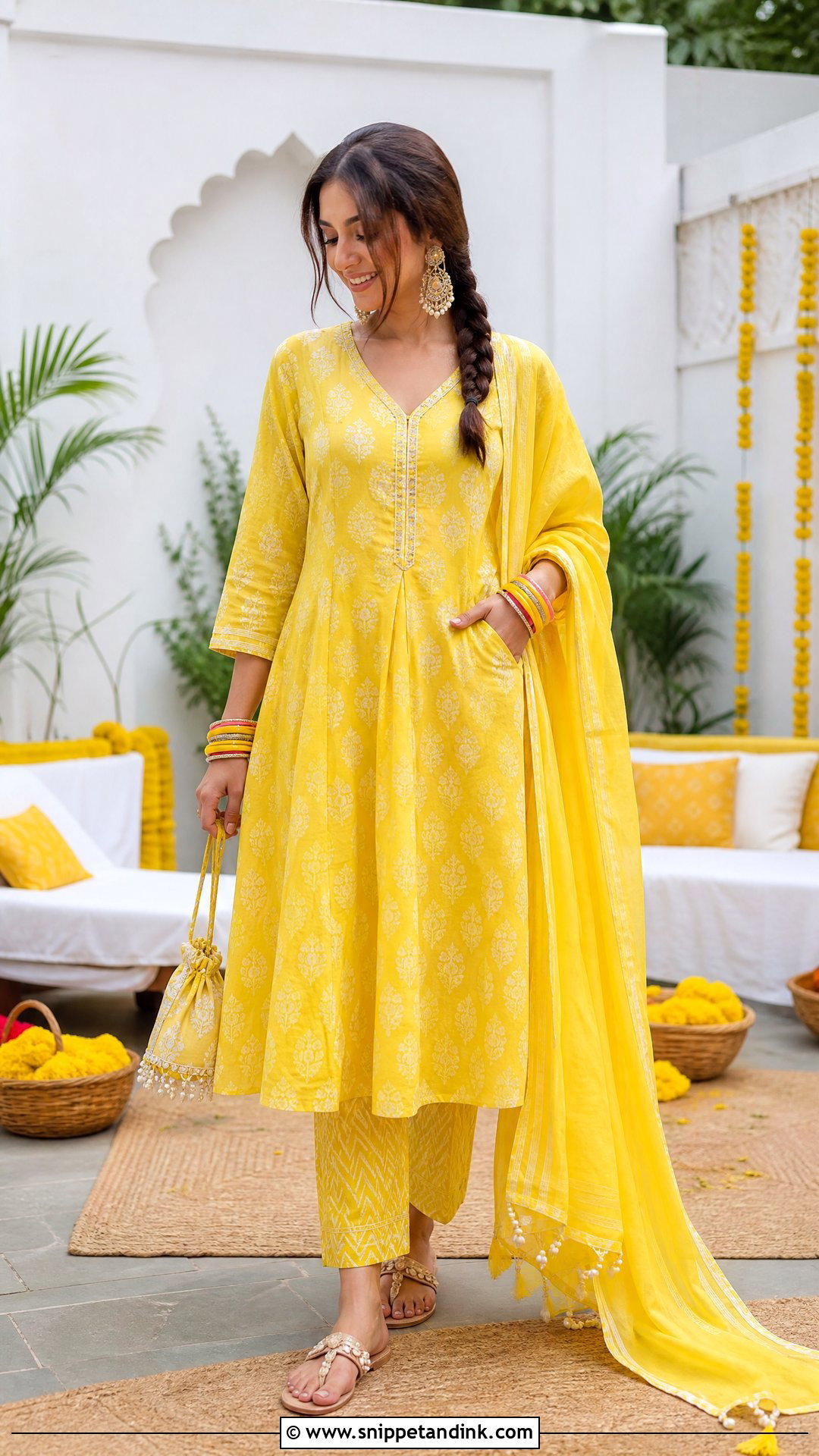
For an intimate Haldi function at home, a breathable yellow cotton suit is the most comfortable thing you can wear. A block-printed or solid A-line kurta, relaxed straight pants and a soft mulmul dupatta keep you cool. Look for side pockets, a drawstring waist and sleeves that don’t restrict you. Printed borders, fabric tassels or small thread motifs are enough decoration. Oxidised earrings, colourful bangles and flat sandals handle an outdoor setting. Cotton is also the easiest fabric to clean afterwards and the easiest to wear again. A simple braid and a small cloth potli finish it.
The Same Afternoon: Lifting Haldi Out of Fabric and Skin
The sooner you treat a turmeric mark, the more of it comes out. Here is the routine I give clients for washable fabrics.
- Scrape off dried paste with a blunt knife or spoon, working over a bin. Don’t rub, as that pushes the colour deeper.
- Rinse from the back of the fabric under cold water to push the dye out the way it came in.
- Work a little liquid dish soap or liquid detergent into the mark, leave it for a few minutes, then rinse again.
- Dry the garment in direct sunlight. Turmeric dye fades in sunlight, and many stubborn marks disappear after a day or two on the line.
- Don’t panic if a mark turns reddish-brown when it meets soap or baking soda. Turmeric changes colour in alkaline conditions, and it usually goes back to yellow once rinsed.
Silk, zari and anything with heavy embroidery should go straight to a dry cleaner, and tell them it’s turmeric. For skin, a paste of gram flour and yogurt or a little oil rubbed in before washing lifts much of the yellow tint, and the rest fades in a day or two. Many brides are happy to keep a little glow anyway.
Dress for the Paste, Then for the Photos
A haldi suit has to let you take part in every ritual without worrying about your clothes. Shararas, cotton sets, Anarkalis, palazzos and cape suits each suit different venues, dress codes and roles in the ceremony. Choose breathable fabric, pin the dupatta securely, wear shoes you can slip off for floor seating, and keep embellishment away from where the paste will land. The bride can add floral jewellery and richer detail, while guests can choose simpler pieces to wear again. Pink, green, orange or ivory accents bring personality to the yellow palette. If it’s comfortable, washable and bright, it’s right for the day.
You'll Like These Ideas:








Leave a Reply