
A simple bridal outfit can be every bit as memorable as a heavily worked one, and it is usually far kinder to wear. When I dress a bride who wants less, I start with three things: a cut that fits her properly, a fabric she can move in for eight hours, and jewelry that supports the outfit instead of fighting it. Below you’ll find classic lehengas and silk sarees alongside shararas, Anarkalis and lighter pieces for the pre-wedding functions. Lighter construction and separates you can restyle later are a sensible direction for long, multi-day celebrations. Red, pastels, florals or a regional weave: each look below shows how to keep it restrained without it reading as plain.
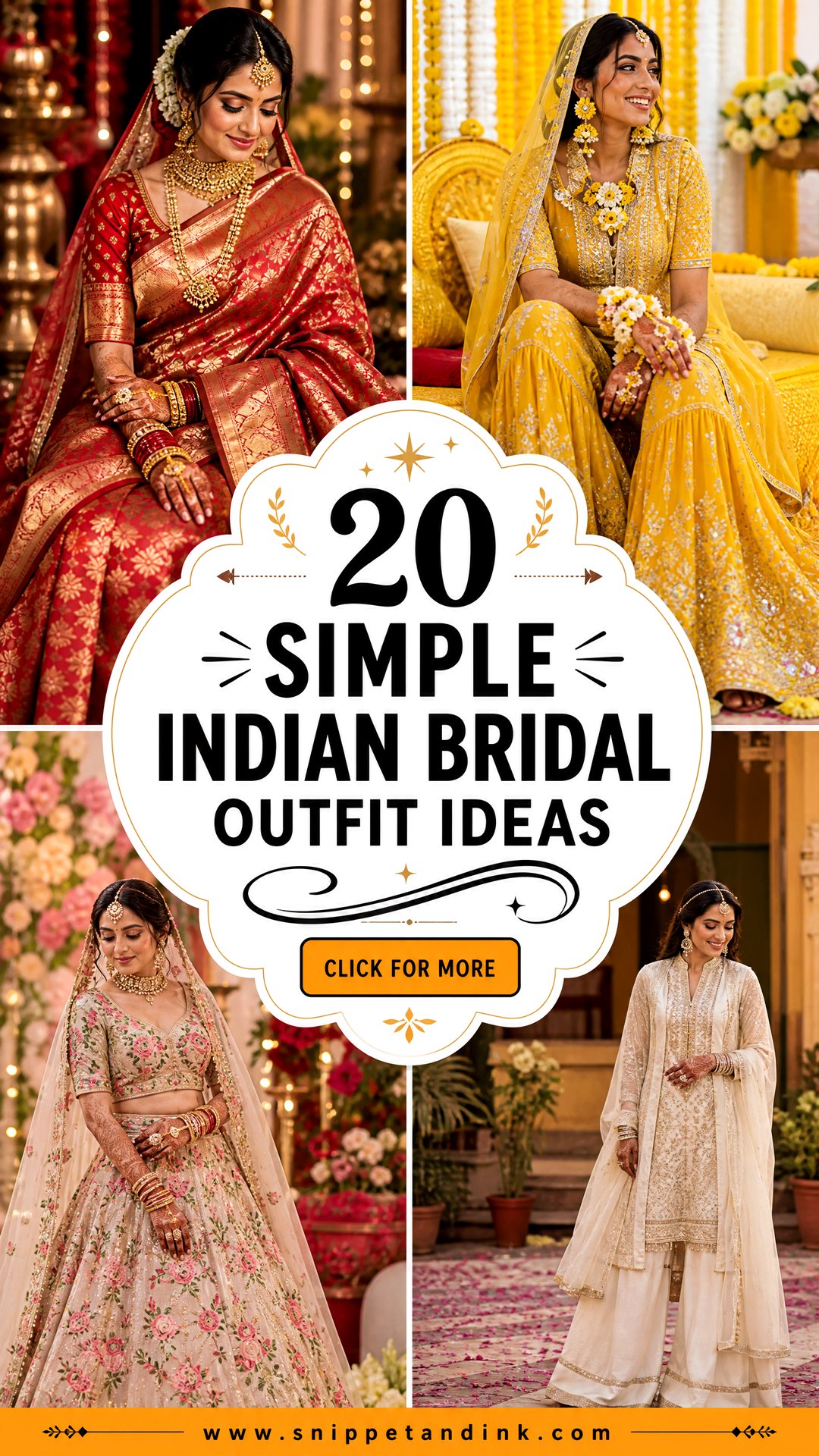
One Wardrobe Across Haldi, Mehndi, Pheras and Reception
Most Indian weddings mean four or five outfits in as many days, and simple bridal styling works best when you plan them together rather than one at a time. I sketch the functions in a row with the bride before she shops.
- Give the main ceremony the budget and the heaviest textile. Everything else can be lighter.
- Choose the haldi and mehndi outfits for the work they do: washable fabric for turmeric, short sleeves and no stiff skirt for henna.
- Let the sangeet outfit be the lightest lehenga you own, since you’ll be dancing.
- Vary the colour from one function to the next so the photo albums don’t blur together.
- Pick one jewelry set that can travel across two looks, such as kundan that suits both the mehndi and reception.
Then do one honest test. Put on the main outfit with all its jewelry and walk around for twenty minutes. Total weight, not the lehenga alone, is what tires a bride by the end of the pheras, and it’s much easier to drop a necklace or switch to a lighter dupatta at that stage than on the morning.
1. Simple Red Bridal Lehenga
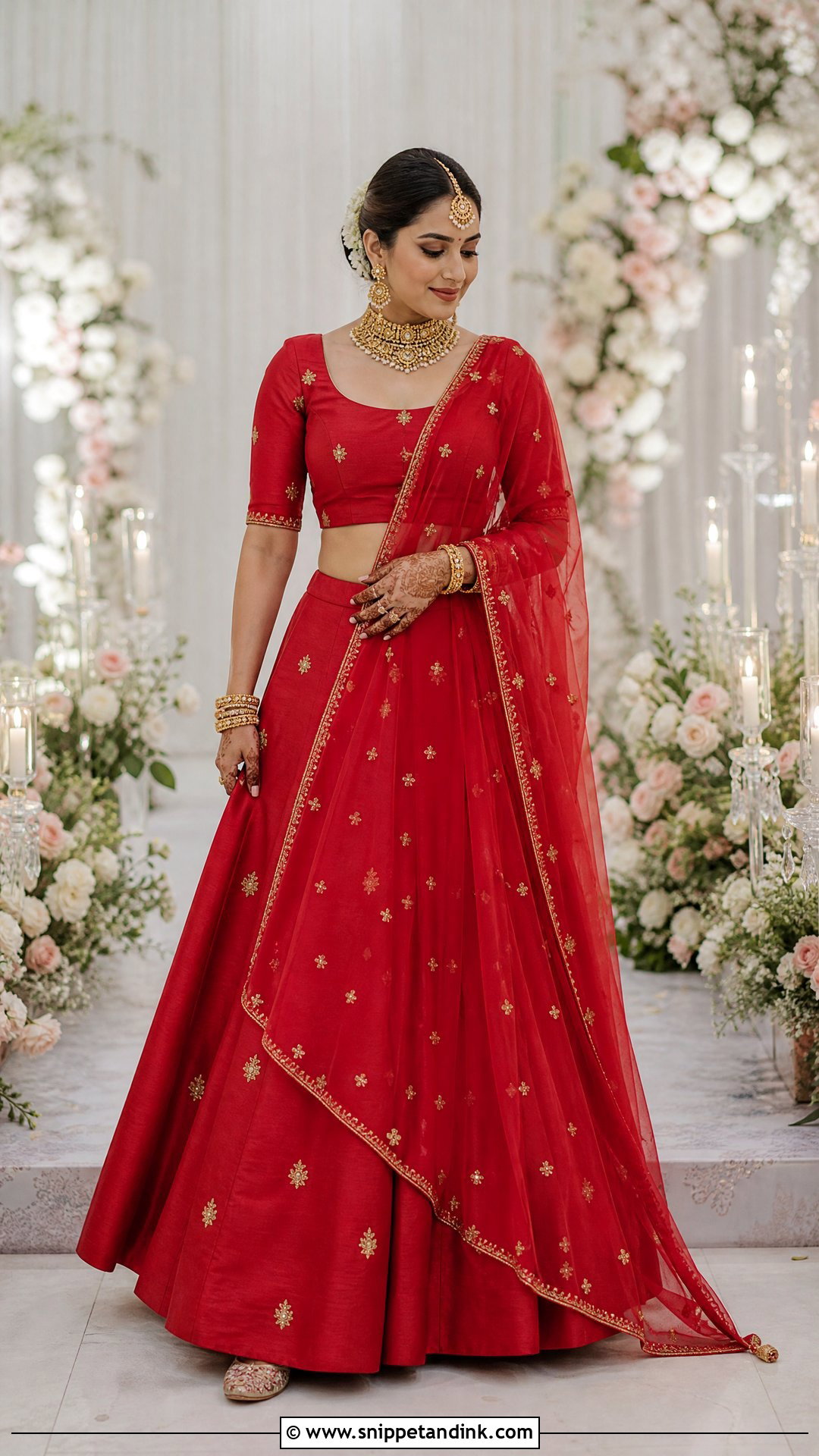
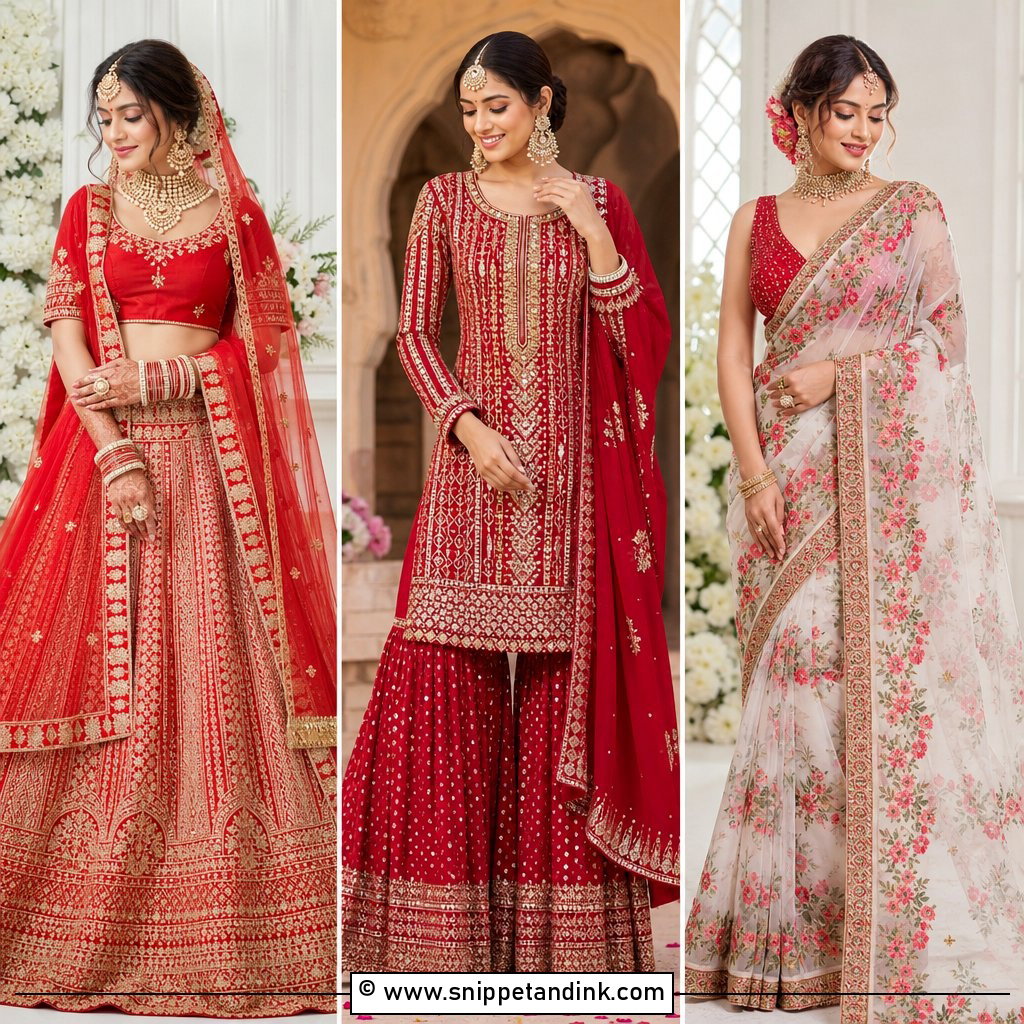
Red doesn’t need dense embroidery to read bridal; the colour does that work. I’d choose a clean A-line in raw silk with a narrow gold border and scattered zari buttis, then a fitted elbow-sleeve blouse and a light net or organza dupatta. Raw silk has a slight slub and holds an A-line well, but it creases where you sit, so have it steamed on the morning. Drape the dupatta over one shoulder. A medium necklace, matching earrings, red bangles and embroidered juttis complete it, with a sleek bun and small white flowers. It suits an intimate or daytime wedding, and the skirt restyles easily afterwards.
2. Pastel Pink Bridal Lehenga
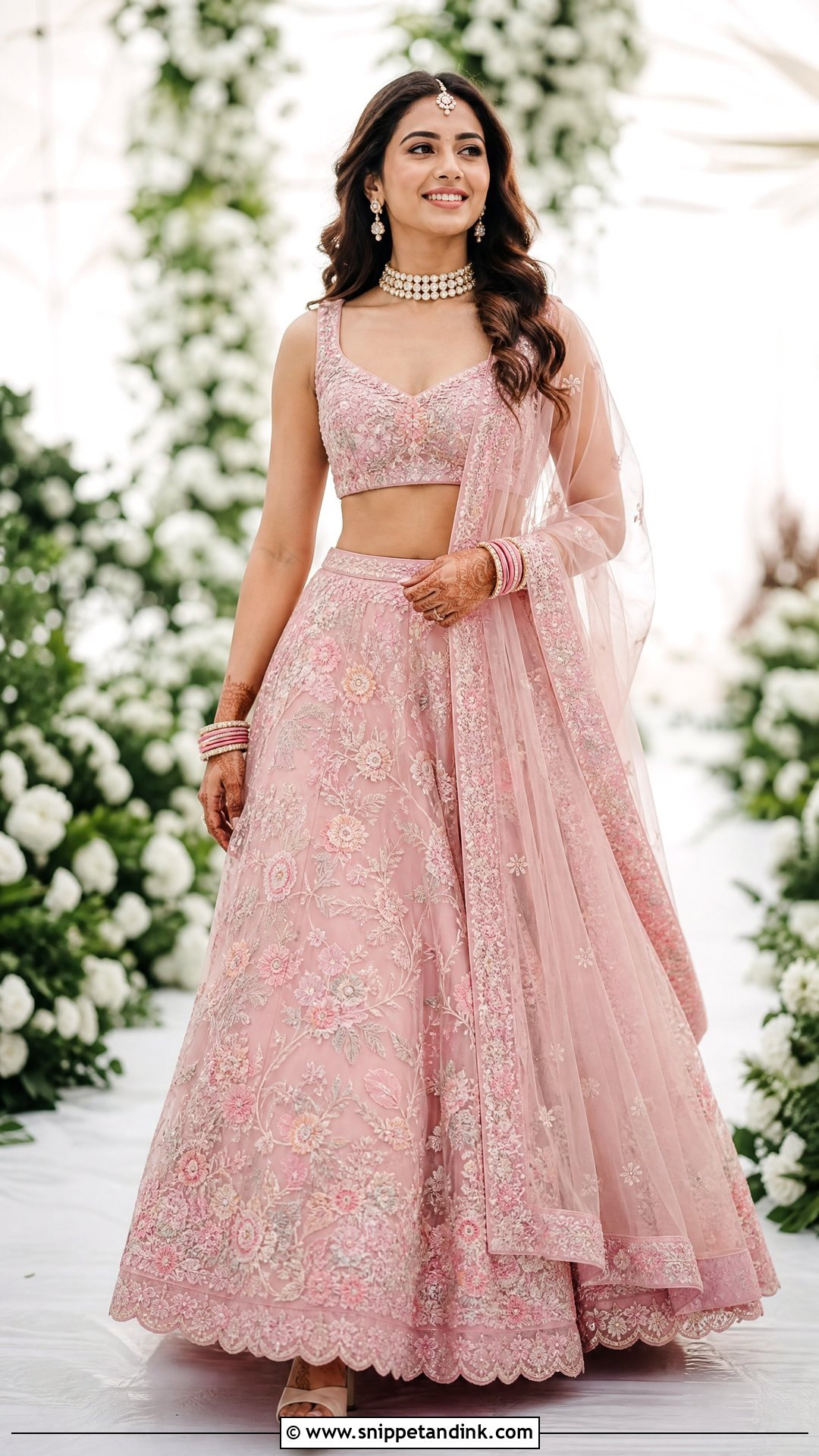
Pastel pink is a soft, personal choice, and it’s forgiving on most skin tones as long as you test the exact shade in daylight. Pick light georgette or silk with fine threadwork rather than stones, which weigh georgette down and pull the drape. A matching blouse with a comfortable neck and supportive sleeves is the base. Wear one sheer dupatta across the shoulders or diagonally. Pearl earrings, a fine choker, blush bangles and neutral block heels keep it calm, with rosy cheeks, a soft pink lip and loose waves or a low bun. It’s a garden-wedding or engagement outfit, best in daylight.
3. Banarasi Silk Bridal Saree
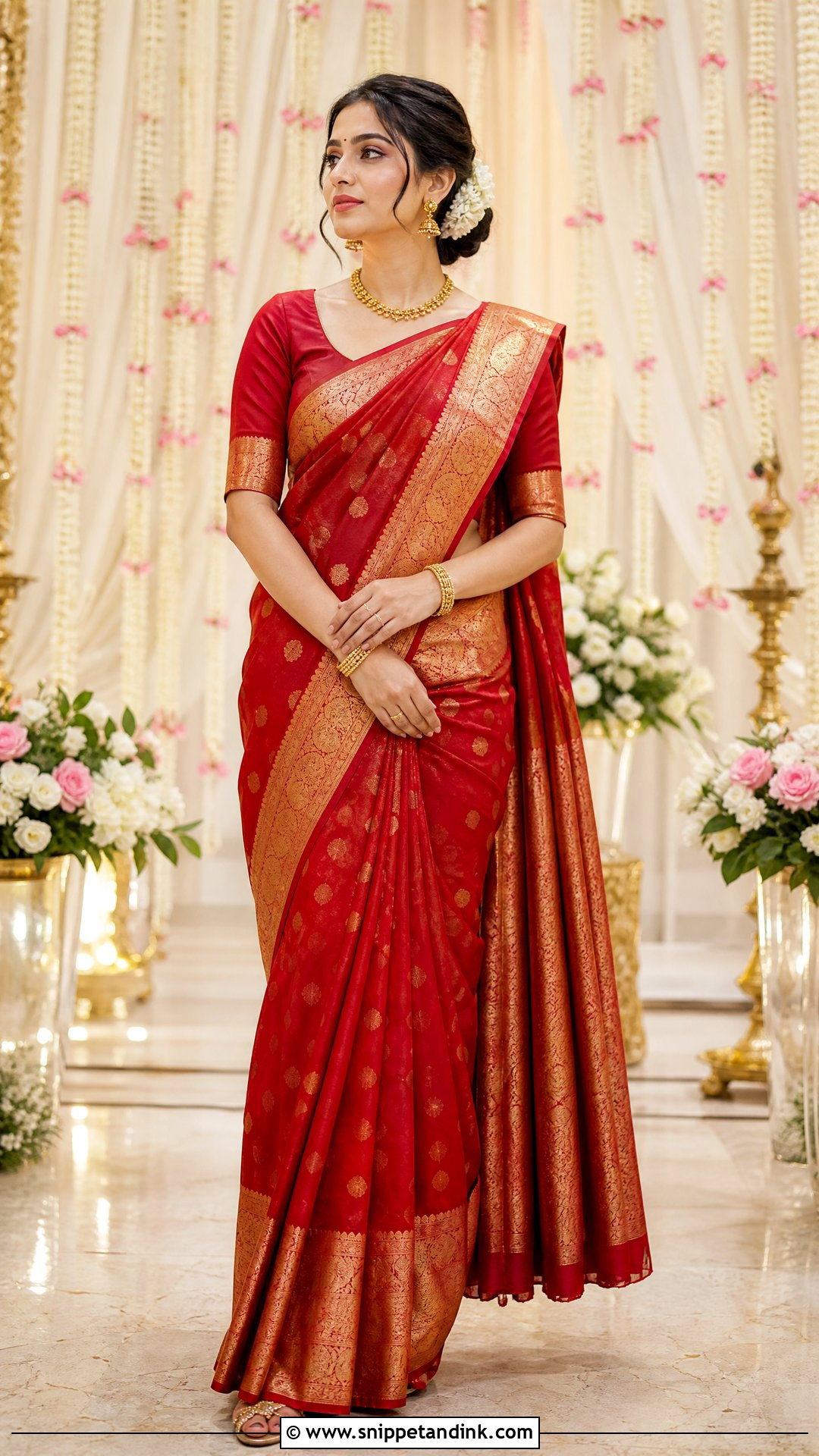
Banarasi silk carries a bridal look on its weave alone. Red, maroon, magenta or deep pink with a traditional gold border, a plain silk blouse with elbow sleeves and a gently shaped neck: that’s the whole formula. Real Banarasi with heavy zari is weighty, so I pleat it a touch narrower than usual and pin the pleats from inside so you can walk the pheras without stepping on them. A short gold necklace, jhumkas, a small maang tikka, matching bangles and low block heels finish it, with a centre-parted bun and fresh flowers. Skip extra layers. You’ll wear this saree again at family weddings for years.
4. Ivory Chikankari Bridal Lehenga
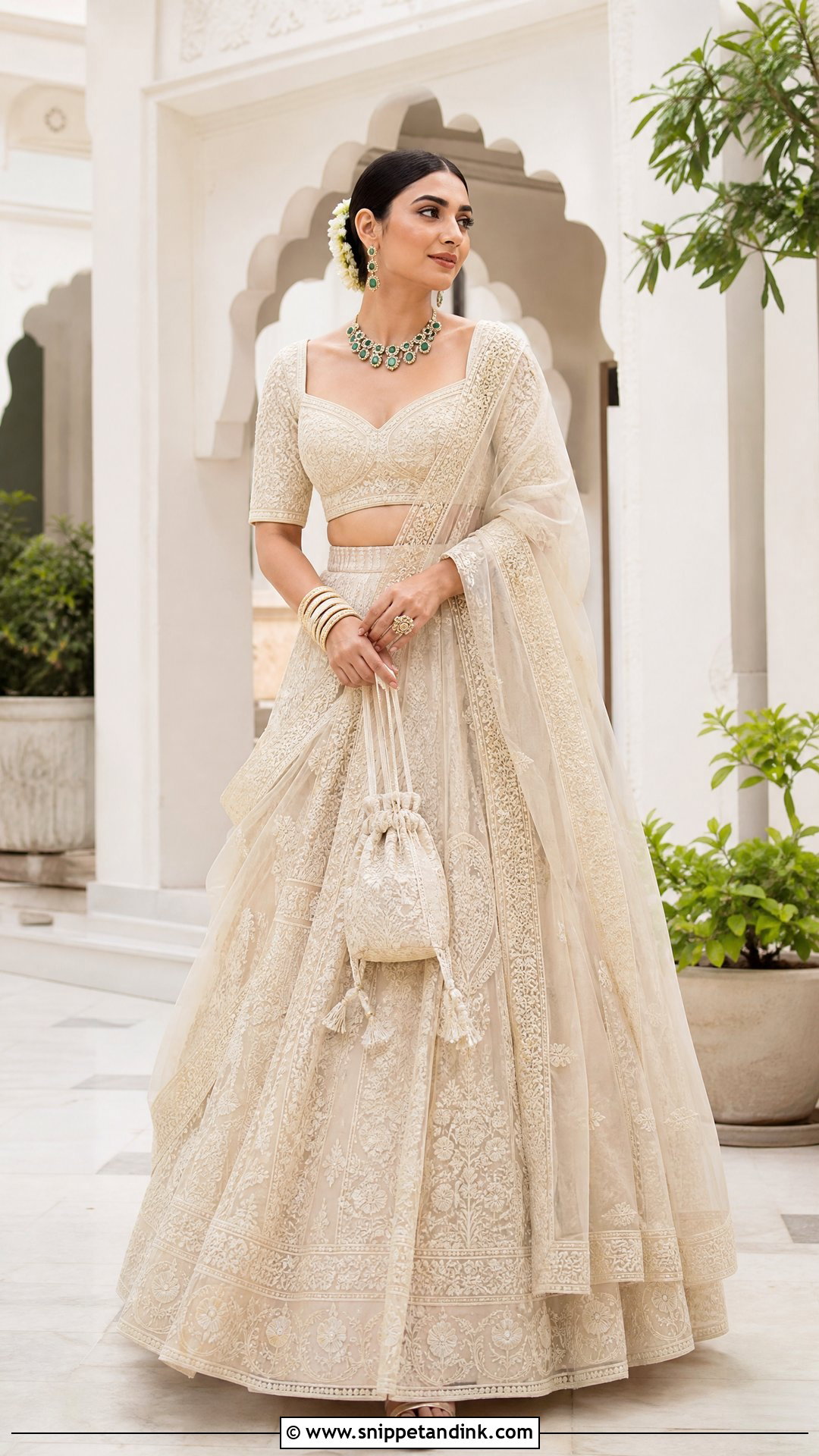
Ivory chikankari is light and detailed, and it photographs as modern without trying. Choose a flowing lehenga with tonal embroidery, a matching blouse and a sheer dupatta with a slim border; small pearl, sequin or mirror accents add brightness. Ivory needs one contrast point or it can look washed out on camera, so I add emerald earrings or a single coloured necklace. Ivory bangles, metallic sandals and a small potli complete it, with softly defined eyes, a rose lip and a low textured bun. A pale pink dupatta is a good swap if you want a touch more colour. It works for a daytime wedding, engagement or reception.
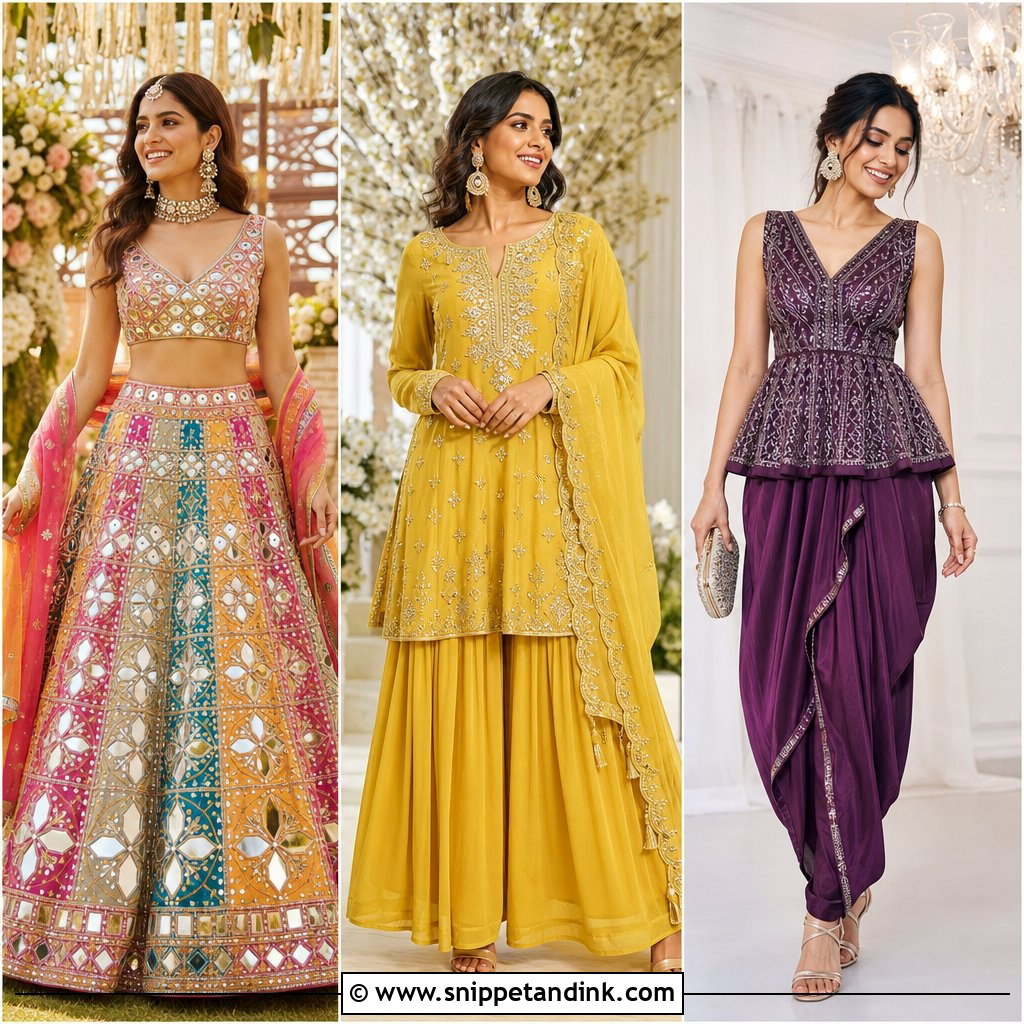
5. Yellow Haldi Bridal Sharara
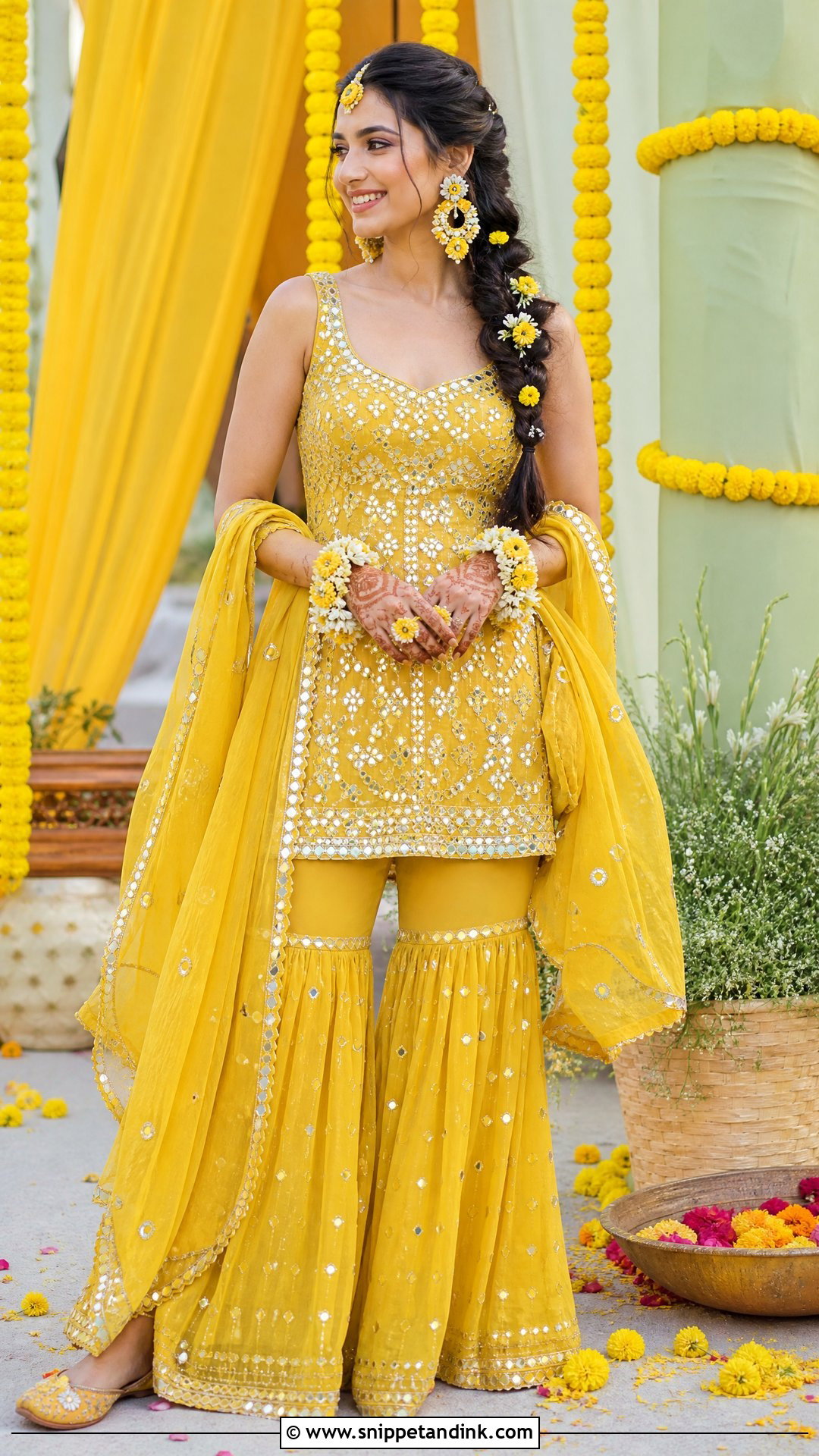
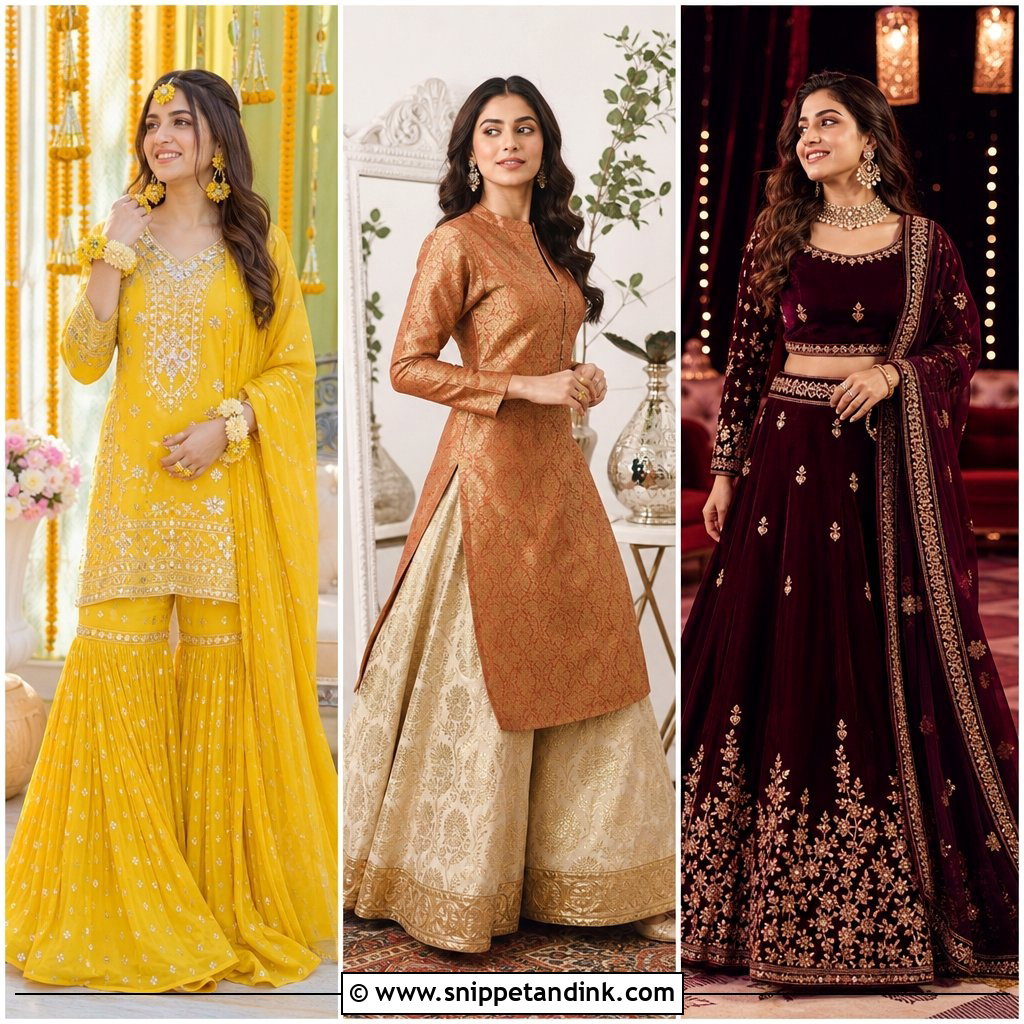
A yellow sharara lets a bride sit on the floor, stand and be lifted into the air at a lively Haldi without a single wardrobe worry. Wide sharara pants with a short kurti in simple mirror work, gota or florals, and a light dupatta pinned at one shoulder so your hands stay free. Floral earrings, matching bangles, flat juttis and a braid finish it. Choose cotton silk, georgette or soft chanderi, nothing fragile. Turmeric will stain, so I talk brides out of expensive handwork for this function and out of trailing layers that drag through the paste. Marigold, mustard and lemon are all practical.
6. Green Mehndi Bridal Lehenga
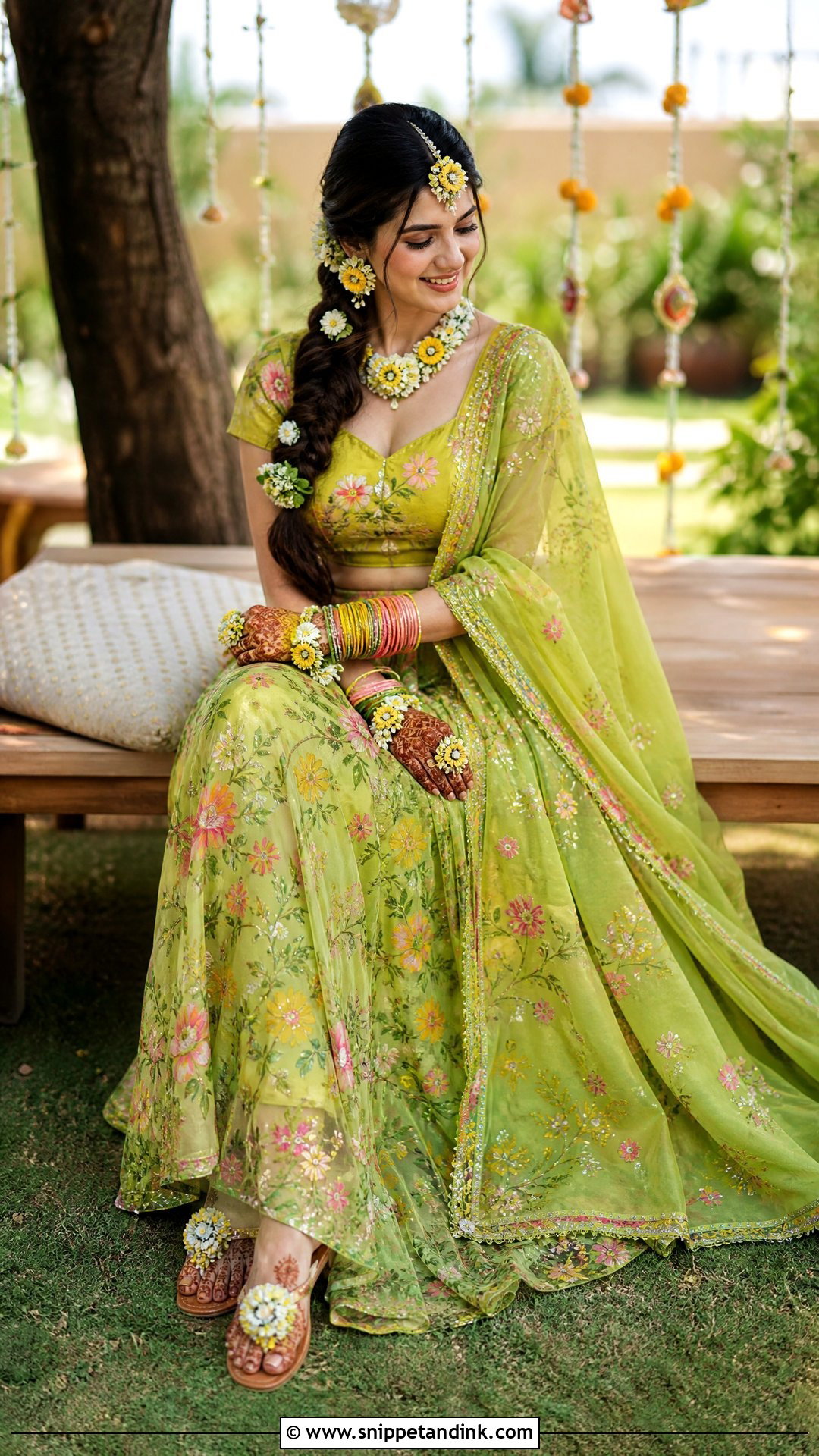
Henna takes hours, and you can’t use your hands while it dries. That shapes the whole outfit. A light green lehenga with floral prints or small mirrors works, with a sleeveless or short-sleeved blouse so nothing brushes fresh paste, and a soft dupatta pinned well away from your hands and feet. Skip a stiff can-can; you’ll be sitting for a long time and a cushion of net makes that uncomfortable. Floral jewelry, coloured bangles, a small maang tikka and flat embellished sandals complete it, with a side braid and tiny flowers. Emerald, mint, sage or parrot green all work, depending on the season and venue.
7. Simple Bridal Anarkali Suit
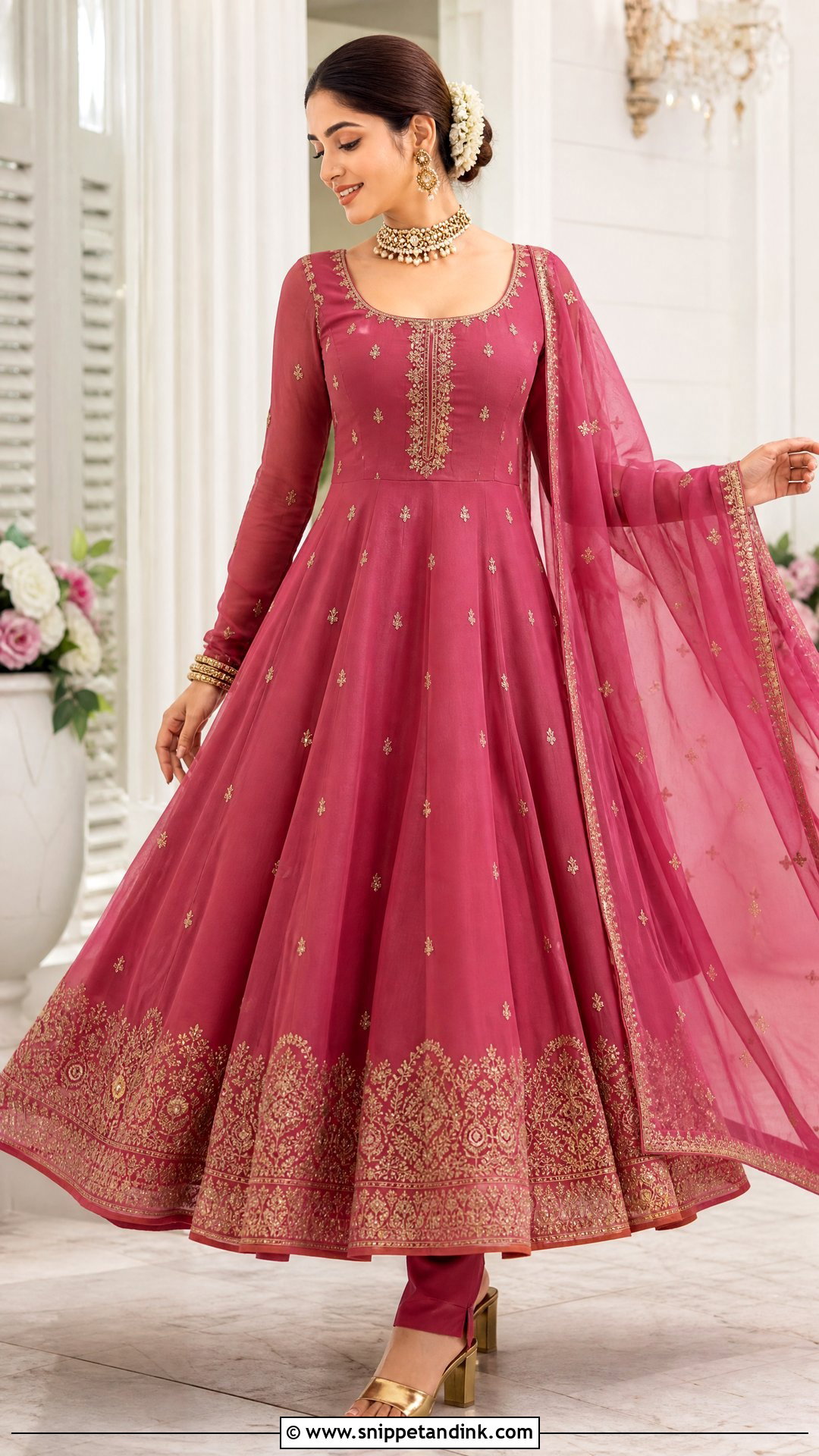
For a bride who wants coverage and movement, an Anarkali suit is a strong alternative to a lehenga. A floor-length silhouette in silk, georgette or chanderi with embroidery at the neck and hem, fitted pants, and an organza dupatta with narrow gota. The fitted bodice and flaring kalis give shape without a heavy underskirt. The detail I fuss over is the waist seam: it should sit exactly at your natural waist or the Anarkali loses its line. A fine choker, earrings, bangles and metallic heels finish it, with a low bun or curled ponytail. Deep rose, wine, emerald, ivory or muted gold all suit a bride, and it’s easy to rewear for an engagement, sangeet or civil ceremony.
8. Floral Bridal Lehenga
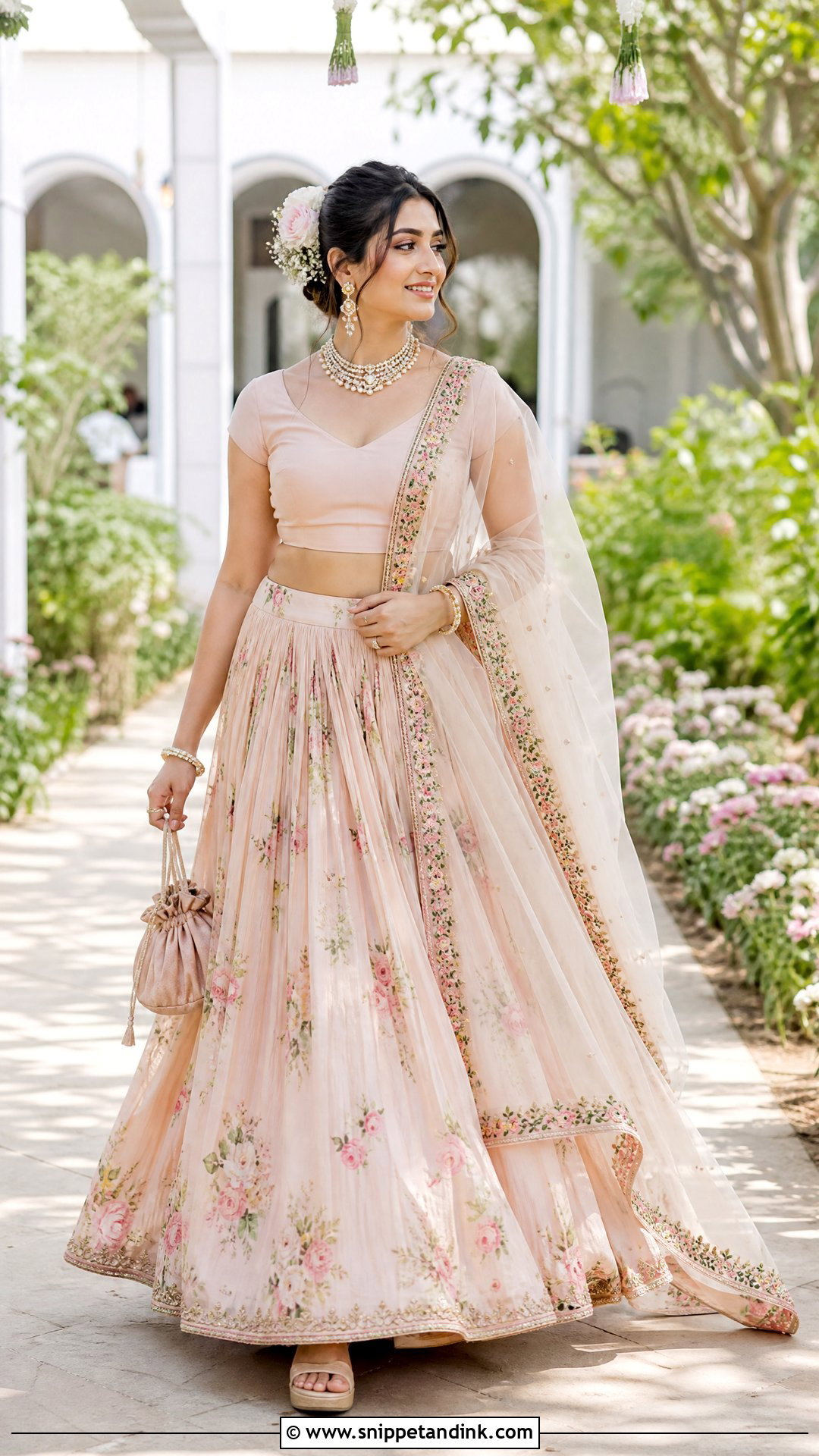
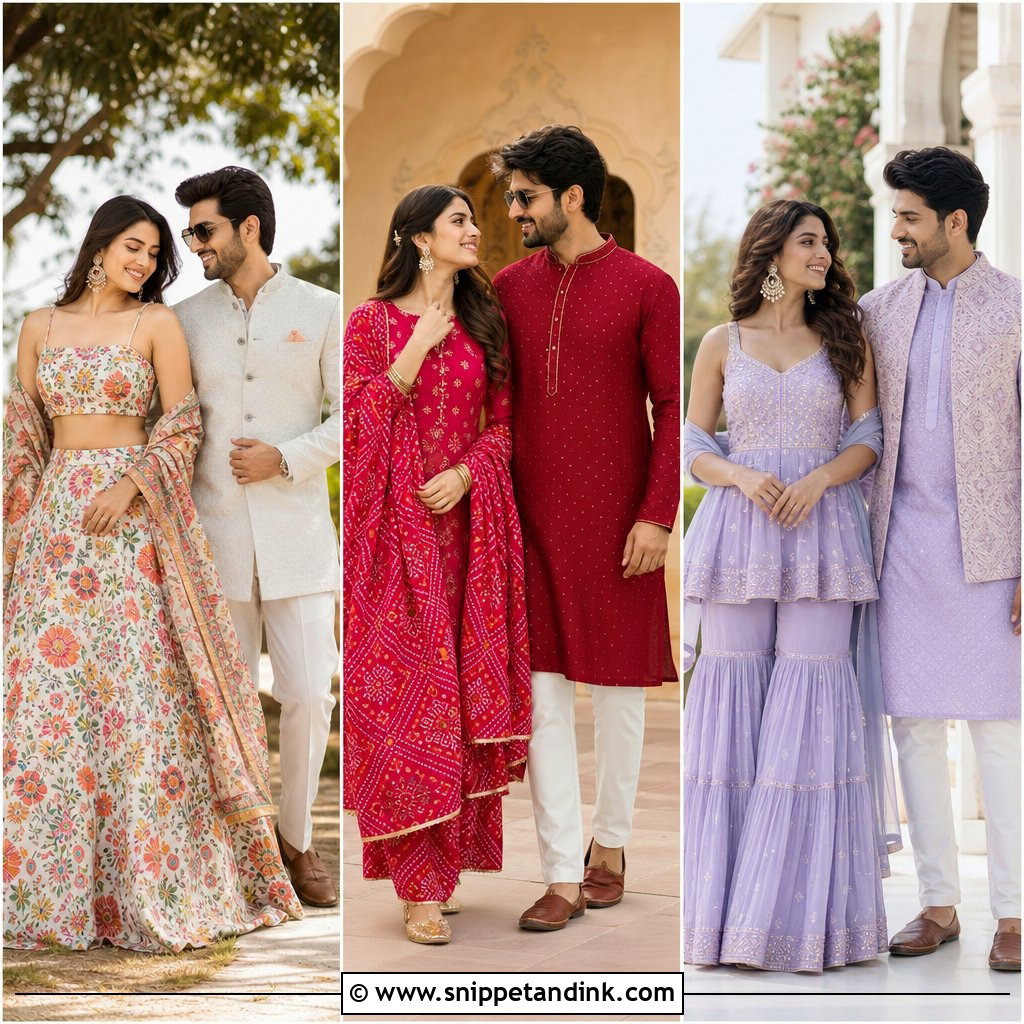
A floral lehenga belongs outdoors in daylight. Start with a pastel skirt in printed or embroidered flowers and pair it with a plain blouse in one of the print’s quieter shades. A sheer dupatta with a slim floral border links the two. Pearl or kundan jewelry, a small potli and neutral wedges complete it; the wedges matter on lawns, where a stiletto sinks. Fresh flowers in a loose bun echo the print. I keep jewelry modest against large prints, because two strong focal points cancel each other out. Blush, powder blue, peach and pale lavender all work. It suits an engagement, mehndi or relaxed destination wedding.
9. Kanjeevaram Silk Bridal Saree
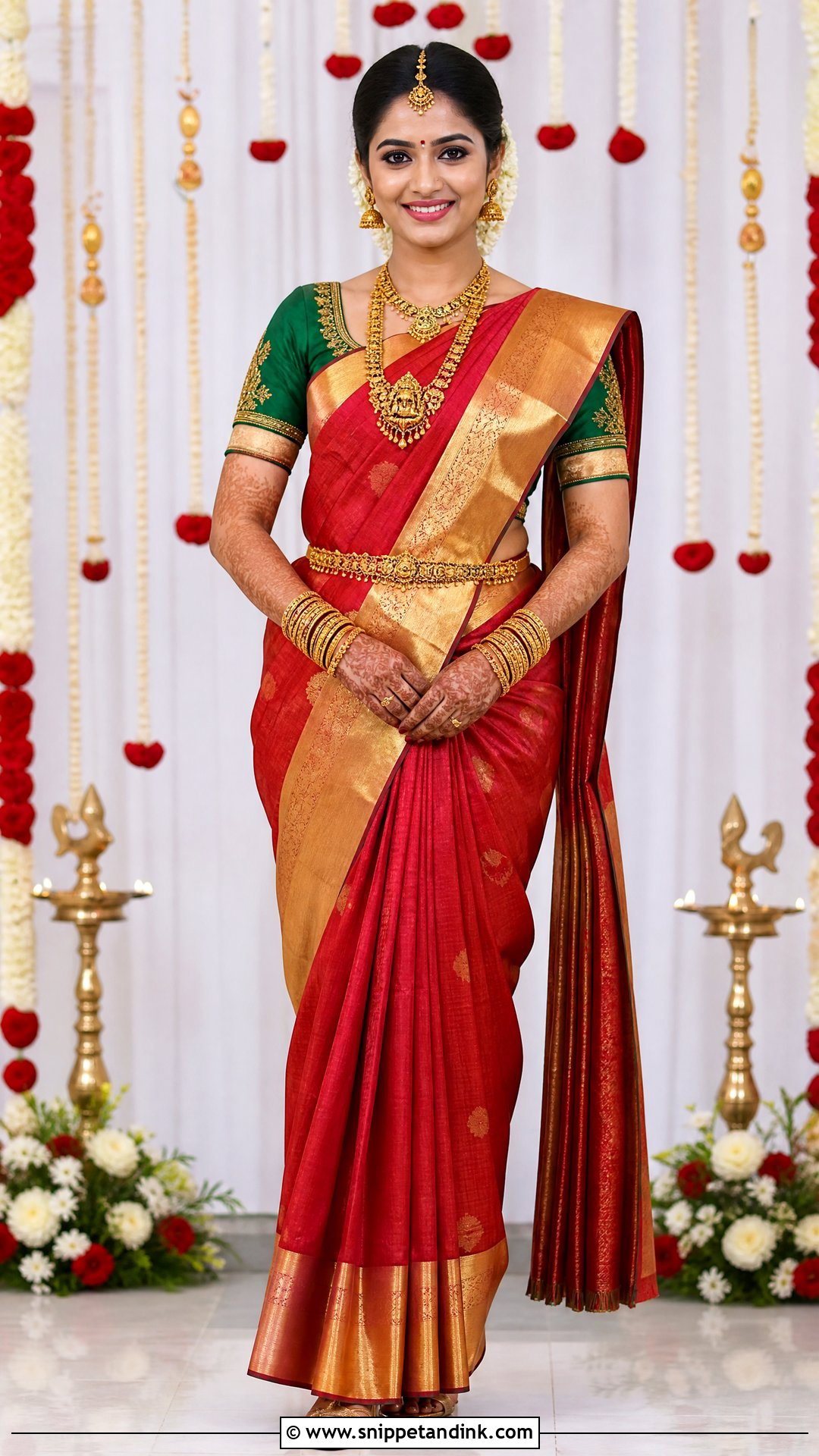
A Kanjeevaram silk saree brings colour, weight and centuries of weaving tradition to a bridal look. Look for a strong contrast border: red with gold, green with magenta, mustard with maroon. Kanjeevaram is heavy and fairly stiff, so the pleats hold crisply but the pallu pulls at the shoulder; I pin it at the blouse seam with two pins rather than one. Pair it with a fitted blouse, elbow sleeves and a modest back. Temple jewelry, gold jhumkas, bangles and an odiyanam waist belt complete it, with a jasmine-wrapped centre-parted bun and low sandals. Makeup can stay balanced: defined eyes, warm blush and a classic red lip.
10. Simple Bridal Gharara Set
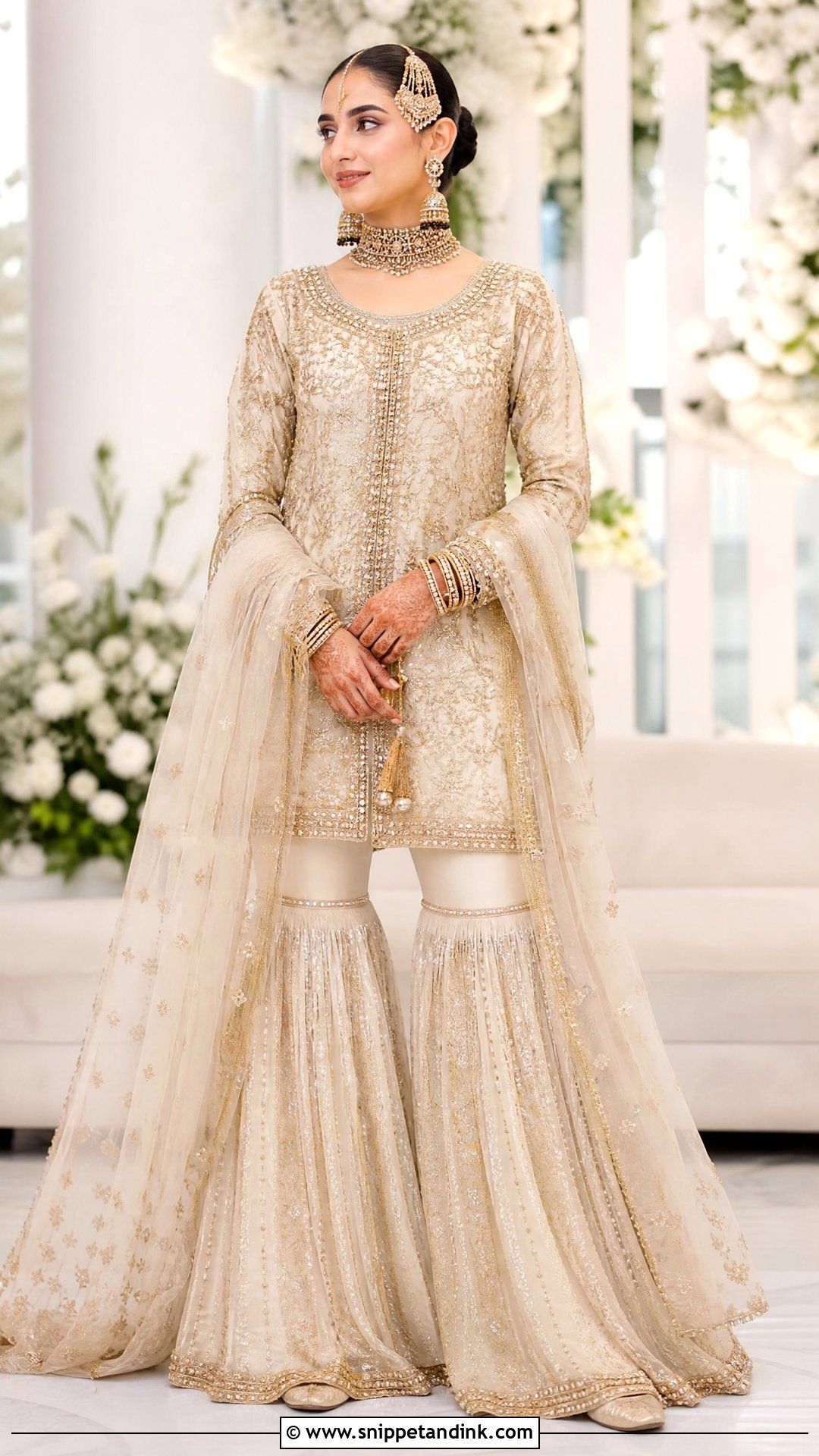
Gharara pants are joined at the knee and flare from there, which gives traditional volume without the weight of a full lehenga. Choose a short embroidered kurti with zari, gota or fine threadwork rather than dense crystals. Drape a chiffon or organza dupatta across the front and pin it at both shoulders. A small choker, jhumkas, a passa, stacked bangles and pointed juttis complete it, with a smooth low bun or side-parted waves. Ivory and gold feels refined; rose, sage or deep red feels livelier. Have the hem finished just clear of your juttis, because a gharara that’s too long trips you on stairs. It suits a nikah, engagement, mehndi or small wedding.
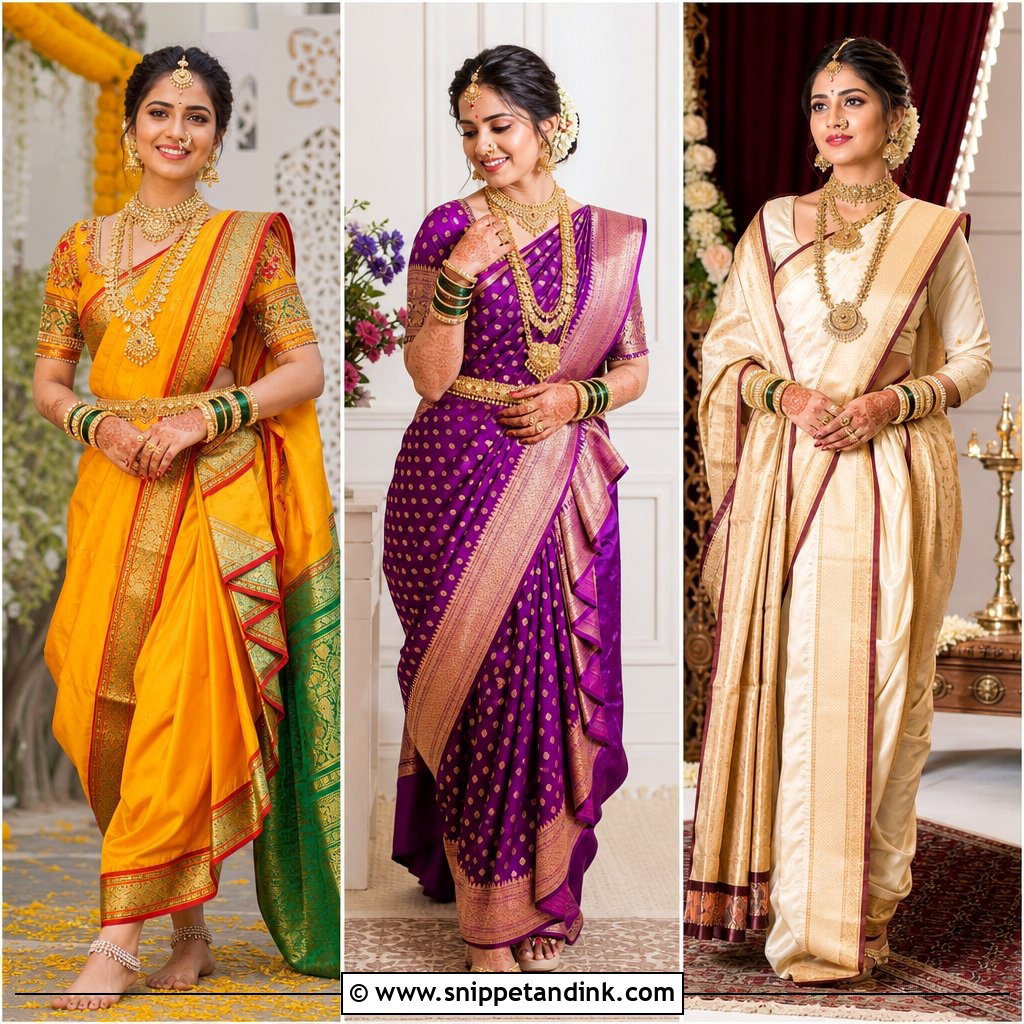
11. Bandhani Bridal Saree
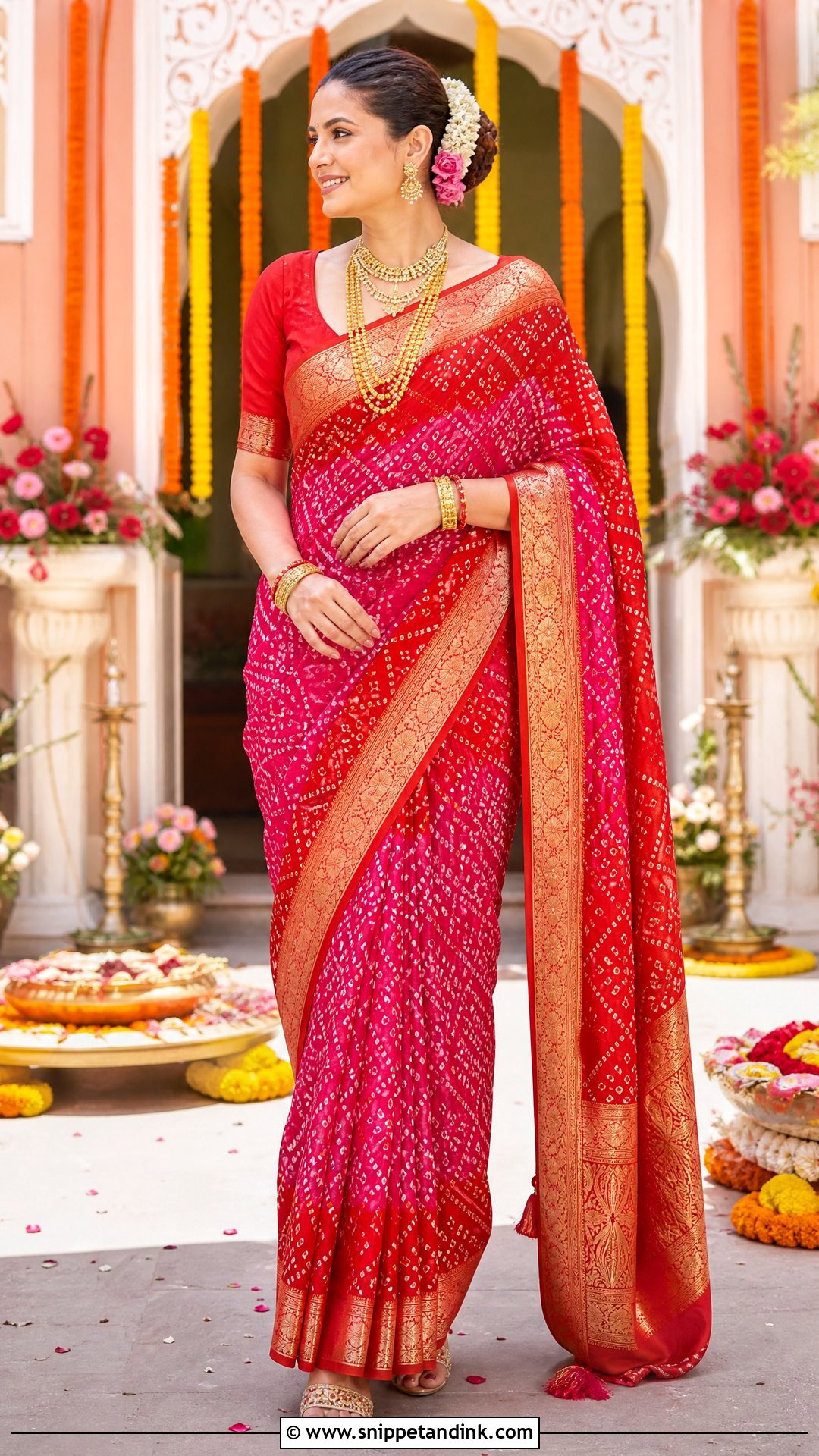
Bandhani is tie-dyed by hand, dot by dot, and a bridal piece in red, pink, orange or green with a gold zari border carries plenty of pattern on its own. Pair it with a plain silk blouse in one of the saree’s colours, and pin the pallu so the dots stay visible. Gold earrings, a layered necklace, bangles, a small bindi and embroidered juttis or block heels complete it, with a braided bun and flowers. Add a simple waist belt for definition if you like. Real bandhani is often lightweight silk or georgette, which makes it one of the most comfortable bridal sarees for a hot day. It suits the main ceremony, a pre-wedding puja or a regional celebration, and you can wear it again easily.
12. Bridal Lehenga With Long Jacket
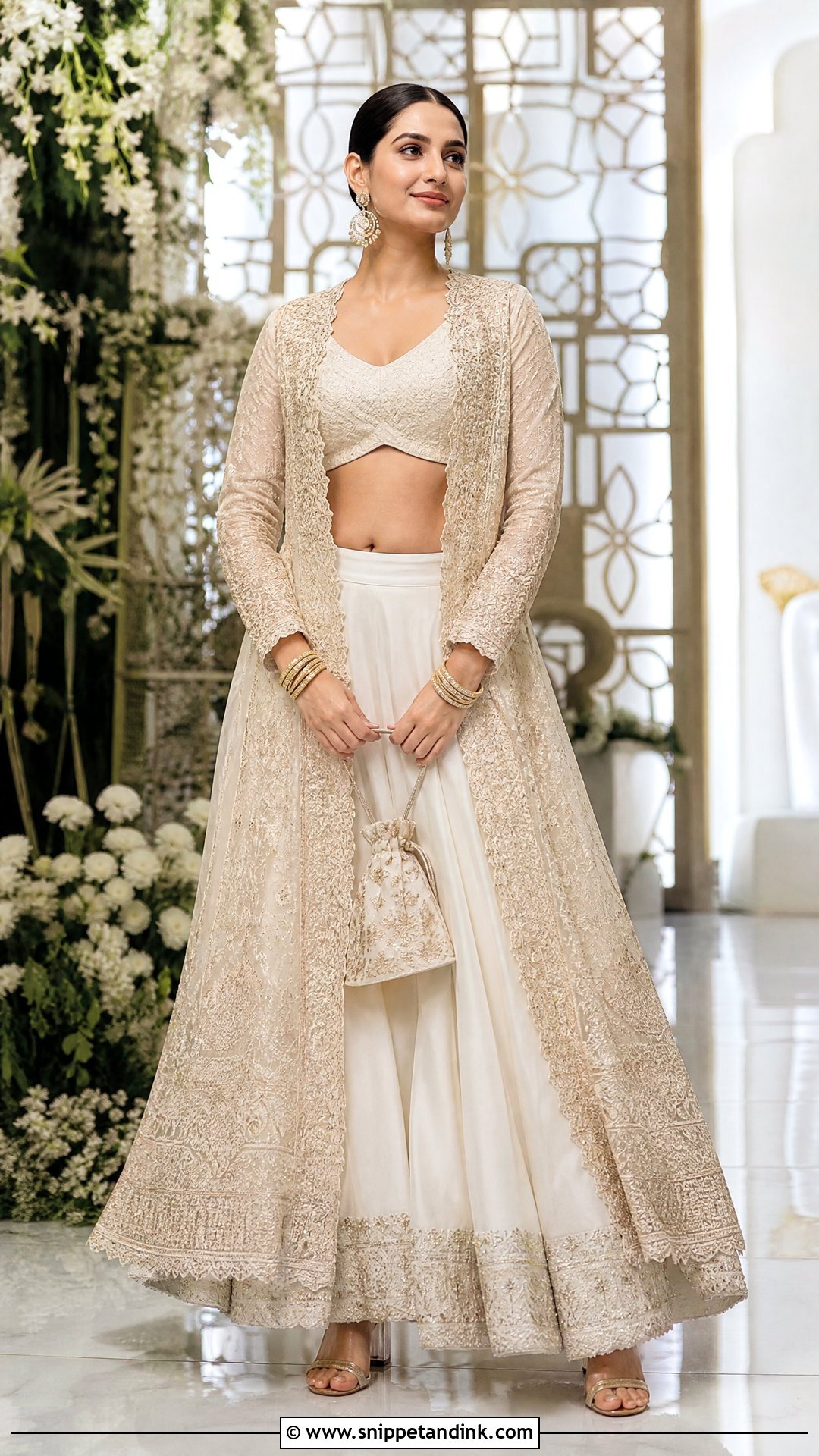
A long jacket over simple separates gives coverage and drama in one piece. Start with a plain silk or georgette skirt and a comfortable fitted blouse, then layer an open-front embroidered jacket that ends near the skirt hem. It replaces the double-dupatta look entirely. Statement earrings, a slim bangle stack, a small bag and block heels complete it, with a sleek ponytail or centre-parted bun. Keep the front open to move and to show the layers underneath. Ivory and gold reads modern; maroon, navy or emerald gives deeper bridal colour. I’d avoid a heavy jacket at a summer day wedding, where it gets hot within the hour.
13. Organza Bridal Saree
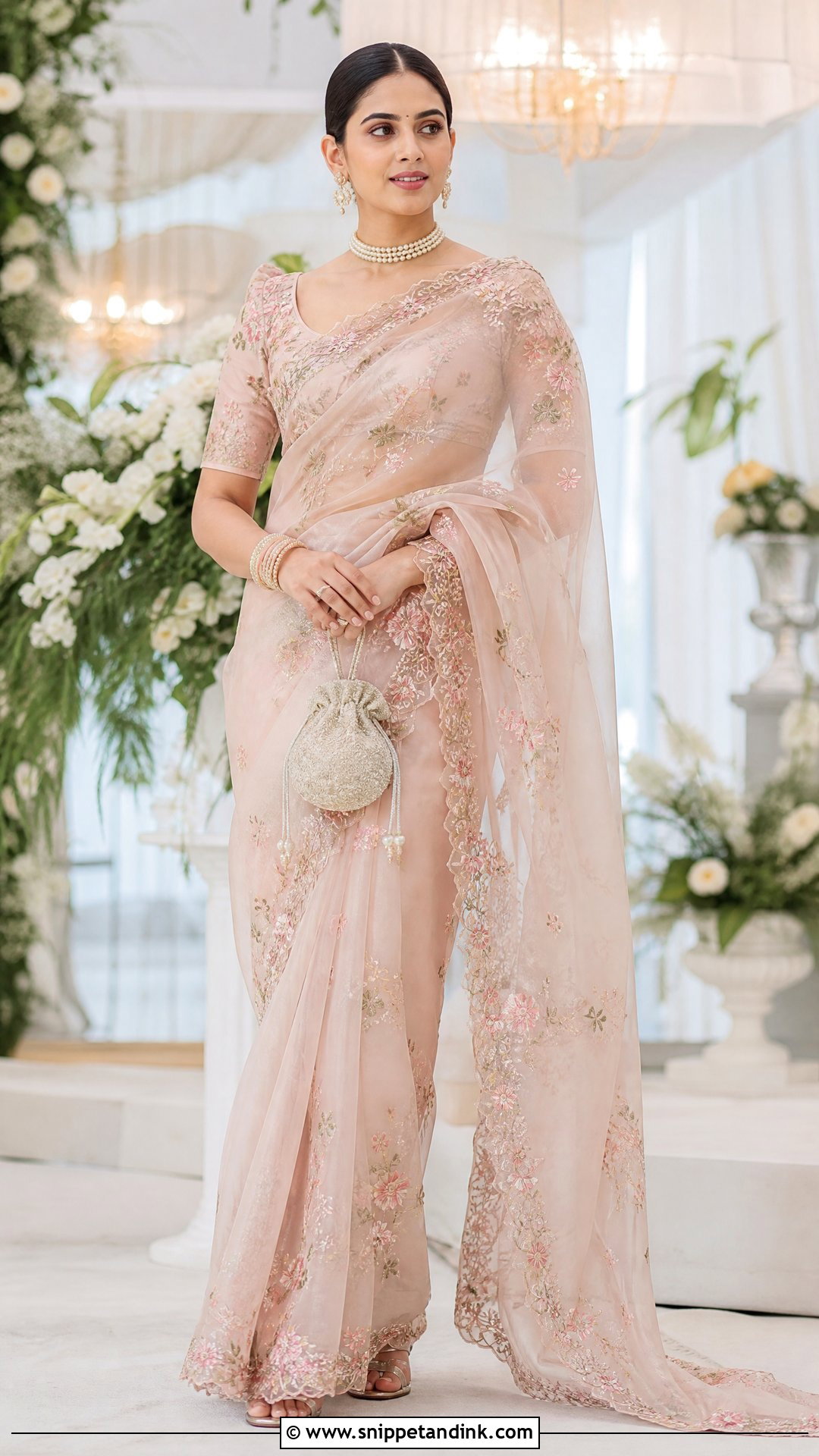
Organza catches light and feels airy, but it’s sheer and slightly crisp, which means the drape stands away from the body rather than clinging. Choose a saree with fine floral embroidery, small zari motifs or a scalloped border, and a structured silk blouse in the same colour family so the transparency looks intentional. Pin the pleats carefully; slippery organza pleats come loose if pinned only once. Let the pallu fall freely from one shoulder. A pearl choker, drop earrings, slim bangles and metallic heels keep it light, with a potli for essentials and soft curls or a neat low bun. Ivory, blush, mint, powder blue and peach suit an engagement, reception or contemporary daytime wedding.
14. Bridal Kurta And Palazzo Set
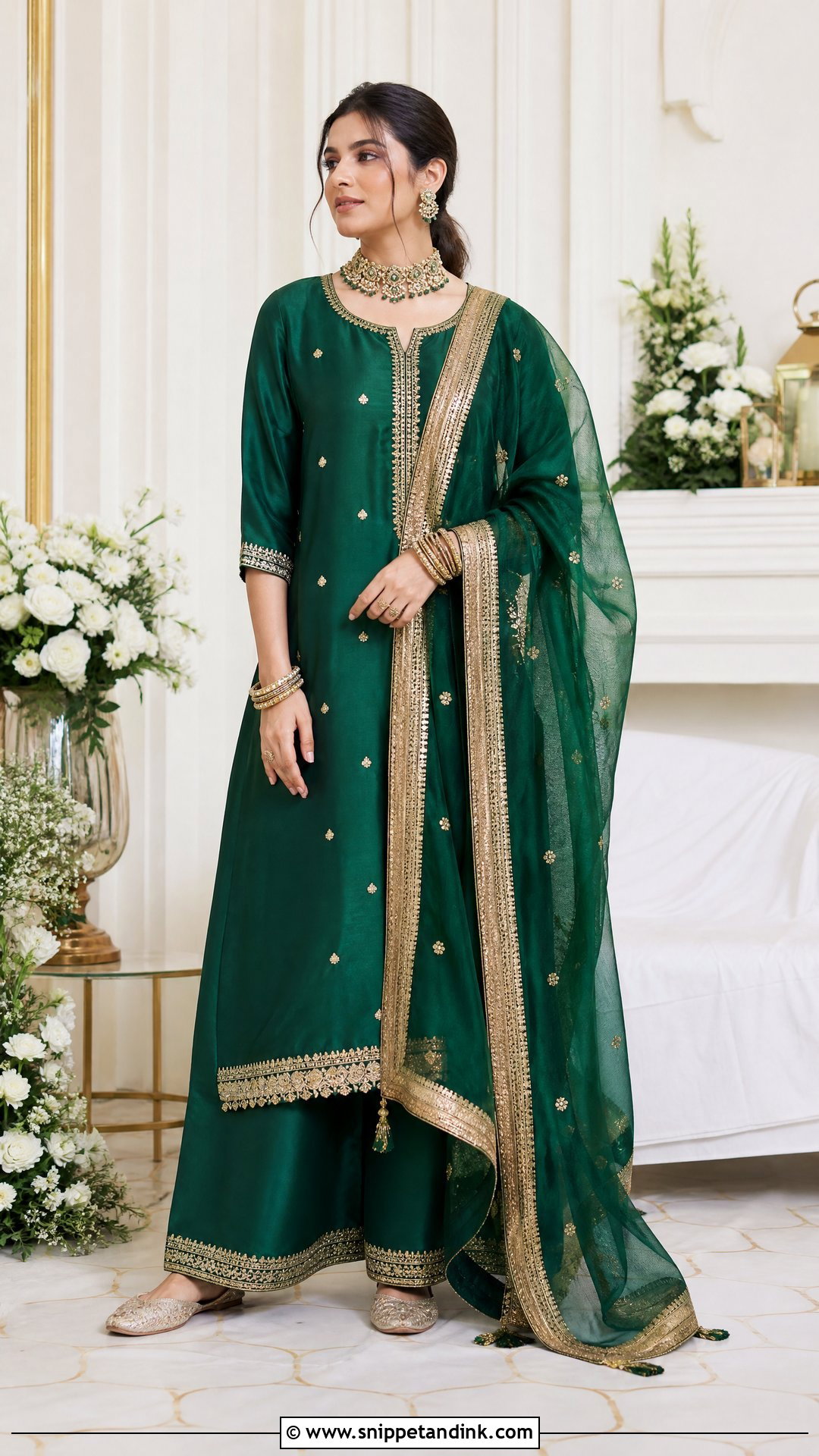
Can a kurta set feel bridal? Yes, if the fabric, fit and jewelry carry it. Choose a straight or slightly flared silk kurta with embroidery at the neck, cuffs and side panels, wide palazzos, and a sheer dupatta with a decorative border. The fit at the shoulder is everything here; a kurta that slips back makes the whole look casual. A statement necklace, matching earrings, a few bangles and embroidered mules complete it, with a low ponytail or bun. Ruby, royal blue, bottle green and antique gold look rich without heavy work. It suits smaller ceremonies and comfort-first brides, and every piece rewears separately afterwards.
15. Paithani Silk Bridal Saree
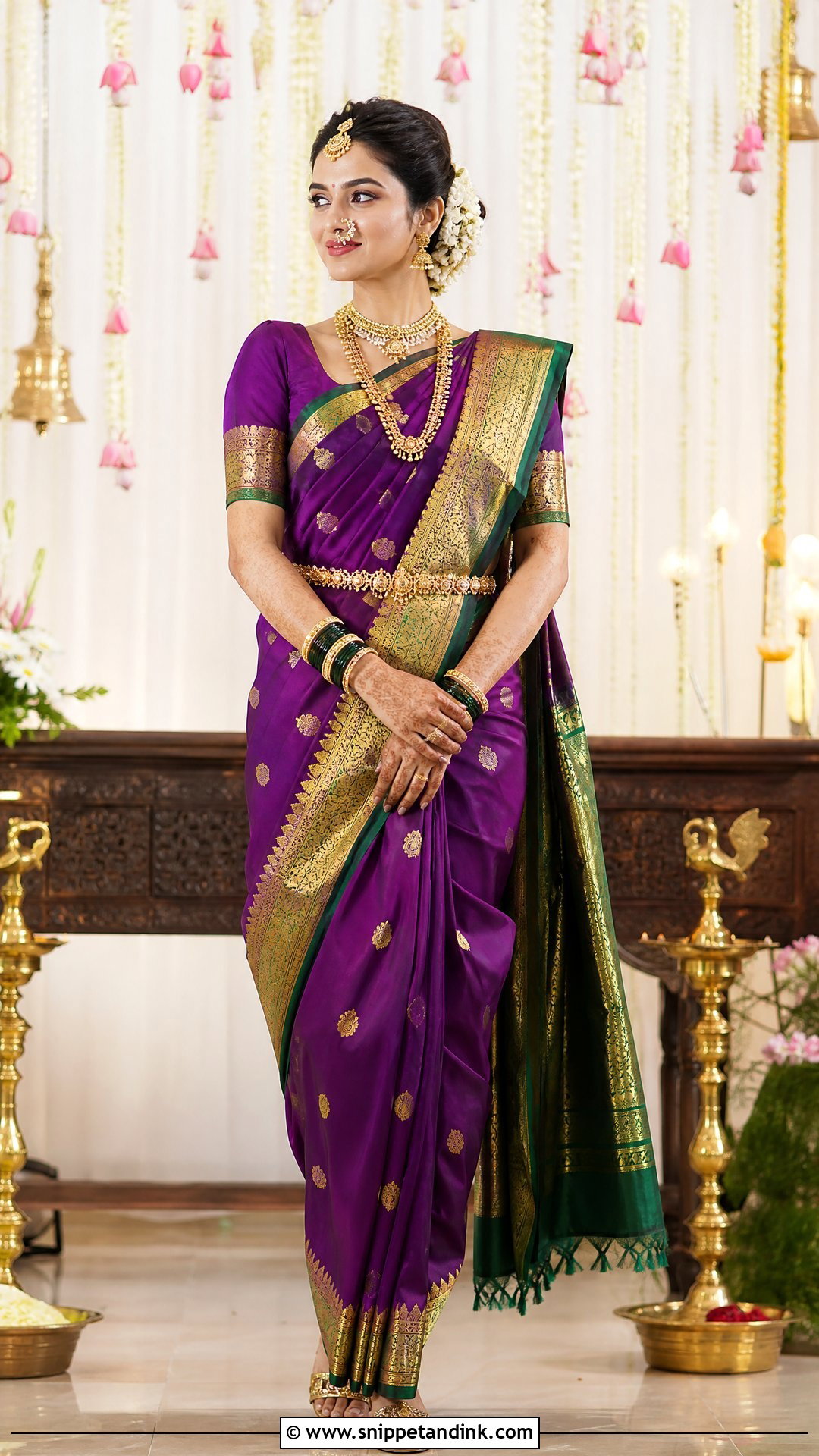
A Paithani silk saree is known for its vivid body, contrast border and peacock or lotus motifs on the pallu. Choose purple, green, magenta or red, with a fitted blouse in a complementary colour. Many Maharashtrian brides wear it in the nauvari nine-yard drape, which is tucked between the legs and moves easily, so ask your draper which style the ceremony calls for. Traditional gold jewelry suits it; a necklace, earrings, bangles and a nath can be enough. A gold waist belt adds definition. Finish with a flower-wrapped bun and comfortable block heels. It’s a textile to preserve and pass down.
16. Pre-Draped Bridal Saree
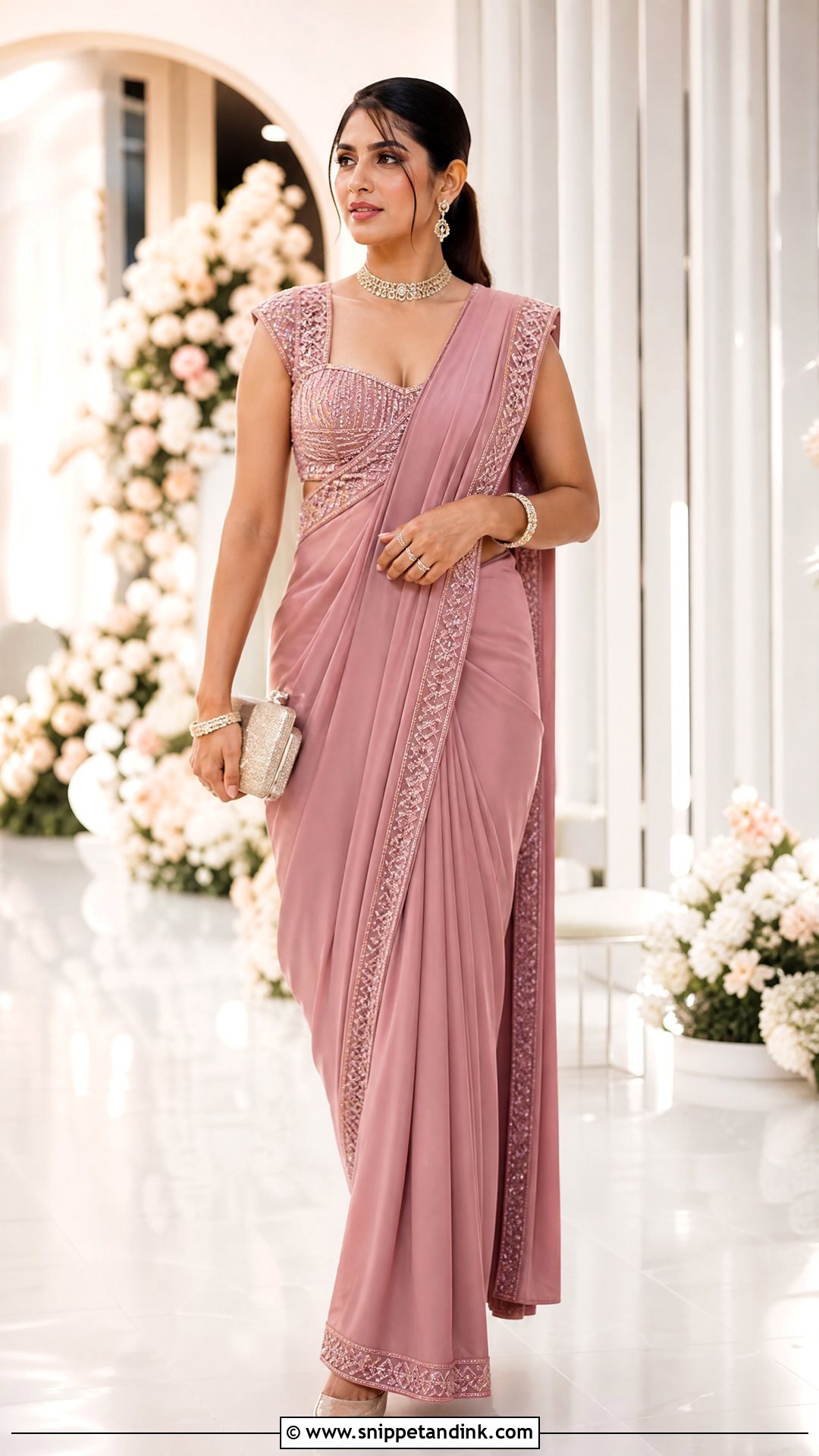
Pre-draped sarees have the pleats and pallu stitched in place, so you step into them like a skirt. That’s a relief for a bride who will be standing, sitting and dancing all night. Choose satin, georgette or crepe with light border embroidery and a structured blouse that lets you lift your arms. Satin shows creases, so I’d pick georgette or crepe for a long event. A sleek choker, drop earrings, a few bracelets and pointed heels finish it, with a smooth low bun or ponytail. Deep red, plum, champagne and dusty rose all suit a bride. It’s the easiest saree on this list for a reception or sangeet.
17. Simple Bridal Cape Lehenga
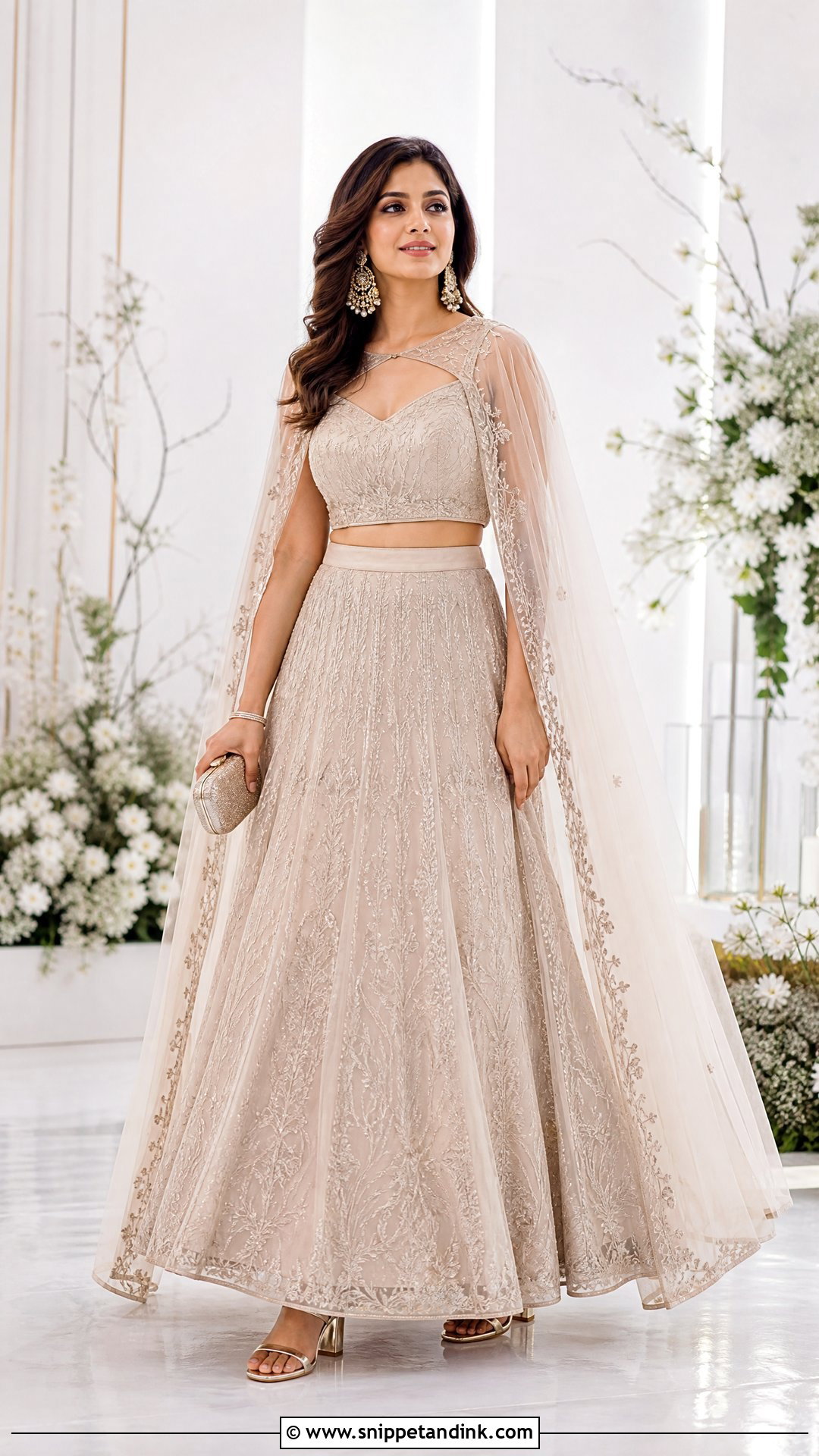
A cape attached at the shoulders replaces the dupatta and never slips. Pair a lightly embroidered A-line skirt with a fitted blouse and a sheer cape, waist-length for a modern line or near the hem for drama. Keep the embroidery tonal so the three layers look like one outfit. Statement earrings, a slim bracelet stack, a small clutch and metallic block heels complete it. Skip the necklace if the cape’s neckline is decorated. Soft waves or a sleek ponytail keep the shoulders clear. Floor-length capes are heavier than they look on a hanger, so try the full set on before ordering the long version.
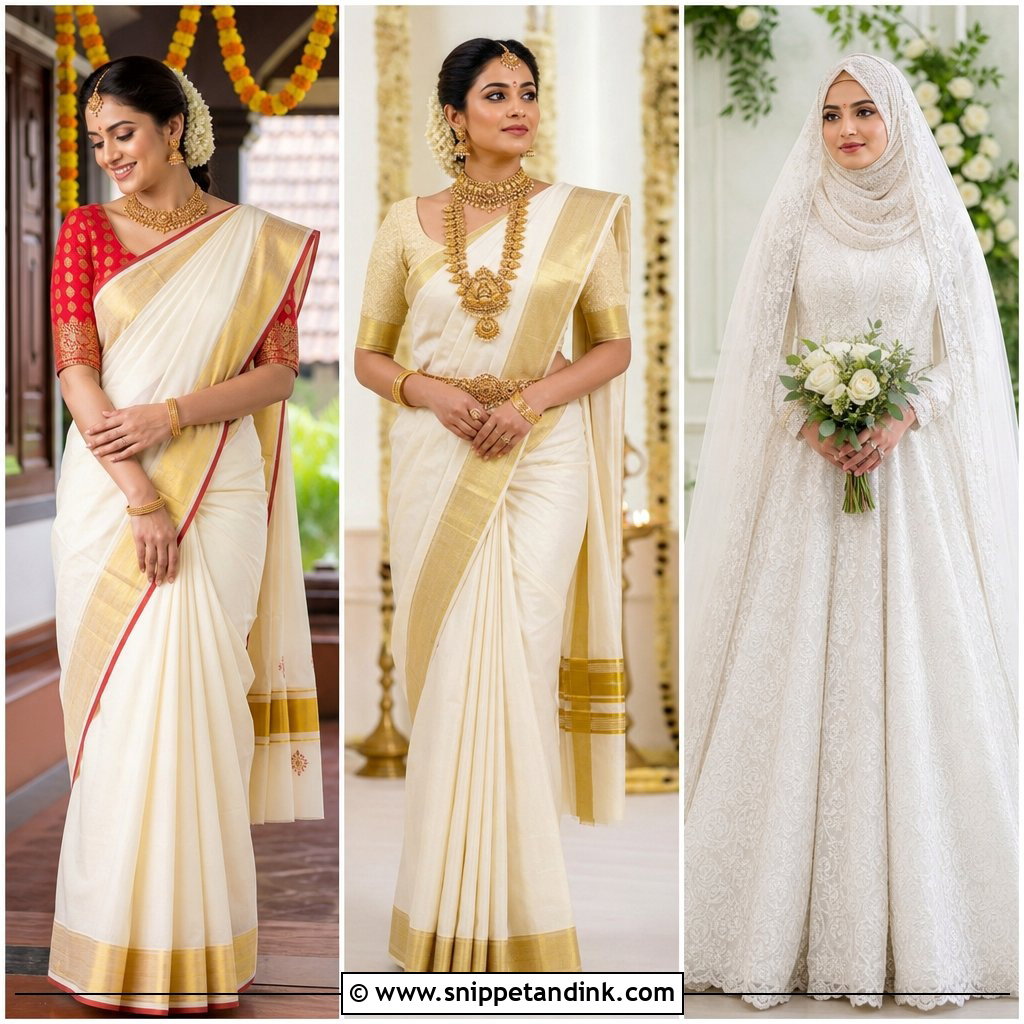
18. White And Gold Temple Bridal Saree
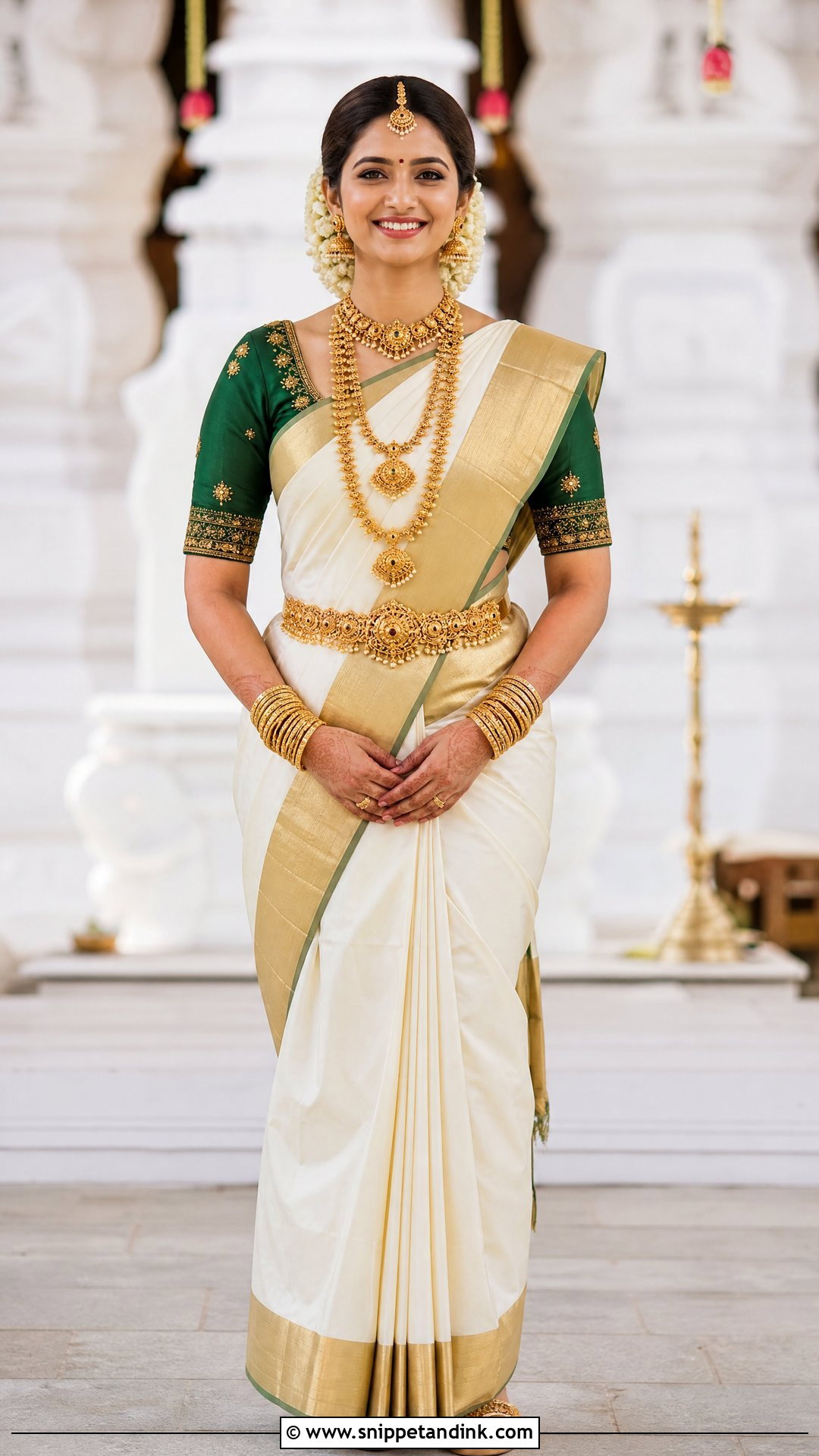
White and gold reads calm and traditional at a temple wedding or morning ceremony. Choose an ivory kasavu-inspired saree or soft silk with a clean metallic border, and a gold, green or deep red blouse for contrast. Pin the drape discreetly so it stays put through the rituals. Temple jewelry, jhumkas, gold bangles and a simple waist belt complete it, with jasmine around a centre-parted bun, a small red bindi and comfortable gold sandals. Kasavu cotton is light and cool but creases quickly, so starch and press it the day before. The palette is restrained, yet silk, flowers and gold together make it unmistakably bridal.
19. Lightweight Sangeet Bridal Lehenga
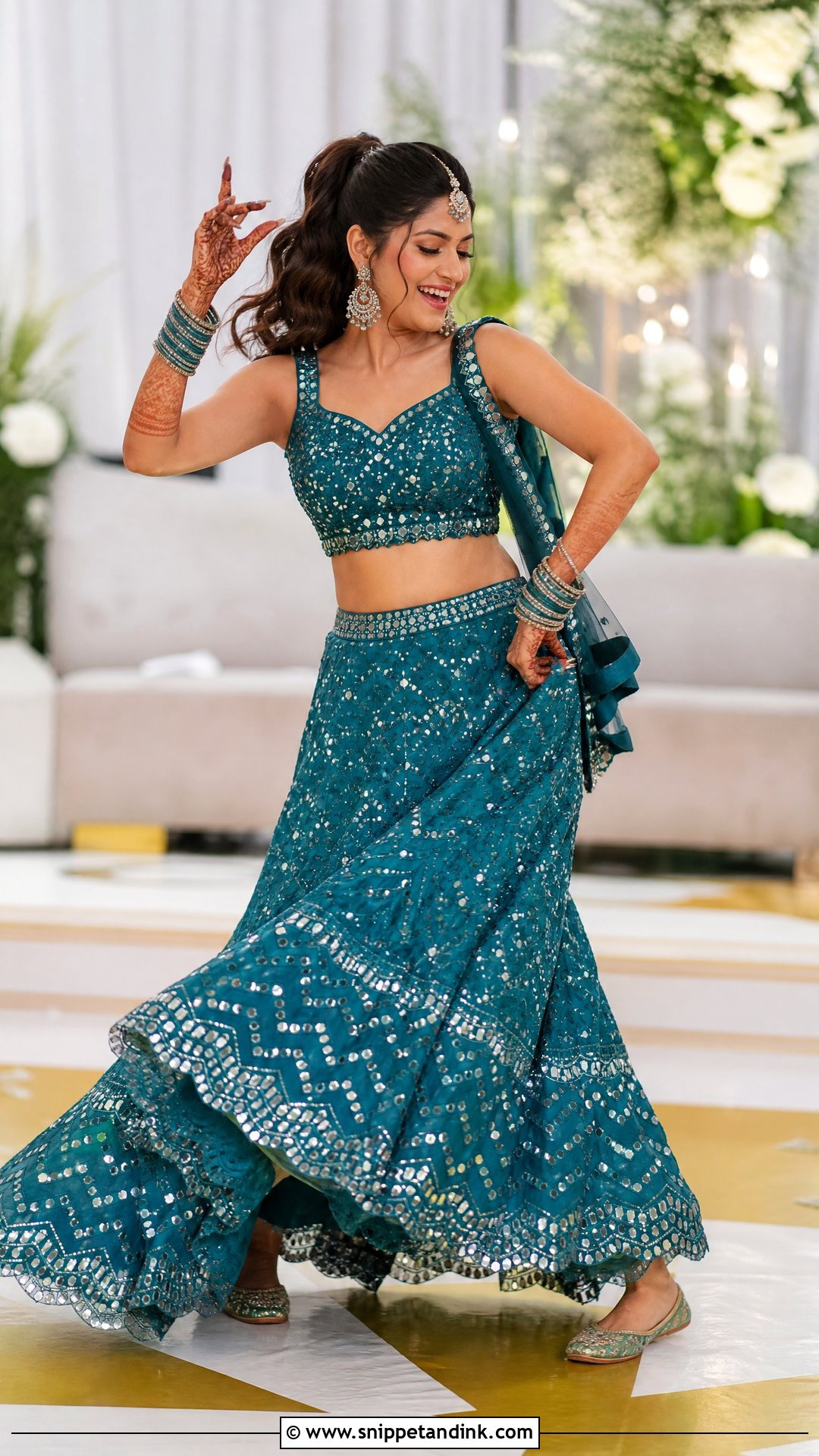
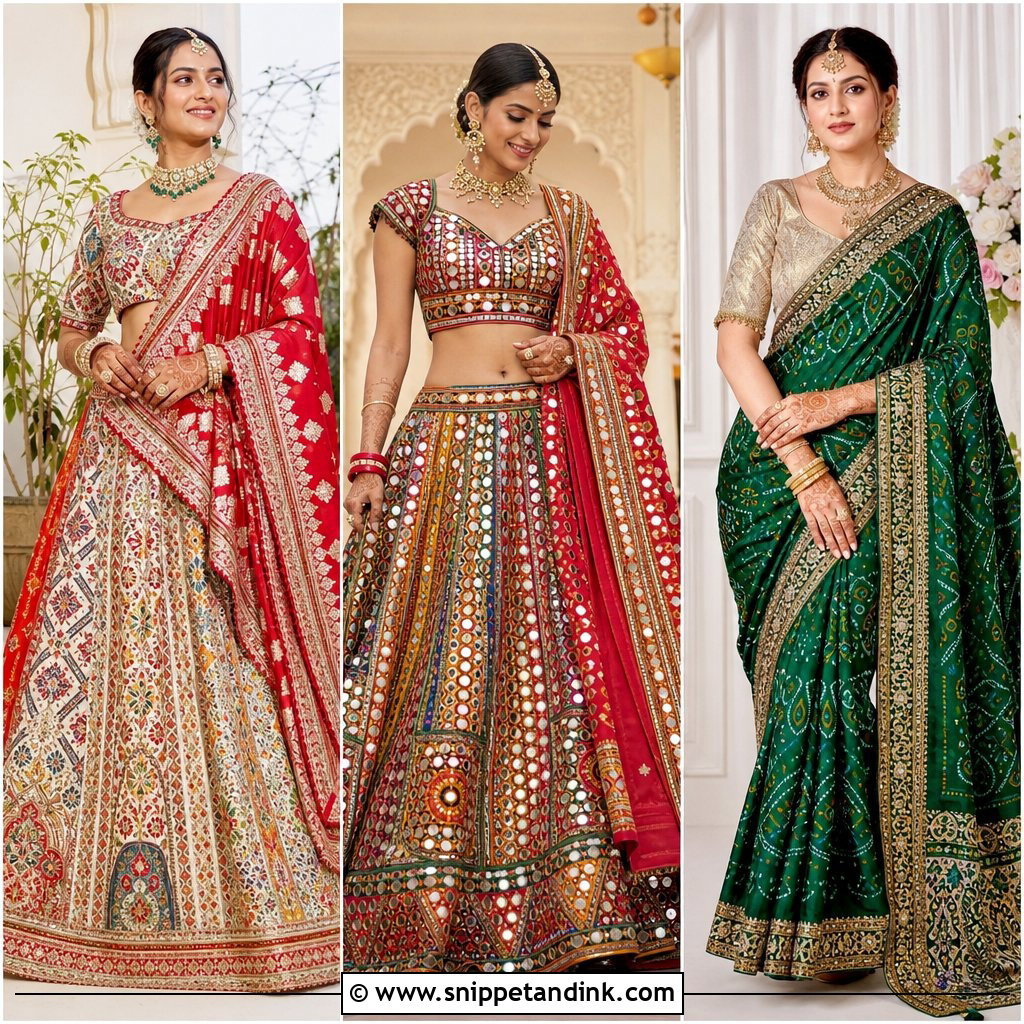
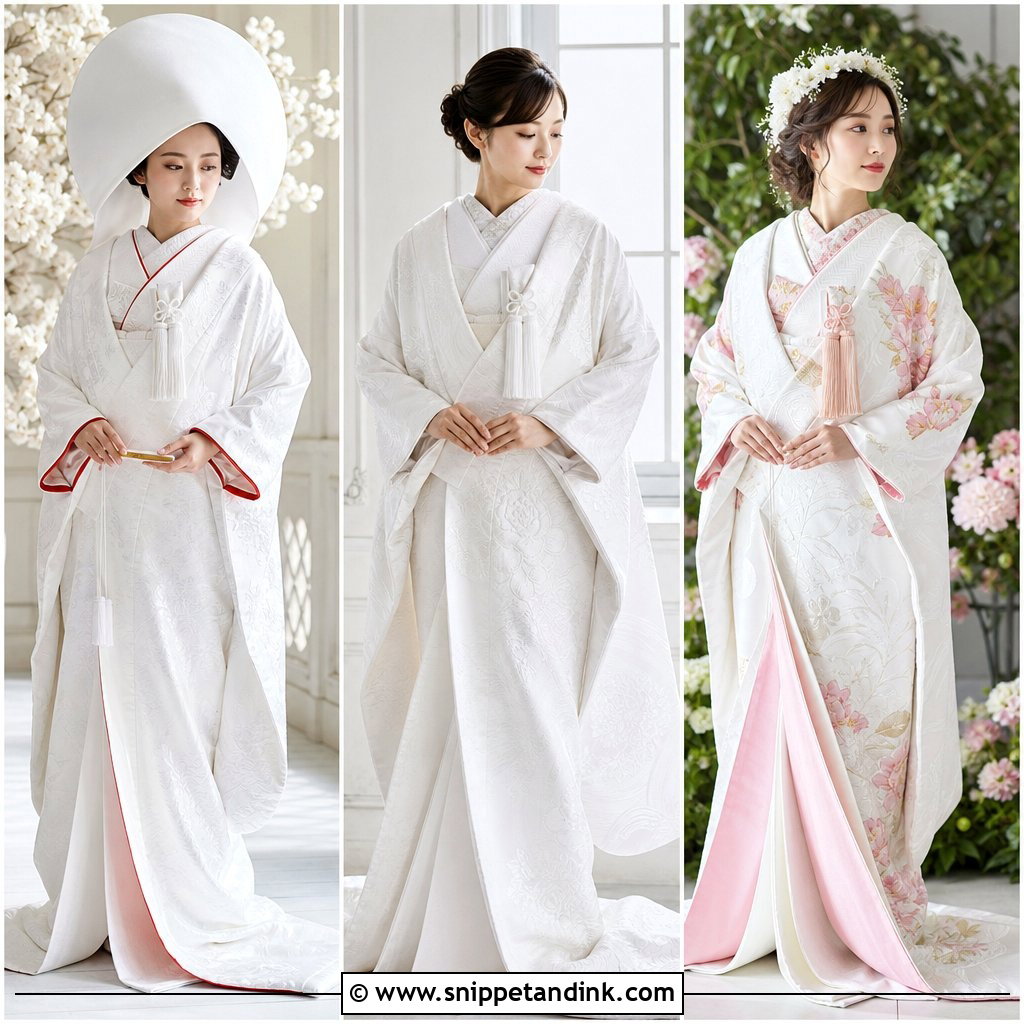
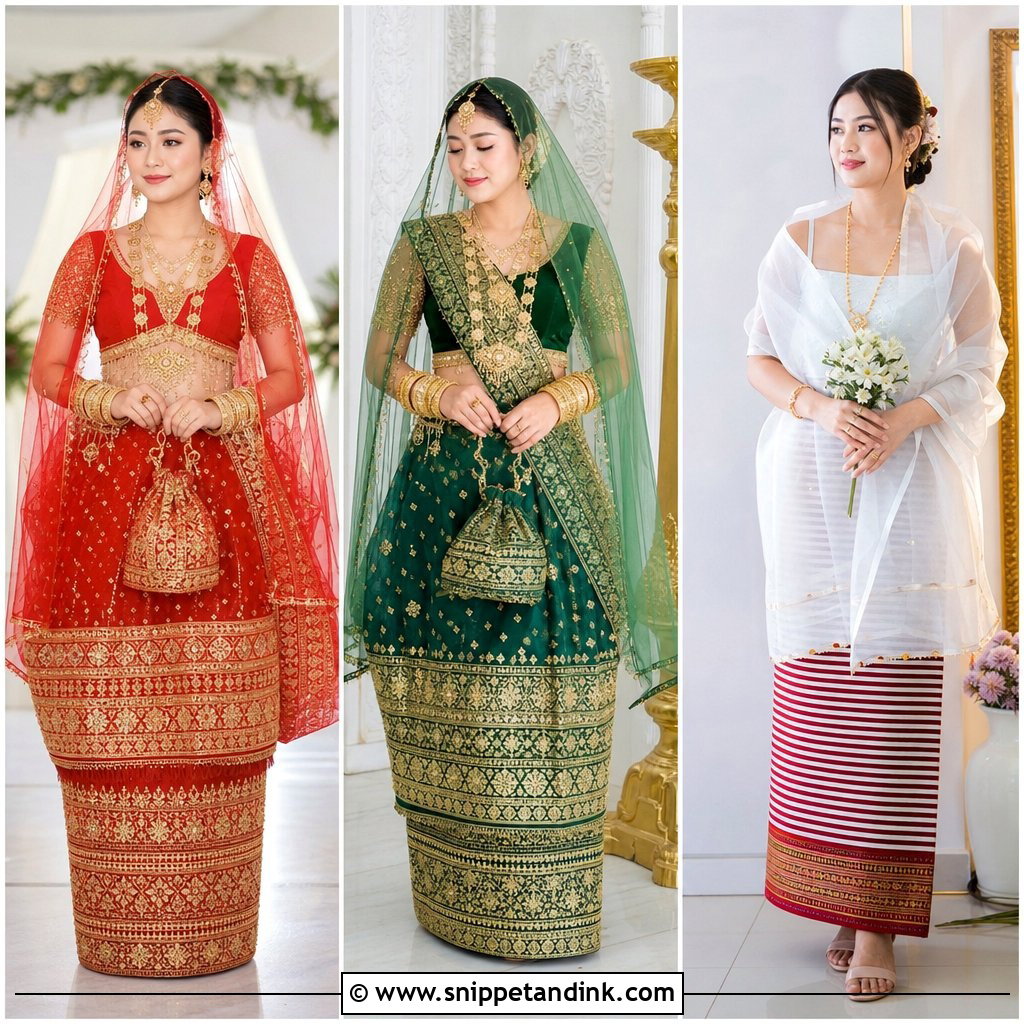
You should be able to dance at your own sangeet. A lightweight georgette lehenga with sequins, mirrors or scattered metallic work does that, paired with a supportive blouse and a short, pinned dupatta. Leave out trains, sharp embellishment and heavy can-can. Bold earrings, stacked bangles, a small maang tikka and cushioned block heels or flats finish it, with a high ponytail or braid. Sequins reflect stage lights, so teal, berry, midnight, lilac and fuchsia all glow in the evening. The thing I check is the blouse: it needs real support and secure hooks, because a twirl puts the most strain there.
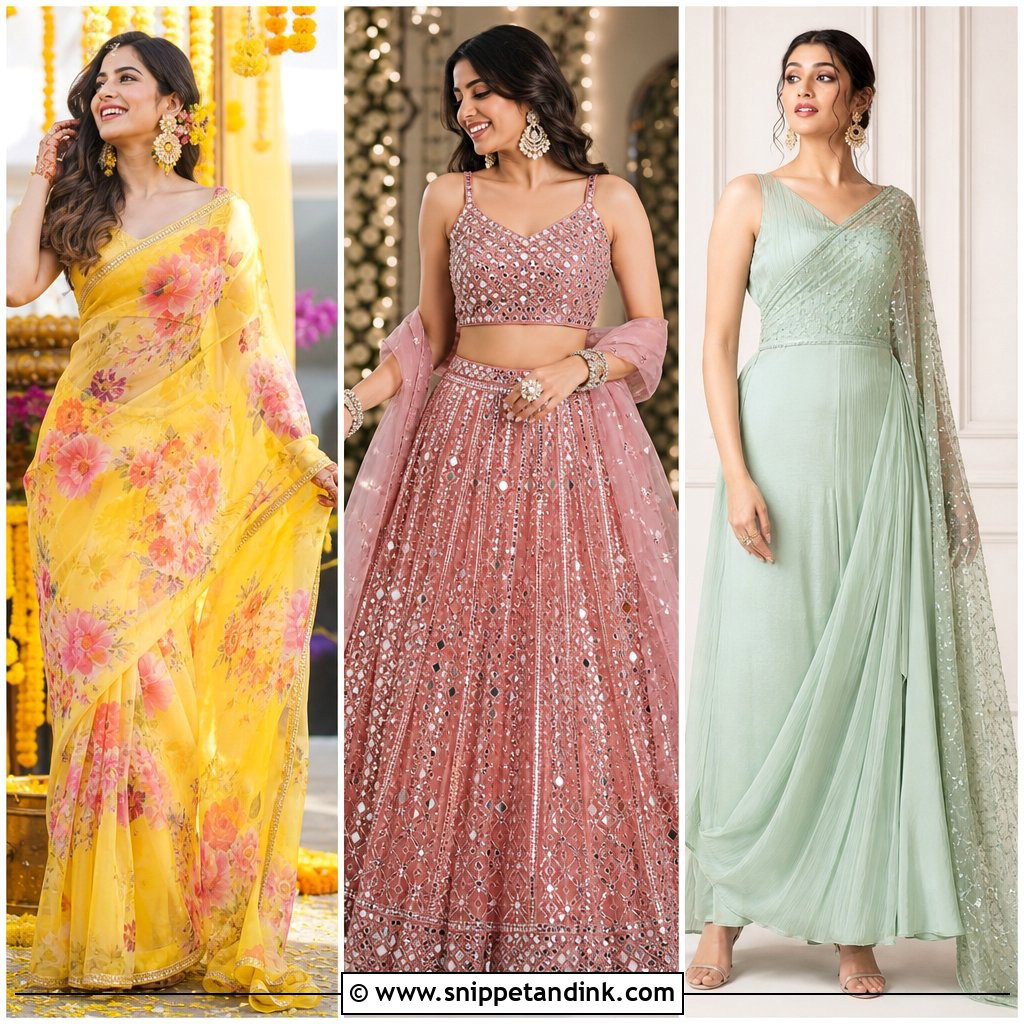
20. Simple Bridal Reception Gown
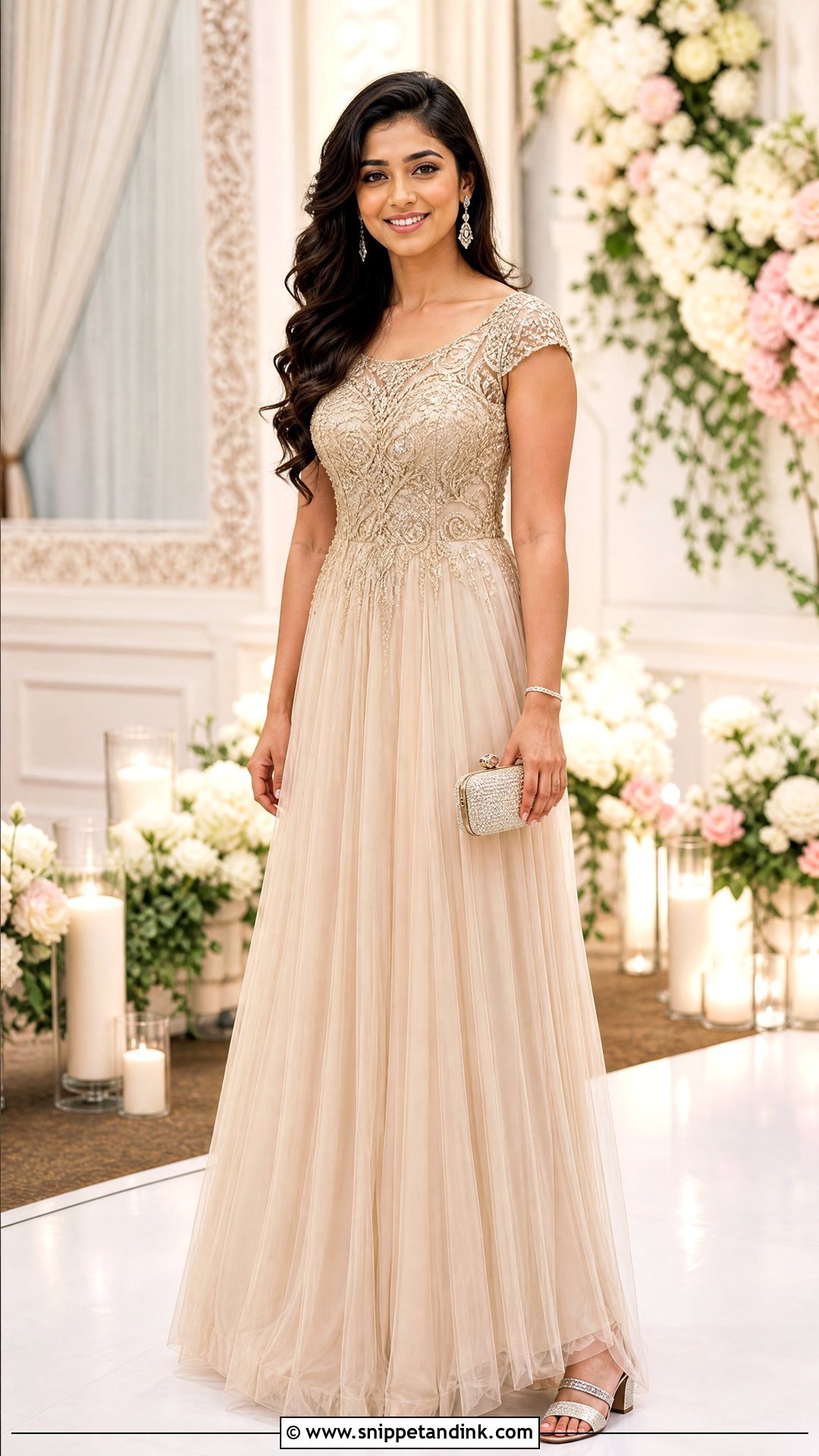
For a streamlined reception, an Indian-inspired floor-length gown is the easiest bridal piece to wear. Choose a fitted bodice and a softly flowing skirt, with embroidery at the neck, waist or sleeves rather than all over. Champagne, dusty rose, emerald, navy and silver-grey are sophisticated alternatives to red. Drop earrings, a fine bracelet, a small clutch and comfortable heels complete it; add a short necklace only if the neckline is plain. A smooth bun, side-swept waves or a polished ponytail suit it. You’ll be standing for hours to greet guests, so I’d have the hem set with your reception shoes and add a bustle loop if there’s any train.
Storing Silk and Zari So the Saree Outlasts the Wedding
Many of the sarees above are pieces you’ll keep for decades or hand to a daughter. How you put them away in the first week decides whether that happens.
The first few days
Air the outfit on a wide hanger for a day so sweat and perfume evaporate. Spot-check for makeup at the neckline and turmeric or henna at the hems, and take silk to a specialist dry cleaner quickly; old stains set and are much harder to lift later. Never spray perfume directly on silk or zari, as the alcohol can mark the fabric and tarnish the metal thread.
Long-term storage
- Wrap each saree or lehenga separately in soft cotton or muslin, not plastic, which traps moisture.
- Refold silk sarees along new lines every few months. Zari cracks and silk splits along a fold that never moves.
- Store heavy lehengas flat or folded loosely in a box rather than hanging, so the weight doesn’t stretch the waistband.
- Keep naphthalene balls out of direct contact with the fabric; dried neem leaves or cedar in a cloth pouch are gentler.
- Take everything out to air a few times a year, especially after the monsoon.
Start With Fit, Add the Jewelry Last
A memorable bridal outfit isn’t measured by its weight. Fit, fabric, colour and how comfortable you feel decide whether a simple ensemble works. The ideas above cover traditional ceremonies, small weddings, pre-wedding functions and modern receptions. Begin with a silhouette that sits naturally on your body, then build up the jewelry and accessories one piece at a time, stopping when the outfit still breathes. Light fabrics, secure draping, comfortable shoes and balanced embellishment let you move freely through every function. A red lehenga, a regional silk saree, a floral sharara or a cape set can each feel personal once the styling is right.
You'll Like These Ideas:








Leave a Reply