
Dressing the bride’s sister is one of the trickier briefs I get. You’re in nearly every family photo, you’re on your feet from the haldi to the vidaai, and you still have to look like you belong beside the bride without pulling focus from her. Most Indian weddings run across several functions, so I plan a sister’s wardrobe as a sequence: lighter cottons, organza and chanderi for daytime rituals, then silk, velvet and denser embroidery once the lights go down. Below are twenty outfits I’d put on a sister, one function at a time, with the practical details that decide whether each one actually works on the day.

Start With the Bride’s Function Chart, Then Build Yours
Before I put a single outfit on a sister, I ask the bride for a list of every function with the colour and silhouette she plans to wear at each. That one list prevents most of the problems I see later: the sister arriving at the sangeet in the same teal as the bride, or two sisters in near-identical pink lehengas at the ceremony.
- Pick a colour family for each function that sits next to the bride’s, not on top of it. If she’s in red for the pheras, blush, peach or gold all work; another red does not.
- Decide which outfits need tailoring. A custom blouse usually needs a couple of weeks plus at least one trial, and heavy embroidery orders can take far longer, so order those first and buy ready-to-wear for the lighter functions.
- Plan one outfit you can re-wear. A plain silk saree works at the puja with one set of jewellery and at the reception with another.
- Pack each function as a complete set in its own bag: outfit, blouse, petticoat or inner layer, dupatta, jewellery, shoes and safety pins. On a busy wedding morning, you won’t have time to search for the right petticoat.
Sisters often get pulled into helping the bride dress, so I also suggest choosing an outfit for the main ceremony that you can get into in under fifteen minutes. A pre-stitched dupatta or a pre-pleated saree can save that time.
1. Yellow Sharara Set for Haldi
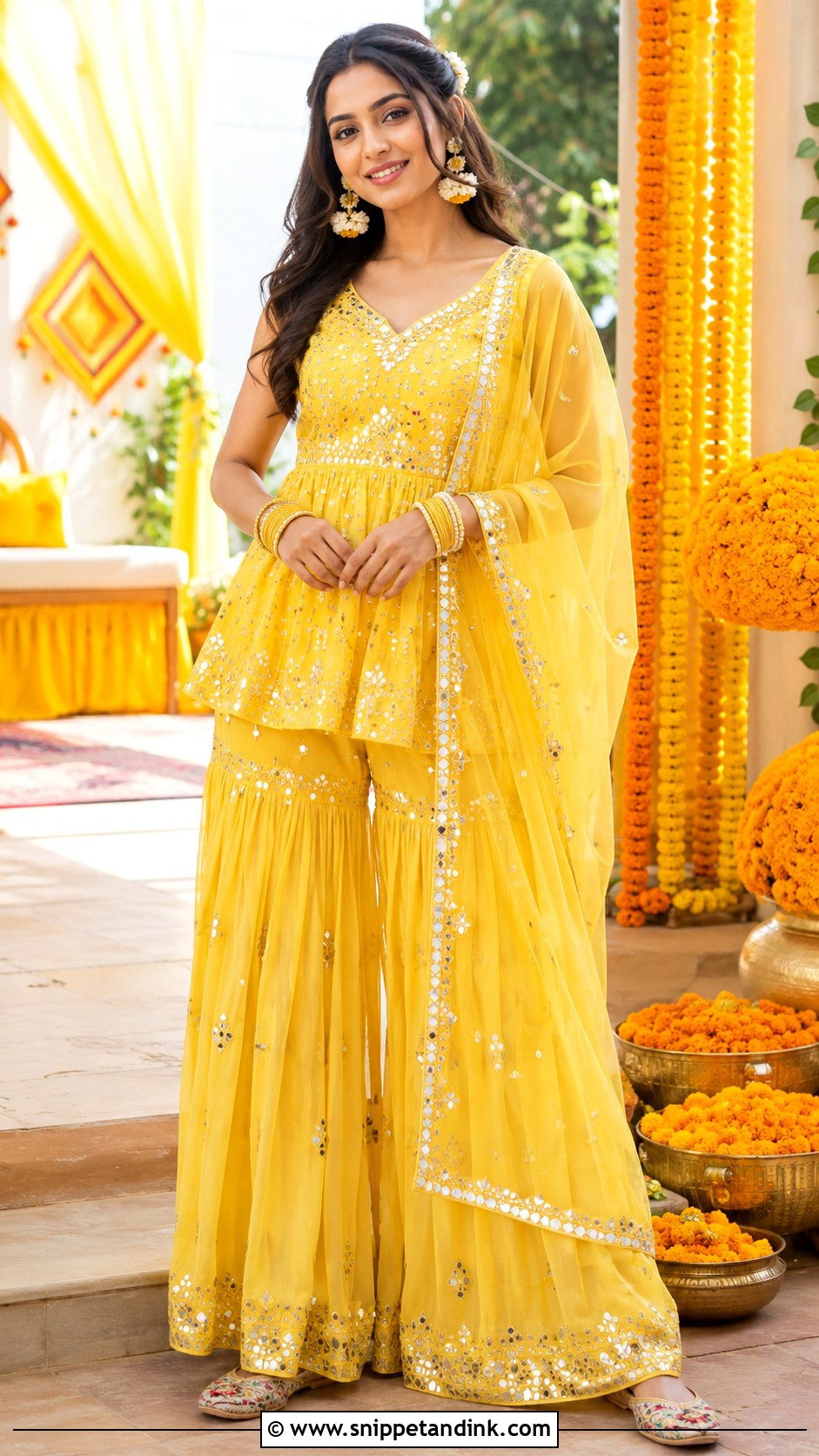
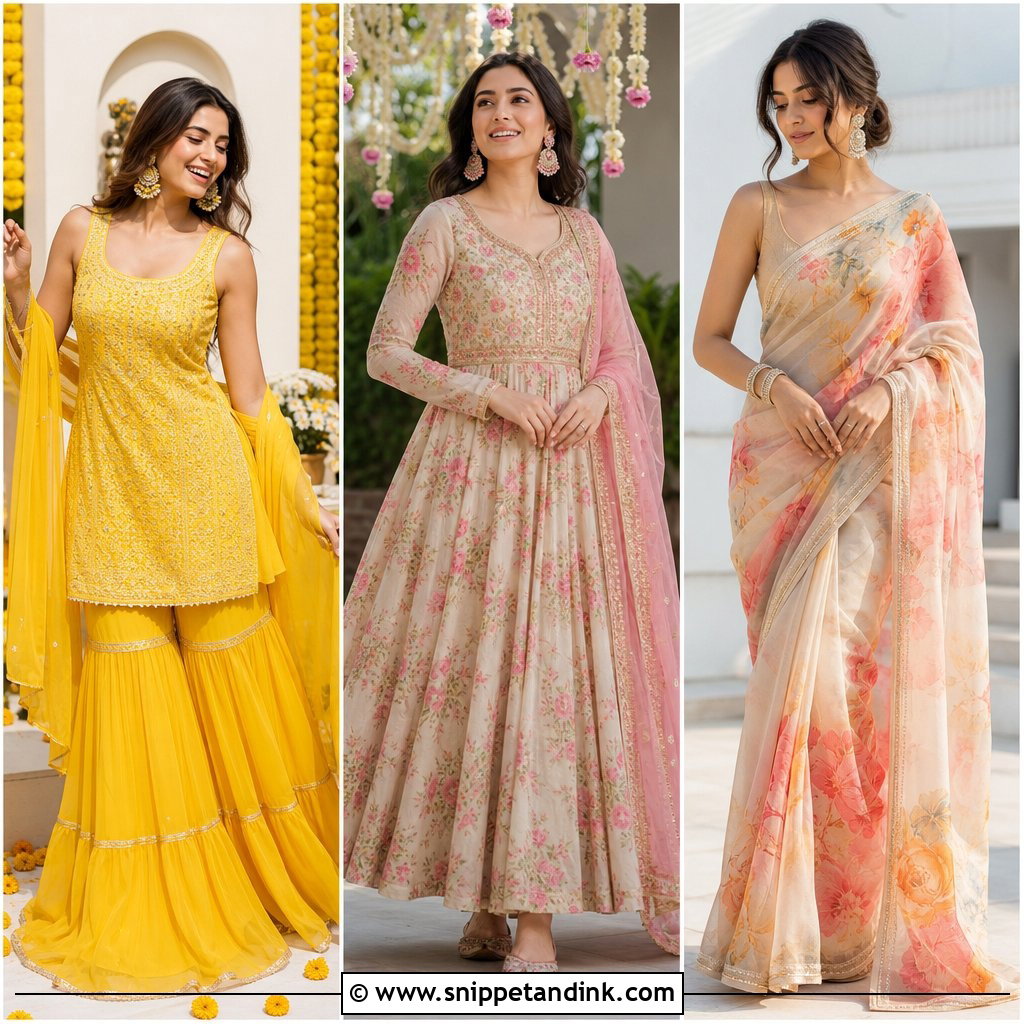
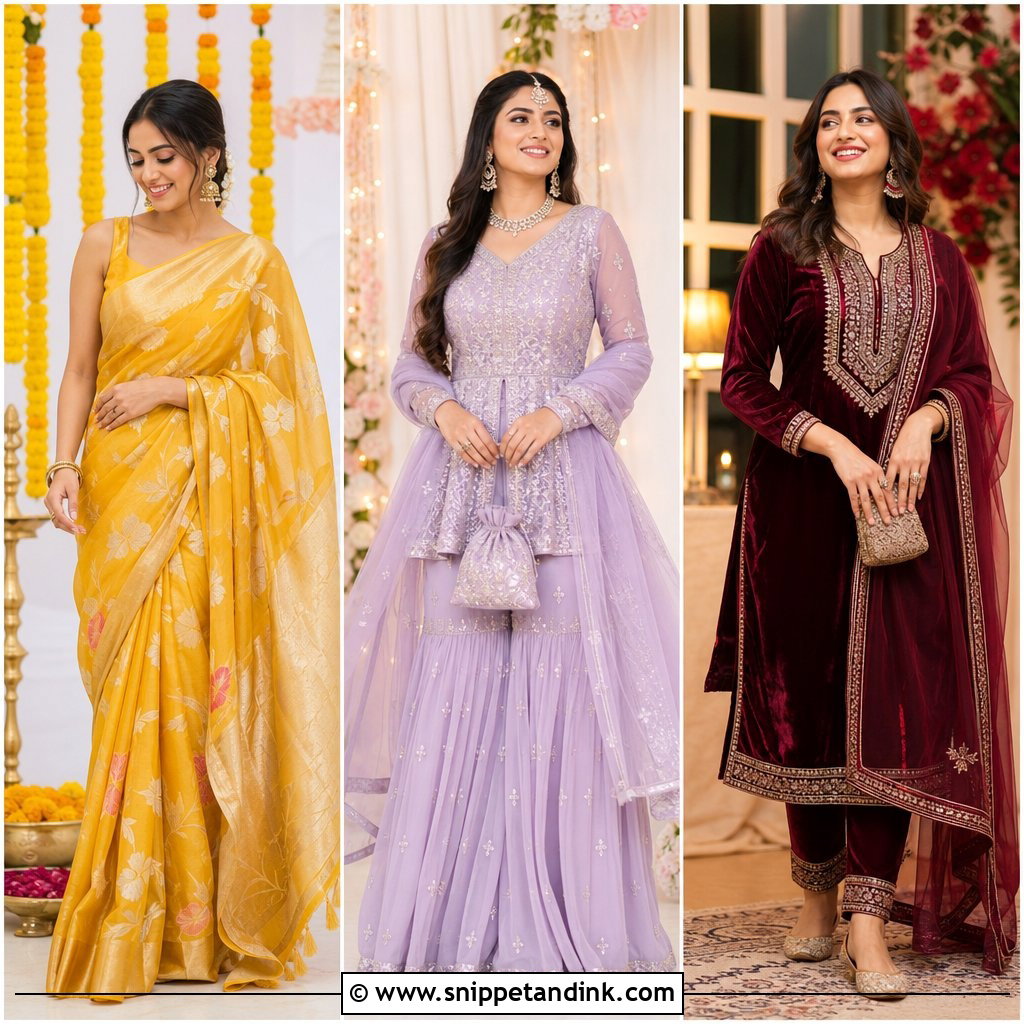
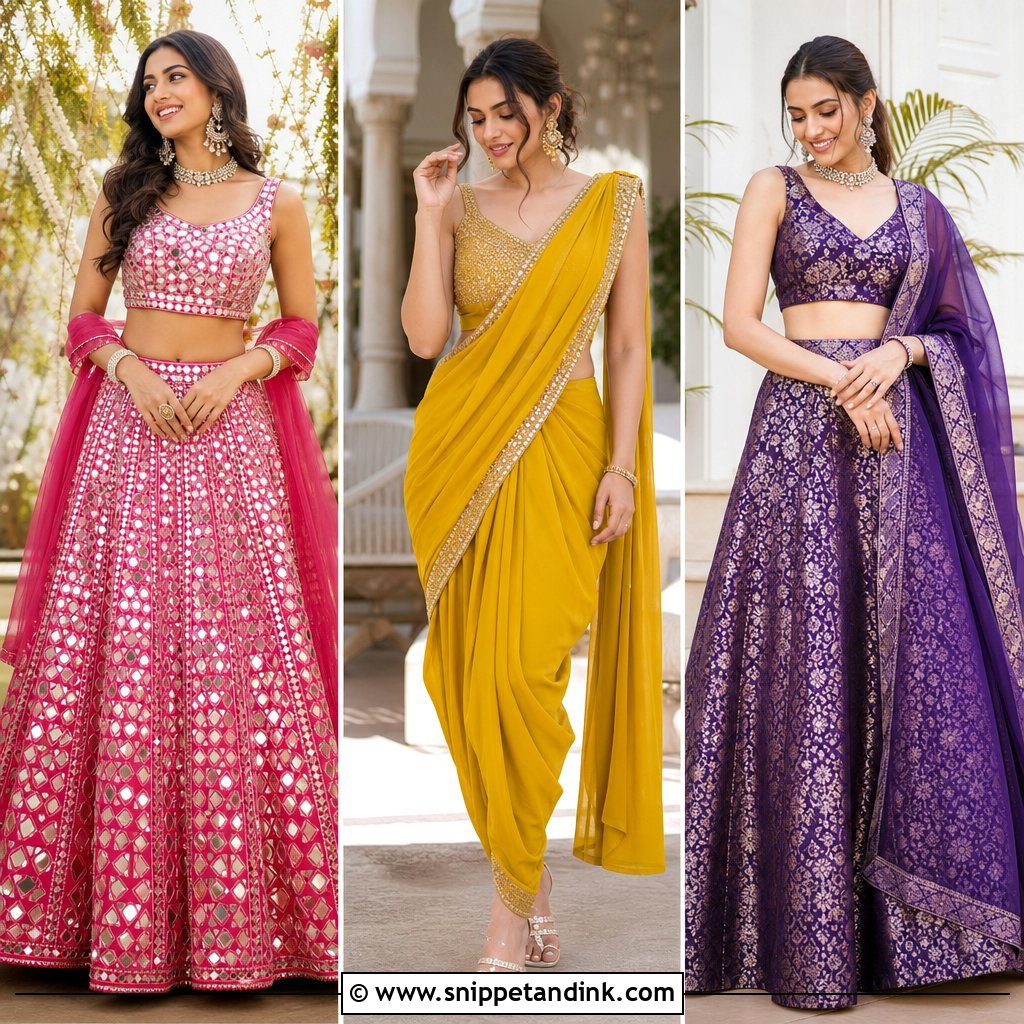
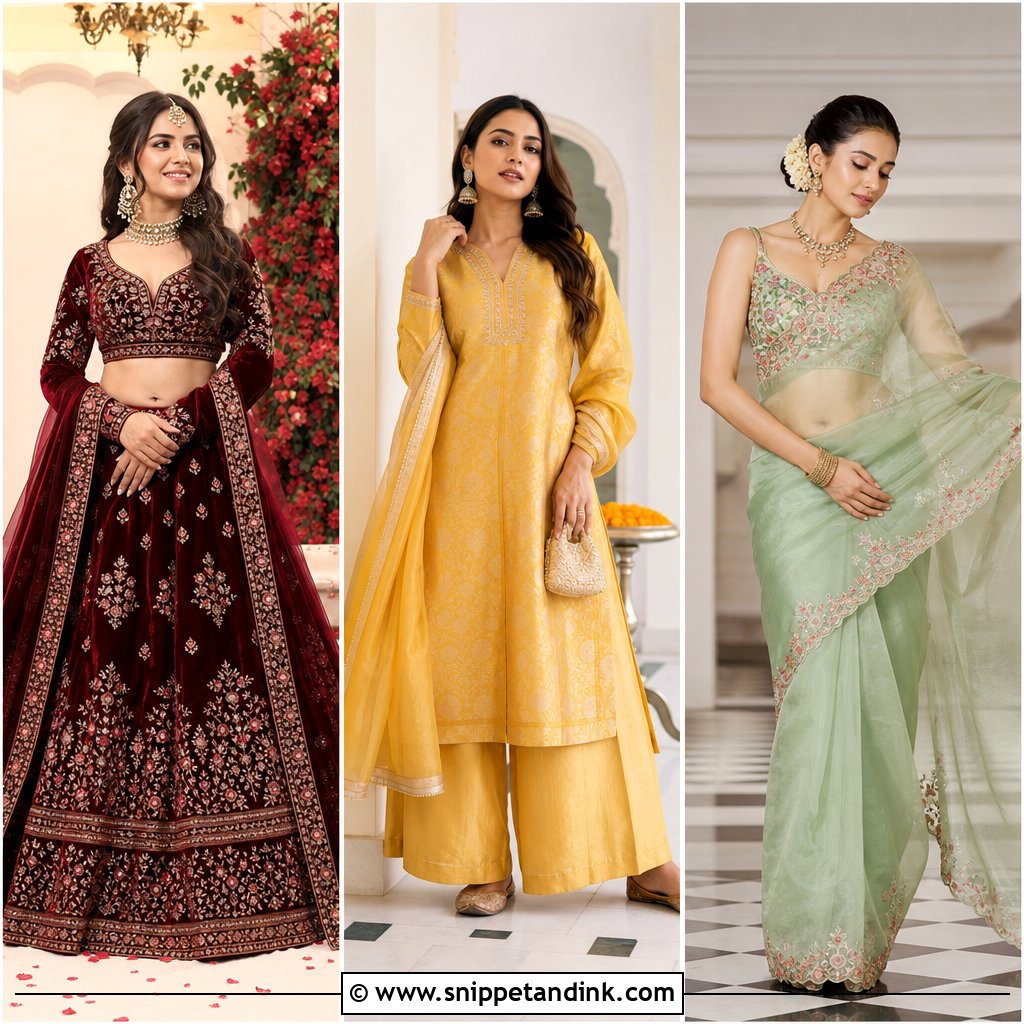
Haldi is the one function where I tell sisters to dress for damage. Turmeric paste stains silk and zari almost permanently, so a bright yellow sharara set in cotton, mulmul or a washable georgette is the sensible pick. A short peplum kurti with a little gota or mirror trim keeps the hem out of the paste bowl, and wide sharara pants let you crouch beside your sister without straining a seam. Swap metal jewellery for floral earrings and bangles; nobody minds if those get yellow. Mustard and mango read richer on camera than lemon, which can wash out under bright sun. Tie your hair back in a braid so the paste doesn’t end up in it.
2. Green Floral Lehenga for Mehendi
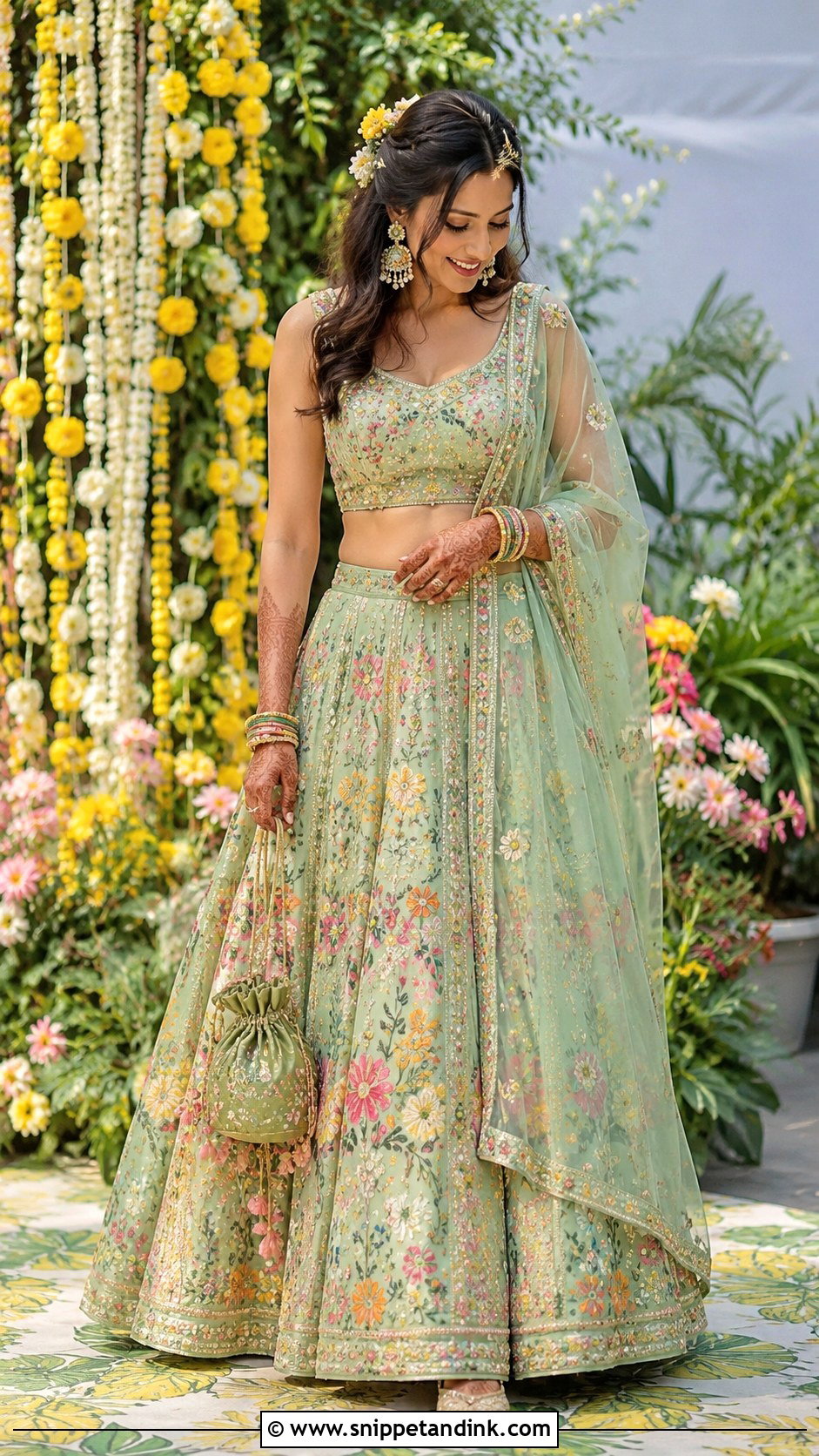
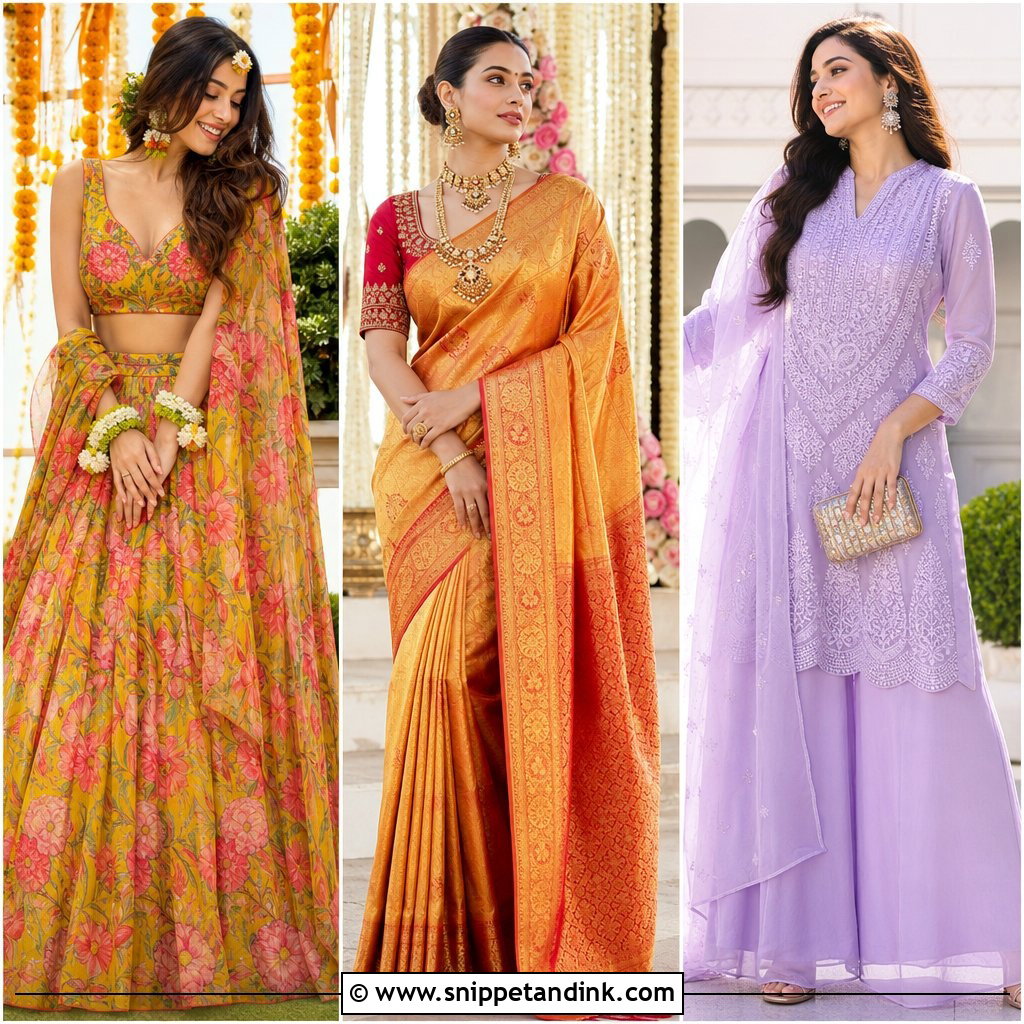
Green sits naturally against marigold and rose decor, which is why I reach for it at a mehendi. Pick a lightweight floral lehenga in pistachio, sage or emerald with thread or printed botanicals rather than heavy zari; you’ll be sitting cross-legged on cushions for a long stretch, and stiff embroidery creases badly. The blouse matters more than the skirt here. Short sleeves or an off-shoulder neckline give the artist room to reach your forearms, and once your hands are wet you won’t be able to adjust anything, so pin the dupatta before you sit. A small potli in pink or gold and a few tiny flowers in a half-up style finish a sister’s mehendi outfit without fuss.
3. Mirror Work Lehenga for Sangeet
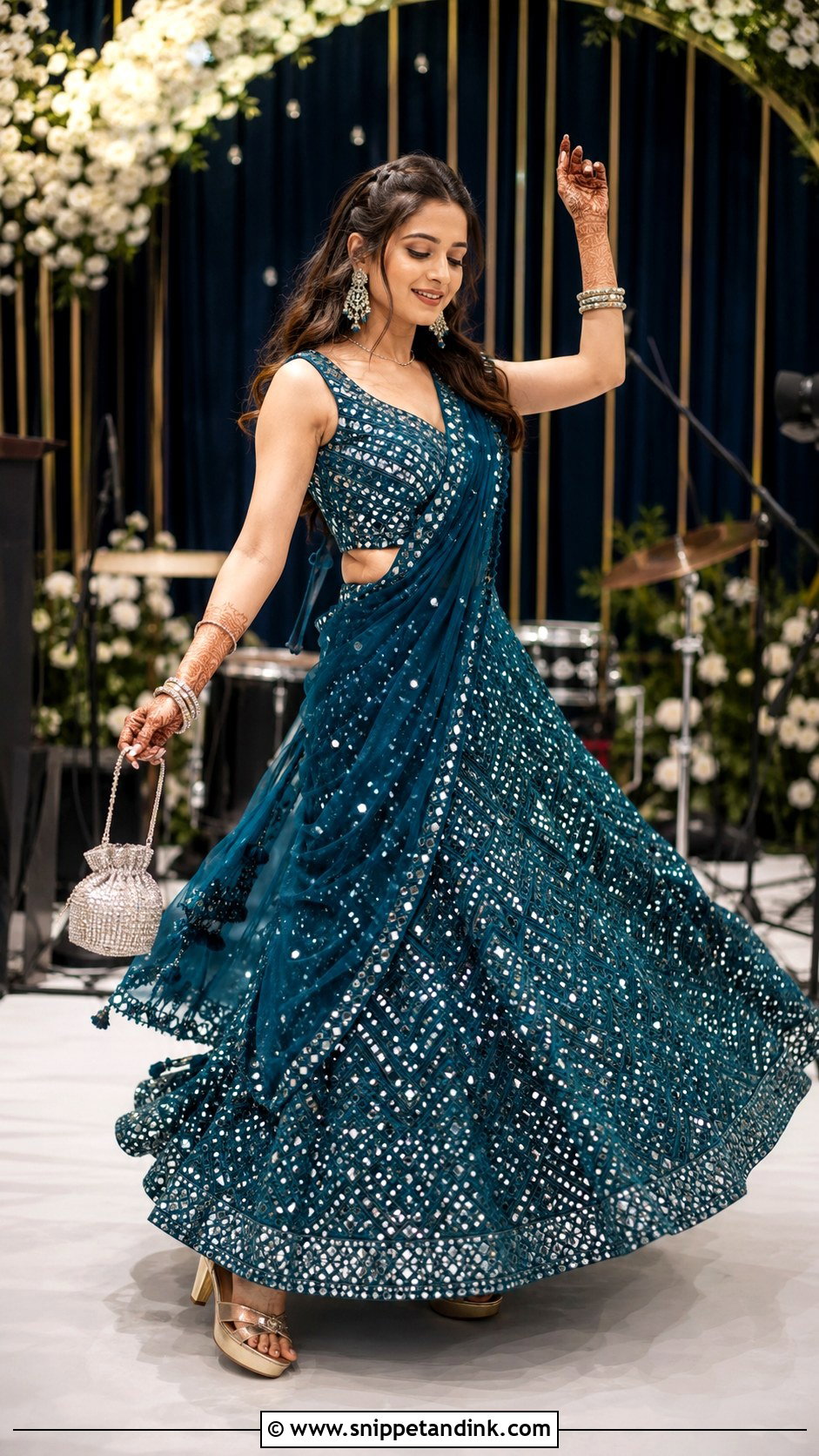
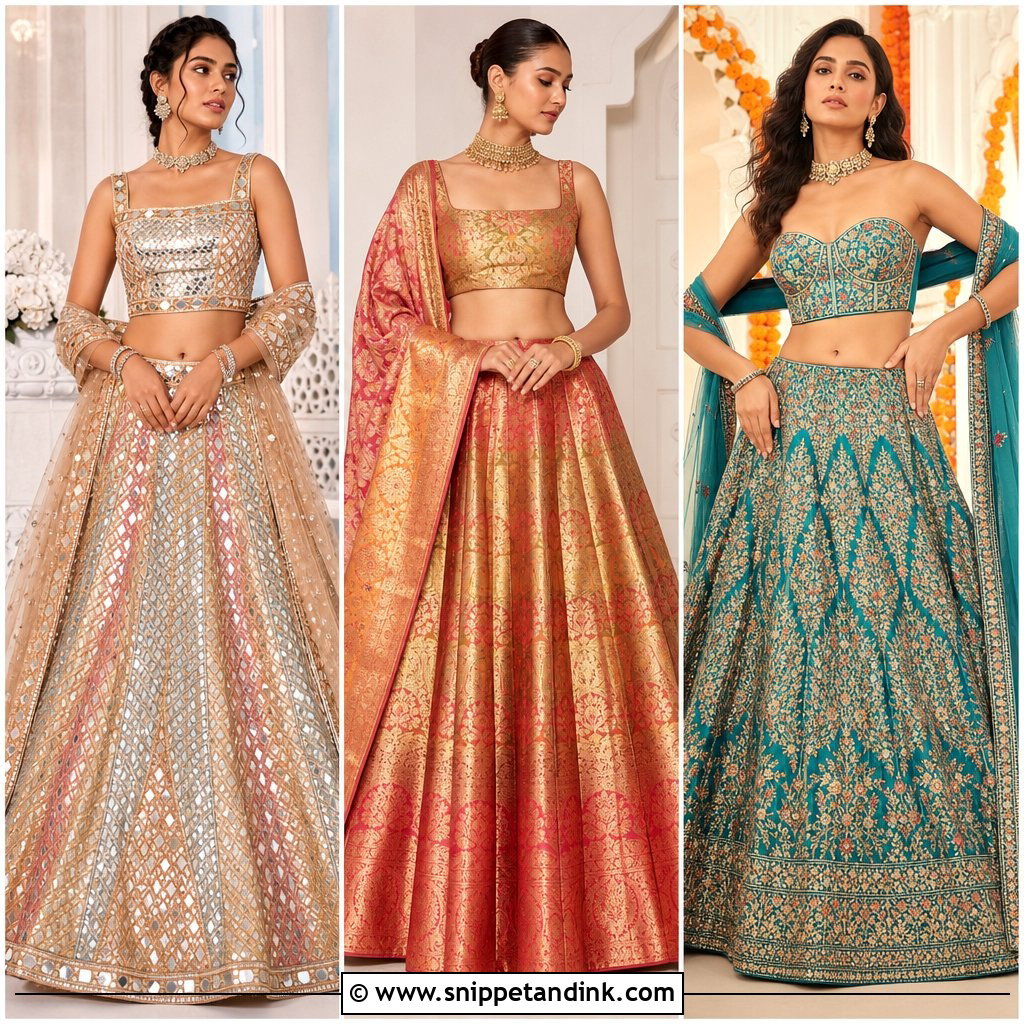
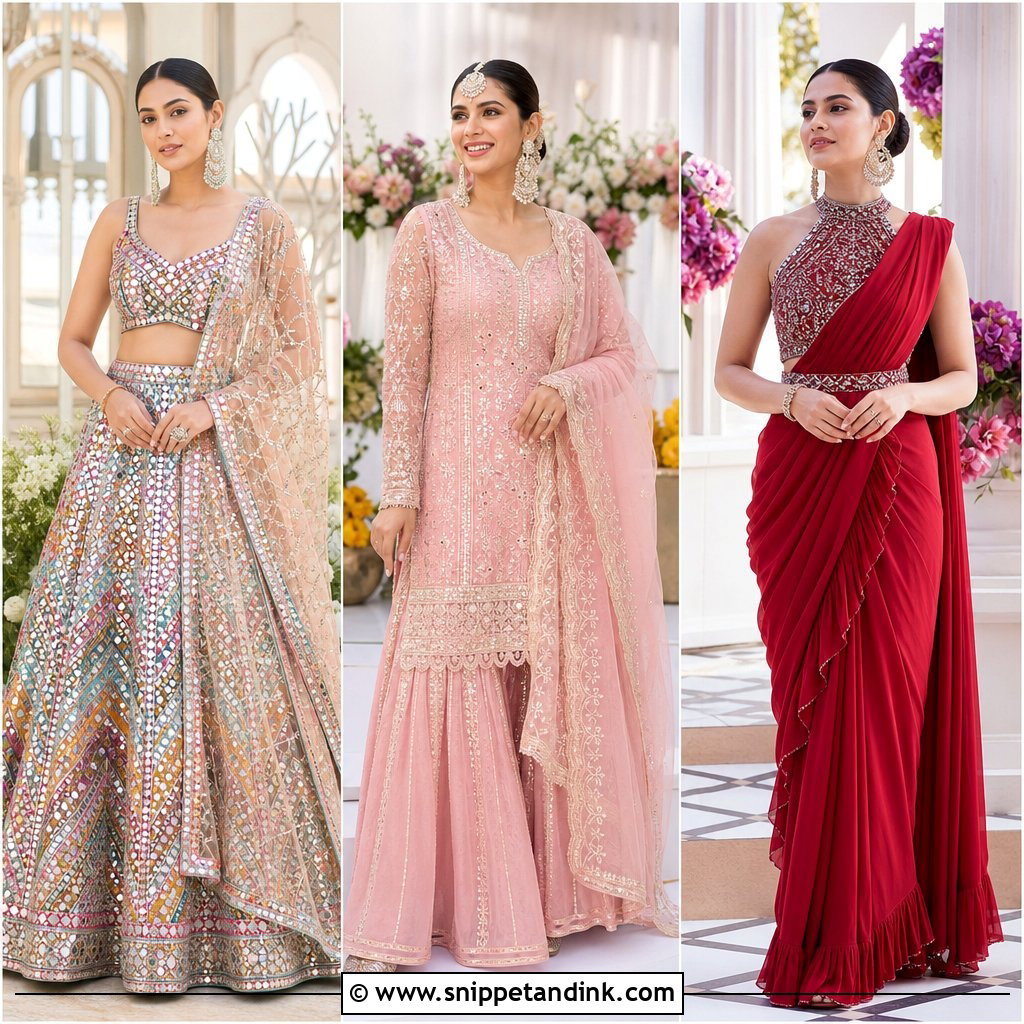
Mirror work earns its place at a sangeet because every small disc catches stage lighting when you turn. I prefer evenly spaced mirrors over clustered panels, since clusters get heavy at the hem and drag the skirt down mid-routine. Navy, teal, purple and deep pink all hold their colour under coloured lights. Before rehearsal, have the tailor add a hidden hook at the shoulder and a loop at the waist so the dupatta stays put through the choreography. Keep jewellery to one pair of statement earrings; a necklace swinging against mirror work scratches both. Cushioned block heels are worth more than height on a dance floor.
4. Pastel Embroidered Lehenga for the Wedding
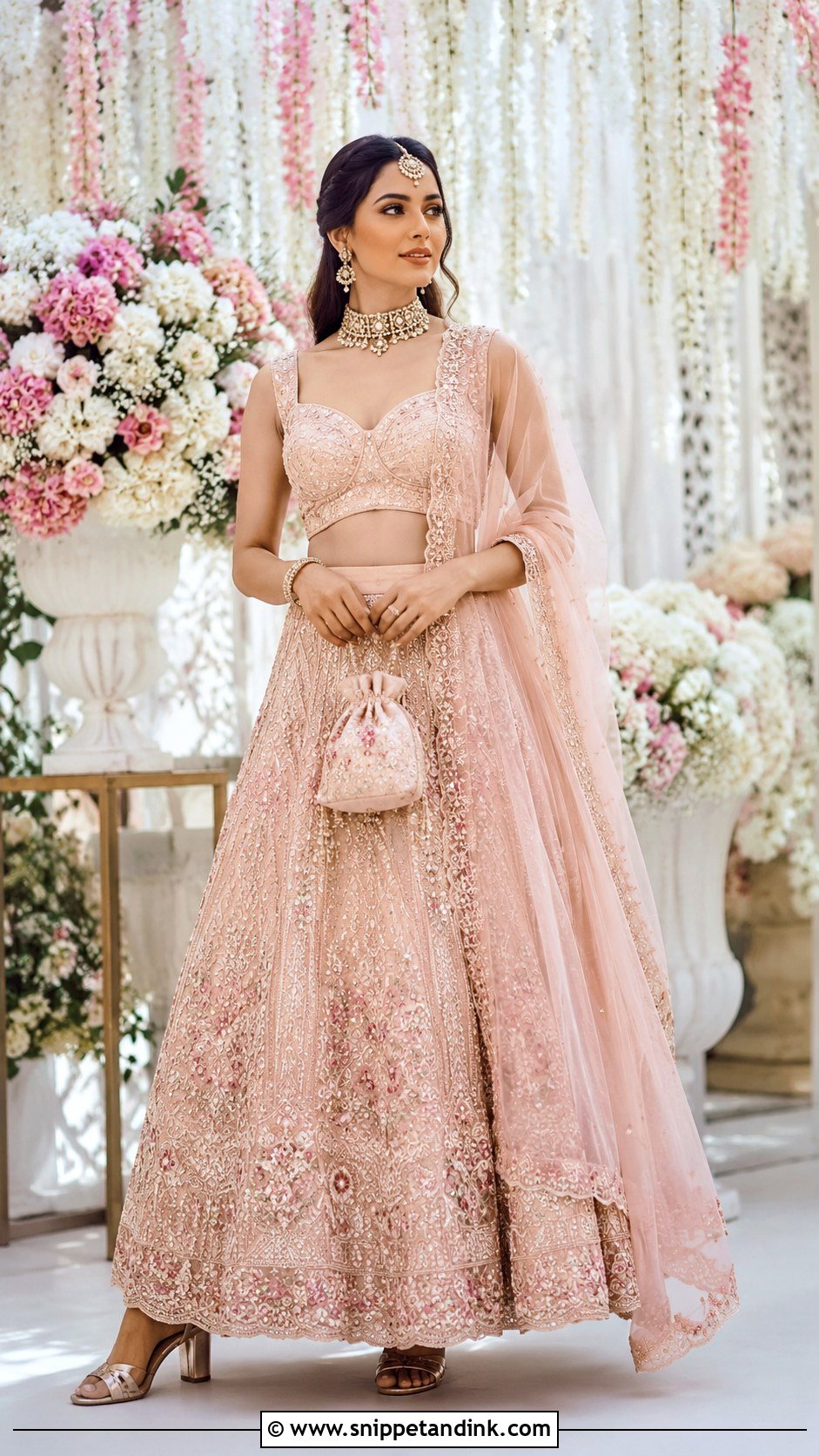
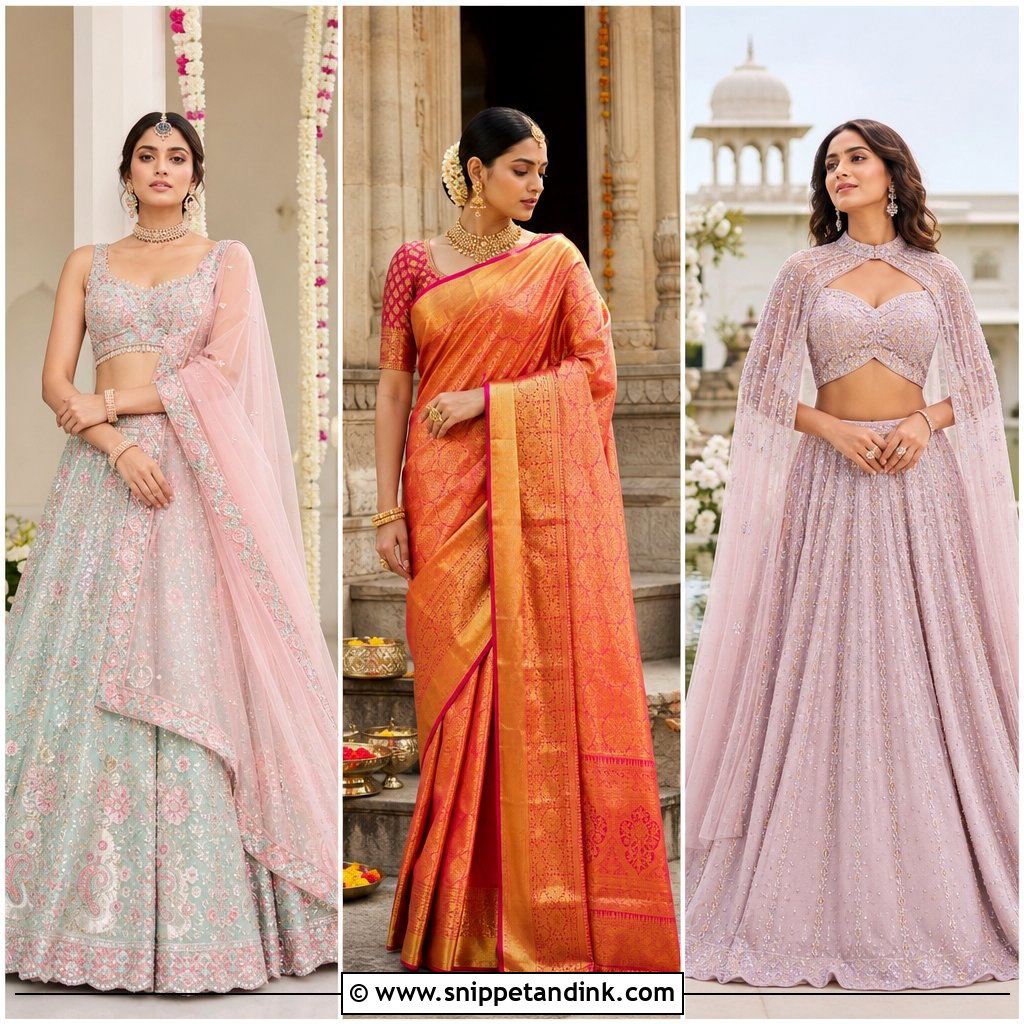
For the main ceremony I steer most sisters toward pastels with tonal embroidery: blush, dusty blue, lilac, peach or mint, worked with pearls, sequins and only a little zari. The colour reads festive in daylight mandap photos and stays clearly a step below a red or deep bridal lehenga. Ask for a structured blouse with proper padding and boning; a soft blouse wrinkles at the waist after an hour of sitting through pheras. A second sheer dupatta looks lovely in fittings but becomes a nuisance when you’re handing over thalis, so only add it if you’ve walked around in both. A kundan choker, slim maang tikka and a low floral bun round it out. Agree the palette with the bride, then avoid copying her exact shade or jewellery set.
5. Banarasi Silk Saree for the Wedding Ceremony
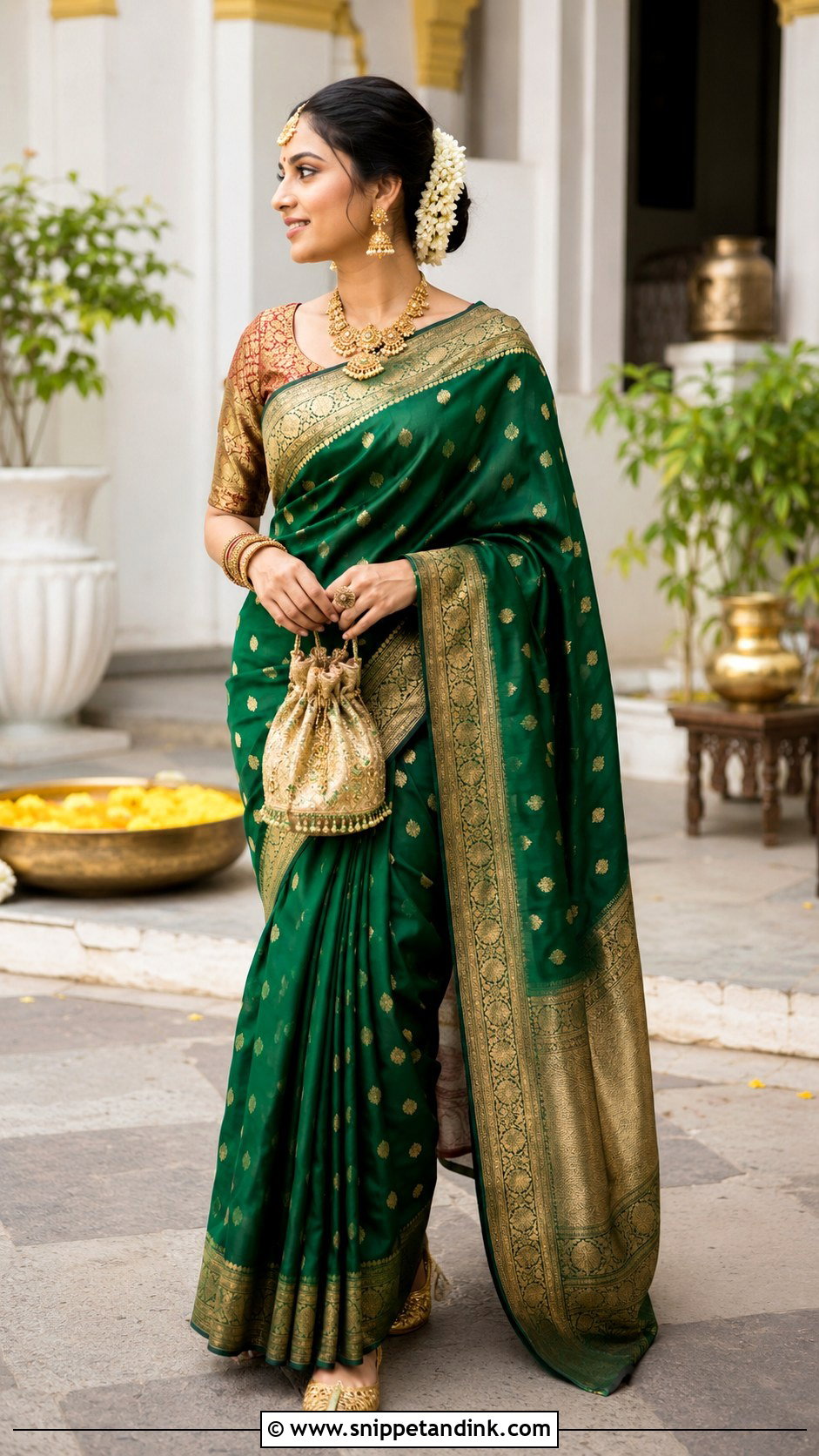
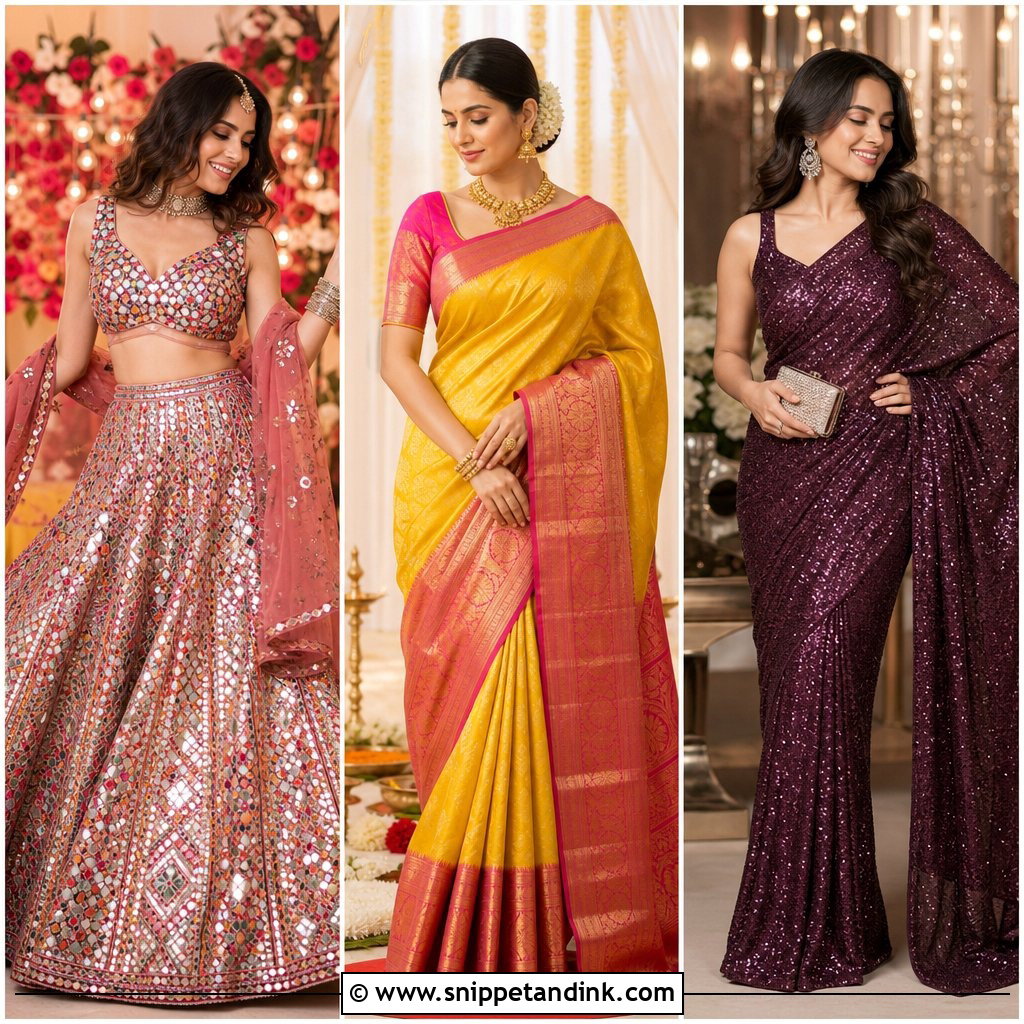
Banarasi silk is heavy and holds a sharp pleat, which is exactly why it suits the ceremony and the formal family portraits. Emerald, royal blue, magenta and rust all show off a gold border well. I like a brocade or raw silk blouse in a contrasting but quieter tone, so the weave stays the focus. A front-pleated drape keeps the pallu pattern visible in photos. Because the fabric is weighty, I use at least five safety pins at the pleats and two at the shoulder; a sister gets called away mid-ritual more than anyone, and a slipping pallu is the usual casualty. Temple or kundan jewellery, gold juttis and a sleek bun with fresh flowers suit this saree in almost every regional tradition.
6. Pre-Draped Saree for Cocktail Night
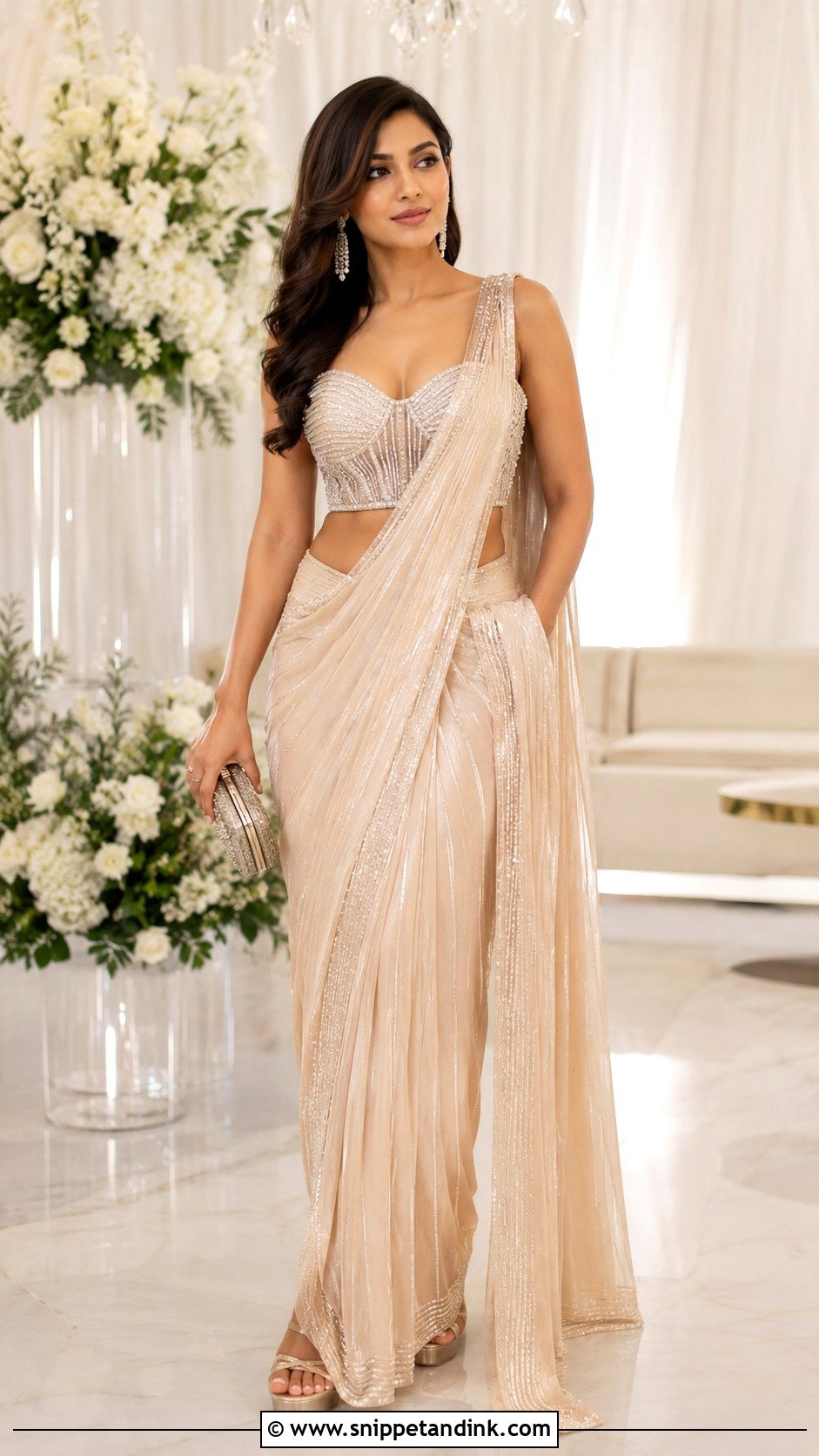
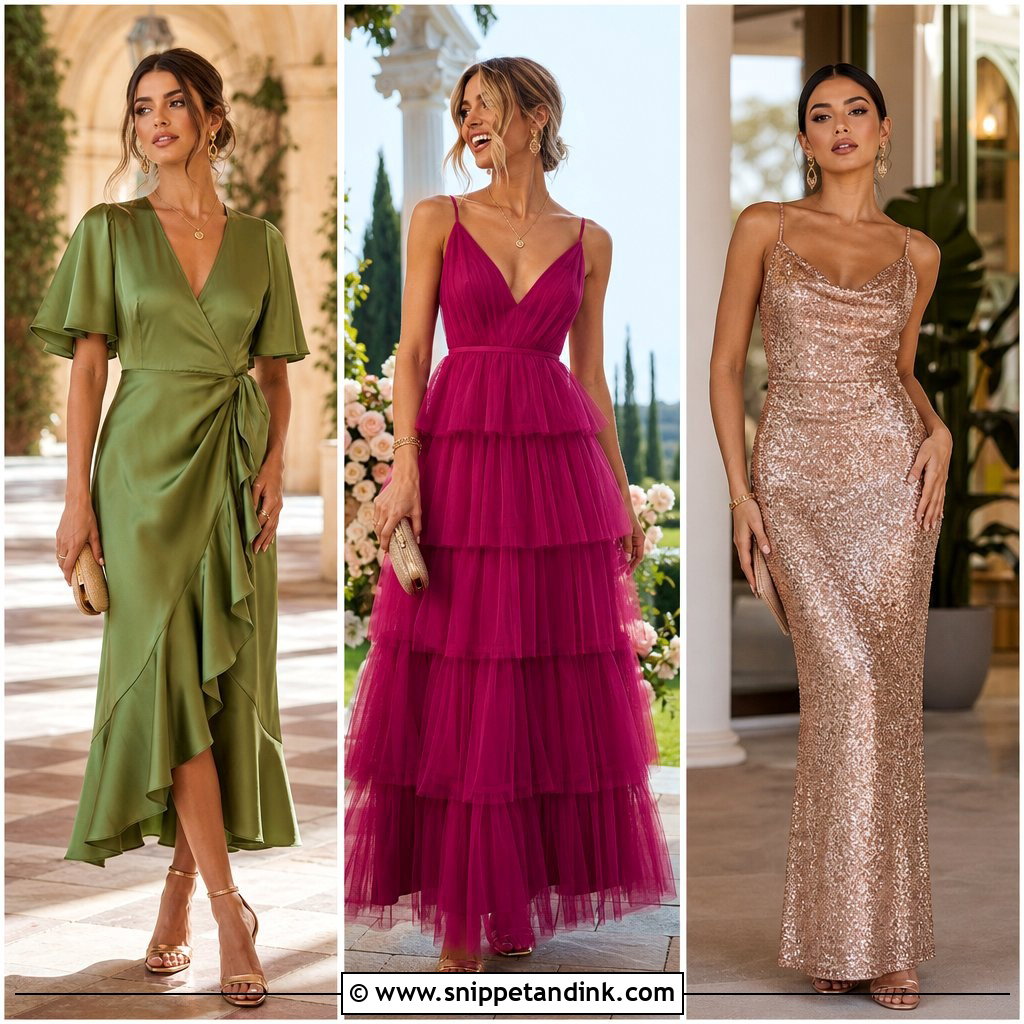
A pre-draped saree is my answer for the cocktail night when a sister has already spent three days re-pinning pleats. The drape is stitched in place, so you put it on like a skirt and it stays put. Fluid georgette or crepe in champagne, plum, midnight blue or metallic grey falls well; stiff silks don’t suit pre-stitched pleats because they bunch at the waistband. The blouse can carry the detail, through beadwork, an asymmetric neckline or full sleeves. Keep jewellery spare: crystal earrings, one ring and a hard-shell clutch. Choose block heels or platforms over thin stilettos, since cocktail venues often mean lawns or polished marble.
7. Sequin Saree for the Reception
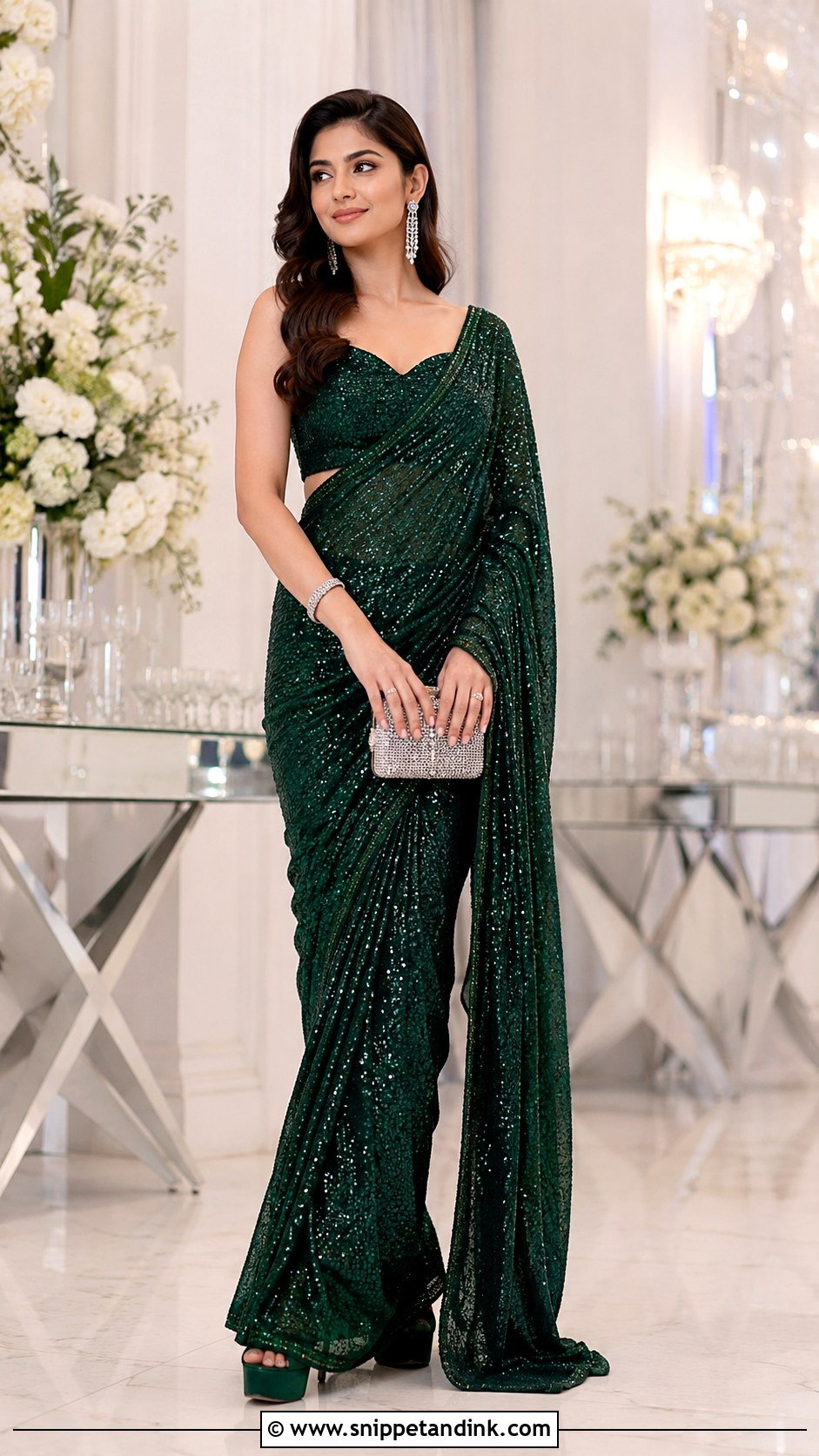
Sequins need flash and evening lighting to come alive, so the reception is where a sequin saree belongs. I always choose a single colour, such as rose gold, navy, wine, emerald or soft silver, because multicoloured sequins look busy in group shots. One thing to check in the trial room: sequins sewn on a coarse net can scratch the inner arm, so ask for a soft lining on the blouse sleeves. A square, sweetheart or high neckline gives structure against the fluid drape. With that much shine, skip the necklace and wear drop earrings and a slim bracelet. Side-parted waves and luminous makeup keep it polished, and a single colour keeps it clearly lighter than the bride’s reception look.
8. Velvet Lehenga for a Winter Wedding
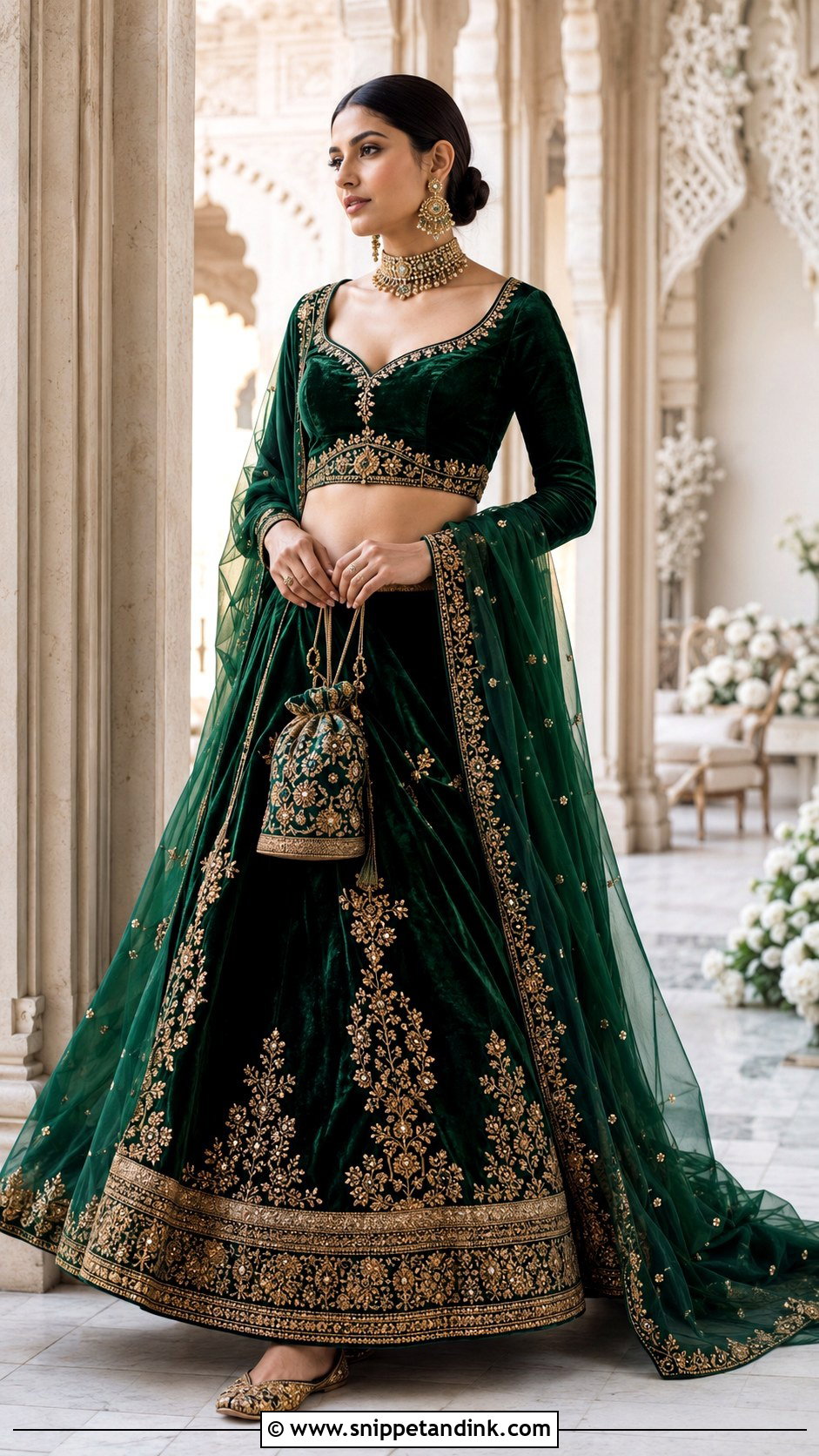
Velvet is the only fabric I’d happily put a sister in for a December wedding in the north, because it actually keeps you warm in an open-air mandap. Maroon, forest green, navy and aubergine bring out the pile. The catch is weight: a full velvet lehenga with a velvet dupatta is exhausting by midnight. I keep the velvet to the skirt and blouse, concentrate the zari at the border, and switch to a net dupatta. Velvet also marks easily when it’s crushed, so don’t sit on it folded in a car for an hour. Antique gold earrings, a medium choker and closed-toe juttis suit the richness without piling on more.
9. Chikankari Lehenga for a Day Wedding
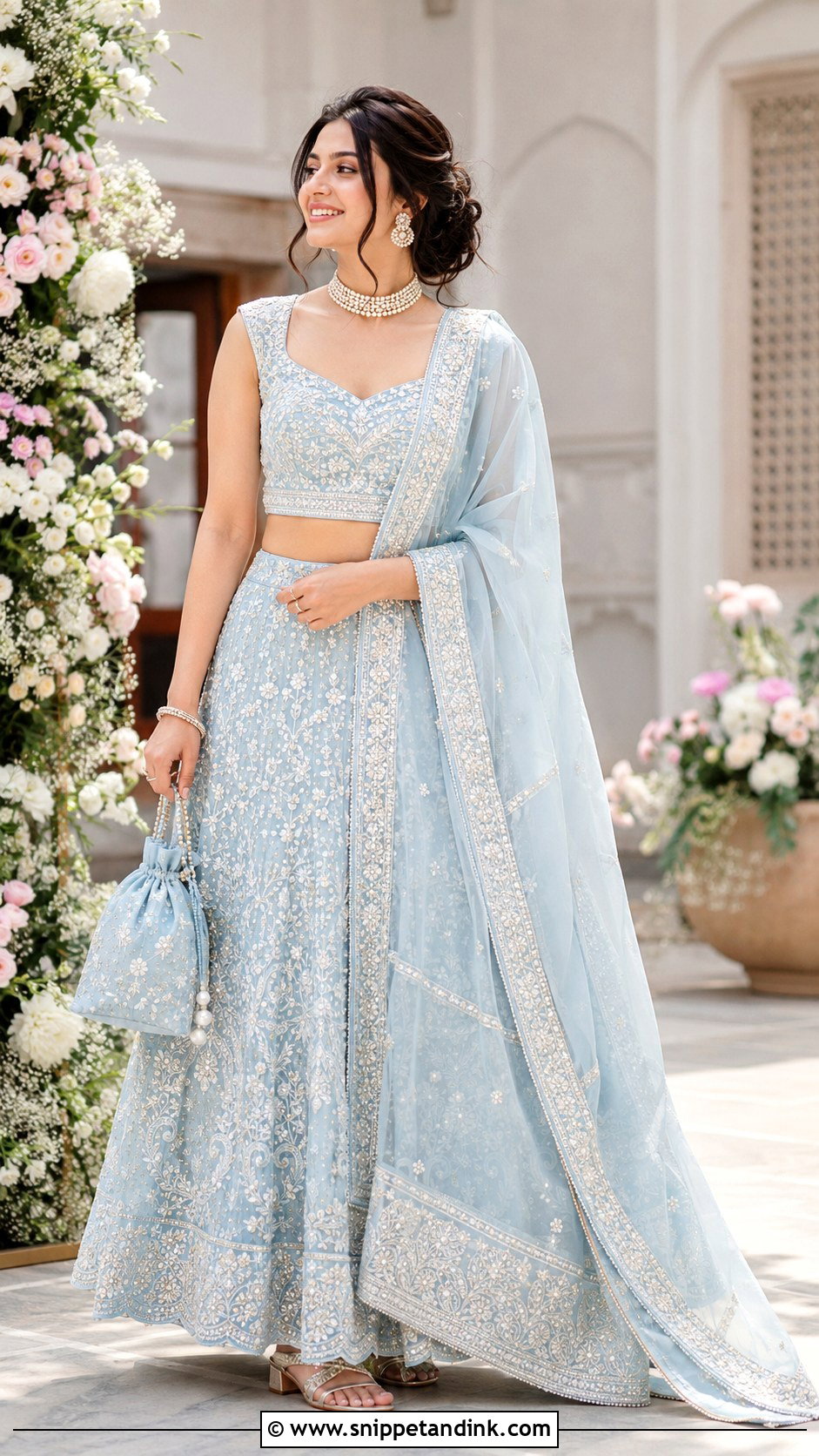
Chikankari is shadow work, done by hand on fine cotton or georgette, and it looks its best in daylight where you can see the texture. Powder blue, peach, lavender and mint all work; pure ivory only works if the bride is clearly in another colour. My one caution: from across a lawn, fine chikankari can read as plain fabric in photos. Pick a piece with visible mukaish or pearl accents and a defined border so the handwork registers on camera. A sheer dupatta with a narrow edge, pearl earrings and low metallic sandals keep the mood light. A loose braided bun stays comfortable through a long outdoor lunch.
10. Cape Lehenga for Sangeet Night
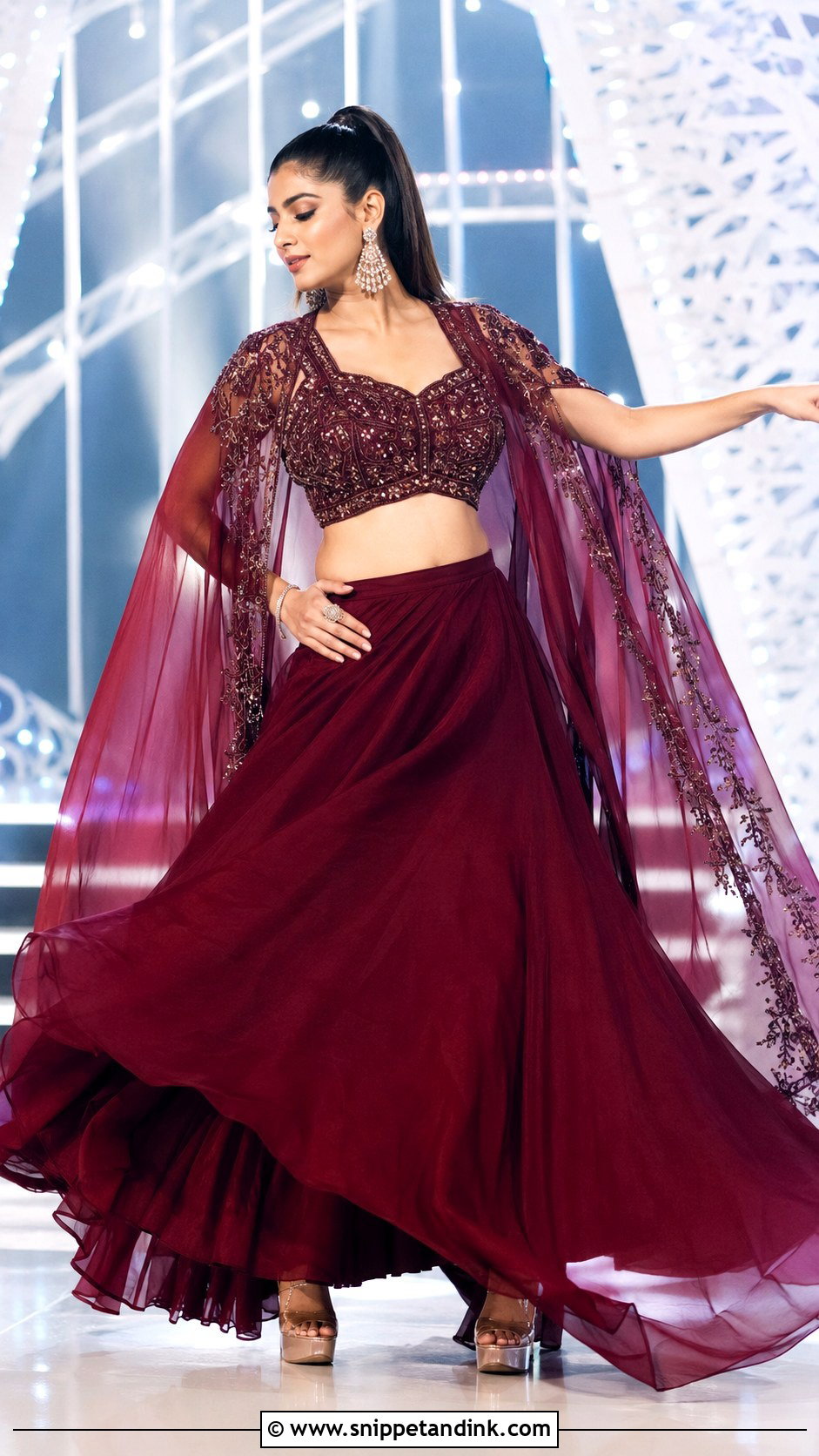
Sisters who hate managing a dupatta usually end up loving a cape lehenga. The sheer cape is fixed at the shoulders, so both hands are free for dancing, and it gives upper-arm coverage without sleeves. Teal, burgundy, purple and rose gold suit the flowing skirt. At the fitting I check the cape length on the skirt: it should fall just below the waist so it moves without hiding the embroidery underneath. Chandelier earrings and a small wristlet are enough. Wear platform heels so you can lift the skirt on stairs, and keep your hair up or smooth so the neckline stays visible.
11. Anarkali Suit for the Engagement
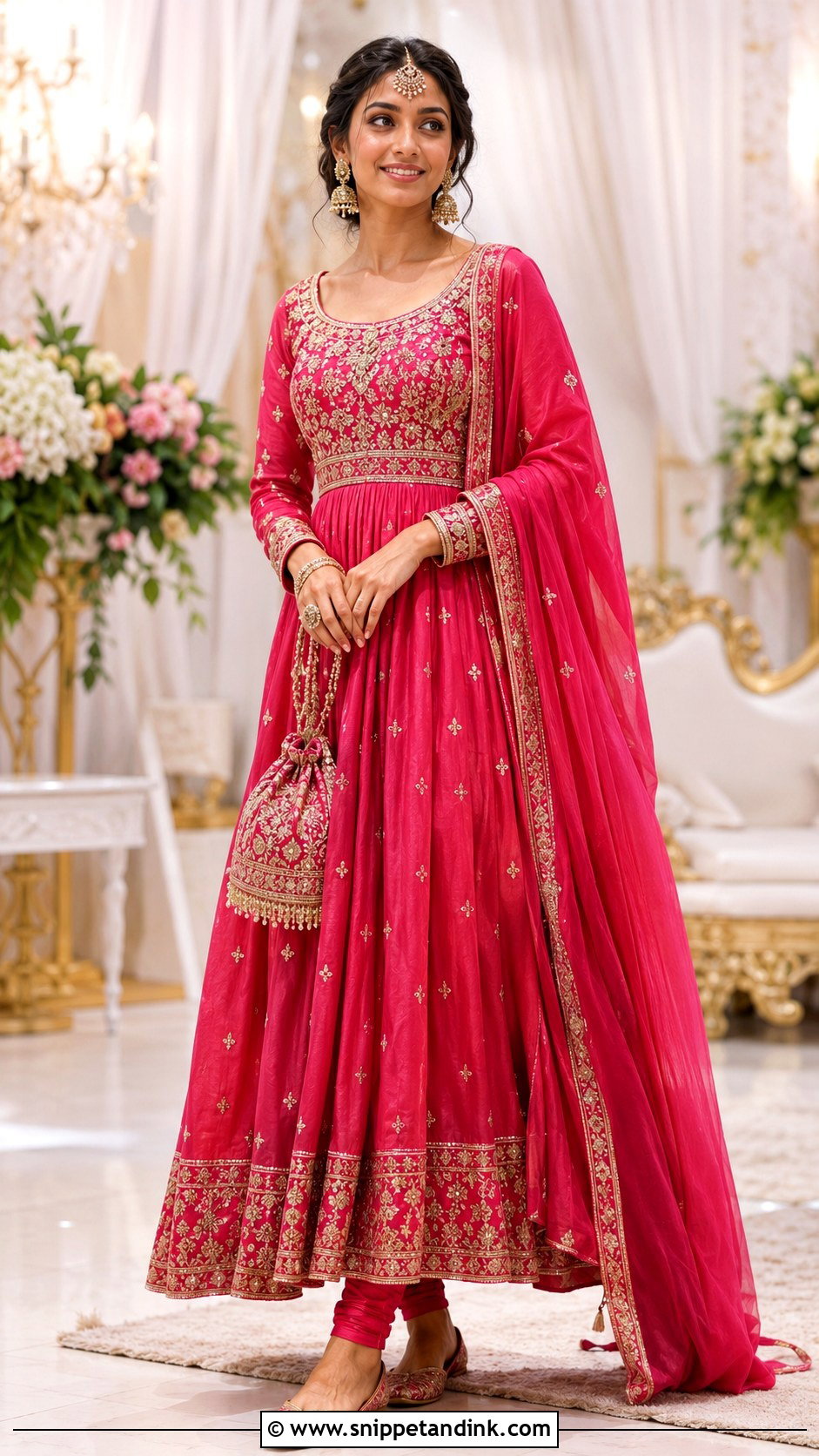
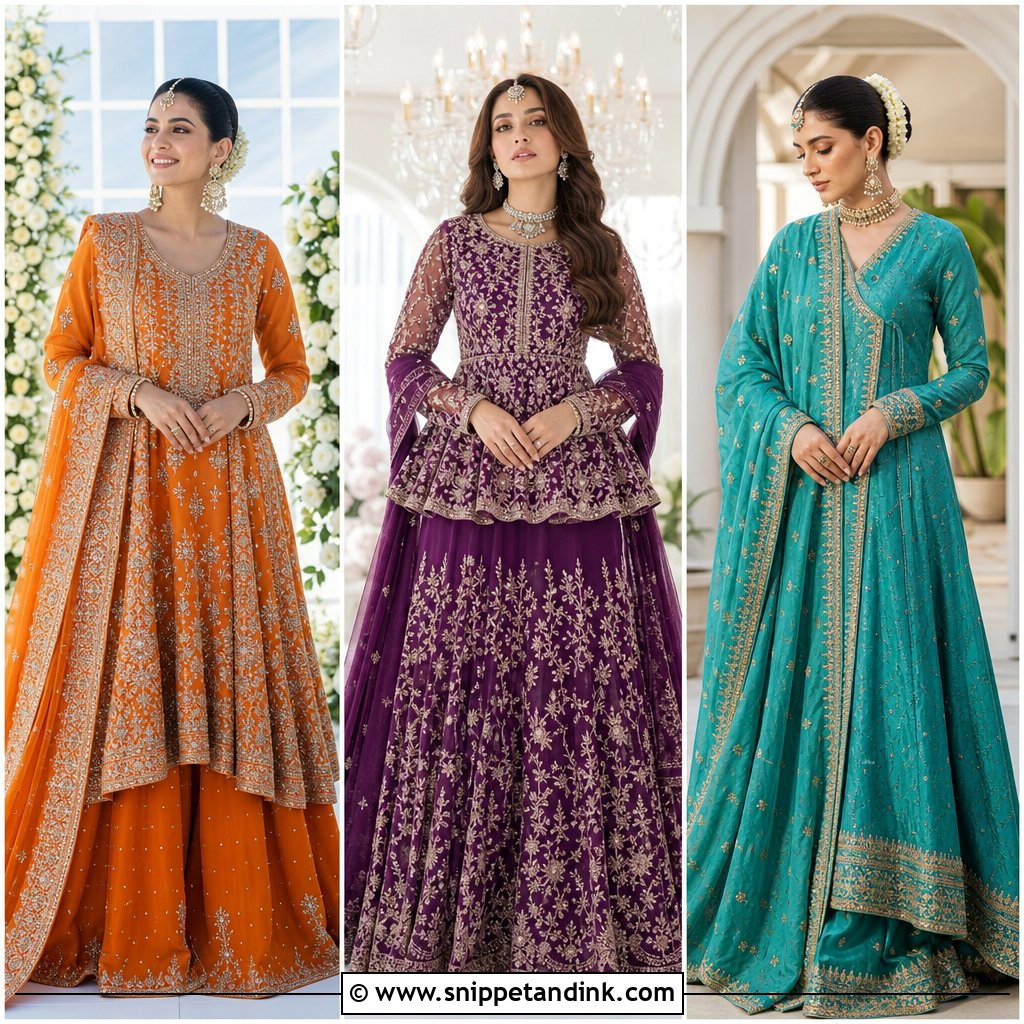
An engagement means a lot of standing, greeting and bending to touch elders’ feet, and a floor-length Anarkali handles all of that better than a lehenga. Silk, georgette or organza in jewel tones or dusty pastels flatters most figures when the bodice is fitted and the flare starts at the natural waist. I prefer embroidery concentrated at the neckline, cuffs and hem; all-over work on a long Anarkali adds weight that pulls the flare flat. Pair it with churidar pants and drape the dupatta over one arm. Jhumkas, a slim tikka and embroidered juttis finish it, and soft curls or a low bun keep the long line intact.
12. Peplum Sharara Set for the Sangeet
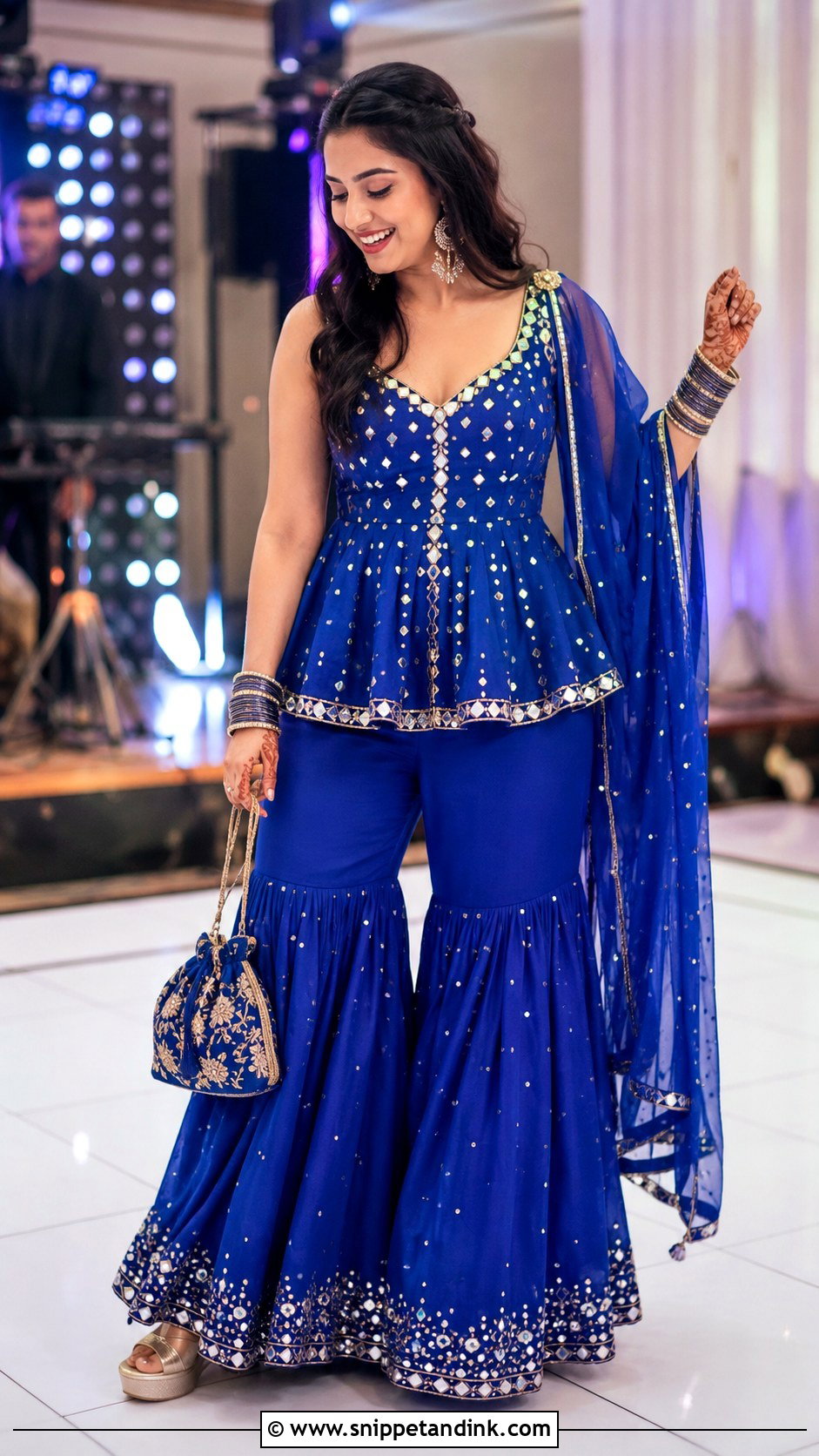
A peplum sharara set gives a dancer a defined waist and a lot of swing below it. The peplum top carries the embellishment, whether mirror work, sequins or fine thread, while matching sharara pants in the same fabric make one long column. Jewel tones suit a night sangeet; hot pink, orange and turquoise feel more playful. Watch the proportion: a peplum that flares too far plus wide sharara pants can make you look boxy, so I keep the peplum hem close to the hip. A dupatta is optional and can be pinned across one shoulder. Cushioned platforms and a sleek ponytail keep you on the floor all night.
13. Gharara Suit for the Nikah
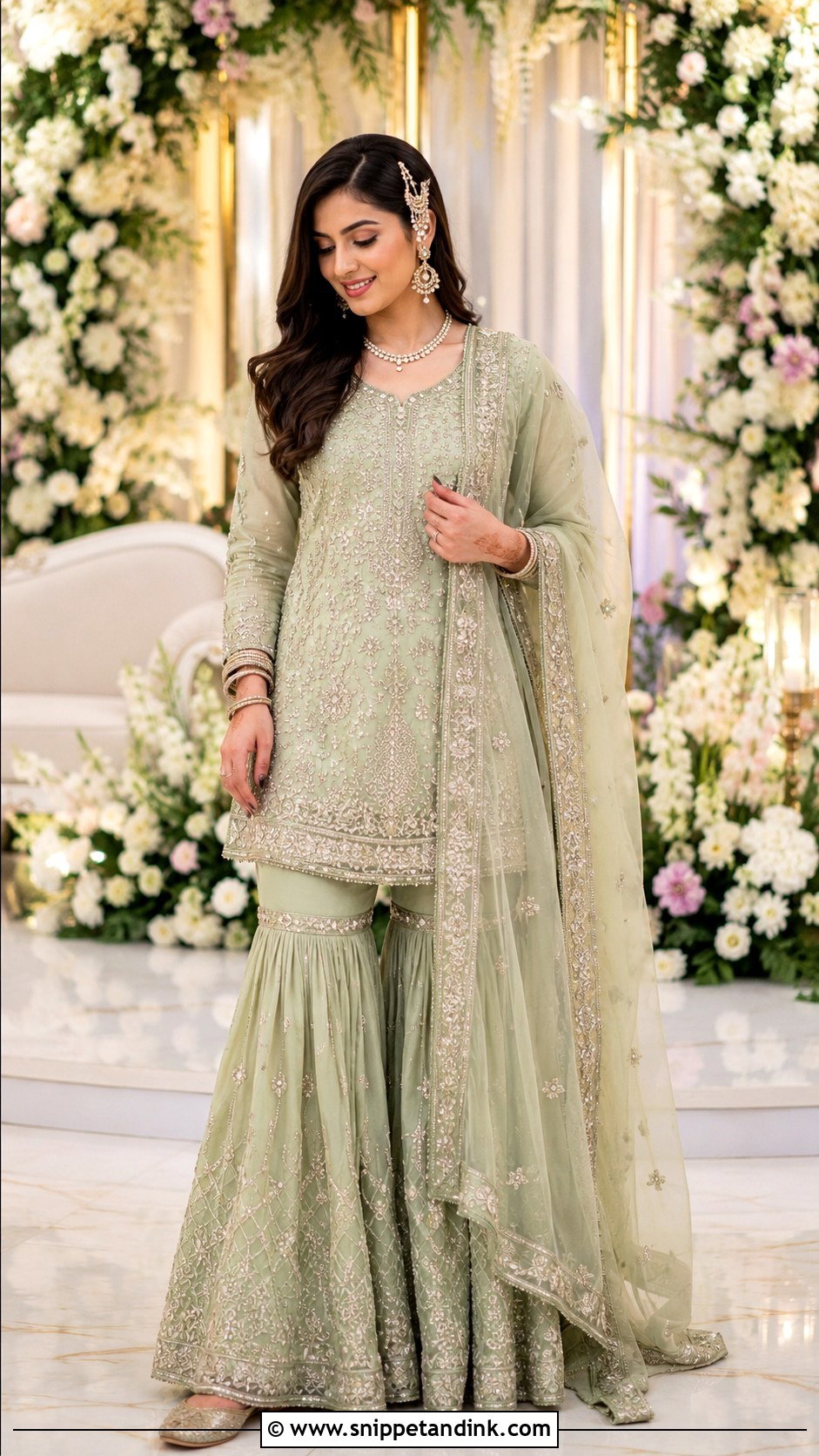
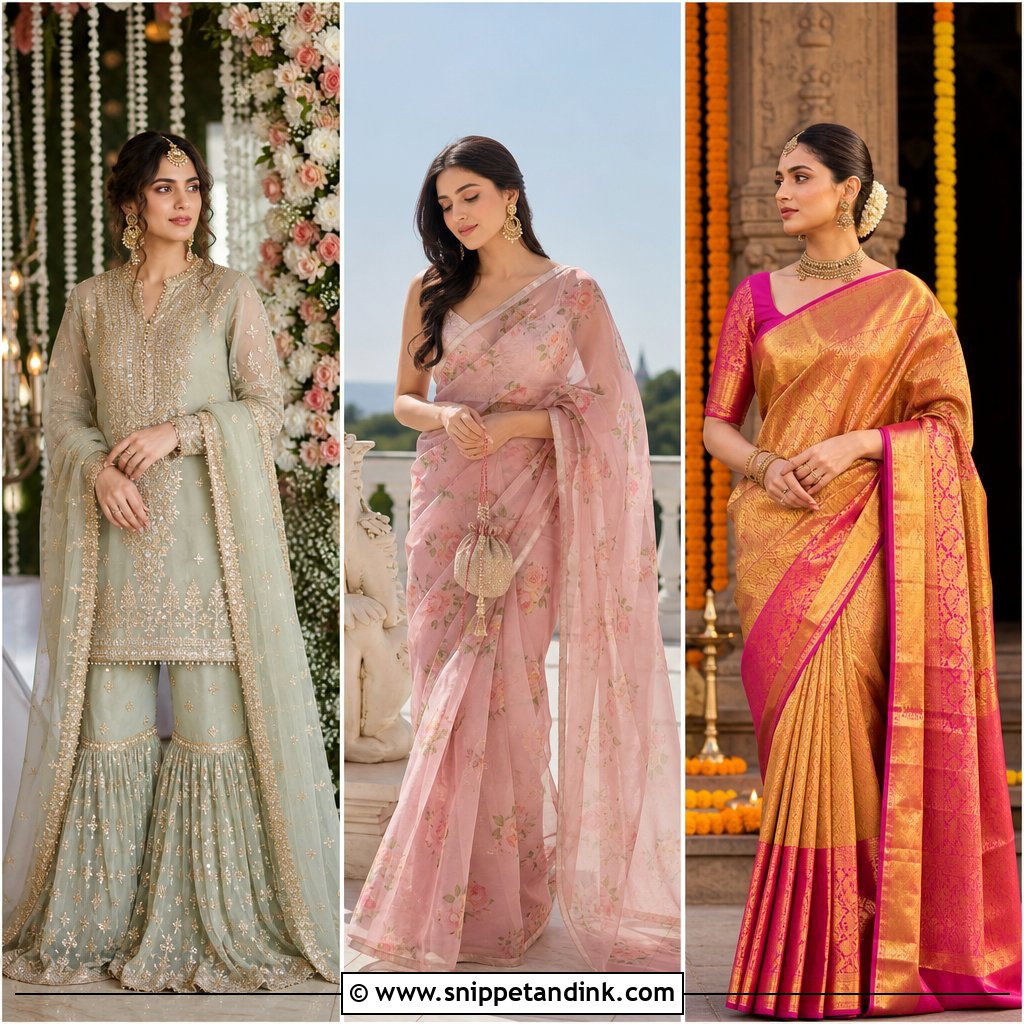
For a nikah, a graceful gharara suit feels right because the silhouette has real cultural history. The defining detail is the knee joint, where the gharara gathers and then flares, often finished with a band of gota; check that the tailor places it at your knee, not below, or the flare looks heavy when you walk. Pistachio, powder pink, ivory with gold or sky blue suit daytime, and deeper green, plum and navy suit evening. Ask the family how the dupatta should be worn, since many nikah ceremonies expect it over the head, and choose a fabric that won’t slide off silky hair. A passa, delicate bangles and embroidered juttis keep it traditional.
14. Patiala Suit for the Jaggo
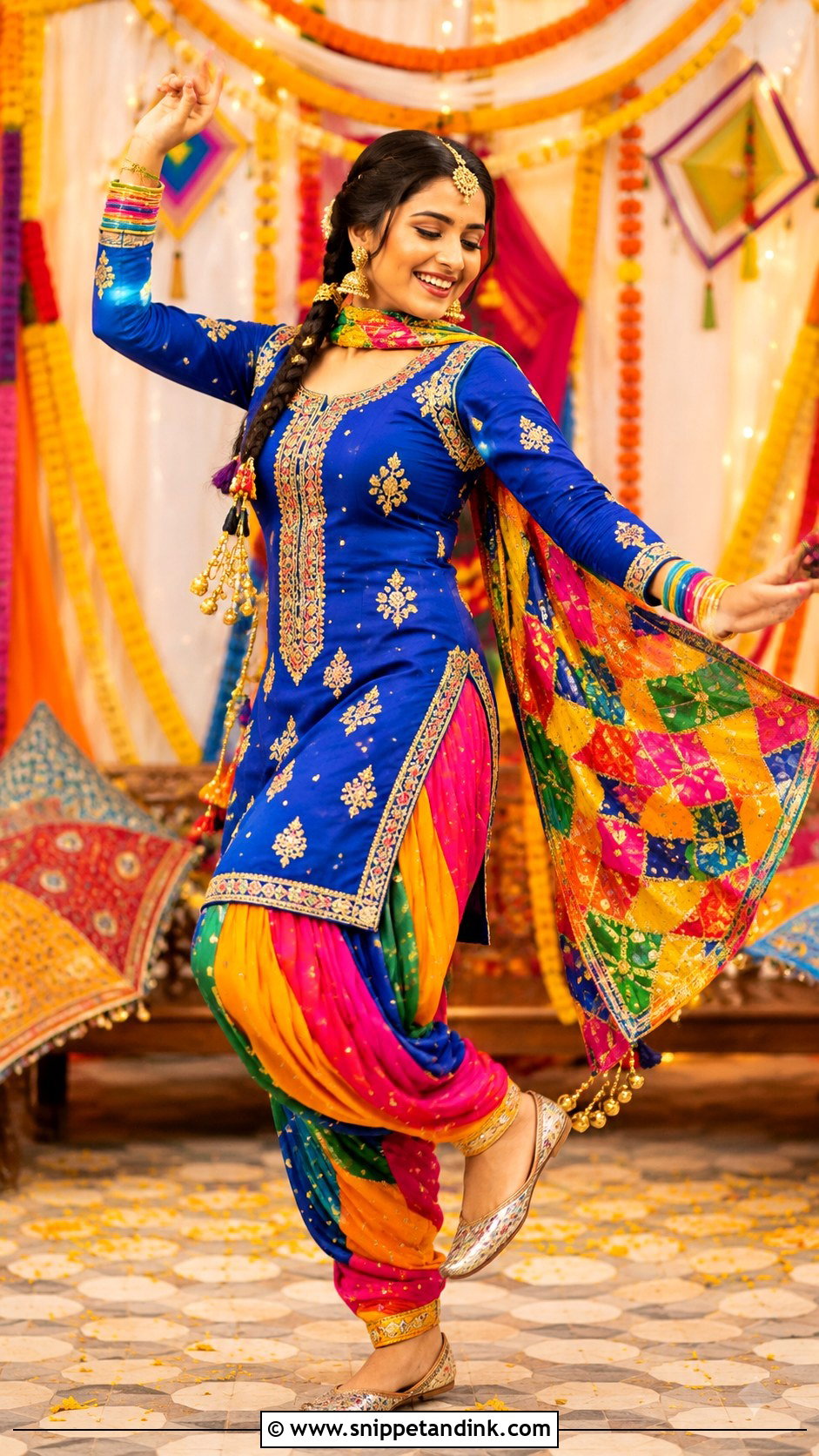
A jaggo is loud, late and full of dancing in the street, so a Patiala suit is what I’d want a sister to wear. The deep pleats in the salwar give total freedom of movement, and a phulkari dupatta adds the Punjabi colour that suits the night. Fuchsia, orange, turquoise and royal blue all stand out under string lights. Keep the kameez at or above the knee; a long kameez hides the pleated shape of the salwar. Pin the dupatta at the shoulder and loop it at the wrist before the dancing starts. A braid with a paranda keeps your hair under control, and it moves far better than a heavy skirt at an active Jaggo celebration.
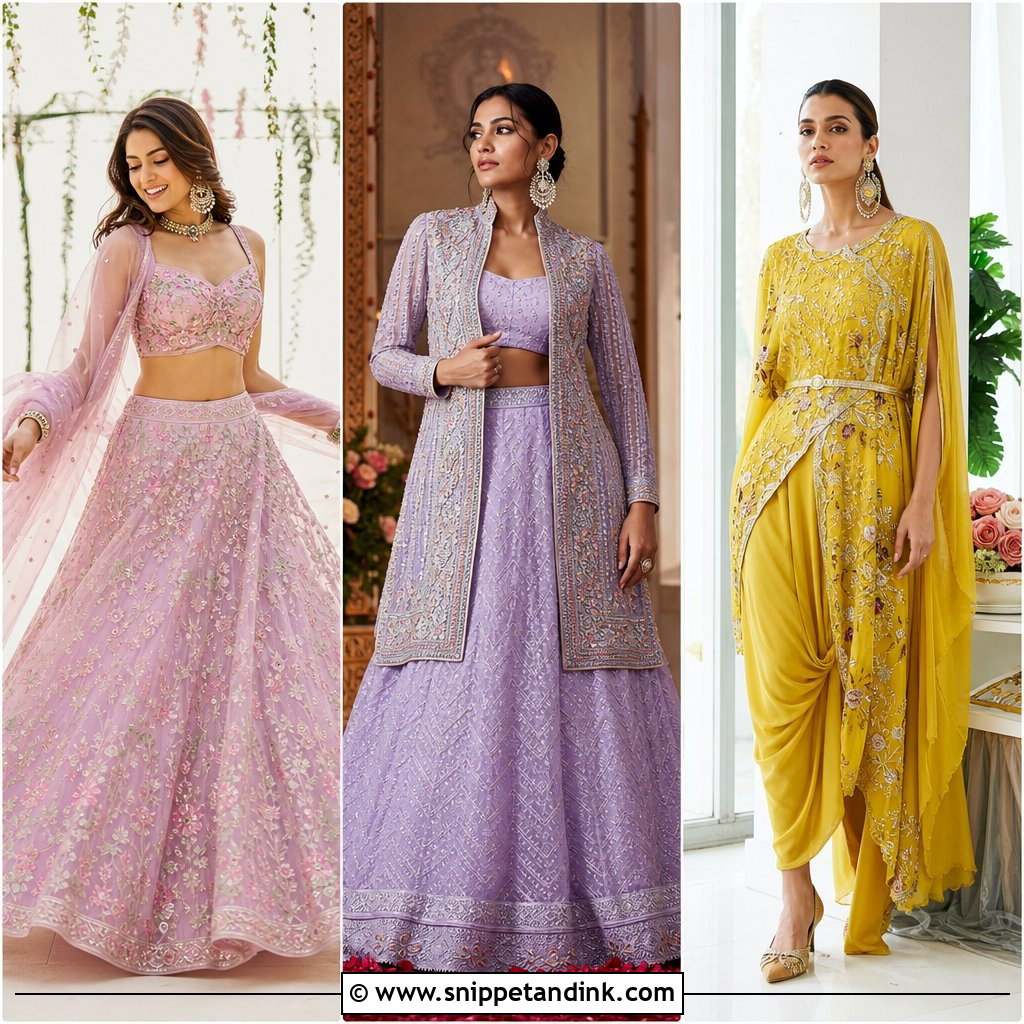
15. Dhoti Pant Set for Mehendi
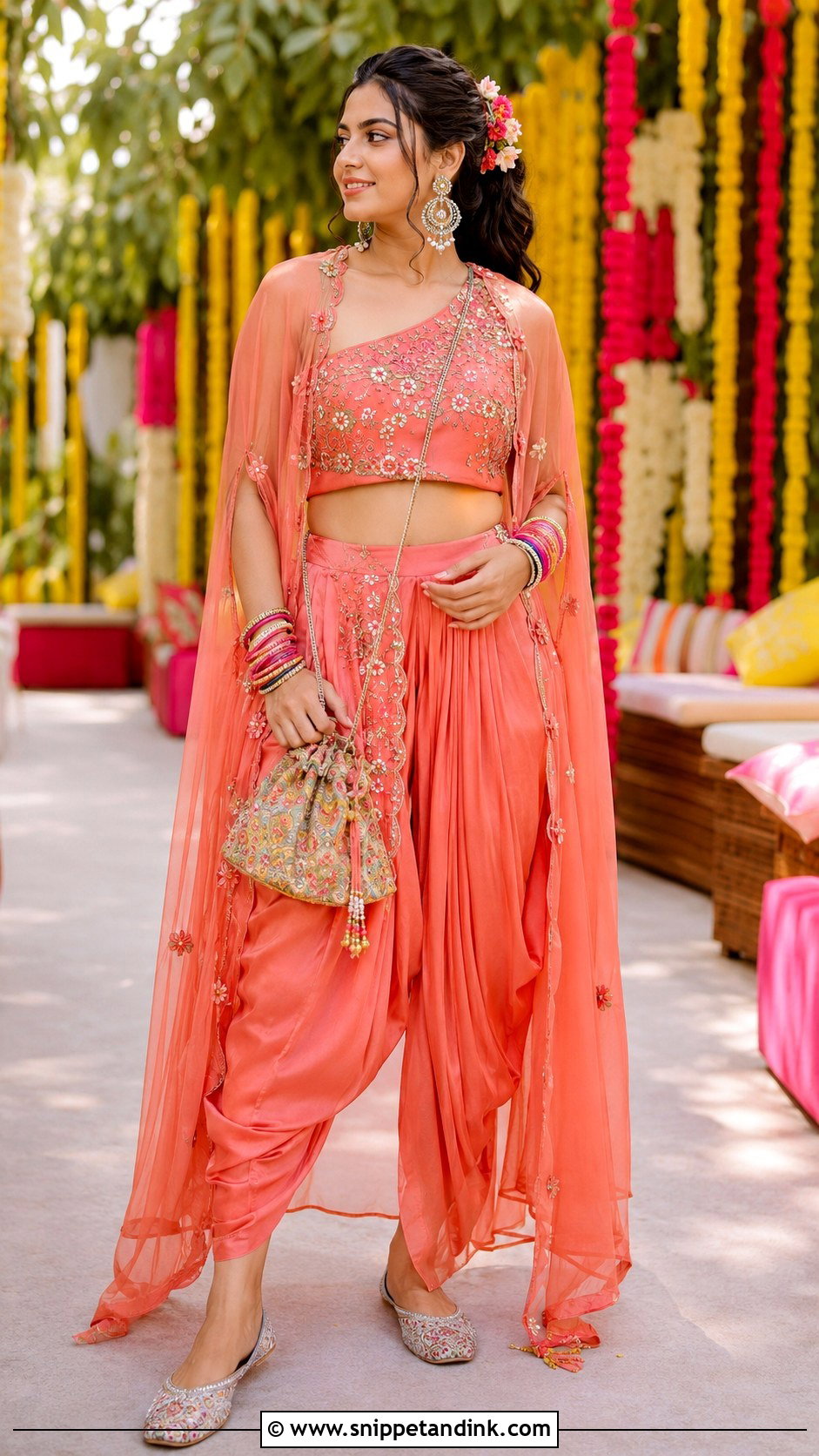
I suggest a dhoti pant set to sisters who want a break from skirts at the mehendi. Draped dhoti pants with a short embroidered kurti or a structured crop top look fresh in lime, coral, aqua or hot pink against floral decor. Check two things at the fitting: the drape should be stitched, not tied, and the waistband should sit at your natural waist, because a low-slung dhoti slips once you sit on the floor for henna. A short jacket or cape gives coverage without a dupatta, and a crossbody potli keeps your hands free while the artist works. Juttis or low block heels and a braid with small flowers finish the outfit.
16. Jacket Lehenga for the Reception
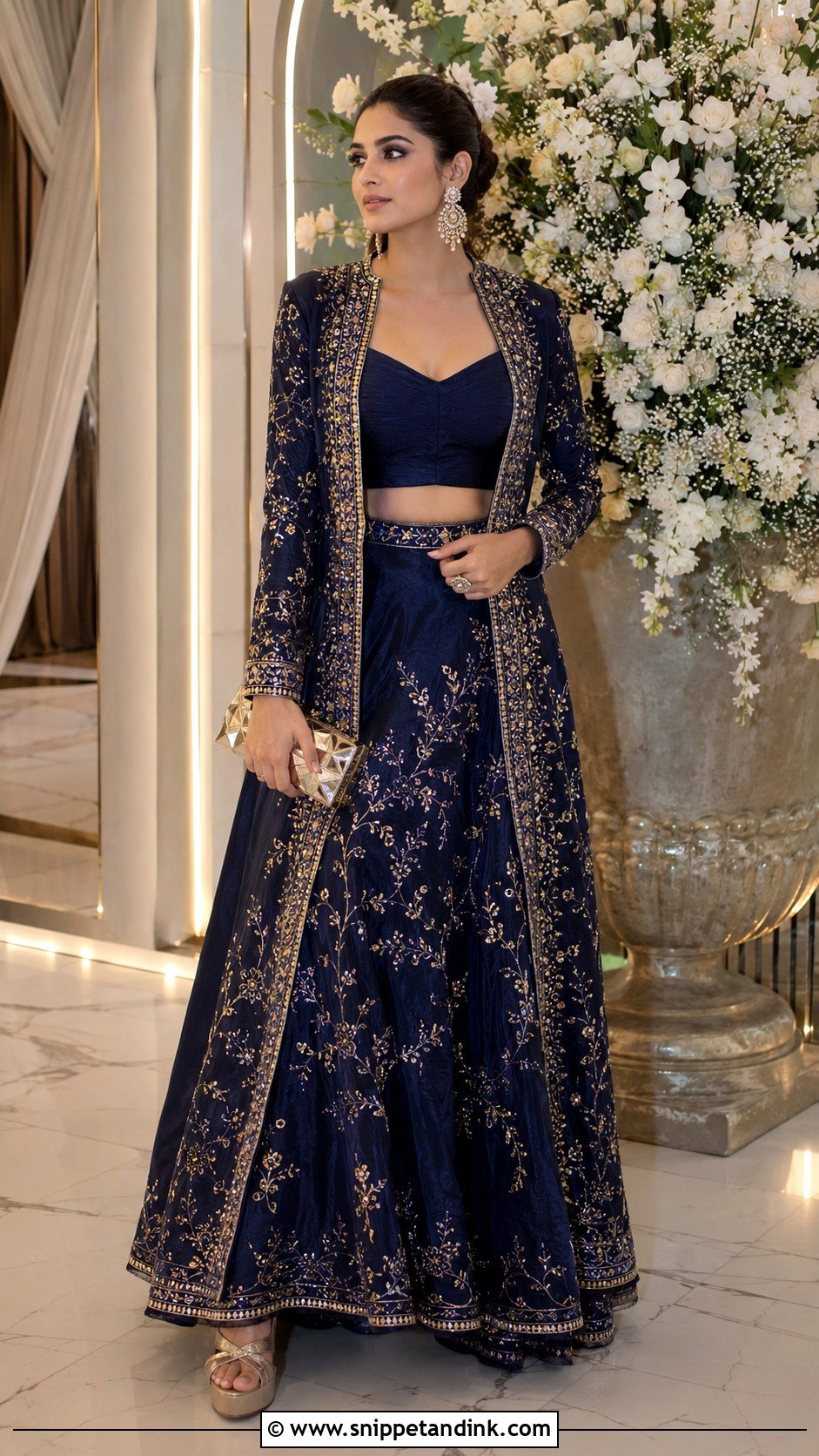
A jacket lehenga gives a sister a structured, grown-up look at the reception and reads nothing like a bridal outfit. Start with a solid or lightly worked skirt and blouse, then add a long front-open jacket in navy, deep green, burgundy, charcoal or antique gold. When the jacket carries heavy zardozi or sequins, keep the skirt quiet, otherwise the whole thing gets heavy and hot under reception lighting. Try sitting down in the jacket during the fitting; long jackets often pull across the hips when seated. Skip the dupatta entirely. Statement earrings, one cocktail ring and a box clutch are enough, with closed-toe heels and a sleek bun.
17. Ruffle Saree for a Modern Wedding Function
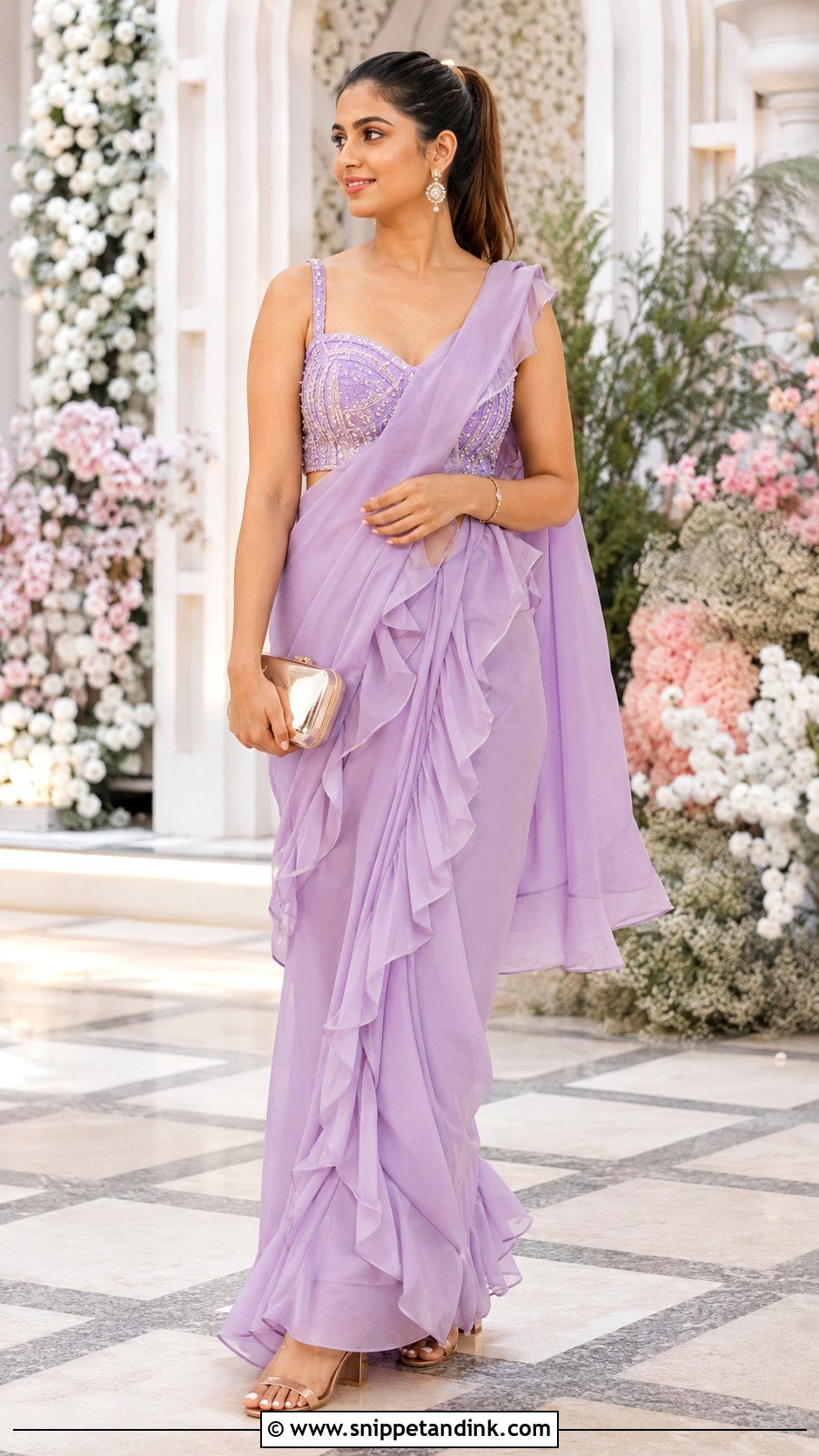
Ruffles turn a saree into something playful, which suits a modern pre-wedding event like a welcome dinner or a family performance. Chiffon, georgette and organza in coral, lilac, teal, powder blue or berry hold the ruffle shape best. The ruffled border already adds volume, so I keep the blouse clean with a simple neckline and skip oversized sleeves. Ruffles are light and tend to swing the pleats out of place, so pin the pleats firmly and fix the pallu at the shoulder. Medium earrings, a slim bracelet, metallic block heels and a sleek ponytail or side-swept waves are all it needs.
18. Palazzo Kurta Set for a Pre-Wedding Lunch
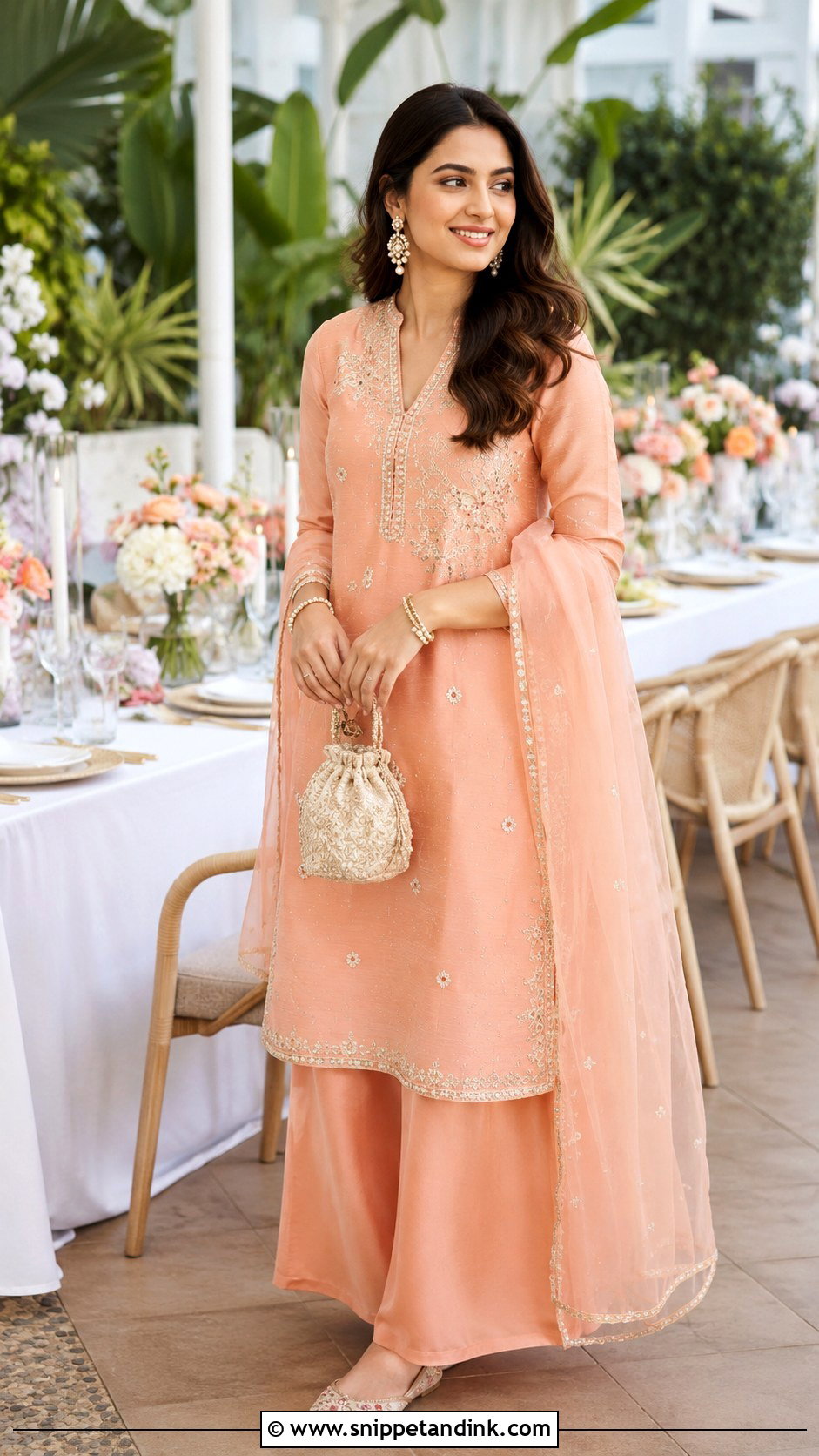
For a relaxed pre-wedding lunch, a palazzo kurta set is what I’d pack. A straight or slightly flared kurta in chanderi, a silk blend or soft cotton with light embroidery breathes well in daytime heat, and flowing palazzos keep it comfortable through long conversations. The proportion I check is simple: the kurta should end above the widest point of the palazzo so both shapes show. Peach, mint, powder blue, coral and soft yellow suit daylight. Pearl earrings, slim bangles and a mini potli keep it understated, which saves your heavier outfits for the big ceremonies.
19. Kanjivaram Saree for a South Indian Wedding
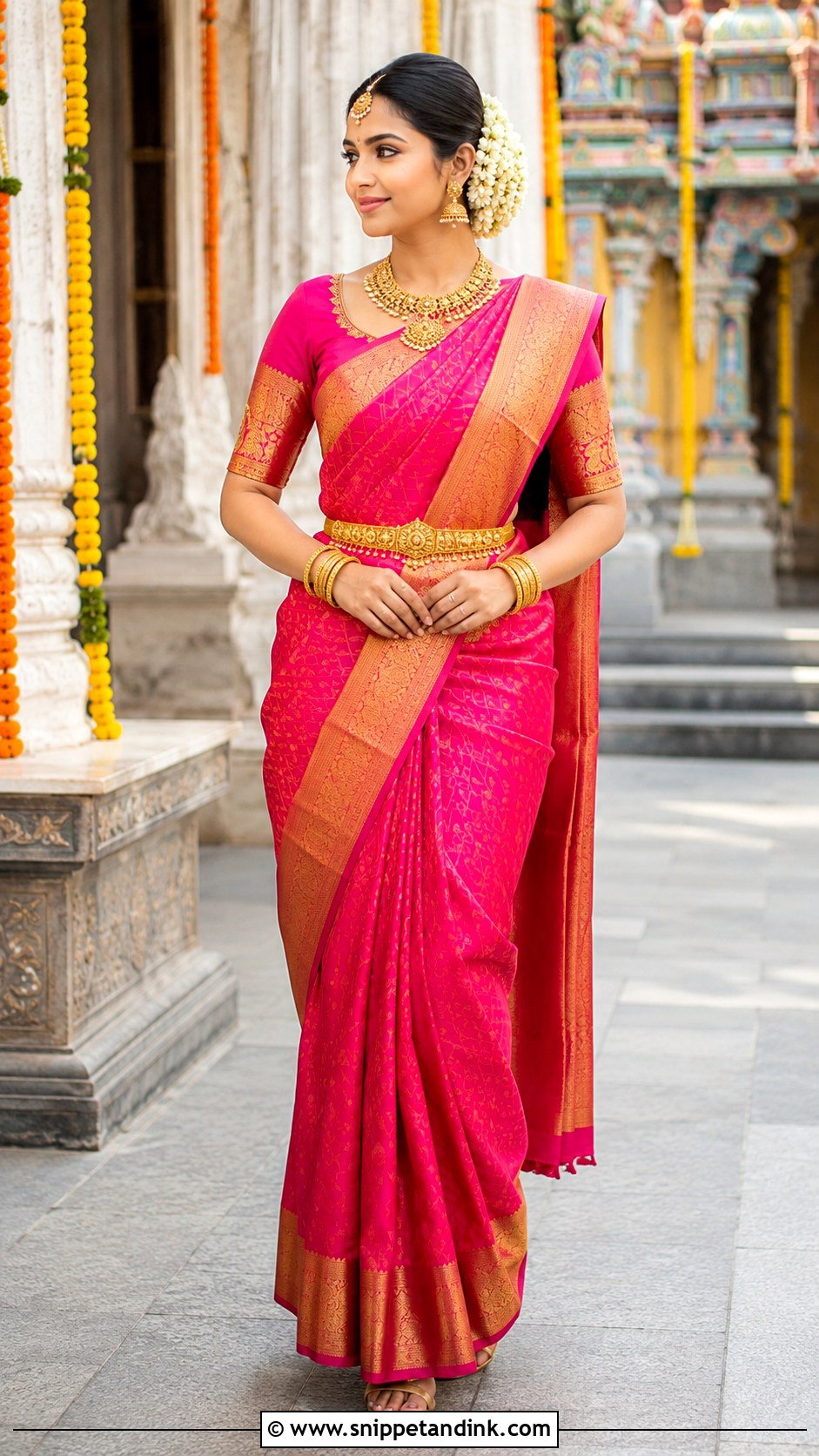
Kanjivaram silk is woven with a heavy zari and a contrasting border, and it holds its body through a long South Indian ceremony. Emerald, royal purple, turmeric yellow, ruby pink and deep blue are classic choices. A tailored silk blouse with elbow sleeves and a worked neckline suits the weight of the saree. Kanjivaram is stiff when new, so I ask sisters to have the pleats pre-ironed before the day; it makes draping faster and the pleats sit flatter. Temple jewellery, a waist belt and jhumkas complete it, with a centre-parted bun and jasmine. If the bride is also in Kanjivaram, pick a contrasting colour and keep your jewellery simpler than hers.
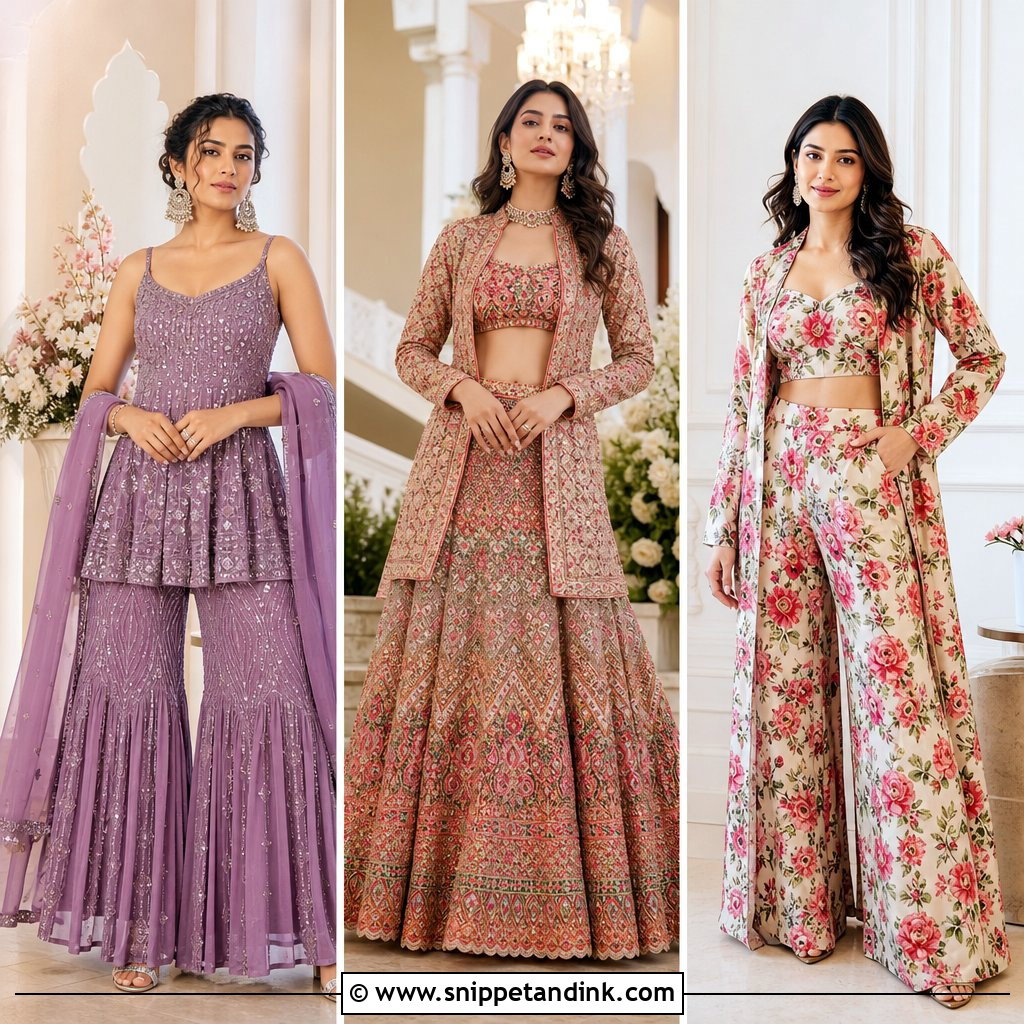
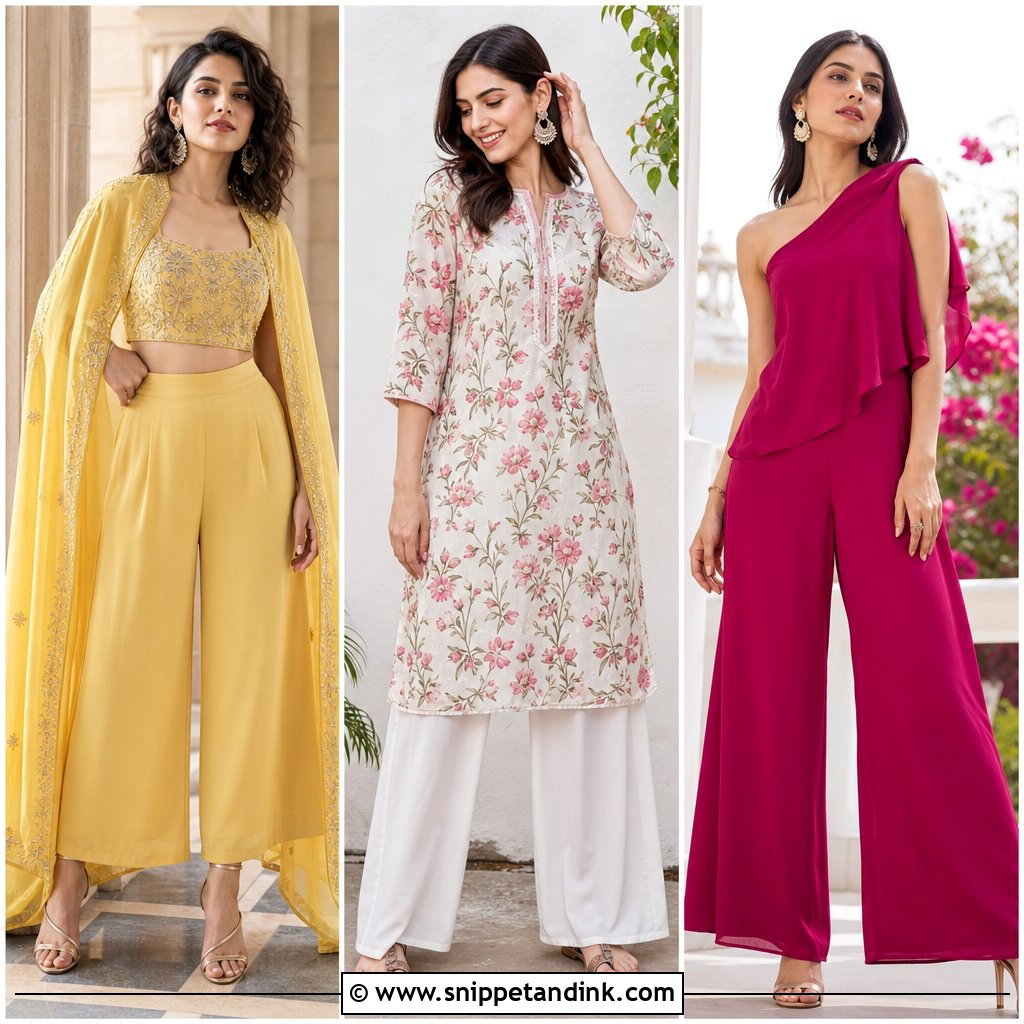
20. Indo-Western Gown for the Reception
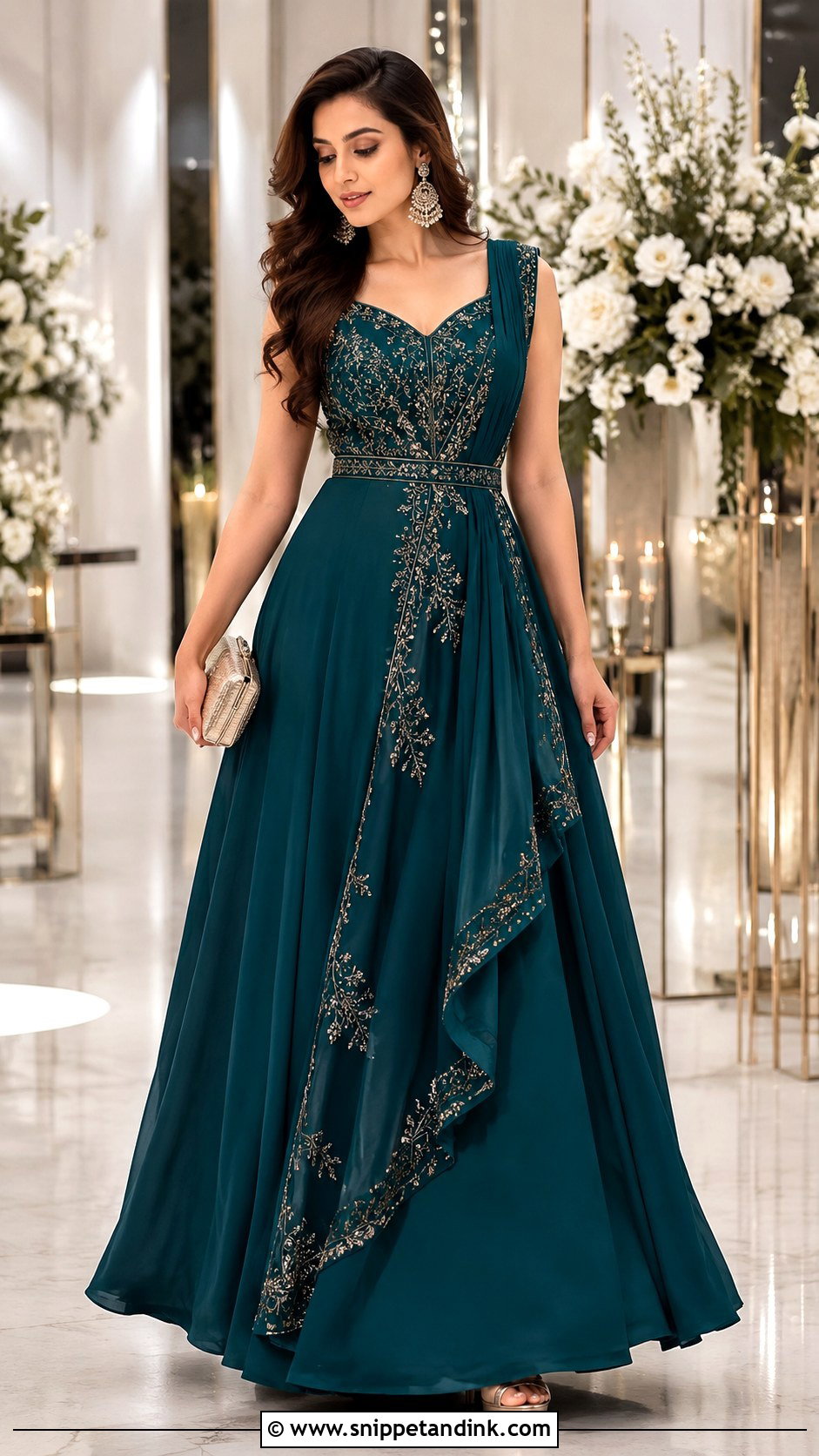
An Indo-Western gown is one piece, which makes it the easiest reception outfit to get into after a long week. Look for Indian embroidery on a floor-length silhouette, a draped panel inspired by a pallu, or a cape fixed at the shoulders. Midnight blue, emerald, plum, rose gold and deep teal hold sequins and beadwork well under evening light. The bodice needs to be secure while leaving room to walk and dance. Have the hem finished with your actual reception shoes on; platform heels stop the hem dragging only if the length was set for them. Statement earrings, a bracelet and a metallic clutch are enough.
Turmeric, Wet Henna and Sweat: Protecting Each Outfit Through the Week
A wedding week is hard on clothes, and the sister’s clothes take more of it than anyone’s. A few habits keep each outfit wearable until the last function.
During the functions
- At haldi, assume you will get paste on you. If it lands on cotton, rinse it in cold water the same day; hot water sets turmeric. On silk or zari, leave it alone and take it to a dry cleaner who handles bridal wear.
- At mehendi, get fully dressed and pinned before the artist starts. Once the paste is on, you can’t fix a strap or a dupatta for hours.
- Use dress shields or a cotton camisole under heavy silk blouses at the sangeet. Sweat marks under the arms don’t come out of raw silk easily.
Between functions and after the wedding
Hang each outfit inside out to air for a night before it goes back in the bag; damp packing is what causes the musty smell and dull zari. Never hang a heavy lehenga skirt by its waistband for months, because the weight stretches the waist. Fold it with tissue between the layers and store it in a cotton or muslin bag, not plastic, and refold it along new lines every few months so the creases don’t crack the embroidery. Keep zari and real silver away from rubber bands and perfume, both of which make metallic thread tarnish faster.
One Sister, Several Functions, and a Suitcase That Has to Work
A sister’s wardrobe works when each outfit matches the job of that function: washable and light for haldi and mehendi, built for movement at the sangeet and jaggo, and dressier silk, velvet or sequins for the ceremony and reception. Coordinate with the bride’s palette without copying her, and wear every pair of shoes around the house before the first function. Above all, pick shapes you can sit, crouch and dance in. When an outfit fits properly and lets you move, it looks right in both the formal portraits and the candid ones.
You'll Like These Ideas:


Leave a Reply