
Fifties bridal style is built on one idea: a small, defined waist with volume below it. Everything else, the neckline, the lace, the gloves and the little veil, is there to support that shape. Tea length is the version people recognize first, while satin ball gowns and long-sleeved lace designs take it somewhere more formal. Many modern bridal designers still make sweetheart bodices, A-line skirts, layered tulle, illusion lace and matching boleros in this spirit. In my fittings the difference between authentic and costume usually comes down to restraint in the accessories, not the dress itself. Below are twenty complete looks that work for a courthouse, a garden or a ballroom, each with the shoes, veil and jewelry I’d pair with it.
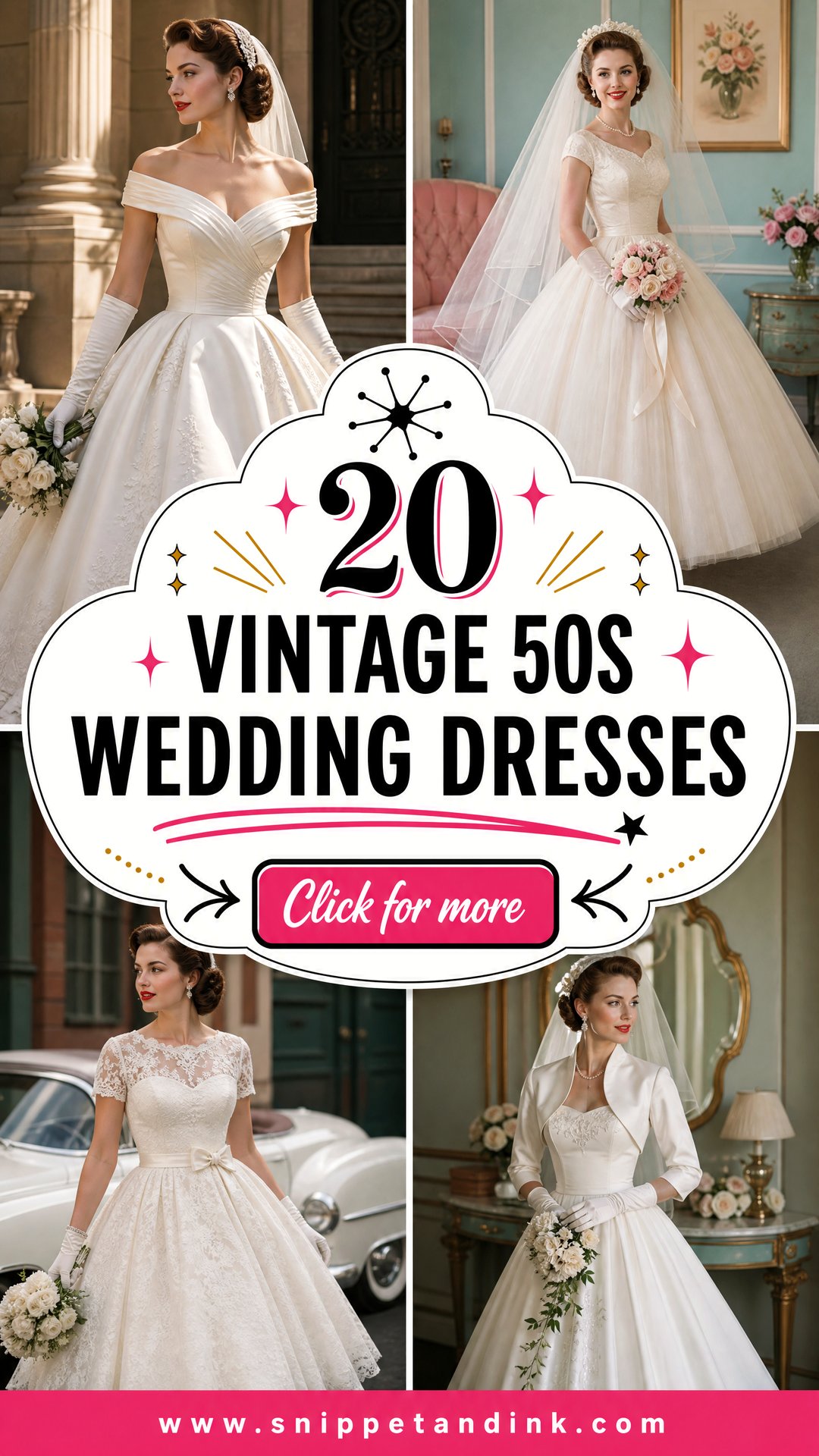
The Shape Lives Under the Skirt
A fifties gown photographed on a hanger can look flat and ordinary. Put the right foundations under it and the same dress suddenly looks like the decade. I build the underlayers first and fit the dress over them, never the other way around.
- Petticoat: a soft layered tulle petticoat gives the bell shape. Choose one or two layers fewer than you think; you can add volume but you can’t sit down in too much.
- Longline bra or bustier: it smooths the ribcage so the fitted bodice runs straight to the waist without a ridge where a regular bra ends.
- Waist cincher: optional, and only if it’s comfortable. A gentle one takes a little off the waist; a tight one makes eating and breathing a chore.
- Slip: a smooth half slip between the petticoat and your legs stops netting from scratching through a ten-hour day.
Bring every one of these to your first fitting. If you add them later, the bodice length and hem both change, and the alterations have to be redone.
1. Tea-Length Vintage 50s Wedding Dress
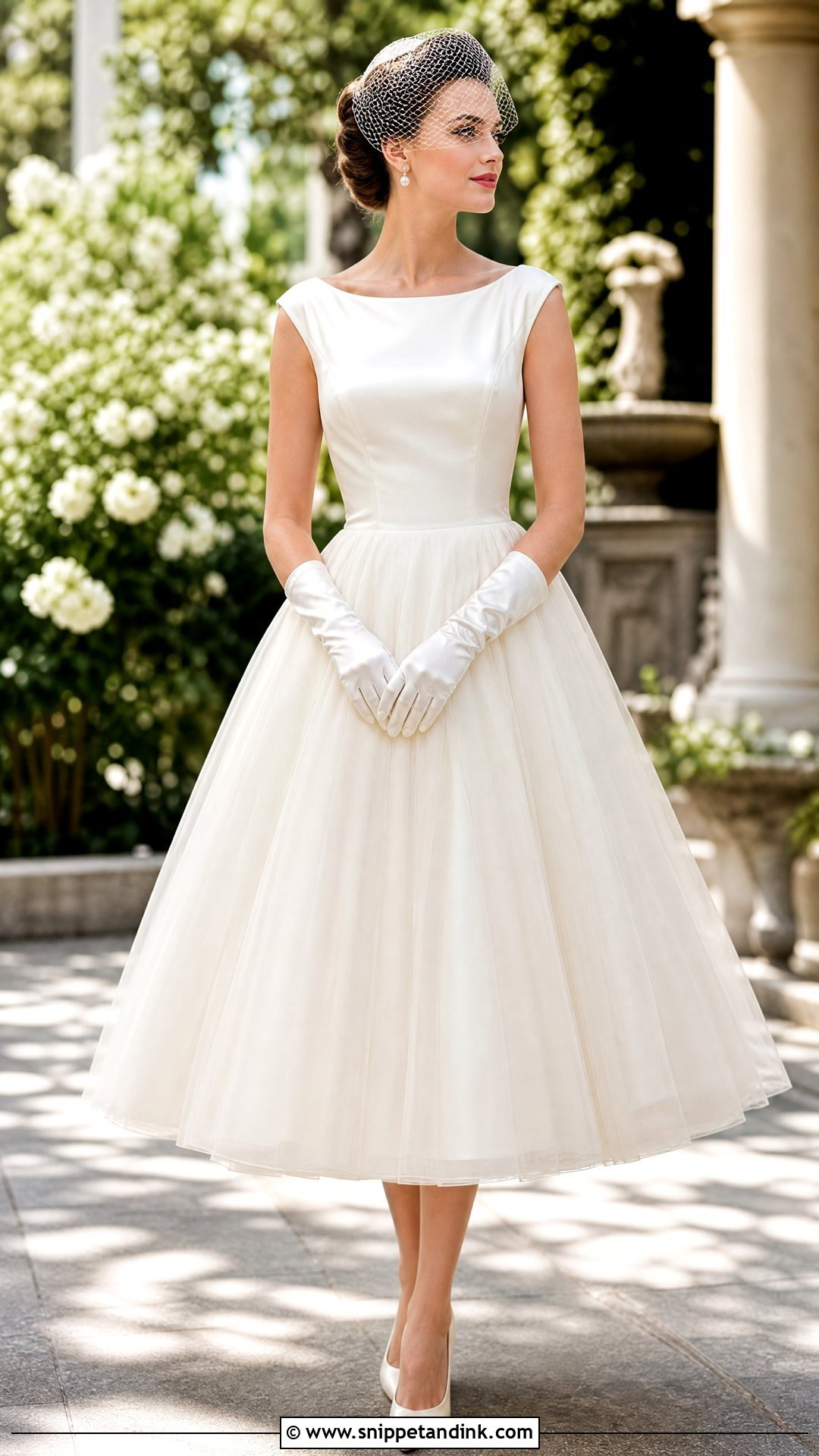
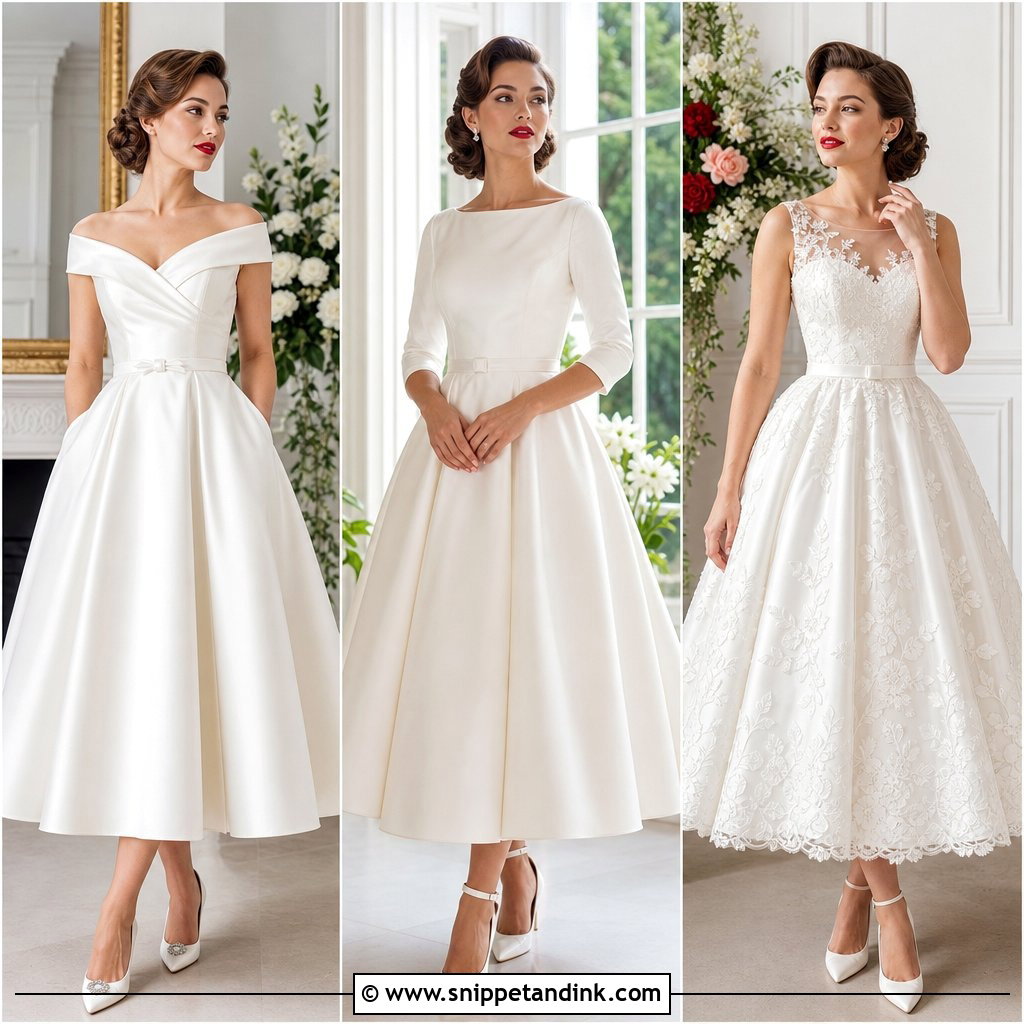
Tea length is the shape most people picture for a 1950s bridal look, and for good reason. A fitted bodice with a bateau, scoop or sweetheart neck sits over a full skirt ending between knee and ankle, held out by a layered tulle petticoat. Ivory pointed pumps, pearl studs and wrist gloves complete it, with a birdcage or shoulder veil to keep the proportions short and neat. It suits courthouse ceremonies, daytime receptions and gardens because you can walk, sit and dance freely. The hem placement is the detail I fuss over most: it should end at the narrowest point of the calf, which is different on every bride, so I pin it with her wedding shoes on.
2. Lace Vintage 50s Wedding Dress
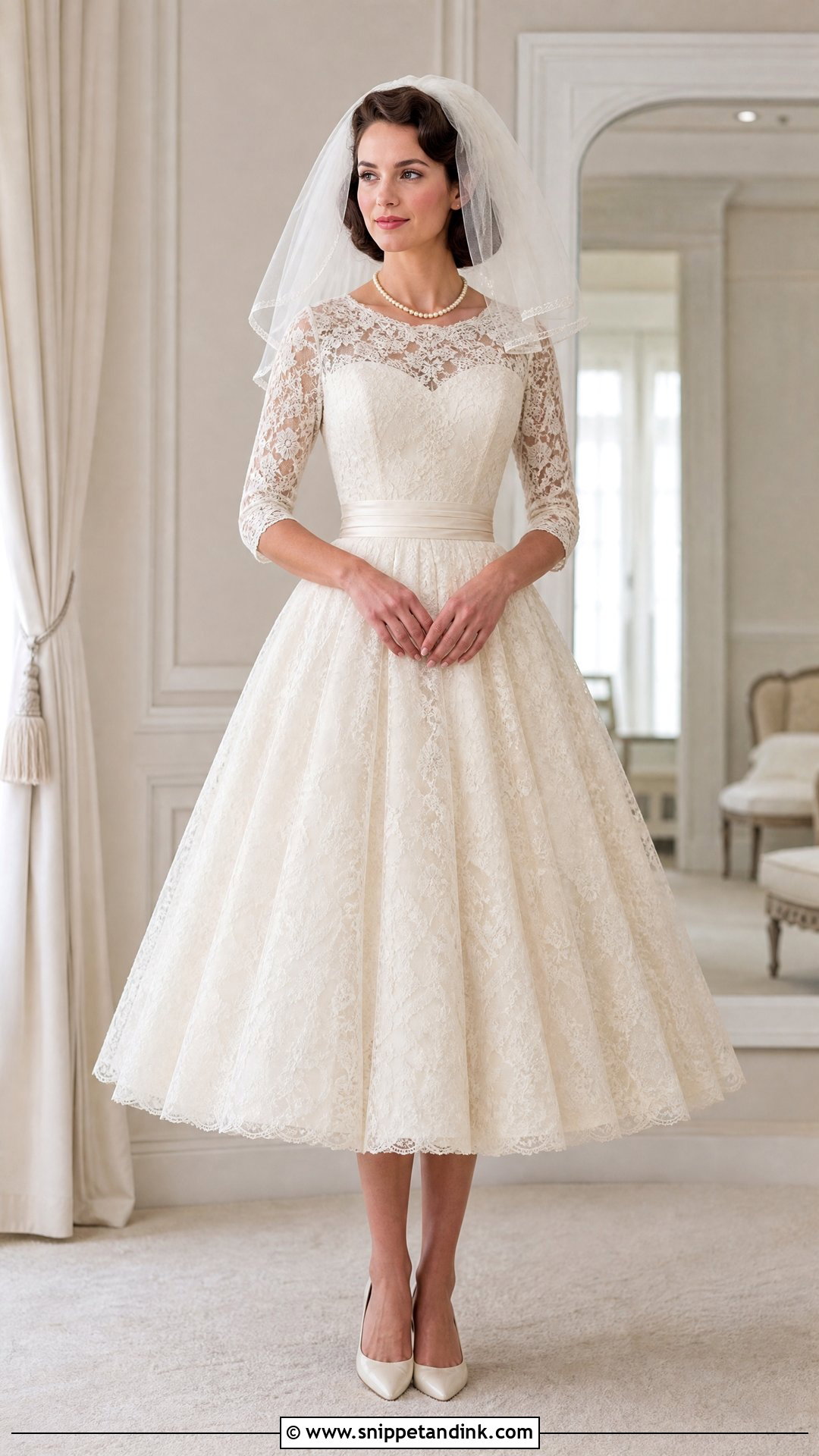
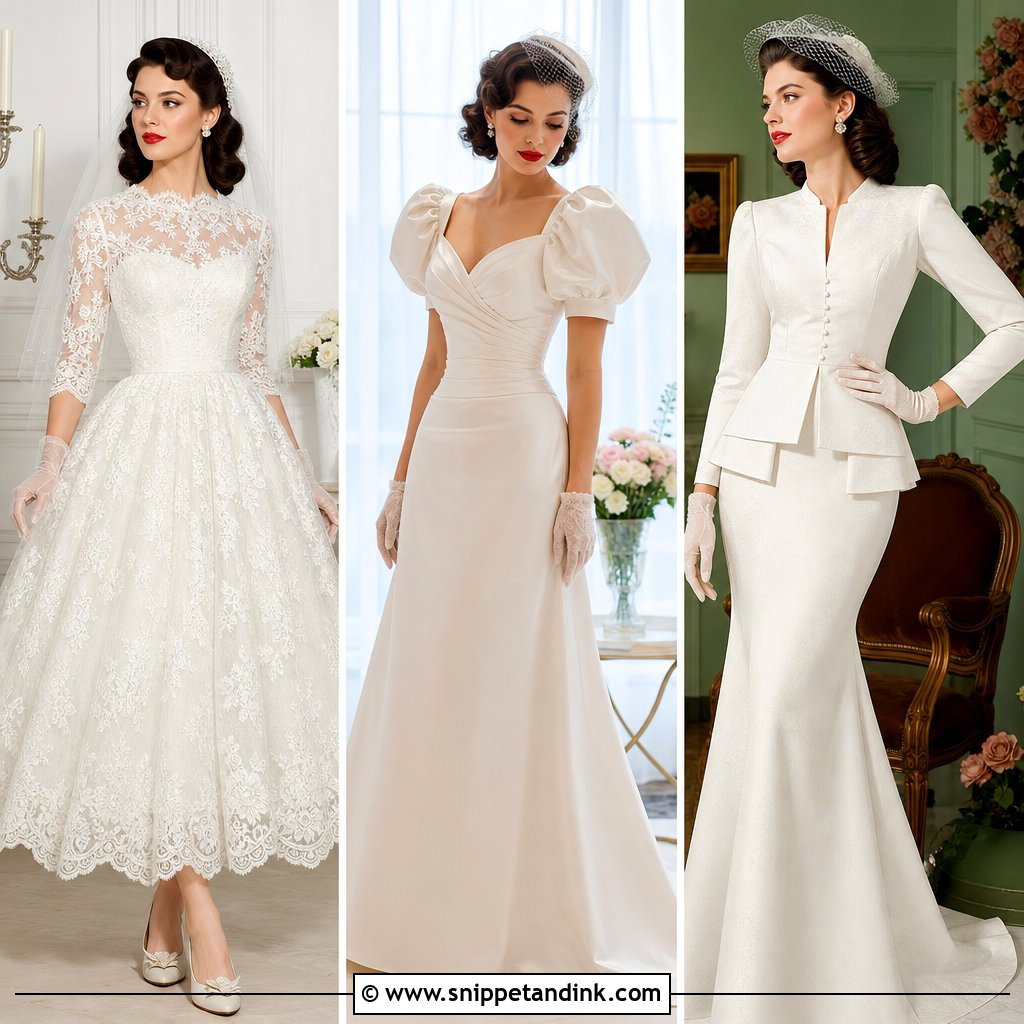
Lace gives a fifties gown softness without heaviness, if it’s backed properly. Look for floral lace over a structured lining, a fitted waist and a gently flared skirt; tea length feels playful, floor length more traditional. Satin pumps, a single strand of pearls and a narrow sash in the gown’s own color keep it tidy, and a clean-edged fingertip veil stops the lace looking busy. In cooler months, a fitted lace bolero with three-quarter sleeves adds coverage. If you’re buying a true 1950s lace dress, check it in daylight for brittle spots and underarm discoloration first. A bridal seamstress can often add a soft new lining, which takes the scratch out of old lace before any alterations begin.
3. Satin Vintage 50s Wedding Dress
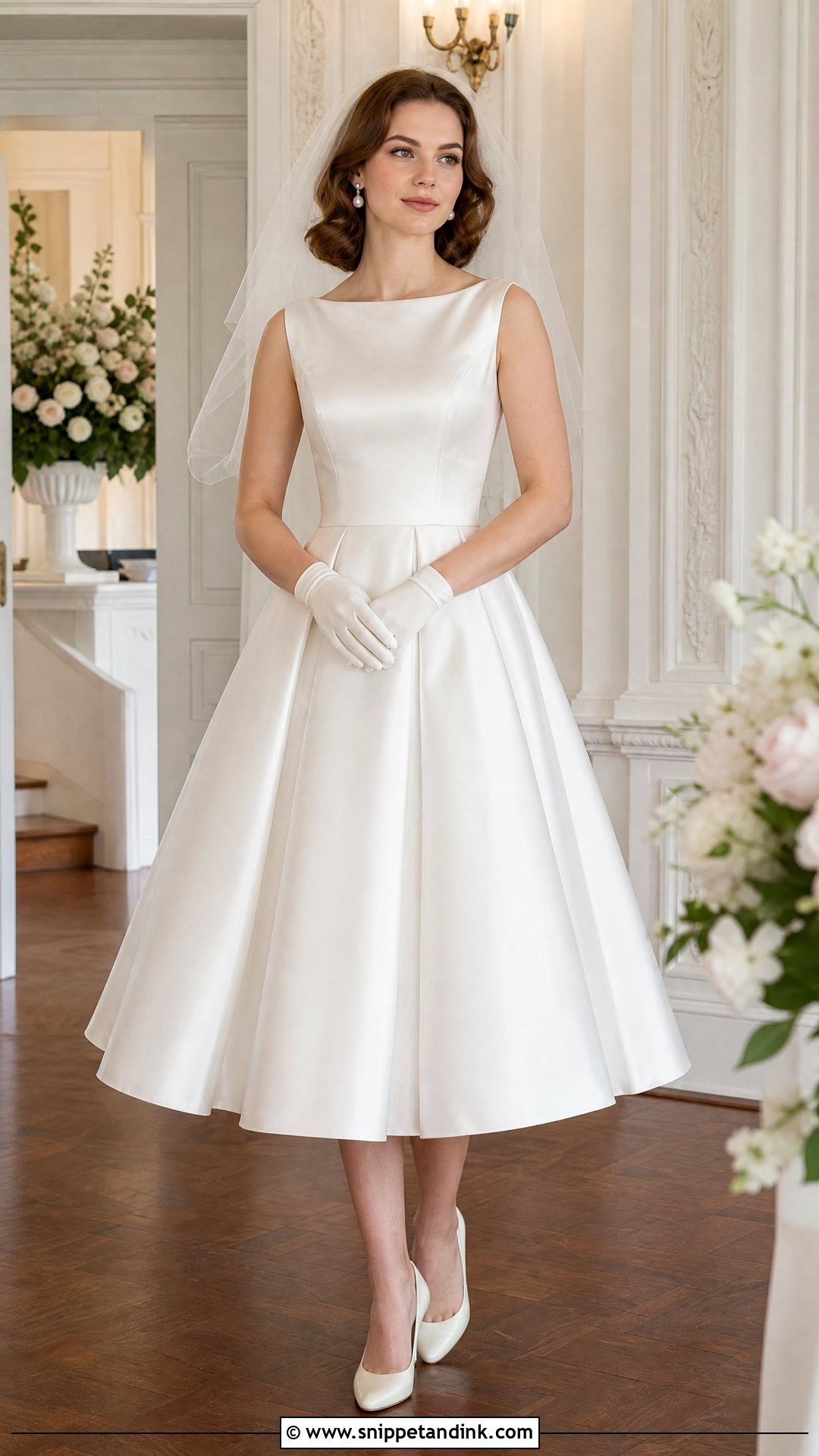
Satin was the luxury fabric of the decade, and it holds a structured skirt better than almost anything. Choose a fitted bodice at the natural waist with a full tea or floor-length skirt; box pleats give volume without layers of netting. Closed-toe ivory heels, pearl drops and a structured clutch suit it, and a sheer elbow-length veil softens the hard sheen. For a stronger retro note, add short gloves and a narrow belt with a small bow. Satin reflects light very differently indoors and out, so I take brides to a window and then under warm lamps before they commit; some ivories turn yellow under tungsten. Smooth undergarments and a proper steam are not optional with this fabric.
4. Long-Sleeve Vintage 50s Wedding Dress
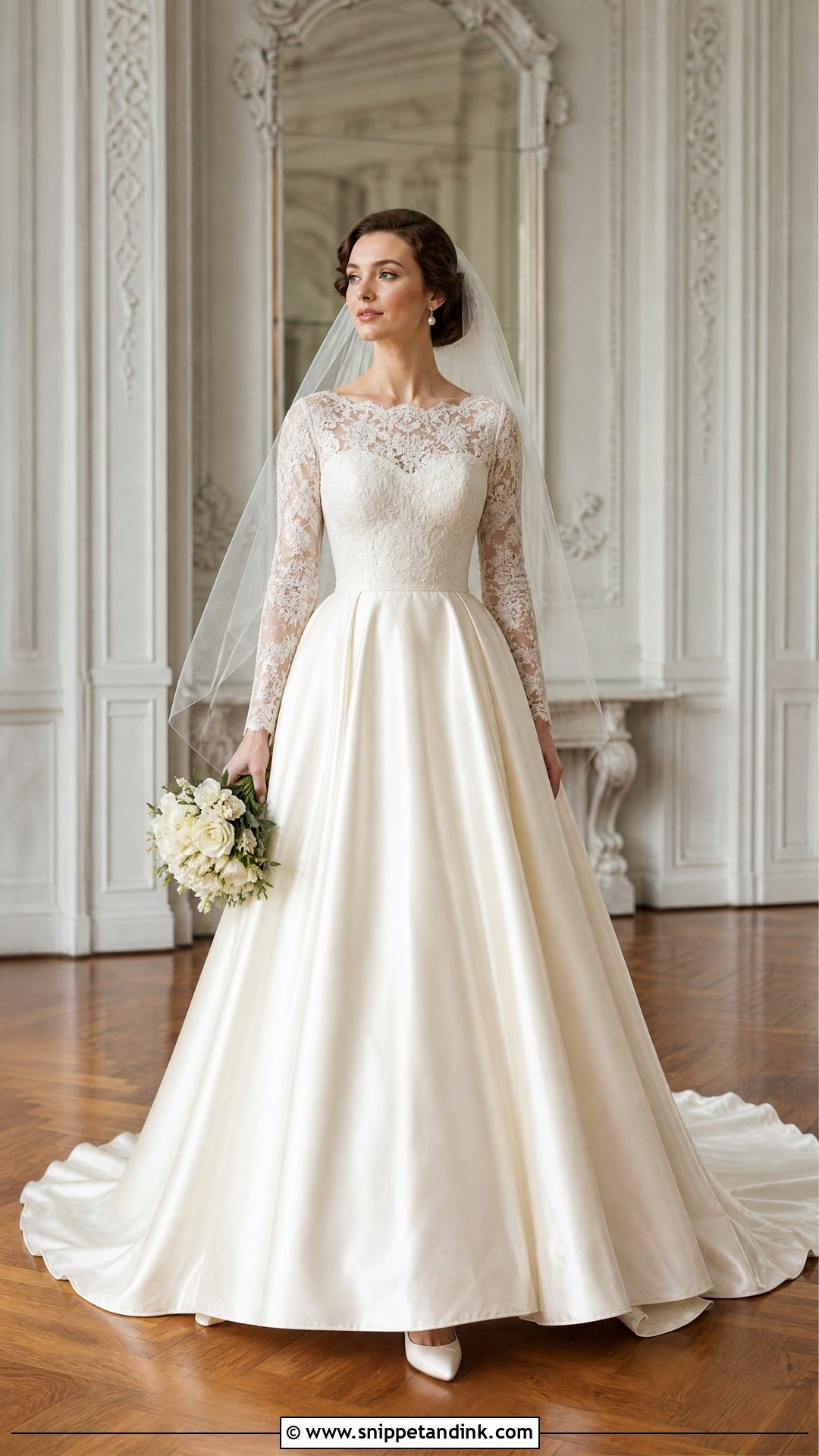
Long sleeves in a fifties gown give coverage while keeping the fitted shape of the decade. Sheer lace sleeves over a sweetheart lining feel light; smooth satin sleeves read cleaner and warmer for winter. A defined waist and full skirt keep the extra fabric from looking severe. Pearl earrings, classic pumps and a fingertip veil on a small comb finish it, and I skip the necklace, since the sleeves already provide detail. Tea length suits a small ceremony, floor length with a modest train a formal venue. Have the bride lift her arms overhead at the fitting. Fifties sleeves were set high and narrow, and a reproduction cut that way can lock your arms at shoulder height, which you’ll notice the first time you hug someone.
5. Sweetheart Vintage 50s Wedding Dress
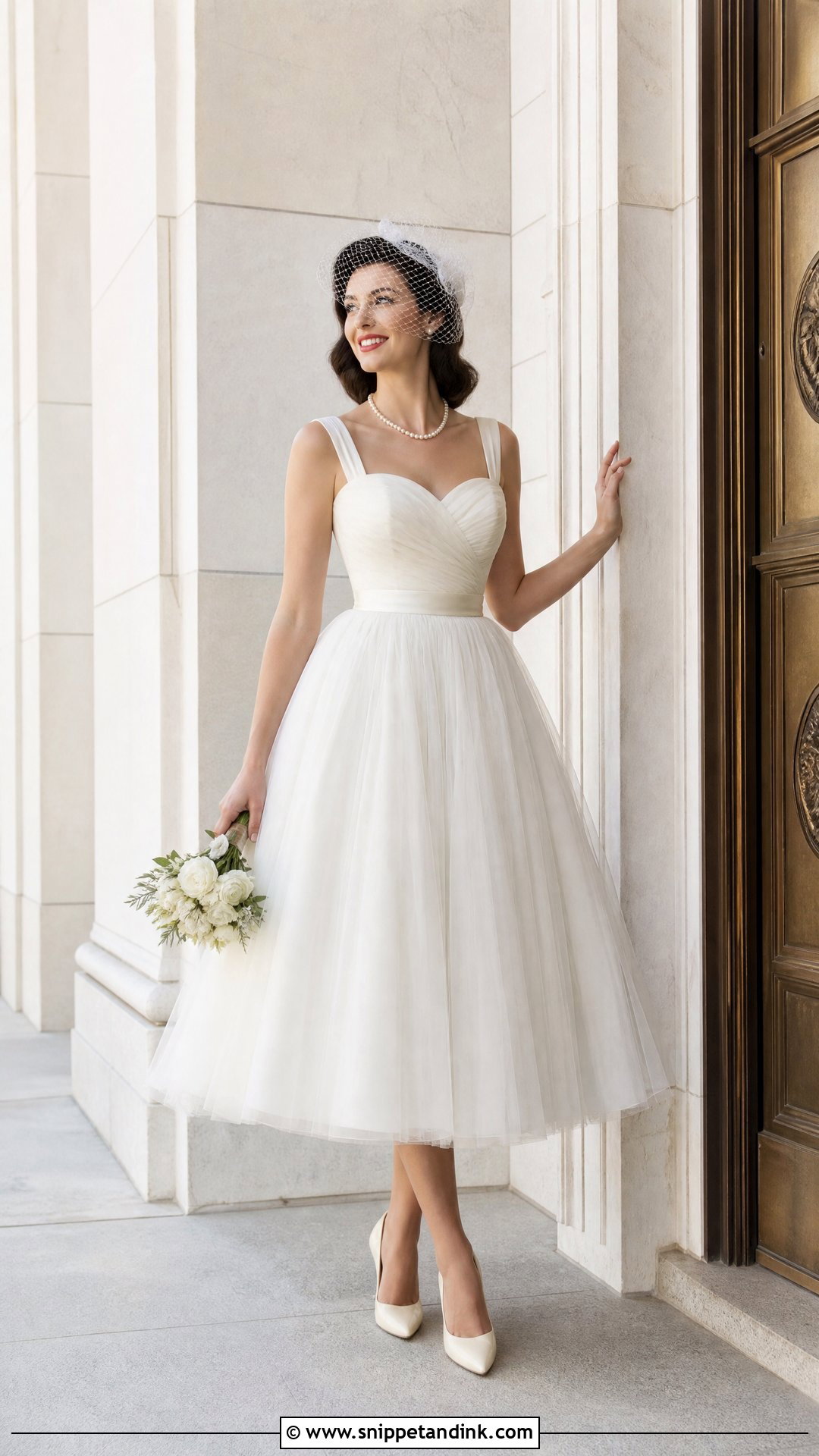
A sweetheart neckline makes a soft curve at the top of a fitted bodice, and it needs real support to stay there. I prefer internal boning, wide straps or a removable lace bolero over an unstructured bodice that has to be hitched up all night. Tulle at tea length feels light; satin looks more polished. A single strand of pearls, small earrings and closed-toe kitten heels suit it, with a birdcage veil to draw the eye to the face. For a more covered ceremony look, add a sheer illusion top or a cropped jacket and take it off later. A narrow satin sash keeps the waist plain so the neckline and the hourglass do the talking.
6. Bateau Neck Vintage 50s Wedding Dress
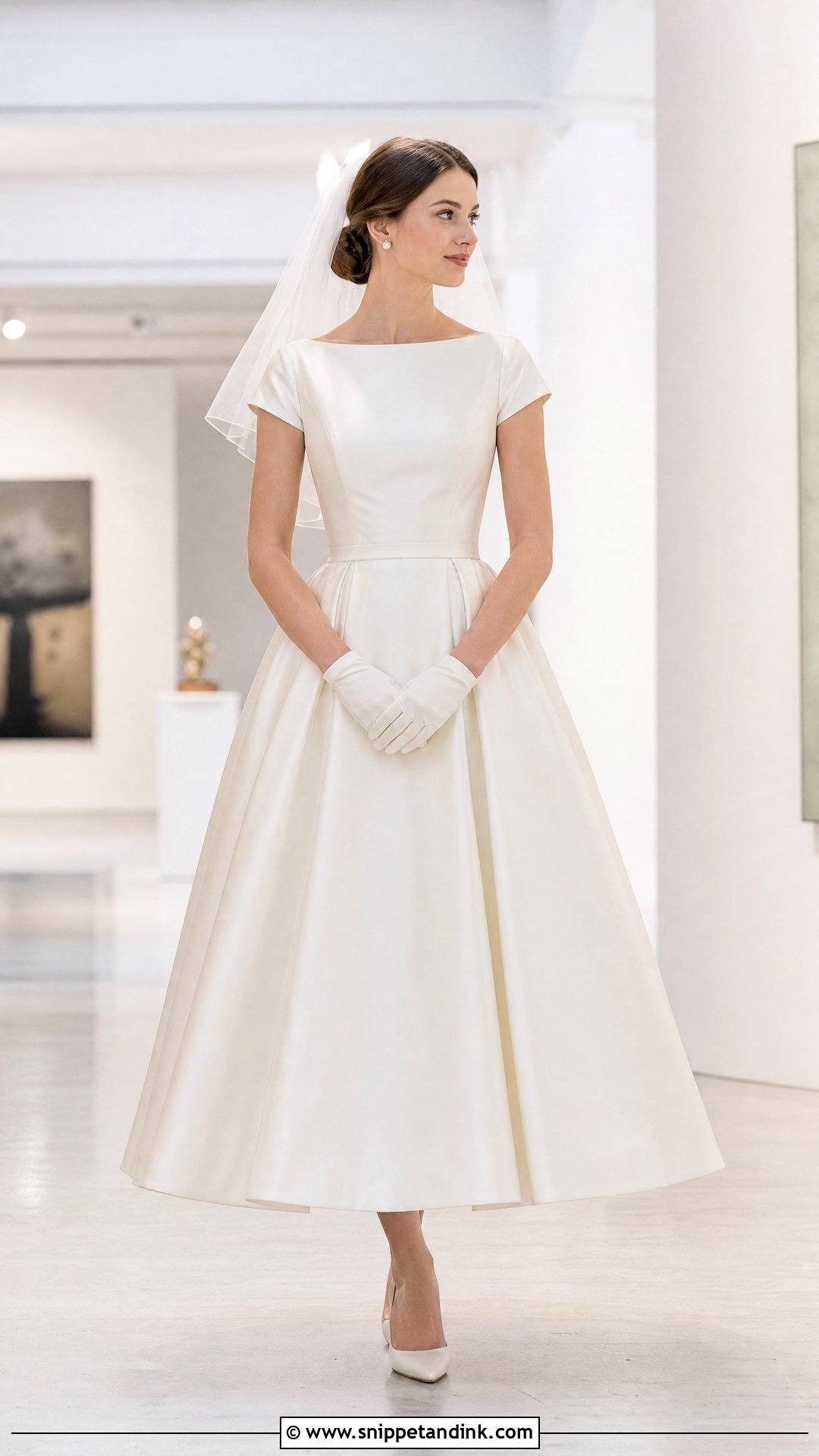
The bateau neckline runs straight across the collarbones, and it’s one of the most flattering cuts of the period on most frames. Pair it with cap sleeves, a fitted torso and a full skirt from the natural waist, in tea length for a relaxed ceremony or floor length for formality. Pearl studs, short gloves and pointed satin pumps leave the line uncluttered. Wear the hair in a smooth low bun or a soft curled updo, with a shoulder veil fixed behind it. Width is the thing to get right. On broad shoulders, I ask for a slightly curved bateau that dips a little at the center; on petite frames, a narrower opening stops the dress looking like it’s sliding off.
7. Off-the-Shoulder Vintage 50s Wedding Dress
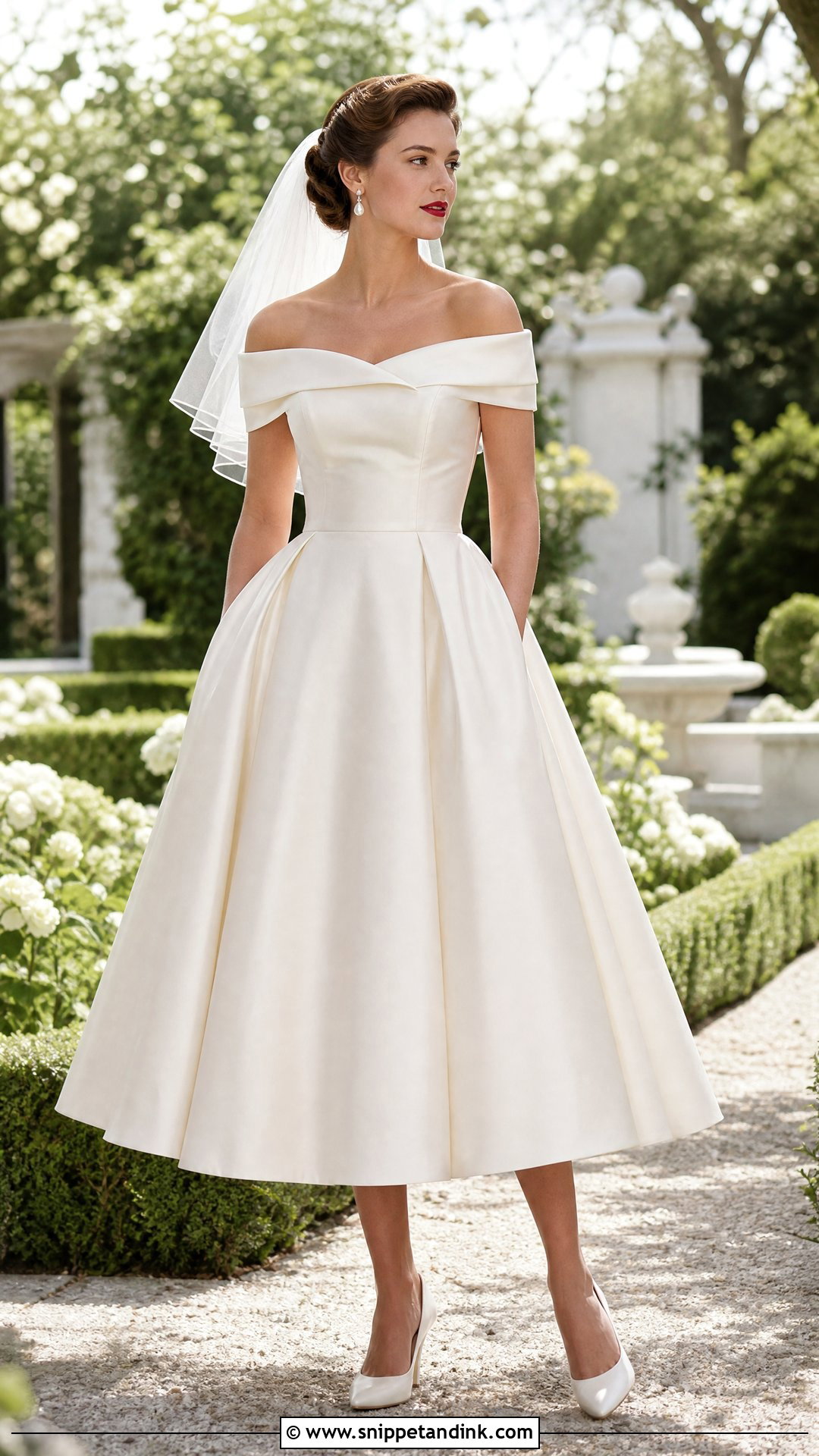
Off-the-shoulder gowns from this era tend to have a folded satin band, lace-trimmed sleeves or a pleated portrait collar. The bodice must be tight enough that you’re not tugging it up each time you raise your arms, so expect it to feel snug at the fitting. Pearl drops, ivory pumps and a short veil behind a polished updo finish the look, and I’d skip a big necklace unless the neckline is very plain. Tea length suits afternoon; a floor-length satin skirt reads grander. Use a petticoat for controlled fullness rather than maximum volume, which can push the bodice up at the front when you sit. Keep the waist defined and the accessories few.
8. Tulle Vintage 50s Wedding Dress
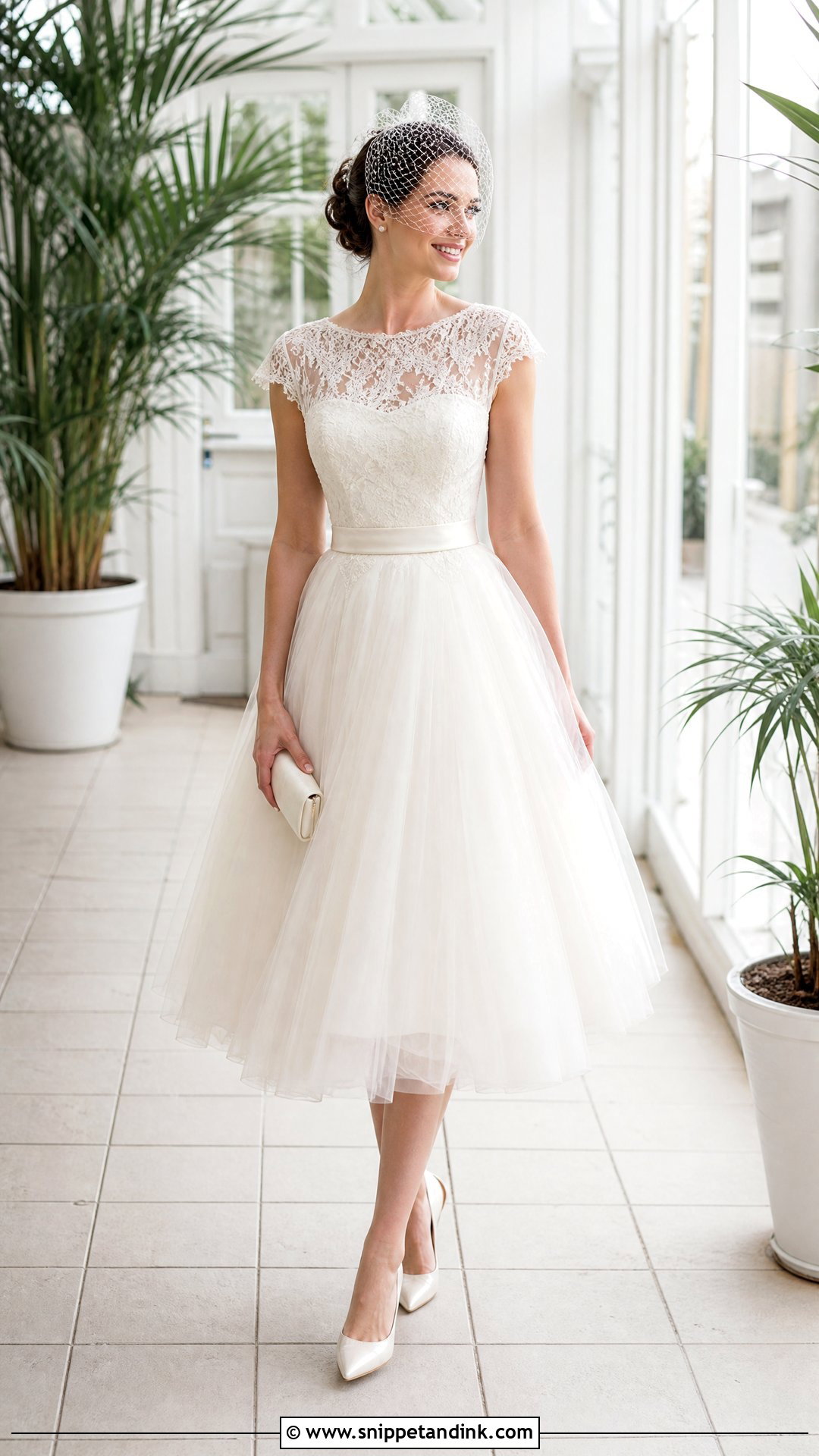
Layers of tulle create the floating skirt that so many fifties brides wore. Pair a fitted satin or lace bodice with a softly gathered tea-length skirt and a smooth lining, which stops the netting scratching your legs. The petticoat should shape the skirt without making it hard to sit or walk. Plain ivory pumps, pearl studs and a small satin clutch keep it simple; a birdcage or a plain shoulder veil both suit. Tulle already brings movement, so keep bracelets and heavy belts away. Hang the dress from its loops for a few days before the wedding and have the layers professionally steamed. Then check the hem from every side, because tulle layers drop at slightly different rates and can look uneven.
9. Short-Sleeve Vintage 50s Wedding Dress
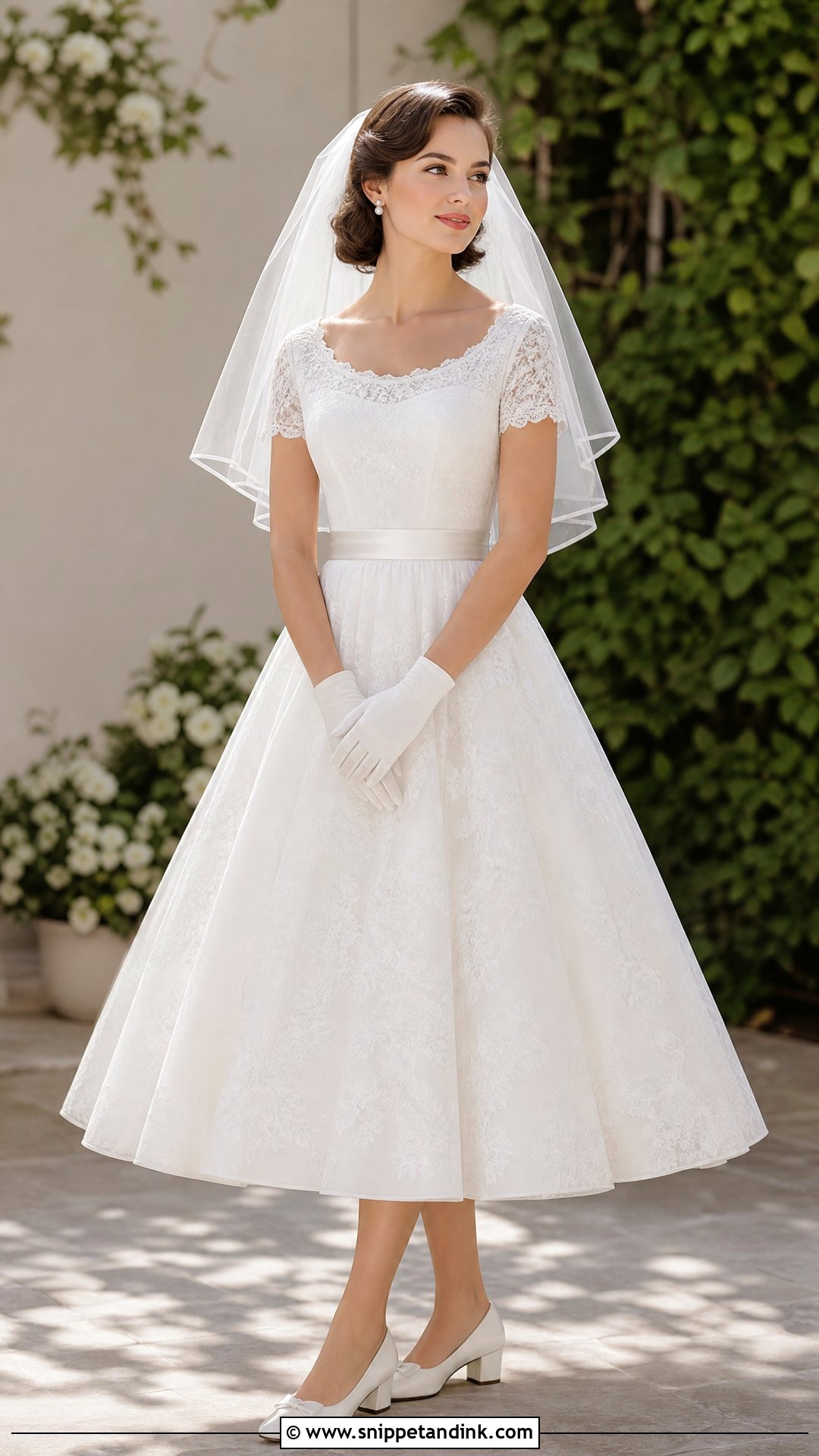
Short sleeves keep the cheerful, youthful character of the decade while giving some coverage. Fitted lace sleeves, small caps or neat cuffed sleeves all pair well with a scoop neck and a tea-length A-line skirt that shows off the shoes. Pearl earrings, low block heels and a shoulder veil complete the look, with wrist gloves and a small bouquet for daytime. Where the sleeve ends changes how the arm looks. I avoid a hem at the widest point of the upper arm and suggest a slightly angled or scalloped edge instead. Tailor the shoulder and armhole carefully, because any pull there drags the whole bodice out of place.
10. High-Neck Vintage 50s Wedding Dress
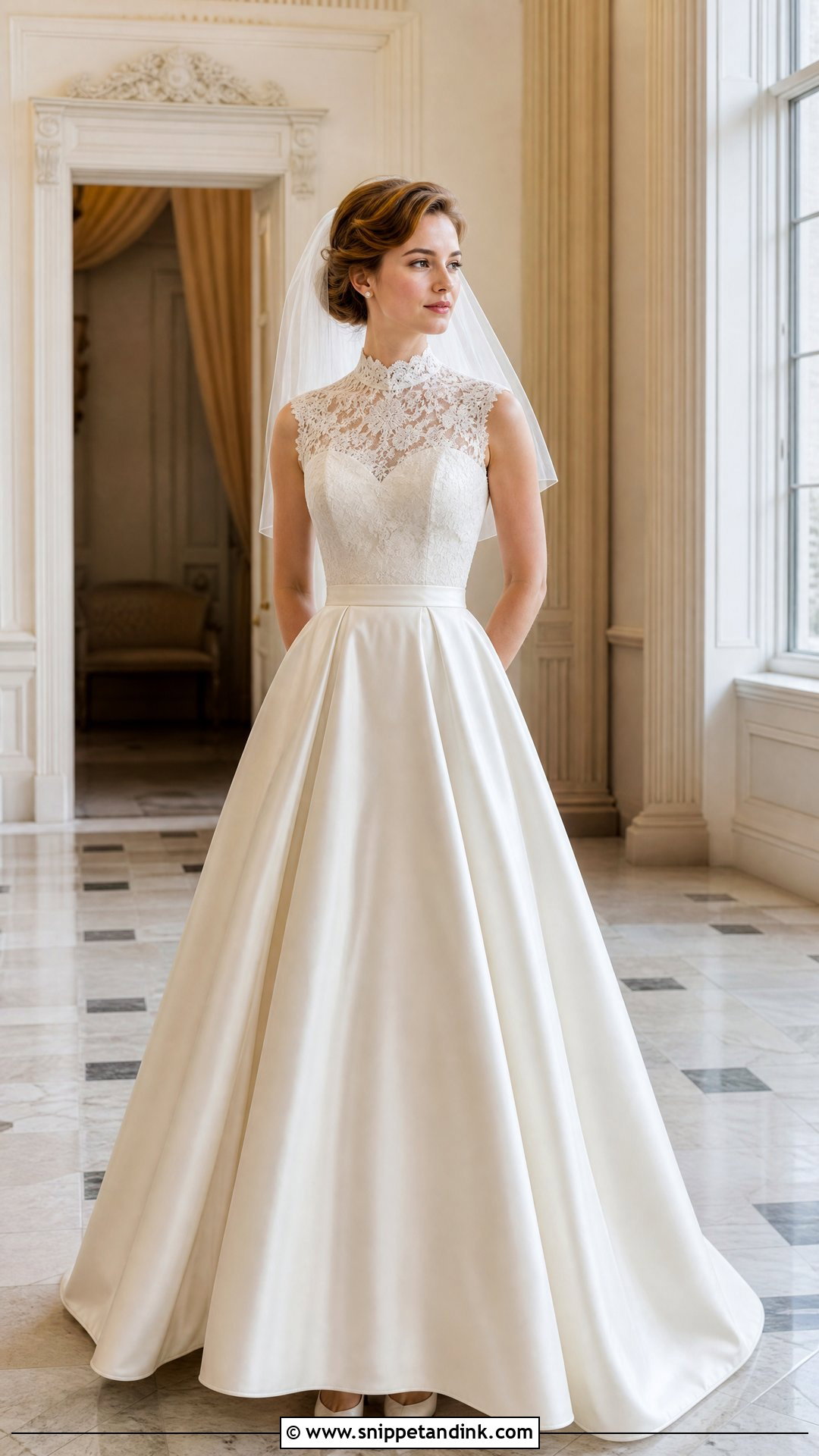
High necks bring modest coverage and fine detail to a fifties outfit. An illusion lace neckline over a sweetheart lining is the classic version; a small stand collar with covered buttons is the stricter one. Balance the covered bodice with a defined waist and full skirt. Pearl studs, satin pumps and a clean fingertip veil behind the head complete it; skip the necklace. Floor length reads formal, tea length relaxed. In warm weather, choose lightweight lace and a sleeveless lining. The test I never skip: sit down and turn your head both ways. A collar that rubs the jaw in the fitting room will be unbearable by the speeches.
11. Vintage 50s Wedding Dress With Bolero
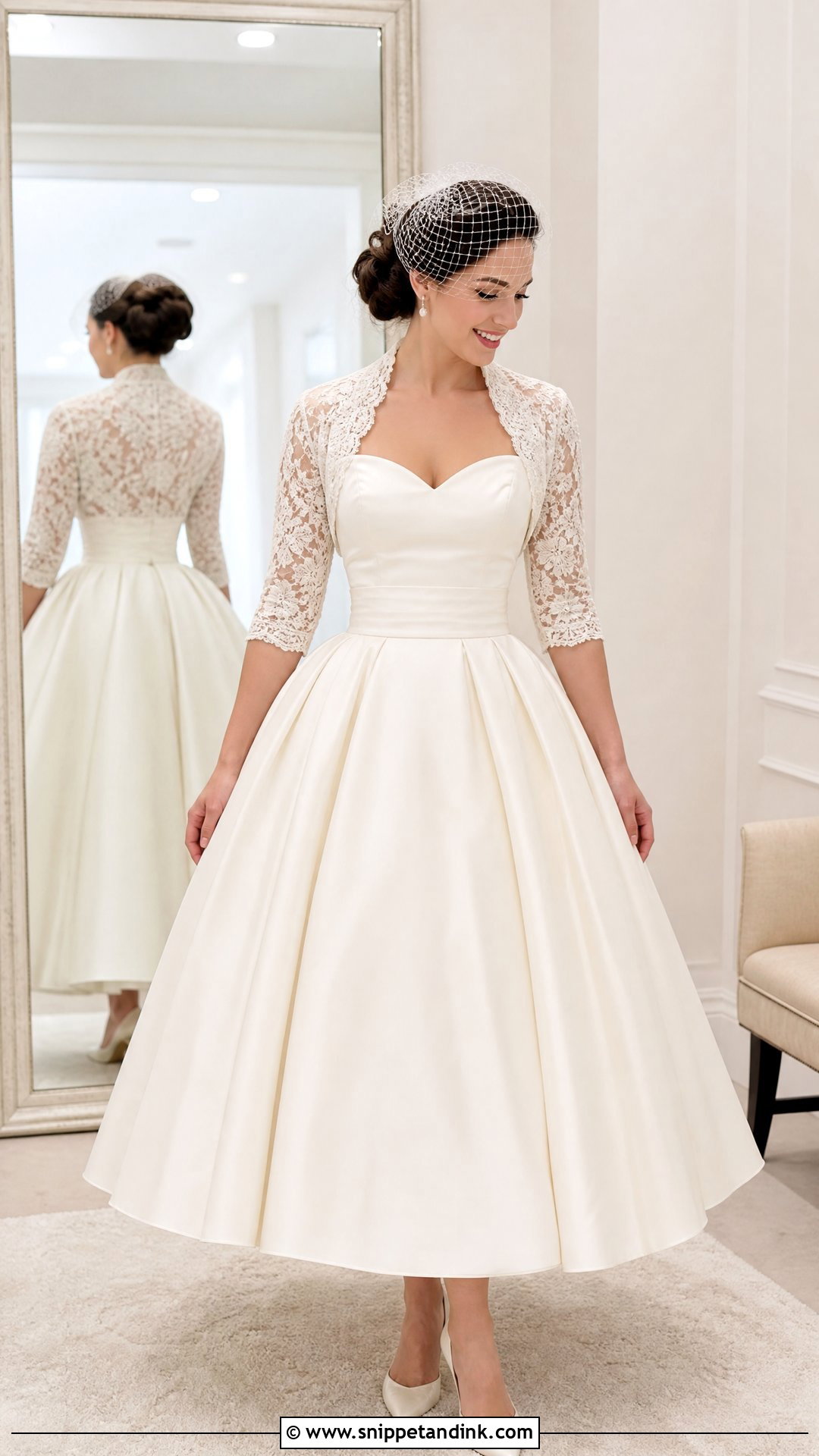
A bolero gives you two looks in one outfit, which is why it was such a fixture in the period. Start with a strapless or sleeveless tea-length dress, fitted at the bodice with a full satin or tulle skirt, then add a cropped lace bolero with cap, three-quarter or long sleeves to suit the season. The jacket should stop near the natural waist so it doesn’t hide the dress’s shape. Ivory pumps, pearls and a birdcage or shoulder veil finish it. Take the bolero off for the reception and you’re ready to dance. Match the whites carefully; two ivories that look the same in the shop can differ clearly in photographs, so I compare them outdoors.
12. Vintage 50s Wedding Dress With Petticoat
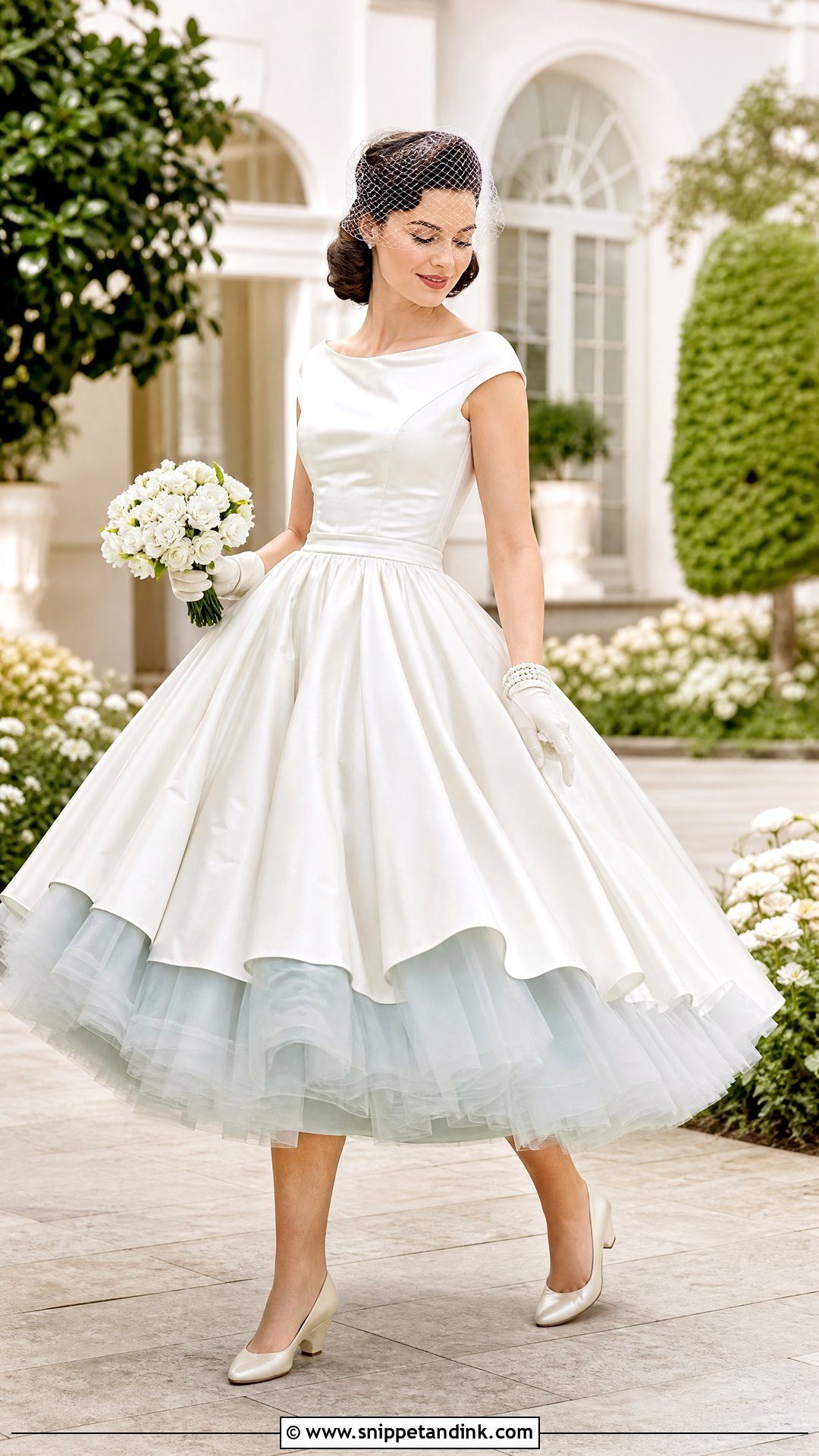
The petticoat is what actually makes a fifties skirt, so I treat it as part of the dress rather than an extra. Start with a tea-length fit-and-flare gown in satin, lace or tulle, and choose a petticoat ending just above the outer hem. White or ivory is traditional; a pale blue one gives a hidden detail when the skirt swings. Closed-toe pumps, a pearl bracelet, short gloves and a neat birdcage veil complete it. The skirt should be lifted, not distorted, so try a couple of fullness levels at fittings, and sit, walk, climb stairs and dance in each. A layered soft tulle petticoat with a lining is far kinder over a long day than a stiff crinoline net.
13. Vintage 50s Wedding Dress With Bow
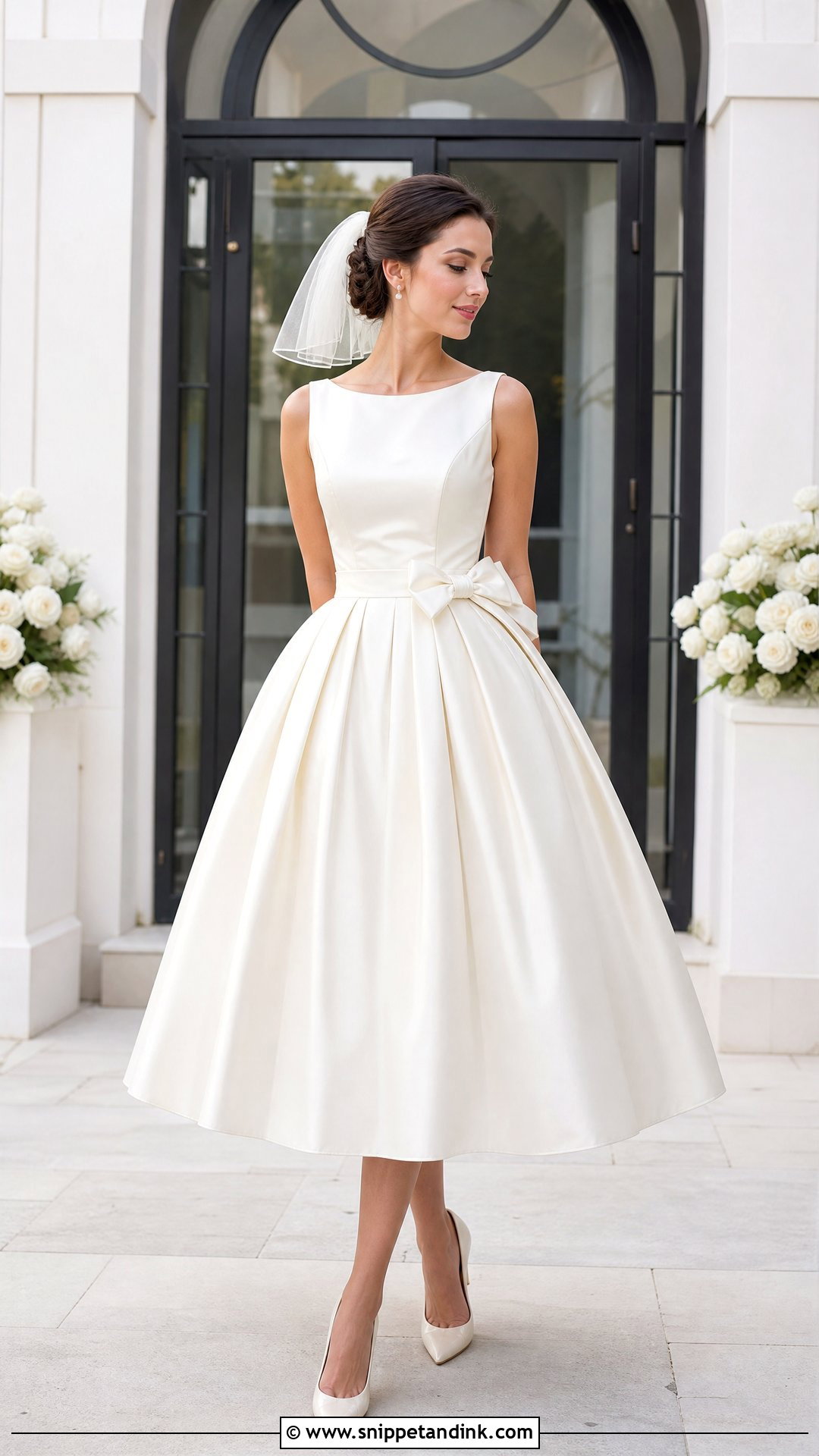
A bow at the waist gives a simple satin gown a charming midcentury finish. Choose a tea-length dress with a fitted bodice and softly pleated skirt, with a flat bow at the front, side or back. The size of the bow should match your frame; a large bow on a petite bride swallows the waist. Pointed ivory heels, pearl studs and a short, plain-edged veil keep it clean, and a long veil would cover a back bow, so I avoid that pairing. A compact bouquet and small clutch finish it. For a less sweet look, ask for a tailored bow in structured fabric. Have it stitched down at several points, because bows flatten and droop after a car ride.
14. Vintage 50s Wedding Dress With Buttons
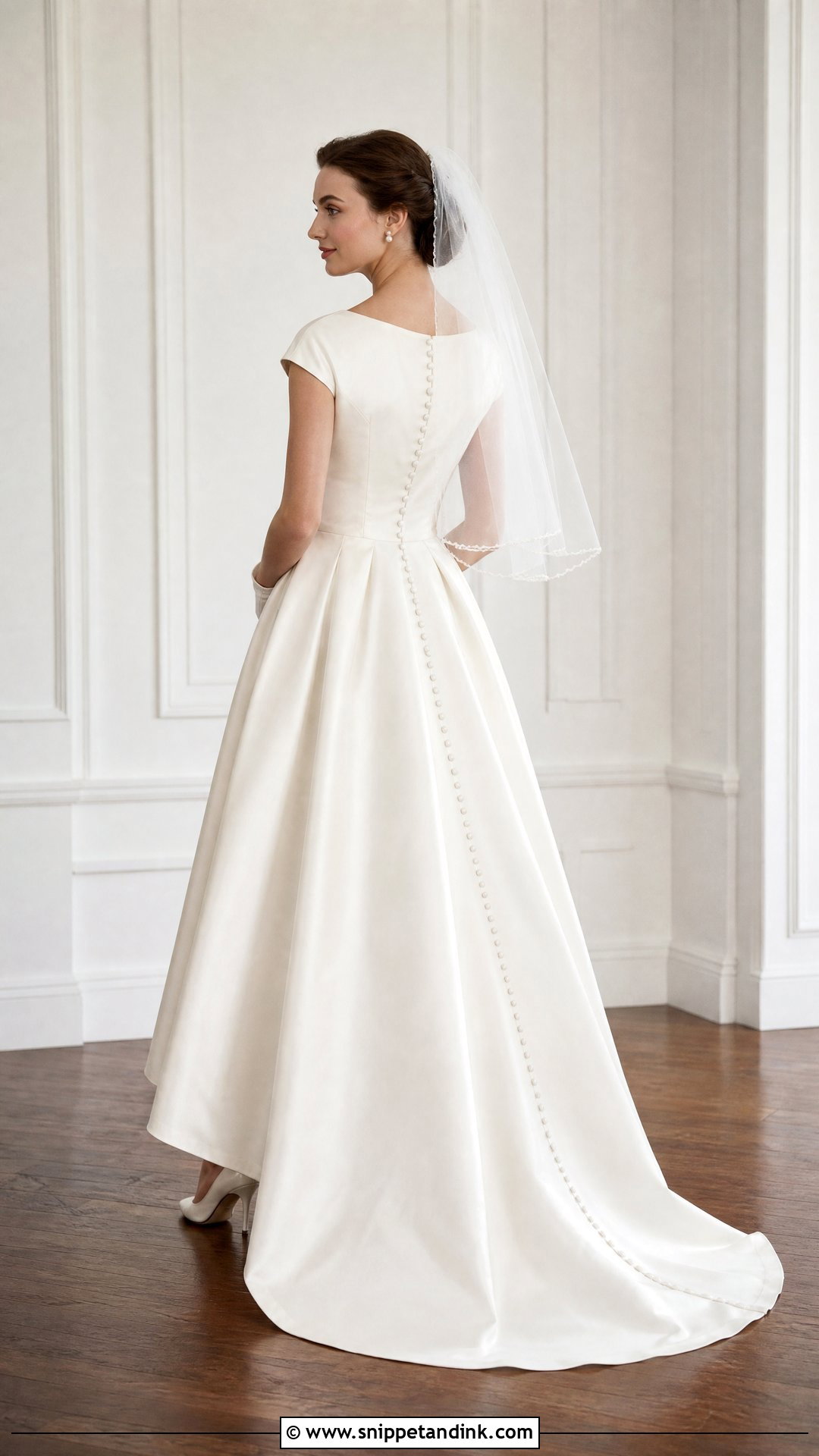
Covered buttons add delicate detail without stealing attention from the silhouette. They look best down the back of a satin bodice, along lace sleeves or under a small high neck. Choose a floor-length full skirt for formality or tea length for something lighter. Pearl earrings, classic pumps and a fingertip veil ending above the main row of buttons finish the look, and a plain front lets the back take over as you walk away. Thirty working loop buttons can take a good ten minutes to fasten, so book a helper and build the time in. If speed matters, a hidden zip under decorative buttons gives the same look and gets you out of the dress far more easily at night.
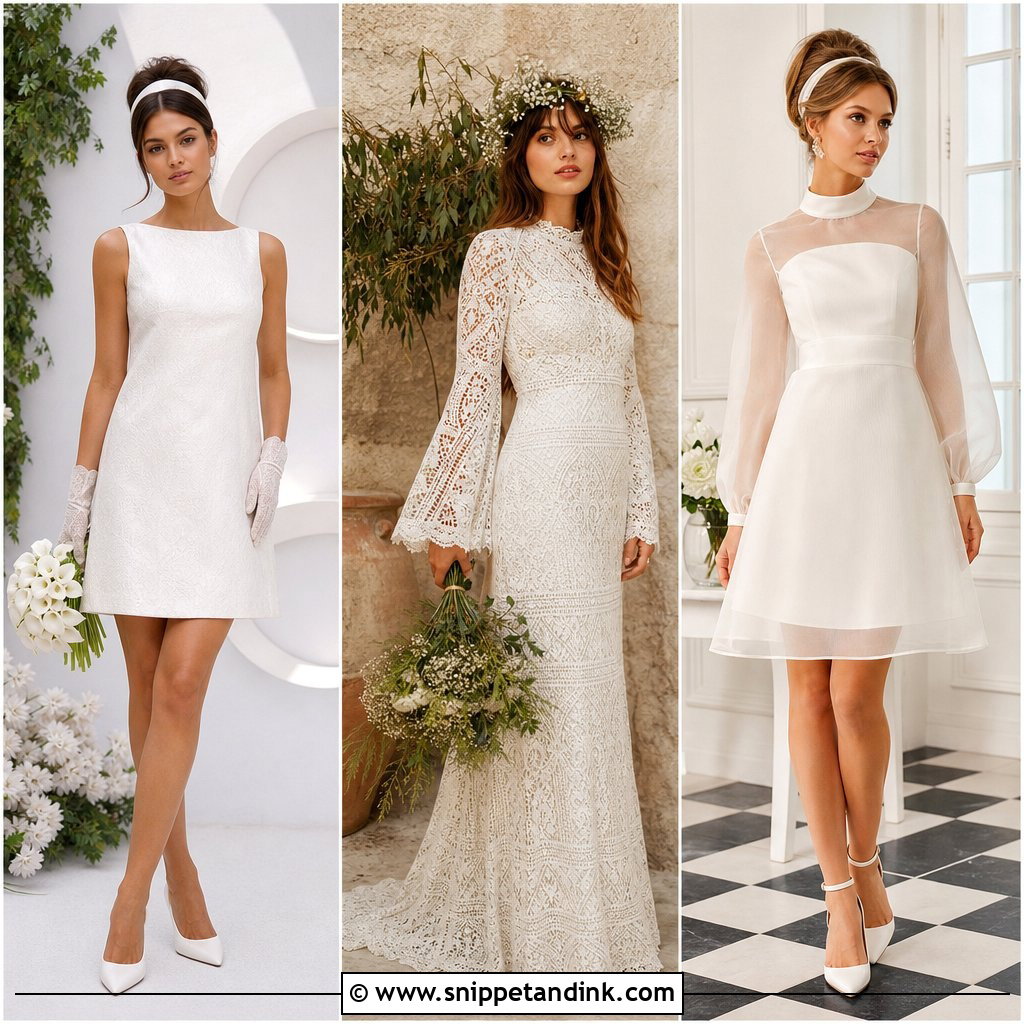
15. Floral Lace Vintage 50s Wedding Dress
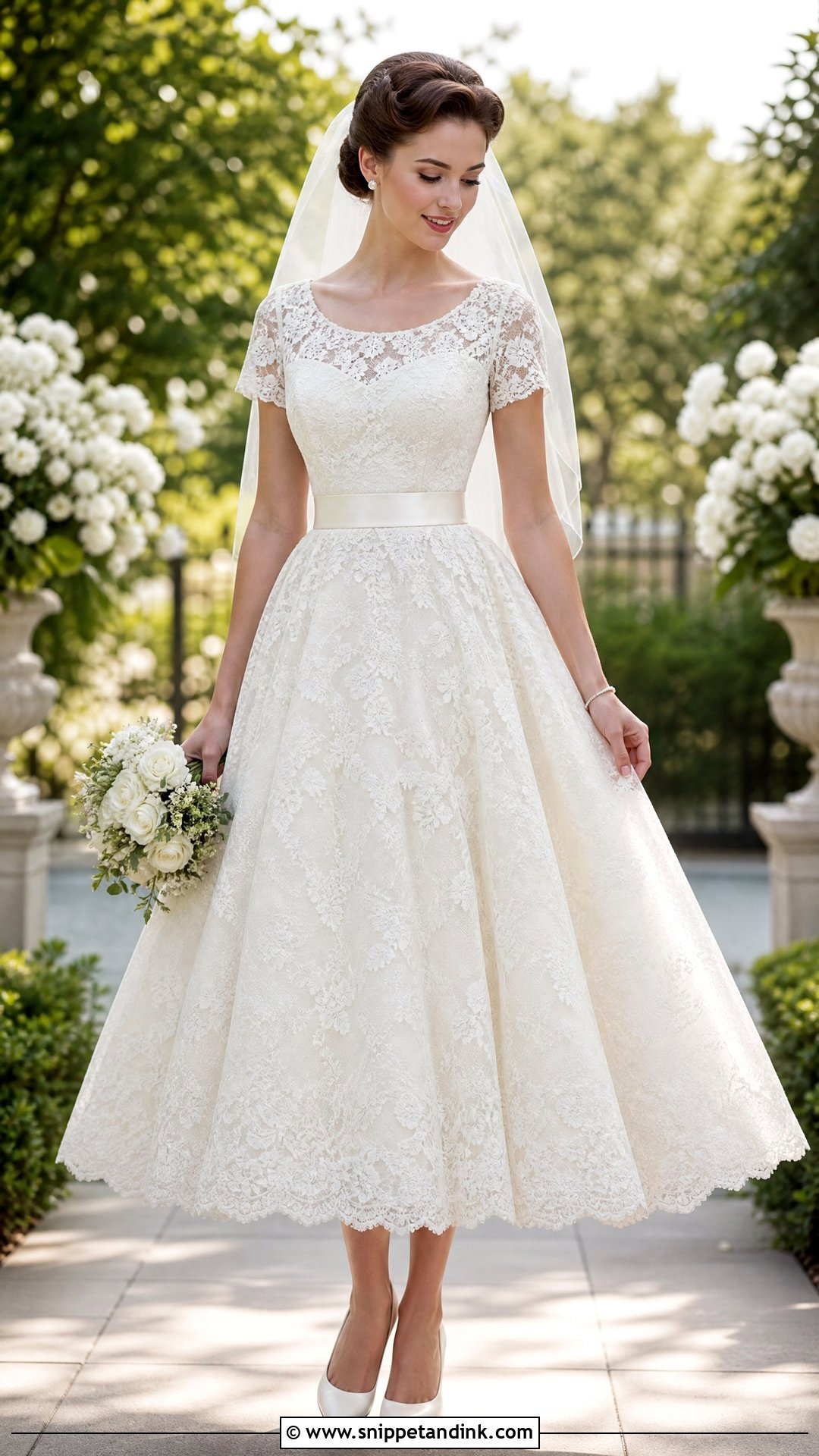
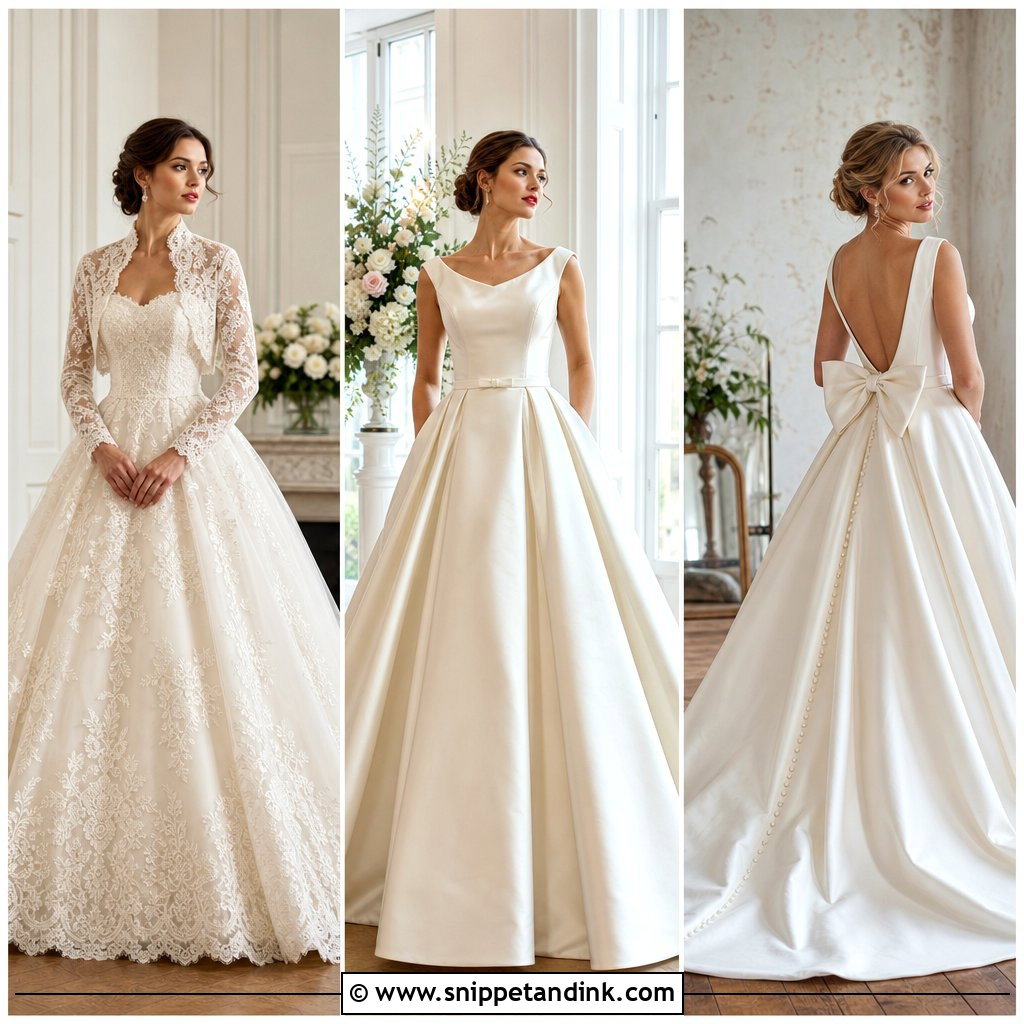
Floral lace adds depth to a fitted vintage dress, and medium-scale motifs over a smooth ivory lining show best in photos. A scoop neck, short sleeves, defined waist and tea-length skirt create a balanced silhouette. Pair it with plain satin pumps, pearl earrings and a simple tulle veil rather than more embellished pieces, and use a narrow ribbon belt to separate the detailed bodice from the skirt. For an outdoor wedding, choose sturdy low heels for grass. Look closely at how large lace motifs meet at the seams, darts and neckline. A good maker cuts around the motifs and overlaps them by hand, and that care separates a refined lace gown from a cheap one.
16. Pleated Vintage 50s Wedding Dress
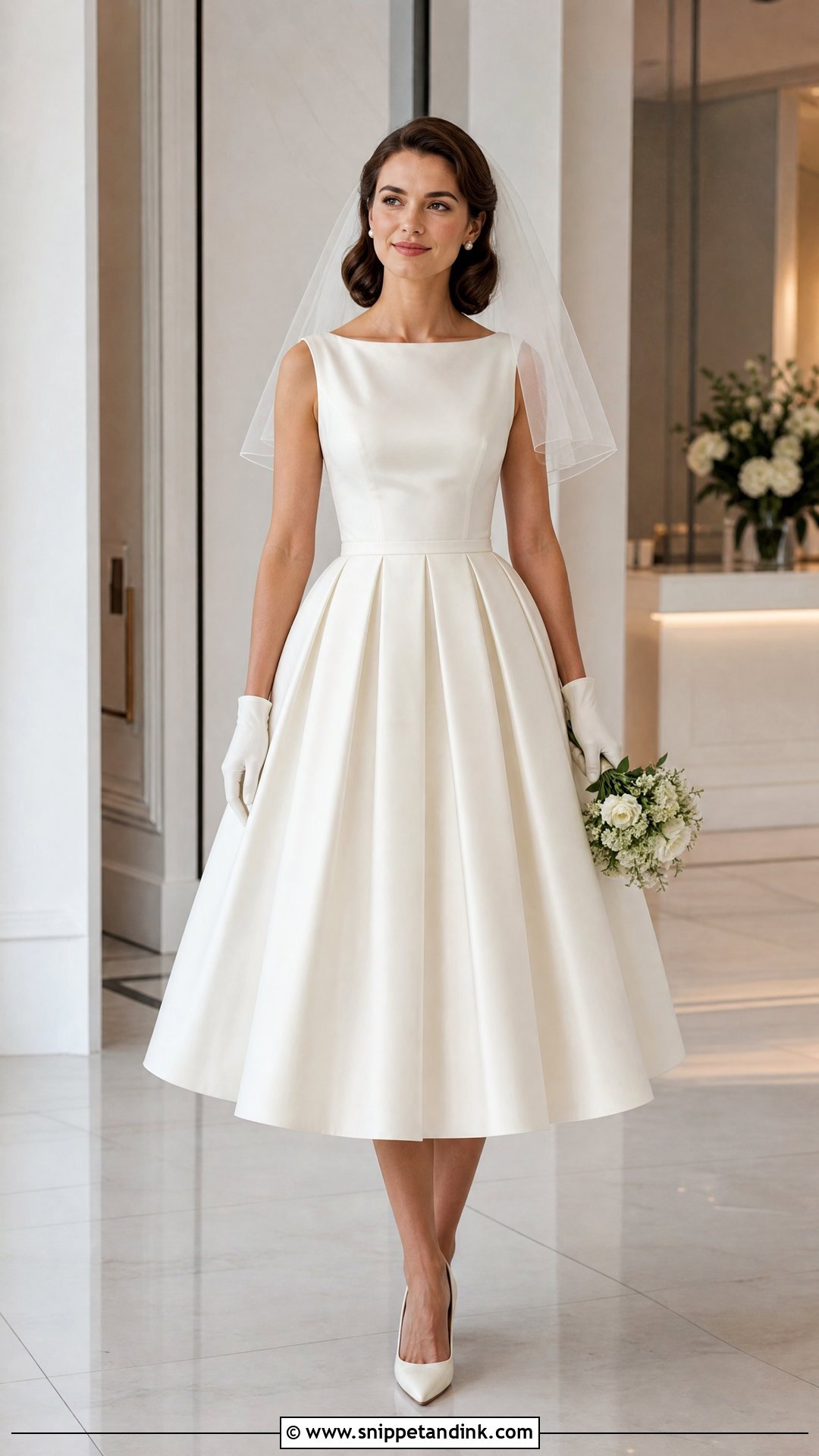
Crisp pleats give a skirt controlled fullness while keeping the waist flat and smooth. A satin dress with a fitted sleeveless bodice, a bateau neck and a box-pleated tea-length skirt moves well without relying on tulle. Pointed pumps, pearl studs, short gloves and a shoulder veil suit it, plus a narrow belt cut from the same fabric so it blends in. Pleats are fussy to transport. I hang the dress from its loops in the car instead of laying it across the seat, and steam each pleat by hand on the morning. Add a light petticoat for more volume but check that the hem still hangs level. Modern indoor venues suit this one, since the clean lines give vintage character without decoration.
17. Floor-Length Vintage 50s Wedding Dress
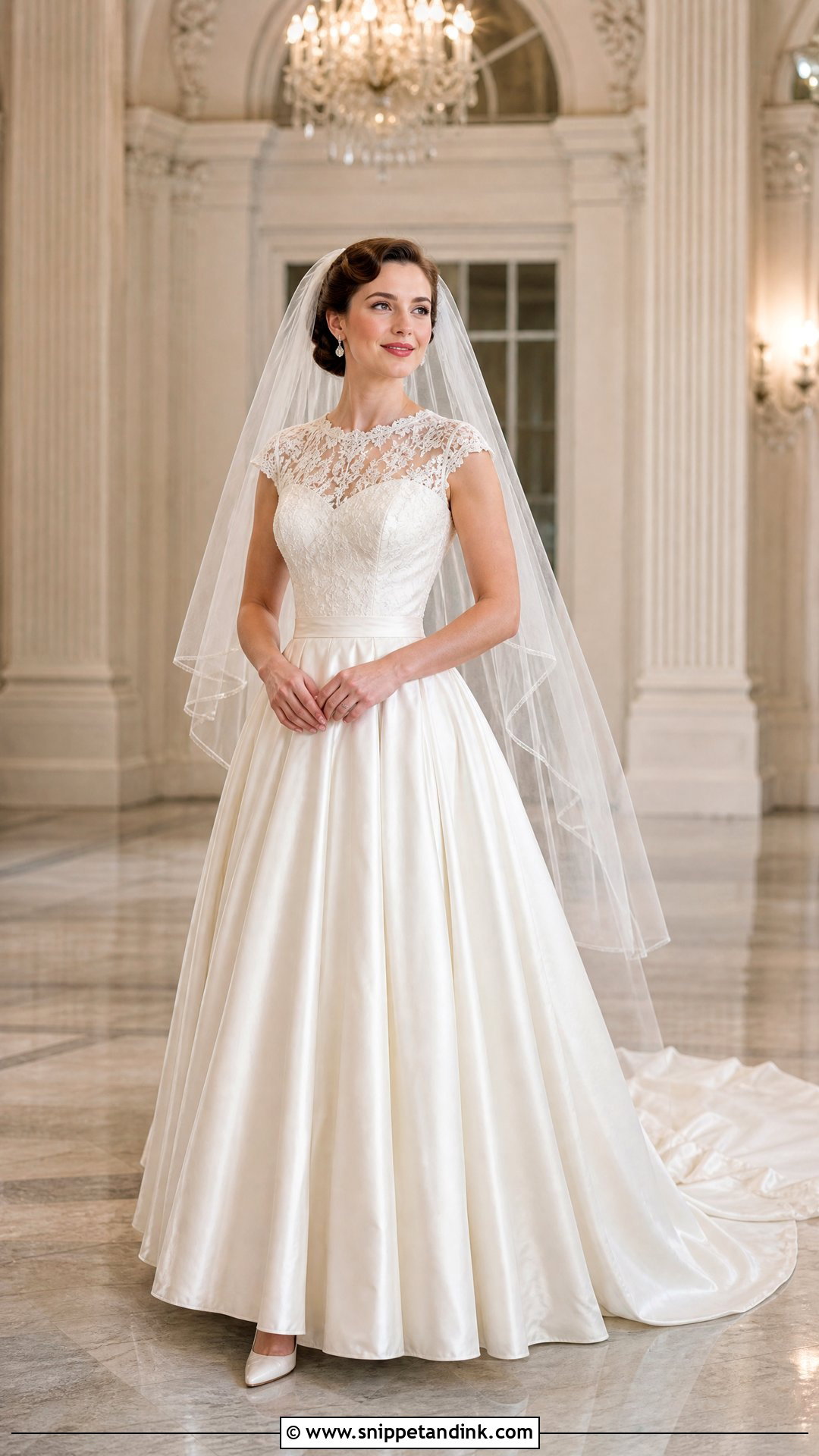
Floor-length fifties gowns are the formal side of the decade. A fitted lace or satin bodice at the natural waist sits over a full skirt that flows into a modest train. Long sleeves look regal, while cap sleeves or a bateau neck keep it lighter. Pearl earrings, ivory pumps and a fingertip or chapel veil complete it; the skirt carries the drama, so leave out big necklaces and heavy belts. Ask for a secure bustle so the train lifts for the reception. A full-length satin skirt is heavy, and the bodice needs enough structure and a firm waist stay to hold that weight without the waistline dropping by evening.
18. Blush Vintage 50s Wedding Dress
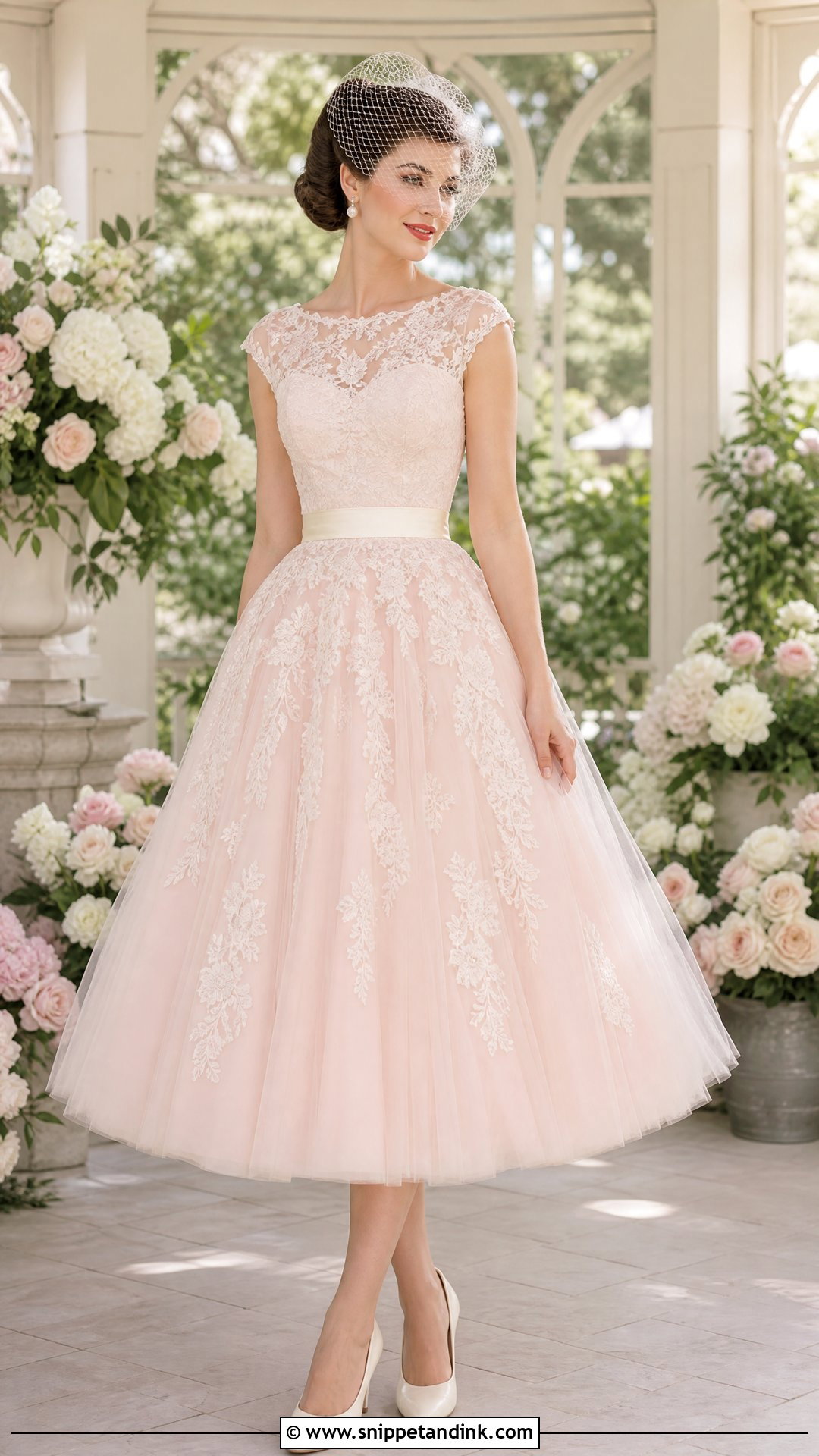
Blush keeps the romance of a vintage gown while stepping away from white. I’d look at a pale pink tea-length dress with a fitted bodice, a full tulle skirt and a soft ivory lace overlay. Keep the pink pale enough to read as bridal under both daylight and indoor lighting. Ivory pumps, pearl earrings and a cream birdcage veil coordinate, and a narrow satin sash defines the waist without adding a third color. Neutral makeup and soft curls suit the palette. For only a hint of color, use blush just in the lining beneath ivory lace, which gives depth and makes the floral pattern stand out. Check the shade against your skin before you order; very cool pinks can make some complexions look sallow.
19. Courthouse Vintage 50s Wedding Dress
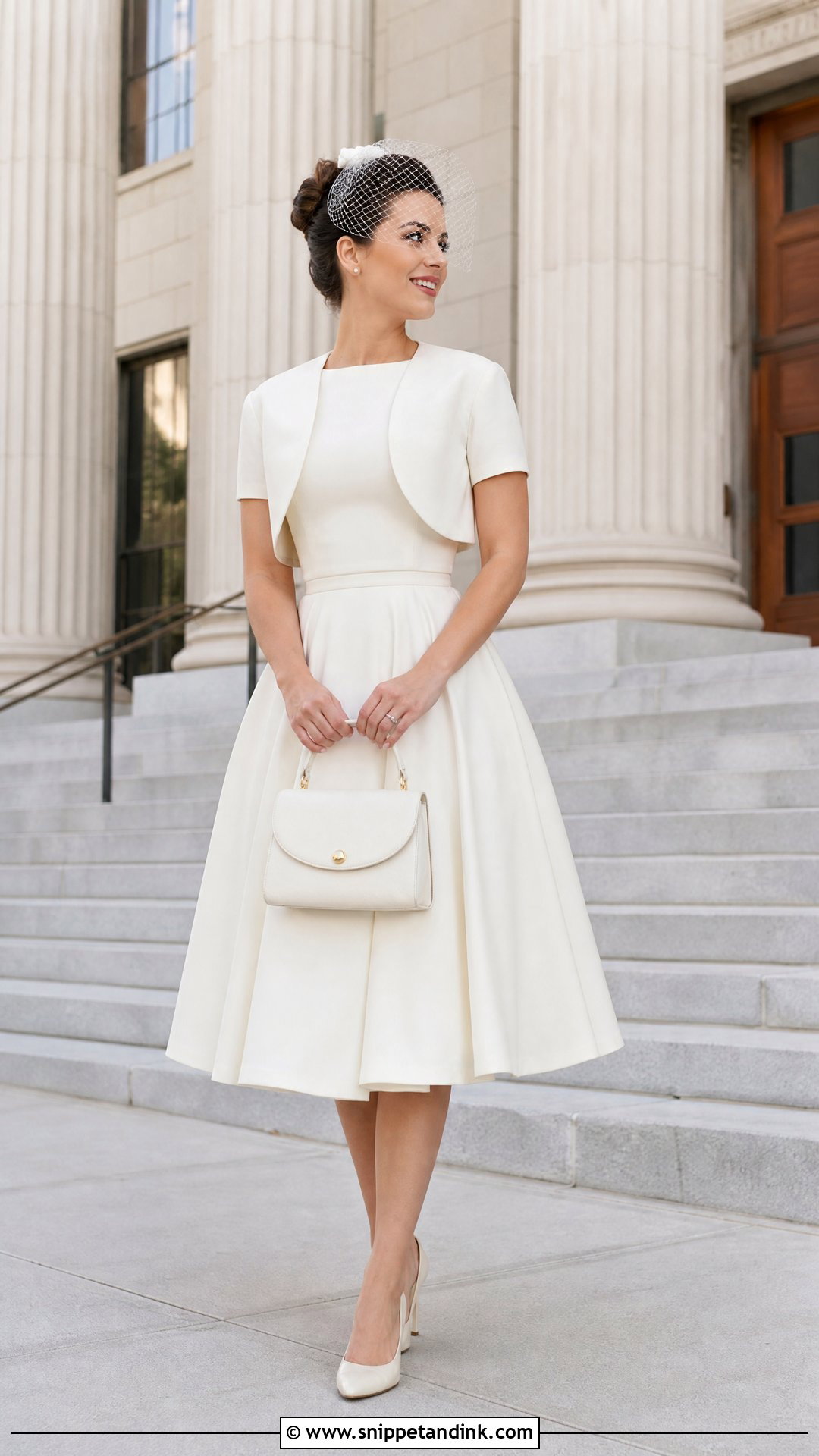
Courthouse weddings need a dress that looks special in a corridor and on a city sidewalk. I’d choose a knee or tea-length fit-and-flare with a bateau neck, short sleeves and a defined waist, in satin, crepe or lightly textured lace. Low ivory pumps, pearl studs, a small structured bag and a birdcage veil complete it, with a cropped bolero or tailored coat for the journey. Keep the petticoat moderate. Courtroom benches, elevators and taxis are tight, and a big skirt fills them. The outfit then goes straight on to lunch or a small reception. Sharp tailoring is what makes this simple shape look intentional.
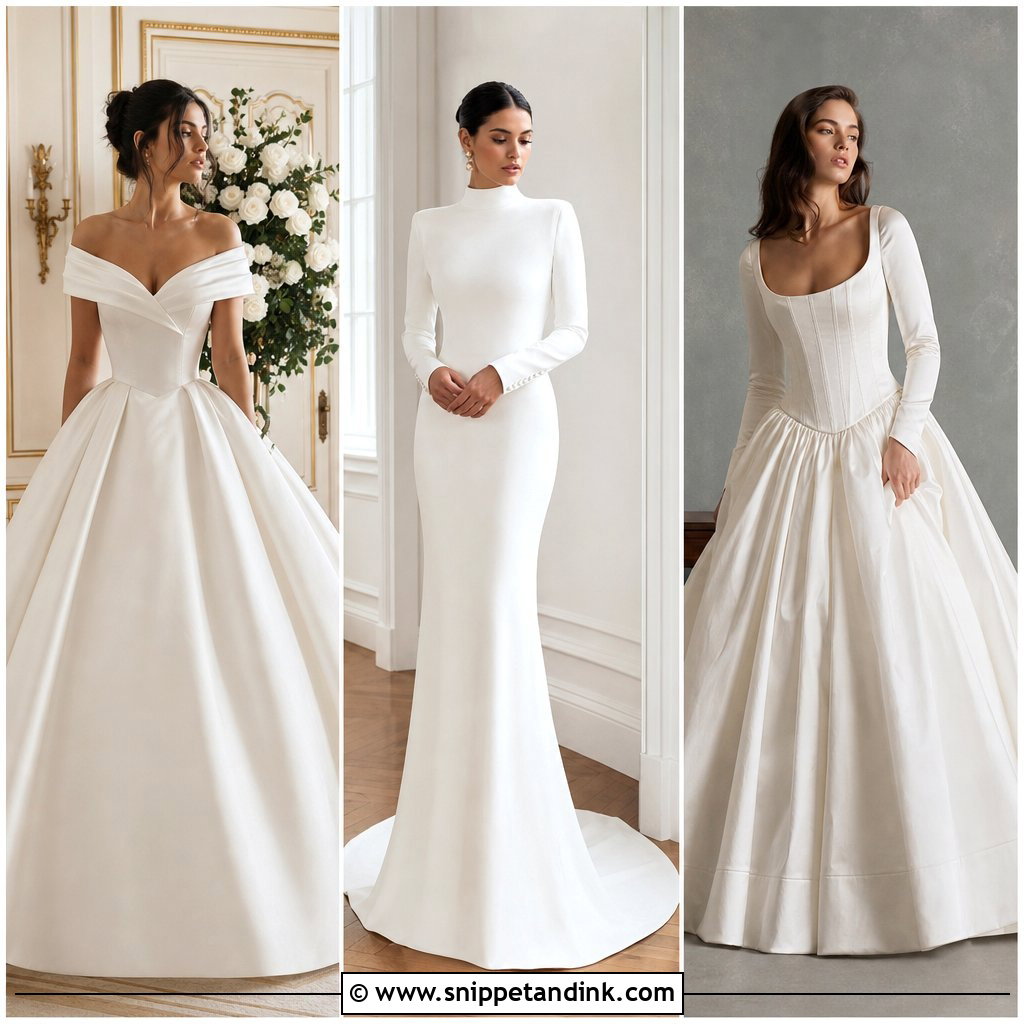
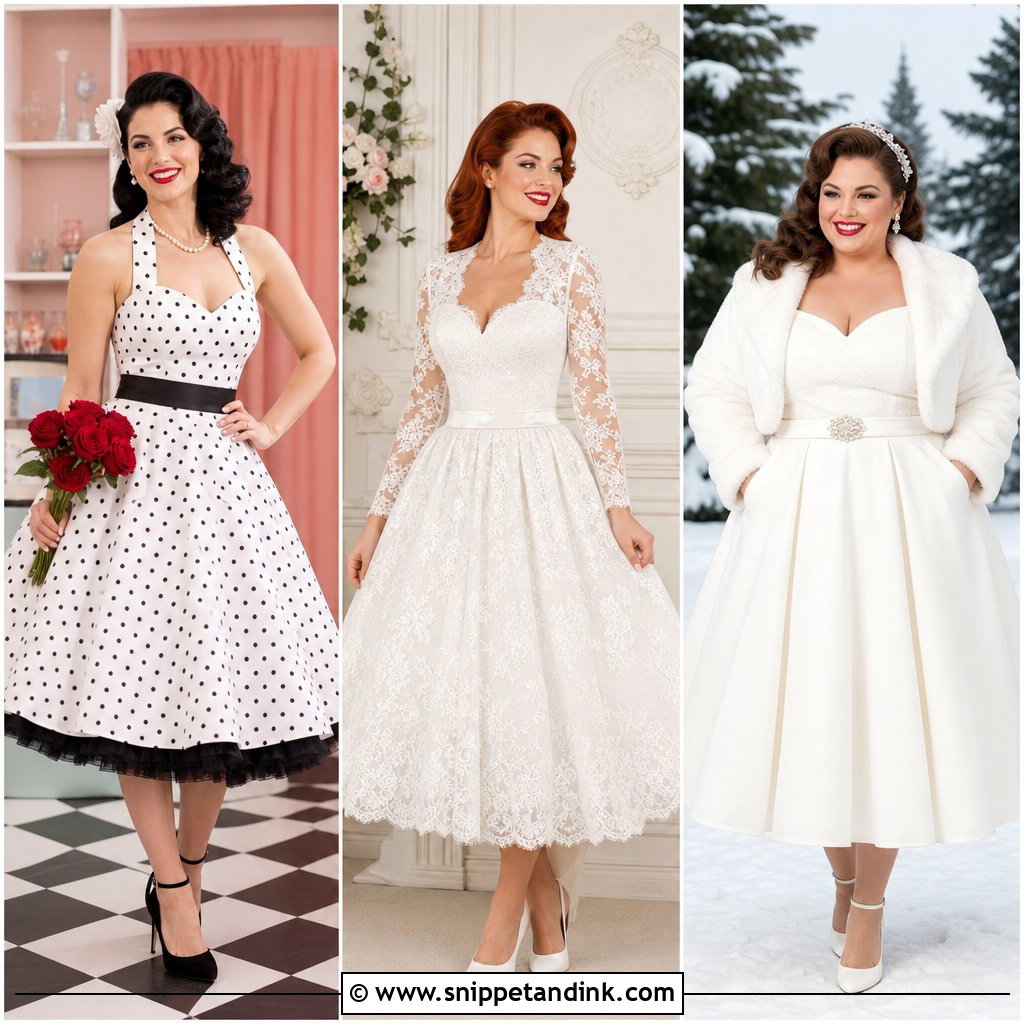


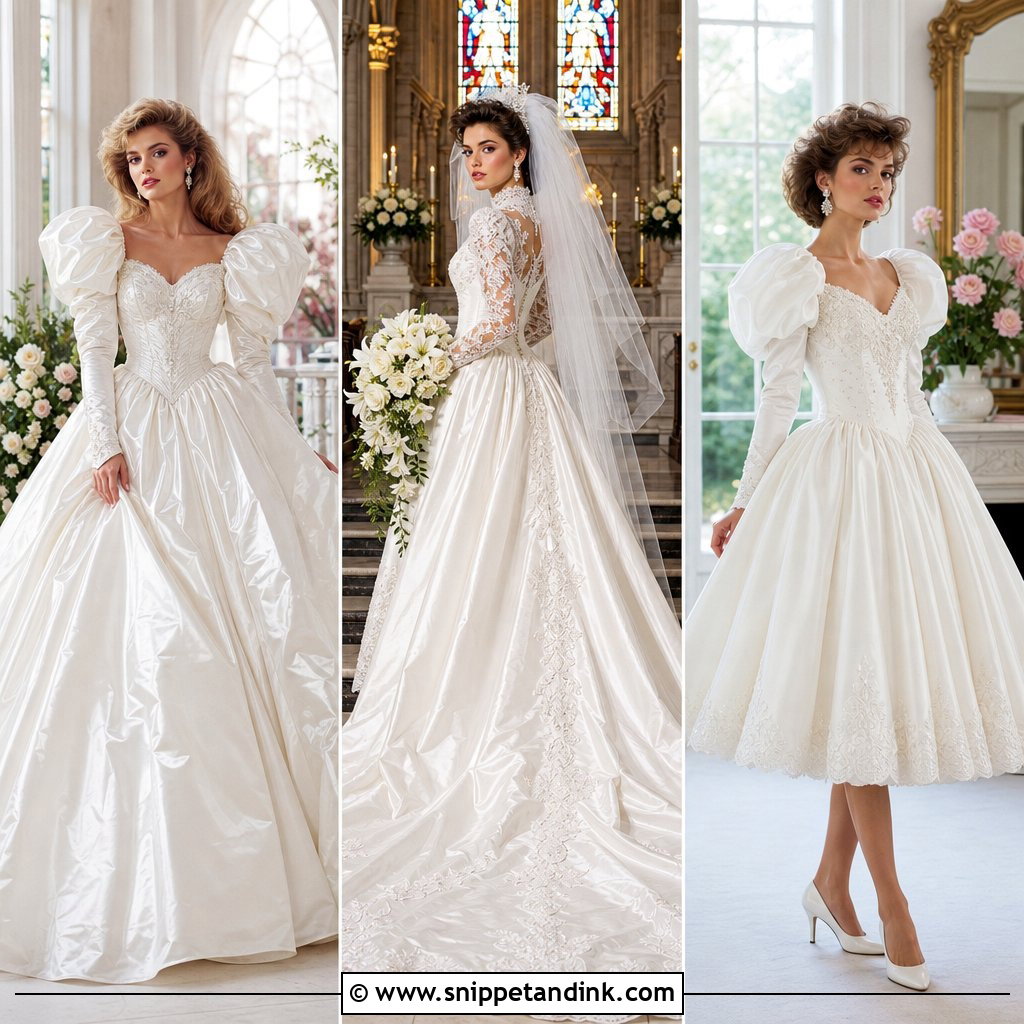
20. Plus-Size Vintage 50s Wedding Dress
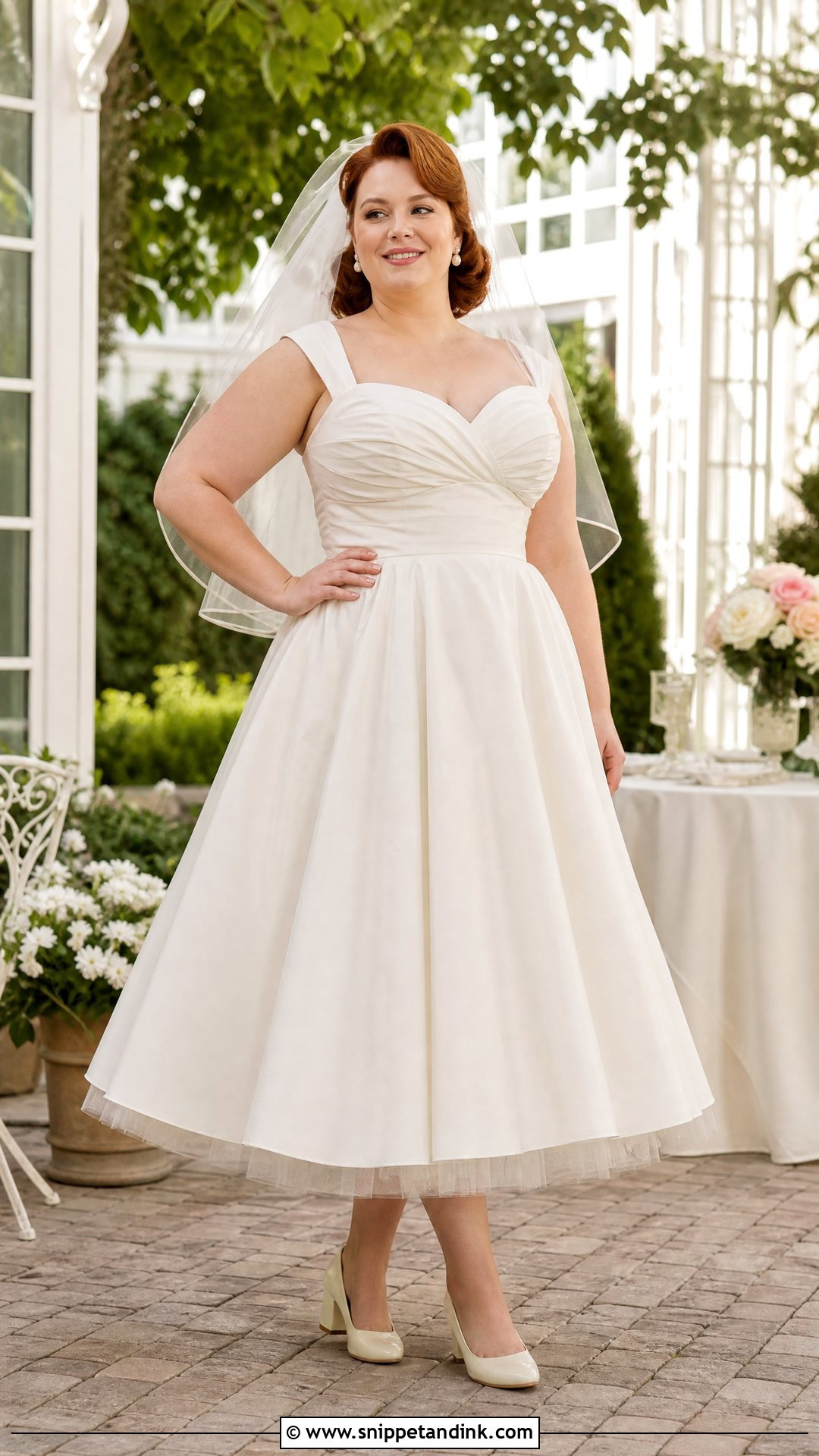
A plus-size vintage 50s wedding dress starts with support, then movement, then proportion. Look for a structured bodice with wide straps and internal support, with the waistline set where it feels best on you rather than where a size chart puts it. A full A-line or tea-length skirt skims the hips and creates the classic shape. Comfortable block heels, pearl earrings, a fingertip veil and a soft petticoat for controlled volume complete it. Sweetheart, bateau and scoop necklines all work, so choose by comfort, not rules. One thing I tell every bride: don’t size down hoping to shrink into it. It is far easier for a seamstress to take in a slightly larger gown at the waist, straps, hem and lining than to find fabric that isn’t there.
Is That Vintage Size 12 Really a 12?
Genuine 1950s gowns turn up in vintage shops and family wardrobes, and the label numbers almost never match today’s sizing. Women’s sizes from that era run noticeably smaller, so a dress marked 12 may fit someone who buys a modern 6 or 8. Ignore the tag and bring a tape measure.
- Measure the bust, waist and torso length of the dress flat, then double the bust and waist figures and compare them to your own with an inch or two of ease.
- Check the seam allowances inside. Many older gowns were made with generous seams that can be let out, but some were trimmed short.
- Look at the zip. Metal zips from the period can be stiff or rusted, and a seamstress can replace one without changing the look.
- Hold the fabric to daylight. Yellowing on nylon or acetate is common and sometimes treatable; thin, shattered patches are not.
If the dress is a family piece too small to alter, I often suggest wearing part of it instead: a lace panel stitched into a new gown, or the original veil with a modern dress.
Tailoring First, Pearls and Petticoats Second
Midcentury bridal dress covers more ground than its reputation suggests. Tea-length skirts give that playful retro shape, while lace sleeves, satin ball gowns and floor-length designs carry more formality. In my experience the convincing looks all begin with good tailoring and solid construction. Pumps, pearls, gloves, veils, boleros and petticoats come after, and they work best when you pick two or three rather than all of them. Original or newly made, inspect the fabric, move around in it, and see the whole outfit in daylight and lamplight before deciding. Then pick the one you can forget you’re wearing.
You'll Like These Ideas:








Leave a Reply