
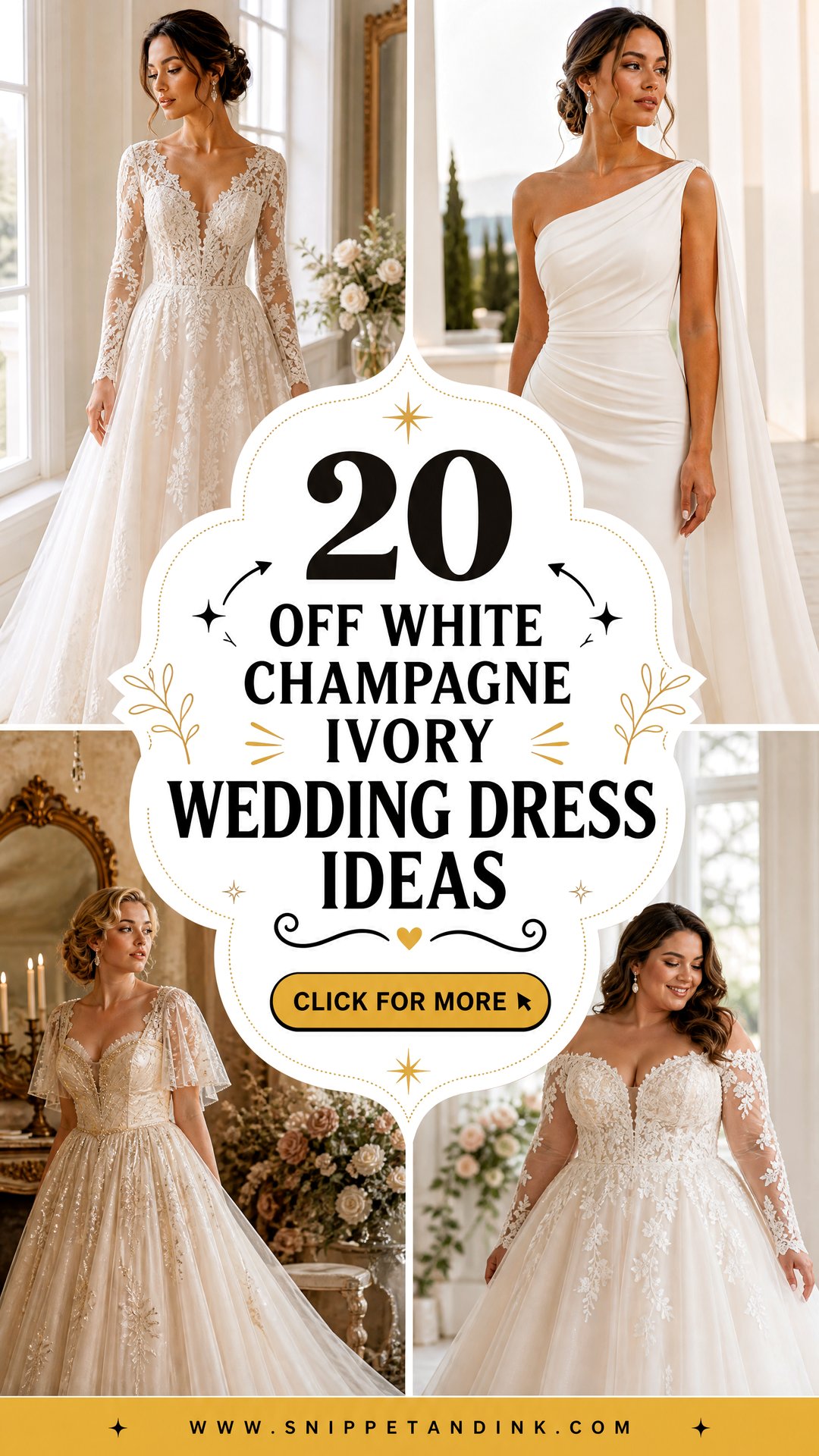
Pure white is rarely the most flattering shade in a fitting room. Most of the gowns I end up pulling for brides are ivory, off-white or champagne, because a warmer base softens the contrast against skin and stops satin from glaring under a flash. Off-white sits closest to white with the blue taken out. Ivory carries a creamy, faintly yellow note. Champagne goes a step further and is often ivory lace or tulle laid over a gold, nude or blush lining. Below are twenty gowns across those three shades, each styled down to the shoes, veil and flowers, with my notes on how each one actually wears once you’re in it for a full day.
Holding Three Swatches Up to Your Face
Off-white, ivory and champagne look almost identical on a hanger and surprisingly different against skin. Before I let a bride fall for a silhouette, I ask the shop for fabric swatches or samples in each shade and stand her next to a window with no makeup on her neck or chest, because foundation can warm the skin and skew the comparison.
These are starting points I use, not rules:
- Fair skin with pink undertones often looks flushed against champagne and brighter next to off-white or a soft ivory.
- Olive and golden skin usually comes alive in ivory and champagne, while very bright white can make it look sallow.
- Deep skin tones carry gold and champagne linings well, and ivory gives a clean, crisp contrast without the glare of white.
Then repeat the test under warm indoor light. Many reception rooms are lit with yellowish bulbs that push ivory toward cream and champagne toward beige. If one shade looks muddy in both settings, I cross it off before you try on a single dress.
1. Ivory Satin A-Line Wedding Dress
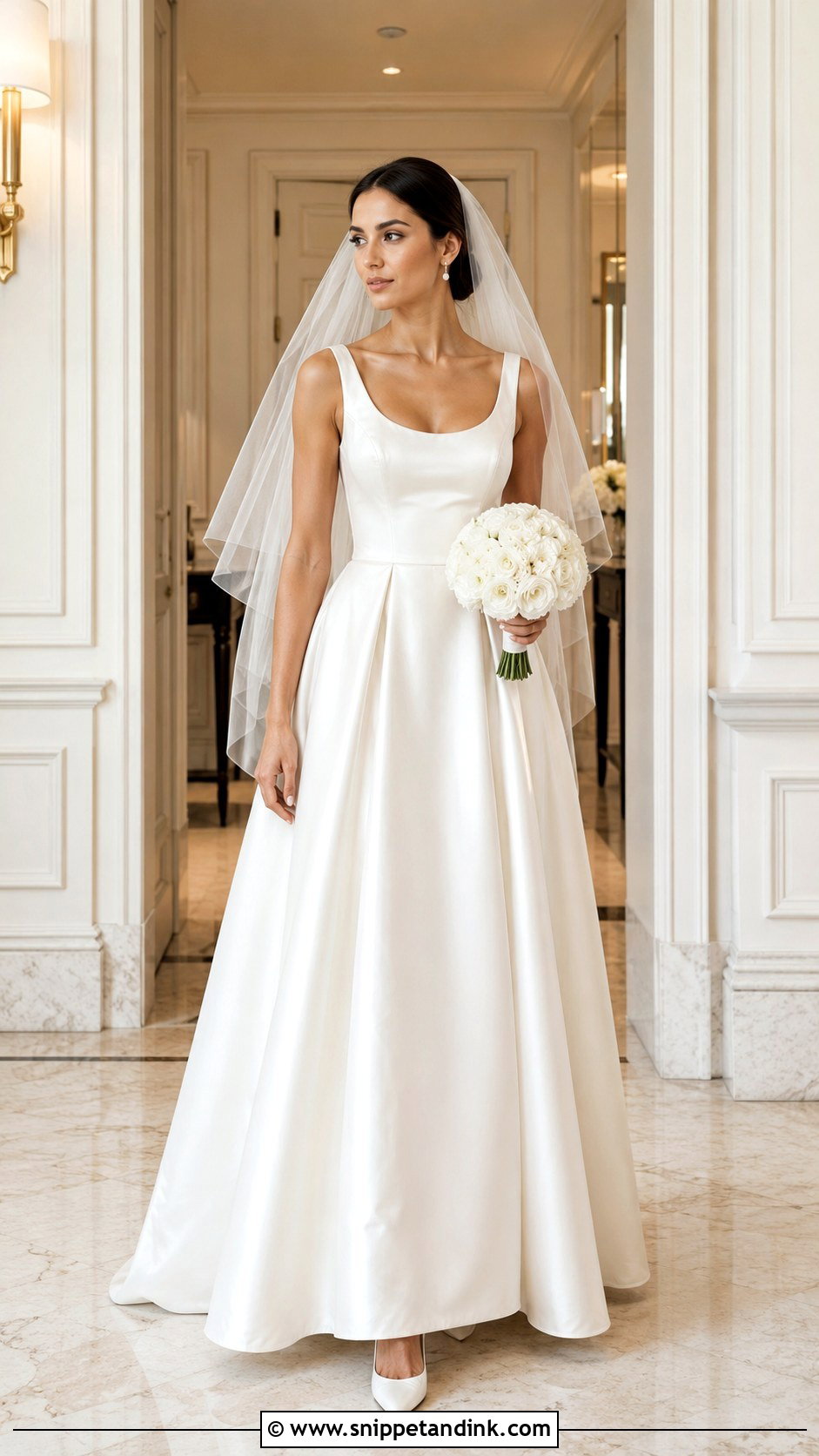
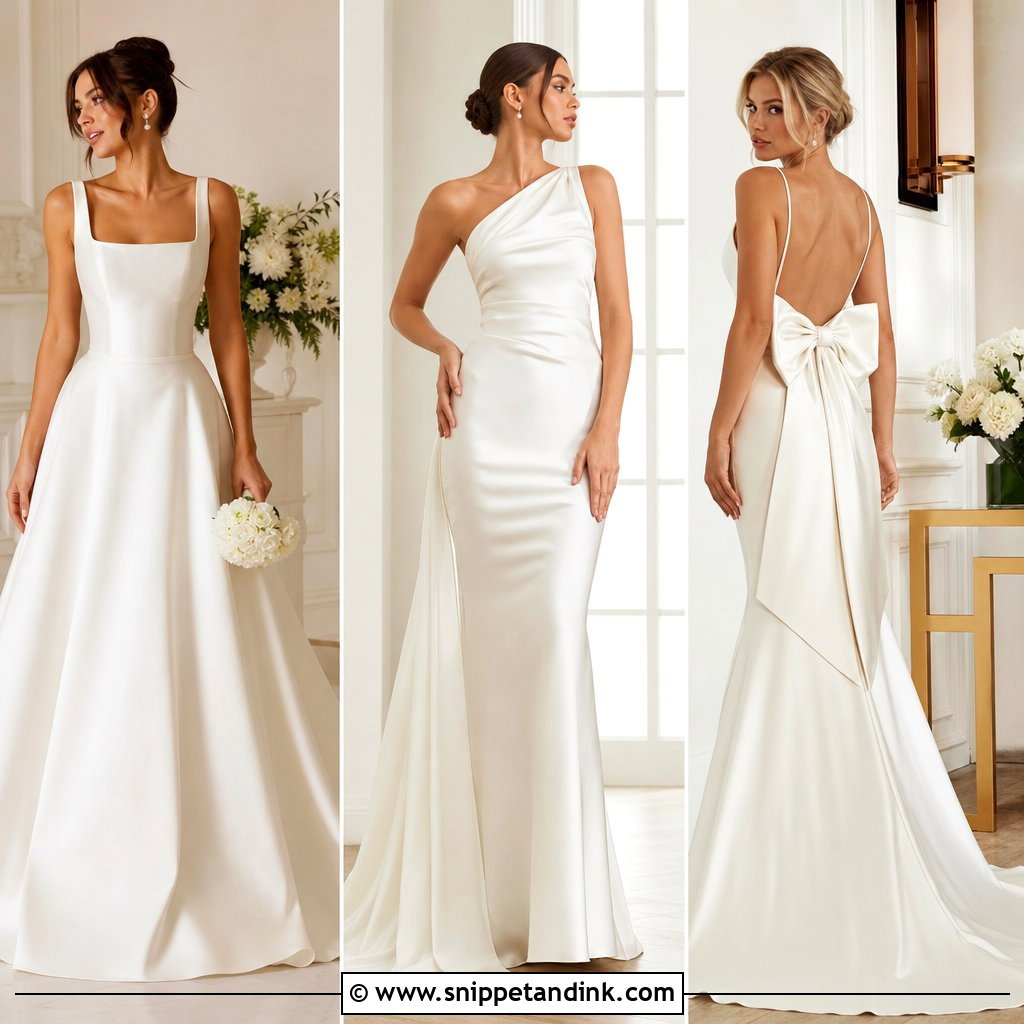
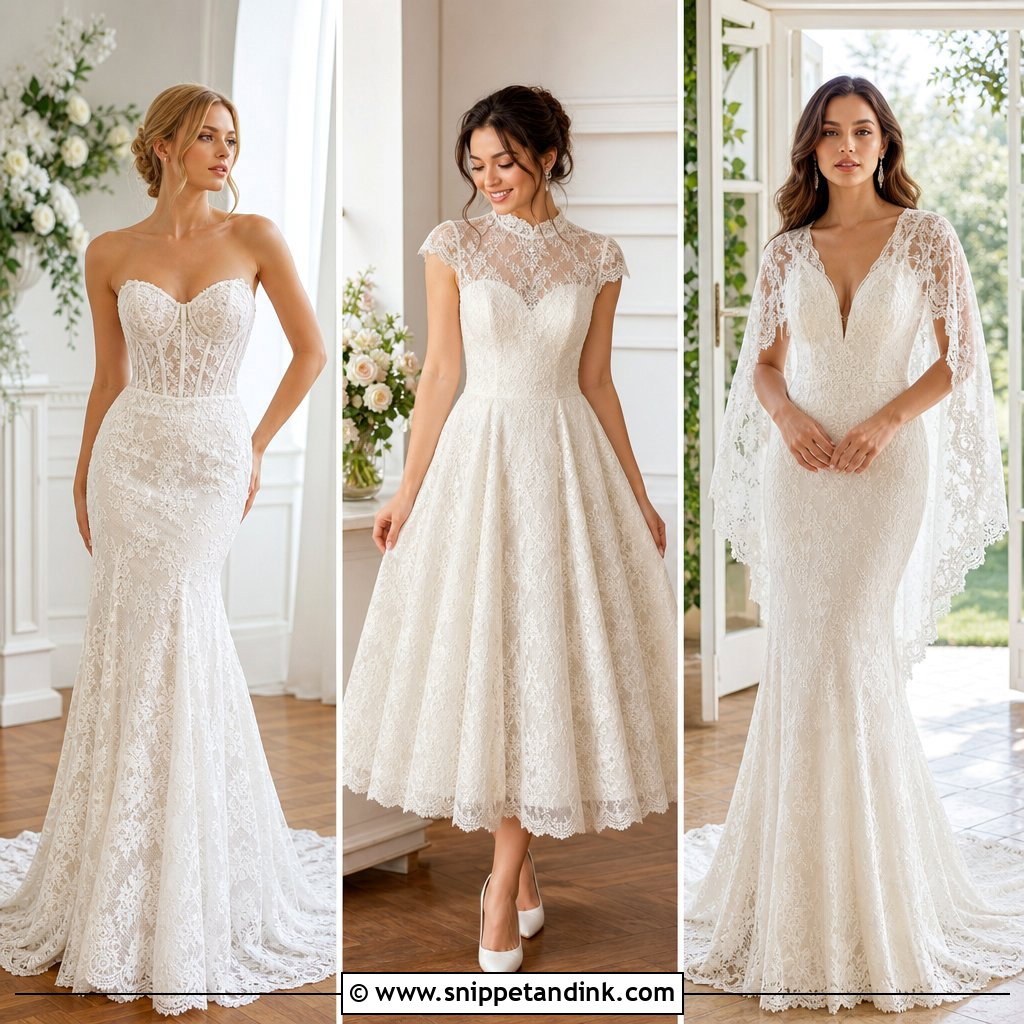
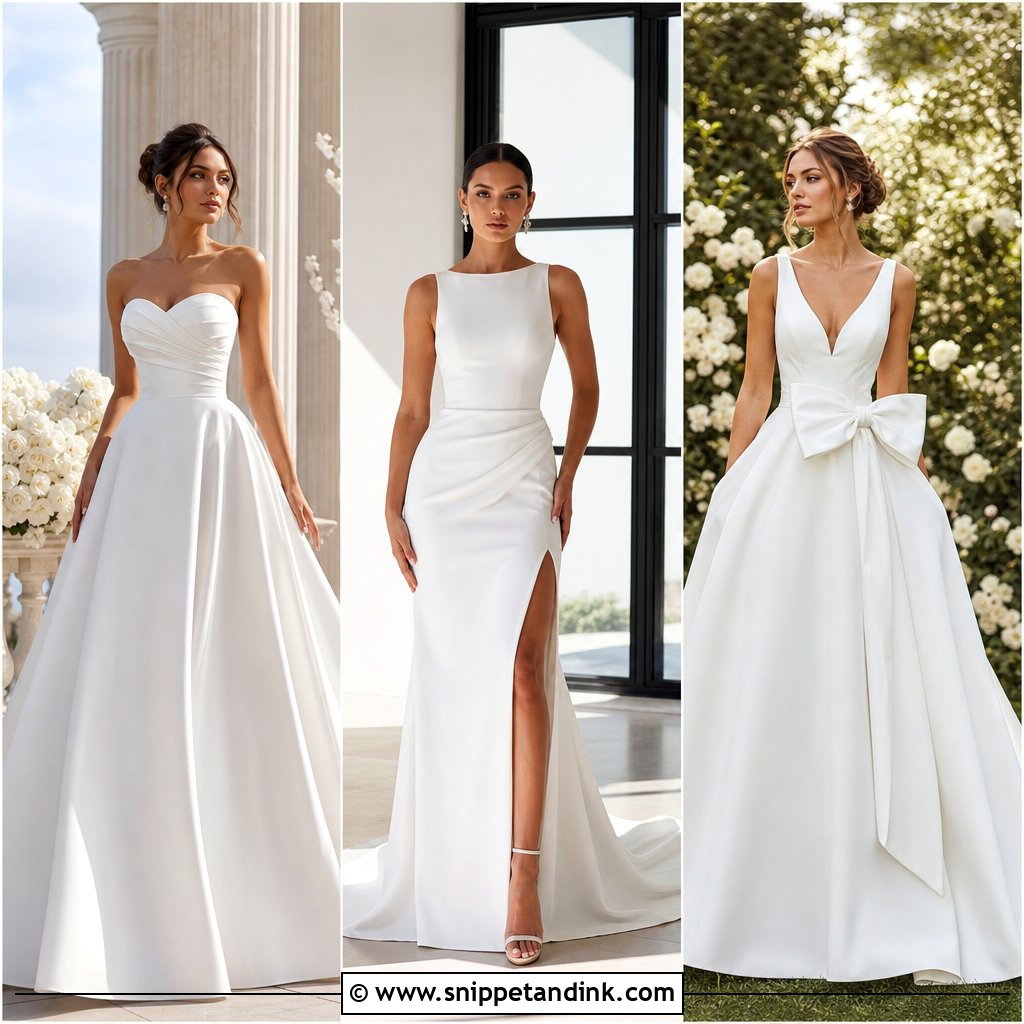
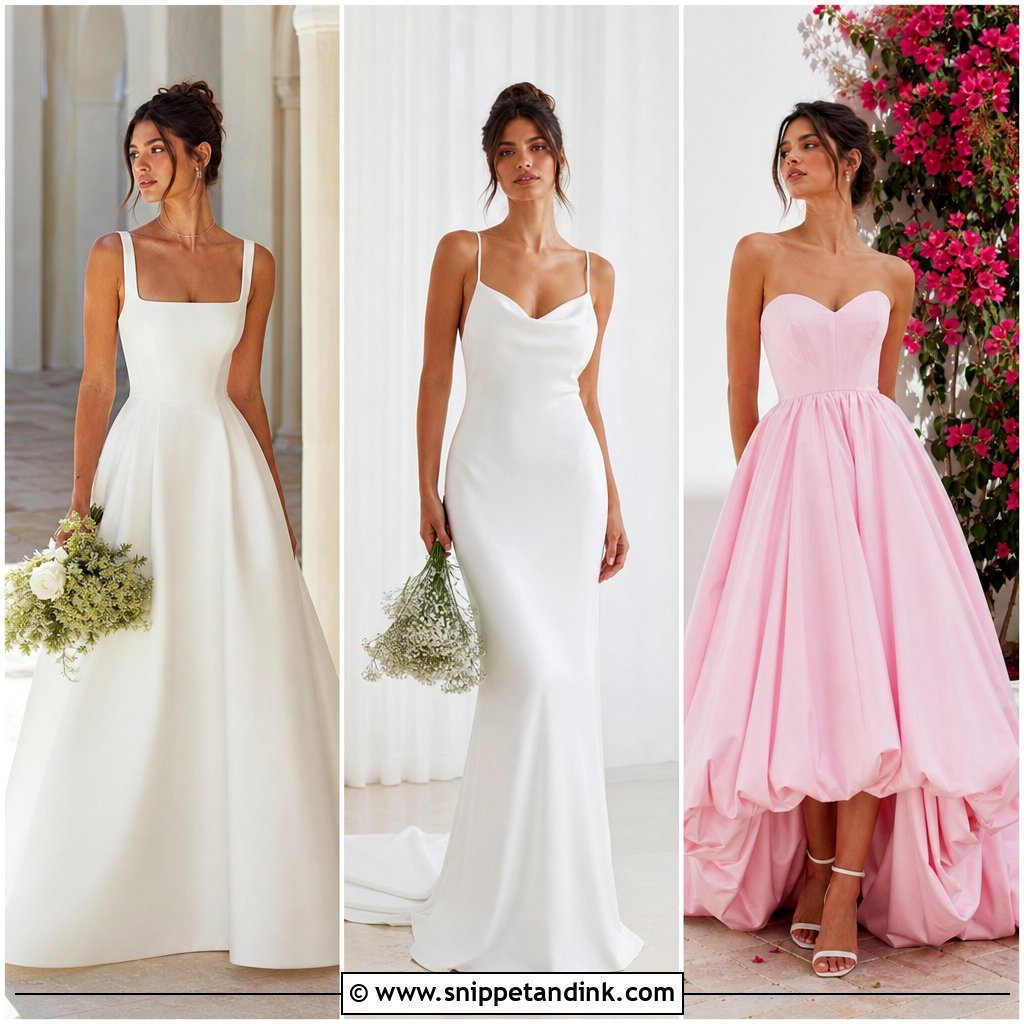
Satin is the fabric I reach for when a bride wants structure without fuss, but it’s honest about fit. Any pull across the hips shows as a diagonal crease, and on an A-line the fix is usually letting the side seams out a little rather than taking the waist in harder. A scoop, square or soft V neckline all sit well on this shape. Ivory satin has a gentle sheen, so pearl drops and a single strand look right, and a plain fingertip veil keeps the surface uninterrupted. Pick pointed pumps for stone floors and low block heels if any part of the day is on grass. A compact white bouquet with a little green finishes it, and I’d happily put it in a ballroom, a hotel or a historic hall in any season.
2. Champagne Lace Ball Gown Wedding Dress
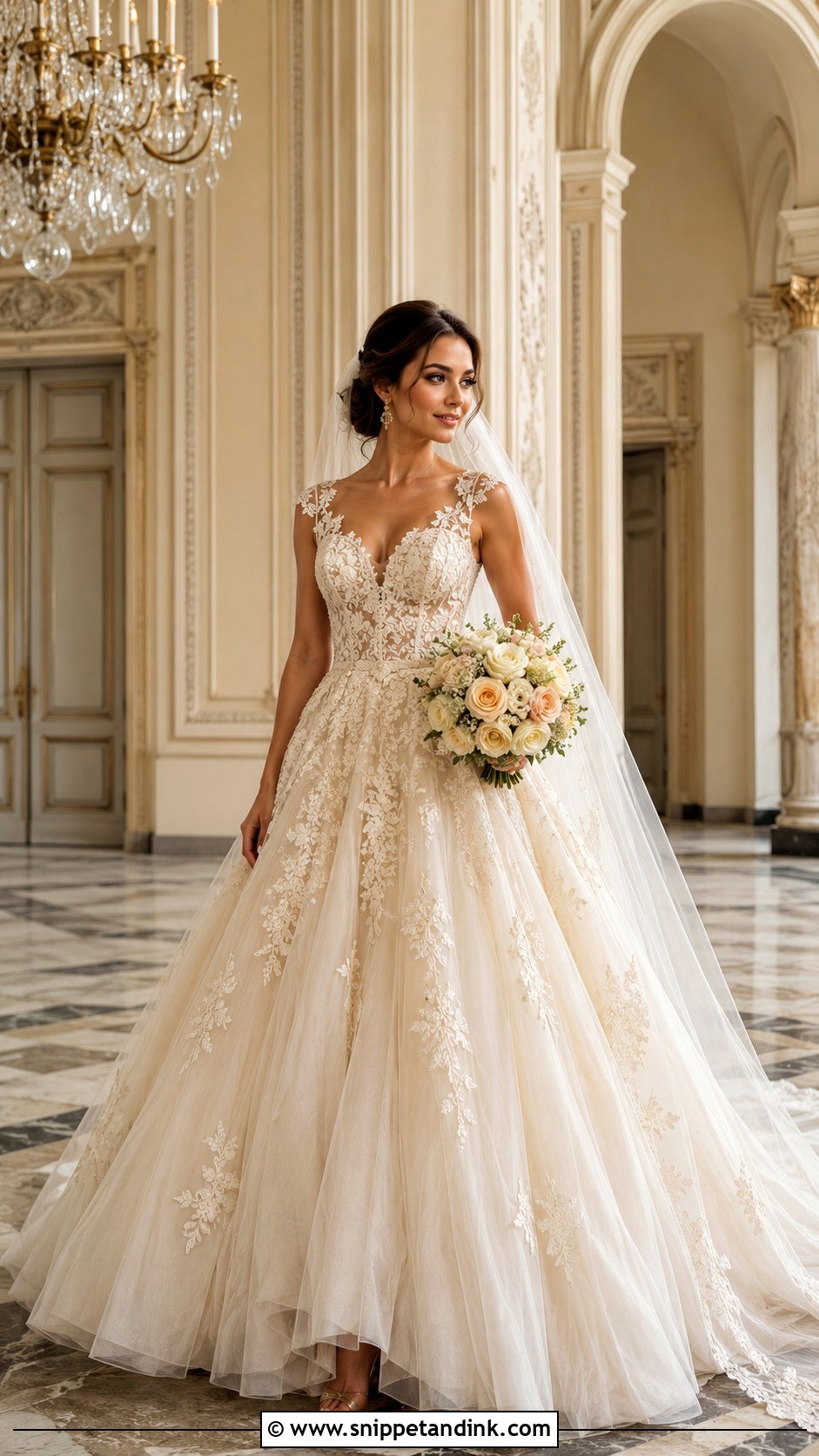
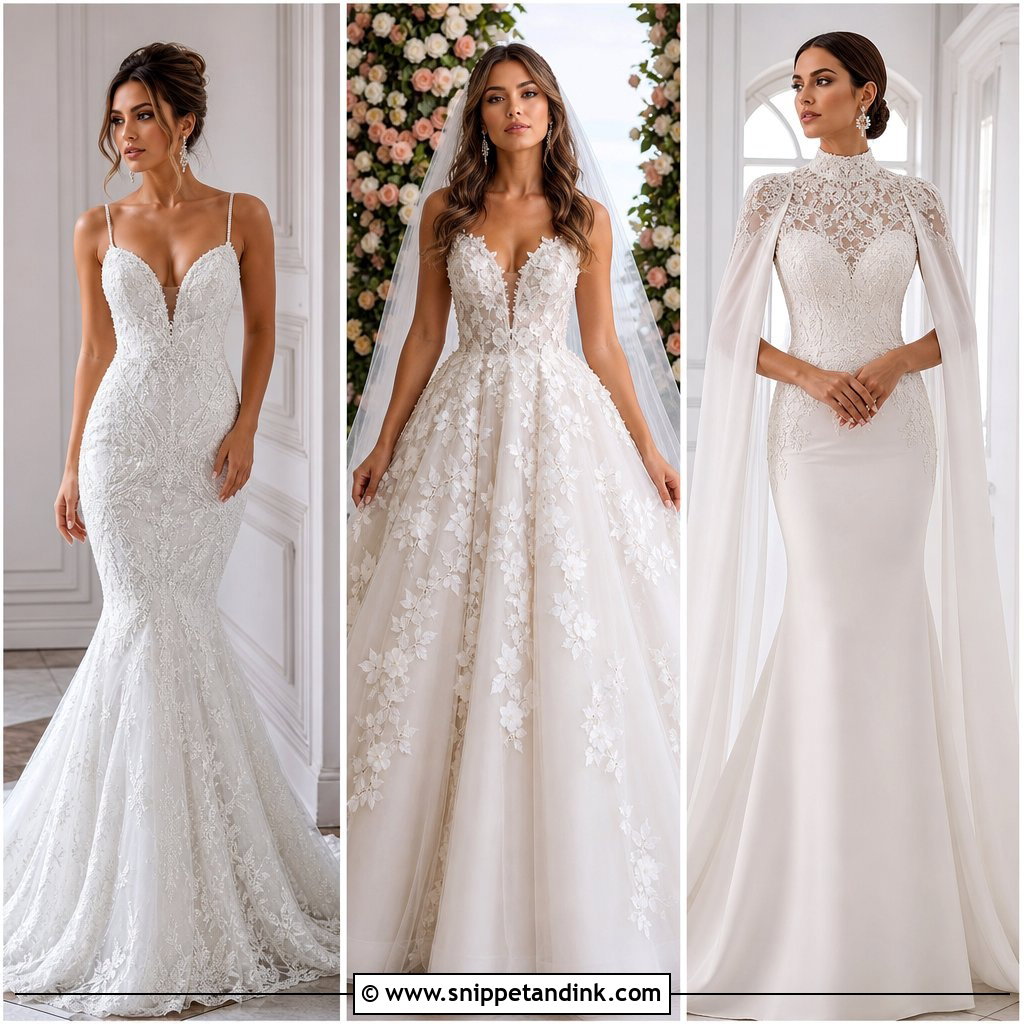
The warm tulle under the lace is what makes this gown work. Over a white lining, ivory lace motifs nearly disappear; over champagne, every appliqué edge reads from across the room. Full skirts are heavy, so I check the bodice support first. Wide straps, an illusion neckline or an off-the-shoulder band will carry that weight far better than a strapless top you’ll be hitching up by the speeches. A cathedral veil and small gold earrings suit the warm undertone, and cushioned champagne heels can hide under the skirt. Carry a loose bouquet of cream, pale peach and muted green, leave the necklace off, and save this one for a grand indoor venue or an evening ceremony.
3. Off-White Crepe Sheath Wedding Dress
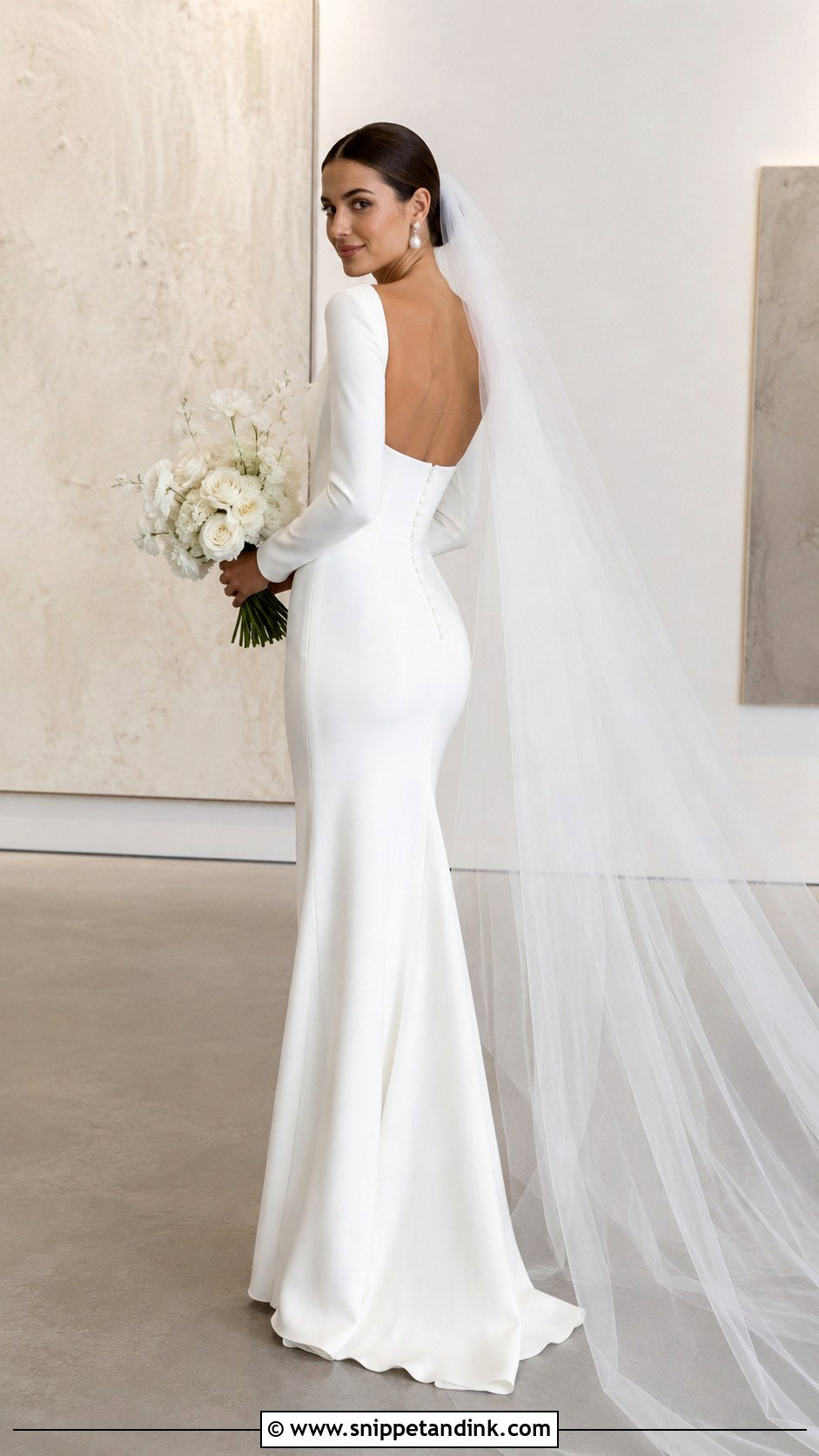
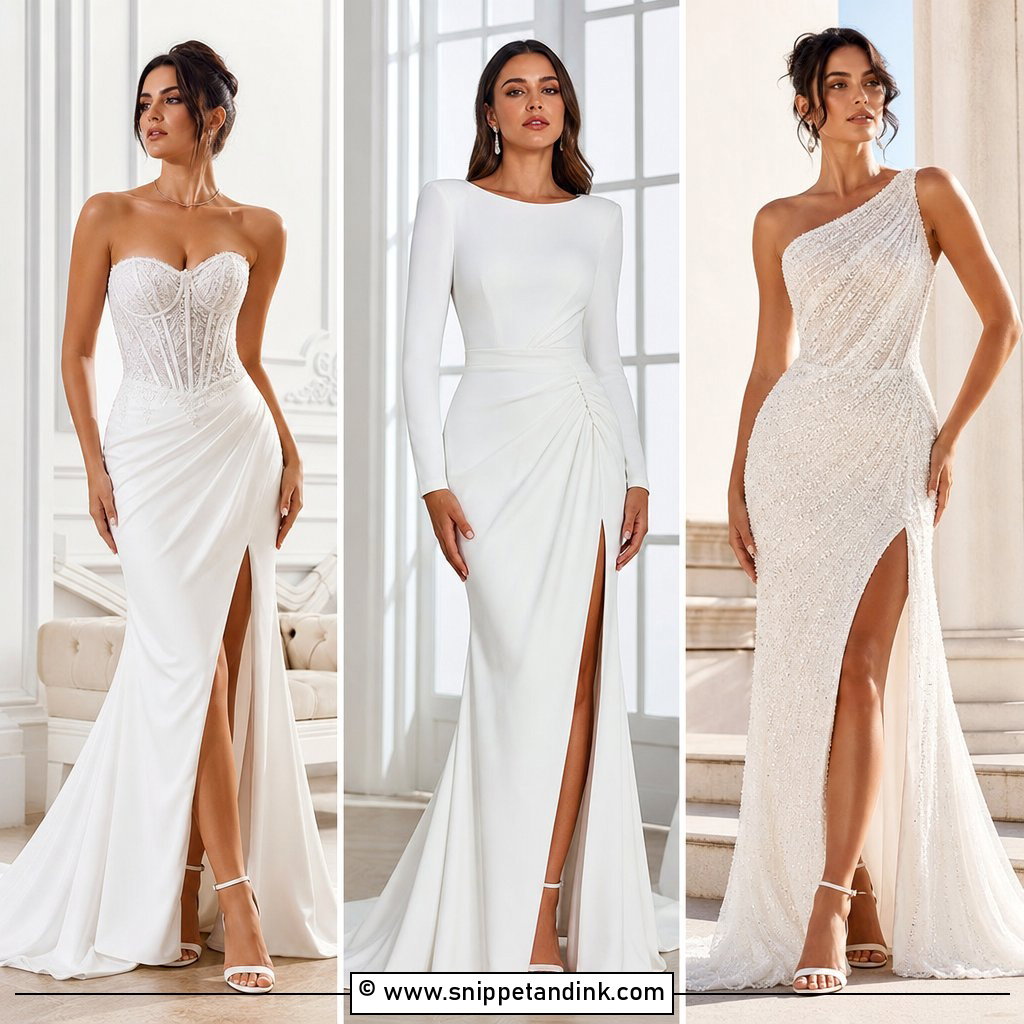
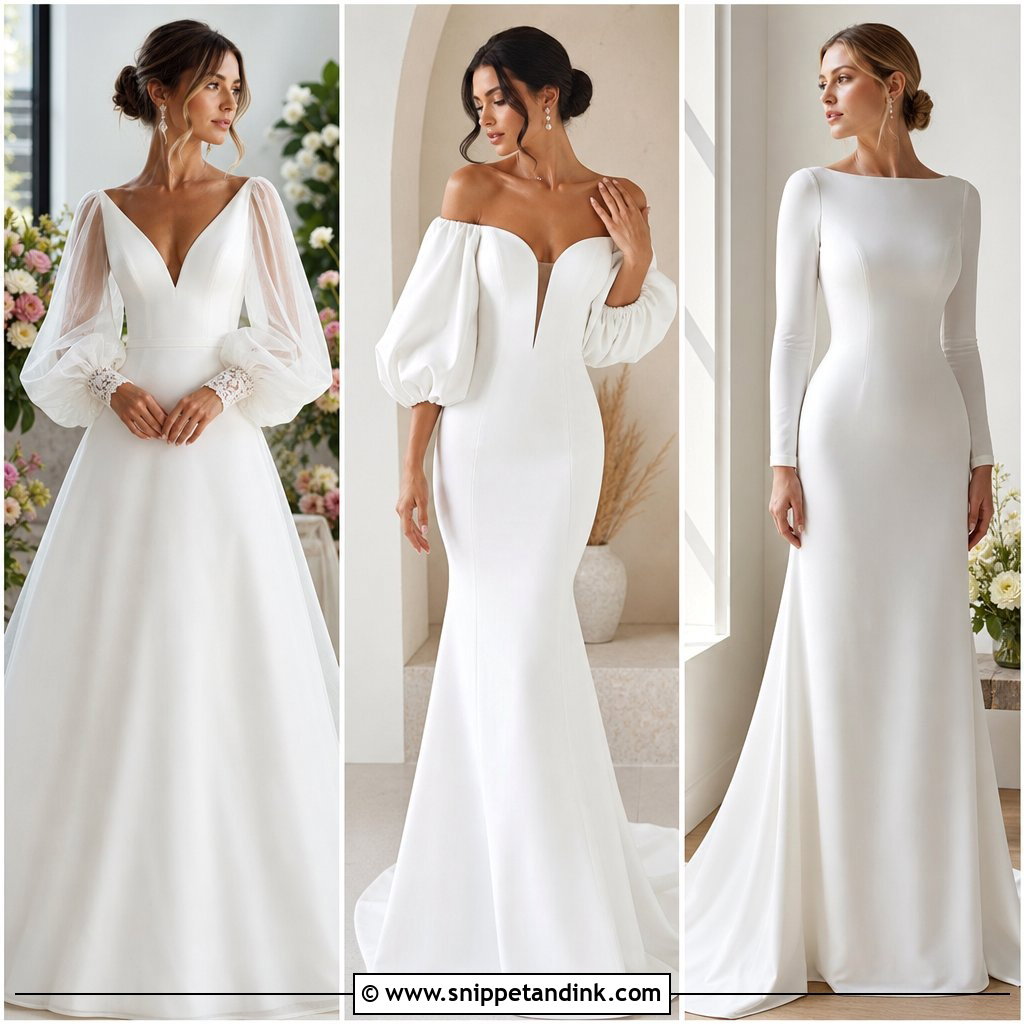
An off-white crepe sheath gown is what I suggest to brides who hate the feeling of being decorated. Crepe has a matte, slightly pebbled face and enough weight to fall straight, but it shows everything underneath, so smooth, no-line underwear goes to the first fitting, not the last. One point of interest is plenty: a bateau neckline, fitted long sleeves or a low square back. Sleek pointed pumps, sculptural pearl earrings and a narrow chapel veil keep it spare, with a structured white-and-green bouquet. For cold weather a tailored off-white coat works, but hold the coat against the dress in daylight before buying, because two off-whites from different mills rarely match. City venues, galleries, small hotel ceremonies and contemporary spaces suit it.
4. Ivory Long Sleeve Lace Wedding Dress
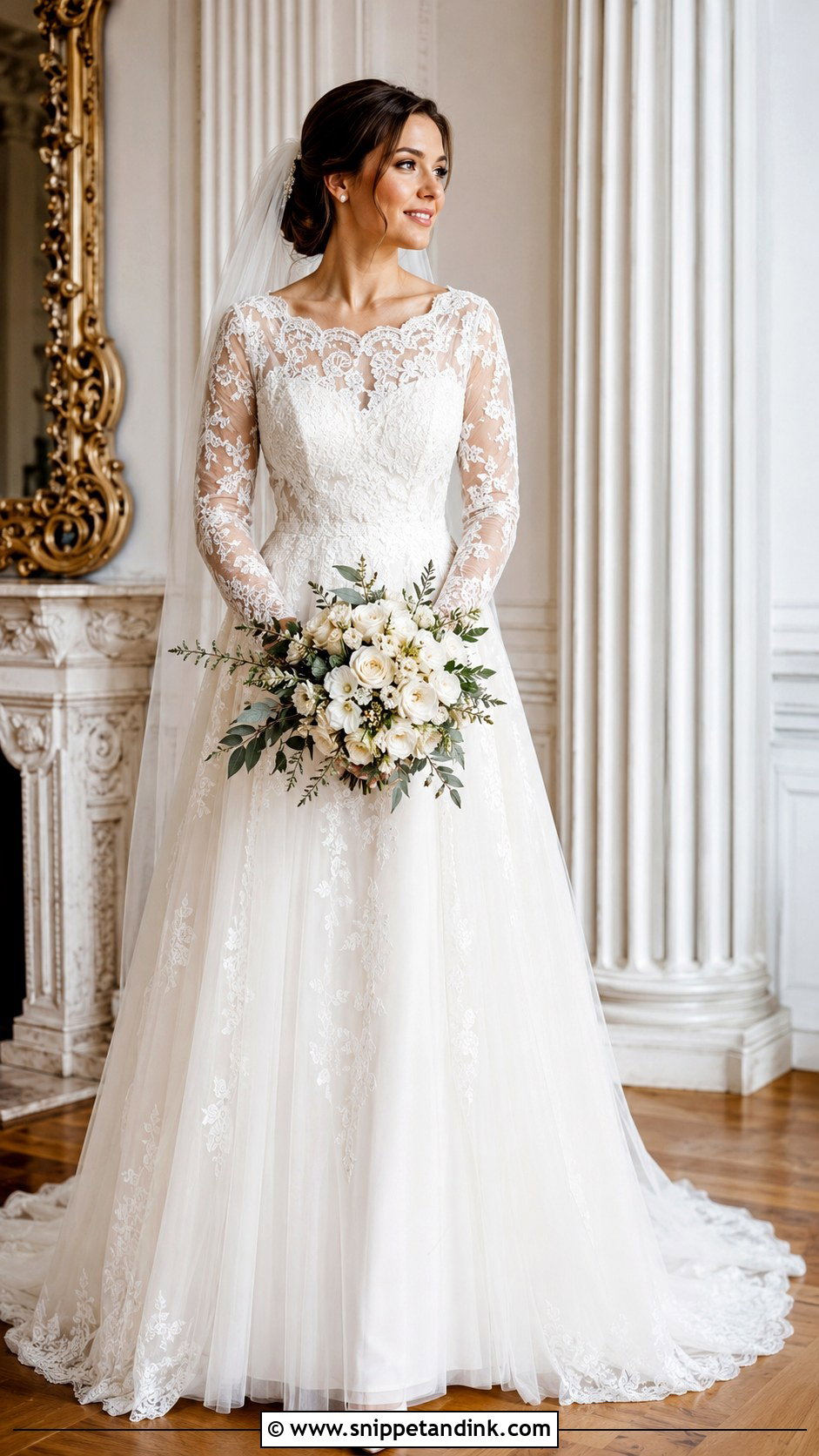
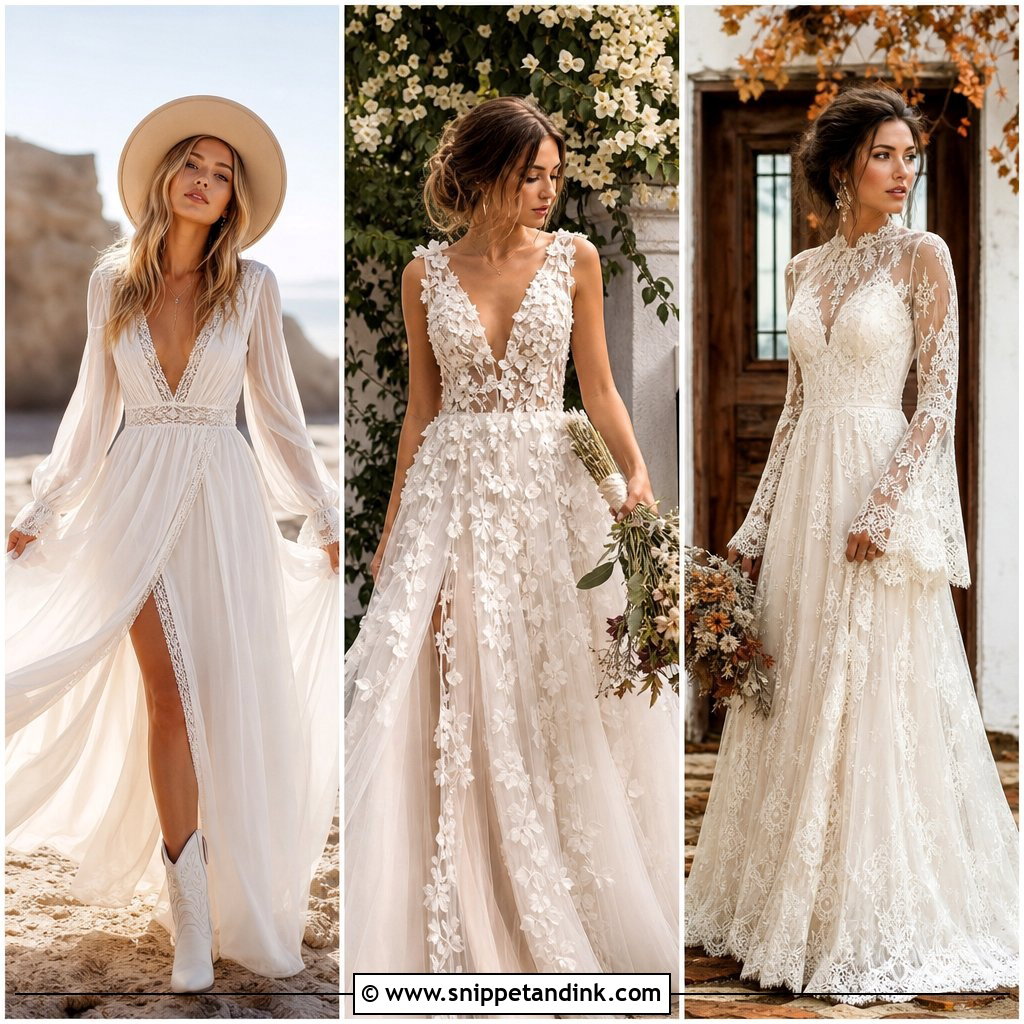
Long lace sleeves need one test before anything else. I have the bride reach up and hug me, because a sleeve set too tight in the armhole drags the whole bodice upward the moment she lifts her arms. Soft floral lace over a comfortable lining, with sheer panels at the neck or arms, keeps the coverage from feeling heavy, and an A-line or fit-and-flare skirt balances the covered top. Pearl studs, an ivory comb veil and closed-toe shoes in satin or soft leather finish it. If you want lace on the veil edge, ask whether offcuts of the gown’s own lace can be used; a near-match from another lace looks worse than plain tulle. Cream flowers with eucalyptus and trailing green suit the texture. Fall and winter are its natural seasons, though a lighter lace carries into spring.
5. Champagne Beaded Mermaid Wedding Dress
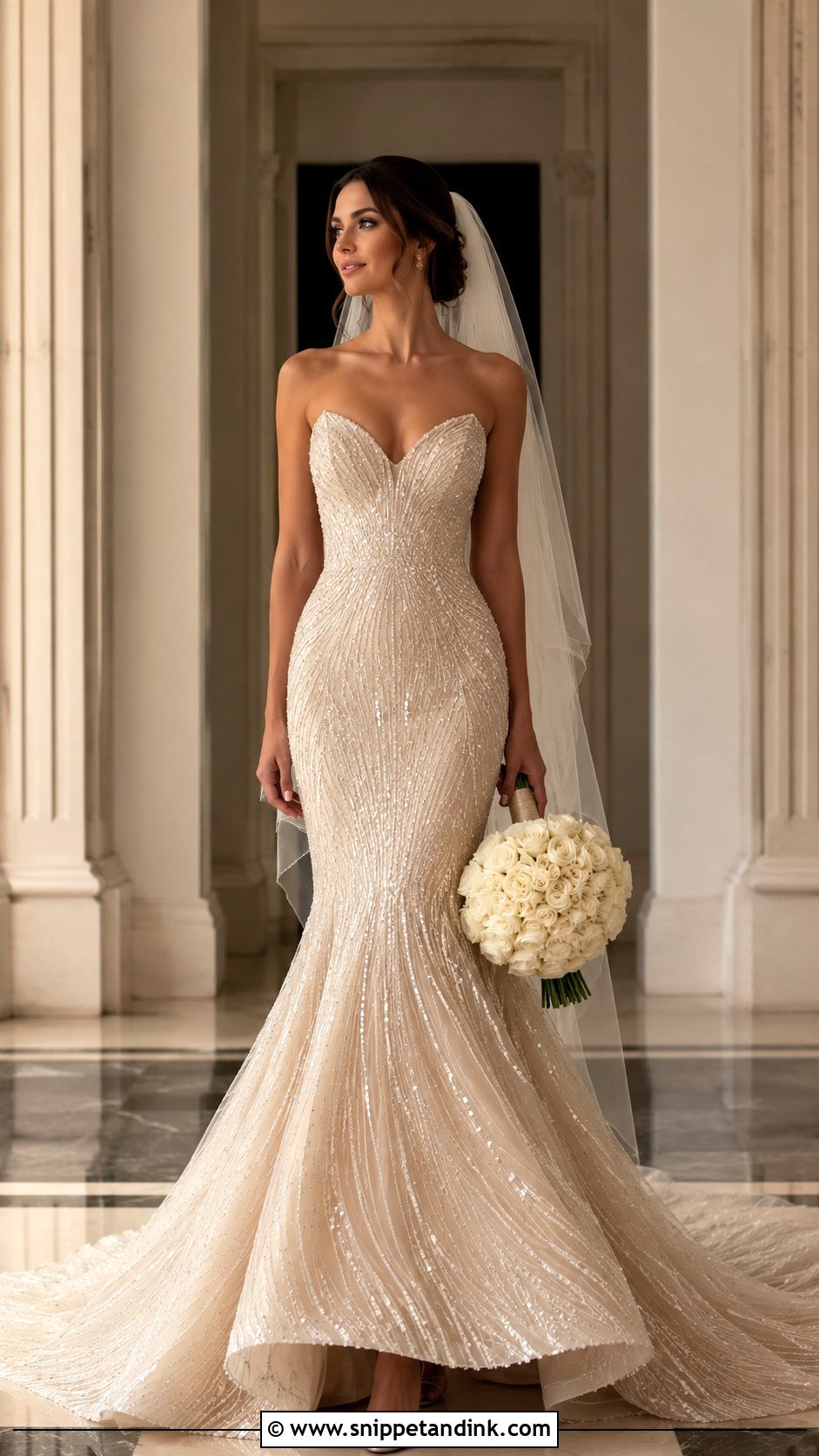
Beaded mermaid gowns carry their weight below the knee. Walk a full circle in the shop with your wedding shoes on before you decide, and practice sitting, because you’ll be perched on the edge of chairs all night. The fit hugs the waist and hips, then flares. Vertical or curving bead patterns read more evenly on camera than scattered placement, which can look patchy in flash photos. Keep everything else small: gold studs, one bracelet and a sheer veil with no trim. Metallic champagne heels continue the warm tone and a round ivory bouquet gives some contrast. I’d reserve this gown for an evening, indoor ceremony, and with that much reflected light, smooth hair keeps the outfit from looking busy.
6. Off-White Square Neck Wedding Dress
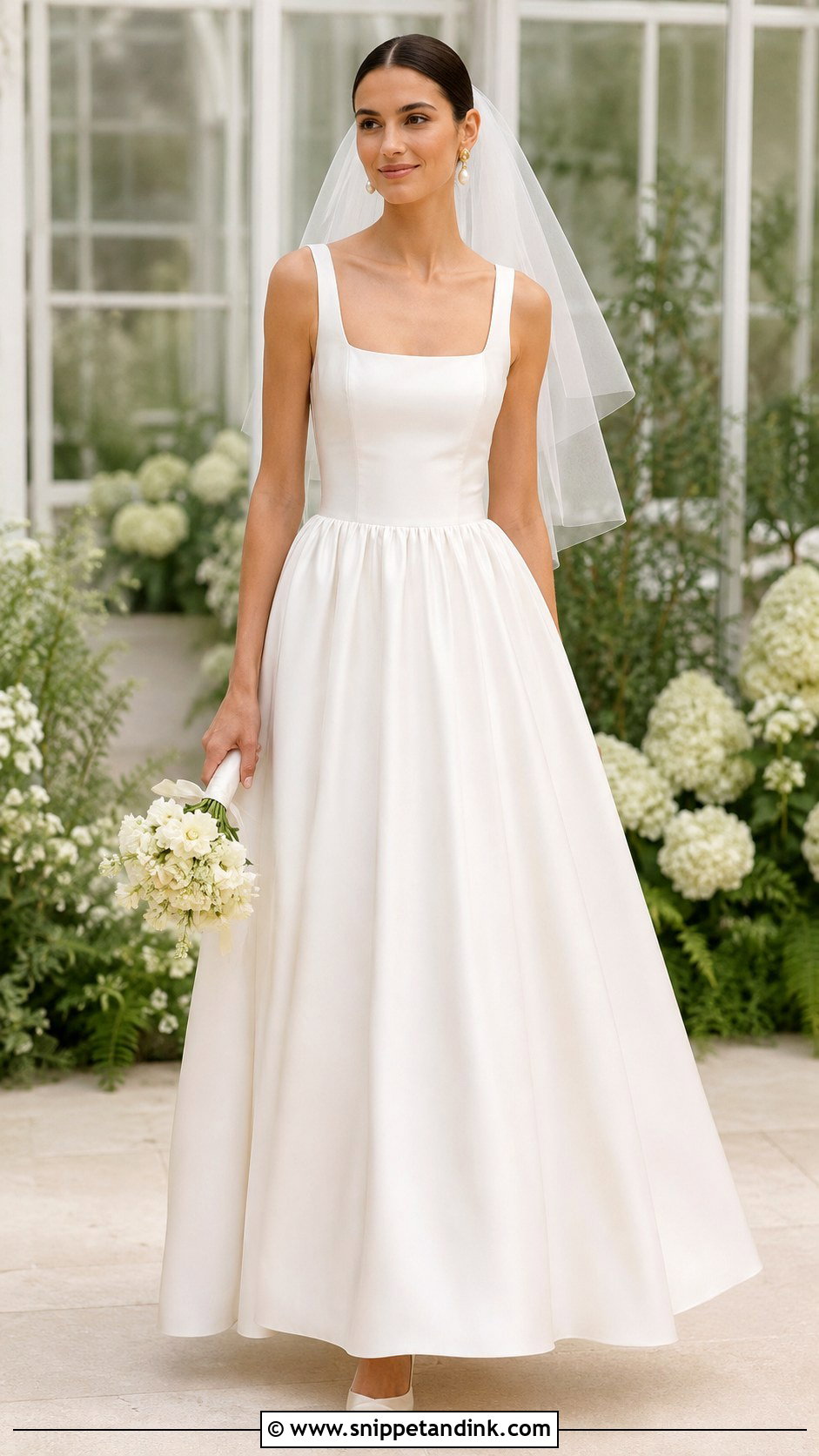
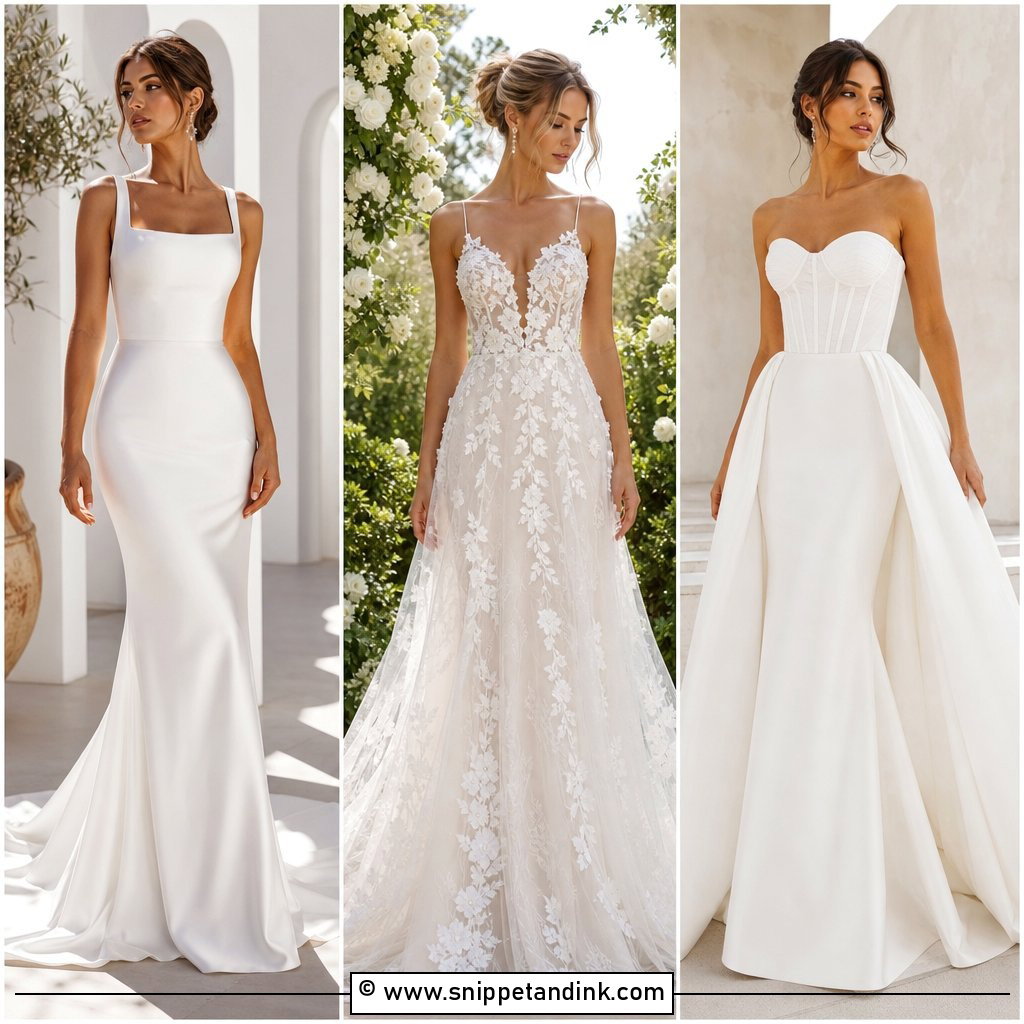
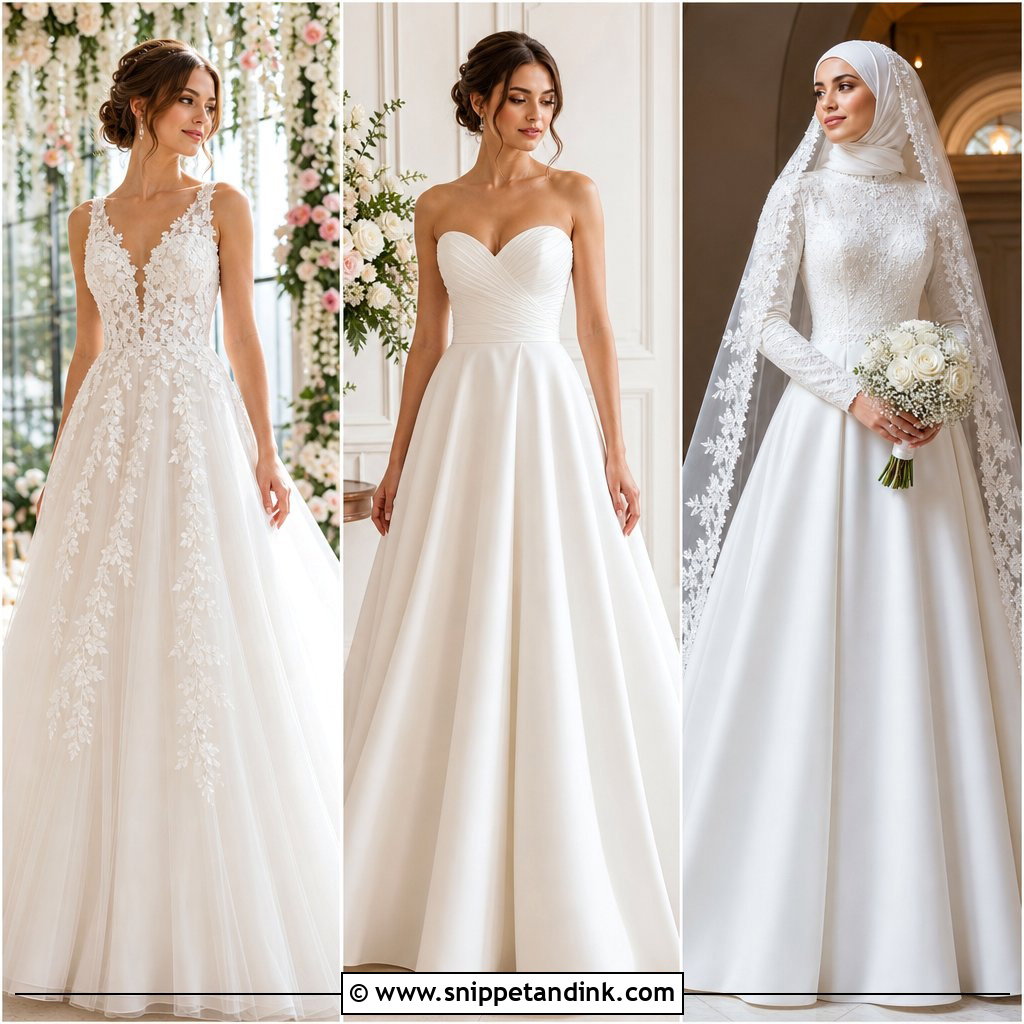
The square neck is one of the most forgiving cuts I fit. It frames the collarbone, and the wide straps it usually comes with give far more support than delicate spaghetti straps, which matters if you’d rather skip a strapless bra. Watch the corners when you lean forward. If they gape, a seamstress can take a tiny amount out of the neckline edge. Pair the fitted bodice with whatever skirt volume you like. Pearl-and-gold earrings, an elbow-length veil and pointed satin heels finish it, with a small cream bouquet on pale green stems. Matching detachable sleeves add coverage for a church ceremony and come off for the party. A smooth bun keeps the neckline clear, and the outfit sits easily at a formal daytime wedding or in a garden.
7. Ivory Off-the-Shoulder Wedding Dress
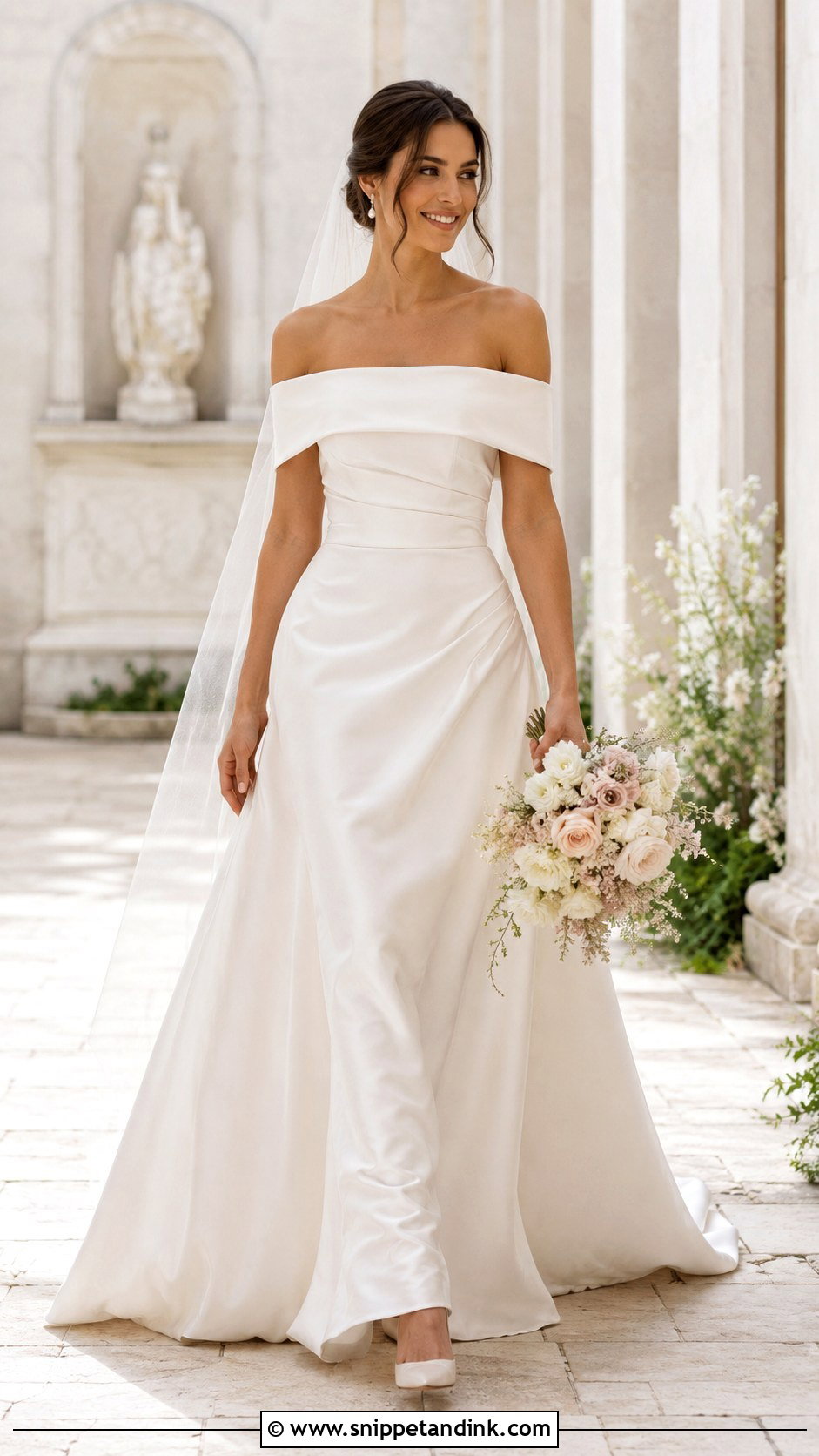
Does it stay put? That’s the real question with this neckline. Off-the-shoulder sleeves rest on the upper arm, so every time you raise your hands they ride up, and if the top edge of the bodice isn’t snug the whole thing slips. At fittings I have brides mime hugging guests and waving. Soft draped sleeves look relaxed; a structured fold-over band holds better and reads more formal. Pair it with an A-line or a fitted skirt, a chapel veil anchored under a low bun, pearl drops and ivory slingbacks, plus a bouquet of cream and blush flowers. Skip the necklace and let a fine bracelet finish things. Spring and summer, outdoors or in a softly decorated ballroom.
8. Champagne Tulle Princess Wedding Dress
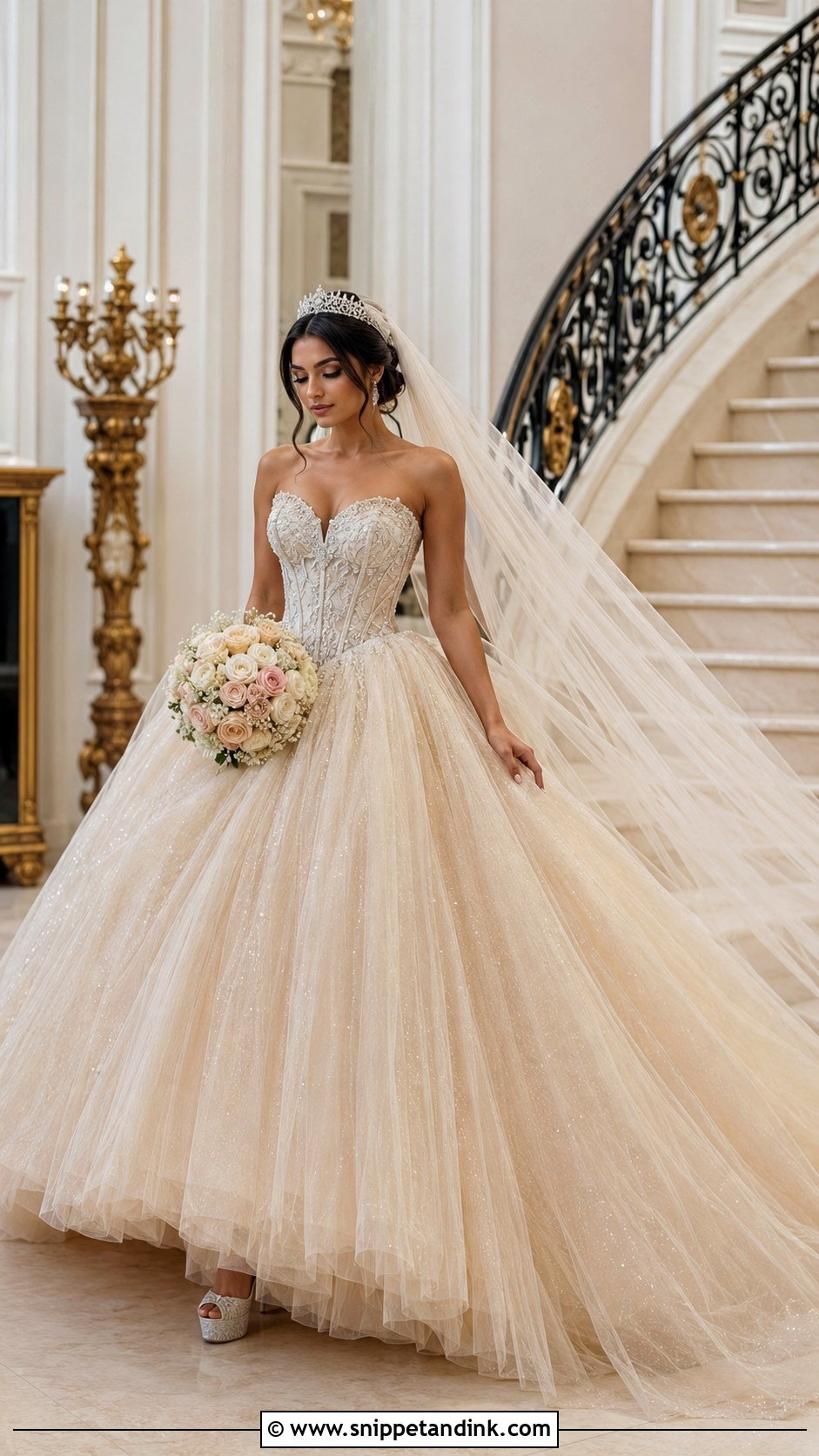
Champagne tulle gives you volume without the starkness of a bright white ball gown, and it behaves better in strong sun because the layers don’t blow out to a flat white in photos. Several fine layers move as you walk, while an ivory lace or beaded bodice adds definition and a corset-style top carries the skirt’s weight. Tulle snags easily, so check bracelet clasps and ring settings for anything sharp. A simple tiara or crystal comb, small earrings and a cathedral veil in plain ivory tulle are enough. Champagne platform heels add height and stay hidden. Carry a medium bouquet of cream, pale pink and soft green, and if the bodice is already embellished, stop adding sparkle there. Grand staircases and formal halls are where this one shines.
9. Off-White Minimalist Slip Wedding Dress
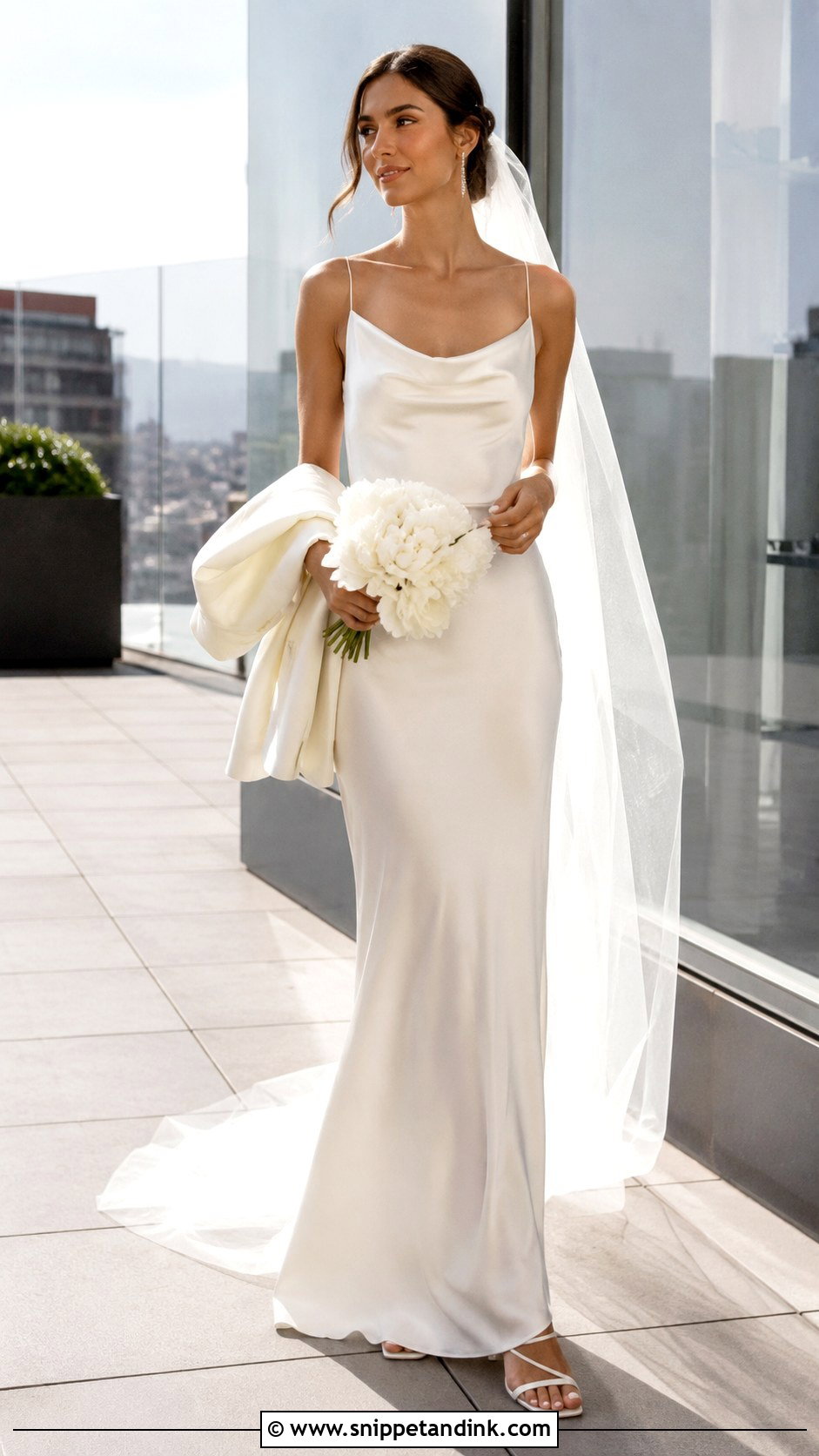
A slip dress is the most exposing gown on this list. There’s no structure to hide a seam, a bra line or a hem that’s slightly off, so I only recommend it to brides prepared to spend real time on undergarments and alterations. Choose a heavier satin or silk-like fabric that skims rather than clings; thin charmeuse shows every ripple when you sit. A cowl, straight or soft V neckline keeps the line clean. Strappy off-white heels, slim drop earrings and a sheer floor-length veil go with it, plus a compact bouquet of a single flower variety. A tailored blazer or light wrap covers cooler evenings at the beach, on a rooftop, in a restaurant or at a destination wedding.
10. Ivory Tea-Length Wedding Dress
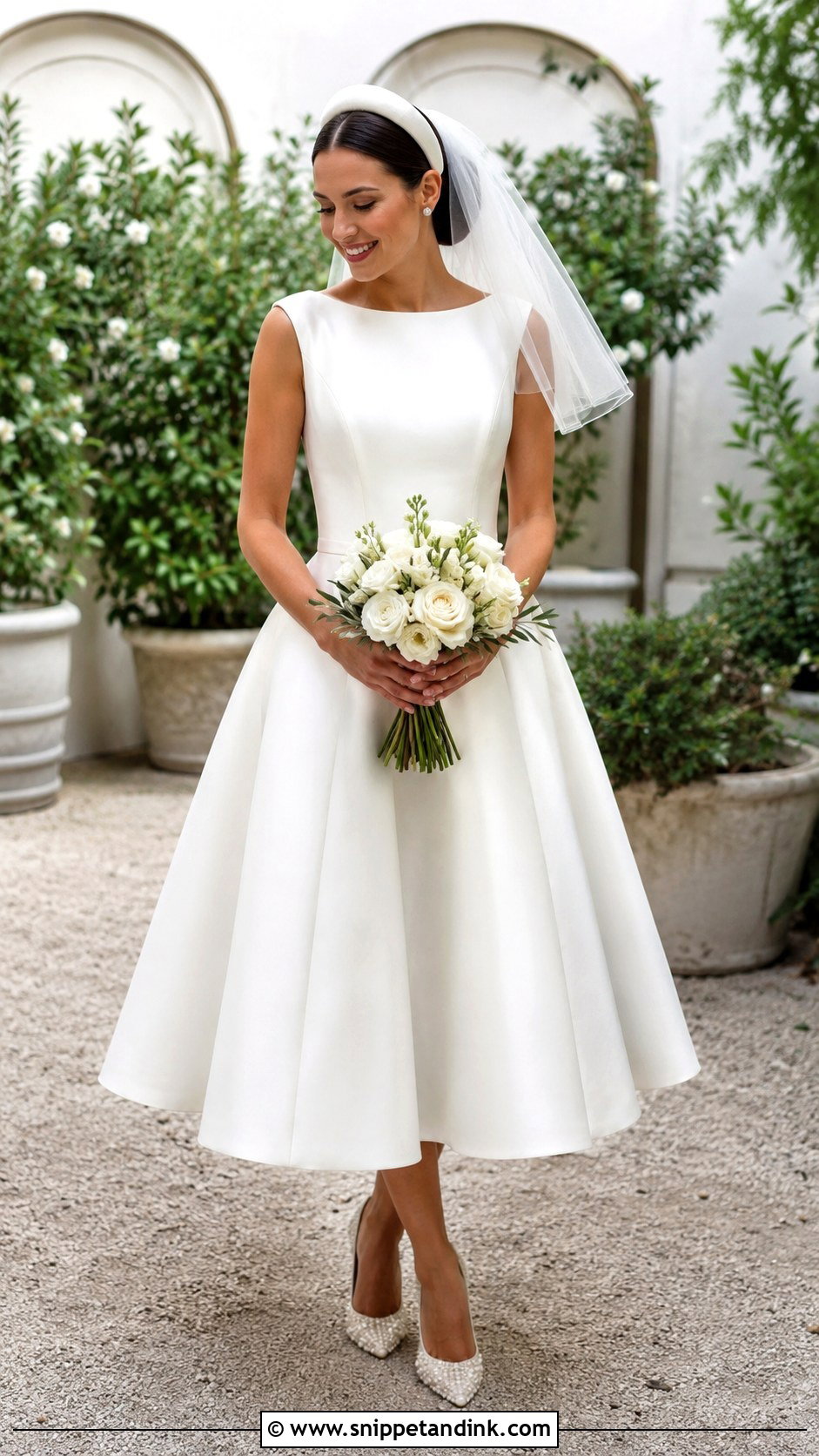
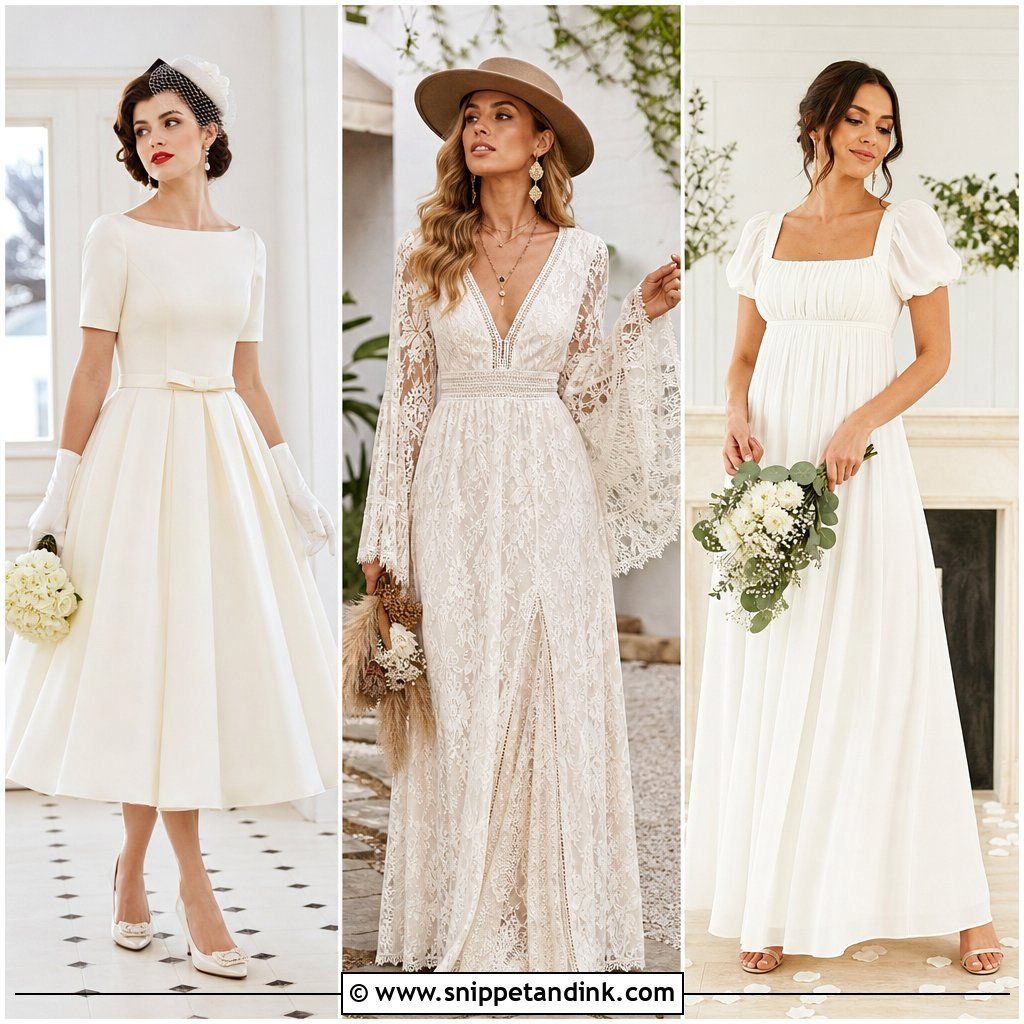
With an ivory tea-length gown, your shoes become part of the dress, so buy them before the hem is set. The skirt should land between knee and ankle, and the exact point matters more than on any long gown. On petite brides I aim a little higher on the calf; on taller brides, a touch lower so the proportion doesn’t look cut off. Pearl-trimmed pumps, satin ankle straps or polished ivory flats work with a fitted bodice and full skirt. A short veil, structured headband or small bow suits the length, while a long veil looks mismatched. Add studs, short gloves if you like them and a neat cream bouquet. It’s at home at a daytime ceremony, a courthouse or a garden gathering.
11. Champagne Corset Wedding Dress
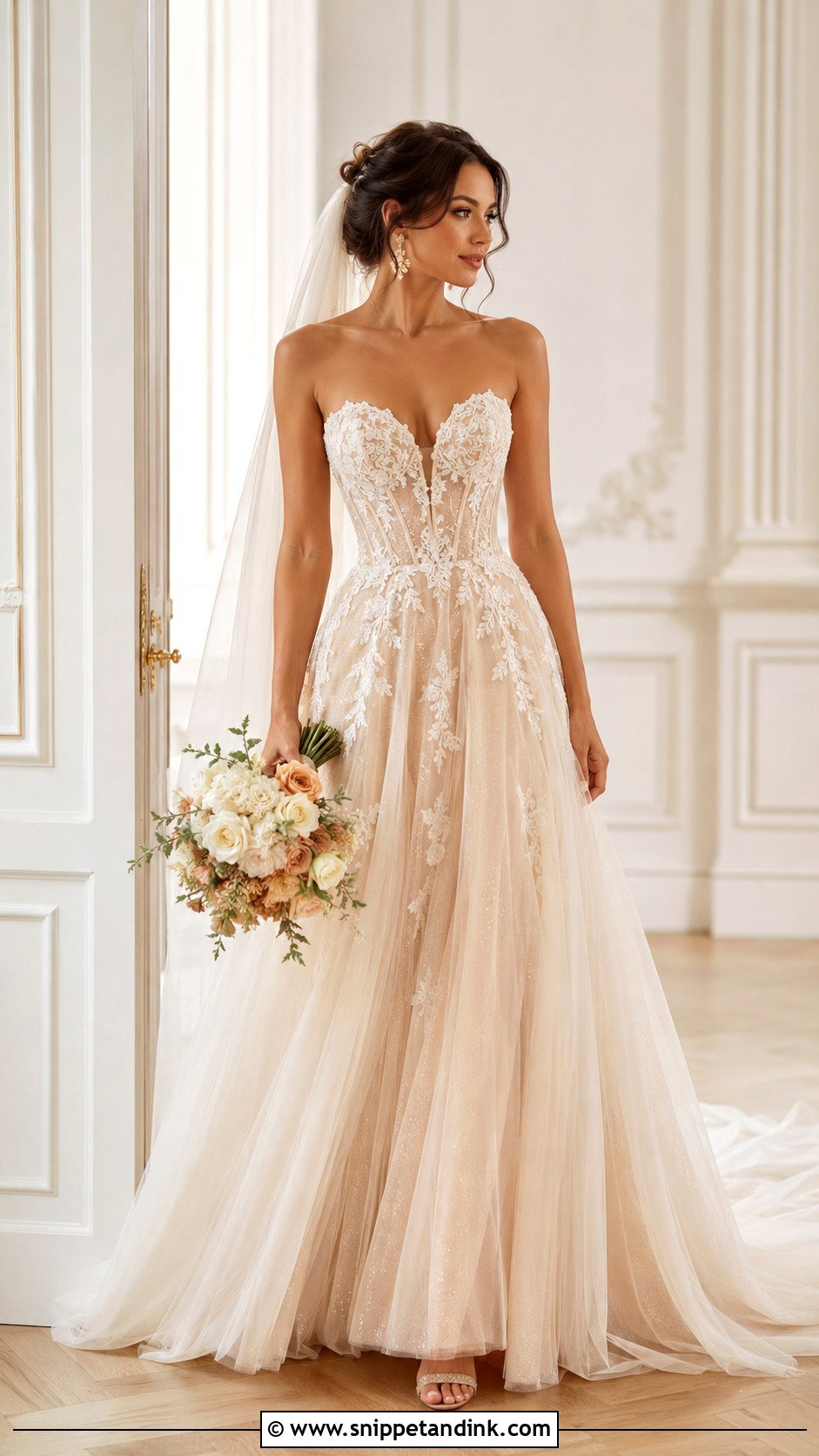
Visible boning only looks good when it’s fitted properly, and corsets are where I see the most fitting regret. A bodice that feels secure standing can dig into the ribs when you sit down to dinner, so sit, walk and raise your arms at every alteration appointment. Look for proper boning, well-placed cups and a straight or gently curved neckline. An ivory lace overlay on champagne shows off the construction without making it harsh. Underneath, a flowing tulle skirt, a satin A-line or a mermaid shape all work. Champagne heels, gold-and-pearl earrings, a plain ivory veil and a cream and muted peach bouquet complete it for a formal indoor celebration.
12. Off-White High Neck Wedding Dress
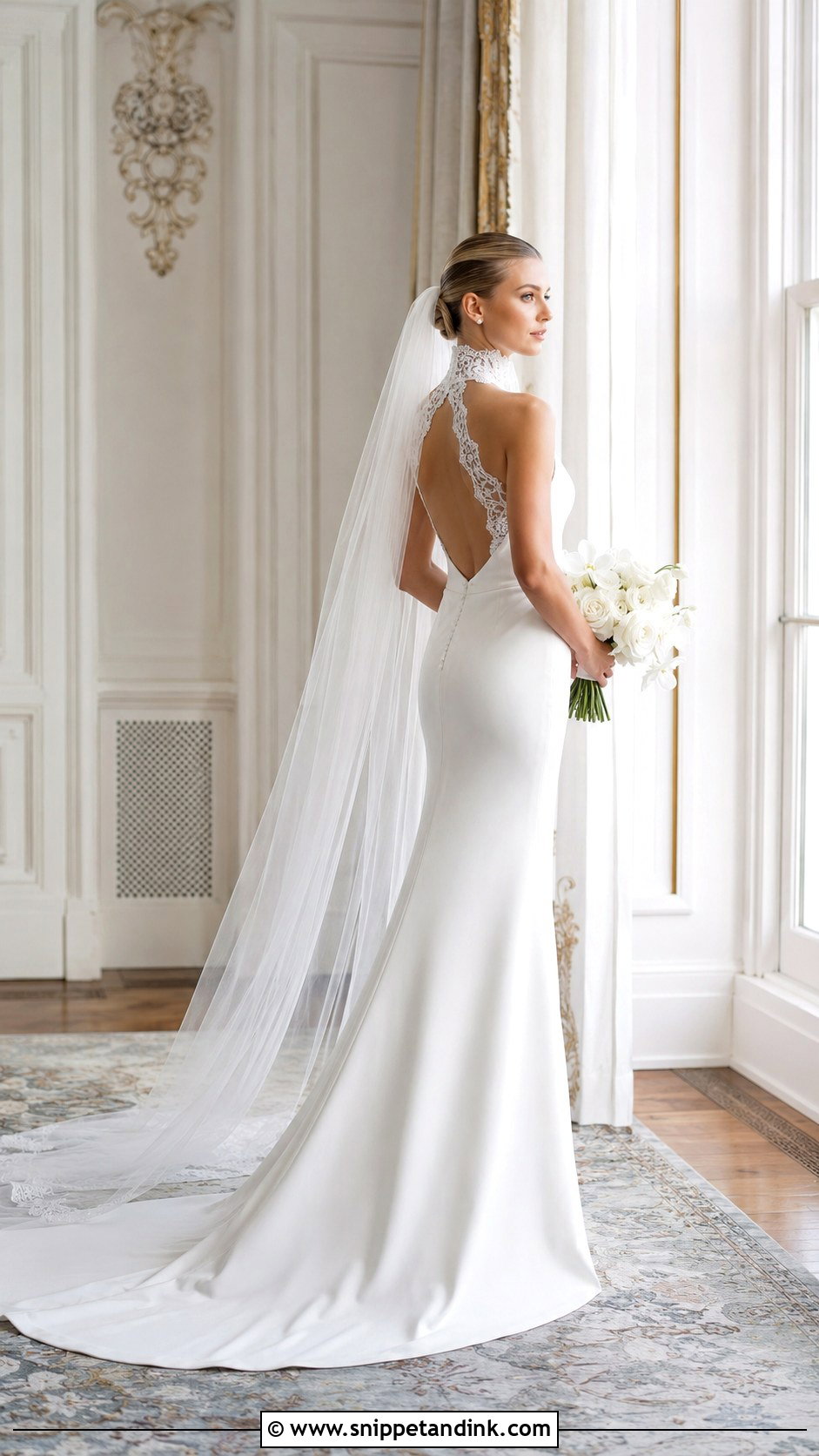
A high neck lengthens the upper body, but it puts veil placement under scrutiny. I comb the veil in beneath a low bun; set higher, it lands right on the collar and hides the detail you paid for. Lace at the neck reads romantic, while plain crepe or satin looks sharper and more current. Balance the covered front with an open back, a sheer panel or a fitted waist. Skip the necklace entirely and let earrings and a fine hair piece bring light to the face. Closed-toe ivory pumps and a structured white bouquet suit it, and I’d place it at a fall, winter or formal daytime wedding.
13. Ivory Floral Appliqué Wedding Dress
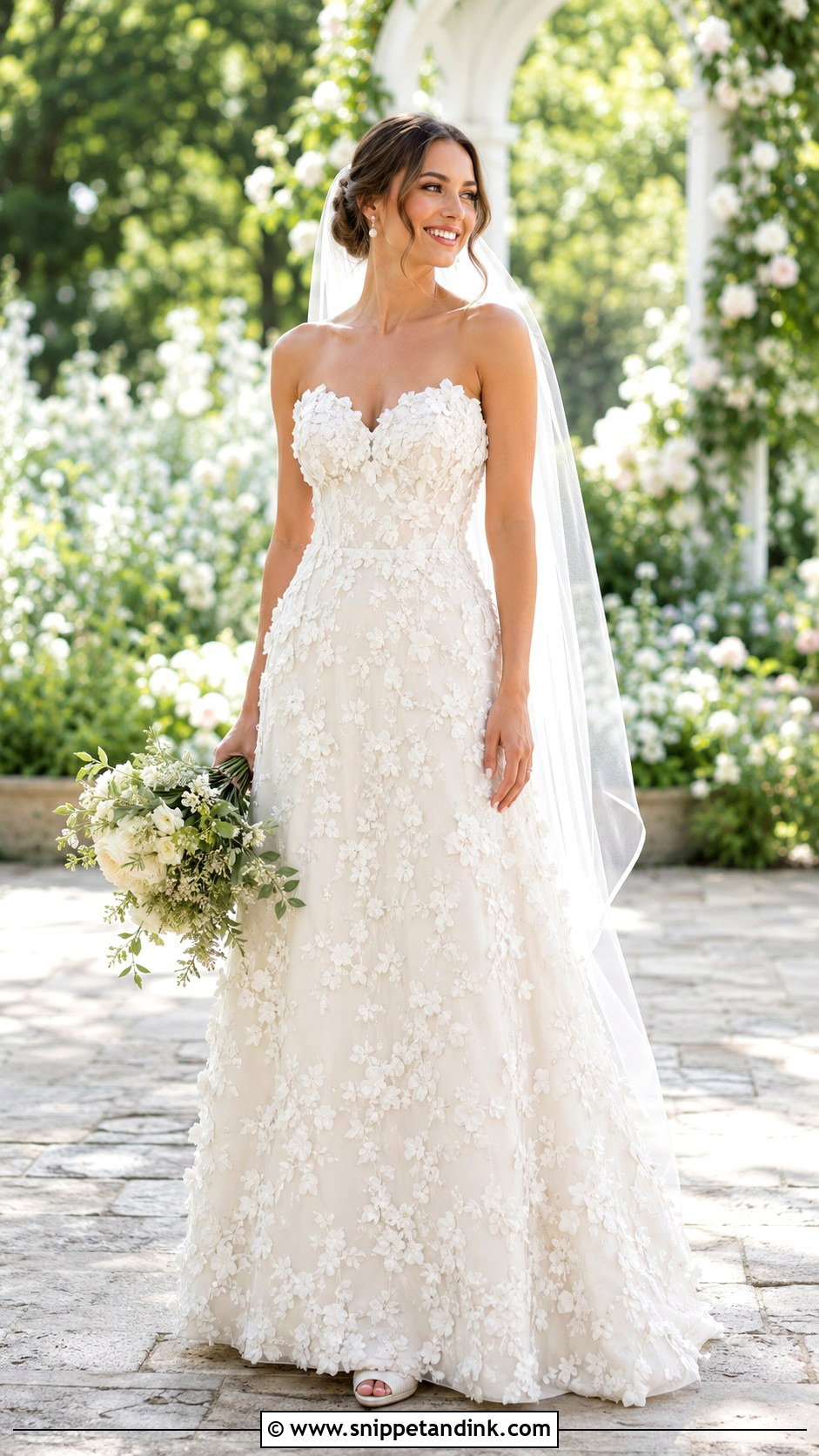
With raised appliqués, the lining decides everything. Over ivory, the petals stay quiet and you notice them up close; over champagne, every flower stands out from across the aisle, so ask to see both if the designer offers them. The petals might sit on the bodice, trail down an A-line skirt or cluster at the hem. They also catch on things. I pair these gowns with a plain cut-edge veil and make sure bouquet stems are fully wrapped so no wire snags the flowers. Pearl earrings and satin heels finish the outfit. A loose bouquet echoing the gown’s flowers in cream, with gentle greenery, feels natural in a garden or a bright room. Keep the hair soft but controlled, a low textured bun or a relaxed half-up.
14. Champagne Sequin Column Wedding Dress
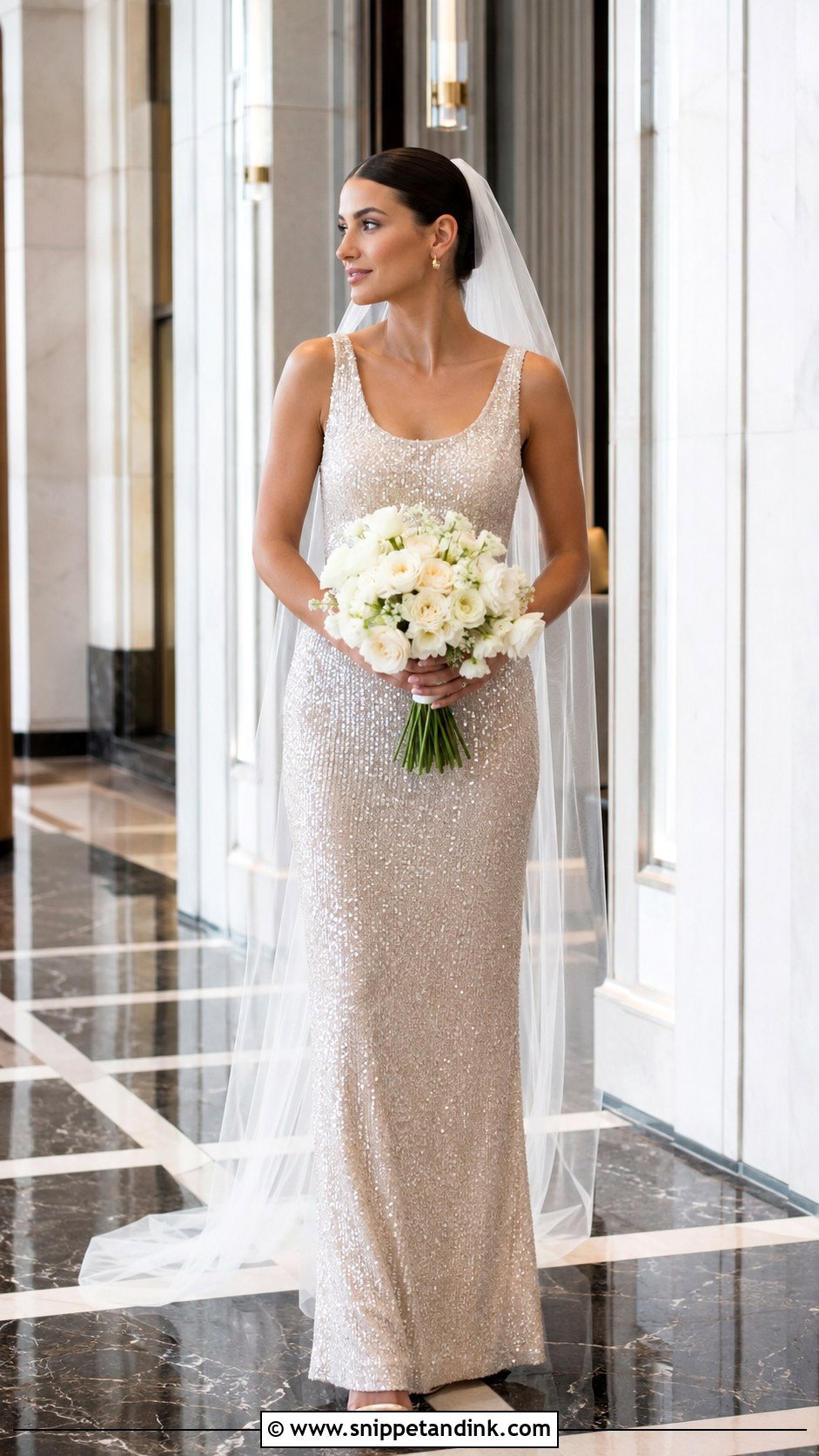
Sequins scratch. It sounds trivial until a full receiving line of hugs has snagged half the sleeves in the room, so look for fine sequins or flat beading, which also looks more refined than oversized paillettes. A V-neck, scoop neck or sleeveless bateau bodice pairs well with a straight skirt, and in a column you’ll want a slit or kick pleat for climbing steps. Small gold earrings, a plain fingertip veil and metallic champagne sandals keep it quiet. A smooth clutch holds your essentials at the reception and a neat ivory bouquet gives contrast against the shimmer. Wear it in the evening at a formal hotel or city venue, with a clean bun or soft waves.
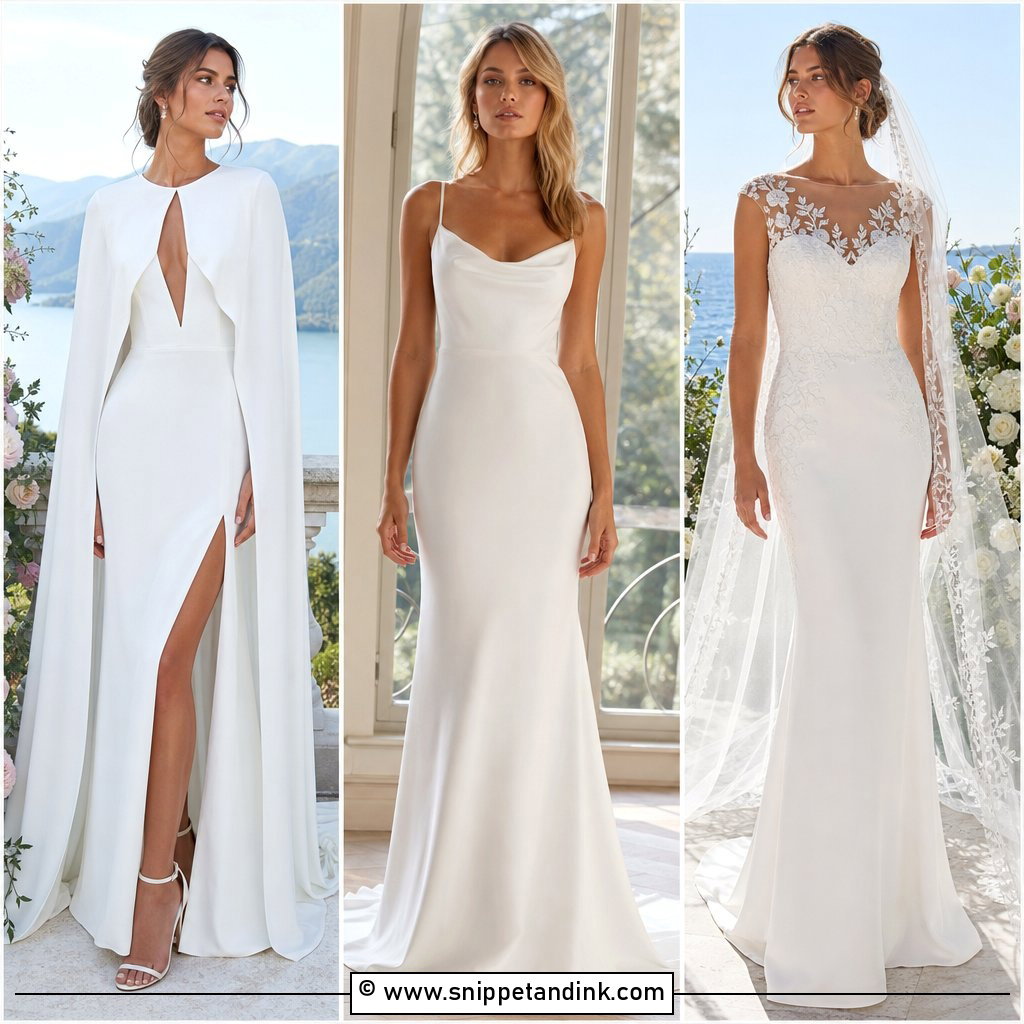
15. Off-White One-Shoulder Wedding Dress
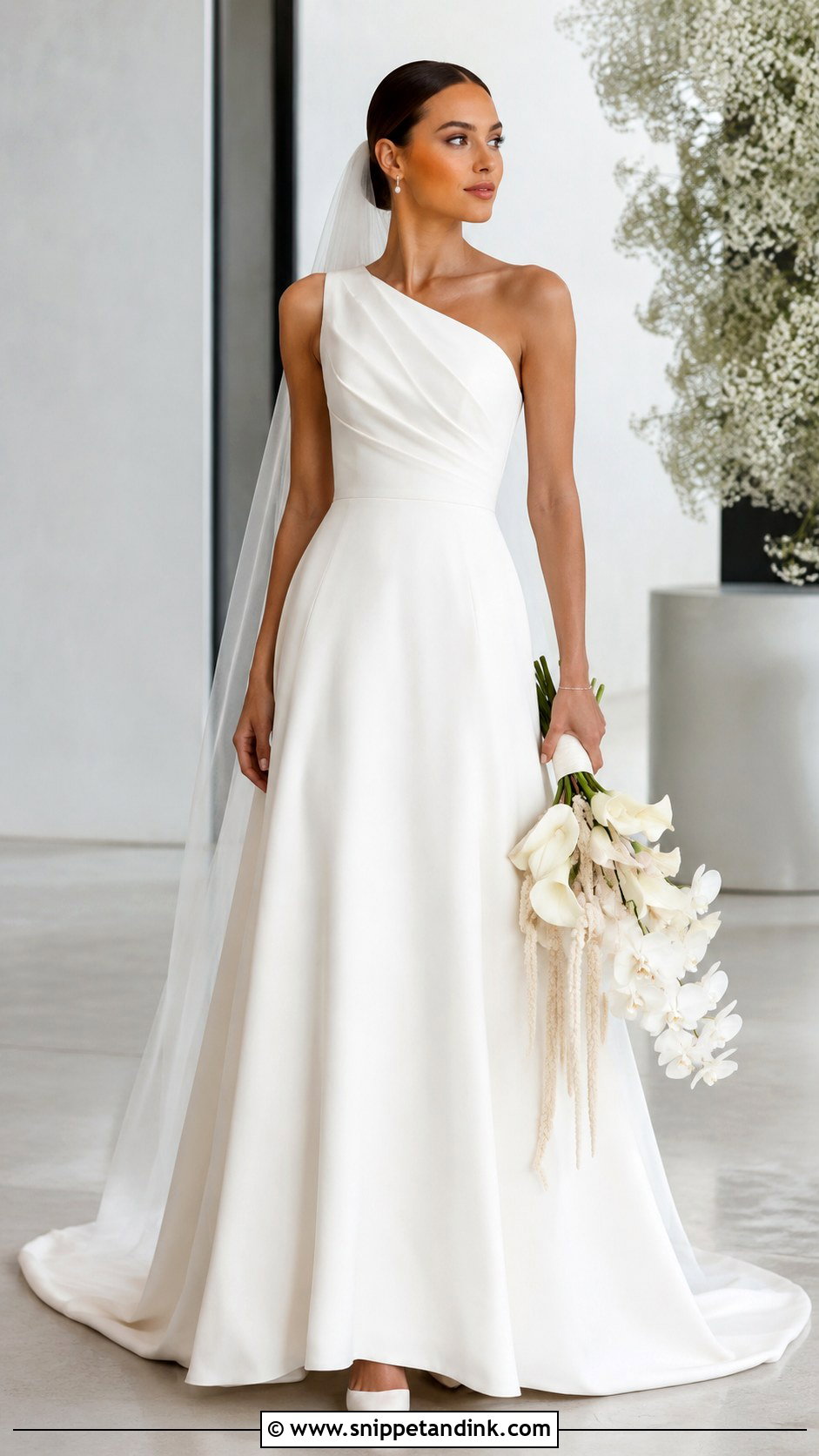
Asymmetry does the work here, so everything else should stay calm. The single shoulder can be softly draped, fitted or finished with a sculptural bow. On every one-shoulder fitting I check the bare side as the bride lifts her opposite arm; if the bodice relies on the strap alone instead of internal boning, it gapes. A straight skirt looks modern, an A-line moves more easily. Wear one statement earring or two small drops, but no necklace. Pointed off-white heels, a simple bracelet and a sheer veil set low at the back of the head finish it, with a sculptural cream bouquet. Contemporary venues, formal outdoor settings and destination ceremonies suit it best.
16. Ivory Boho Wedding Dress
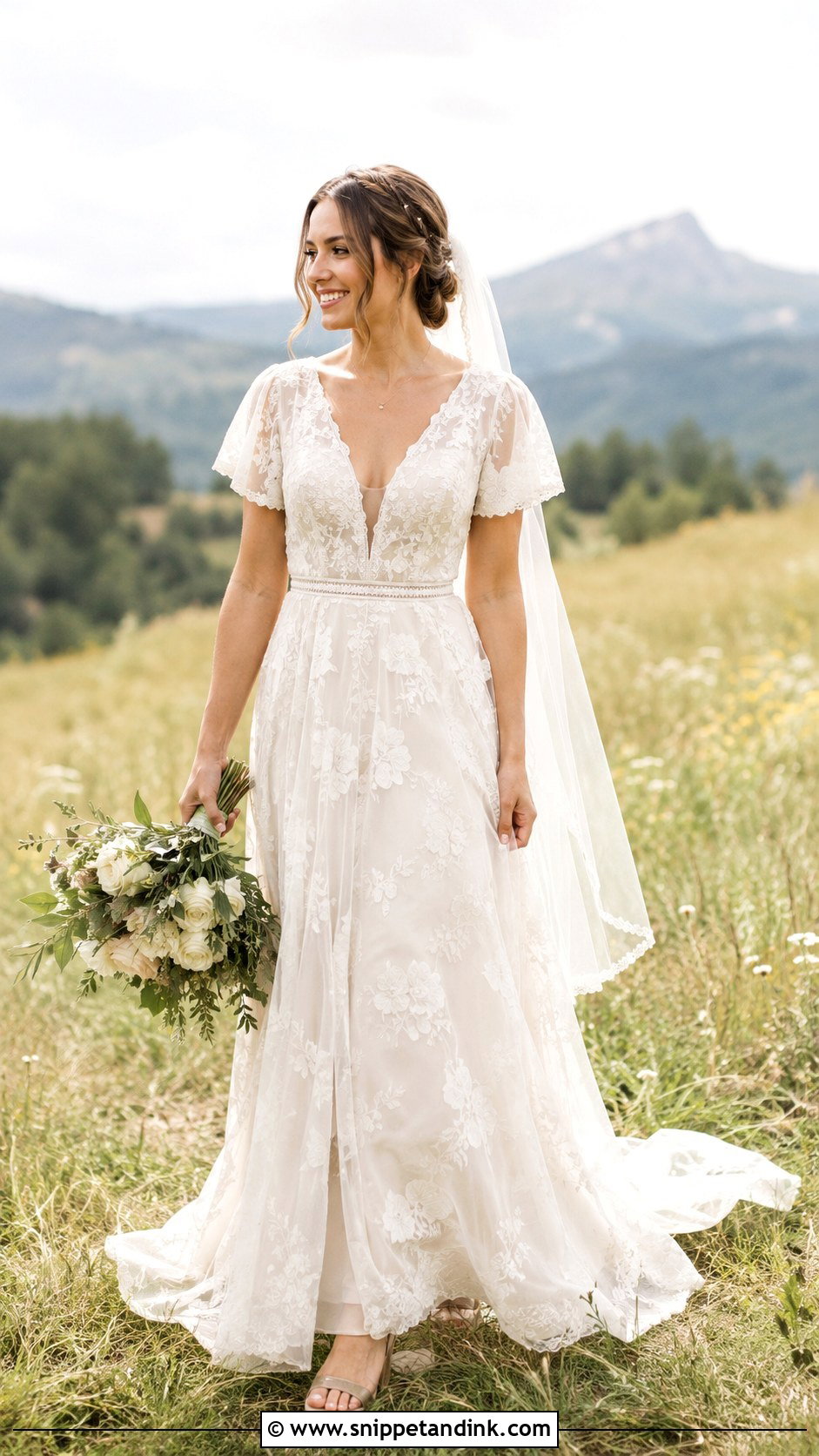
An ivory boho wedding dress should look relaxed, not unfinished, and the waist usually decides which way it goes. Without a defined waistline, soft lace and flutter sleeves turn shapeless in photos. Crochet-style patterns and flowing skirts move nicely outdoors, but check the lining: a synthetic lining under layered lace gets hot quickly in summer, so ask about breathable options. Shoes follow the ground, low block heels on lawn, embroidered flats or plain leather sandals on sand. Delicate gold jewelry, a light veil and a loose bouquet with cream flowers and grasses suit the mood, along with soft waves or a loose braided updo. Woodland, coastal and outdoor destination weddings are its natural home.
17. Champagne Vintage Wedding Dress
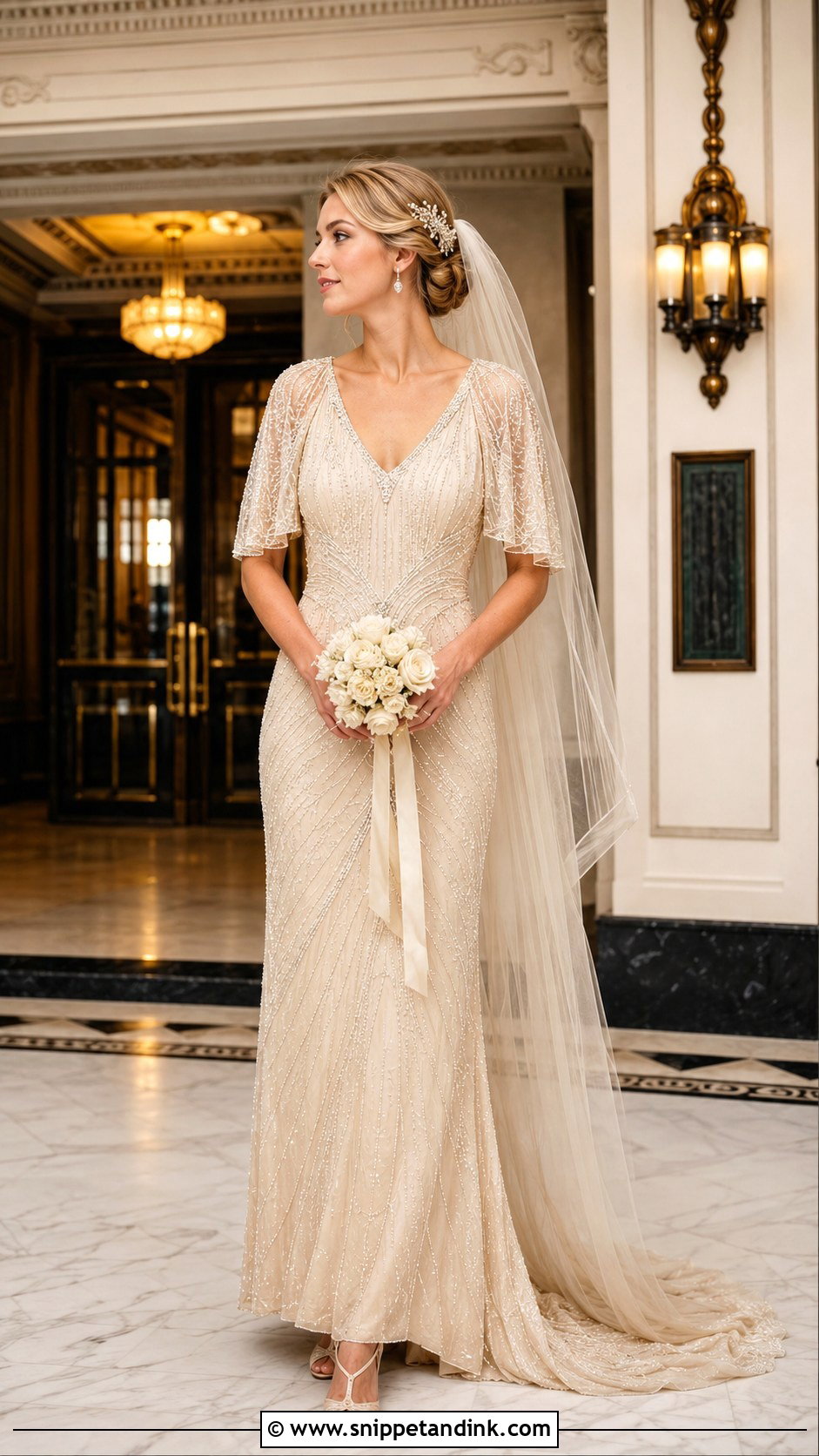
Champagne suits vintage styling because the shade itself carries the reference; it recalls lace and silk that have mellowed over the years. Lace, soft pleating or fine beadwork all fit. A bias-cut skirt, flutter sleeves, a modest V or an illusion yoke gives a period feel, and I’d pick one or two of those details rather than stacking them, or the dress tips into costume. A pearl comb, drop earrings and a simple ivory veil are enough. Champagne T-straps or low satin pumps are practical as well as right for the era. A compact cream bouquet with trailing ribbon belongs in a historic home, a restored theater or a library.
18. Off-White Plus Size Wedding Dress
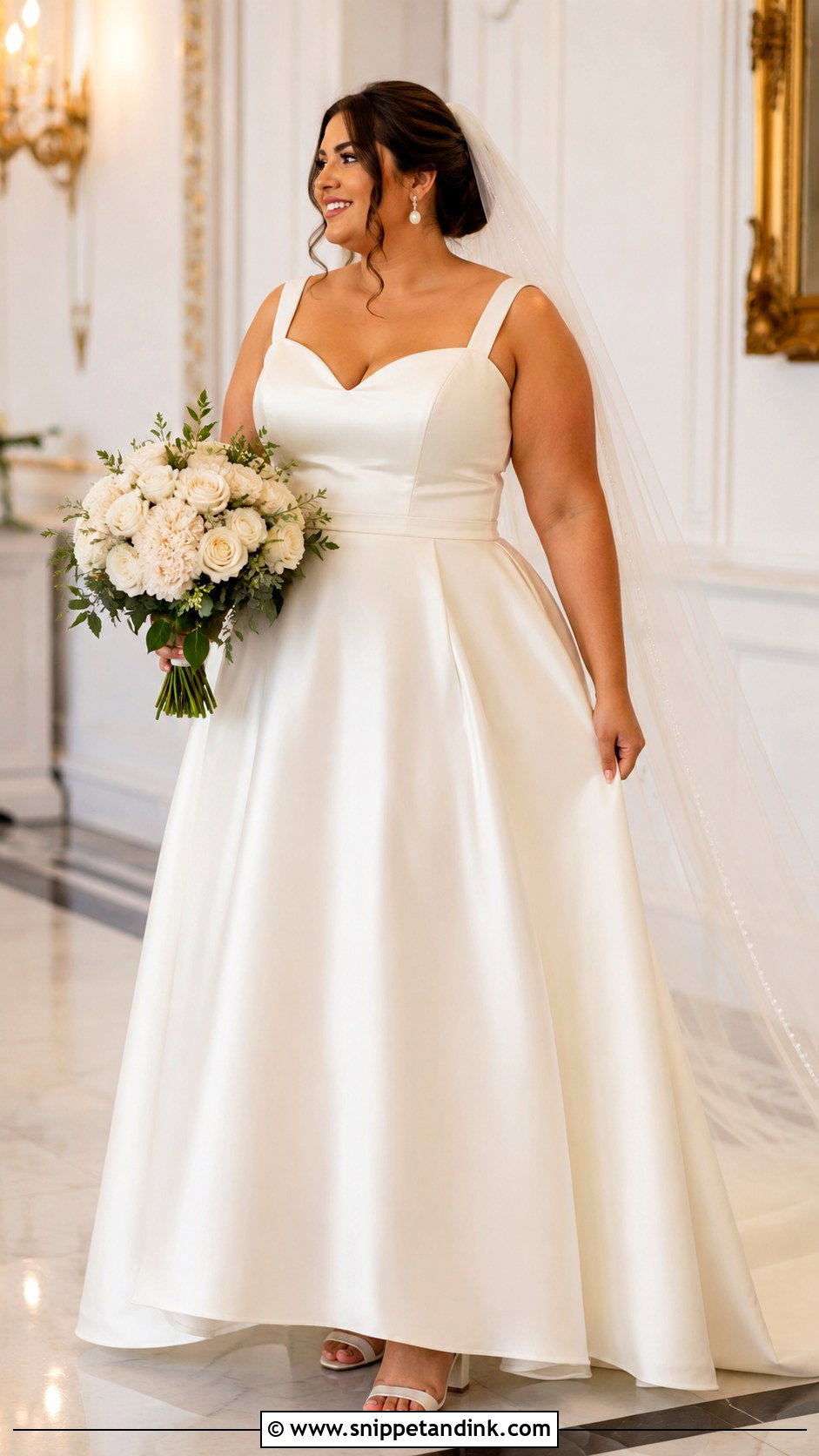
Good support is built into the dress, not added afterward. For a plus size off-white gown I look at the inside before the outside: boning, a waist stay, cups sewn in at the right height and straps wide enough not to dig. After that the silhouette is yours, a structured A-line, a fit-and-flare with internal support or a flowing empire waist. Off-white satin, lace and crepe all tailor well. Cushioned block heels, pearl earrings and a veil falling past the widest point of the skirt keep the proportions even, and a medium or larger bouquet sits in scale in photos. Move a lot at fittings, and ignore body-type rules that tell you what you can’t wear.
19. Ivory Petite Wedding Dress
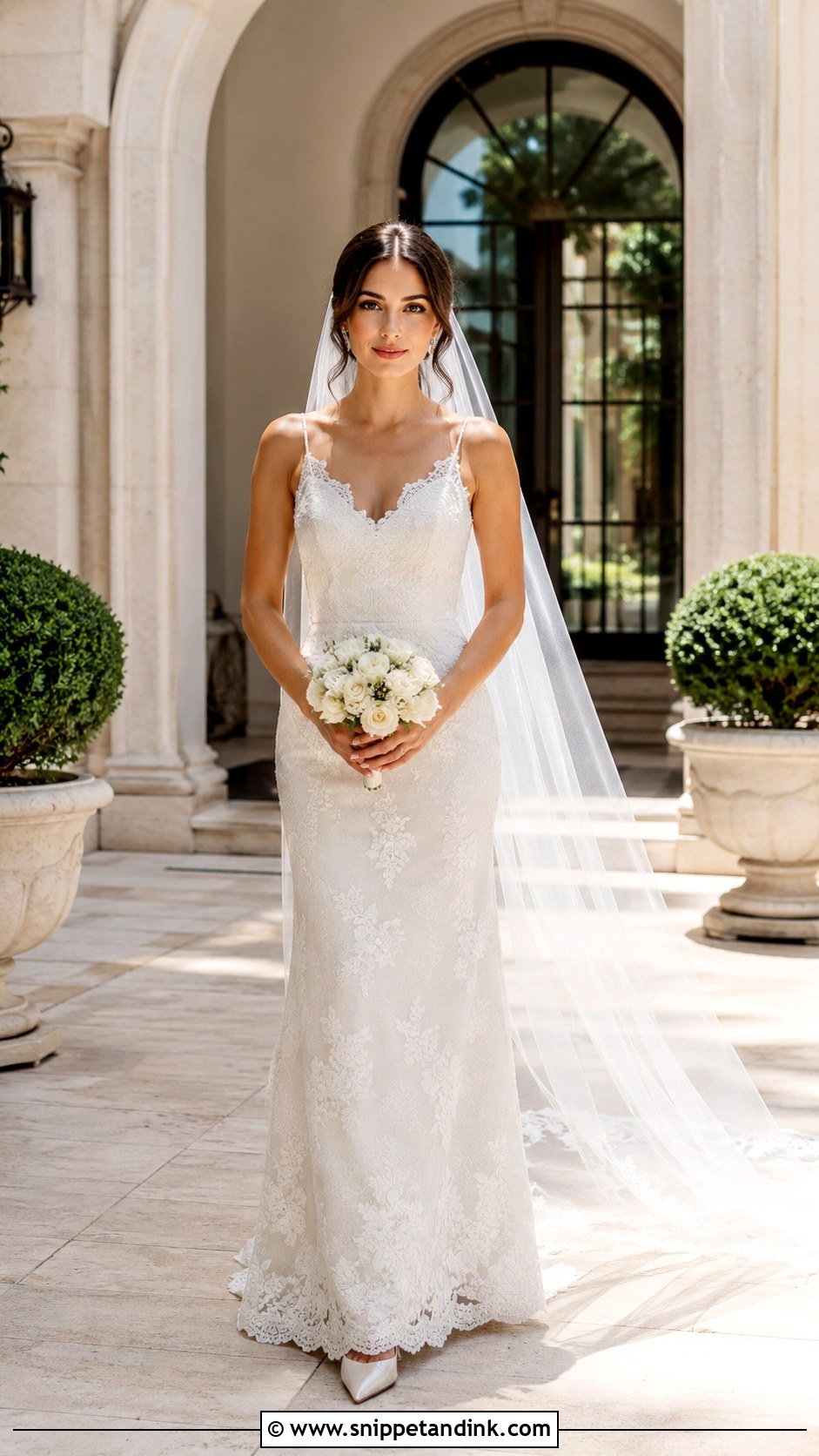
Scale is what I watch with petite brides. Lace motifs, skirt volume and veil width should all run a little smaller than the sample suggests. In ivory, a sheath, narrow A-line or fit-and-flare with a natural or slightly raised waist keeps a clean vertical line. Bring the exact wedding shoes to the final alteration, because even a small amount of extra hem pools around the feet and shortens you in every photo. A narrow veil that just clears the train and a compact bouquet keep the dress visible. Dramatic details are still fine. Put one where you want the eye to go, at the neckline or the back, instead of spreading several across the gown.

20. Champagne Wedding Dress With Cape
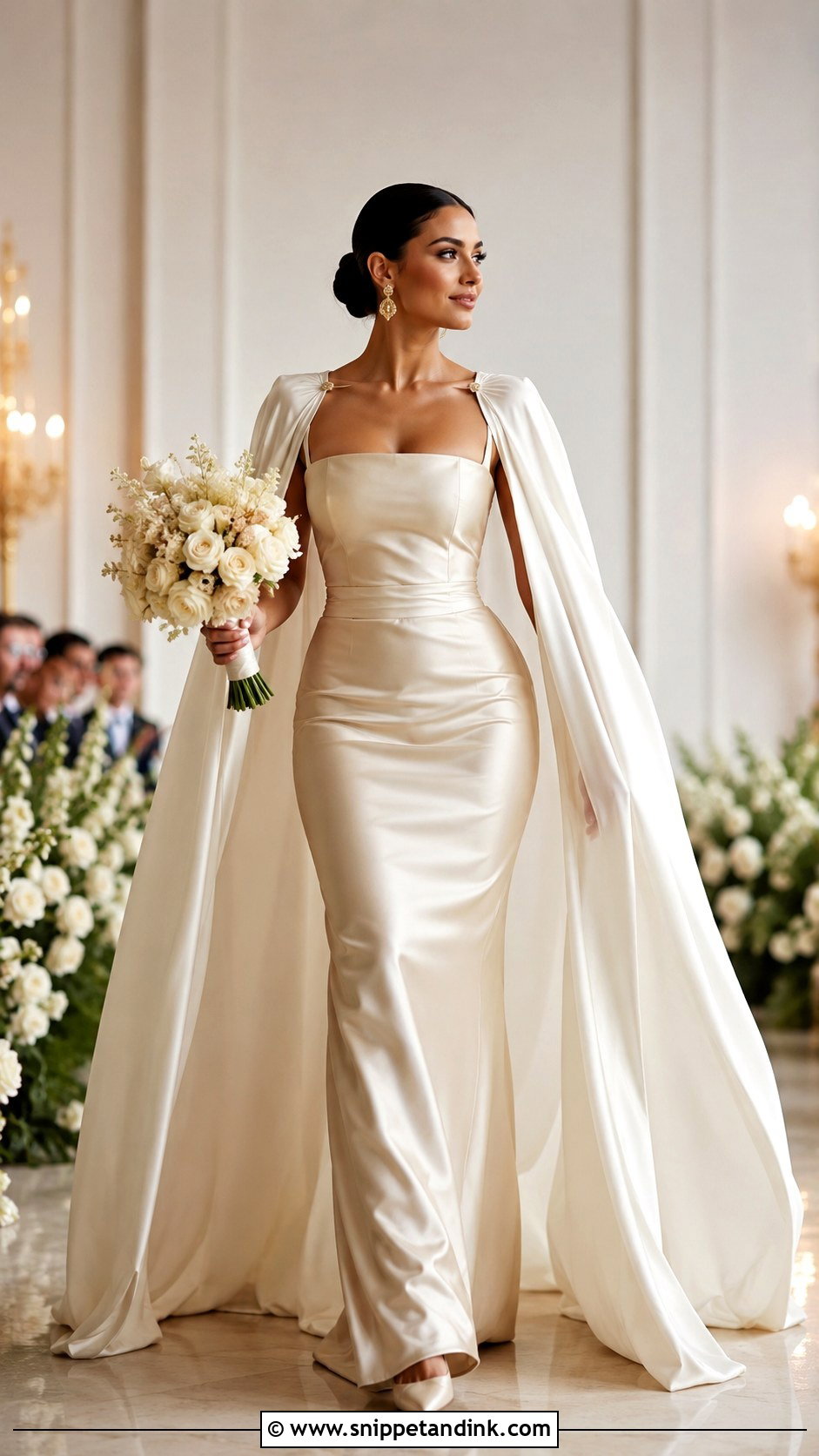
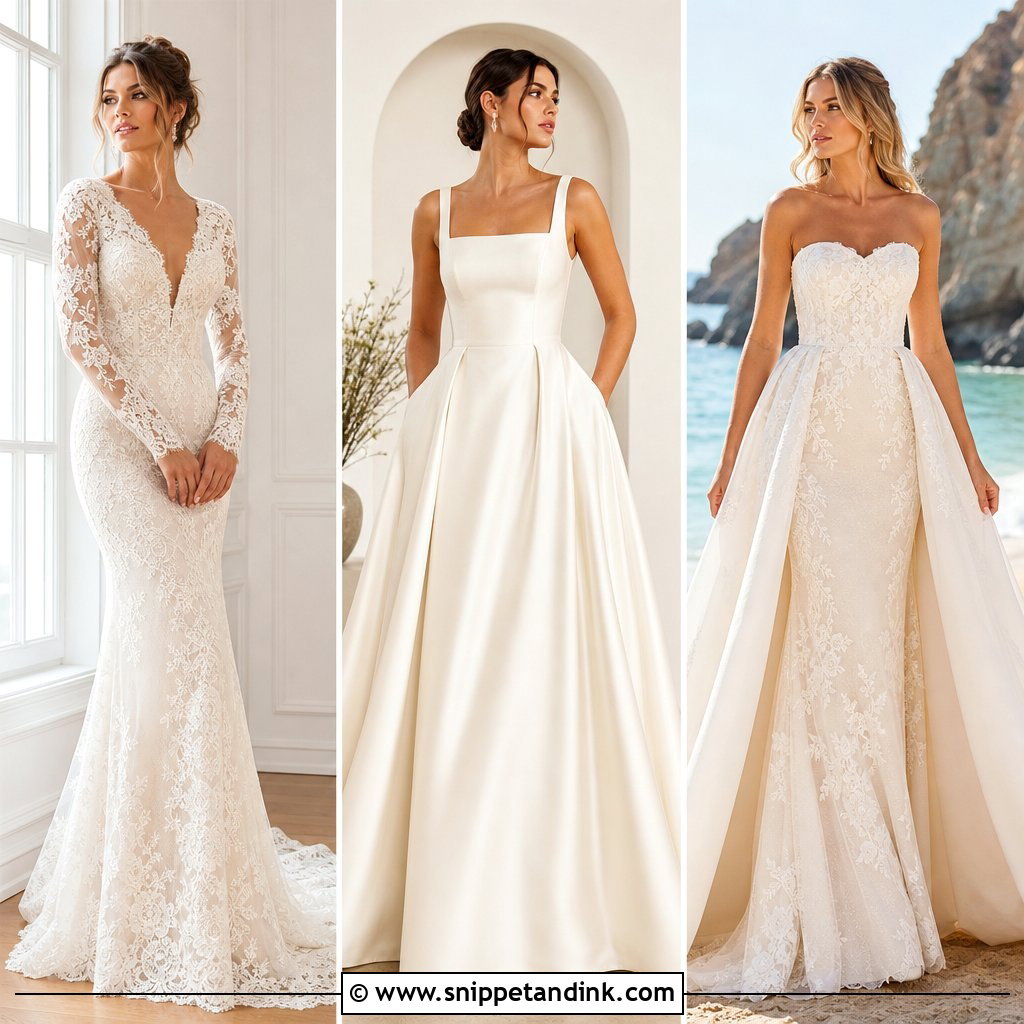
A detachable cape gives you two looks with no outfit change, and that’s usually why brides ask for one. The fastening matters more than people expect: hidden snaps or hooks along the shoulder seam are far quicker for a bridesmaid to undo than tiny buttons. Underneath, wear a fitted column, an A-line or a clean ball gown in champagne satin or layered tulle. The cape can be plain or lightly embroidered, ivory or matching champagne, falling to the floor. Gold earrings, pointed champagne heels and a structured cream bouquet finish it. Drop the veil, since the cape already gives you movement. It suits a formal entrance, a cooler season and an indoor venue, and taking it off after the ceremony frees you up for dancing.
Why an Ivory Gown Can Look Grubby Next to the Wrong Veil
Veil tulle comes in its own range of shades, from bright white through diamond white and ivory to champagne, and the names don’t match from one maker to the next. Put a white veil over an ivory gown and the dress suddenly looks yellowed; put an ivory veil over off-white and the veil looks dingy. I always order veils, shoes and wraps by holding a physical sample against the gown itself, never by the color name on a website.
The same goes for anything standing next to you. Bridesmaids in white or a flower girl in a bright white dress will make a champagne gown read as beige in group photos, so give them a warmer shade or a soft color instead.
After the Last Dance: Cleaning and Storing a Warm-Toned Gown
Hems on pale gowns turn grey from floors and grass within hours, and that’s normal; a professional cleaner handles it. The stains to worry about are the invisible ones. Champagne, wine, cake and sugary drinks often dry clear, then oxidize into brown marks months later, so get the dress cleaned within a few weeks rather than waiting.
- Tell the cleaner about every spill you remember, even ones you can’t see.
- Store the gown folded in acid-free tissue inside a breathable cotton bag or acid-free box, never in plastic.
- Keep it somewhere dark, cool and dry; light and heat will yellow silk and ivory fabrics further over the years.
- Take beaded or heavy gowns off the hanger for long storage, since their weight stretches the shoulders and straps.
Ivory, Off-White or Champagne? Let Daylight Decide
All three shades give you more warmth than stark white, but the only way to know which suits you is to compare them against your skin, once by a window and once under indoor bulbs. Fabric shifts the shade too. Satin reflects and looks lighter, while lace and crepe absorb light and look deeper. Your shoes, veil, jewelry, flowers and any cover-up should share an undertone without matching exactly. And the silhouette has to feel secure from the aisle to the last dance, because a flattering shade can’t rescue a bodice you keep adjusting all evening.
You'll Like These Ideas:




Leave a Reply