
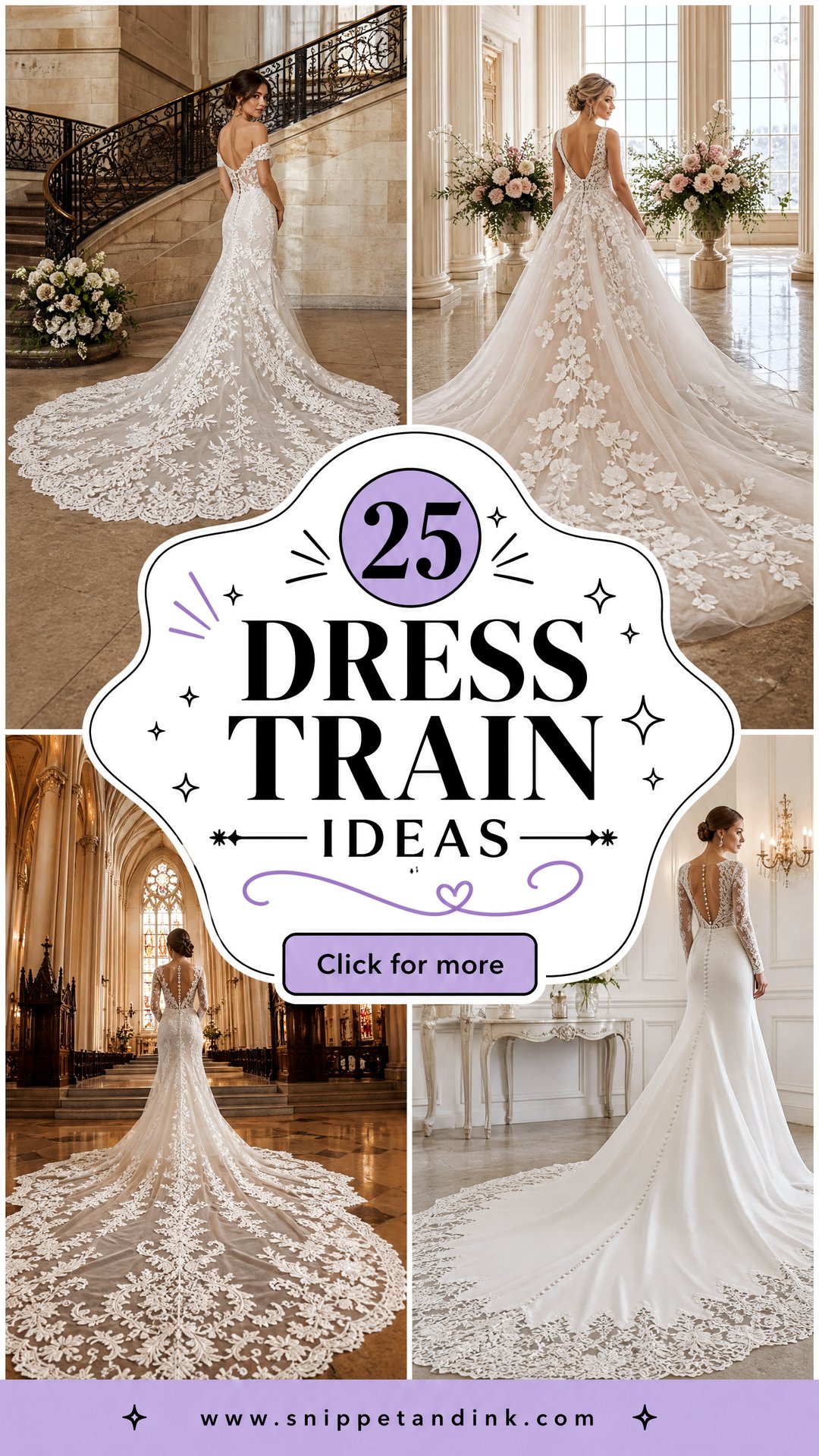
A train decides how a gown moves, how it reads from the back row, and how much help you’ll need once the reception starts. I open every train conversation with three questions: what is the floor made of, how long is the aisle, and how much walking will you do after the vows? Sweep and court lengths barely clear the hem, while chapel, cathedral and monarch trains get progressively longer and more work to manage. Watteau panels and detachable overskirts sit in their own category, because they change the back view without committing you to all that fabric for the whole night. Below are 25 ideas across satin, lace, tulle, mikado and beaded evening fabrics, each with what I’d check at the fitting before saying yes.
Measure the Aisle Before Falling for a Length
The train names below aren’t standardised between designers, so treat these as rough working lengths rather than rules. I always ask for the measurement in inches or centimetres from the waist or hem, because one label’s chapel is another’s semi-cathedral.
- Sweep or brush: grazes the floor and extends only a few inches. Nothing to bustle.
- Court: around a foot past the hem. Manageable on your own all day.
- Chapel: roughly three to four feet from the waist. The most common bridal length and still simple to bustle.
- Cathedral: around six to seven feet from the waist. Needs a wide aisle and a helper.
- Monarch or royal: longer again, often ten feet or more. Only for very large rooms.
Then compare that with the venue. Walk the aisle, count the steps up to an altar or arch, and check the surface. Polished floors let any train glide; gravel, grass and old stone grab lace and tulle and leave the hem grey by the first photo. If your aisle is narrow and lined with chairs, a cathedral train will spend the ceremony pressed against chair legs rather than lying flat behind you.
1. Satin Wedding Dress With Sweep Train
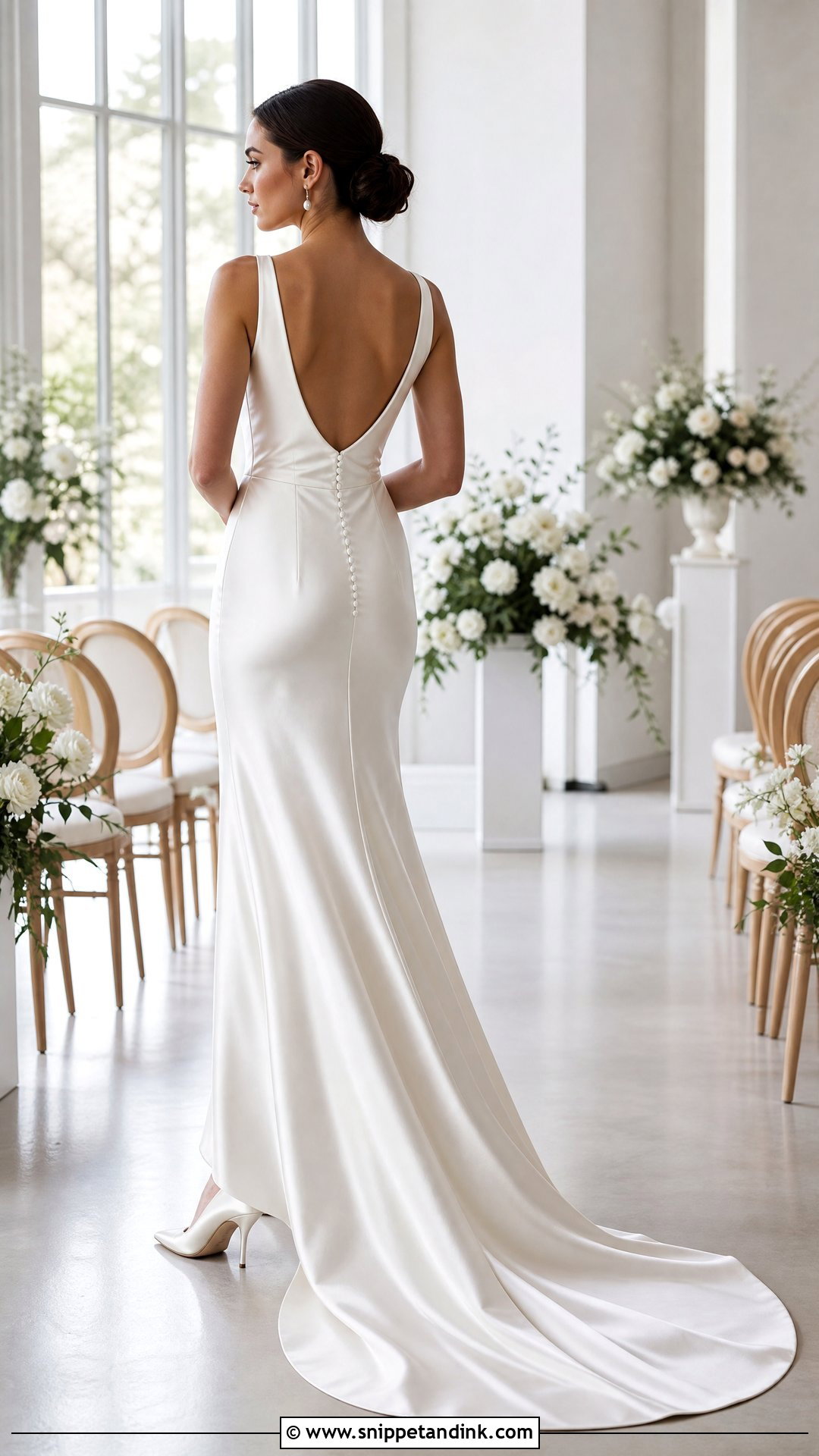
Satin with a sweep train is the length I suggest when someone tells me they don’t want to think about their dress after the ceremony. The fabric just brushes past the hem, so there’s nothing to bustle and nothing to step on. Satin is unforgiving over the hips, though, and a bias cut shows every edge of your underwear, so bring the exact shapewear to the first fitting. A cowl or bateau neckline, pointed pumps, pearl studs and a low bun keep it spare. The short extension also stops a petite frame from being swallowed by fabric, and it copes with smooth walkways and small ceremony rooms without fuss.
2. Lace A-Line Dress With Court Train
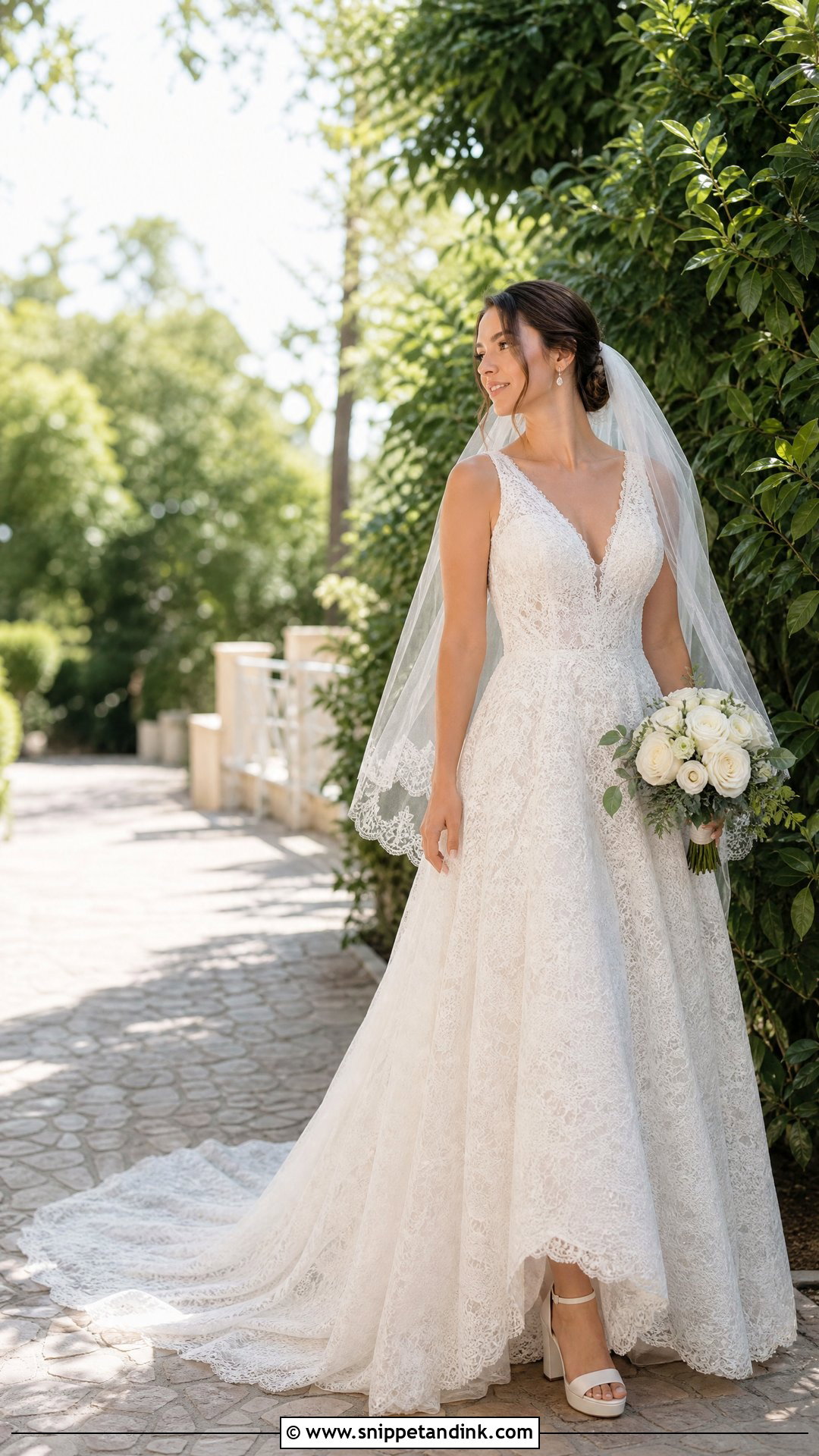
A court train runs roughly a foot past the hem: enough to see it move, short enough that nobody has to fix it after every turn. With lace, ask how the skirt was joined to the bodice. Careful work hand-cuts around the motifs so there’s no visible seam line across the hips, while cheaper construction stitches a straight join you’ll spot in every back-view photo. A soft V or illusion neckline, ivory block heels and a fingertip veil with a plain edge keep it gentle. Block heels matter more than they seem on garden paths, where stilettos sink and drag the hem down with them.
3. Crepe Fit And Flare Dress With Chapel Train
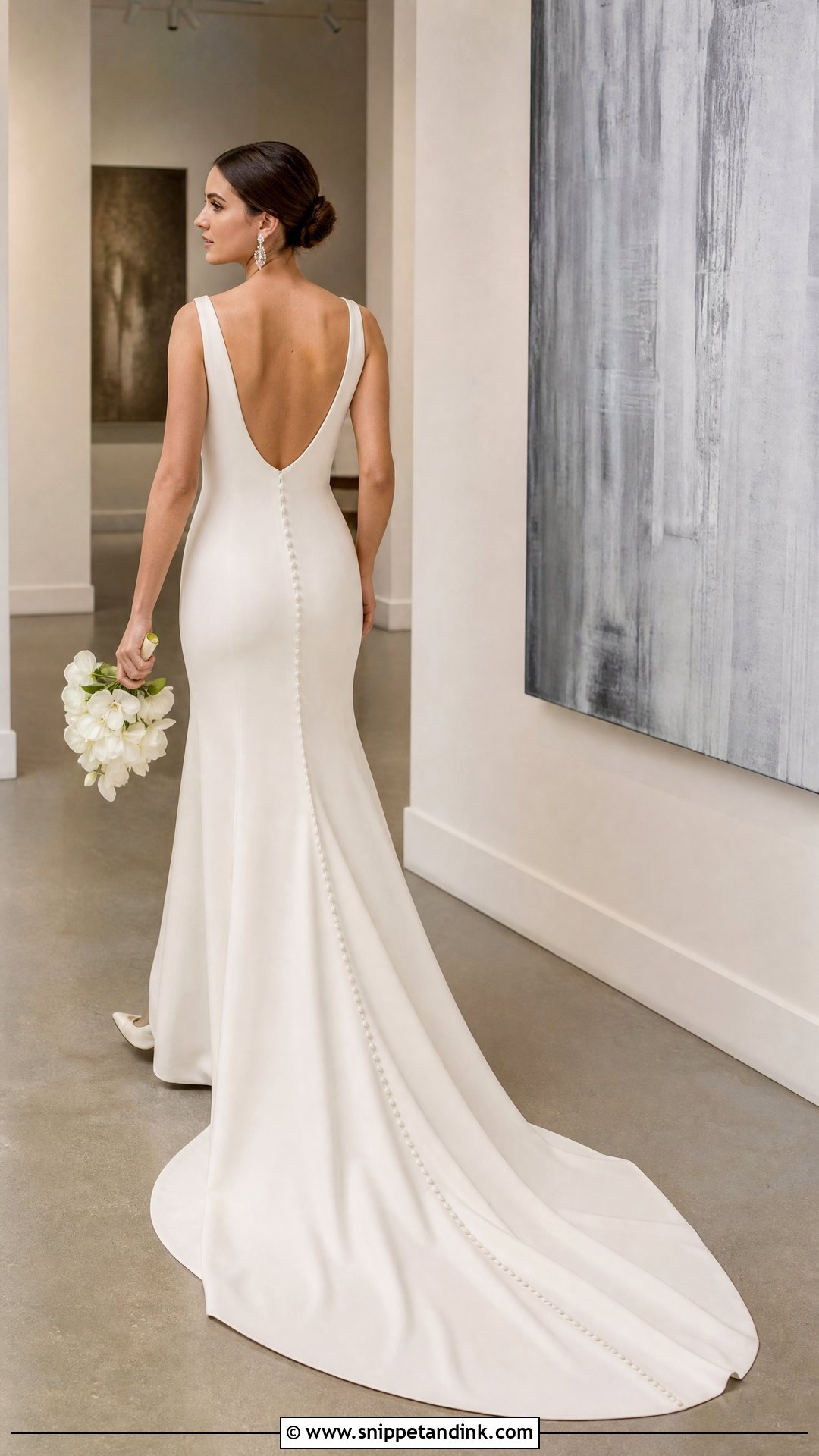
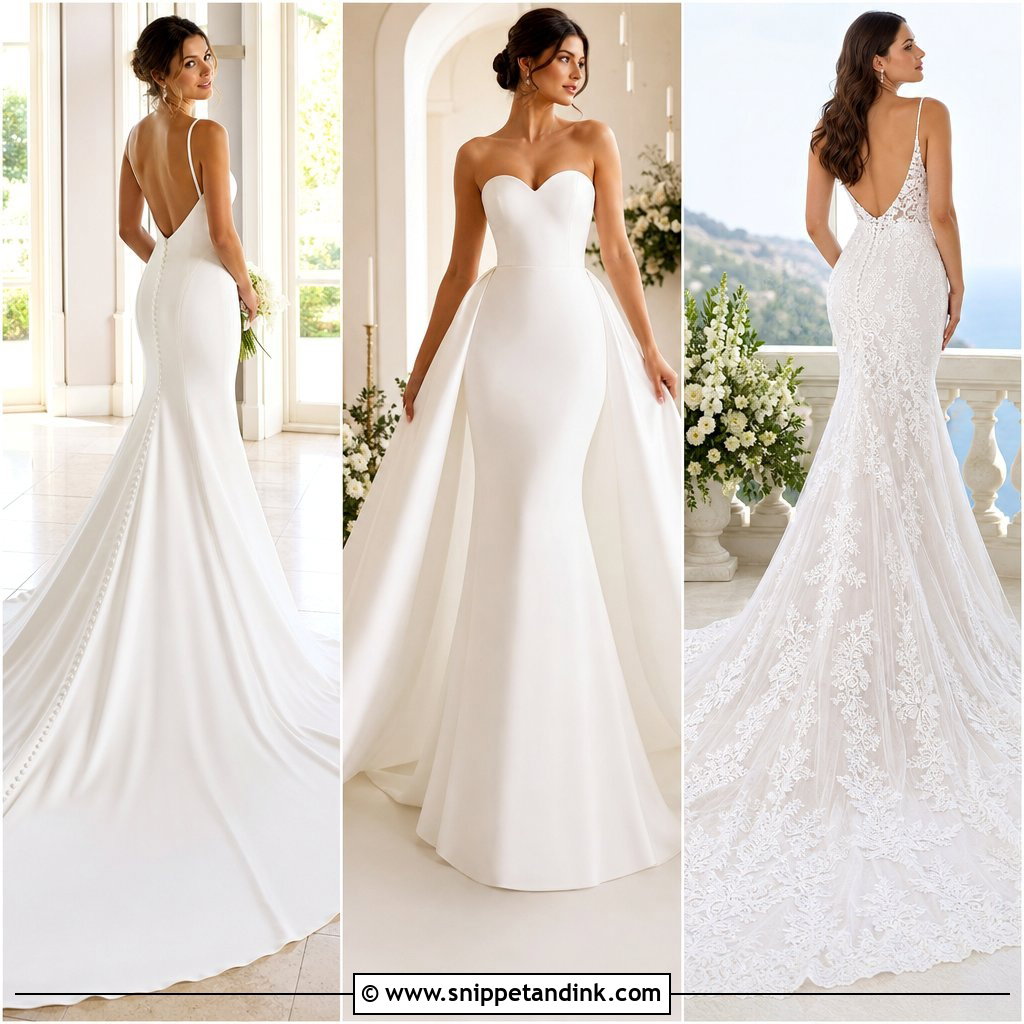
Crepe has weight without shine, so a fit-and-flare in crepe falls in a clean line and opens into the chapel train instead of puffing out. Chapel length usually lands three to four feet from the waist, and it’s the longest train I’d still call easy to bustle. What I check first is the seaming through the hip: crepe shows pulling at a seam far sooner than lace does, so the fit there has to be exact before anyone touches the hem. Covered buttons or a scoop back give the rear view a focal point. If you want a veil, keep it shorter than the train, or the two layers compete and the crepe line disappears.
4. Tulle Ball Gown With Semi-Cathedral Train
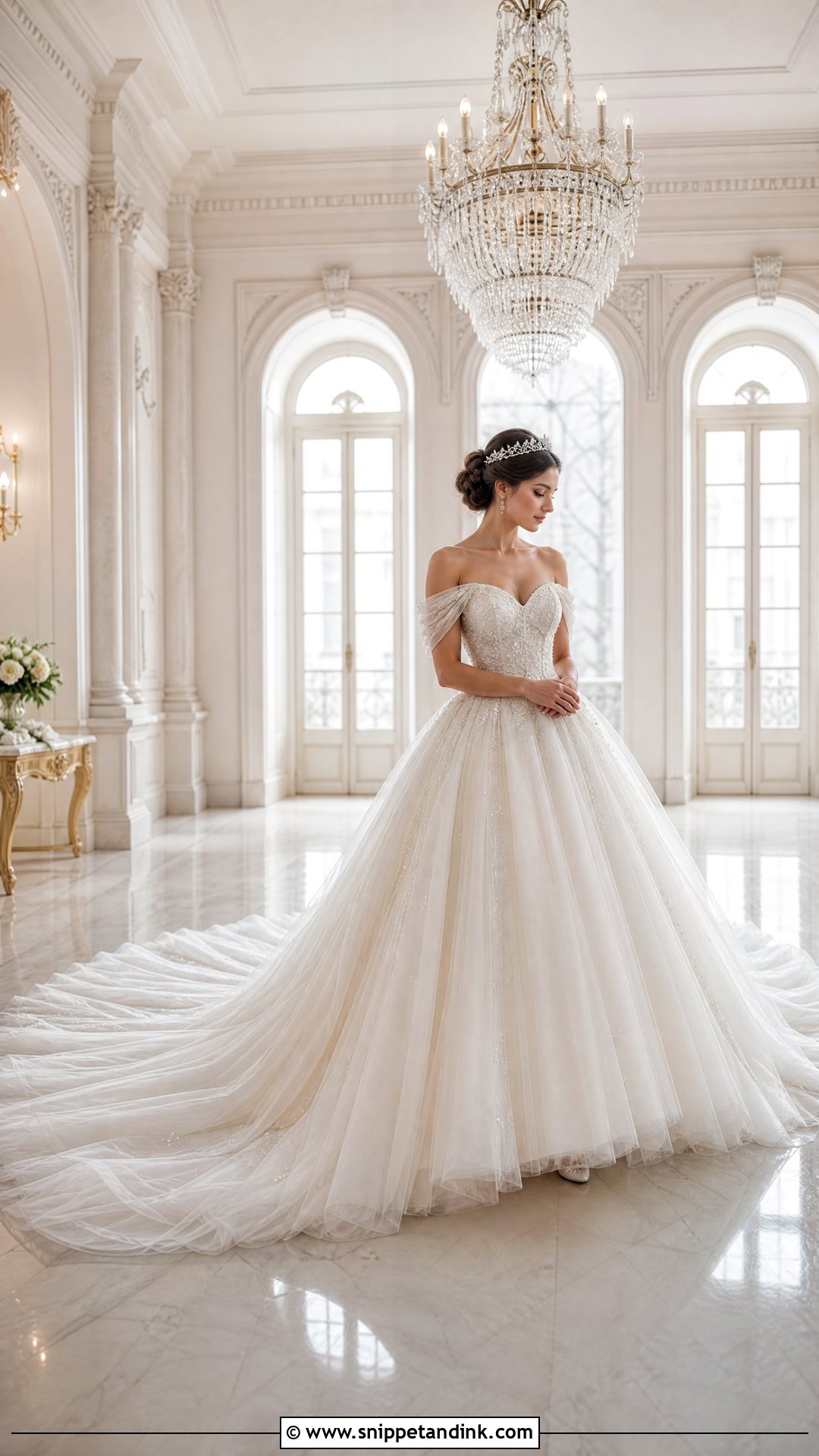
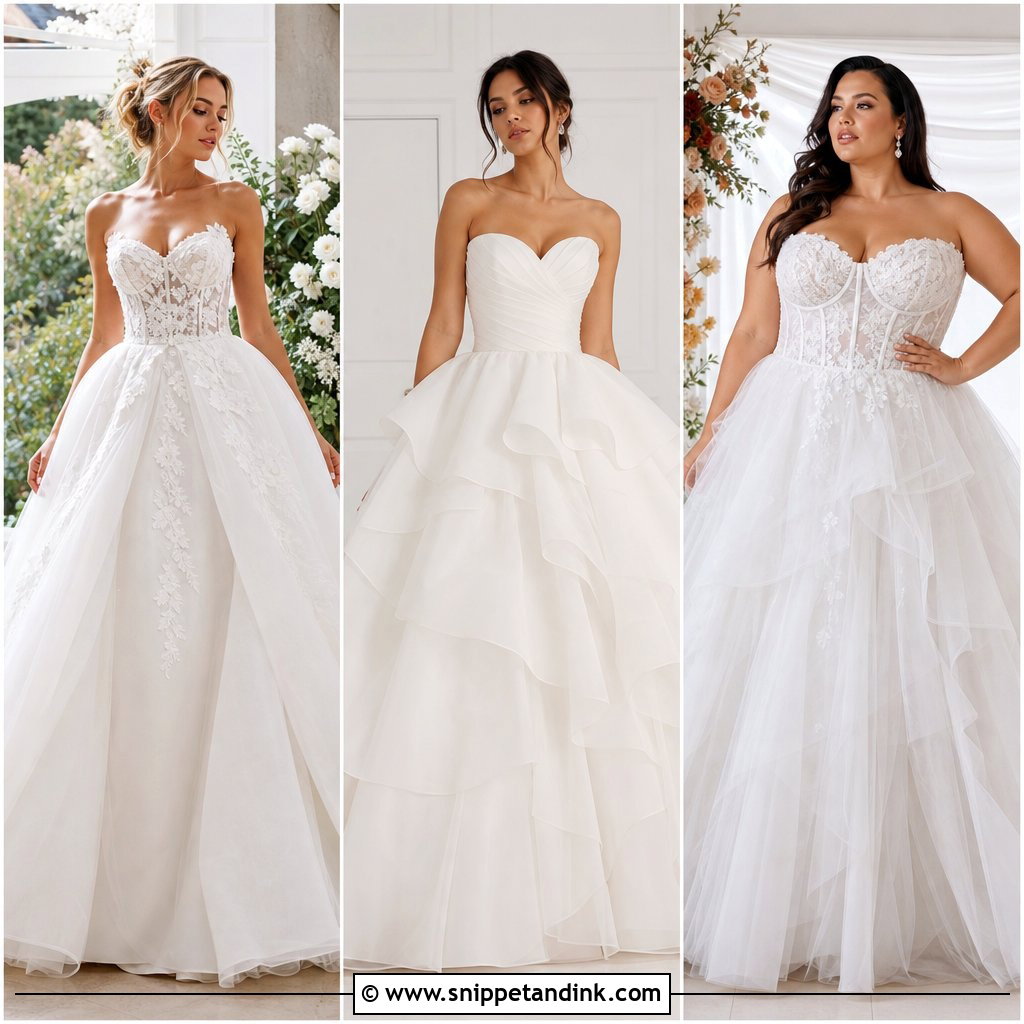
Tulle looks weightless, but a ball gown with a semi-cathedral train can carry a surprising number of layers, and all of that hangs from your waist. Semi-cathedral gives you the drifting entrance without the full length that tangles on chair legs. I choose the bodice for support first and looks second: strapless needs proper boning and a snug waist stay, and off-the-shoulder needs a band that won’t ride down when you hug people. Keep jewelry to studs and a slim tiara. A plain veil is the right call here, because two soft tulle layers together blur into one shapeless cloud in photos. Give it a wide room so the skirt can open fully.
5. Cathedral Train Wedding Dress With Lace
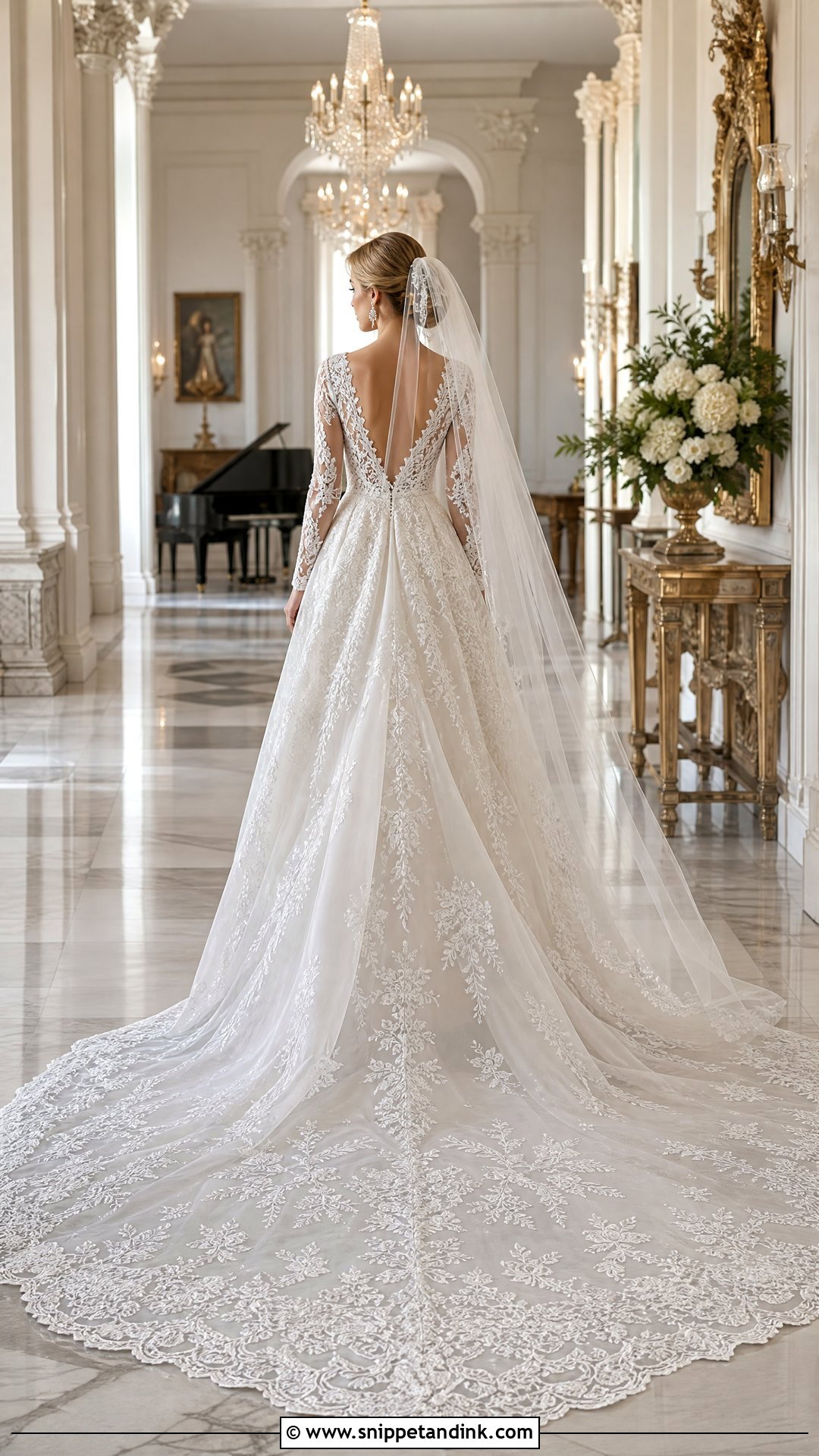
A cathedral train covers six feet or more of floor, and lace makes every inch of it visible. Gowns where the motifs grow larger toward the hem pull the eye down the dress and into the train, which is exactly where you want it. Lace on that scale catches on rough stone, carpet edges and chair legs, so I always ask what the aisle is made of before a bride falls for one. A-line, trumpet and ball gown shapes all carry the length. Add satin pumps, heirloom-style earrings, a veil with a matching lace border and a secure updo. The bustle is not optional at this length. Plan it at the first alteration appointment, not the last.
6. Mikado Ball Gown With Monarch Train
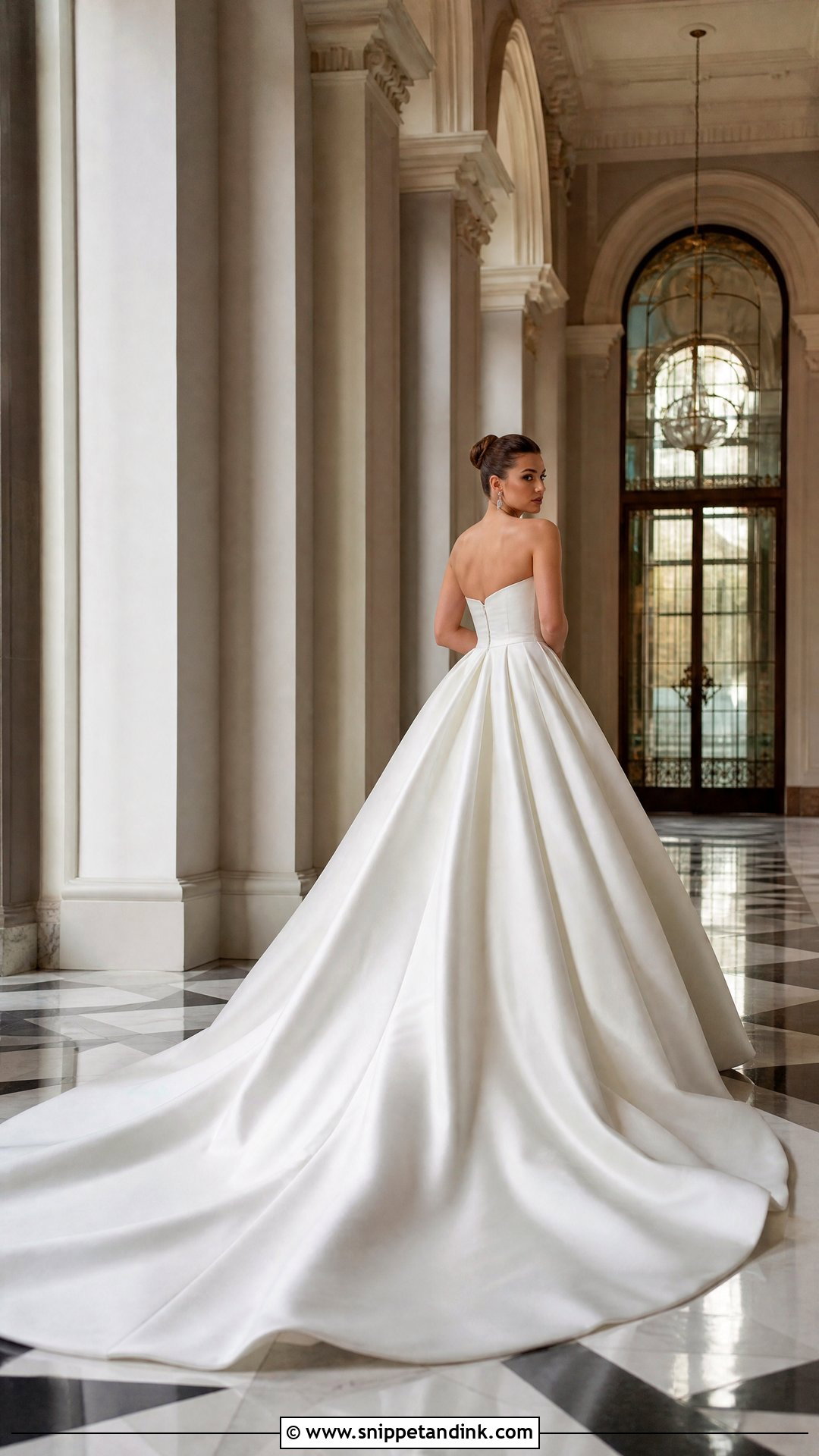
Mikado is stiff enough to hold a pleat and a sharp edge, which is why it’s the fabric I’d want under a monarch train. Softer fabrics at that length collapse into a heap on the floor; mikado keeps a defined outline. Strapless with a folded neckline or a square neck with wide straps both suit it, and the accessories should stay restrained: a sleek bun, pearl-and-crystal earrings, a plain veil. Honestly, this one needs a large venue, broad aisles and a person assigned to help you turn. Practise sitting and walking with that helper beforehand, and test the bustle with the full weight hanging from it, because stiff mikado at monarch length puts real strain on the hooks.
7. Watteau Train Wedding Dress
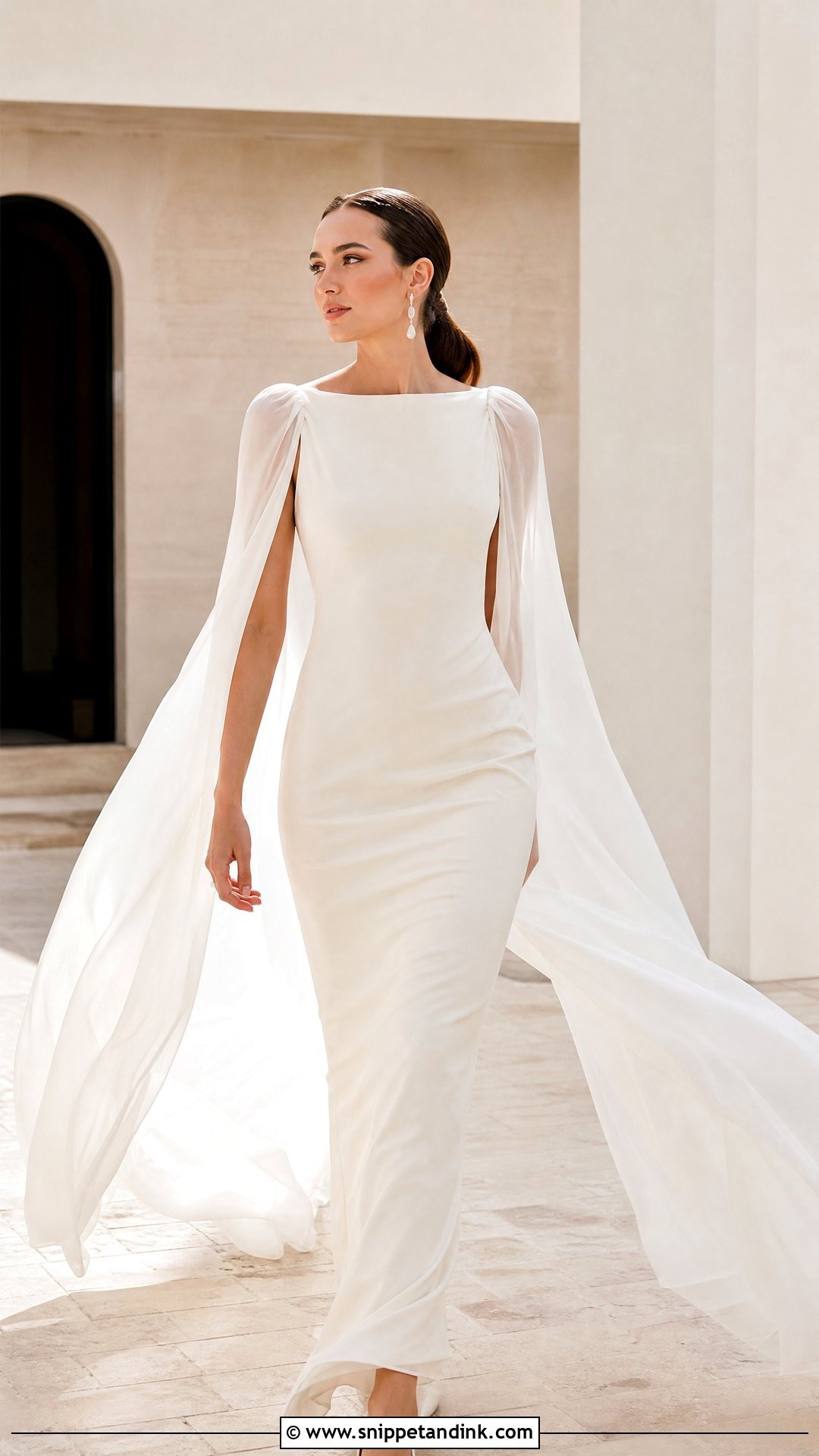
A Watteau train hangs from the shoulders or upper back rather than from the skirt, so it behaves more like a cape than a hem, and it can run anywhere from floor-grazing to very long. The gown underneath stays simple, a column, sheath or plain A-line, with all the movement happening behind you. I usually tell brides to skip the veil here, since two layers falling from the same shoulders fight each other. Chiffon floats when you walk; organza or satin holds a firmer shape. Where it attaches matters more than people expect. Shoulder points need to be stitched into a structured seam, or the weight drags the neckline backward by mid-afternoon.
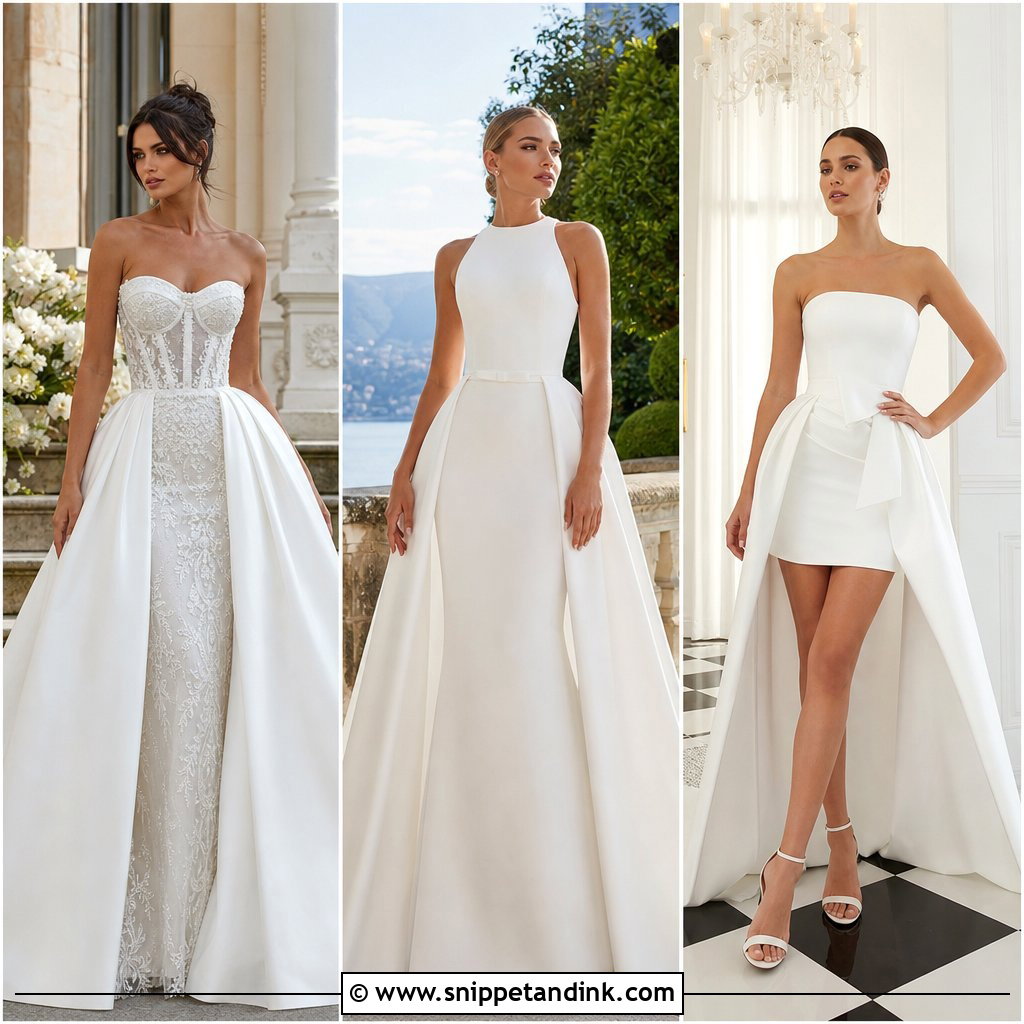
8. Detachable Overskirt Train Wedding Dress
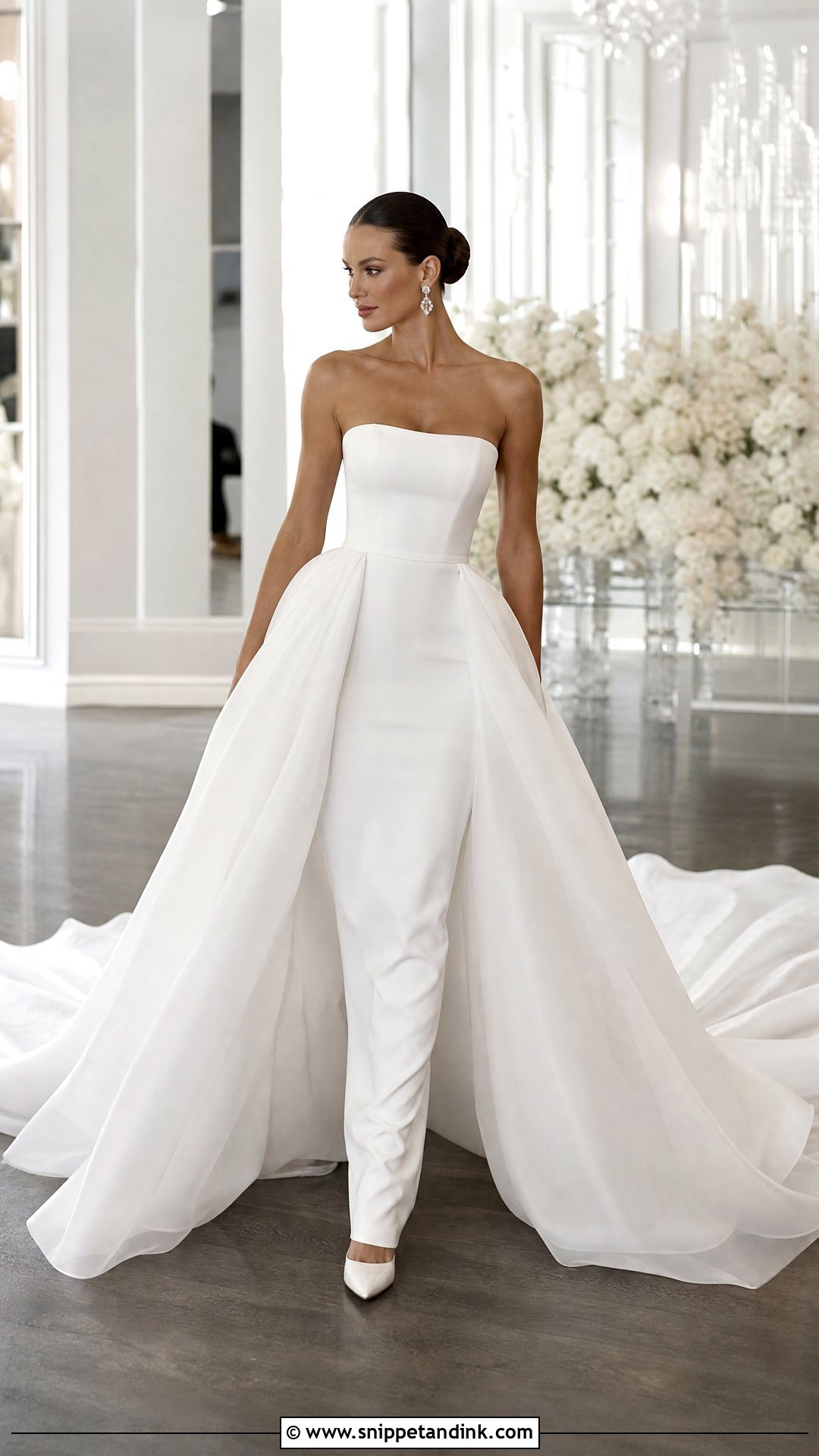
You don’t have to pick between a ceremony gown and a dancing dress. A detachable overskirt train gives you both: a fitted crepe, lace or satin base with a tulle, organza or mikado overskirt that fastens at the natural waist and runs into a chapel or cathedral train. The part I check hardest is the waistband. If the overskirt sits even slightly above or below the base gown’s waist seam, you’ll see a ridge in profile. Colour matters too, since two ivories from different fabric lots can read as cream and white side by side. Rehearse taking it off with whoever will do it, because hooks and snaps are fiddly in a crowded reception.
9. Detachable Bow Train Wedding Dress
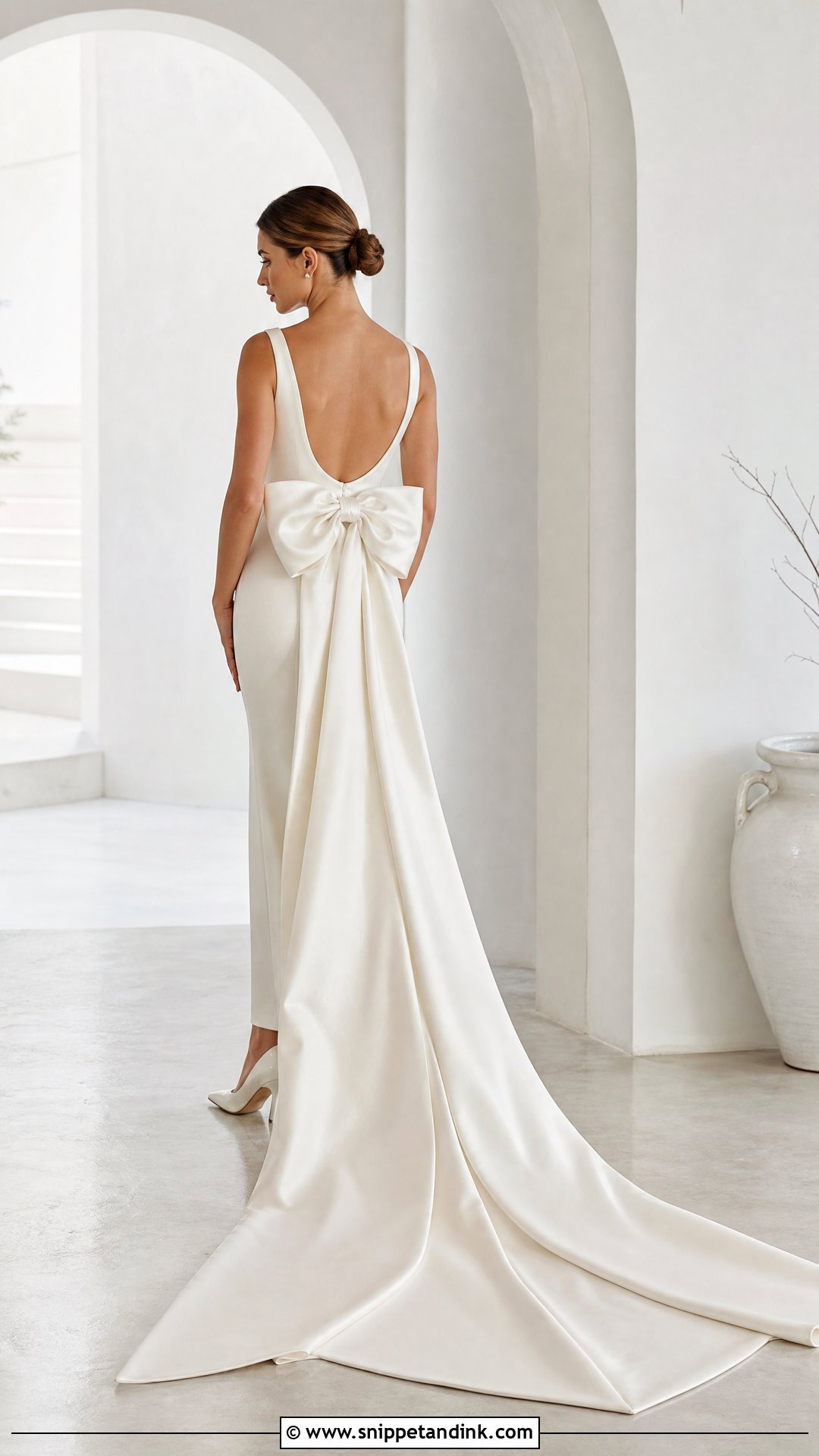
A detachable bow is the most changeable train there is. Small, it’s a polite finish; oversized, it becomes the whole outfit from behind. It needs a quiet base, so a column, sheath or fitted trumpet in matte crepe or smooth satin. The tails carry the train, which means they need interfacing or a stiffer fabric, otherwise they go limp by the first dance. Keep the front plain with a straight, scoop or square neckline, and wear pointed heels, pearl studs and a low bun. I’d leave out an embellished veil altogether, because it lands right on top of the bow. Once the bow is unhooked, you have a sleek dress for dinner.
10. Scalloped Lace Train Wedding Dress
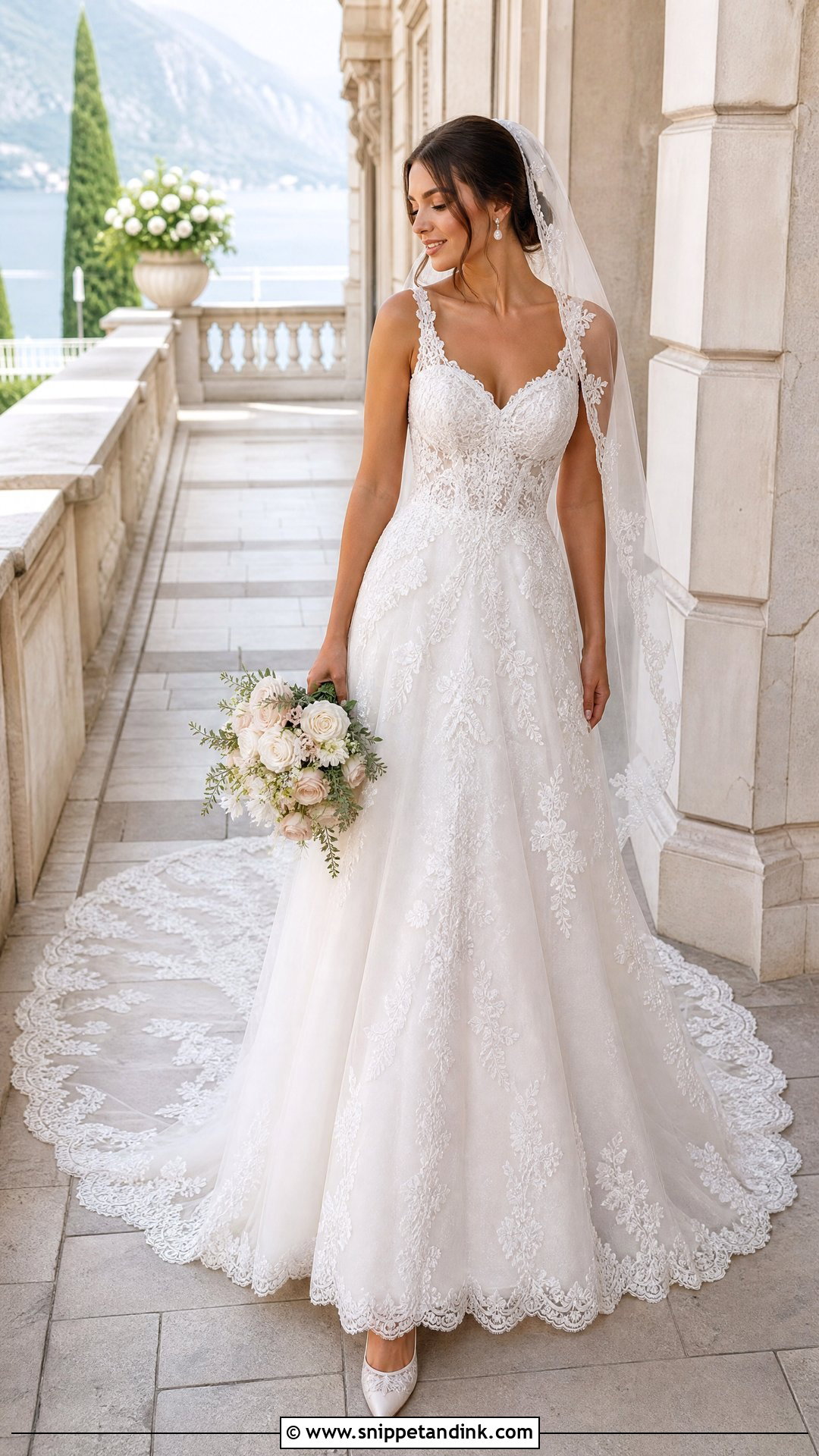
Scalloped edges are where lace shows off best, because the border stops the eye cleanly instead of trailing into a straight cut. The detail I check at every fitting is whether the scallops lie flat. If the hem is simply taken up from the bottom, the scallops are lost; a skilled seamstress takes the lace up from the waist or re-cuts the border and reapplies it. Choose an A-line or fit-and-flare with the same lace running from bodice to train. Almond-toe heels, pearl earrings, a sheer veil with a narrow lace edge and a low chignon finish it, and you get visible detail without beading weight or a very long train.
11. Floral Appliqué Dress With Tulle Train
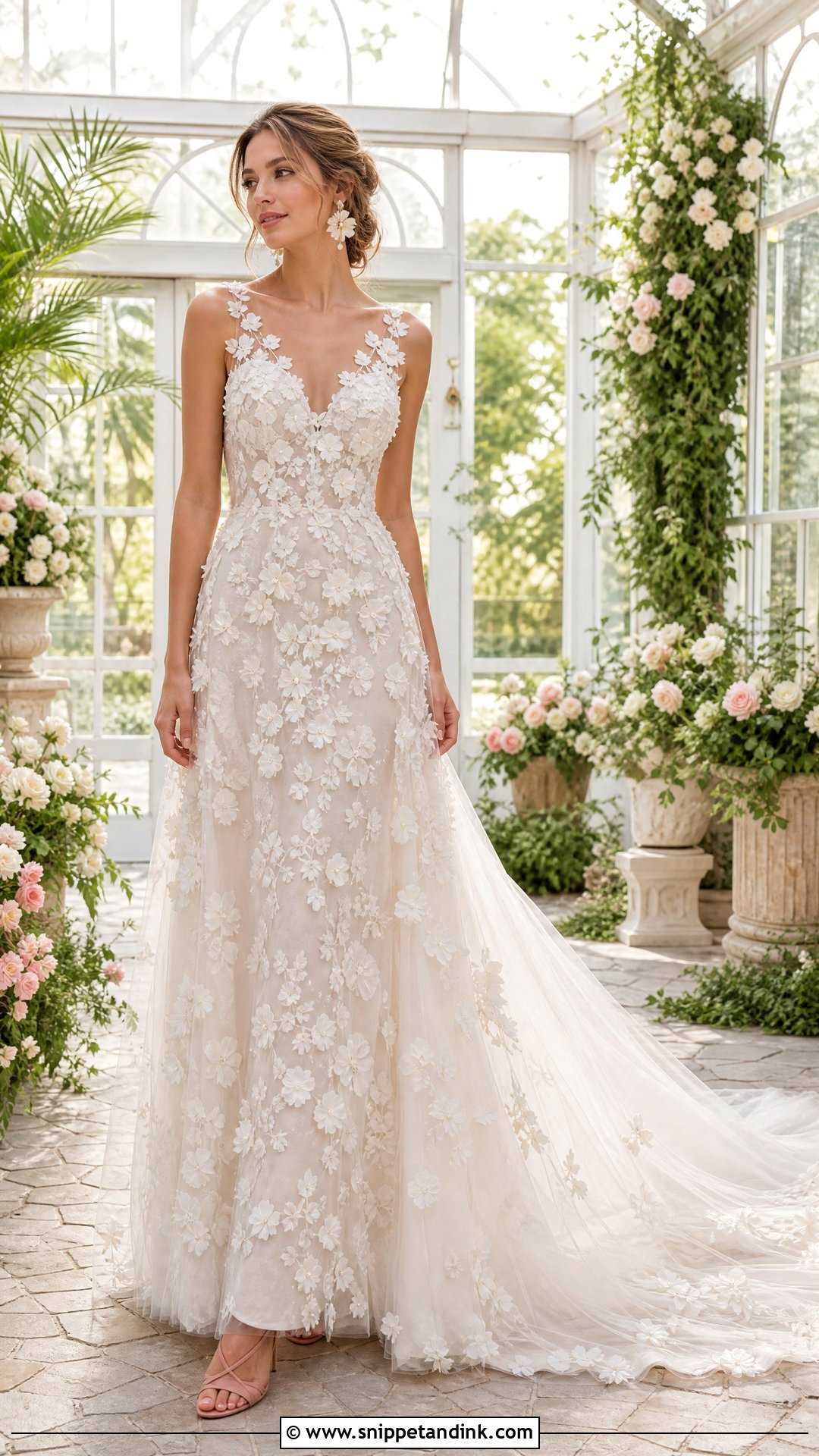
Three-dimensional flowers give tulle the texture it doesn’t have on its own. The placement I prefer is dense at the bodice, thinning out as the appliqués fall down the skirt and across the train, so the gown doesn’t look evenly sprinkled. Illusion straps support the bodice without cutting through the flowers. Be aware that raised appliqués snag more readily than flat lace; they catch on grass, bark and the edges of chairs. Blush or ivory heels, small flower earrings, a lightly trimmed veil and loose waves keep it garden-led. Outdoor settings and conservatories suit it, provided the flowers don’t blend into an equally busy floral backdrop.
12. Pearl Wedding Dress With Chapel Train
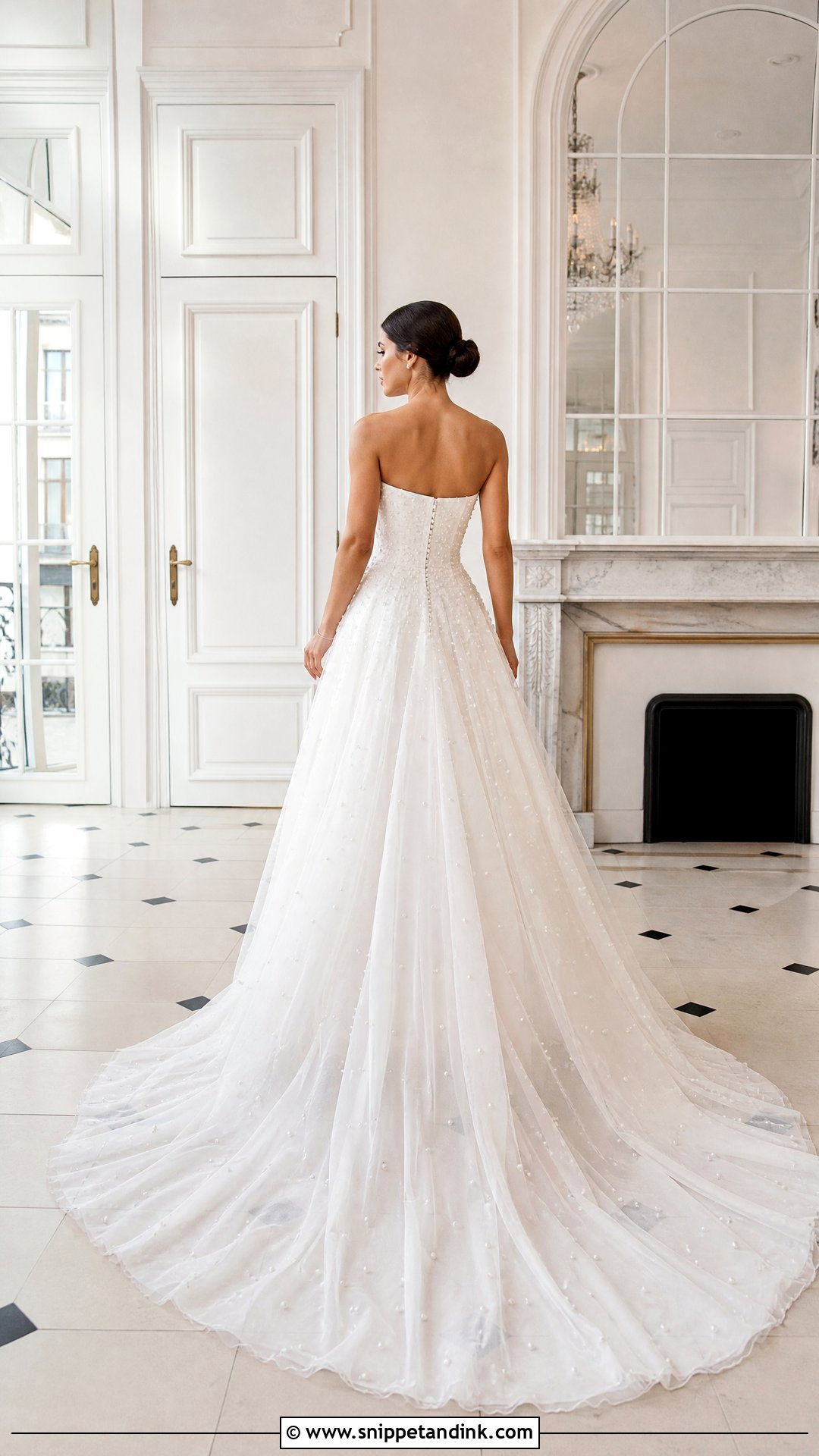
Small pearls catch light gently, the opposite of crystal’s sparkle. For balance, I’d go with a tulle or organza A-line and a chapel train where the pearl scatter thins out toward the hem. Pearls are heavier than they look, and a densely pearled train can pull the bodice backward over a long day. At fittings, lift the train to feel its weight, then check that the bustle points are sewn into reinforced areas rather than a single layer of tulle. Small pearl earrings, ivory pumps, a slim bracelet and a sleek bun keep the accessories quiet. Use a plain veil so the pearl work stays visible underneath.
13. Beaded Evening Dress With Sweep Train
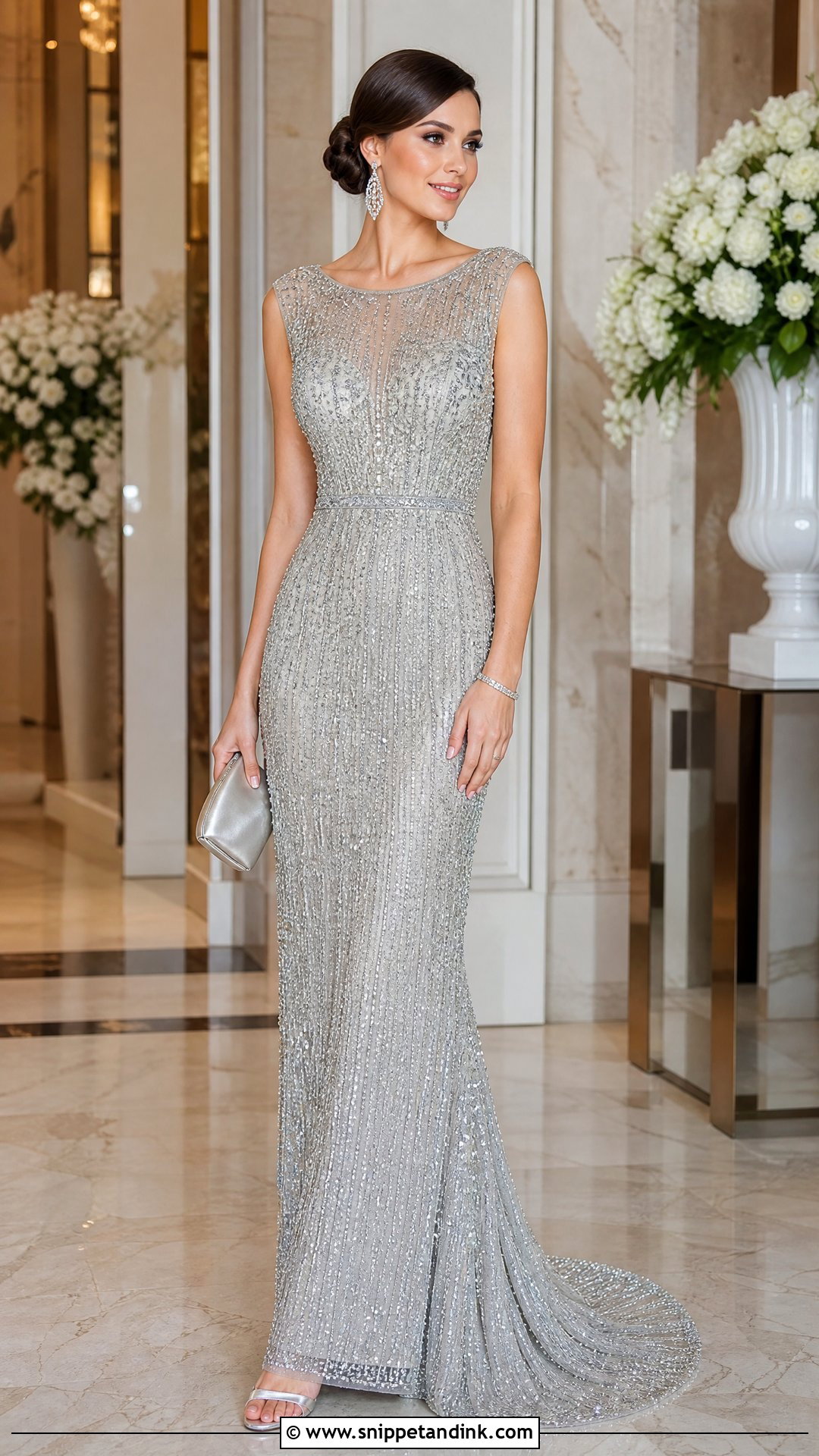
A beaded evening dress gets most of its drama from the fabric, so the train can stay at sweep length and still read as formal. That makes it sensible for a rehearsal dinner, a reception change, award events or an upscale party where you’ll be standing and mingling. Fully beaded fabric is heavy and scratchy on the inside, so check that it’s fully lined and that the straps take the weight rather than the neckline. Beads also shed where the hem drags; ask the seamstress to secure loose threads there. With this much sparkle, one jewelry piece is enough, plus metallic sandals, a satin clutch and a side-parted bun.
14. Organza Wedding Dress With Ruffled Train
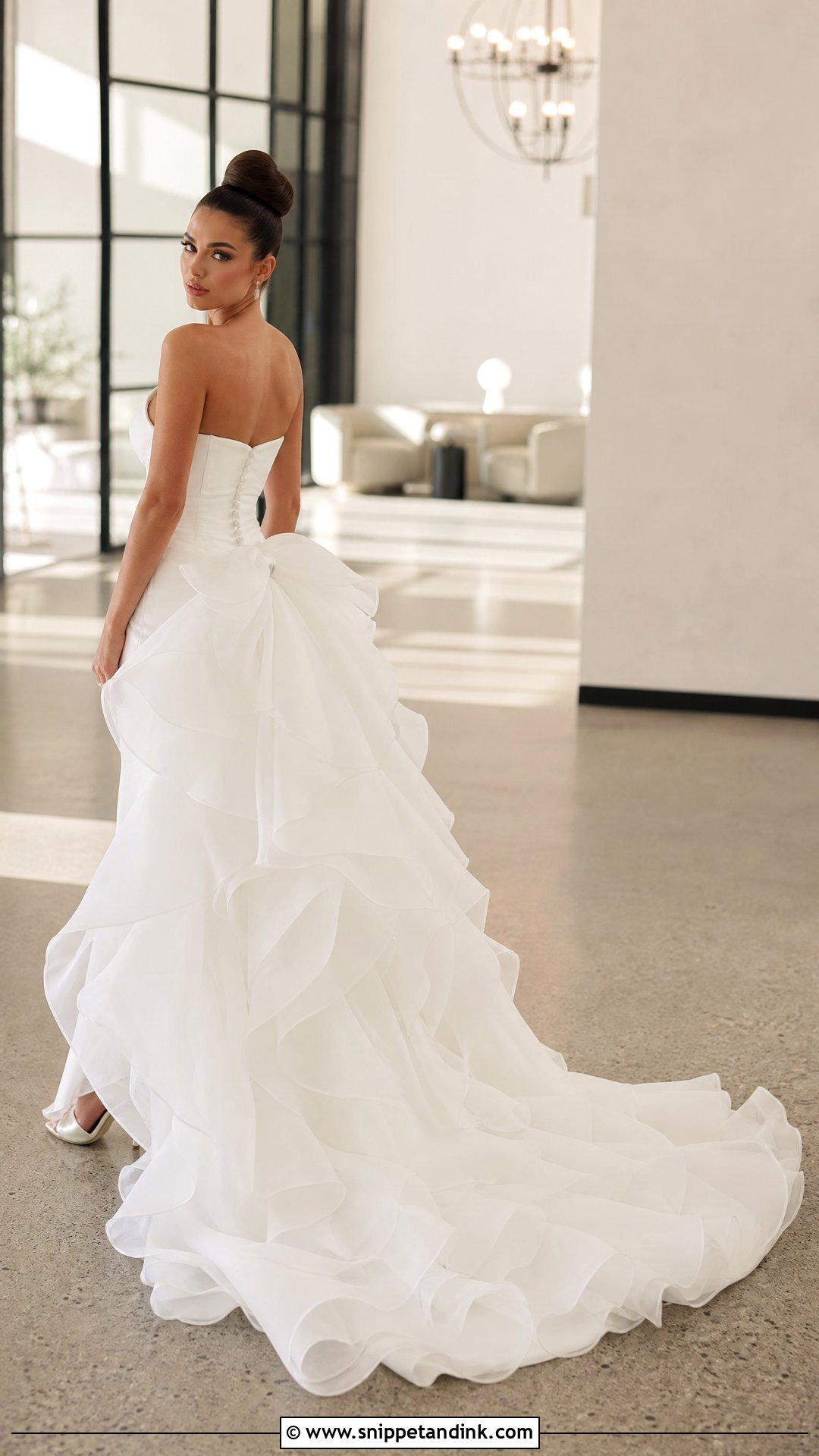
Organza lets you have big ruffles without looking weighed down, because it’s crisp and sheer at once. The bodice stays fitted and the skirt opens into tiered or cascading ruffles at the back, at chapel or semi-cathedral length depending on how much volume you want. The tailoring risk is placement. Ruffles that start too high bunch over the hips and hide the waist, so I ask for the first tier to begin below the widest part of the seat. Organza also creases when you sit and springs back slowly, so have it steamed on the morning, not the night before. A high bun, crystal studs and platform heels keep it modern.


15. Pleated Tulle Dress With Flowing Train
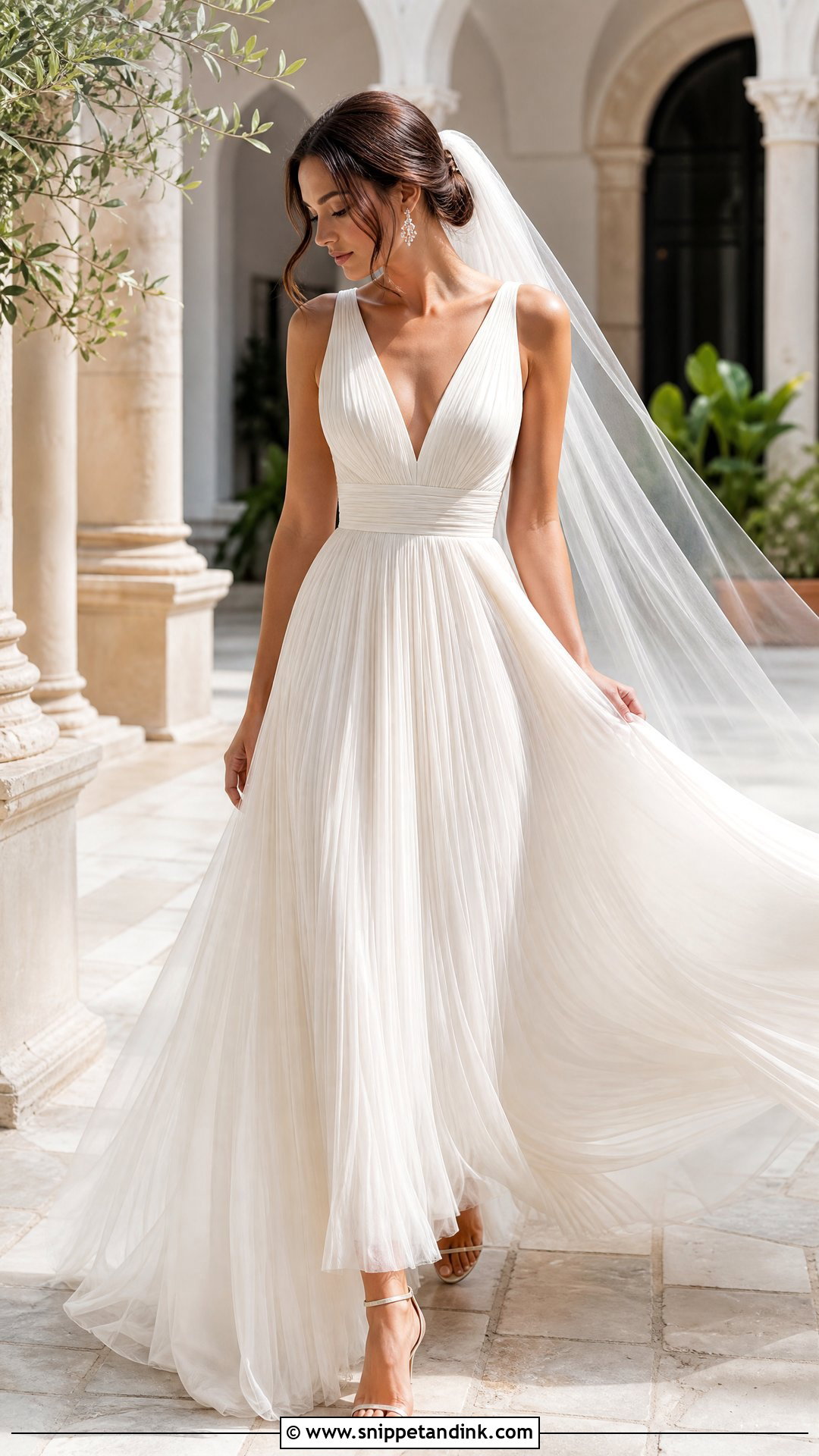
Fine pleats give tulle structure, and vertical pleats running unbroken from waist to hem make the whole figure look longer. They need to be heat-set properly, though, or they relax after a few hours and the skirt goes flat. My fitting-room test is simple: sit for a minute, stand up, and watch whether the pleats reopen or stay crushed against the back of the skirt. A V-neck or crossover bodice suits the drape. Keep the veil smoother than the dress, wear ankle-strap heels and crystal drop earrings, and choose a low twisted bun so the hair doesn’t add yet another texture.
16. Illusion Lace Dress With Cathedral Train
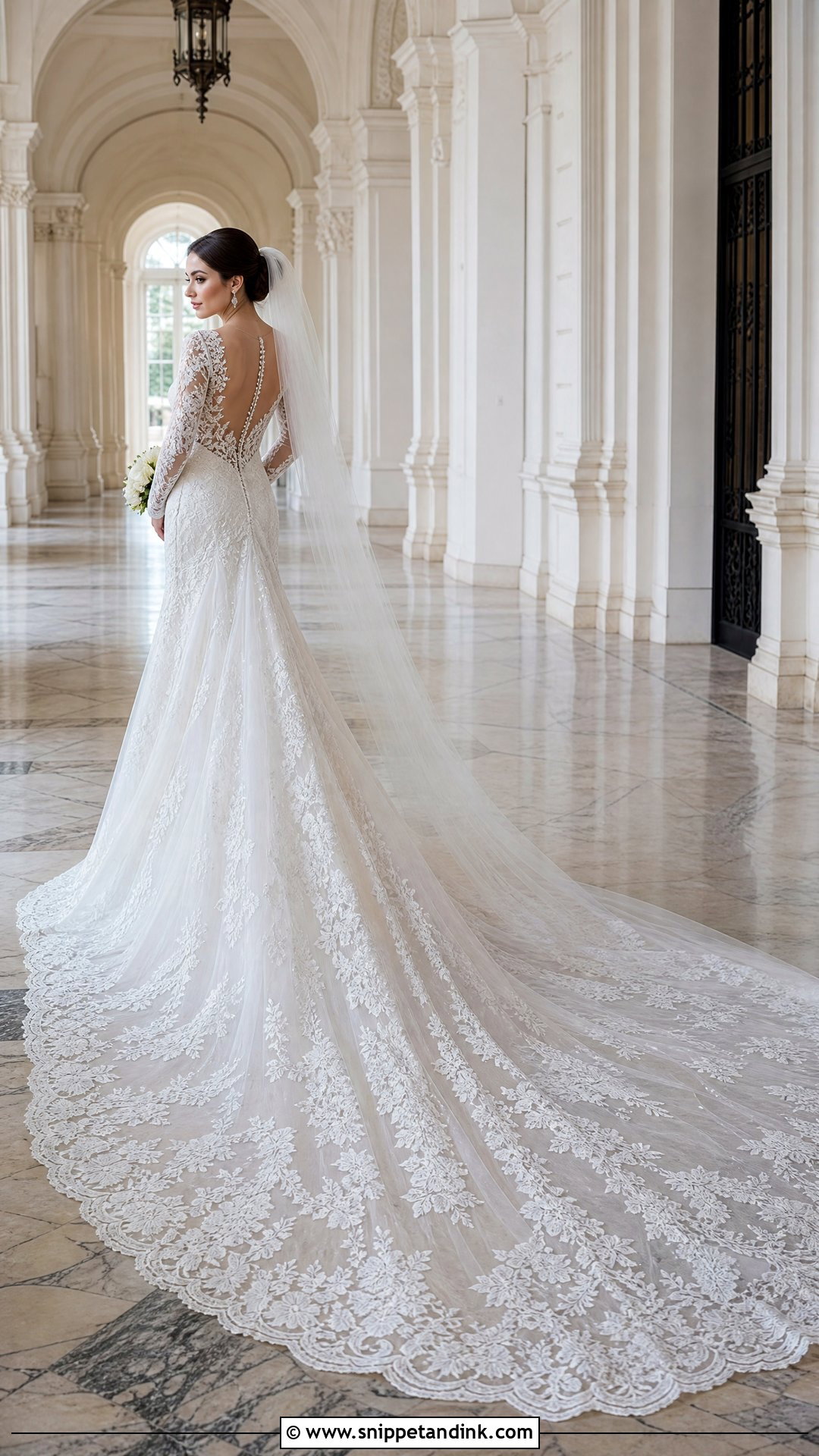
Illusion lace gives coverage at the neck, arms and back while still looking light, but only if the mesh disappears against your skin. Matching it to your skin tone is the single detail that makes or breaks this gown, so look at it in daylight, not only under shop lighting. Motifs placed around the collarbone and back should carry down into the cathedral train for a joined-up finish. During alterations, reach forward and lift your arms overhead. Illusion sleeves cut too tight split at the underarm the first time you hug someone. A soft A-line or fit-and-flare, closed-toe pumps and a veil set beneath a low bun round it out.
17. Basque Waist Ball Gown With Long Train
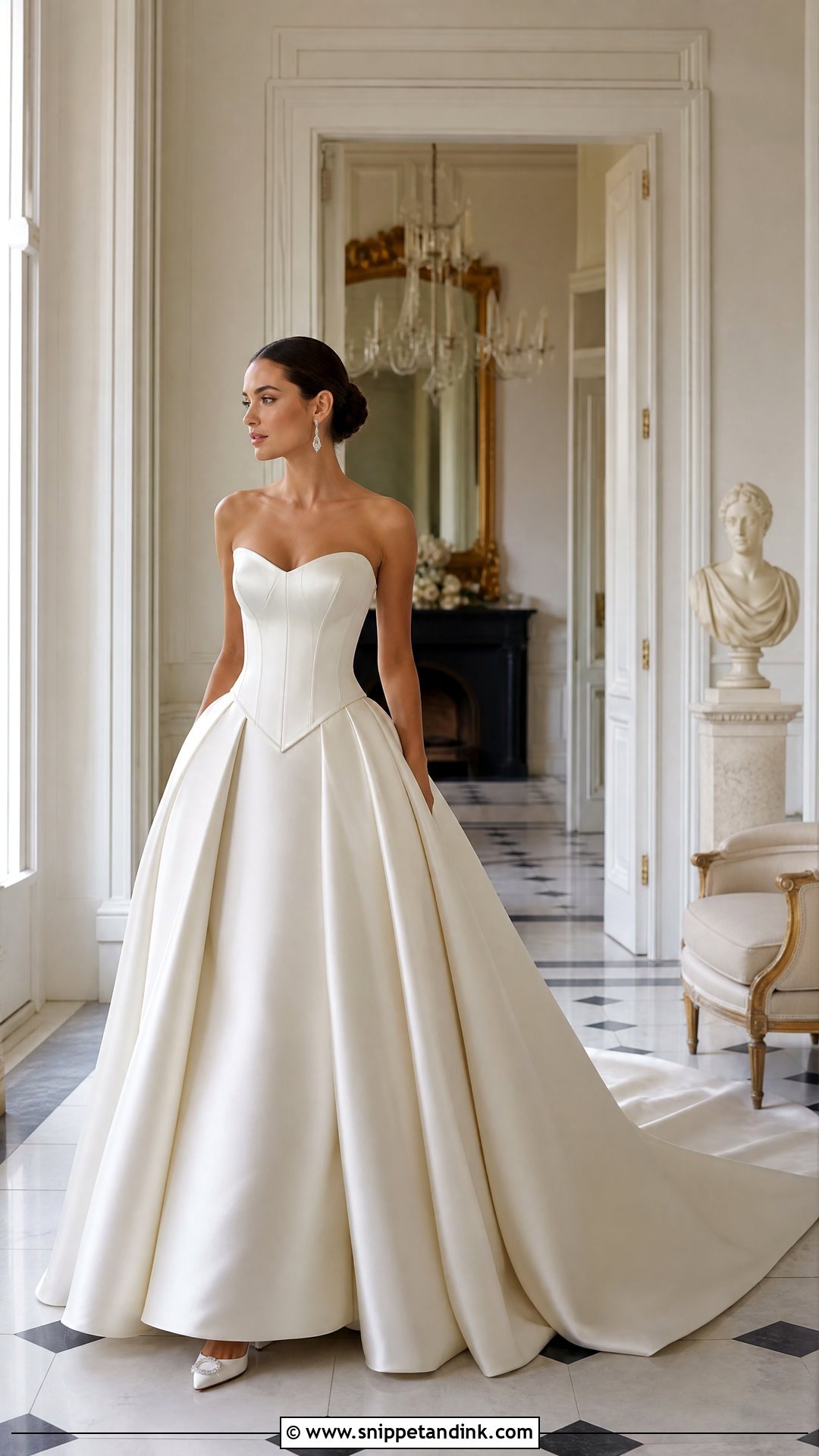
A basque waist dips into a point below the natural waist, and that point does a lot of shaping on its own. So I keep the rest of the bodice plain, usually strapless or square-necked, and let a satin or mikado skirt open into a semi-cathedral train. The point has to sit exactly at centre front and stay flat when you’re seated. If the bodice is even slightly long in the torso, it buckles into a fold every time you sit, and that’s a fitting problem rather than a fabric one, so sit down at every appointment. Pointed satin pumps, drop earrings, a polished bun and a medium-length veil that leaves the waistline visible complete it.
18. Off-Shoulder Dress With Lace Train
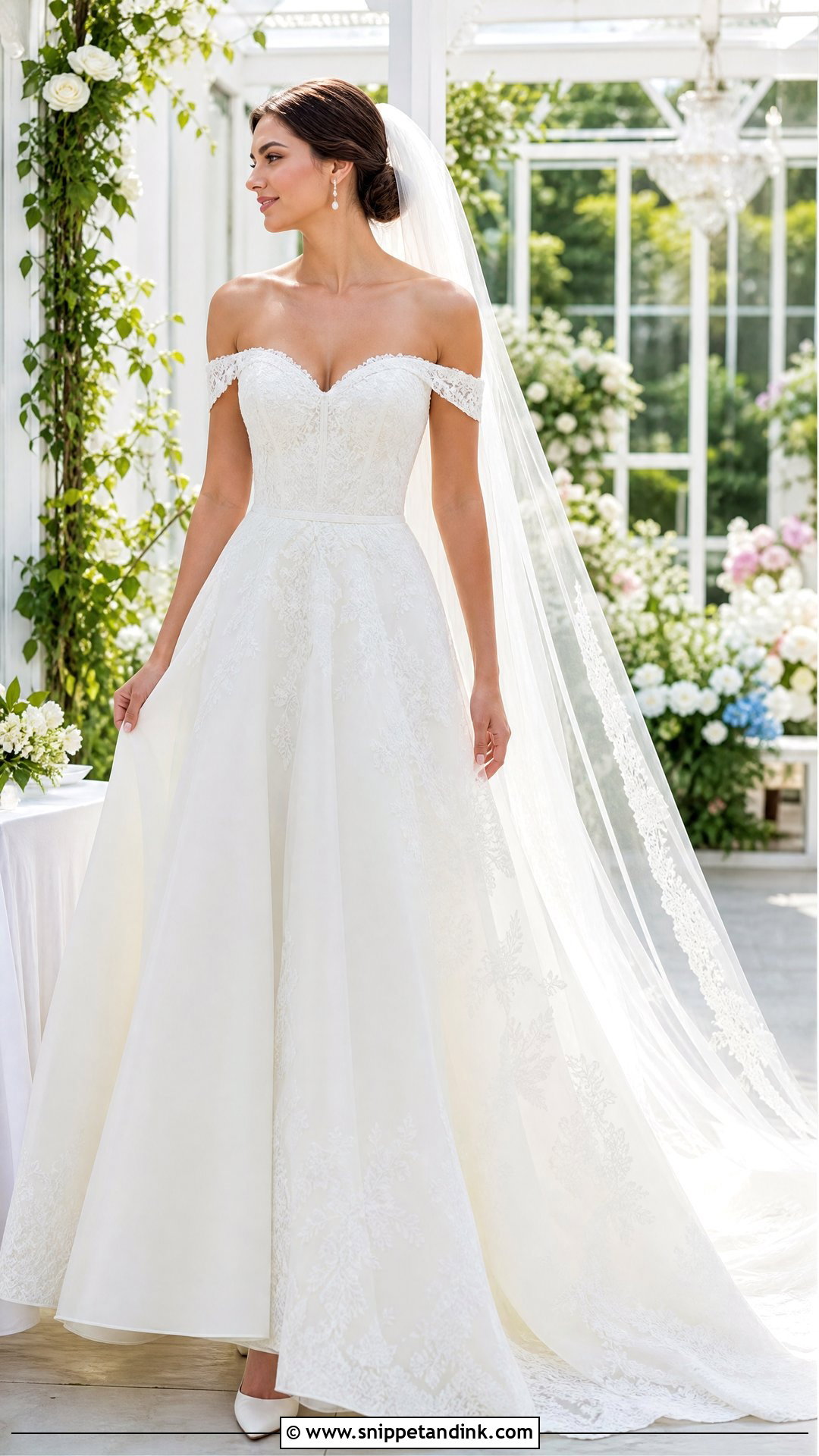
Off-shoulder bands cause more fitting complaints on the day than almost anything else, because they either slip down or pin your arms to your sides. The bodice needs its own internal structure so the bands sit just below the shoulder without holding the dress up. Test it by reaching forward as if signing the register, then raising both arms: the band should stay put and let you move. Lace appliqués along the hem tie the chapel train back to the bodice. Pearl drop earrings, ivory pumps and a low chignon with the veil set underneath suit it, and I’d skip the necklace, since the bare collarbone is already the focal point.
19. Long-Sleeve Dress With Chapel Train
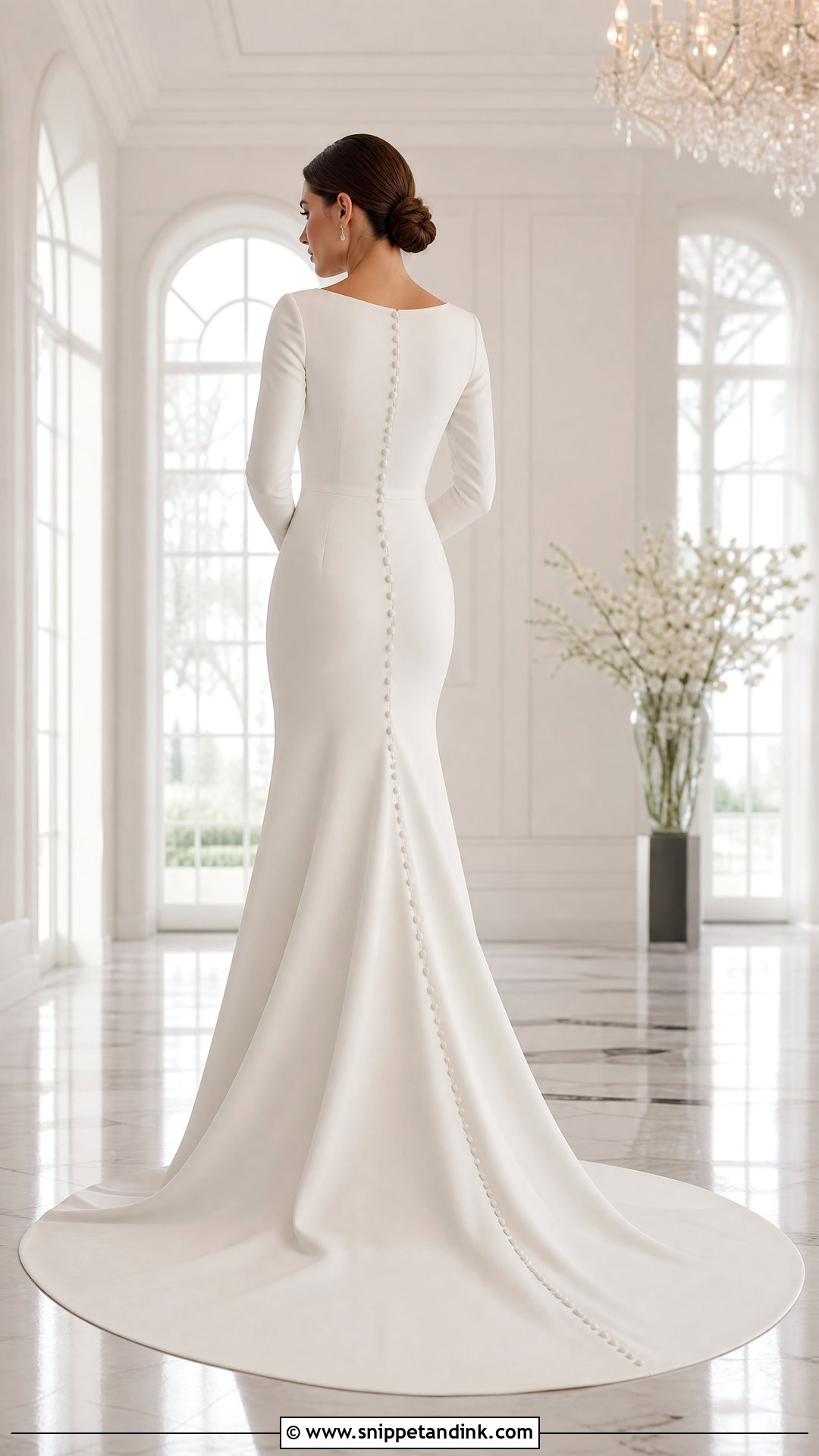
Long sleeves change how the whole gown moves, so the tailoring at the shoulders, elbows and wrists matters as much as the train. Lace sleeves look softer; crepe sleeves look cleaner and give a little less. An open back, covered buttons or a shaped neckline stop the coverage from feeling heavy, and sheath, A-line and fit-and-flare skirts all carry a chapel train comfortably. My rule at fittings is to hold something bouquet-sized in front of you for a full minute, then lift a fork to your mouth. If the sleeve pulls at the elbow or the shoulder seam tightens, it needs more ease. Closed-toe heels, small earrings and a low bun showing the back details finish it.
20. Square-Neck Dress With Minimal Train
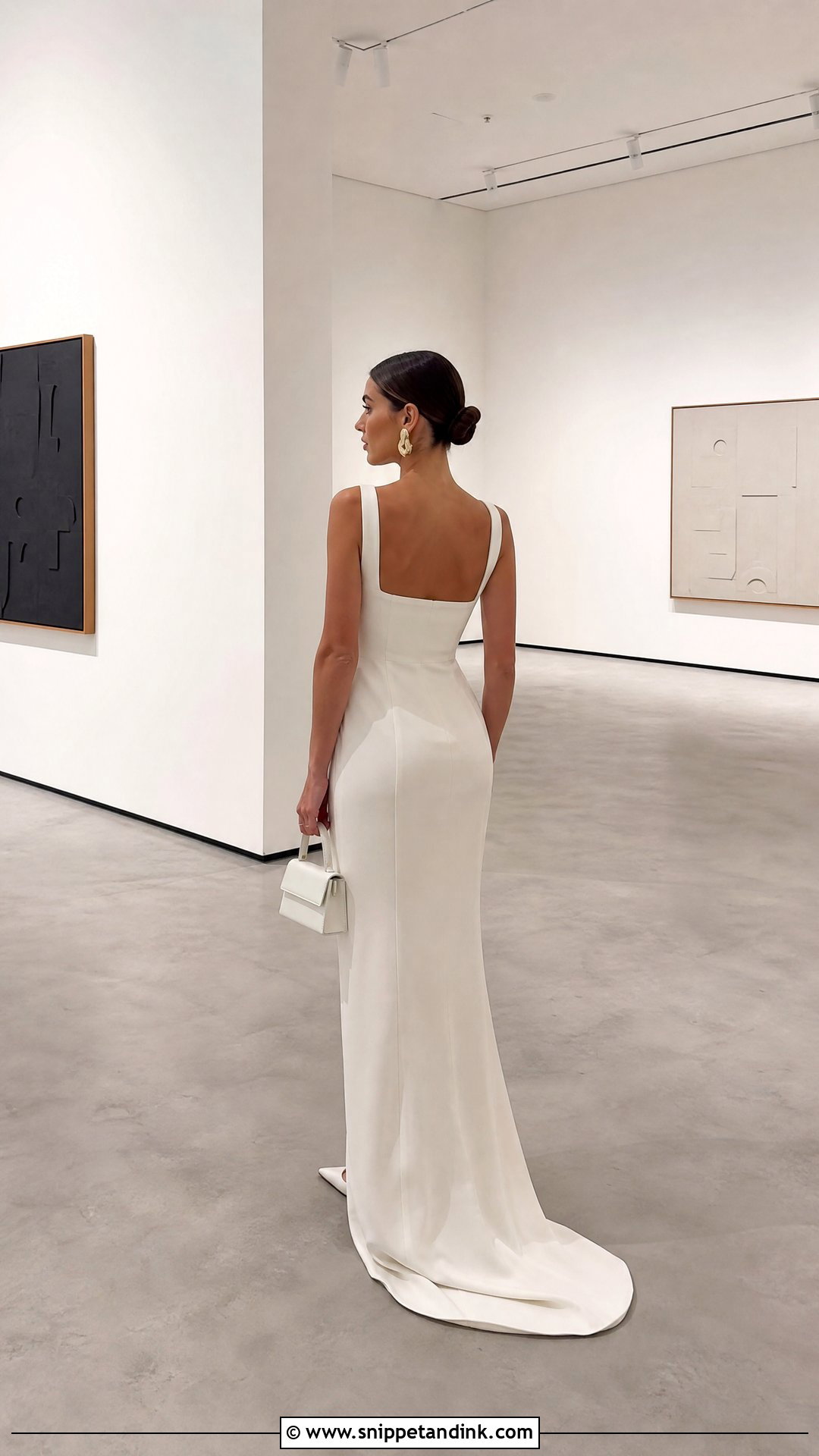
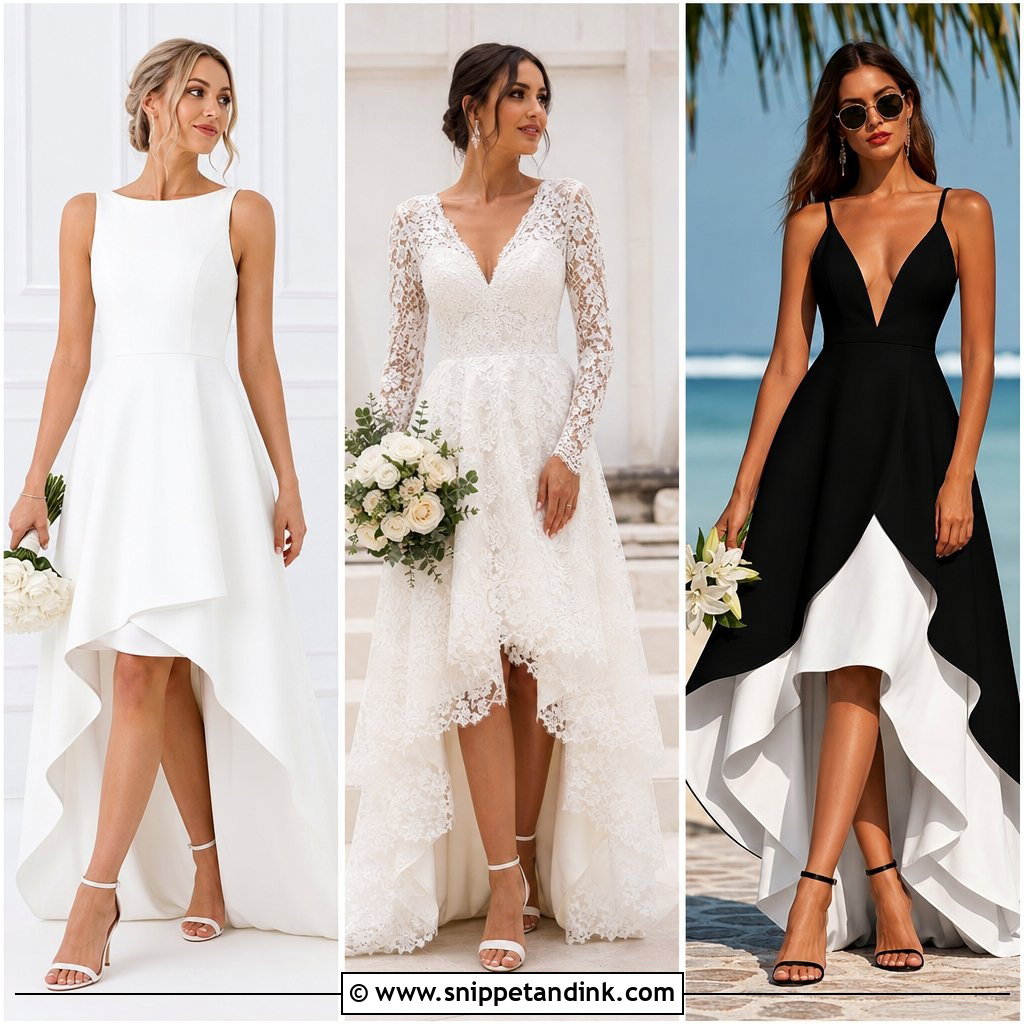
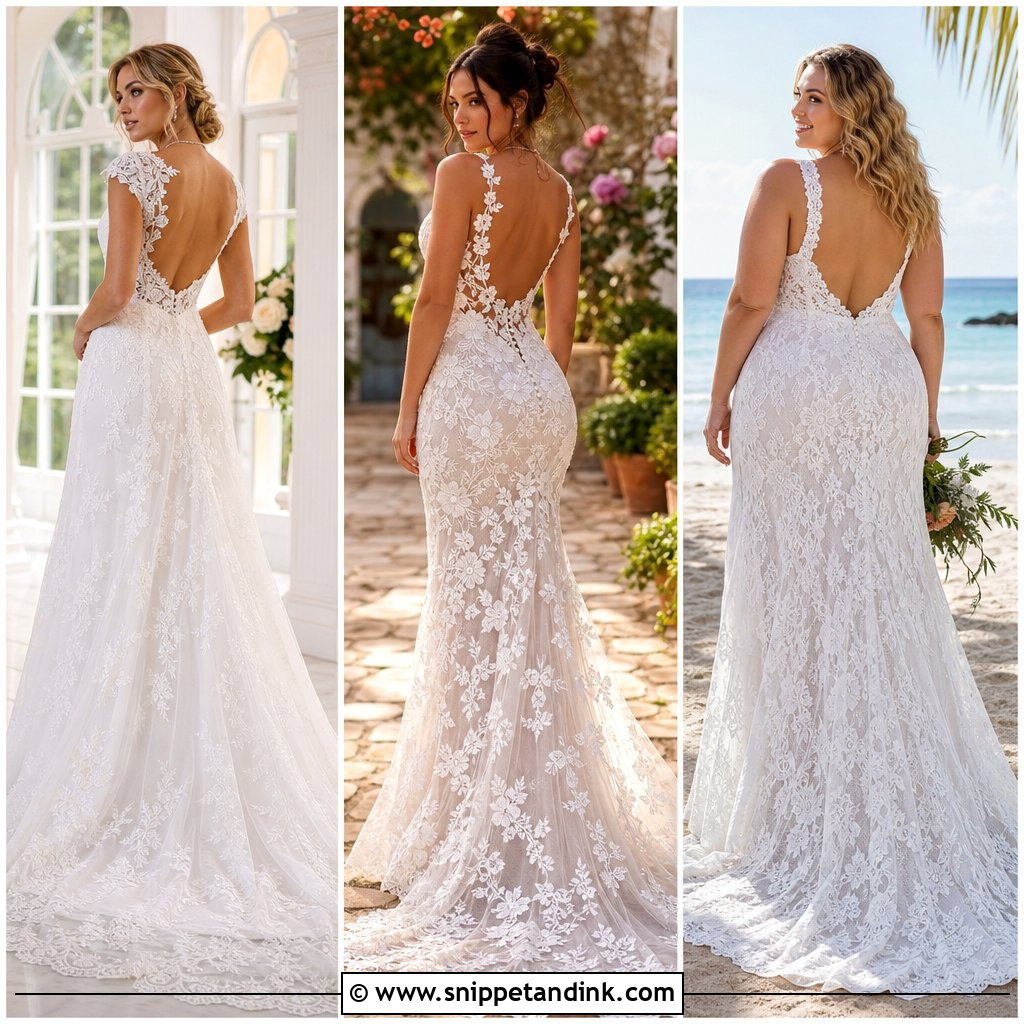
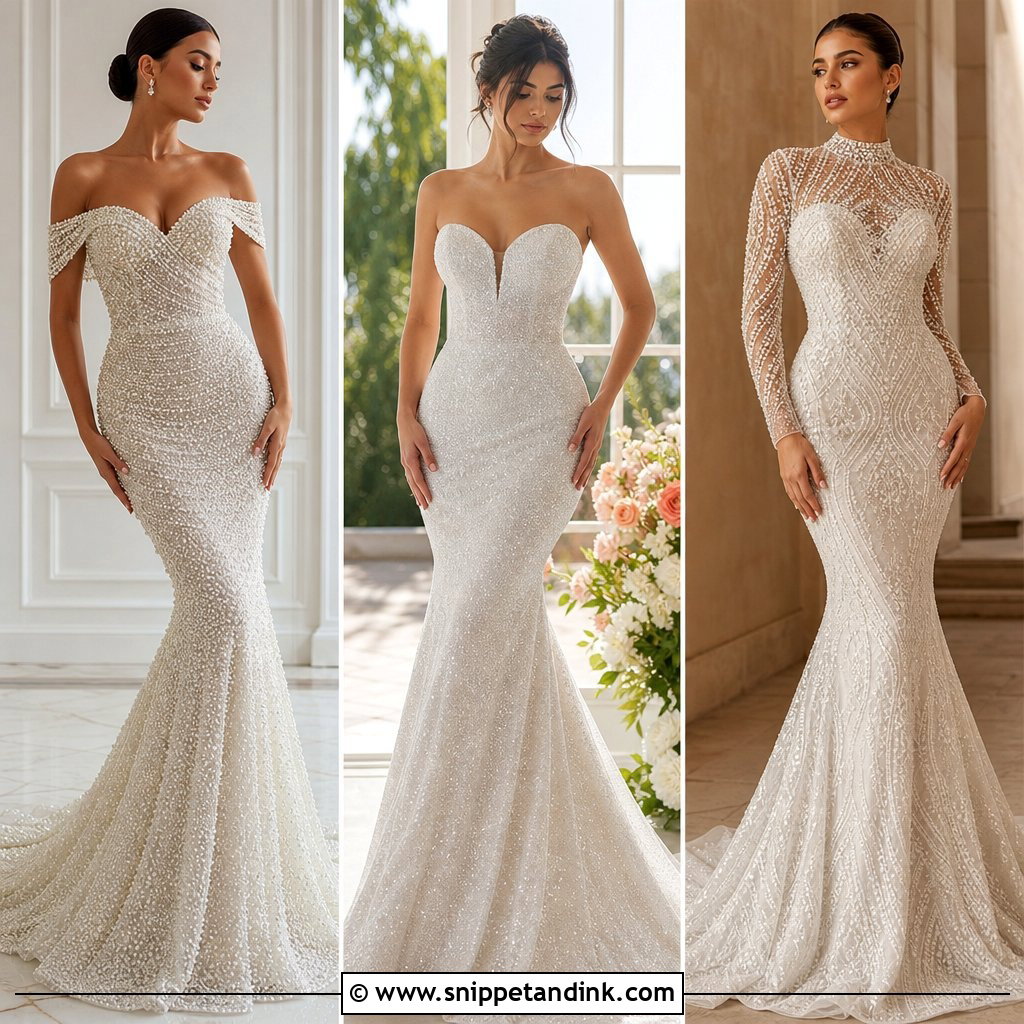
A square neckline is all straight lines, so the train should barely extend past the hem and fall in the same clean shape. Smooth crepe, satin or matte mikado in a column or slight flare gives you that. Wide straps hold the neckline square; thin ones let it gape at the corners, which spoils the geometry. A low square back mirrors the front nicely. The quality here lives in the hem, because with no lace or beading there’s nothing to disguise a hem that dips or rolls around the shoes. Keep accessories sculptural rather than sparkly, with pointed pumps, a sleek bun and a structured bag for later.
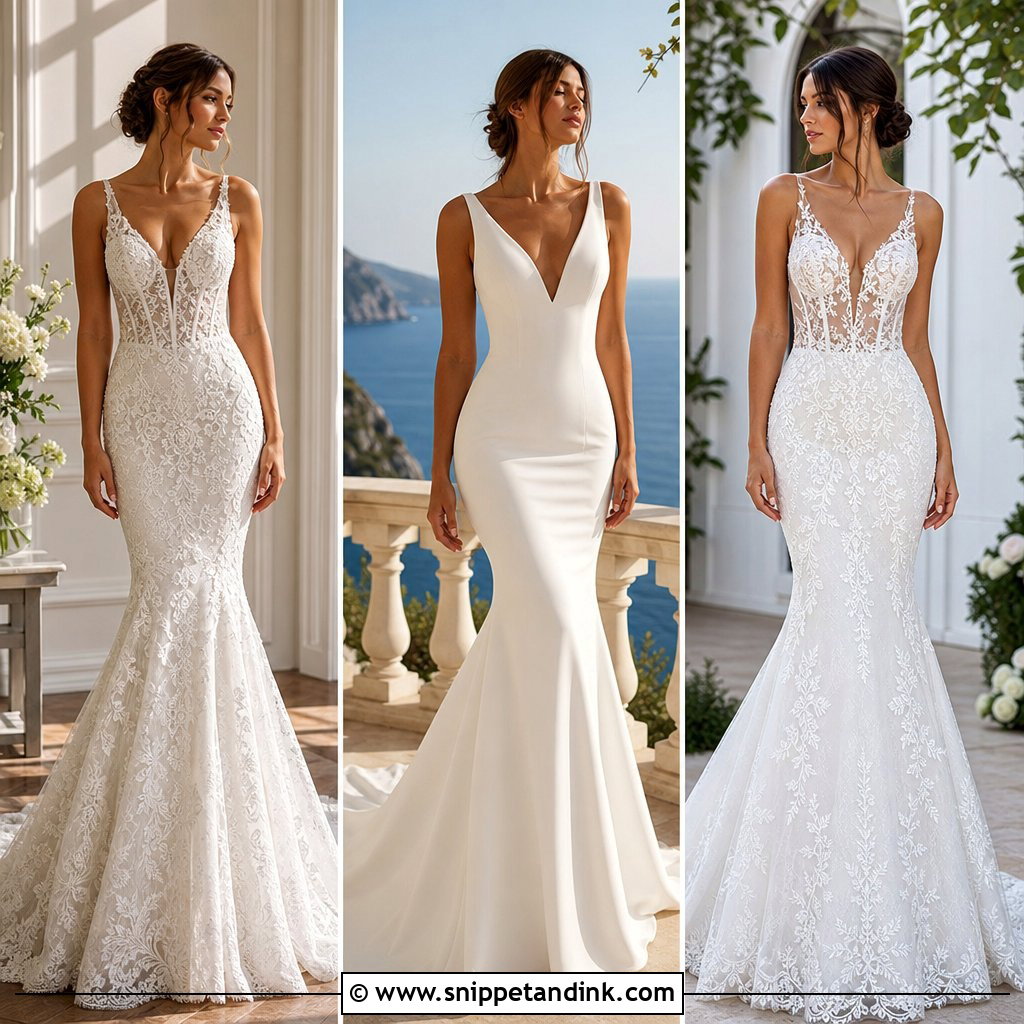
21. Mermaid Dress With Fishtail Train
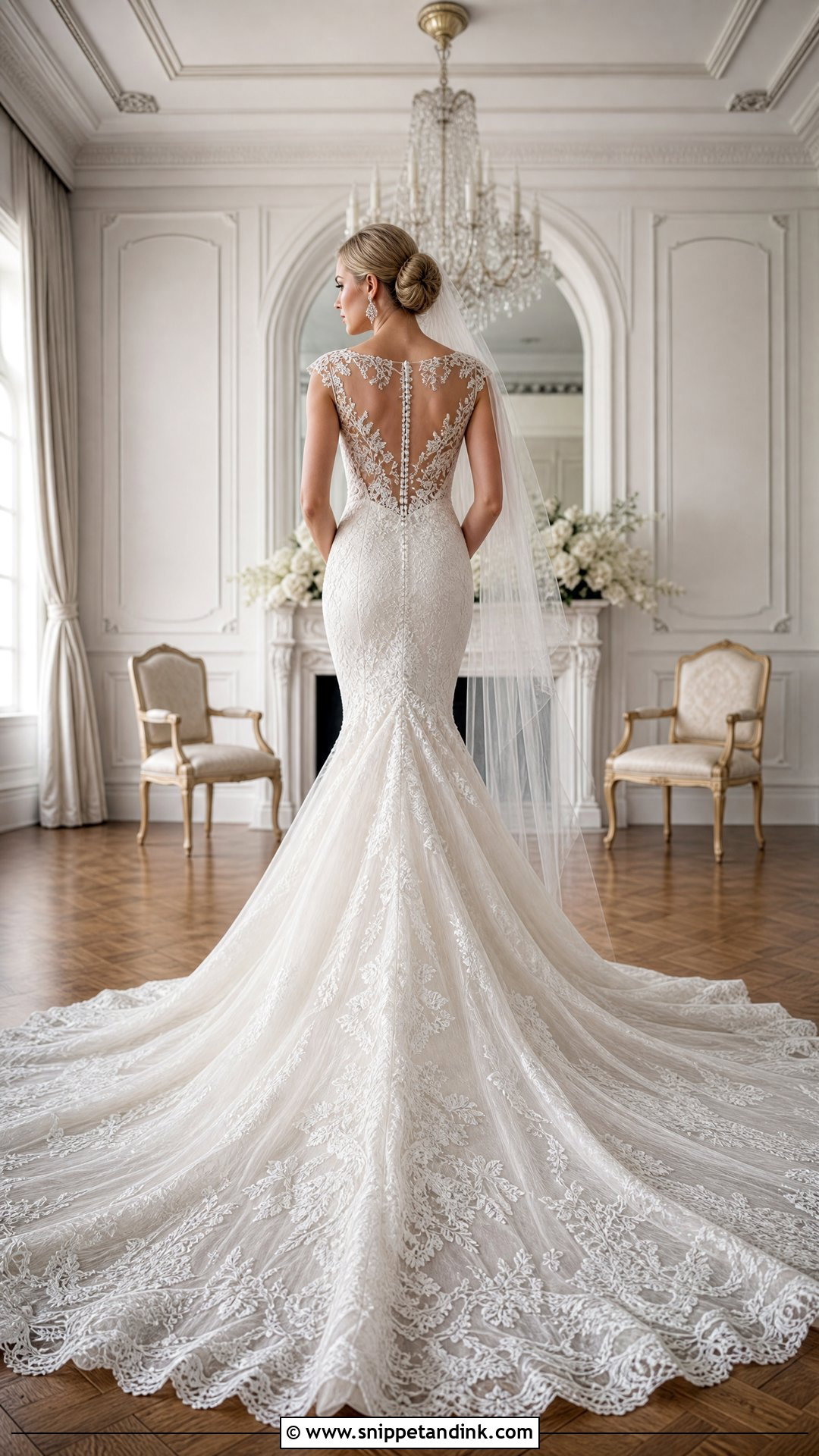
A mermaid gown fits close from bodice to knee before flaring, and the train should fan out wide from that flare rather than narrowing into a tail behind your heels. A wide spread reads clearly in pictures and keeps the shape balanced. Lace softens the cut, crepe sharpens it, and satin gives it a formal sheen. Of every silhouette here, this is the hardest to move in, so at the fitting I want you climbing a couple of stairs, sitting on a low chair and taking full strides. If the flare starts too high, you’ll shuffle all night. Supportive heels, statement earrings, a sleek updo and a simple veil that doesn’t hide the train finish it.
22. Blush Wedding Dress With Floral Train
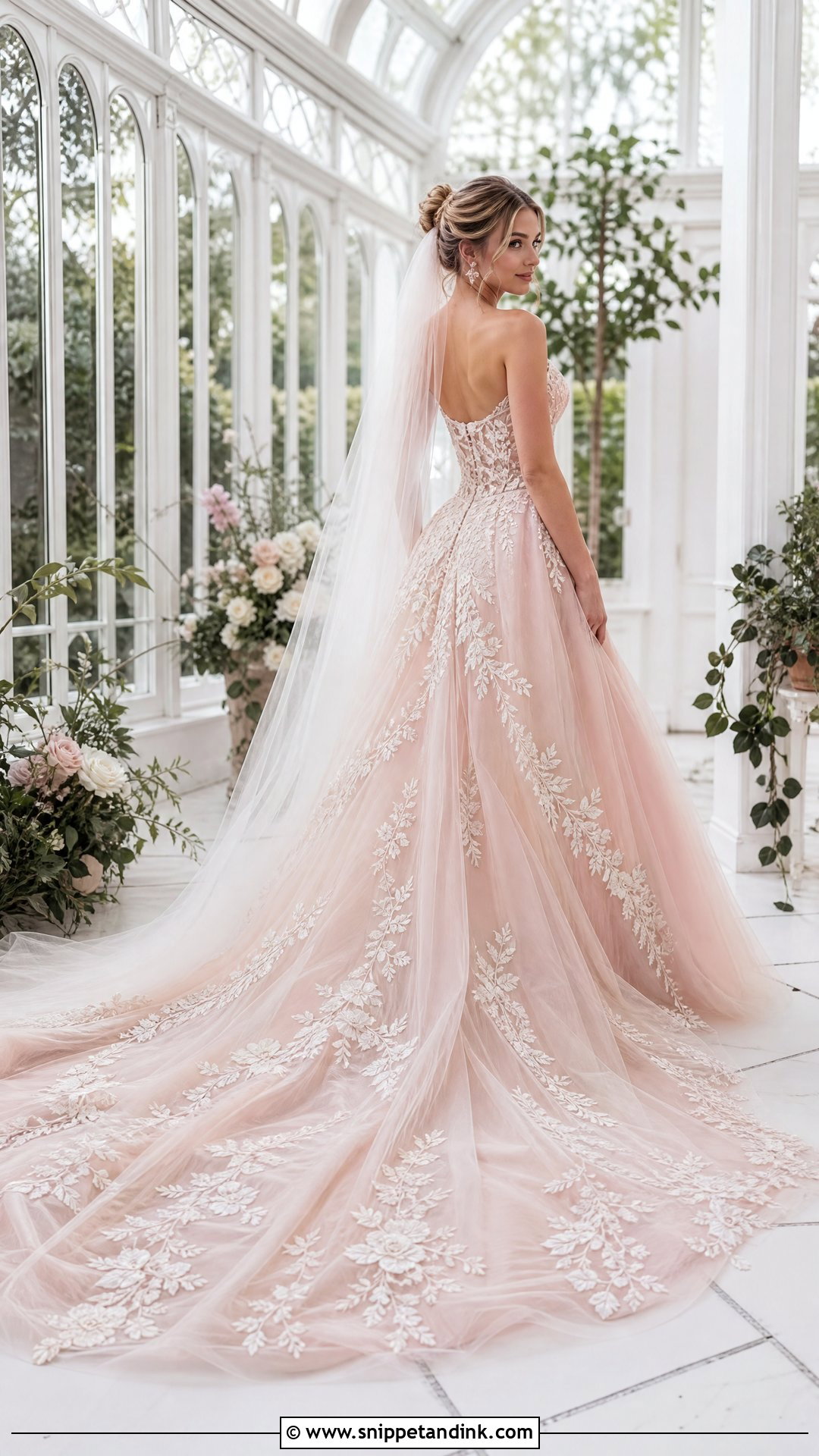
Blush works under a floral train because ivory lace and appliqués stand out against the coloured lining instead of disappearing into it. A fitted bodice on an A-line or ball gown, with a chapel or semi-cathedral train, gives the botanical motifs room to run from waist to hem. The warning I give every bride is to look at blush in daylight before buying. Depending on the layers and the light, it reads pink, peach, beige or nearly nude, and the same gown can look like three different colours across one day. Neutral heels, rose-gold earrings, a sheer ivory veil and a loosely pinned bun keep the palette soft.
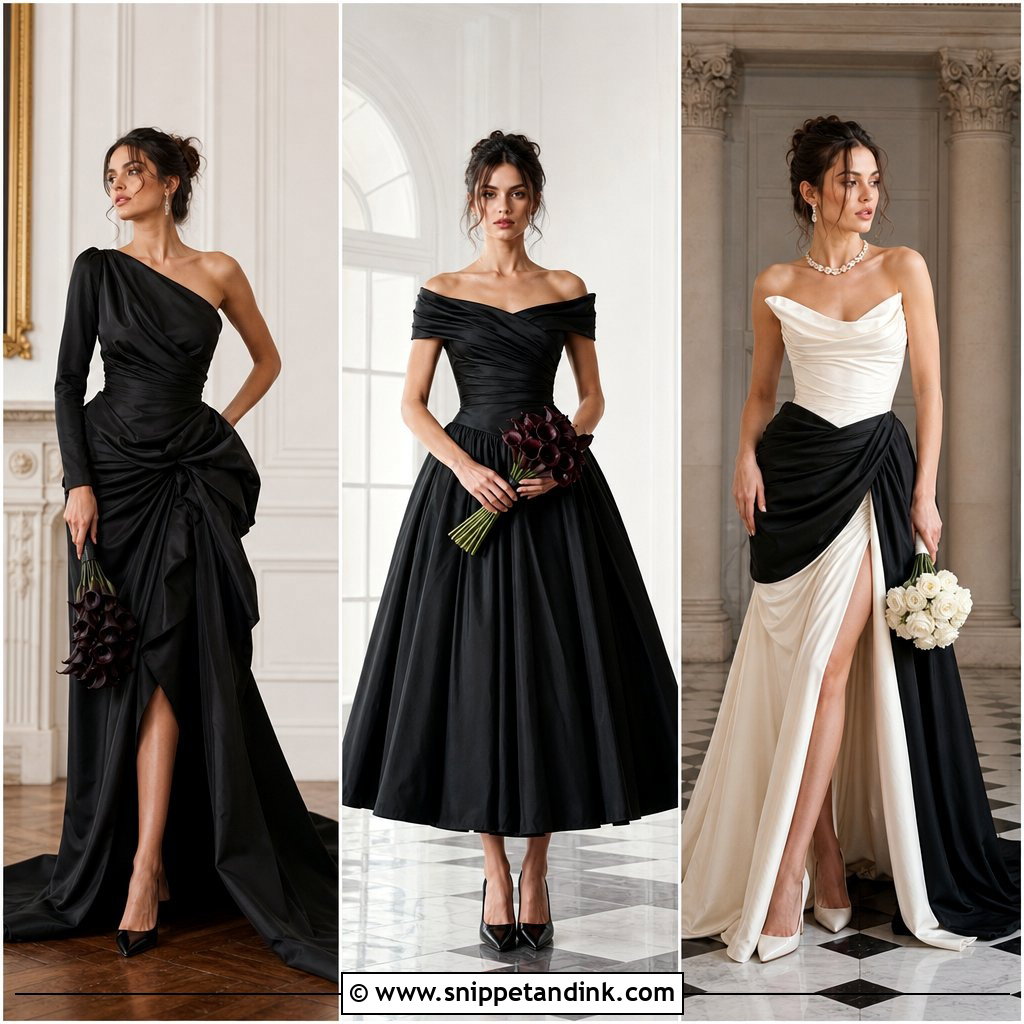
23. One-Shoulder Evening Dress With Side Train
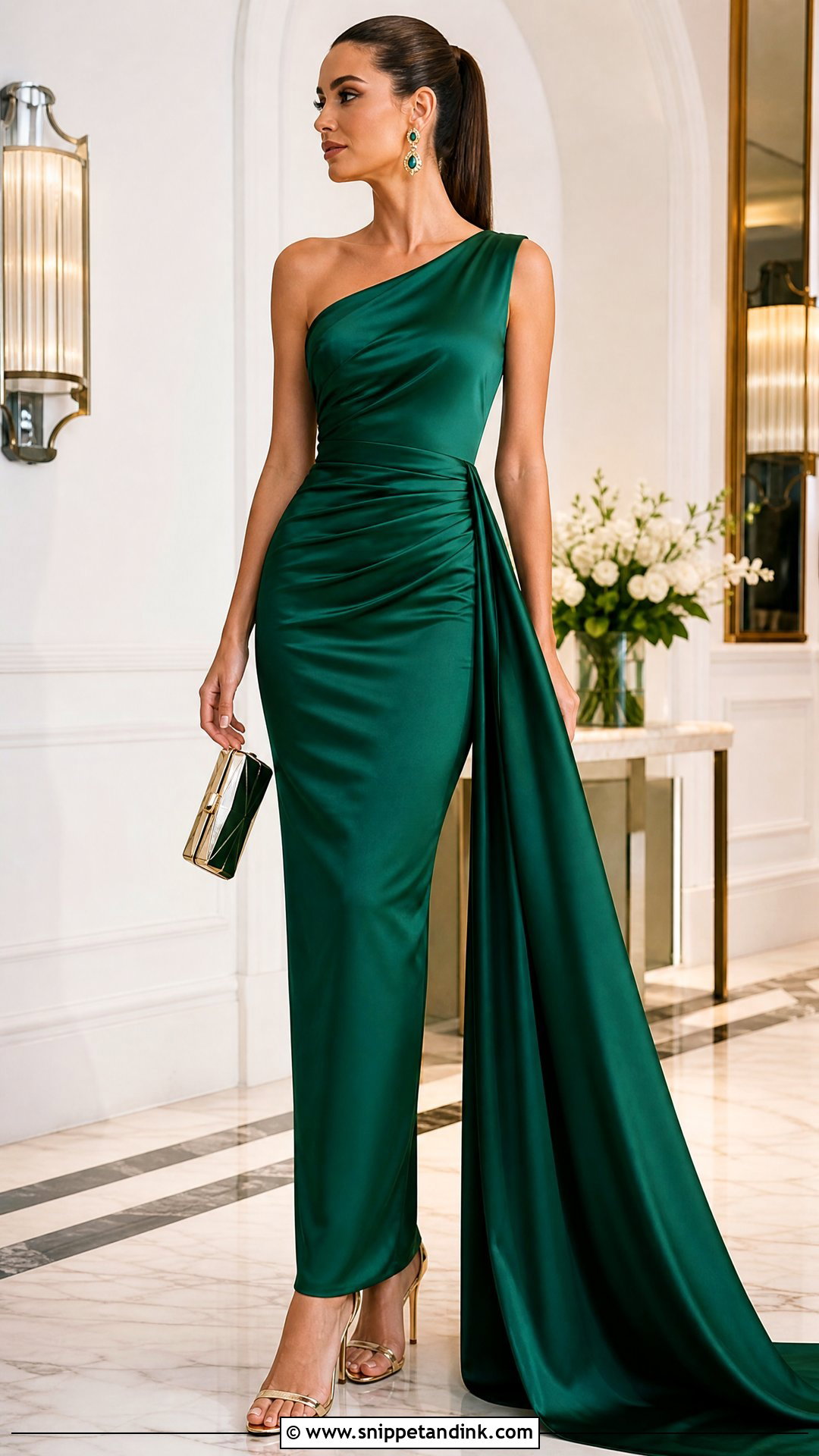
A side train swaps the symmetry of a classic train for a panel that falls from one hip or side seam and moves beside you. It suits satin, crepe or light chiffon on a fitted column. Where the panel starts is everything: it has to begin below the widest part of the hip, or it adds bulk exactly where you don’t want it. The hem also needs adjusting so the panel doesn’t wrap around your ankle as you walk, which happens a lot with chiffon. Strappy metallic heels, a hard-shell clutch and earrings on the bare side balance the one-shoulder neckline, and a sleek ponytail follows the asymmetry.
24. Cape Train Dress For Formal Events
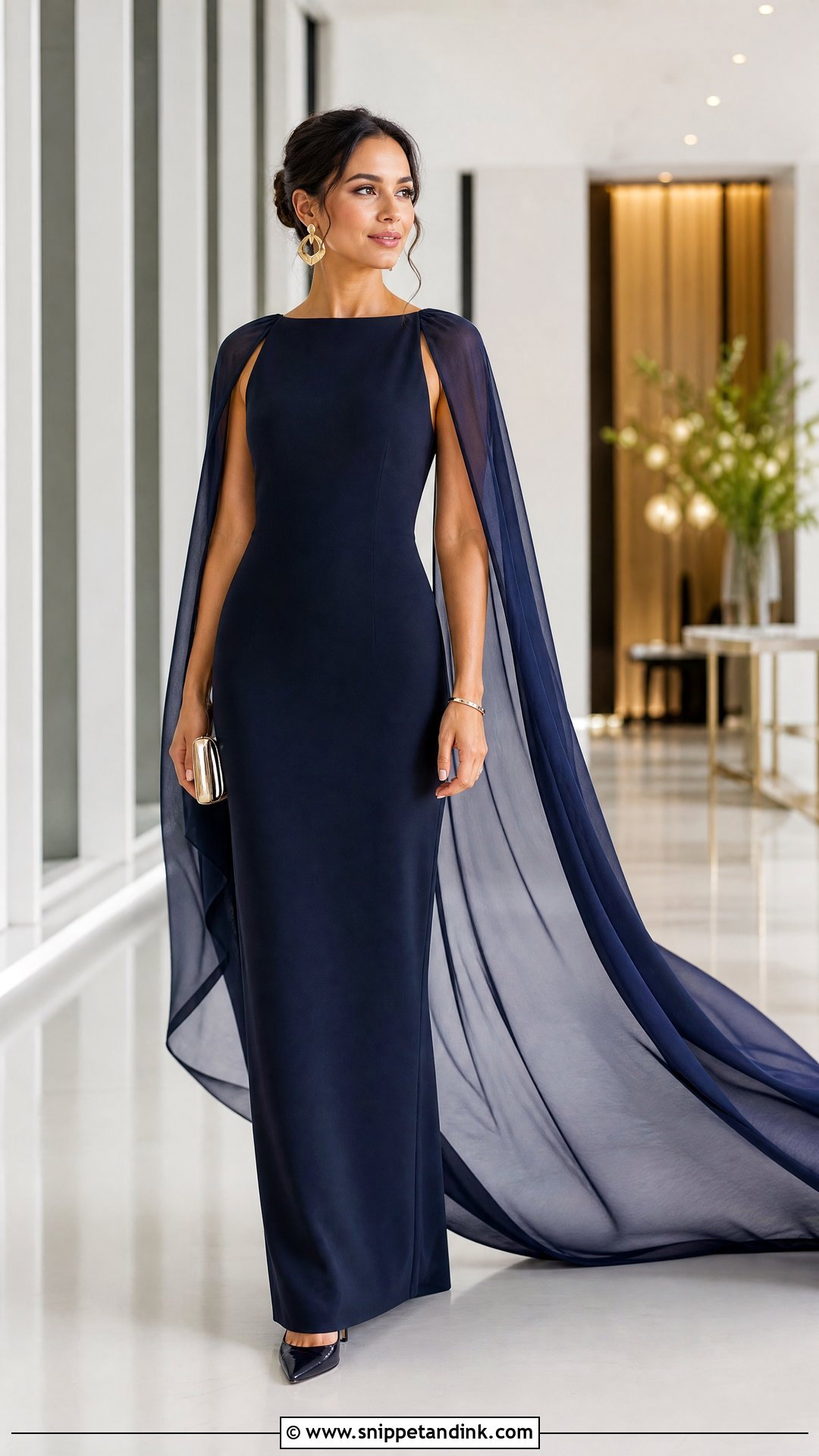
A cape train gives you movement and coverage in one piece, and it can sit over a dress you’d otherwise wear plainly, such as a sleeveless crepe column or satin sheath. It might attach at the shoulders, the neckline or the upper back. Width is the judgement call: wide enough to swing when you walk, narrow enough that it doesn’t hide the dress entirely when you’re standing still. Chiffon floats, while structured satin holds an architectural edge. Wear your hair up so the attachment points show, and leave off the necklace if the cape has a detailed collar. A detachable version comes off after the entrance, which helps a lot in a warm room.
25. Convertible Mini Dress With Detachable Train
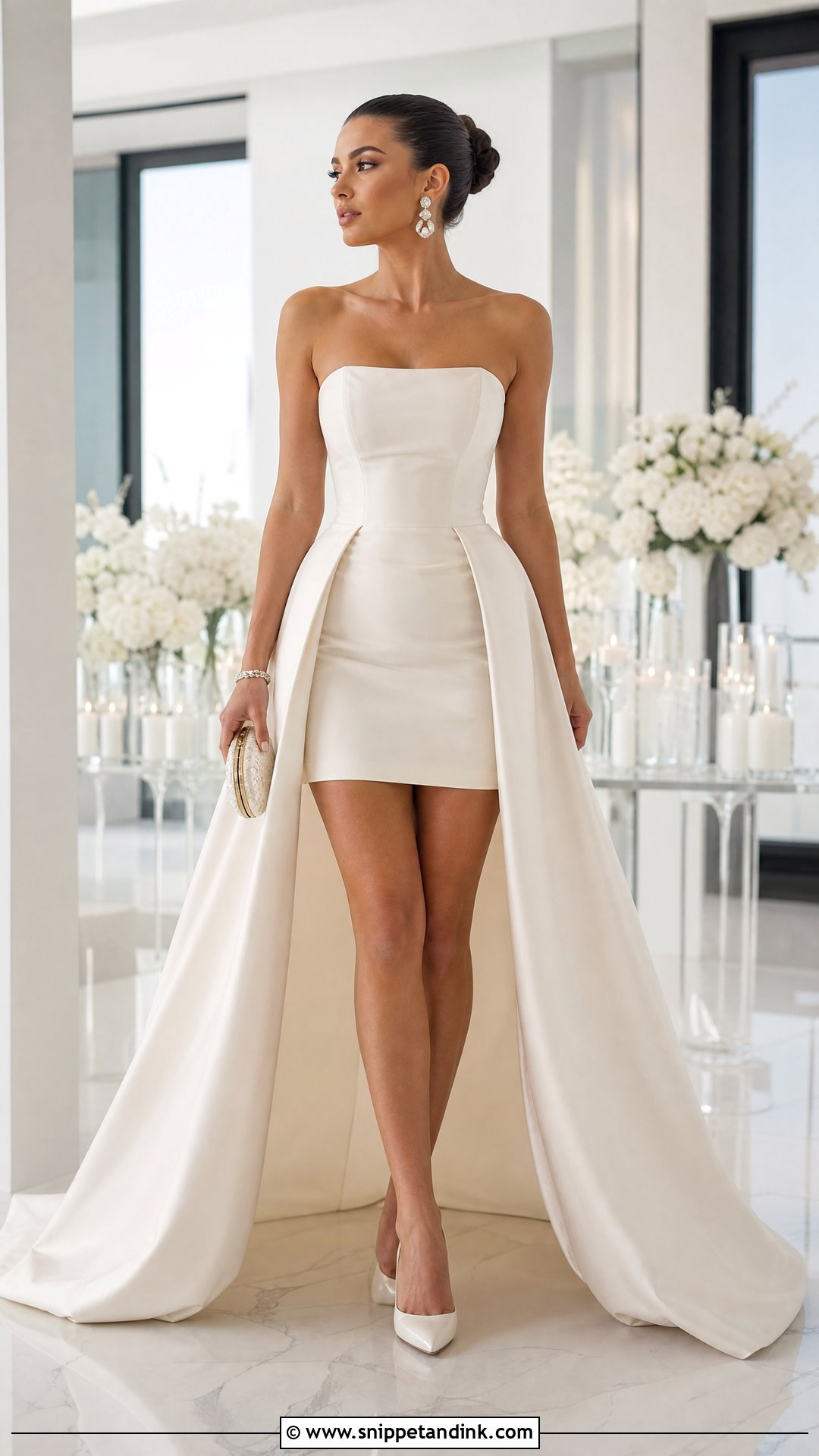
A mini dress with a detachable train is the most playful option in the list, and it really is two outfits in one. The base needs a structured fit, because once the train comes off, nothing hides a loose bodice. The removable overskirt or back panel extends into a chapel-length train for the entrance and portraits, and satin, mikado or layered organza help it hold its shape. Your shoes are on show all night, so pick a pair you can actually dance in. The join at the waist should hide its fasteners; ask for a covered placket or a waistband that overlaps the hooks.
Which Bustle Suits Your Train and Fabric
Any train past court length needs a bustle, the system of hooks, buttons or ribbon ties that lifts the train off the floor for the reception. Bring your shoes to the appointment where it’s planned, because the hem is pinned to the height you’ll actually stand at.
Over bustle
The train is hooked up onto the outside of the skirt at one or several points. It’s quick and suits lace, satin and crepe, but heavier trains need more points or the fabric sags between them.
Under bustle
The train is folded under and tied with numbered or colour-coded ribbons, giving a soft, pouffed back. It suits tulle and organza and handles long trains well, though it takes longer to do.
Ballroom bustle
The train is tucked up underneath so the skirt looks floor-length all round, as if there were never a train at all. It’s my choice for heavy ball gowns, because the weight spreads across many points rather than two or three.
Teach the person doing it at your last fitting, and have them take a short phone video while the seamstress demonstrates. In a dim reception corridor, a dozen ribbons with no reminder is how trains end up bustled crooked.
Grass, Stairs and Wind on the Day Itself
Outdoors, a long train collects grass clippings, petals and damp, and wind can lift tulle straight into your face or wrap it around your legs. Ask whoever is helping to carry the train over grass between locations rather than letting it drag, and to fluff it out only once you’re standing in position.
On stairs, go up facing forward with your helper gathering the train behind you; coming down, lift the front of the skirt yourself and let them follow. When you sit, sweep the train to one side first so you aren’t sitting on it, which is what creases satin and crushes pleats. A small lint roller and a white chalk block in the emergency kit cover most hem marks before photos.
A Train Should Finish the Dress, Not Become a Job
A train should finish the dress, not create a job for you. Before settling on a length, think about fabric weight, the floor at your venue, how much room you’ll have, and how much you’ll be moving once the vows are done. Sweep and court are low maintenance; chapel and cathedral bring more drama and need a bustle. Overskirts, bows, capes and Watteau panels give you a second look if one isn’t enough. Whatever you pick, walk, turn and sit in it with your actual shoes on before the final alteration, then adapt your favourite idea from this list to your own proportions.
You'll Like These Ideas:








Leave a Reply