
Brides often tell me they’re worried a simple gown won’t feel bridal enough. In my experience the opposite problem is more common: a plain dress that fits perfectly looks more expensive than a heavily beaded one that doesn’t. Without lace to draw the eye, the work shifts to the cut, the neckline and how the fabric falls. Designers are still showing streamlined shapes, sculpted necklines and satin slips with one quiet detail. Below are twenty simple gowns for formal ceremonies, courthouse weddings, gardens and small destination events, with my notes on fit, fabric and the accessories that suit each one.
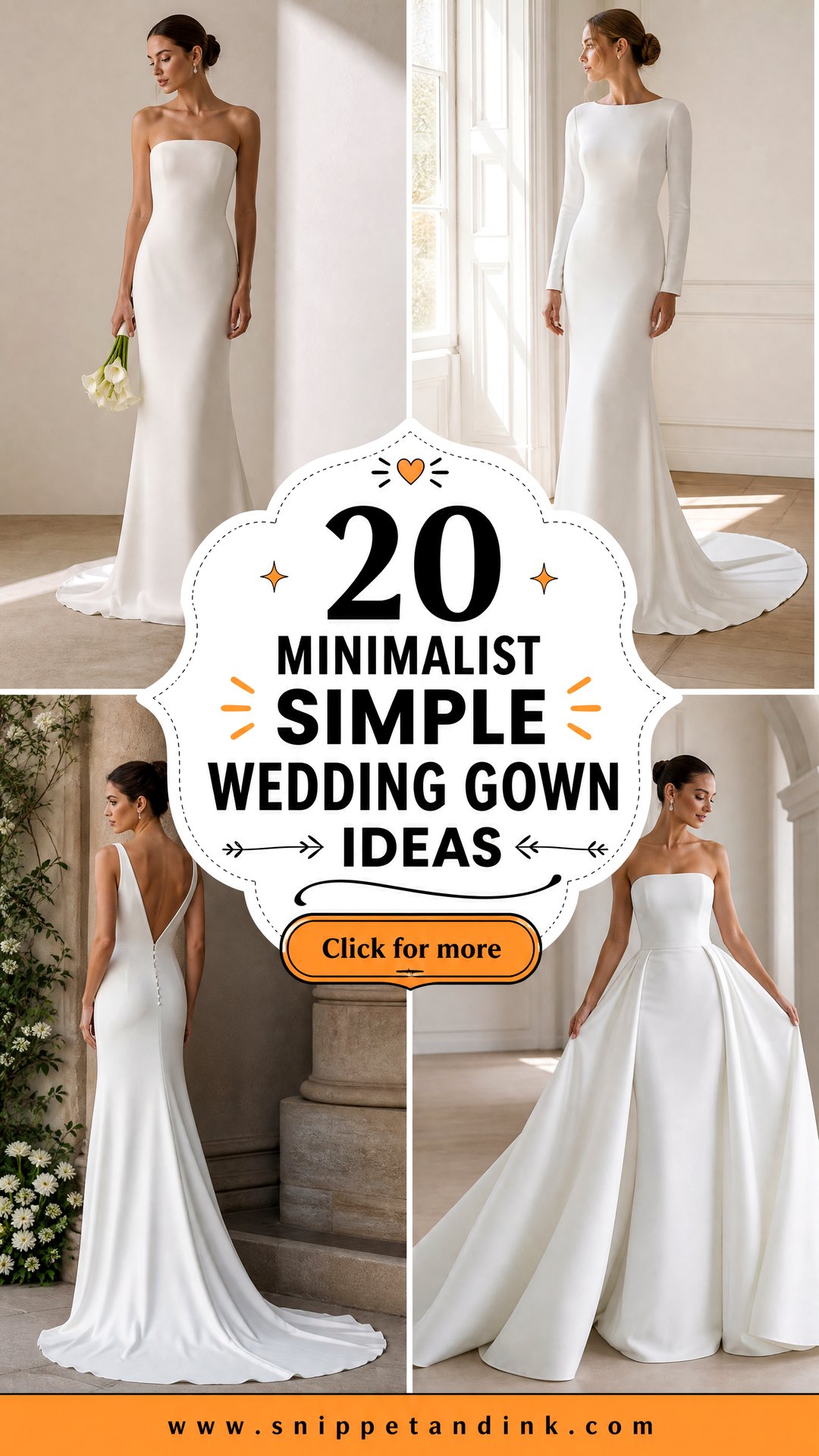
Where the Money Goes in a Dress With No Embellishment
A plain gown isn’t automatically cheaper. With beading and lace removed, the cost moves into the fabric and the construction, and some of the simplest-looking designer dresses are expensive precisely because heavy silk and internal structure cost a lot to make well.
When I help a bride set a budget for a clean dress, I split it in my head three ways:
- The fabric. Silk, heavy crepe and Mikado cost more than polyester satin, and on a minimal gown you see the difference in the drape and the way light sits on it.
- The inside. Boning, a corset or lined bodice and a waist stay are what keep a strapless or backless gown smooth. These are worth paying for.
- Alterations. A simple dress depends on a precise fit, so set money aside for the seamstress. Costs vary widely by region and by how much work the dress needs, so ask for a quote at the first fitting.
Bridal-label ready-to-wear and sample sales can be good places to find simple shapes. A plain sample shows wear more readily than a lace one, though, so check the hem, the underarms and the neckline for makeup marks before you buy.
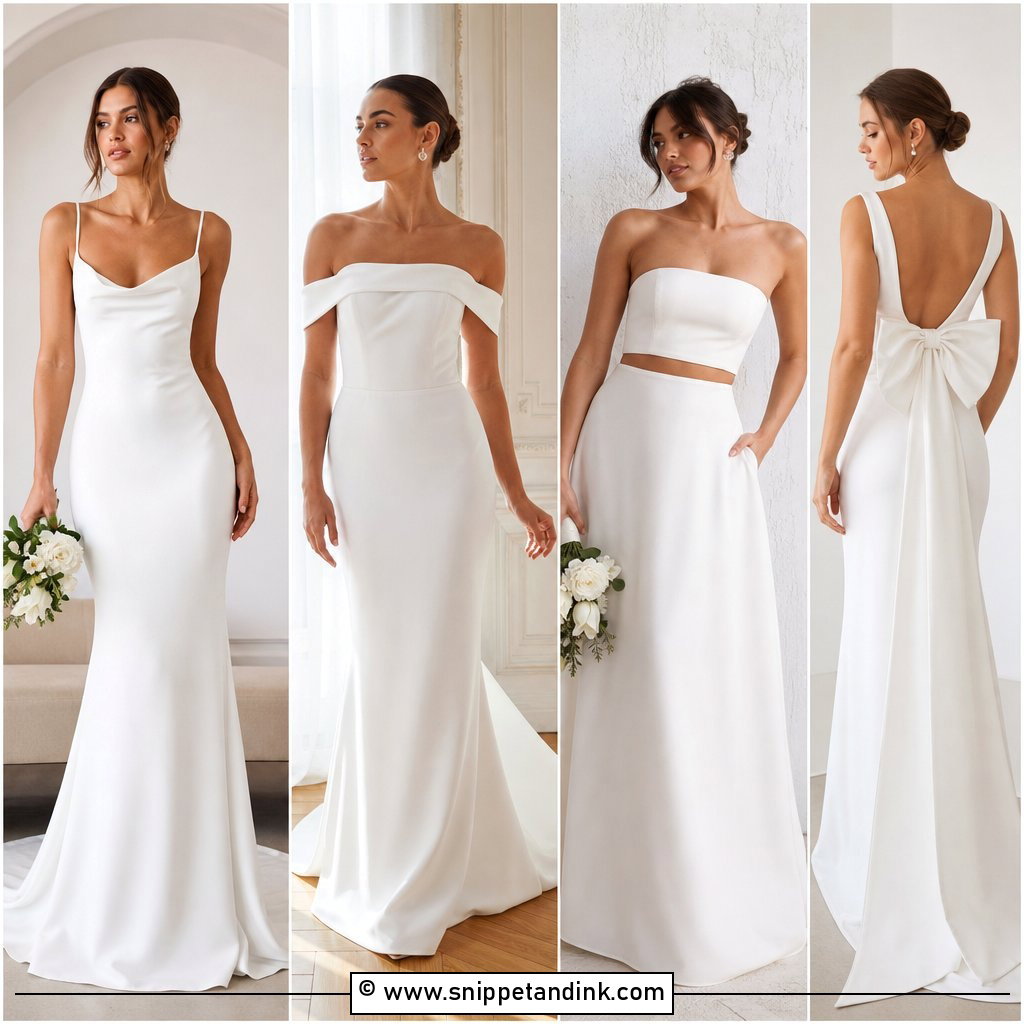
1. Satin Slip Wedding Gown
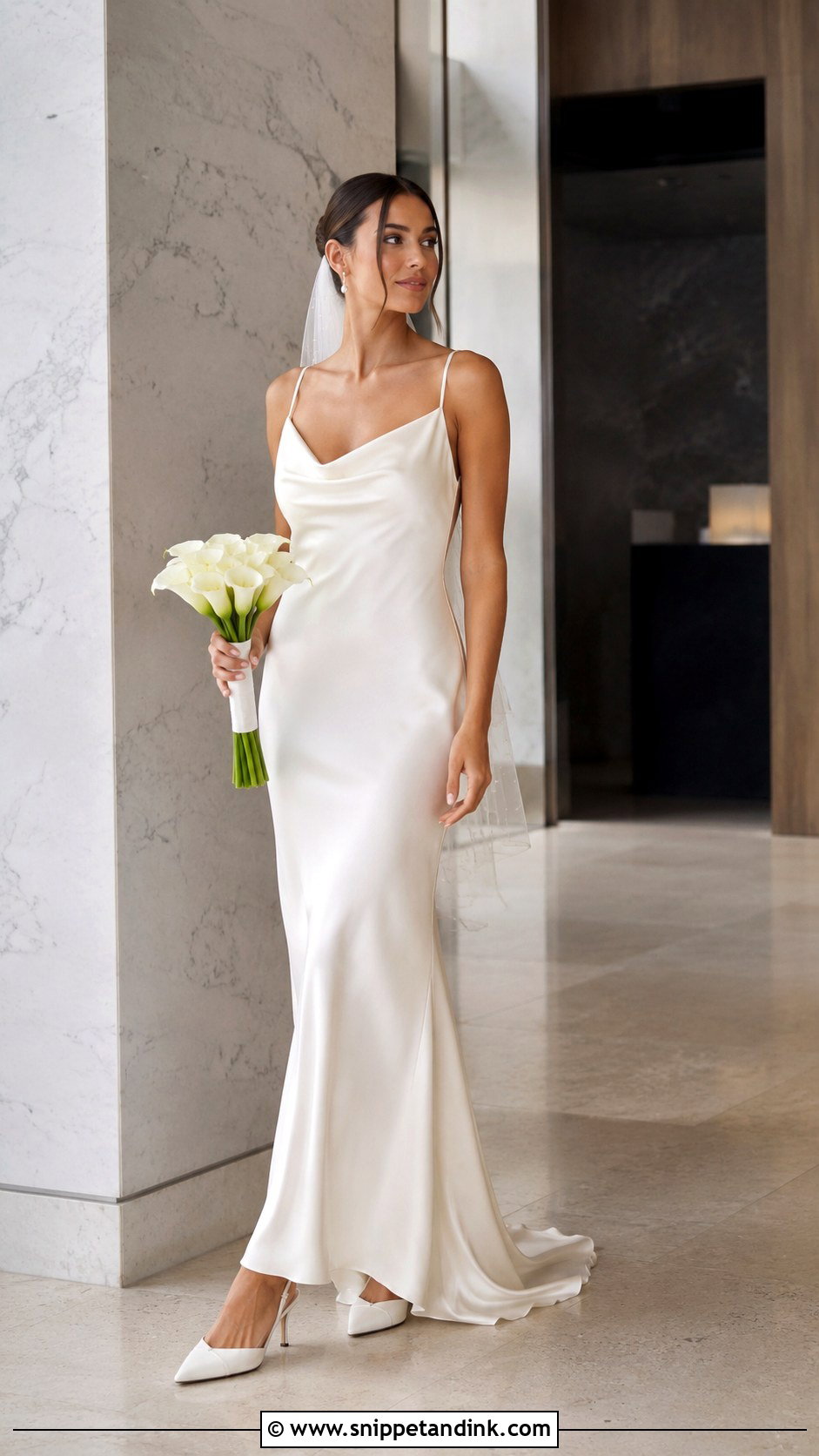
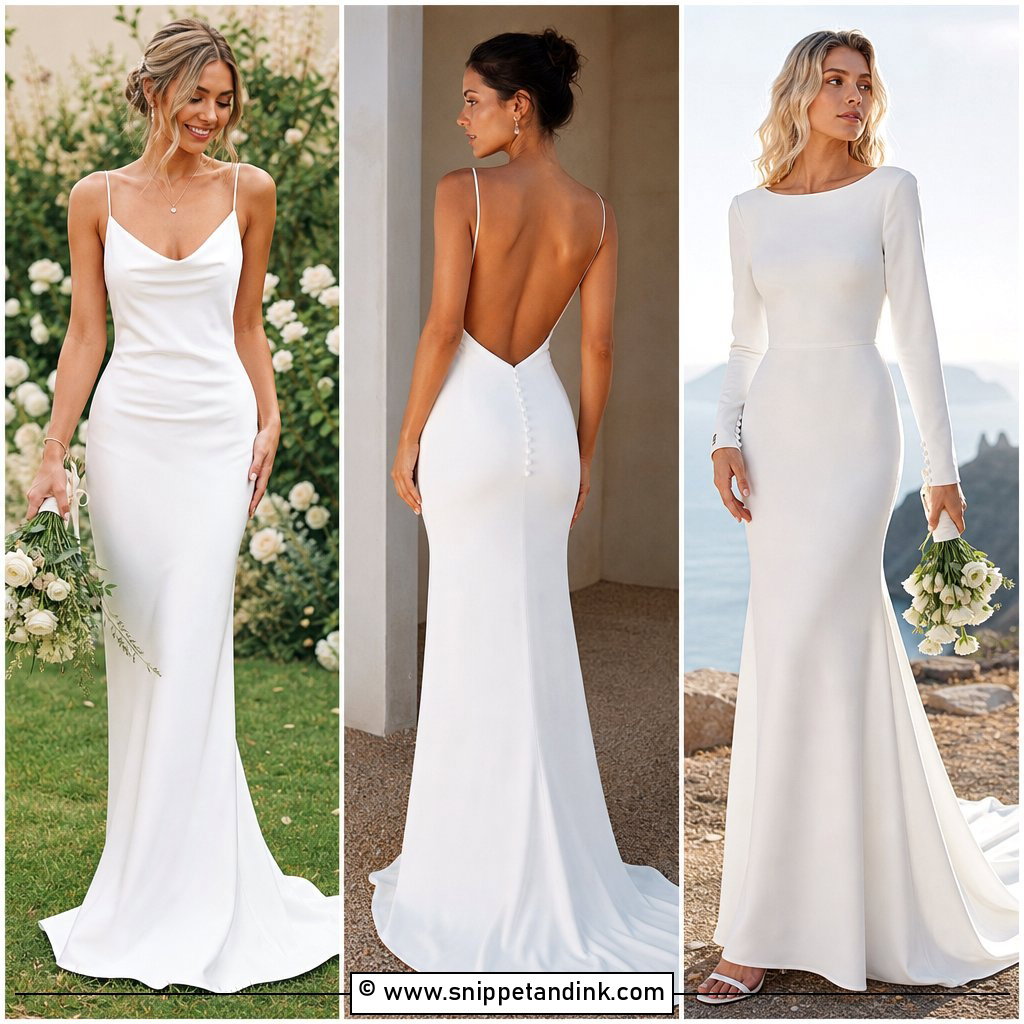
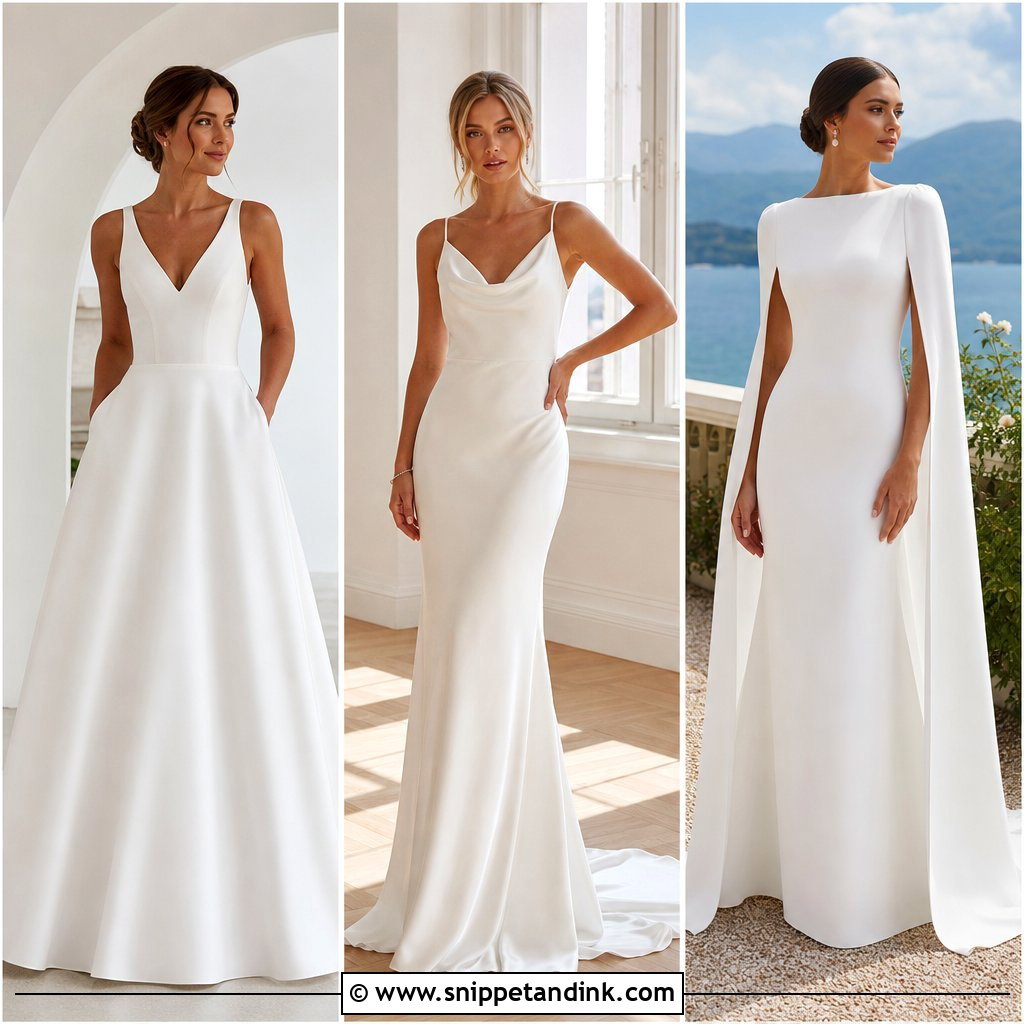
Bias-cut satin skims rather than grips, which is why it’s the version of the slip I recommend. A soft cowl neckline adds a little movement, and slim straps keep it light. Ivory has a softer glow than white in daylight. If the satin feels thin between your fingers, keep looking; thin slips show every line underneath. Pointed white slingbacks, pearl drops and a few calla lilies match its clean mood, and a fingertip tulle veil adds ceremony without hiding the shape. Hair should stay smooth: a low bun or tucked waves.
2. Square Neck A-Line Wedding Gown
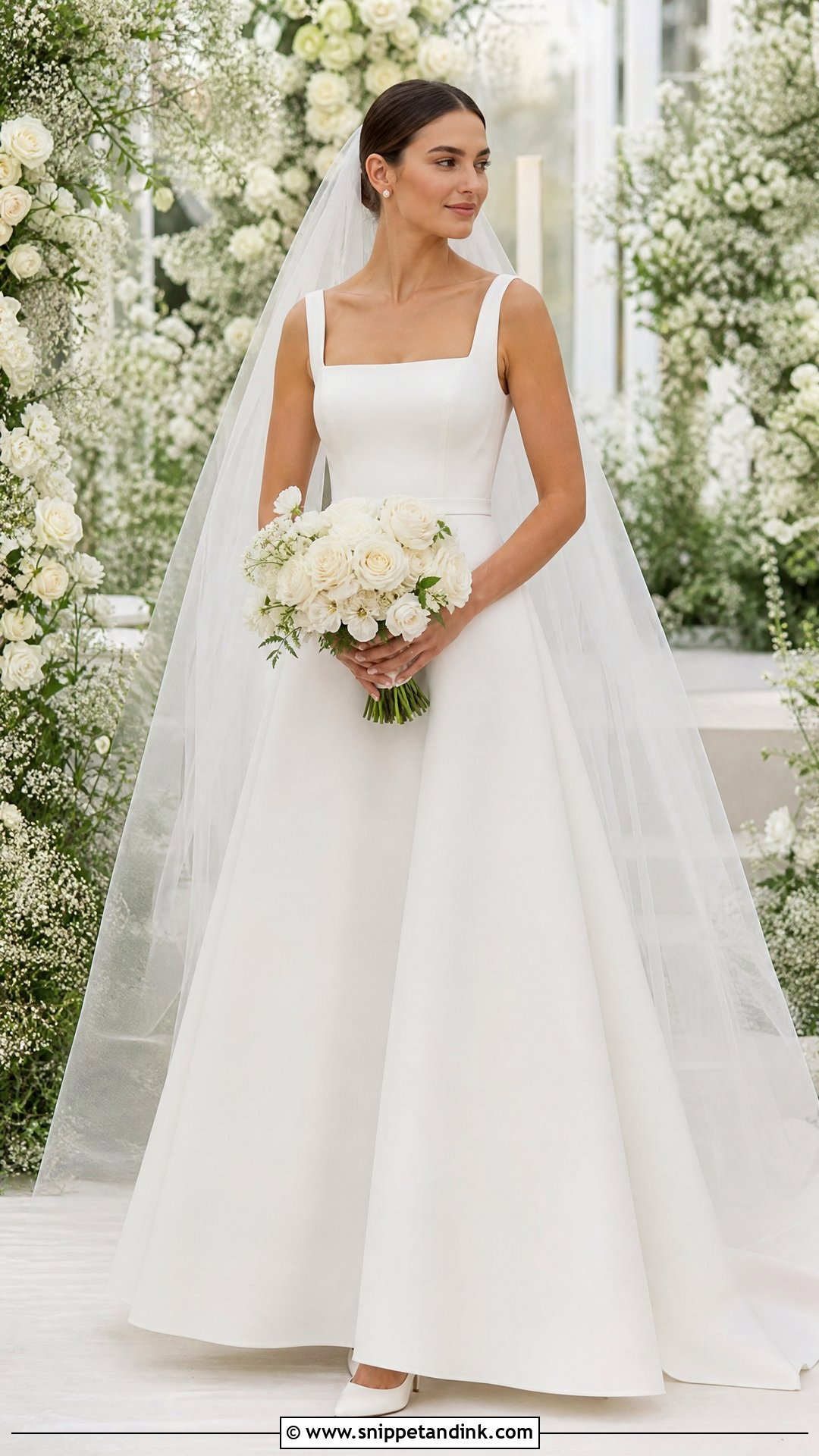
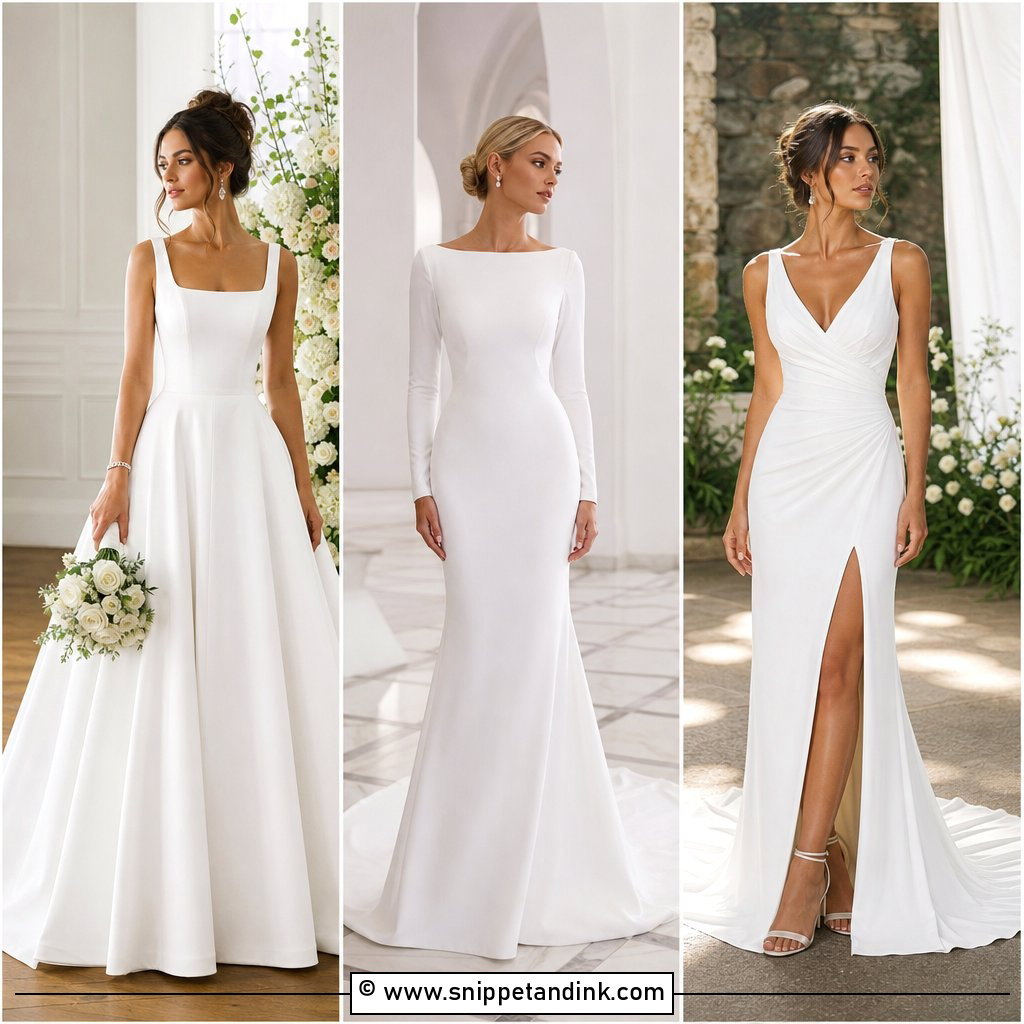
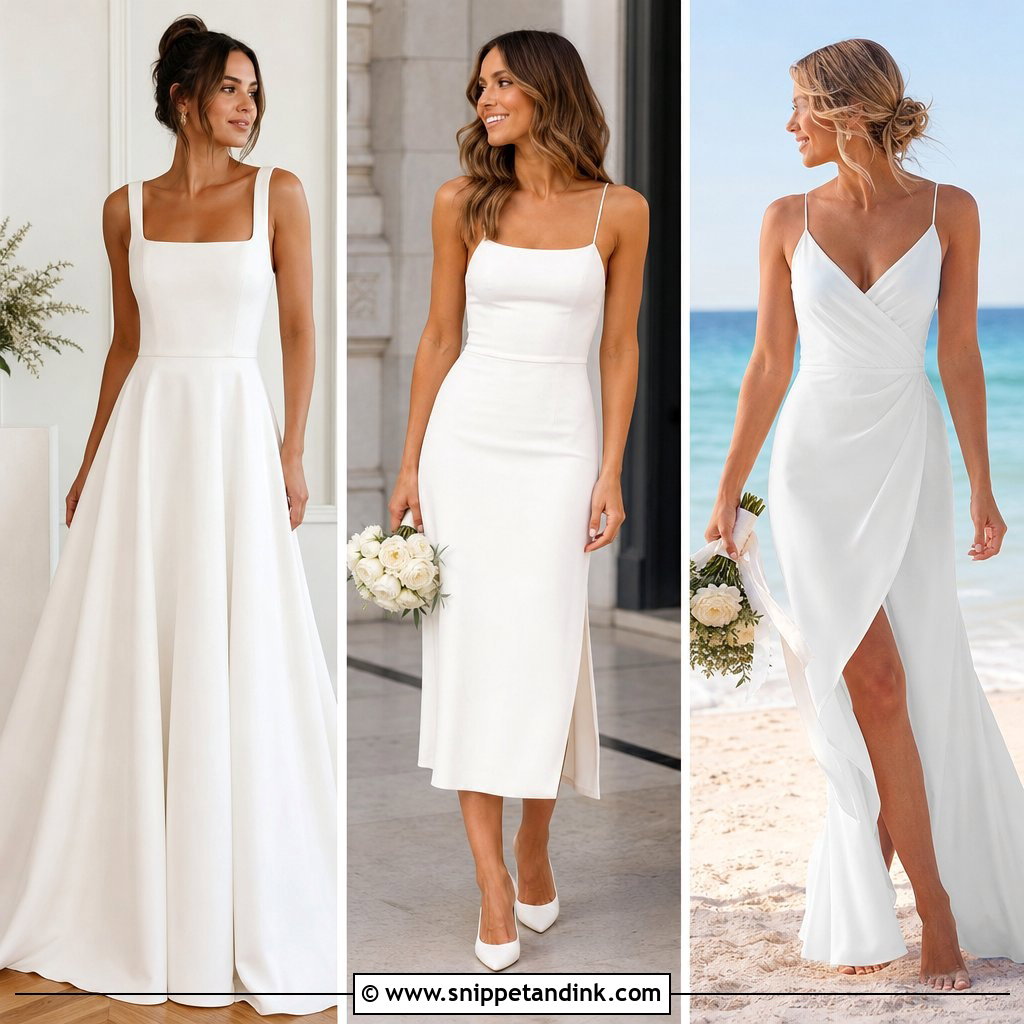
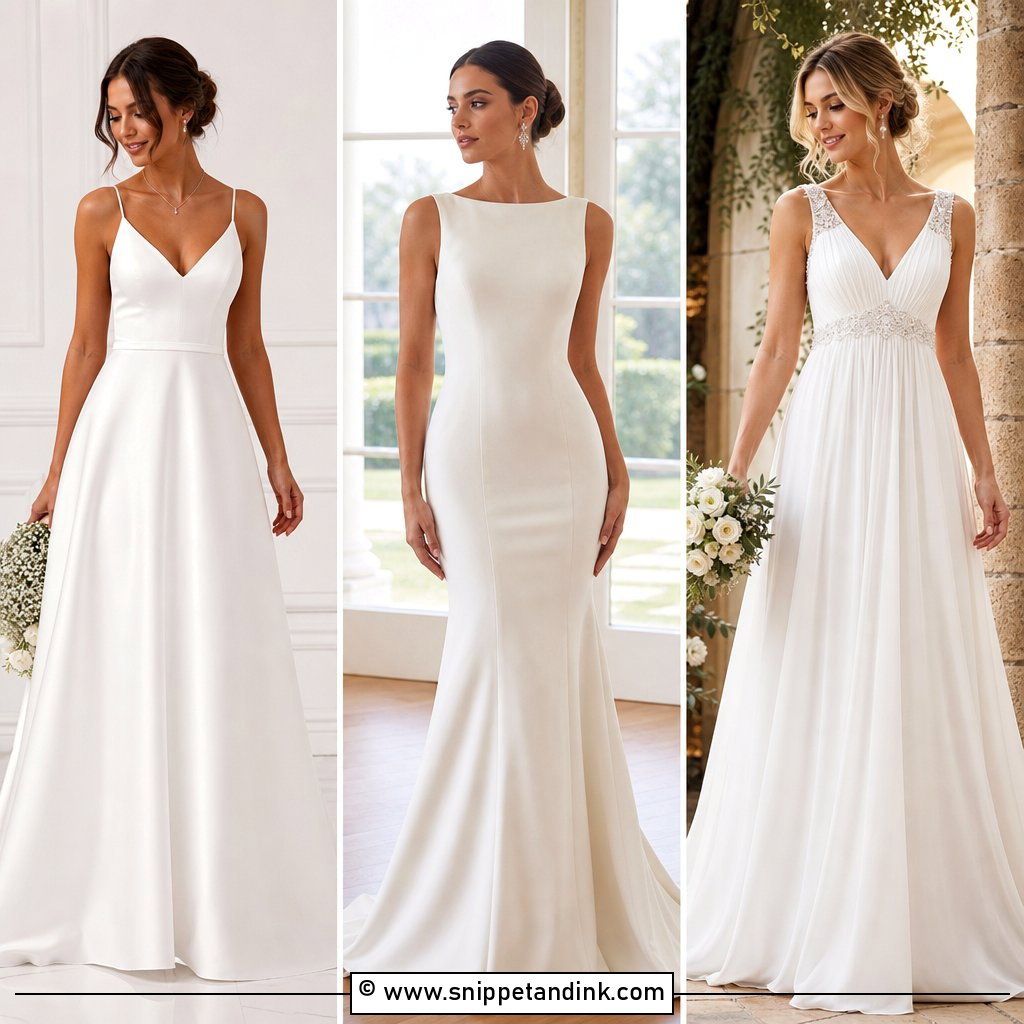
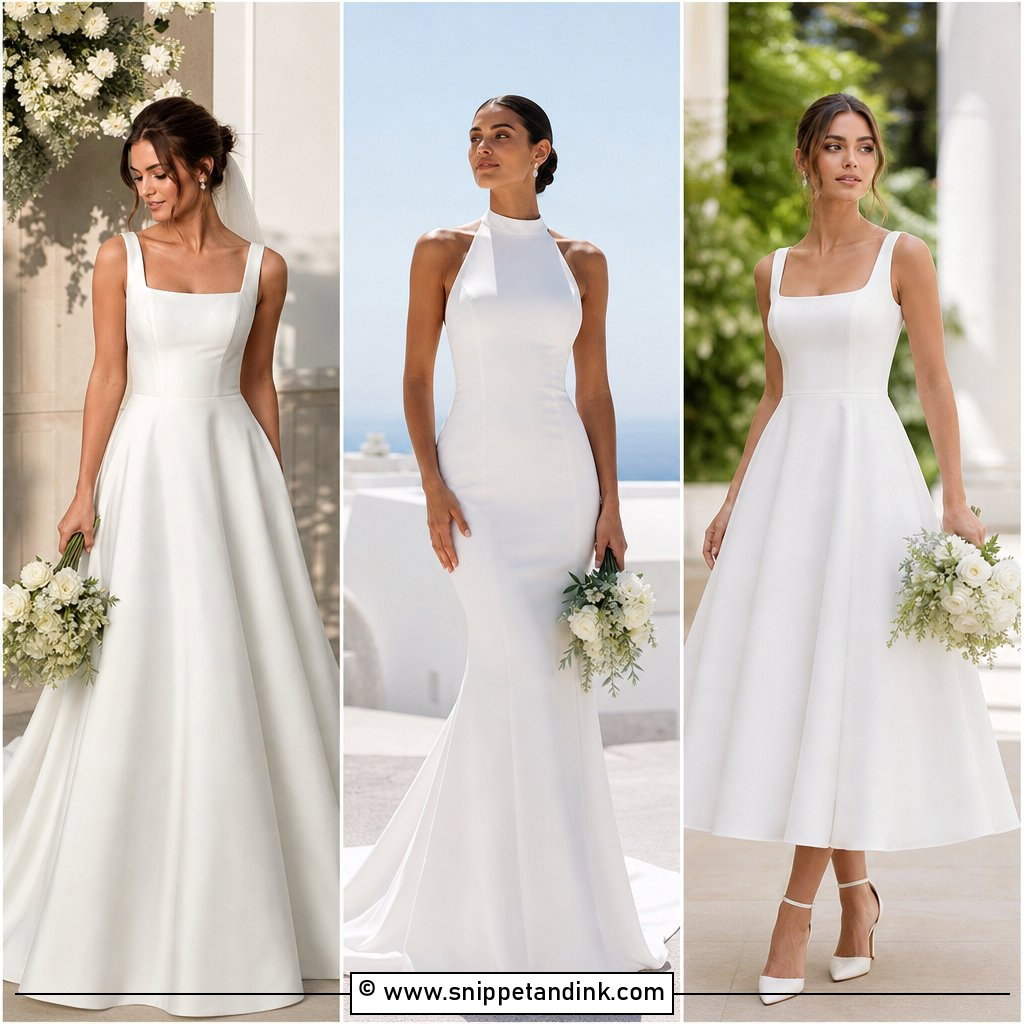
A square neck frames the face and collarbone with a strong edge. Wide straps help hold that edge flat. Matte crepe looks modern; satin makes the same shape more formal. My usual check is to lean forward at the fitting, because a square neck that gapes when you bend will flash more than you intended in candid photos. A low chignon keeps the neckline visible and leaves room for a cathedral veil. If you want to move easily, ask for pockets and a sweep train rather than something longer.
3. Strapless Column Wedding Gown
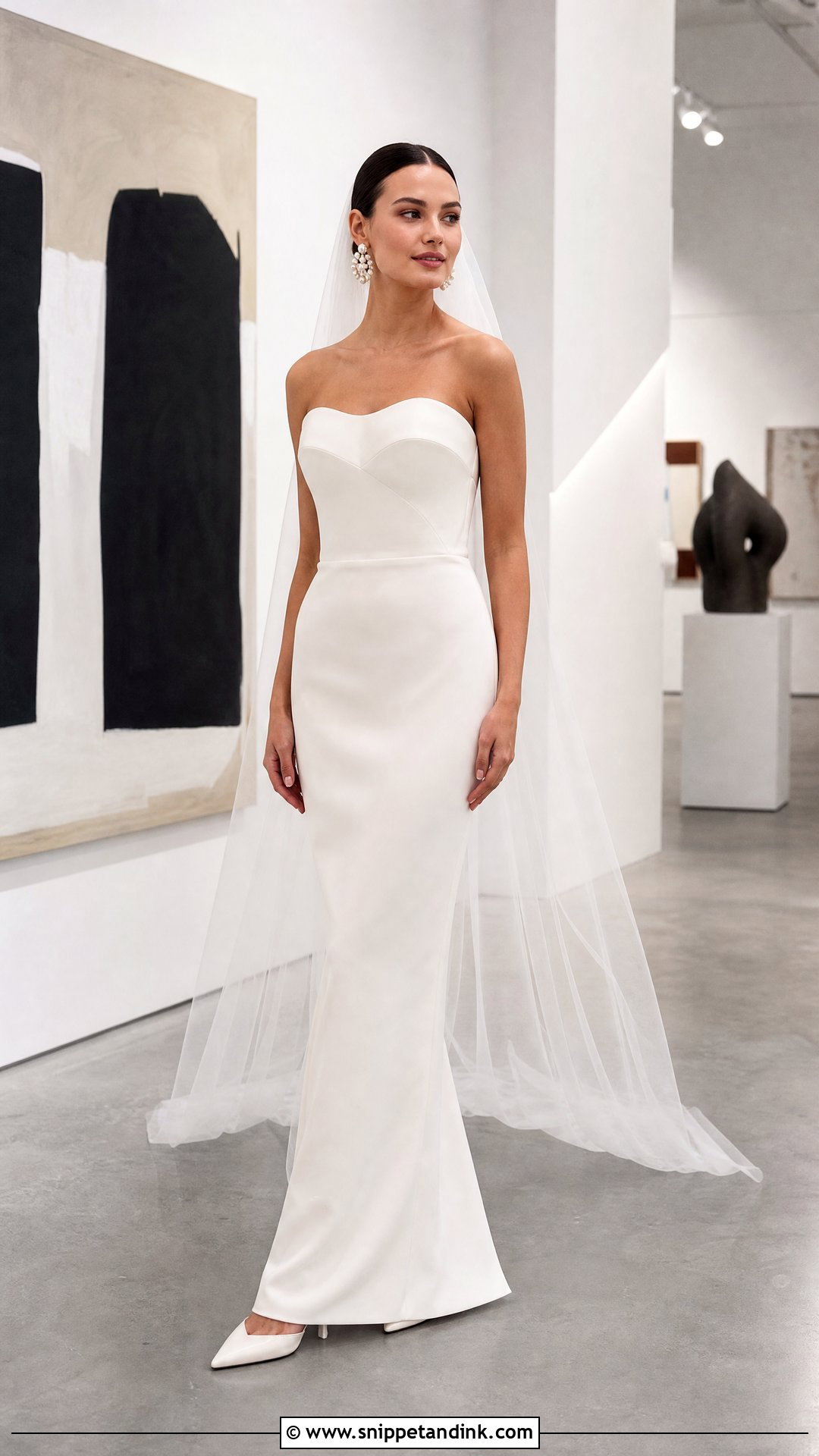
Strapless columns look sharp and modern, and they live or die by the bodice. An internal corset or firm boned lining should hold the dress up so you’re not hitching it at the speeches. A straight or softly curved neckline keeps it minimal, while the narrow skirt makes you look taller. Sculptural pearl earrings and a sleek ponytail emphasise the shoulders. Before you say yes, walk up a few steps. A very narrow column restricts stride, and a small walking slit at the back can be added without spoiling the line.
4. Long Sleeve Crepe Wedding Gown
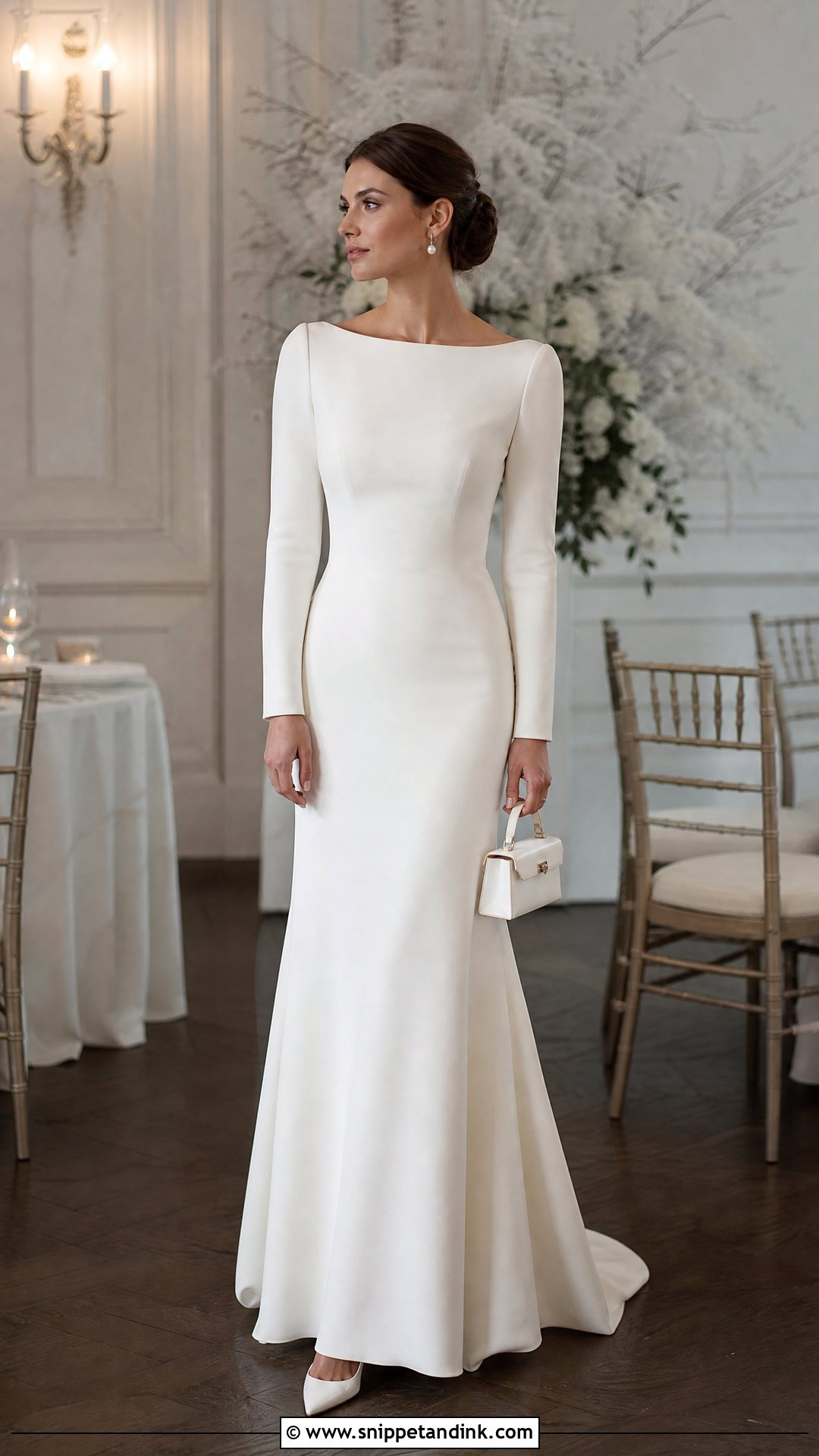
For a winter or late-autumn wedding, long sleeves in crepe give coverage that still looks current. Fitted sleeves, a defined waist and a straight or slightly flared skirt are the structure; a bateau, round or shallow V neckline keeps the top clean. I’d steer you to stretch crepe, which moves with your arms during a long day. Pearl studs and a structured mini bag for portraits are all the accessories it needs. A smooth low bun shows the neckline. Some brides skip the veil and wear a single minimal comb instead.
5. Halter Neck Wedding Gown
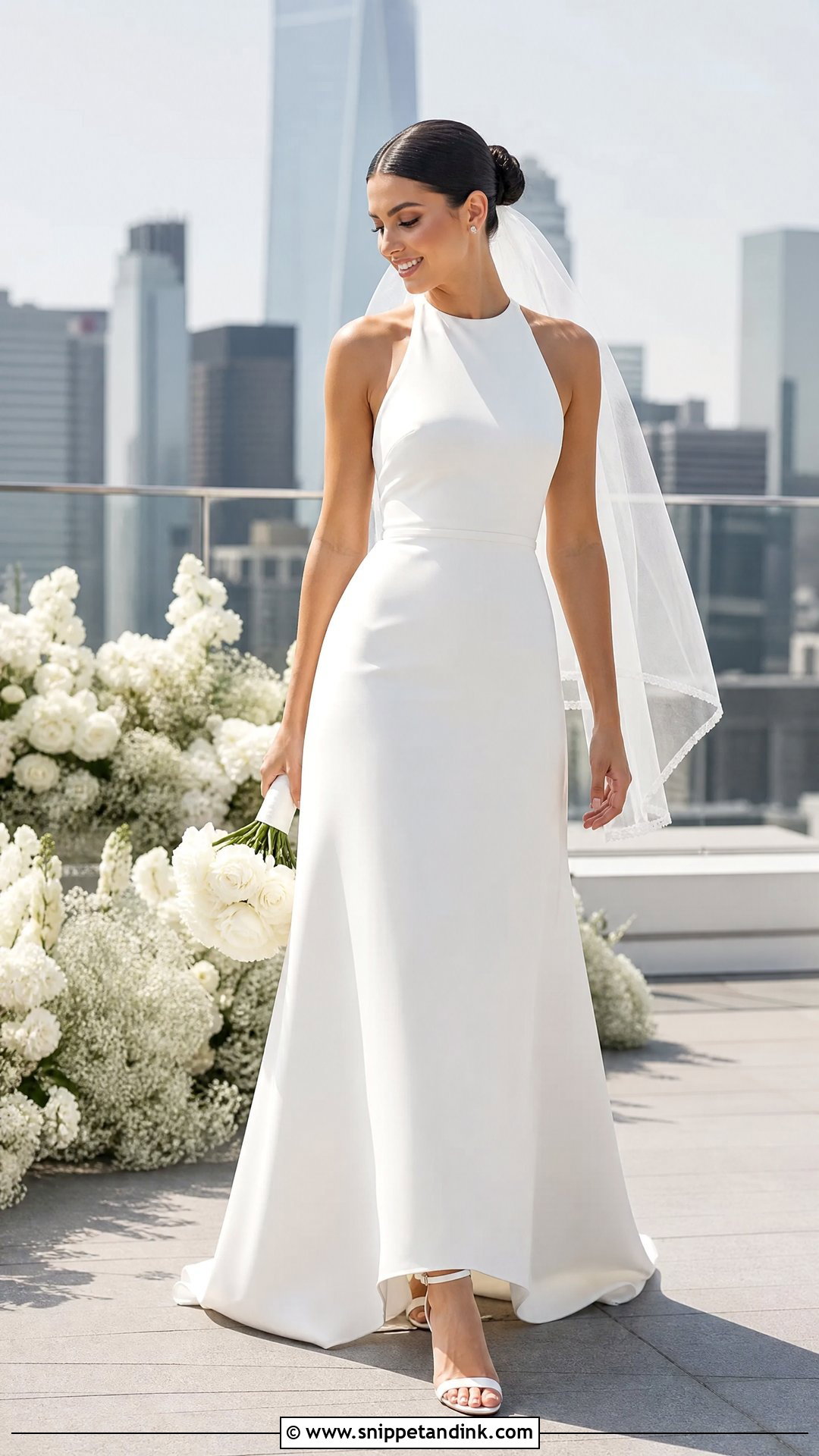
A halter neck wedding gown pulls attention to the shoulders and gives a long, balanced line. Clean seams and a softly fitted waist work better than heavy gathering at the neck, which can look bulky. A column or gentle A-line skirt keeps it streamlined. The neckline is the jewellery here, so small studs and no necklace. Hair belongs up, in a neat bun or high ponytail, or it hides the halter. It’s well suited to warm-weather and coastal venues, where bare shoulders are comfortable.
6. Bateau Neck Wedding Gown
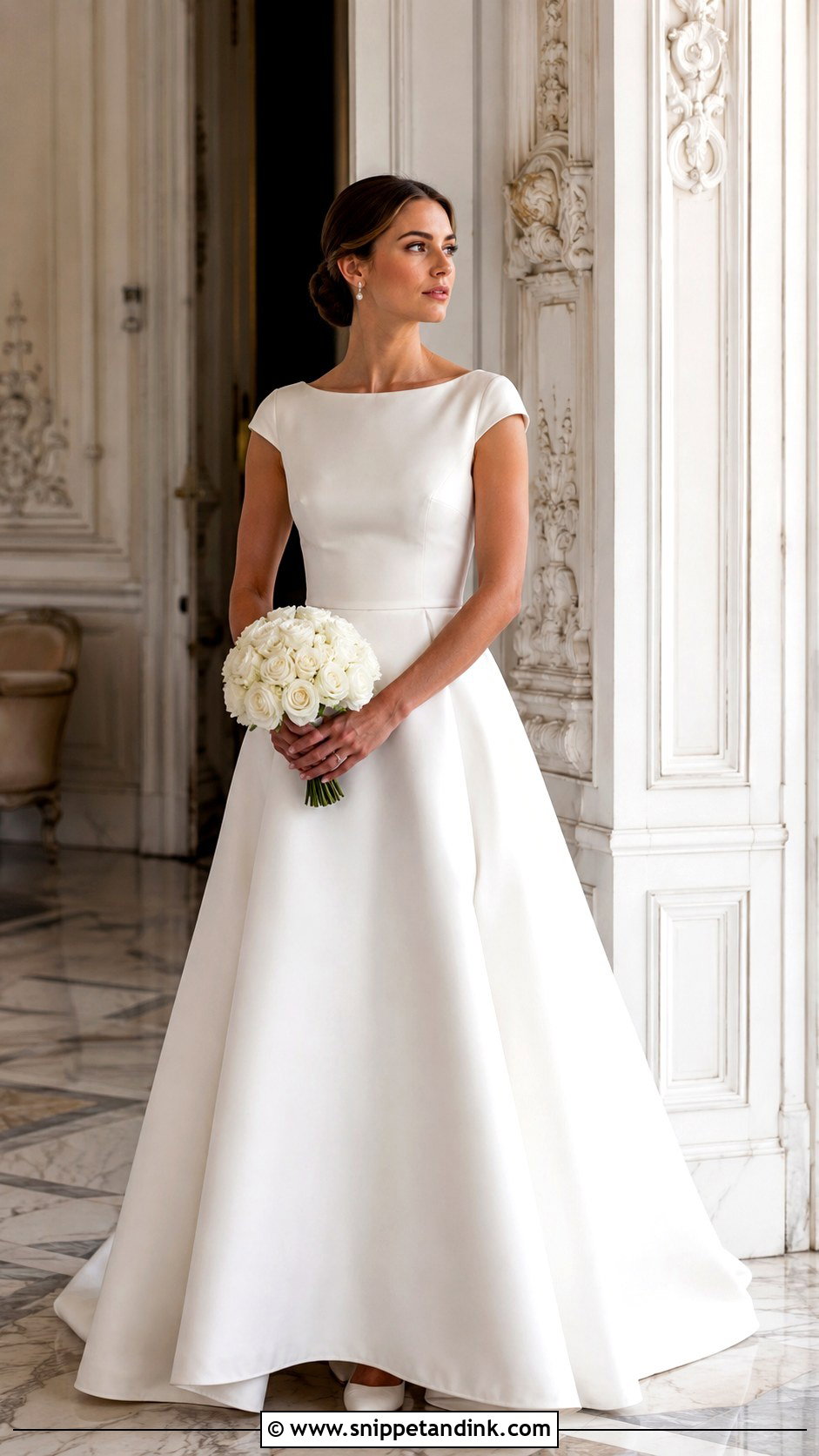
Following the collarbone across, a bateau neck wedding gown is modest without feeling heavy. Cap or narrow three-quarter sleeves add coverage. Satin, Mikado or crepe with very little visible seaming suit it best. A straight skirt reads formal, an A-line gives you more room to dance. It’s a neckline I tend to suggest for narrower shoulders, since it widens them slightly. Pearl button earrings and a low twisted bun with a small comb can replace a veil, though a plain cathedral veil also works with it.
7. Off Shoulder Wedding Gown
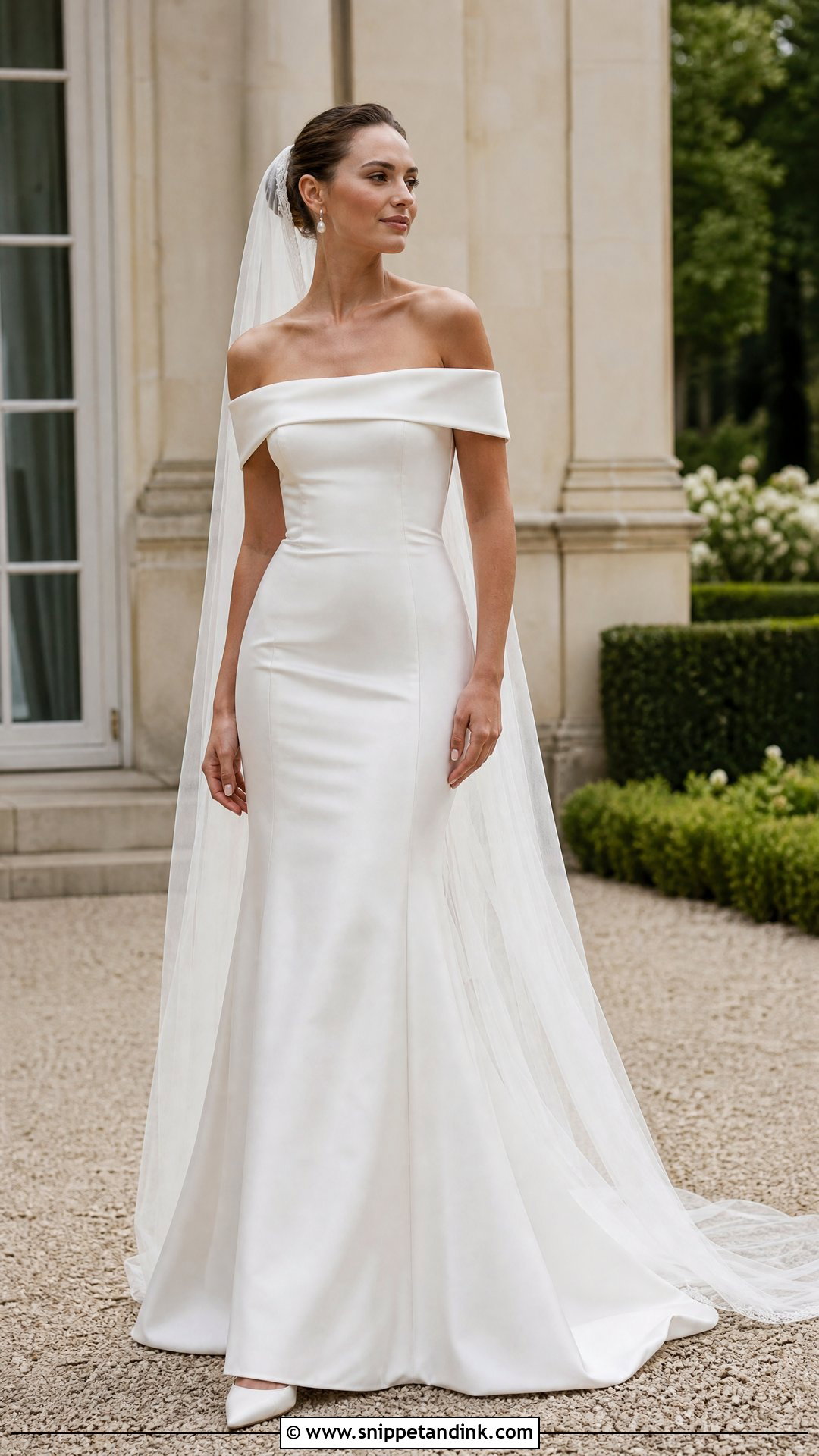
Off-shoulder necklines stay simple when the fold is smooth and there’s no ruching or oversized drape. The band has to sit securely across the upper arms, which limits how high you can lift them, so I always ask brides to hug someone at a fitting before committing. A fitted waist and gently flared skirt balance it. Leave the neck bare. Soft waves, a low bun or a tucked bob all work, and a narrow chapel veil adds movement from behind.
8. One Shoulder Wedding Gown
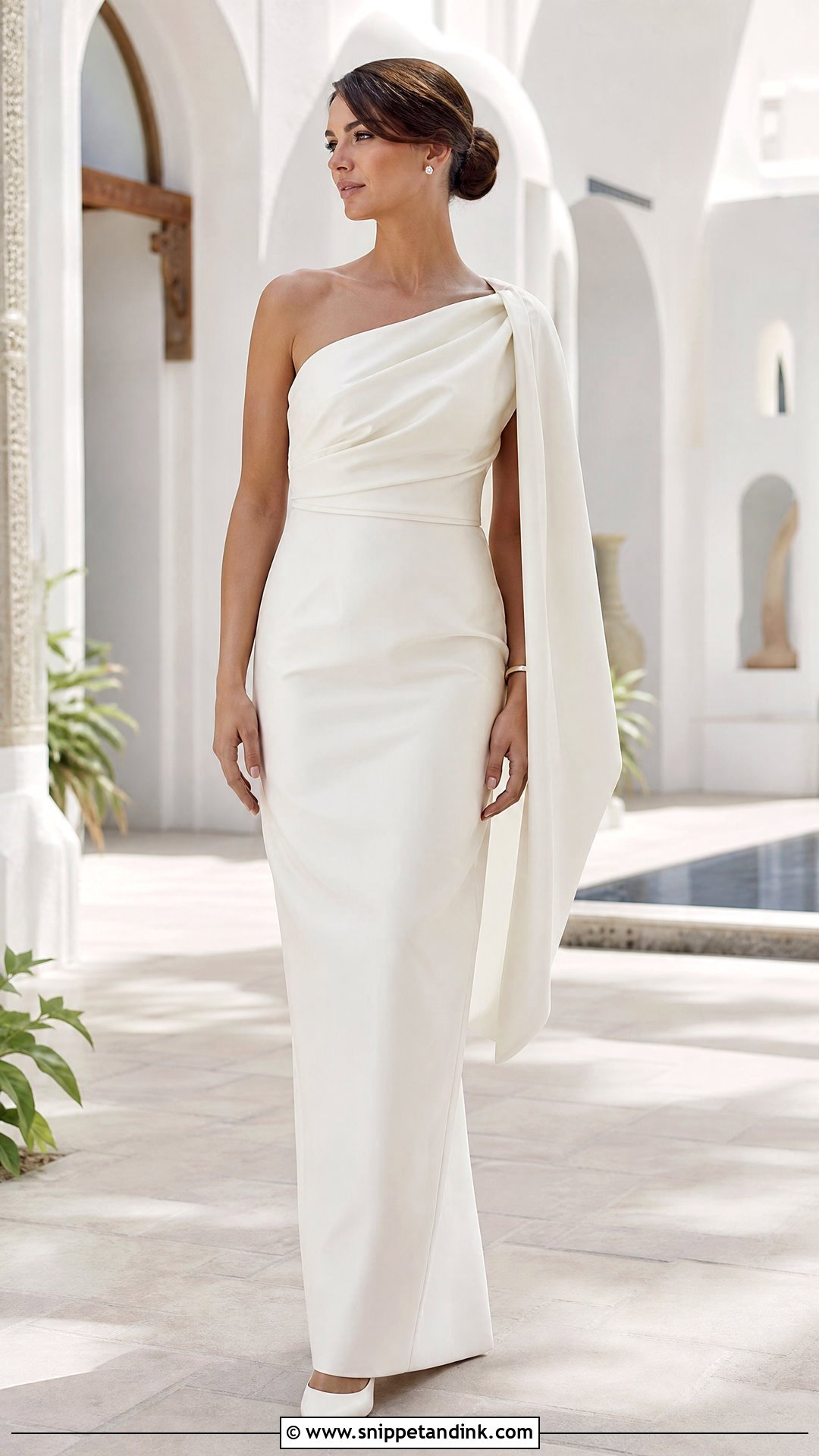
One shoulder gives asymmetry with no sequins or lace needed. A column skirt reads sleek and urban; a gentle A-line moves more easily. Keep the opposite side of the bodice completely smooth, otherwise it starts looking busy. Small studs and a single slim bracelet are enough. A side-parted bun, swept away from the strap, keeps the detail visible. Many brides skip a full veil and use a simple hair pin, or a light veil attached beneath the bun. Ask how the bodice is supported; one strap can’t do all the holding.
9. Minimalist Ball Gown
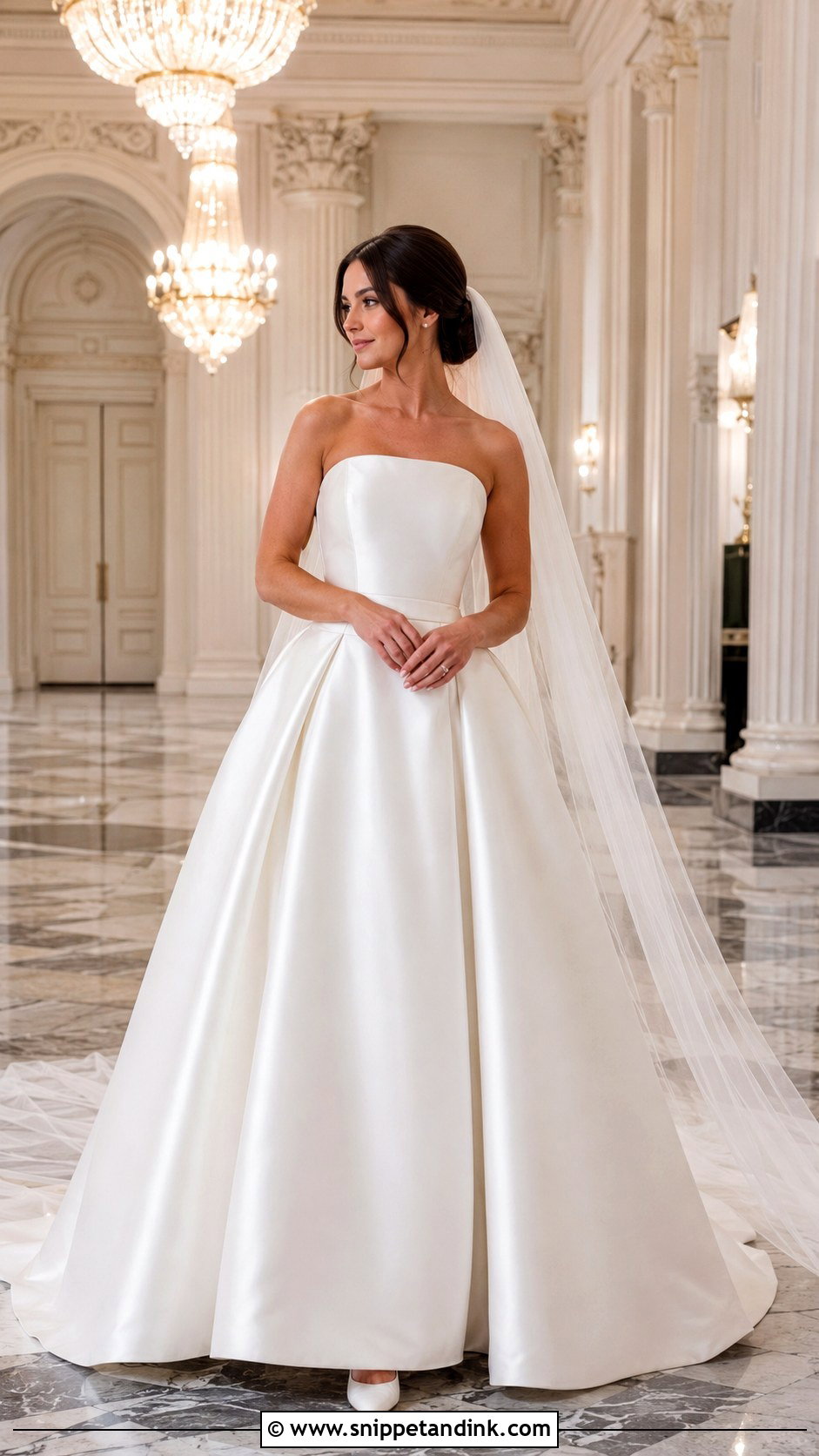
Volume and minimalism aren’t opposites. A structured satin or mikado design with a smooth bodice, natural waist and full skirt relies on shape and a soft sheen, not decoration. A strapless, square or scoop neck keeps it clean. Full skirts need room, so this gown belongs in a ballroom or large venue rather than a narrow aisle. Lift the skirt with its petticoat at the shop to feel the weight. Pockets are worth asking for. A plain cathedral veil longer than the train finishes it.
10. Scoop Neck Wedding Gown
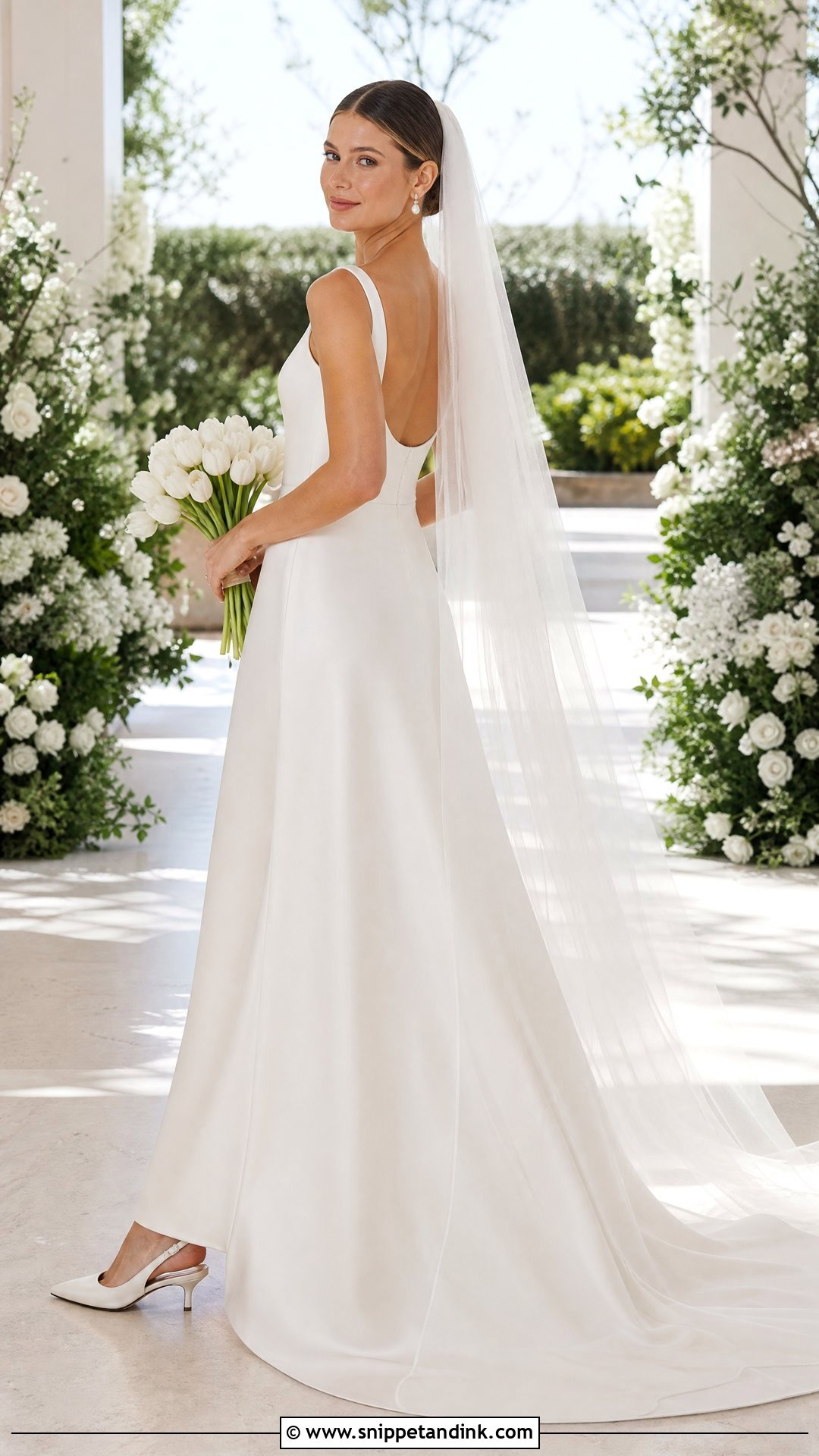
Scoop necks soften a silhouette and flatter most necklines and bust sizes, which makes this one of the easiest shapes to wear. It works with wide straps, thin straps or short sleeves. Matte crepe looks modern; fluid satin adds shine. A low back gives a quiet statement while the front stays plain. Have the neckline and waist fitted precisely, though, because a loose scoop slides outward and a simple dress shows it. A sheer chapel veil attached below a relaxed bun keeps the neckline open.
11. V-Neck Open Back Wedding Gown
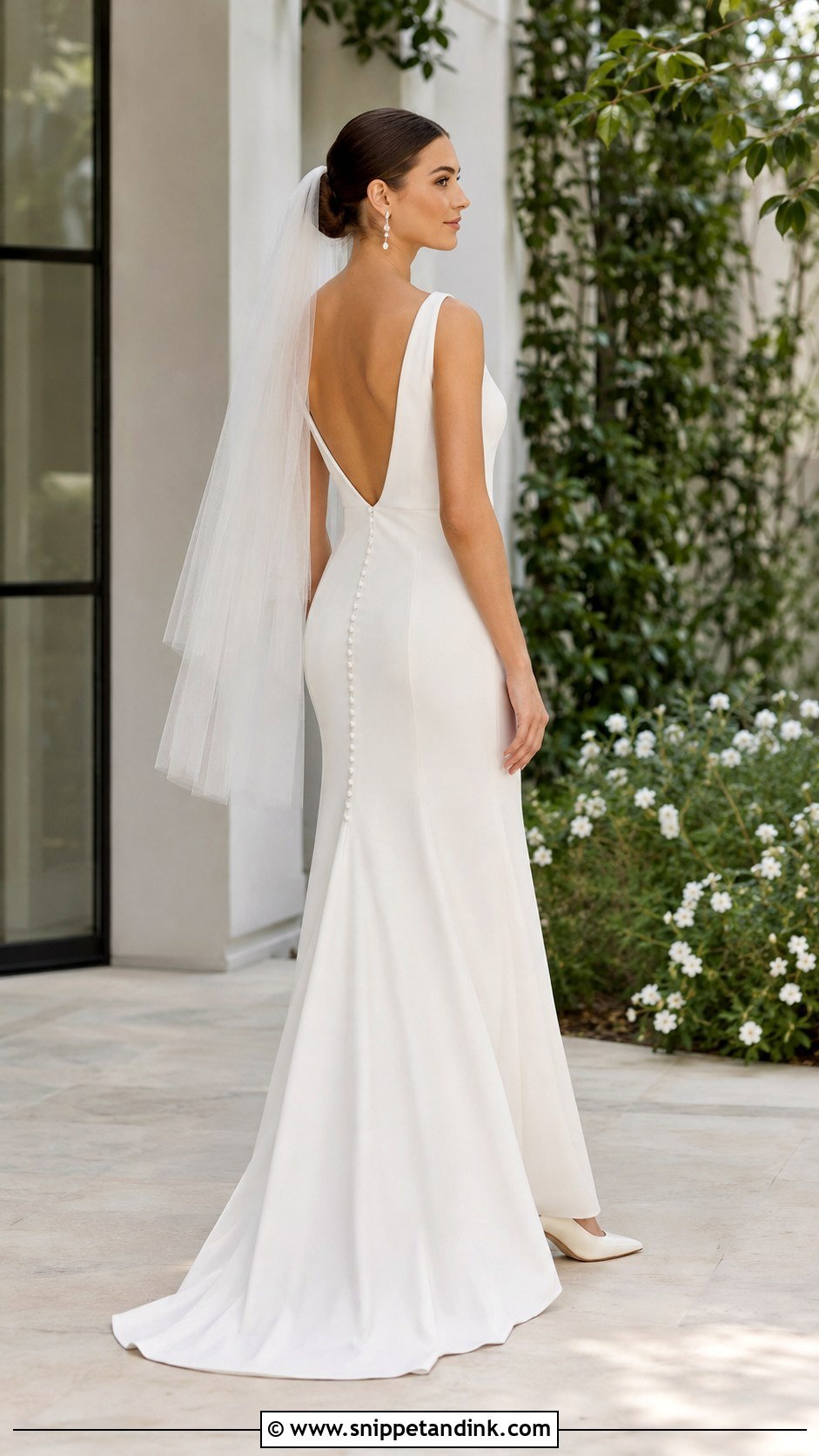
A V-neck with an open back gives drama from both directions without decoration. I’d keep the front V moderate rather than plunging and anchor it with wider straps and a fitted waist. Smooth crepe or substantial satin holds the shape. The back can end at the waist with a line of covered buttons down the skirt. Sort out support before the first fitting; a front V and an open back together rule out almost all regular bras, so it’s a built-in cup or a specialist backless option. Drop earrings and a veil placed below a low bun suit it.
12. Empire Waist Wedding Gown
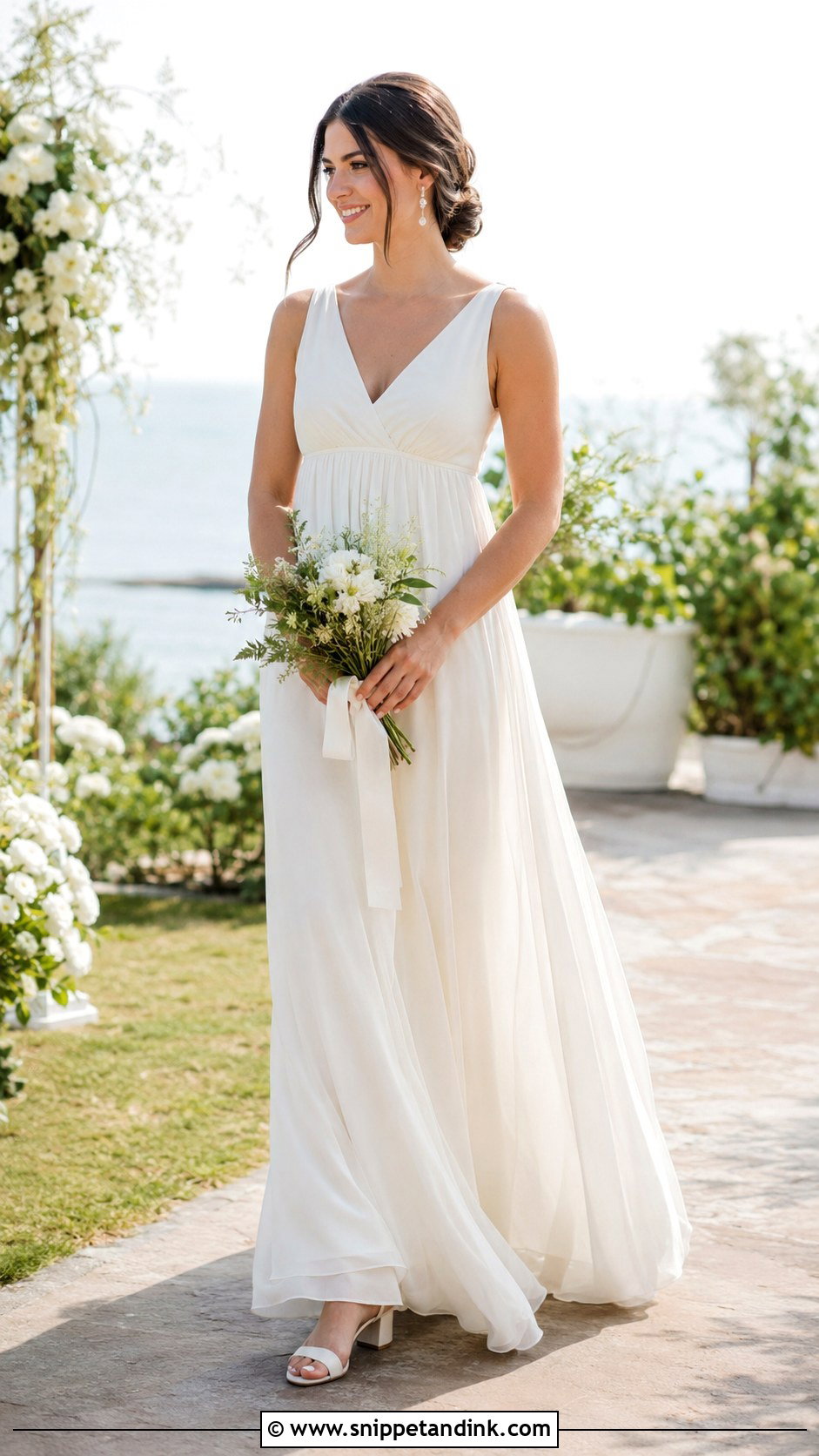
Empire waists sit just under the bust and let the skirt fall without any pressure at the middle. That’s why I suggest it for very hot venues, for brides who are pregnant, and for anyone who simply wants to breathe through dinner. Chiffon looks airy; silk crepe holds a little more structure. A modest V or draped scoop neckline suits the high waist. Make sure the seam sits flat under the bust and doesn’t ride up when you raise your arms. Low block heels and loose waves keep it relaxed.
13. Tea Length Wedding Gown
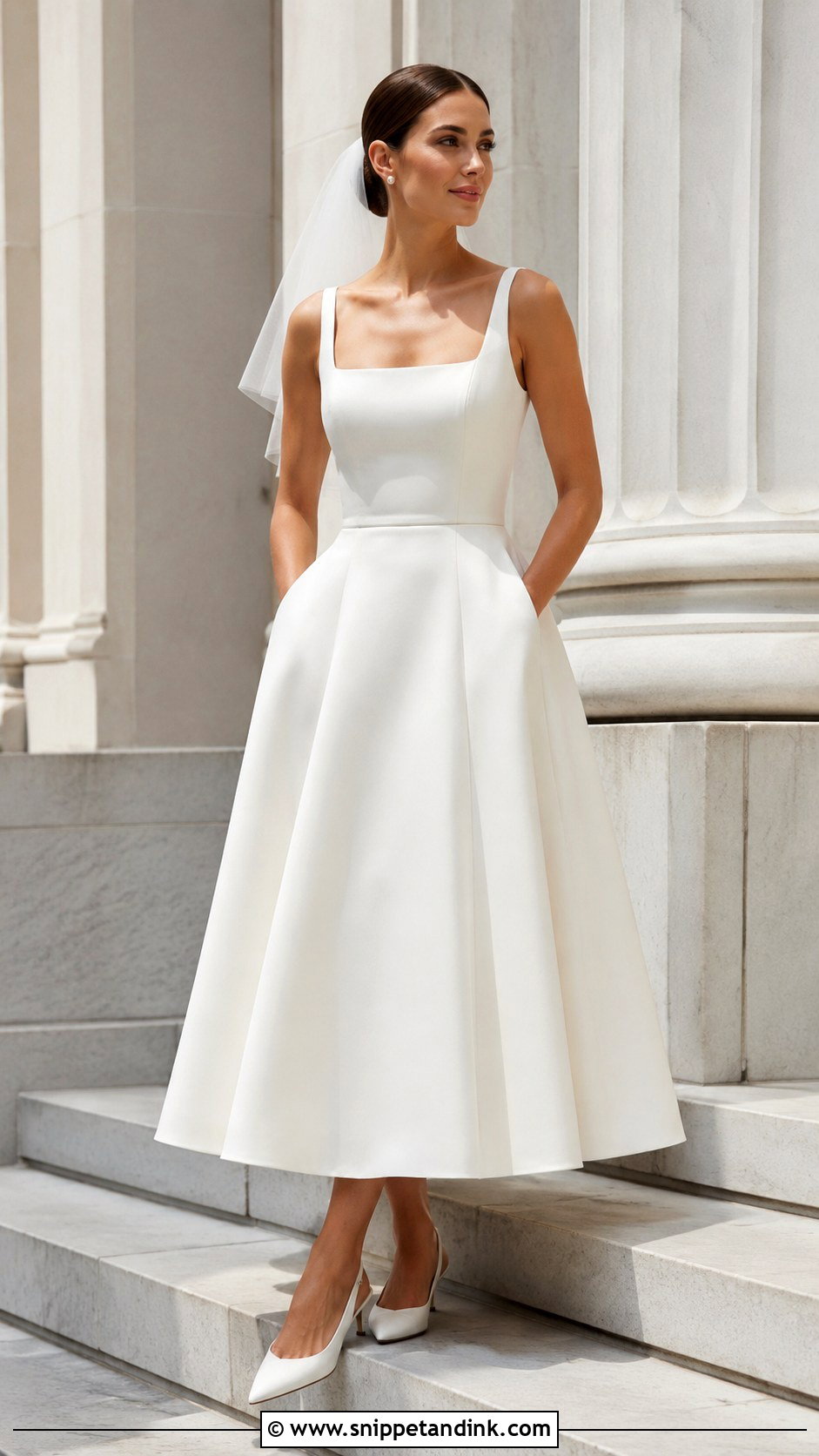
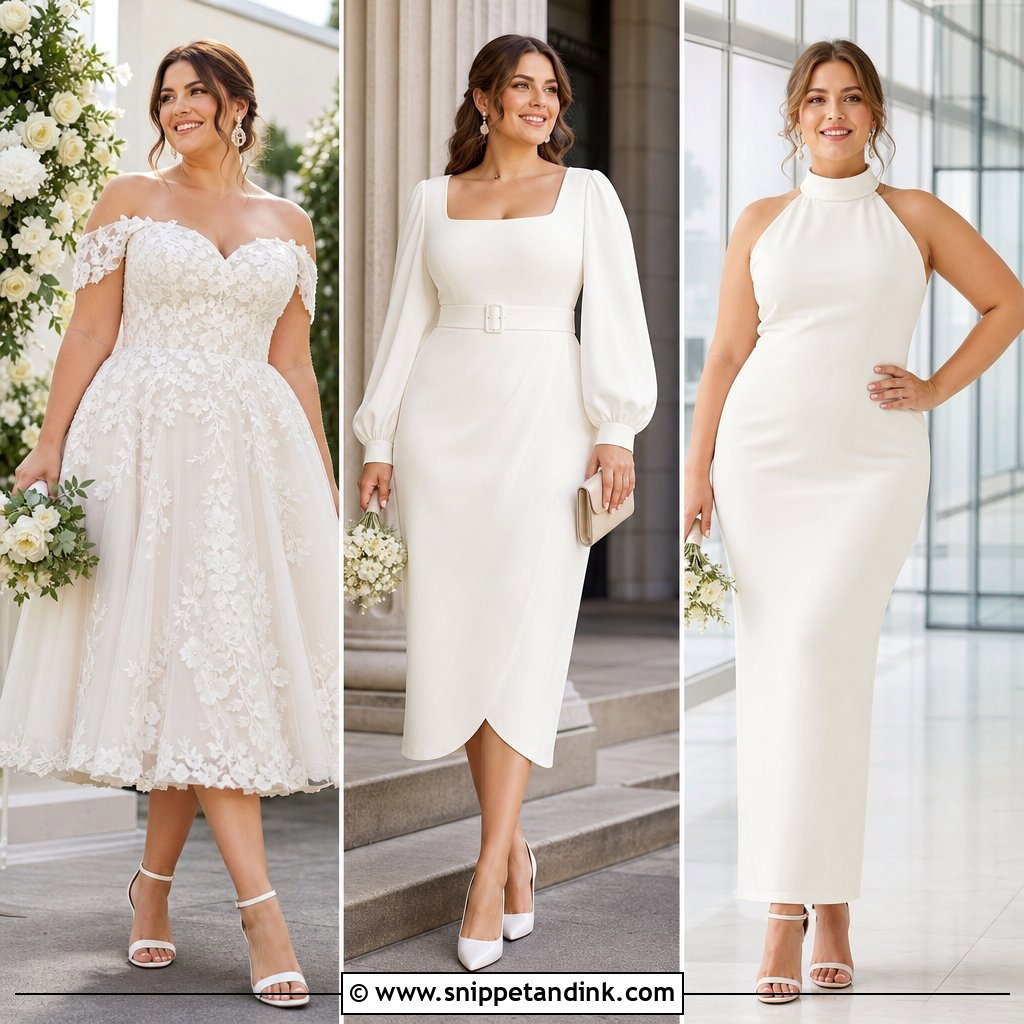
Tea length falls between knee and ankle and puts your shoes on show, so I treat them as part of the gown. A smooth fitted bodice with a square, bateau or strapless neckline and a softly flared skirt in ivory satin or Mikado holds the shape well. Pointed slingbacks and pearl studs keep it crisp. Long veils fight with the short skirt; a short veil, slim headband or small bow suits it better. It’s easy to walk in, which helps if you’re moving between a ceremony and a restaurant.
14. Minimalist Midi Wedding Gown
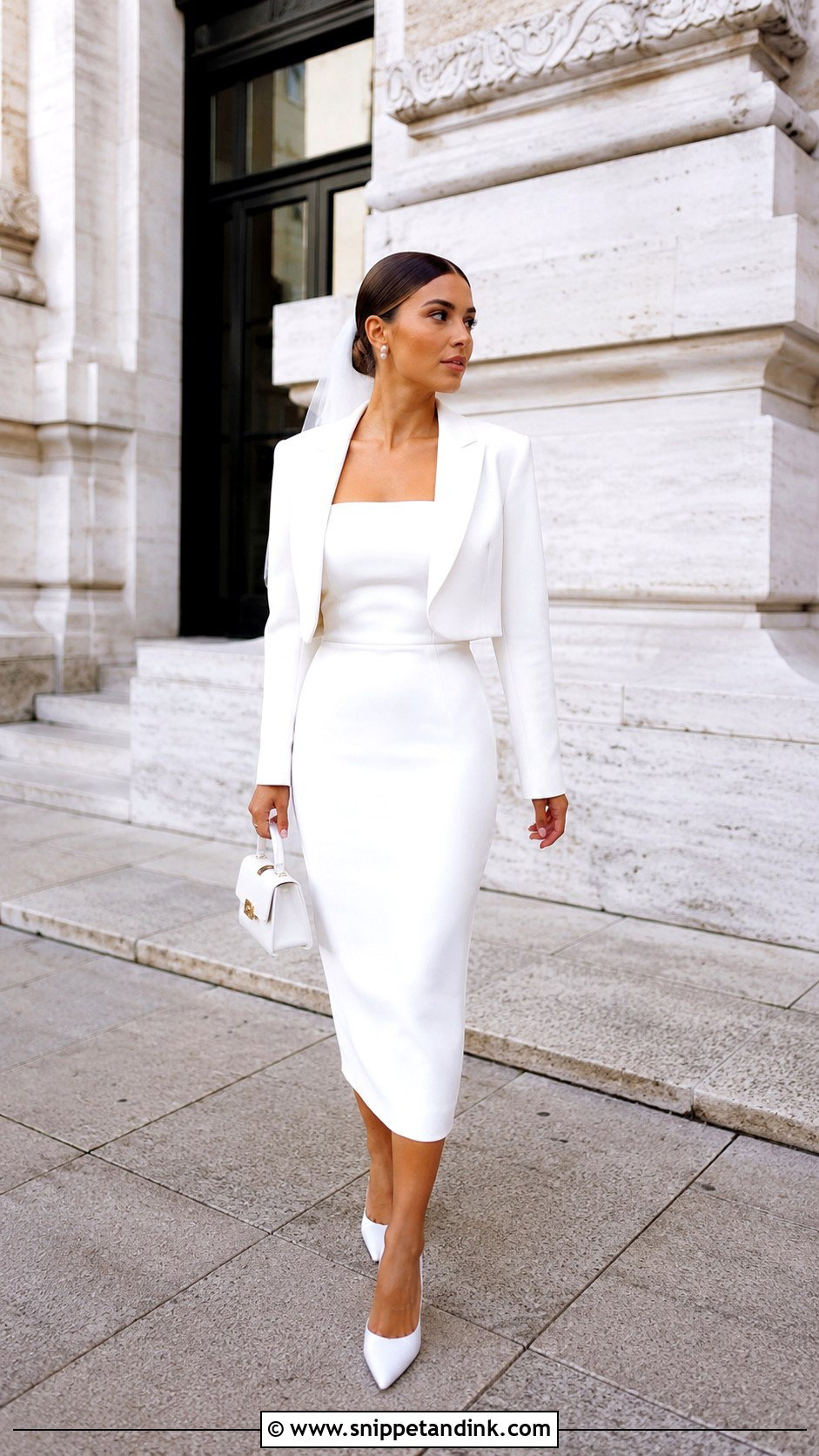
Picture walking into a registry office in a clean midi that feels special without looking like an evening gown. A defined waist, smooth fabric and a hem around mid-calf are the basics. A fitted column looks modern; an A-line looks classic. Pointed pumps or slingbacks and a structured top-handle bag suit it. A cropped white blazer helps in cooler weather and comes off for portraits. Check the hem lands at the slimmest part of your calf; an inch higher or lower changes how your legs look in photos.

15. Drop Waist Wedding Gown
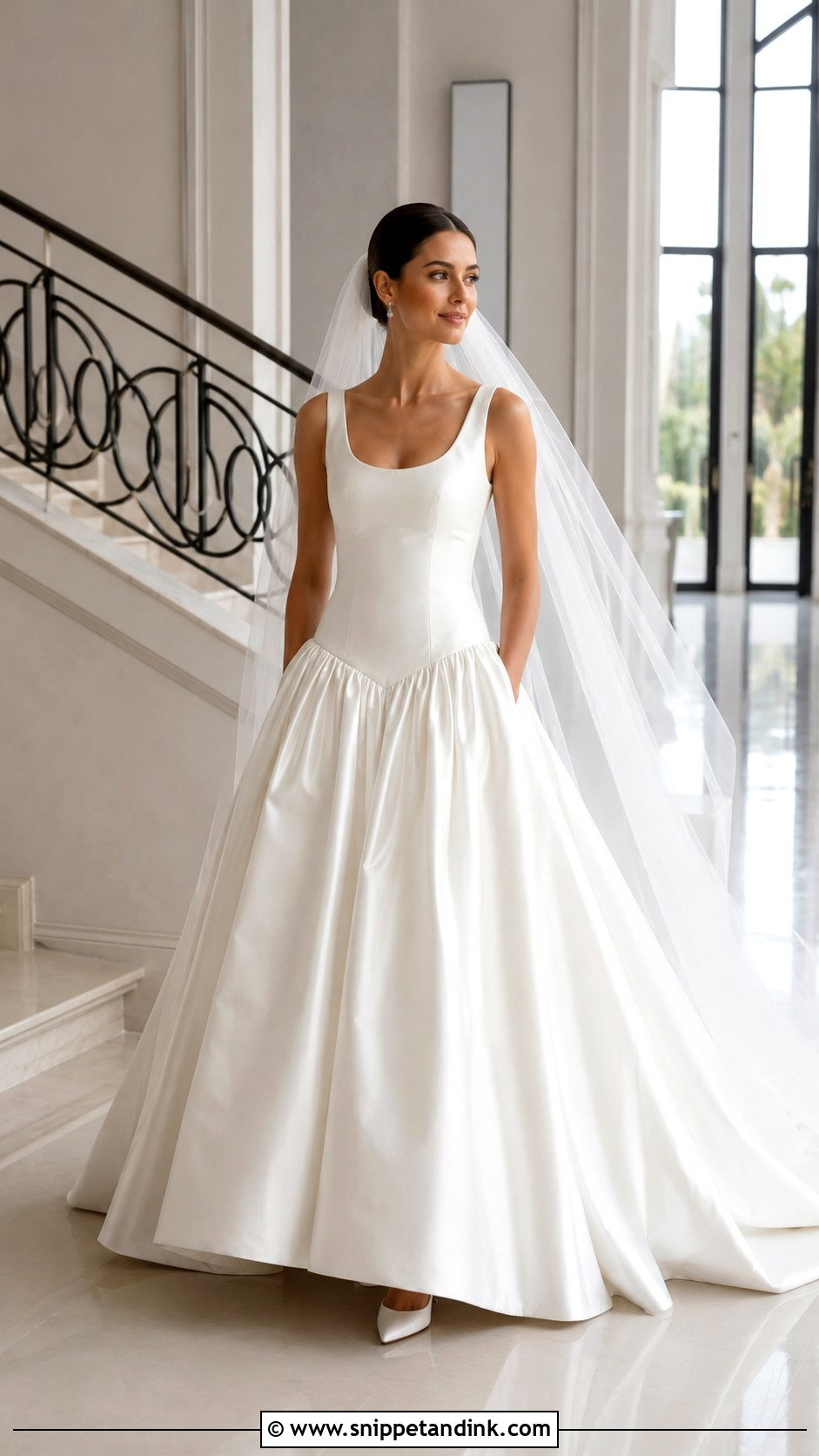
The drop waist lengthens the torso before the skirt opens out below the natural waist. In smooth satin or Mikado, without lace or heavy gathering, it looks sculpted. A scoop, square or strapless neckline balances the long bodice. This shape suits long-waisted brides most; on a shorter torso the seam can land awkwardly low, so try it before you fall for it in a picture. A cathedral veil echoes the length. It needs room, so it works best in a spacious venue.
16. Cape Sleeve Wedding Gown
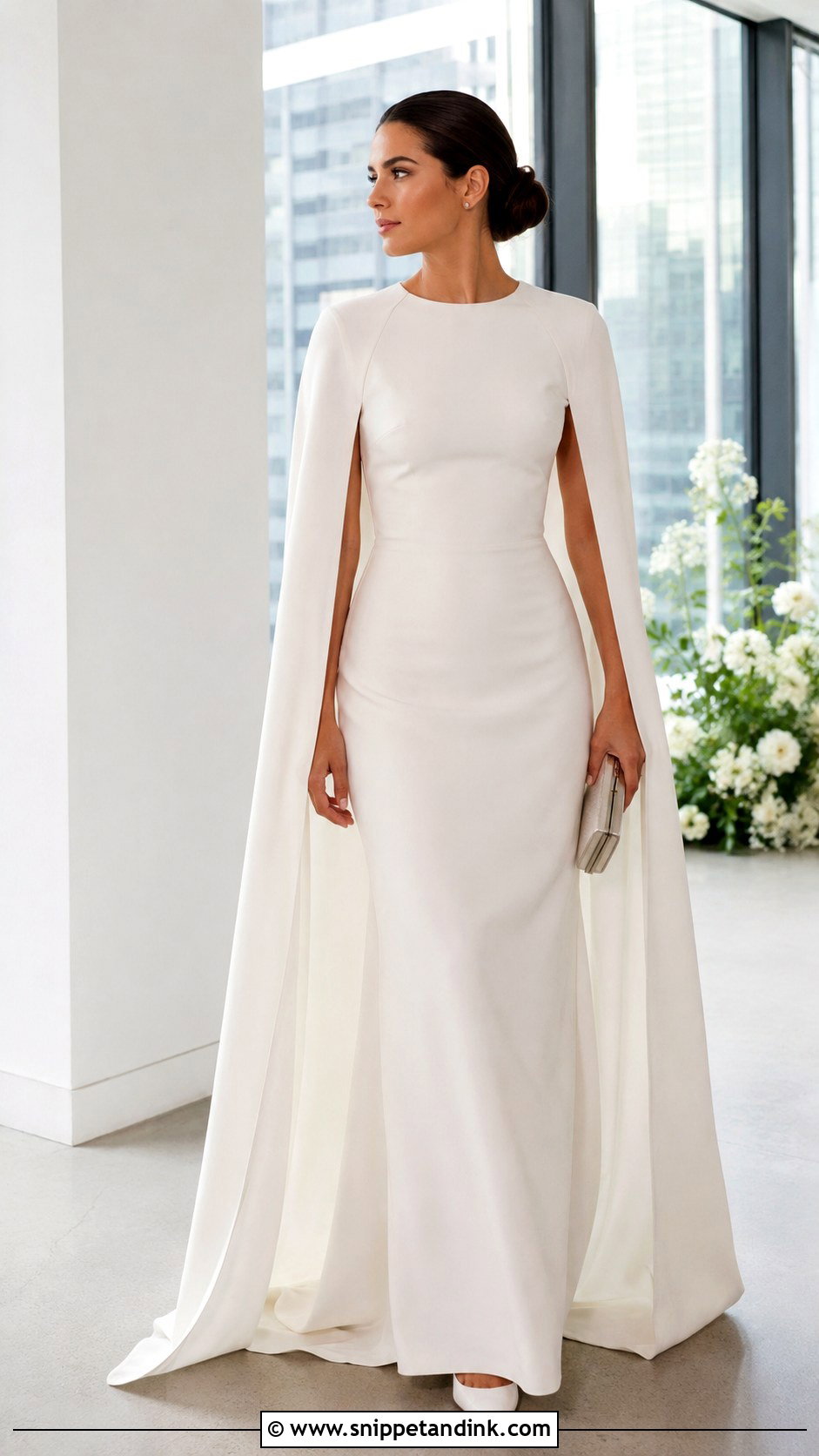
A cape gives coverage and movement where lace sleeves would add decoration. On a fitted crepe column, it can attach at the shoulders or the back neckline and fall cleanly to the floor. A high round neck or shallow V balances it. Wear your hair up so the attachment point shows. With the cape providing length behind you, a veil is optional and often unnecessary. One practical note: capes swing into things, including drinks and other people, so a detachable one saves trouble at the reception.
17. Backless Silk Wedding Gown
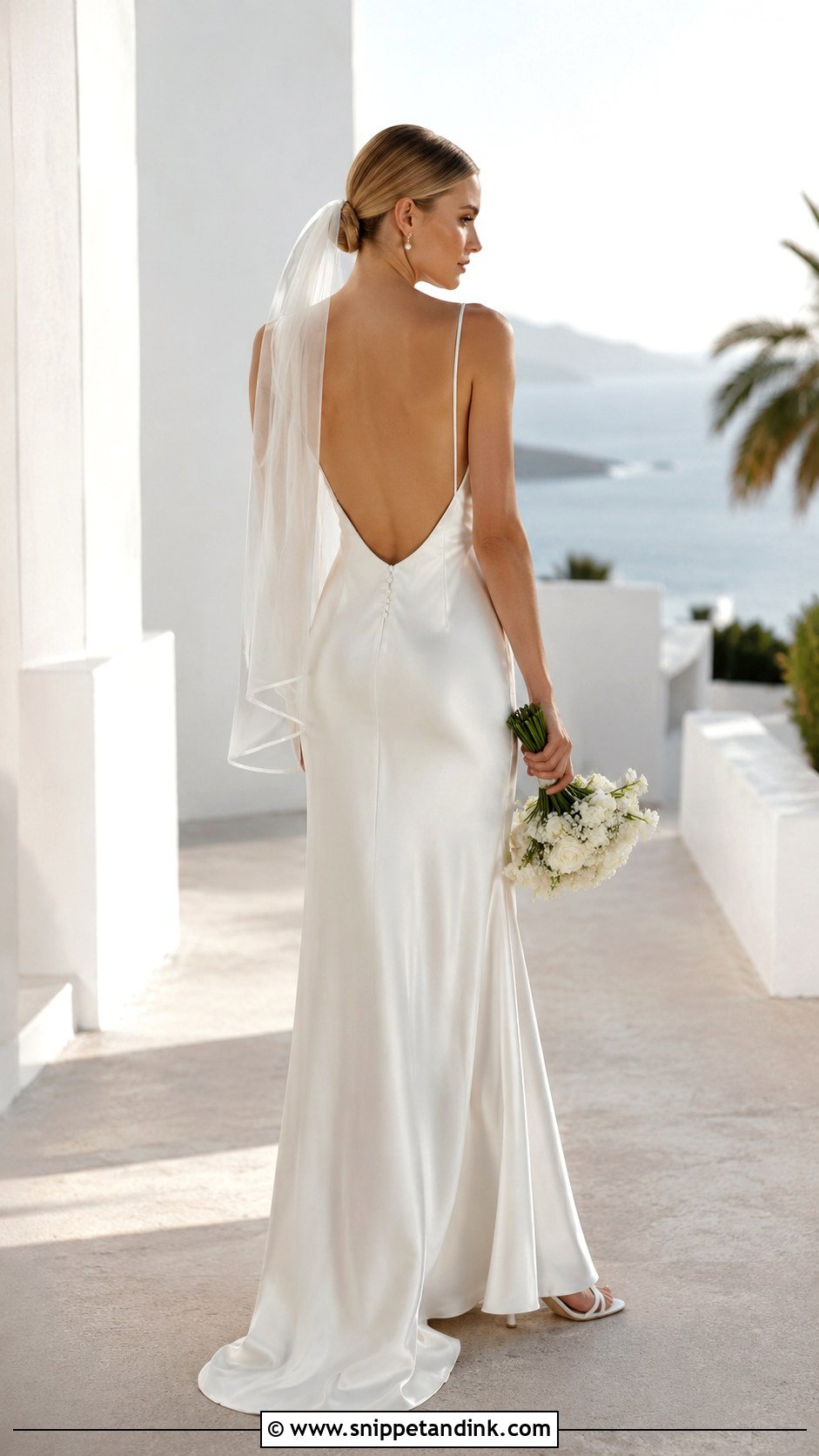
From the front, a backless silk wedding gown looks restrained; the open back is the surprise. A high scoop, bateau or draped front with slim straps balances it. A bias-cut skirt follows the body and a slight flare at the hem lets you walk. I like a fingertip veil fixed beneath a low bun, or a long veil for the ceremony that comes off for the reception. Silk shows sweat and water marks, so for a hot destination wedding I’d ask about a lined or blended alternative.
18. Asymmetrical Neckline Wedding Gown
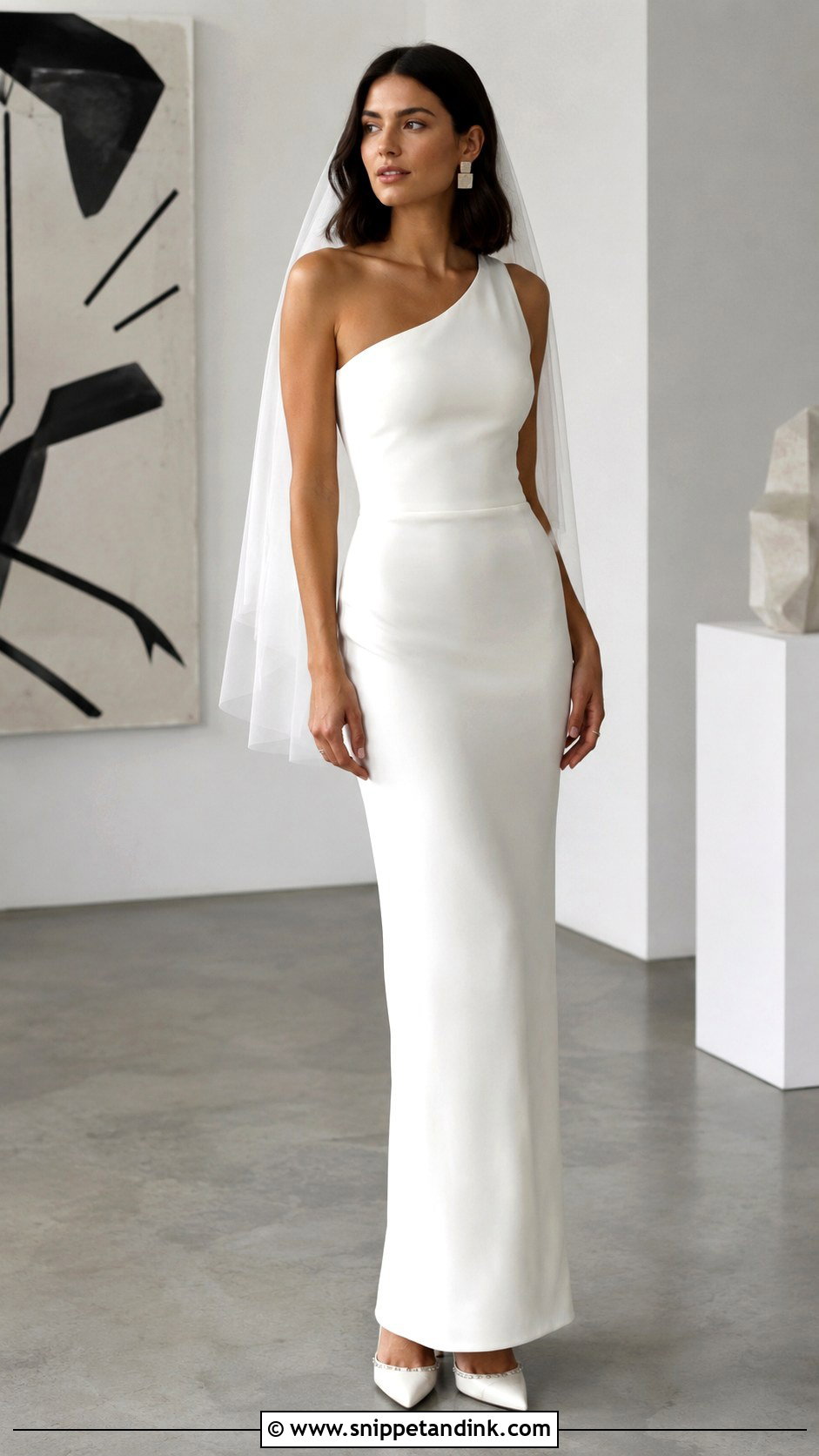
An asymmetrical neckline gives a plain gown its edge. It might rise on one side, fold diagonally or pair one wide strap with a lower opposite edge. A fitted crepe or satin column continues those clean lines. Geometric studs and a slicked-back bun or smooth ponytail suit the architecture. A plain shoulder-length veil at the back of the hair is enough. Asymmetric necklines need careful fitting; if one side sits even slightly loose, it shows instantly because there’s no matching side to compare.
19. Wedding Gown With Detachable Overskirt
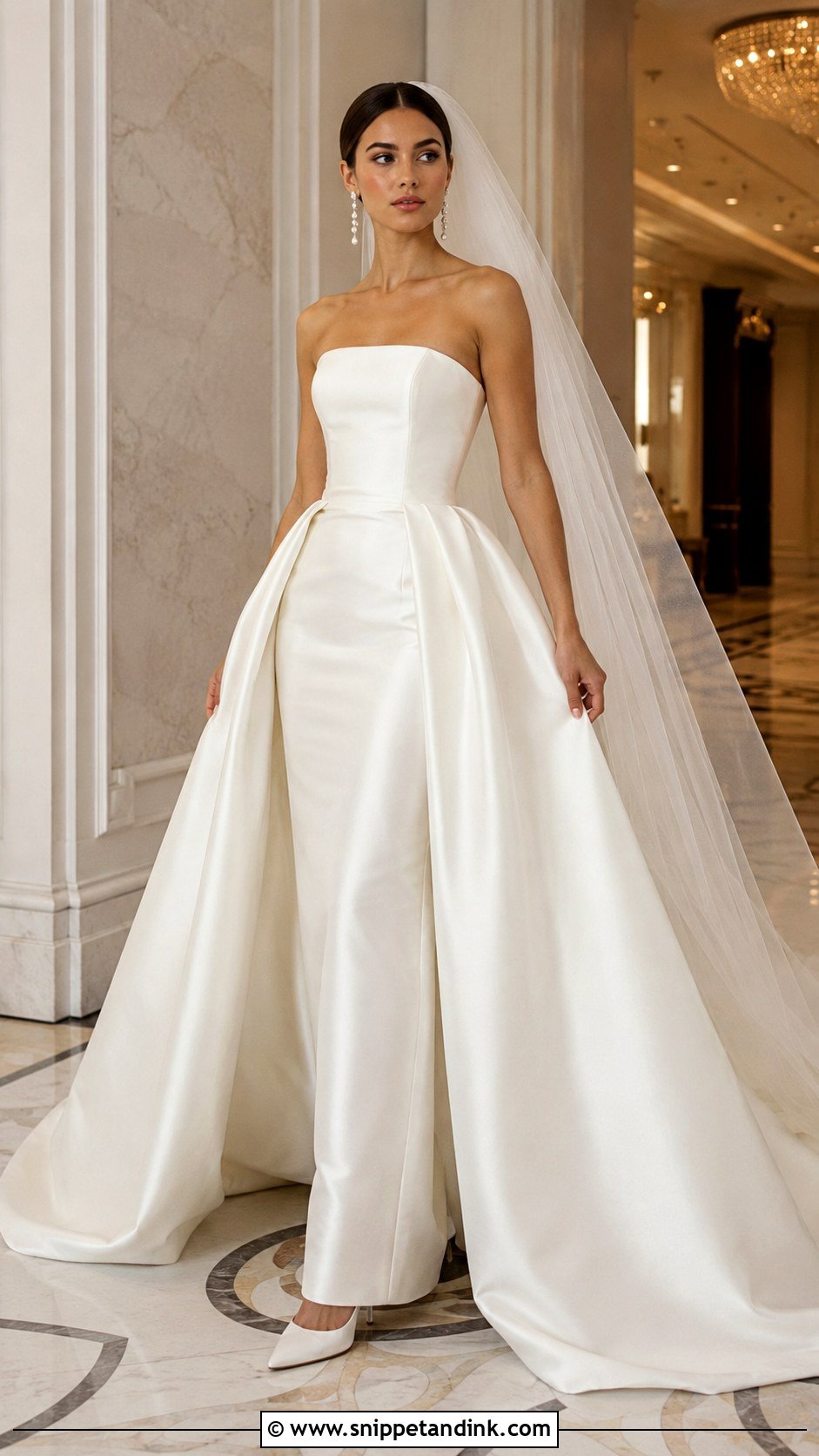
With a detachable overskirt, one plain gown becomes two looks. A fitted column or sheath in satin or crepe is the base; a plain floor-length overskirt adds volume for the ceremony. After portraits it comes off for dancing. Keep both layers free of lace and beading so they look like they belong together. Check the overskirt fastening lies flat at the waist; hooks and snaps show through smooth satin. Practise removing it with your helper beforehand.



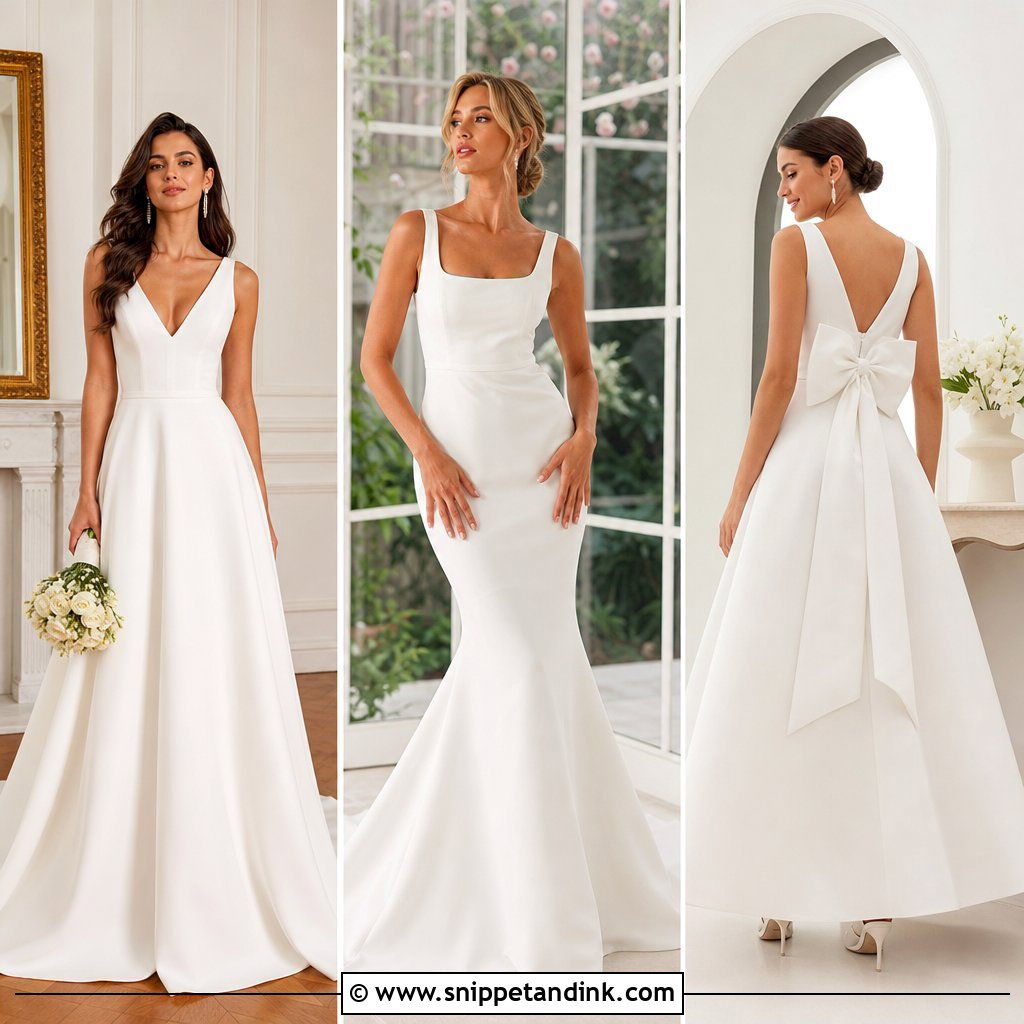
20. Wrap Bodice A-Line Wedding Gown
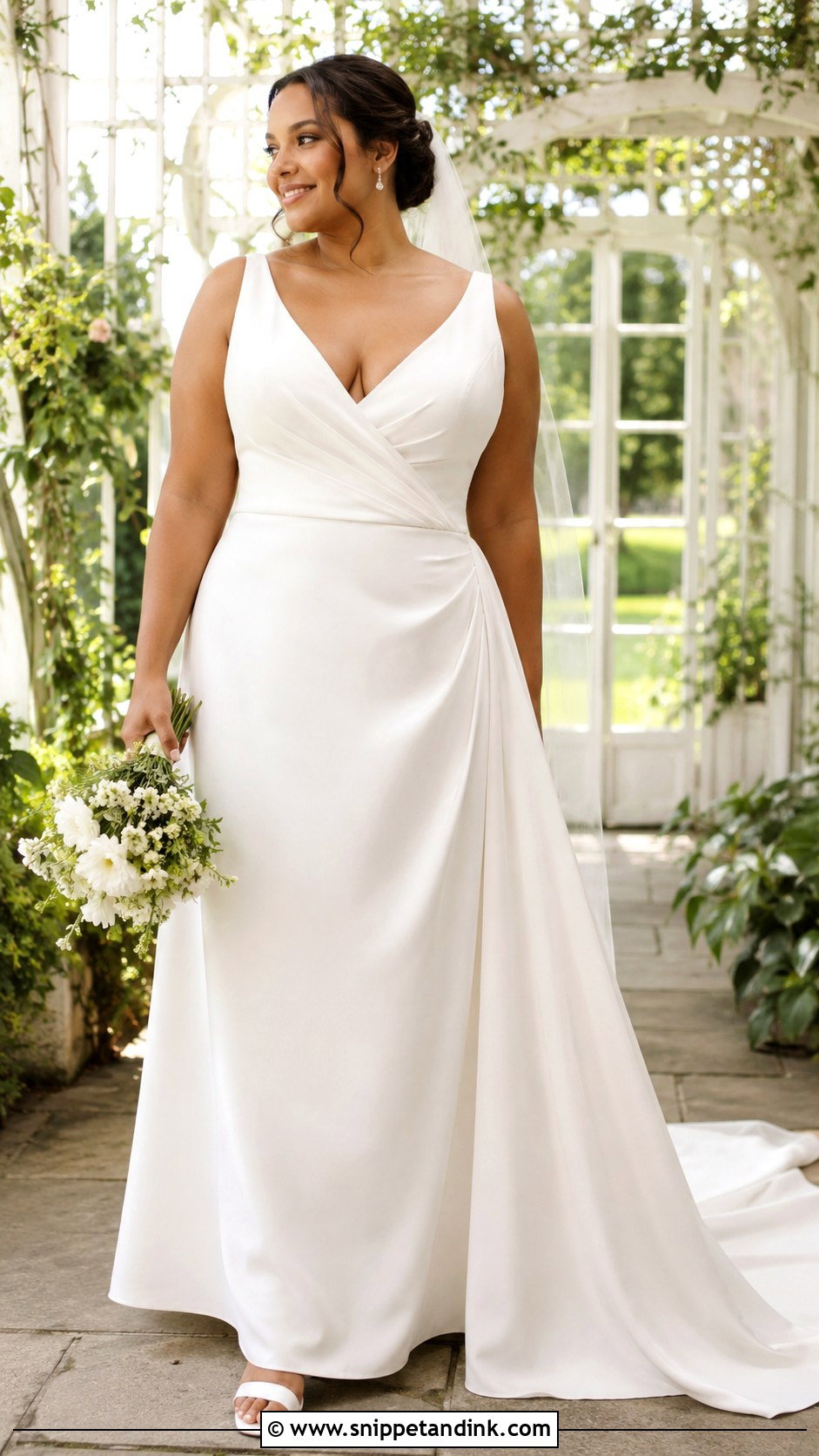
A wrap bodice crosses into a soft V that defines the bust, with a structured waistband and flowing A-line skirt below. I always prefer a sewn wrap over loose ties, which shift and gape as you move. Matte crepe or soft satin keeps the folds smooth. Because the neckline depth, waist placement and skirt fullness can all be adjusted, this is one of the most adaptable shapes across petite, tall, curvy and plus-size figures. Low block heels and a plain chapel veil over a twisted bun finish it.
After the Party, Get Satin and Crepe Clean Before Stains Set
A plain gown shows marks more than a lace one, and some of the worst stains aren’t visible on the night. Spilled champagne, white wine and sugary drinks can dry clear and then turn yellow or brown months later as the sugar oxidises.
- Hang the dress loosely when you take it off, and don’t rub at any spot, which can lift the sheen of satin or fuzz the surface of crepe.
- Take it to a cleaner experienced with bridalwear within a few weeks. Point out every spill you remember, including the clear ones, and the makeup line inside the neckline.
- Store it flat or loosely folded in a breathable cotton bag or box, padded with acid-free tissue at the folds. Plastic garment bags trap moisture and can discolour fabric.
- Keep it somewhere cool, dark and dry. A wardrobe on an outside wall or a loft that heats up in summer is a poor home for silk.
- Avoid leaving a heavy gown on a hanger for years; the weight of the skirt can stretch the shoulders or straps.
If you think you’ll wear a midi or tea-length dress again, clean it the same way, then store it ready to wear rather than sealed.
Is a Simple Gown Bridal Enough? Yes, if It Fits
A simple gown earns its place through construction. Every look above relies on cut, fabric, neckline and tailoring rather than ornament. Start with the shape you feel most comfortable in, then think about how it suits your venue, the season, your shoes and your veil. Bring the exact undergarments and shoes to every alteration appointment, because both change how the dress sits. And let go of the worry that plain isn’t bridal. With an excellent fit and a few deliberate accessories, a clean dress looks entirely like a wedding dress.
You'll Like These Ideas:







Leave a Reply