
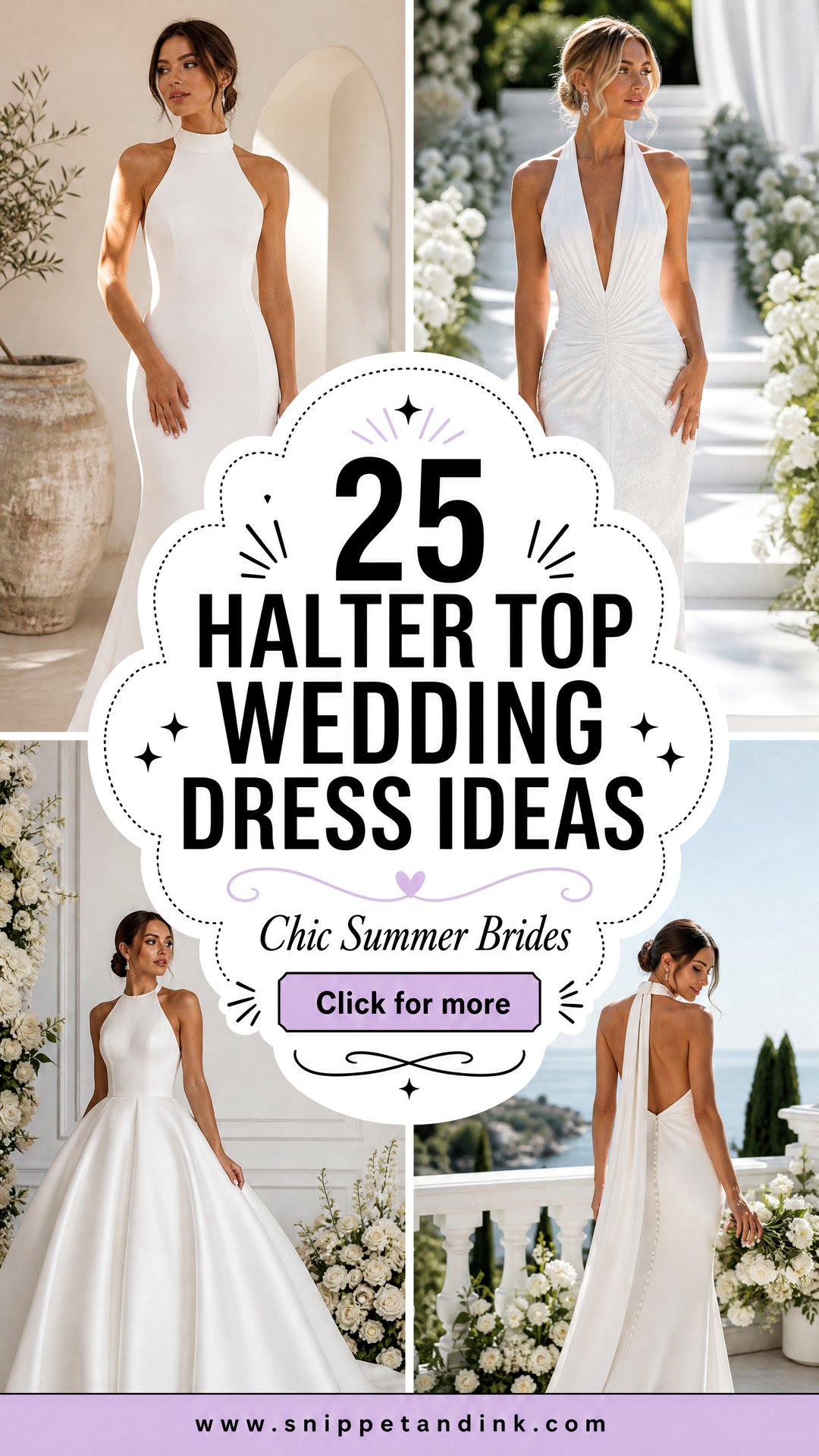
A halter is the neckline I suggest most often to summer brides who hate fiddling with strapless bodices. Because the dress hangs from a strap around the neck, the bodice can’t slide down, and the shoulders and upper back are left open to the air. That same construction opens the door to low backs, smooth satin and clean skirts. Fabric changes its character completely: crepe looks architectural, chiffon looks breezy, lace looks romantic. Below are the halter gowns I’d show a bride for city, garden and destination weddings, with the fit points, hair and accessories that actually make each one work, and the times I’d talk someone out of it.
Shoulders, Bust and Neck: Who a Halter Flatters Most
A halter draws a strong diagonal from the neck to the underarm, and that line flatters some frames more than others. Brides with athletic or toned shoulders look terrific in a cut-in halter, because the cut shows off the shoulder. Narrow, sloping shoulders benefit from a wider strap or a high neck, which adds visual width up top.
Bust size changes the engineering more than the look. On a smaller bust, a plunging or thin-strap halter is easy to wear. On a fuller bust, I want wider straps, built-in cups and a structured bodice so the neck isn’t doing the lifting. A halter is also rarely the answer for anyone with neck or upper back pain, since the whole dress hangs from that point.
At a first appointment, try one wide-strap halter and one narrow cut-in style back to back. It takes five minutes and tells you more about your proportions than any photo.
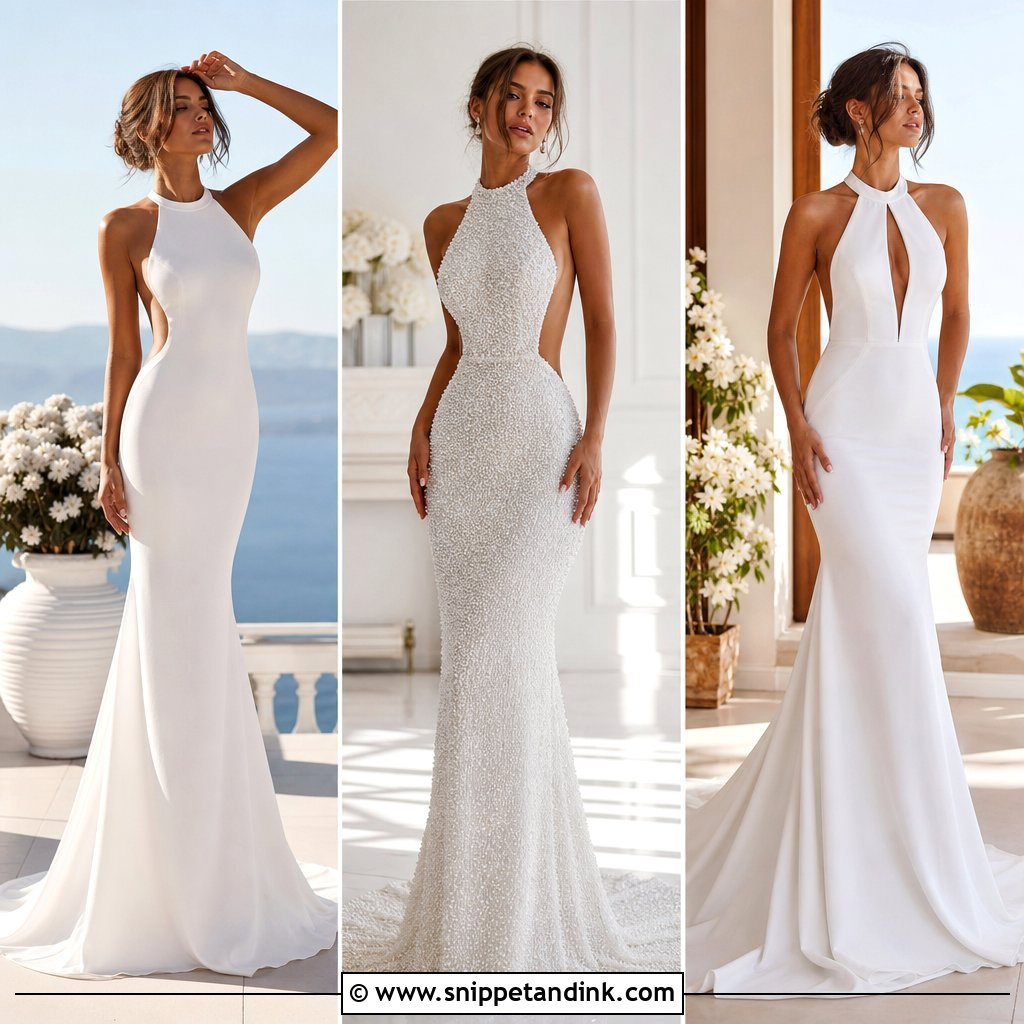
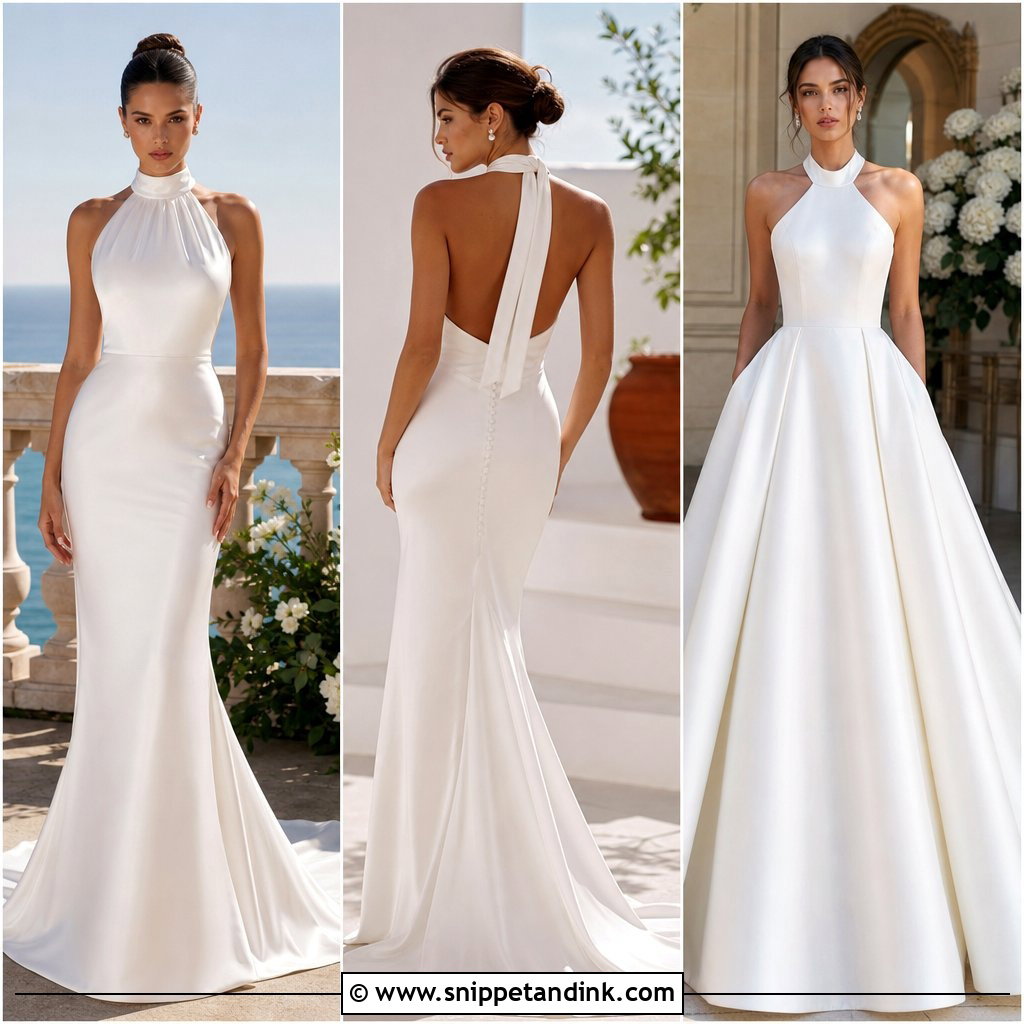
1. Satin Halter Wedding Dress
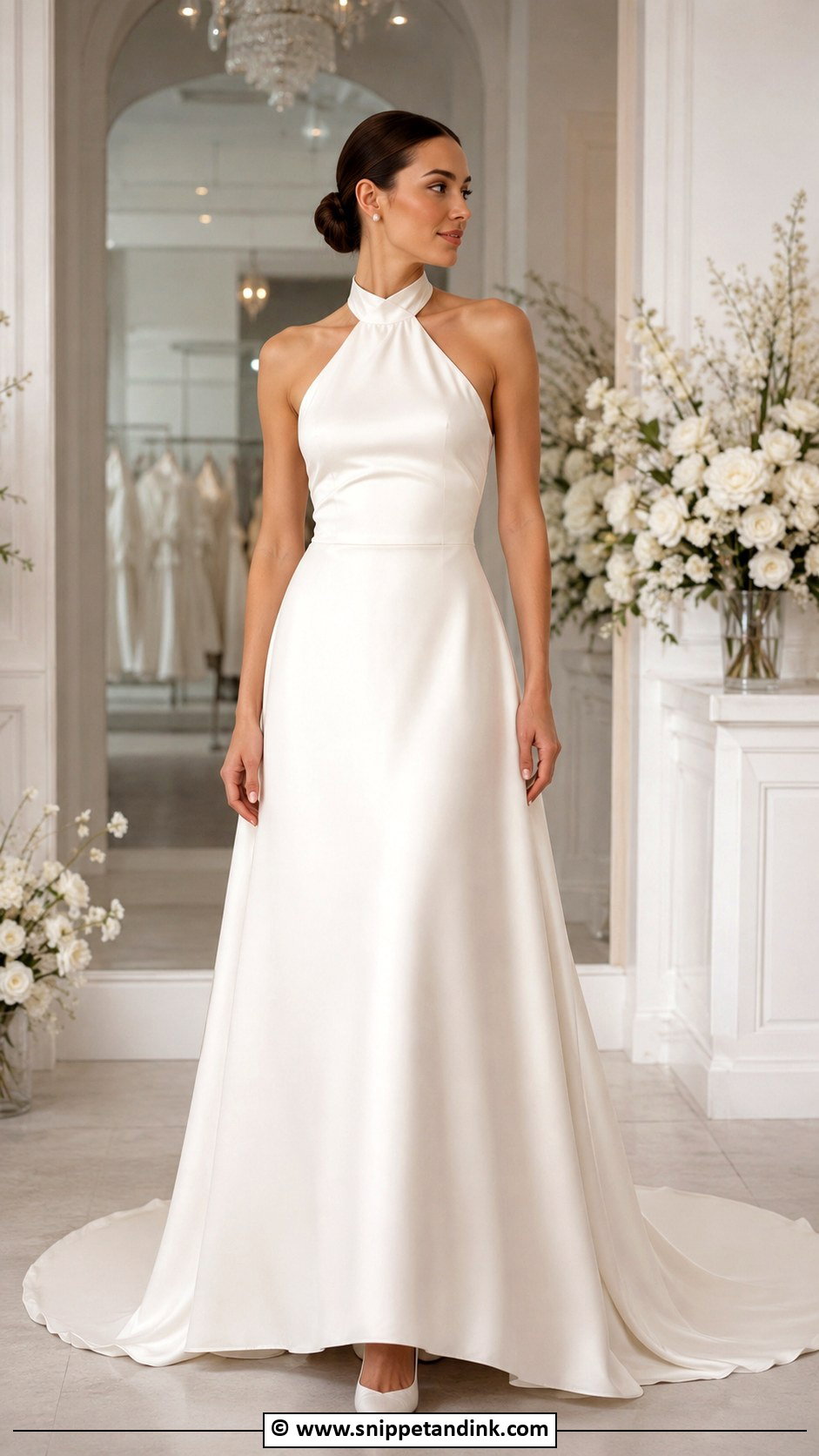
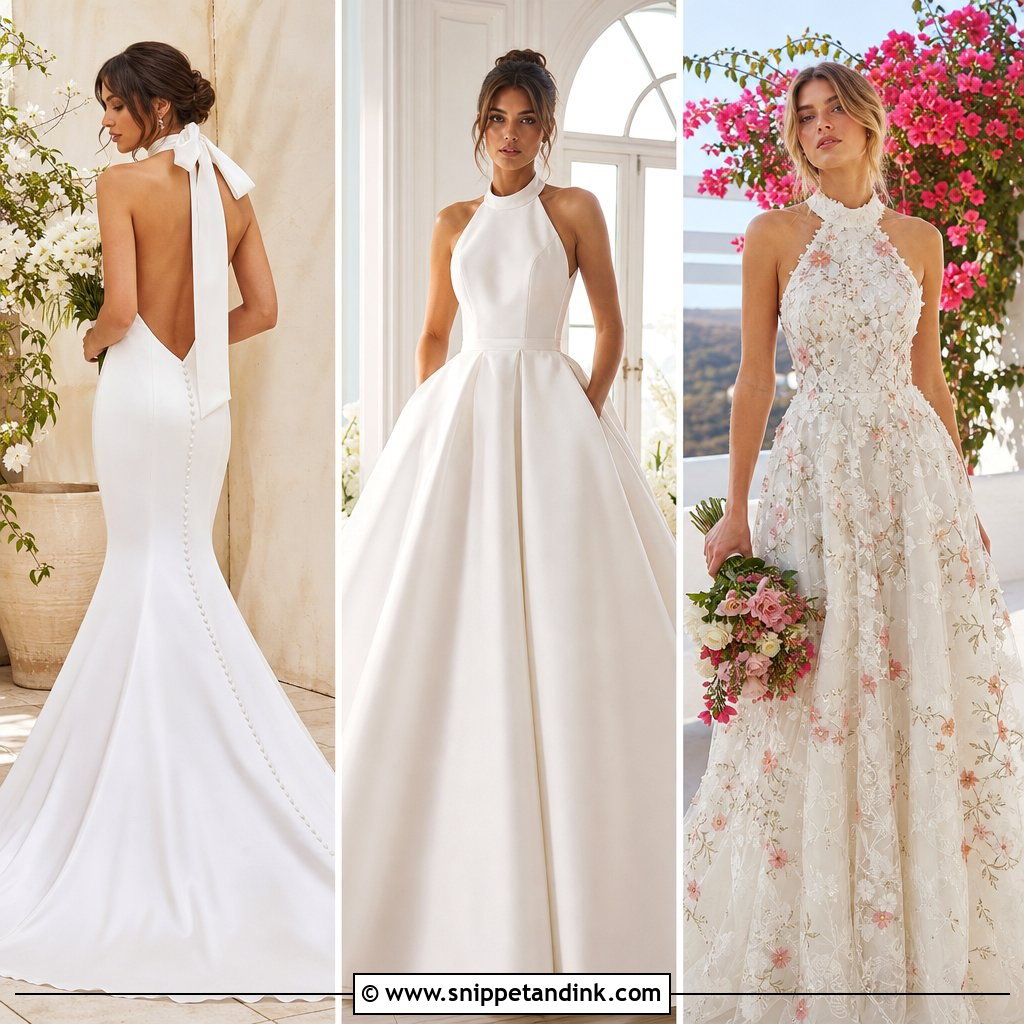
Satin is where I start with brides who want a clean halter and nothing fussy. Its sheen does a lot of the work in photos, so the cut has to be precise; satin shows every pull at the bust and every ripple at a seam. A fitted sheath or a gentle A-line keeps the eye on the neckline. Heavier satins also crease where you sit, so I suggest steaming right before the ceremony and again before portraits. Pearl studs, simple pointed heels and a low bun are all it needs.
2. Lace Halter Wedding Dress
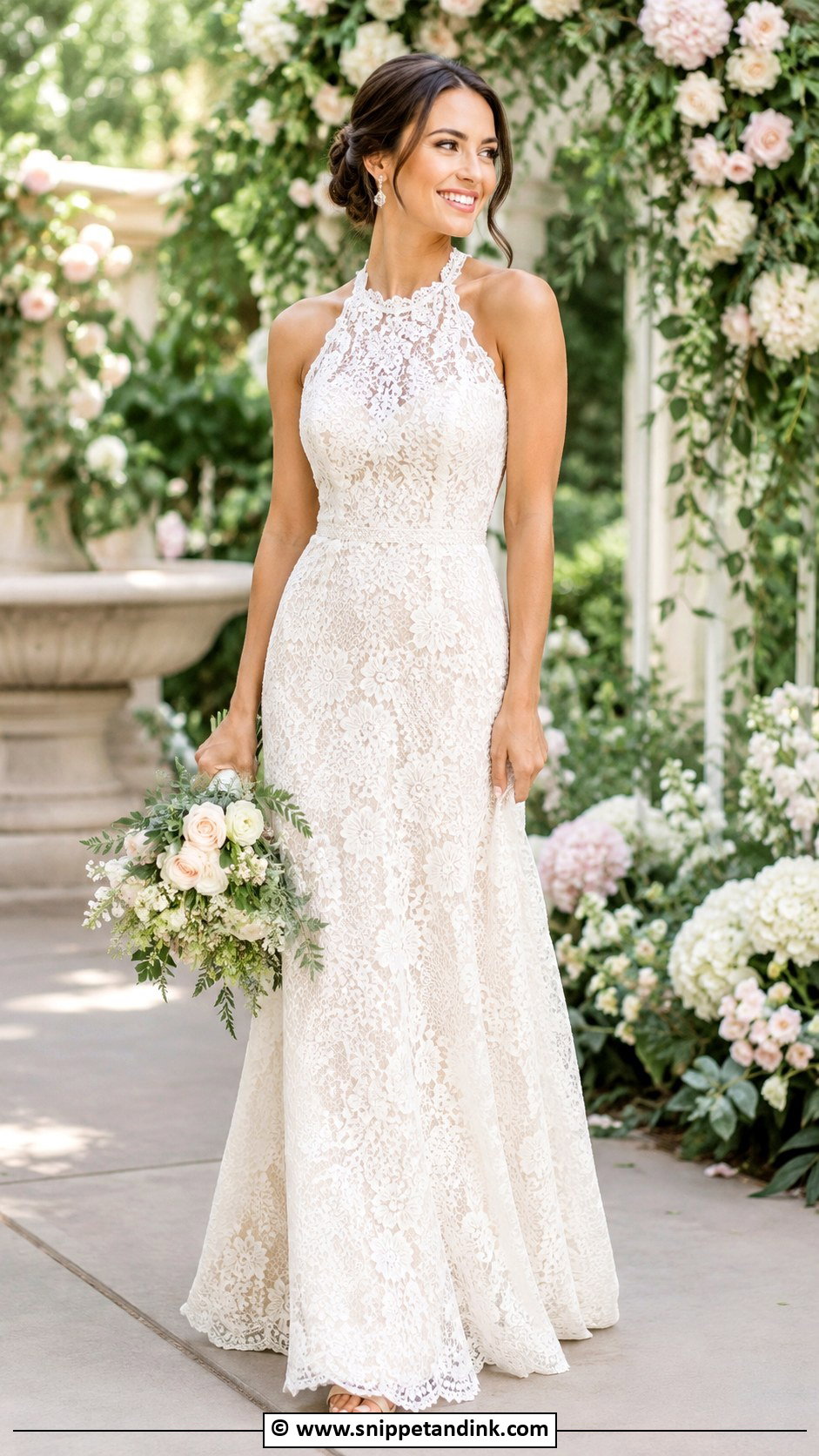
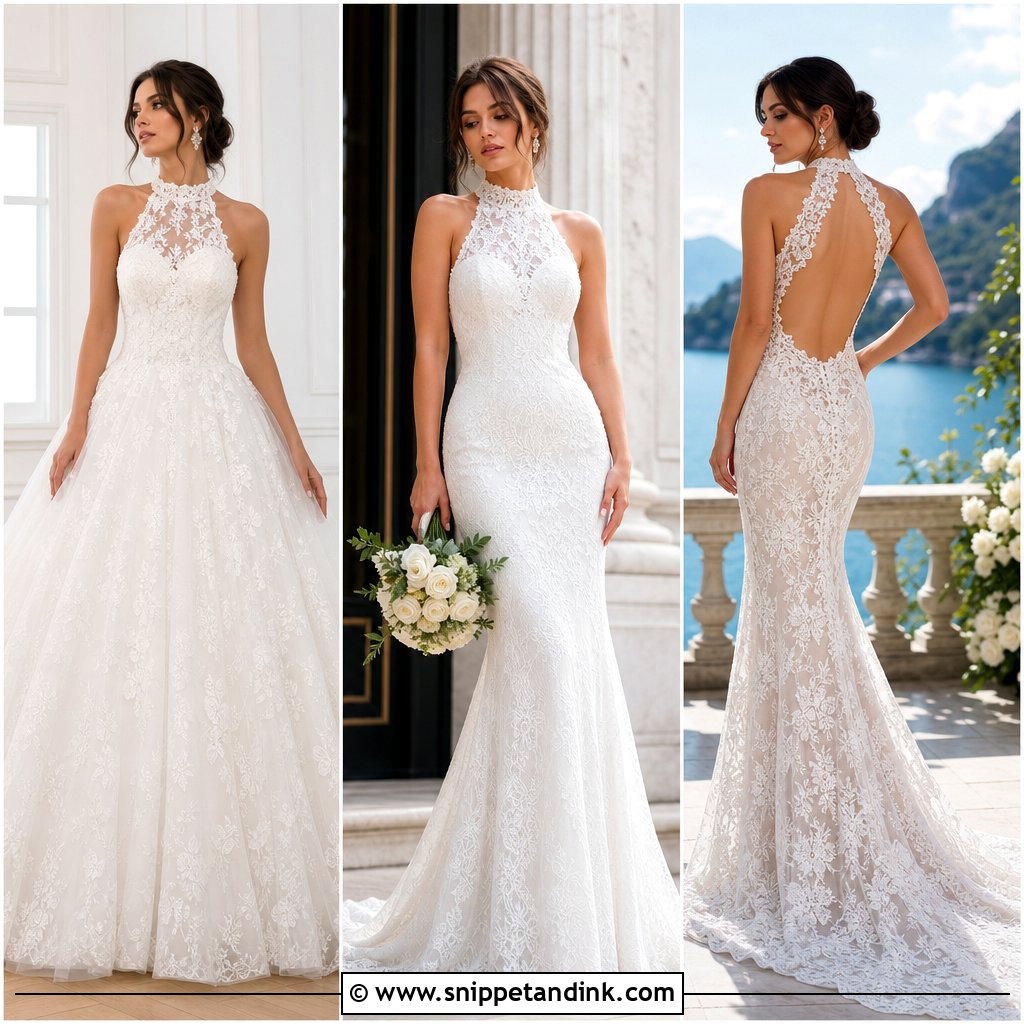
Lace softens a halter, which otherwise reads quite sleek. I like a fitted lace bodice over a flowing skirt for garden and estate venues, or allover lace if the bride wants a more classic mood. The thing I look at first is where the lace motifs fall at the neck strap; a well-made gown places a scalloped edge or full motif there rather than a cut-off flower. If the back is detailed, skip the necklace completely. Drop earrings and a soft updo keep the neckline clear.
3. High Neck Halter Wedding Dress
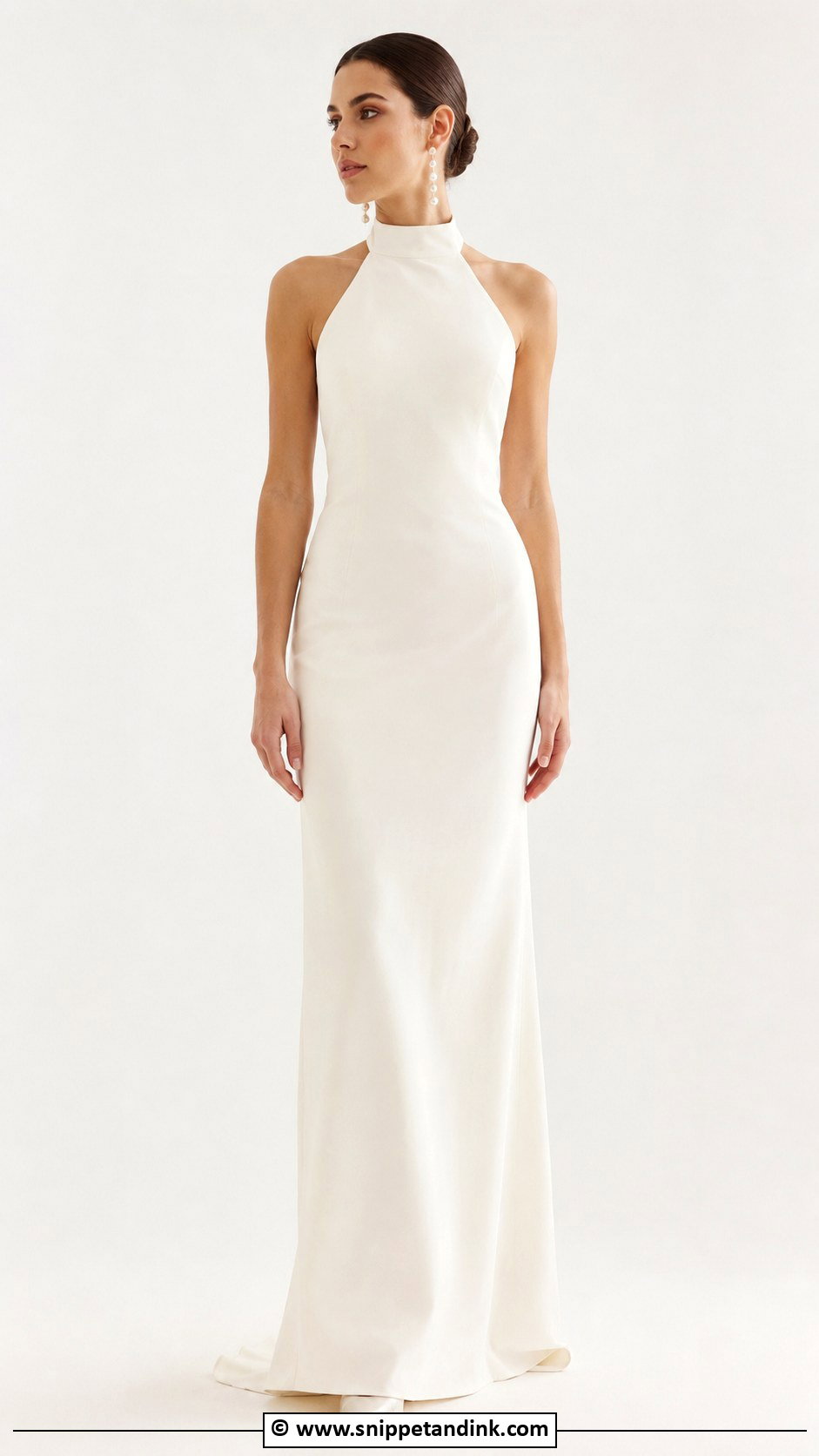
A high neck halter gives coverage and a long, unbroken line from chin to waist, which suits tall brides and anyone with a smaller bust especially well. Crepe and softly structured A-lines hold that line best. On a short neck, though, a very high band can look like it’s swallowing the jaw, so I’d lower the band slightly or choose a cut-in shoulder to open things up. Earrings matter more than a necklace here: pearl drops or small modern hoops. A sleek chignon shows the shoulders.
4. Backless Halter Wedding Dress
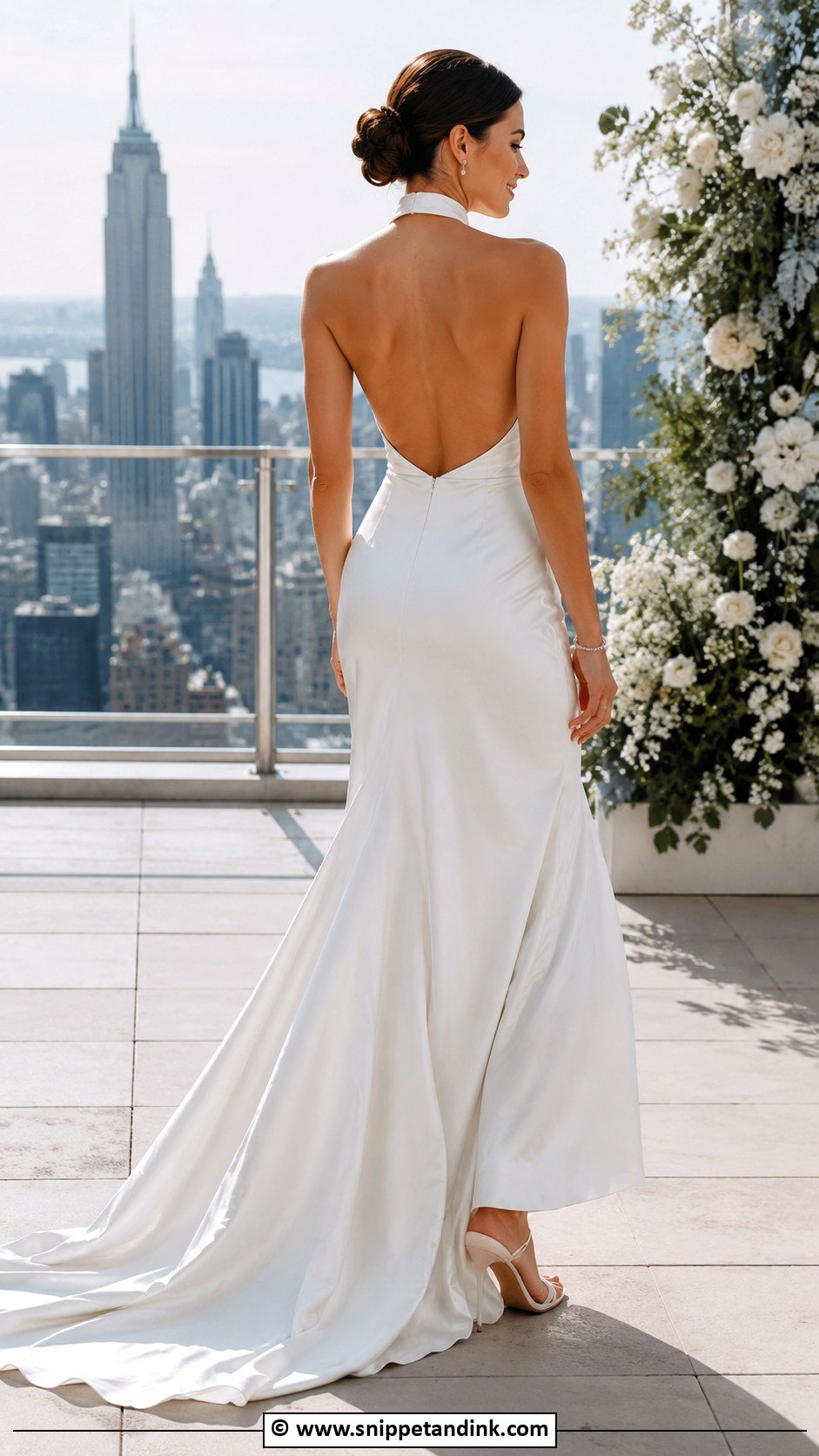
A backless halter is all about the view from behind, while the front stays secure. Crepe, satin, lace and lightweight chiffon all work. The honest drawback is support: with no back band, there is nowhere for a standard bra, so cups need to be built in or sewn in by your seamstress. I always ask brides to sit, hug and raise their arms at the fitting to see whether the side edges gape. Done right, it suits rooftops, evening receptions and destination weddings where you will be seen from every angle.
5. Mermaid Halter Wedding Dress
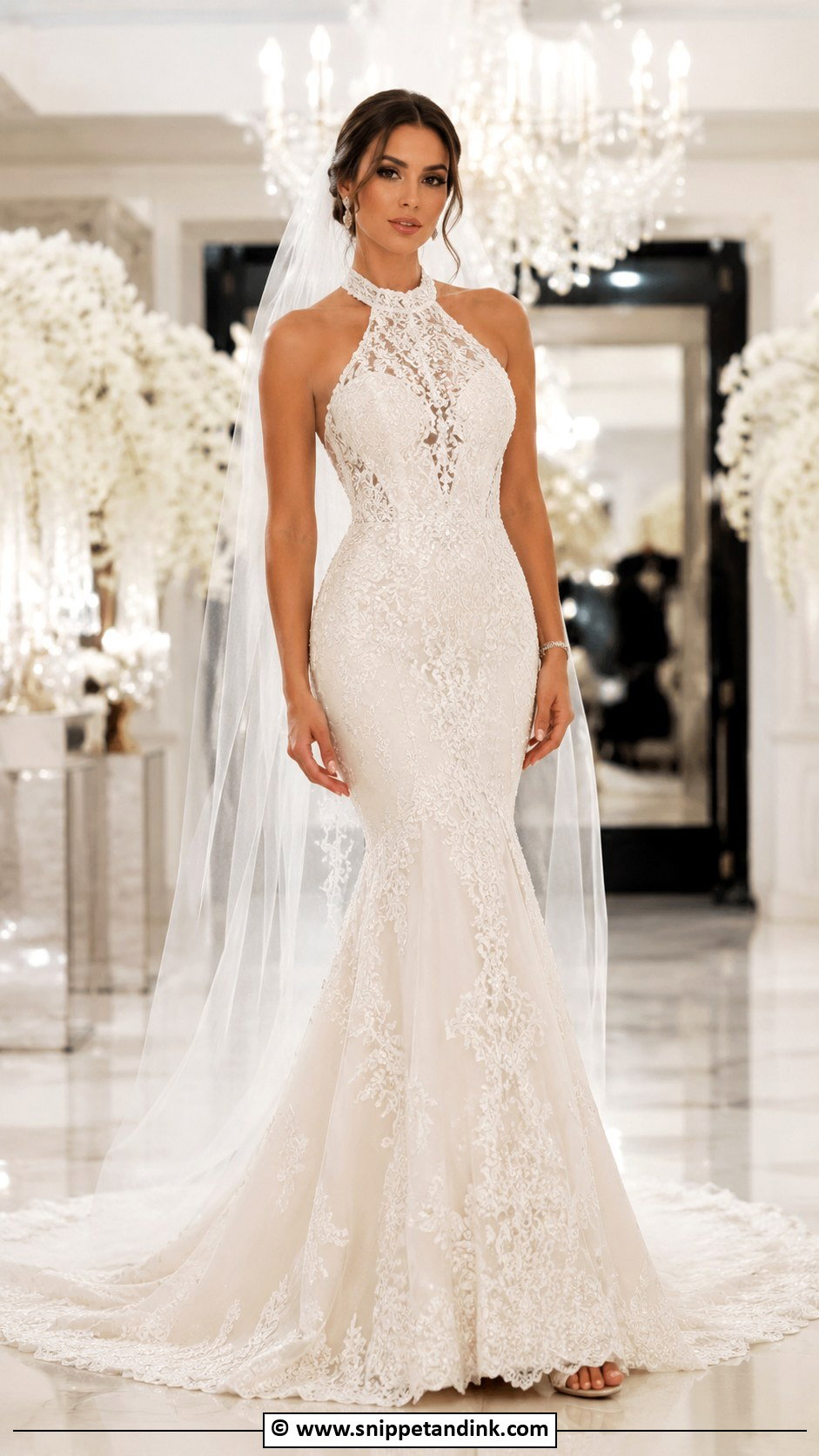
A mermaid halter wedding dress has the strongest silhouette in this list: the halter frames the shoulders, the skirt follows the body and then flares near the knee. Where that flare starts matters. Too low and you shuffle; slightly above the knee and you can walk and climb stairs. Lace softens it, satin glamorises it and crepe keeps it modern. Accessories should step back: crystal studs, a plain veil and slim heels are enough.
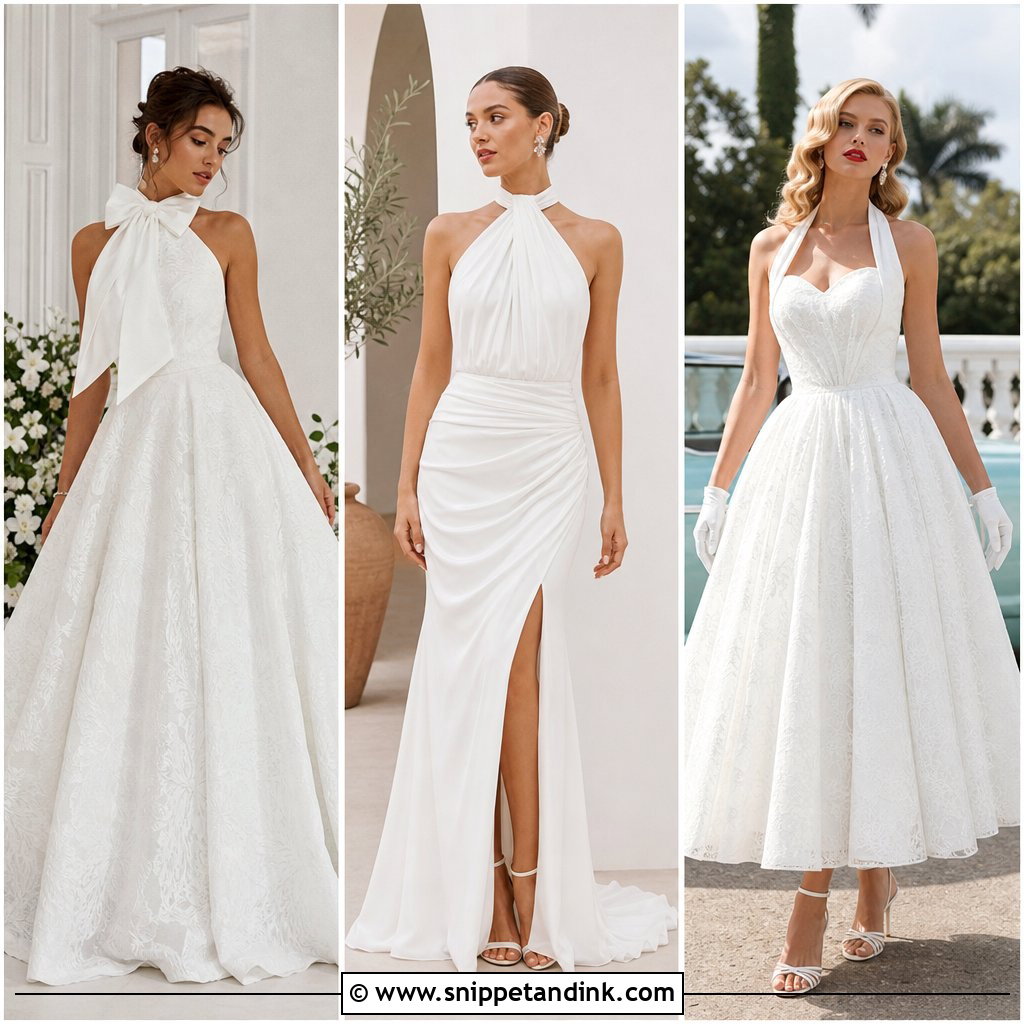
6. A Line Halter Wedding Dress
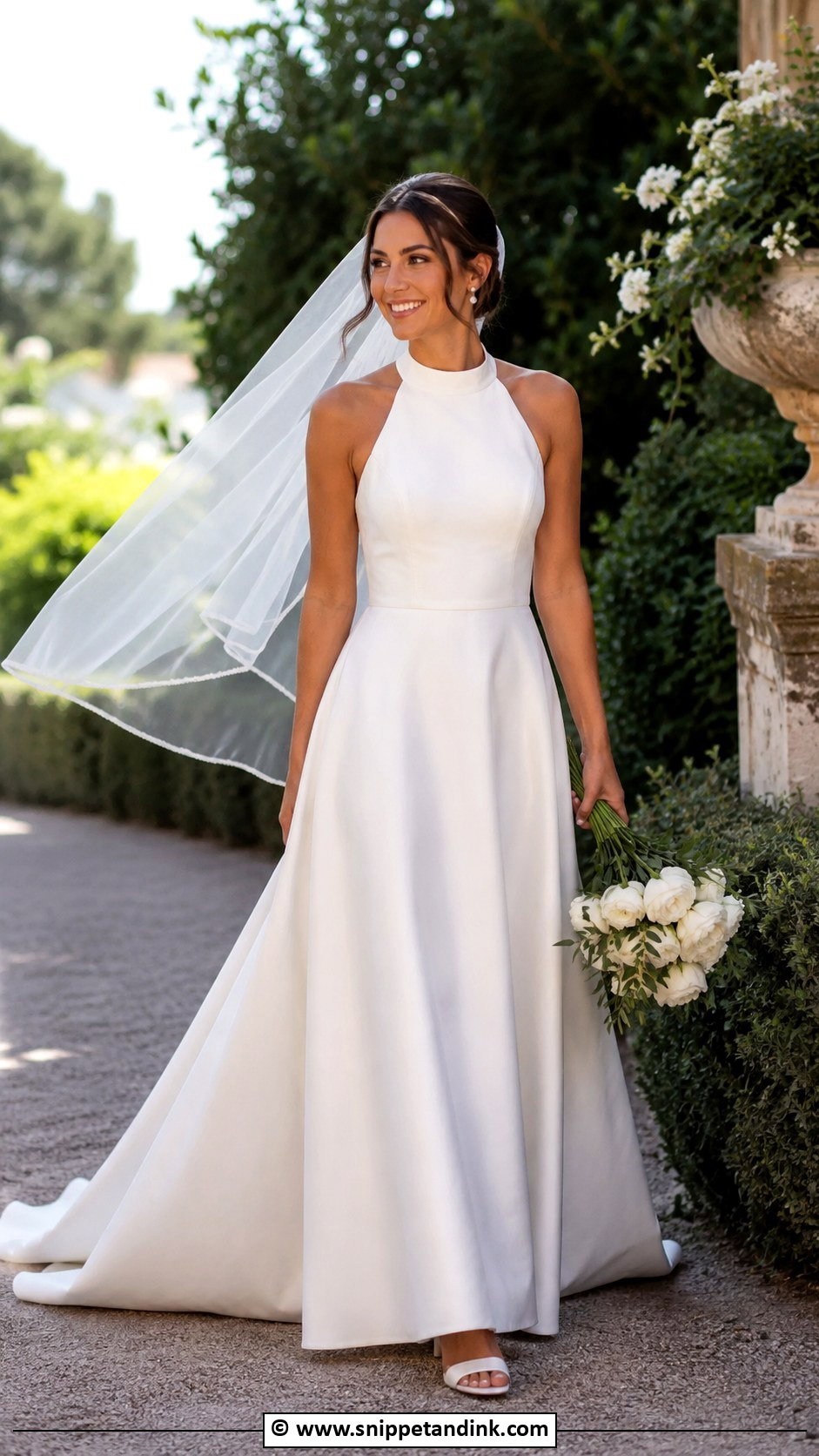
The A-line halter is the shape I’d send most brides home in. It balances the shoulders with a skirt that moves easily, and there is nothing tight below the waist to fight through a ten-hour day. Chiffon gives it air, satin refines it and lace adds romance. It works in gardens, ballrooms and on beaches. Block heels or delicate sandals, a fingertip veil and small earrings complete it without clutter.
7. Boho Halter Wedding Dress
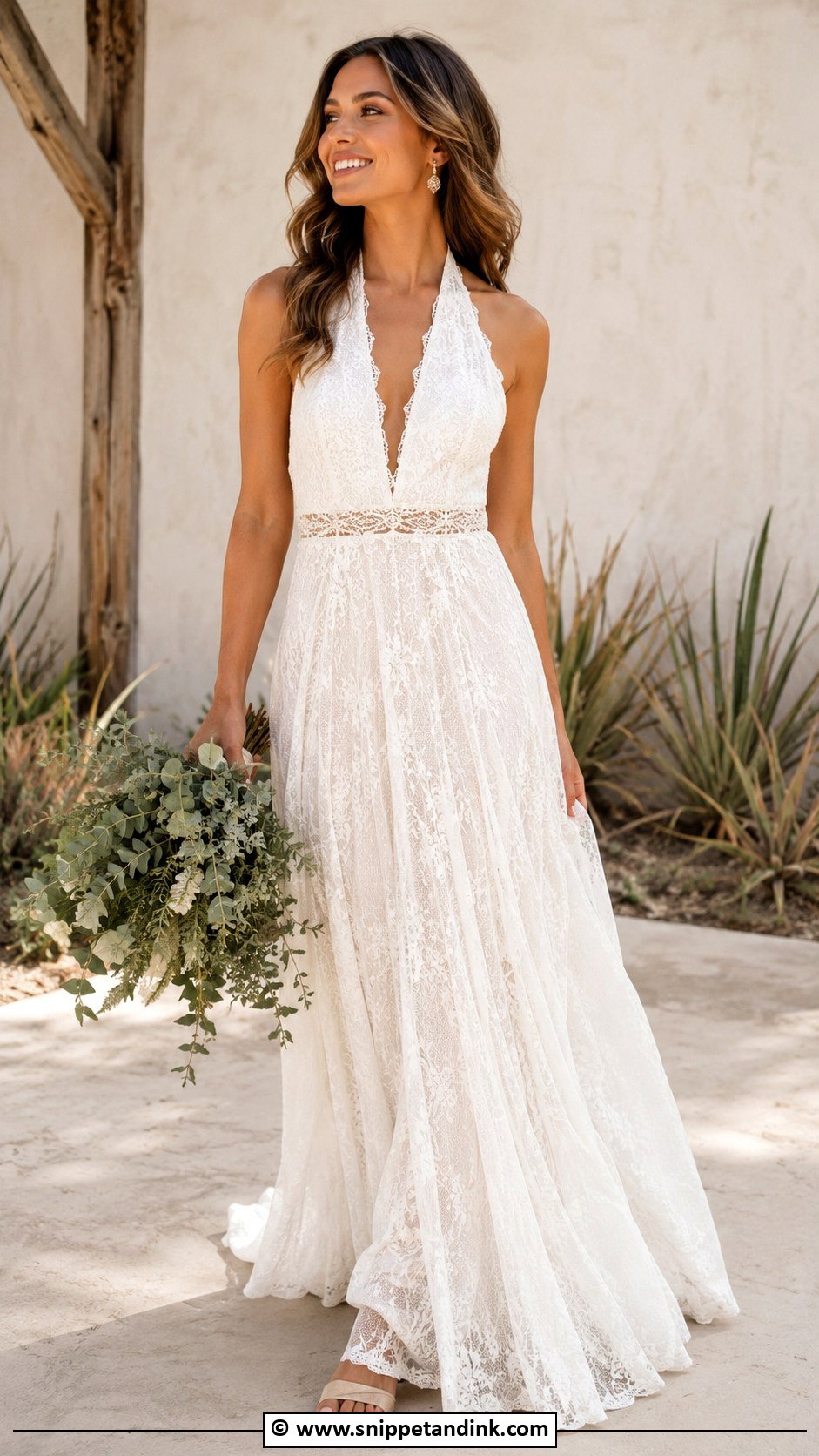
Boho halters rely on texture: soft lace, crochet-inspired details, light chiffon and skirts that move. Beach, desert and garden venues suit them. Skip the heavy jewellery in favour of small gold earrings and natural waves. Lace in boho gowns is often looser and stretchier than structured bridal lace, so a halter strap in it can stretch over the day; I ask for a stabilising tape inside the neck strap. Sandals or low block heels suit, as does a loose bouquet with greenery.
8. Beach Halter Wedding Dress
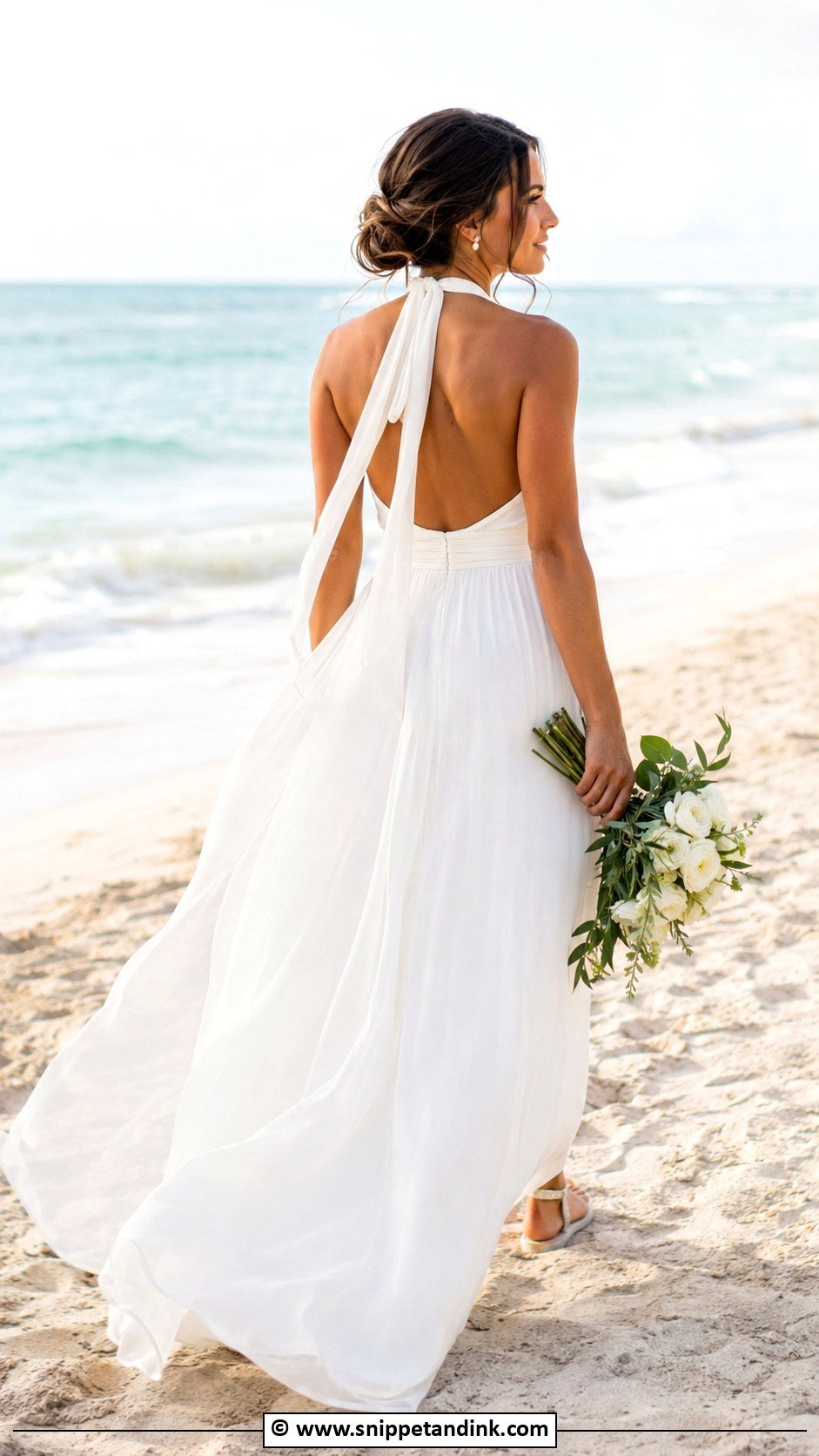
On a beach, the halter earns its place because it stays put in wind that would flip a strapless bodice. Chiffon, tulle, crepe and lightweight satin are cooler than heavy fabrics, which trap heat. A flowing skirt or subtle slit adds movement. Sand and long hems don’t mix, so I hem beach gowns to just brush the top of a flat sandal rather than pool on the ground. A long veil photographs well but tangles in sea breeze; a shorter veil or hair accessory is the practical swap.
9. Minimalist Halter Wedding Dress
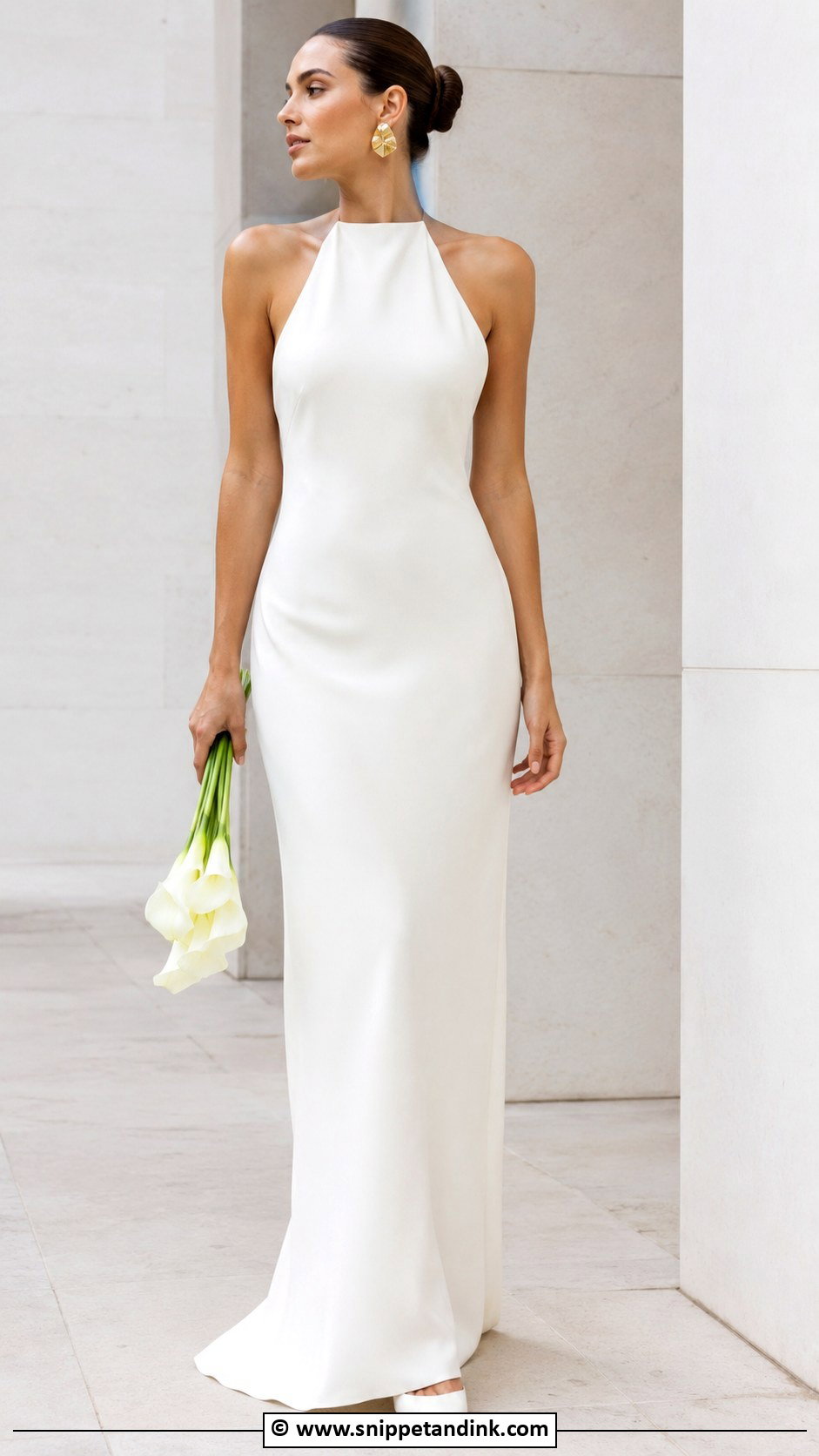
Minimalist halters depend completely on fit, fabric and proportion, because there’s no lace or sparkle to distract from a seam that’s slightly off. Crepe, satin and mikado hold shape well. A column or A-line skirt keeps it refined. I like a cathedral veil for the ceremony, removed for a sleeker reception look. Sculptural earrings and a smooth bun are the right scale. If your seamstress is not confident with clean finishing, this is the dress where it shows.
10. Plunging Halter Wedding Dress
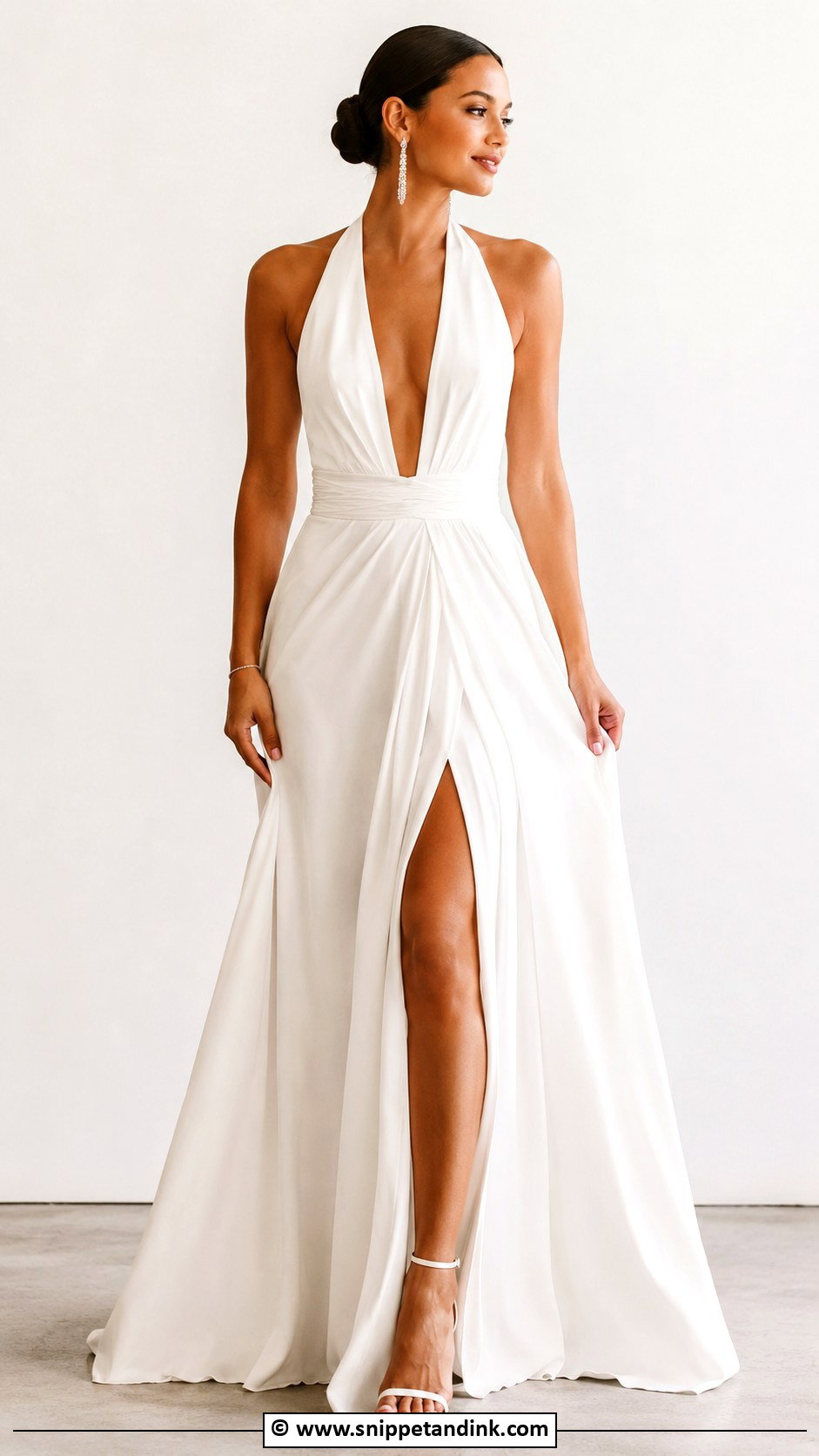
A plunging halter is bold, and fit is everything. The deep V lengthens the torso and pairs with a flowing skirt, a mermaid shape or a sheath. Before anything else, I check that the plunge edges lie flat against the skin when the bride moves; fashion tape and boning along the V edges keep them from gaping during hugs and dancing. Fuller busts need a well-engineered plunge with internal support, or it won’t sit securely. Long earrings, a slim bracelet and a soft updo frame the face without competing.
11. Beaded Halter Wedding Dress
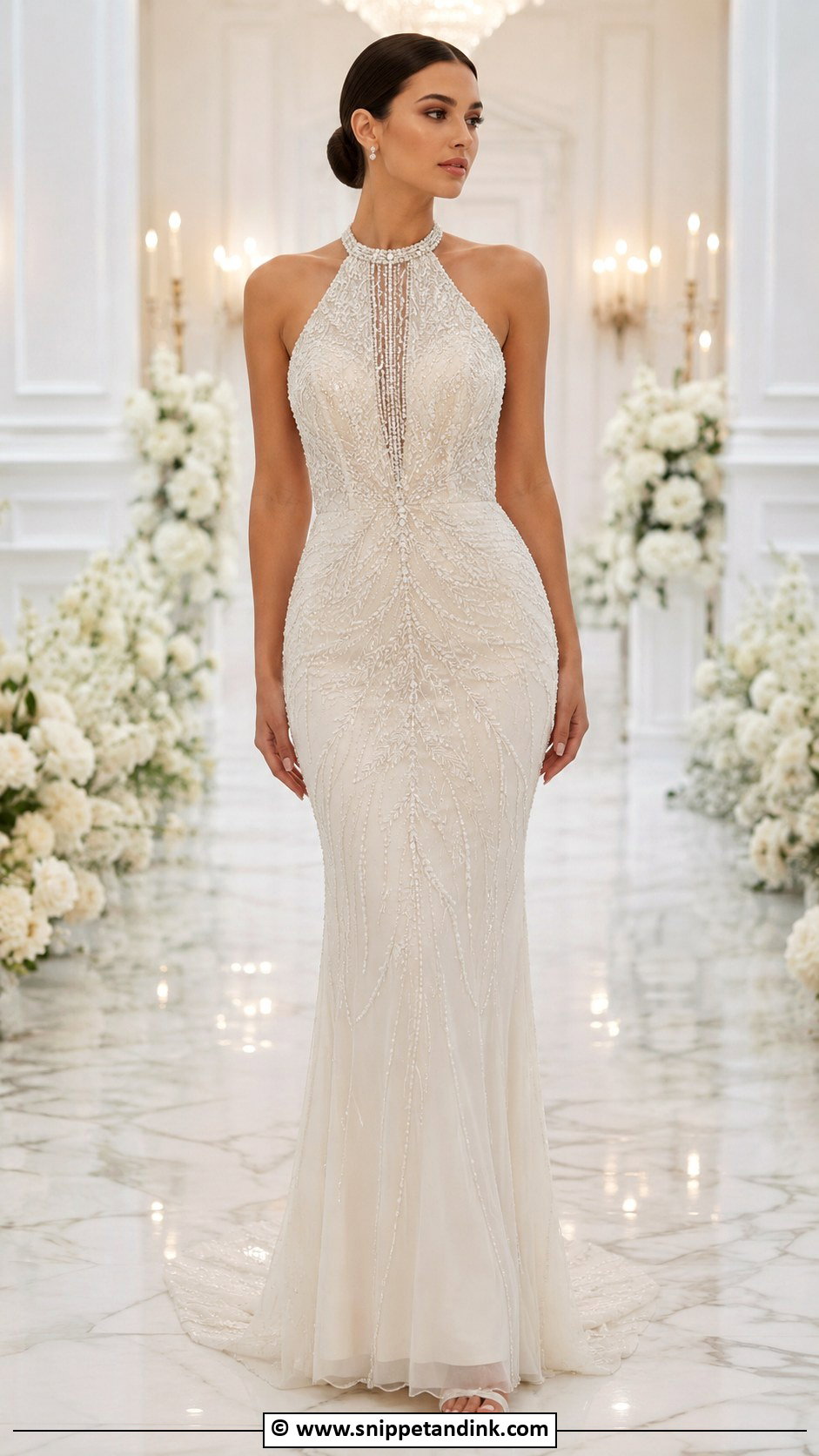
Beading brings shimmer without extra styling, and on a halter it can frame the face beautifully if it is concentrated at the neckline. Allover beading suits evening ballrooms and formal venues. It also adds real weight, and on a halter that weight hangs from the neck, so I check how heavy the bodice feels after the bride has worn it for twenty minutes at a fitting. Simple shoes, crystal studs and a soft veil keep the sparkle from tipping over.
12. Tulle Halter Wedding Dress
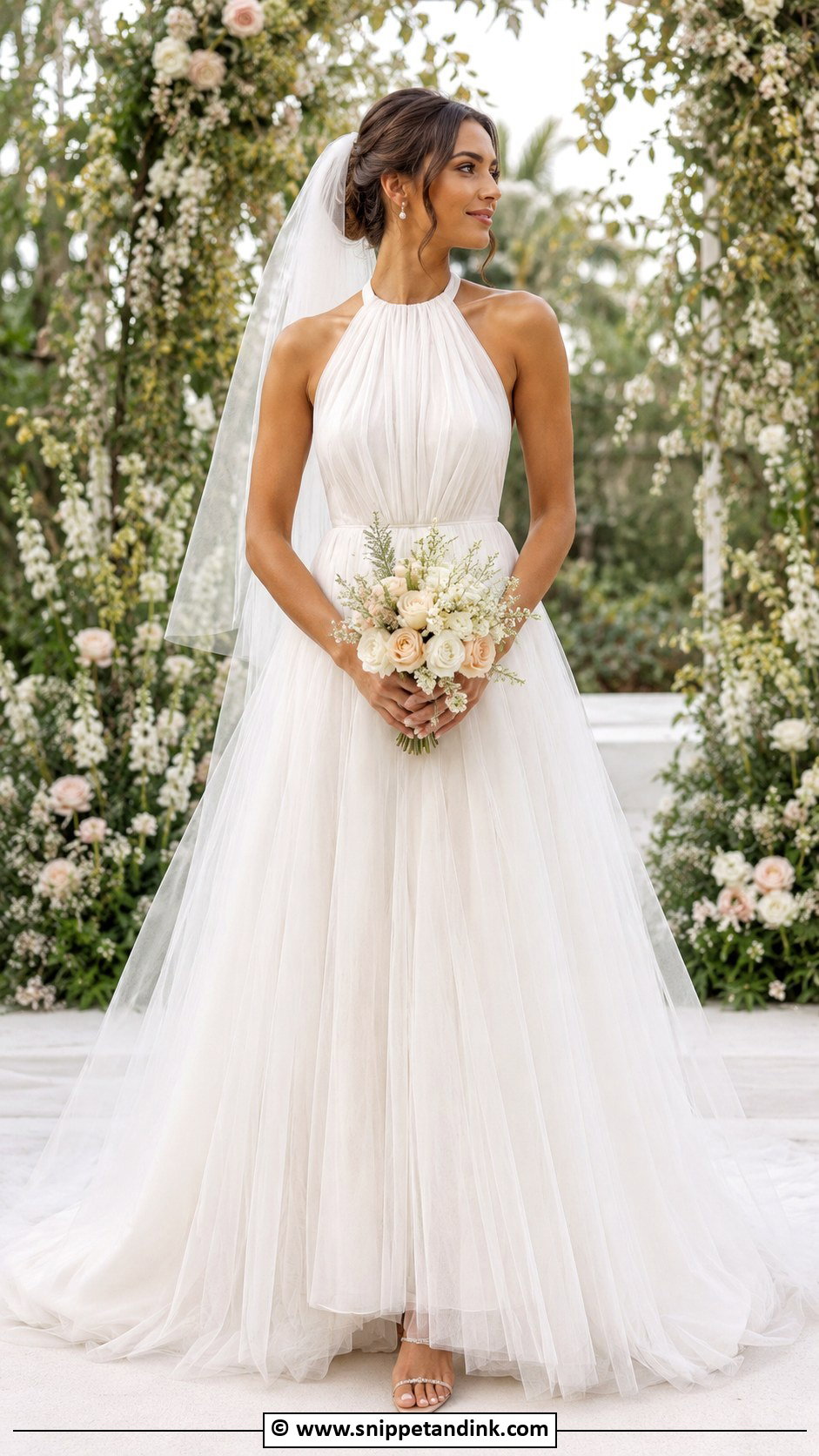
Tulle gives soft volume while the halter keeps the bodice structured. A layered tulle A-line suits garden weddings; a single soft overlay works for beach settings. Tulle snags on rough surfaces, so I warn outdoor brides about wooden decking, stone walls and bouquet stems. If the bodice has lace or beading, the accessories should stay quiet: small earrings, delicate heels and a simple veil.
13. Ball Gown Halter Wedding Dress
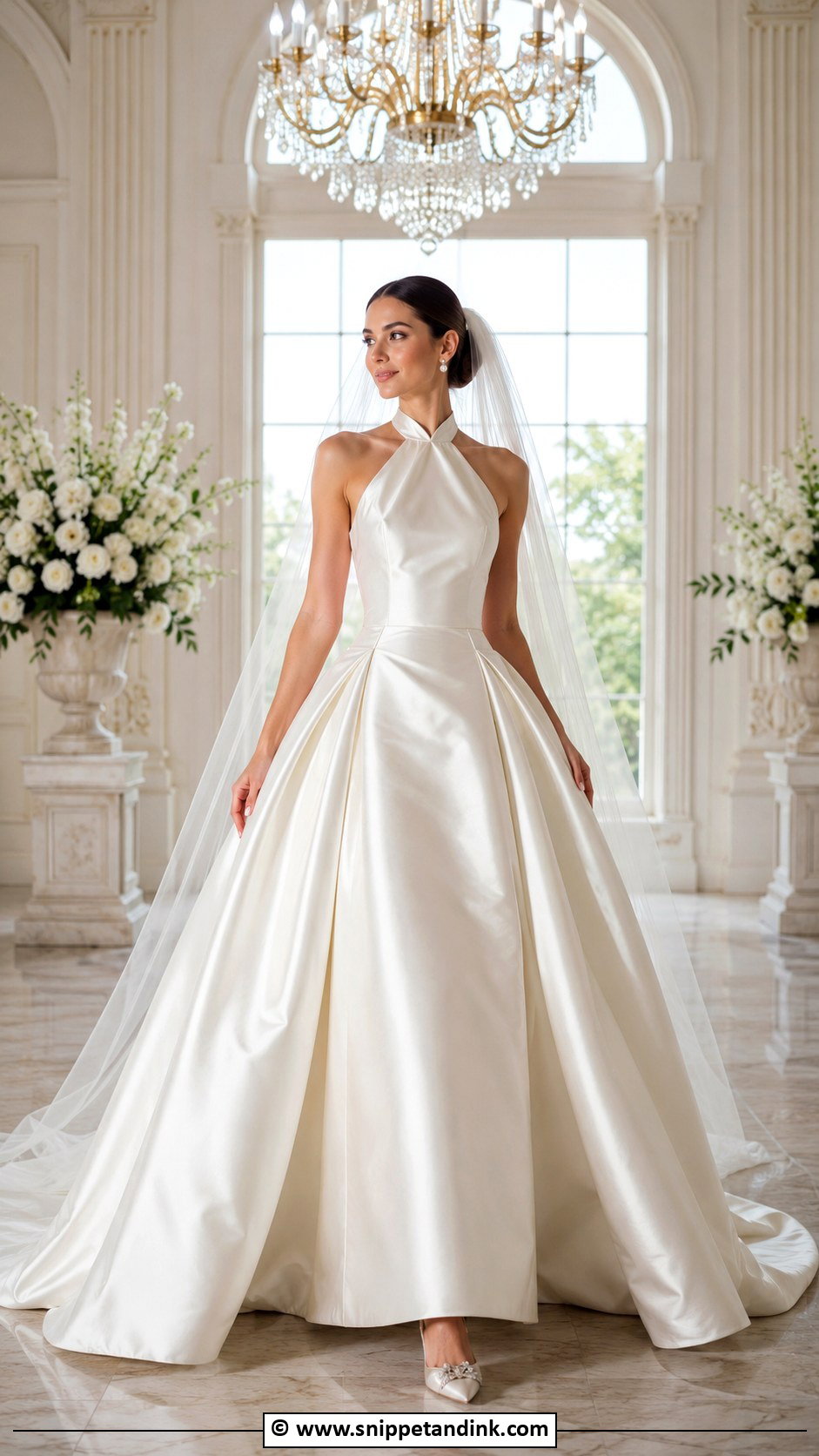
A ball gown halter is a dramatic bridal shape with a more modern neckline. The full skirt brings classic wedding energy, and the halter keeps the upper body sleek, which suits brides who want a statement gown but dislike strapless bodices. Mikado or satin give a structured skirt; organza or tulle are lighter. A full skirt needs a petticoat or built-in layers to hold its shape for the whole day. Earrings near the face, a neat bun and a long veil finish it.
14. Crepe Halter Wedding Dress
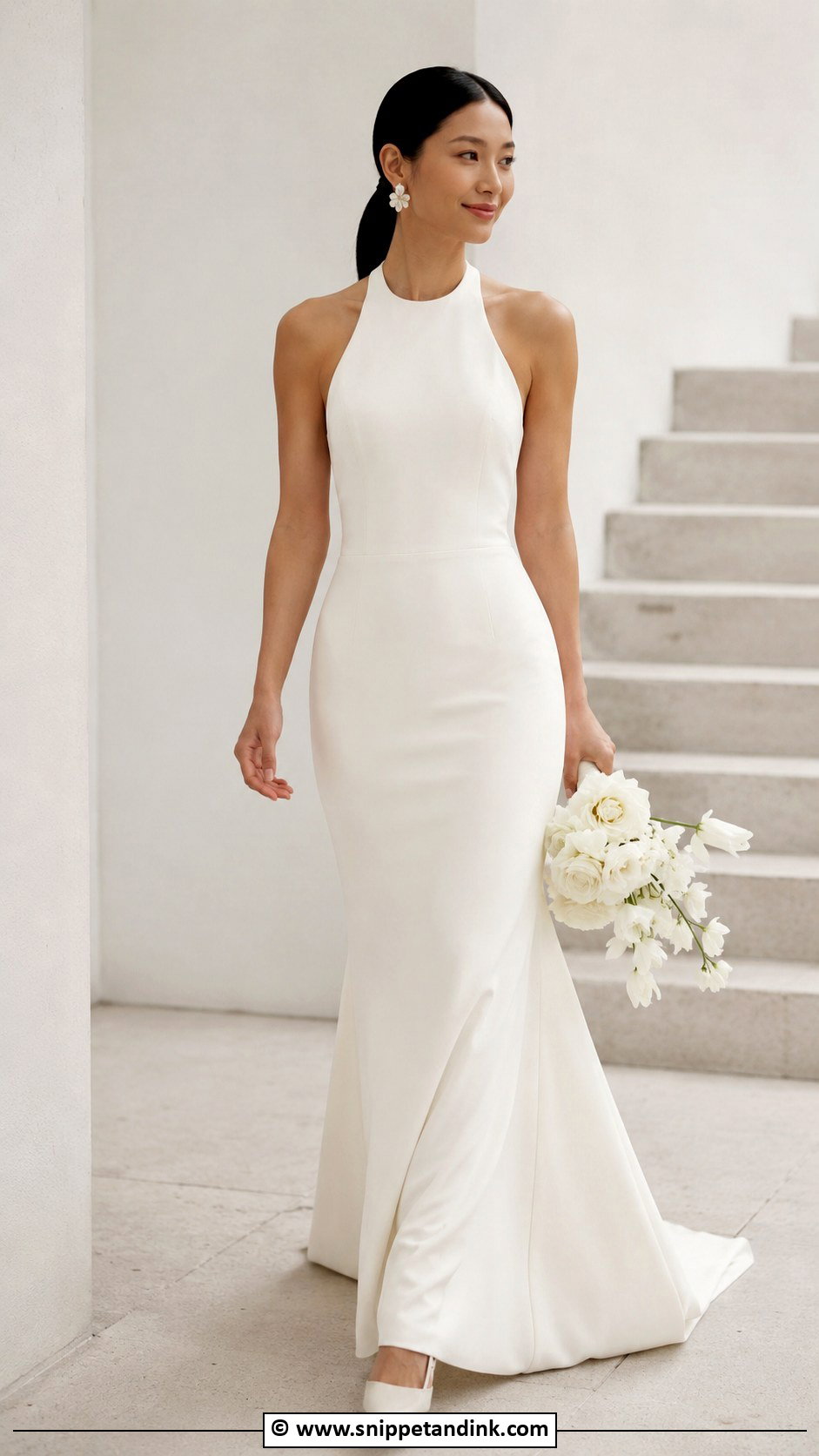
Crepe has a matte, smooth surface that hugs the body without shine. It works as a sheath, a fit-and-flare or a simple A-line. Its weakness is that it shows what is underneath: a seamed bra or visible underwear lines will show through, so I fit crepe gowns over the exact shapewear the bride will wear. Minimal earrings, pointed ivory heels and a low bun or sleek ponytail suit its quiet mood.
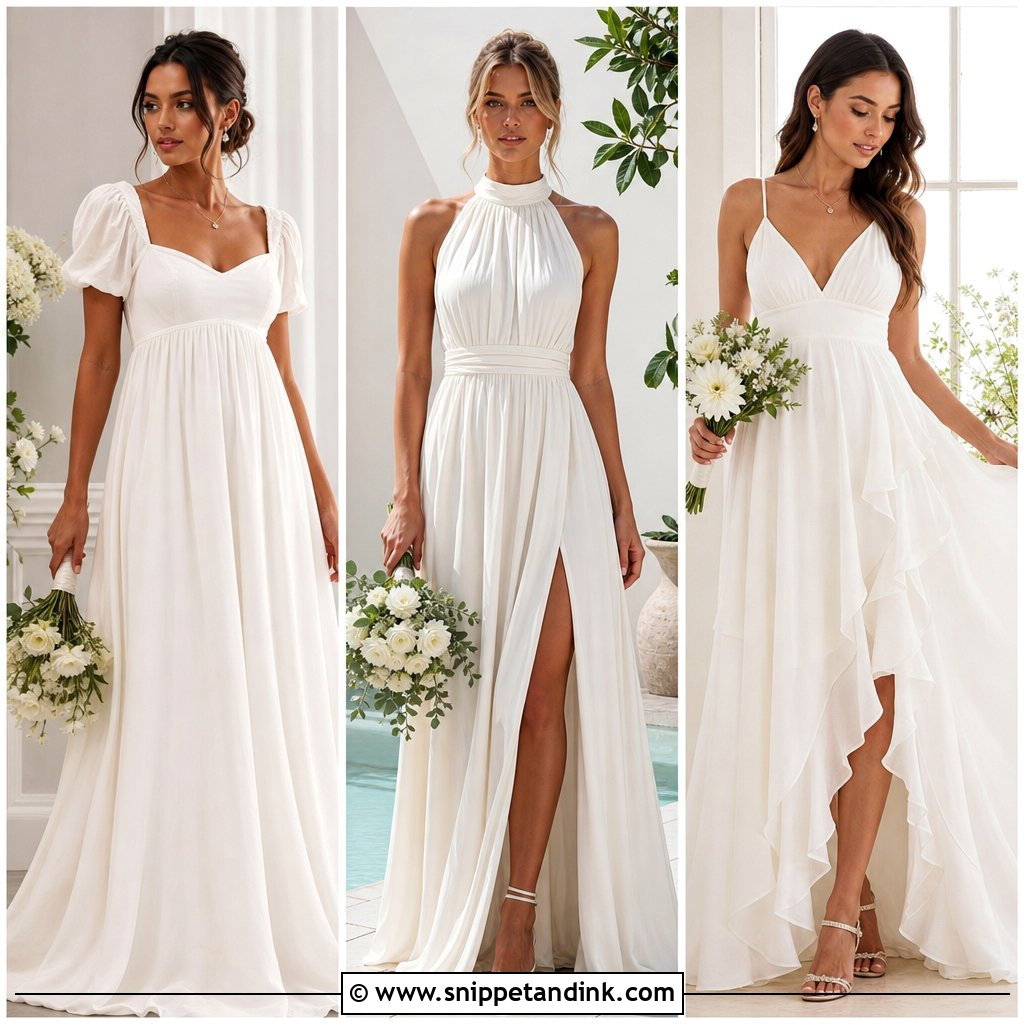
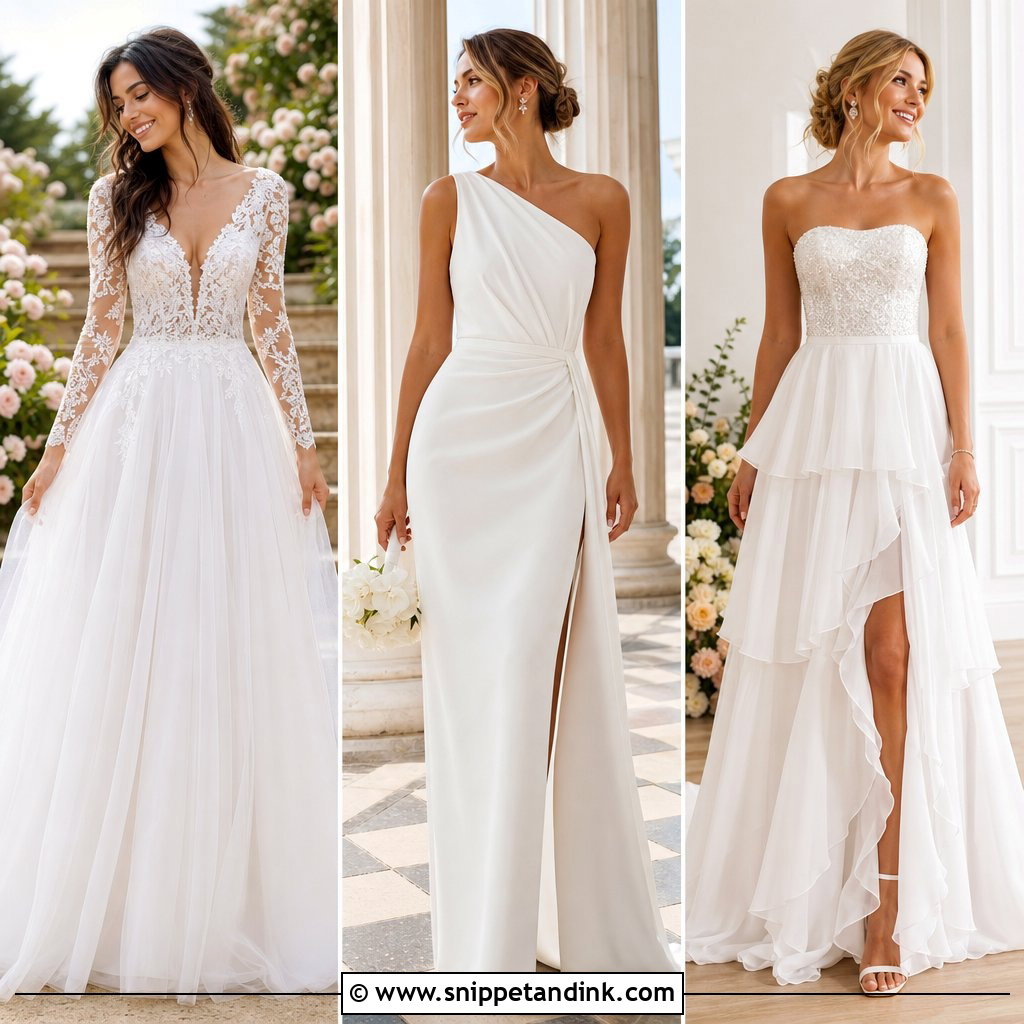
15. Chiffon Halter Wedding Dress
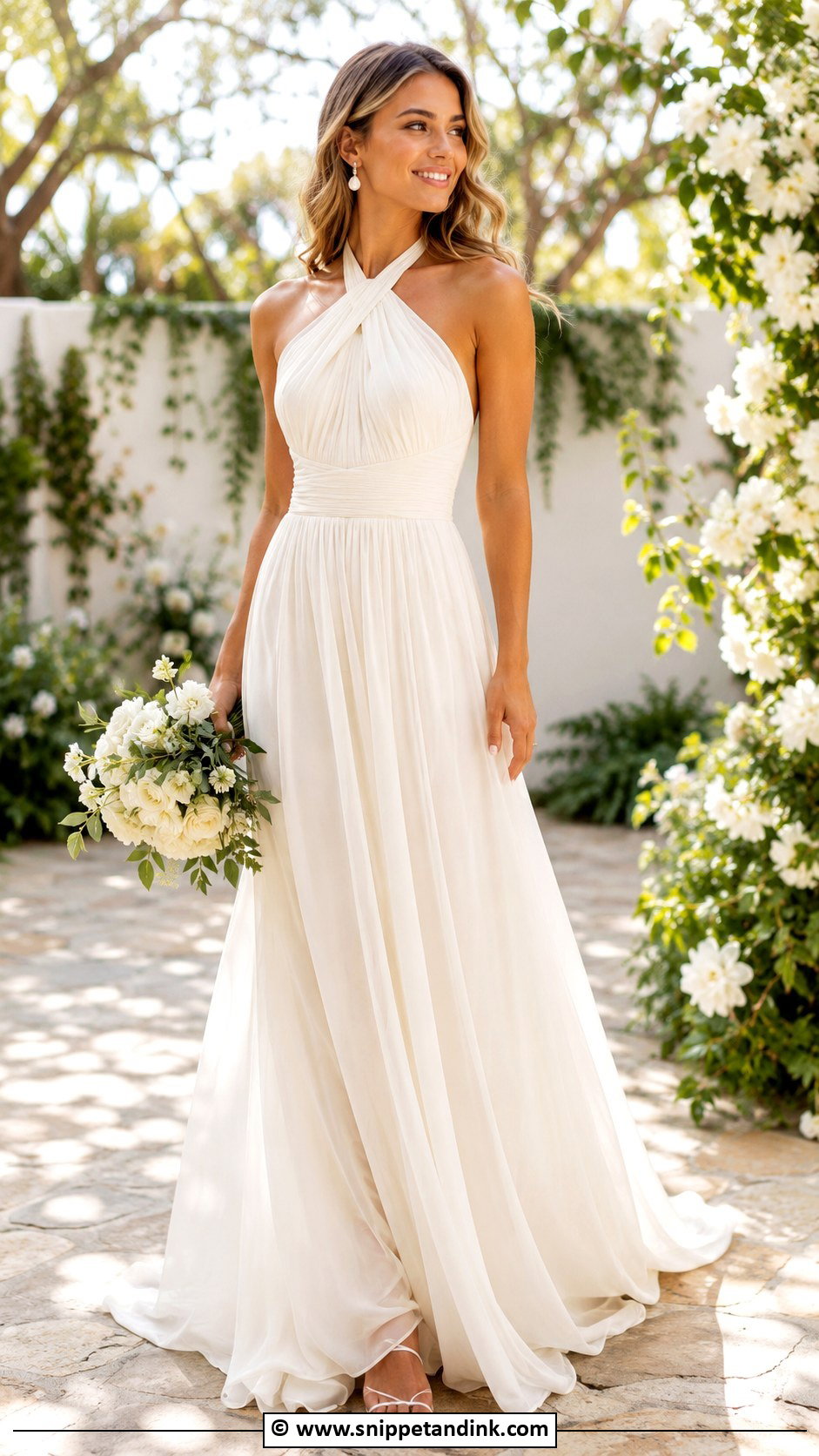
Chiffon is light and moves with the slightest breeze, which makes it right for warm outdoor ceremonies and destination weddings. A gathered halter bodice adds gentle texture over a flowing skirt. Chiffon is also slippery to sew and frays easily, so check inner seams at the fitting. Strappy sandals, pearl earrings and a soft veil keep it airy. Loose waves or a relaxed updo match the dress.
16. Short Halter Wedding Dress
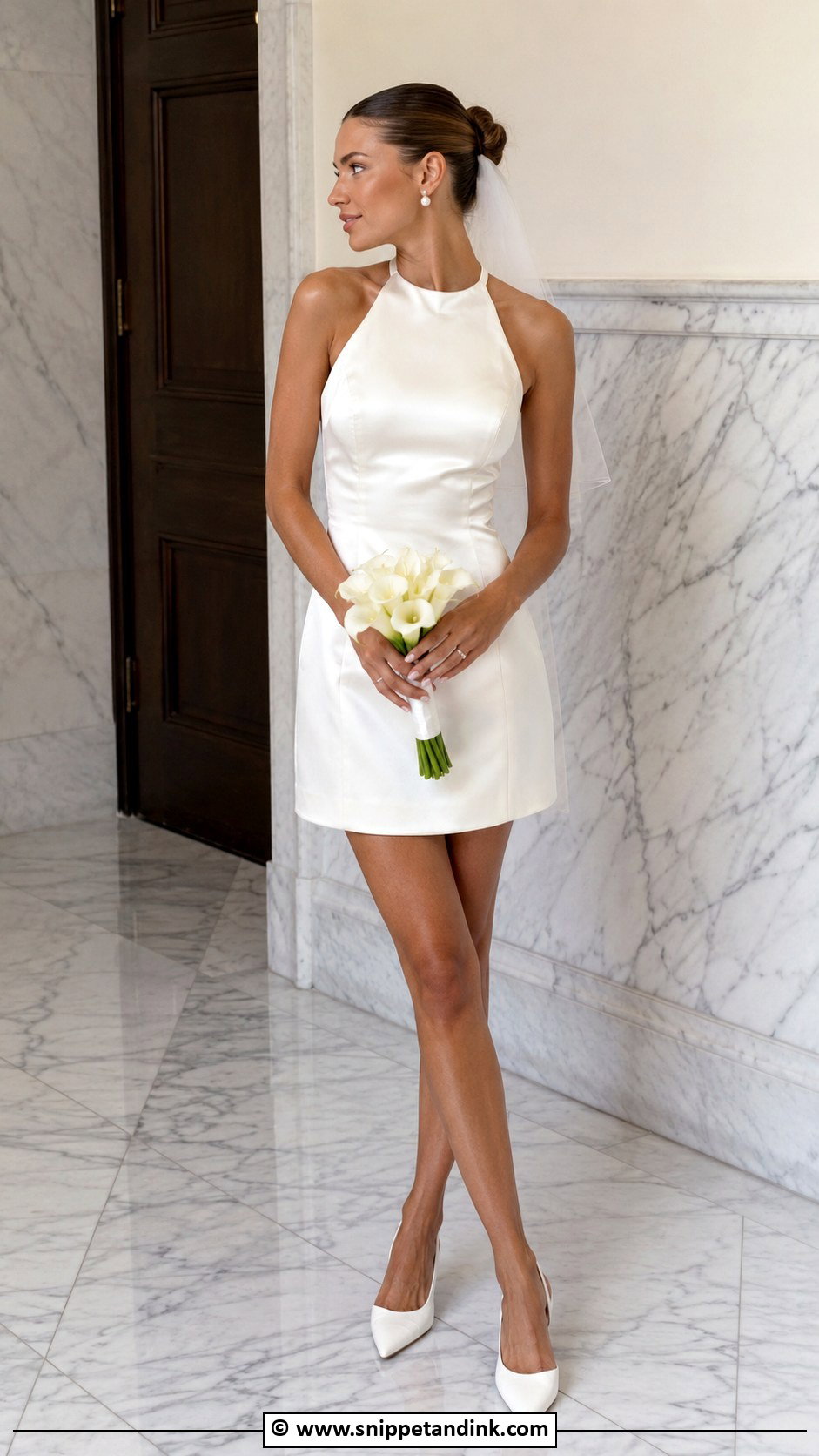
A short halter wedding dress suits courthouse weddings, elopements, reception changes and after-parties. The halter keeps it bridal while the shorter hem adds personality. Satin, crepe, lace or structured taffeta all work. Your legs and shoes are now on display, so I treat the shoes as part of the look: pointed pumps, slingbacks or elegant block heels. A mini veil or bow clip adds a playful finish, and you can dance without lifting anything.
17. Tea Length Halter Wedding Dress
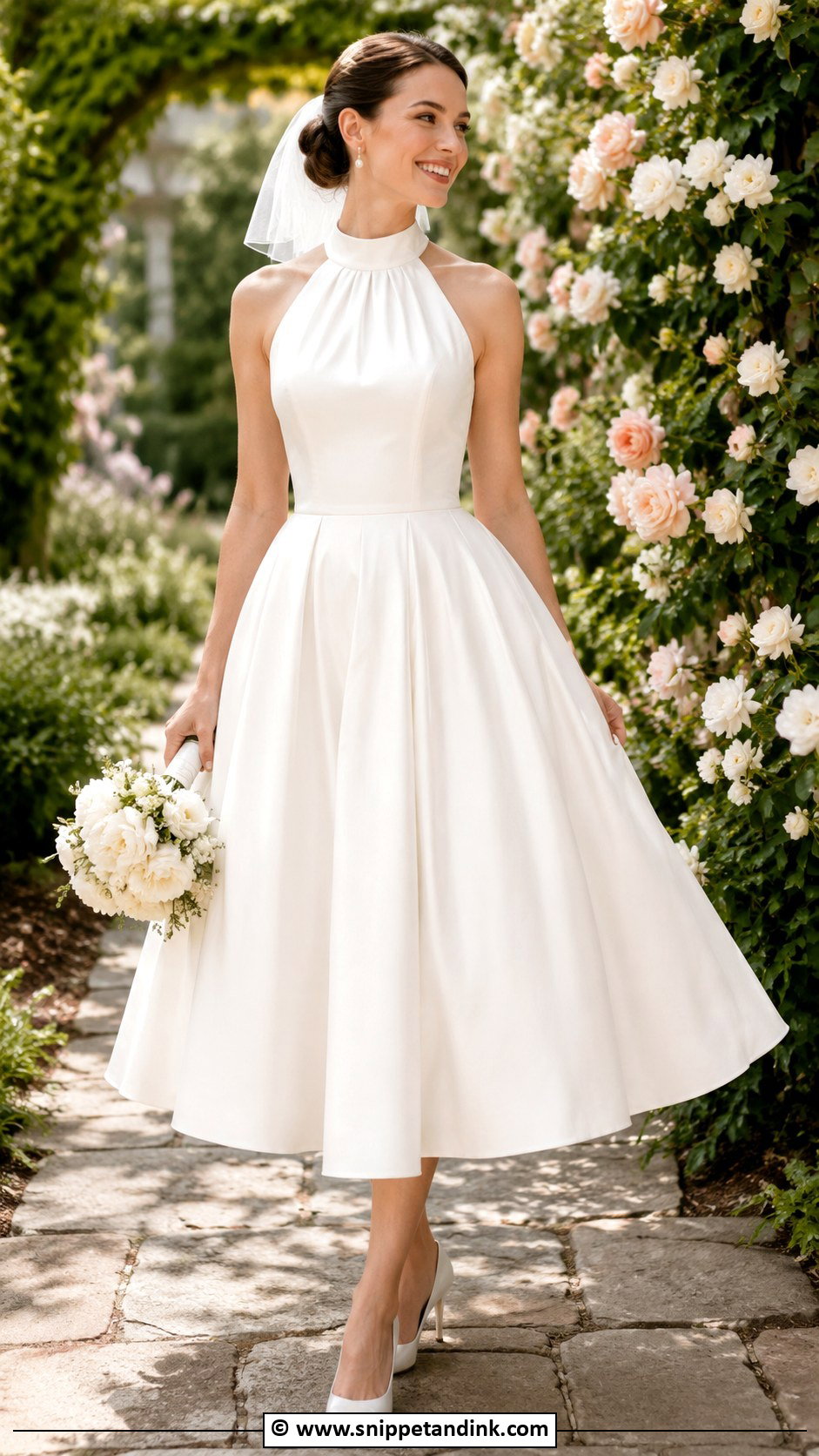
Tea length falls between the knee and ankle and carries a vintage feel without looking dated. Because the shoes show, they need choosing as carefully as the dress: satin pumps, embellished heels or ankle straps. A fitted halter with a fuller skirt reads playful; lace makes it more romantic. Tea-length skirts look best with a little petticoat underneath so the hem sits evenly. A short veil and neat bun suit garden weddings and daytime receptions.
18. Illusion Halter Wedding Dress
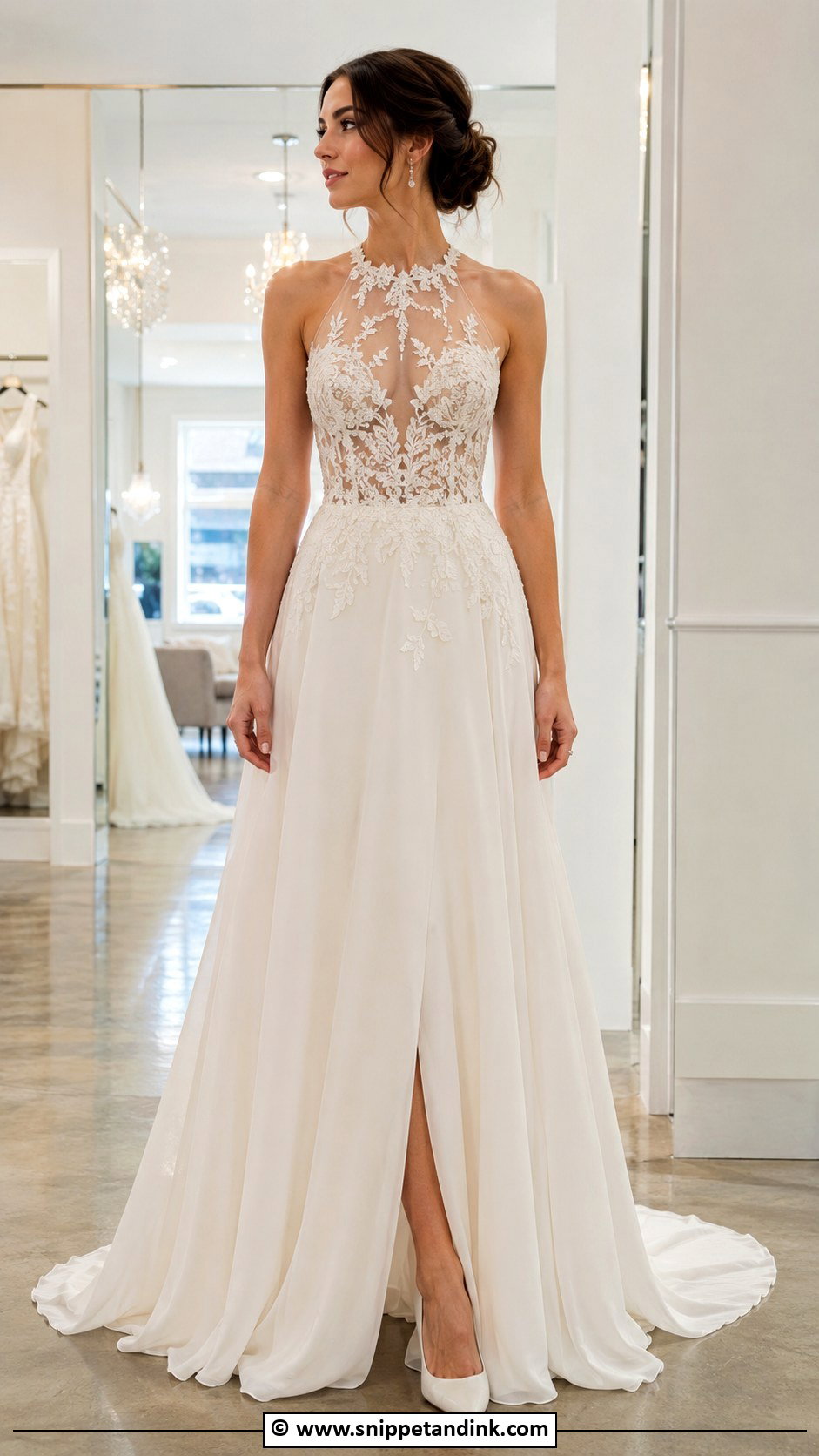
Illusion necklines use sheer fabric to give the look of a high or plunging neckline while still covering and supporting the bust. Soft tulle, lace appliqué or beaded details sit on that mesh. I match the illusion tulle to the bride’s skin in daylight, because a mesh that’s too light or too dark shows up as a band across the chest in photos. Skip the necklace and choose earrings instead. A smooth updo keeps the illusion detail visible.
19. Floral Halter Wedding Dress
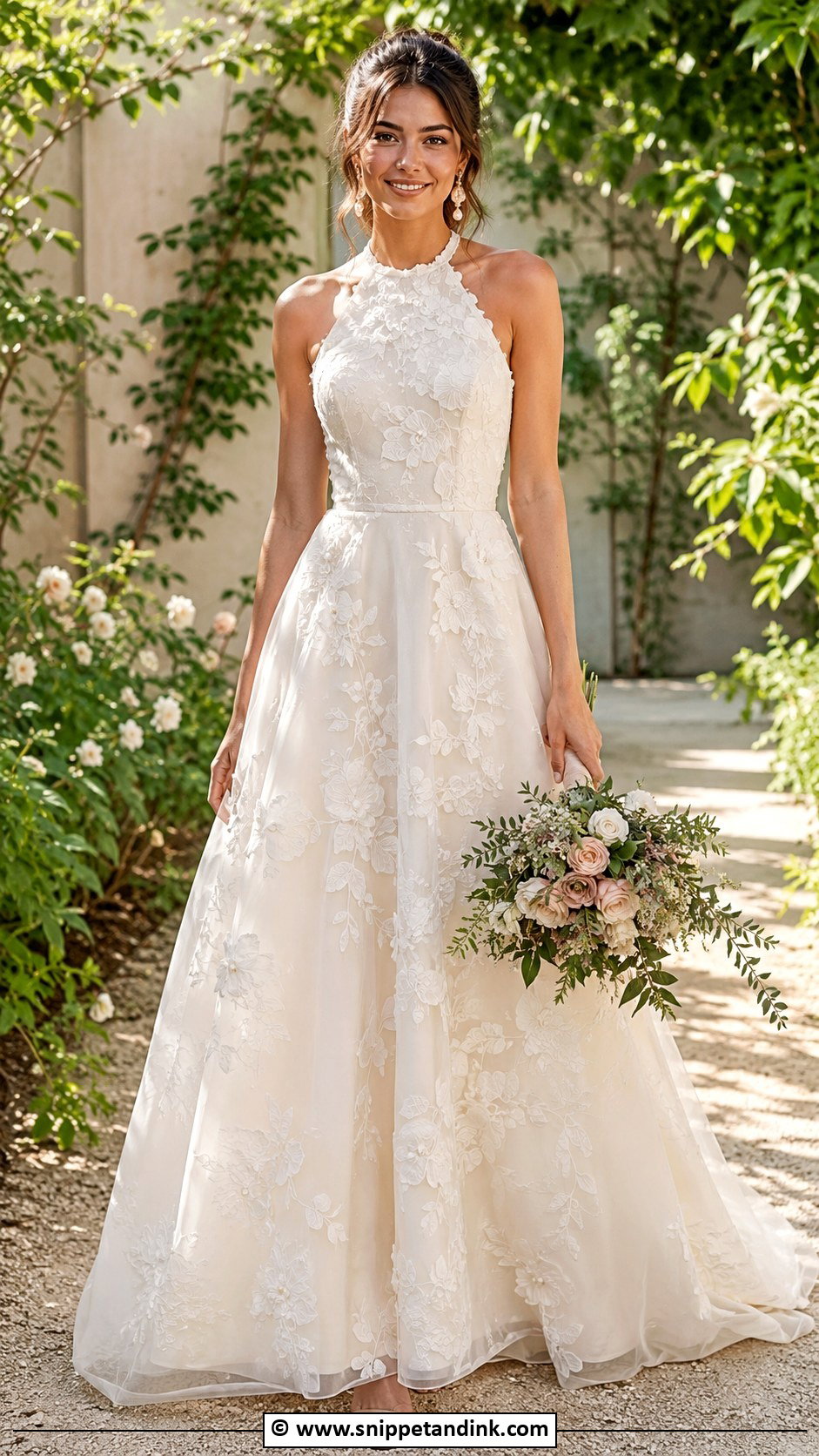
Floral halters, with floral lace, embroidered blooms or 3D appliqués, make the neckline feel softer and more feminine. They suit spring weddings and outdoor venues full of greenery. Raised 3D flowers can crush when you hug or lean against a chair, so I suggest a gown where the dimensional pieces sit on the skirt or the back rather than right at the bust. Pearl earrings, delicate heels and a natural bouquet are enough. Lift the hair away from the neckline.
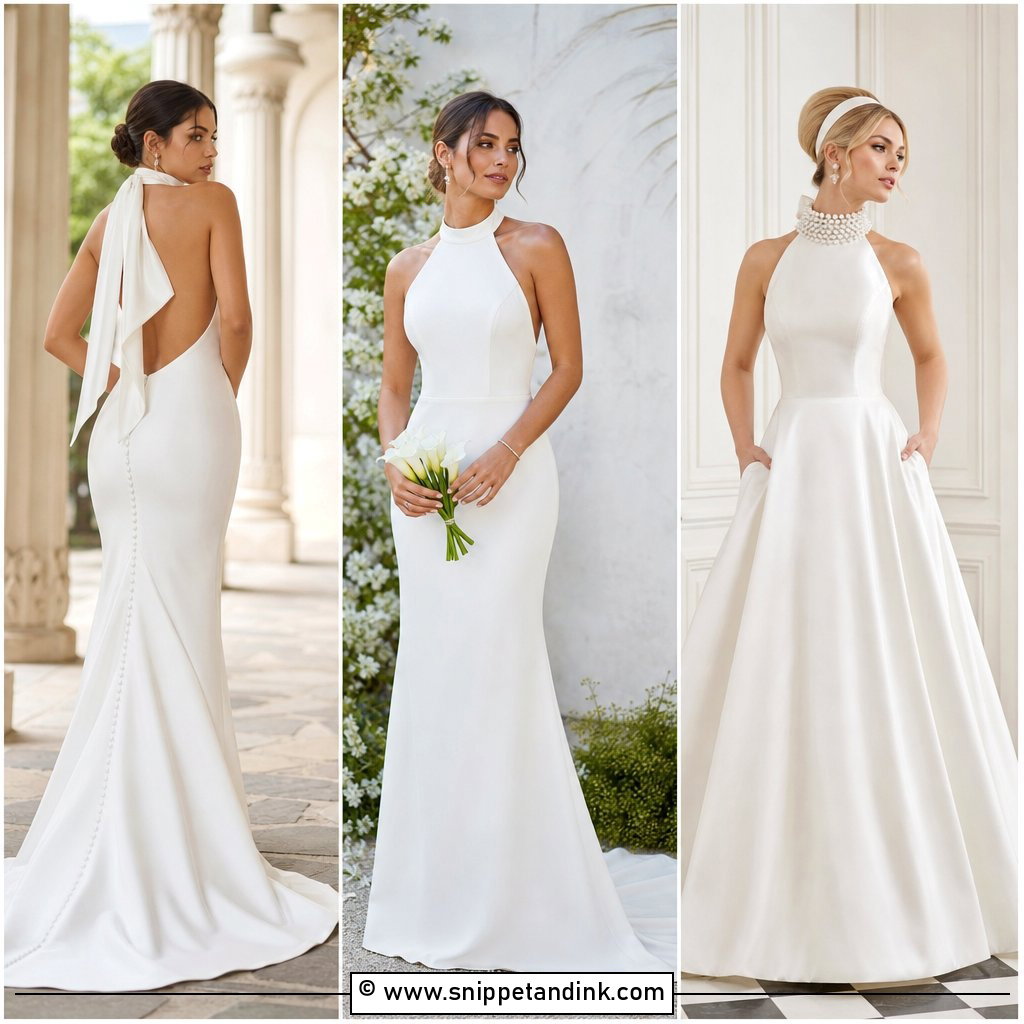
20. Plus Size Halter Wedding Dress
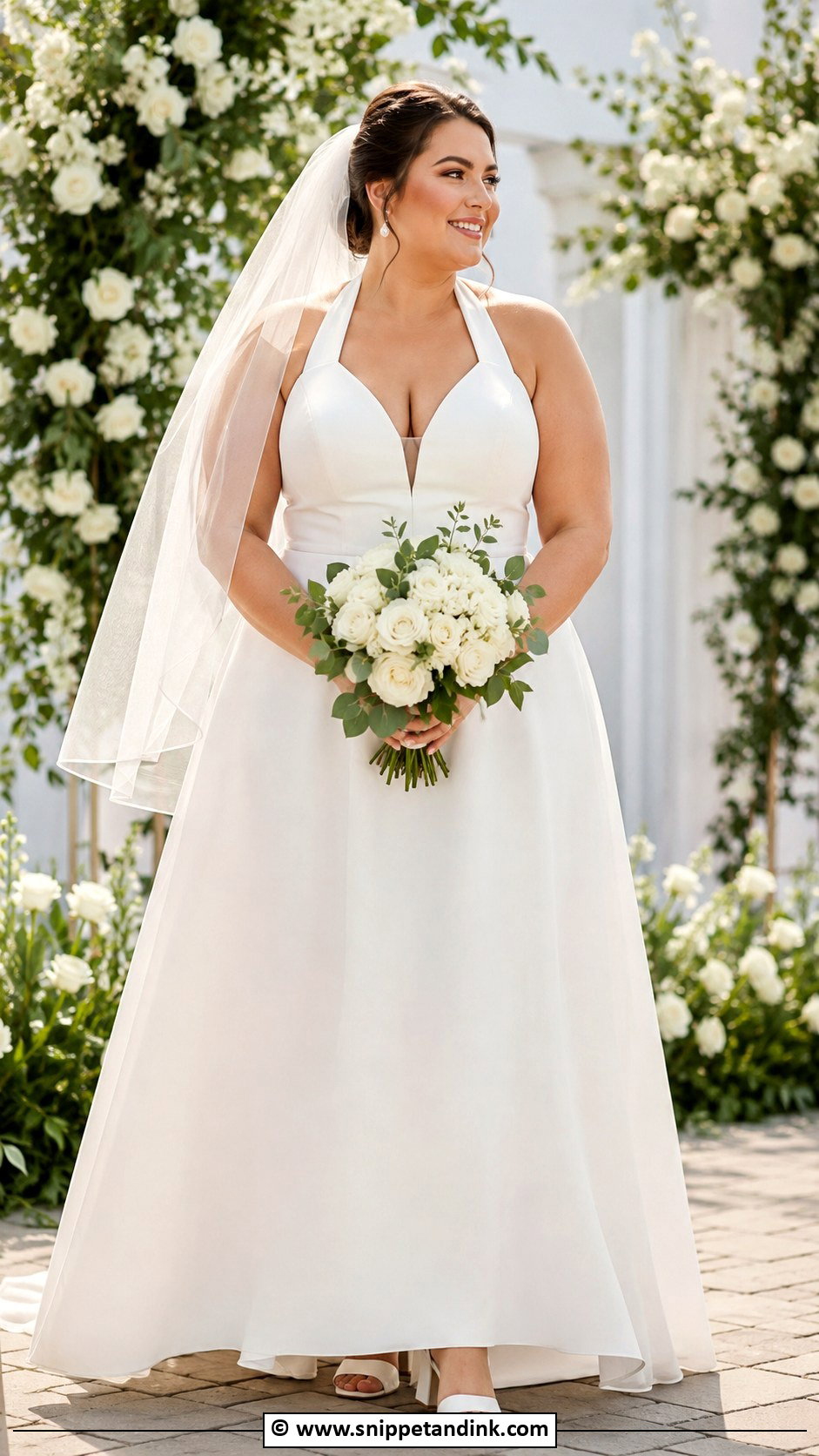
A plus size halter wedding dress can be very flattering, provided the support is built into the bodice rather than hung from the neck. I look for wider halter straps, internal corsetry or a built-in bra and a fabric with some body. A-line, fit-and-flare and soft ball gown shapes all work. The strap should never be what holds the bust up; if it is, you’ll feel it in your neck by the reception. Supportive undergarments and comfortable shoes make the whole day easier.
21. Open Back Halter Wedding Dress
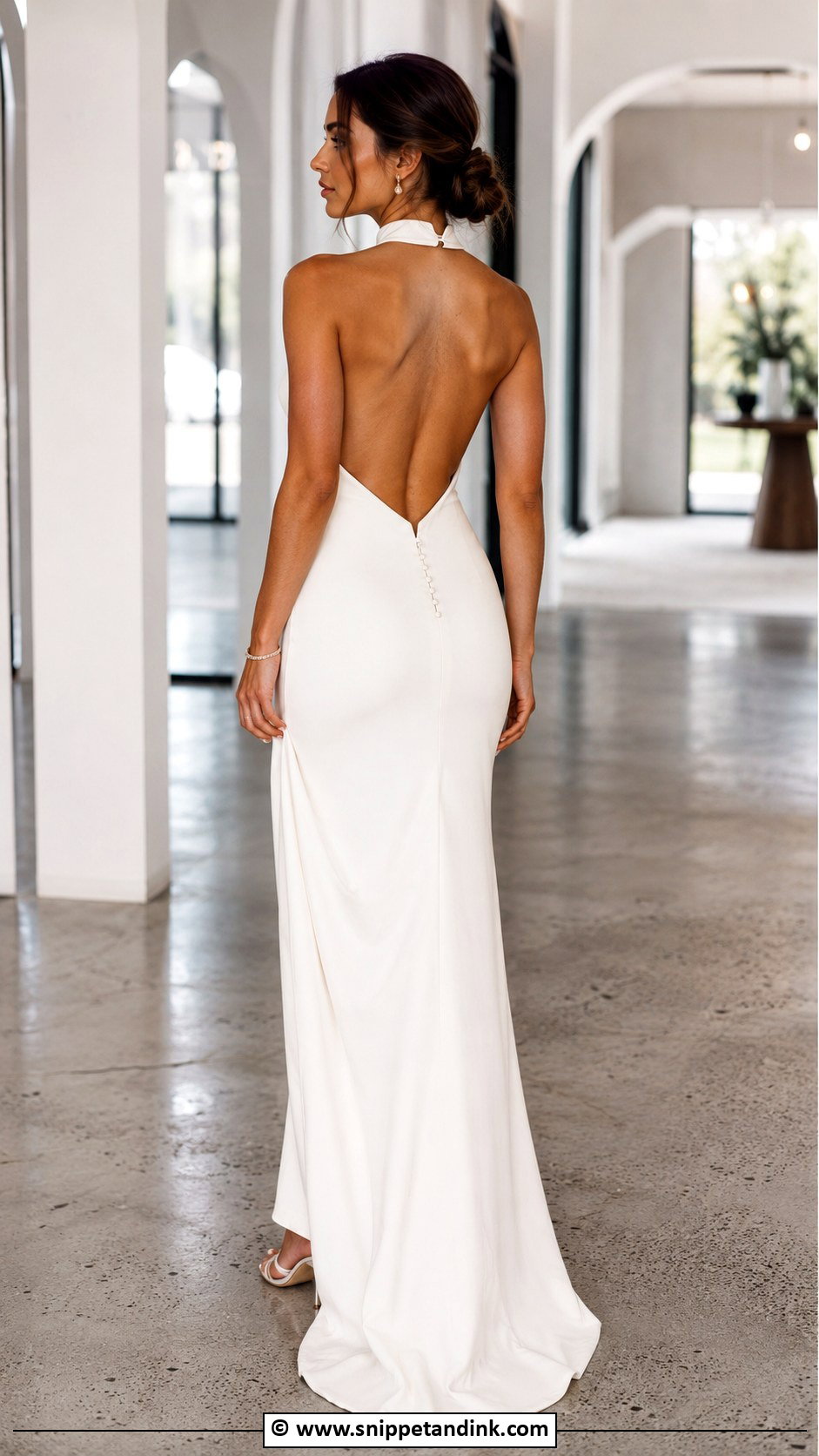
Open backs and halters are natural partners, since the neck strap keeps the front secure while the back stays bare. A low scoop, a keyhole or a dramatic open back can be chosen by comfort level. Crepe, satin and lace appliqué all suit. Before committing, I ask brides to think about the ceremony: guests look at your back for most of it, so the back detail matters more than the front for that half hour. Hair up or swept to one side keeps it visible.
22. Halter Wedding Dress With Slit
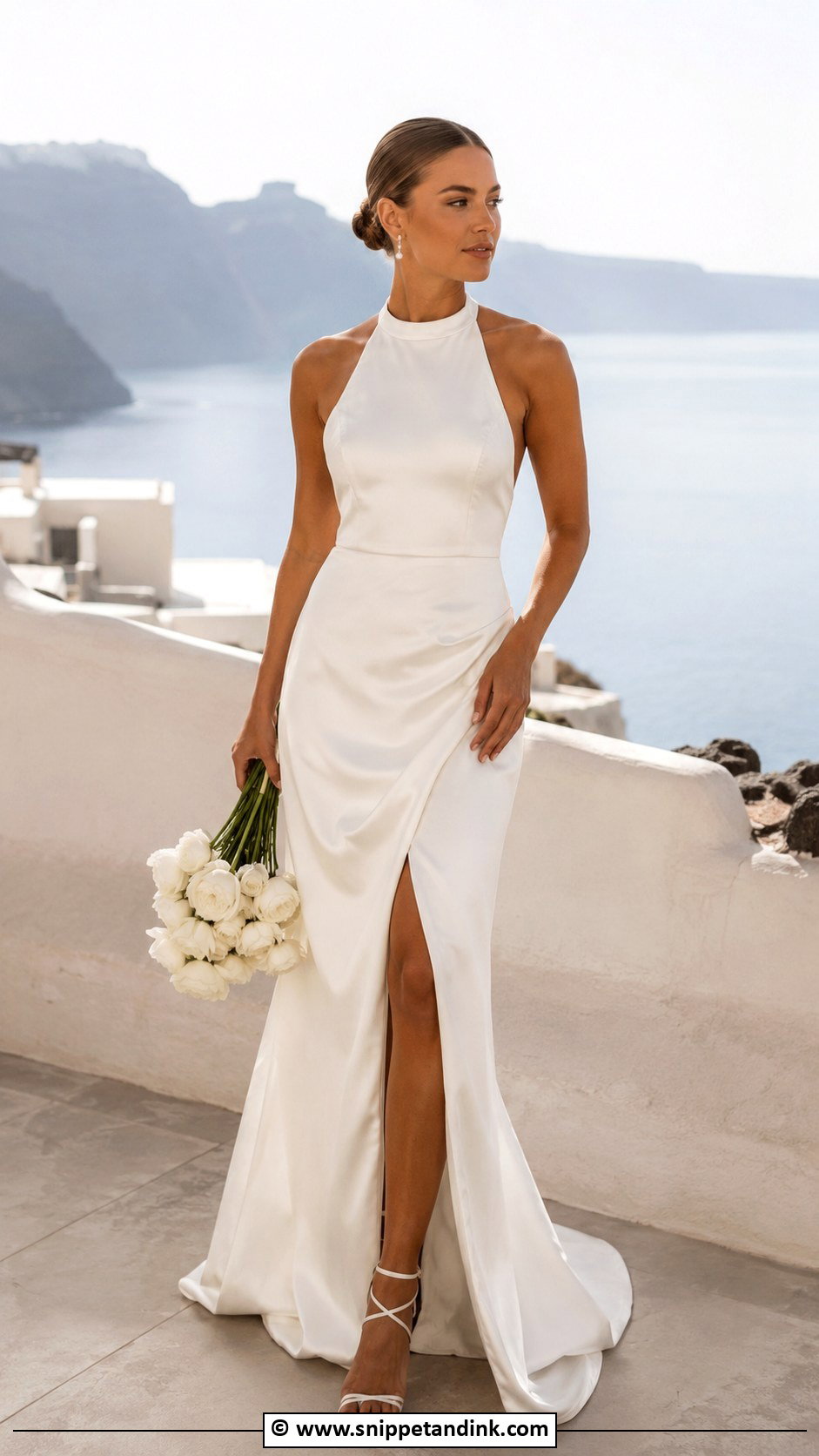
A slit adds movement and makes walking easier in a slim skirt. Satin, crepe, chiffon and light A-lines work best. I always test slit height seated and on stairs, because a slit that looks modest standing can open much higher when you sit for the meal. Strappy heels or pointed sandals look good since they show when you move. Simple jewellery lets the shape lead.
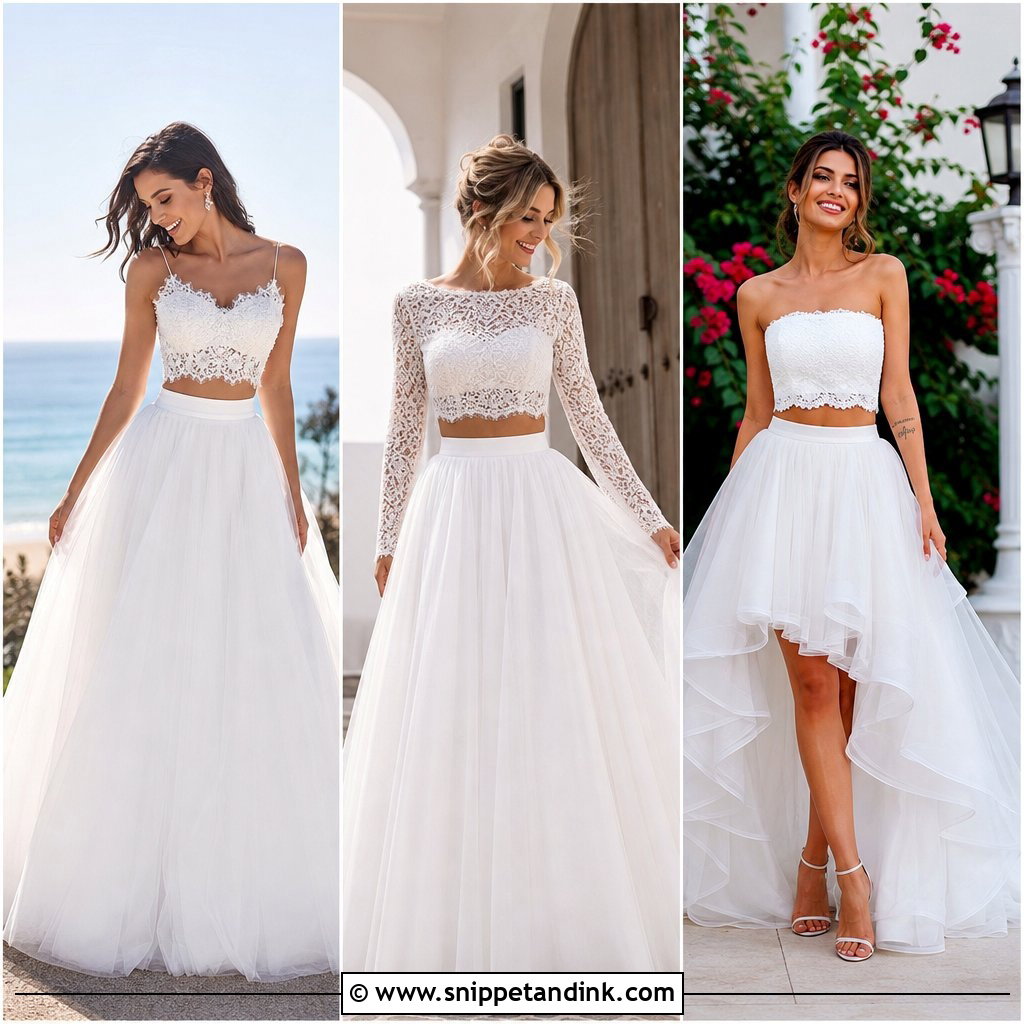
23. Two Piece Halter Wedding Dress
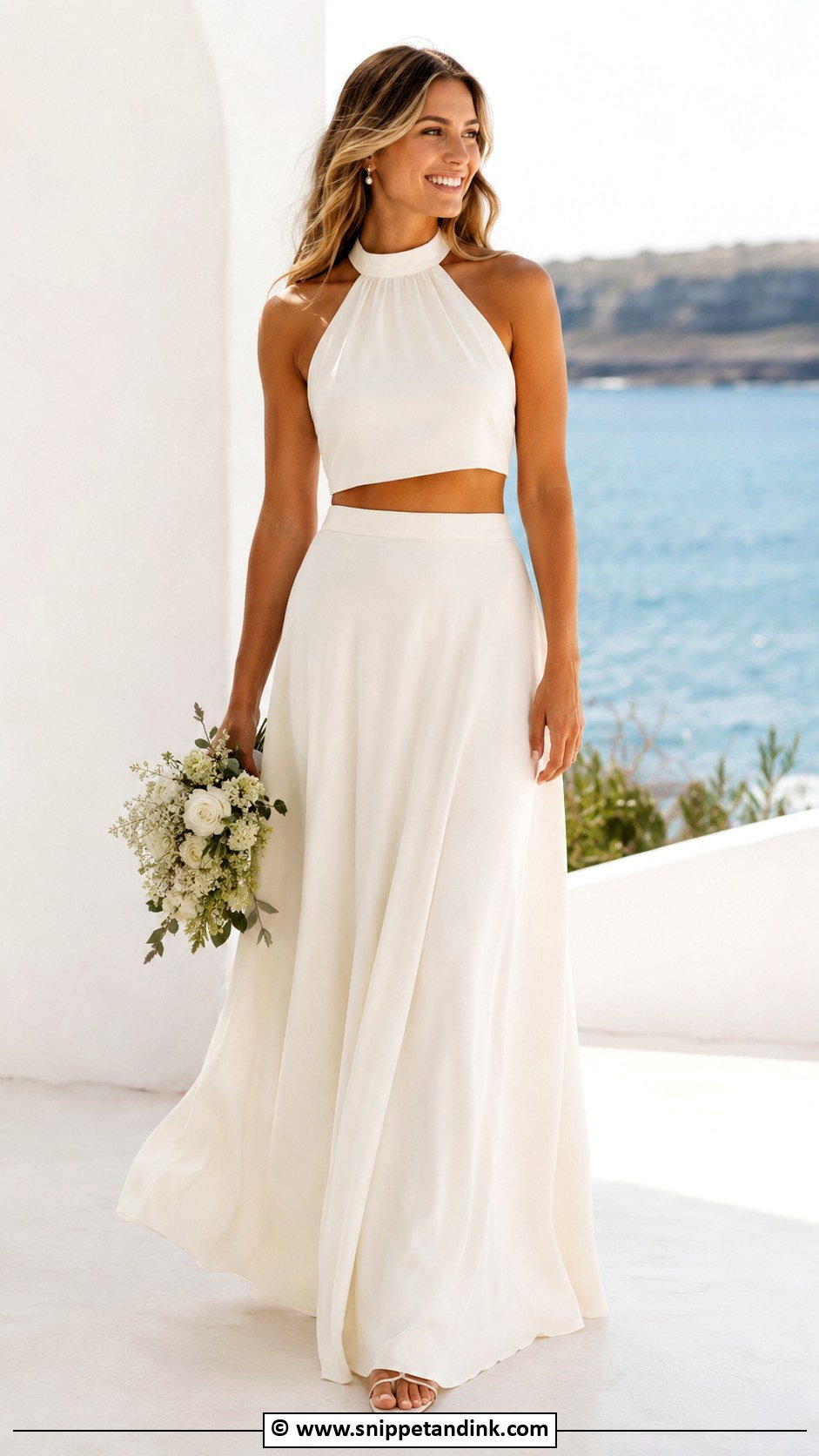
Two-piece halters suit brides who want something modern and flexible, from a cropped halter with a high-waisted skirt to a longer halter top over a flowing skirt. Beach weddings, courthouse ceremonies, elopements and reception changes suit them. The gap between top and skirt changes when you sit or raise your arms, so I make sure the skirt’s waistband sits high enough that the reveal looks intentional. Lace gives a boho feel; satin or crepe look sleek.
24. Halter Wedding Dress With Train
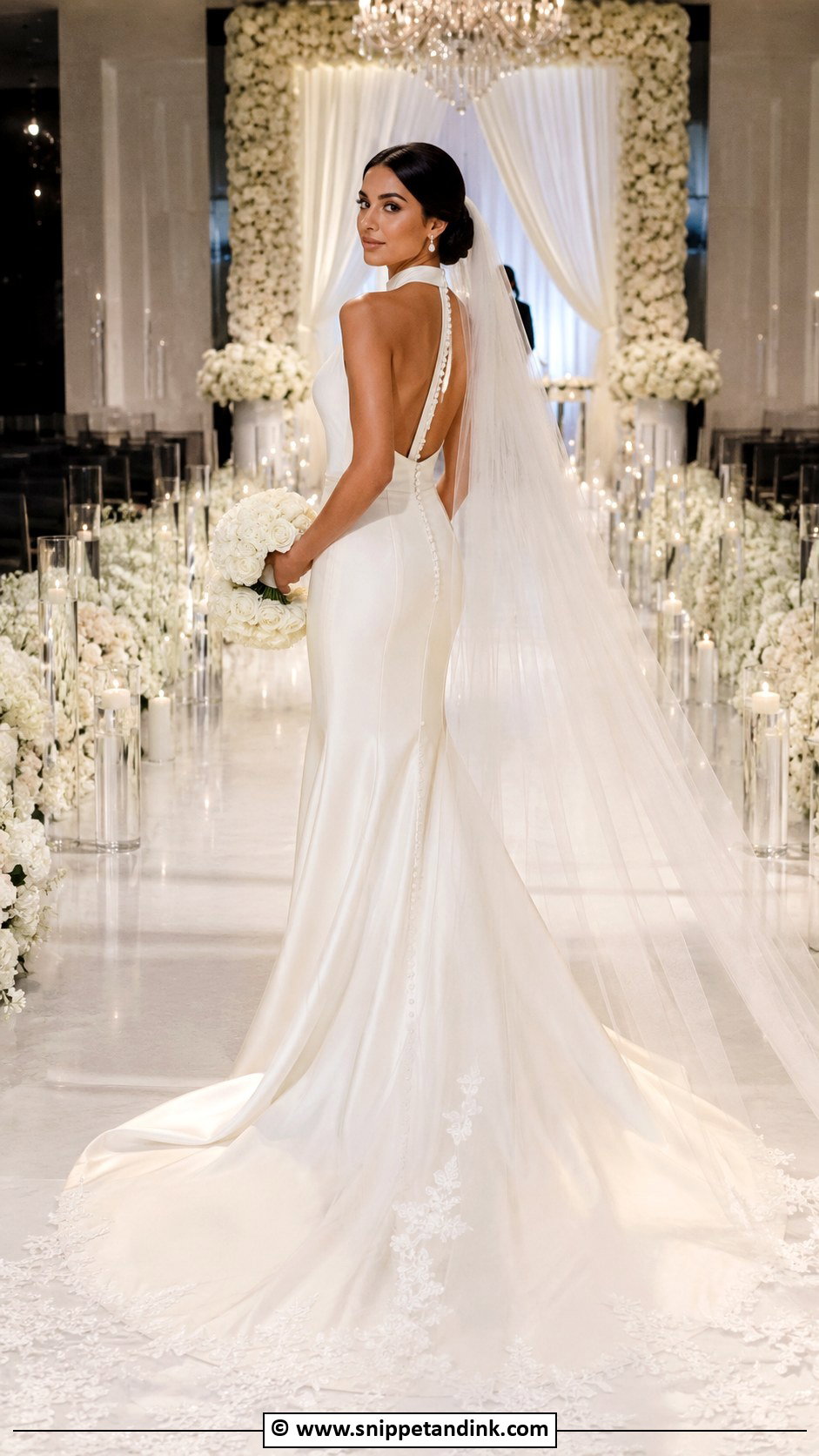
A train gives a halter a dramatic finish while the neckline stays secure. Sweep, chapel and cathedral lengths suit different venues; a long train on a beach collects sand. Sleek halters with long trains feel formal, while lace or tulle makes them more romantic. The bustle is the part brides forget: ask your seamstress to show your maid of honour how to fasten it, and practise once before the day. Simple earrings and polished heels keep the outfit balanced.
25. Halter Wedding Dress With Veil
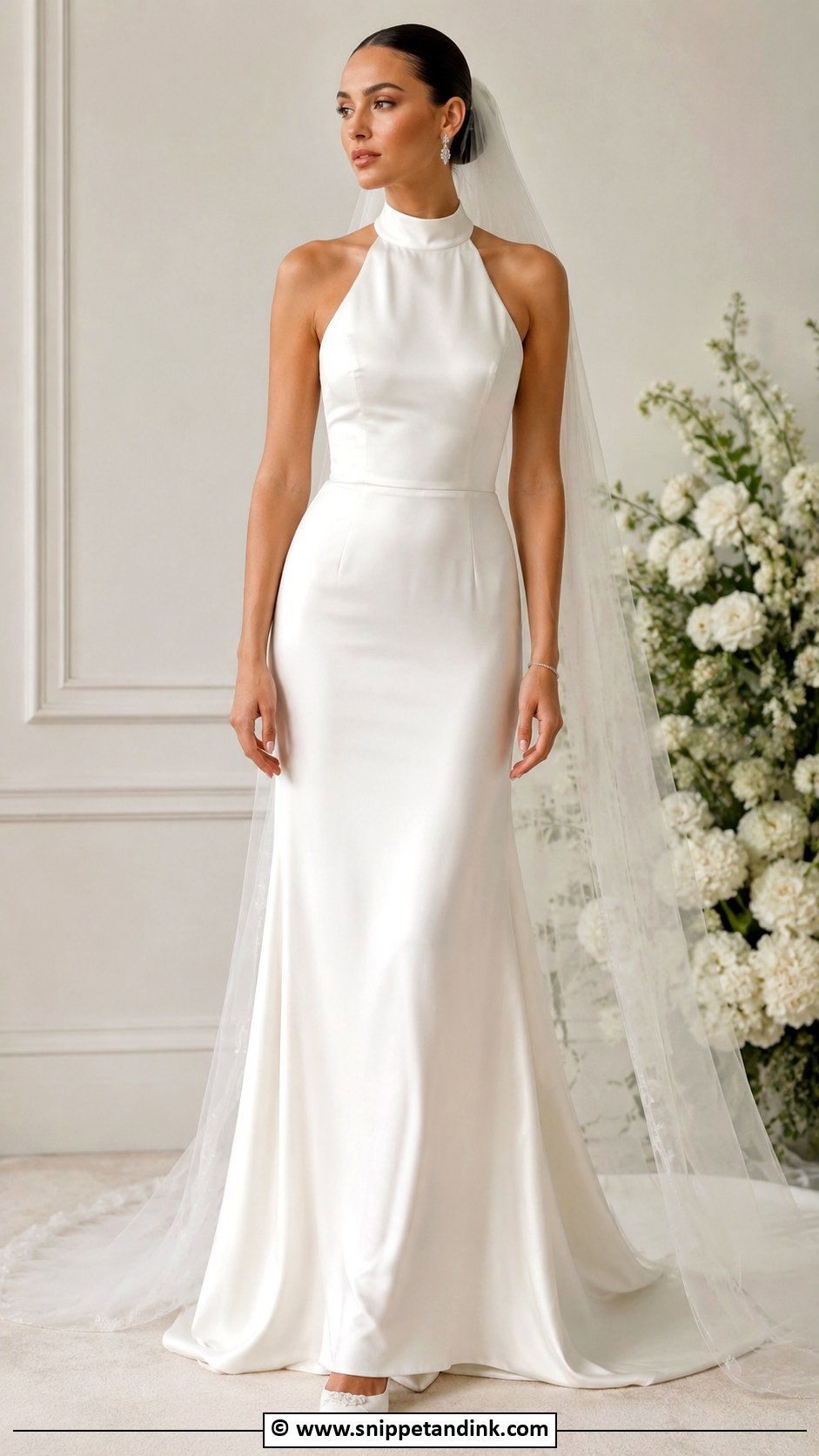
Pairing a veil with a halter is about proportion. The neckline already frames the shoulders, so the veil should sit low enough not to hide it. I place combs just under a bun or at the base of a ponytail so the tulle falls behind the neck strap. Simple gowns can take a lace-edge or cathedral veil; detailed halters look cleaner with a plain one. Earrings and maybe a bracelet are all the jewellery you need.
What a Halter Asks of You After the First Few Hours
Weight on the neck
Heavy beading, thick satin and long trains all put load on the strap. At your final fitting, wear the dress for at least half an hour and notice whether the back of your neck aches. If it does, a seamstress can shift weight onto the bodice with internal boning or a waist stay, a grosgrain band inside the waist that anchors the dress to your body.
Ties versus hooks
Tie halters loosen as the fabric relaxes, so the bust drops a little by evening. A hidden hook and eye, or a button with a stitched loop, holds firm. If you love a tie, ask for a concealed hook under the bow as backup.
Tan lines and skin
A summer halter shows everything from the collarbone to the lower back, so strap tan lines from a bikini or a regular top will be visible. Stick to strapless swimwear and sunscreen on the shoulders and back in the weeks before. Any self-tan should be tested on the fabric too, as fresh tan can rub off on ivory satin at the neck strap.
Does Your Halter Still Feel Secure at Midnight?
Halters cover a huge range, from sleek satin and romantic lace to beach chiffon, long trains and modern two-pieces. What they share is a neckline that shows the shoulders, holds the bodice in place and makes open backs possible. When you try them on, think past the dress: how it feels on your neck after an hour, where your hair will sit, which shoes you will stand in and how the back looks to guests during the ceremony. A halter that feels secure while you sit, hug and dance is the right one, whatever its style.
You'll Like These Ideas:


Leave a Reply