
Trends move fast in bridal shops, and the gowns that age well are rarely the ones chasing them. What lasts is a clean line, a good fabric and a fit that looks made for you. That’s the thread running through every gown here: satin ball gowns, lace sleeves, pearl details, sleek columns and trains that make an entrance. A classic dress also has to be livable. You’ll wear it for ten or twelve hours, sit in it, eat in it and hug a hundred people, so I’ve added the practical checks I make in the fitting room alongside the styling.
Try On the Shape You Think You’ll Hate
Most brides arrive at a first appointment certain about one silhouette and leave in another. Hangers lie. A mermaid can look severe on the rail and soften completely on the body, and an A-line that looks plain in a photo can be the one you can’t stop smiling in. I always pull one gown the bride has ruled out, just to compare.
- Wear smooth nude underwear and bring heels close to the height you’ll wear.
- Bring one or two people whose taste you trust. A crowd of opinions makes the decision harder.
- Try at least one gown in satin, one in lace and one in crepe. Fabric changes how a shape behaves more than the shape itself.
- Photograph yourself from the back and side, not just the front.
1. Satin Ball Gown Wedding Dress
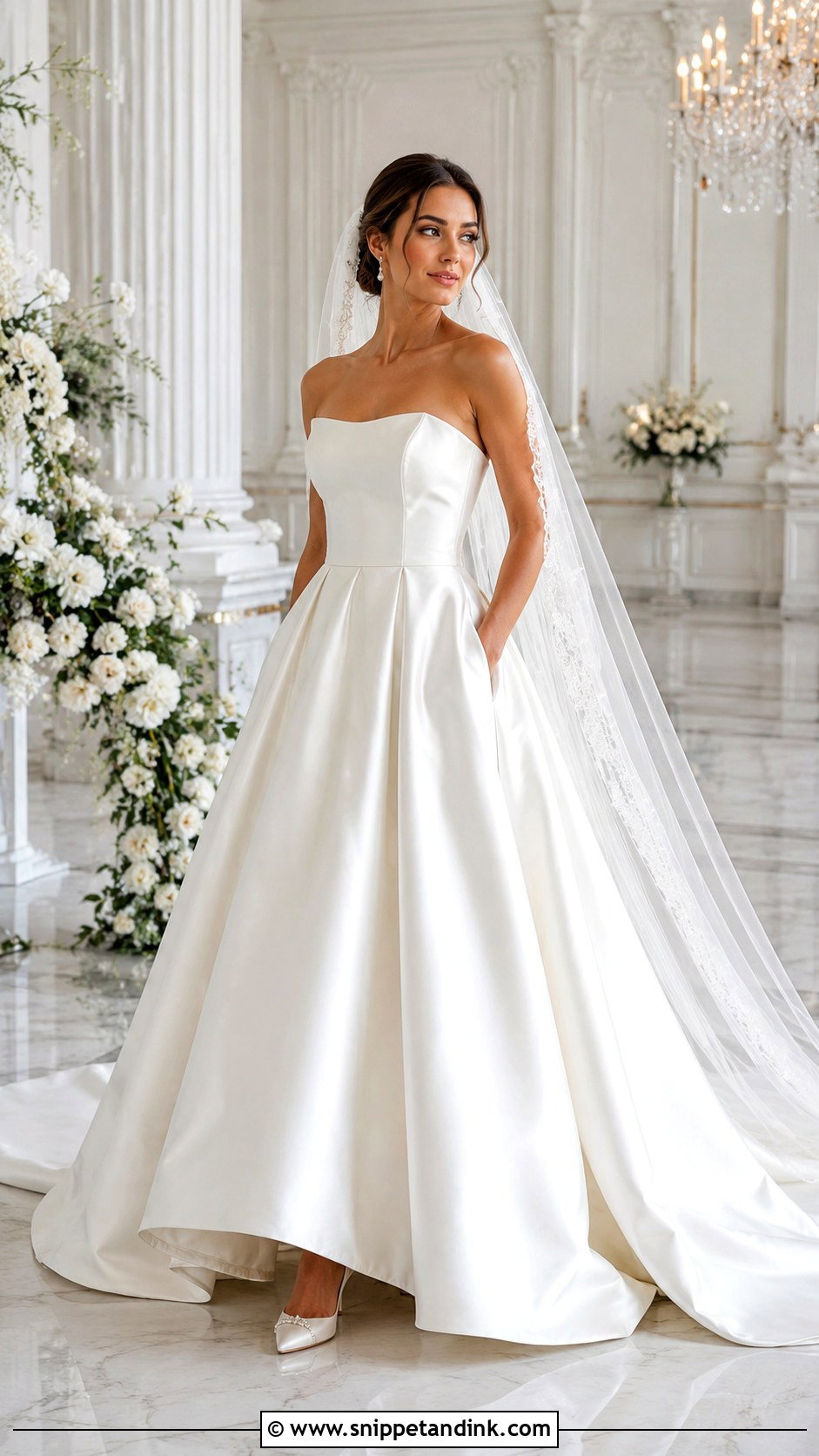
Nothing makes an entrance like a satin ball gown. The fabric glows rather than sparkles, which is why it needs no beading at all. A fitted bodice balances the volume, and a natural or basque waist decides how long your torso looks. Pointed satin heels, pearl drops and a plain cathedral veil keep it formal. It belongs in a ballroom or a grand house, with a structured bouquet of white roses or calla lilies. The trade-off is weight: a full satin skirt can be heavy by evening, so ask about a lighter underskirt or horsehair hem instead of layers of petticoat.
2. Long Sleeve Lace Wedding Dress
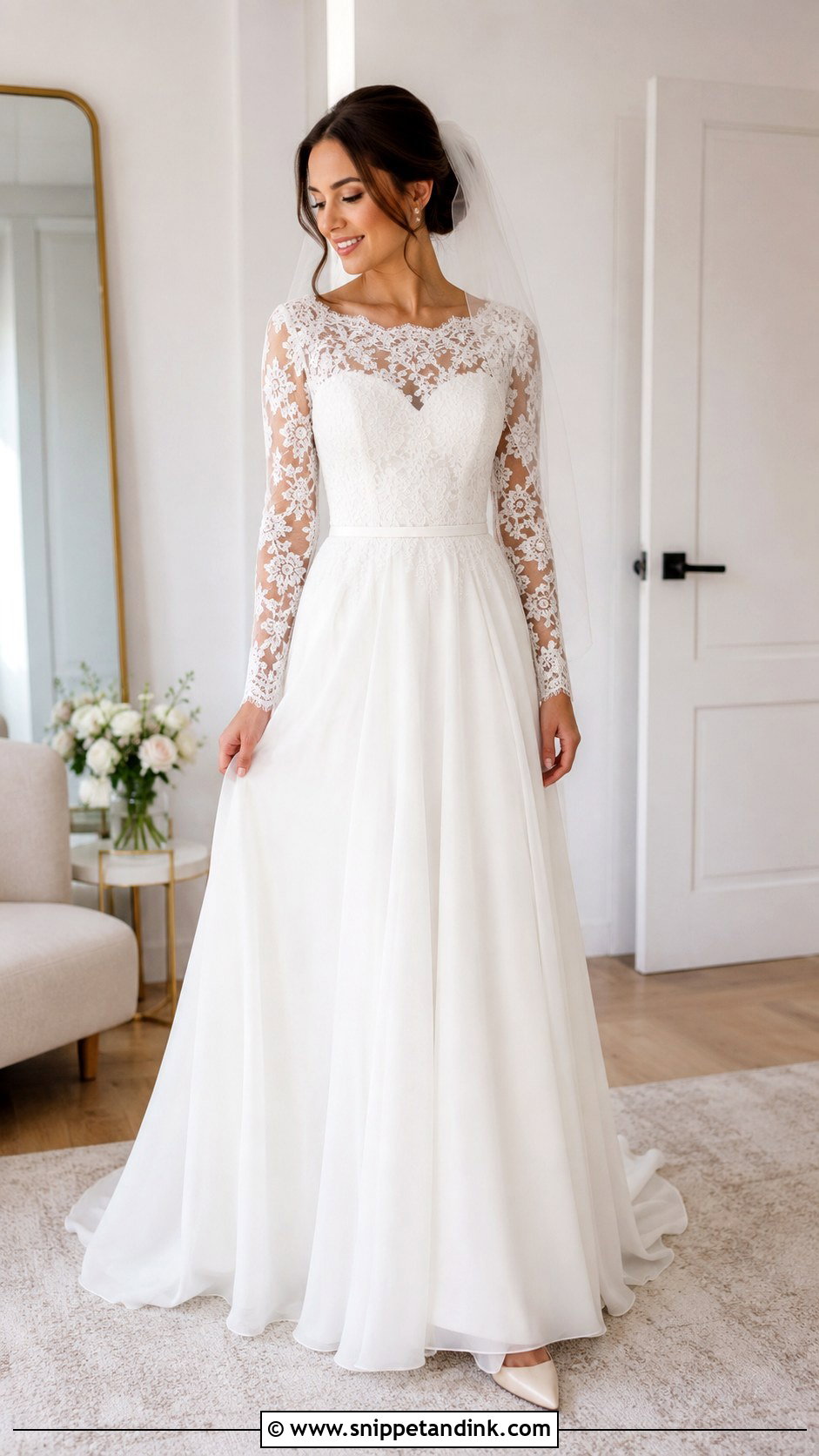
Lace sleeves give coverage and texture in one. A fitted lace bodice, a gentle A-line skirt and small covered buttons down the back are the traditional build. The sleeves can be sheer, floral or scalloped at the wrist. Wear a low chignon, pearl studs and ivory heels. If the lace is busy, a plain veil looks better than a lace-edged one competing with it. One thing I always check: lace sleeves should end just past the wrist bone, because longer ones bunch every time you hold the bouquet. It suits spring and autumn weddings especially.
3. Off The Shoulder Wedding Dress
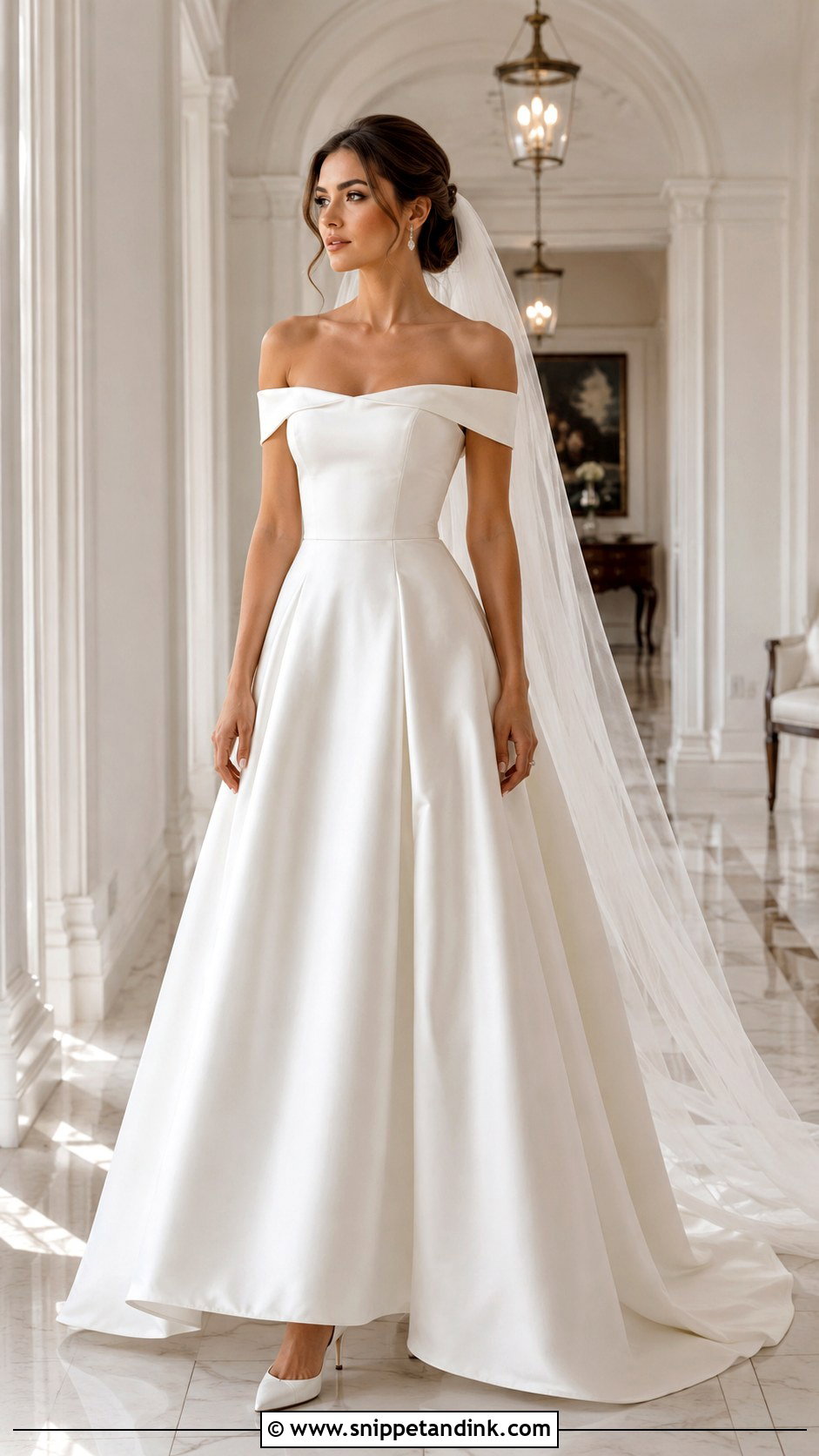
Off-the-shoulder necklines show the collarbones while covering more than a strapless gown does. A structured bodice is what keeps them neat, over a full A-line or a fitted mermaid skirt. Satin, mikado and crepe hold the shape well. A delicate necklace, classic studs and sleek heels complete it, and a long veil with minimal trim keeps the attention up. Before you buy, lift your arms and hug someone. If the band slips down the arm or digs into it, the bodice needs more internal structure, not a tighter fit.
4. A Line Wedding Dress
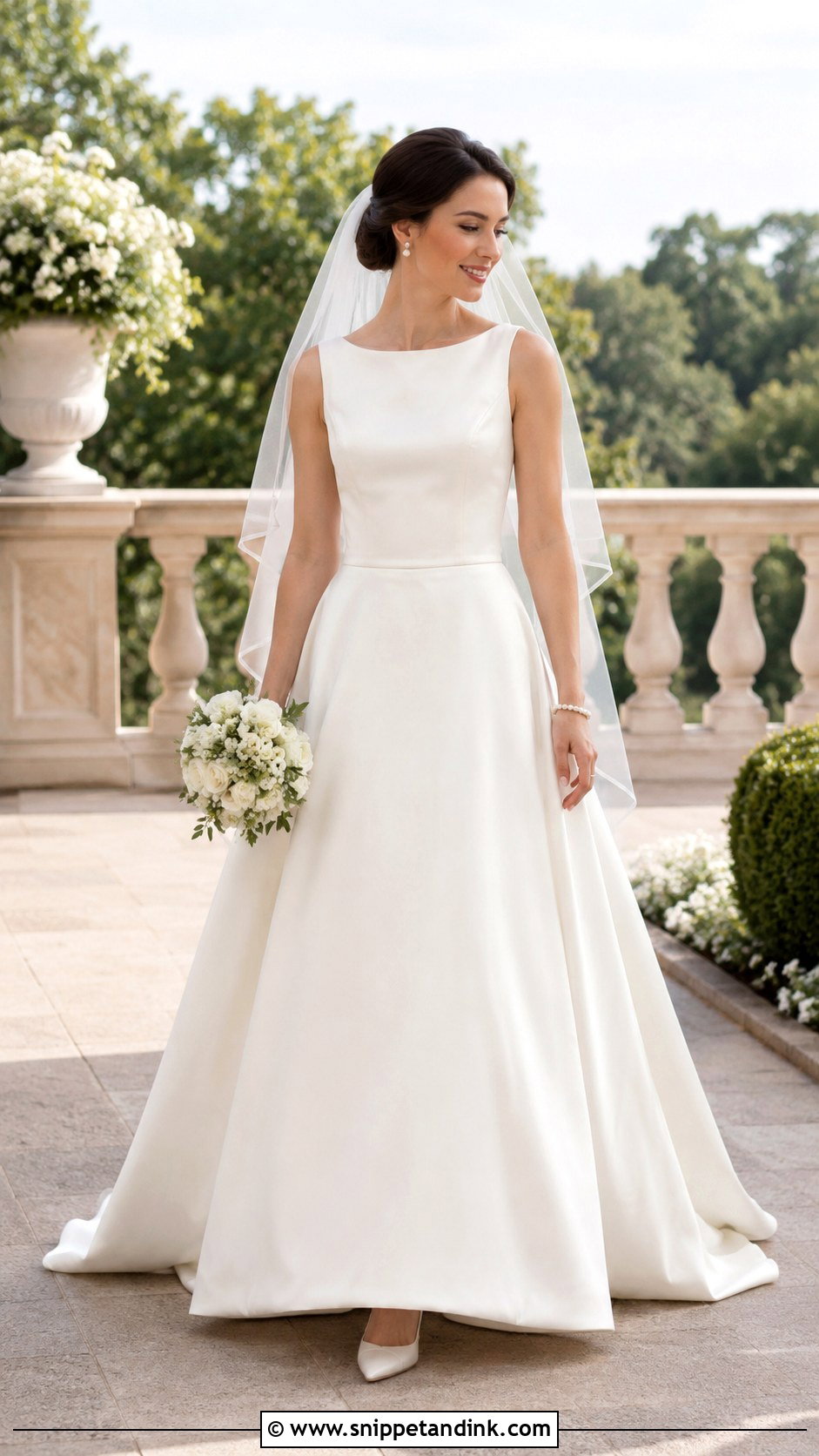
A-lines flatter almost every figure, which is why they outsell every other shape. The bodice fits closely and the skirt flows away from the waist, hiding the hips and balancing the shoulders. Satin, organza, lace or soft tulle with little embellishment keeps it classic. Square, sweetheart and bateau necklines all work. Ivory pumps, a fine bracelet and a medium-length veil finish it. It’s comfortable through a long day and dancing, so if you’re unsure where to start, try this first and compare everything else against it.
5. Strapless Mikado Wedding Dress
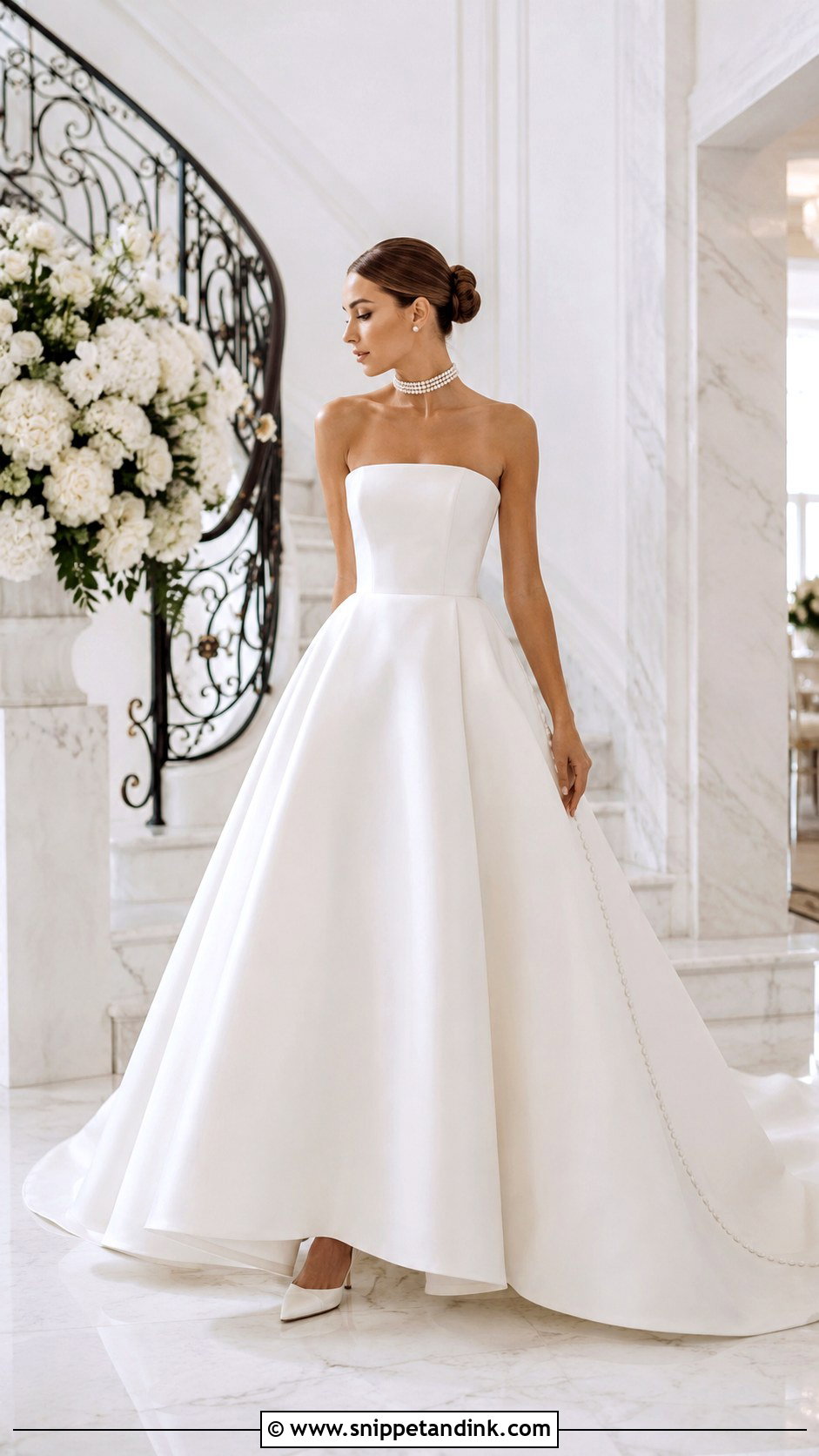
Mikado is a firm, slightly ribbed fabric, and in a strapless gown it creates crisp structure without looking stiff. A fitted bodice and full skirt give the classic shape. Hidden pockets, covered buttons or a small back bow add quiet detail. A pearl choker or drop earrings both suit the bare neckline, with a sleek bun so nothing competes with the dress. Mikado doesn’t stretch, so the bodice has to be cut precisely, which is part of what gives it a couture-inspired finish.
6. High Neck Wedding Dress
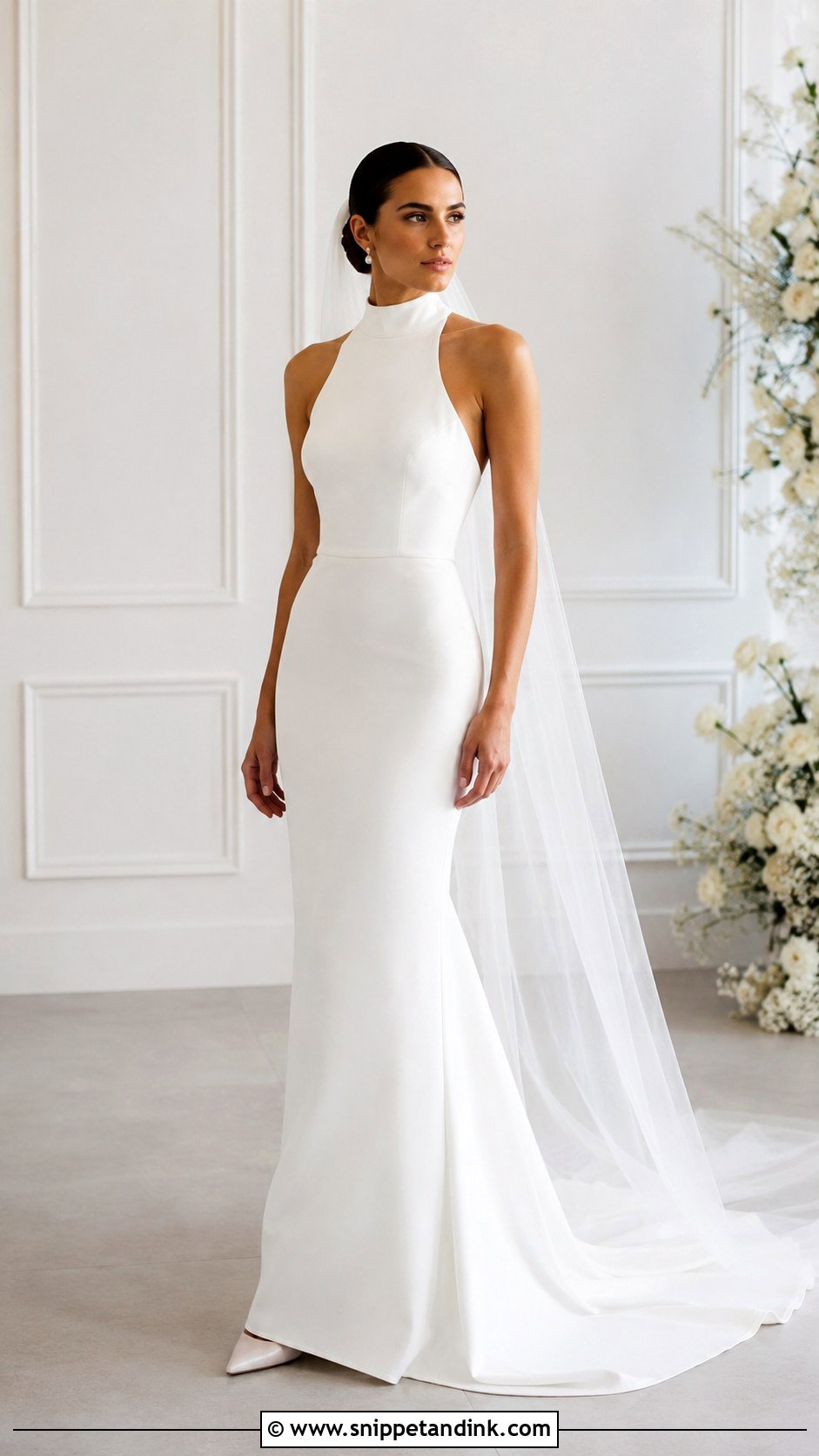
High necks give coverage with confidence. In lace, crepe, satin or illusion tulle the neckline can look soft rather than severe. A fitted bodice with a slim skirt reads modern; a full skirt reads traditional. Pearl earrings, a smooth updo and simple ivory heels suit it. No necklace is needed. On brides with shorter necks I’d go for a slightly lower mock neck or an illusion yoke, which keeps the look without making the neck disappear in photos. Formal venues and vintage-leaning brides suit it best.
7. Square Neck Wedding Dress
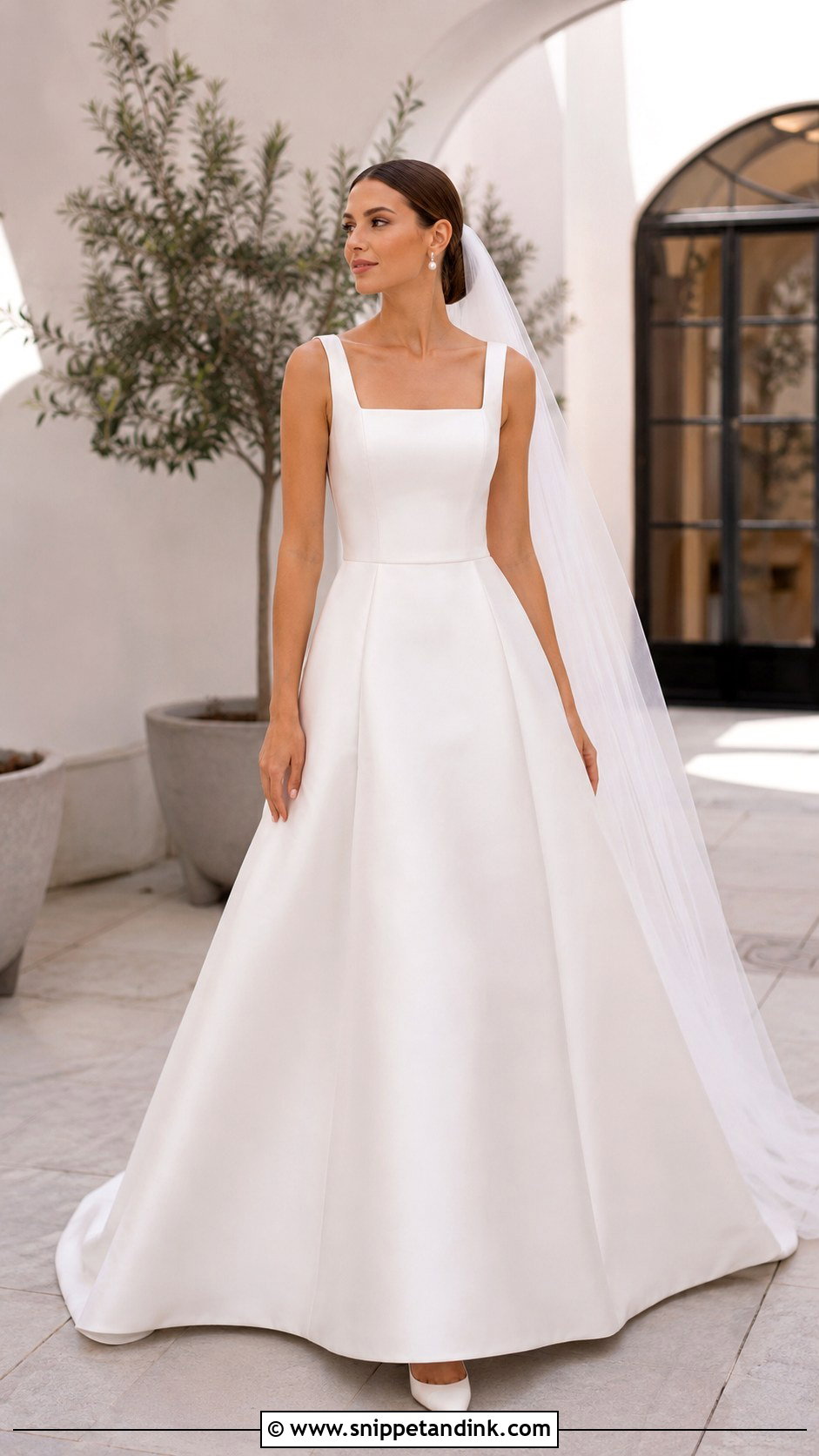
A square neck frames the shoulders and gives the bodice a tailored line. It pairs with wide straps, cap sleeves or long sleeves, so it adapts to any season. For a classic version, choose a satin or crepe A-line with a fitted waist and a soft train. Pearl earrings, a sleek veil and pointed heels complete it. It’s flattering because it adds structure without drama. The corners should sit flat even when you bend; if they lift, the shoulder straps need shortening by a fraction.
8. Simple Crepe Wedding Dress
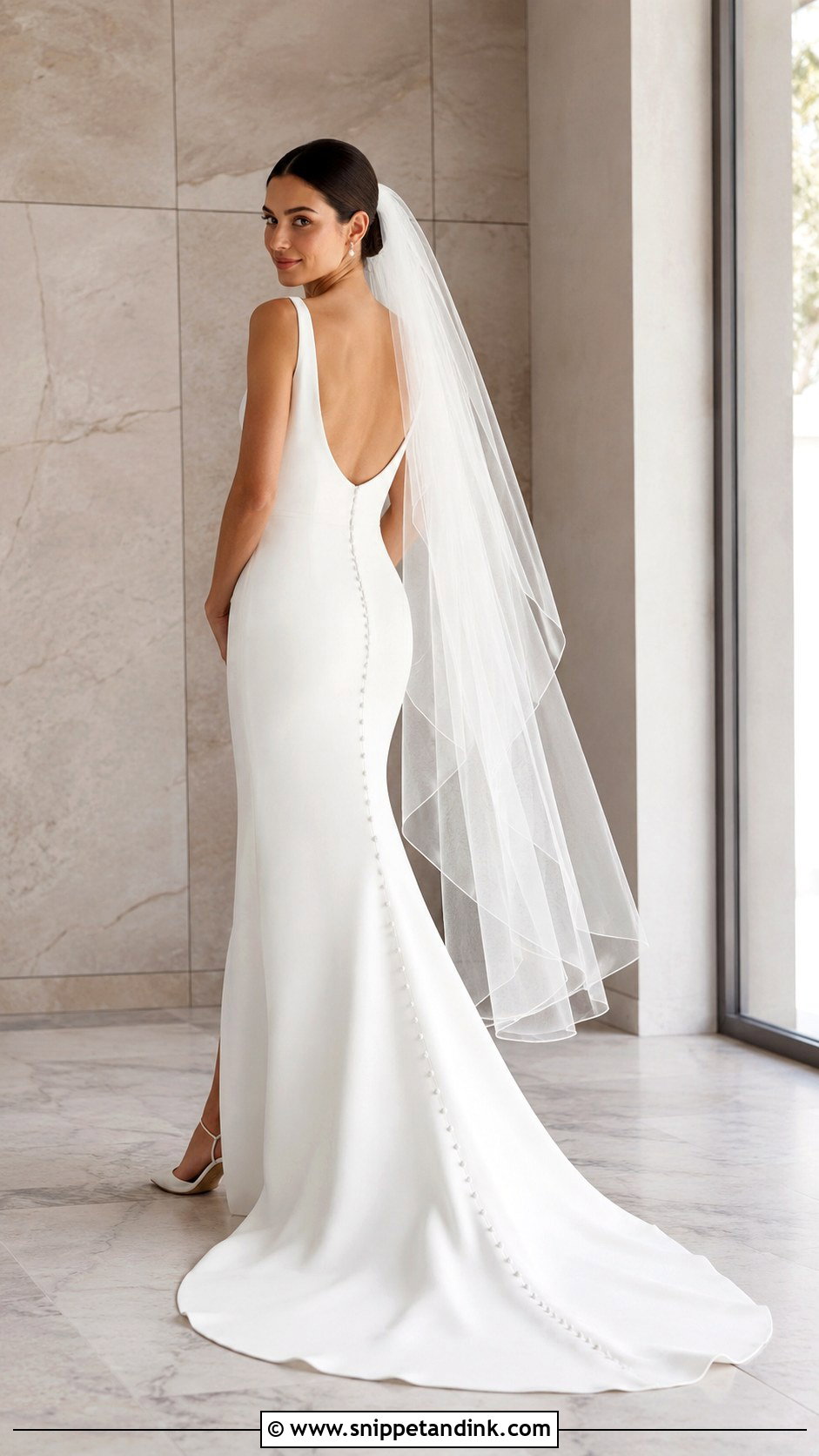
Crepe is honest fabric. It drapes smoothly and hides nothing, so the fit has to be right before it looks simple in a good way. A fitted sheath or soft fit-and-flare suits it. Look for covered buttons, a subtle train or a graceful cowl back for interest. Pearl studs, a soft veil and slingback heels keep it clean, and a structured bouquet adds polish. Bring your exact underwear to every fitting with crepe, since a different bra changes the line completely.
9. Pearl Beaded Wedding Dress
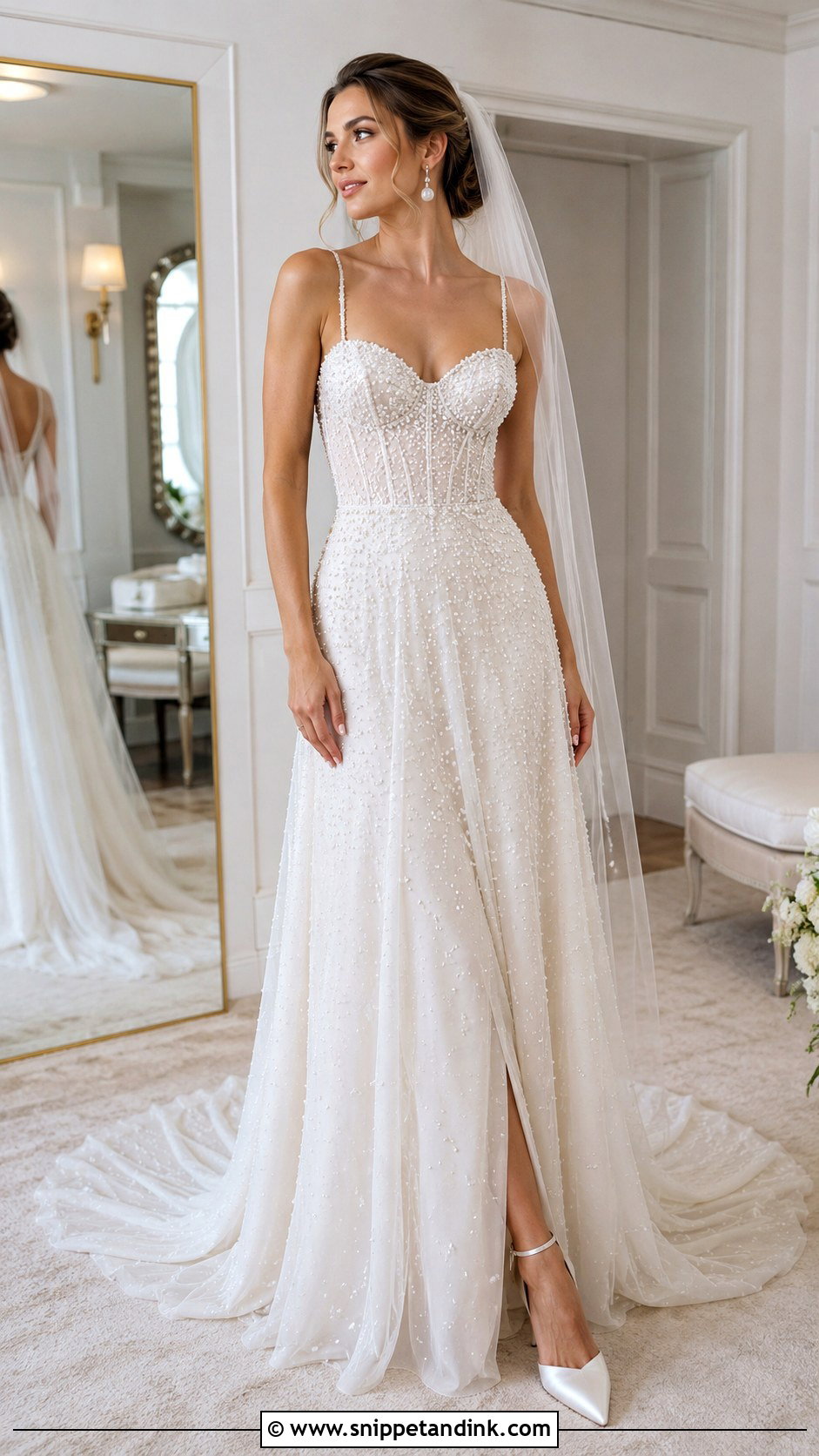
Pearls give a softer shine than crystals. On a bodice, sleeves, neckline or veil they add light without flash, and a light scatter ages far better than heavy allover beading. A fitted, A-line or column shape all work. Pearl earrings, satin heels and a sleek hairstyle tie it together, with a simple bouquet of white flowers. Run the veil across the beading at the fitting; pearls on long threads catch tulle and pull at it every time you turn your head.
10. Bateau Neck Wedding Dress
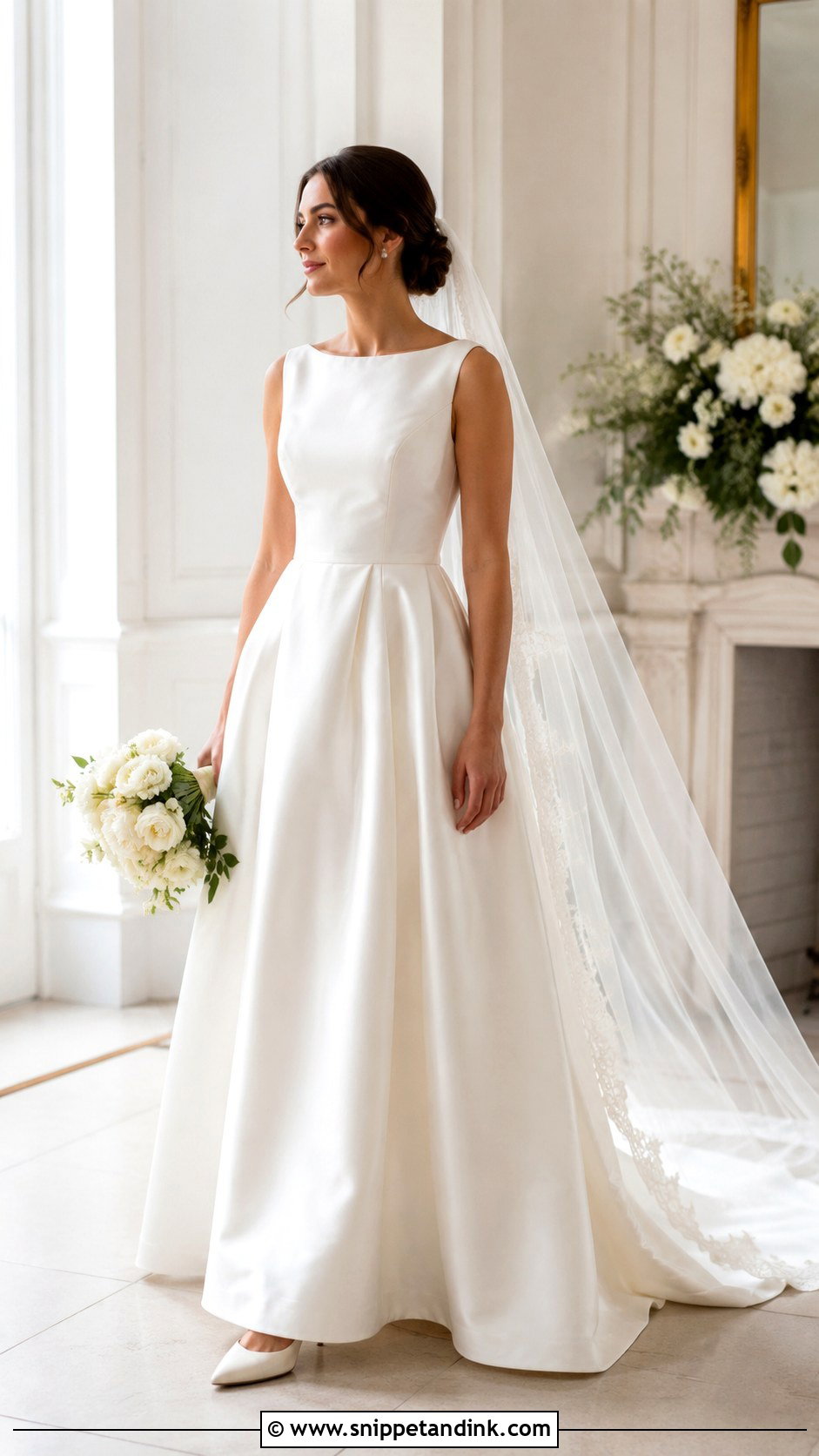
A bateau neck wedding dress runs softly across the collarbone from shoulder to shoulder, covering the chest without closing in the throat. Long sleeves, cap sleeves or no sleeves all suit it. A satin or lace gown with a defined waist and flowing skirt is the classic build, with a low bun, pearl studs and closed-toe heels. A chapel or fingertip veil balances it. Bateau necks can slide off narrow shoulders, so I ask for lingerie guards sewn into the shoulder seams.
11. Tea Length Wedding Dress
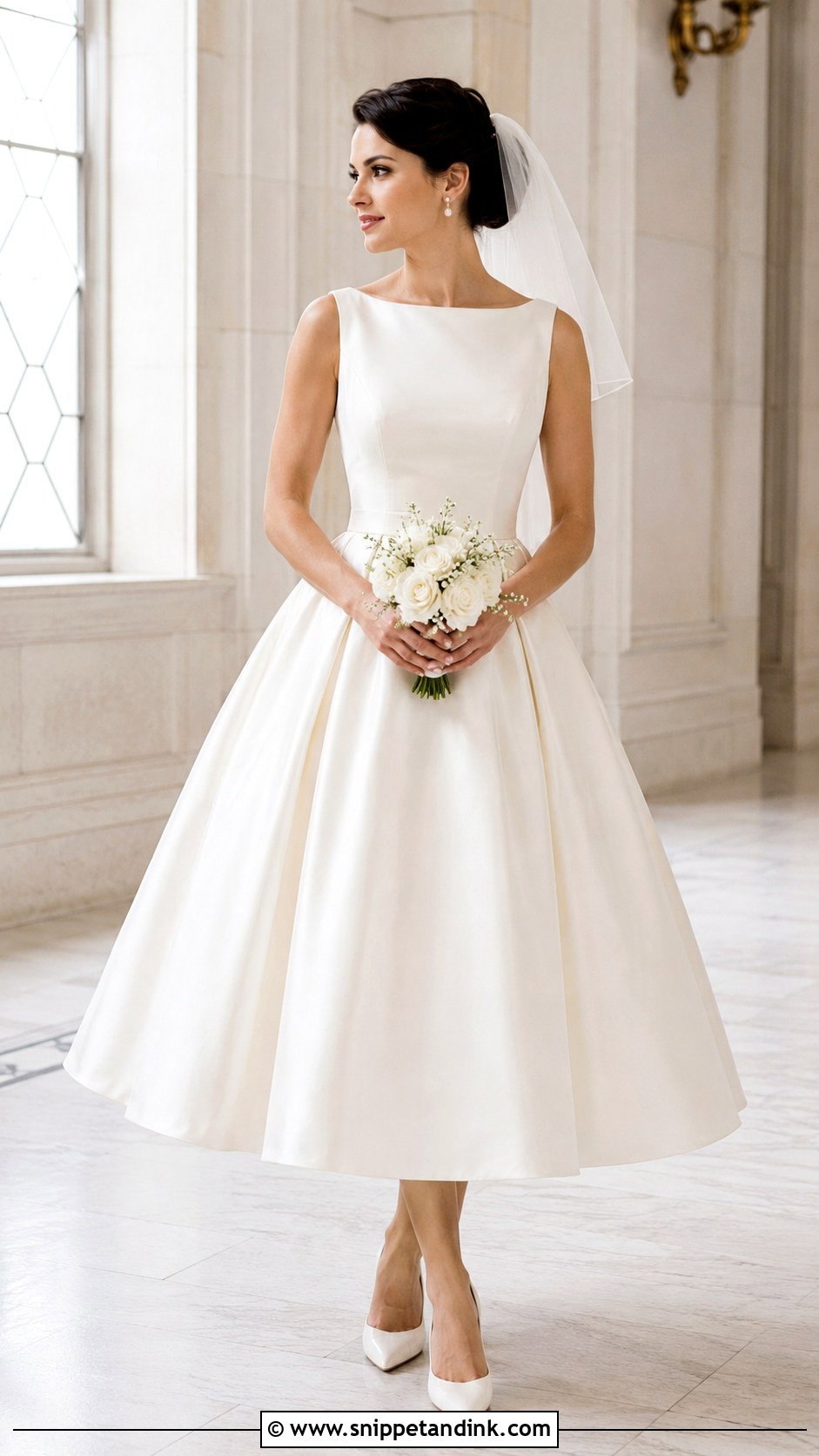
Tea length gives you freedom and shows off your shoes. The skirt falls between knee and ankle, usually over a fitted bodice and full skirt in satin or lace. Pointed pumps, pearl earrings and a short veil or bow suit it, with polished waves and a soft bouquet. It’s at home at courthouse ceremonies, garden weddings, brunches and vintage venues. Set the hem in the shoes you’ll wear; tea length only looks right at the narrowest point of the lower leg.
12. Mermaid Wedding Dress
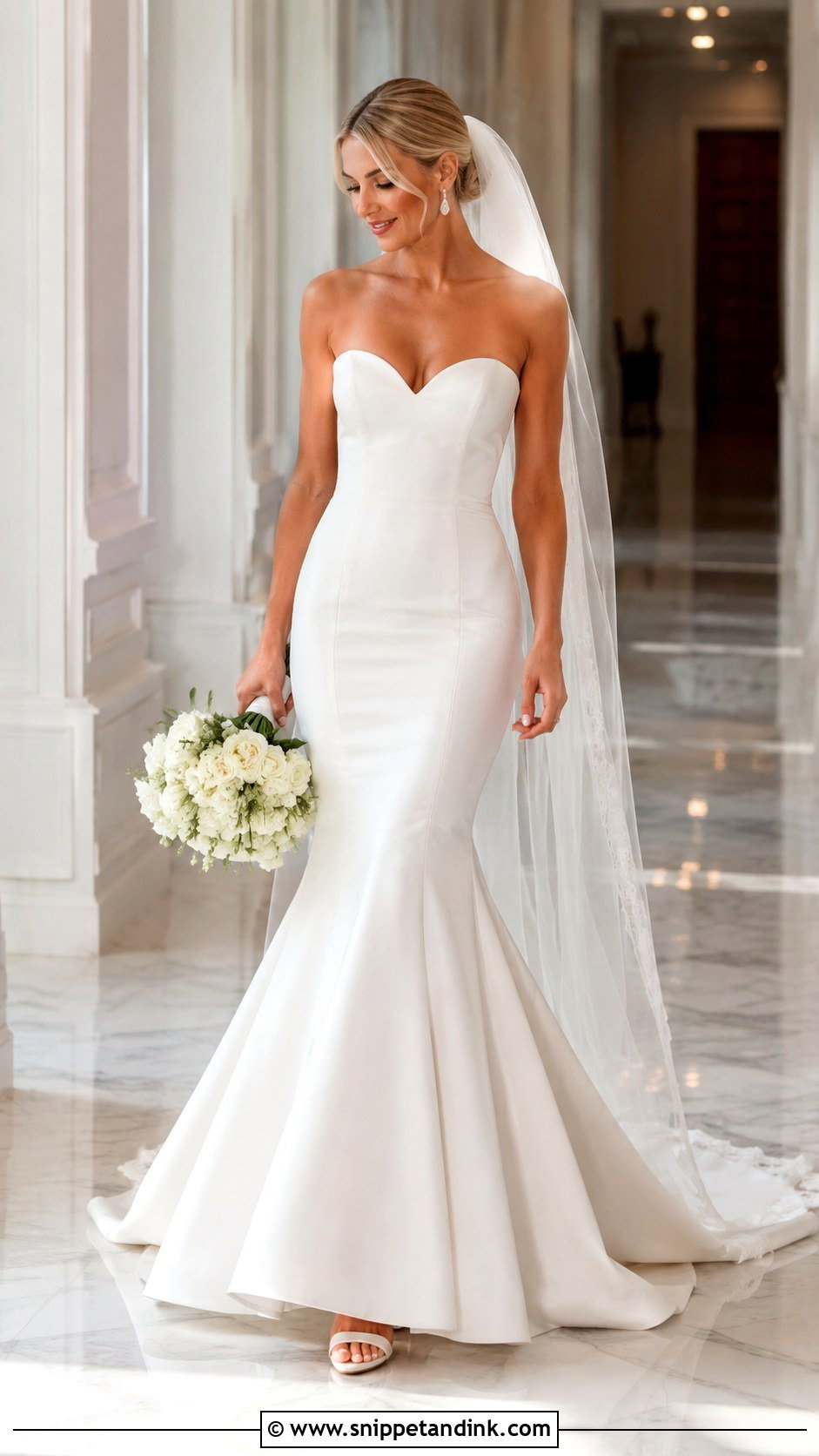
Mermaids fit through the bodice, waist and hips and flare near the knee, which makes them the most dramatic classic shape and the hardest to move in. Clean satin, lace appliqué or crepe keeps it elegant rather than flashy. Sweetheart, off-shoulder and strapless bodices all suit it, with a long veil, drop earrings and slim heels. My honest advice: practise walking up a step and sitting down at the fitting. If you can’t, ask for the flare to start a little higher; a trumpet line gives a similar effect with more room.
13. Empire Waist Wedding Dress
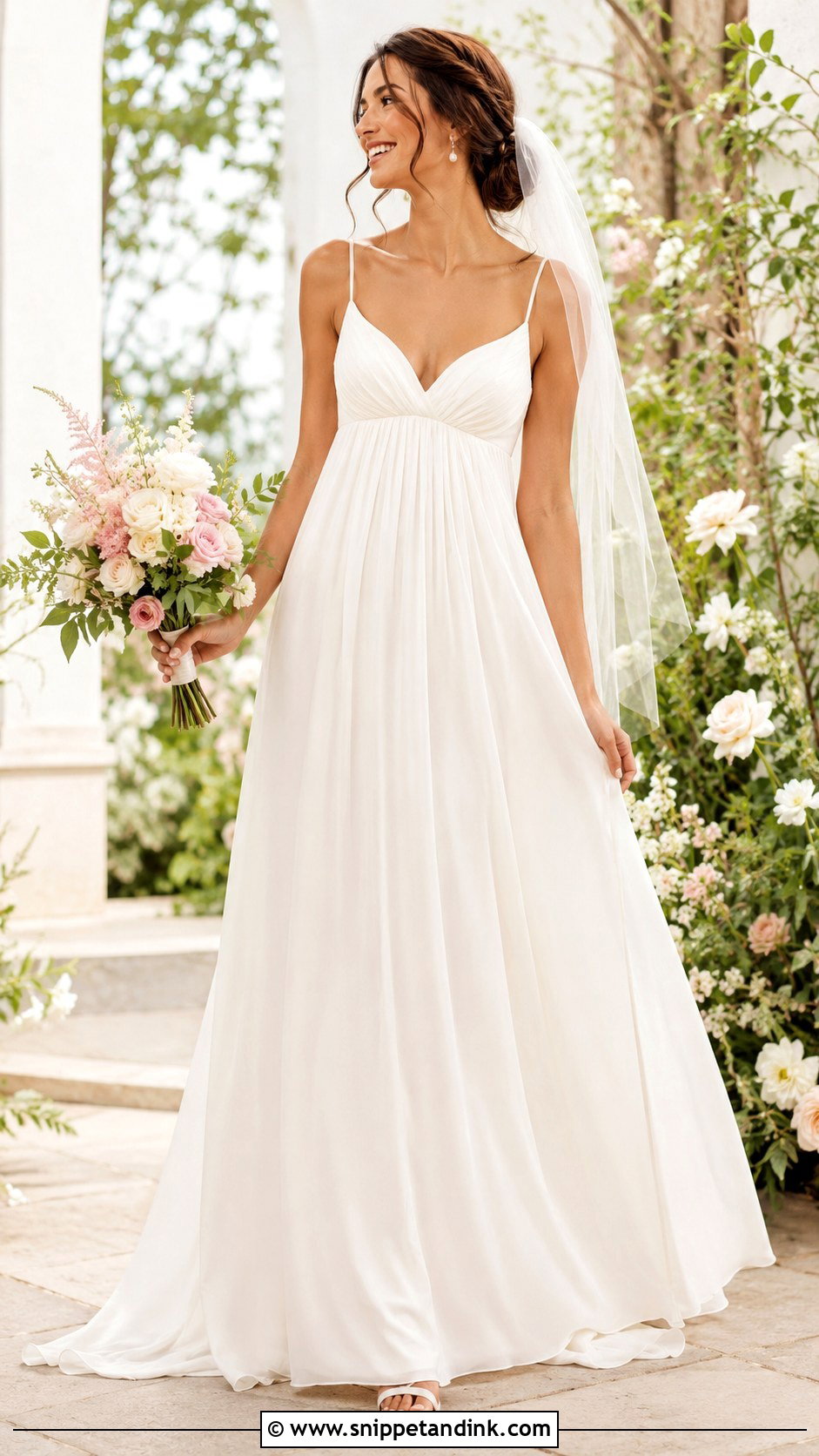
Empire waists sit just below the bust and fall freely, so nothing presses on the natural waist. Chiffon, silk and light crepe float in this shape. Delicate sandals or low heels, pearl earrings and a soft veil suit it, with a loose updo or polished waves. I recommend it for outdoor and destination weddings in heat, and for pregnant brides, since the skirt allows for change between the last fitting and the day. Keep the gathering under the bust light, or it adds bulk.
14. Corset Bodice Wedding Dress
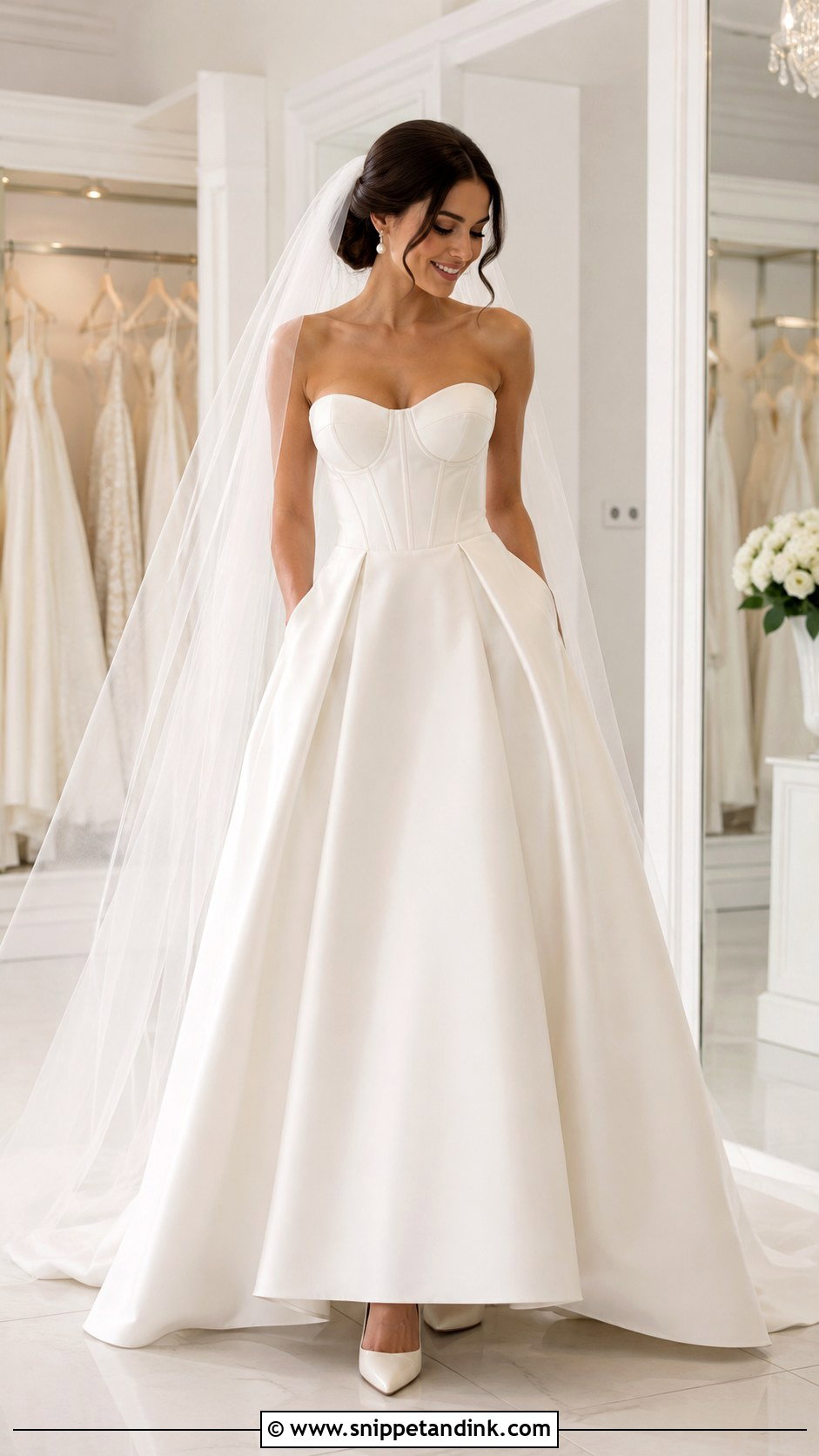
A corset bodice gives a defined waist, but only good construction keeps it classic. Smooth fabric, flexible boning and clean seams are the signs to look for. It pairs with a full satin skirt, a lace A-line or soft tulle. Pearl earrings, a long veil and simple ivory heels keep the styling quiet, and a low bun or half-up style shows off the bodice. Sit down in it during every fitting. If the bottom edge digs into your hips when seated, the boning is too long for your torso.
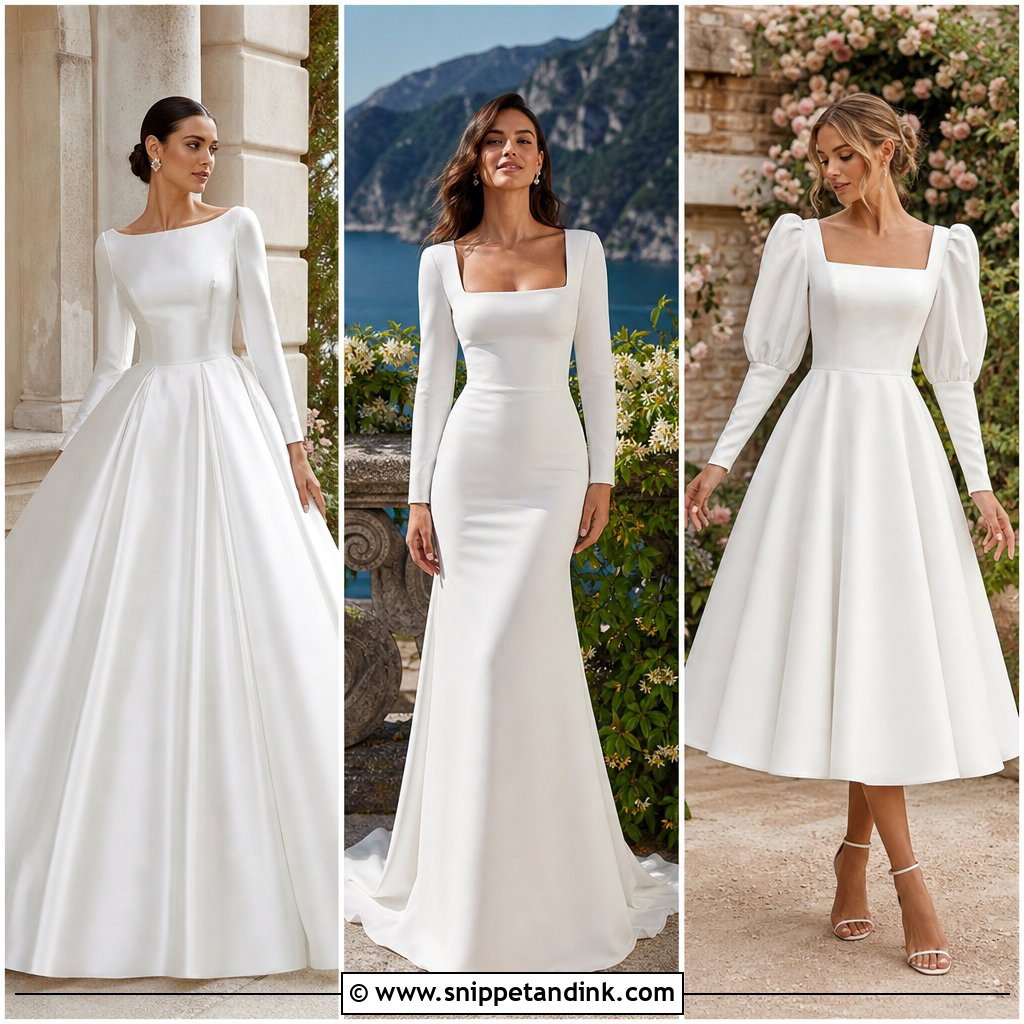
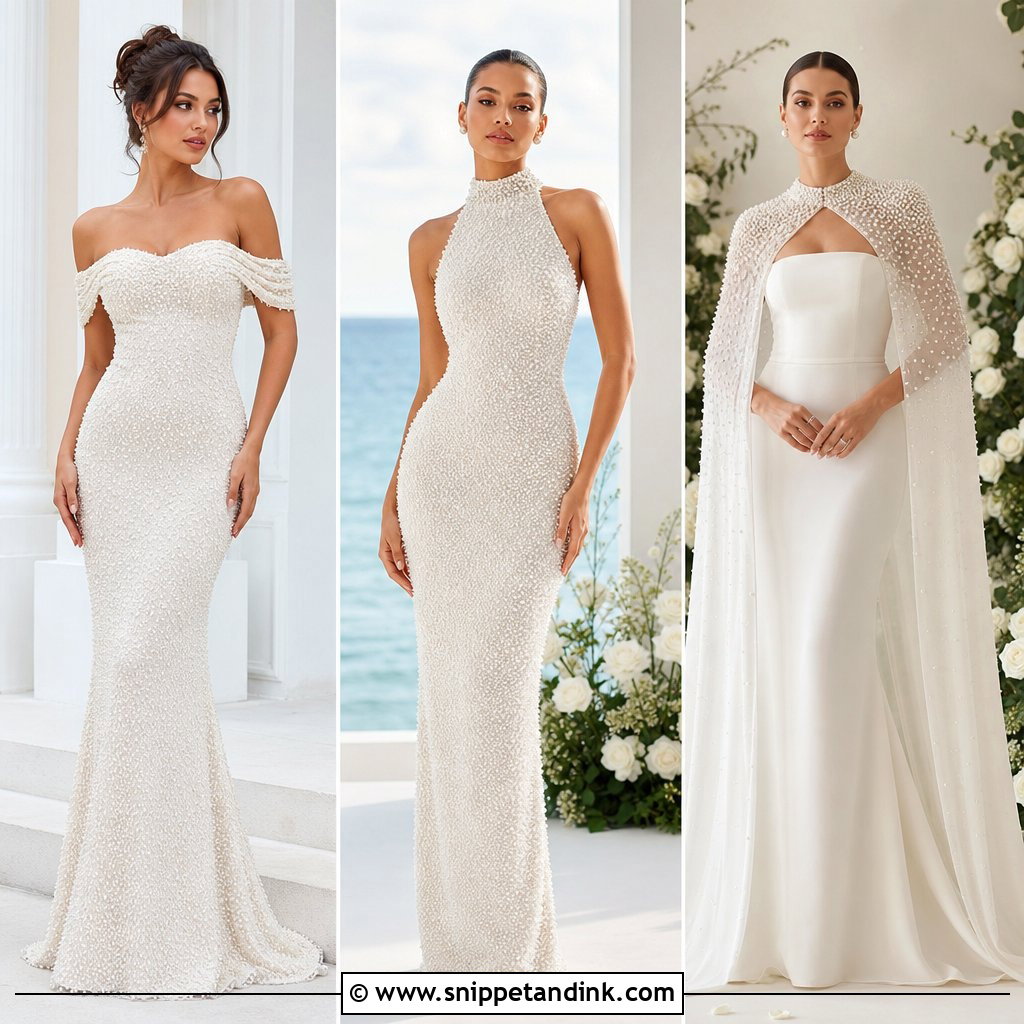
15. Basque Waist Wedding Dress
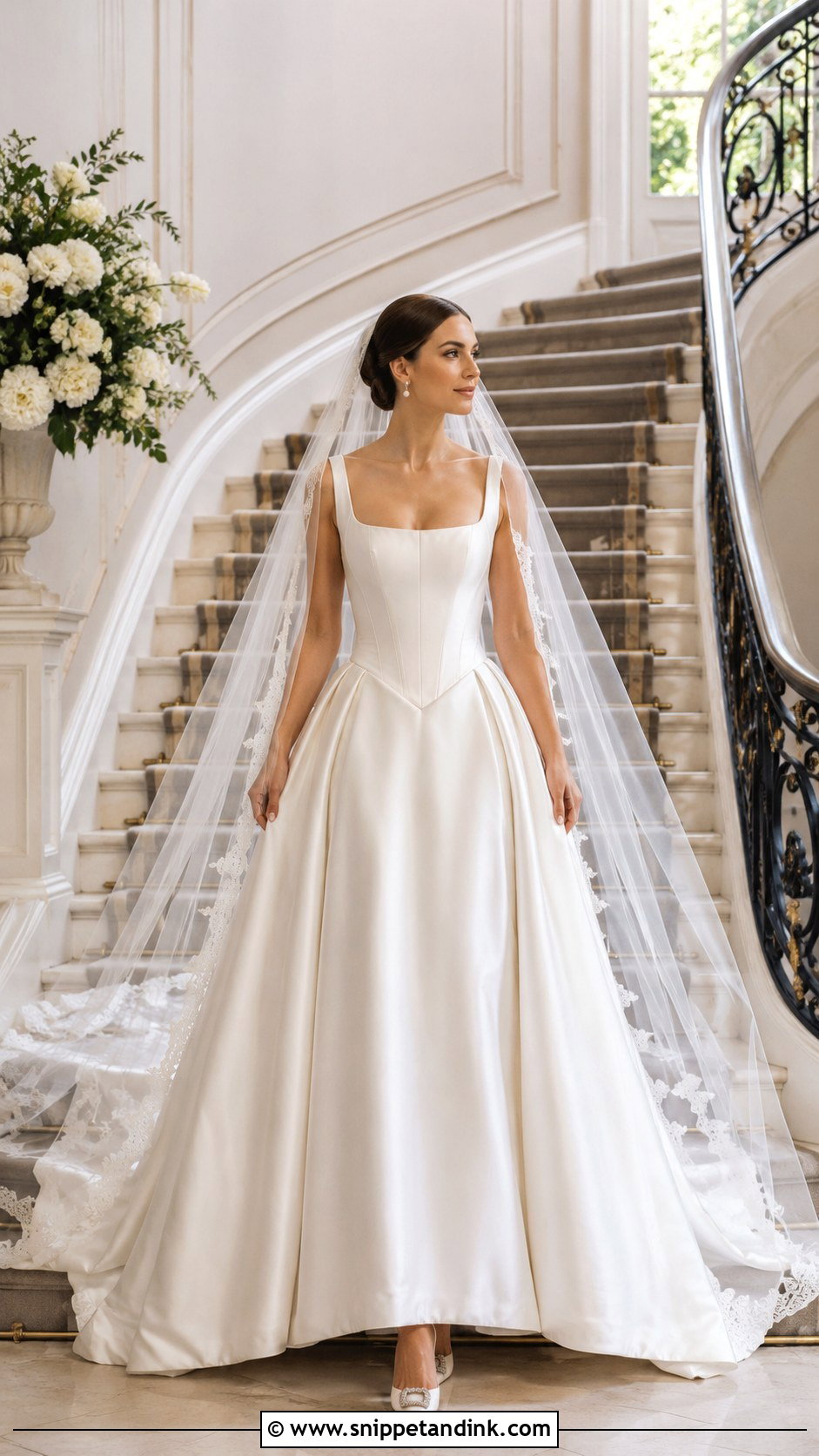
A Basque waist wedding dress dips into a shallow point at the centre front, lengthening the torso. It’s traditional and flattering over a full skirt. Satin, mikado and structured taffeta hold the line. A cathedral veil, pearl earrings and classic pumps complete it, with a simple bouquet so the waist stays visible. The point has to match your torso length exactly, which is why I pin it with the bride seated as well as standing.
16. Drop Waist Wedding Dress
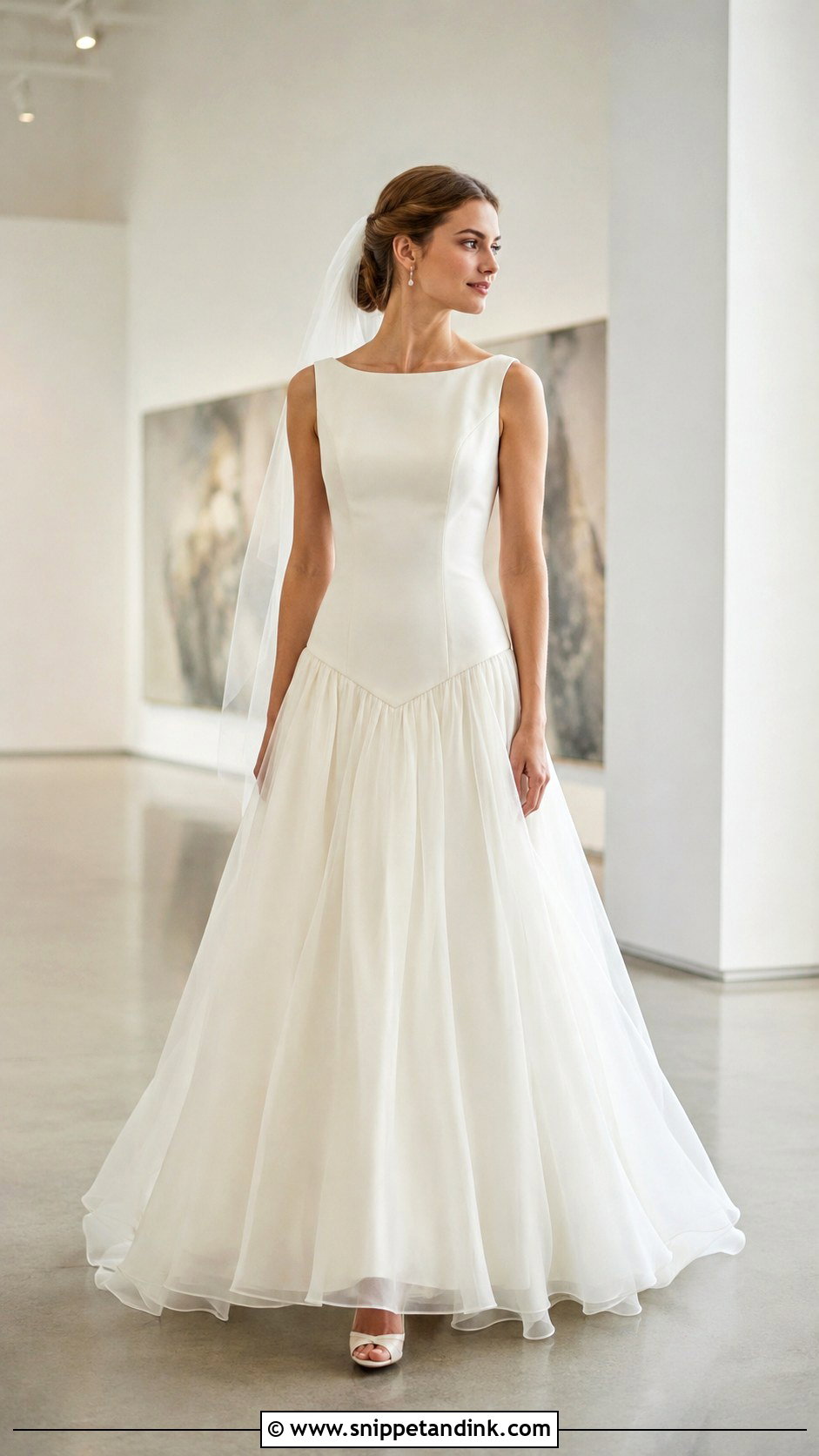
A drop waist moves the seam below the natural waist and lengthens the torso. Kept gentle, it looks classic; pushed to the hips, it looks costume. Choose a fitted bodice flowing into a soft skirt in satin, lace or organza. Sleek heels, delicate earrings and a veil of matching formality complete it. Tall brides carry it most easily. On petite frames a subtle drop keeps the legs from looking short.
17. Tulle Skirt Wedding Dress
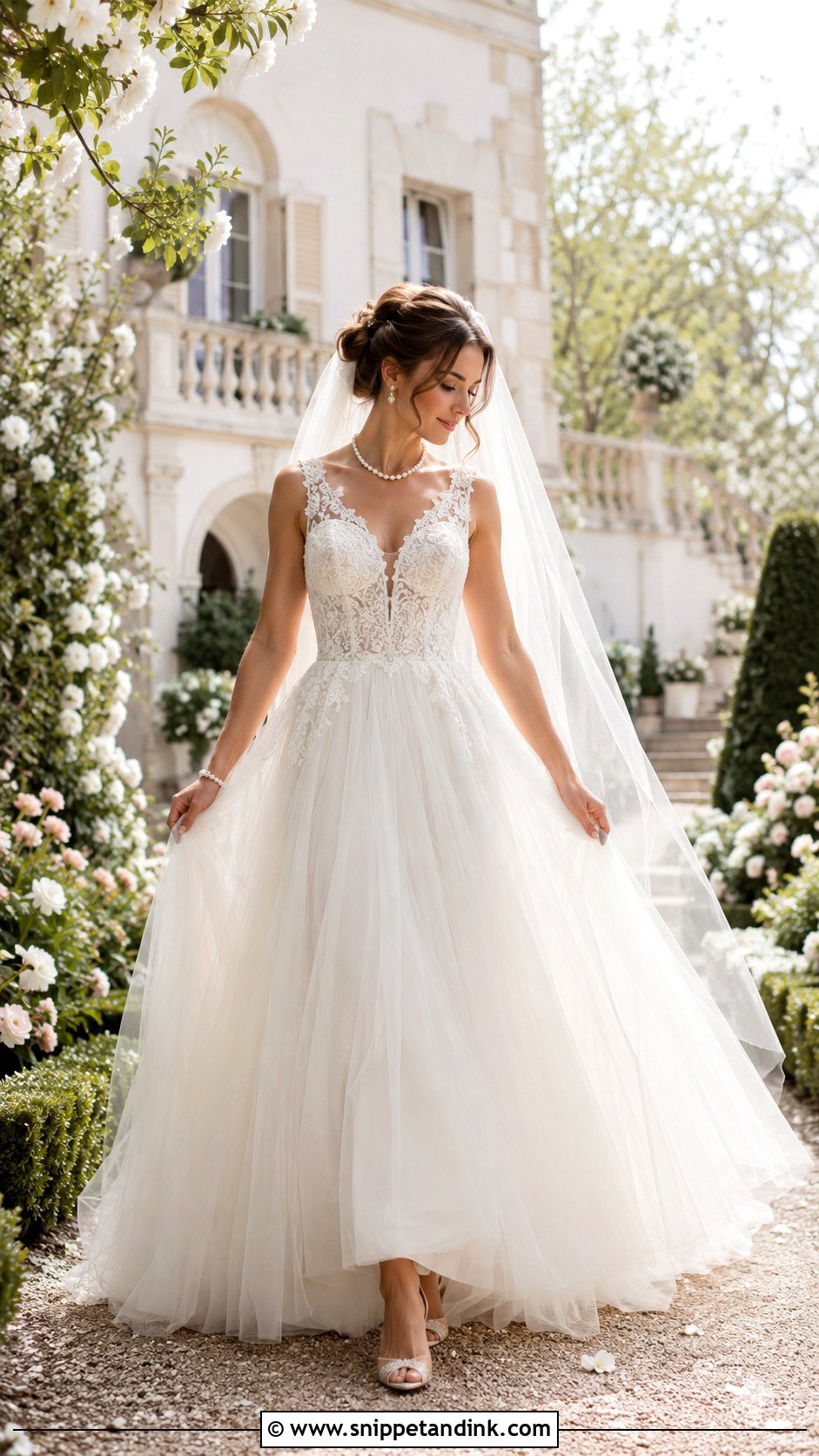
Tulle skirts float, and the difference between dreamy and bulky is the number of layers. Fine, soft tulle in several light layers moves better than a few stiff ones. A fitted satin or lace bodice balances the airy skirt. Ivory heels, pearl jewelry and a simple veil finish it, and tiny floral appliqués or a waist ribbon add detail. Tulle snags on rough stone, brambles and bracelets, so garden brides should keep jewelry smooth and lift the skirt on gravel paths.
18. Silk Slip Wedding Dress
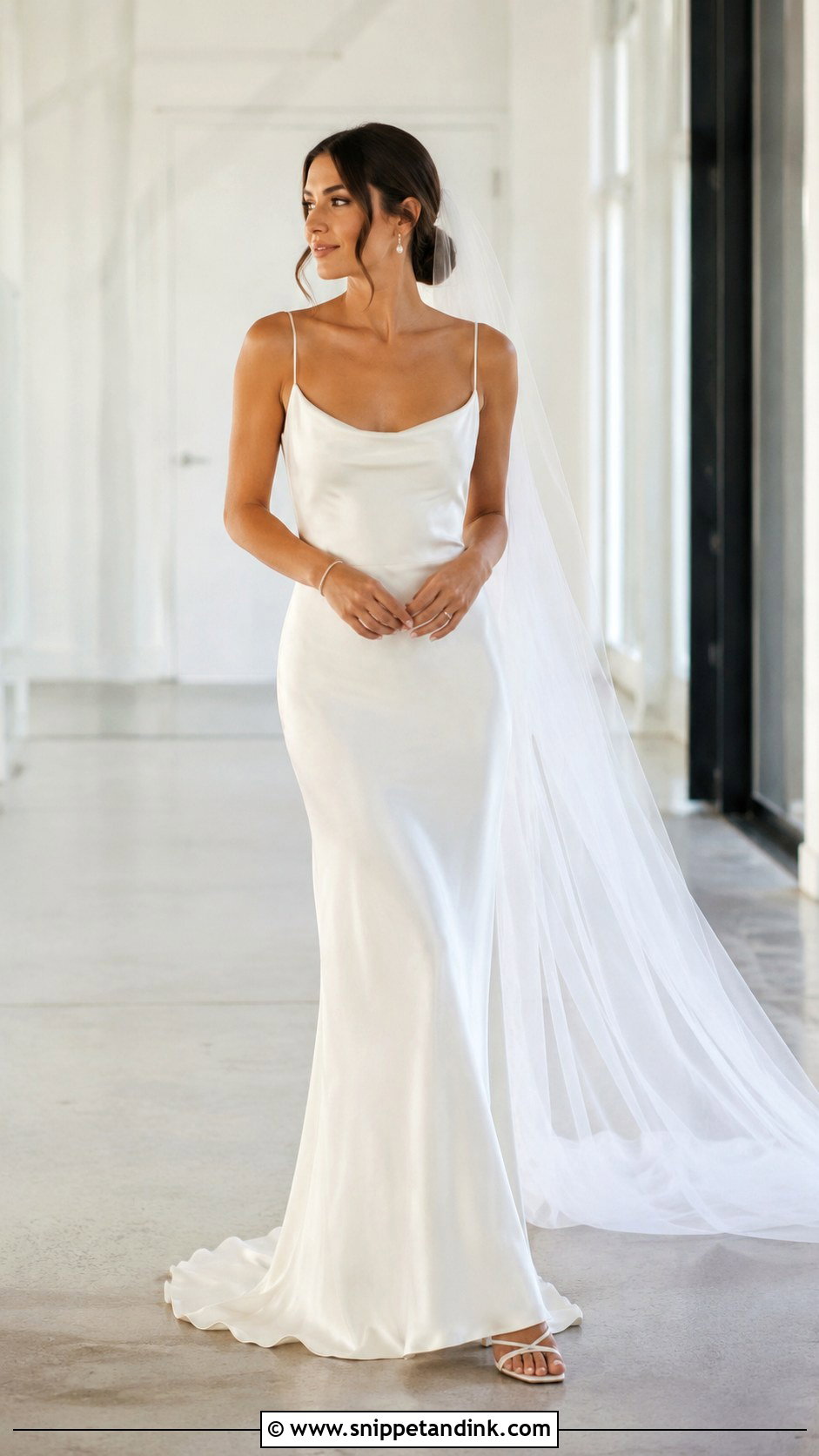
Silk slips look simple and are anything but. The fabric must be high quality and the fit precise. A bias-cut silhouette skims the body, moving as you do. A long sheer veil, strappy heels and fine pearl or diamond-style earrings suit it, with a satin clutch or simple bouquet. Silk marks with water and creases when you sit, so I’d keep a small steamer at the venue. It suits intimate celebrations and modern venues, where the movement of the fabric is the whole point.
19. Cap Sleeve Wedding Dress
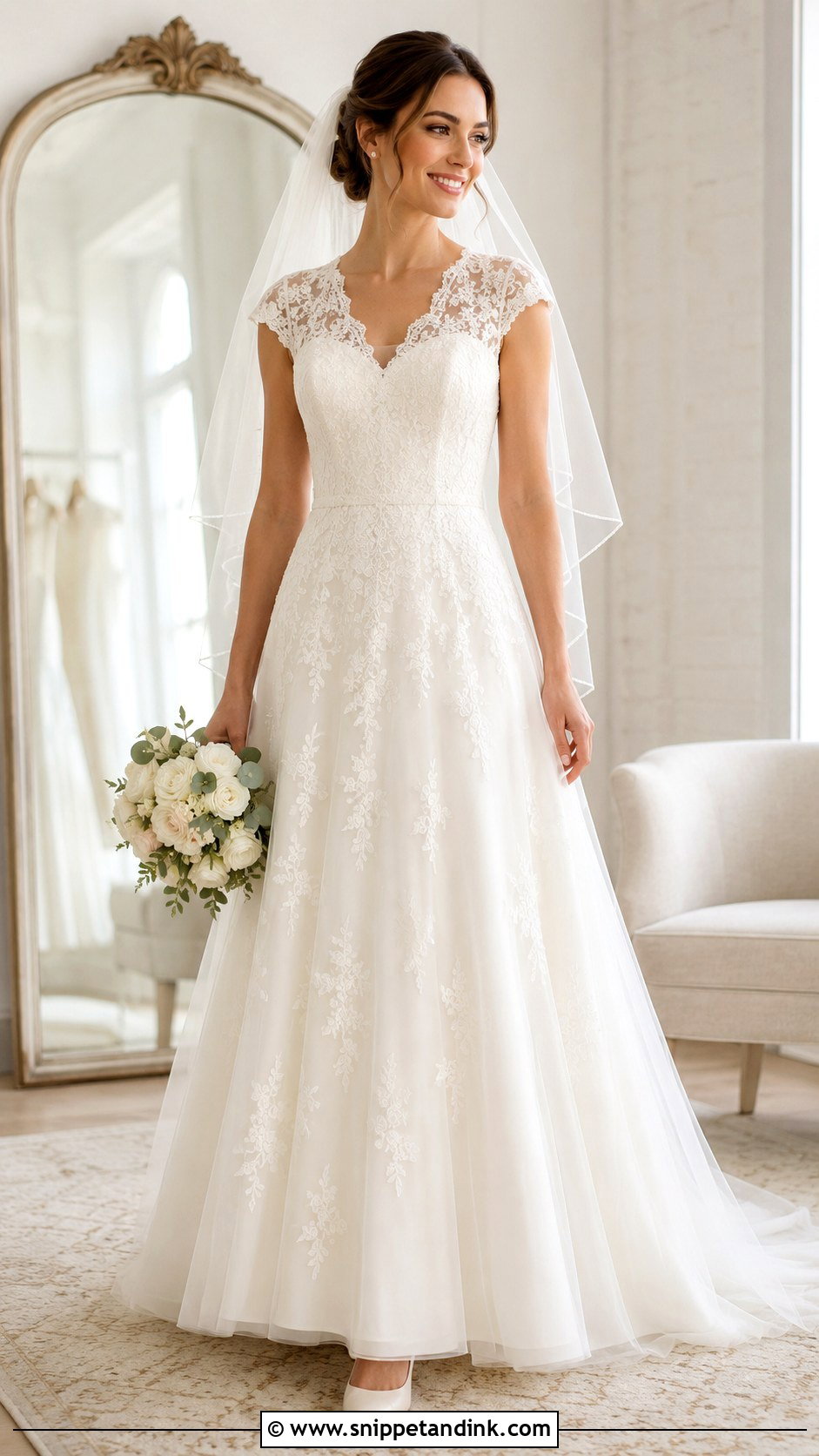
Cap sleeves sit right on the edge of the shoulder, giving a little coverage that’s lighter than long sleeves and softer than strapless. Lace cap sleeves feel romantic; satin or crepe ones look tailored. A soft A-line skirt, pearl studs and closed-toe heels suit it, with a fingertip veil and a polished bun, waves or half-up style. Lift your arms at the fitting. Cap sleeves pull across the upper arm if the armhole is cut too high.





20. V Neck Wedding Dress
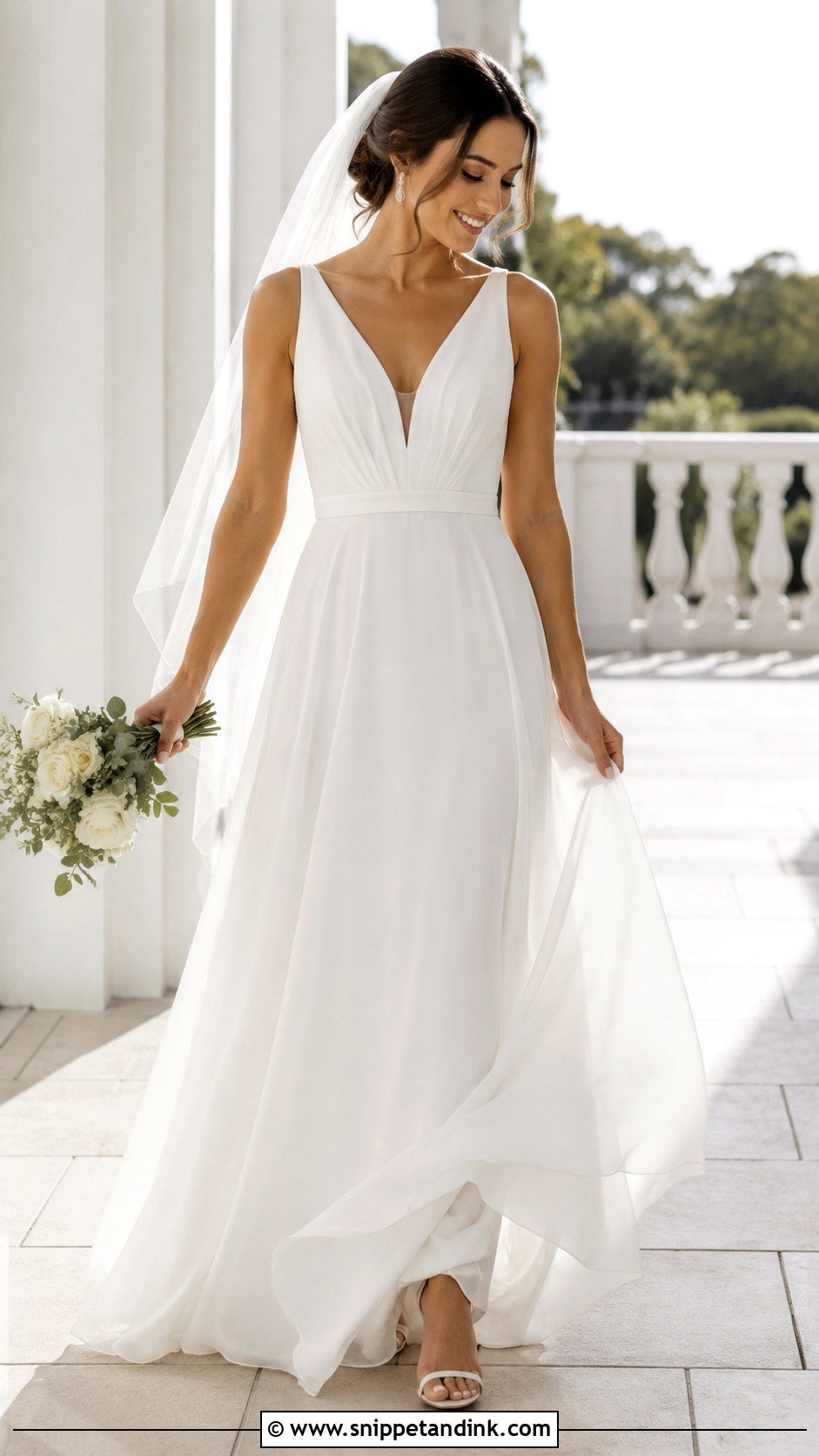
A moderate V lengthens the upper body without feeling revealing, and depth is what I adjust most often on this neckline. Lace, crepe, chiffon and satin all suit it, in an A-line or sheath. Simple jewelry and soft heels keep it classic. A pendant works on a very plain dress, though earrings alone usually look cleaner. Add a lightly trimmed veil and a neat bouquet. Check the V while bending forward, since that’s when a neckline shows more than you intended.
21. Vintage Lace Wedding Dress
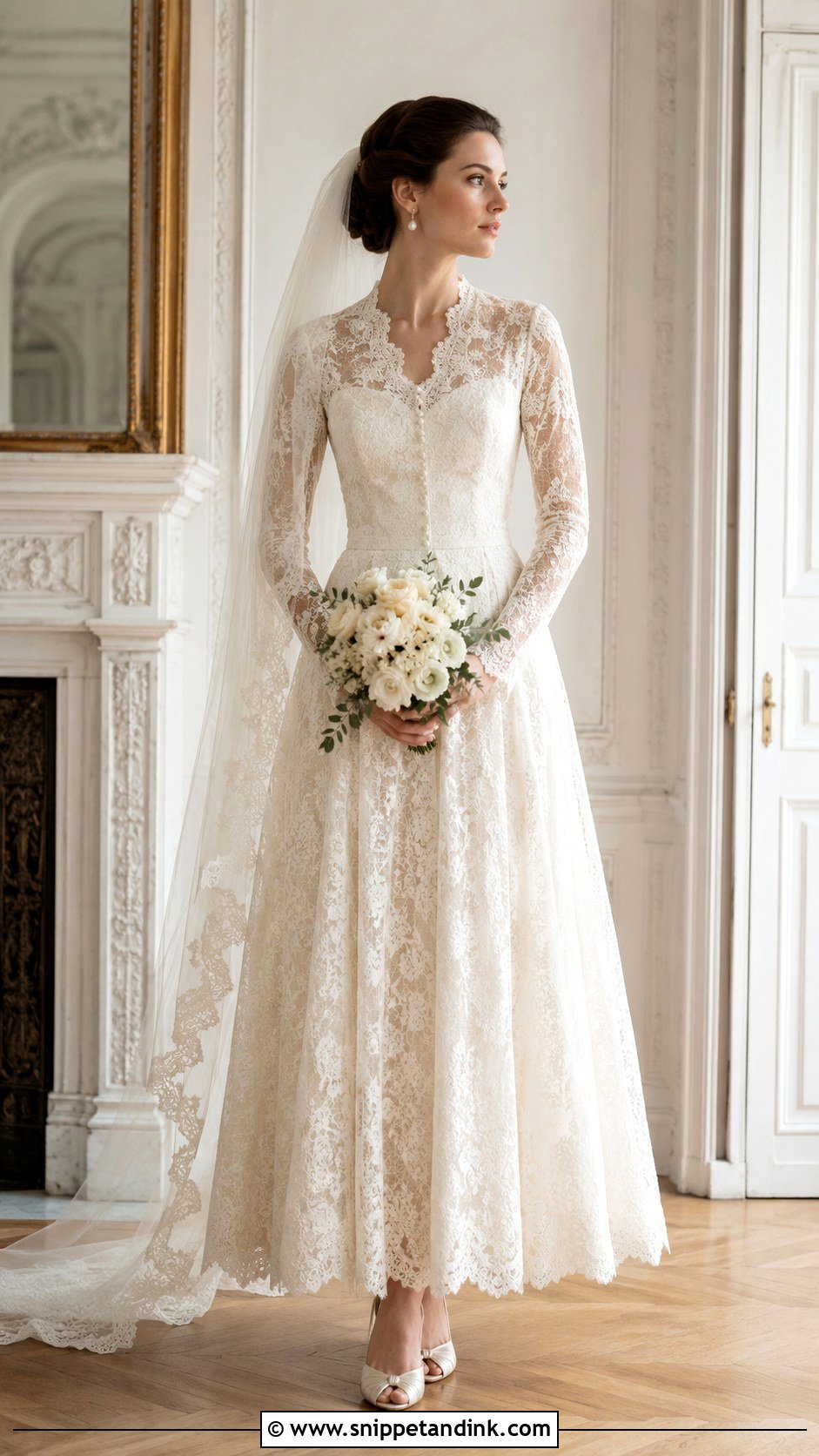
Vintage lace brings texture and a sense of history, and the line between graceful and costume is the silhouette. Refined lace patterns, scalloped edges, covered buttons and a simple shape keep it timeless. An A-line, sheath or long sleeve gown all suit lace. Pearl earrings, ivory heels and a plain veil keep it quiet, and a soft updo shows the neckline and back. If you’re wearing a genuine older gown, have a specialist check the seams and lace for weakness before alterations; old thread can give way under new stress.
22. Minimalist Column Wedding Dress
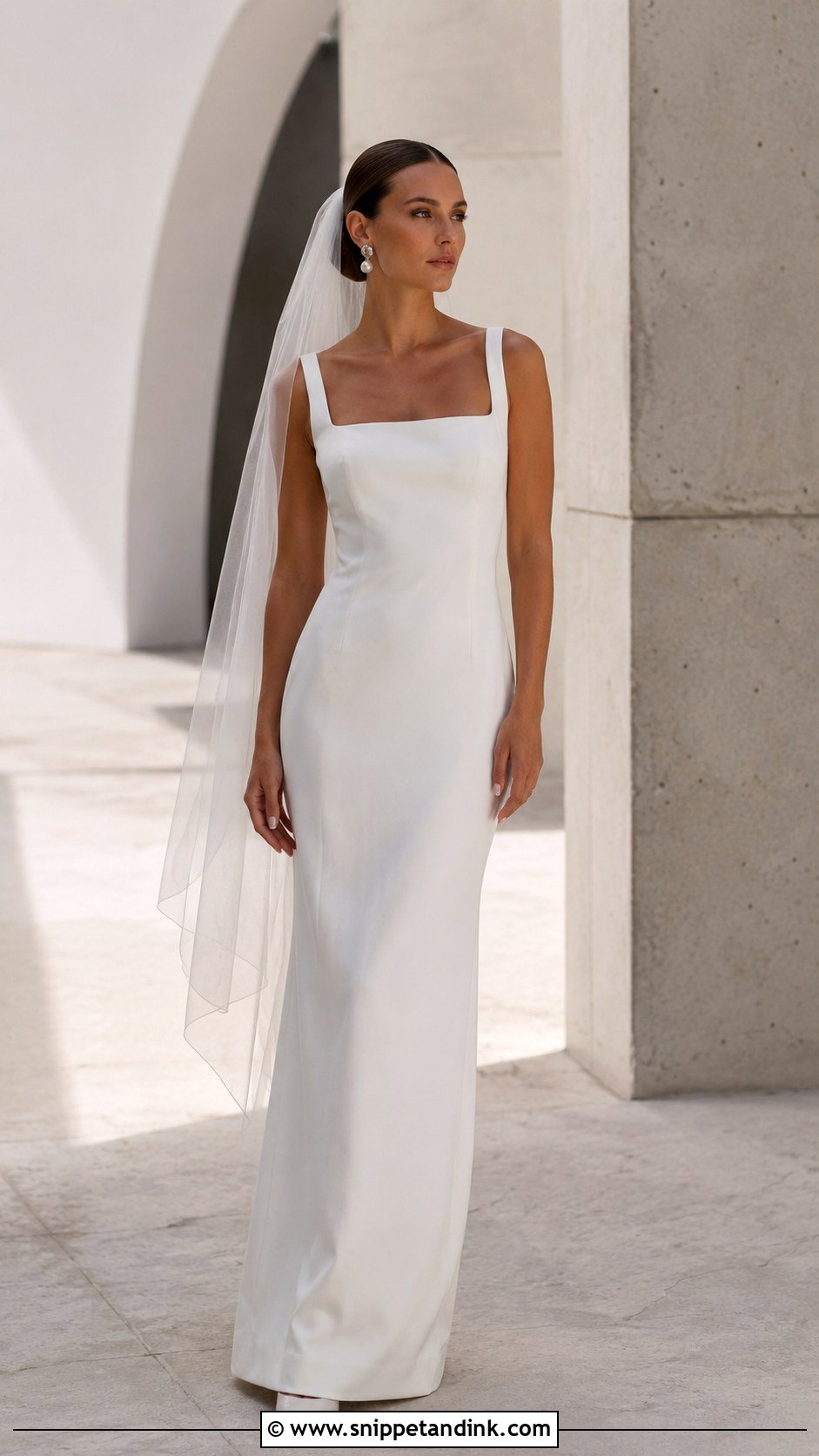
A column runs in a straight line from neckline to hem, which gives a long, clean silhouette. Crepe, satin and silk drape best. A square neck, high neck or strapless bodice all suit it. Sculptural earrings, pointed heels and a simple veil complete the outfit, with a structured bouquet adding softness. Walk briskly in it before buying. A full-length straight skirt shortens your stride, and a small back slit is an easy fix.
23. Pleated Wedding Dress
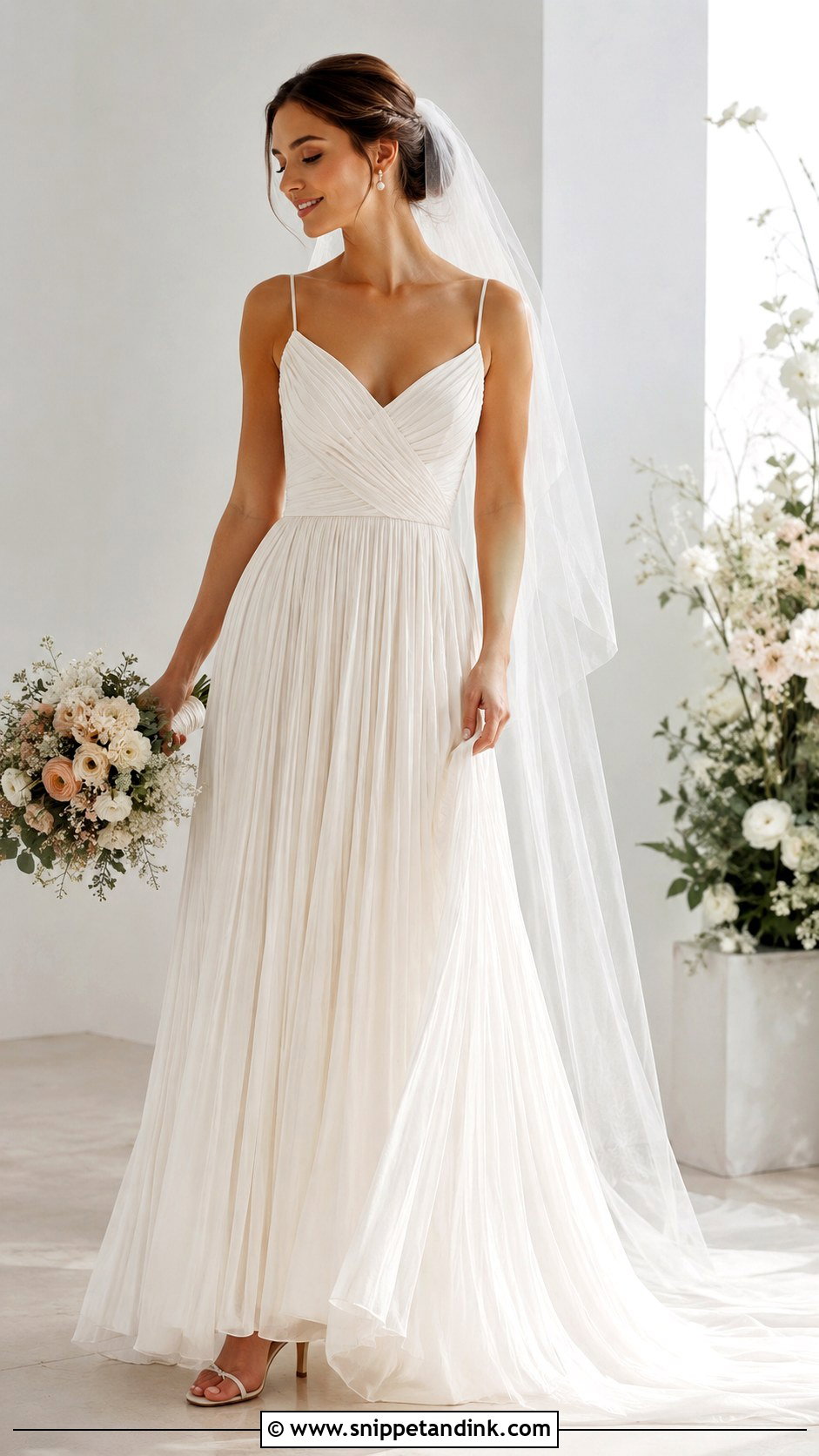
Pleats give movement and texture without beading or lace. Fine pleats feel light; structured box pleats look more tailored. A fitted bodice and clean neckline in soft ivory keep it classic. Delicate heels, pearl earrings and a veil that doesn’t compete with the pleats finish it. The skirt moves well when walking and dancing. Never press across the pleats at home, and hang the gown so they don’t crush in storage.
24. Bow Back Wedding Dress
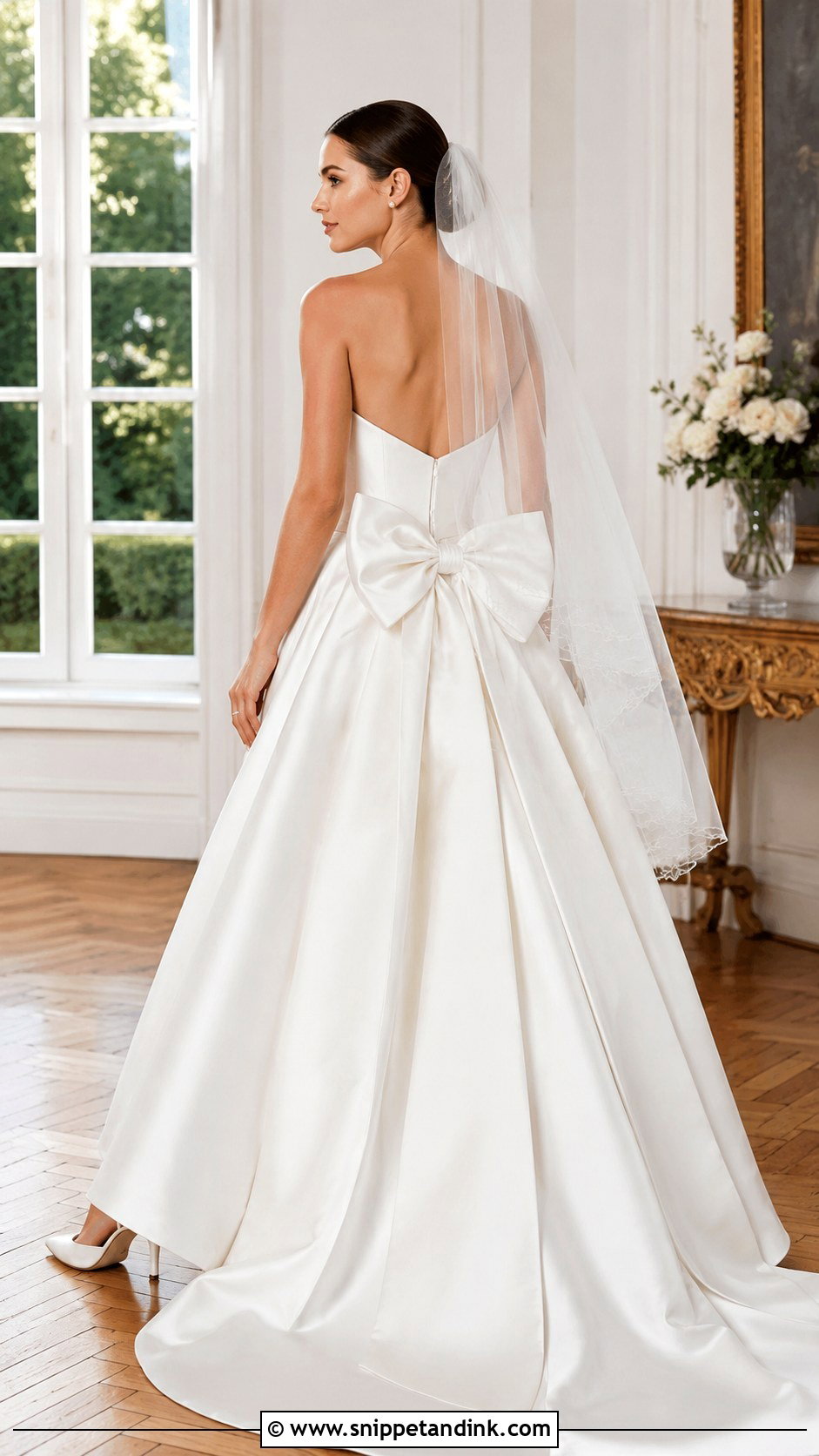
Guests see your back for most of the ceremony, so a bow there is detail where it counts. It can be small and neat at the waist or large and dramatic. Satin, mikado or crepe with clean lines keeps it elegant. A strapless or square-neck bodice with a full skirt suits it, with pearl studs, satin heels and a simple veil placed above the bow so it doesn’t crush it. Ask for interfacing inside the bow. Without it, the bow flattens by the reception.


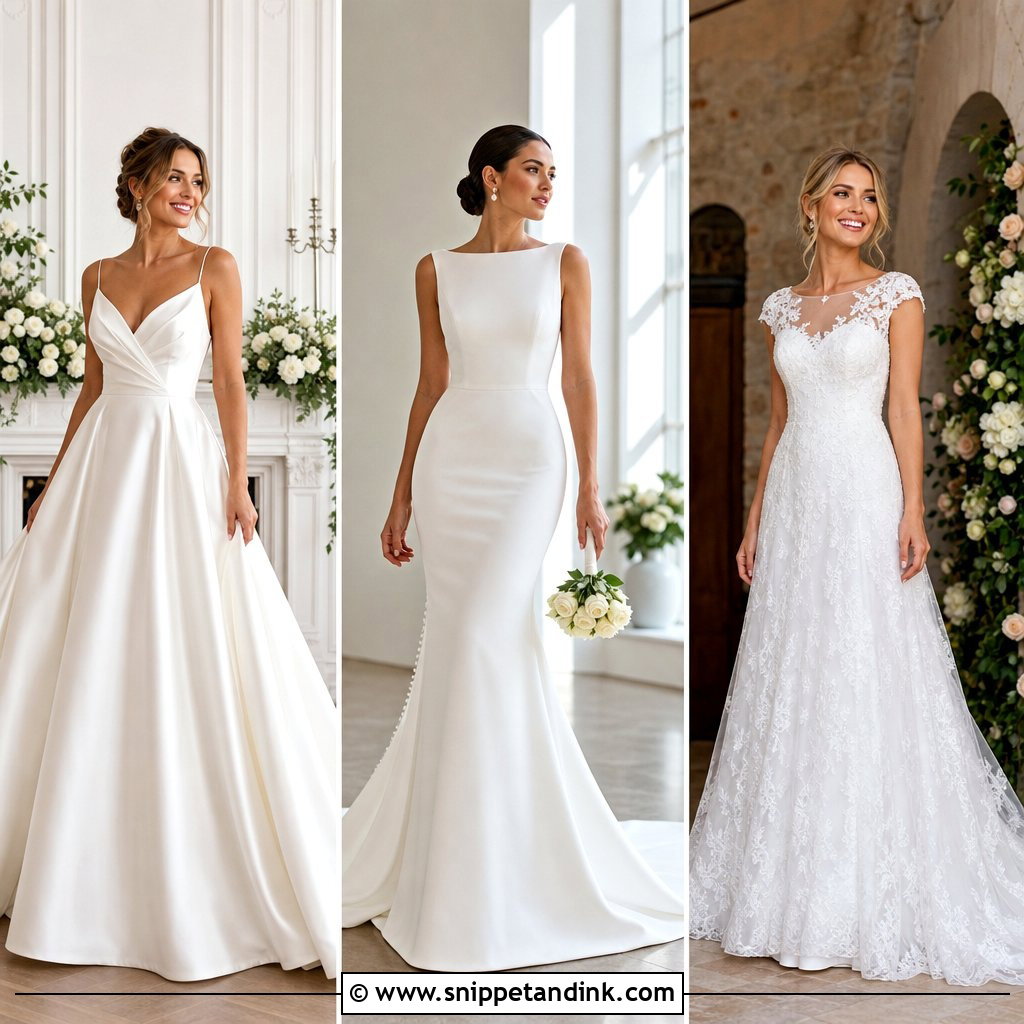
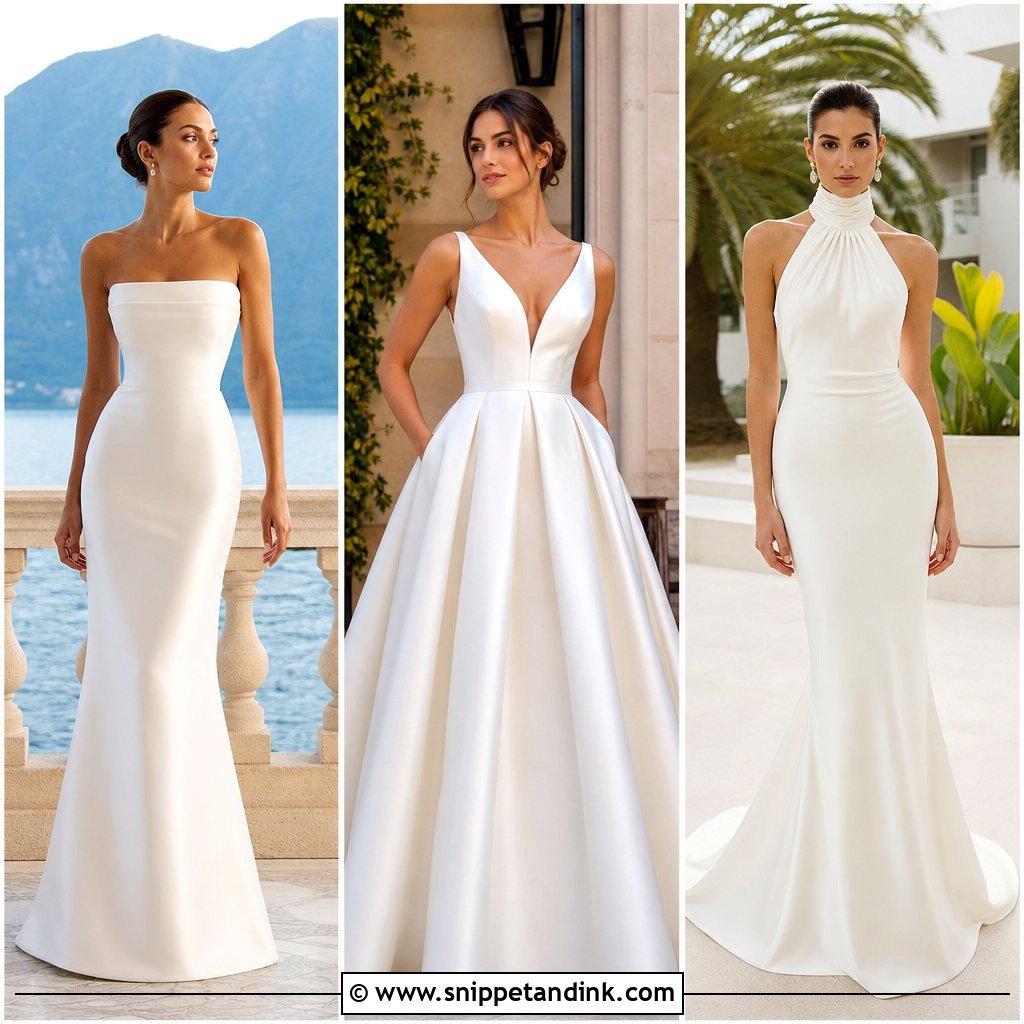

25. Detachable Train Wedding Dress
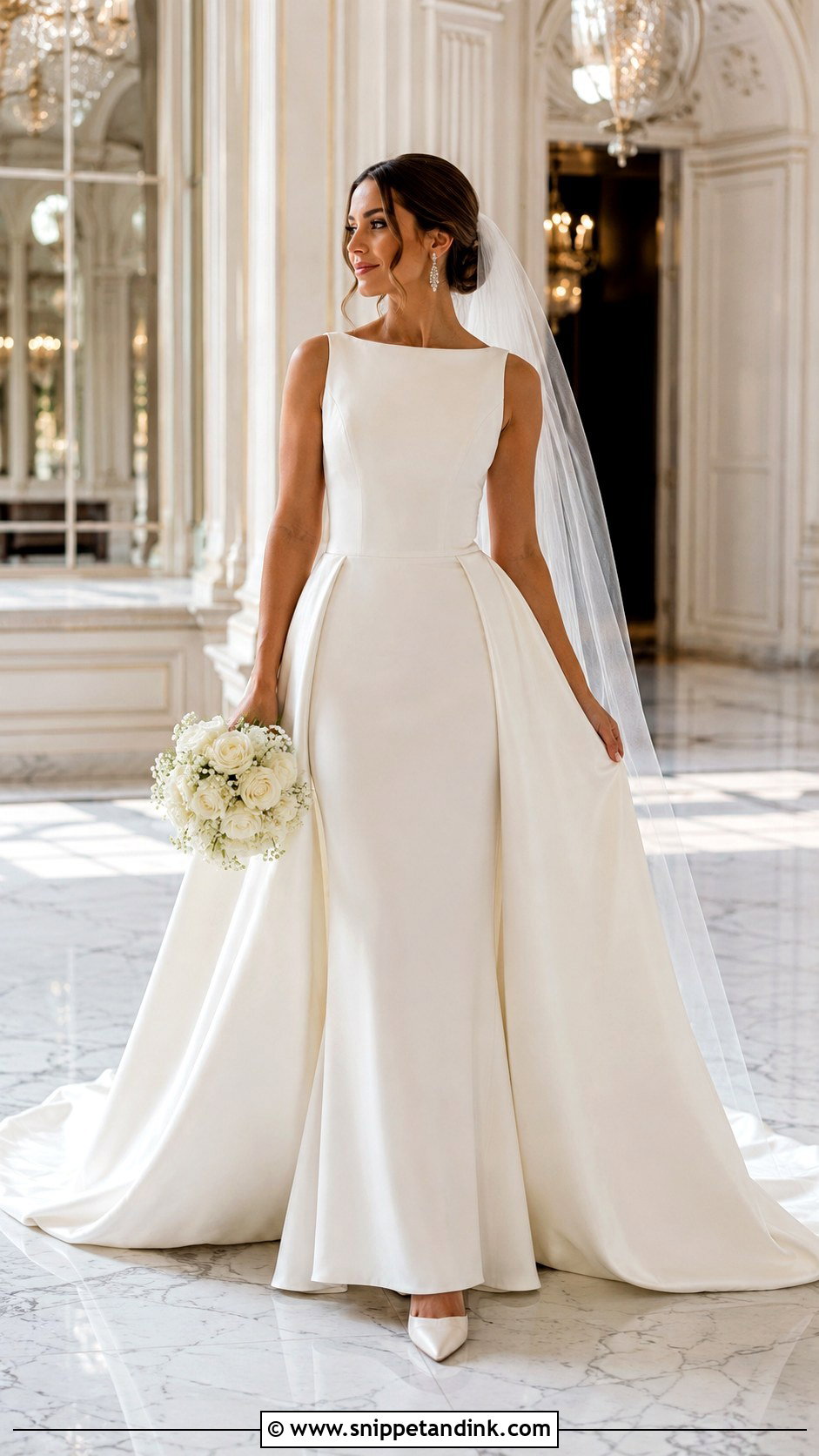
A detachable train gives you two looks from one gown. The train makes the entrance and the portraits, then comes off so you can move freely. Choose a clean satin, crepe or lace gown with a train or overskirt in exactly the same fabric and shade, attached with discreet hooks or snaps. Classic heels, refined earrings and a veil matching the train length complete it. It suits a formal ceremony followed by a lively reception. Practise taking it off with whoever will help you, because fastenings at the back are fiddly in a crowded room.
How Each Fabric Behaves in Front of a Camera
Shop lighting is kind. Your venue and your photographer’s flash may not be. Satin reflects light, so it shows creases and every seam of the underwear beneath; a steam just before portraits matters. Crepe is matte and looks smooth in any light, but it can look flat in dim rooms without some structure. Lace and pleats photograph with texture, which helps in bright sun where plain white tends to blow out to a blank shape. Organza and tulle can turn sheer when backlit, so stand in a window at your fitting and look at the silhouette through the skirt. Pure bright white can also pick up a blue cast in shade, while ivory holds its warmth, which is one more reason to see your shade outdoors before you commit.
The Bathroom Question Nobody Asks at the Fitting
It sounds trivial until you’re in a full skirt and a corset at the reception. Practise at home before the day. The easiest method with a big skirt is to face the toilet, gather the skirt up in front of you and sit backwards; a slimmer gown is easier with a bridesmaid holding the train. If your gown has a long row of buttons down the back, ask your seamstress to hide a zip beneath them so a quick change or loosening later in the evening doesn’t take twenty minutes. Raise it at your final fitting, while there’s still time.
Proportion, Fabric and Fit Outlast Any Trend
A wedding gown has to do more than look pretty on a hanger. It has to support your confidence, suit your venue and feel right through a long day. Classic bridal design works because it relies on proportion, fabric, fit and a few meaningful details rather than whatever is popular this season. Satin, lace, crepe, pearls, sleeves and a dramatic train can all be part of it. Choose the gown you’d still be happy to see in your own wedding album decades from now.
You'll Like These Ideas:













Leave a Reply