
A gown can look perfect in a photo and wrong on the person in the mirror, and the gap is almost always proportion, fabric or comfort. When I work with a bride, I’m thinking about how the dress moves on the aisle, how it sits through a three-hour dinner and how it behaves on a dance floor. The shapes and details brides keep asking me about right now include clean satin, lace sleeves, sculptural necklines, pearls, basque waists, detachable overskirts, soft tulle and pared-back minimalist cuts. Below are twenty-five gown directions, with the practical call I’d make on each one: what to check at a fitting, who it suits, and where it tends to go wrong.
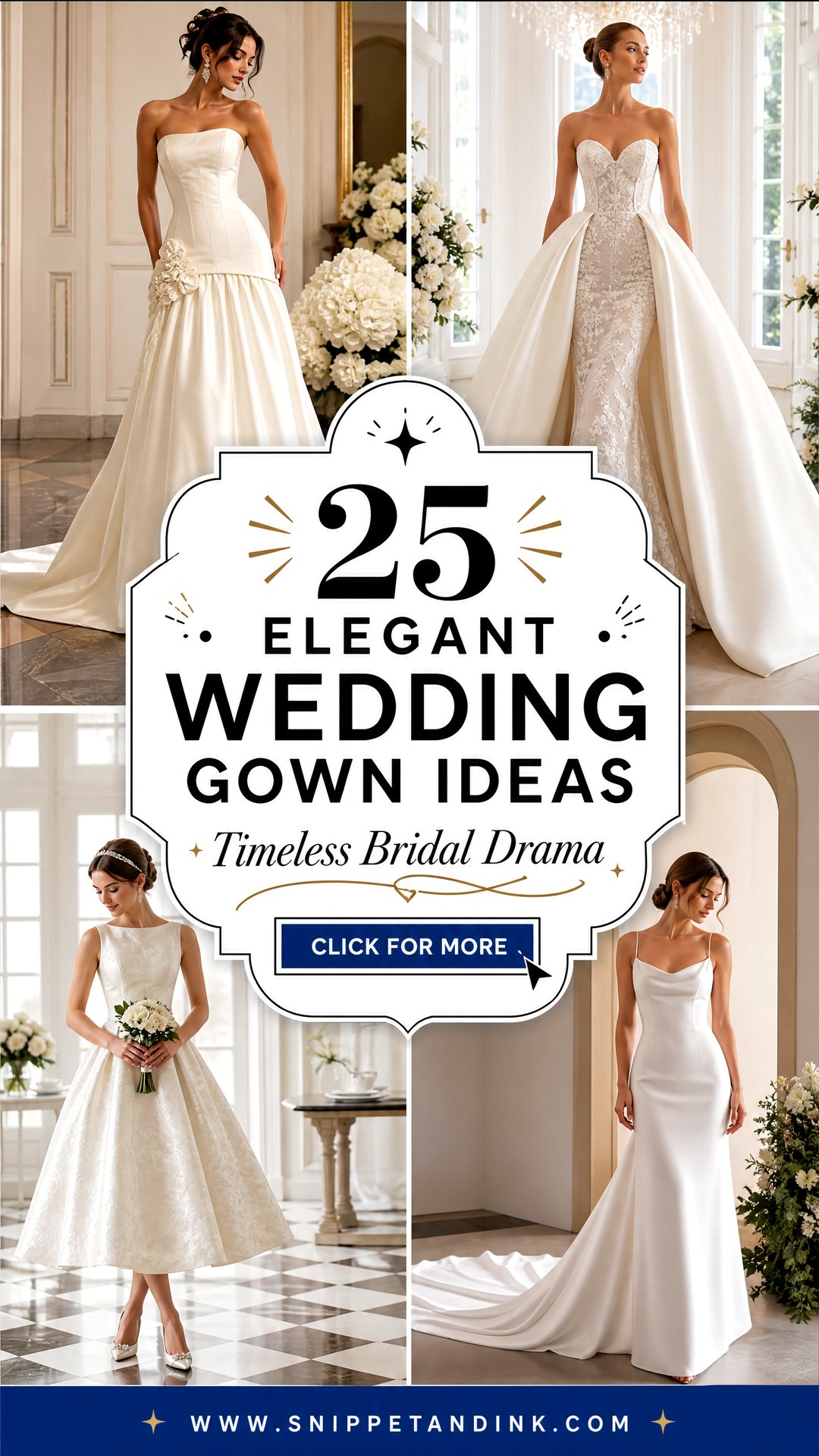
Sample Sizes, Clips and Other Surprises at a First Appointment
Most bridal shops carry samples in one or two sizes, so the dress you try on rarely fits you exactly. Your consultant will clip a big sample at the back or leave a small one unzipped with a panel behind it. That’s normal, and it’s no reflection on your body. Try to look past the clips and judge the shape, the neckline and how the fabric moves.
A few things make that first appointment far more useful:
- Wear nude, seam-free underwear and bring a strapless bra if you have one.
- Bring two or three people whose opinions you trust, not eight. Big groups tend to argue the bride out of her own instincts.
- Tell the consultant your budget up front, including alterations, which can add a meaningful amount and vary widely by gown.
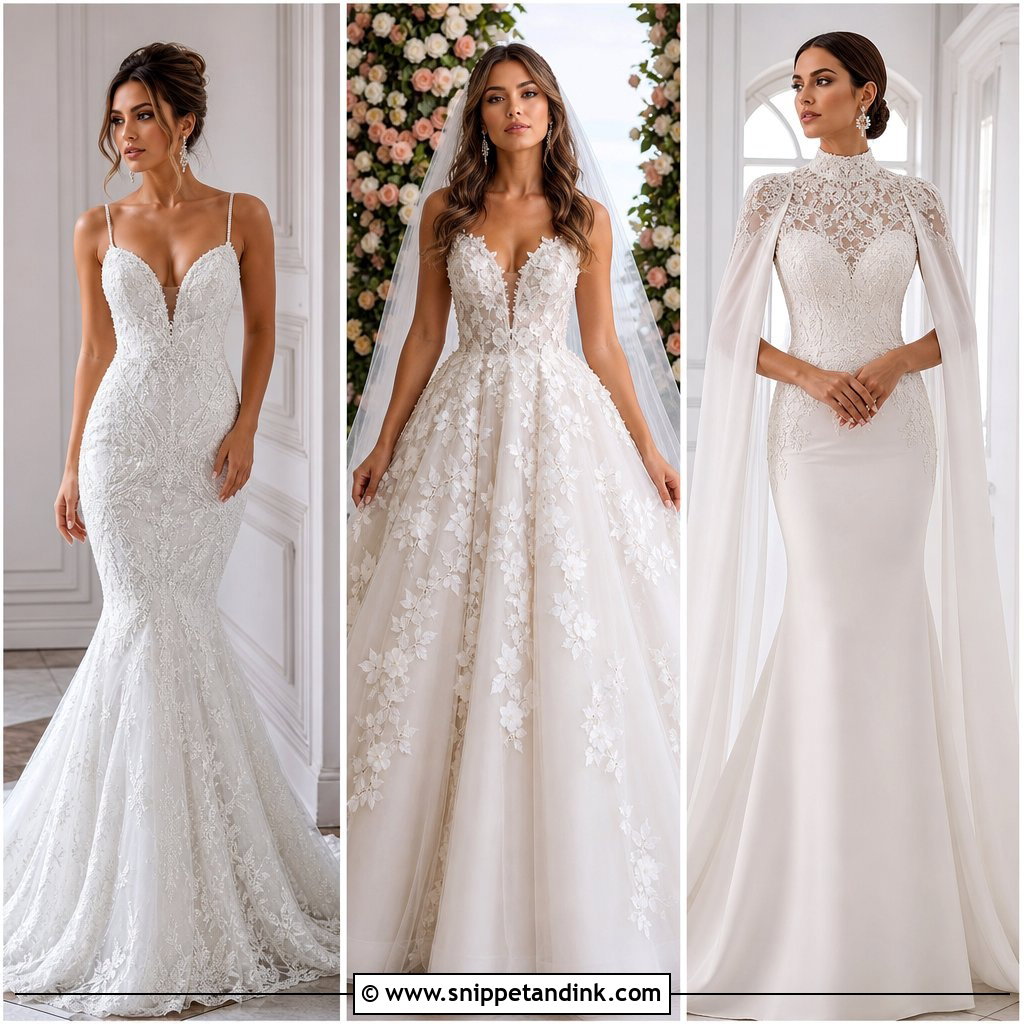
- Try at least one silhouette you’re sure you’ll dislike. I’ve seen that change a bride’s whole direction.
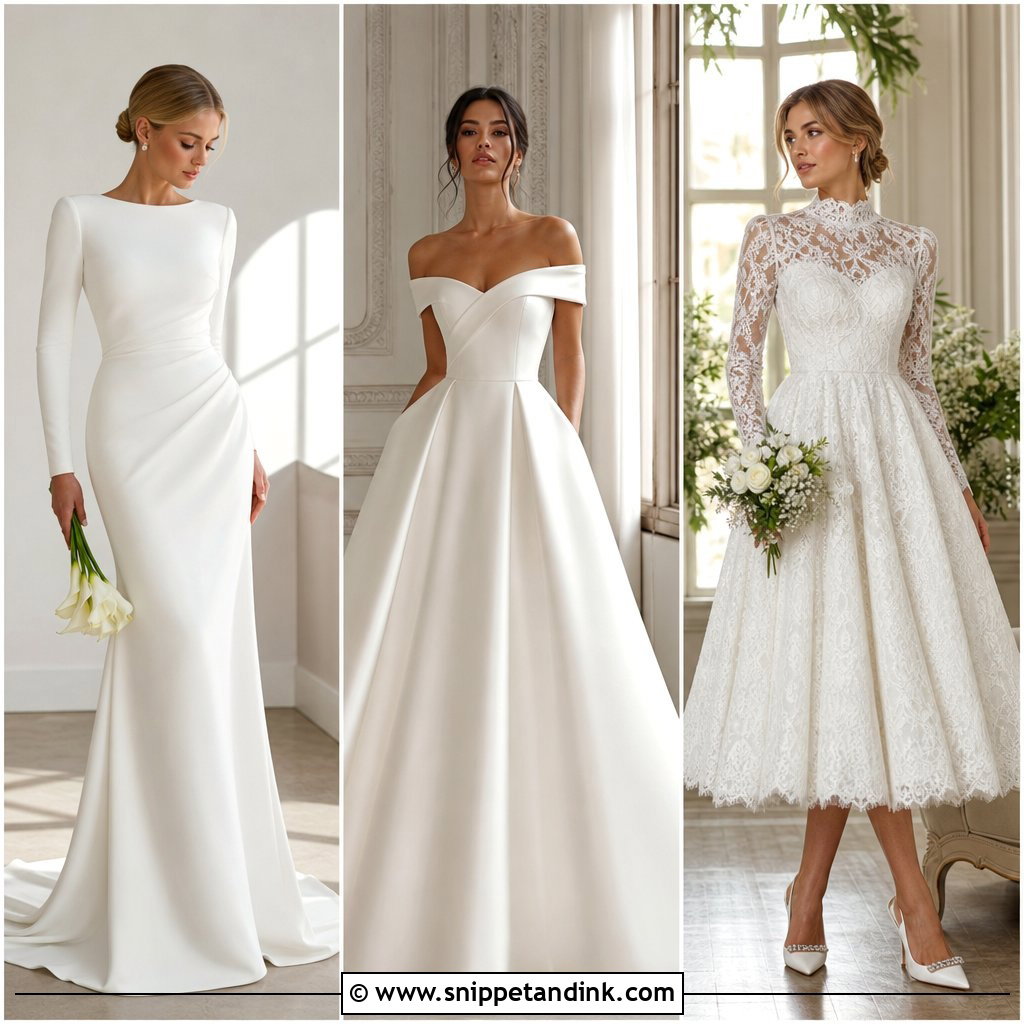
1. Satin A Line Wedding Gown
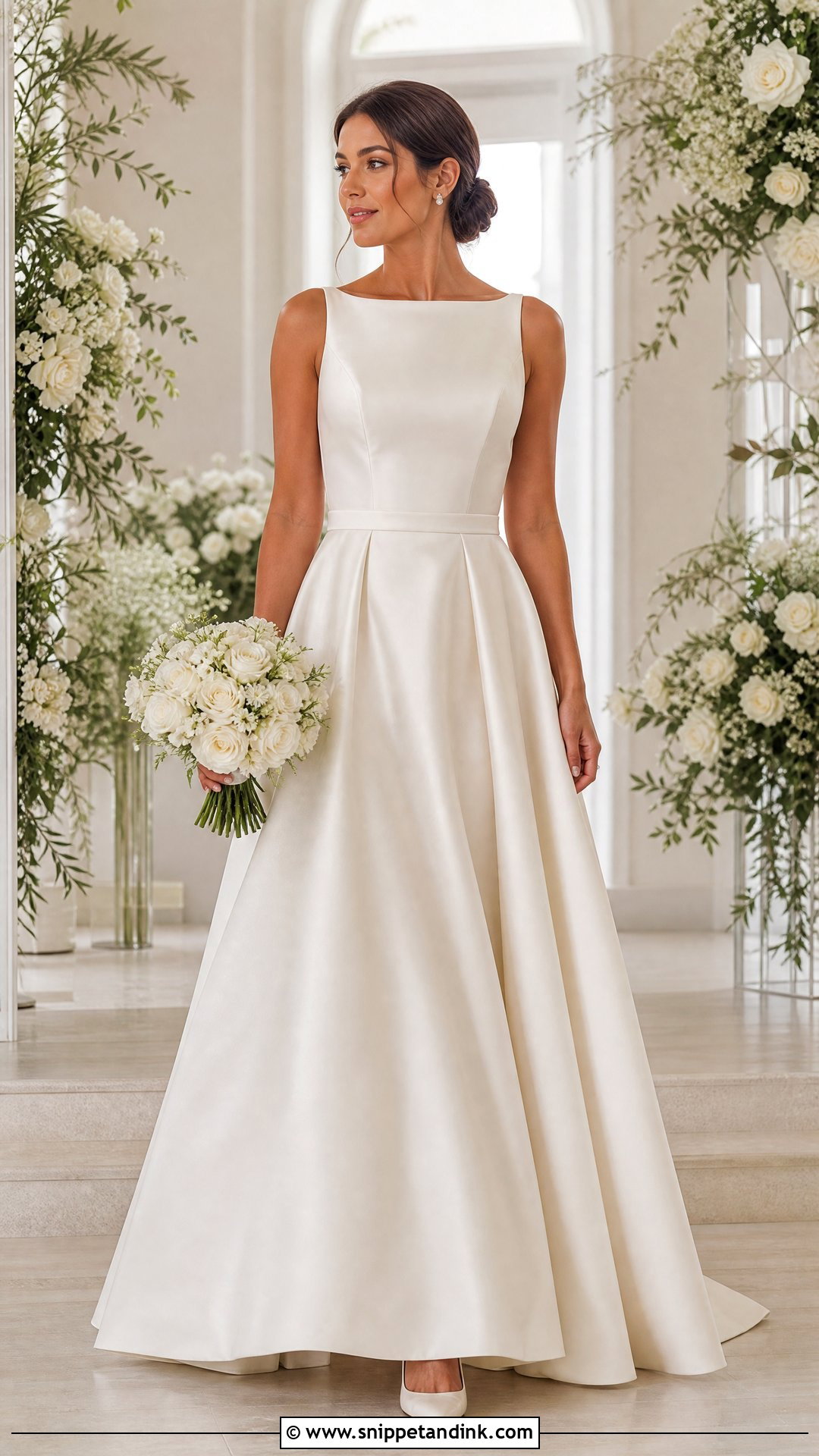
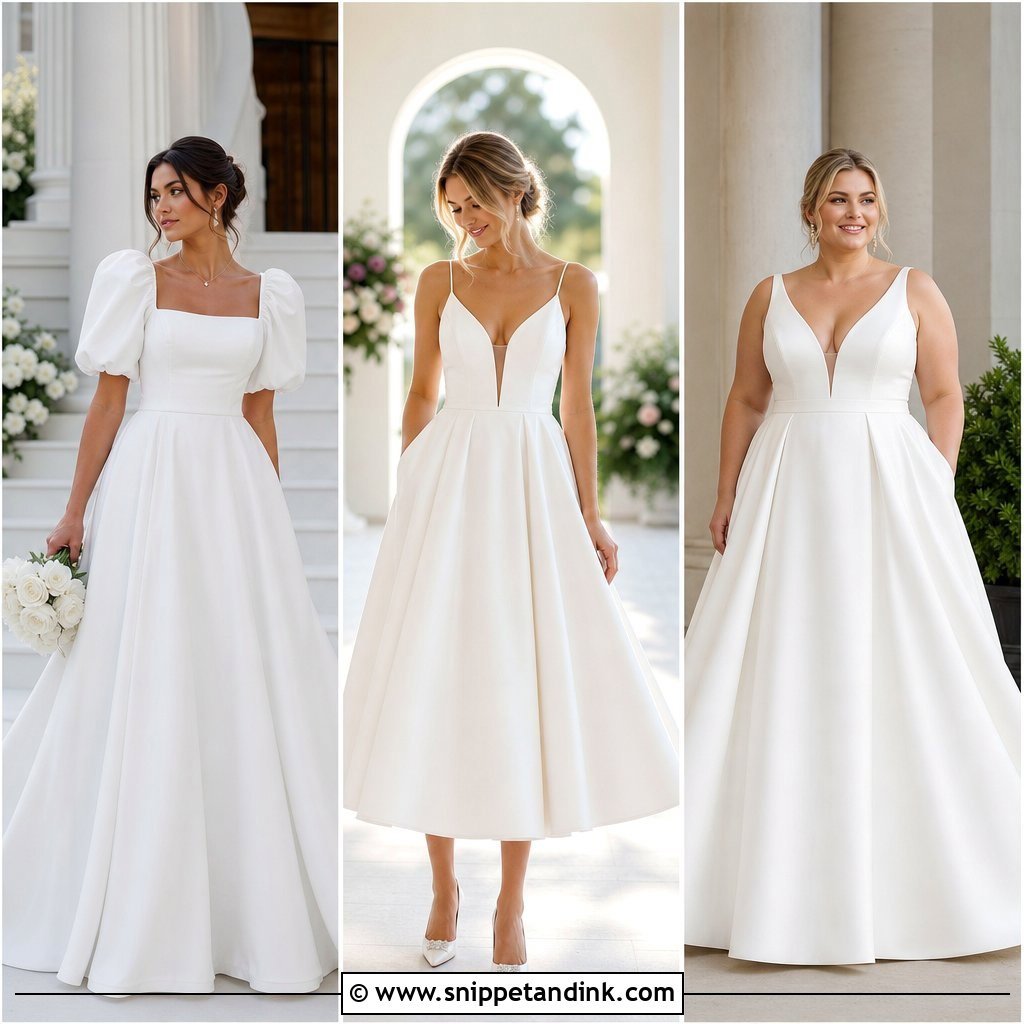
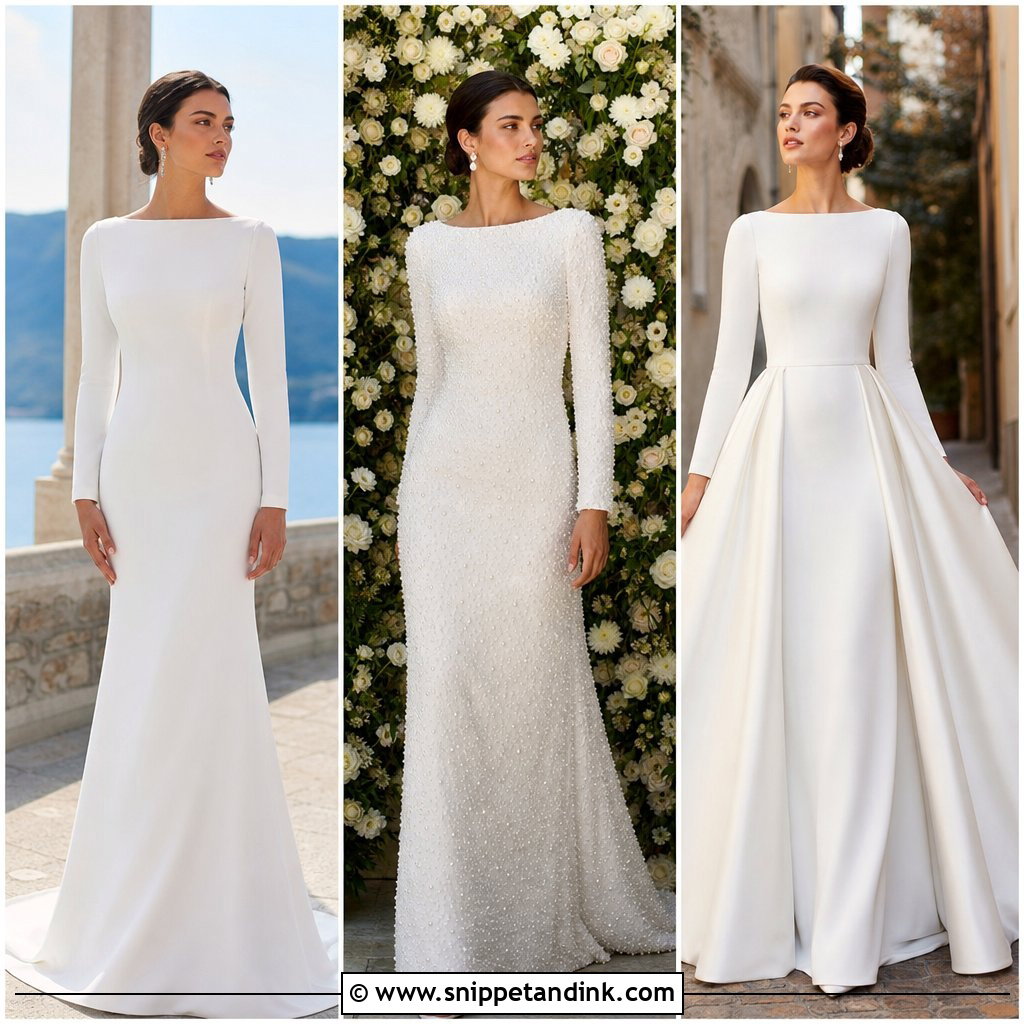
Short verdict: the satin A-line is the safest gown on this list, and safe isn’t a criticism. The bodice gives shape, the skirt falls away from the waist, and it moves easily from ceremony to reception. Ivory or soft white satin reads clean in daylight. Square, bateau and strapless necklines all suit it. What I watch is the skirt seam at the hip; if the A-line starts too high, it can look like a tent from the side. Pearl studs, a low bun and pointed satin heels.
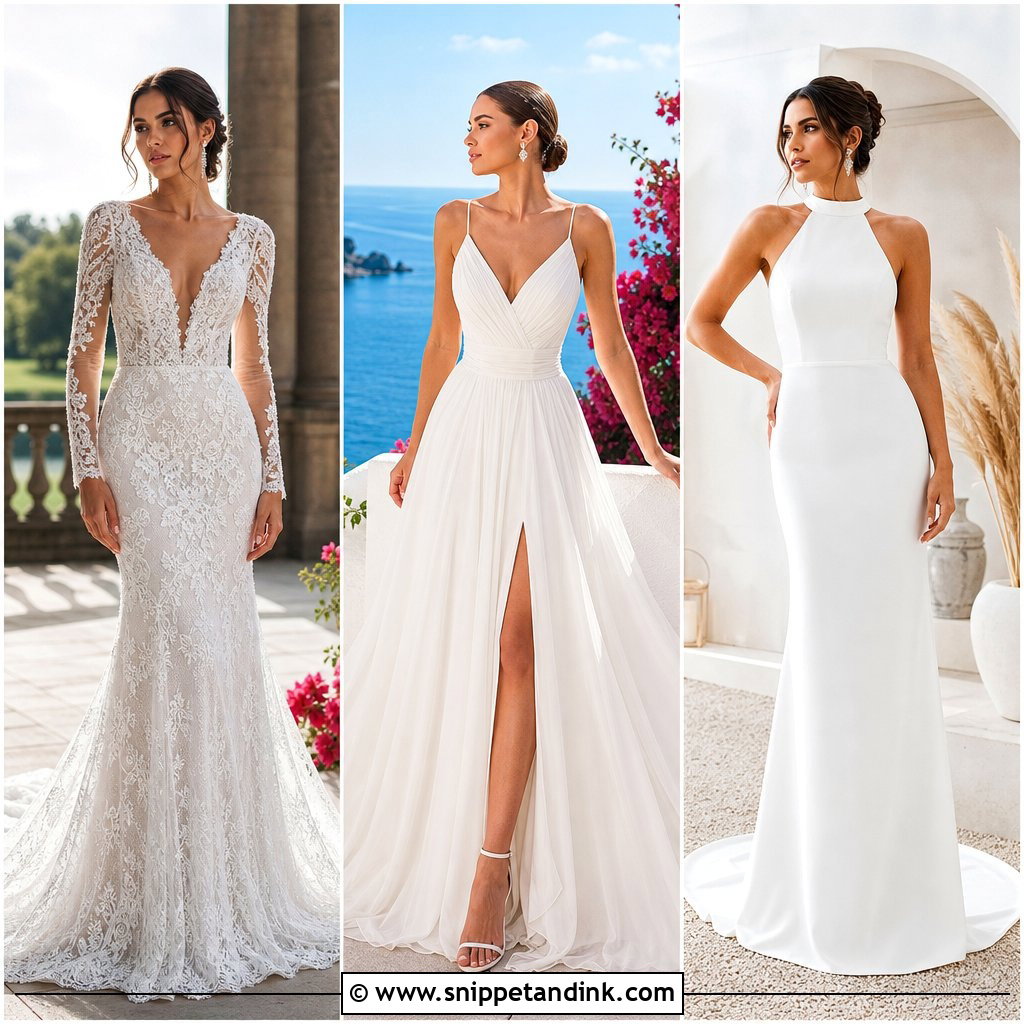
2. Long Sleeve Lace Wedding Gown
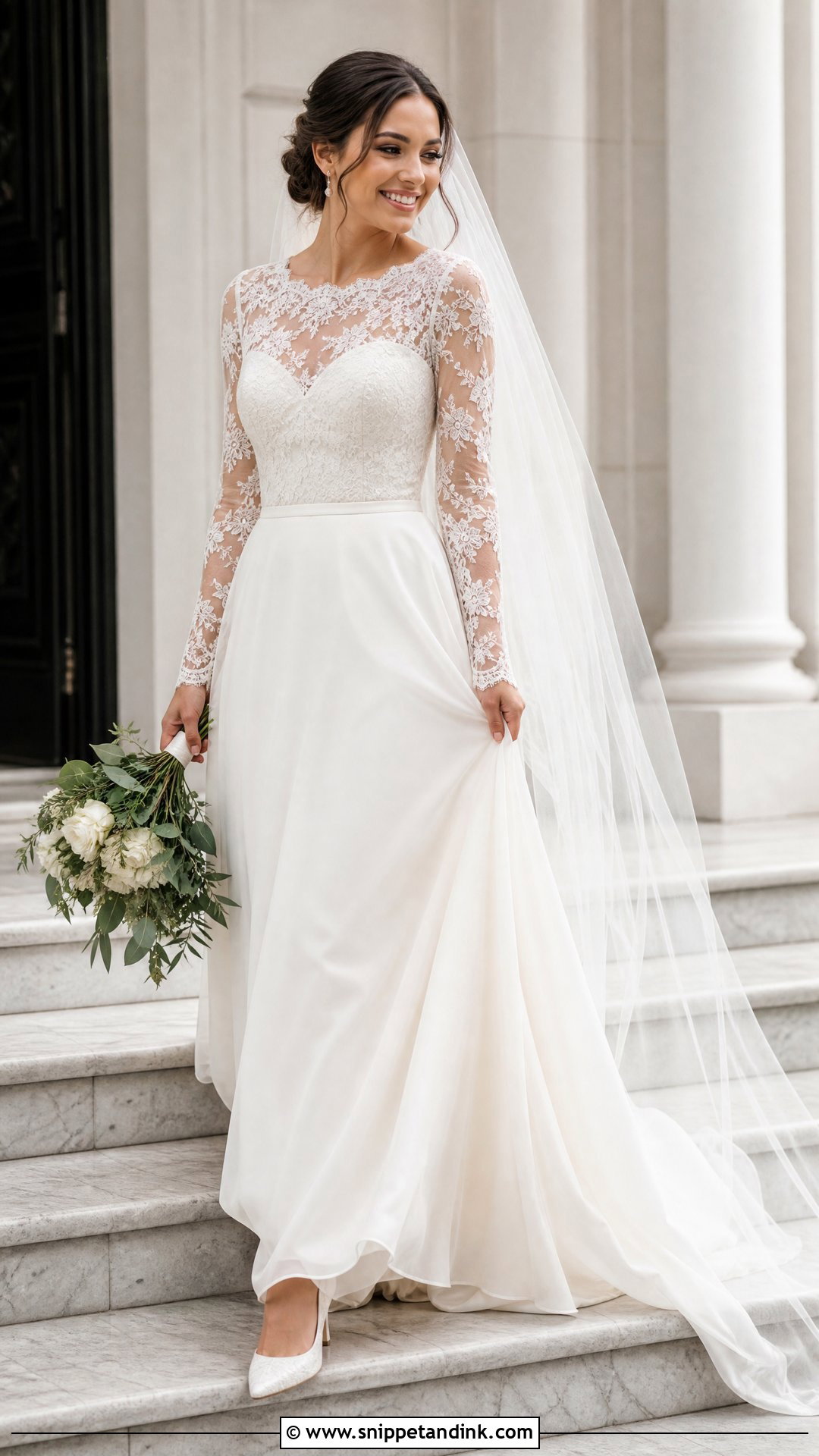
Sheer sleeves with floral appliqué or fine Chantilly make a long sleeve lace wedding gown feel delicate rather than heavy. Chantilly is a very fine lace with a soft net ground, and it’s fragile; I’d keep it away from rough bouquet stems and beaded clutches. A fitted bodice with a flowing skirt reads traditional, a slimmer cut more modern. Pearl earrings, a soft veil and classic pumps. Autumn, winter and evening weddings suit this best.
3. Off Shoulder Wedding Gown
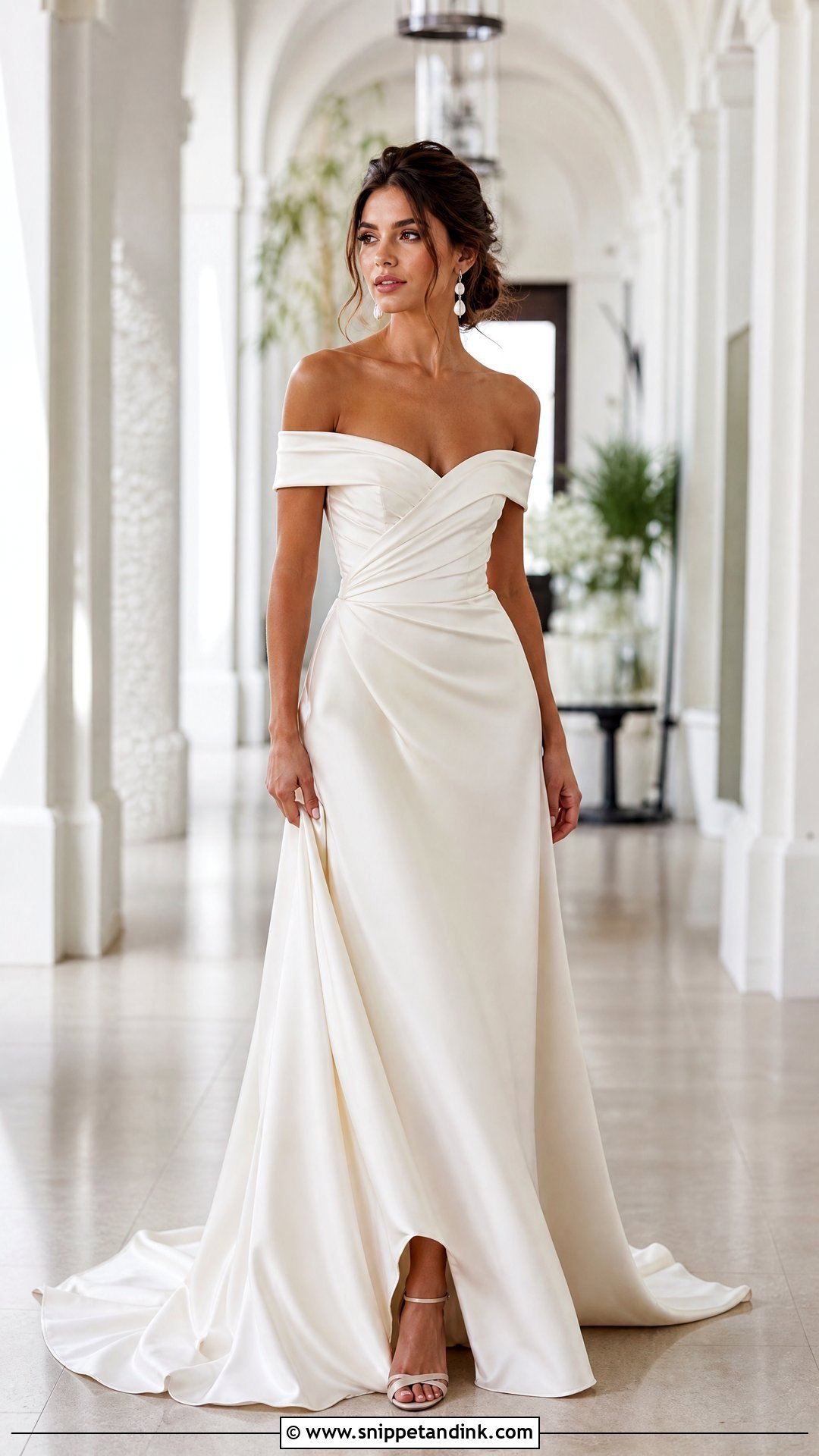
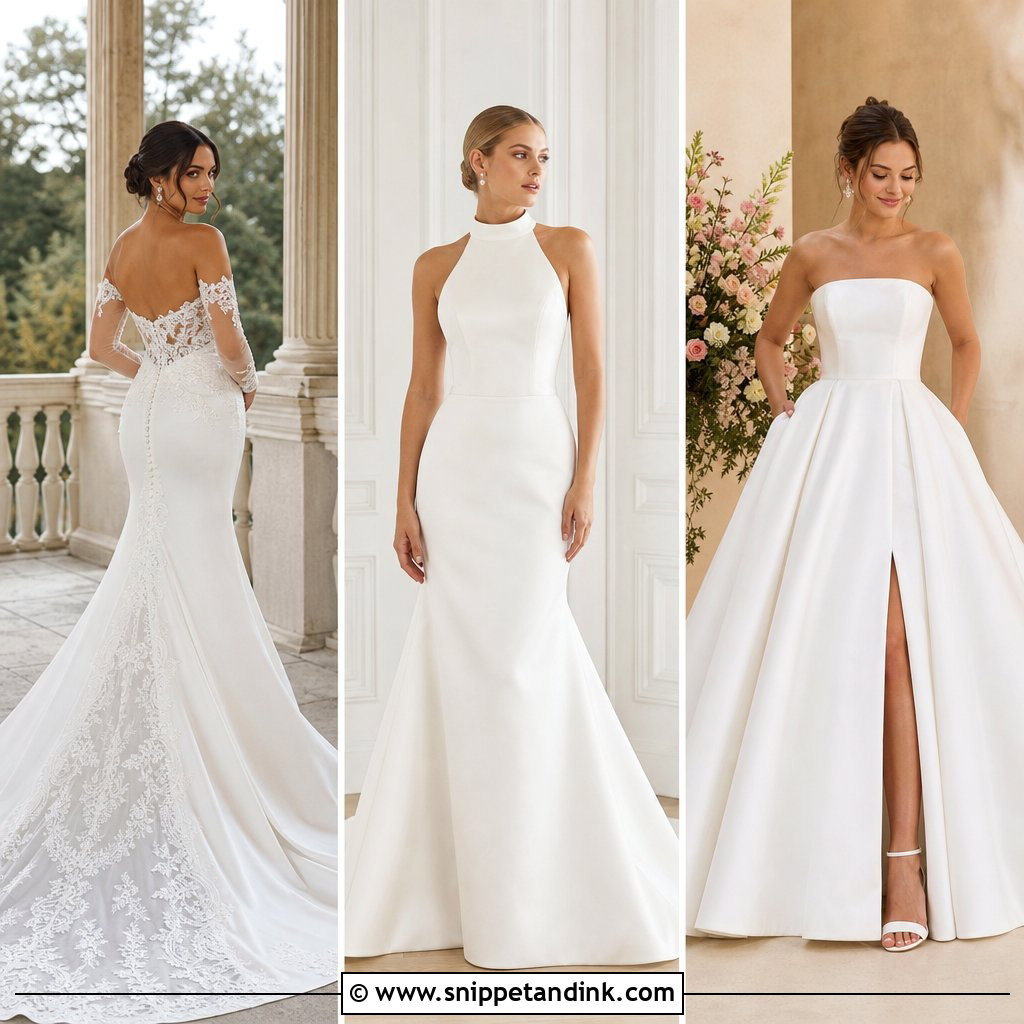
An off-shoulder neckline shows the collarbone, so the hair has to stay out of its way. I usually suggest a smooth updo or waves tucked behind the shoulders. Satin makes it classic, lace romantic, crepe modern. It pairs with a mermaid, a full A-line or a structured ball gown. I’d choose drop earrings over a necklace nine times out of ten. The fitting point: the band should grip the upper arm enough to stay down when you raise your hands, but not leave red marks.
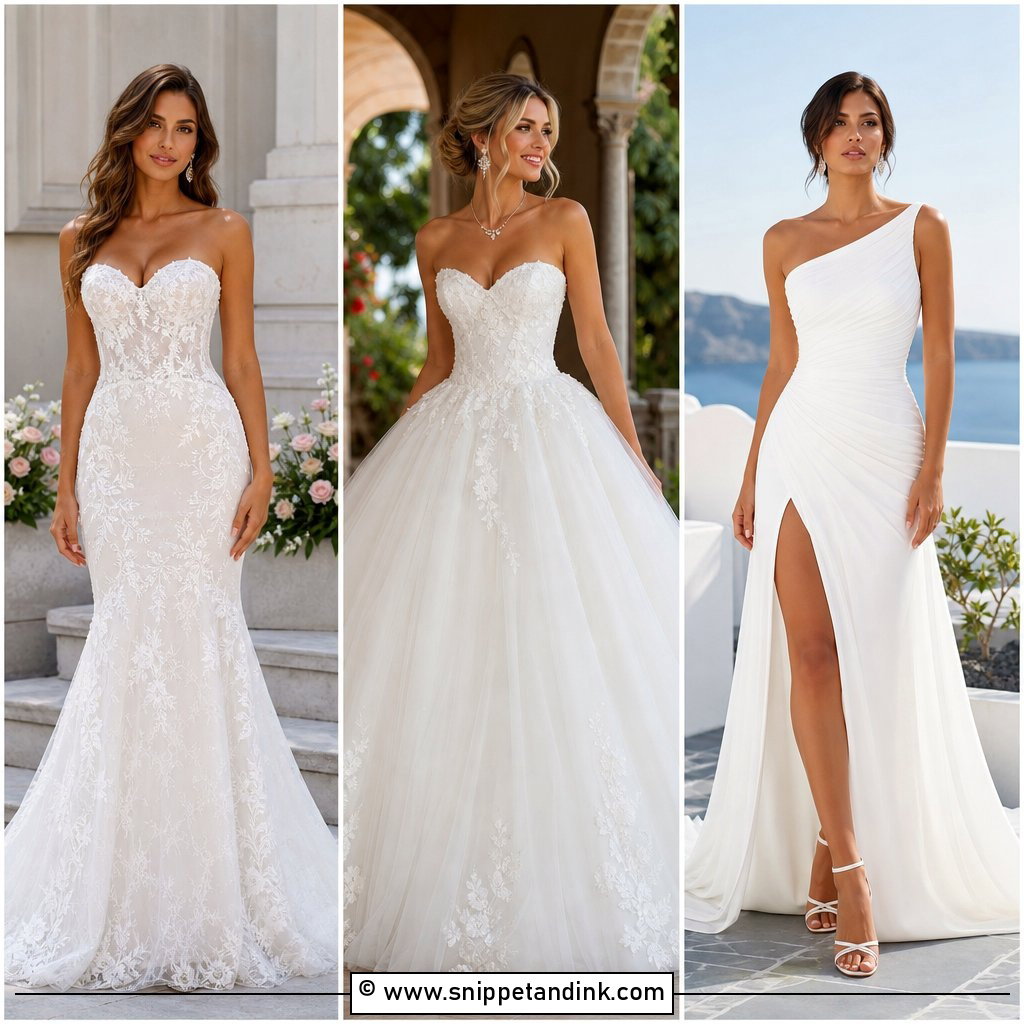
4. Strapless Ball Gown Wedding Dress
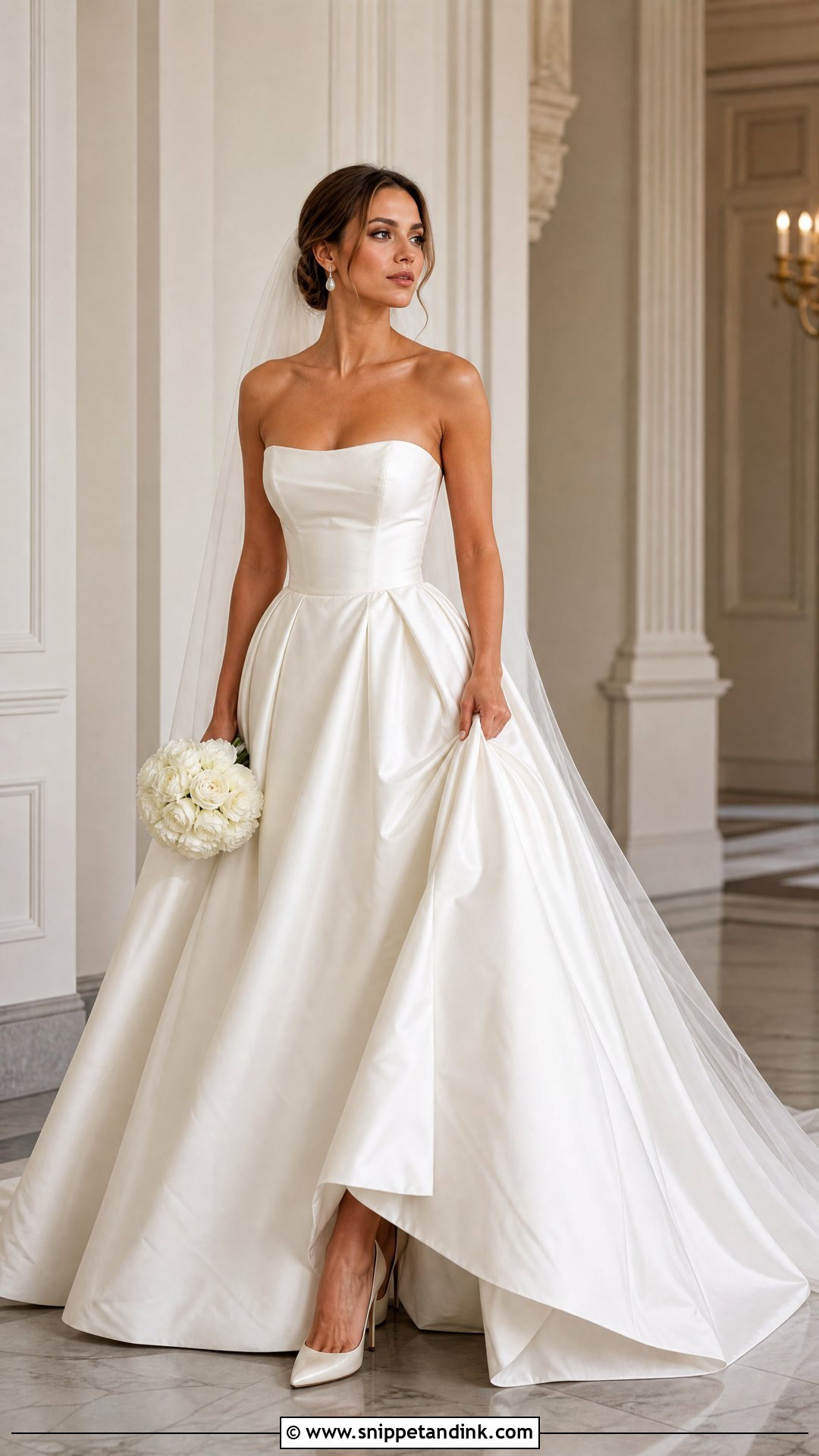
A strapless ball gown wedding dress needs a bodice built from the inside: boning, a waist stay and often a corset-style foundation. That’s what keeps it up all night, not tightness. Satin gives a clean, regal finish, layered tulle a softer one. Long gloves, pearl earrings or a cathedral veil finish it without crowding it. Think about logistics too; a full skirt needs a wide aisle, room in the car, and a helper at the bathroom. Black-tie and historic venues suit it.
5. Simple Crepe Wedding Gown
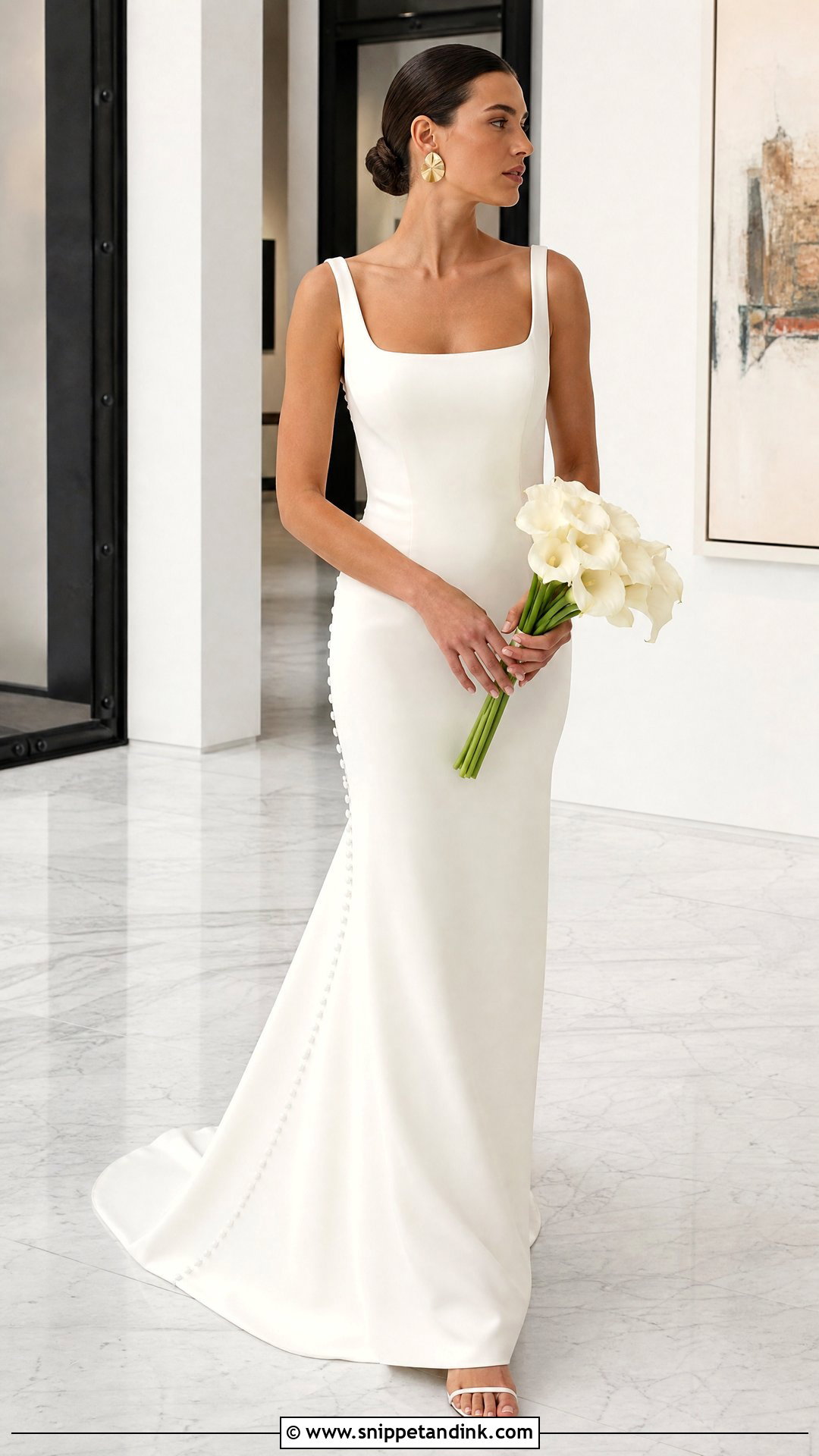
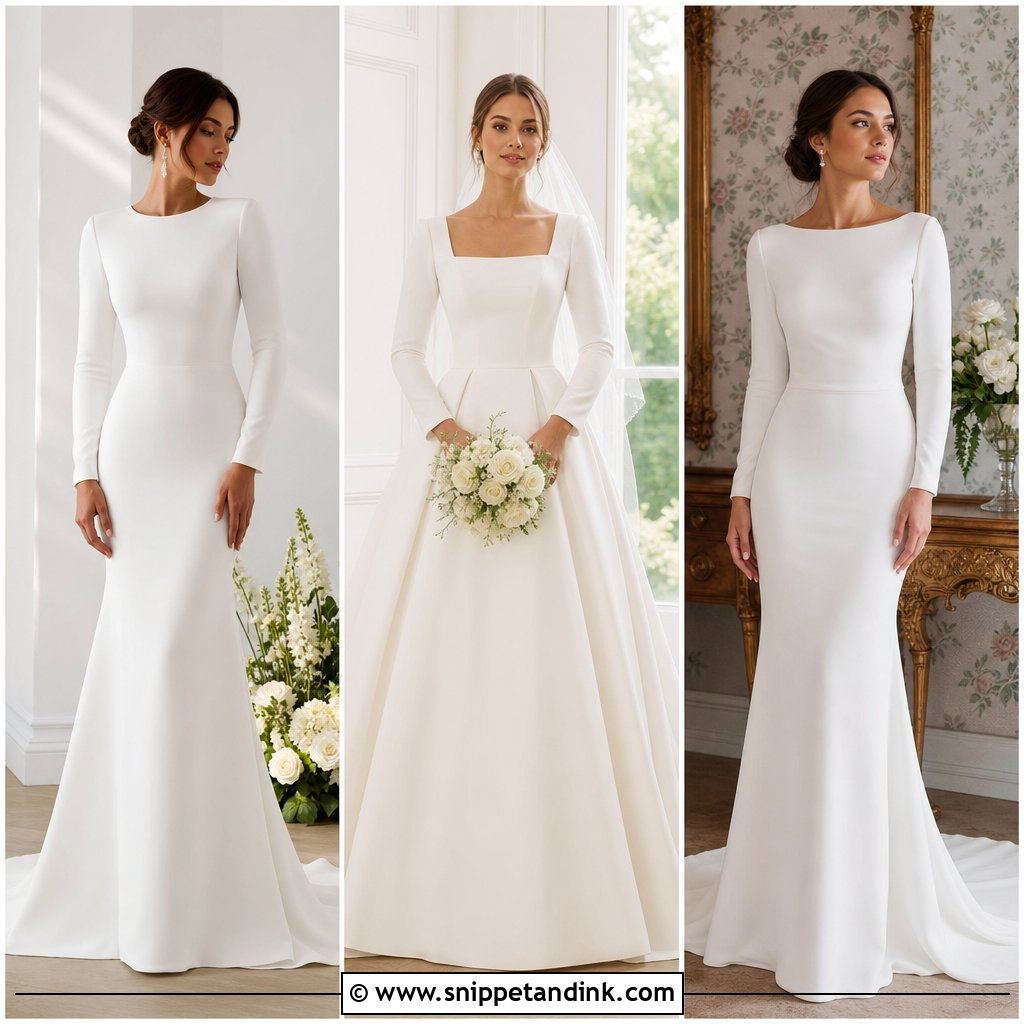
Crepe hides nothing about the fit and almost everything about creasing, which makes a simple crepe wedding gown a good choice for a long day. A sheath or fit-and-flare shows the fabric best. With so little decoration, one detail carries the dress: a square neck, a low back, a line of covered buttons or a short train. Sleek hair, sculptural earrings and minimal heels. I’d point a bride toward it for city halls, rooftops and modern spaces.
6. High Neck Wedding Gown
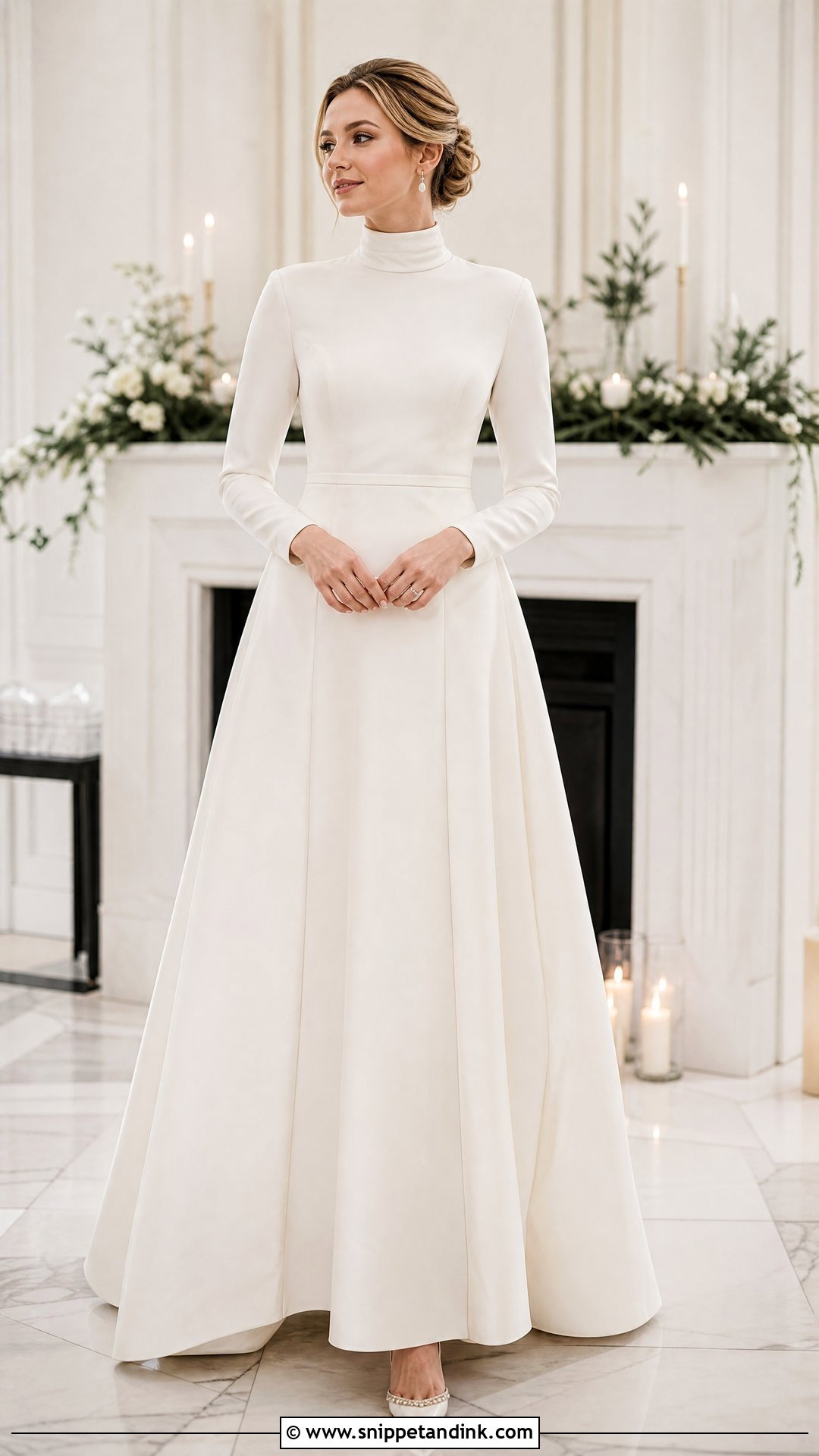
A high neck covers the chest and draws the eye up to the face. Sheer lace versions look romantic; satin or crepe versions look clean. It balances best with a defined waist or a column skirt. Hair should be up or pulled back, small earrings, a simple bracelet. If your neck is short, I’d suggest a sheer illusion yoke over a solid collar, because it gives the coverage without visually shortening the neck.
7. Mermaid Lace Wedding Gown
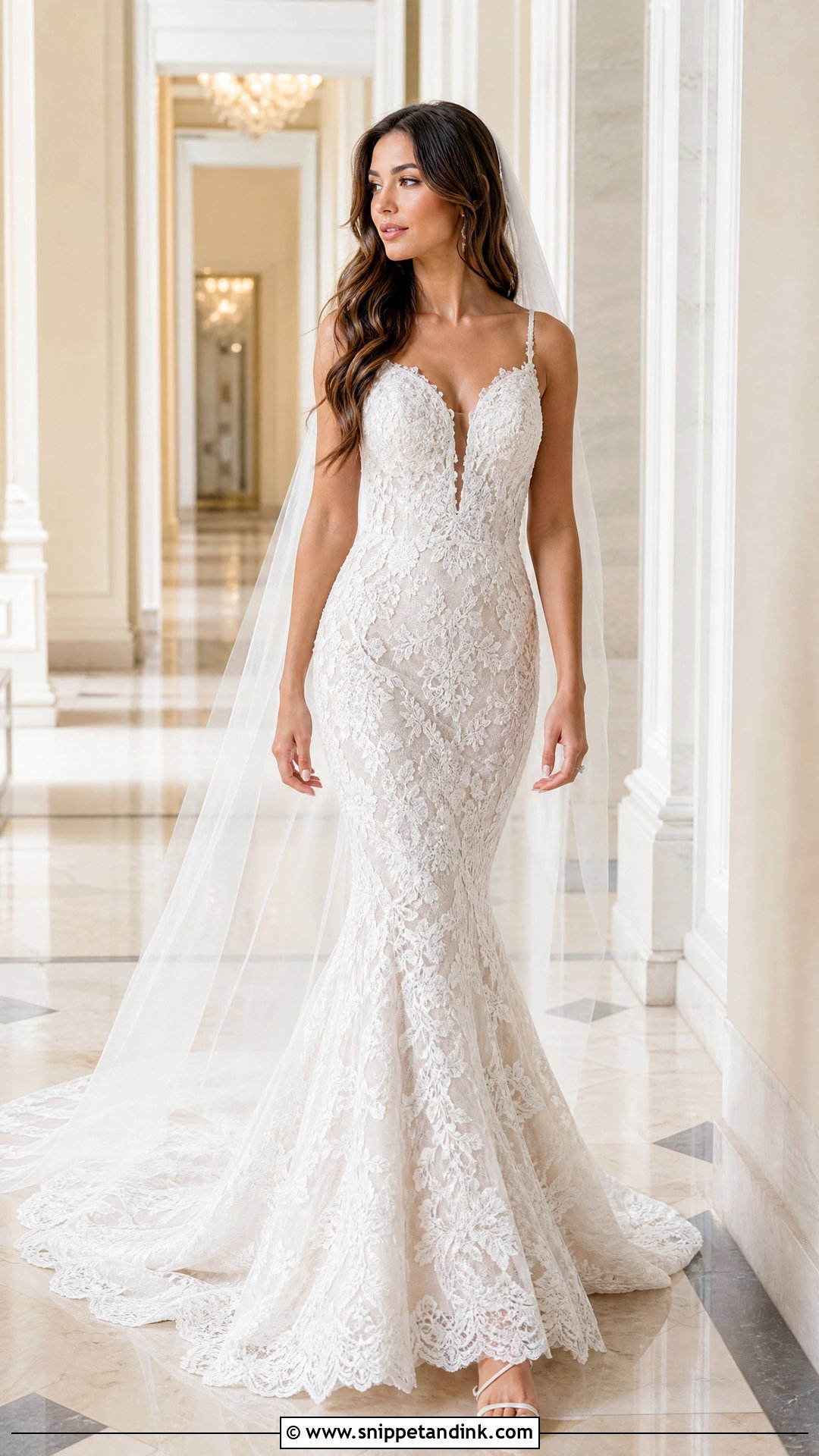
Floral or geometric lace on a mermaid cut softens a very structured shape. Because the gown is fitted through the hips, the lace has to be matched at the side seams, and that’s where cheaper versions give themselves away. It should hug without stopping you from walking; I have brides climb two stairs at the fitting. A long veil, soft waves and delicate heels. Evening weddings and formal venues suit it.
8. Square Neck Wedding Gown
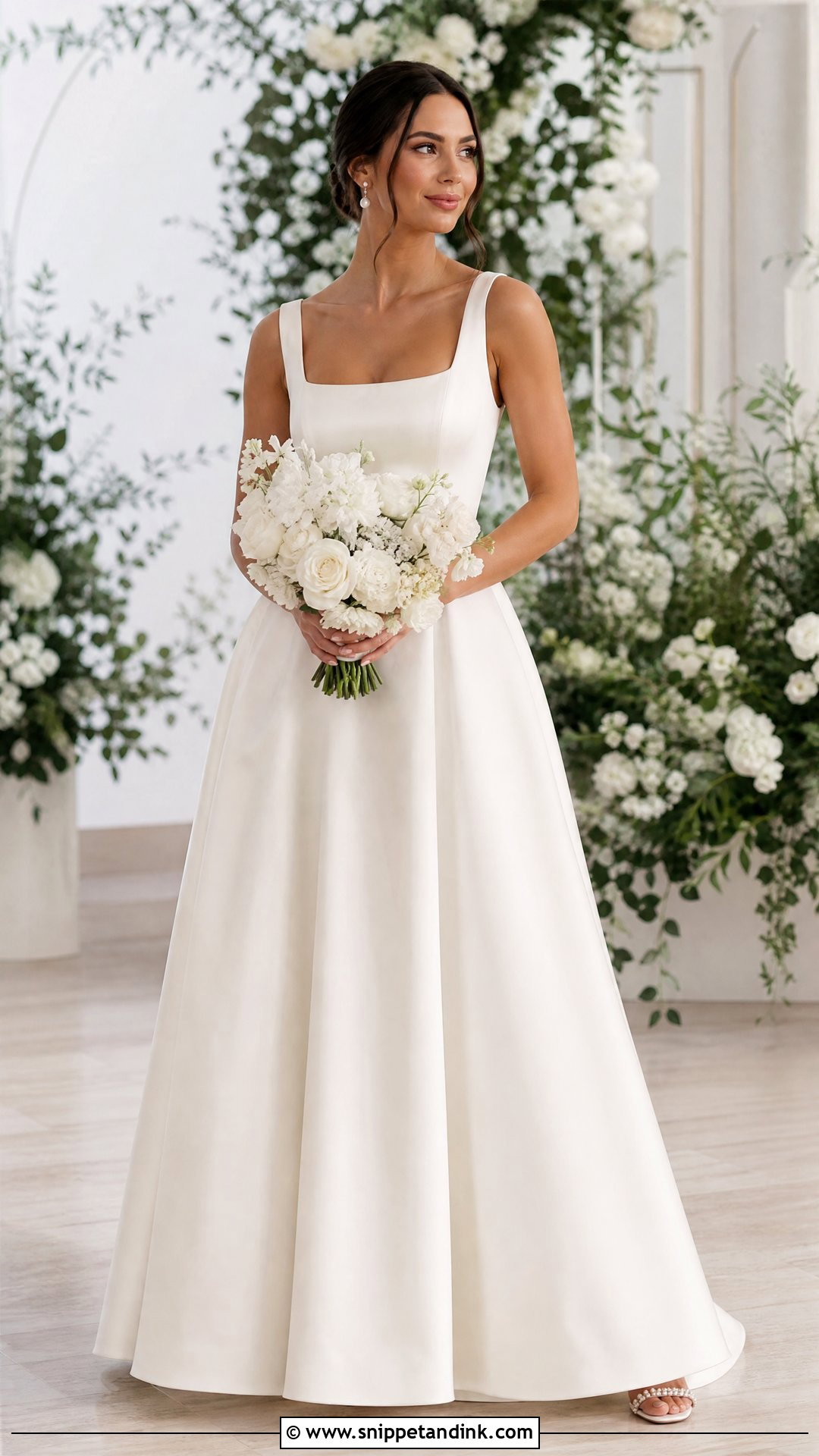
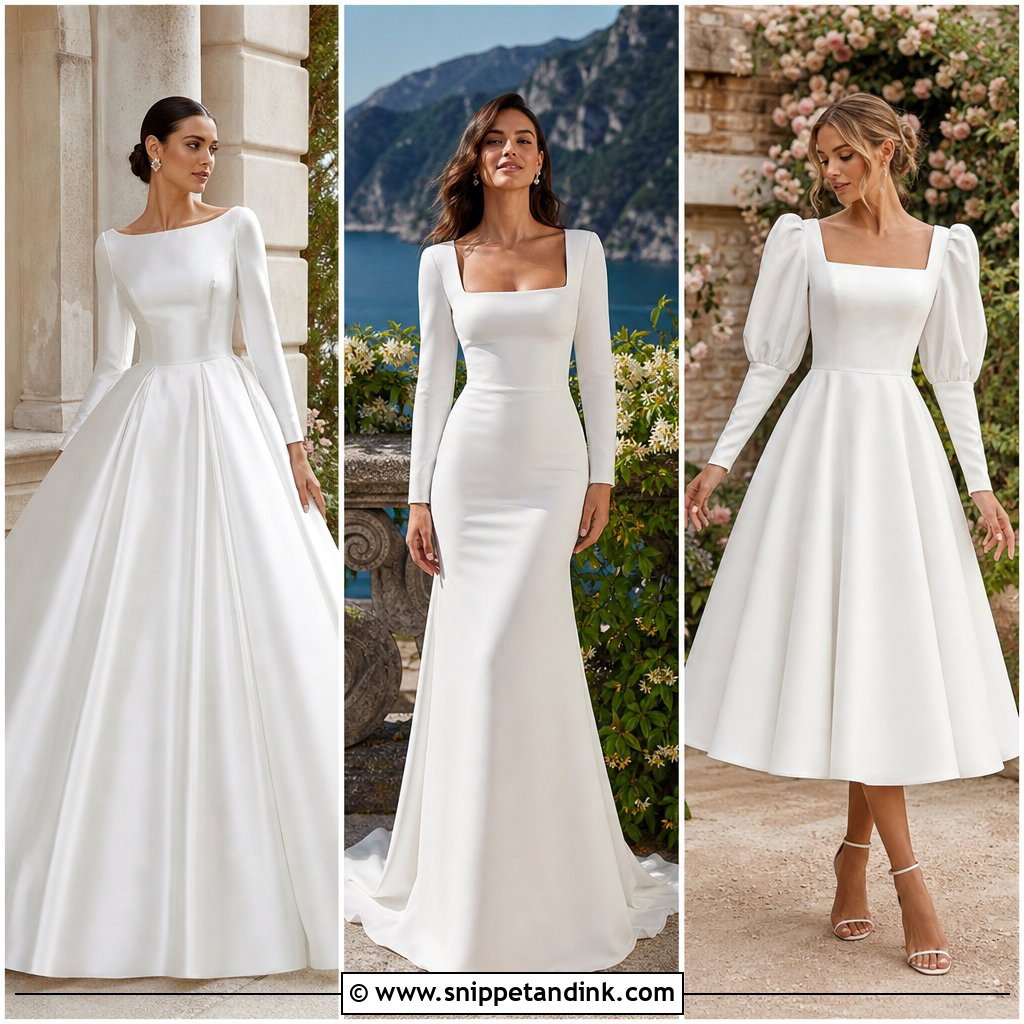
A square neck wedding gown frames the face and shoulders cleanly, and it works across satin, crepe, mikado and lace. Wider straps give support, thinner ones feel lighter; if you’d like to wear a regular bra, ask for wider straps. On an A-line it reads classic, on a sheath it reads modern. A sleek bun, pearl drops and a structured bouquet. It suits warm-weather ceremonies well.
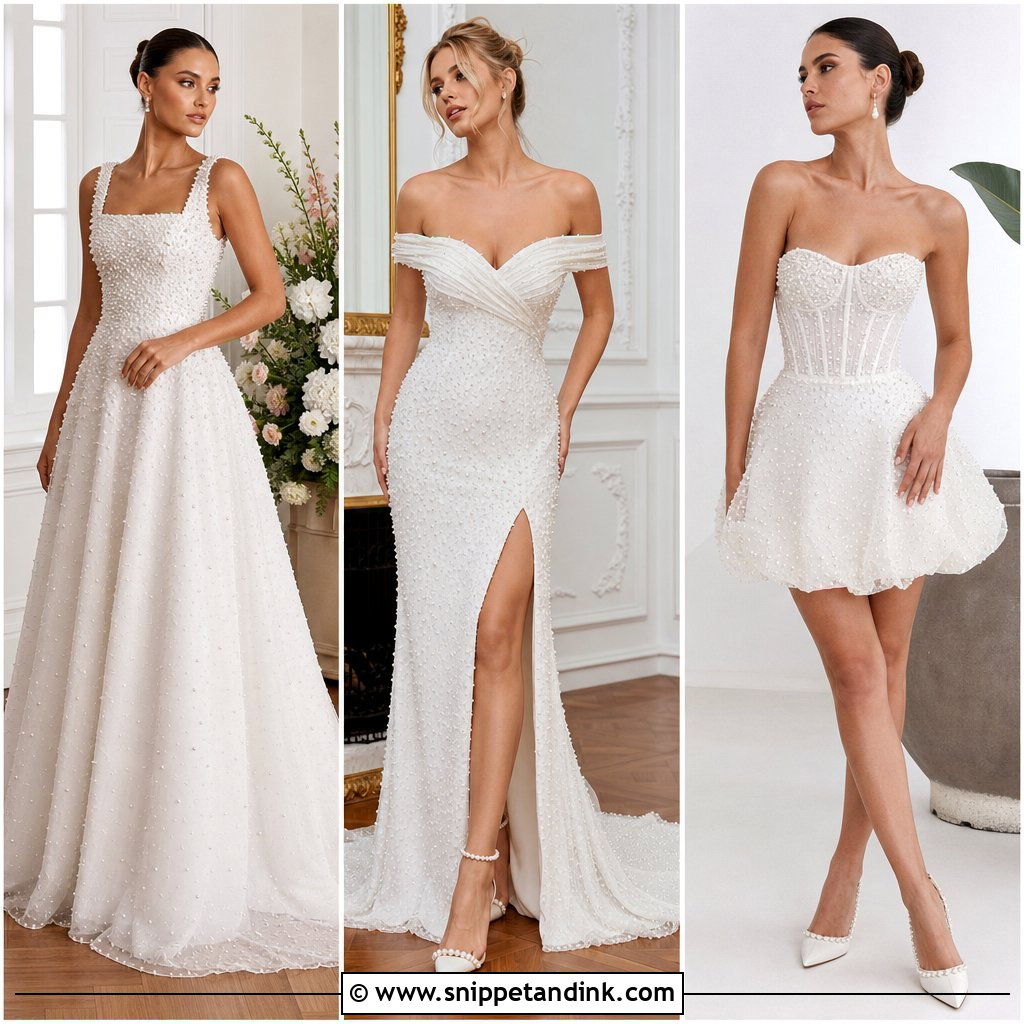
9. Pearl Embellished Wedding Gown
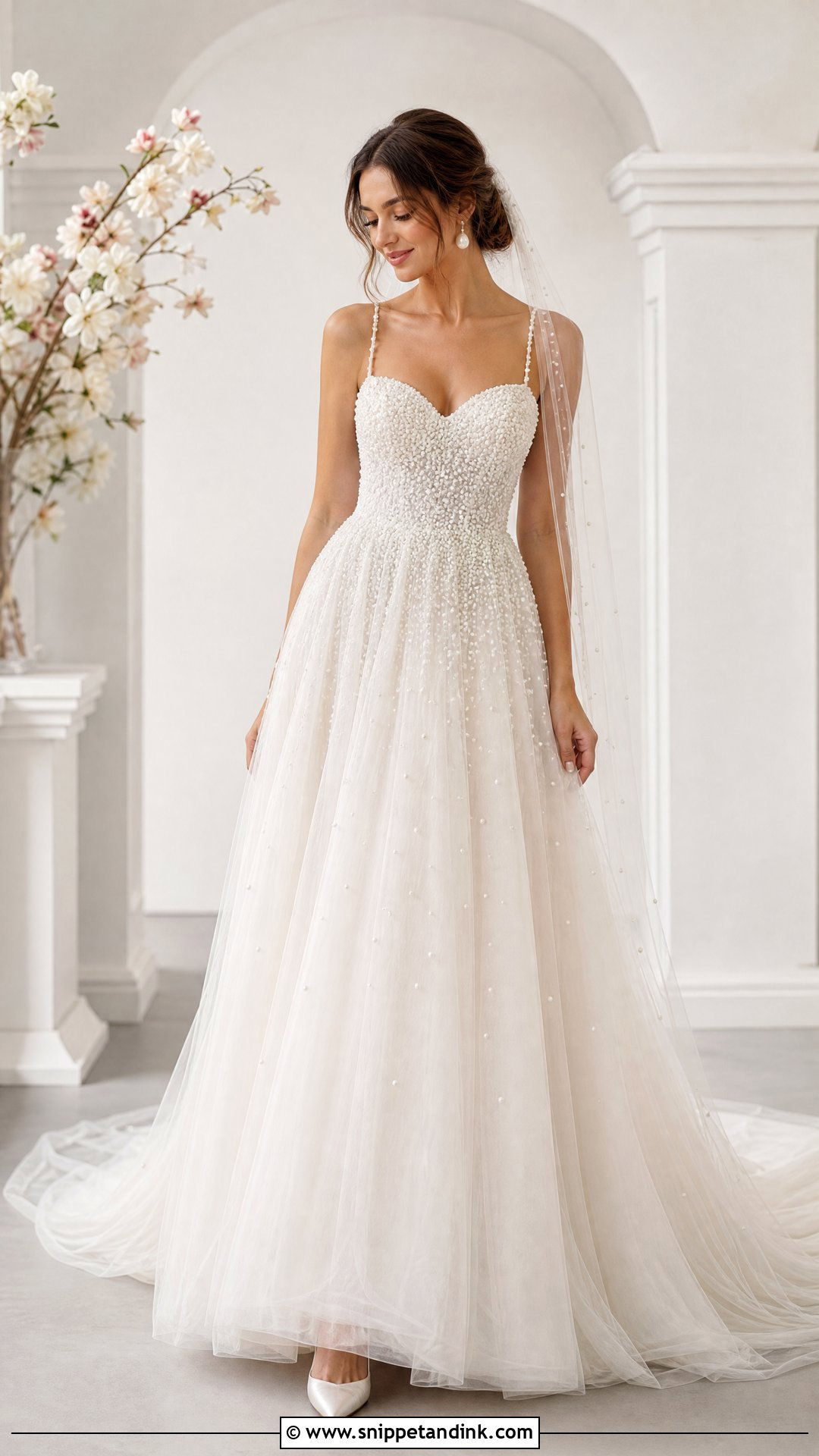
Pearls glow rather than sparkle, so they read softer in daylight than crystals. They can be scattered across tulle, run along the sleeves or outline the bodice. I always check how they’re attached: pearls sewn individually with a backing knot survive a long day, glued ones fall off on the dance floor. Keep the silhouette simple so the pearls don’t look busy. Pearl earrings, satin heels and a soft veil.
10. Basque Waist Wedding Gown
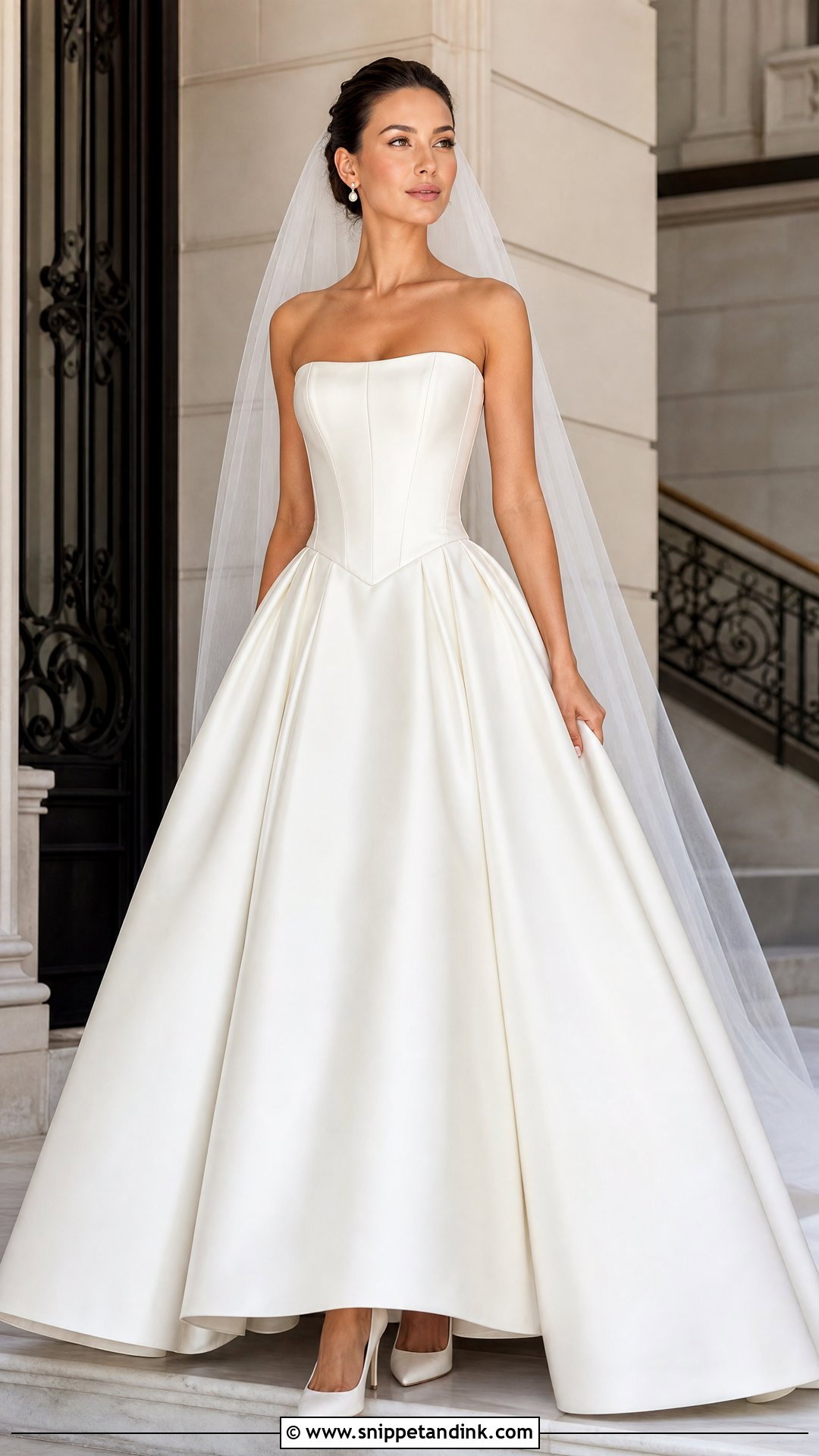
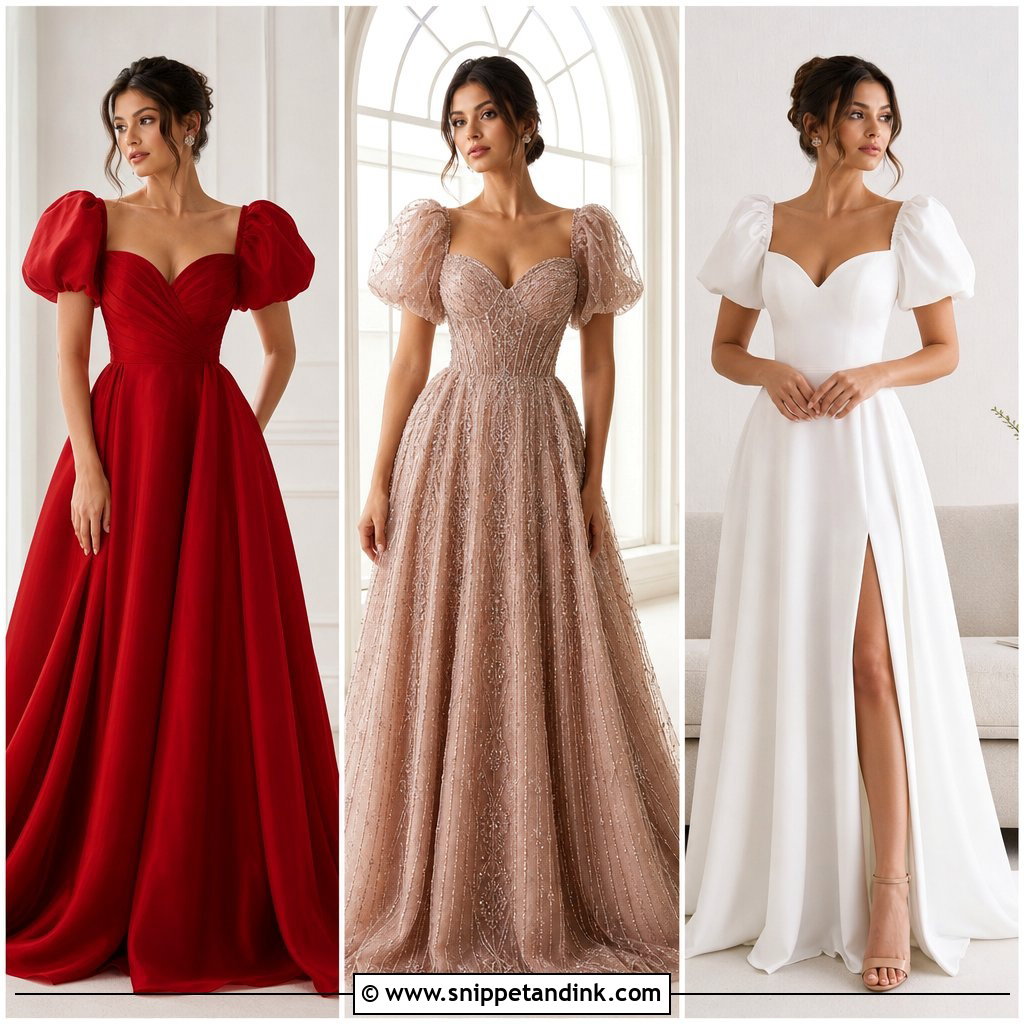
A basque waist dips into a point or a V below the natural waist, which carves out the waist and lengthens the torso. It looks vintage but sits very comfortably in current bridal collections. The skirt can be full, soft or lightly gathered. Satin and mikado show the line most clearly; lace makes it softer. I find it especially flattering on brides who have a shorter torso, since the point draws the eye downward. Simple earrings and a long veil.
11. Drop Waist Wedding Gown
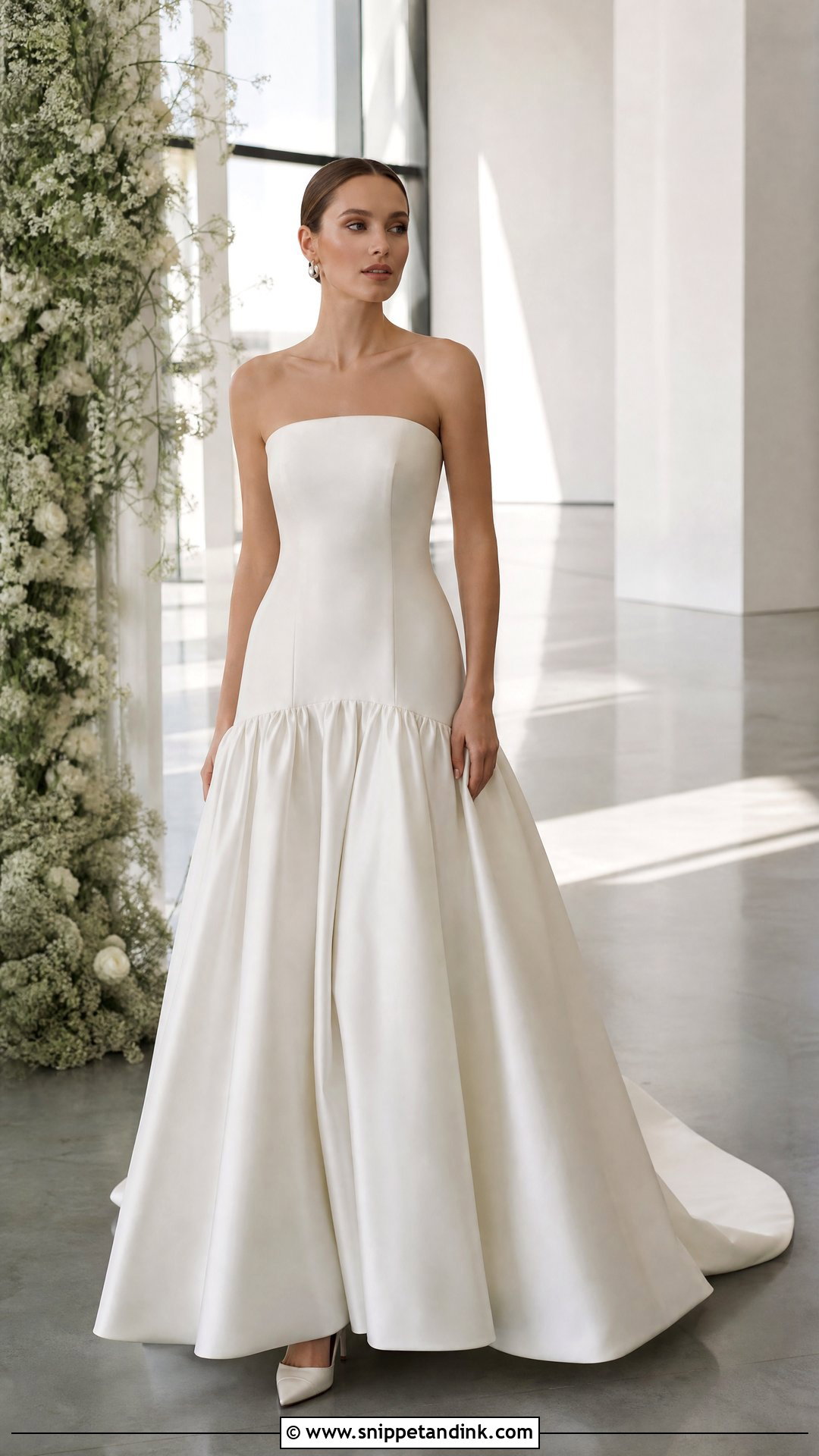
The drop waist wedding gown places the waistline below the natural waist for a long, smooth torso. Satin, taffeta and mikado hold the shape. A full skirt makes it dramatic; a slim one keeps it quiet. Proportions decide whether it works, so I pin the seam at a couple of heights in the fitting room before you commit. Clean hair, minimal jewelry and classic heels.
12. Halter Neck Wedding Gown
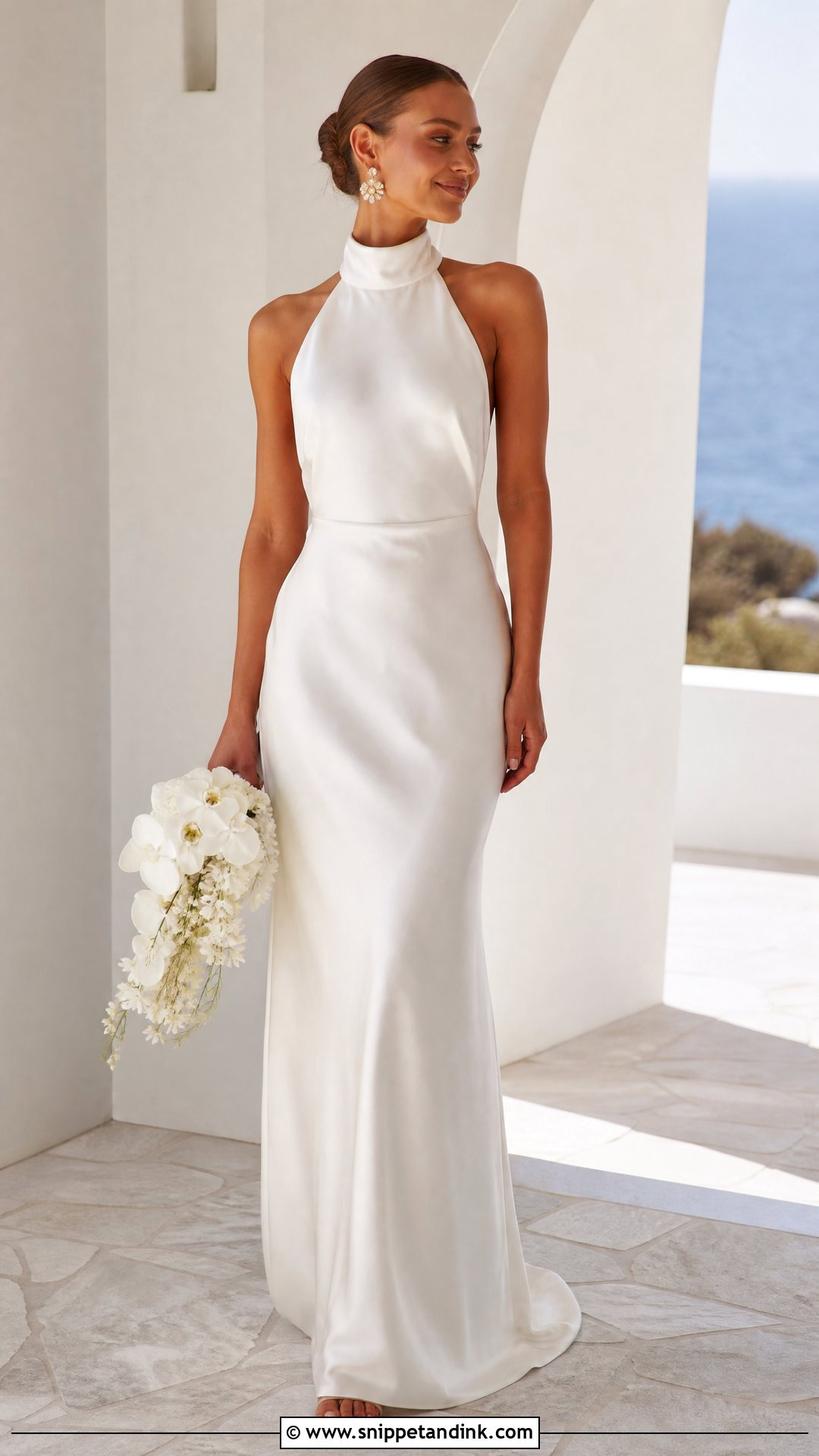
A halter lifts the eye to the shoulders and gives coverage across the chest. Satin halters feel sleek, lace and chiffon softer. It suits a column, a fit-and-flare or a simple A-line. No necklace; earrings instead. A clean bun or smooth ponytail keeps the neck strap visible. Before the final fitting, I have the bride wear it for an hour, because the neck strap carries weight and can start to ache.
13. V Neck Wedding Gown
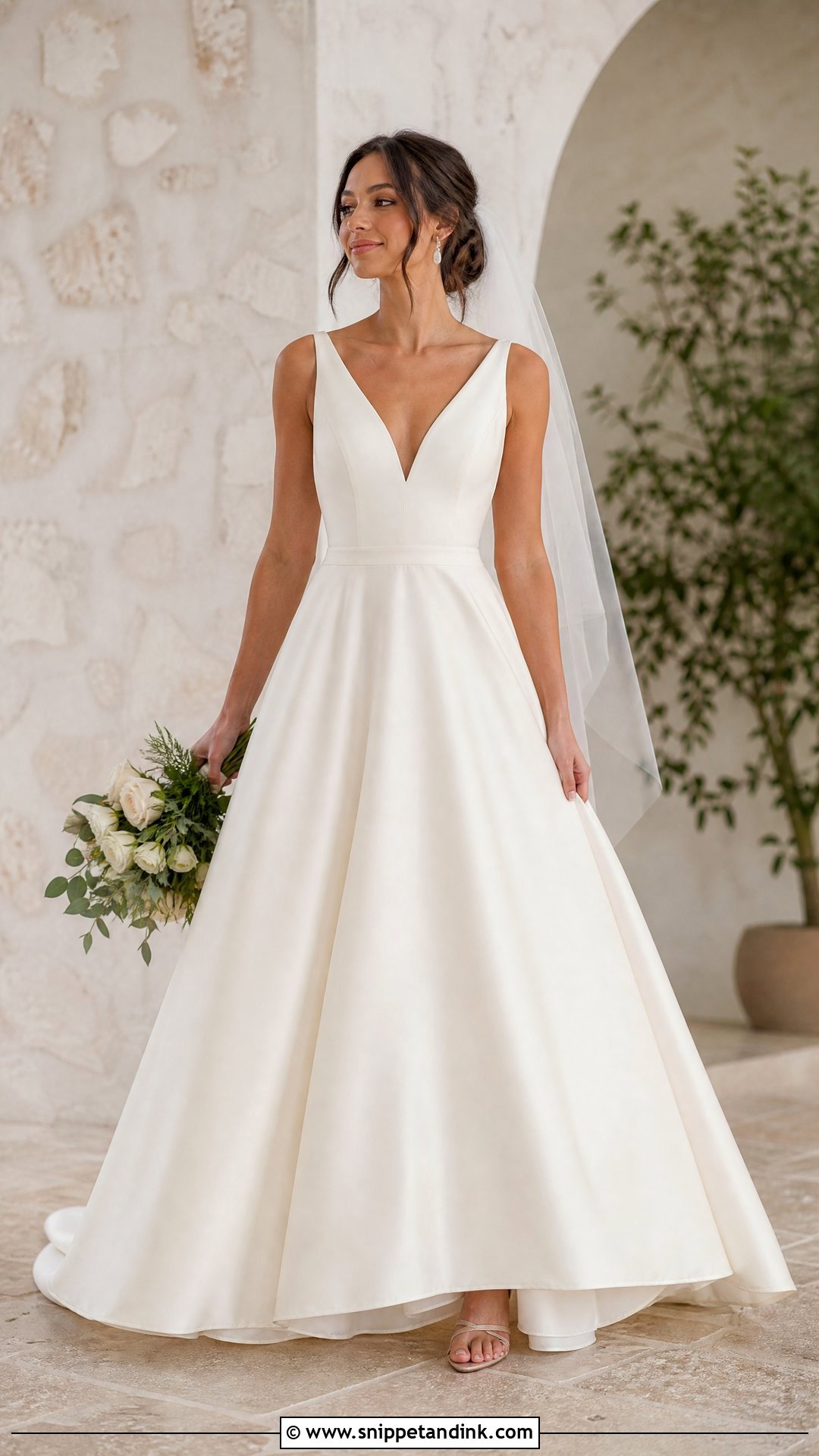
A V-neck lengthens the upper body and can be shallow or deep depending on comfort. It works in lace, satin, chiffon and crepe. A V-neck A-line is romantic; a fitted crepe version is sleeker. A pendant only if the neckline is plain. With a deep V, I sew in a strip of fine mesh or use fashion tape, and test both by having the bride lean over a table as if signing.
14. Bateau Neck Wedding Gown
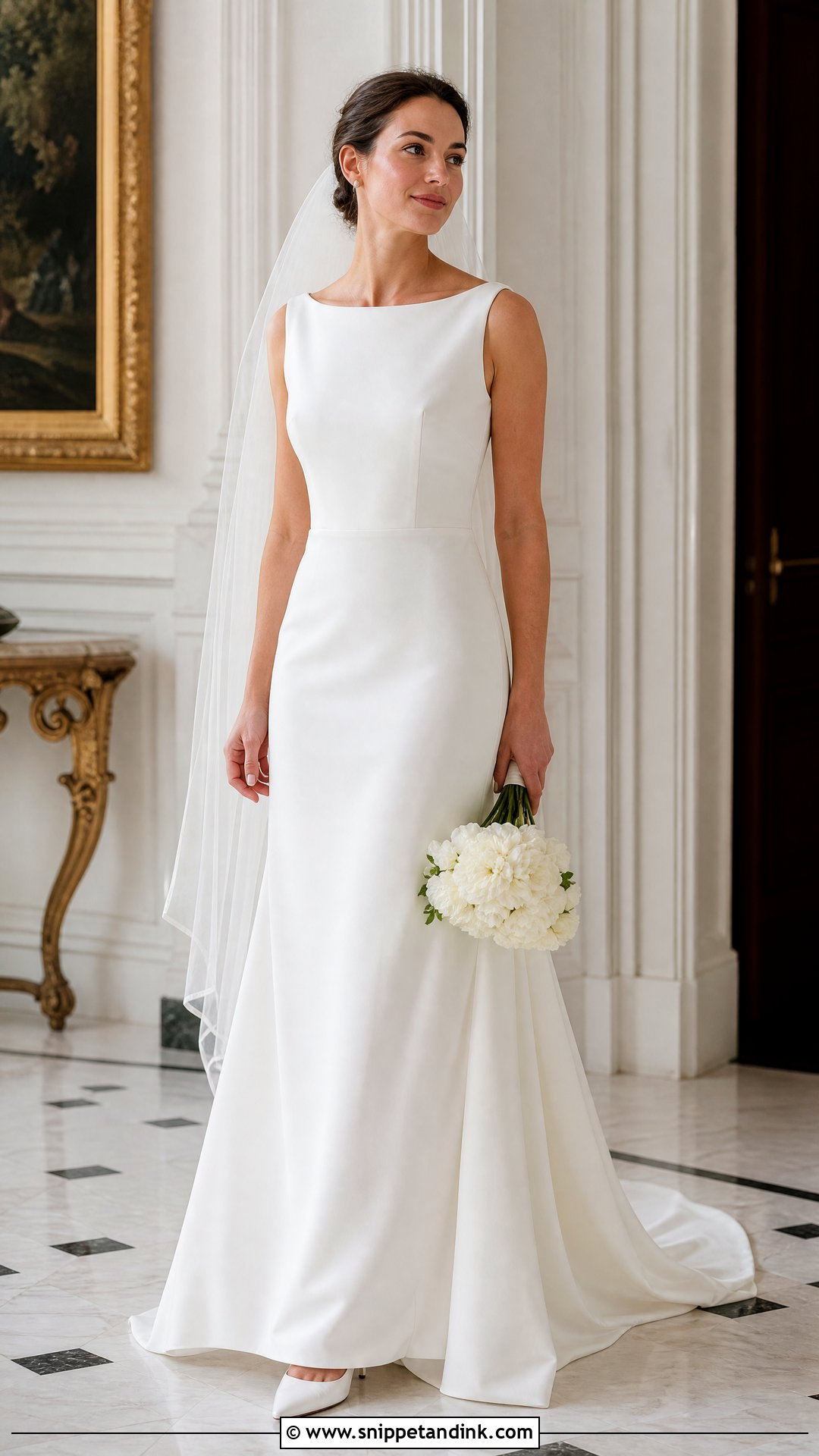
A bateau neckline runs almost straight from shoulder to shoulder, just under the collarbone. It covers while still framing the face, and it has that old Hollywood feel. Satin and crepe make it classic; lace adds romance. A low bun, pearl studs and a simple veil. Skip the necklace. Narrow-shouldered brides look wonderful in it, since the width builds the shoulder line; very broad shoulders can look wider still.
15. Sheath Wedding Gown
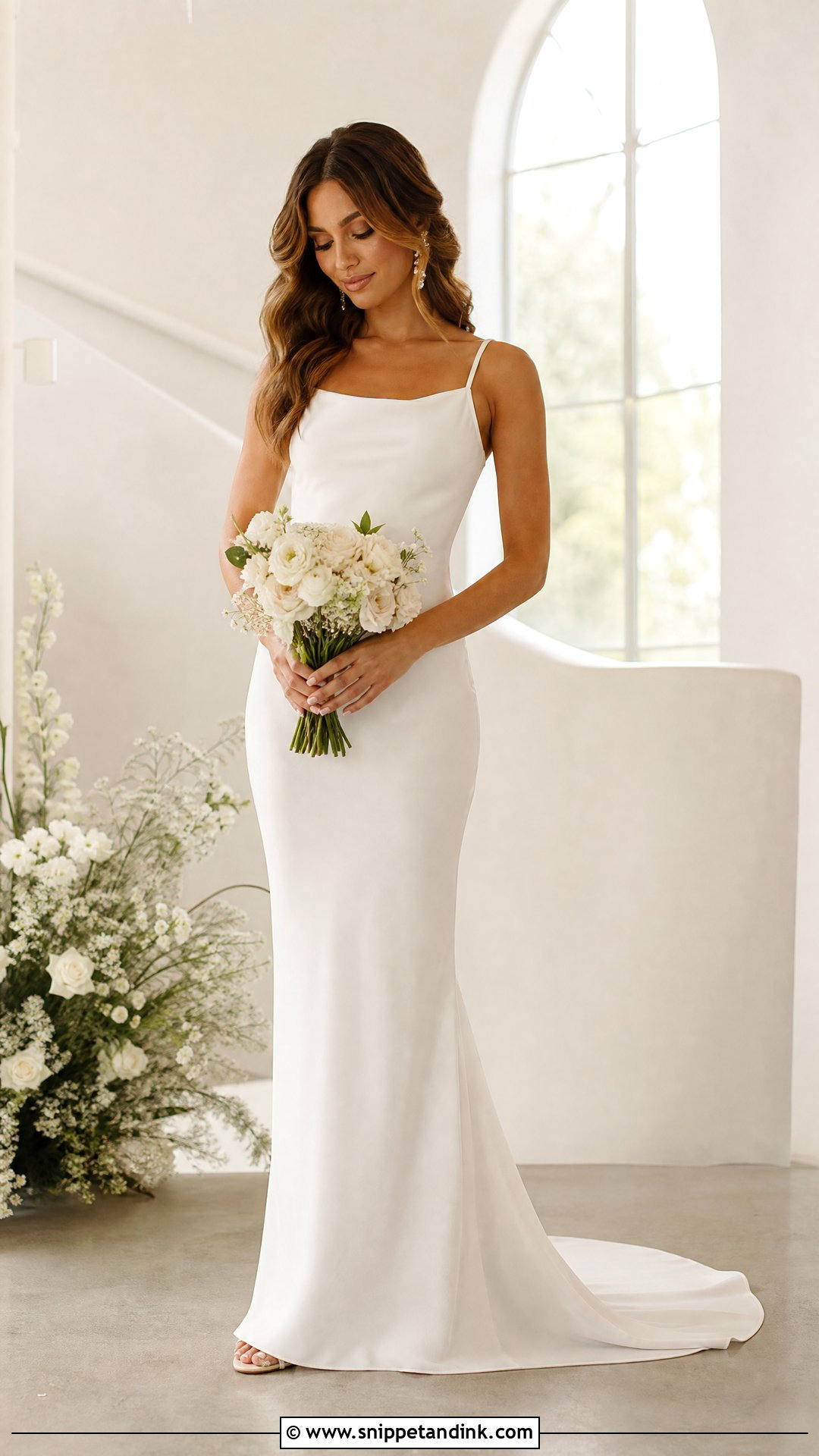
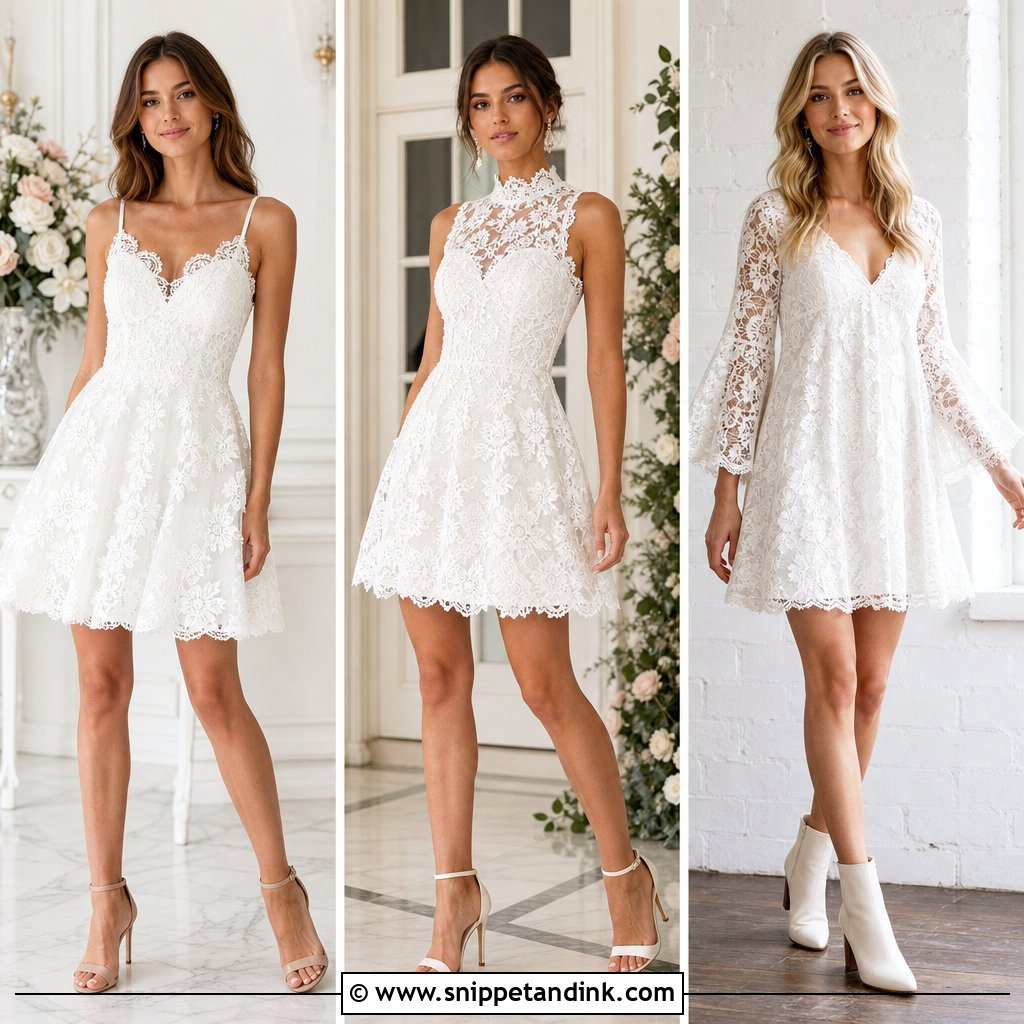
A sheath follows the body’s natural line with no extra volume or flare. It’s comfortable and easy to move in, which is why I recommend it for beaches, courthouses and small celebrations. Crepe, satin and silk give a smooth surface. A cowl back, covered buttons or delicate straps add interest. Soft waves, refined earrings and slim heels. The thing to check is the walking slit; a sheath without one shortens your stride.
16. Tulle A Line Wedding Gown
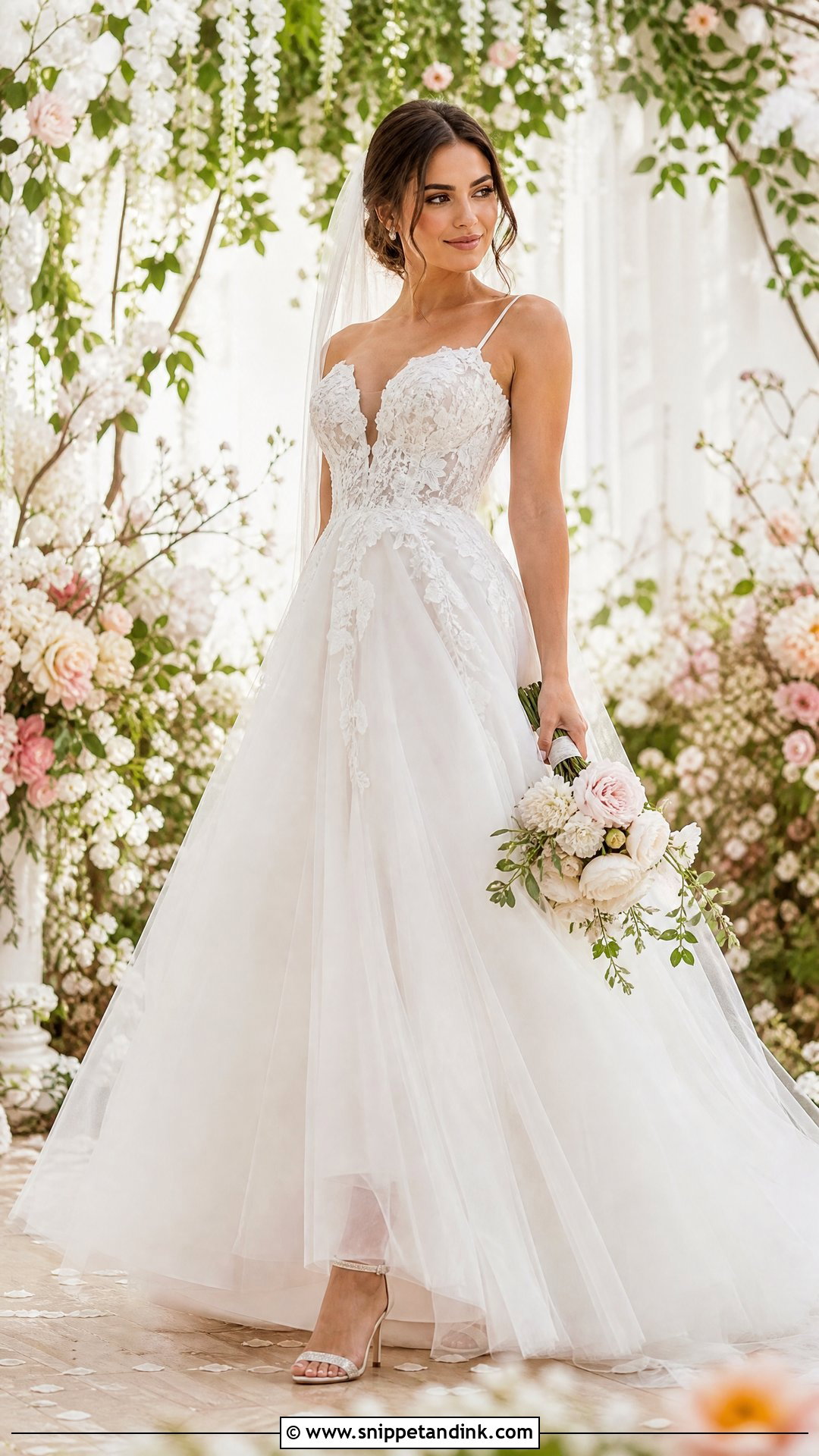
Tulle gives volume without much weight, so a tulle A-line feels lighter on than it looks. Fine layers create fullness that still moves. Lace appliqué, pearls or a satin bodice all pair with it. Delicate heels, a soft veil and natural makeup. Tulle catches on everything, from Velcro to rough stone and rose thorns, so I warn brides with outdoor venues about benches and bushes. Spring and garden weddings suit it.
17. Silk Slip Wedding Gown
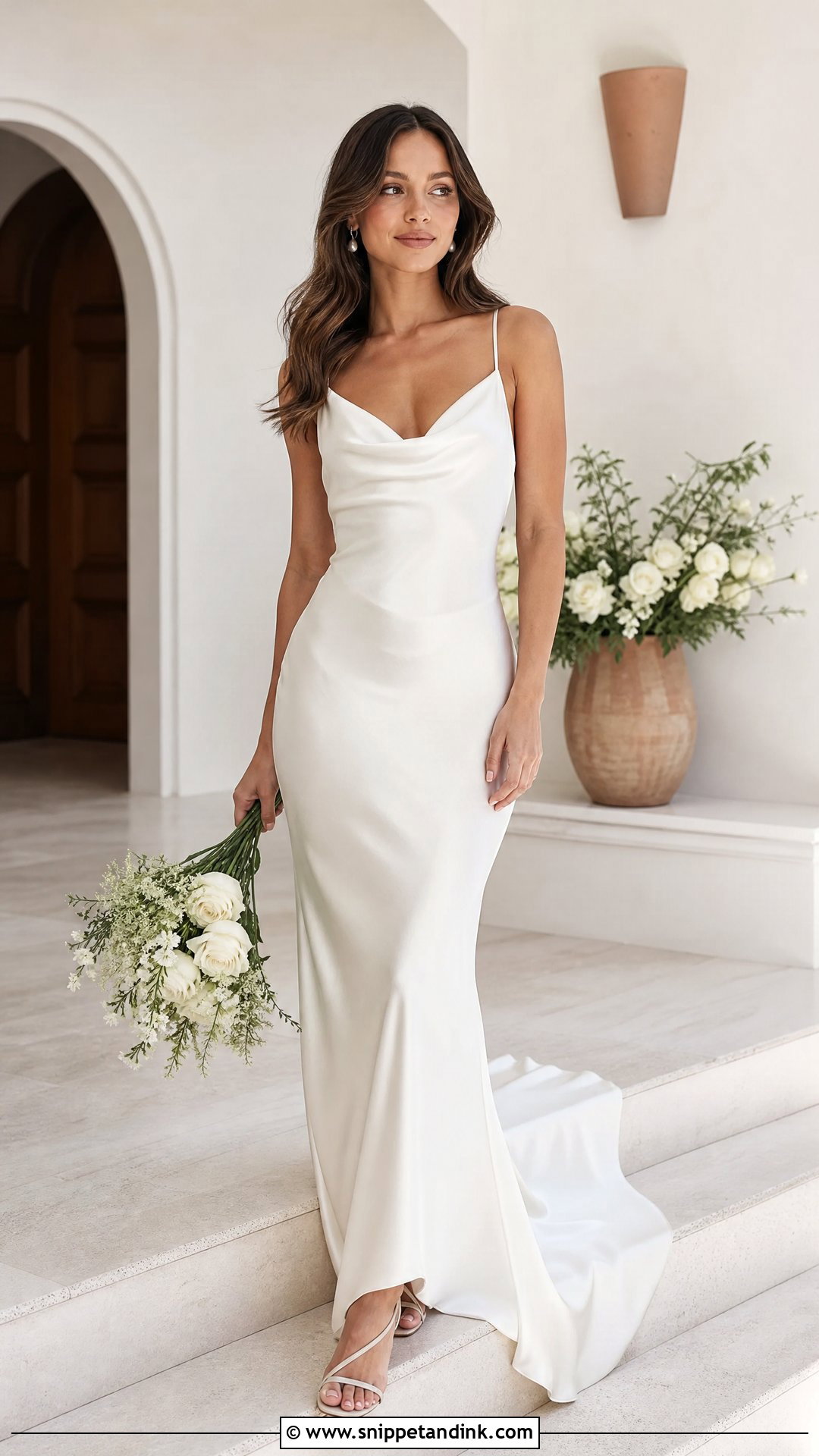
A silk slip relies on fabric, fit and movement. It skims the body in a fluid line, and a cowl neck, fine straps or a low back add a little interest. Because it’s so minimal, styling carries more weight: polished hair, luminous skin, simple earrings and elegant heels. It shows every line beneath it, so I fit it over the exact underwear you’ll wear. Modern and destination weddings suit it well.
18. Floral Applique Wedding Gown
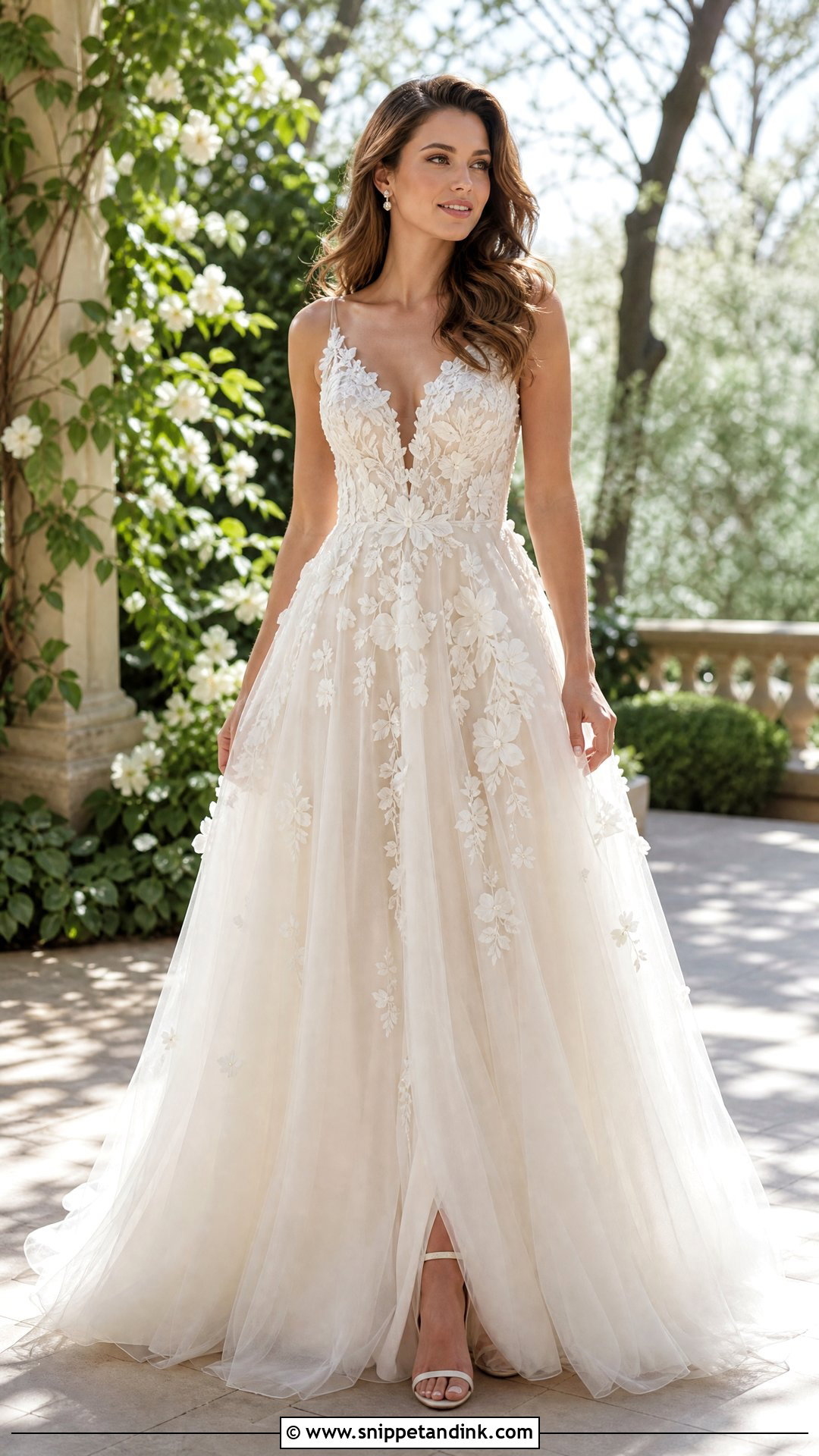
Floral appliqué gives texture you can see from across a room. Scattered flowers on tulle feel airy; dense lace appliqué on a fitted gown reads more formal. 3D blooms photograph with real depth but can crush in a long car ride, so I lay the skirt flat rather than sitting on the back. A sheer veil, small earrings and soft curls. Spring and outdoor ceremonies suit it best.
19. Corset Bodice Wedding Gown
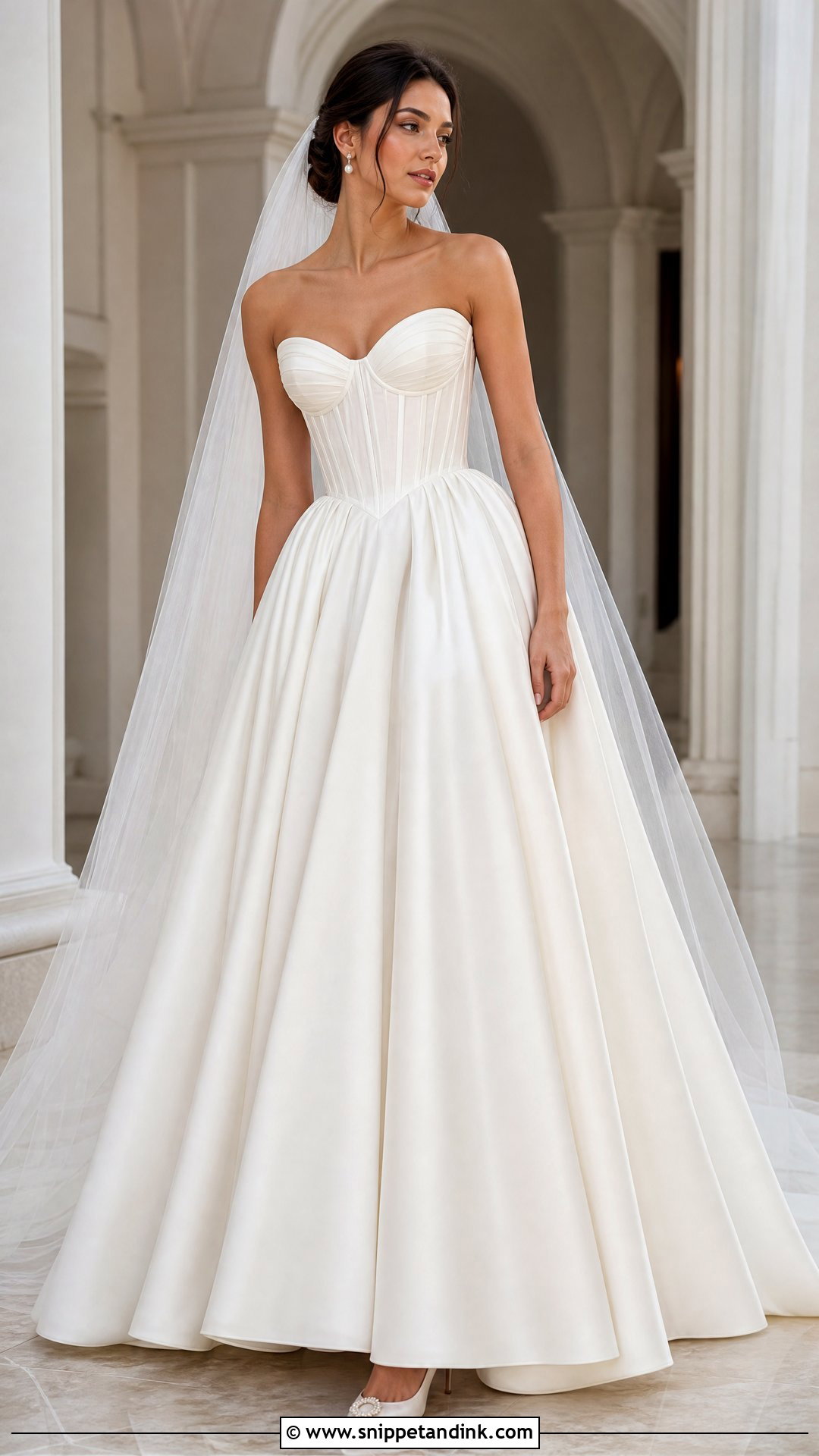
Modern corsetry uses lighter boning than the historic versions, so it supports without the old discomfort. It works with full skirts, soft tulle, satin A-lines and fitted lace. Exposed seams look fashion-forward; hidden boning looks classic. If the bodice is strongly structured, keep the skirt soft and the jewelry simple. I always ask the bride to sit and eat at the final fitting. Pearl earrings, a long veil and classic heels.
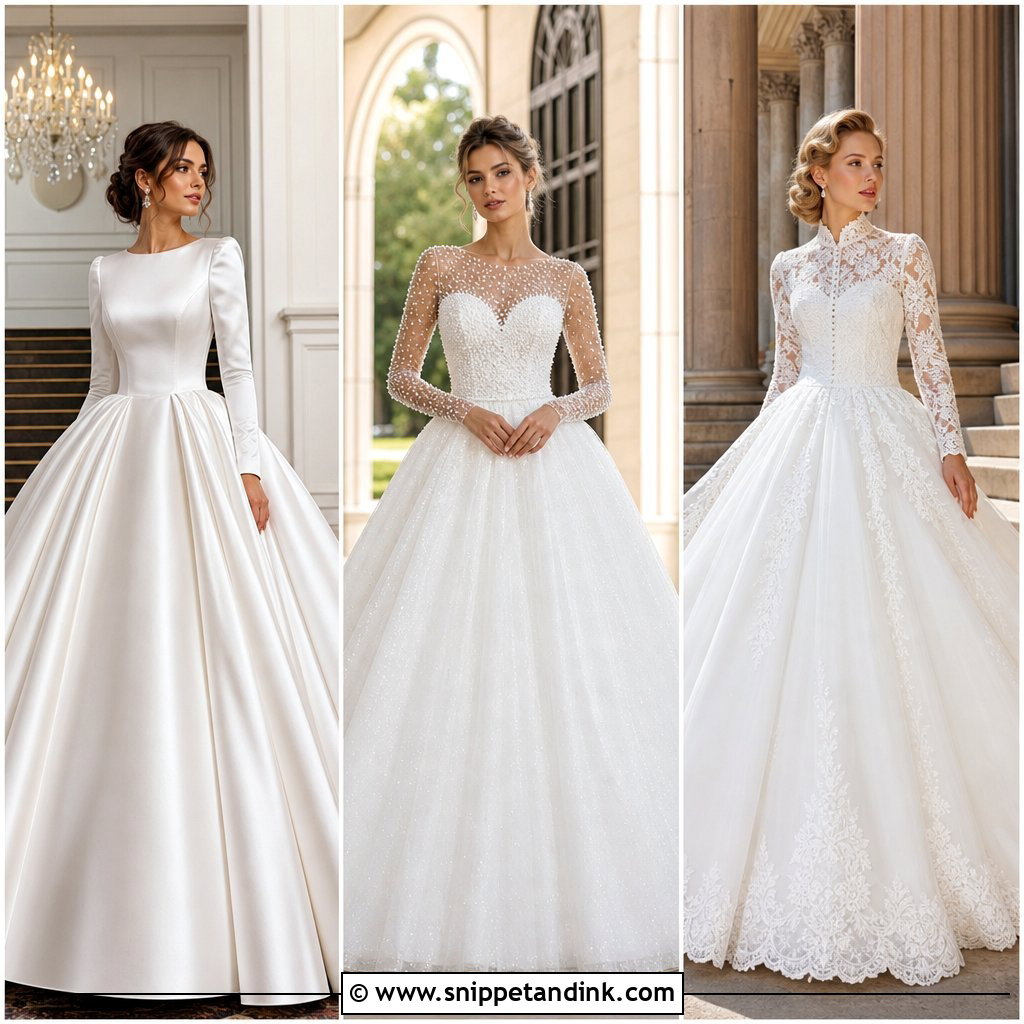


20. Cape Sleeve Wedding Gown
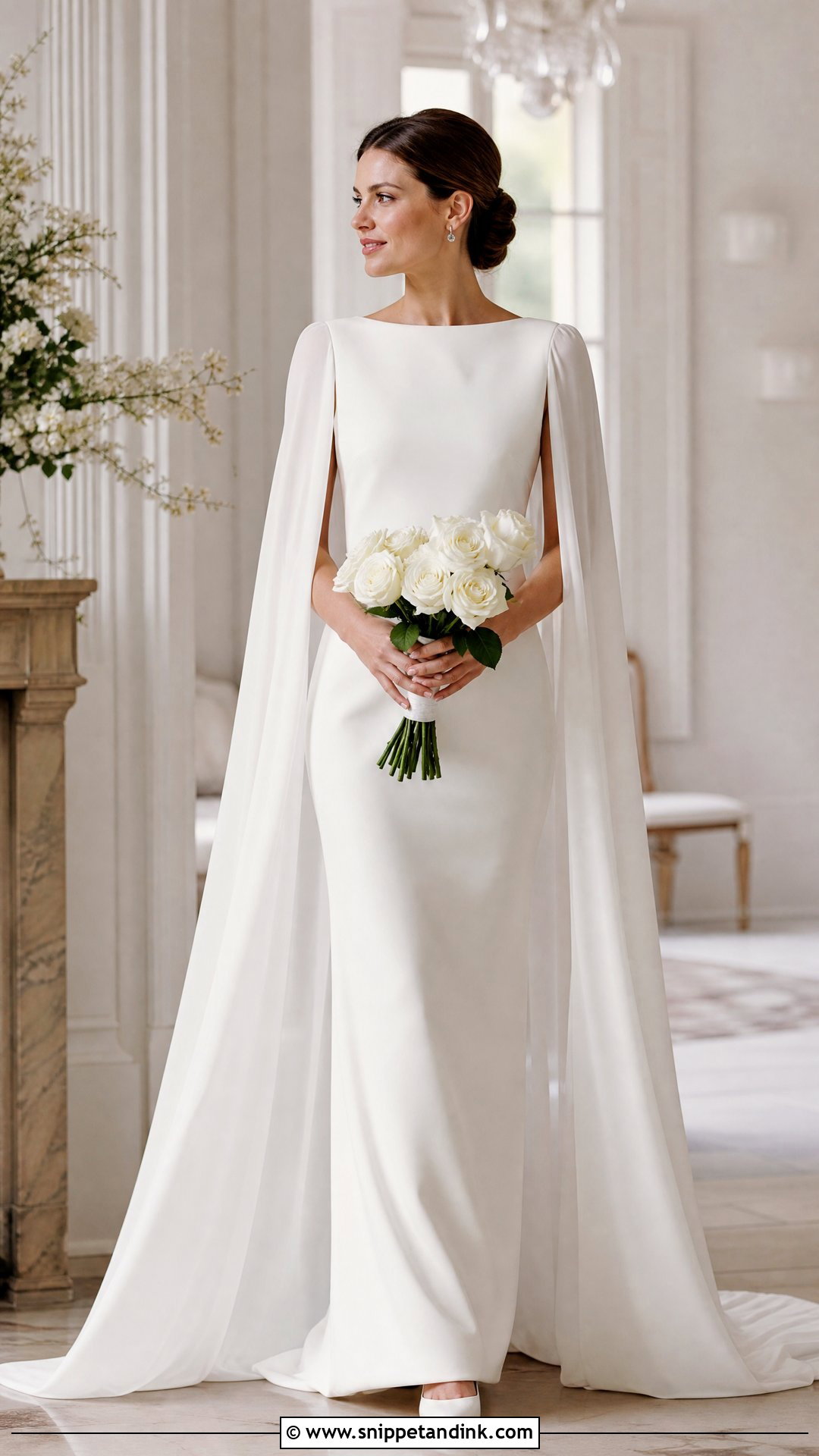
Cape sleeves give coverage and movement without the weight of a jacket, and a cape sleeve wedding gown can be sheer, structured or softly draped. A plain crepe gown with cape sleeves looks polished; lace cape sleeves look more classic. Keep jewelry minimal and the hair sleek so the drape is clear. Outdoors, a long cape will catch any wind, so I add small weights at the hem.
21. Detachable Overskirt Wedding Gown
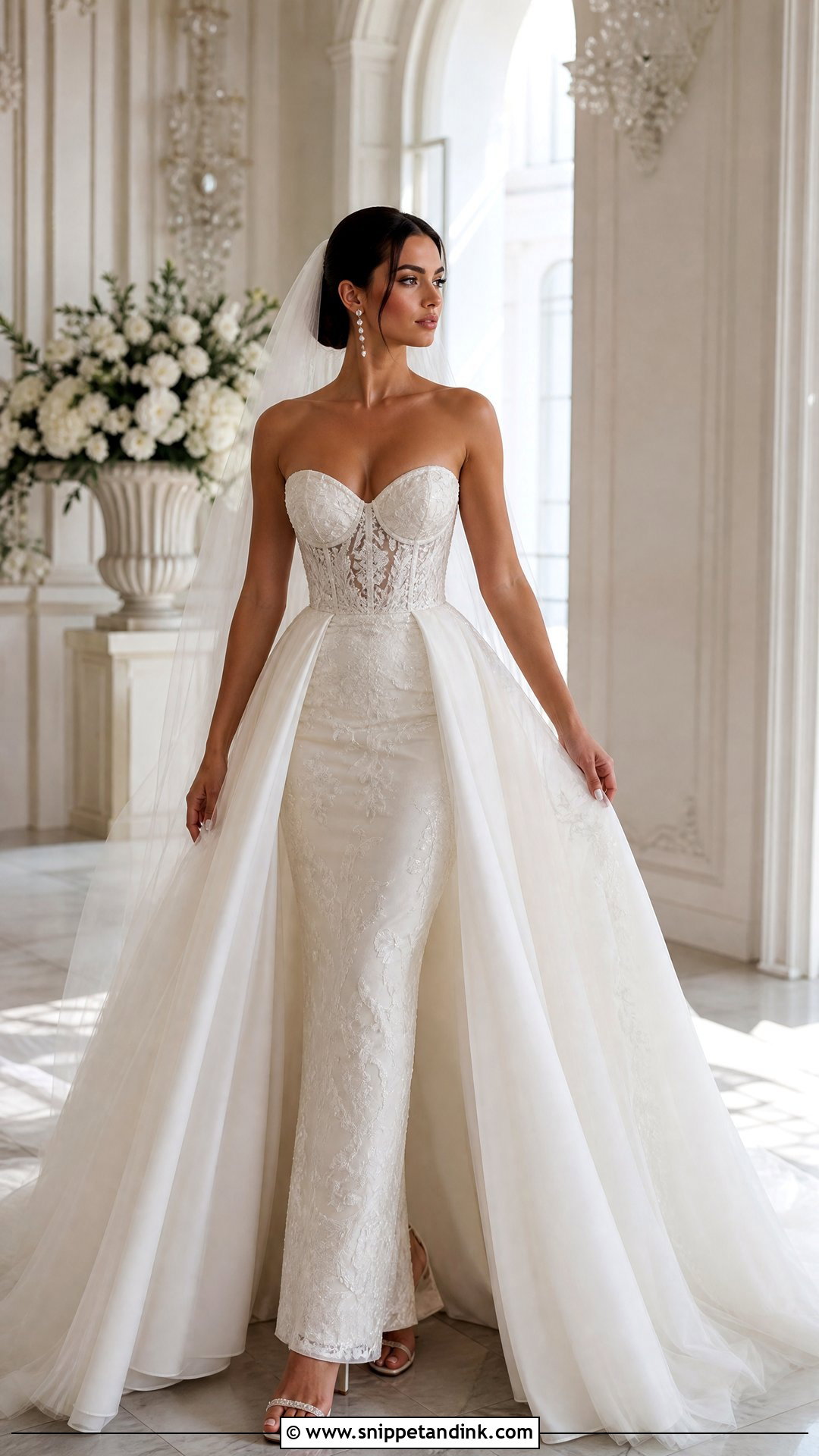
The overskirt goes on for the ceremony and comes off for the reception, which gives you a dramatic entrance and a slimmer dress for greeting guests and dancing. Satin and tulle are popular because they add movement without bulk. Underneath, a fitted crepe or lace gown has to look finished on its own. A veil for the ceremony, statement earrings later. Practice taking it off at your last fitting with whoever will help on the day.
22. Backless Wedding Gown
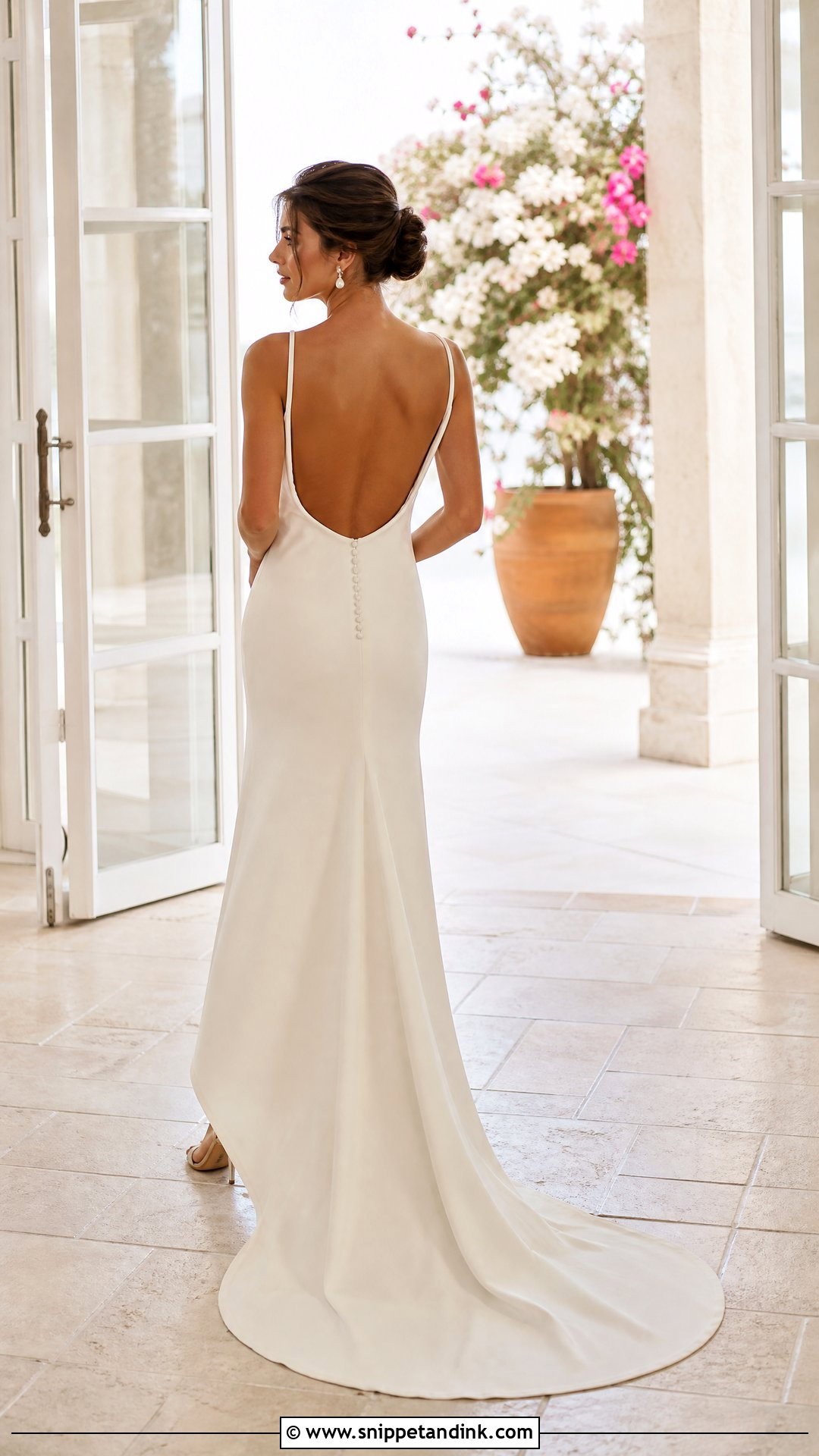
An open back reads best when the front is calm: a high neckline, long sleeves or a clean sheath. Lace trim, pearl buttons or a soft cowl add detail. Plan undergarments at the first fitting, since cups sewn into the dress are usually more secure than an adhesive bra on a hot day. An updo or side-swept waves show the back. Guests spend the ceremony looking at it, so it’s worth getting right.
23. Tea Length Wedding Gown
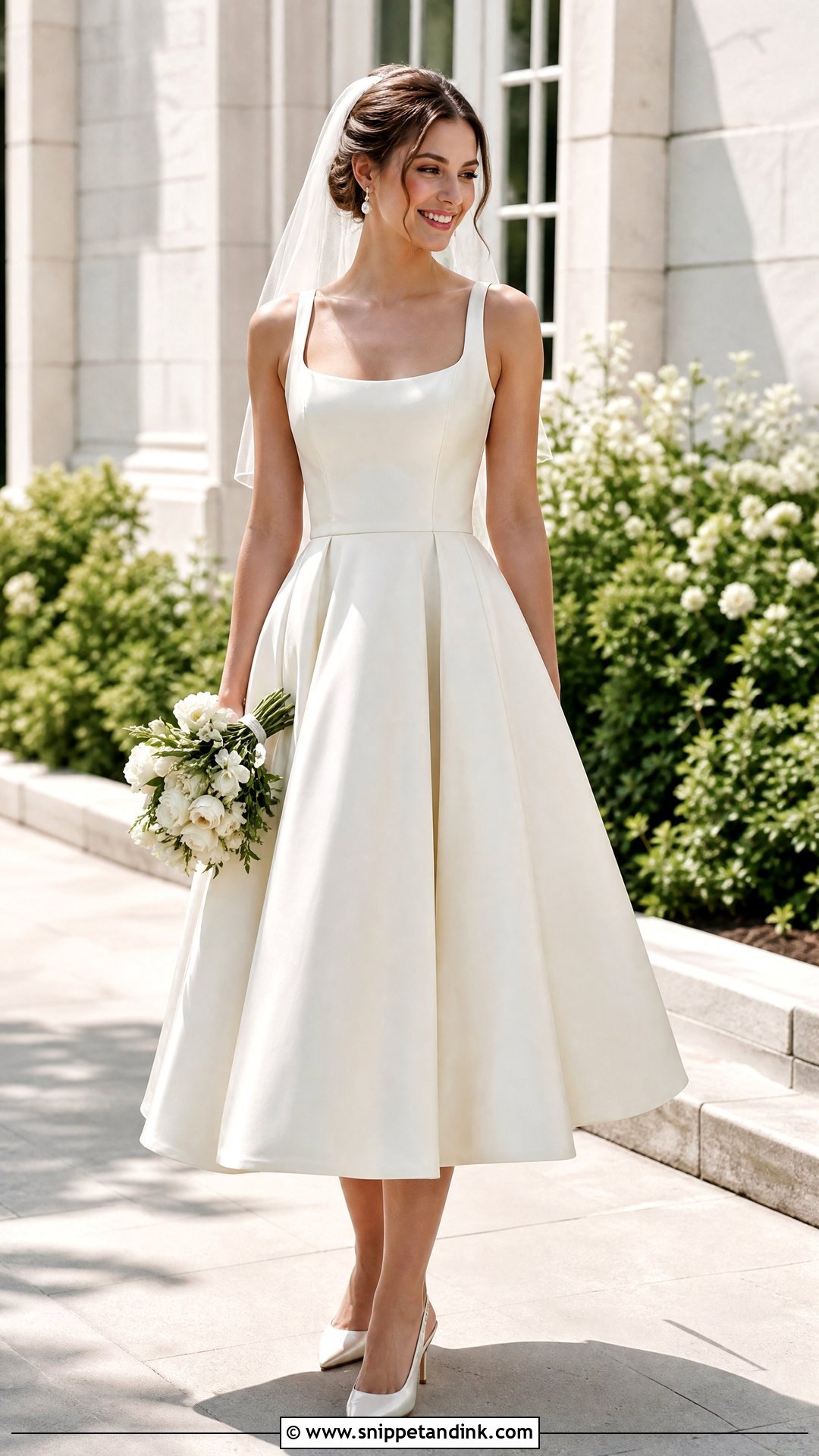
A tea-length hem falls between knee and ankle, so the shoes are seen and should be chosen before the hem is finished. Pointed pumps, satin slingbacks and embellished heels all work. Clean satin, a square neck or a structured bodice keep it modern. A short veil, pearl earrings and a neat bouquet. I recommend it for courthouse and garden ceremonies and small celebrations.
24. Blush Wedding Gown
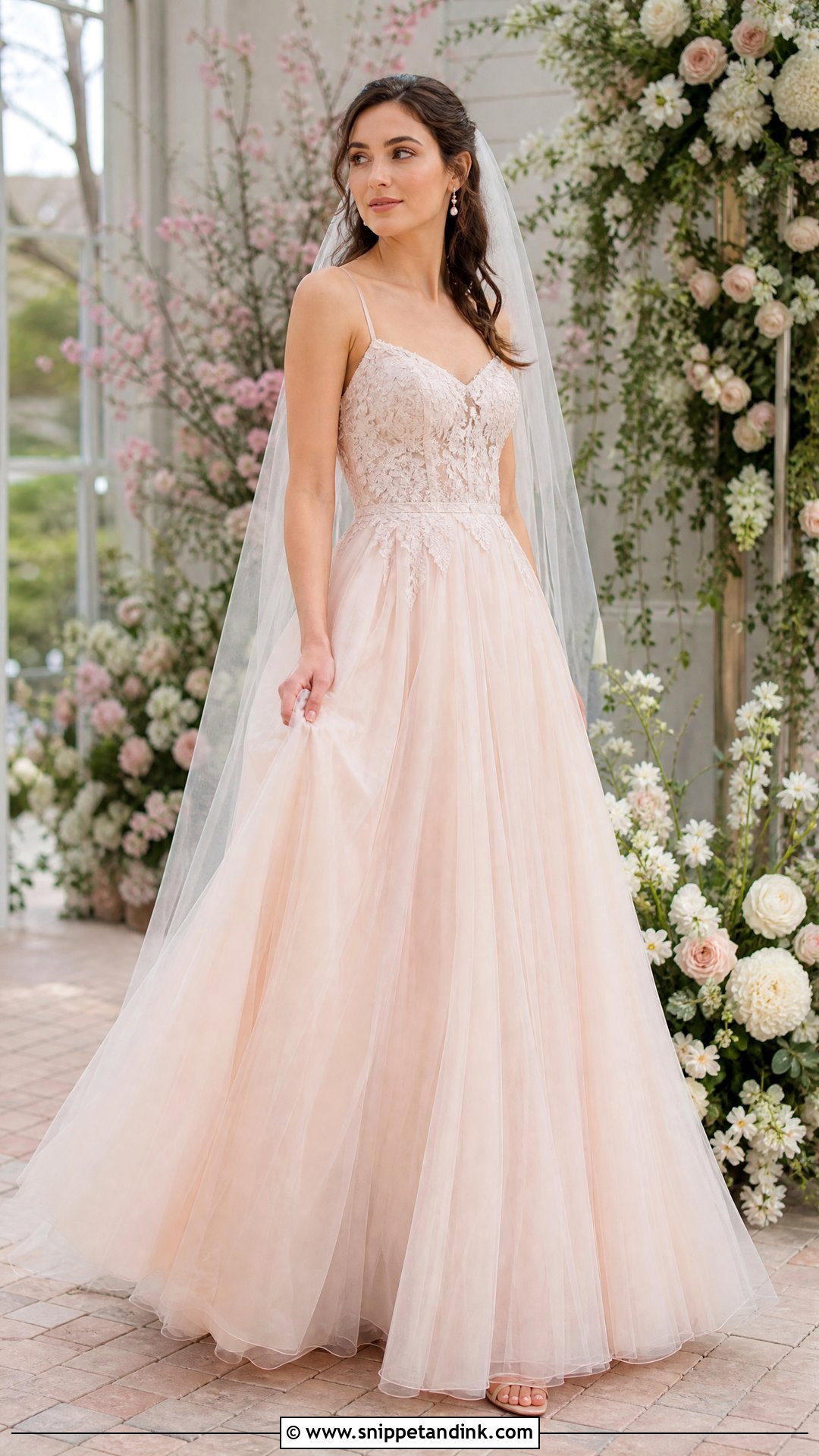
Blush ranges from barely-there pink to warm champagne, and each shade reads differently outdoors versus under tungsten light, so I look at a swatch in both before ordering. Tulle, lace and satin all take the color well. A blush ball gown feels romantic, a blush sheath or A-line quieter. Keep accessories ivory, pearl, champagne or soft metallic so the tones agree. Garden and spring weddings suit it.
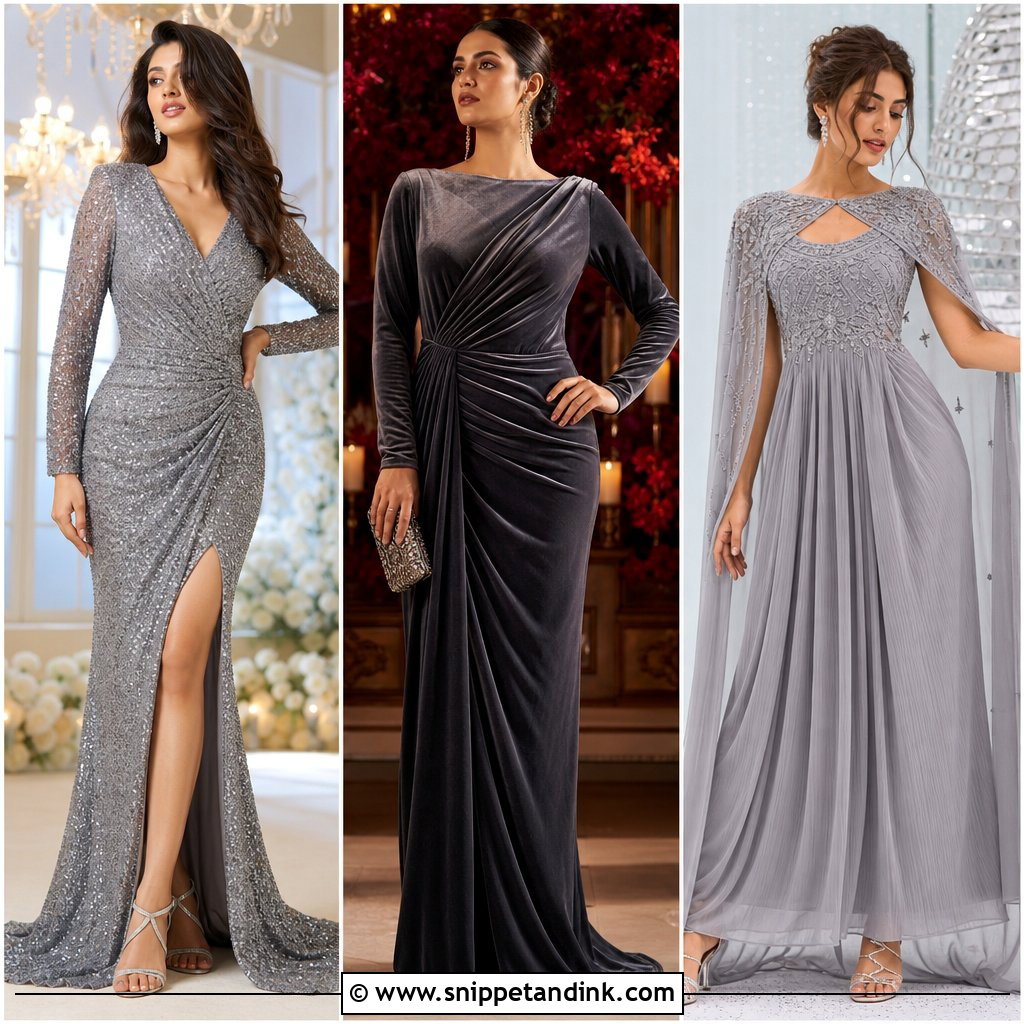


25. Minimalist Wedding Gown
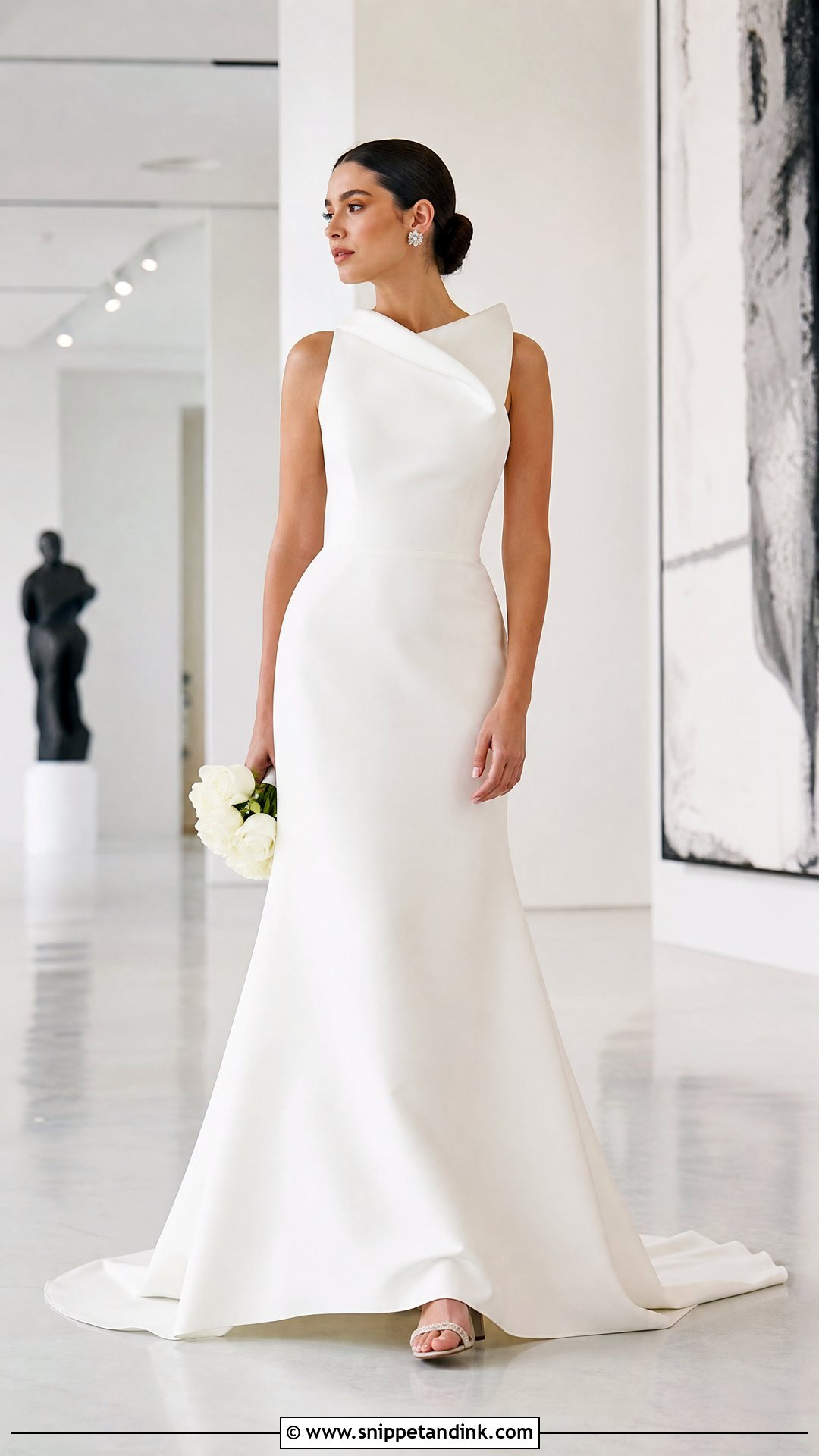
Minimalist gowns rely on fabric and tailoring, and the fit has to be exact. Satin, mikado, crepe, and silk show shape and quality without decoration. I choose one standout feature, maybe a square neck, a sculptural bow, an open back or a long train, and keep everything else quiet. Smooth hair, refined earrings and simple heels. Modern brides, city weddings and art venues are where I see it most.
Trains and Bustles, Settled Before the Hem Is Cut
A train looks wonderful going up the aisle and becomes a trip hazard the moment the music starts. Unless you plan to change, it needs a bustle, and the style depends on the gown.
- Over bustle: the train hooks up to buttons at the back of the waist. It’s quick and works on lighter fabrics and lace.
- Under bustle: the train tucks under and ties inside, leaving a softer, rounded shape. It suits satin and heavier skirts.
- Ballroom bustle: the train lifts to make the hem level all round, so the gown looks floor-length with no train. It takes the most points to secure.
Your seamstress will usually add the bustle at the second fitting. Bring the person who’ll do it on the day to the final fitting so they can practice, and ask for each tie or loop to be marked with a numbered tag. It sounds fussy until you’re bustling a gown in a dim corridor during cocktail hour.
When the ceremony has its own dress rules
Some houses of worship require covered shoulders or arms during the service. Ask early. A sheer bolero, a fitted jacket or detachable sleeves solve it without changing the gown you love, and they come off for the party.
Try the Shape You Think You’ll Hate
The decision gets easier when you think about the whole bridal look rather than the dress alone. Weigh your venue, season, comfort and photographs, and how you want to feel walking in. A satin A-line feels classic, a crepe sheath modern, while lace sleeves, pearls, basque waists, capes and overskirts add personality. The right gown supports your shape and suits the day you’ve planned. Try on at least one shape you’d normally skip; it’s often the one that surprises you.
You'll Like These Ideas:






Leave a Reply