
Elegance in a wedding dress is mostly quiet decisions: a fabric that hangs well, a fit that doesn’t need adjusting all evening, and accessories that don’t compete. The shapes brides ask me about right now are lace, clean satin, real sleeves, drop waists, soft florals, structured bodices and very pared-back silhouettes. All of them can look refined, and all of them can go wrong in specific ways. So for each of the twenty-five below, I’ve added what I actually check in the fitting room, from a ballroom gown to a courthouse sheath to something for a garden ceremony.
Feel the Fabric Before You Fall for a Silhouette
In appointments, I watch brides choose by shape and then wonder why two dresses with the same shape look so different on them. The difference is almost always the fabric. Here’s how the common ones behave once you’re actually wearing them.
- Satin: smooth and bright, holds structure, but shows creases and every seam. Heavier satin is more forgiving than thin satin.
- Crepe: matte, drapes close to the body, comfortable for long days. Needs precise tailoring because it hides nothing.
- Mikado: thick with a subtle sheen. Holds sharp shapes like bows, pleats and ball gown skirts. Can feel warm in summer.
- Lace: adds texture and hides small fit issues well. Quality shows at the seams, where good lace is matched by hand.
- Tulle: light volume. Soft tulle looks airy; stiff tulle looks cheap. Snags on jewellery.
- Chiffon: floaty and cool, ideal for heat and beaches. Wrinkles easily and moves in the wind.
If you can, ask the boutique to let you touch swatches in daylight near a window. Fabric looks different under fitting-room spotlights, and you’ll be photographed mostly in natural or warm light.
1. Lace Bridal Dress
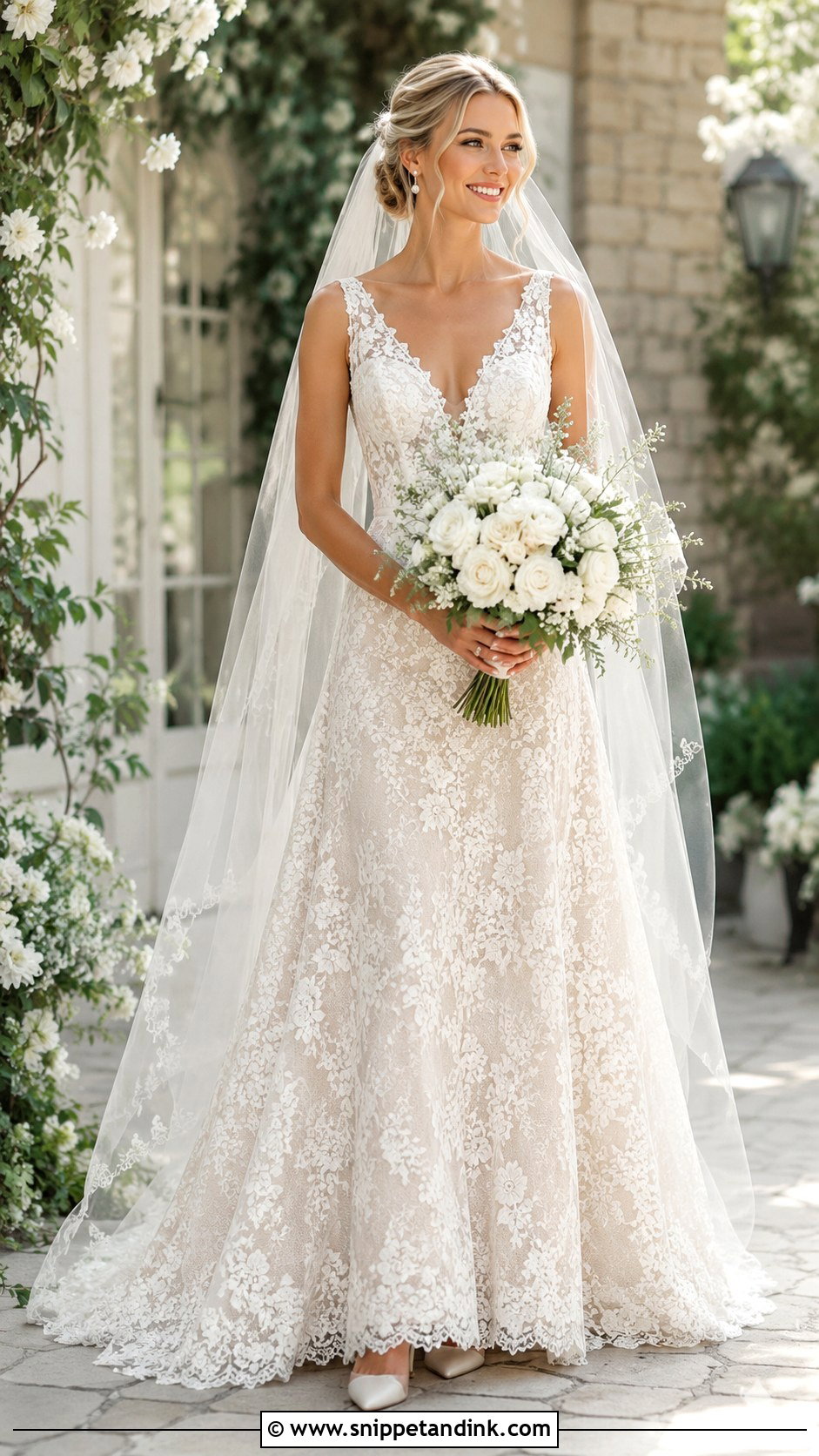
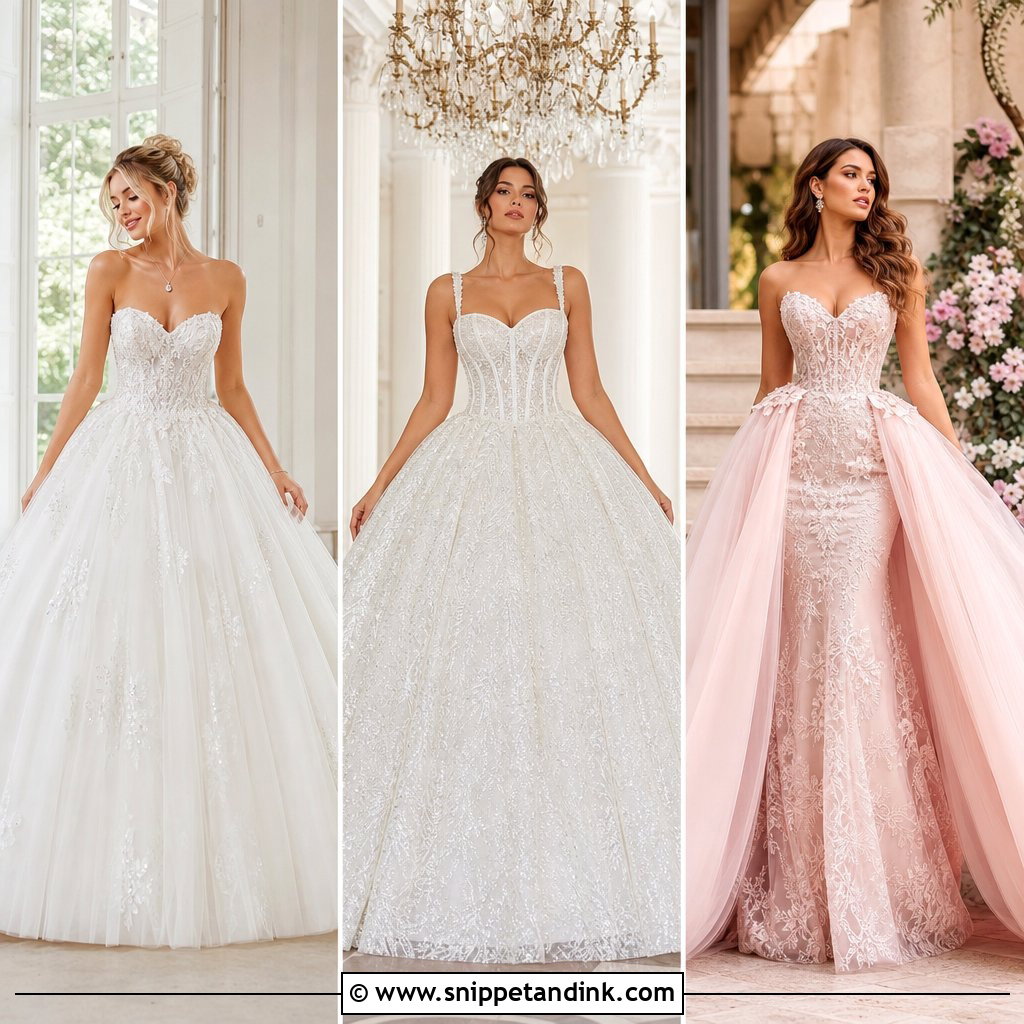
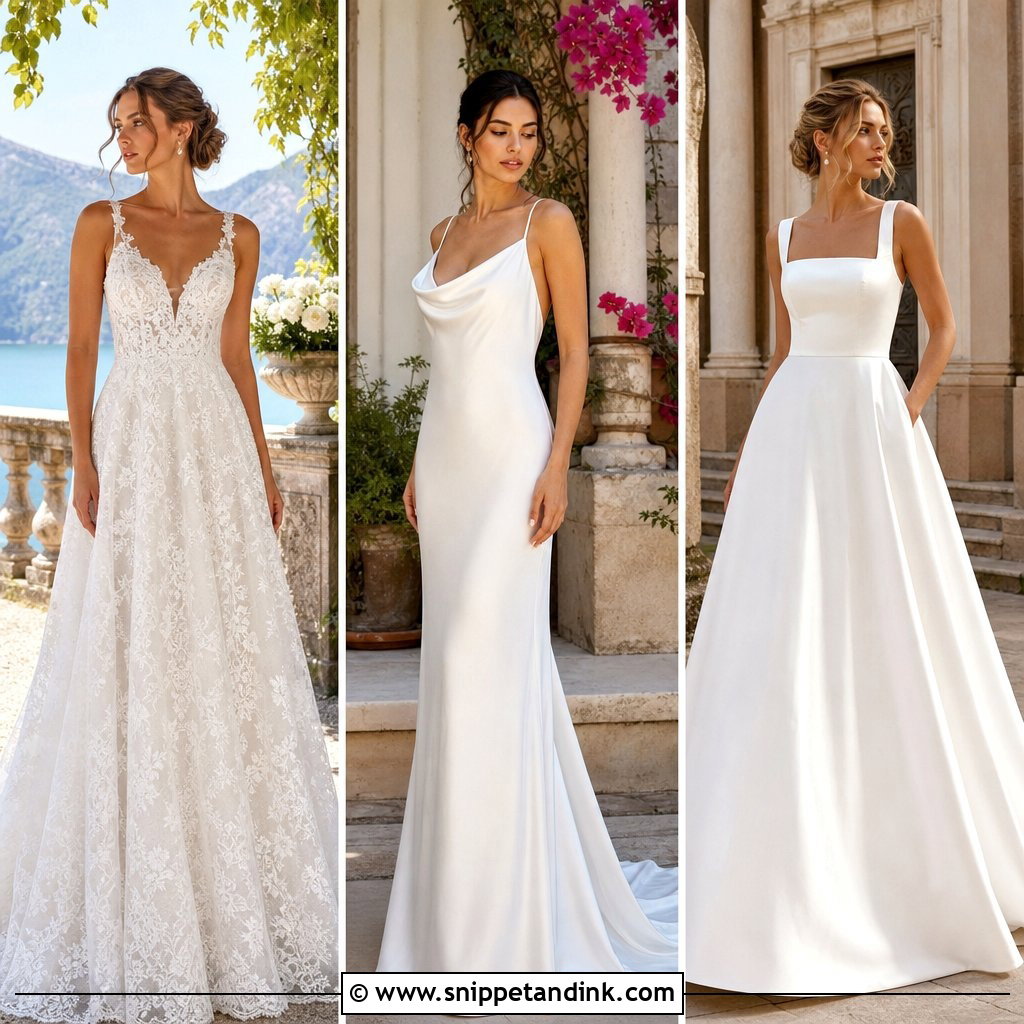
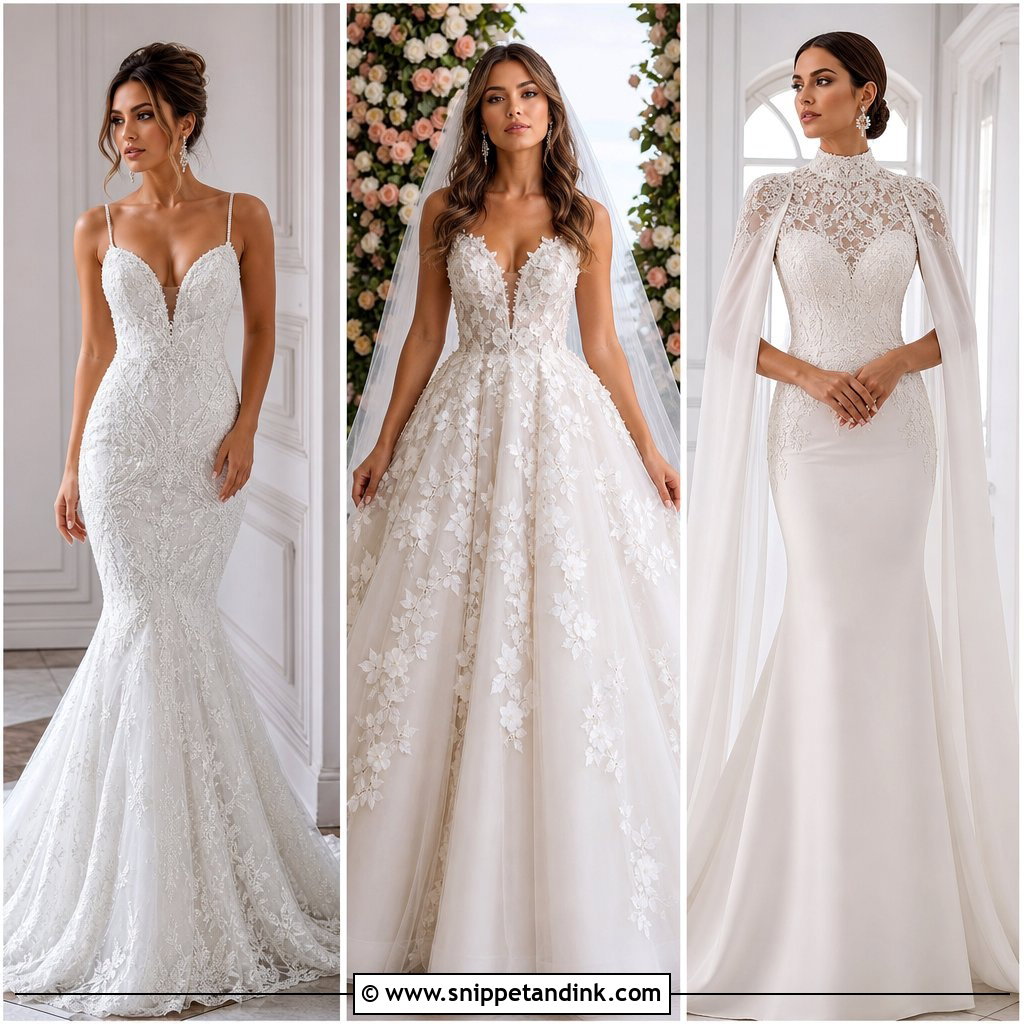
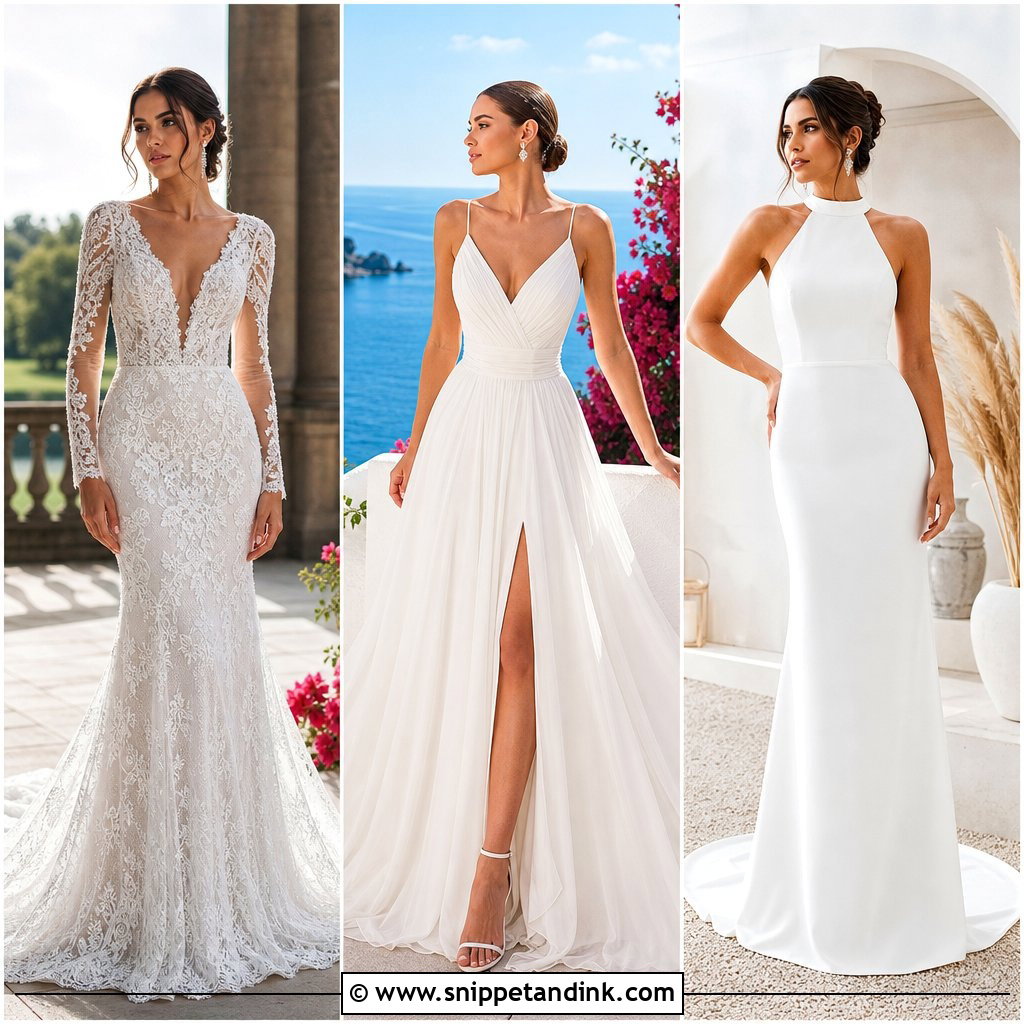
Lace is the dress most brides try first, and the type of lace matters more than the shape. Soft Chantilly drapes and looks delicate; corded or re-embroidered lace has raised edges that throw small shadows, which is why it shows up so clearly in photos. I check the seams at the back and sides, because cheaper lace gowns break the pattern at the seam while better ones are hand-matched across it. A fitted bodice and flowing skirt is the classic way to wear it. If the lace is busy, stop at pearl studs and a sheer veil.
2. Satin Bridal Dress
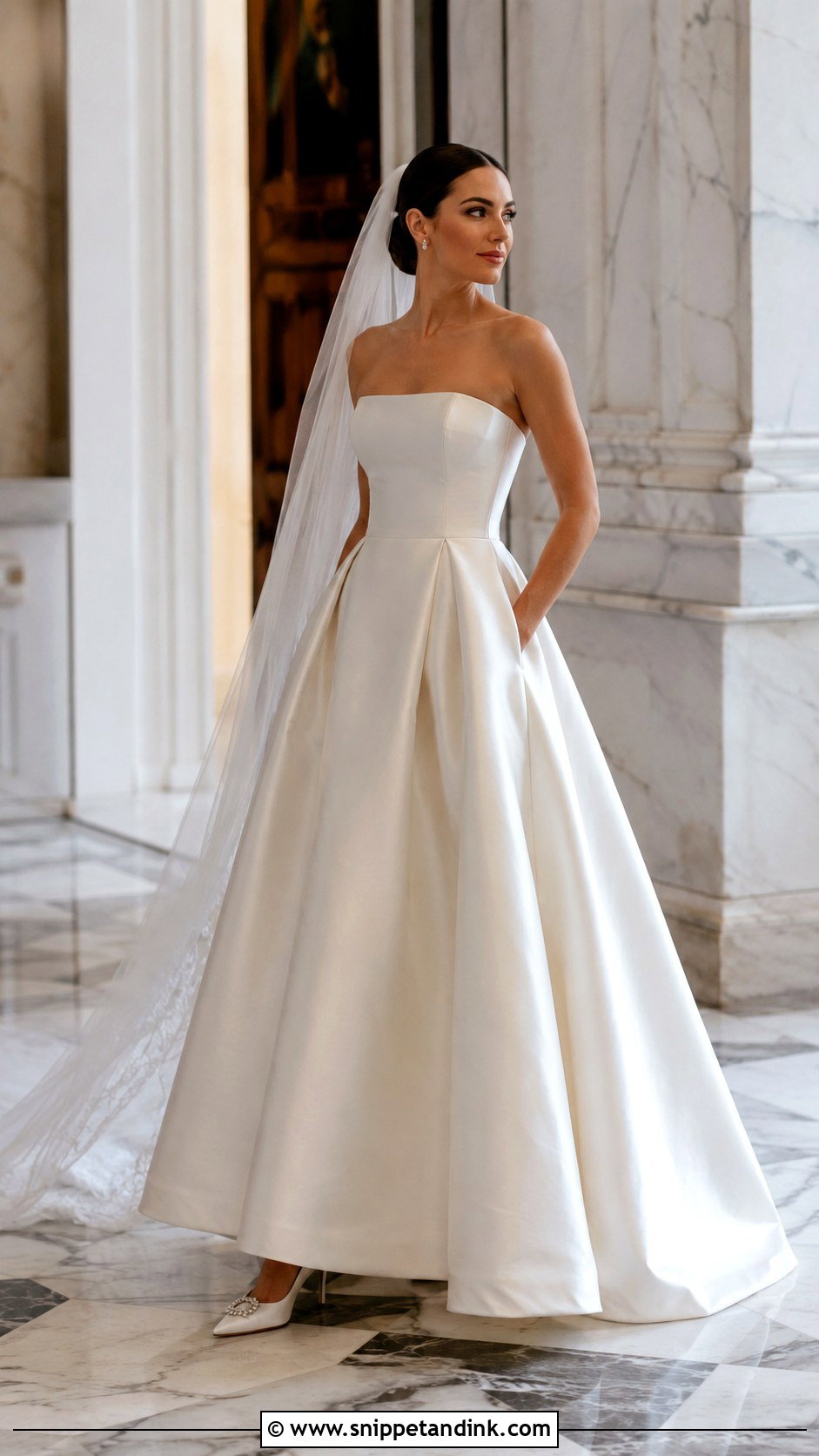
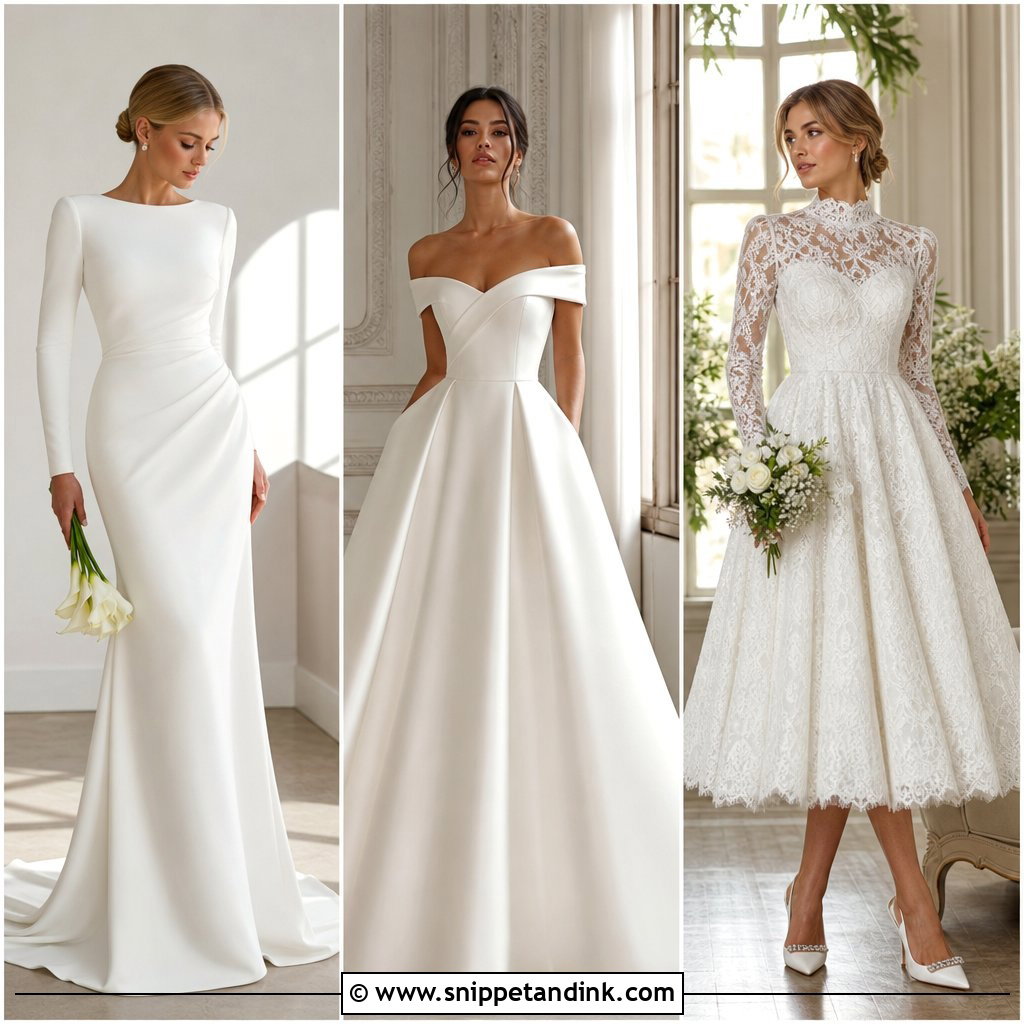
Satin looks expensive because it reflects light in long, smooth planes. That same quality makes it unforgiving. Every pull at a seam and every crease from the car ride shows, so I’d steer a bride toward a heavier satin and a fit that’s slightly eased rather than skin-tight. Ivory, pearl and soft champagne usually sit more kindly on skin than bright white. Indoors and in the evening, a structured satin gown needs almost nothing added: a sleek bun, crystal studs, pointed heels and a long veil.
3. Off Shoulder Bridal Dress
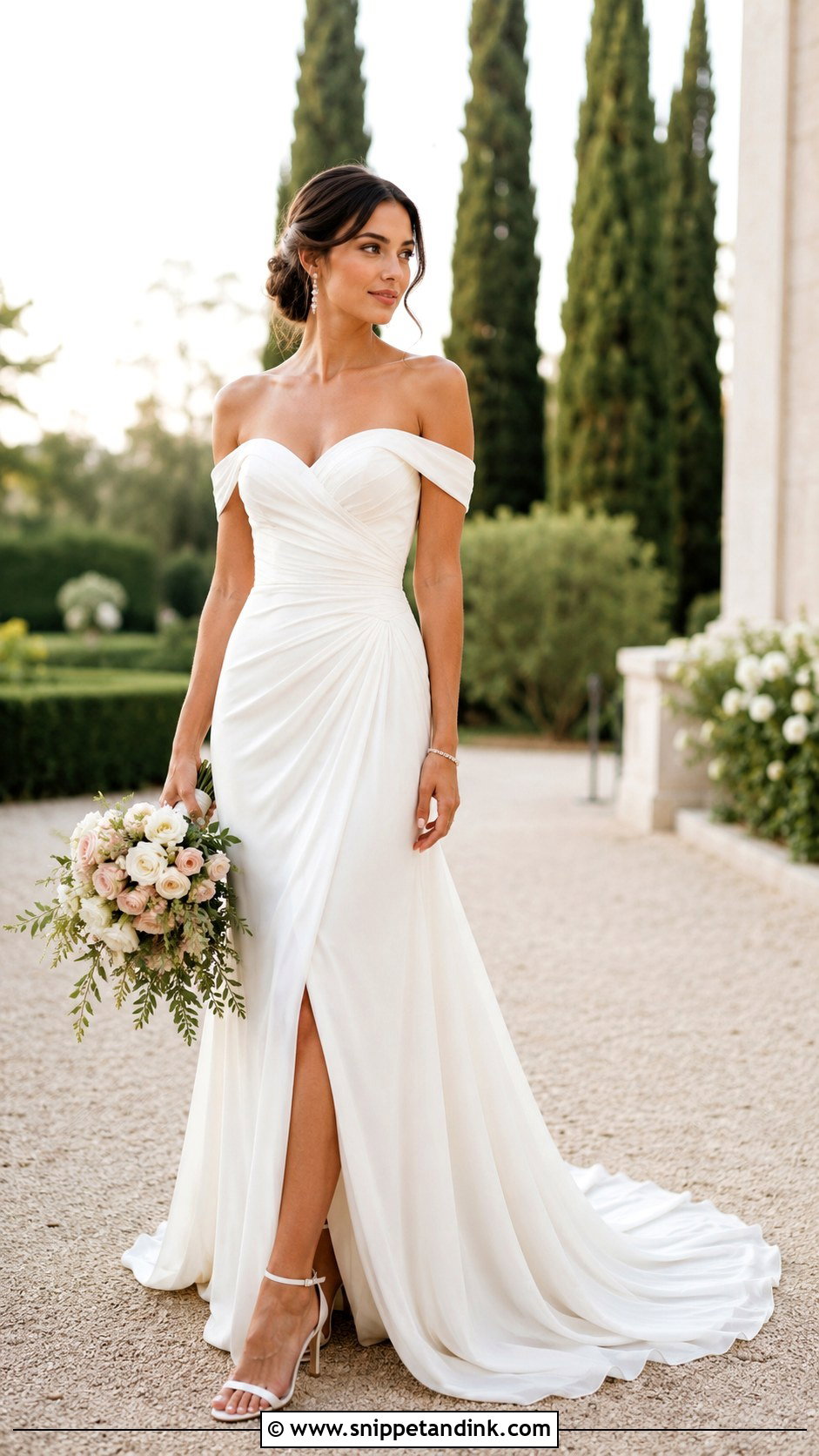
The off-shoulder neckline frames the collarbone, and it’s one of the most requested shapes in my appointments. It has a real limitation, though. Fixed bands across the upper arm stop you lifting your arms much past shoulder height, so hugging, dancing and throwing a bouquet all get awkward. I always ask brides to raise both arms in the mirror before they decide. If it passes, an A-line or mermaid skirt works, in smooth crepe for a modern line or lace appliqué for something softer. Set the veil behind the shoulders so the neckline stays open.
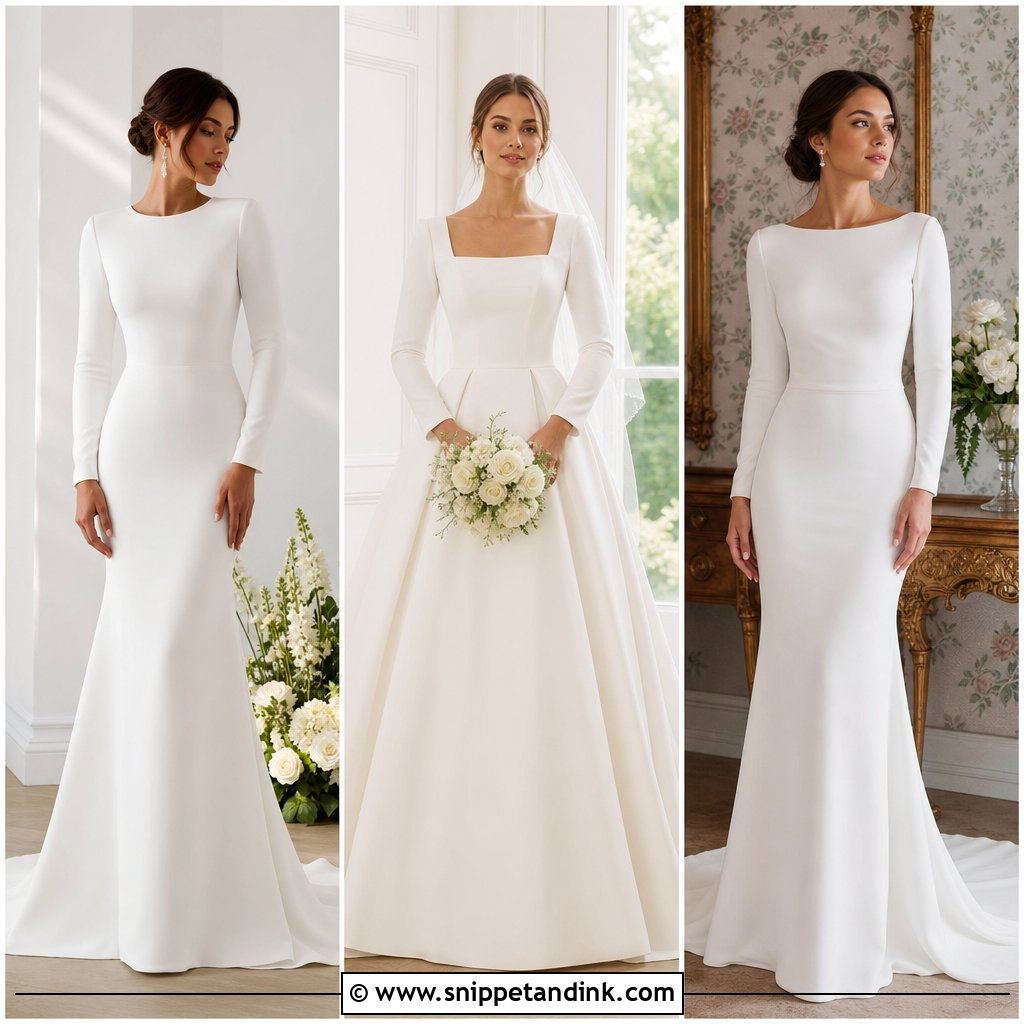
4. Long Sleeve Bridal Dress
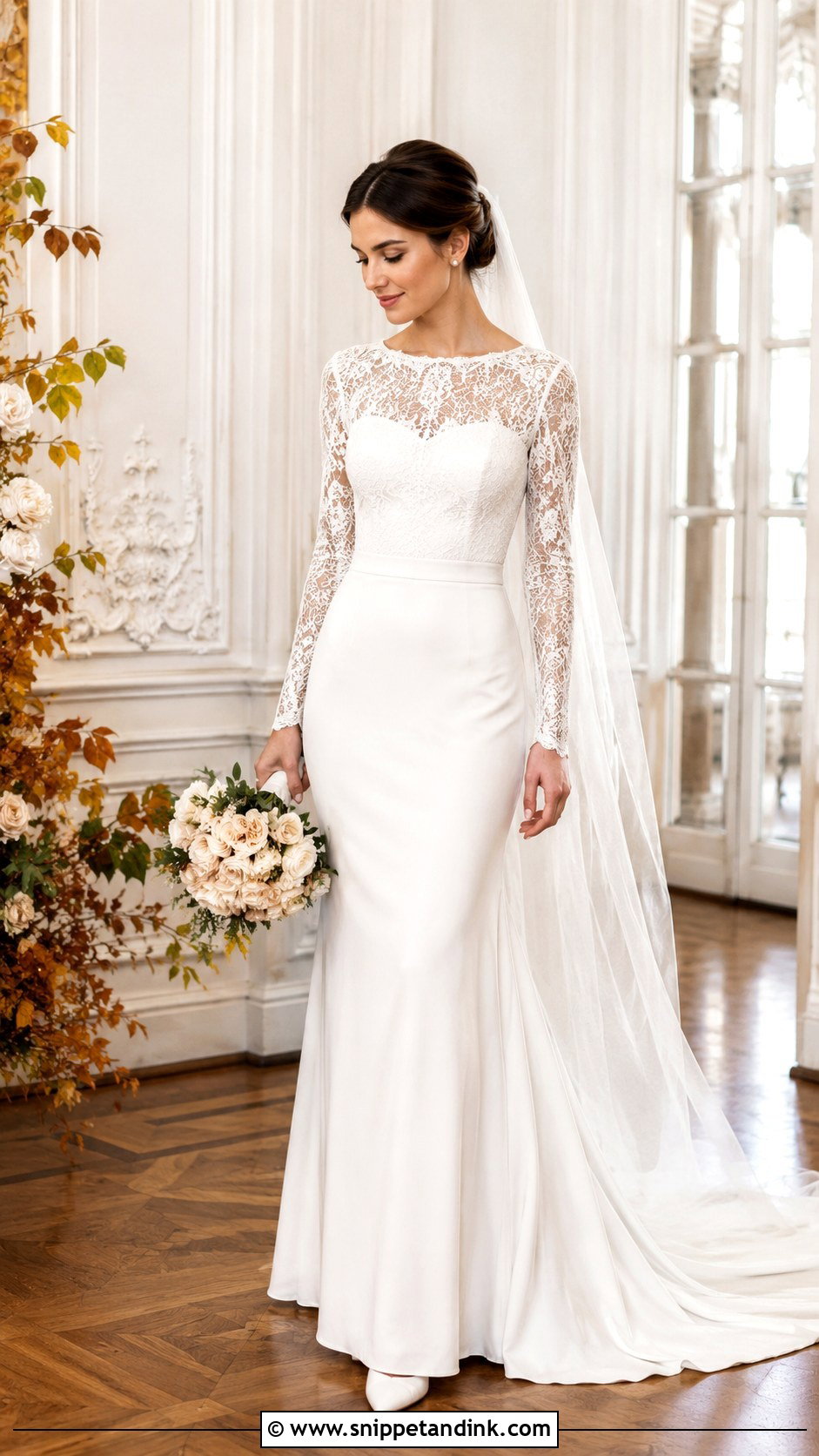
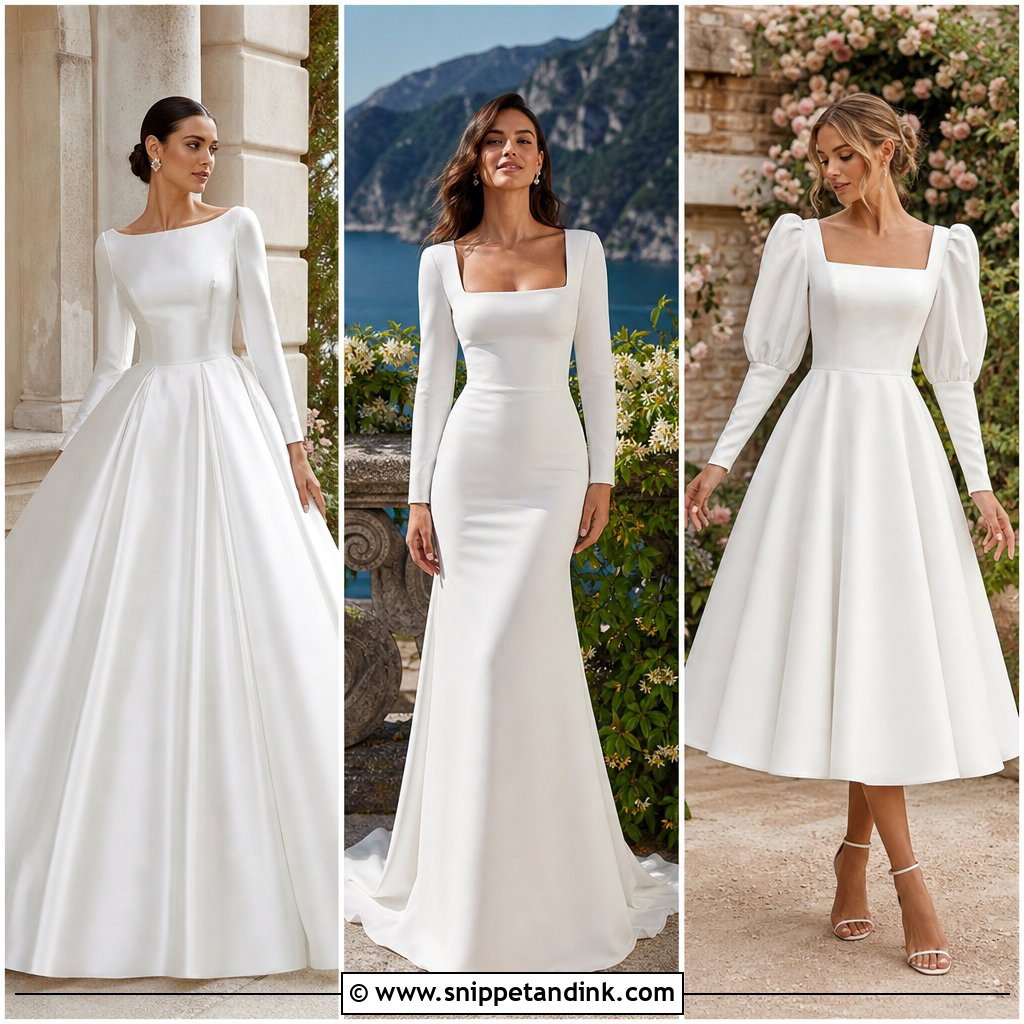
Long sleeves look graceful and covered, and they’re the obvious answer for an autumn or winter wedding. Lace sleeves read romantic; satin or crepe sleeves look cleaner. The fit at the armhole decides comfort. A high, narrow armhole lets you move freely, while a low, wide one pulls the whole bodice up when you raise your arm. I’d also have sleeves finished just past the wrist bone so they don’t creep up. With beaded or embroidered sleeves, leave the bracelets at home.
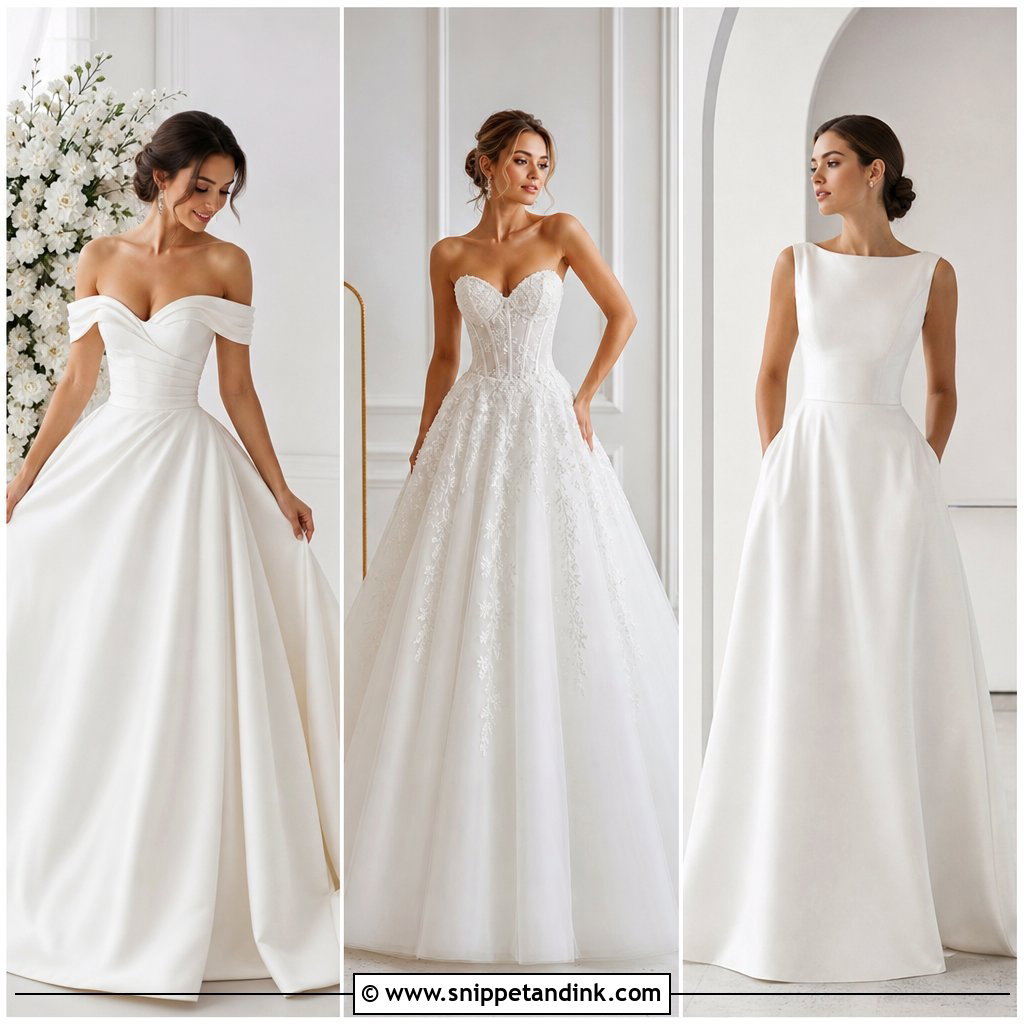
5. A Line Bridal Dress
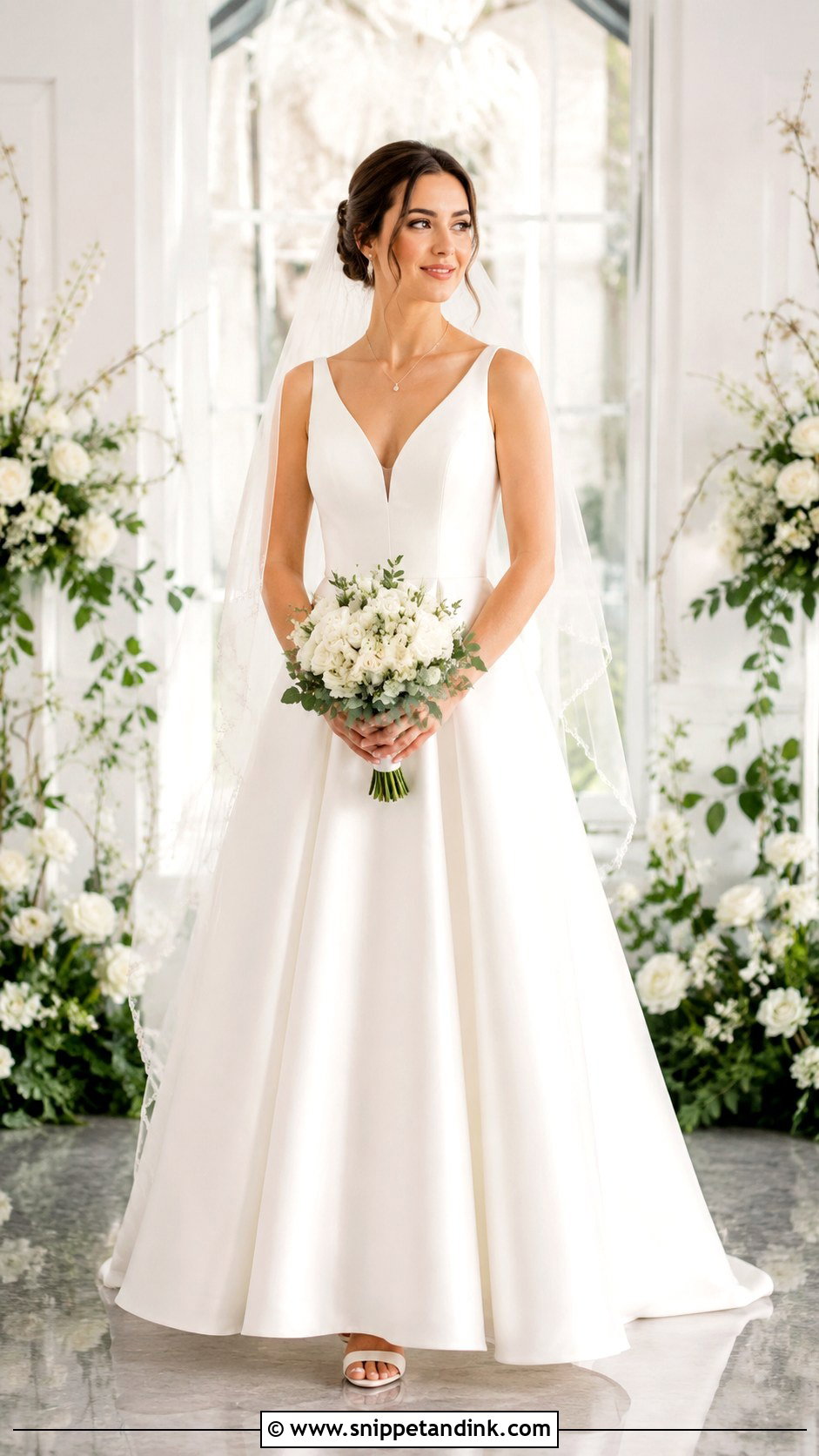
An A-line is fitted through the bodice and widens gently from the waist, and it’s the shape I reach for when a bride isn’t sure what she wants. It suits most bodies, takes most necklines and doesn’t need a crinoline to look finished. Fabric changes its mood completely: mikado for structure, chiffon for a softer drape, lace for texture. Block heels if you’ll be on grass, pointed pumps for a formal room. A mid-length veil and a simple necklace are enough.
6. Ball Gown Bridal Dress
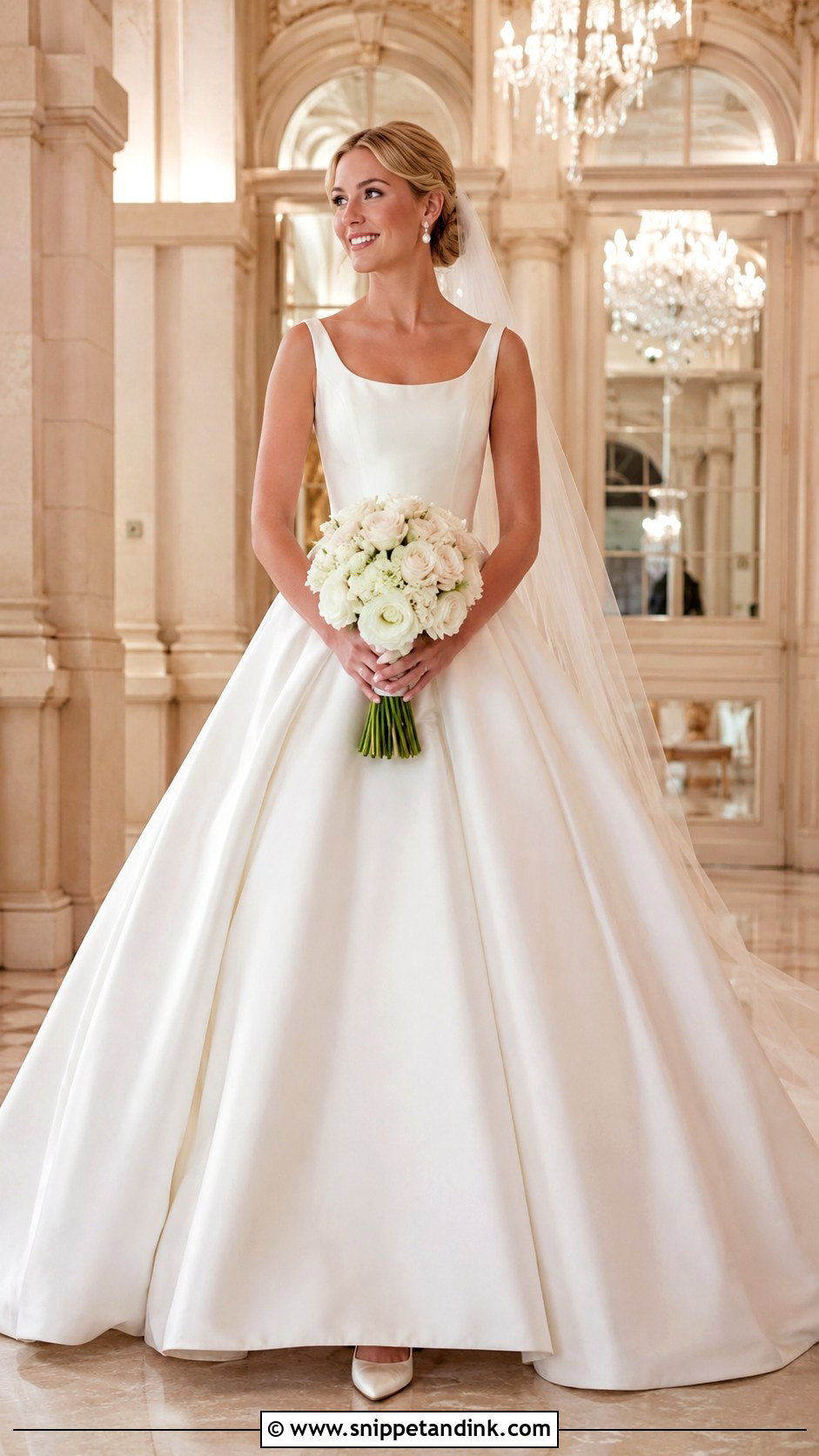
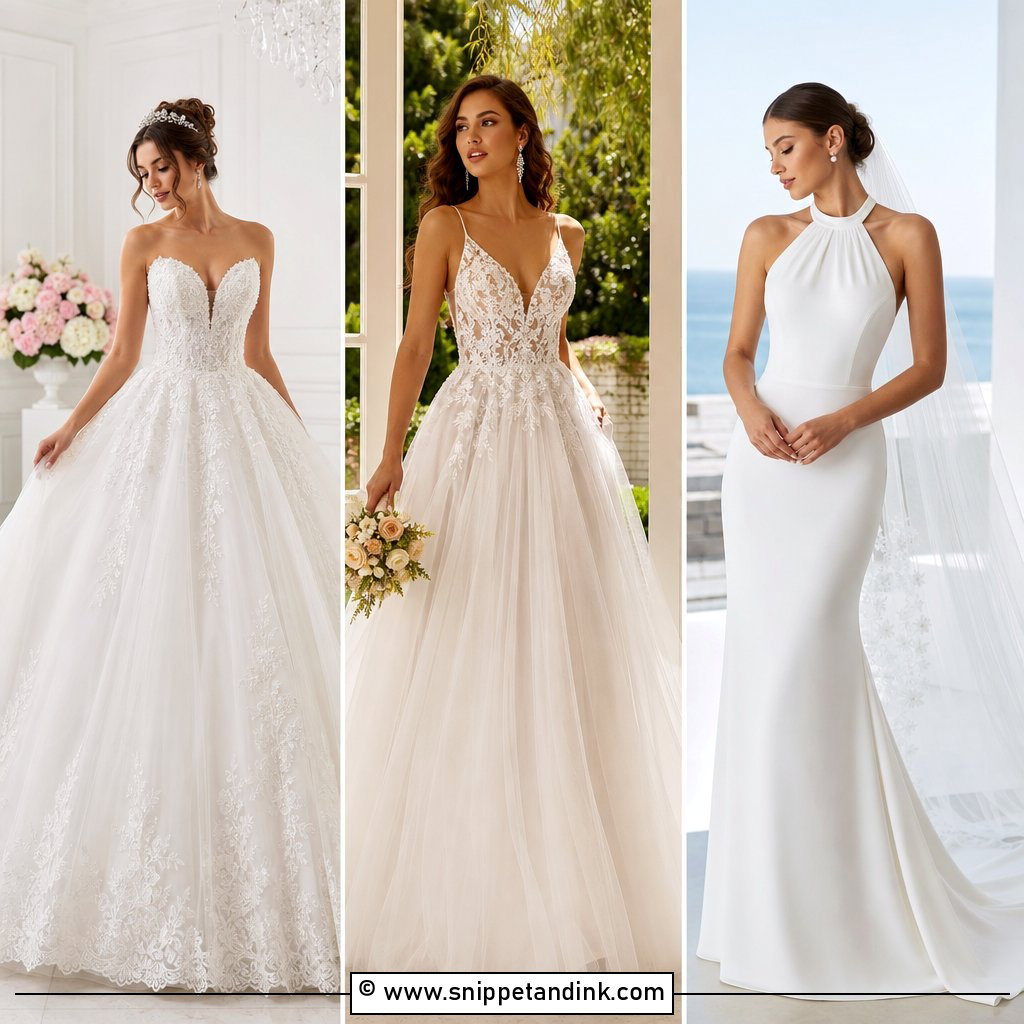
A ball gown is built for an entrance. The fitted bodice and full skirt make a dramatic, princess-inspired shape, and the trick to keeping it elegant is restraint everywhere else. Clean satin or mikado looks regal; tulle feels lighter. Underneath, the bodice should have firm boning and a waist stay so the skirt’s weight hangs from your waist rather than your shoulders. Practise sitting in it. A ball gown needs a wide chair, and a long train needs a bustle that someone has practised tying before the day.
7. Mermaid Bridal Dress
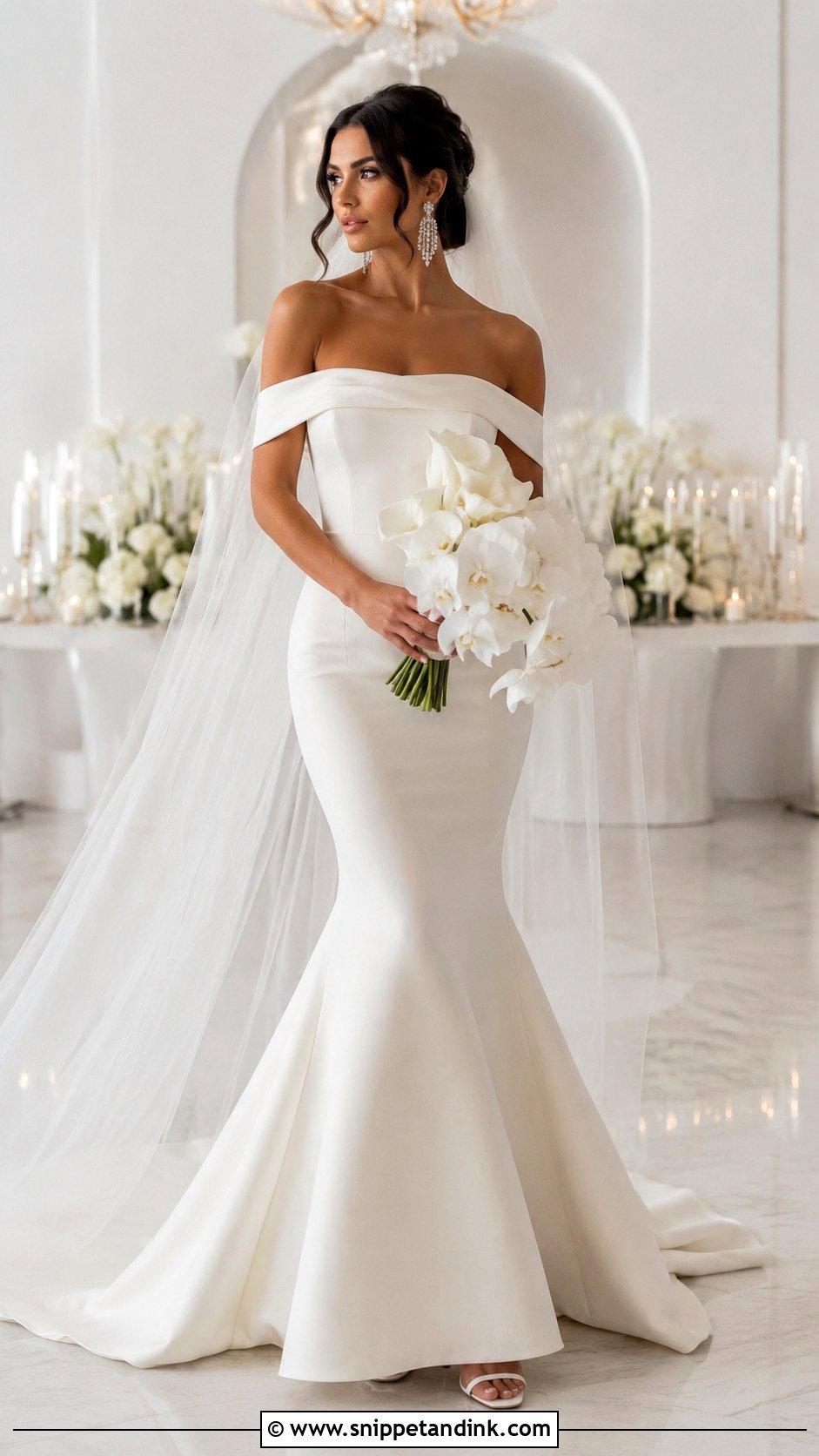
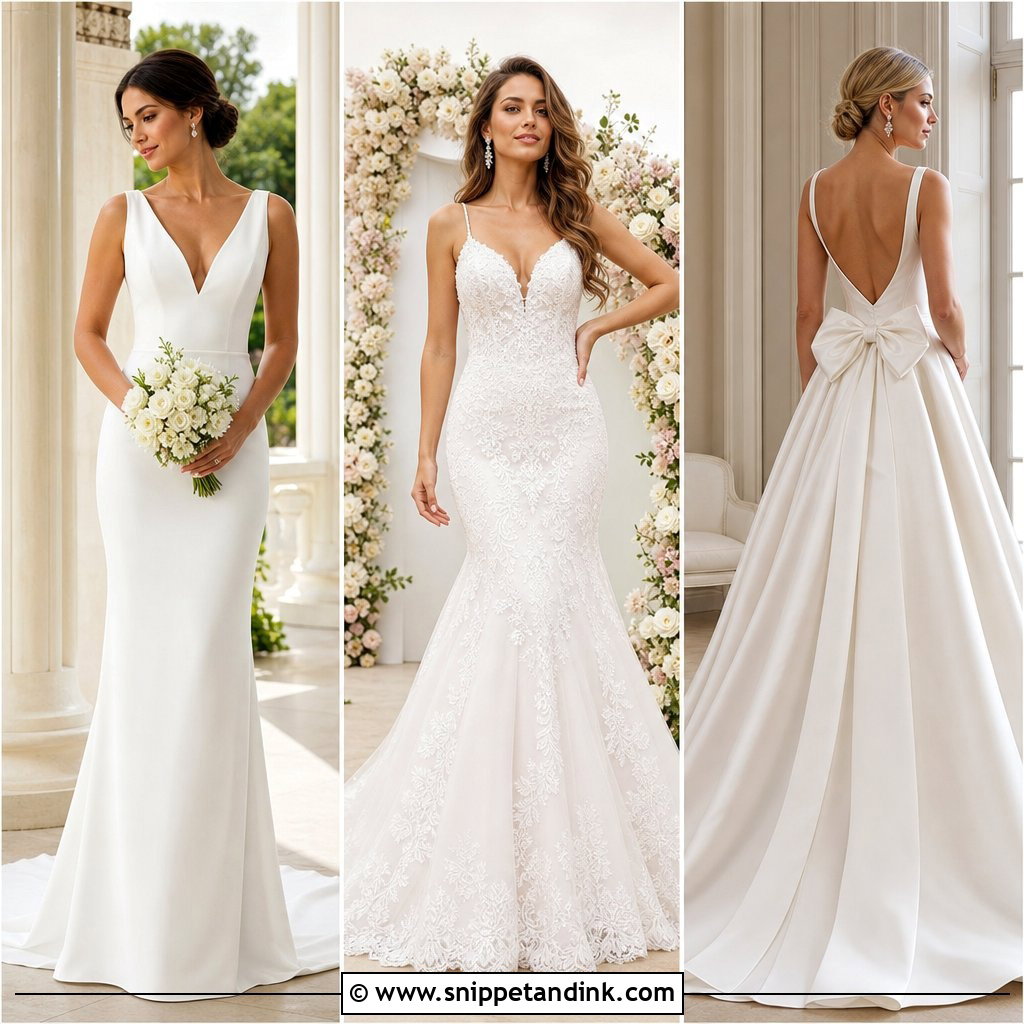
A mermaid follows the body and flares near the knee. That’s what gives it glamour, and also why it restricts your stride. I have every mermaid bride walk the length of the shop, climb a step and sit down before she commits, because a flare set too low makes stairs and dancing hard work. If it feels tight, a fit-and-flare that opens at mid-thigh gives nearly the same line. Crepe, satin or lace all suit it. Keep the bouquet compact so it doesn’t hide the shape.
8. Sheath Bridal Dress
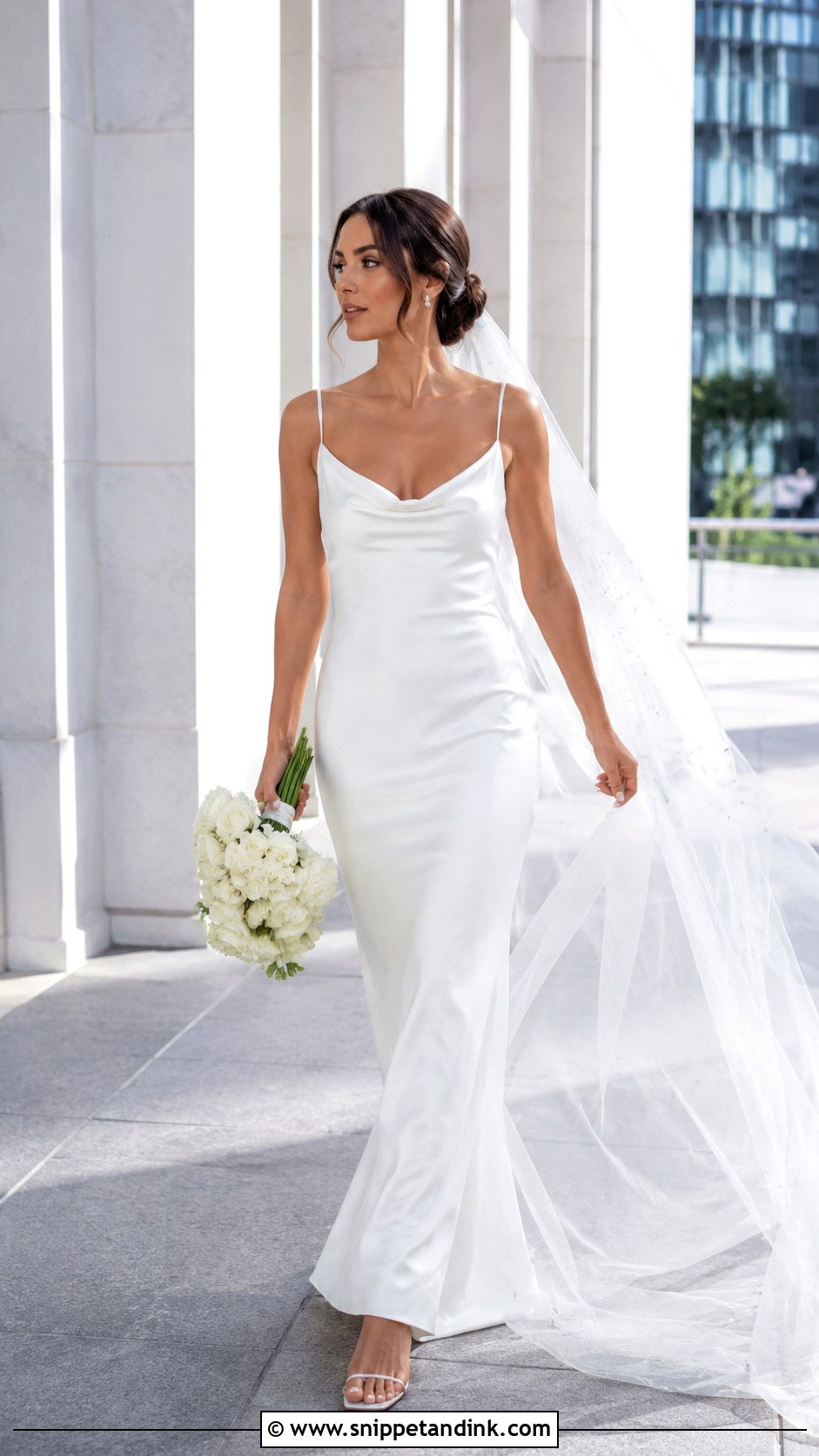
With a sheath bridal dress, the fabric does all the work because there’s no volume to hide behind. Heavier crepe, silk or a lined satin skims the body; thin fabrics cling and show underwear lines, so I’d test any sheath with the actual shapewear you plan to wear. It’s a natural fit for a courthouse, a rooftop or a small dinner. A bridal cape or a tailored blazer layered over it looks modern if the evening gets cool.
9. Square Neck Bridal Dress
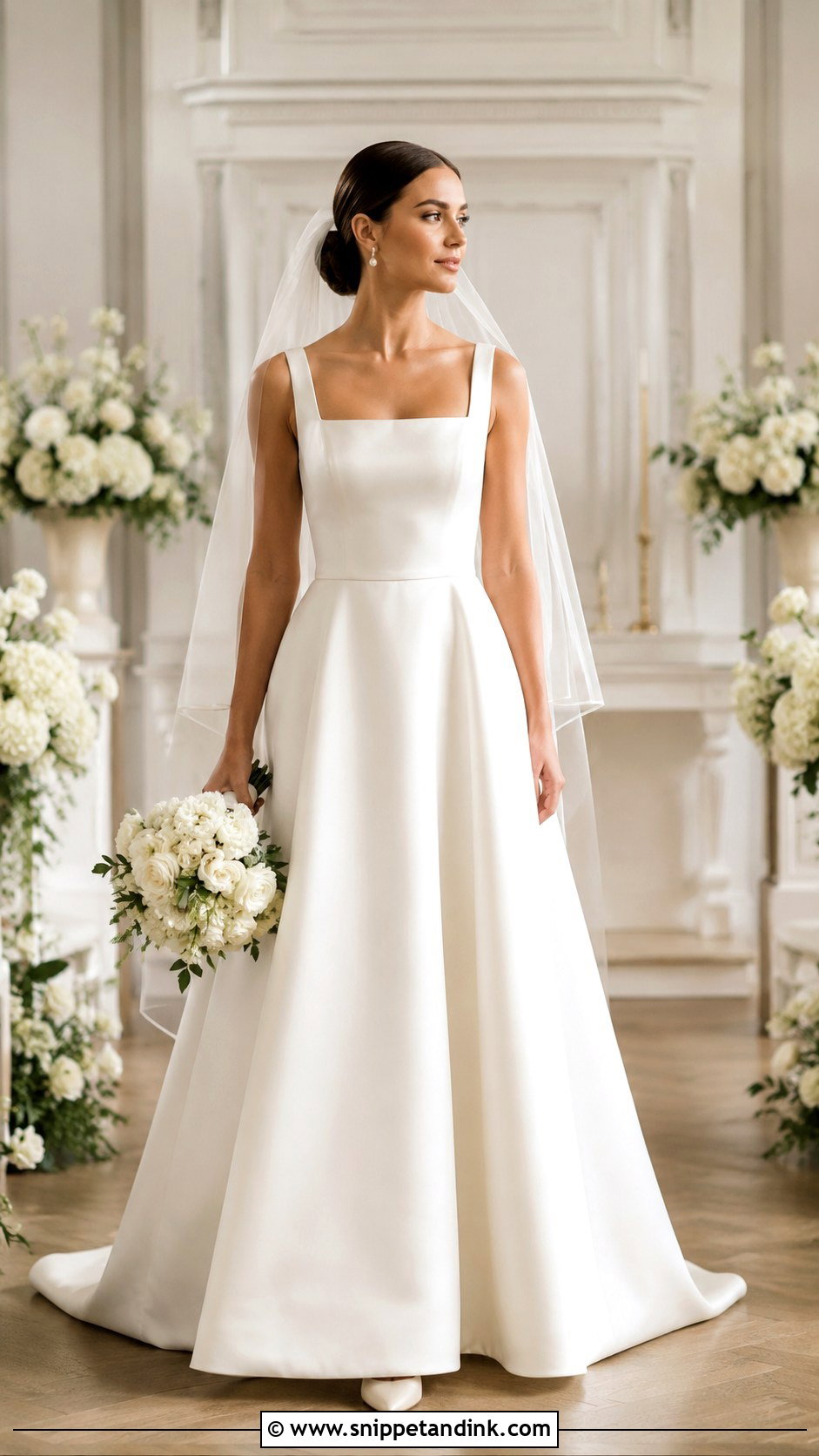
A square neckline frames the face and collarbone with more coverage than a deep V. It’s also one of the easiest necklines to fit, because the straight edge sits flat once the bodice is right. Wide straps and a smooth full skirt give the most classic version; a crepe bodice with a slim skirt looks more modern. A low bun, pearl drops and a fingertip veil finish it. On a plain bodice, a fine pendant sits nicely inside the square.
10. High Neck Bridal Dress
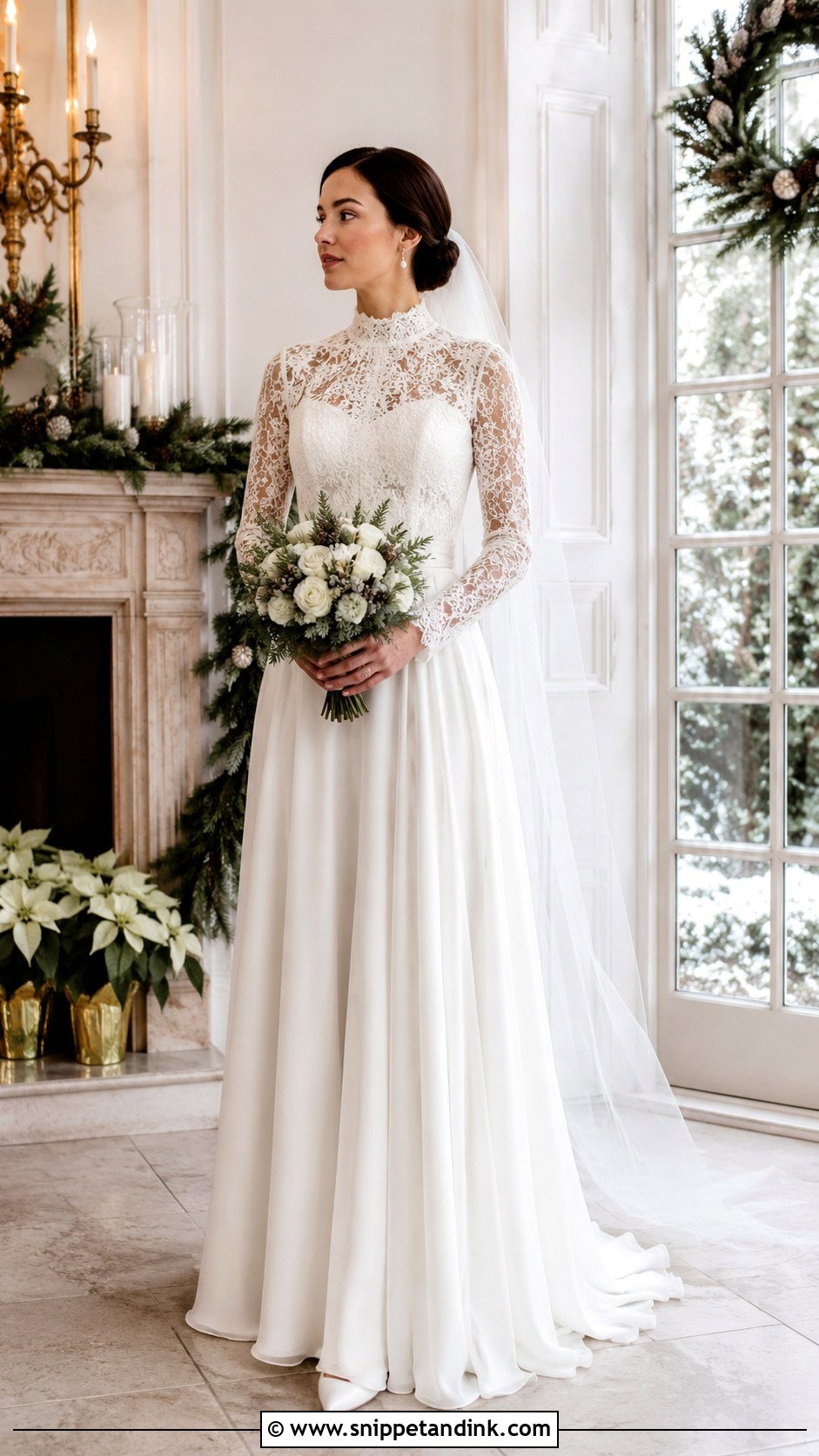
High necks have a slightly vintage feel, and they can be either romantic in lace or architectural in crepe and satin. The collar fit is everything here. I check it while the bride sits and looks down, because a high neck that’s comfortable standing can press on the throat when seated. Wear your hair up so the neckline stays visible. Skip the necklace and choose small earrings, then attach the veil low at the back of the head so it doesn’t sit on top of the collar.
11. Strapless Bridal Dress
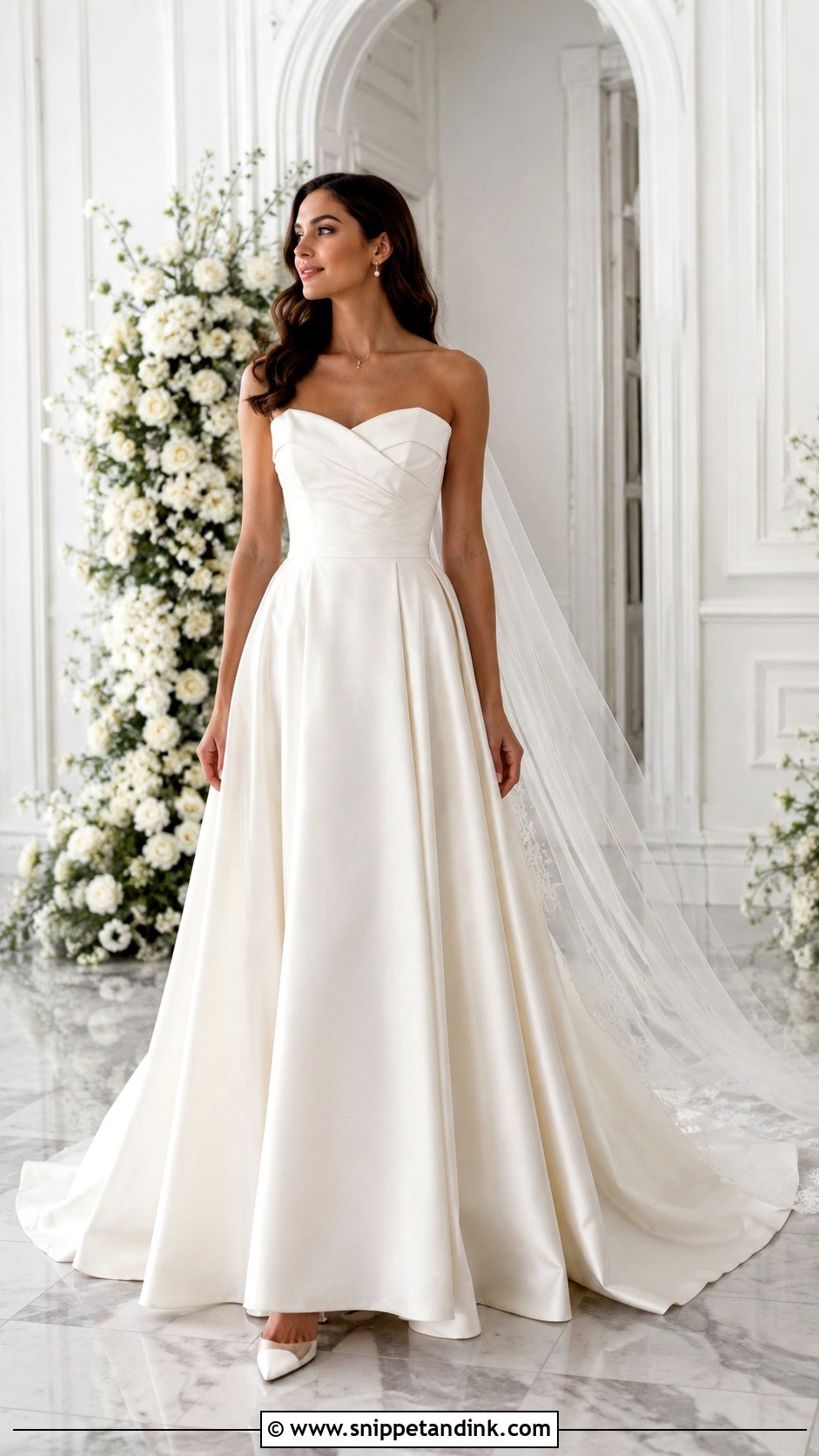
Strapless is a classic, and it gives you room to play with veils, jewellery or gloves. The one thing it can’t do without is a properly structured bodice. If you’re hitching it up in the mirror at the boutique, you’ll be doing it all night. I look for internal boning, a waistband that grips, and sometimes silicone grip tape at the top edge. A satin ball gown suits a formal room; a crepe sheath suits a modern ceremony. A fine necklace and soft waves fill the open neckline.
12. Corset Bridal Dress
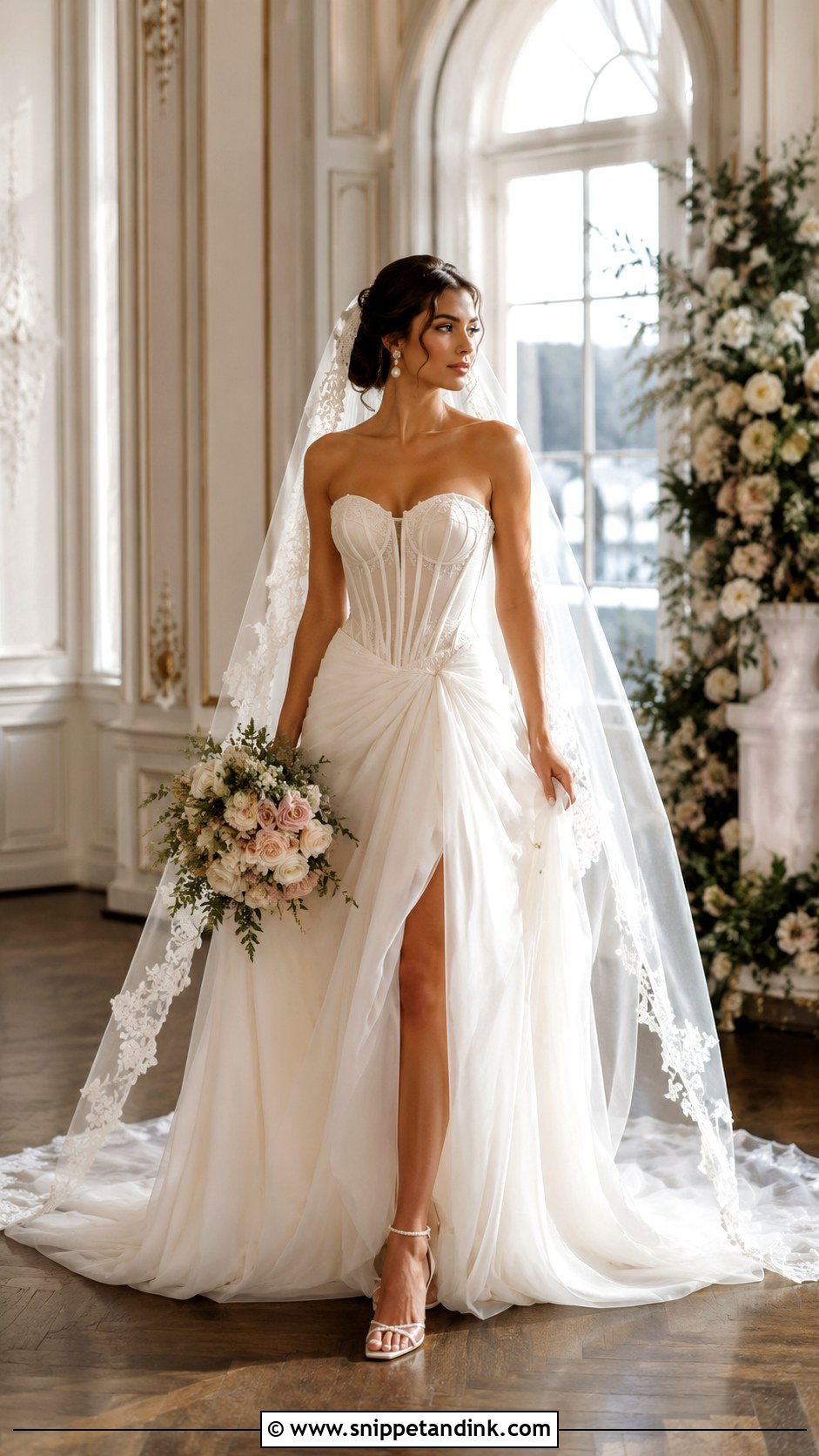
A corset bodice defines the waist and supports the bust, so it can be both romantic and practical when it’s fitted correctly. When it isn’t, it digs in at the hip and pinches when you sit. I’d always have a corset gown fitted with the bride seated as well as standing. Pair the boned bodice with soft tulle, satin or draping rather than heavy sparkle, or the dress starts to look busy. If the boning shows through sheer fabric, keep everything else plain.
13. Drop Waist Bridal Dress
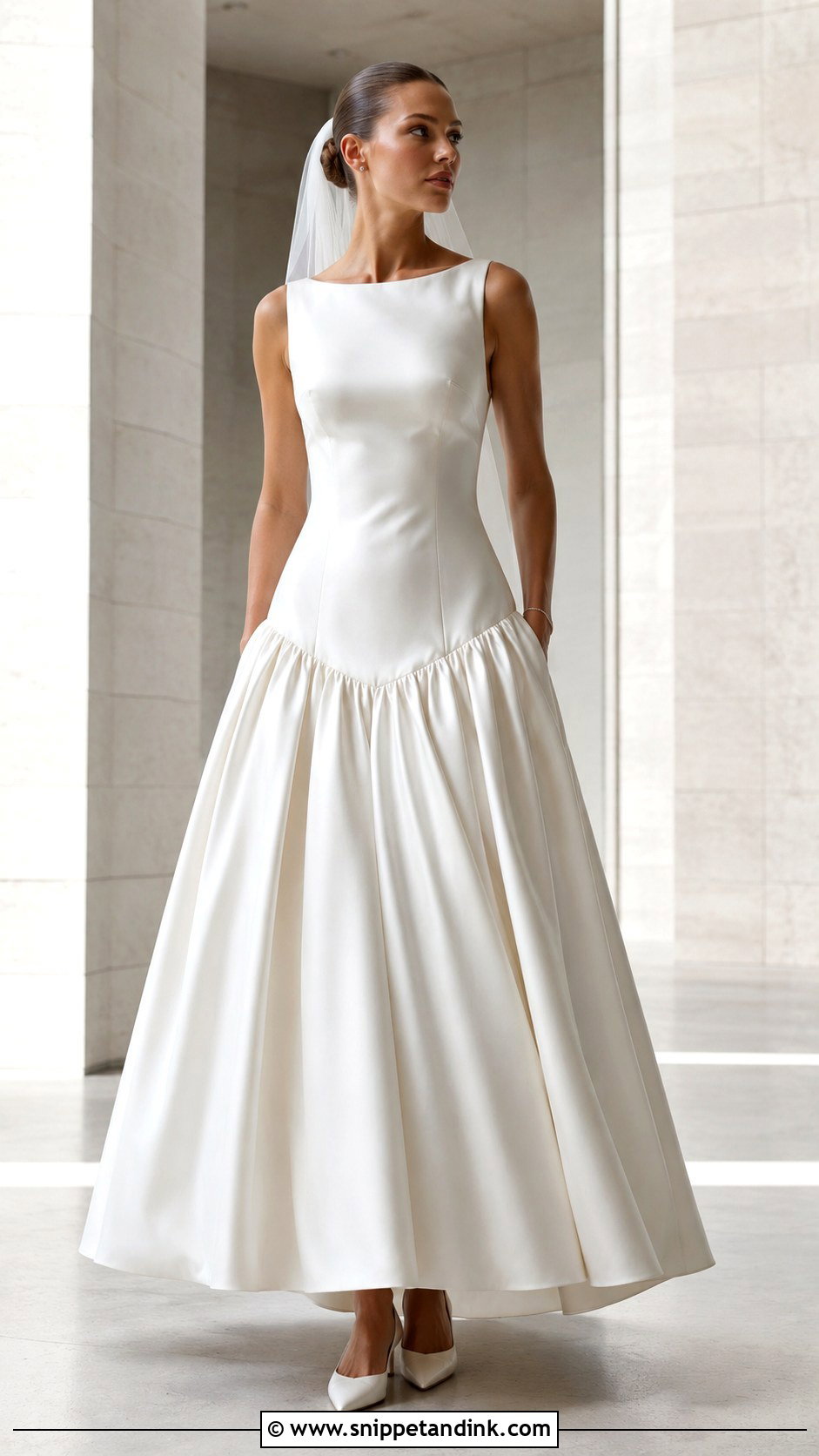
A drop waist sits below the natural waist, which lengthens the torso before the skirt begins. It’s one of the less expected shapes here and it rewards a long or straight body particularly well. On a shorter torso, the low seam can visually shorten the legs, so I’d try it on before ruling it in. Satin, mikado and lace hold the line best. A full skirt makes it grand; a slimmer skirt looks very current. Keep jewellery simple and let the seam be the detail.
14. Floral Applique Bridal Dress
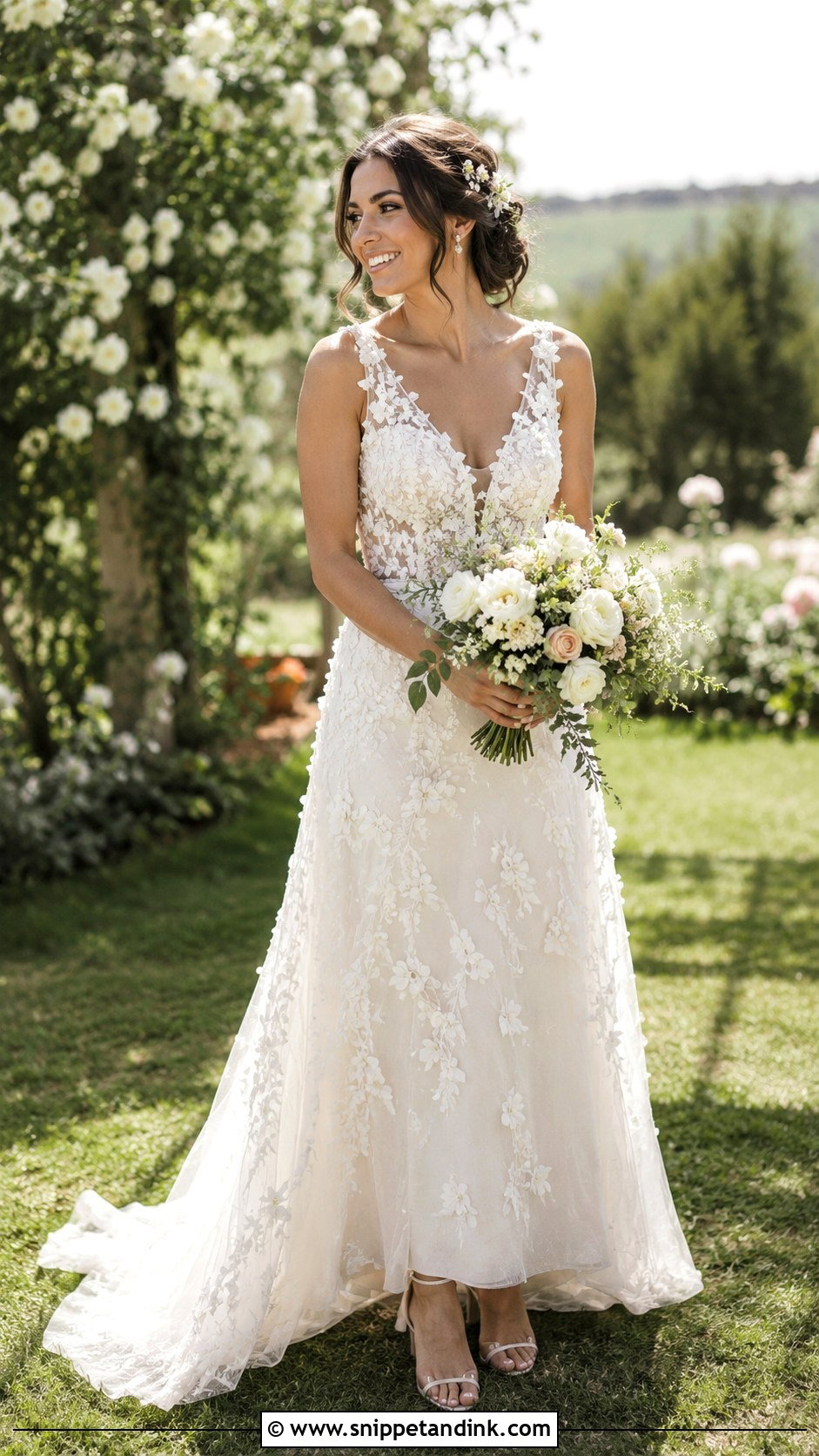
A floral applique bridal dress gets its texture from raised flowers stitched onto the gown, so it has depth without sparkle. Flat ivory appliqué looks classic; 3D petals look more modern but catch on things and can crush when you sit, so check where they sit relative to your hips. It suits an A-line skirt, sheer sleeves or a fitted bodice. Let the bouquet echo the flowers in the dress, and keep makeup fresh and natural.



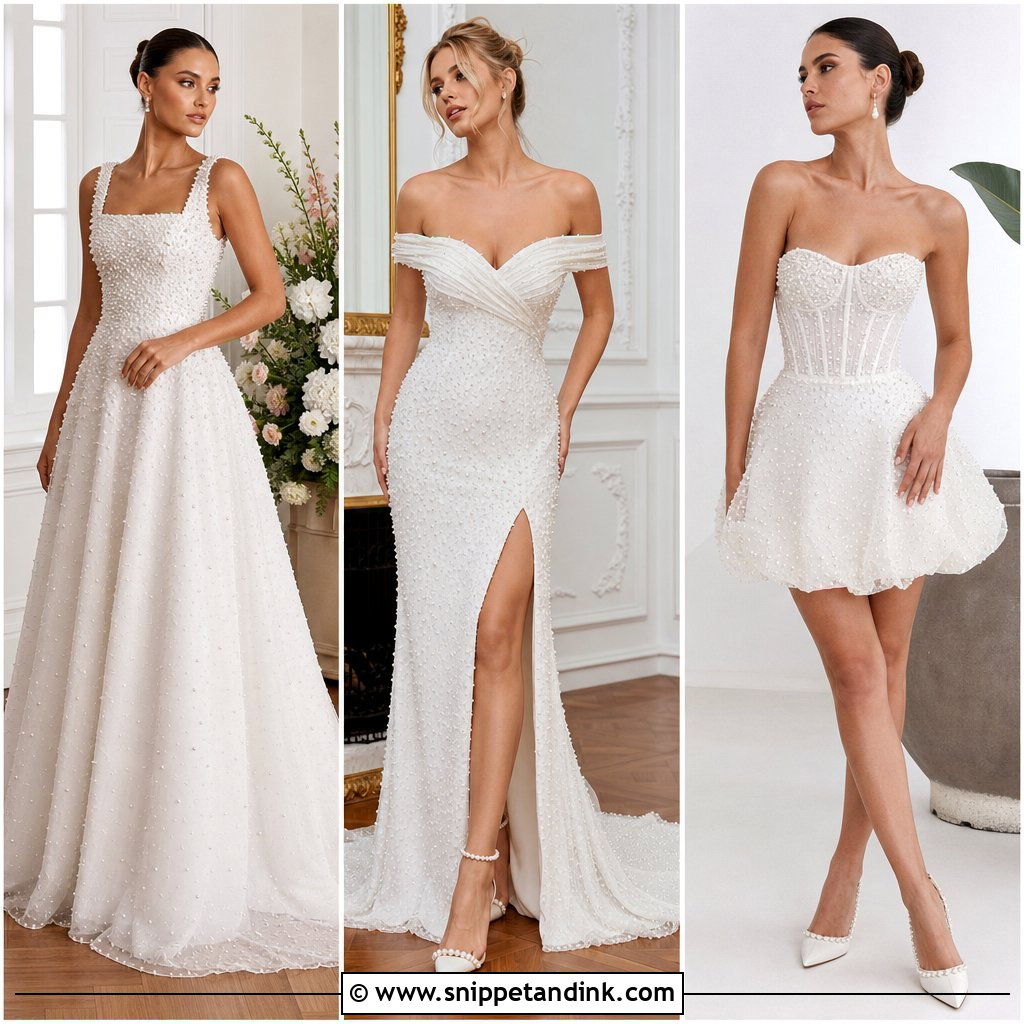
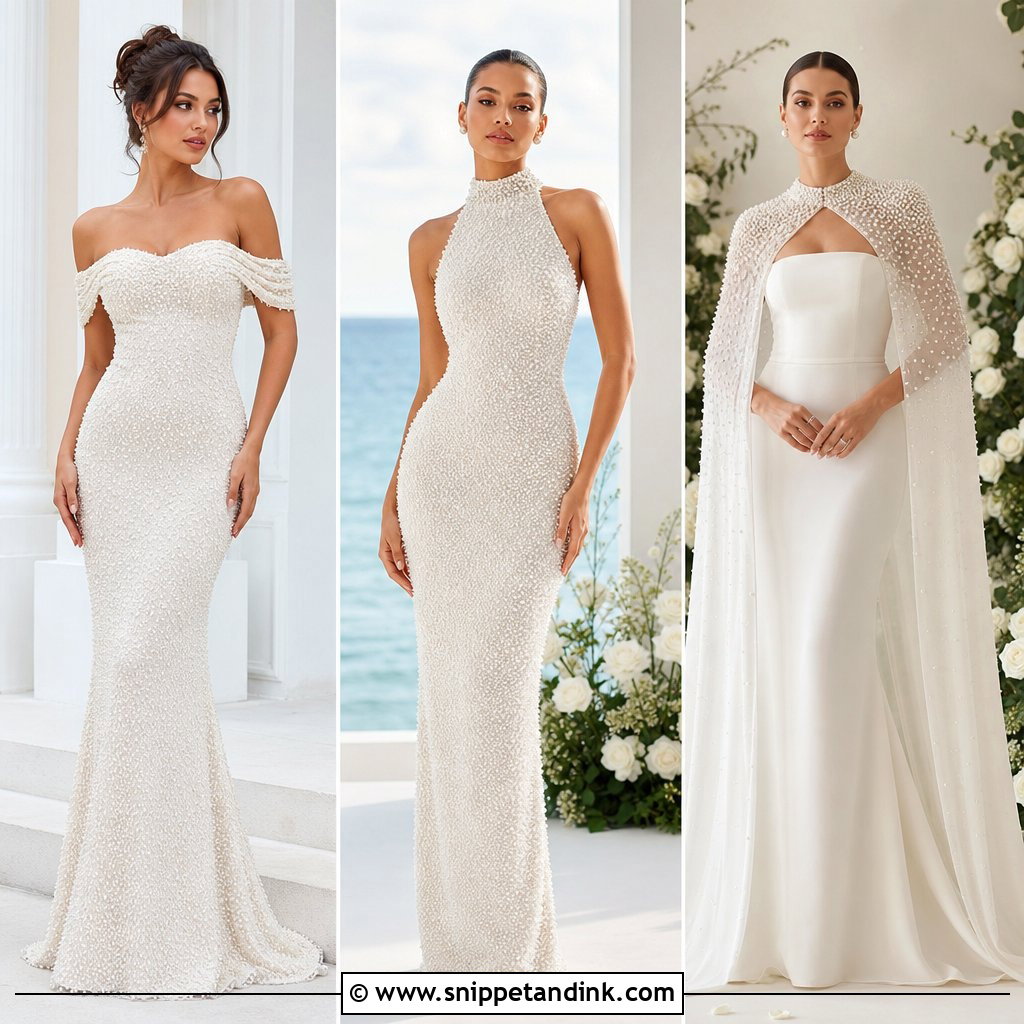
15. Pearl Bridal Dress
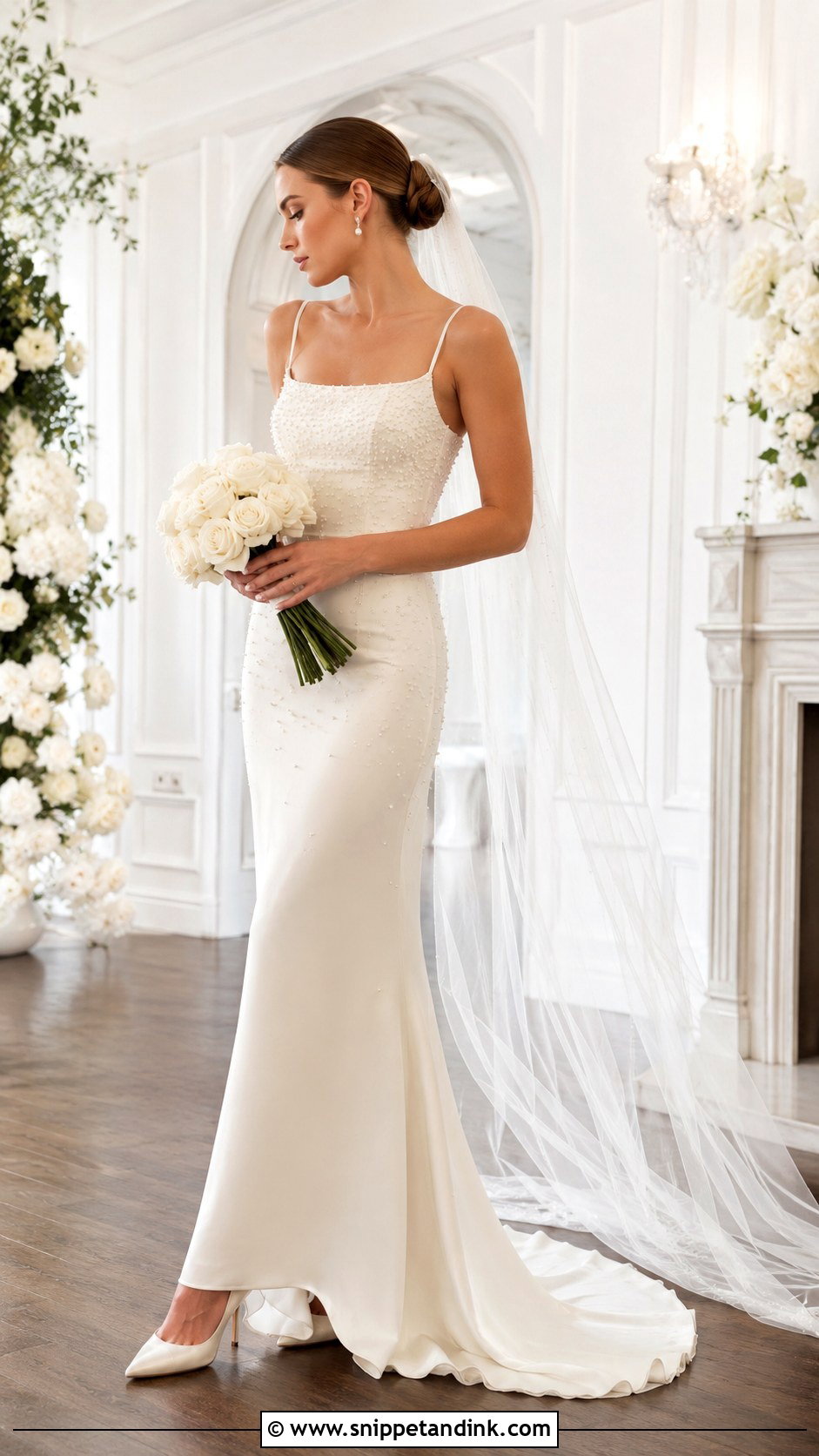
Pearls add a quiet luxury, and they catch light softly rather than flashing like crystal. They’re heavier than sequins, so a gown thick with pearl beading needs a strong lining to stop sleeves or straps from stretching over the evening. Keep the silhouette simple, such as a sheath, an A-line or a fitted gown, and stop at pearl earrings, satin heels and a sheer veil. More pearls on top just blurs the detail.
16. Minimalist Bridal Dress
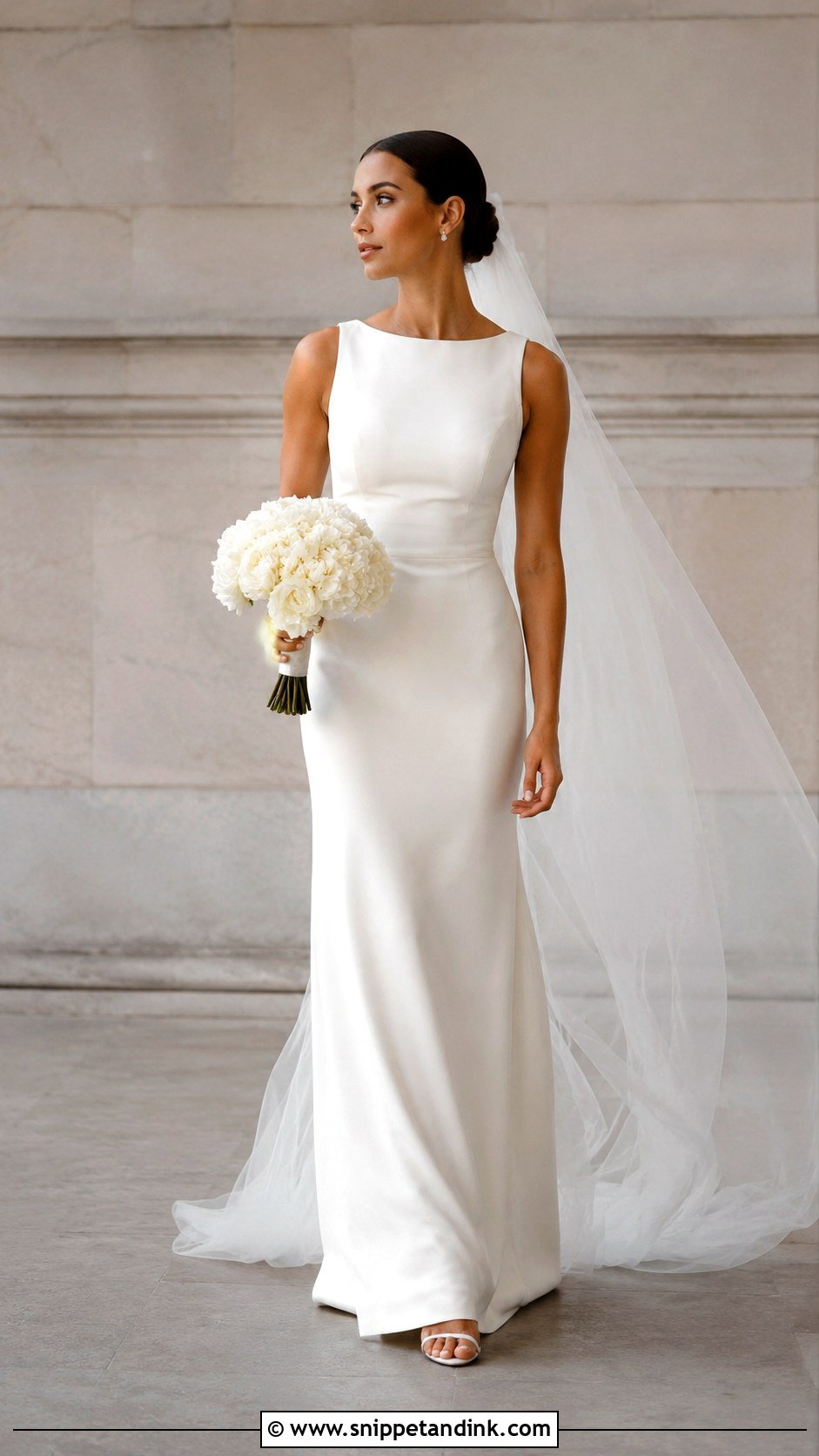
With no lace or beading, a minimalist dress lives or dies on fit and fabric. I’d put the budget into a good crepe, silk, satin or mikado and an extra alteration appointment rather than anything decorative. A column dress, square-neck gown or strapless A-line all work. A plain cathedral veil gives drama without breaking the clean lines. Sleek heels, a smooth bun and small earrings finish it. This is the dress for a gallery, a city hall or anyone who hates fuss.
17. Tea Length Bridal Dress
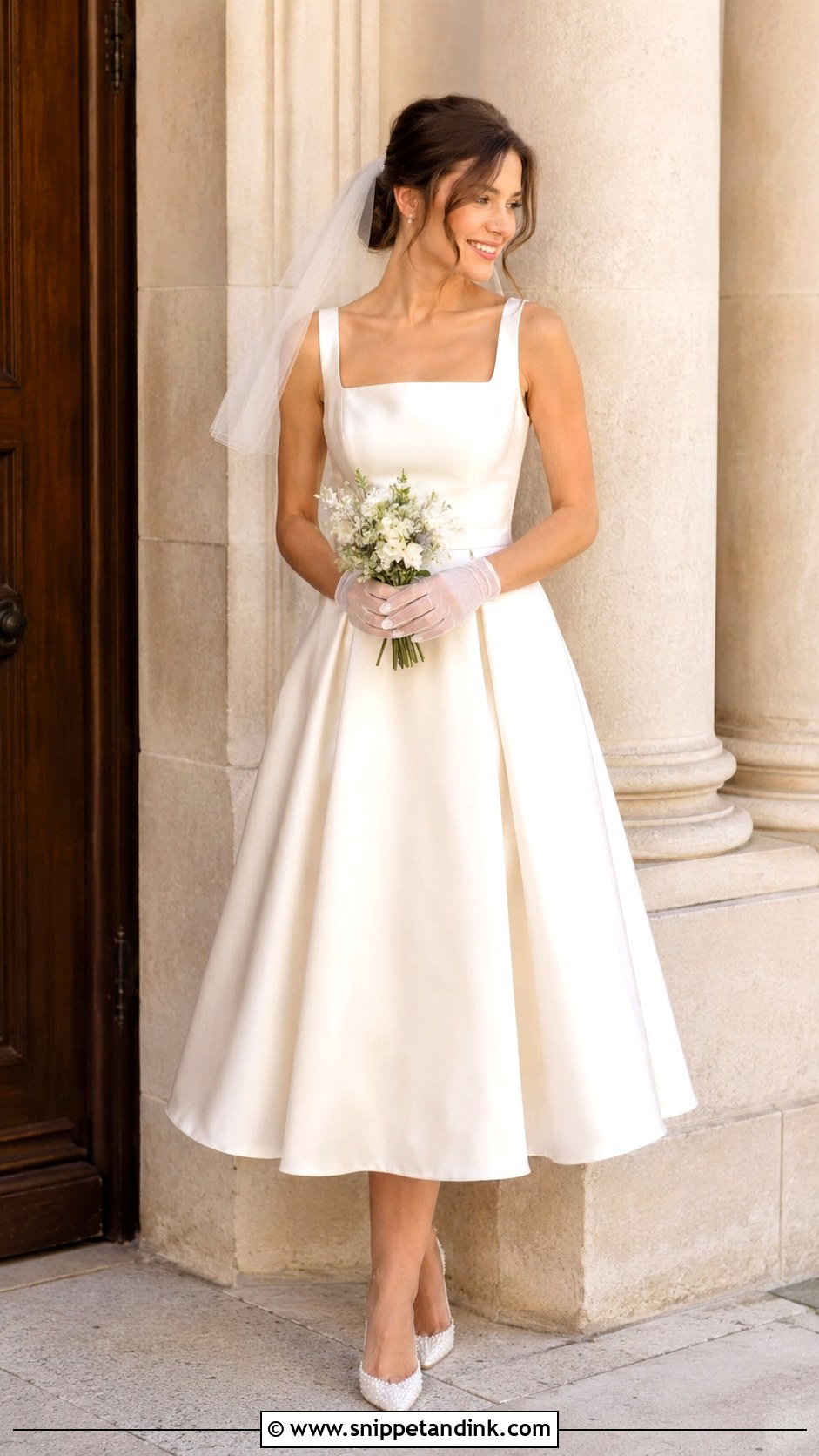
A tea length hem falls between the knee and ankle, so you can move, dance and see your feet. That also means your shoes are part of the outfit. Pearl pumps, embellished flats or a good pair of heels all show, so plan them with the dress rather than after. Satin gives a crisp, structured skirt; tulle bounces; lace softens it. A short veil, gloves or a small bow suit the vintage feel. It’s a good choice for a garden, a courthouse or a second dress for the reception.
18. Bridal Mini Dress
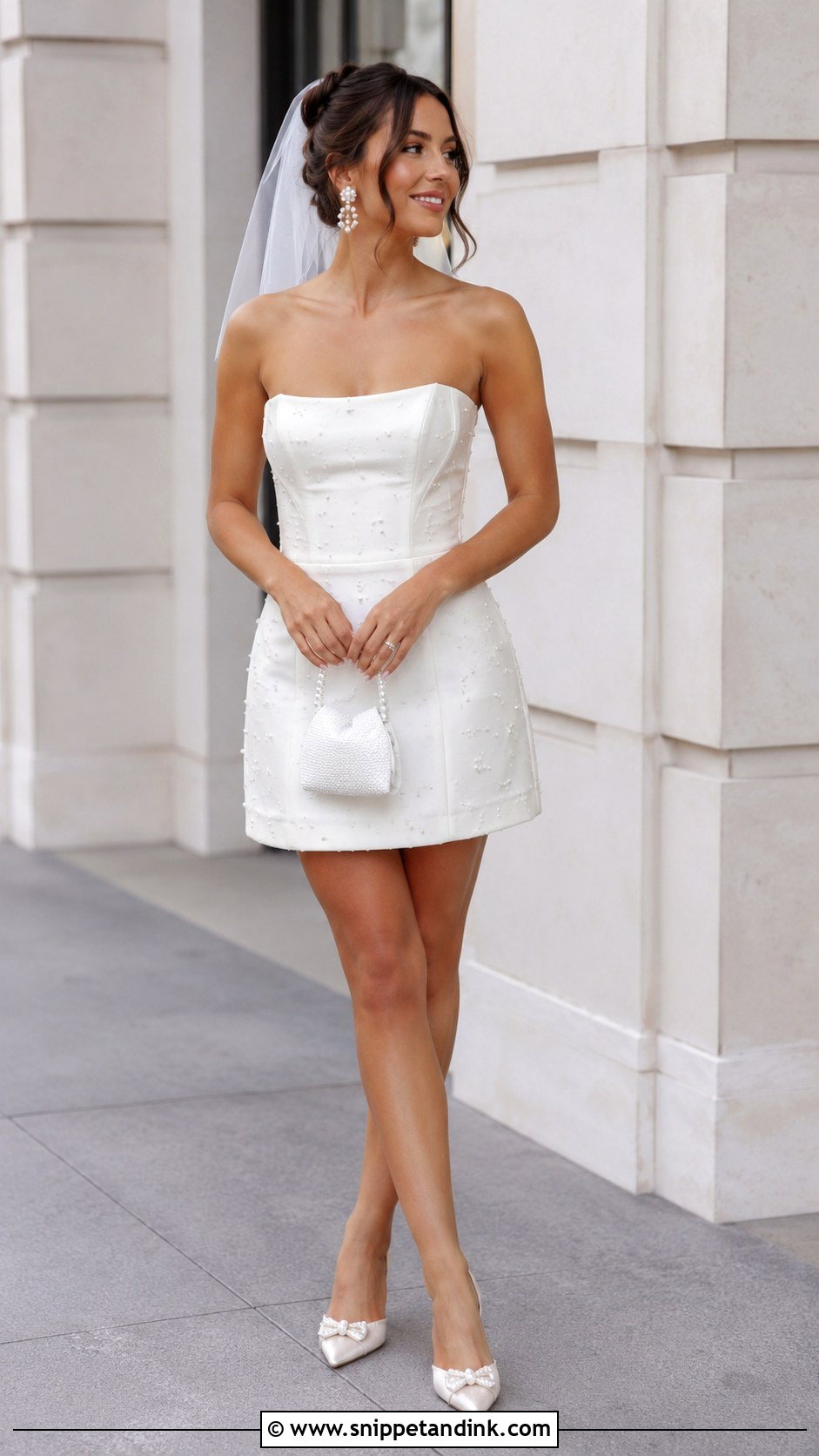
A mini is a chic option for a civil ceremony, second looks, rehearsal celebrations or a modern party. Short dresses need cleaner tailoring than long ones, because there’s less fabric to hide a poor fit. Look for satin, a structured silhouette, pearl details or lace sleeves. Sit in it before you buy, as a mini rides up more than you’d expect. Pointed heels, statement earrings and a short veil or bow keep it reading as bridal.
19. Cape Bridal Dress
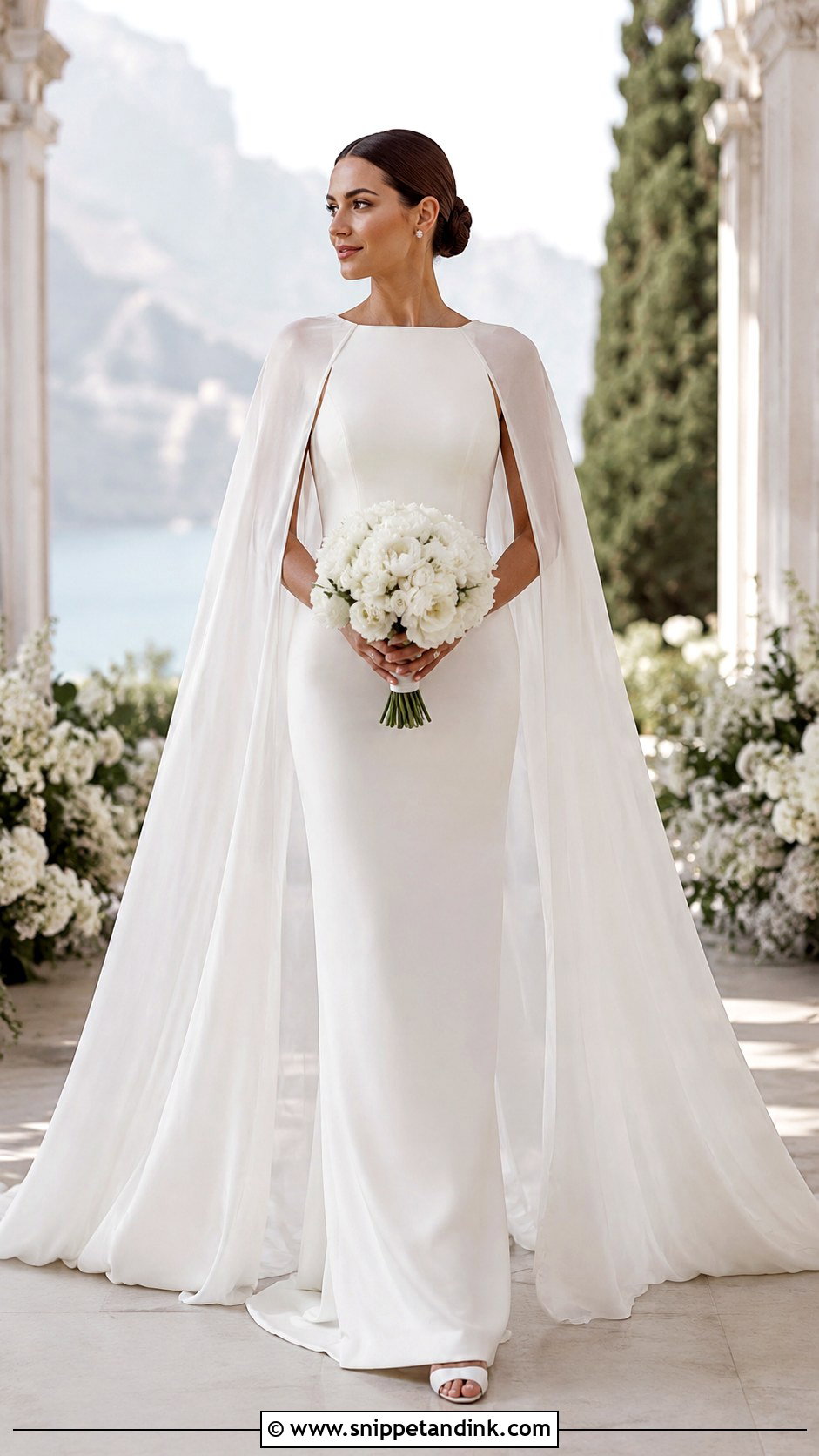
A cape gives you the movement of a veil with a more modern edge. A sheer cape over plain crepe looks sleek; a lace cape adds texture. It covers the shoulders without sleeves, which is useful when you want some coverage for the ceremony. Check how it’s attached. A cape sewn into the shoulder seams stays put, while one that clips on can slip sideways. A detachable version comes off for dancing. A polished bun keeps hair from tangling in it.

20. Bridal Dress With Bow
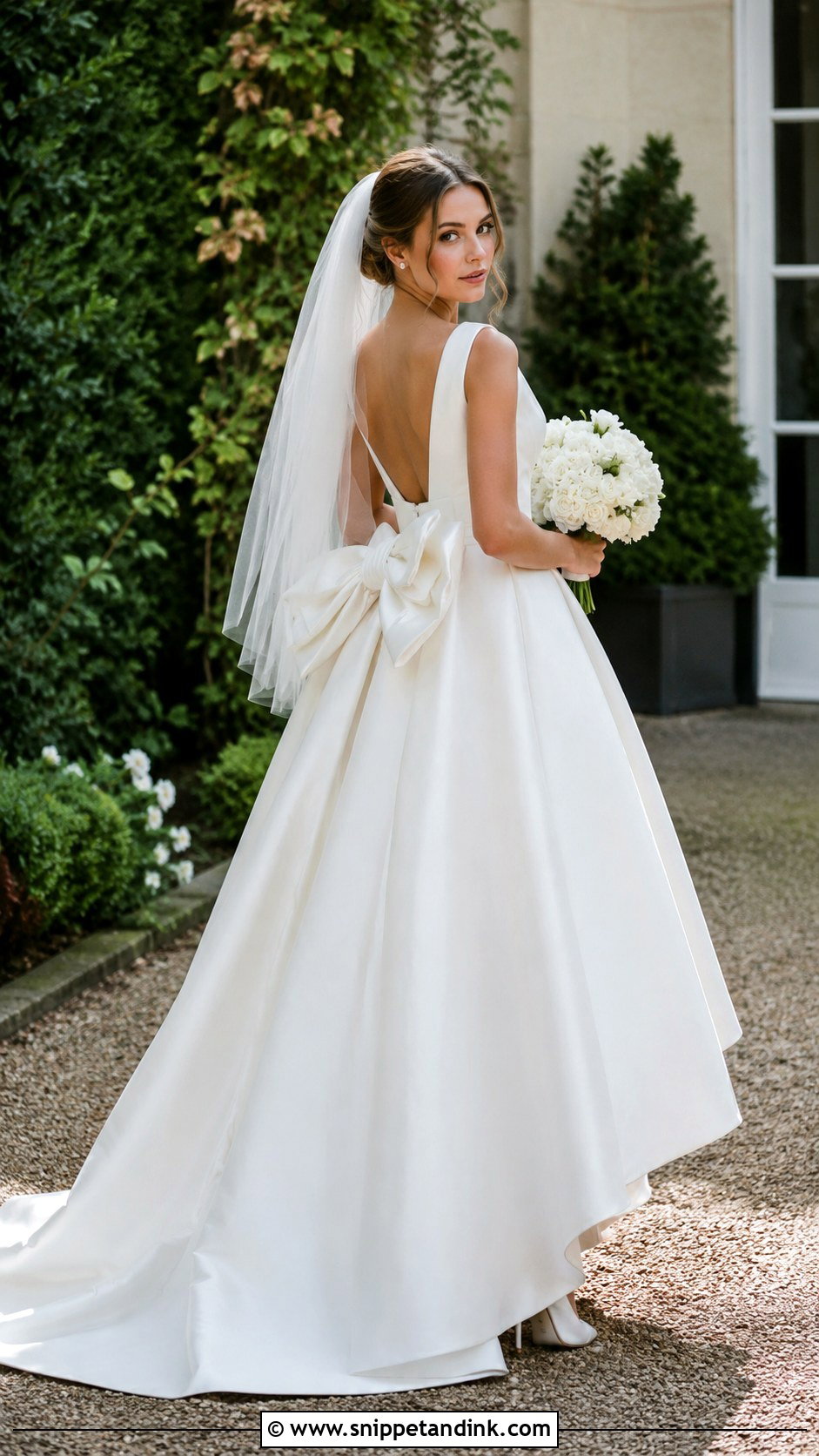
Bows look feminine and photograph well, but only if they keep their shape. That’s a fabric question: satin and mikado hold a bow crisply, while organza gives a lighter one that can flatten after you’ve leaned back in a chair for dinner. I’d ask the seamstress to add a little interfacing inside a large back bow. Keep jewellery simple, and choose a veil that falls to the side of the bow or ends above it, so the two aren’t fighting at the back.
21. Halter Bridal Dress
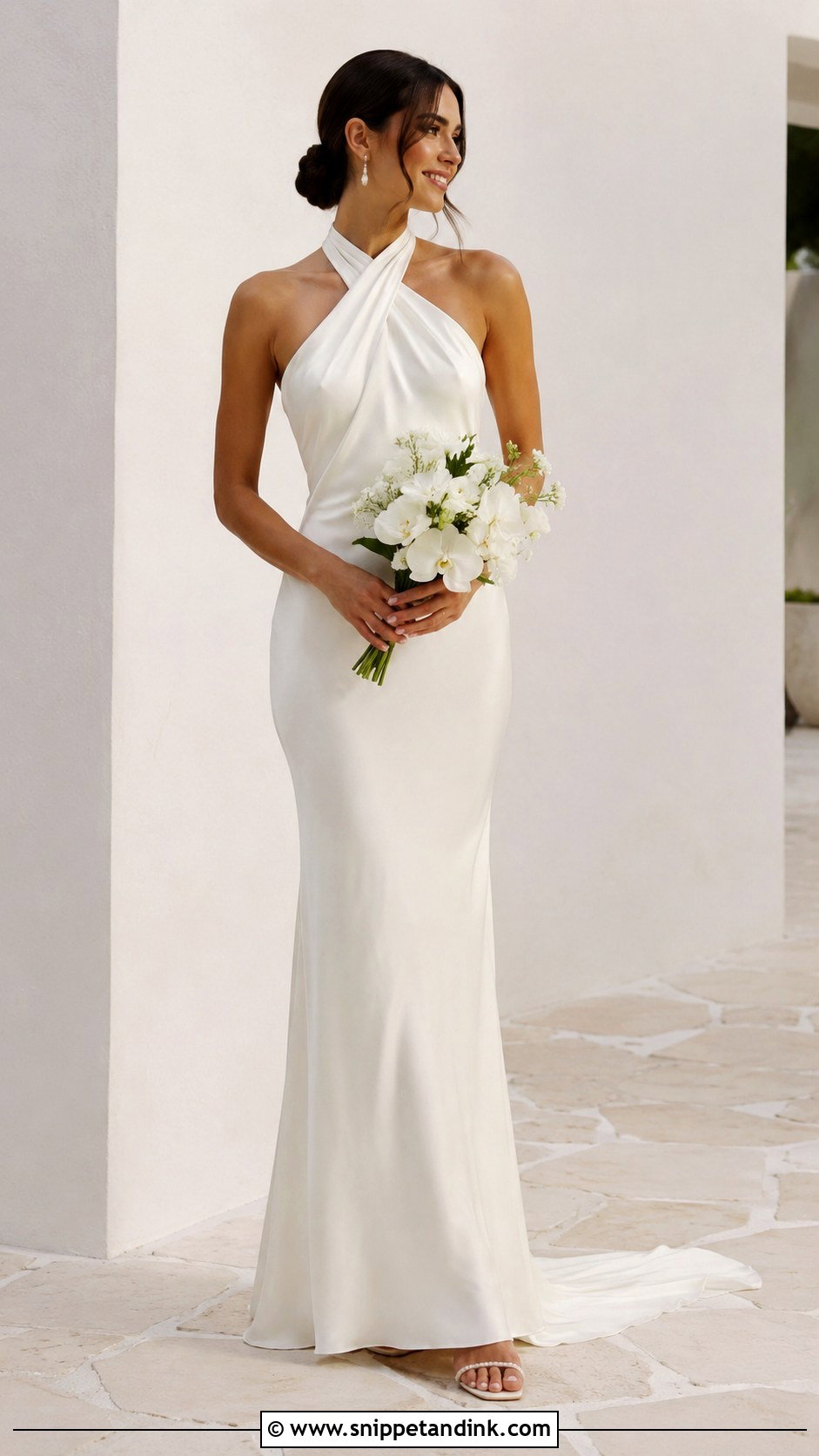
A halter draws the eye up and shows the shoulders, and it suits sleek fabrics like satin, crepe and silk. Because the neck strap carries part of the dress’s weight, I check that it isn’t pulling on the back of the neck, especially with a heavier skirt. Wear your hair up to show the neckline. Drop earrings, no necklace and a simple bouquet are all it needs. It’s a strong choice for a destination wedding or a city venue.
22. Tulle Bridal Dress
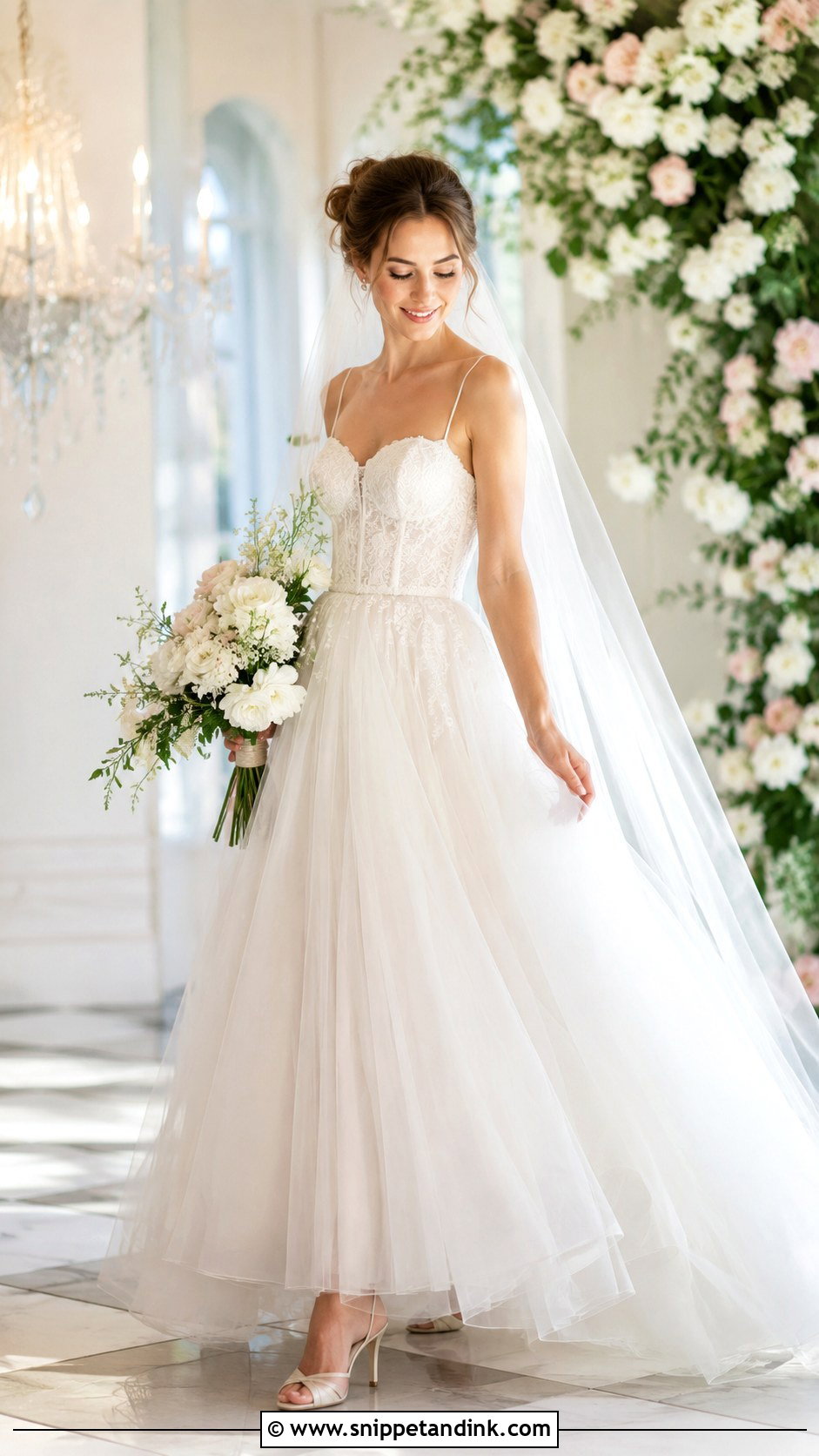
Tulle gives volume without weight, but the quality varies a lot. Fine, soft tulle looks airy; cheap stiff tulle looks scratchy and can make a gown feel like a costume. Run it through your fingers at the appointment. Tulle also snags on bracelets and raised ring settings, so check your jewellery against the skirt. An A-line in tulle feels romantic, a ball gown feels dramatic, and a fitted bodice balances both. Keep sparkle light.
23. Crepe Bridal Dress
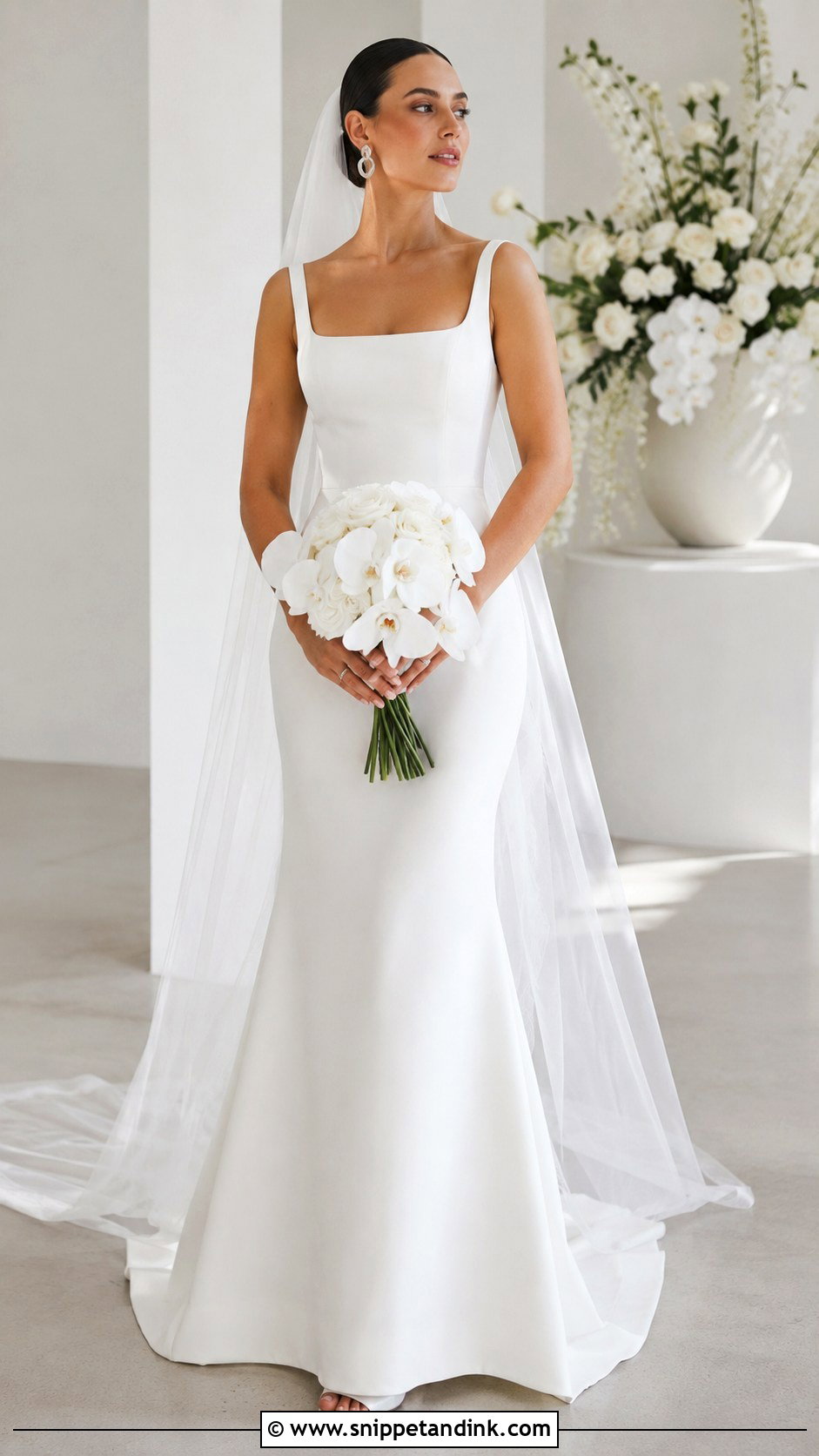
Crepe has a matte finish and a clean drape, and it’s comfortable for long days. It doesn’t hide anything, though. Because crepe is plain, alterations matter enormously, and a seam that’s slightly off will show in every photo. It suits sheaths, fit-and-flare shapes, long sleeves and minimalist designs. Sculptural earrings, sleek heels and a long veil complement it. Steam it on the morning of the wedding to remove any hanger marks.
24. Vintage Bridal Dress
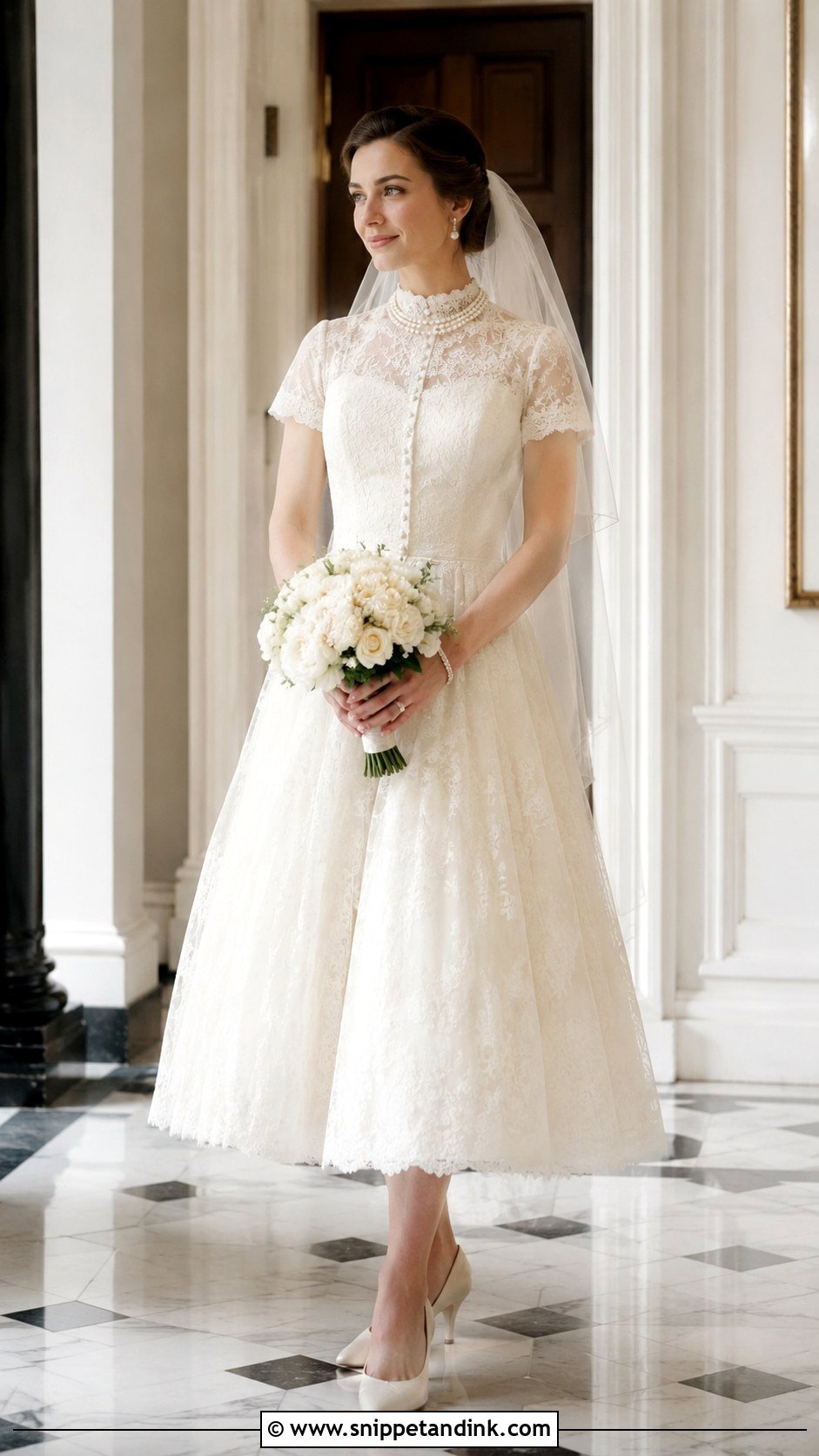
A vintage-style dress brings a sense of story. It might be lace sleeves, a high neck, a tea length hem, satin-covered buttons or a bias-cut 1930s silk. Choose one era detail and keep everything else current, especially hair and makeup, or the look slides into costume. If you’re wearing a genuine vintage gown, have a specialist check the seams and fabric strength first, because older silk and lace can be fragile. Pearls, classic heels and a soft veil suit almost every version.


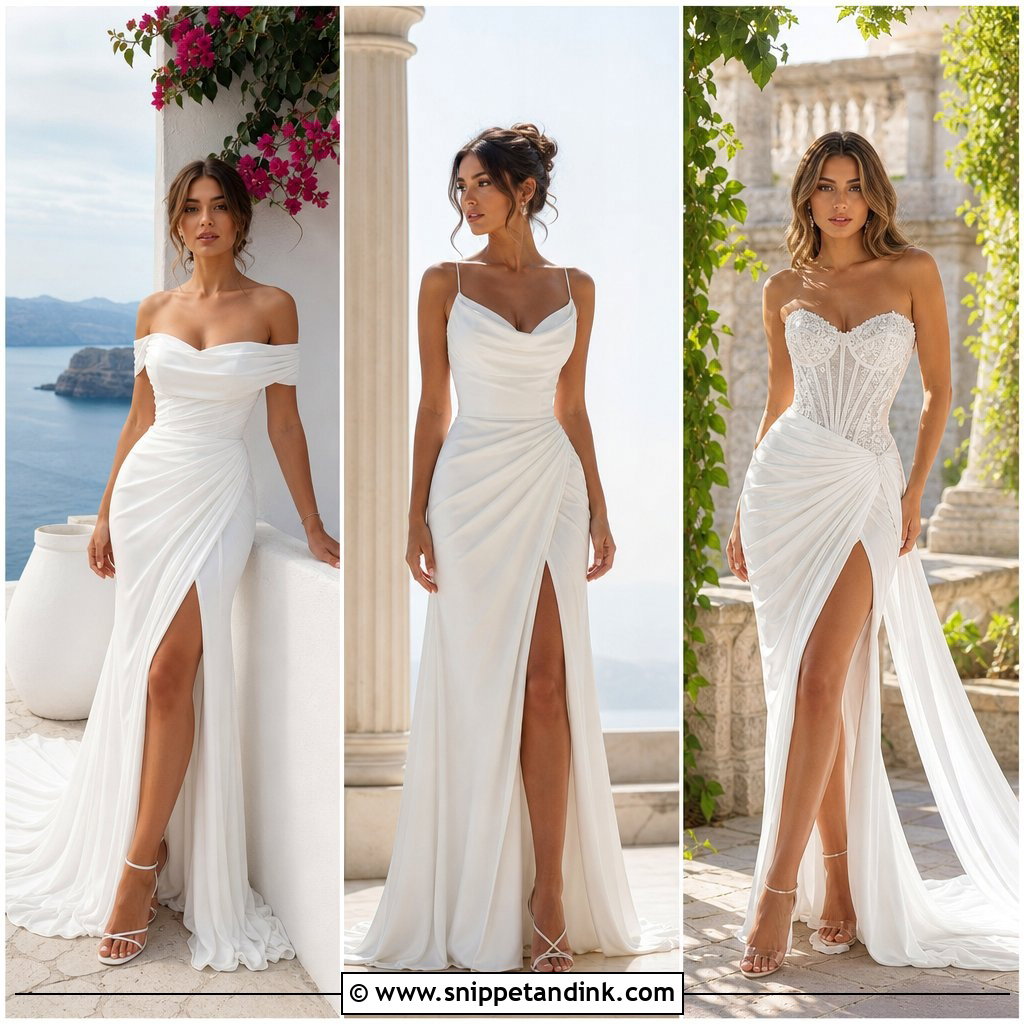
25. Two Piece Bridal Dress
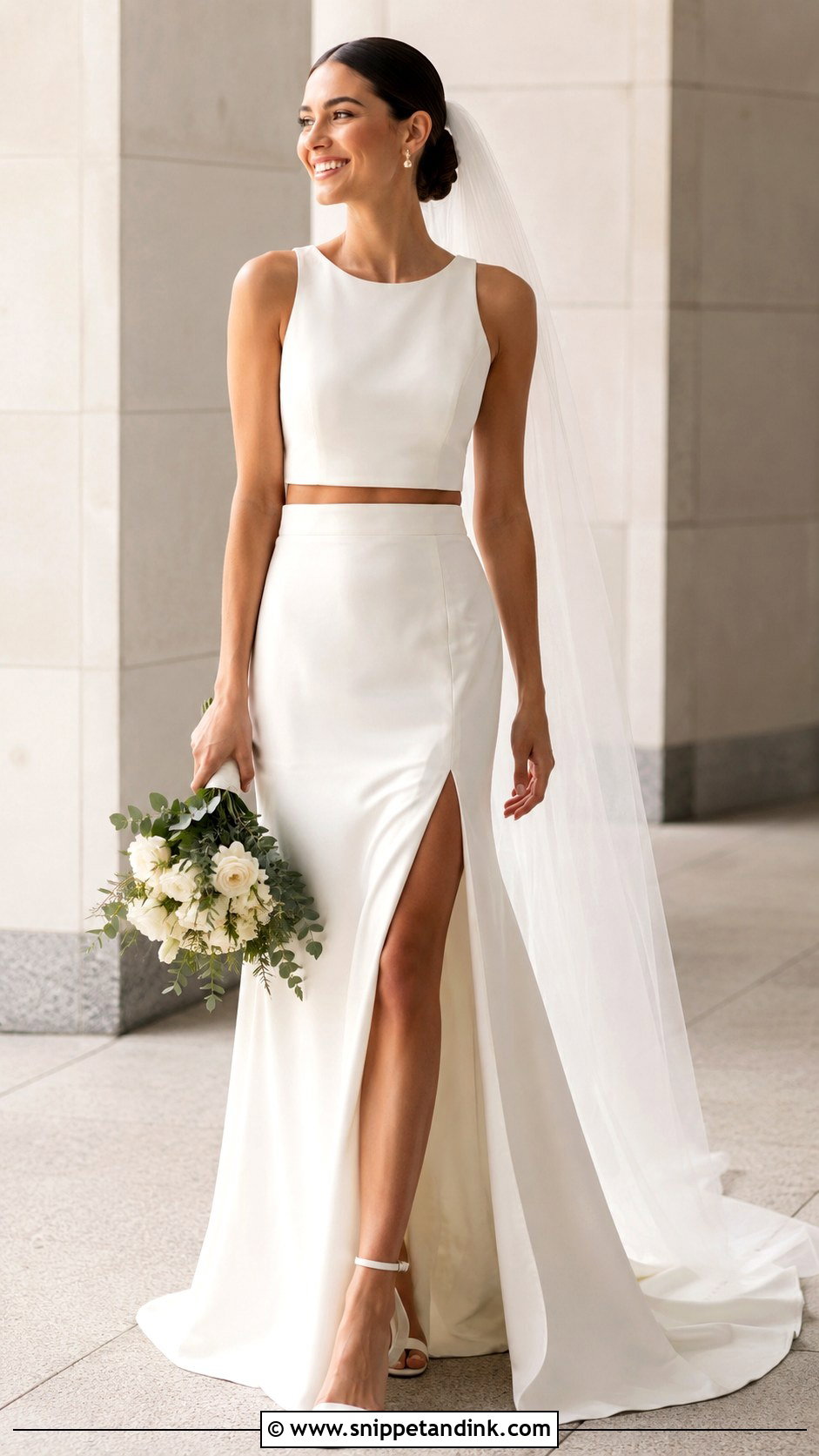
Two pieces give you flexibility: a structured crop top with a high-waisted skirt, or a lace top over a satin skirt. The colour match is the detail to watch. Two different fabrics in two different whites look accidental, so I hold them together in daylight before ordering. Make sure the waistband gap you’re comfortable with standing still works when you sit and dance. Simple earrings, a sleek veil and bridal heels keep it polished for a destination wedding, a courthouse or a reception change.
What a Seamstress Can Fix, and What She Can’t
Brides often buy a dress expecting alterations to transform it. Some changes are routine; others are expensive or simply impossible, and knowing which is which saves a lot of heartache.
Usually straightforward
- Taking in the side seams or bodice by a size or so.
- Shortening a hem, though lace or beaded hems take far longer than plain ones.
- Adding a bustle, cups or a waist stay.
- Shortening straps or adding simple detachable sleeves.
Hard or risky
- Letting a dress out much, since there’s rarely spare seam allowance.
- Lengthening a hem that’s already cut.
- Changing the neckline shape on a heavily beaded bodice.
- Moving a lace pattern so it lines up differently.
Bring the exact shoes and underwear to every fitting, because a change of heel height changes the hem. Expect two or three fittings, with the final one about two weeks before the wedding so there’s room to correct anything. And if a dress needs heavy reconstruction to work for you, I’d be honest: it’s usually the wrong dress.
Does the Dress Still Feel Right After an Hour in It?
The elegant dress is the one that fits your body, your venue and your taste without effort. For some brides that’s lace, satin and sleeves; for others it’s clean crepe, a tea length hem or a two piece. Look at silhouette, comfort and fabric first, then make sure the shoes, veil, jewellery, hair and bouquet support the dress instead of competing with it. Compare the classic, romantic and modern options above, and keep the one that still feels like you at the final fitting.
You'll Like These Ideas:





Leave a Reply