
Elegance in a wedding dress used to mean one shape. It doesn’t any more. The brides I dress now want something refined that still feels like them and lets them move: clean satin, sculpted necklines, lace sleeves, soft tulle, pearl detail and a lighter dress for the party later. What suits you depends on the venue, the season, your body and the feeling you want when the doors open. A city ceremony often calls for sleek crepe; a garden often suits floral lace or airy organza. Below are the silhouettes, fabrics and details I show brides most, with what I’ve learned about how each one wears.
How a First Bridal Salon Appointment Really Works
Many brides arrive at their first appointment expecting to find the dress in an hour. Some do. Most leave knowing what shape they like, which is just as useful. A little preparation makes the visit far more productive.
- Book a weekday appointment if you can; salons are quieter and you’ll usually get more time with your consultant.
- Bring two or three people whose opinion you trust. A large group tends to pull in different directions and makes the decision harder.
- Wear smooth nude underwear and bring a strapless bra. Thick straps and dark colors show through pale fabric and distract from the dress.
- Save a few pictures of your venue as well as dresses you like. The setting tells me as much as the inspiration photos do.
- Try at least one shape you would never have picked. I’ve watched many brides change their mind completely once a different silhouette is actually on.
Why the sample never fits
Salon samples come in a limited range of sizes and are clipped or pinned to fit you. That means the dress you try will never sit exactly as the finished one will. Look at the shape, the neckline and how the fabric moves, and trust the fittings to deal with the rest. Ordering times for made-to-order gowns are often several months, so starting the search about a year before the wedding gives you room to breathe.
1. Satin A Line Wedding Dress
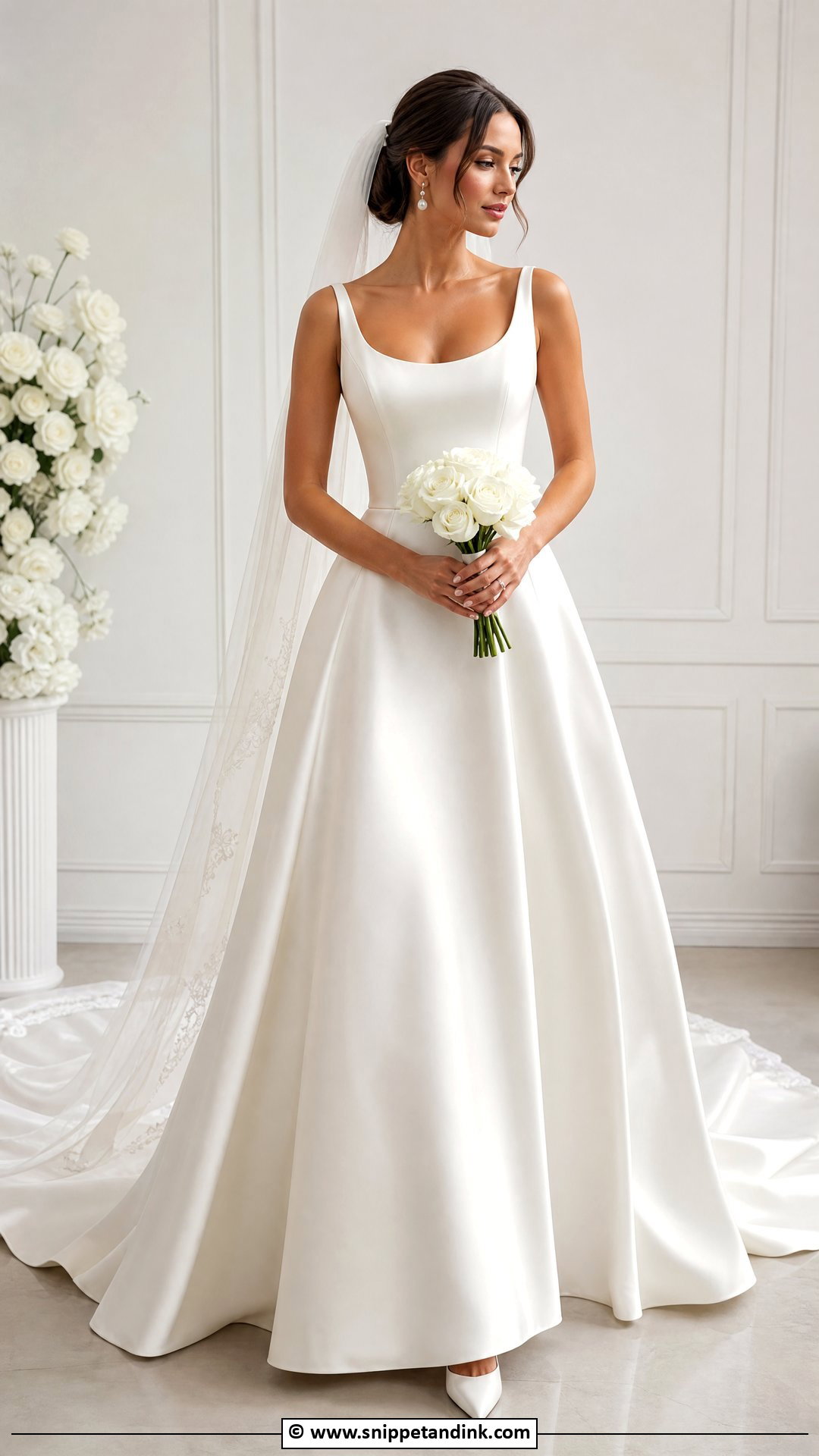
If a bride tells me she wants elegant without drama, I start her in satin A line. The fabric has a soft glow, and the shape fits the waist and skims past the hips, which suits nearly every figure. A scoop, square or sweetheart neckline on a fitted bodice keeps the proportions balanced. Chapel-length veil, pearl earrings and pointed satin heels finish it. One thing to know: satin shows creases from sitting in the car, so I’d have someone ready with a handheld steamer at the venue.
2. Long Sleeve Lace Wedding Dress
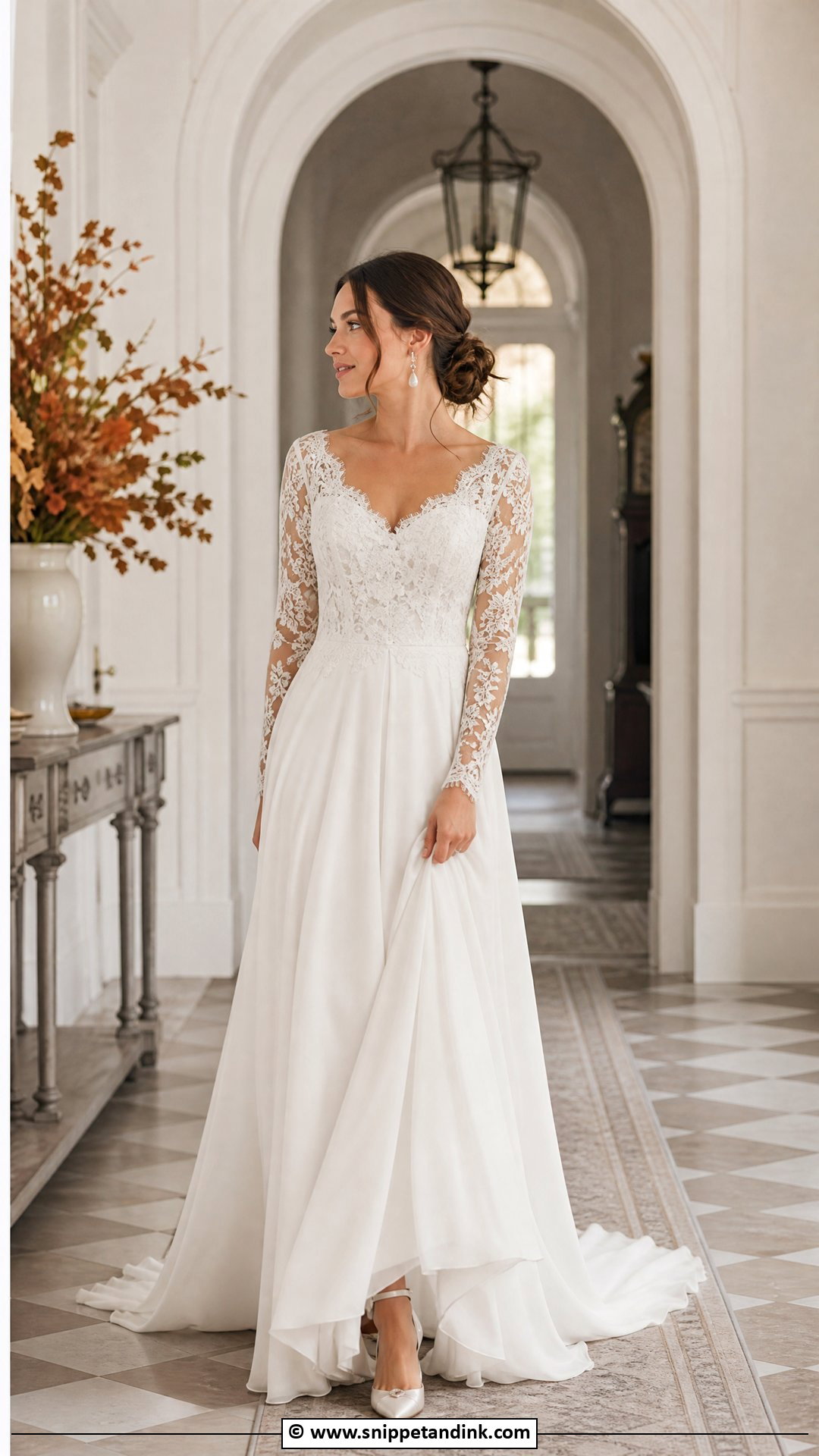
Lace sleeves bring romance, coverage and texture at once. Fall, winter and formal weddings suit them, and lightweight lace works in spring. Sheer sleeves feel delicate; lined sleeves feel more modest. Chantilly is fine and soft, embroidered lace is heavier and more textured. A fitted waist, flowing skirt and soft train complete the shape. Fitted lace sleeves can restrict how high you lift your arms, so I always have brides mime hugging someone taller at fittings. Pearl drops and a low bun suit it.
3. Off Shoulder Wedding Dress
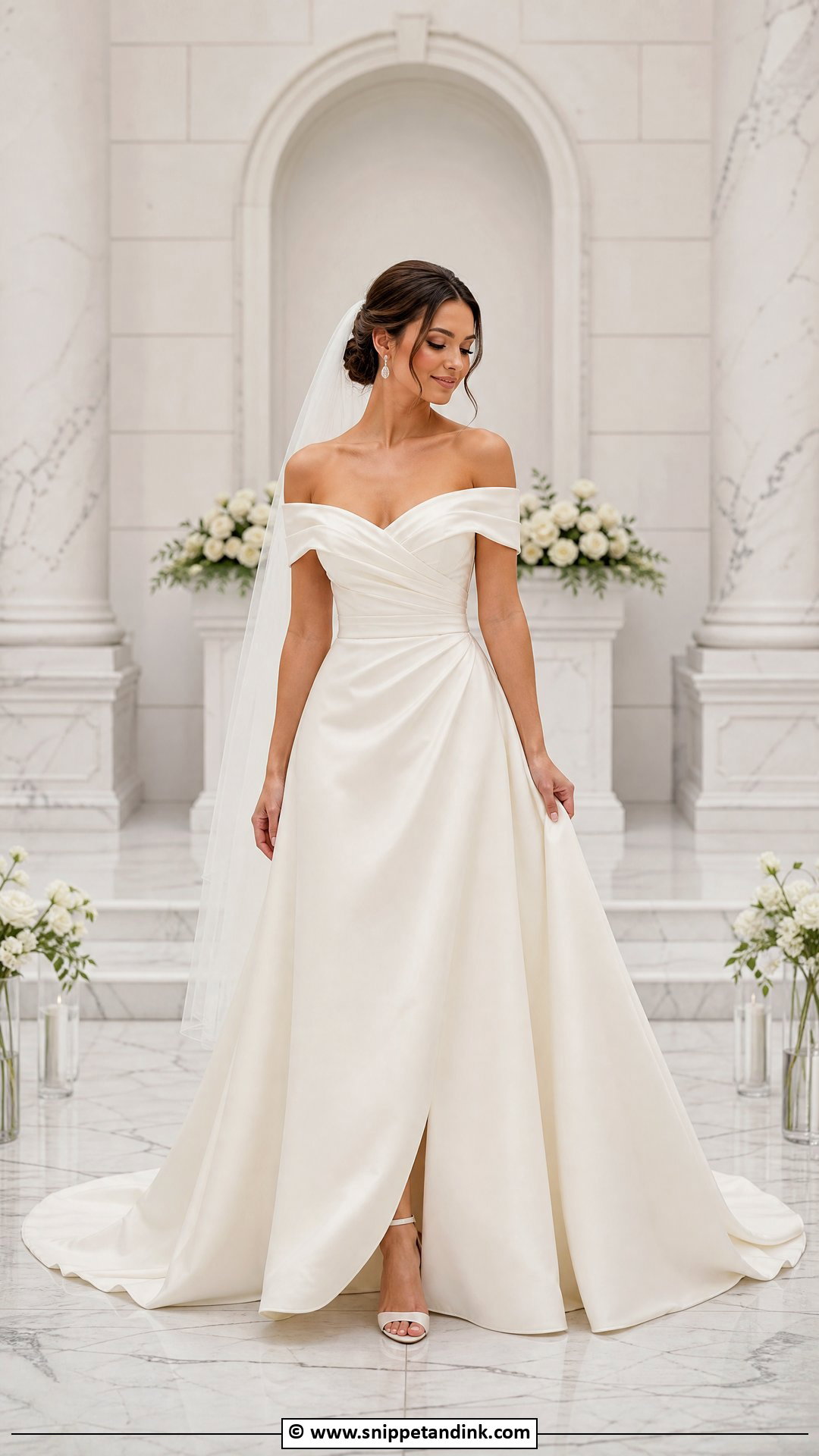
The off shoulder neckline shows the collarbone and shoulders without feeling revealing, which is why so many brides end up here. A fitted bodice with a full skirt feels classic; a slim crepe version feels modern. Swept-back hair and delicate earrings suit it, with minimal jewelry when the sleeves are draped. The weak point is staying power: if the band across the arms isn’t firm enough, it slides with every wave. Ivory pumps or strappy heels match most venues.
4. Minimalist Crepe Wedding Dress
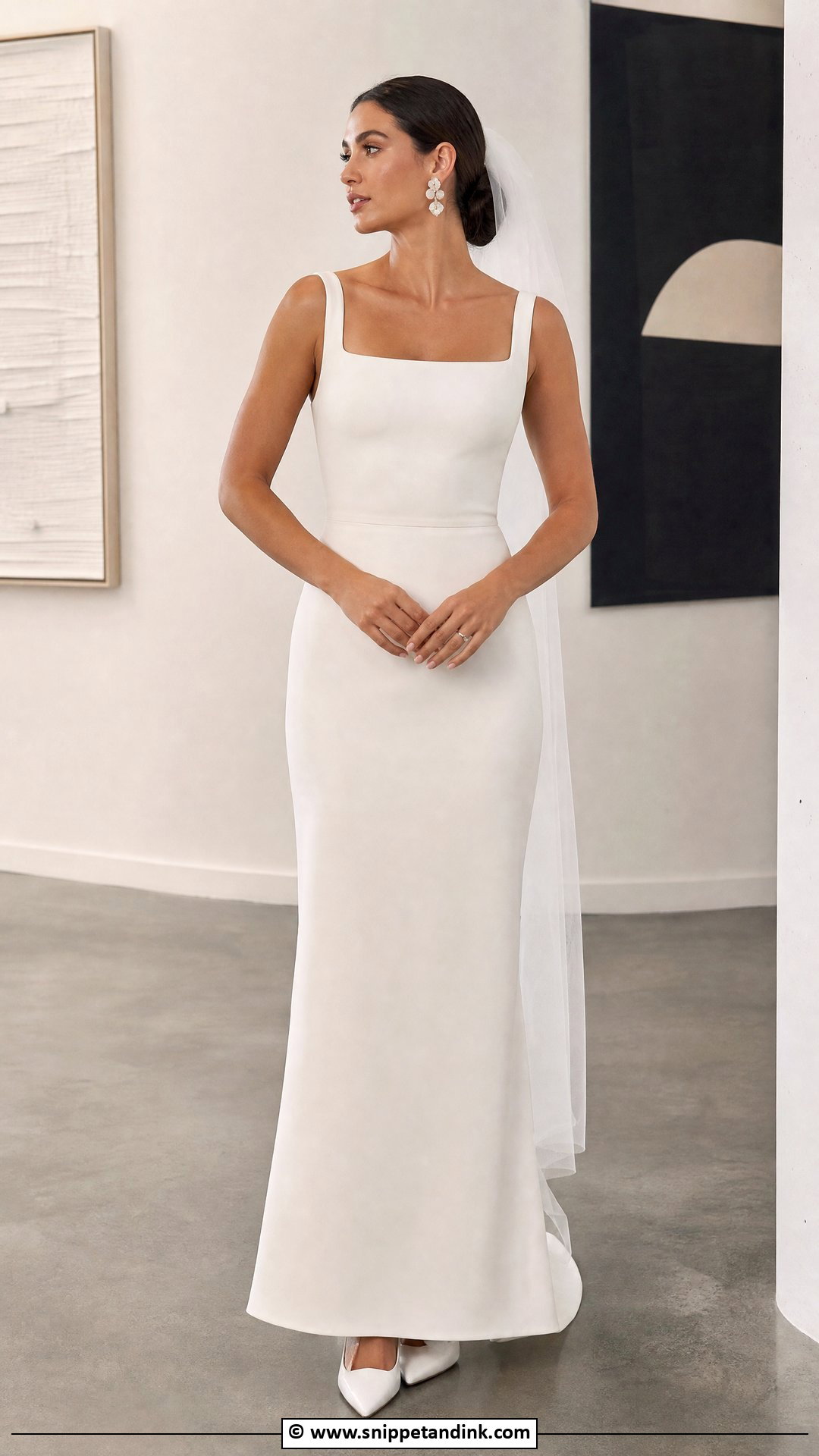
Crepe is unforgiving and beautiful at once. Its matte surface hides nothing about the fit, so a minimalist crepe dress lives or dies on tailoring. Column, sheath and fit-and-flare shapes suit it best because the fabric drapes close to the body. A square, bateau or simple V-neck keeps it intentional. Sleek veil, sculptural earrings and clean white heels finish it. City weddings and modern venues suit it, and so do brides who’d rather be noticed for their posture than their beading.
5. Ball Gown Wedding Dress
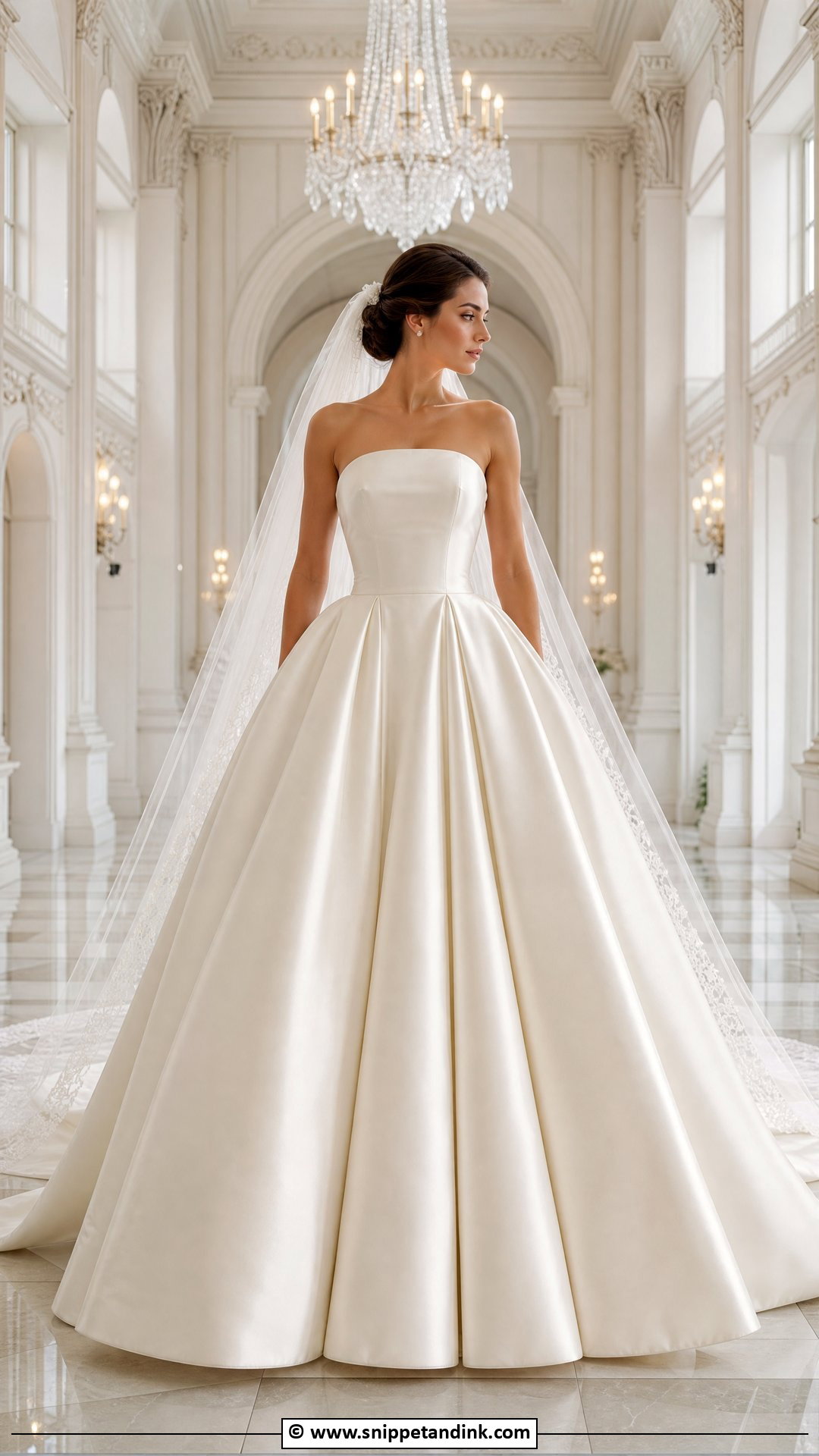
A ball gown wedding dress is the grand-entrance shape: fitted bodice, full skirt and a lot of movement. Satin, mikado, tulle and organza all hold the volume. A simple strapless or sweetheart bodice keeps it classic; long sleeves or a basque waist make it more regal. Before you commit, measure the aisle and the car. A full skirt needs room, and climbing into a small car in one takes a helper and patience. High ceilings and wide aisles suit it best.
6. Square Neck Wedding Dress
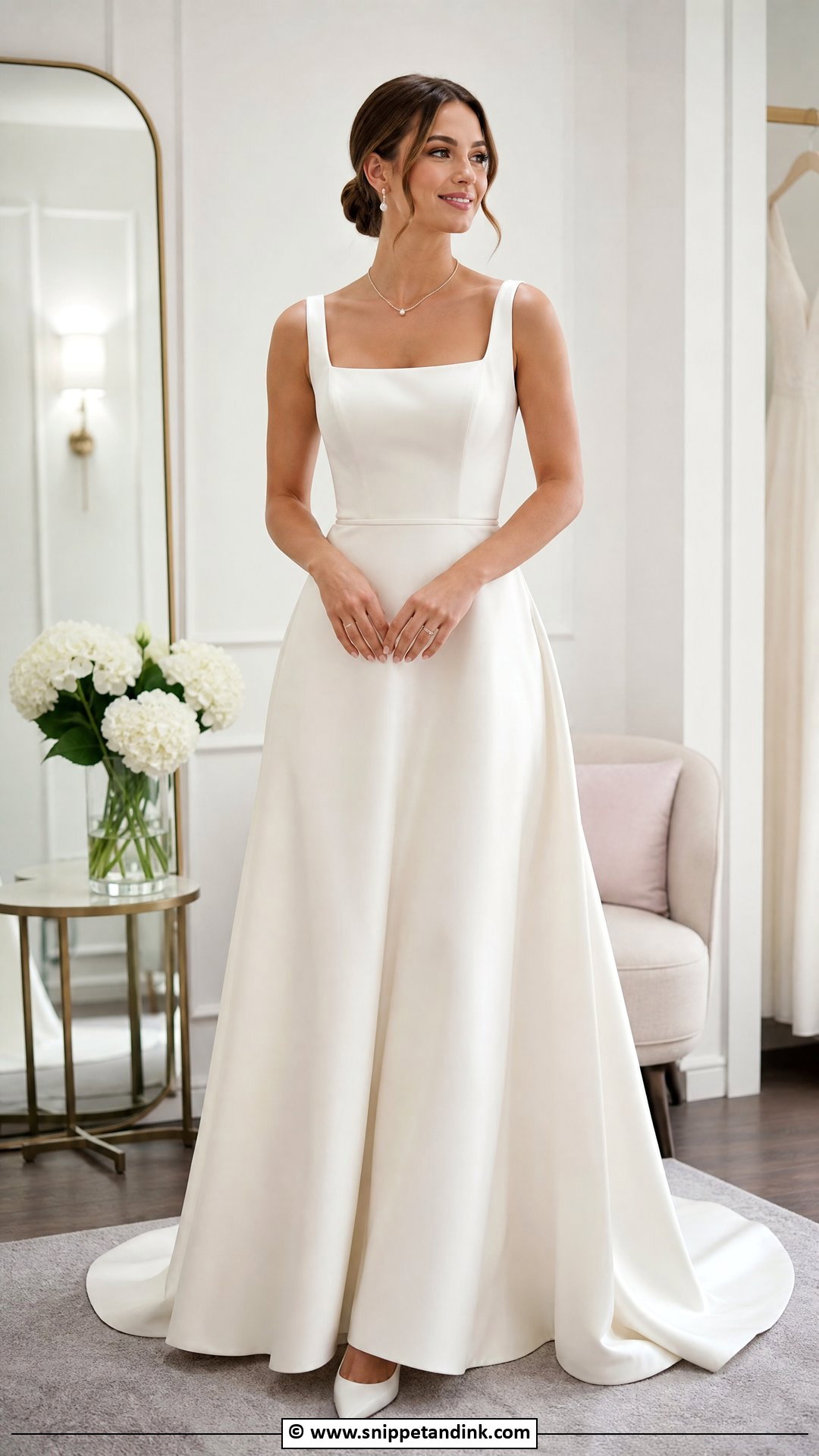
Square necklines look clean and slightly vintage without seeming old. The straight line frames the collarbone and gives the upper body structure. It appears on satin A lines, crepe columns and lace dresses alike. Wide straps support a fuller bust better than thin ones. A neat bun, small pearl earrings and a simple veil suit it, and a short necklace can sit just above the neckline. Check that the corners stay crisp when you sit; on soft fabrics they can droop.
7. High Neck Wedding Dress
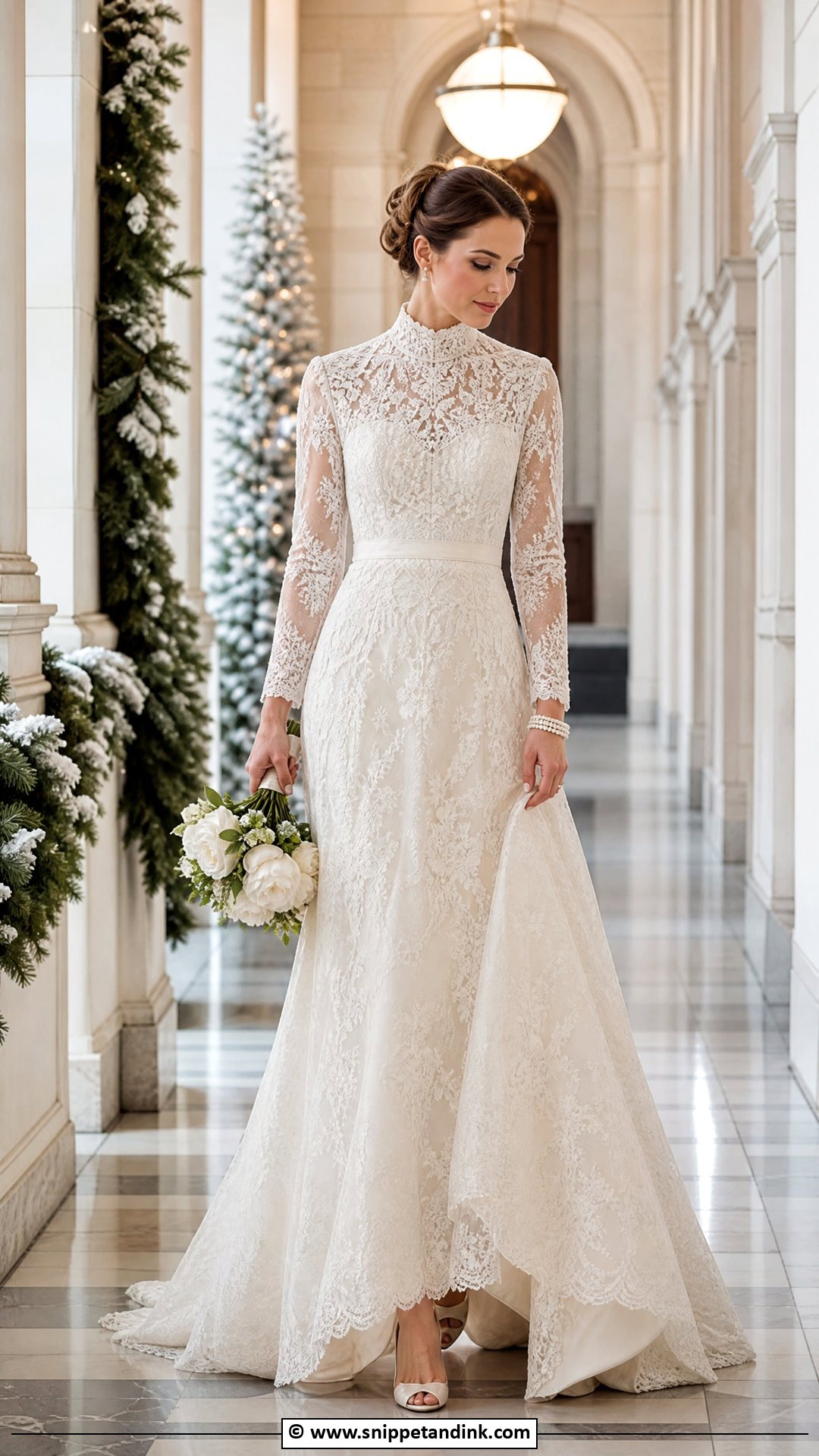
A high neck gives a couture feel and real coverage. Lace, crepe, satin and sheer embroidery all suit it. A column shape keeps it sleek; a soft A line skirt makes it romantic. With the neckline covering so much, I skip the necklace and put the attention into earrings and pulled-back hair. High necks can trap heat under ceremony lighting, so a breathable lining matters, especially for a summer church ceremony. Formal ceremonies and winter weddings suit it.
8. Strapless Satin Wedding Dress
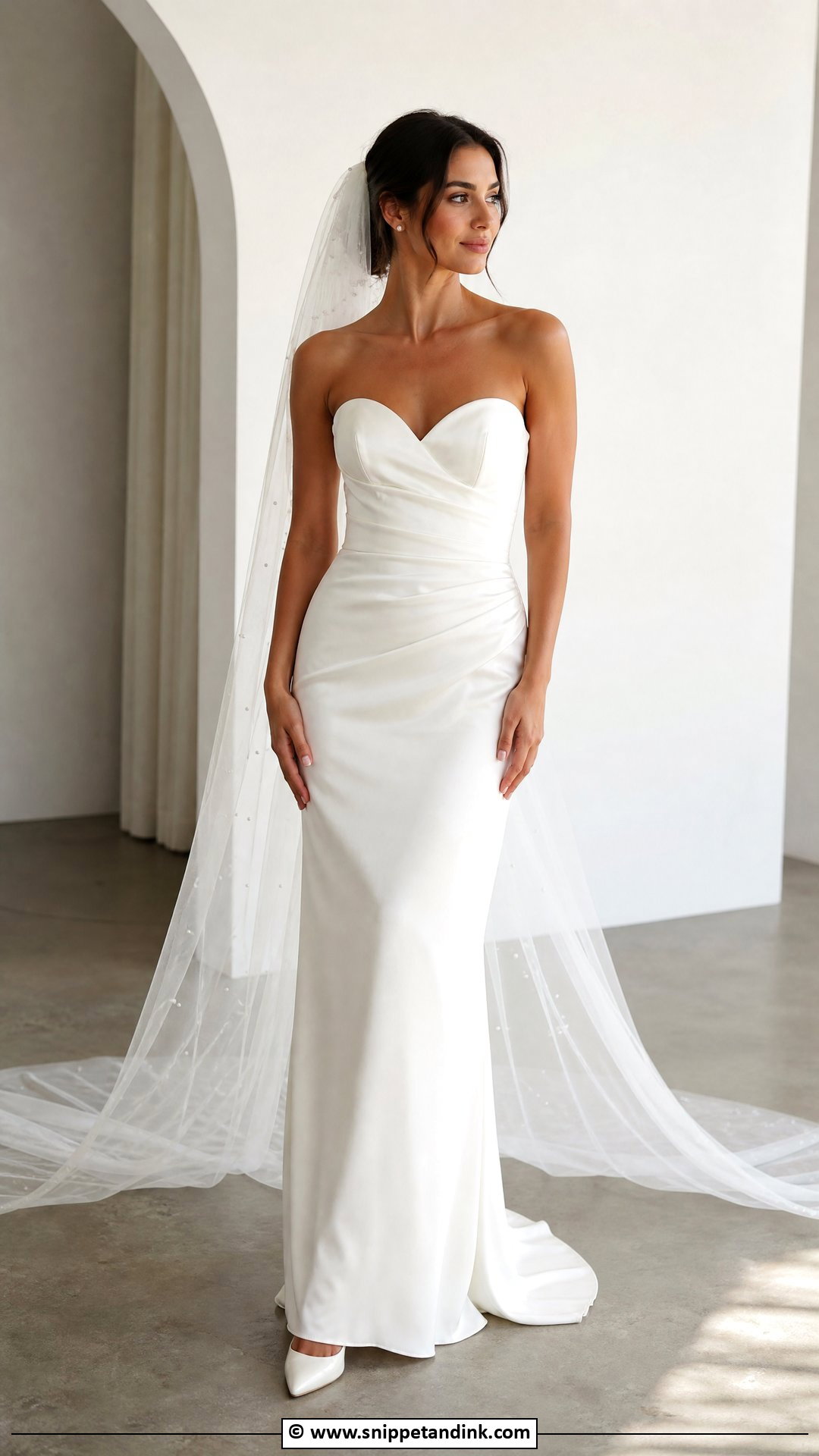
Strapless satin is classic and glamorous, but it relies completely on construction. A straight-across neckline looks modern; a sweetheart looks softer. Full skirts and fitted silhouettes both suit it. The bodice has to grip without digging in, so I check it with the bride lifting her arms, bending forward and sitting. A statement veil, pearl studs and satin heels are enough. Long gloves or a delicate wrap add something for the reception.
9. Floral Lace Wedding Dress
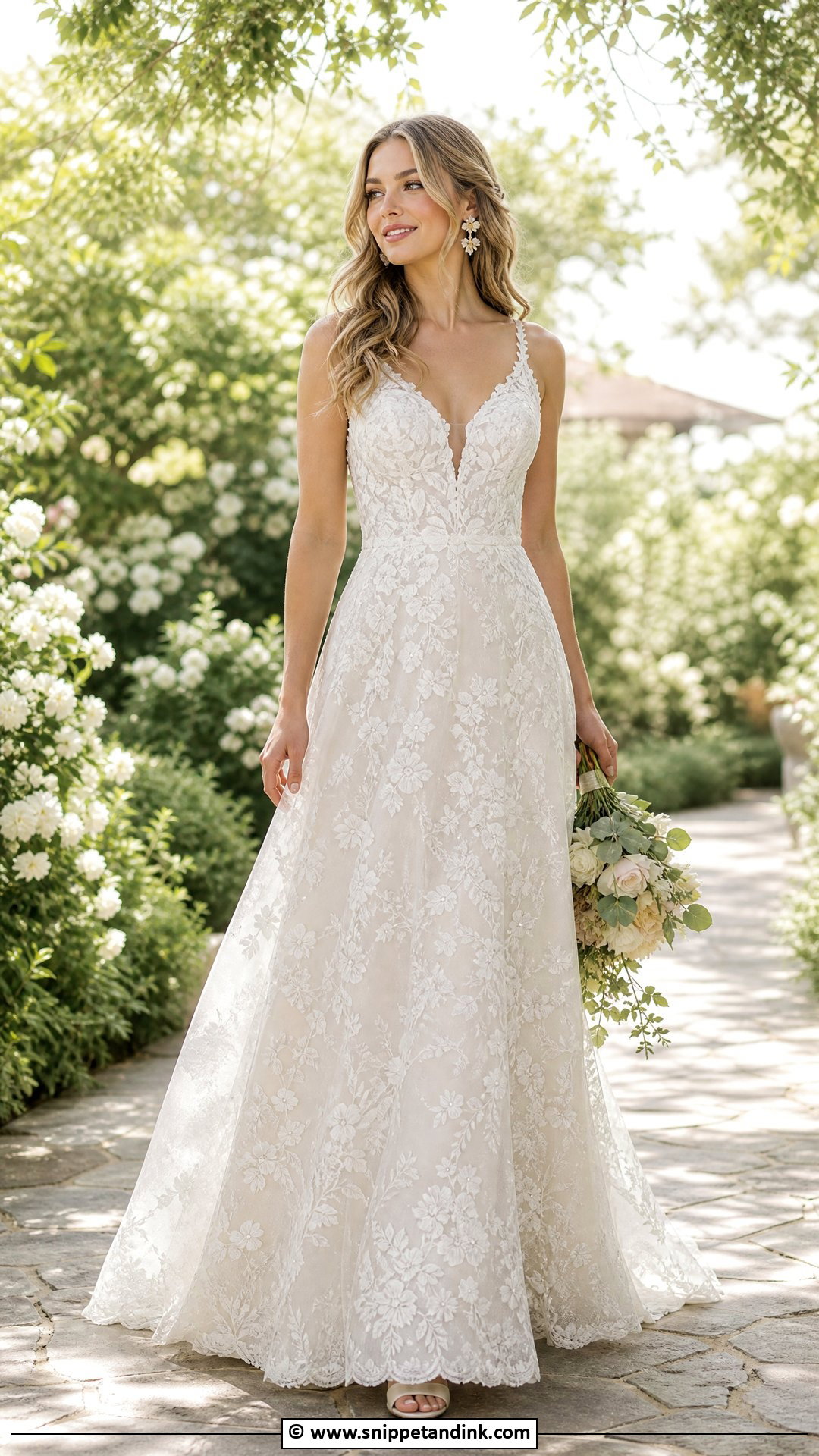
Floral lace brings texture and romance to garden and spring weddings. The pattern can be subtle or bold and dimensional. A nude lining makes the lace stand out; an ivory lining keeps it soft. A flowing skirt feels dreamy; a fitted silhouette more polished. Soft curls, floral-inspired earrings and delicate heels suit it. If the lace is raised and 3D, check where your arms rest against it, as some appliques scratch over a long day.
10. Mermaid Wedding Dress
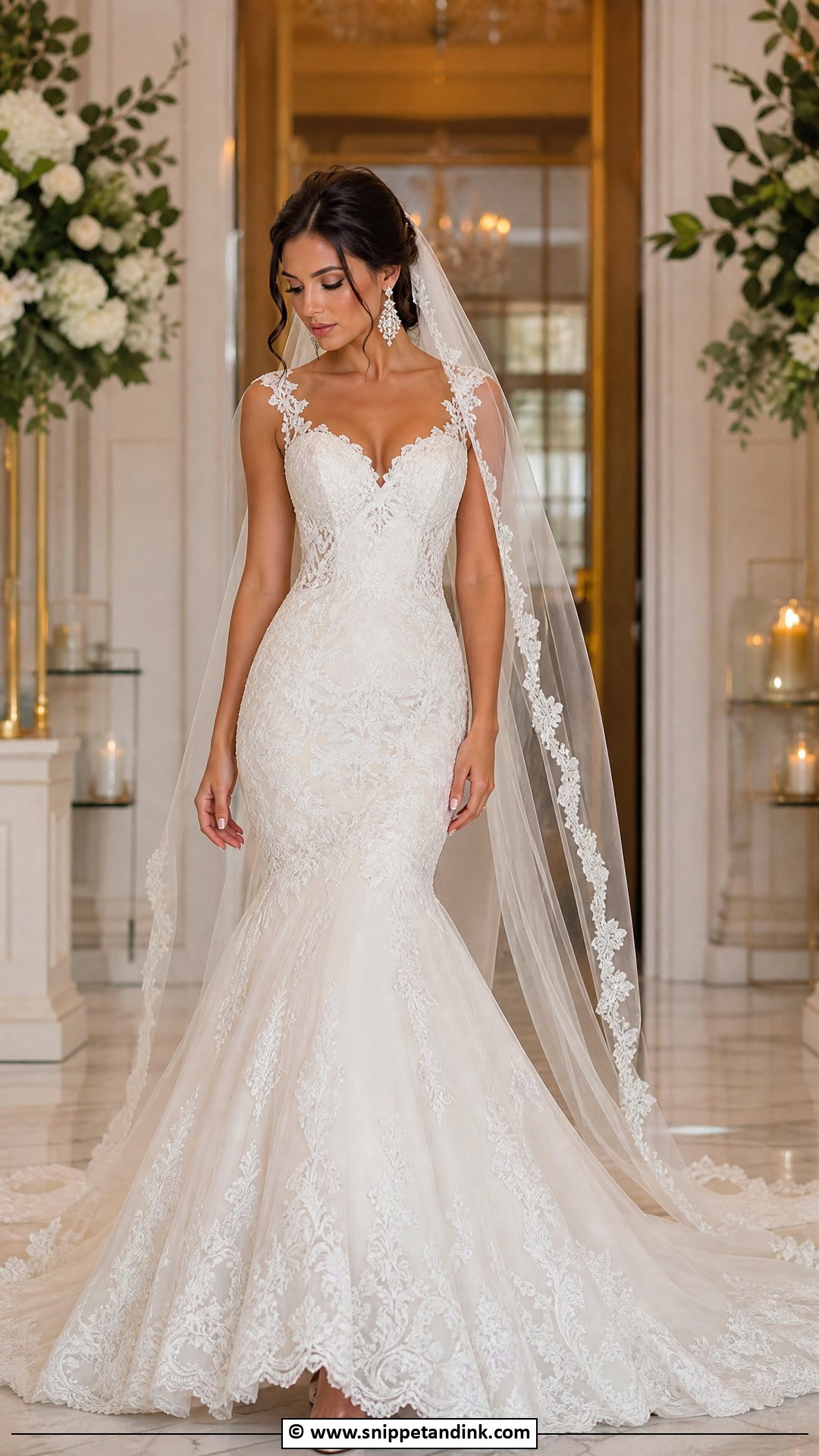
A mermaid wedding dress fits close through the bodice, waist and hips and flares near the knee. Satin, crepe, lace and mikado all work. A sweetheart neckline softens it; off shoulder or square makes it formal. Keep accessories sleek with a long veil, crystal earrings and pointed heels. The flare point decides comfort: set at the knee, it restricts your stride; set a little lower, you can manage stairs. I make brides walk a staircase at fittings before signing off.
11. Sheath Wedding Dress
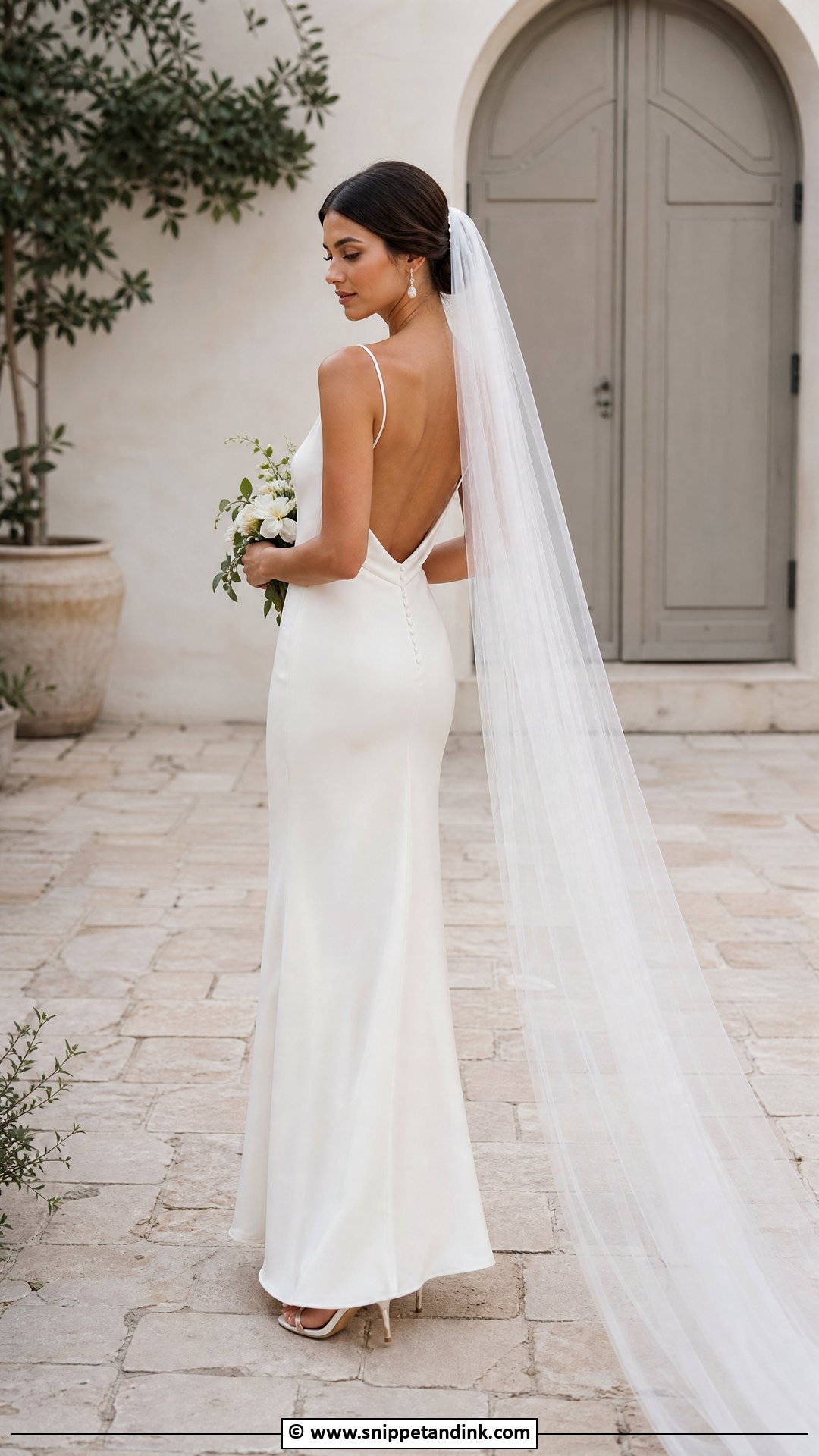
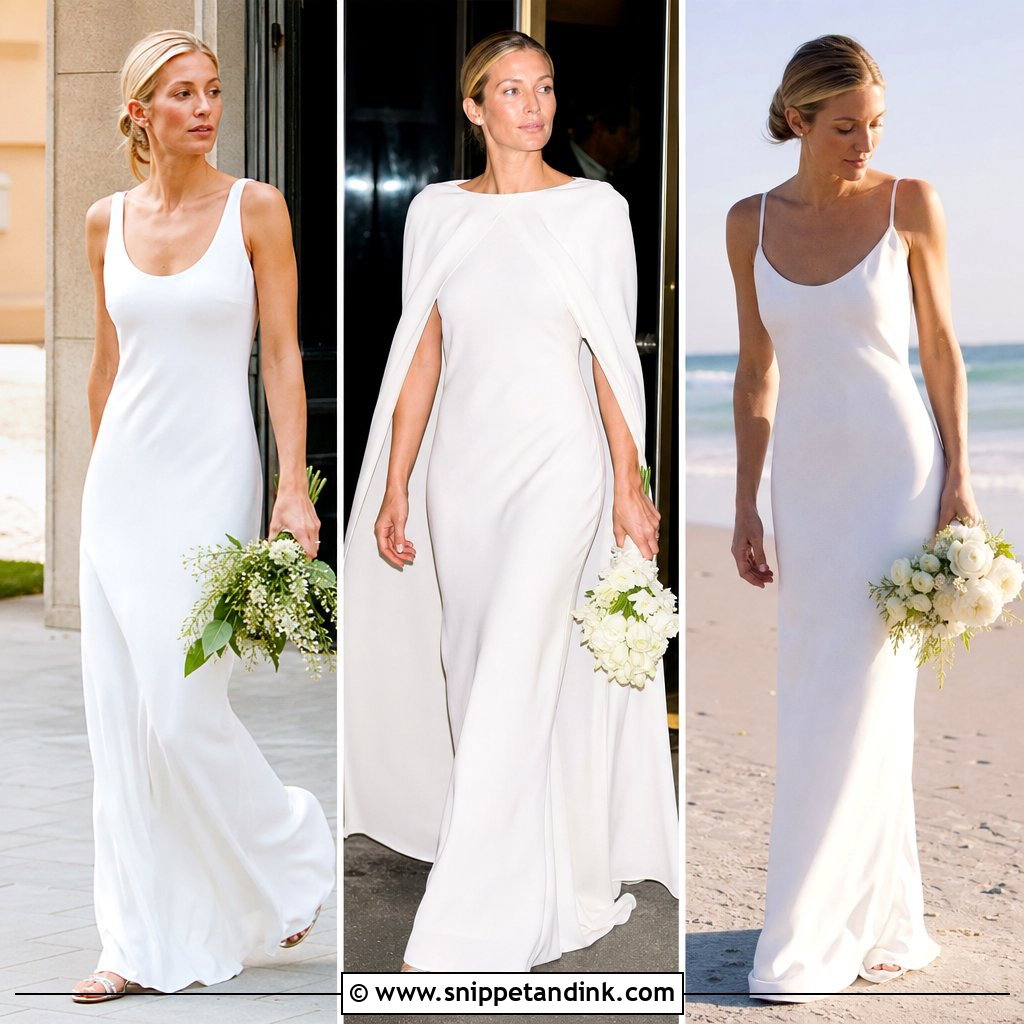
A sheath follows the body without volume or layers. Crepe, satin, silk and lace all suit it, and it looks especially polished at city venues, beaches and intimate ceremonies. A low back, cowl neck or delicate straps soften it. Wear a long veil for the ceremony and take it off for the reception. The honest trade-off: a sheath shows everything underneath, so shapewear and underwear need to be chosen at the first fitting, not the last.
12. Tea Length Wedding Dress
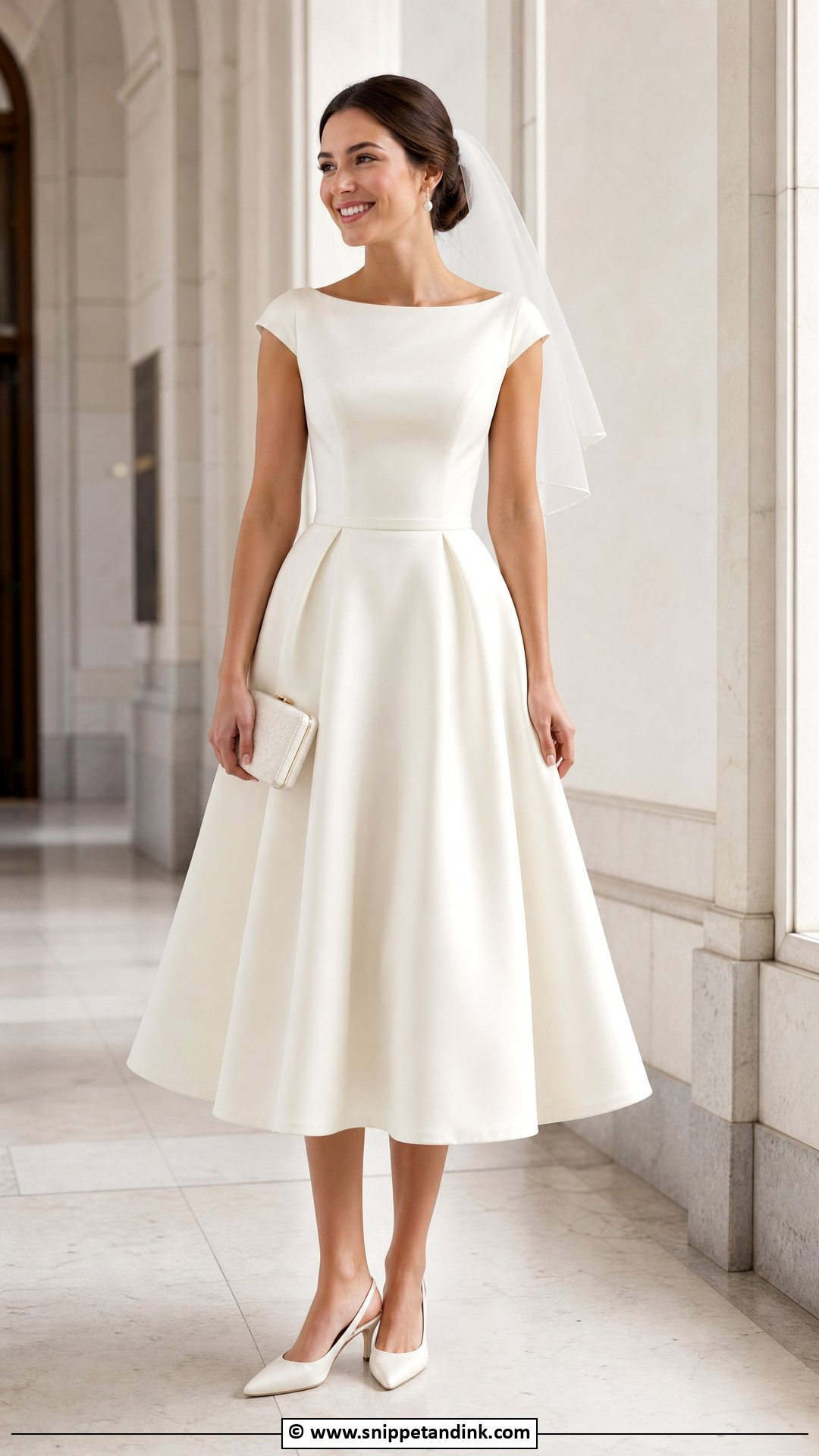
Tea length falls between knee and ankle, so your shoes are on show all day. Pointed pumps, embellished heels or satin slingbacks all suit it. Courthouse weddings, garden ceremonies and vintage-inspired celebrations fit the shape. A fitted bodice with a full skirt feels like the 1950s; a clean modern cut feels fresher. A petticoat under a full tea-length skirt gives it the right lift. Add pearl earrings, a short veil and a structured clutch.
13. Wedding Dress With Bow
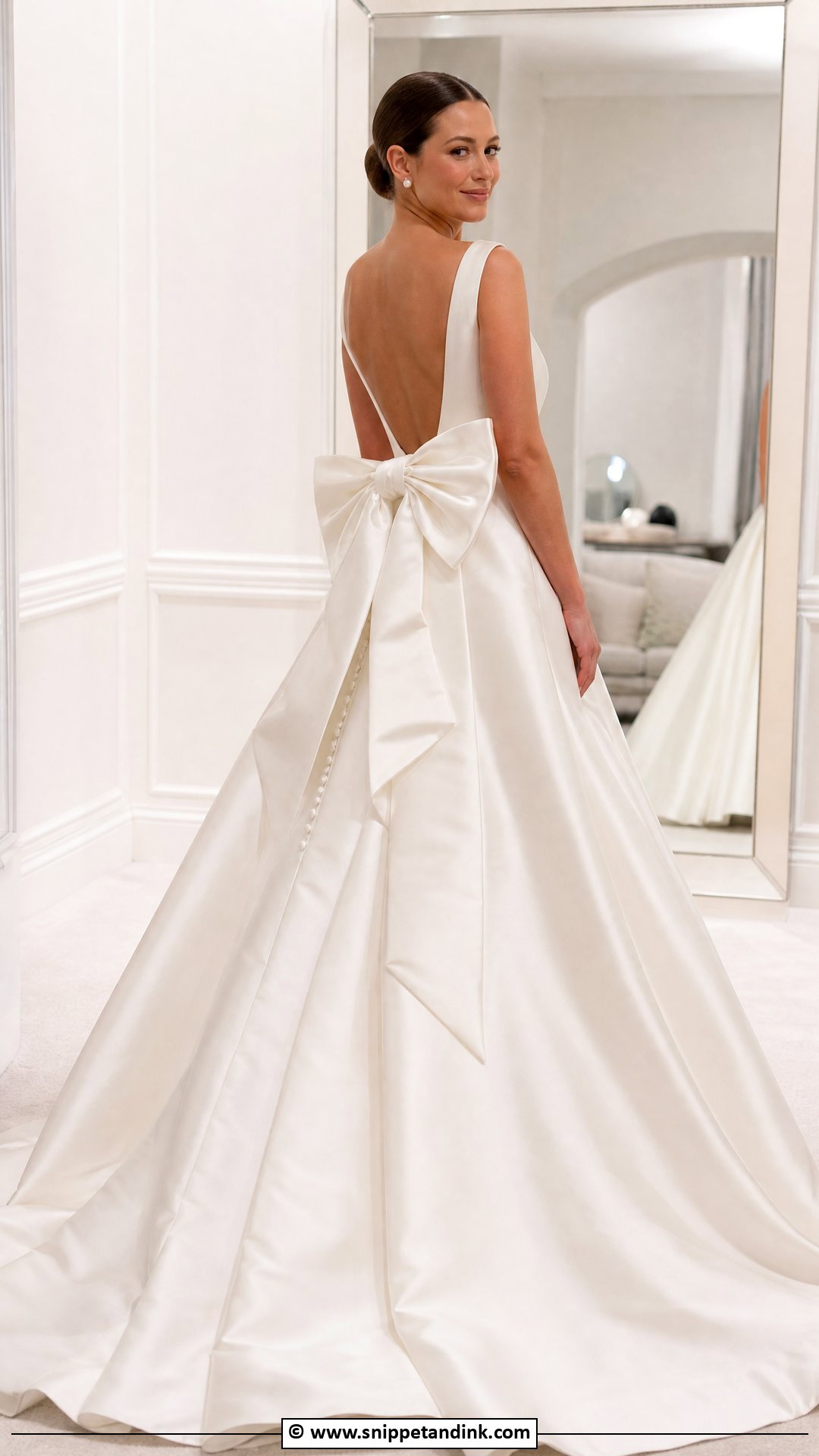
A wedding dress with a bow can read sweet, polished or dramatic depending on placement. A small waist bow is classic; a large back bow makes a memorable exit. Bows also sit on straps, shoulders or detachable overskirts. Clean satin, mikado or crepe stop the gown from looking fussy. Simple earrings, smooth hair and understated heels balance it. I’d check how a back bow interacts with the veil and with sitting back in a chair before you commit.
14. Pearl Wedding Dress
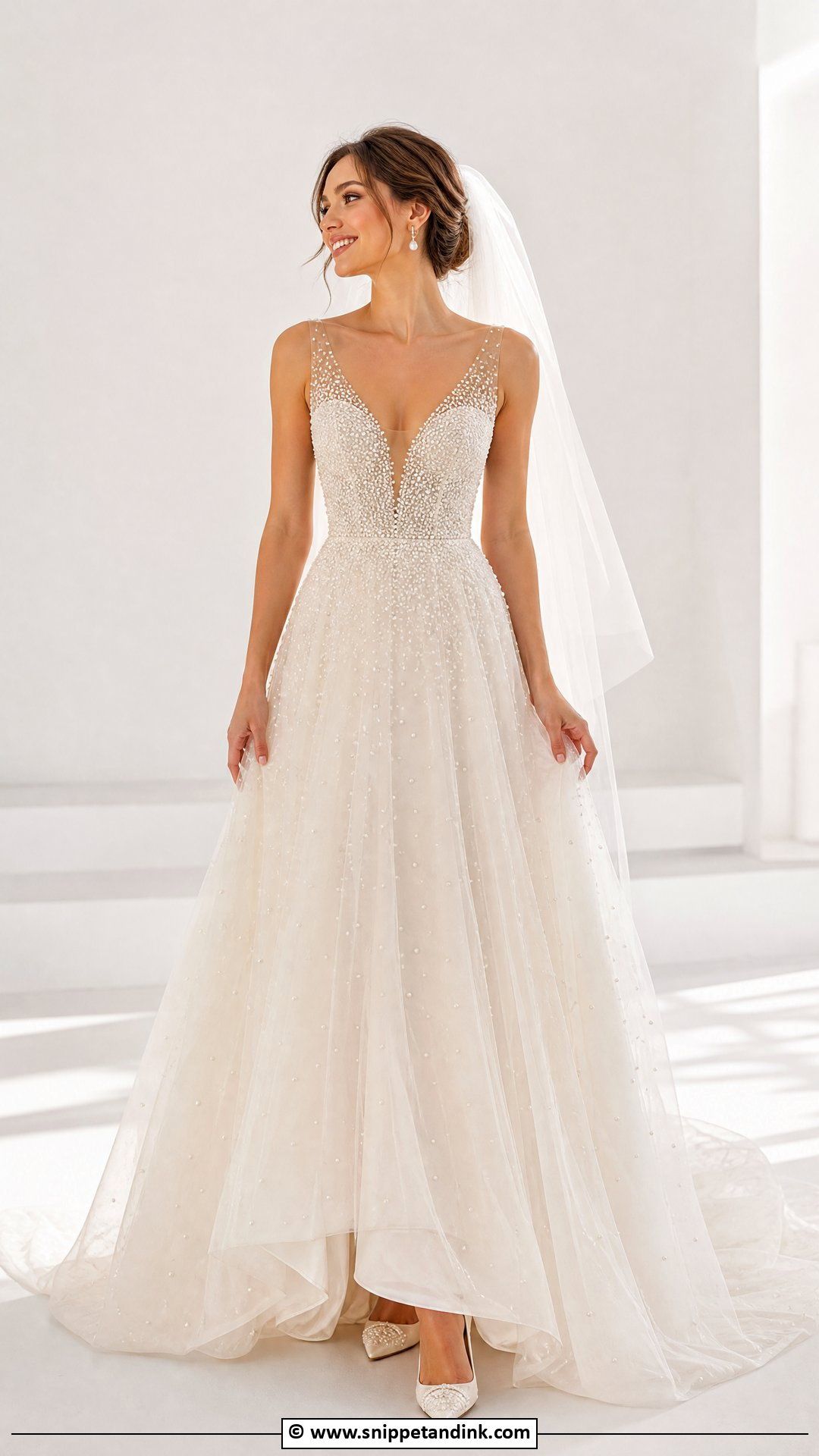
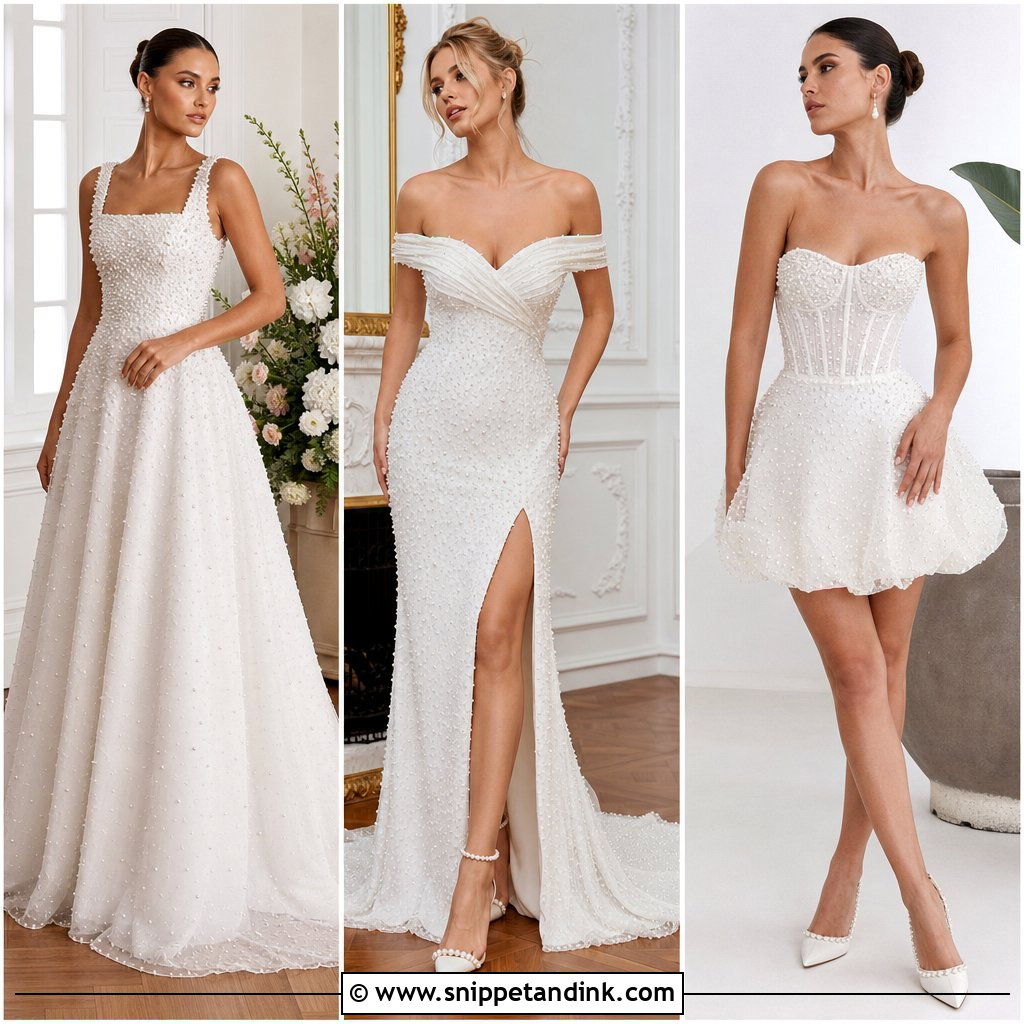
Pearl beading gives texture without the hard shine of crystals. It can be scattered across tulle, set along a bodice or trim sleeves and straps. Fitted, A line and ball gown shapes all suit it. With heavy pearl work, skip the necklace and keep hair clean. Pearls are sewn individually and can loosen on a long day, so ask the salon for a small bag of spares and keep a needle and thread in your emergency kit.
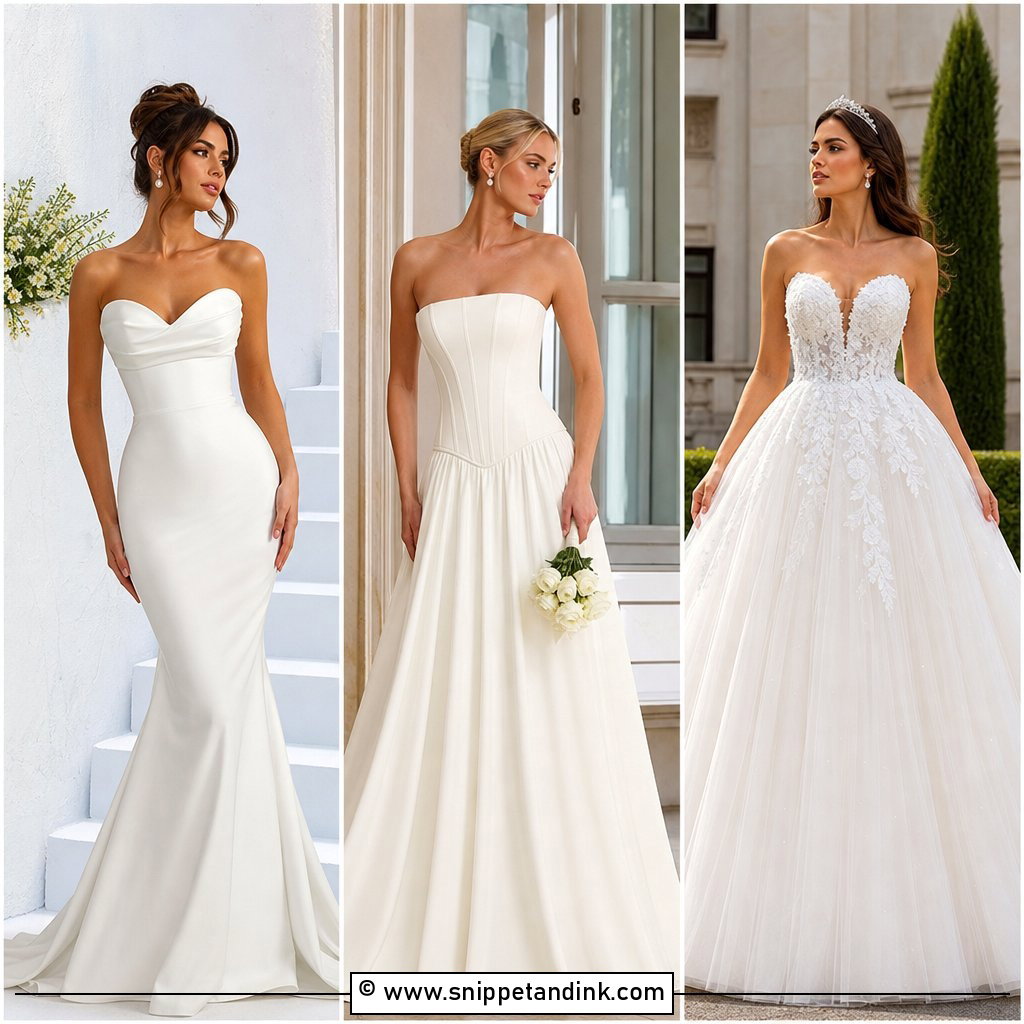

15. Corset Wedding Dress
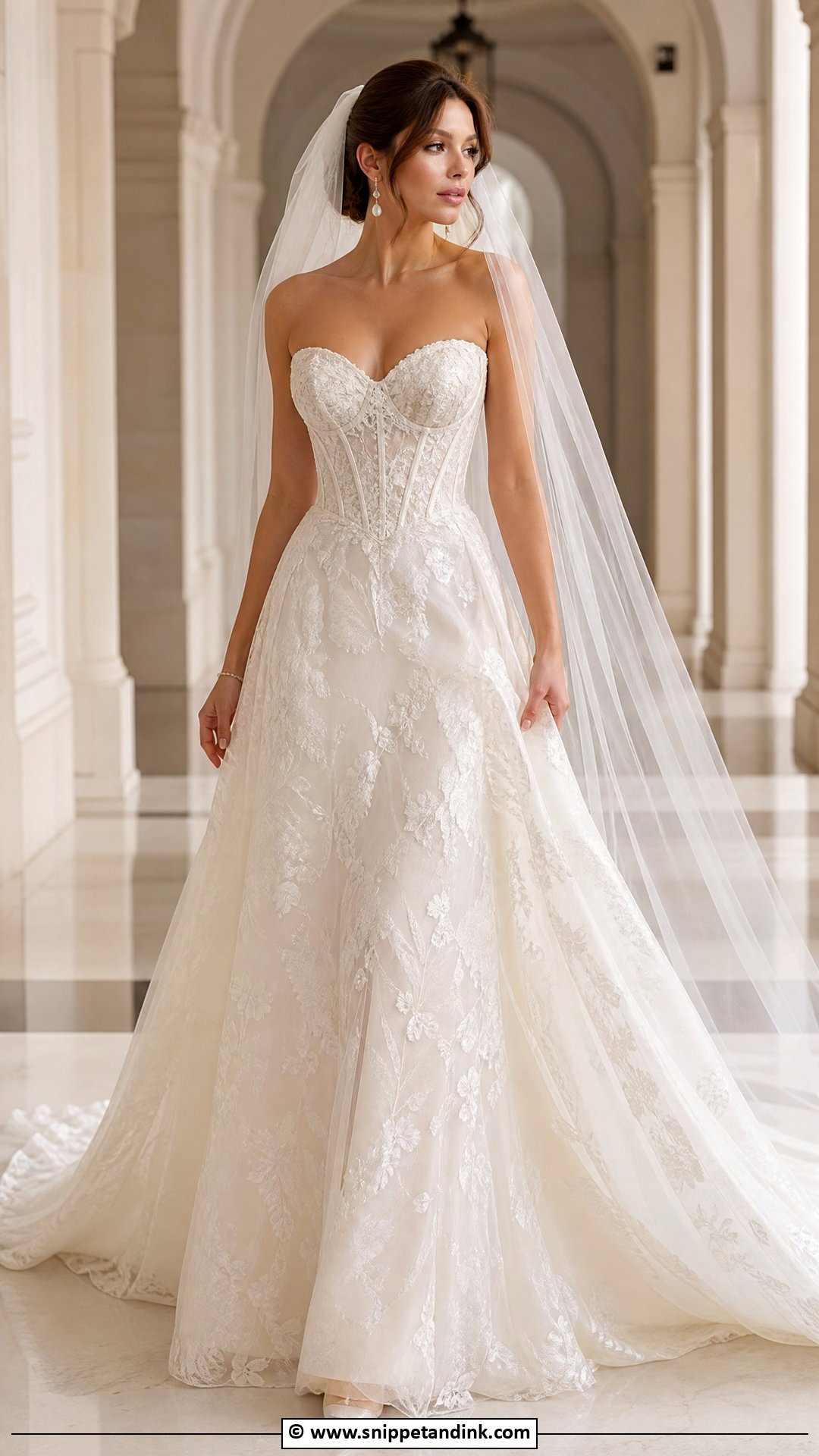
Corset bodices define the waist and give real support. Balanced with refined fabric and clean lines, they look elegant rather than theatrical. Satin or lace with an A line skirt feels romantic; crepe looks contemporary. Look for proper boning, smooth cups and careful tailoring. I’d sit and eat something in a fitting, because a corset fitted to a standing body can dig in at dinner. A sheer veil, pearl earrings and classic heels suit it.
16. Drop Waist Wedding Dress
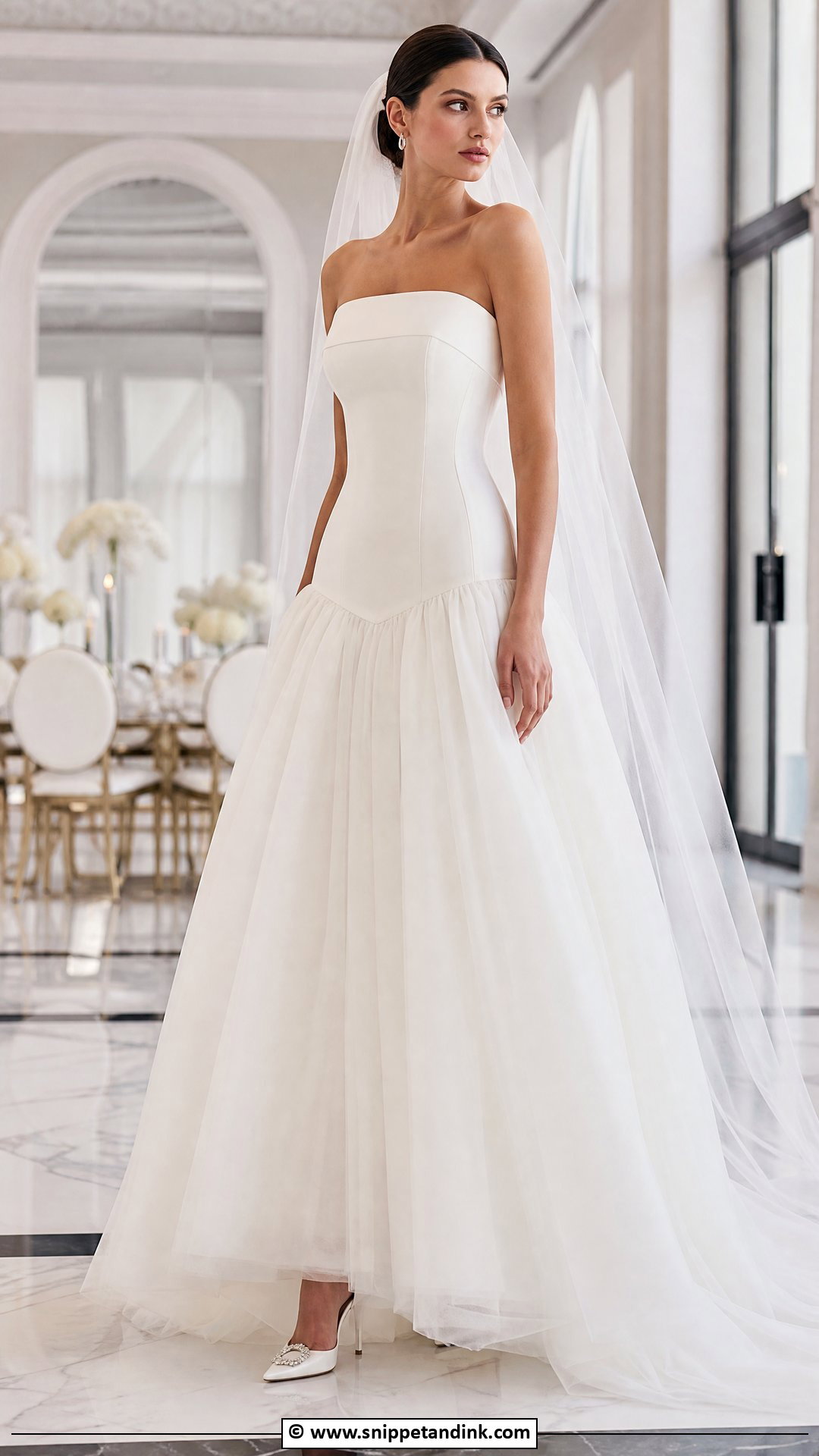
A drop waist wedding dress lowers the seam to the hip before the skirt flares, which lengthens the torso. Satin, tulle, lace and mikado all suit it. As a ball gown it’s dramatic; in a softer version it’s romantic. The silhouette is distinctive enough that the styling should stay clean: a sleek veil, small earrings, refined heels. Seam placement matters a great deal, and a long torso carries a deeper drop better than a short one.
17. Basque Waist Wedding Dress
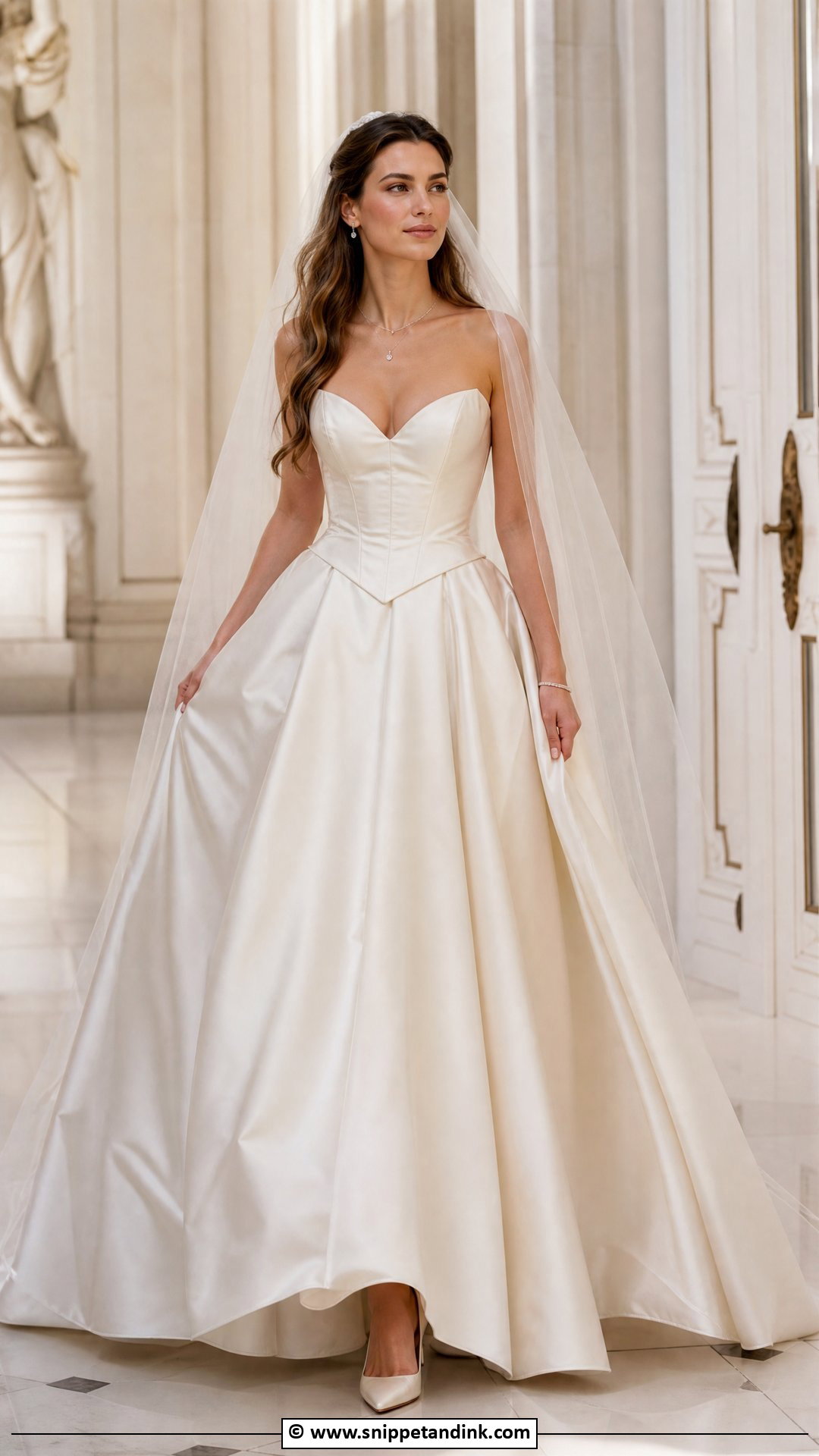
A basque waist dips to a V at center front, drawing the eye in and lengthening the torso before the skirt opens. Full skirts, corset bodices and rich fabrics like satin and mikado suit it. A long veil, soft waves and delicate jewelry complete it. The point is already a focal detail, so skip belts or sashes, which cut across it. It’s a formal shape that flatters many figures.
18. Wedding Dress With Detachable Overskirt
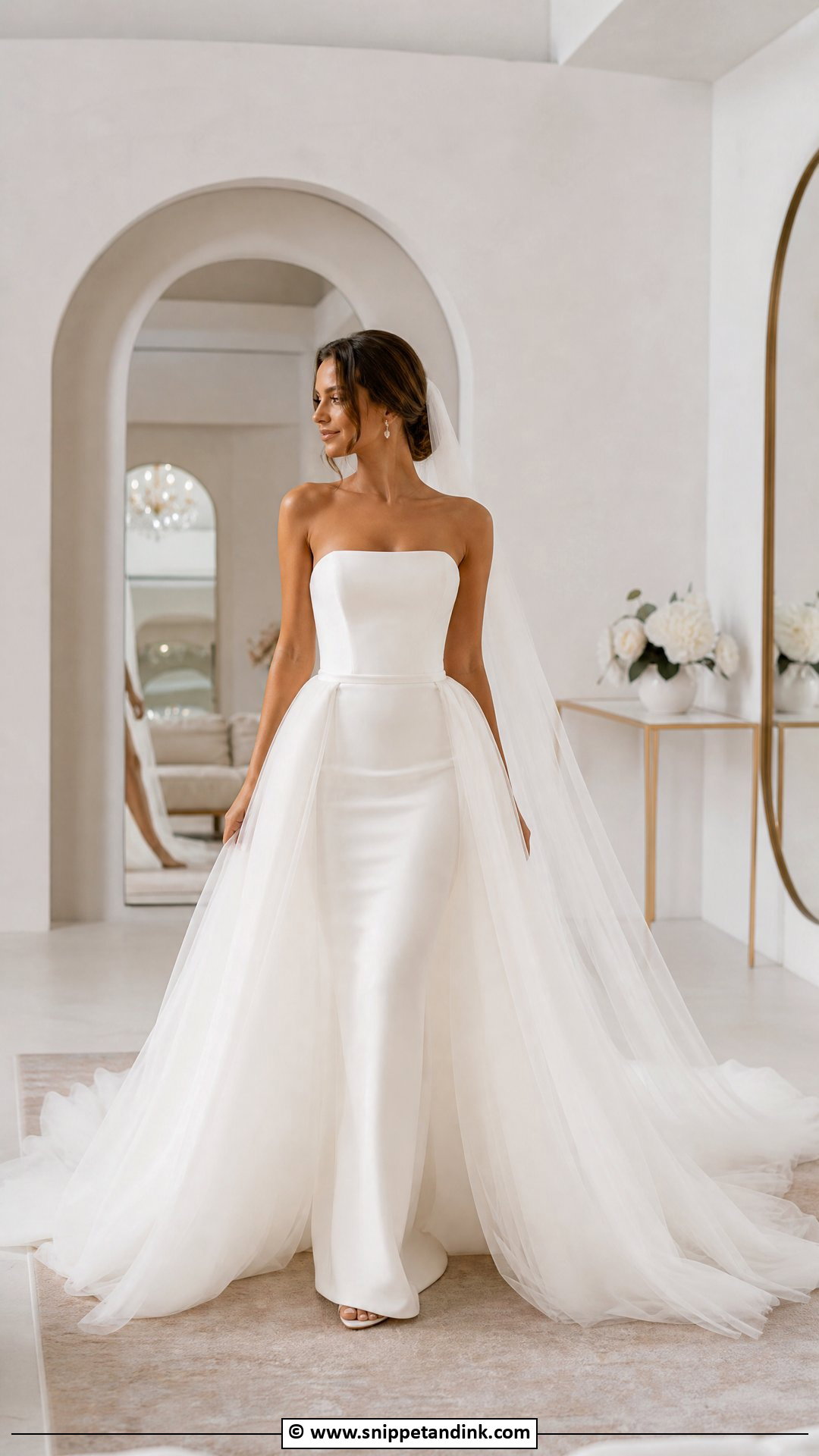
A wedding dress with a detachable overskirt gives you a full ceremony look and a slimmer reception dress without a full change. Fitted crepe, lace mermaid and satin column dresses all suit it, with an overskirt in tulle, organza or mikado. The fastening is the thing to test: a heavy overskirt needs strong hooks so it doesn’t pull the waist down. Practice removing it with the person who’ll help you on the day.
19. Wedding Dress With Cape
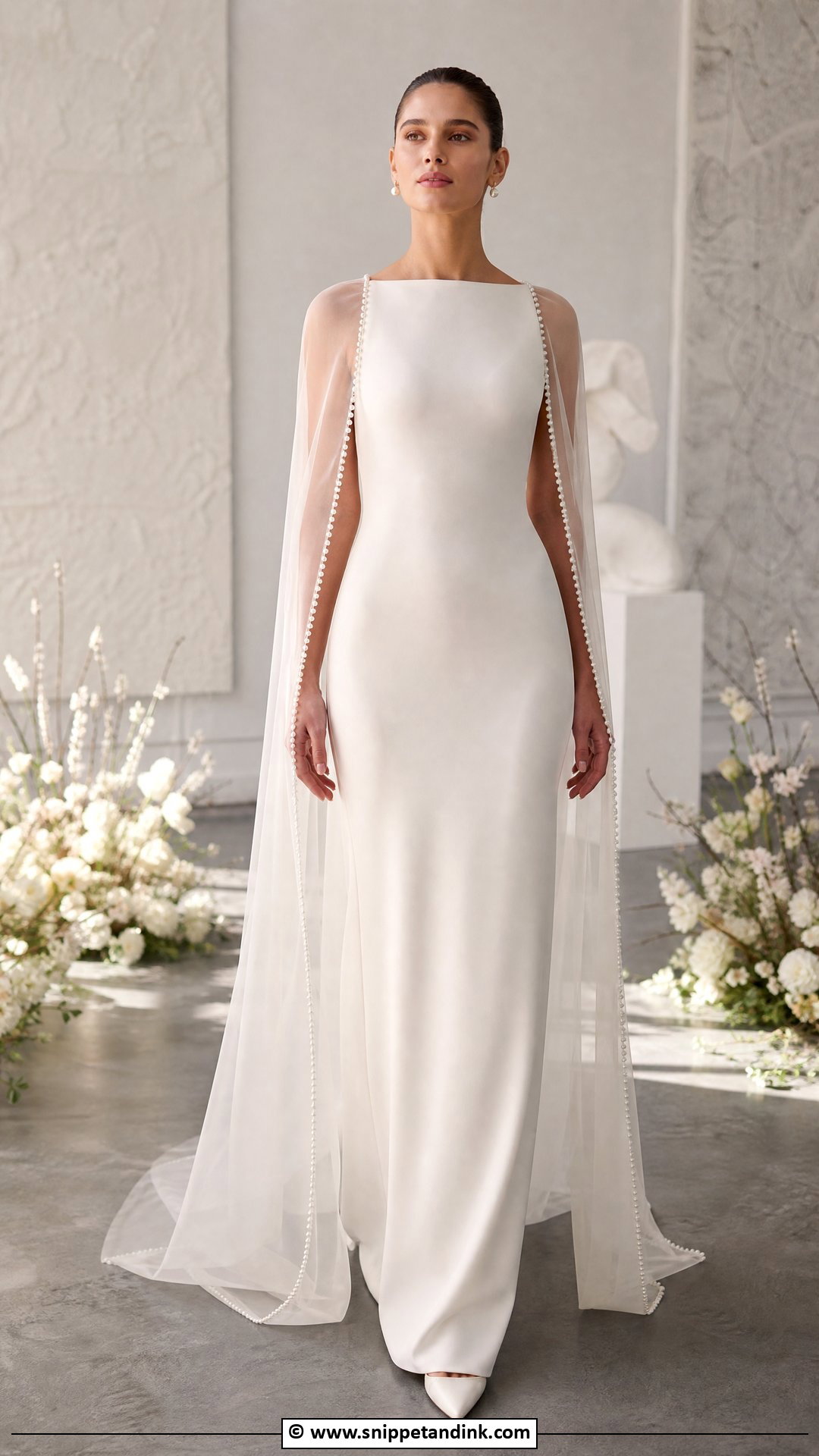
A cape gives drama from behind without the weight of a train. A sheer cape can replace a veil; a longer one moves as you walk. Minimal gowns suit it best because the cape becomes the statement. Tulle, chiffon and organza capes soften a structured dress. Pearl trim, lace edging or a clean hem all work. Keep hair neat so the shoulders stay visible. Capes catch the wind outdoors, so ask about small weights or attachment points at the shoulder.

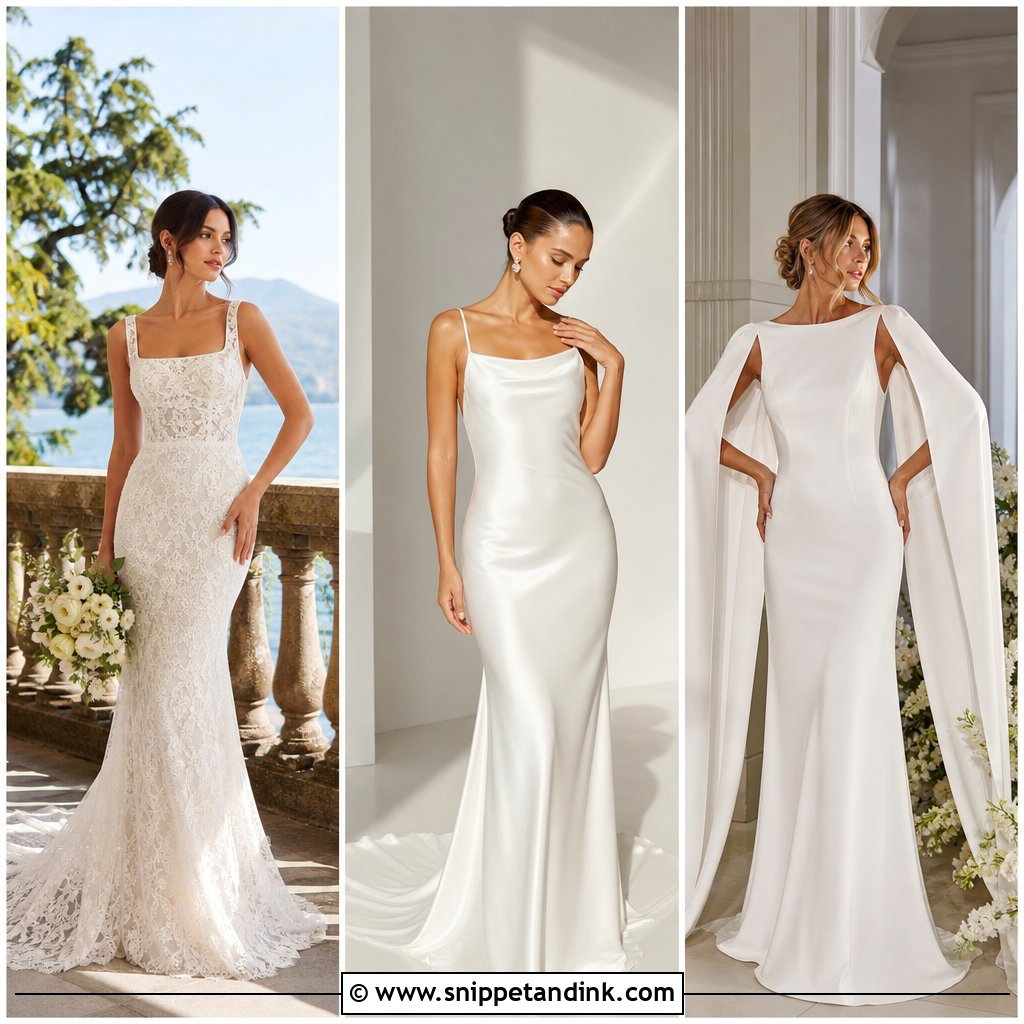
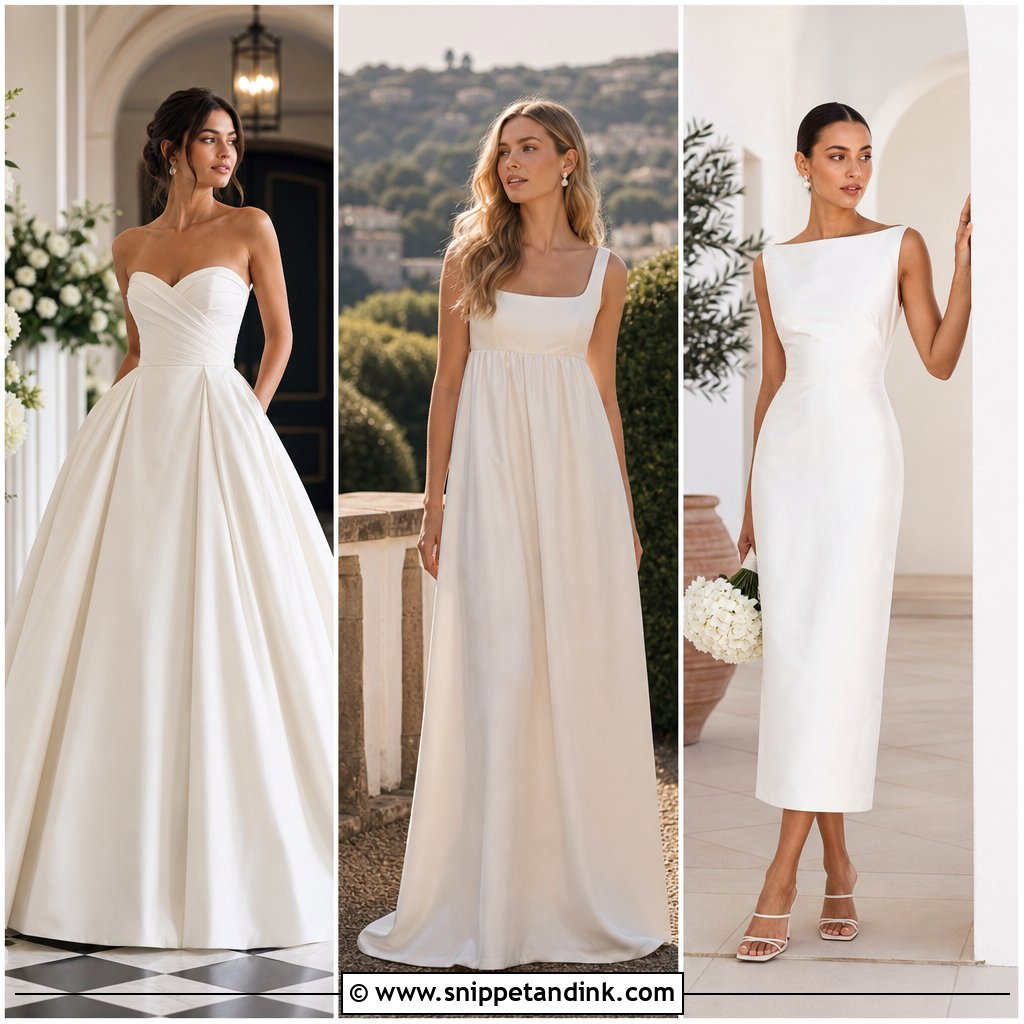

20. Silk Slip Wedding Dress
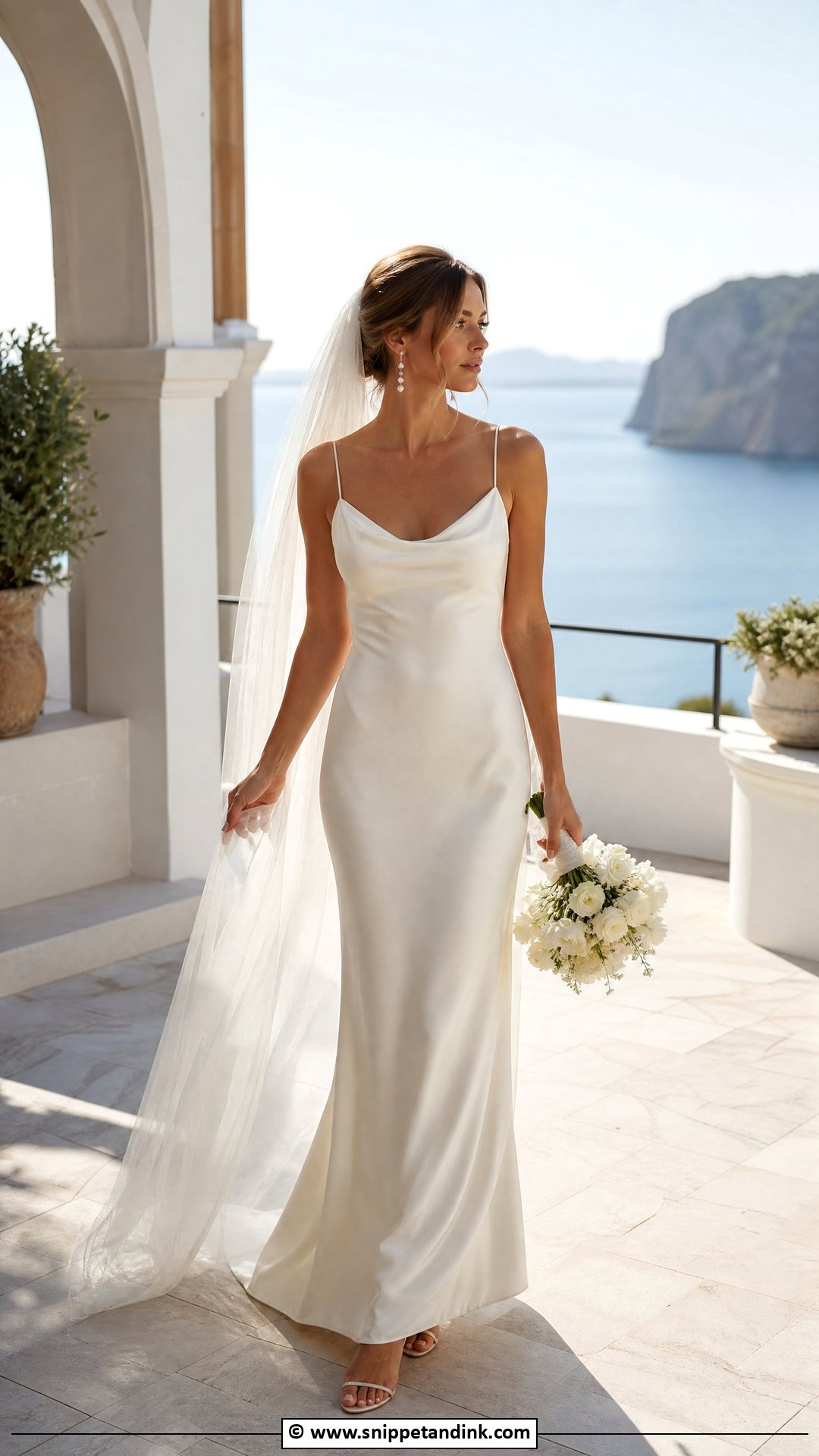
A silk slip is bias cut, which means it skims the body and moves with you but also shows every line beneath. Fabric quality and fit matter more than anything else here. Smooth silk or a heavy satin drapes cleanly without pulling. A cowl neck softens it; thin straps make it delicate. A long sheer veil, strappy heels and refined earrings suit it, with a tailored blazer for cooler evenings. Destination ceremonies and modern venues suit it.
21. Tulle Wedding Dress
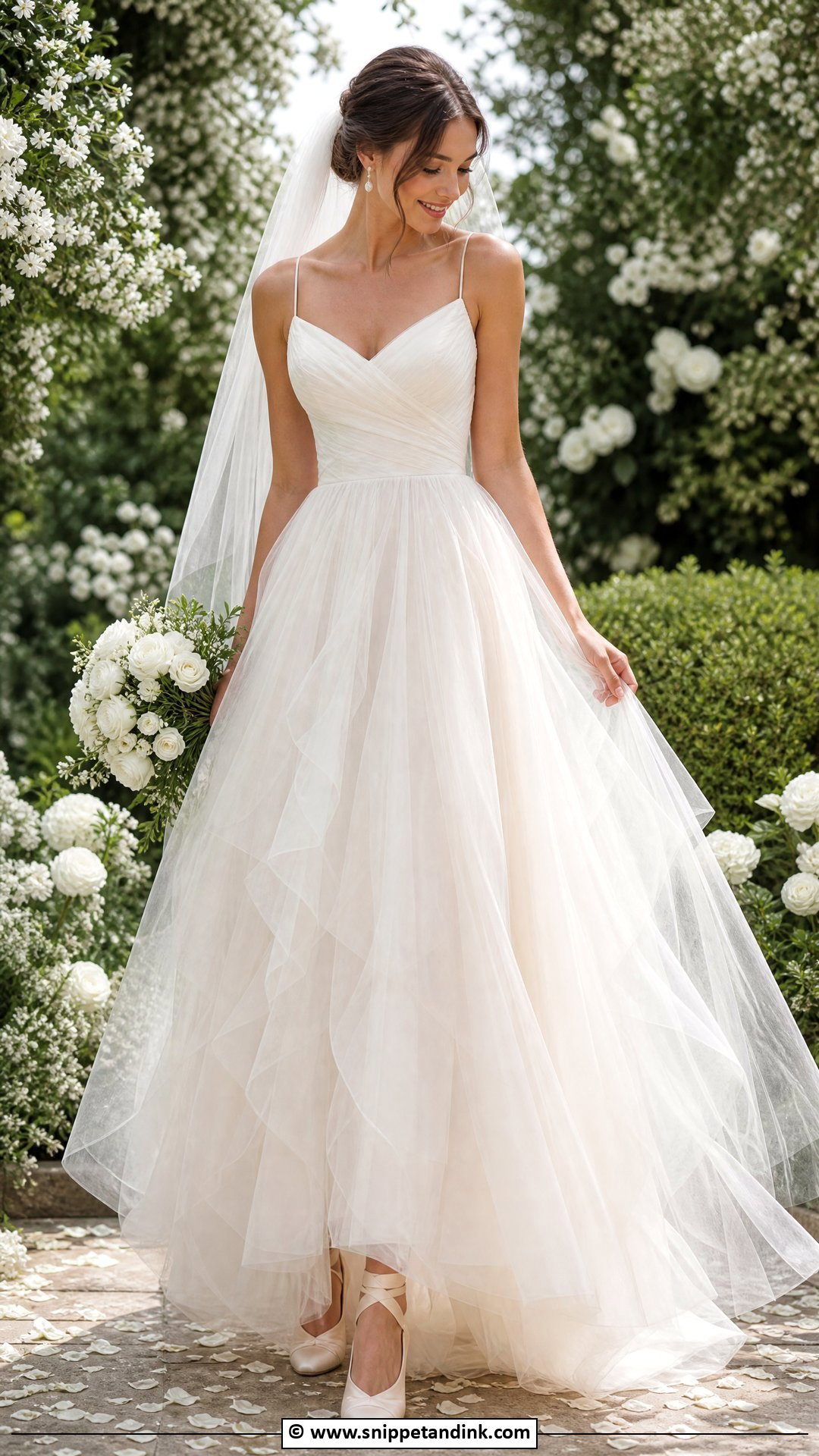
Tulle gives volume without much weight, and it can look romantic, classic or modern depending on the shape. A fitted bodice keeps the layers in proportion. Subtle embroidery, light beading or a satin waistband add refinement. Ballet-style shoes, pearl earrings and a light veil suit it. Garden, ballroom and outdoor ceremonies all work. Tulle snags on bracelet clasps and rough stone, so keep the jewelry smooth.
22. Organza Wedding Dress
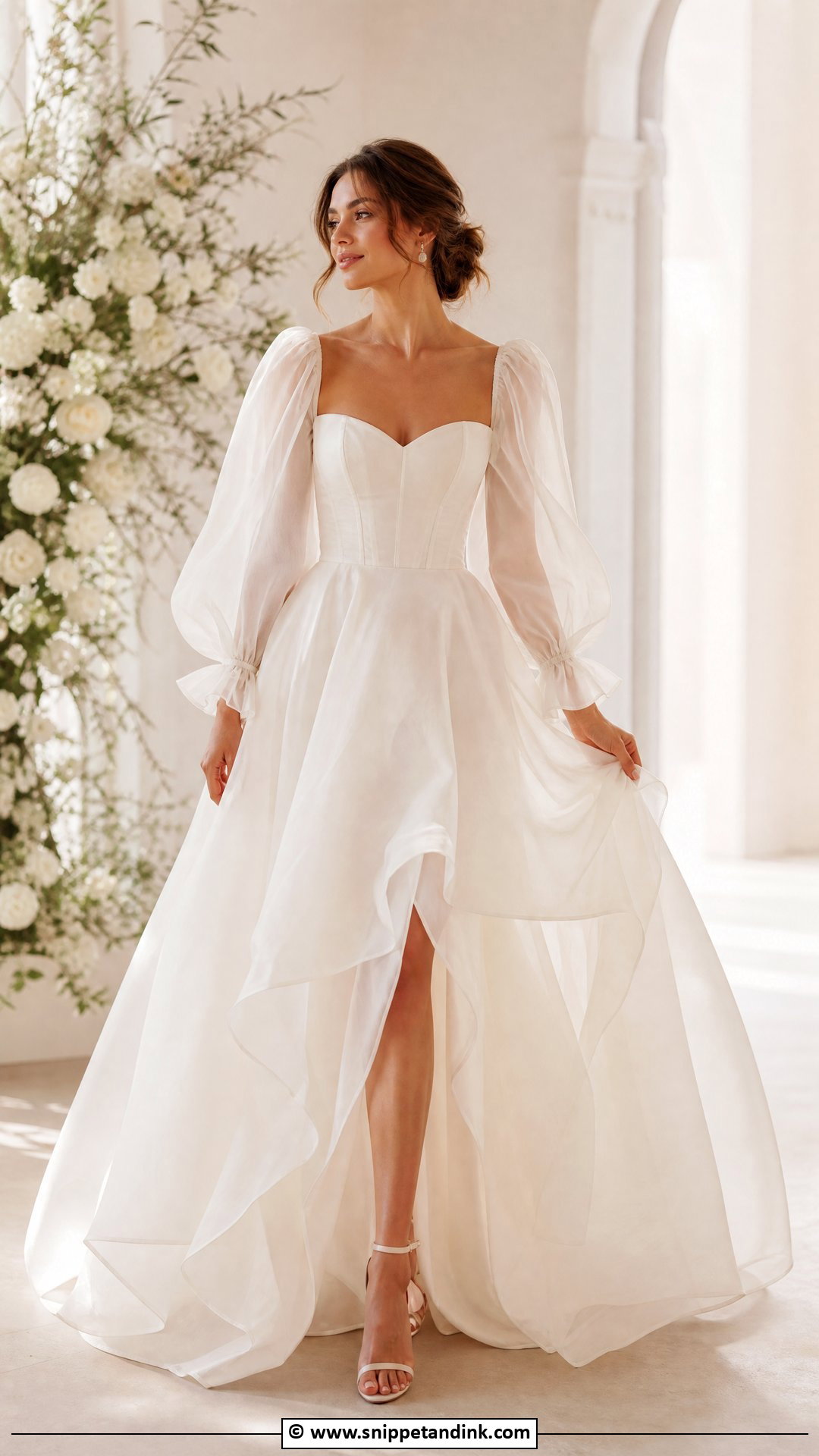
Organza is crisp where chiffon is soft, which means it holds sculpted skirts, puff sleeves and layers without collapsing. It catches light without heavy shine. A structured bodice with an organza A line skirt looks refined; organza sleeves add a romantic touch. Simple earrings, clean heels and a soft veil suit it. Spring, summer and destination weddings suit its light weight. It does crease if crushed, so it needs careful packing for travel.
23. Chiffon Wedding Dress
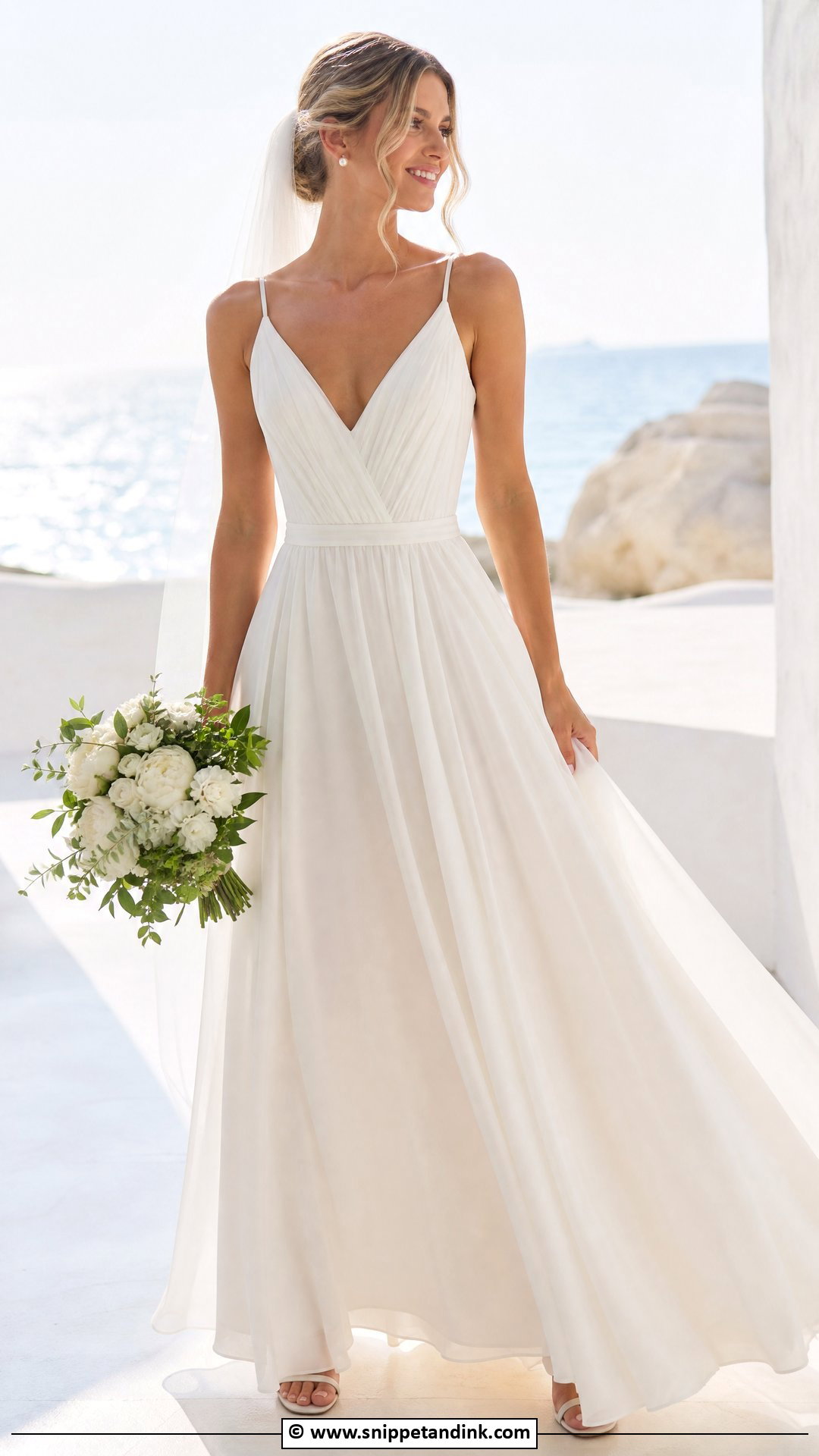
Chiffon is the most comfortable fabric on this list for a hot day. It flows softly in A line, empire and sheath shapes, with delicate straps, flutter sleeves or a V-neckline. Light accessories match it: thin sandals, pearl studs, a simple veil. Beaches and outdoor ceremonies suit it. Chiffon has little structure, so if you want shape at the bust or waist, it needs to come from a lined, boned bodice beneath.
24. Embroidered Wedding Dress
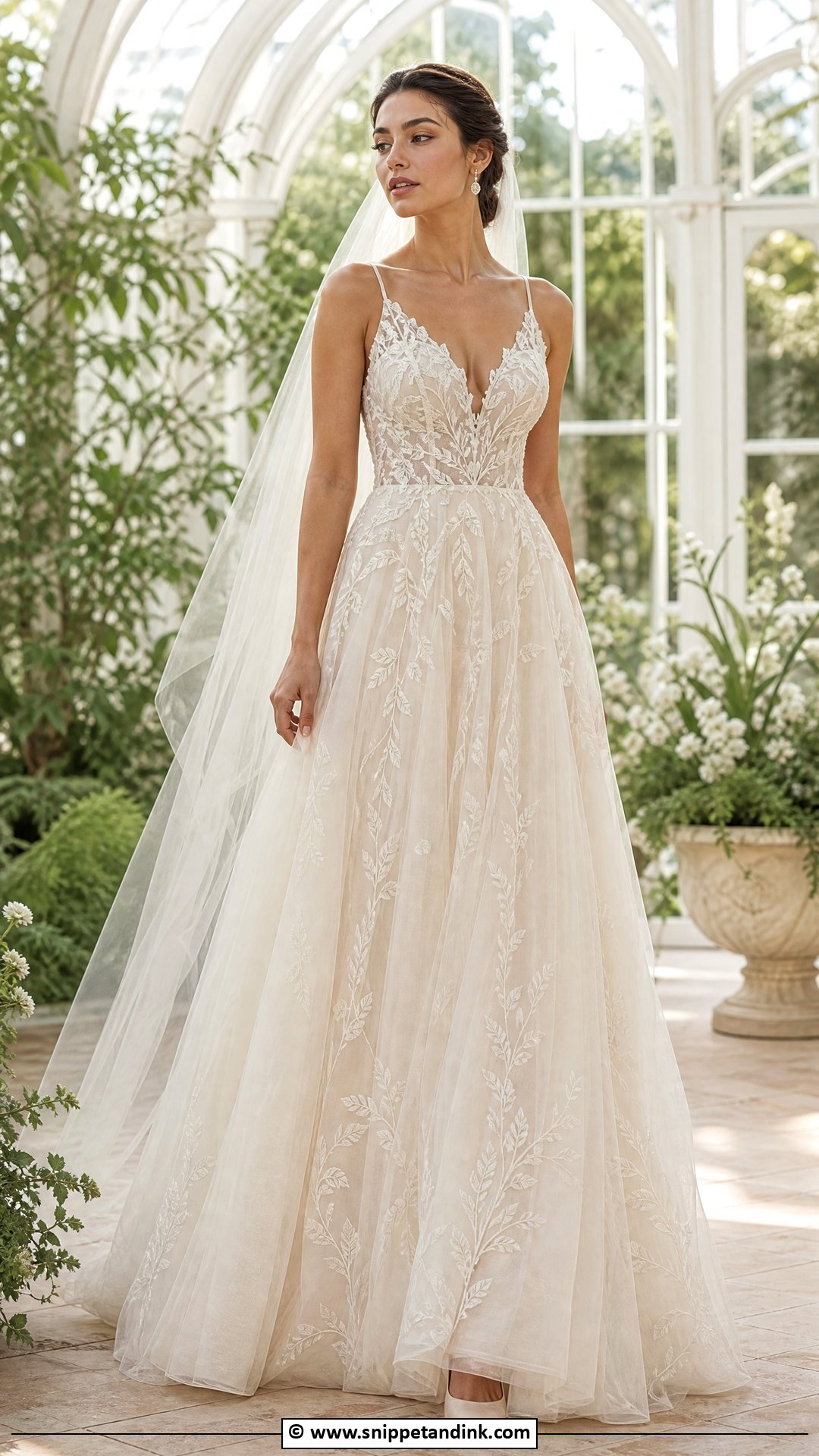
Embroidery adds texture and personality: floral vines, botanicals, pearls, sequins or fine threadwork. The skill is choosing a design that supports the gown rather than covering it. Embroidered tulle on a soft A line looks romantic; subtle embroidery on a fitted gown looks refined. Garden venues, historic spaces and formal outdoor ceremonies suit it. Small earrings, a plain veil and ivory heels keep the focus on the stitching. Some brides have a meaningful motif embroidered inside the hem, which is something a good seamstress can add.
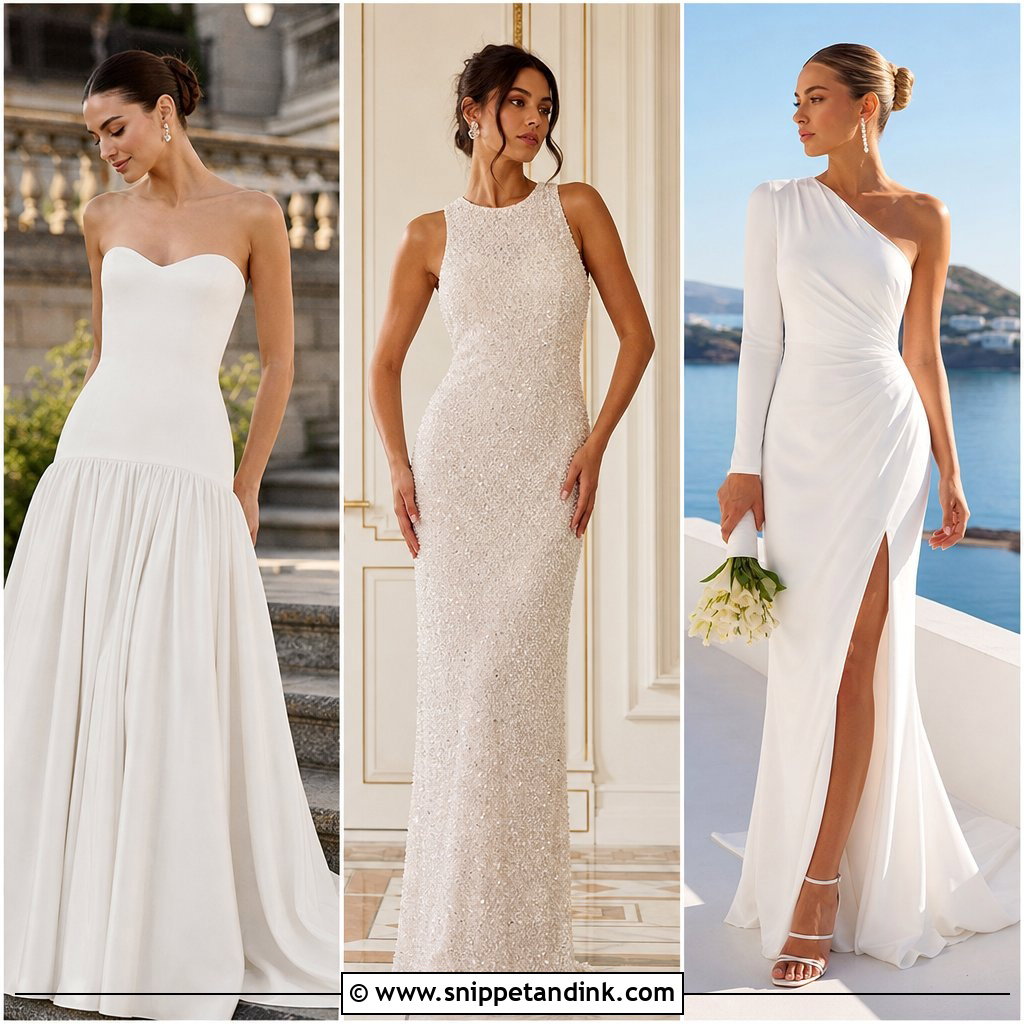

25. Beaded Wedding Dress
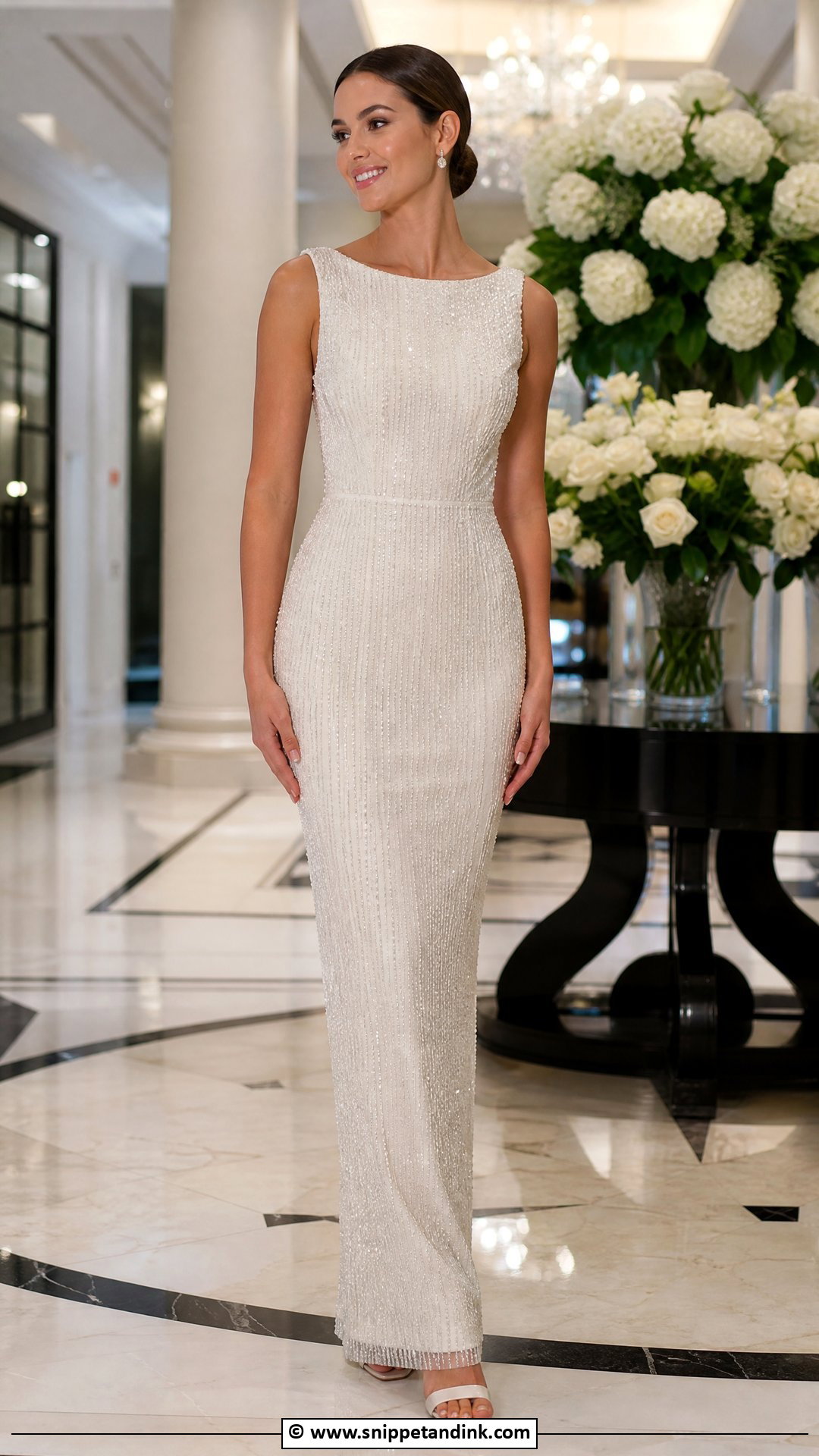
Beading brings sparkle that reads glamorous rather than flashy when it follows the shape of the gown. Scattered beads feel soft; Art Deco patterns feel vintage. A beaded sheath is sleek; a beaded ball gown is formal and dramatic. Simple earrings, smooth hair and classic heels balance the shine. Heavily beaded gowns are noticeably heavier, so I’d wear it for a full fitting session to judge how it feels after an hour. Evening receptions and hotel venues suit it.
26. Halter Wedding Dress
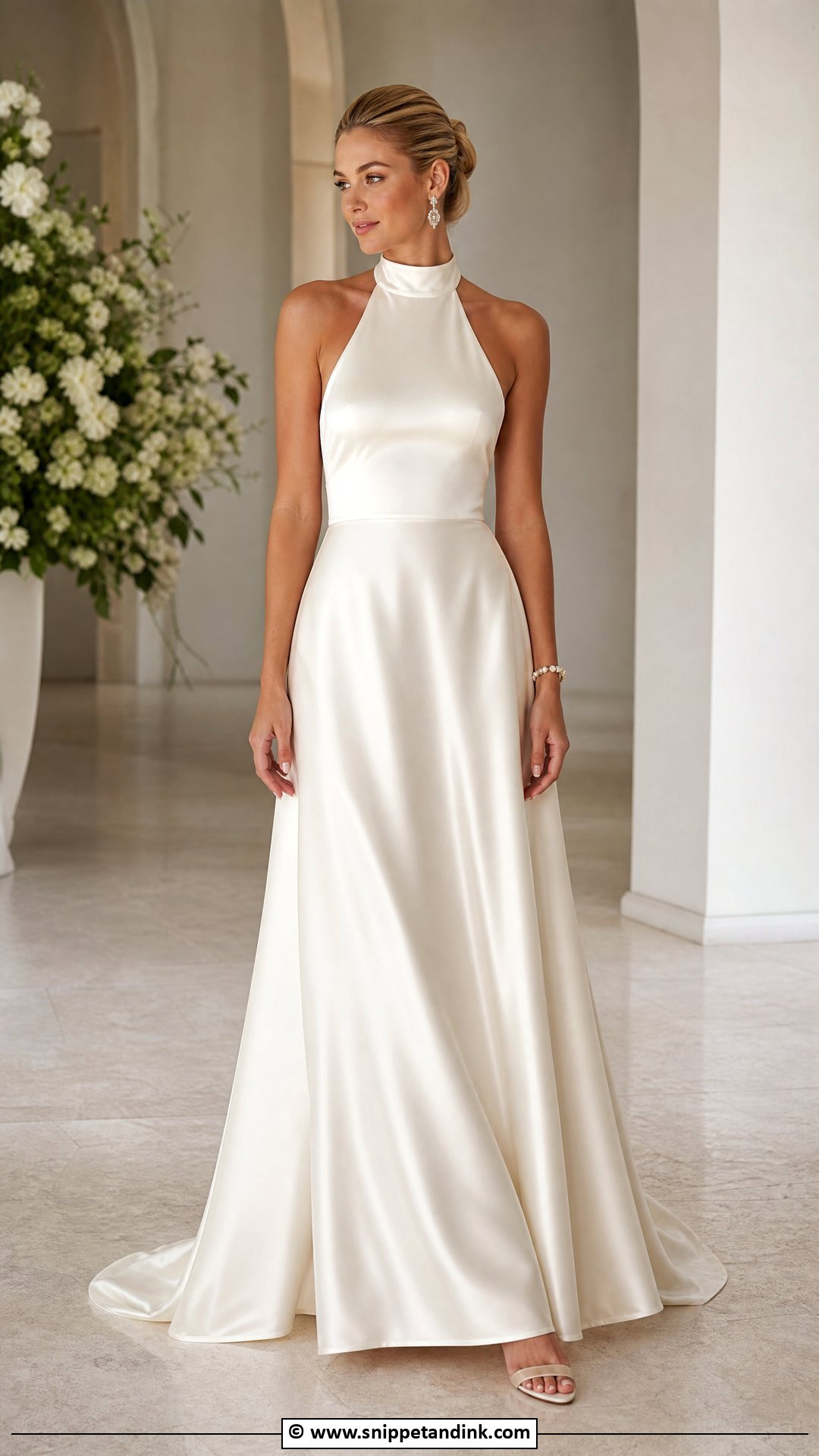
Halters draw attention to the shoulders and give good upper-body support. Satin looks polished and modern; lace adds softness. Fitted and flowing silhouettes both work. The neckline covers the chest, so earrings or a bracelet replace the necklace, and hair goes up to show the line. The strap around the neck carries weight, so I look for a wide, soft band rather than a thin tie that can rub after a few hours.
27. Bateau Neck Wedding Dress
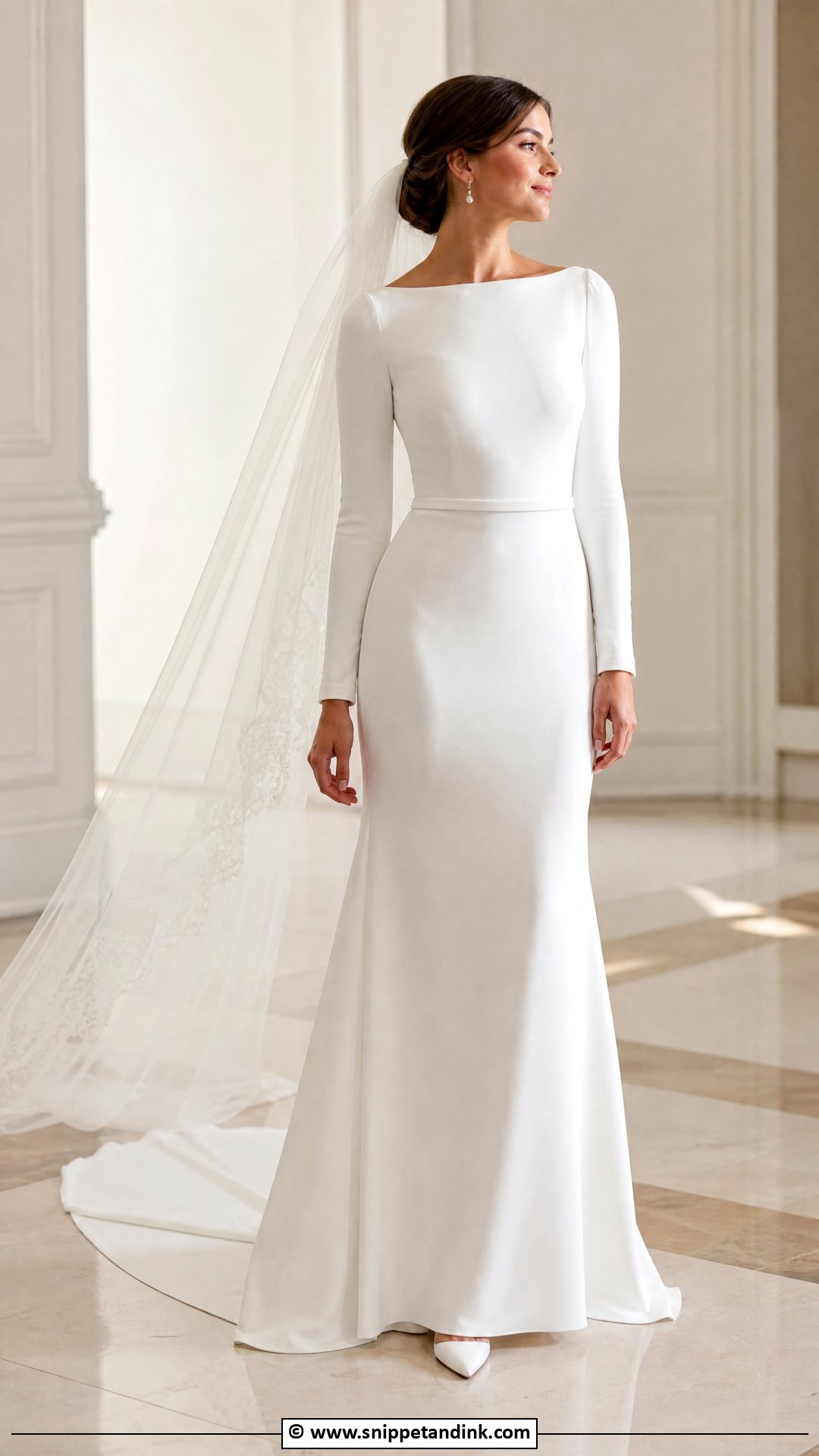
A bateau, or boat neck, runs in a shallow curve almost from shoulder to shoulder across the collarbone. It is modest and refined without being plain. Crepe, satin and lace all suit it. A slim column with a bateau neck looks modern; a full skirt version looks traditional. A low bun, pearl earrings and a long veil complete it, without a heavy necklace. Bateau necks can slip toward the shoulder on narrow frames, so the fit across the back needs checking.
28. Wedding Dress With Puff Sleeves
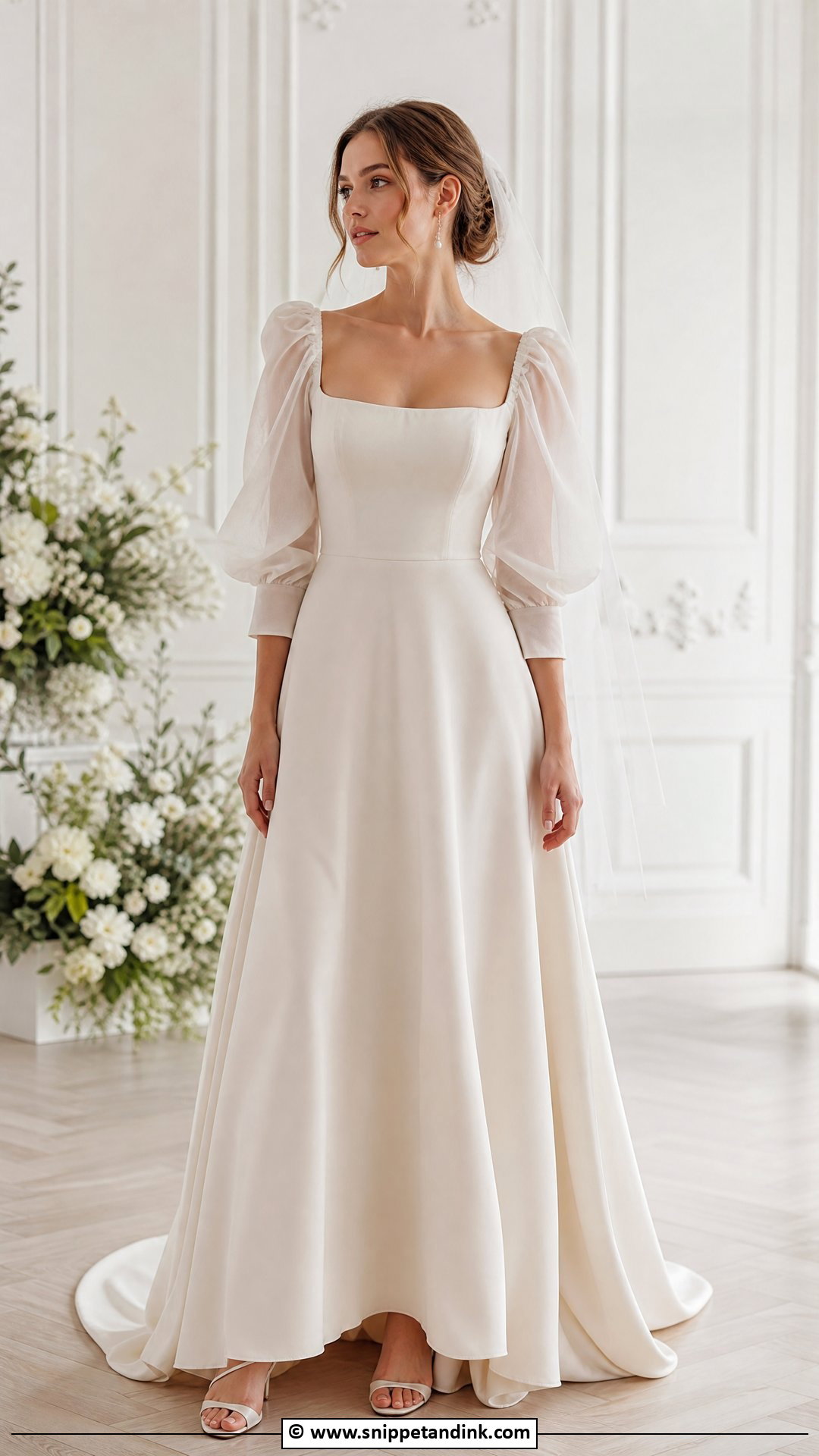
A wedding dress with puff sleeves stays elegant when the rest of the gown is balanced. Large sleeves want a clean bodice and skirt; soft, sheer sleeves can take more detail. Organza, tulle and lace keep puffs light rather than heavy. A line gowns, square necks and corset bodices all suit them. A simple veil and delicate earrings stop the shoulders feeling crowded. Big puffs can make the shoulders look wider in photos taken straight on, which some brides like and some don’t.
29. Wedding Dress With Slit
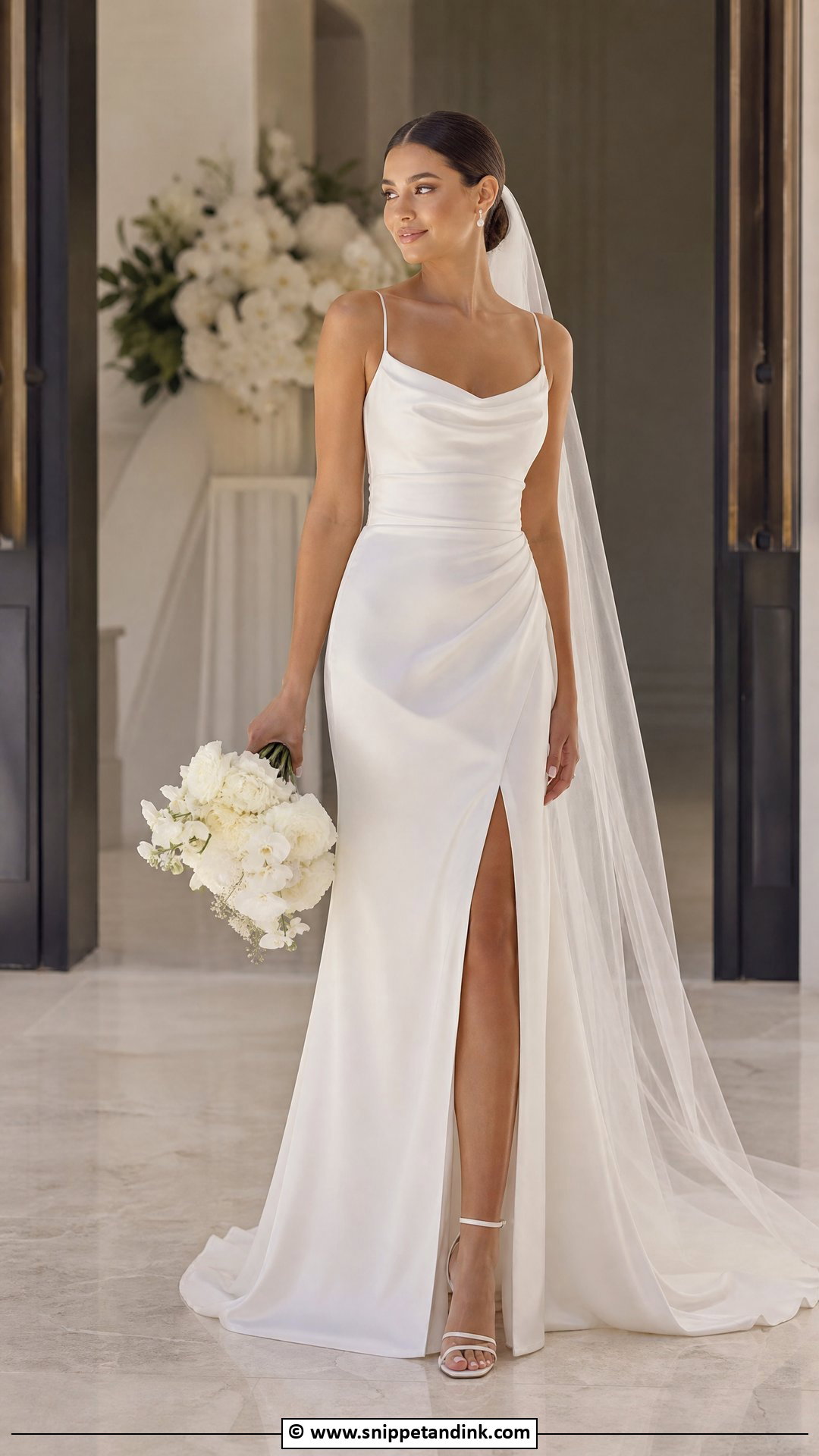
A slit adds movement and makes walking easier in a fitted gown, especially satin, chiffon or crepe. It also shows off your shoes. The rest of the gown should stay calm: a balanced neckline and few extra details. A long-sleeve gown with a slit feels sophisticated; strapless with a slit feels modern. Check where the slit falls when you sit, because a high slit opens much further seated than standing. Strappy heels, smooth hair and understated jewelry finish it.
30. Simple Wedding Dress With Veil
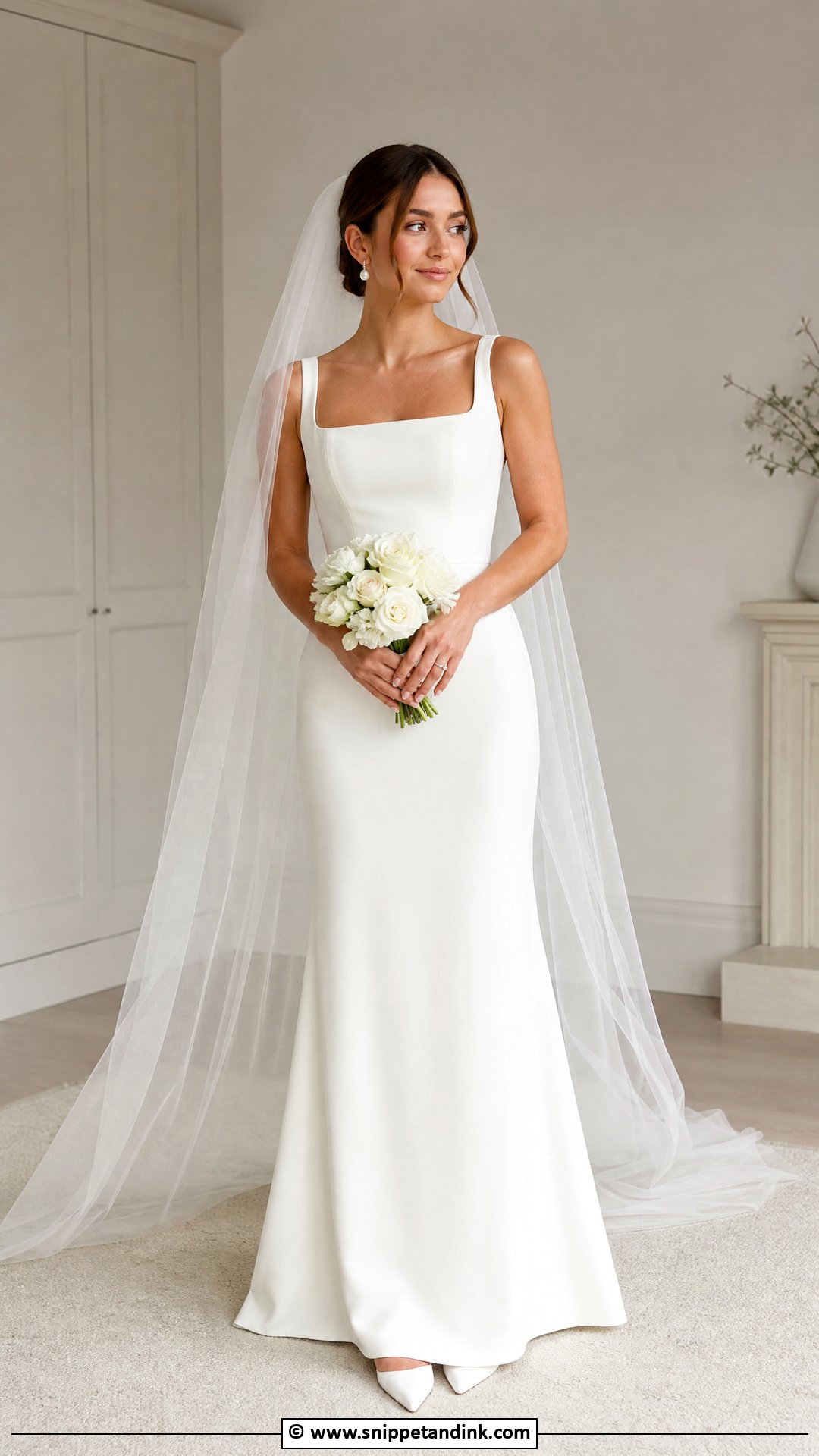
Simplicity works because the veil supplies the bridal feeling. A clean satin, crepe or silk gown suits nearly any venue and can be styled up or down. A cathedral veil brings drama, a fingertip veil feels classic and a blusher adds a traditional moment. With a plain gown, tailoring is everything, and shoes should match the fabric’s shade of white. Pearl earrings, a small bouquet and natural makeup finish it.
31. Vintage Inspired Wedding Dress
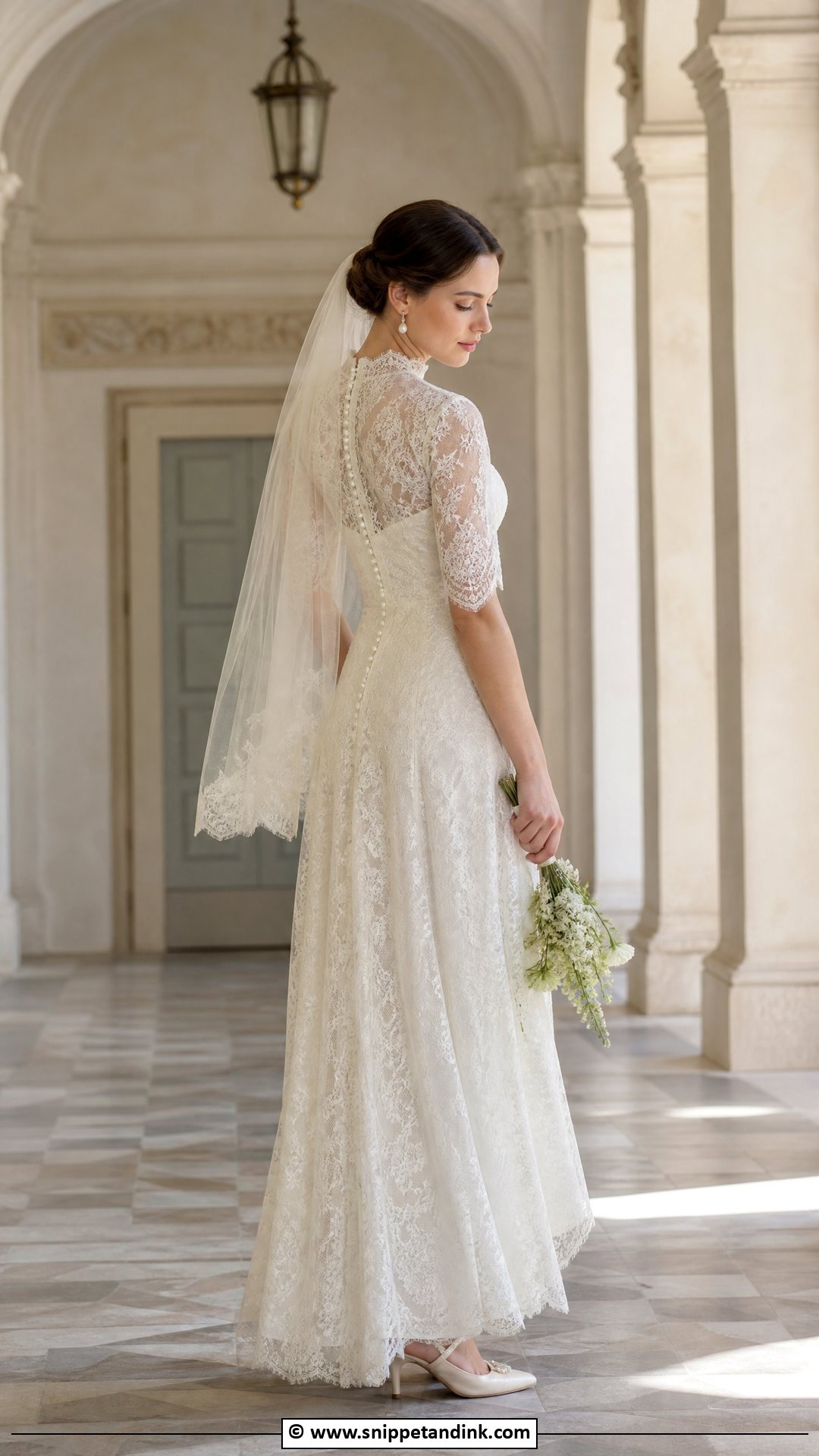
Vintage-inspired dresses borrow lace sleeves, pearl buttons, tea lengths, beaded bodices and soft high necklines. The rule I follow is one or two nostalgic details, not all of them, or the outfit starts to look like a costume. A fitted lace gown with satin heels feels romantic; a beaded sheath feels glamorous. Soft waves, pearl earrings and a delicate veil complete it. Genuine vintage gowns are often fragile and sized differently, so budget for careful restoration and alterations if you buy one.
32. Modern Column Wedding Dress
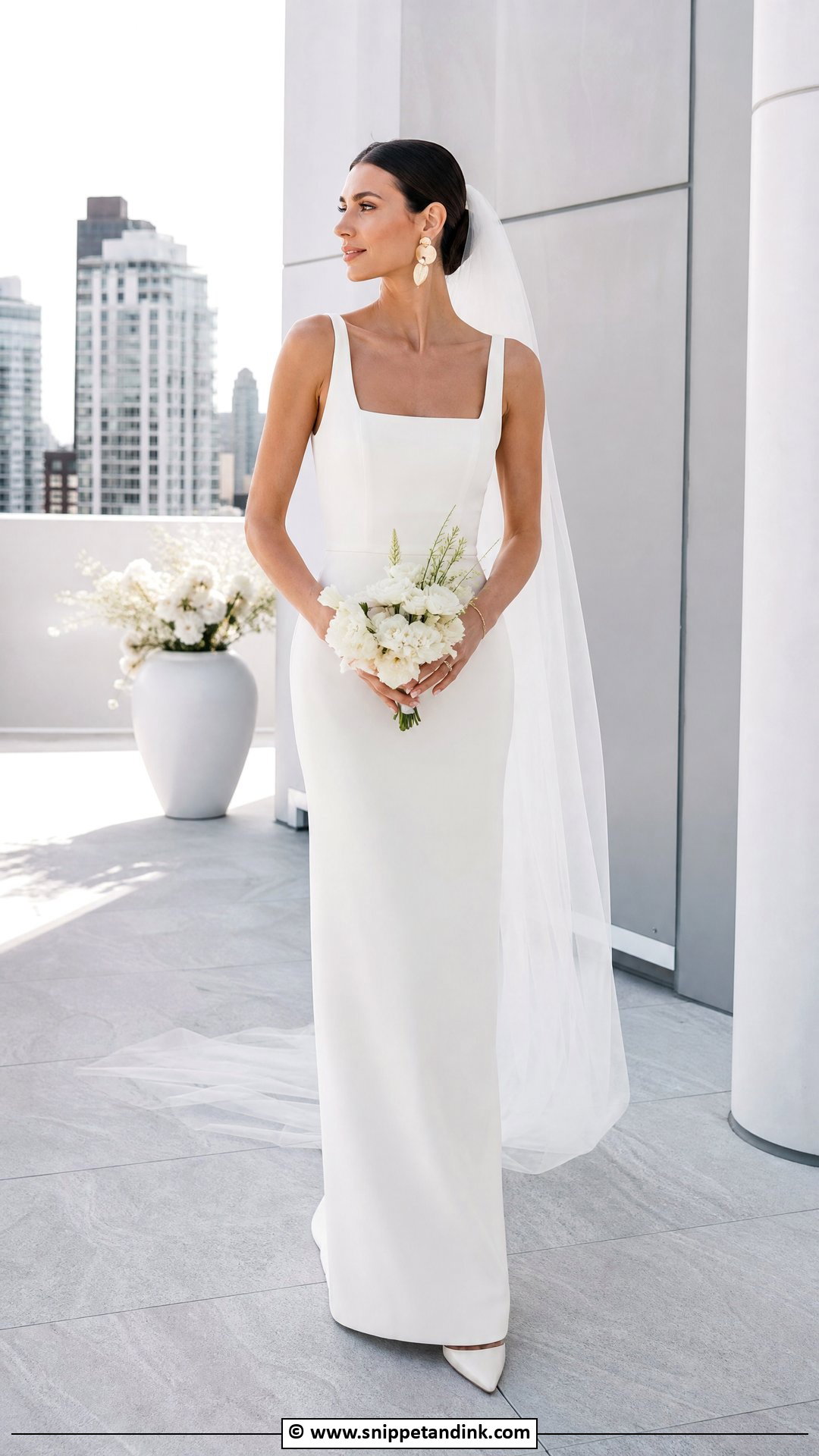
A column creates one long vertical line without volume. Crepe, satin and silk drape cleanly in this shape. A square neck, strapless bodice, halter or long sleeves all suit it, and the styling should stay simple: pointed heels, sculptural earrings and a smooth veil. City weddings, galleries and rooftops suit it. Because the skirt is narrow, check your stride length and whether you need a back vent or slit for stairs.
33. Two Piece Wedding Dress
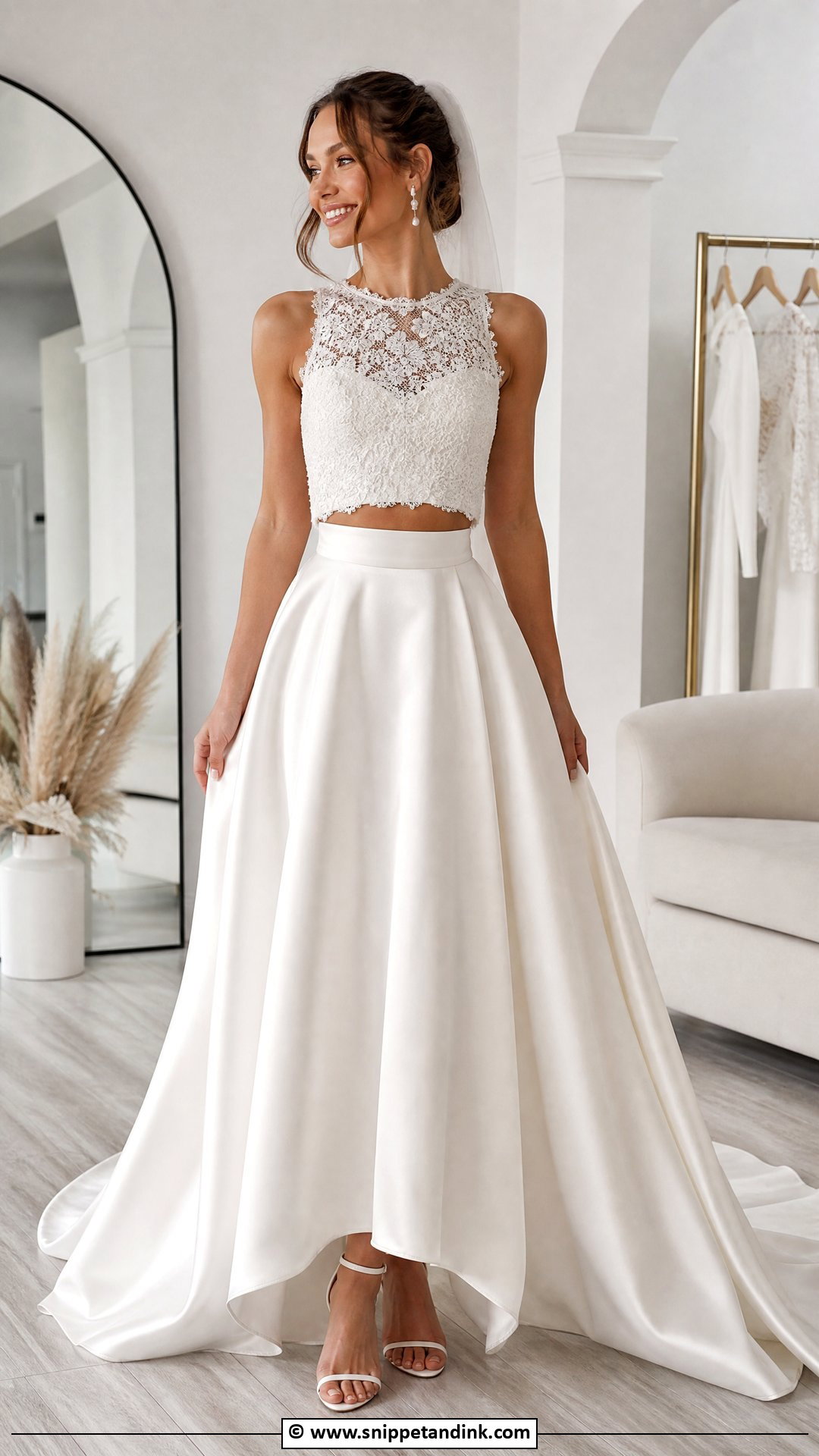
A two piece gives movement and comfort in a modern shape. A cropped top with a high-waist skirt, a lace bodice with satin, or a structured top with tulle all work. Matching fabrics create a clean look; subtle contrast adds character. The pieces have to look intentional together, and I check the gap between top and skirt when the bride lifts her arms, since a sliver of skin that appears when dancing might not be what she wants. Refined heels, delicate earrings and a simple veil suit it.
34. Wedding Jumpsuit With Overskirt
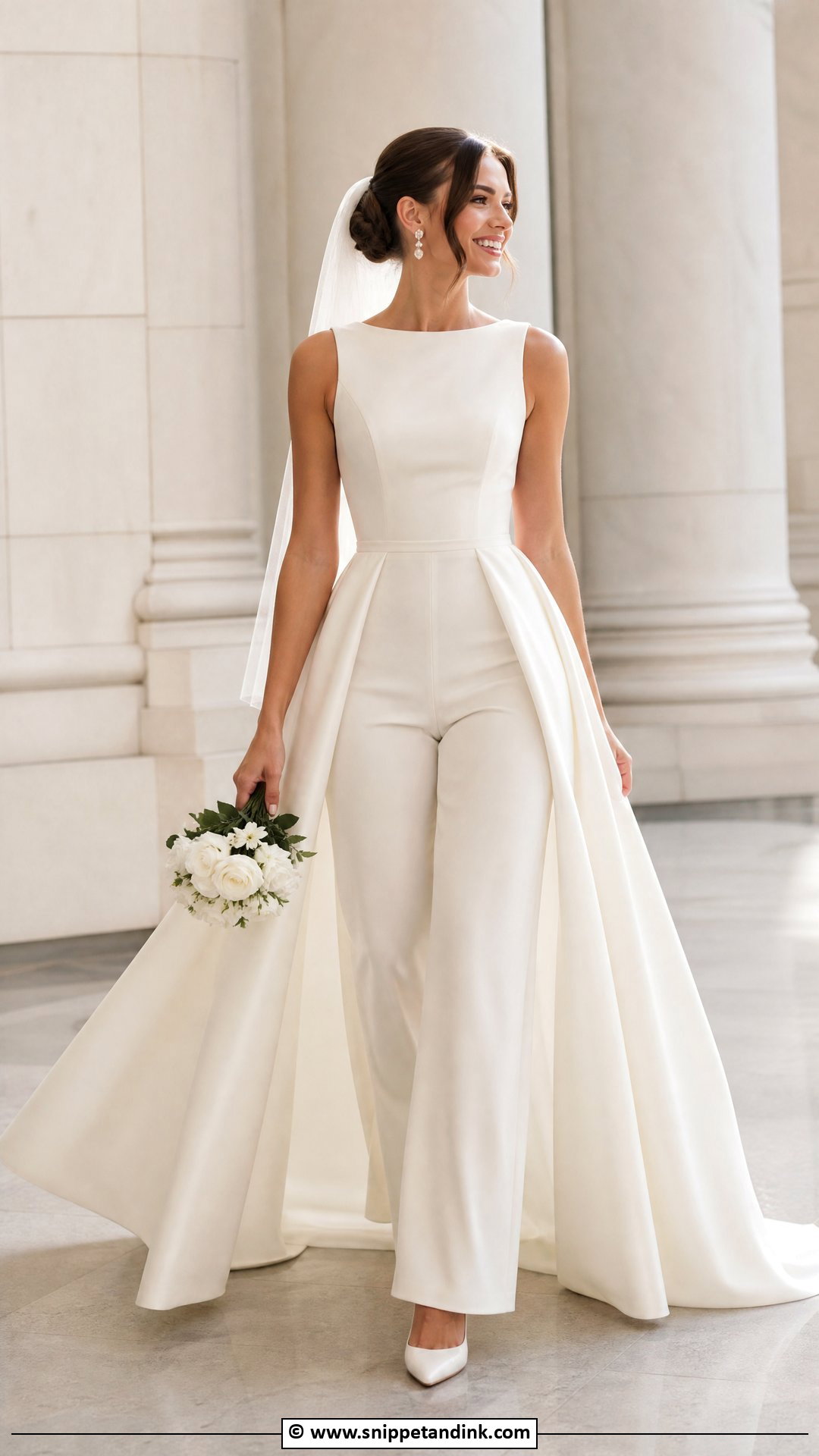
A jumpsuit with an overskirt gives you a formal aisle look and a sleek reception outfit with one change. Ivory crepe, satin or tailored fabric keeps it polished. Wide legs, a fitted bodice and clean heels make it refined. Add earrings, smooth hair and a short veil or cape. The practical point nobody mentions: a one-piece jumpsuit means a full undress for every bathroom trip, so a back zip you can reach, or a helper, is worth planning for. Courthouse and city weddings suit it.
35. Short Reception Wedding Dress
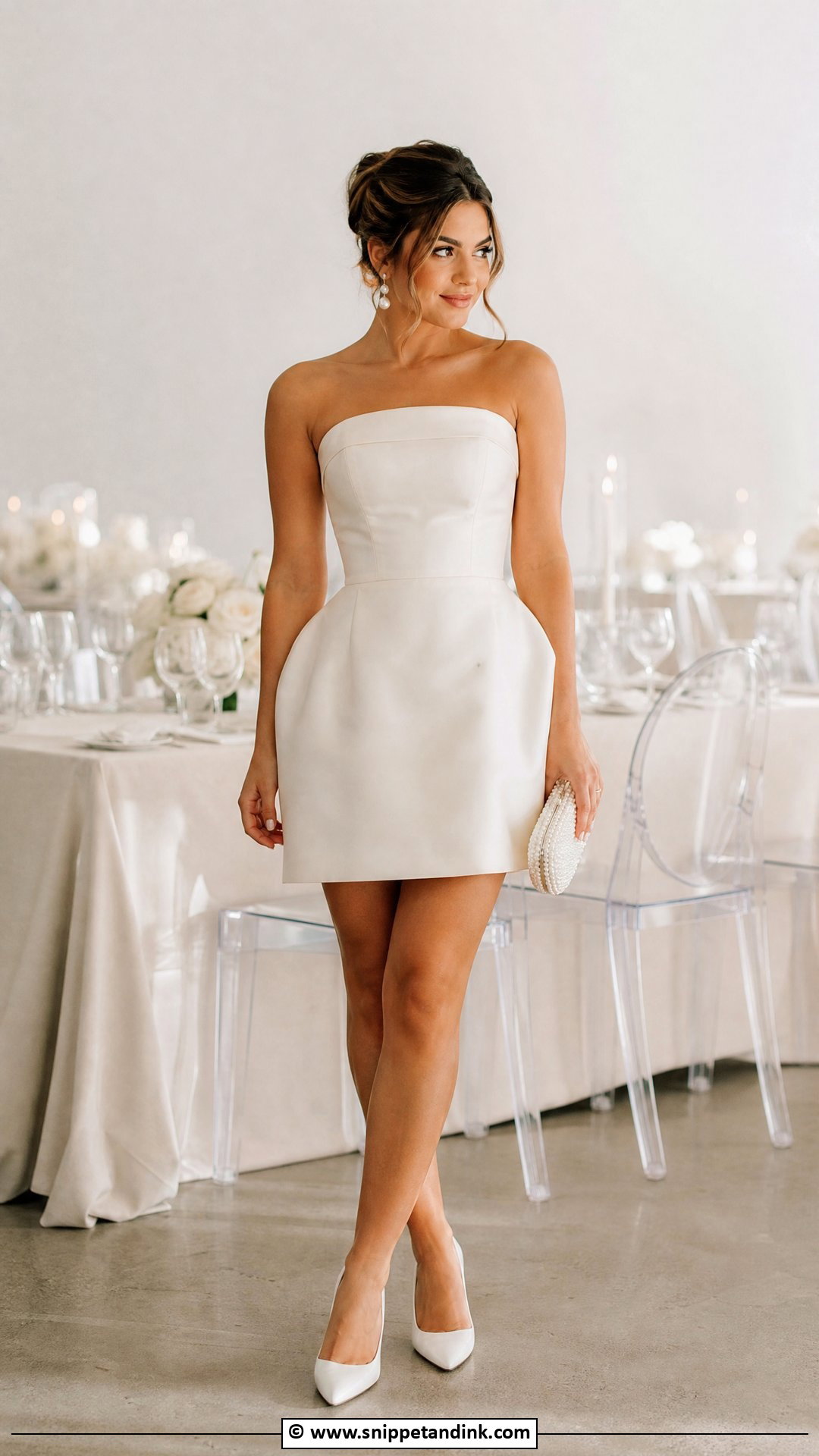
A short reception dress lets you dance, greet guests and move freely after the ceremony. A structured mini, satin shift, lace short dress or feather-trimmed hem all work. Shoes become important at this length, so satin pumps, embellished heels or sleek sandals all suit it. Pearl earrings, a small clutch and a soft updo keep it bridal. Plan the change in advance: where you’ll change, who helps with fastenings and where the gown goes afterward.
After the Last Dance: Cleaning and Storing the Gown
Most brides want to keep the dress, and the weeks after the wedding decide what condition it will be in years later. I’d get it to a specialist cleaner within a few weeks, even if it looks clean. Hems pick up dirt, and underarms and bodices absorb perspiration and makeup.
The stains you can’t see yet
Champagne, white wine and sugary drinks dry clear on white fabric, so the dress looks spotless. Over time those sugars oxidize and turn brown, and by then they are much harder to remove. Tell the cleaner about anything spilled, even if you can’t see a mark, and point out where it landed if you know.
- Store the gown folded in acid-free tissue inside an acid-free box rather than hanging it, since heavy skirts stretch the shoulders and straps over time.
- Avoid plastic dry-cleaning bags for long-term storage; they trap moisture and can yellow fabric.
- Keep the box somewhere cool, dark and dry. Lofts, basements and garages swing in temperature and humidity.
- Open it once a year to check for discoloration and refold along different lines so creases don’t set permanently.
Fabric, Fit and the Way You Want to Feel at the Door
The right bridal look makes you feel like yourself, comfortable and confident. The ideas above cover classic gowns, modern silhouettes, lace, satin, tulle and practical second looks for different venues and seasons. When you shortlist, think about movement, fit, fabric and how the full outfit looks from behind, since guests watch your back through the ceremony. Accessories should support the gown, and the veil, earrings, shoes and hairstyle can shift its whole mood. Simple or dramatic, the right one is the one you forget you’re wearing by the first dance.
You'll Like These Ideas:










Leave a Reply