
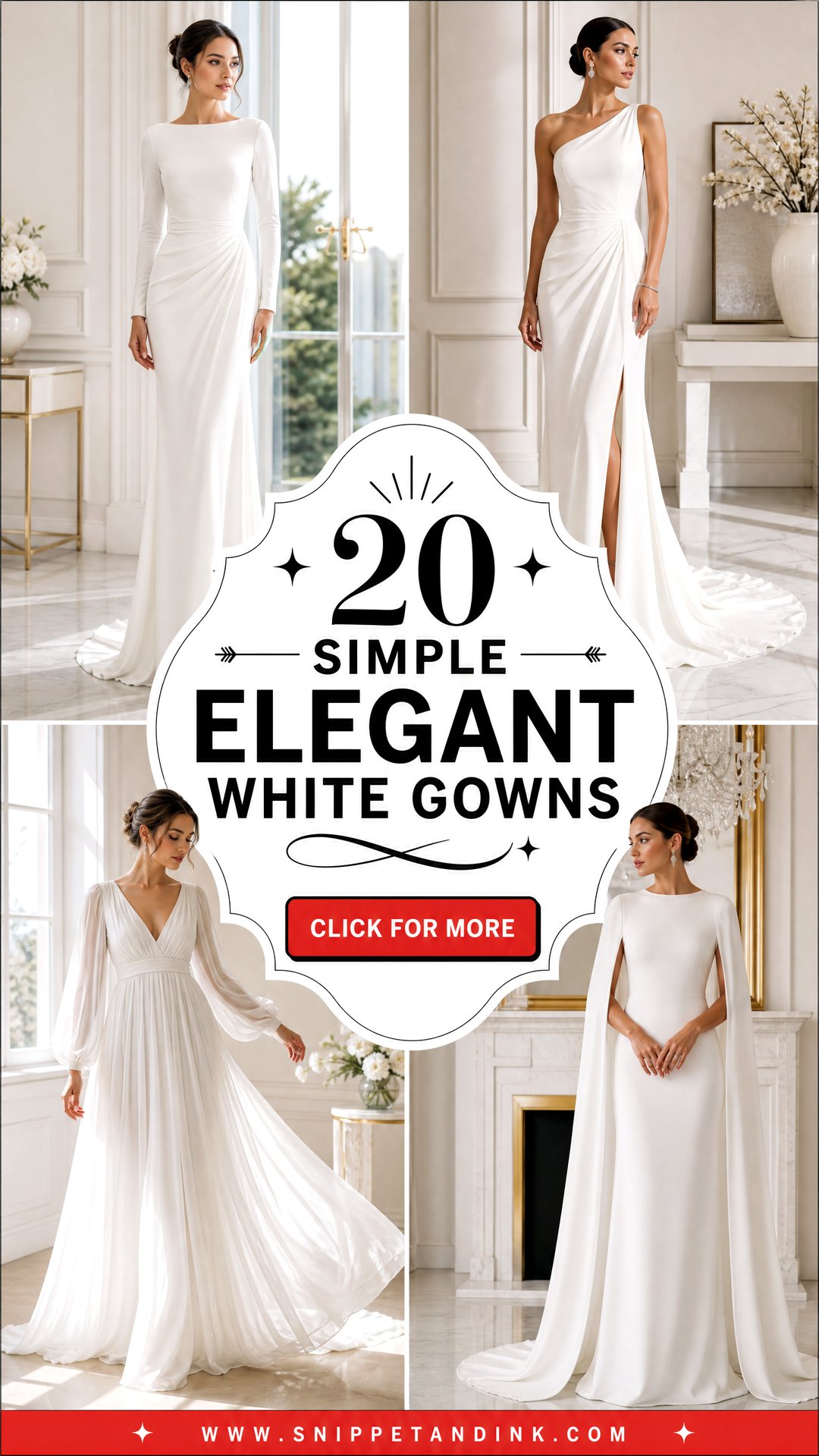
Bright White, Ivory or Soft White Against Your Skin
White is not one color. Bright or optic white has a slightly blue cast; natural or soft white is the color of undyed silk; ivory leans warm toward cream. Every shop names them differently, so I ignore the label and look at the fabric next to the client’s face in daylight.
- Bright white tends to suit deep skin tones and very fair cool skin, but it can make warm or olive skin look sallow and it glares under flash.
- Ivory flatters most warm and medium skin, and it hides marks a little better than bright white.
- If two whites look identical in the shop, step outside. The difference almost always appears in natural light.
- Match accessories to the gown, not to each other. A bright white clutch against an ivory dress makes the dress look dingy.
One more thing I’d say plainly: several of these gowns are just as suited to a gala or graduation as a wedding. If you’re a guest at someone else’s wedding, white is still the one color most couples would rather you avoided, unless the invitation specifically asks for it.
1. White Satin A-Line Gown
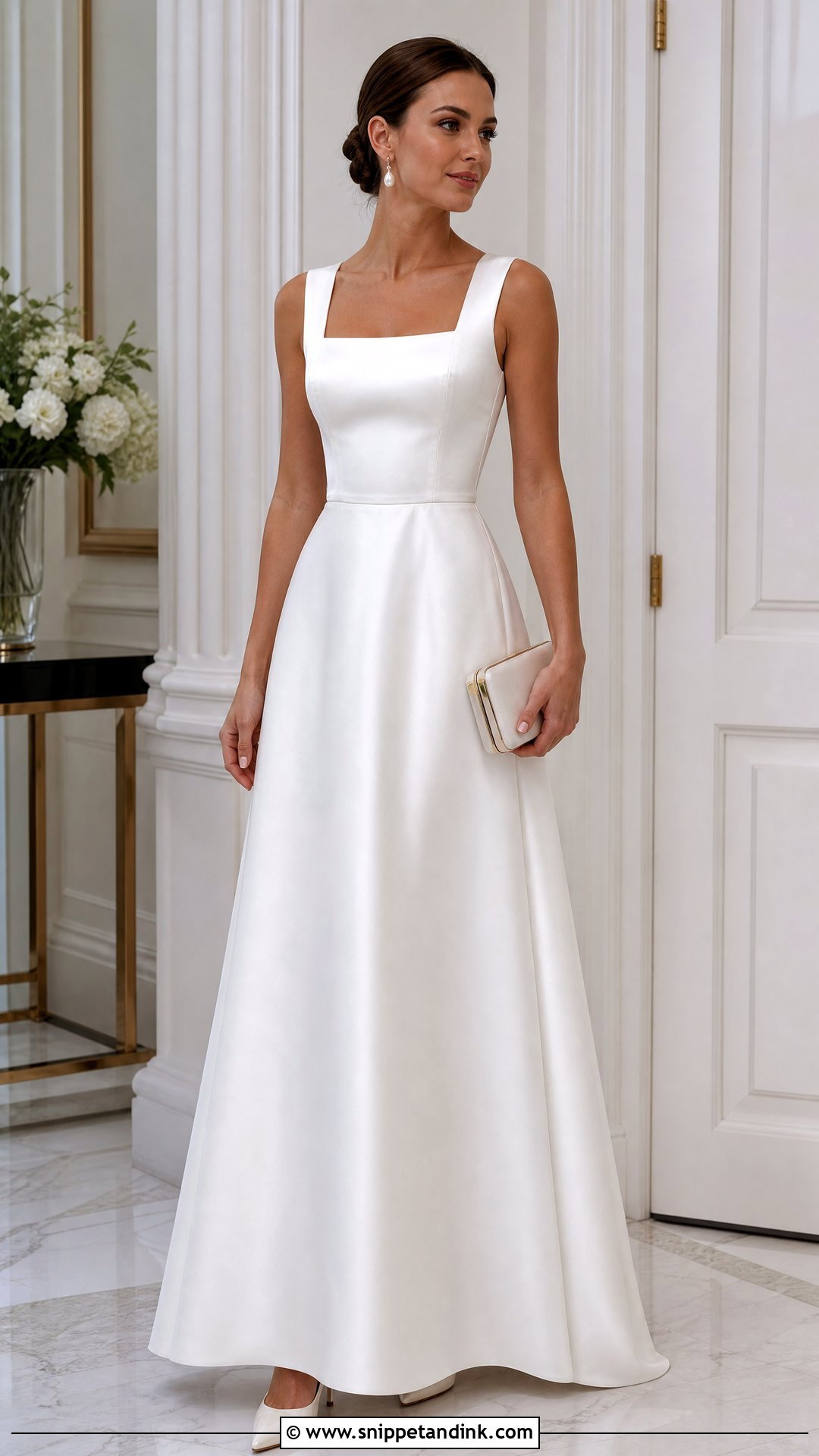
Satin carries an A-line without help. Its sheen does what lace and beading do on busier dresses, so I keep the build plain: wide straps, a defined waist, a gently flared floor-length skirt. Wide straps matter more than they seem, since satin is heavy and thin straps dig in after a couple of hours. Pointed ivory pumps, pearl drops, a small structured clutch and a low bun to leave the neckline clear. If the gown has pockets, use them in photos; a hand resting in a pocket relaxes the whole pose. Courthouse vows, a formal reception or an indoor ball all suit it.
2. White Off-Shoulder Gown
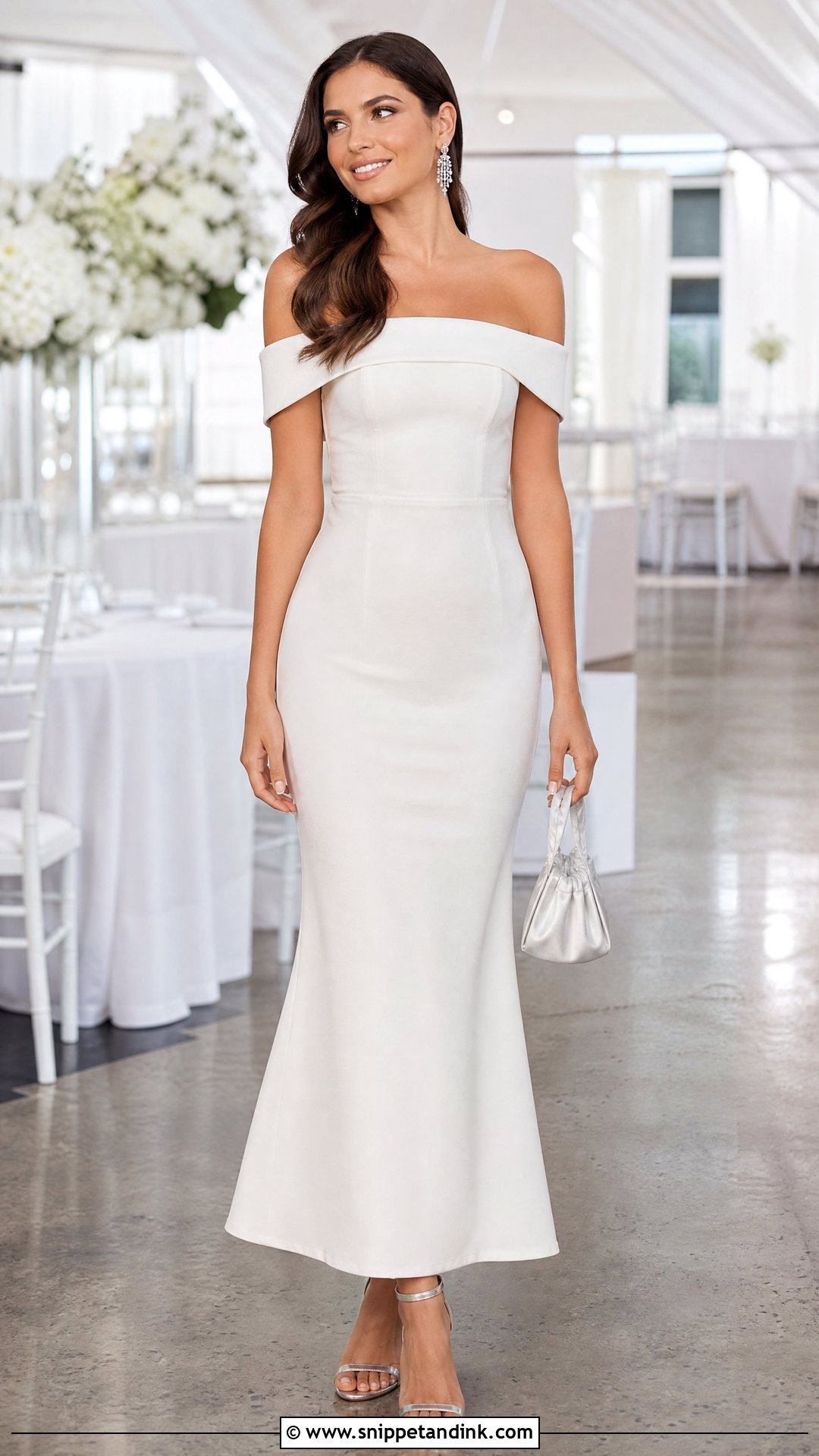
An off-shoulder neckline shows the collarbones and keeps the rest formal, so long as the folded band actually stays where it was fitted. I check it with the client’s arms lifted, because the band rides up the moment the bodice is a touch loose. Below it, a fitted bodice into a straight or softly flared skirt. Small crystal studs, a slim bracelet and a compact satin bag, plus white or metallic ankle-strap heels. Hair up or swept to one side. Air-conditioned venues get cold on bare shoulders, so bring a light ivory wrap for the hours after dinner.
3. White Long-Sleeve Crepe Gown
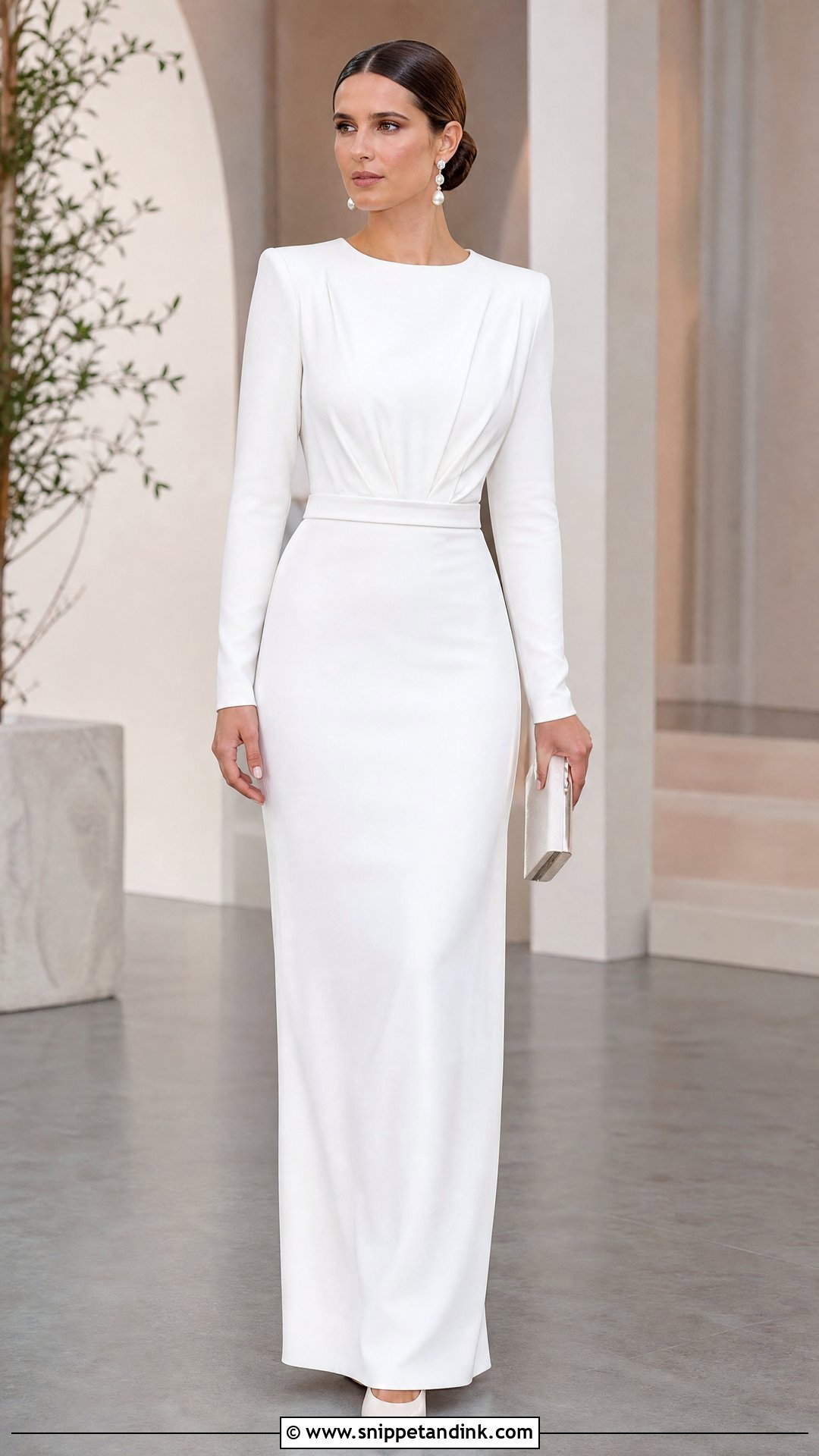
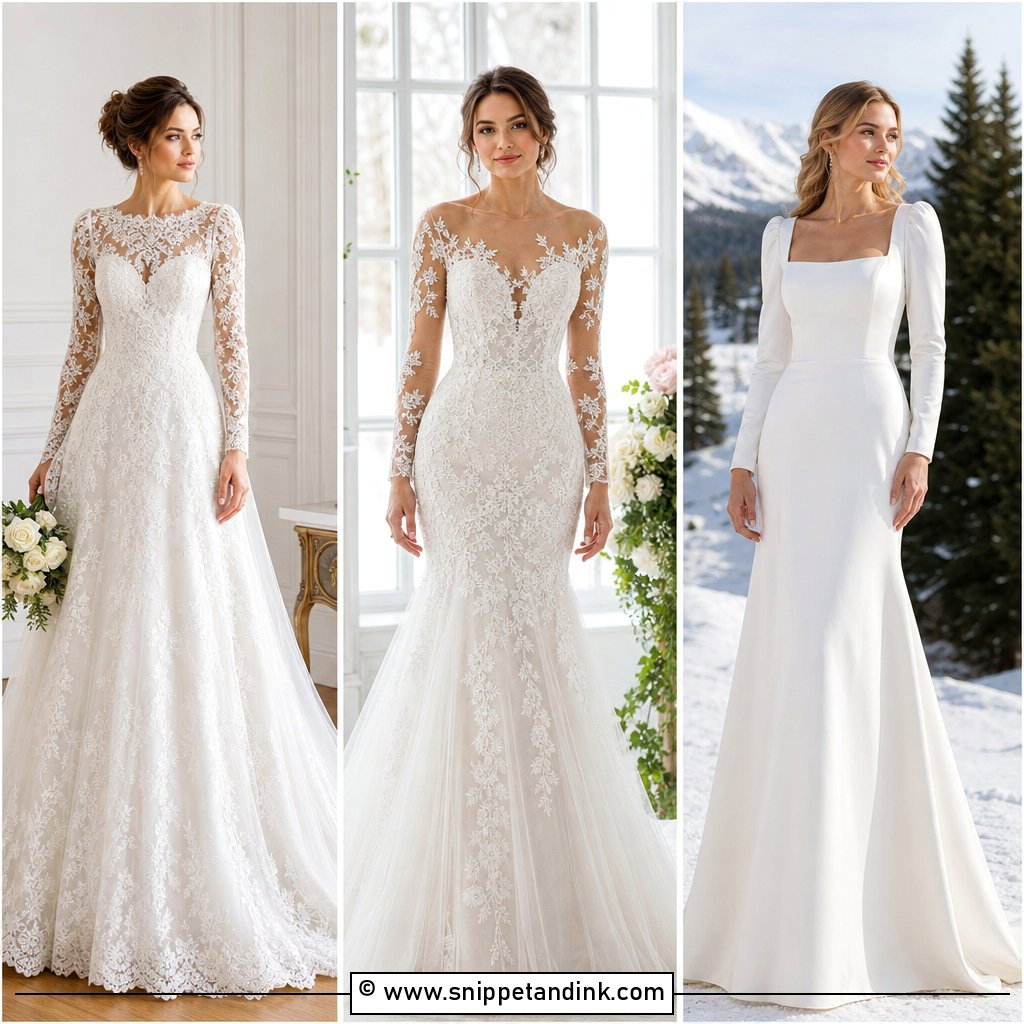
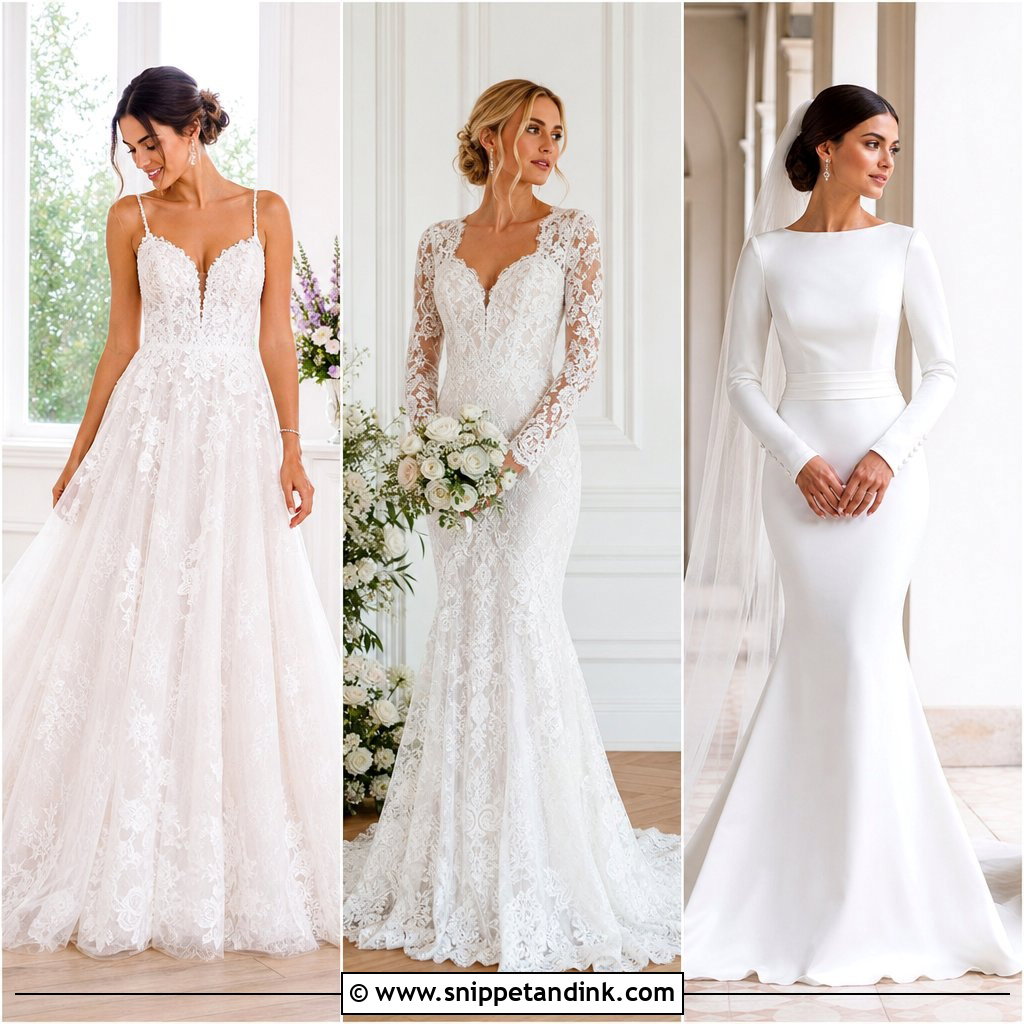
Long sleeves in white crepe look graphic and calm at once. Fitted sleeves, a lightly shaped waist and a column or A-line skirt keep the lines long. I recommend a medium-weight crepe: lightweight crepe shows every lump under it, while heavy crepe can look stiff at the elbow. Closed-toe ivory heels, small pearls, a rectangular clutch, a center-parted low chignon and fresh, light makeup. White crepe is unforgiving about what’s underneath, so plan discreet shapewear and seamless undergarments before the fitting. Good for winter ceremonies, formal dinners and modest bridal looks.
4. White Halter Neck Gown
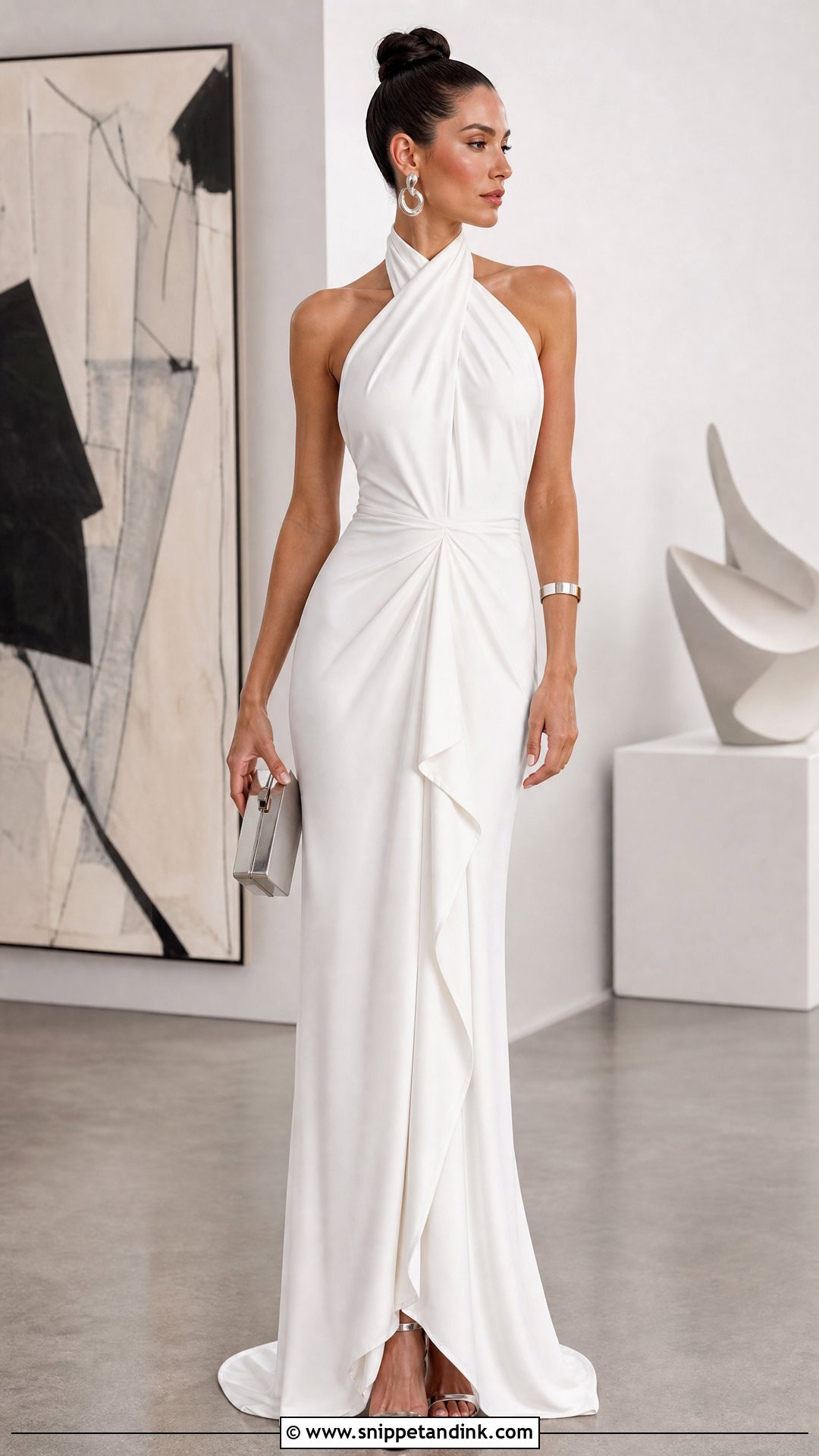
A halter pulls the eye up to the shoulders and lengthens the whole figure. On a white halter neck gown I want a soft drape at the neck and a skirt that skims rather than clings, plus a fastening at the nape strong enough not to tug. Heavy hair or a long veil pulls on halter straps, which is why I usually suggest a high bun, a sleek ponytail or a tucked bob. Skip the necklace and go with sculptural earrings, a cuff and silver or pearl-toned heels with a box clutch. Open back? Use tape and the right supportive underwear.
5. White Square Neck Gown
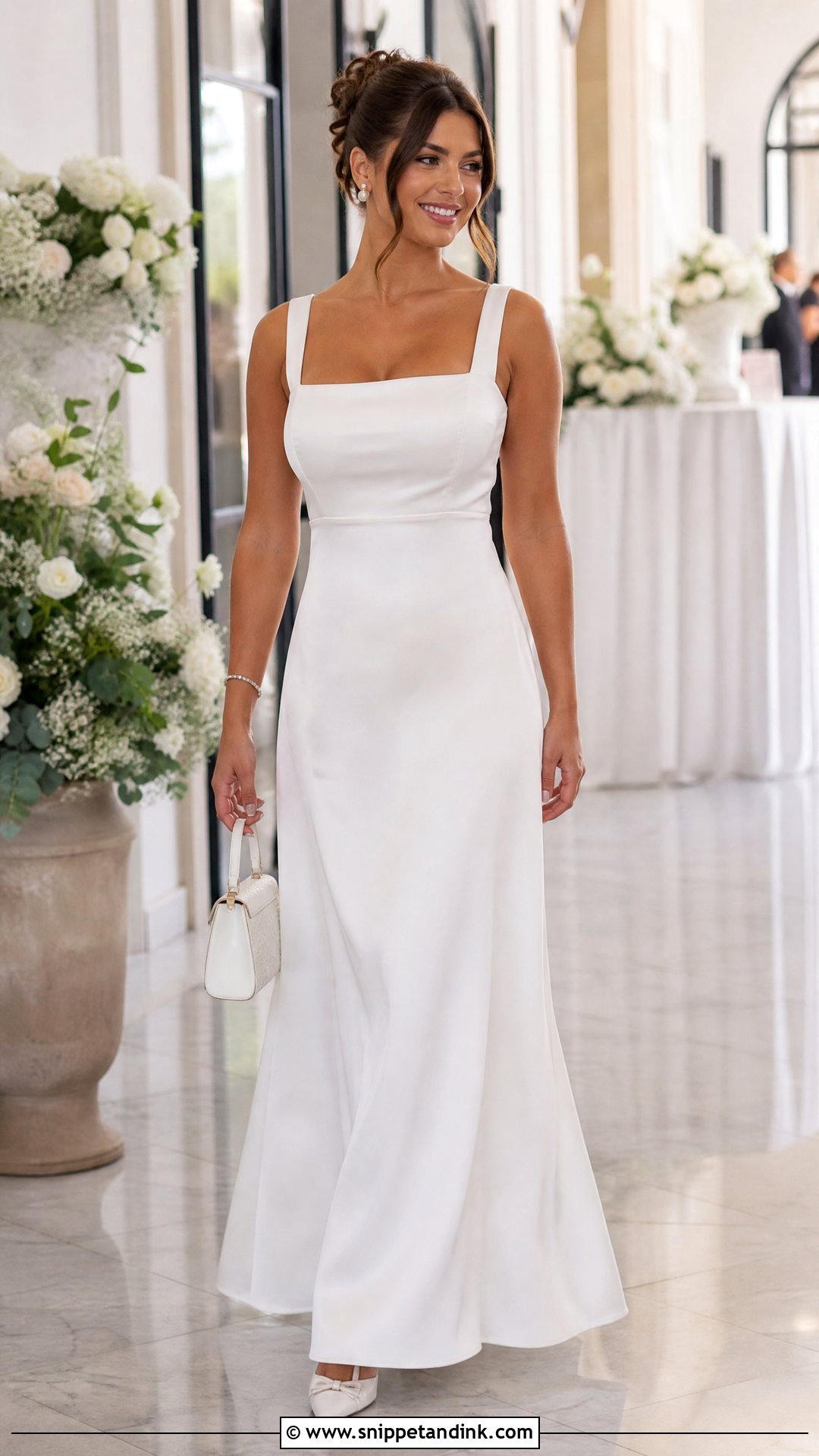
Square necklines are architectural, and they look best when everything below follows the same discipline. Supportive straps, a fitted upper body and a full-length skirt that balances the hips, in satin or crepe. The placement of the straps is the tailoring detail I watch: set too wide, they slip; too narrow, and the square turns into a scoop. Pearl studs, a fine chain bracelet and a small top-handle bag, with pointed pumps or low slingbacks for a long day on your feet. A soft updo or smooth shoulder-length hair keeps it from feeling severe.
6. White One-Shoulder Gown
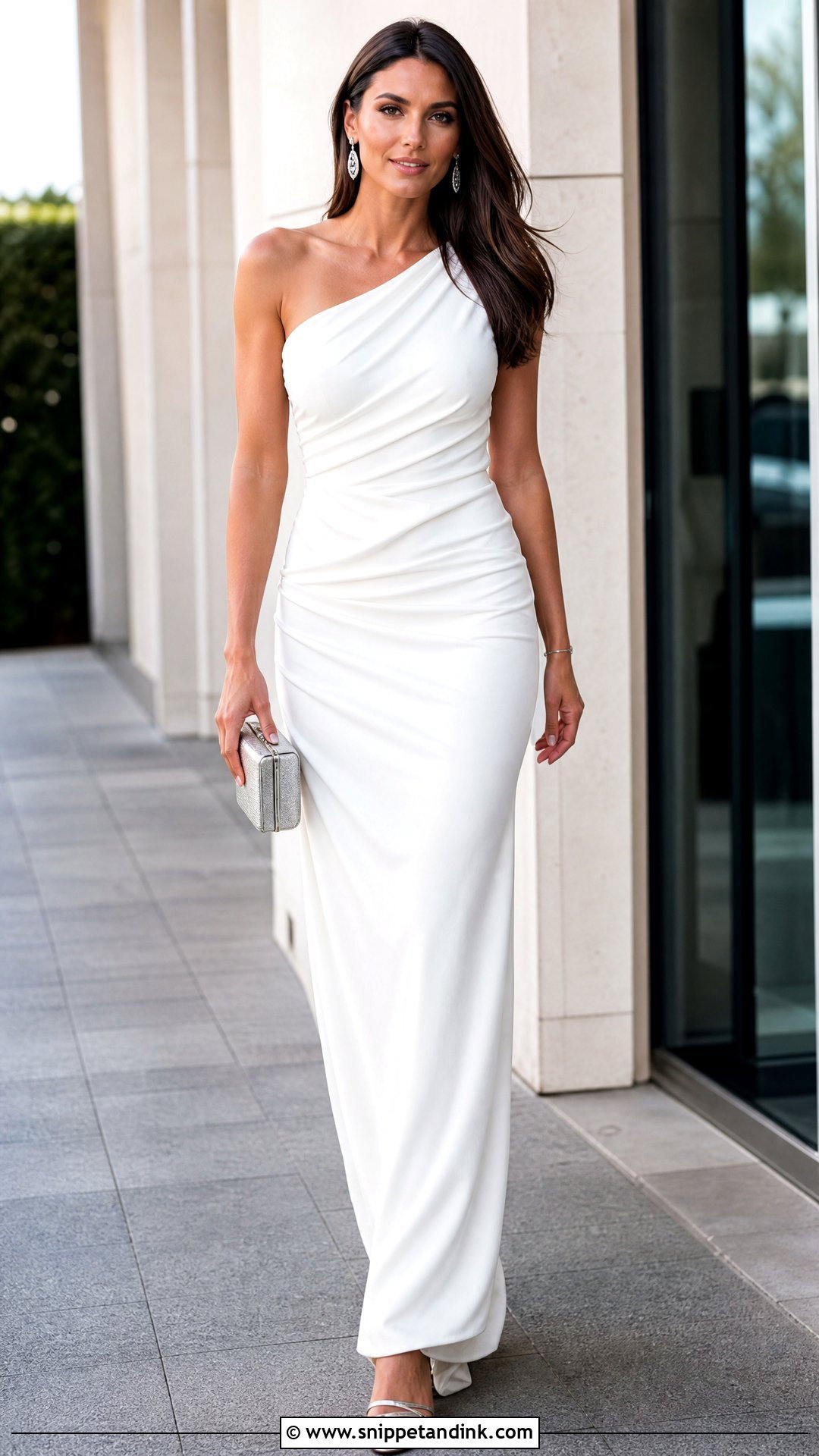
Asymmetry gives a one-shoulder gown its drama, so the rest stays quiet: diagonal draping across the bodice and a clean floor-length skirt with no ruffles. The single strap carries more weight than two would, and I have it fitted snugly with a little stay tape inside so it doesn’t creep toward the arm. One statement earring on the bare side is my favorite balance, though matching drops are fine. Metallic sandals, a silver clutch and a narrow bracelet. Sweep the hair behind the open shoulder or into a low side bun.
7. White Chiffon Empire Waist Gown
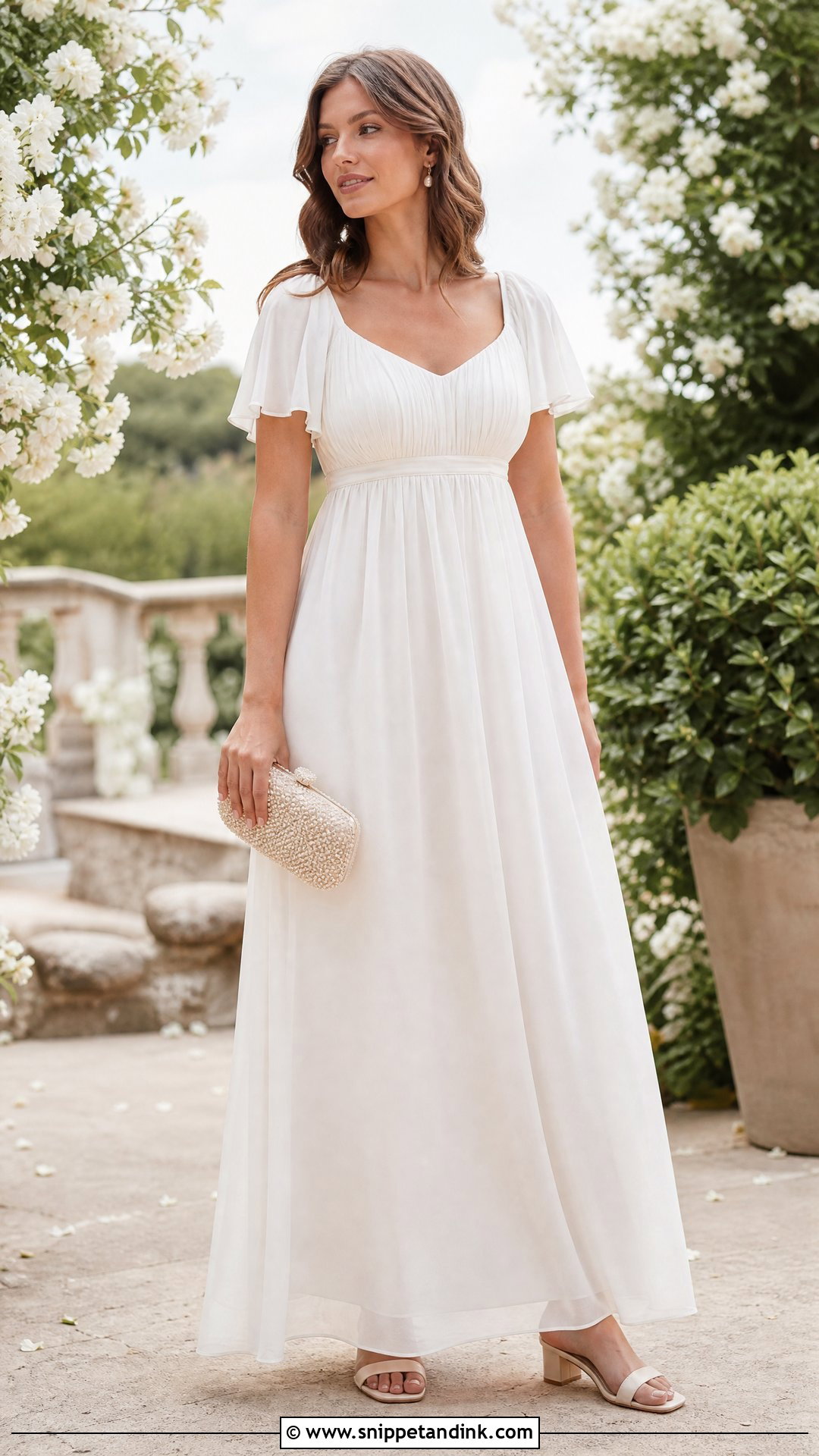
This is the softest gown here. Light chiffon and an empire waist make a dress that drifts as you walk, with the seam under the bust and a loose floor-length skirt that’s forgiving of everything below it. White chiffon must be lined; unlined, it turns transparent in daylight. Gathered straps or short flutter sleeves give light coverage. Low block-heel sandals for grass, pearls, a small beaded clutch in white or champagne, and loose waves or a twisted updo. Keep accessories small so the fabric isn’t crowded. Gardens and coastal ceremonies suit it best.
8. White Strapless Column Gown
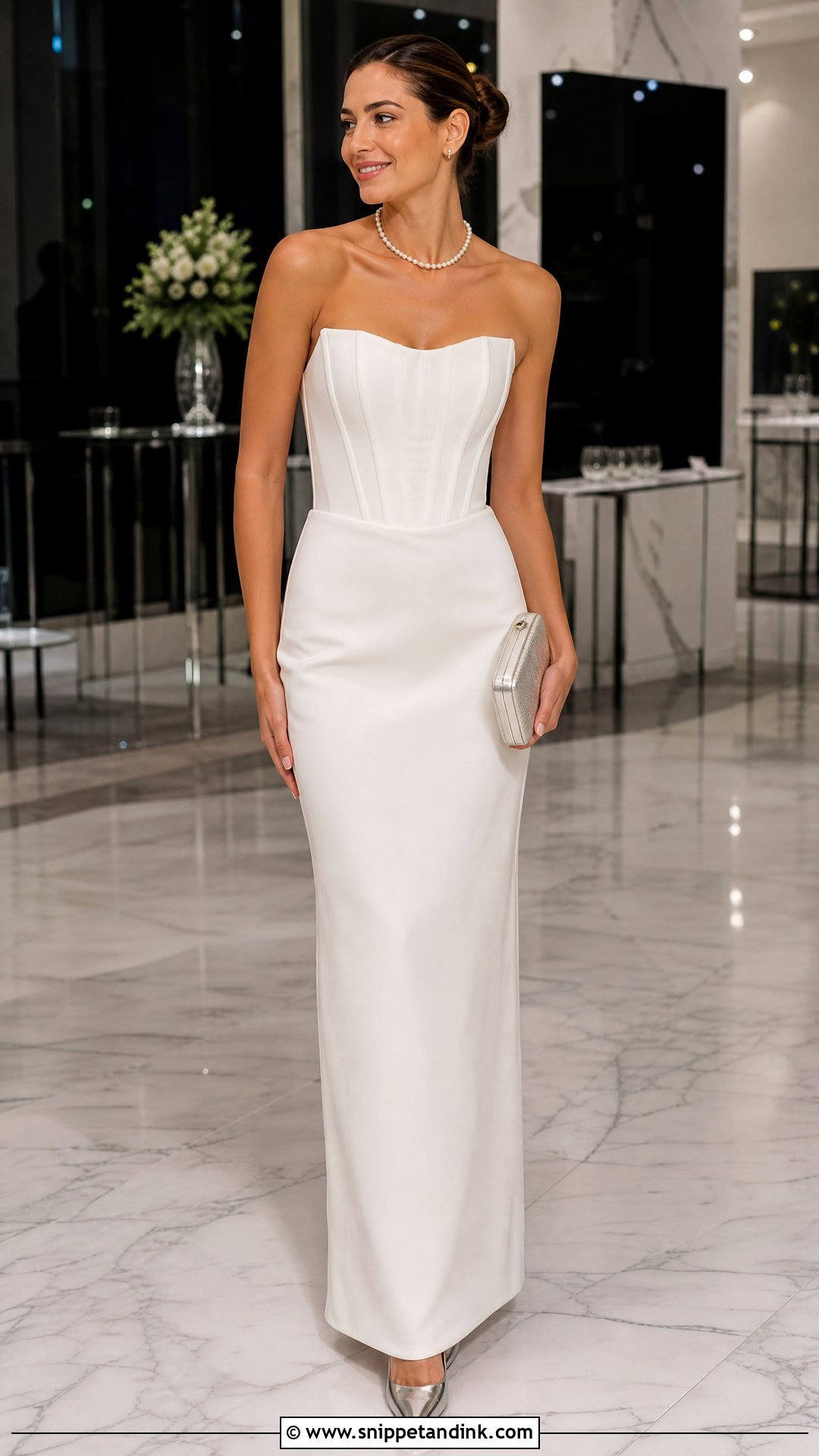
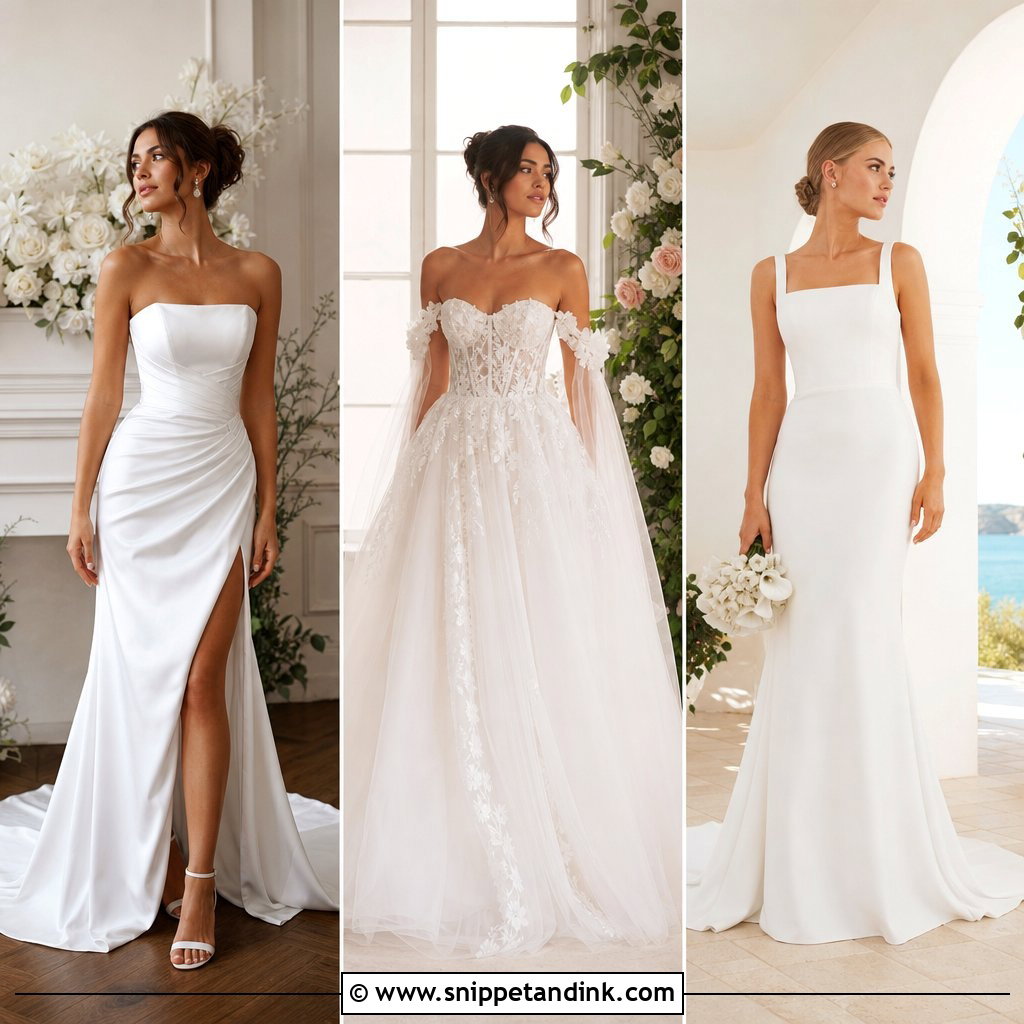
A strapless column looks easy and takes the most fitting of any gown here. The bodice holds itself up only with internal boning and an exact fit at the ribs, and the straight skirt needs a small back slit so you can actually walk. Once the bodice is right, styling is simple: a short pearl or collar-style necklace, pointed metallic pumps, a hard-shell clutch and hair that leaves the shoulders bare. If you find yourself tugging the neckline up in the fitting room, it isn’t finished. Formal dinners, black-tie receptions and modern indoor ceremonies.
9. White Cowl Neck Gown
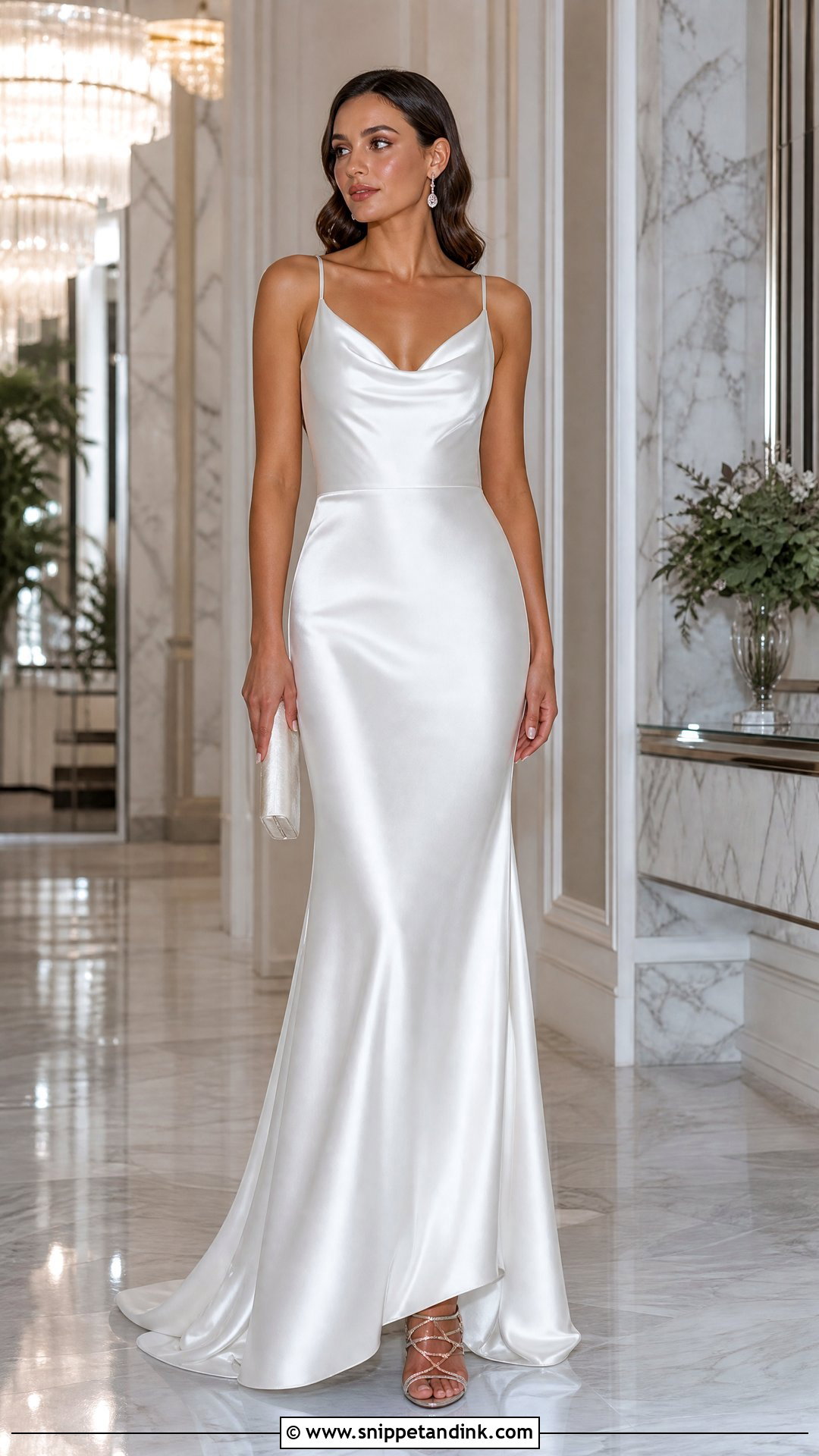
The cowl is a soft fold of fabric at the neckline, and satin drapes into it far better than stiff cloth. I pair it with narrow or medium straps and a slightly shaped waist, since a cowl on a dress with no shape at the middle can look like a nightgown. Thin white satin shows everything beneath, so smooth undergarments and possibly a slip under the gown are worth it. Small drop earrings, a slim clutch, strappy silver heels, and a low bun or waves tucked behind the ears. Ideal for a rehearsal dinner or evening reception where a ball gown would be too much.
10. White Cape Sleeve Gown
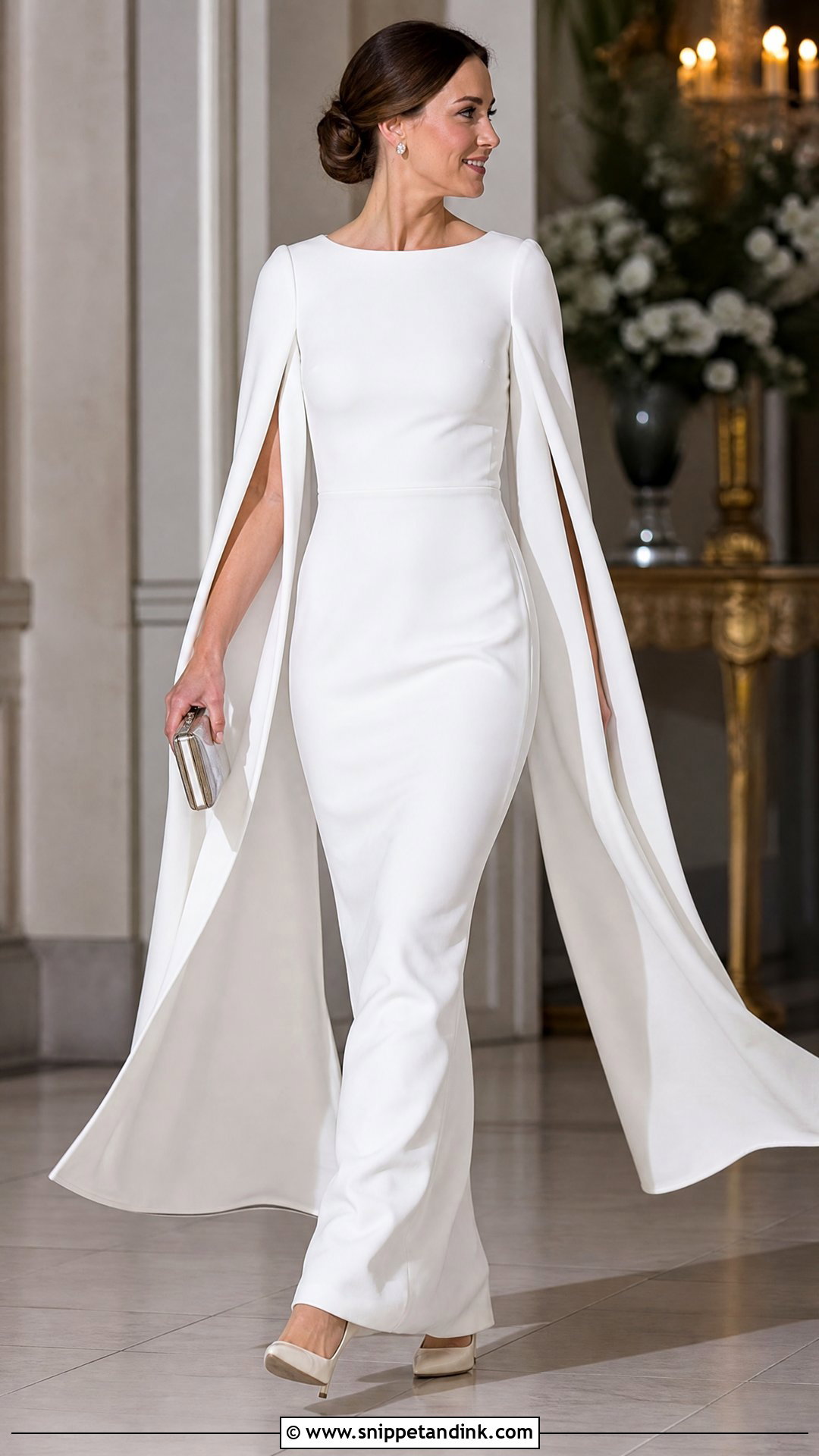
Cape sleeves give coverage with movement: they hang from the shoulder and swing as you walk, while the gown underneath stays narrow. A fitted column or a softly flared skirt keeps things from getting wide. I tell clients to skip bracelets with these, as the edge of the cape catches on clasps and settings. Crystal studs, a metallic envelope clutch, pointed ivory heels and a low bun so the cape falls cleanly. On camera the sleeves add motion to every walking shot without a stitch of embroidery. Formal ceremonies and evening receptions.
11. White Pleated Gown
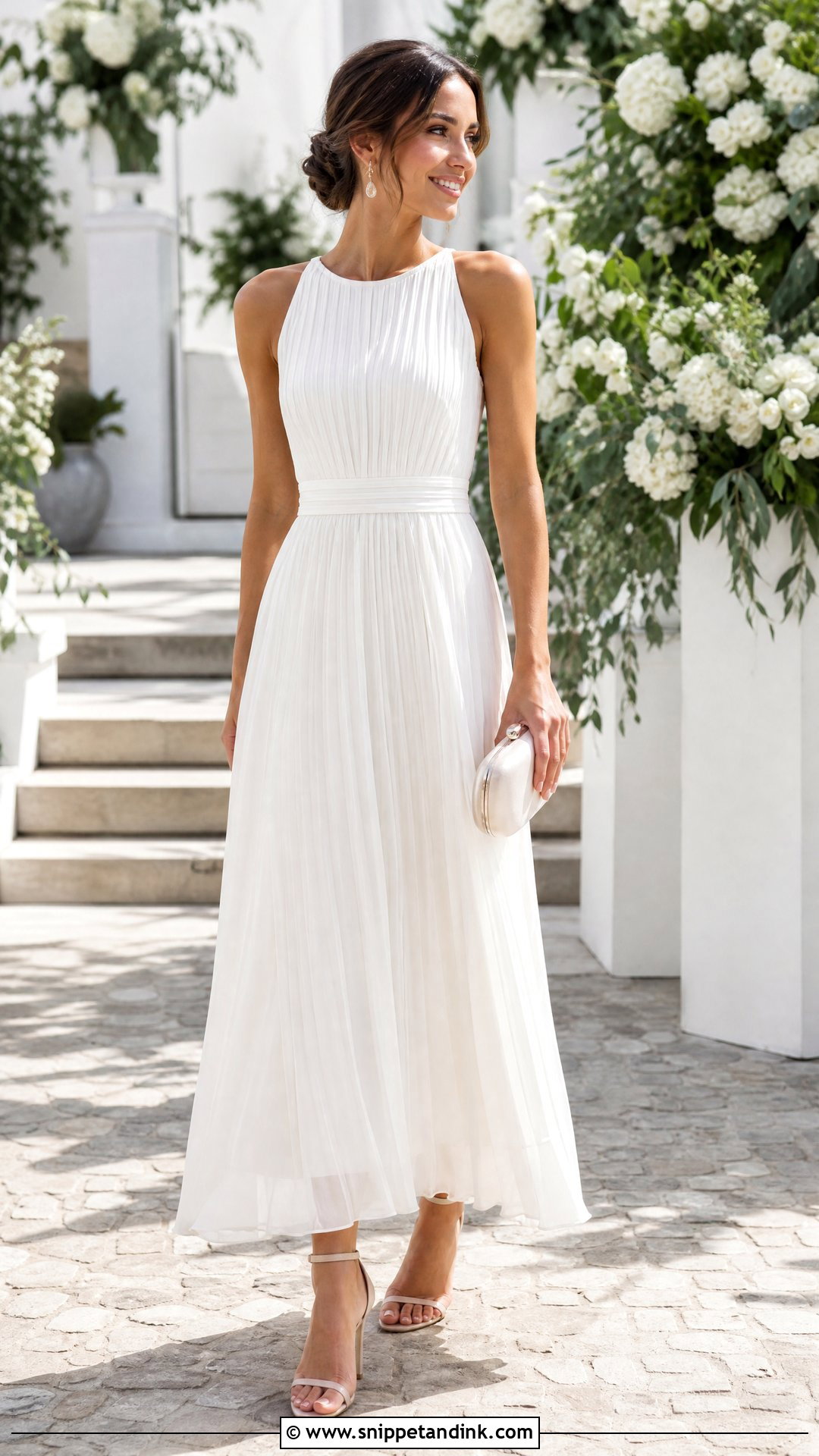
Fine pleats add texture to a white gown without sparkle, and the vertical lines make you look taller. A pleated chiffon or lightweight satin skirt under a fitted sleeveless bodice, waist clearly marked. Pleats need care: they’re set by heat and steam, so I’d never let anyone press them flat, and I hang the gown rather than folding it on the way to the venue. A slim metallic belt is optional if the waist needs more definition. Slim ankle-strap heels, a satin clutch, small drops and a half-up style or low twisted bun. Bright daytime venues show the pleats best.
12. White V-Neck Wrap Gown
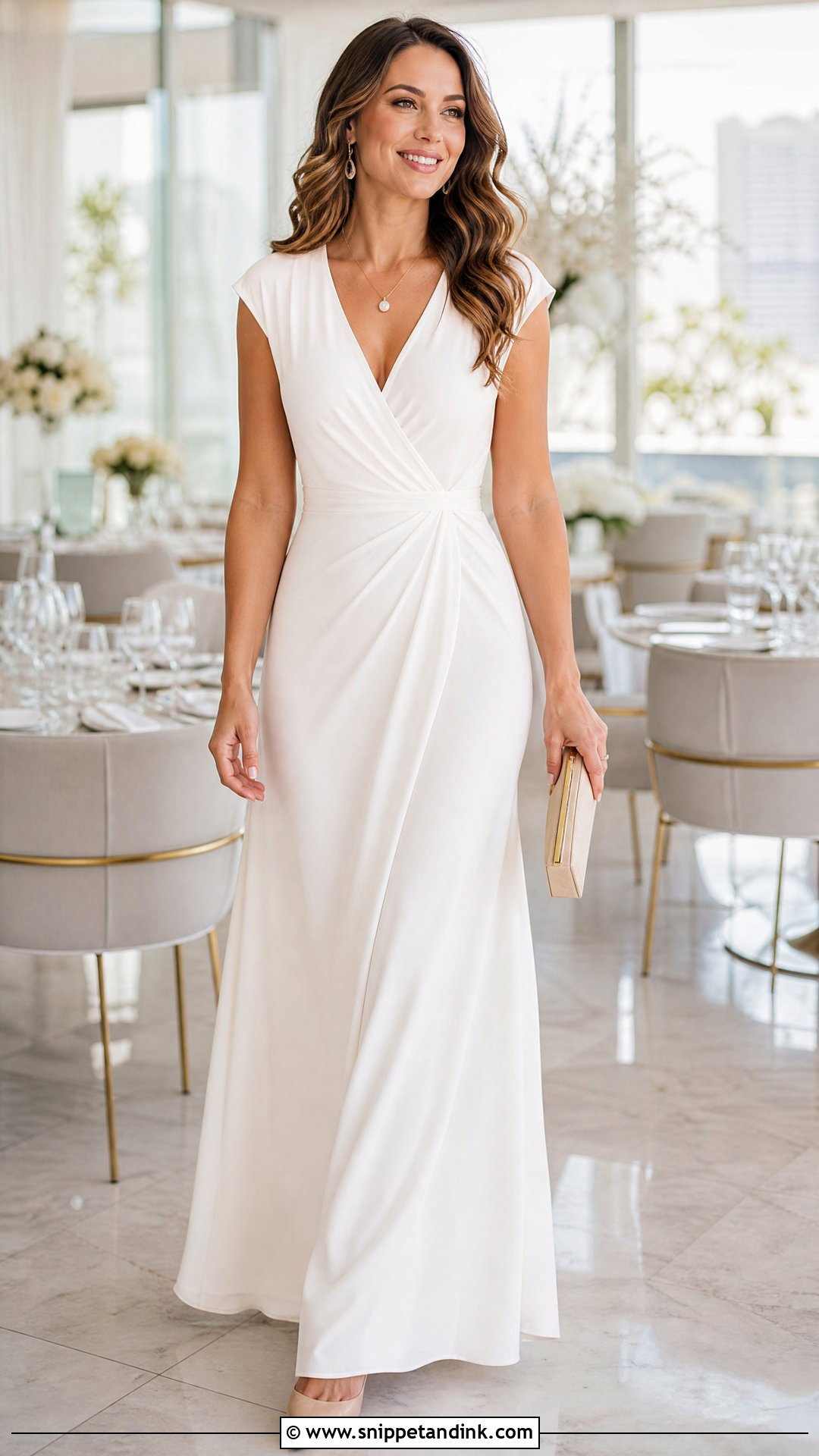
The crossover bodice of a wrap gown draws the eye to the waist, and the flowing skirt balances it. For an event where you’ll be hugging and dancing, I want a secure internal closure rather than a tie alone, so the V doesn’t widen as the night goes on. A small modesty panel or a shallower neckline gives more coverage if you want it. A fine pendant, medium earrings, neutral pointed pumps and a structured clutch to keep the soft shape from reading casual. Loose curls or a simple ponytail. Suits most figures.
13. White High Neck Gown
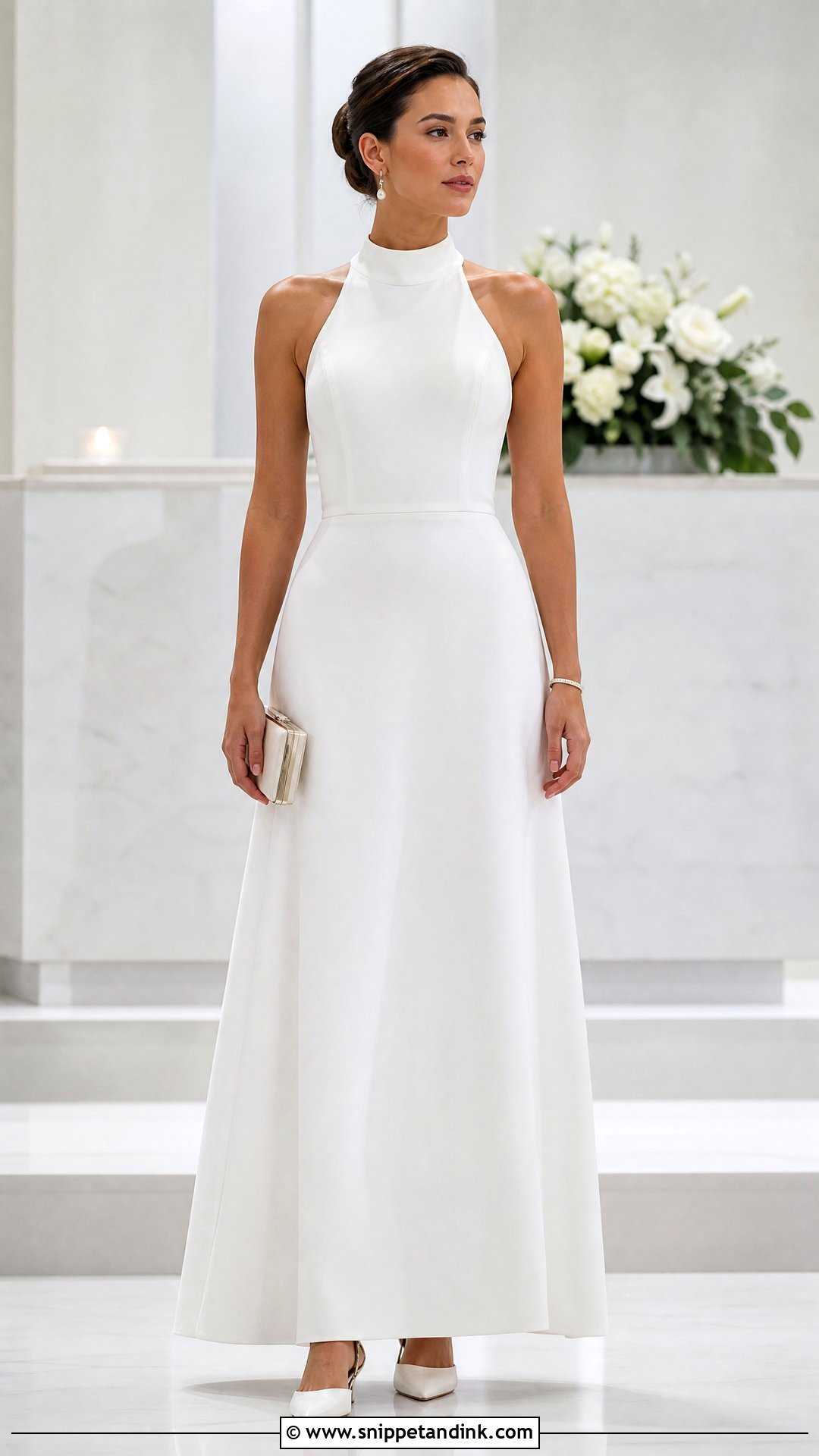
High necklines give a modest, contemporary look. Sleeveless, a shaped bodice, a defined waist, and a column or gentle A-line skirt. The neckline covers everything a necklace would, so I go to earrings instead: pearl drops or something geometric. Hair should go up or behind the shoulders, because loose hair over a high neck crowds the upper half. A subtle open back adds interest without changing the front. Closed-toe slingbacks, a slim bracelet and a clean rectangular clutch. Check the collar while turning your head; it shouldn’t press at the throat.
14. White Boat Neck Gown
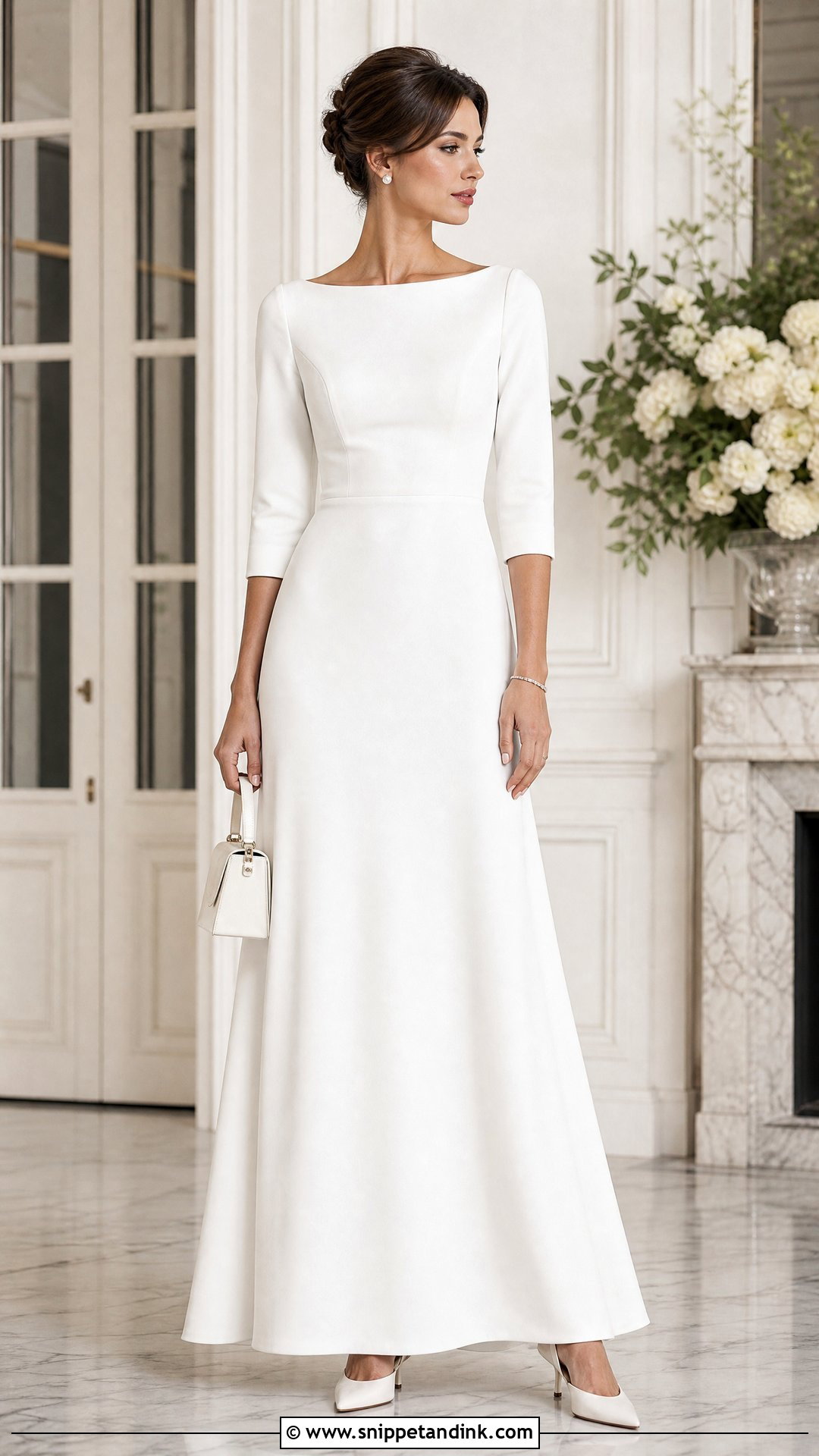
The boat neck draws a straight line across the collarbone from shoulder to shoulder, and on a fitted crepe gown with three-quarter sleeves or a sleeveless satin one with a gentle flare it looks quietly classic. Everything depends on shoulder seams. If they sit even slightly wide, the neckline slides and the line breaks, so that’s the first thing I pin. Pearl studs, a slim watch or bracelet, a small structured bag and pointed slingbacks. A French twist, low chignon or smooth bob keeps the neck clear. Any season.
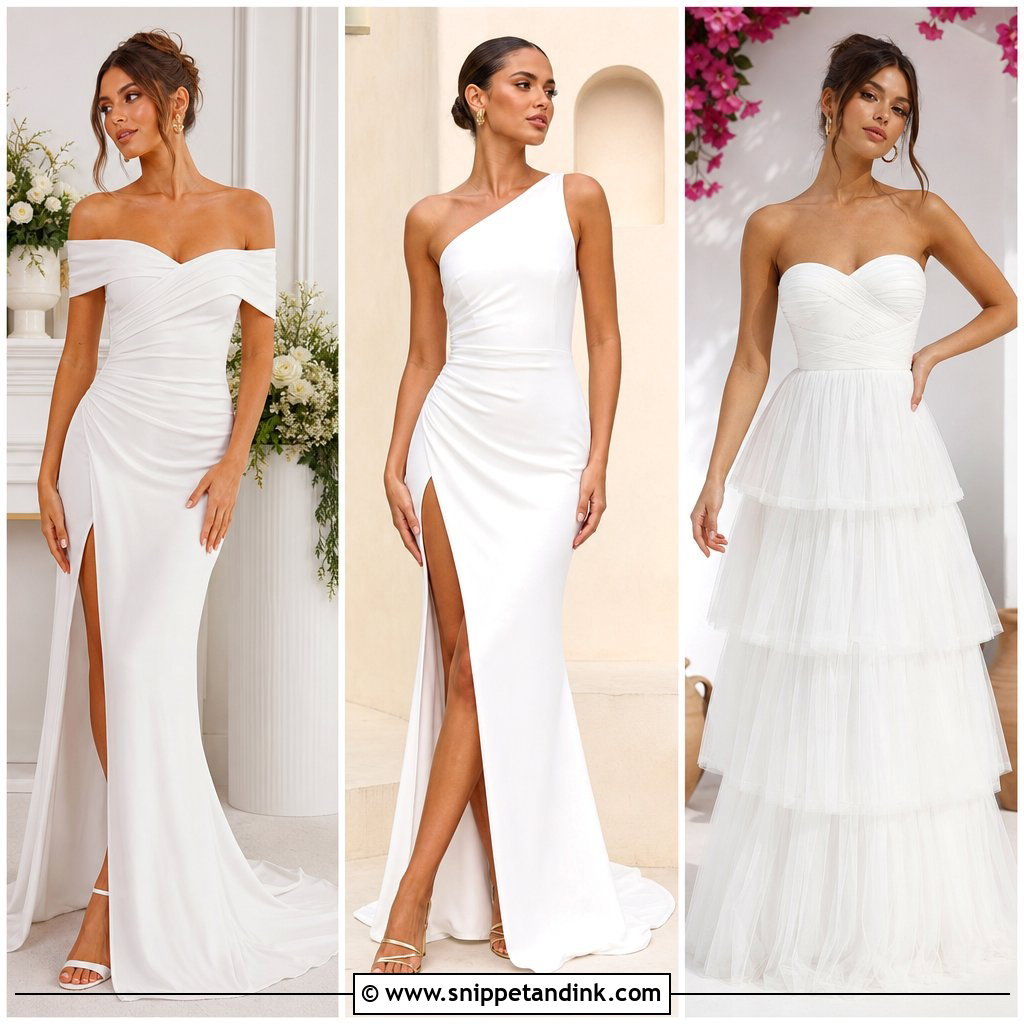
15. White Puff Sleeve Gown
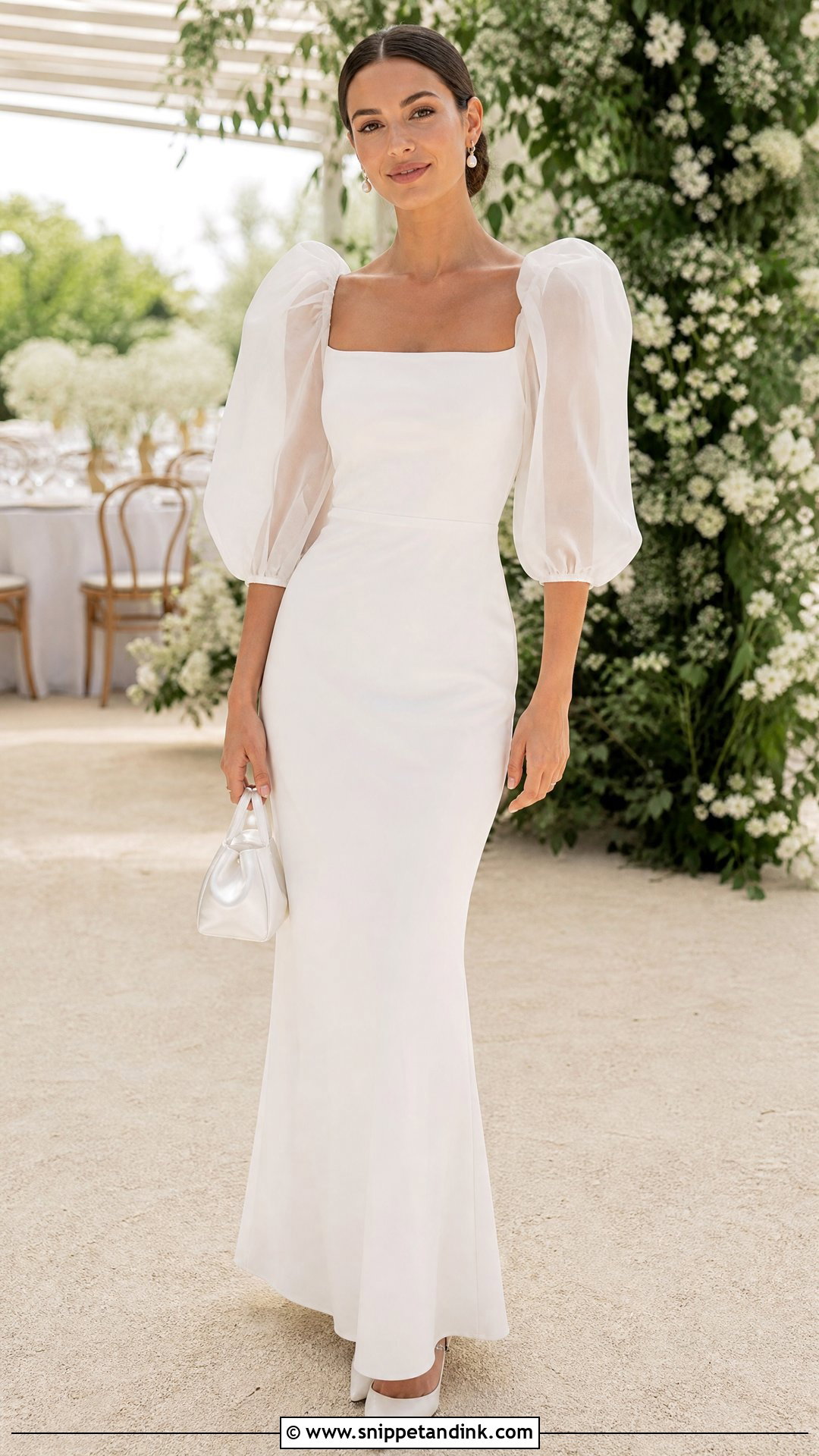
Soft puff sleeves in sheer organza or lightweight chiffon add one romantic note to an otherwise plain gown. Pair them with a fitted bodice and a simple floor-length skirt, and keep the volume controlled. Organza holds air and shape; chiffon collapses softly, so pick by how much puff you actually want. A center-parted low bun sets off the round shape of the sleeves. Pearl or crystal studs, low pointed pumps and a small satin bag, with no statement necklace unless the neckline is very open. Garden parties, daytime receptions and showers.
16. White Mermaid Gown
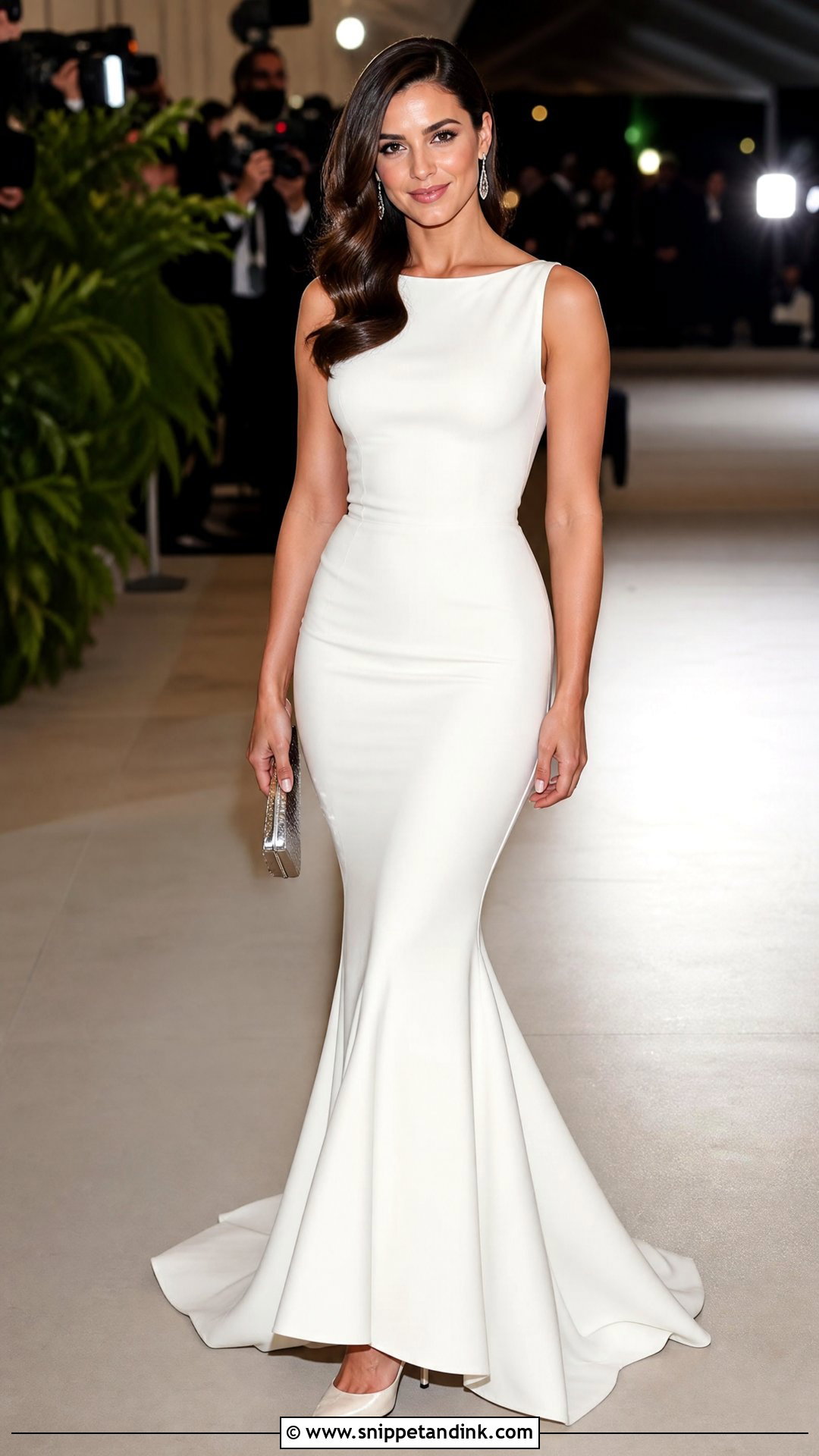
Mermaid gowns follow you closely through the bodice and hips and flare below the knee. I’d keep the fabric smooth, crepe or satin, and set the flare where you can still climb stairs; a flare starting too low turns every step into a shuffle. Sit in it at the fitting, because a mermaid that only works standing will spend the reception being tugged. Smooth, supportive undergarments are essential in a fitted white skirt. Pointed heels, a small metallic clutch, streamlined drops and a side-parted wave or sleek low bun.
17. White Tulle A-Line Gown
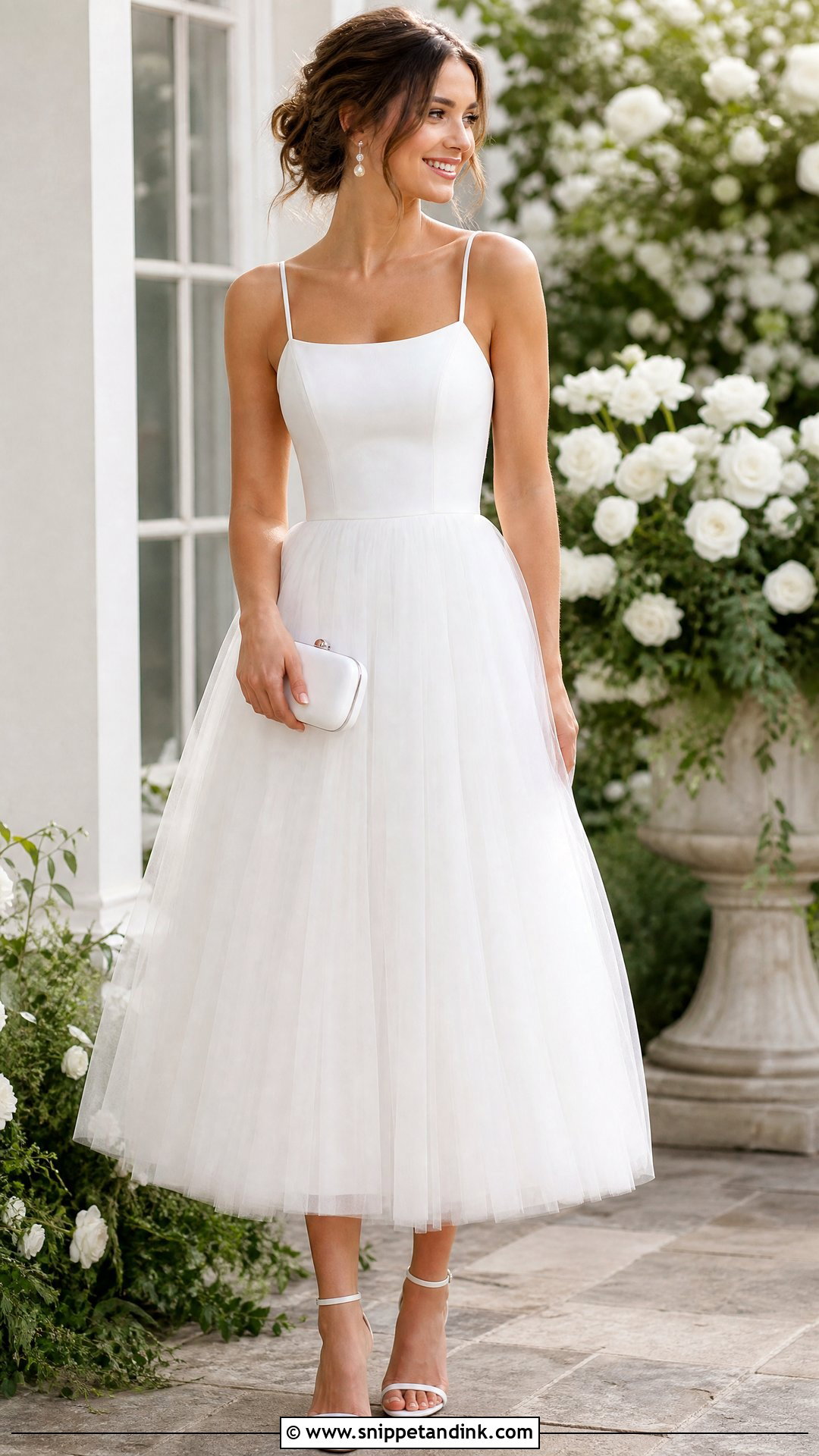
Tulle can look light and modern if the skirt is soft rather than puffed. A fitted bodice, a clean neckline, then gathered layers floating from the waist over a smooth satin lining that gives coverage and helps the tulle fall evenly. Tulle snags. Beaded bags, rough bracelets and even a rhinestone shoe buckle can pull threads, so I keep accessories smooth: ankle-strap heels, pearl earrings, a small satin clutch. Loose updo or polished waves. Garden parties and bright indoor receptions suit the airy feel.
18. White Jacquard Ball Gown
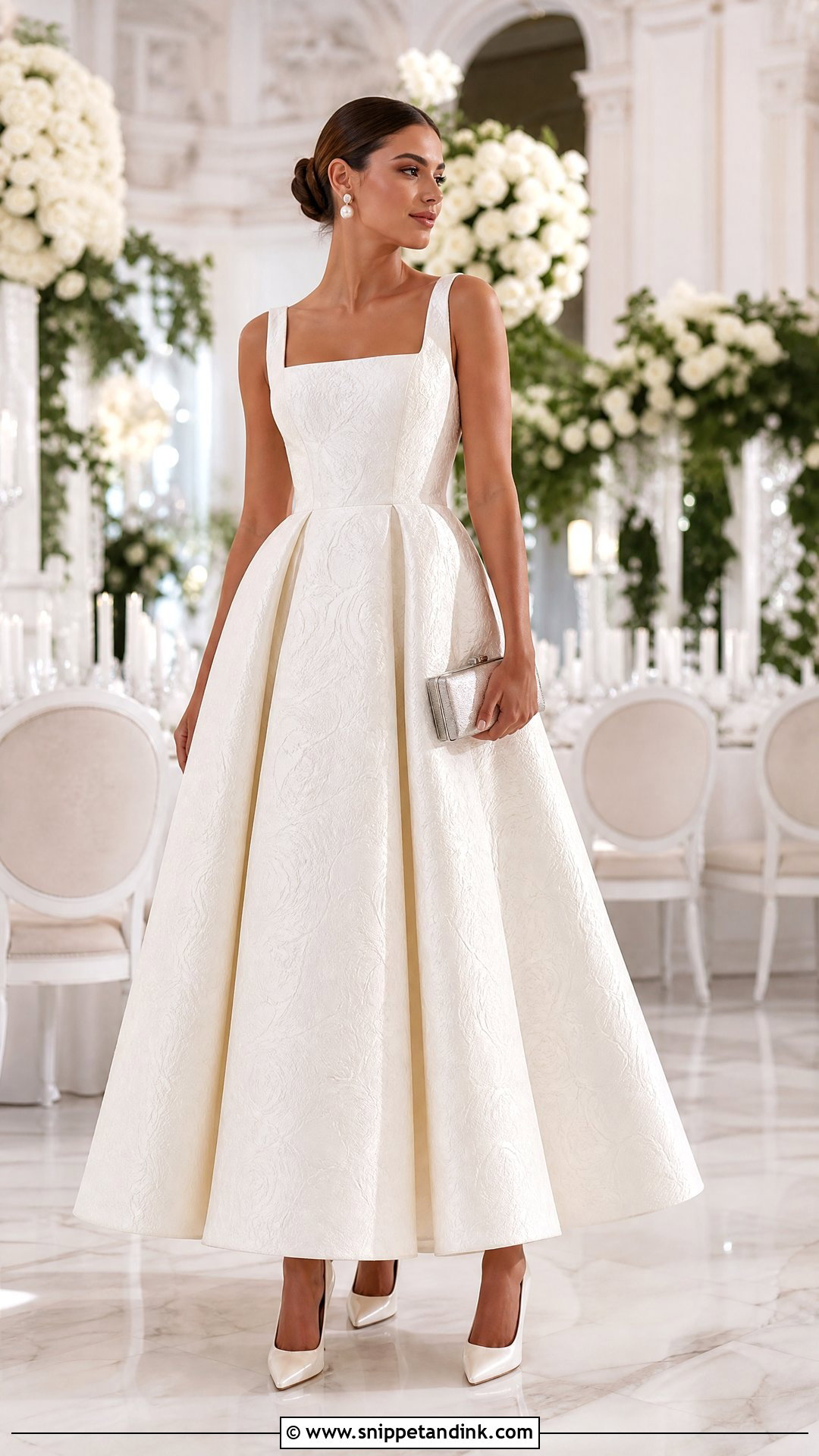
Jacquard has its pattern woven in, so a white ball gown in it looks plain from across the room and shows florals or geometrics only as light moves. That’s the appeal: decoration that doesn’t add bulk. A structured bodice and full skirt, everything else minimal, maybe hidden pockets in the side seams. White jacquard can look slightly cream next to optic white accessories, so I match shoes and clutch by holding them against the fabric in daylight. Pearl earrings, pointed pumps, a small box clutch in ivory or silver, and a polished bun or smooth half-up style. Needs a roomy venue.
19. White Gown With Side Slit
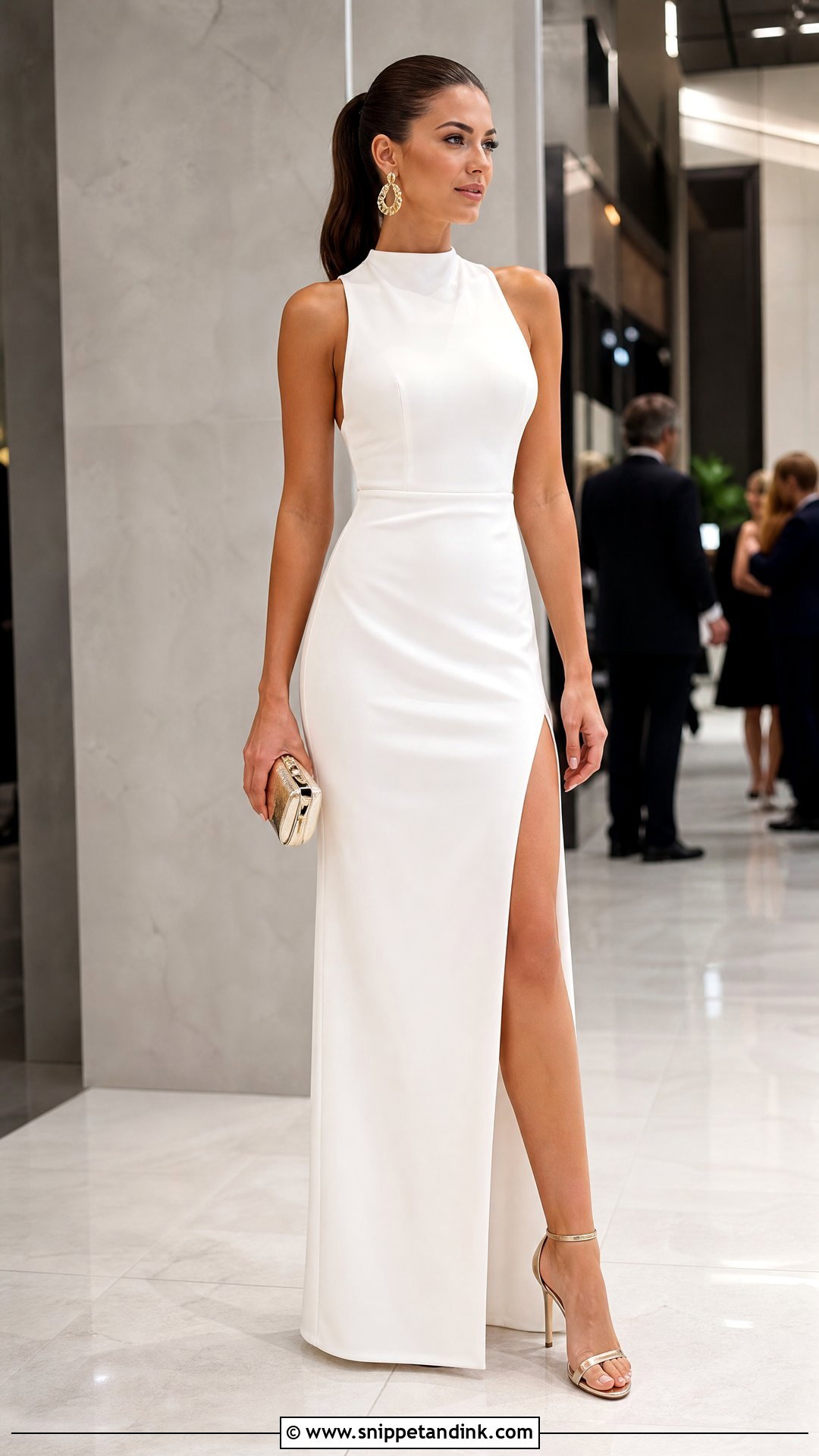
A side slit makes a straight skirt easy to walk in and gives the look a modern edge. Pair it with a fitted upper body and more coverage up top, a higher neck or wider straps, so the leg isn’t competing with a plunge. I mark slit height with the client seated; it opens further than you expect once you sit or climb into a car. Polished ankle-strap heels, sculptural earrings, a compact clutch and smooth waves or a sleek ponytail. Galas and upscale receptions where a ball gown would be too formal.
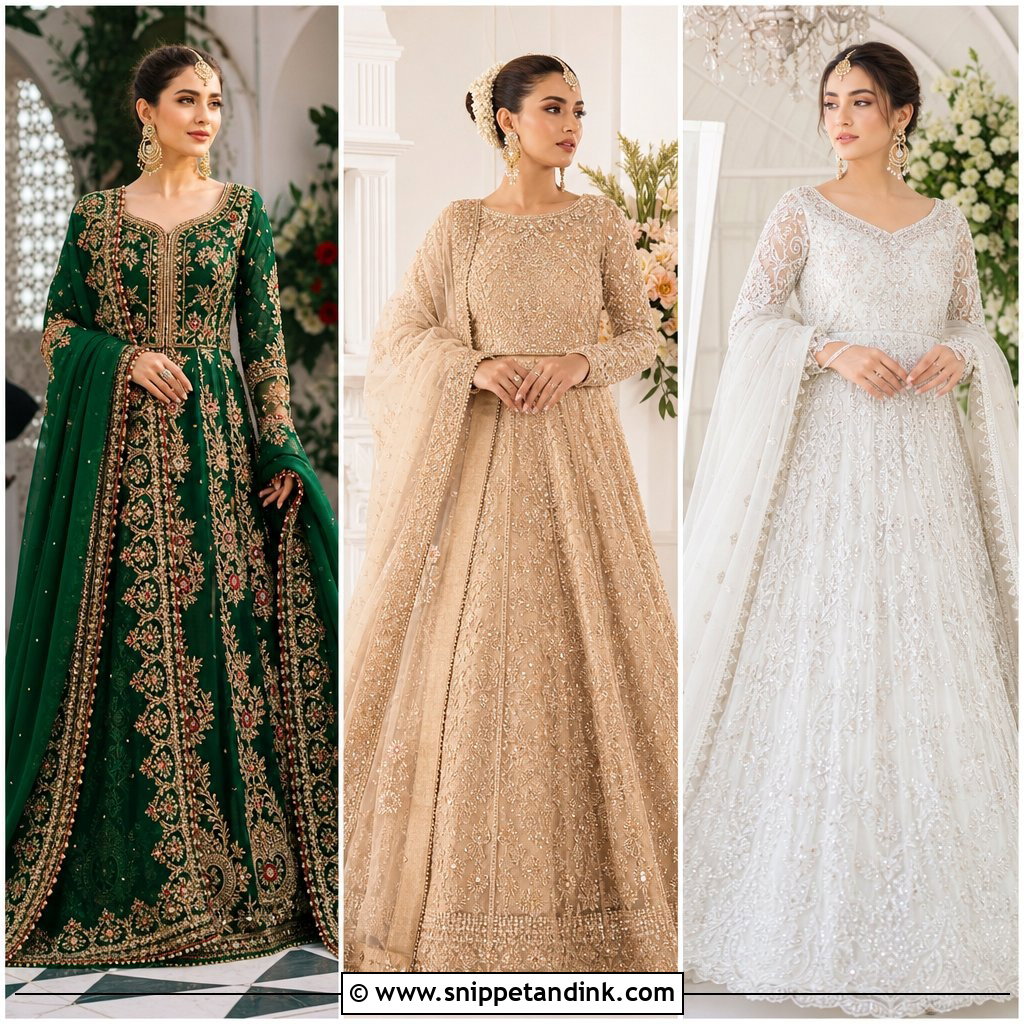
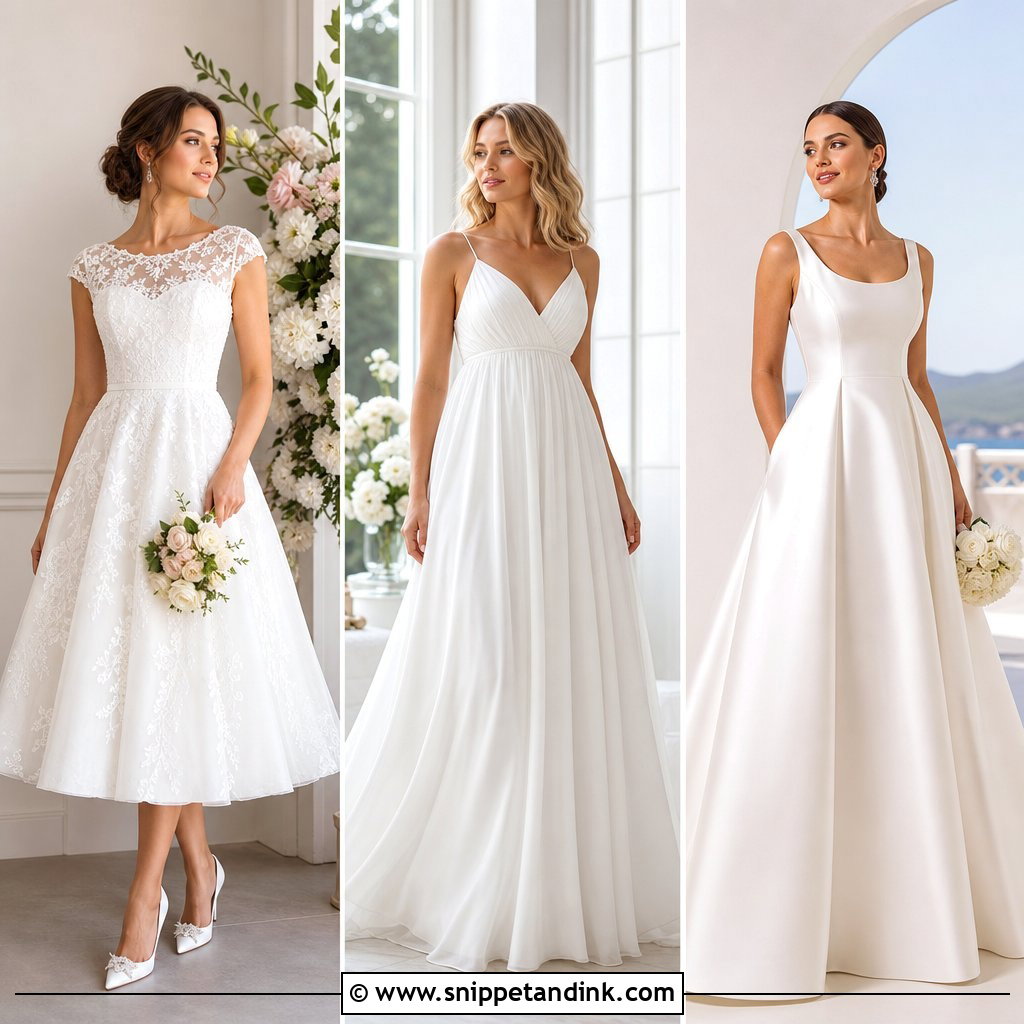


20. White Gown With Detachable Bow
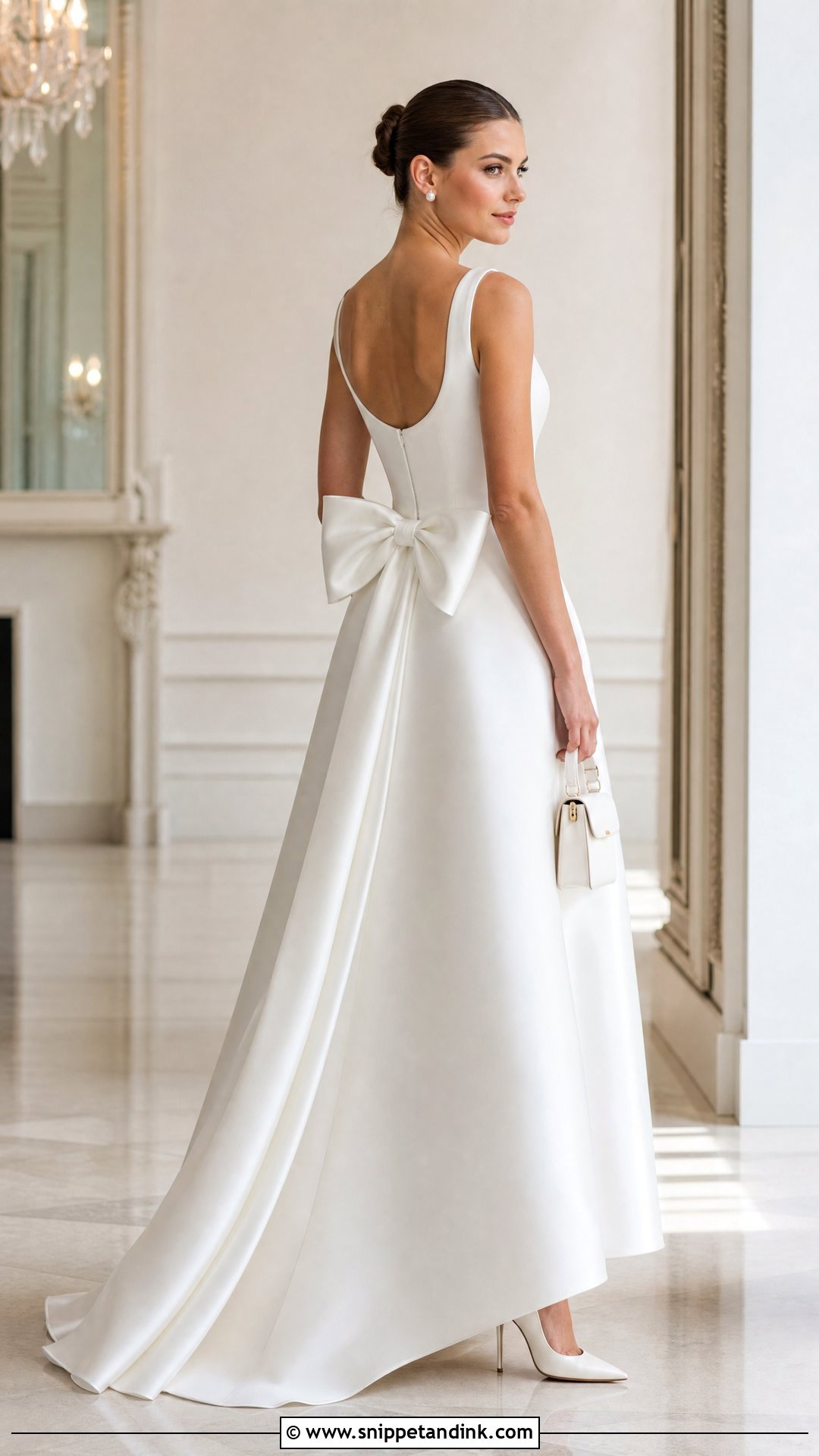
A detachable bow lets you add a detail and take it away again. On a smooth satin or crepe gown with a fitted bodice and an A-line or column skirt, I’d put it at the back waist or on one shoulder. Ask how it attaches: hooks or snaps sewn into the dress hold better than pins, and they leave no marks when the bow comes off for the party. A neat bun shows a back bow; side-swept waves suit a shoulder bow. Pearl studs, pointed ivory heels and a structured mini bag.
Hems, Lipstick and Red Wine on a White Gown
White fabric picks up everything, and floor-length white picks it up from the ground. I pack a small kit for every client who wears it and I’d suggest the same for anyone dressing themselves.
Before the event
Get dressed after your makeup is finished and set, with a scarf or old pillowcase over your face as the gown goes over your head. Foundation transfer at the neckline is the mark I see most often. If you’re walking across grass or gravel, ask for the hem to clear the ground by a finger’s width, or carry the skirt for the outdoor stretch.
During it
- Blot a spill straight away with plain water and a white cloth; rubbing pushes the stain deeper into satin and crepe.
- Chalk or a stain stick made for wedding gowns can cover small marks for photos, but test it on an inside seam first.
- Keep red wine and coffee at a distance during the first hour, while you’re still having portraits taken.
Take the gown to a cleaner who handles bridal or eveningwear soon after the event. Some marks, like sugar from champagne, are invisible at first and turn yellow over time if they’re left in the fabric.
Plain White Shows Every Stitch, So Fit Comes First
Silhouette, fabric, comfort and formality narrow a white gown down quickly. Satin and crepe give structure; chiffon and tulle move. Necklines, sleeves and waist placement decide how the gown balances your proportions. After that, supportive undergarments, shoes you can stand in, a single piece of jewelry and a hairstyle that keeps the gown’s best detail visible. I’d always spend on tailoring before adding embellishment. A plain white dress that fits perfectly will look more expensive than a decorated one that doesn’t.
You'll Like These Ideas:






Leave a Reply