
Sleeves on a winter gown do more than keep the chill off your arms in a stone church or a snowy courtyard. From the fitting room, I watch them change everything about a dress: where the eye lands, how the neckline balances, how freely you can hug people at the door. Lace, satin, crepe, tulle, velvet and Mikado each behave differently once the temperature drops and the heating comes on, and the sleeves below run from sheer illusion to bishop, puff and detachable. I’ve kept the notes on shoes, veils, jewelry and coats with each dress, because in winter those pieces end up in the photos as often as the gown does.
How Much Warmth Each Sleeve Fabric Gives You
Brides often assume long sleeves mean a warm dress. In the fitting room I find the fabric matters far more than the length, and this is roughly how they rank once you step outside.
- Velvet and heavy satin are the warmest, with real insulation in the weave, though they can feel too warm in a heated room after an hour of dancing.
- Mikado and crepe sit in the middle. They’re opaque and block wind far better than lace.
- Corded or lined lace gives decent coverage, but the open spaces in the pattern let cold air straight through.
- Illusion mesh, tulle and chiffon look covered and feel almost bare. Treat them as a summer sleeve that happens to reach the wrist.
If your gown sits at the lighter end, the warmth has to come from underneath or on top. I use a thermal slip with flat seams, a skin-tone long-sleeve base layer under opaque sleeves only, and a coat, cape or faux fur stole for outdoor portraits. Sheer sleeves show anything worn beneath them, so I never try to hide layers there.
Three Arm Movements I Ask For at Every Fitting
Sleeves are the part of a gown alterations most often get wrong, because they’re pinned while the bride stands still with her arms down. So I ask for three movements: arms up as if hugging someone taller, both hands forward as if holding a bouquet, and an elbow bent as if lifting a glass. If the back armhole pulls during any of them, the sleeve cap needs more room. A long sleeve should end on the wrist bone or slightly past it. Lace can taper into a point over the hand, but a satin sleeve that stops above the bone looks outgrown in photos.
1. Long Sleeve Lace A-Line Winter Wedding Dress
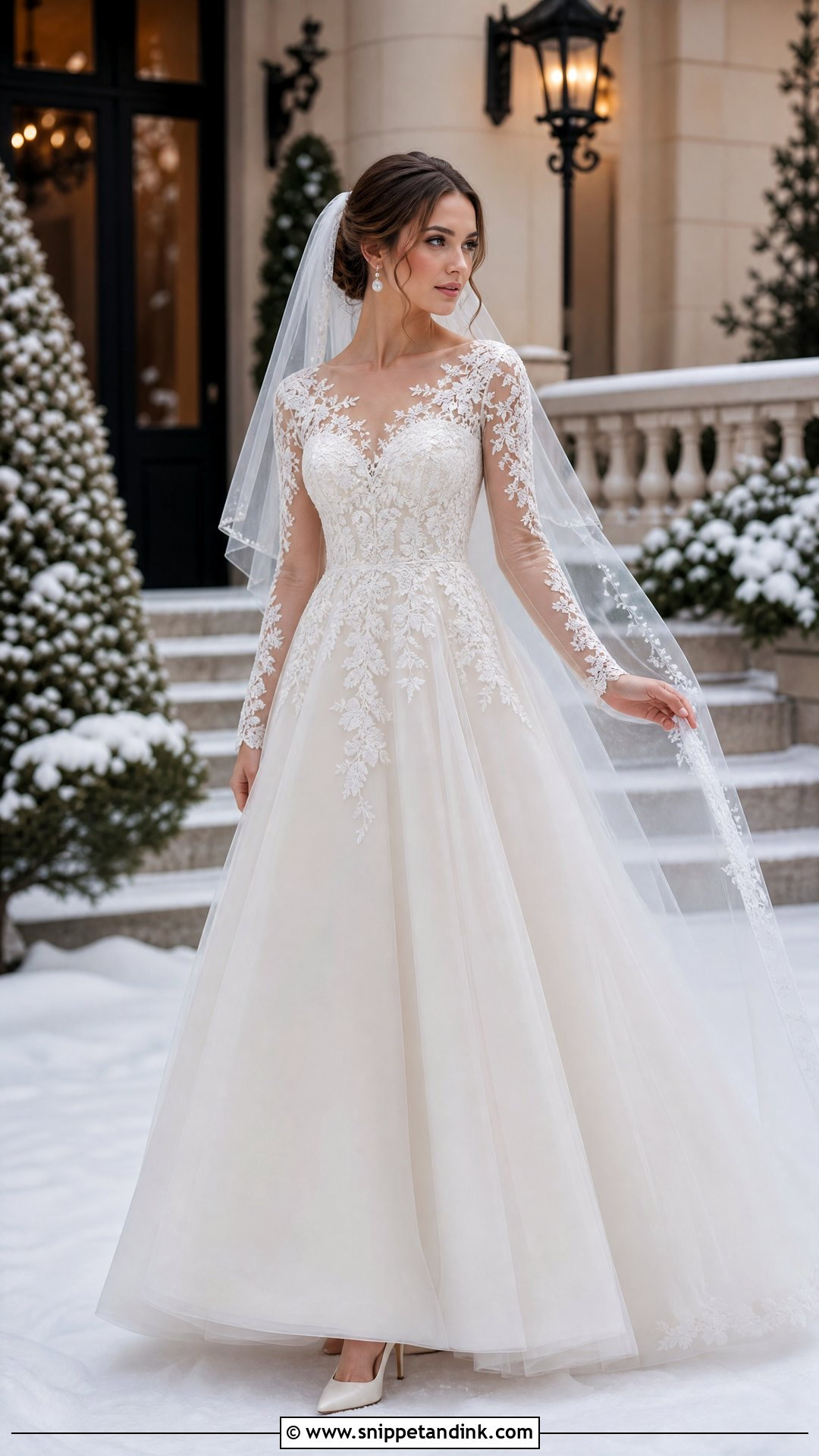
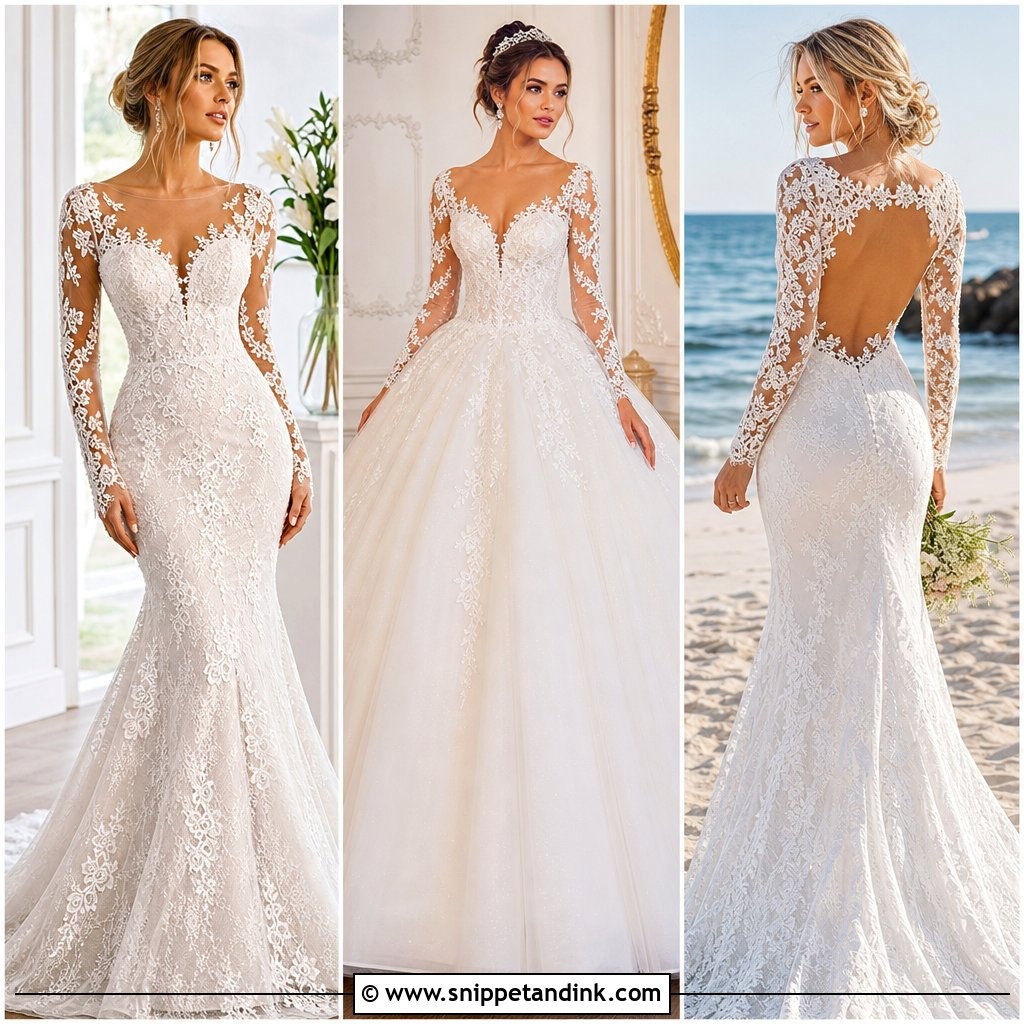
Lace sleeves on an A-line are what I’d put on almost anyone first. The skirt skims the hips instead of gripping them, and lace hides the small wrinkles a sleeve picks up at the elbow. Look for floral lace sleeves on a fitted bodice, a natural waist and a lightly layered skirt, with a soft V-neck so all that coverage doesn’t close up the upper body. Pointed ivory heels, pearl drops, a fingertip veil edged in matching lace and a smooth low bun keep the sleeve detail visible. At the trial I ask the bride to cross her arms and reach forward, since lace without stretch pulls at the back armhole. Keep a white tailored wool coat nearby for outdoor portraits.
2. Satin Ball Gown Winter Wedding Dress With Sleeves
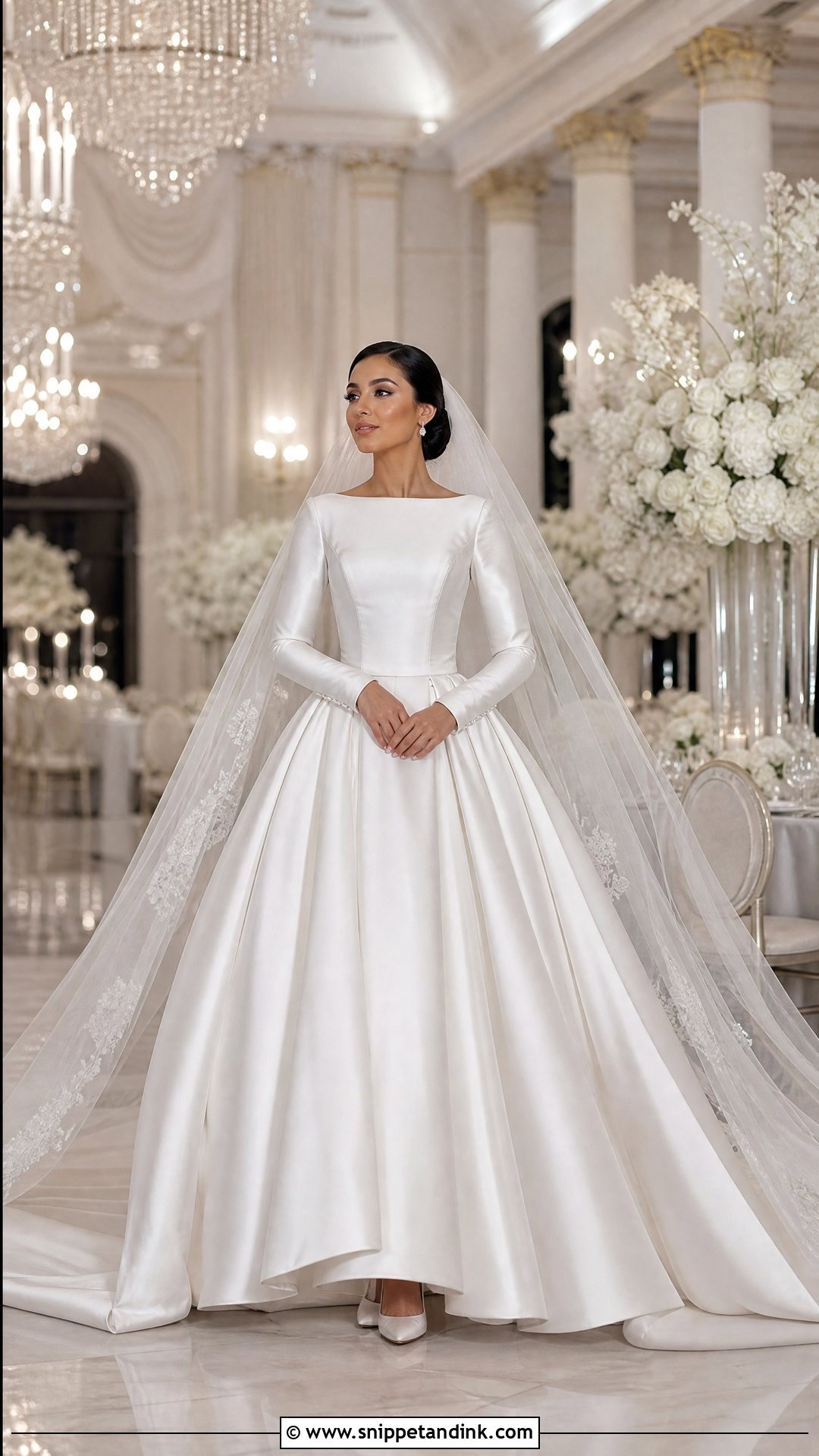
Satin tells the truth about fit. Every pull line at a seam catches the light, so a winter ball gown in crisp satin needs a fitted bodice, a full skirt, covered buttons and long sleeves that stop cleanly at the wrist bone. A bateau or shallow scoop keeps the top quiet against all that volume. I pair it with crystal studs, a cathedral veil, closed-toe satin pumps, a clean chignon and softly defined makeup, and I always ask about hidden side pockets for a tissue. It reads best in bright ballrooms and historic hotels. Satin also creases wherever you sit, which is why I tell brides to stay standing for the last half hour before the ceremony.
3. Crepe Mermaid Winter Wedding Dress With Illusion Sleeves
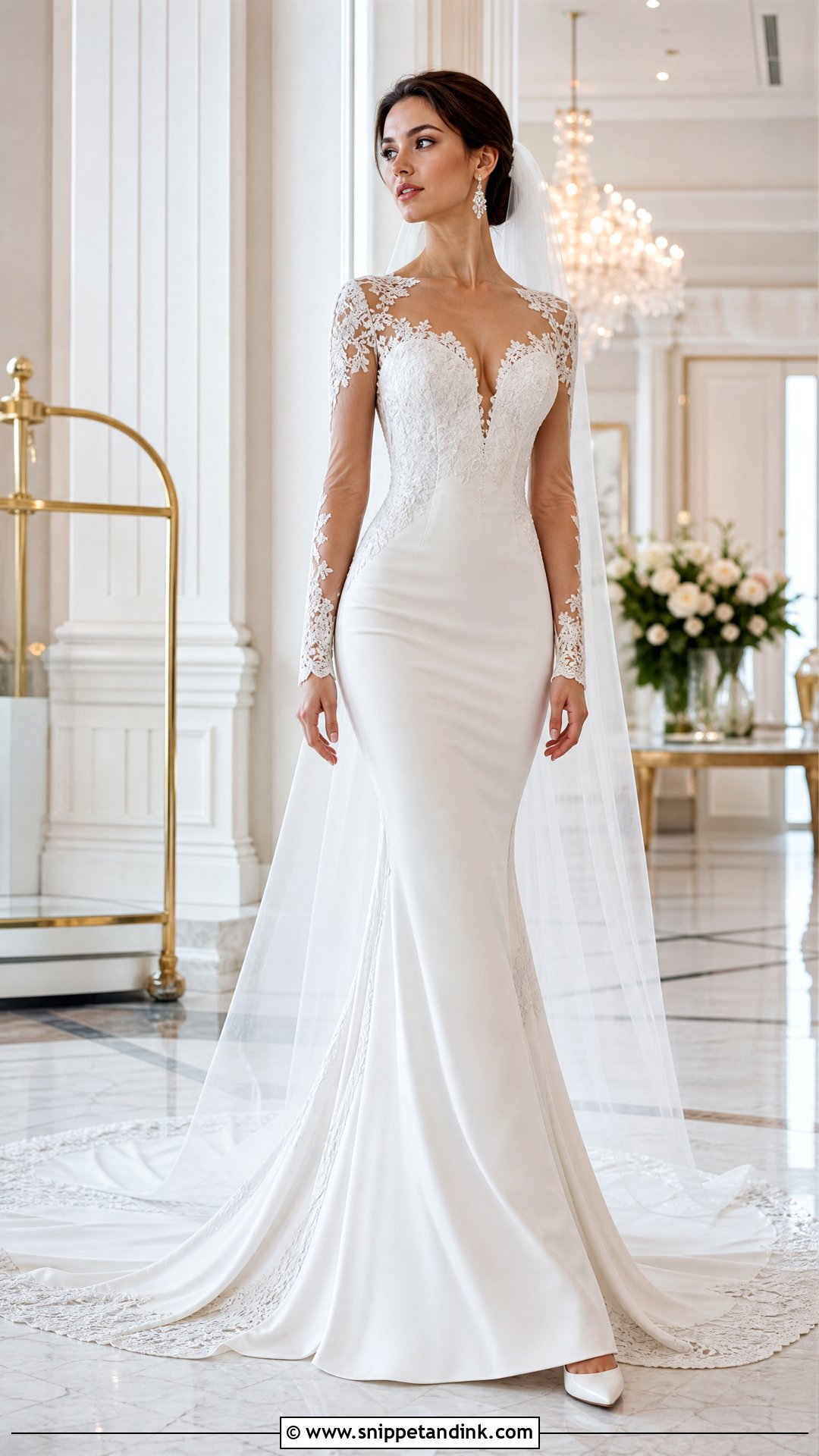
Crepe has no sheen to hide behind, which is exactly why a mermaid cut in it looks so clean. The interest comes from sheer illusion sleeves with lace appliqués placed along the arm, and a low back or covered illusion back adds detail without breaking the line through the bodice and hips. Narrow pointed-toe heels, a simple chapel veil, small crystal earrings and a side-parted bun suit it. The tailoring has to be precise: if crepe pulls across the waist or thighs, drag lines show in every full-length photo. I have a removable train loop or bustle added so you can dance once the formal photos are done.
4. High Neck Lace Winter Wedding Dress With Sleeves
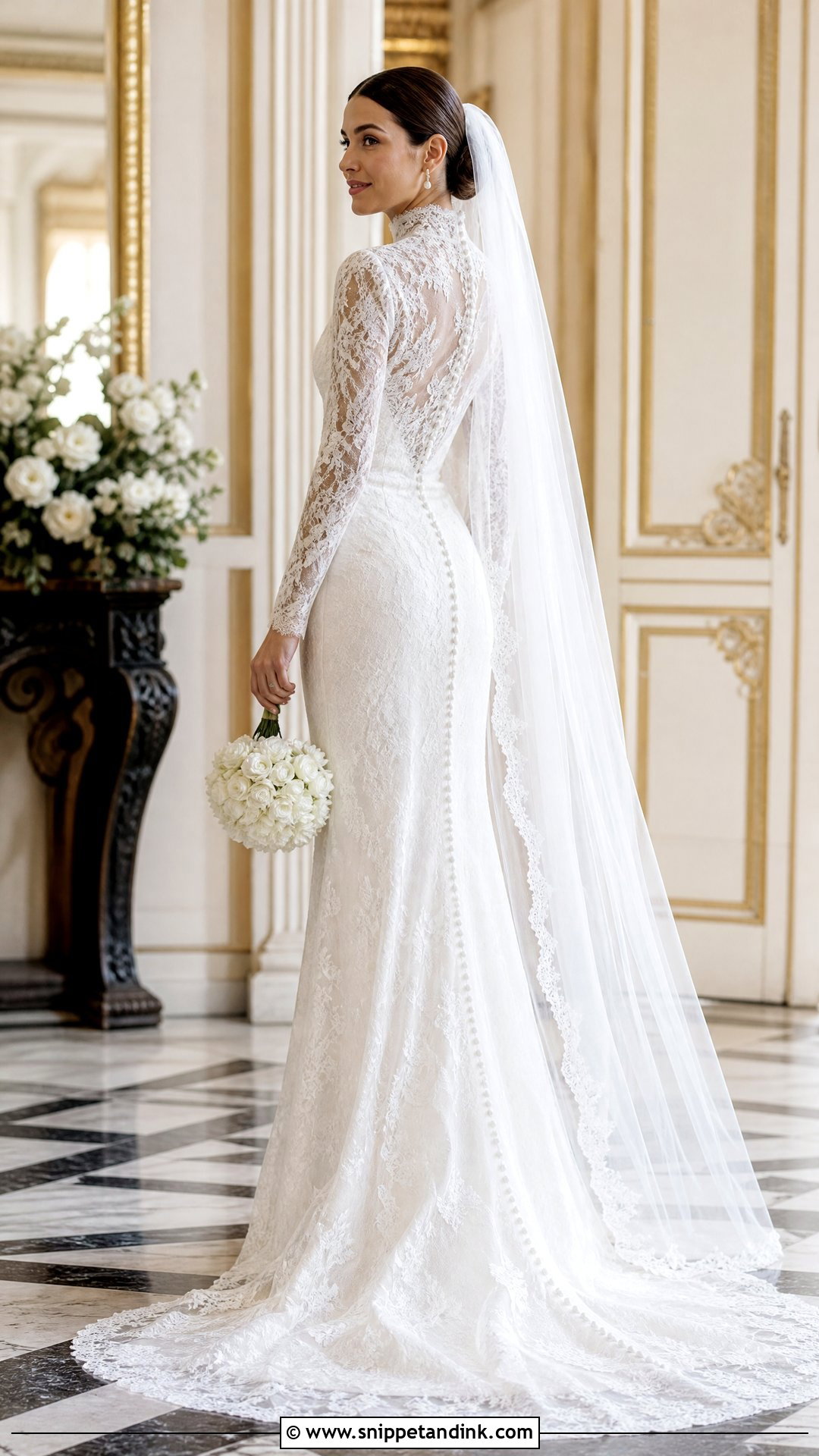
High necks run warm, and that’s the first thing I mention for a heated indoor reception. Lightweight lace over a fitted lining keeps the vintage feel without the stuffiness, on a gently shaped sheath or soft A-line with small covered buttons down the back. Skip the necklace. Pearl studs or slim drops let the neckline lead, with a low twisted bun, fingertip veil and almond-toe ivory heels. More bust coverage is an easy request at alterations: a raised lining under an illusion neckline. White flowers, trailing greenery and a structured cream coat sit comfortably beside lace that already does most of the talking.
5. Square Neck Mikado Winter Wedding Dress With Sleeves
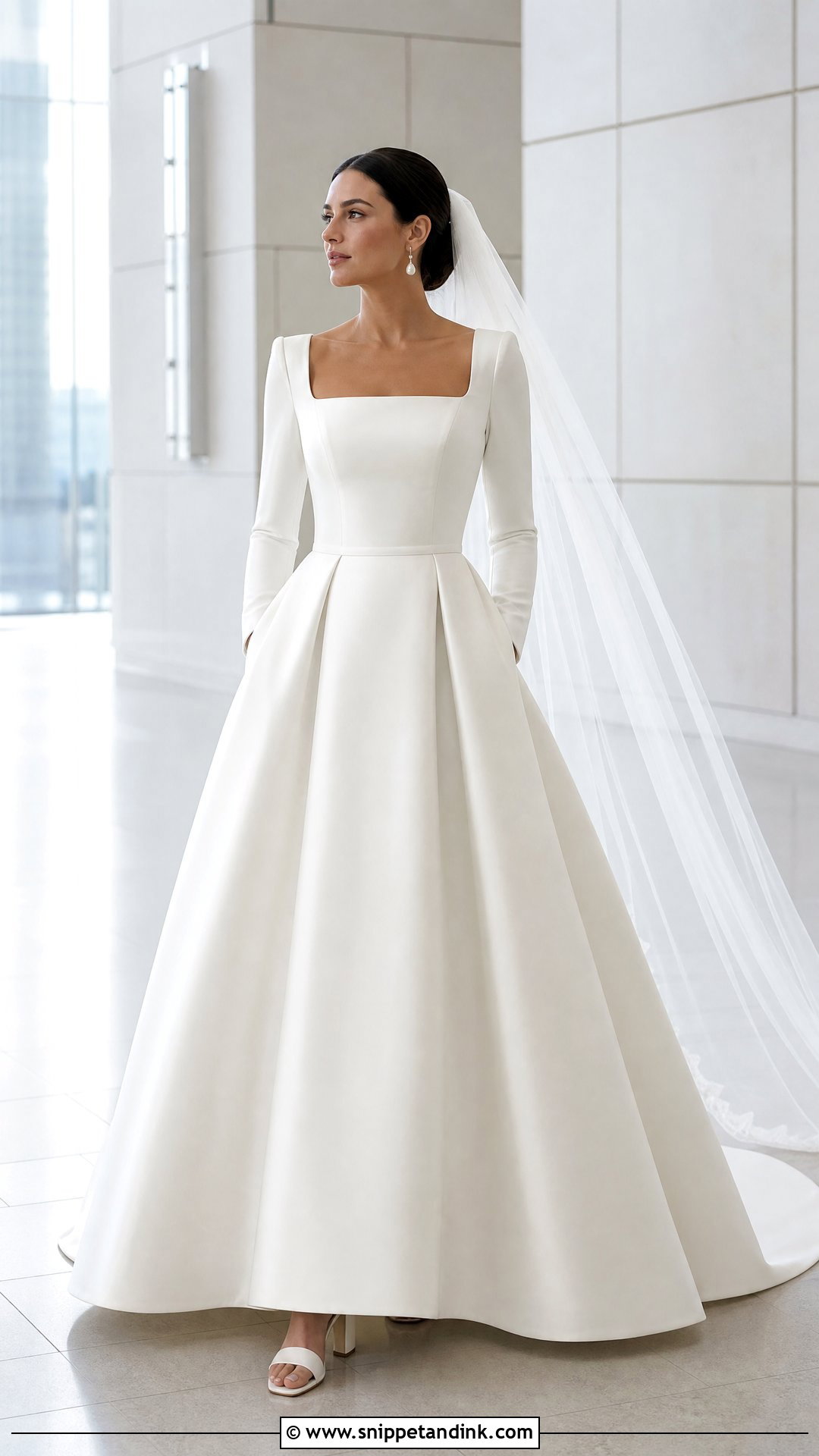
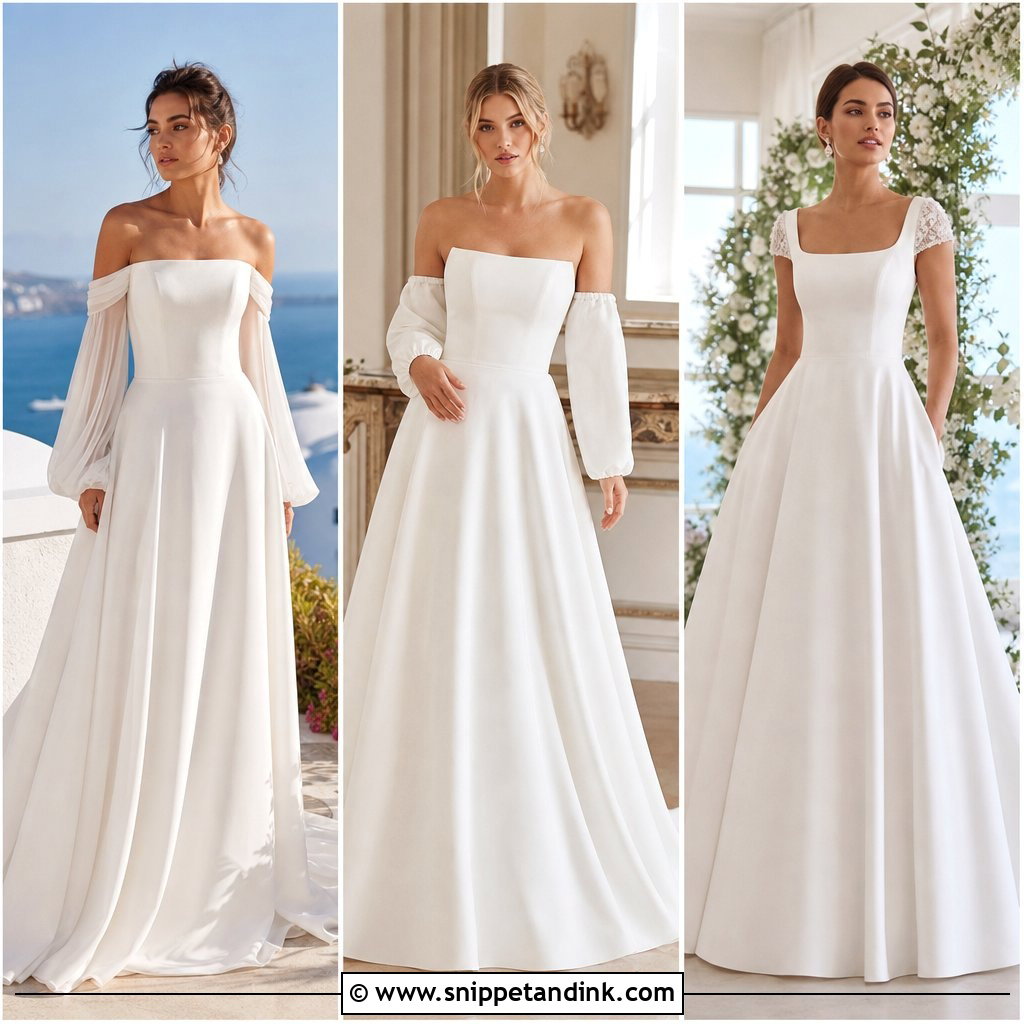
Mikado is a heavy, slightly stiff silk blend that holds a crisp edge, so a square neckline cut into it stays square all day instead of sagging. On a structured Mikado wedding gown I like fitted long sleeves, a shaped waist and a full A-line skirt, because the fabric carries pleats and pockets without collapsing. Pearl earrings, a smooth cathedral veil and block heels keep you steady, and a sleek center-parted bun repeats the geometry of the neckline. A bodice that feels too bare can take a narrow beaded belt or covered buttons along the sleeves. Mikado belongs in estates, city venues and formal hotels; in a rustic barn it can look stiff.
6. Off Shoulder Winter Wedding Dress With Detachable Sleeves
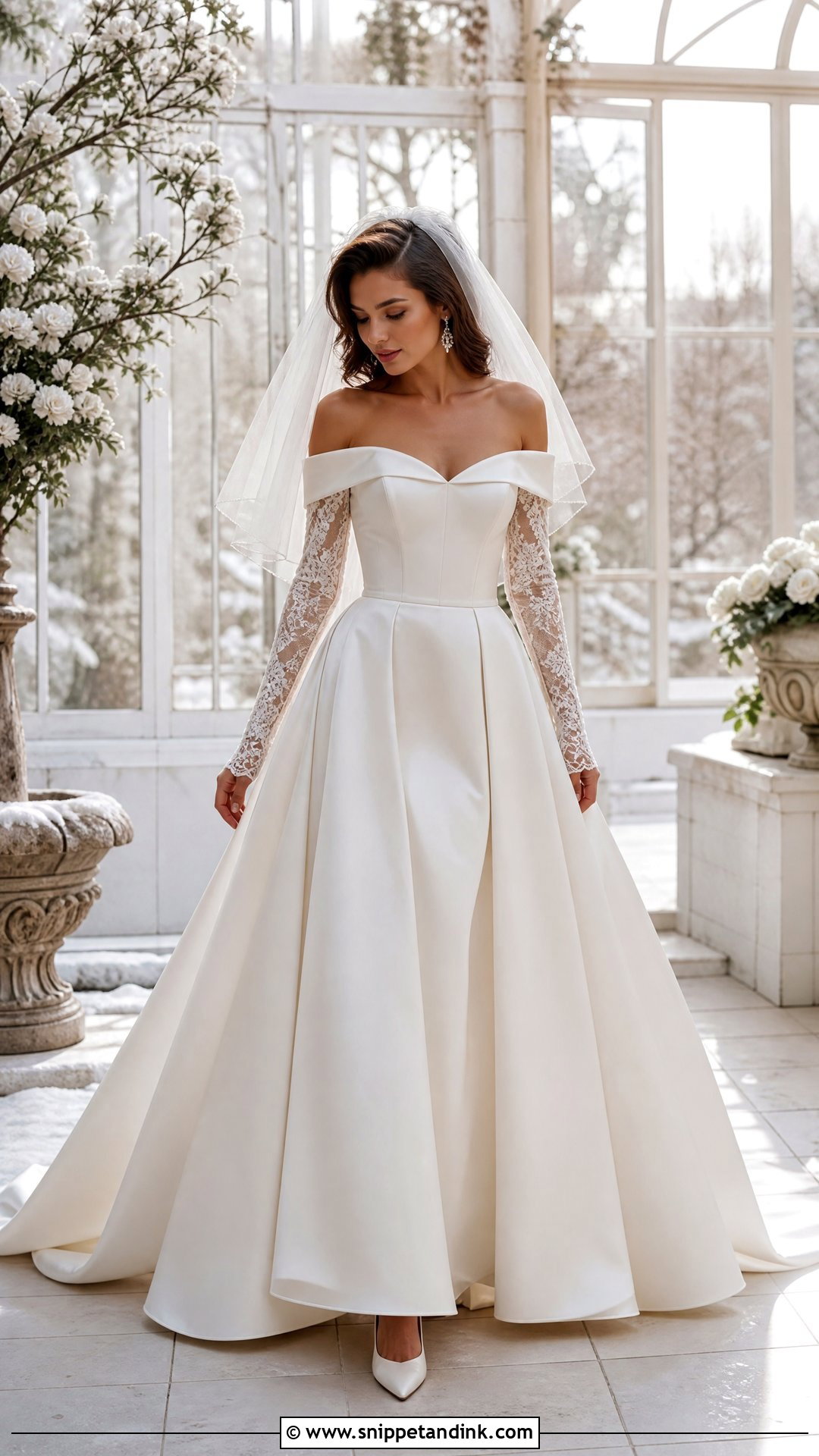
Here’s the honest trade-off: detachable sleeves give you two looks, but the join is the weak spot. Start with an off-the-shoulder gown with a structured bodice and a soft A-line or fitted skirt, wear long lace or satin sleeves for the ceremony and take them off for the reception. I check that the attachment tucks under the neckline edge, because a visible elastic band shows in close portraits. A shoulder-length veil, sparkling drops, closed-toe pumps and loose waves or a relaxed low bun keep the shoulder line soft. Bring a tailored cape or coat for outdoors, and have your tailor test the sleeves while you lift, turn, sit and dance.
7. Basque Waist Tulle Winter Wedding Dress With Sleeves
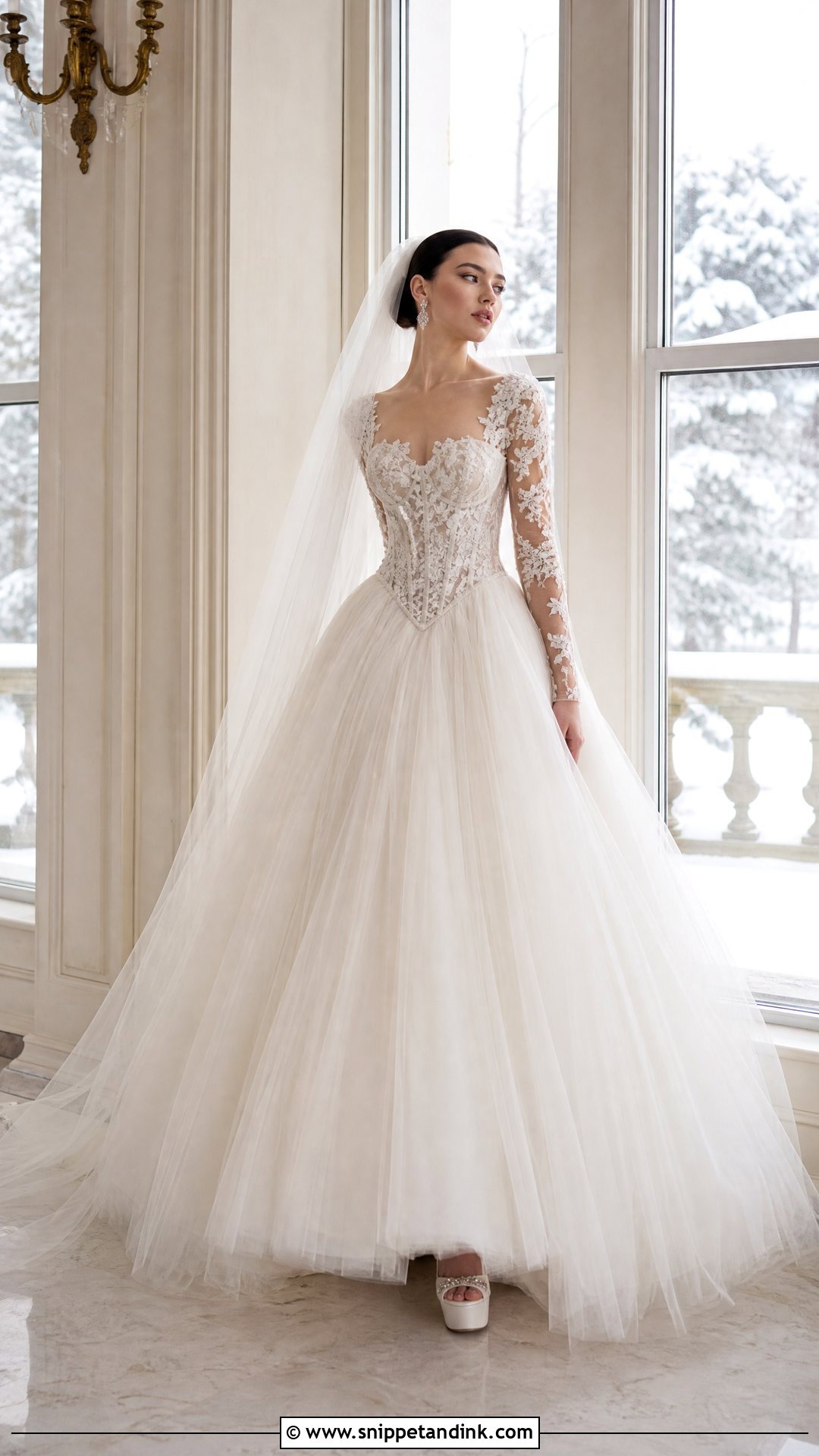
A basque waist dips into a soft point below the natural waist, lengthening the torso before the tulle skirt opens out. It looks dramatic with very little embellishment. I want a structured bodice, sheer lace sleeves and a point that lies flat rather than digging in when you breathe, with a few appliqués linking sleeves to skirt. Add a long plain veil, crystal earrings, platform heels hidden under the layers and a classic updo to balance the volume. Then sit down in it: the point should stay smooth, and the sleeve openings shouldn’t trap your hands.
8. Modest Bateau Winter Wedding Dress With Sleeves
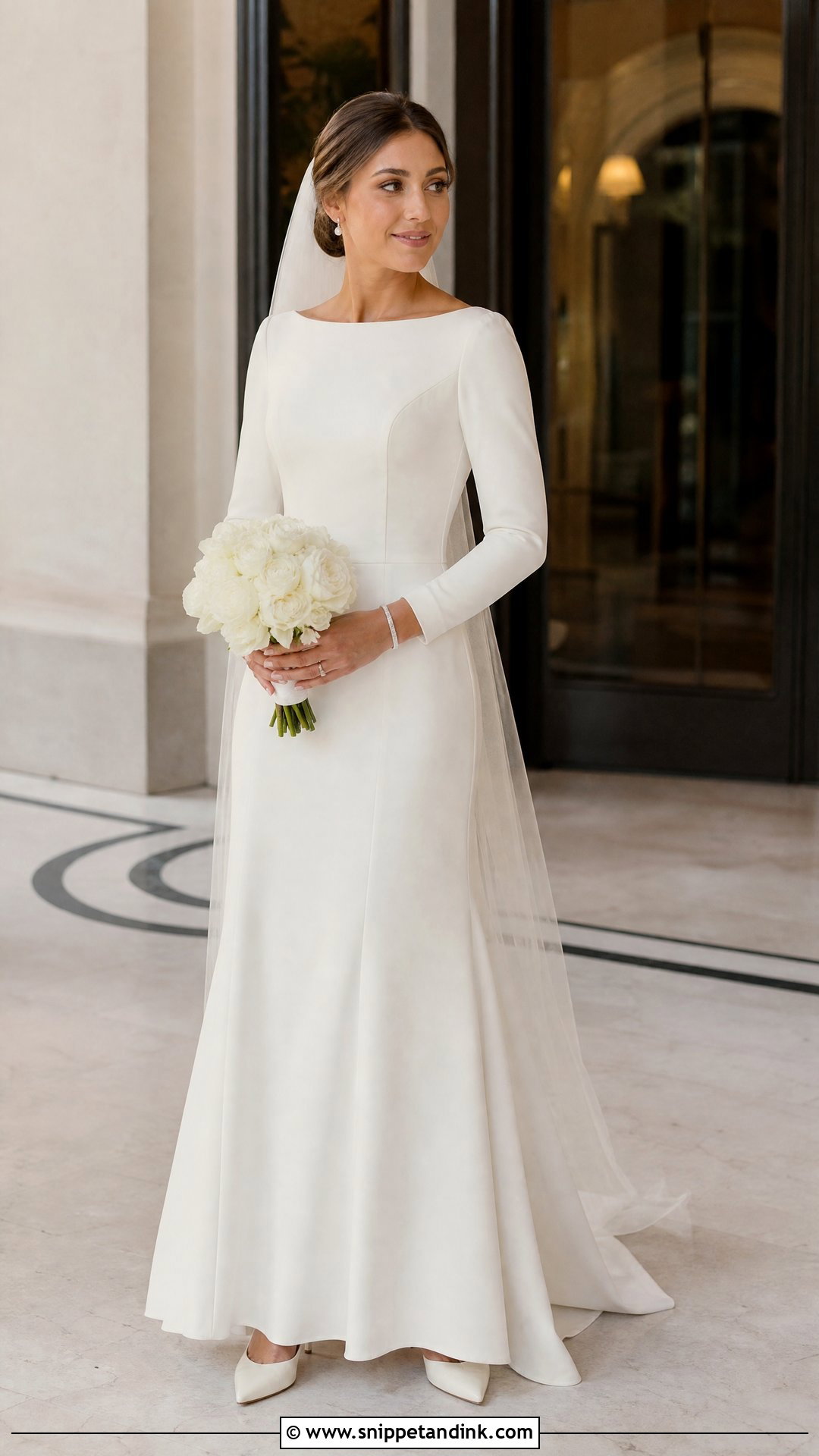
When a bride asks for full coverage, I reach for a bateau before a high neck. It follows the collarbone and covers the chest while still showing the shoulder line. Pair it with full-length sleeves, a defined waist and a softly fitted crepe skirt, and ask for a lined bodice and sleeves if you want no sheer panels at all. Pearl drops, a narrow bracelet, pointed closed-toe heels, a low bun and a chapel veil keep it clean, and covered back buttons add quiet interest. A smooth thermal slip adds warmth, as long as its seams don’t print through the crepe.
9. Beaded Winter Wedding Dress With Illusion Sleeves
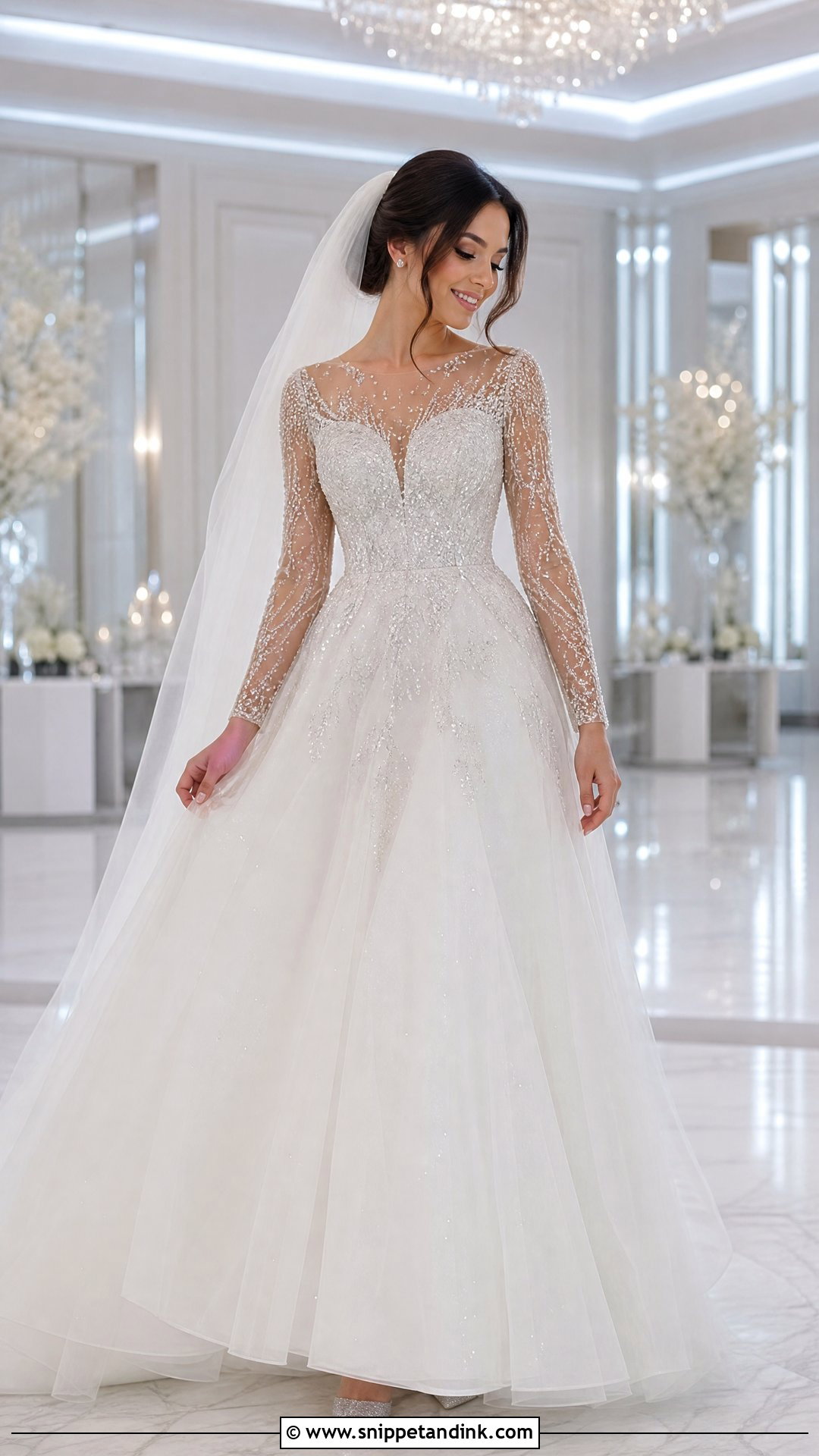
Beading on mesh is heavy and can be scratchy on the inside, so I turn the sleeve inside out at the first fitting. Keep the beads and sequins across the bodice and illusion sleeves and let the skirt stay softer, on an A-line or fitted sheath, so the sparkle reads like frost rather than costume. Crystal studs, silver-toned shoes and a plain veil that won’t catch on the beadwork suit it, and a neat updo stops loose hair from snagging. Rough appliqué backs can be fixed with a soft lining or carefully placed mesh before they irritate the inner arm. A small, structured bouquet lets the fabric shimmer on its own.
10. Puff Sleeve Satin Winter Wedding Dress
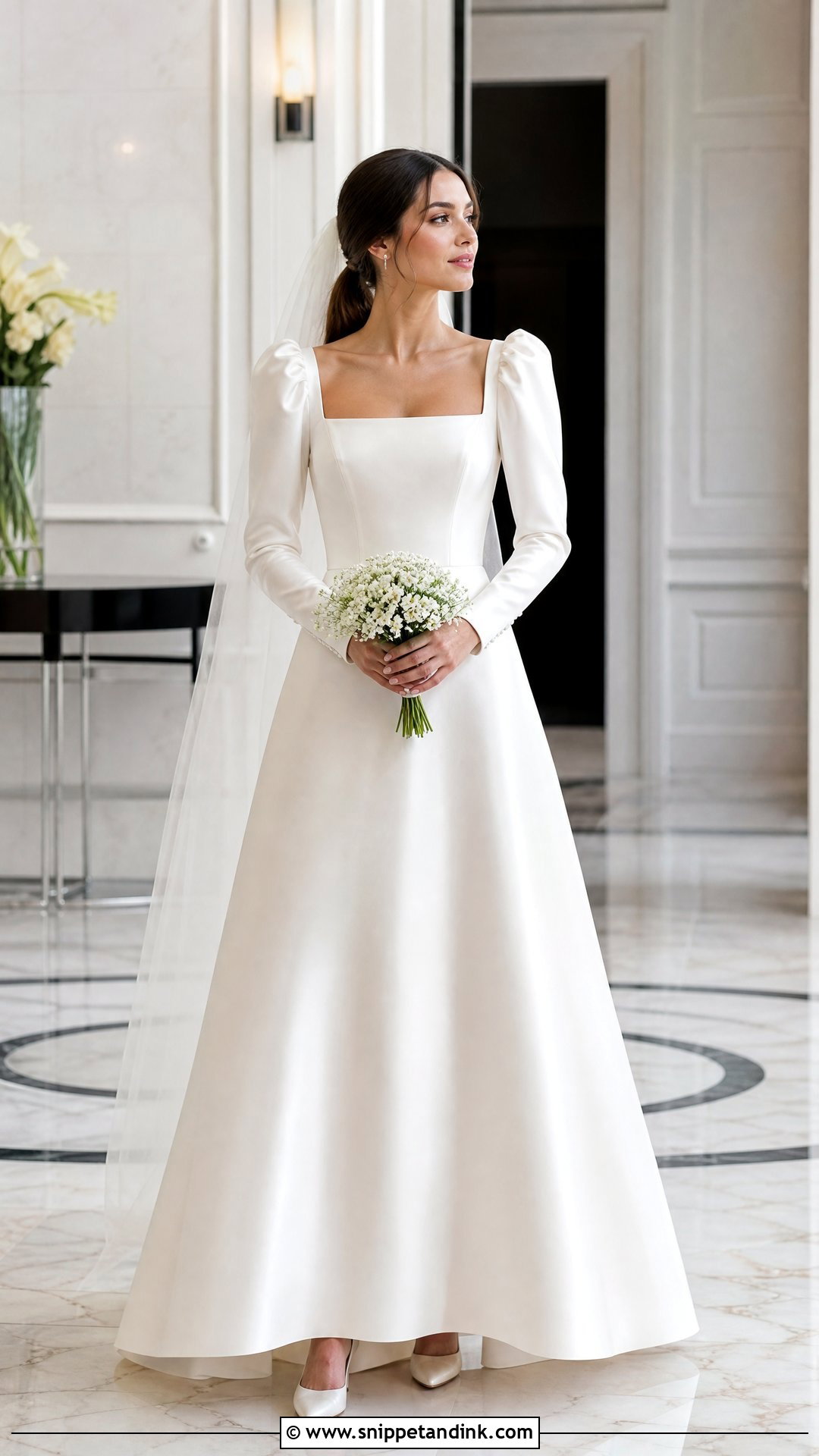
Satin puff sleeves are about proportion, and I judge them against the bride’s shoulders, never the sample. Gentle volume at the shoulder with a fitted cuff looks controlled. A huge puff looks borrowed from a costume rack. Balance it with a structured bodice, a smooth A-line skirt, a simple veil, pearl studs, plain satin pumps and a softly waved low ponytail or clean bun. Broader shoulders usually suit a smaller puff set slightly below the shoulder line, while a narrow frame can carry more. Put your coat on over the sleeves before the last fitting, since satin puffs crush under a fitted coat sleeve.
11. Bishop Sleeve Chiffon Winter Wedding Dress
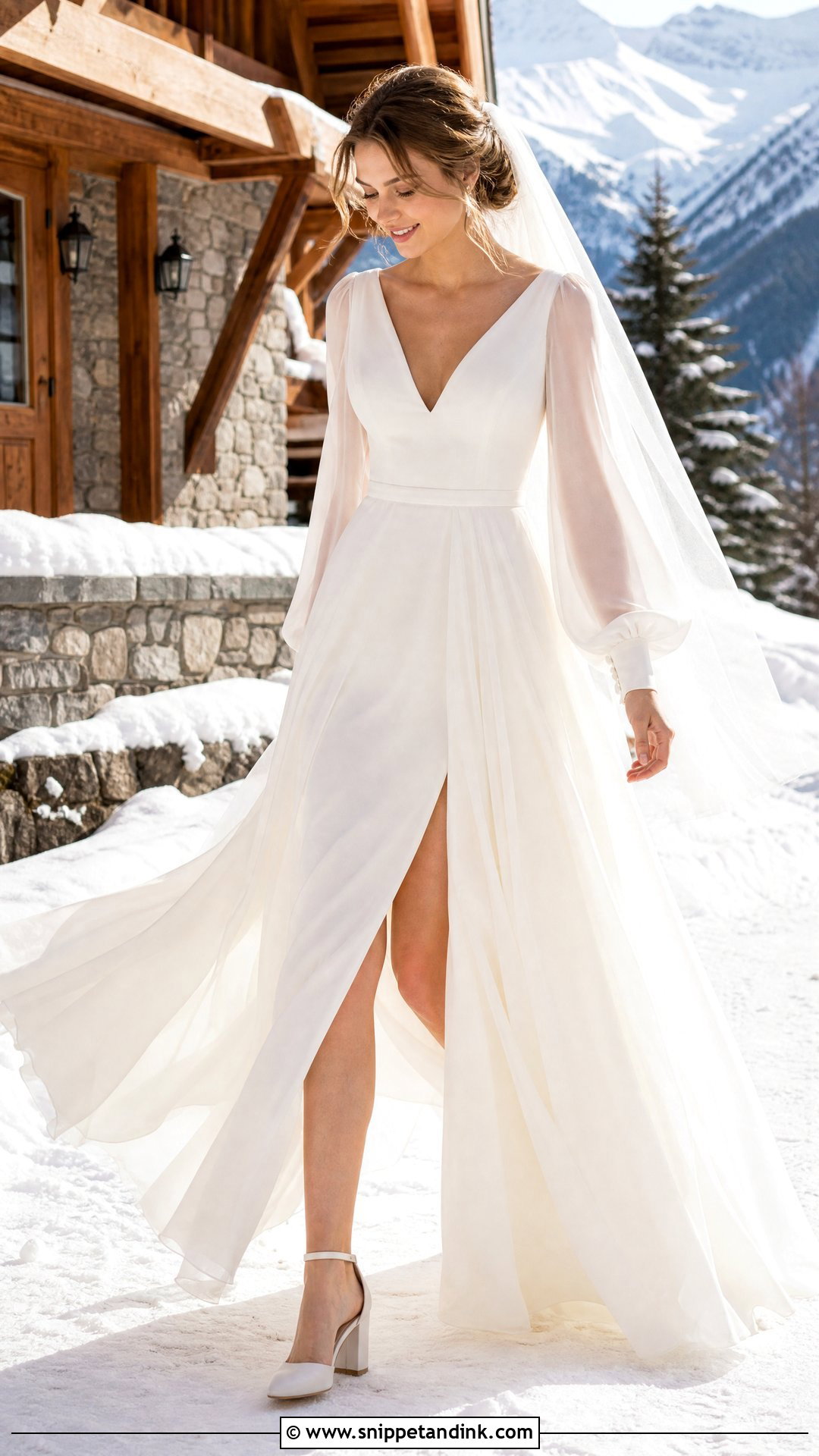
Bishop sleeves balloon below the elbow and gather into a cuff, so they move every time you gesture. They sit naturally on a chiffon A-line at a mountain lodge or country venue, with a V-neck bodice, a defined waist and a flowing skirt; lined sleeves give more coverage, sheer chiffon a lighter finish. Block heels, delicate earrings, a lightweight chapel veil and loose waves pinned off the face suit the airy fabric. Chiffon gives almost no warmth, so I add a smooth slip and keep a tailored wool wrap ready for outdoor portraits. Check the cuff twice: it needs room for your hands, and a full bishop sleeve will dip straight into the soup at dinner.
12. Velvet Winter Wedding Dress With Long Sleeves
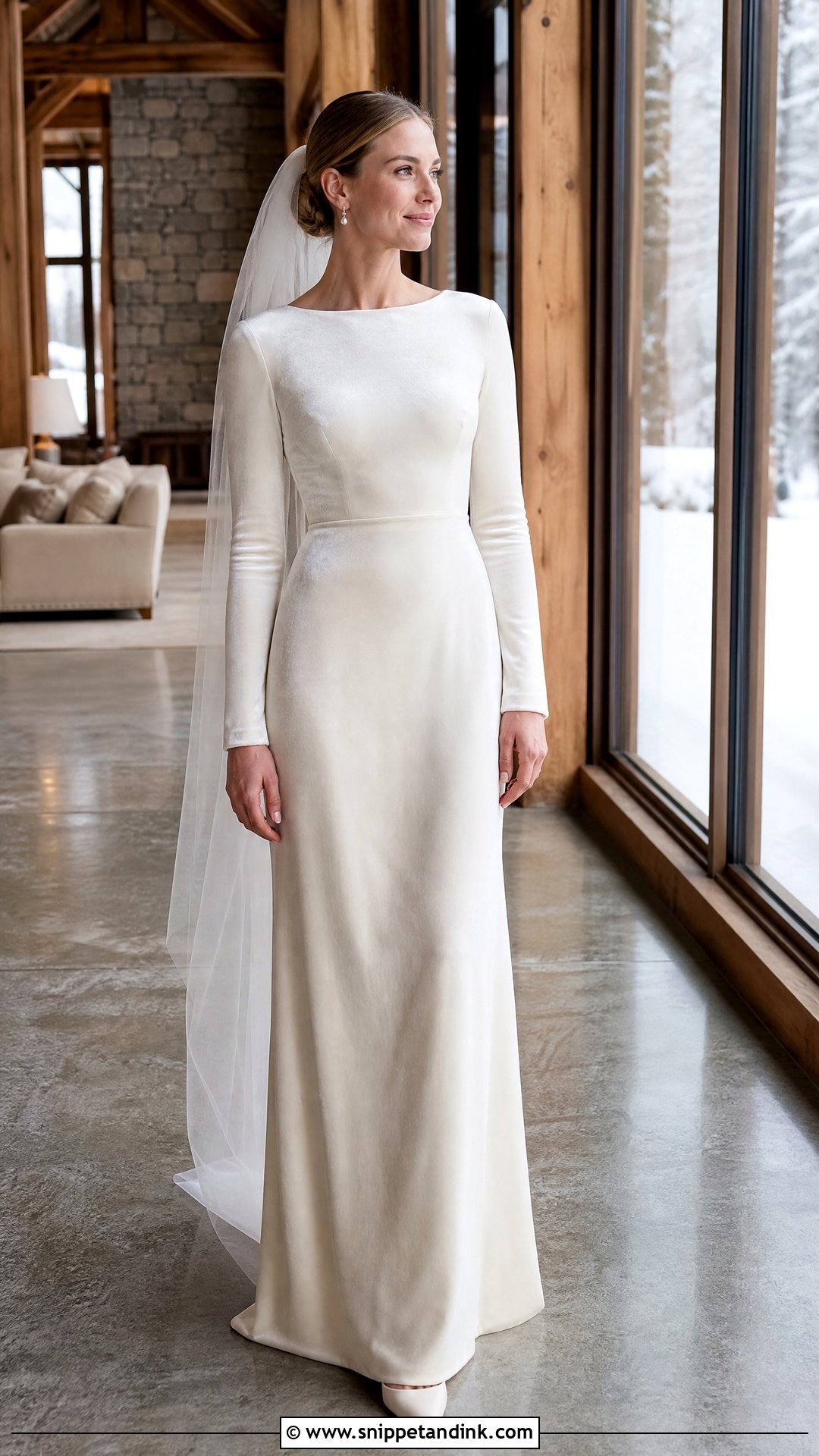
Velvet looks like winter all by itself. Keep the cut simple, a column, soft A-line or wrap shape, in ivory for a traditional effect or pale champagne for something warmer, with understated earrings, closed-toe pumps, a plain tulle veil and a sleek bun or brushed waves. Velvet has pile, so its shade shifts with the angle of the light, and I ask brides to stand under the venue’s actual lighting before committing. It also crushes. Steam it on the hanger, never press it flat, and leave out the heavy necklace or oversized bouquet that would add even more weight.
13. Cape Sleeve Winter Wedding Dress
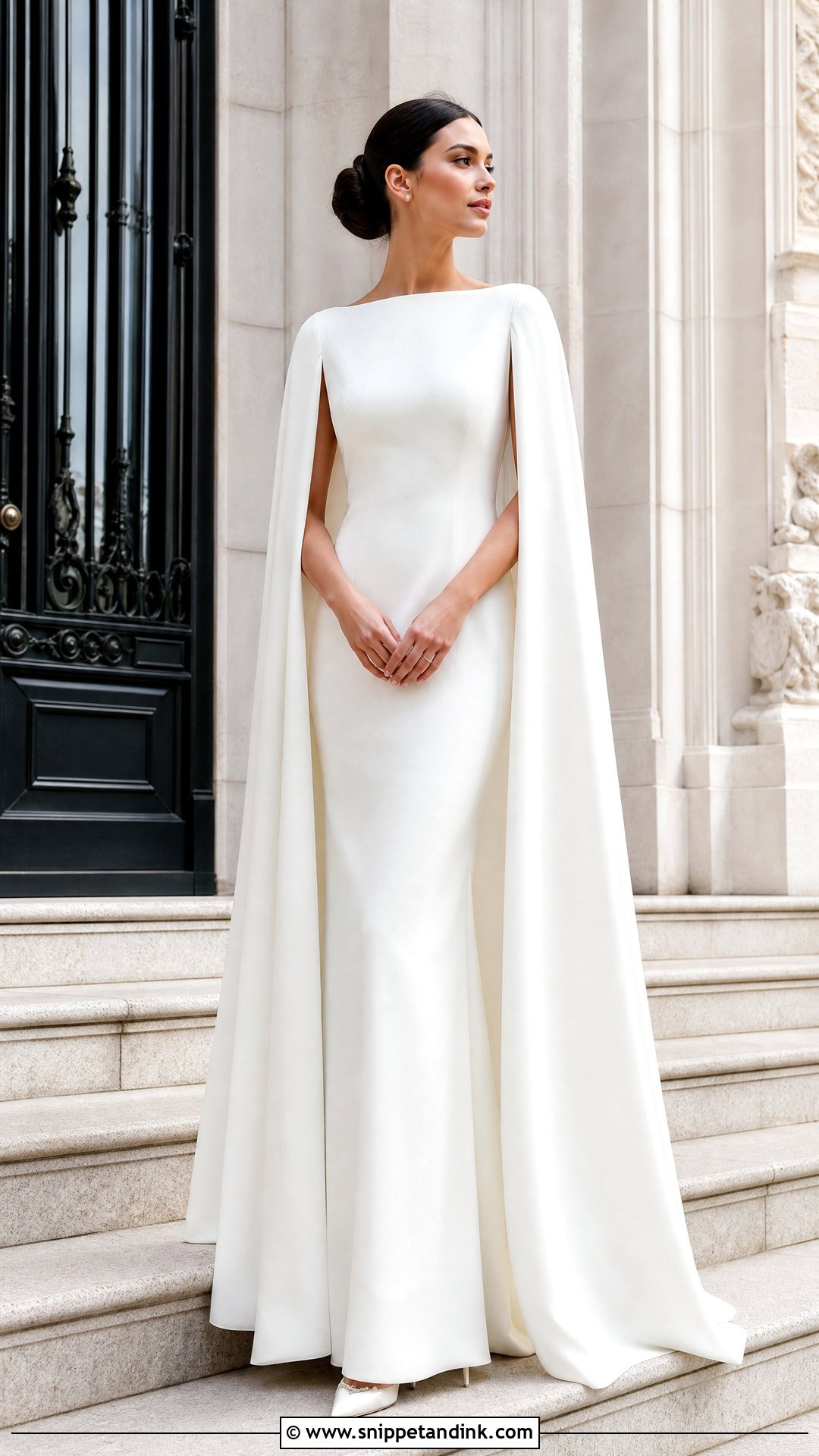
Cape sleeves can stand in for a veil, especially when the panels end in a small train. The base is usually a fitted crepe or satin column with panels attached at the shoulders and falling to the floor. Delicate studs, a smooth low bun and pointed heels keep the line clean, and a veil can still go on top as long as it’s short and plain. At fittings I watch the bride turn quickly, because a cape that’s too long drags and catches the heels; a hidden wrist loop lets you lift longer panels. You get far more shoulder coverage than a strapless gown, with plenty of movement.
14. Three Quarter Sleeve Tea Length Winter Wedding Dress
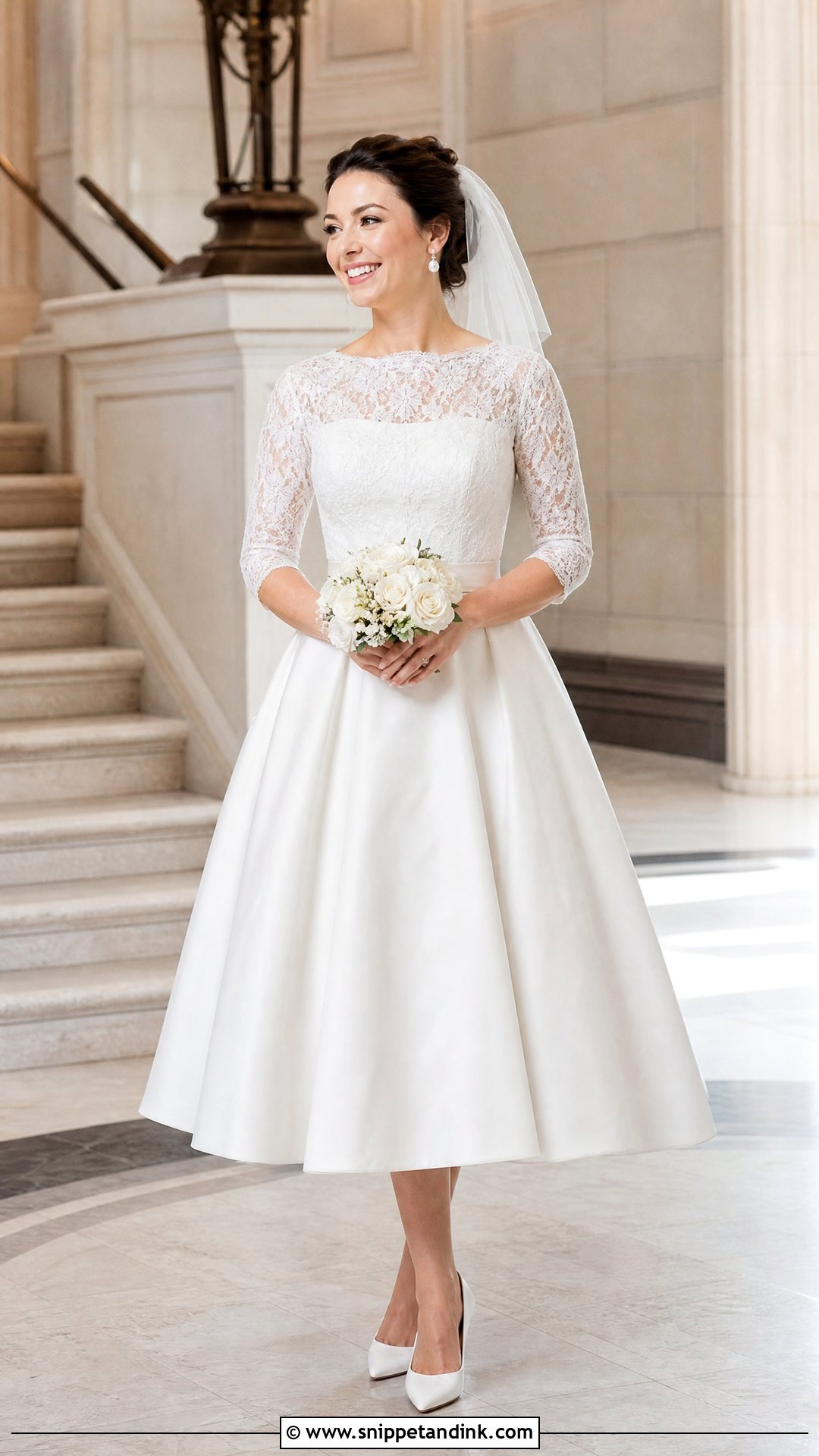
Tea length is the easiest winter option to move in, especially for a small indoor ceremony or courthouse celebration. Choose structured satin or lace with three-quarter sleeves, a fitted waist and a skirt that lands between knee and ankle. Your shoes are on show, so polished pointed pumps or embellished block heels matter, along with pearl earrings, a short veil, a compact bouquet and a soft updo or shoulder-length waves. Opaque ivory tights add warmth, but I match them in daylight, because the wrong ivory looks grey beside the dress. Set the hem at the narrowest part of the lower leg so the skirt doesn’t cut you off.

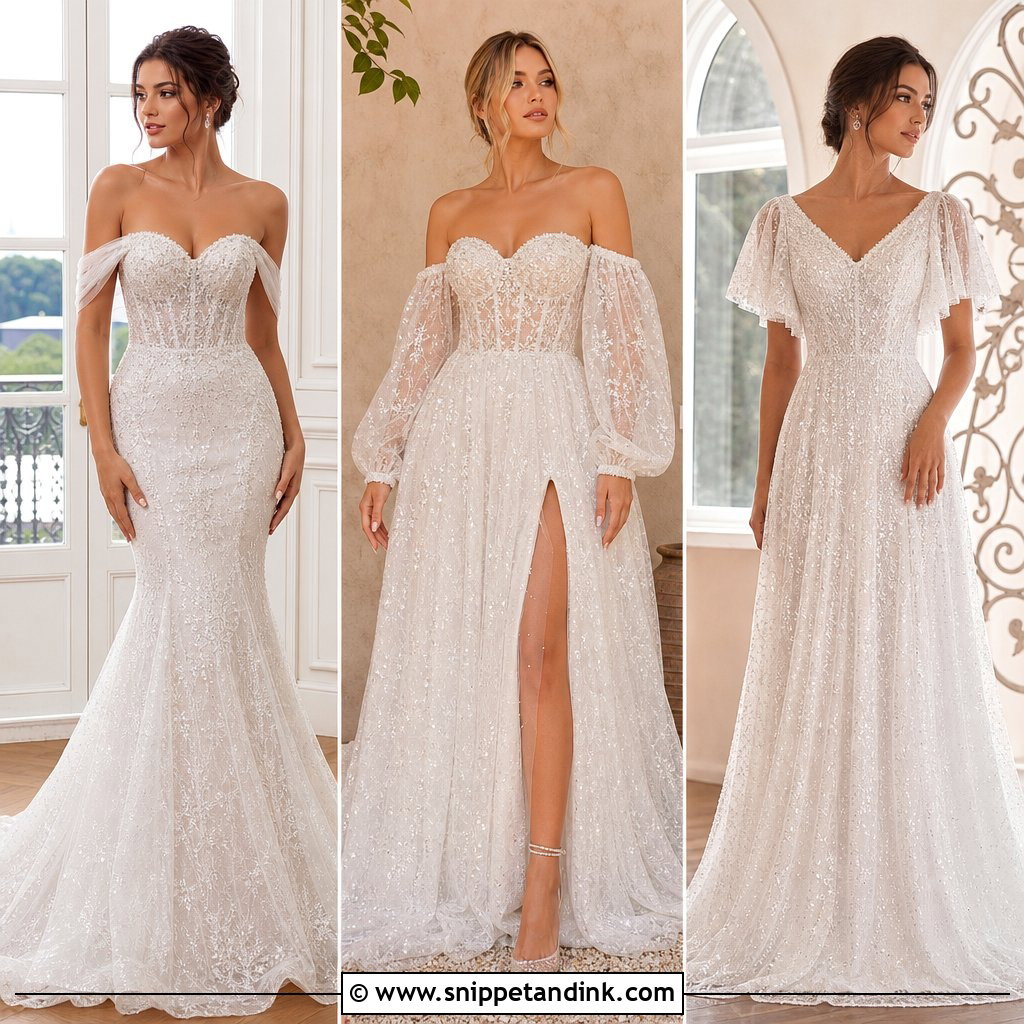
15. Plus Size Winter Ball Gown With Lace Sleeves
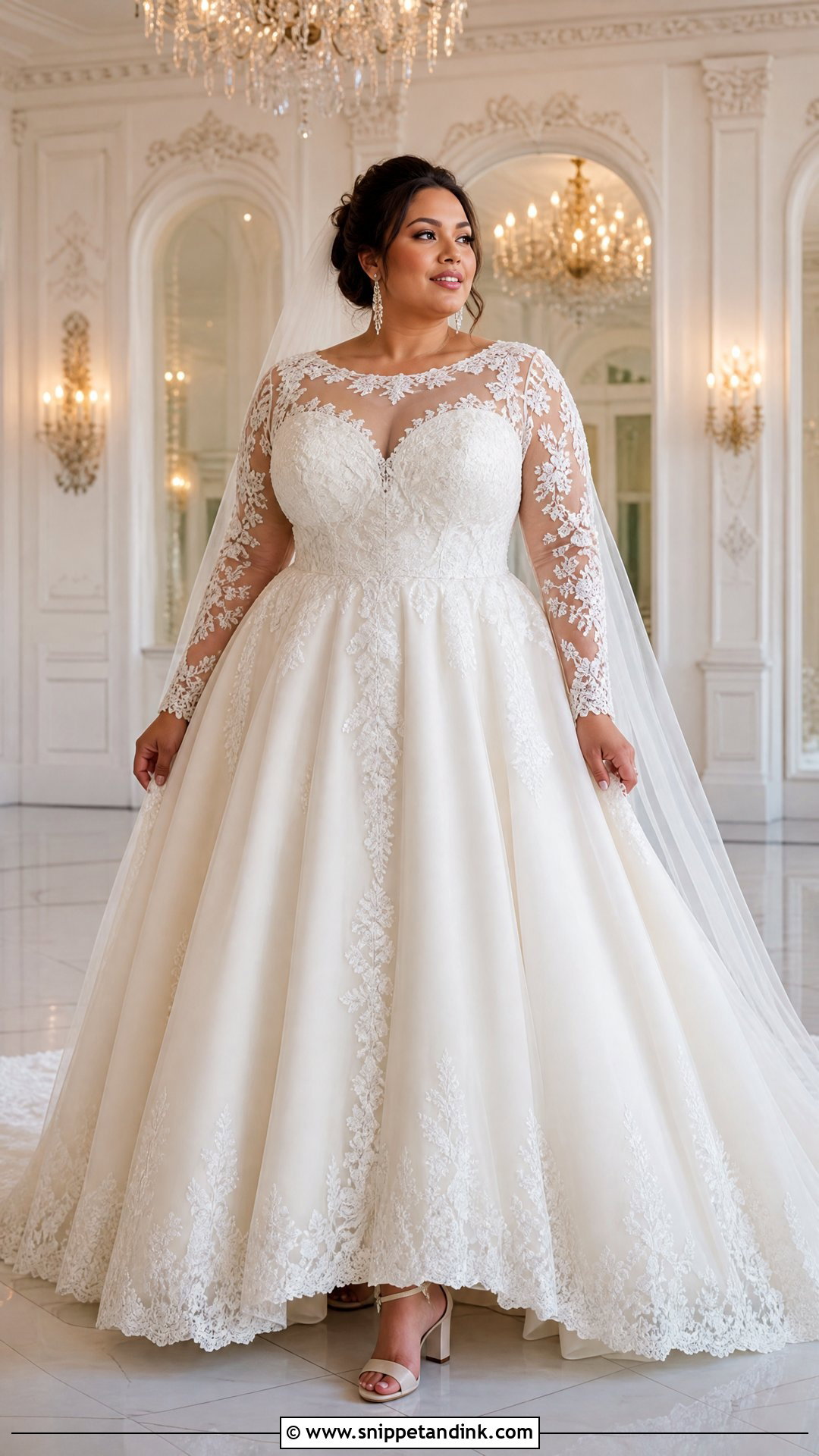
In plus-size fittings I look at the boning and the waist seam before anything decorative. A supportive ball gown needs comfortable boning, a secure waist seam and lace sleeves cut wide enough to lift your arms, with a soft sweetheart lining under a sheer neckline for shape and coverage. The skirt should fall cleanly from the waist without extra gathers at the hips. Cushioned block heels, drop earrings, a chapel or cathedral veil and a defined updo keep the focus near your face. Sit and raise your arms during alterations instead of only standing. Sleeve width and bust support matter far more than the number on the label.
16. Petite Empire Waist Winter Wedding Dress With Sleeves
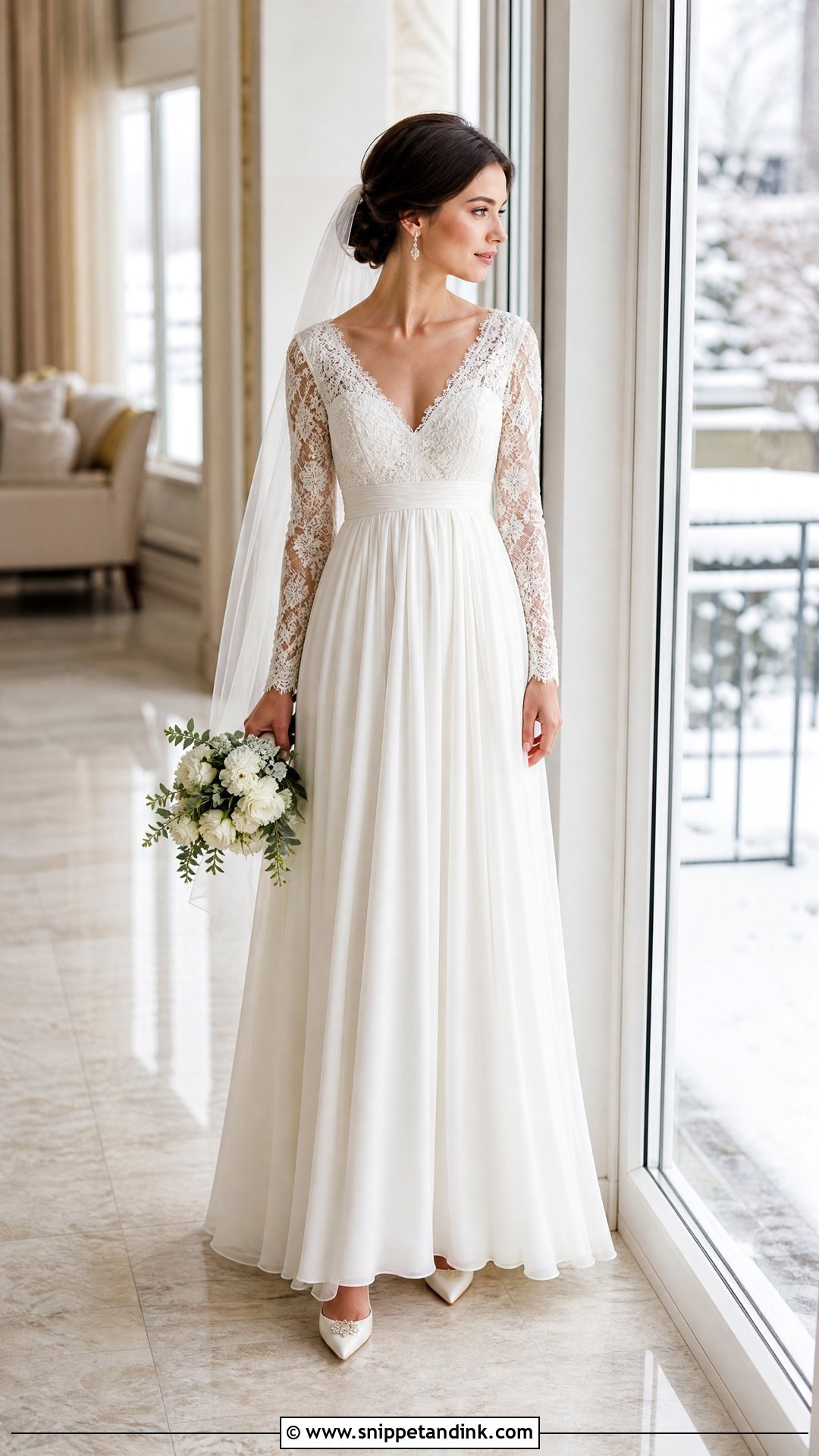
On a petite frame, an empire waist starts the skirt high and gives one long vertical line. Look for a bodice ending just under the bust, slim lace sleeves and a chiffon or soft crepe skirt that falls close to the body; wide cuffs and a big skirt swallow a small bride. Pointed heels close to the gown’s shade, delicate earrings, a narrow fingertip veil and a lifted low bun add height quietly. I ask the tailor to rescale the bodice, sleeve length and appliqué spacing rather than just taking up the hem, and to shorten the train in proportion.
17. Minimalist Column Winter Wedding Dress With Sleeves
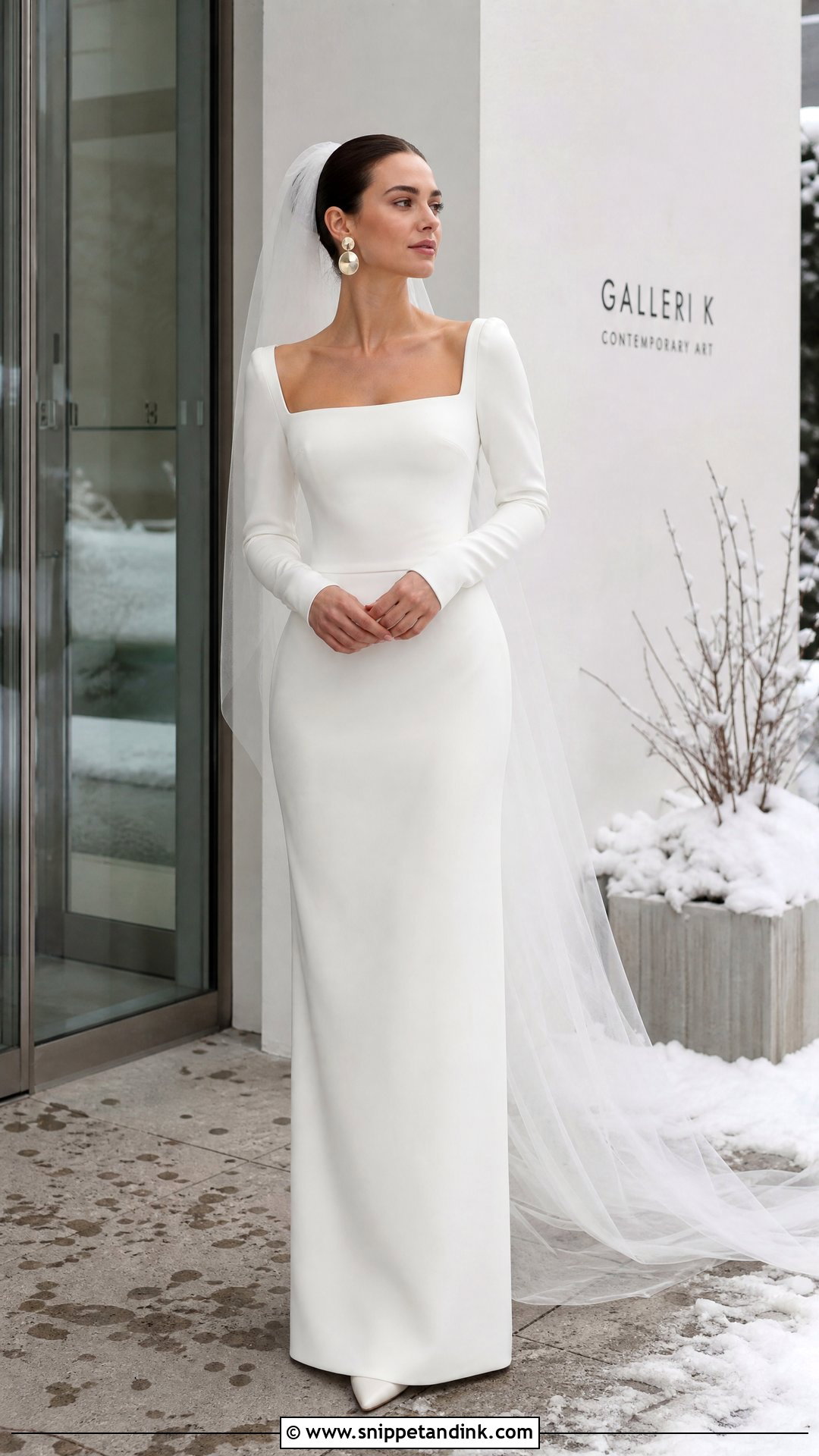
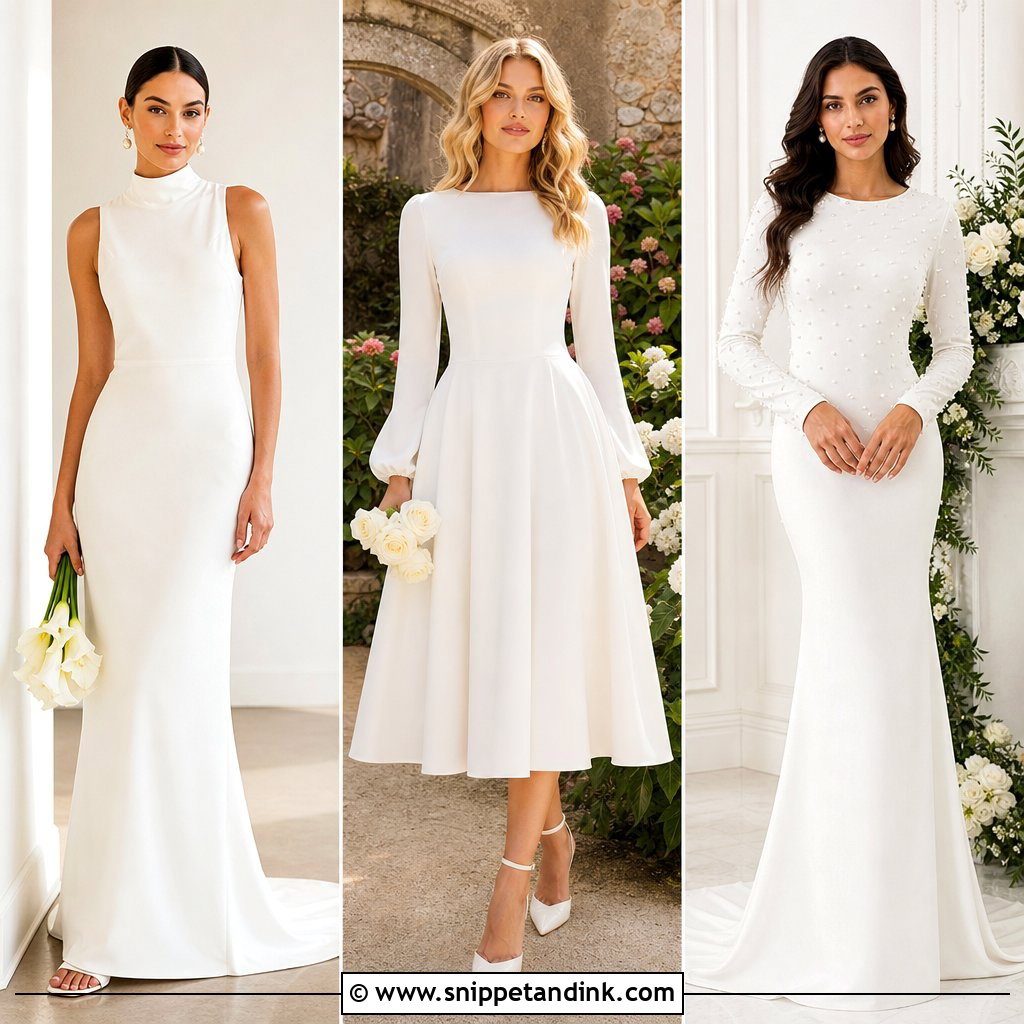
A plain column has nowhere to hide, so I put the fitting budget into construction rather than accessories. Matte crepe or stretch satin, long sleeves and one strong neckline, bateau, square or shallow V, are all it needs, with sculptural earrings, pointed pumps, a plain cathedral veil, a sleek bun and natural makeup. Hidden shaping, a supportive lining and well-placed seams decide whether the fabric falls smoothly or ripples over the hip. Keep a white wool coat for travel and outdoor waits. Galleries, modern venues and city celebrations with streamlined decor suit it best.
18. Floral Embroidered Winter Wedding Dress With Sleeves
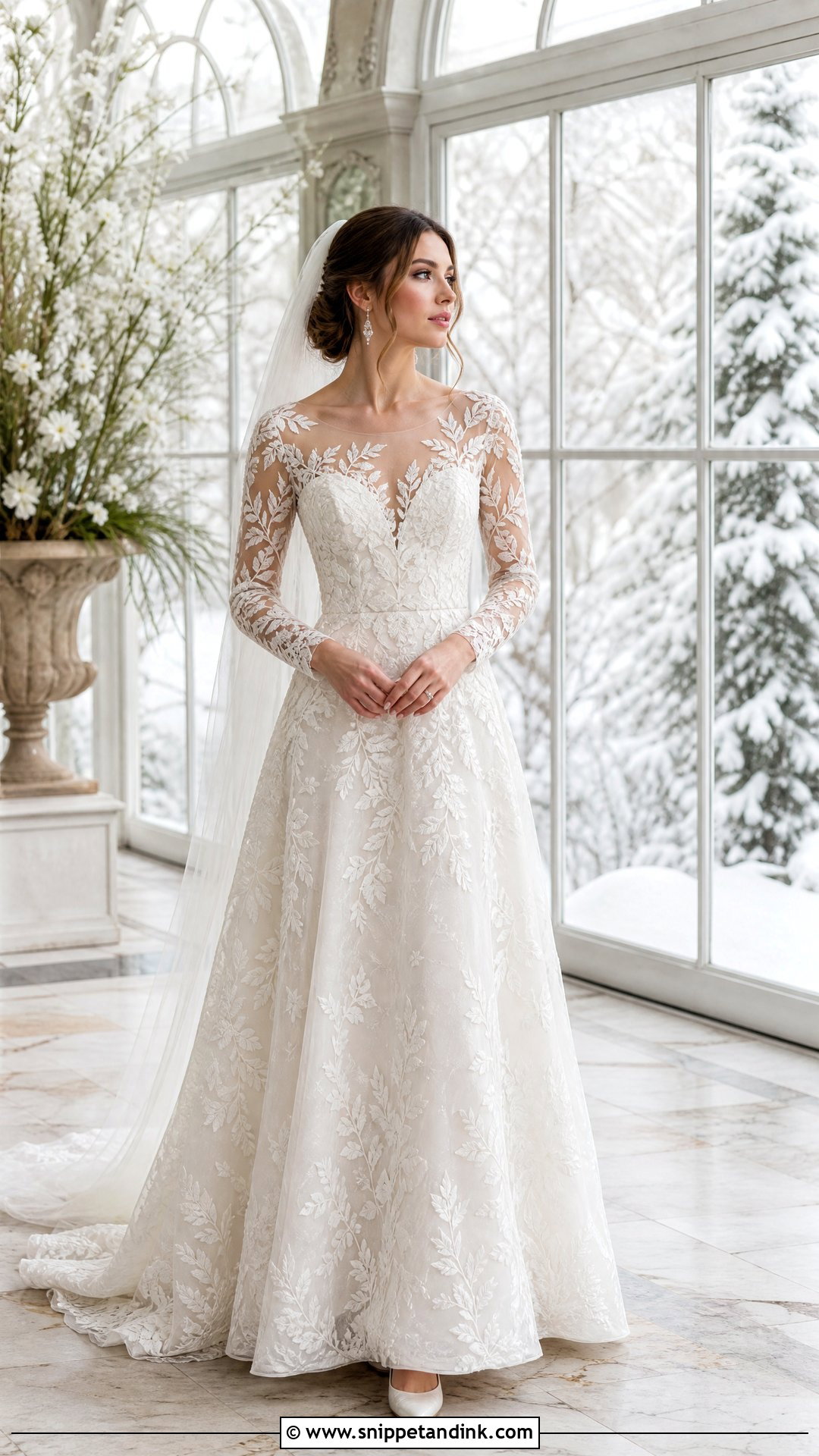
Embroidery is stitched into the fabric, so it’s lighter and flatter than beaded appliqué and sits well under a coat. Look for an A-line with embroidered illusion sleeves, a fitted bodice and motifs that thin out toward the skirt. White-on-white reads classic, and a little silver thread adds a cool shimmer that suits winter light. Simple earrings, closed-toe heels, a plain veil and a loose low bun with few pins are enough. Stacking floral sleeves with a detailed necklace, belt and veil leaves the eye nowhere to rest. I also ask the tailor to move large motifs off the fullest point of the bust and off the waist seam, so the bodice flows into the skirt.
19. Long Sleeve Winter Courthouse Wedding Dress
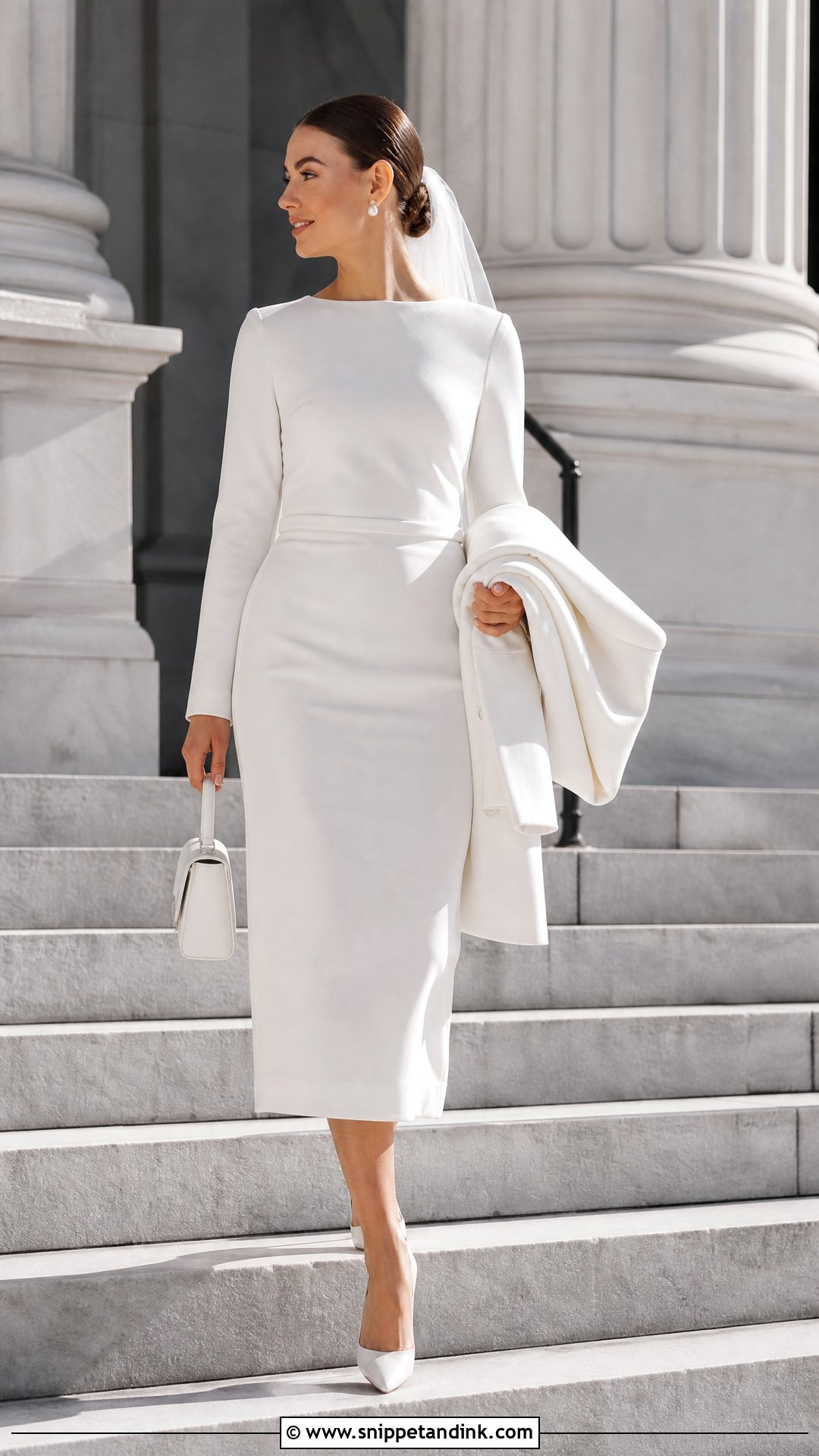
For a courthouse wedding I usually suggest a midi rather than a shortened gown, because a train has nowhere to go in a clerk’s office. A long-sleeve dress in ivory crepe, satin or lace with a defined waist and a clean neckline works; a sheath looks sharper, a soft flare walks easier. Pointed pumps, pearl earrings, a structured mini bag and a short veil or hair bow make it read as bridal. Bring a tailored white coat for walking between the courthouse, photos and reception, and check the sleeves sit under it without bunching. A midi hem shows your legs, so test it with your exact shoes before alterations. It’s also a dress you’ll happily wear again on an anniversary.
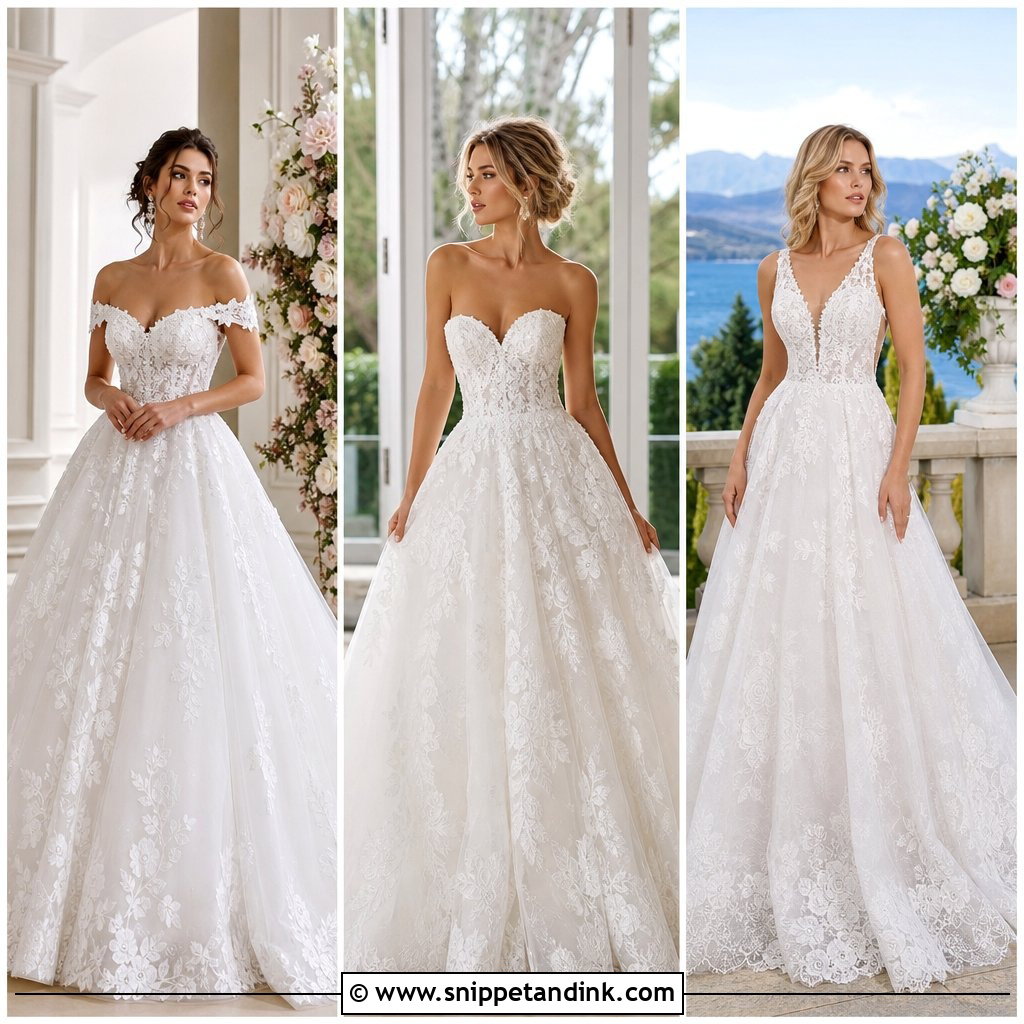
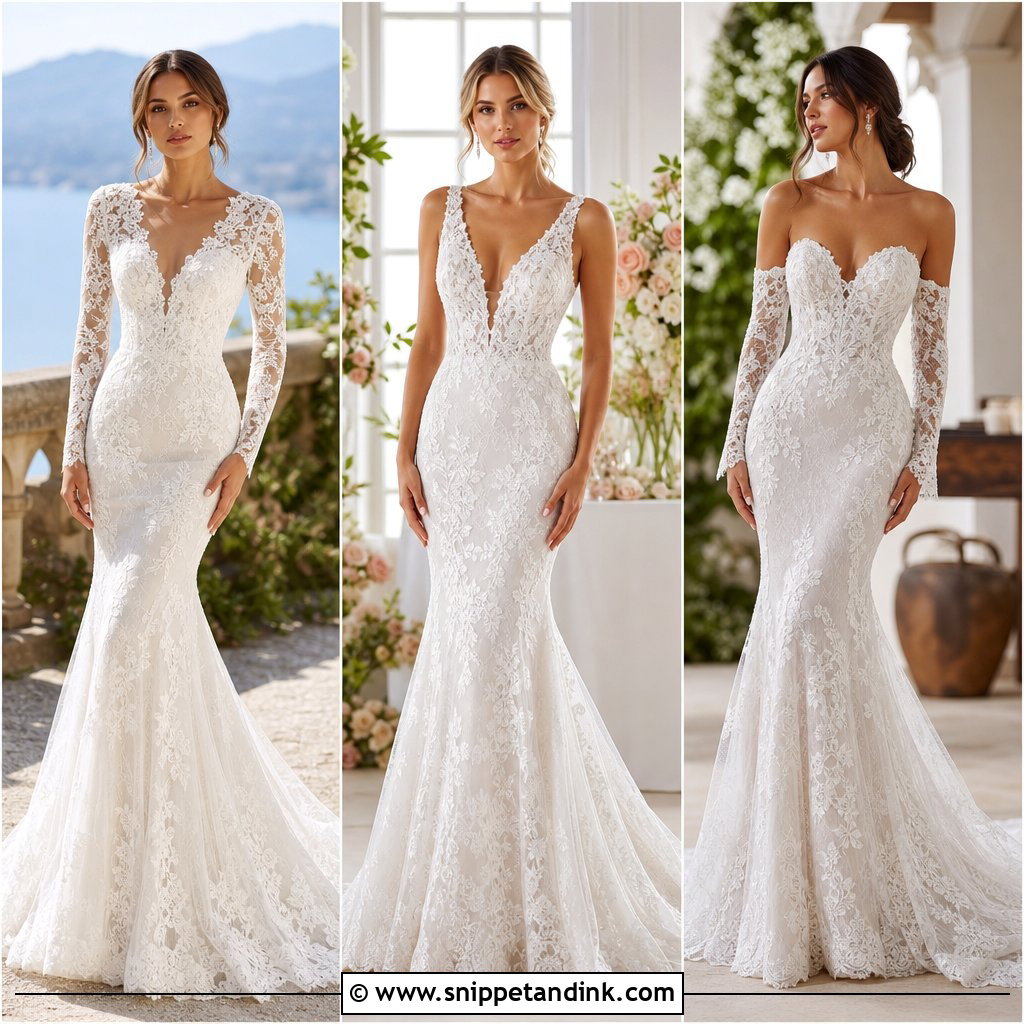
20. Mermaid Winter Wedding Dress With Detachable Overskirt And Sleeves
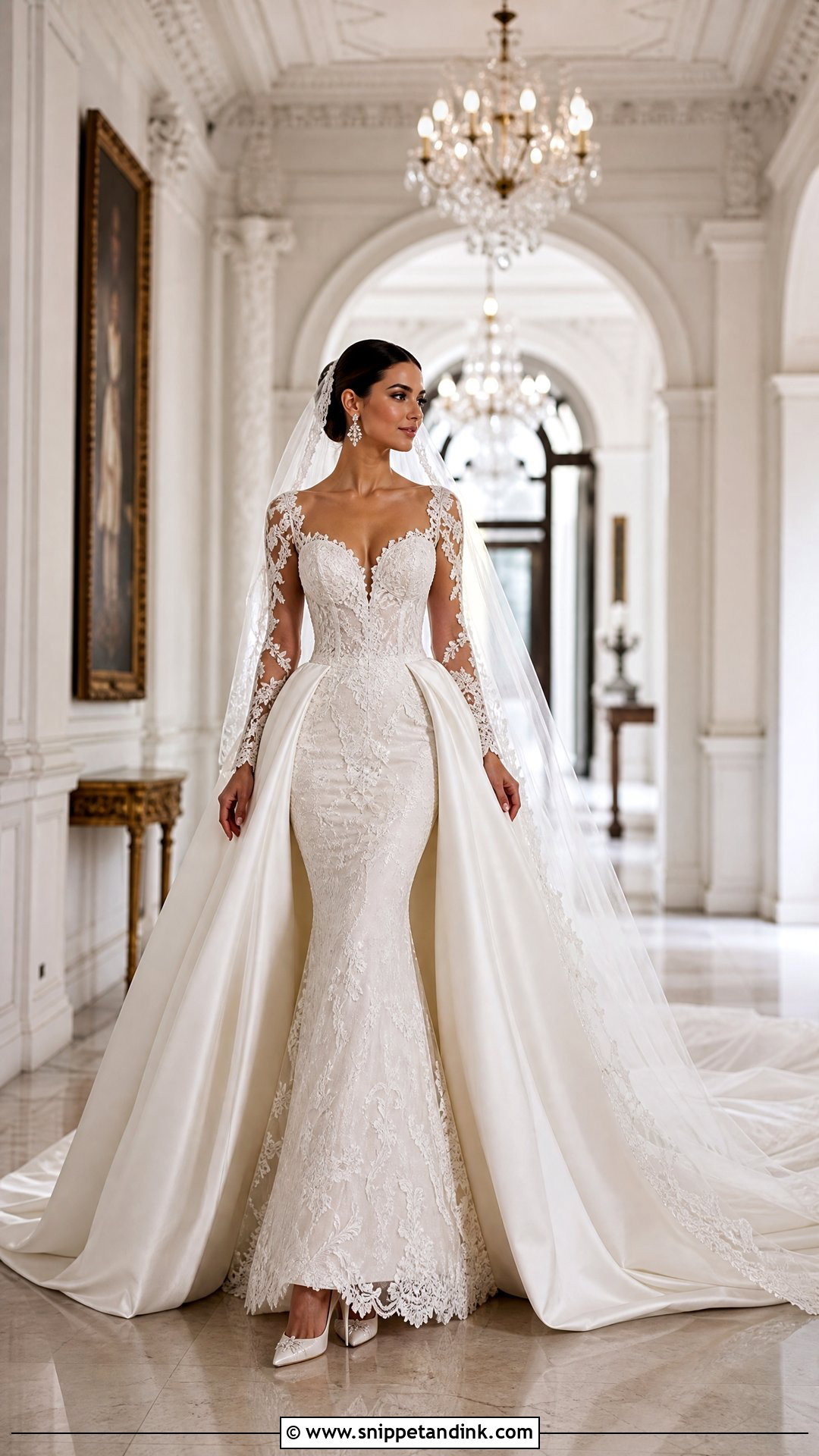
A detachable overskirt gives you a ball gown for the aisle and a fitted mermaid for the dance floor. The base is a crepe or satin dress with long lace sleeves and a structured bodice, and the full overskirt fastens at the waist for the ceremony, then comes off for dinner. I check the waistband from the side, since a thick band or bulky hooks leave a ridge in every profile shot. A cathedral veil, crystal earrings, stable heels that work at both lengths and a sleek updo suit both versions. Practise the removal with whoever is helping you, and decide in advance where the overskirt will hang so it isn’t dumped on a chair.
Wet Hems, Road Salt and a Gown That Has to Come Back Indoors
Winter weather is harder on a dress than summer heat. Melted snow leaves a grey tide line on tulle, and road salt dries into white marks on satin that only a specialist cleaner can lift. These are the habits I build into a cold-weather wedding day.
- Bustle the train before you leave the car and let someone else carry the hem on every outdoor walk.
- Pack a clean white towel for damp hems and blot, never rub. Rubbing wet satin raises a fuzzy patch that won’t lie flat again.
- Pick photo spots on cleared paths, or lay a blanket down where the snow is deep.
- Keep your coat on until the photographer is ready, take it off for a few frames, then put it straight back on.
Coming in from the cold, beading and metallic thread can fog with condensation for a few minutes. Leave it alone and it dries clear. After the wedding, get the gown to a cleaner within a few weeks so salt, candle wax and food don’t set, then store it in acid-free tissue and a breathable cotton bag rather than plastic. Velvet should hang on a padded hanger so the pile doesn’t crush in a box.
Test the Sleeves First, Then Fall for the Skirt
Start with your venue: how warm the room is, how far you walk outside and where the photos will happen. Once you know that, the fabric and sleeve type narrow themselves down, from lace A-lines and satin ball gowns to velvet, minimalist columns and courthouse midis. At every fitting, sit, walk, lift your arms and wear the real shoes. Good tailoring adds more warmth, support and proportion than any extra accessory, and when the silhouette is right, a matching veil, comfortable shoes, simple jewelry and a proper coat are all that’s left.
You'll Like These Ideas:




Leave a Reply