
A gown for a Kerala wedding has to answer to more than taste. The church may have rules about shoulders, the weather is usually humid, and the day often runs from a morning service straight into a reception. I’ve laid out twenty gowns below, from classic lace and clean satin to modest sleeves, pastel reception dresses and a few that borrow the ivory-and-gold of kasavu. Each comes with the veil, jewellery, shoes, flowers and hair I’d put with it. Lighter fabrics cope better with the heat, structured ones look more formal indoors, and detachable pieces can give you a second look without buying a second dress.

Ask Your Parish About Coverage Before You Shop
This is the conversation I’d have before any appointment. Many Kerala churches expect the bride’s shoulders to be covered during the service, and some have views on low backs or sheer panels too. The rules vary from parish to parish, so ask your priest or the parish office directly rather than relying on what a cousin wore.
Once you know, the gown choices get easier. If coverage is required but you love a strapless or off-shoulder bodice, you have three honest options:
- A detachable lace bolero or sheer jacket, made from fabric that matches the gown, removed for the reception.
- A cape or sleeve set attached with hidden hooks, which looks more integrated than a separate jacket.
- A long-sleeve or cap-sleeve gown from the start, which avoids any matching problem.
Ivory varies enormously between makers. If a cover-up is coming from a different shop, take a fabric swatch from the gown to match against, and check them side by side in daylight.
1. Kerala Wedding Lace A-Line Gown
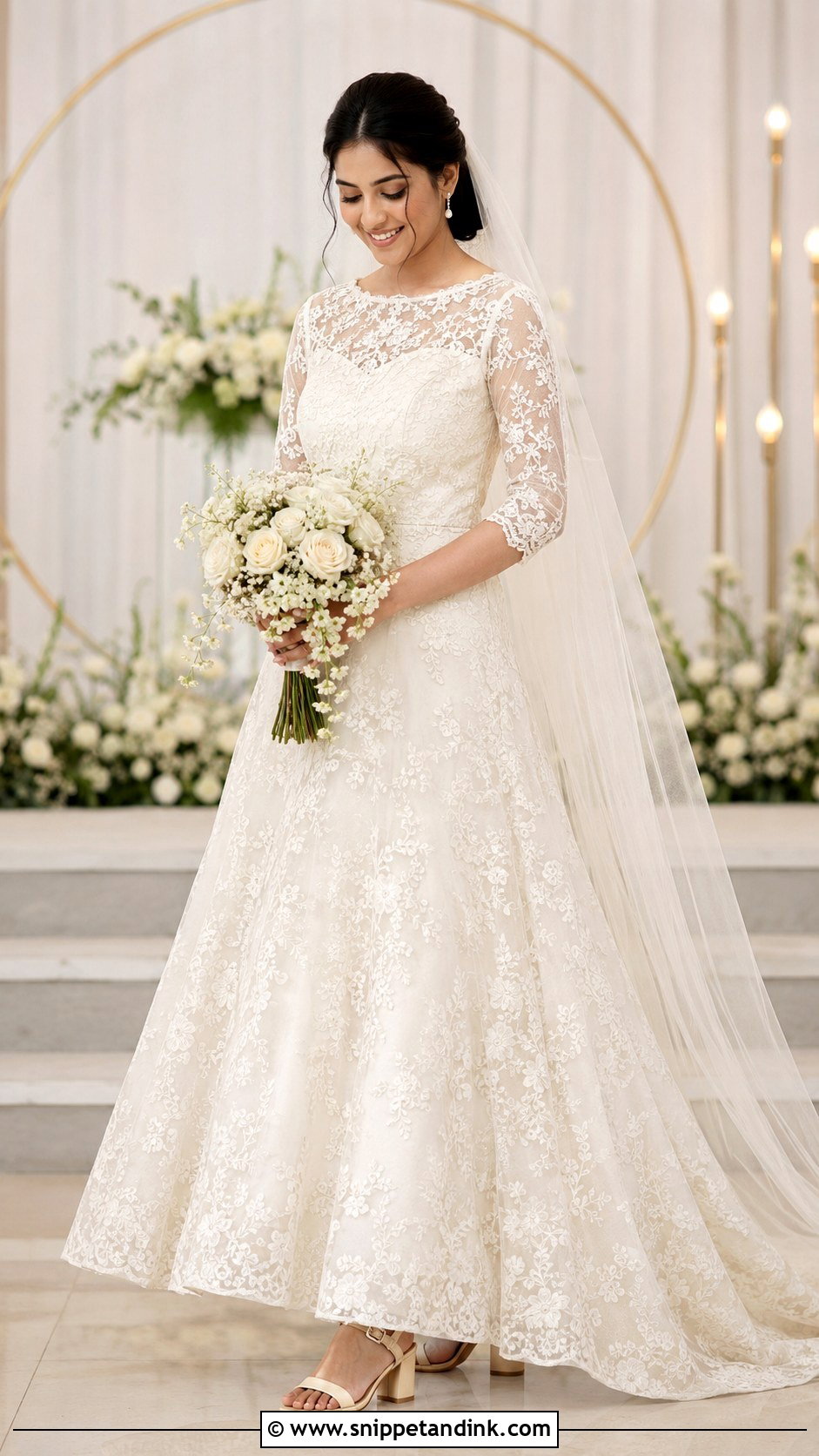
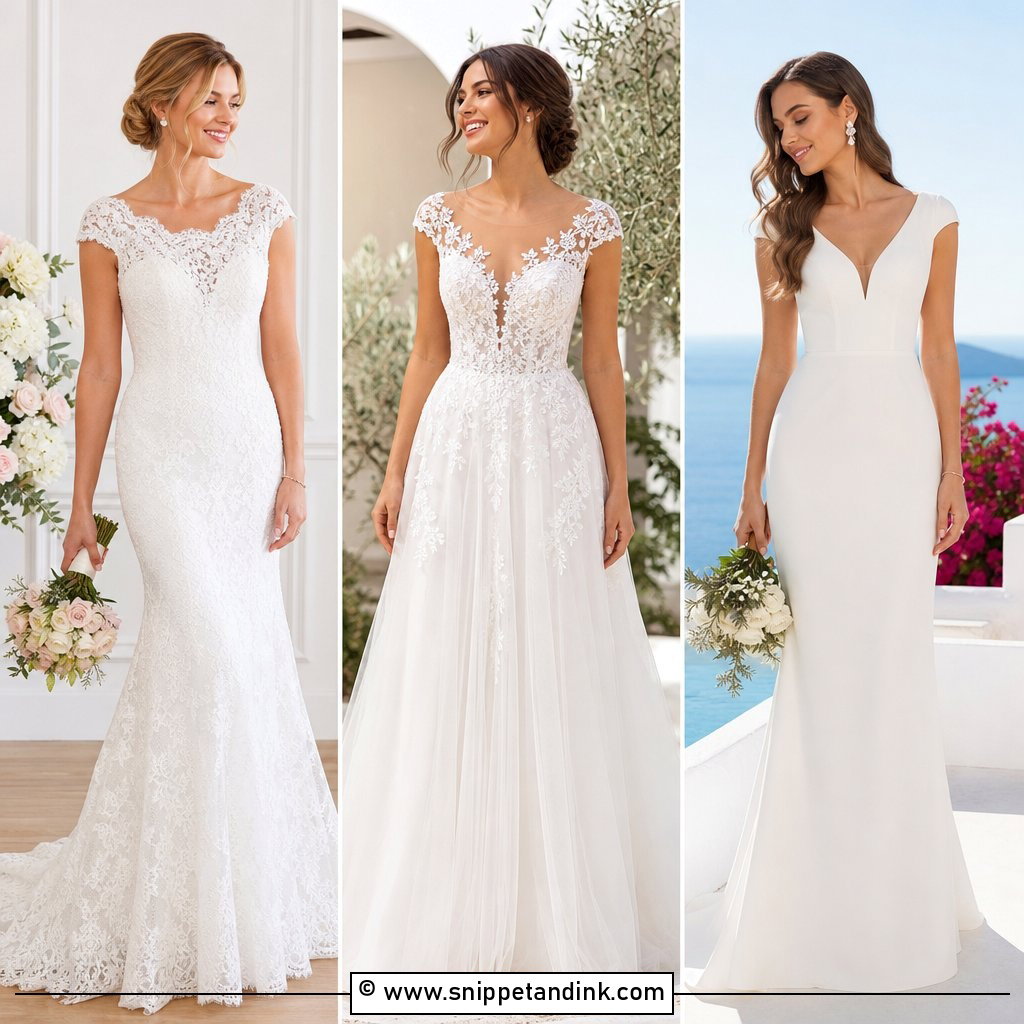
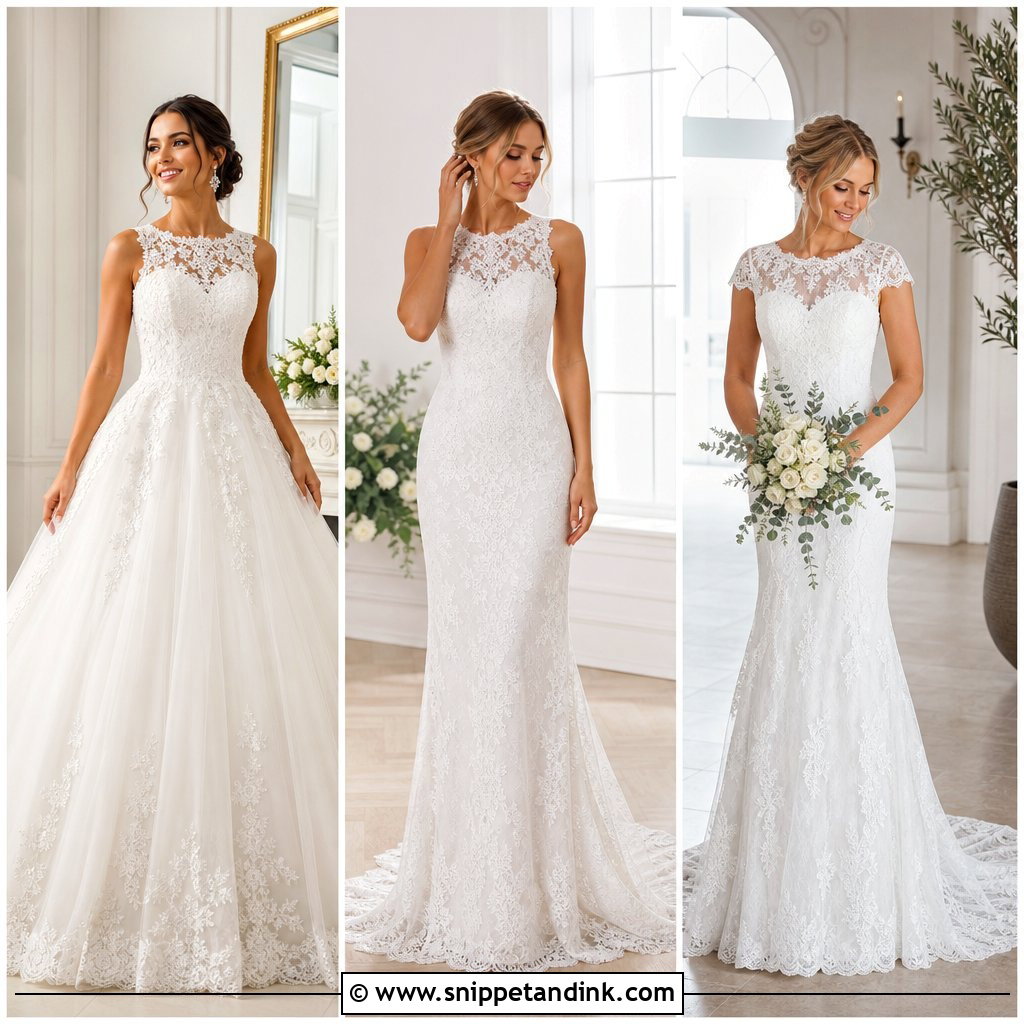
If I could only recommend one shape for a humid church wedding, it would be this. An A-line skirt doesn’t cling, so air moves under it, and floral lace on a fitted bodice gives enough detail that the jewellery can stay small. Sheer three-quarter sleeves cover the arms without trapping heat the way full lace sleeves can. I’d pair pearl drops and a fine gold chain, which sits comfortably beside Kerala family jewellery, with a fingertip veil short enough to leave the lace visible. Ivory block heels, a low bun, soft makeup, and white roses with jasmine and greenery.
2. Kerala Wedding Satin Ball Gown
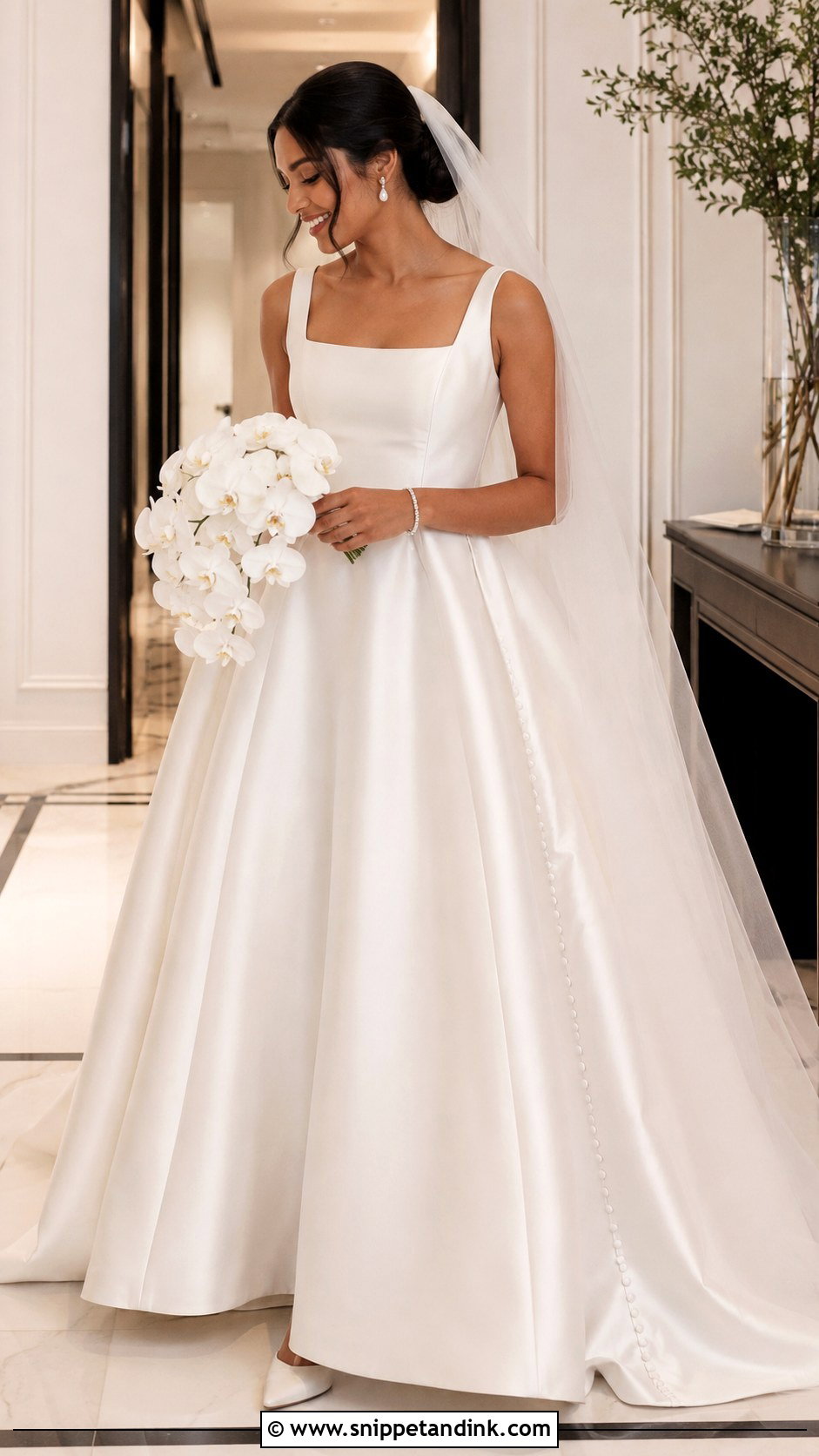
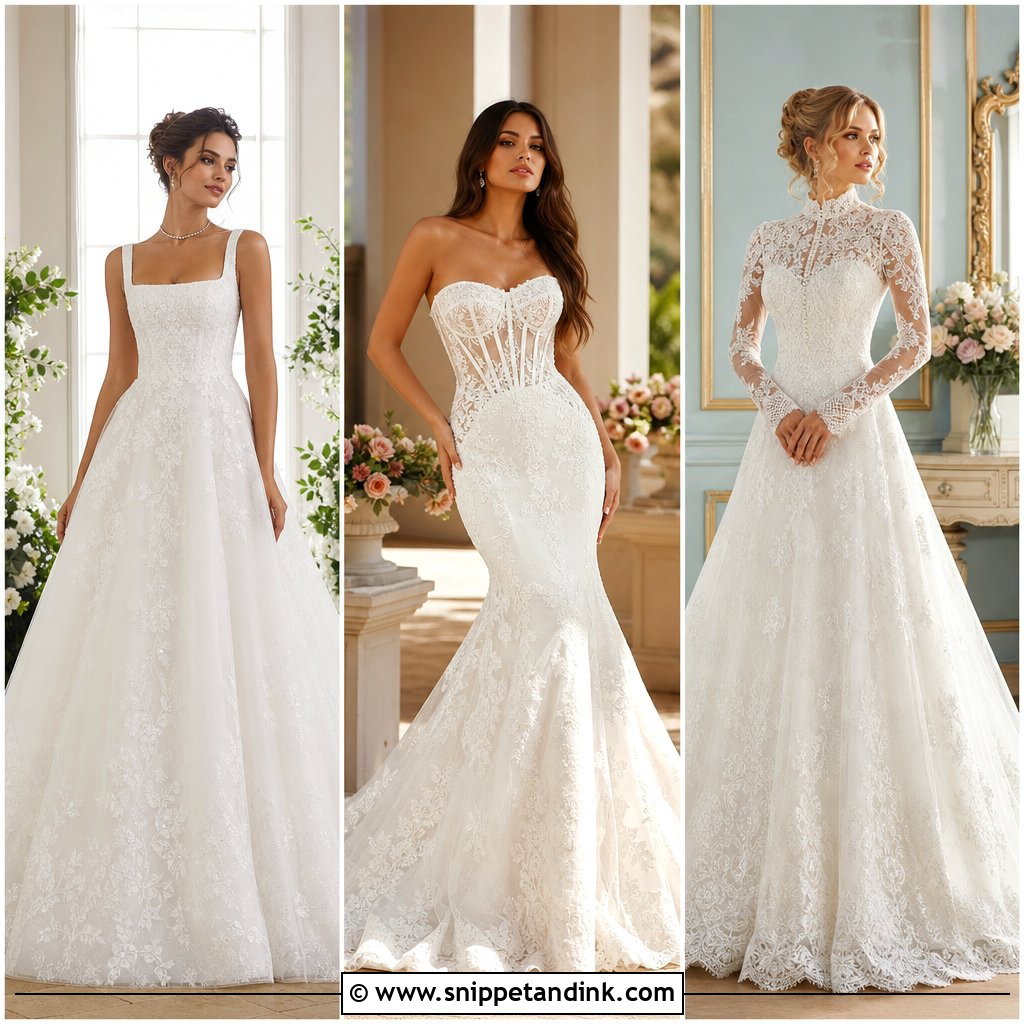
Satin shows everything. That’s both its appeal and its risk. A structured satin ball gown with a fitted waist, covered buttons and a square neck needs no embroidery, but it also reveals every seam that isn’t pressed and every crease from the car ride. I always bring a handheld steamer to satin weddings. Keep the veil long and plain, the earrings to crystal studs, and add a slim tennis bracelet and small ivory clutch. Pointed pumps are fine indoors; for a long day, block heels. A sleek bun with a pearl comb and a compact bunch of white orchids.
3. Kerala Wedding Long Sleeve Gown
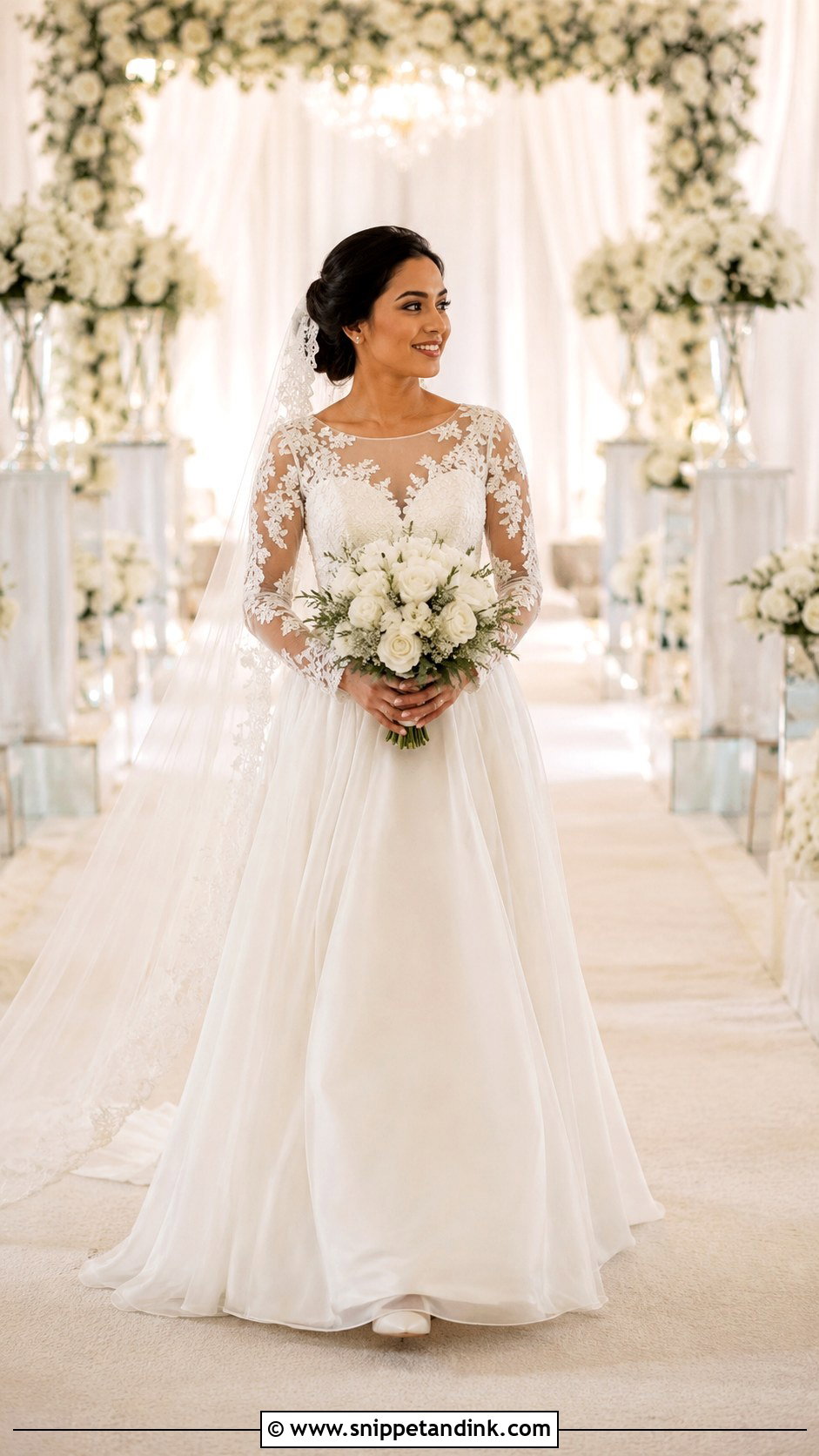
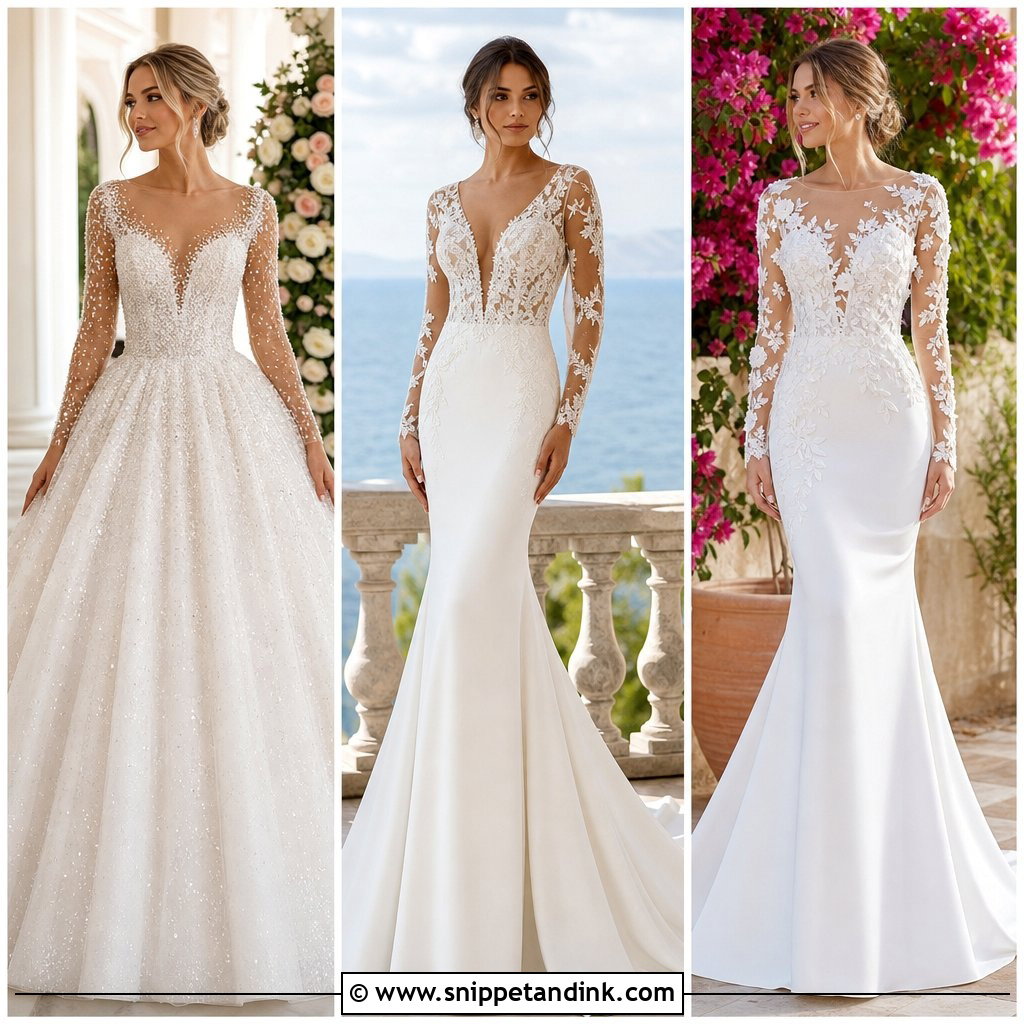
Long sleeves suit a church ceremony, and they’re kinder in photos to brides who feel self-conscious about their arms. Look for a floor-length ivory gown with a fitted lace bodice, illusion sleeves and a tulle or organza skirt. The fitting test I insist on: arms raised, then folded as if in prayer. Illusion mesh with no give will tear at the underarm seam if it’s cut too close. A chapel veil edged in matching lace, small diamond earrings and one pendant are enough. Cushioned closed-toe heels, a low twisted bun, rosy makeup and a structured bouquet tied with ivory ribbon.
4. Kerala Wedding High Neck Gown
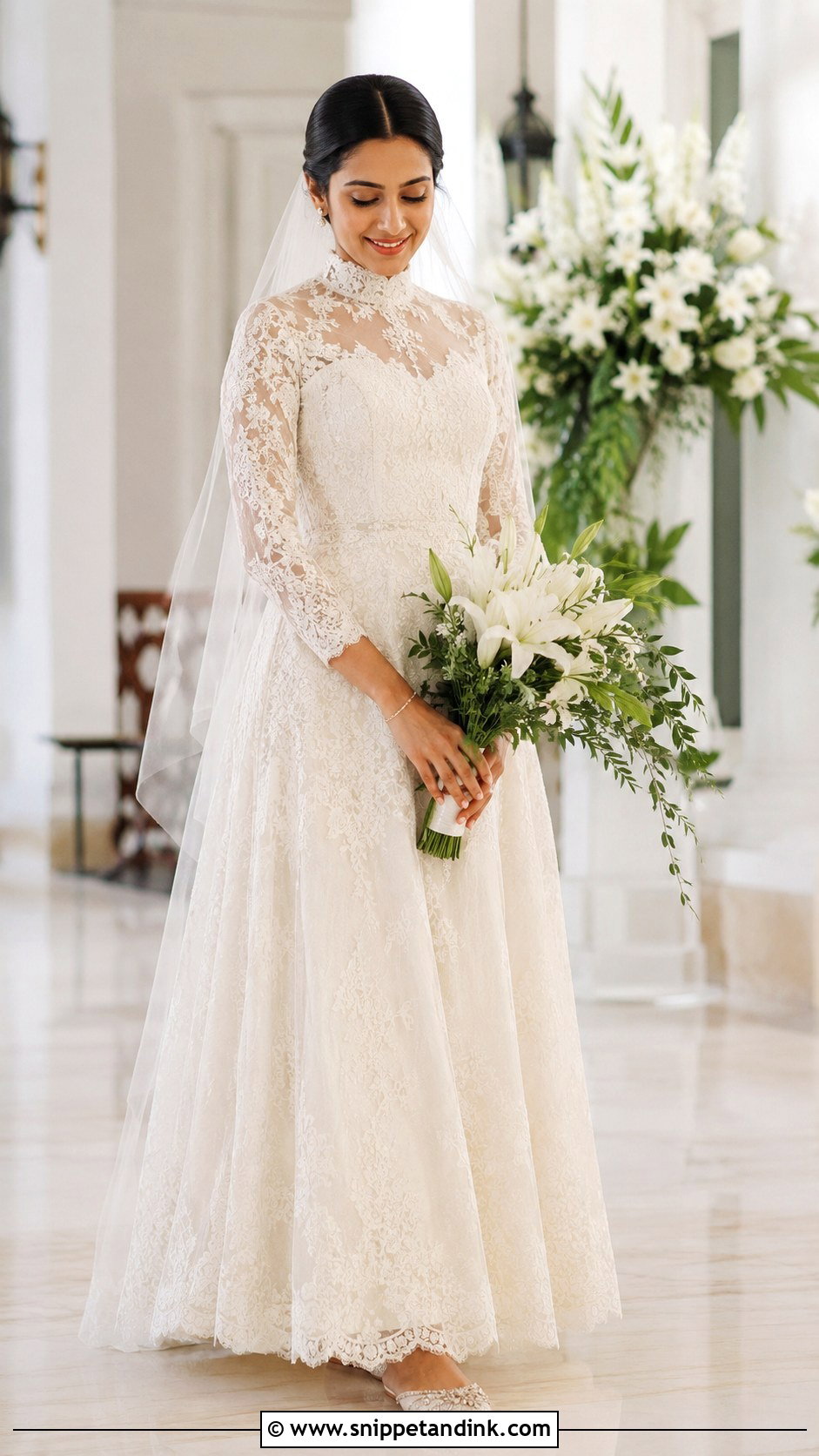
High necklines do something unusual: they make the face the frame. With a sheer lace yoke and a fitted bodice over an A-line skirt, there’s no space for a necklace, and you won’t miss one. Pearl studs, one slim gold bangle as a nod to Kerala gold, and low heels or embellished flats. I’d place the veil below a neat centre-parted bun so it doesn’t break the neckline. Check the lining is light; a high neck over heavy lining feels warm by midday. Natural makeup with defined eyes, and white lilies with fine green foliage.
5. Kerala Wedding Off Shoulder Gown
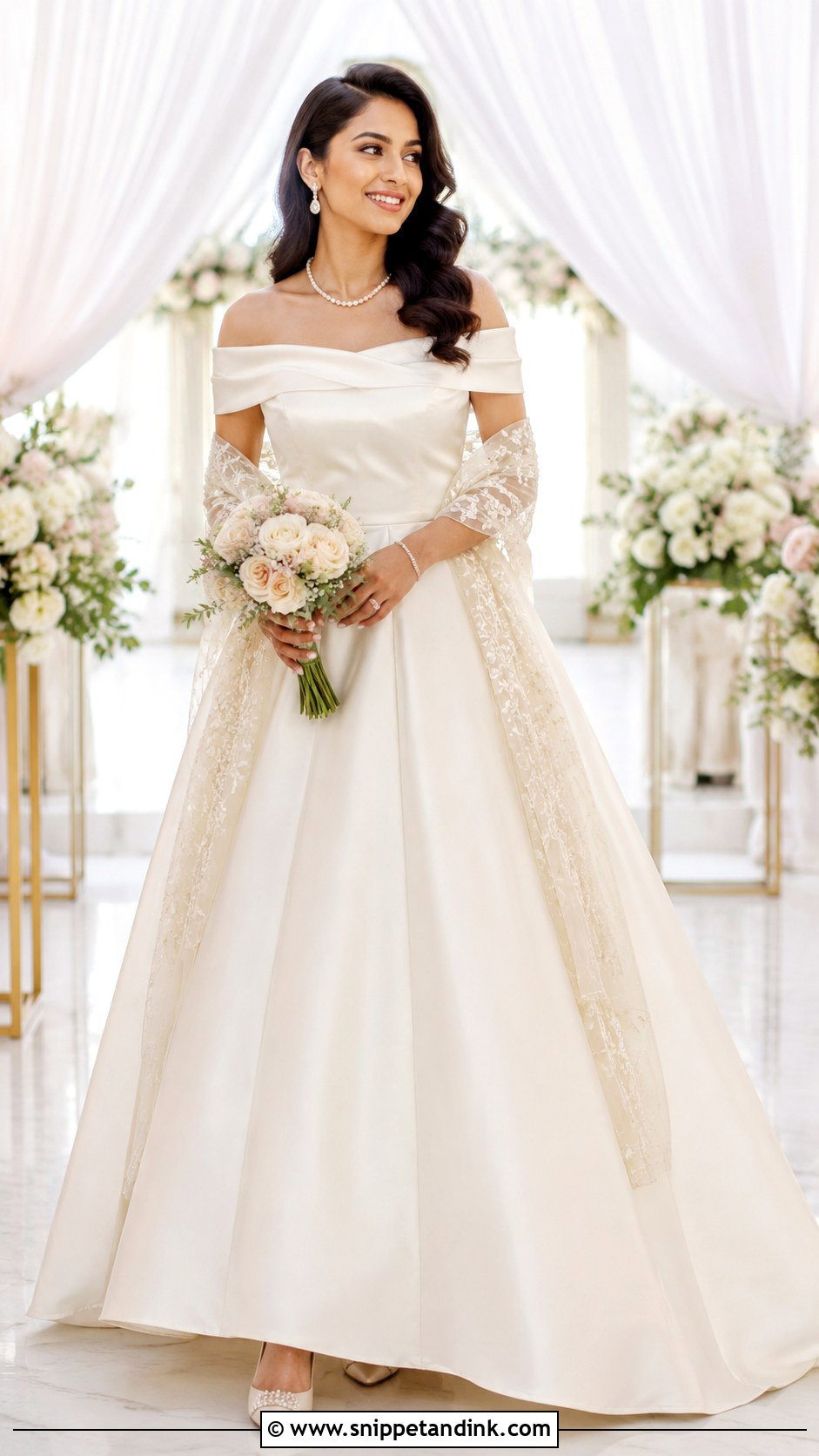
An off-shoulder neckline is better suited to the reception than to most Kerala churches, where covered shoulders are often expected during the service. The workaround is a detachable sheer wrap or embroidered stole for the ceremony. What I check first is the bodice: folded satin bands need real internal structure, or you’ll spend the evening hitching the dress up. A short pearl necklace or a single diamond pendant, matching drops, a slim bracelet and pointed ivory heels. Polished side-swept waves or a low bun, luminous makeup, and white roses with pale pink accents.
6. Kerala Wedding Pearl Embellished Gown
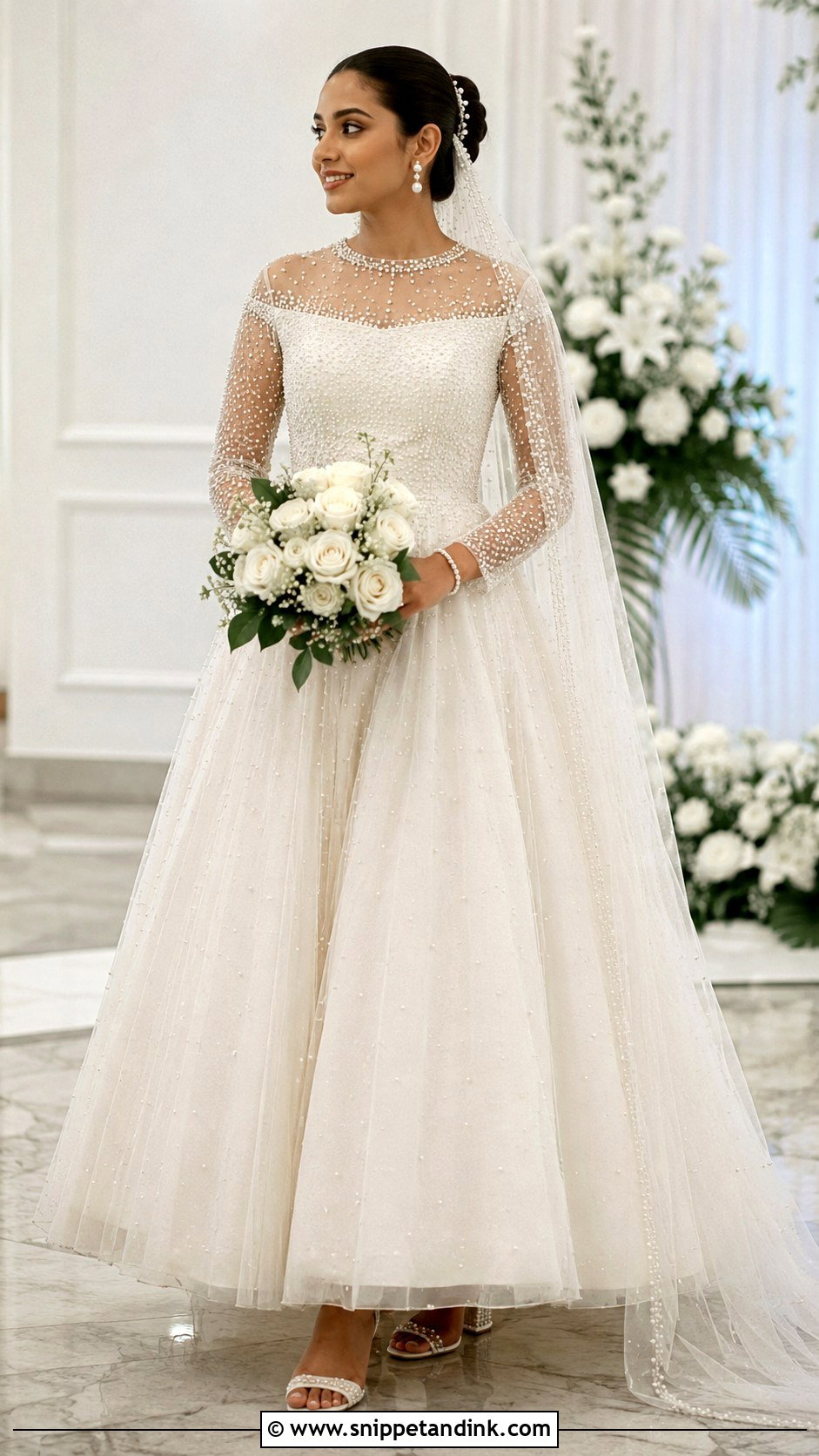
Pearl-scattered tulle looks delicate in the image, and the weight is where people get surprised. Hundreds of hand-sewn pearls add up, which is why I’d keep the shape A-line and let the pearls thin out down the skirt. Skip a necklace; the bodice is already decorated. Carry the theme lightly with pearl studs, a slim pearl bracelet and a veil with a beaded edge. Ivory block heels with pearl straps, a smooth low bun with a few pearl pins, soft pink makeup and a round bouquet of white roses. Before the day, run your hand over the bodice for loose threads; a pearl that drops mid-aisle leaves a bare spot.
7. Kerala Wedding Floral Appliqué Gown
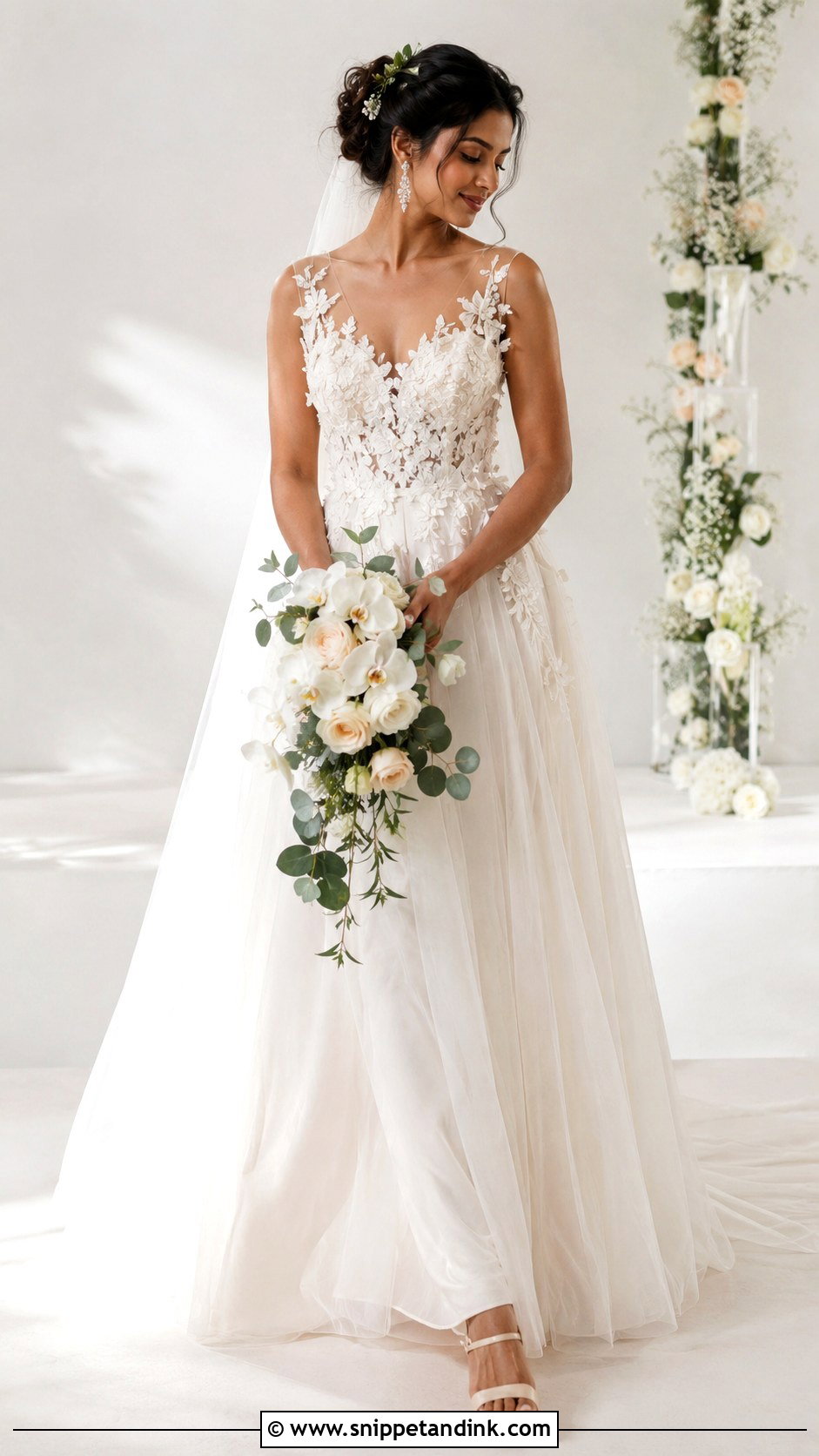
Floral appliqué gives a plain silhouette real depth, especially when the flowers start dense at the bodice and drift down the tulle skirt. Keep the veil plain so the two don’t compete. One practical note: raised appliqué catches on beaded clutches and on the groom’s cufflinks, so I avoid textured accessories against it. Crystal studs, a fine bracelet and ivory ankle-strap heels. A relaxed bun with small white flowers on one side, softly defined eyes, a rose lip and an airy mix of orchids, roses and eucalyptus.
8. Kerala Wedding Minimalist Crepe Gown
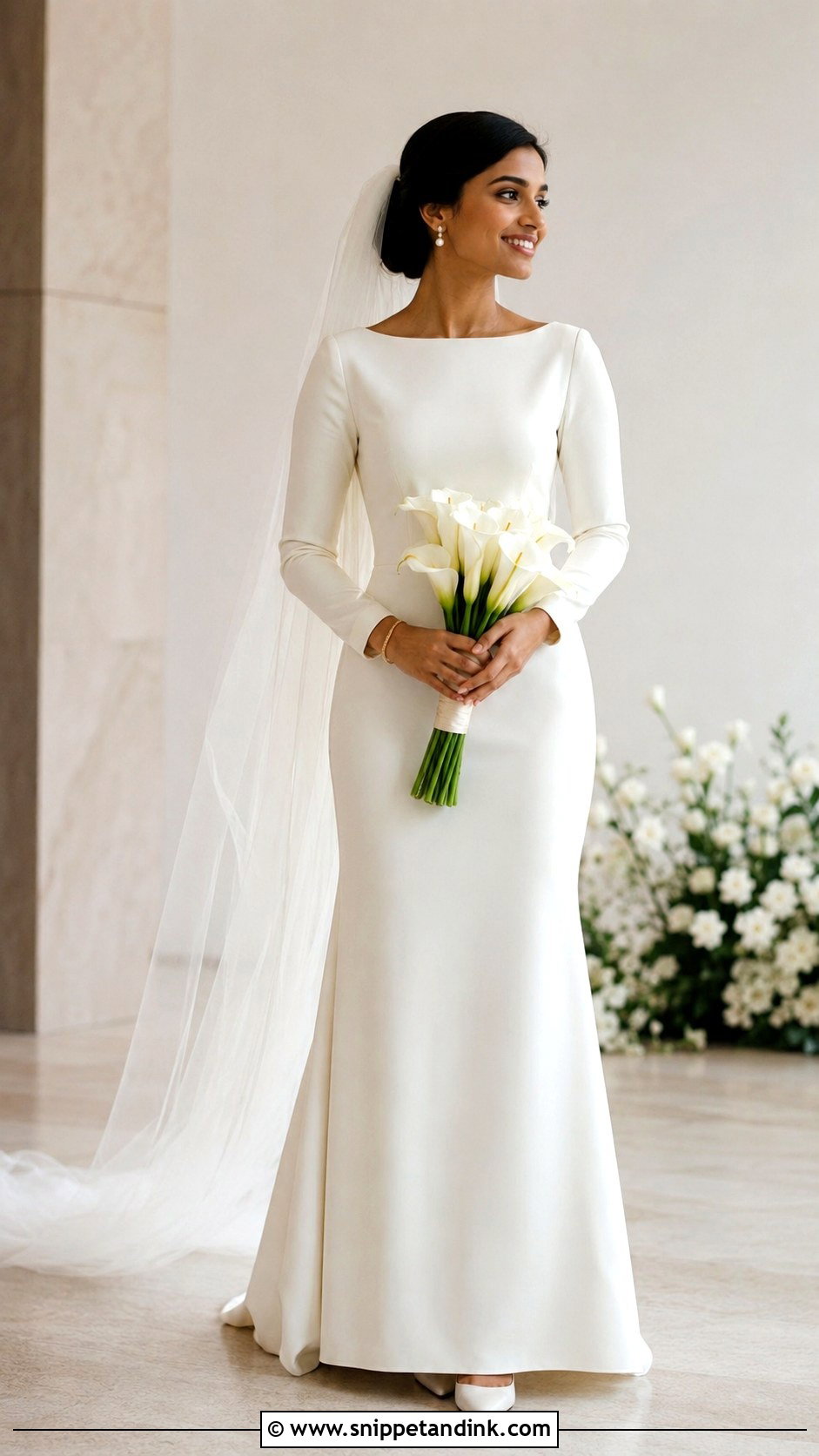
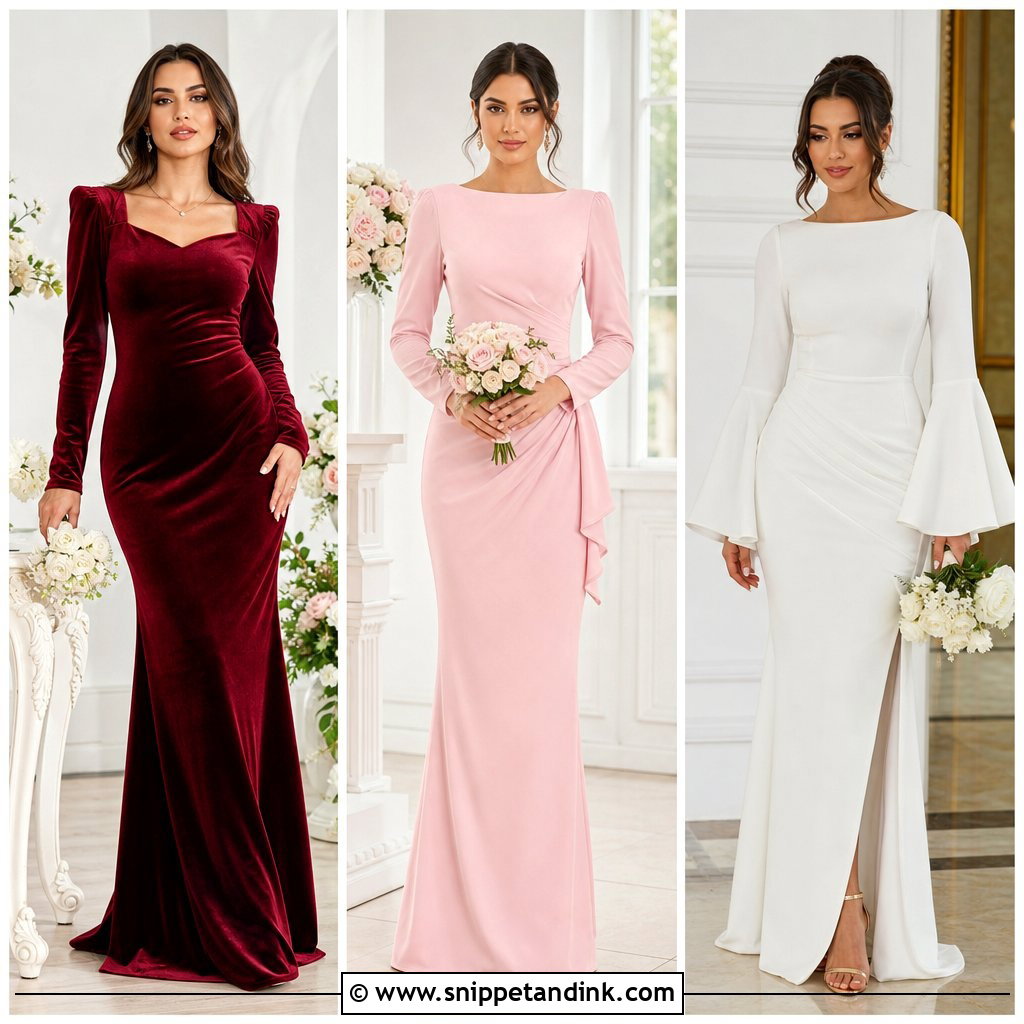
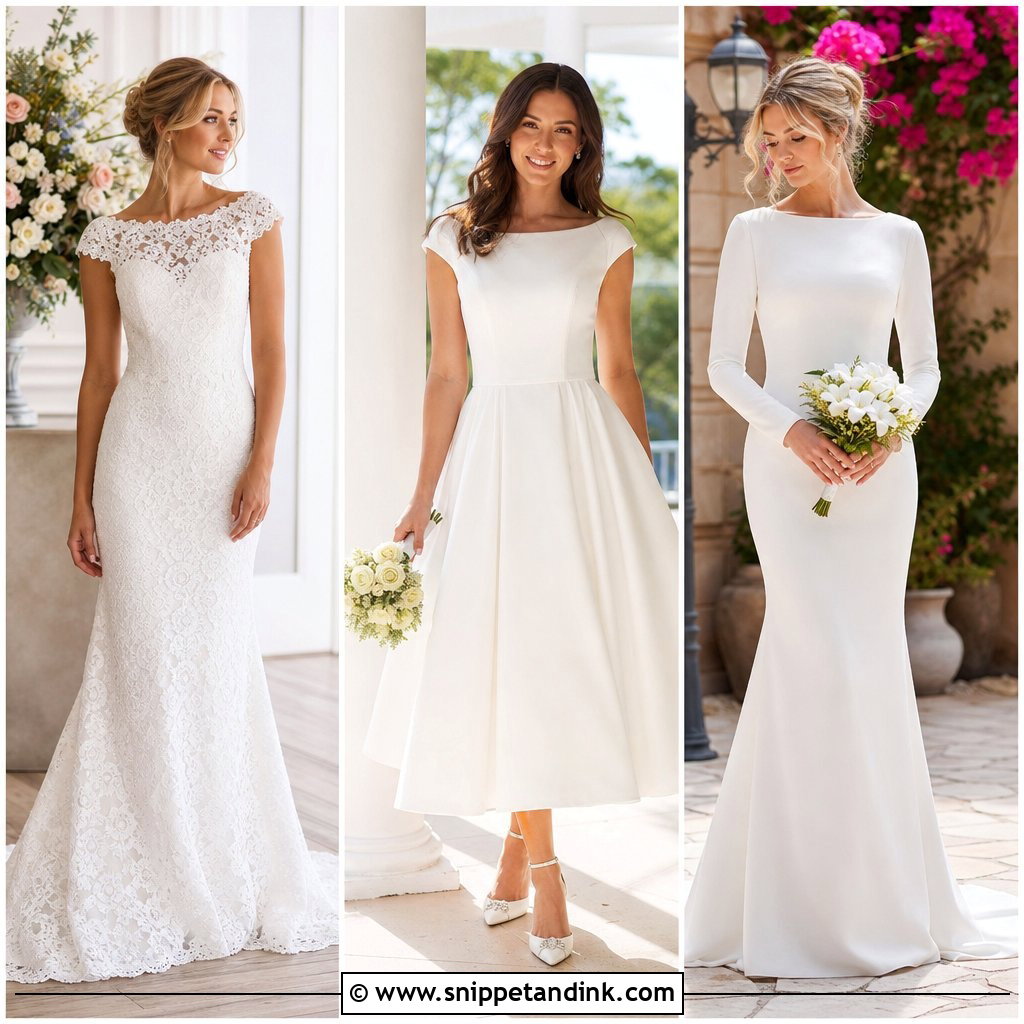
Crepe is the most honest fabric in bridal; there is nothing to hide behind. A bateau neck, fitted waist, long sleeves and a gentle flare, with covered buttons down the back, is all the detail it needs. Because crepe is matte and heavier, it hangs straight and resists creasing better than satin, which helps on a long day. Sculptural pearl earrings and one gold bracelet, a long plain veil for the ceremony, pointed ivory pumps or sleek block heels. A centre-parted low bun, luminous skin and white calla lilies or orchids.
9. Kerala Wedding Princess Tulle Gown
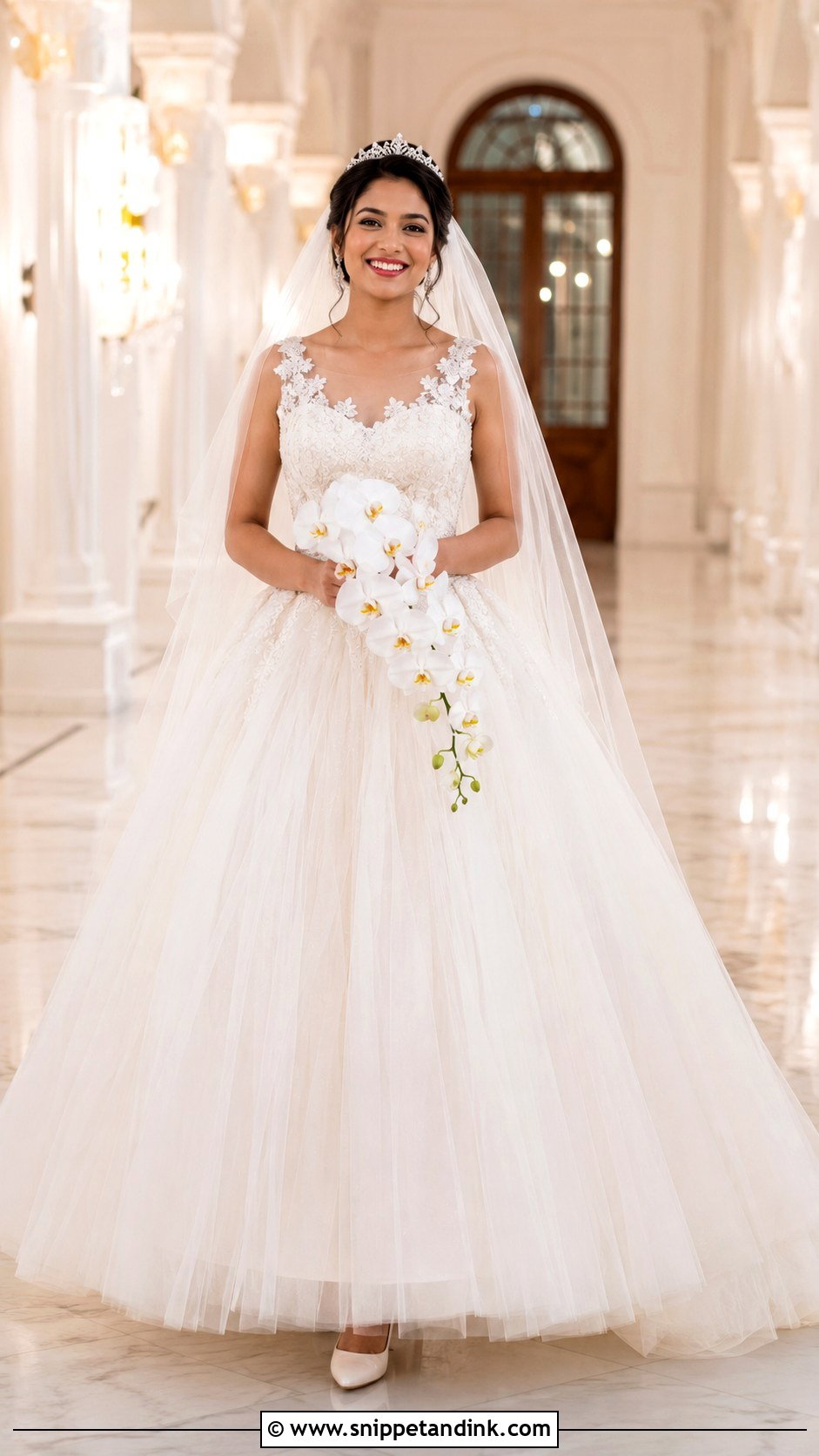
For a grand entrance, a princess gown with layers of tulle gives volume without heavy fabric. A fitted lace bodice and a full skirt from the natural waist is the classic build; cap sleeves or a wide illusion neck add coverage and stop the bodice slipping. The thing I flag early is the car. A full tulle skirt needs a large vehicle and someone to gather it on the way in. Add a tiara, small crystal earrings and a veil longer than the skirt. Closed-toe heels, since they’ll peek out as you walk, a polished updo, soft pink makeup and a cascading bouquet of orchids and trailing greenery.
10. Kerala Wedding Mermaid Lace Gown
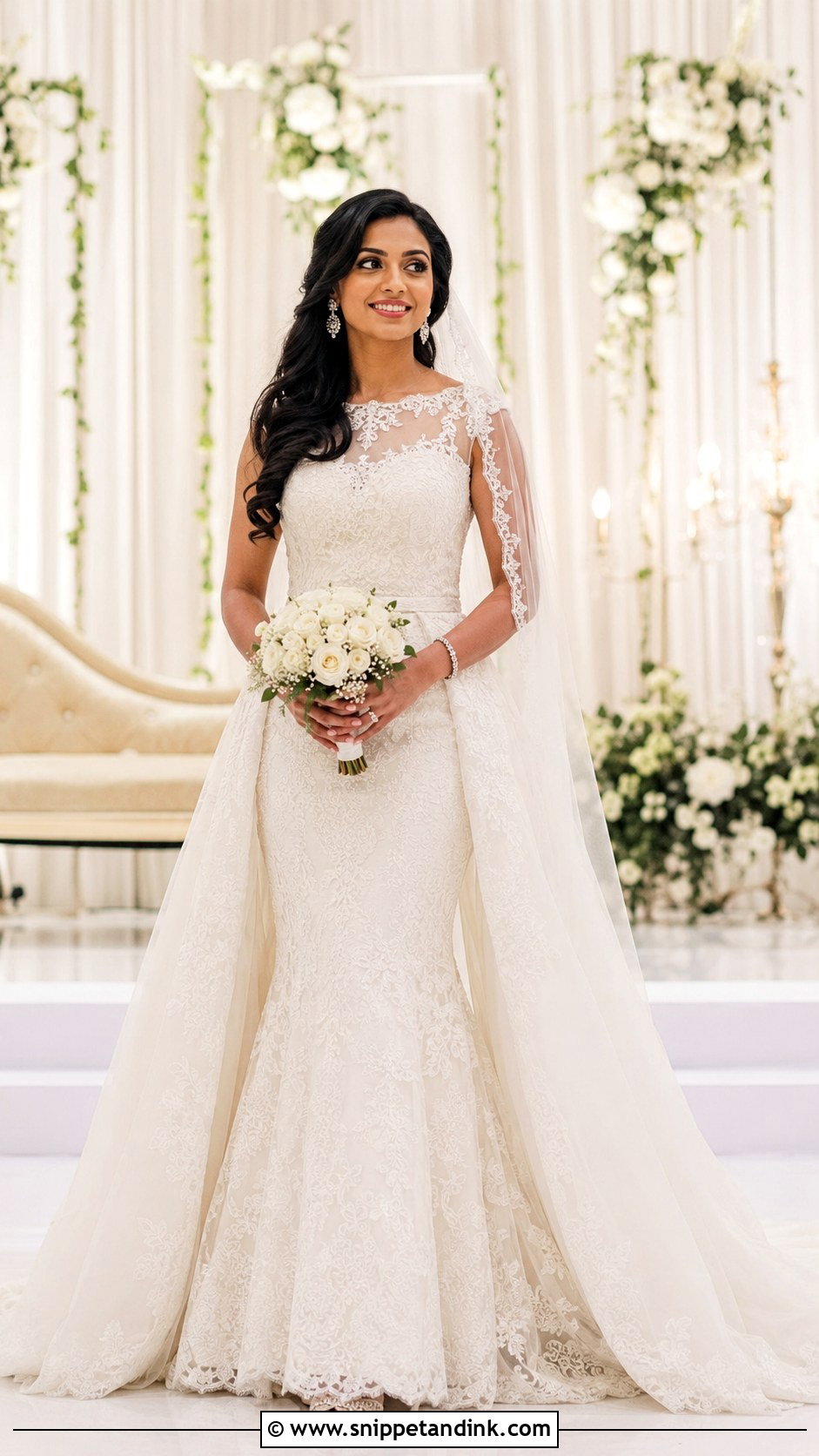
A mermaid gown fits closely through the hips before flaring at or below the knee, and that flare point decides how well you can walk and sit. I ask brides to climb a step in it at every fitting. Stretch lace and a supportive lining make it far easier to live in, and a modest sweetheart or illusion neck keeps it church-appropriate. A detachable overskirt can add volume for the service. Drop earrings, a fine bracelet, comfortable ivory heels and a fingertip veil, so it doesn’t fight the train. Side-swept waves or a textured low bun, defined eyes and a compact white bouquet.
11. Kerala Wedding Cape Sleeve Gown
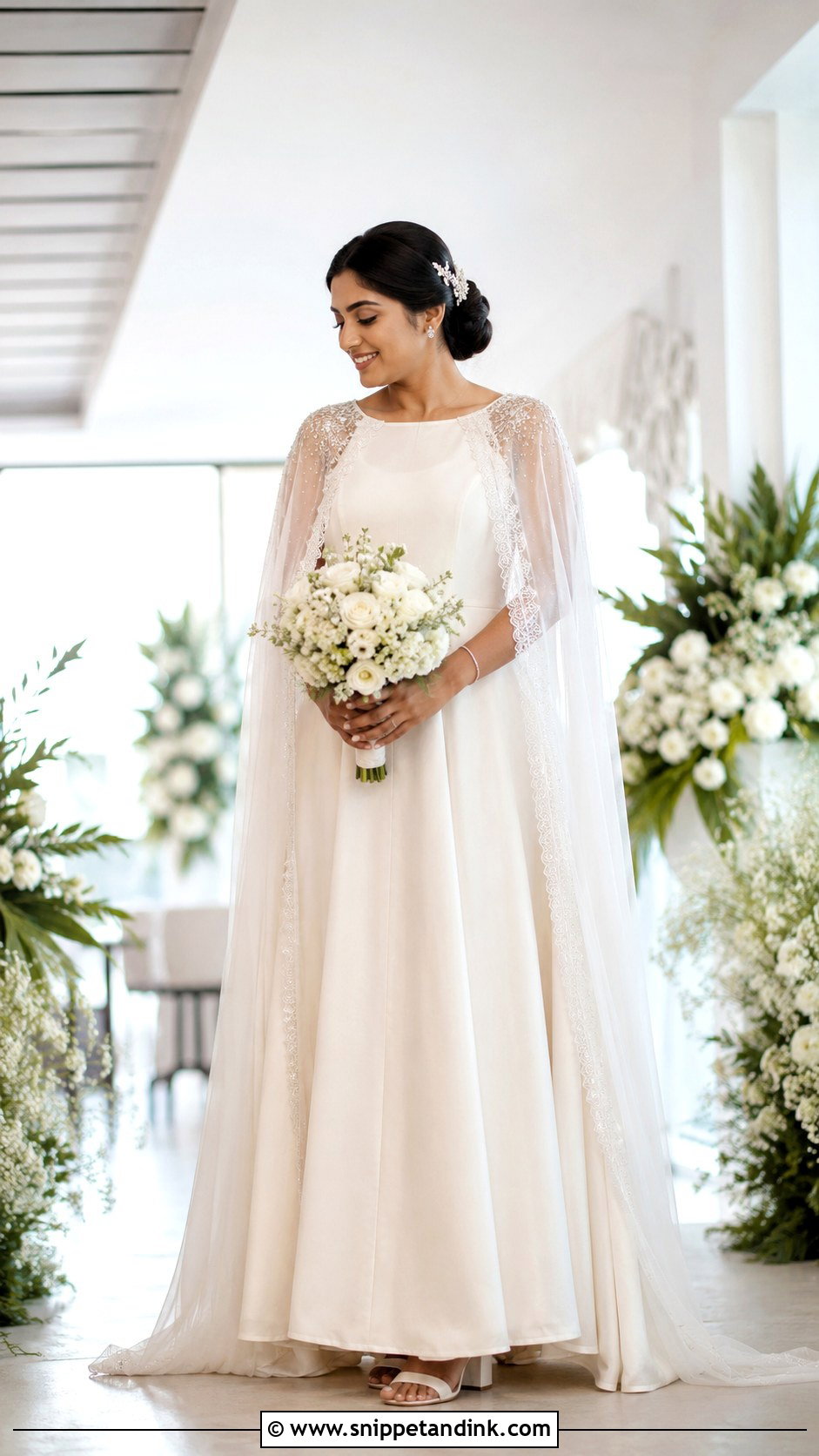
A cape gives coverage without the tightness of sleeves, which makes it one of my favourite answers for a bride who wants modest shoulders but hates anything fitted on her arms. Choose a simple ivory A-line with a sheer cape stitched at the shoulders, edged in fine lace, pearls or light embroidery. Because the cape already moves and catches the eye, skip the big veil; a short one or a hair comb is enough. Crystal studs, a slim gold bracelet, nothing heavy at the neck. Ivory block heels, a neat low bun, soft neutral makeup and a structured white bouquet.
12. Kerala Wedding Ivory Gold Gown
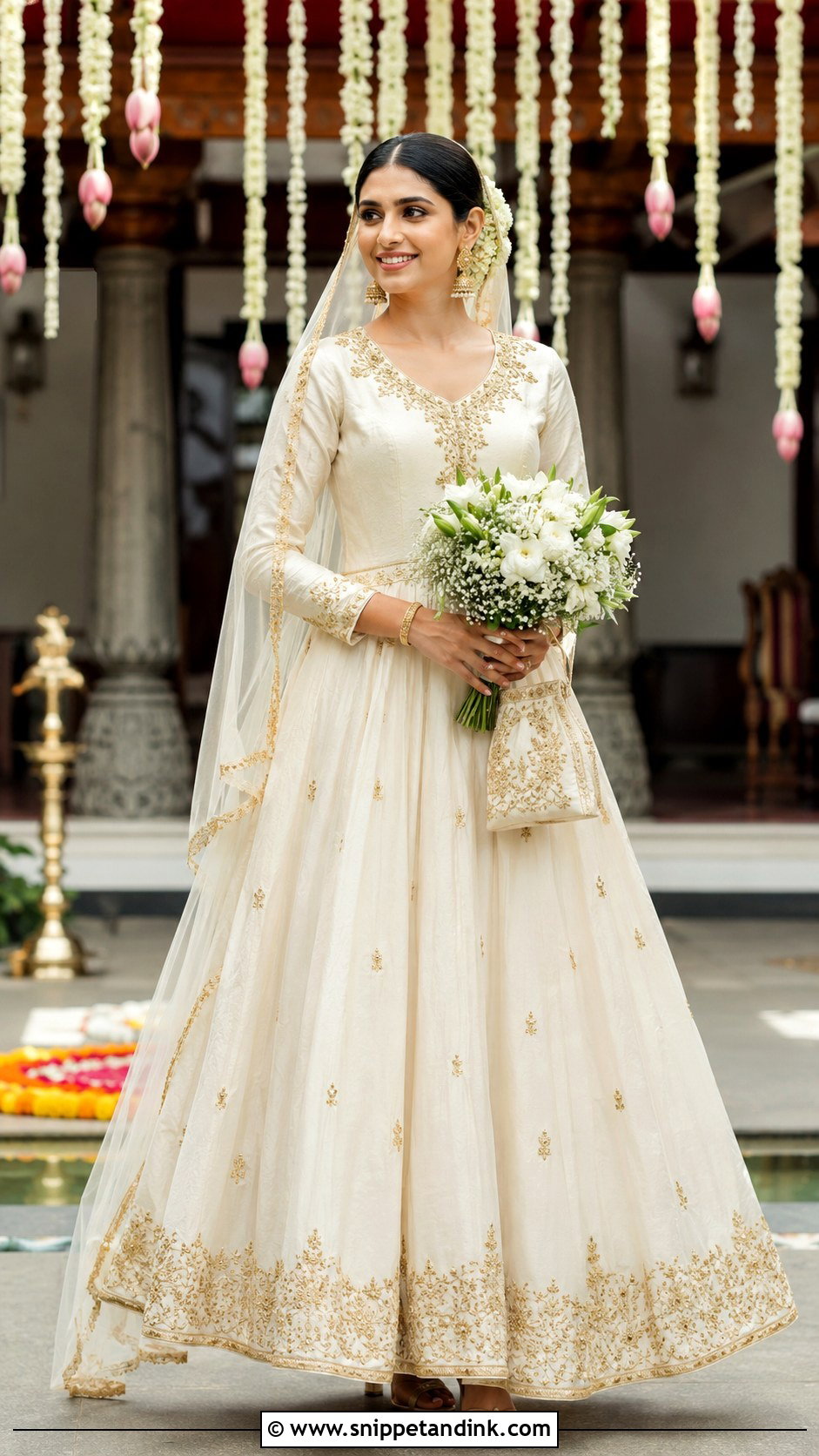
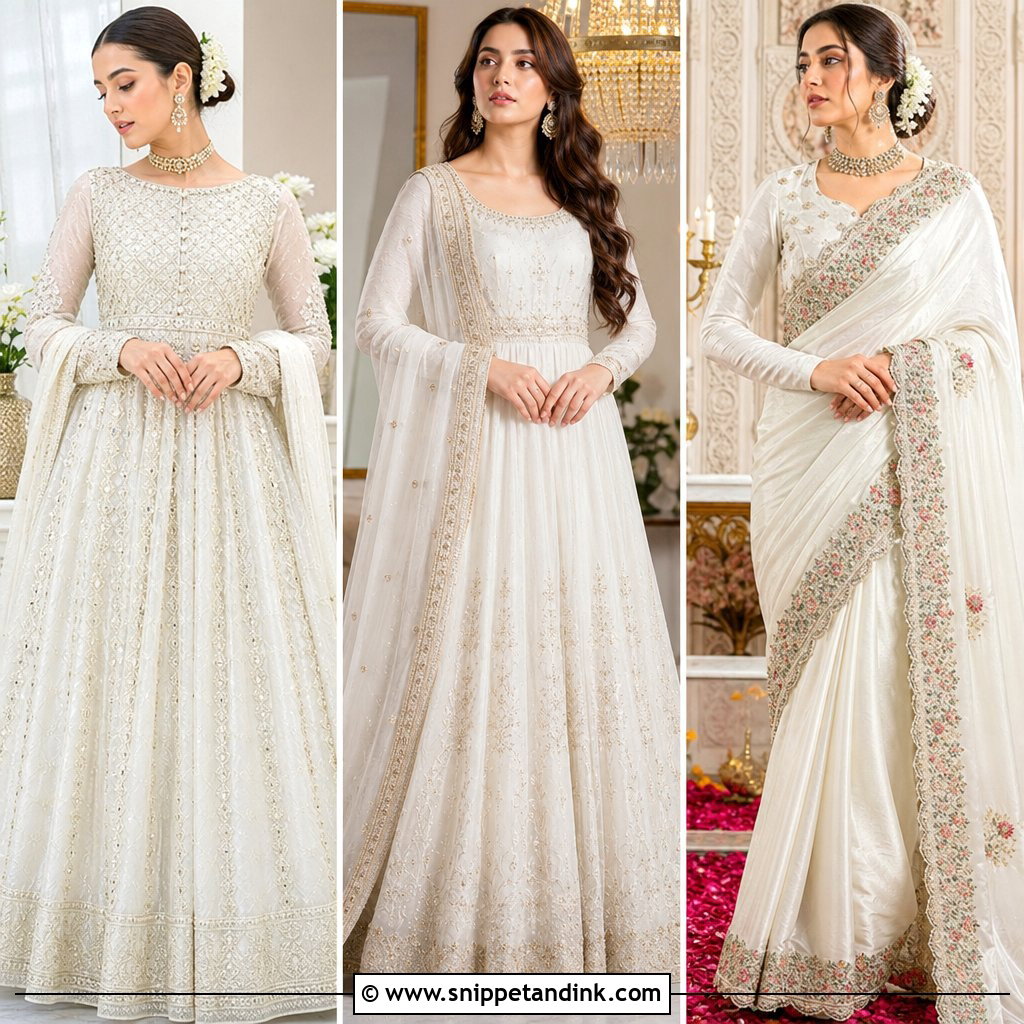
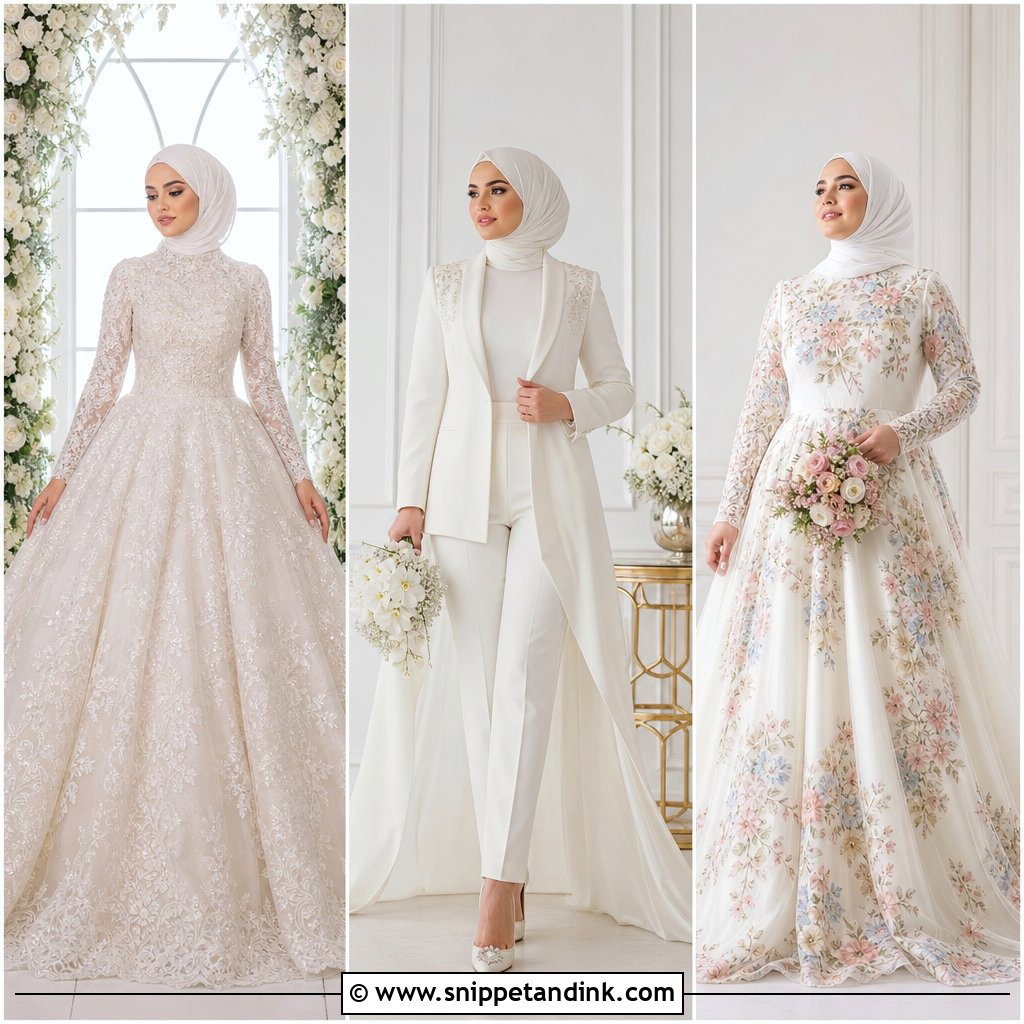
Ivory with gold is the most direct link between a Western gown and the Kerala wedding palette. Antique-gold embroidery at the neck, waist, sleeves or hem is enough; once gold covers the bodice it starts to look like costume. I match the gold tone of the embroidery to the family jewellery the bride will wear, since bright yellow gold beside muted antique thread looks mismatched up close. Small jhumka-style earrings, a slim bangle, a fine chain and a plain veil with a narrow gold edge. Champagne or ivory block heels, an embroidered clutch, a jasmine bun, warm makeup and a white-and-gold wrapped bouquet.
13. Kerala Wedding Blush Pink Gown
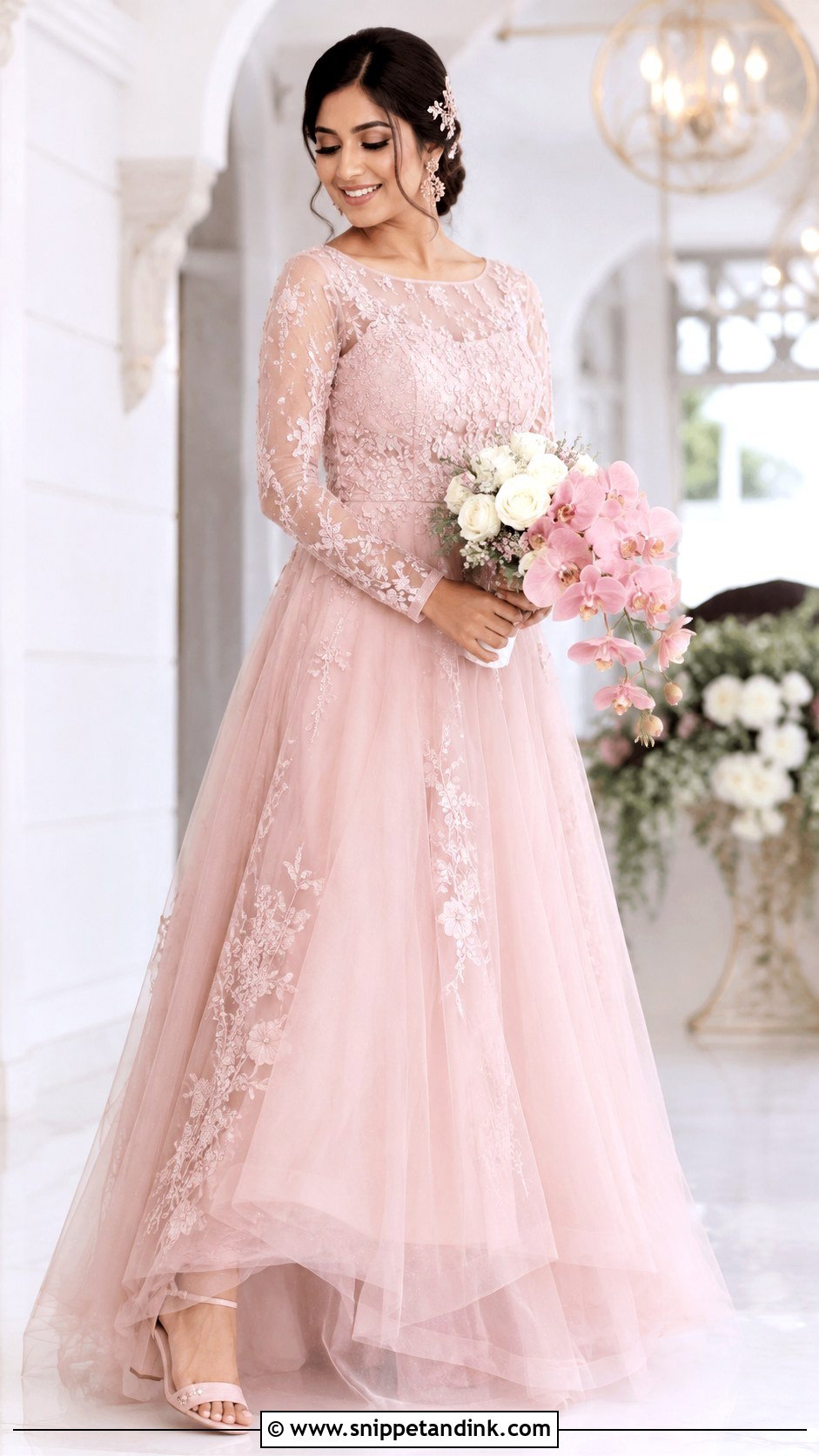
Blush works best for a reception or an outdoor celebration where white isn’t required. A fitted embroidered bodice over layered tulle, with a soft V-neck and flutter or sheer three-quarter sleeves, keeps it wearable. Pick the pink in daylight, though; some blush tulle reads almost white in photos and some reads peach. Swap the white veil for a blush one, a jewelled comb or a sheer shoulder drape. Rose-gold earrings, a slim bracelet, nude or blush block heels, loose waves or a textured low bun, rosy makeup and ivory roses with pale pink orchids and eucalyptus.
14. Kerala Wedding Detachable Overskirt Gown
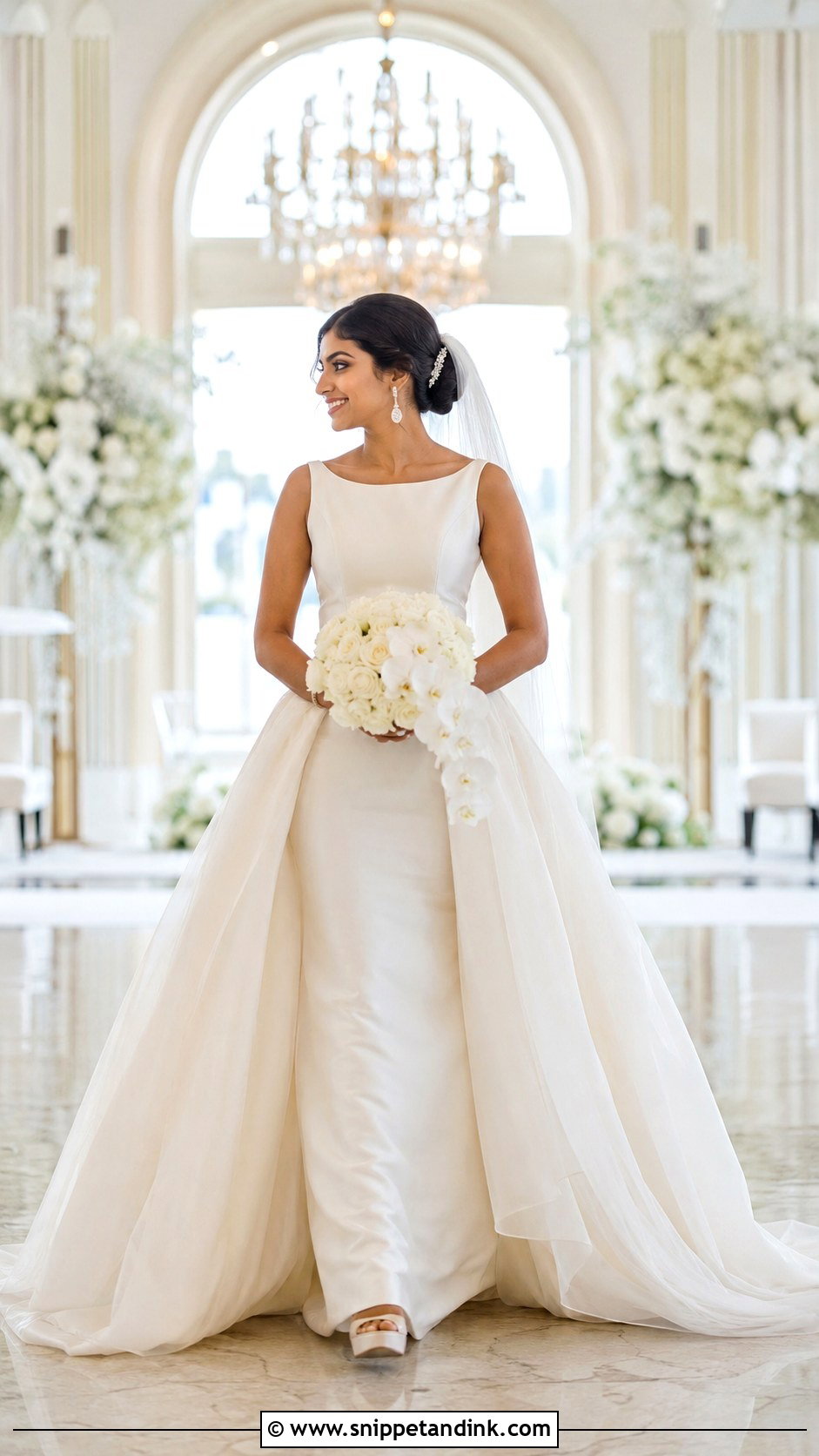
A detachable overskirt gives you two looks from one fitting schedule. A fitted crepe, satin or lace gown sits underneath, and an organza or tulle overskirt makes it a ball gown for the church. Ask how it fastens. Hidden hooks or a snap band are quicker than buttons, and someone other than you needs to practise removing it before the day. Crystal drops, a simple bracelet and ivory block heels work for both versions, as does a medium veil. A secure low bun with a jewelled comb, polished makeup and white roses with orchids.
15. Kerala Wedding Tea Length Gown
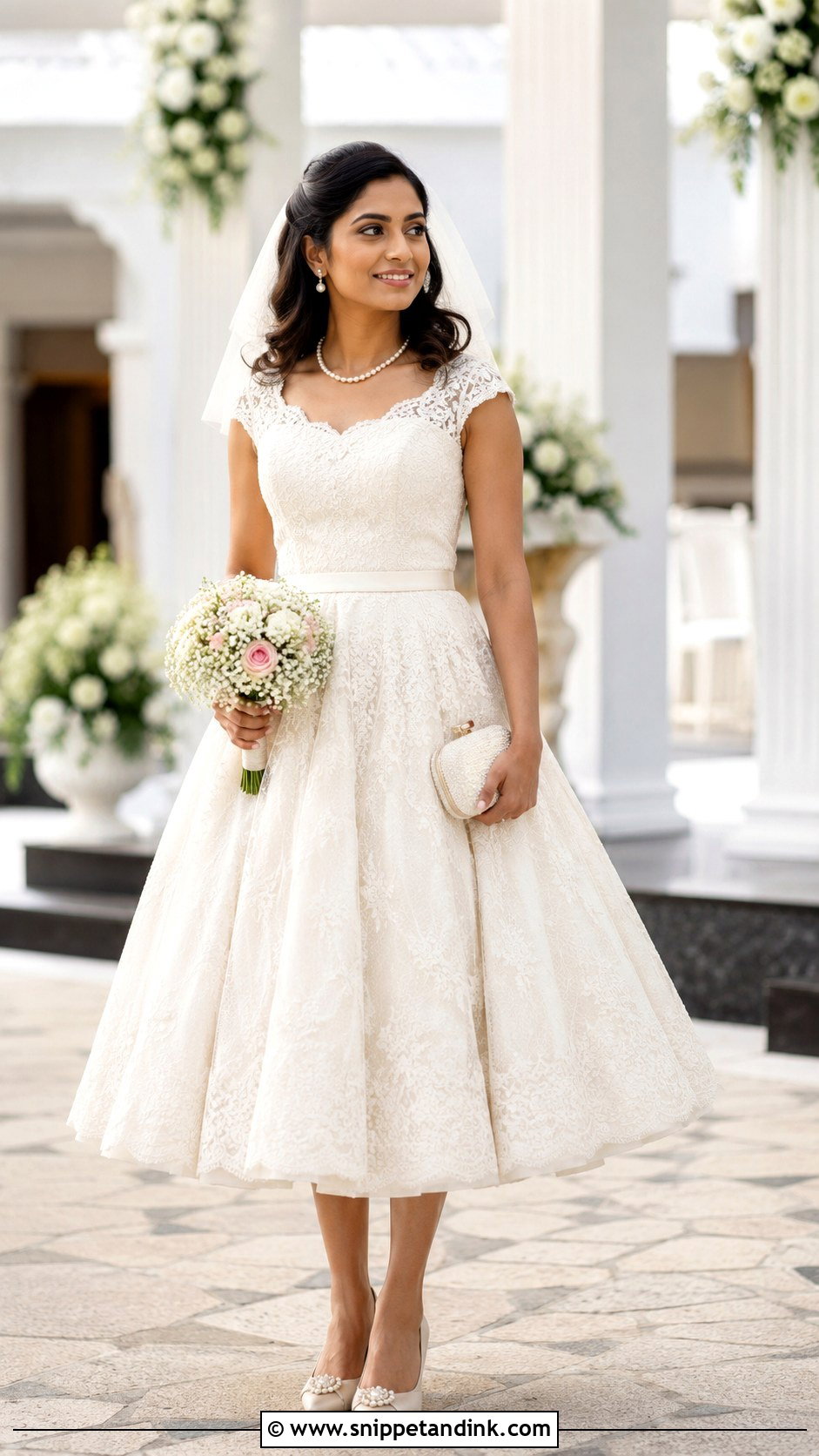
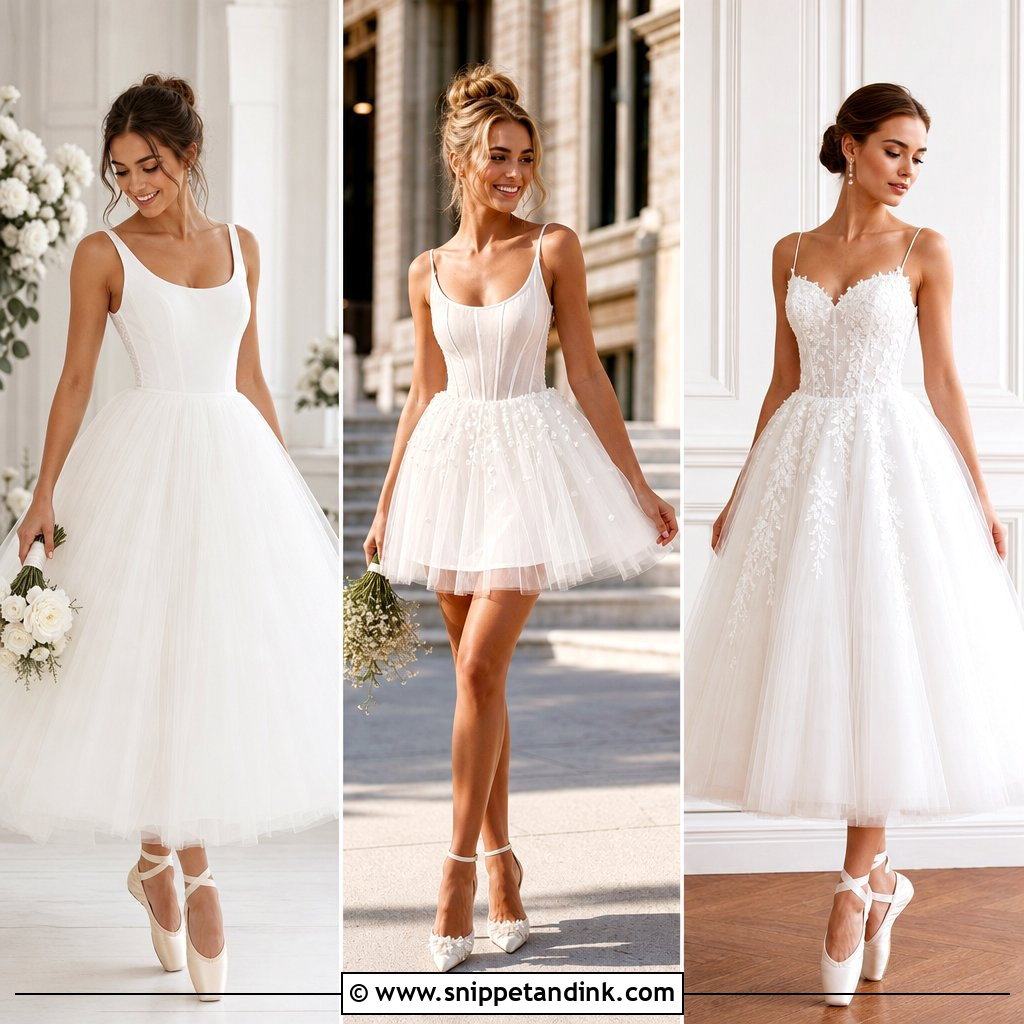
Tea length is cheerful and practical for a small wedding, a registry ceremony or a daytime event. The skirt ends between knee and ankle, so the shoes become part of the outfit: embellished ivory pumps, pearl-trimmed sandals or low block heels. Hem length is the tricky part. I mark it with the actual shoes on, because even a centimetre changes the proportion. Pearl studs, a short necklace and a compact clutch. A birdcage or shoulder-length veil suits it far better than anything long. Soft waves or a neat low bun, fresh makeup and white roses with jasmine.
16. Kerala Wedding Plus Size Empire Gown
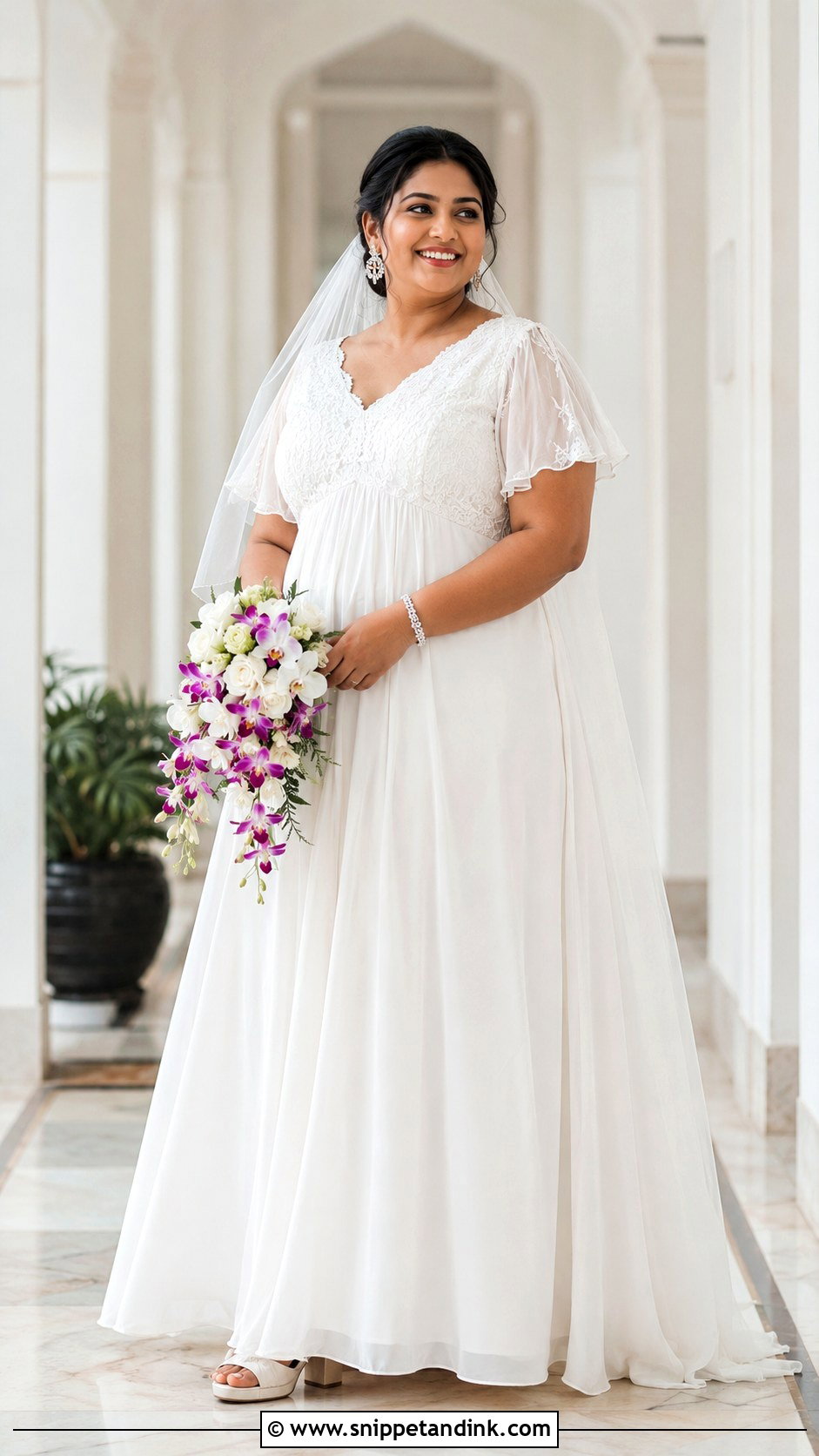
Empire waists sit just under the bust and let the skirt fall freely, which is why they’re comfortable through a long day. For a fuller figure, the bodice must be genuinely supportive; I look for built-in cups or boning in the lace bodice rather than relying on a separate bra. A chiffon skirt that skims rather than clings, a modest V-neck to lengthen the torso, and flutter or sheer lace sleeves. Statement earrings, a fine bracelet, cushioned block heels and a light fingertip veil. A side-parted bun or flowing waves, luminous makeup and white orchids with blush roses.
17. Kerala Wedding Petite A-Line Gown
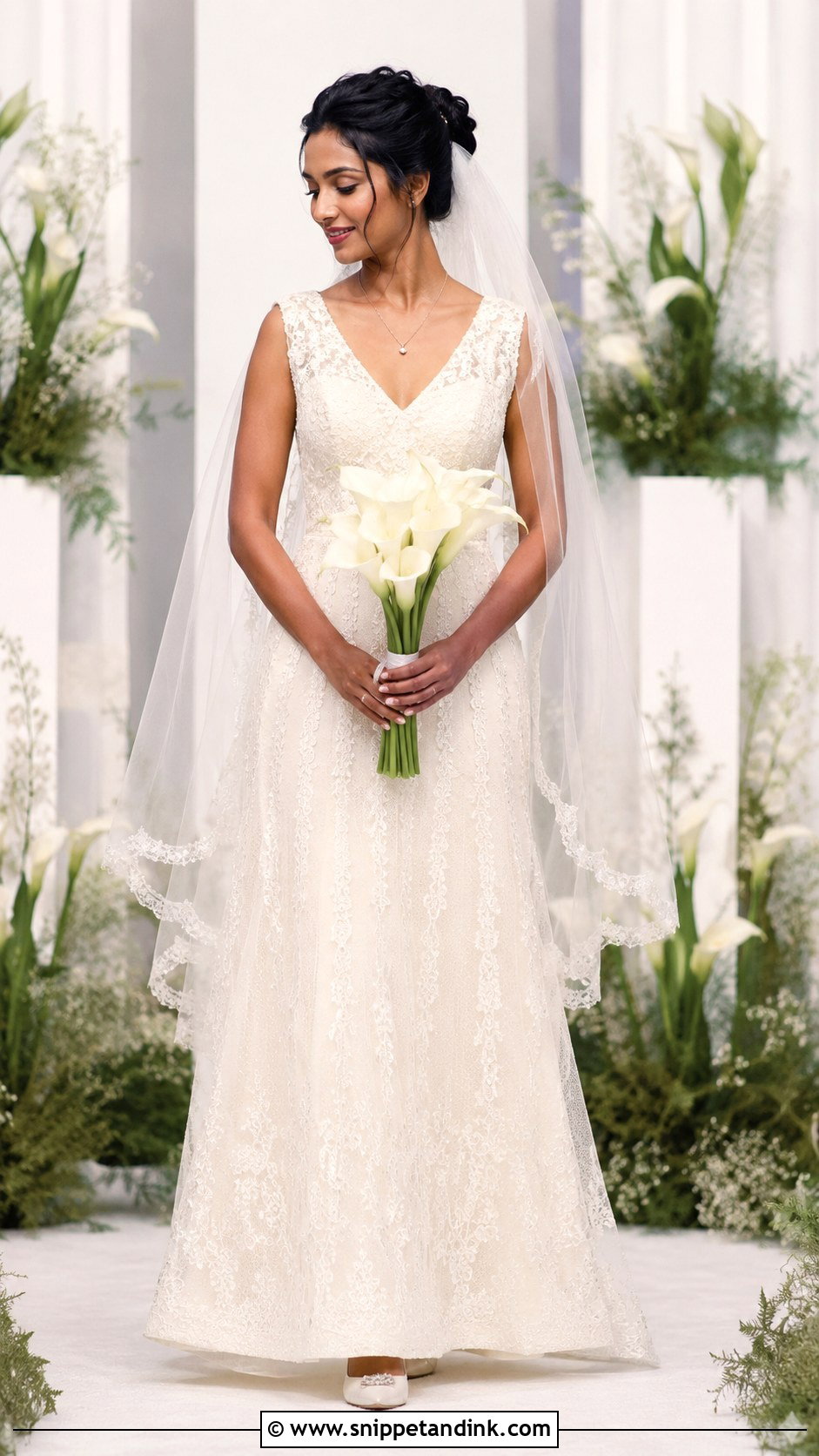
Proportion is everything for a petite bride. A defined natural waist, a narrow V-neck and vertical lace or seam lines all draw the eye upward. What I’d avoid is a very full skirt or a wide decorative border, which can swallow a small frame. Pointed-toe ivory heels add a little visual length, as does a lifted low bun. Delicate earrings and a fine pendant. If you love a chapel veil, keep it light and slightly narrower than the skirt. A slim bouquet of calla lilies or orchids is better scaled than a large round one.
18. Kerala Wedding Three Quarter Sleeve Gown
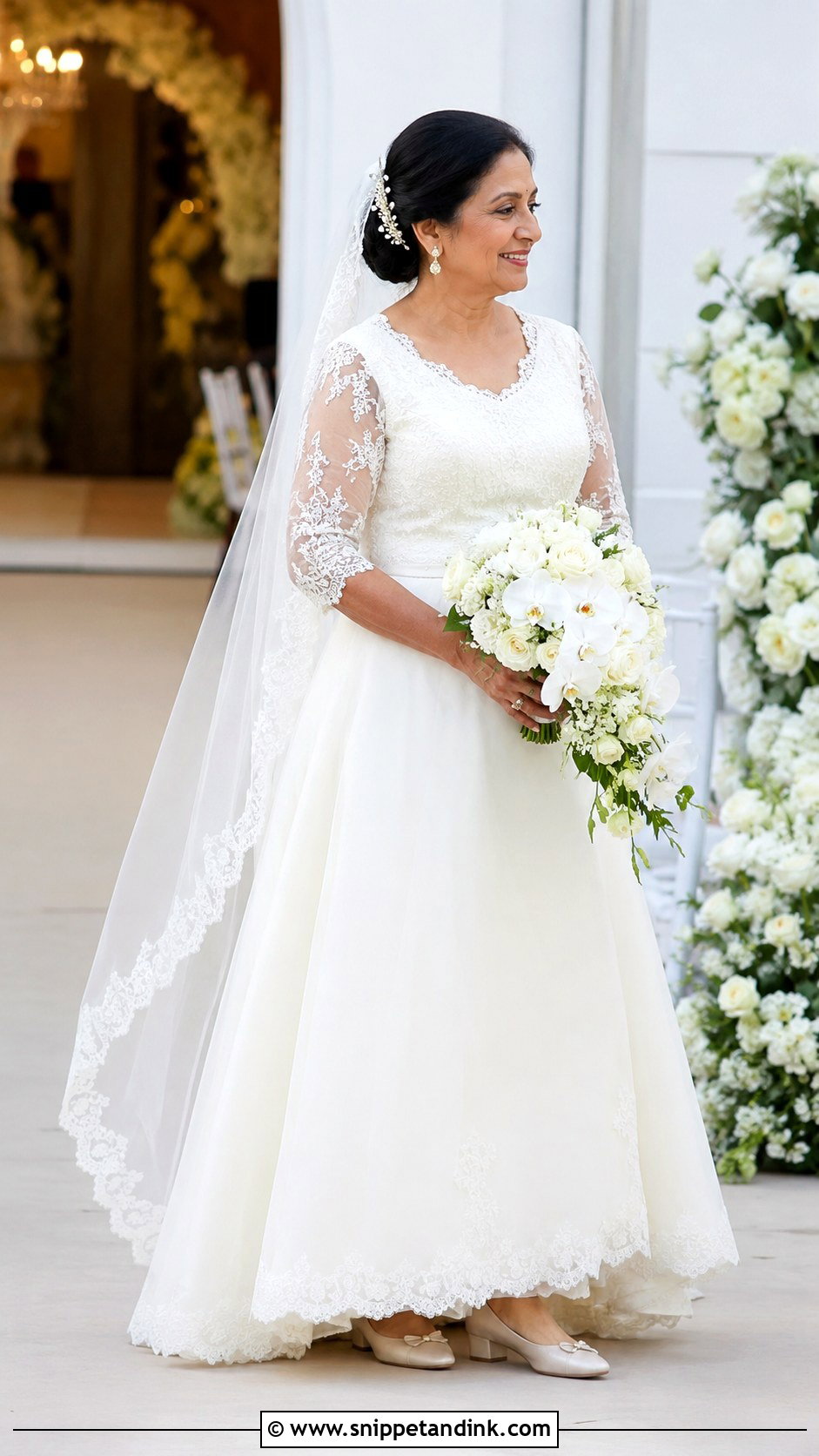
Three-quarter sleeves cover the upper arm but leave the wrists free for bangles, which suits brides who want to wear family jewellery with a gown. Lace sleeves ending below the elbow, a softly shaped neck and an A-line skirt make an understated outfit I often suggest for older brides or second weddings. Pearl-and-gold earrings and a meaningful bracelet, low block heels or pointed flats. A shoulder-length veil feels light; a lace-edged fingertip veil is more traditional. A smooth chignon with a delicate comb, soft makeup and a neat hand-tied bouquet of white roses and orchids.
19. Kerala Wedding Chiffon Outdoor Gown
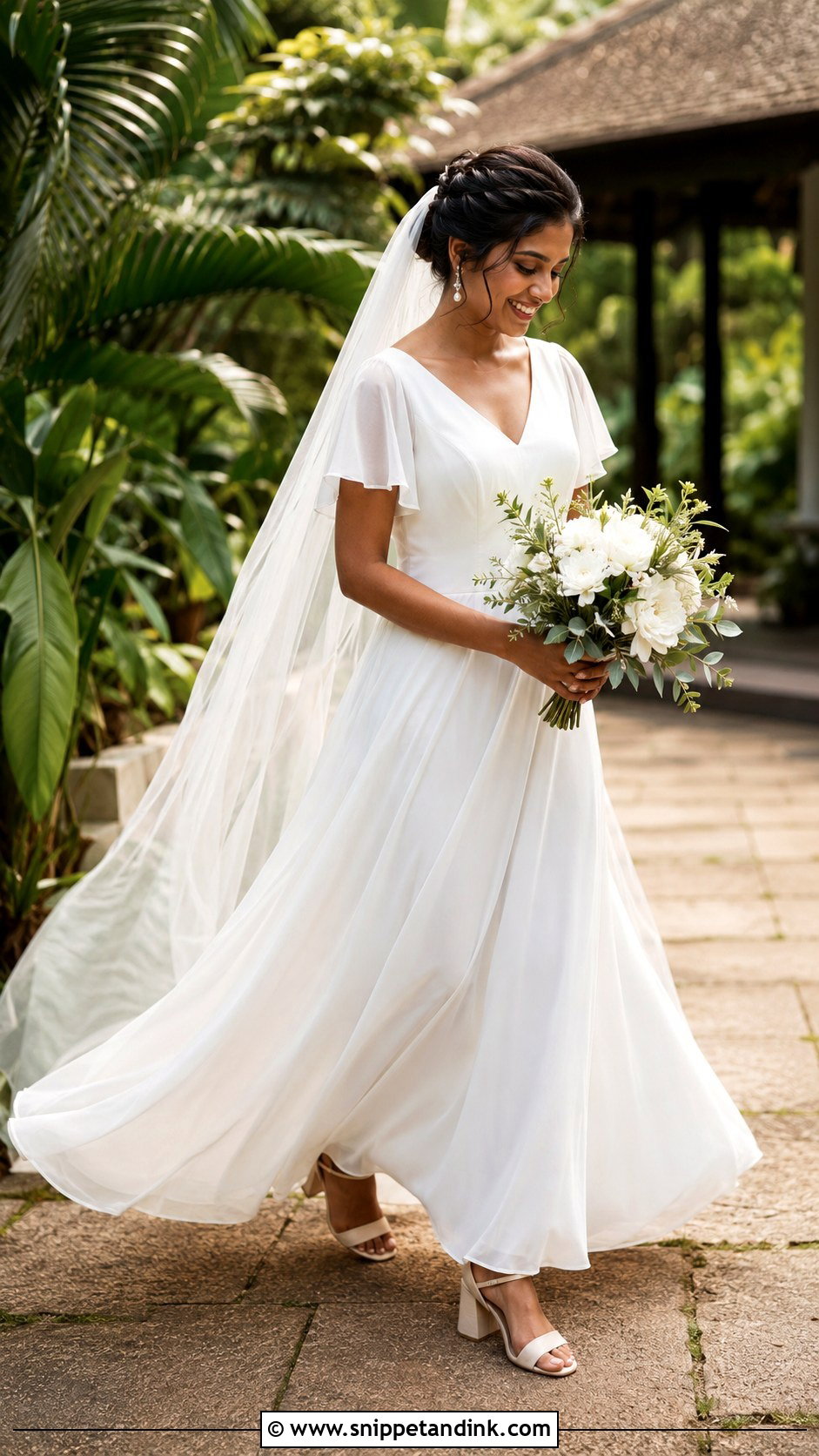
Outdoors in Kerala, chiffon is the fabric I trust most. It breathes, it moves in the breeze and it doesn’t hold heat like satin. Choose a softly draped A-line with a lined bodice and flutter sleeves, and skip any long train; it collects sand and leaves at a beach or garden. A cathedral veil will blow sideways in sea wind, so I’d use a shoulder veil or a floral hairpiece instead. Pearl earrings, a thin bracelet and stable block-heel sandals. A secure braided bun or a polished ponytail copes with humidity better than loose curls. Long-wear makeup and white tropical flowers wrapped in ivory ribbon.
20. Kerala Wedding Kasavu Inspired Gown
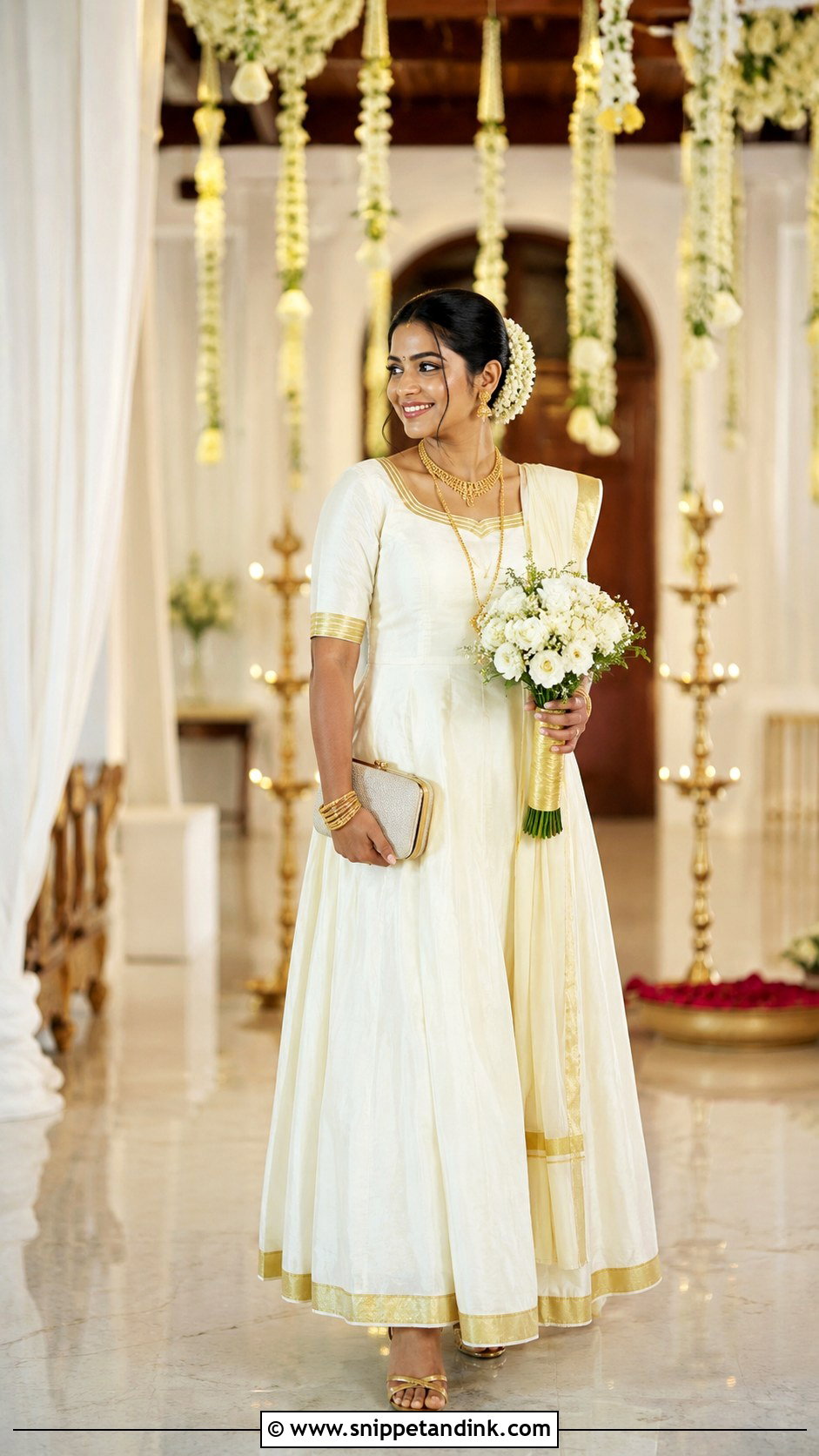
This is the gown I’d show a bride who wants her family’s kasavu tradition in a Western silhouette. A floor-length ivory dress carries a narrow gold border at the sleeves, waist and hem, repeated on the veil. Keep the skirt a light silk blend over a structured A-line bodice so it doesn’t balloon. Traditional gold earrings, layered but fine necklaces and matching bangles, each kept small so the border stays the star. Gold block heels, an ivory clutch with light embroidery and a centre-parted jasmine bun. Finish with defined eyes, a soft red lip and white flowers tied with gold ribbon.
From First Appointment to Final Bustle: A Realistic Timeline
Gowns take far longer than most people expect, and the alterations are a separate stage. This is roughly how I plan it, though individual shops and tailors vary:
- Around eight to ten months out, start trying on. Made-to-order gowns from bridal houses commonly take several months to arrive.
- Once the gown arrives, book the first alteration fitting. Bring your wedding shoes and the undergarments you’ll actually wear.
- Plan two or three fittings in total, the last one about two weeks before the wedding, so there’s still time to fix anything.
- At the final fitting, have the person who will help you on the day learn the bustle and any detachable pieces.
If you’re having a gown stitched locally instead, give the tailor a clear sketch, the exact fabric and lining, and enough time for a proper toile or trial fit. Rushed local gowns usually fail at the zip and the bodice fit.
Humidity, Mould and Yellowing Once the Dress Comes Home
In a damp climate a stored gown can spot with mould within a single monsoon. Have it cleaned by someone experienced with bridal fabrics within a few weeks of the wedding. Spills of sugary drinks often look invisible at first but can turn yellow-brown over time, so mention every one you remember.
Store it folded in acid-free tissue inside a breathable box or cotton bag, never sealed plastic, somewhere dry and away from walls that get damp. Open it once or twice a year, check for spots, and refold it so the creases don’t set in the same lines.
Lace, Satin or Chiffon for the Church Aisle?
A gown should suit you first and the photographs second. These Kerala options range from traditional lace and clean satin to light chiffon, modest sleeves, pastel shades and kasavu-style gold. Before you commit, think about the church’s expectations, the weather, the length of your day and your shoes. Sit, walk and climb steps in the dress at every fitting. Let the veil, jewellery, hair and flowers support the gown, and put real money into alterations, because a simple dress that fits properly always looks better than an elaborate one that doesn’t.
You'll Like These Ideas:



Leave a Reply