
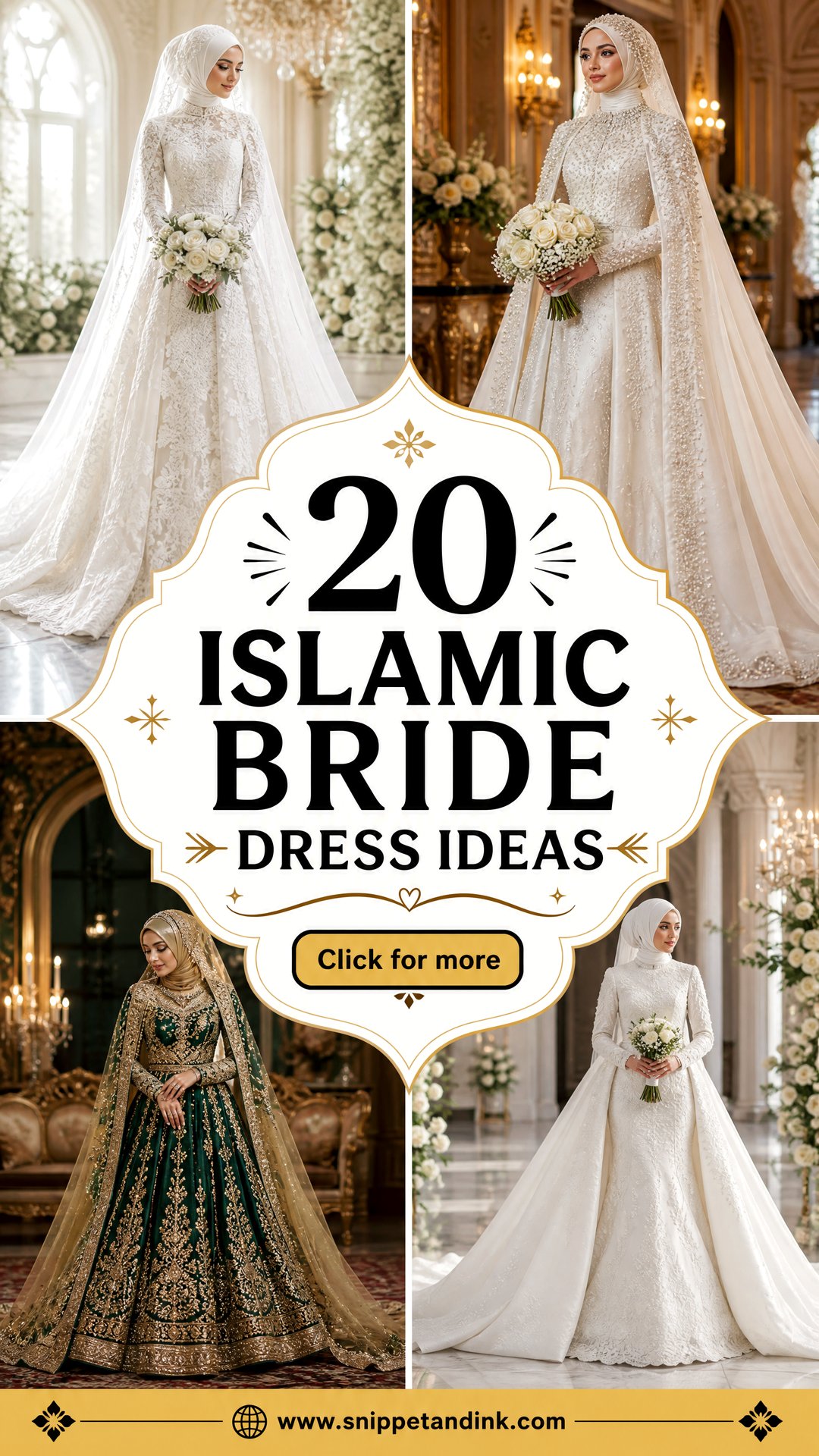
Full coverage doesn’t limit a bride nearly as much as people assume; it mostly changes where the detail goes. These 20 Islamic Bride Dress Ideas explore white gowns, colored lehengas, embroidered abayas, kaftans and a few modern separates, each styled down to the hijab, veil and shoes. I’ve added the fitting notes I’d give a bride for each one. Modesty preferences and cultural traditions vary, so any of these can be adapted with a higher neck, a looser cut, longer sleeves or an extra layer.
Testing a Bridal Color Against Your Face, Hijab and Venue
Half the ideas below are not white, and color is where I see brides second-guess themselves most. A shade that looks right on a hanger can drain your face once the hijab frames it, because the hijab sits right against your skin and decides the color the camera sees first.
- Hold the hijab fabric, not the dress fabric, under your chin in daylight. If your skin looks grey or sallow, try a half-shade warmer or cooler hijab and keep the dress as it is.
- Ask for a swatch and look at it under the kind of light your venue has: warm bulbs push champagne and blush toward beige, while cool daylight makes powder blue and lavender look icy.
- Photograph the swatch with and without flash. Deep shades like emerald, navy and burgundy hold up well; pale pastels can wash out to white.
Undercap color gets overlooked. Choose one close to your skin tone or matched to the hijab, because any contrasting edge that slips into view at the hairline shows up immediately in close portraits.
1. White Lace Islamic Bridal Gown With Hijab
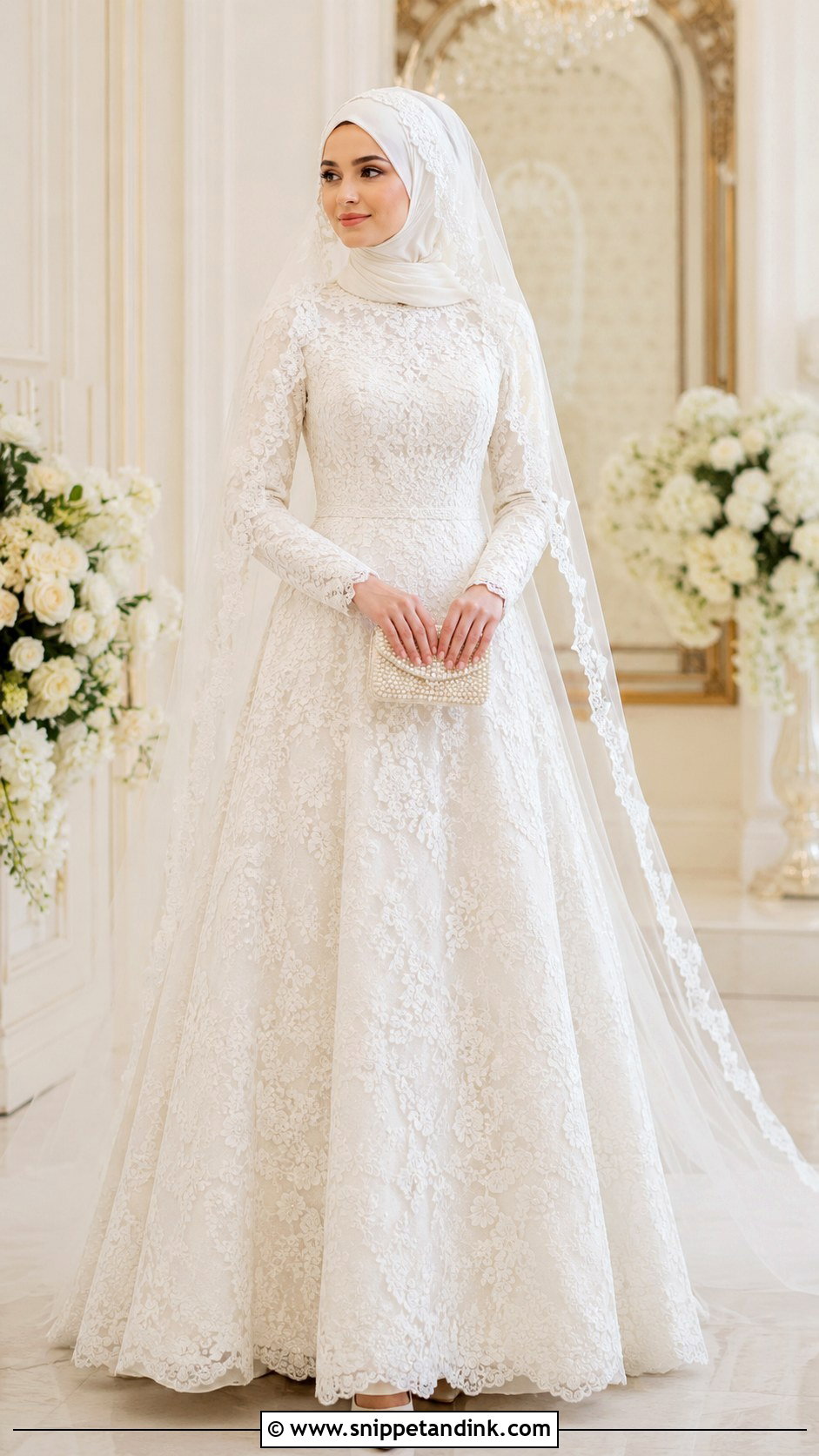
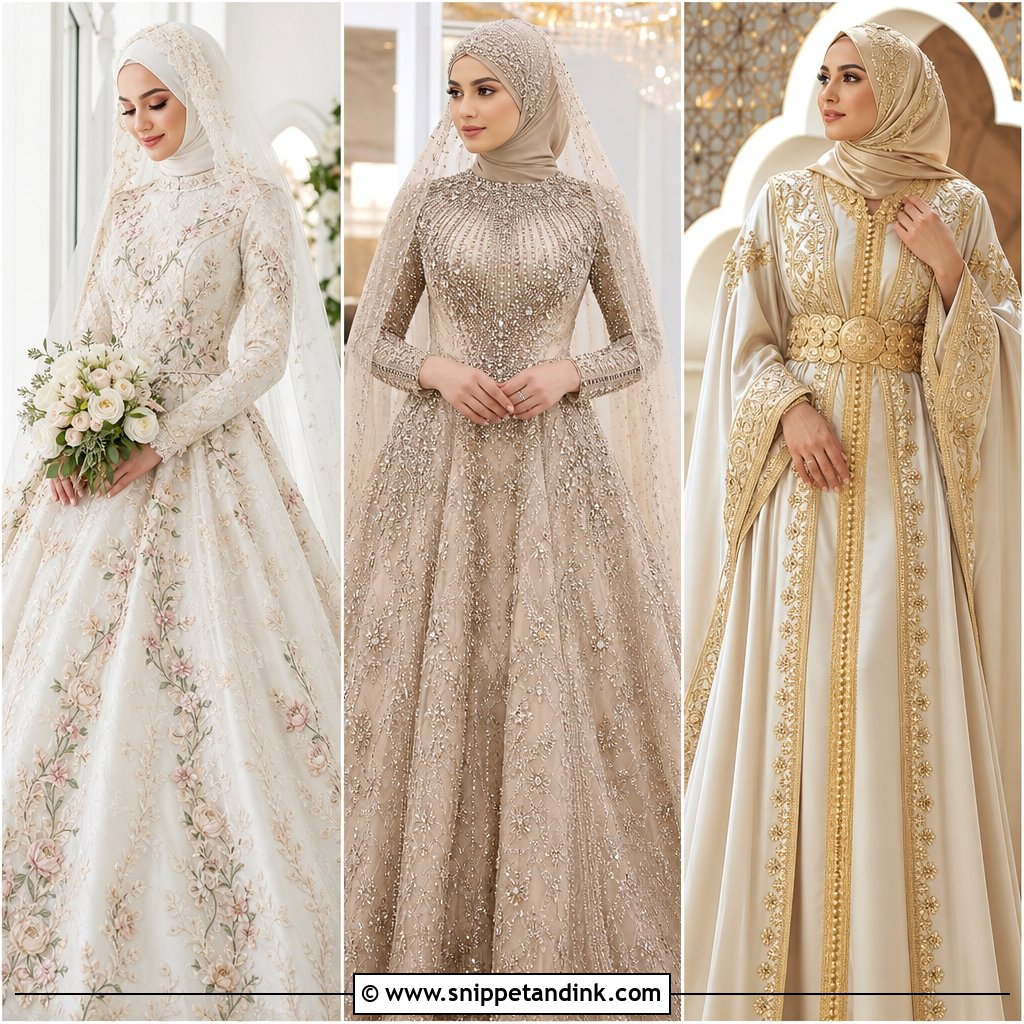
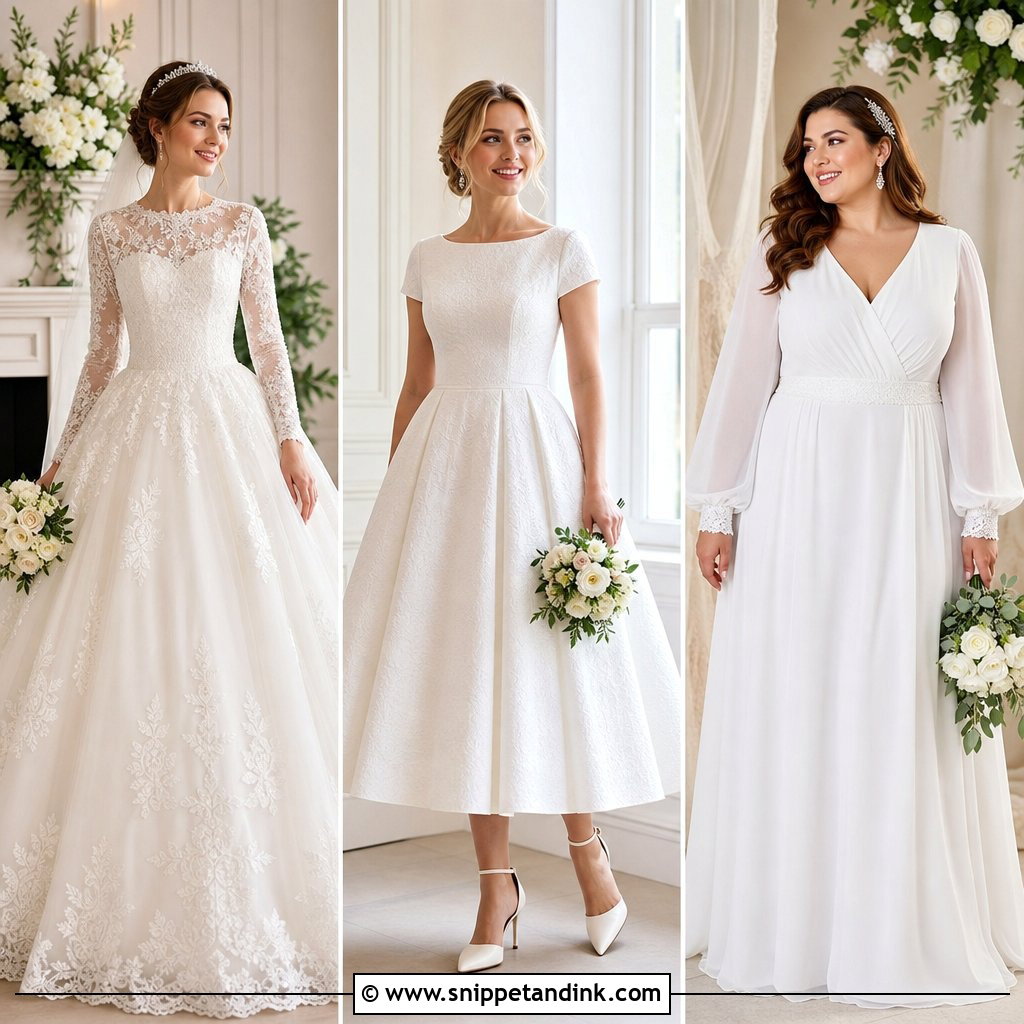
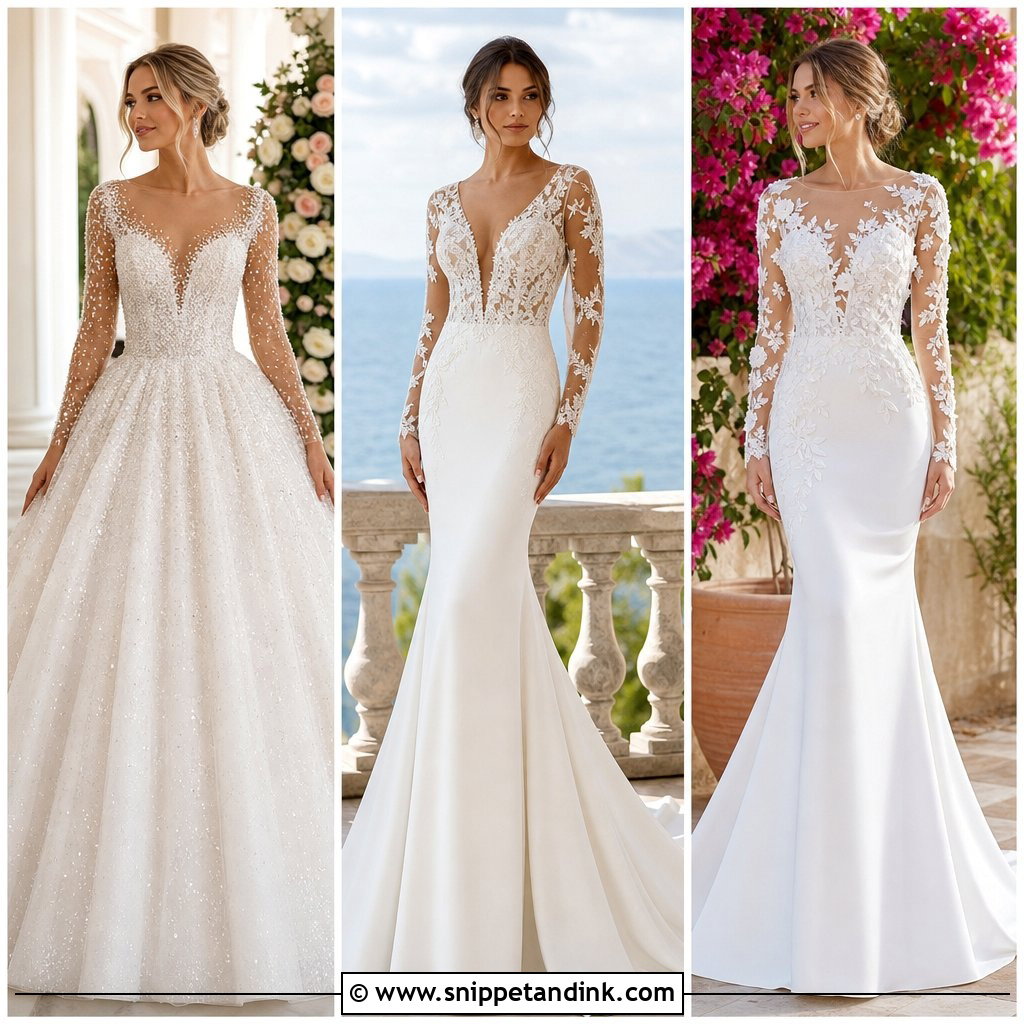
Lace gowns are where I spend the most time on lining. An A-line with an opaque base under the lace, full sleeves and a high neckline gives coverage; a softly structured bodice adds shape without clinging. The upper bodice and sleeves are the risk zones, since lace there is often stitched to sheer tulle, so I have both lined right to the wrist and then check them under a phone flash. An ivory chiffon hijab wrapped smoothly under a lace-edged veil keeps the head light. Satin pumps and a small pearl clutch finish it.
2. Satin Islamic Bridal Ball Gown With Veil
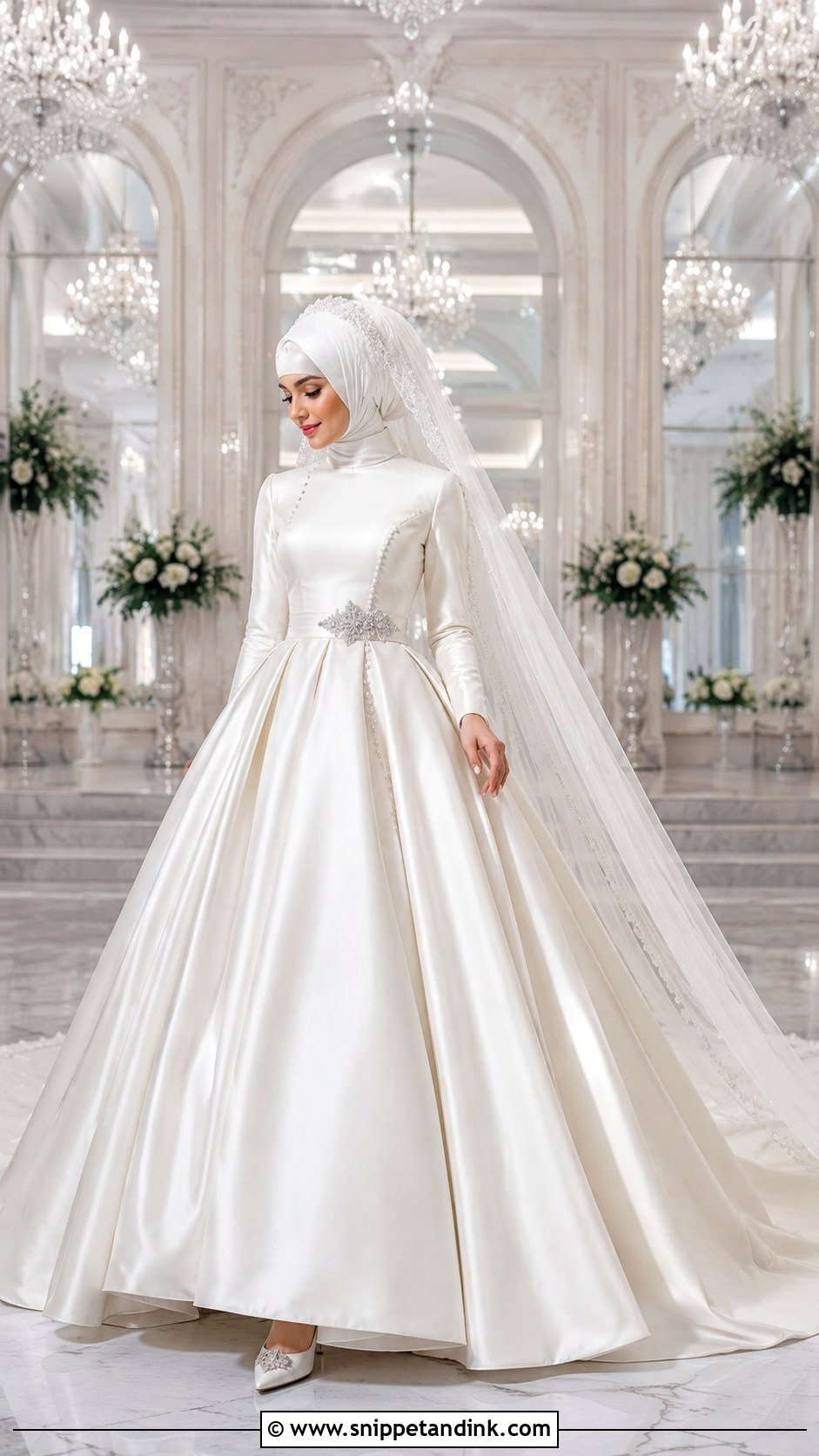
A satin ball gown is pure drama, and it’s heavier than most brides expect. I’d choose a medium-weight satin with a high bateau neck, long sleeves, a defined waist and a skirt wide enough to stride in. Covered buttons at the cuffs and back are the only decoration it needs. Match the hijab exactly in a matte satin, then add a long cathedral veil with a narrow embroidered border. Satin creases the moment you sit in a car, so book professional steaming as close to the ceremony as possible and sew hidden loops into the skirt so you can lift it on steps.
3. Pearl Embellished Islamic Bridal Dress With Cape
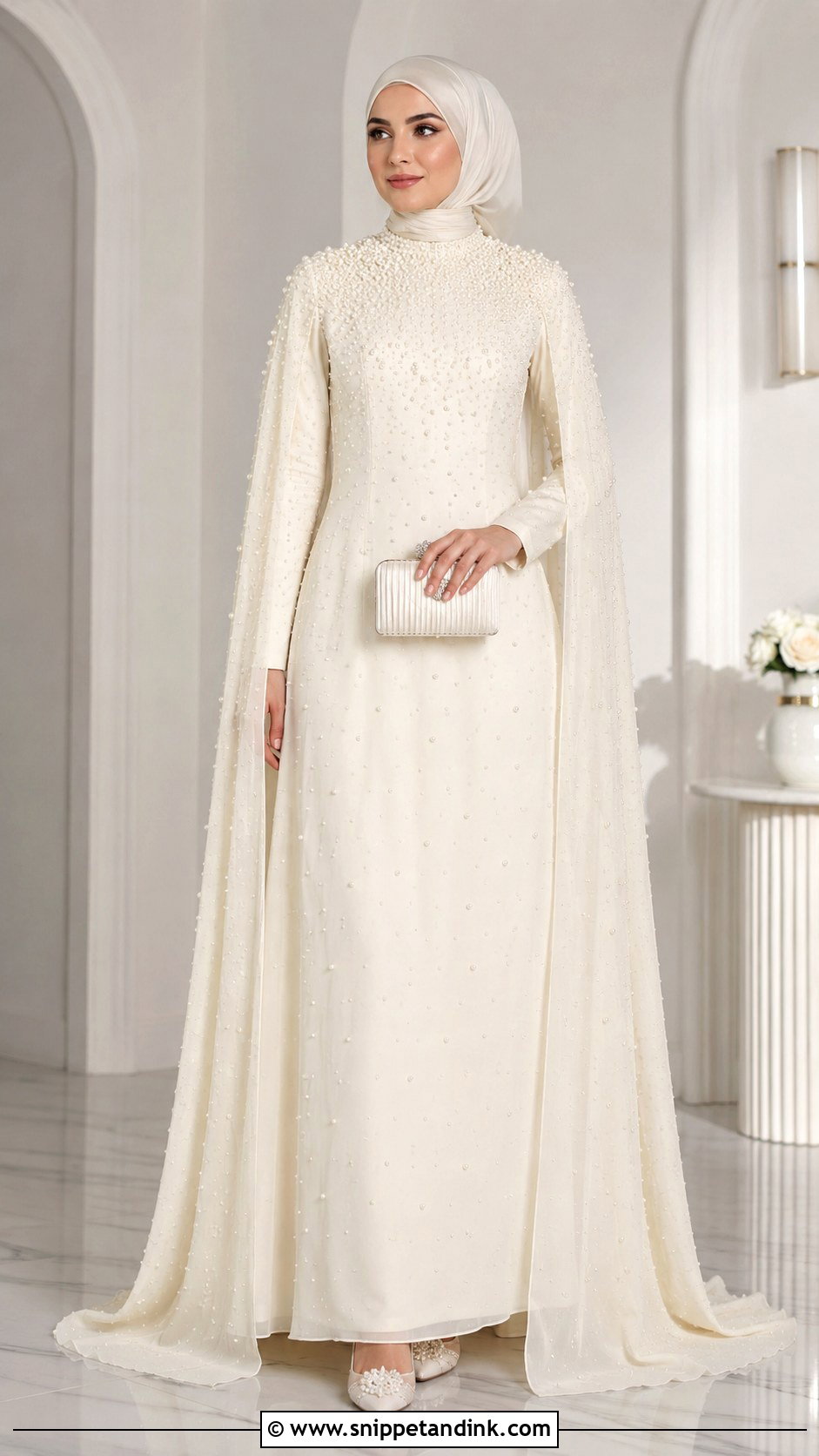
A detachable cape scattered with pearls gives you two looks from one dress. The base is a loose ivory column with long sleeves, a high neck and full lining; the cape carries pearls densely at the shoulders and thins out toward the hem, which keeps the weight up high where it hangs best. Instead of a veil, the cape provides the movement. My one warning: a cape hung from the neckline alone drags it backward, so I have it fastened at the shoulder seams with hooks or snaps. Keep the hijab plain chiffon so the pearls don’t compete.
4. Champagne Islamic Bridal Gown With Gold Embroidery
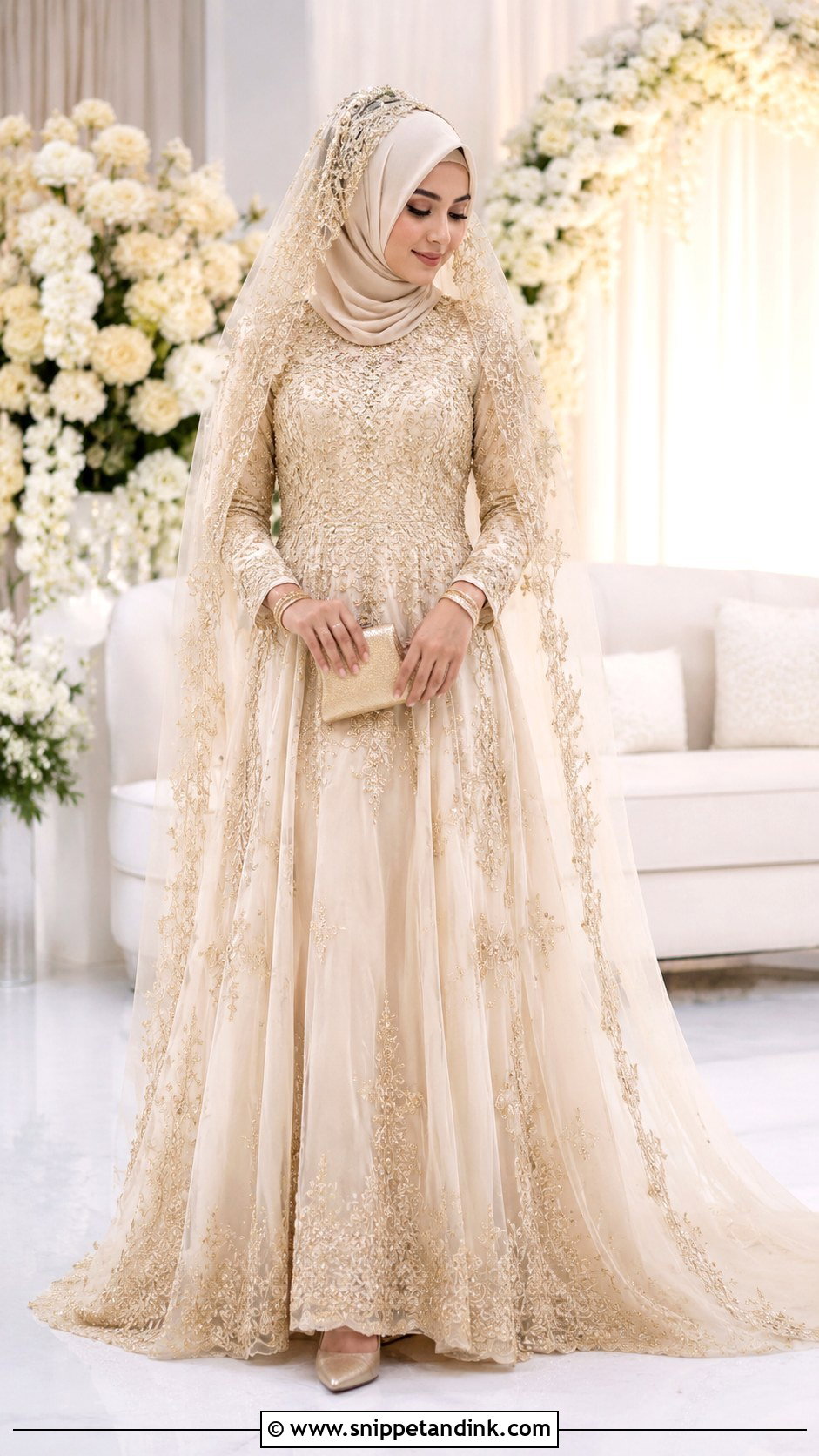
Champagne is kinder than bright white to many warm and olive skin tones. Choose a flowing A-line with roomy sleeves and an opaque bodice, and confine gold embroidery to the cuffs, neckline and skirt border so it reads clearly. Here’s the thing I always test: champagne varies wildly between bolts and can photograph close to beige or even grey in shade. Look at the fabric in daylight and in a phone photo before committing. A hijab a half-shade lighter than the dress brightens the face without breaking the tonal effect.
5. Ivory Islamic Bridal Abaya With Crystal Details
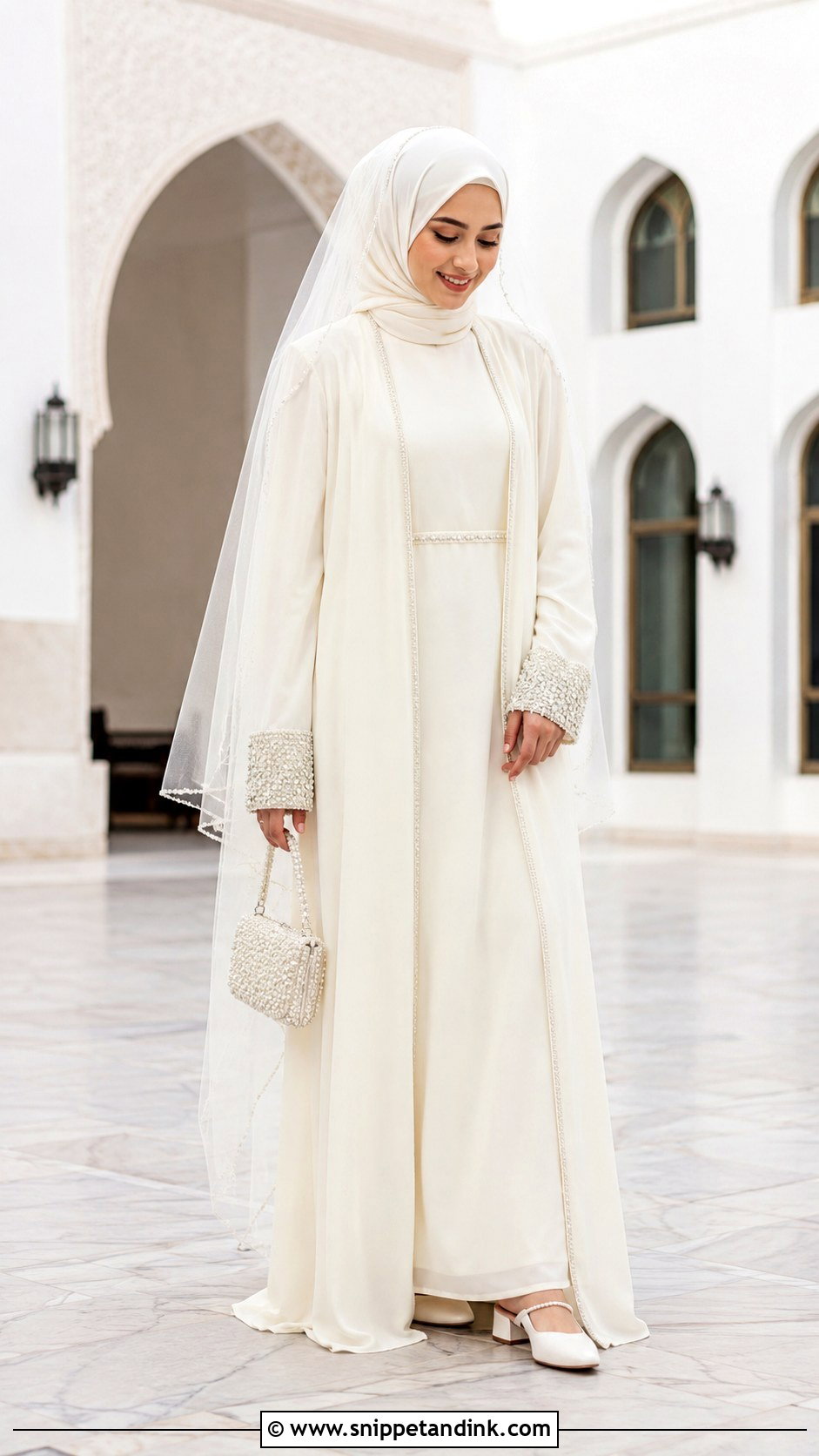
Nida and crepe are the fabrics I’d choose for an ivory bridal abaya, because both drape fluidly and stay opaque. Wear it closed for a simple nikah, or open over a matching long-sleeved maxi with a high neck. Crystals belong on the cuffs and front edges, not the hem, where weight makes the abaya swing against your ankles and catch on shoes. The most common failure with bridal abayas is a borrowed or off-the-rack length that pools on the floor. A shortened sleeve and a hem that clears your shoes make it look made for you rather than oversized.
6. White Islamic Bridal Kaftan With Silver Beading
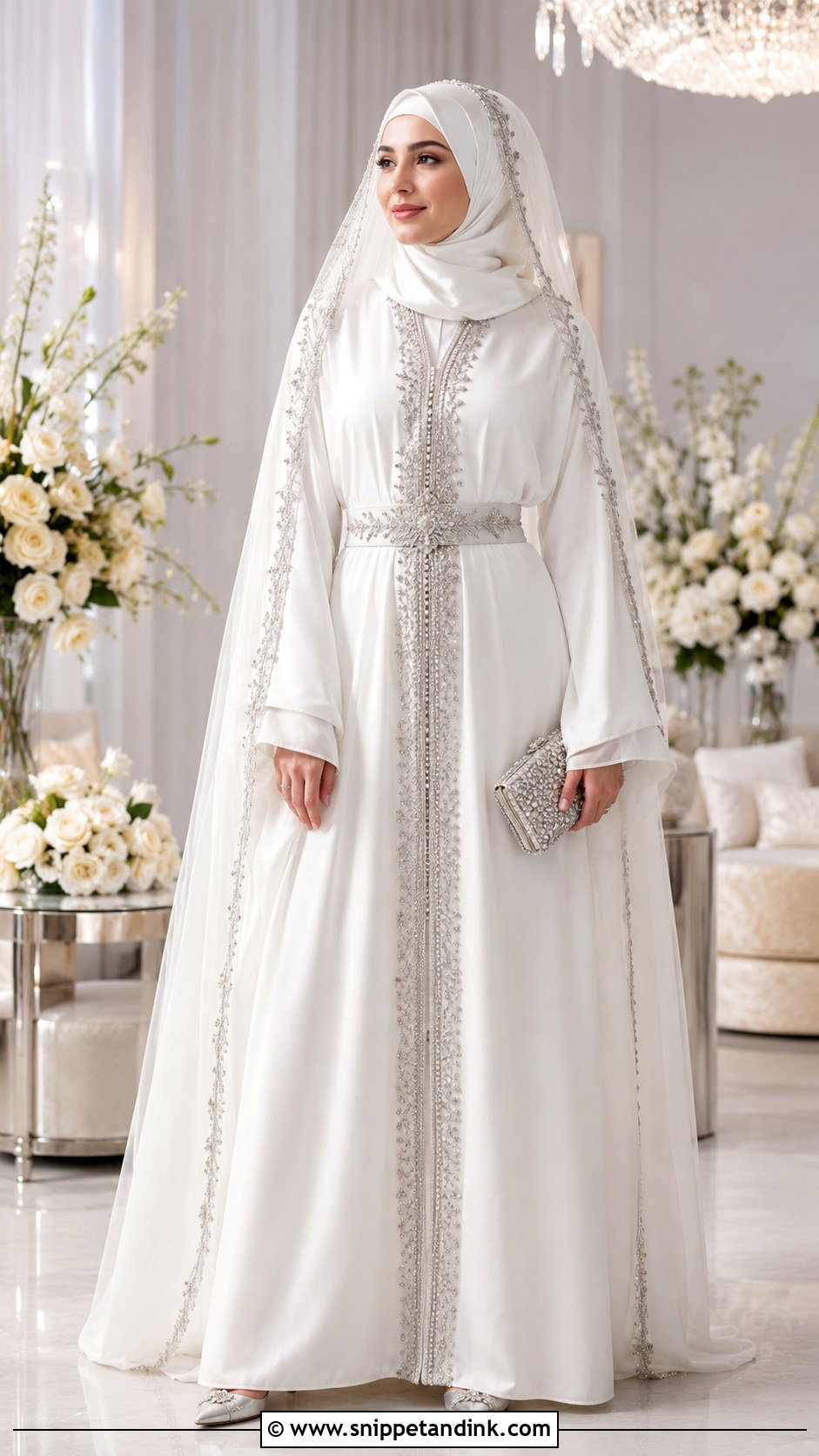
Silver beading run vertically through the center of a white kaftan does real structural work: it draws the eye down and stops a wide-sleeved garment from looking square. Choose a floor-length kaftan with an opaque underlayer and, if you like a little shape, a removable embroidered belt. A white satin hijab and a silver-edged veil suit it. Heavy beading at the neckline sits on the collarbones all evening, so I always ask for the lightest beads on the upper body. Wide sleeves also slide up during hugs, which is why a sleeve lining with a narrow inner cuff is worth asking for.
7. Red Islamic Bridal Lehenga With Embroidered Dupatta
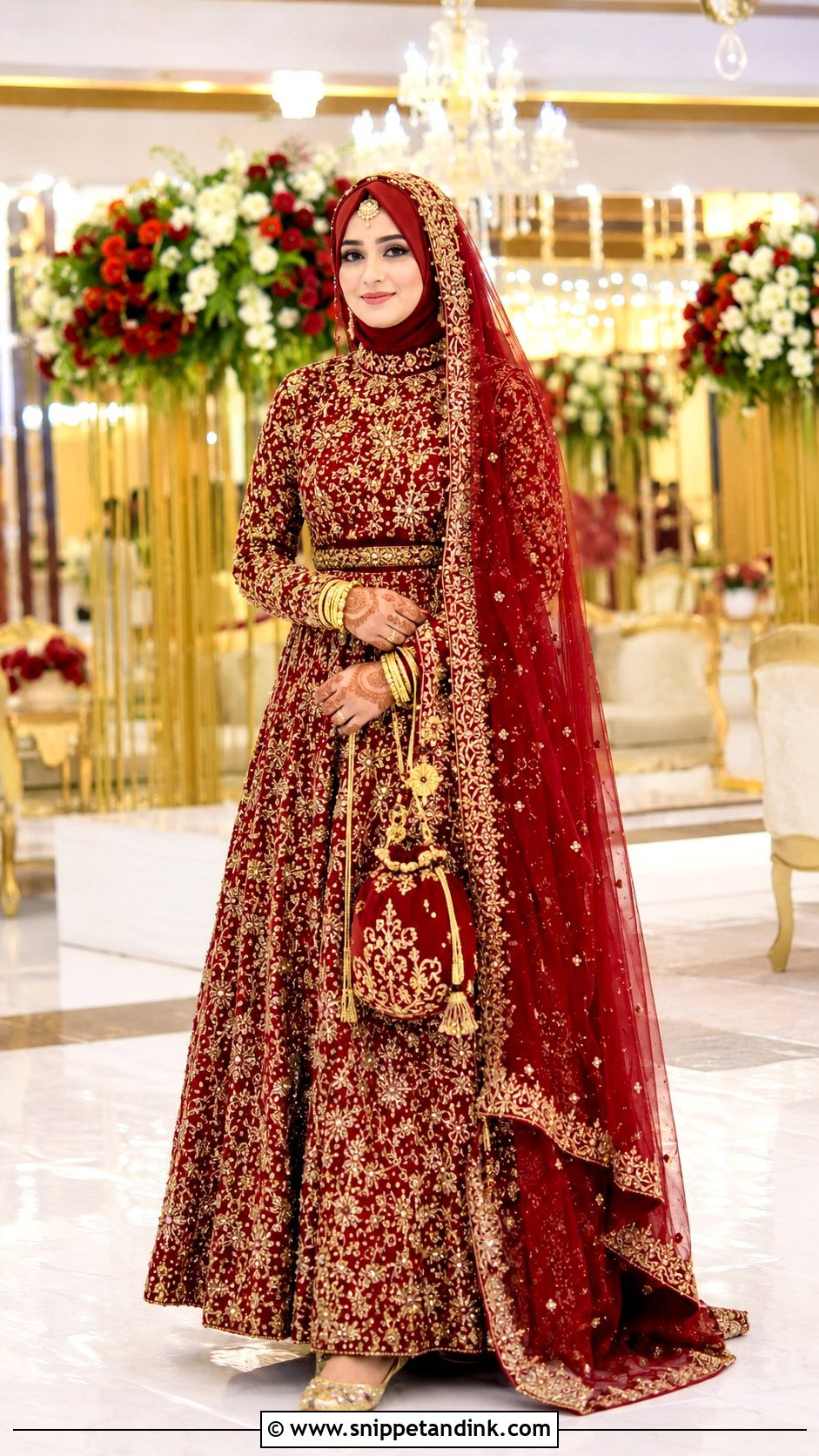
Red lehengas carry a lot of weight, both in tradition and in grams. Build the outfit on a full embroidered skirt and a long-line blouse with full sleeves and a high neck, cut to sit well past the waistband so nothing shows when you sit on a stage. Drape the red dupatta over a matching hijab with one side across the shoulder. If the skirt is heavily worked, I keep the blouse quieter so the eye knows where to land. A heavily embroidered dupatta pulls the hijab backward within an hour, so test its weight and anchor it with hidden pins at the crown and shoulder.
8. Emerald Islamic Bridal Lehenga With Gold Hijab
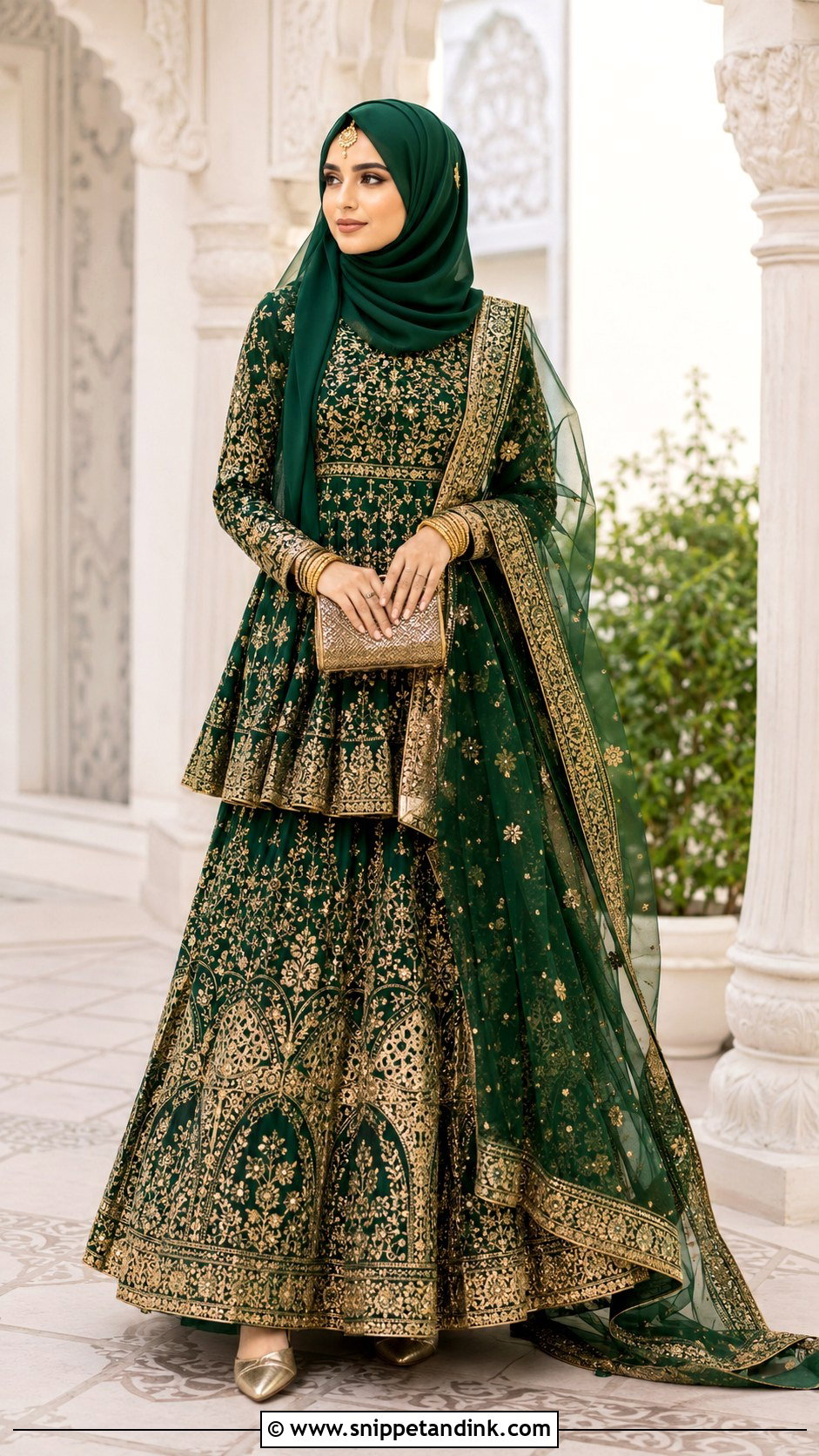
Deep emerald with antique gold embroidery is one of the strongest color pairings a bride can wear. A wide lehenga skirt with a long peplum blouse gives shape, and fitted inner sleeves under a looser embroidered layer keep the arms covered without bulk. Go monochrome with an emerald hijab or contrast with muted gold. Because the fabric and embroidery already say so much, one ring and a few bangles are plenty. I’d also choose a warm neutral undercap, since a bright green one can peek out at the hairline in close photos.
9. Blush Islamic Bridal Sharara With Pearl Dupatta
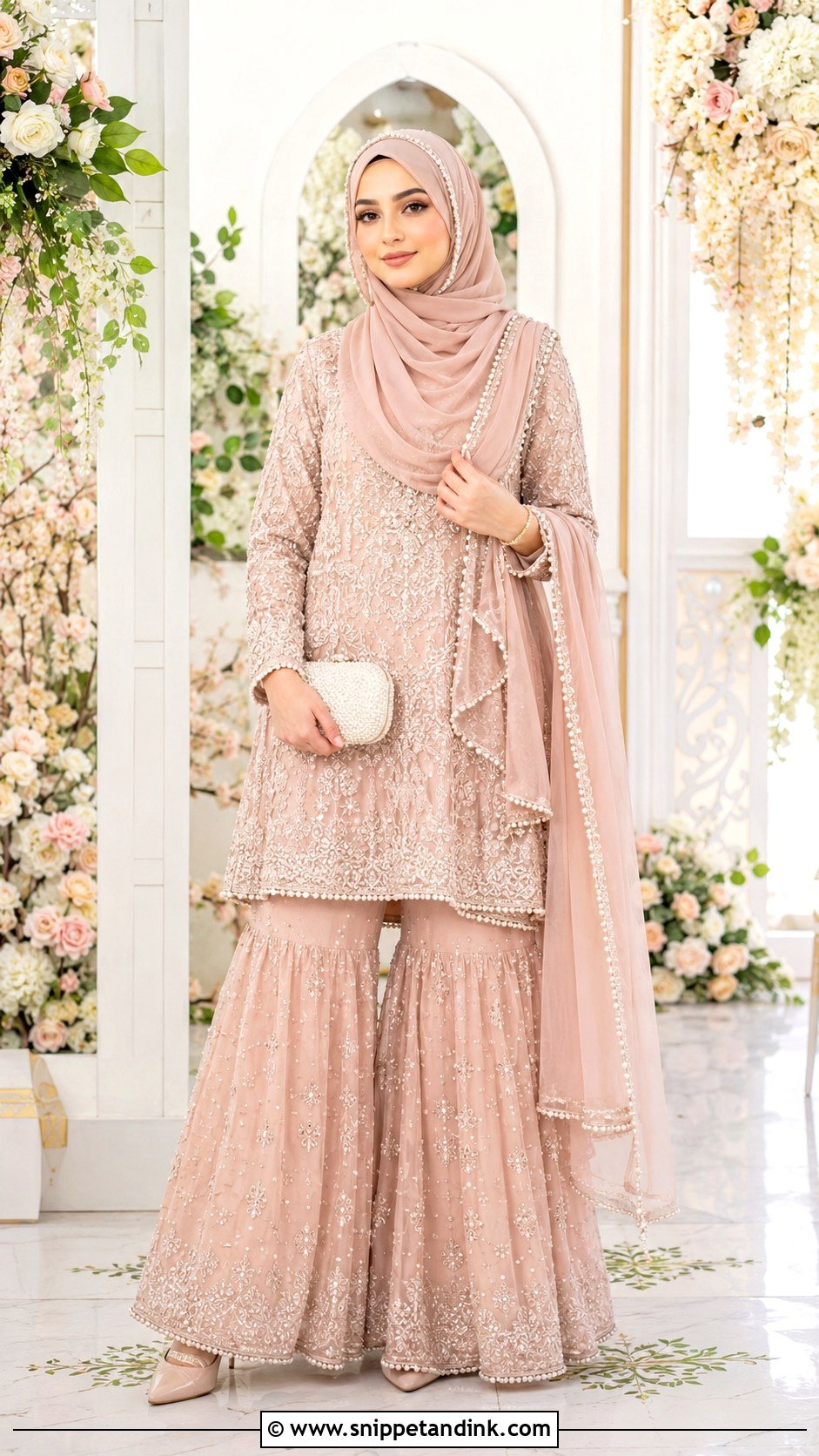
Blush sharara sets read light and fresh. Wide flared pants with opaque lining, a tunic at knee length or longer with pearl embroidery and full sleeves, and a high neck under a blush chiffon hijab make the base. A pearl-edged dupatta pinned at the crown and both shoulders stays put far better than one pinned at the crown alone. Sit down in the outfit and look in a mirror: the tunic often rides up at the back. Layering two close blush tones adds depth, but bring all the pieces to one window to compare them together.
10. Powder Blue Islamic Bridal Gown With Floral Embroidery
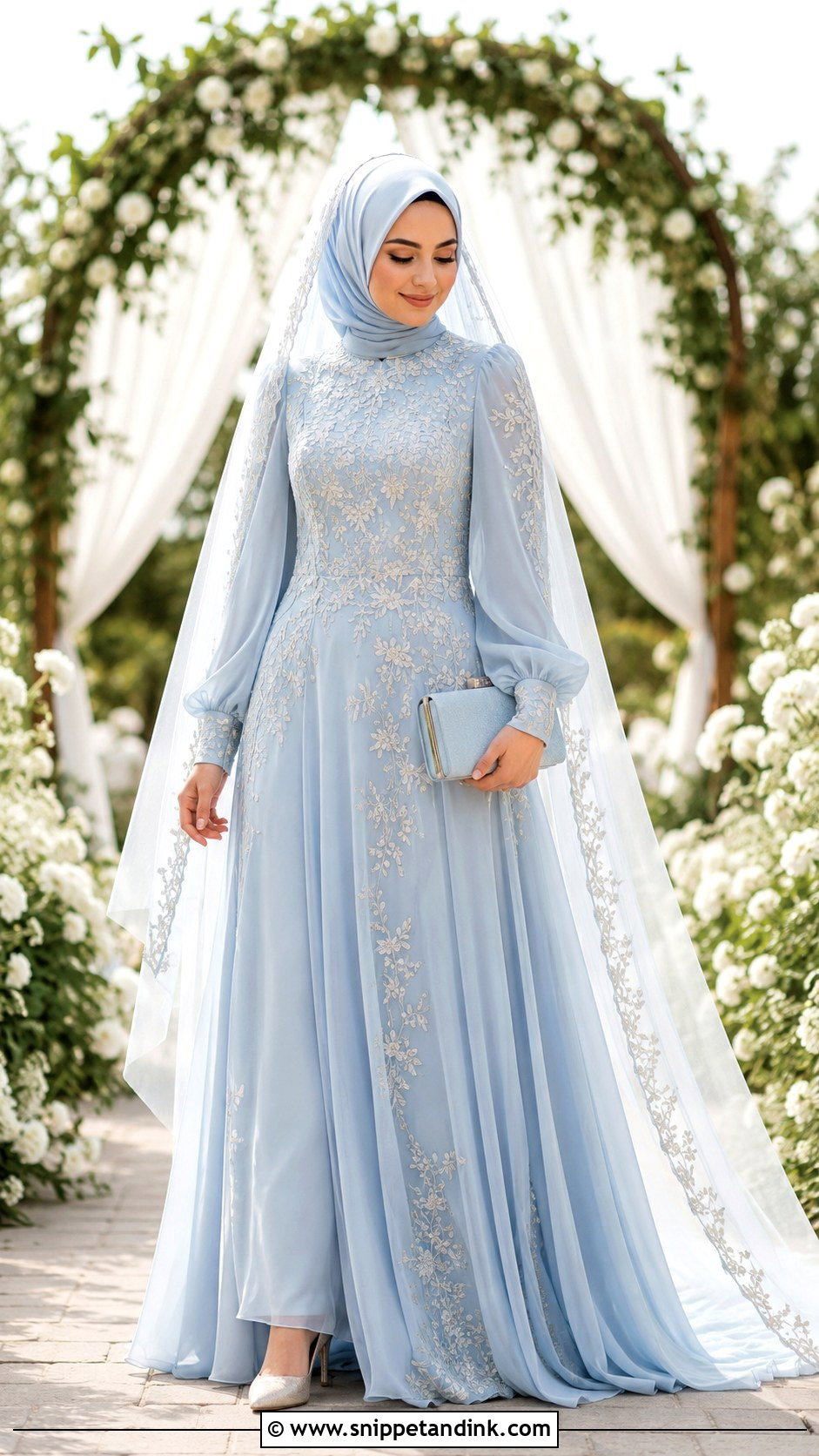
Powder blue suits a daytime nikah or a spring wedding. Long bishop sleeves, a high neck and floral embroidery in ivory, silver or pale blue keep it gentle rather than contrasty. A plain chiffon hijab lets the flowers lead, and a lightly embroidered veil continues them at the back. Pale blues are the colors I check most carefully outdoors, because they turn surprisingly sheer in strong sun, so I’d line both the skirt and sleeves fully.
11. Dusty Rose Islamic Bridal Dress With Draped Cape
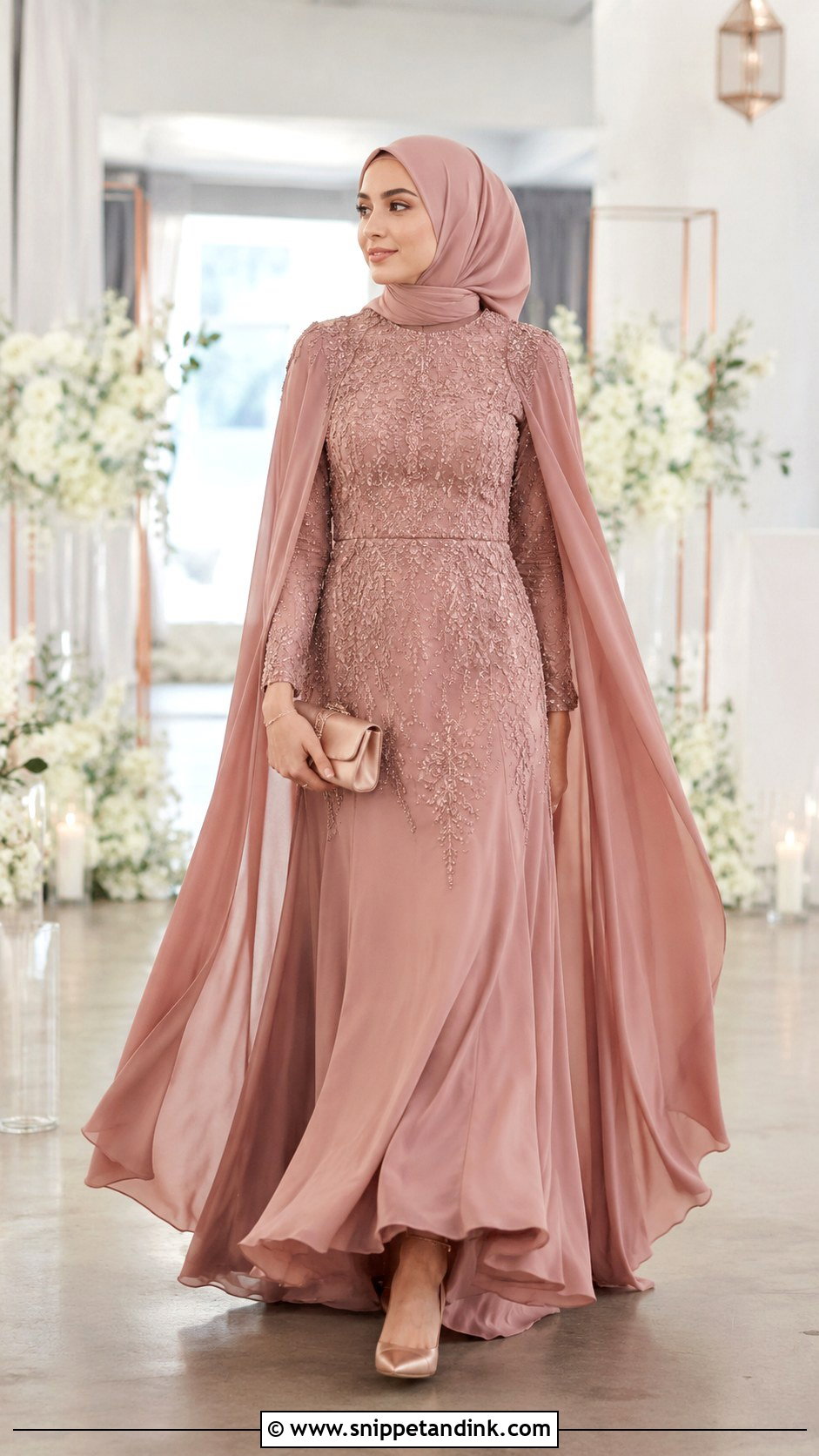
Dusty rose looks grown-up in a clean silhouette with a cape. Start with a loose A-line, covered wrists, a high neck and a softly defined waist, and attach the cape at the shoulders so it falls down the back without restricting the arms. Large embellishments right where the cape joins cause the fabric to bunch, so I keep that seam plain. A tonal chiffon hijab keeps the upper half smooth. Ask that the cape and dress be cut from the same fabric weight and dye lot, or the two roses can look slightly different side by side.
12. Lavender Islamic Bridal Gown With Beaded Sleeves
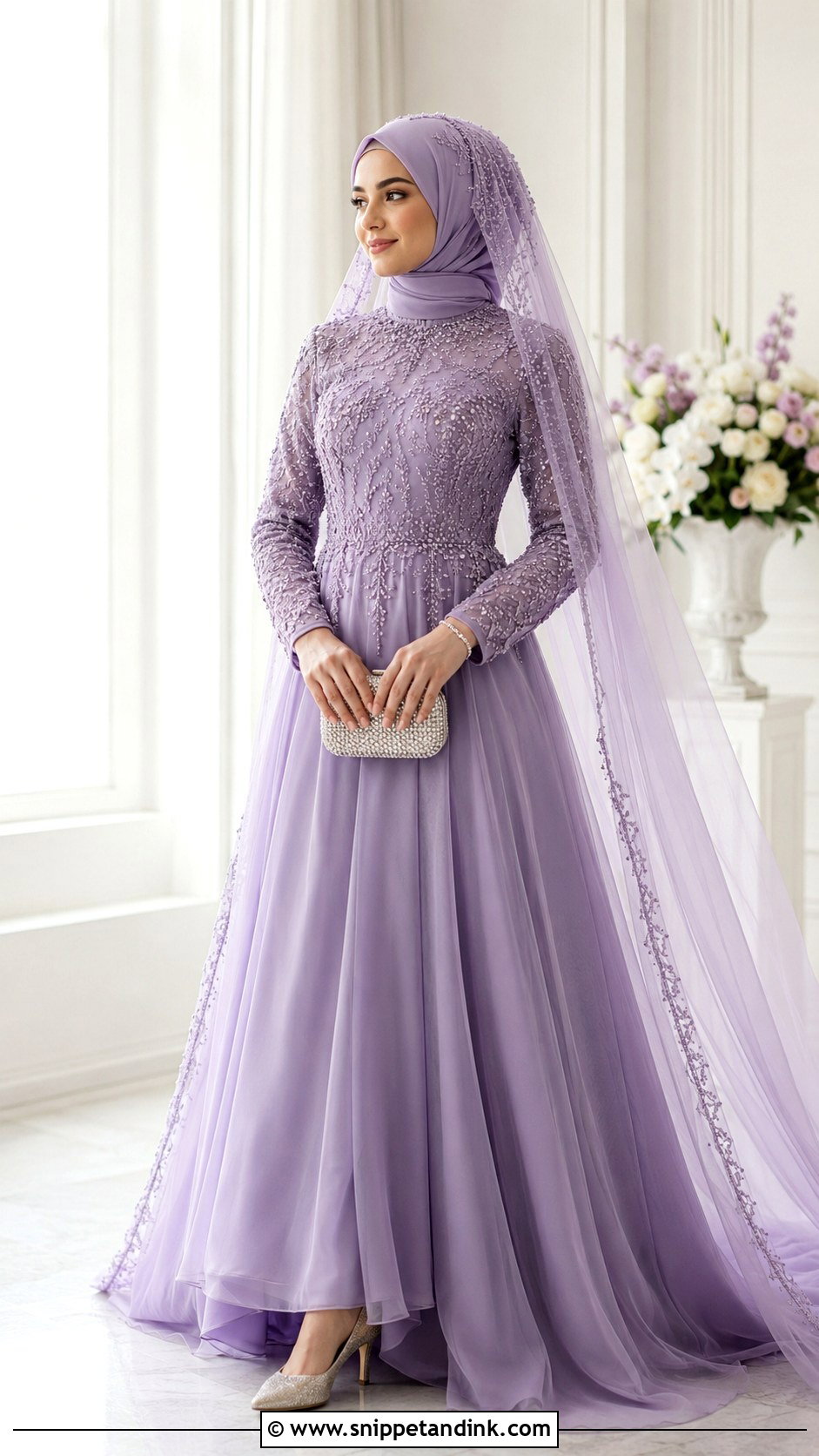
Lavender is soft but unusual enough to feel personal. A full-length crepe or chiffon gown with a high neck and beaded sleeves puts the sparkle on the arms, where it catches light as you move. Pair it with a plain lavender hijab and a sheer veil with a narrow beaded edge. Beaded cuffs and tulle veils are natural enemies, so I check the two together at the fitting. A matching opaque lining matters more with lavender than with most colors, since a white lining underneath makes it look patchy under strong venue lighting.
13. Navy Islamic Bridal Dress With Silver Embroidery
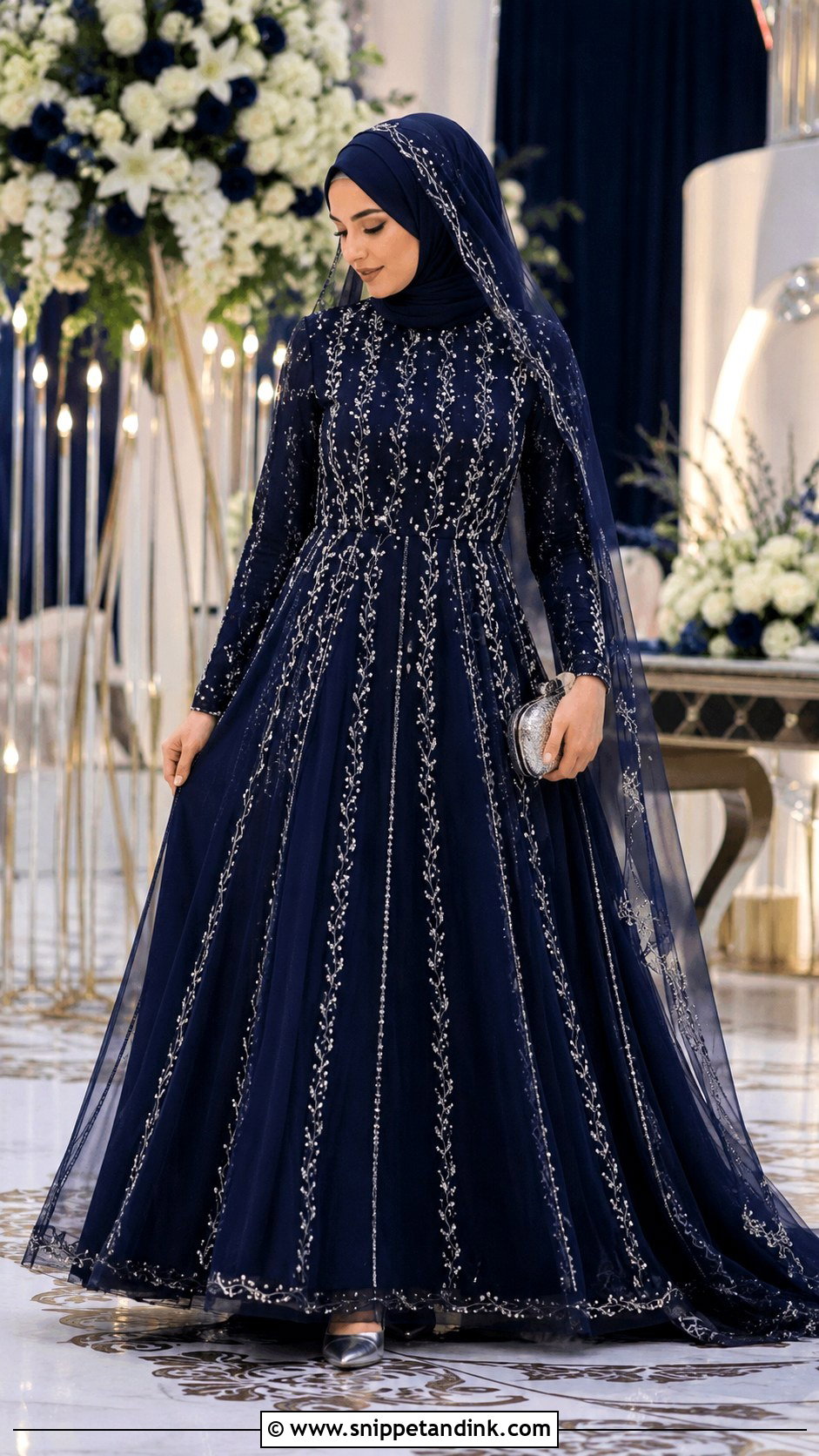
Navy gives an evening ceremony depth. I like a loose princess cut with long sleeves, a high neckline and silver embroidery flowing from the shoulders into the skirt, which keeps the long line unbroken. A navy chiffon hijab and a silver-edged veil worn behind the shoulders complete it. Dark fabric shows every speck of lint and every brush of foundation, so I keep a lint roller and a clean cloth in the emergency kit for navy brides. Breathable lining is a good idea in hot, bright indoor venues.
14. Burgundy Islamic Bridal Velvet Gown With Hijab
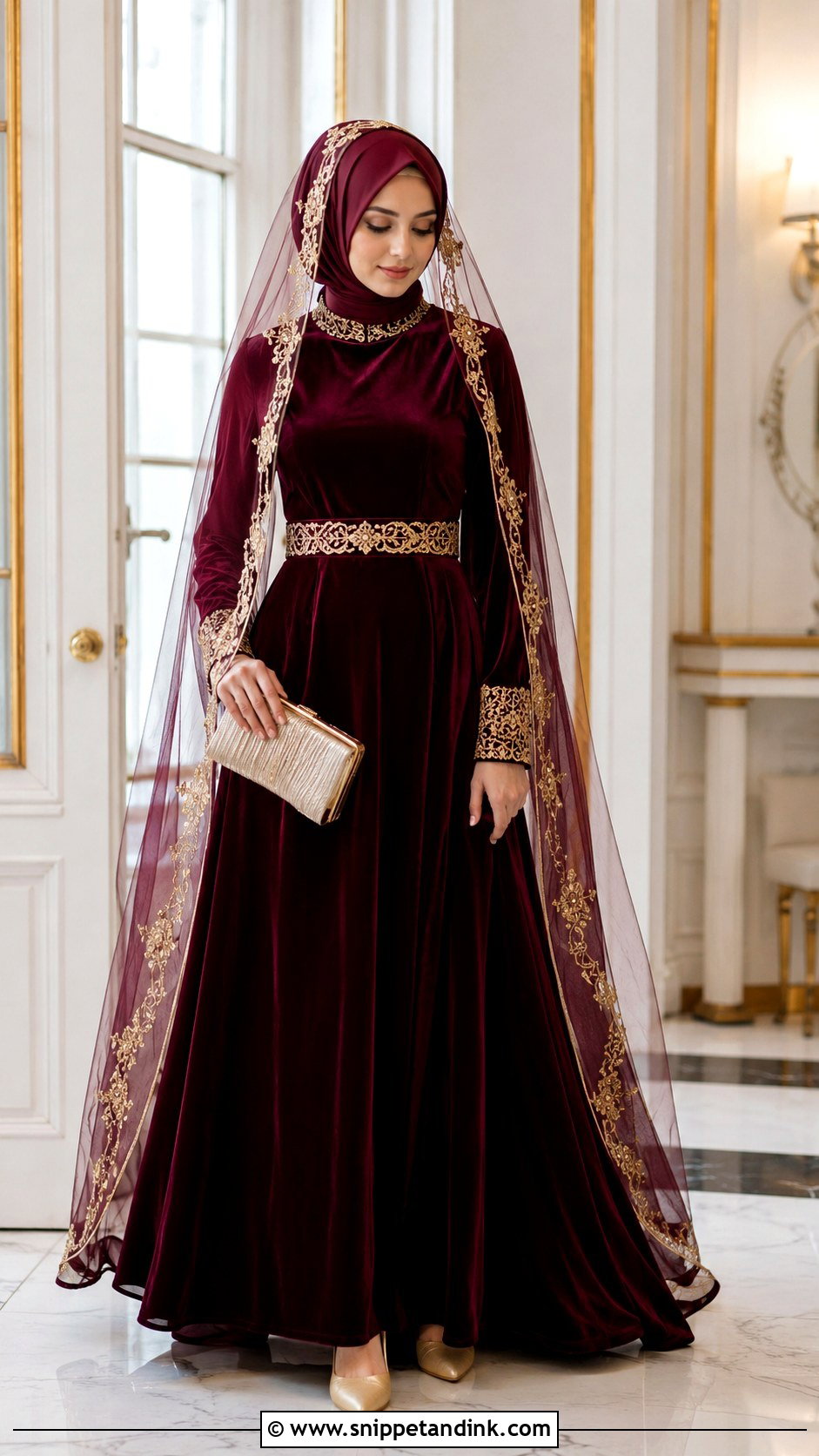
Burgundy velvet suits autumn and winter with very little decoration. A gently flared skirt, high neck and long sleeves are enough, with antique gold embroidery at the cuffs and waist or a narrow removable belt. A lightweight chiffon hijab in burgundy stops the head from looking heavy against such a dense fabric. Velvet has a nap, and panels cut in different directions look like two shades of red; I make sure every piece is cut the same way. A smooth lining helps the skirt move instead of sticking to tights.
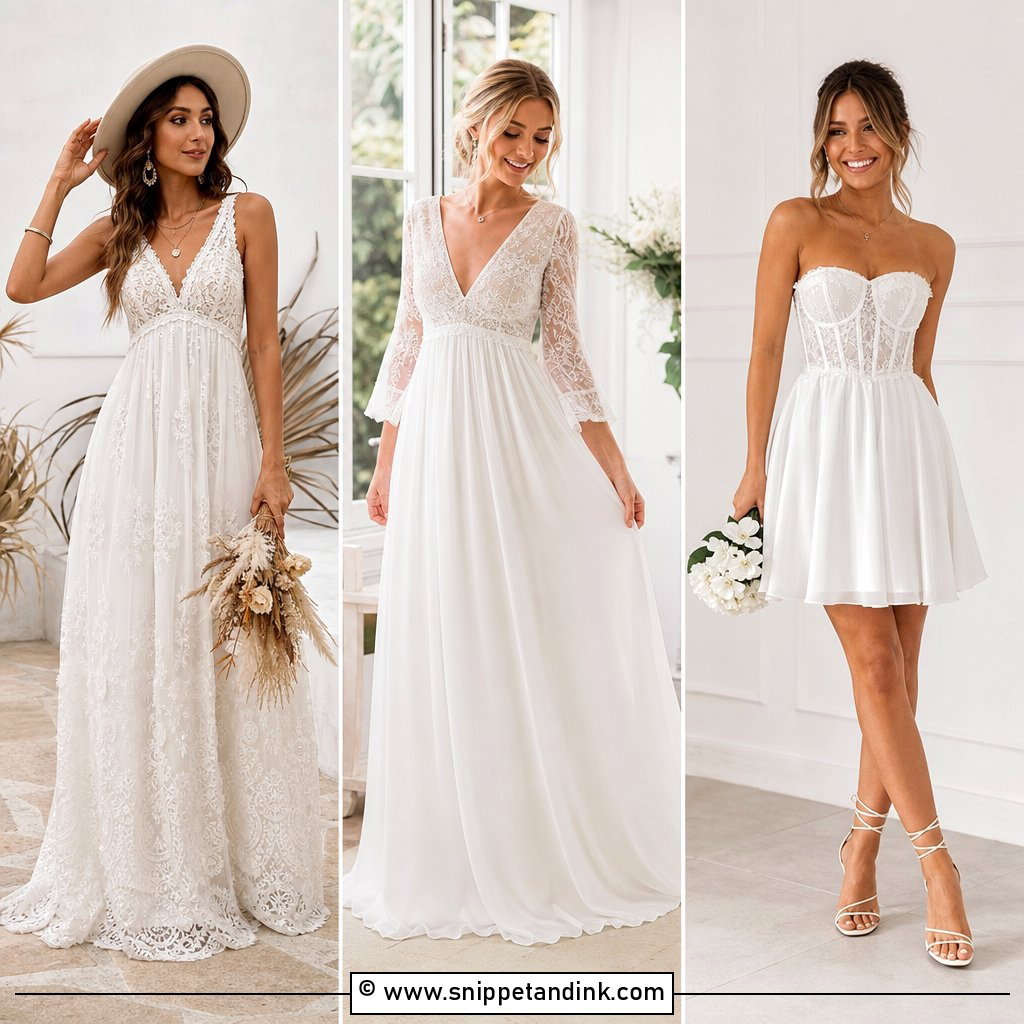

15. White Islamic Bridal Pantsuit With Long Cape
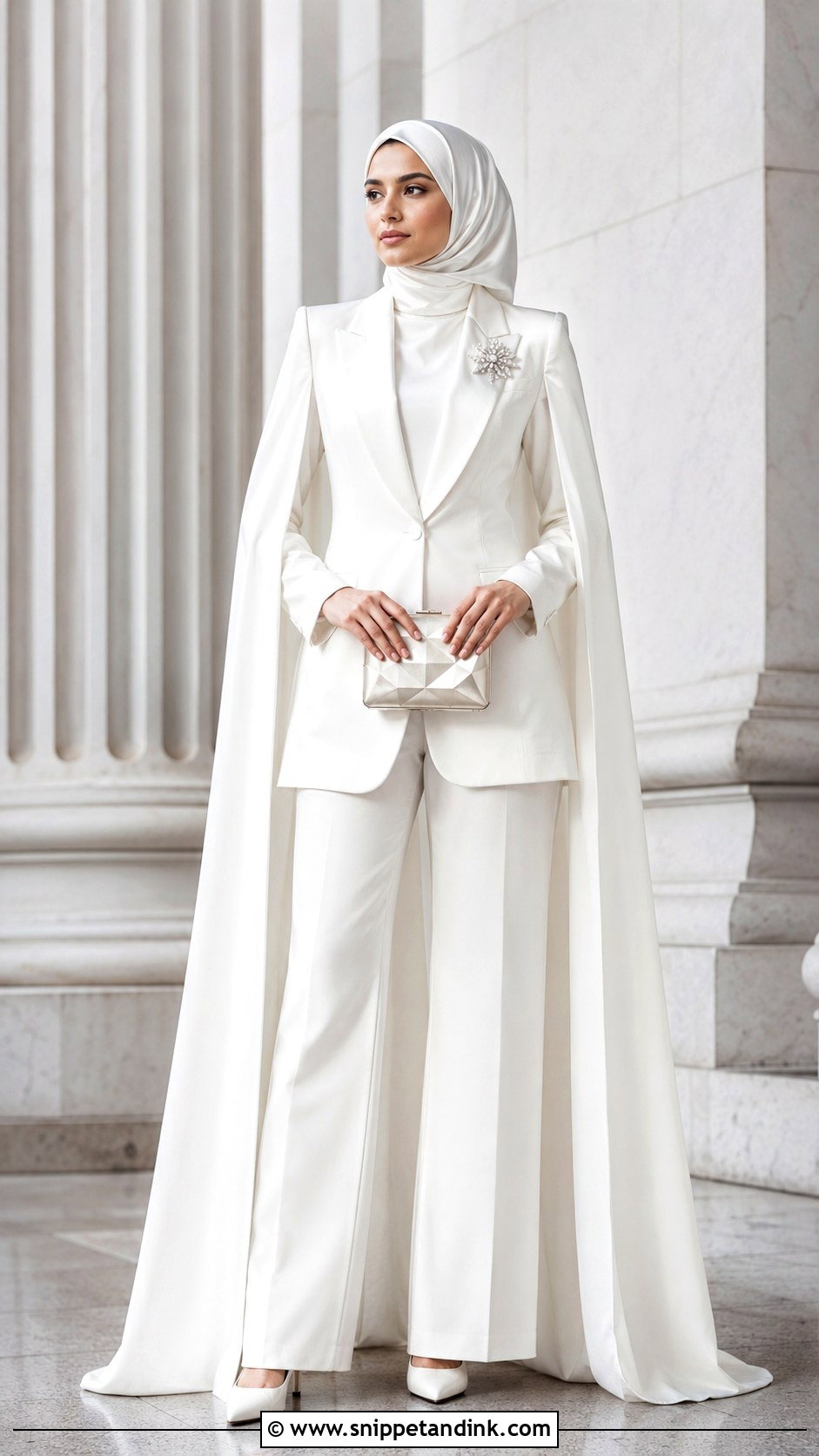
A tailored pantsuit is the most practical outfit on this list. Wide-leg trousers and a long blazer that falls past the hips go over an opaque high-neck blouse with full sleeves, and a detachable floor-length cape adds the bridal moment. A white satin hijab keeps it sleek. Tailoring is everything here: trousers should skim the shoes, not pool, and the blazer should button without pulling across the back when you reach forward. Limit decoration to covered buttons, one brooch or a pearl edge on the cape.
16. Cream Islamic Bridal Two-Piece Skirt Outfit
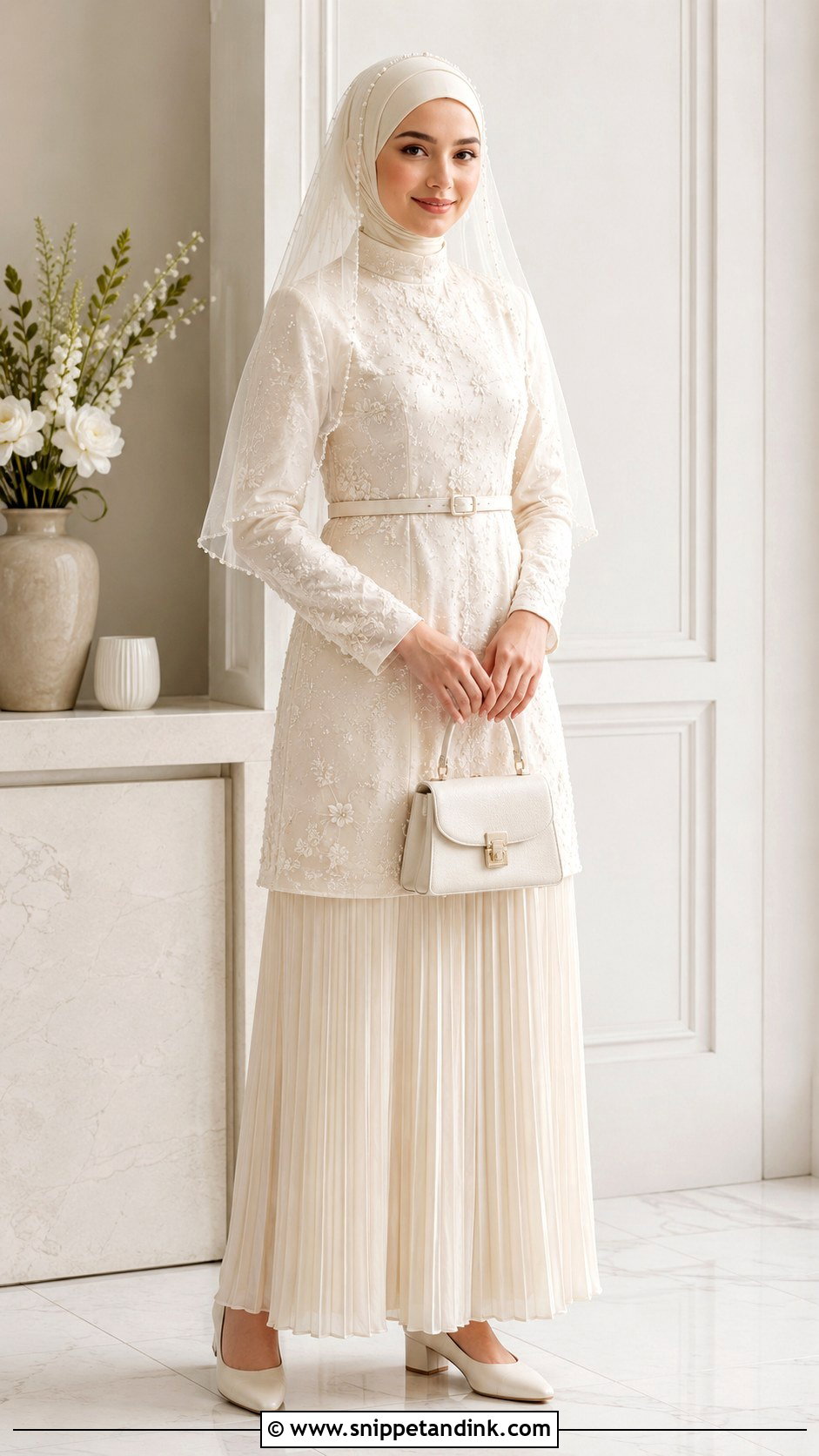
Separates in cream suit a courthouse ceremony or a small nikah, and they’re easier to wear again afterwards. A full-length pleated skirt and a long tunic covering the waist and hips, cut from the same or very close fabric, read as one outfit. Add full sleeves, opaque lining and a high neck. A slim fabric belt gives shape if you want it. Before final alterations I ask brides to sit, walk and raise both arms, because the tunic tends to lift above the skirt at exactly the moment someone takes a photo.
17. Floral Islamic Bridal Dress With Chiffon Hijab
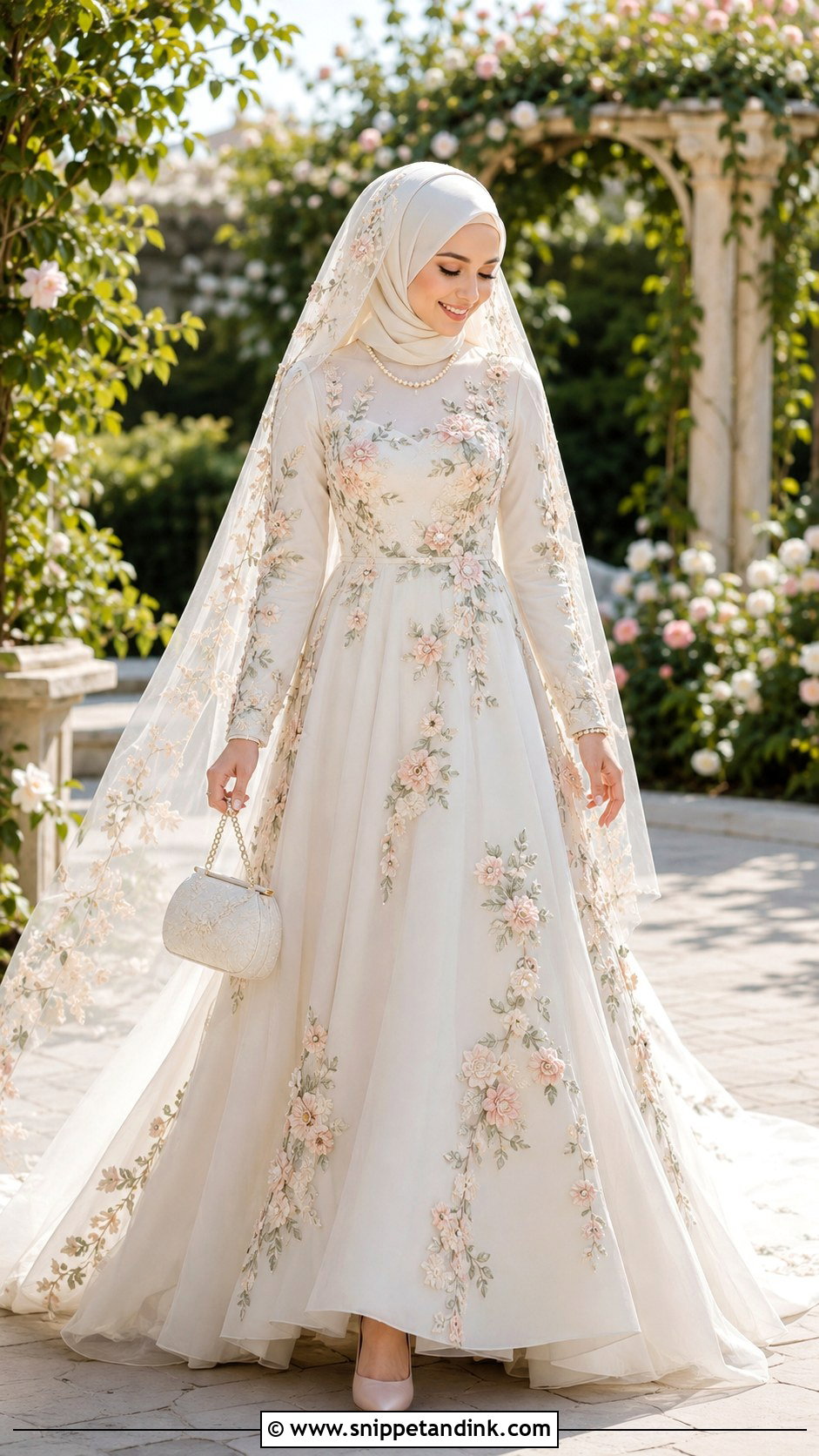
Embroidered flowers suit an outdoor ceremony or a garden reception. Choose an ivory maxi gown with blush, sage or powder blue flowers concentrated at the bodice or skirt border rather than covering every surface, which keeps the pattern clear in photos. A high neck, lined long sleeves and an A-line skirt give the coverage. A plain ivory hijab keeps the look bridal. Repeat a few appliqués near the veil hem so the back view ties in with the front.
18. Minimalist Islamic Bridal Gown With Satin Hijab
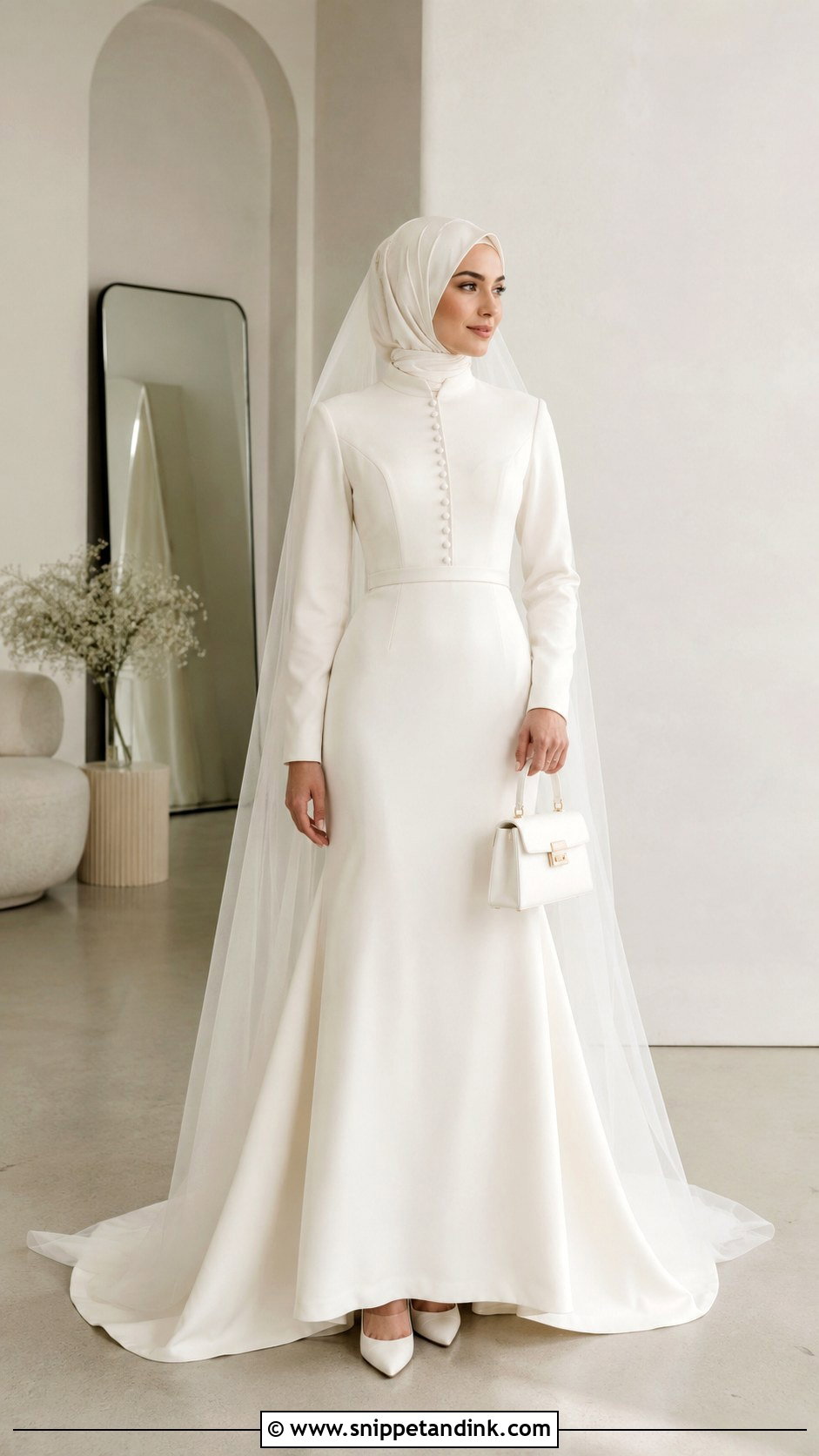
The less decoration a gown has, the more visible its fit becomes. A matte crepe dress with a high neck, long sleeves, gentle waist shaping and a softly flared skirt relies on precise seams, covered buttons and a crisp hem. Pair it with a satin hijab in the same ivory and a plain chapel veil. I schedule an extra fitting for minimalist gowns, focusing on shoulders, cuffs and skirt length, since a sleeve a centimeter too long is obvious when nothing else distracts the eye. A detachable satin bow adds a focal point if you want one later.
19. Plus-Size Islamic Bridal A-Line Gown With Veil
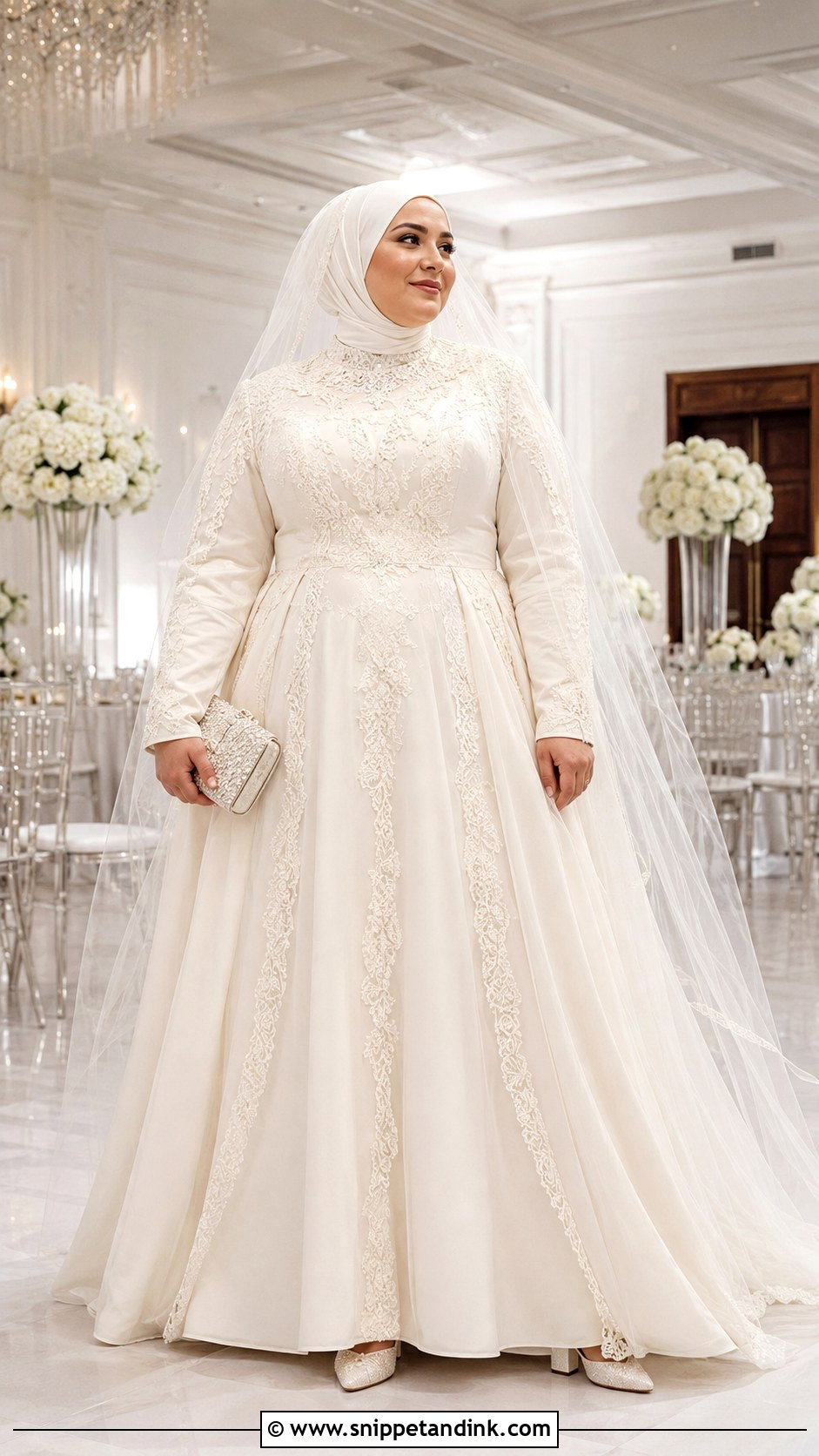
Internal structure makes a plus-size A-line gown comfortable for ten hours. I look for a supportive built-in bodice, a high neck, long sleeves with real room at the armhole, and a skirt that flows from the waist instead of clinging. Soft pleats and vertical lace panels add detail without width. Secure the veil to the hijab, never to the dress, so it doesn’t drag the neckline. Buying a larger standard size and skipping alterations is the mistake I see most; tailoring the shoulders, bust, sleeves and hem is what makes the gown look intentional.
20. White Islamic Bridal Gown With Detachable Train
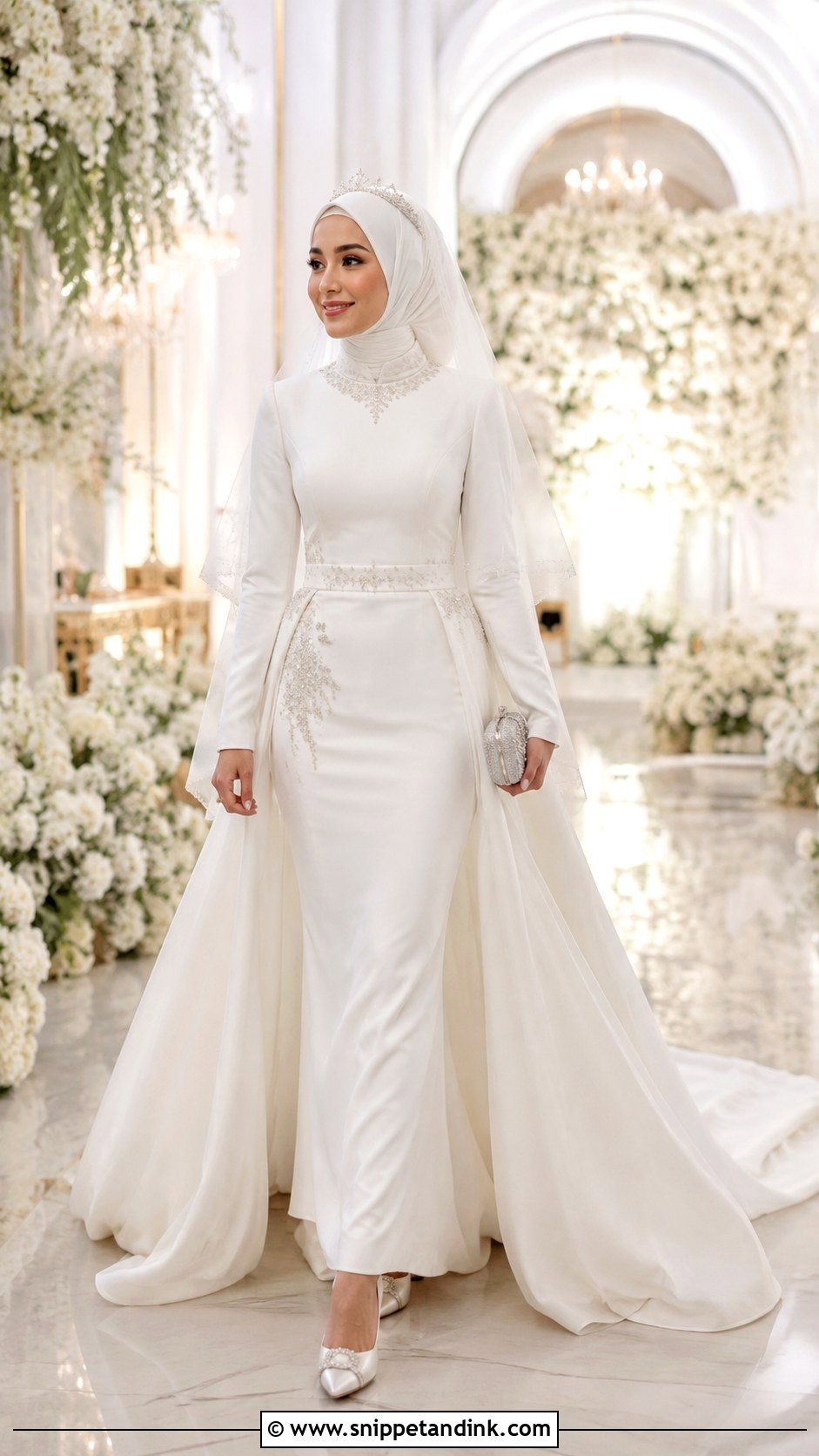
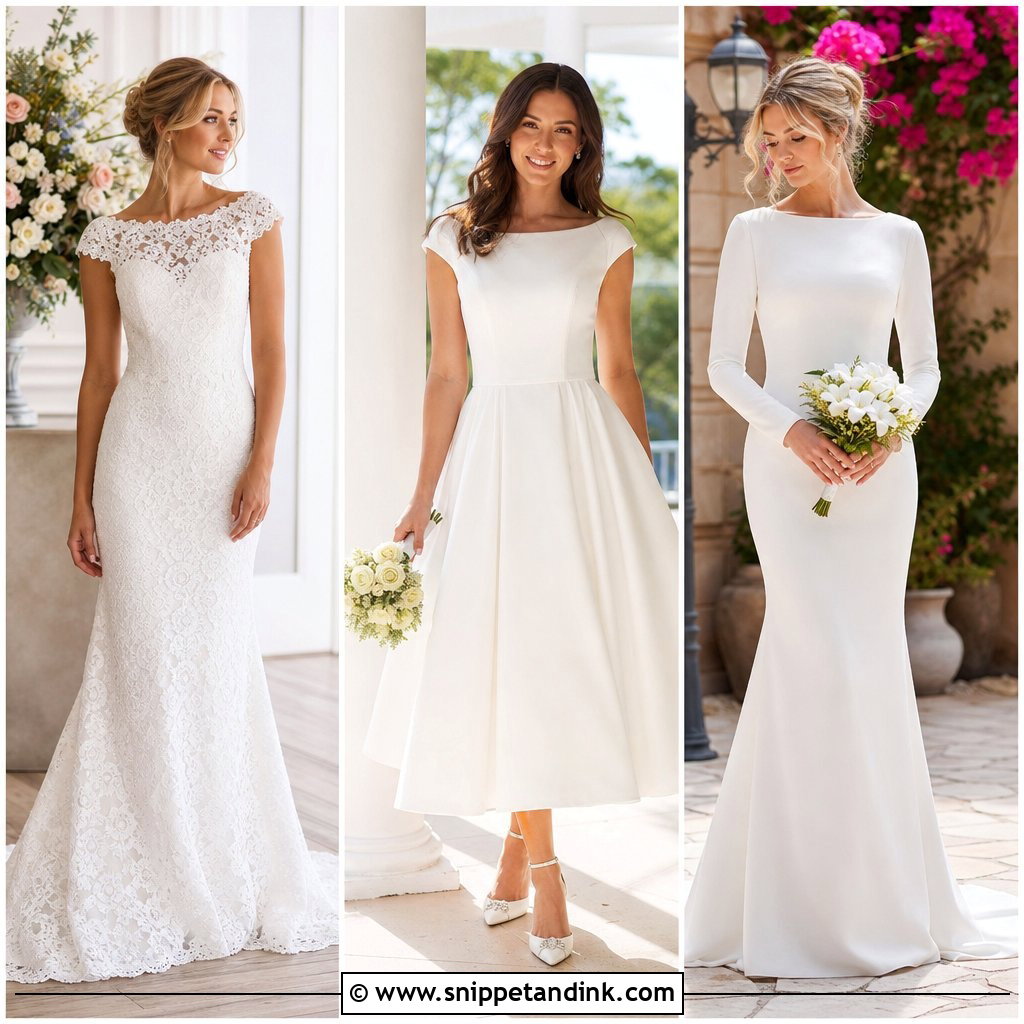
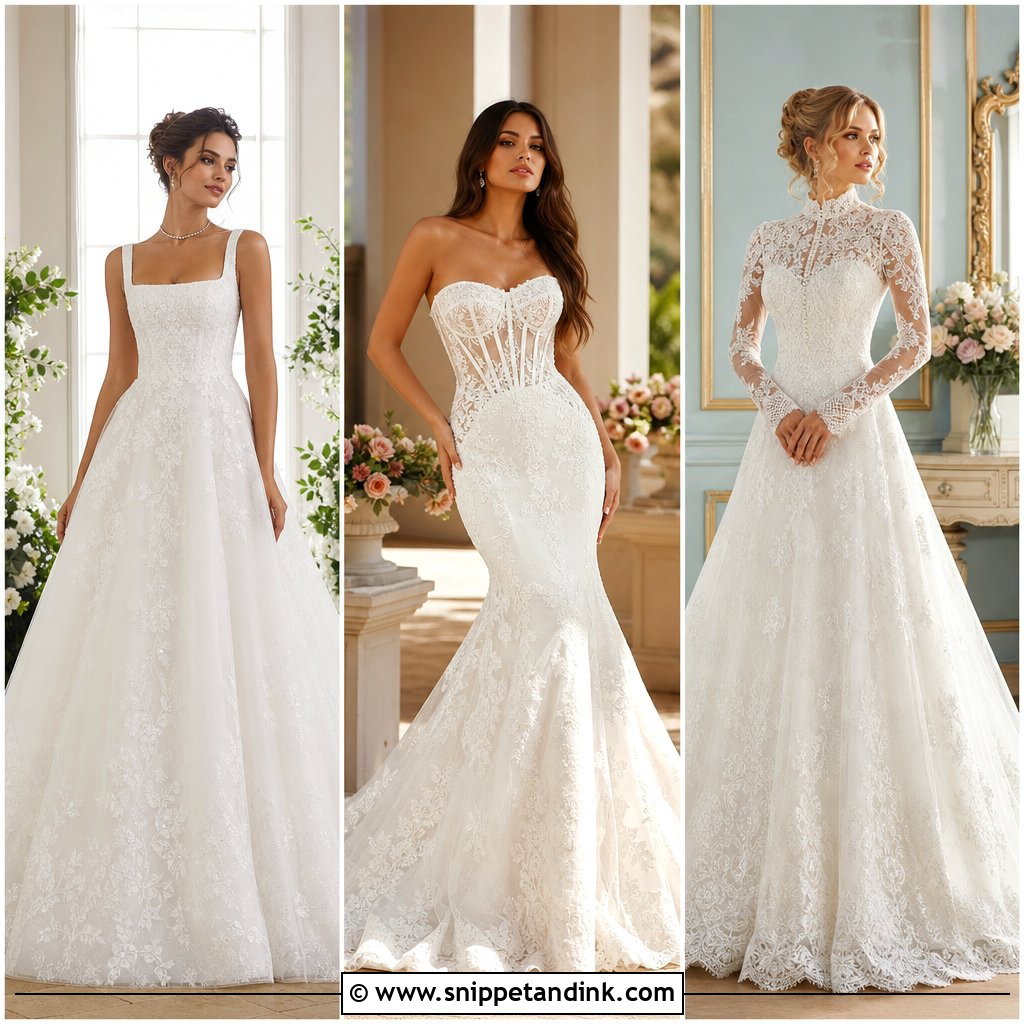
A detachable train lets you have the entrance and then actually enjoy the party. Start with a modest white A-line or column gown with long sleeves and an opaque high neck, then attach a wide train at the back with concealed hooks, snaps or a slim covered belt. Remove it after the formal photographs. A medium-length veil avoids two long layers fighting each other. At fittings I have brides turn, sit and walk with the train on, because a poorly balanced one pulls the whole dress backward at the waist.
How Far Ahead to Order Embroidered and Custom Pieces
Embroidered lehengas, beaded kaftans and made-to-measure gowns all take longer than off-the-rack dresses. Exact timelines vary by maker and season, but this is roughly how I plan with brides:
- Custom or hand-embroidered outfits: start the conversation six to nine months out. Handwork can’t be rushed, and wedding season queues are long.
- Ready-made gowns ordered in your size: allow around four to six months, since many are still made after you order.
- Alterations: plan two or three fittings starting about two months before the wedding, with the hijab, shoes and veil at every one.
- Buffer: leave at least two weeks between the last fitting and the wedding for anything that needs a final adjustment.
Changing Outfits Between Nikah and Reception
Many brides wear something simple for the nikah and something grander for the walima or evening. If you’re planning a change, give yourself at least forty-five minutes and a private room with a mirror. Re-pinning a hijab and moving a dupatta properly takes longer than swapping the clothes.
I’d pack a small bag for each outfit: its own pins, undercap, shoes and any belts or brooches, labeled so whoever helps you isn’t guessing. Detachable capes and trains make the switch much easier, since you can change the whole feel of a look without removing the dress.
Wear Every Layer at Once Before You Say Yes
Your modesty preferences, culture and comfort should decide the outfit, and everything else follows. Opaque fabric, secure layering and careful tailoring matter whichever silhouette you pick, from lace gowns and satin ball gowns to abayas, kaftans, lehengas and pantsuits. At your last fitting, wear the whole outfit including hijab, veil, shoes, underlayers and jewelry, then walk, sit and move naturally. What feels right in that room will feel right on the day.
You'll Like These Ideas:






Leave a Reply