
Ask me which wedding dresses still look right in thirty-year-old albums and the answer is rarely about decoration. It’s proportion, fabric quality and a fit that let the bride move like herself. Satin ball gowns, lace sleeves, crepe columns, pearl detail and long veils keep coming back because they’re built on shapes that have worked for generations. What follows are complete looks rather than single dresses, with notes on the construction and styling choices that decide whether each one wears well across a long day. Your venue, the season and how much you plan to dance should shape the shortlist as much as the photos do.
What Makes a Wedding Photo Look Dated Twenty Years On
When brides bring me their parents’ albums, the dresses that look odd now nearly always share one thing: a single detail pushed to its extreme. Sleeves too puffed, a neckline too extreme, a colour too tied to that year. The gowns that still look right were built on familiar shapes and kept the trendy element small.
I use a quick test at appointments. Cover the most fashionable part of the dress with your hand in the mirror. If what’s left is a strong silhouette in good fabric, the dress will age well and the trendy detail is a bonus. If the dress looks empty without it, you’re buying the trend.
- Fabric reads in photos long after style details fade, so a better satin or crepe beats more beading.
- Bright white can look blue next to skin in modern cameras; ivory and soft white are gentler on most complexions.
- Hair and makeup date faster than the dress. Keep them close to how you normally look.
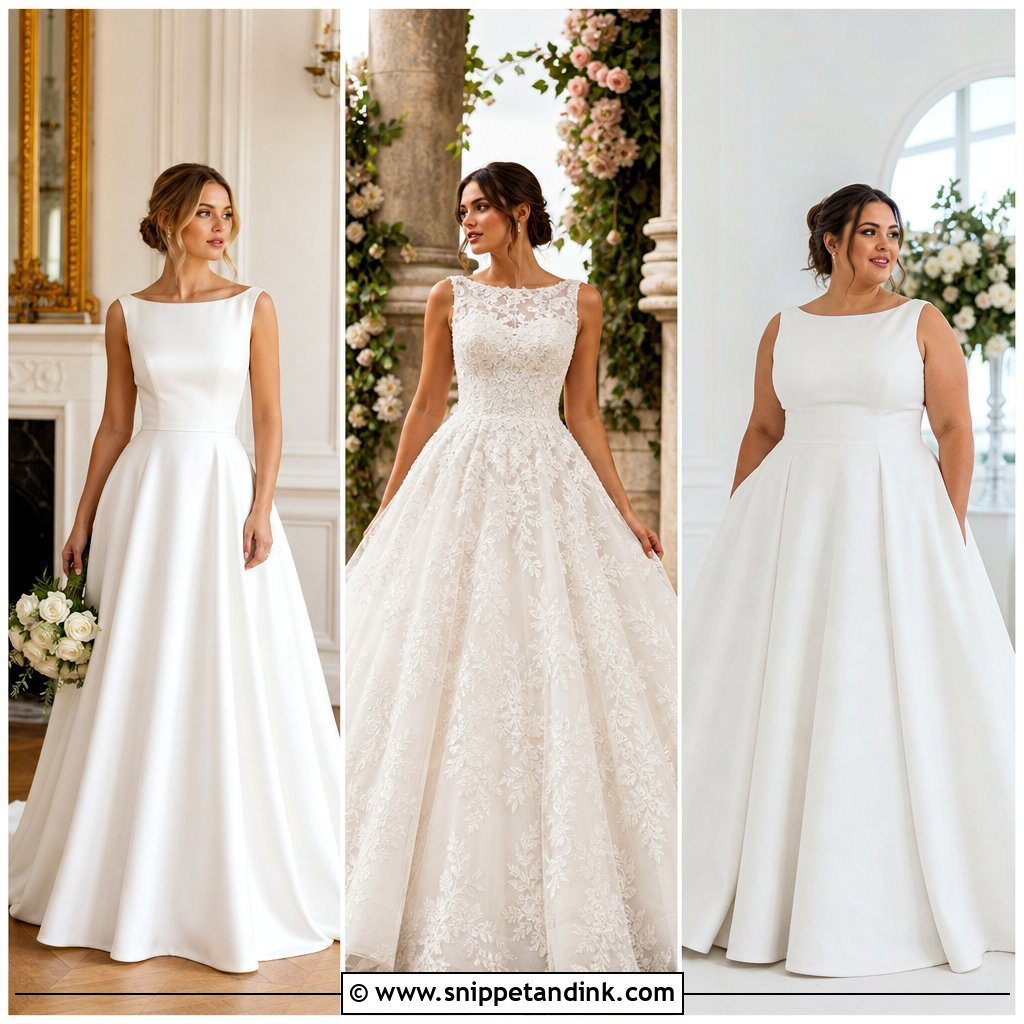
1. Satin Ball Gown Wedding Dress
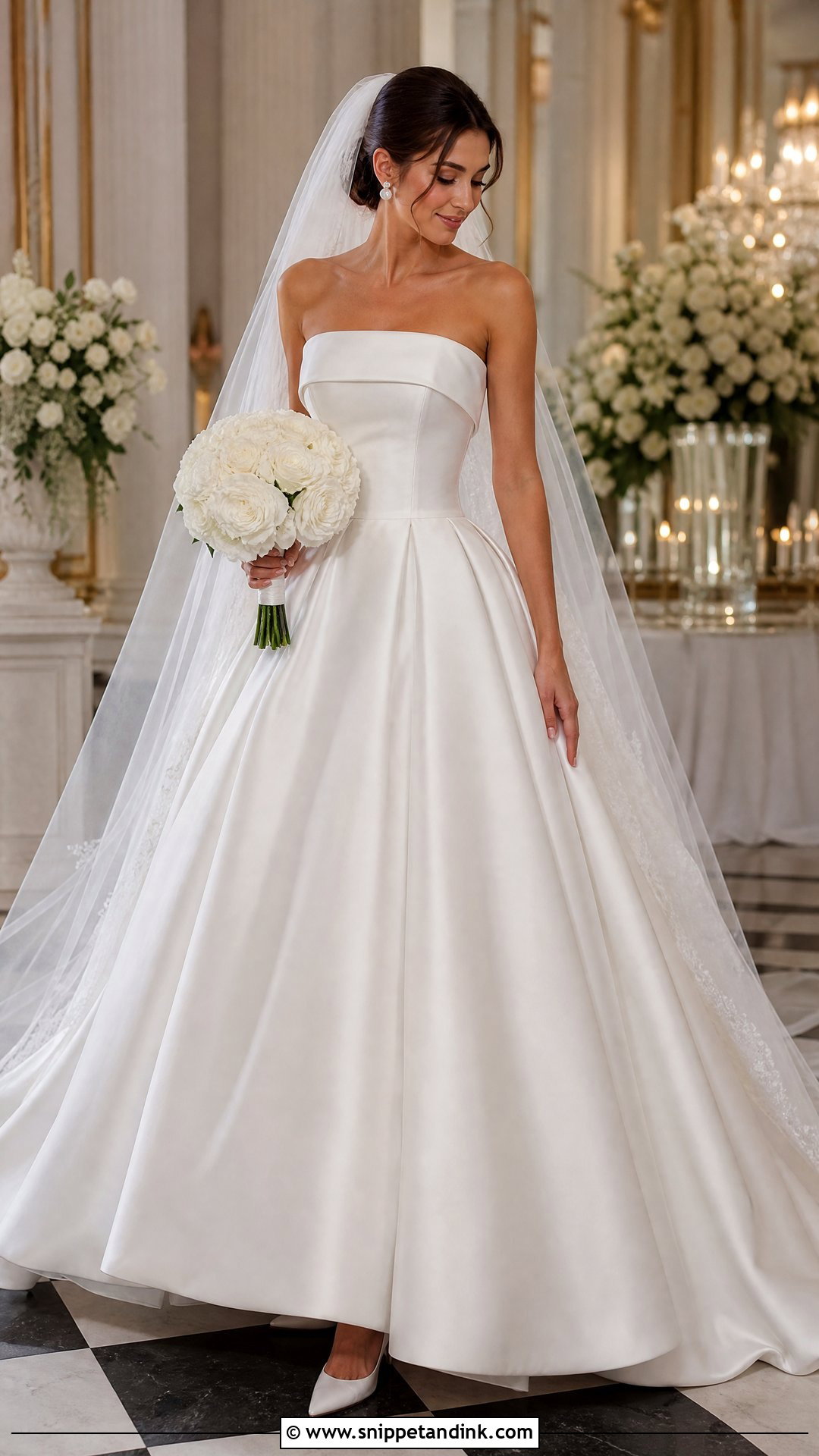
Satin ball gowns rely on structure rather than embellishment, and the structure lives inside: boning in the bodice, a layer of horsehair or crinoline in the skirt, a waist stay that keeps everything anchored. When those are right, the fabric does the rest. A strapless or bateau neckline keeps the line formal, and a cathedral veil gives the back view some movement. Satin marks easily, so I keep pearls small and avoid beaded bags that rub against the skirt. Ballrooms and estate venues give the skirt the space it needs.
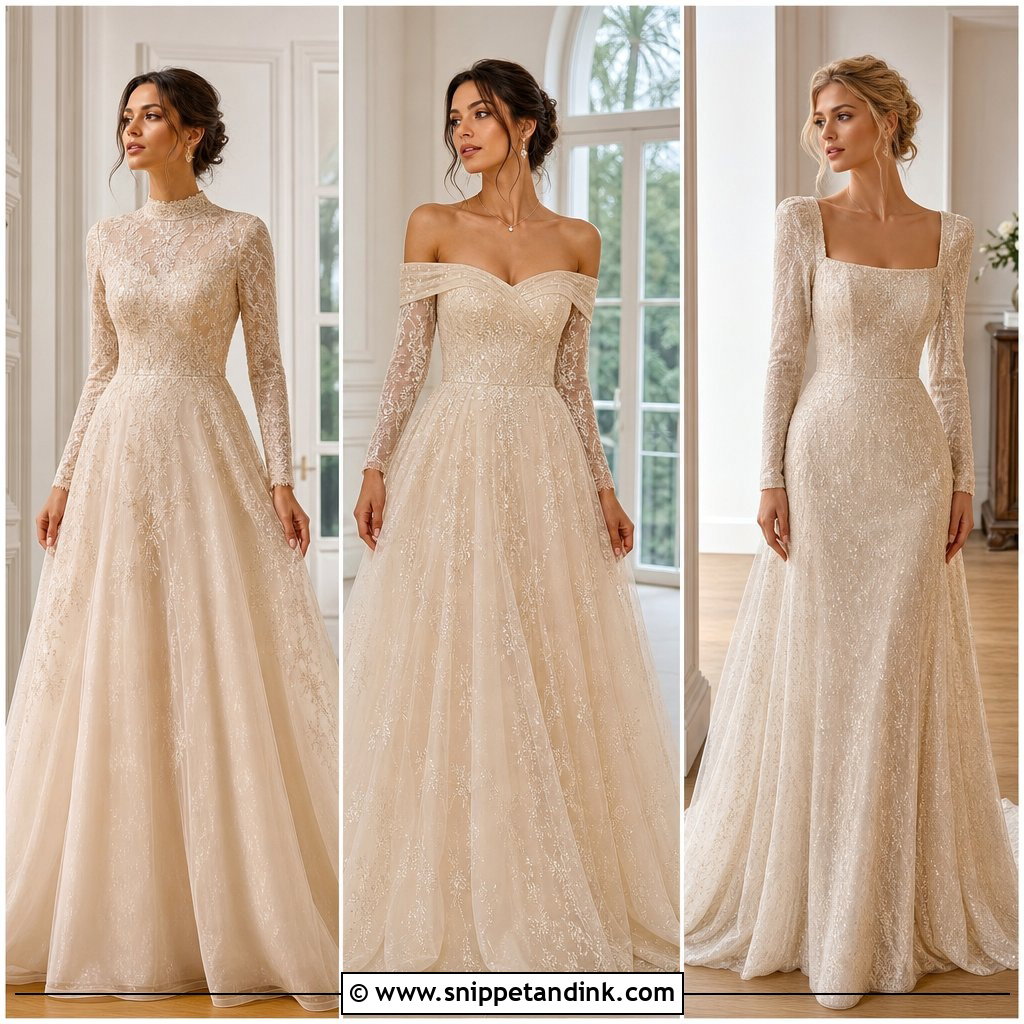
2. Long Sleeve Lace Wedding Dress
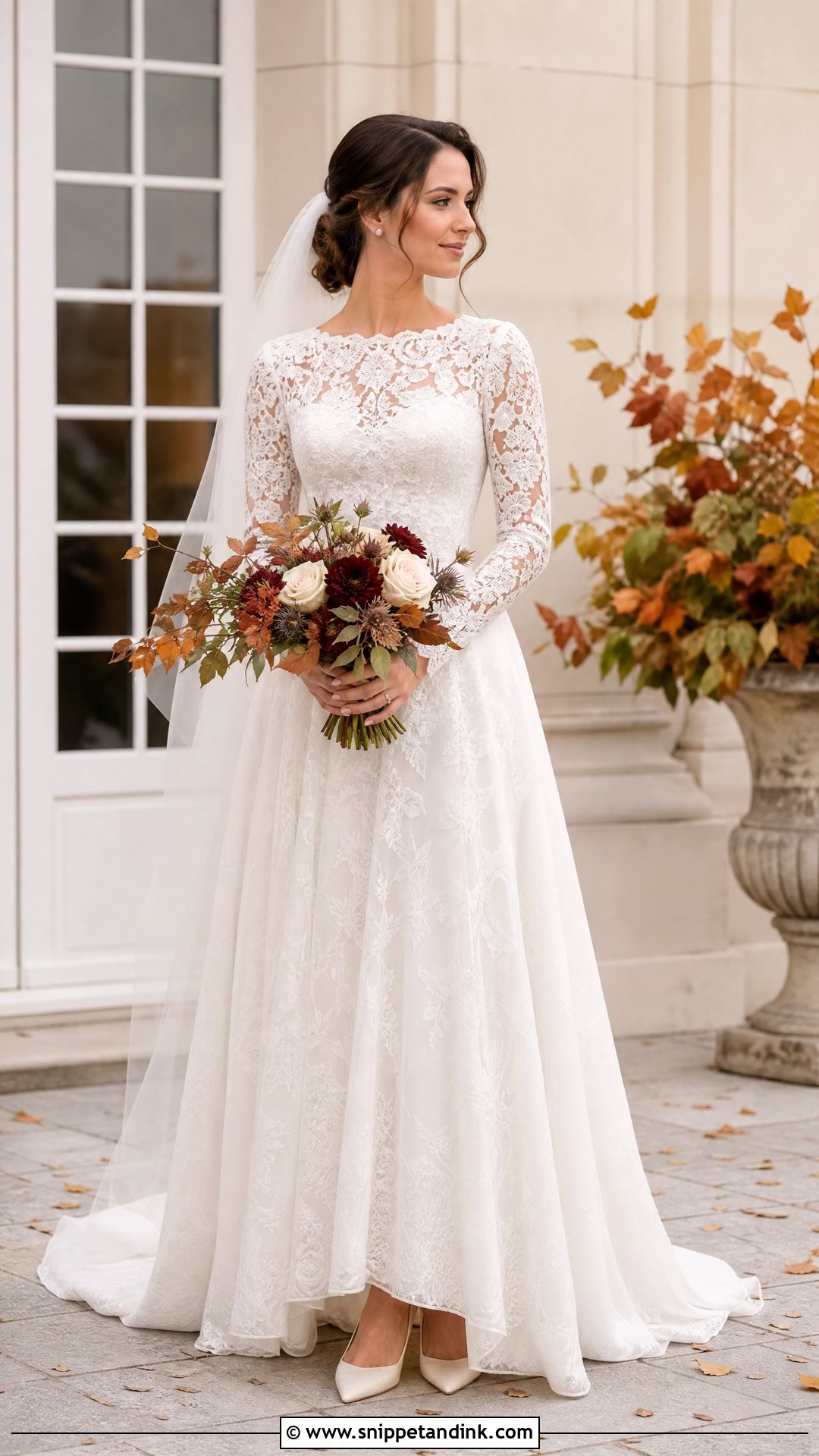
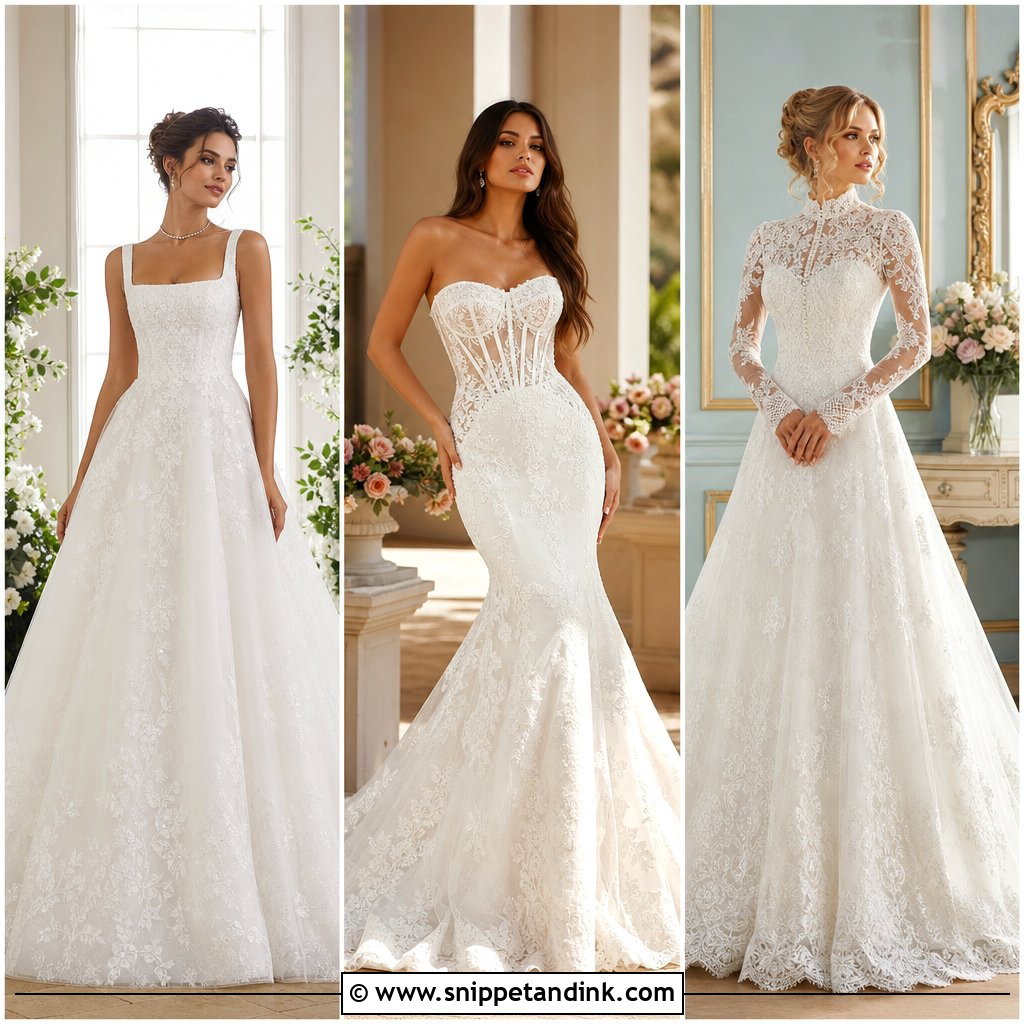
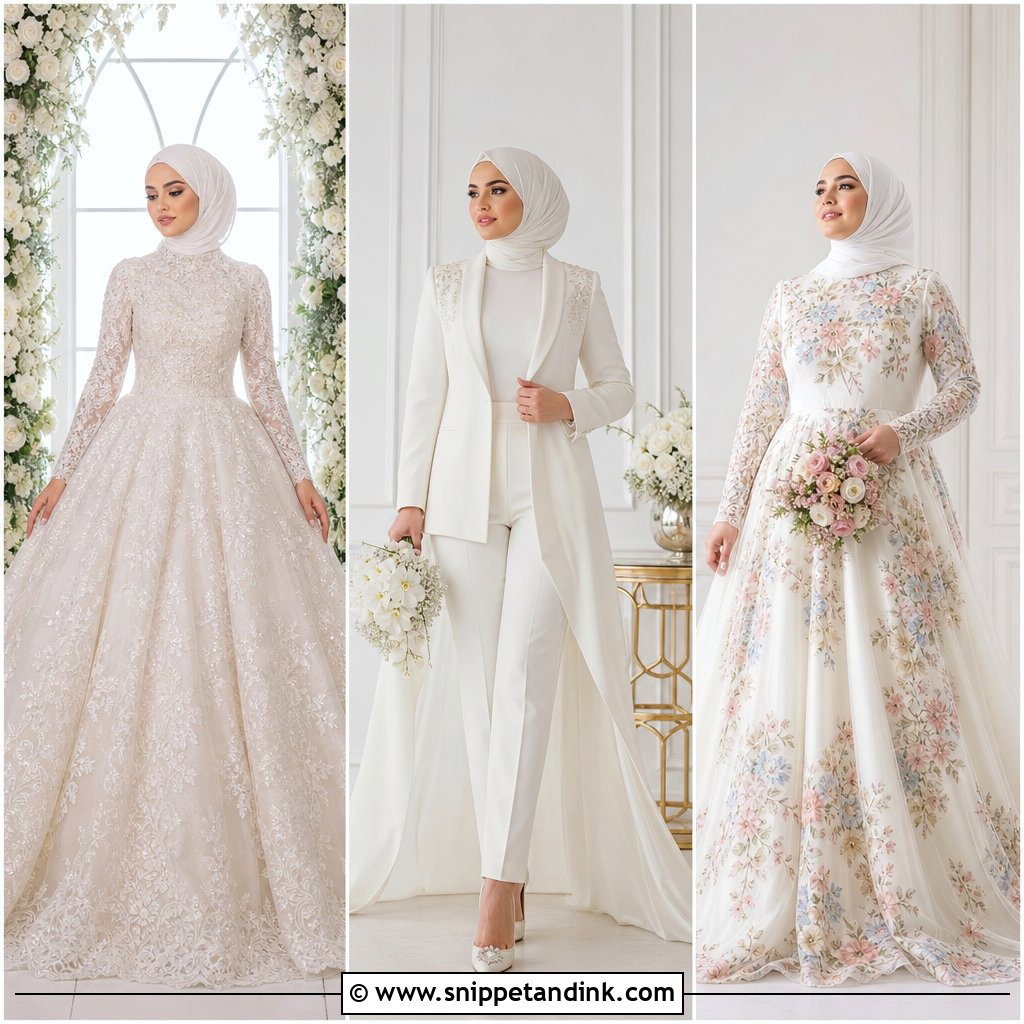
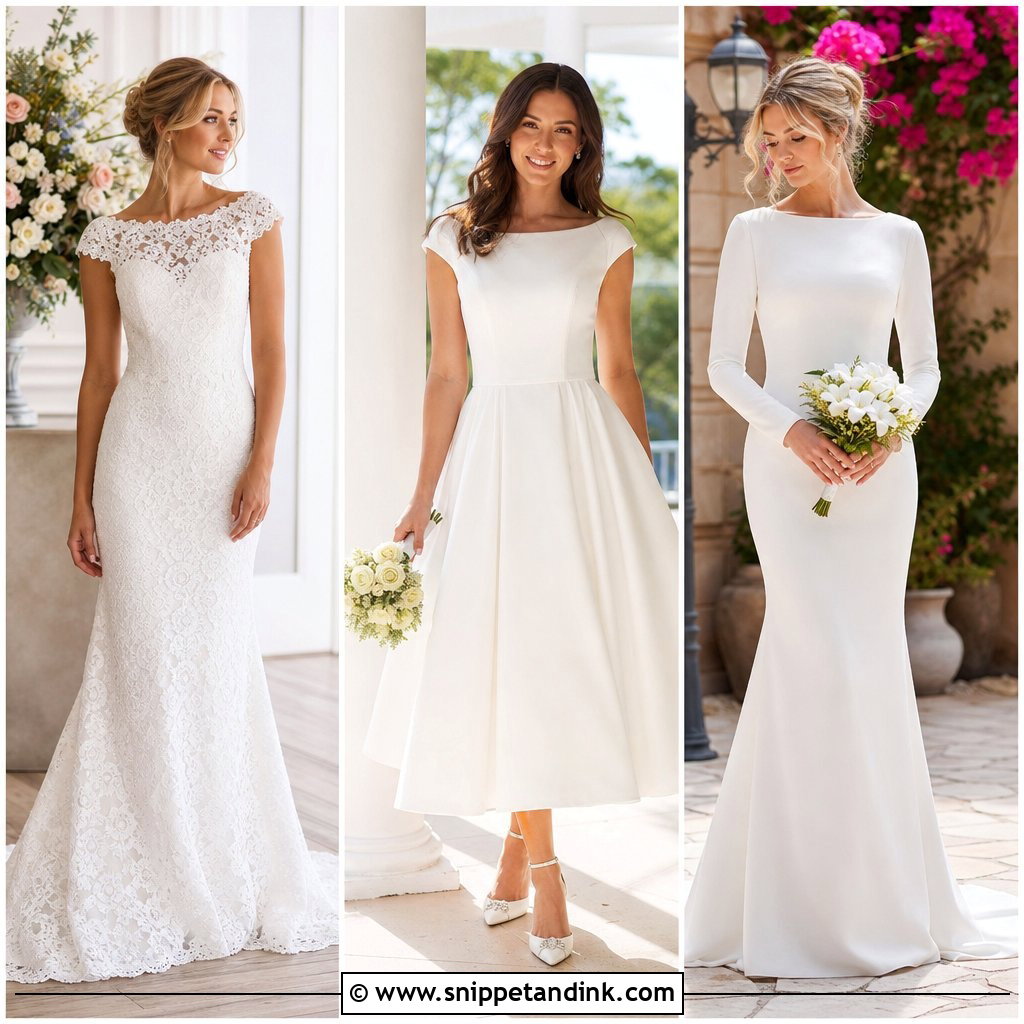
Long lace sleeves look gentle but carry real weight, so a good maker anchors them to a stable bodice. Fine floral or Chantilly details age better than big graphic lace; the smaller pattern softens skin in close-ups and doesn’t shout in photos years later. An A-line or sheath skirt underneath keeps it from turning heavy. This is my first suggestion for brides who need modest coverage for a religious ceremony but still want texture. Autumn and winter suit it, and so does any church that keeps its heating low.
3. Off The Shoulder Wedding Dress
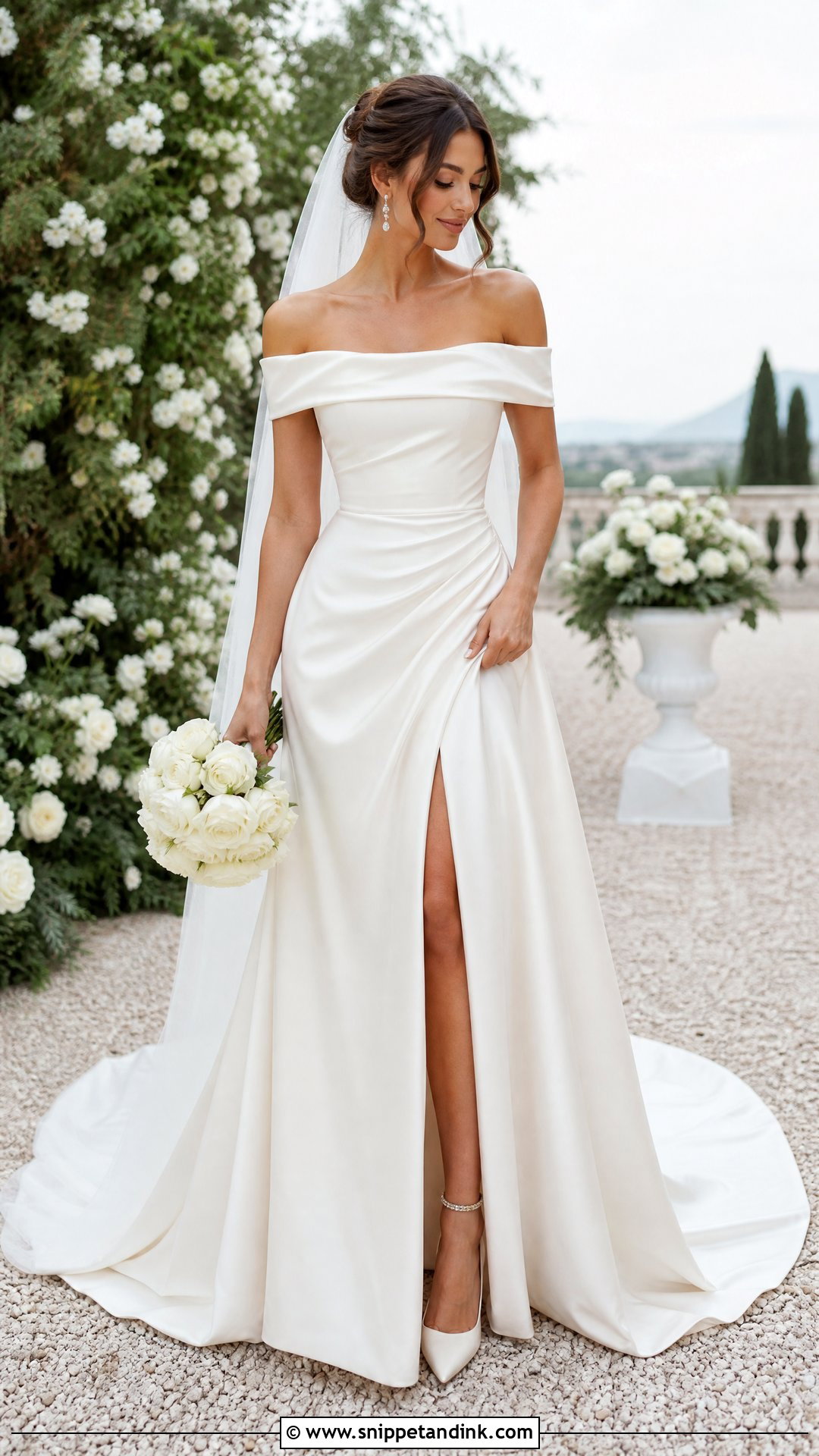
Off the shoulder necklines frame the collarbone, and they only stay put if the bodice is built to hold them. I check for a firm internal corset and a gripper at the neckline. Raise your arms at the fitting; if the band rides up, it will happen every time you wave. Crepe and mikado keep the shoulder line crisp, while lace softens it. There’s rarely room for a necklace, so let drop earrings handle the jewellery and set the veil low at the back of the head.
4. Strapless A Line Wedding Dress
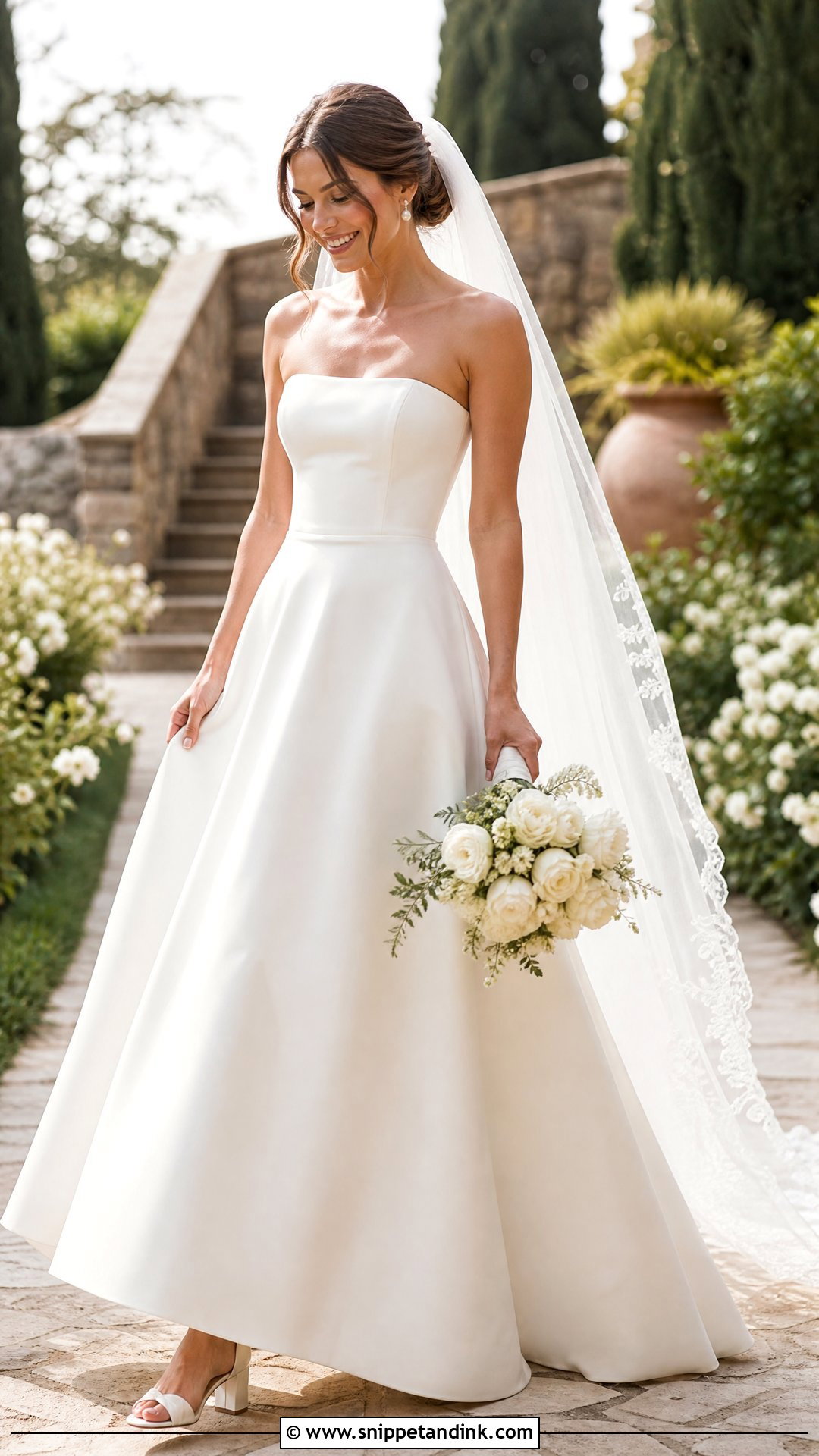
Strapless A-line is the shape I see chosen most often, and it’s also the one most often fitted badly. The bodice must hold you without help from your hands. A strapless gown that needs hoisting through the evening was cut too loose at the top edge or lacks a waist stay. Once that’s sorted, fabric sets the mood: satin for polish, tulle for softness, lace for romance. Block heels make sense on grass or gravel. It suits nearly any venue, which is why it’s such a safe starting point.
5. Simple Crepe Wedding Dress
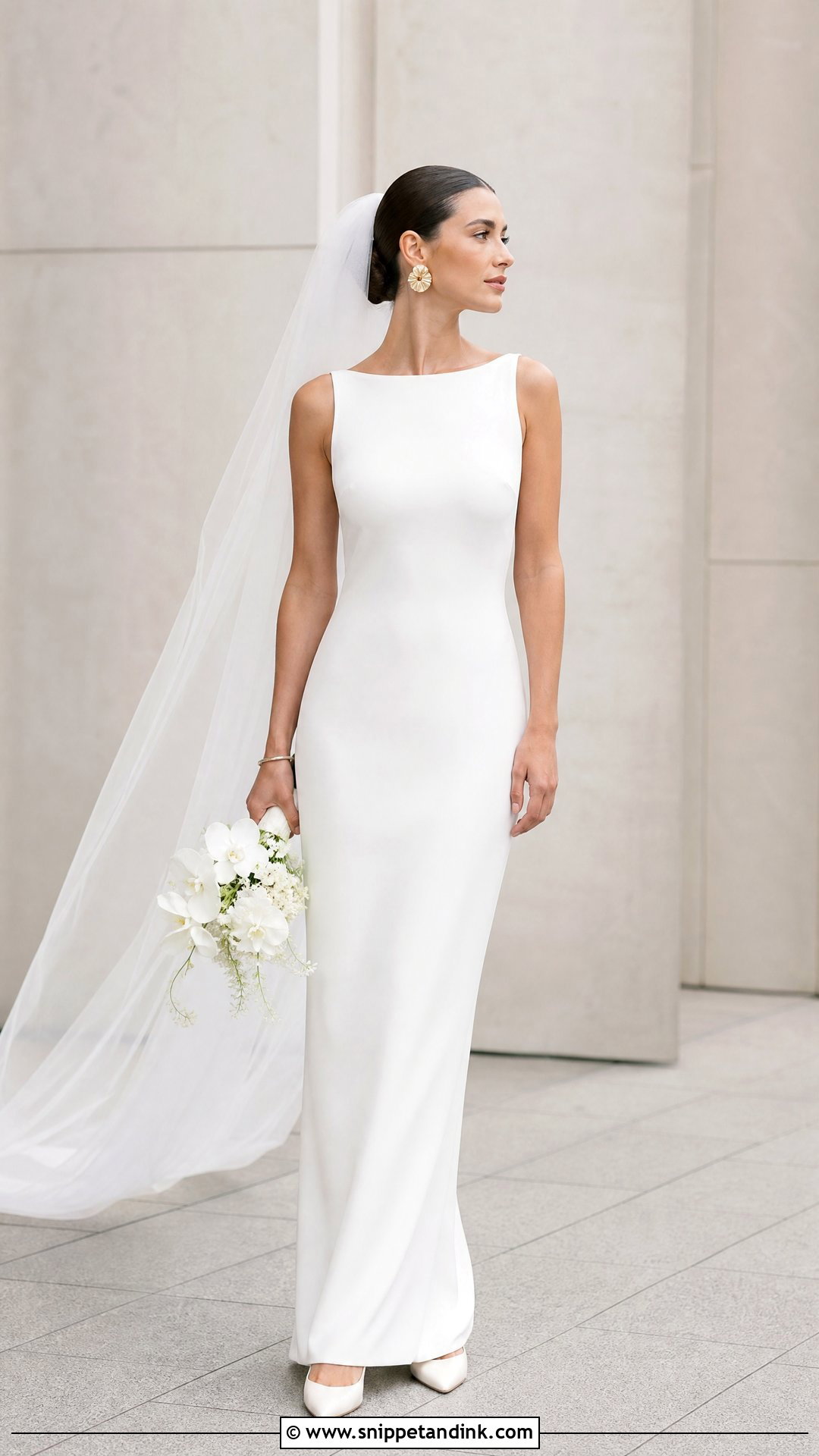
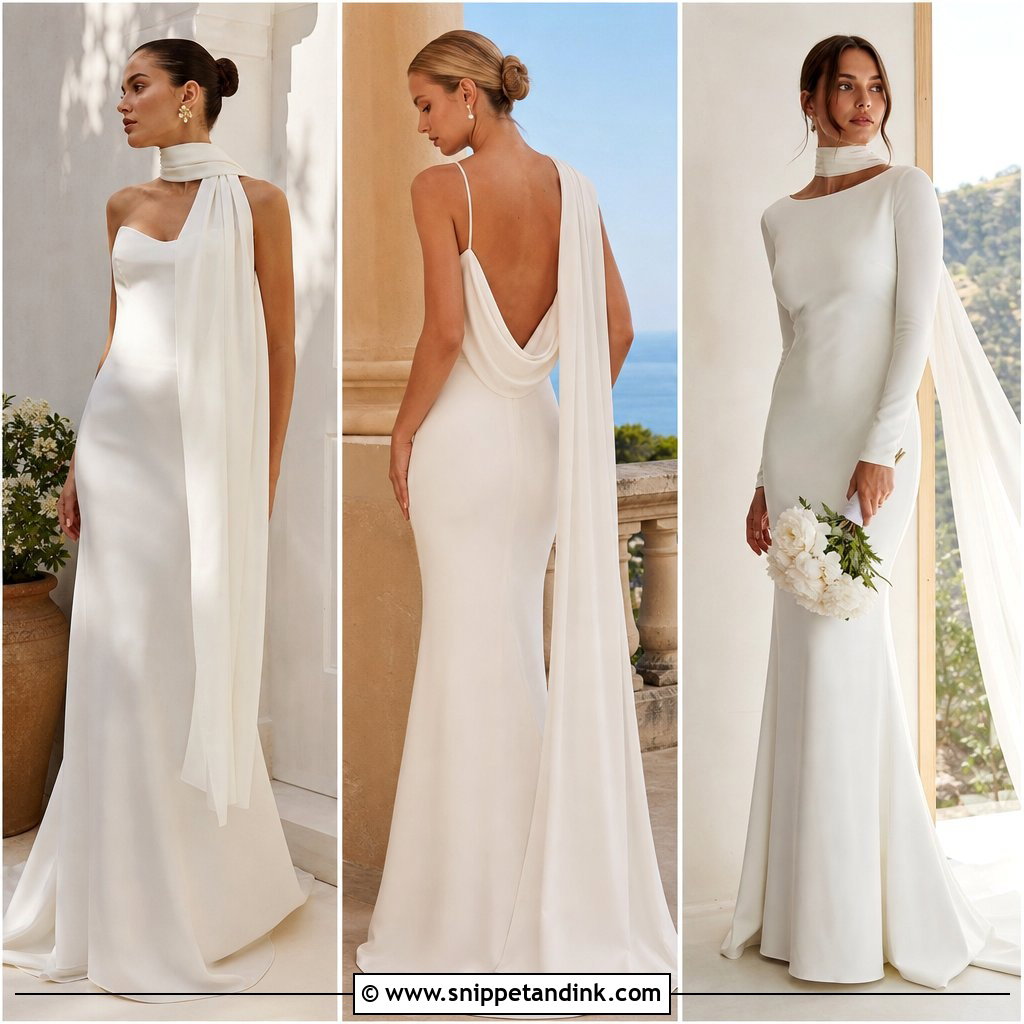
Crepe is honest about fit. There’s no lace to hide a pucker, so I’d budget an extra fitting for any crepe dress and test it seated, since crepe can pool awkwardly at the lap. In return you get a clean, matte surface that looks sharp in daylight and flash alike. A high neck, square or deep V all work if the seams are precise. A detachable overskirt or cape adds movement for the ceremony and comes off for the party.
6. Pearl Embellished Wedding Dress
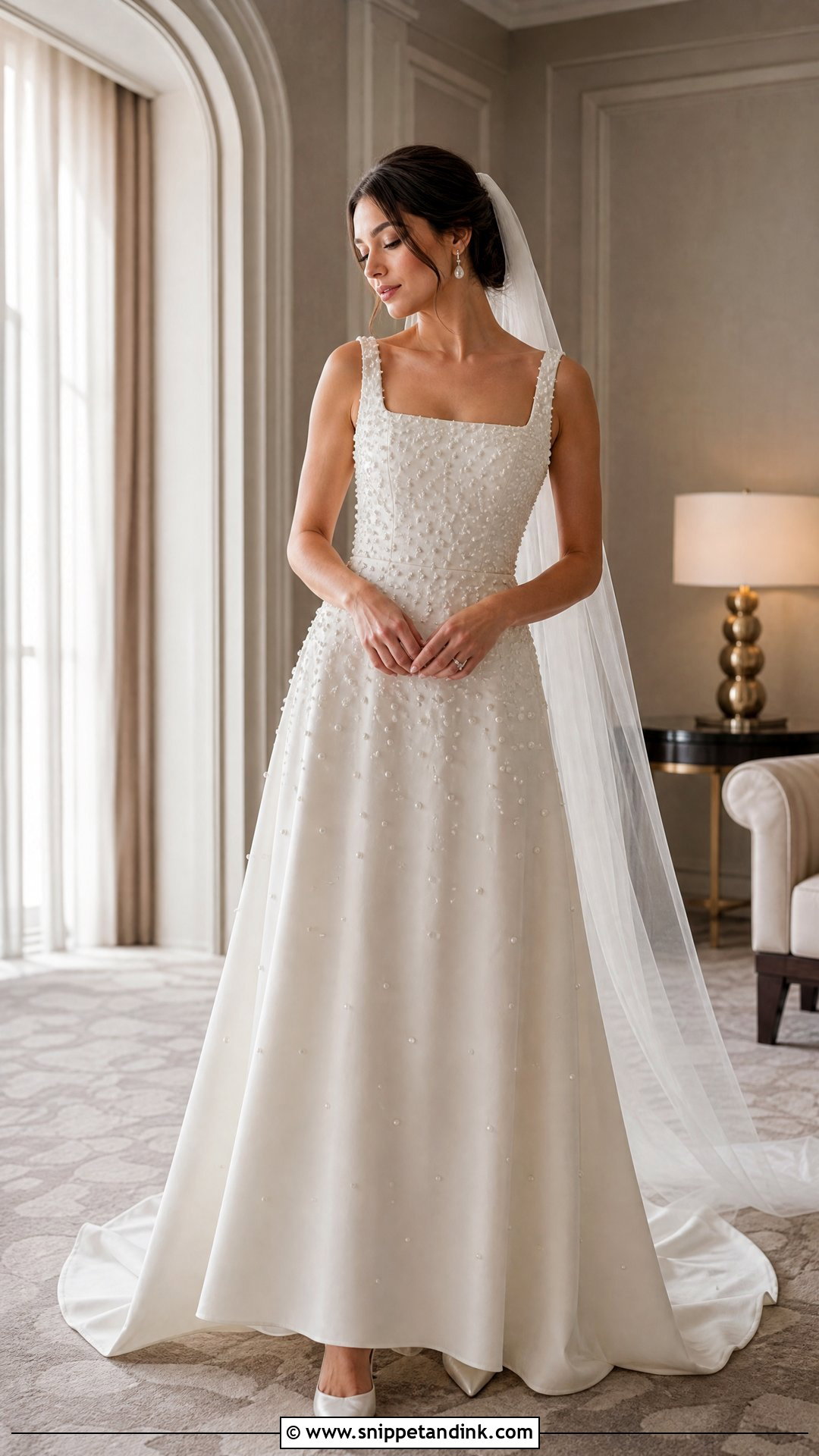
Pearls add texture, but a gown covered in them gets heavy and noisy. I prefer them placed with intent: along a neckline, across a sheer bodice or scattered lightly down the skirt. Check how they’re attached. Hand-sewn pearls on a thread loop survive hugging and sitting; glued ones pop off by the reception. A plain A-line or column lets them stand out. Keep the earrings simple and choose a veil without extra trim so there isn’t a third layer of shine.
7. High Neck Wedding Dress
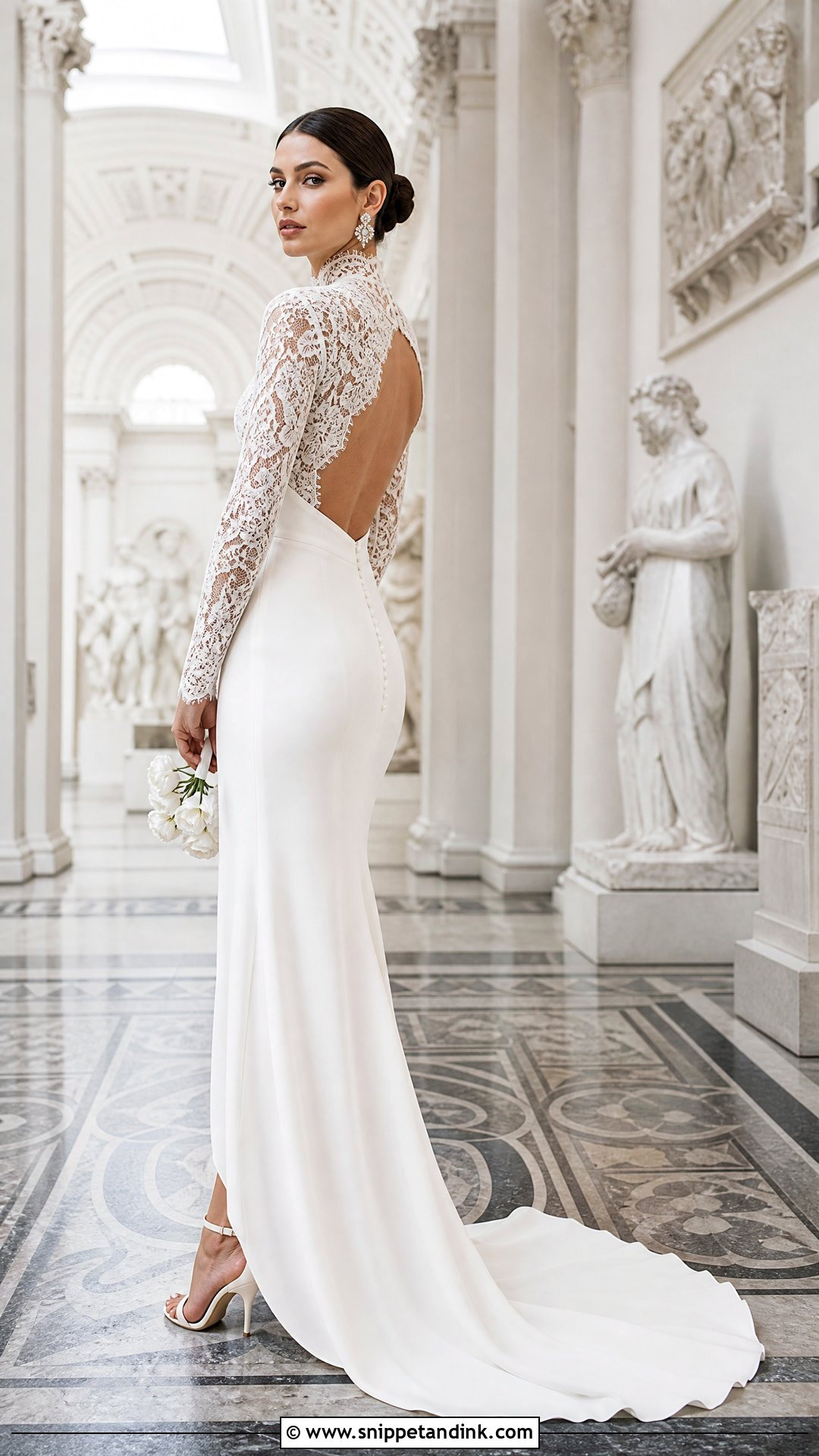
A high neckline does a lot with very little: it covers, lengthens the neck and draws the eye straight to the face. Lace versions read vintage, crepe and satin read architectural. The risk is too much coverage, so balance it with an open back, slim sleeves or a moving skirt. Sit down in it before you buy. A collar that’s comfortable standing can dig in when you lean forward to eat. A sleek bun keeps the neck clear, and earrings beat a necklace every time here.
8. Square Neck Wedding Dress
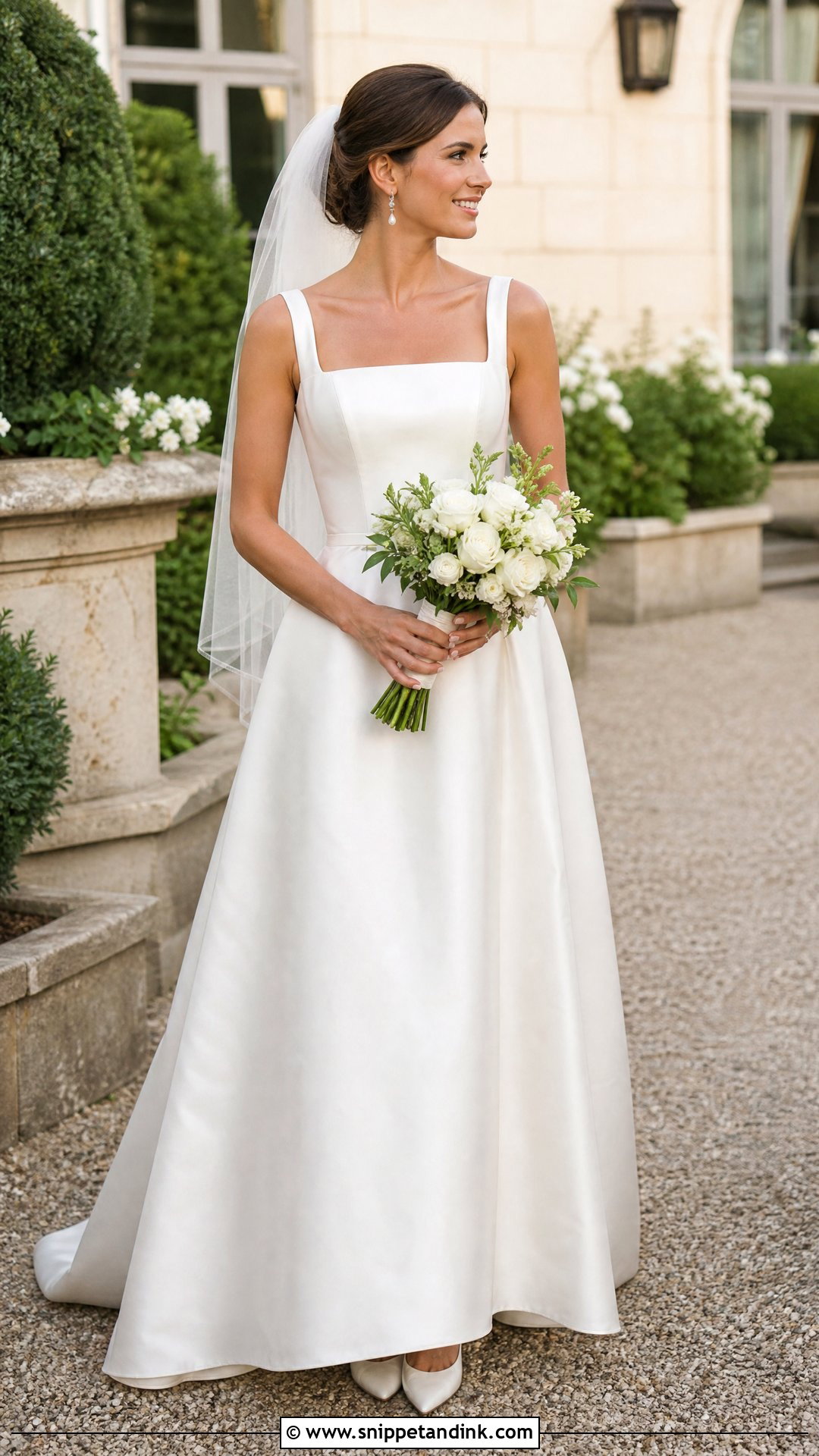
Square necklines sit straight across the chest and give the upper body a strong frame. They pair well with wide straps, long sleeves or a corset bodice and suit brides who want support without going strapless. Satin, mikado and crepe hold a sharp edge better than soft lace, which can bow in the middle. I always check the corners line up evenly from the front. Pearl drops and a soft updo keep it gentle; a column cut makes it sleek.
9. Sweetheart Neckline Wedding Dress
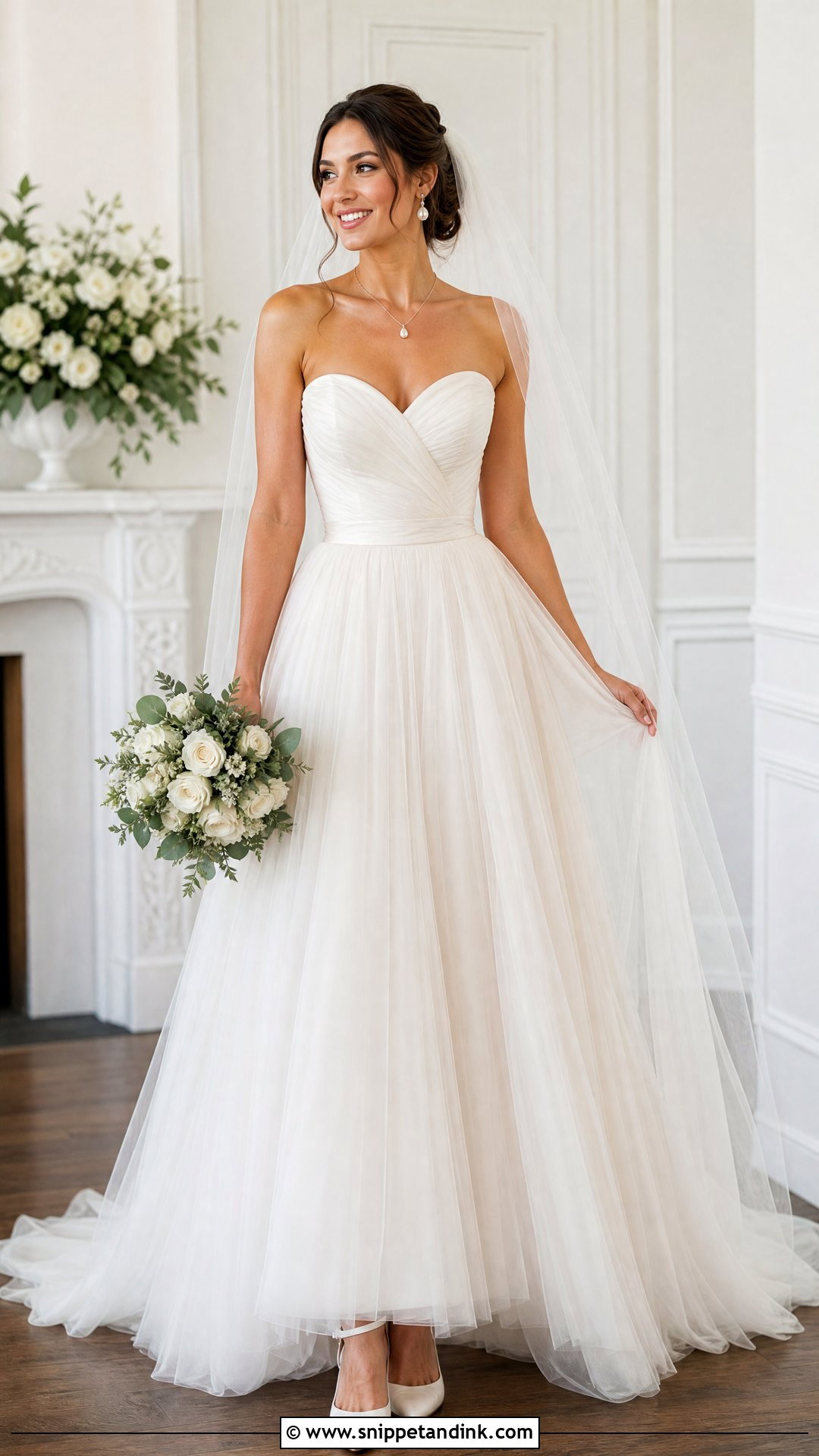
The dip at the centre of a sweetheart bodice softens the bust and suits strapless, strapped and sleeved gowns alike. On a fuller bust it needs proper underwire or cups sewn into the bodice; without them the curve flattens and loses its shape by evening. It sits naturally on satin ball gowns, tulle A-lines and lace fit-and-flare dresses. Keep the neck bare or wear one simple pendant. A veil with a clean, unbeaded edge stops the outfit tipping into fussy.
10. Basque Waist Wedding Dress
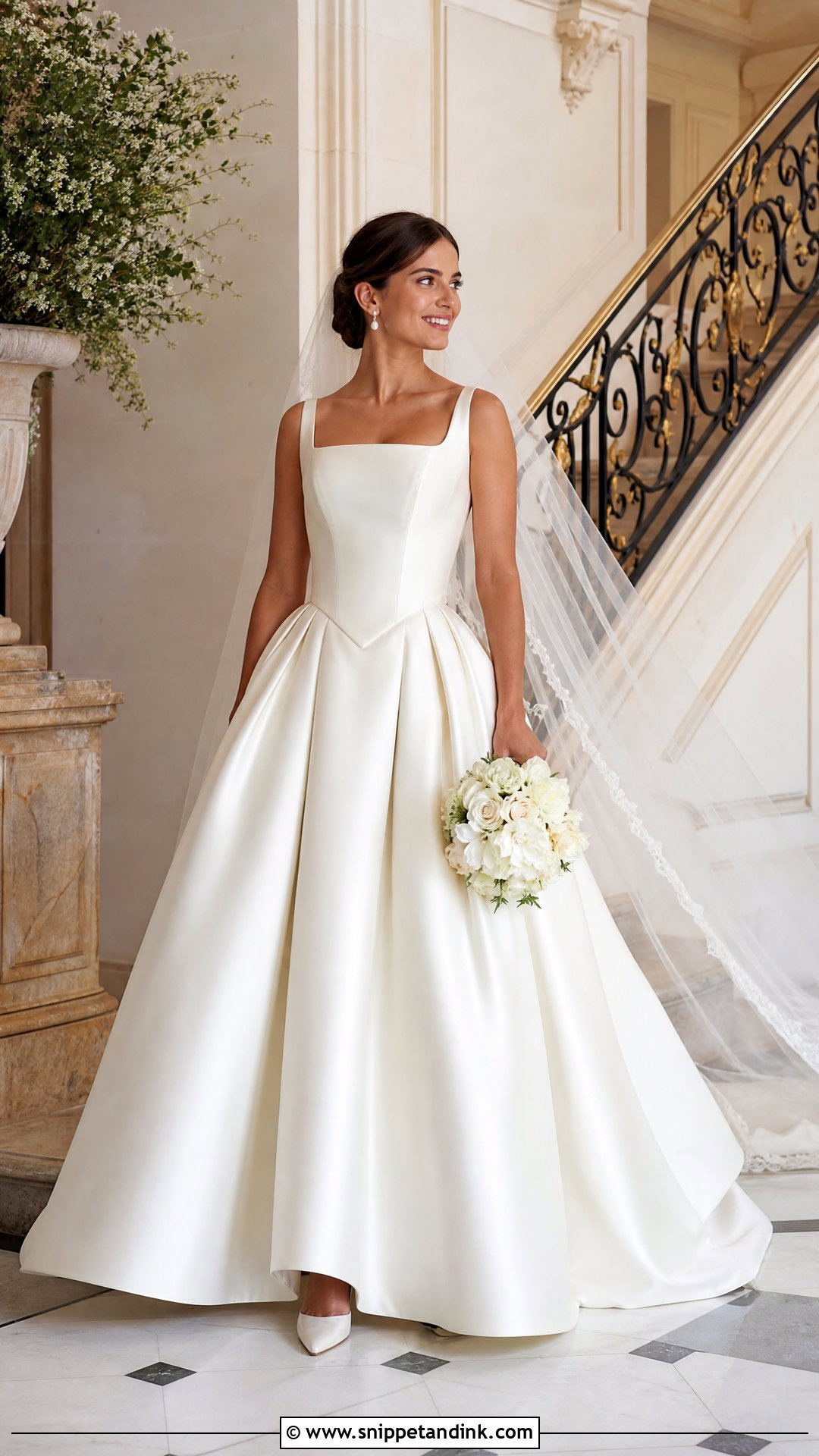
A Basque waist drops to a point or soft U below the natural waist, which lengthens the torso and pushes the skirt volume lower. It’s the princess silhouette with more sculpture. I’d suggest it to brides with a shorter torso; on a very long torso it can make the legs look short. Satin, mikado and stiff lace hold the point clean. Keep the bouquet held slightly to one side, because a big bouquet at the centre hides exactly the line you paid for. Grand halls and formal gardens suit it best.
11. Drop Waist Wedding Dress
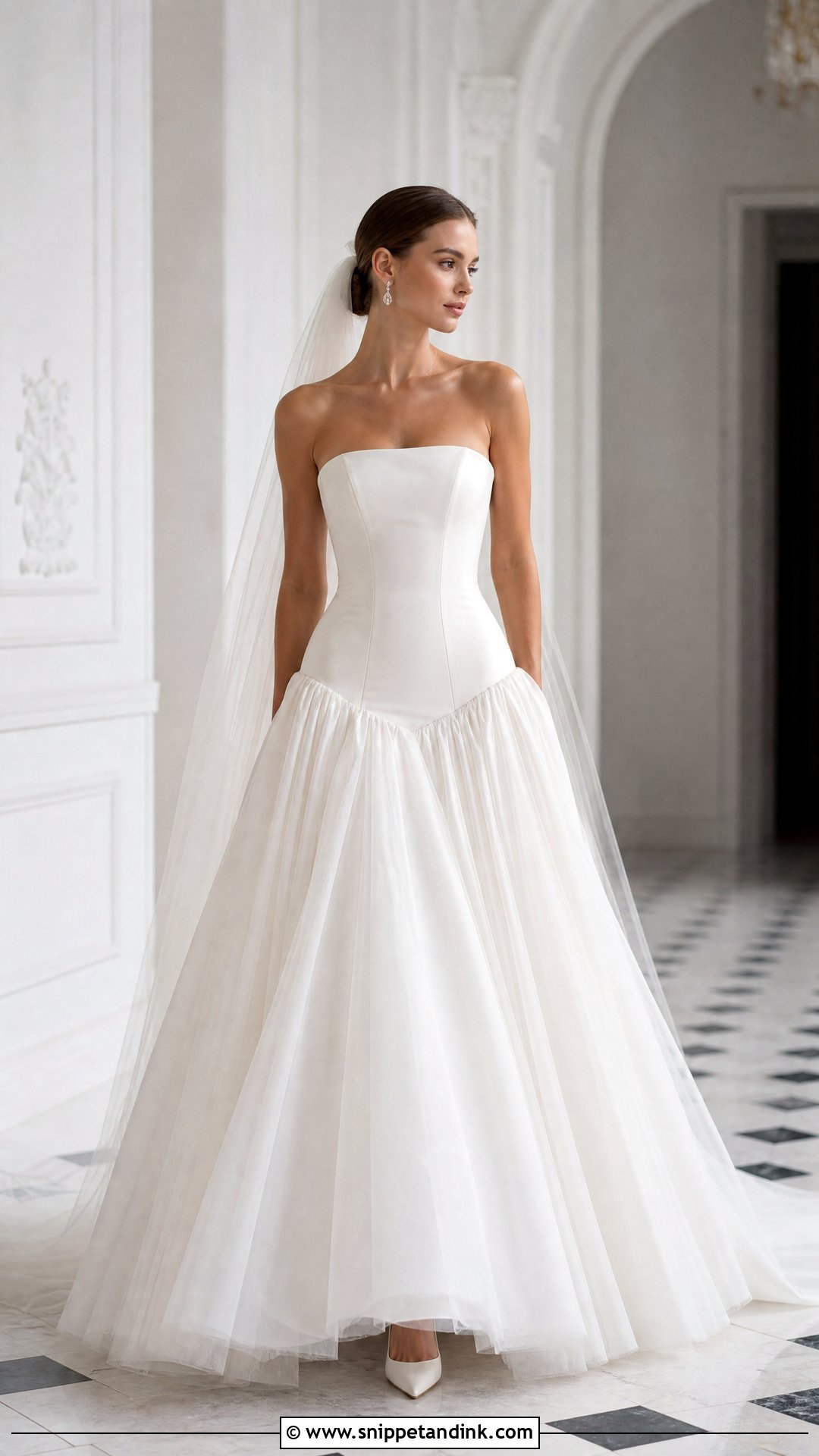
Drop waists sit around the hip, so the bodice runs long and the skirt starts lower than usual. It’s a fashion-led shape, and it suits slim hips and longer torsos most easily. The seam where bodice meets skirt has to be pressed flat, or the camera catches a ridge across the hips. Satin or lace keeps the bodice crisp; tulle, organza or mikado below decides the drama. Set the veil comb below the crown so the vertical line keeps going.
12. Silk Slip Wedding Dress
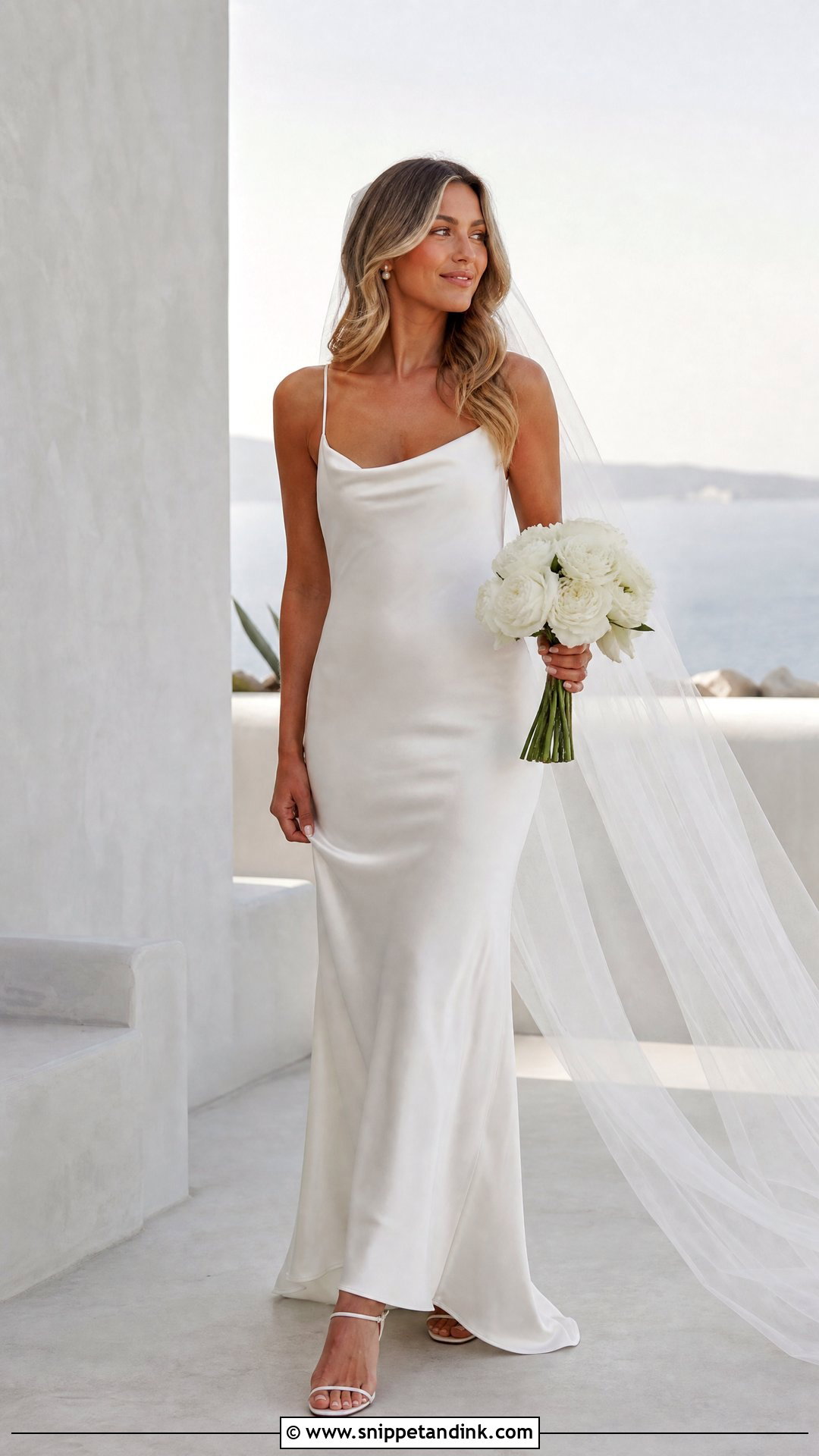
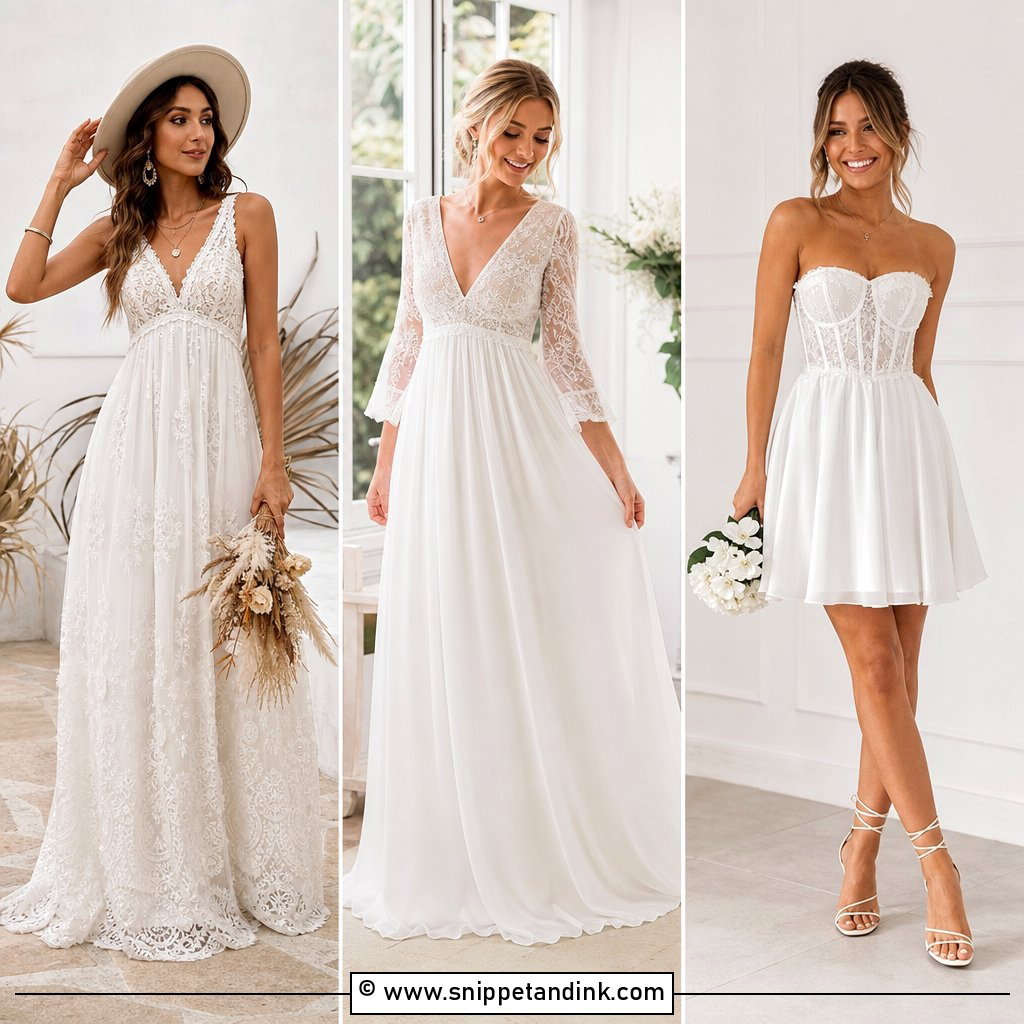
Silk slips are cut on the bias, which is why they skim and move like water. The same cut shows every line beneath, so seam-free nude underwear, or none, is part of the fitting. Bias silk also creases when you sit and wrinkles in a hot car. A bias-cut silk slip feels right for a courthouse, a destination ceremony or a small dinner, and less so for a long day of sitting. A tailored coat or a fine cashmere wrap handles cool evenings. Strappy heels and waved hair keep it relaxed.
13. Tea Length Wedding Dress
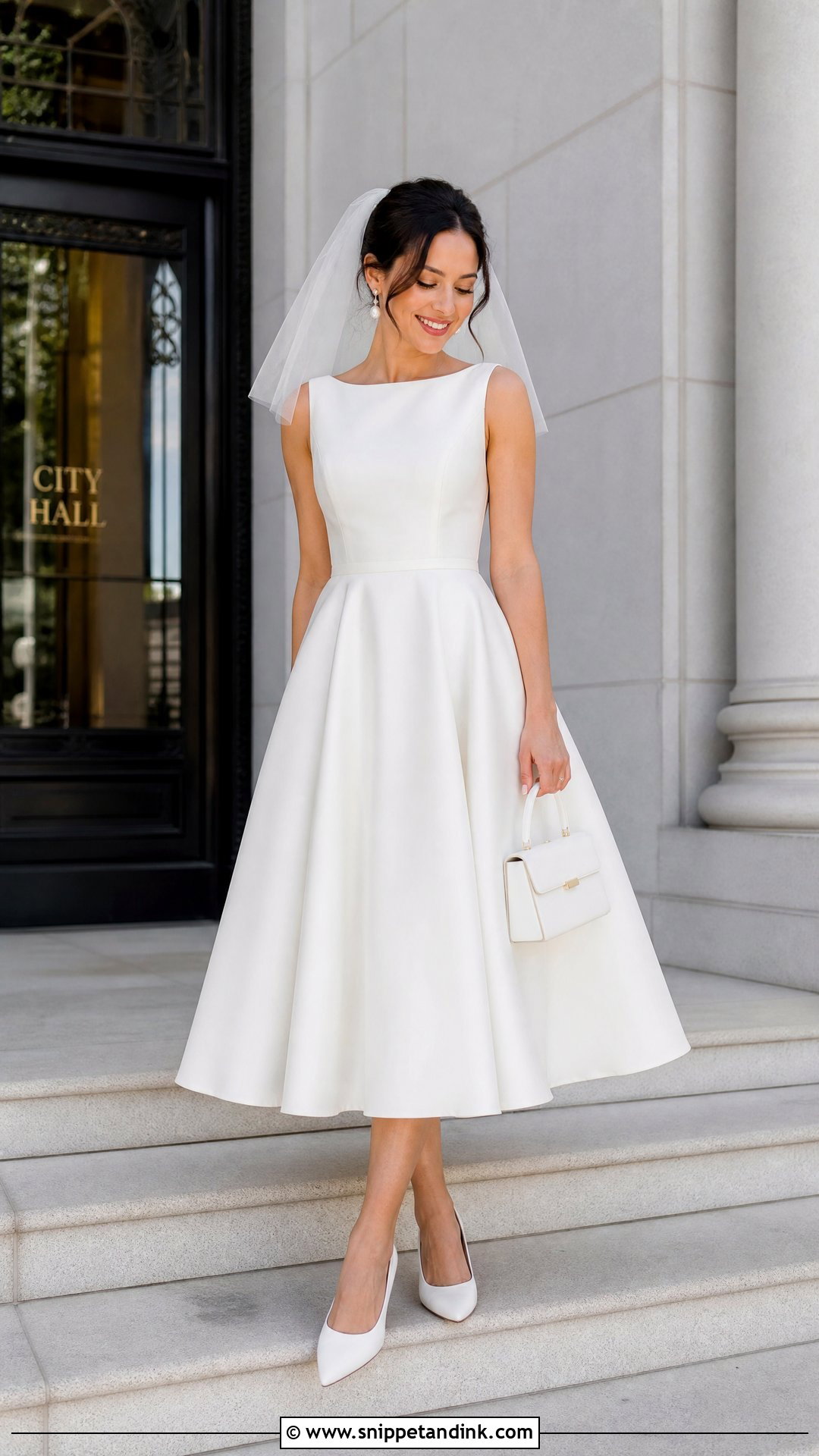
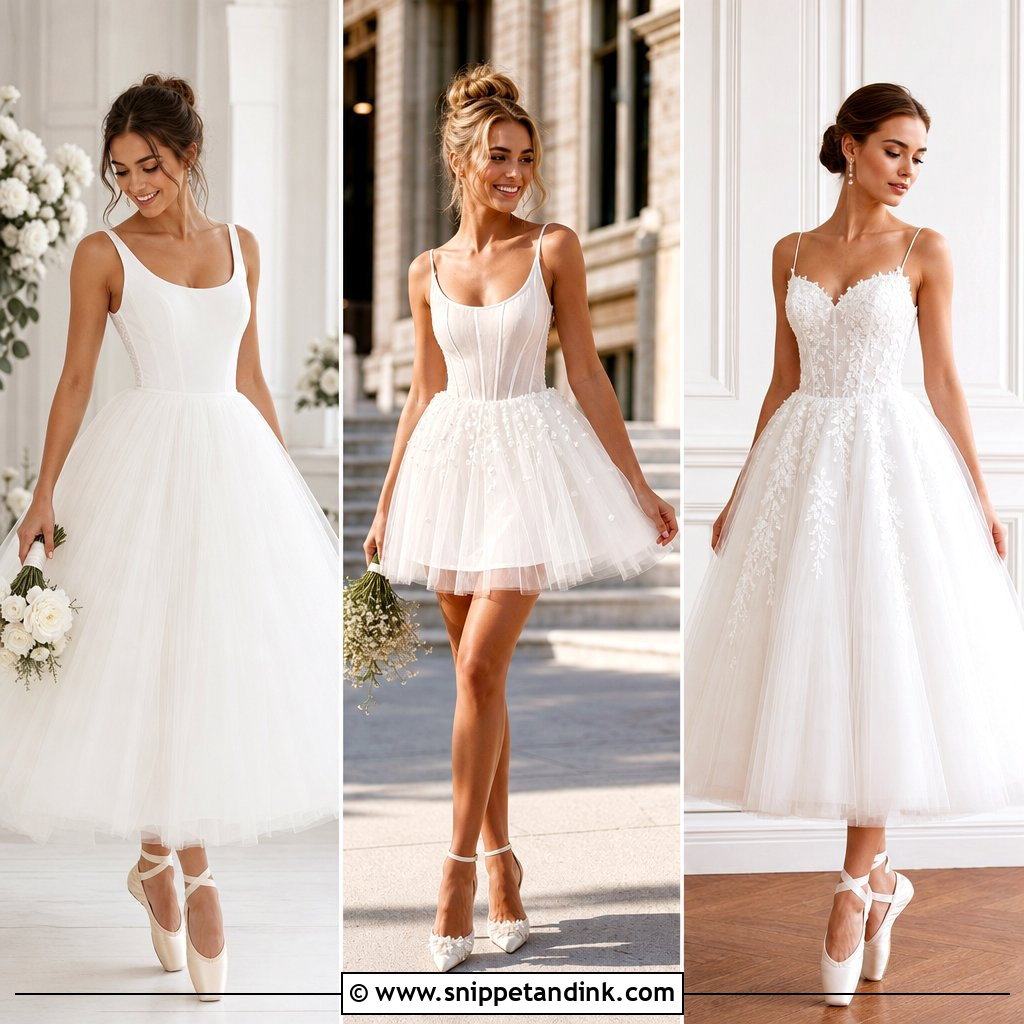
A tea length wedding dress ends between knee and ankle and shows your shoes, so they become a real decision rather than an afterthought. Structured satin, lace or organza hold the full mid-century skirt; a petticoat underneath keeps it lifted. The fastest way to make it look like a costume is stacking every vintage prop at once. Pick one, gloves or a short veil or a small structured bag, and leave the rest modern. Courthouse and garden weddings suit it.
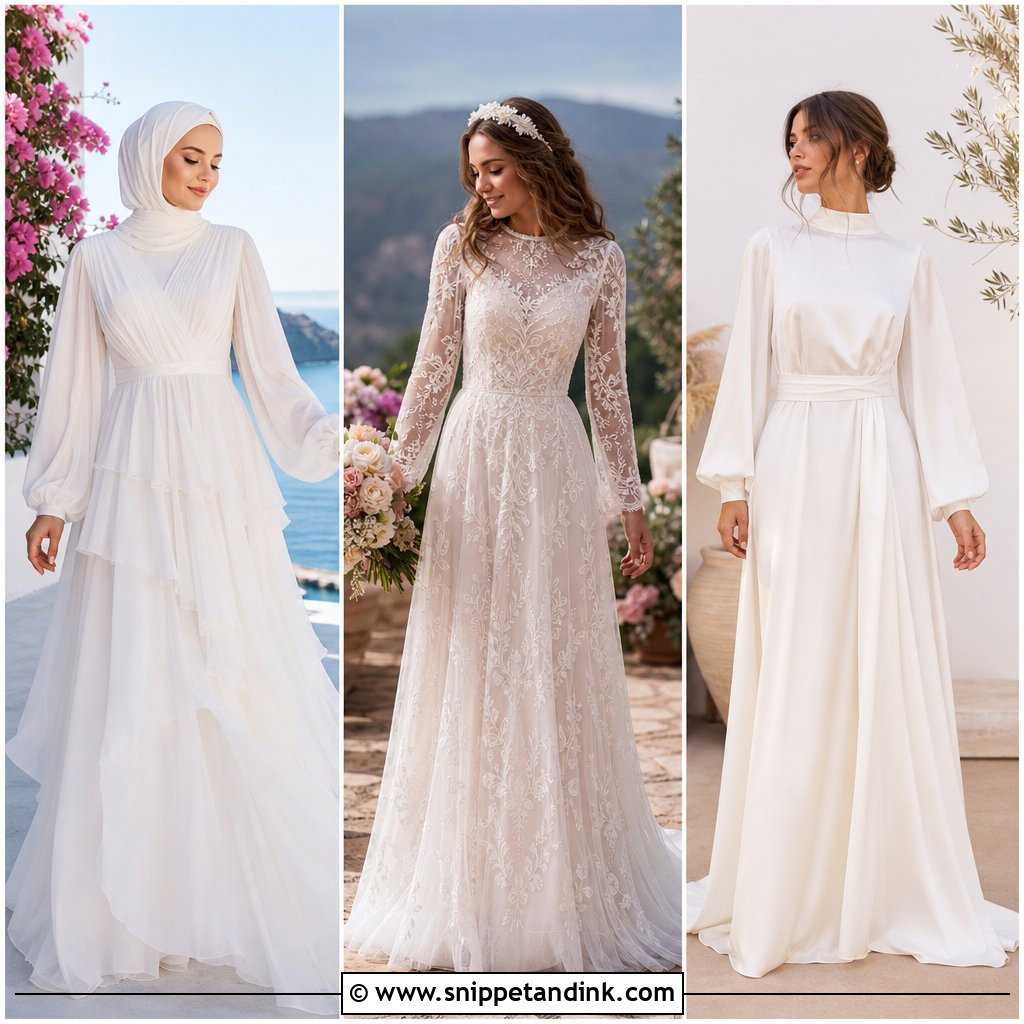
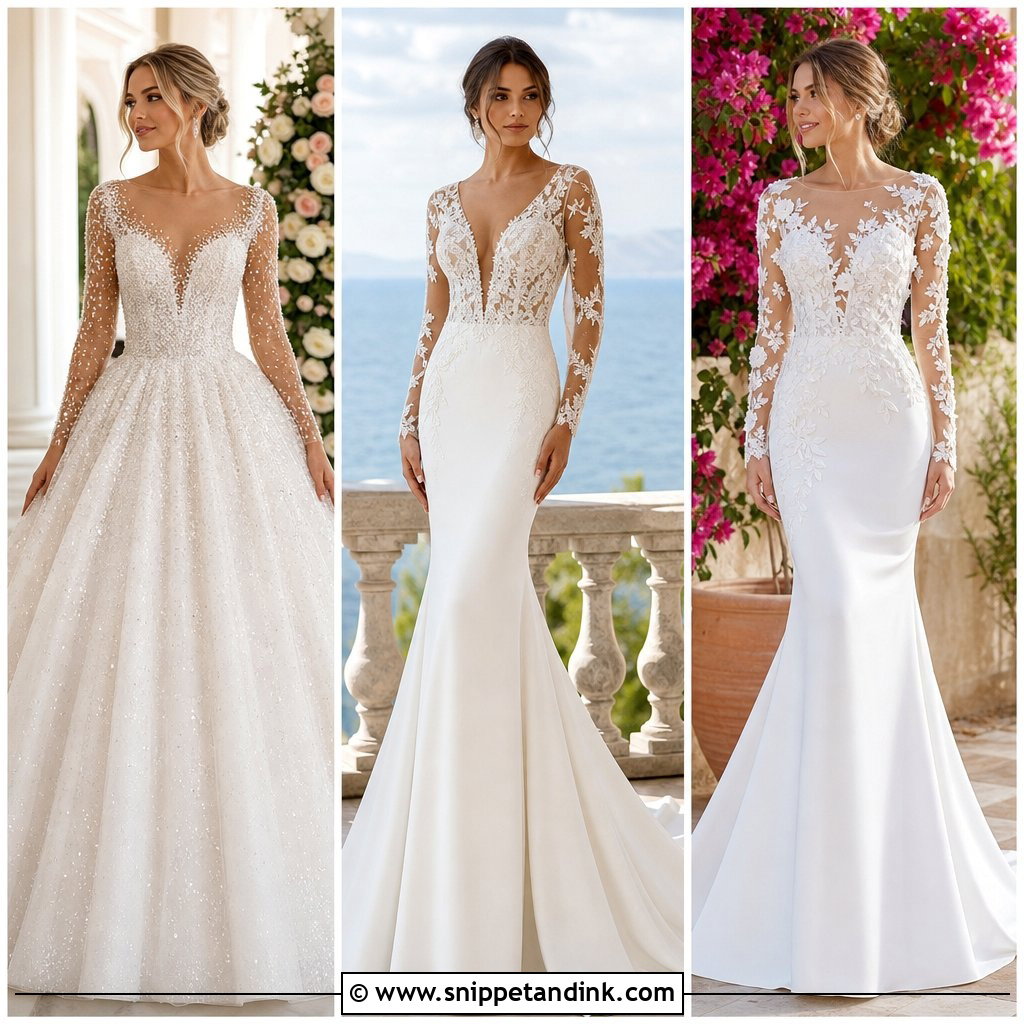
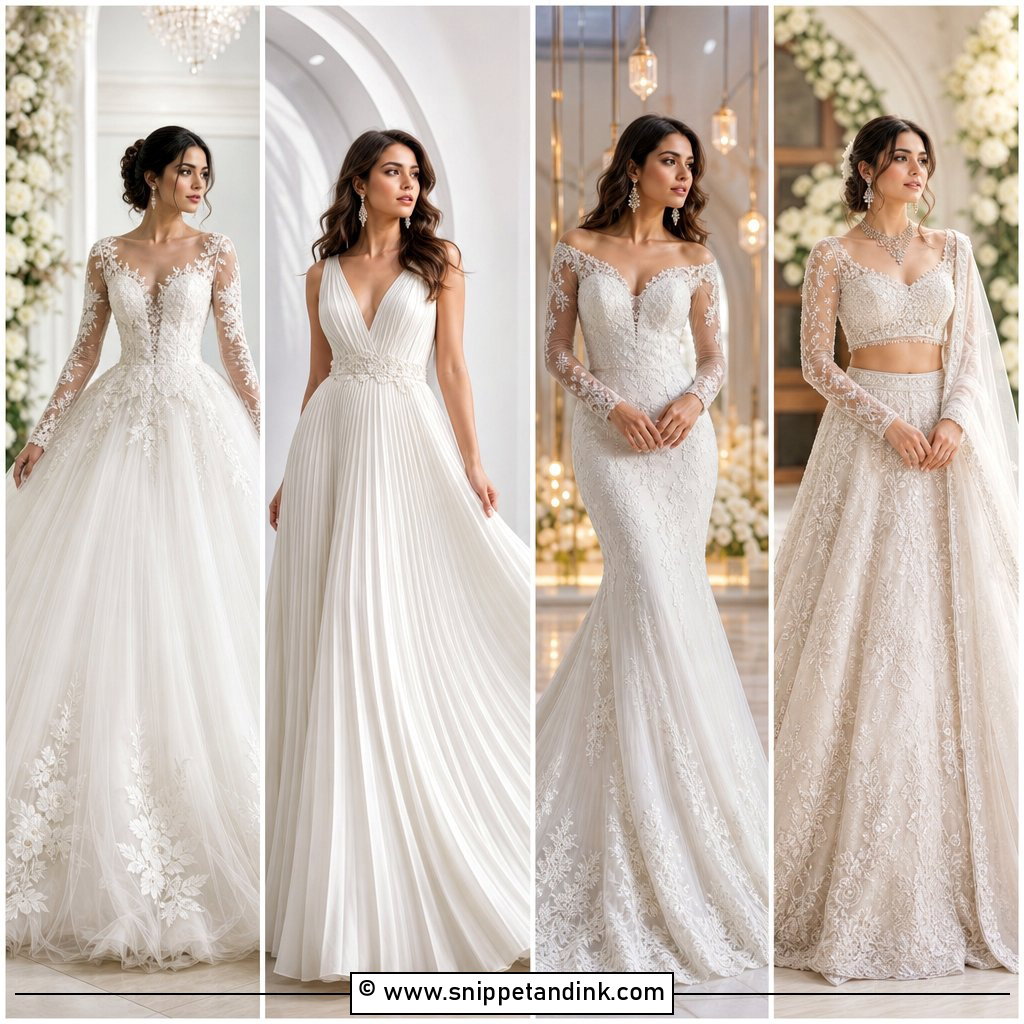
14. Lace Mermaid Wedding Dress
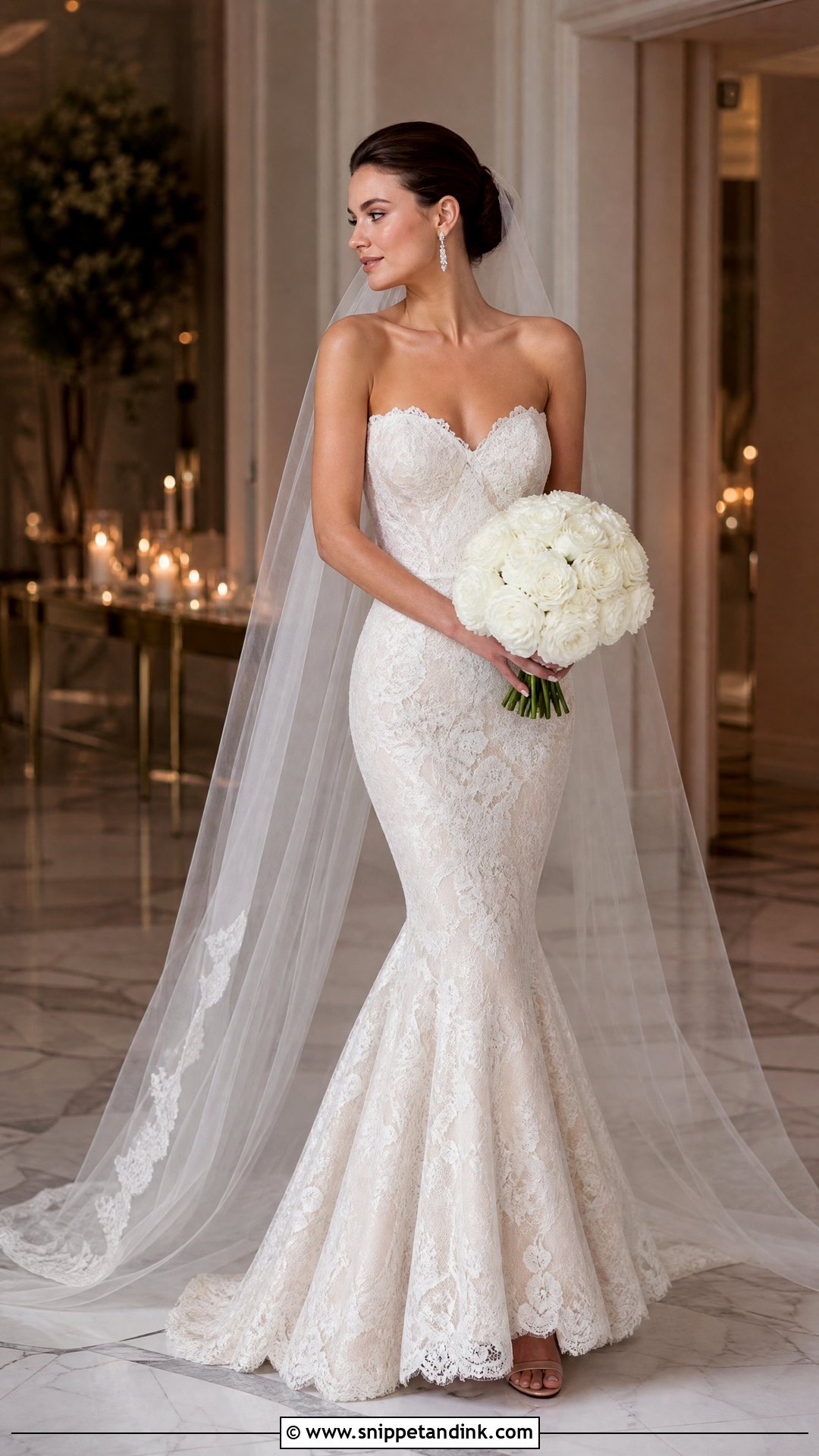
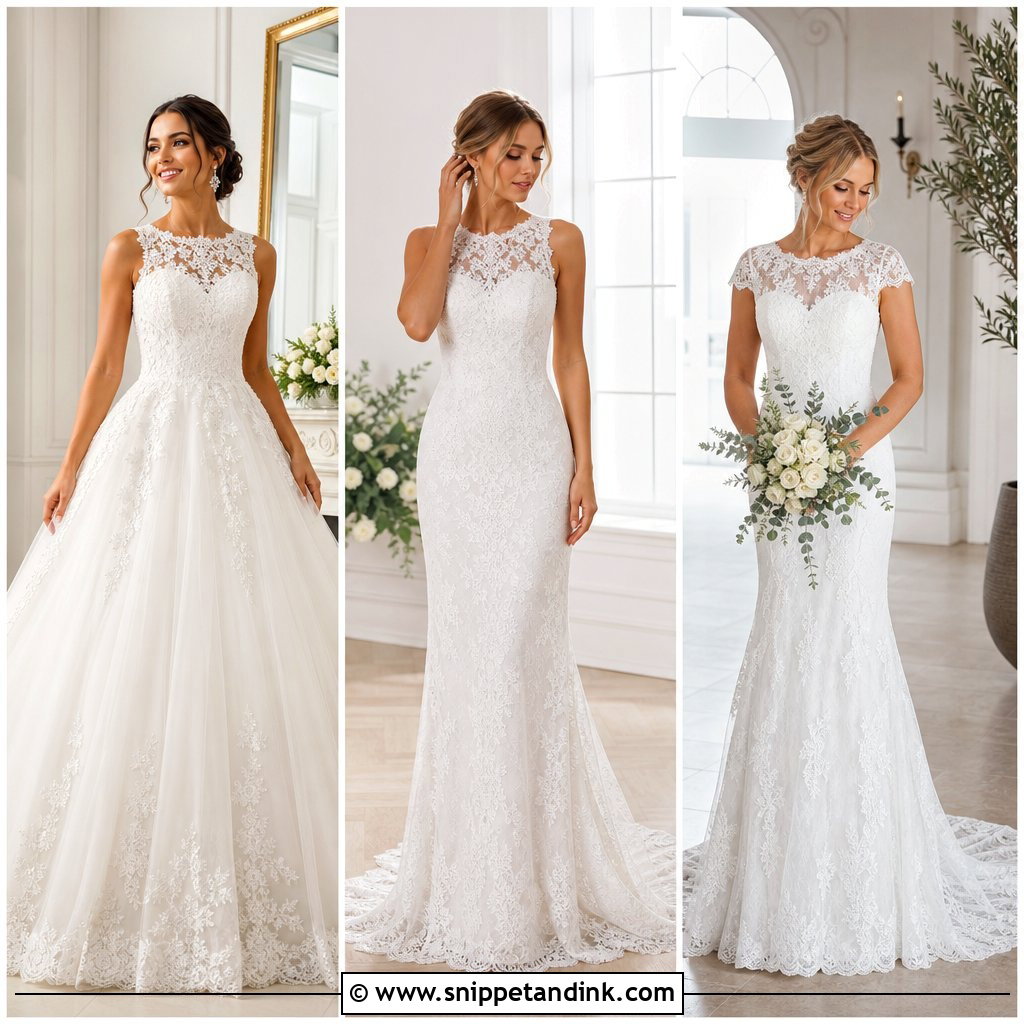
Lace mermaid gowns fit to the knee before flaring, so the dress controls your stride. Practise walking in it with your shoes and try the stairs at the venue if there are any. Fine lace keeps the shape gentle; heavy beaded lace adds weight just where the skirt should swing. A train that’s proportionate to the flare, rather than a huge sweep, looks classic over time. Keep accessories refined, since the shape and texture are already busy. It’s an evening and formal venue gown at heart.
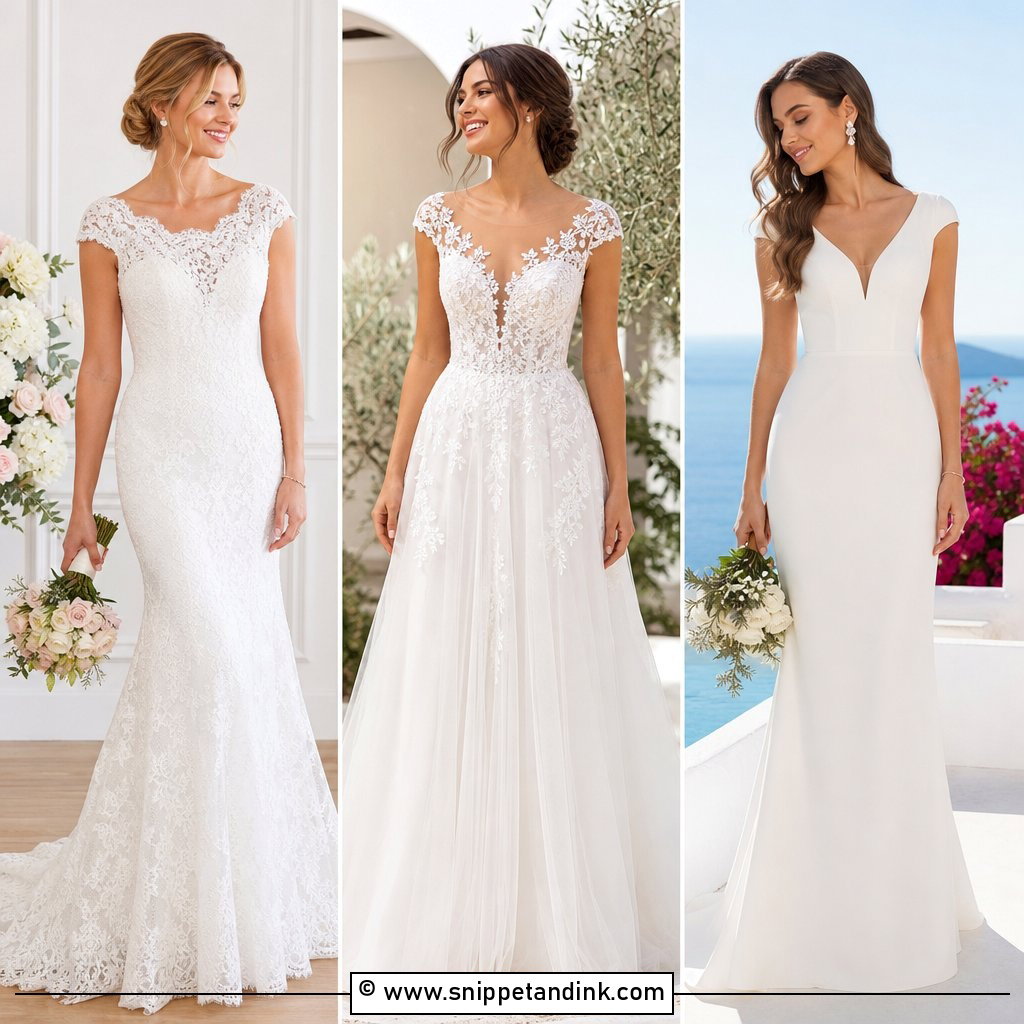
15. Floral Lace Wedding Dress
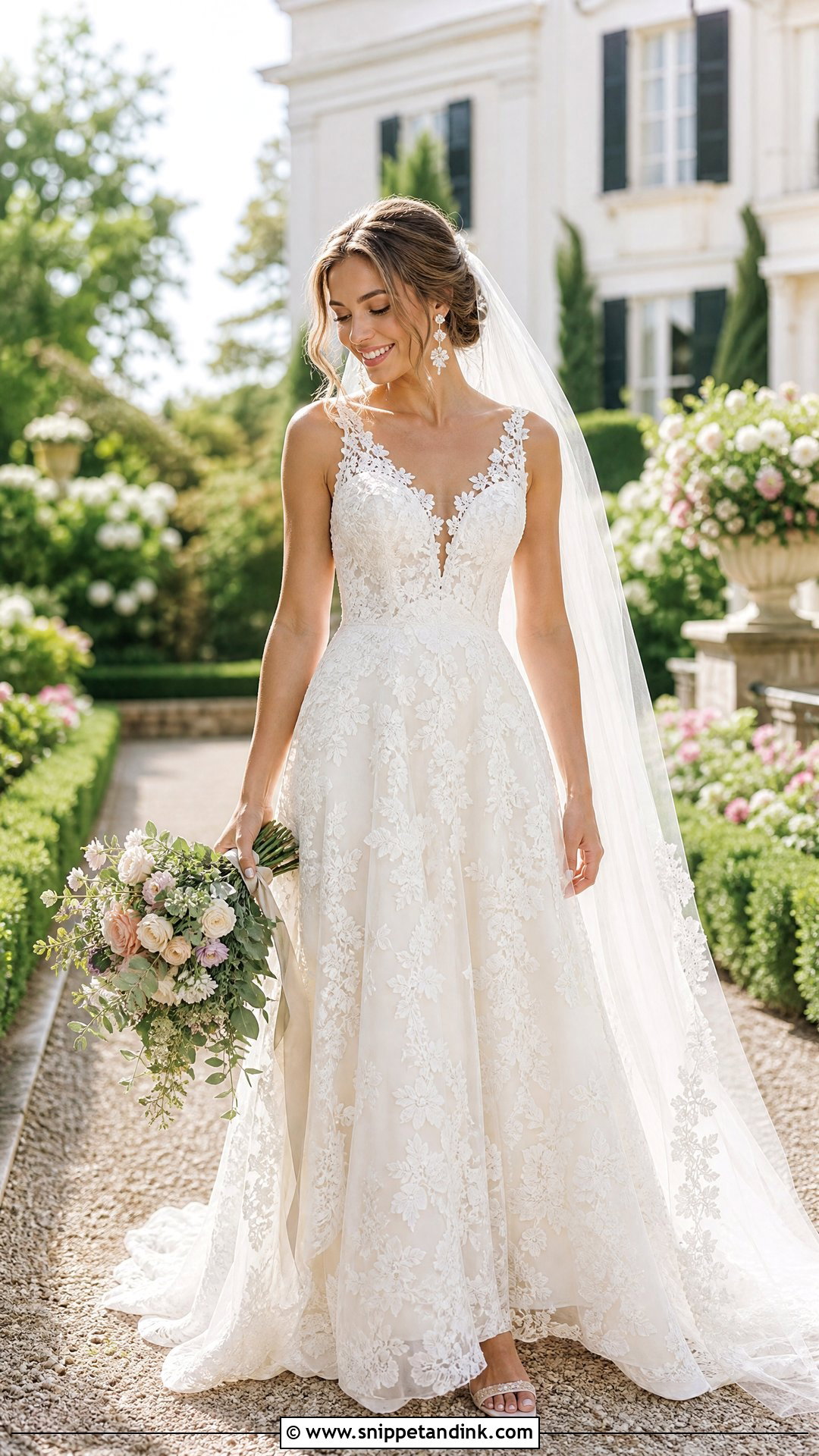
Floral lace over an ivory or champagne lining gives depth without being loud. I’m careful with the bouquet here: echo a bloom or two from the lace, but don’t match it exactly, or the flowers and dress blur into one patterned block in photos. An A-line reads classic, a sheath or fit-and-flare more modern. Leave out extra beading so the lace is the single texture. Spring weddings and garden venues are its natural home.
16. Mikado Wedding Dress
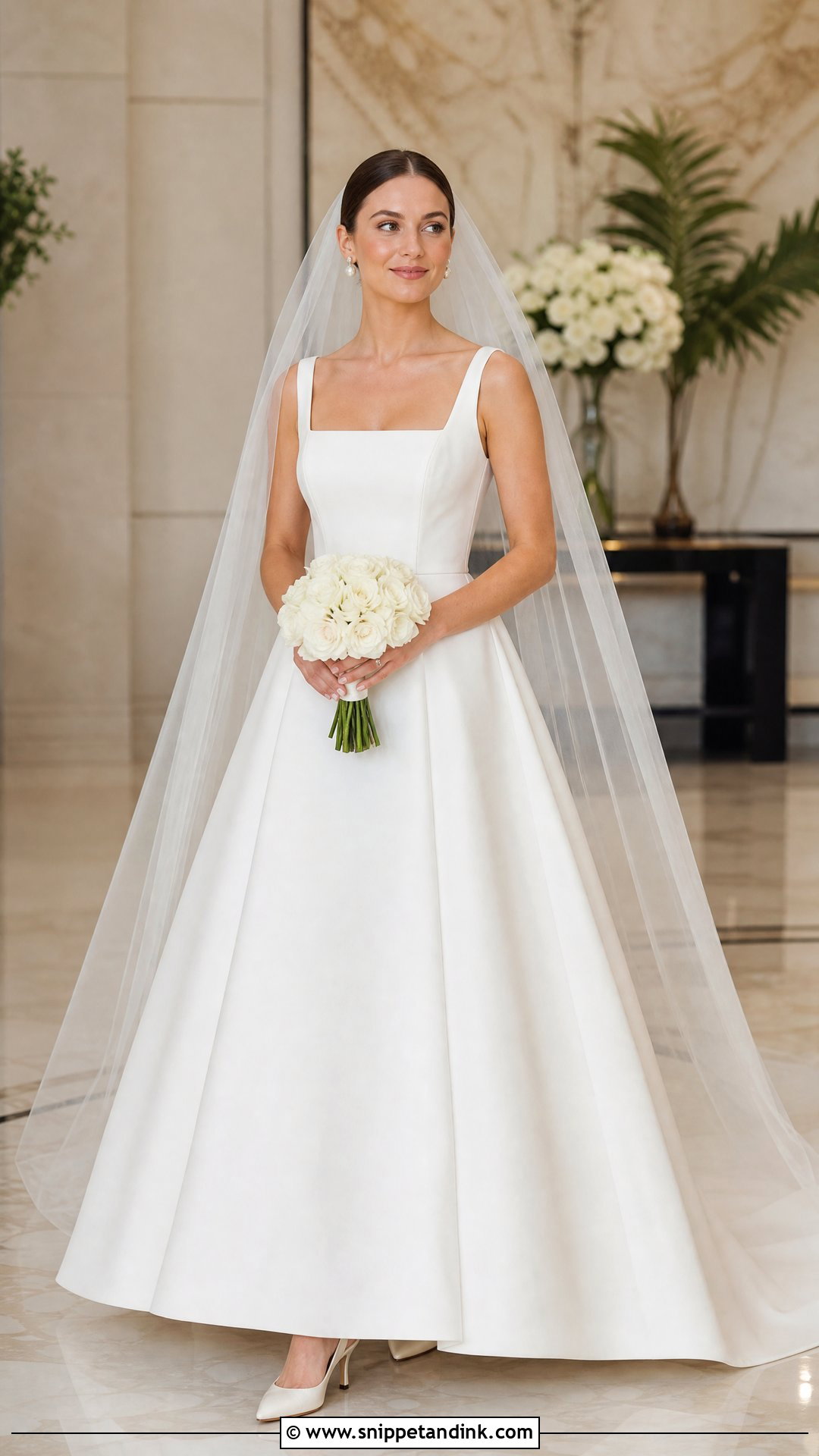
Mikado is a heavy silk or silk blend with a slight sheen and real body, so it holds sculpted shapes that thinner fabrics can’t. That weight is great in a cool hotel and tiring in July sun. It also shows creases if crushed in a car, so I tell brides to sit on the skirt’s lining, not the outer fabric, on the way to the ceremony. A square, strapless or off the shoulder neckline suits its crispness. Pearl studs and plain satin heels are enough.
17. Tulle A Line Wedding Dress
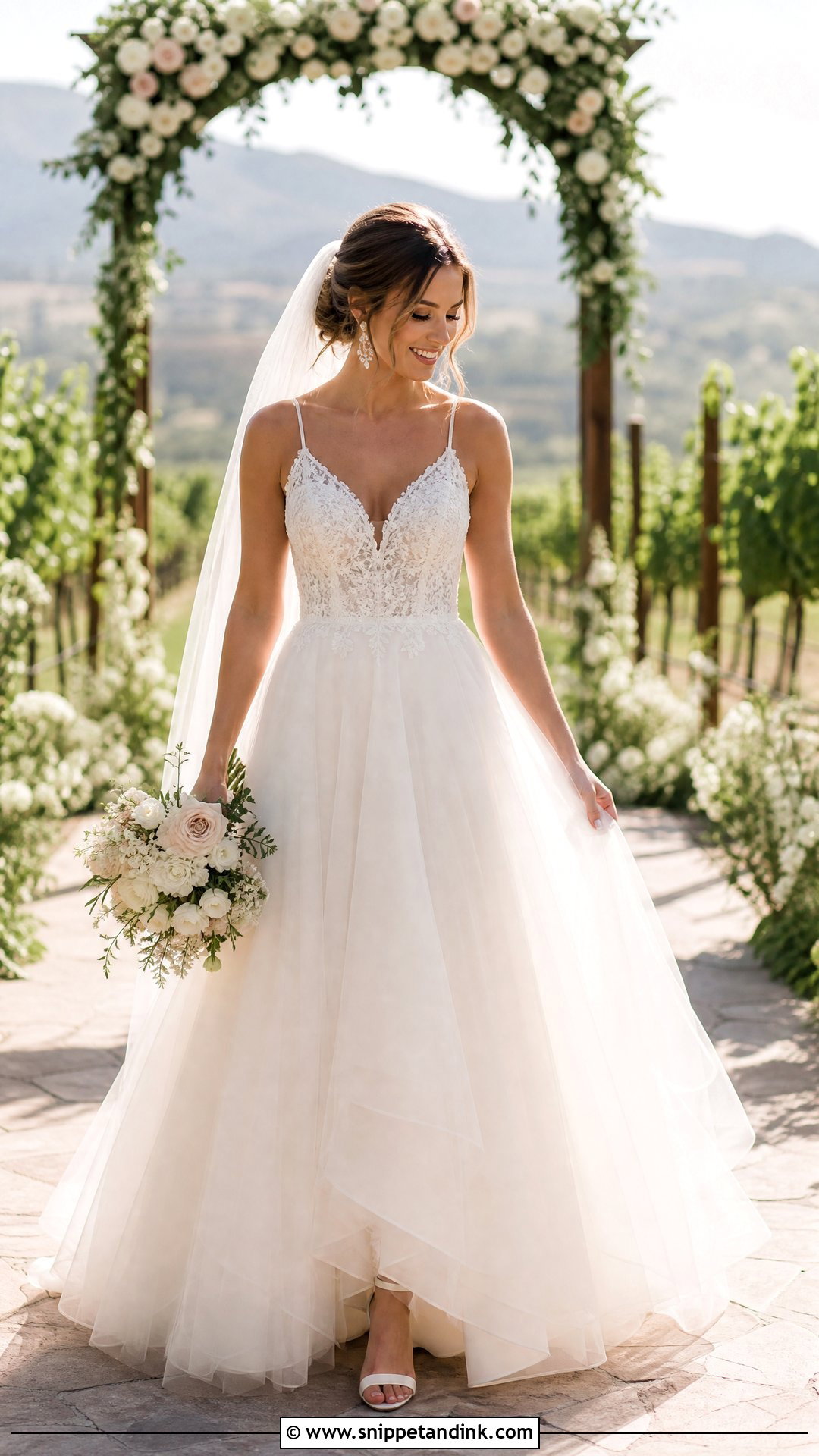
Tulle A-lines give you the volume of a ball gown at about half the weight. Several layers float rather than stand, and they move well when you walk. The top layer of tulle snags on sequins, rough bouquet stems and Velcro on groomsmen’s shoes, so plan a small sewing kit. A fitted bodice with simple straps or a sweetheart keeps the shape balanced. If you love a classic fairytale feeling but want to sit comfortably at dinner, this is the gown I’d show you first.
18. Minimal Column Wedding Dress
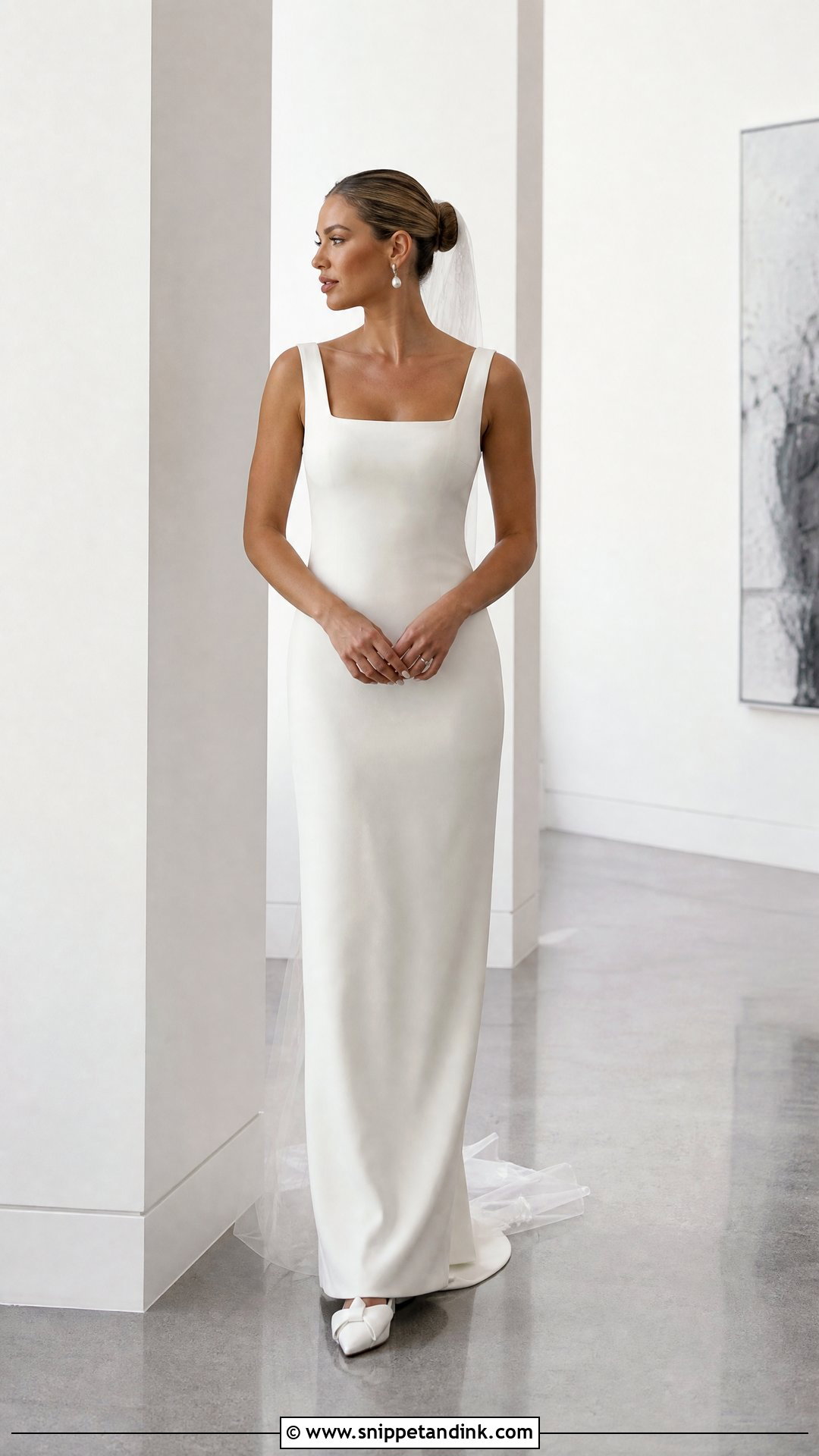
A column falls straight from shoulder to hem and relies entirely on proportion. The hem length is critical: with your heels on, it should just kiss the floor at the front. Too long and you’ll trip; too short and the line breaks. Crepe, silk and satin all suit it. Because the dress is so plain, every accessory reads loud, so choose two at most. A detachable cape is the easiest way to add ceremony presence without changing the dress.
19. Wedding Dress With Detachable Train
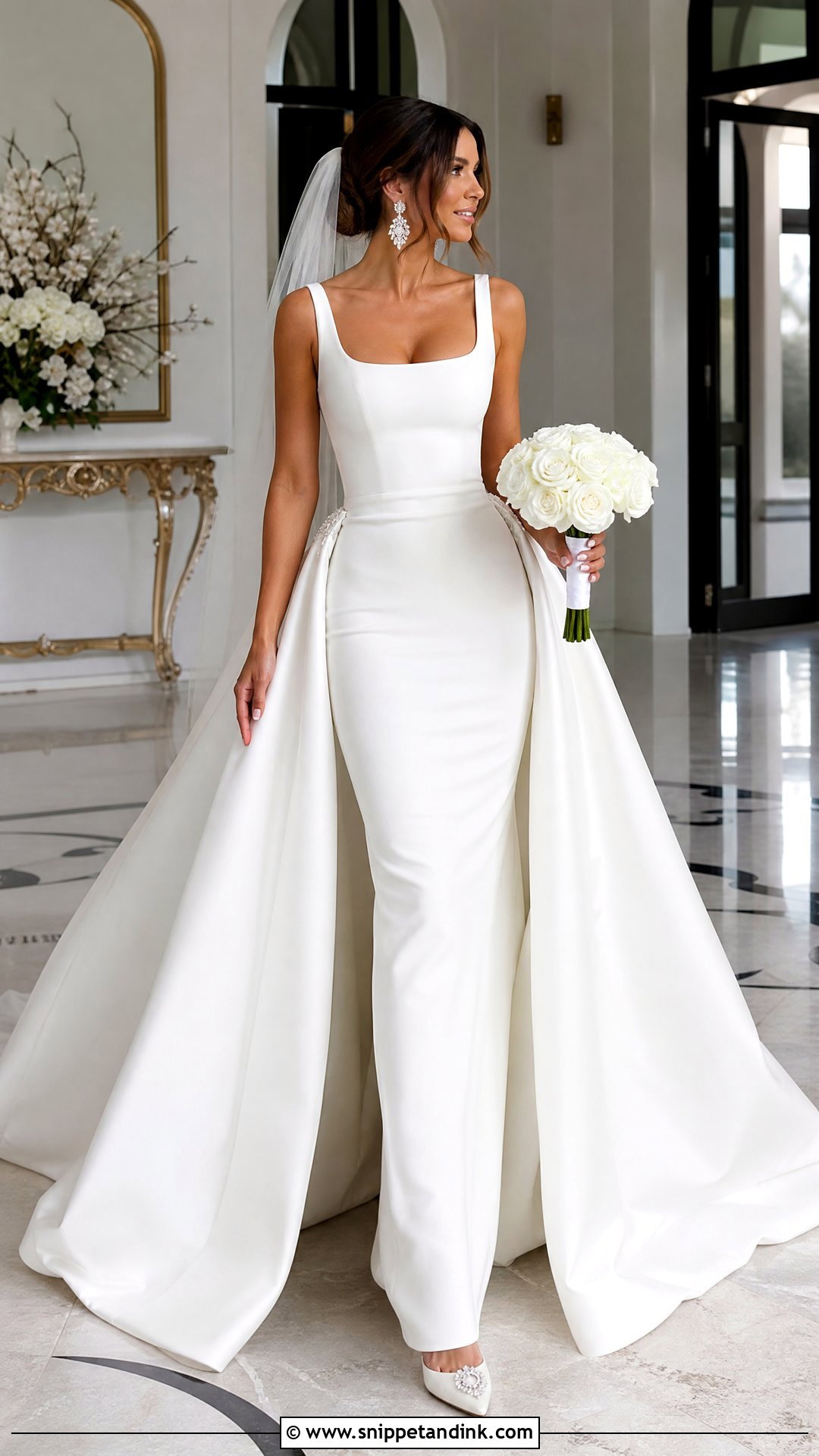
Detachable trains give the ceremony its long sweep and the party a dress you can actually dance in. The attachment is the part to inspect. Hidden hooks or buttons under a waist seam hold better than snaps, and someone in your party should practise removing it before the day. It suits fitted crepe, satin columns and mermaid gowns where a permanent bustle would bunch. Statement earrings fill the gap once the train comes off.
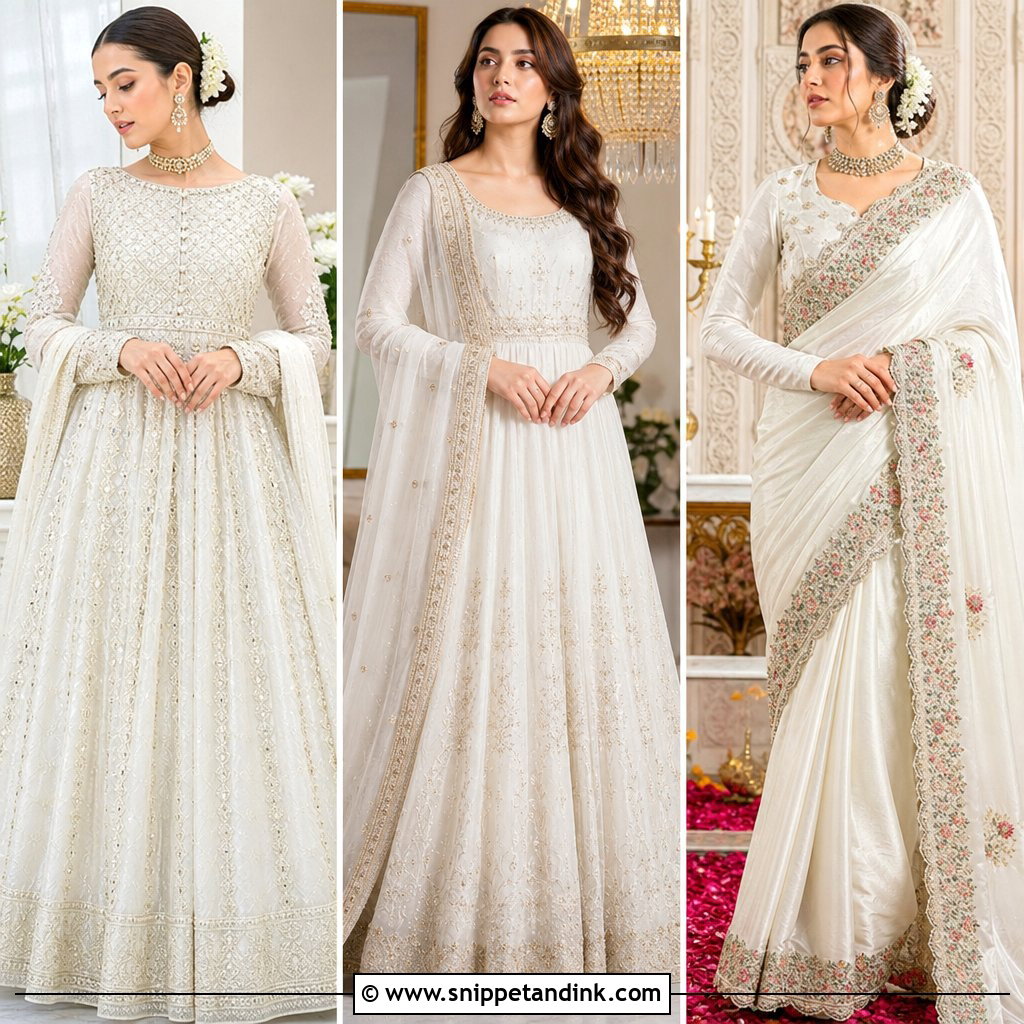
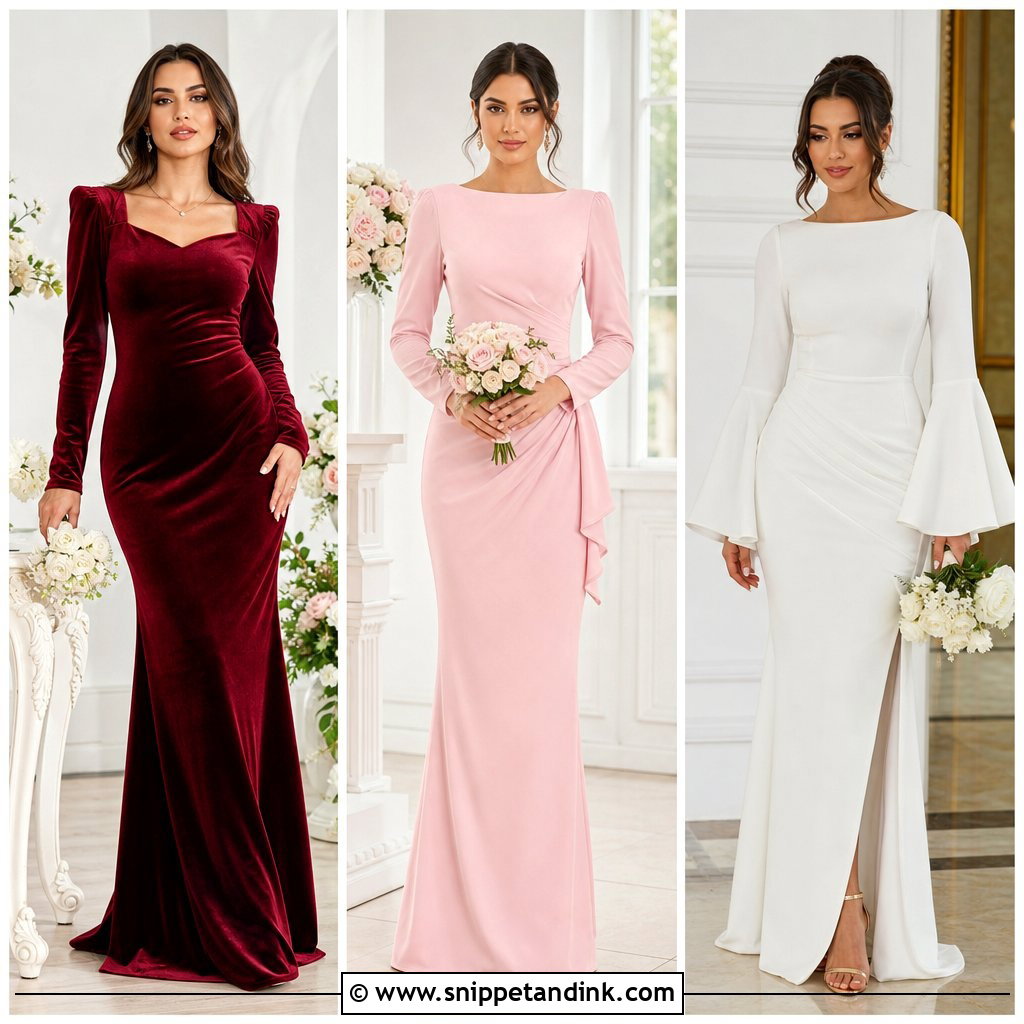
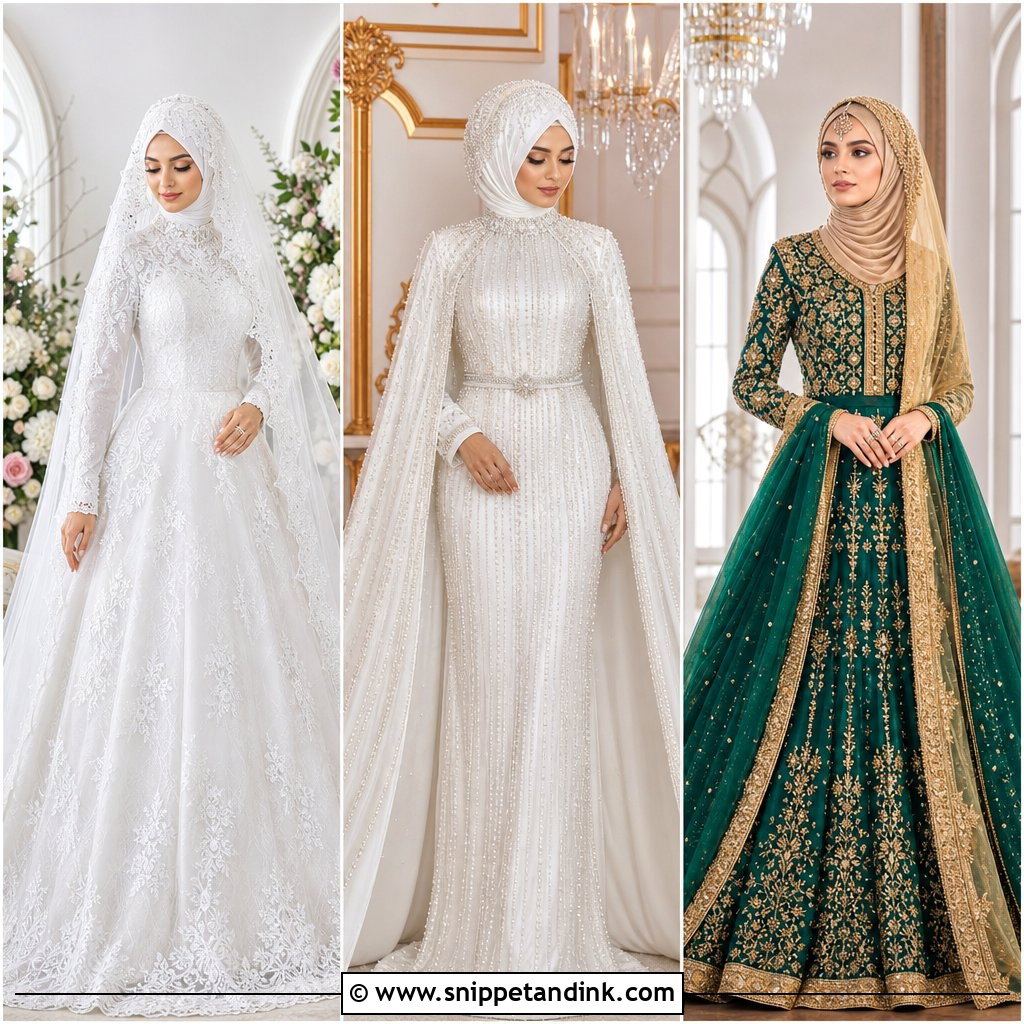
20. Wedding Dress With Bow Back
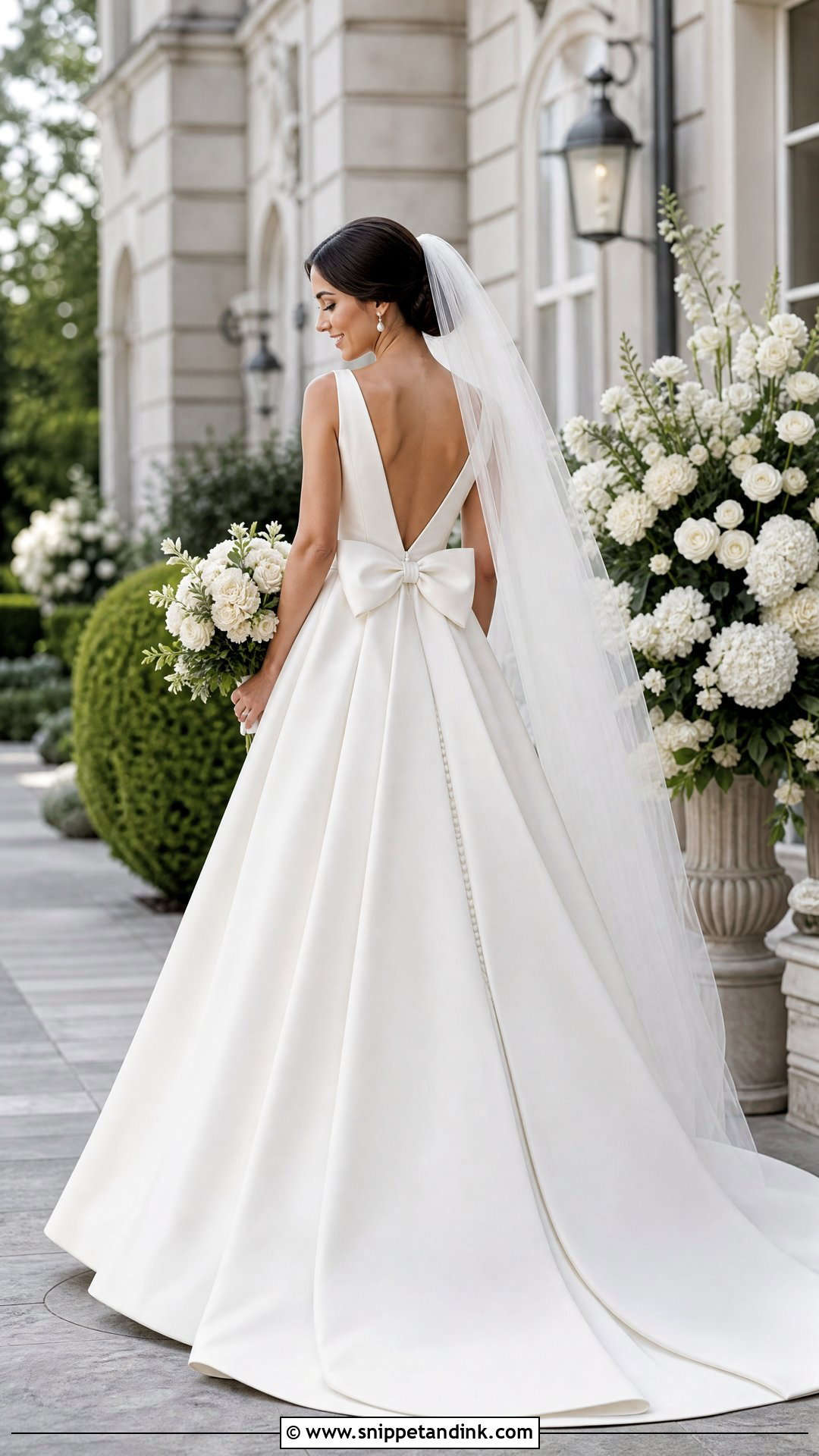
A bow at the back gives people something to look at as you walk away. Proportion is everything: a bow wider than your shoulders swallows the back of a slim gown. Organza bows sit soft, mikado and satin bows hold their shape. Ask how the bow is stiffened, since an unstructured one droops by the reception, especially after you’ve been sitting on its tails. A low bun keeps it visible and a sheer veil lets it show through.
21. Wedding Dress With Cape
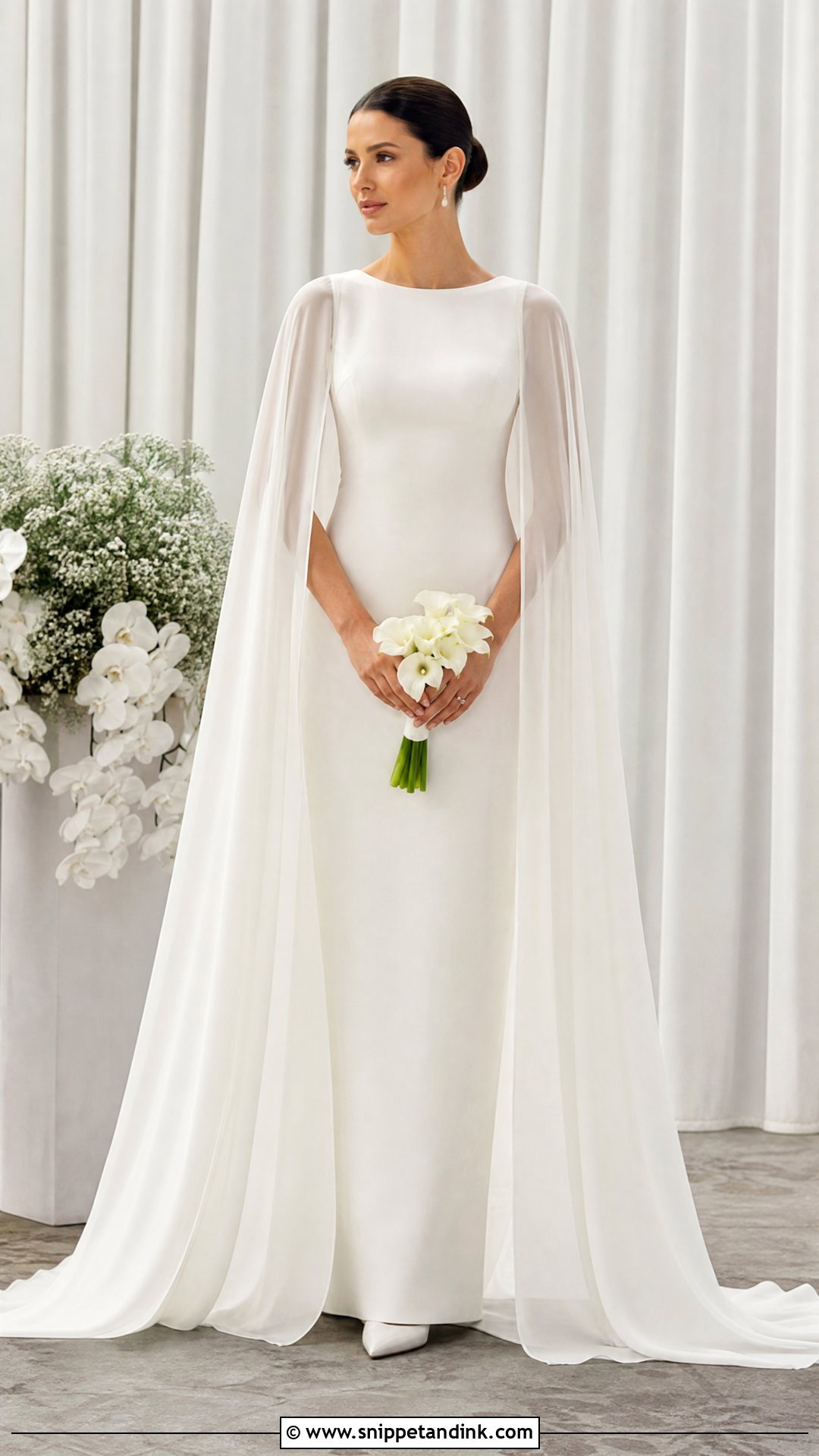
Capes do what veils do for movement, but they hang from the shoulders instead of the head, so you can wear one with any hairstyle. Sheer tulle softens a minimal gown; crepe looks structured and modern. Check that it’s attached with clips or hidden buttons and can come off easily, because a cape gets in the way when you hug, eat and dance. It works best over a column or clean A-line, and it’s useful for brides who don’t want anything pinned in their hair.
22. Wedding Dress With Cathedral Veil
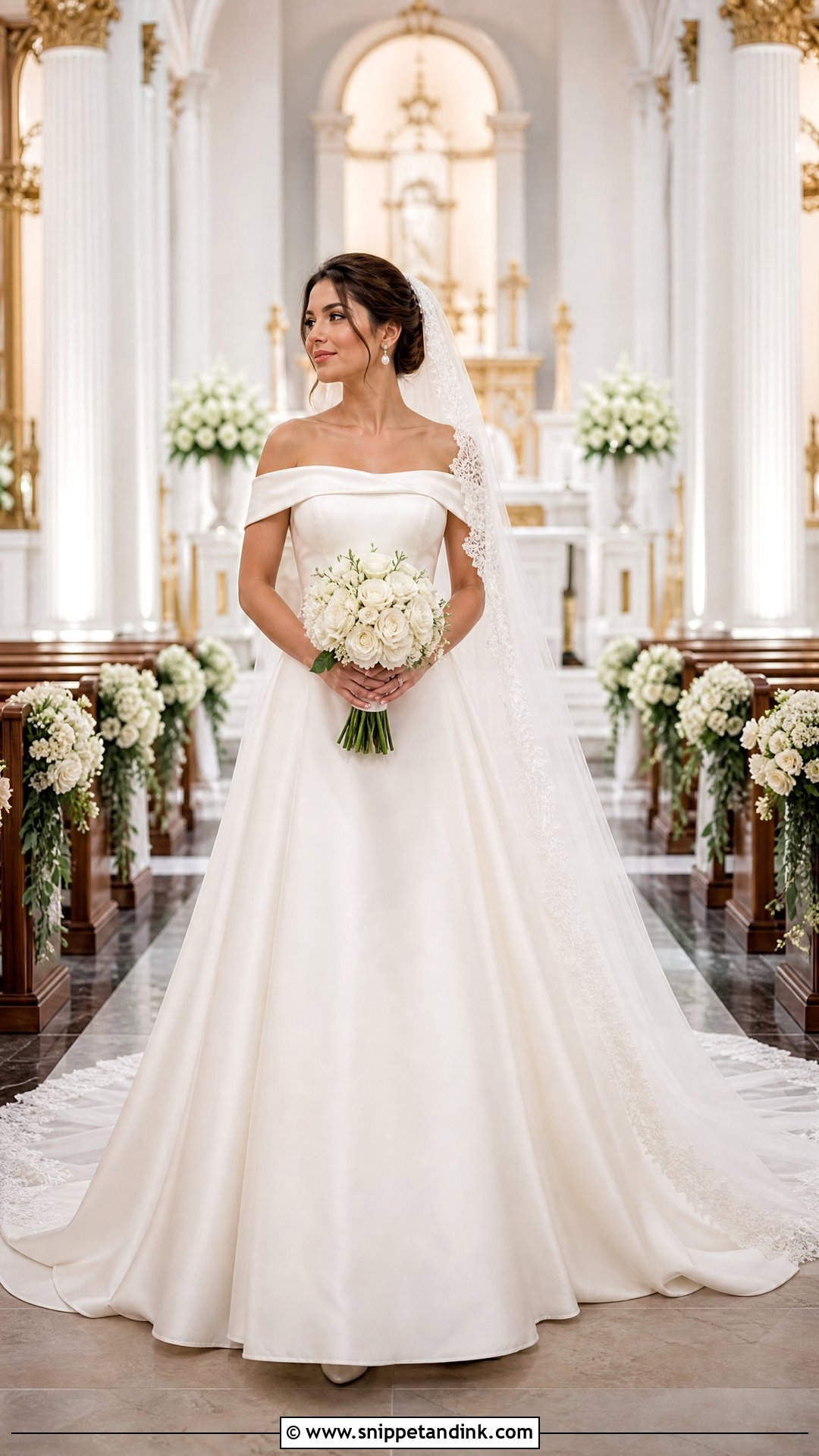
Cathedral veils run well past the hem, and in a long aisle they give the ceremony a moment nothing else does. Plain tulle suits embellished gowns; a lace-trimmed edge lifts a simple dress. The practical points matter: the comb needs securing in the hair, not just slid in, and someone should be ready to straighten it before you turn for photos. Outdoors on a breezy day it flies sideways, which looks great in pictures but needs a calm minute. It’s the simplest way to add ceremony drama to a plain dress.
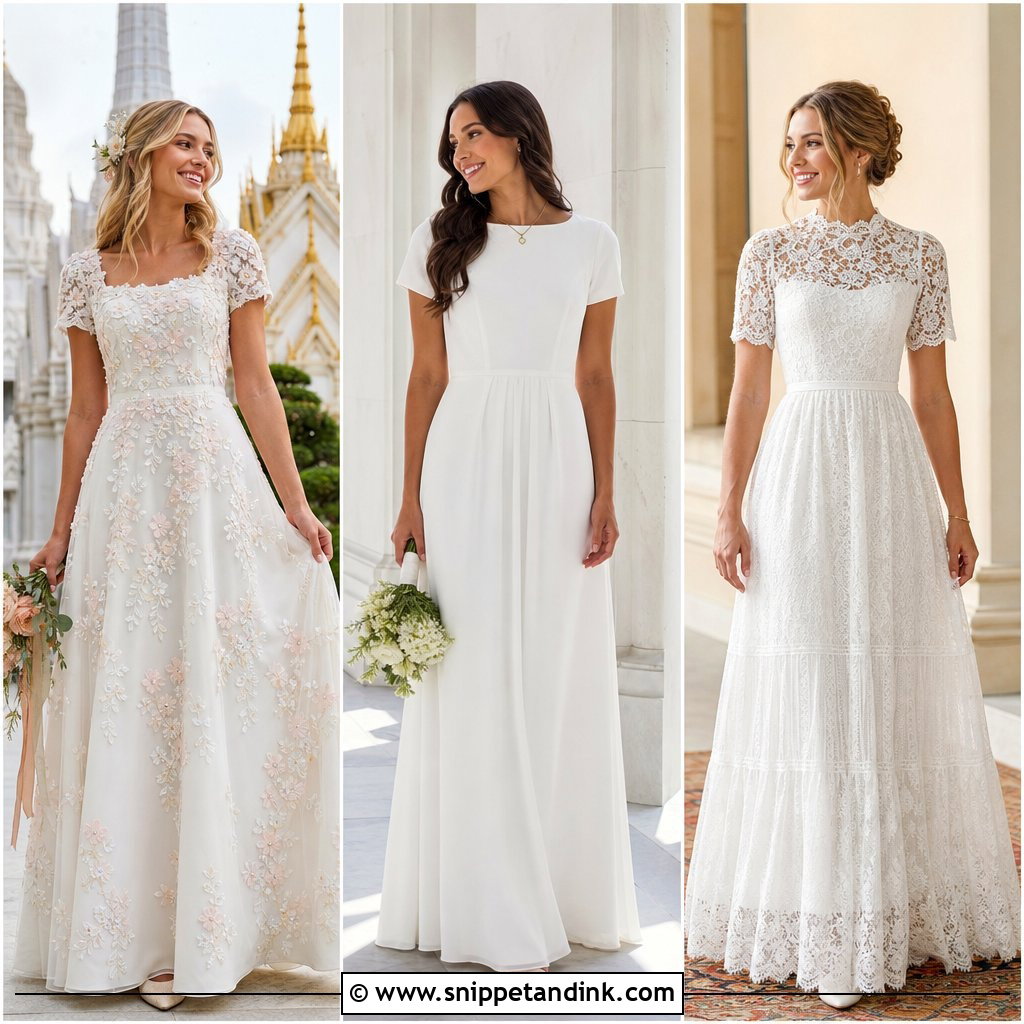
23. Vintage Inspired Wedding Dress
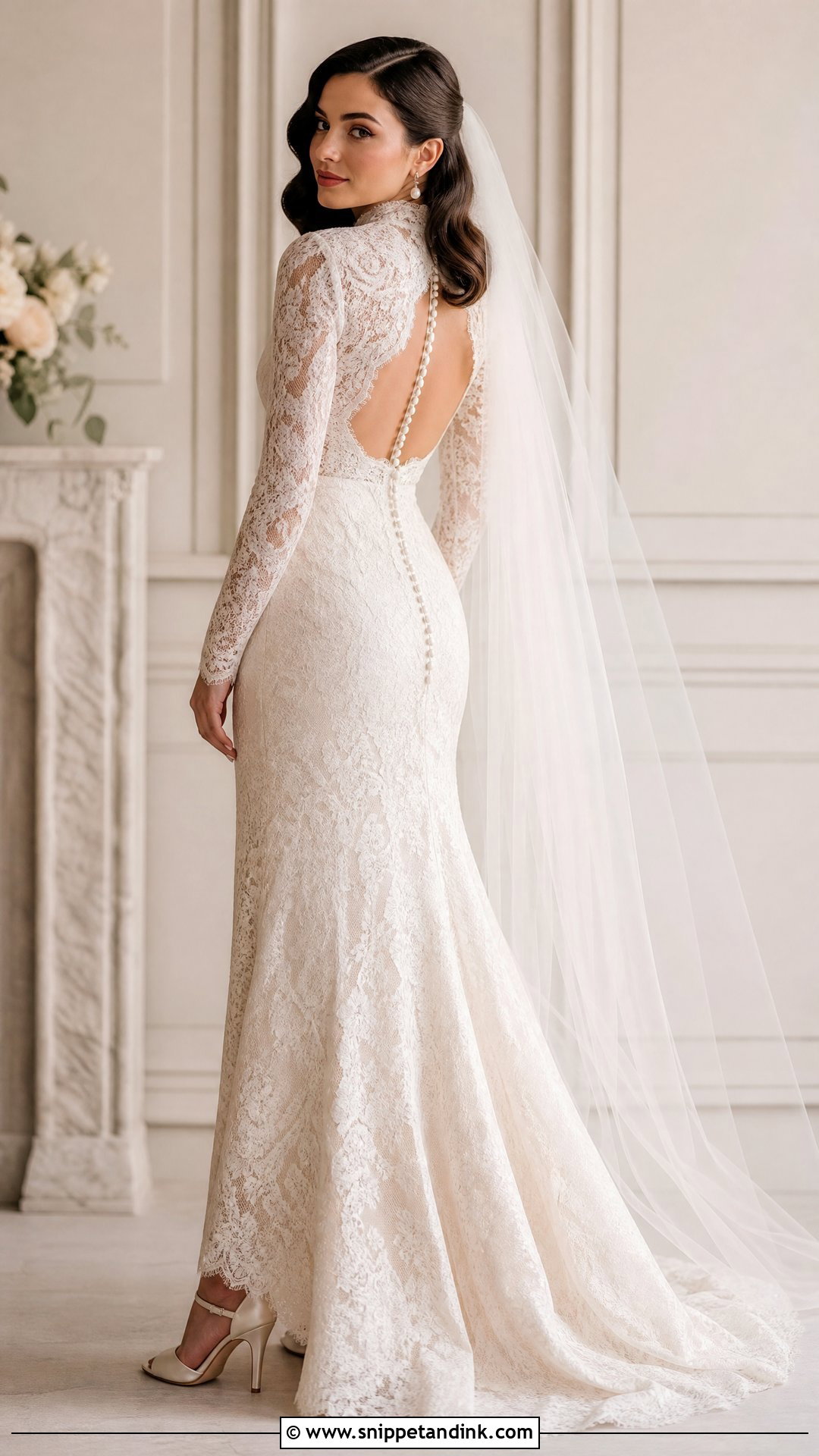
Vintage inspired gowns borrow lace sleeves, covered buttons, soft collars or tea length hems from earlier eras. The trick is choosing one decade and keeping the rest current. I’d pair a lace long sleeve gown with modern pearl studs and satin heels, or a tea length dress with a short veil and simple pumps. Covered buttons down the back look lovely but take a long time to fasten, so allow ten extra minutes when dressing. A low bun or a single comb finishes the hair.
24. Embroidered Wedding Dress
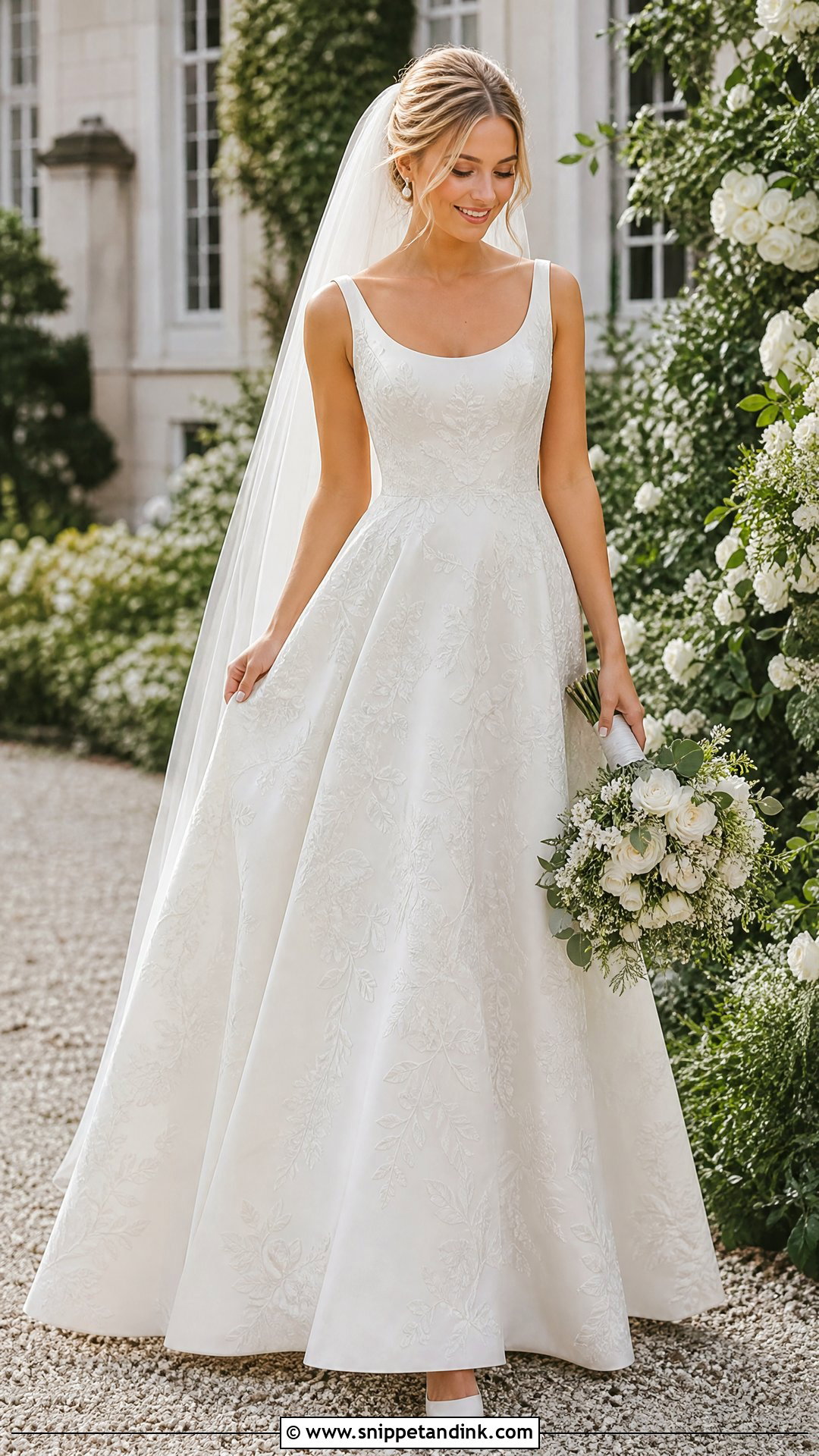
Embroidery is stitched into the fabric rather than laid on top, which gives a flatter, more textile finish than appliqué. Tonal ivory-on-ivory or soft champagne thread ages better than strong contrast colours. Heavy embroidery stiffens the cloth, so check how the skirt moves and whether the bodice still bends when you sit. An A-line or sheath lets the motif run across the dress. A veil without its own pattern keeps the stitching in focus.
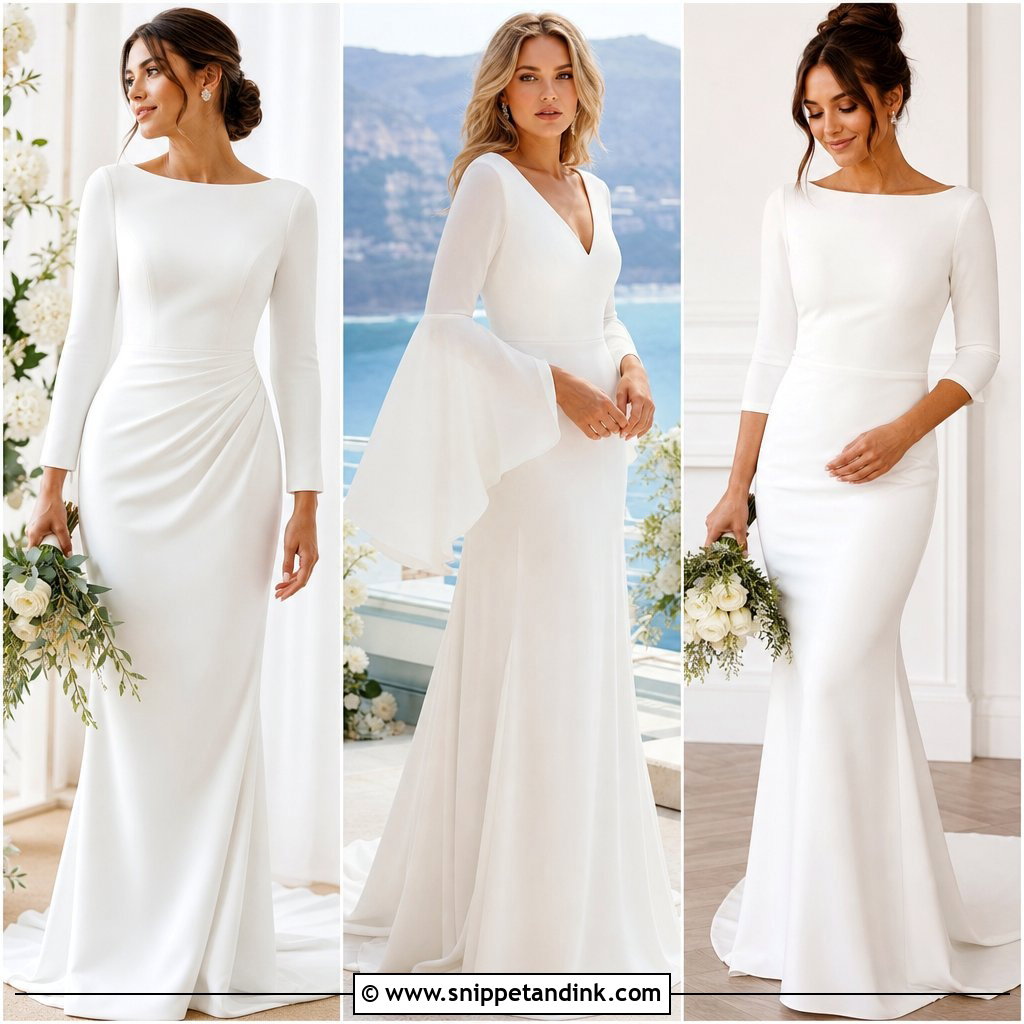
25. Bridal Suit Wedding Outfit
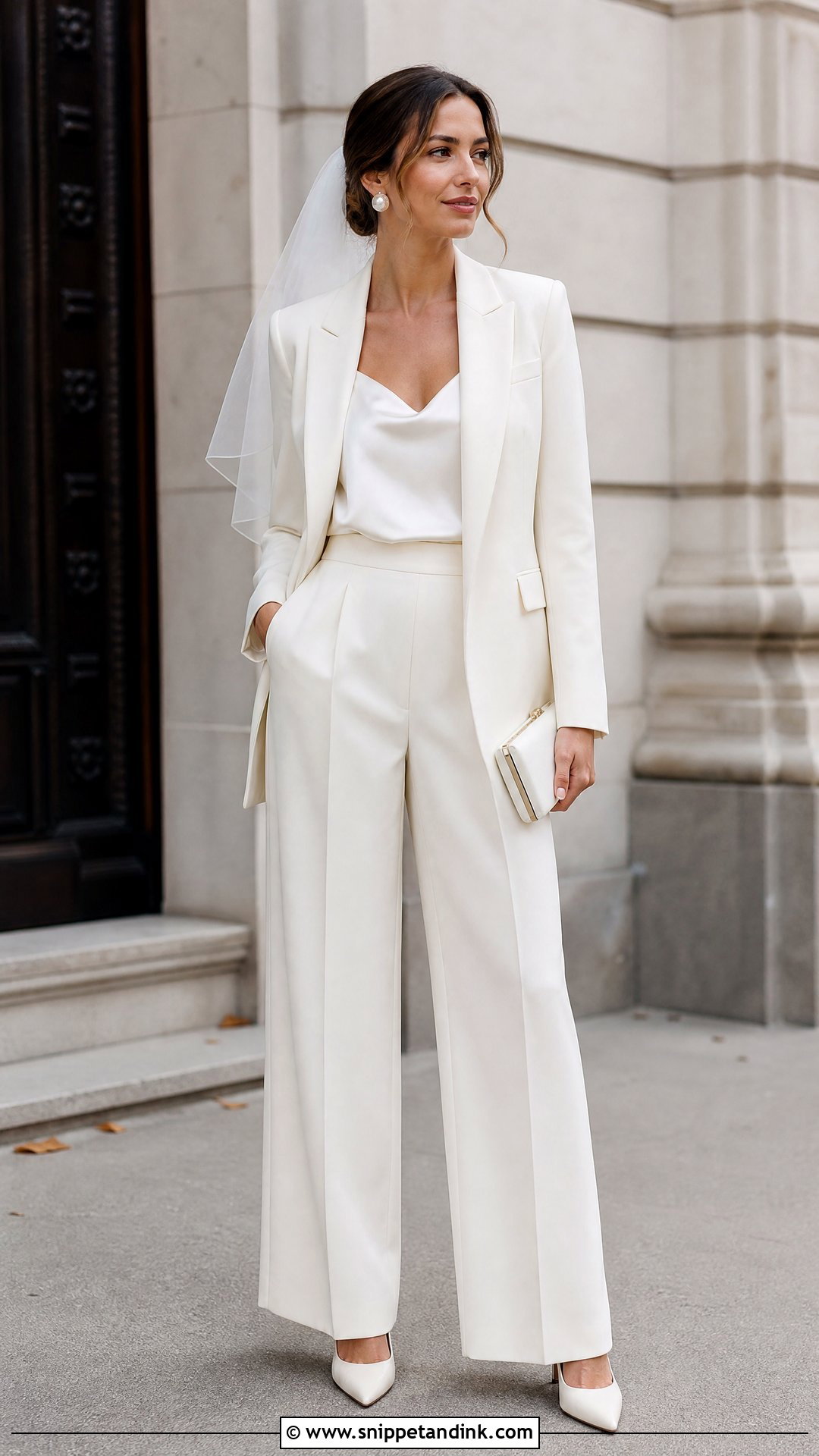
Bridal suits rely on tailoring the way a column gown does. A white or ivory blazer with matching trousers looks sharp when the shoulders fit precisely and the trousers break just over the shoe. I’d buy the suit early and leave time for a tailor, because off-the-rack sizing rarely fits jacket and trousers equally. A silk camisole underneath, a short veil or bow and pointed heels make it bridal. It suits courthouse ceremonies, elopements and second looks, and you’ll wear the pieces again.
Underneath the Dress: Bras, Petticoats and the Bustle
Half of how a gown looks comes from layers nobody sees. Buy your bridal underwear before the first fitting and wear the same pieces every time, because changing bras between fittings moves the bust line and the seamstress ends up altering for the wrong body.
Petticoats and hoops
Ball gowns and tea length skirts often need a petticoat to hold their shape. A hoop gives the widest skirt but makes sitting and car journeys clumsy; a soft tulle petticoat is lighter and easier to sit in. Ask which one the gown was designed around.
Bustling a train
Any train longer than a sweep usually needs bustling for the reception. An over bustle hooks the train up onto the back of the skirt; an under or French bustle tucks it beneath with ribbon ties; a ballroom bustle lifts the whole hem to floor length all round, which suits dancing best. More points mean a neater result but longer to fasten. At the last fitting, have whoever will bustle you on the day watch and practise it, ideally twice, because colour-coded ribbons are much less obvious in dim reception light.
The Gown You Stop Noticing After an Hour
Gowns that hold up over decades share a few traits: a clear silhouette, decent fabric and a fit that let you sit, walk and hug without thinking. Classic ball gowns, minimal columns, lace, veils and tailored suits all qualify when those basics are in place. Start with the shape you feel most at ease in, then layer on fabric, neckline and accessories that support it. Simple isn’t required; balance is. If two dresses tie, wear each one for ten minutes and keep the one you forgot you had on.
You'll Like These Ideas:




Leave a Reply