
The empire line puts the waist seam just under the bust and lets everything below it fall free. That one decision makes it the most comfortable bridal silhouette I fit: nothing grips the stomach, you can eat dinner, and the skirt moves when you walk. It suits garden and beach ceremonies, pregnant brides, petite brides and anyone who dislikes the pressure of a fitted waist. Current versions run from Regency-inspired gowns to sleek satin, lace sleeves and very plain crepe. The trade-off is that a high seam leaves little room for error at the bust, so for each of the twenty-five dresses below I’ve noted where fit tends to go wrong.
Where the Seam Should Sit, and Why It Moves
On a true empire dress, the seam runs along the underside of the bust, close to where a bra band sits. That sounds simple, but it’s the most common fitting problem I see with this silhouette, because the seam’s position depends on what you wear underneath.
- Wear your actual wedding bra or bodysuit to every fitting. A different bra can lift or drop the bust by an inch, and the seam will be wrong on the day.
- If the seam cuts across the lower curve of the bust, it needs to come down. If there’s a gap of fabric between bust and seam, it needs to go up.
- For a fuller bust, a seam that dips slightly at the center, or curves under each side, sits better than a dead-straight line.
- Check from the side as well as the front. A seam that’s level from the front can tilt upward at the back.
The other thing to watch is the skirt’s starting width. If it’s too full just under the bust, the dress can look like maternity wear on a bride who isn’t expecting. A skirt that falls close to the body for the first few inches, then opens, avoids that.
1. Empire Waist Lace Wedding Dress
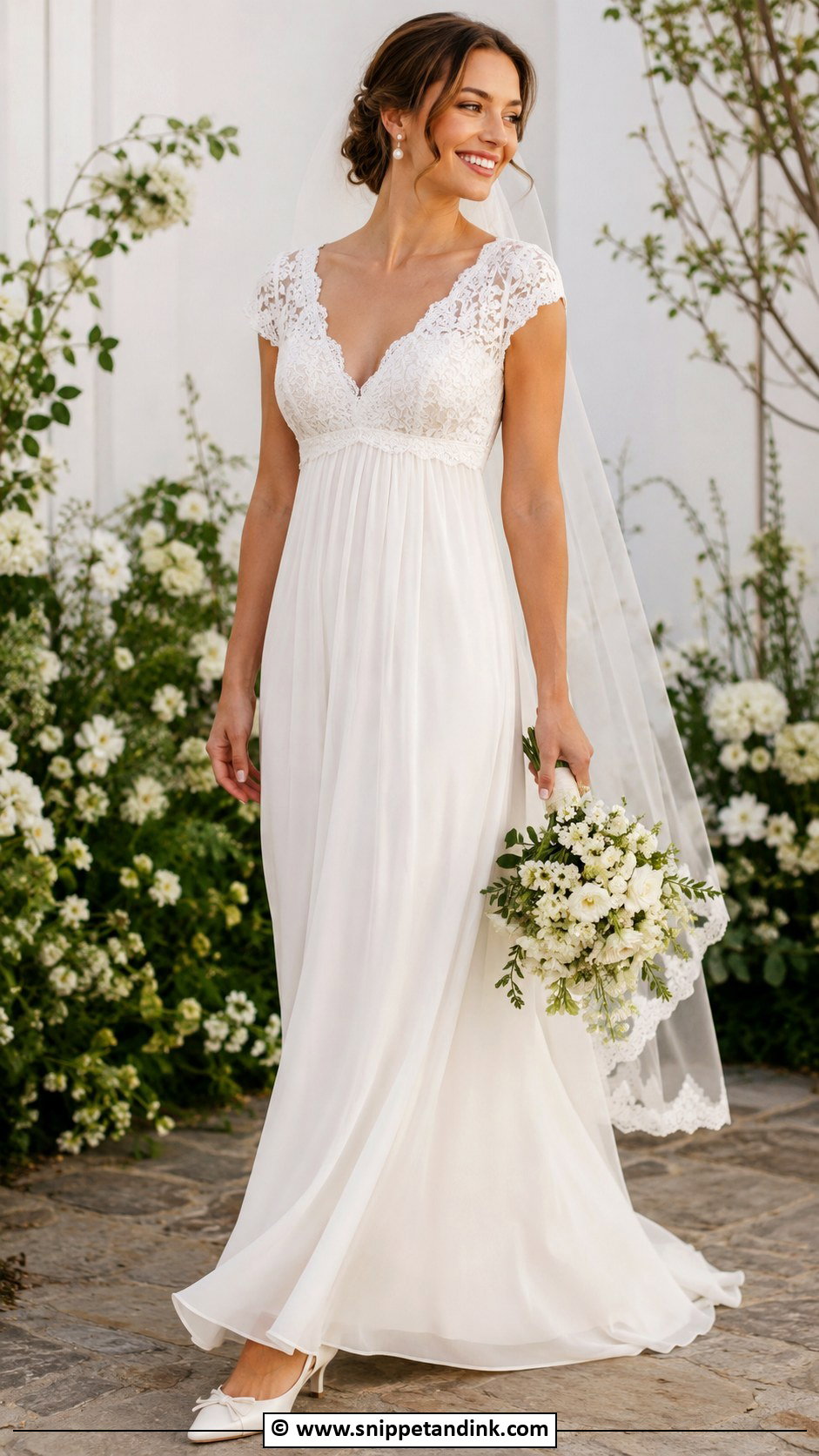
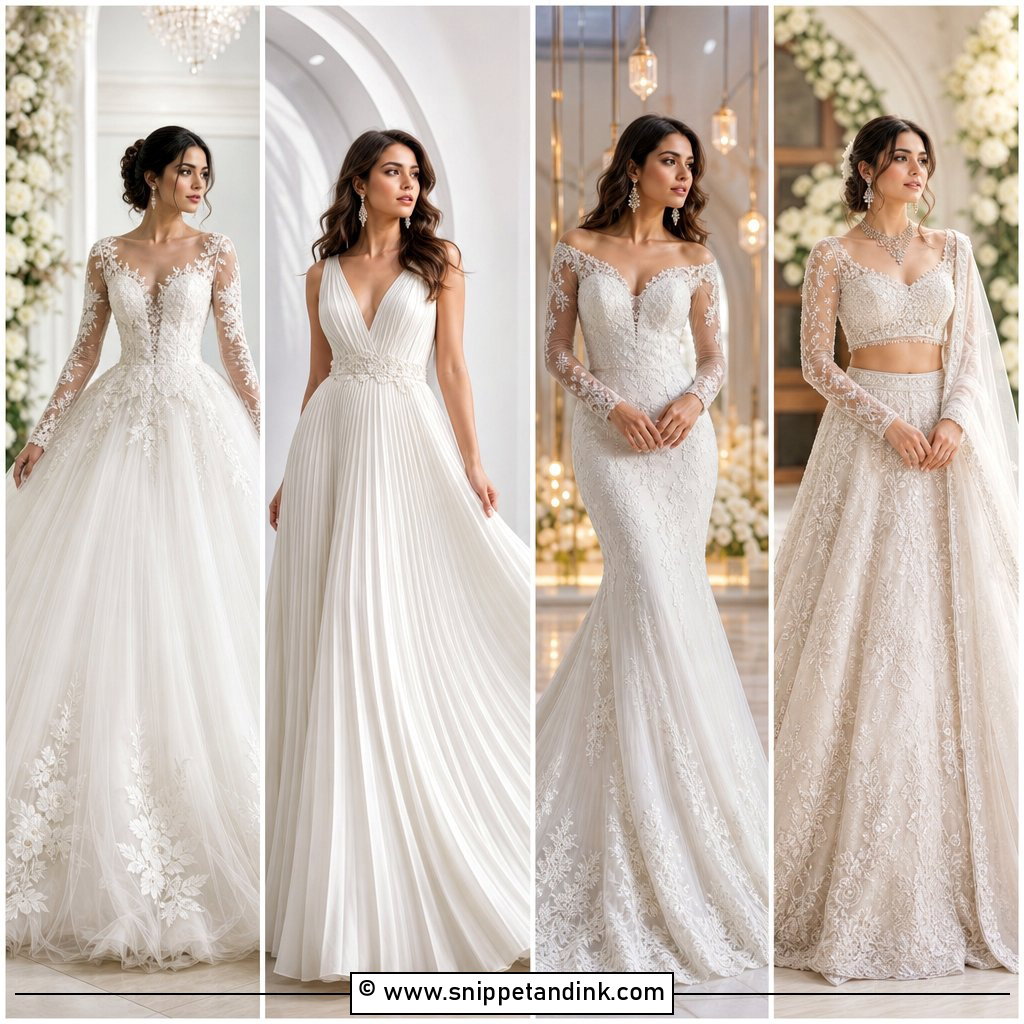
Lace on an empire bodice puts the detail where people look, near your face. The pattern sets the mood: floral lace leans classic, vine or leaf lace suits outdoors. What I check first is the scalloped edge at the neckline, since lace that’s been cut straight across instead of following the motif looks cheap up close. A V-neck, scoop or fine cap sleeve keeps the top light. Pearl earrings, a sheer veil and block heels or satin sandals are enough.
2. Empire Waist Chiffon Wedding Dress
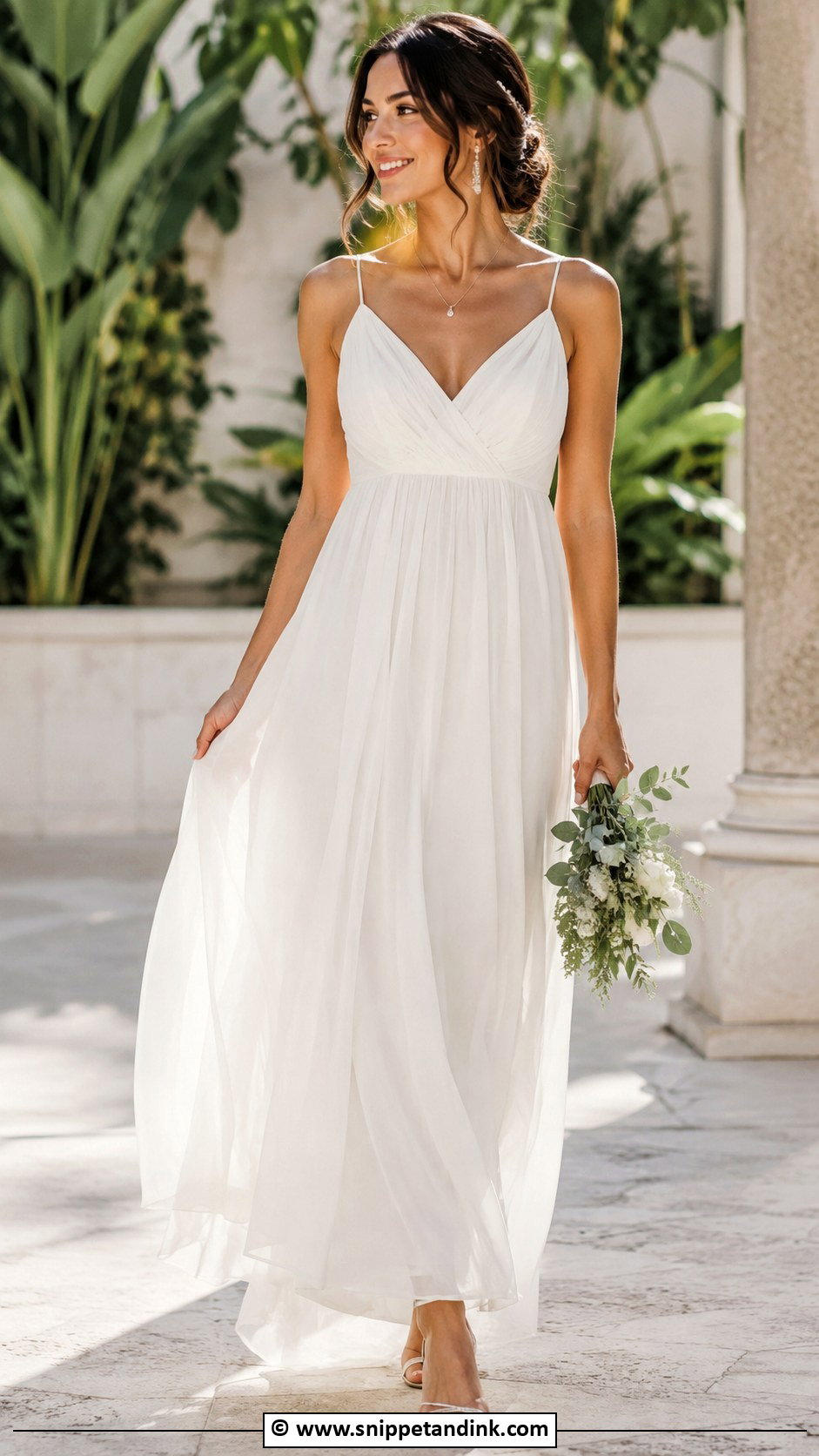
Chiffon and the empire line were made for each other. The fabric floats off the high seam and moves with the smallest breeze, which is why it’s my default for beach and warm garden weddings. Gathered chiffon gives more swing; a smooth panel gives a cleaner column. Chiffon frays and snags easily at the hem, so hold the skirt clear of rough decking and gravel. A fine pendant, soft waves and strappy sandals finish it.
3. Empire Waist Satin Wedding Dress
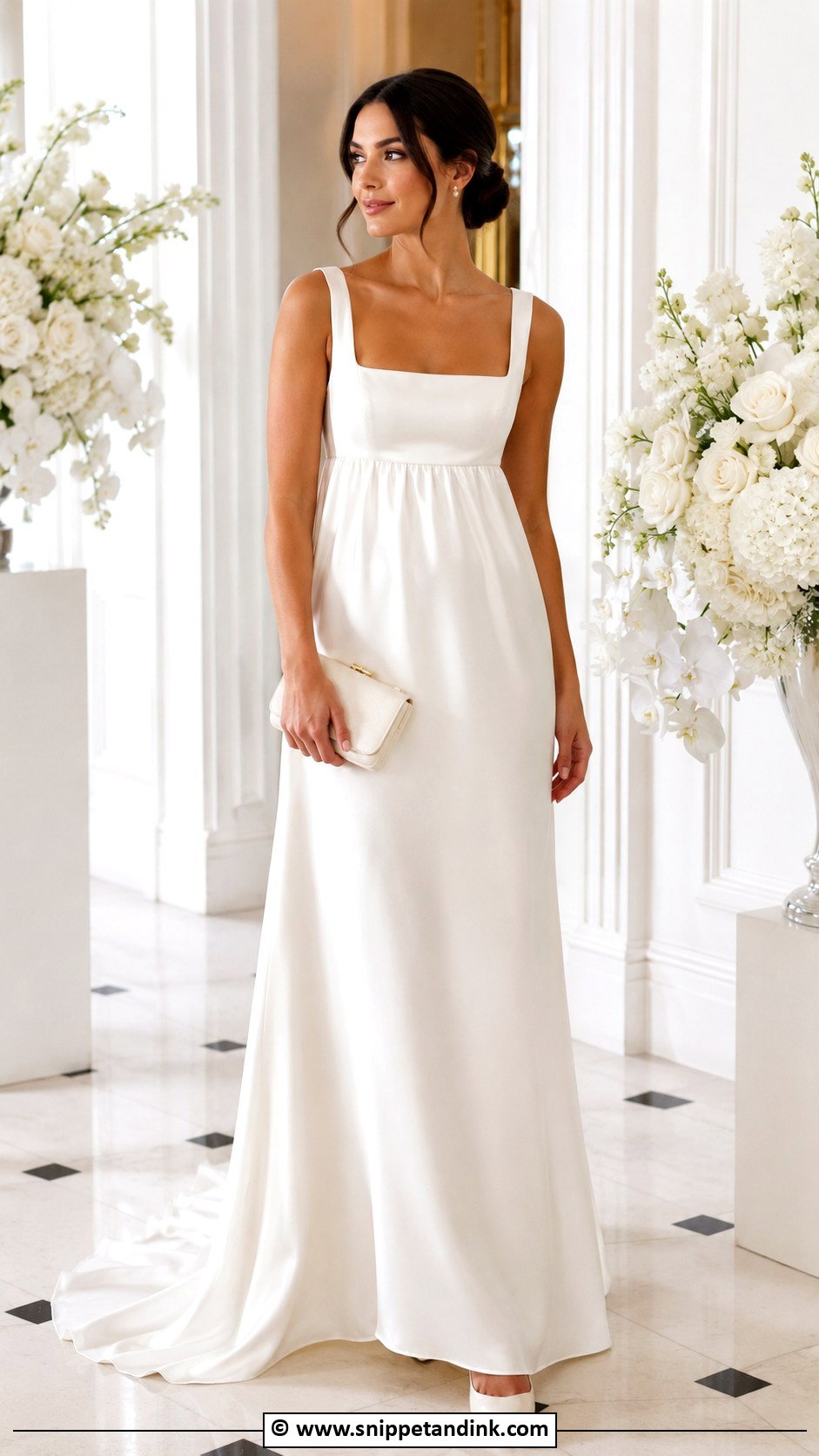
Satin makes the empire line look polished rather than soft. Because it has more body than chiffon, the skirt stands slightly away from the hips instead of draping against them, and the high seam reads as a deliberate design line. A square neckline or a draped cowl keeps it modern. Satin shows every pucker at the seam, so look closely at how the skirt joins the bodice on the hanger before you try it on. Pointed heels, a sleek bun and a small structured clutch suit it.
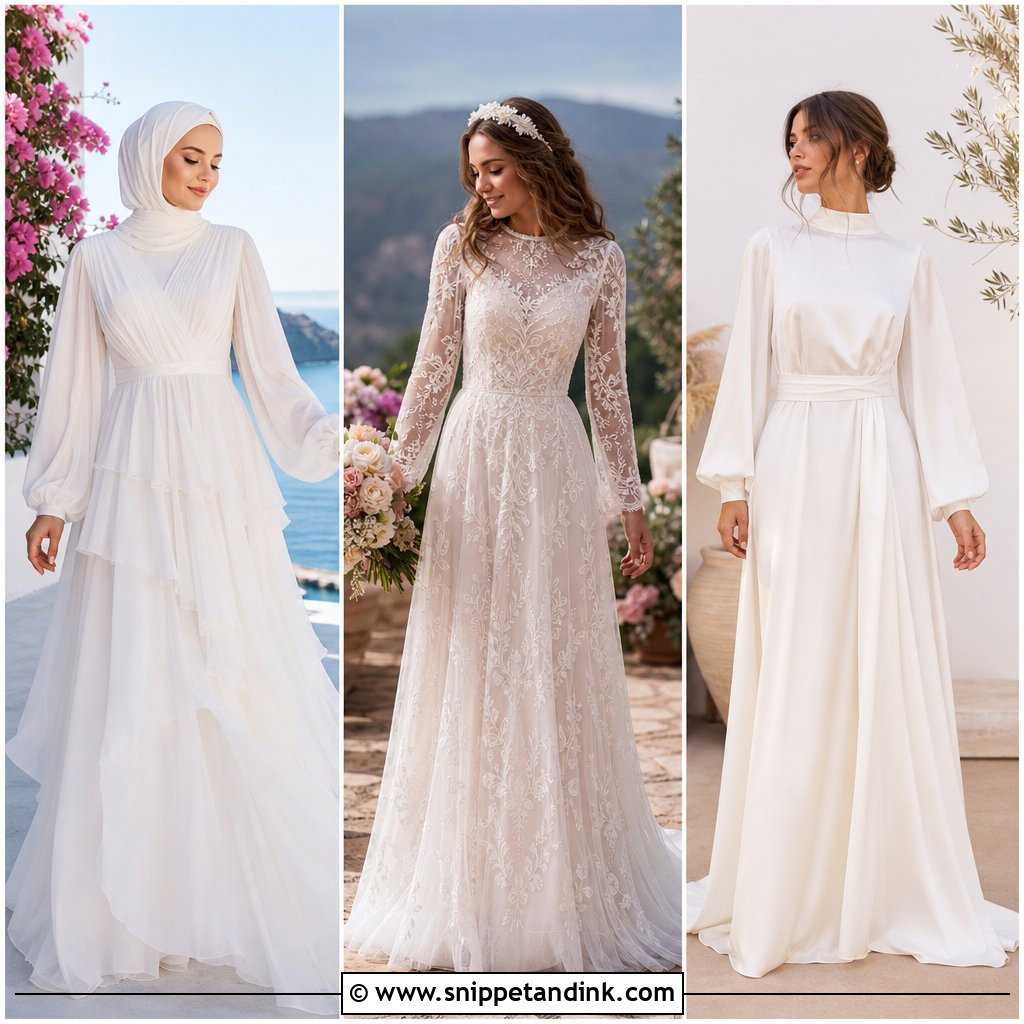
4. Empire Waist Long Sleeve Wedding Dress
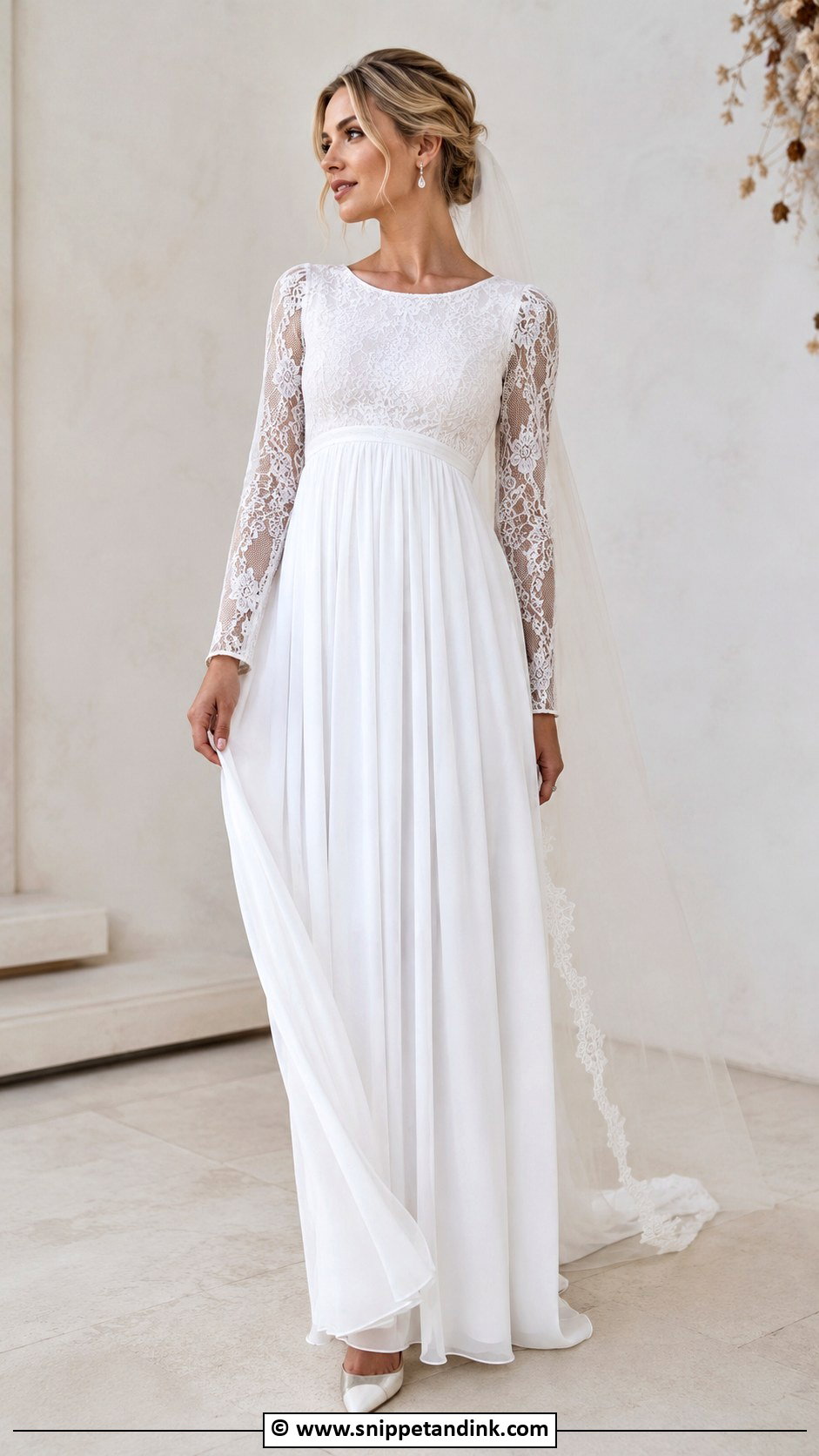
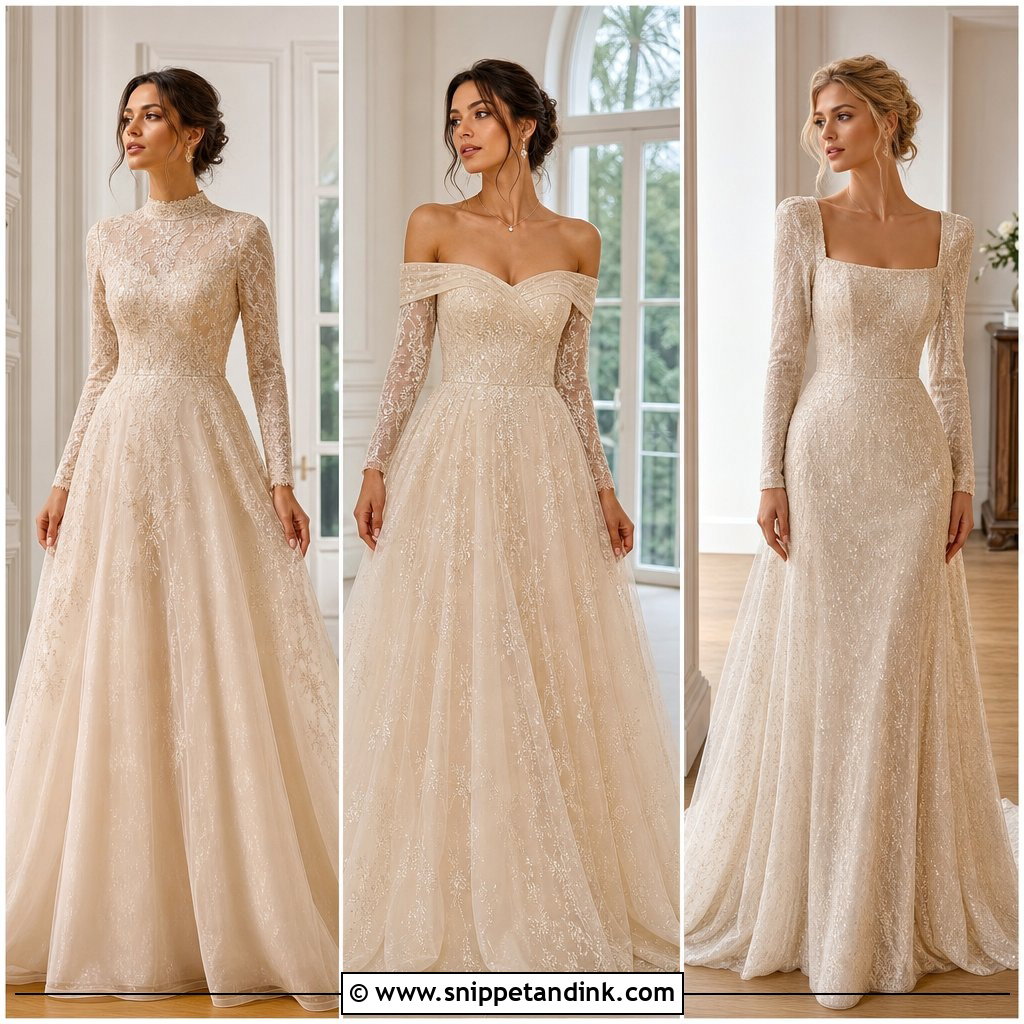
Long sleeves on an empire dress balance well, because the high waist keeps the dress feeling light even with full coverage. Sheer lace sleeves look romantic; crepe or chiffon ones are quieter. I prefer a sleeve that tapers to the wrist, since a loose long sleeve on top of a loose skirt can lose your shape entirely. Lift your arms in the fitting room to check the bodice doesn’t ride up. A plain veil and fine drop earrings suit autumn, winter and indoor weddings, and the flowing skirt gives modest coverage without heaviness.
5. Empire Waist Off Shoulder Wedding Dress
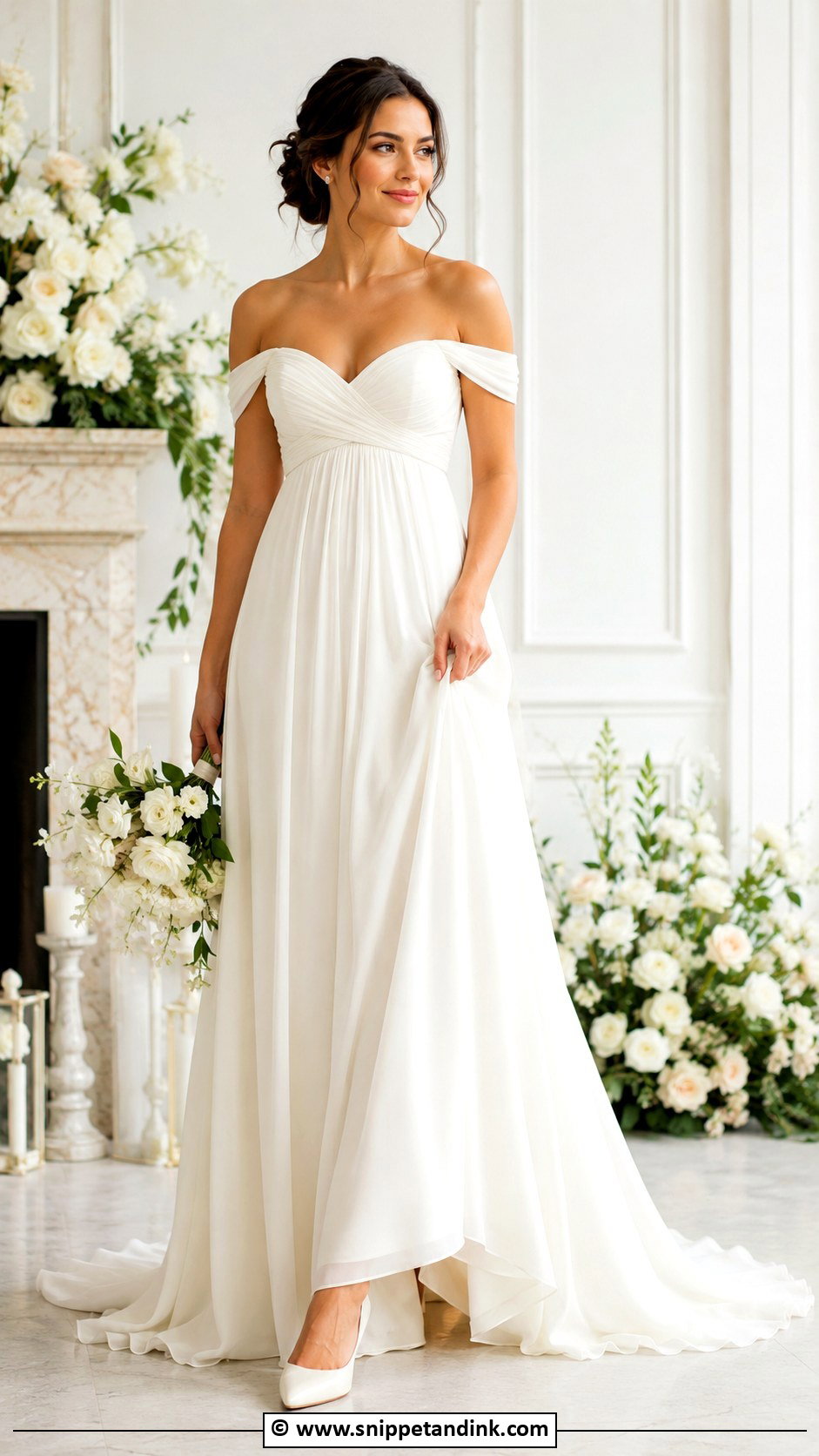
Off-the-shoulder necklines on an empire gown need a firmly fitted bodice. There’s no waist seam lower down to anchor the dress, so all the hold comes from the bust and the band around the arms. If either is loose, the neckline slips every time you lift a glass. Once it fits, a soft updo, pearl studs and a fingertip veil keep the shoulders and face in focus, with satin pumps or low heels.
6. Empire Waist V Neck Wedding Dress
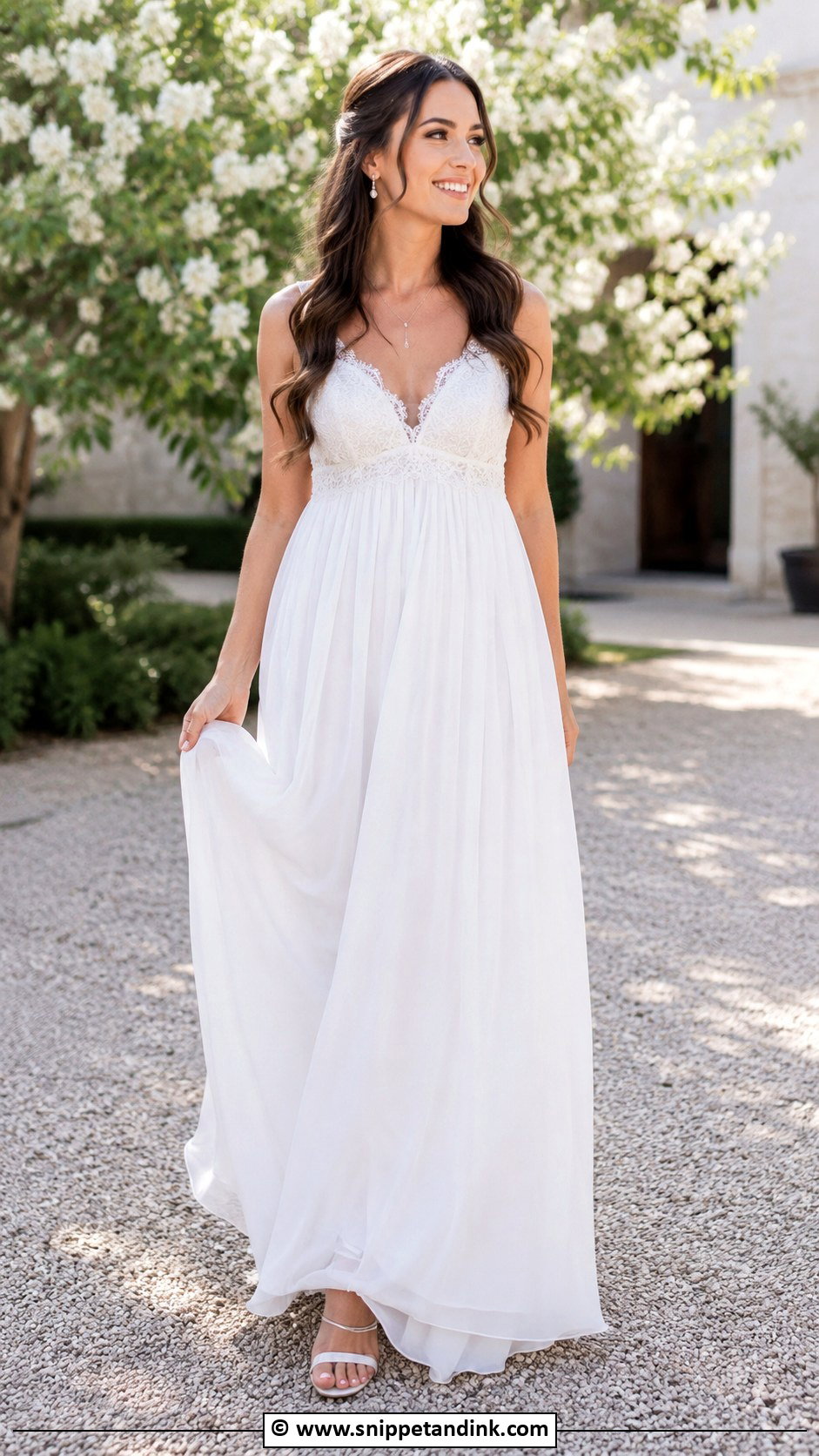
A V-neck lengthens the short space between chin and high waist, which is why it’s the neckline I suggest most often with an empire seam, especially for petite brides and fuller busts. Deep or shallow is a comfort decision. Lace trim softens it; plain crepe or satin sharpens it. The skirt fabric then decides the mood: chiffon or tulle turns dreamy, satin or crepe turns sleek. A simple pendant and soft curls are plenty.
7. Empire Waist Square Neck Wedding Dress
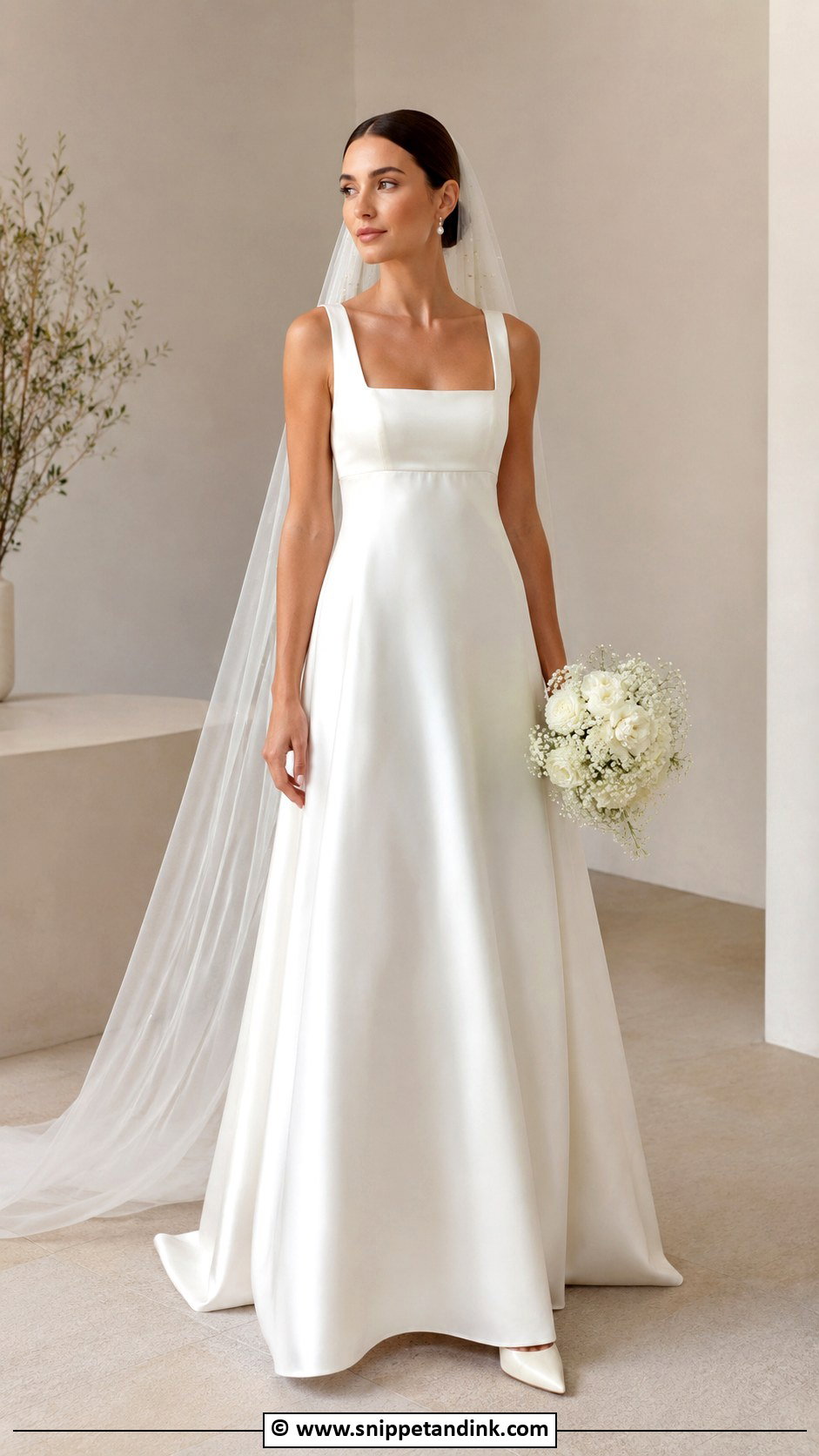
Square necks hold their shape best in fabrics with some body, such as satin, crepe or a cotton blend. In thin chiffon the corners collapse. Combined with a high waist, the neckline and seam make two parallel lines across the chest, so the distance between them matters: too close and the bodice looks cropped. A smooth bun, pearl studs and a fine bracelet suit it, and a small bow at the back adds charm without fuss.
8. Empire Waist Tulle Wedding Dress
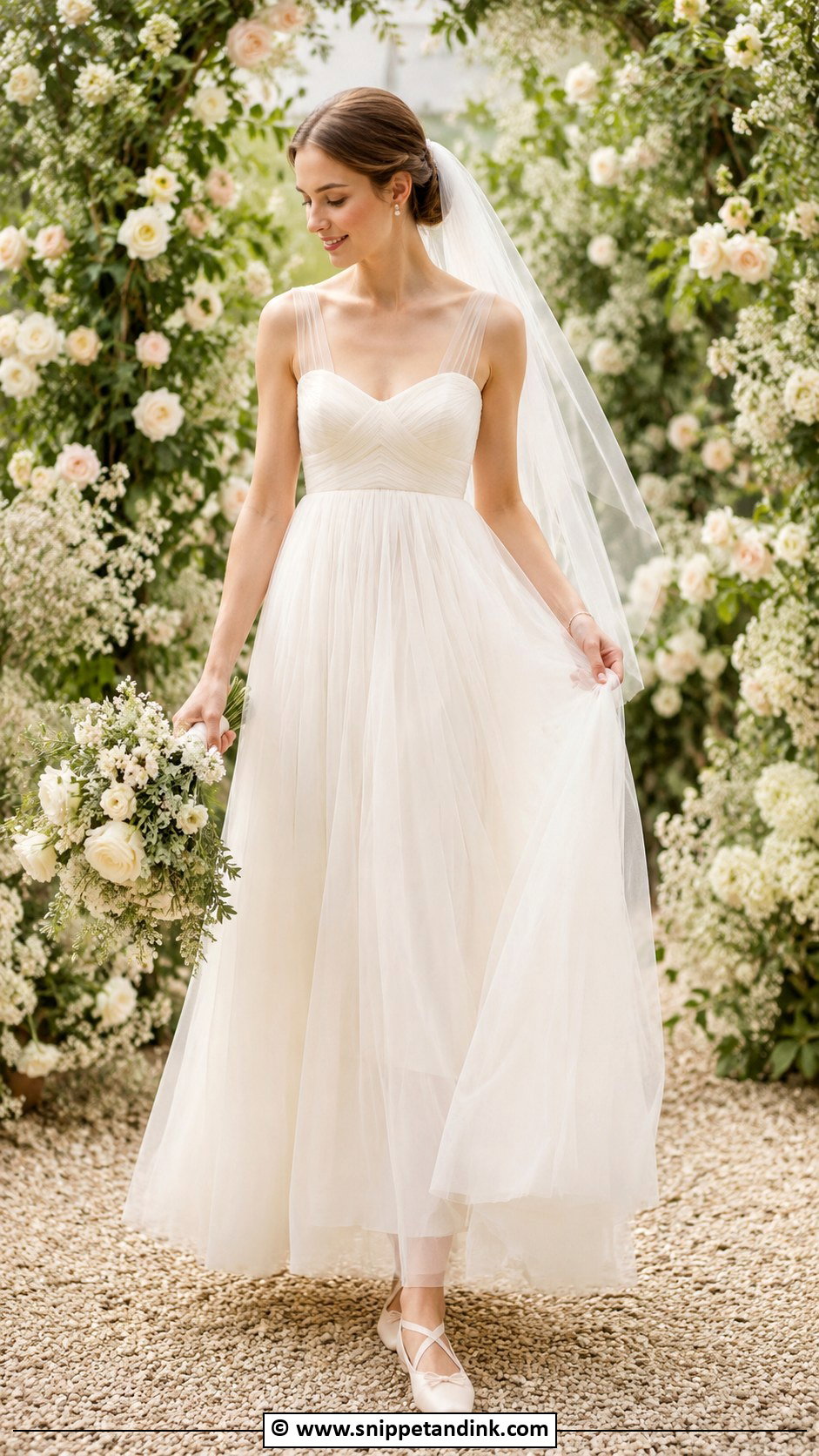
Tulle starting from a high seam gives volume without the waist-down bulk of a ball gown, because the fullness begins higher and spreads over a longer distance. Fine layered tulle looks delicate; dotted tulle feels vintage and a little playful. Ask how many layers there are. Too few and the skirt goes limp and see-through in sunshine; too many and it weighs on the shoulders through the high bodice. Sheer straps, a plain veil and ivory flats suit garden and estate weddings.
9. Empire Waist Boho Wedding Dress
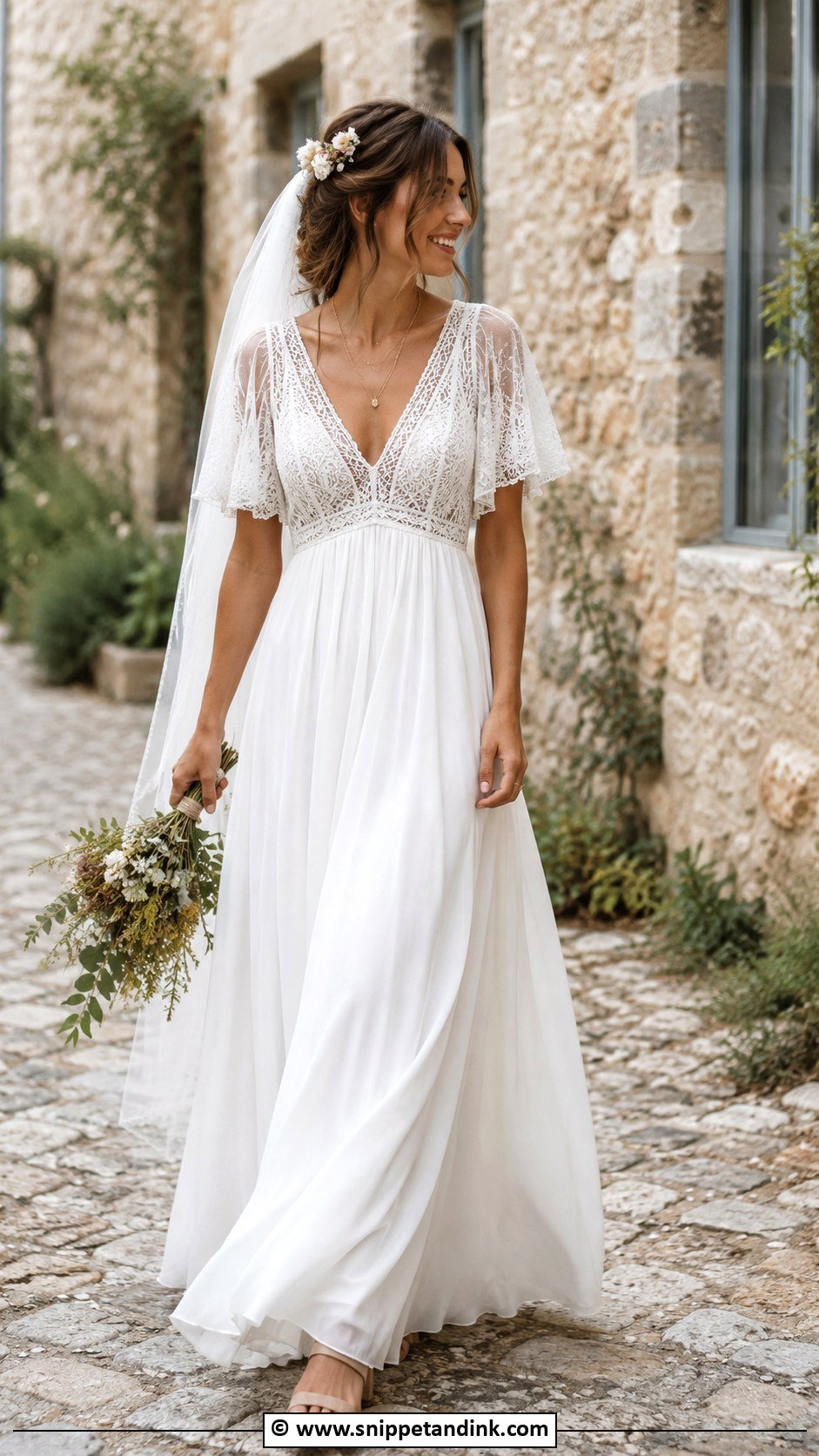
Boho and empire share the same relaxed idea, so they combine naturally. Soft lace, flowing chiffon, flutter sleeves and details like crochet-inspired lace or delicate tassel ties all work. Keep at least one element refined, such as a clean neckline or good lining, so the dress still reads bridal. Loose waves, a floral pin and flat sandals suit desert and beach venues, and a sheer cape can replace the veil.
10. Empire Waist Beach Wedding Dress
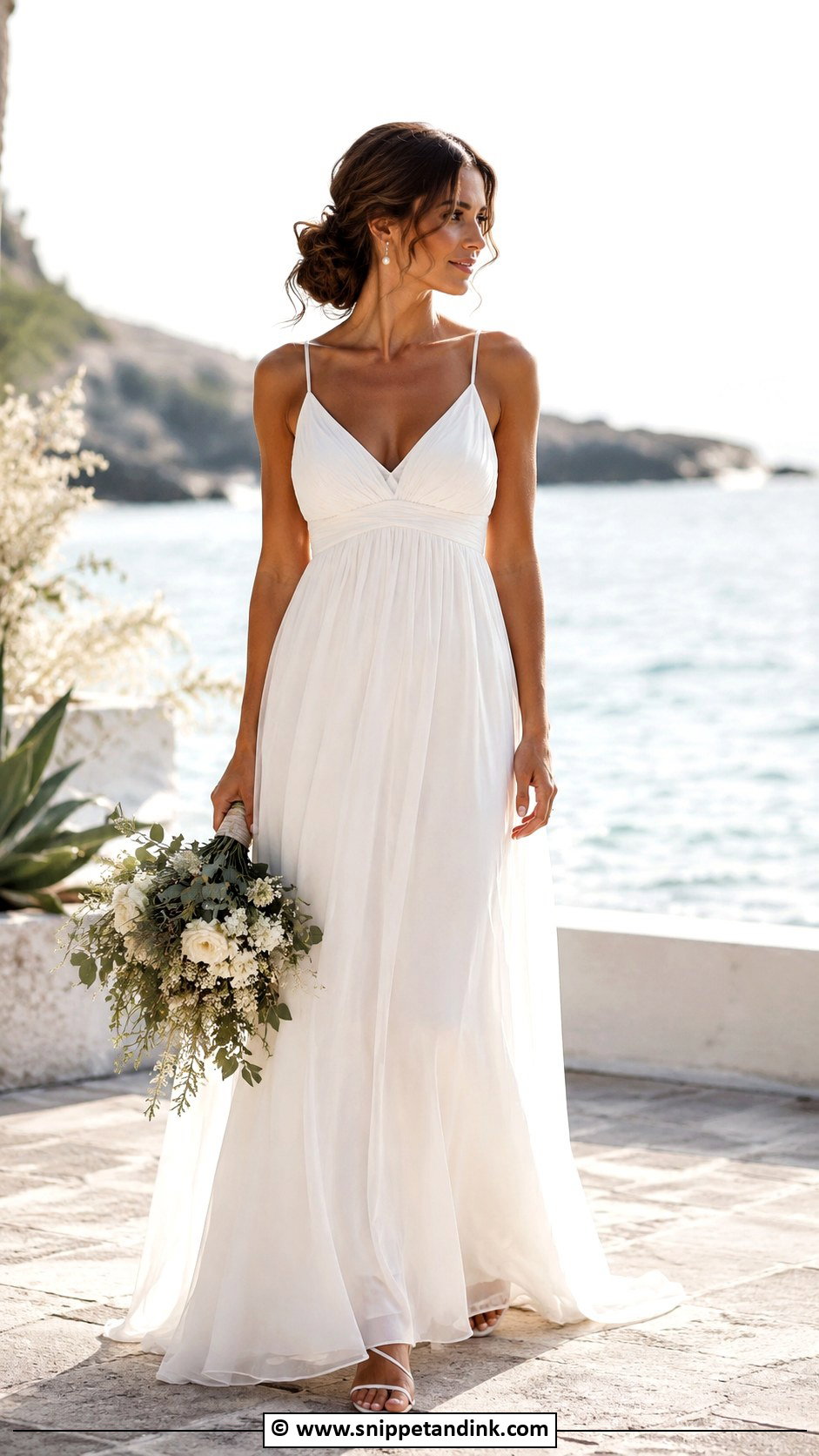
Sand changes everything about walking in a gown. I’d choose chiffon, georgette or soft crepe for the beach, because they breathe and swing in the wind, and keep the train to a short sweep or none, since trains drag sand behind you and collect it in the hem. A V-neck, halter or thin straps keep it light. Flat bridal sandals, pearl earrings and a low bun handle the breeze. If it’s windy, a weighted hem keeps chiffon from blowing up in photos.
11. Empire Waist Garden Wedding Dress
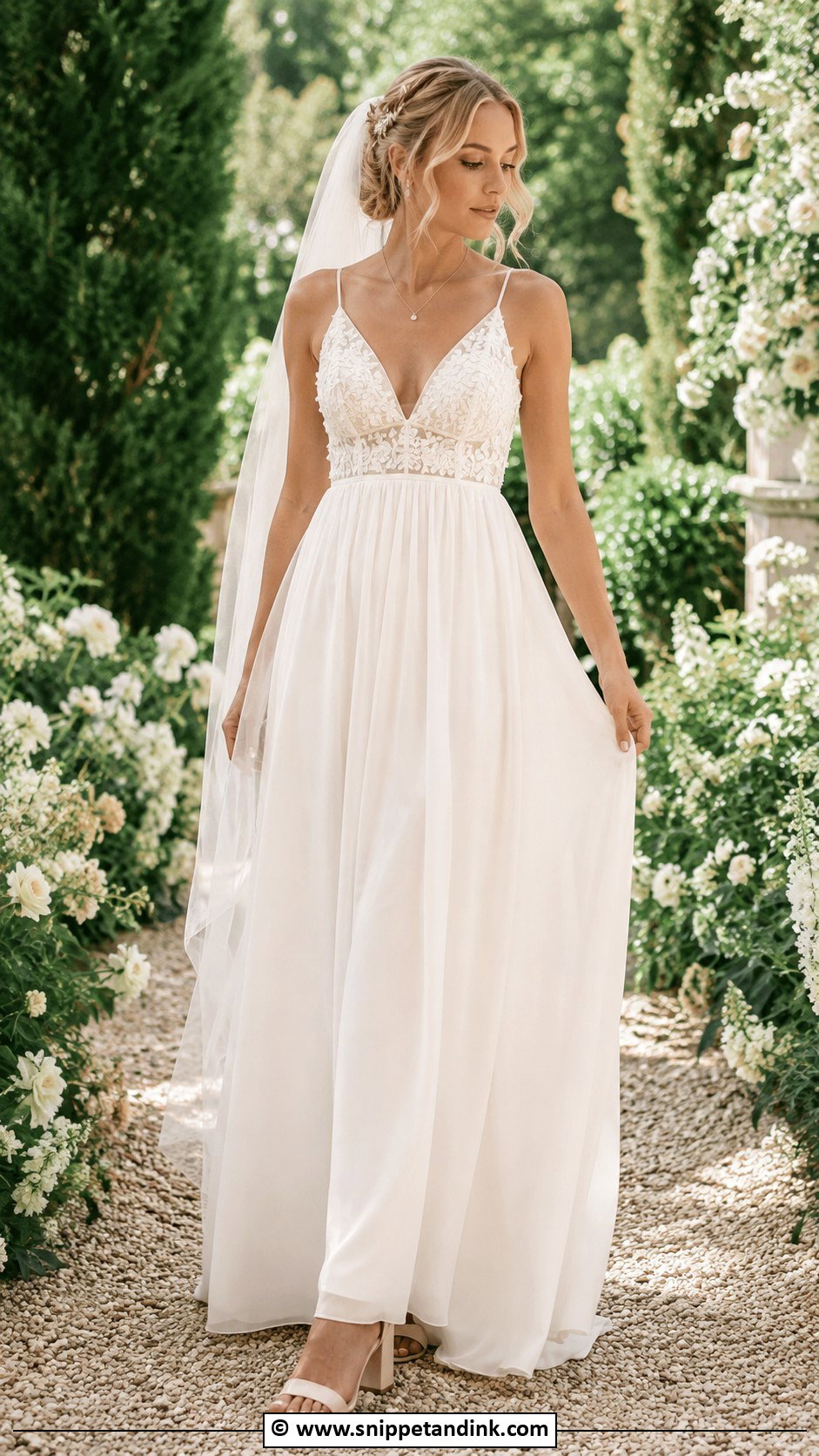
For a garden, I want a dress that looks as if it grew there: lace applique, embroidered flowers or a sheer overlay, all against a skirt that moves as you cross the lawn. Avoid anything stiff. Block heels or flats sink less in grass, and a soft veil with fresh flower pins in the hair suits the setting. Ask the florist to match one bloom in your bouquet to the motif in the lace.
12. Empire Waist Minimalist Wedding Dress
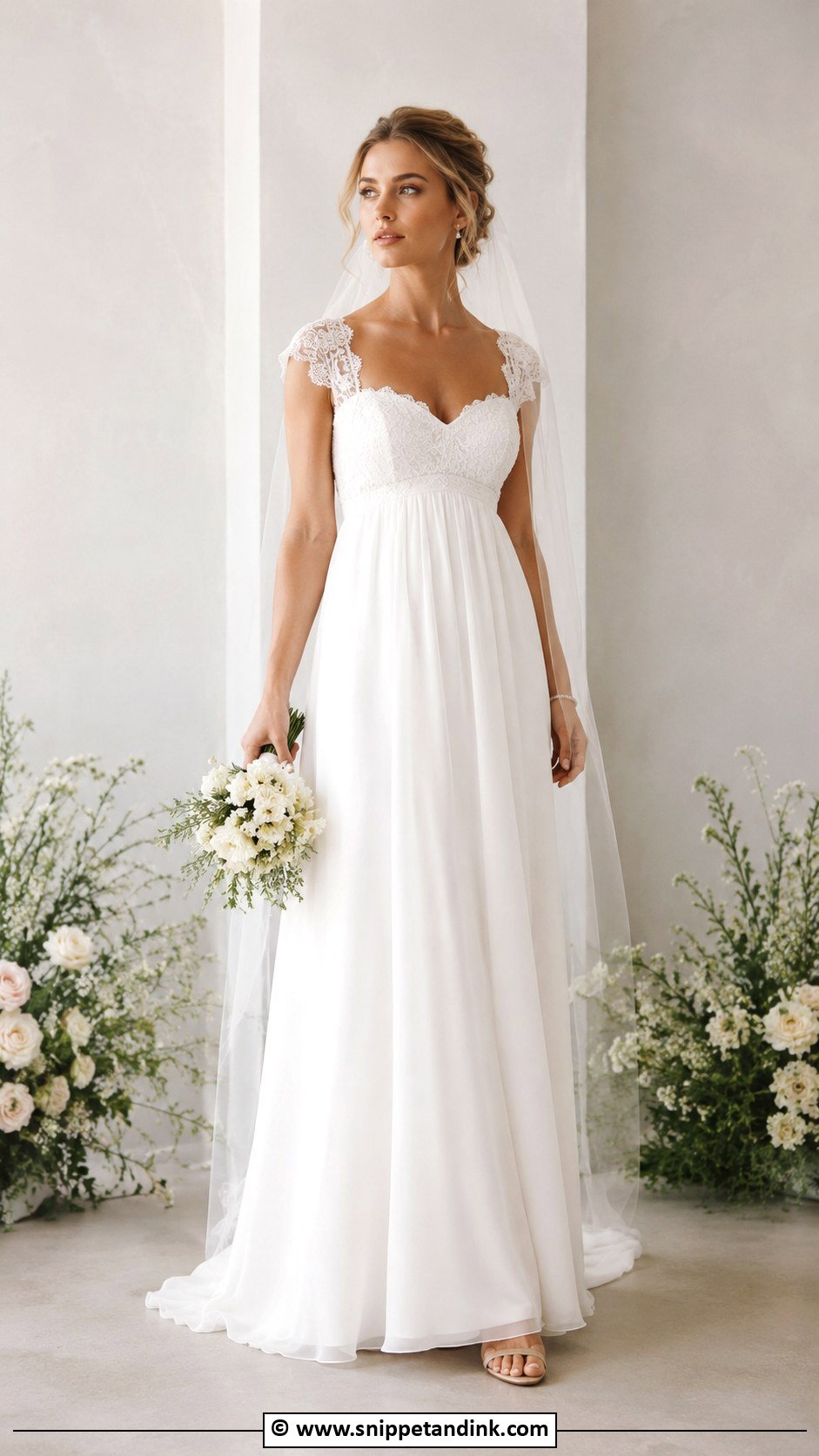
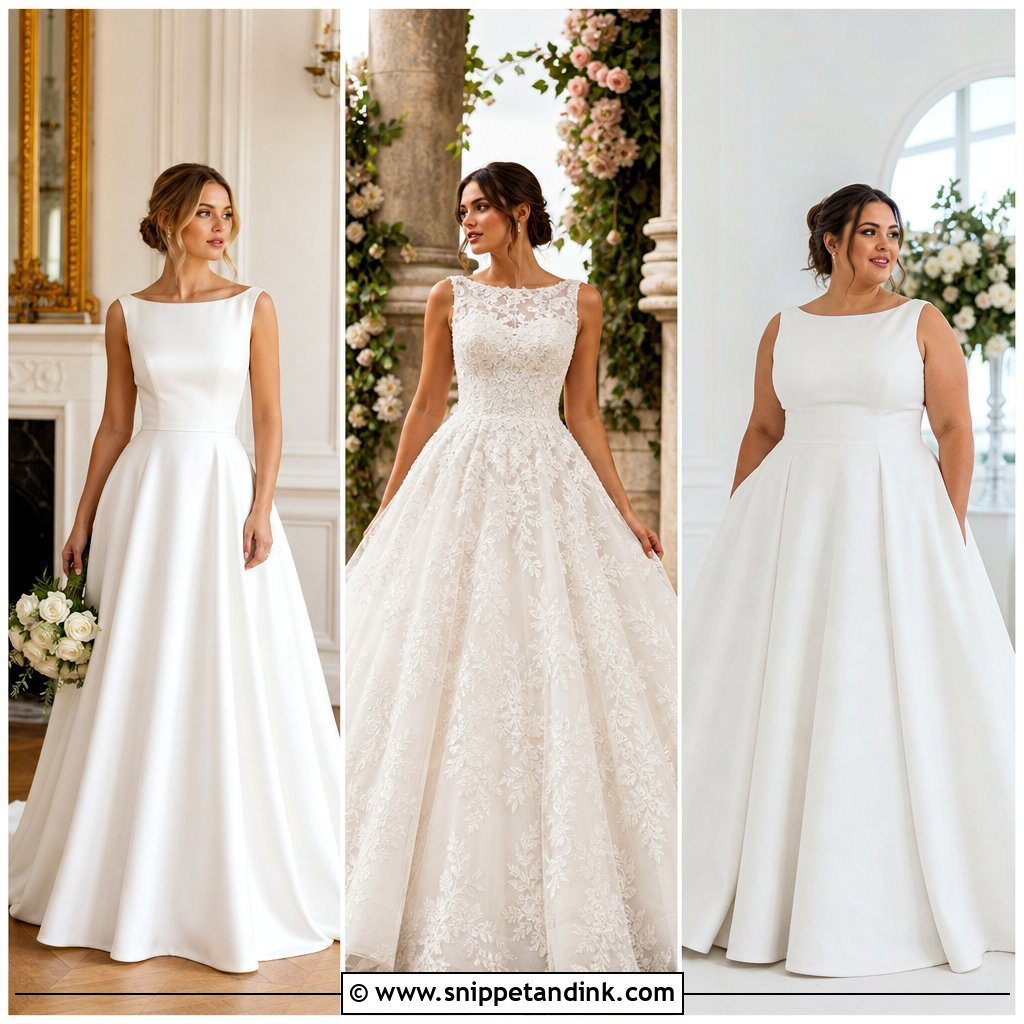
Minimalist empire dresses depend entirely on cut and cloth. Crepe, satin and matte silk blends hold a clean line, and with no lace to hide behind, the bust fit has to be exact. I’d spend the alterations budget there. A square, straight or subtle scoop neckline keeps it modern. Sleek hair, sculptural earrings and plain heels finish it, and a long plain cathedral veil adds drama without adding detail.
13. Empire Waist Maternity Wedding Dress
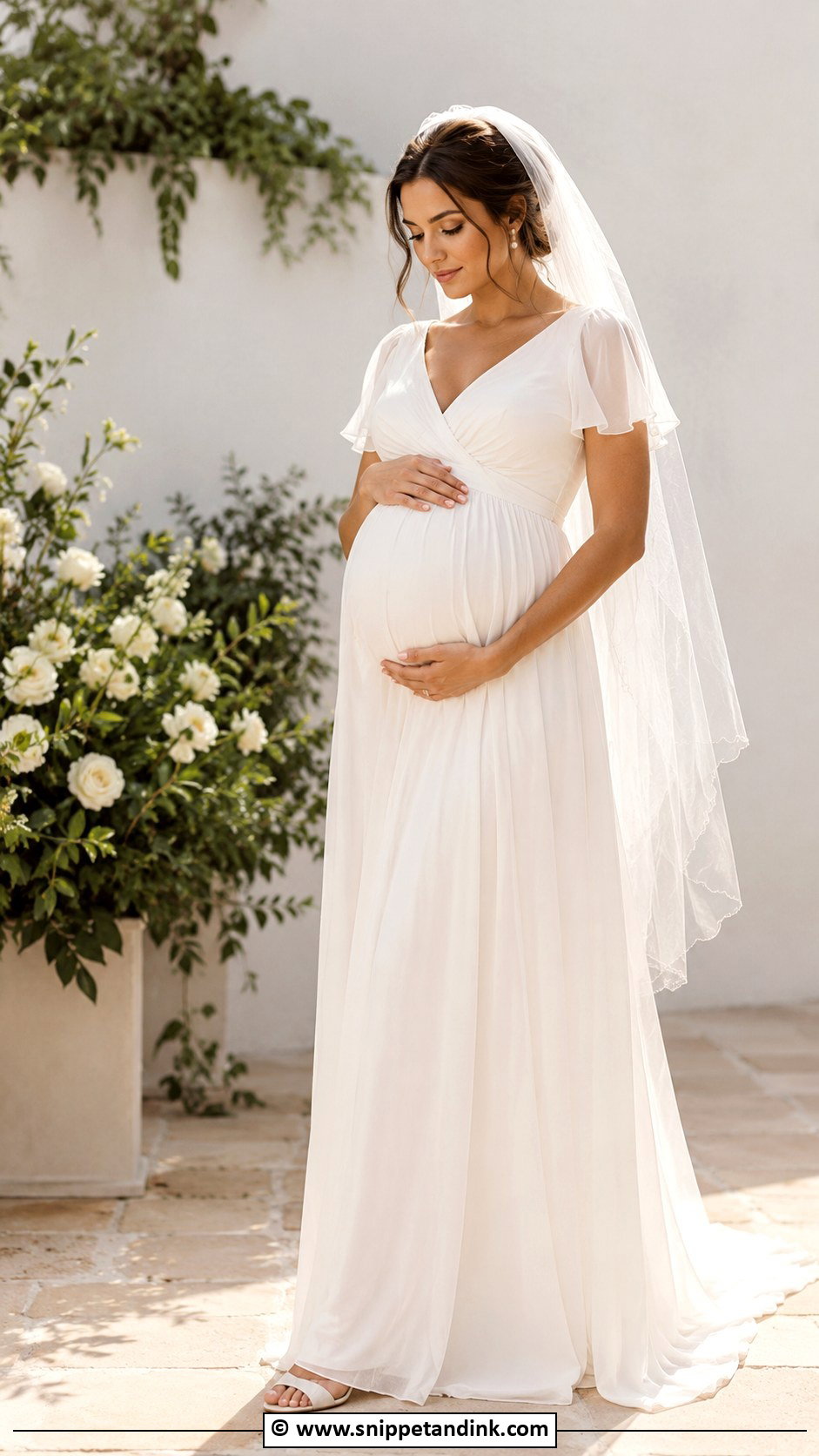
An empire waist maternity wedding dress works because the seam sits above the bump and the skirt falls past it without pressure. Look for soft fabric, a supportive bodice and generous room through the waist and hips. Chiffon, stretch crepe and soft tulle all work, and a wrap or V-neck bodice adjusts as the bust changes. Choose cushioned sandals or flats; ankles swell during pregnancy, especially by evening. Delicate earrings and a light veil keep it graceful.
14. Empire Waist Plus Size Wedding Dress
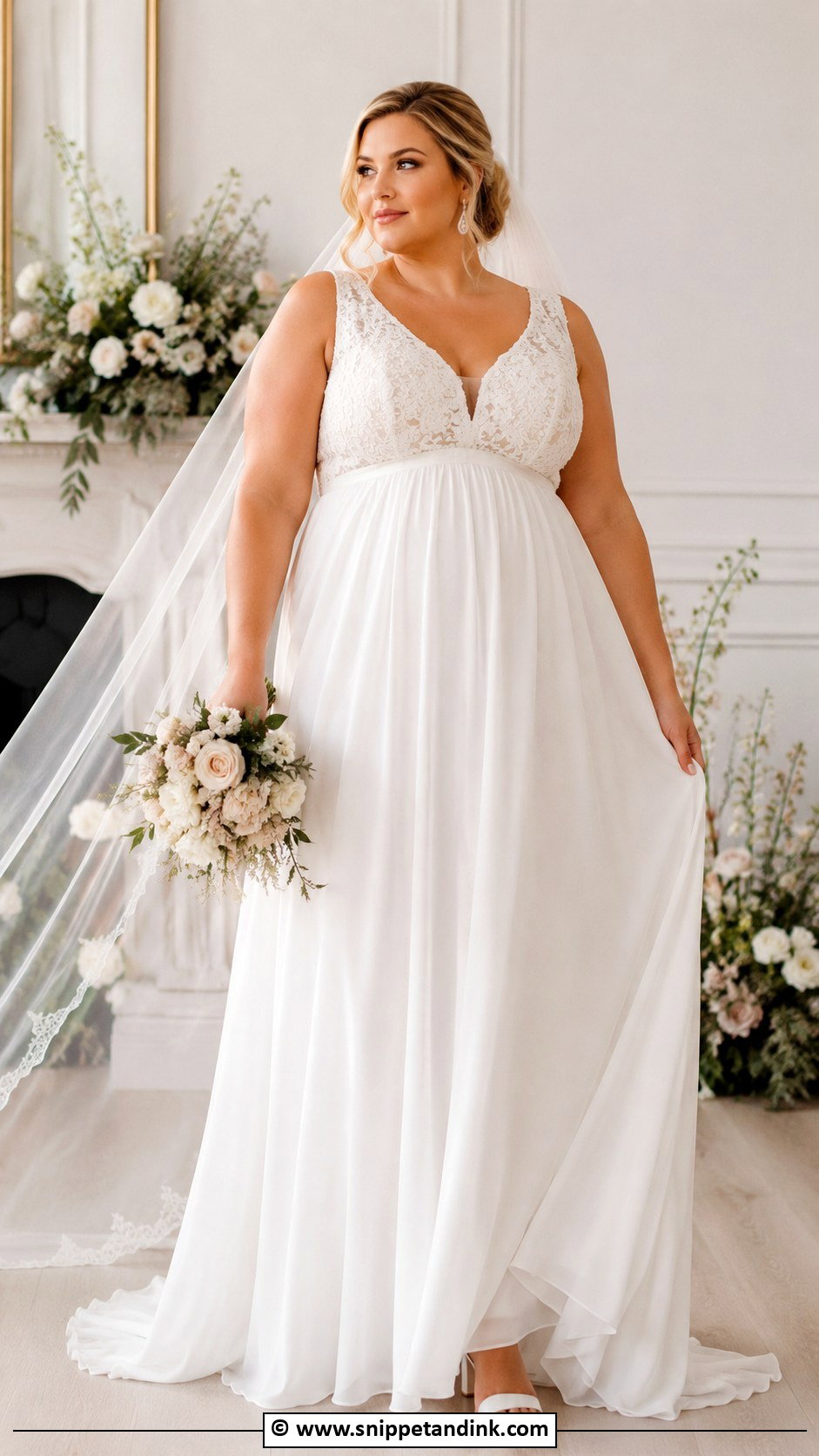
An empire waist plus size wedding dress looks best when the seam sits exactly at the base of the bust, not on it and not an inch below. A seam that rides up cuts across the bust; one that drops makes the dress look borrowed. A supportive bodice, a V-neck or sweetheart neckline and a skirt in chiffon, crepe or soft tulle that drapes rather than clings give the cleanest line. Bridal undergarments with real structure make the biggest difference, so wear them to every fitting. Earrings that draw the eye up finish it.
15. Empire Waist Petite Wedding Dress
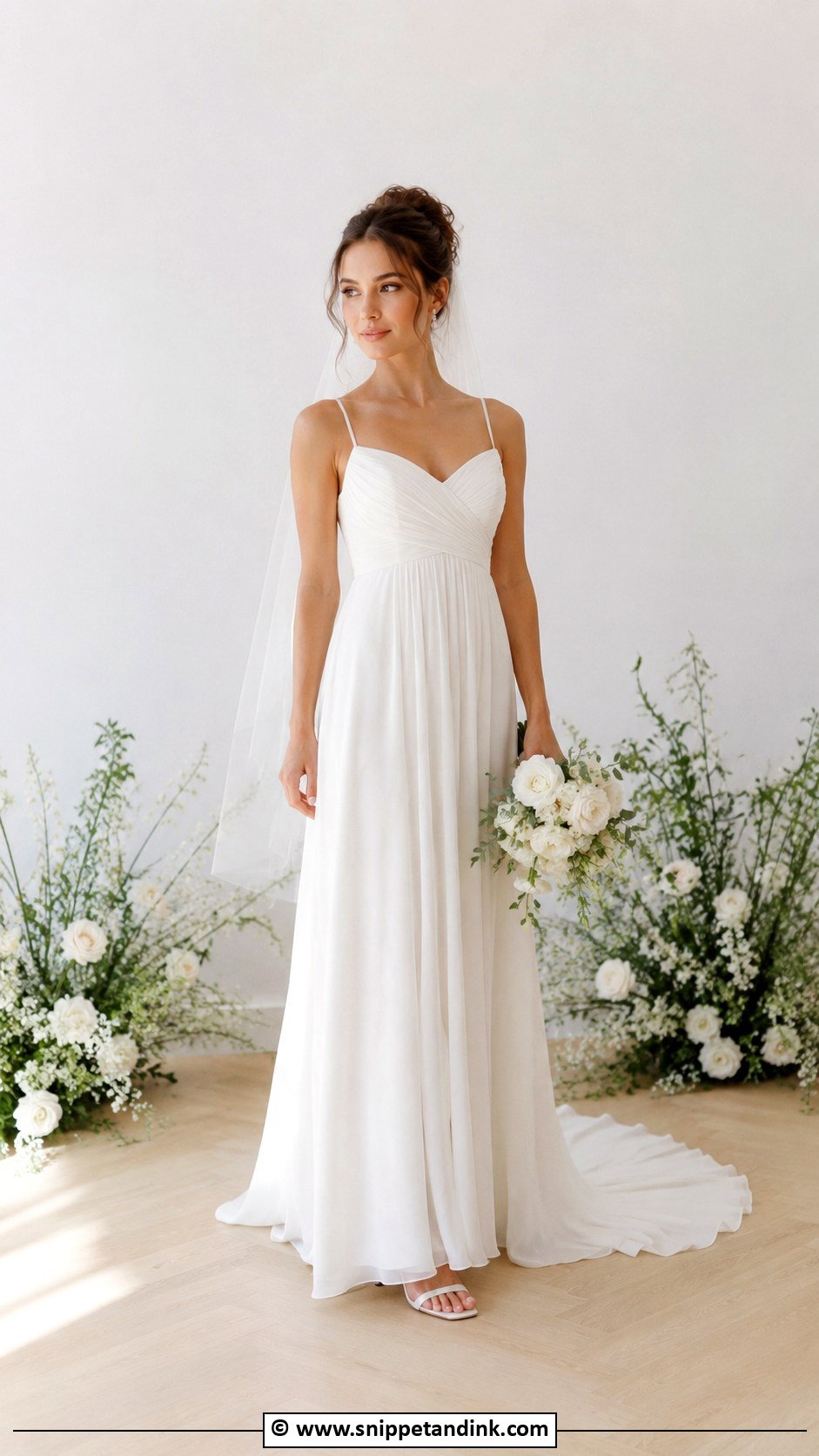
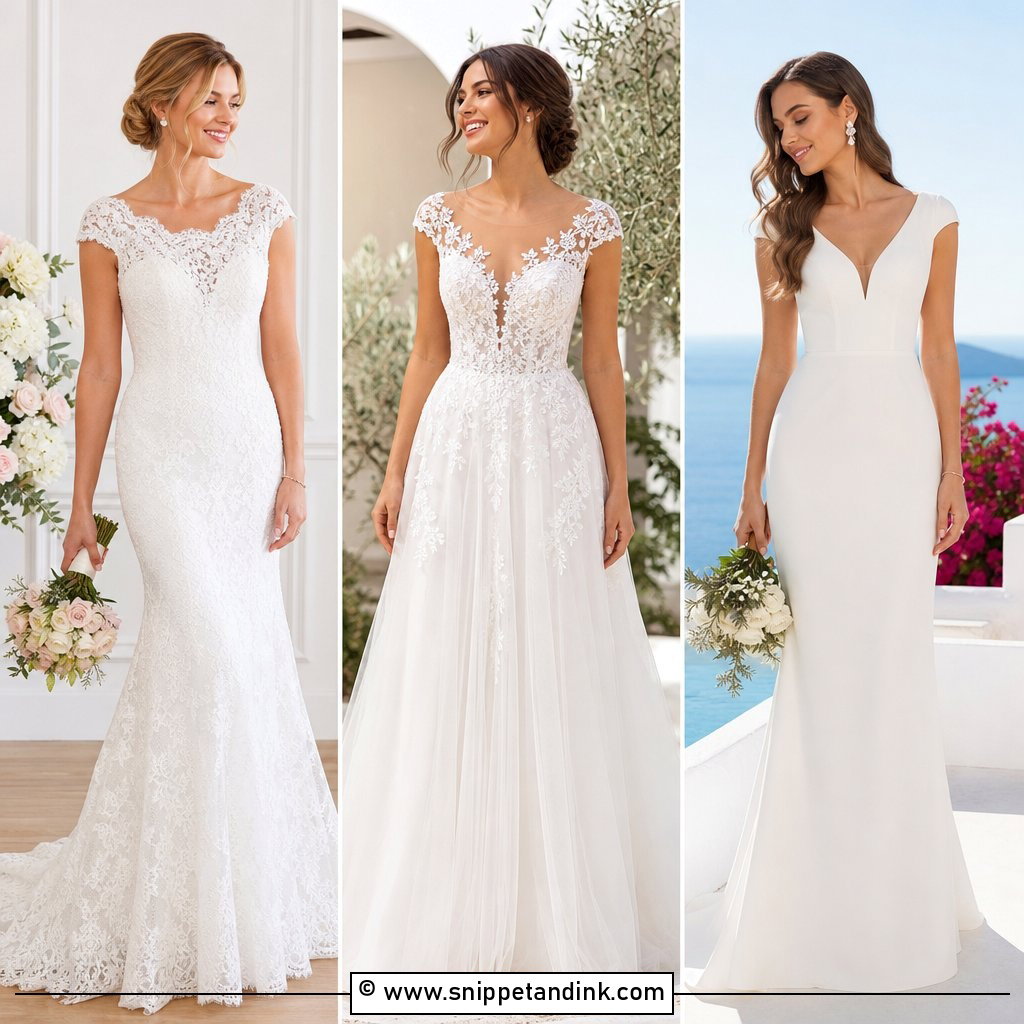
On a petite bride, the high waist makes the legs look longer, which is the empire line’s great advantage for her. The risk is volume. A slim A-line, soft chiffon fall or narrow tulle keeps the proportions right, and a short train or none stops the skirt swallowing her. A V-neck, square neck or thin straps open the top. Nude or ivory heels add height without breaking the line. Keep the veil narrow and the earrings small.
16. Empire Waist Ball Gown Wedding Dress
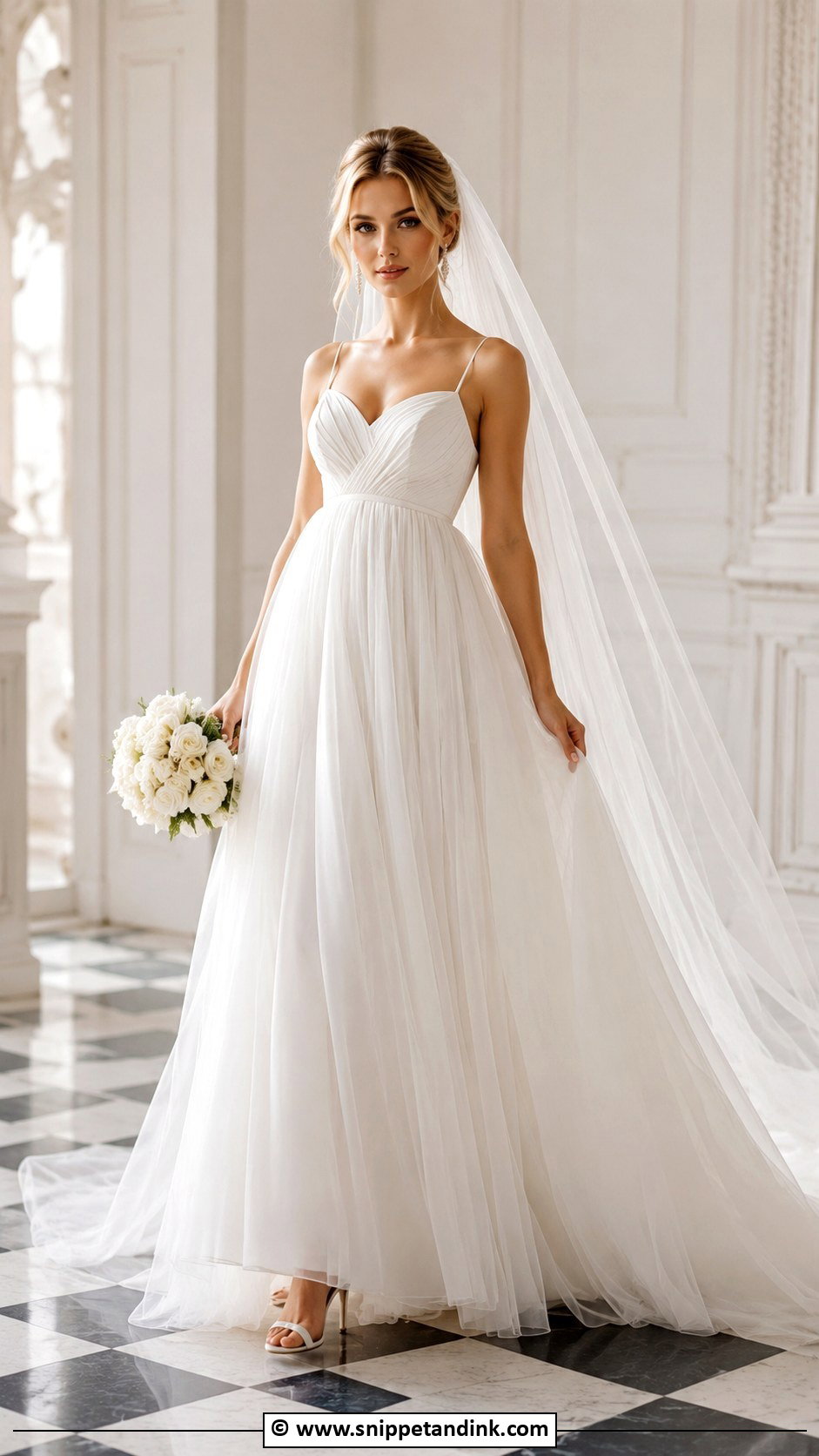
An empire ball gown needs soft volume, not stiff bulk. Layered tulle or organza spreads from the high seam into a full skirt that still floats. Watch the weight. A heavy skirt hanging from a high bodice pulls on the shoulders, so check the straps and internal support carefully. A fitted bodice keeps the gown from looking loose. A long veil, classic heels and refined earrings suit a formal venue and a princess-style shape.
17. Empire Waist A Line Wedding Dress
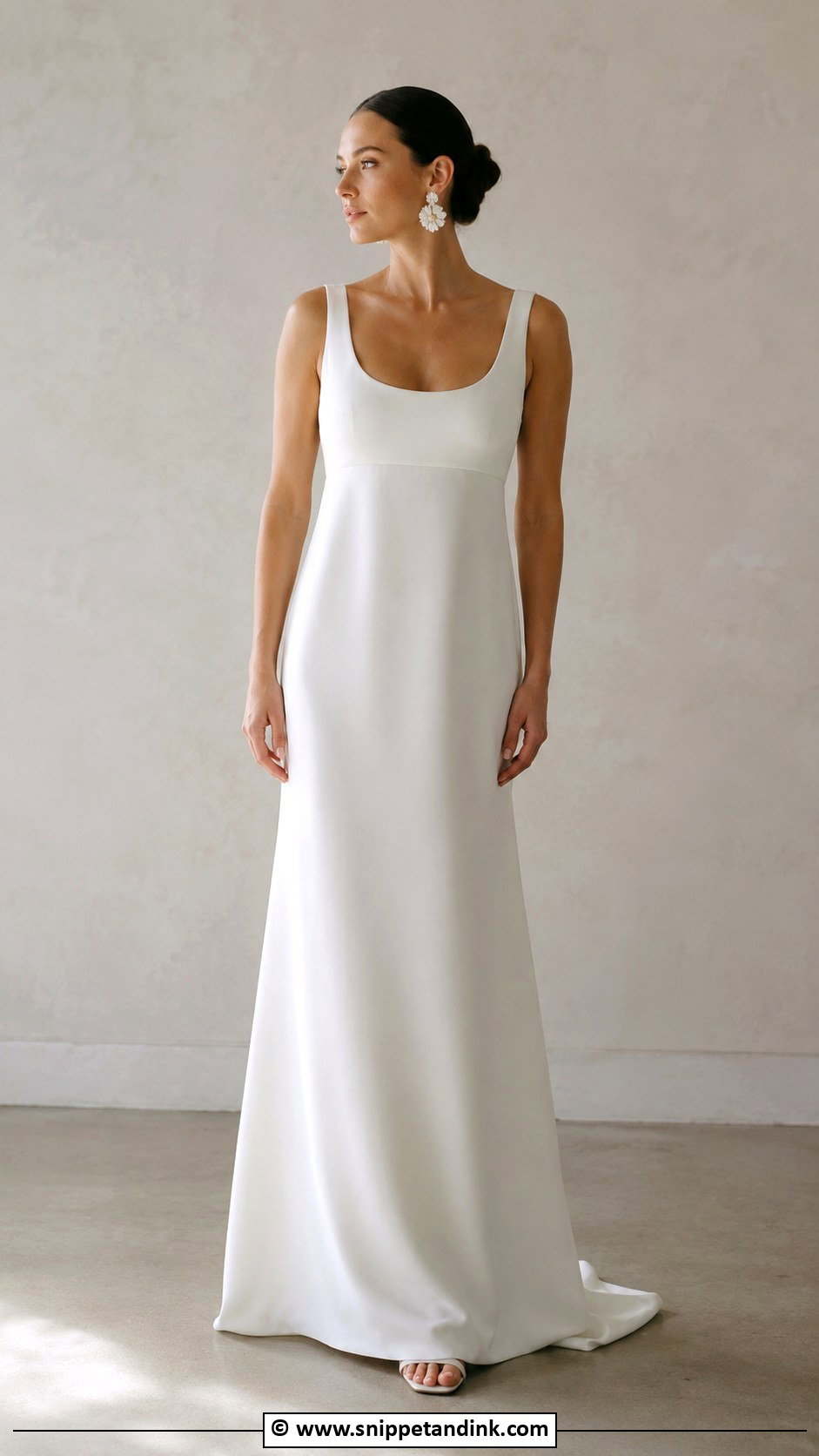
This is the easiest empire shape to wear. The skirt widens gradually from the high seam, so there’s shape without fuss, and it suits most bodies and venues. Chiffon gives softness, satin polish and lace romance. A simple veil and low heels keep it classic; statement earrings dress it up for a formal room. If you can’t decide on a silhouette, I’d try this one first.
18. Empire Waist Corset Wedding Dress
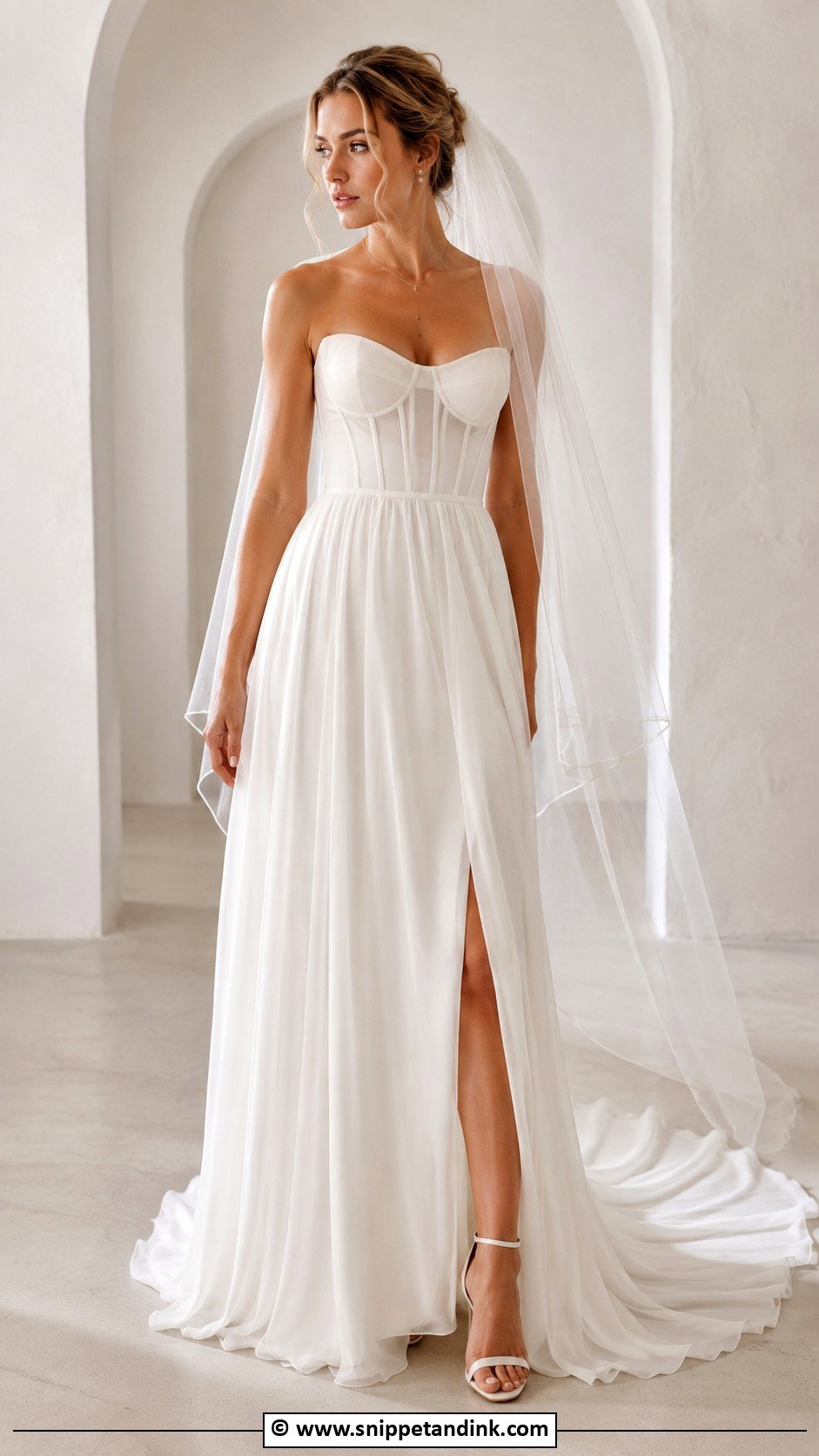
A corset bodice gives an empire dress the support it usually lacks. Boning shapes the bust and upper waist, and the skirt still flows from just beneath. It’s what I suggest for fuller busts that want a strapless empire. Modern versions use light boning, sheer panels or a smooth satin face rather than heavy period construction. Try it sitting down: a long corset that ends too low digs into the stomach when you sit for dinner. A clean veil and minimal jewelry let the bodice lead.
19. Empire Waist Beaded Wedding Dress
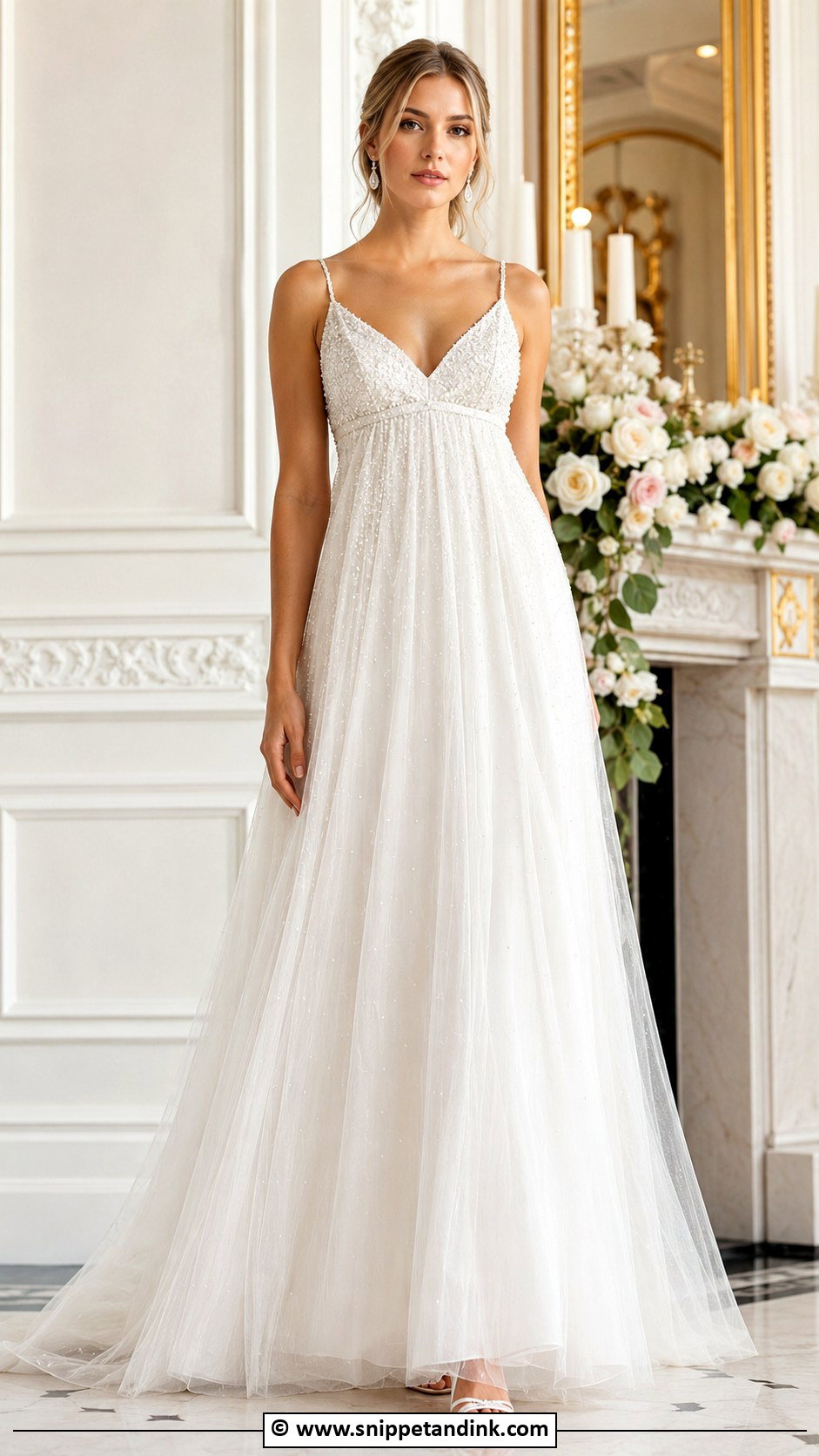
Beading belongs on the bodice, straps or the waist seam of an empire dress, never all over. That keeps the weight high and the skirt free. Silver, pearl or clear beads in a fine pattern catch light near the face. Ask whether the beads are sewn individually or in chains; chain-stitched beading can unravel if one thread breaks. A chiffon or tulle skirt keeps the dress airy, and a smooth hairstyle and simple earrings suit evening receptions.
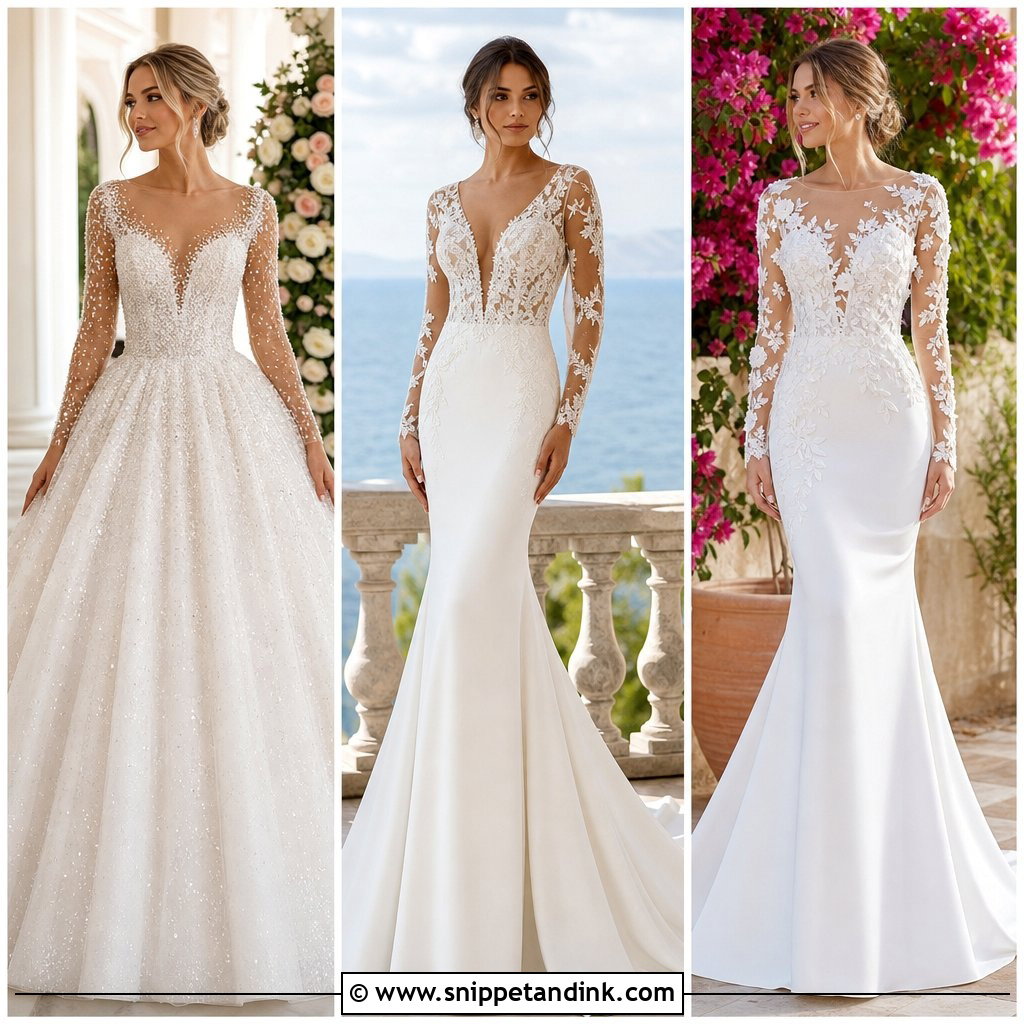
20. Empire Waist Floral Wedding Dress
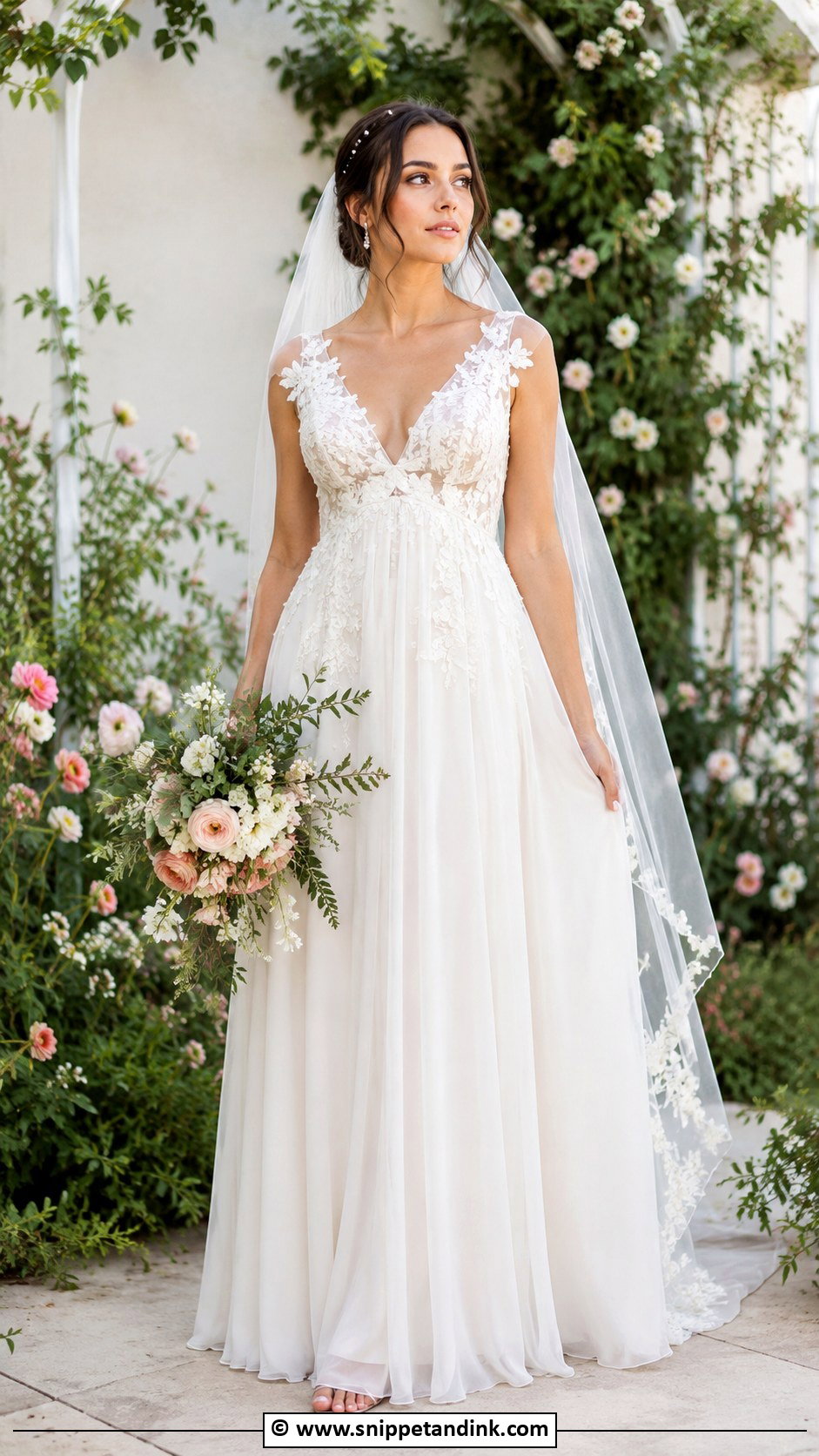
Floral detail needs a balance between the bodice and the skirt. Strong floral lace on top calls for a plain skirt; scattered applique below calls for a clean neckline. 3D flowers add texture but catch on veils and hair, so I keep them off the shoulders when a long veil is planned. Soft waves, pearl pins and simple sandals suit spring and summer gardens.
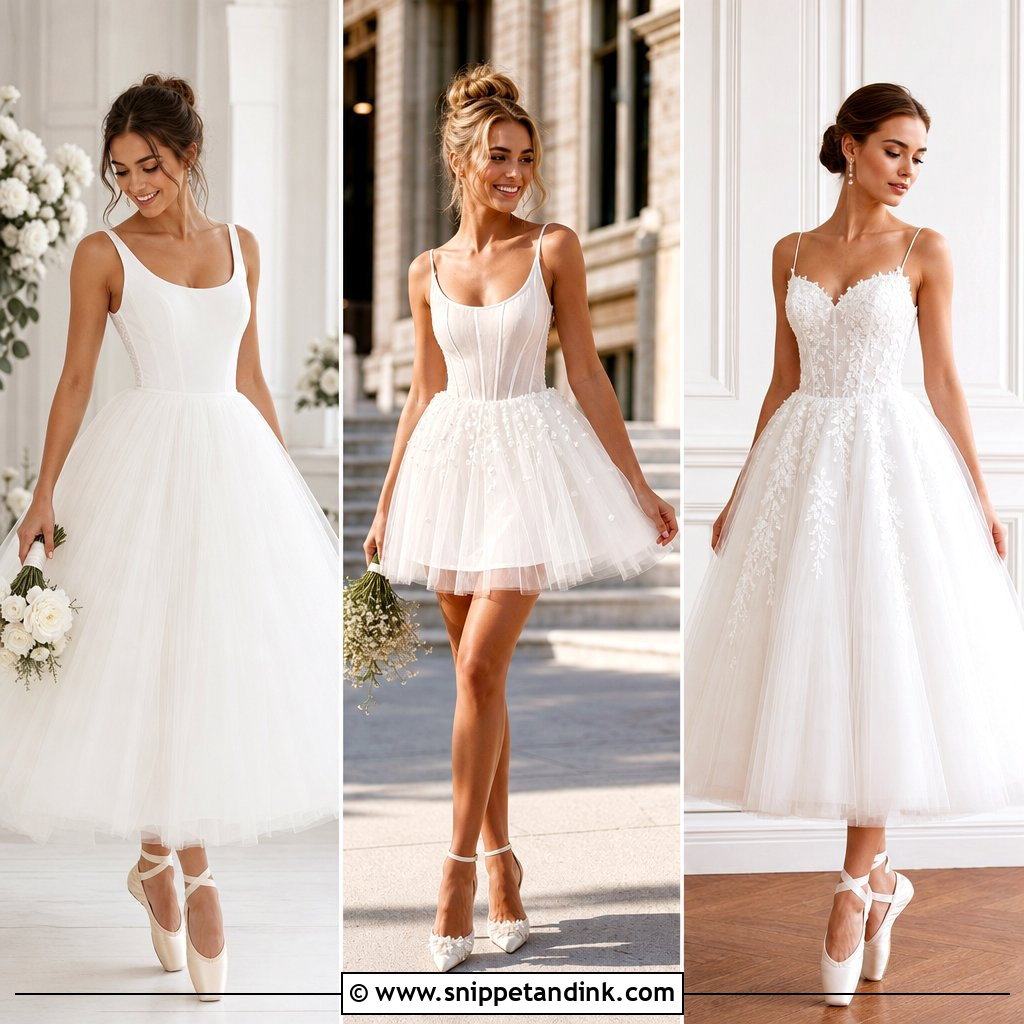
21. Empire Waist Short Wedding Dress
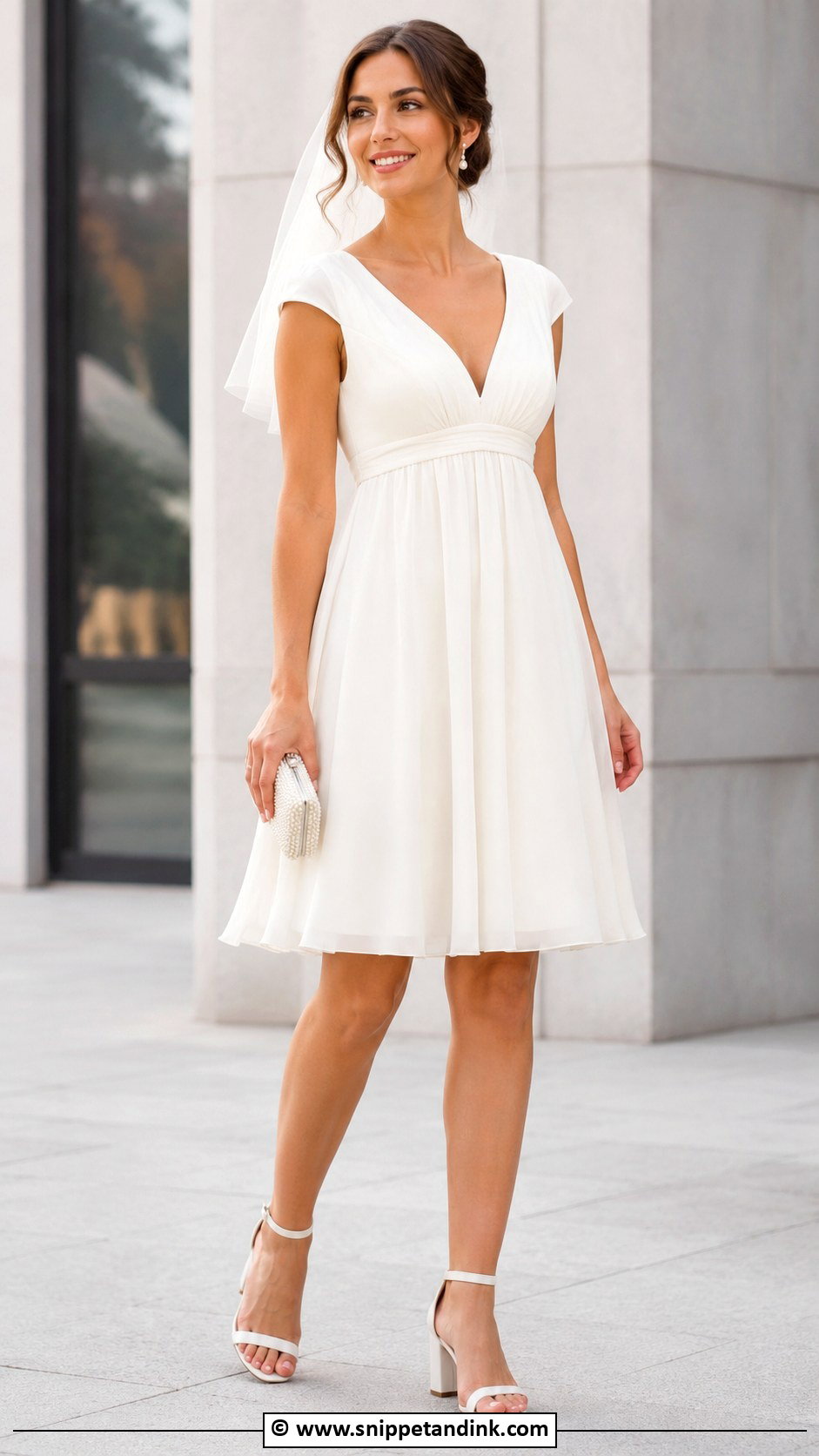
A short empire dress is the one I suggest for civil ceremonies, elopements and the reception change. The high waist keeps it sweet, and the hem lets you move freely. A knee-length chiffon version is soft; a structured satin mini is modern. Short empire dresses can tip toward babydoll, so keep the bodice fitted and the skirt not too full. Block heels, a short veil and pearl earrings make it clearly bridal, and a cropped jacket or sheer wrap adds polish.
22. Empire Waist Tea Length Wedding Dress
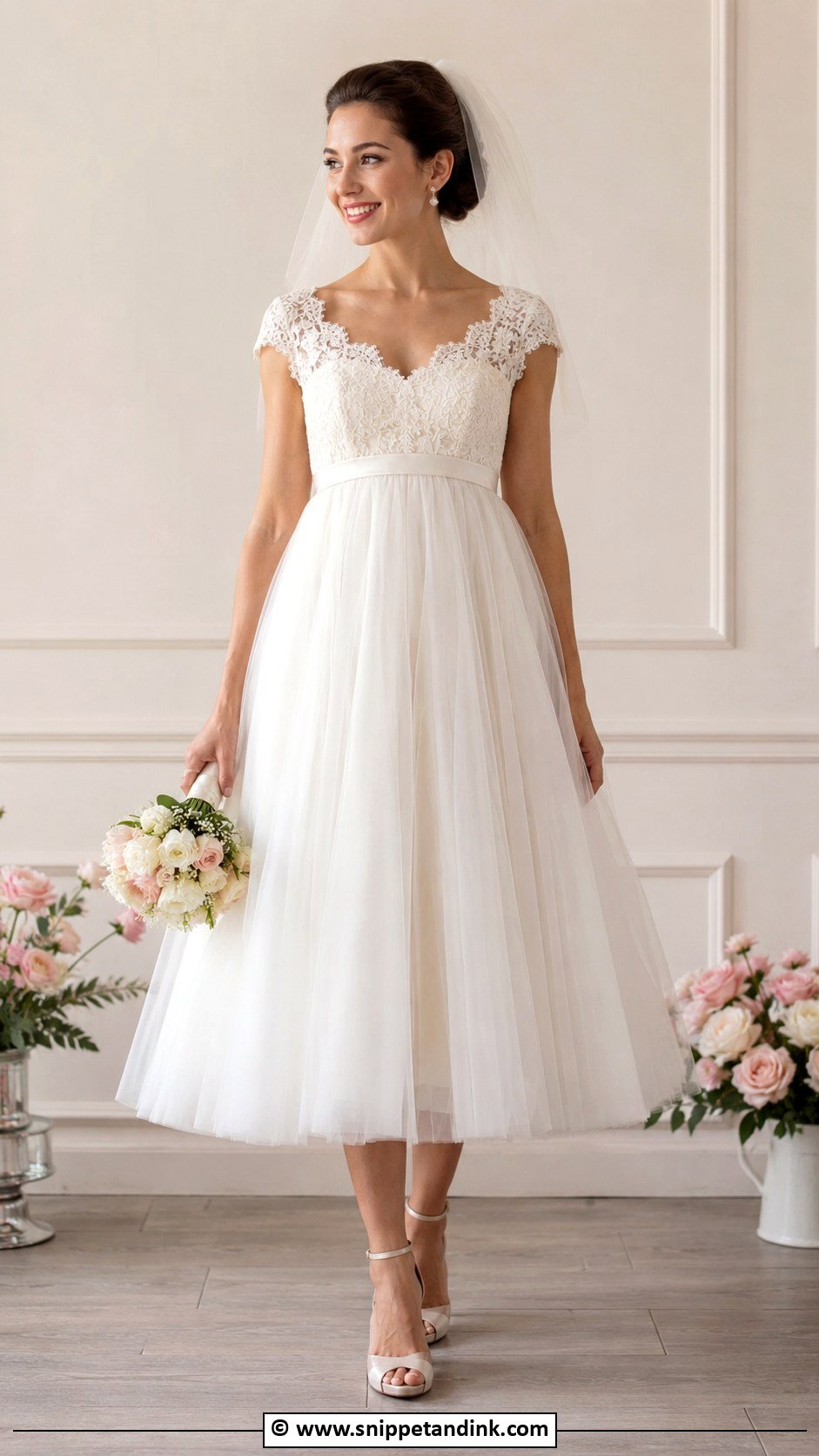
Tea length on a high waist has a real vintage swing. The hem falls between knee and ankle, so your shoes are on show: pointed pumps, ankle-strap heels or elegant flats, whichever you can stand in for hours. Lace is classic, satin polished, tulle soft. Make sure the hem is level all the way round, since an empire skirt hangs from a high point and any unevenness shows at this length. A birdcage or short veil fits the era.
23. Empire Waist Halter Wedding Dress
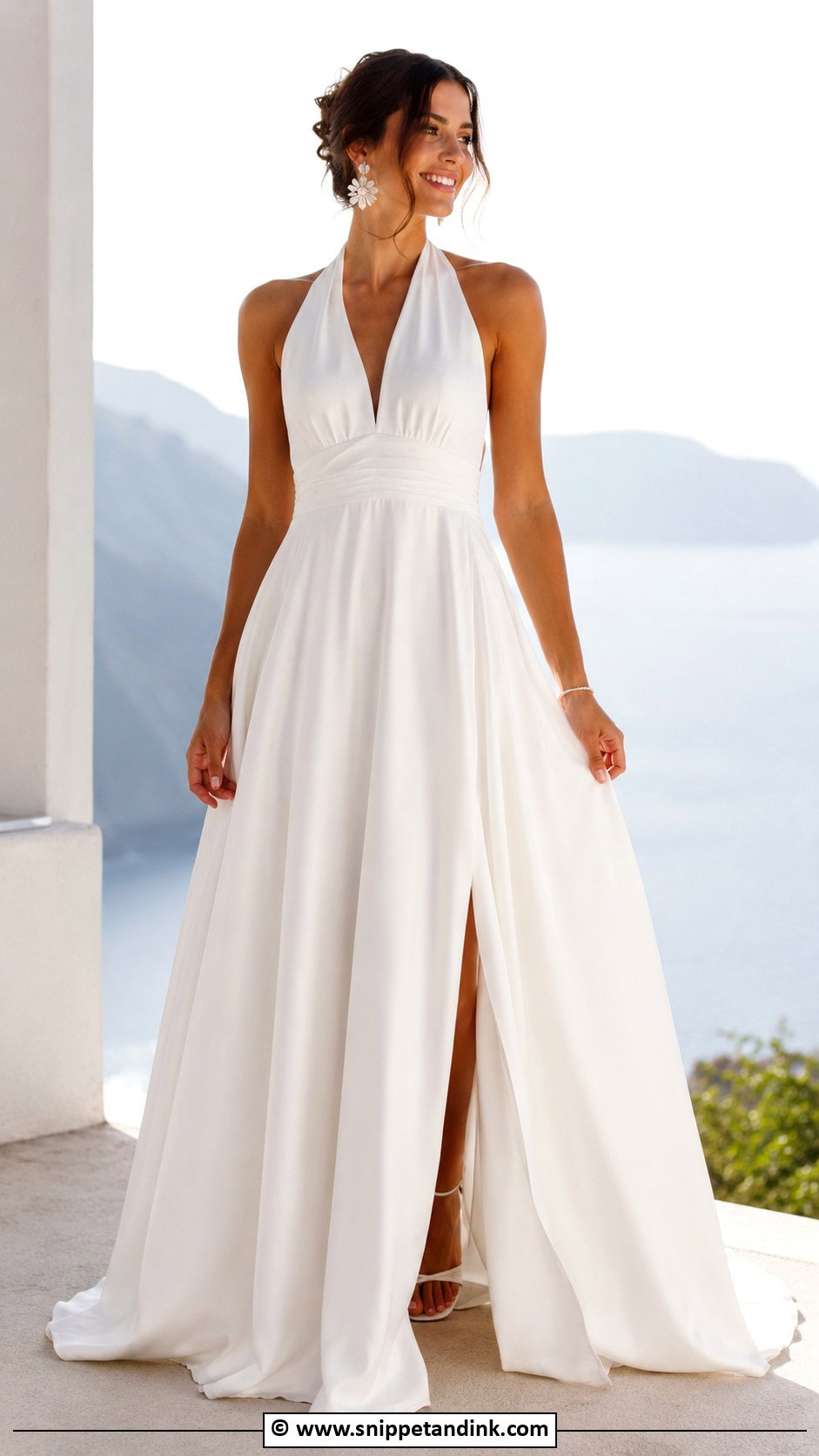
A halter feels secure on an empire dress because it holds the bodice from the neck rather than relying only on the bust. It suits beach and destination weddings well. Satin looks sleek, chiffon more relaxed. Because the halter takes some weight, a heavy skirt can make the neck ache, so keep this one light. Skip the necklace and choose earrings, a bracelet and clean sandals.
24. Empire Waist Backless Wedding Dress
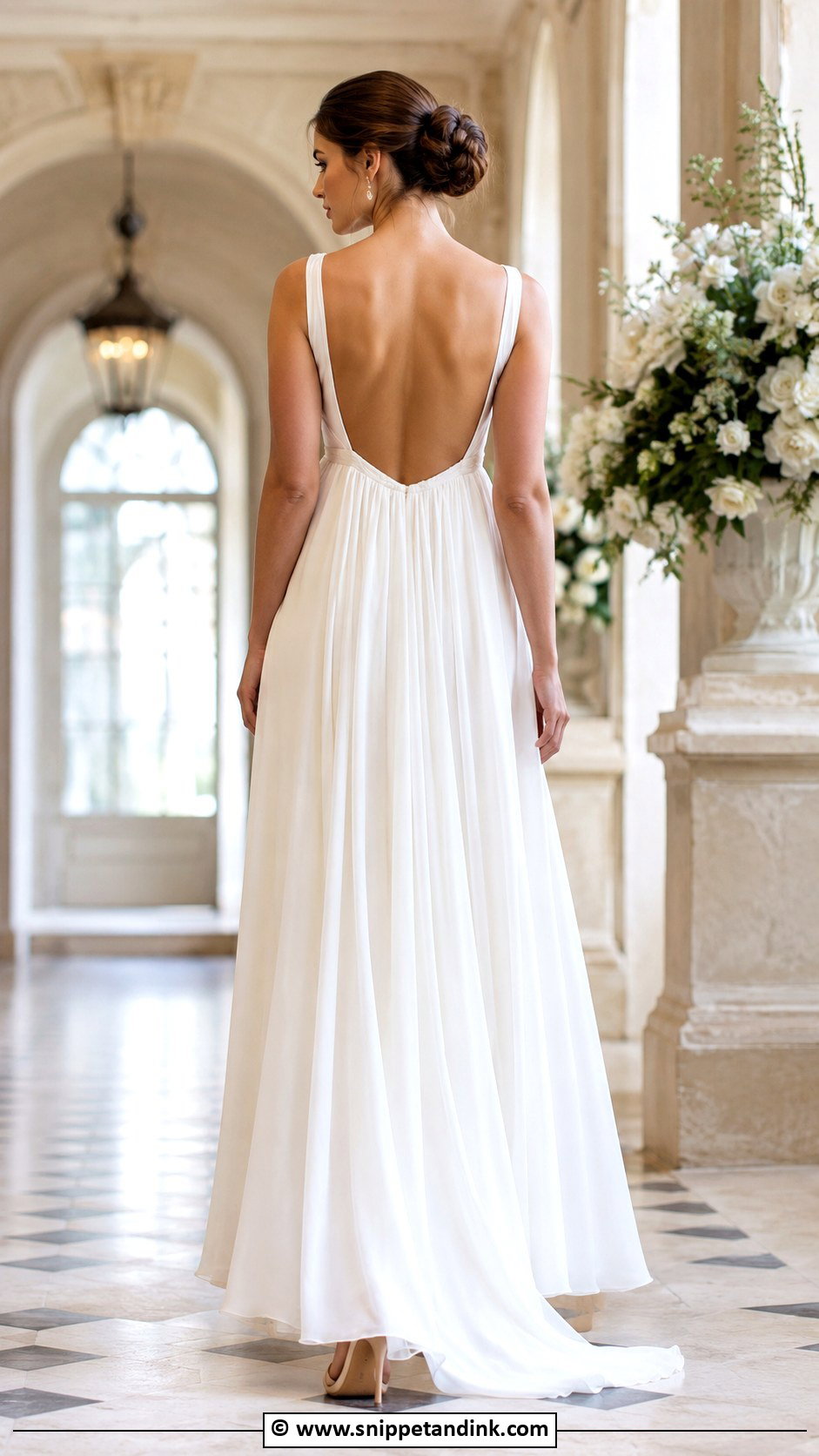
Backless empire gowns are a fitting challenge. With the seam high and the back open, there’s very little fabric to hold the bodice in place, so the front has to be tailored closely and often needs internal support or clear straps. Soft crepe, chiffon or satin drape well over it. A low bun or swept-up style shows the back, and a sheer veil lets it show through. Bra options are limited, so plan them at the first fitting, not the last.

25. Empire Waist Regency Wedding Dress
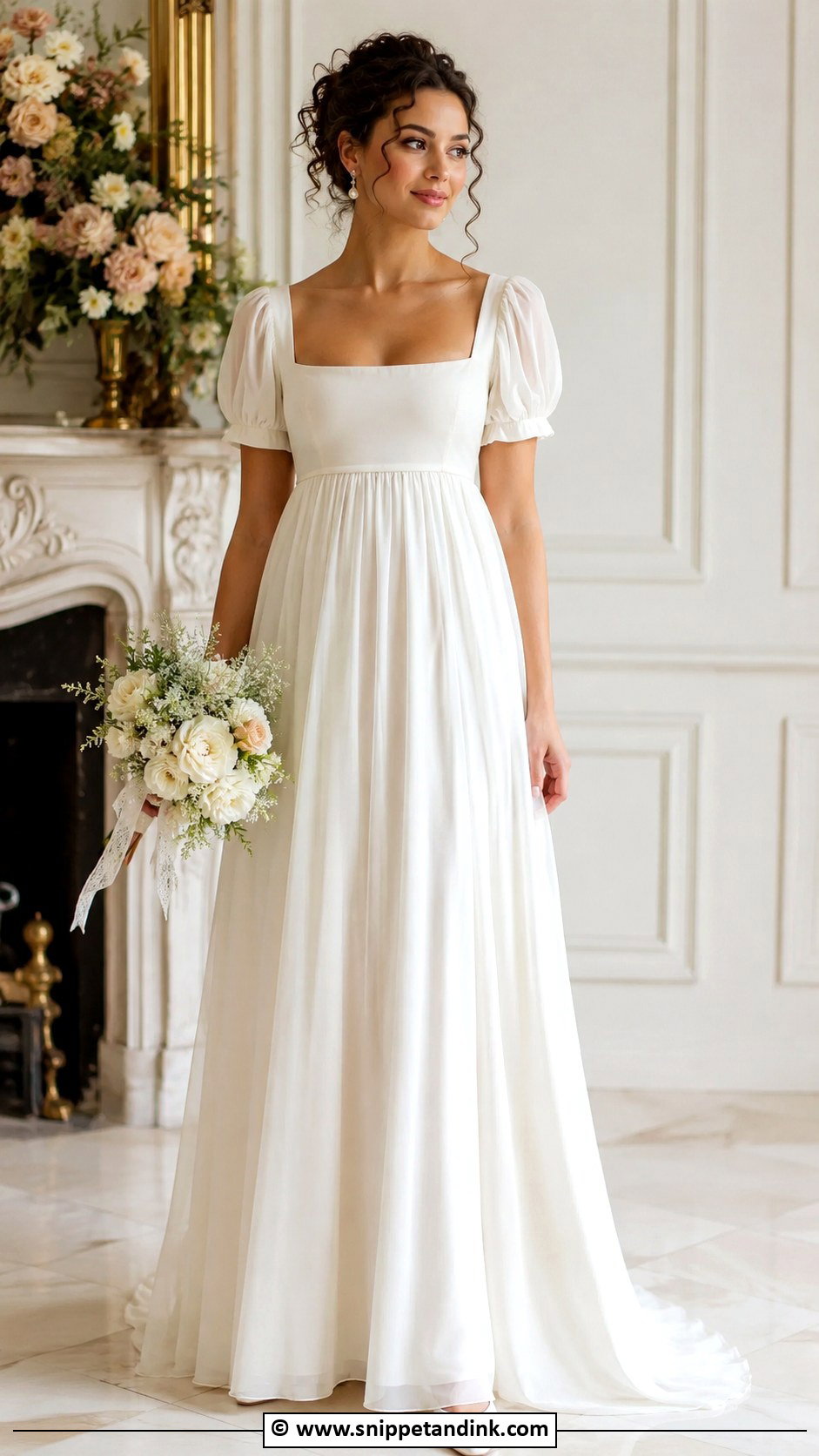
Regency gowns of the early 1800s are where the empire line comes from, but a wedding version should feel modern. Choose one or two period touches, a fitted bodice with soft puff sleeves, a square neckline or a ribbon tied under the bust, and leave the rest plain. A flowing skirt in chiffon, silk-like satin or fine cotton keeps it graceful. Pearl earrings, soft curls and simple shoes suit it. Adding gloves, a bonnet-style headpiece and a reticule all at once makes it a costume.
Ordering an Empire Gown When Your Shape Will Change
This silhouette is the one brides choose when their body may change before the wedding, whether through pregnancy or deliberate weight loss. It handles both well, but the ordering needs planning.
If you’re expecting
Order to your expected size around the wedding date rather than your current one, and tell the shop how many weeks along you’ll be. Bust and ribcage tend to grow along with the bump, so ask for extra seam allowance at the side seams and, ideally, a laced or adjustable back. Book the final fitting as close to the date as the seamstress will allow, usually within the last week or two.
If you’re losing weight
The empire skirt hides changes below the bust, which is why this cut is forgiving. The bodice is not. Taking in a bodice is ordinary alteration work, but letting one out is limited by the seam allowance, so order for the size you are now and let the seamstress take it in later.
Fit the Bust First, and the Rest Will Fall
The empire line is comfortable and forgiving below the seam, and very particular above it. Lace makes it classic, chiffon airy, satin polished, tulle soft, and the neckline and sleeves steer it toward vintage, beach or formal. Whichever direction you choose, judge the dress on how the bodice sits on your bust in the underwear you’ll wear on the day. If that’s right, the skirt takes care of itself.
You'll Like These Ideas:



Leave a Reply