
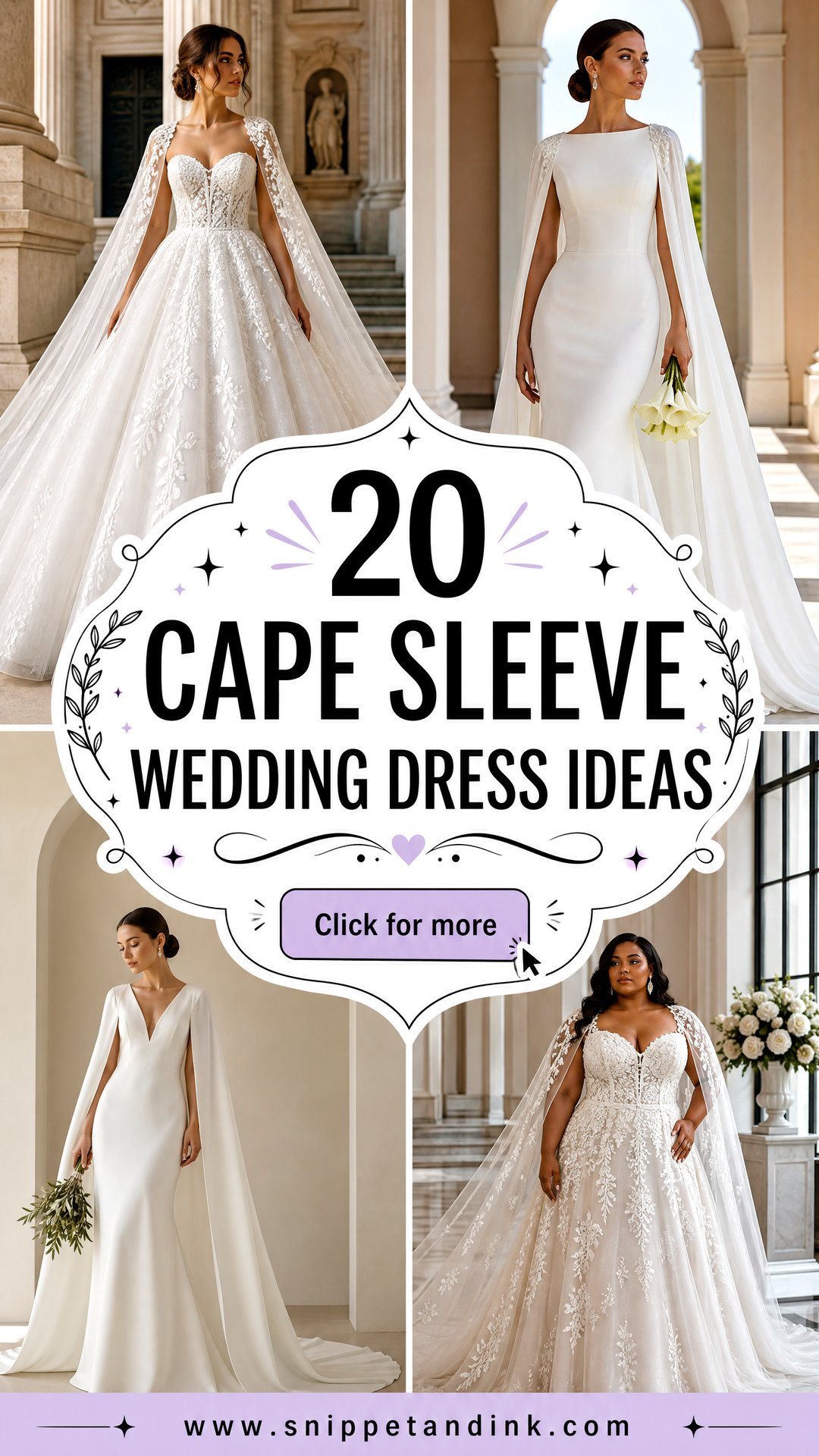
Cape sleeves are the one bridal detail that changes as you move. Standing still, they read as a soft frame for the shoulders; walking, they trail behind you like a short veil. That movement is why I treat them as a styling decision as much as a dress choice, since they affect your veil, your hair, your jewelry and even how you sit. The gowns below range from lace and satin to chiffon, beadwork and plain crepe. Several have detachable capes, which gives you a simpler dress for the reception. Read the notes on length and attachment before you fall for one.
Elbow, Wrist or Floor: How Long Should the Cape Fall?
Cape length changes the whole proportion of the dress, and it is the first thing I adjust for a bride’s height. A floor-length cape on a petite bride can swallow her outline from behind, while an elbow-length cape on a tall bride can look like an afterthought.
- Elbow length: light and easy, good for short dresses, petite frames and dancing.
- Wrist length: the most balanced option for most heights and silhouettes.
- Floor length or longer: dramatic in photos and down an aisle, but it needs a plan for sitting and dancing.
Where the cape is attached matters as much
Capes can be sewn into the shoulder seam, attached at the upper arm or hooked into the back of a strapless bodice. Shoulder seams give the most stable drape. Arm attachments look romantic but pull on the neckline. Back hooks make the capes removable but put strain on the bodice, which then needs firm boning. Ask your consultant which one the dress uses before you order.
1. Lace Cape Sleeve Wedding Dress
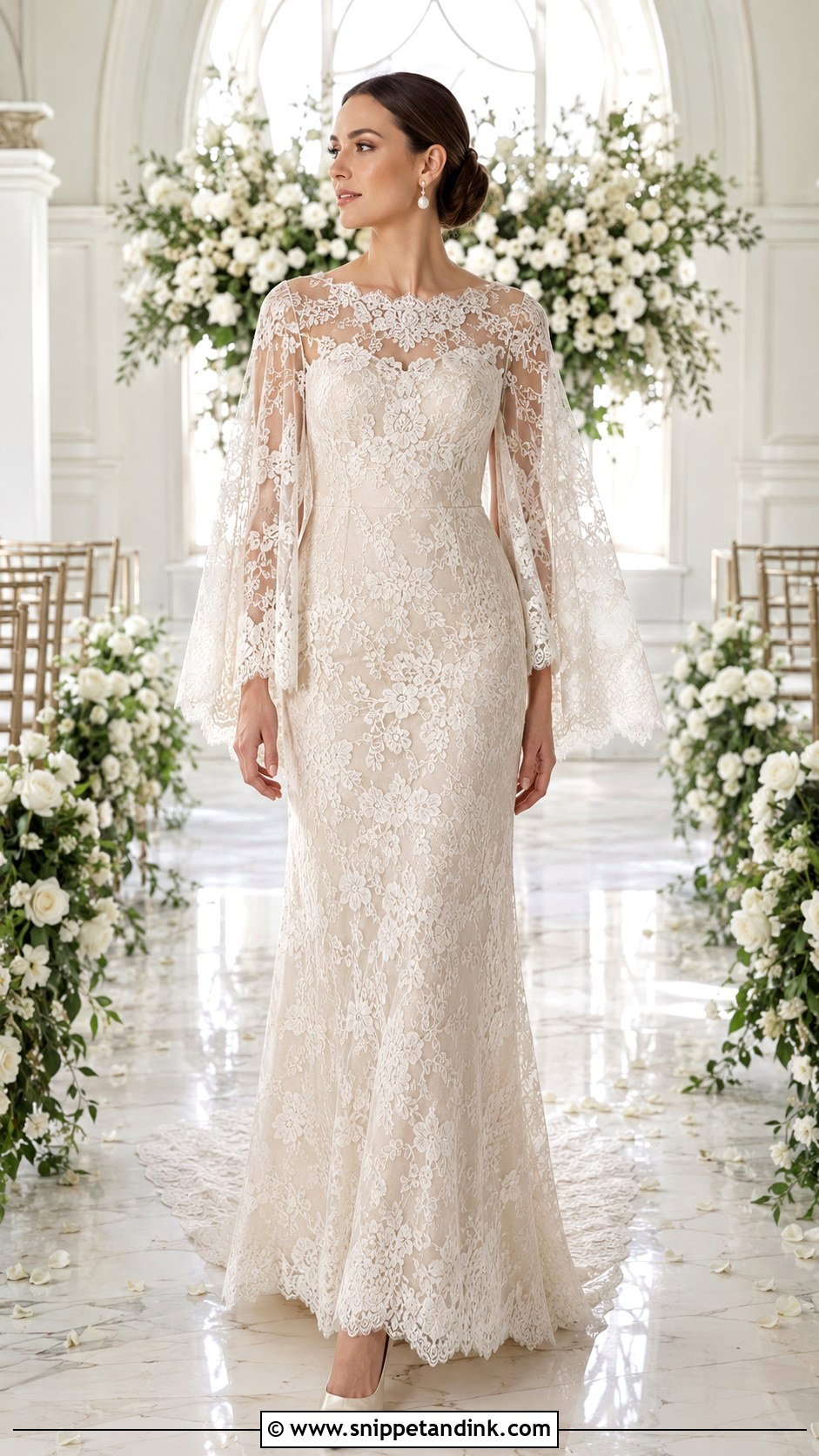
Sheer lace capes that start at the shoulder and fall near the wrist give movement without hiding the bodice. Ivory lace over a neutral lining shows the floral pattern clearly, and a scalloped edge finishes it neatly. I’d skip a heavily trimmed veil here; two layers of lace near the shoulders fight each other. A plain fingertip veil or a pearl comb is enough. A low chignon keeps the shoulders and the cape seam clear.
2. Satin Cape Sleeve Wedding Dress
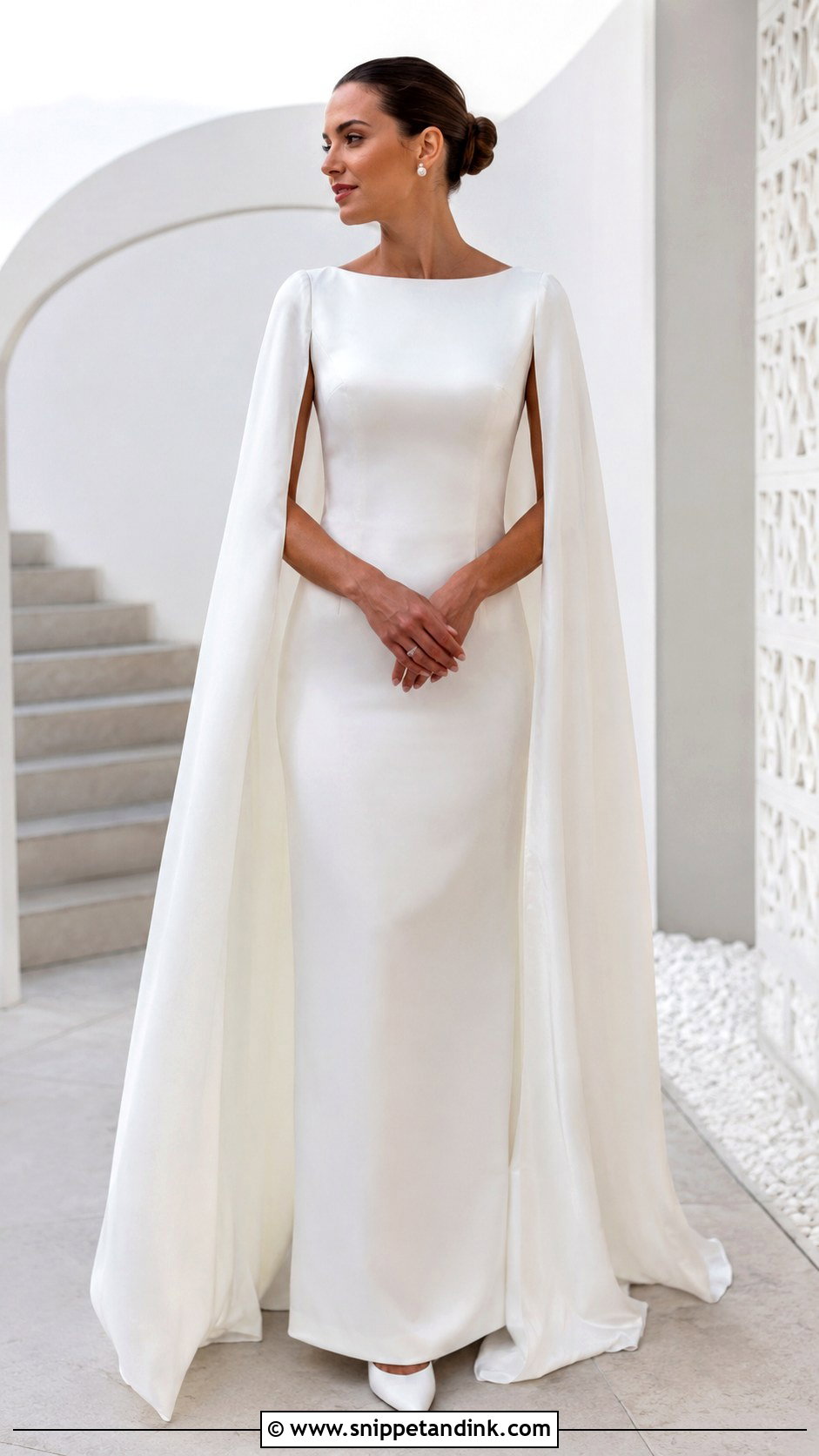
Satin gives a cape weight, so it hangs in clean folds instead of floating. That suits a column or soft A-line, especially from a boat neckline. Heavier satin capes pull backward on the shoulders, so the bodice needs to be fitted firmly or the neckline will creep up. With a big train, choose a short veil or none at all. Pearl studs, a sleek bun and pointed satin heels keep it architectural, and a modern indoor venue with plain walls shows the shape best.
3. Chiffon Cape Sleeve Wedding Dress
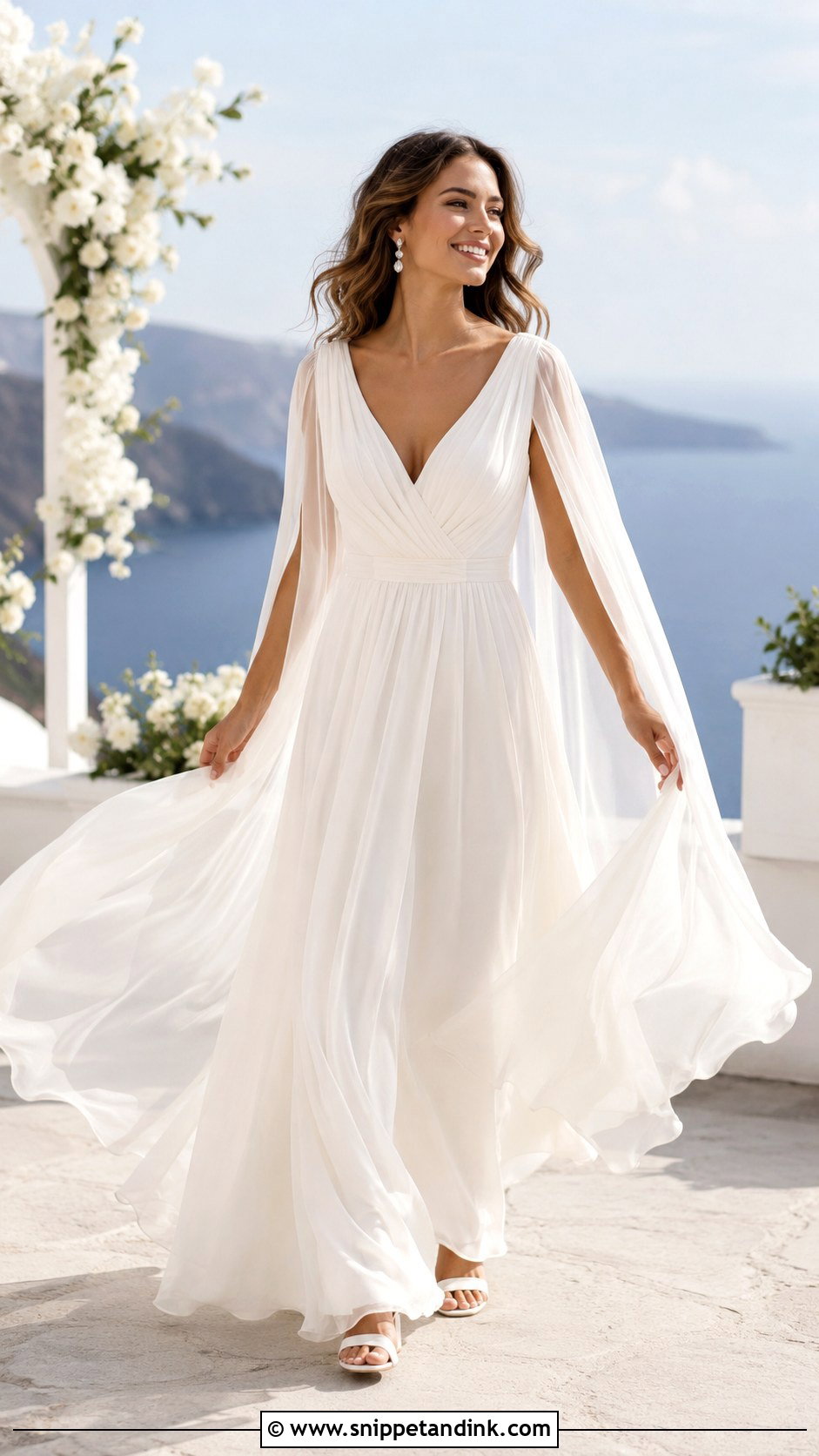
Floor-length chiffon capes float with every step and look magical on an aisle with a breeze. They also tangle the most. Keep the veil shorter than the cape so the two don’t knot together, and have the cape panels finished with a rolled hem that resists fraying. A V-neck A-line with a gathered waist keeps the skirt light. Check the chiffon in daylight, since thin chiffon can look sheerer outdoors than in the shop. Loose waves or a soft braided updo suit it.
4. Beaded Cape Sleeve Wedding Dress
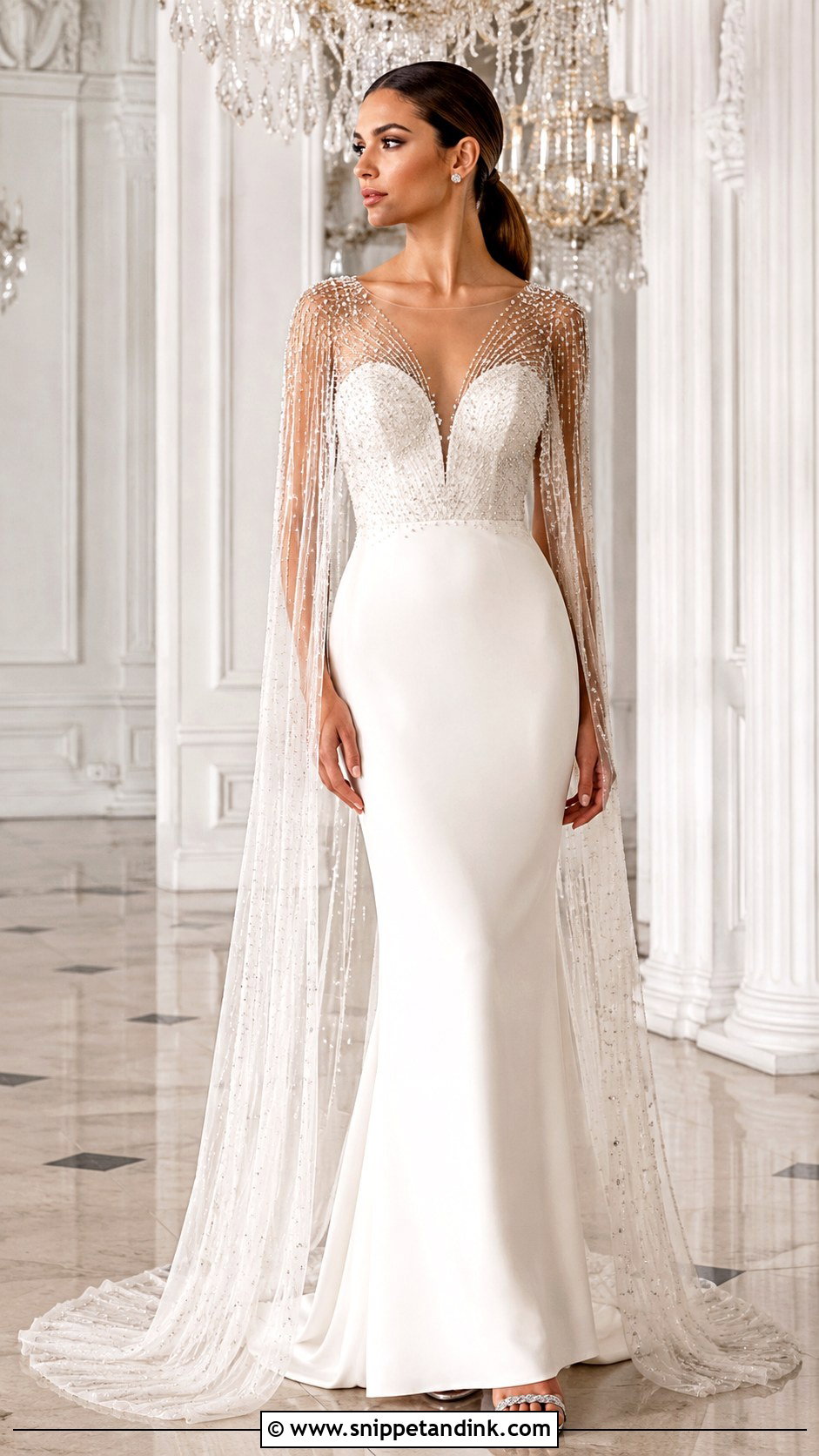
Beads on a cape catch light as you walk, which can look amazing under ceremony lighting. The look works when the crystal beading runs naturally from the bodice onto sheer floor-length capes, not when the cape is suddenly busier than the dress. Beading adds weight, so I always ask for flexible, lightly placed embellishment; a stiff beaded cape swings like a pendulum. A fitted sheath, silver heels and diamond studs keep it controlled. Skip the large necklace.
5. Off Shoulder Cape Sleeve Wedding Dress
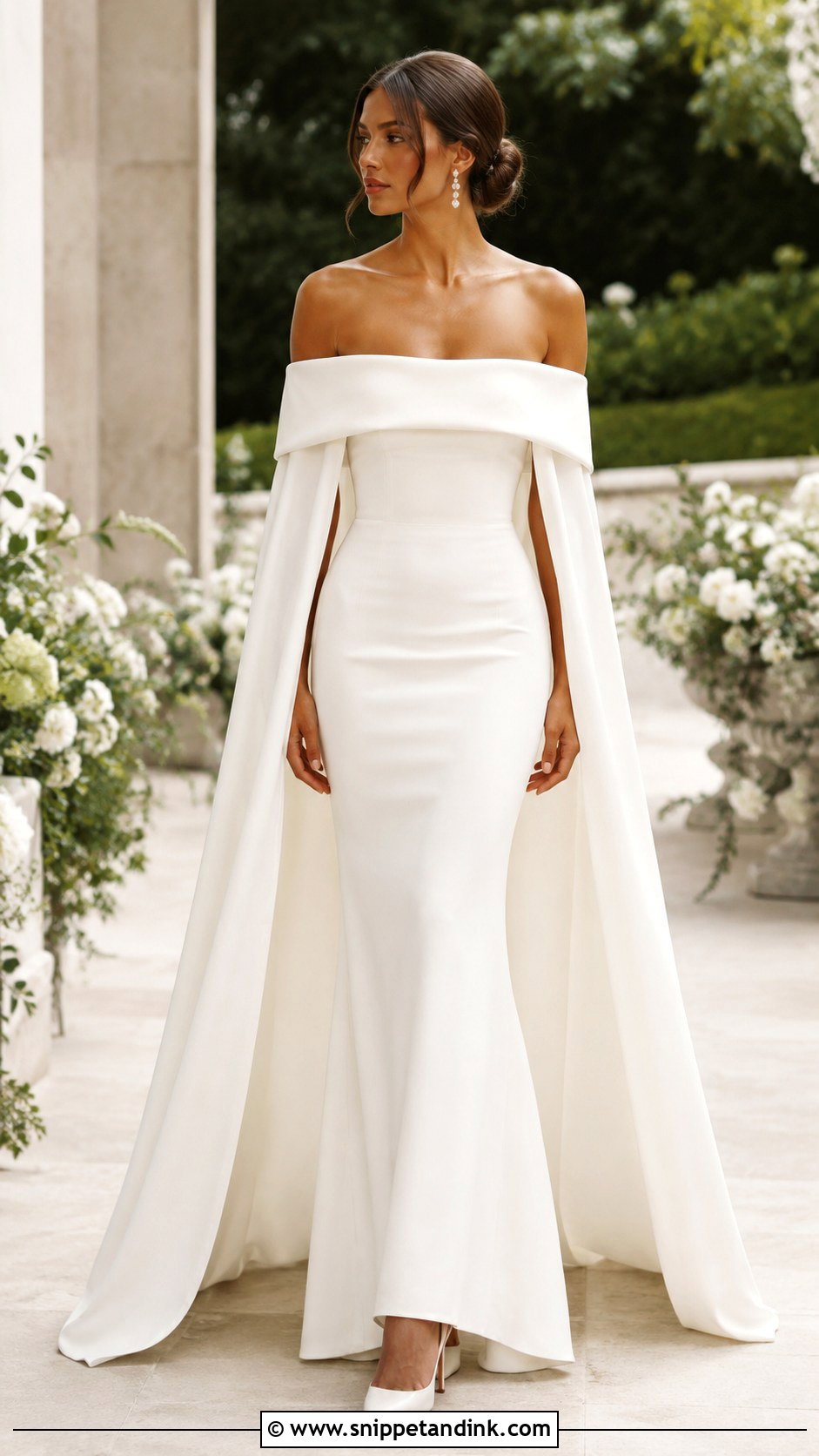
An off-the-shoulder neckline with capes attached at the upper arm frames the collarbones and creates a wide, romantic silhouette. The attachment point is the tricky part, because a cape hanging from the arm pulls the neckline down when you reach forward. Raise your arms, sit and walk at every fitting. A fine pendant and a side-swept updo suit the shape. A cathedral veil plus long capes is usually too much fabric; try a shoulder-length veil or a comb.
6. High Neck Cape Sleeve Wedding Dress
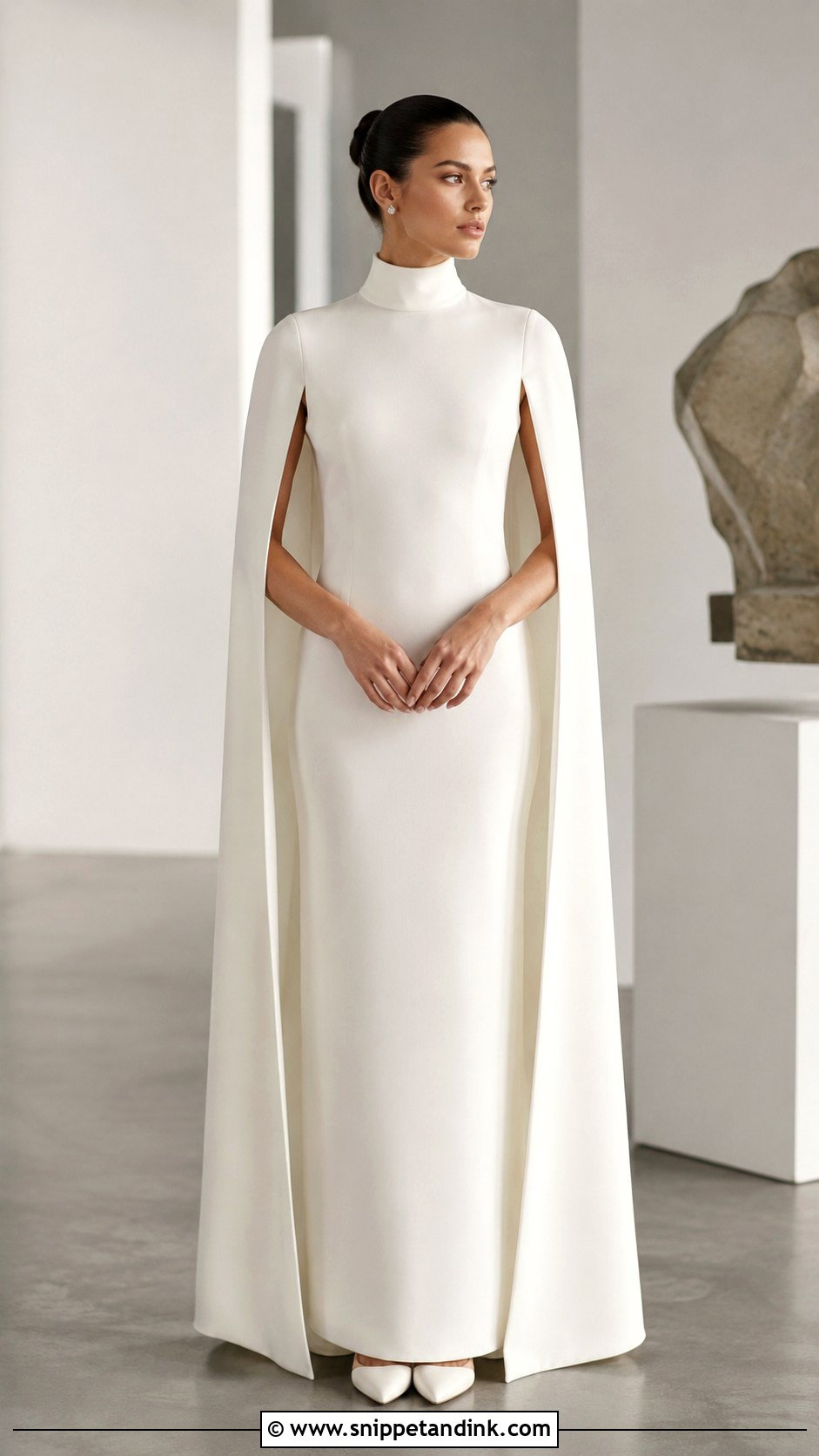
A high neck with capes opening at the sides gives full coverage and a very modern shape. Smooth crepe, satin or silk keeps the upper half quiet. Shoulder seams on this cut have to be tailored precisely, otherwise the capes hang unevenly and one side sits forward. No necklace is needed. Crystal studs, a polished bun and a narrow train complete it.
7. V Neck Cape Sleeve Wedding Dress
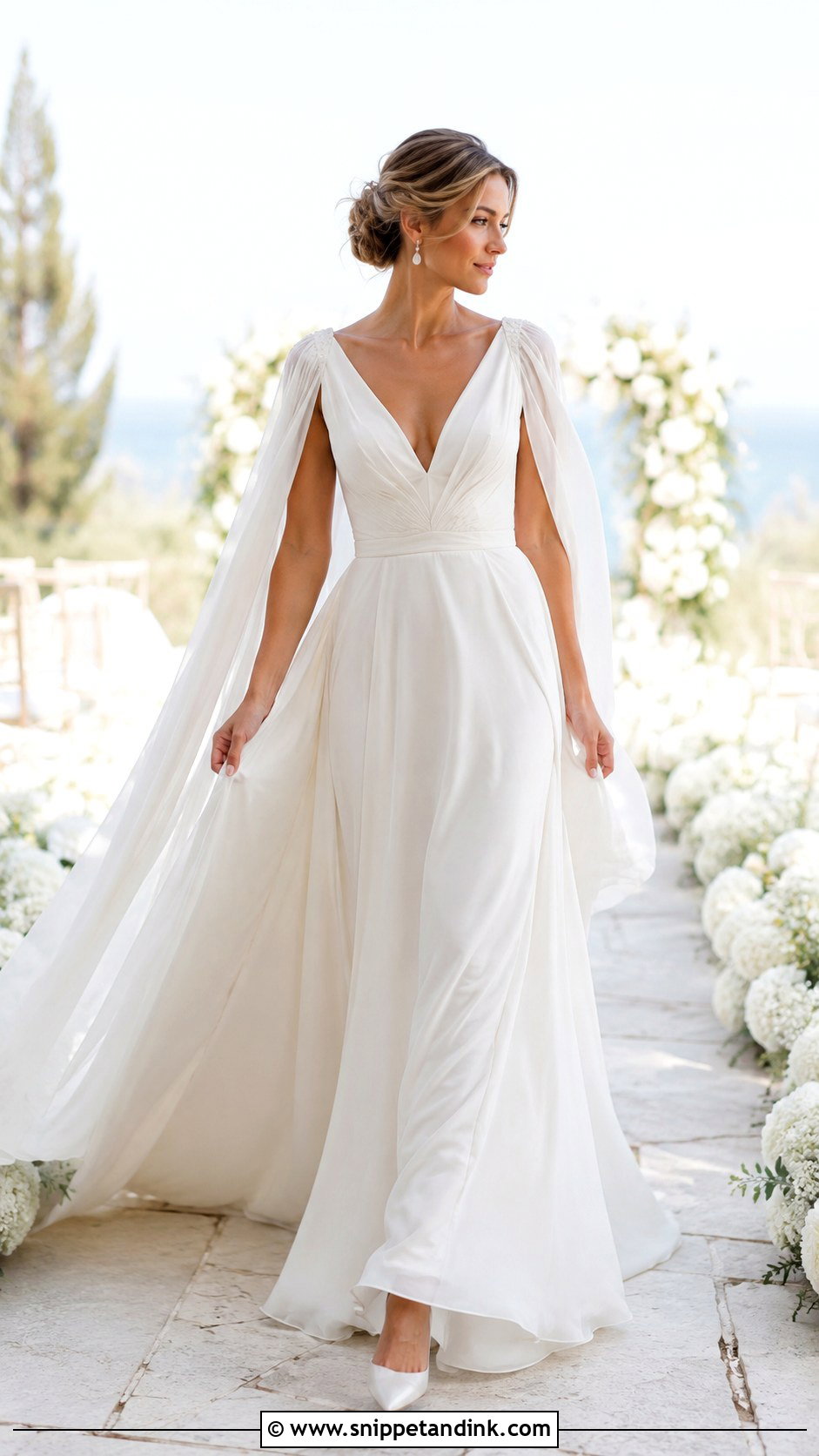
A V neckline lengthens the body and pairs naturally with cape movement. A sheer inset can support a deeper V. Choose cape length by mood: knee-length feels lighter, floor-length more dramatic. When you try it on, look at the side and back views too, since the weight of the capes can drag the V open if the neckline isn’t secured. Teardrop earrings, a textured bun and a matching narrow belt are enough. Avoid contrasting colors at the waist.
8. Square Neck Cape Sleeve Wedding Dress
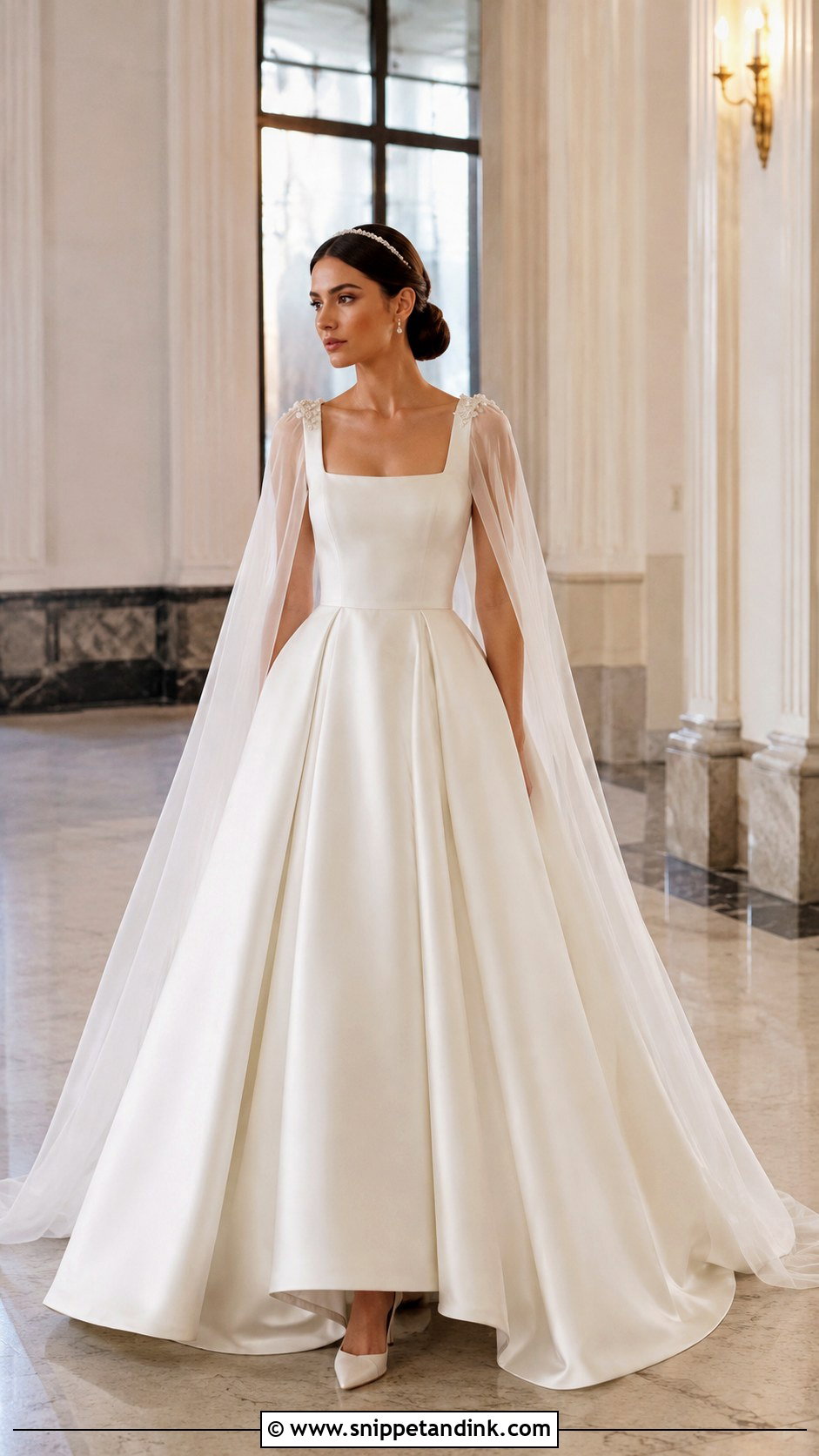
Square necklines frame the shoulders cleanly and give a slightly vintage feel. On a structured satin or mikado ball gown, light sheer capes float above the firm bodice. With a full skirt, ask for narrower cape panels so the outline doesn’t get too wide. A few lace appliqués at the shoulder soften the join. The bodice must be properly boned, since the moving capes tug at the top edge. Pearl button earrings and a thin headband finish it.
9. Strapless Cape Sleeve Wedding Dress
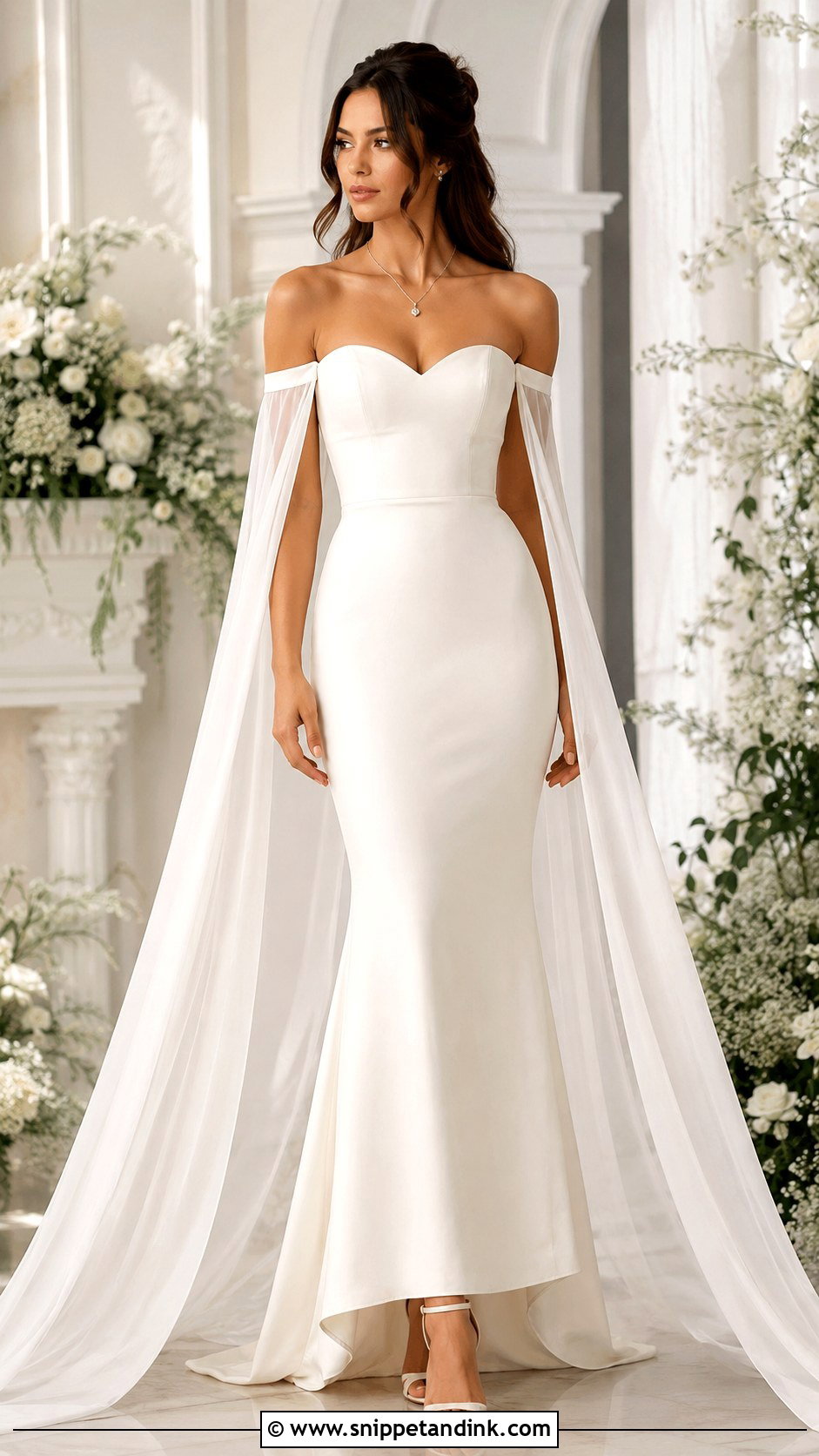
A strapless dress with capes attached at the neckline or upper back gives you sleeves without losing the strapless bodice. Start with a fitted sweetheart gown and add sheer capes secured with hidden hooks. I have the seamstress reinforce each attachment point and tuck fasteners under lace or beading. Test that the capes don’t drag the bodice downward as you walk. Detachable versions let you take them off for dancing.
10. Mermaid Cape Sleeve Wedding Dress
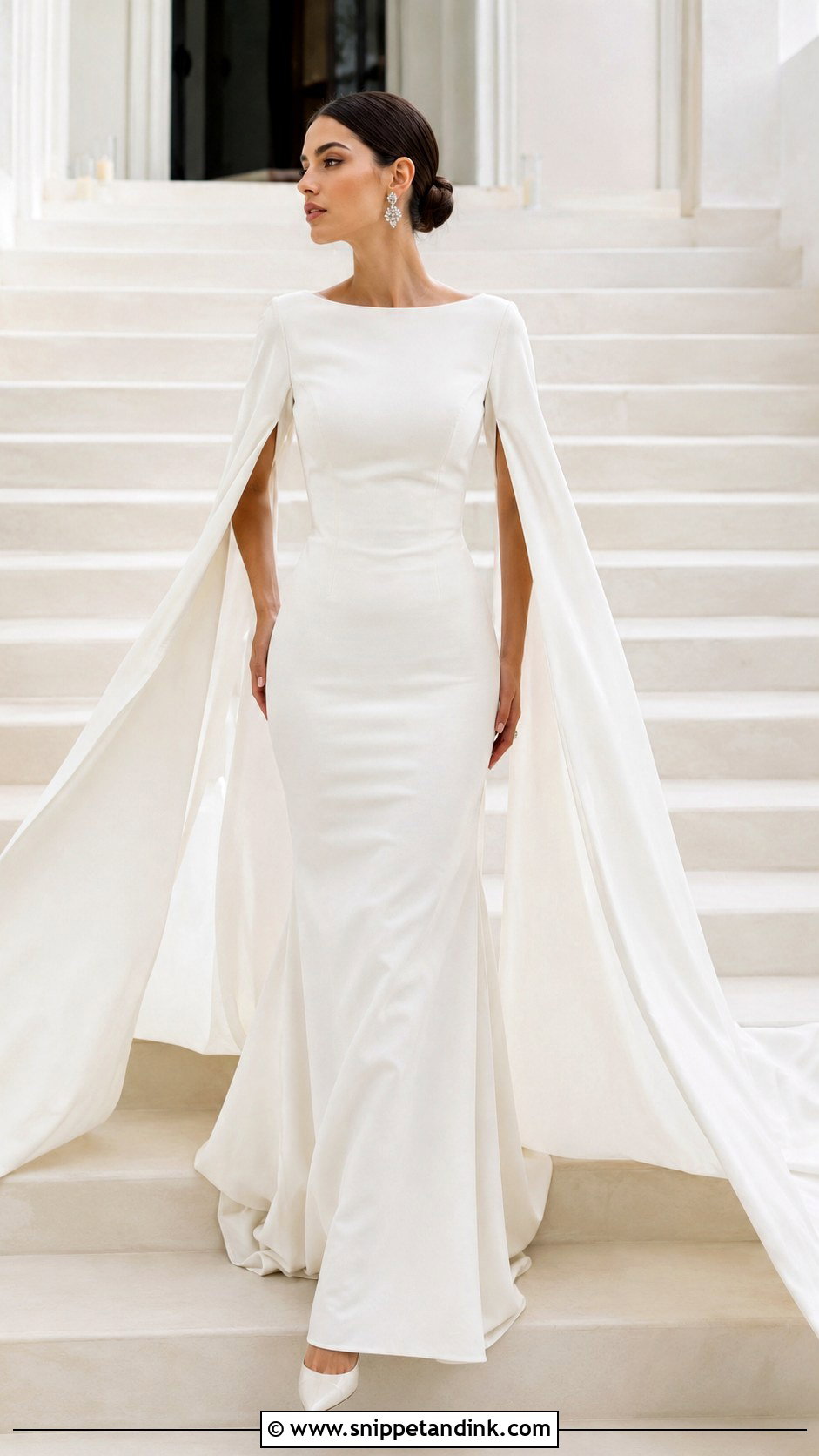
The mermaid cut fits closely through the hip, and long capes soften the shape while adding a dramatic entrance from behind. The common problem is the cape falling onto the train and bunching. Ask your seamstress to set the cape slightly to the side so it falls away from the train. Test your stride and practice sitting in fittings. Crystal earrings and a sleek low bun are plenty; this cut already says a lot.
11. A Line Cape Sleeve Wedding Dress
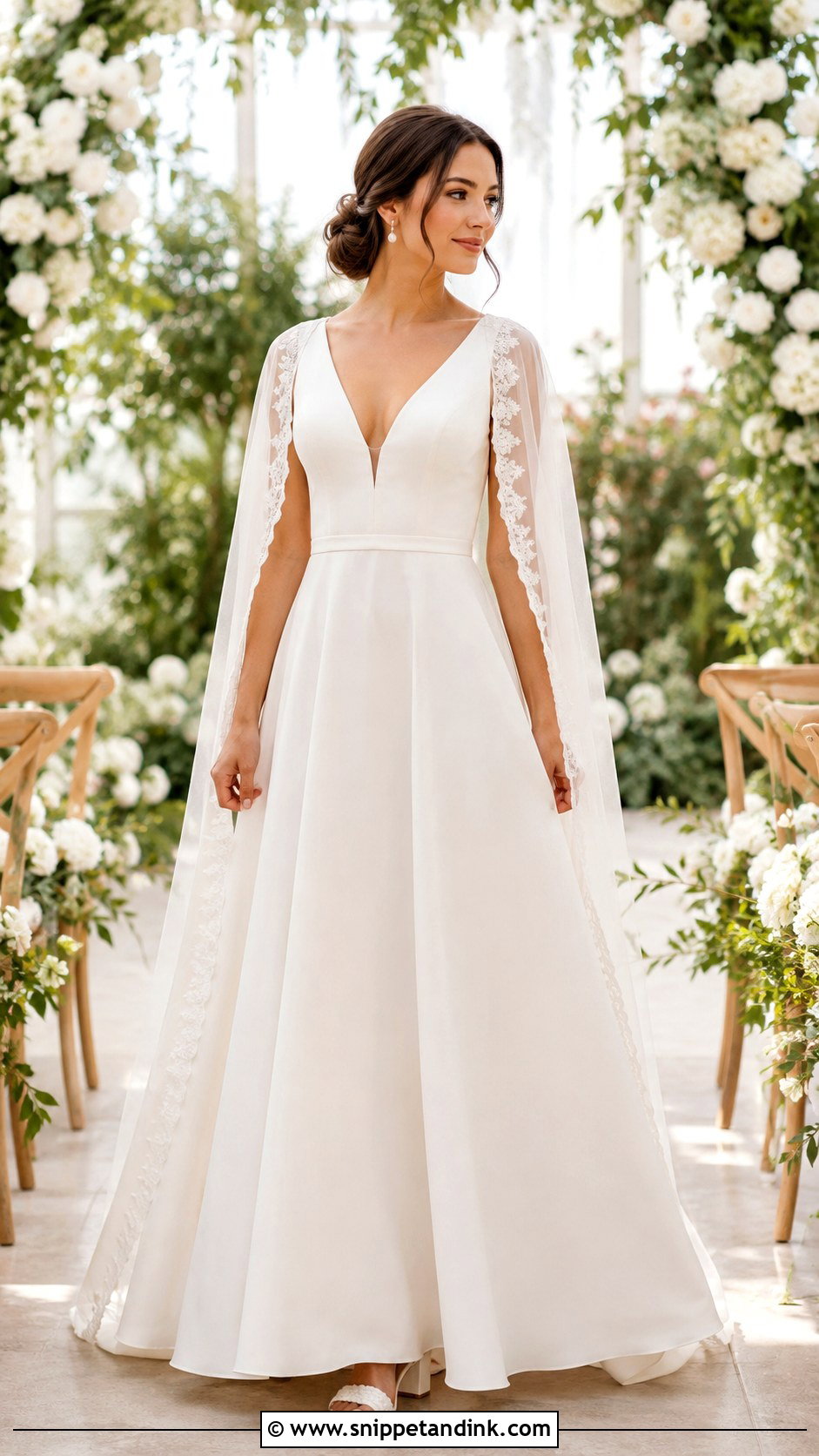
An A-line with capes works across almost every venue and season. A softly structured bodice, a natural waist and light capes keep it balanced, and lace at the shoulders joins the capes to the dress gracefully. When the cape reaches the floor, I usually swap the veil for a hair comb or keep it short. Hem the skirt with your wedding shoes on so neither the skirt nor the capes catch underfoot. Mid-height block heels give a steady walk.
12. Ball Gown Cape Sleeve Wedding Dress
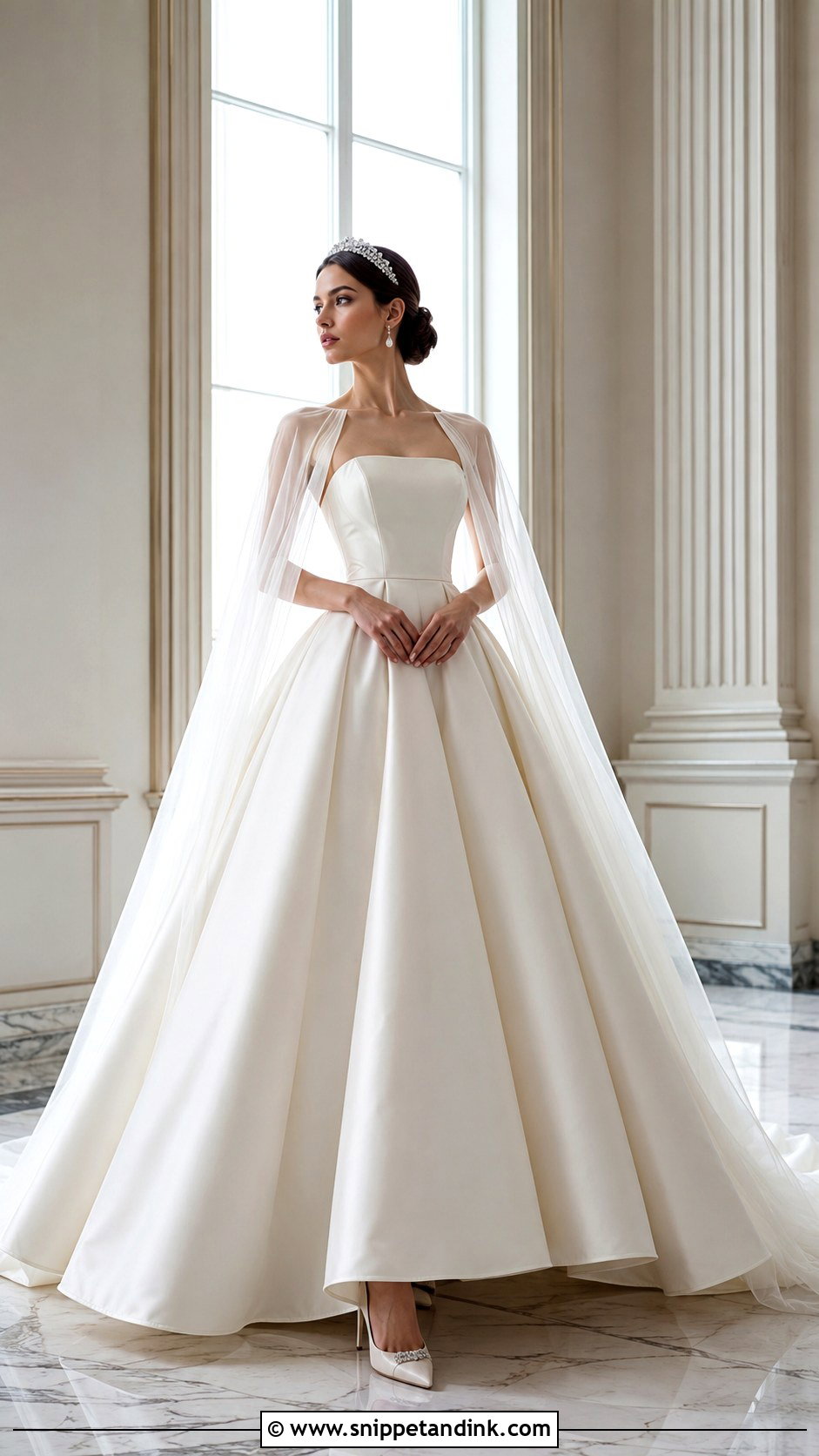
A full ball gown with capes needs the sleeves to be light. Tulle or organza capes keep the overall look from becoming heavy. Repeat only a small amount of the skirt’s lace or embroidery at the shoulders. With a full skirt, a train and capes, there is a lot of fabric to manage, so practice walking and turning before the day. A small tiara or crystal headband suits it, but don’t combine several big accessories. Plan the bustle for the reception.
13. Sheath Cape Sleeve Wedding Dress
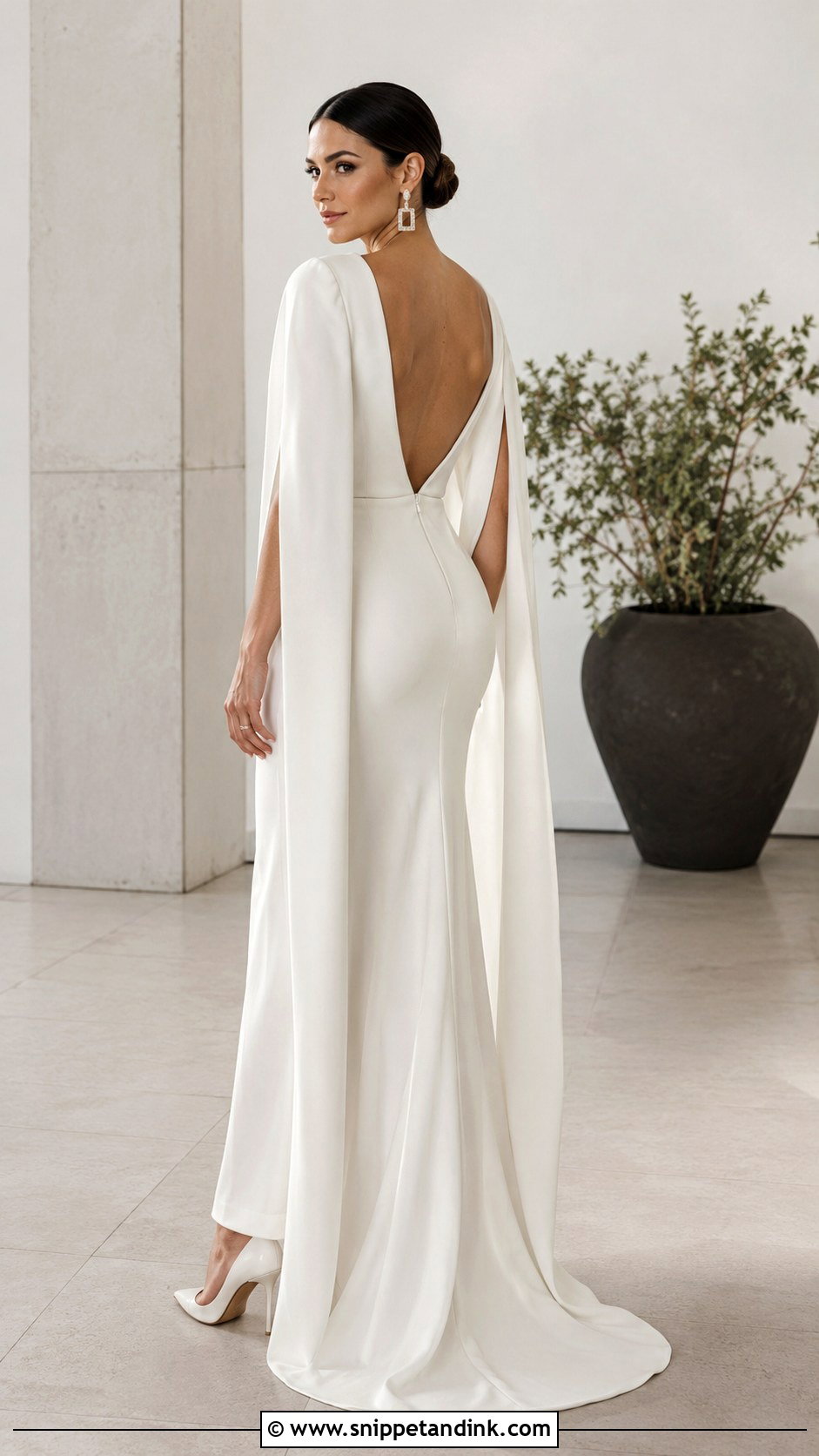
A plain crepe sheath with split capes reaching the floor is quiet from the front and dramatic from behind. If the dress has a low back, have the capes attached at the edges so they frame the opening instead of covering it. Sheaths show every line underneath, so pick no-show underwear and have the hips fitted carefully. Geometric earrings and a center-parted low bun suit the clean shape. Long-stemmed flowers echo the vertical line.
14. Boho Cape Sleeve Wedding Dress
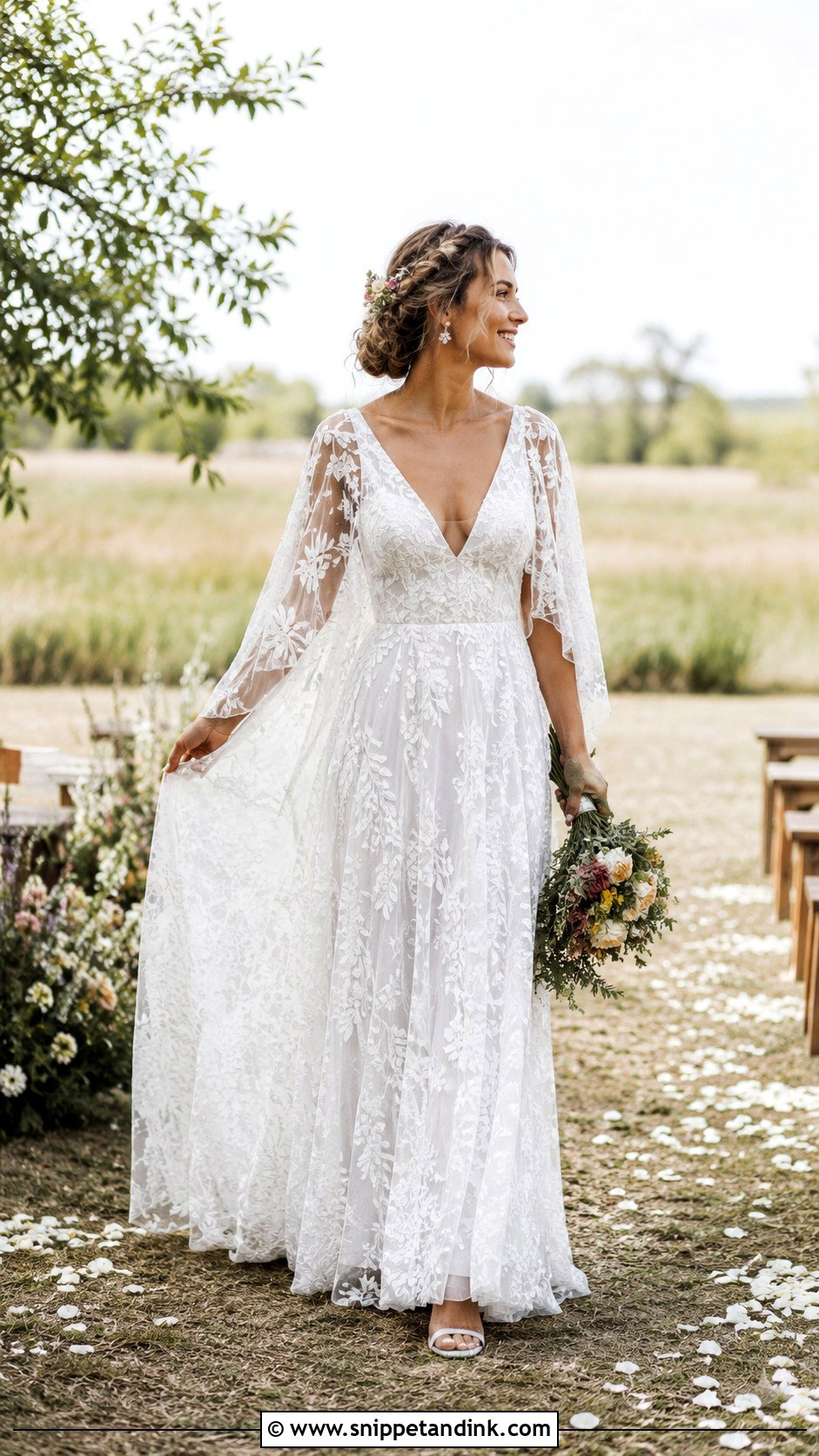
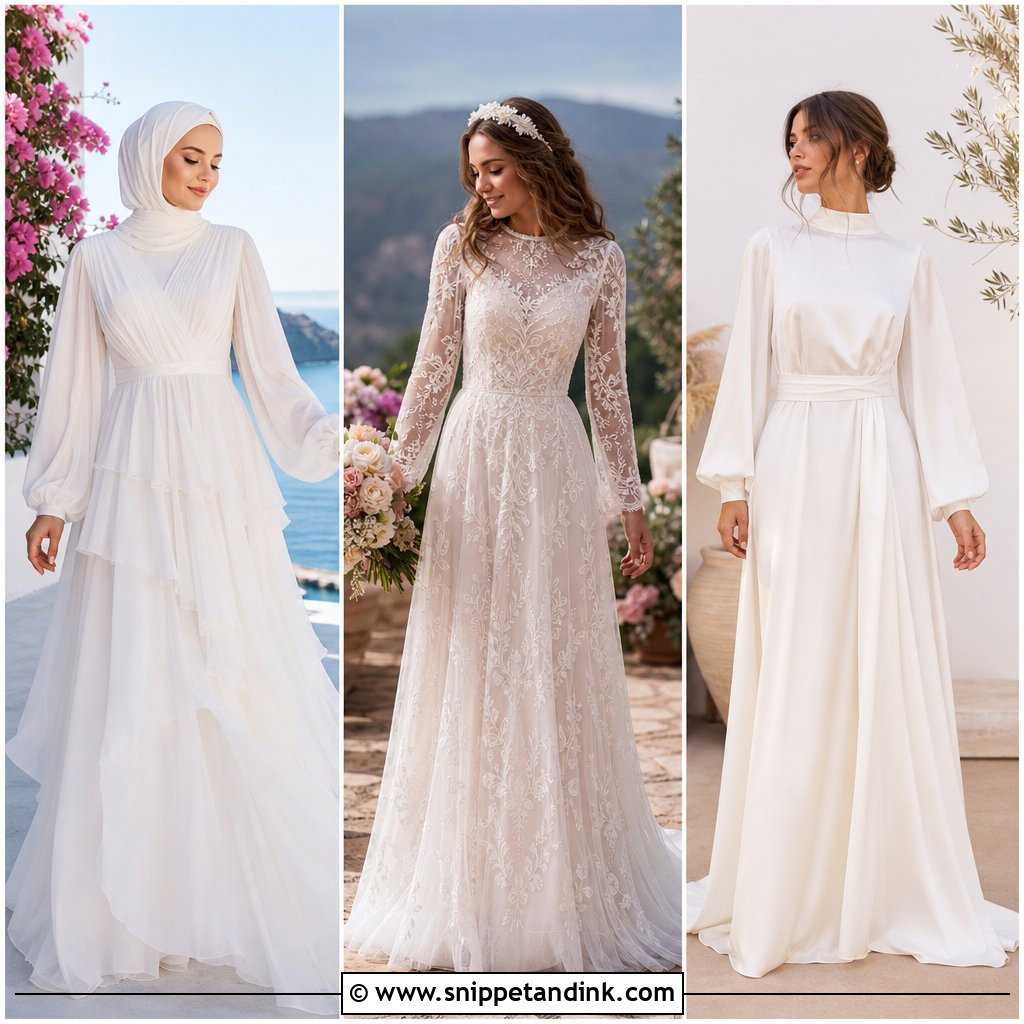
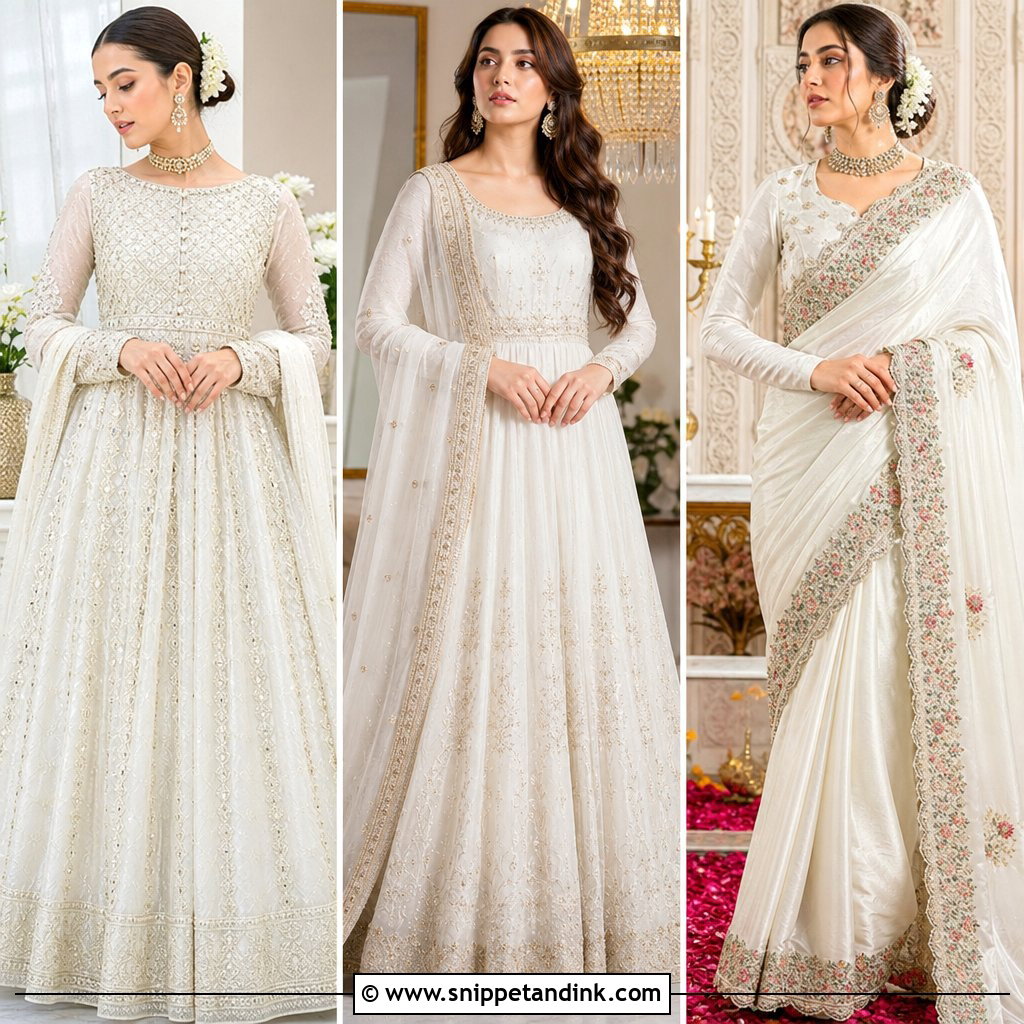
Botanical lace and open capes that flutter around the arms suit an outdoor or relaxed wedding. A lightweight A-line with a comfortable waist, low block-heel sandals and a loose braided updo keep it easy. Outdoors, wind is the issue: open capes lift and flip in gusts, so test them in a breeze and add a discreet tack at the elbow if needed. A flower comb replaces the veil well. Breathable lining matters on a warm day.
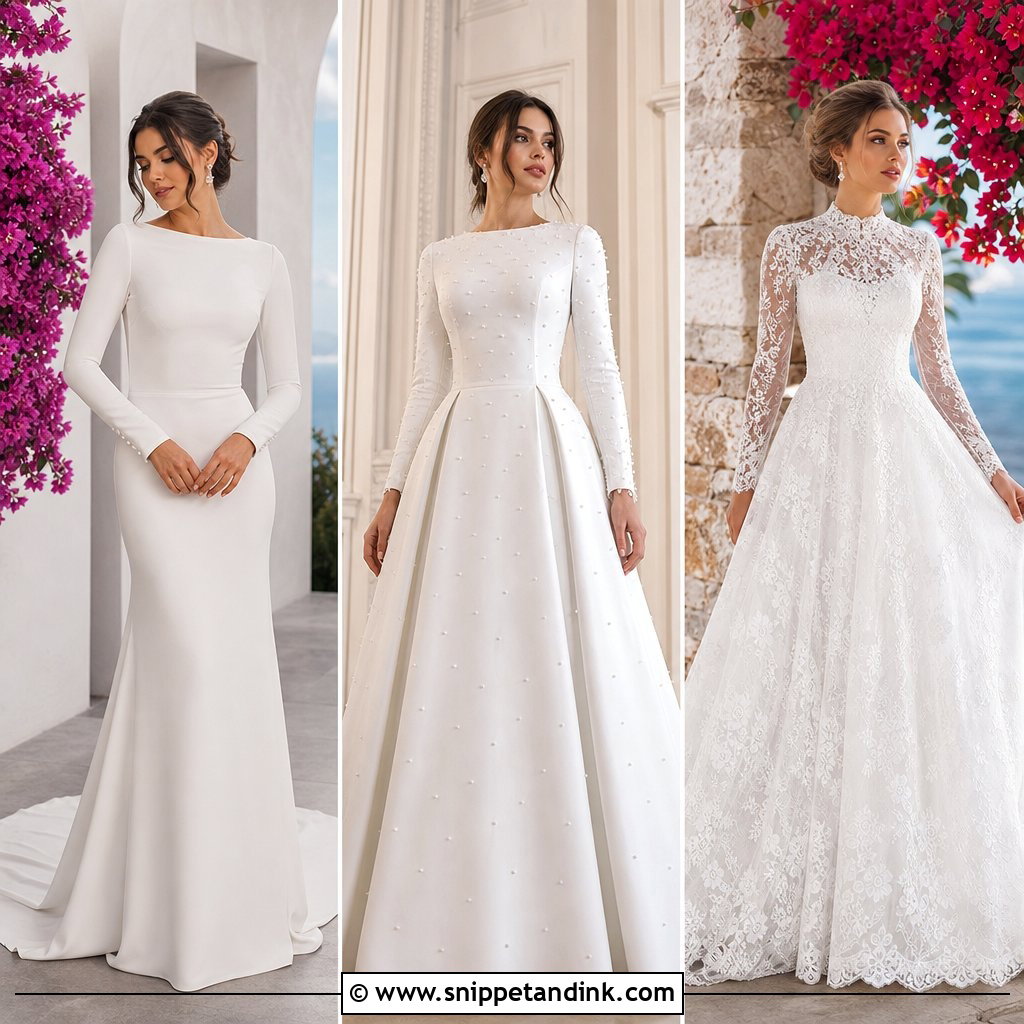
15. Minimalist Cape Sleeve Wedding Dress
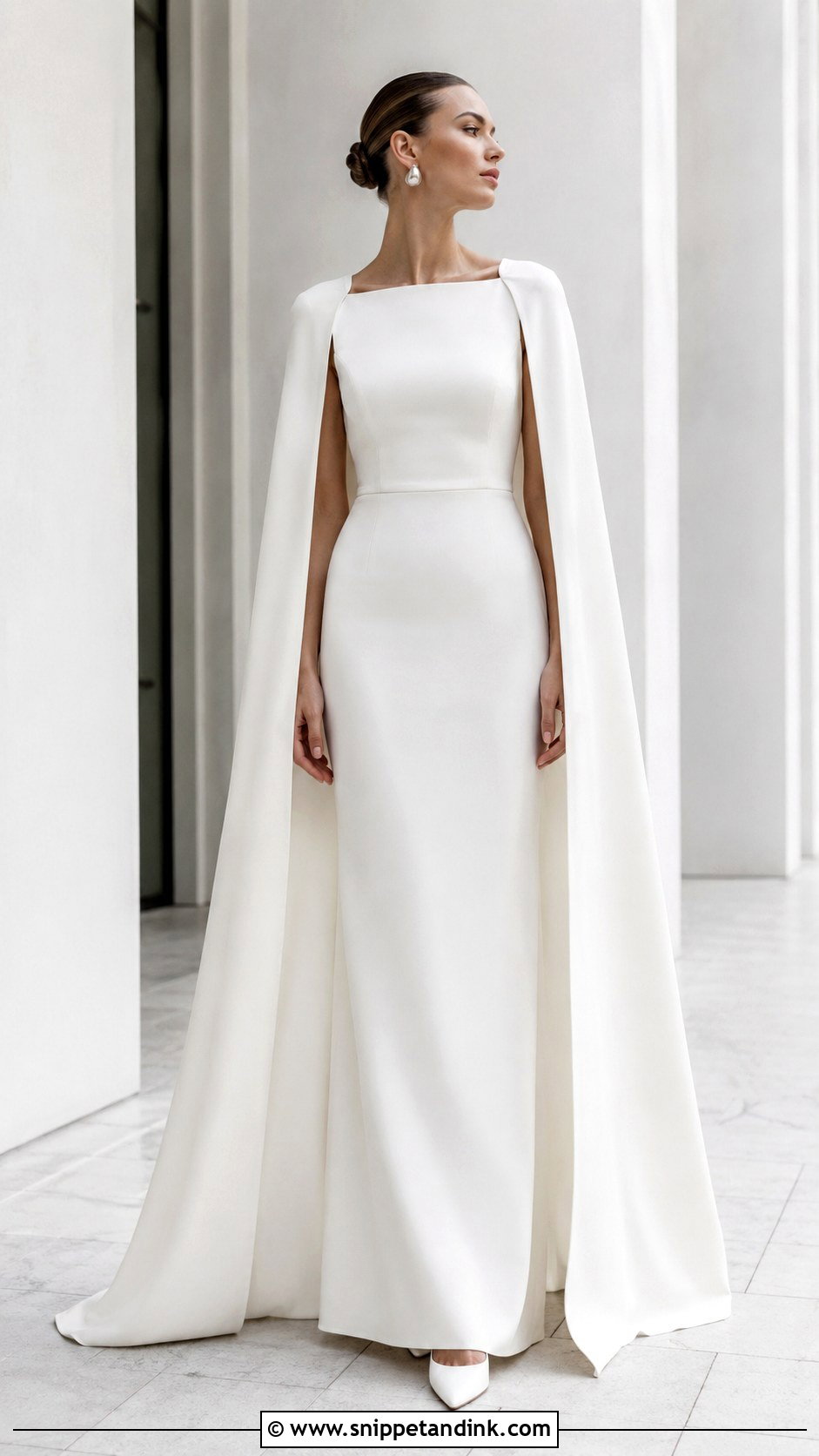
In a minimalist dress, the capes are the whole design, so they must hang in smooth, plain panels with no lace or crystals. Matte crepe with a straight neckline and fitted waist gives that clean base. Plain gowns paired with one strong sleeve detail make an impact through shape rather than decoration. The tailoring has to be precise, since every seam and hem is visible. A short unembellished veil, if any, and a polished bun keep the focus on the shoulders.
16. Floral Cape Sleeve Wedding Dress
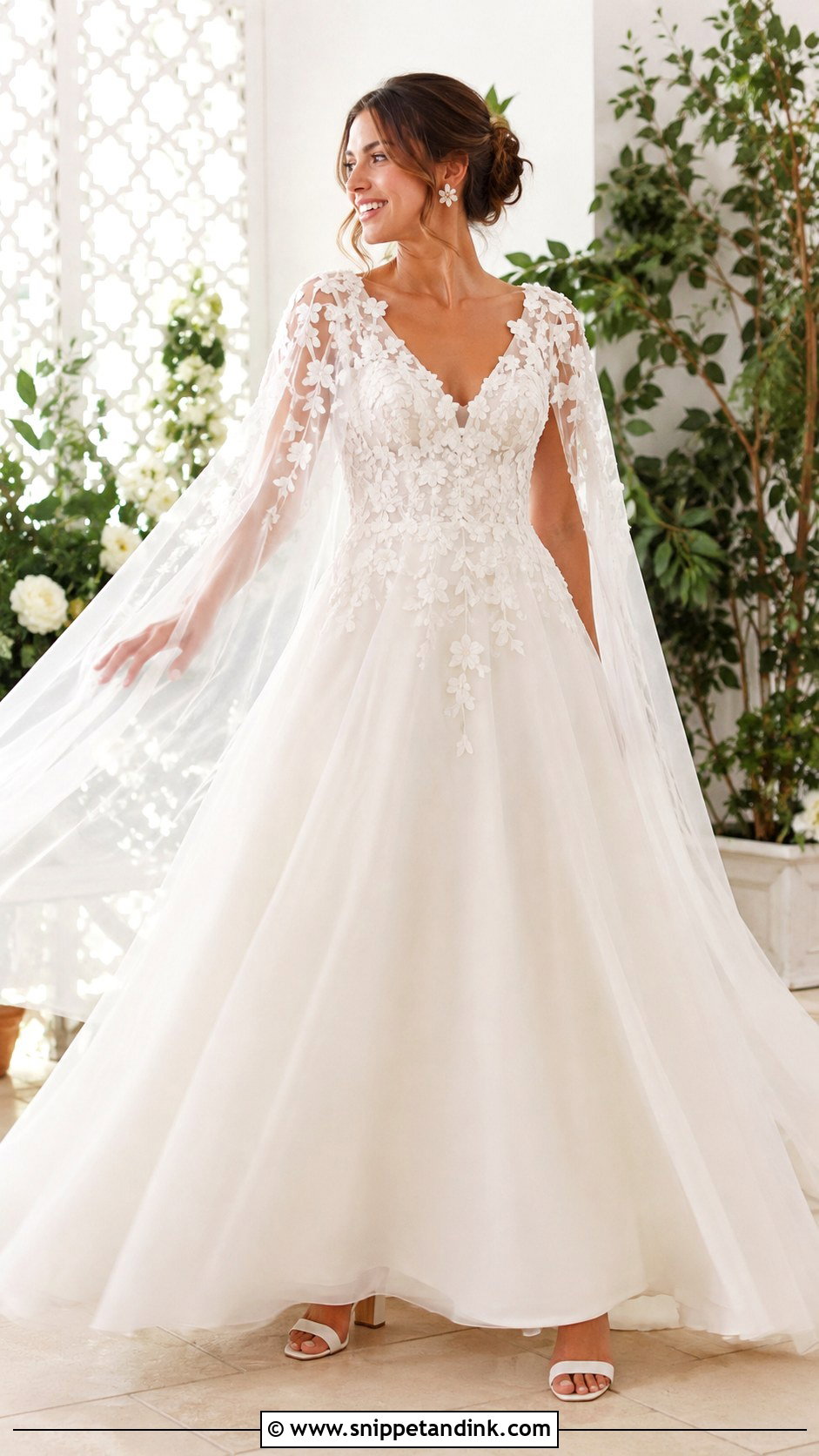
Floral appliqués that start on the bodice and drift onto sheer capes create a garden feel. Concentrate the flowers near the shoulders and thin them toward the ends so the cape still moves. Raised appliqués can scratch the inner arm, so check the backing during alterations and ask for soft tulle behind any rough edges. A plain tulle veil works only if it ends above the floral cape; a small hair vine often sits better. Keep the bouquet simple.
17. Detachable Cape Sleeve Wedding Dress
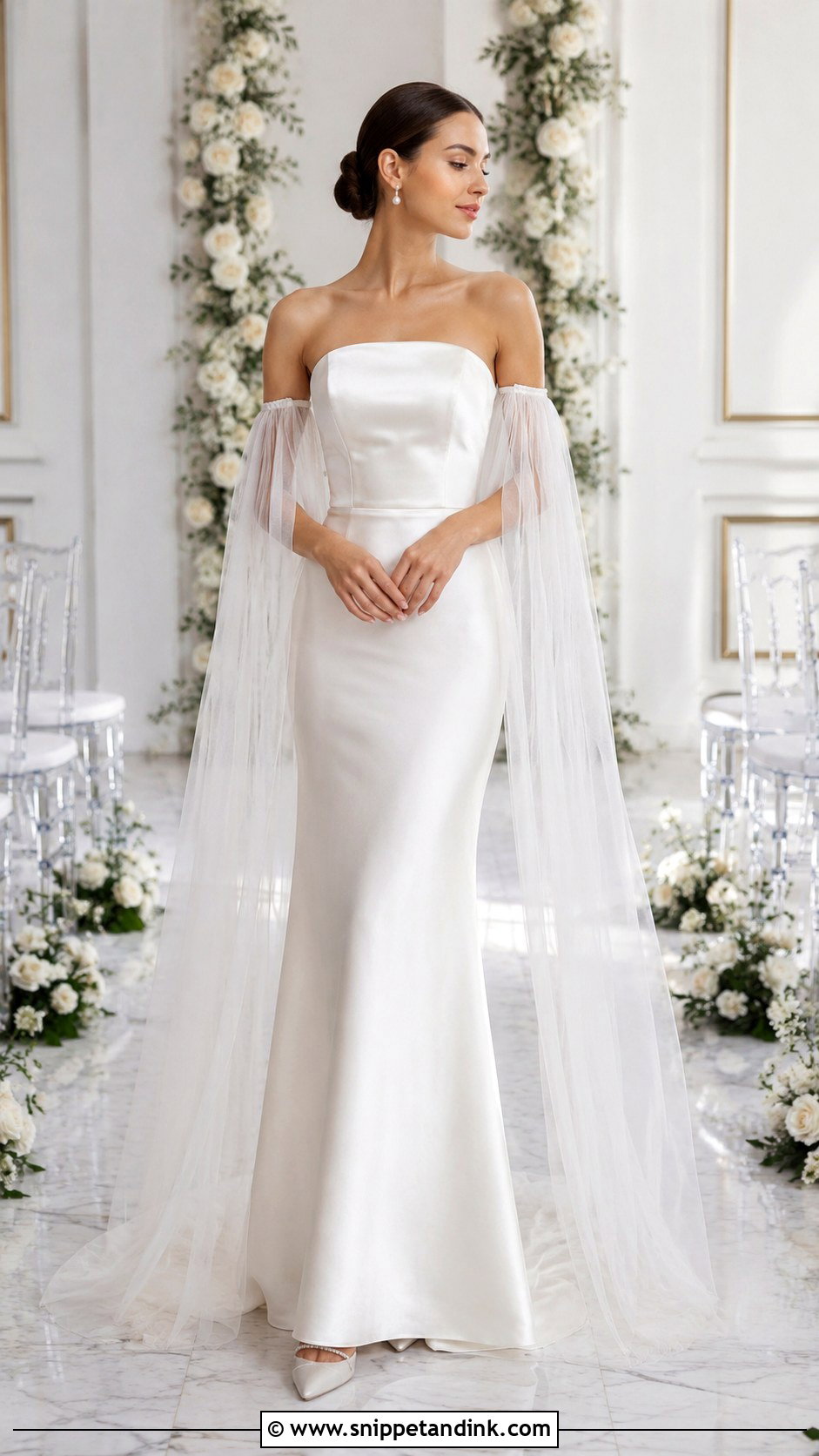
Detachable capes give you two looks without a second dress. Start with a simple strapless or narrow-strap satin or crepe gown, then add matching tulle, chiffon or lace capes for the ceremony. Removable pieces let the outfit change as the day moves from formal to relaxed. Ask for hooks or snaps that are secure but easy for one helper to undo, and show that helper how at the last fitting. Lay the removed capes flat or hang them so the fabric doesn’t crush.
18. Short Cape Sleeve Wedding Dress
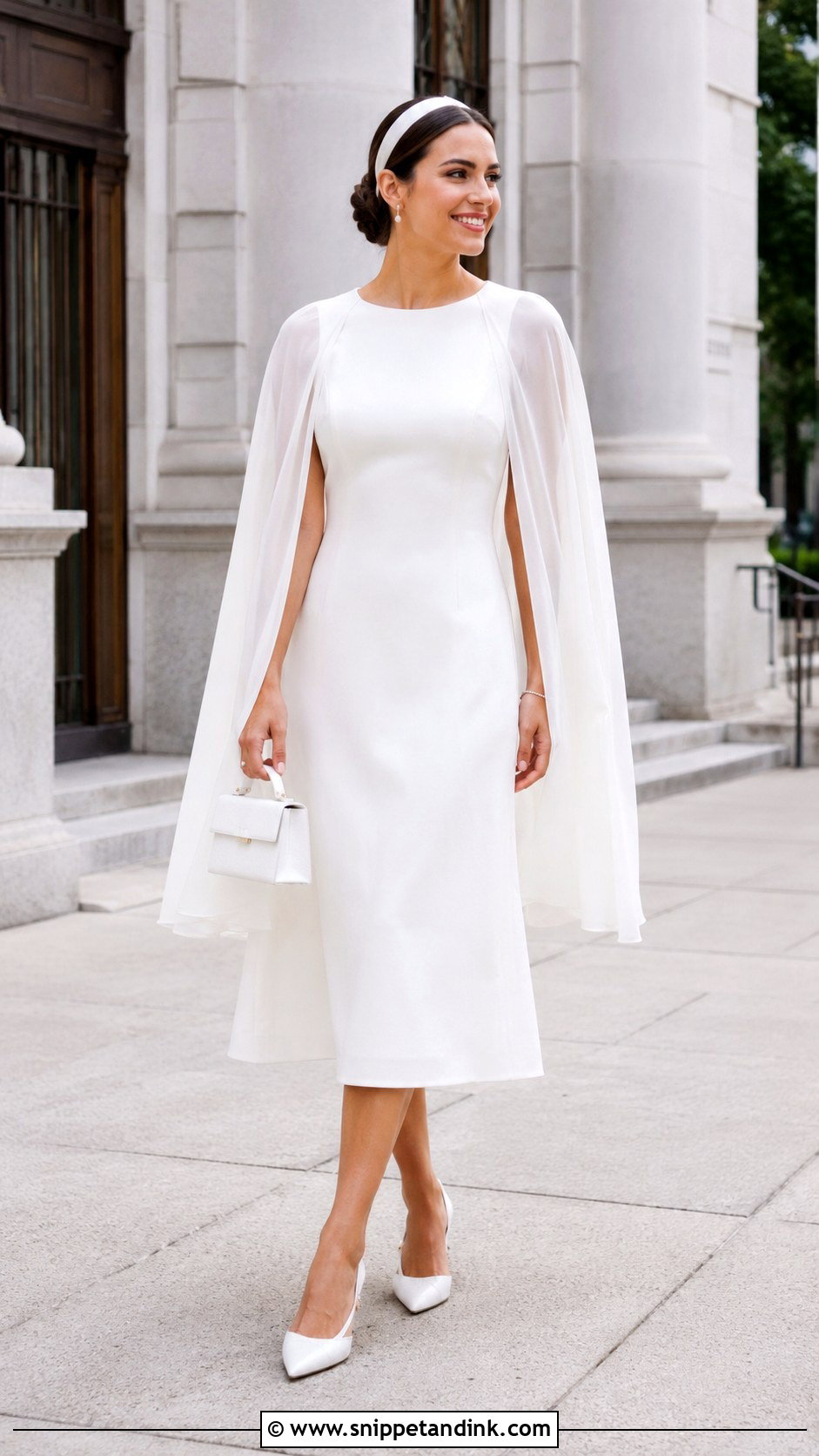
A short dress with capes ending near the hem feels modern for a courthouse ceremony or a reception change. A tailored knee- or tea-length bodice with crepe capes looks crisp; organza or tulle softens it. With a full skirt, keep the capes narrow so you can still see the skirt shape. A slightly longer back panel adds movement in photos. Pointed slingbacks and a small bow or headband finish the proportions without crowding them.
19. Plus Size Cape Sleeve Wedding Dress
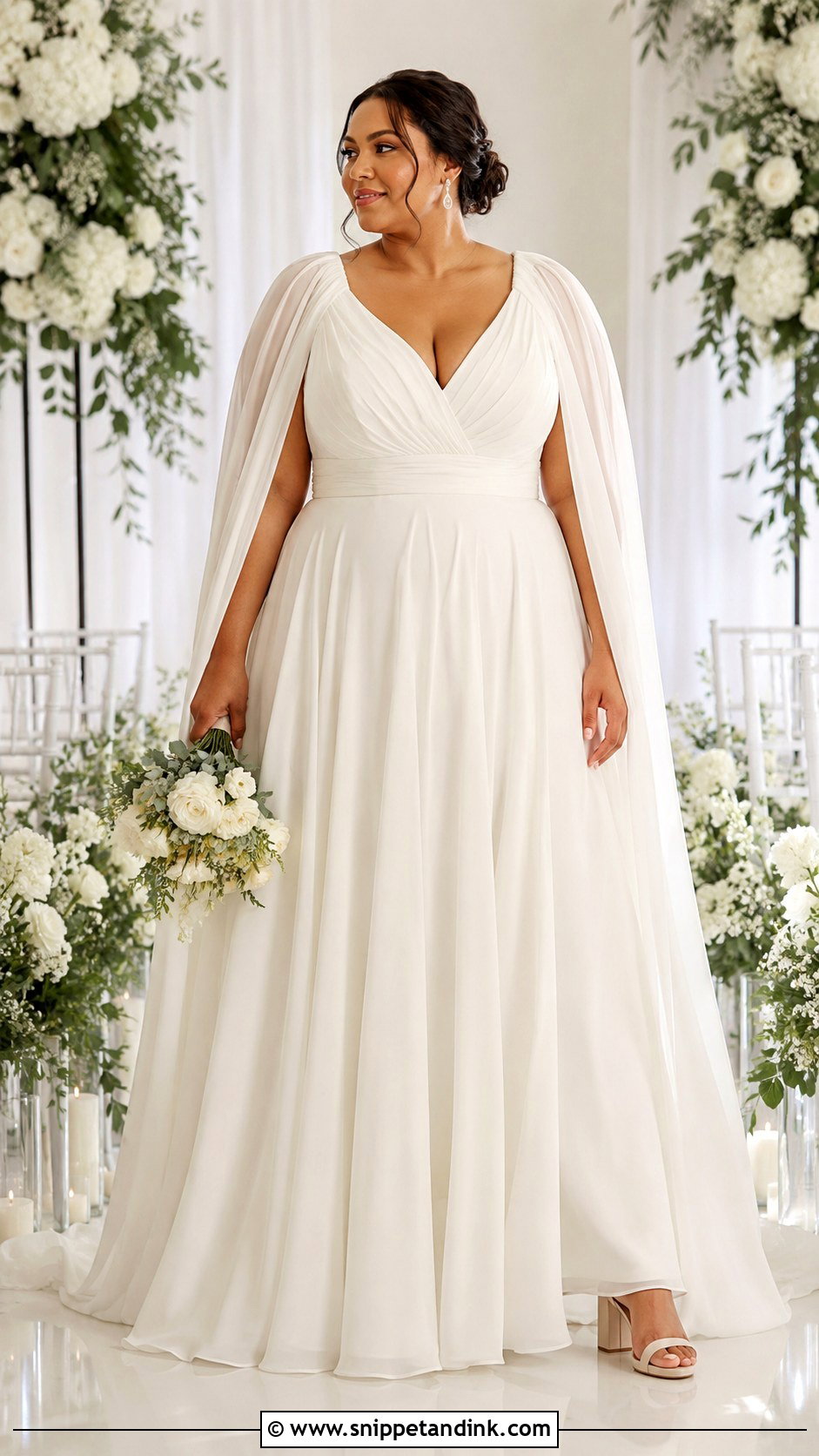
The cape must fall freely without pulling across the back or shoulders, and in plus sizes that comes down to where it is attached. An A-line with a structured V-neck bodice, a defined waist and capes anchored firmly at the shoulder seam gives the cleanest drape. Soft crepe or layered chiffon moves well. The gown itself should provide most of the support, with undergarments added only if they help. Walk, sit and raise your arms in fittings, and let the seamstress adjust the cape length to your height.
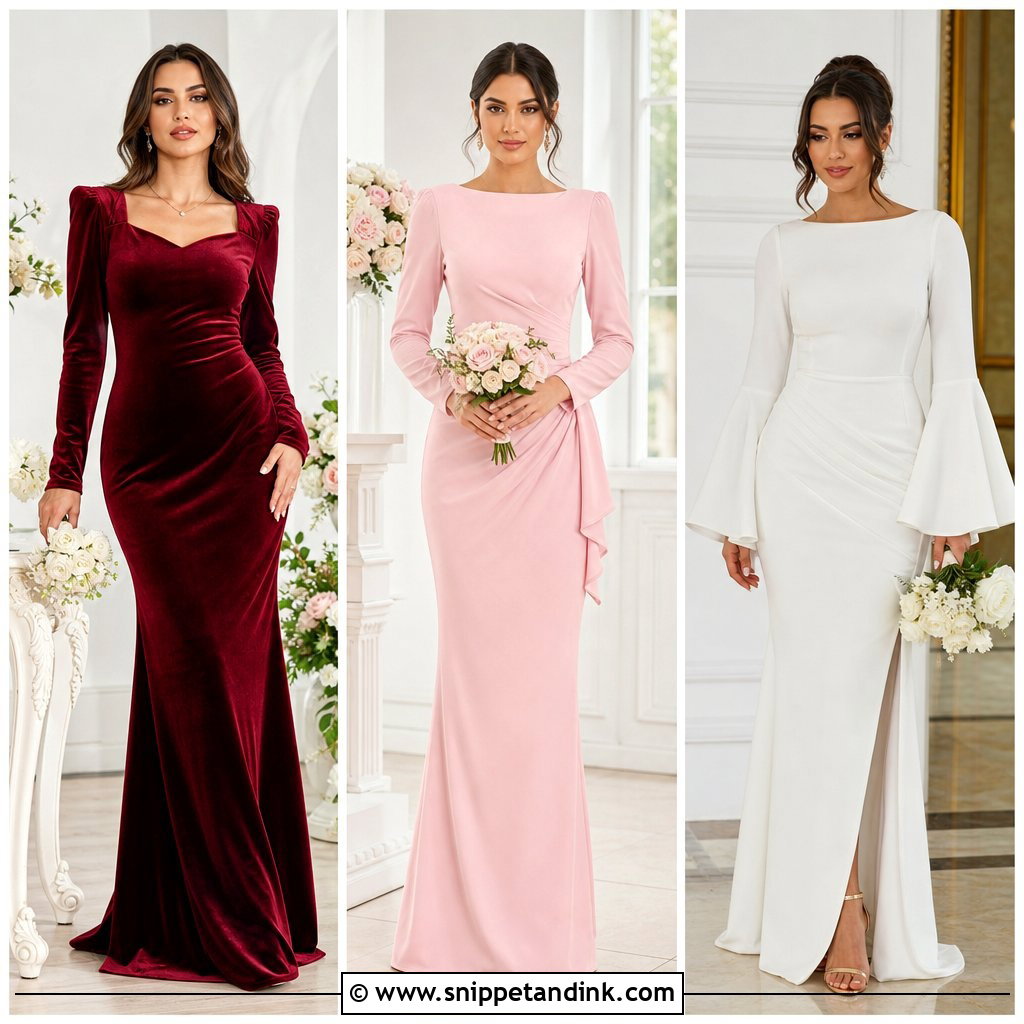
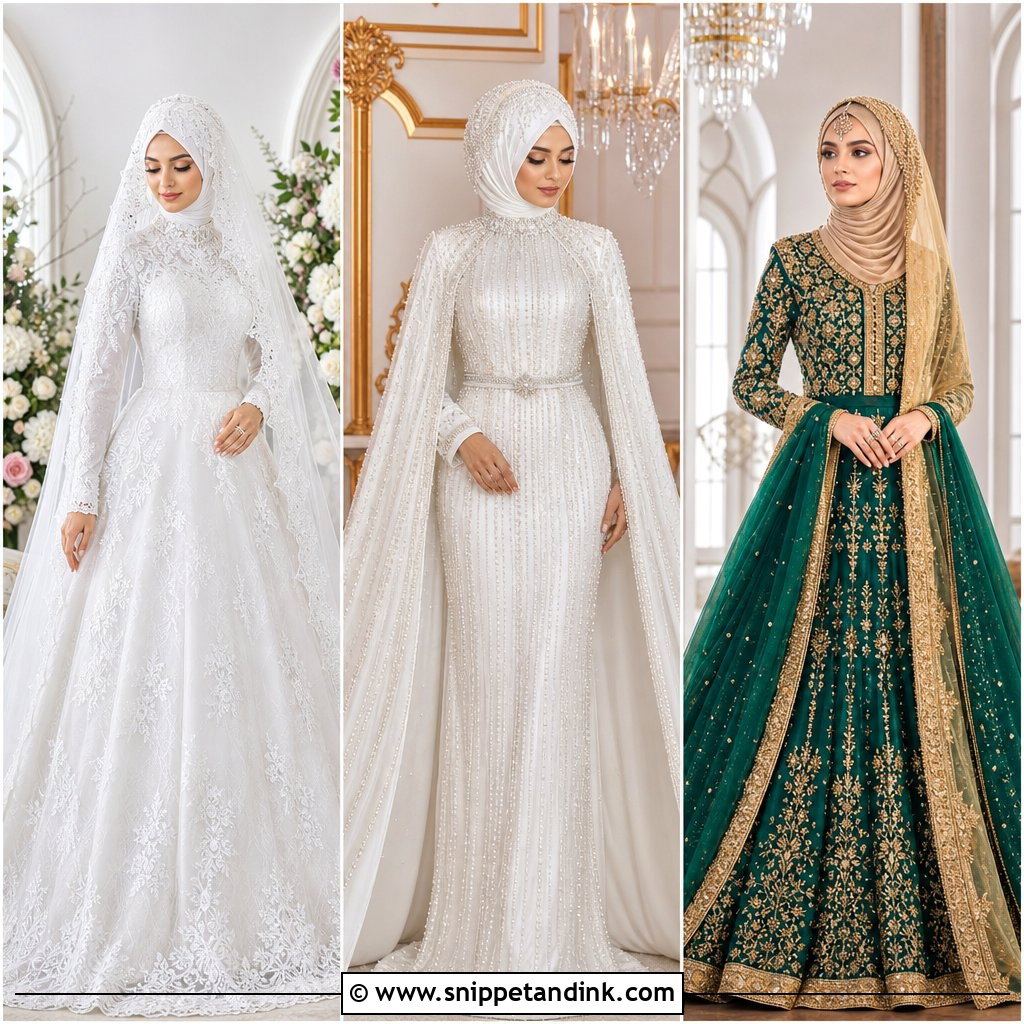
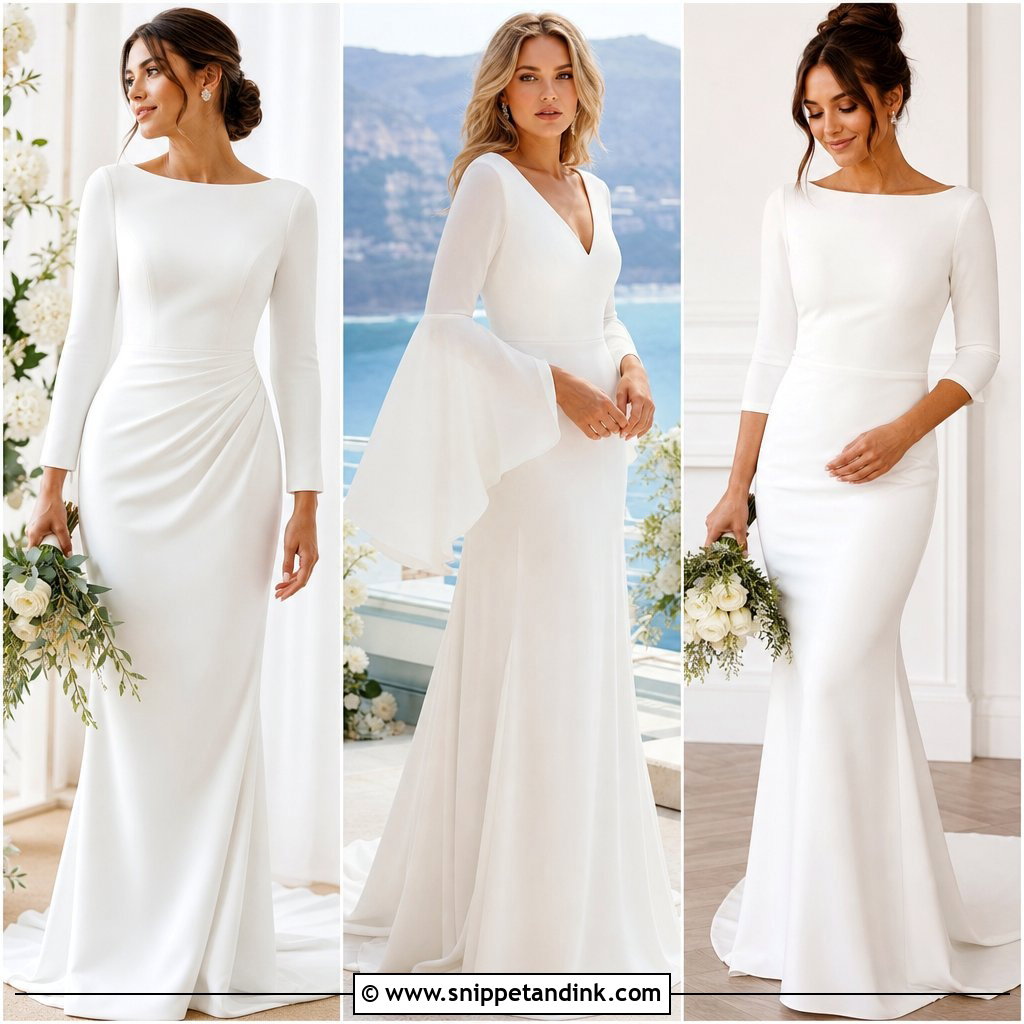
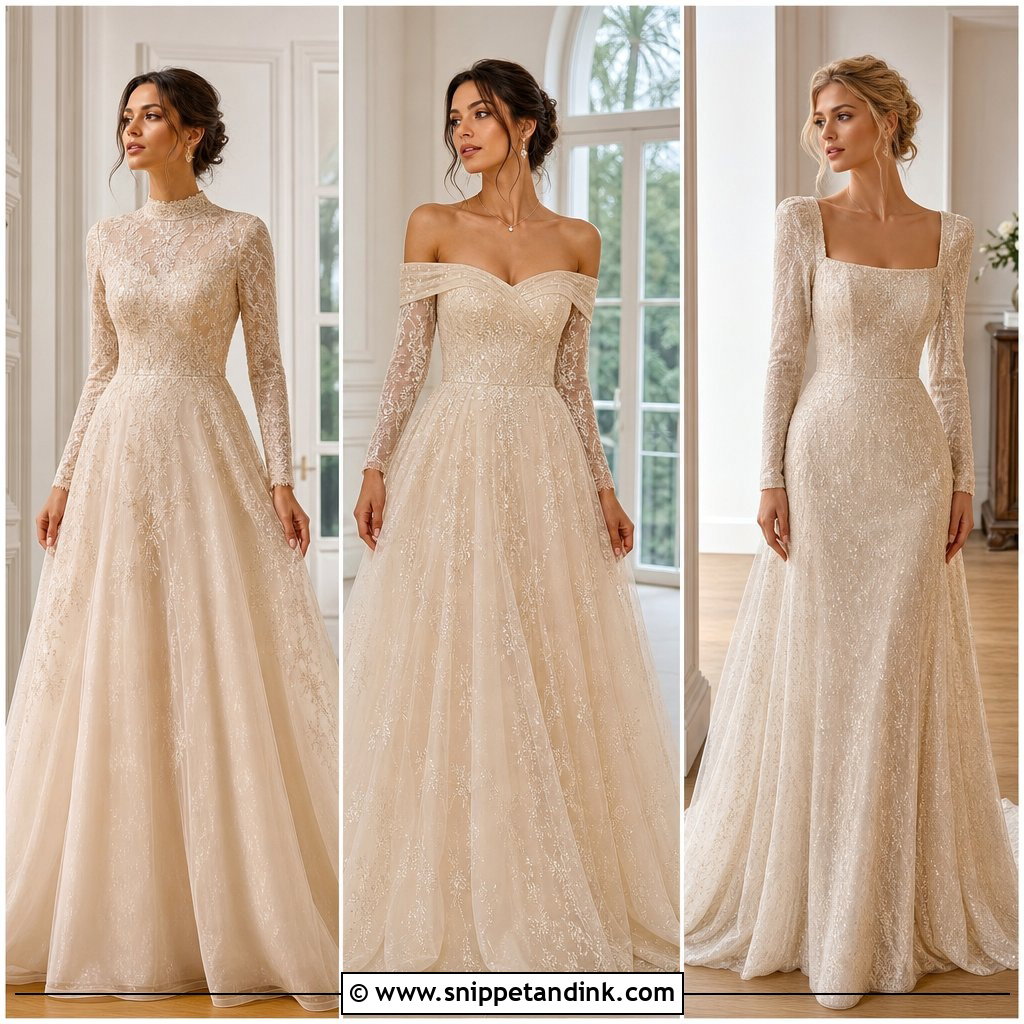
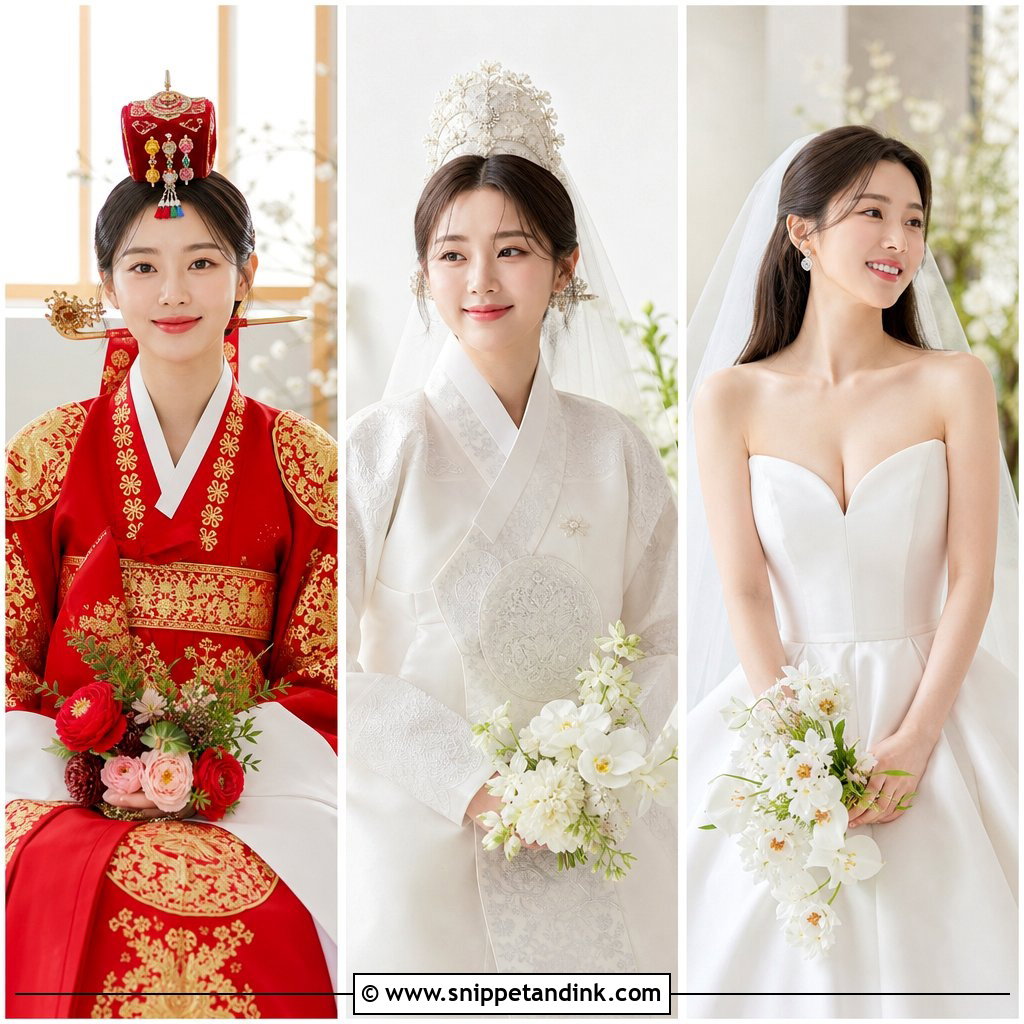
20. Winter Cape Sleeve Wedding Dress
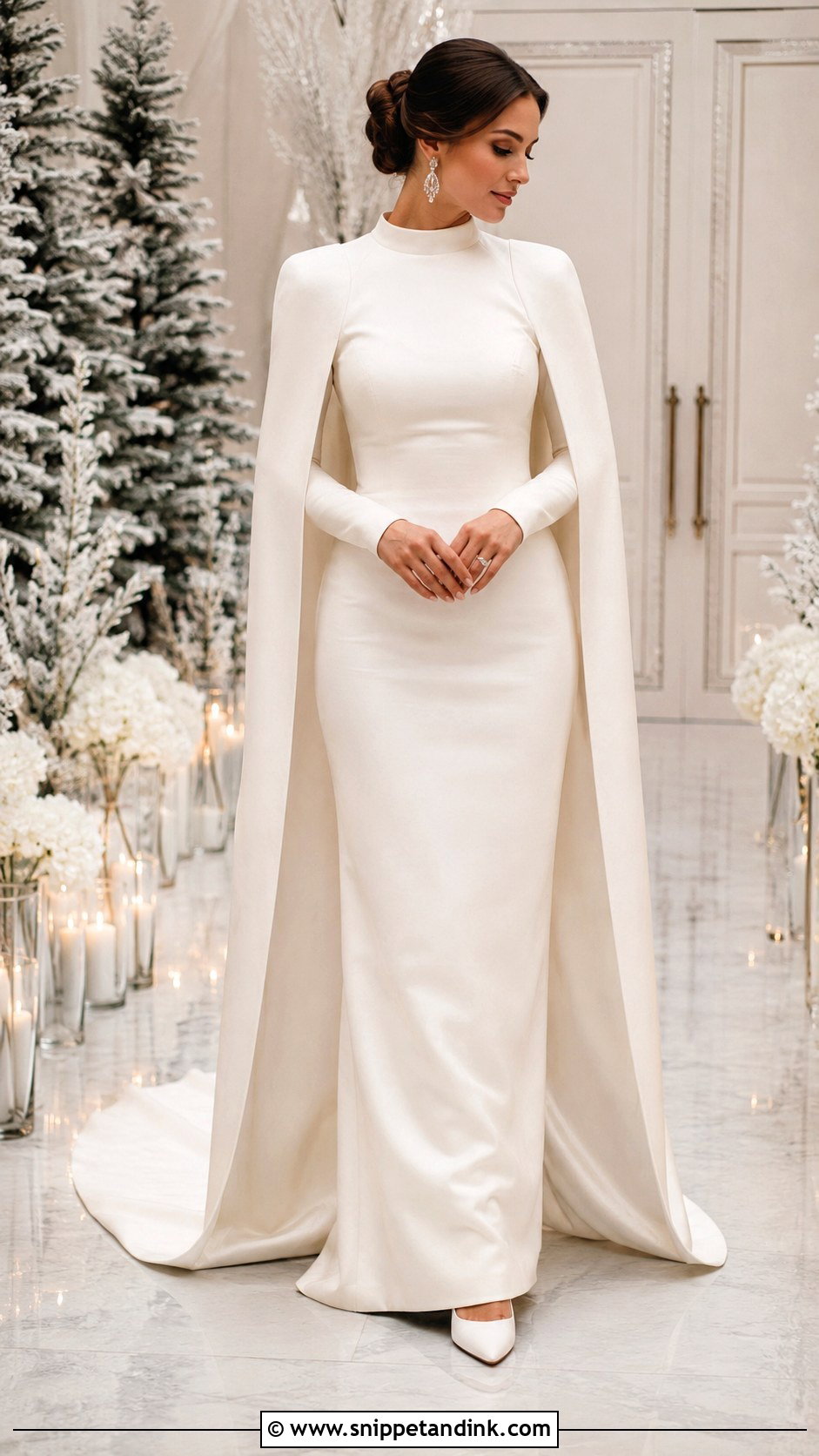
Winter suits capes layered over fitted long sleeves, adding warmth without bulk. Satin or crepe with a high neck, a structured waist and a chapel train look formal in a cold setting. A heavier cape fabric helps in a chilly church, but it still needs to drape cleanly. A faux-fur hand muff or a tailored white coat works for outdoor arrivals. Pick one strong outer layer only; a thick cape, a big veil and heavy beading together look crowded.
Sitting, Hugging and Dancing With Panels Behind You
Long capes behave like a second train. When you sit, sweep them to the sides first or you’ll sit on them, which creases chiffon instantly and drags the neckline down. At dinner, drape them over the chair back.
- Ask for small finger or wrist loops at the end of floor-length capes so you can lift them while dancing.
- Guests step on long capes during hugs; a helper can gather them for the receiving line.
- In wind, chiffon capes wrap around you; a hidden tack at the elbow keeps them under control.
- If the capes are detachable, plan exactly when they come off, usually after portraits.
Do you still need a veil?
Often not. A floor-length cape already gives you the trailing fabric a veil would, and layering both can look heavy. If a veil matters to you, keep it shorter than the capes or choose a long, plain one with no edging, attached high on the head so it falls over the capes rather than tangling with them.
Raise Your Arms in the Fitting Room First
Lace, satin, chiffon, crepe, beads and floral appliqués all make very different cape gowns, but they share the same test. Start with a silhouette that supports your body, then pick capes that suit its fabric and your height. Keep jewelry and hair accessories modest so the shoulders stay in view. Then walk, sit and lift your arms in the dress. If the capes don’t pull, twist or drag the neckline, the gown is ready for the aisle.
You'll Like These Ideas:


Leave a Reply