
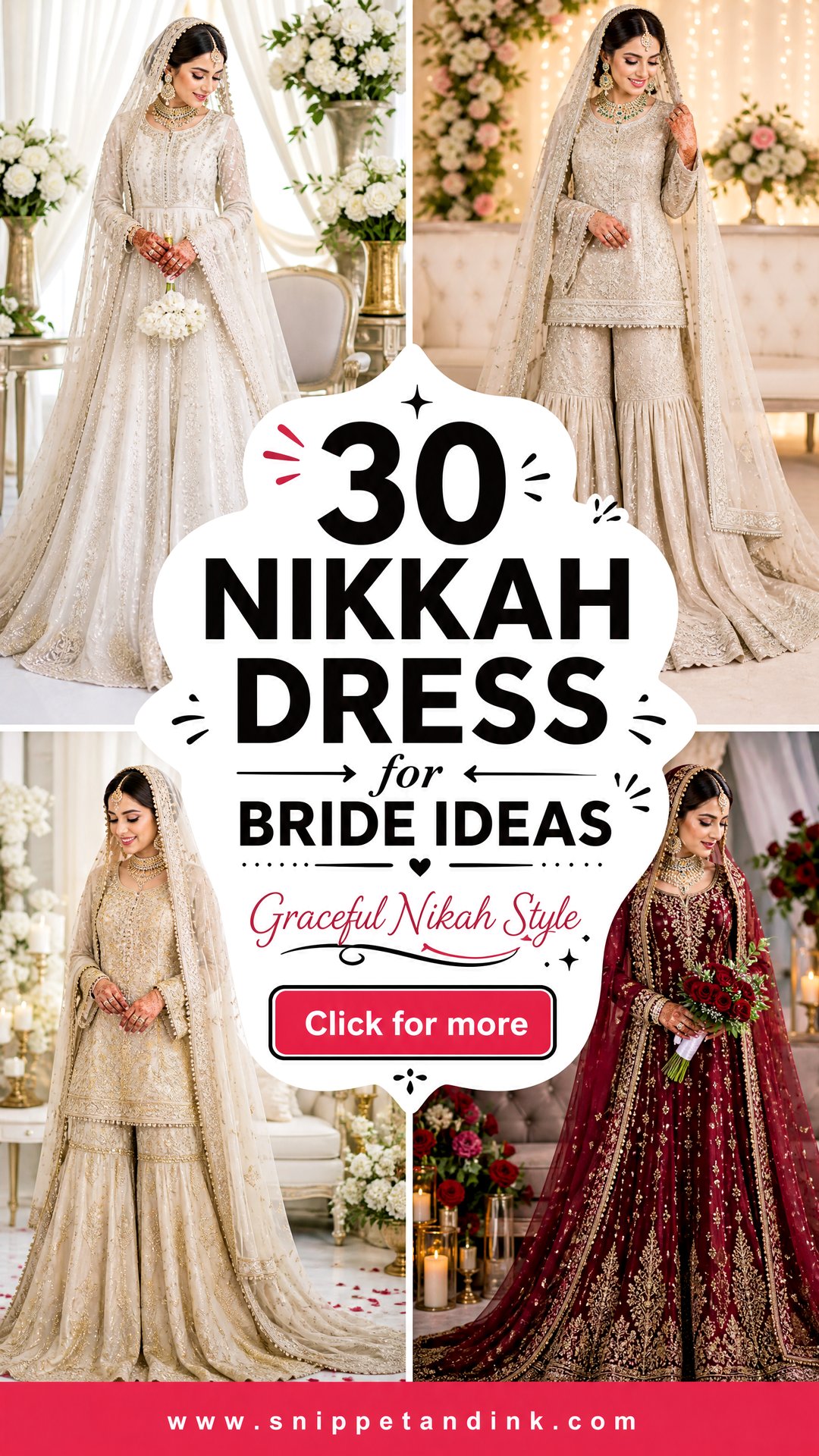
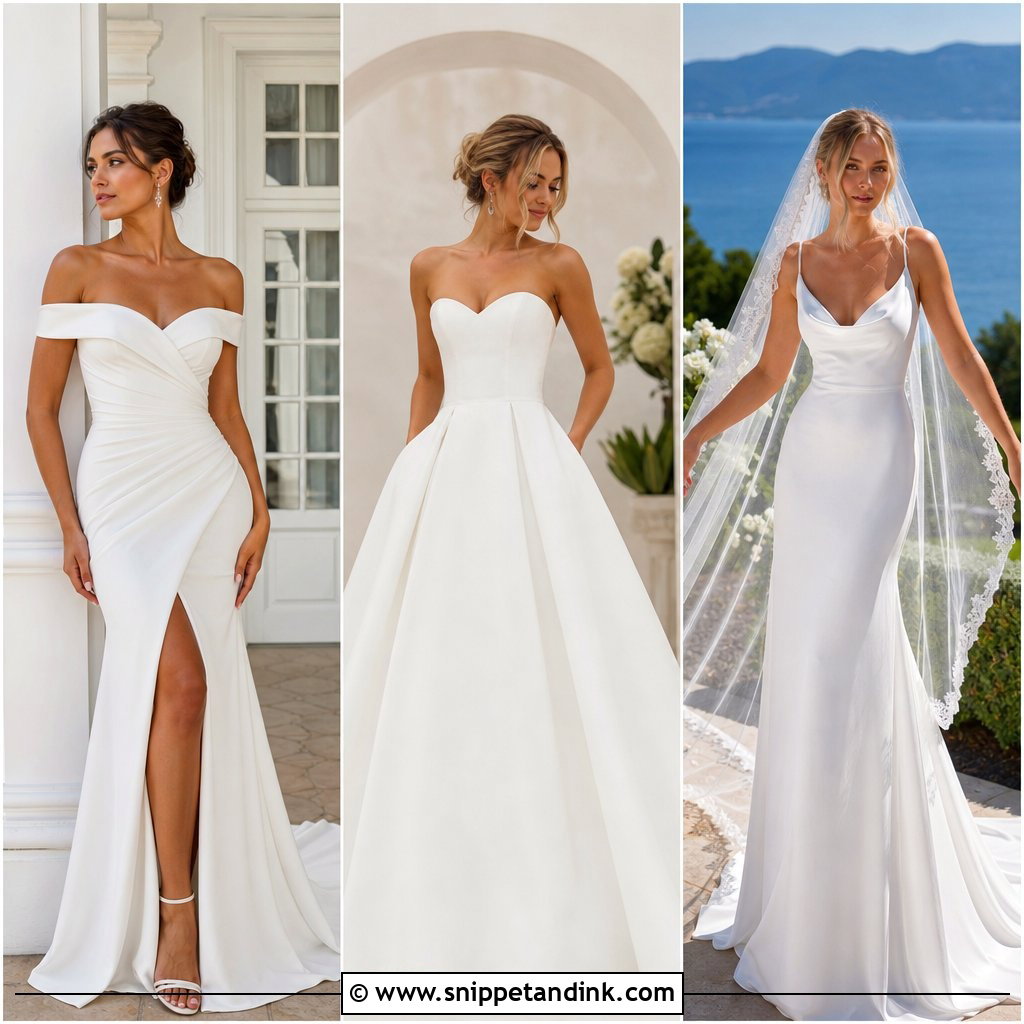
The Nikkah outfit is usually the quietest of the wedding wardrobe, and I think that’s its strength. The Baraat or reception look can be red and heavy; the Nikkah tends to sit in white, ivory, blush, gold, champagne, mint and other soft shades, because the mood of the room is prayerful and close. When I style a bride for it, I’m thinking about practical things first: how long she’ll sit, whether the dupatta has to stay on her head through the signing, how the fabric behaves when she leans forward to hug her mother. Long sleeves, a flowing shape, delicate handwork and jewelry that frames the face rather than covering it. Below are thirty looks, from South Asian classics to abayas, gowns and fusion pieces, with what I’d watch for in each.
Plan the Outfit Around How Your Nikkah Will Actually Run
Before I look at a single color, I ask the bride how the ceremony happens in her family. Is she seated with the women while the consent is taken? Does she sit on a low sofa, a stage, cushions on the floor? Is the nikahnama signed at a table, on her lap, or brought to her? The answers change what she should wear.
- Sitting on the floor or cushions: an anarkali, sharara or long maxi spreads around you neatly. A stiff lehenga with can-can fights you.
- Signing on your lap: avoid heavy beading on the skirt front, where papers and pens rest and catch.
- Head covered for the whole ceremony: plan a dupatta that’s light enough to stay on for an hour, with a heavier one kept for photos afterwards.
- Lots of hugging and greeting: choose jewelry without sharp edges at the neck and ears, which snag dupattas and relatives’ clothes.
Then sit in the outfit at your final fitting for at least twenty minutes. That’s when you find the bodice that digs in, the sleeve that’s tight at the elbow, or the dupatta that slides back every time you lower your head for dua.
1. White Nikkah Dress With Dupatta
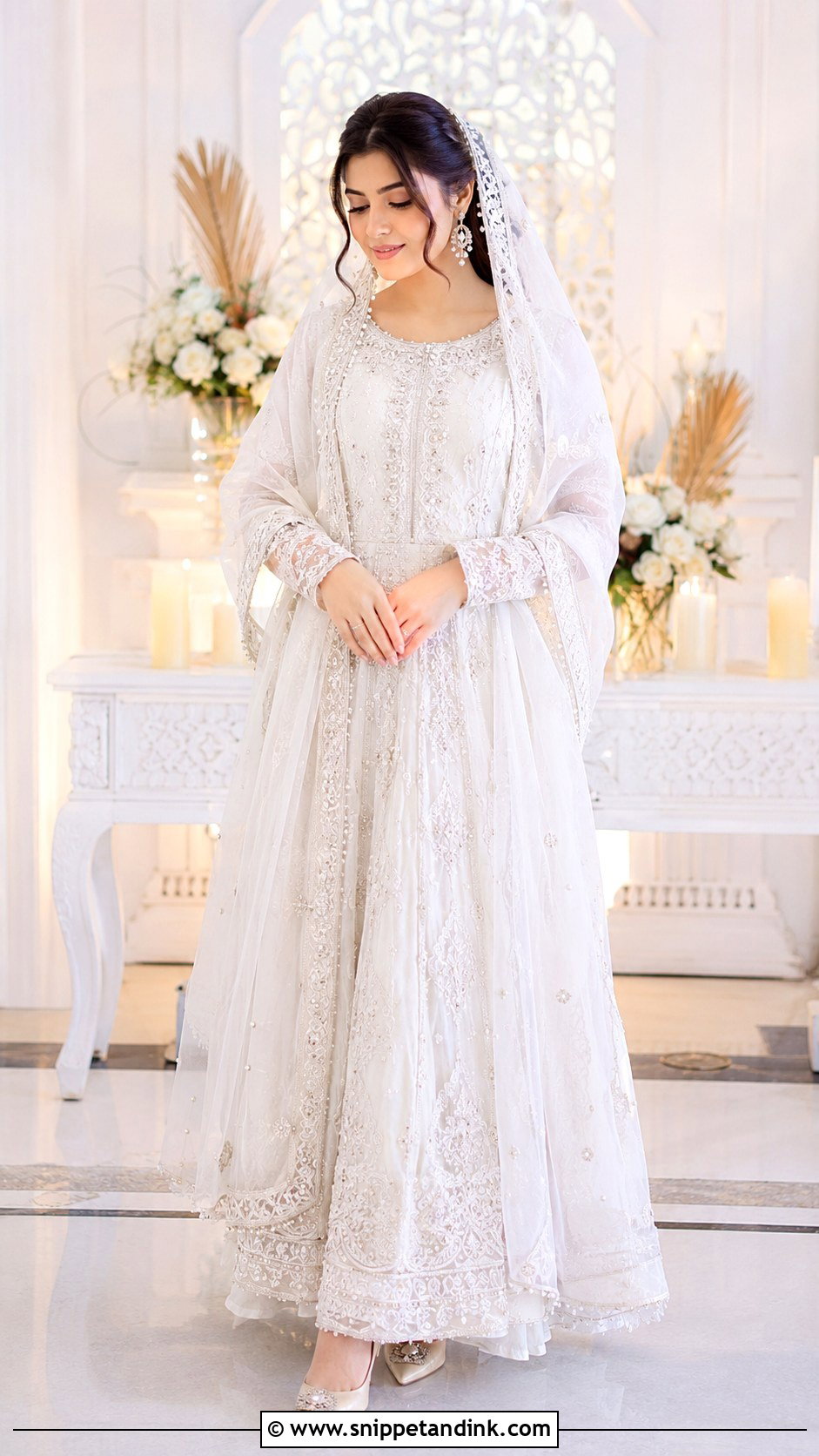
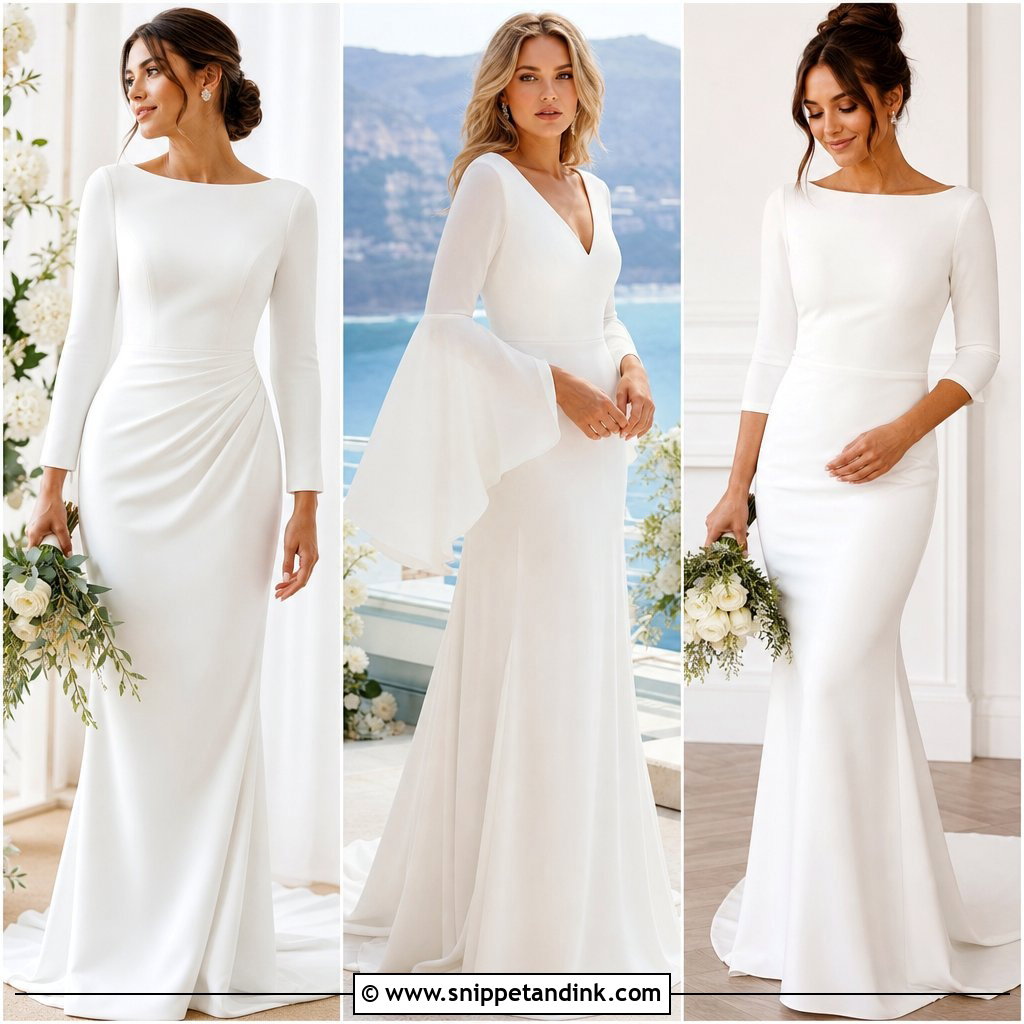
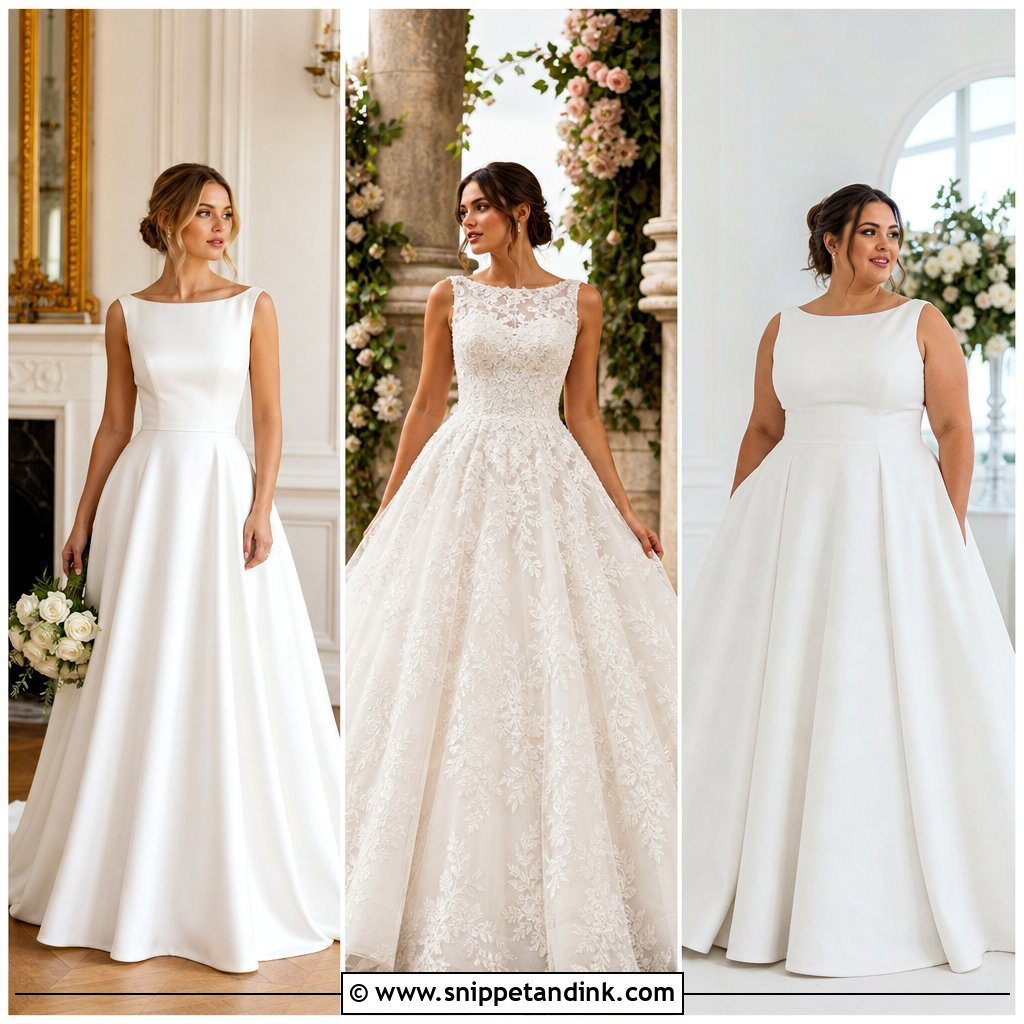
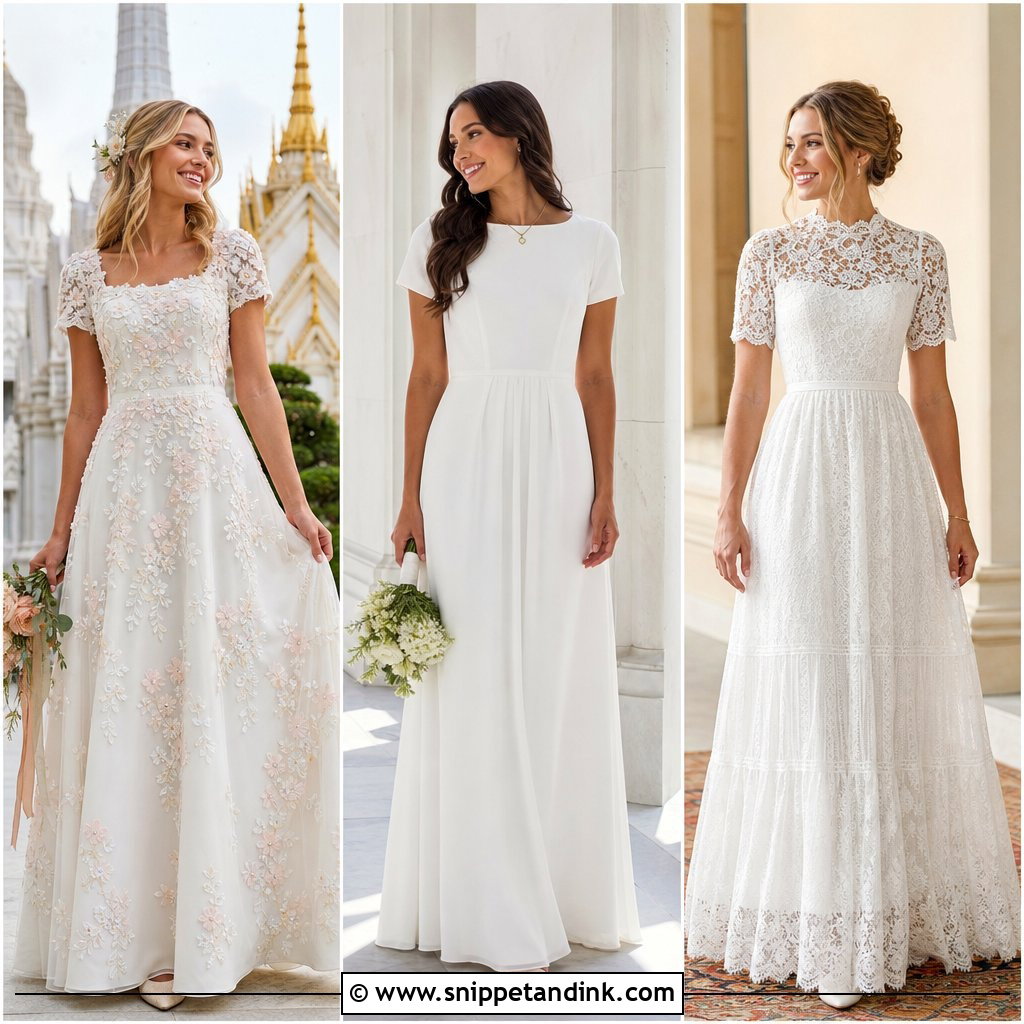
White with a dupatta is the outfit most brides picture first, and it earns that place. A long pishwas, a maxi or a modest gown in white, with tone-on-tone threadwork or a scatter of pearls, and a matching dupatta with a scalloped edge. Here’s the thing about white: it shows everything, including the yellowing of cheap thread next to fresh fabric. Ask to see the embroidery against the base cloth in daylight. Pearl earrings, a fine tikka, soft makeup, ivory heels. If you want more presence, drape a sheer second dupatta over the head and shoulders like a veil.
2. Ivory Nikkah Dress With Gold Jewelry
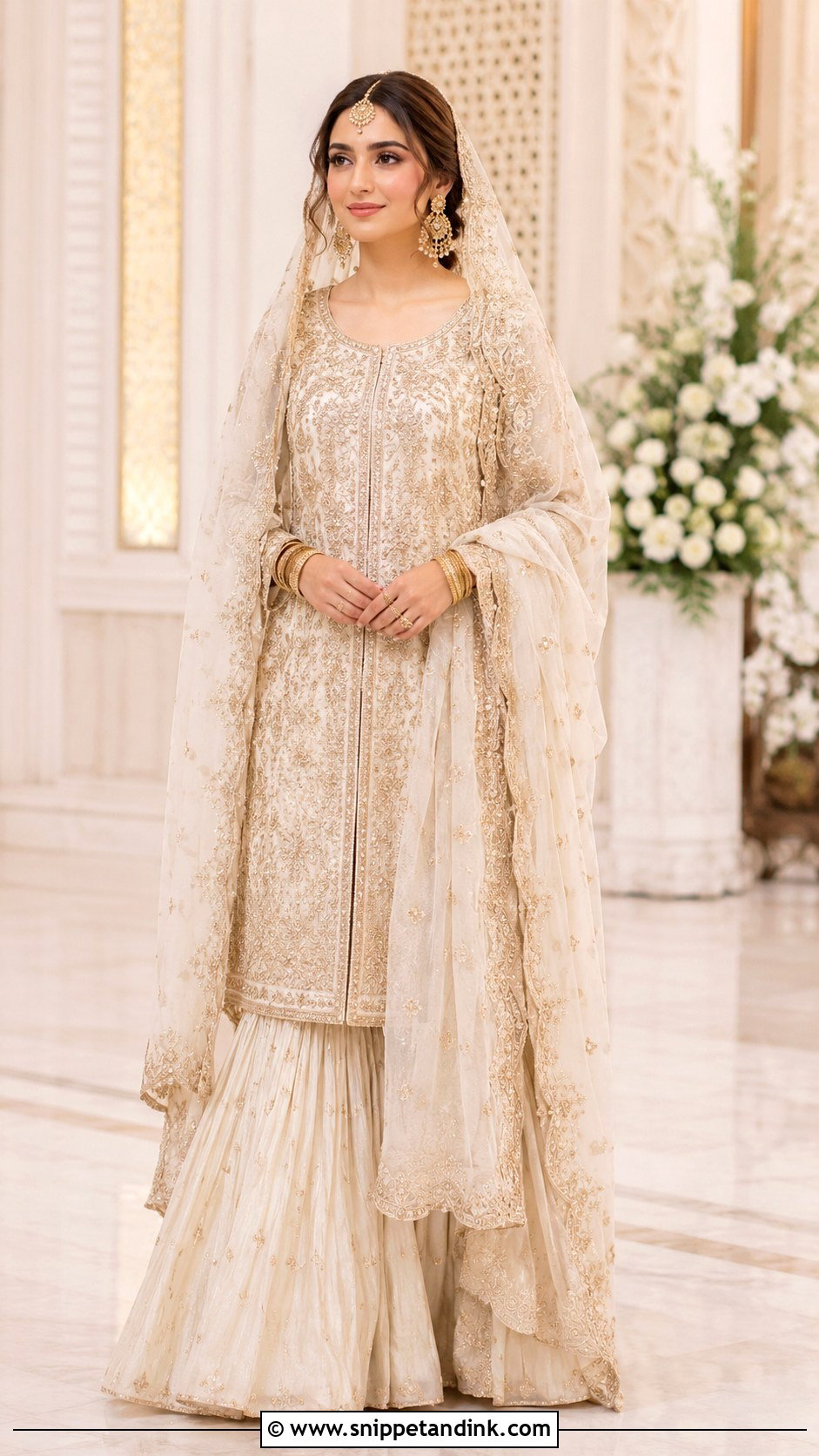
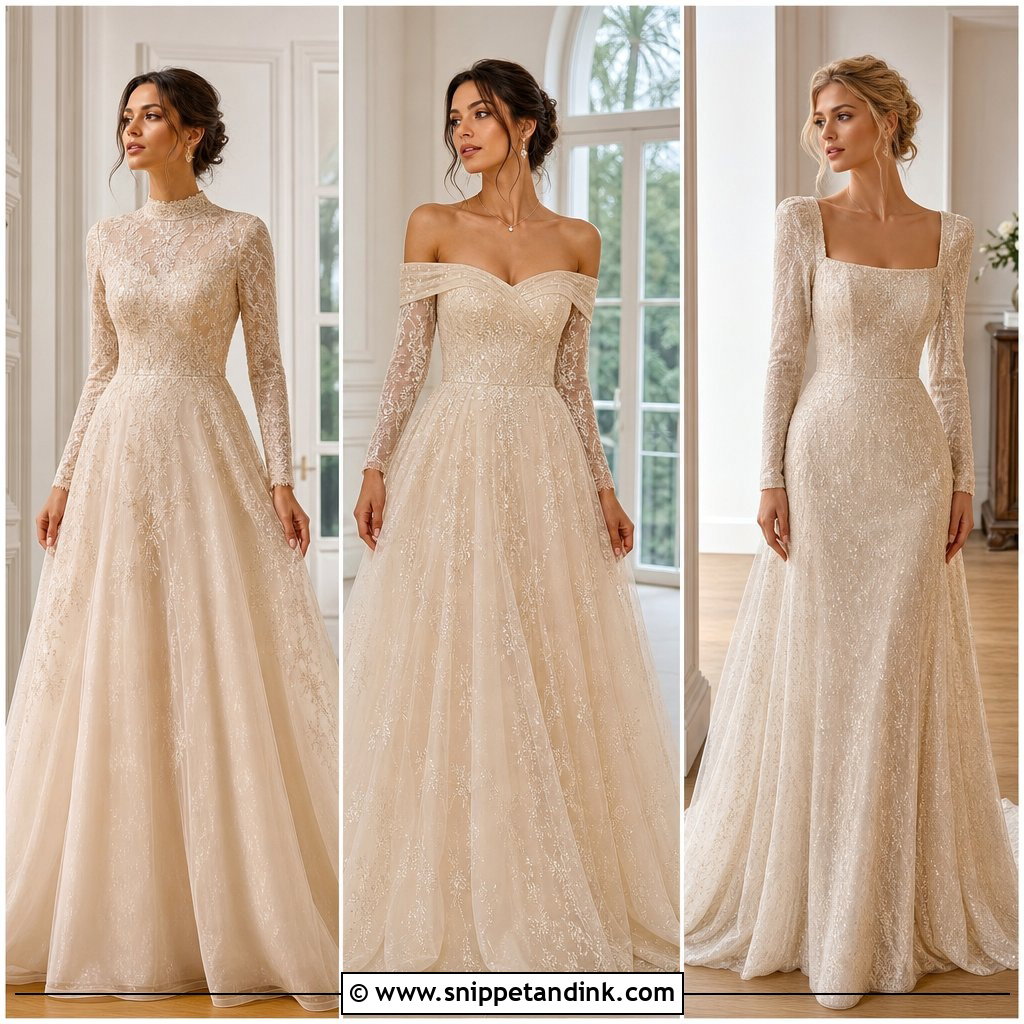
Ivory is warmer than white, and on deeper or olive skin it often looks more natural on camera, where pure white can turn slightly gray. A long embroidered kameez over a flowing lehenga or wide trousers keeps the proportions balanced. Antique gold earrings, a matha patti, bangles and a light necklace. The dupatta should be lightweight but worked heavily at the border, since the border is what sits around the face in every close portrait. Gold heels or embroidered khussas underneath.
3. Pastel Pink Nikkah Dress
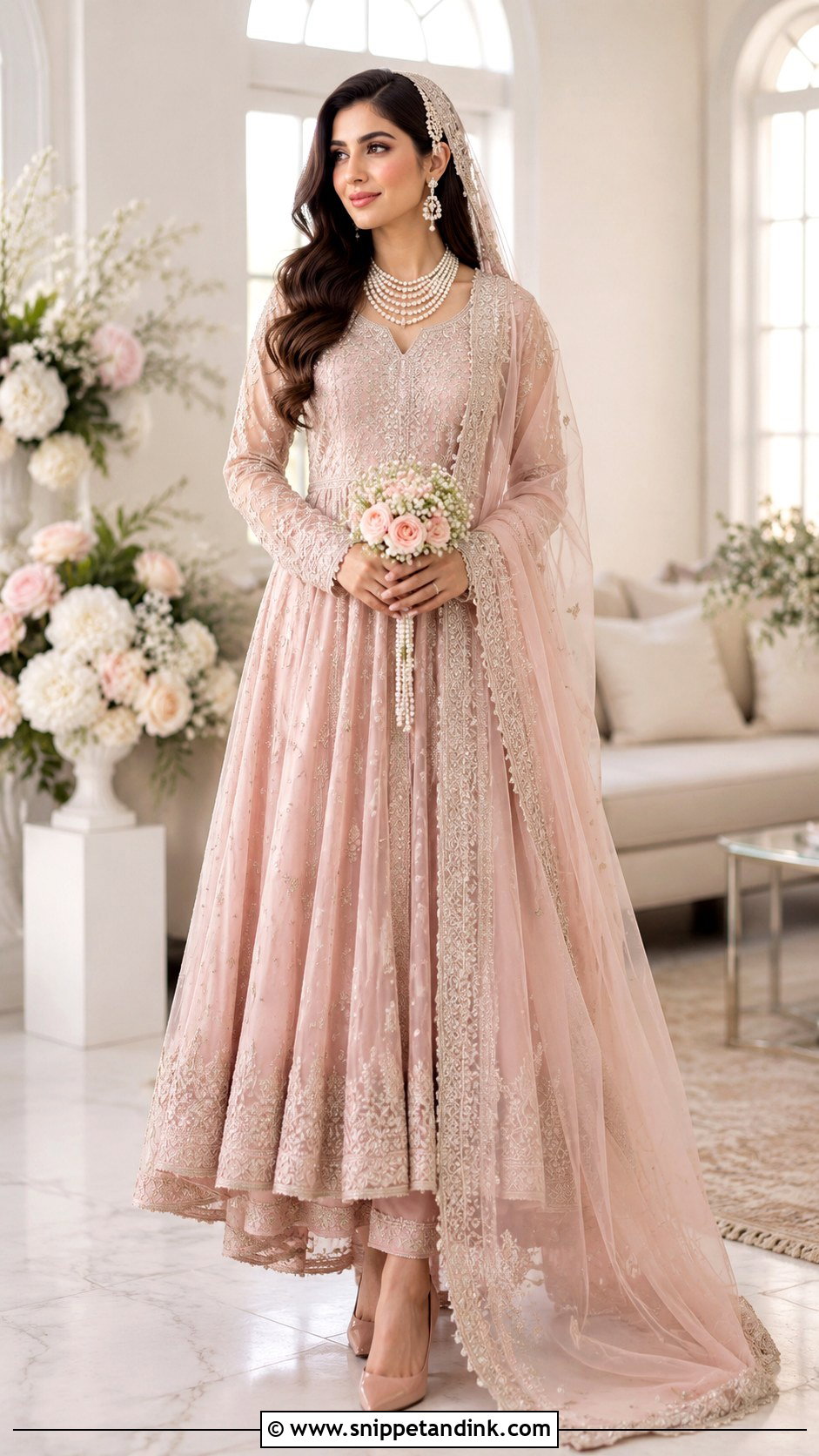
Pastel pink is the color I suggest to brides who want softness without the formality of white. A long frock, an anarkali or a lehenga set with silver, pearl or pale gold work, and a blush dupatta edged with a thin border. In daylight it photographs gently; under yellow indoor bulbs, though, some pinks turn peachy, so I check the fabric under the venue’s lighting if I can. Rose-toned makeup, soft curls or a low bun, pearl or kundan jewelry, nude heels.
4. Champagne Nikkah Dress With Pearls
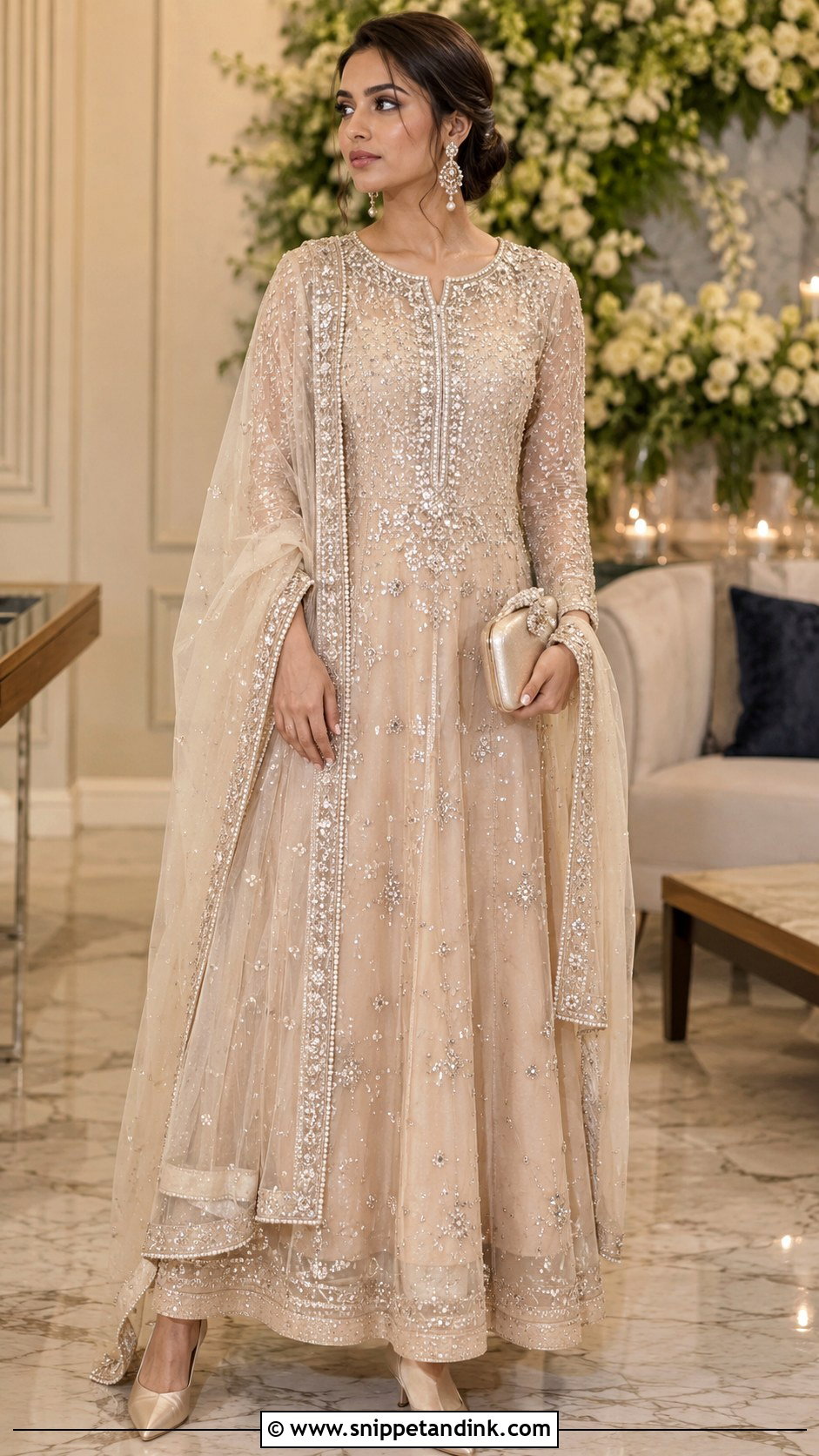
Champagne is how I describe quiet luxury to a bride: a soft golden beige that reads expensive without glinting. A long gown, pishwas or straight shirt with pearl handwork, small sequins and fine beading. Drape a sheer champagne dupatta over the head. Fair skin can disappear into champagne if the shade is too close to the skin tone, so I always hold it up to the bride’s face before ordering. Pearl drops, a small choker, simple bangles and satin heels finish it. Evening ceremonies in hotel halls suit it well.
5. Beige Nikkah Dress With Heavy Dupatta
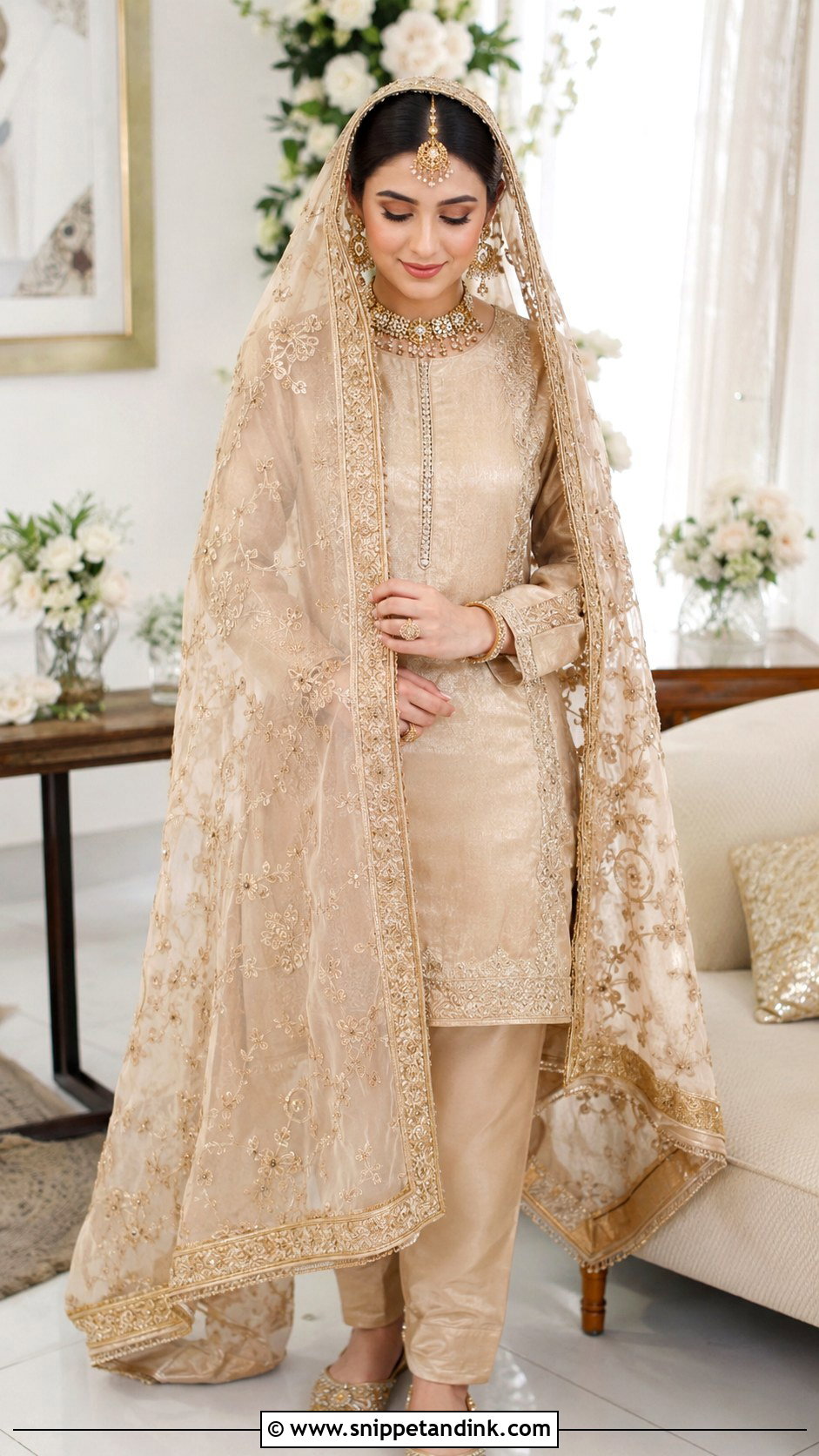
On a long day, comfort usually wins, and this is how I get it: keep the outfit itself plain and let a heavy dupatta carry the bridal weight. A long silk shirt with straight pants, or a subtle lehenga, under a dupatta loaded with zari, gota or pearls around the border. A heavy dupatta needs proper pinning, though. I anchor it at the crown and at one shoulder with small pins through the inner layer, otherwise its own weight drags it backward every time she turns her head. Polki or gold jewelry, bronze makeup, khussas.
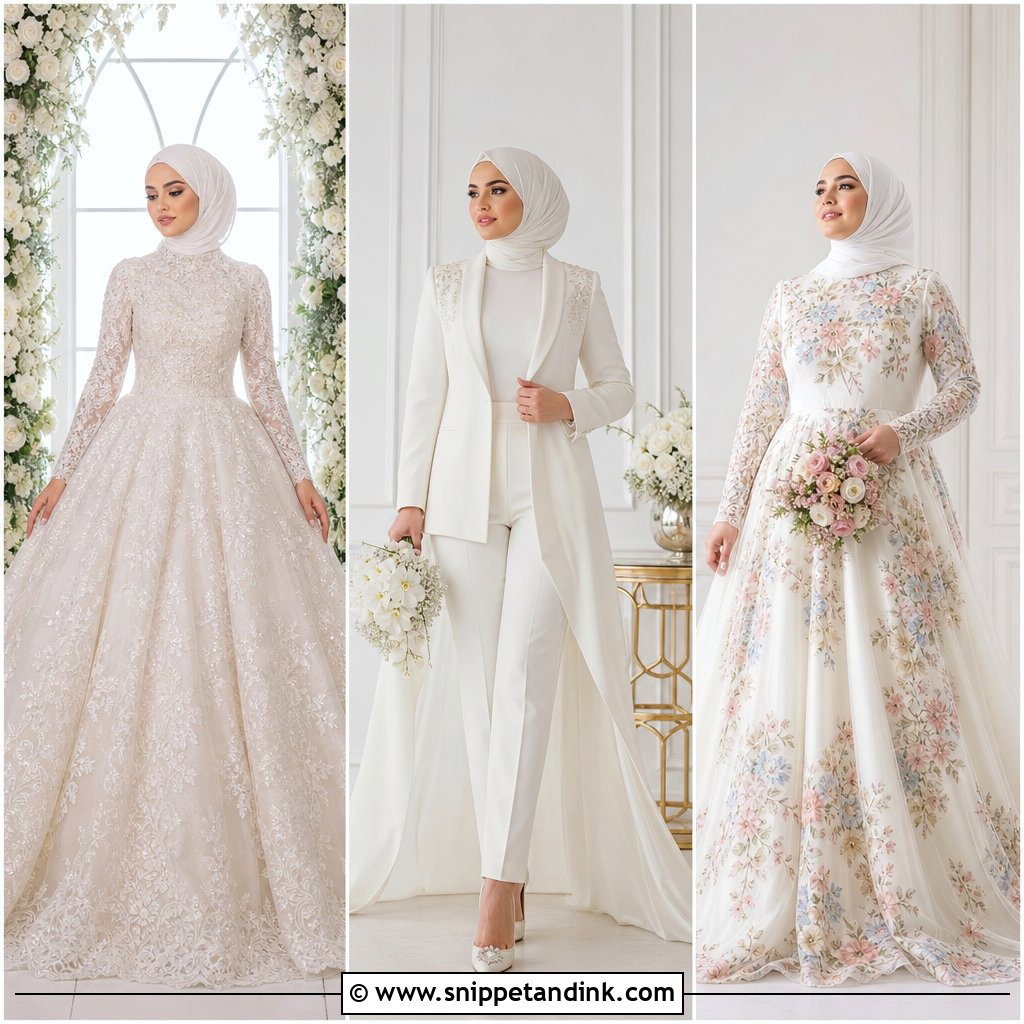
6. Simple Nikkah Dress With Hijab
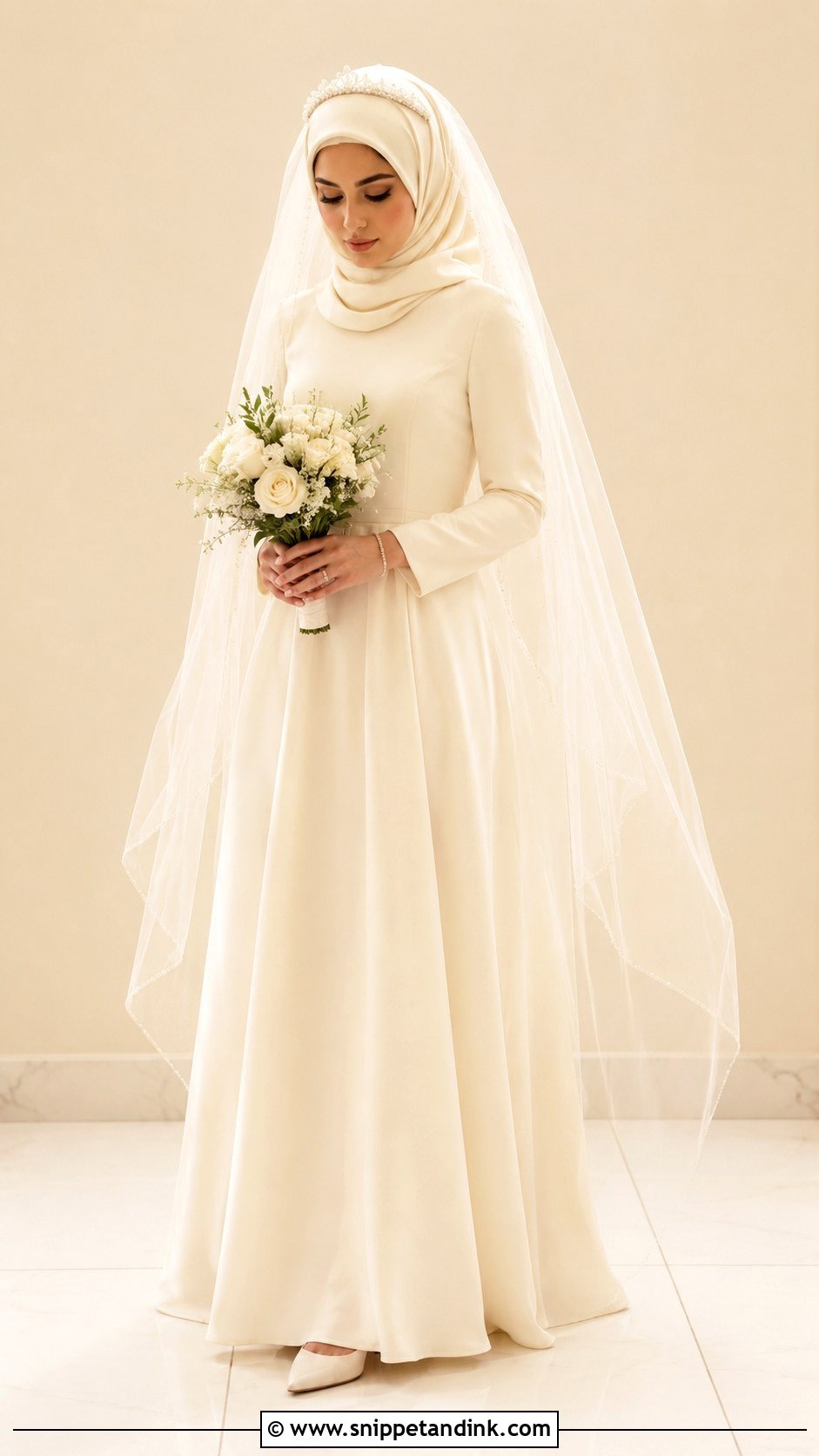
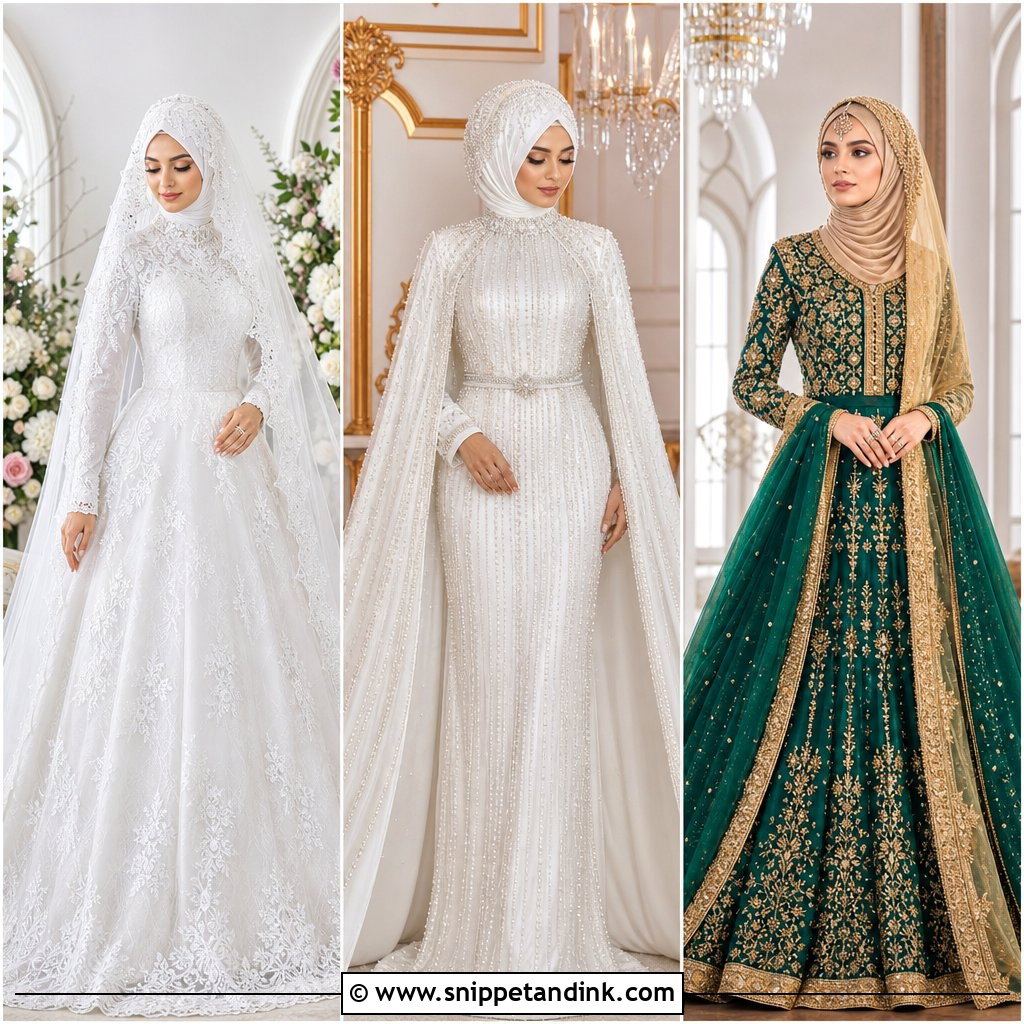
A simple Nikkah dress with hijab depends on fabric and fit more than any other look here, because there’s very little decoration to distract. A modest maxi, an abaya-style gown or a long embroidered tunic over a flowing skirt, in white, ivory, blush, sage or champagne. I usually match the hijab to the dress or go one shade lighter so it lifts the face. For a more bridal effect, pin a sheer dupatta or veil over the hijab with pins at the crown only, so the hijab underneath doesn’t shift. Pearl earrings, a delicate headpiece, closed heels.
7. White Lehenga Nikkah Dress
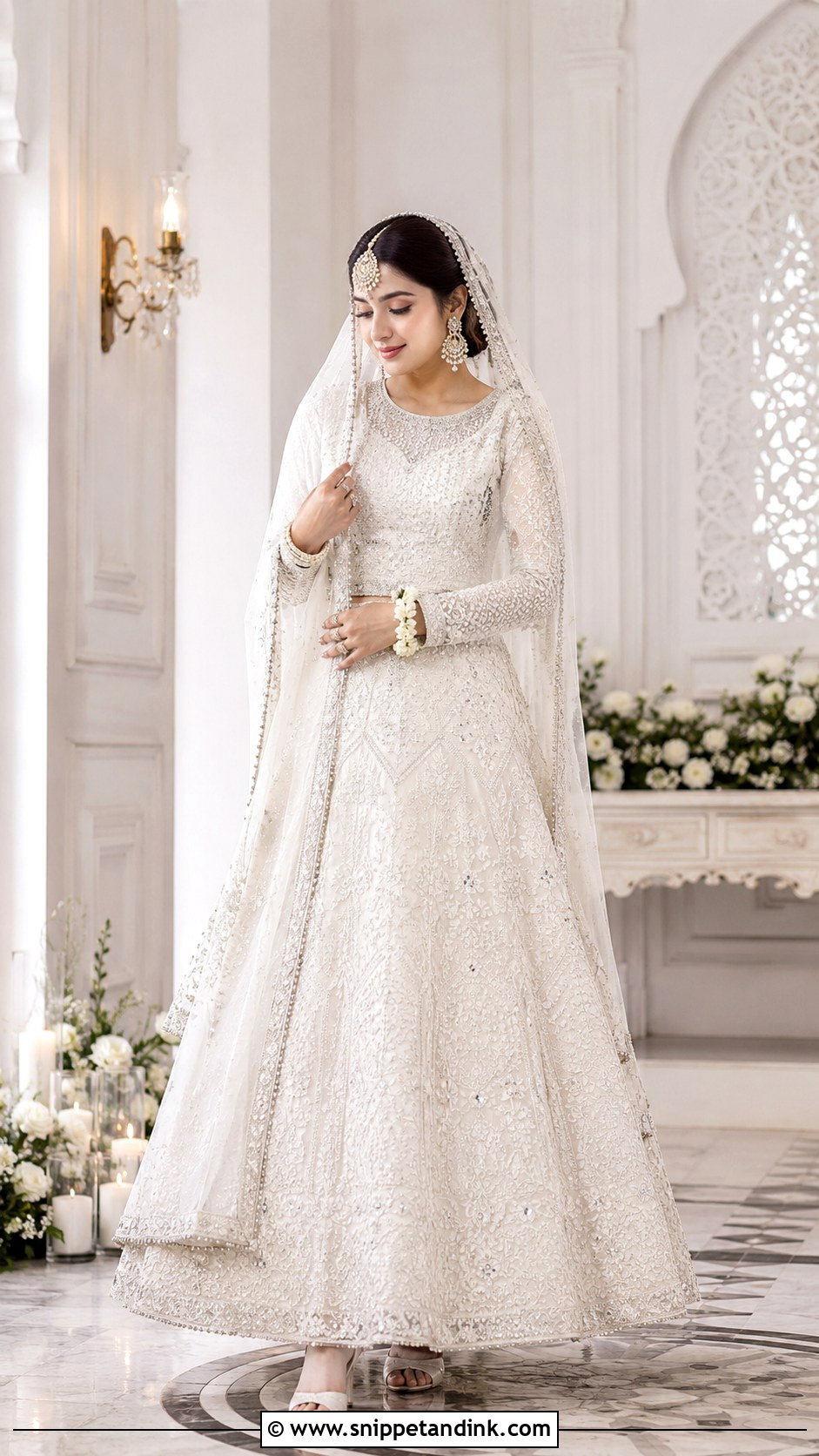
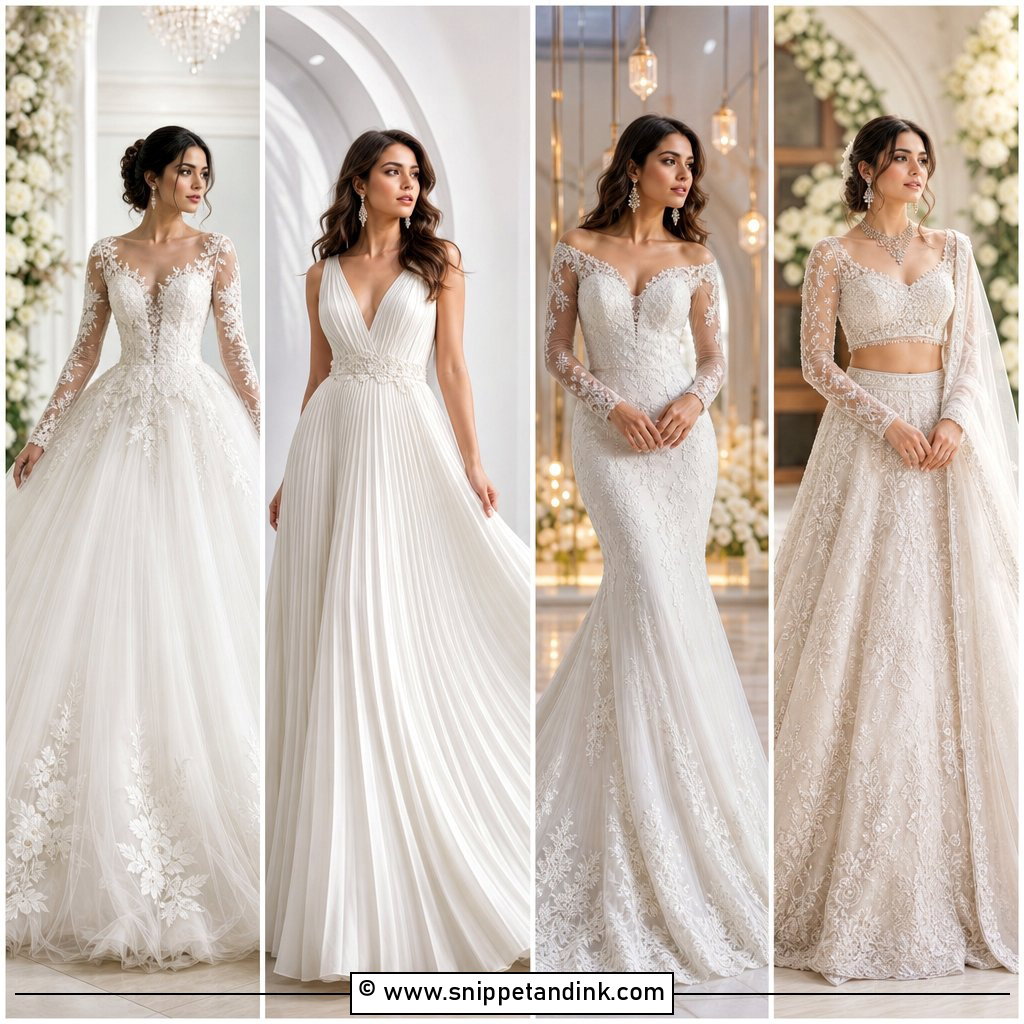
A white lehenga gives you the South Asian silhouette and its movement, but in a softer, ceremonial register than a red bridal set. Full sleeves on the blouse or a longer modest choli, a flowing skirt and a matching dupatta. I prefer silver, ivory, pearl or pale gold embroidery here; heavy colored work on white can look busy. Lehengas are heavier than brides expect, especially with can-can underneath, so practice sitting cross-legged or on a low sofa before the day. Drape the dupatta over the head and one shoulder.
8. White Pishwas Nikkah Dress
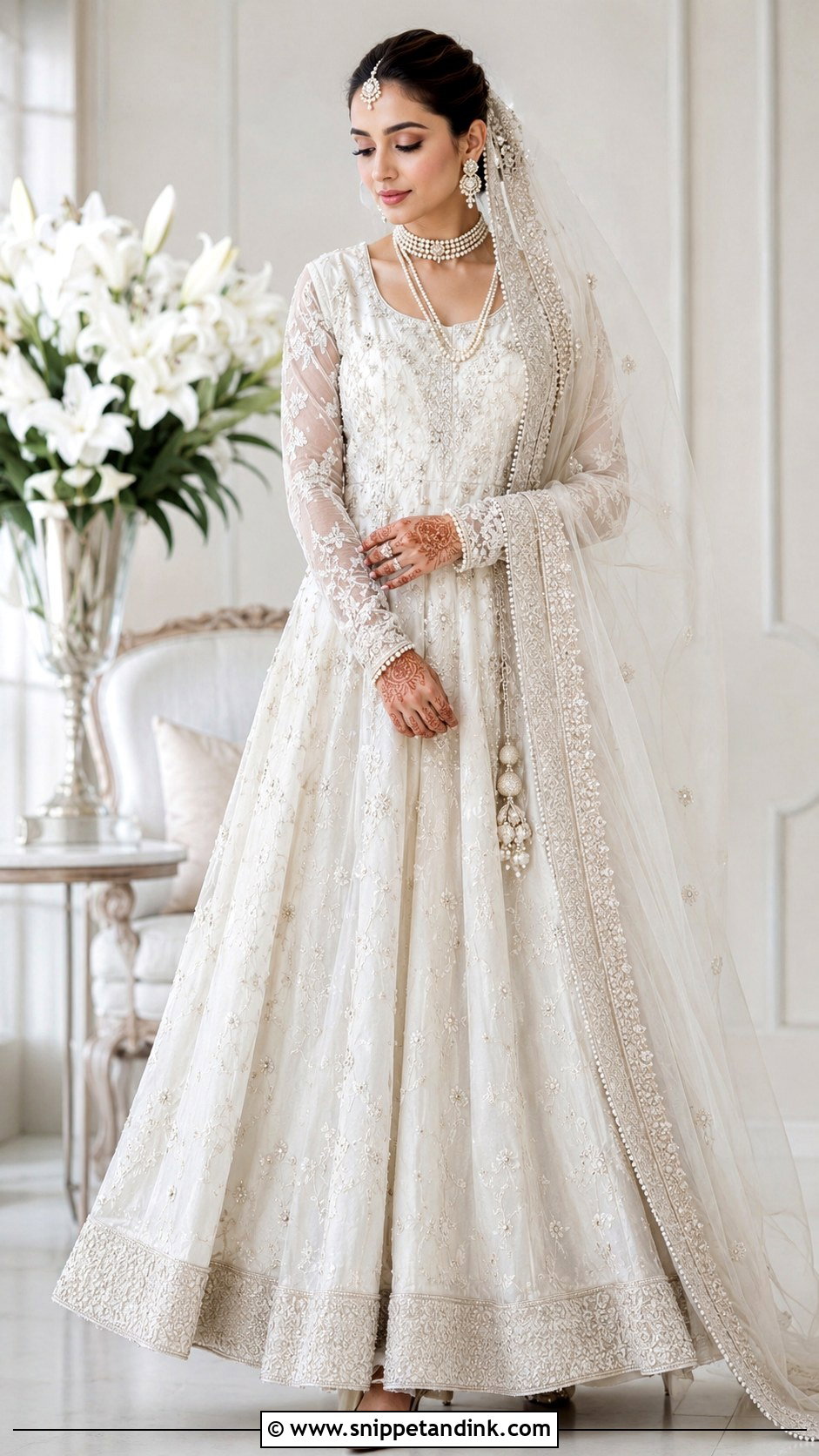
The pishwas is a fitted bodice that flares into a long, full skirt, and it moves wonderfully when you walk. Chiffon, organza, net or silk all work, with embroidery along the neckline, cuffs, hem and dupatta edge. Underneath, churidar pants or a light underskirt keep it comfortable and opaque. The fit at the bodice is where I’m strictest: if it’s too tight it creases across the ribs when seated, and those creases show in every photo of the signing. Pearl jewelry, a small tikka, ivory heels and a sheer dupatta over the head.
9. Anarkali Nikkah Dress
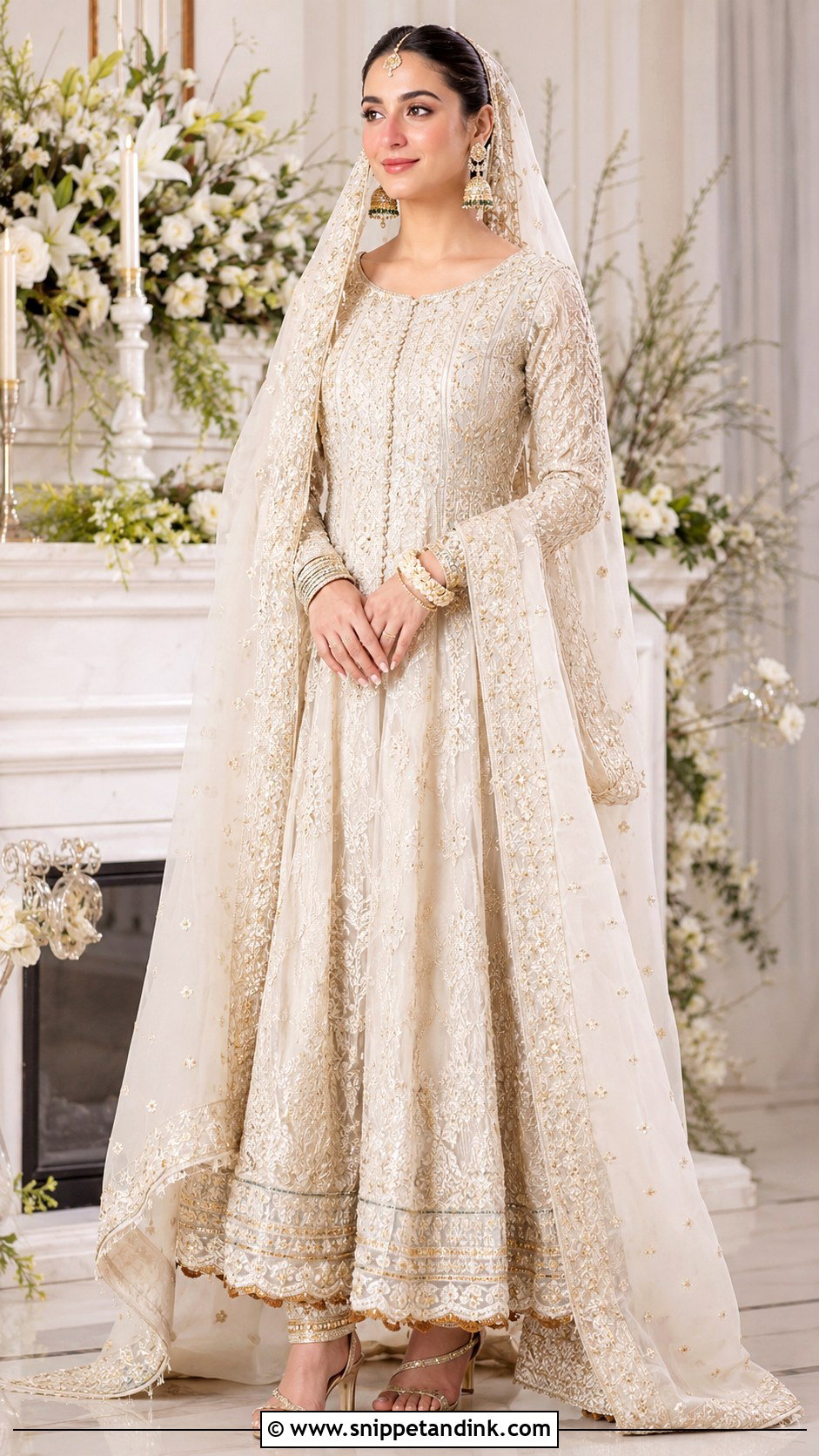
For a Nikkah where you’ll sit, stand and greet relatives for hours, the anarkali is the most comfortable silhouette I know. It’s fitted only to the high waist and then flares, so nothing digs in after the meal. Ivory, a pastel or soft gold, with embroidery on the bodice, sleeves and hem and a dupatta trimmed with lace or embellishment. The flare skims the waist and hips, which suits many body types. Jhumkas, bangles, a tikka and heeled sandals or khussas.
10. Sharara Nikkah Dress
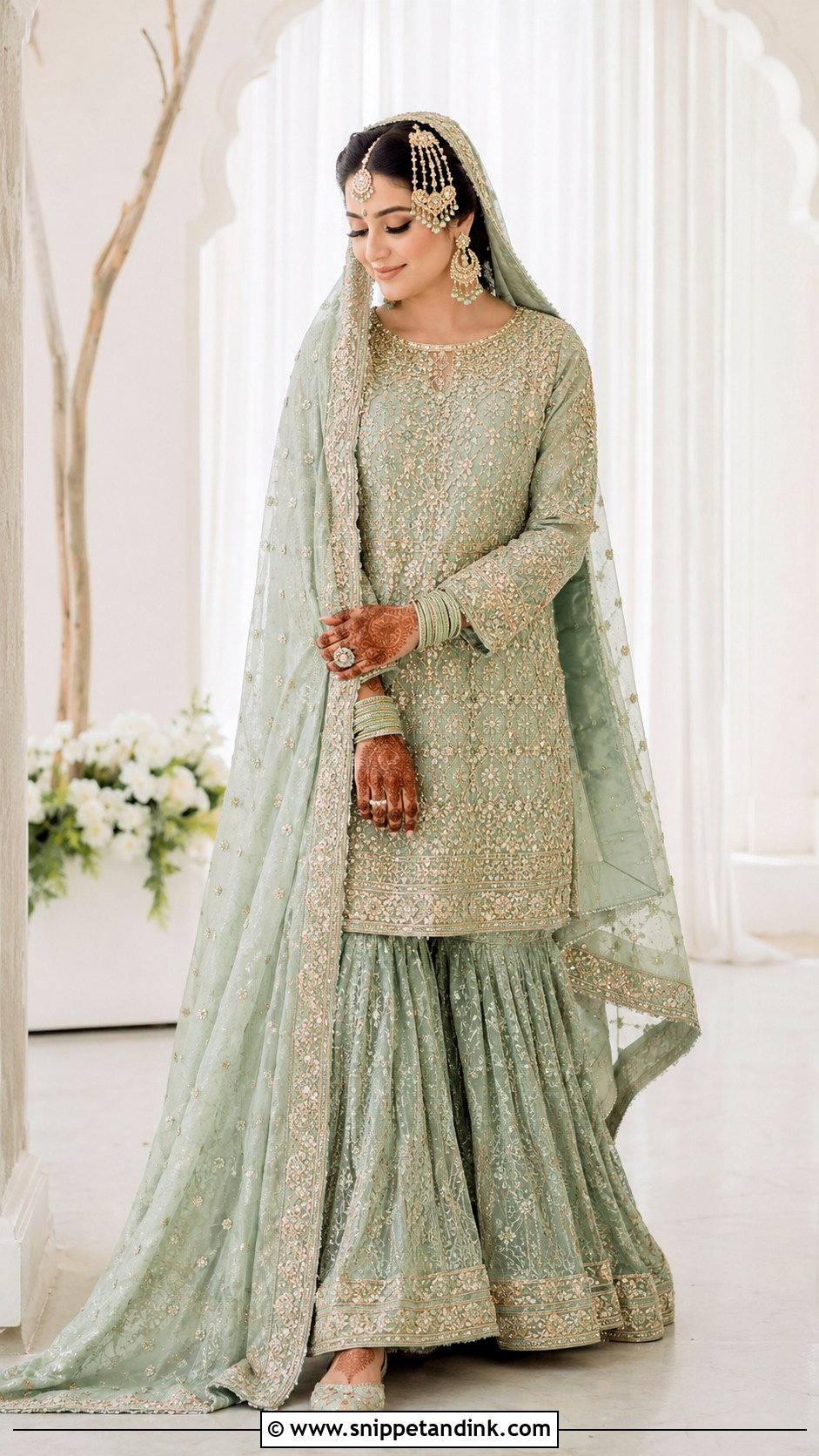
A sharara Nikkah dress feels a little more festive than a gown and a lot lighter than a lehenga. Wide flared pants under a long or mid-length kameez keep it modest. Ivory, powder pink, mint or champagne with gota, pearl or thread embroidery. On stairs or stage steps, hold the front of the sharara slightly, since its width catches the heel. Drape the dupatta over the head or across both shoulders, then add earrings, a passa, bangles and embroidered khussas.
11. Gharara Nikkah Dress
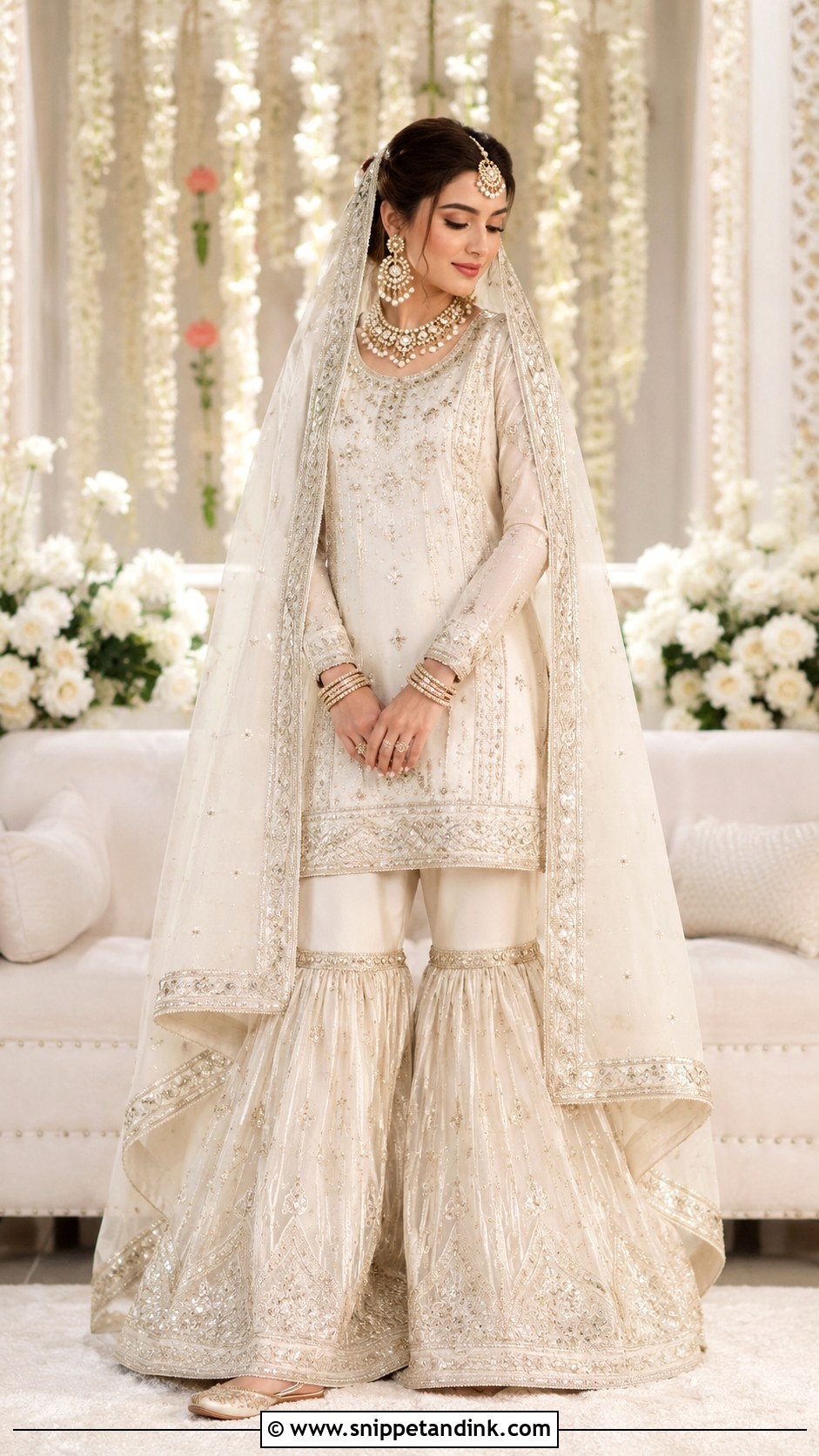
Gharara is fitted to the knee and then bursts into a flare, joined by a decorated band at the knee. It has real heritage behind it, and I love styling it when a bride wants her outfit to carry some family history. Ivory, off-white, blush or soft gold with a long kameez for coverage, and a dupatta with a heavy border. One practical note: that knee join needs to sit exactly at the knee, so take the measurement wearing the heels you’ll use. Kundan earrings, a tikka, bangles, khussas, soft makeup.
12. Long Maxi Nikkah Dress
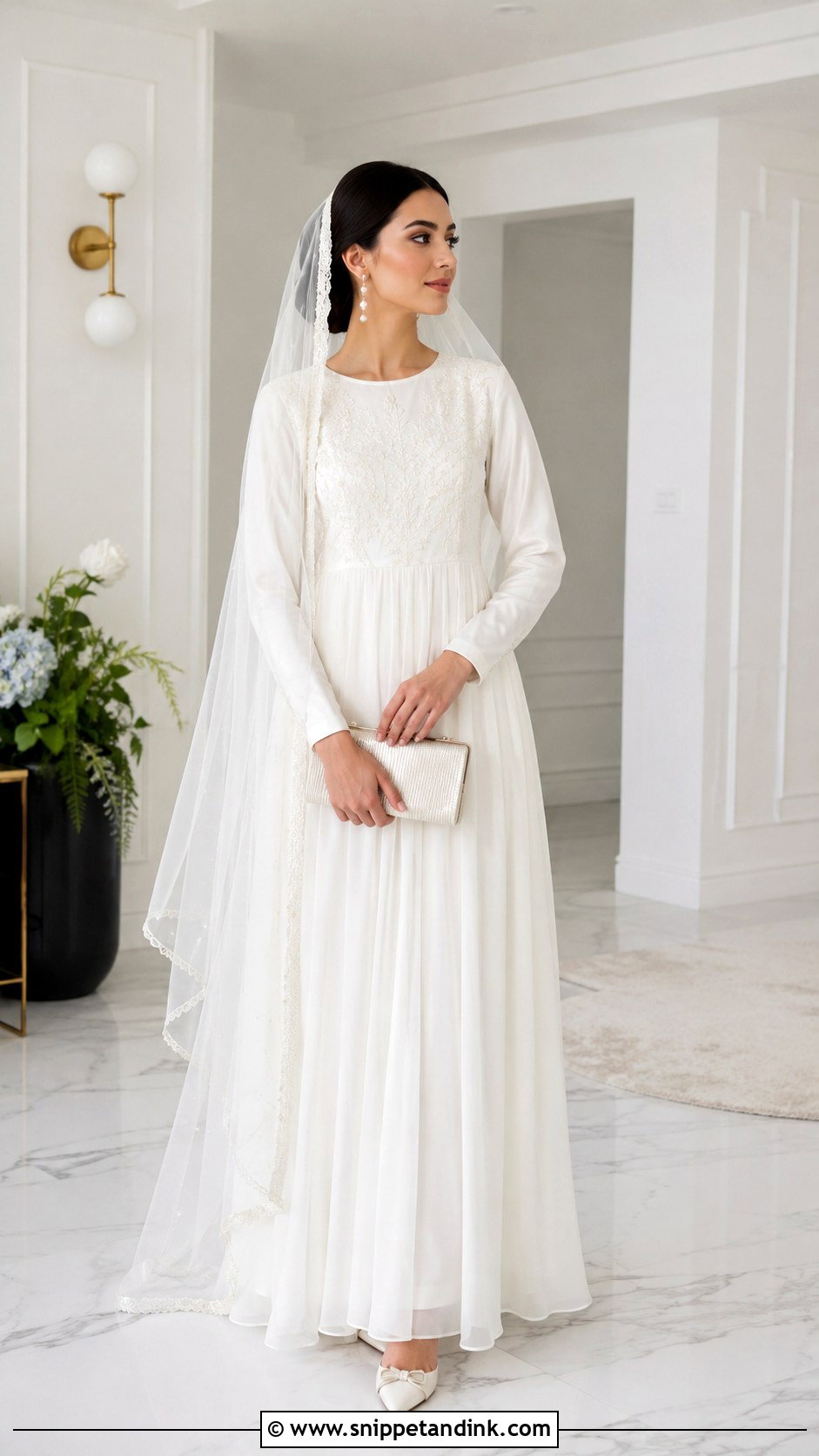
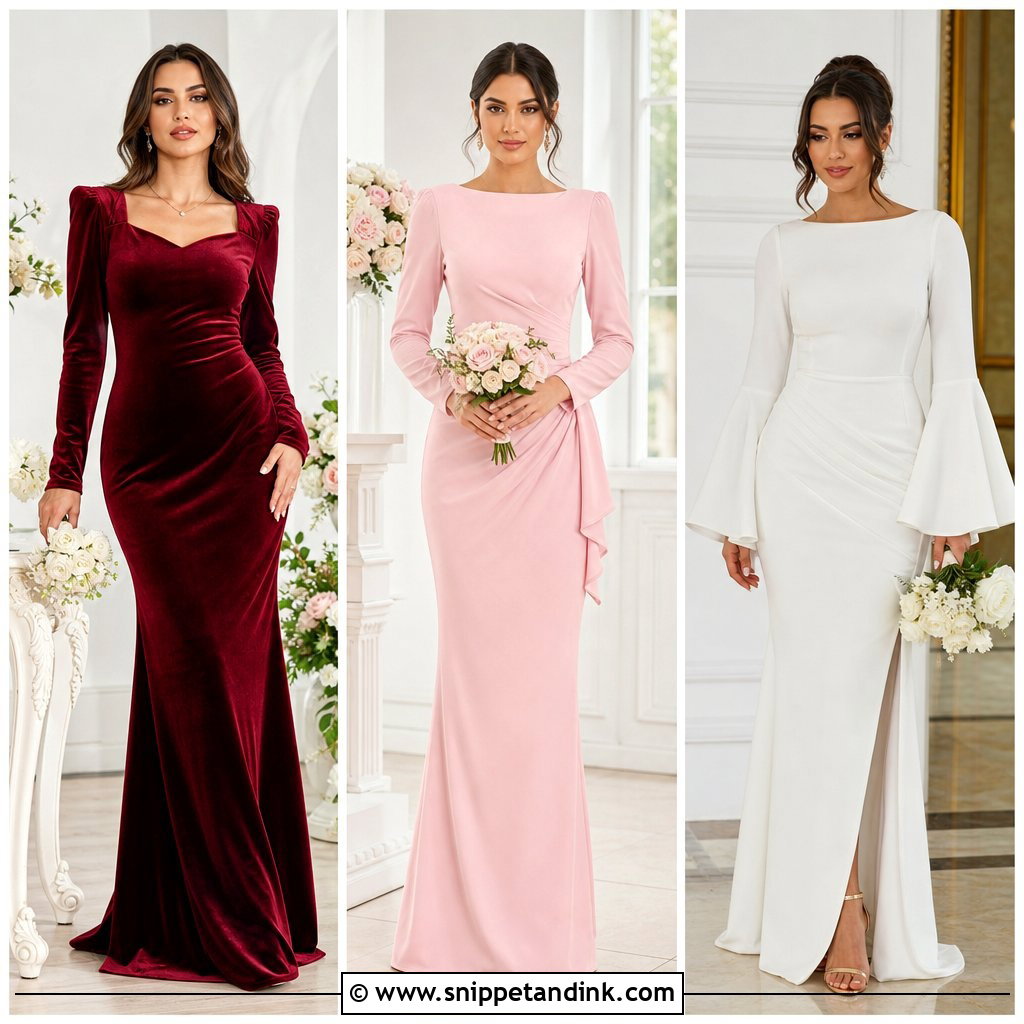
A long maxi suits the bride who doesn’t want layers. Long sleeves, a modest neckline, soft detailing at the bodice, and fabric that moves: chiffon, georgette, organza or silk. A matching dupatta or veil is what turns it from an elegant dress into a bridal one. Pearl or crystal jewelry, soft heels, a structured clutch. I’d suggest it for a small home Nikkah or a civil-style ceremony, and it works easily under a hijab.
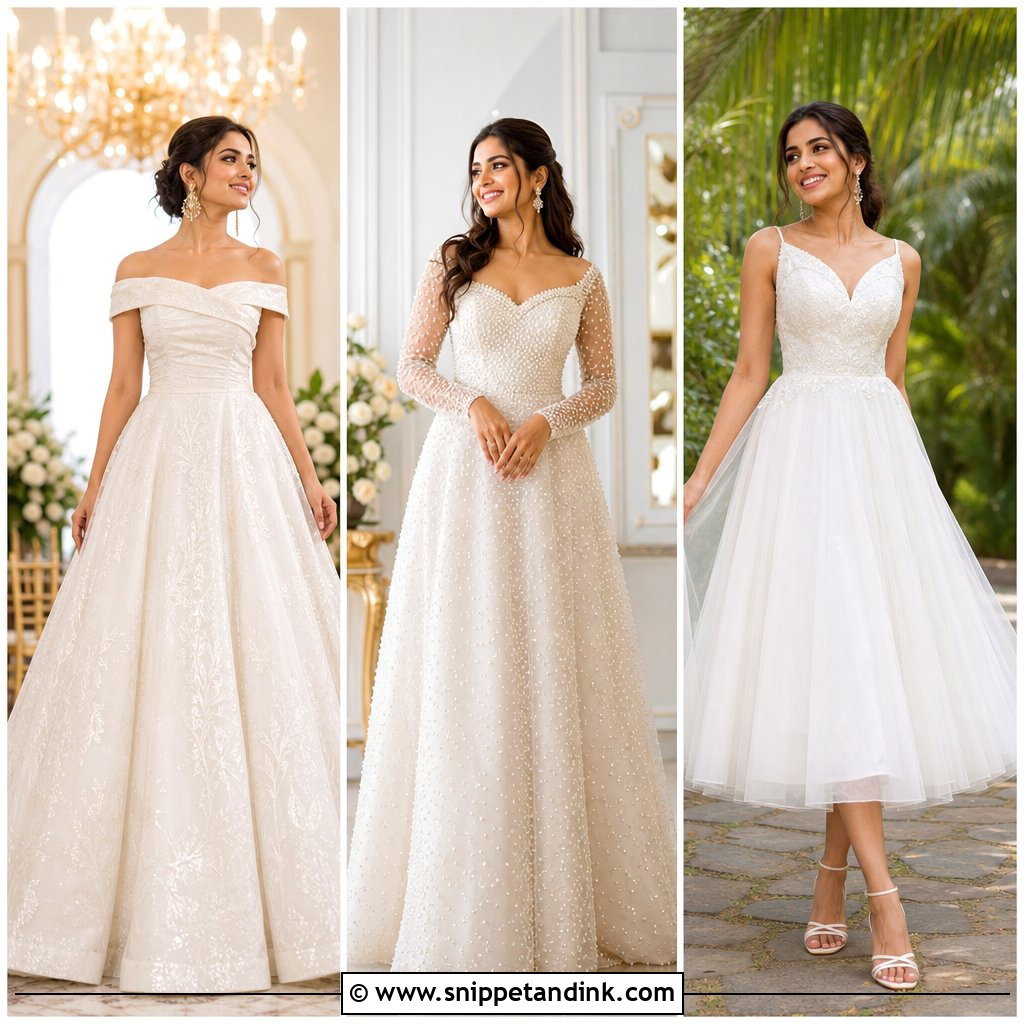
13. Modest Gown Nikkah Dress
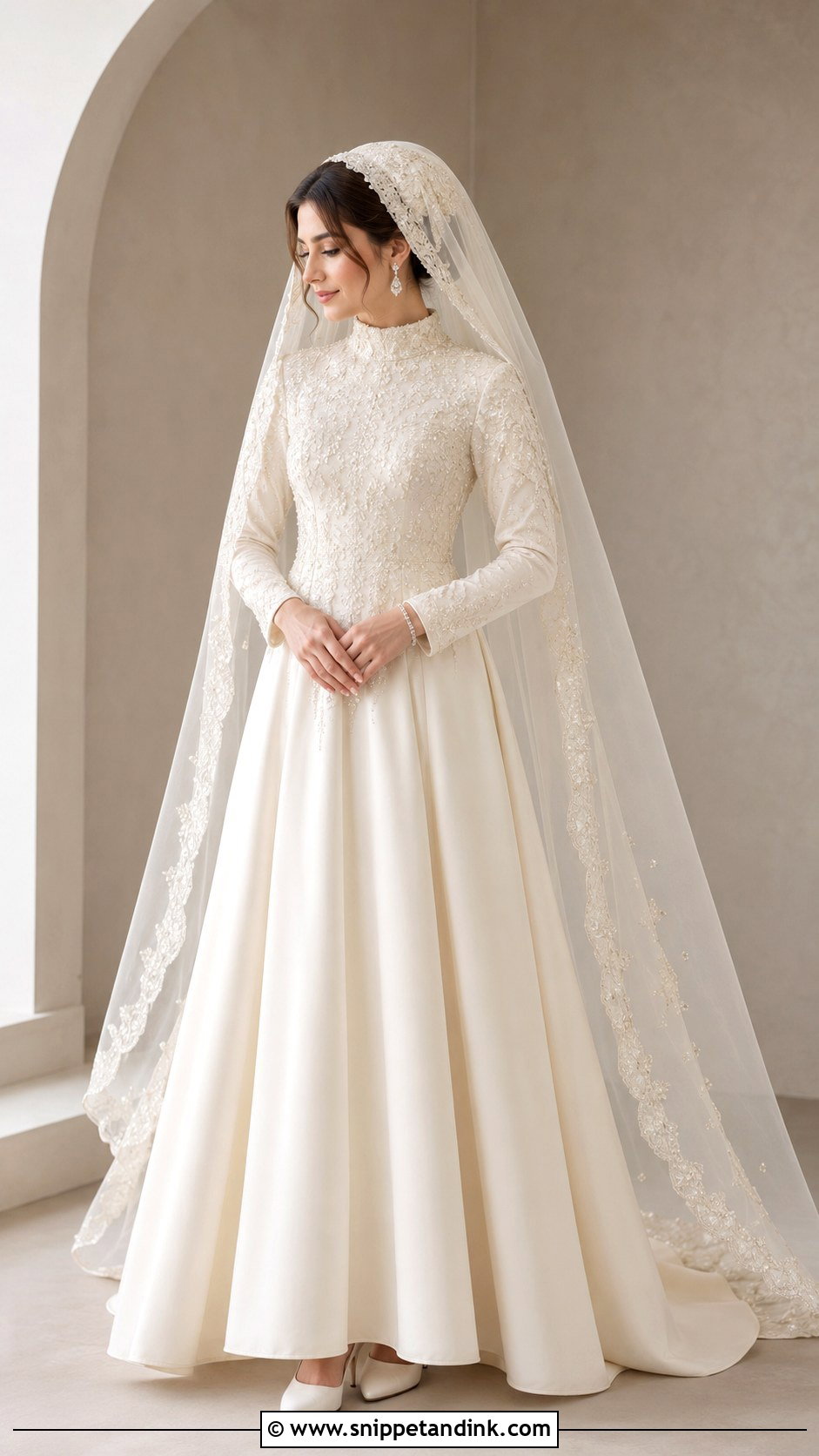
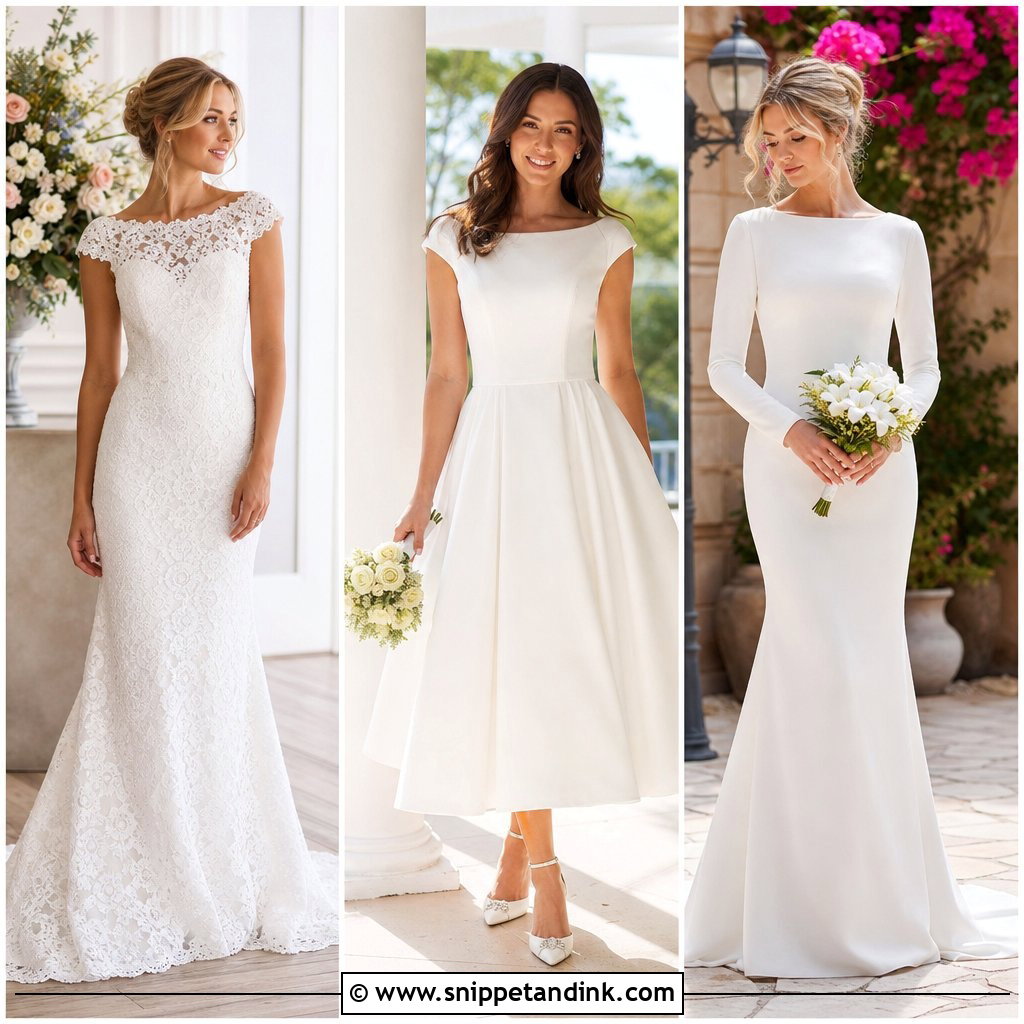
The modest gown is the modern answer: floor length, long sleeves, a defined waist and beadwork across the bodice and cuffs. White, ivory, pearl, champagne or dusty rose. Add a veil or dupatta for a more traditional finish. Watch the sleeve fit if your gown is lace or beaded at the cuff; a sleeve that’s tight at the wrist rubs and pulls when you raise your hands for dua. Drop earrings, a bracelet, a small headpiece and satin pumps.
14. Silk Nikkah Dress With Embroidered Dupatta
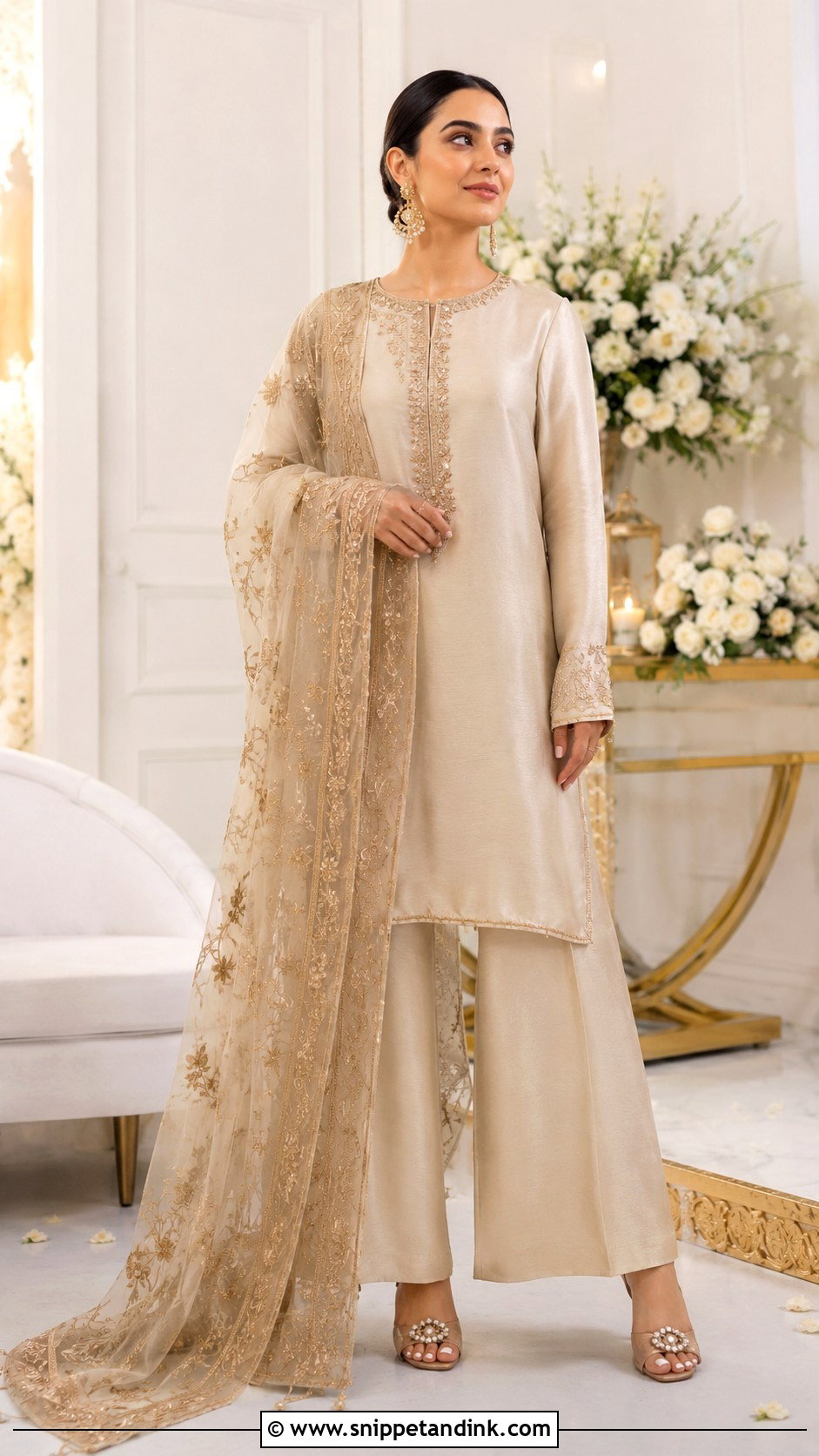
Silk has its own sheen and body, so even a simple cut looks finished. A long silk kameez over straight pants, a lehenga or wide trousers, with the dupatta carrying the detail in zari, pearls, sequins or resham. Ivory, beige, pale gold and blush silks all suit a Nikkah. The trade-off: silk marks with water and creases when you sit. I keep a small steamer in the bridal room and have the bride stand while she’s waiting rather than sit on the bed. Gold jewelry, sleek hair, embellished heels.
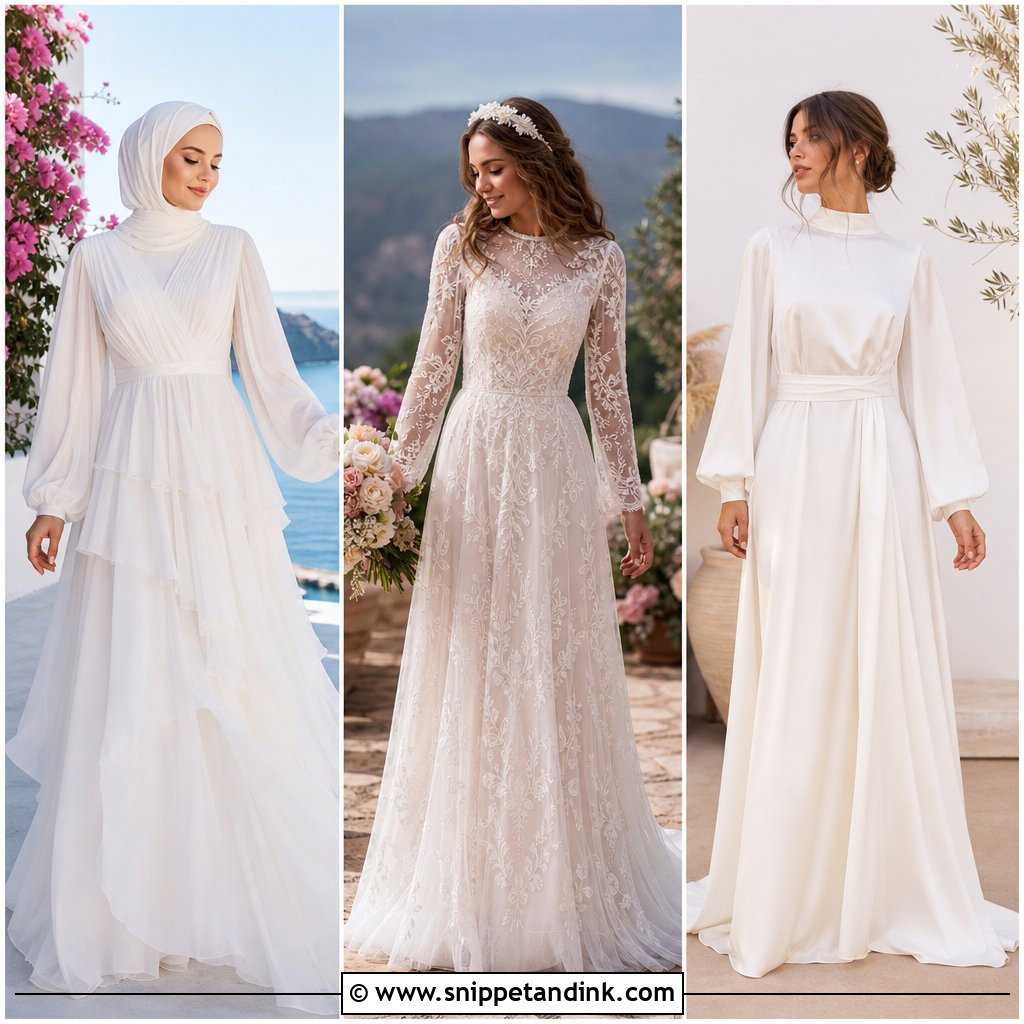
15. Organza Nikkah Dress
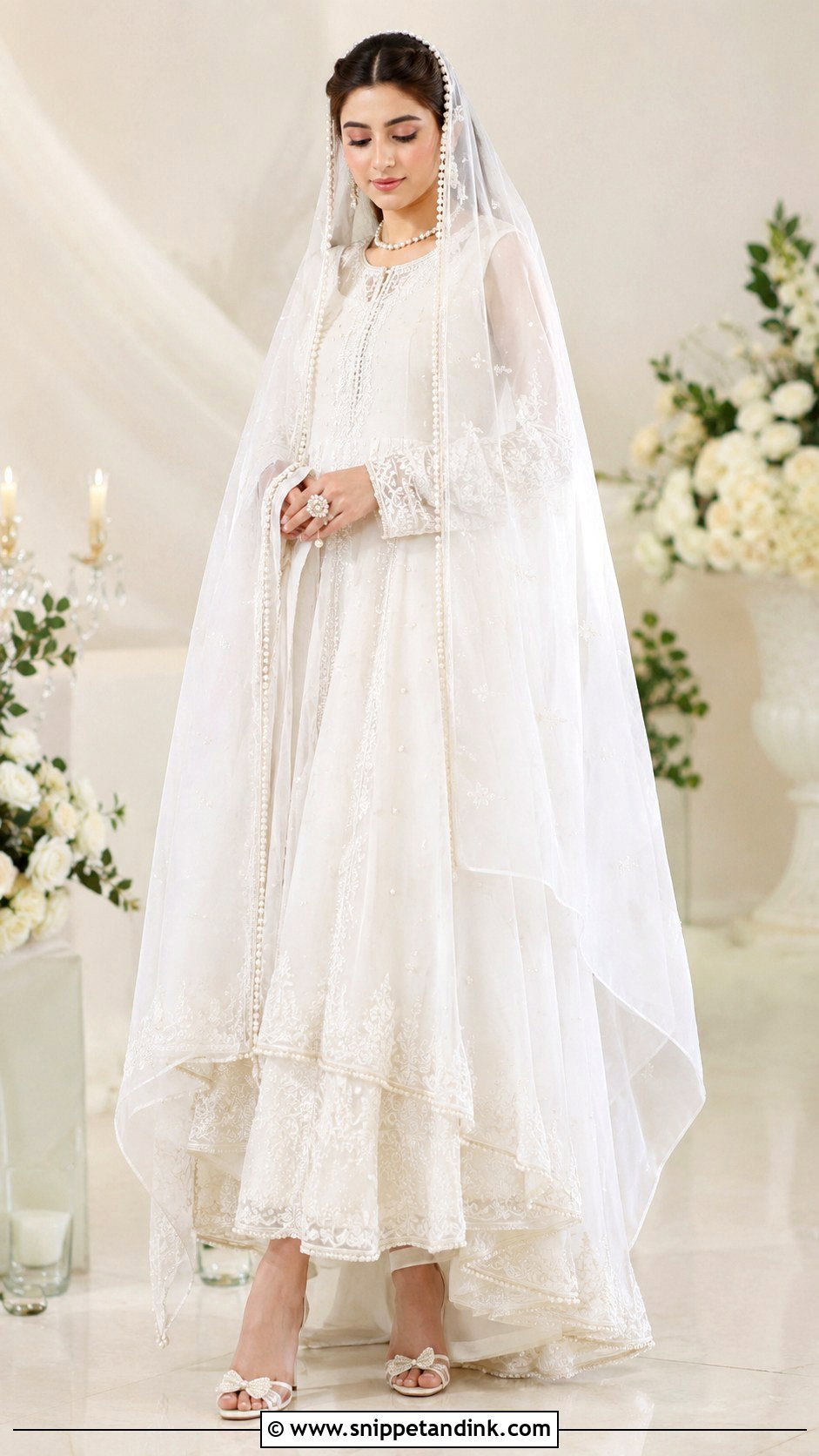
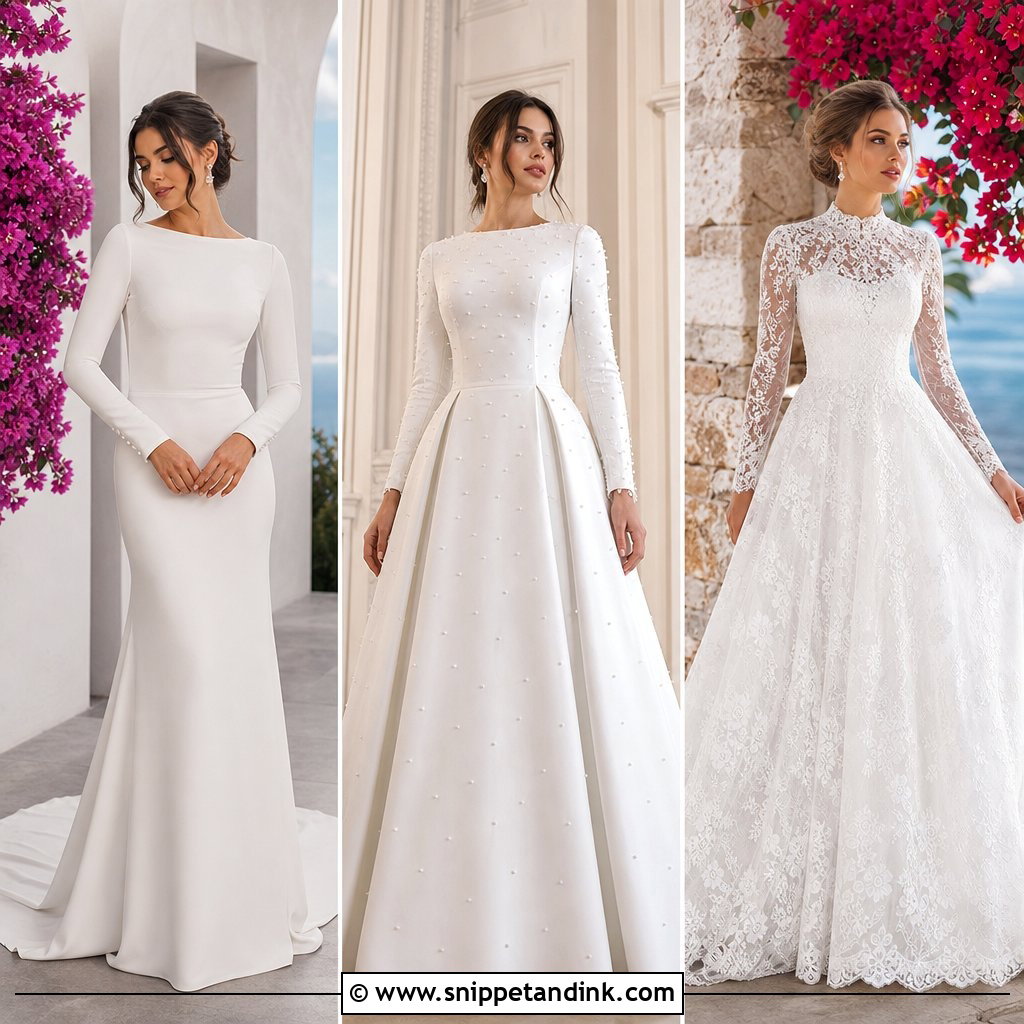
Organza holds a shape without weight, which is why I use it for overlays, sleeves, flared skirts and dupattas. A white or pastel pishwas, frock or lehenga set with subtle embroidery and pearls, and an organza dupatta over the head. Organza is sheer and slightly crisp, so the lining matters: it must be fully opaque and soft against the skin, or it scratches the inner arm by the end of the day. Pearl jewelry, soft pink makeup, delicate heels.
16. Lace Nikkah Dress
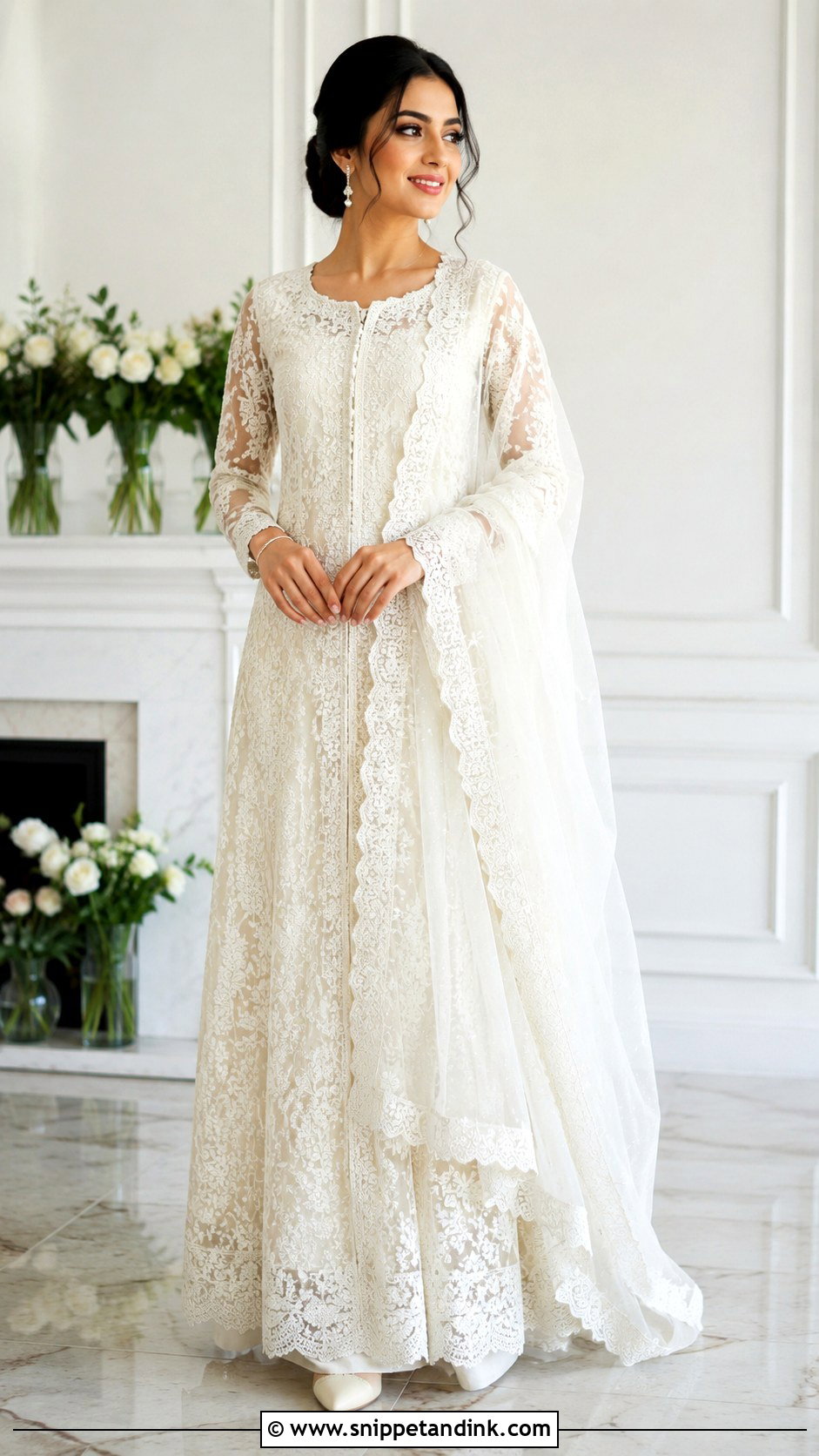
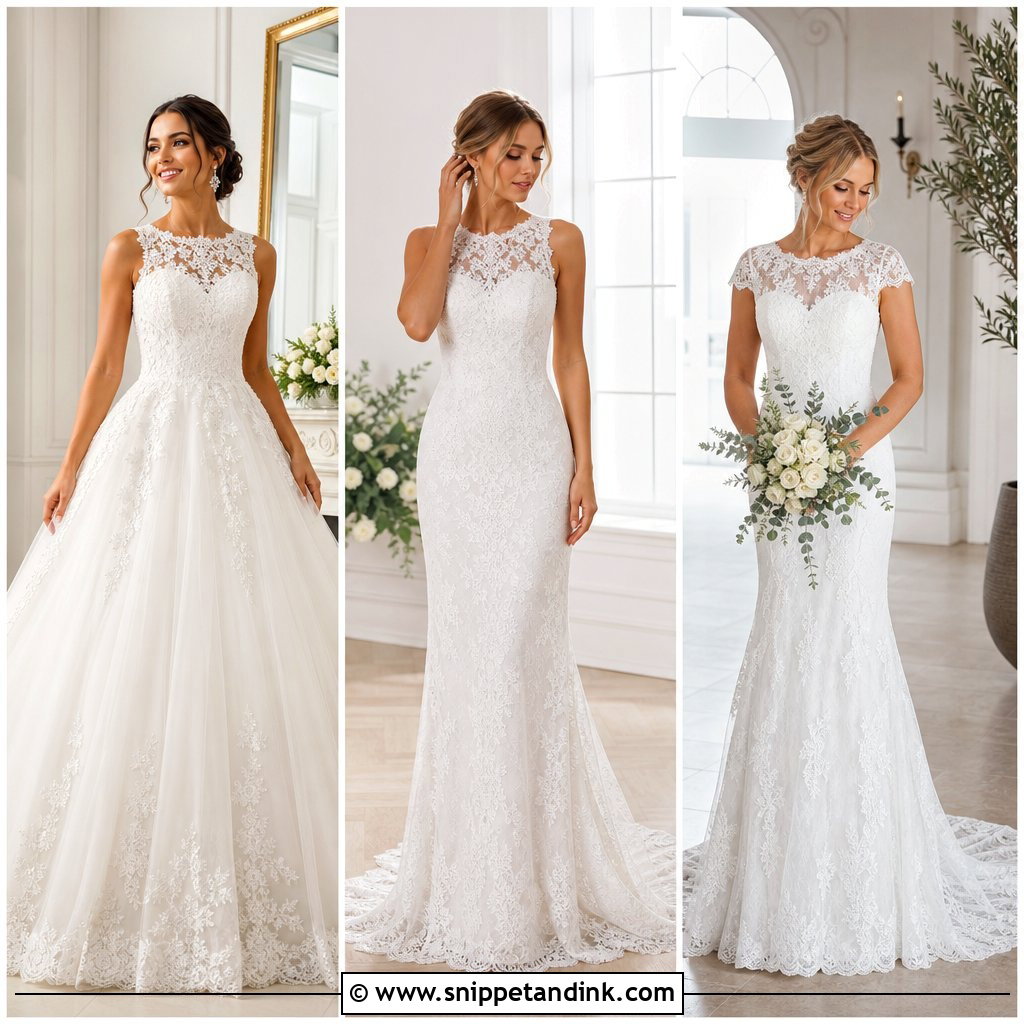
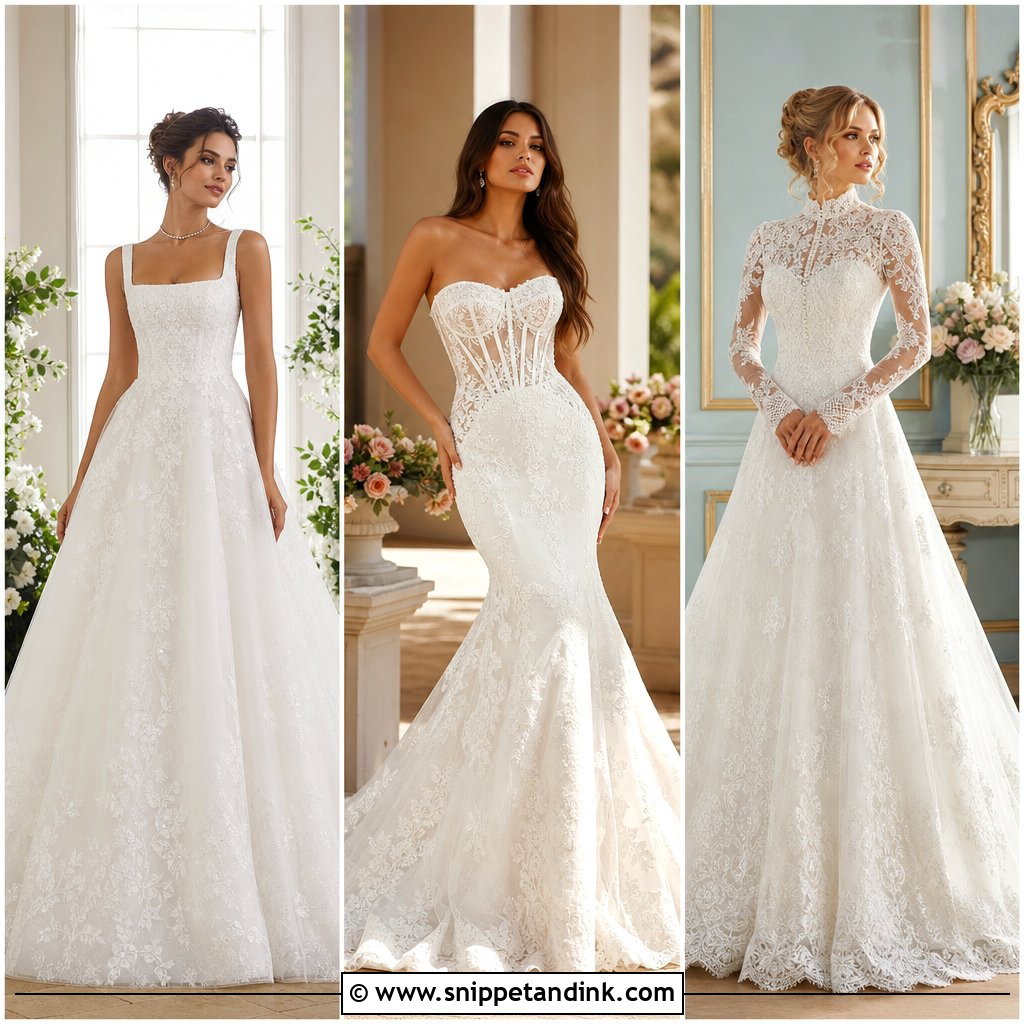
Lace gives texture without heavy embellishment. A full-length gown, a long kameez or a maxi with lace sleeves, lace panels or a lace-edged dupatta. White and ivory feel classic; blush or champagne lace looks softer. Lace needs a satin or silk lining for comfort and coverage, and the lining color changes how the lace reads, so test a few. Because lace already carries the detail, keep jewelry to pearl studs, a small bracelet and a simple veil.
17. Pearl Work Nikkah Dress
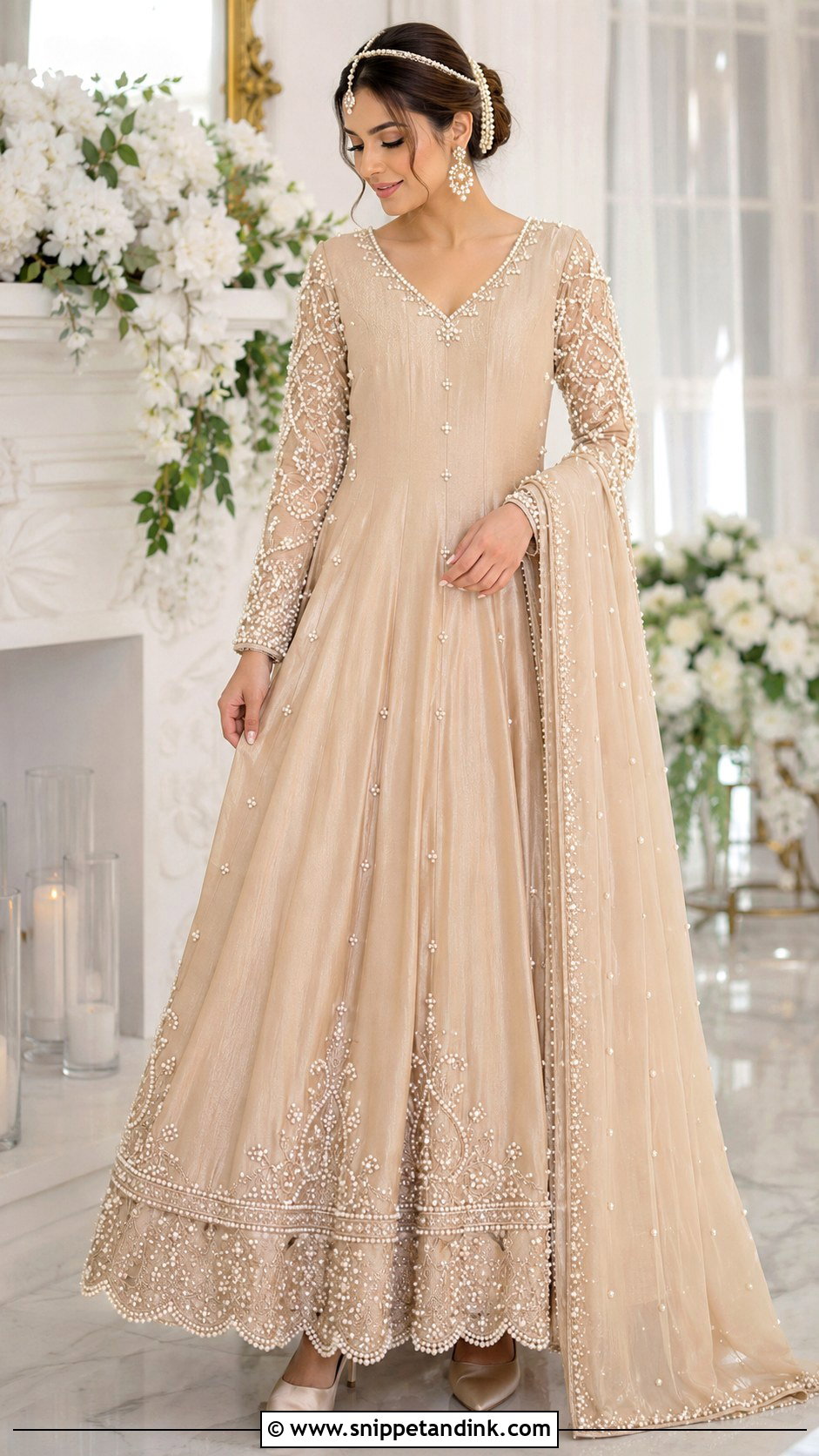
Pearls catch light softly instead of flashing it, which suits the calm of a Nikkah. Pearl work on the neckline, sleeves, waist and dupatta border, on white, ivory, champagne, blush or silver-toned fabric. Check the stitching before buying: each pearl should be individually secured, not strung on one long thread, because one snag on a chair and a strung line unravels down the sleeve. Pearl earrings, a pearl headband or tikka, satin heels, dewy makeup with soft eyes.
18. Sequin Nikkah Dress
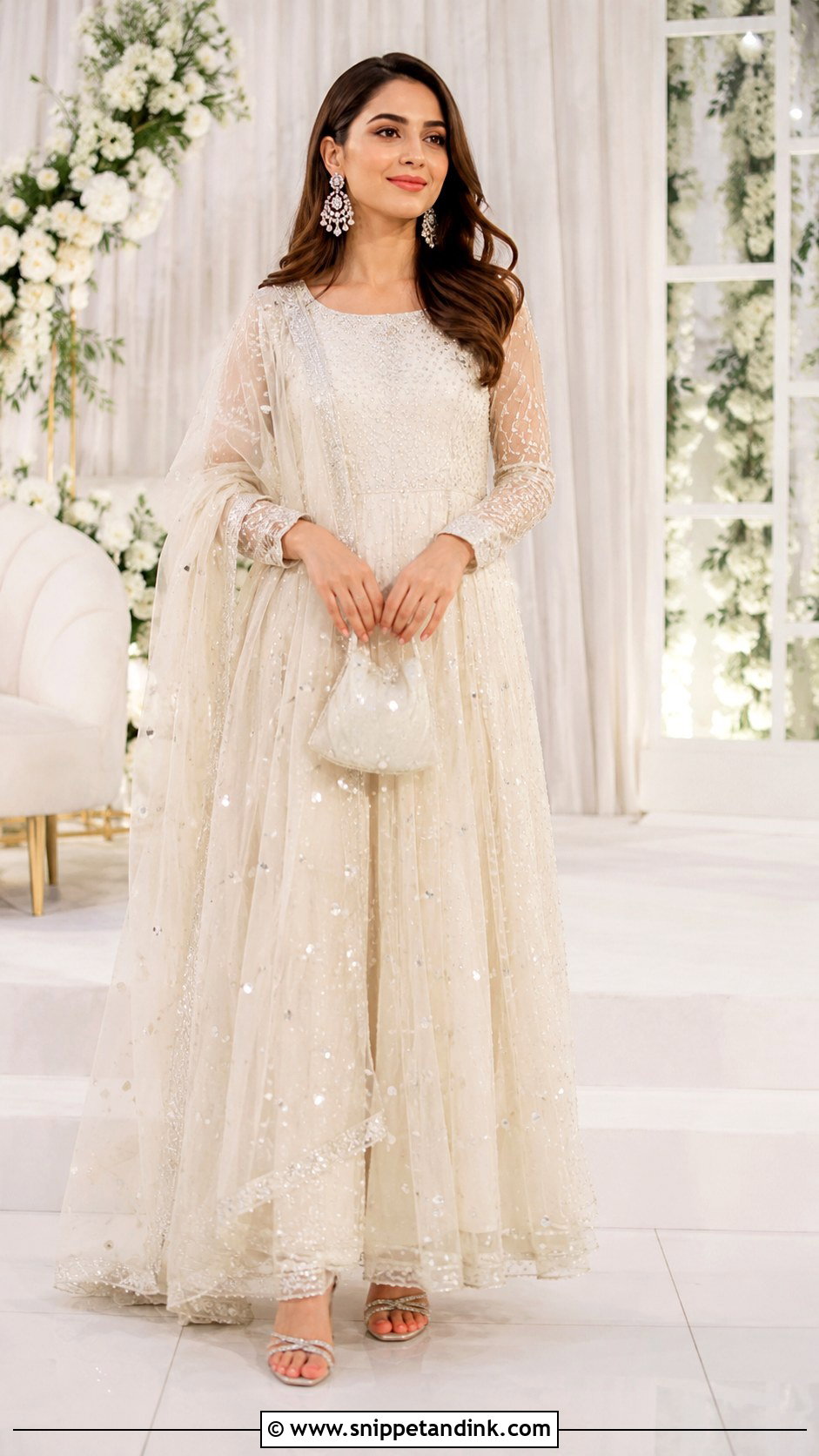
Sequins can work for a Nikkah if they’re tiny and scattered. Fine sequins over chiffon, net or organza in ivory, champagne, rose gold or silver. Large, dense sequins reflect camera flash in hard white spots and can look harsh next to a mosque or home setting. Keep the dupatta simple and jewelry refined. Clear heels or satin pumps, smooth makeup with a soft lip and defined eyes. Evening ceremonies suit it best, where the light is warm and the sparkle reads gently.
19. Gold Nikkah Dress
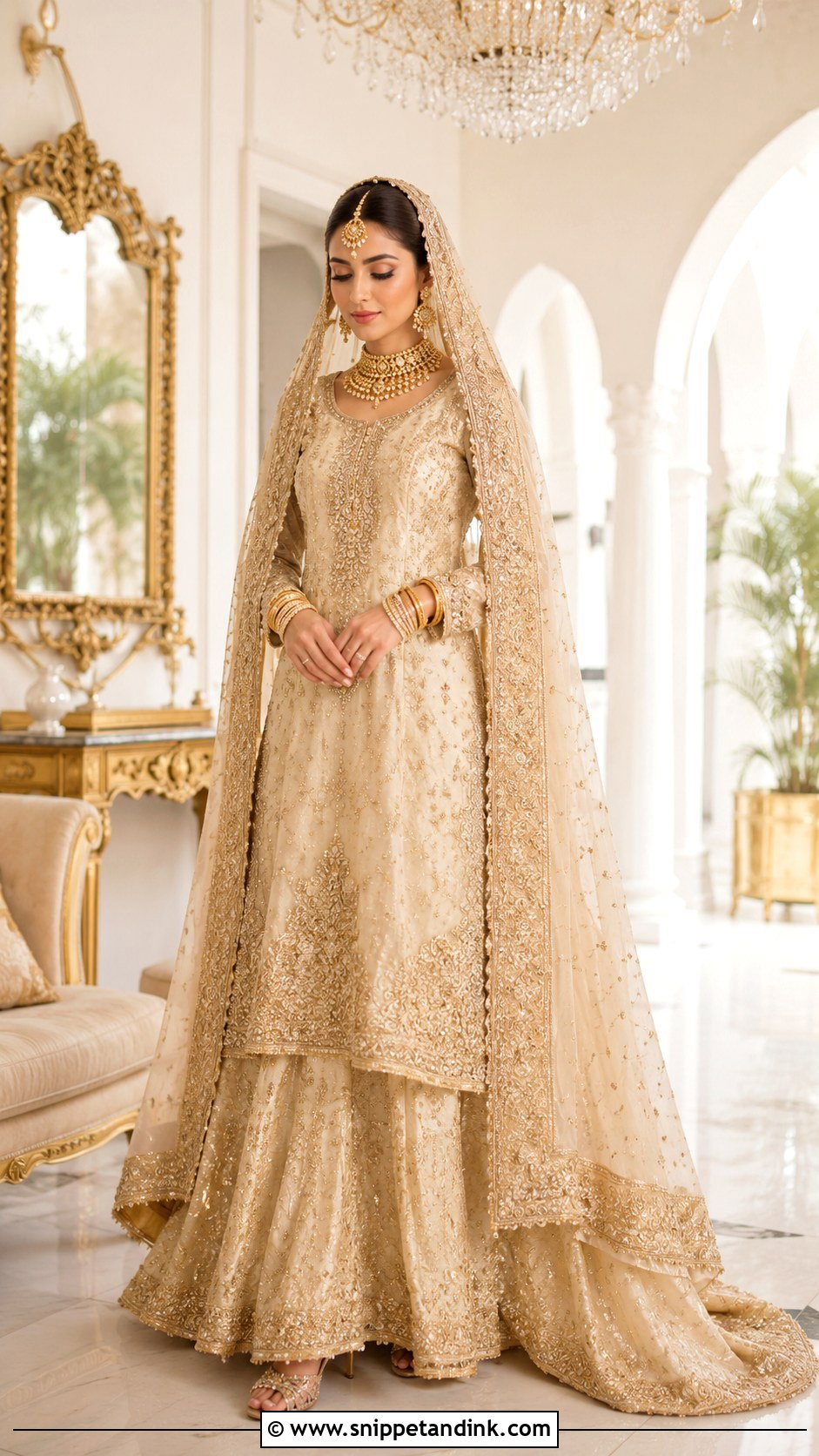
For a gold Nikkah outfit, I steer brides toward pale, antique or champagne gold and away from bright metallic, which reads more like a reception look. A long embroidered kameez with a lehenga, gharara or straight pants, a matching dupatta, traditional gold jewelry and neutral heels. Gold reflects a lot of color onto the face, warming the skin, so the makeup artist should know the outfit’s shade before the trial. If the outfit is heavy with work, scale back the jewelry.
20. Silver Nikkah Dress
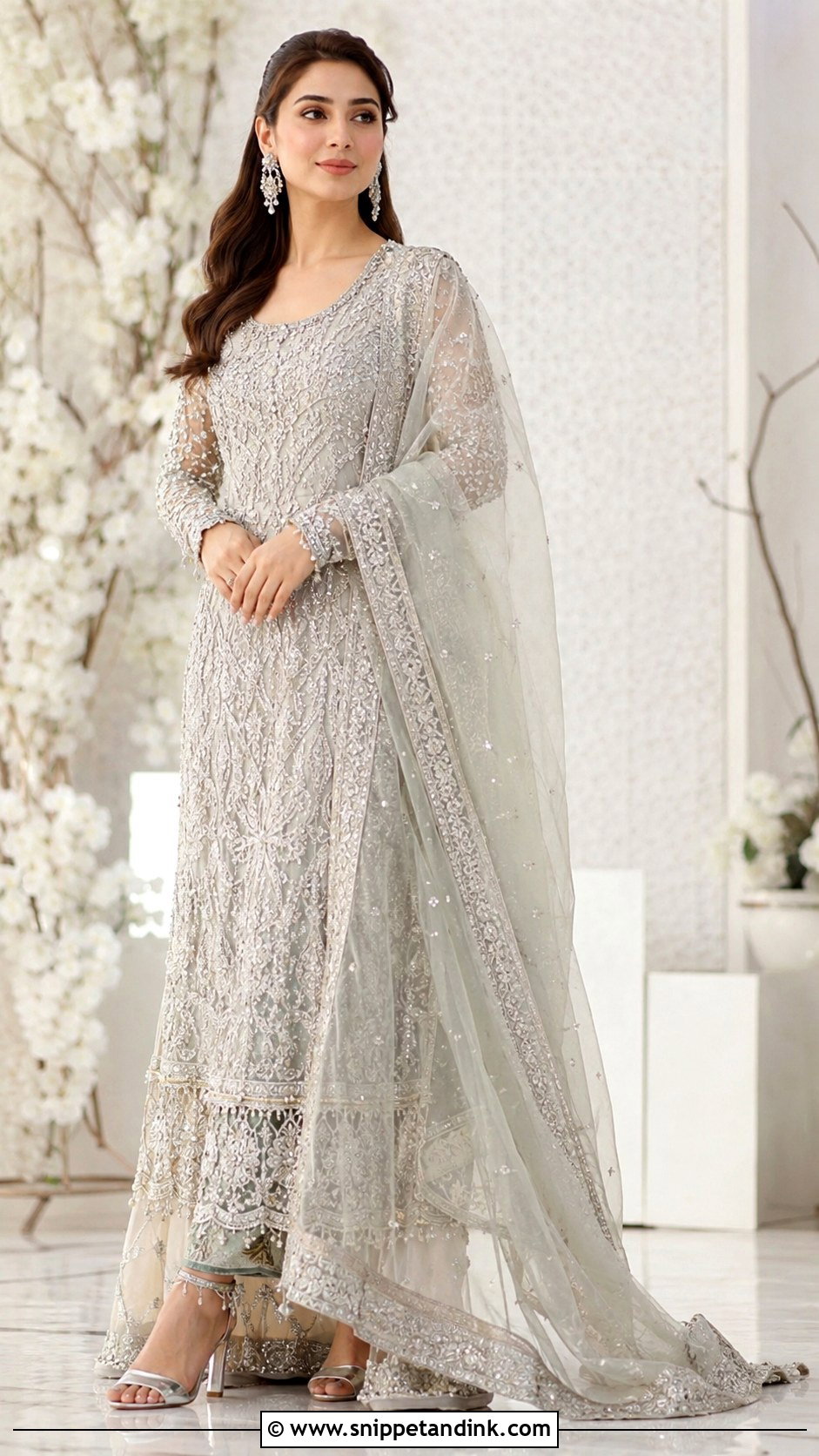
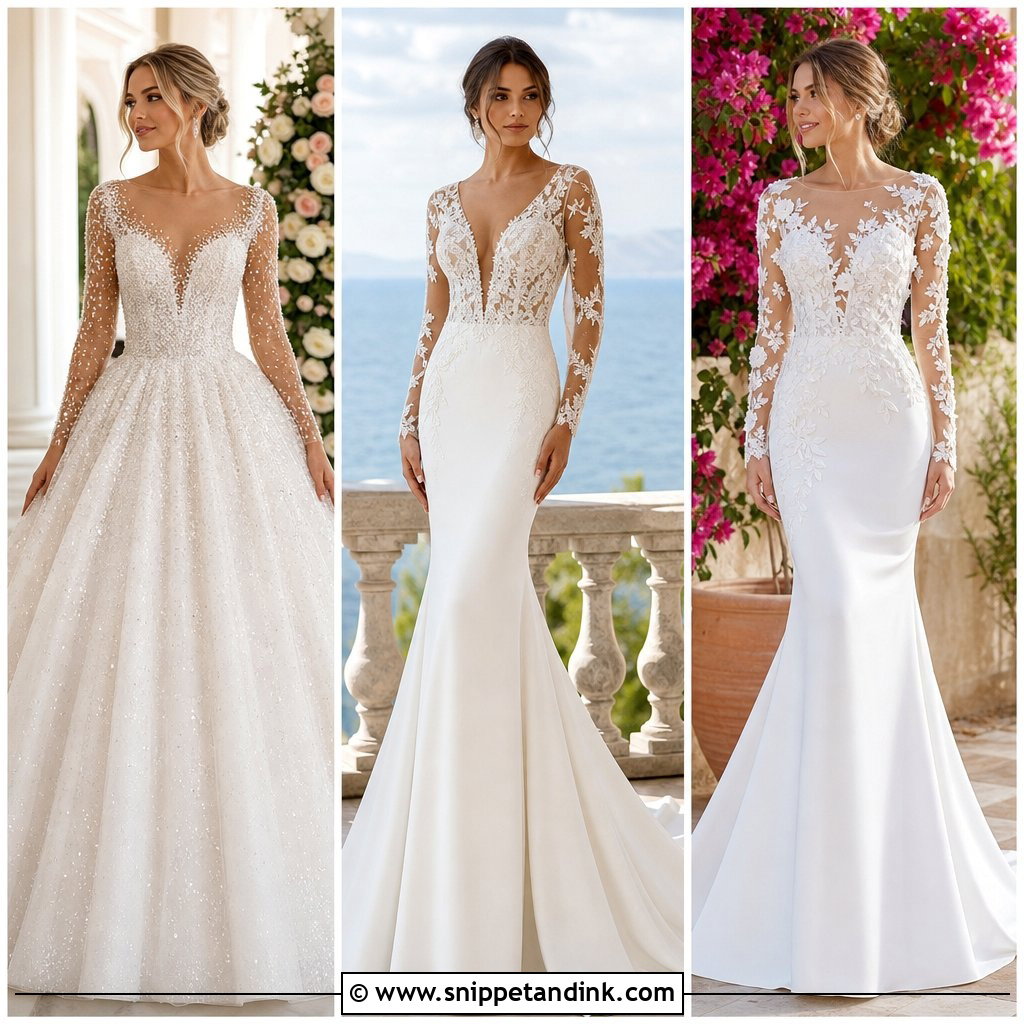
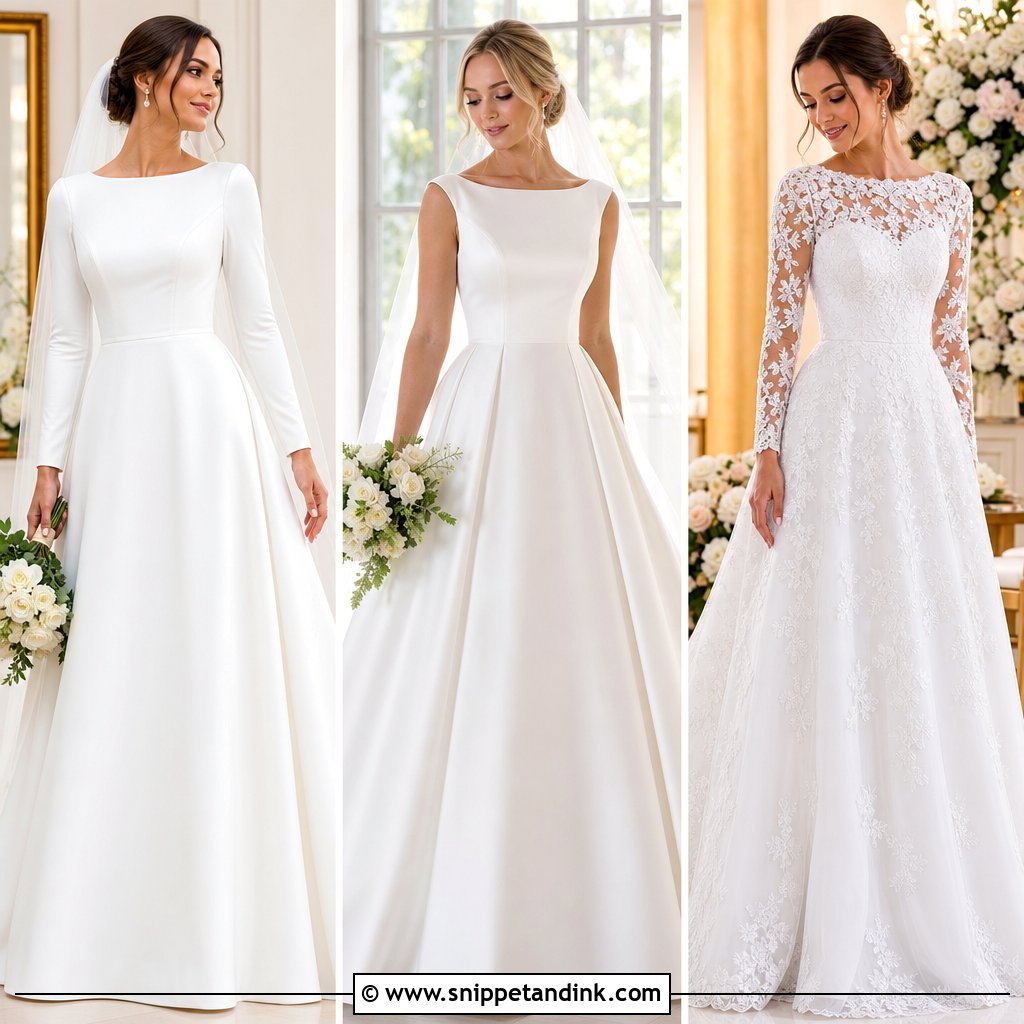
Silver is the cool-toned alternative to gold: silver threadwork, beads or sequins on white, ice blue, pearl gray or ivory. A sheer dupatta with silver edging adds just enough shine. Diamond-style jewelry with pearl accents, silver heels. Soft pink or mauve makeup balances the coolness of the fabric. One caution with real silver zari: it tarnishes faster than gold, so if the outfit is an heirloom or a few years old, check the borders for darkening before the day.
21. Mint Green Nikkah Dress
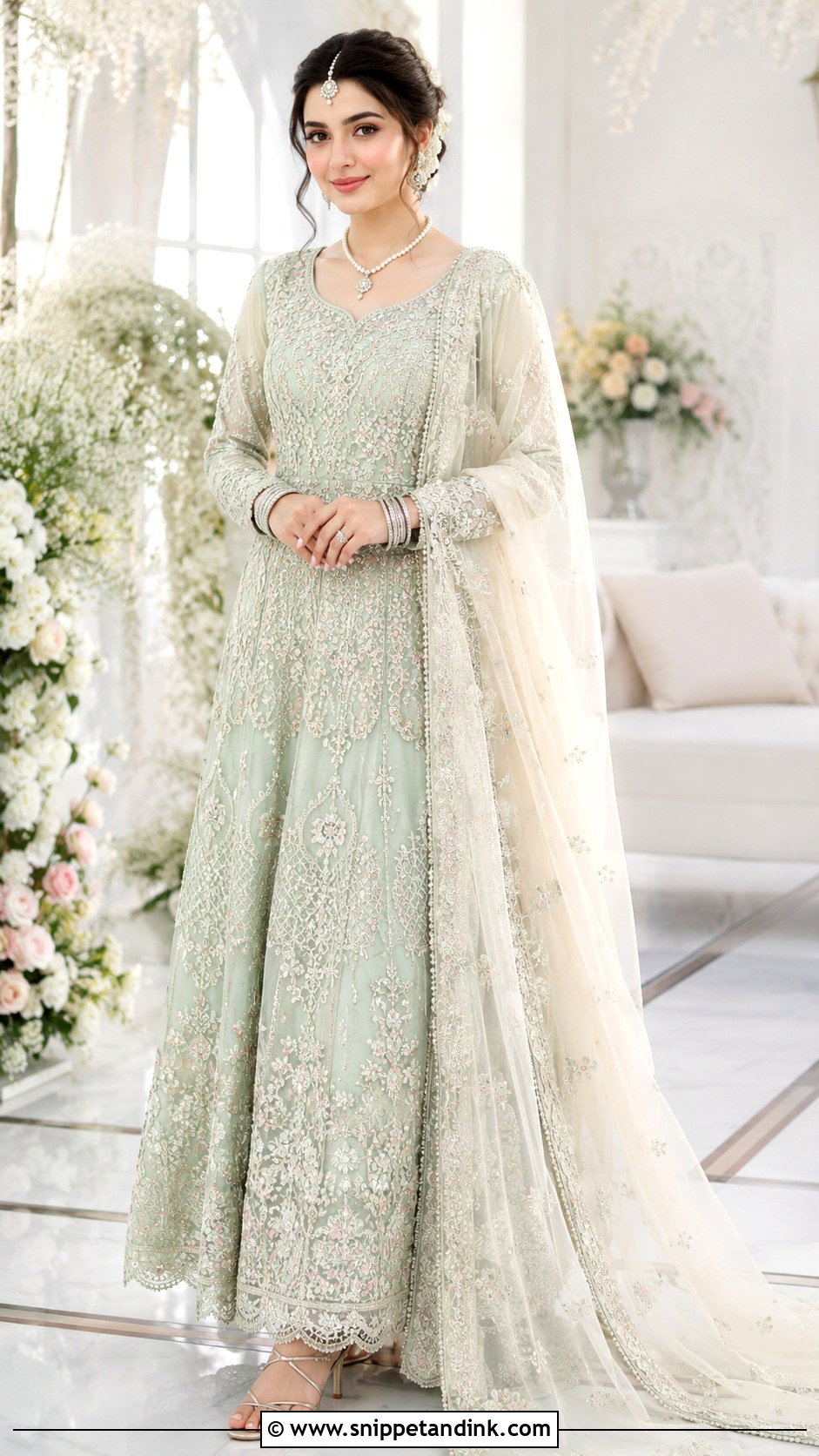
Mint is fresh and unusual without being loud. It pairs naturally with silver, pearl, white and light gold embroidery. A long pishwas, anarkali or sharara set, with a matching or ivory dupatta to soften the color. Mint behaves very differently on different skin tones: on warm skin, a mint with a slight yellow base usually flatters more than a cool, bluish one. Pearl jewelry, silver bangles, neutral heels, rosy cheeks, a soft lip. Daytime and spring ceremonies suit it.
22. Powder Blue Nikkah Dress
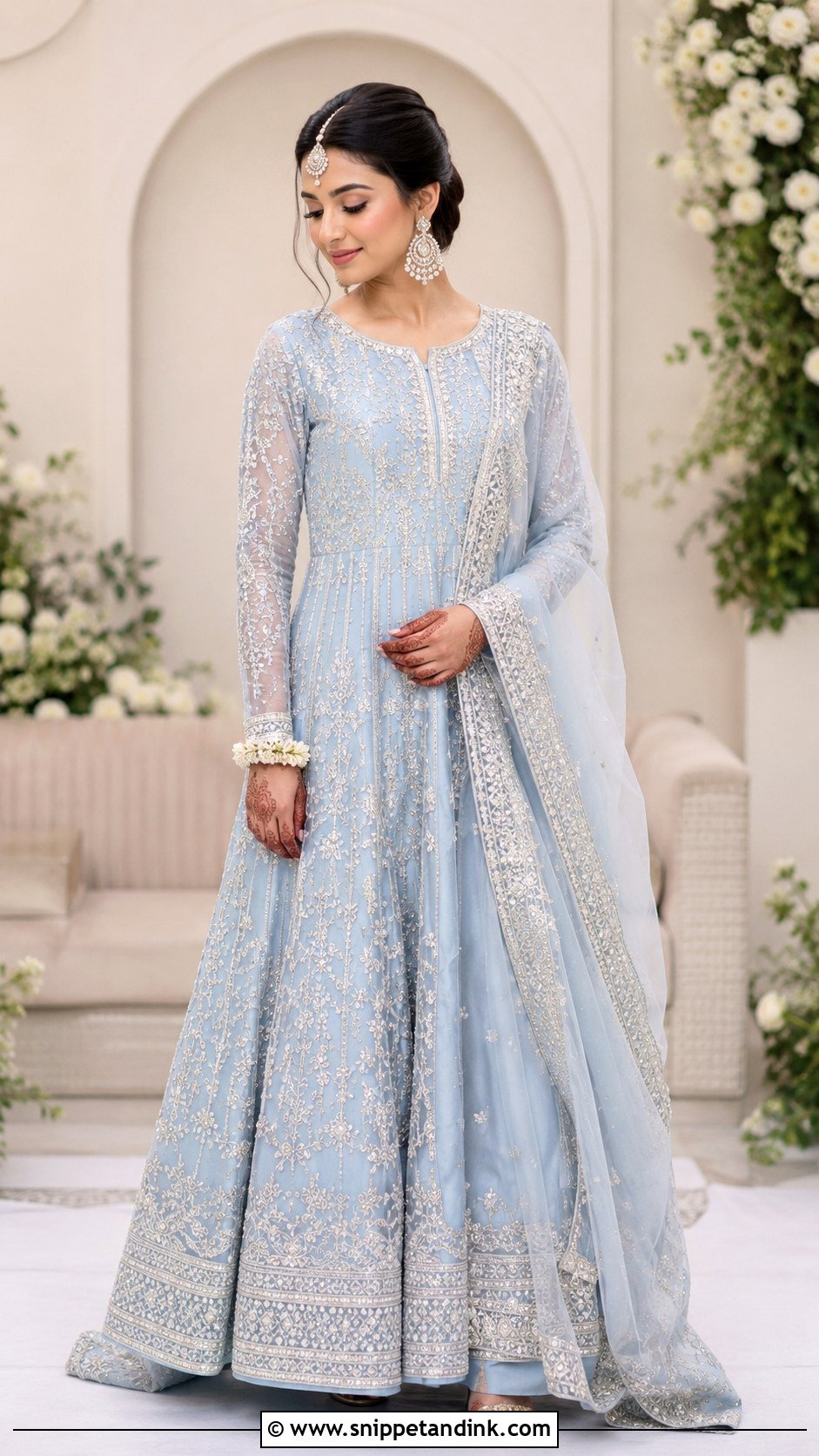
Powder blue gives the room a calm palette and pairs naturally with silver embroidery, pearls and crystal work. A full-length gown, pishwas or lehenga set with a matching dupatta. Silver earrings, a dainty tikka, embellished heels. Keep makeup fresh: soft eyes, pink blush, a natural lip. Pale blues can look washed out under fluorescent light, so if the Nikkah is in a hall with strip lights, choose a slightly deeper powder blue than you’d pick in daylight.
23. Lavender Nikkah Dress
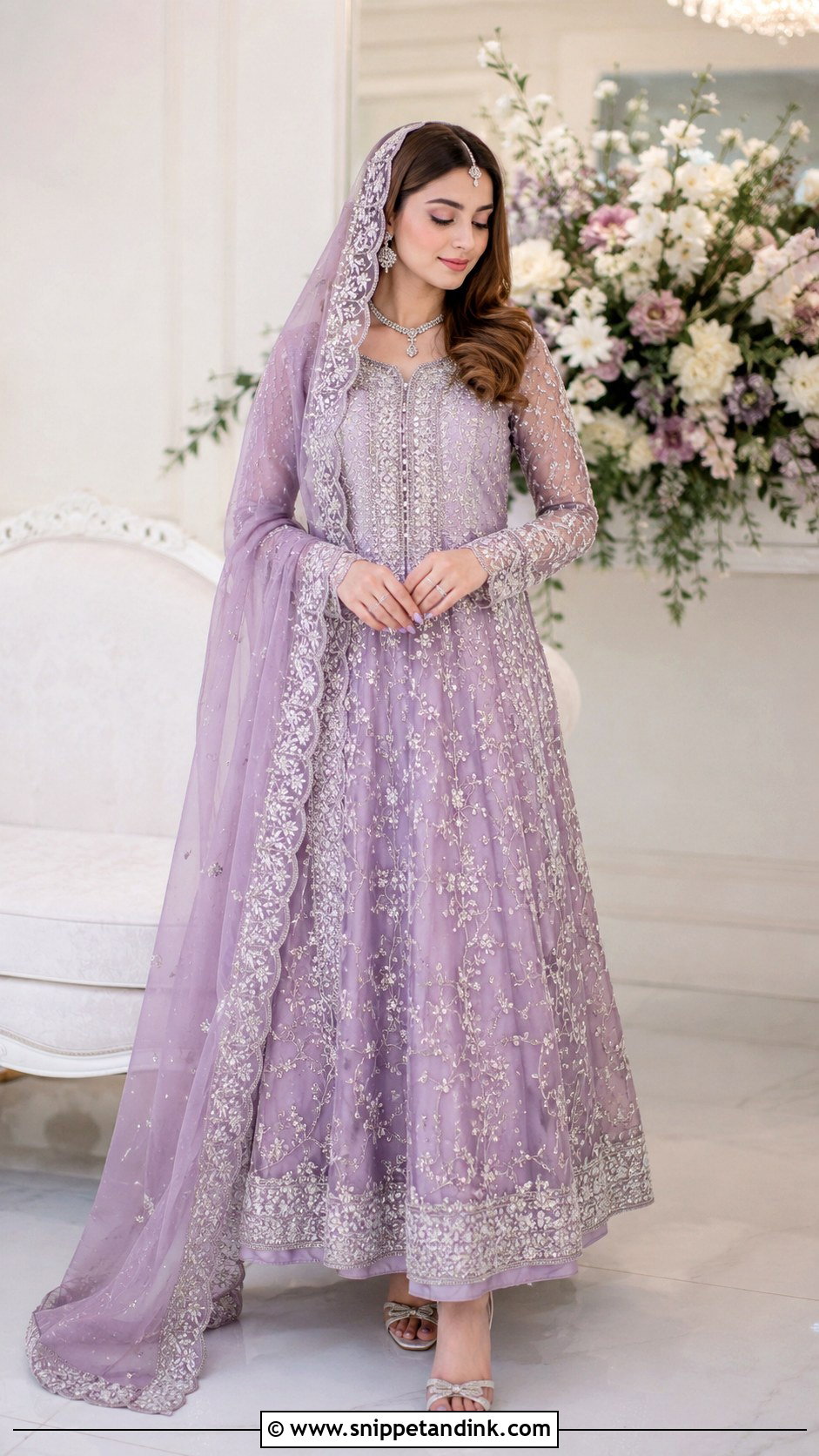
Lavender is a modern choice that avoids being too sweet. It takes silver, pearl or champagne embroidery well. A flowing maxi, pishwas or lehenga with long sleeves and a modest neckline, plus a lavender dupatta with a fine border. Lavender dye can fade unevenly, especially on silk exposed to sunlight, so I’d store the dupatta and outfit together and away from windows to keep them matching. Crystal jewelry, soft curls or a neat bun, pale heels, cool pink makeup.
24. Blush Nikkah Dress
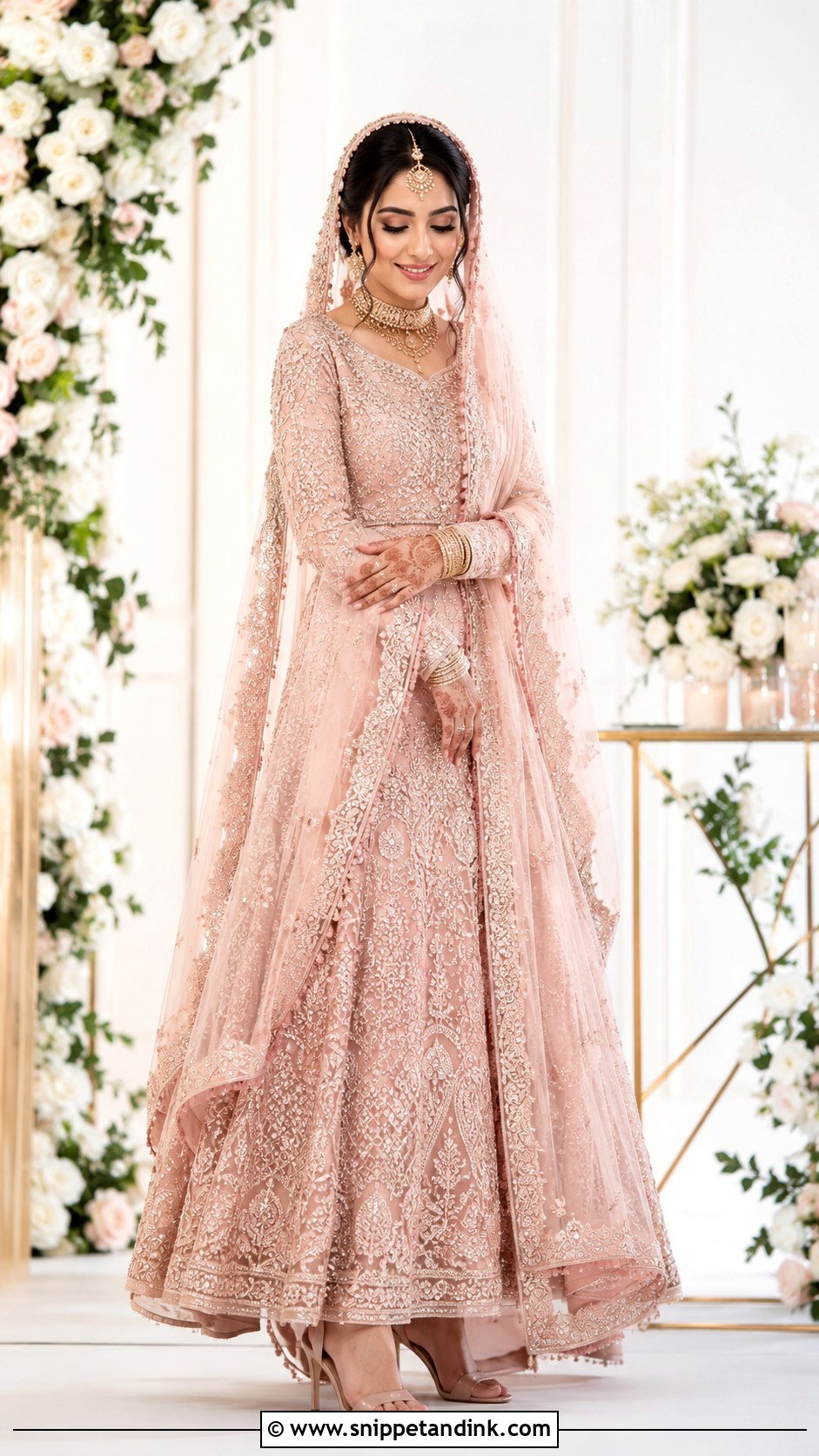
Blush sits between pink, nude and peach, so it’s soft but still visibly a color. It suits a wide range of brides. A blush lehenga, gown or long shirt with pearl, gold or silver work. Drape the matching dupatta over the head and choose rose gold, pearls or kundan for jewelry. Nude heels or embroidered khussas. I’d keep the makeup warm and glowing, since cool, gray-toned makeup can make blush look dull.
25. Red Nikkah Dress
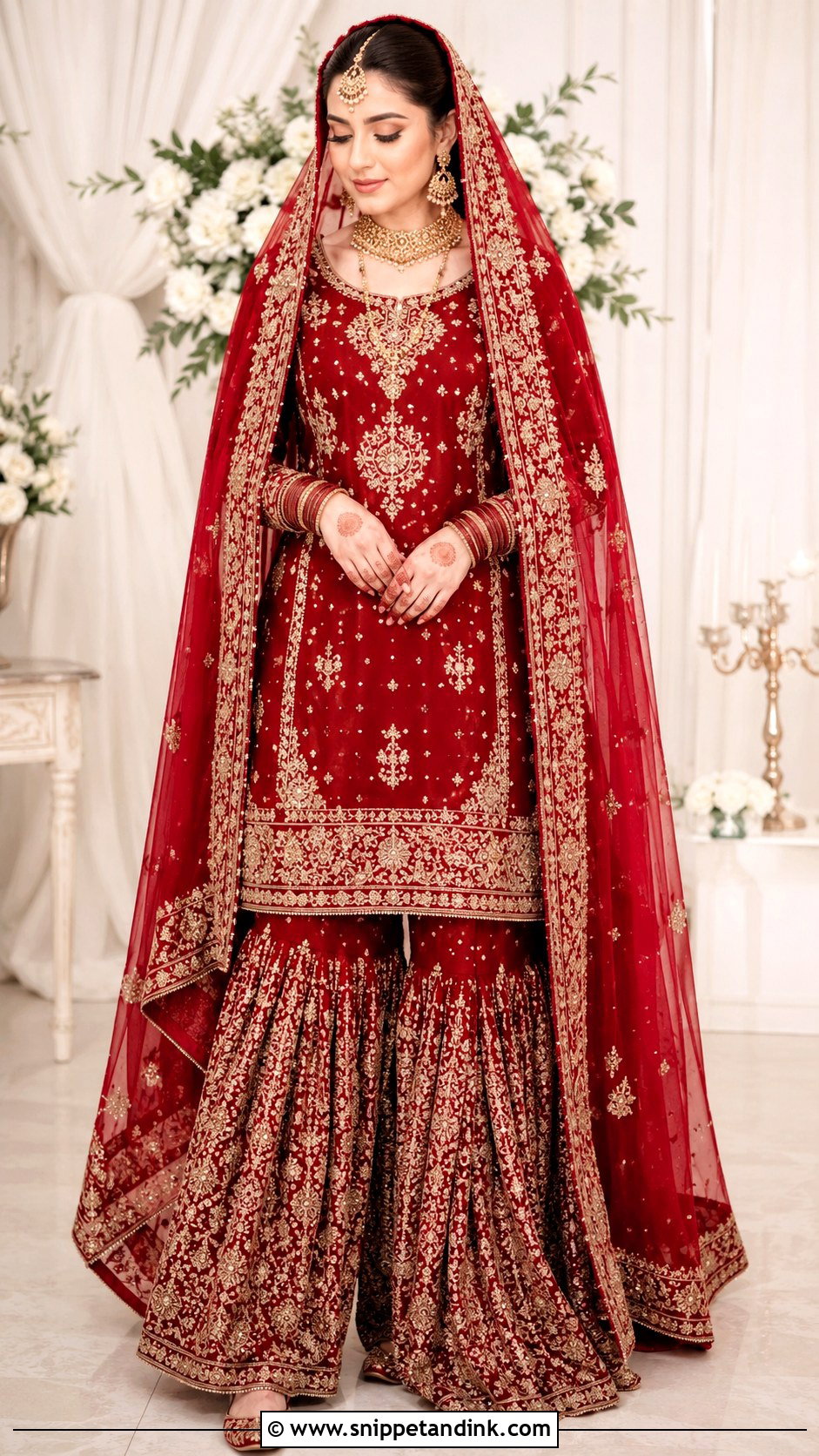
A red Nikkah dress is the traditional choice, and some families expect it. For the Nikkah itself I’d go for a deep red, ruby or muted maroon with refined embroidery rather than the heaviest reception-style set. A long kameez with gharara, sharara or lehenga, and a dupatta with a rich border pinned neatly over the head. Gold jewelry, bangles, traditional footwear. With so much color and work, keep the makeup softer than you think, or the overall effect gets heavy in close-up.
26. Maroon Nikkah Dress
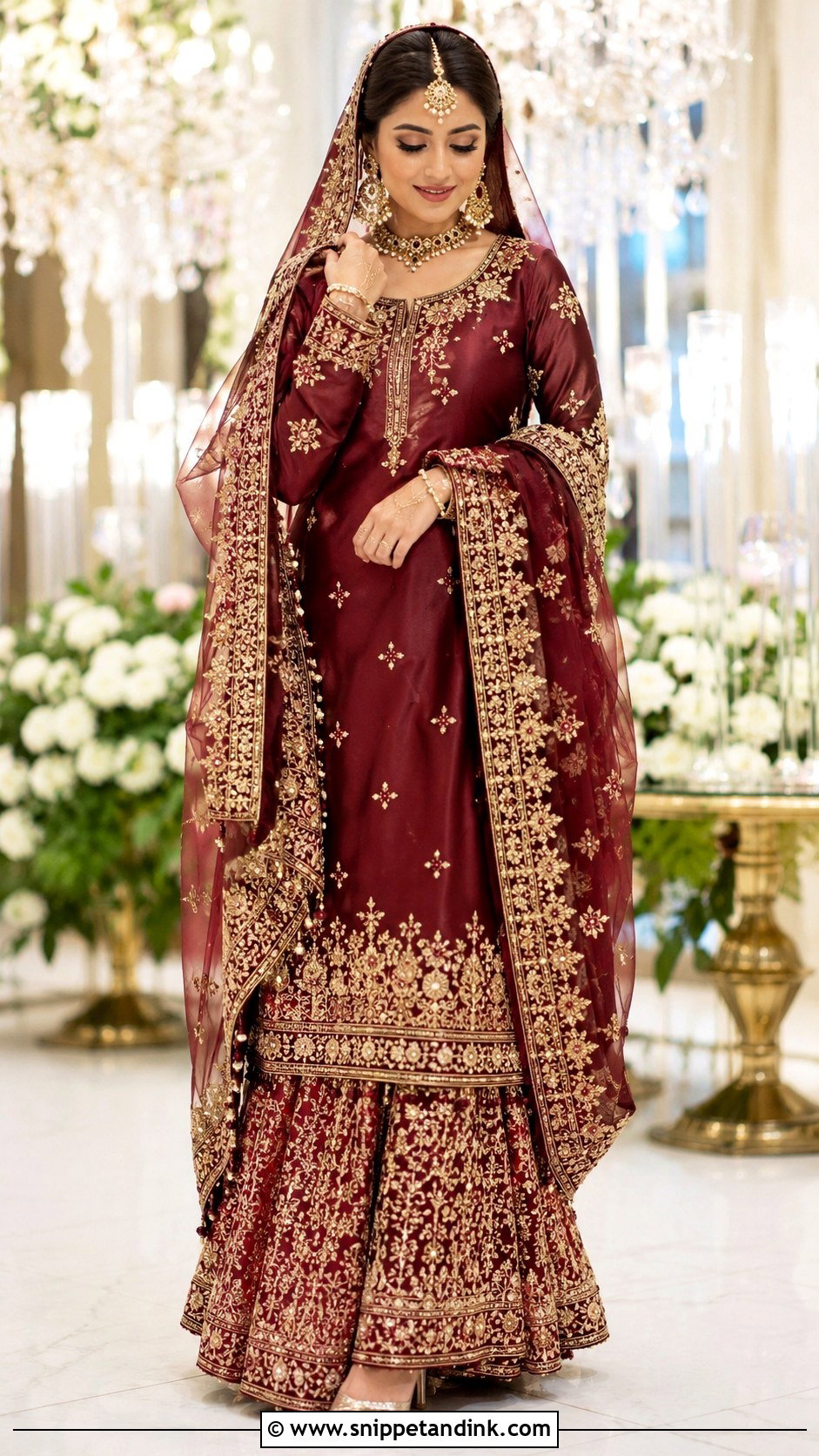
A maroon Nikkah dress has depth that bright red doesn’t, and it reads mature and bridal. Velvet in winter, silk or chiffon in warmer months. A long shirt with a lehenga or gharara works well, with gold embroidery, antique jewelry and a bordered dupatta. Gold heels or embellished khussas and a classic clutch. Defined eyes and a rose or soft brown lip balance it. Evening ceremonies and winter weddings are where it belongs.
27. Velvet Nikkah Dress
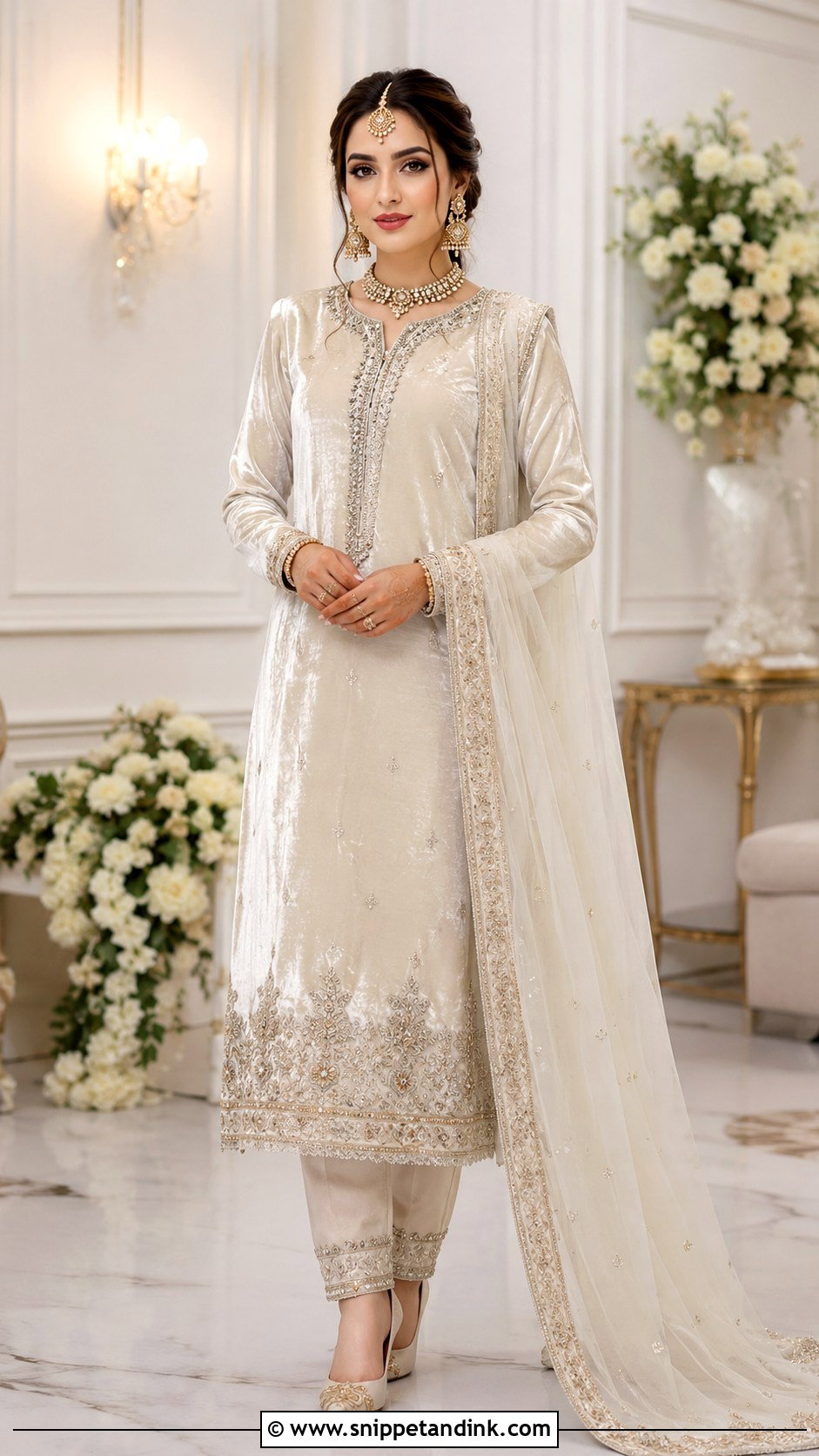
Velvet is the winter bride’s fabric. It holds color deeply, so ivory, emerald, maroon, navy and champagne all look rich. A long velvet kameez with embroidered borders over a lehenga, sharara or straight pants, and a lighter chiffon or net dupatta so the outfit doesn’t become too heavy. Velvet is warm, though, and Nikkah rooms get crowded. If the venue is heated, velvet on top and a lighter fabric below keeps you comfortable. Antique jewelry, soft makeup, closed heels.
28. Abaya Nikkah Dress
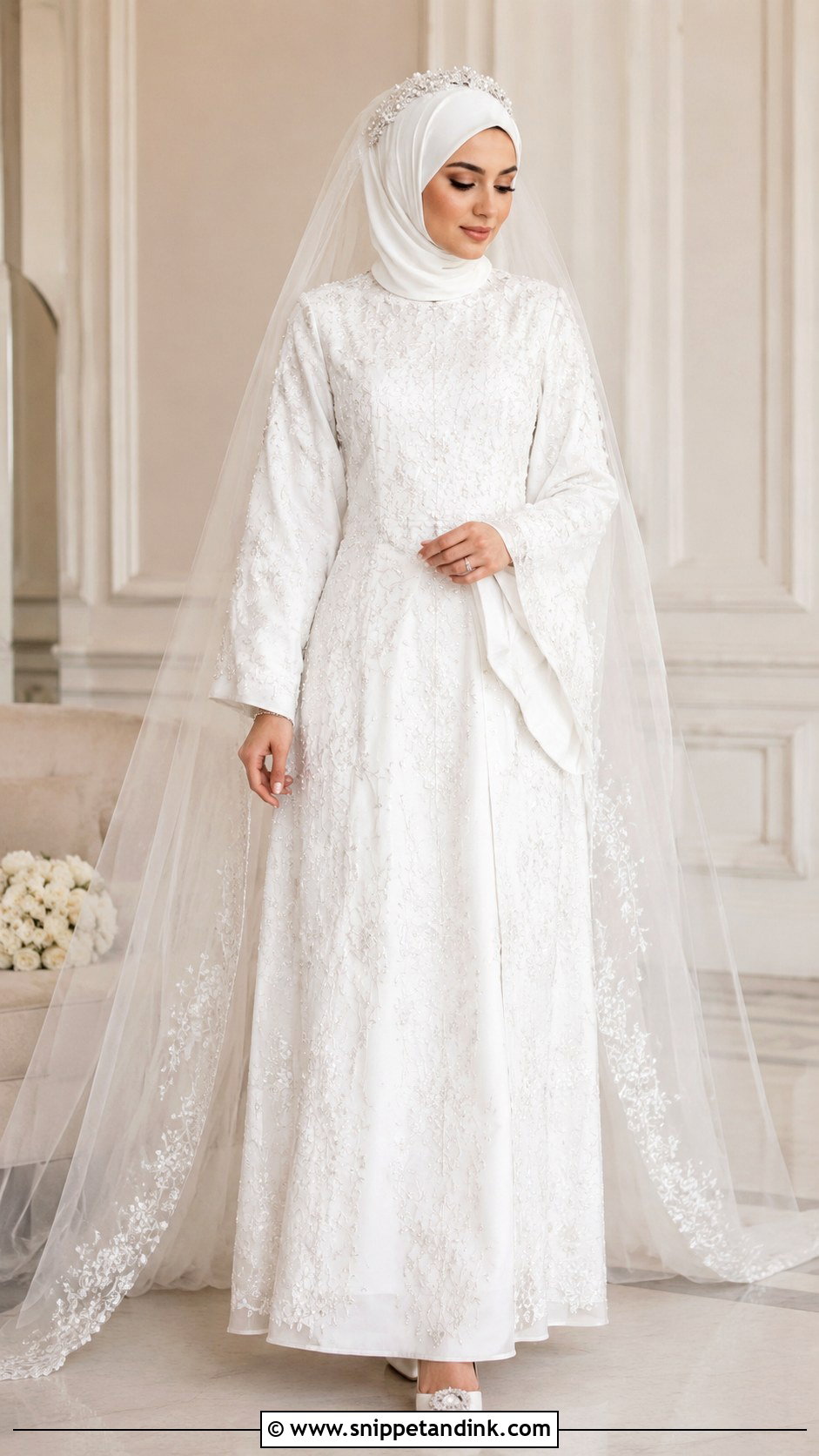
An abaya Nikkah dress puts modesty at the center. A white, ivory, champagne or pastel abaya gown with embroidery on the sleeves, neckline, waist or front panels, a matching hijab and a sheer bridal veil. Fabric is what makes it bridal rather than everyday: crepe, satin, chiffon or a silk blend. I’d also check where the front opening sits. A front-open abaya needs a matching inner dress, since the panels part when you walk. Pearl jewelry, a delicate headpiece, elegant heels.
29. Saree Nikkah Dress
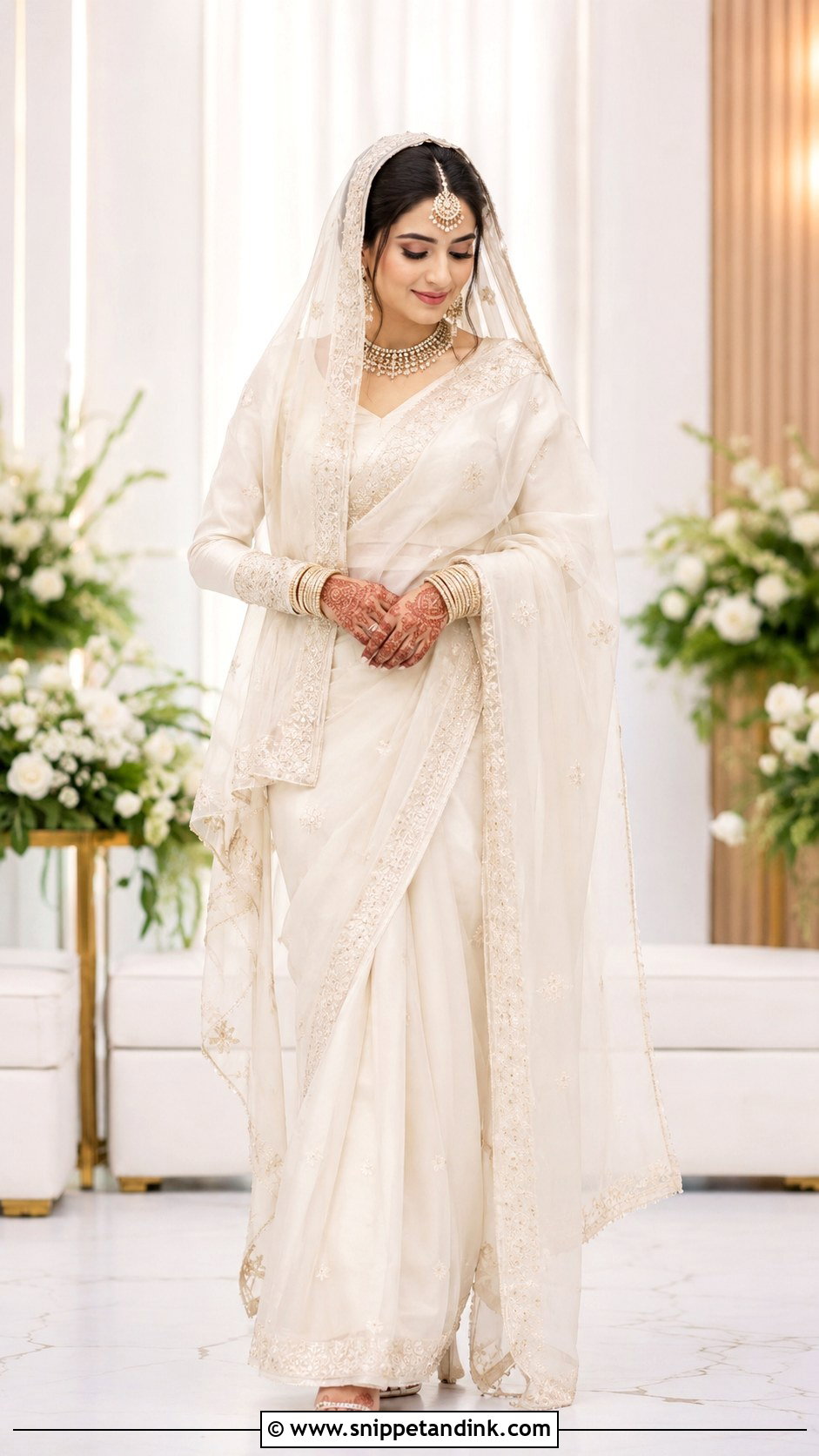
A saree Nikkah dress is a draped fusion look. For coverage, the blouse needs full sleeves and a higher neckline; then choose a soft silk, chiffon or organza saree in ivory, blush, gold, mint or champagne. Add a separate dupatta or veil if you want the head covered. The drape must be secure: I pin the pleats at the waist and the pallu at the shoulder with several small safety pins, because a slipping saree is the one thing a bride can’t fix herself while seated. Traditional jewelry, bangles, heels.
30. Pakistani Nikkah Dress
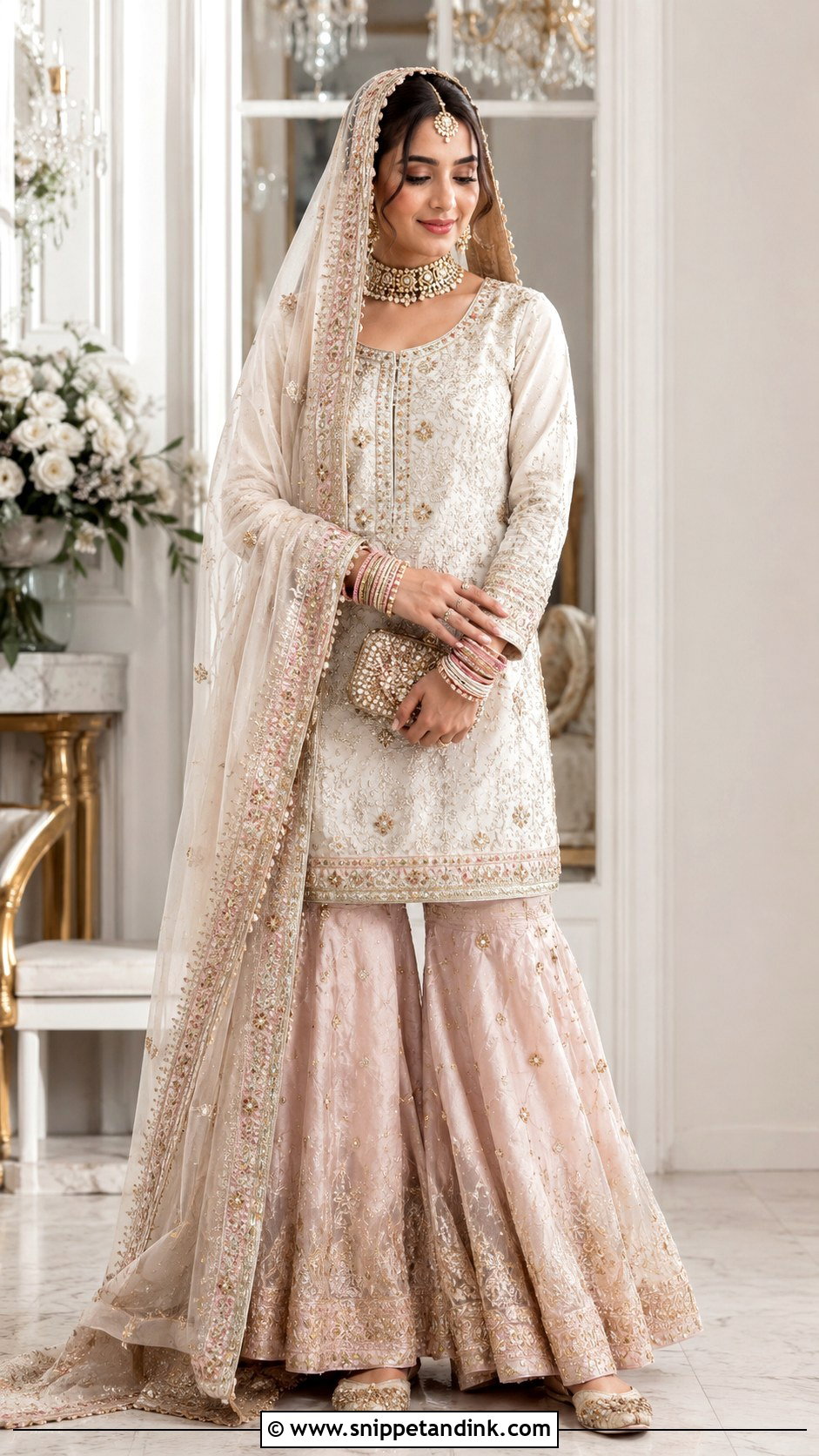
A Pakistani Nikkah dress usually means a modest cut, soft color, a detailed dupatta and handwork. The classic is a long embroidered shirt with gharara, sharara, lehenga or straight pants, in white, ivory, gold, blush, pistachio or powder blue. Drape the dupatta over the head. Kundan jewelry, khussas, bangles and a small clutch. It suits a small home Nikkah and a large formal hall equally, and there’s huge room for personal choices of color and fabric within it.
How Far Ahead to Order Handwork
Heavily embroidered bridal outfits are slow to make, and wedding season stretches every workshop. For a custom outfit with zari, pearl or gota work, I’d place the order at least three to four months before the Nikkah, and earlier if it’s being made in another country and shipped. Ready-to-wear pieces with alterations can be done in a few weeks, but leave time for a second fitting.
- Ask the designer for a fabric and embroidery sample before full production.
- Book the first fitting six to eight weeks out, and a final one about two weeks before.
- If ordering from abroad, add time for shipping and customs, and ask how alterations will be handled once it arrives.
- Get the dupatta at the same time as the outfit; dyed separately, shades can drift.
Storing Zari, Pearls and Silk After the Ceremony
Metallic zari darkens when it meets moisture, perfume and the gases from some plastics, and pearls can lose their luster against harsh chemicals. After the Nikkah, air the outfit overnight before packing it. Wrap it in soft cotton or muslin, never in a plastic garment bag, and fold heavily worked sections with acid-free tissue between the layers so the embroidery doesn’t rub.
Don’t hang a heavy lehenga or gharara by its waistband for months; the weight stretches the fabric. Lay it flat or fold it loosely and refold along different lines every few months to prevent permanent creases. And spray perfume on your skin before you dress, not on the dupatta, because alcohol and oils stain silk and tarnish metallic thread.
A Dress You Can Sit, Sign and Pray In
The right Nikkah outfit is the one you stop thinking about once the imam begins. It should let you sit comfortably, keep your dupatta in place through the signing, and feel true to your faith, your family and your own taste, whether that’s a white pishwas, a pearl gown, a pastel sharara, a traditional gharara or a fully modest abaya. Before you order, check the fabric under the venue’s light, practice the dupatta draping, and sit in the outfit for twenty minutes. Those small tests matter more than any trend.
You'll Like These Ideas:



Leave a Reply