
Turkish brides rarely wear just one dress. A wedding can stretch across a henna night, a civil ceremony and a big reception, and each asks for something different: velvet and gold embroidery for kına gecesi, a lighter look for signing the register, a white gown for the düğün. When I plan a Turkish bridal wardrobe, I think about all of it together, from the bindallı to modest long-sleeve silhouettes, so the veils, jewelry and shoes connect from one night to the next. Below are the dresses I’d consider, with the practical details that decide whether each one actually works on the night.

Kına, Nikah and Düğün: Planning Several Outfits at Once
Most brides I dress for a Turkish wedding need at least two looks and often three. Each event has its own mood, and the dress that’s right for one is usually wrong for another.
Henna night (kına gecesi)
This is the evening for the red or deep-colored bindallı, the red veil drawn over the face, and henna pressed into the palm and wrapped in red gloves or cloth. You’ll sit low at the center while guests sing and circle with candles, then be up dancing. Choose something you can sit comfortably in that won’t show a henna mark.
Civil ceremony (nikah)
The legal marriage happens at the civil ceremony, often short and held at a municipal marriage hall or at the venue itself. A lighter dress, a suit or the main gown all work. What matters is that you look right both standing and seated at the signing table.
Wedding celebration (düğün)
Here come the white gown, the big entrance and hours of dancing. I time any reception change for the moment the formal photos finish, so you’re never rushed into it.
The red sash deserves a thought too. In many families a brother or father ties a red ribbon around the bride’s waist before she leaves home, so I make sure the waistline of that dress can take a knot without crushing the embroidery.
1. Red Bindallı Turkish Wedding Dress
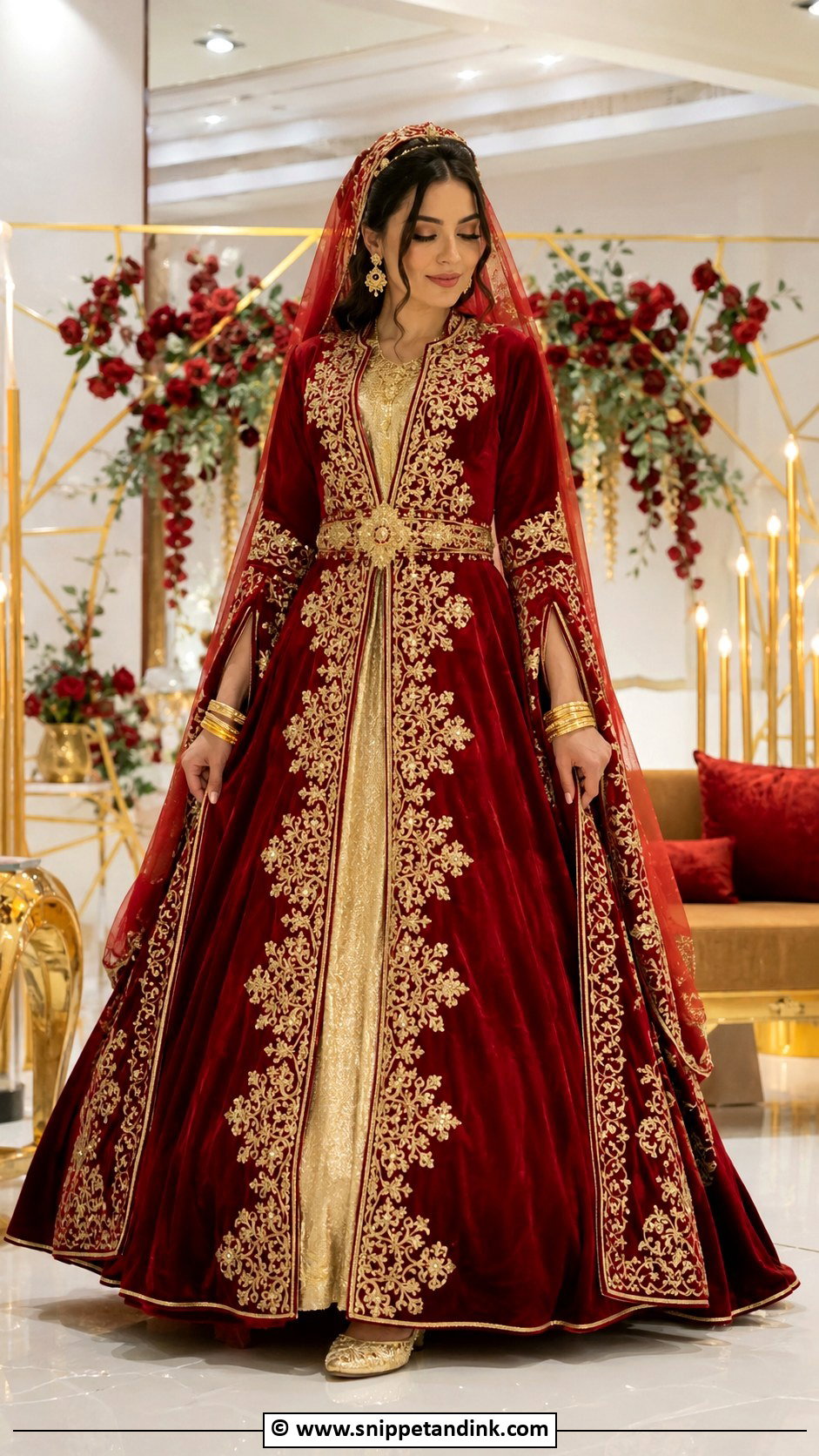
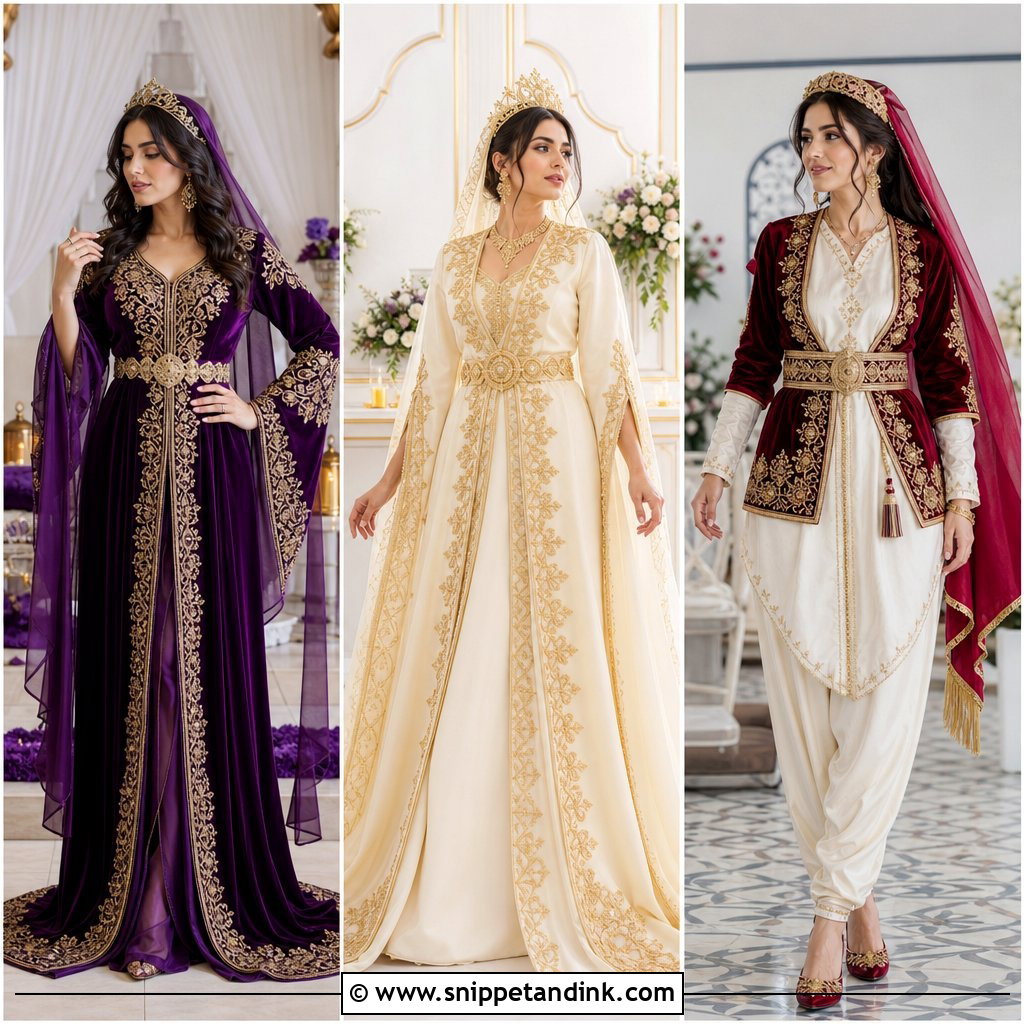
The red bindallı is the dress most Turkish families picture for henna night. It’s usually velvet, heavy with gold dival embroidery, long-sleeved and cut like a kaftan. I style it with a red veil, gold drop earrings and a fine forehead piece, plus embroidered flats rather than heels, because you’ll sit low at the center while guests circle you with candles, then get up and dance. Velvet traps heat, so for a summer kına I’d ask for a lighter lining or a thinner velvet. Bronze eyes, groomed brows and a classic lip hold their own against all that red.
2. White Lace Turkish Wedding Dress
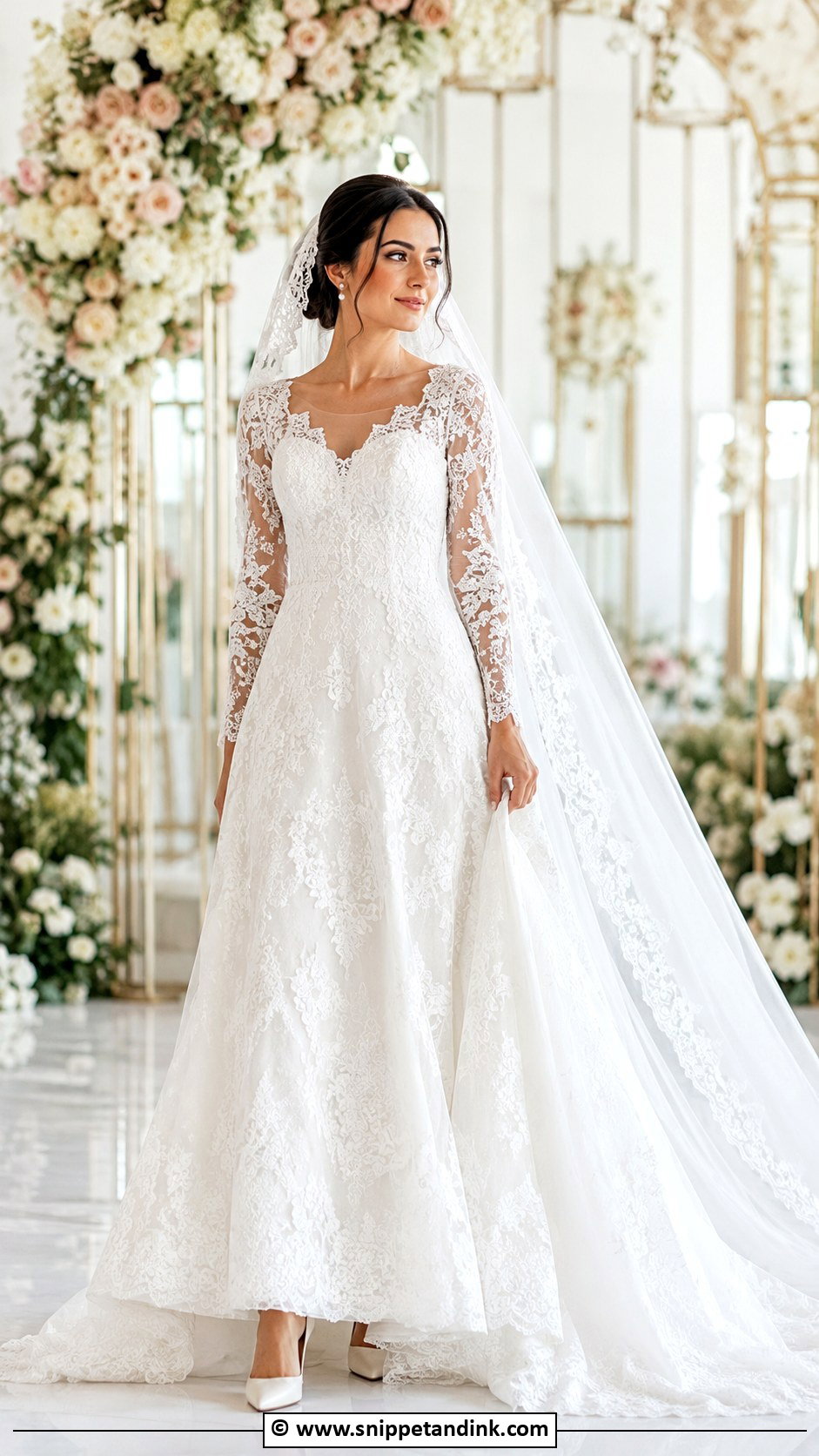
Long lace sleeves give a white ceremony gown the softly traditional feel many Turkish families love. I balance a fitted bodice with an A-line or ball skirt and a lace-edged cathedral veil, then add pearl earrings and ivory satin heels; skip the necklace if the lace is busy at the neck. One thing I check is where the appliqués end on the sleeves. Motifs placed by hand to finish at the wrist look couture, while a raw cut through the pattern looks cheap up close, and hands get photographed constantly once the rings and gold come out.
3. Ottoman Kaftan Turkish Wedding Dress
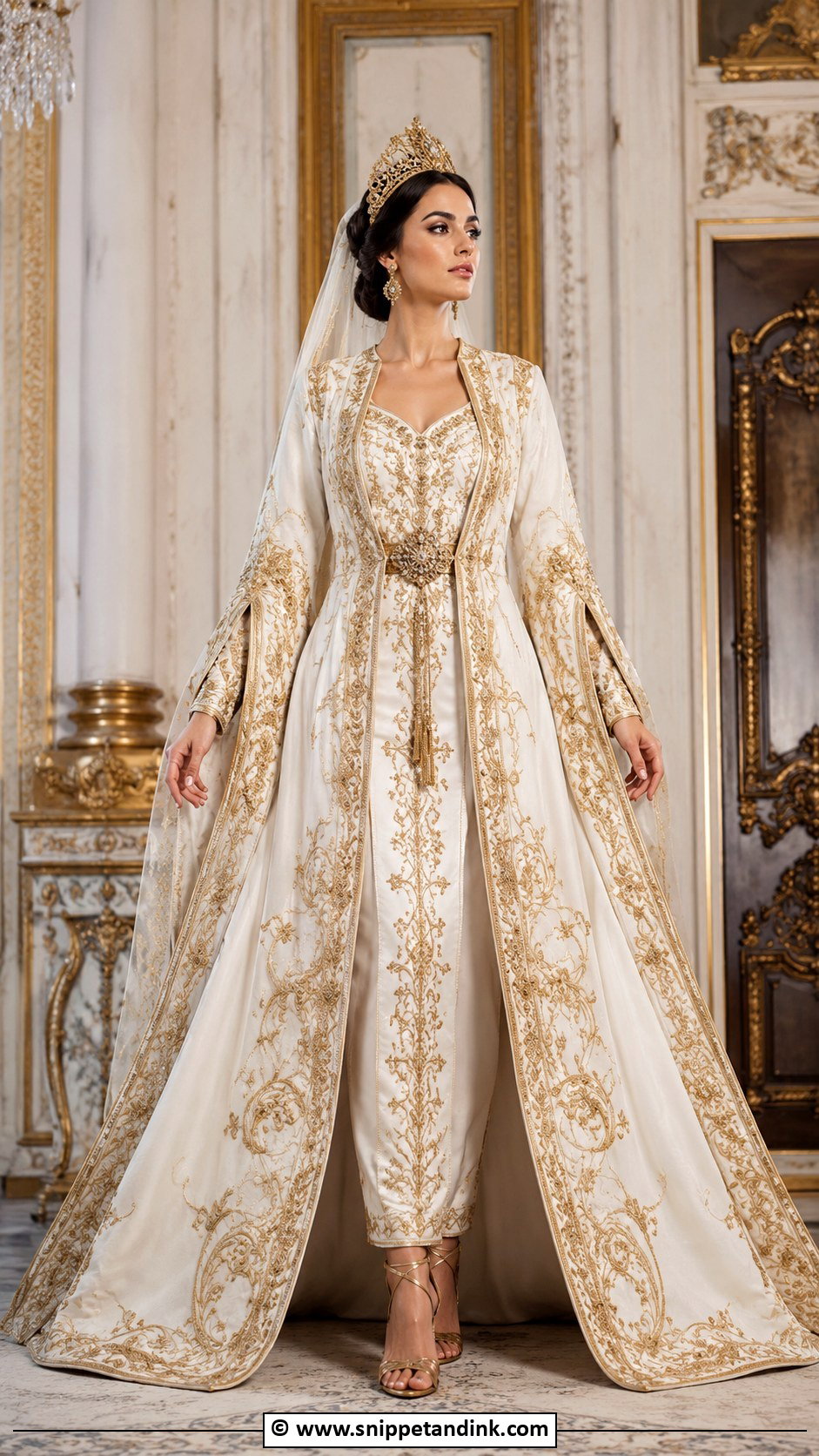
An Ottoman-style kaftan is really two garments: a structured, open-front coat covered in embroidery, worn over a matching inner dress. Deep red, emerald, navy and burgundy carry it best. Because the coat already does the talking, I add a jeweled headpiece and a long sheer veil and let the earrings be the only other strong piece. It’s my first suggestion for henna night portraits or a grand entrance. Feel the weight on your shoulders at the fitting, though. A heavily embroidered coat drags the neckline backward unless it’s anchored to the inner dress with hidden snaps.
4. Satin Mermaid Turkish Wedding Dress
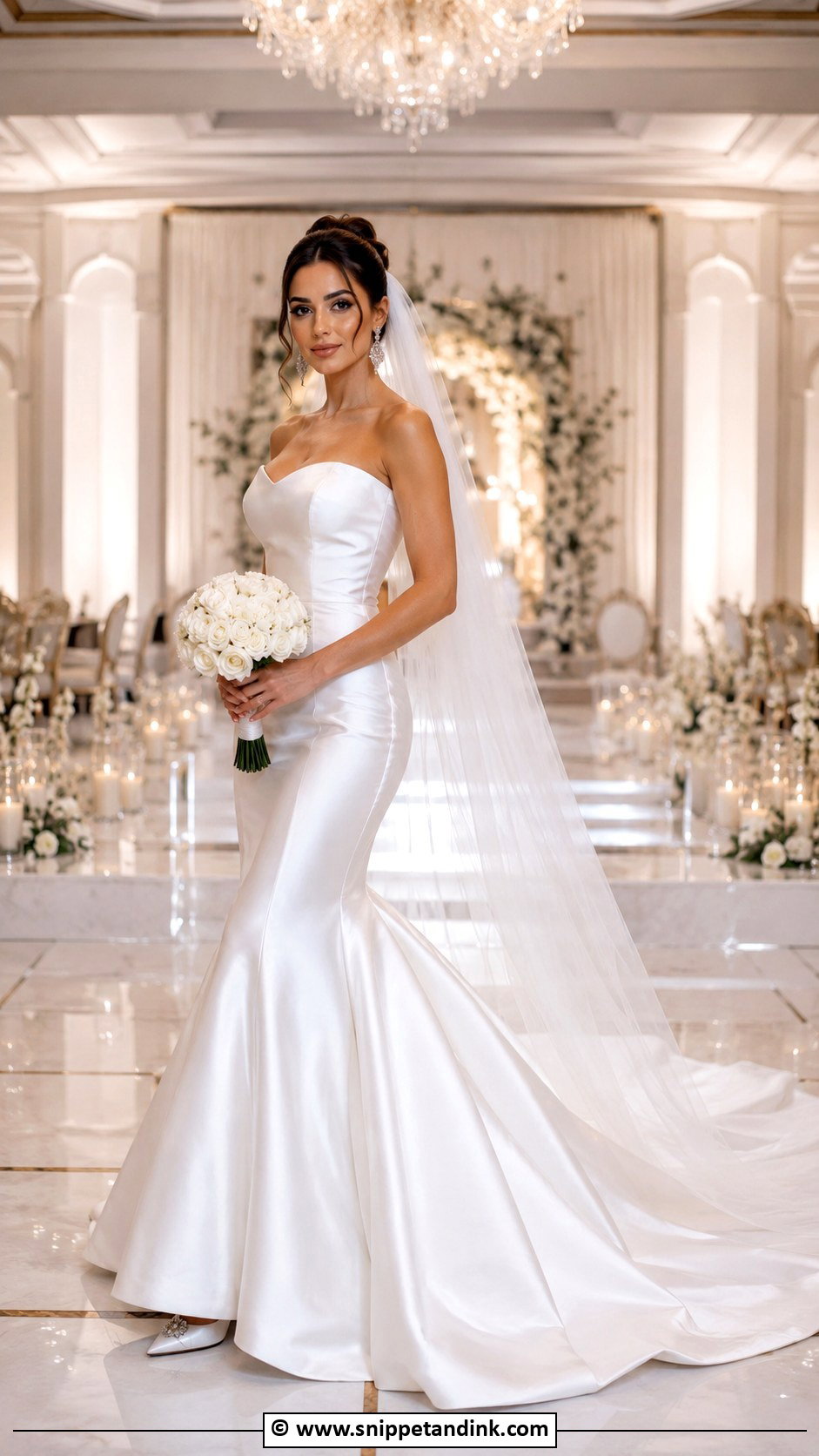
Satin mermaid gowns are the most modern silhouette here and the least forgiving. The fit has to hug through the hips and release at or just above the knee; set the flare too low and you’ll shuffle down the aisle. I style it plainly with a long veil, crystal earrings and pointed satin heels, and bring in the Turkish note through an embroidered veil edge or a small gold hair piece. Ask yourself how you’ll sit through dinner. Mermaid skirts rarely allow a full stride or a deep chair, so practice sitting at your last fitting and plan a bustle.
5. Modest Long Sleeve Turkish Wedding Dress
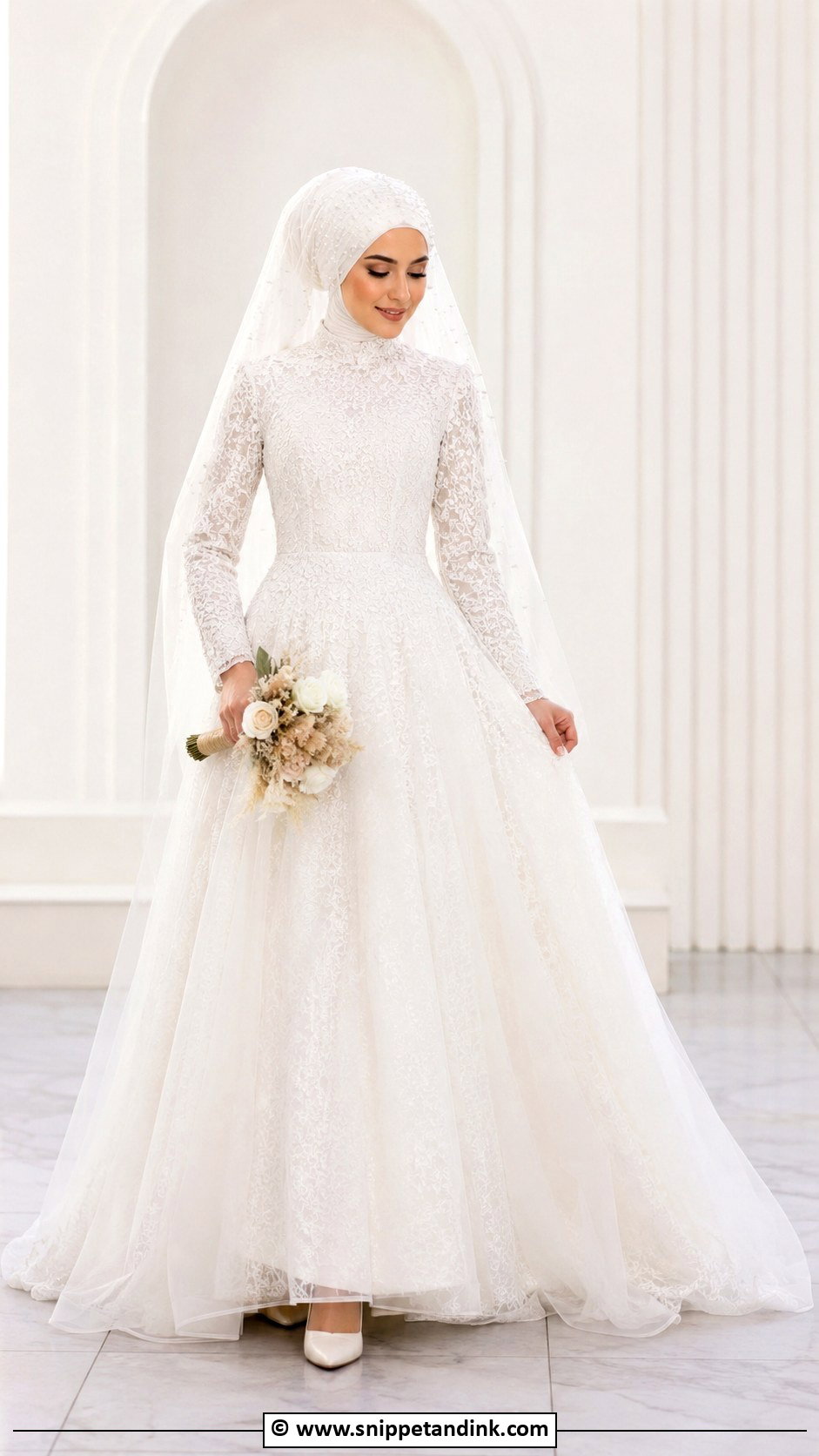
Coverage is easy. Coverage that still breathes after midnight is the real skill. For a modest gown, I check that the lining stays opaque under camera flash, not only in the shop mirror, and that lace sleeves are backed with skin-tone mesh where needed. A matching hijab, tulle veil or lace-edged head covering ties it together. Crepe and chiffon move far lighter than layered satin, which matters at a reception that runs late. Closed-toe ivory heels and pearl pins are all it needs.
6. Gold Embroidered Turkish Wedding Dress
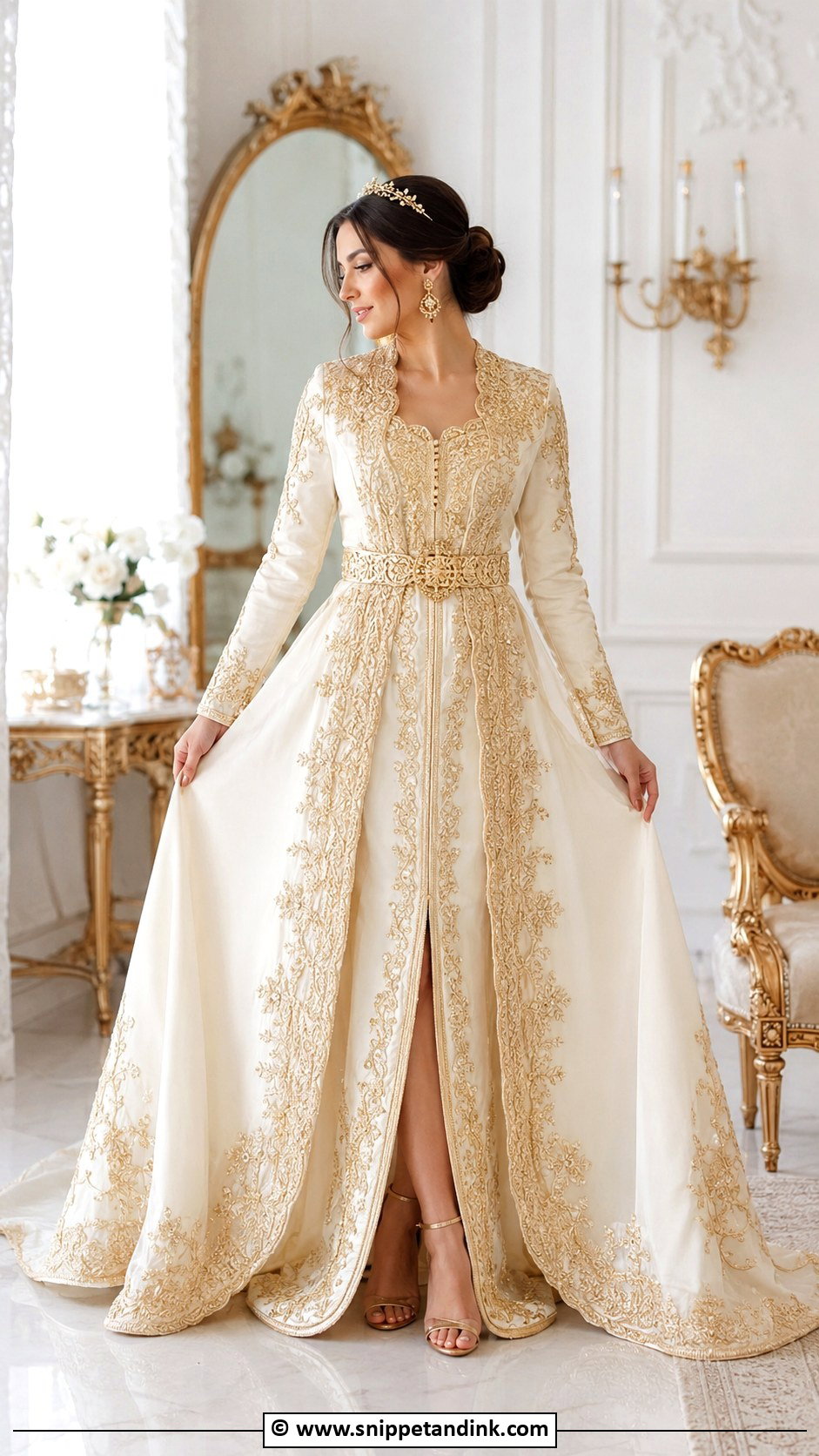
Gold threadwork on ivory or champagne gives you the ceremonial warmth of a red dress without wearing red. I keep the jewelry soft gold and the bun low, with a fine hair comb. Metallic embroidery picks up the strong lights of a wedding hall and gives photos real depth. It can also scratch, so I ask for a soft lining behind any embroidered sleeve or underarm seams. Ivory flowers in the bouquet keep the gold as the focus.
7. Princess Ball Gown Turkish Wedding Dress
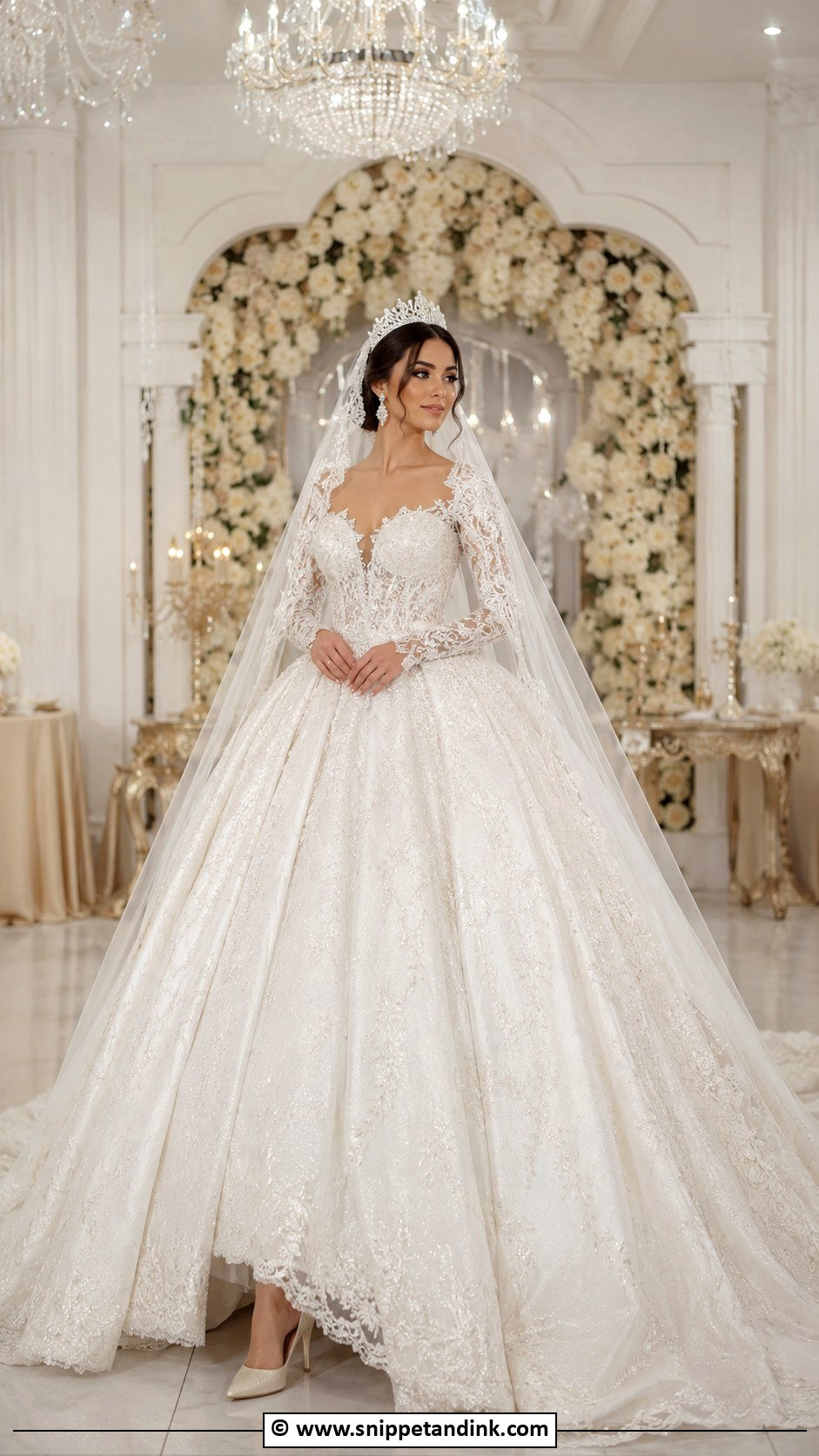
A princess ball gown suits the big Turkish wedding hall, where the couple’s entrance is half the show. I build it with a fitted bodice, full skirt, long train, cathedral veil and a tiara, and keep the earrings to crystal. Full skirts get heavy over a long night of greeting and dancing, so I choose shoes nobody will see and ask for a petticoat with a light hoop instead of many layers of netting. Subtle embroidery on the veil or bodice brings in Turkish detail without tipping into costume.
8. A Line Turkish Wedding Dress
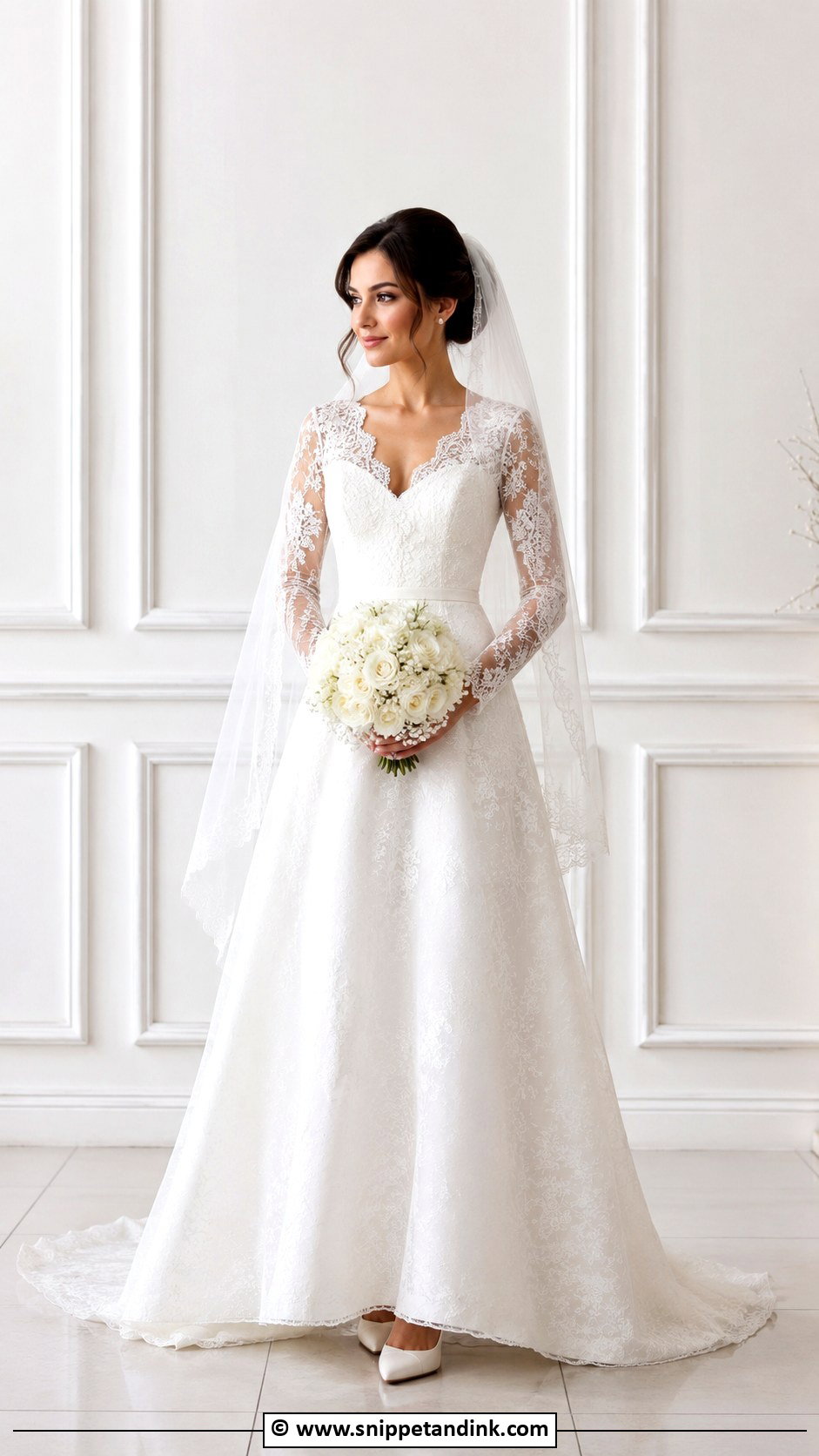
If you’re unsure where to start, start here. A fitted top and gently widening skirt suit most bodies and let you sit, walk and dance through a long reception. Lace leans romantic, satin keeps it simple, beaded tulle adds sparkle, and I’d decide by season more than by trend. Mid-height heels, a fingertip veil, pearl studs and a soft bouquet finish it. An embroidered waist detail adds definition if the shape feels too plain on you.
9. Turkish Henna Night Dress
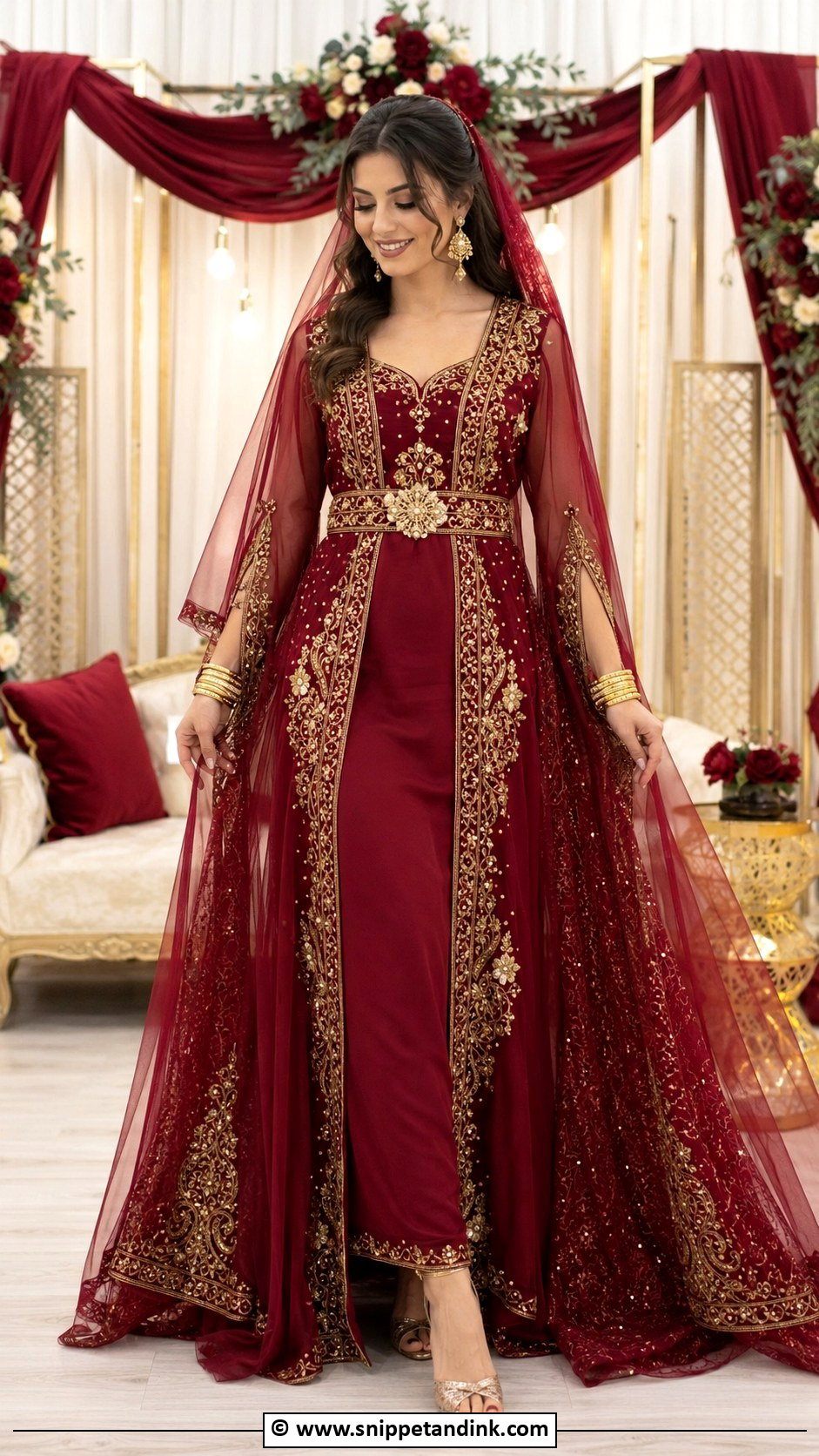
Henna night can go fully traditional or modern, as long as the color is rich and reads as festive from across the room. Red or burgundy with gold embroidery, long sleeves and a matching veil is the classic route; a red evening gown with an embroidered cape or overlay is the modern one. Pick shoes you can stand and dance in, plus bangles and statement earrings. When the henna is pressed into your palm and your hands are wrapped in red gloves or cloth, any wet paste that escapes will stain pale fabric. That’s one practical reason deep red has lasted for this night.
10. Burgundy Velvet Turkish Wedding Dress
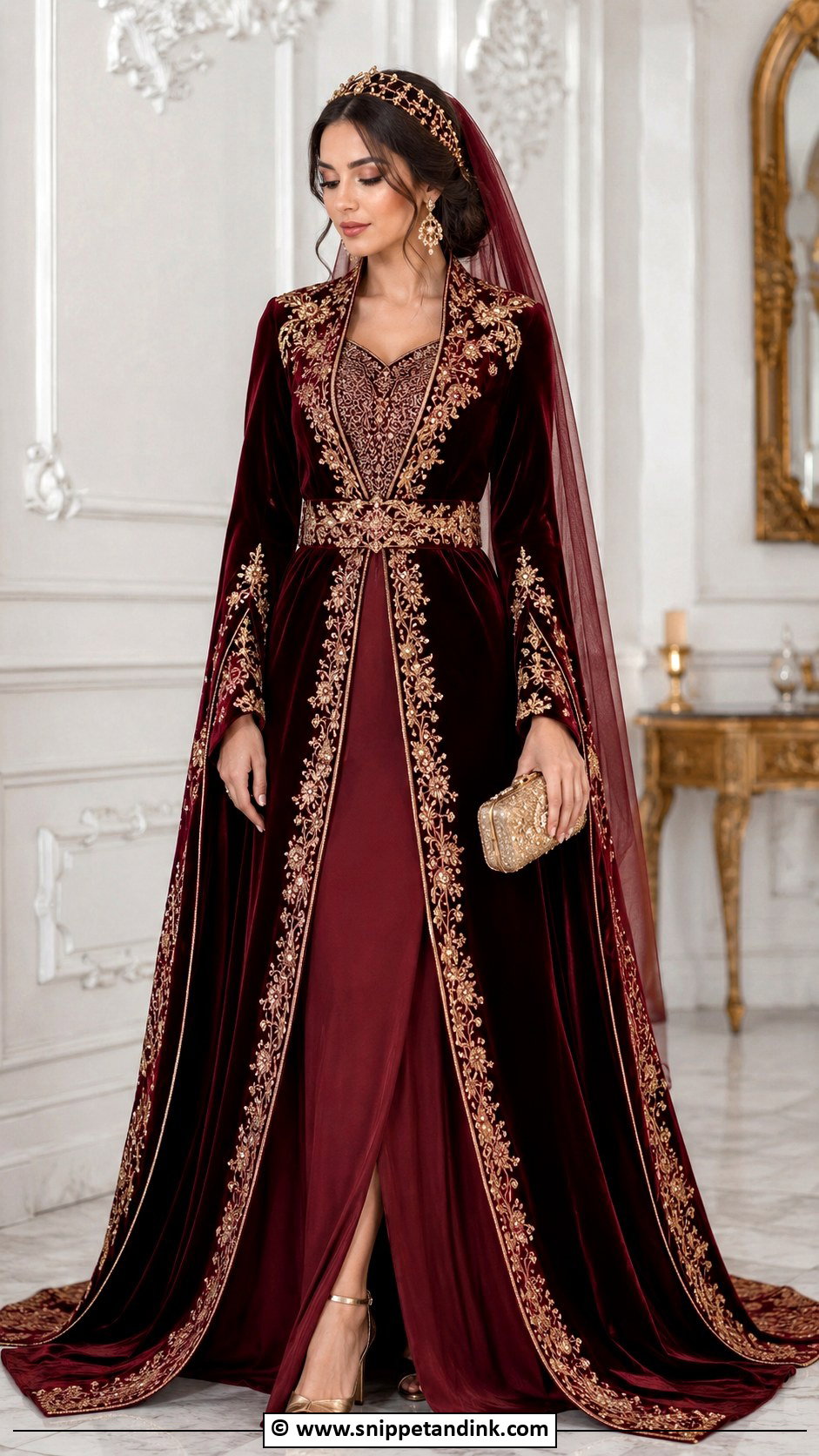
Burgundy velvet is the cold-weather answer to the red bindallı: softer in tone, heavier in feel. I’d build a kaftan-style coat over a fitted inner gown with a matching veil or cape, then add gold heels, antique-style earrings and a jeweled clutch. Velvet adds bulk wherever it’s layered, so keep the silhouette smooth and resist extra wraps. It also crushes where you sit. Pressing velvet flat with an iron ruins the pile, so I only ever steam it from the inside.
11. Champagne Turkish Wedding Dress
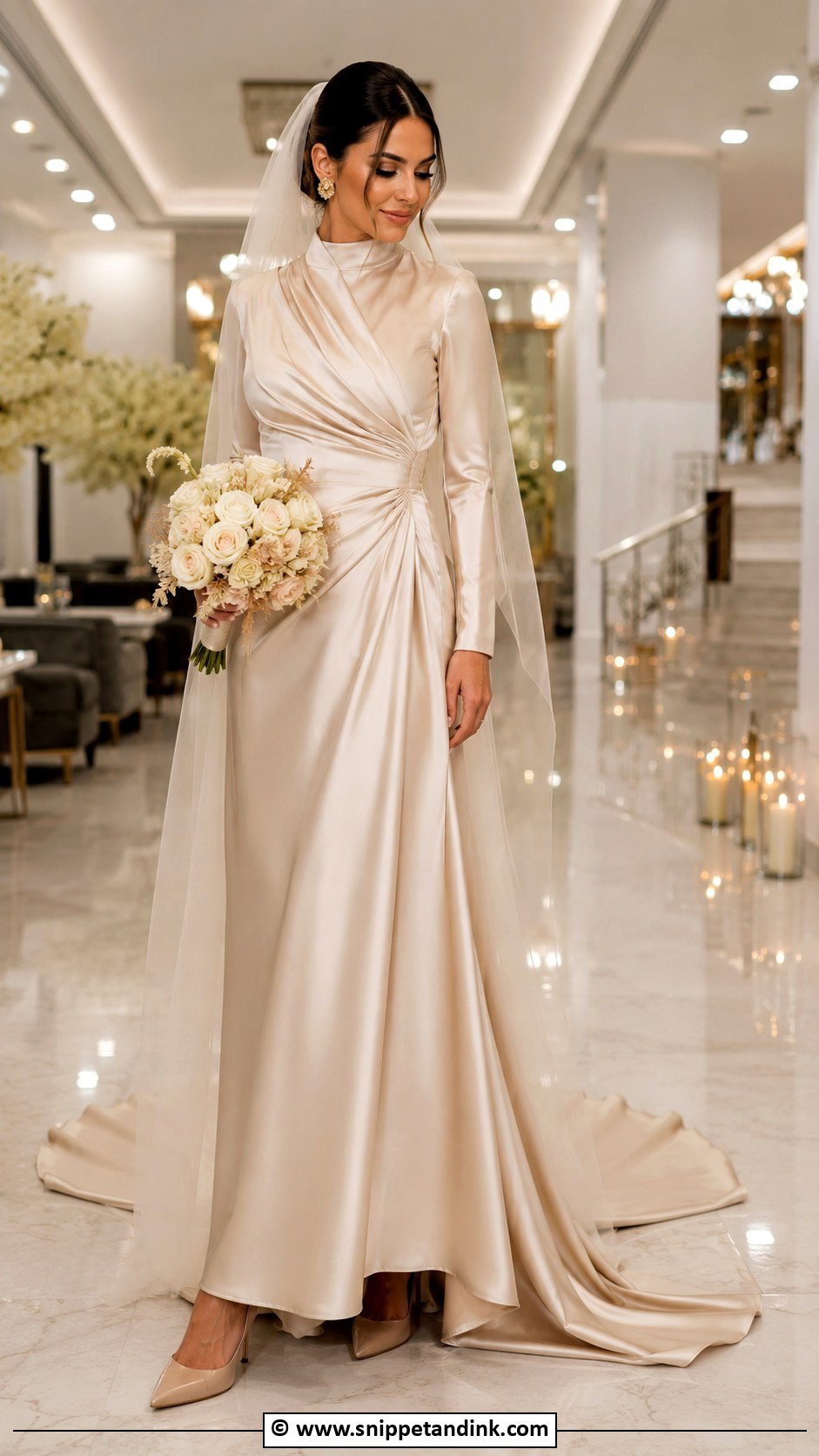
Champagne is the shade I reach for when bright white washes a bride out. It’s warm, sits easily with gold jewelry and ivory flowers, and looks less stark under a hall’s strong lighting. Clean satin reads modern; beaded lace adds sparkle. Test the exact shade in daylight and again under warm indoor bulbs, because some champagnes turn beige or even grey depending on the light. Peach, bronze and soft brown makeup keep everything in the same warm family.
12. Turkish Wedding Dress With Red Veil
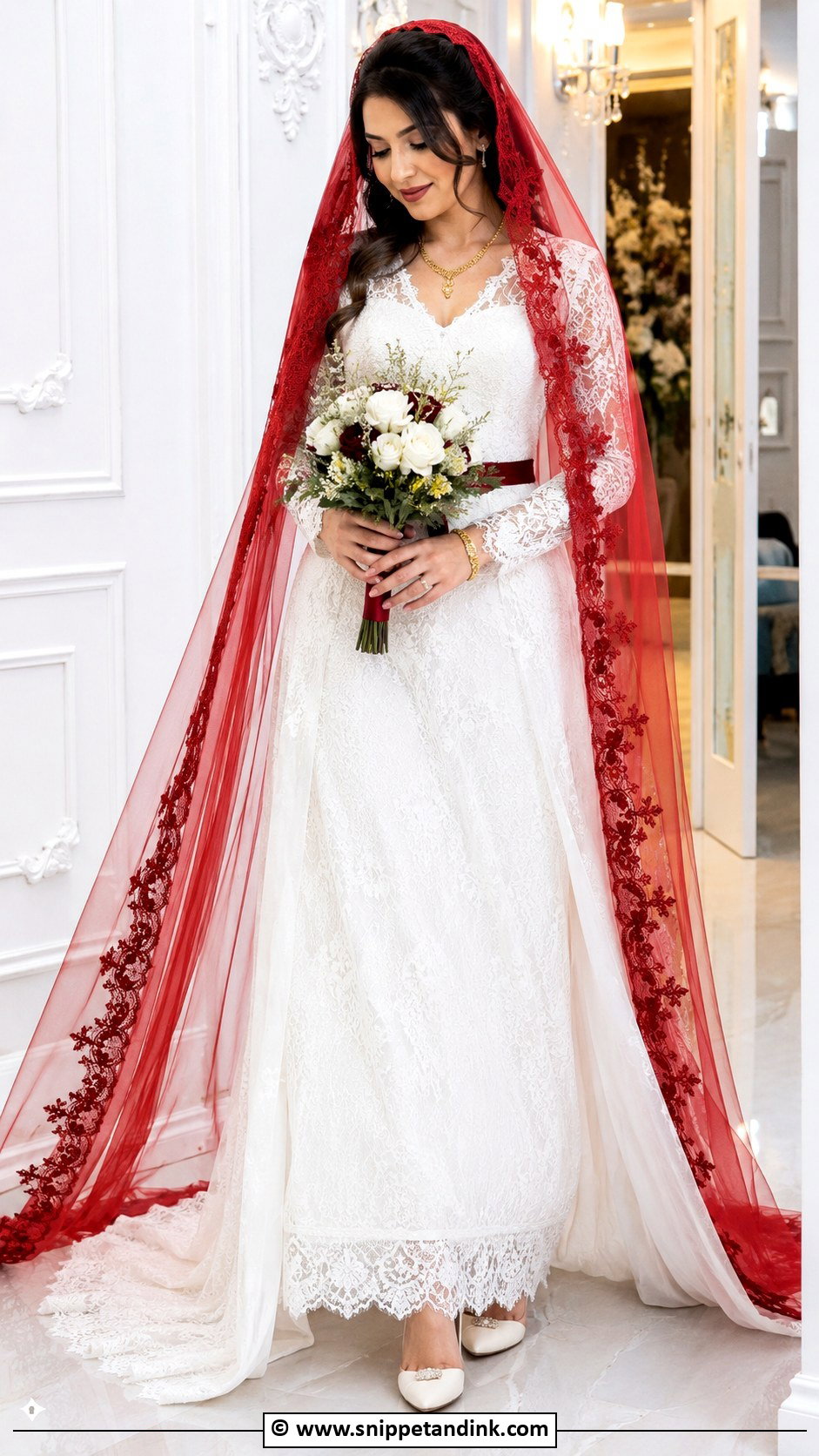
A sheer red veil over a white gown is one of the simplest ways to carry tradition into a modern look, and families usually read the gesture immediately. Keep everything else quiet: ivory heels, subtle gold, soft makeup. I always watch the dye. Cheap red chiffon can bleed onto white satin if it gets damp from tears, rain or a spilled drink, so I test a corner with a damp white cloth before the day. A crimson or burgundy veil gives a softer version.
13. Beaded Turkish Wedding Dress
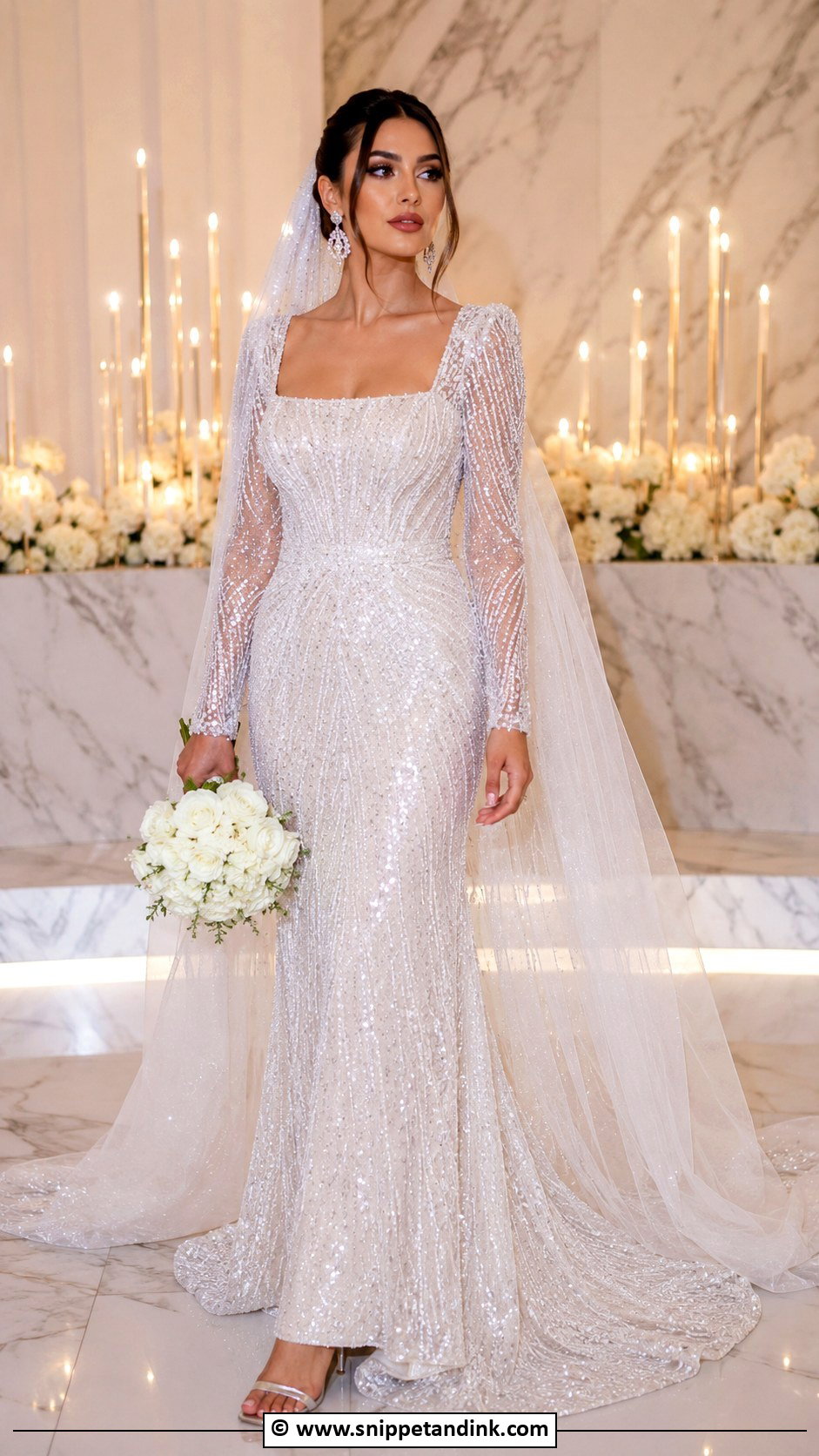
Hand-beaded sleeves and a shimmering bodice come alive under reception lighting, where every turn catches. I keep the veil sleek so it doesn’t hide the work and the hair simple so the eye has somewhere to rest. The trade-off is weight and fragility. A heavily beaded bodice is noticeably heavier than plain fabric, and a snagged bead thread unravels fast, so I check each sleeve end and the underarms before the day and tack anything loose. Crystal earrings and metallic heels are enough.
14. Turkish Wedding Dress With Cape
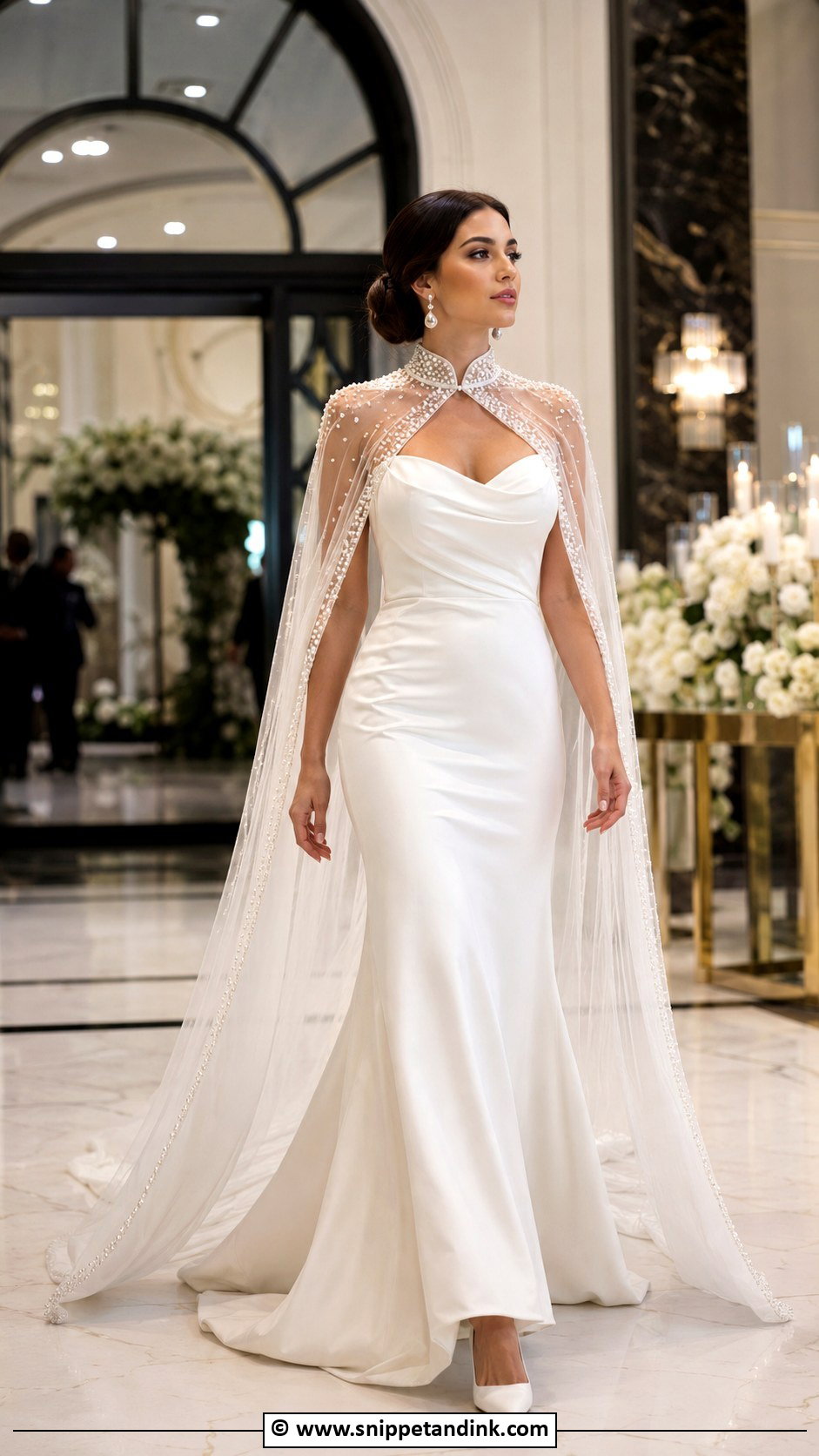
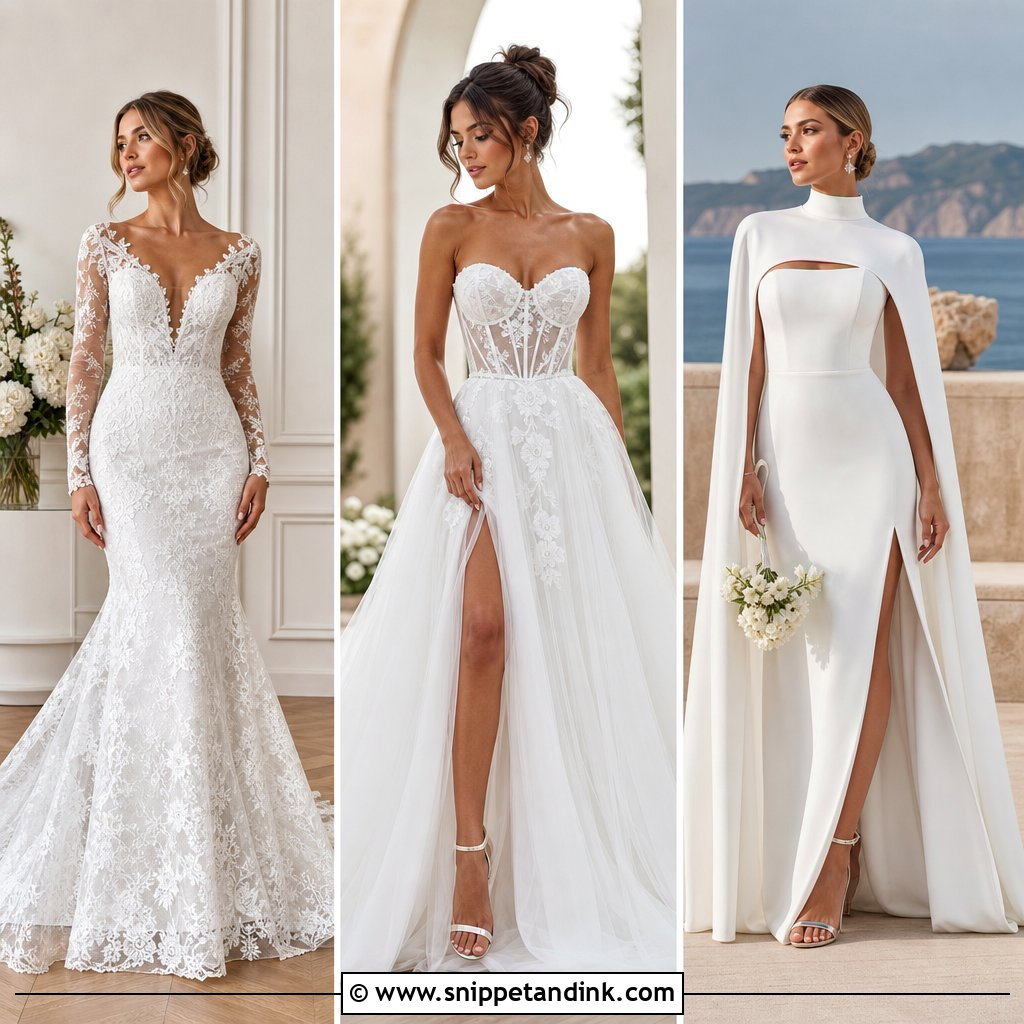
A shoulder-attached cape gives you movement behind you without a heavy veil, and it adds coverage over bare shoulders, which matters to many Turkish families during the ceremony. I’d put it over a fitted satin or lace column, plain, pearl-trimmed or lightly embroidered. Wear your hair in a low bun so it falls cleanly. Ask for it to be detachable, too: take it off after the entrance and the same dress reads as a fresh, lighter look for the rest of the night.
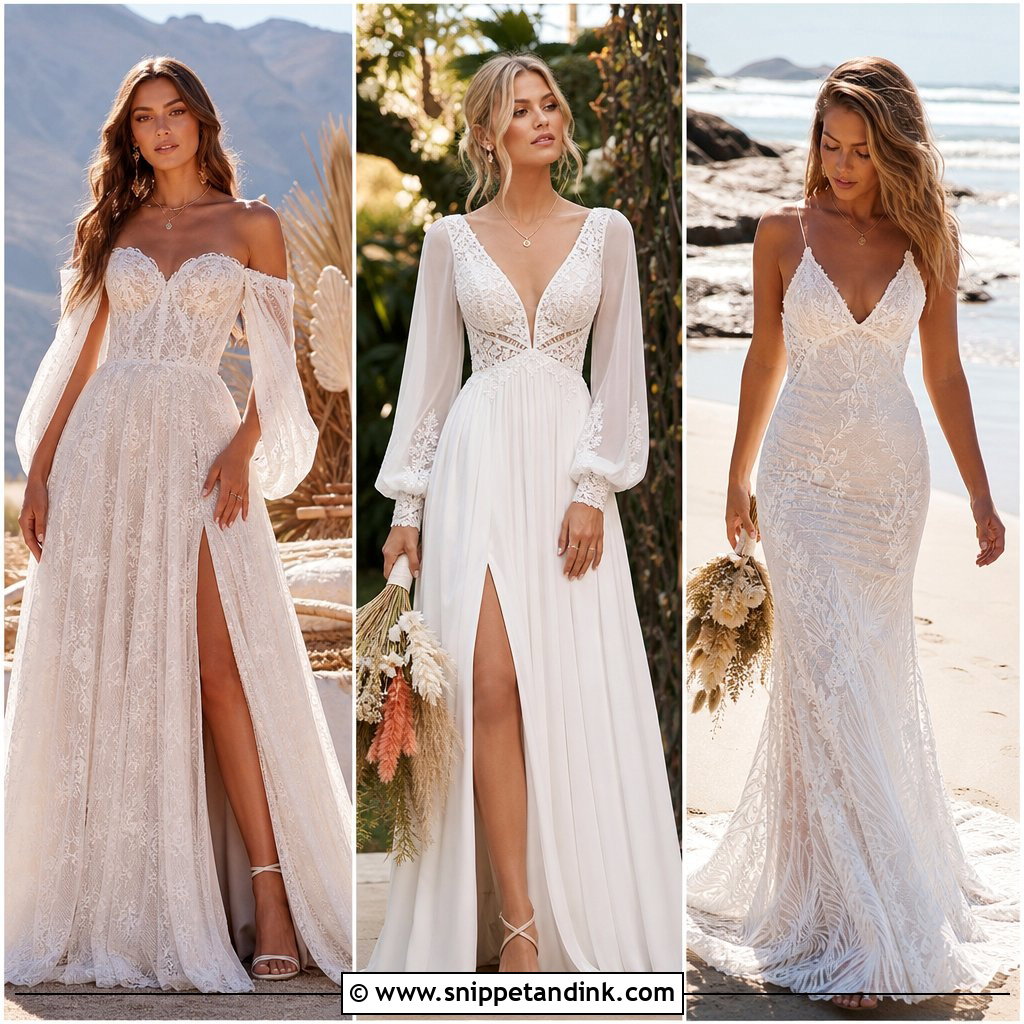
15. High Neck Turkish Wedding Dress
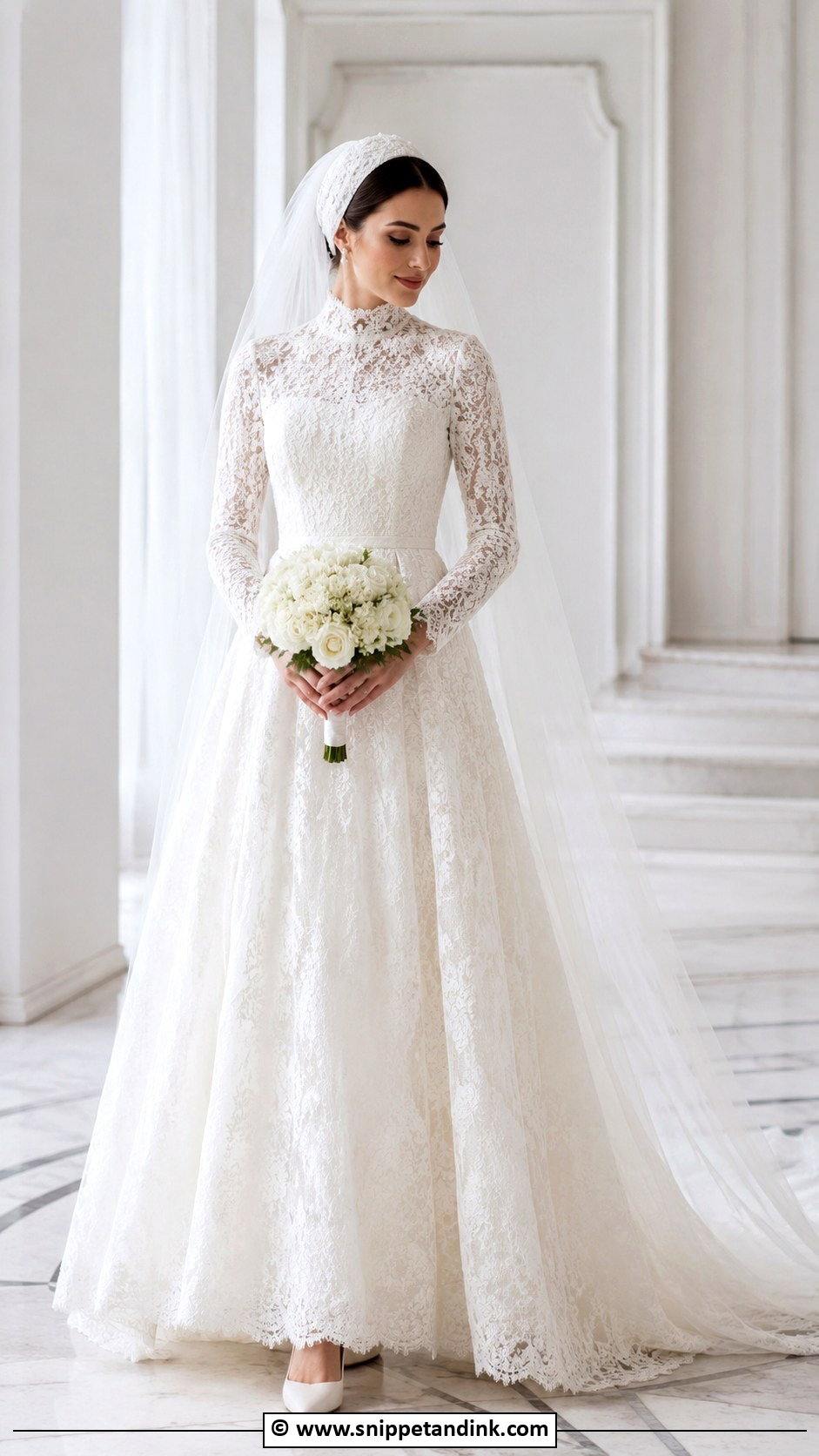
A high neckline frames the face by itself, so it needs very little help. Lace, crepe or satin with long sleeves, a low bun and pearl earrings is plenty, with the veil attached near the crown so it doesn’t fight the collar. Fit at the throat is everything. A high neck that’s even slightly tight looks strained every time you turn your head, and you’ll feel it by the third hour, so I have brides look over each shoulder at the fitting.
16. Turkish Wedding Dress With Hijab
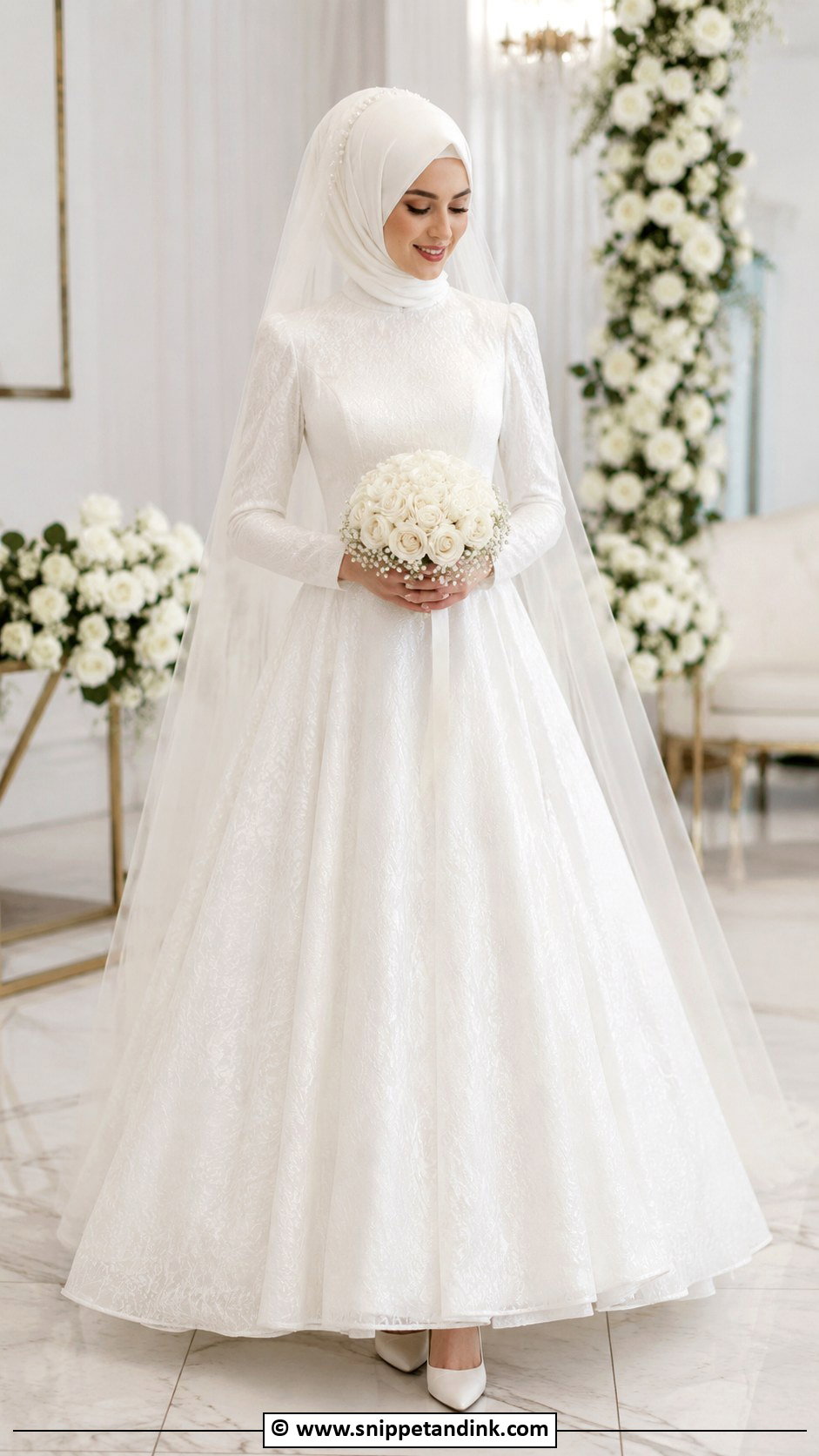
With a hijab, the dress and head covering are one outfit, so I plan them together. The neckline has to lie flat under the hijab, the lining must be opaque, and the hijab fabric should echo the dress, satin with satin or chiffon with lace. A light veil over the top, pearl pins, closed-toe heels and an ivory or blush bouquet finish it. I place pins where the veil covers them and prefer safety or magnetic pins, since straight pins work loose during hours of hugging. Avoid bulky underscarf layers at the neck.
17. Off Shoulder Turkish Wedding Dress
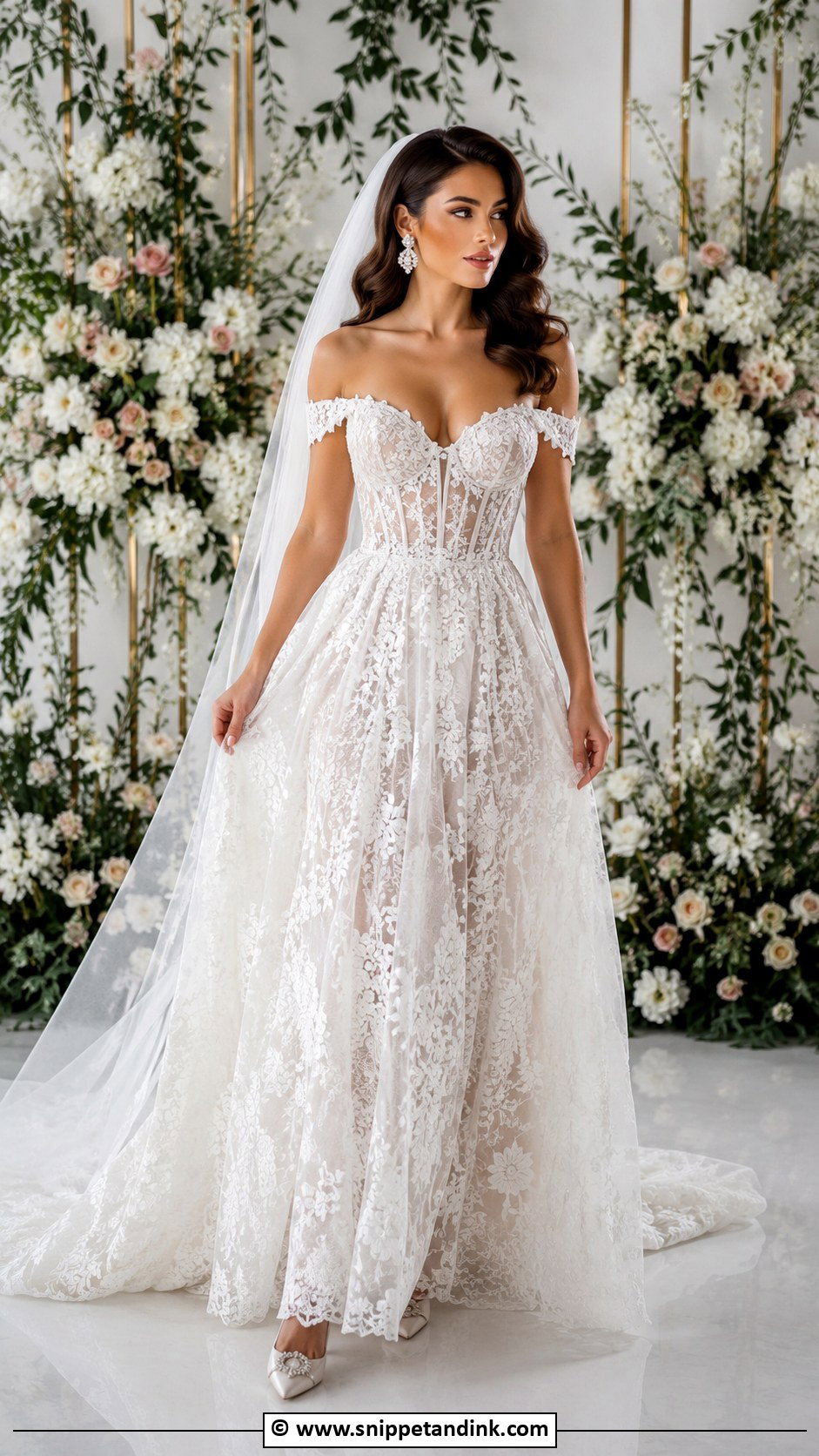
Off the shoulder is the most romantic neckline here, though it isn’t right for every family, and some brides cover up with a bolero or wrap for the nikah. A structured bodice is non-negotiable. Without boning, the neckline slips down each time you lift your arms. I pair it with a long veil, crystal earrings and soft waves or an updo, and bring in Turkish detail through embroidered lace on the sleeves or train rather than a necklace.
18. Turkish Wedding Dress With Train
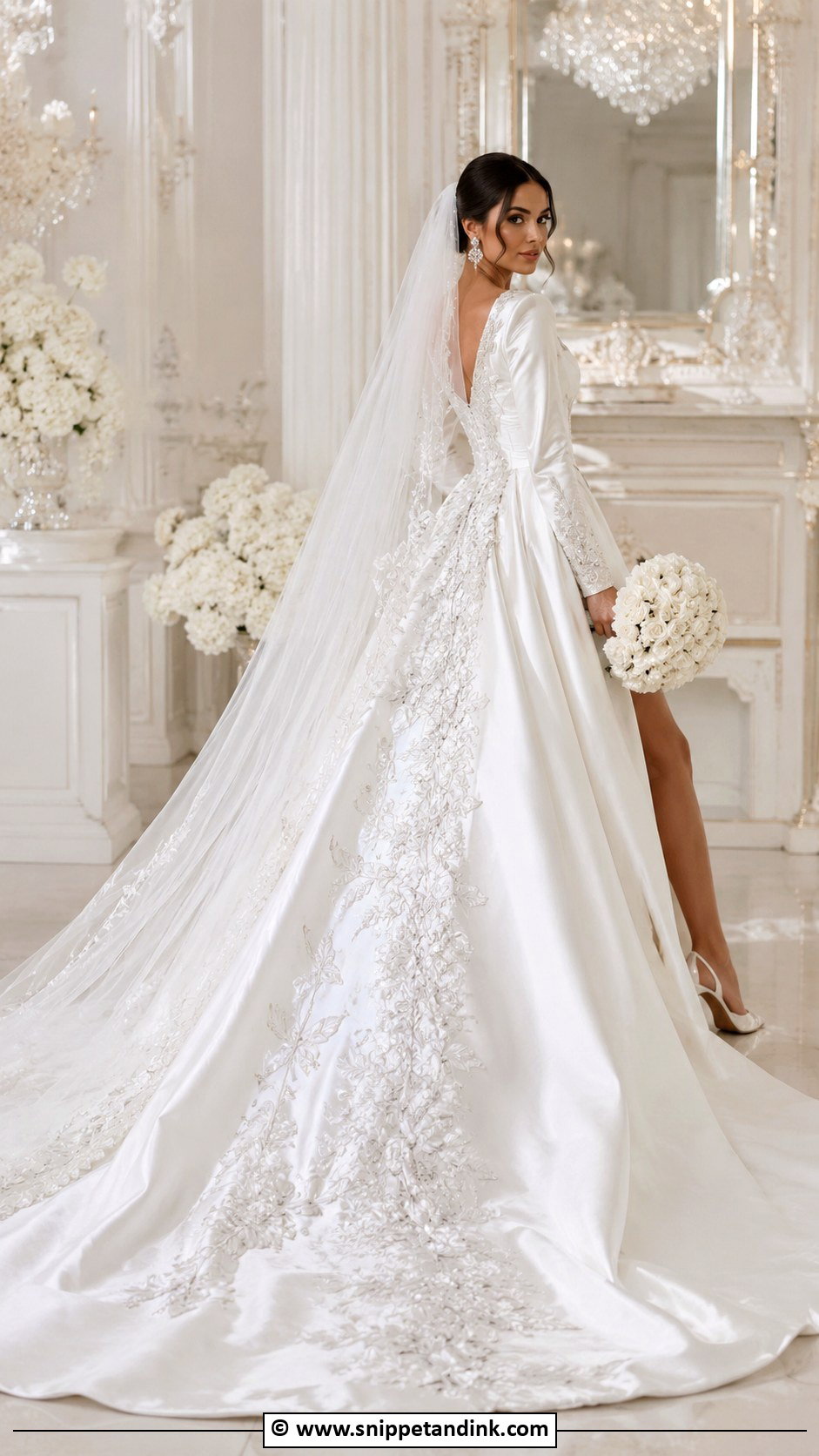
A long train makes the aisle and the portraits, then becomes a problem the moment the dancing starts. Decide early whether you want it detachable or bustled. I ask the seamstress for a bustle strong enough for halay, the linked-arm line dance that pulls everyone onto the floor, because a weak hook gives way in the first song. A long veil can echo the train for the entrance, and embroidery along the train’s edge is a lovely touch, since it’s what guests see as you walk away.
19. Ivory Turkish Wedding Dress
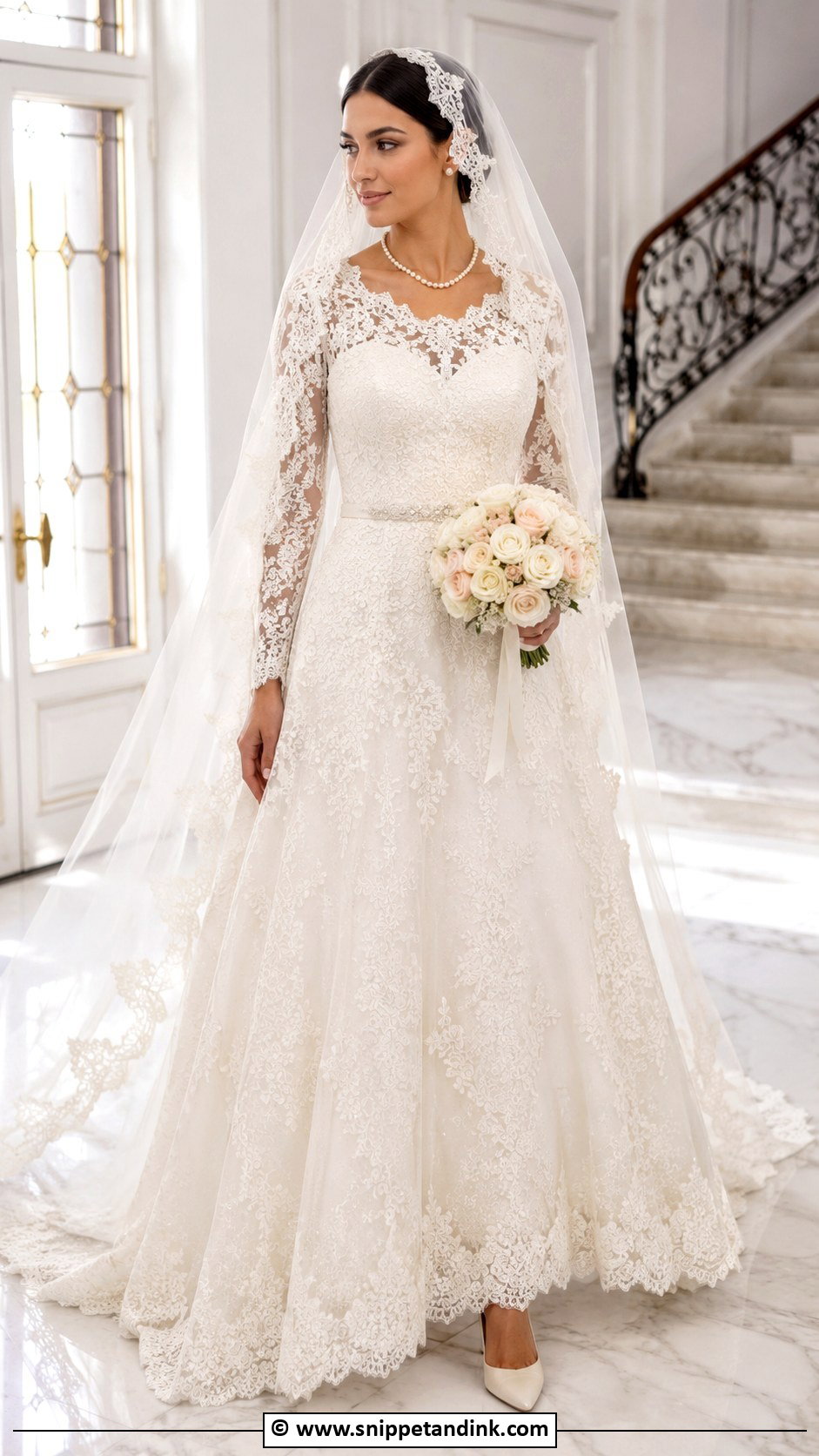
Ivory is warmer than pure white and sits more comfortably beside gold, which is why I suggest it to brides expecting a lot of gold jewelry. Lace leans romantic, satin minimal, tulle dramatic. A lace-edged veil and a soft bouquet are all it needs. One practical point: ivory from different makers rarely matches, so I hold the veil, shoes and a swatch of the dress together in daylight before ordering anything separately.
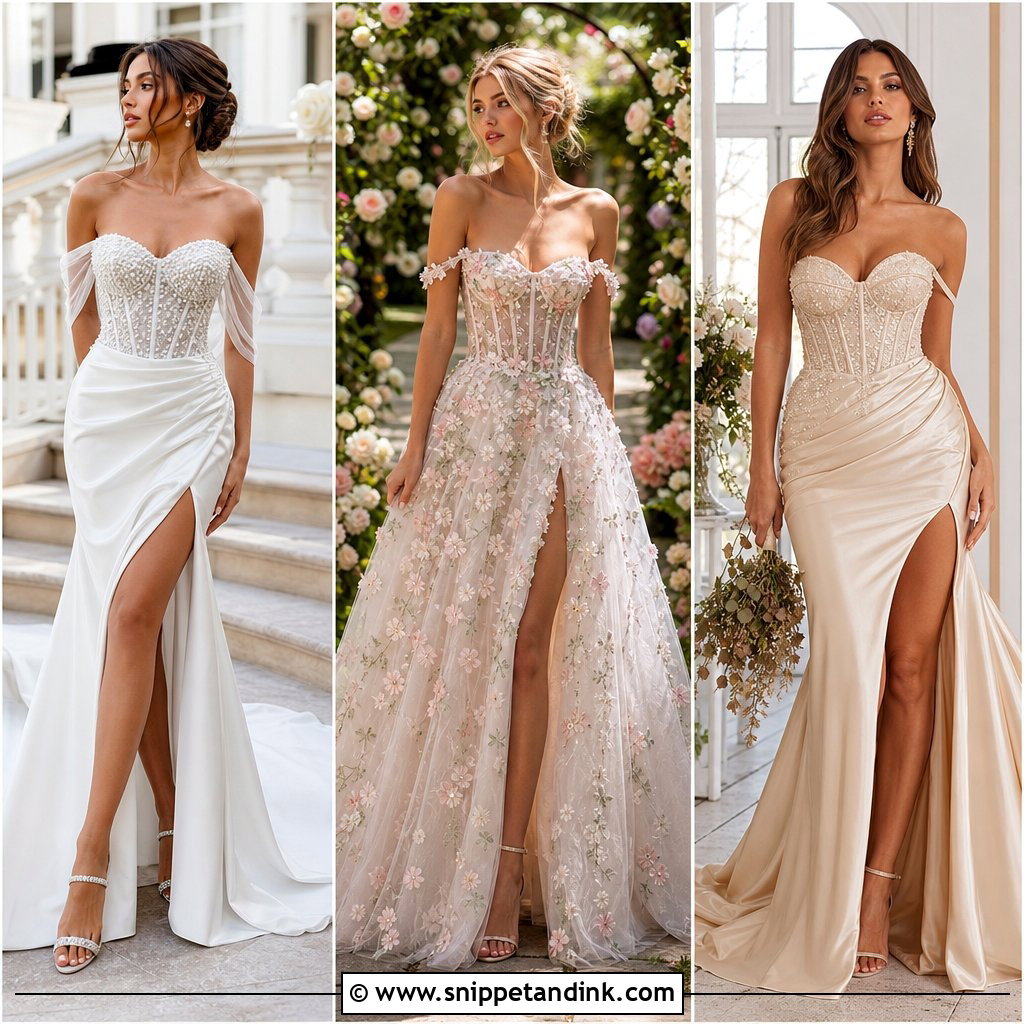
20. Floral Lace Turkish Wedding Dress
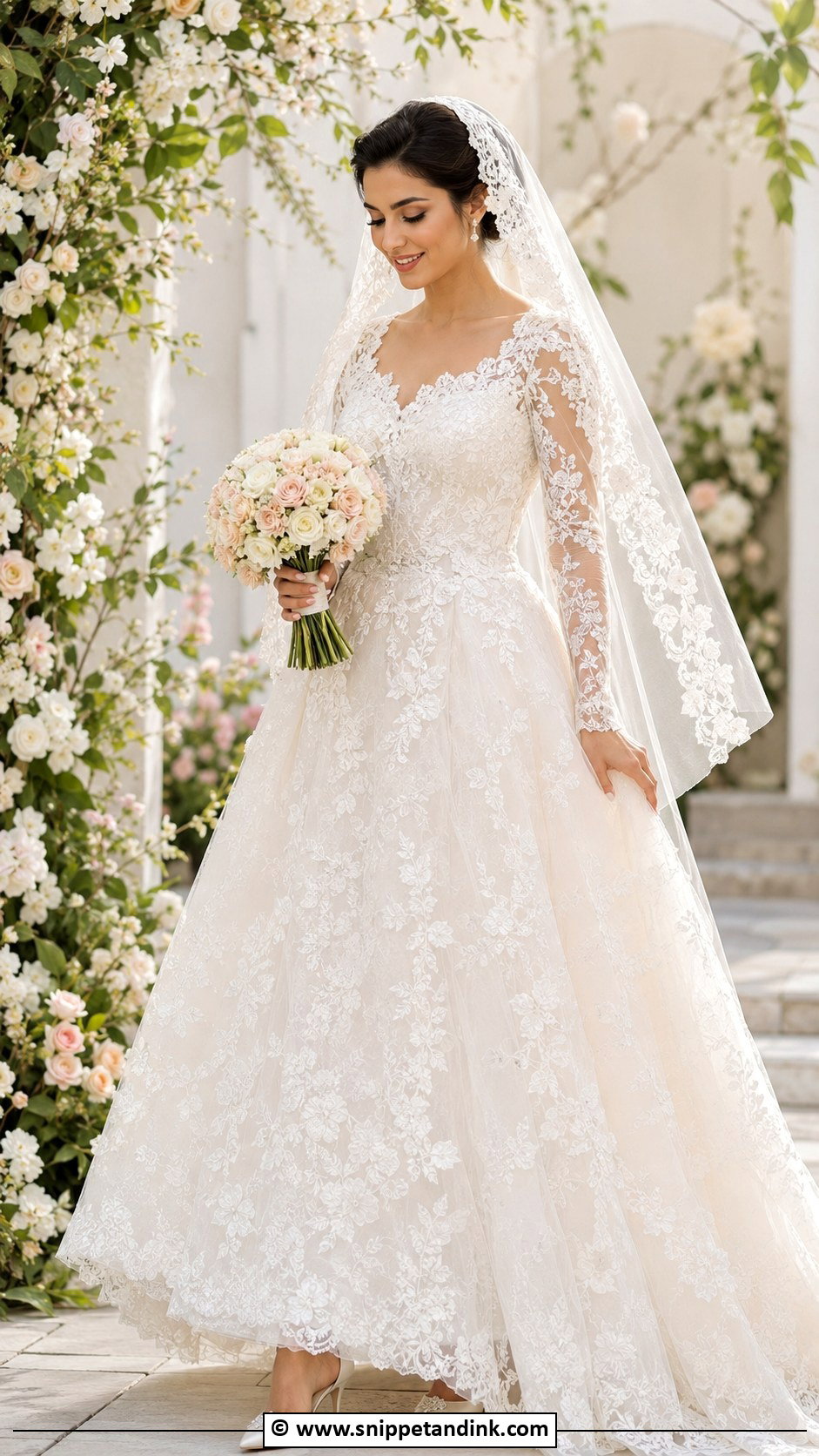
Floral lace carries enough detail that the gown doesn’t need beading. I look closely at how the flowers are placed. Well-made lace has motifs that follow the neckline and hem, while cheaper lace is cut straight through the pattern and the edges look chopped. A sheer back, modest lining or long sleeves change the mood completely. Pearl earrings, satin heels, a veil with matching trim and a bouquet of white, blush and greenery finish it.
21. Minimal Satin Turkish Wedding Dress
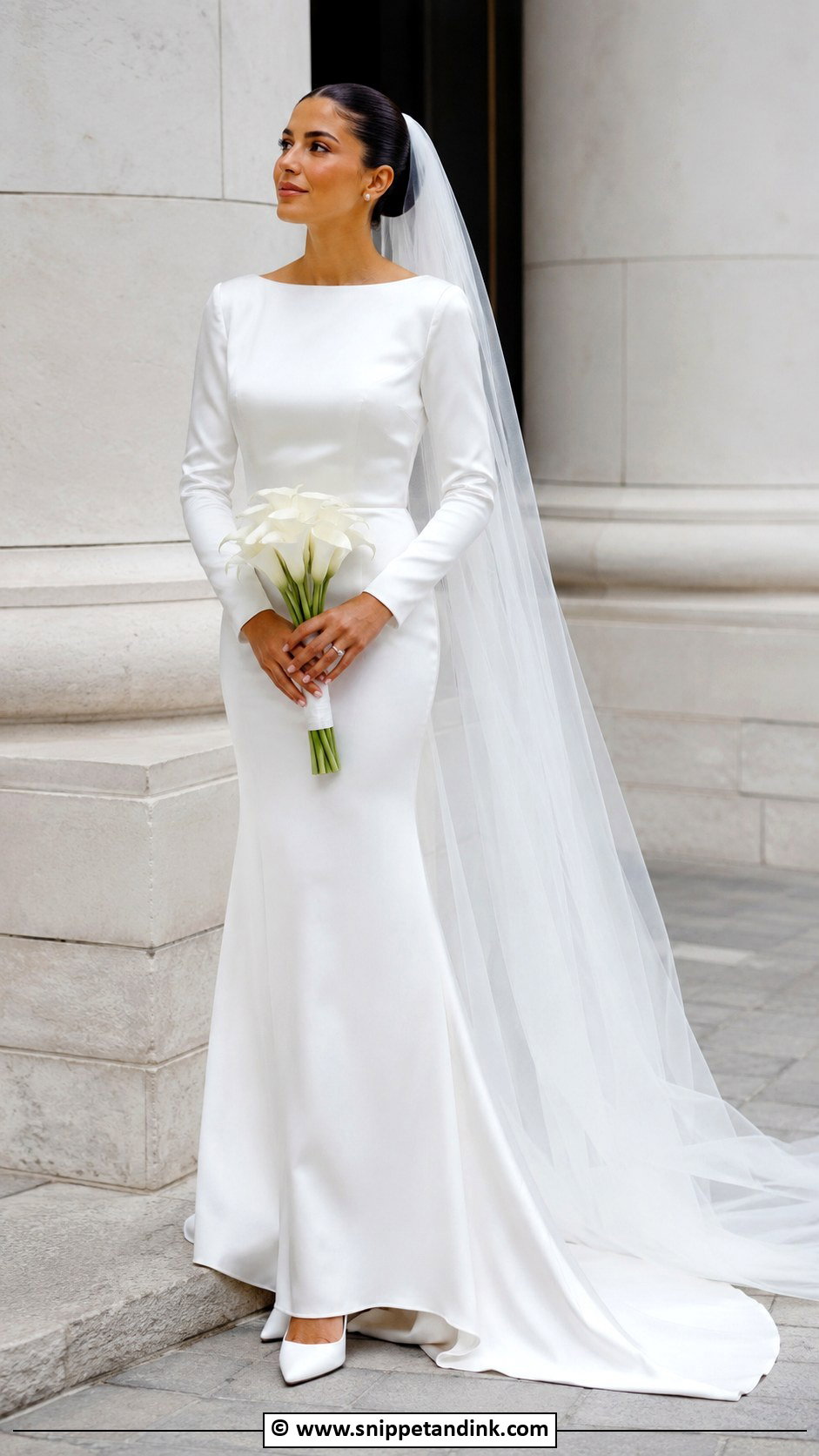
With almost no embellishment, a satin gown lives or dies on fit and posture, because every seam shows. I keep it to pearl studs, a sleek bun, pointed heels and a plain long veil, adding a small gold comb or an embroidered veil edge for the Turkish note. Heavier satin hangs better and creases less than thin, shiny polyester, so I always ask for a swatch before choosing from a photo.
22. Turkish Wedding Dress With Tiara
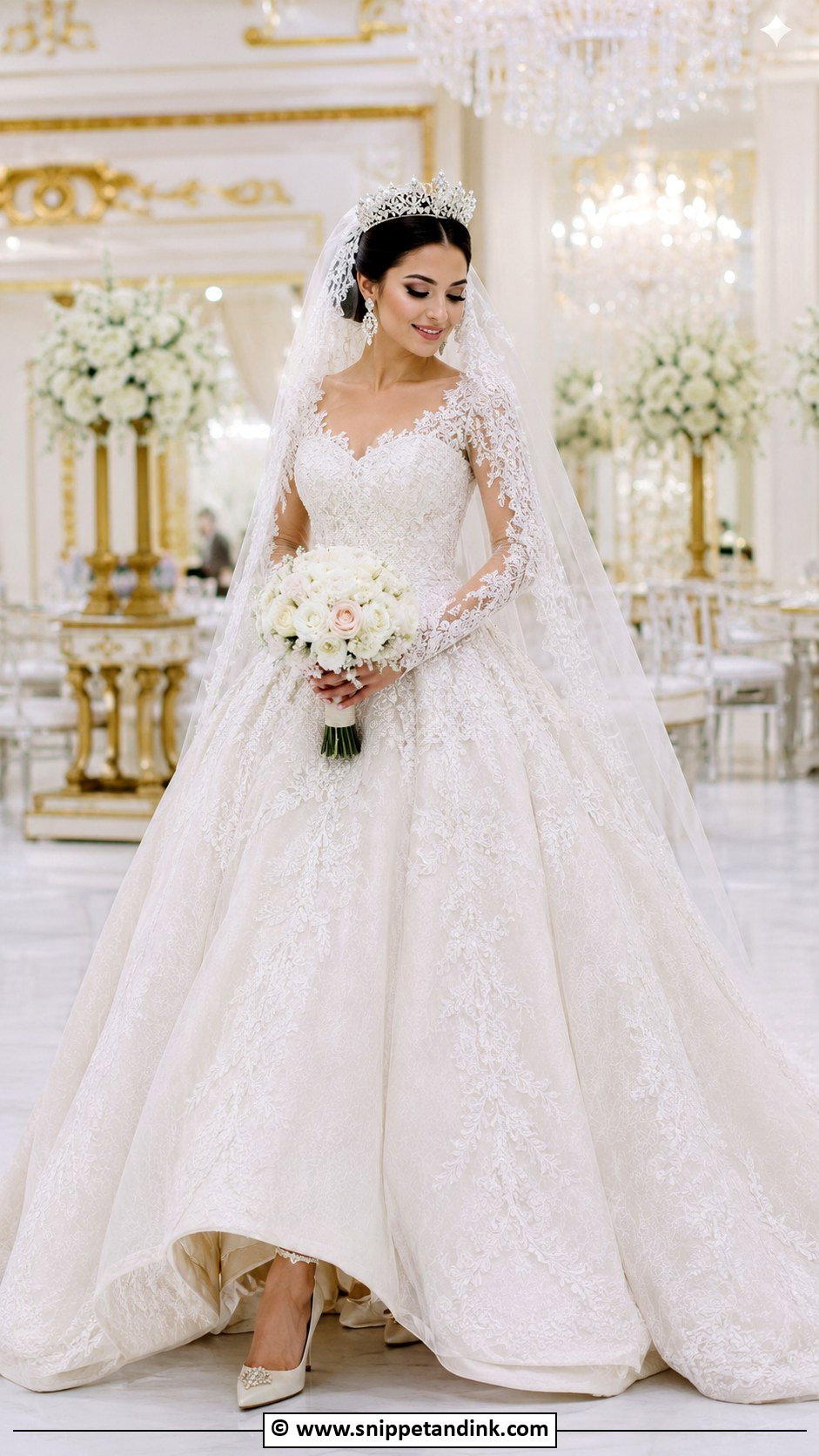
A tiara reads princess quickly, so I keep the rest of the jewelry simple to stop it tipping over the edge. Ball gowns and structured satin carry it best. Tiaras need a secure base, and I ask the hairstylist to set it in a soft updo with pins crossed through the combs, because a tiara resting on loose hair slides backward during the first round of hugs. A long veil, crystal earrings and ivory heels complete it.
23. Turkish Wedding Dress With Pearl Veil
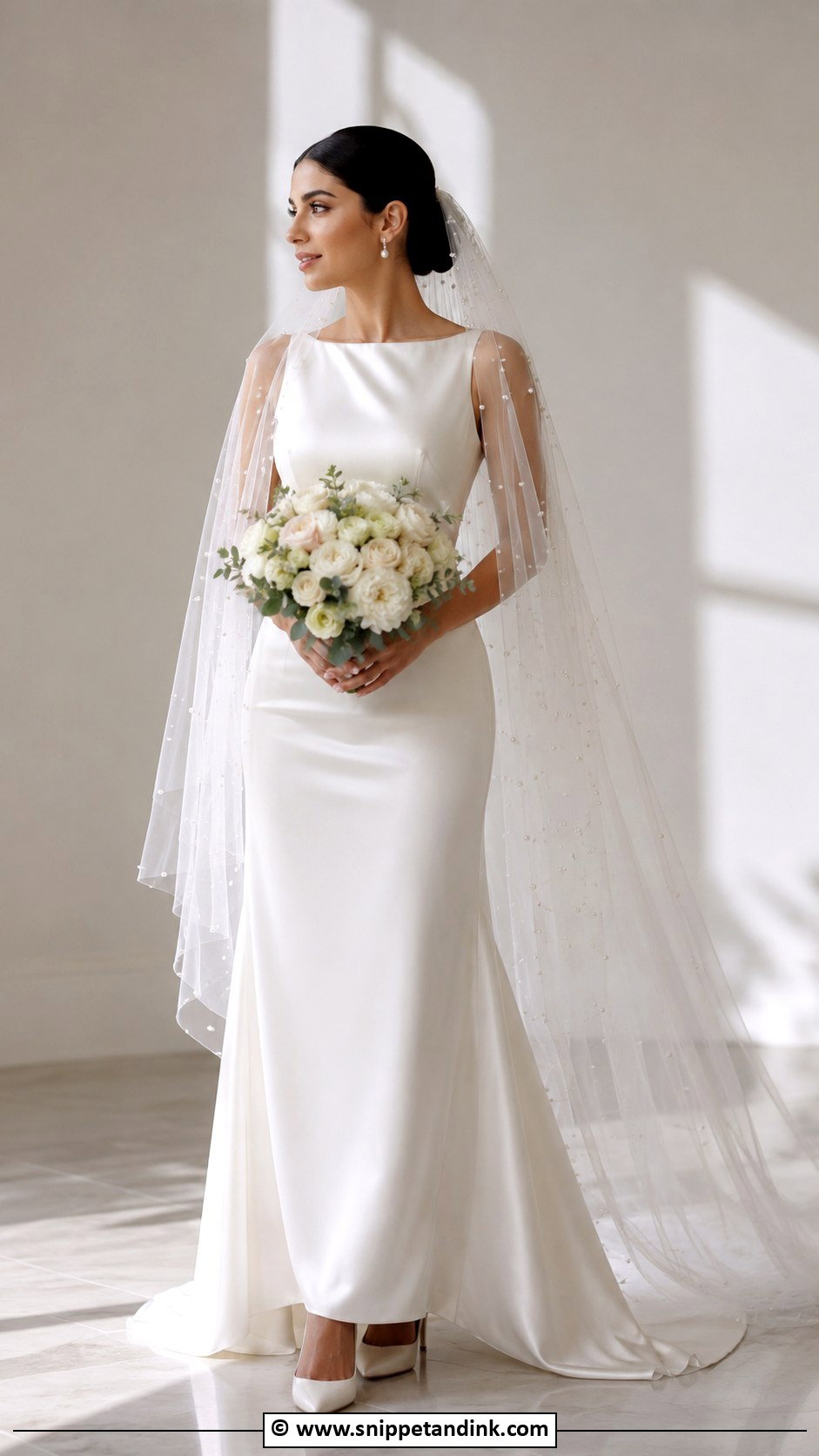
Scattered pearls give a veil texture without the weight of heavy embroidery, which suits plain satin, crepe or lace gowns and modest long-sleeve styles. I keep the bouquet simple and the bun smooth so the pearls show in close-ups. Pearls on a long veil do add weight along the bottom edge, which can drag the veil back on its comb, so I ask for a sturdier comb or a couple of extra pins at the crown.
24. Blue Turkish Kaftan Wedding Dress
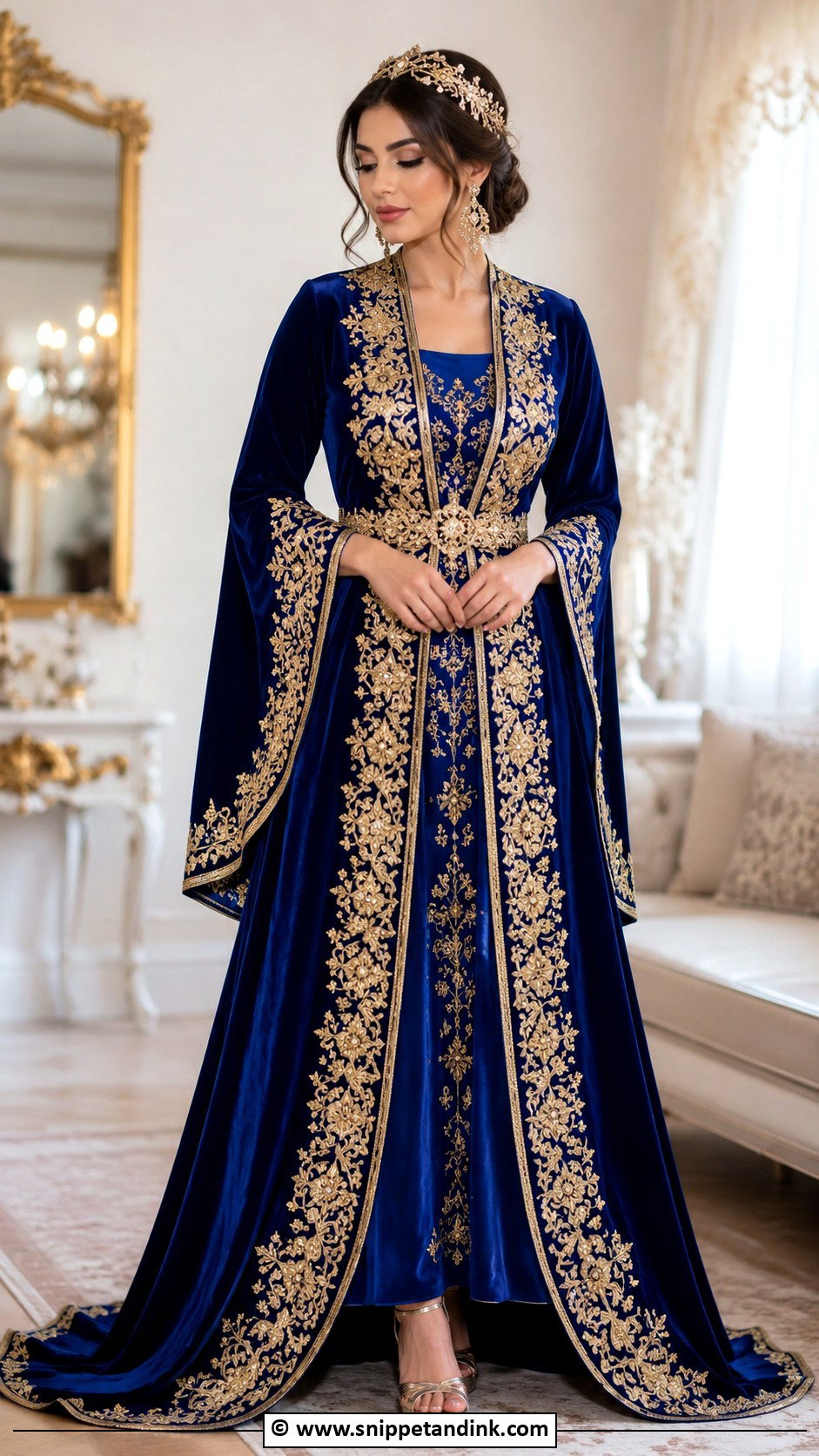
Navy, sapphire or royal blue velvet with metallic embroidery takes the kaftan beyond red. I’d wear it for henna night or a reception change, with a matching inner dress, metallic heels, a jeweled headpiece and ornate earrings. Silver thread cools blue down and gold warms it, so I choose the embroidery to match whichever metal dominates your jewelry. Defined eyes with a neutral lip keep the makeup balanced against such a strong color.
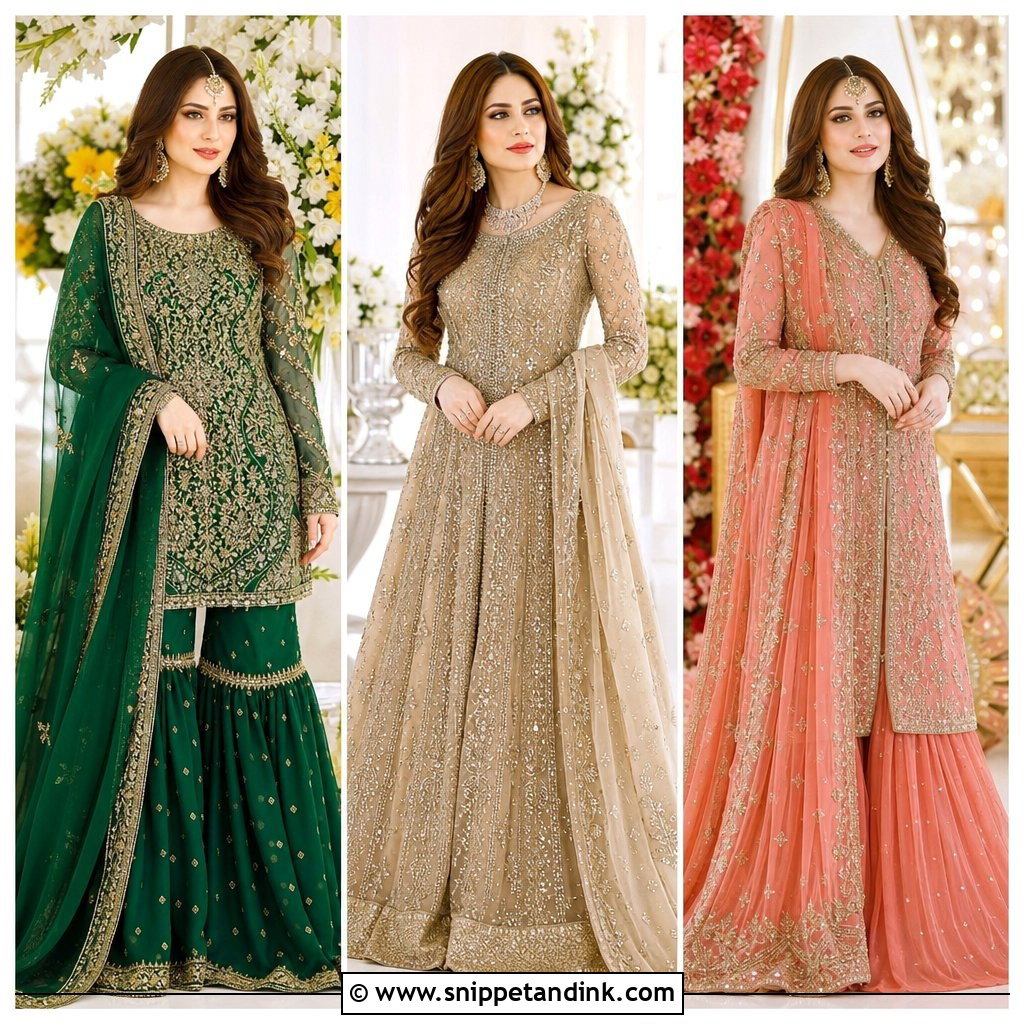
25. Emerald Turkish Wedding Dress
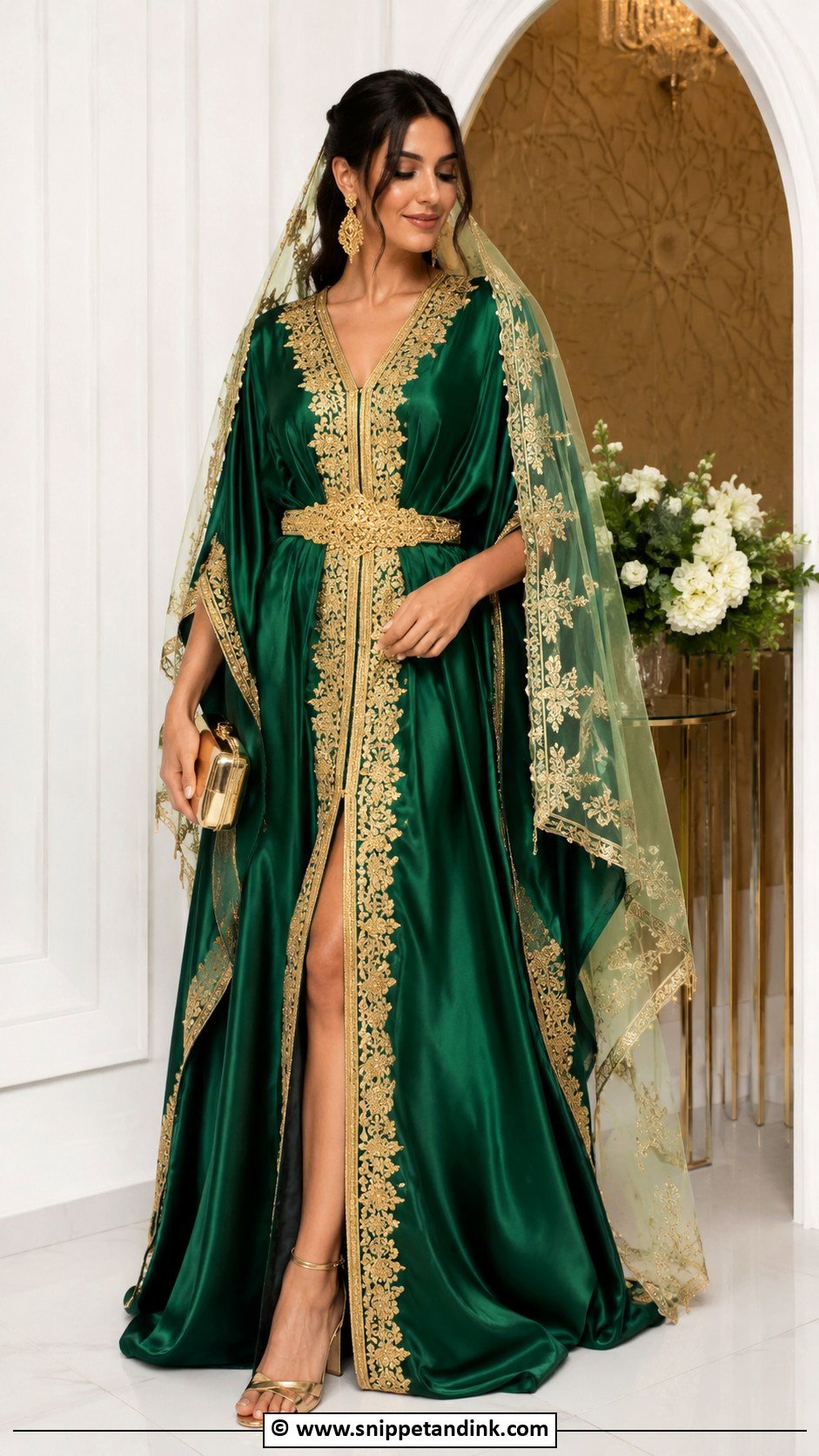
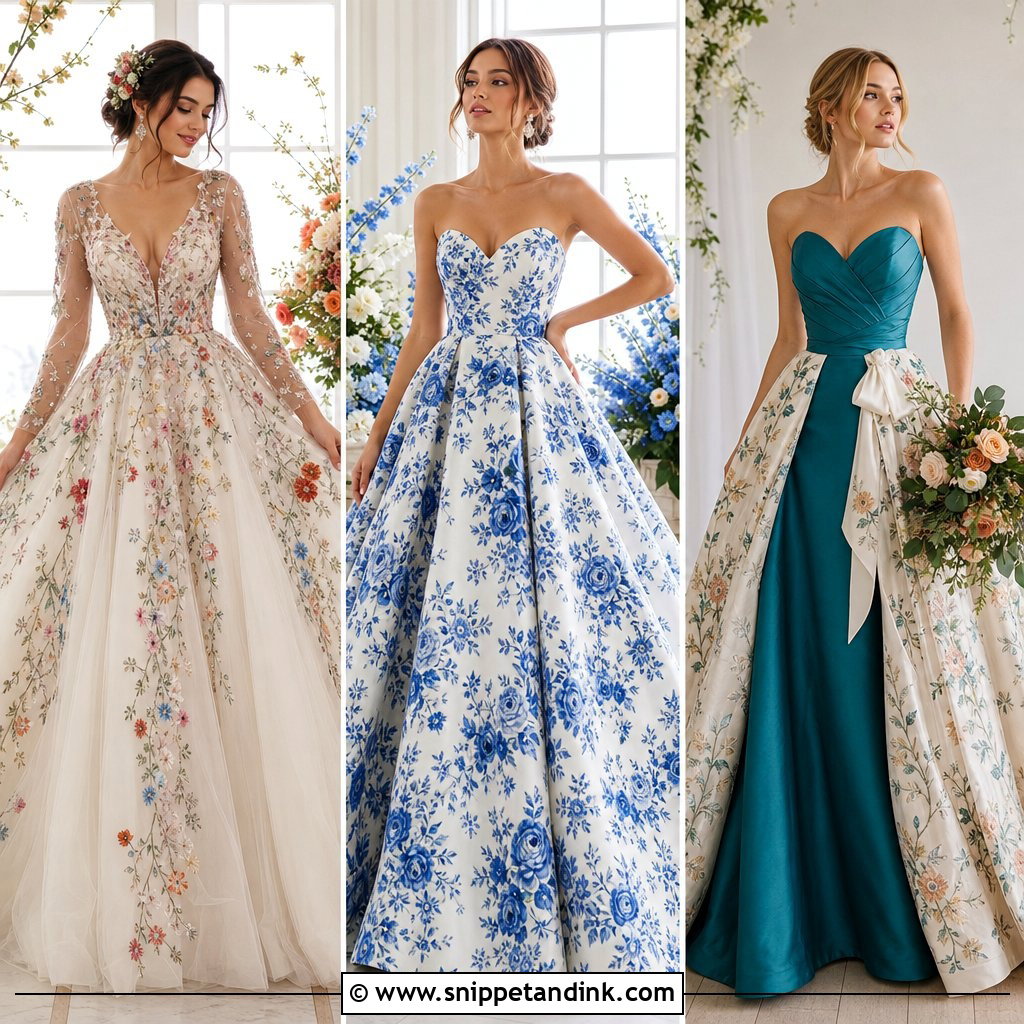
An emerald Turkish wedding dress works best in velvet, satin or brocade with gold embroidery. For henna night or a second reception outfit, it feels special without copying the ceremony gown. Emerald is tricky on camera, though. Under some hall lighting it shifts toward teal or reads almost black, so I look at photos of the fabric under flash before committing. Gold heels, a structured clutch and statement earrings finish it, with a sheer or gold-trimmed veil.
26. Turkish Wedding Dress With Overskirt
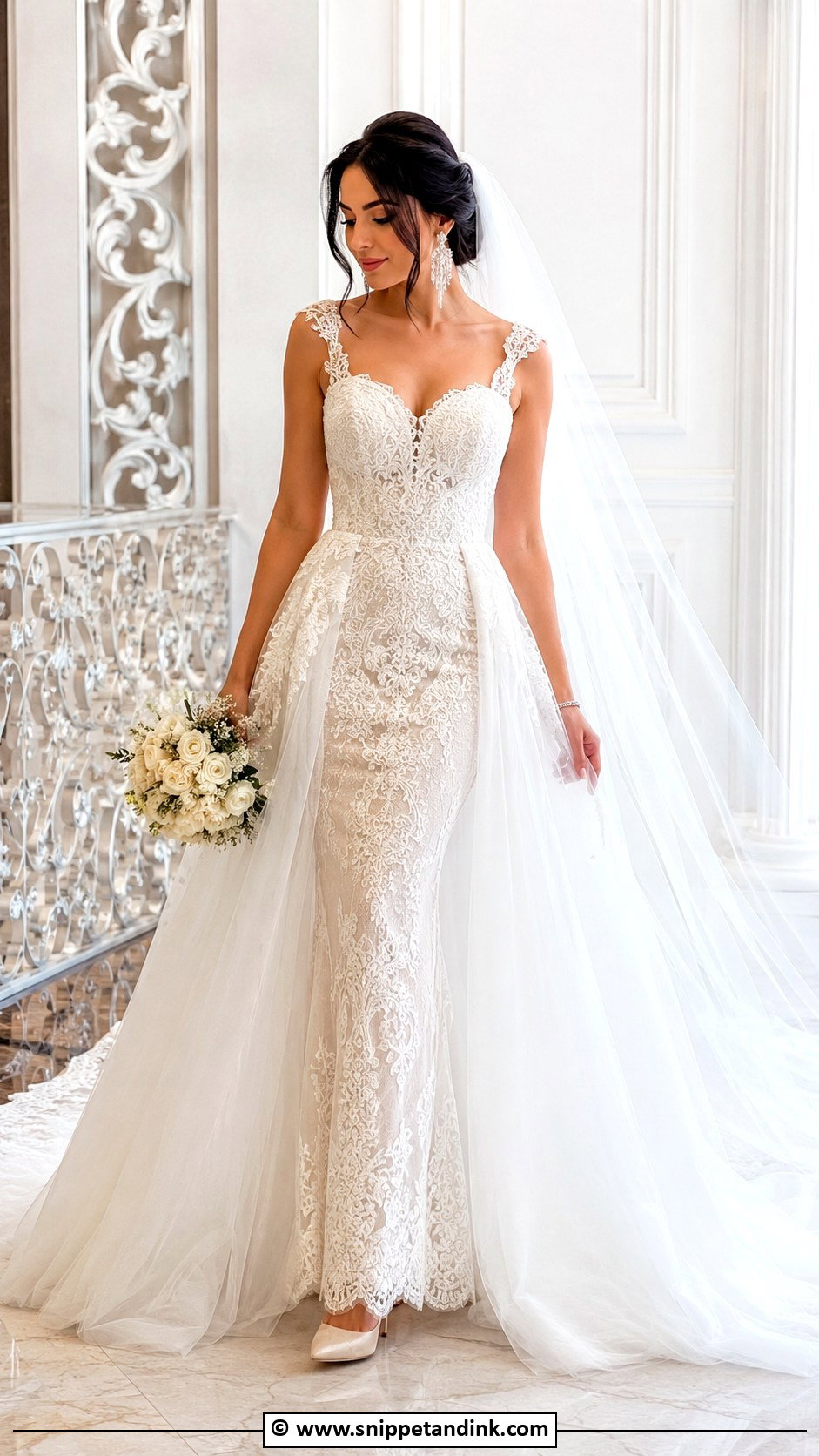
A removable overskirt gives you two looks without a full change: wear it with a long veil for the entrance, then take it off for dancing. The overskirt fastens at the waist with hooks or snaps, and that join is where things go wrong. If the closure isn’t hidden under a waistband or belt, it shows in every reception photo. I’d rehearse removing it with whoever will help you, so it takes two minutes on the night, not twenty. An embroidered edge brings in the Turkish detail.
27. Turkish Wedding Dress With Bolero
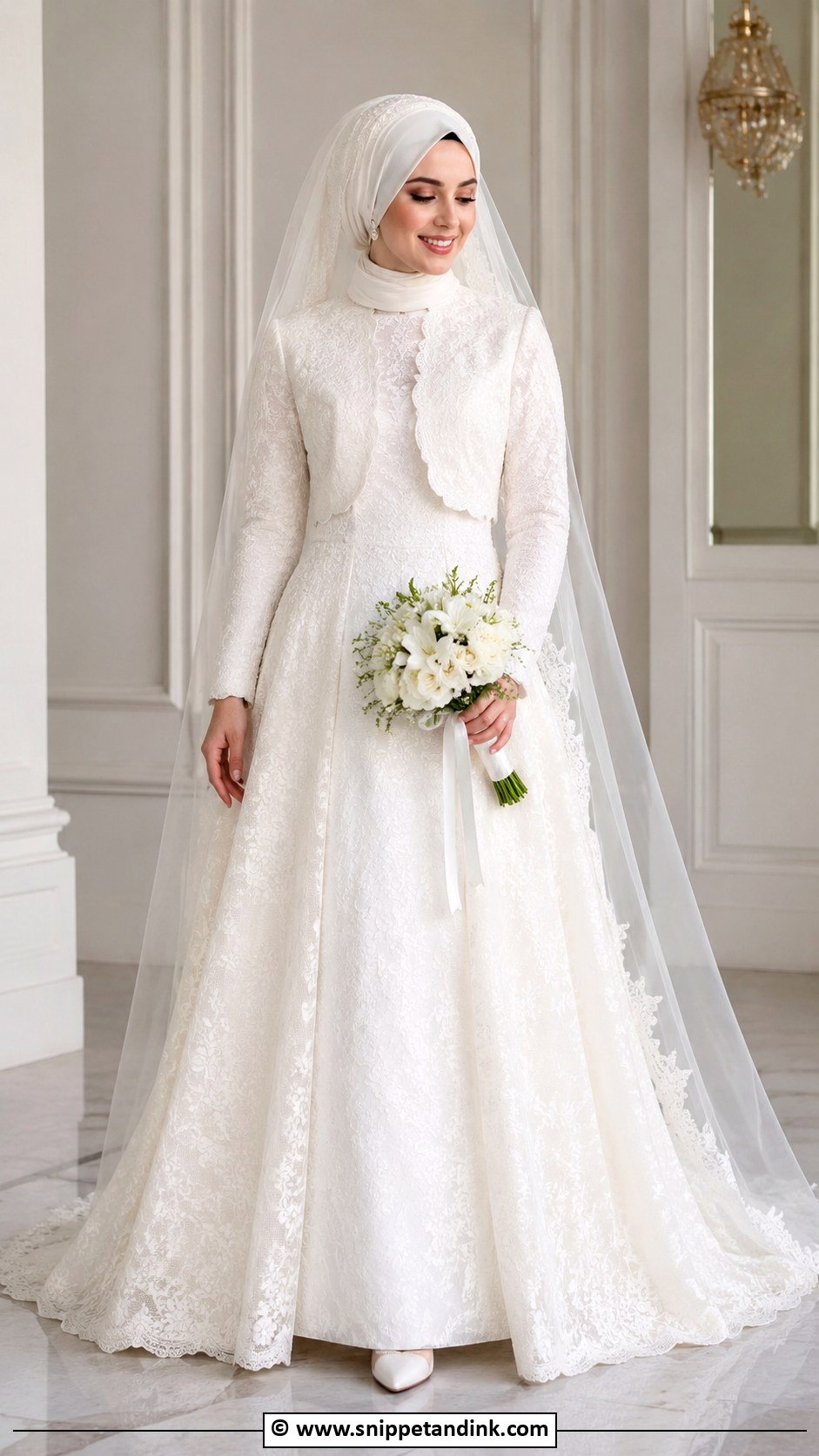
A bolero lets you adjust coverage through the day, on for the nikah and family moments, off for the reception. Match its color and texture closely to the gown, since a bolero in a slightly different white looks borrowed. I check the sleeve length with your arms raised, because short boleros ride up toward the elbows during hugs. A long veil, pearl earrings and closed-toe heels complete it.
28. Turkish Reception Wedding Dress
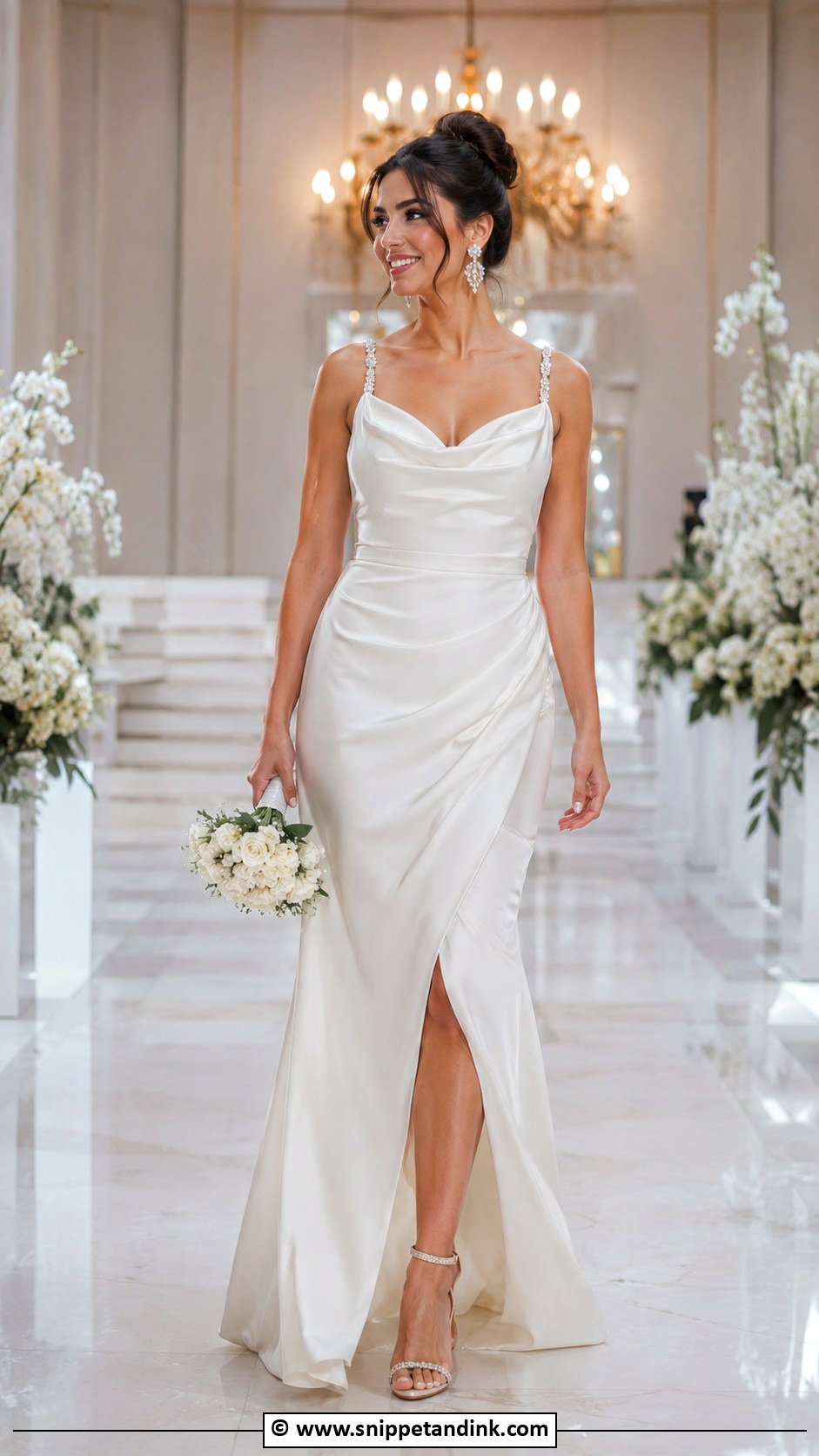
Reception dresses should be easier to live in than the ceremony gown. Greeting long lines of relatives, dancing and sitting through dinner all take movement. I’d go for lighter satin, a sparkly A-line or a crepe dress with a short train, with comfortable heels and statement earrings, and change into it once the main entrance photos are done. Crystal straps or a little embroidery add detail. Leave the veil off if it’s getting in the way.
29. Turkish Civil Wedding Dress
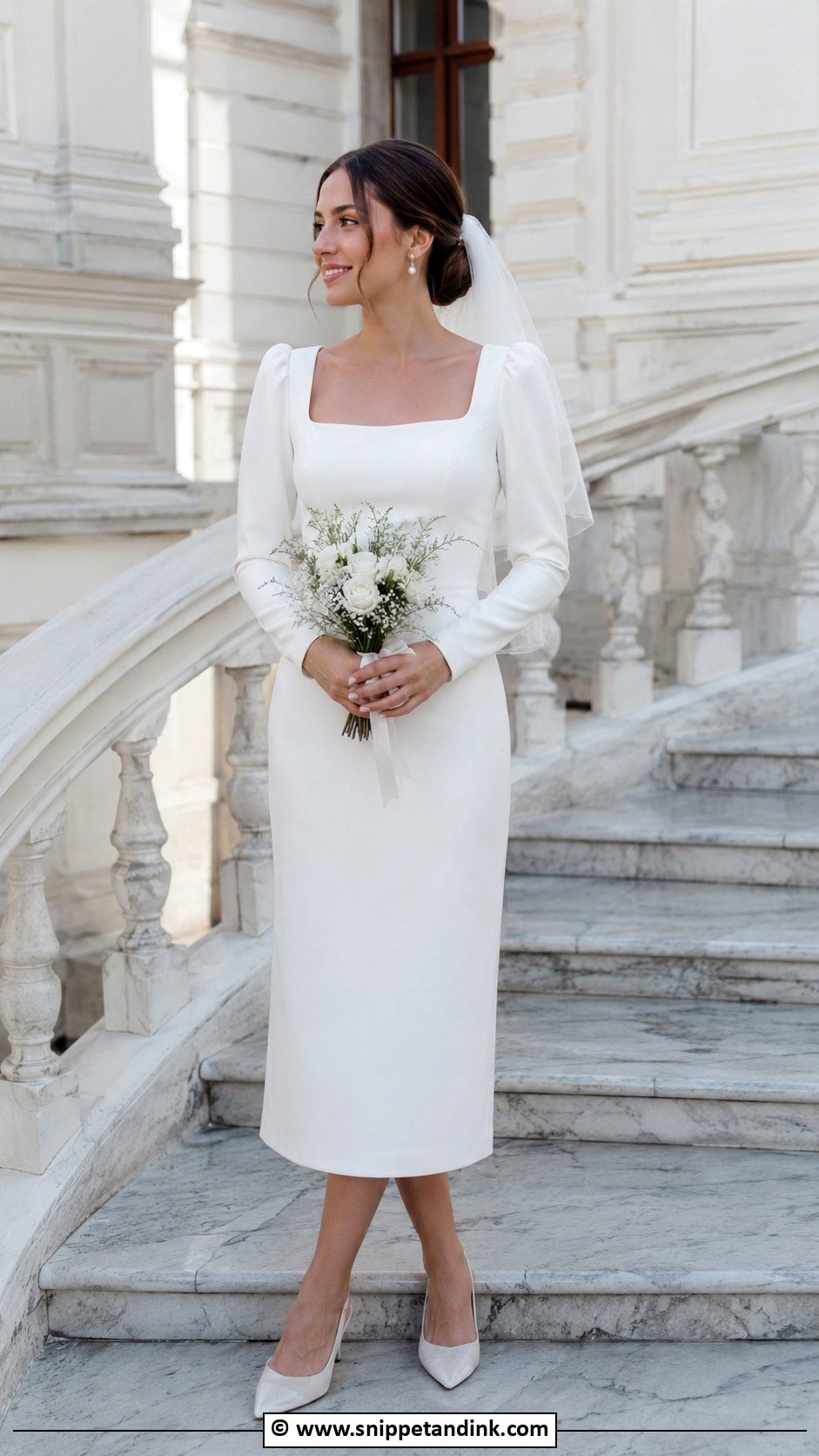
Civil ceremonies are usually short and bright, so the dress can be lighter and more modern: a white midi, a tailored crepe gown, a satin column or a bridal suit. Low heels, pearl earrings, a small bouquet and a hair bow or short tulle veil finish it. It suits courthouse ceremonies, registry weddings and small family gatherings. You’ll be photographed seated at the signing table, so check at a fitting how the dress looks and creases when you sit.
30. Turkish Wedding Dress With Gold Jewelry
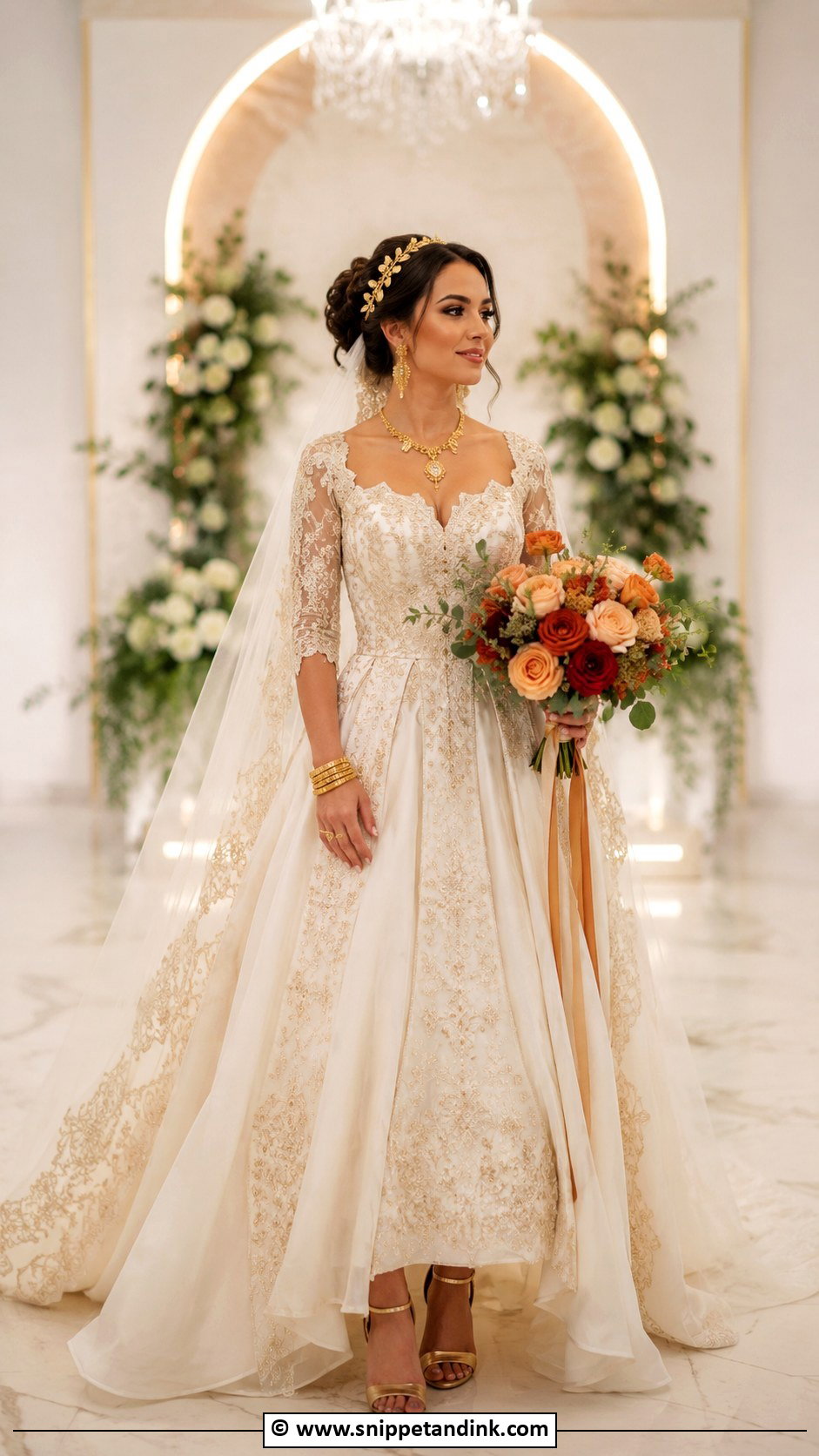
Gold carries real meaning at a Turkish wedding, and much of it arrives on the night as gifts. Start with a white, ivory, champagne or red gown and layer with restraint. With a simple dress, a fine necklace, drop earrings, bangles and a gold hair piece can all sit together; with an embroidered dress, I pull back so the gold doesn’t crowd the work. Leave space on your wrists and neckline if you expect gifted bracelets and necklaces during the reception.
When Guests Pin Gold on Your Dress
The takı ceremony surprises brides who haven’t seen one up close. Family and guests come up in turn and pin gold coins, bracelets or banknotes onto the couple, often onto a ribbon or sash across the bride’s dress. It’s joyful, and it’s hard on fabric.
- Give them something to pin to. A wide satin sash or ribbon over the gown takes the weight and the pinholes, so delicate lace and chiffon underneath stay whole.
- Keep pins out of tulle and beading. Pins tear tulle and pull bead threads loose, which can leave a trail of beads by the end of the night.
- Name a keeper. A sibling or close friend can collect the gold as it builds up and put it in a secure pouch, so you aren’t carrying the weight all evening.
- Change dresses after the takı, not before, or you’ll be unpinning everything from one gown onto another.
Heavy coins and bracelets also pull a neckline forward. For that reason I leave a touch of firmness in the bodice fitting of the reception dress; a gown fitted to the last millimeter can start to gape once the gold is on.
A Wardrobe That Carries You From Henna Night to the Last Dance
A Turkish bridal wardrobe usually covers more than one night, so I treat it as a single story: the bindallı or kaftan for kına, something lighter for the nikah, a white gown for the düğün and perhaps a reception change. The dress is only part of it. Veil, shoes, jewelry, makeup and fabric weight decide how each look feels five hours in. Plan them together, try everything on early, and leave room for the gold your family adds on the night.
You'll Like These Ideas:





Leave a Reply