
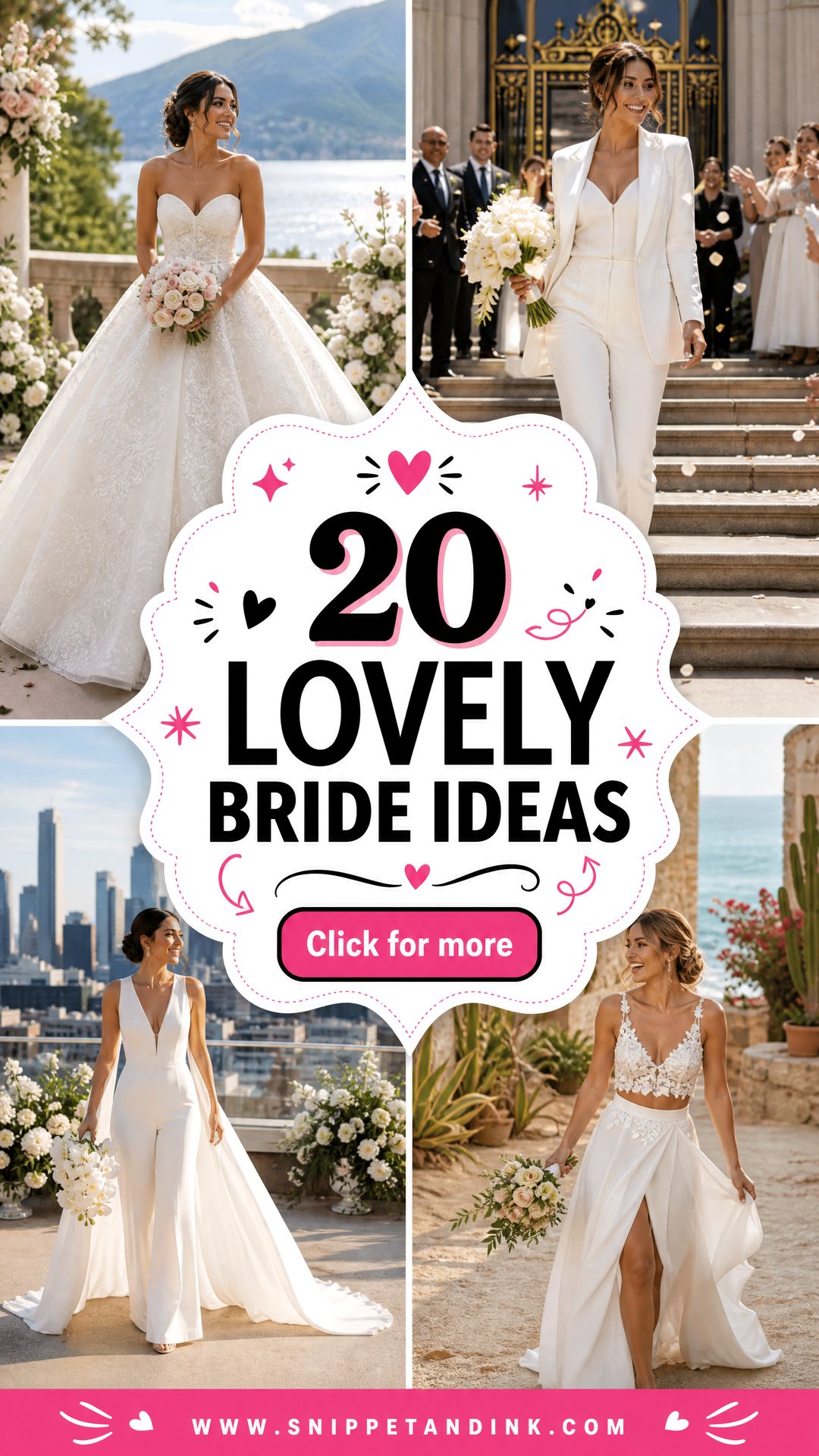
Most brides I dress start with one piece they’ve fallen for and then stall on everything around it. The looks below go the other way: each is a whole outfit, gown or suit plus shoes, veil, jewelry, hair and flowers, so you can see how the parts lean on each other. There’s classic satin and lace, sharp tailoring, a slip dress for sand and a couple of reception changes. Sculptural shapes, vintage references and separates are all turning up in fitting rooms right now, and I’ve noted where each one asks something of your venue, your season or your patience with alterations.
The Order I Build a Bridal Outfit In
Brides often buy shoes and earrings first because they’re the fun part, then find neither sits right with the gown. I build from the inside out, because every piece changes how the next one fits.
- The dress or suit, chosen for the venue and how much you’ll move on the day, not for how it looks on the hanger.
- Foundation garments: the bra, shapewear or slip, bought before the first fitting so the seamstress fits the dress over what you’ll actually wear.
- Shoes, also before that first fitting. Heel height sets the hem, and changing shoes afterwards means paying to re-hem.
- Veil length and placement, decided with your hairstylist, since a comb set into an updo sits very differently from one in loose waves.
- Jewelry and flowers last, chosen by holding them against the real fabric in daylight.
On timing, most seamstresses like a first fitting about two to three months before the wedding, two or three appointments in total and the last one roughly two weeks out. Heavily beaded or lace gowns can take longer, so ask about their schedule the day you order.
1. Satin A-Line Bride Look
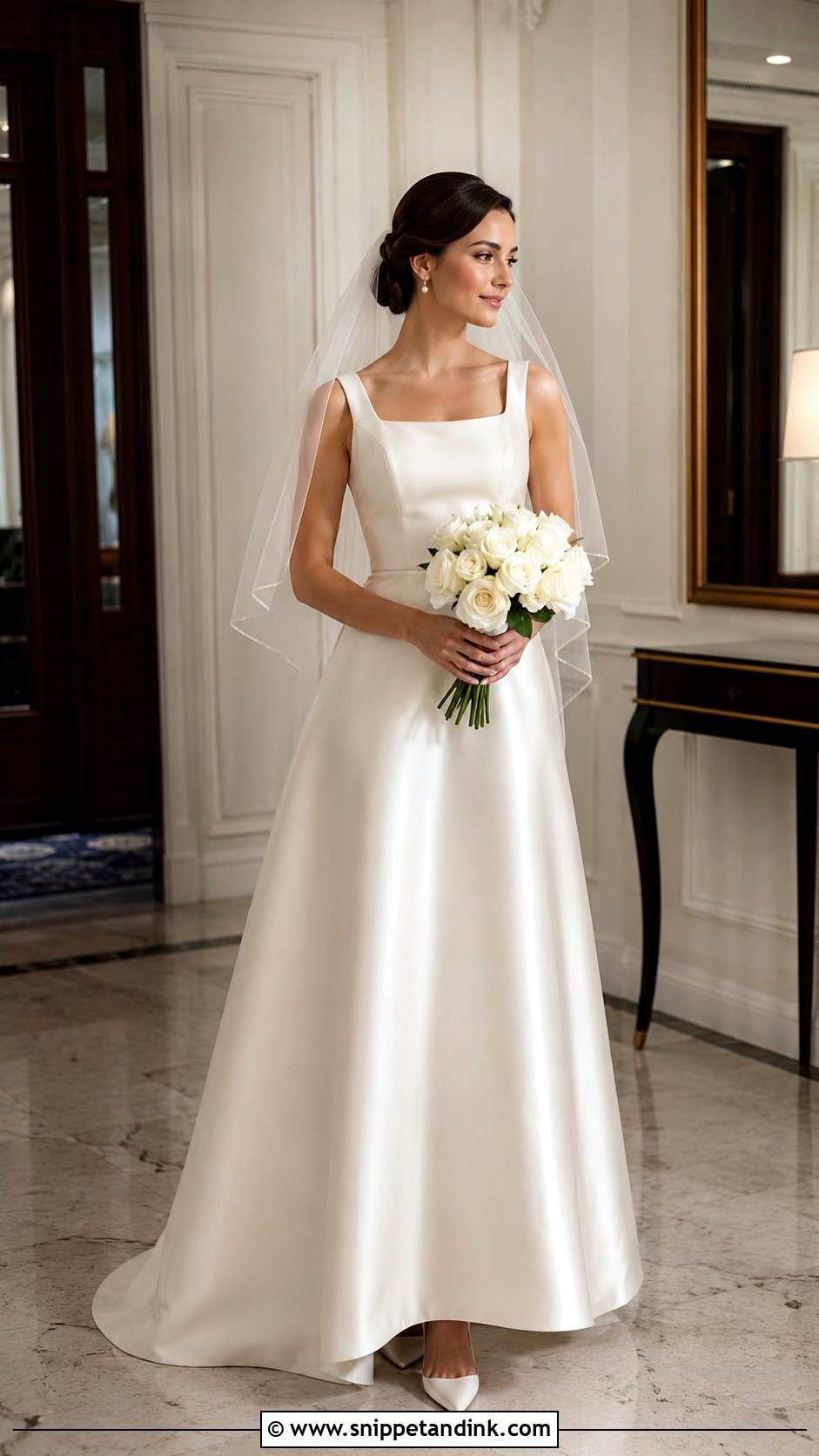
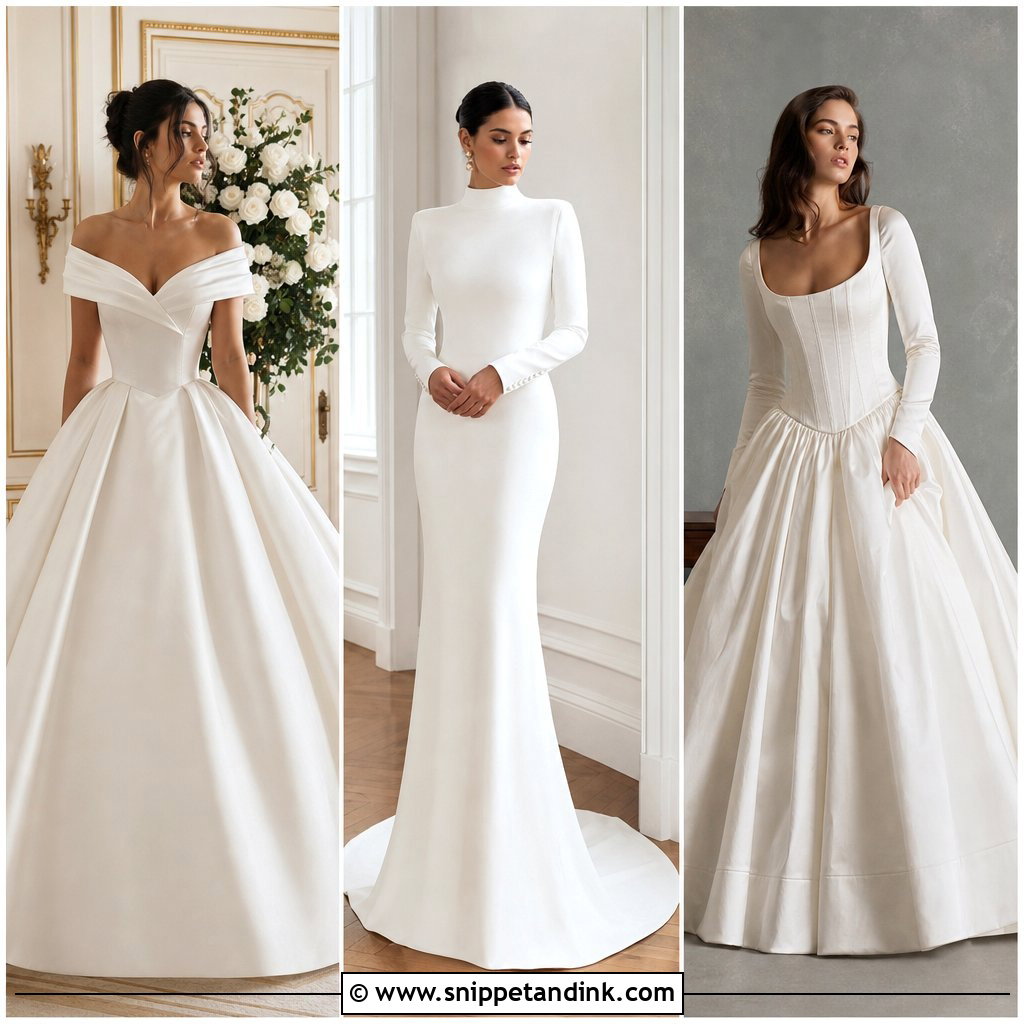
Satin A-line is the shape I reach for when a bride wants classic and can’t quite say why. A structured bodice holds the waist while the skirt flares enough to walk, sit and climb church steps without hitching anything up. Ivory satin reflects light along every seam, so the cut has to be clean; a pull across the hip shows in every photo. My one warning is creasing. Satin marks at the lap the first time you sit, so I keep a handheld steamer in the bridal suite. Pointed pumps, pearl drops, a small structured clutch and a fingertip veil finish it, with a low chignon and a round bouquet of white roses. Heirloom jewelry sits comfortably against it.
2. Lace Long Sleeve Bride Look
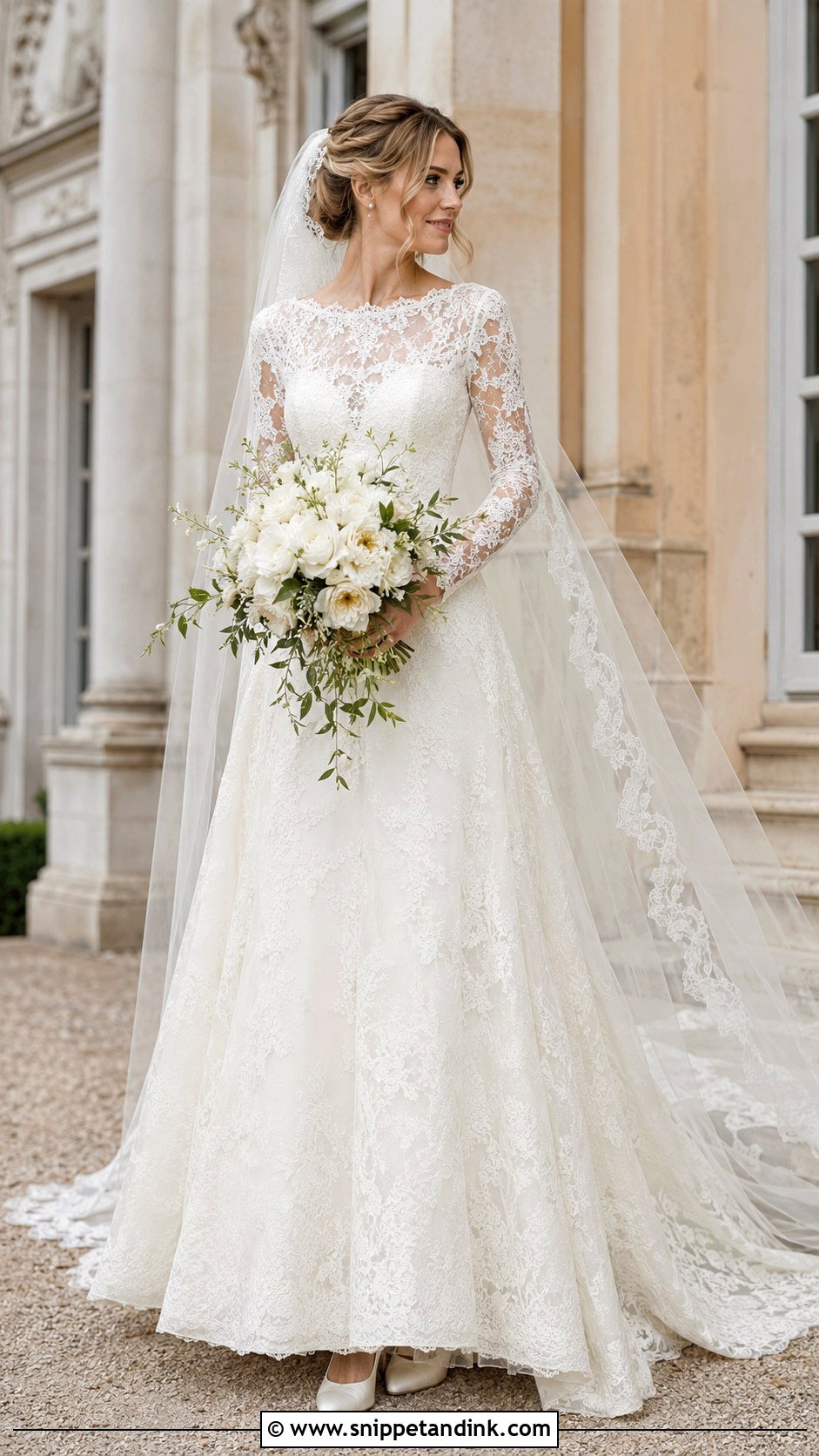
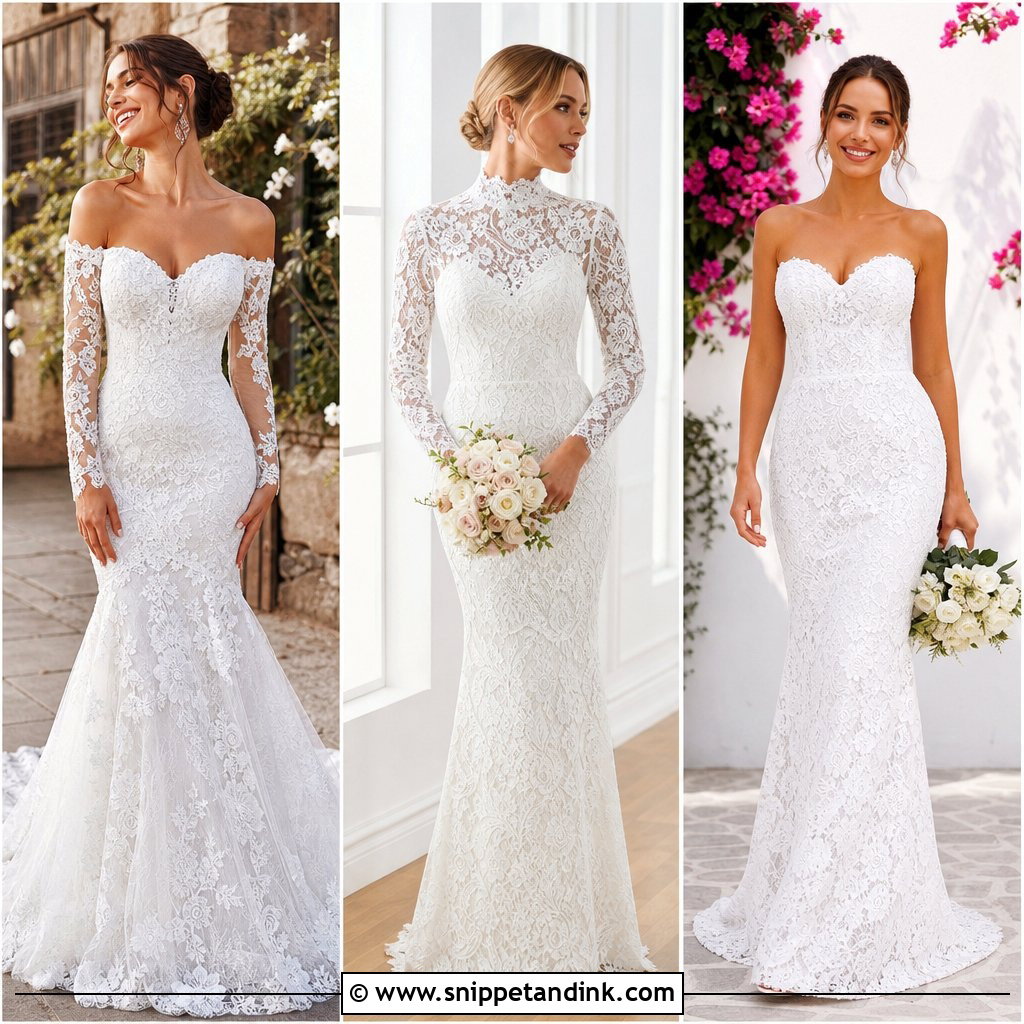
With long lace sleeves, the first thing I check is arm movement. I ask the bride to raise both arms as if hugging someone tall; if the sleeve drags the bodice upward, it needs a gusset or a slightly looser fit at the underarm. Over a lined sweetheart or bateau neckline and an A-line skirt, nude lining makes the lace pattern stand out, while ivory lining gives a quieter, classic finish. Closed-toe satin heels, small pearl studs and a cathedral veil edged in matching lace complete it. A twisted updo keeps the neckline open so the outfit never feels buttoned up. I’d save it for fall, winter or a historic venue, though an unlined lace sleeve can manage a mild spring afternoon.
3. Strapless Ball Gown Bride Look
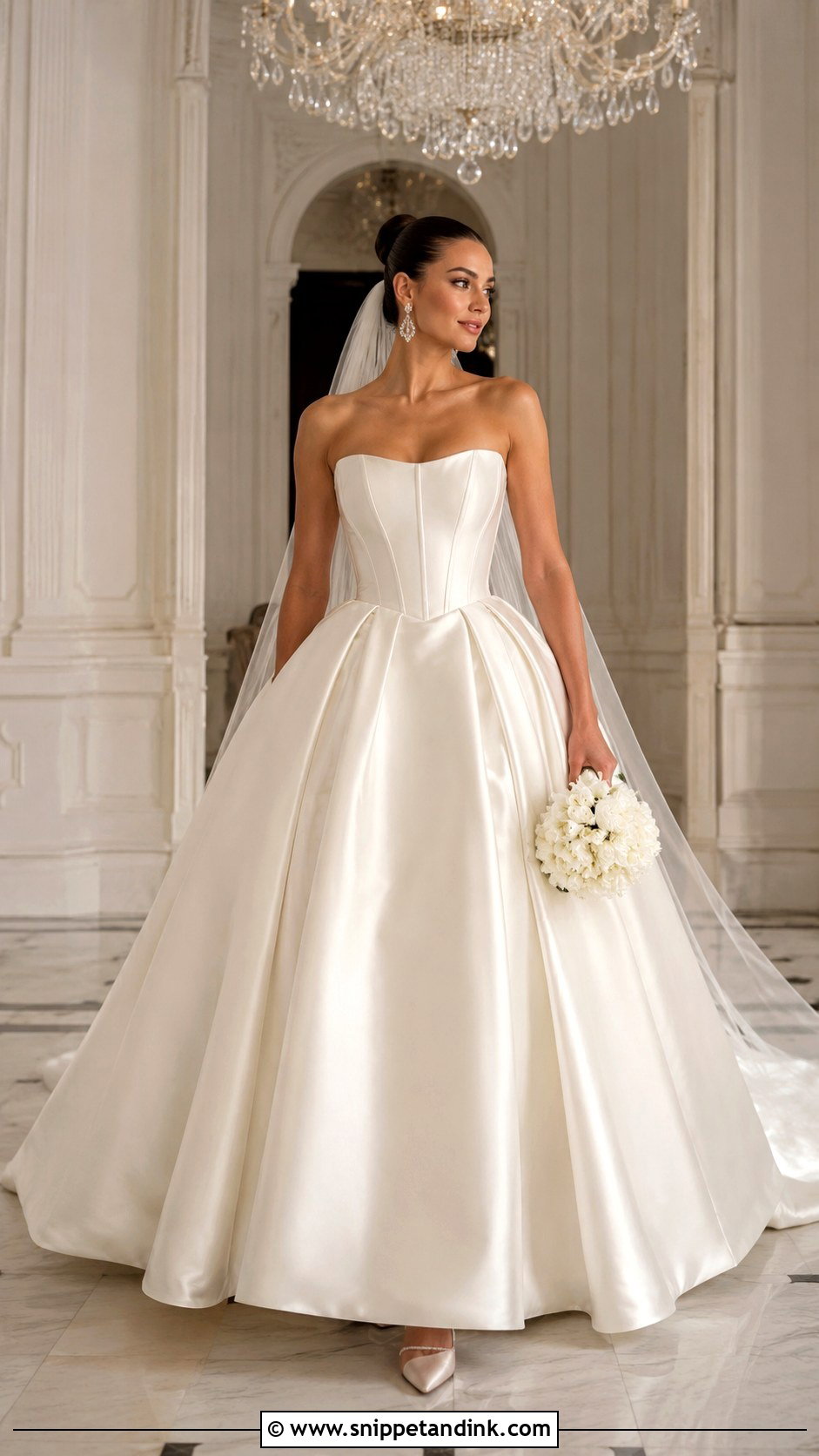
A strapless ball gown lives or dies on its bodice. I want corset-style boning that holds without the bride tugging it up, because if she’s adjusting it in the fitting-room mirror, she’ll be doing it all night. The full skirt, in satin, tulle or Mikado, balances the fitted top on most figures. Crystal earrings, a fine tennis bracelet and pointed satin heels hidden under the hem are plenty, and a long veil matches the gown’s scale. Hair can go into a polished bun or soft Hollywood waves. Keep the bouquet compact; a big cascade fights the skirt for width. Grand indoor rooms give it the space it needs.
4. Minimalist Column Bride Look
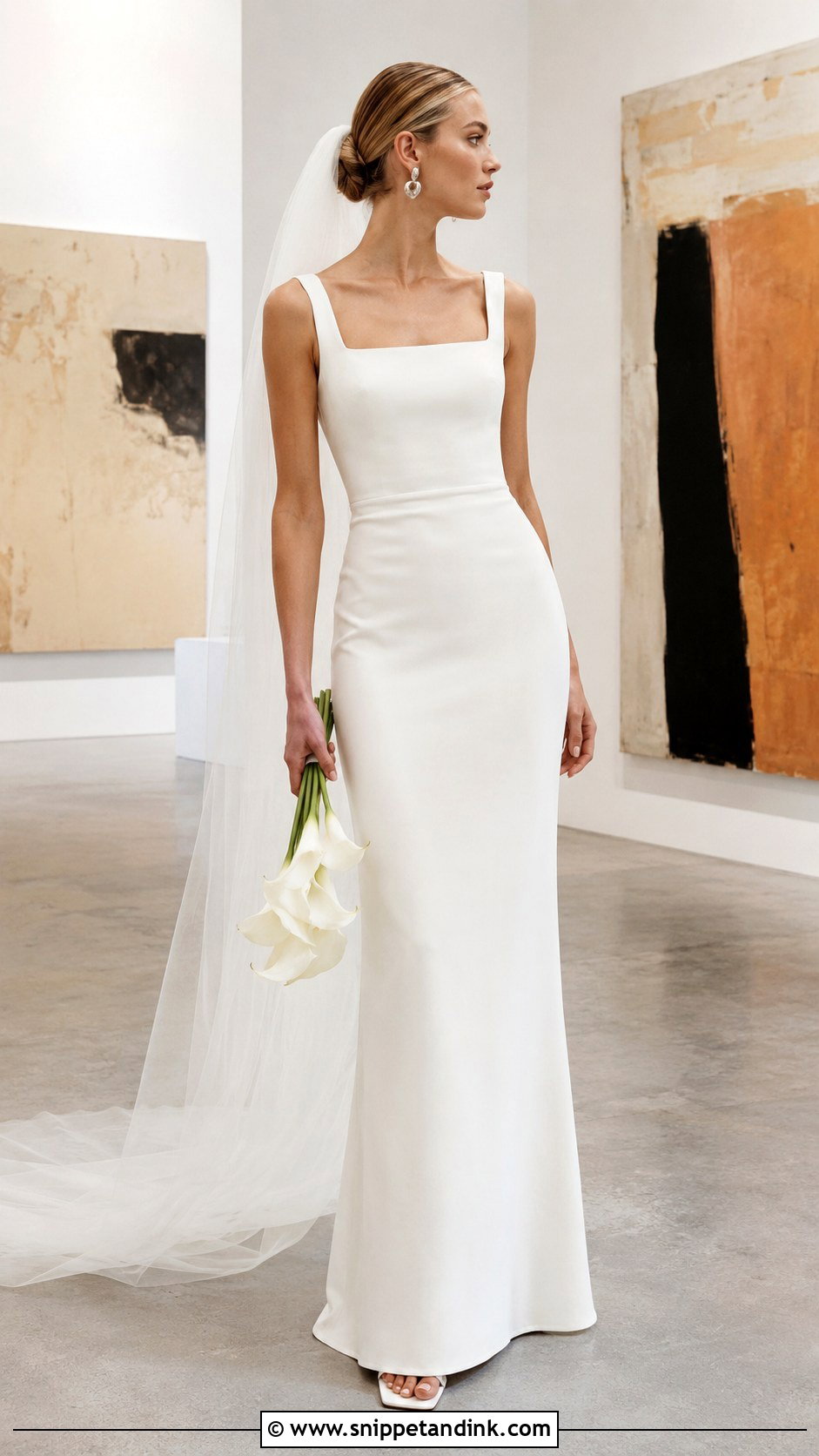
With no lace or beading to distract the eye, a column gown in structured crepe or matte satin shows every fitting decision. Crepe in particular reveals seams and underwear lines, so I ask brides to bring their actual shapewear to the first fitting, not a plan to buy some later. Book alterations early and test the dress sitting, walking and dancing; a narrow skirt restricts your stride more than you’d expect. Square-toe heels, sculptural gold or silver earrings and a plain cathedral veil are all it needs, with a slicked-back bun and luminous skin. White calla lilies or orchids echo the line. Galleries, rooftops and contemporary hotels suit it best.
5. Off-Shoulder Bride Look
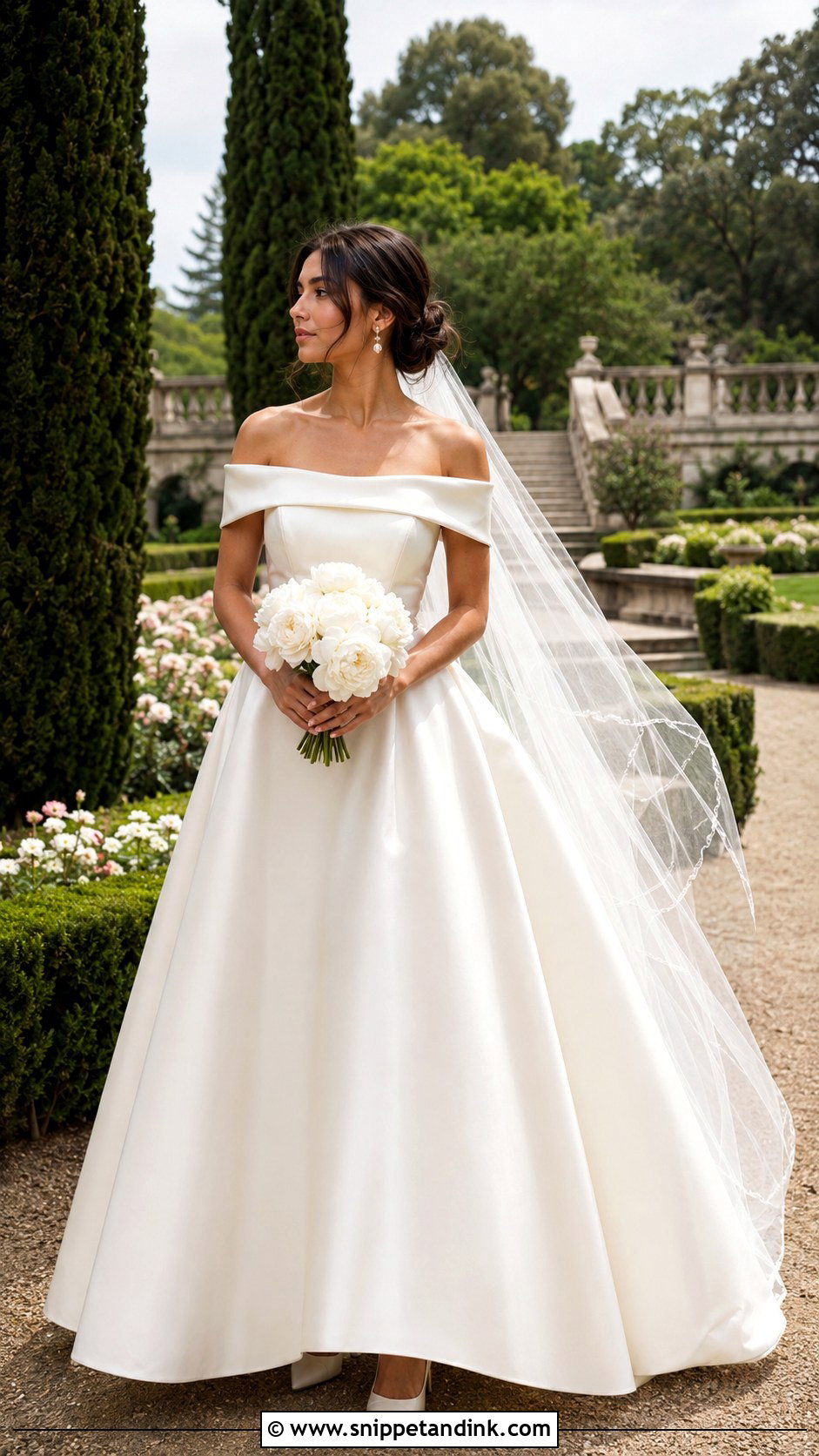
Off-shoulder bands need real internal structure, or you’ll spend the day hitching them back into place. I test this by having the bride reach forward as if signing the register: if the band slides down her arm, the bodice needs more support before anything else is altered. Folded satin bands read modern; lace or tulle sleeves feel softer. Pair it with delicate drop earrings, a thin bracelet and neutral pointed heels, and leave the necklace off, since the neckline is already framing your collarbone. Loose waves, a low textured bun or half-up hair all suit bare shoulders. A sheer fingertip veil and white peonies or roses finish it for a garden, an estate or an indoor room.
6. Square Neck Bride Look
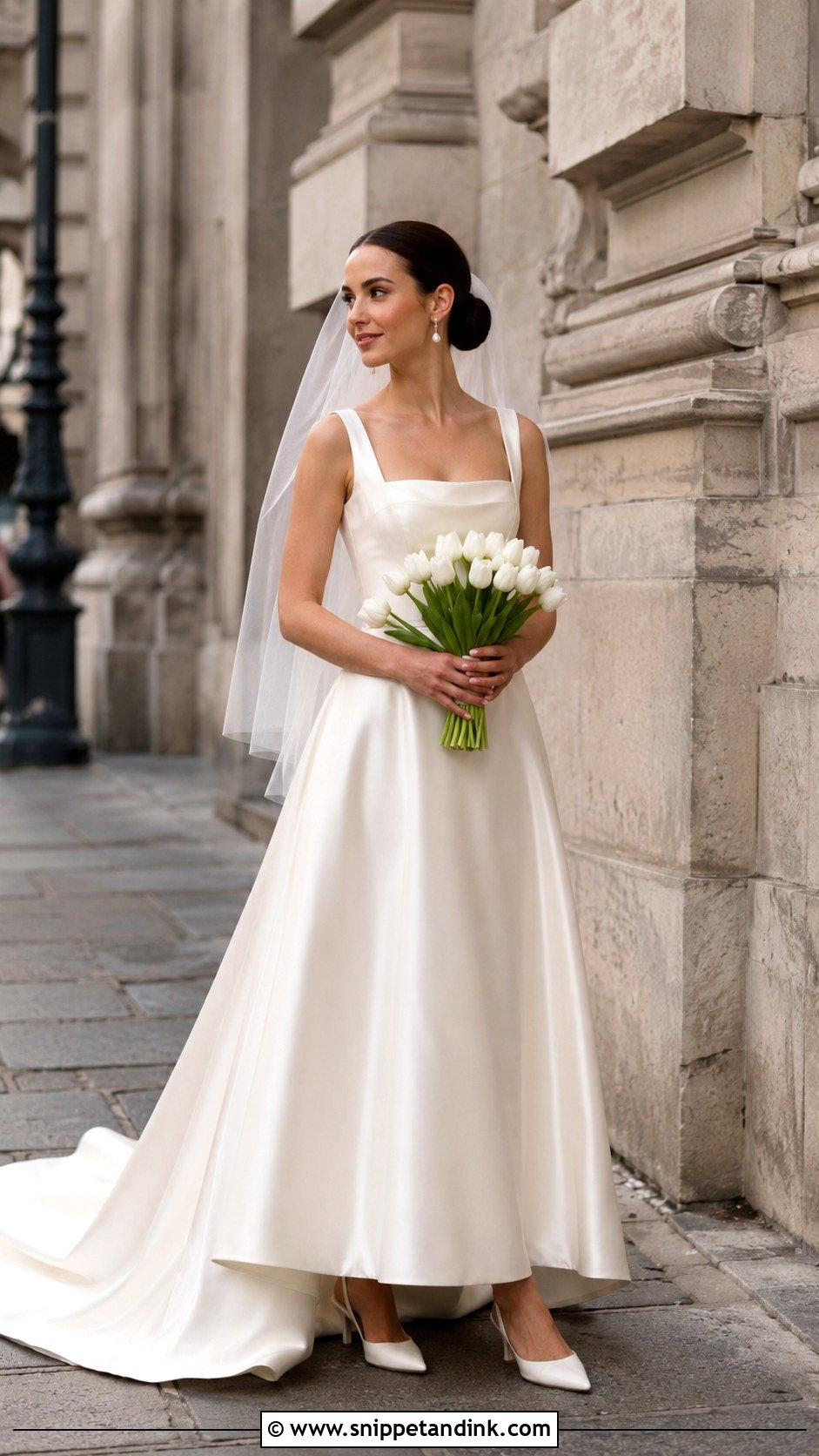
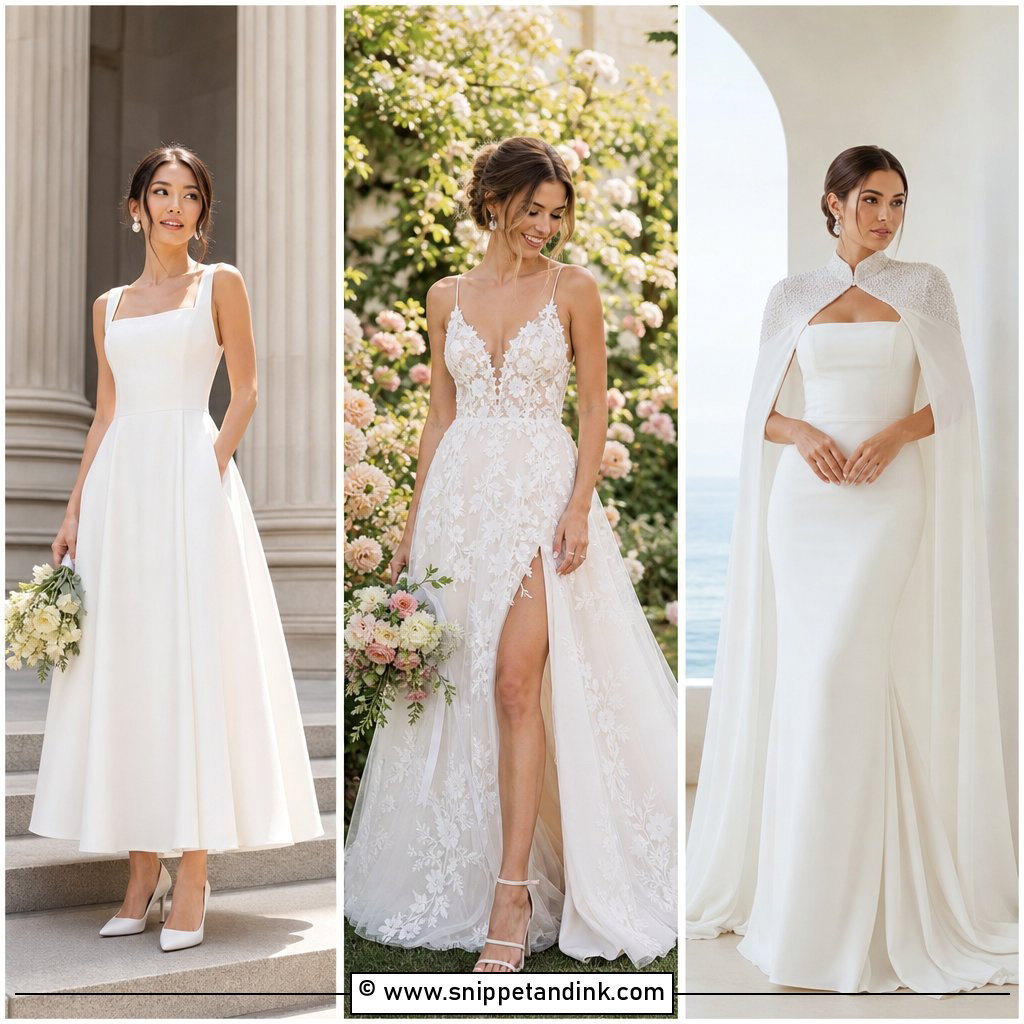
Straight lines at the neckline flatter defined shoulders and need wide straps or fitted sleeves to hold their shape. Satin in an A-line gives the classic version; fitted crepe makes it sharper. Watch the corners at your fitting. If they gape when you lean forward, the seamstress should take in the neckline itself rather than the side seams. Pearl buttons, low slingbacks and small statement earrings work with a neat low bun and either a short veil or a plain tulle cathedral. Tulips, ranunculus or roses with very little greenery keep it tidy. Historic homes, formal gardens, city halls and buildings with strong architecture all suit it.
7. Floral Appliqué Bride Look
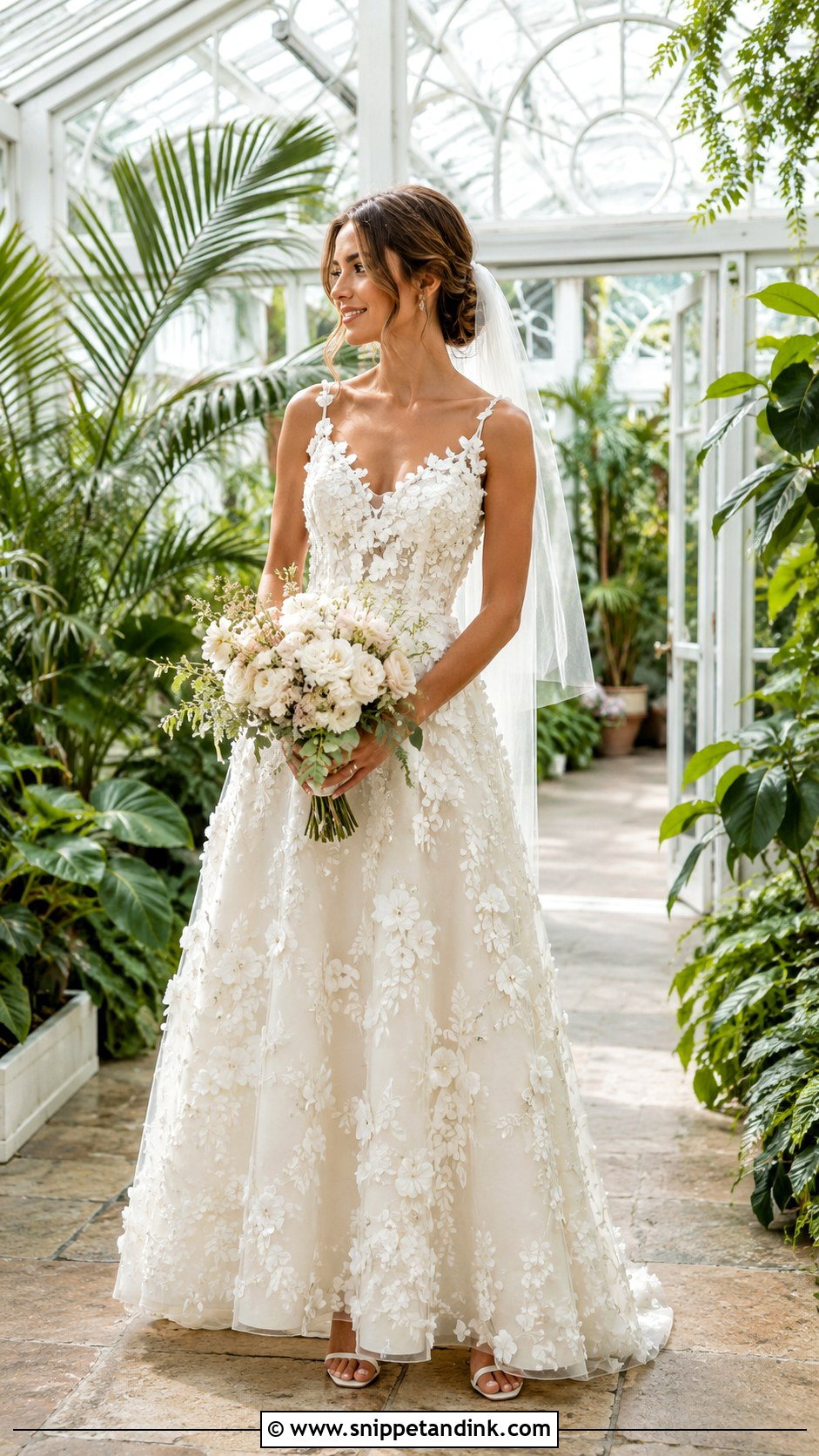
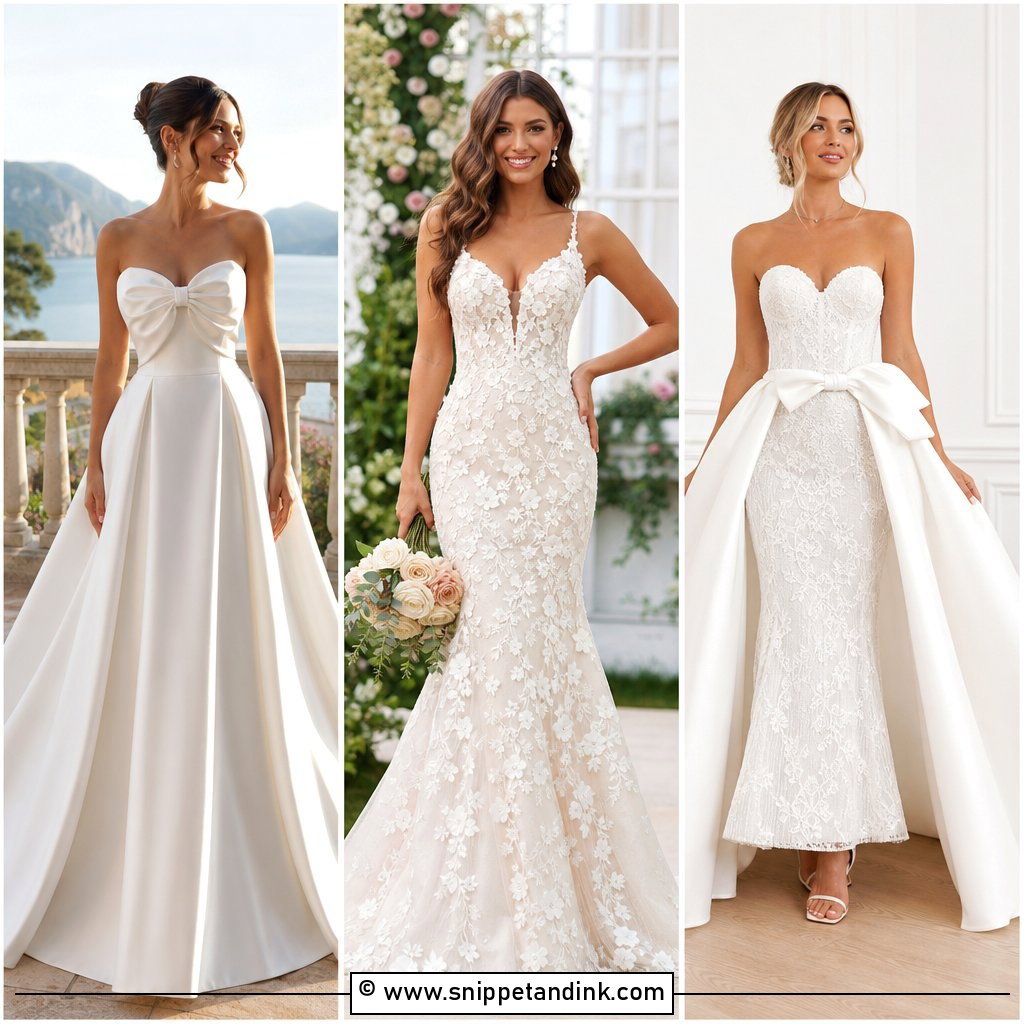
Three-dimensional appliqués are hand-tacked, which means they catch. I warn brides about bracelets with raised prongs and bouquets with exposed wire, both of which can pull a petal loose from the bodice. Flowers placed densely at the top and scattered down an A-line or fit-and-flare skirt give the gown movement, and everything else should stay quiet: ivory sandals, crystal studs, one fine bracelet, a plain tulle veil. A loose low bun with a few face-framing strands and natural makeup stop it tipping into costume. Repeat one or two of the gown’s flowers in your bouquet. Spring gardens, conservatories and vineyards are its natural setting.
8. Vintage Tea Length Bride Look
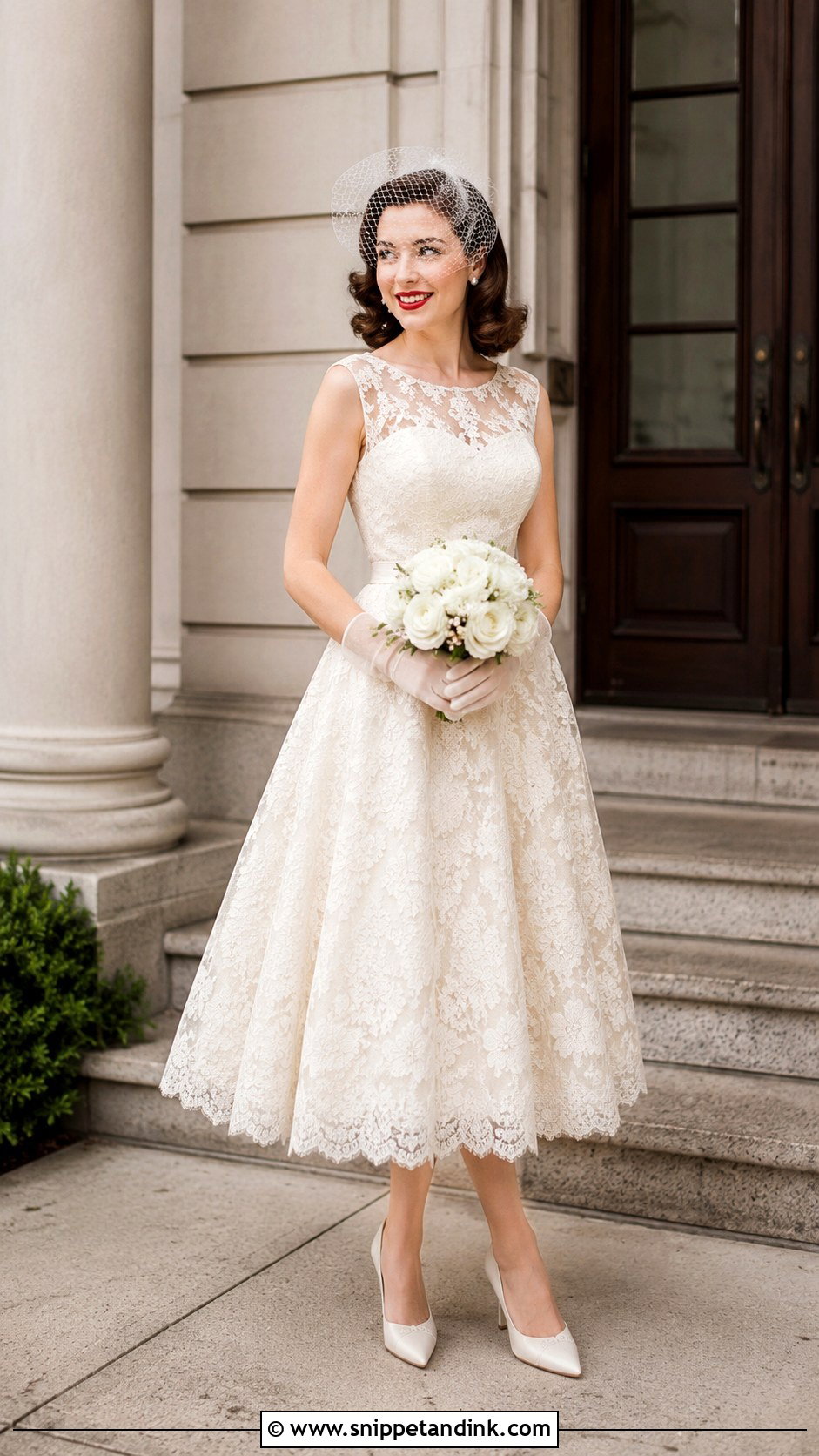
Tea length puts your shoes on show, so I treat them as part of the dress. The hem falls between knee and ankle, and I have brides stand in their actual heels while it’s pinned, because a small change in heel height moves where the skirt breaks. Satin, lace and structured jacquard all hold the shape. Pointed slingbacks, pearl earrings and short gloves bring the vintage note. A birdcage veil or shoulder-length tulle keeps the proportions in scale. Soft waves, a smooth bob or a French twist, then a compact rounded bouquet. Courthouses, brunch weddings and small receptions where you plan to dance are where it shines.
9. Boho Lace Bride Look
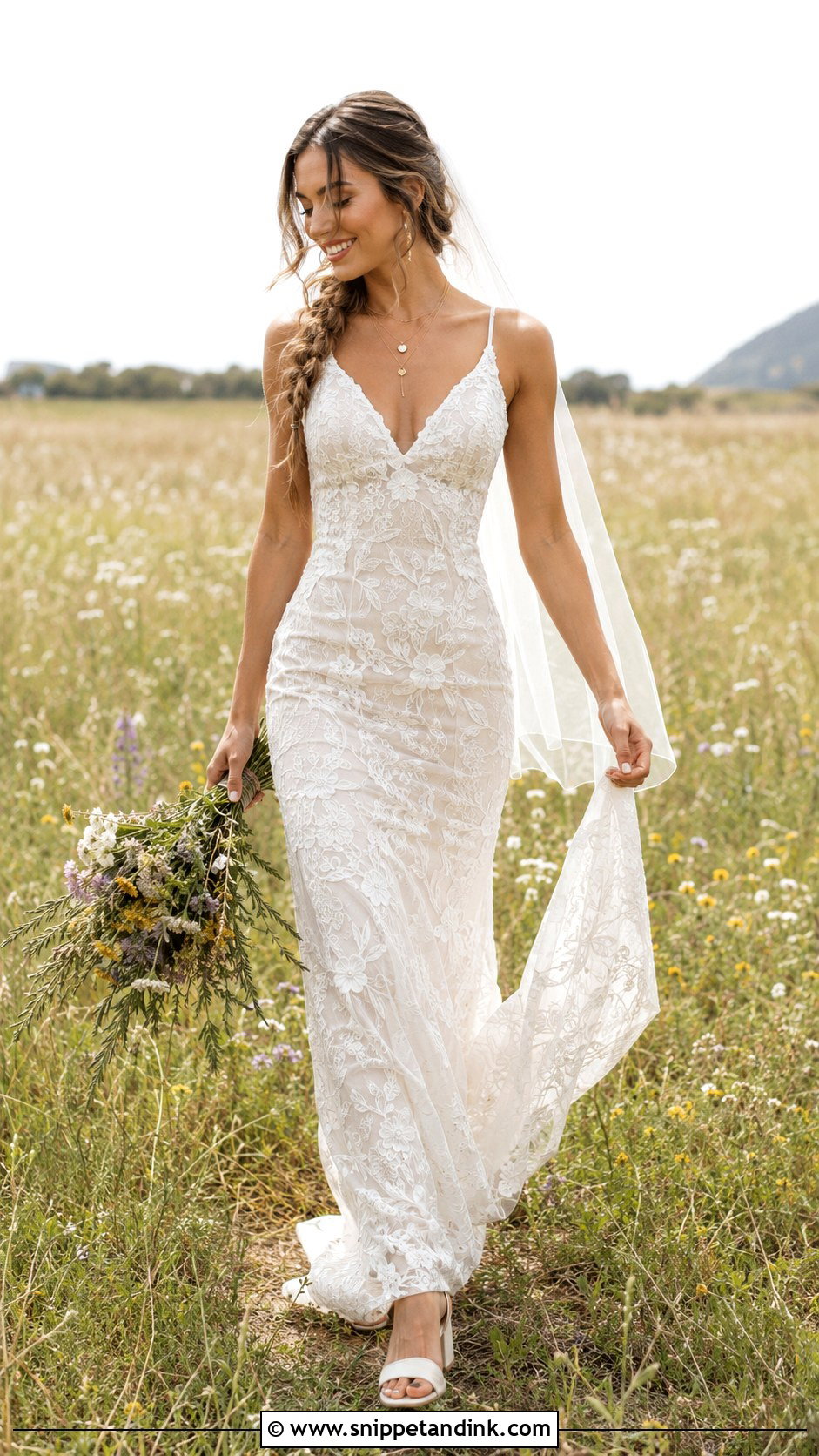
Boho falls apart in stiff fabric. I crush a corner of the lace in my hand at the appointment; if it springs back creased and rigid, it’ll look starched in a meadow. Look for a lightweight sheath or A-line with botanical lace, flutter sleeves or an open back. Block-heel sandals or embroidered flats cope with grass and gravel, where stilettos sink. Small gold earrings, a fine layered necklace and an untrimmed veil keep the whole thing light, with loose waves or a textured braid. An organic bouquet of wildflowers, grasses and leafy greenery suits meadows, forests, deserts and barns.
10. Beach Bride Slip Dress Look
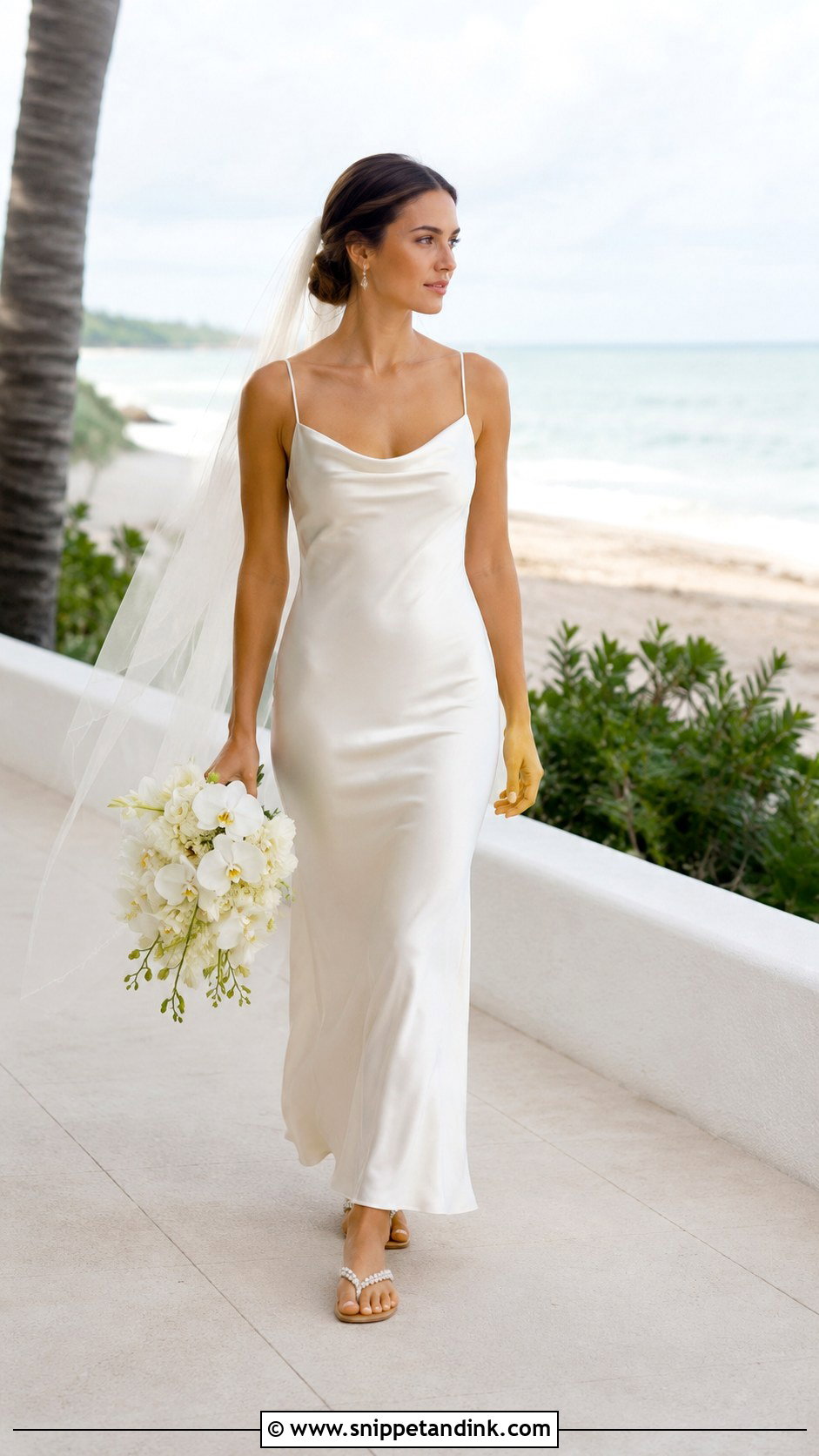
Bias-cut silk or satin moves in a sea breeze, but it also clings and shows everything underneath, so smooth, line-free underwear matters more here than on any structured gown. Adjustable straps help with the fit on the day. Flat embellished sandals or low block heels are the only shoes I’d send onto sand. Wind is the real problem. I anchor a light veil beneath a low bun with combs and extra pins rather than perching it on top, and softly pinned waves hold far better than loose hair. White tropical flowers and a detachable sheer cape for movement in photographs finish a look that stays cool on a warm coast.
11. Garden Bride Tulle Dress Look
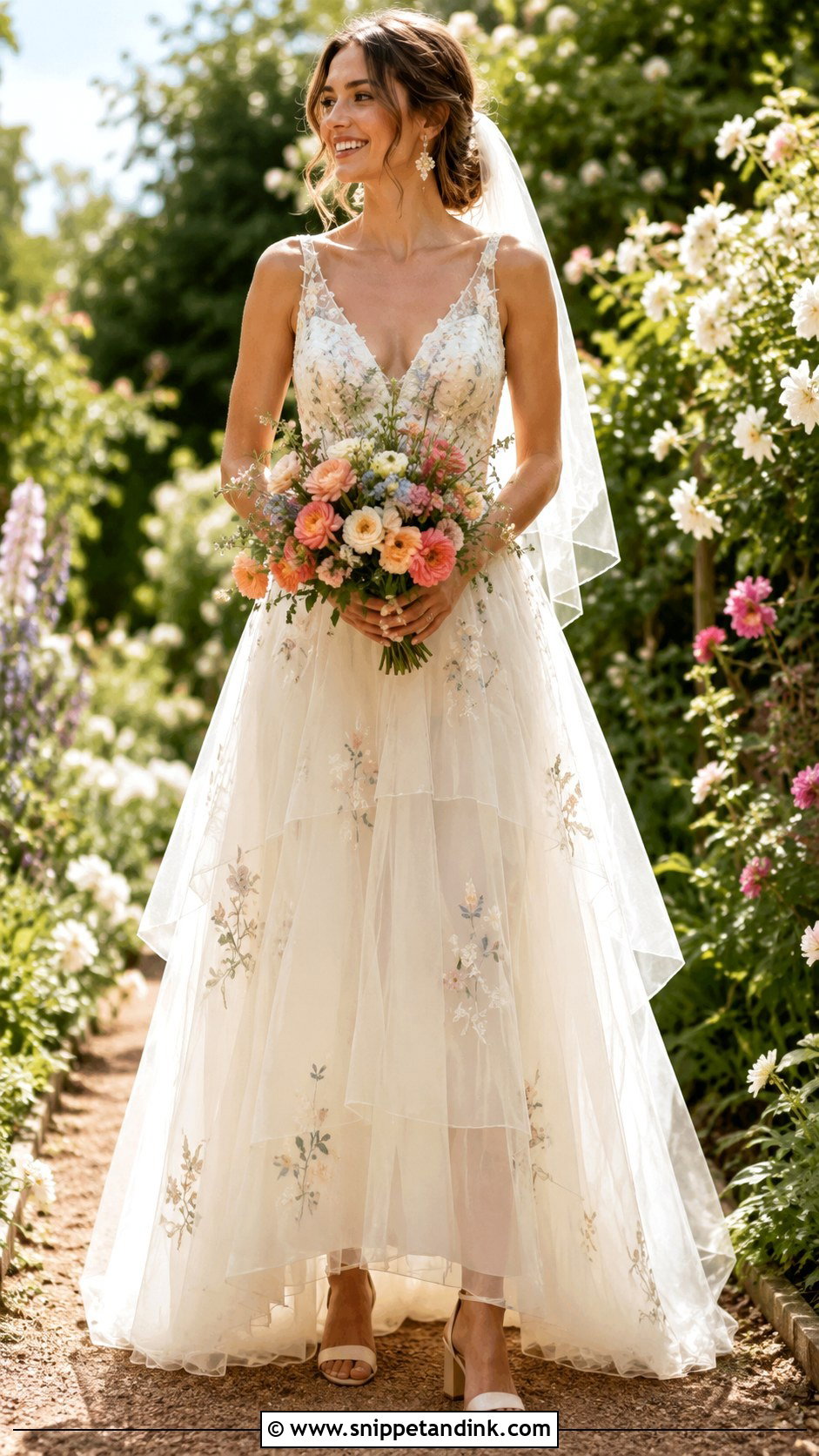
Tulle looks airy among flowers, but it catches on rose thorns, bark and anything rough. I tell brides to walk the ceremony route beforehand and to lift the skirt on gravel paths. Choose an A-line with a fitted bodice, soft straps and a skirt that moves rather than stands; subtle floral embroidery or scattered pearls add dimension. Block-heel sandals, floral drop earrings and a sheer fingertip veil come next. Ask your stylist to pin the loose updo more firmly than for an indoor day, leaving room for a small comb. A colored seasonal bouquet ties the ivory to the setting for spring or summer gardens, greenhouses and estates.
12. City Hall Bride Suit Look
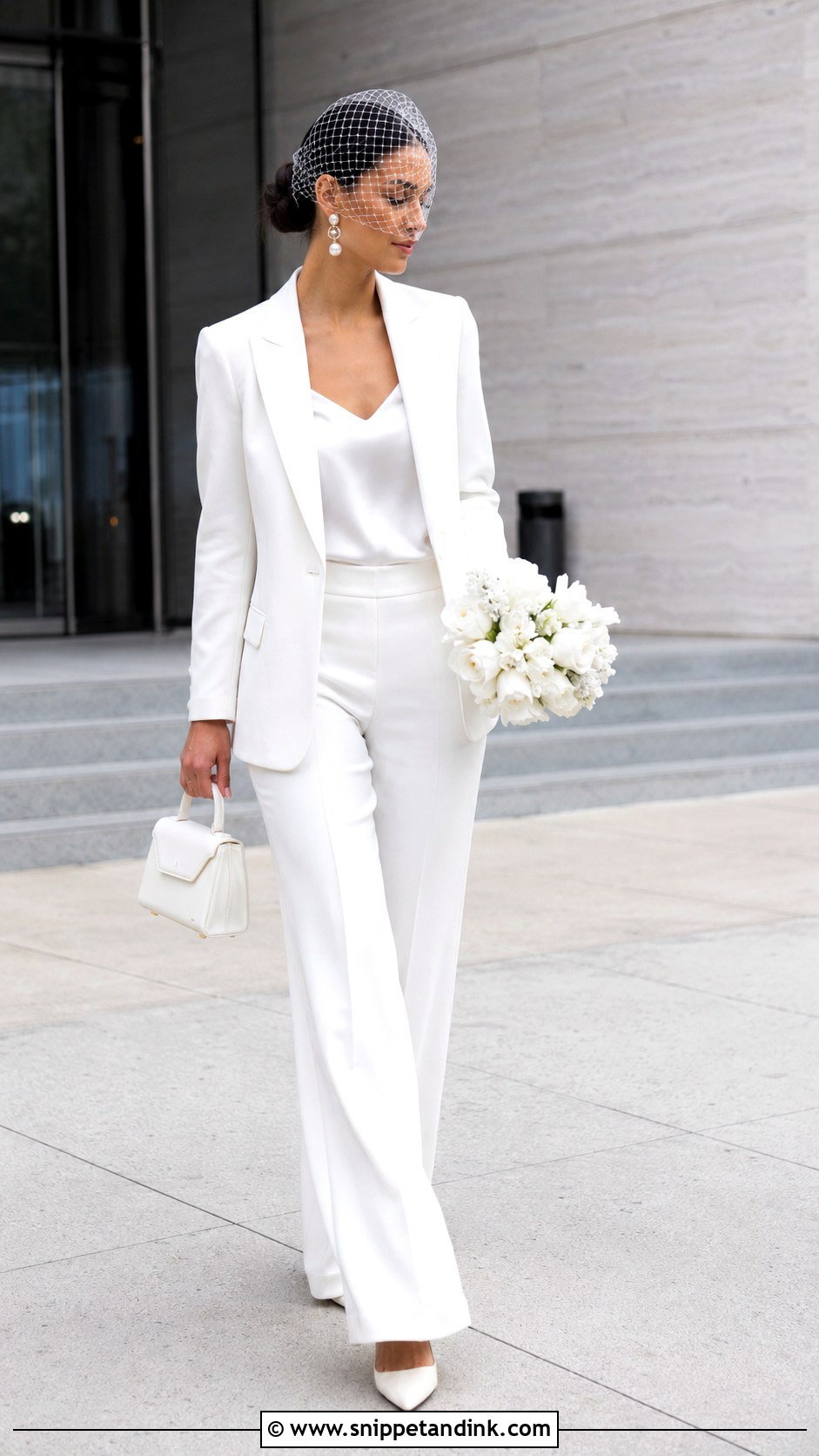
A bridal suit wins or loses on tailoring. The blazer should close without pulling at the button, and the trousers should skim the floor over your heels without swallowing the shoe, so bring the exact pumps to the tailor. A single-breasted jacket with high-waisted trousers works over a silk camisole, a fitted bodysuit or a simple bandeau-style top. Add pointed pumps, a structured mini bag and bold earrings, then a birdcage veil, satin headband or small pillbox headpiece so it reads unmistakably bridal. A sleek bun and a compact white bouquet suit a courthouse, a restaurant or a rooftop, and you’ll wear every piece again.
13. Bridal Jumpsuit Bride Look
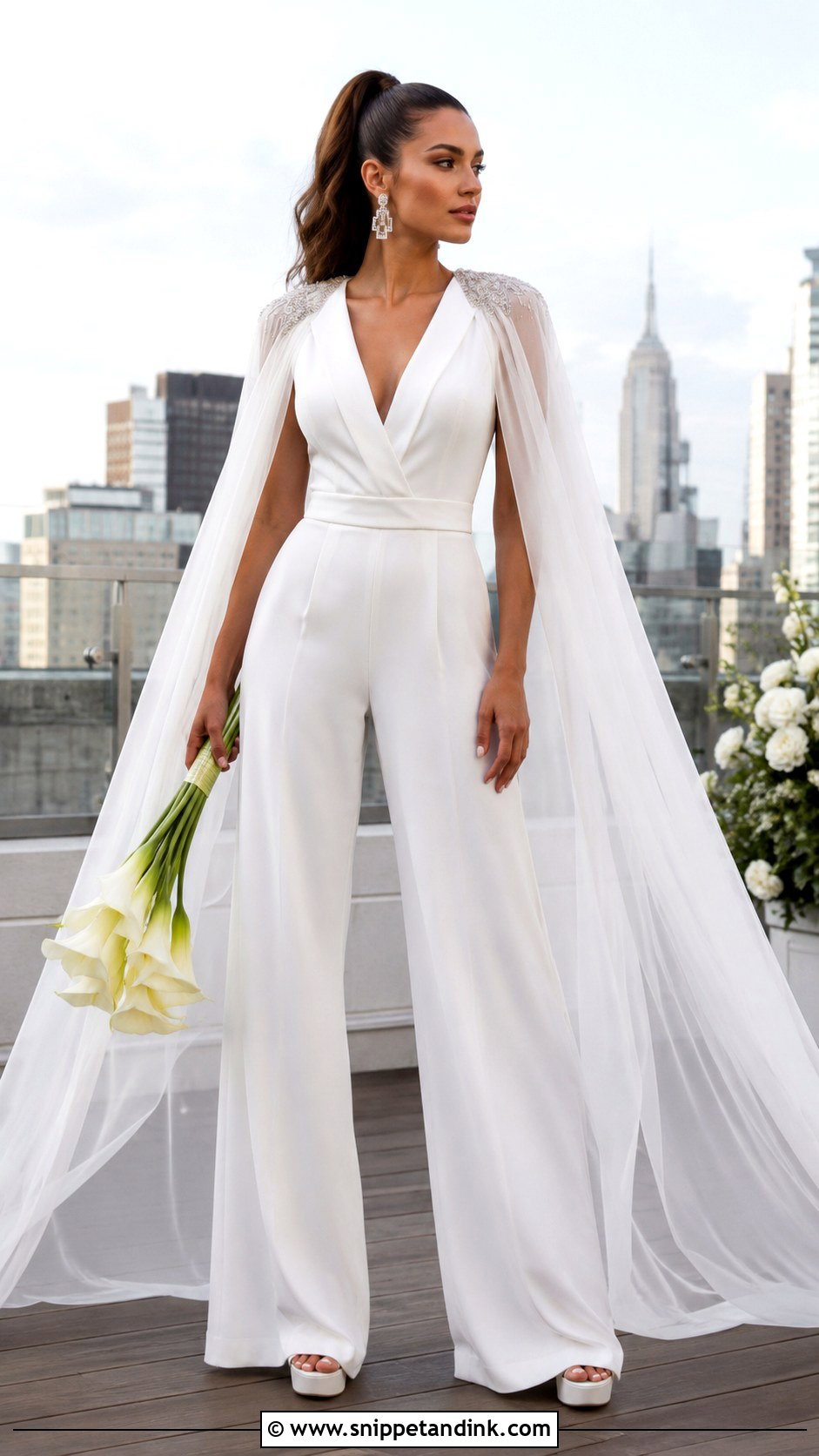
A bridal jumpsuit raises one practical question nobody mentions in the shop: the bathroom. I ask brides to check how the closure works and whether they can manage it alone, because a long back zip on a one-piece means calling in a bridesmaid every time. Beyond that, look for a defined waist, a supportive bodice and wide or straight legs for a long line. Crepe keeps it clean, while lace sleeves or a satin overskirt add ceremony detail. Platform heels or pointed pumps, geometric earrings, a structured clutch and a detachable cape or short veil. Finish with a high ponytail or smooth bun and a narrow bunch of calla lilies for city weddings and dance-heavy receptions.
14. Bridal Separates Bride Look
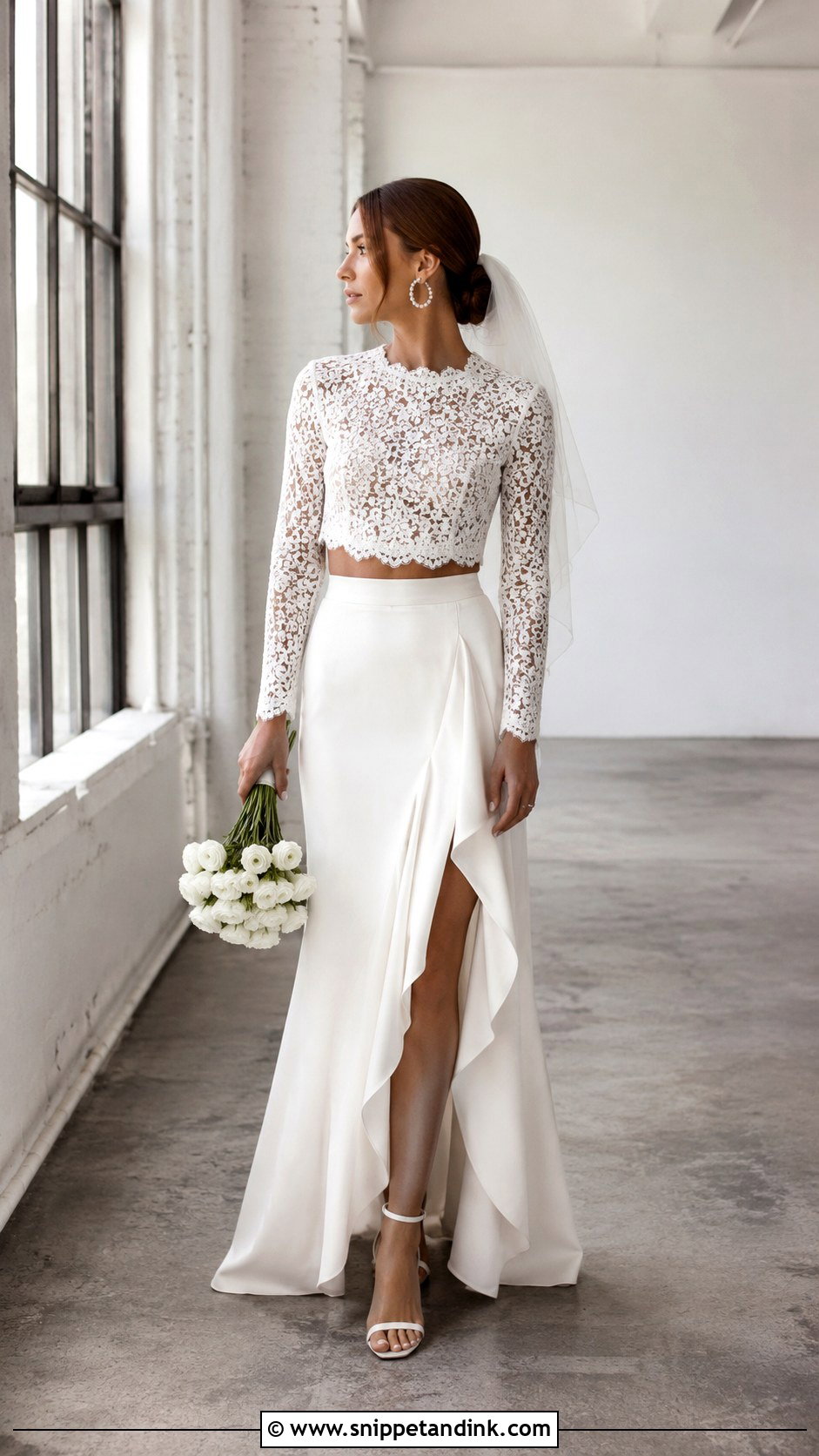
Separates solve a fitting problem I see constantly: a bride who is one size on top and another below, and a single gown that has to be heavily altered to suit both. A fitted lace or satin top over a high-waisted A-line, a column skirt or flowing chiffon lets each piece fit properly. A sliver of visible waist feels current; overlapping pieces give full coverage. At the fitting, sit and twist to see where the top rides up. Heeled sandals, pearl hoops and a light veil set beneath a low bun keep it simple, along with a plain bouquet so the contrast between top and skirt reads clearly. Lofts, outdoor venues and destination ceremonies suit it, and you can rewear each piece later.

15. Champagne Bride Dress Look
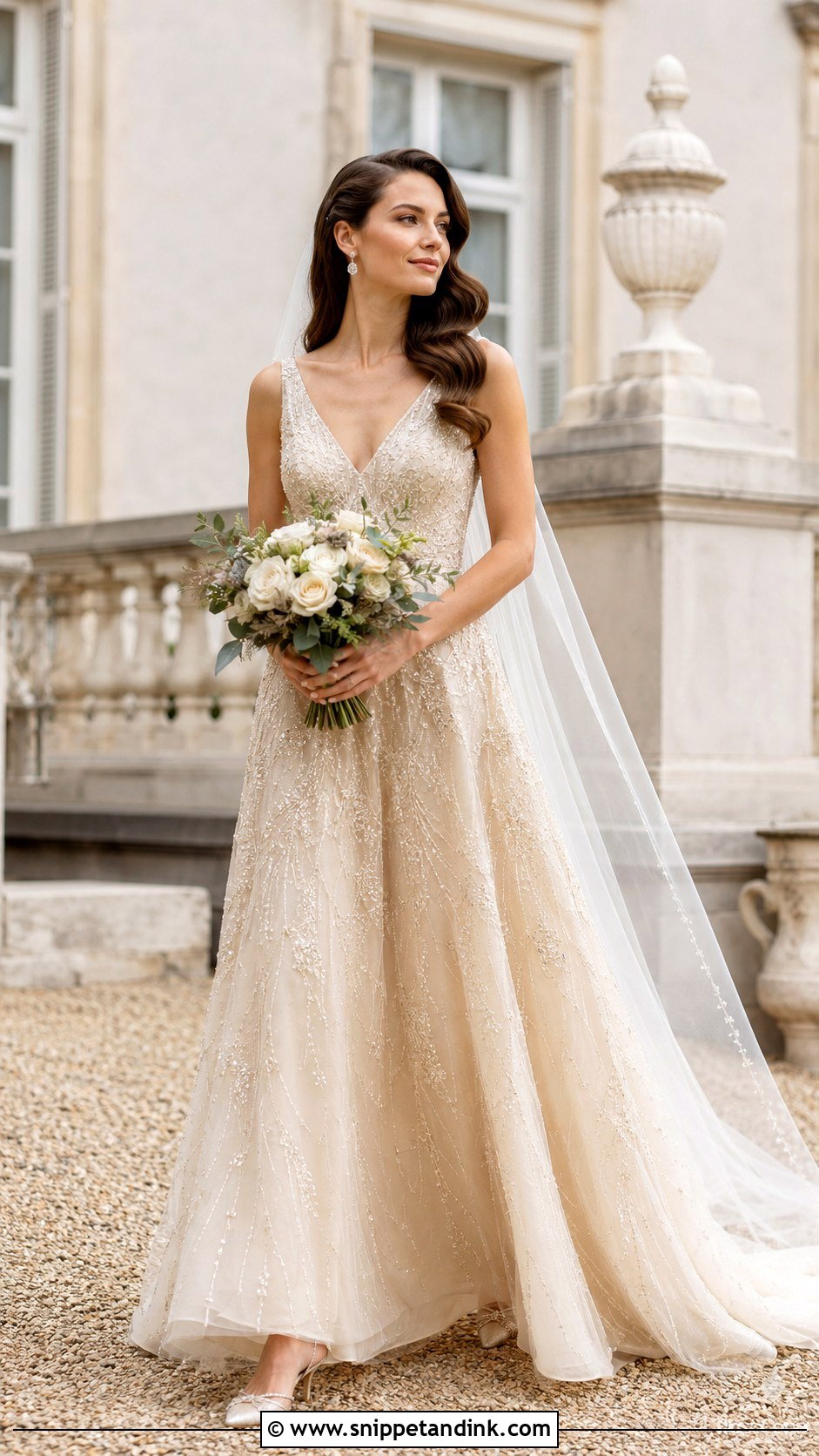
Champagne and warm ivory flatter more skin tones than bright white and make lace, beading and layered tulle look richer. The catch is matching. Hold the veil, shoes and every accessory against the gown in daylight before you buy; a bright white veil beside champagne makes the dress look dingy in photos rather than warm. Go for a fitted bodice with an A-line skirt or a streamlined sheath. Metallic low heels, crystal drop earrings and a veil in the same warm tone keep everything in one family. Polished waves or a low bun, cream roses with muted greenery, and it holds its own at formal venues, estates and evening receptions.
16. Cape Veil Bride Look
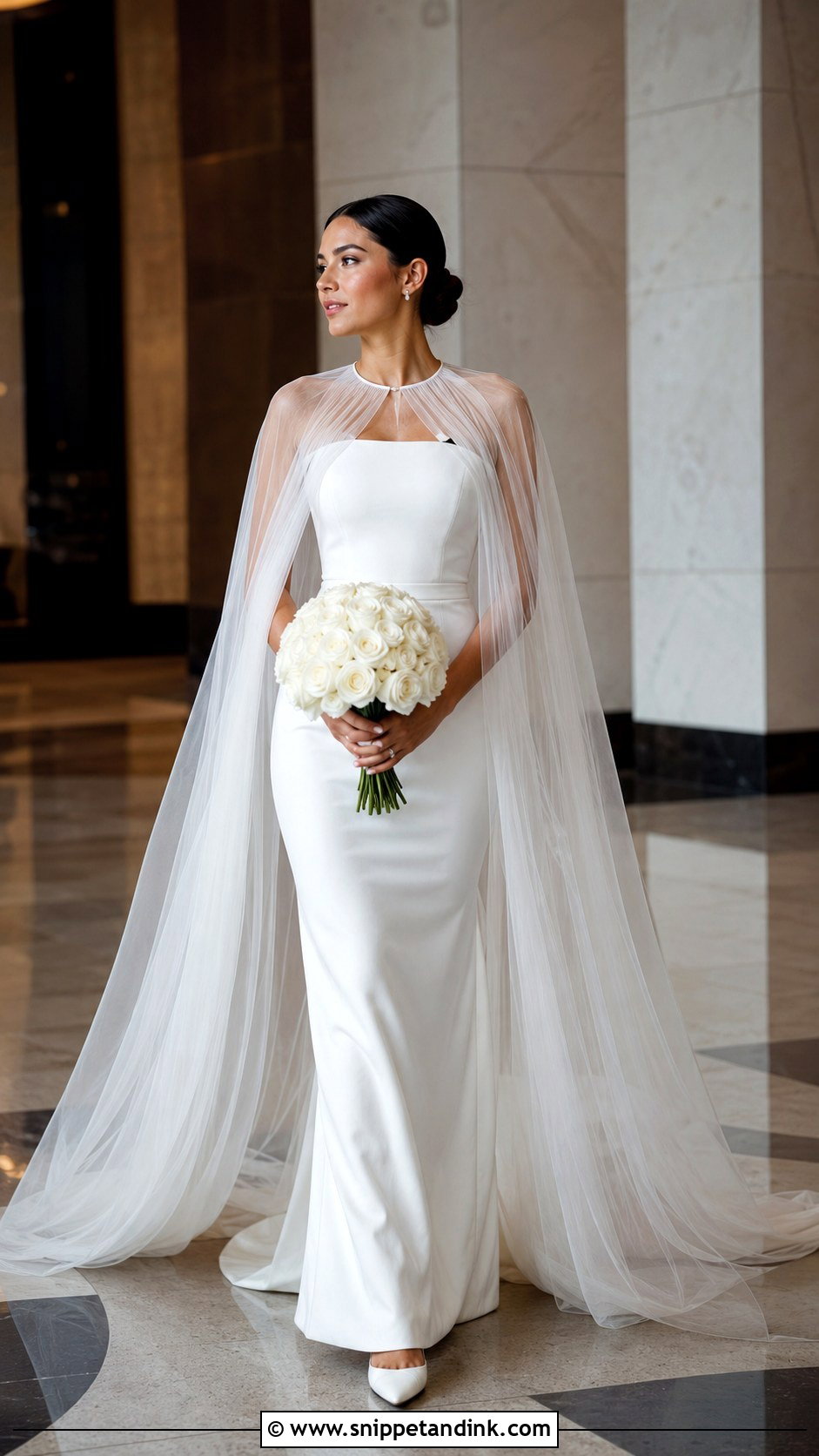
A cape needs a plain gown underneath, because two statement layers compete. Start with a fitted dress, a column or a structured A-line. Sheer tulle floats, pearl-dotted fabric adds texture and crepe gives more coverage. My main concern is the fastening: hooks at the shoulder or a clasp at the collar have to lie flat and survive a lot of hugging, so test it at the fitting by pulling gently. Pointed heels, understated earrings and a small bracelet are enough, and usually no veil unless the cape is short. A sleek bun keeps the fastening visible. Structured roses or callas finish it for formal halls, modern hotels and windy outdoor spaces where the fabric can move.
17. Bow Back Bride Look
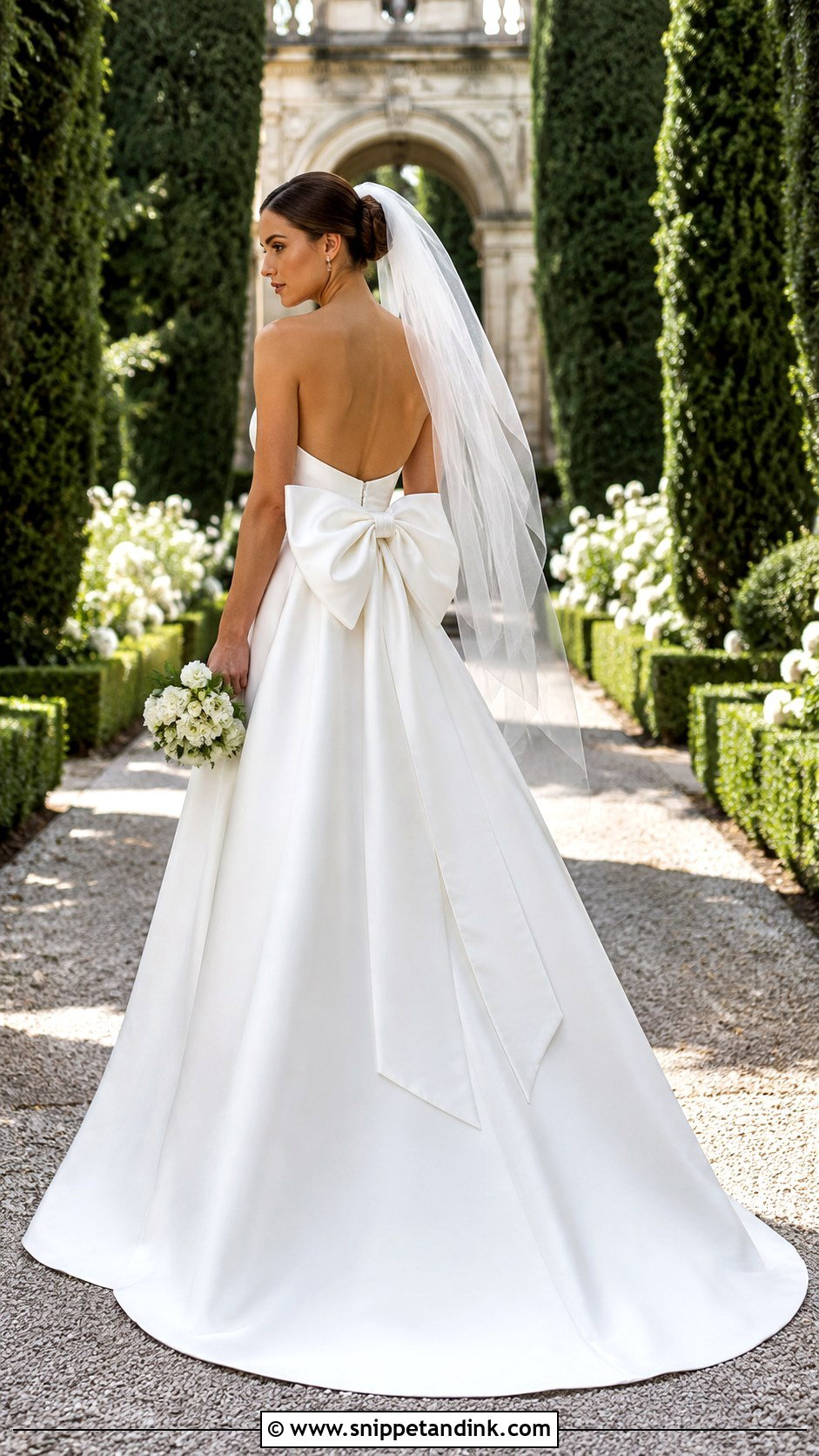
Guests spend most of the ceremony looking at your back, which is exactly why an oversized bow earns its place. Satin or Mikado keeps the loops crisp; softer fabrics let a bow droop by evening. A detachable version gives you a streamlined reception option. The veil has to be placed above or below the bow, and I mark this at the fitting with the veil on, because a comb set too low will hide the knot entirely. Stud earrings, satin pumps, hair worn up so the back reads, and a compact white bouquet at the front. Formal gardens, hotels and venues with a long central aisle suit it.
18. Pearl Detail Bride Look
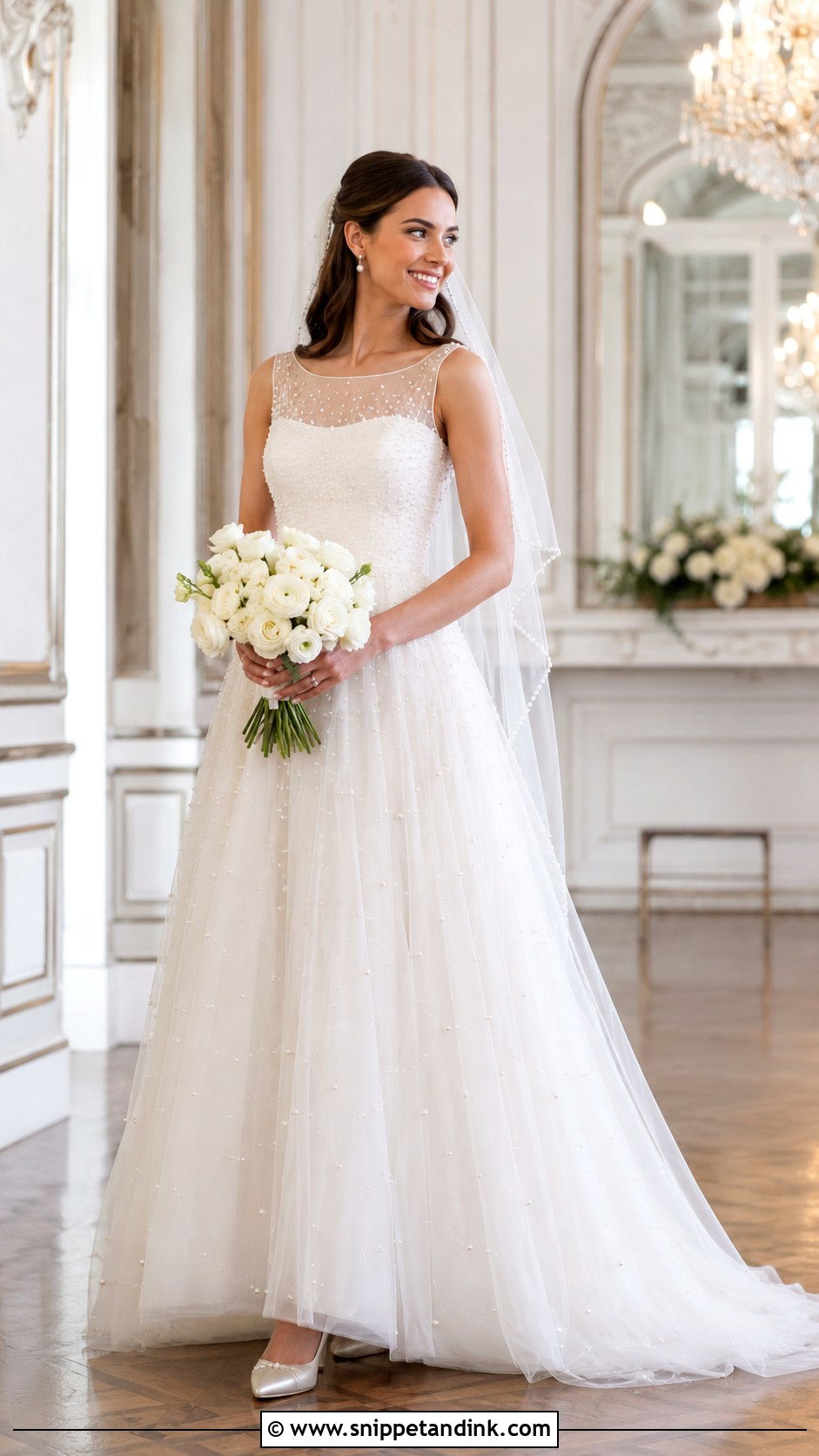
Pearls give a soft glow rather than the hard flash of crystals, which behaves better under a photographer’s flash. Scattered over a tulle A-line, fitted crepe or sleek satin along the bodice, sleeves or neckline, they need space around them, so plain satin heels and small pearl earrings are enough. A sheer veil with a lightly pearled edge echoes the gown. Check the stitching on sewn pearls at your last fitting; one loose thread on a sleeve can shed a whole row by evening. A low bun, ponytail or half-up style and a simple shape of white roses, ranunculus or orchids suit ballrooms, gardens and winter weddings alike.
19. Bridal Mini Dress Look
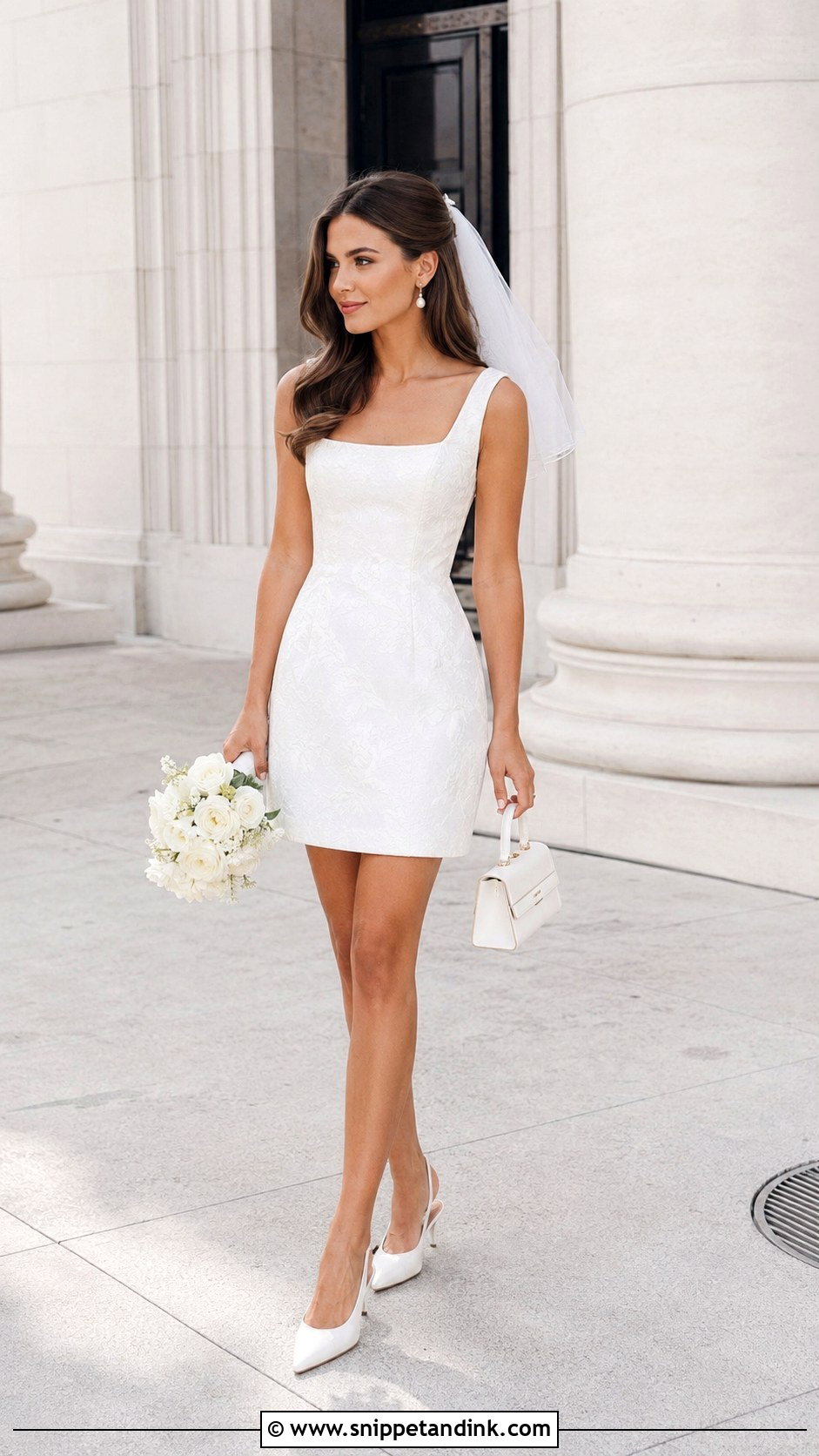
A mini lives on structure. Thin fabric at that length reads as a party dress, so I look for satin, crepe, lace or textured jacquard with a defined waist and a considered neckline. Long sleeves balance the short hem; sleeveless keeps it clean. Sit down in it in front of a mirror before you buy, since a hem rides up noticeably when you’re seated. Slingback heels, pearl or crystal earrings and a small top-handle bag, then a short veil, oversized bow or satin headband to make it clearly bridal. A bouncy ponytail and a petite bouquet suit a courthouse ceremony, a welcome party or a reception change.
20. Reception Feather Dress Bride Look
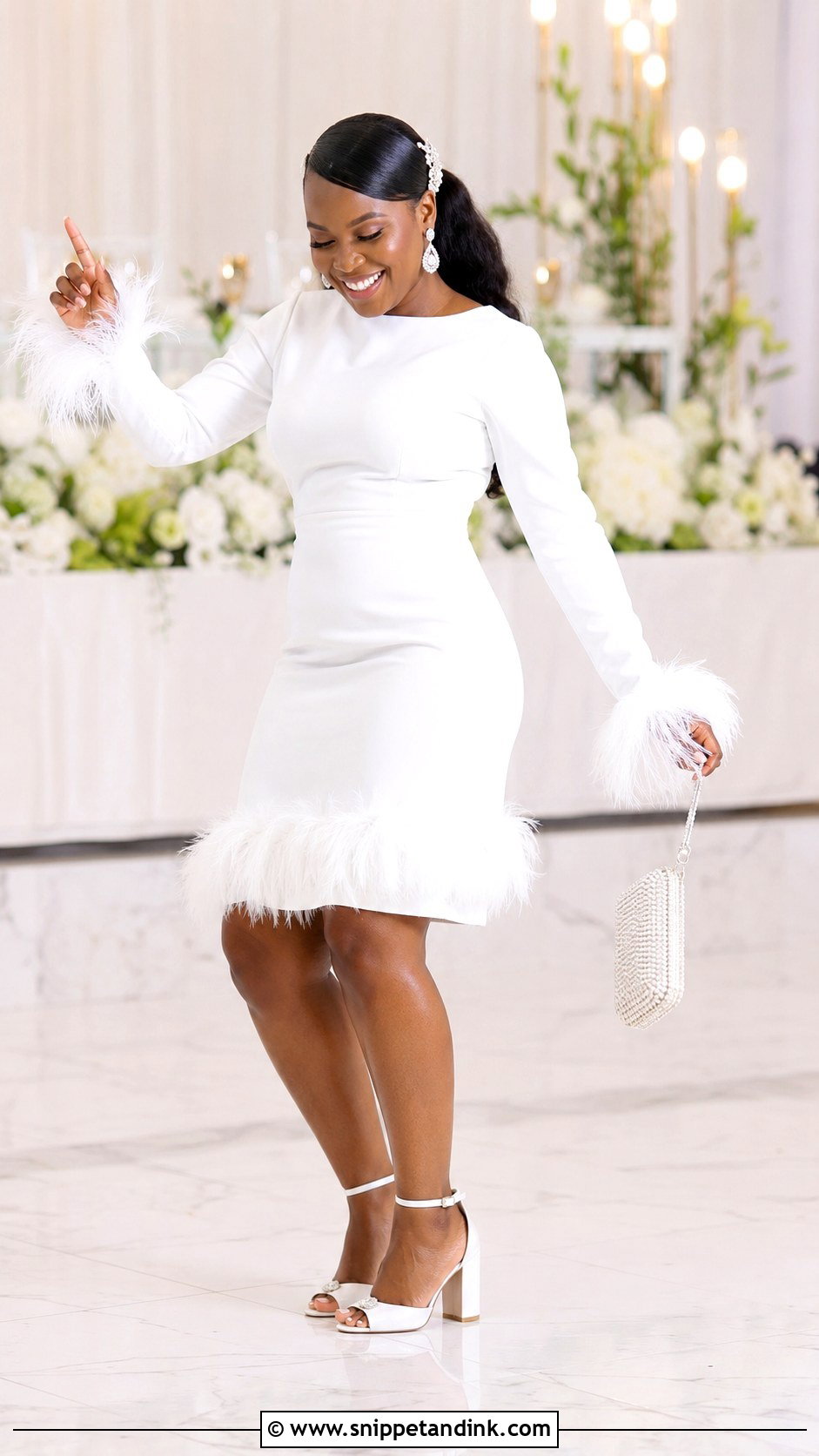
Feathers shed and flatten in damp air, so I keep them to the cuffs, hem or neckline rather than covering the whole dress. A fitted knee-length or mini base stops the texture looking bulky. Wear secure block heels, crystal earrings and a wristlet that won’t get in the way on the dance floor, and swap the veil for a sparkling comb or a sleek ponytail. Keep your makeup the same as for the ceremony, perhaps with a stronger lip. Plan the change itself, too: ask your planner for fifteen to twenty minutes and someone who can do up a back zip. Done that way it makes a fun second look that still clearly belongs to the same day.
How Satin, Lace, Tulle and Crepe Look by Late Evening
A dress in a bridal shop has never sat through a dinner, been hugged by fifty people or dragged across a lawn. Each fabric ages through the day in its own way, and it’s worth knowing that before you commit.
Satin and Mikado
Satin creases at the lap and the back of the skirt the first time you sit, and it water-marks. Mikado is heavier and holds its shape far better. Have someone steam the skirt after the formal photos, and blot spills rather than rubbing them.
Lace
The most forgiving fabric here. Creases disappear into the pattern and small marks hide well. The risk is a scalloped edge snagging on a ring or a bouquet wire.
Tulle and chiffon
Light and cool, but both catch on anything rough, and the hem collects grass and dust. A bustle matters most with these skirts, so have a bridesmaid learn it at your final fitting, not at ten o’clock on the night.
Crepe
Crepe resists creasing and moves well, but it shows every line underneath and clings when damp. Get the underwear right and it stays clean all day.
Whatever the fabric, I pack the same emergency bag: a travel steamer, a white chalk stick for marks, safety pins in two sizes and fabric tape for a dropped hem.
The Last Fitting Is Where the Outfit Comes Together
No look on this list is right by default. The outfit that works is the one you can move in for twelve hours, that suits the room you’re marrying in and that still feels like you in the photographs years later. Treat these as starting points. At your final fitting, wear the real shoes, veil, jewelry, undergarments and hairstyle together; walk, sit, raise your arms and check the mirror by a window as well as under the shop lights. Good tailoring changes a dress more than any added embellishment ever will, and feeling at ease in it shows in every frame.
You'll Like These Ideas:






Leave a Reply