
Bridal gowns from 1993 sit at an odd, useful crossroads. The big satin skirts and basque waists of the late ’80s were still selling, but the first slim sheaths and plain necklines were already on the rails. When a bride brings me a photo from that year, I usually find she loves one specific element, a sleeve or a waistline, more than the whole dress. So below I’ve broken the year into 25 shapes and details, each styled head to toe, with notes on what I check at a fitting and who each one quietly fights against.
Buying a Real 1993 Gown Versus a New Dress Cut the Same Way
Brides asking about this era usually have two routes in mind: an original dress from the period, often a mother’s, or a new gown made in a 1993 shape. Both work, but they need different checks, and I’d decide which route you’re on before you fall for a photo.
If the dress is genuinely from the early ’90s
- Ignore the size label. Bridal sizing then ran differently, and decades of storage change things, so take your own measurements and compare them against the dress laid flat.
- Look along the folds and the underarms under daylight. Yellow lines along old fold marks and brown spots from sugar or perspiration are common, and some will not come out fully.
- Pull gently at seams and zips. Thread and elastic perish with age, and I’d rather find a weak seam in the shop than at the reception.
- Check beading and pearls closely. Glue-set stones can drop off, and coated plastic pearls may have peeled.
- Budget for a specialist cleaner and a seamstress who works with vintage, and leave time for both.
If you want the shape in a new dress
Bring the original photos to your appointment and name the one feature you love, the basque point, the sleeve or the ballgown skirt. Modern gowns are usually lighter, with softer boning and thinner satin, so a 1993 silhouette made today will move more easily but may not hold its volume without a petticoat. Ask to try one on with the petticoat in. Most new gowns need several months between ordering and the final fitting, so start earlier than you think.
1. 1993 Satin Ball Gown Wedding Dress
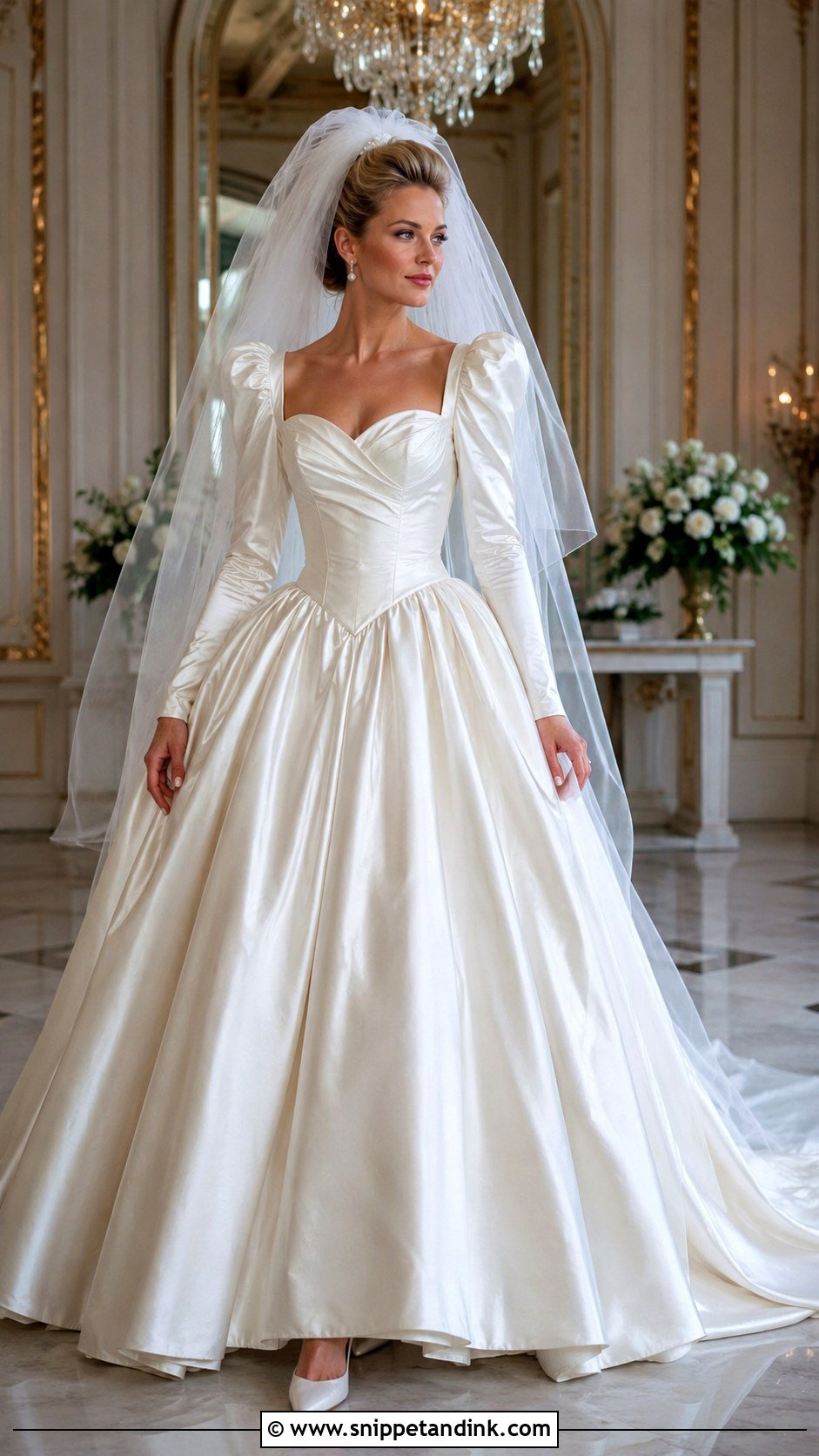
The satin ball gown is the picture most people carry of an early ’90s wedding: fitted bodice, a skirt that needs its own postcode, a train behind. What I look at first is the satin weight. Heavy duchess satin holds the skirt out on its own; a thin polyester satin collapses and needs a stiff petticoat, which adds heat and weight by the reception. Ivory reads softer on camera than bright white, and I keep the bouquet to one flower, roses or callas, so the skirt stays the shape everyone notices. Ballrooms and hotel aisles give it the room it needs.
2. 1993 Lace Sleeve Wedding Dress
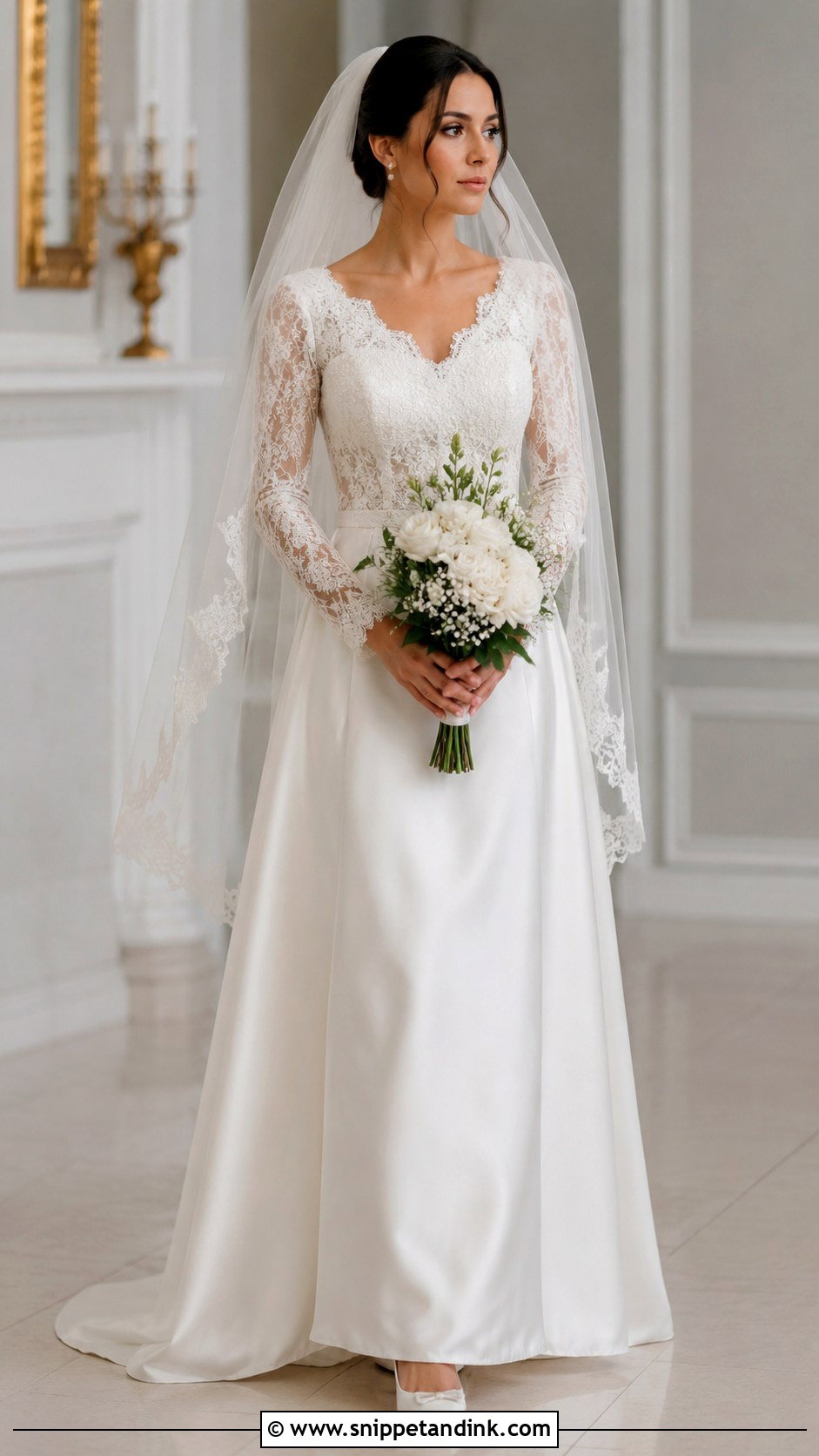
Lace sleeves carry the romantic half of the year. Some are fitted to the wrist, some puff slightly at the shoulder, some are sheer with appliqué running down the arm. At a fitting I have the bride hug me and lift a glass, because a tight lace sleeve set too high in the armhole will pull the whole bodice up when she raises her arms. Keep the skirt plain so the arms do the talking, add a fingertip veil and a low updo so the neckline shows, and it suits a cooler-month wedding where the coverage is welcome.
3. 1993 Beaded Bodice Wedding Dress
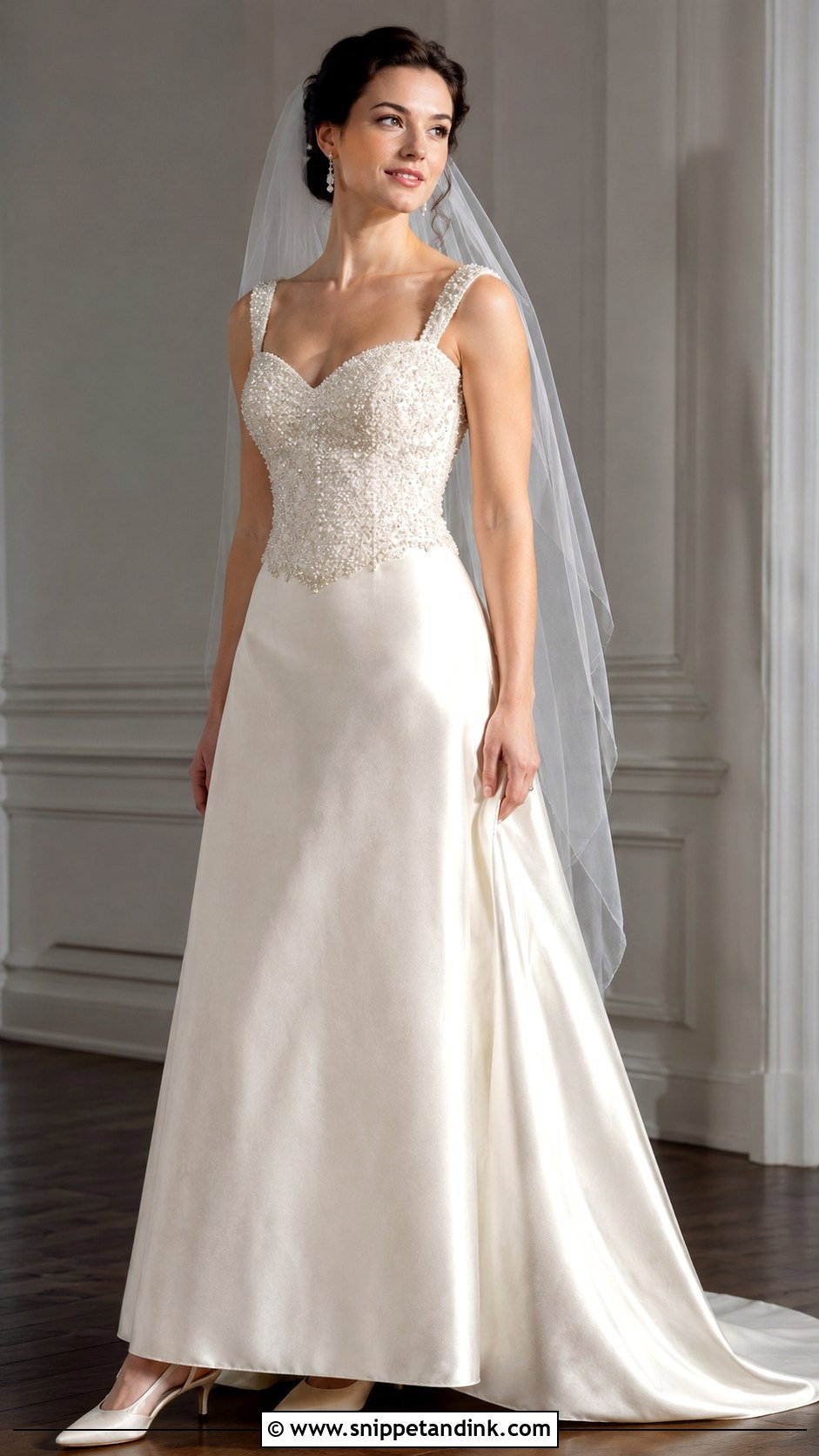
Beaded bodices were the sparkle of 1993, usually pearls, sequins or crystals worked across the front above a clean skirt. My rule is that the beading should frame the neckline and the waist, not carpet the whole torso, otherwise the bodice reads as one flat glittering block in photos. Real beading is heavy, so check the inside: a well-made bodice has boning and a waist stay carrying that weight, not the shoulder straps. Plain veil, satin slingbacks, small drops in the ears. Under evening lighting this is the dress that catches every candle.
4. 1993 Off The Shoulder Wedding Dress
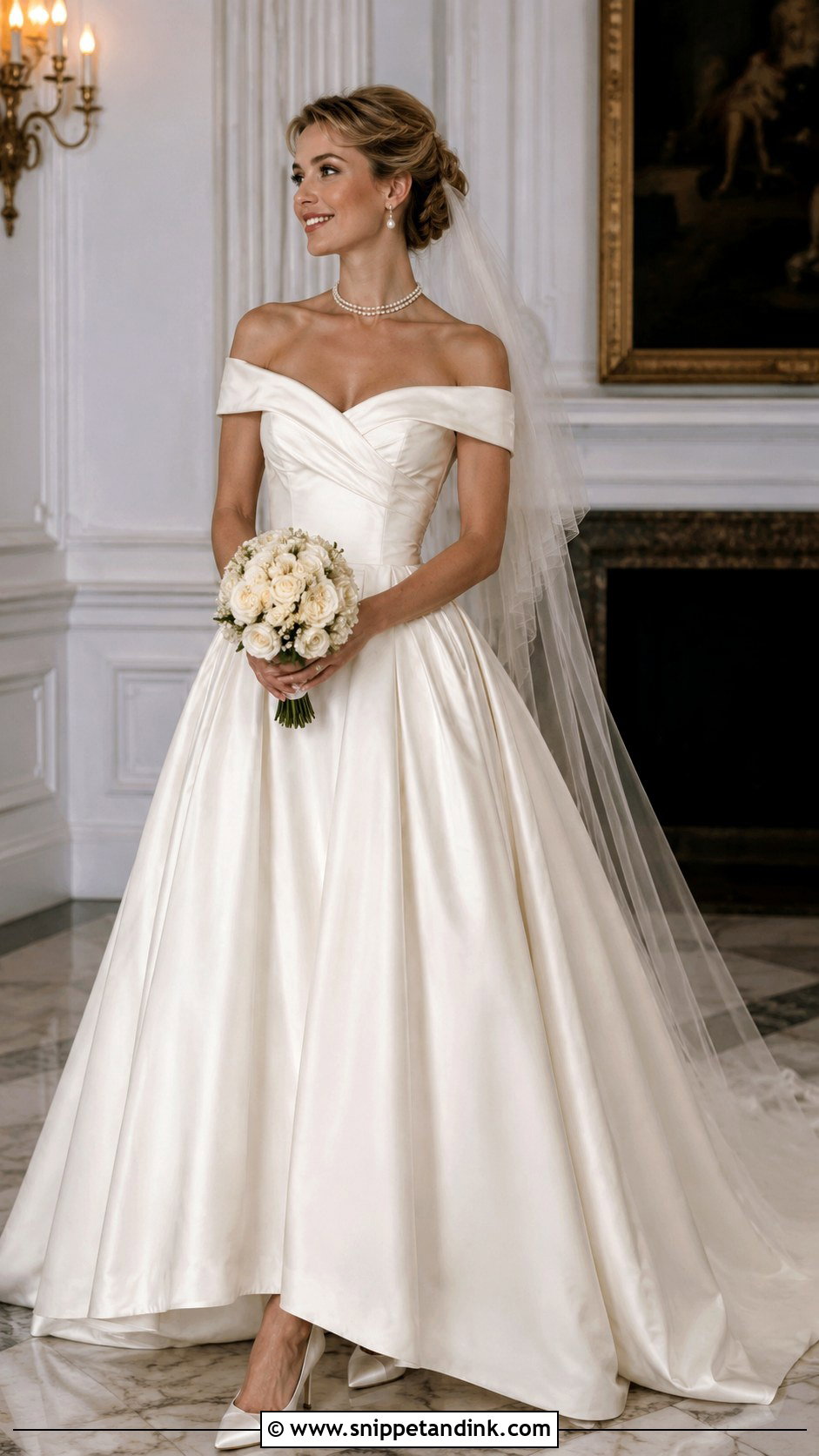
Off-the-shoulder necklines show the collarbone and shoulders while the bodice does the structural work. The trap is fit: if the band across the upper arm is loose, it slides up toward the neck every time she hugs someone, and she spends the night tugging it down. I’d rather it sit a touch snug with a silicone grip strip sewn inside. A full skirt makes it traditional, a slim A-line makes it easier to move in. Add a short pearl necklace, drop earrings and hair swept up or half-up so that shoulder line stays clear.
5. 1993 High Neck Wedding Dress
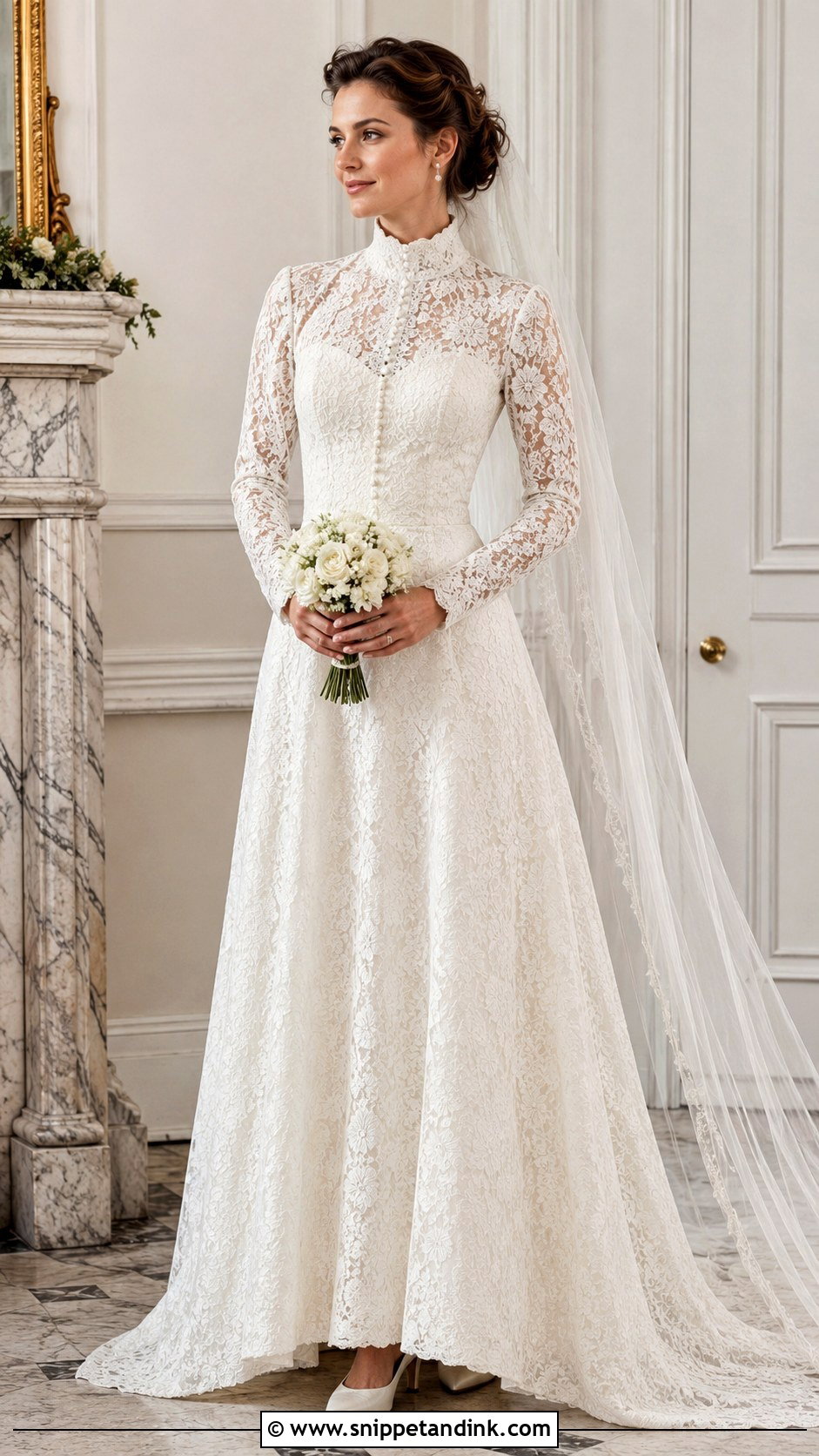
A high neck from this year often comes in lace or illusion fabric, finished with pearl buttons or fine beading at the throat. It looks editorial, but it’s honest to say it doesn’t suit everyone: a very short neck or a full bust can feel boxed in, and I often suggest an illusion yoke rather than solid lace to let the skin show through. Accessories stay small here, studs and a smooth bun, with a narrow veil falling behind the shoulders. A soft A-line skirt keeps the proportion right for an indoor ceremony.
6. 1993 Sweetheart Neck Wedding Dress
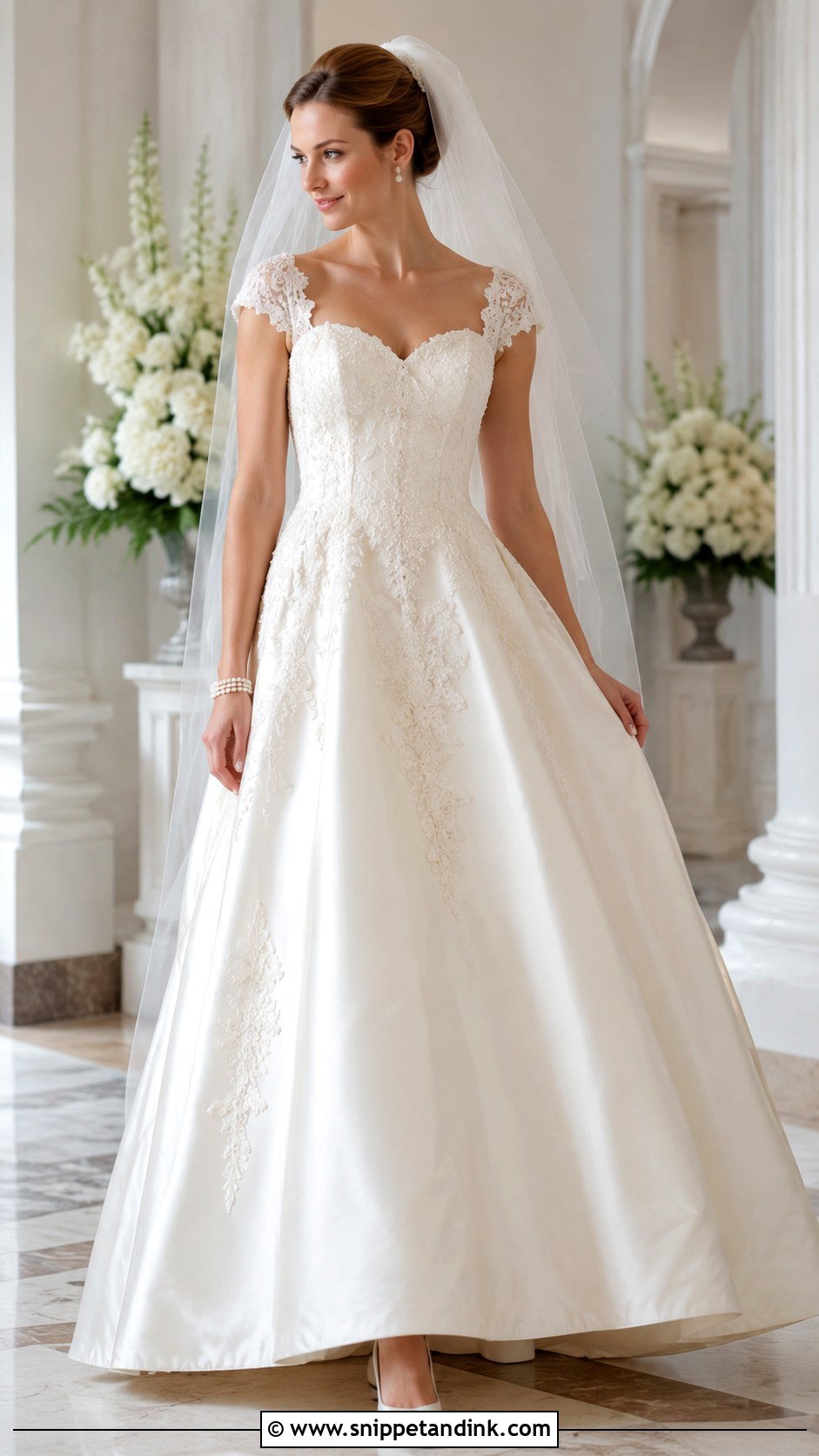
A sweetheart neck wedding dress was the easy favourite of the year, usually paired with a fitted bodice and either lace appliqué or beaded trim along the curve. It opens the chest and defines the waist, which is why it flatters most figures I dress. The detail I watch is the dip in the centre: too deep on a small bust and it gapes when she sits. Pearl bracelet, small earrings, ivory pumps. Then balance the bouquet against the gown. Heavy detail on the dress wants simple flowers; plain satin can carry a fuller bunch.
7. 1993 Basque Waist Wedding Dress
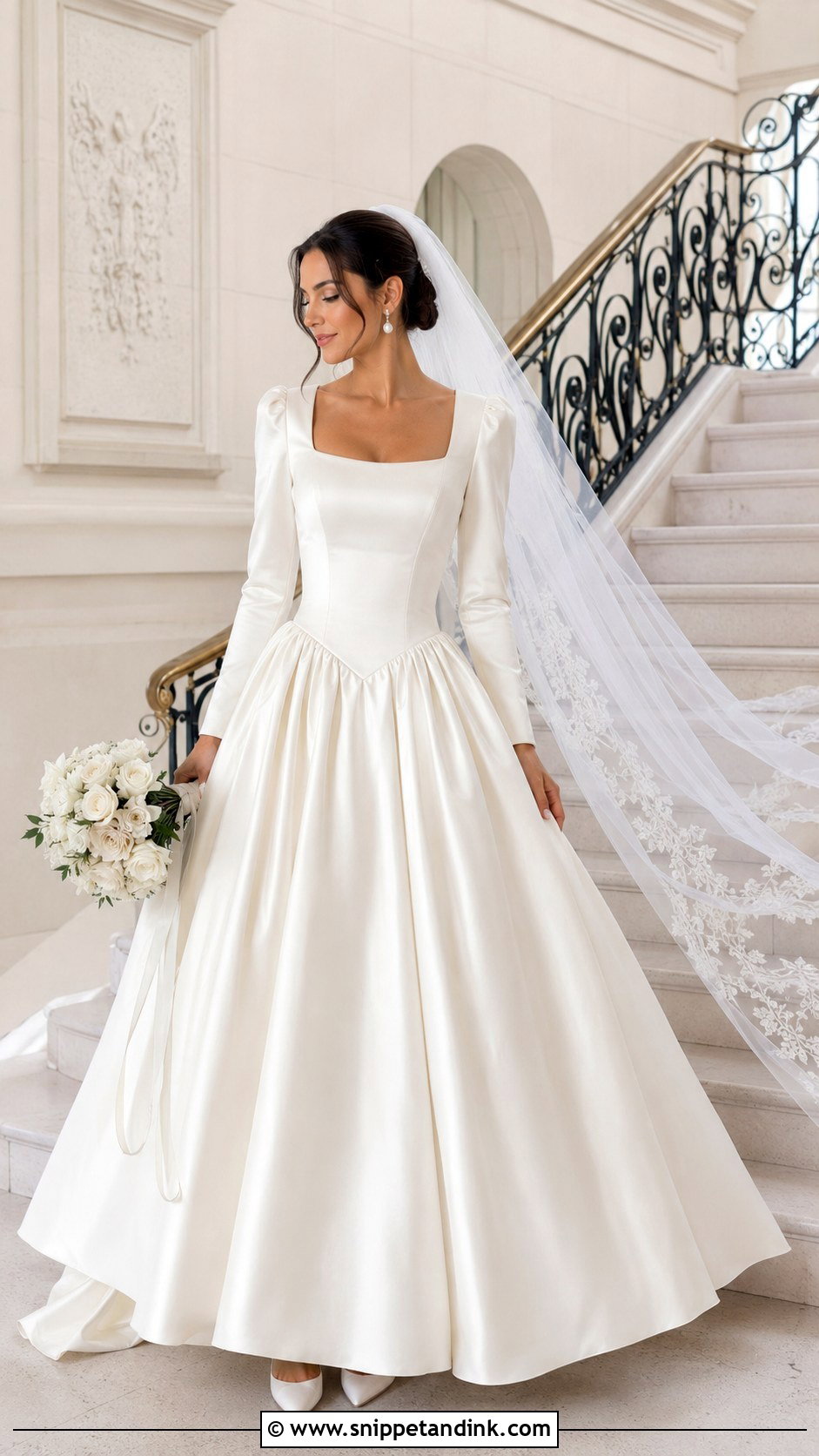
The dip of a basque waist wedding dress sits just below the natural waist, drawing a long V that makes a big skirt look intentional rather than heavy. It was one of the signature shapes of the early ’90s for exactly that reason. It needs a well-boned bodice, or the point buckles when she sits. I pair it with a cathedral veil, pearl drops, satin heels and a ribbon-tied bouquet held slightly above the point so the V stays visible in portraits. Staircases and long aisles show it off.
8. 1993 Cathedral Train Wedding Dress
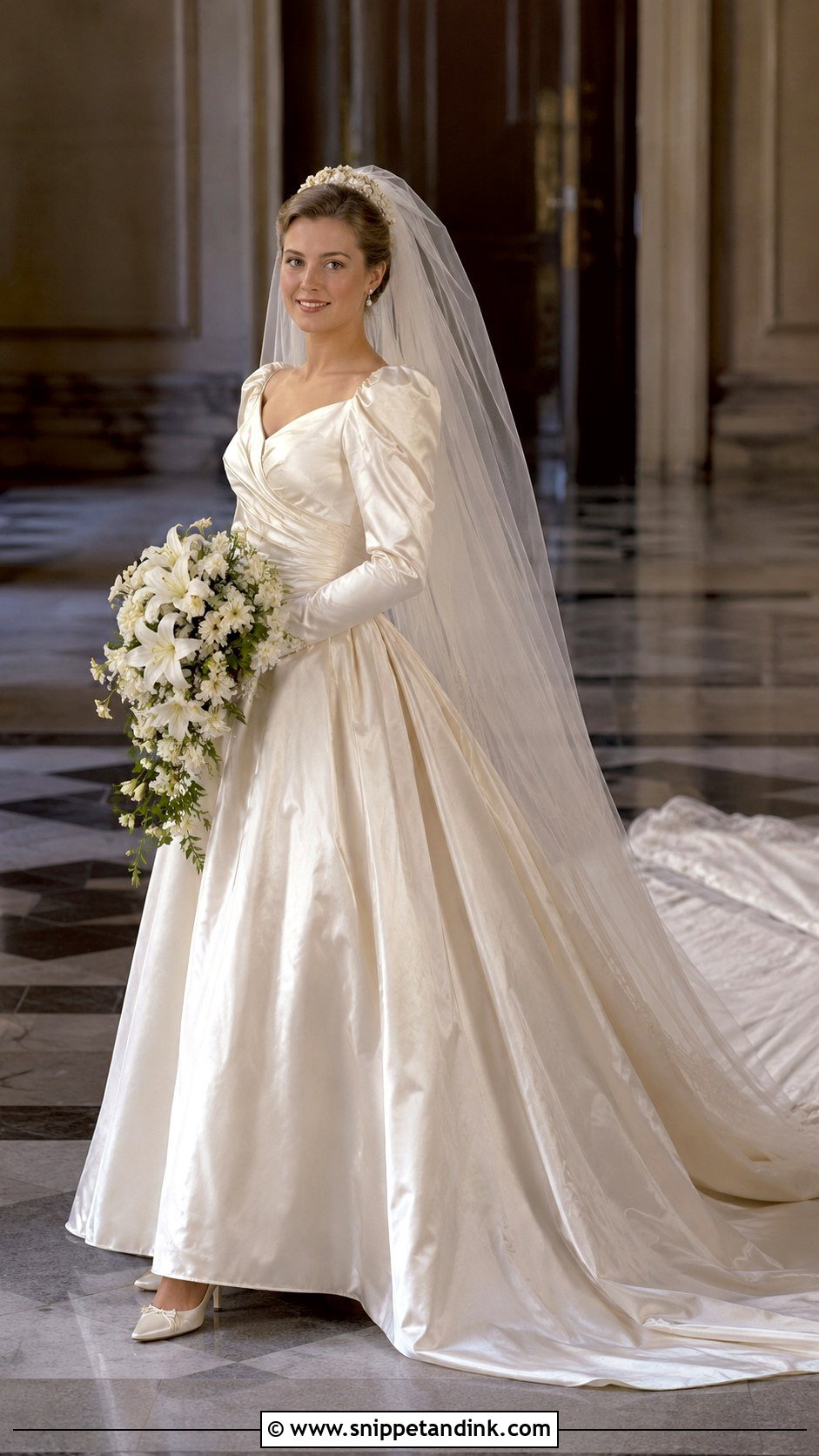
Cathedral trains appeared on the satin, lace and heavily beaded gowns of 1993, and they still give the longest aisle moment of anything here. Practicality decides whether it’s worth it. I always ask how many bustle points the seamstress plans, because a heavy satin train often needs three or more to lift cleanly, and a single hook will tear by the first dance. Wear low or mid heels; you’ll be walking with a weight behind you. A long veil can sit on top, but it should match the dress, and jewellery stays minimal so the eye follows the train.
9. 1993 Tulle Skirt Wedding Dress
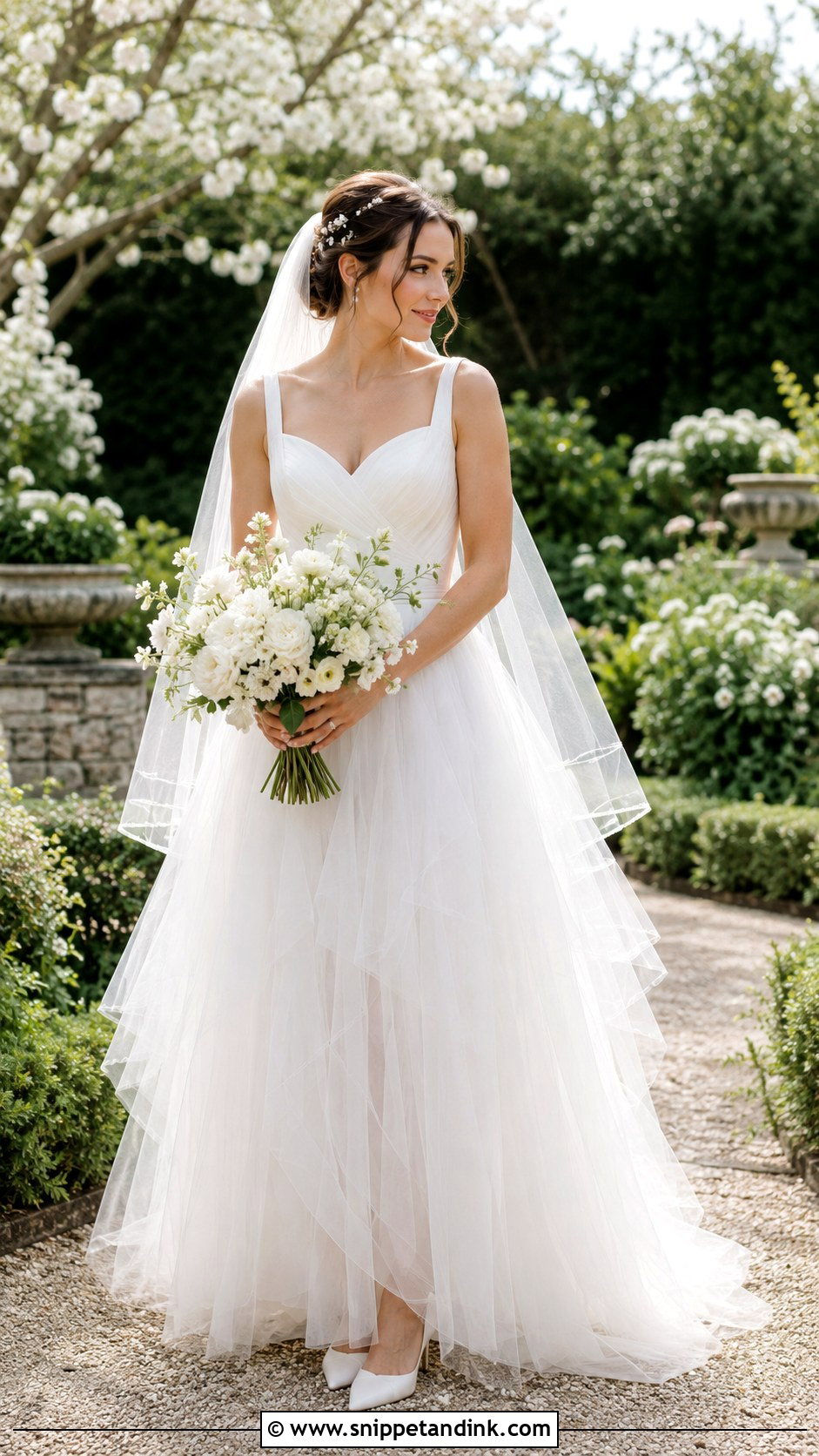
Tulle eases the stiffness of the era. The skirt floats instead of standing out, and a good one has several layers that drift rather than balloon. Cheaper tulle snags on anything, from rough stone steps to a bracelet clasp, so I tell brides to check where they’ll be walking. Pointed satin flats or low heels, a sheer veil, pearl pins in the hair and soft white flowers keep it light. Garden ceremonies and spring weddings suit it, and the layers catch any breeze, so the skirt never looks frozen in candids.
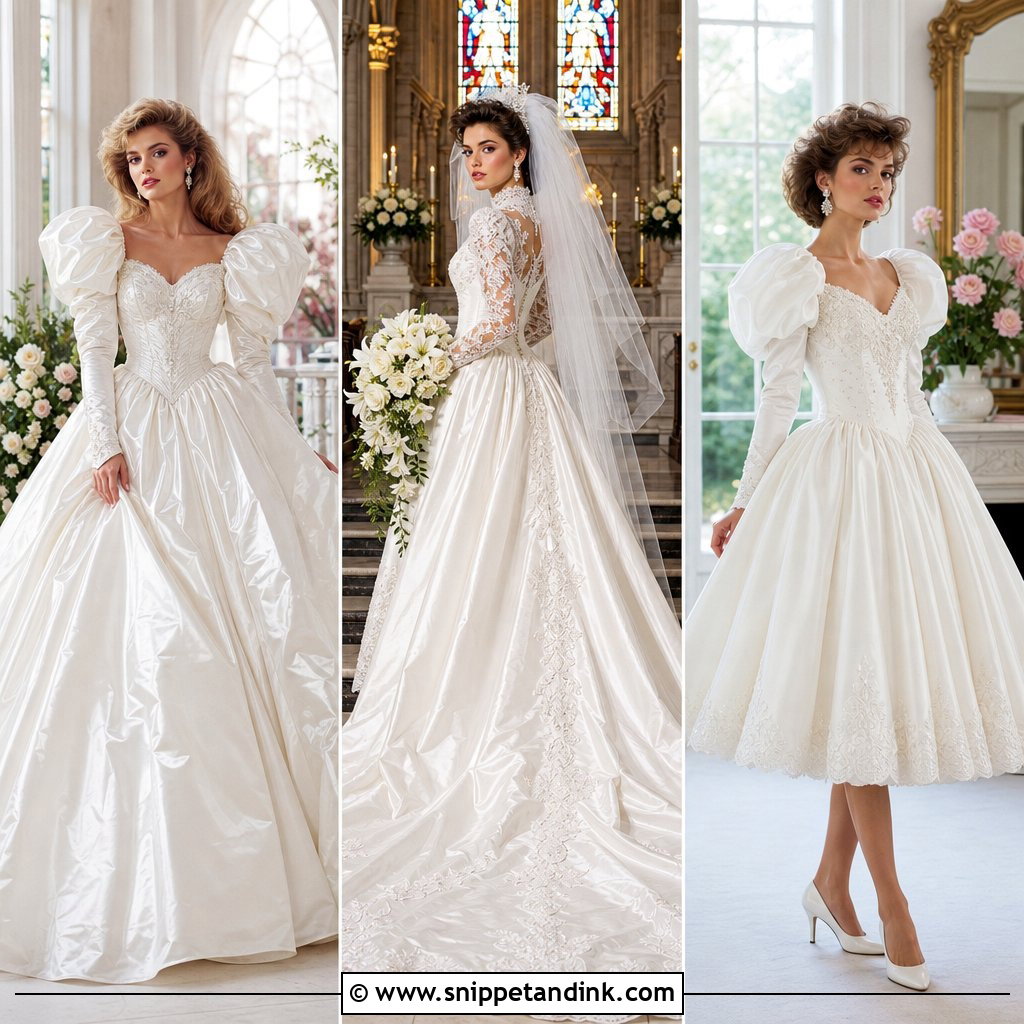
10. 1993 Puff Sleeve Wedding Dress
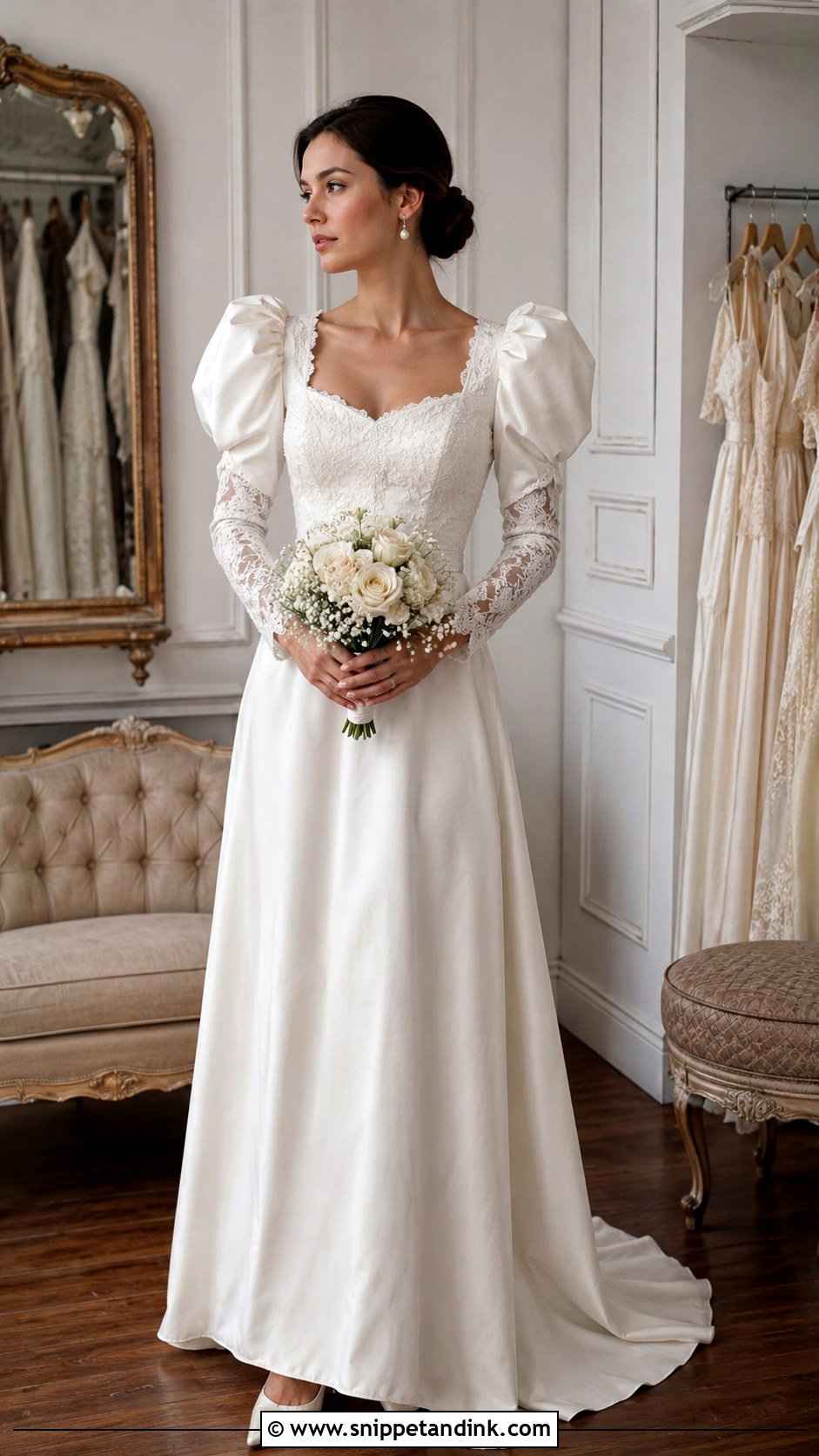
Puff sleeves are where the late ’80s still shows in 1993, but the versions that work now are smaller and better controlled. Look for gentle volume at the shoulder cap with a fitted lower arm or a sheer lace finish. A big sleeve widens the shoulder line, so I keep hair low and close, a low bun or soft waves, and never add a voluminous veil at the crown. The skirt and shoes stay simple. It’s a shape with real personality, and the right bride wears it with a sense of humour about the decade.
11. 1993 Princess Wedding Dress
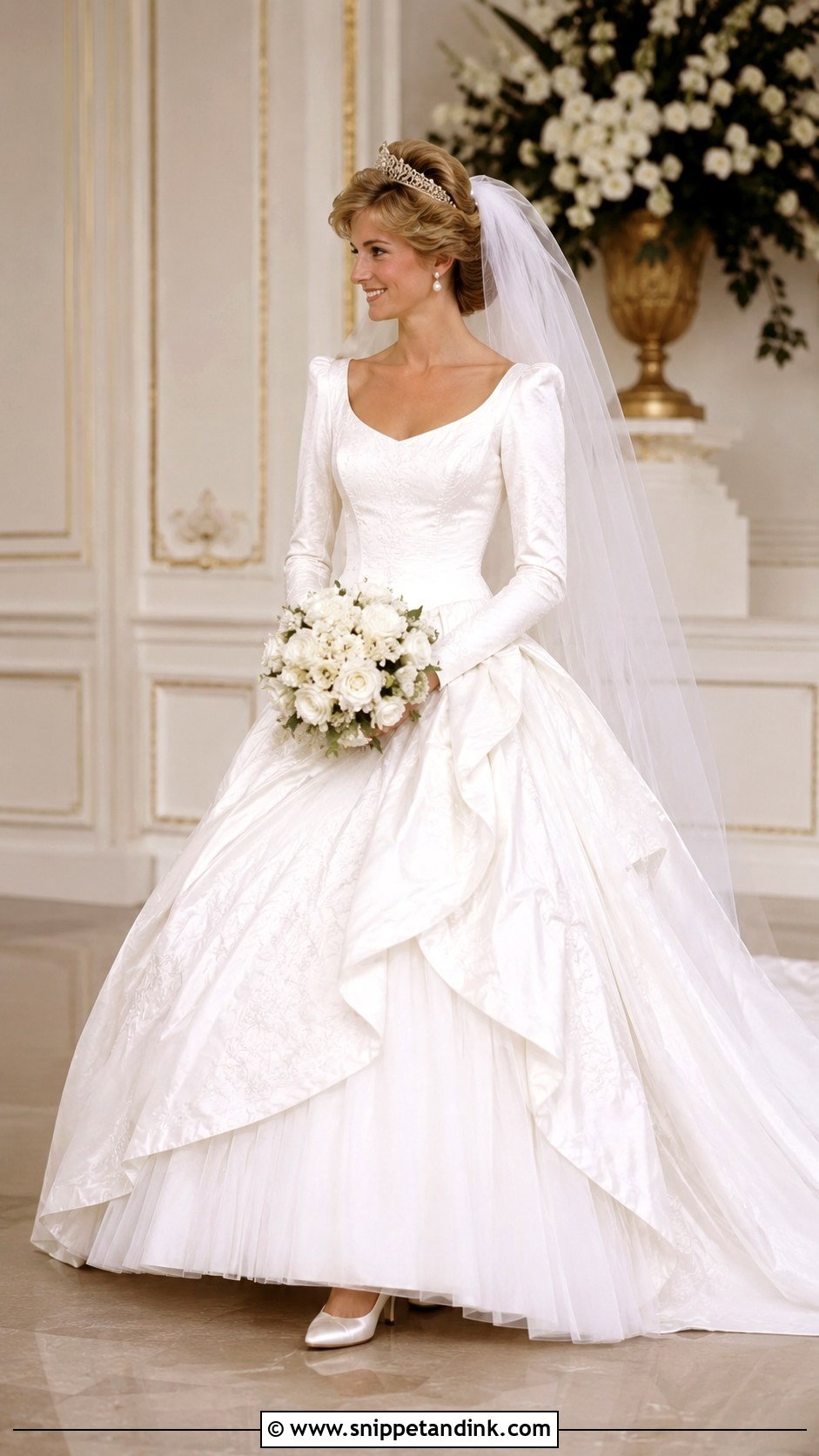
A 1993 princess wedding dress means fitted bodice, full skirt, long veil and graceful accessories, built from satin, lace, beading, tulle or a mix. With that many textures, my job is to make sure one leads. If the bodice is beaded, the skirt goes plain. A tiara-style headband gives the full fairytale period effect; pearl hair pins are the softer version I reach for more often. Satin pumps, delicate earrings and a rounded bouquet finish it, and a formal venue gives the skirt somewhere to go.
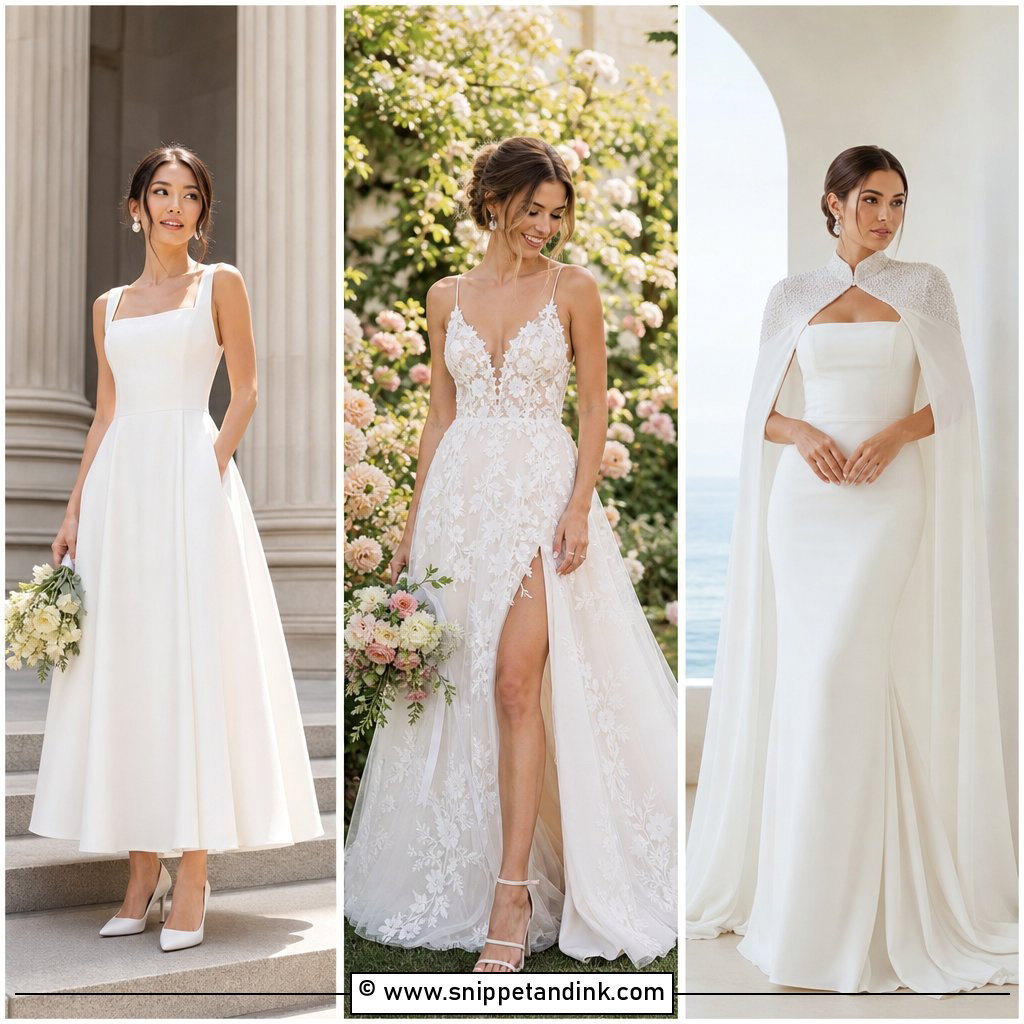
12. 1993 Minimalist Wedding Dress
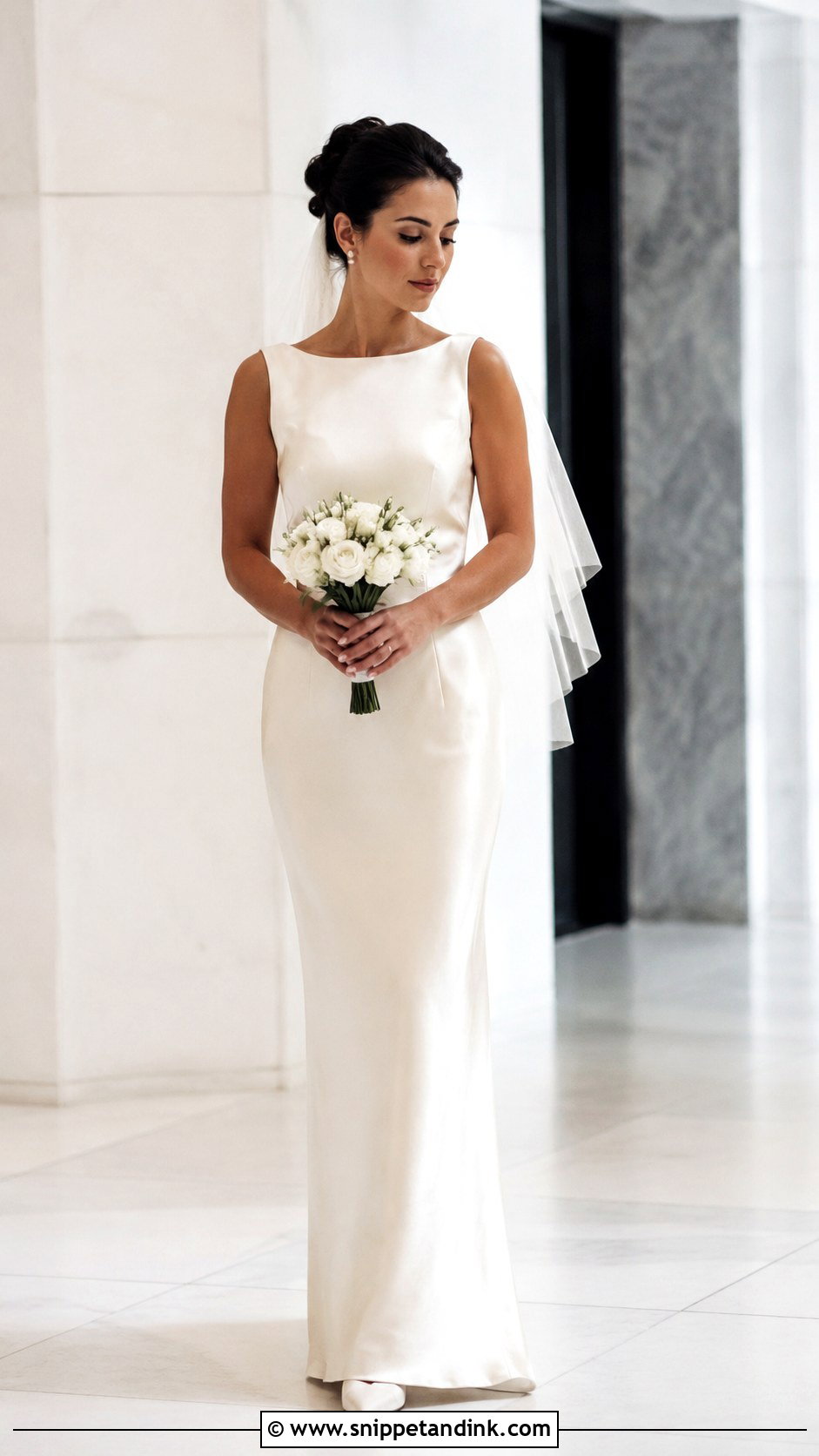
Minimalism was the new idea of the year: the simple sheath, the slip-style gown, the smooth satin column. These are the hardest dresses to fit, not the easiest. With no lace or beading to hide anything, every seam and every line of underwear shows, so I book an extra fitting and choose seam-free shapewear before the first one. Sleek pumps, pearl studs, a smooth veil, a small bouquet. Hair should be a clean bun or a soft blowout. Courthouse ceremonies and modern venues suit it best.
13. 1993 Square Neck Wedding Dress
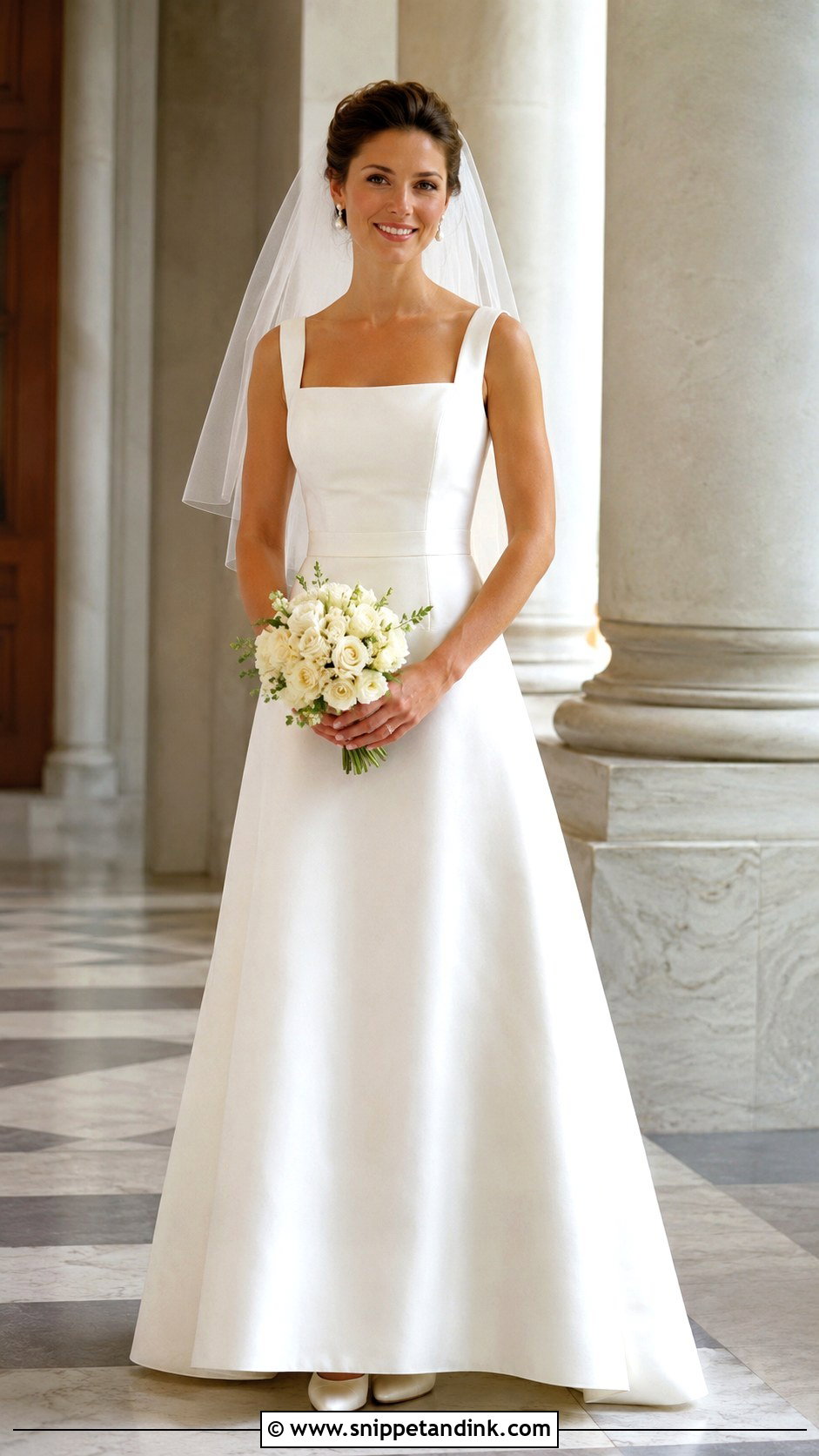
Square necklines frame the upper body with a straight, clean edge, often on wide straps or short sleeves above a fitted bodice. It’s one of the most forgiving necklines I fit, because the straight line sits flat on most busts without gaping. Wear pearl earrings and either a fine necklace or none at all, closed-toe heels and a medium veil. Fabric changes the mood: matte crepe or satin keeps the corners crisp, while lace softens them. Brides who don’t want a low neckline tend to settle here quickly.
14. 1993 Long Sleeve Satin Wedding Dress
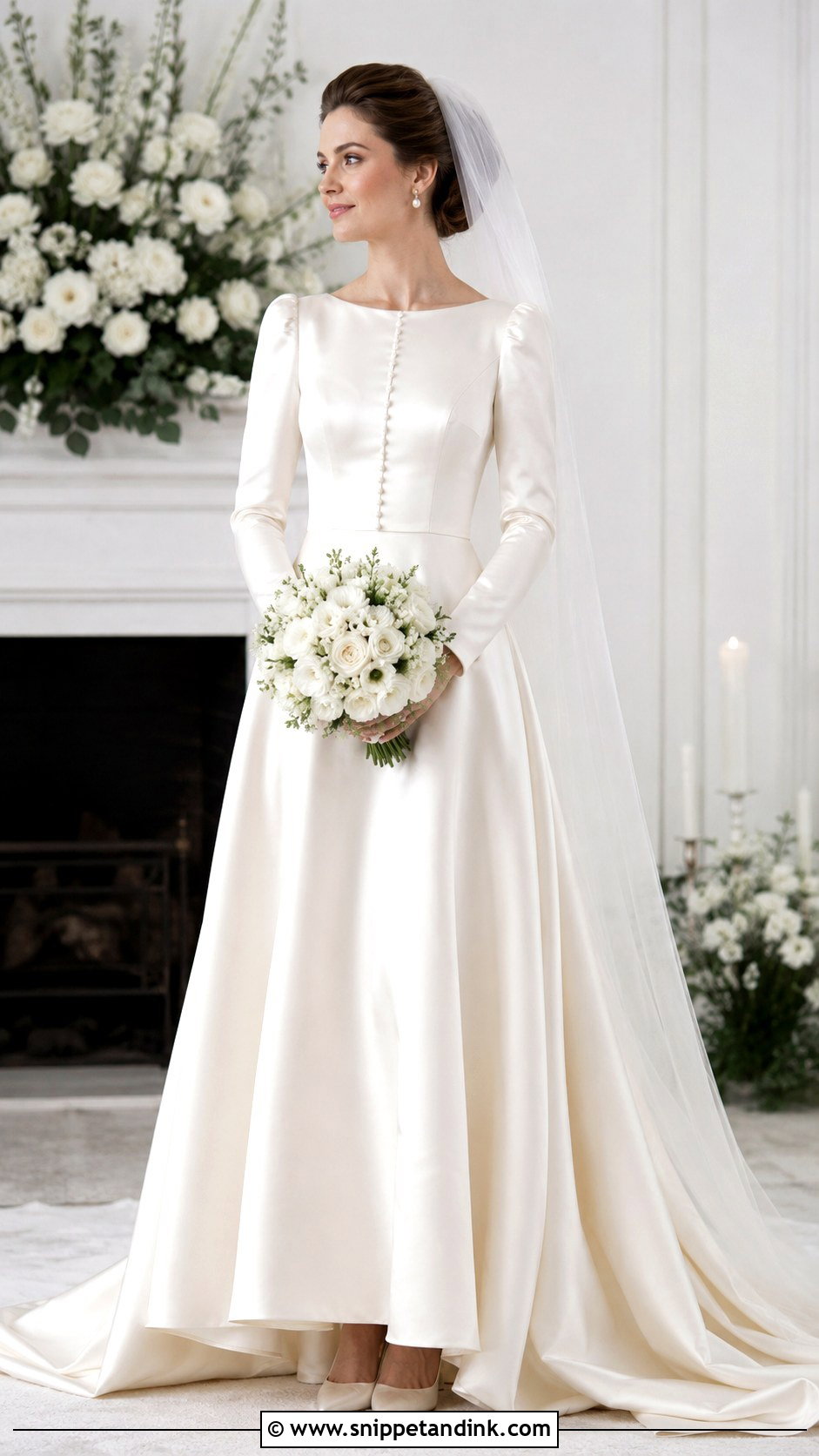
Long-sleeve satin is smooth, formal and quietly confident. The 1993 versions had covered buttons, a defined waist and a skirt that flowed instead of standing stiff. Satin shows every wrinkle and every pull line, so I check sleeve length with arms bent, not straight; a sleeve that’s right when standing will ride up to the forearm when she holds the bouquet. Since the fabric already reflects light, keep accessories matte or pearl. Winter weddings and evening ceremonies suit it, and it needs no beading to feel finished.
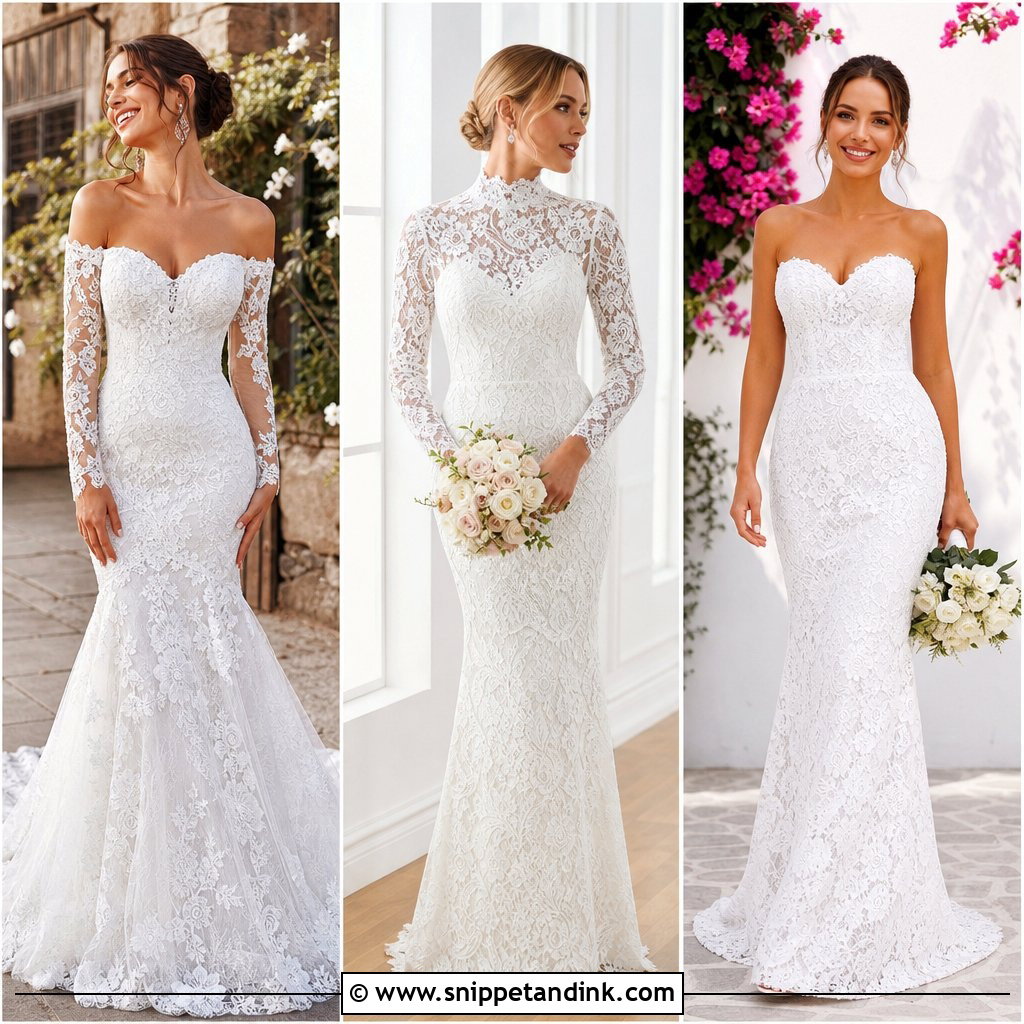
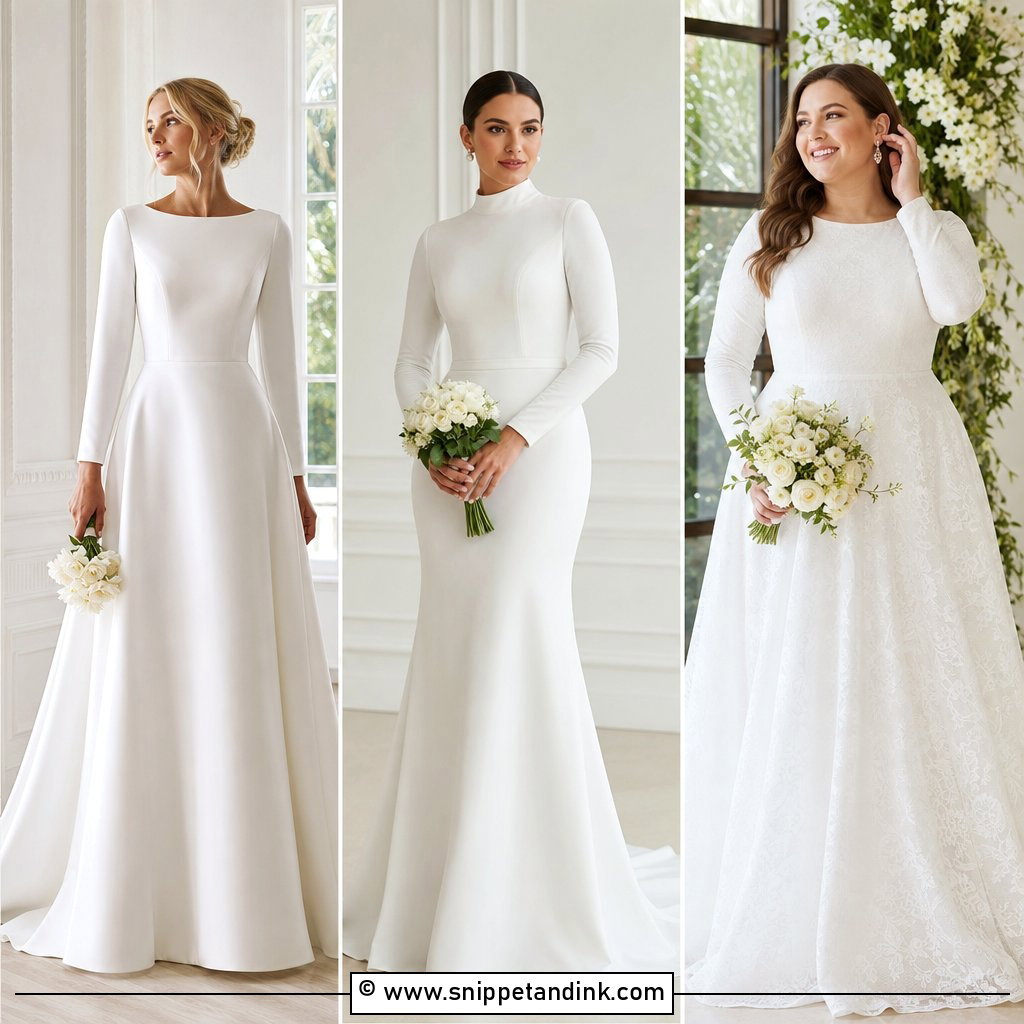

15. 1993 Short Sleeve Wedding Dress
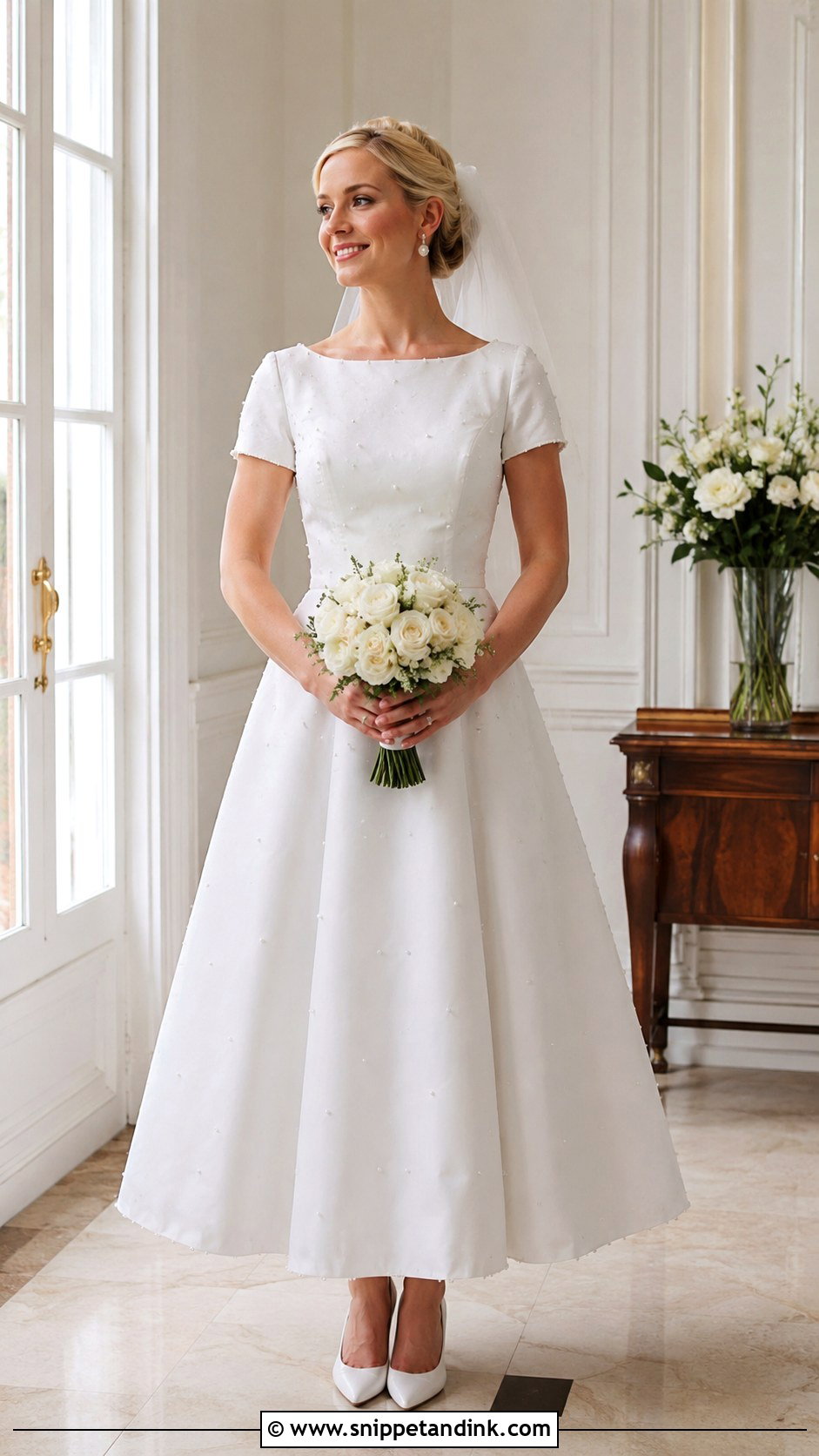
A short sleeve gives coverage without the warmth of a full arm, and in 1993 those sleeves came in lace, satin, puffed or gently capped. A cap sleeve that ends at the widest point of the upper arm can make the arm look broader, so I move the hem a little higher or lower at the fitting. Full or A-line skirt, simple heels, pearl studs, a veil set lightly at the crown or back. It’s an approachable choice for daytime and warm-weather weddings.
16. 1993 Lace Applique Wedding Dress
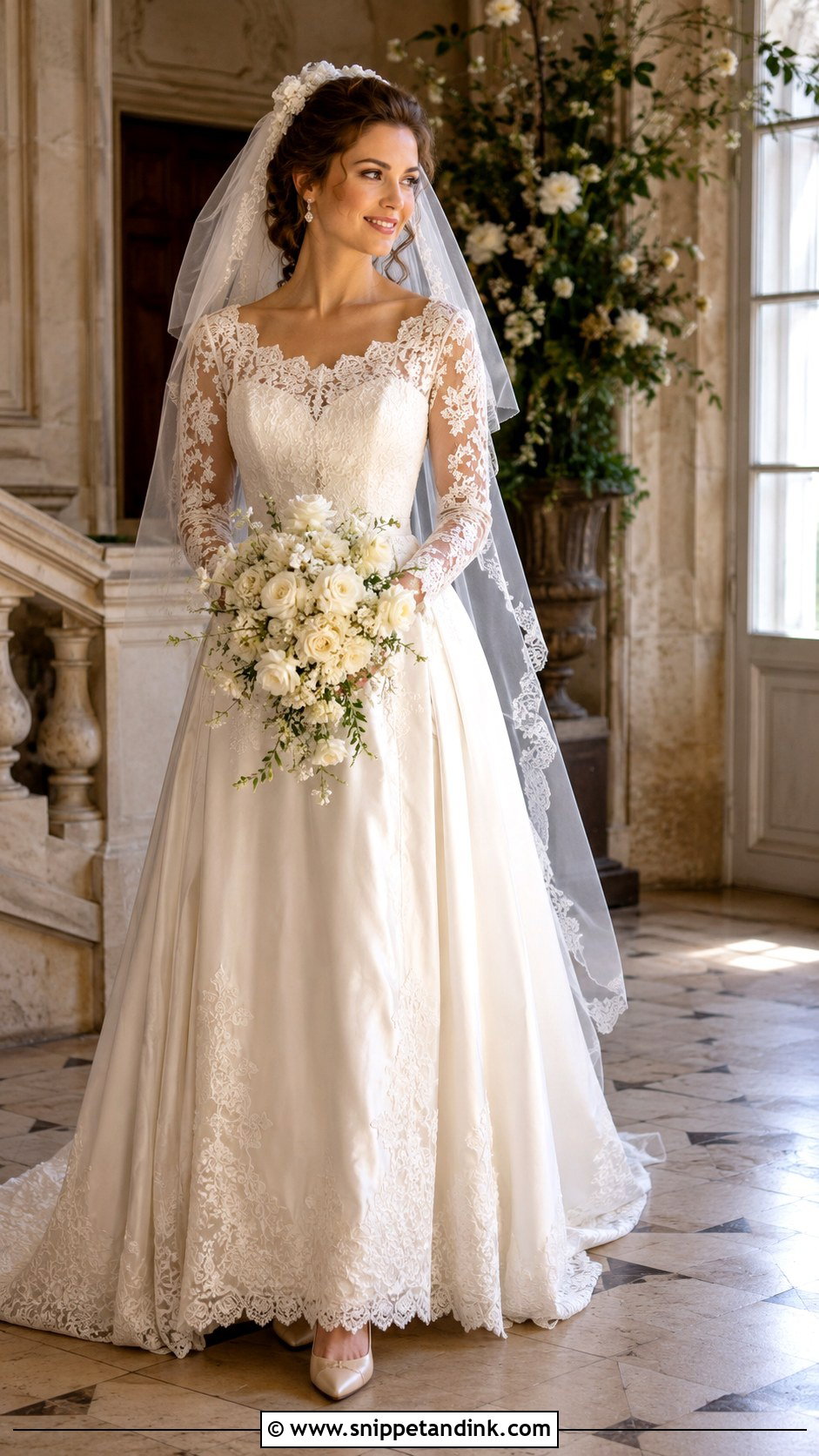
Appliqué was everywhere in 1993, scattered over bodices, sleeves, hems and trains for texture without much sparkle. The modern way to wear it is with space around each motif, so the dress can breathe. When altering one, I ask the seamstress whether motifs need to be lifted and re-stitched, because hemming through appliqué can cut a flower in half. A lace applique wedding dress needs little else: a sheer veil, pearl earrings, satin shoes and soft white blooms. Historic houses and chapels suit its detail.
17. 1993 Pearl Detail Wedding Dress
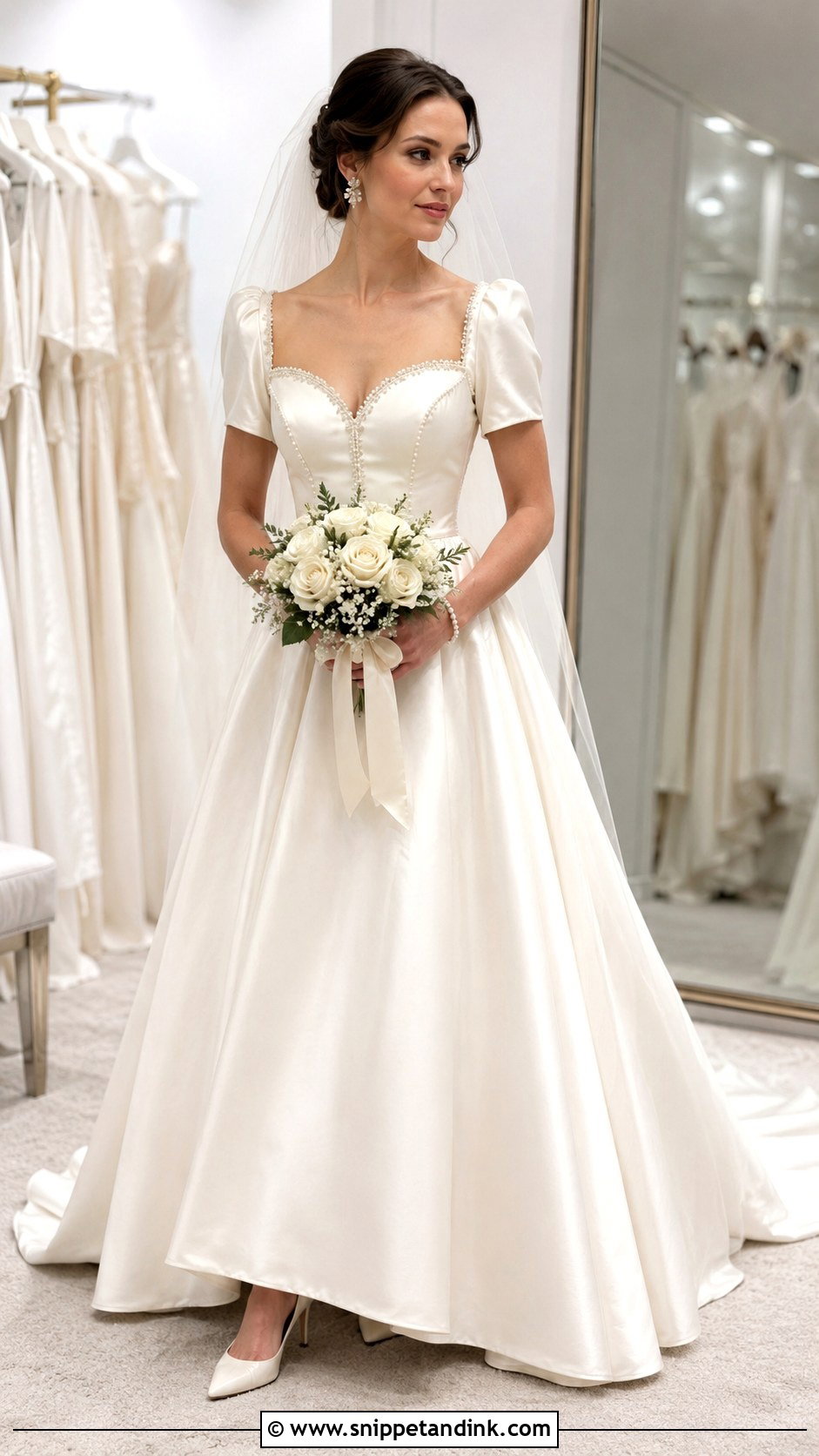
Pearl detail ties straight back to early ’90s bridalwear, sewn along necklines, sleeves, waists or veils. Echo it once, with small pearl earrings or a bracelet, and stop there; a necklace on top of a pearl neckline turns into clutter. One practical point: older plastic pearls can lose their coating and look chalky, so on a vintage gown I check them under a lamp before the wedding. Satin, lace and organza all take pearls well. Ivory heels and a smooth veil keep it polished.
18. 1993 Organza Wedding Dress
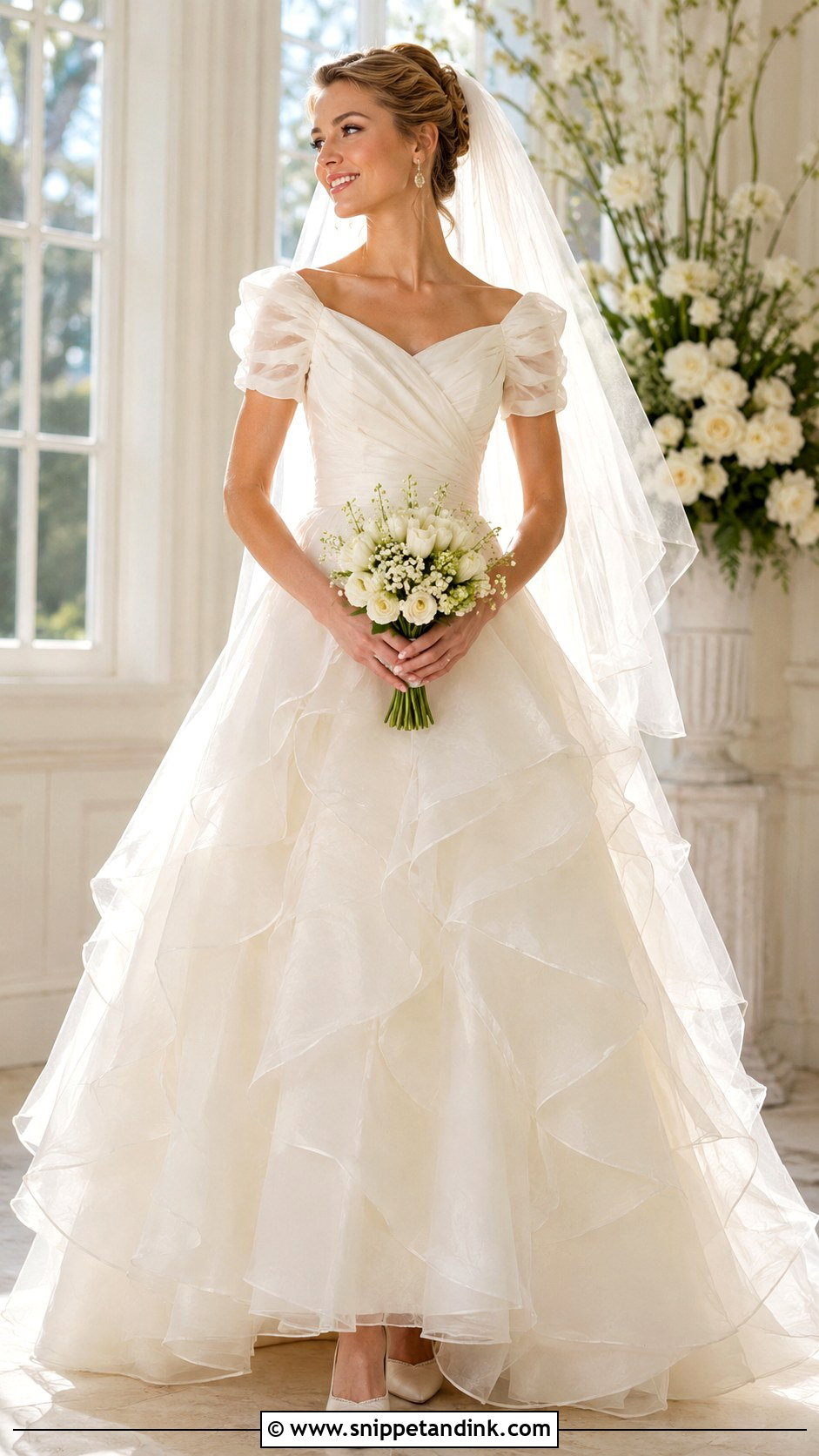
Organza is crisp, holds a shape and still weighs very little, which is why it turned up in layered skirts and puffed sleeves of the era. It does crush, though. A day in a hot car or a long seated dinner will leave creases that a steamer fixes in minutes but that you’ll see in every photo if nobody brings one. Keep the rest clean: delicate earrings, simple heels, a sheer veil, a modest bouquet. Spring and summer suit it far better than heavy satin.
19. 1993 V Neck Wedding Dress
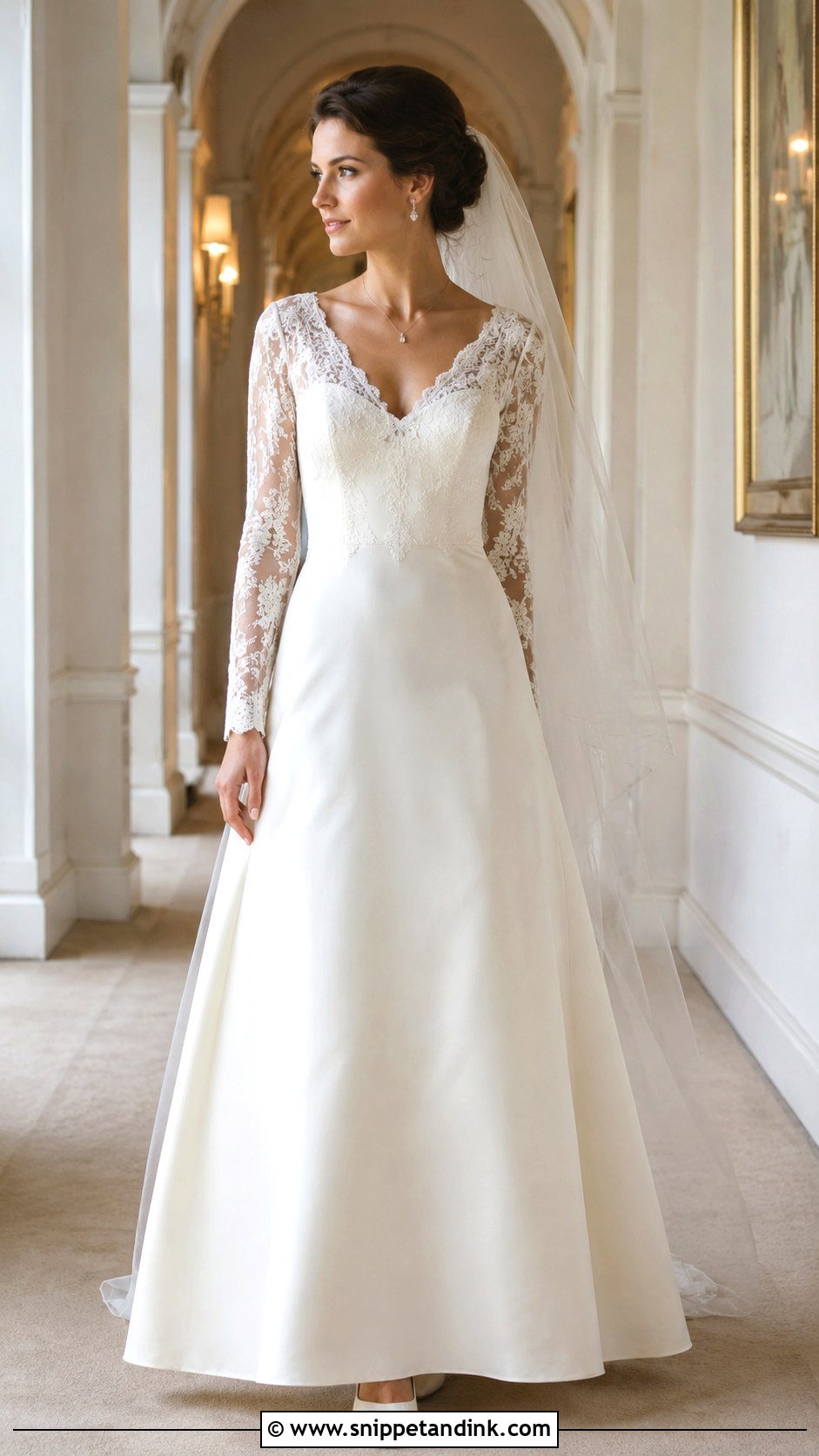
A V neck pulls the eye downward and lengthens the frame, which helps petite brides look taller. It can be classic with lace sleeves, sleek in satin or simple over a smooth A-line skirt. How deep it goes is the decision I spend most time on, because a plunge that looks fine standing will open further once she sits and leans in to sign the register. Add drop earrings, a small pendant only if the neckline is bare, ivory heels and a soft veil, and hold a narrow or round bouquet that doesn’t hide the line.

20. 1993 Drop Waist Wedding Dress
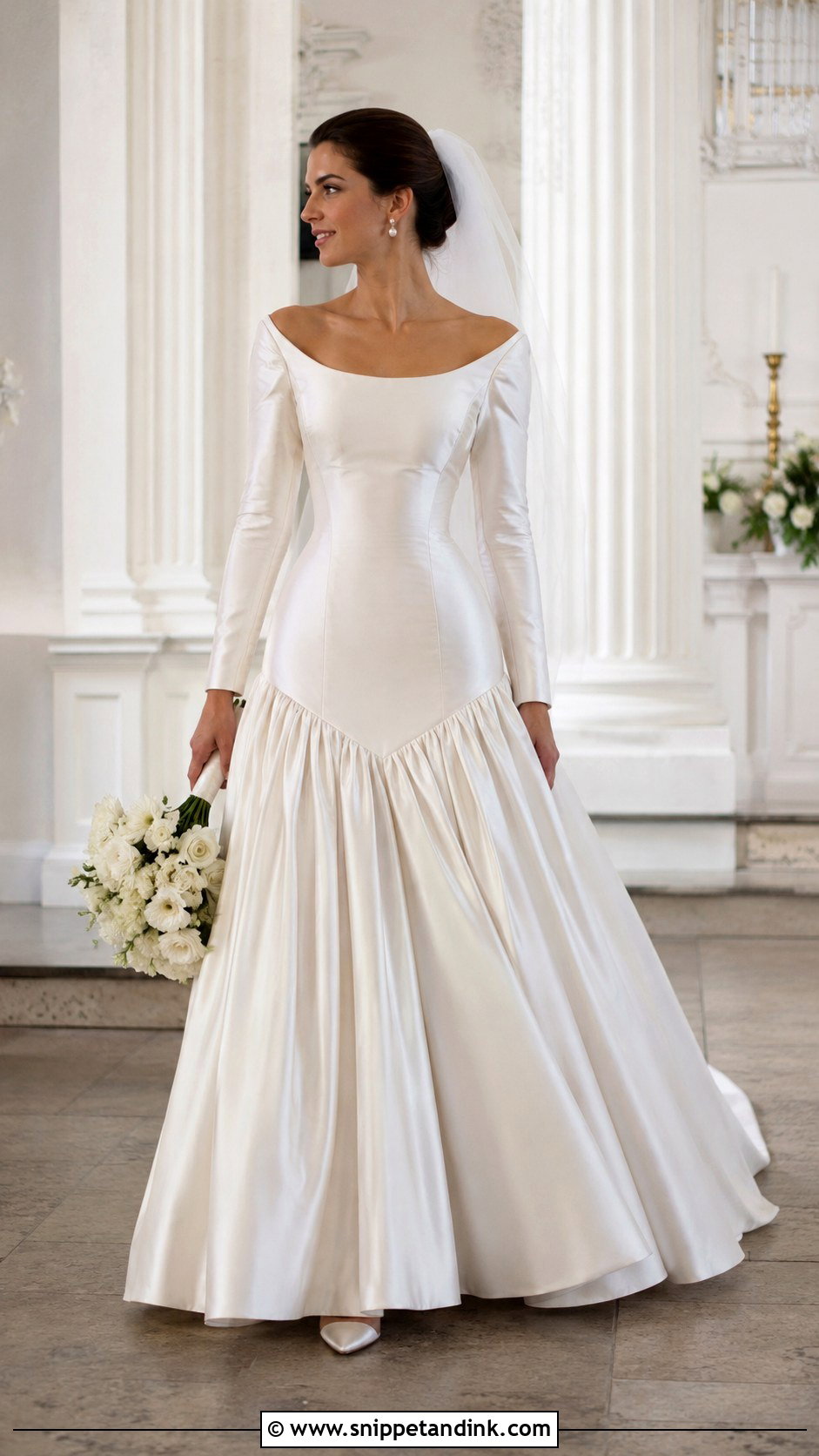
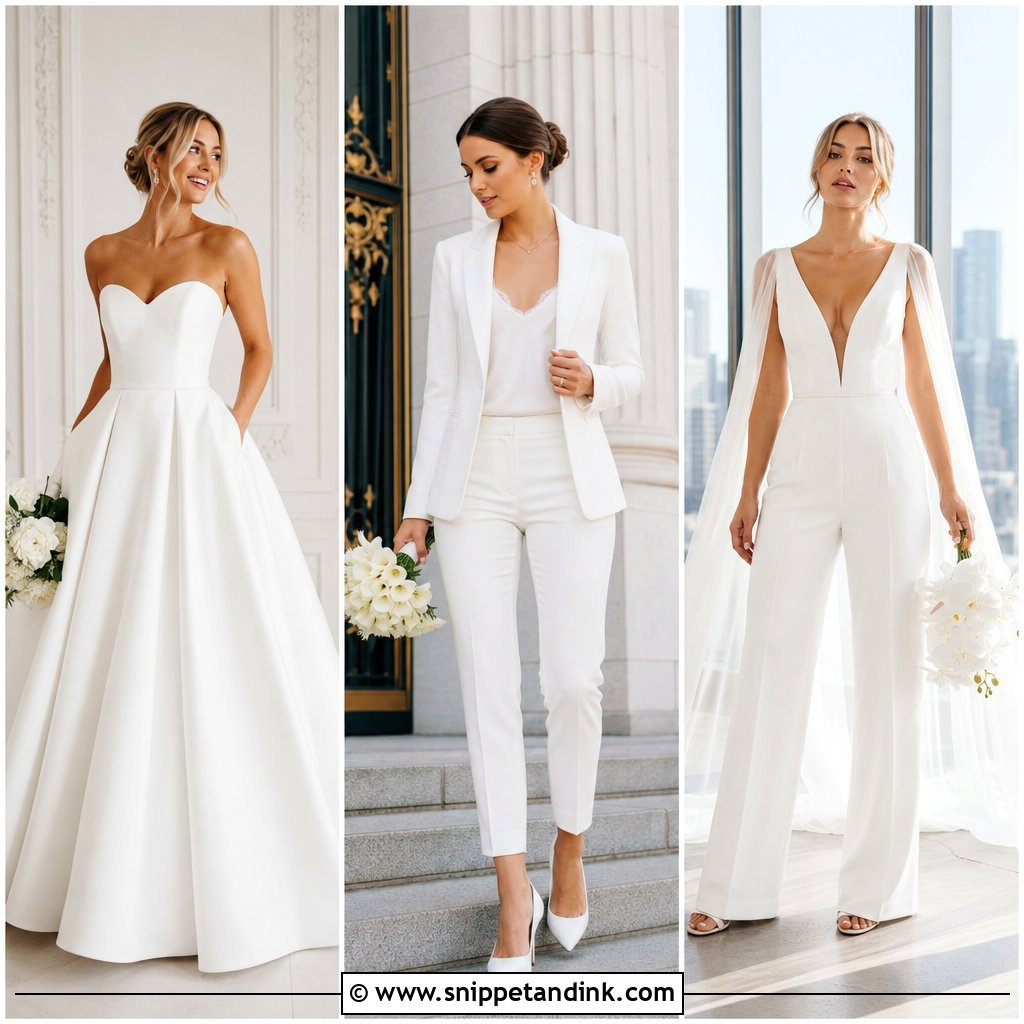
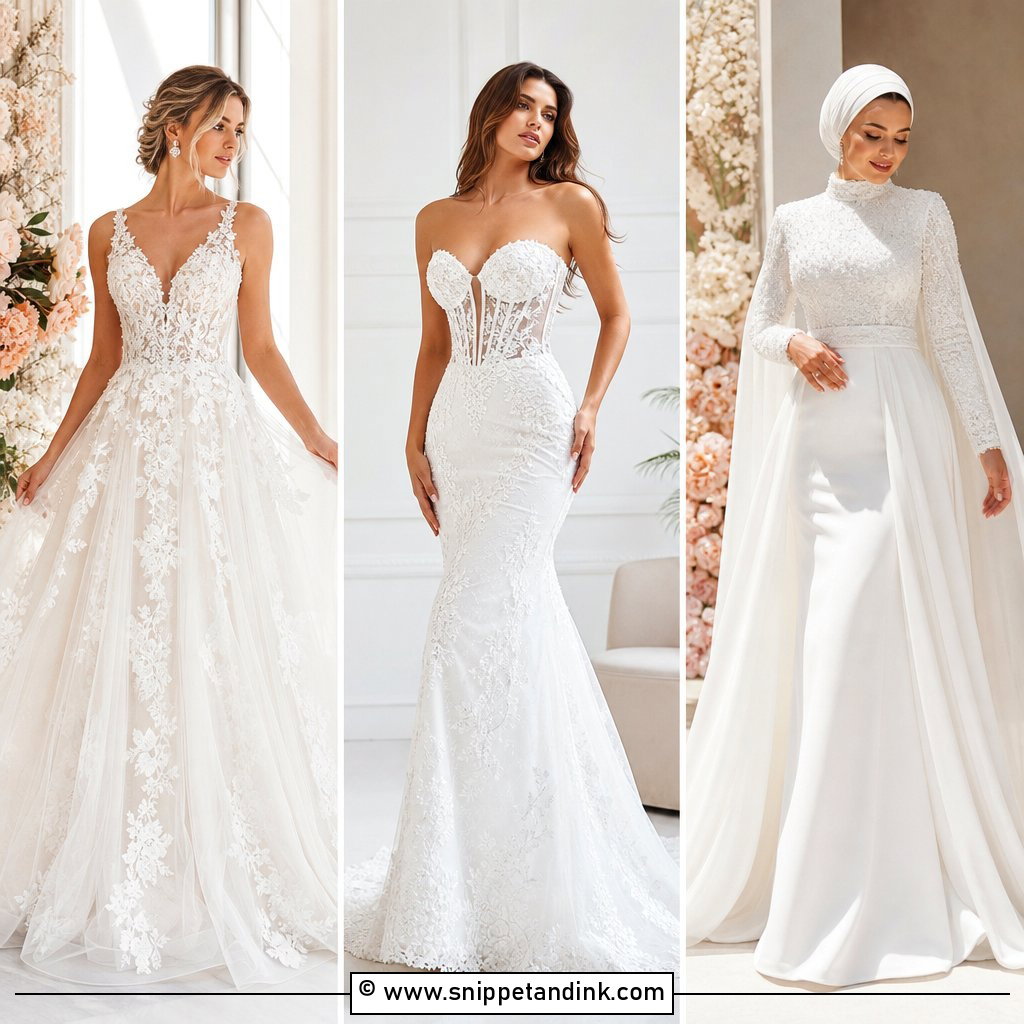
Drop waists start the skirt below the natural waistline, making a long torso and a dramatic skirt release. This is the least forgiving shape on the list. If the seam lands even an inch wrong, it can shorten the legs instead of lengthening the body, so tailoring isn’t optional here. Satin heels, pearl earrings, a lightly trimmed veil and a bouquet held low to show the waist detail. Brides with a long torso tend to wear it best, and it looks nothing like the waistlines on the rails today.
21. 1993 Bow Back Wedding Dress
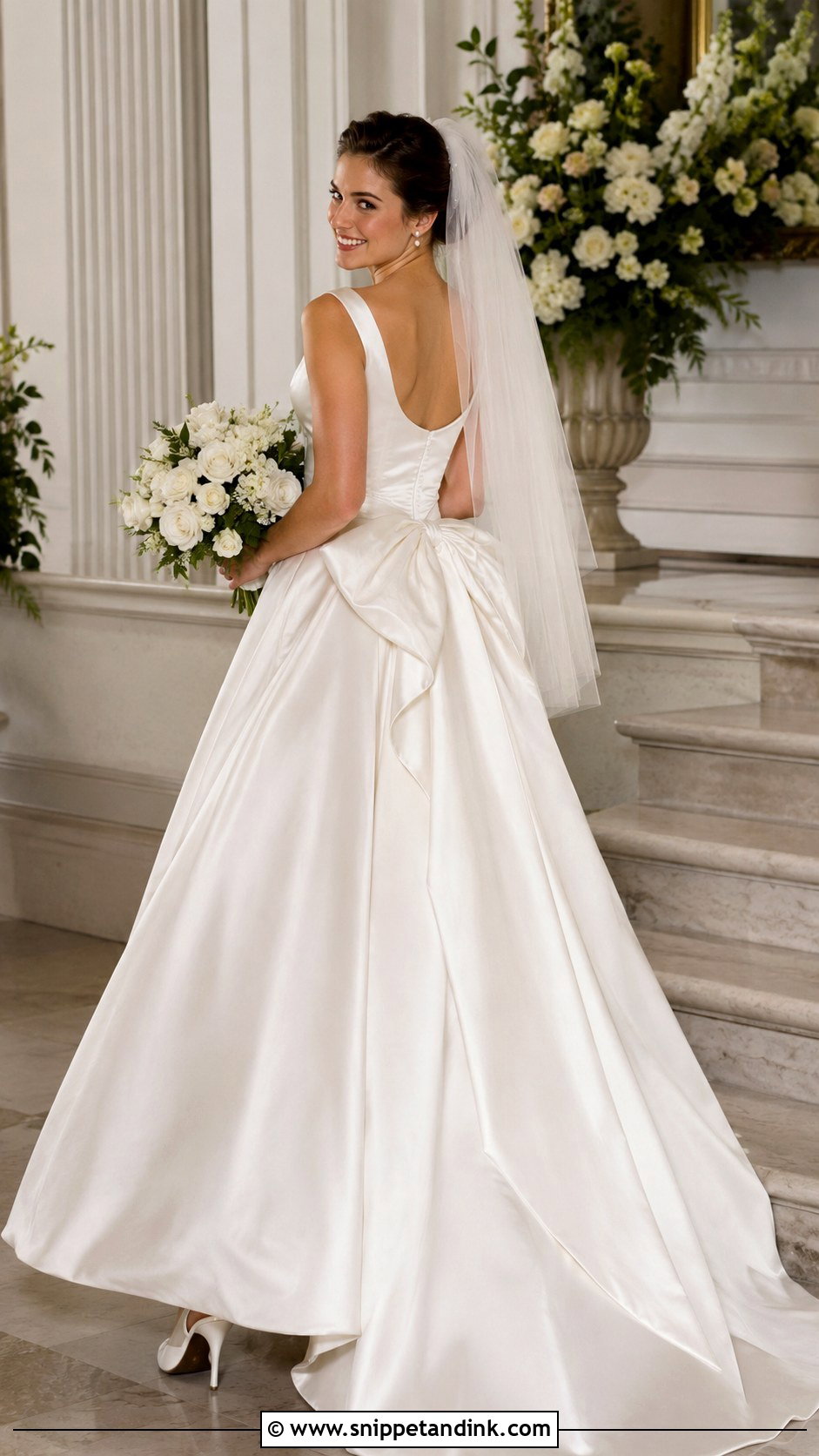
Back bows give the dress its exit photo. Earlier decades went enormous; a 1993-inspired version sits smaller, at the waist or low on the back. My one caution is the veil. A long veil hides the bow for the whole ceremony, so either choose a short one or plan to remove it before the recessional photos. Pearl earrings, satin heels and a classic bouquet keep the front simple. Look at the bow seated, too, because a big one can crush against a chair back during dinner.
22. 1993 Halter Wedding Dress
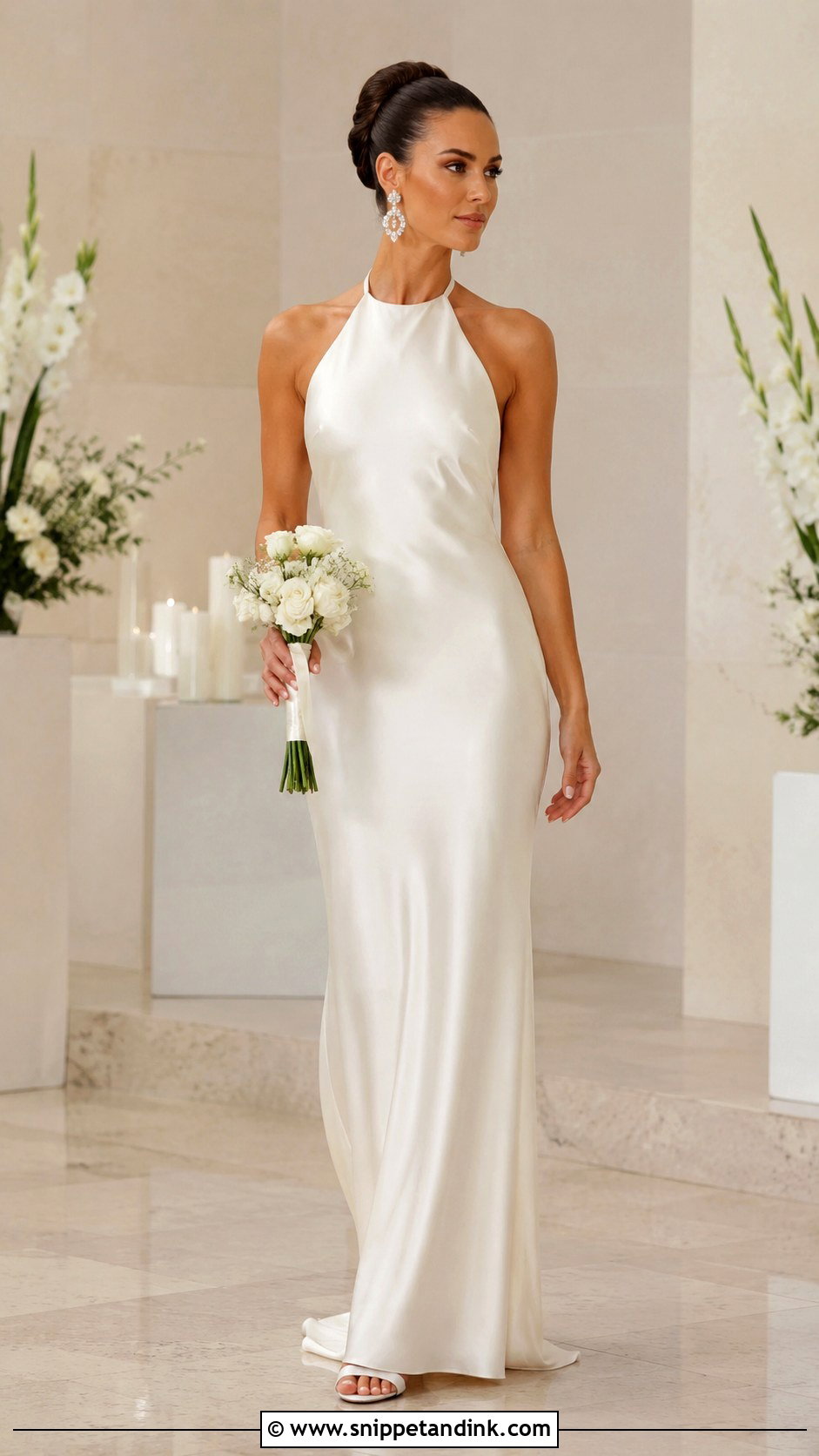
Halters show the sleeker side of the decade. Most 1993 gowns were still full, but body-skimming shapes and clean necklines were arriving, and a halter in satin, crepe or soft silk is the cleanest of them. It needs a good bra solution, often cups sewn into the bodice, because the back and shoulders are bare. I skip the necklace entirely and let statement earrings and a smooth updo do the work. Simple heels and a small bouquet carry it from ceremony to reception without a change.
23. 1993 Tea Length Wedding Dress
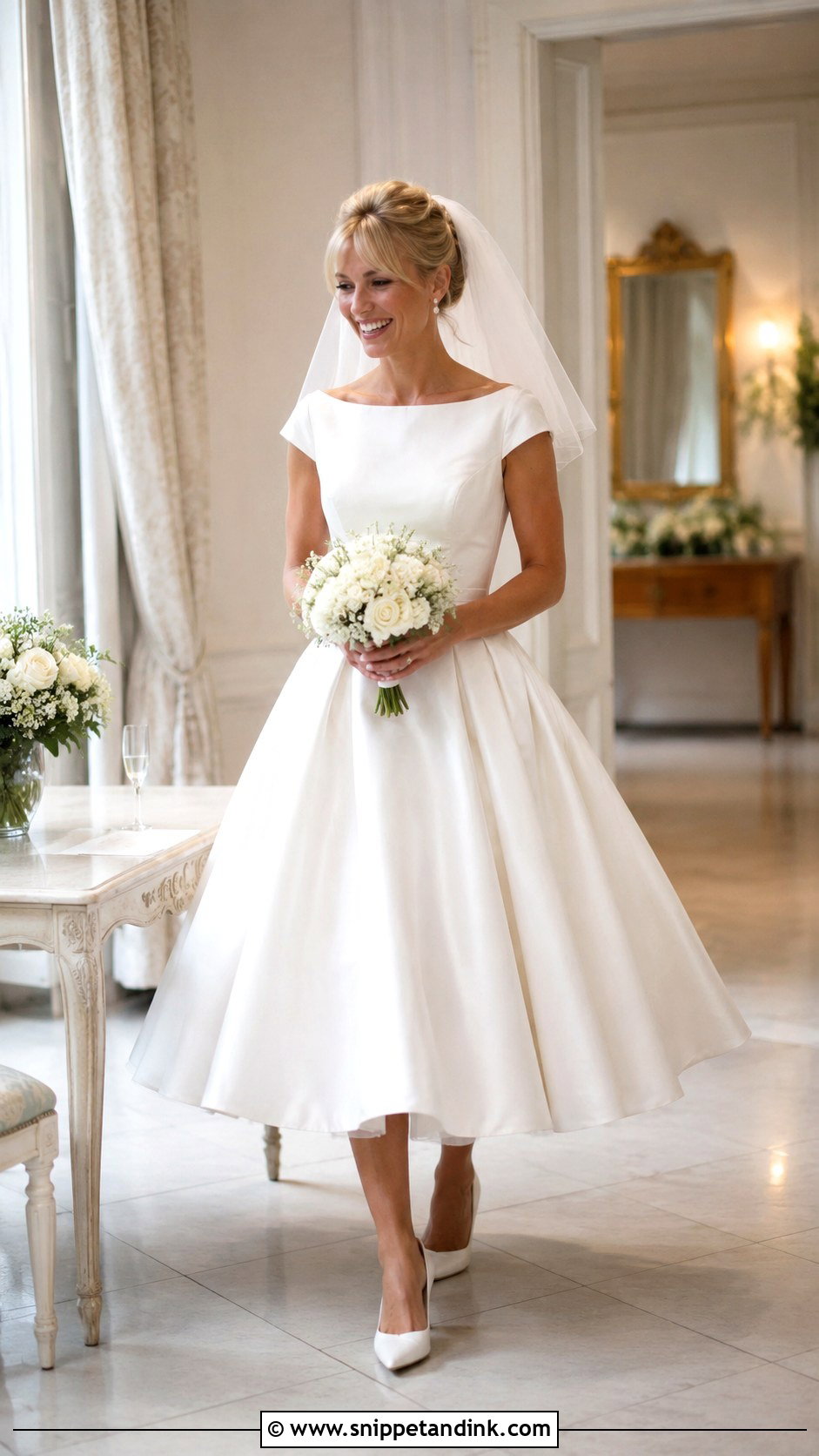
Tea length is the charming alternative to the long formal gowns of the year, with easy movement for civil ceremonies, small receptions or a second look. A fitted bodice and full skirt, short sleeves or a simple strapless top all work. Because the hem stops mid-calf, the shoes are part of the outfit, and I make brides walk in them at the fitting so the hem length is set against the real heel. Pointed pumps, pearl earrings, a short veil and a neat bouquet. You get retro character with nothing trailing behind.
24. 1993 Embroidered Wedding Dress
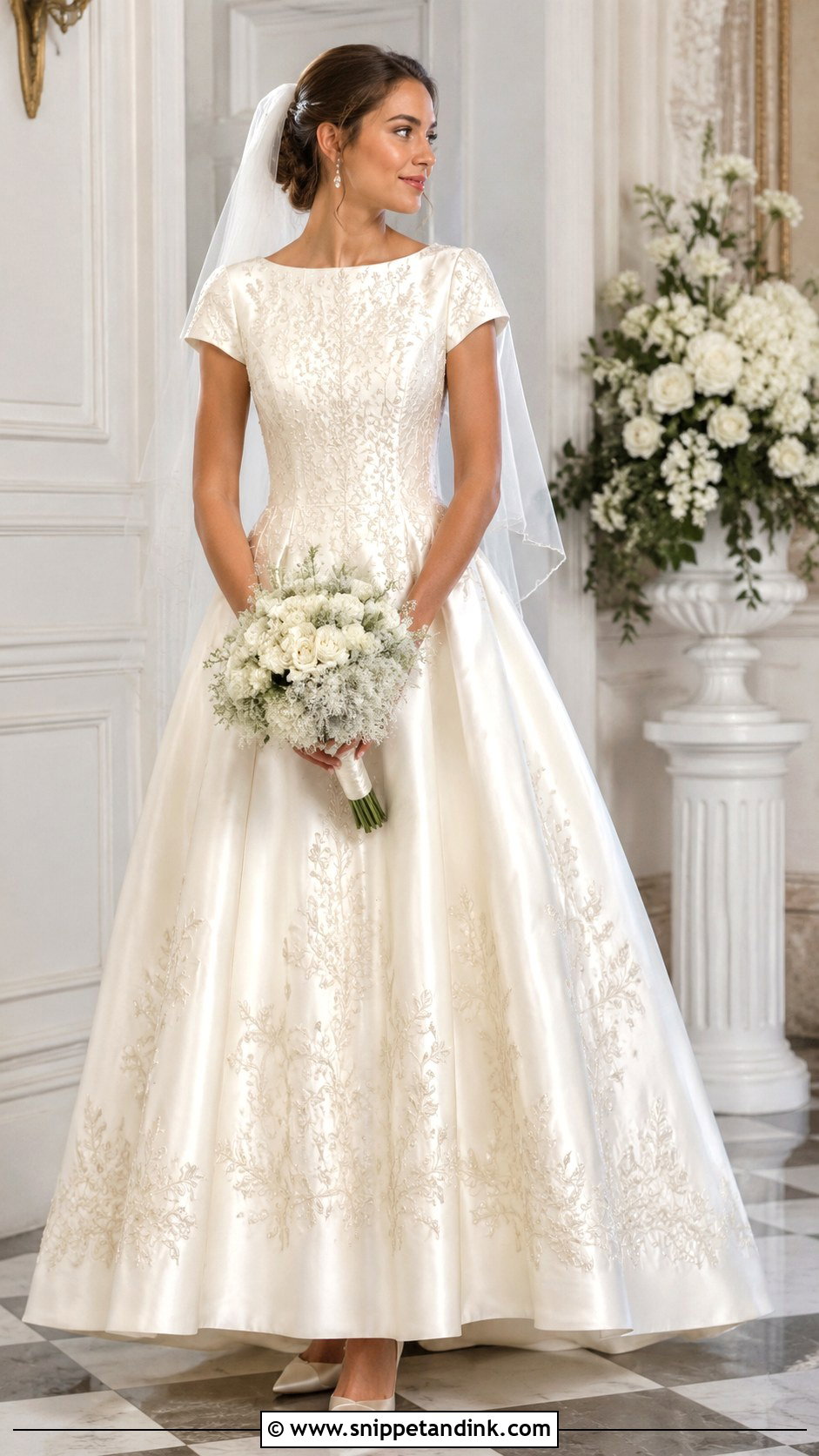
Embroidery adds depth without relying on lace or beads, often as floral work on the bodice, sleeves, skirt or train. Keep it tone on tone, white on white or ivory on ivory, because high-contrast thread reads busy at a distance. Hand embroidery also puckers if the fabric underneath is pressed carelessly, so I ask that it be steamed from the reverse only. Simple heels, delicate earrings, a veil that doesn’t cover the pattern and a soft white bouquet. It holds up close and still reads in full-length photos.
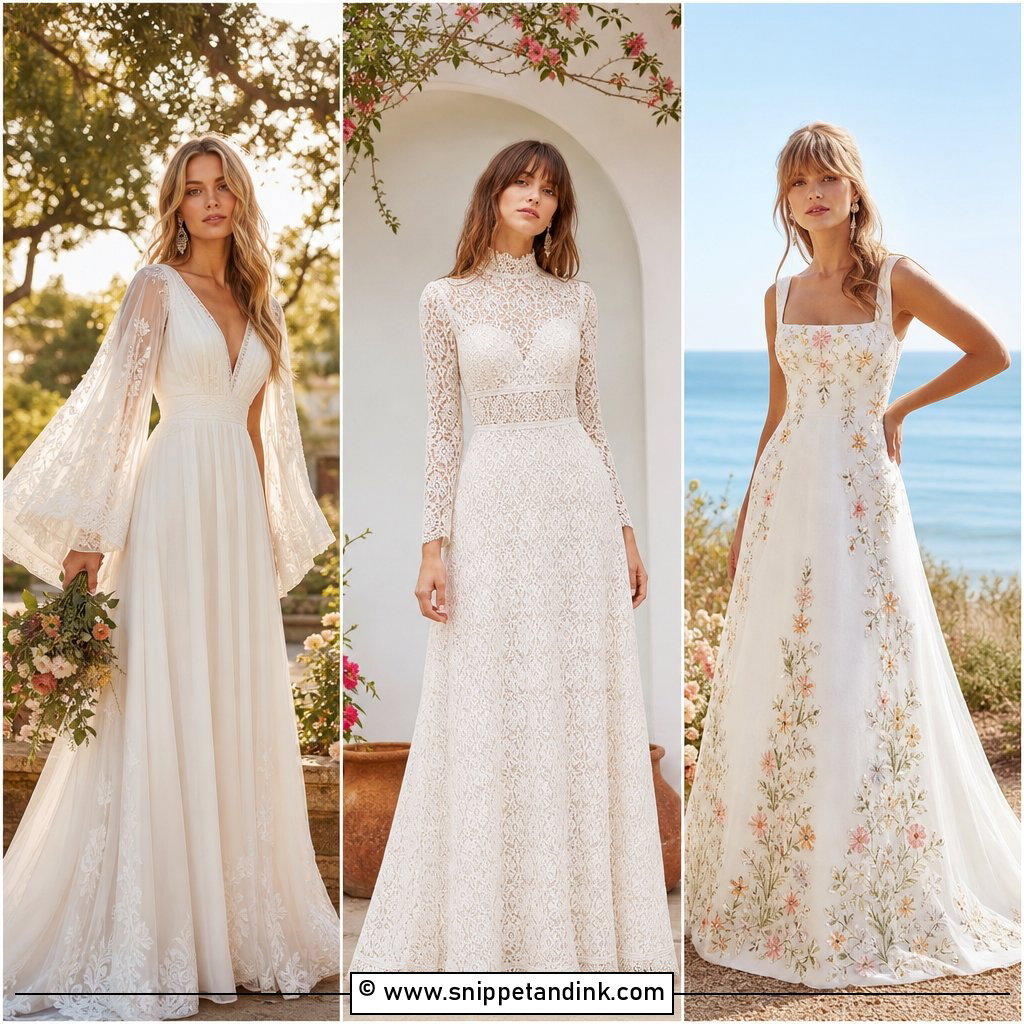
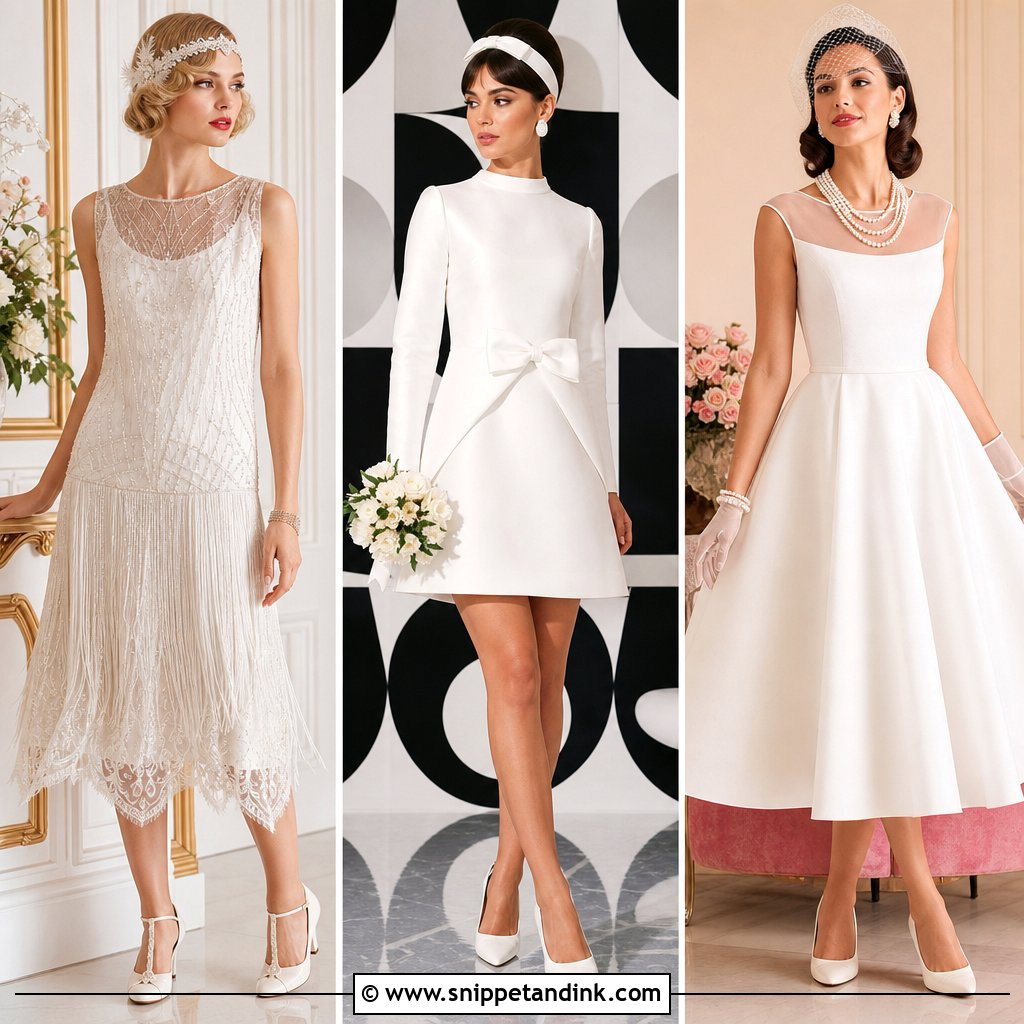


25. 1993 Vintage Vera Wang Inspired Wedding Dress
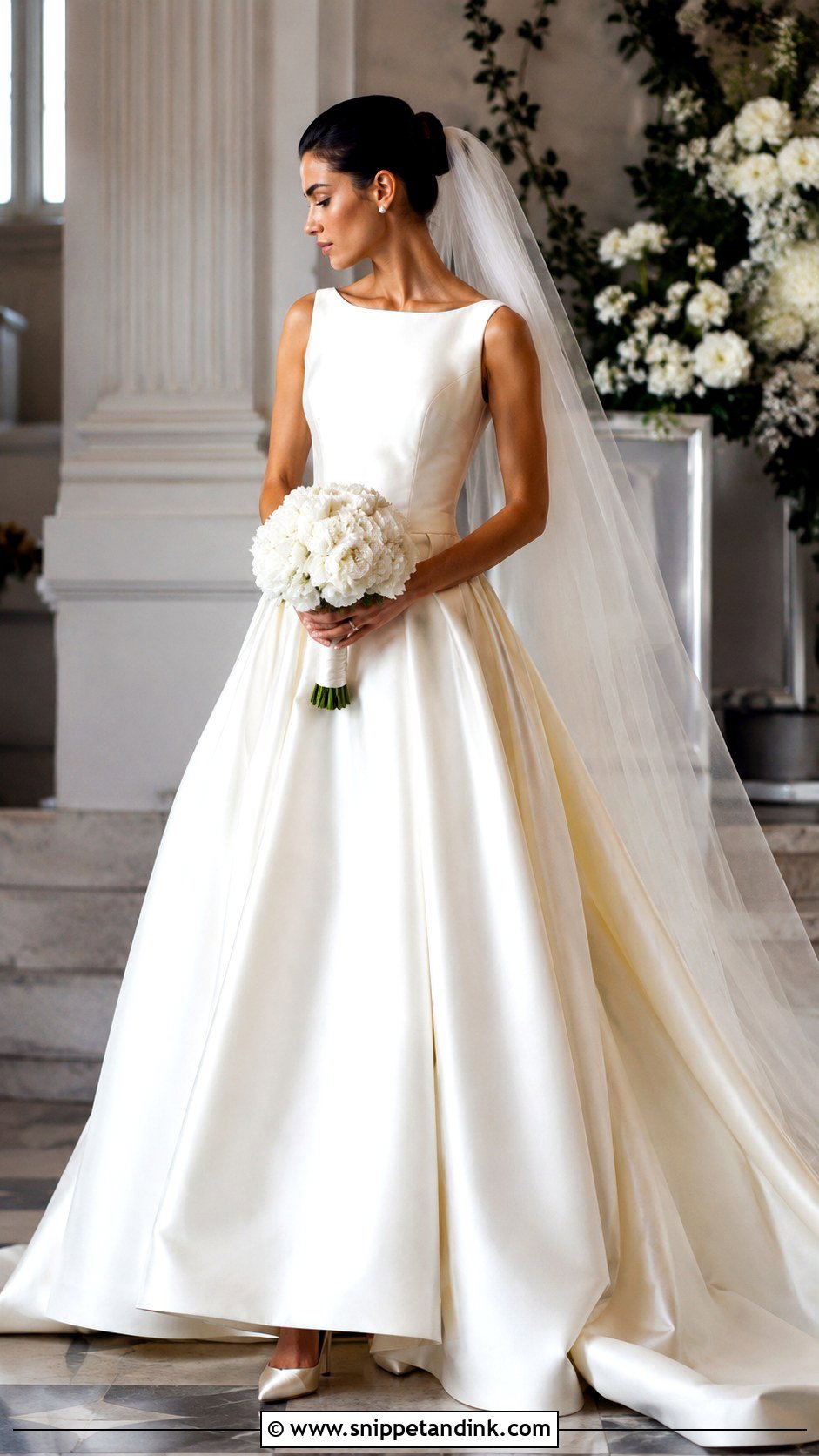
A vintage Vera Wang inspired wedding dress brings the luxury and movement that made early ’90s bridal design so influential: full skirts, fine fabric and clean bodice lines with real flow. Fabric quality matters more here than anywhere else, because the whole effect depends on how the skirt moves when she walks, and a stiff synthetic simply won’t swing. Keep accessories refined: pearl or diamond-like studs, satin heels, a long veil and a structured bouquet. Let the gown lead and aim for the mood of the period rather than a copy of one dress.
Satin, Lace and Pearls After the Last Dance
The fabrics that define this era are also the ones that age worst if the dress is left in a bag. I tell every bride wearing satin or old lace to plan the week after the wedding as carefully as the week before.
- Get it cleaned within a few weeks. Spills of champagne or cake often dry invisible, then oxidise into brown marks months later.
- Tell the cleaner exactly what is on the dress, including any beading, glued stones and vintage pearls, so they can choose a safe method.
- Store it flat or loosely folded with acid-free tissue in the folds, in a breathable box or cotton bag, never the plastic sleeve it came home in.
- Hang only if the dress has proper hanging loops at the waist; a heavy satin skirt pulling from the shoulders stretches the bodice over time.
- Keep it somewhere cool, dark and dry. Attics and basements swing in temperature and damp, which is how the yellowing on so many 1993 gowns began.
If you wore your mother’s dress, this is the moment to have any small repairs done properly so it survives for the next person who wants it.
Wearing 1993 Without Looking Like a Costume
That single year held more variety than most brides expect: lace sleeves, satin ball gowns, pearl details, beaded bodices, long trains, basque waists and the first signs of ’90s minimalism. I treat it as a mood rather than a dress code. Keep one period element, the silhouette or the sleeve, have it fitted properly, and style everything around it simply enough that it still feels like you in 2026, not a photograph of your aunt.
You'll Like These Ideas:









Leave a Reply