
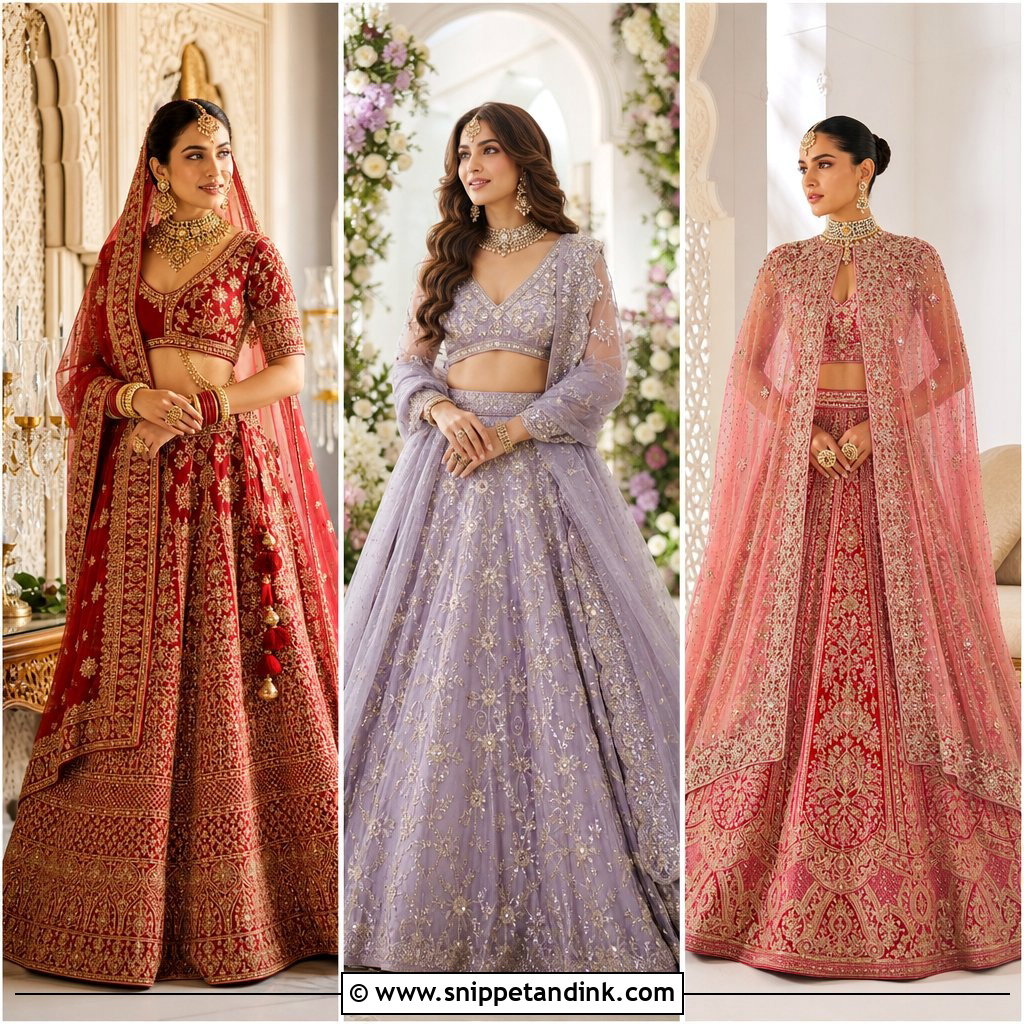
Change how the dupatta sits and the same skirt and blouse can look ceremonial in the morning, relaxed at a daytime lunch and polished for an evening reception. That’s why I spend nearly as long on draping as on choosing the outfit. Below are classic shoulder drapes, saree-inspired wraps, belted looks, capes and layered bridal veils. A good drape shows the embroidery without hiding the blouse, restricting your arms or adding bulk at the waist. Fabric decides a lot: net, organza, chiffon, velvet and silk each fall differently, and a drape that works in one can sag or stand stiff in another.
The Pins That Hold a Drape Without Tearing It
Every drape below depends on what’s holding it, and the wrong pin can snag net or pull a thread loose from zari. This is what I carry to every draping session:
- Small safety pins in gold and silver, so any pin that shows blends with the border. Pin through the blouse seam or lining wherever you can, not through embroidery.
- U-pins and bobby pins for anything worn on the head. They hook into the bun, which takes the weight off the fabric.
- A decorative brooch for the shoulder point of heavier dupattas, where a tiny safety pin would strain and tear the weave.
- Double-sided fabric tape for slippery chiffon and satin borders that refuse to lie flat.
One habit saves a lot of trouble: pin from the inside, so the point faces away from your skin and the head hides in a fold. On net or organza, ease the pin between threads instead of forcing it through, which leaves a visible hole once it comes out.
1. Classic Shoulder Lengha Drape
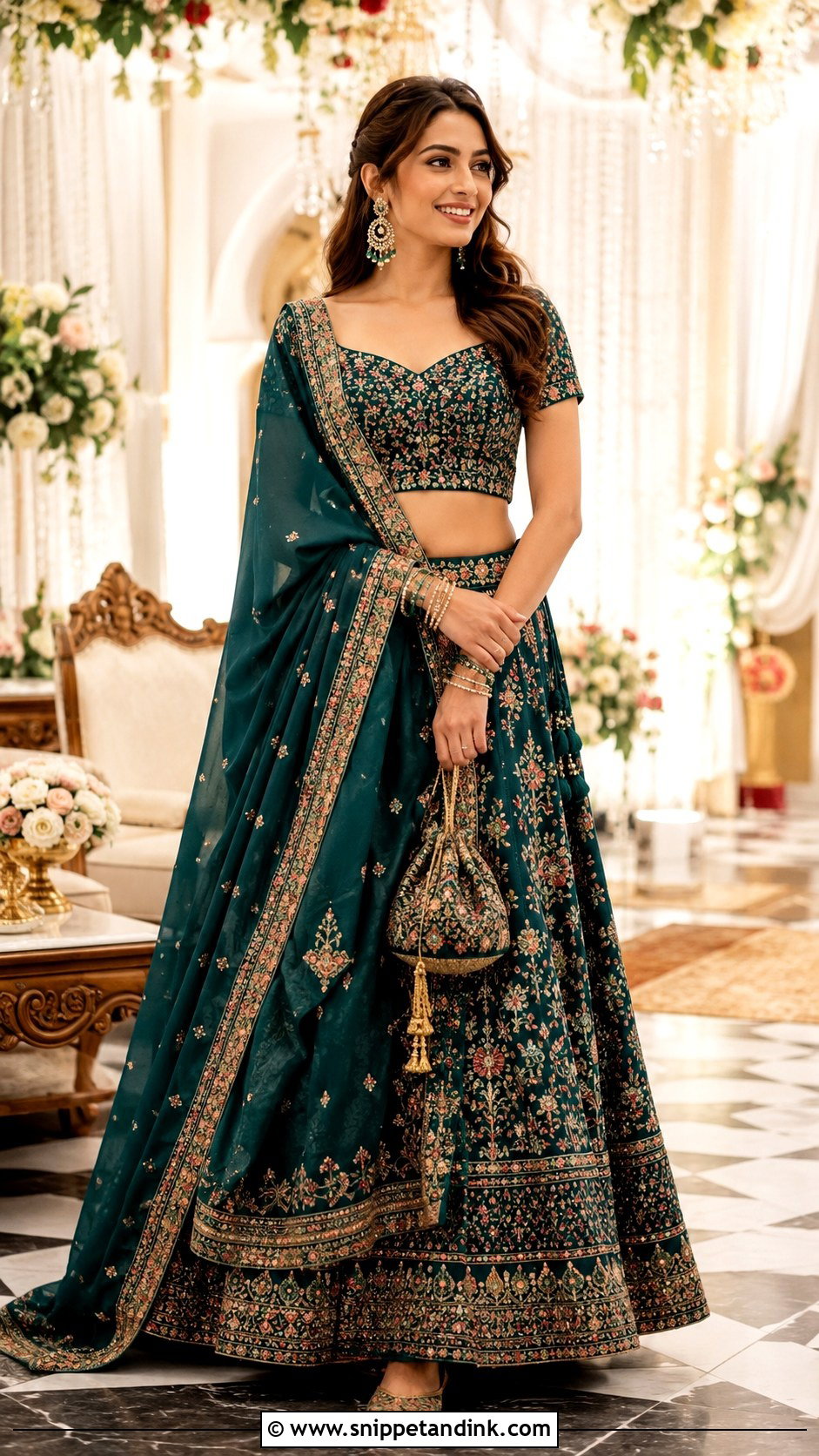
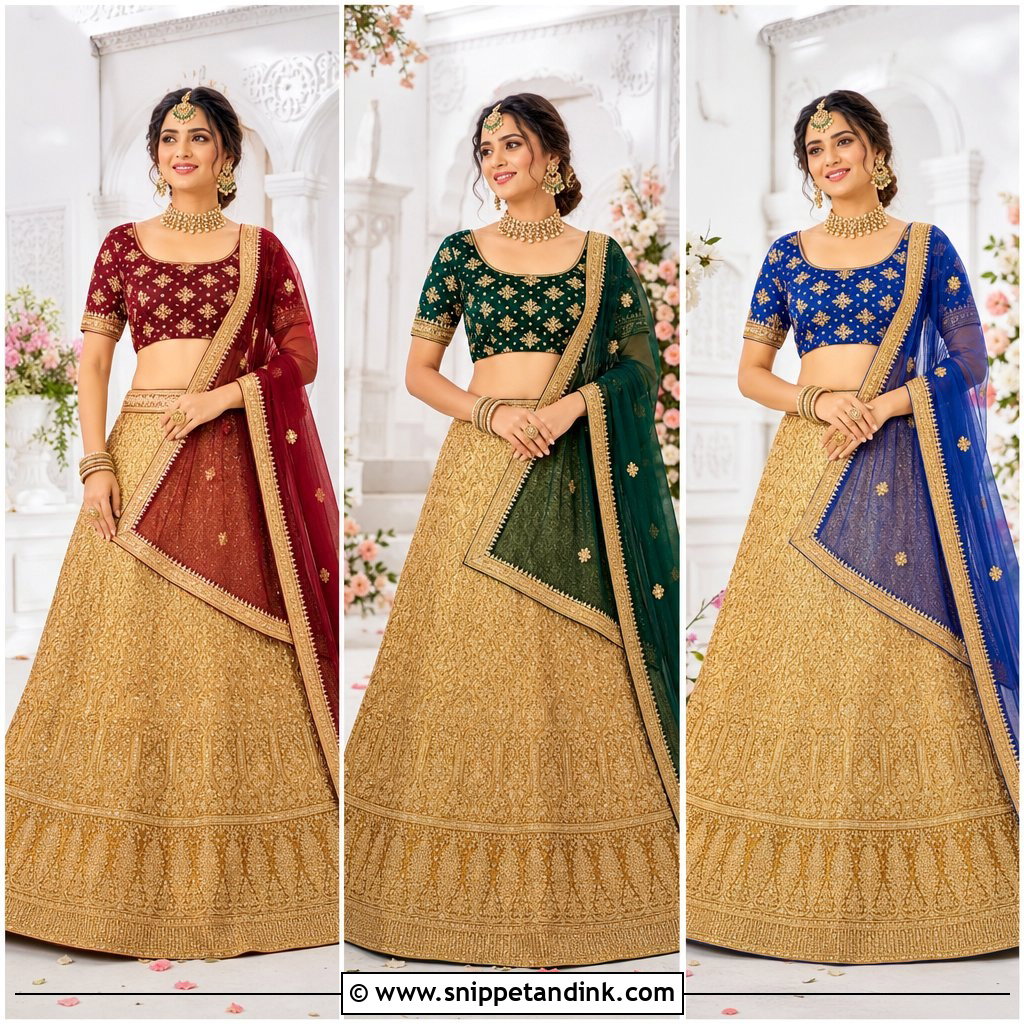
This is the drape I teach first, because almost any dupatta can do it. Make narrow, even pleats at one end and pin them to the left shoulder, letting the length fall behind you. Bring the other end loosely across the front and rest it over the right forearm. The blouse stays framed and the skirt stays visible. It sits well over a fitted choli with a flared skirt, traditional earrings, stacked bangles and embroidered juttis. Chiffon or georgette falls softly; silk holds more shape. Leave the front a little slack, because a taut drape tugs the shoulder pin every time you sit.
2. One Shoulder Open Lengha Drape
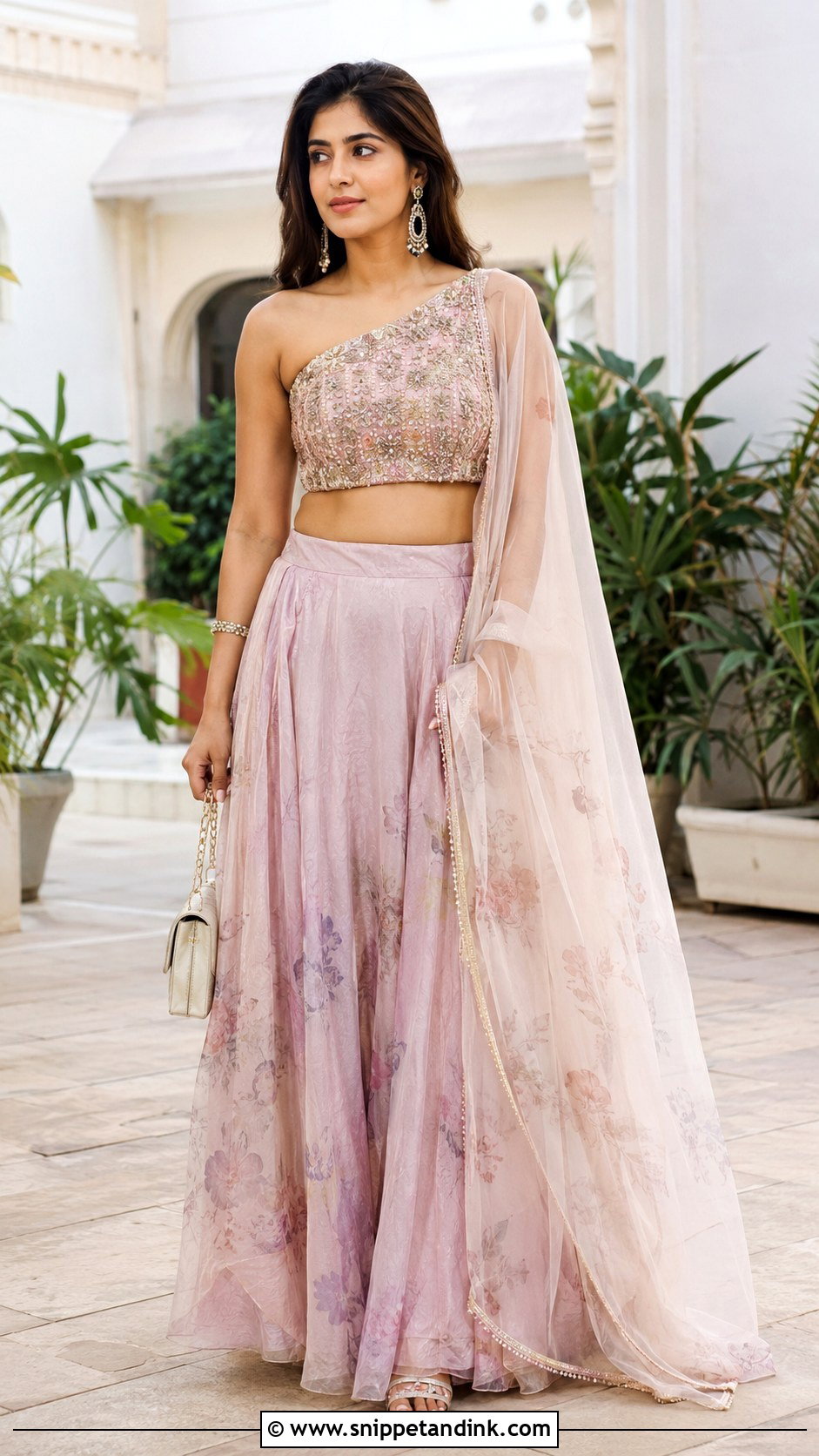
If your blouse carries the best embroidery, don’t cover it. Fold a wide dupatta in half lengthwise, rest the center on one shoulder and let both ends fall front and back. A hidden pin at the blouse seam stops it sliding, and that pin matters more than people expect, since an unpinned dupatta drifts down the arm within minutes. Wear it with a sleeveless or short-sleeved choli, chandelier earrings, a small potli and block heels. Organza gives an airy, architectural shape, while net is softer. I leave one end a hand’s length longer than the other, which looks relaxed rather than measured.
3. Saree Style Lengha Drape
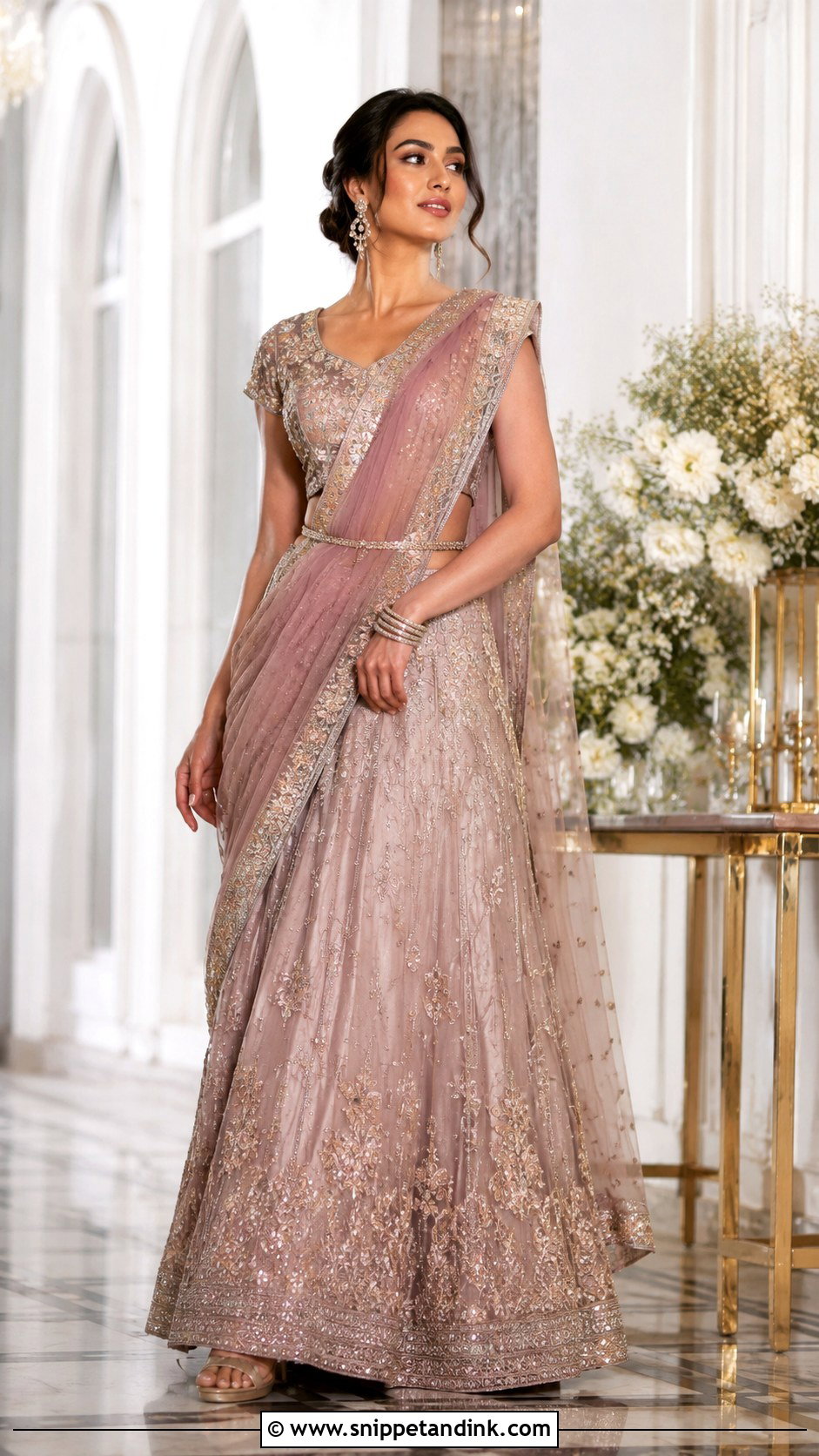
For a defined waist, the saree-style wrap is my first pick. Tuck one corner of the dupatta into the right side of the skirt, take it around the back, across the front and up over the left shoulder like a pallu, then pin the shoulder pleats and the waist tuck. A dupatta with a decorative border earns its place here, since the diagonal shows the edging from hip to shoulder. It looks polished with an A-line lengha, a fitted blouse, waist chain, drop earrings and heeled sandals. Don’t pull it tight across the hips. A gentle curve is more flattering and means you can still sit down for dinner.
4. Gujarati Pallu Lengha Drape
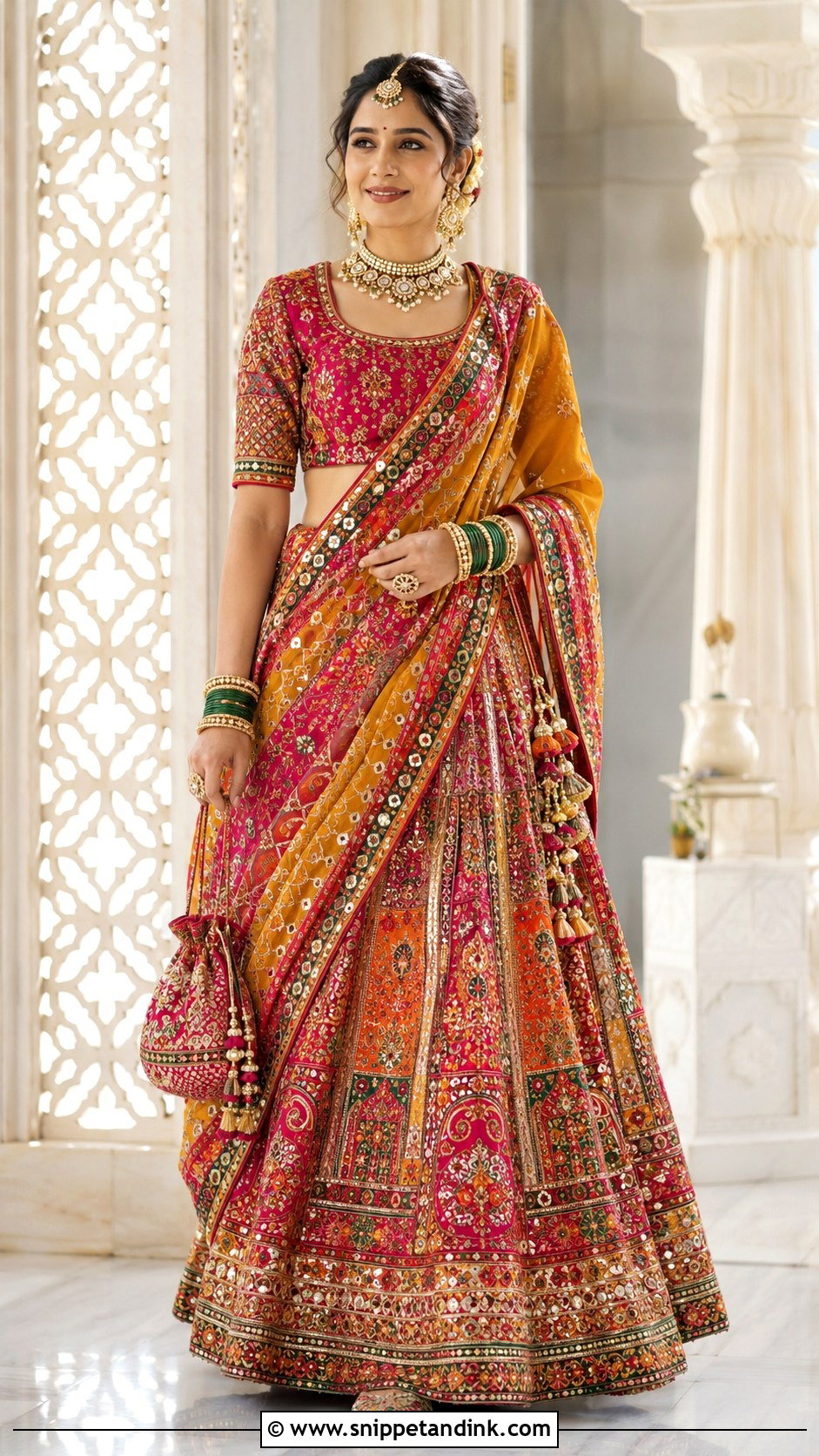
The Gujarati style, often called seedha pallu, is all about the front. Tuck one end into the back of the skirt, wrap the fabric around the waist and take the pleated section over the right shoulder from back to front. Spread the pallu across the torso and pin one corner at the left waist. I choose it when the dupatta’s zari, mirror work or scalloped border is the best thing in the outfit. Medium-weight silk or georgette holds the spread; very soft chiffon collapses into a heap. Pair it with an elbow-length choli, kundan, bangles and embellished juttis, and go lighter on necklaces because the front is already busy.
5. Bridal Veil Lengha Drape
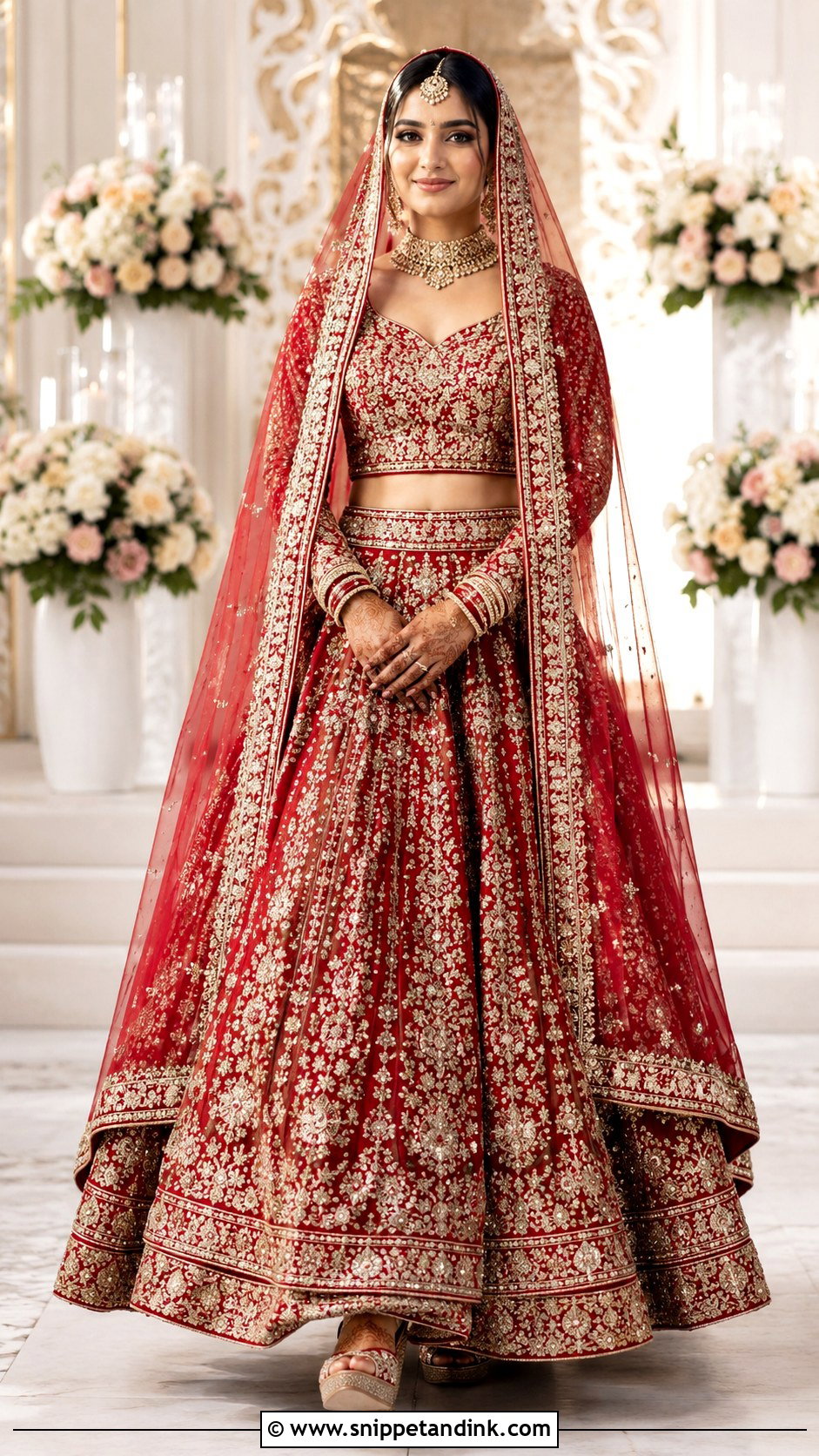
Fabric framing the face reads as bridal immediately. Place the center of a lightweight dupatta over the head with enough length to cover the hair and fall past both shoulders. Anchor it at the crown or under the bun with U-pins hooked into the hairstyle, not with heavy pins along the border, which drag the edge into a point. Let one side fall forward and guide the other behind the arm. Net and soft organza give coverage without flattening the hair underneath. With a bridal lengha, fitted choli, necklace, maang tikka and bangles, wear platform heels or juttis that keep the hem off the floor. Then walk around the bride once: the border should frame the face evenly, neither low on the brow nor covering the earrings.
6. Double Dupatta Bridal Lengha Drape
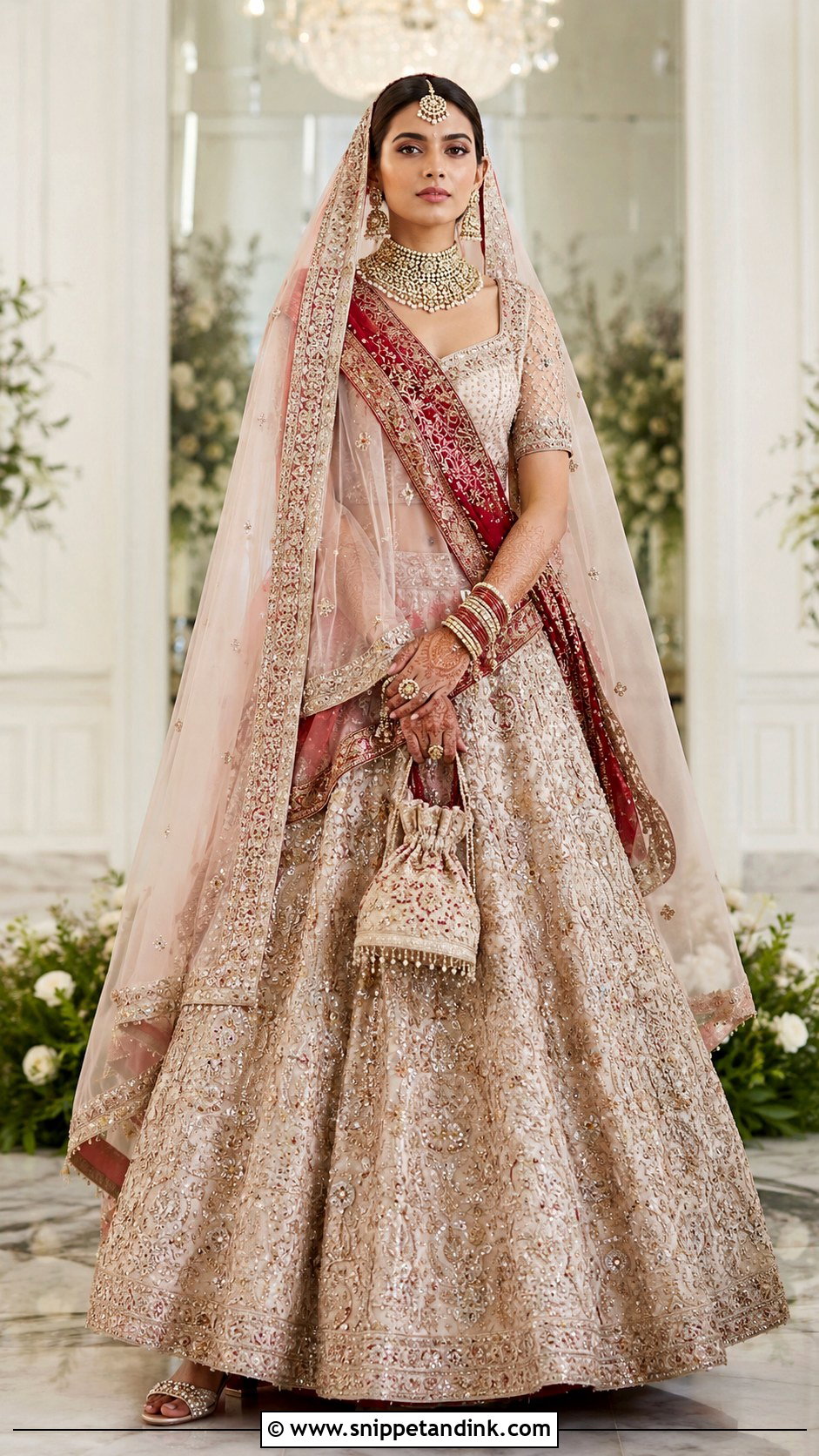
Two dupattas split the work: the sheer one is the veil, the heavier one dresses the body. Pin the lighter, transparent dupatta over the head first, then drape the heavier one diagonally across the torso, pinned at one shoulder and at the opposite waist. That order matters, because pinning the heavy layer first leaves no clean anchor for the veil. Coordinate rather than match; a sheer neutral veil over a richly bordered contrasting dupatta reads more clearly than two identical fabrics. Finish with a detailed lengha, statement jewelry, bangles and supportive heels. Keep the head layer as light as you can find, since you’ll wear it for hours.
7. Belted Lengha Dupatta Drape
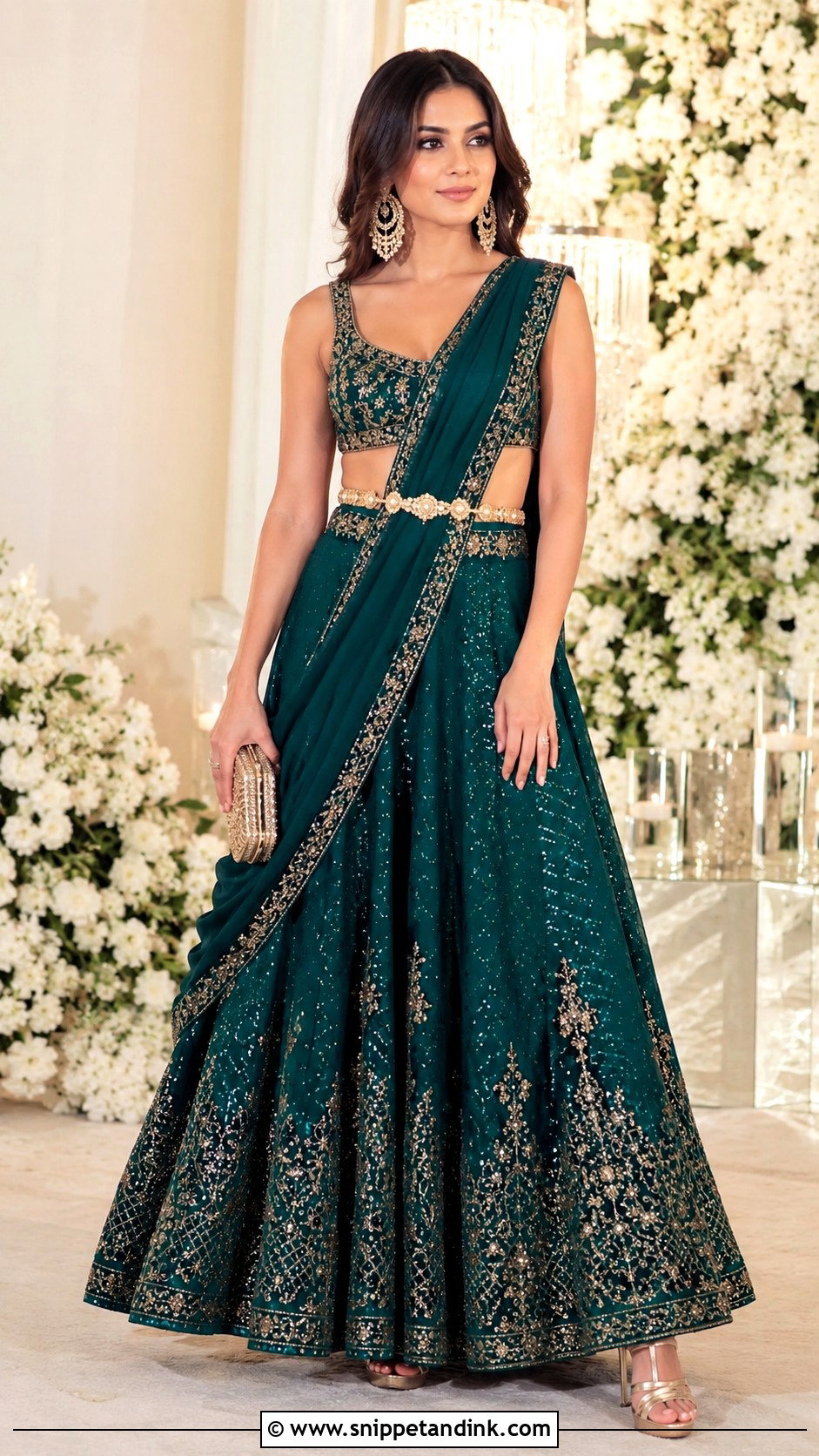
A belt is the fix I use for brides who plan to dance. Drape the dupatta over one shoulder, bring it diagonally across the front and wrap the rest around the waist, then fasten an embroidered belt, metallic kamarbandh or fabric sash over it. Smooth the fabric before fastening, because any fold trapped under a belt becomes a lump. It should sit at the natural waist without squeezing the skirt waistband beneath it. The balance is simple: ornate belt with plain fabric, minimal belt with a heavily worked dupatta. Wear it with a contemporary lengha, cropped choli, statement earrings, a structured clutch and heeled sandals.
8. Cape Lengha Dupatta Drape
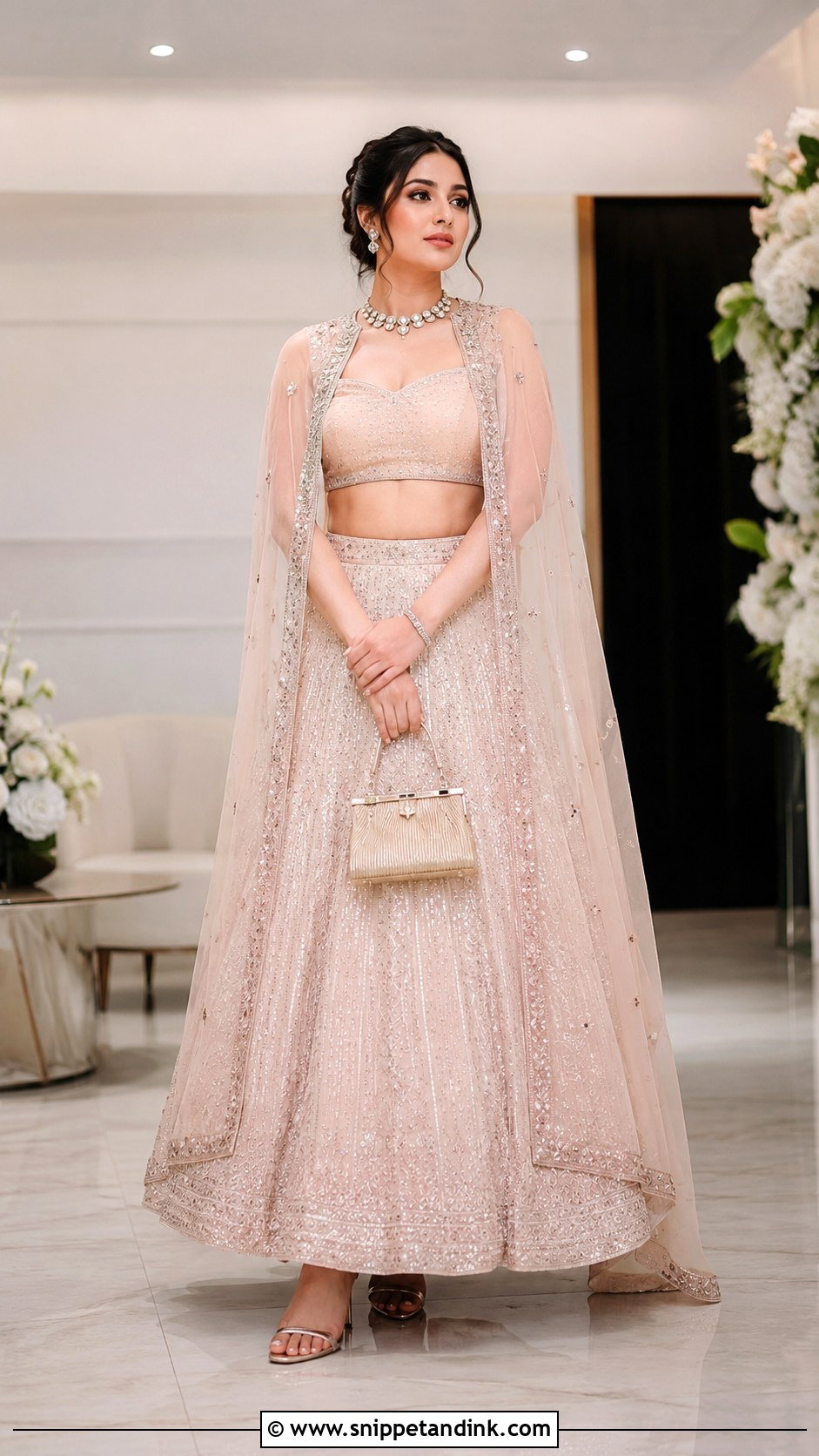
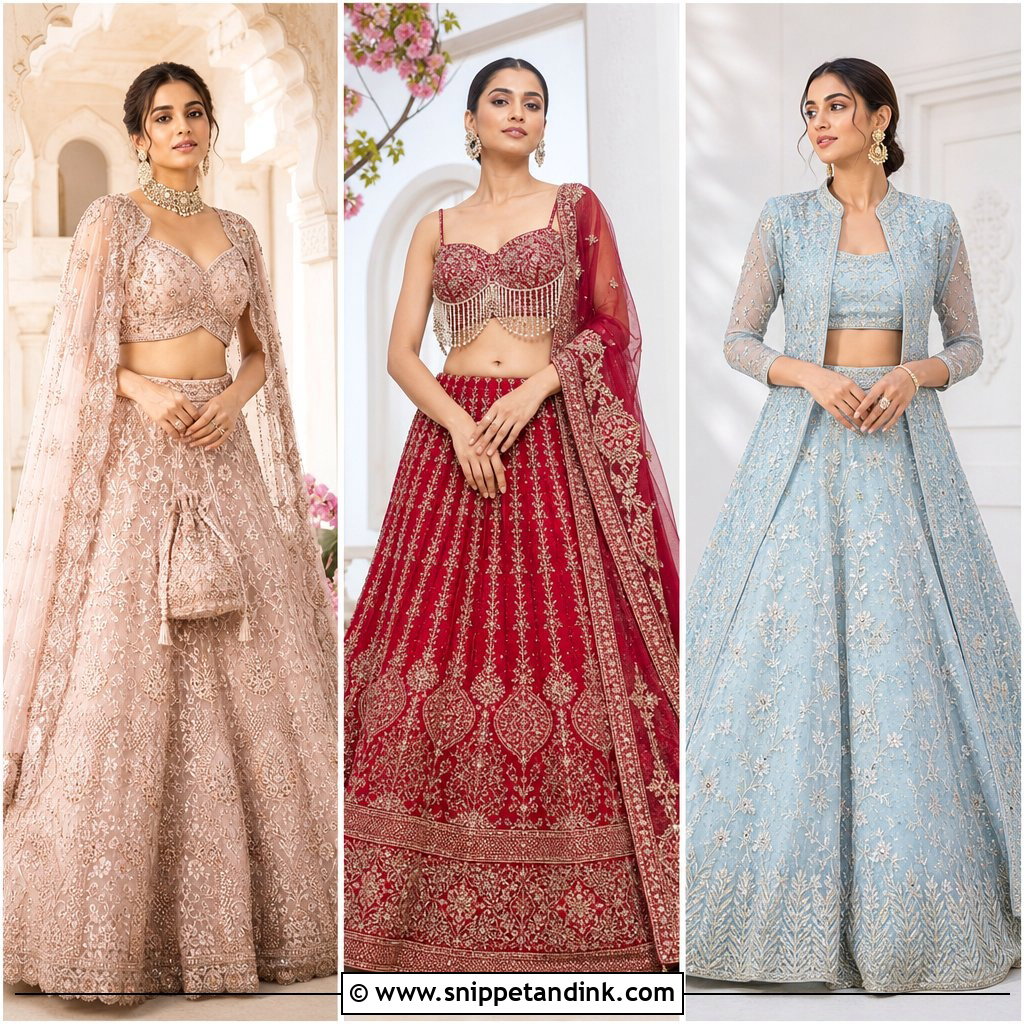
The cape drape covers both shoulders and leaves the whole front open. Lay the middle of the dupatta across your upper back, bring both ends over the shoulders and let them fall evenly down the front, with a small hidden pin at each shoulder seam. For more arm coverage, ease the fabric outward over the upper arms before pinning. Sheer organza, net or chiffon gives it movement; anything heavy looks like a blanket. I pair it with plain or lightly worked lenghas, a structured blouse, a delicate necklace, studs and sleek heels. Check both front panels in a mirror, because even a small difference in length shows.
9. Front Flow Lengha Drape
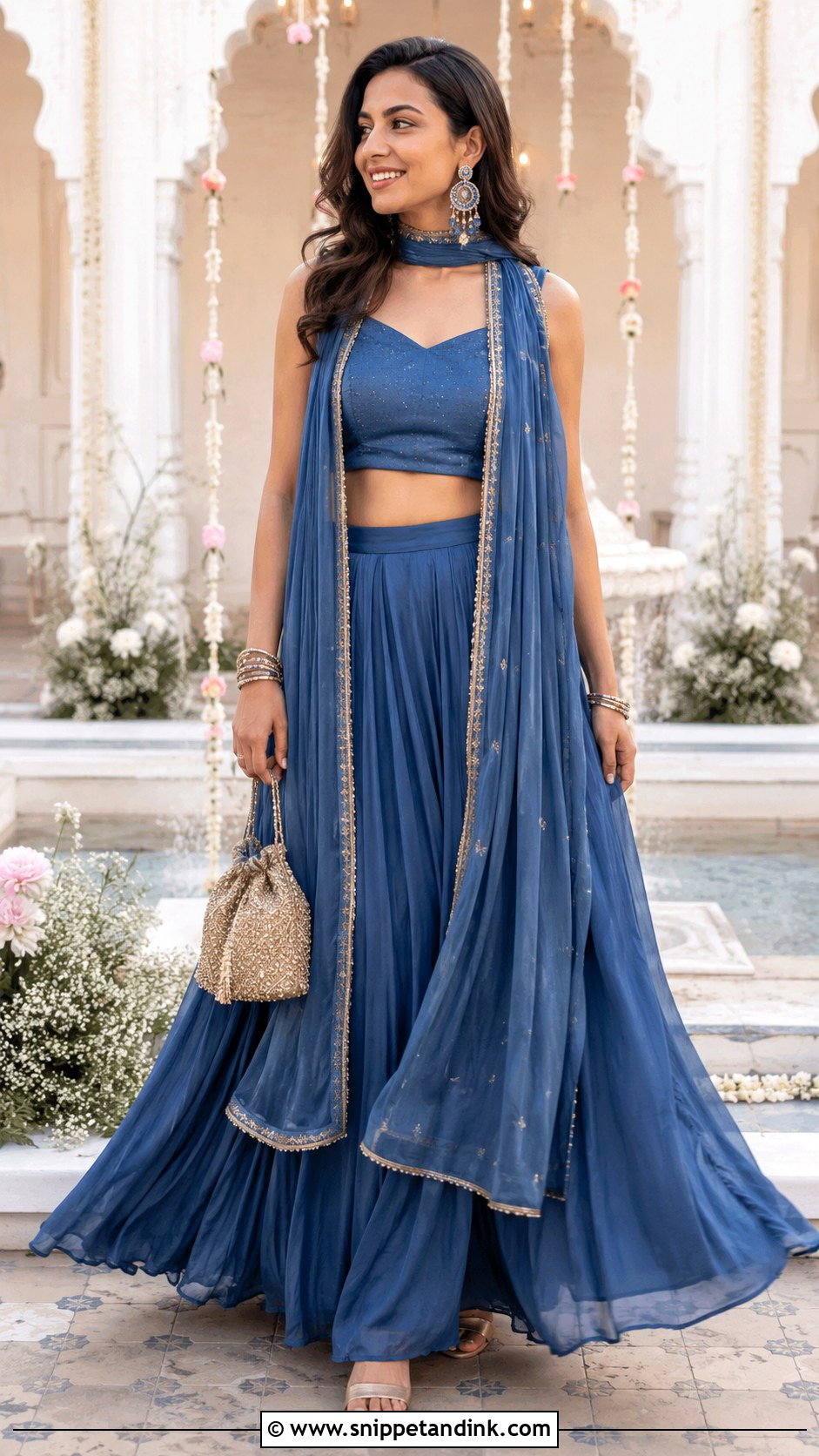
Think of this one as wearing the dupatta like a long scarf. Place it behind the neck with an end over each shoulder and let the panels fall naturally, without tight pleats. On slippery fabric, pin each side at the shoulder seam. The open center shows the blouse, so it suits a fitted choli with good work on the front. Narrow borders stop the two panels looking heavy, and long earrings, slim bangles and a small handbag keep everything else light. The one thing I measure: in your actual shoes, the ends should stop several inches above the floor, or you’ll step on them climbing stairs.
10. Shawl Style Lengha Drape
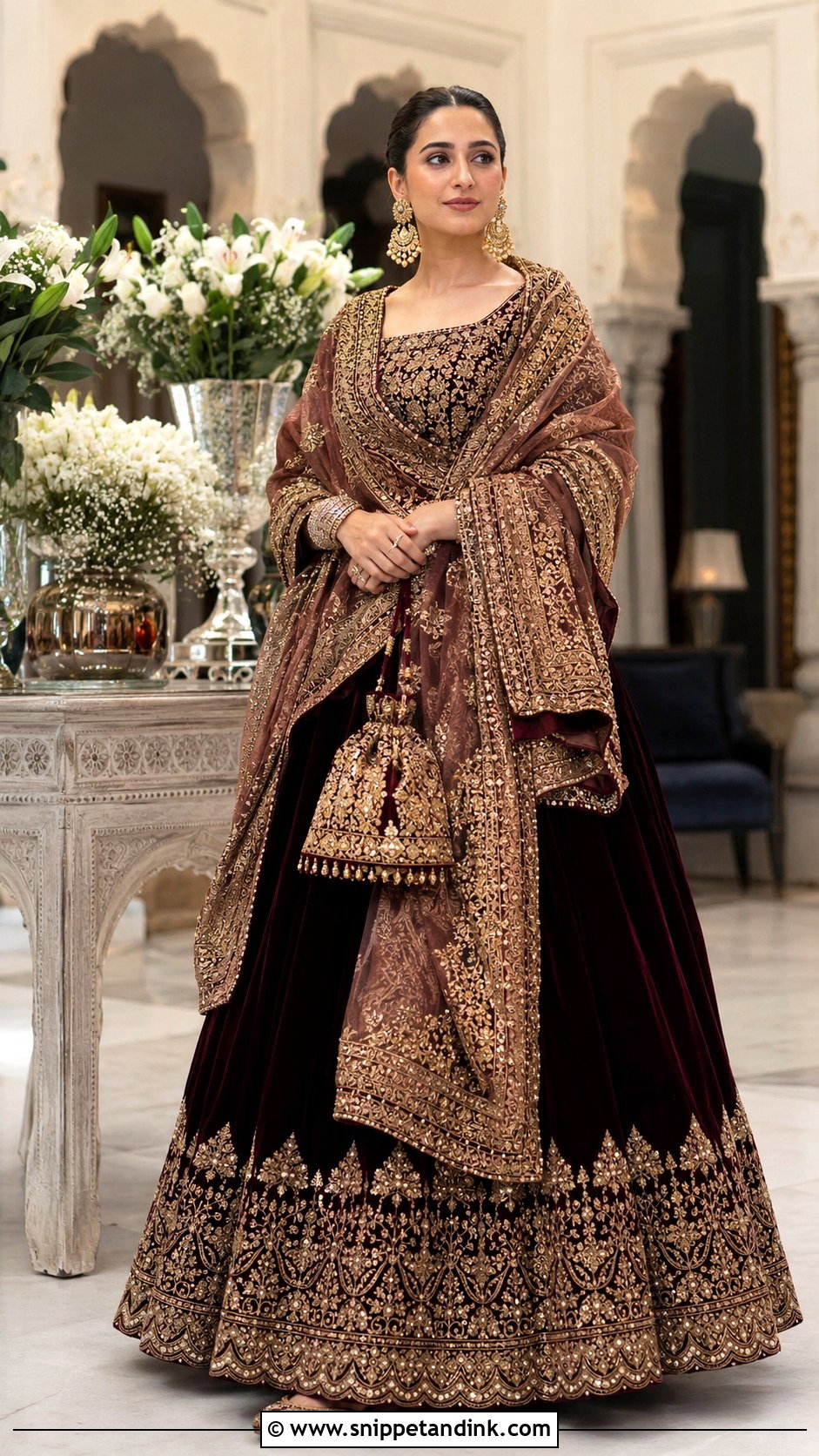
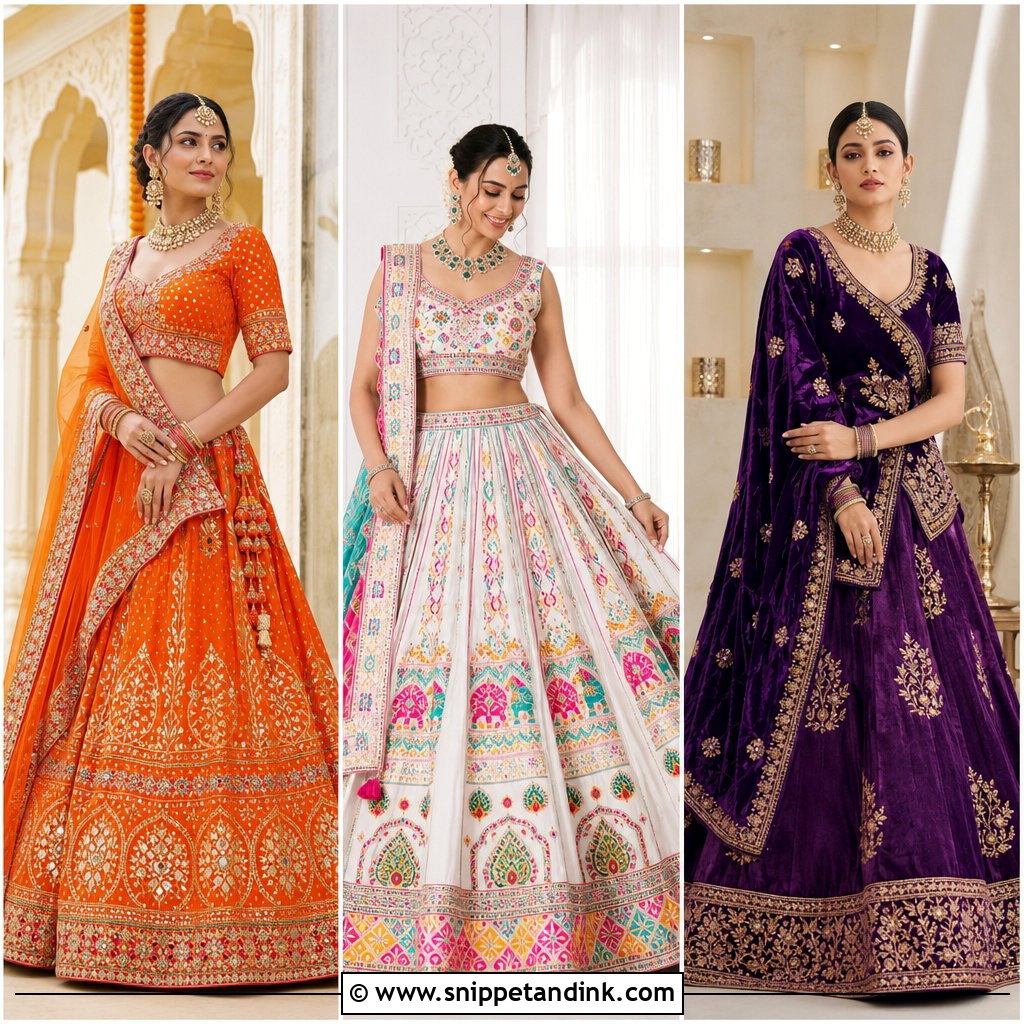
Heavy embroidery and thick weaves don’t pleat well, so I wrap them instead. Place the dupatta around the shoulders with one end longer, bring that longer end across the front and rest it over the opposite forearm, then leave the short side behind the shoulder or pin it at the blouse seam. It’s a natural partner for a velvet, brocade, or raw silk lengha, a modest fitted choli, heritage earrings, closed-toe juttis and a structured potli. In cool weather it doubles as warmth. Spread the fabric across both shoulders instead of bunching it at the neck, which shortens the neck and hides the necklace.
11. Wrist Loop Lengha Drape
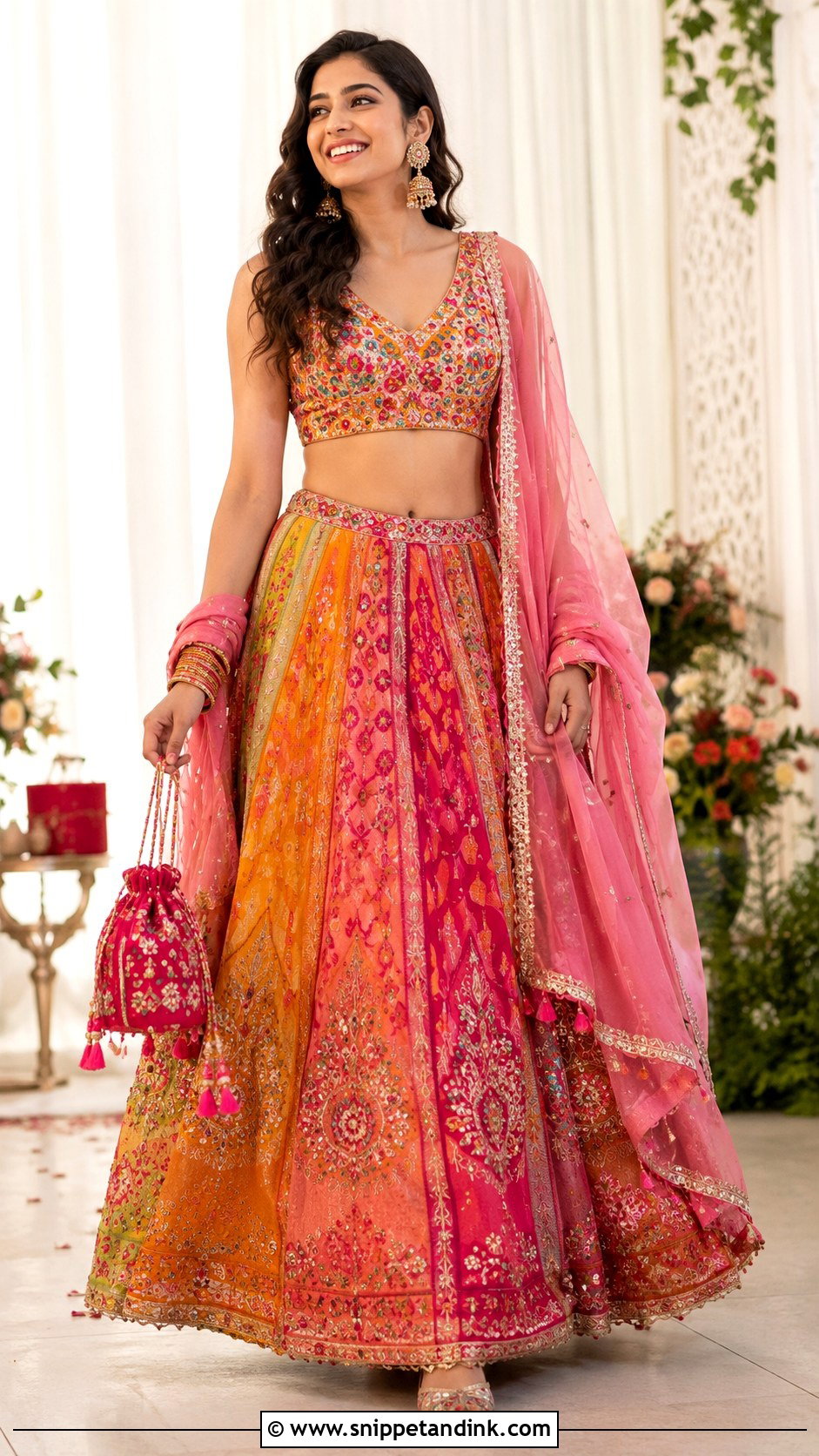
Pleat one end and pin it to the left shoulder, then carry the other end across the front and loop it loosely around the right wrist, held with a discreet pin or a bracelet. The loop gives you control without fixing everything in place. Leave slack between shoulder and wrist. I have brides raise and lower that arm a few times before we finish, and if it tugs at the shoulder pin, I lengthen the gap. Chiffon and georgette make soft folds here, while stiff fabric looks like a sling. A flared lengha, short choli, layered bangles, earrings and embroidered flats complete it.
12. Forearm Lengha Dupatta Drape
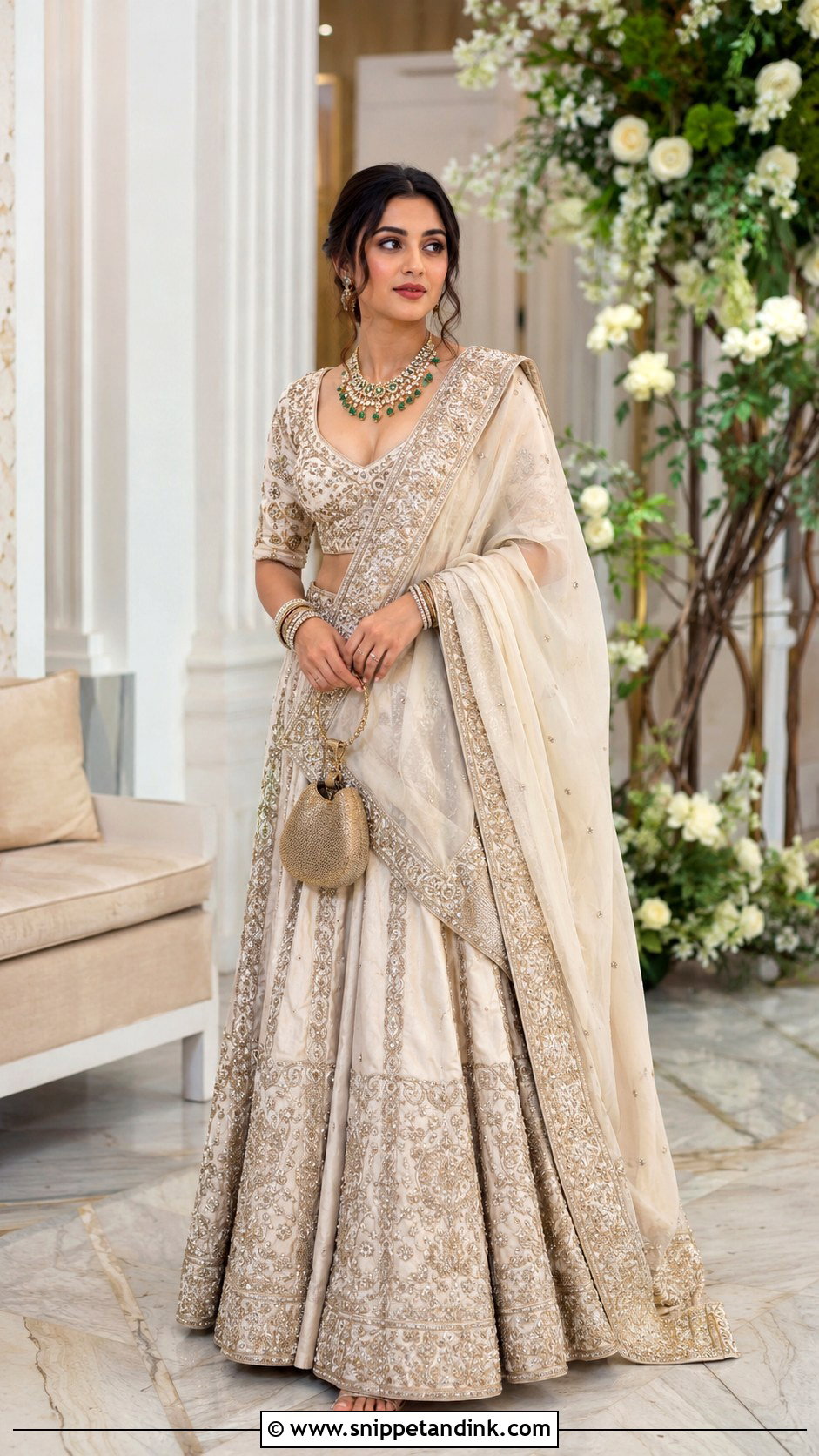
Picture a long embroidered border running down one side of the outfit. Pleat the dupatta over one shoulder, carry the other end diagonally across the body and gather it loosely over the opposite forearm instead of looping the wrist. You hold the drape yourself, so nothing is pinned at the arm, which makes it easy to adjust for photos. A wide border stays visible along the arm and across the torso. Wear it with a paneled lengha, fitted blouse, statement necklace, bangles and low block heels. With a heavily embellished dupatta, pin a small inner fold to the blouse so your shoulder doesn’t carry the full weight. The downside is honest: that arm is busy all evening.
13. Cross Body Lengha Drape
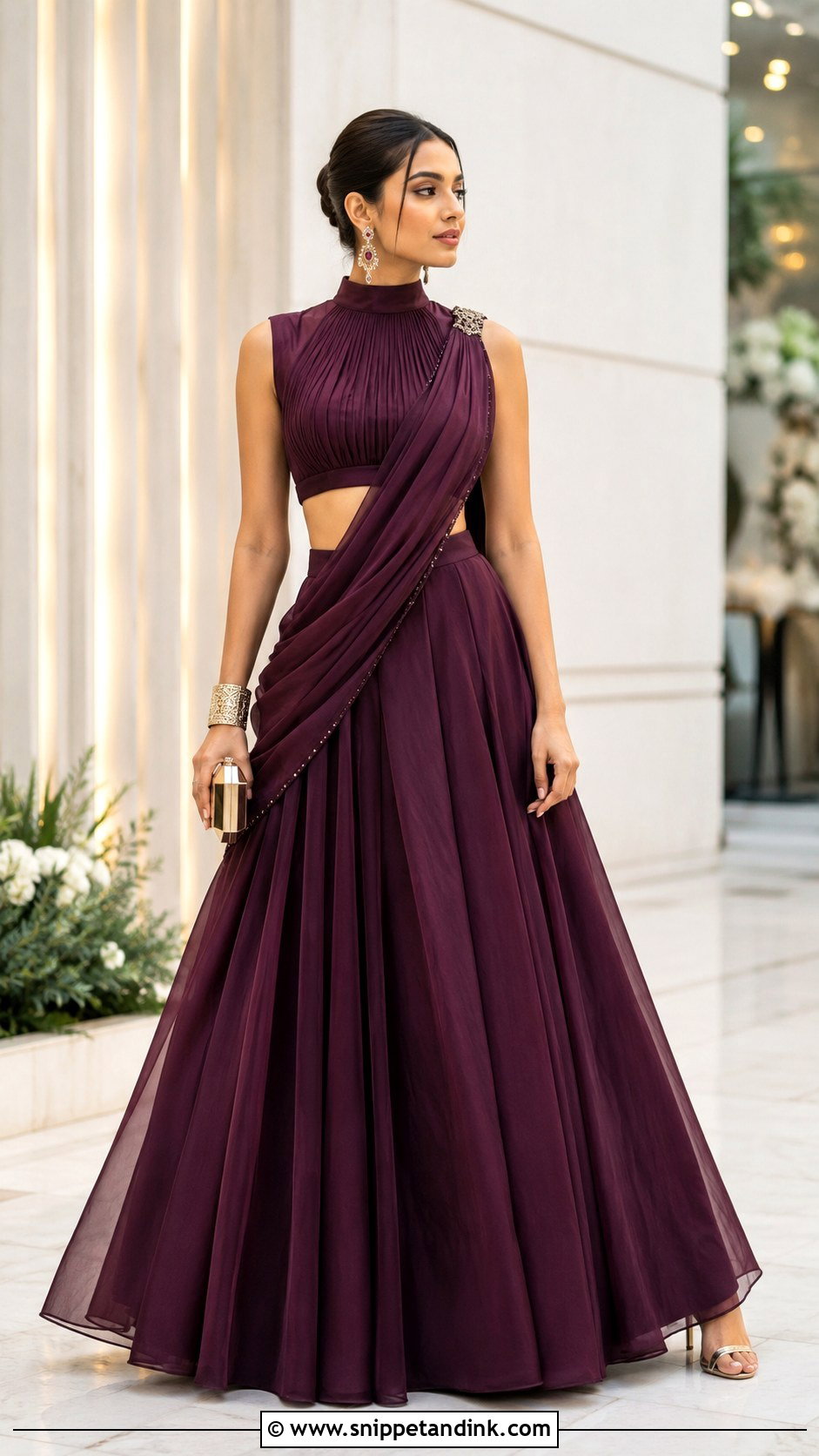
Pin one end to the right shoulder, bring the fabric across the chest and secure the other end at the left side of the waist, leaving a little to hang below the pin. The diagonal is strong and gives more coverage than most drapes here. Set the waist pin slightly toward the side rather than dead center so the line follows the body. Lightweight fabric is essential, or the layer hides the blouse and adds volume across the bust. I like it with a monochrome lengha, a high-neck choli, drop earrings, a cuff bracelet and metallic heels.
14. Front U Shape Lengha Drape
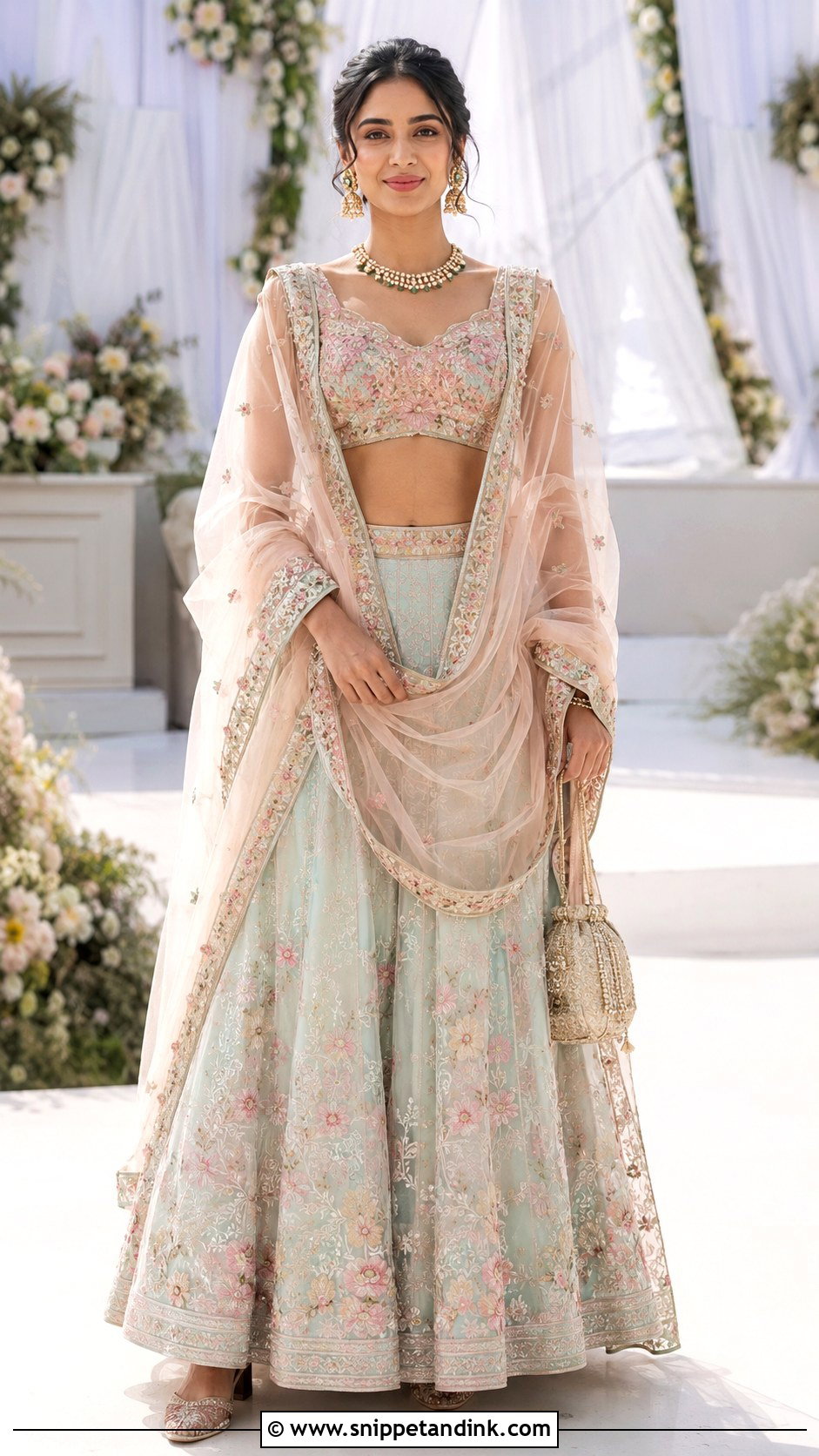
This drape shows both borders at once. Lay the middle of the dupatta across the front of your torso, take each end over a shoulder and pin them at the back of the blouse, so the center falls in a relaxed curve across the neckline or upper waist. Adjust the depth to the blouse and the coverage you want. Soft net or georgette curves naturally; stiff fabric makes a hard V instead. Keep the curve above the waistline so your shape doesn’t disappear. Pin both sides at matching points, as an uneven U is the first thing a camera catches. A simple skirt, embellished choli, delicate necklace, jhumkas and heeled juttis finish it.
15. Back U Shape Lengha Drape
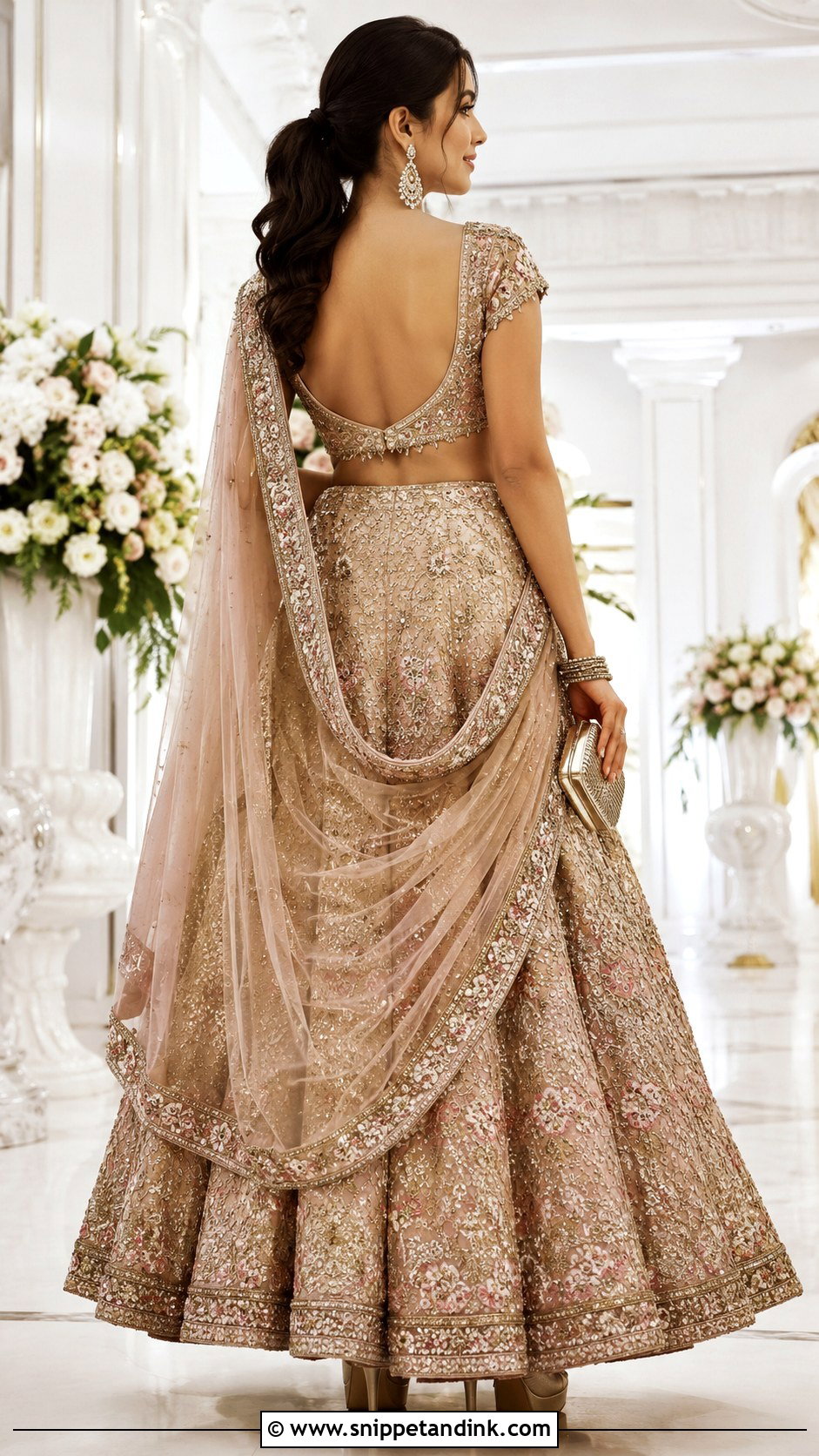
The drama goes behind you with this one. Put one end over each shoulder, let the center fall in a wide curve across the back and pin both ends at the shoulder seams so they hang down the front. With a detailed back-neck blouse, set the curve low enough to reveal it. A striking border defines the shape, so pick a dupatta with a good edge. A full skirt, long earrings, bangles, a clutch and platform sandals suit it. Before you leave, check that the curve stays above the knees. Any lower and it catches on the skirt as you walk, or ends up under you when you sit.
16. Half Saree Lengha Drape
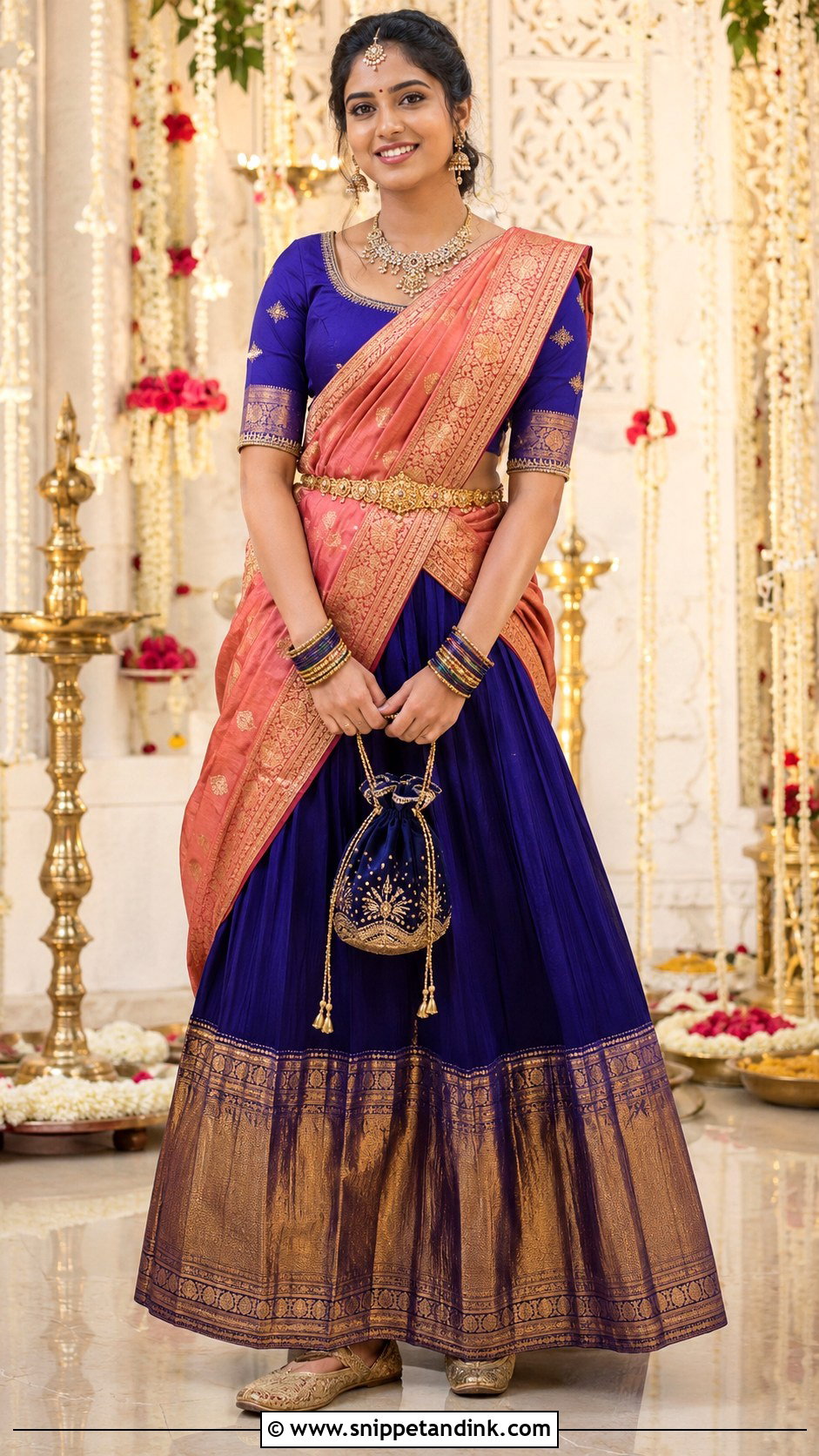
The half saree drape borrows the diagonal of a pallu while keeping the lengha’s flare. Tuck one end into the left side of the skirt, take the fabric around the back and across the torso, then arrange the rest over the opposite shoulder. Unlike a full saree wrap, it can stay soft at the waist, which suits anyone who dislikes feeling bound. A contrasting dupatta defines the diagonal and gives the three pieces more depth. Wear it with a silk lengha, coordinated choli, temple jewelry, bangles and traditional juttis. Pin the shoulder and waist points snugly, but leave enough ease to bend and sit.
17. Side Sweep Lengha Drape
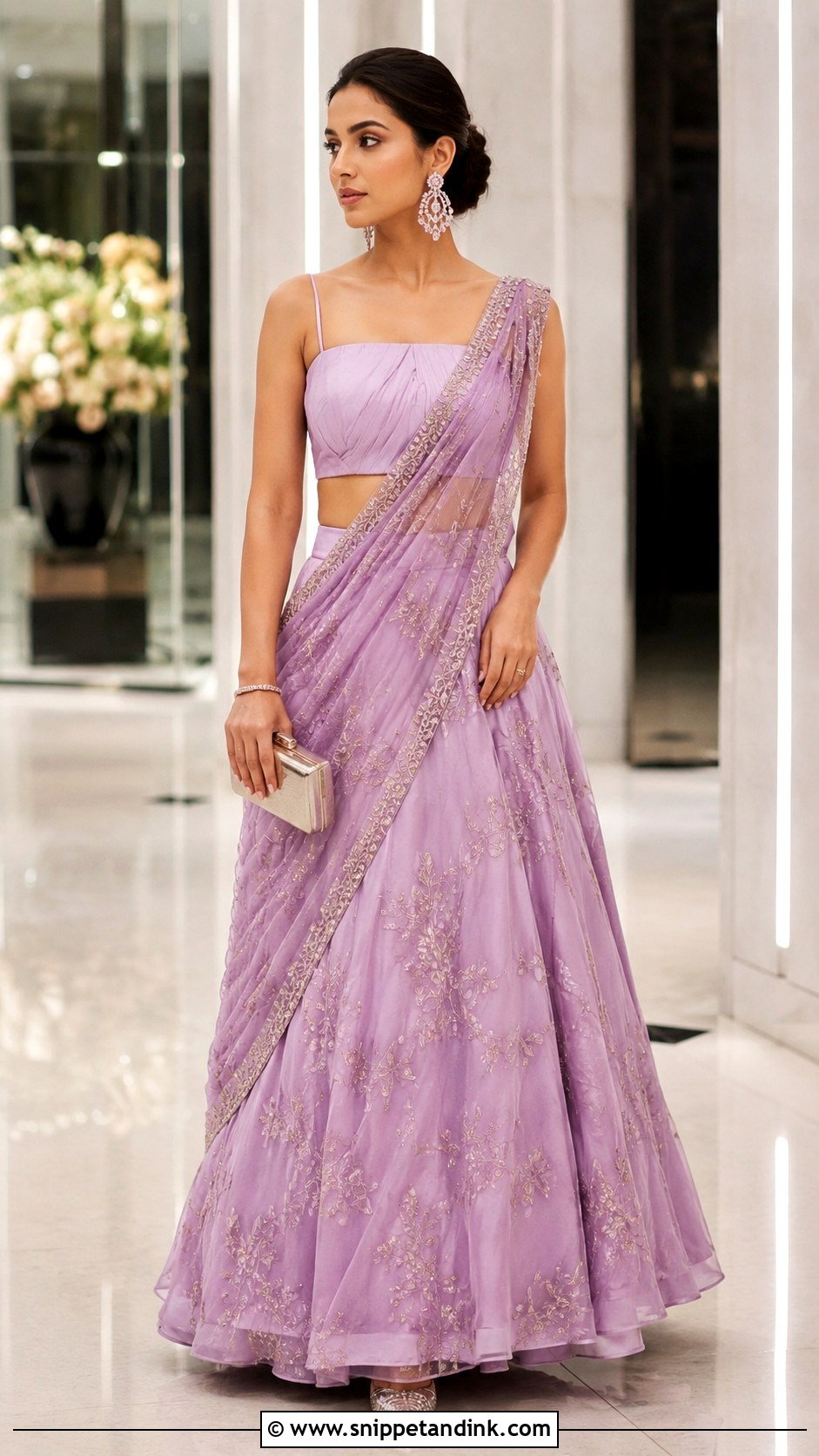
A sweeping diagonal adds movement without covering everything. Place one end over the left shoulder so it falls down the back, bring the rest across the front and gather it loosely at the right side of the waist, then pin it to the skirt waistband with a small tail along the hip. That waist pin carries most of the tension, so use a sturdy one hidden inside the waistband rather than through the face of the fabric. Organza gives a crisp sweep, chiffon a softer one. Keep the front layer narrow enough to show the embroidery underneath. It suits a modern lengha with a structured or corset-style blouse, bold earrings, a slim bracelet and pointed heels.
18. Pleated Pallu Lengha Drape
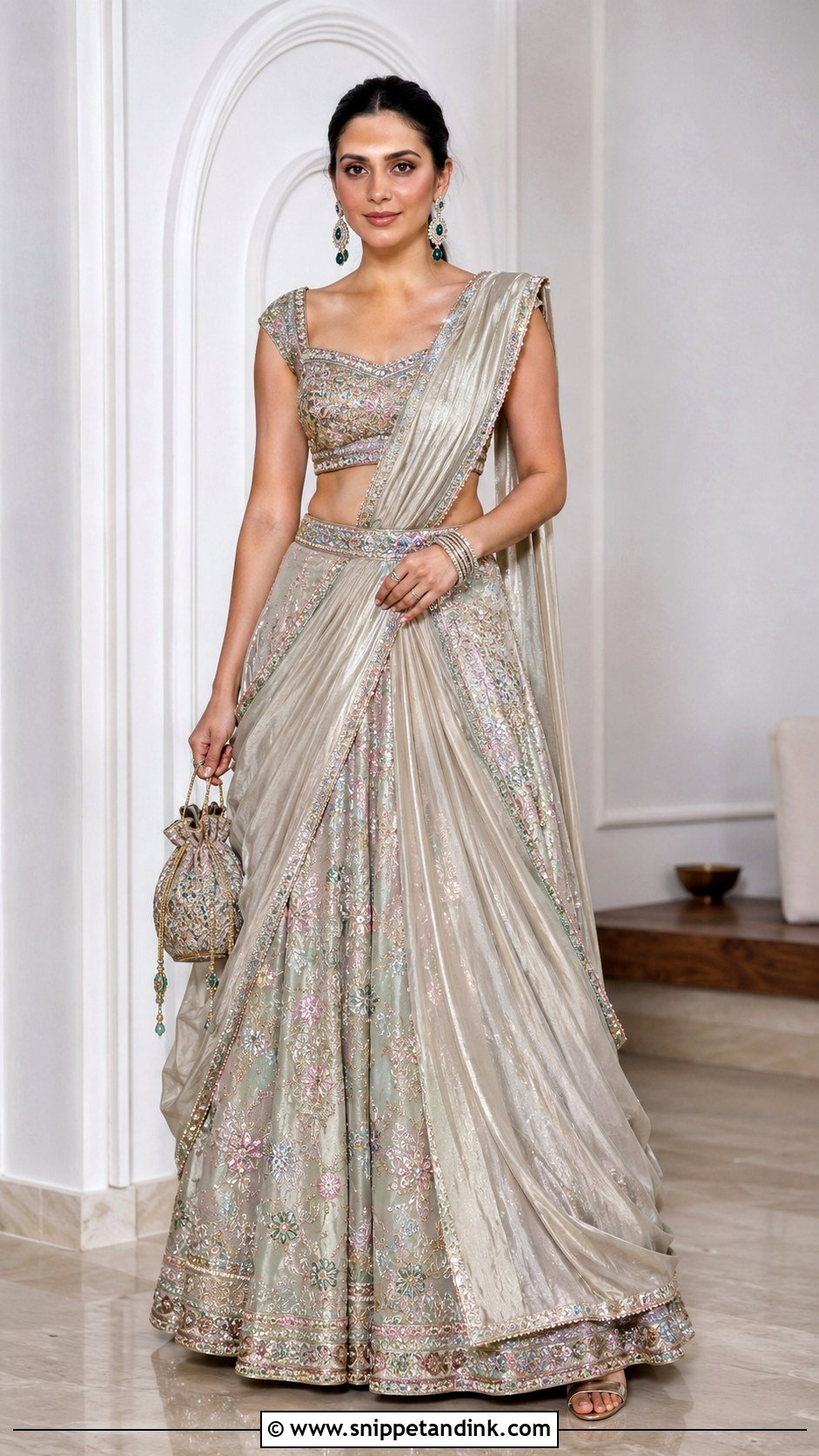
Crisp pleats make an embroidered dupatta look organized and formal. Fold several even pleats along one end, set them on the shoulder and pin through every layer at the blouse seam, then take the loose part across the front to the opposite waist. Fan the lower section slightly so the border shows. Silk, tissue and organza hold pleats far more clearly than soft chiffon, and a light press the night before helps if the fabric allows it. Keep the pleated section narrow; too wide and it overpowers the shoulder and shortens the upper body. An A-line lengha, tailored choli, gemstone earrings, bangles, a potli and heeled sandals complete it.
19. Jacket Style Lengha Dupatta Drape
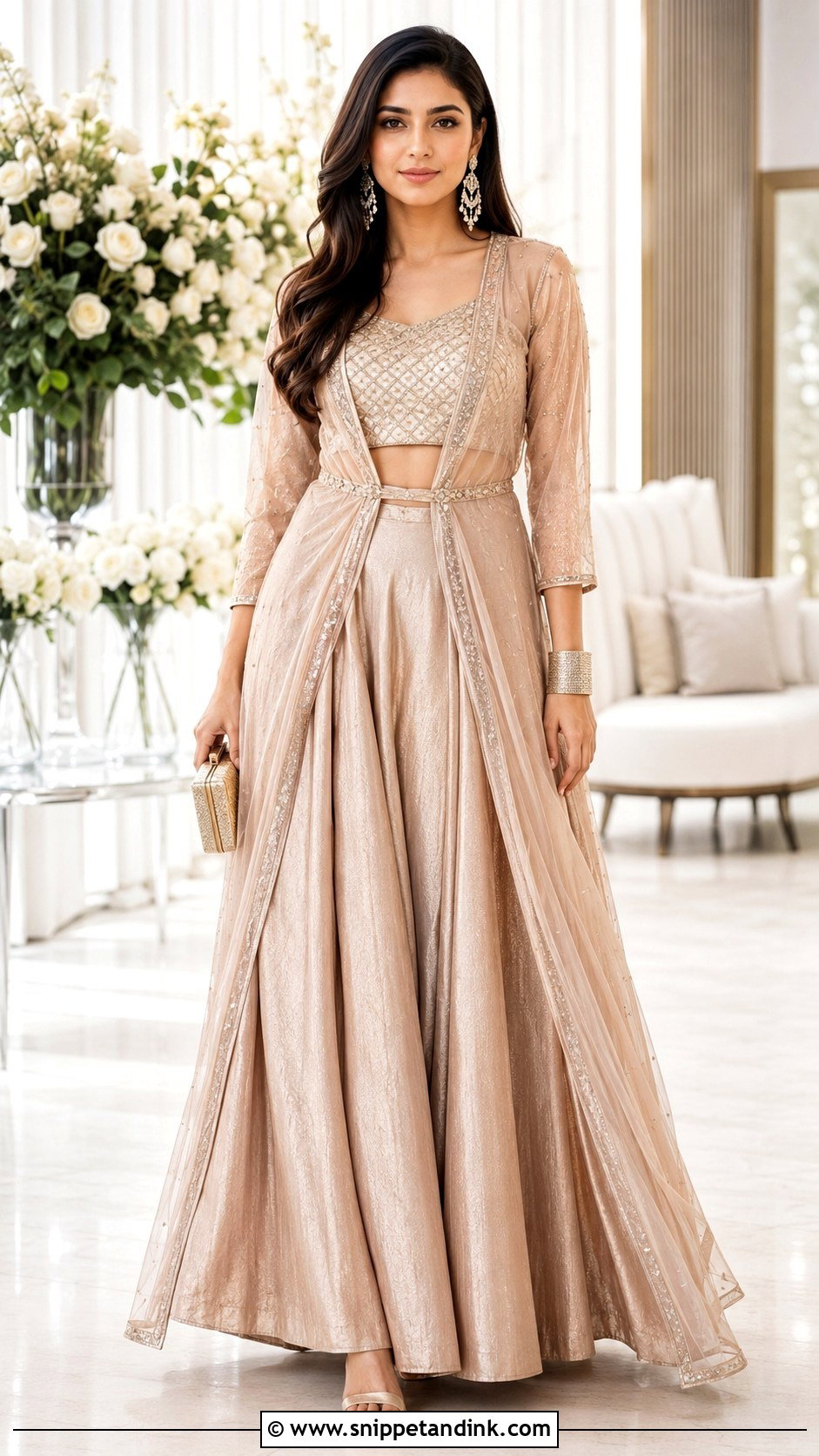
You can fake a jacket with a dupatta. Lay it across your back, bring both ends over the shoulders, cross them loosely in front and pin each end at the opposite side of the waist, leaving the center a little open so the blouse shows. Both sides must cross at the same height, so I check from straight on before a single pin goes in. A sheer dupatta with a neat border keeps the crossed layers light, whereas heavy fabric bunches at the waist. It works best over a minimally embellished lengha with a fitted choli, long earrings, a cuff bracelet, a box clutch and sleek heels.
20. Low Veil Lengha Drape
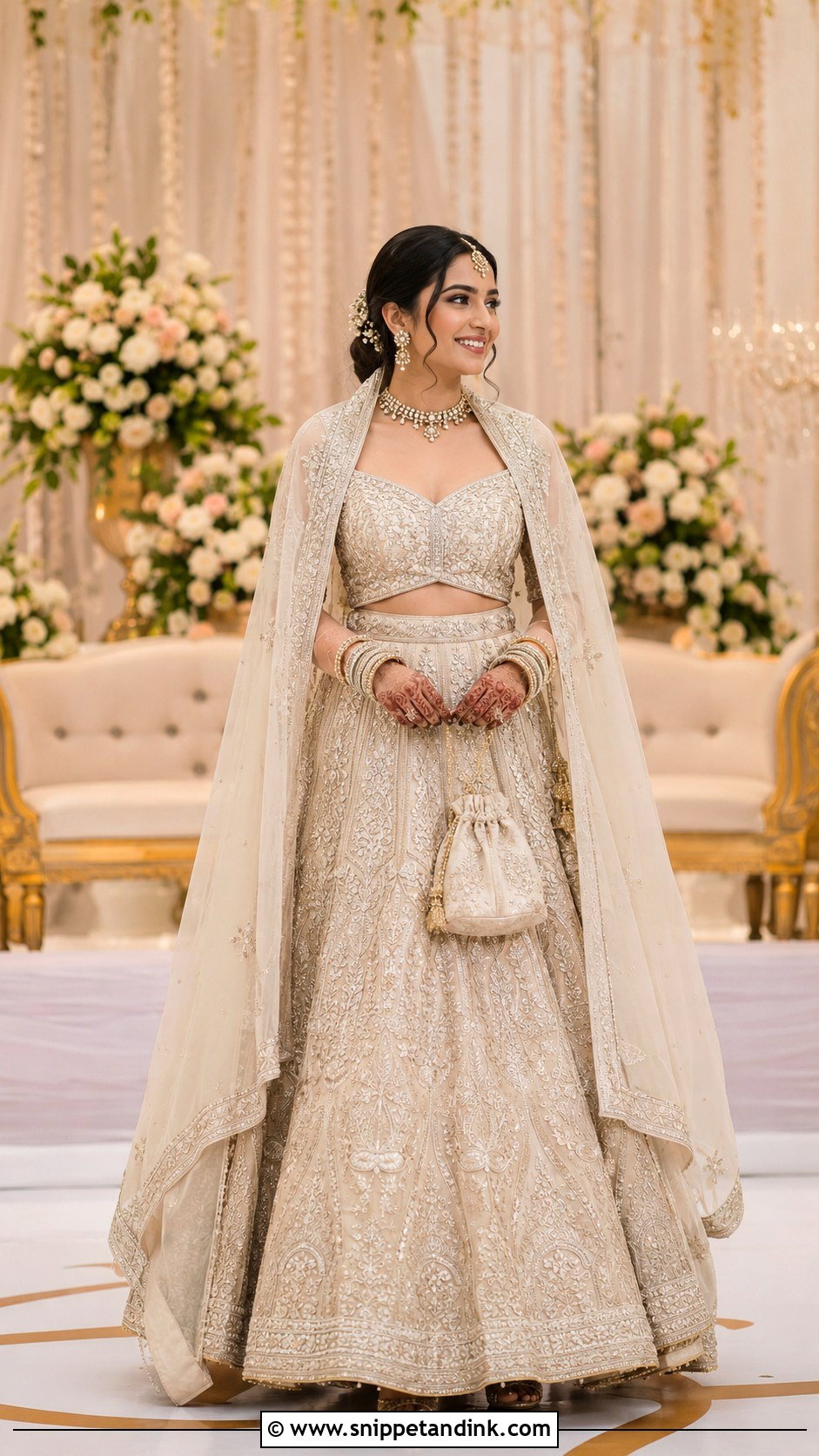
Set back from the forehead, this veil feels softer than full bridal coverage and leaves the hairline, face and front jewelry on show. Place one edge near the back of the crown, secure it beneath a low bun, then bring both sides forward over the shoulders, letting one fall freely and arranging the other over the forearm. Net, chiffon or light organza falls smoothly behind the head. Use lightweight pins through the bun, never through a delicate border, and check that the edge sits evenly without dragging backward. It pairs with a bridal or formal lengha, an elegant blouse, earrings, necklace, hair accessories, bangles and comfortable heels.
When the Dupatta Slips Halfway Through the Ceremony
Something will move. Long ceremonies mean sitting, standing, bowing and being hugged by half the family, and even a well-pinned dupatta shifts. Plan for it rather than hoping it won’t happen.
Leave a free end for the rituals
In many Hindu weddings the bride’s dupatta or pallu is knotted to the groom’s stole for the gathbandhan. Ask your family which end will be tied, and keep that end loose and long enough to knot. A drape pinned down at every point leaves nothing to tie.
Sitting on the floor at the mandap
Drapes that end low at the back get sat on during a seated ceremony. Lift and tuck the back length before you sit, or choose a style that finishes above the waist behind you, like the cape or the front flow.
Give one person the fixing job
Pick a cousin or friend who watched the draping, hand her a few spare pins and a small mirror, and let her be the only one who adjusts you. Five relatives re-pinning at once almost always makes it worse.
One Skirt, Twenty Ways to Wear the Dupatta
A drape should suit the fabric, show off the blouse and skirt, let you move and match the formality of the event. Trends matter far less. Light dupattas suit layered, cape and veil styles, while structured fabrics hold pleats and front pallus. Test the full outfit beforehand: walk, sit, lift your arms and check every pin from several angles. Small shifts at the shoulder, waist or border usually make the whole outfit look cleaner. Traditional coverage or a modern finish, each of these drapes can give the same lengha a fresh life at the next wedding you attend.
You'll Like These Ideas:


Leave a Reply