
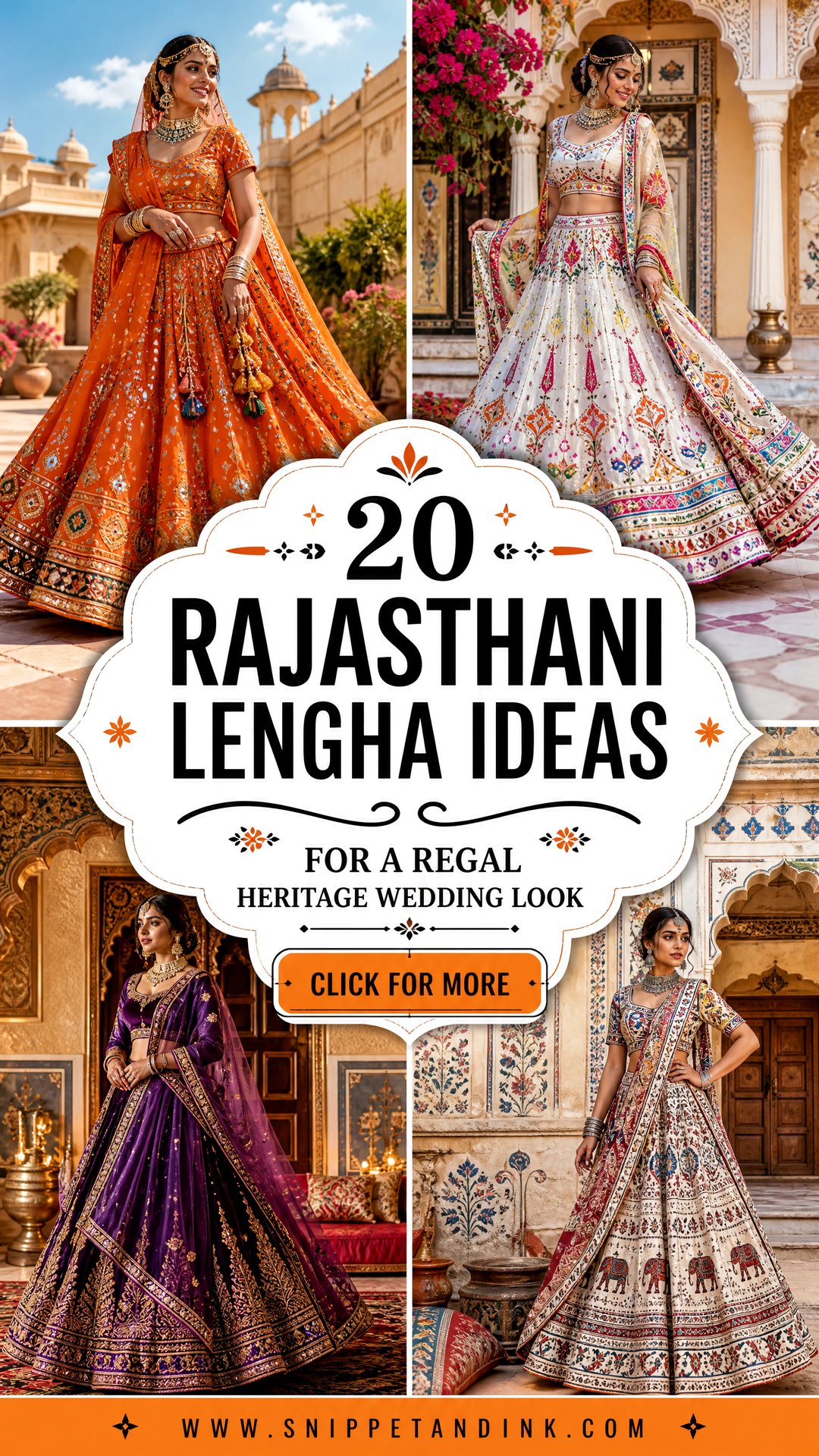
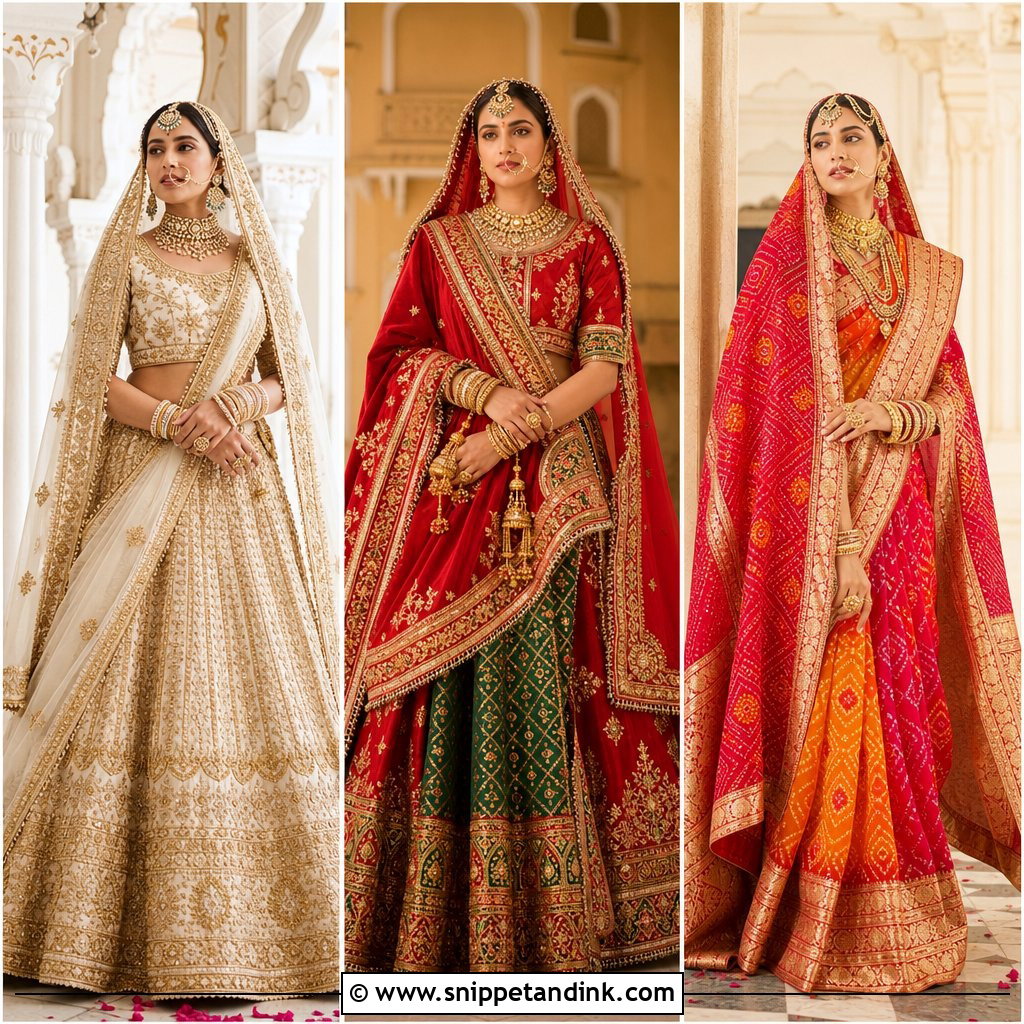
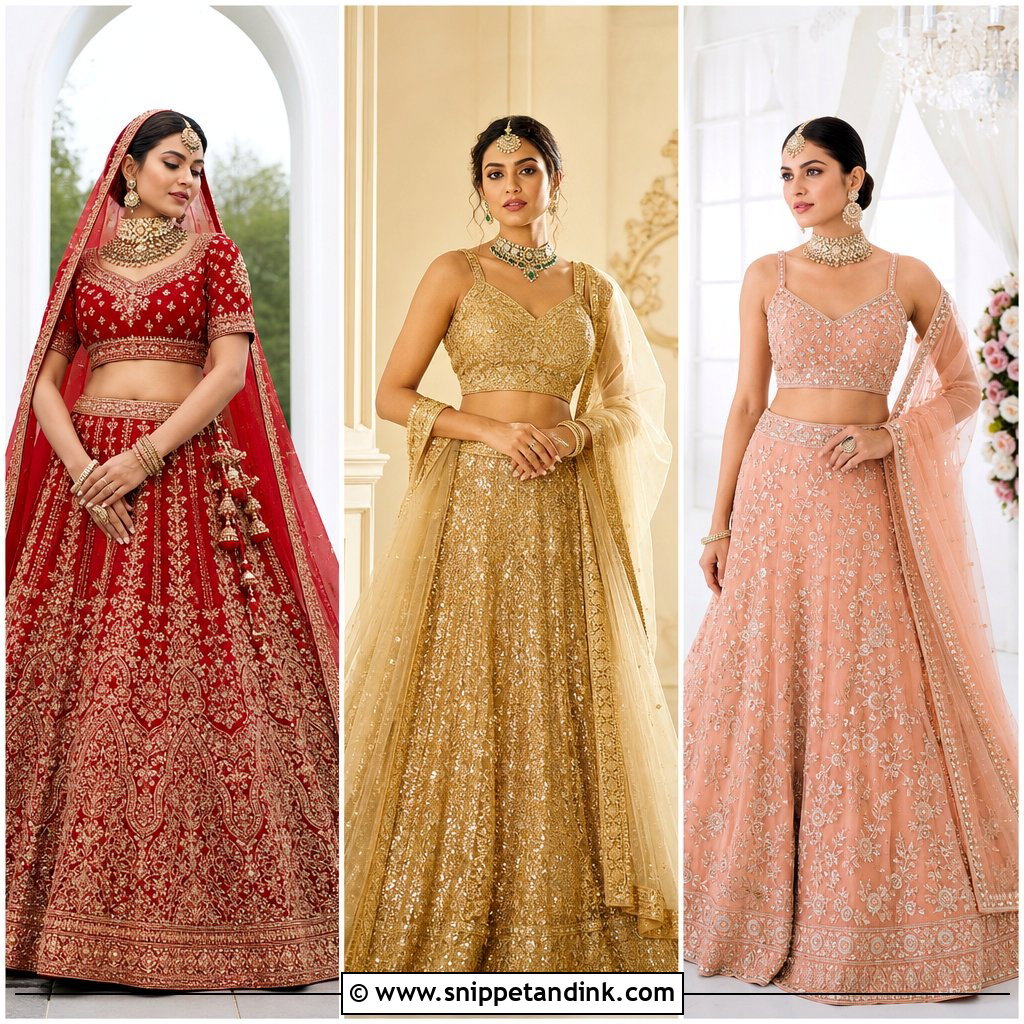
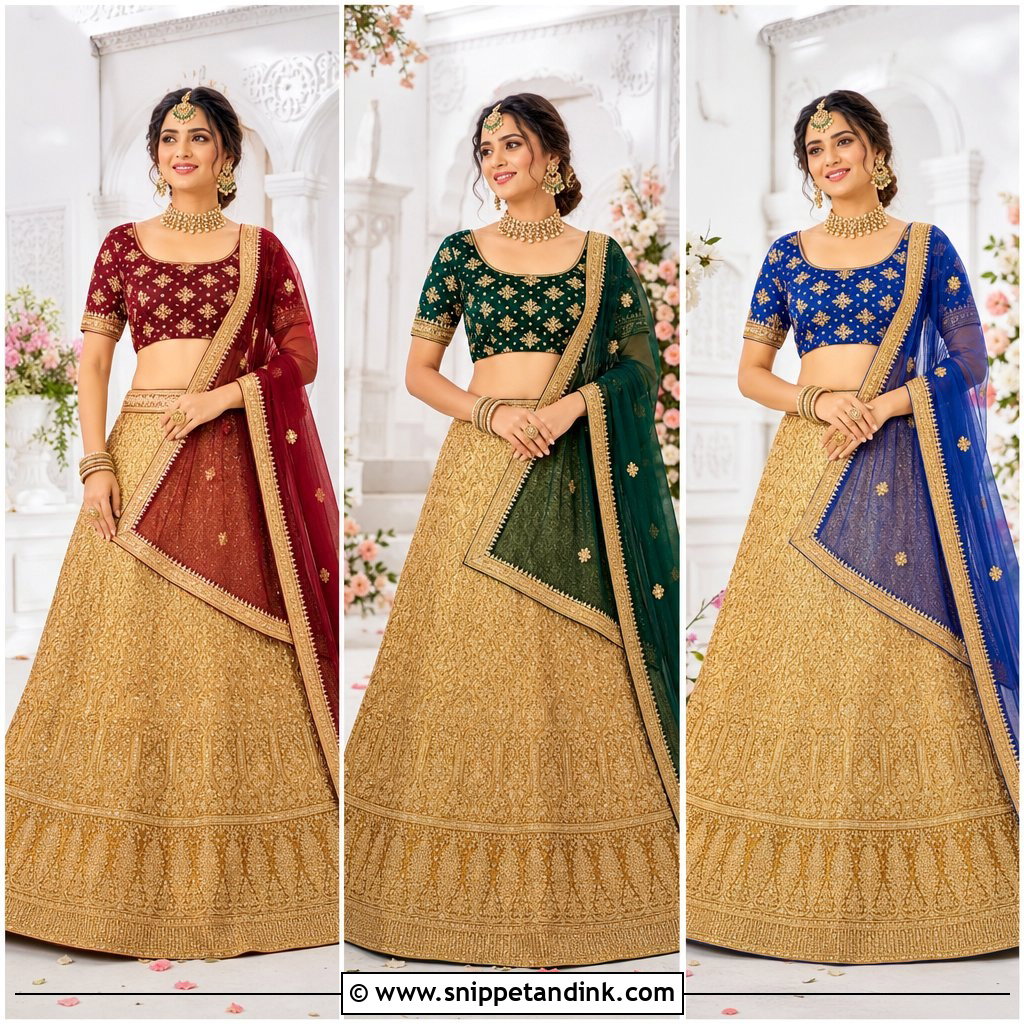
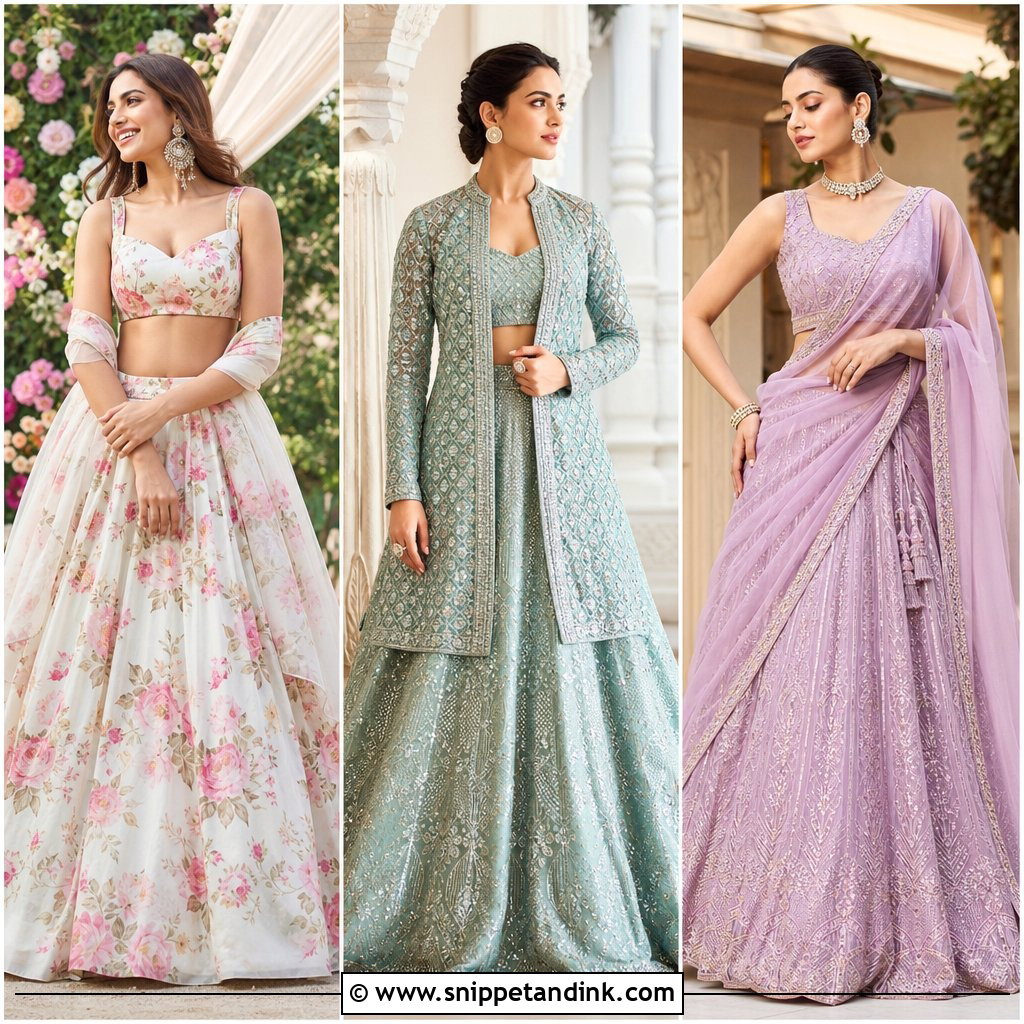
Rajasthani fashion runs on strong color and handwork you can actually see: tie-dyed Bandhani, the diagonal waves of Leheriya, block prints, mirror work and the metallic ribbon appliqué called Gota Patti. A lehenga in this tradition can feel regal without being punishing to wear, as long as the fabric, blouse shape, jewelry and footwear fit the occasion. Below are twenty complete looks, from a classic red bridal Bandhani to pastel organza, jackets and capes, with notes on how each craft behaves once you’re wearing it at a wedding, a festival or a family function.
Is It Hand-Tied? Spotting Real Bandhani, Leheriya and Gota
Plenty of lehengas sold as Rajasthani are printed versions of these crafts. That’s fine for a one-off function, but you should know what you’re paying for. These are the checks I do with the fabric in my hands:
- Bandhani: hand tie-dye leaves tiny raised points where each knot was tied, the color goes right through to the back, and the dots are slightly uneven. Printed dots are flat, perfectly regular and paler on the reverse.
- Leheriya: the waves come from rolling and binding the cloth before dyeing, so the color edges look soft and a little feathered. Razor-sharp stripes are usually printed.
- Gota Patti: older gota used metal-coated ribbon, which is heavier and tarnishes. Most gota now is metallic polyester, lighter and cheaper. Neither is wrong, but the price should match.
- Mirror work: hand-stitched shisha sits inside a ring of slightly irregular stitches. Mirrors that are only glued tend to pop off by the end of the night.
A fully hand-tied Bandhani skirt takes a very long time to knot, which is why it costs more. If the price seems too good for that much hand-tying, trust the price.
1. Red Rajasthani Bandhani Lehenga
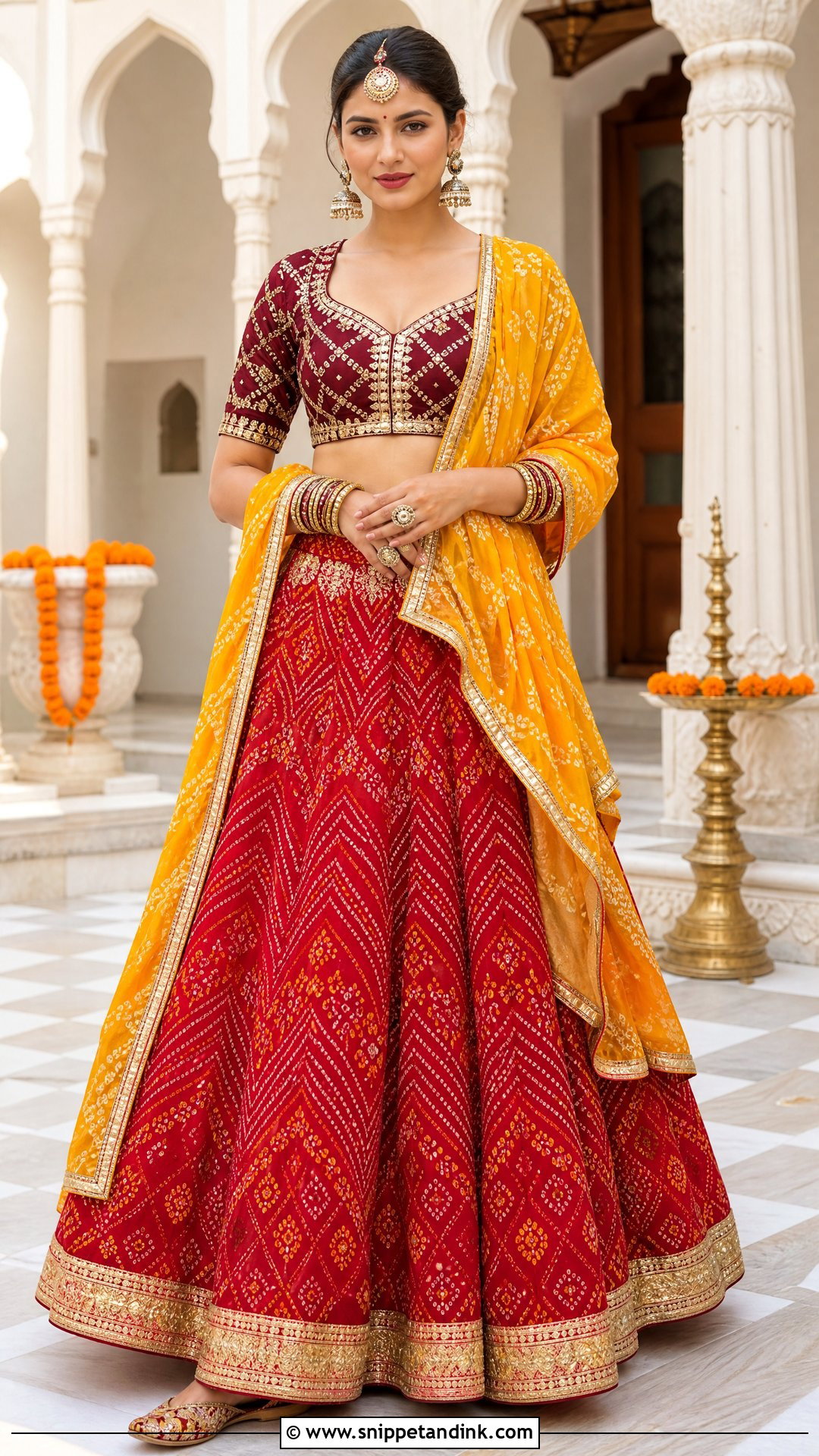
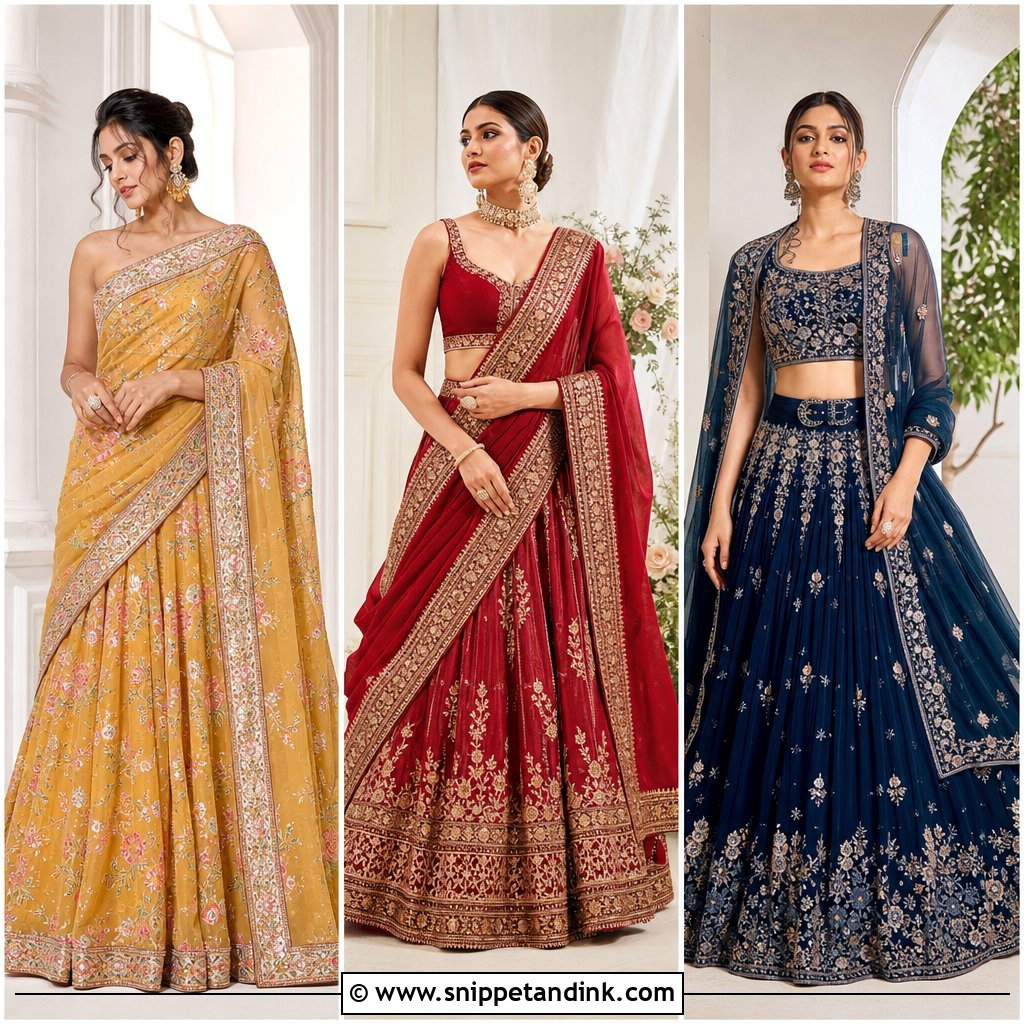
Red Bandhani is the default Rajasthani wedding outfit for good reason. Picture a wide flared skirt covered in small tie-dyed dots with a broad gold border, a fitted red or maroon choli with short sleeves and a little Gota Patti, and a yellow, orange or green Bandhani dupatta for contrast. If the choli is Bandhani too, I fit it snug, because the tied puckers relax with wear and the fabric loosens slightly over an evening. Drape the dupatta over one shoulder and across the head for a formal ceremony. A gold borla, jhumkas, stacked bangles and embroidered mojaris complete it, with kohl-lined eyes and a soft red lip.
2. Pink Rajasthani Gota Patti Lehenga
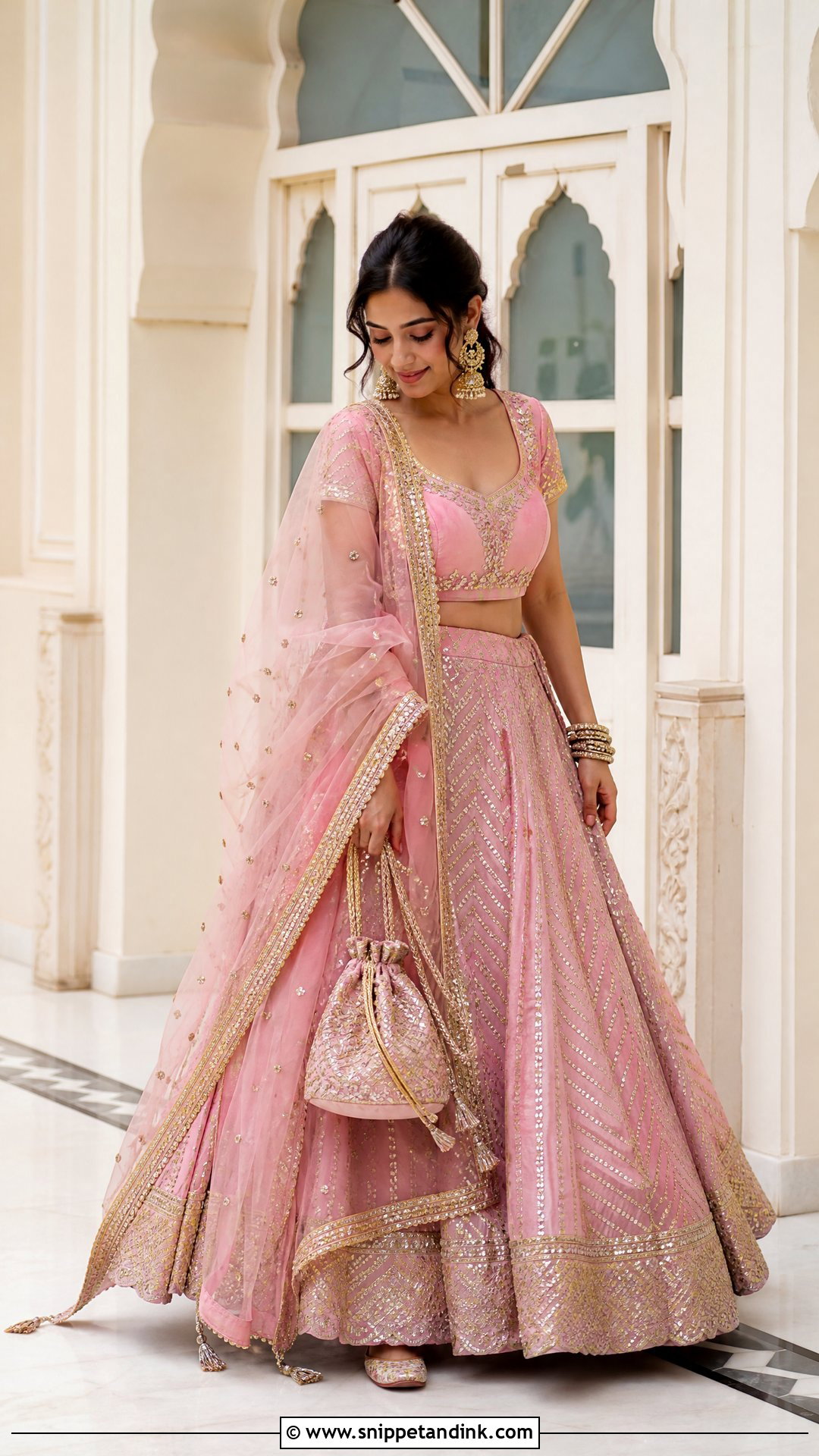
Gota Patti is ribbon appliqué: strips of metallic ribbon cut into leaves and petals and stitched down, so it shines without the weight of zardozi. A rose, fuchsia or rani pink skirt with gold Gota florals, a matching sweetheart or round-neck blouse with real support, and a sheer organza dupatta with a slim metallic border keep the whole look airy. Gota edges can lift and scratch when they’re poorly finished, so I run a hand around the inside of the blouse neckline before anyone buys it. A small borla, chandbalis, gold bangles, neutral juttis and a structured potli finish it for an engagement, sangeet or the ceremony itself.
3. Yellow Rajasthani Leheriya Lehenga
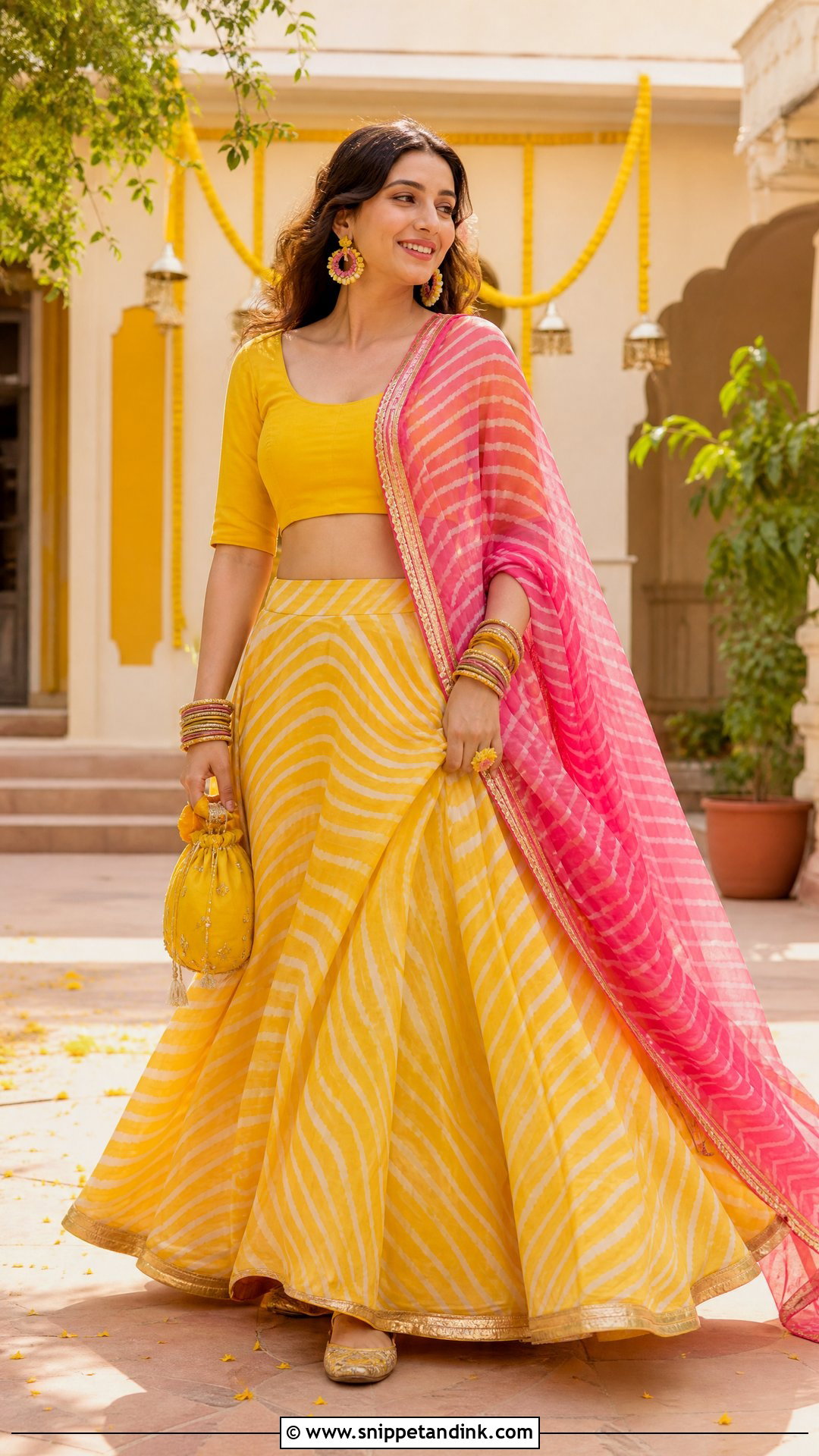
Leheriya is resist-dyed in diagonal waves, and in yellow, white and orange it’s about as cheerful as fabric gets. Choose a light georgette or chiffon skirt with a fluid flare and a modest Gota border, plus a solid yellow blouse with elbow sleeves so the stripes have somewhere to rest. A pink Leheriya dupatta pinned at one shoulder can fall free along the side. Floral earrings, slim bangles, a small potli and cushioned gold juttis. Dewy makeup and a simple braid. At a haldi, turmeric still stains yellow fabric; it just hides the damage better. For a festive lunch or outdoor gathering where you need to move, it’s an easy pick.
4. Green Rajasthani Mirror Work Lehenga
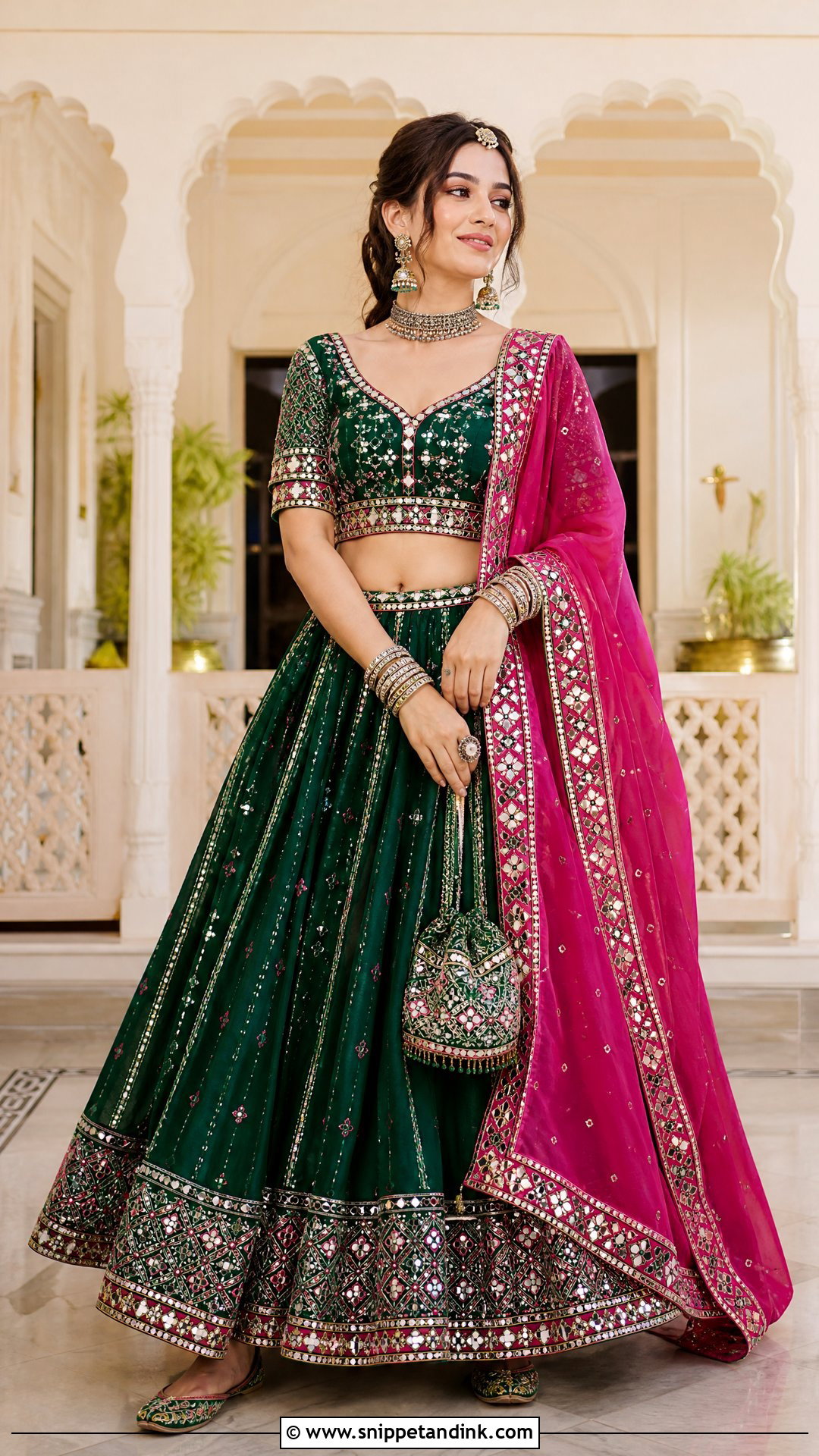
Mirror work, or shisha, is small discs of glass held down by a ring of stitches, and those stitched edges are what you need to watch. Start with an emerald, parrot or bottle-green flared skirt with evenly spaced mirrors and colorful threadwork, and a blouse with a secure neckline. A red or magenta dupatta with mirrors along its border brings contrast. I always pair mirror work with a dupatta that has a cleanly finished edge and a skirt with a smooth lining, because loose threads around the mirrors catch on fine net. Oxidized silver makes the look earthy; gold makes it formal. A statement necklace, bangles, embroidered mojaris and a potli suit a sangeet or folk evening.
5. Blue Rajasthani Zari Lehenga
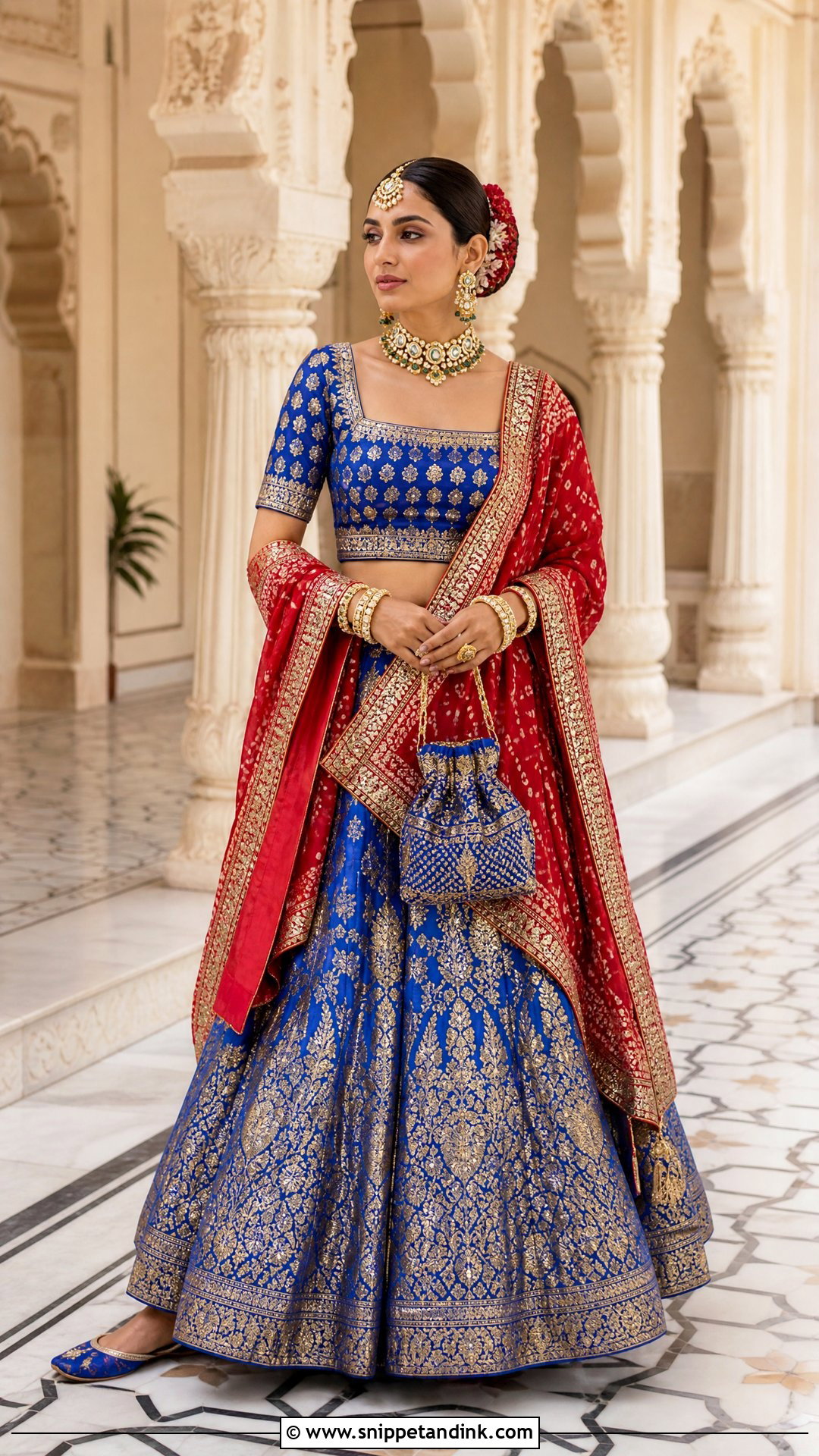
Royal blue with gold zari stands out without needing a second bright color. Choose silk or a silk blend with gold border motifs, architectural or floral, and a fitted blue blouse with a square neck and elbow sleeves. The Rajasthani note comes from the dupatta, in red, pink or mustard Bandhani against the blue. Kundan earrings and a matching necklace, gold bangles and deep blue juttis. Silk skirts with heavy zari borders can flip outward when you turn, so I ask for a faced or lightly weighted hem to help it fall. If the skirt is busy, keep the blouse plain. A sleek bun or center-parted braid suits an engagement or evening reception.
6. Orange Rajasthani Ghagra Choli
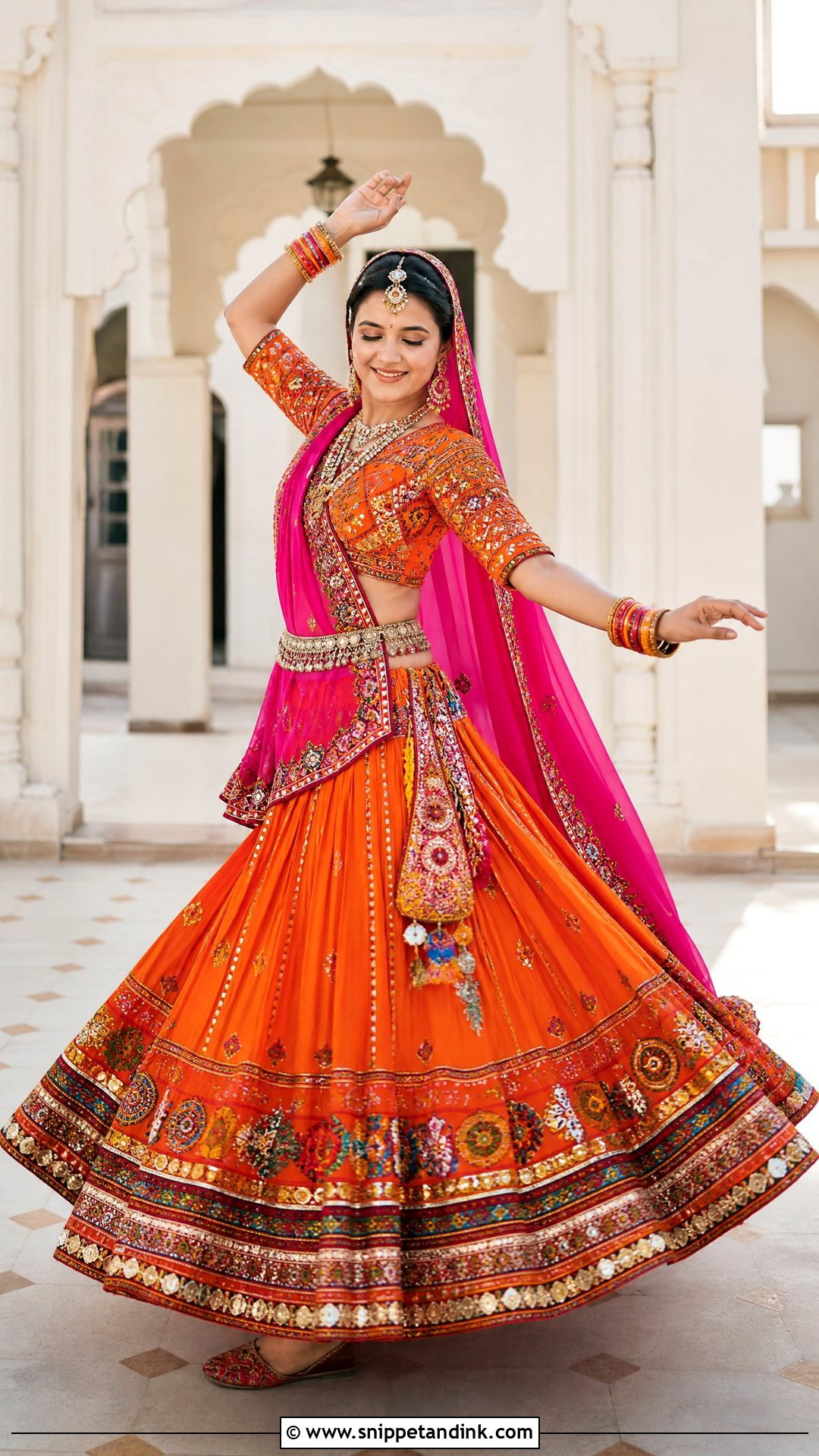
Orange carries the spirit of a traditional Rajasthani ghagra choli. Look for a full circular skirt with printed panels, Gota edging and a pink, green or gold border, with a short fitted choli and a modest round neck. Add a red or fuchsia odhani with small Bandhani dots, draped diagonally across the body. A true circle skirt uses a lot of fabric and swings wide on its own, so I skip heavy can-can underneath; the skirt makes its own movement when you dance. A borla, jhumkas, lac bangles and flat leather mojaris complete it, and a waist belt keeps the odhani in place.
7. Maroon Rajasthani Bridal Lehenga
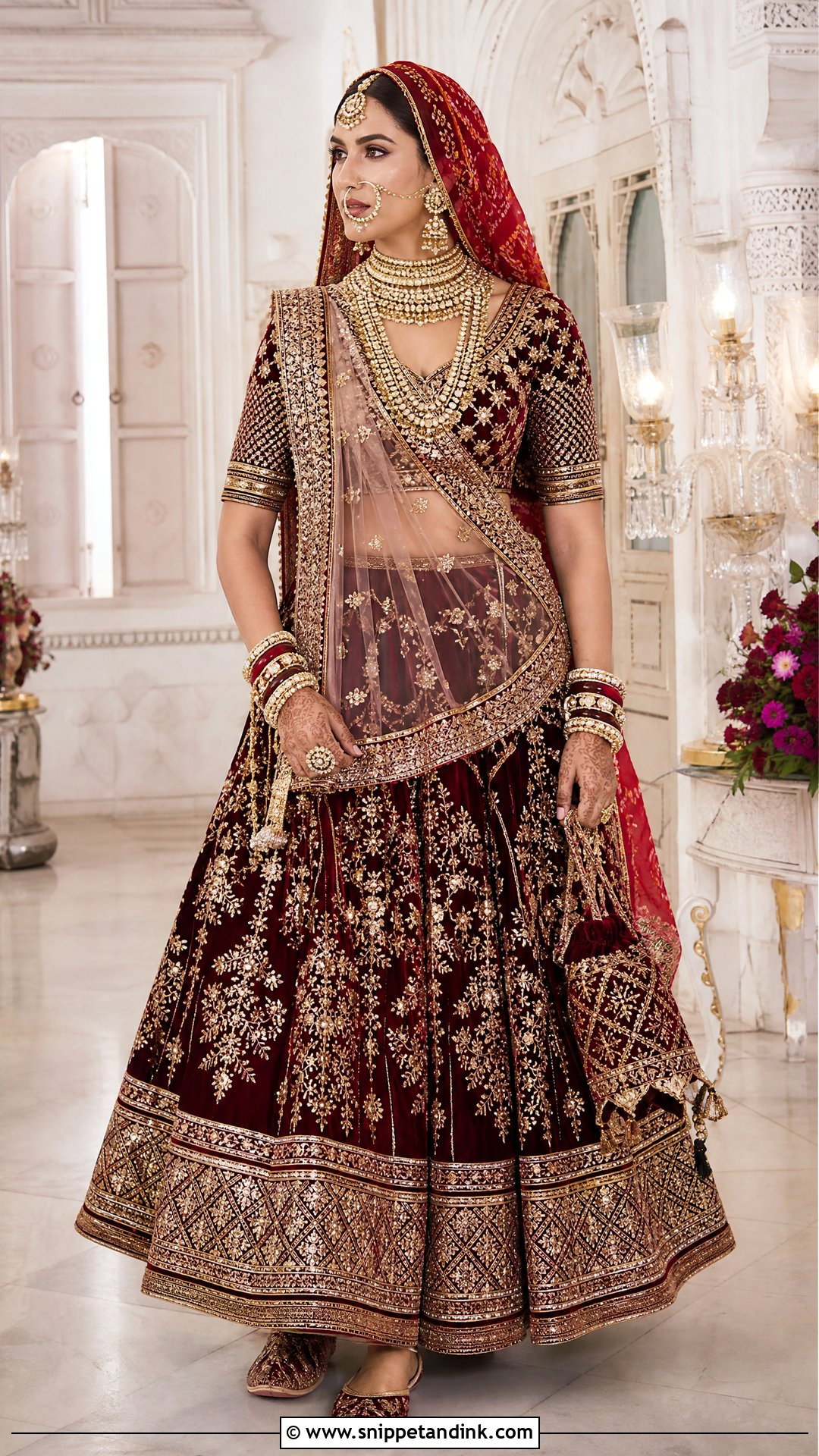
Maroon gives a bride the richness of red with more depth under evening light. Choose velvet or silk worked in Gota Patti, zardozi and gold motifs, with a structured maroon blouse that has the coverage and support for a long ceremony. A red Bandhani dupatta goes over the head, and a second sheer dupatta over one shoulder adds a layer. Finish with a borla, layered Kundan necklaces, statement earrings, a nath, bangles and embroidered juttis. Two dupattas mean a lot of pins, so I place them while the bride is seated, the way she’ll spend most of the rituals, not standing in front of a mirror. Keep the jewelry in one metal and check that the waist closure is secure.
8. White Rajasthani Multicolor Lehenga
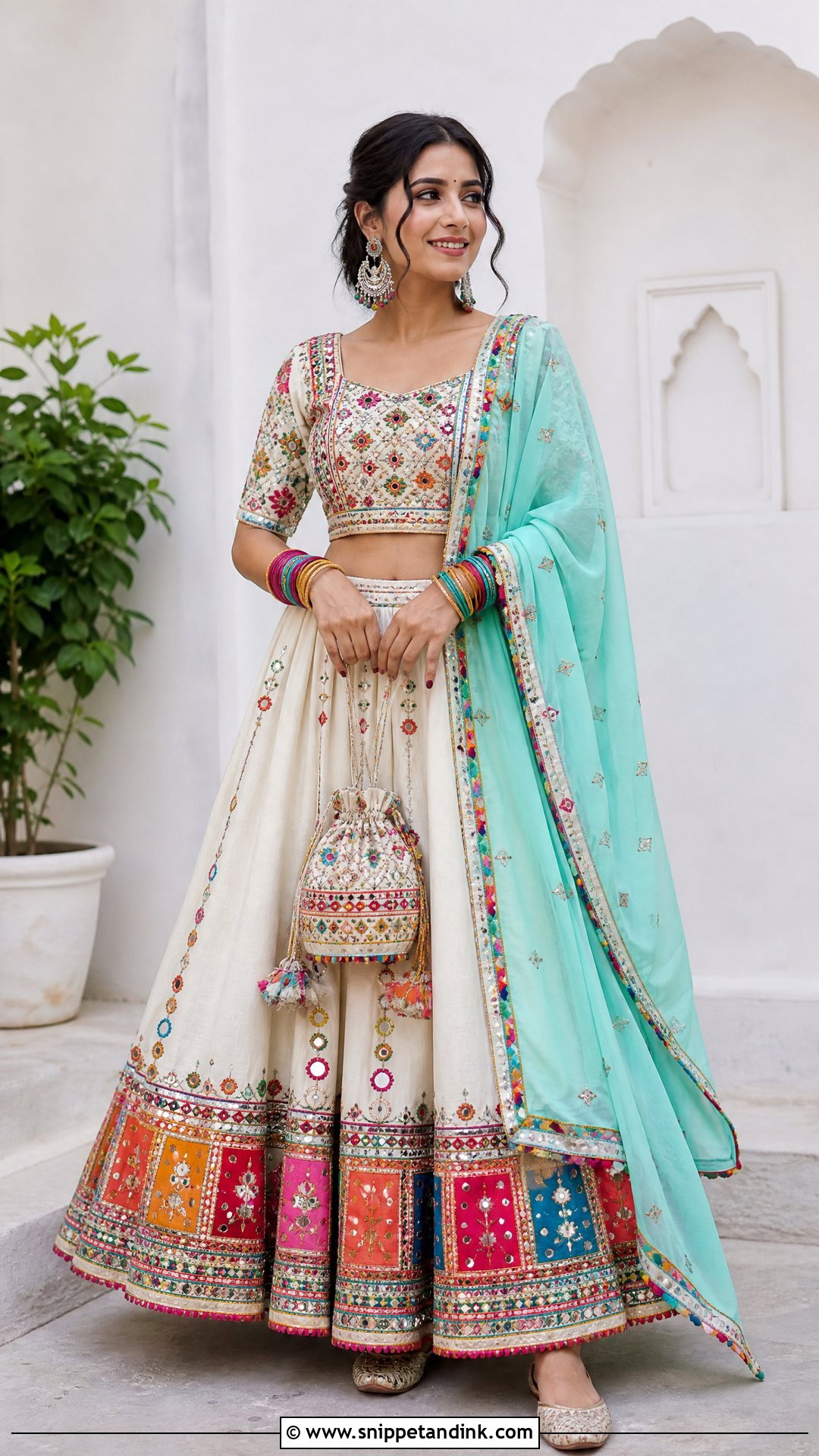
White shows off Rajasthani color better than any other base. Choose an ivory or off-white lehenga with multicolor threadwork, small mirrors and a bright patchwork border, and an embroidered blouse that repeats two or three of the skirt’s shades. A pink, orange or turquoise dupatta with a slim Gota edge gives one clear focal color. Oxidized earrings, stacked bangles, a fabric potli and neutral mojaris. White picks up every mark at an outdoor daytime function, so I keep the hem just off the ground and carry a stain pen. Leave the big necklace at home if the blouse already has detail at the neck. A soft braid, rosy makeup and a small bindi finish it.
9. Black Rajasthani Embroidered Lehenga
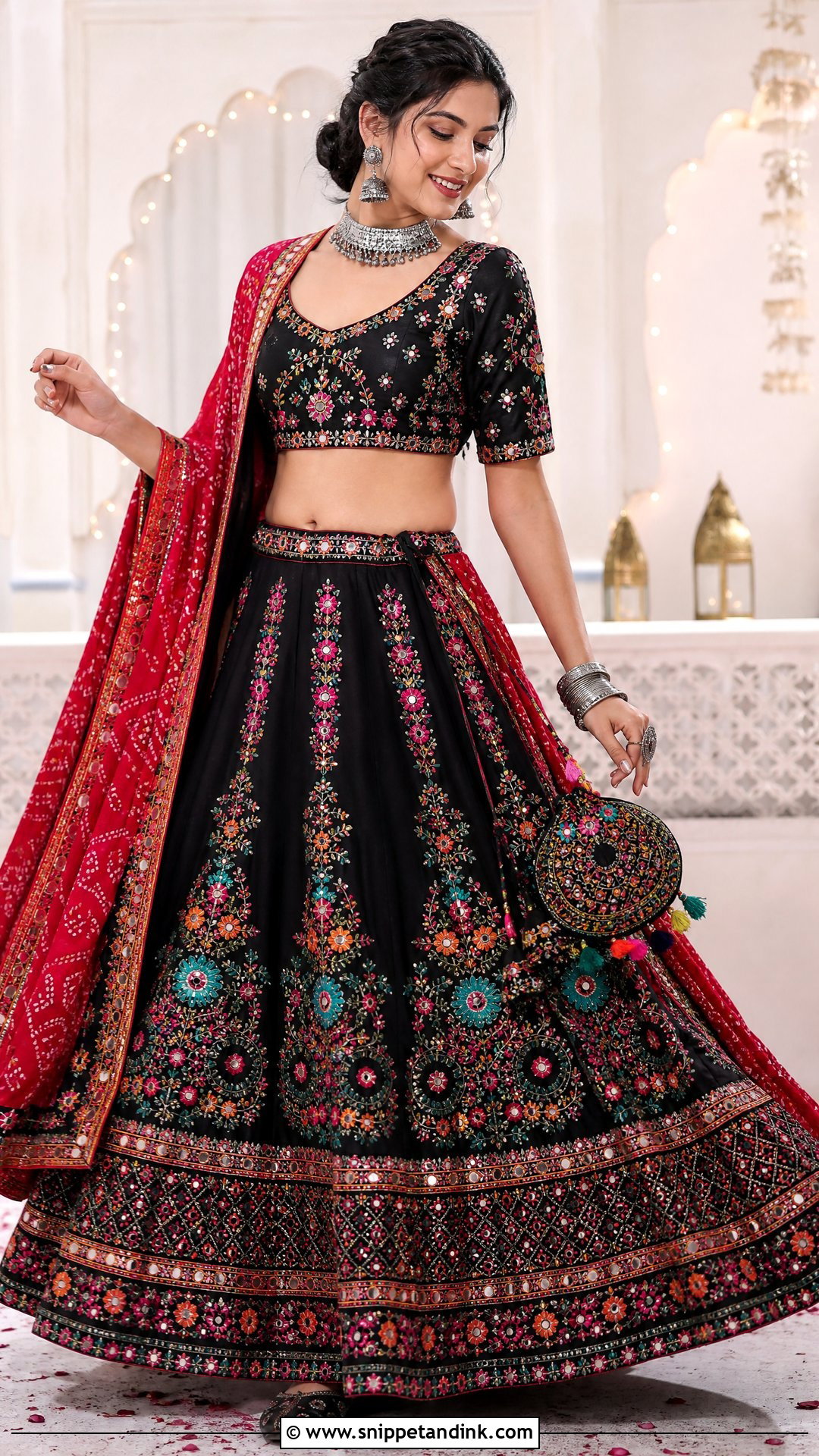
Black turns up in Rajasthani folk dress, yet some families still prefer guests avoid it at a wedding, so ask the hosts if you’re unsure. Balanced with vivid magenta, orange, turquoise and green threadwork and small mirrors, a black lehenga feels festive rather than somber. A black embroidered choli with short or three-quarter sleeves and a bright red or pink Bandhani dupatta soften the dark base. Oxidized silver, especially a choker and jhumkas, suits it best, with black mojaris, colorful bangles and a handcrafted potli. Under evening lights black swallows detail, so choose the brightest threadwork you can find and keep the makeup defined but fresh.
10. Purple Rajasthani Velvet Lehenga
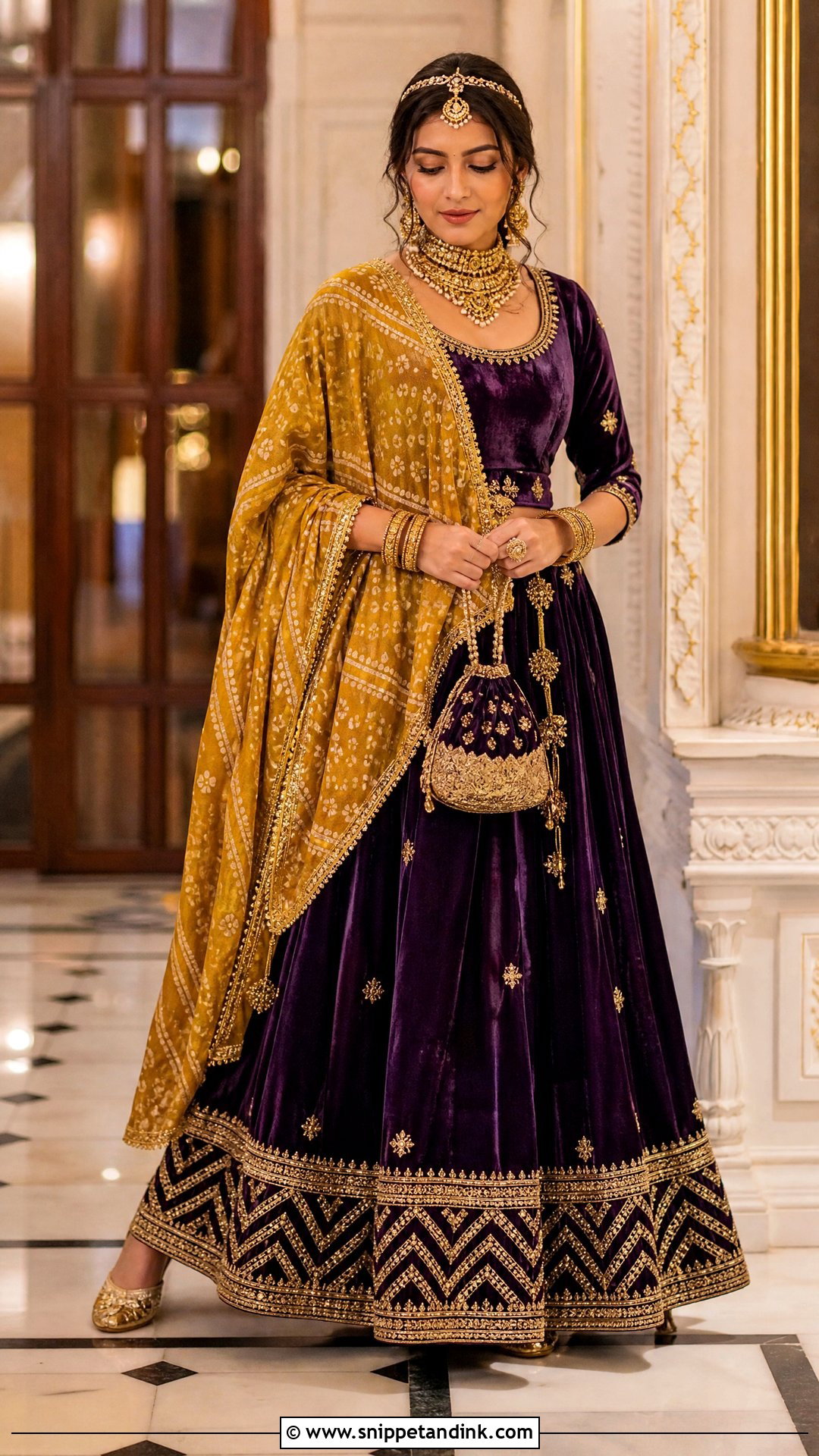
Purple velvet feels royal, and it’s warm, which decides when you can wear it. Choose aubergine or deep violet with gold Gota borders and restrained florals, plus a matching velvet blouse or lighter silk if you don’t want the weight on your shoulders. A mustard, pink or orange Bandhani dupatta lifts the dark fabric. Antique gold jewelry with a medium-length necklace and a delicate borla, then bangles, a structured potli and cushioned gold mojaris. Velvet drags and collects dust, so I have the hem cut slightly above the floor while the wearer stands in her actual shoes. Keep it for cool evenings and indoor functions, with a sleek bun and soft highlighter.
11. Pastel Rajasthani Organza Lehenga
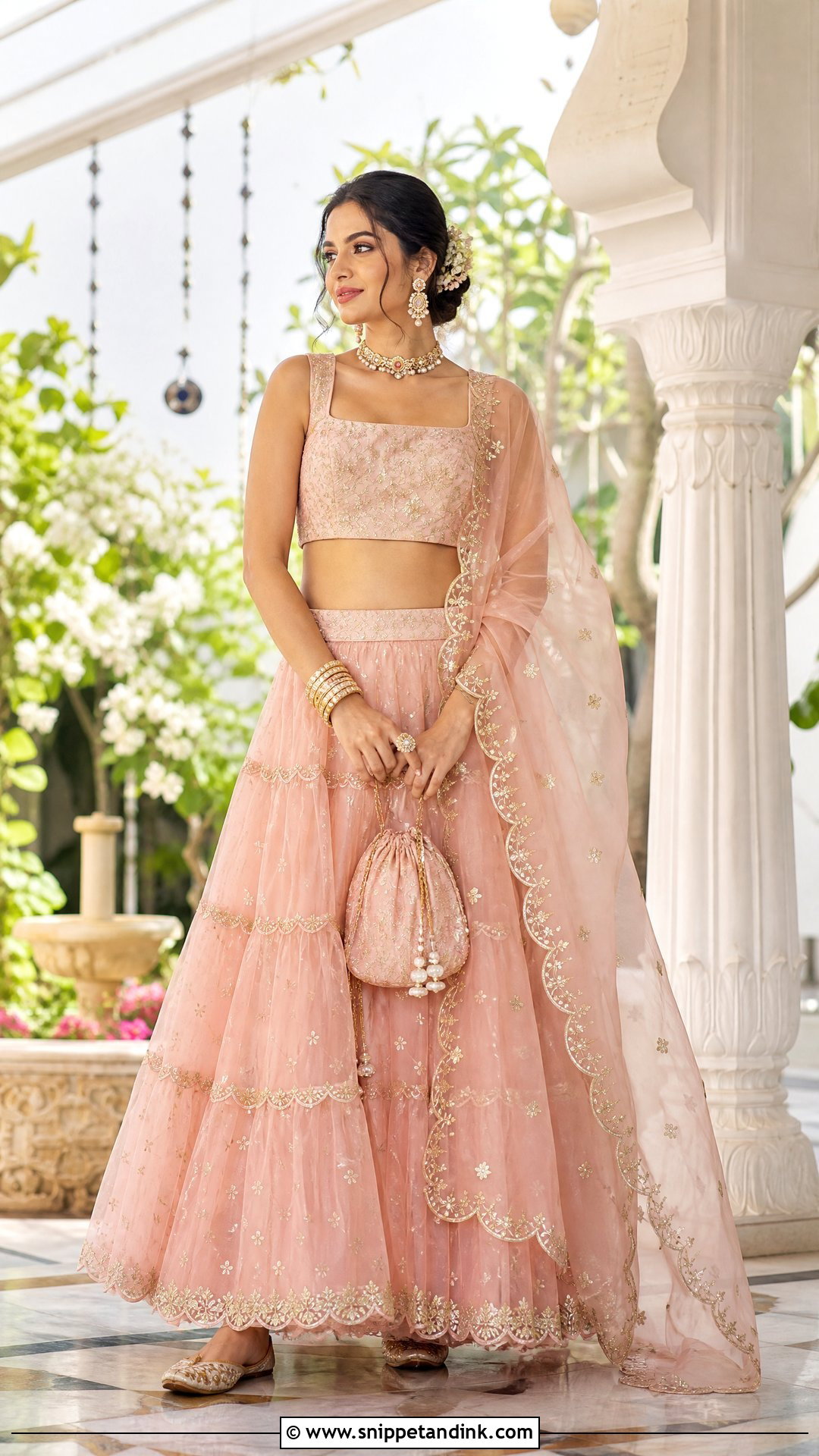
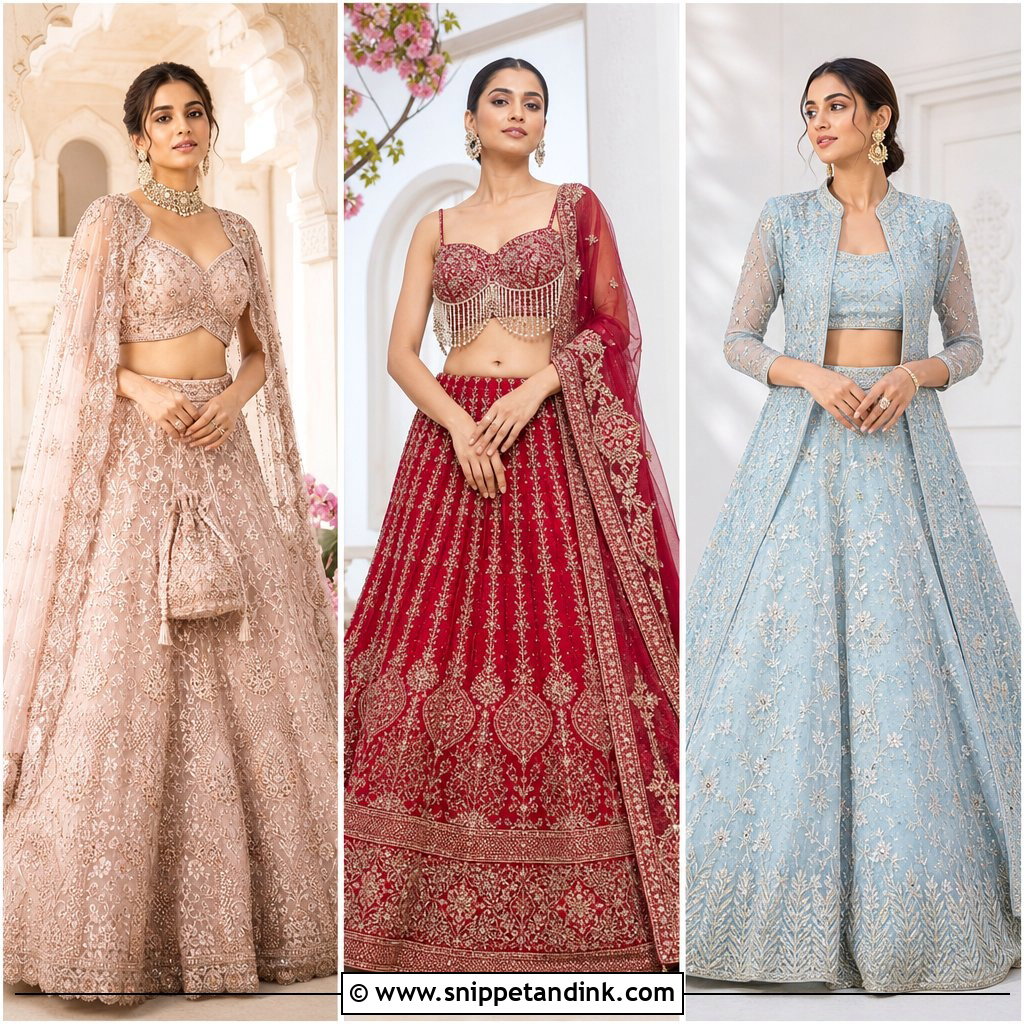
Can Rajasthani craft work in pastels? It can, as long as the Gota stays fine. A blush, mint, powder blue or lilac organza lehenga with delicate Gota Patti motifs and a clean metallic border, a matching blouse with elbow sleeves or a supportive square neck, and a sheer dupatta scattered with embroidered dots and finished with a narrow scalloped edge. Pearls and Kundan add soft shine. Organza is crisp and holds a layered skirt’s shape, but it creases into hard lines when packed, so I hang it the day it arrives and steam from the inside. Metallic juttis, slim bangles, a beaded potli, soft curls and natural makeup suit a daytime wedding or engagement.
12. Red And Yellow Rajasthani Lehenga
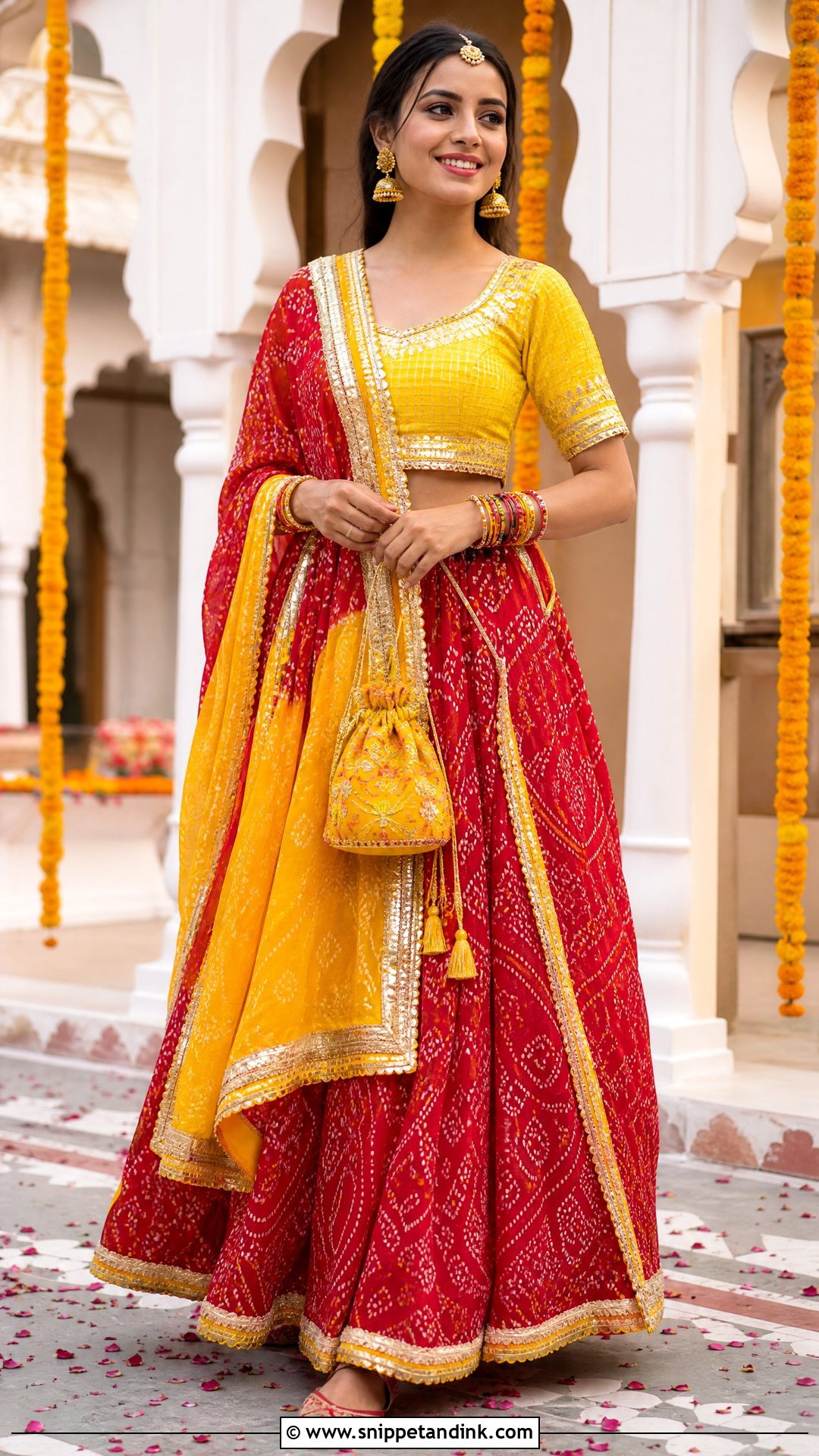
Red and yellow together is about the most traditional pairing in Rajasthani dress. Begin with a red flared Bandhani lehenga with gold edging and a yellow accent border, and a yellow blouse with small Gota motifs, or reverse the colors for a brighter skirt. Drape a red-and-yellow dupatta across one shoulder and pin it at the waist so the pattern stays visible. Gold jhumkas, a simple borla, colorful bangles, red juttis and a small yellow potli. With two loud colors already in play, I keep the jewelry to gold and nothing else. Wear it for haldi celebrations, wedding rituals and festival days.
13. Rajasthani Block Print Lehenga
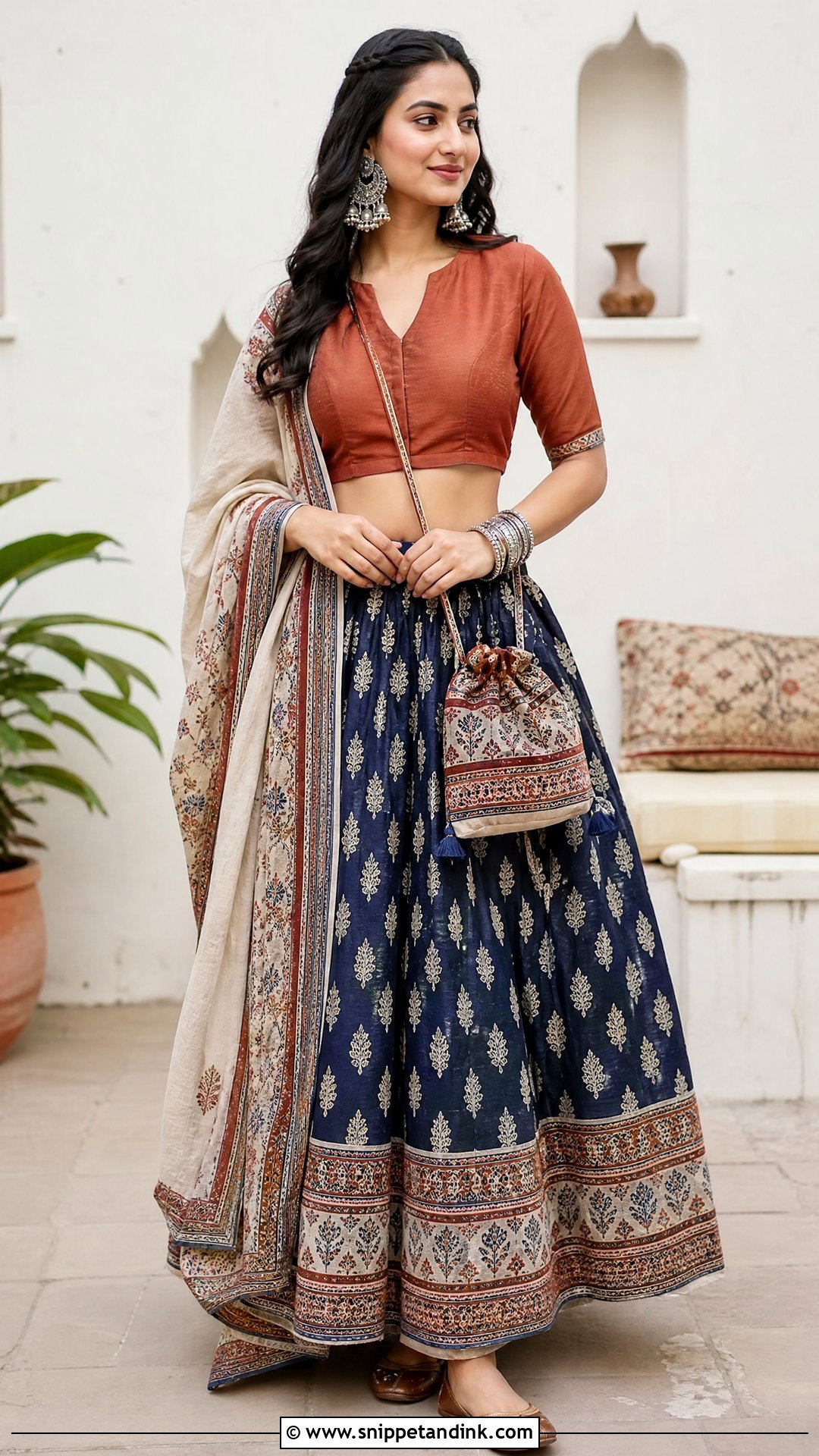
Block printing is done by hand with carved wooden blocks, and the small misalignments are part of the appeal. Pick a cotton or cotton-silk skirt printed with florals, paisleys or geometrics in indigo, rust, red or mustard, and a solid cropped blouse that picks up one shade. A light Kota-style or cotton dupatta keeps it breathable. Oxidized silver earrings, a few bangles, a crossbody potli and flat mojaris. Hand block prints, indigo especially, can bleed in the first wash, so wash them alone in cold water. Give the skirt enough flare to move but no heavy can-can. A loose braid and natural makeup suit daytime festivals and warm weather.
14. Rajasthani Patchwork Lehenga
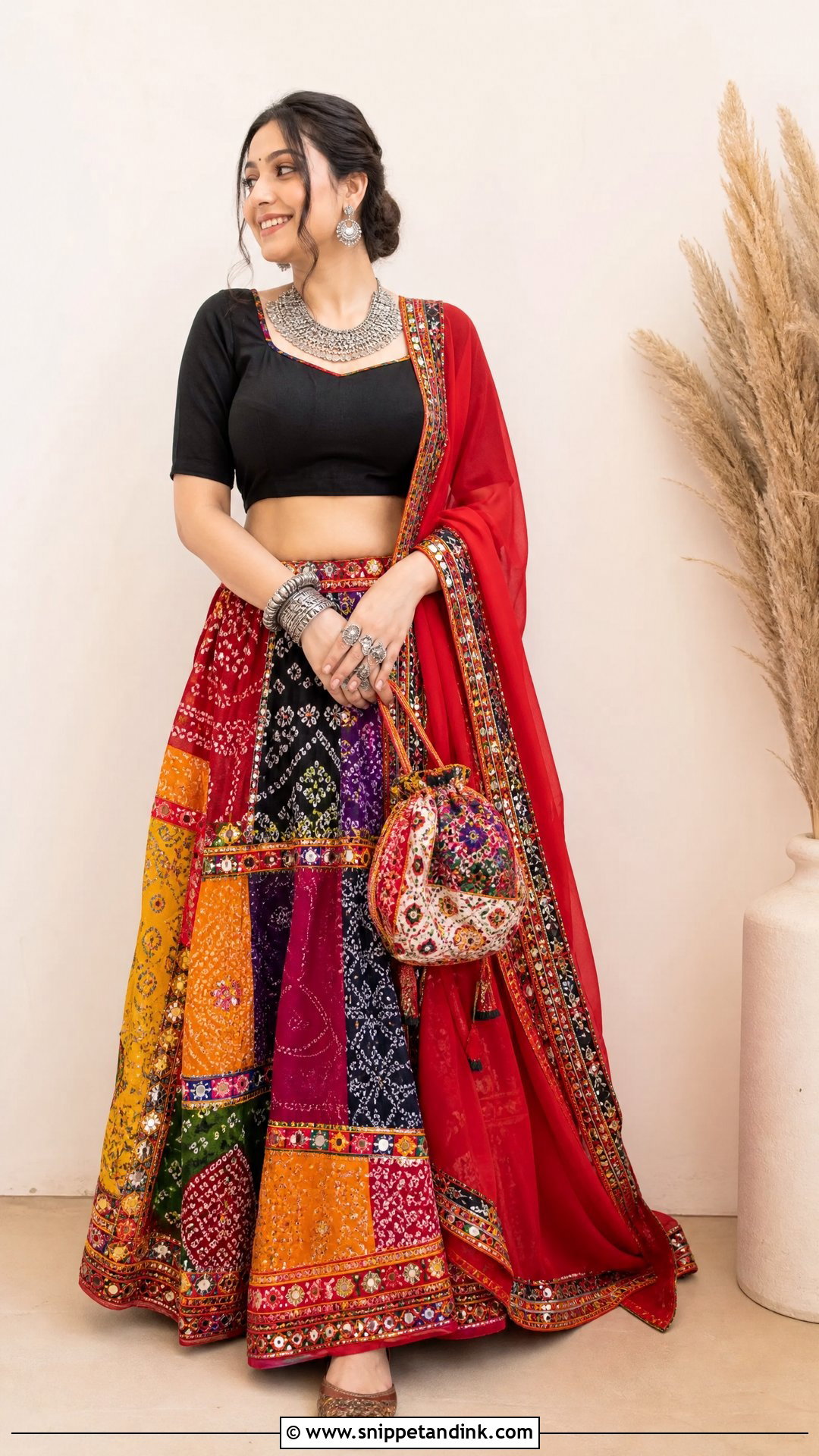
Patchwork lives or dies on coordination. Choose a skirt where the Bandhani, block print, embroidered and mirror-work panels share a palette instead of fighting. My test is to lay the skirt flat and squint; if no single color holds it together, I pass. A solid black, red, navy or magenta blouse gives the eye somewhere to rest, and a plain dupatta with a patchwork border keeps the balance. A bold silver necklace, earrings, stacked bangles and leather mojaris, plus a potli made in one repeated print, tie the accessories in. Folk performances, festivals and sangeets suit it. Keep the hair neat and the makeup simple.
15. Rajasthani Lehenga With Peplum Blouse
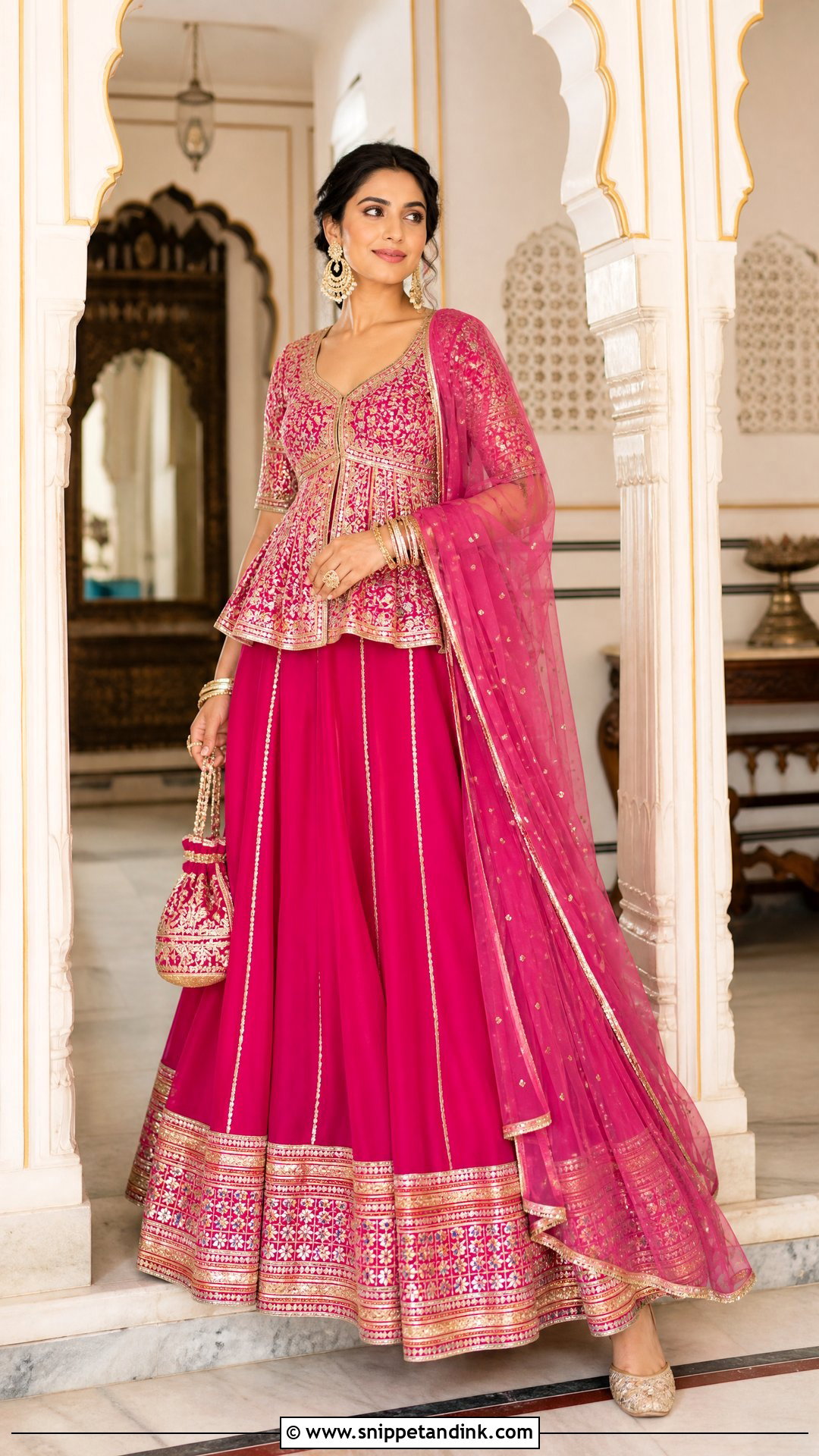
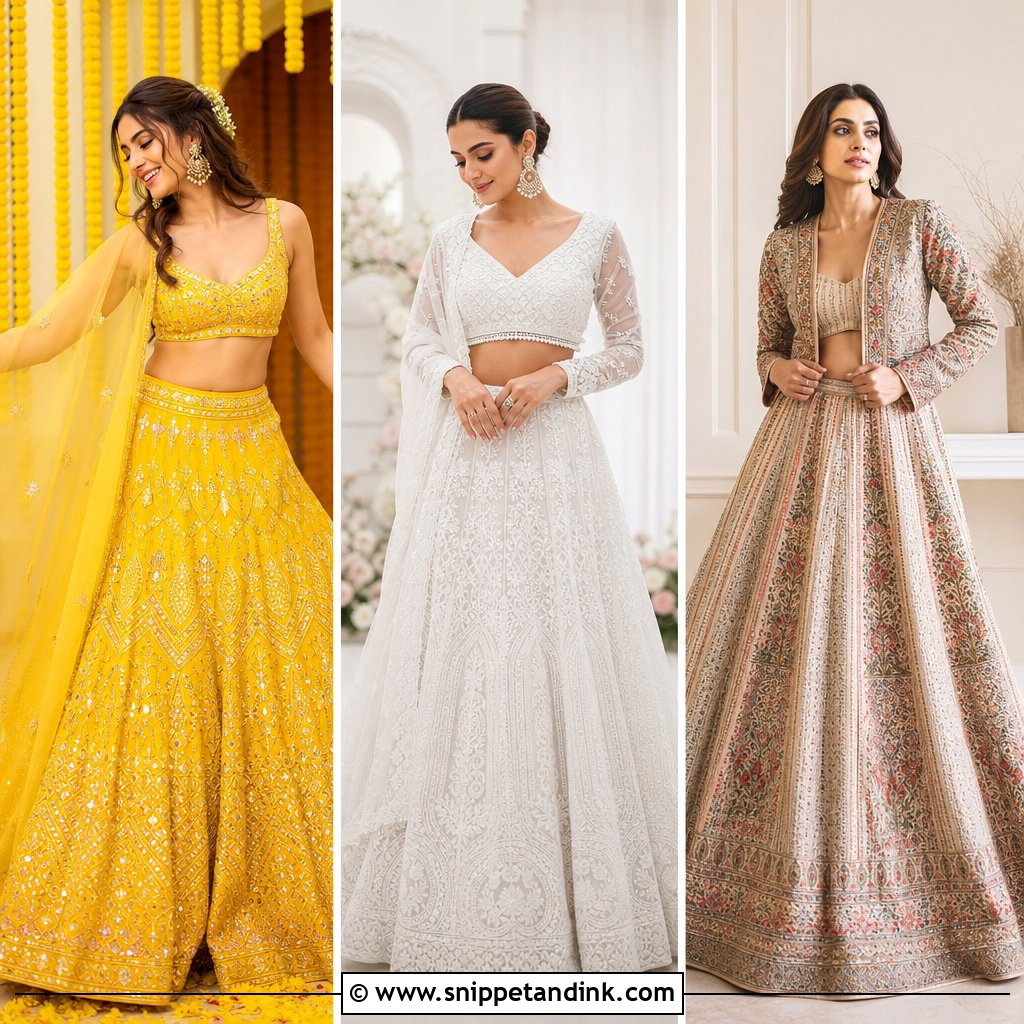
A peplum blouse covers the midriff and gives the lehenga a modern line. Choose a flared solid or Bandhani skirt with a defined waistband and a medium Gota border, and a fitted peplum with Rajasthani embroidery at the neck, waist and cuffs. Length is everything here. The peplum should stop near the upper hip; any longer and it fights the skirt’s flare and visually shortens the legs. With a busy blouse, wear a light dupatta over one shoulder or none at all. Kundan earrings, slim bangles, a structured potli and pointed juttis. It defines the waist without a cropped blouse, which makes it a strong engagement or sangeet option if you’d rather keep your midriff covered.
16. Rajasthani Lehenga With Jacket Blouse
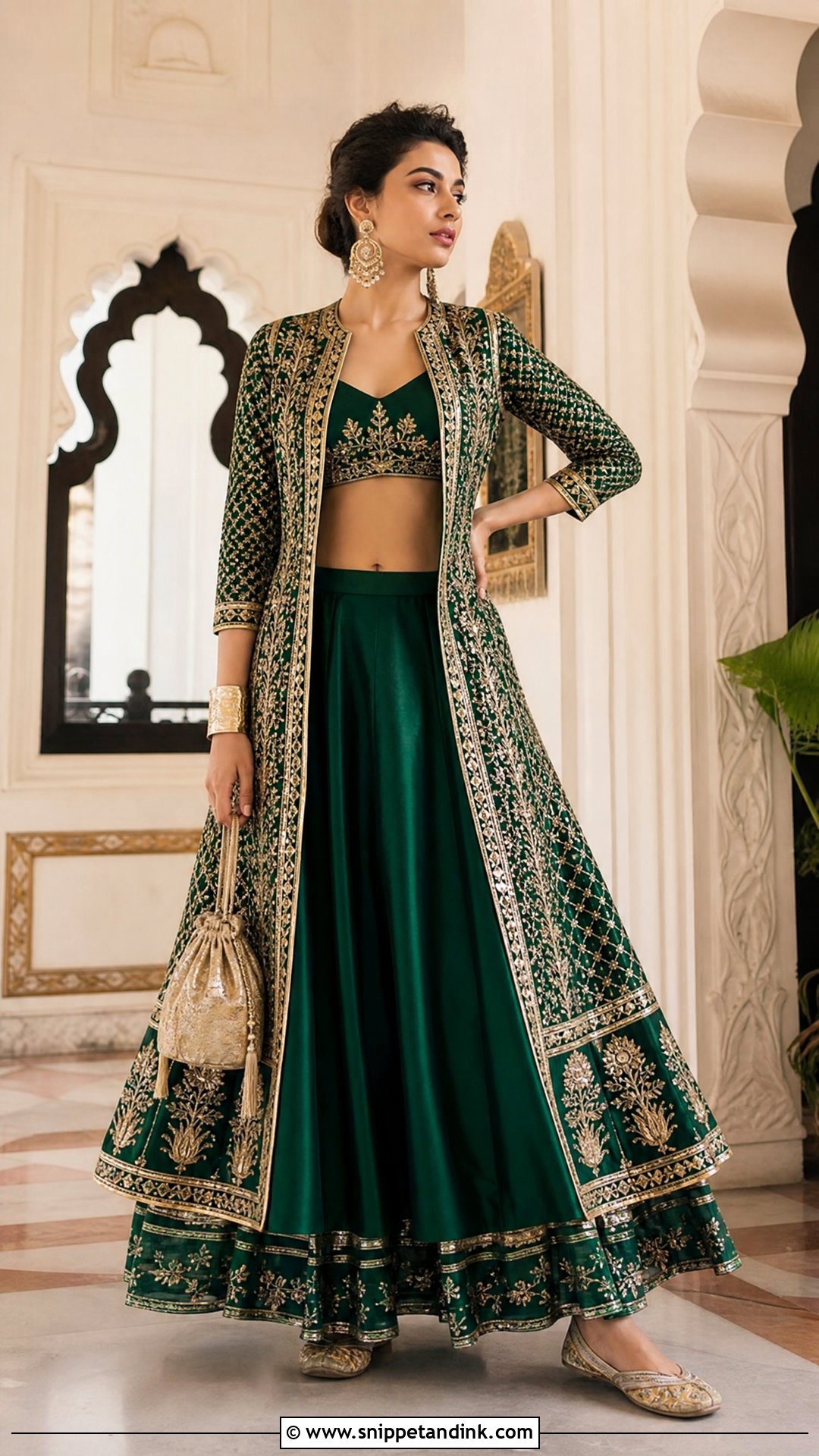
A long jacket turns a lehenga into a layered outfit with real movement. Start with a simple silk or georgette skirt in red, navy, emerald or ivory, add a fitted blouse, and layer an open-front jacket worked in Gota Patti, mirror work or threadwork. Knee length keeps the skirt in view; floor length reads more formal. Raise your arms in the jacket before you buy it. Densely embroidered jackets are stiffer than a blouse and can restrict reaching and hugging. A dupatta is optional. Statement earrings, a cuff, a small potli and metallic mojaris, with necklaces kept minimal so the jacket neckline stays clean. It suits cooler weddings and receptions.
17. Rajasthani Lehenga With Cape Blouse
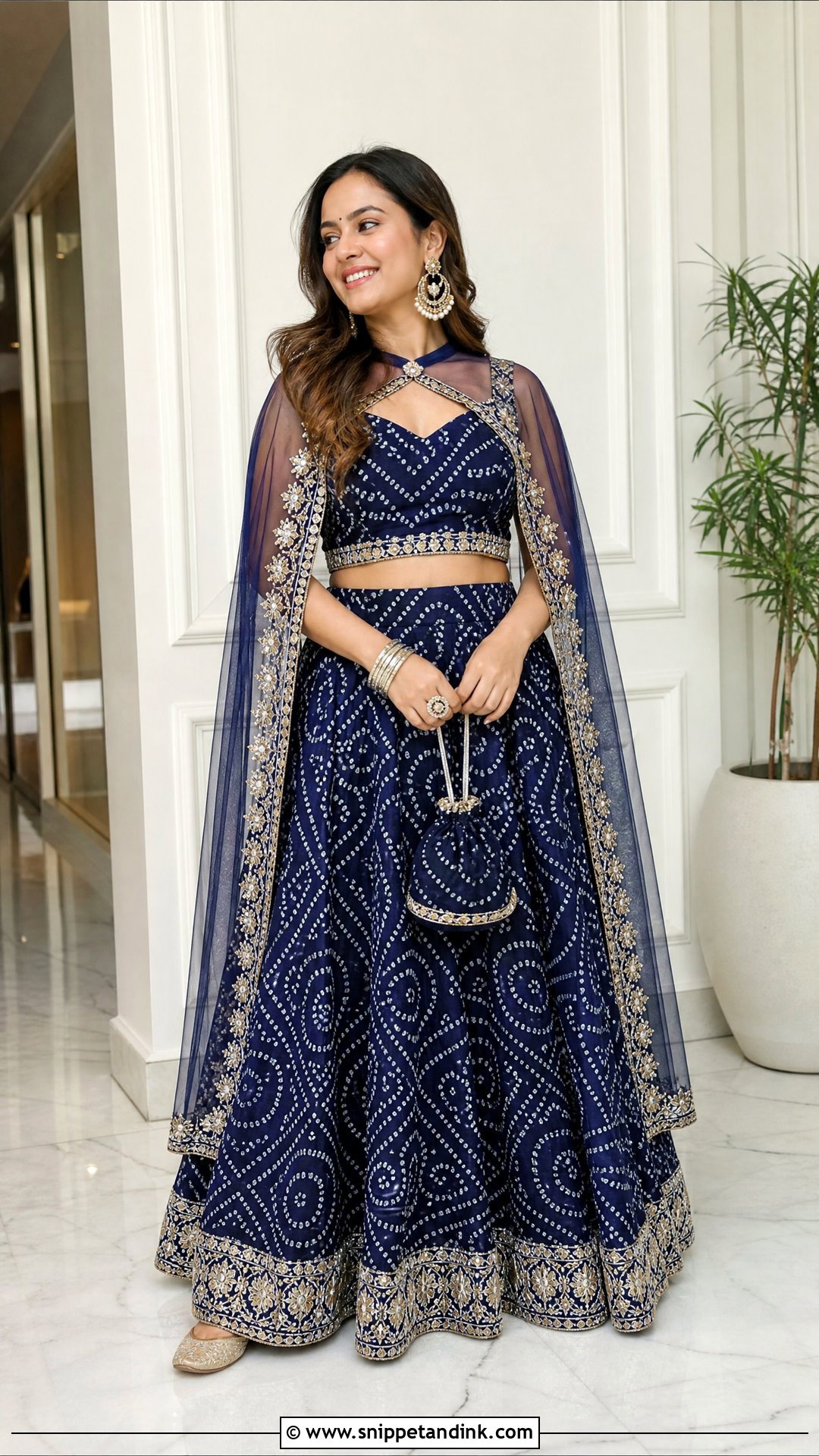
A sheer cape brings structure to classic textiles. Pair a streamlined lehenga in Bandhani or evenly spaced Gota with a fitted blouse and an attached organza cape ending at the elbow, waist or hip depending on the coverage you want. Its border should echo the skirt instead of adding a new pattern, and because the cape does a dupatta’s job, you can usually skip one. Organza capes slide back off the shoulders during hugs unless they’re tacked at the shoulder seam, so I always ask for that. Chandbalis, a statement ring, metallic bangles and embroidered juttis, with a neat ponytail or low bun to keep the cape clear.
18. Rajasthani Lehenga With Bandhani Dupatta
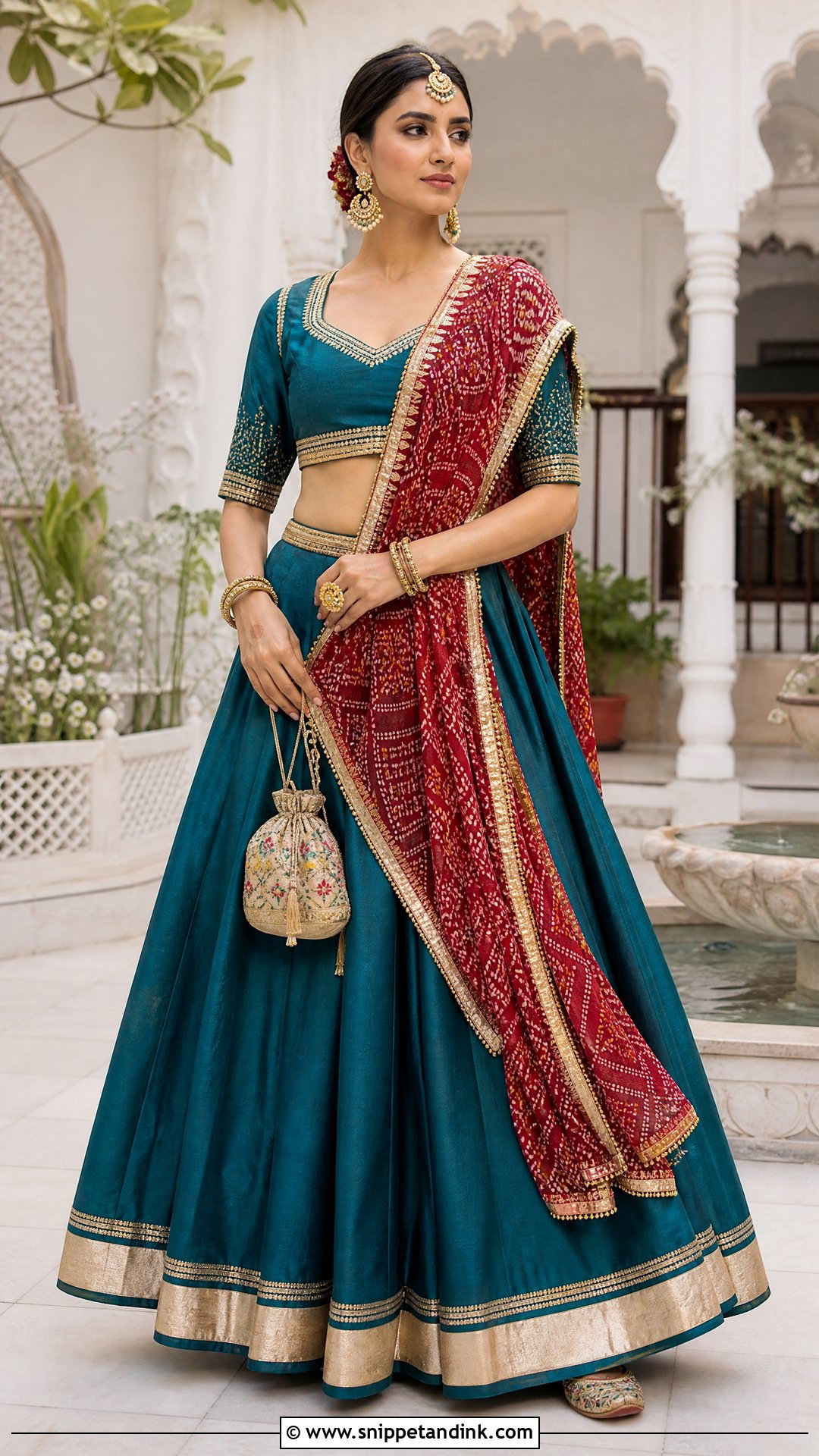
This is the most economical idea in the set: let one Bandhani dupatta carry the tradition. Wear a plain silk, raw-silk or georgette lehenga in teal, maroon, mustard, pink or royal blue, with a coordinating blouse and small Gota details at the sleeves. Over it, place a contrasting Bandhani dupatta in red, yellow or fuchsia across one shoulder and pin it at the opposite hip, which shows off the pattern and frees your hands. A borla, Kundan earrings, gold bangles, a small potli and mojaris finish it. The dupatta will go with other outfits for years, so I’d spend a little more on a genuinely hand-tied one.
19. Rajasthani Lehenga With Heavy Odhni
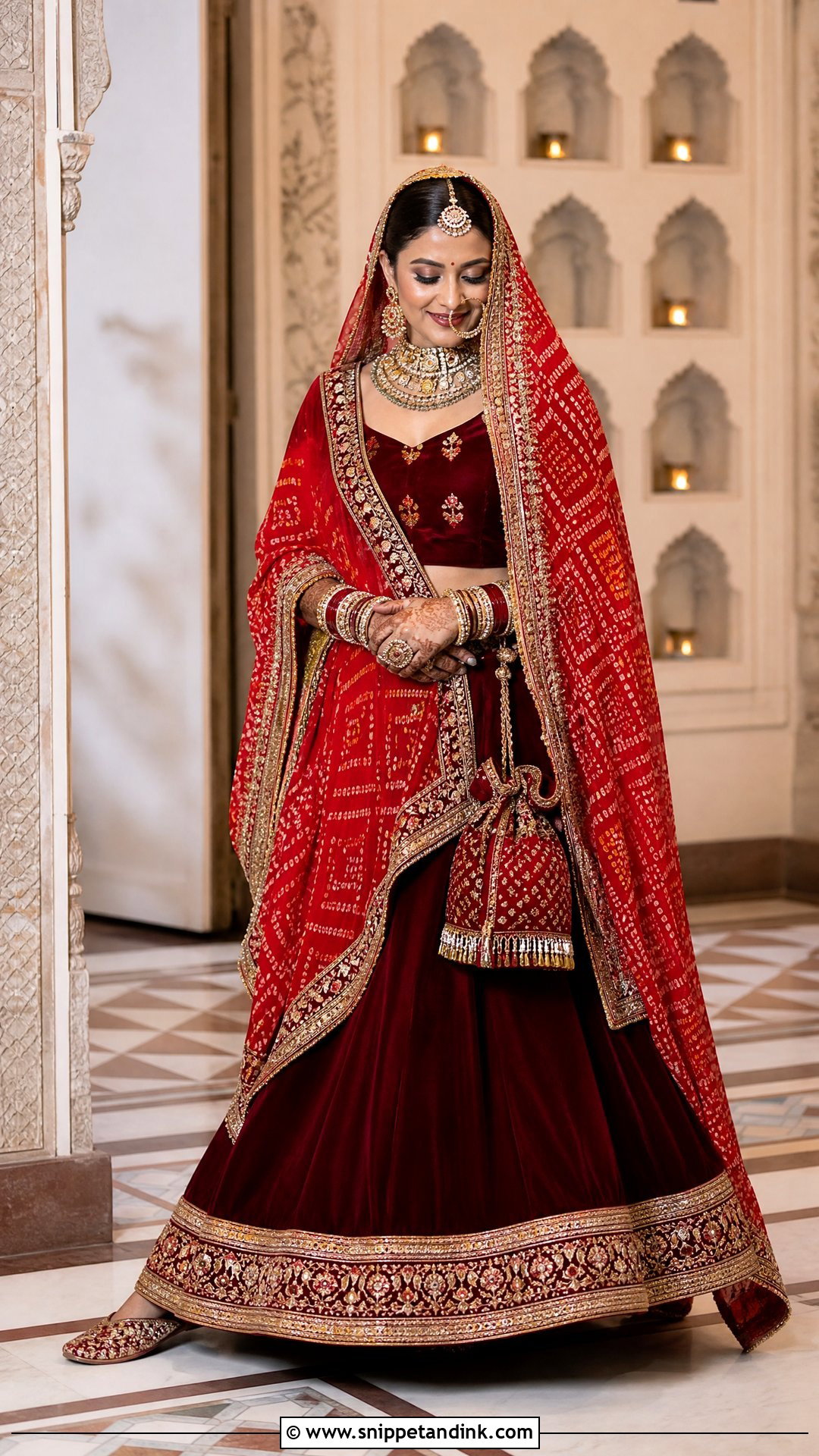
In Rajasthani dress the odhni often carries the most meaning, and a heavily worked one can hold up a whole outfit. Choose a solid red, maroon, pink or orange skirt with a broad Gota border and a fitted matching choli, then an expansive Bandhani or embroidered odhni with detailed edging, small metallic motifs and a finished head border. One end goes over the head and the rest crosses the body diagonally. A heavy odhni pulls backward off the head, so I anchor it with pins into a firm bun rather than loose hair. A borla, Kundan necklace, earrings, bangles and juttis complete it. Keep the skirt and blouse lighter so the odhni leads.




20. Rajasthani Lehenga With Silver Jewelry
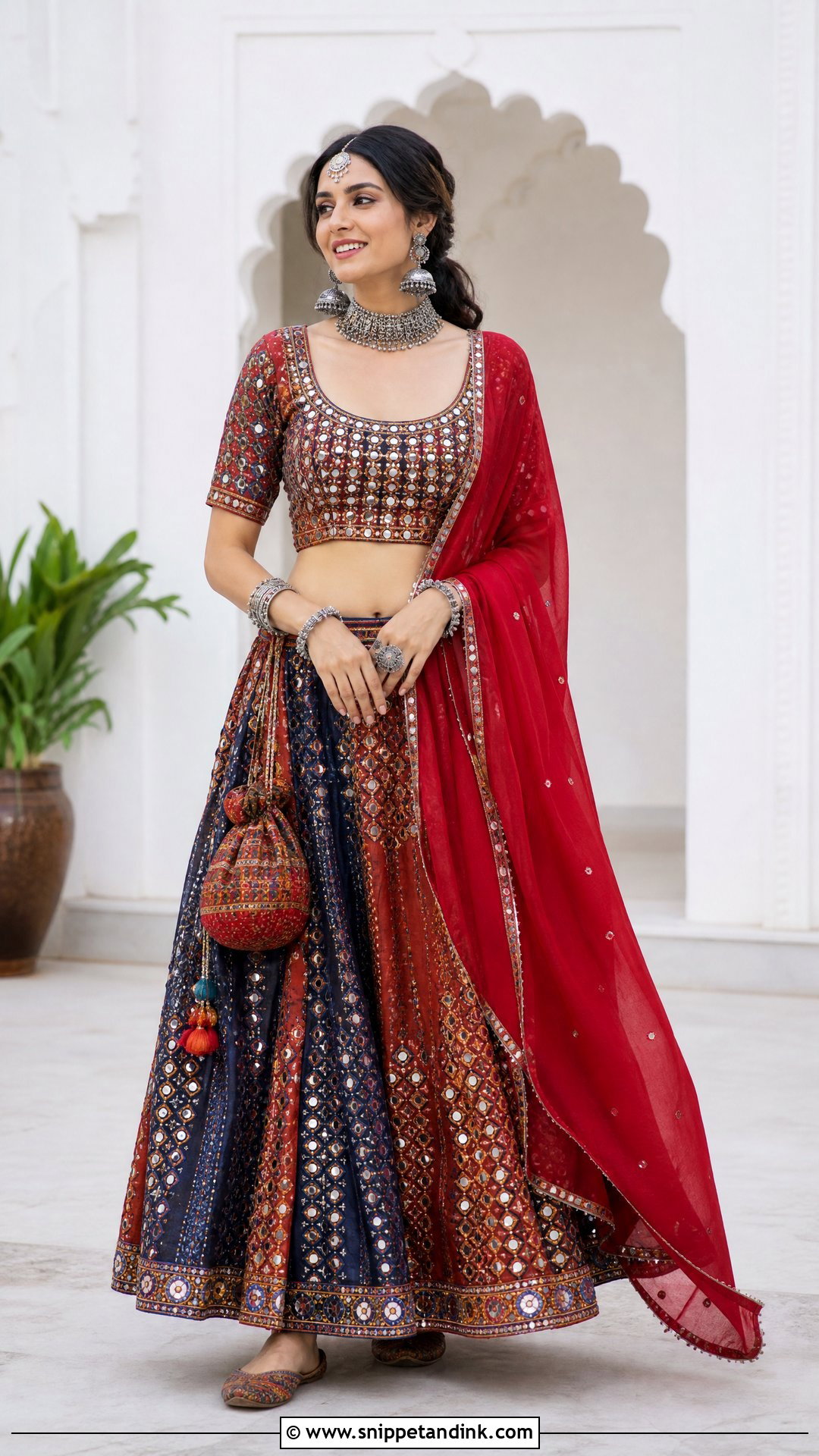
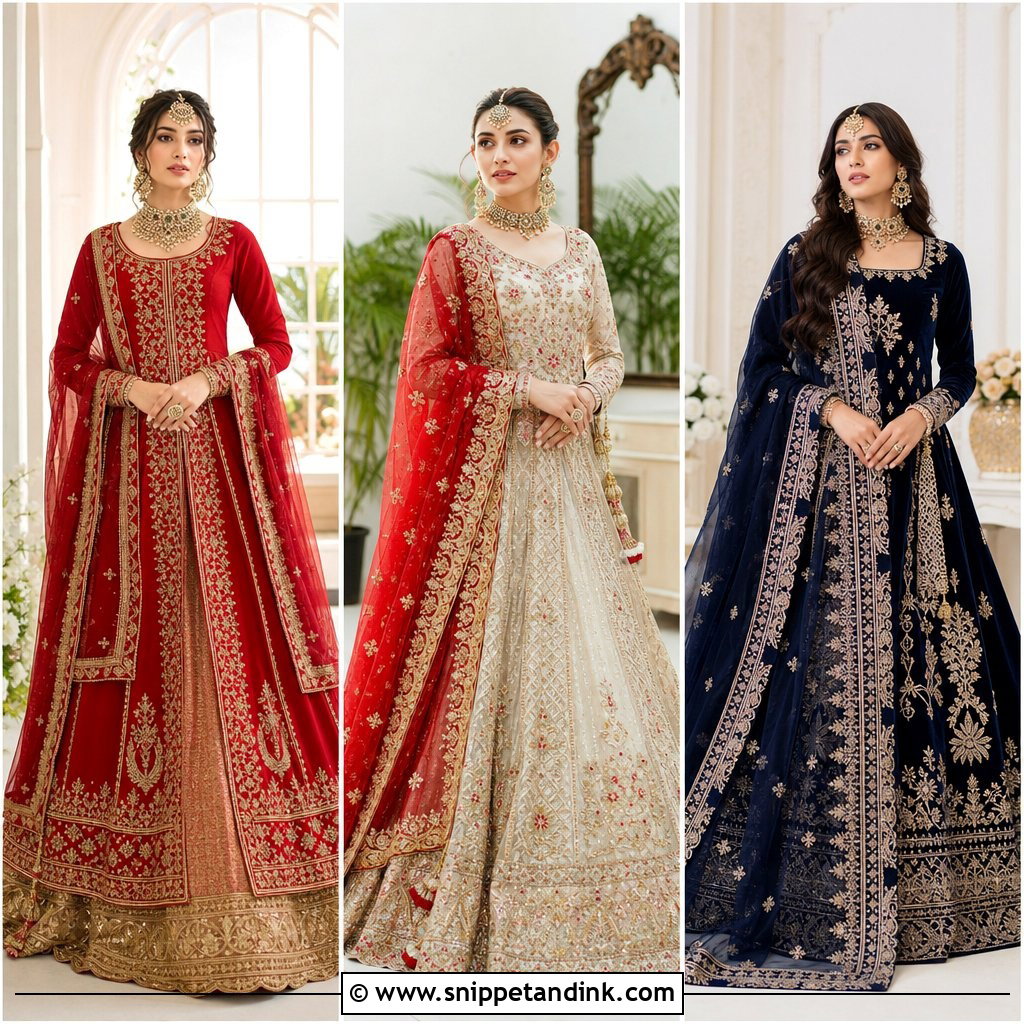
Oxidized silver is the earthy alternative to gold, and it’s what I reach for with folk-leaning outfits. Choose a rust, black, indigo, red or green skirt with mirror work, patchwork or multicolor embroidery, a choli in one repeated shade and a light contrasting dupatta. Build the jewelry around one main piece, whether an oxidized choker, a long tribal-style necklace or big jhumkas, then add silver bangles, a ring and a small maang tikka. Oxidized metal can leave grey marks on pale fabric and skin in the heat, so I keep heavy pieces away from light necklines. Leather mojaris, a woven potli, braided hair and kohl-defined eyes finish it.
Desert Days, Cold Nights and Palace Stairs
Destination weddings in Rajasthan mostly happen in the cooler months, and the swing between afternoon and night catches guests out. In December and January the desert can feel warm at lunch and genuinely cold after dark, so I put the velvet and jacket looks in the evening and the Leheriya, cotton and organza in daylight.
- Pack a shawl or wrap that belongs with the evening outfit, not whatever cardigan is in the suitcase.
- Forts and havelis often mean steep, uneven stone steps. Mojaris and juttis grip better than heels, and hems should clear the ankle on stairs.
- Sand works its way into heavy hems and can scratch delicate work, so shake skirts out well before packing them.
- Strong sun fades bright dyes, so don’t leave outfits hanging in a sunny hotel window between functions.
Washing Bandhani Without Losing the Color
Bandhani and block prints are often dyed with colors that run in the first few washes. Anything with Gota or zari should go to a dry cleaner. For plain cotton Bandhani, I wash by hand, alone, in cold water with a little mild detergent, and dry it flat in the shade. Never soak it and never wring it; twisting flattens the raised dots that prove it was hand-tied. Store Gota pieces wrapped in cotton cloth away from damp, and keep oxidized jewelry in a separate pouch so it can’t mark the fabric.
One Craft at the Center, Everything Else Quieter
Bandhani, Leheriya, Gota Patti, mirror work, block print and a worked odhni can each anchor an outfit, and the strongest looks here pick one and let everything else support it. Red and yellow keep the mood traditional, while pastels, jackets, capes and peplums modernize it. Before any event, I check four things on a Rajasthani outfit: the lining against the skin, the skirt length in the real shoes, the waistband after a meal, and where the dupatta pins will actually hold. Sort those out at home and the outfit looks after itself on the day.
You'll Like These Ideas:







Leave a Reply