
Most wedding wardrobes I put together come down to a skirt, a choli and a dupatta, and the choli is the part that makes or breaks the fit. A skirt can be forgiving. A blouse that gaps, rides up or pinches under the arm can’t be hidden. The sets below go from classic red and heritage silks to pastels, mirror work, capes, jackets and sculpted corset tops. I’ve written each as a whole outfit with the jewelry, footwear and hair that suit it, and flagged who it suits: bride, bridesmaid or guest. Start from the event, the venue and the weather, then look at how many hours you’ll be wearing it. That last question rules out more options than taste ever does.
A Fitting Countdown for a Made-to-Order Lehenga
Embroidered bridal lehengas are made to order, and handwork takes time. Lead times vary a lot between designers and workshops, so ask at the very first meeting and plan backward from the wedding, not forward from when you feel ready.
- First appointment: choose the design and get measured. Wear the bra you’ll wear on the day, or decide on built-in cups now, because it changes the choli pattern.
- Before embroidery starts: approve a sample of the work and the thread colors. Once zari or sequins are on, the choli can’t be let out much.
- First fitting: try the choli and skirt together with your wedding shoes. This is where the length and waistband get set.
- Second fitting, closer to the date: check the choli again. Many brides change shape in the final weeks, from stress, training or simply eating differently.
- Final collection: try on everything once more, sit down, raise your arms and walk. Take it home in a breathable garment bag, never plastic.
If you’re ordering from abroad or online, add shipping and a buffer for a local tailor to adjust the choli after it arrives. I’ve rarely seen a ready-made bridal choli fit perfectly straight out of the box.
1. Red Bridal Lehenga Choli
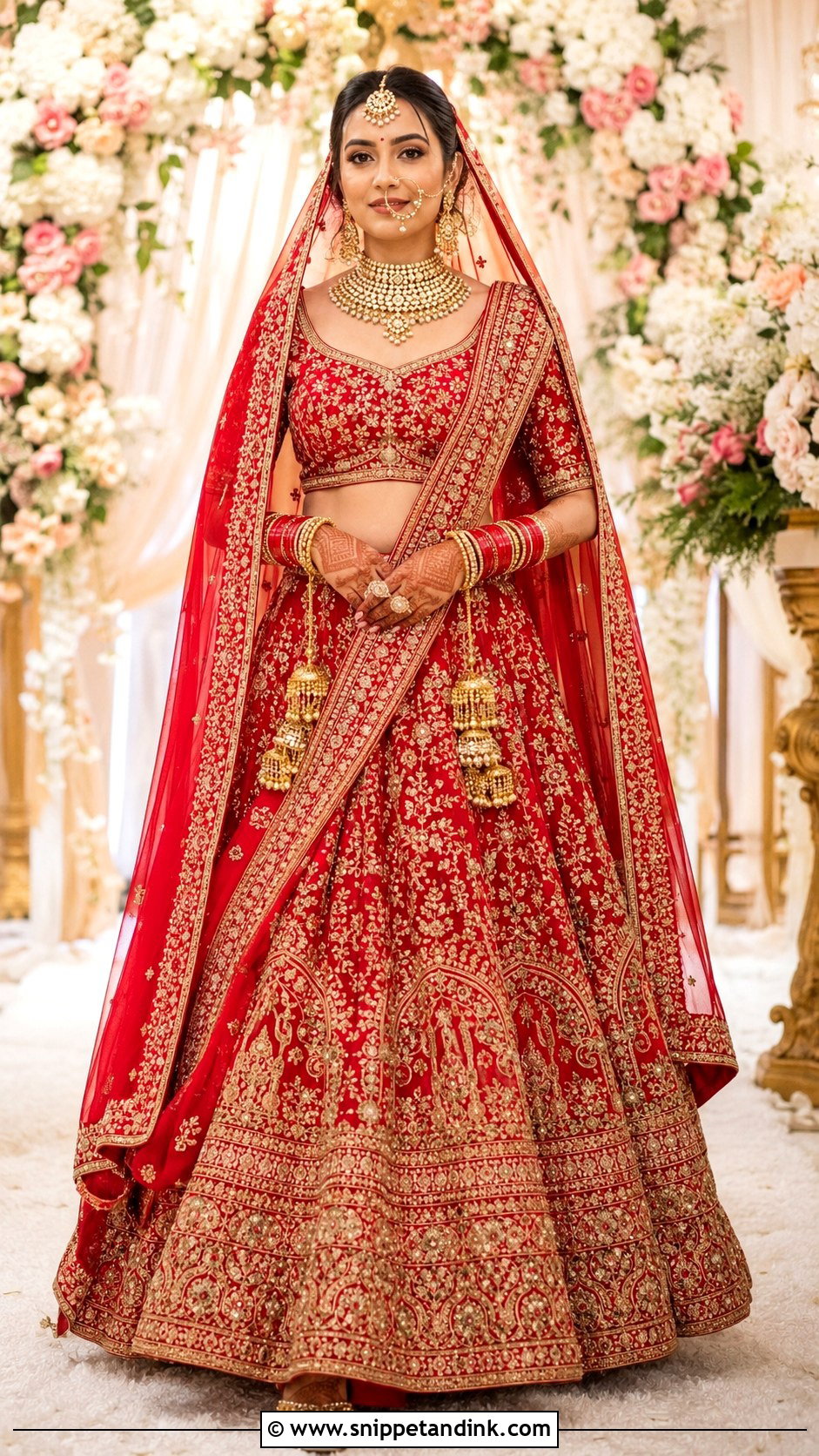
Red is still what most families picture for the main ceremony, and a structured skirt with gold zari or sequins carries it. I put the bride in an elbow-sleeve choli for this; it supports the bust and leaves room for bangles without a gap of bare arm. A red dupatta goes over the head, with a lighter embroidered one across a shoulder. Gold jhumkas, a layered necklace, bangles and a small clutch complete it. Padded juttis under the skirt make standing for the rituals bearable. A sleek bun with fresh flowers keeps the neckline clear and gives the head drape something to pin into. On a petite bride I scale the motifs down, or the embroidery wears her.
2. Maroon Velvet Lehenga Choli
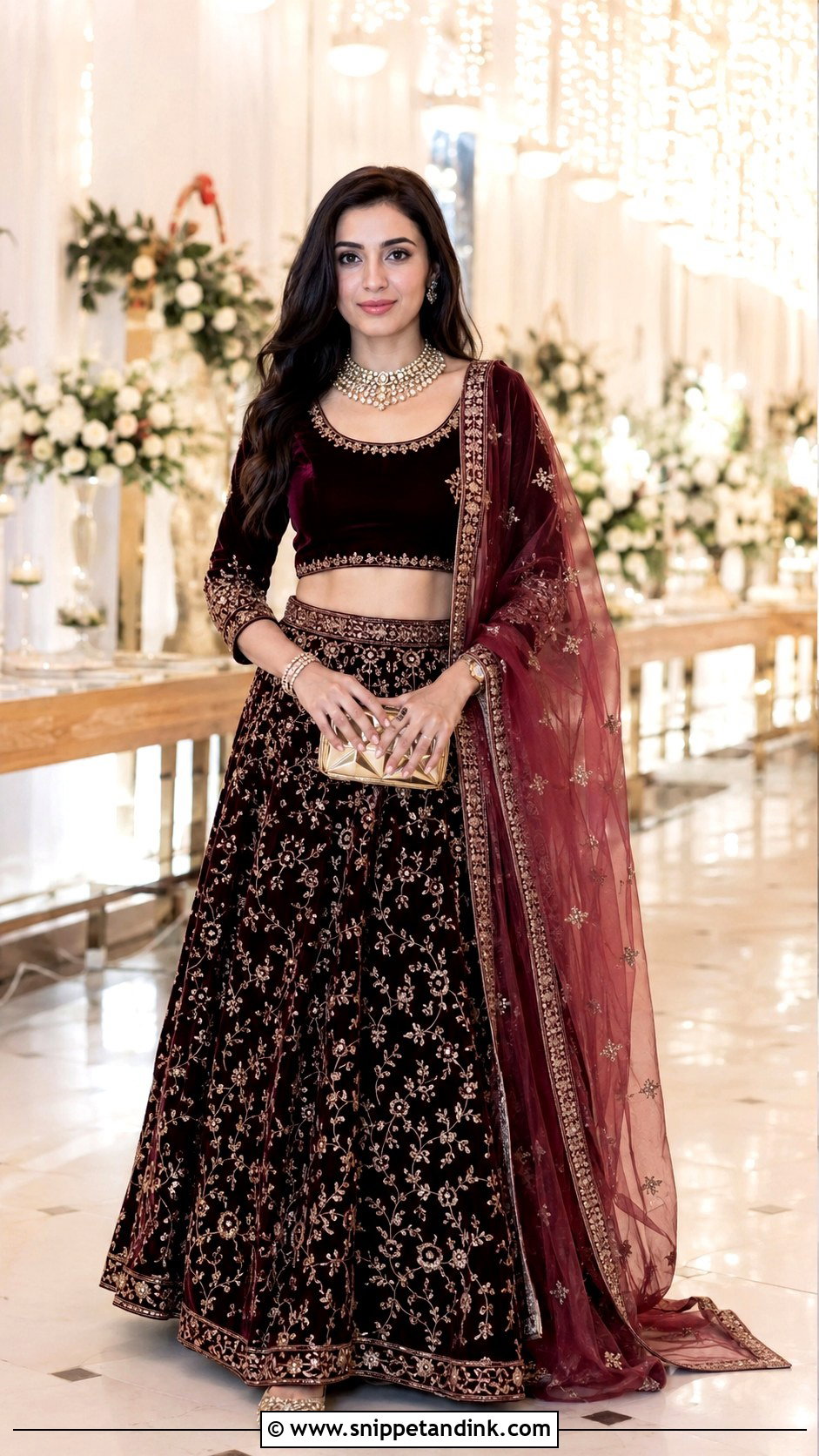
Velvet in maroon reads almost black-red under evening light, which is why a maroon velvet lehenga choli suits a cold-weather indoor wedding so well. Choose paneled velvet rather than gathered, with antique-gold work concentrated at the hem. A choli with a modest square neck and three-quarter sleeves, a light net dupatta with a fine gold border, a kundan necklace, earrings, bangles and metallic juttis complete it. Velvet already carries depth, so I leave off extra sequins. Watch the heat: velvet in a crowded hall gets warm, and a breathable cotton lining in the choli makes a real difference by the third hour.
3. Ivory And Gold Lehenga Choli
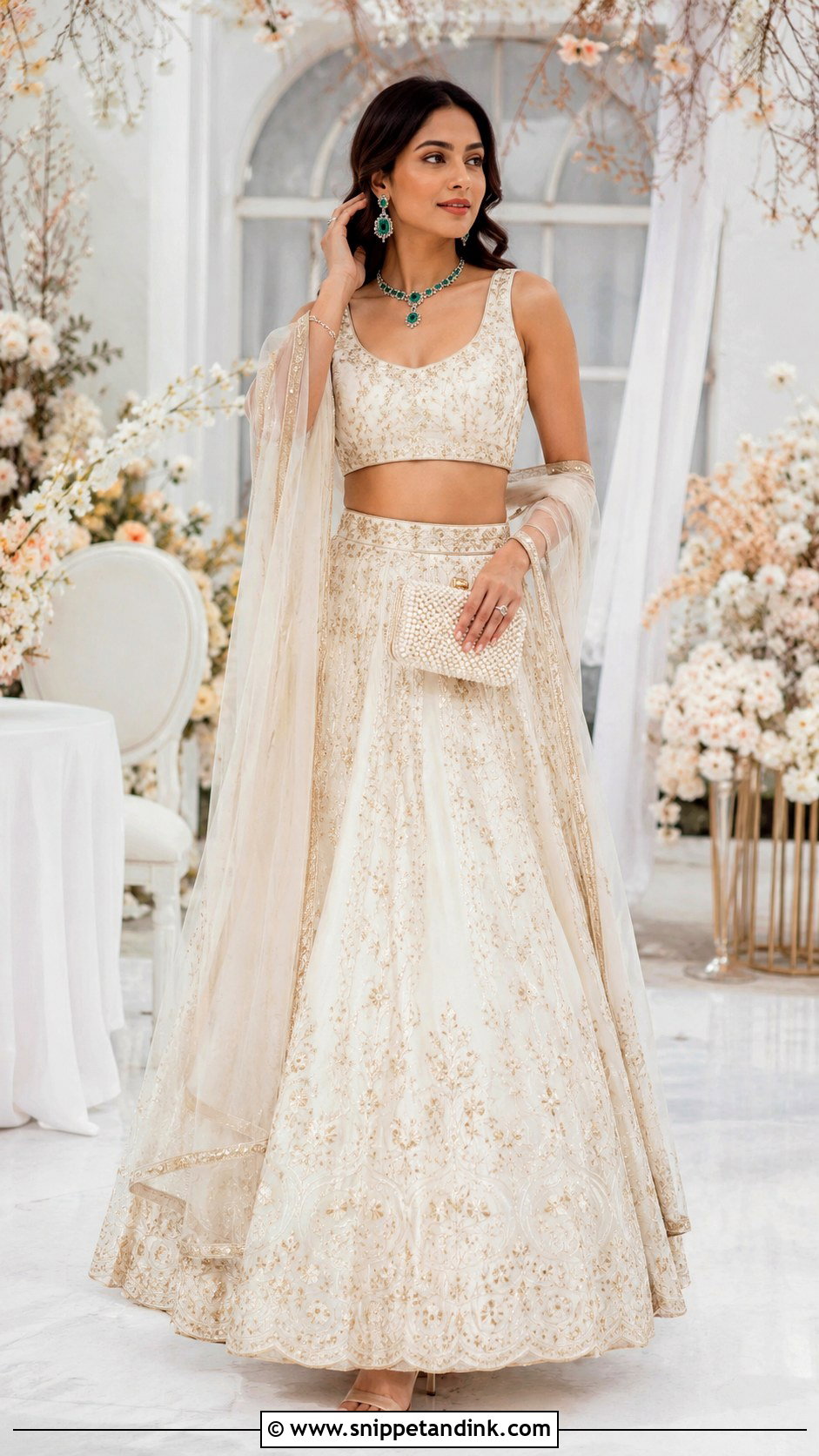
Ivory and gold look clean in daylight and soft at a candlelit reception. Look for gold threadwork, beading or woven motifs on the skirt rather than many colors. A matching choli with a gently curved neck, then a sheer organza dupatta over one shoulder so the waistband shows. Emerald earrings or a green-stone necklace give contrast; champagne heels, a pearl clutch and slim gold bangles finish it, with a neat center-parted bun. The test I do with every ivory outfit is holding it under the bride’s chin in daylight. If it drains her color, I bring deeper gold up near the face through the dupatta border and the jewelry.
4. Blush Pink Floral Lehenga Choli
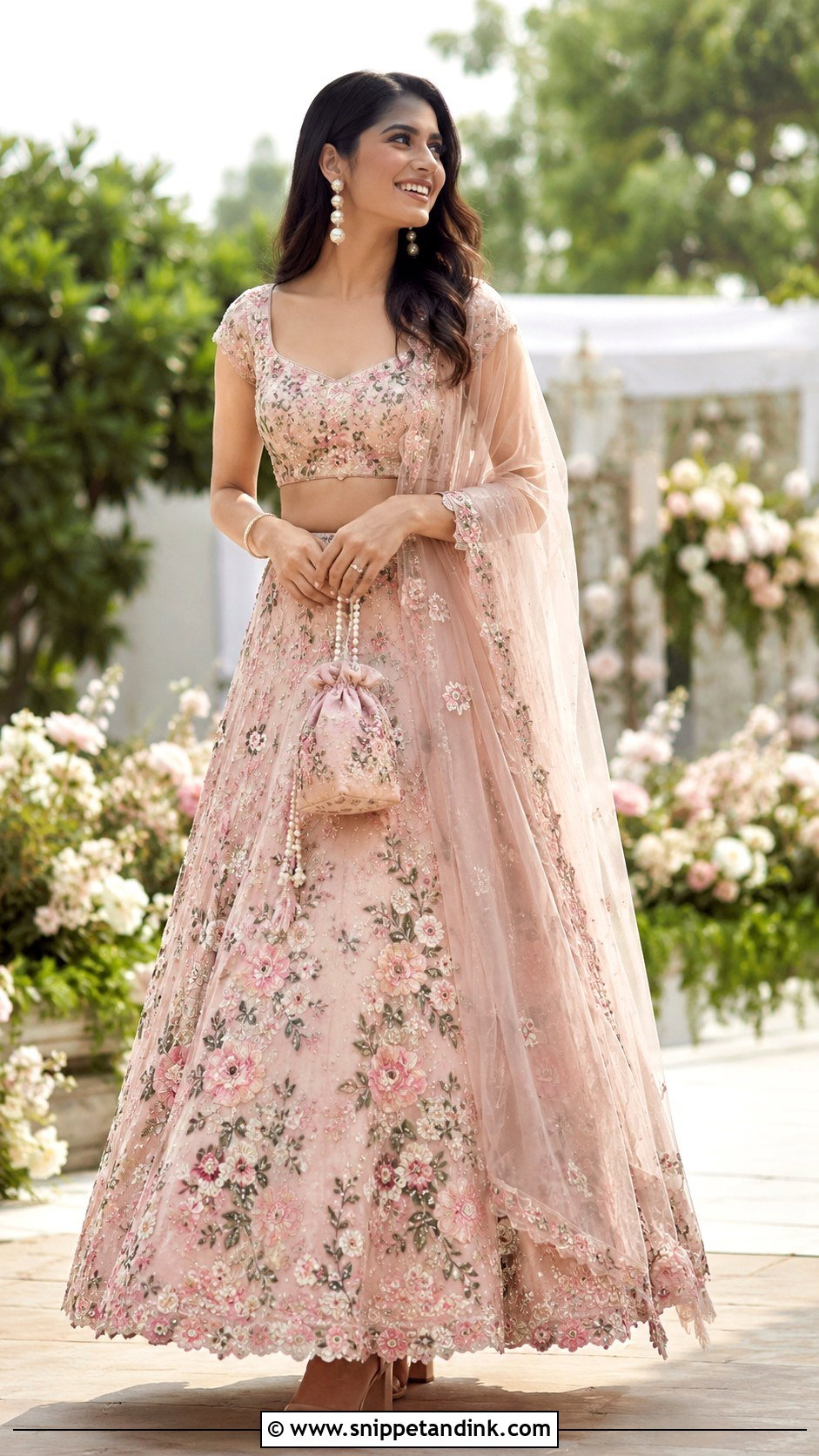
Picture a garden celebration and a blush lehenga choli scattered with threadwork flowers: festive without being formal, which is why it’s a favorite for sisters, bridesmaids and daytime guests. A flowing skirt pairs with a fitted short-sleeve choli carrying the same flowers. A translucent blush dupatta with a narrow edge keeps it airy. Pearl chandbalis, a small potli and nude block heels finish it, with fresh flowers in a low ponytail or textured bun. My one restraint: no floral jewelry, floral bag and floral shoes all together. One color story, carried through clothes, jewelry and makeup, looks finished; three floral accessories look busy.
5. Pastel Pink Mirror Work Choli
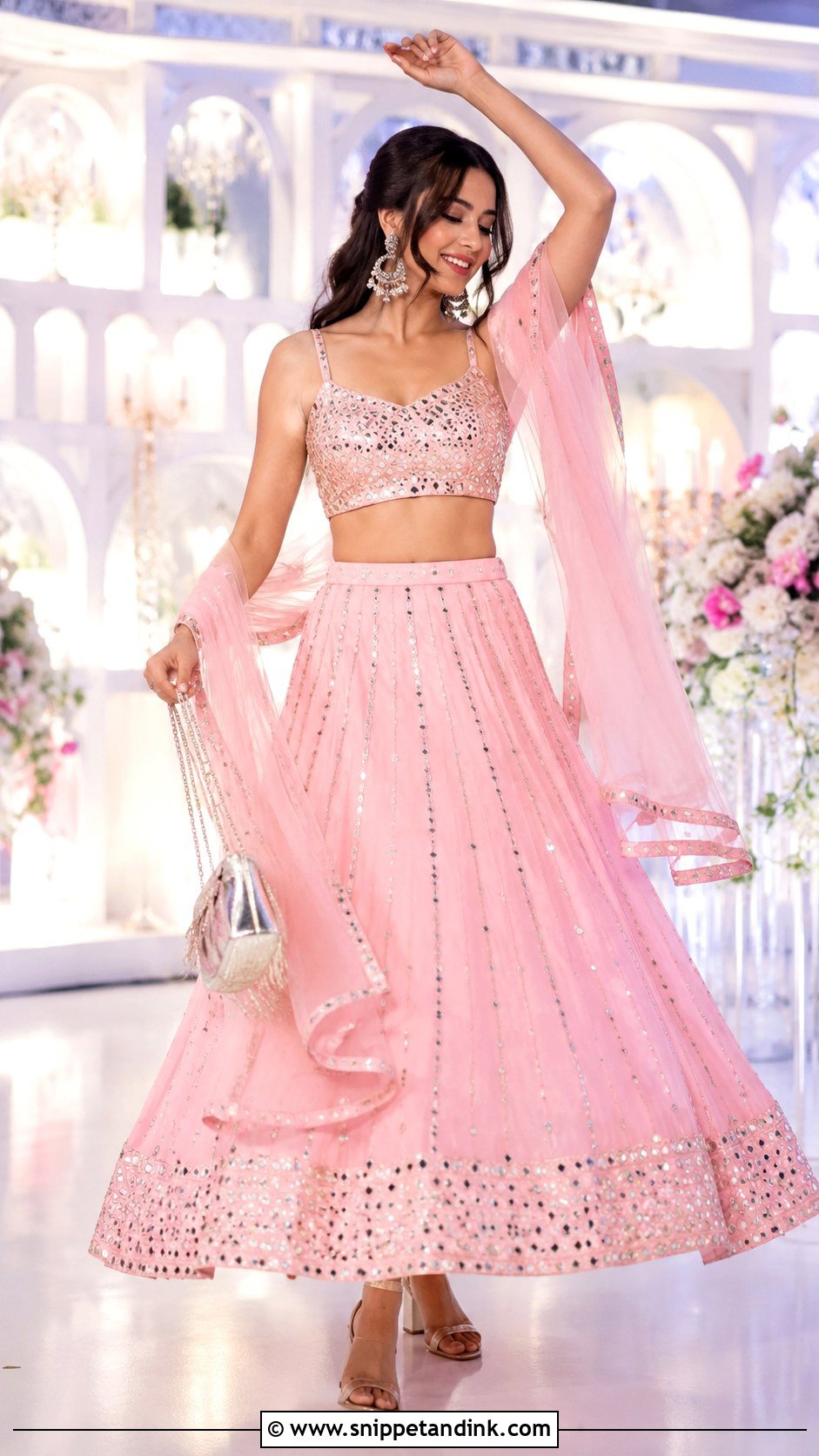
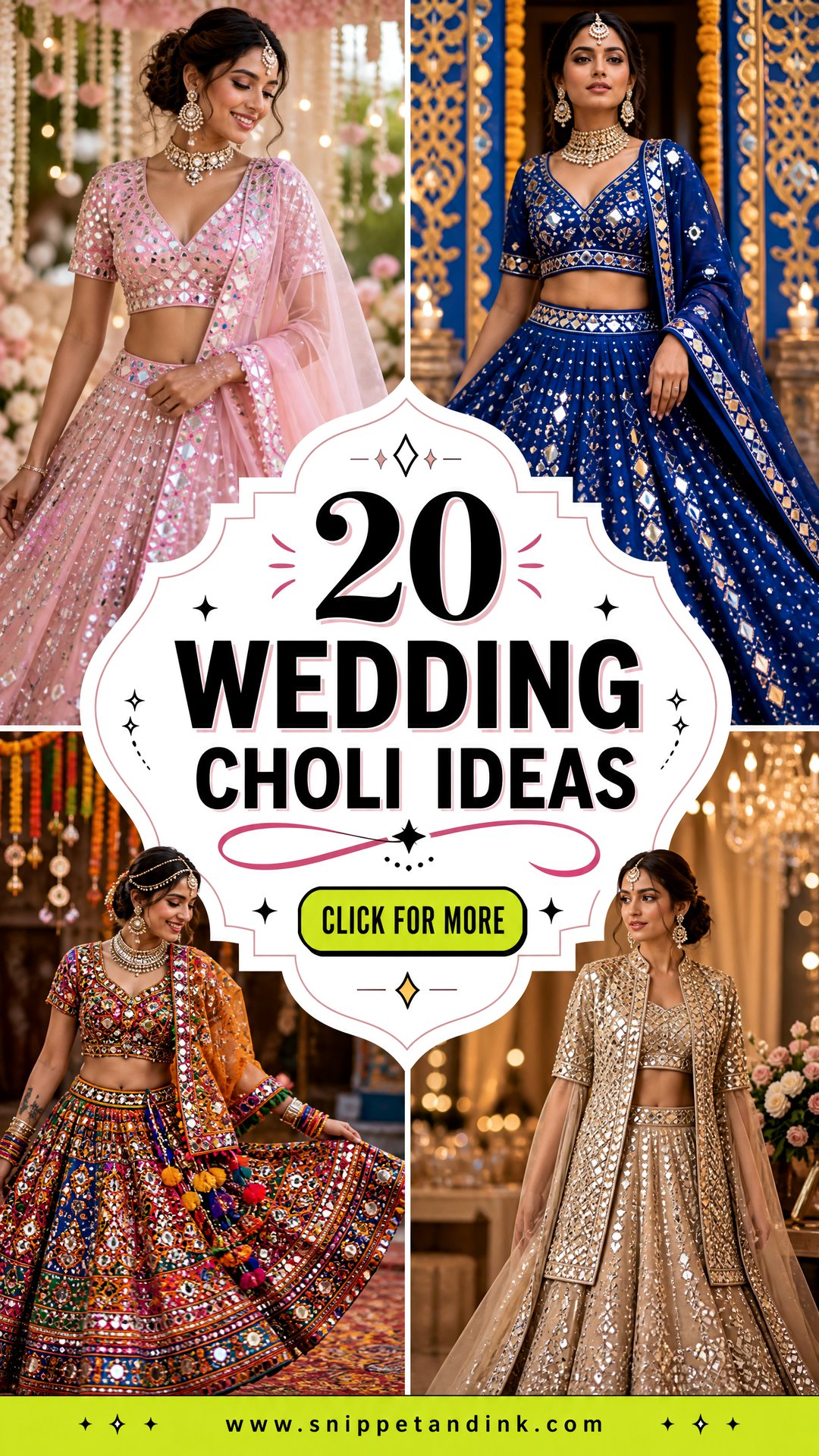
Mirror work makes the choli the center of a sangeet look, and on pastel pink it sparkles without looking harsh. Pair the blouse with a flared skirt that carries only lighter mirror accents at the waistband and hem, so the shine stays concentrated up top. A plain chiffon dupatta softens it. Silver-toned earrings, a slim bracelet stack and a compact metallic bag, with low block heels or cushioned sandals for dancing. A polished ponytail or side-swept waves show the neckline. Mirror backing can be rough. I turn the blouse inside out and run my fingers over each mirror before the event; any sharp frame will scratch skin or snag the dupatta.
6. Sage Green Lehenga Choli
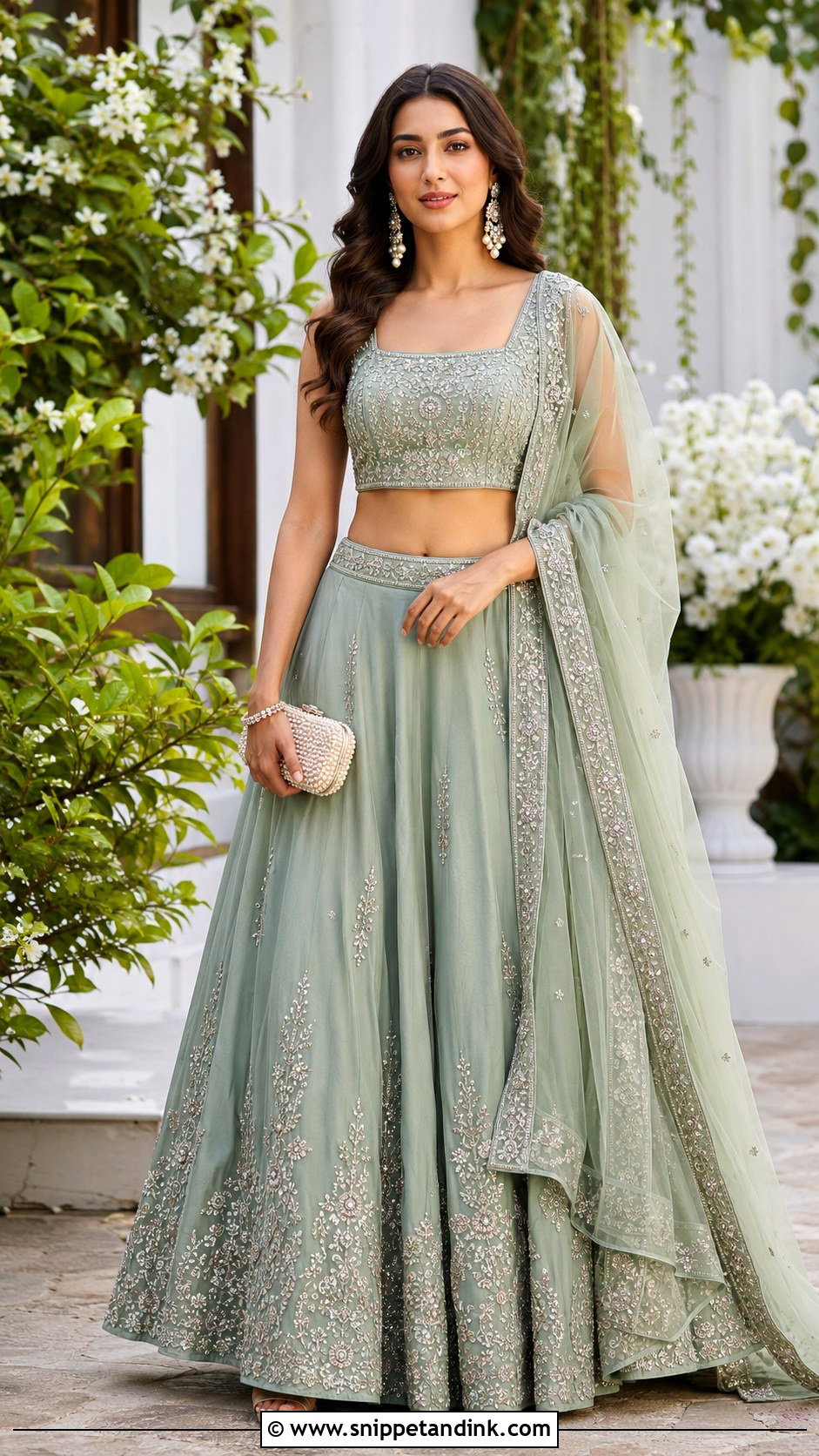
Sage is a muted green that sits well against real foliage, so I suggest it for outdoor ceremonies where brighter greens clash with the garden. A lightweight georgette skirt with quiet silver embroidery, a fitted sage choli with a square or sweetheart neck and a matching organza dupatta give it some structure. Pearl drops, a delicate silver necklace, a beaded clutch and neutral heels finish it. If it looks too quiet on you, one piece with small ruby or deep pink stones fixes that. Loose waves or a low bun. Strong daylight goes straight through light georgette, so check the lining in the sun before you commit.
7. Royal Blue Lehenga Choli
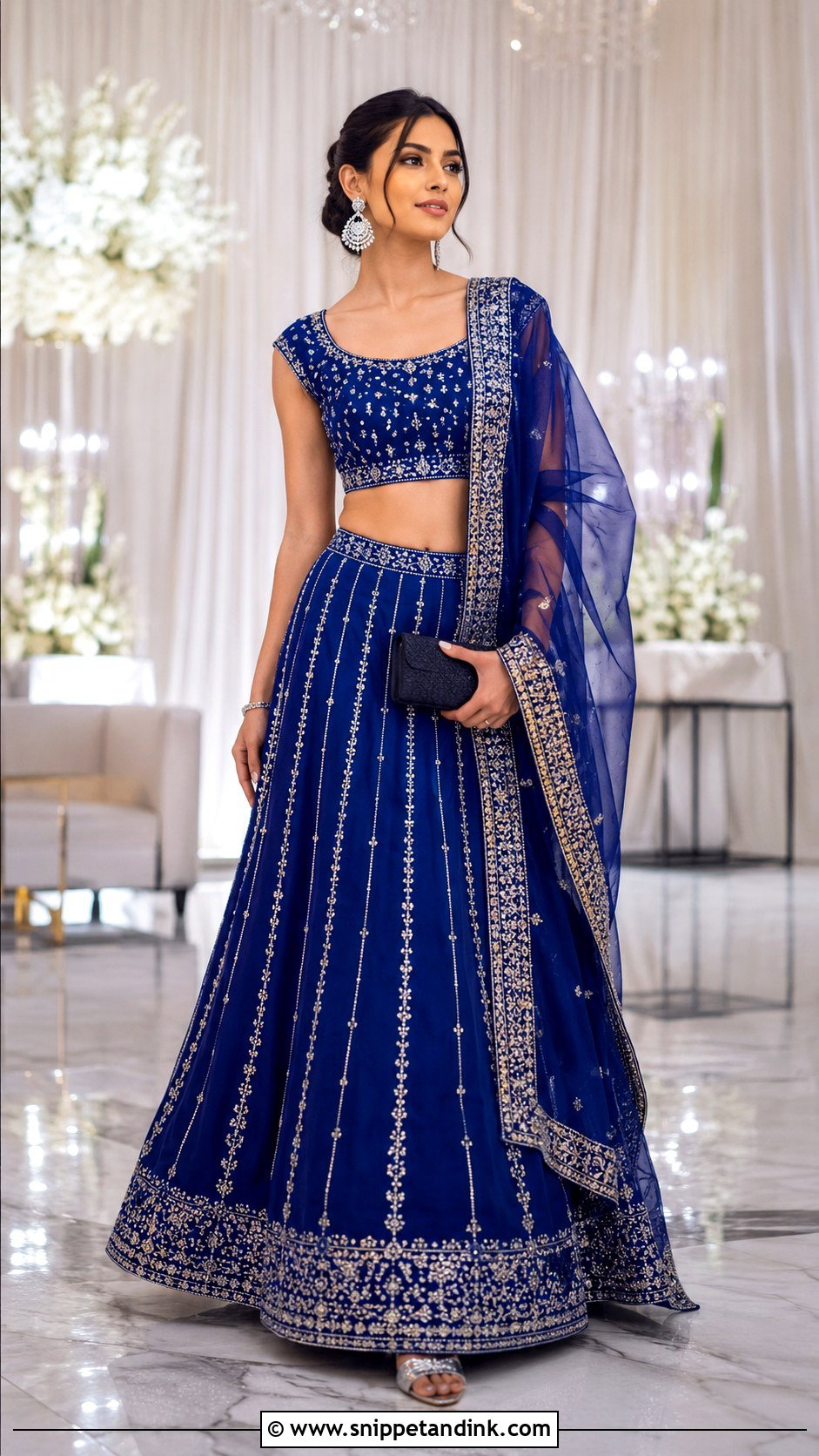
Royal blue is an evening color; it glows under warm light where navy goes flat and dark. Choose a full skirt with vertical embroidery to lengthen the line, and a choli with a supportive neckline, defined waist and fitted sleeves. A sheer blue dupatta with a silver border looks graceful draped from one shoulder to the opposite wrist. Diamond-style earrings, silver heels and a navy clutch complete it, with a sleek center-parted ponytail. If the skirt is densely worked, I drop the necklace and let earrings carry it. For photos, a richer sapphire holds its color better than very dark navy, which can read as black.
8. Emerald Green Lehenga Choli
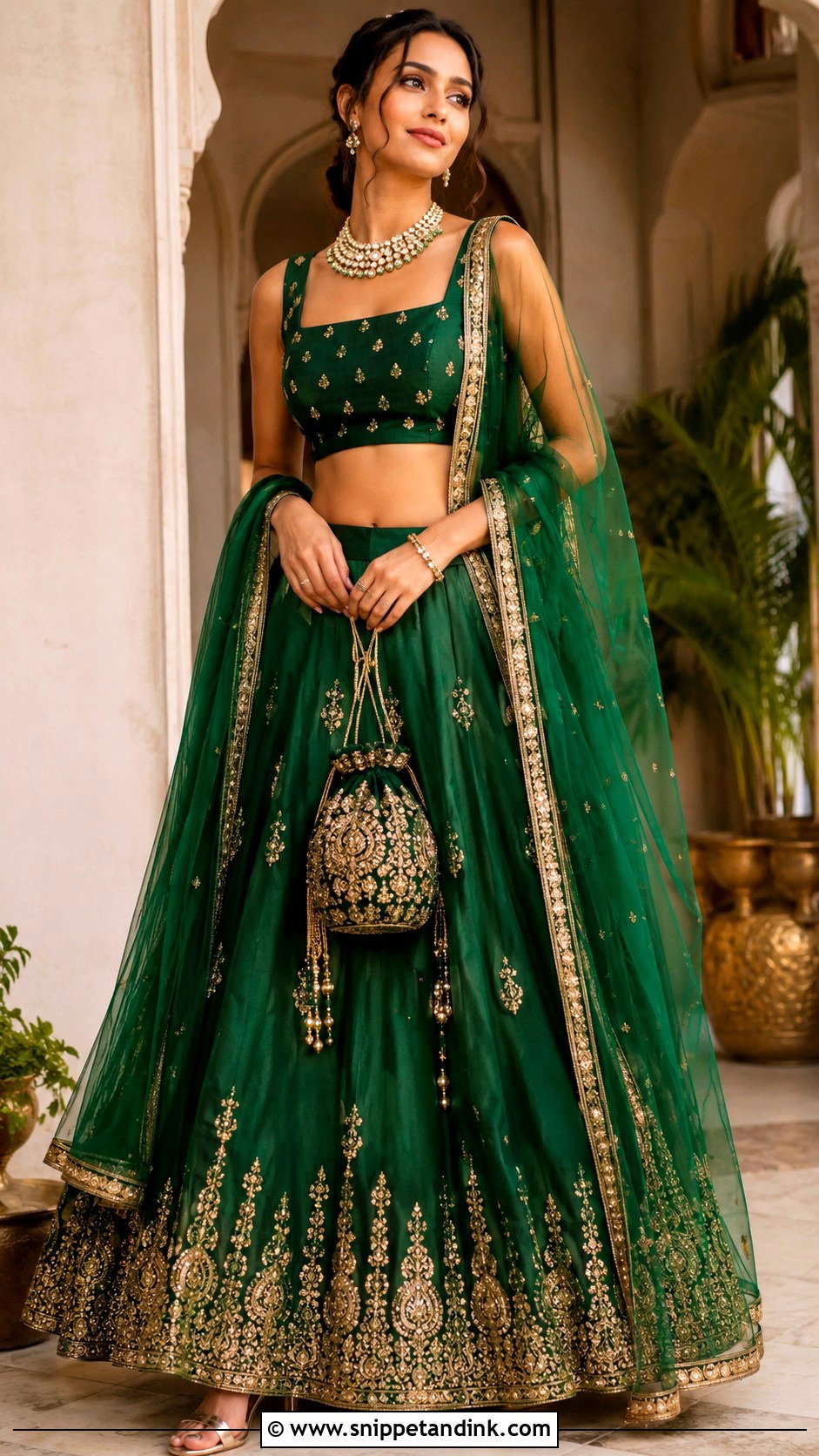
Emerald suits a reception or a formal family wedding. Silk or raw silk with antique-gold motifs across the lower half gives the skirt weight and movement. Pair it with a choli in the same green, deep square or modest V depending on coverage. A light emerald or muted gold dupatta pinned at the shoulder, then a polki necklace, gold earrings, an embroidered potli and metallic heels. Deep green flatters both a soft red lip and warm bronze makeup. Keep the hair smooth. Raw silk adds bulk if the waist sits even slightly wrong, so the waistband placement is the fitting detail I spend the most time on.
9. Lavender Embroidered Lehenga Choli
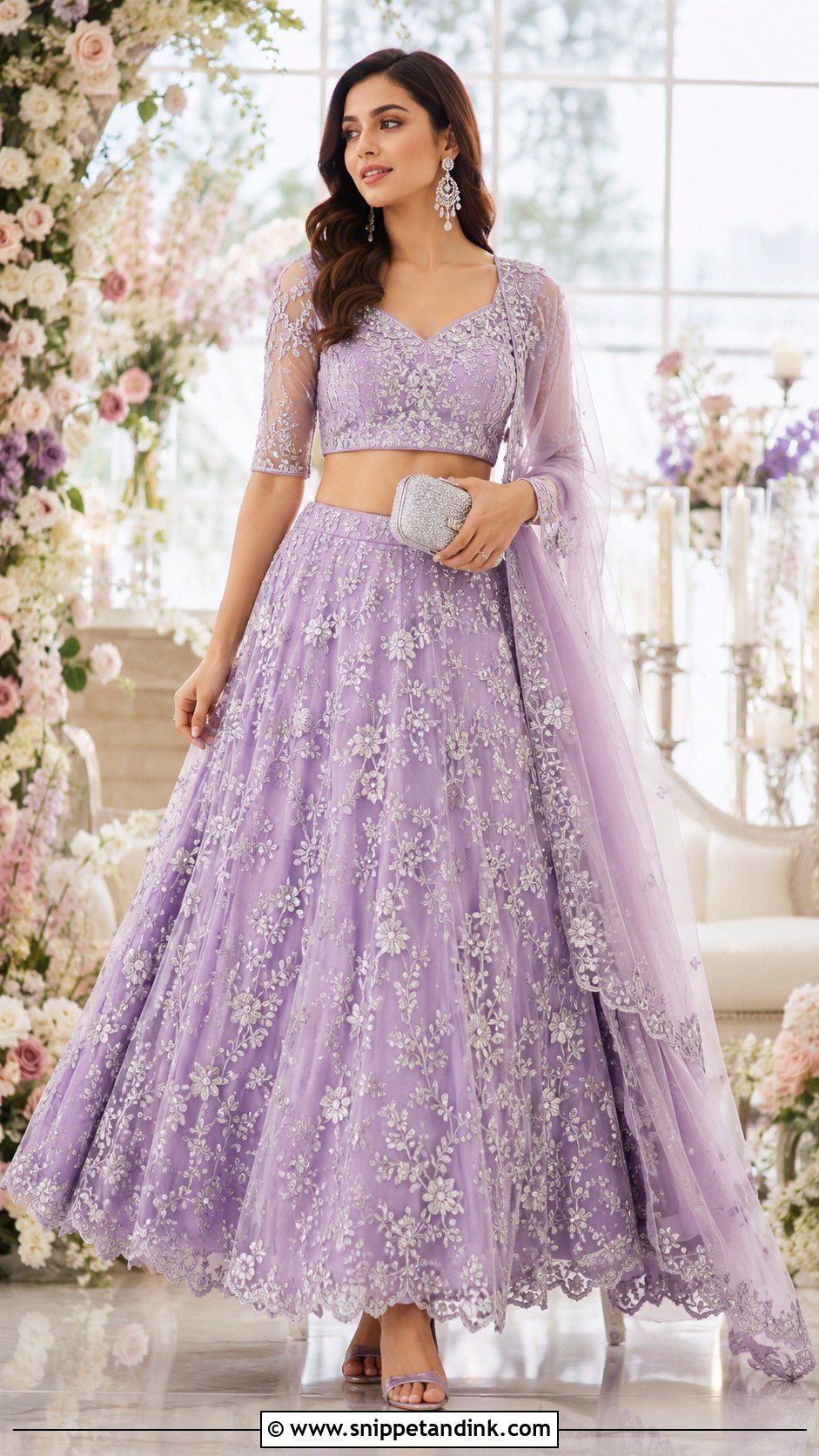
Lavender is one of the trickiest colors I work with, because it shifts from pink to grey depending on the light. Always look at the fabric in daylight and again under warm indoor bulbs before choosing jewelry. A flowing skirt with silver threadwork, sequins or tiny florals, and a matching choli with sheer elbow sleeves, gives coverage without weight. Drape a delicate net dupatta over both arms for portraits. Crystal earrings, a silver clutch and pale grey or lavender heels keep it cool-toned, with a soft braided bun or loose curls. If it looks too pale on you, amethyst stones, a darker border or more defined eyes add depth.
10. Yellow Haldi Lehenga Choli
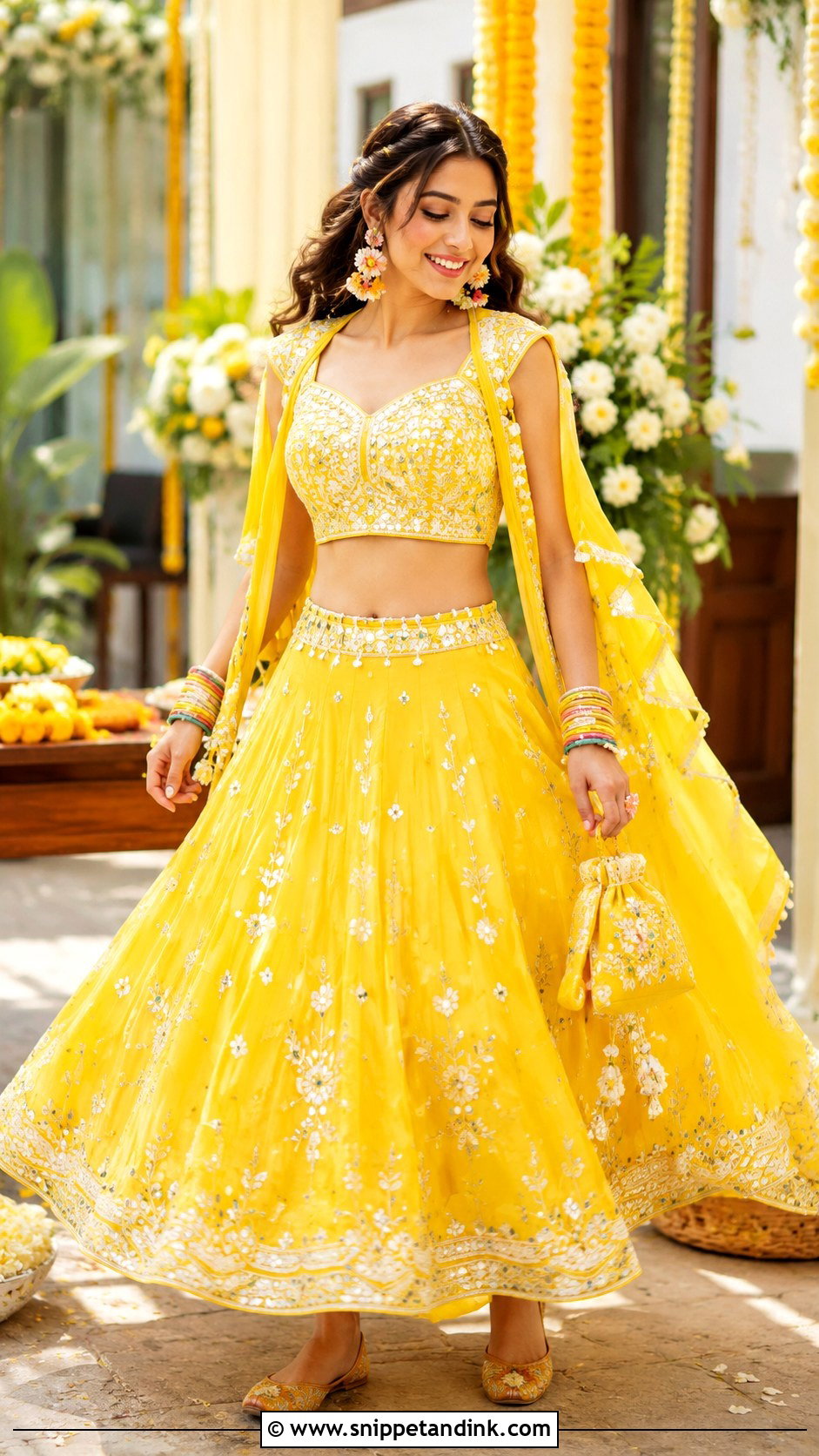
A yellow lehenga choli for haldi should be chosen like workwear: something you can sit, kneel and dance in, and something that might not come back clean. Cotton-silk or georgette moves easily. A fitted yellow choli with white threadwork or small mirrors, then a short dupatta pinned across one shoulder or a light cape if you want your hands free. Floral earrings, simple bangles, an embroidered potli and flat juttis. A braided ponytail or floral bun stays tidy. No trains, no fragile surface work. I tell brides to take rings and anything precious off before the paste comes out, since turmeric works its way into settings.
11. Orange And Pink Ombre Lehenga Choli
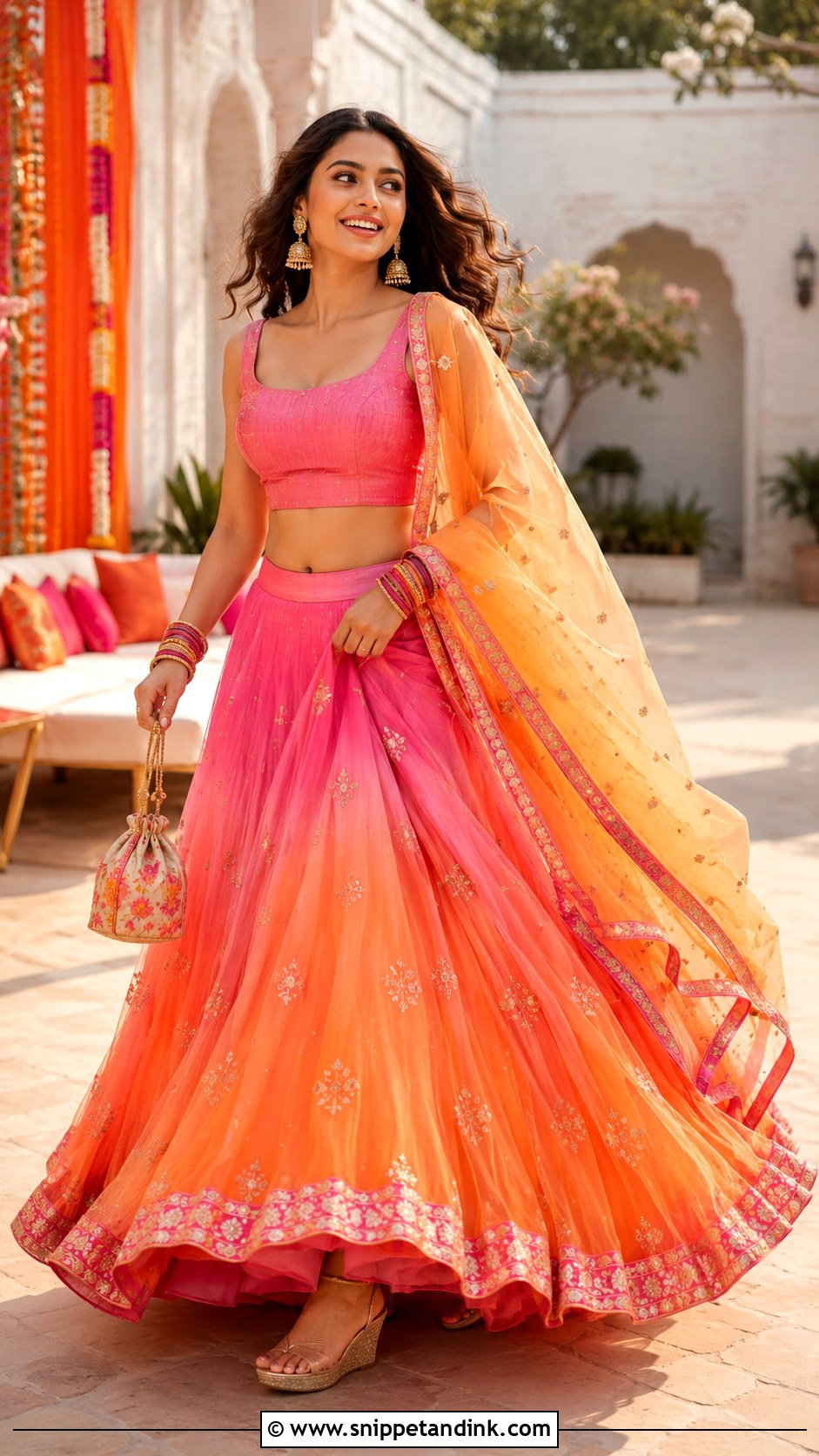
Ombre skirts are dyed in a gradient, coral or orange at the waist melting to deep pink at the hem, and the dye job is the whole design. Check that the transition is smooth all the way around; cheaper ombre shows a hard line at the seams. A solid pink choli gives it definition, and a light orange dupatta with a narrow pink border ties the shades together. Gold jhumkas, colorful bangles, a small potli and comfortable wedges suit mehndi, sangeet or a destination function. Keep the hair playful: textured ponytail, braid or loose waves. Add no more than one or two other colors, since the gradient already does plenty.
12. White And Silver Lehenga Choli
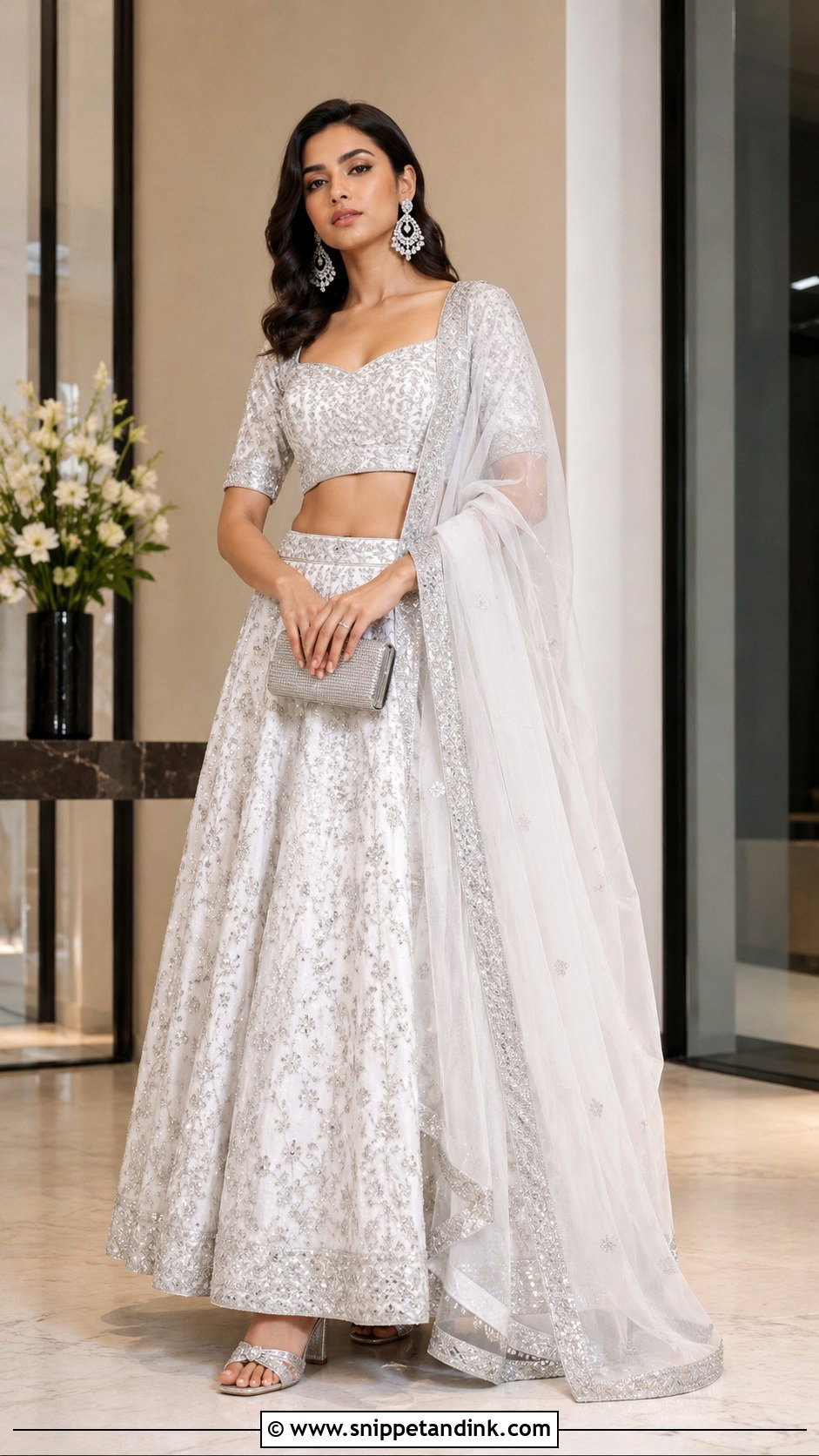
White and silver look crisp and modern for a reception, an engagement or a guest outfit at a contemporary wedding. Choose an opaque white skirt with silver embroidery along the panels and border, and a structured choli with supportive straps, short sleeves or a high neck. A sheer silver-edged dupatta, crystal earrings, a metallic minaudiere, slim bangles and silver block heels complete it, with a sleek bun or polished waves. Ask the family before wearing white to a traditional ceremony; in some communities it’s associated with mourning. And check the lining under bright light. White shows everything underneath if the lining is thin.
13. Black And Gold Lehenga Choli
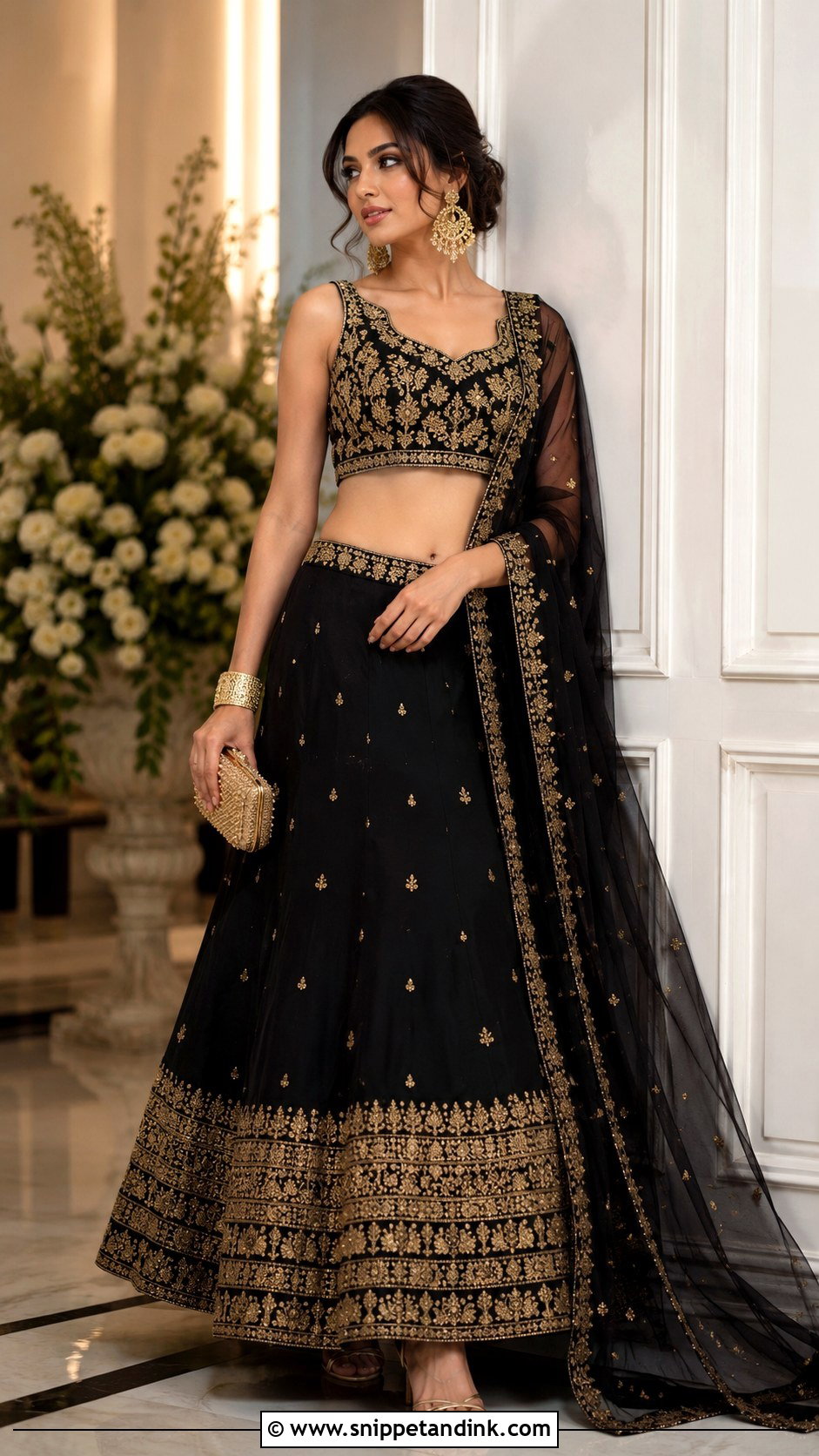
Black and gold suit an evening reception where darker colors are welcome, and that’s worth confirming first, since some families avoid black at weddings. A black skirt with gold embroidery in defined borders or vertical motifs pairs with a fitted black choli echoing the gold at neckline and sleeves. A plain black net dupatta with a fine gold edge, statement gold earrings, a cuff, a compact clutch and black or gold heels finish it. A smooth ponytail or sculpted low bun keeps it clean. Black flattens detail in low light, so I keep makeup restrained and the embroidery bold enough to read from across the room.
14. Banarasi Silk Lehenga Choli
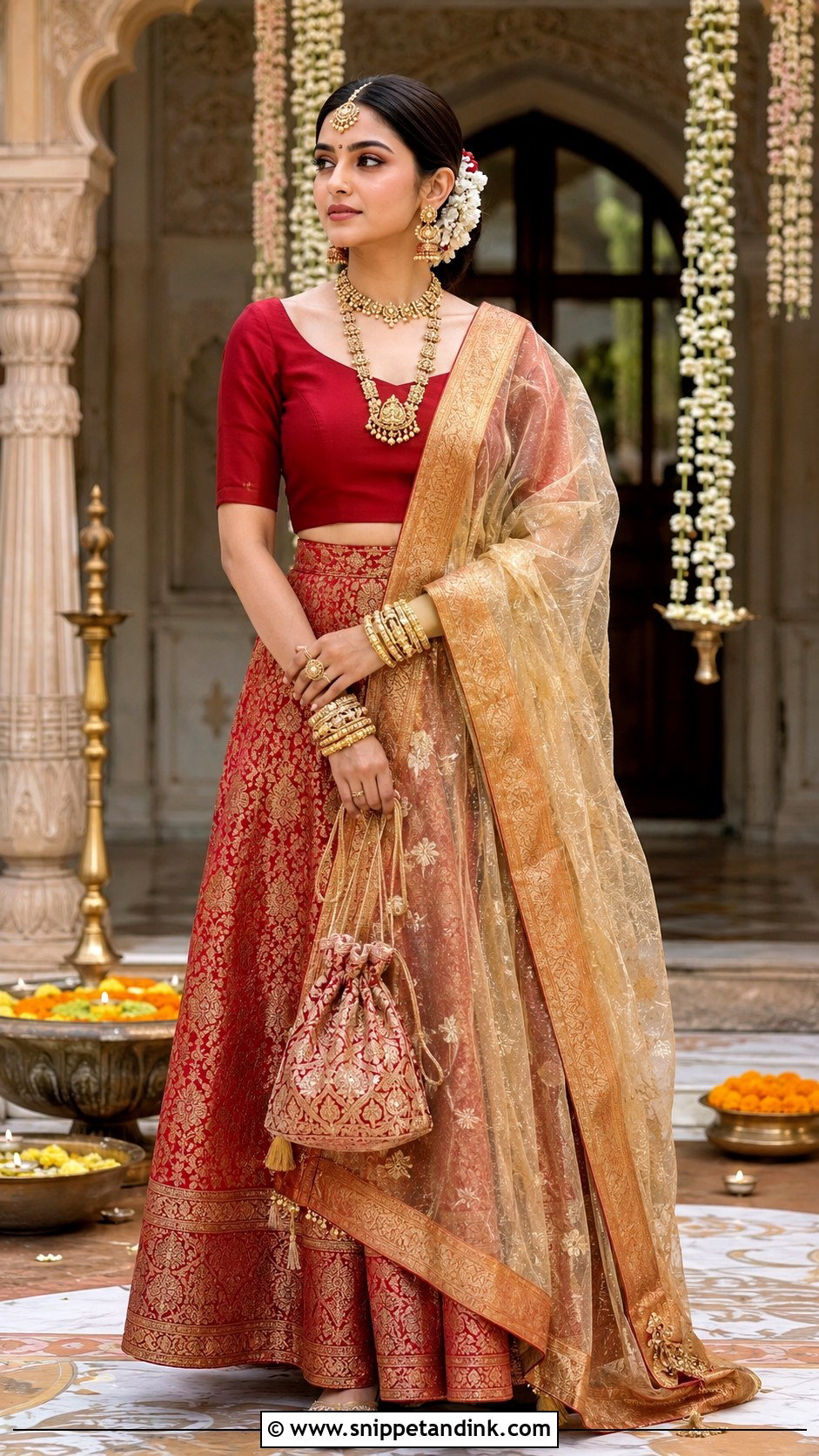
Brocade gives a Banarasi silk lehenga choli an heirloom look because the motifs are woven in, not added. Choose a jewel-toned or red brocade skirt and a solid silk choli pulled from one color in the weave. A contrasting tissue, organza or light silk dupatta keeps it from getting heavy. Temple-style jewelry, gold bangles, an embroidered potli, cushioned juttis and a center-parted bun with flowers complete it. Brocade holds its own shape, so skip a big underskirt. The detail that separates good tailoring from average: ask the tailor to line up the large motifs at the side seams and waistband, so they don’t get chopped in half.
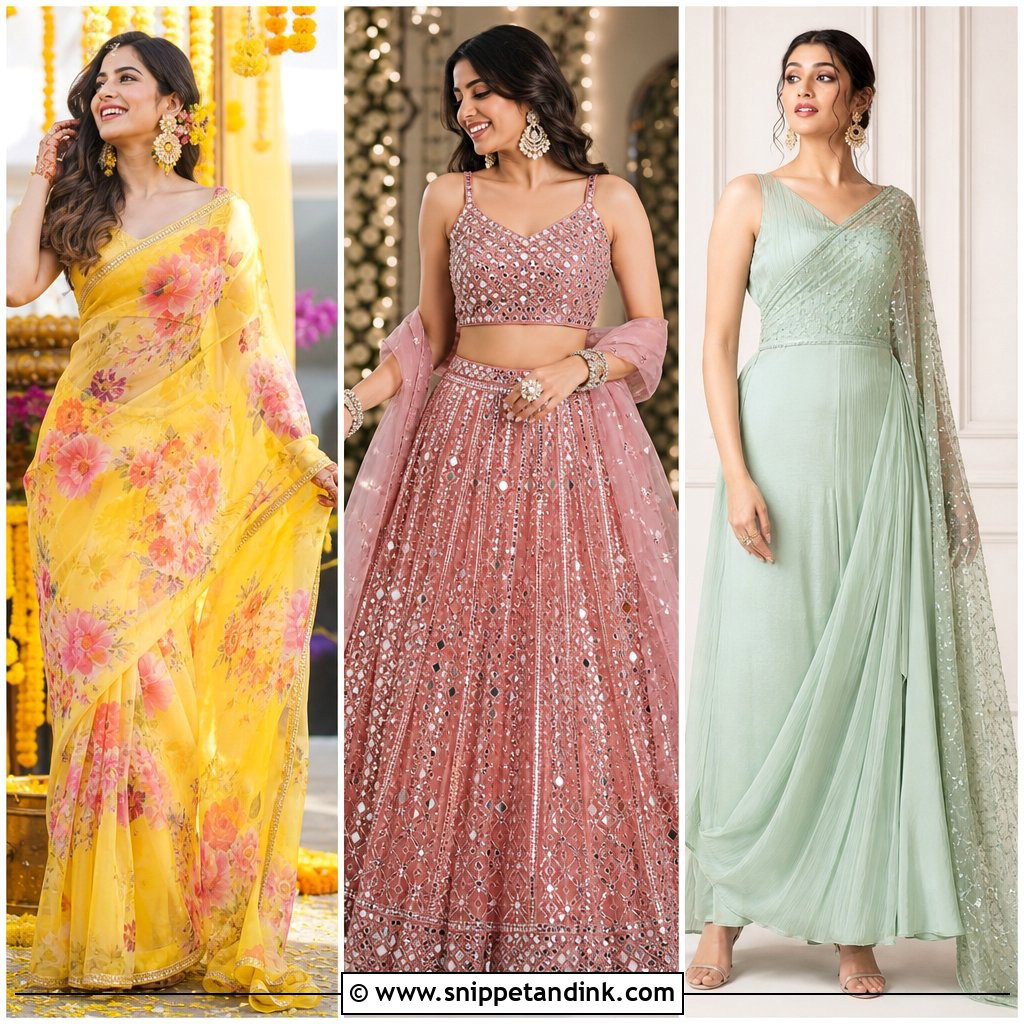
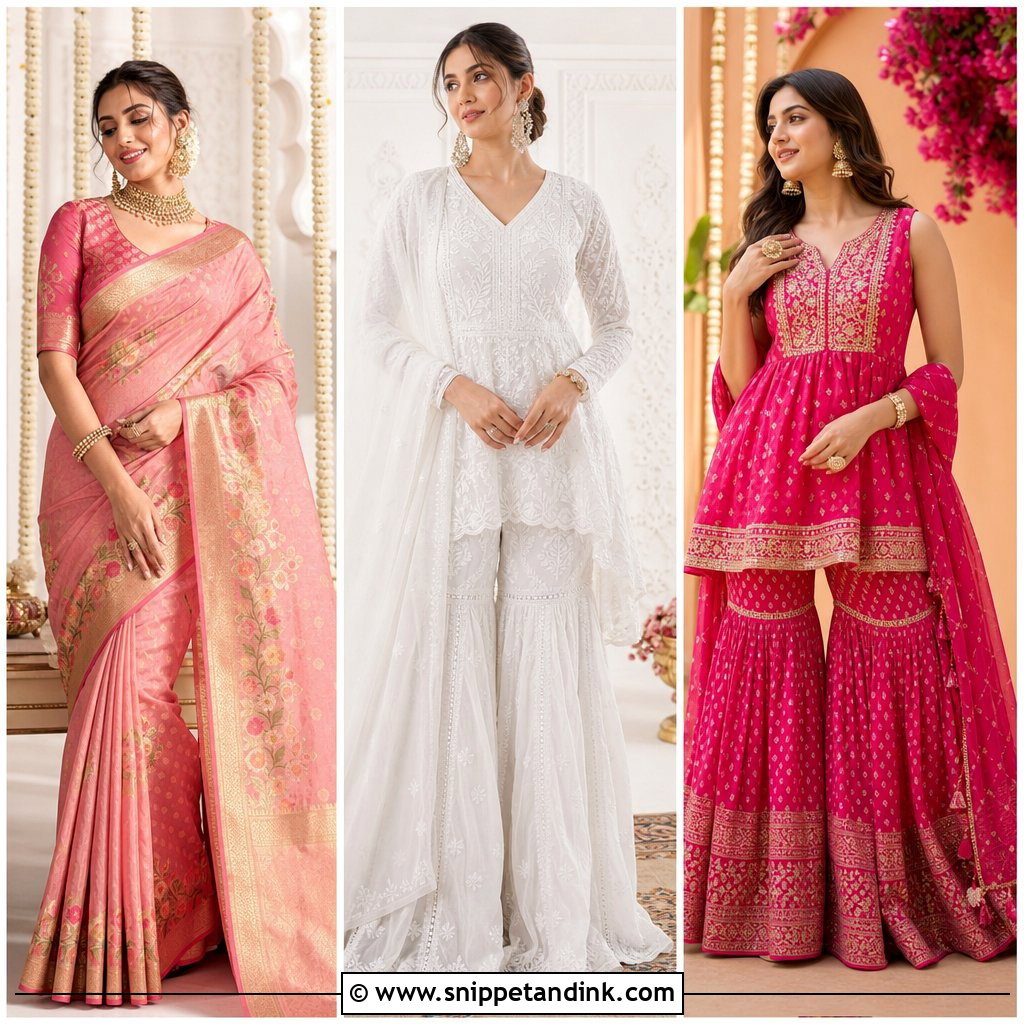

15. Gujarati Mirror Work Chaniya Choli
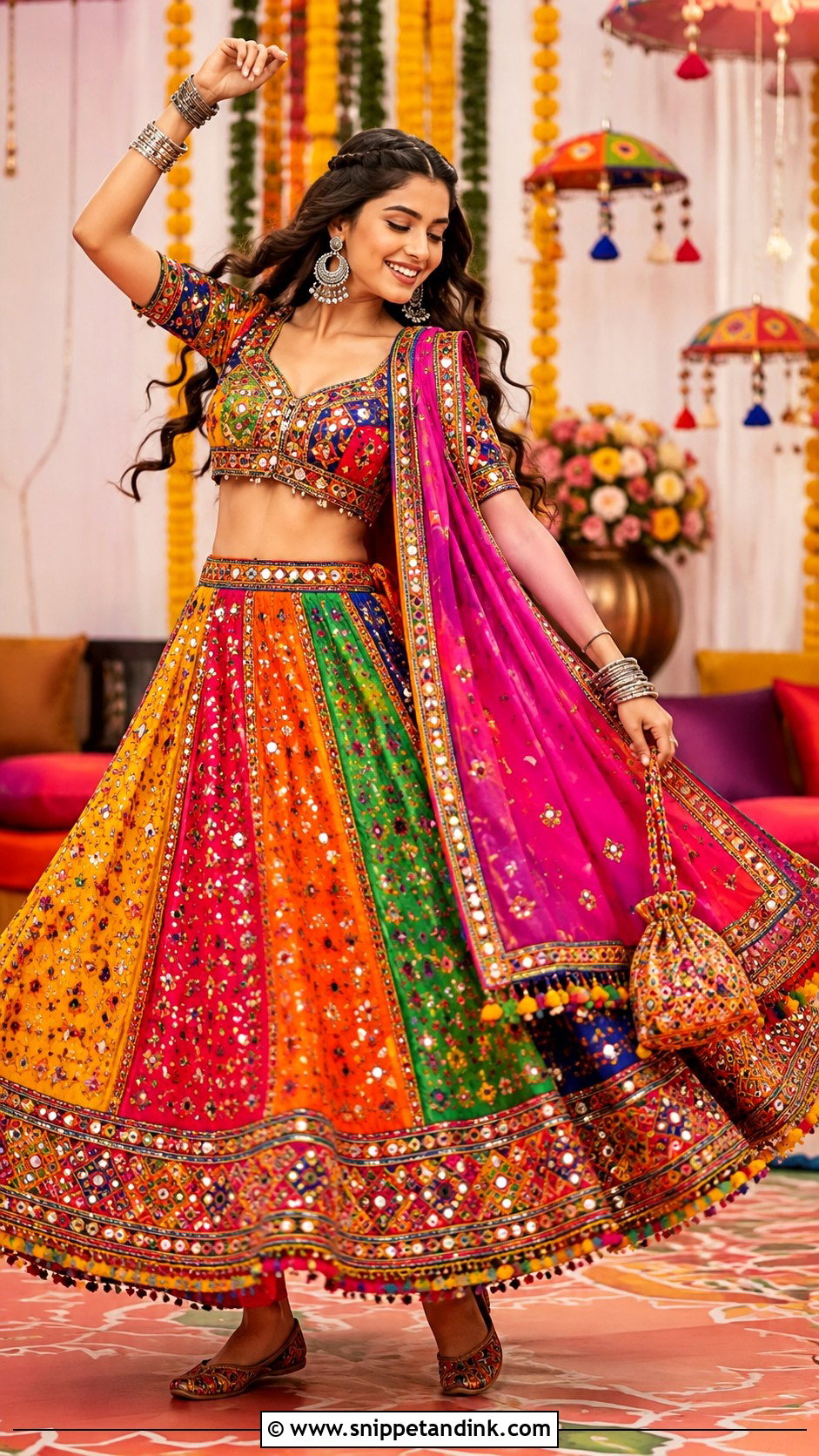
A colorful Gujarati mirror work chaniya choli is made for dancing. A paneled skirt in pink, orange, green and blue with carefully finished mirrors pairs with a coordinated fitted choli; a second print up top competes. A bright dupatta in a traditional or shoulder-pinned drape leaves you room to move. Oxidized silver earrings, stacked bangles, an embroidered potli and flat juttis. Braided hair with decorative pins stays put through garba. Hundreds of mirrors add real weight to the waistband, so I lift the skirt before buying and check that the band is wide and the lining breathable.
16. Cape Lehenga Choli
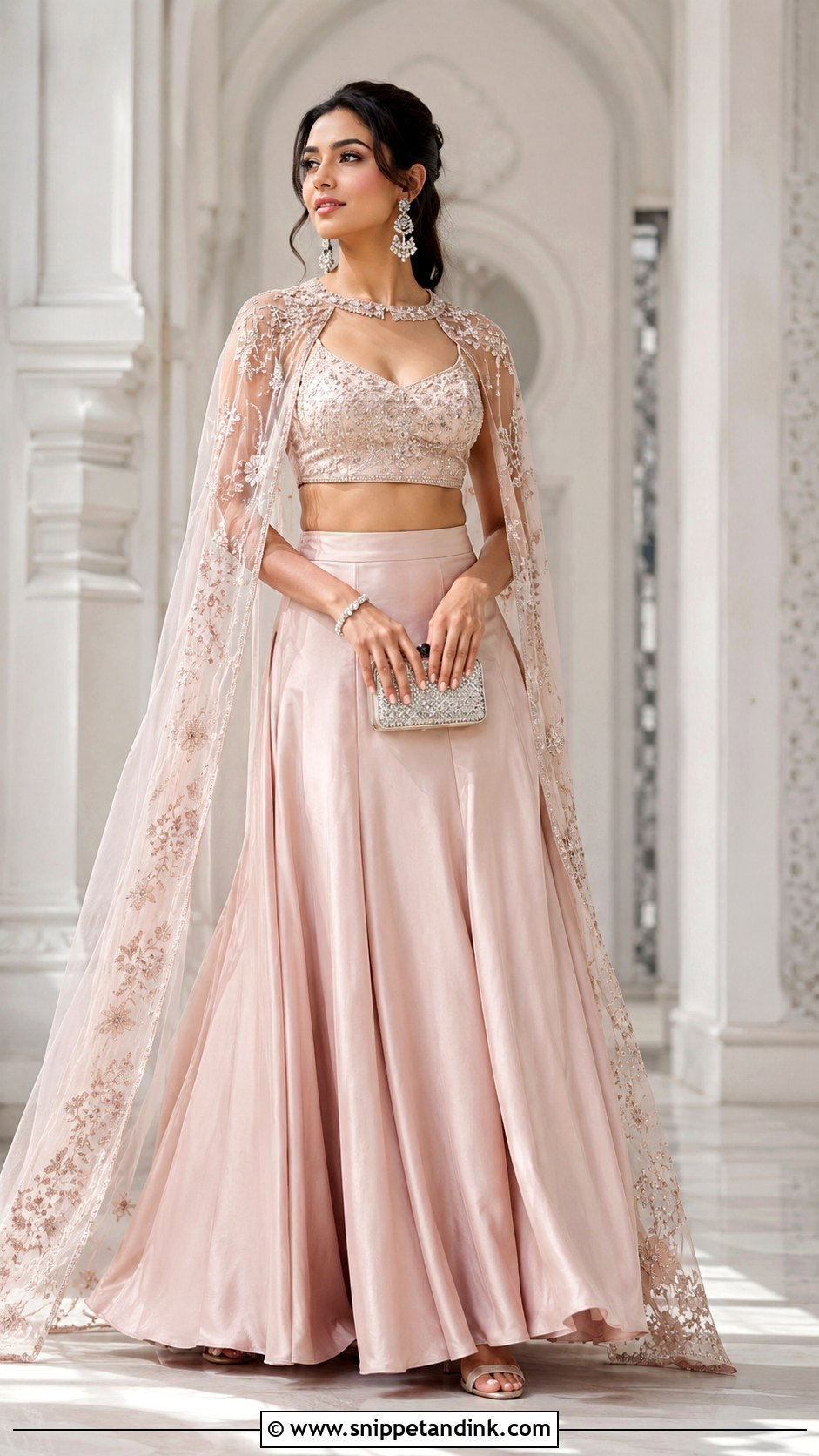
Do you want the look of a dupatta without managing a drape all night? A cape lehenga choli gives you that. A streamlined skirt in blush, ivory, emerald or navy, a fitted sleeveless choli and a sheer embroidered cape from shoulders to waist or hip. The cape should leave the waistband visible; if it covers it, the outfit loses its shape. Long earrings, a delicate bracelet, a structured clutch and sleek heels, with a low ponytail. Petite wearers usually look better in a shorter cape, taller wearers can carry a longer one. I keep the skirt embroidery restrained so the cape stays the feature.
17. Jacket Lehenga Choli
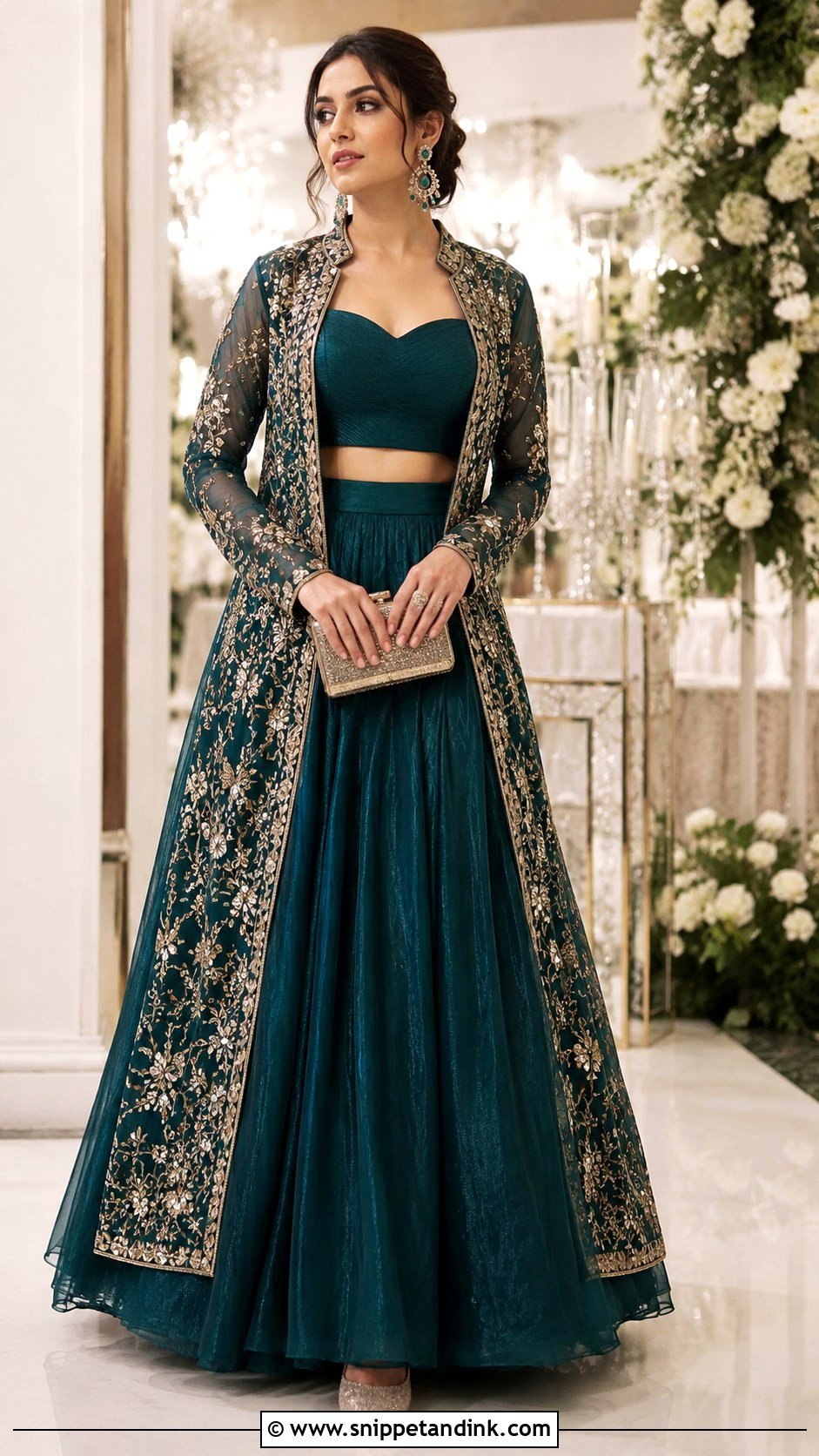
Jackets are my answer for a winter wedding where a bride or guest wants coverage without a shawl. A simple flared skirt, a fitted choli and a long embroidered jacket left open down the front give clean vertical lines and show the waistband. Velvet for cold weather; light organza for milder venues. Drop earrings, one statement ring, a box clutch and closed heels or embellished juttis. Skip the dupatta unless the jacket was designed to take one. A neat bun or smooth waves. The jacket’s hem matters: ending right at the widest part of the hips adds width there, so I set it above or below that line.
18. Peplum Lehenga Choli
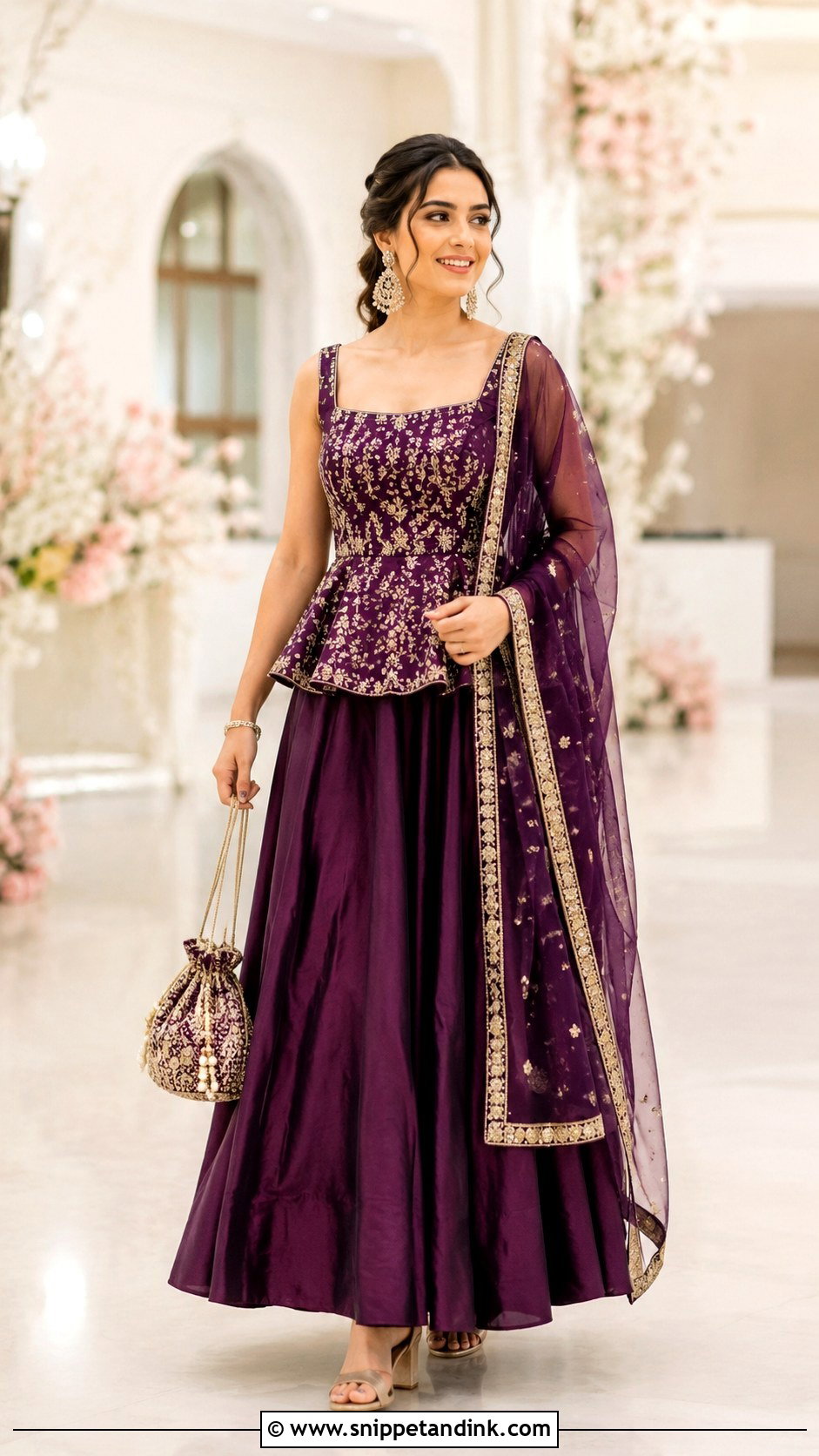
A peplum lehenga choli stays put all night, which is why I recommend it to anyone who hates tugging a cropped blouse down. Choose a moderately flared skirt in silk, georgette or brocade and a fitted peplum choli ending just below the natural waist. The flare should skim, not stand out. A narrow V or square neck lengthens the upper body. A light dupatta over one shoulder, statement earrings, a slim bracelet, a potli and block heels, with a side-parted bun or soft waves. Bust and waist need precise tailoring; a peplum that starts in the wrong place shortens the torso.
19. Corset Lehenga Choli
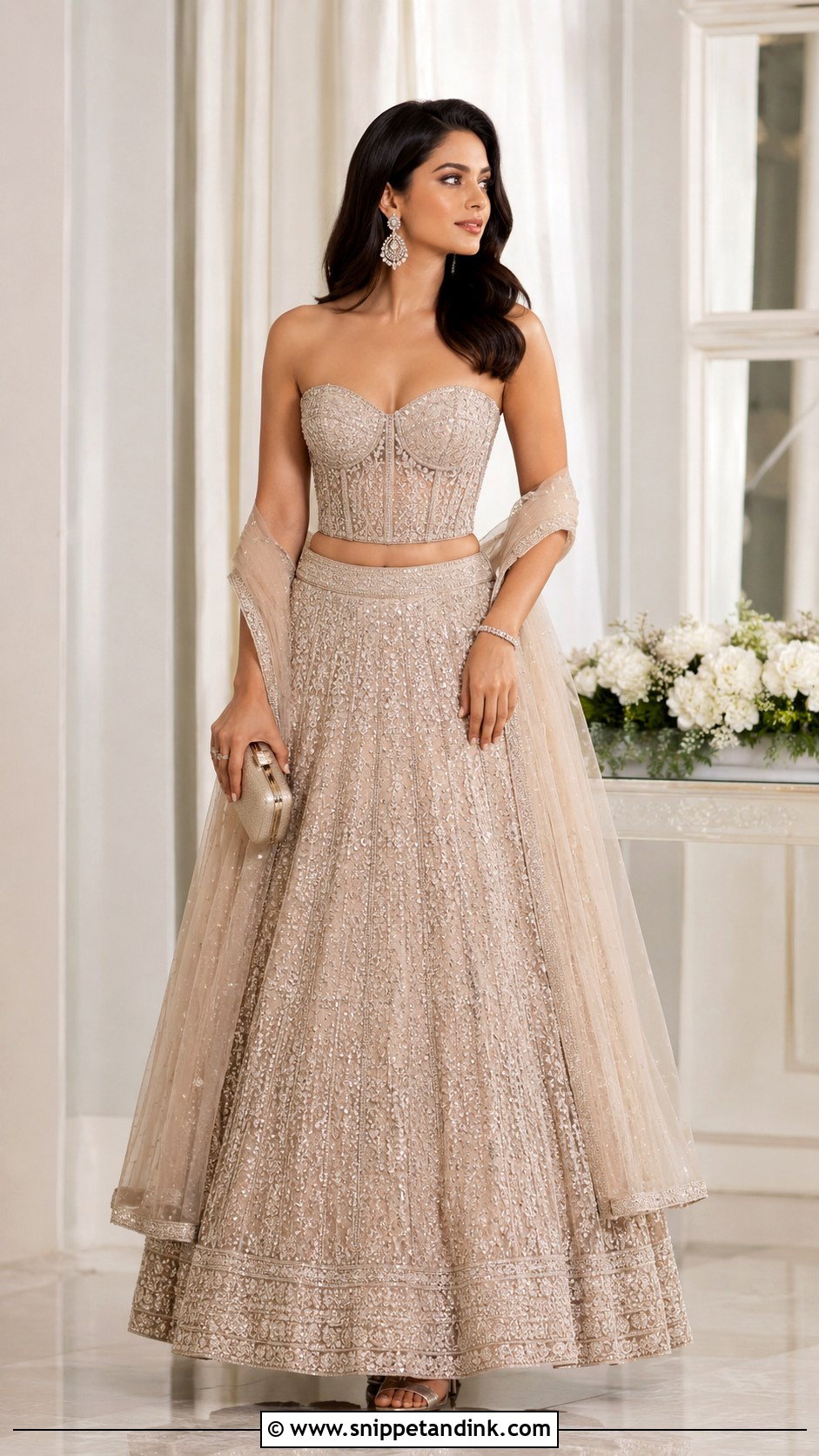
Corset cholis are built, not just sewn. A boned bodice with a straight, sweetheart or softly curved neck gives the outfit a fashion-forward shape, and coordinated embroidery on both pieces keeps it from looking like two separate garments. A sheer dupatta draped loosely behind the arms shows the construction. A short necklace or statement earrings, a compact clutch and stable heels, with a sleek ponytail or sculpted bun. During alterations, ask for protected boning ends; unfinished bones work through the lining and poke by the end of the night. For more coverage, detachable sleeves or a longer corset that meets the skirt.

20. Double Dupatta Bridal Lehenga Choli
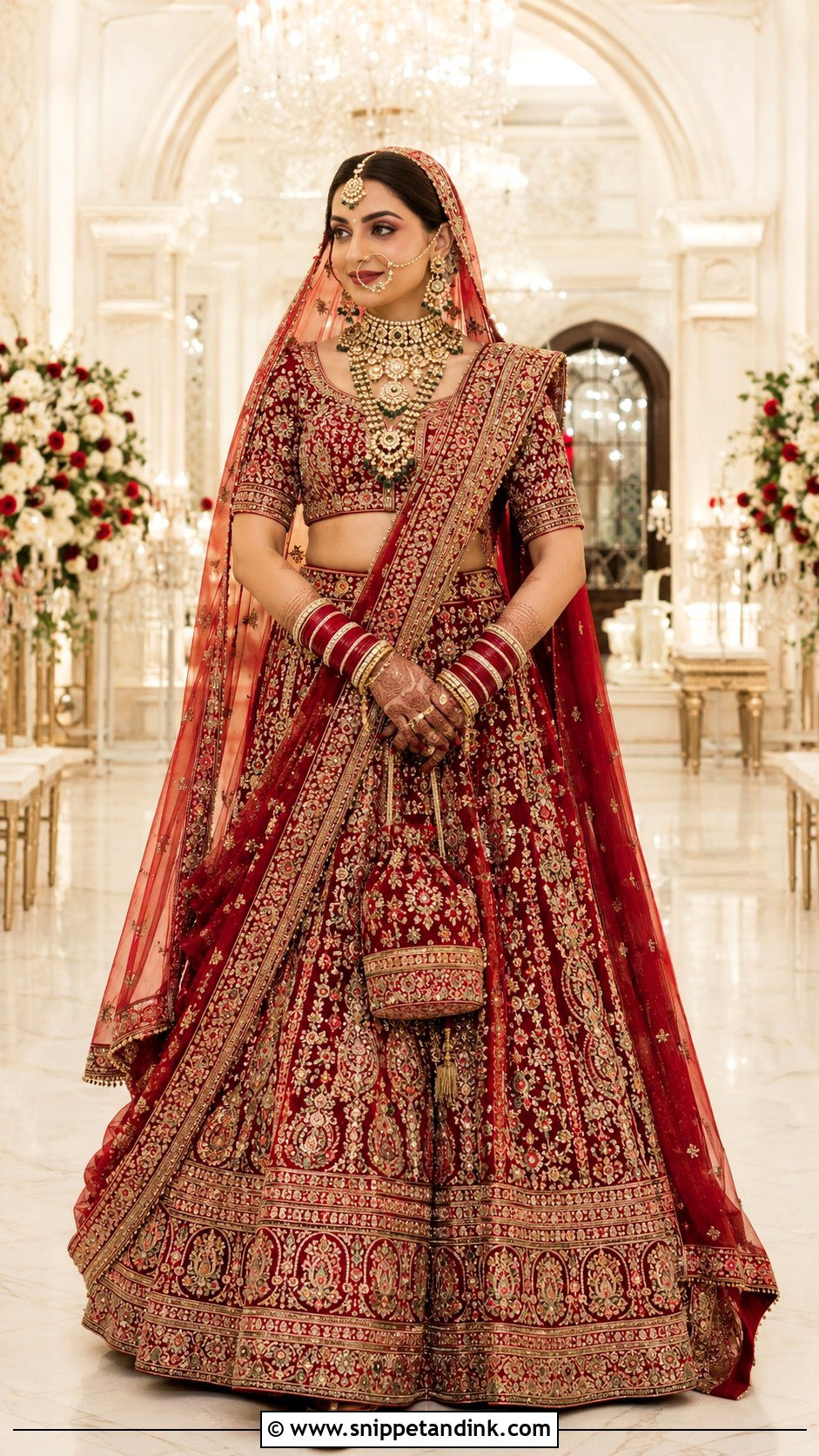
Two dupattas give the bride a layered ceremonial look, and the double dupatta bridal lehenga choli works when each layer has a job. Start with a heavily embroidered skirt and fitted choli in red, maroon, pink or ivory. The lighter dupatta goes over the head; the decorative one runs diagonally across the torso. Keep colors coordinated but vary the border weight so the layers read separately. Bridal jewelry, bangles, a small potli and padded juttis. A secure bun anchors the head dupatta. When I pin two layers, I pin each to the choli’s seam allowance, never to each other, so lifting an arm doesn’t pull both. Net or organza is easier than two heavy fabrics.
The Bathroom Question Nobody Asks at the Store
A heavy lehenga with can-can, a long choli and two dupattas pinned in place is a lot of fabric to manage in a small cubicle. It’s the most practical question there is, and brides almost never ask it until the day.
Ask the tailor for a side zip or hook placket on the skirt rather than a drawstring alone; it lets someone help you without untying everything. Plan for a helper, usually a sister or friend, who knows how the dupattas are pinned and can hold the skirt up. If the head dupatta is pinned into your hair, leave it on and gather the skirt in front of you. Accessible stalls are the only ones big enough for a full bridal skirt, and it’s worth checking with the venue that one exists near the bridal room.
Corset cholis and long fitted cholis that meet the skirt are the hardest to manage, so I always give brides in those a helper and a few spare safety pins in the potli.
Red, Pastel or Structured, the Fit Decides
A good wedding choli outfit balances how it looks with how it feels after six hours, and with what the family expects. Red, maroon velvet, Banarasi silk and double dupattas give a traditional bridal presence; pastels, capes, corsets, jackets and ombre skirts take it somewhere newer. Think about the venue, the season, the ceremony and how long you’ll be in it. Put tailoring, secure draping, breathable lining and comfortable shoes first. Then choose jewelry around the clothes instead of wearing every statement piece at once. Small adjustments to color, coverage and fit are what make any of these sets feel like yours.
You'll Like These Ideas:




Leave a Reply