
Jaggo is the loudest night of a Punjabi wedding. The family carries the decorated gagar lit with diyas through the streets or the venue, boliyan get shouted back and forth, and the gidda circle doesn’t really stop until late. Everything I dress a bride or her sisters in for Jaggo has to survive that: hours of dancing, a dupatta near open flame, and a lot of hugging. So the lenghas below lean on swishy but manageable skirts, blouses that stay put, light dupattas, juttis, parandas and jewellery that won’t fly off. Some go all out on colour blocking; others keep the base soft and let the embroidery or dupatta carry the festive feeling. There are options for the bride, sisters, cousins and guests, across ages and body types.
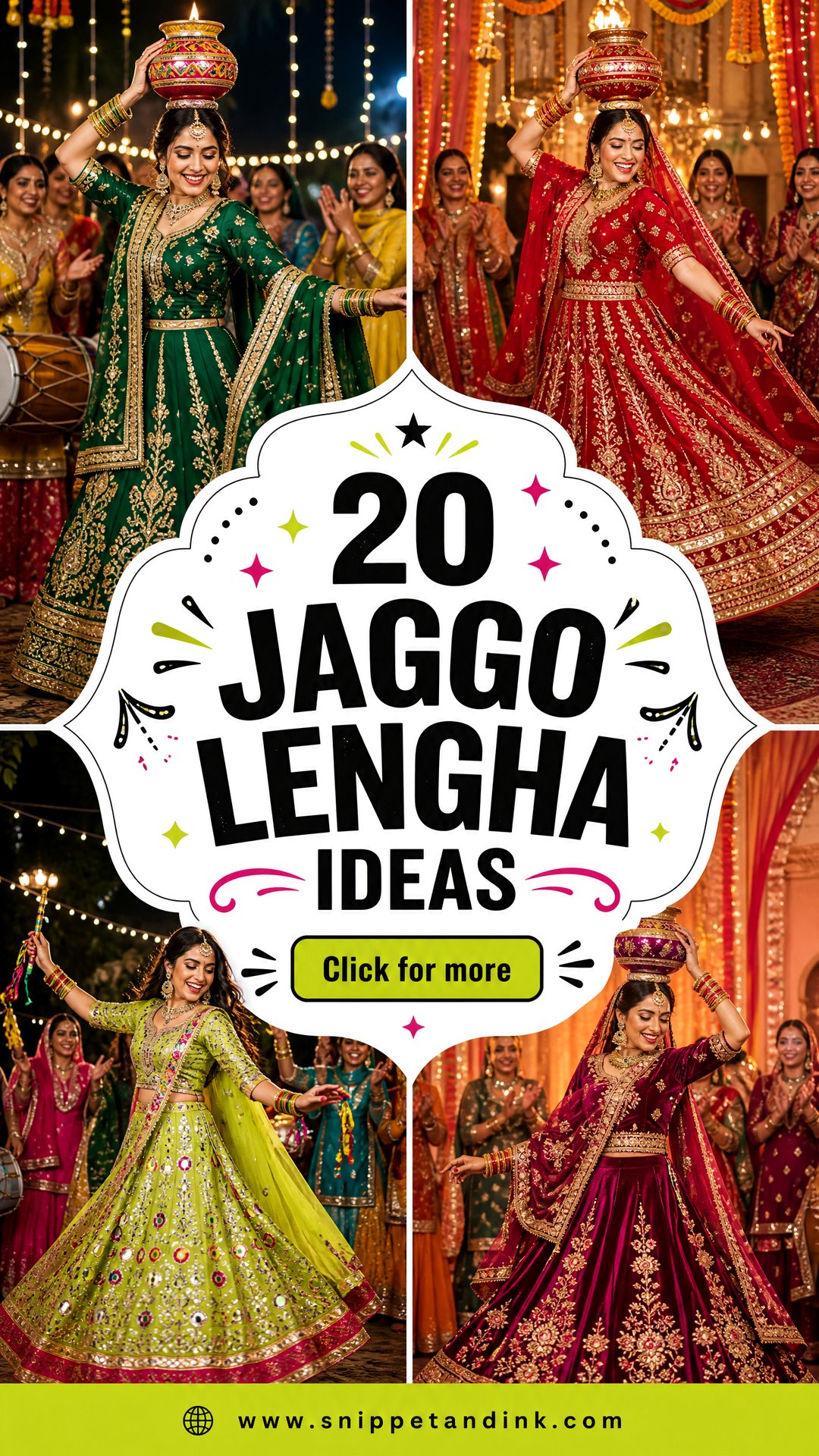
A Lit Gagar, Hours of Gidda and Your Lengha
Jaggo outfits face things no reception lehenga does. Someone is carrying a brass pot full of burning diyas, often on their head, and the crowd is dancing tightly around it. Before I fit anyone for Jaggo, I talk through how the night actually goes, because it changes what I’ll recommend.
Fabric near flame
Synthetic net, organza and polyester chiffon catch quickly and melt as they burn, which is why they worry me most near diyas. If you’ll be close to the gagar or carrying it, pin the dupatta firmly across the body rather than letting it float loose, and tuck away loose tassels. Natural fibres burn too, so distance from the flame matters more than any fabric choice.
Movement over volume
- A moderate flare is easier than a full can-can. You’ll be in a tight circle, and wide skirts get trodden on.
- Ankle length beats floor length. You’ll be on grass, roads or a dusty dance floor.
- Blouse sleeves should let you lift both arms over your head. Raise them at the trial and watch where the hem rises to.
- Wear new juttis around the house for a week beforehand. They are stiff at first and can rub the back of the heel.
1. Rani Pink Jaggo Lengha With Mirror Work
Rani pink is the colour most people picture for Jaggo, and mirror work makes it come alive under string lights. I’d go for scattered mirrors rather than dense coverage, because a heavily mirrored skirt gets heavy and the glass edges can scratch your arms when you swing them in gidda. A moderate flare is plenty. Pair it with a fitted short-sleeve blouse with a scoop or square neck, and an orange or yellow dupatta for the classic contrast, pinned on one shoulder. Gold jhumkas, stacked bangles, a small maang tikka and embroidered juttis finish it, with a long braid and a bright paranda. Keep makeup glowy with defined eyes and a rosy pink lip.
2. Multicolor Phulkari Jaggo Lengha
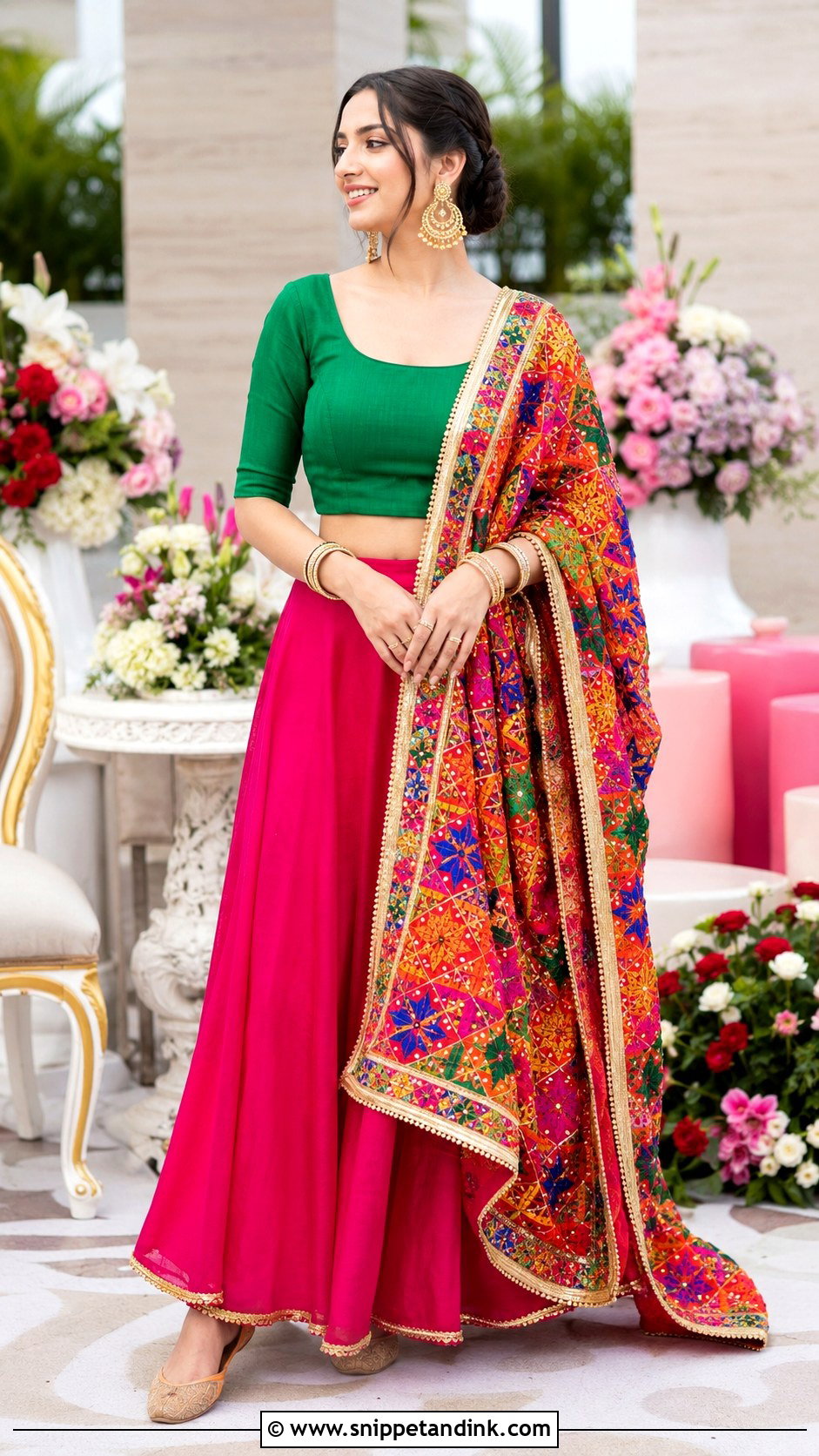
Phulkari is Punjab’s own embroidery, darned in silk floss so the colour sits on the surface of the cloth, and a multicolor phulkari outfit feels right at Jaggo in a way few fabrics do. Keep the skirt plain, in red, magenta, green or navy, so the phulkari is the only pattern. Pick the blouse colour from one of the minor threads in the dupatta. Then drape the dupatta diagonally across the body or over both shoulders. Real hand phulkari is heavy, so I pin it in two places instead of one. Simple gold earrings, slim bangles, leather juttis and a sleek braid or low bun are all you need. It’s a good choice when you’d rather skip sequins and heavy jewellery.
3. Orange And Pink Jaggo Lengha
Orange and pink clash in exactly the right way for a night of dancing. Wear an orange skirt with a rani pink blouse, or swap them if pink is kinder near your face; I always hold both shades up to a bride’s chin before deciding. Gota borders or scattered sequins add shine without weight. A light two-tone dupatta with gold trim pulls both colours together. Gold chandbalis, mixed pink and orange bangles and metallic juttis suit it, and a voluminous braid with a tassel paranda adds proper Punjabi swing. Avoid long sleeves: in gidda your arms go up constantly, and tight long sleeves pull the blouse with them.
4. Green Gota Patti Jaggo Lengha
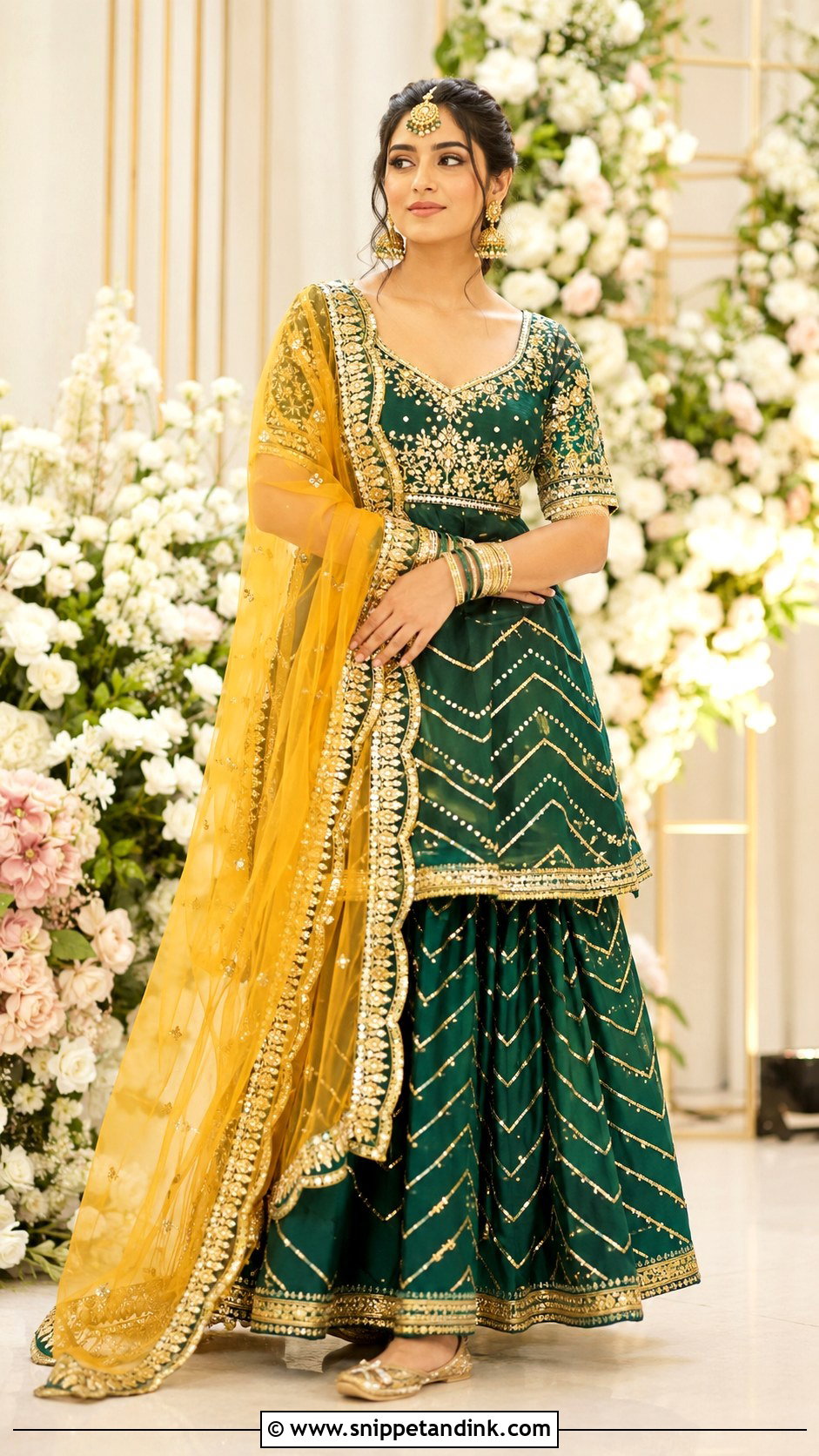
Gota patti is metallic ribbon appliqué, traditionally from Rajasthan, and it glints under lights without the weight of zardozi. A green gota patti lengha in emerald, parrot or leaf green, with a wide hem border and smaller motifs higher up, is festive and easy to move in. Match the blouse for a long line, or add a hot pink blouse for contrast. A sheer yellow dupatta with a narrow gota edge stays light. Gold jhumkas, a delicate tikka, stacked bangles and pointed juttis finish it. Gota can tarnish if it gets damp, so wrap it in muslin when you store it afterwards. A braid with gold hair ornaments feels more traditional than open waves.
5. Yellow Floral Jaggo Lengha
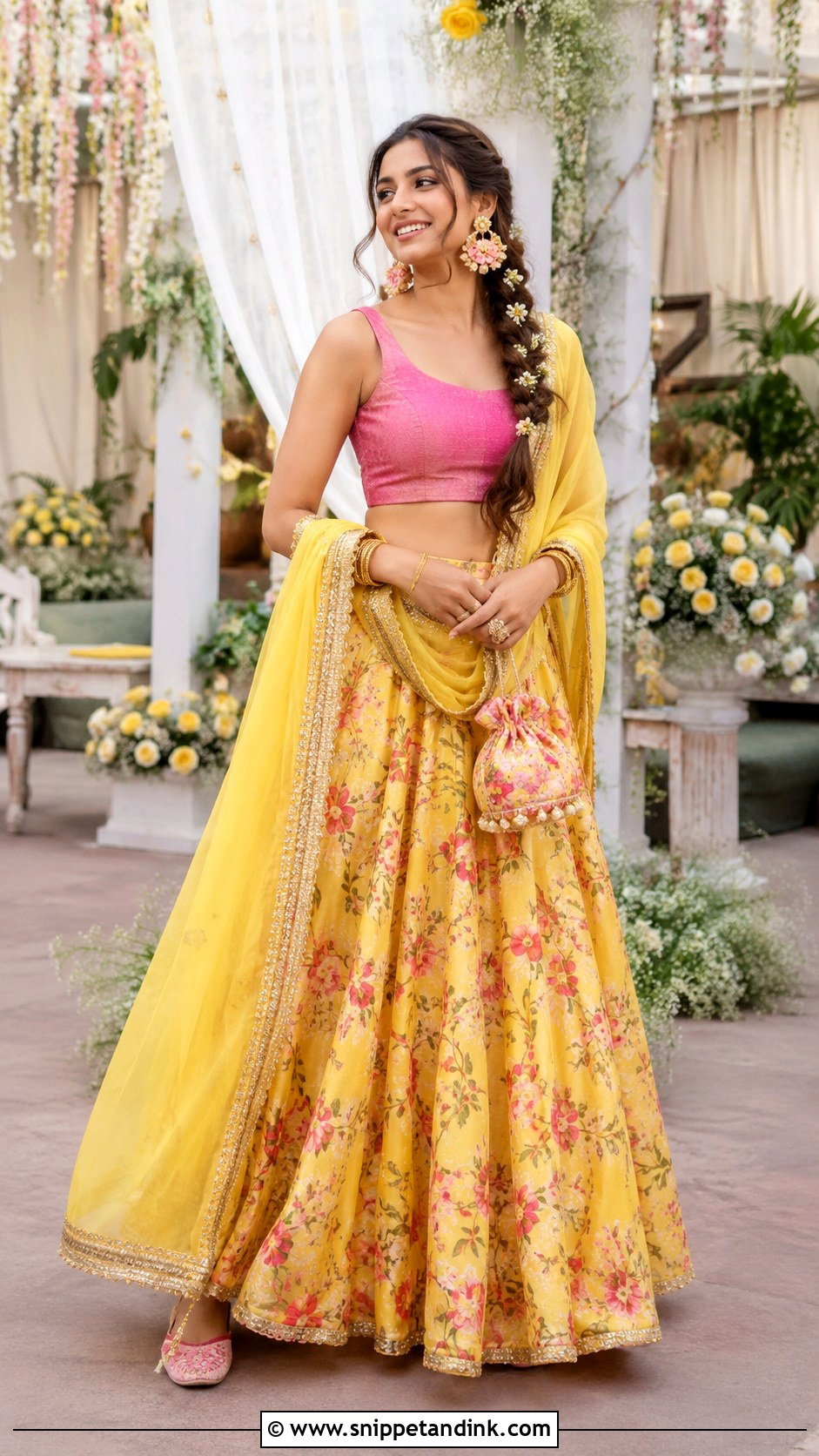
Yellow is cheerful from across a room. A light georgette or organza skirt printed with pink, orange and green flowers goes well with a plain pink crop blouse, and a softly draped yellow dupatta keeps it cohesive. Watch the volume: organza can puff out more than you expect, and if the skirt is wider than a doorway, it’ll be hard to manage in a crowded gidda circle. Floral earrings, slim gold bangles, a compact potli and pink juttis complete it. Wear a half-up style or relaxed braid with small fabric flowers. Natural makeup with peach blush and a soft pink lip suits the sunny palette.
6. Red Traditional Jaggo Lengha
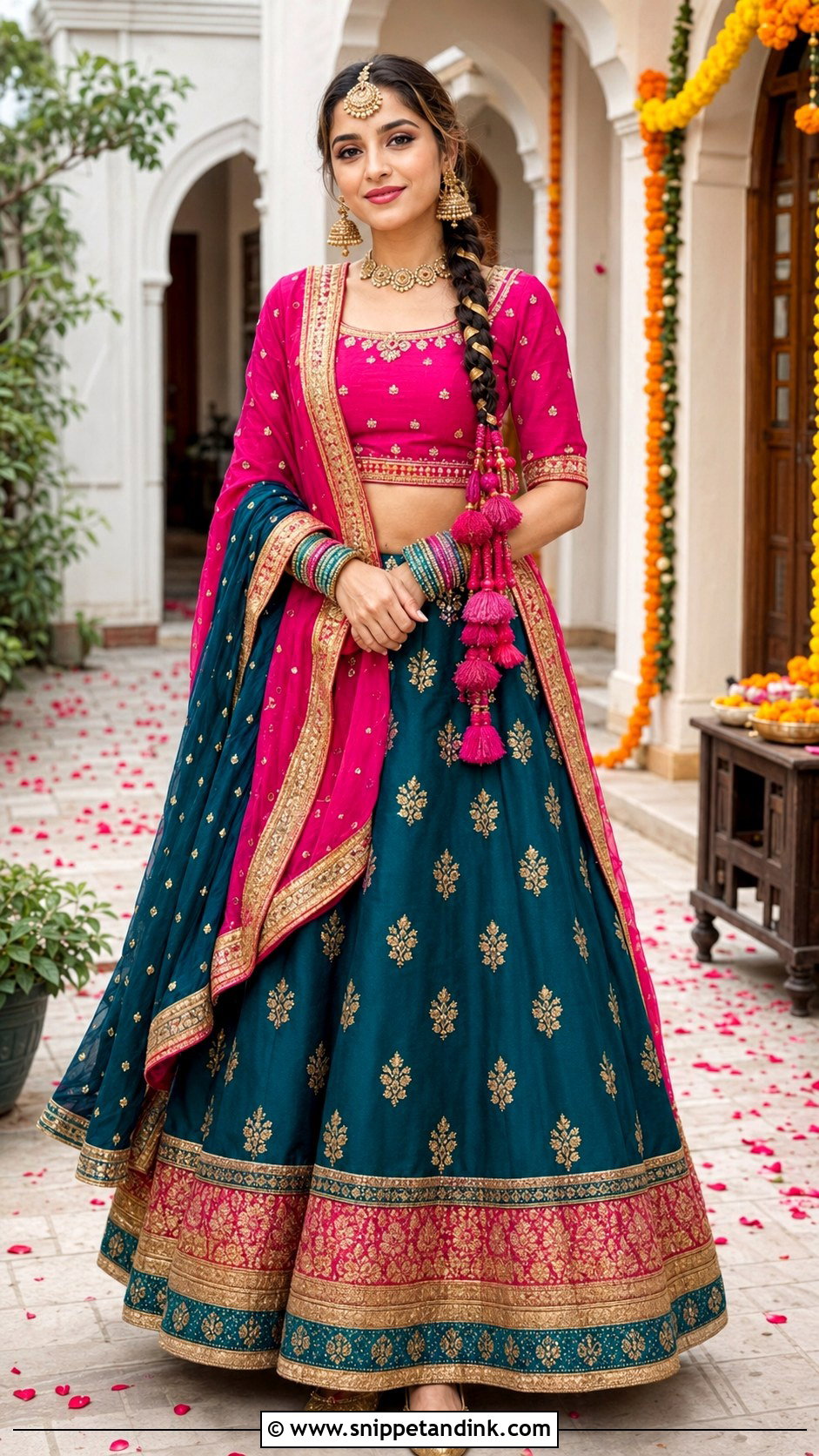
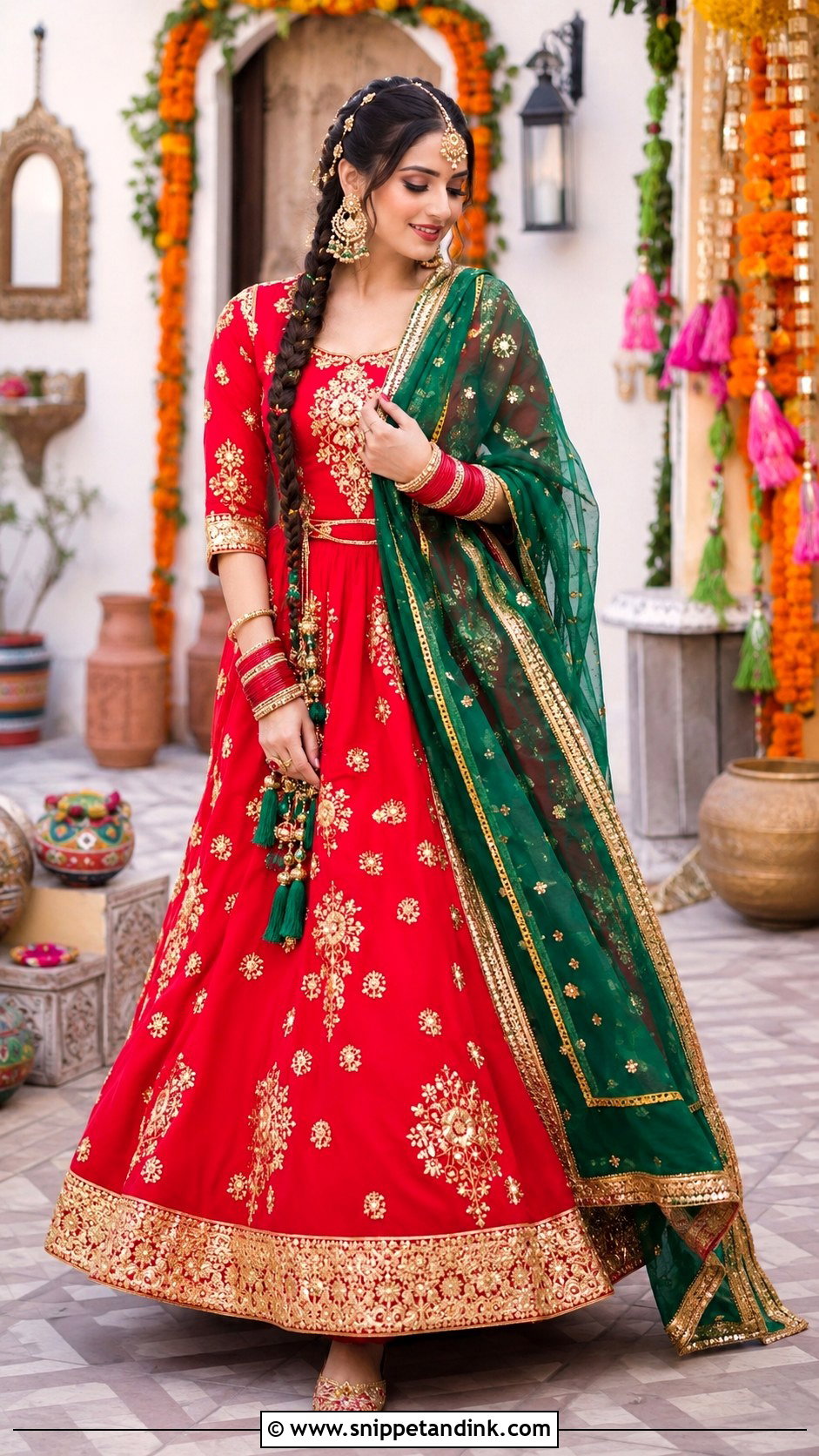
Many brides want red at Jaggo but not their wedding red, and the answer is to keep it lighter. Choose a red skirt with gold gota lines, small motifs and a broad hem border, with a three-quarter-sleeve blouse. A green or mustard dupatta breaks up all that red. I’d keep the jewellery noticeably lighter than the wedding set: gold jhumkas, a medium tikka, red and gold bangles, and cushioned juttis. A long braid with a green paranda finishes it. Lighter pieces matter because you’ll be dancing for hours, and a heavy tikka slides down your forehead with every jump.
7. Royal Blue Sequin Jaggo Lengha
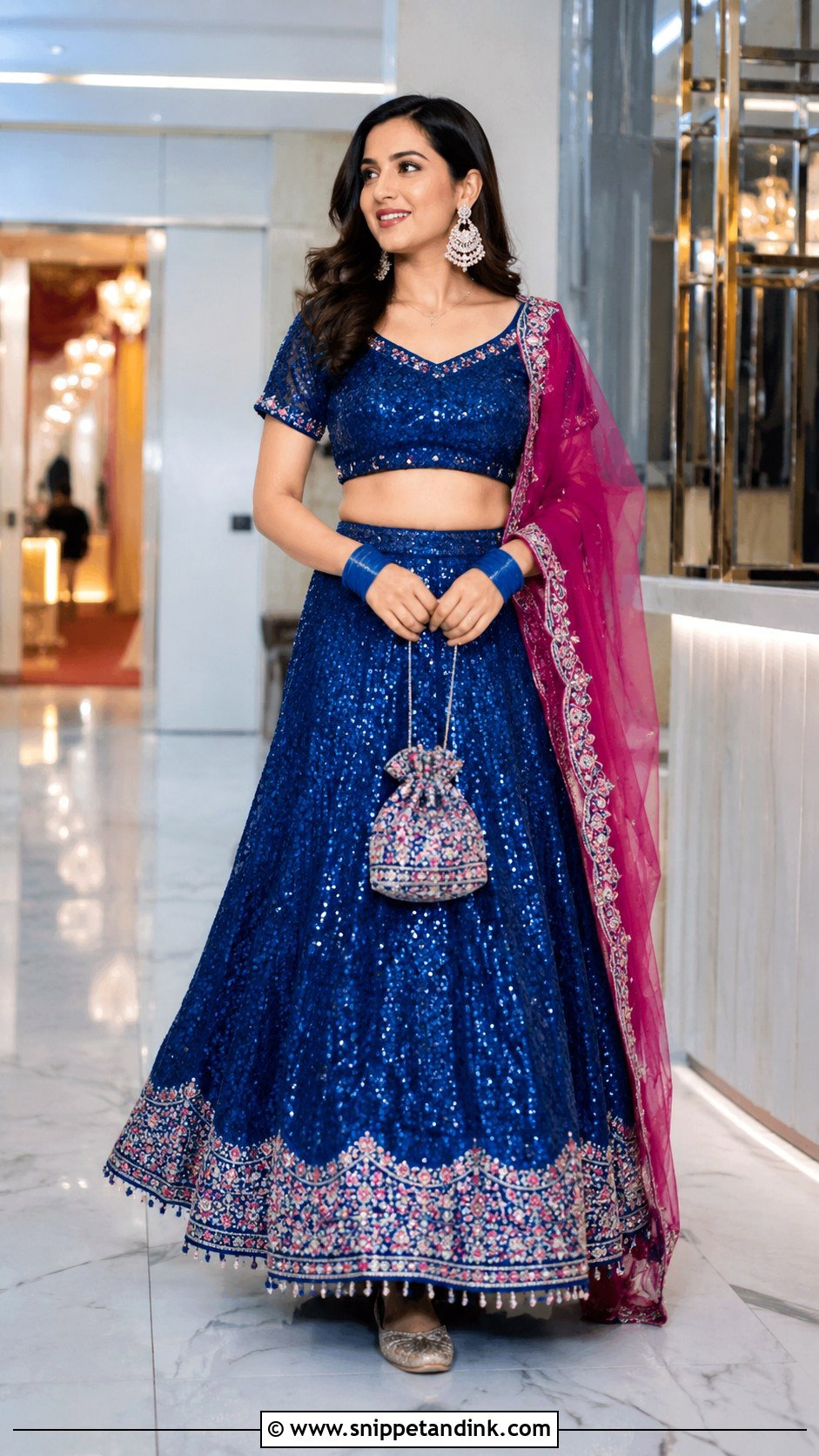
Royal blue stands out against the sea of pinks and reds and photographs crisply at night. A flowing skirt with scattered silver or multicolour sequins catches light as you move, worn with a matching blouse with secure straps or short sleeves. A magenta dupatta with a slim silver border brings the Punjabi contrast back in. Stay in silver for accessories: silver-toned earrings, blue bangles, a jewelled potli and metallic juttis. Smooth waves or a low ponytail feel modern. Sequins already sparkle, so I skip glitter on the eyes and go for softly defined eyes, luminous skin and a berry lip. Sequinned skirts can scratch the inner arm, so check the lining reaches the waistband.
8. Purple Embroidered Jaggo Lengha
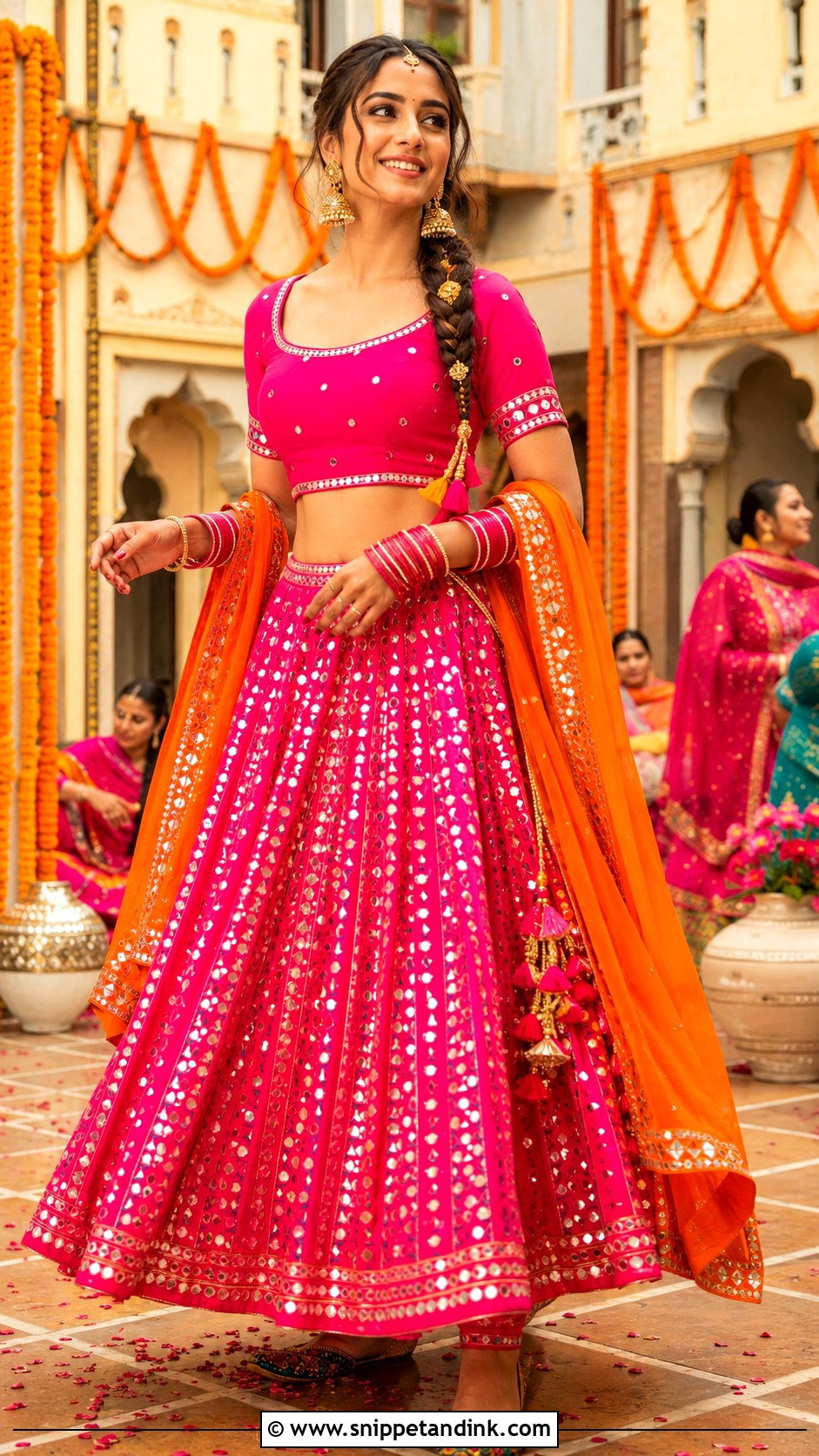
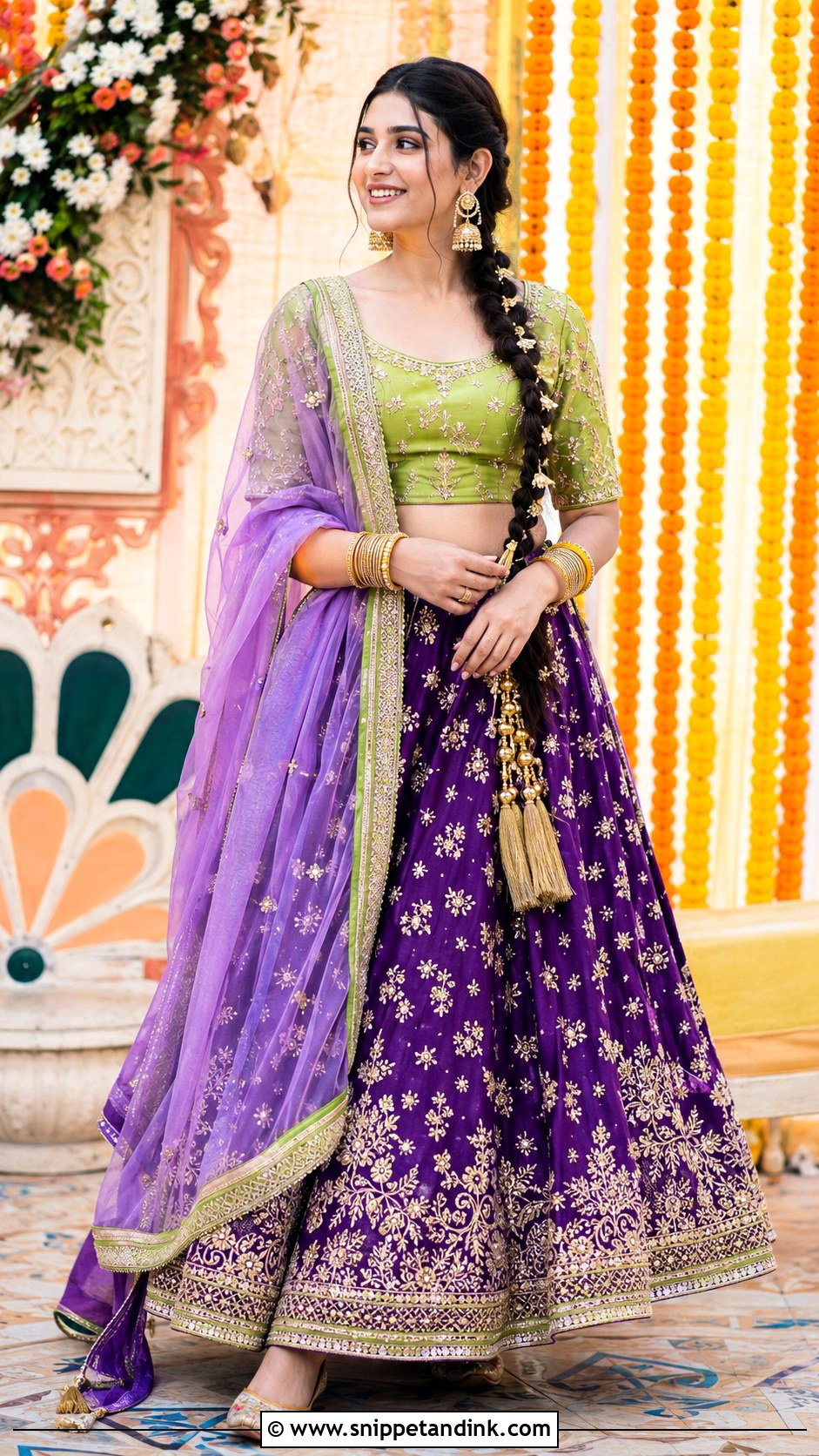
Deep purple feels rich without reading as bridal, so it’s a useful colour for sisters and close cousins. A silk-blend or georgette skirt with gold threadwork at the hem works well with a lime, mustard or pink blouse, which keeps it playful. Tie them together with a light dupatta bordered in both colours. Antique gold earrings, a few statement bangles, embroidered juttis and a small crossbody potli that won’t swing into your face while dancing complete it. A side braid with bright tassels lightens the darker palette. Purple suits a wide range of skin tones, which makes it a safe choice when several people want to coordinate.
9. Teal And Magenta Jaggo Lengha
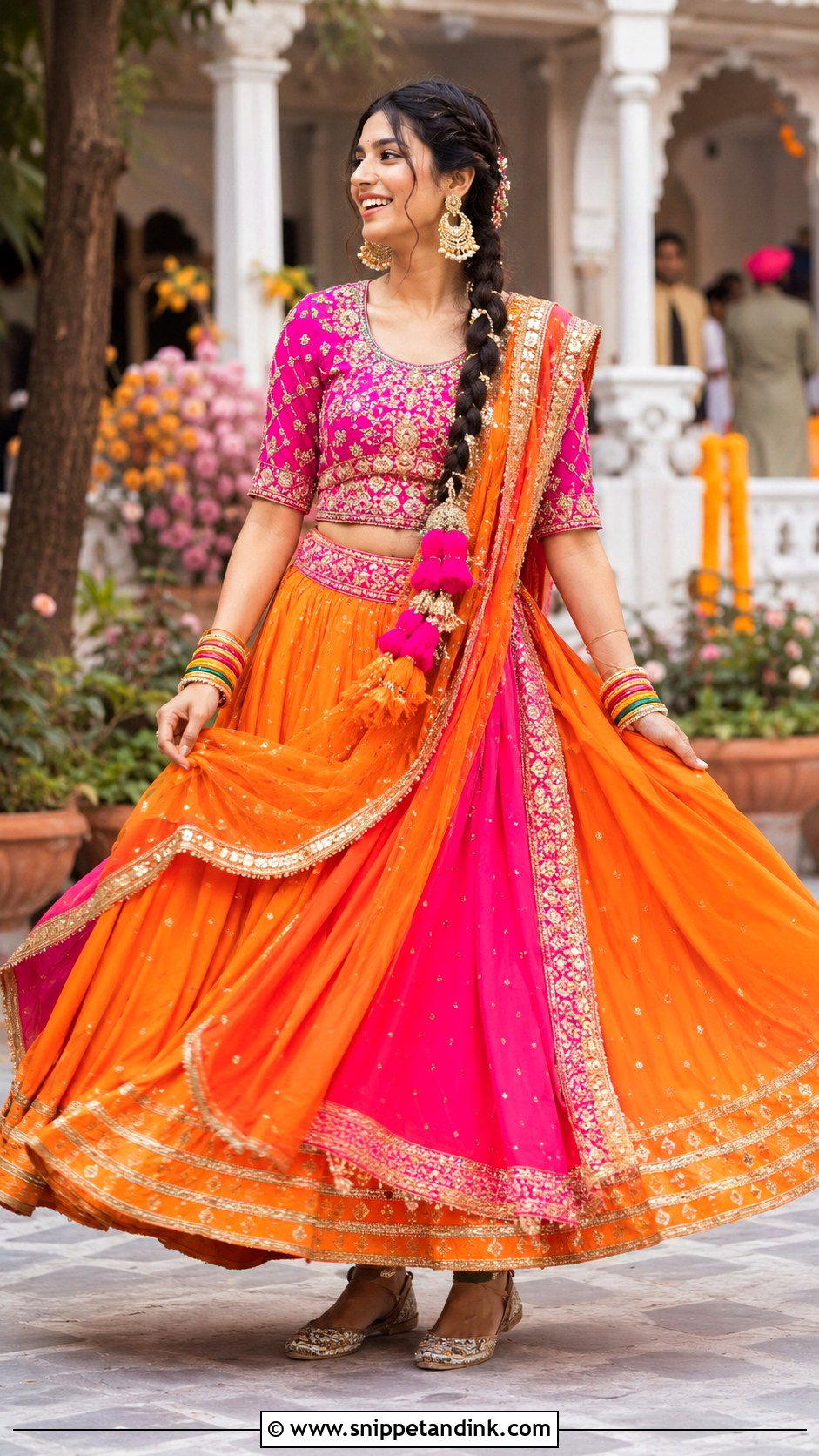
Teal against magenta is bold enough that you barely need embellishment. Start with a teal skirt with small gold motifs or a clean border, and add a magenta blouse with elbow sleeves, a square neck and a little embroidery at the cuffs. A dual-colour dupatta links them. Antique jhumkas, a simple tikka, teal and pink bangles and neutral gold juttis are plenty. Plait your hair with a magenta paranda, or pin a low bun with small accessories. I’d ask for breathable fabrics here, cotton silk or georgette, because Jaggo is often outdoors in the cold and then indoors in a hot crowd, and you’ll go from one to the other many times.
10. Ivory And Pink Jaggo Lengha
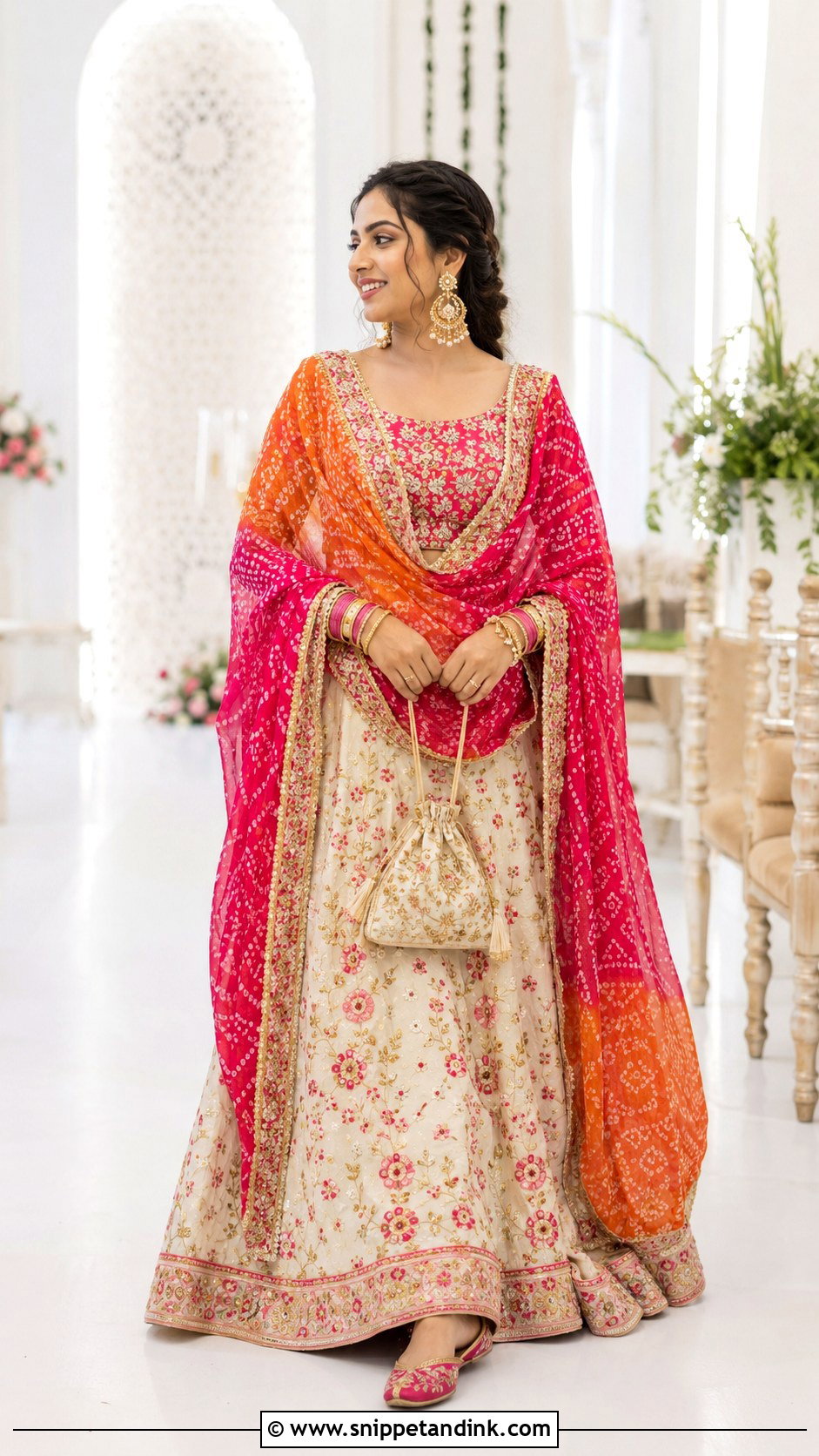
Ivory is a bold pick for Jaggo, and it only works with plenty of colour on top. Choose an ivory skirt with bright floral threadwork, mirror accents or a vivid embroidered border, then a rani pink blouse and a pink and orange bandhani dupatta. Gold chandbalis, mixed bangles, pink juttis and an embroidered potli complete it. Loose curls look modern, a braid more traditional. The honest drawback: Jaggo involves diya oil, sweets and dancing on dusty floors, and ivory shows everything. Have the hem sit just above the floor, skip a train, and keep a stain pen handy.
11. Hot Pink Bandhani Jaggo Lengha
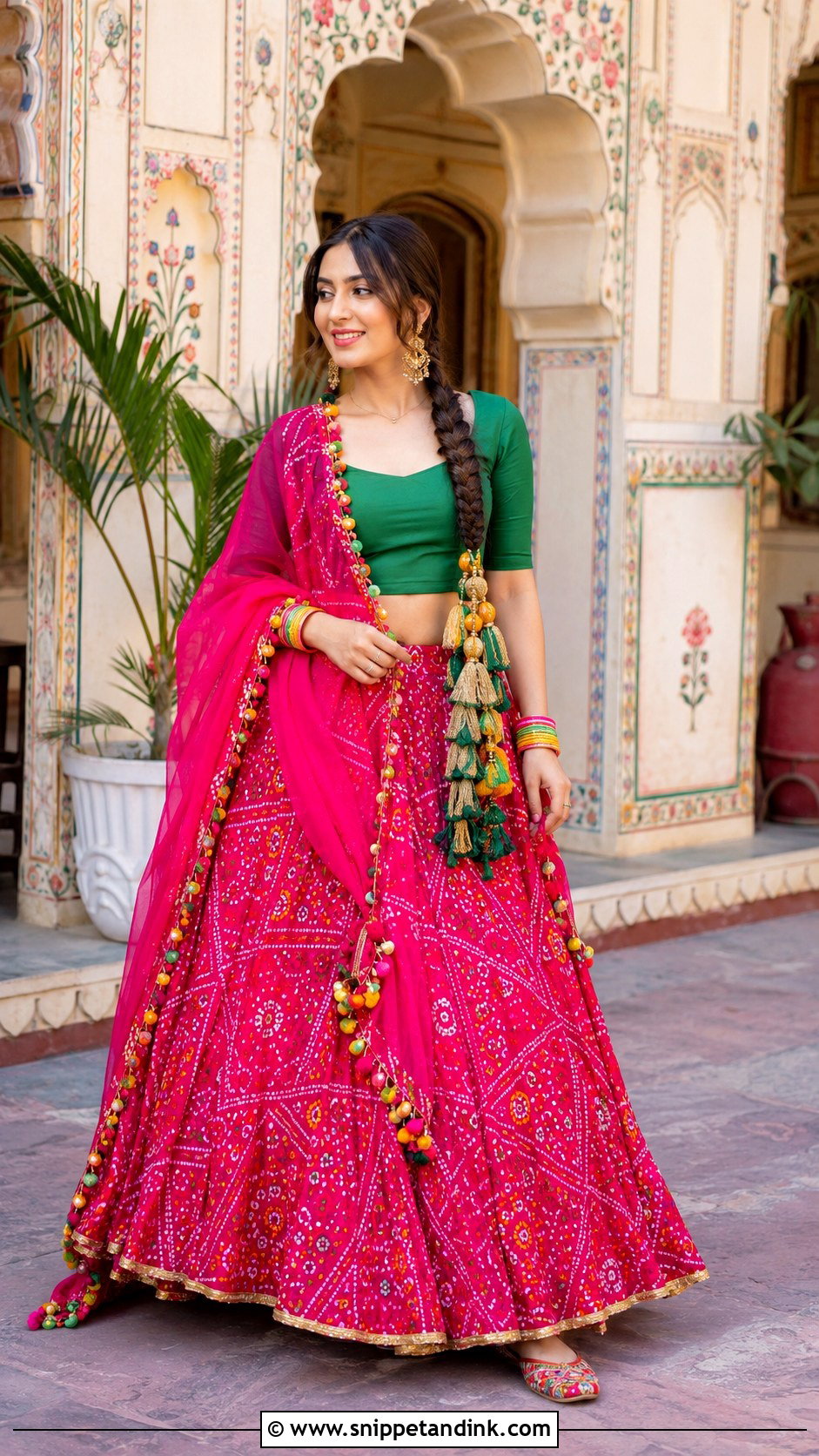
Bandhani is tie-dyed by hand, with tiny pinched dots, so the fabric carries pattern and depth without needing embellishment. A hot pink bandhani skirt with a solid green, orange or yellow blouse is bright and very breathable. Add a plain net or chiffon dupatta with a decorative border; a second bandhani piece would be too much. Traditional gold earrings, a small necklace, glass bangles and juttis complete it, along with a thick braid and colourful paranda. I’d ask the tailor for a broad, high waistband, because it holds a full skirt in place far better than a thin drawstring during energetic dancing. Bandhani dye can bleed, so dry-clean it the first time.
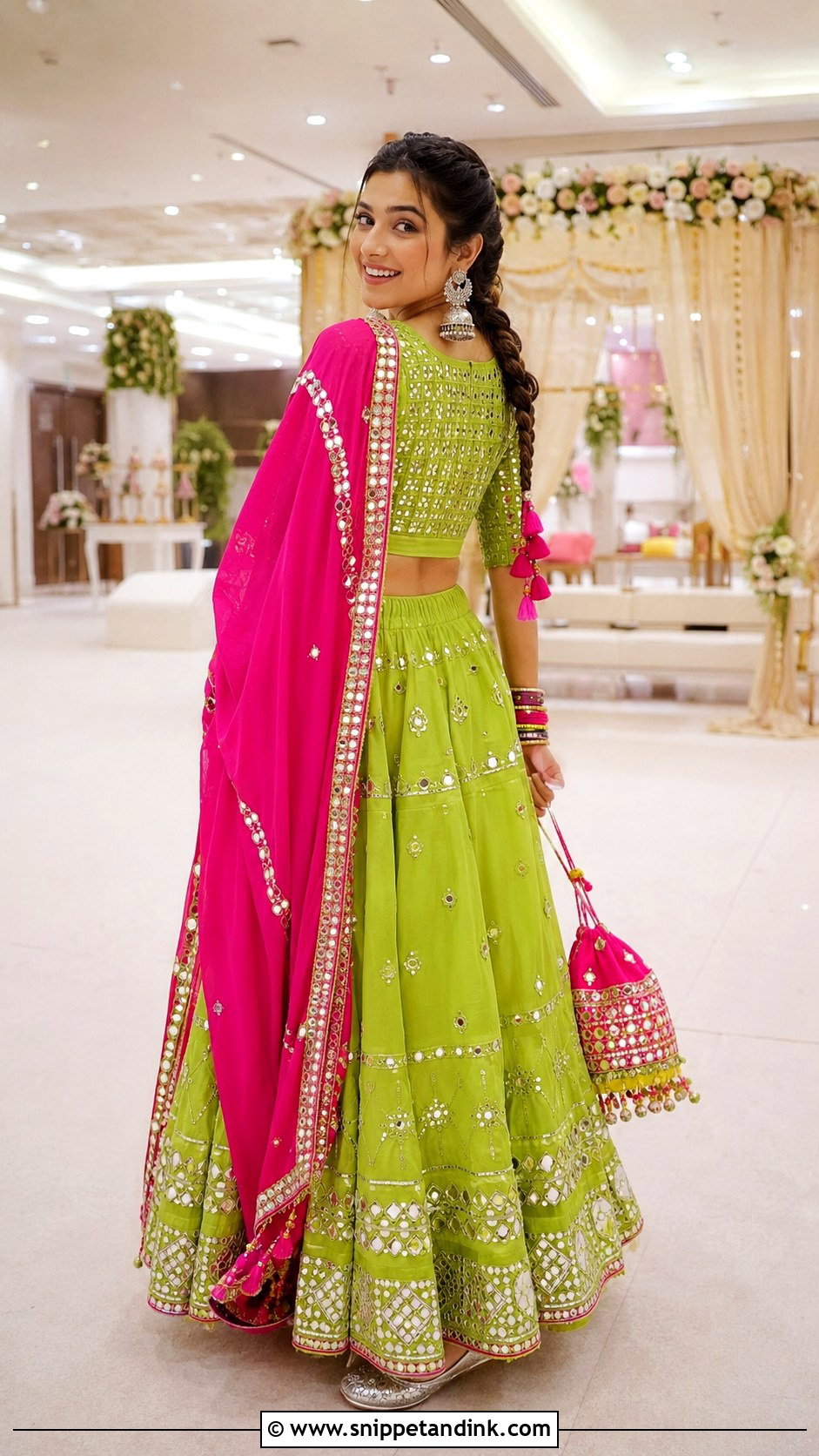
12. Lime Green Mirror Work Jaggo Lengha
Lime green photographs bright even in dim light, which is useful for a night event. Choose a light skirt with small mirror clusters, silver thread or a reflective border, and a matching short blouse with a hot pink dupatta. For more coverage, an elbow-sleeve blouse with a slightly longer hem works. Silver jhumkas, bright bangles, a mirror-work potli and silver juttis keep the shine consistent. A ponytail braid or tight plait with pink tassels stays secure. Fresh makeup with lashes, soft blush and a pink lip suits the colour. Skip oversized jewellery, since mirror work reflects enough light already, and big earrings tend to catch on a mirrored dupatta.
13. Turquoise Punjabi Jaggo Lengha
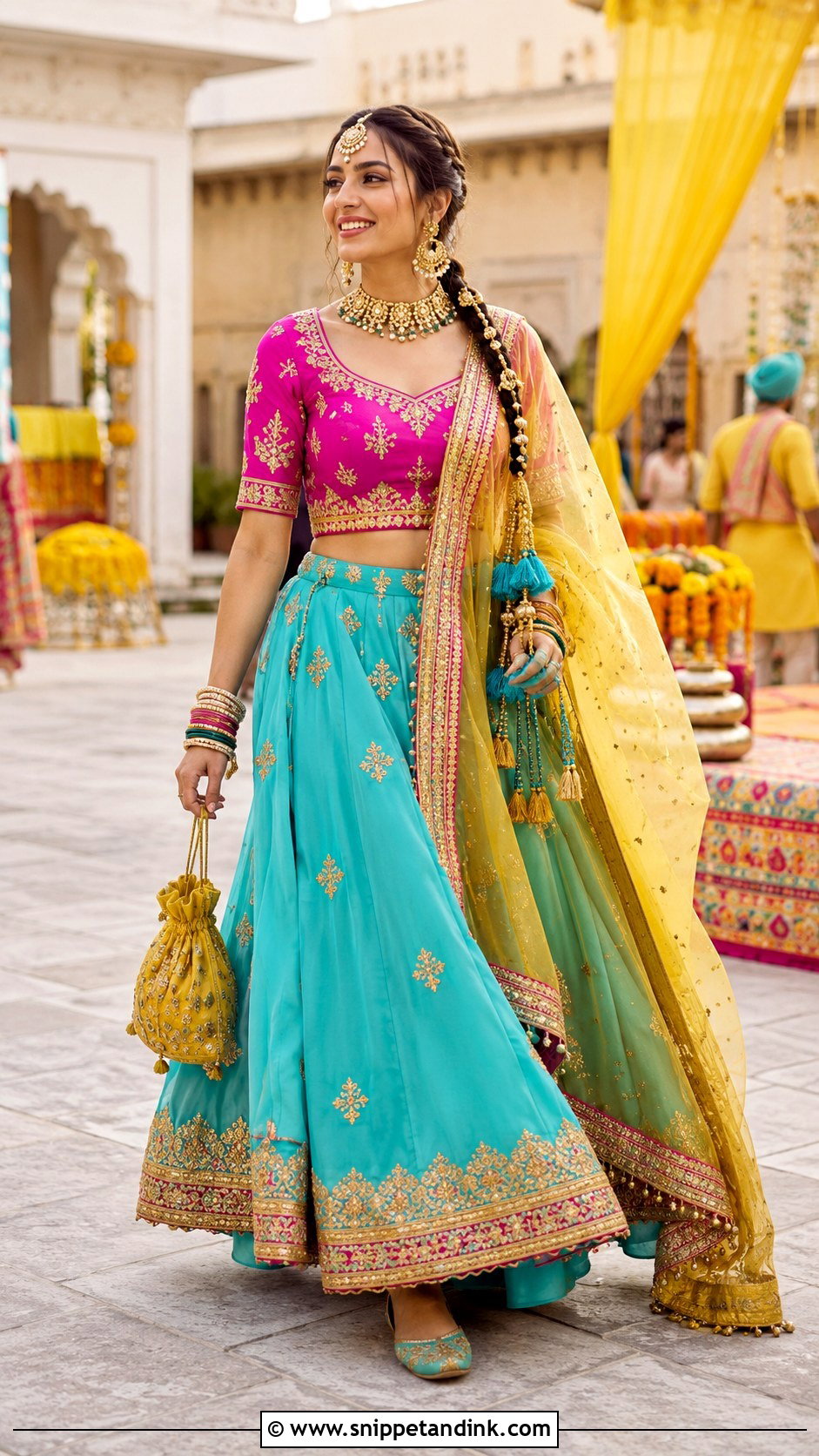
Turquoise is colourful but softer than royal blue or deep green. A turquoise skirt with gold motifs and a wide magenta hem border, a magenta blouse with simple gold embroidery and a sheer yellow dupatta over one shoulder makes a strong three-colour outfit. Three colours look deliberate when each one shows up again in a small detail, such as turquoise juttis or a yellow potli. Gold earrings and mixed bangles finish it. Wear a braid with tassels or soft waves. The blouse needs a secure back closure, ideally hooks backed by a placket rather than a single zip, so you aren’t adjusting it during every song.
14. Coral Silk Jaggo Lengha
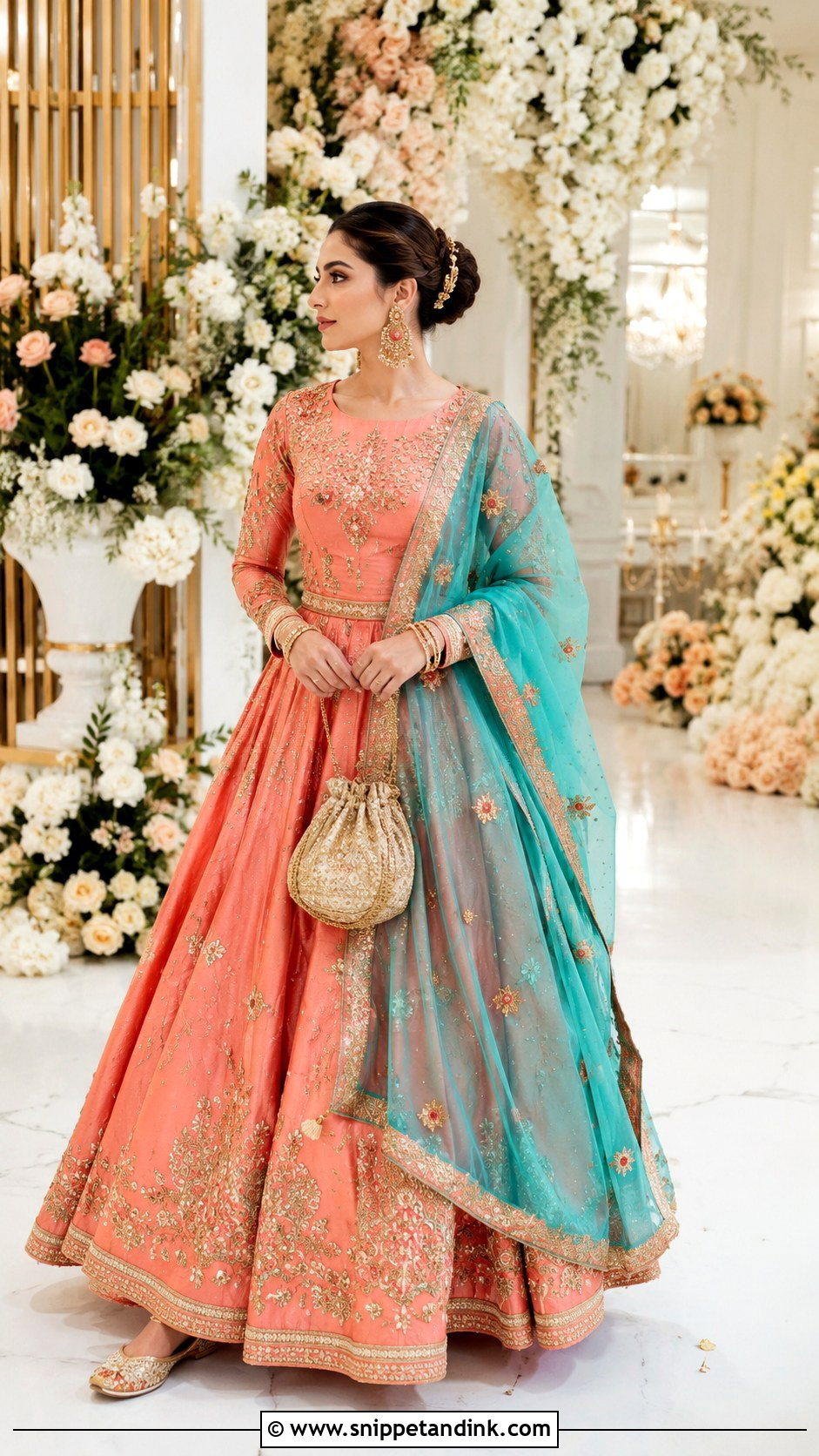
Coral gives you warmth without the glare of neon shades. A raw silk or silk-blend skirt with gold embroidery, a defined waistband and medium flare suits it, with a matching blouse and a green or turquoise dupatta for contrast. Antique gold earrings, delicate bangles, embroidered juttis and a compact potli keep it polished. A low bun with gold pins looks elegant; a side braid is more relaxed and Punjabi. Warm makeup with peach blush, brown liner and a coral lip complements it. Raw silk has body and can feel stiff, so check the lining is smooth against your legs and the waistband lets you sit cross-legged on the floor during the songs.

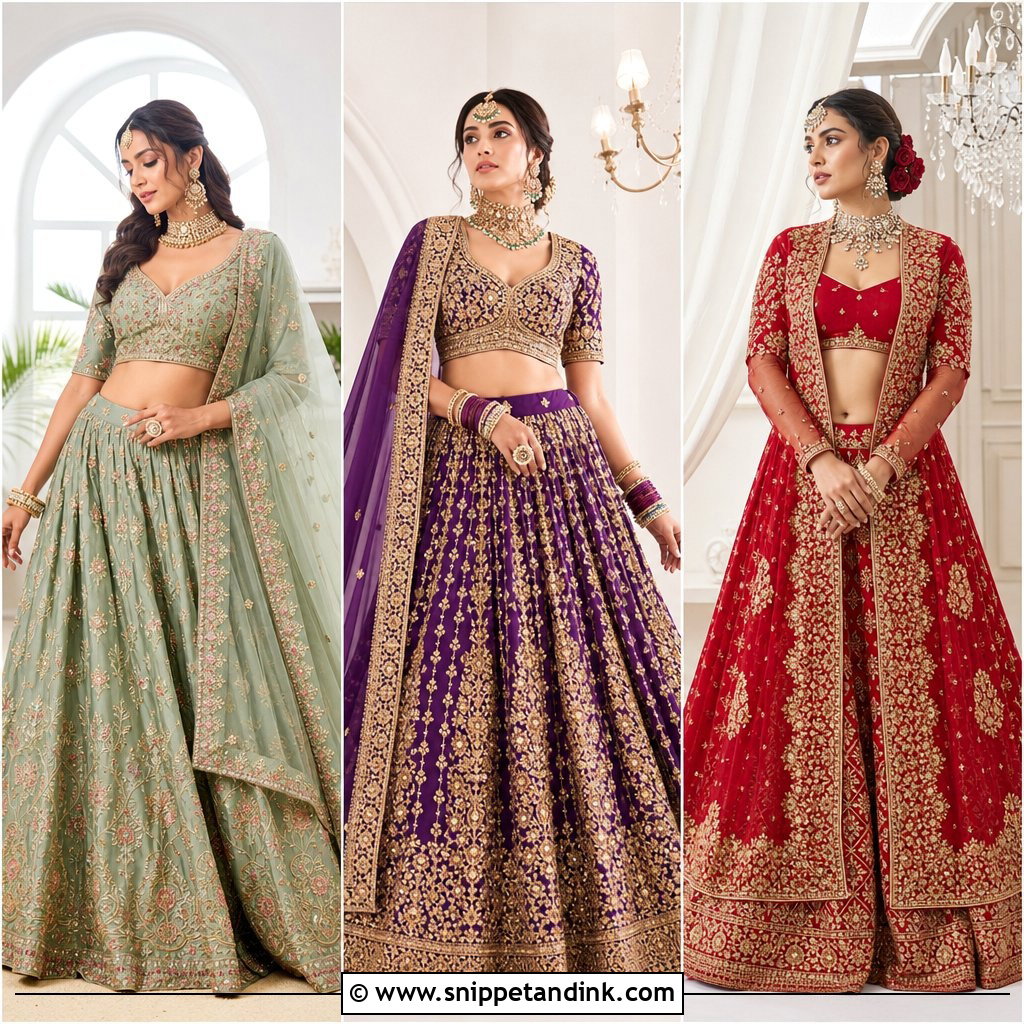
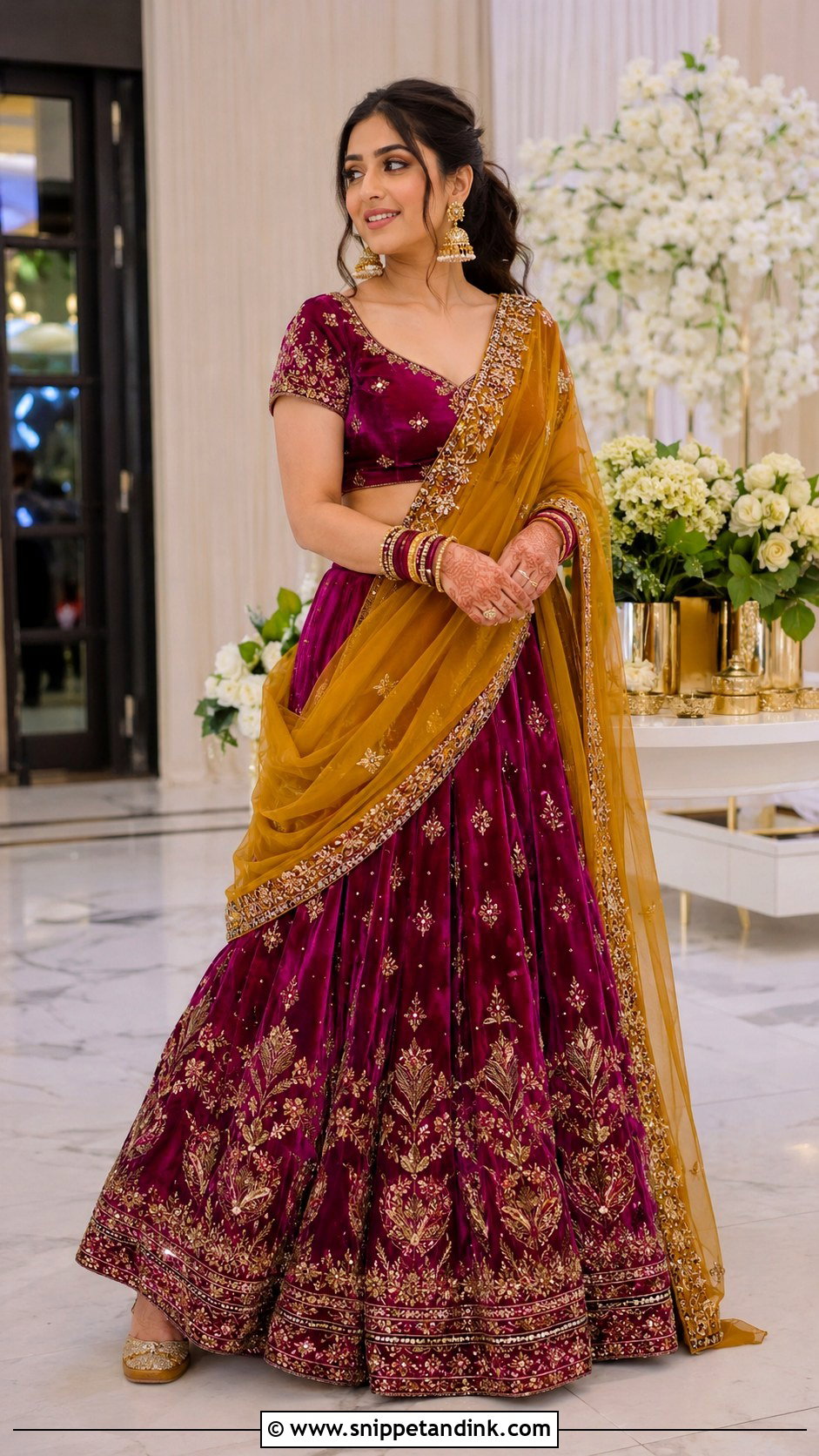
15. Magenta Velvet Jaggo Lengha
Velvet is the warmest option for a winter Jaggo, which matters when the procession is outside in December. Choose magenta velvet with controlled flare and embroidery mostly at the hem, since velvet embroidered all over gets very heavy. A velvet blouse matches; a lighter silk one gives easier arm movement. Brighten it with a mustard, orange or green chiffon dupatta. Antique jhumkas, a statement ring, bangles and cushioned gold juttis suit it, and a smooth braid or curled ponytail keeps it youthful. Pick one or two focal pieces of jewellery rather than a heavy necklace, big earrings and a large tikka together.
16. Pastel Pink Jaggo Lengha
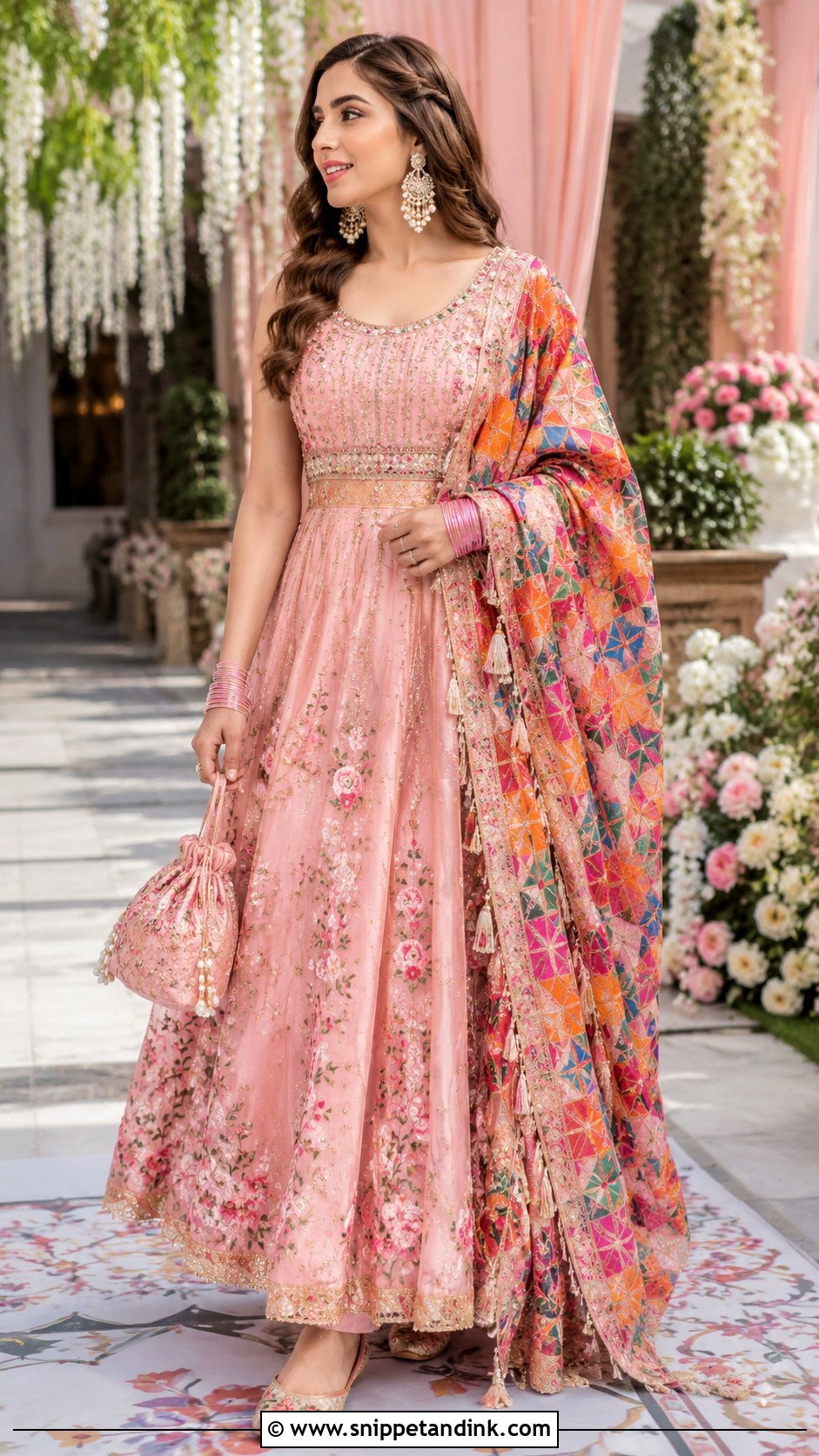
Pastel pink suits anyone who feels lost in neon, but on its own it can look too quiet for Jaggo. The fix is a lively border or small mirror accents on the skirt, plus a colorful phulkari dupatta in pink, green, yellow and blue over a matching blouse. That dupatta brings back all the traditional energy the pale base lacks. Pearl and gold earrings, pink bangles, floral juttis and a compact potli finish it. Wear soft waves or a loose braid with natural, rosy makeup. Pin the dupatta firmly, as the heavy embroidered ends tend to slide off the shoulder while you dance.
17. Orange Lehenga With Green Blouse
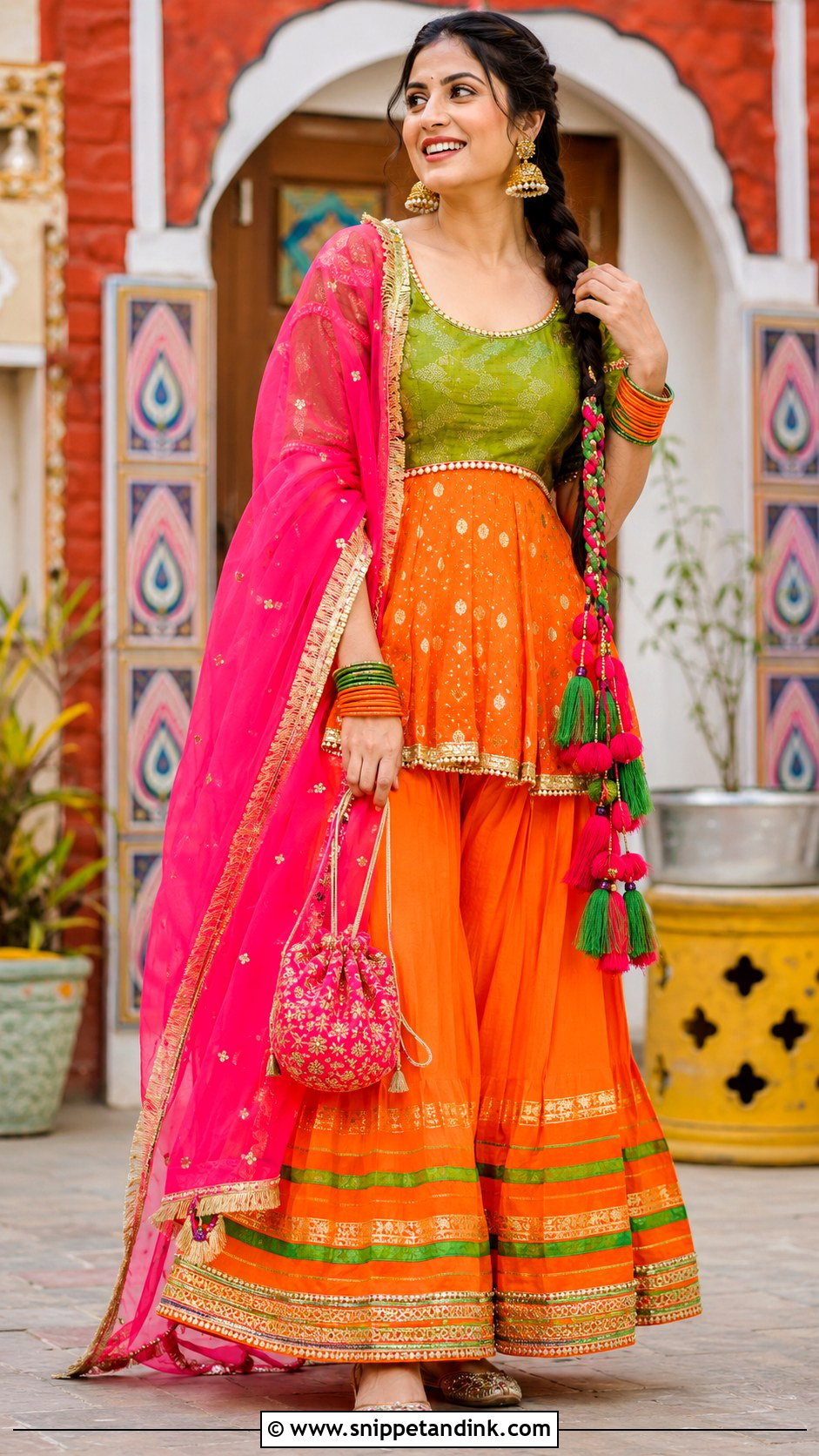
Orange with green is one of the oldest Punjabi pairings and it’s hard to get wrong. A flared orange skirt with gold trim, small flowers or gota stripes goes with an emerald or parrot green blouse with short sleeves and a round neck. Add a bright pink dupatta for a third colour. Gold jhumkas, orange and green bangles, neutral juttis and a pink potli complete the styling, along with a long braid and a green and pink paranda. If three bright colours feel like too much, a sheer dupatta tones it down. Clean, simple shapes for blouse and skirt keep it from feeling busy.
18. Mustard Jaggo Lengha With Phulkari Dupatta
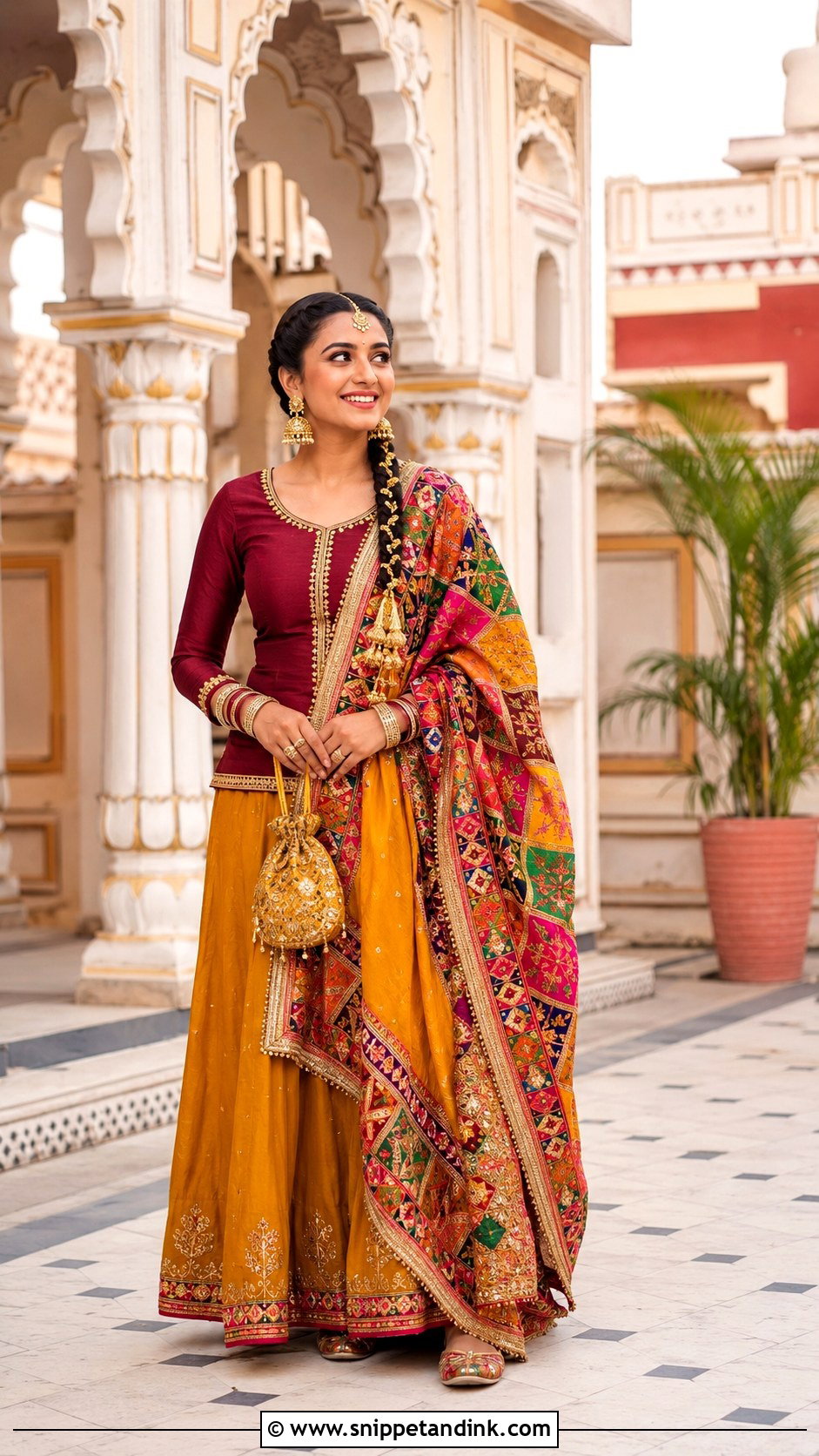
Mustard is a warm, earthy base that lets a phulkari dupatta glow. Choose a plain or lightly embroidered mustard skirt with plenty of movement and a fitted burgundy, green or deep pink blouse. Drape the phulkari over one shoulder so its pattern is fully visible. Antique gold earrings, traditional bangles, juttis and a fabric potli suit the folk mood, with a centre-parted braid and tassels. I like this pairing for brides on a budget because every piece works again: the skirt with other blouses, and the phulkari over plain suits and shararas long after the wedding.
19. Fuchsia And Yellow Jaggo Lengha
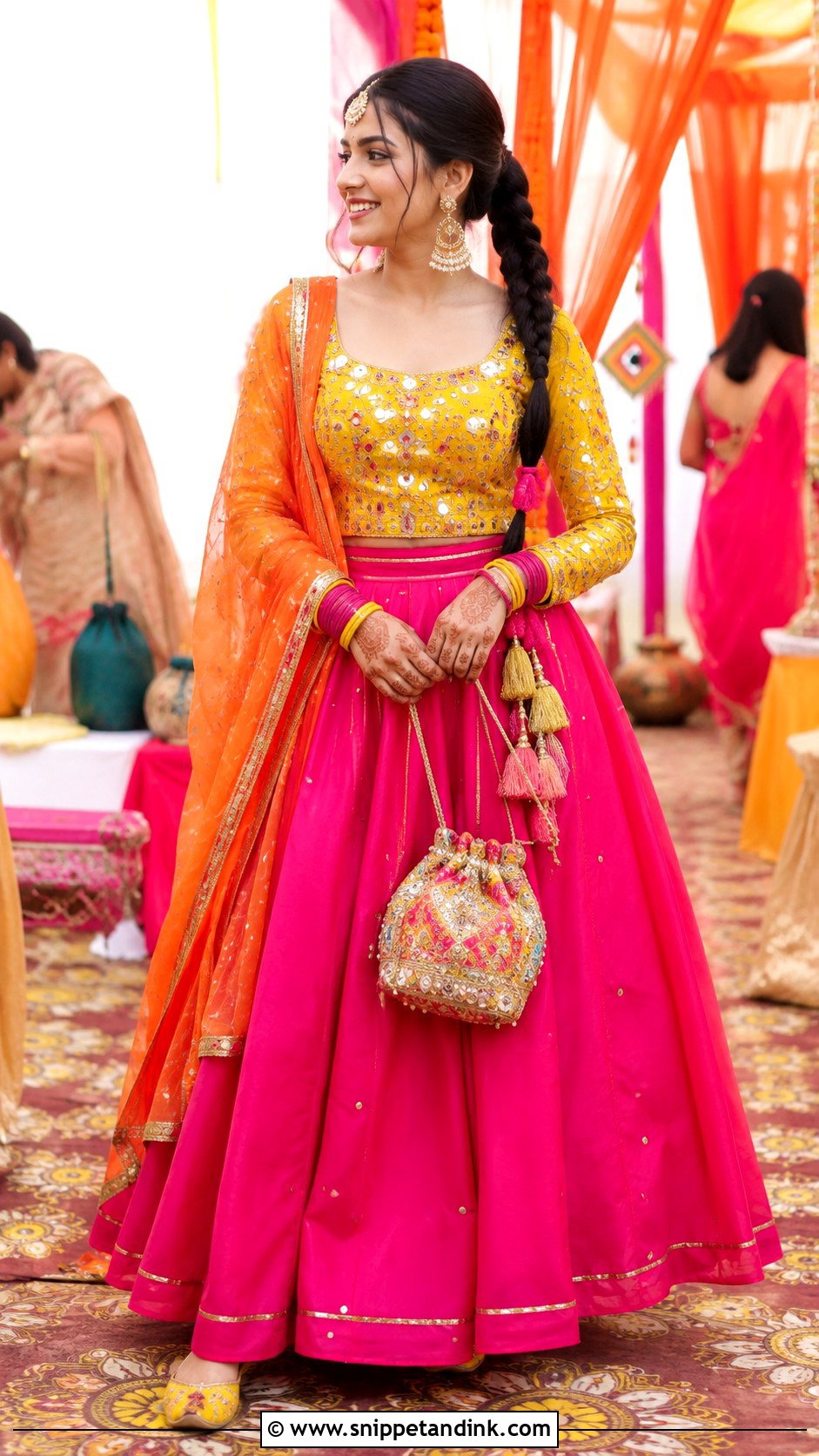
Fuchsia and yellow stay visible in packed group photos, which is the real test at Jaggo. A fuchsia skirt with a gold border and a fitted yellow blouse with small mirrors or threadwork is a strong base. An orange dupatta warms it up; a sheer fuchsia one simplifies it. Gold earrings, a delicate tikka, glass bangles, yellow juttis and a small embroidered bag finish it, with a ponytail braid and bright tassels that stay secure through dancing. Keep the skirt ankle-grazing, never floor-length, because in a tight gidda circle someone will step on your hem. With heavier embroidery, the same colours suit a bride as well as younger guests.
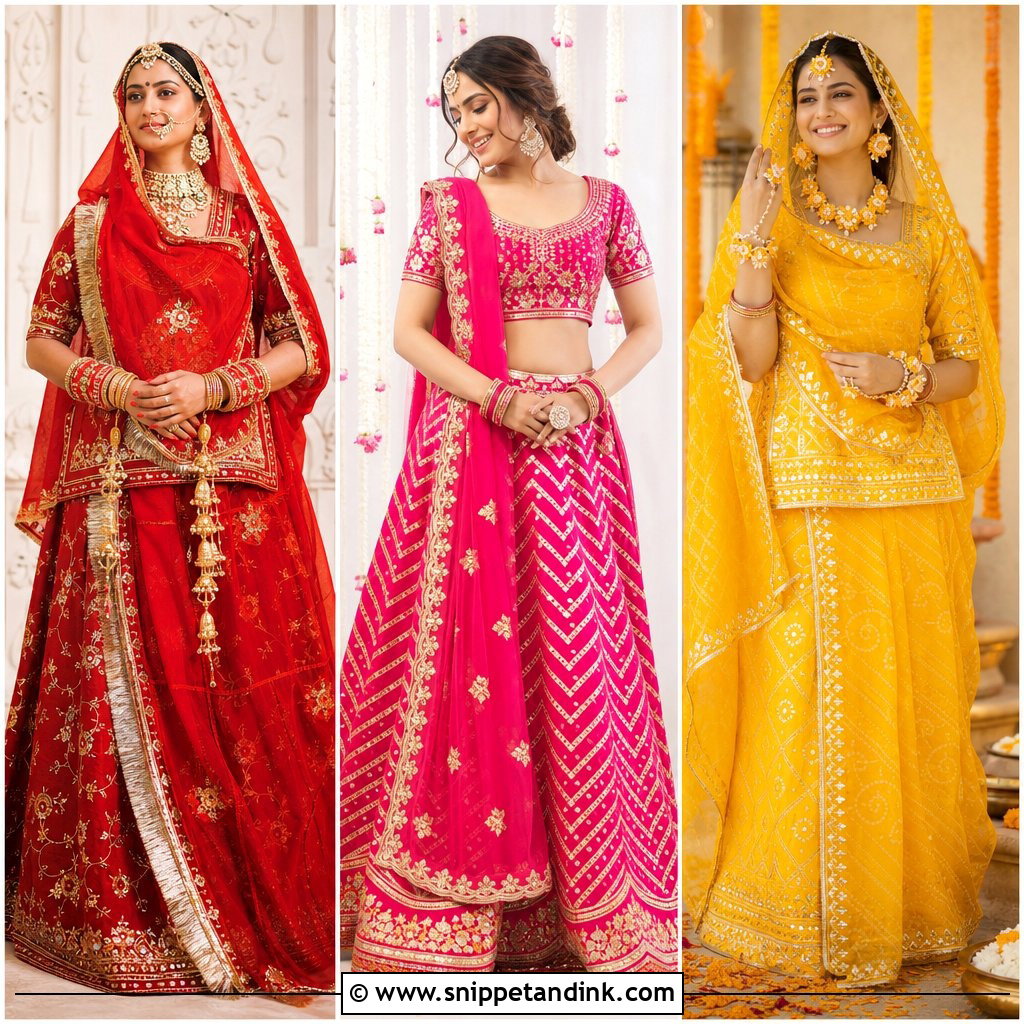

20. Multicolor Panelled Jaggo Lengha
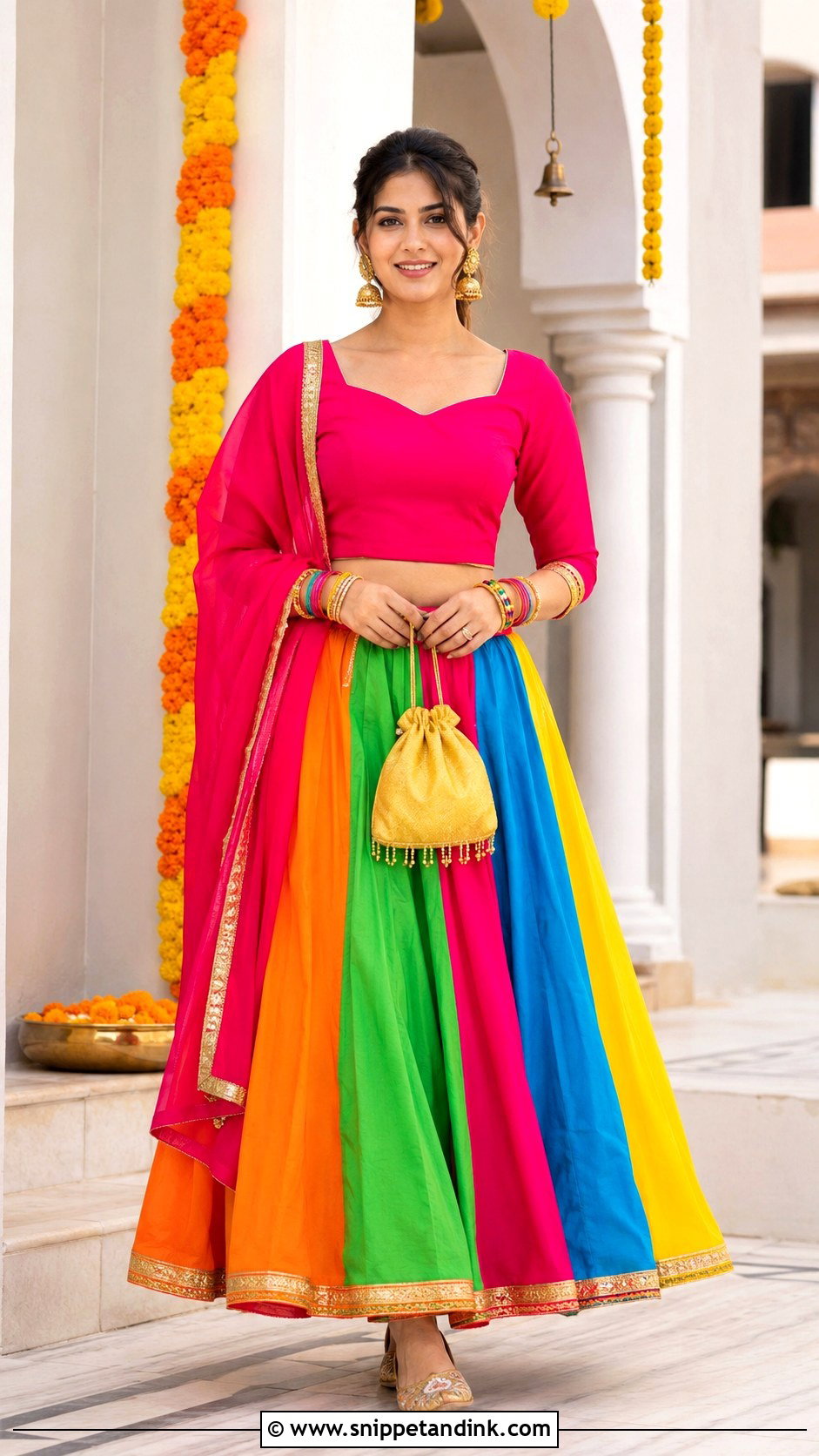
Panelled skirts put several colours side by side, and a multicolor panelled lengha in pink, orange, green, blue and yellow reflects the whole mood of the night in one piece. Anchor it with a solid blouse in the darkest or most repeated colour. Choose a light dupatta with just a simple border. Gold jhumkas, bright bangles, neutral juttis and a solid potli keep the rest calm. Wear a neat braid or high ponytail. Panelled skirts flare wonderfully when you spin, but check the seams between panels are well finished, since those are where a skirt splits under strain. Heavy necklaces, oversized hair pieces and dramatic makeup all at once would be too much.
Pinning a Dupatta So It Survives Midnight
A dupatta that slides off during the first boliyan will annoy you for the rest of the night. This is how I secure one for Jaggo.
- Pin the dupatta to the blouse at the shoulder from underneath, using a small safety pin hidden in the fold, not through the front where it shows.
- Add a second pin at the back of the shoulder blade or at the waist where the drape crosses, so the weight is held in two places.
- For a heavy phulkari, a third pin at the waistband stops it from pulling the blouse sideways.
- Use dupatta clips or U pins for hair if any part of it goes over your head, so a paranda or tikka doesn’t drag it.
The skirt needs attention too. Tie the drawstring with a double knot and tuck it inside, or ask your tailor for a hook and zip waist, which holds better when you’re jumping. Carry a small kit in your potli with spare safety pins, a needle and thread in your main colour, blister plasters and a little stain pen.
After the night
Air the outfit before packing it away, since smoke from the diyas and a long night of dancing both linger. Dry-clean bandhani, phulkari and anything with gota or mirrors rather than washing them at home, and store embellished pieces folded in muslin, not plastic, so the metal threads don’t tarnish.
Dance First, Dress Second
Every lengha here passes the same test: can you dance in it all night? Pink, orange, green, yellow, turquoise and purple all suit the mood, and phulkari, bandhani, gota patti and mirror work bring their own regional character. Choose breathable fabric, a skirt you can turn in, a blouse that supports you and juttis that are already broken in. Pin the dupatta properly, and wear one or two statement pieces rather than everything at once. If you can still jump into the gidda circle at midnight without tugging at anything, you’ve dressed well.
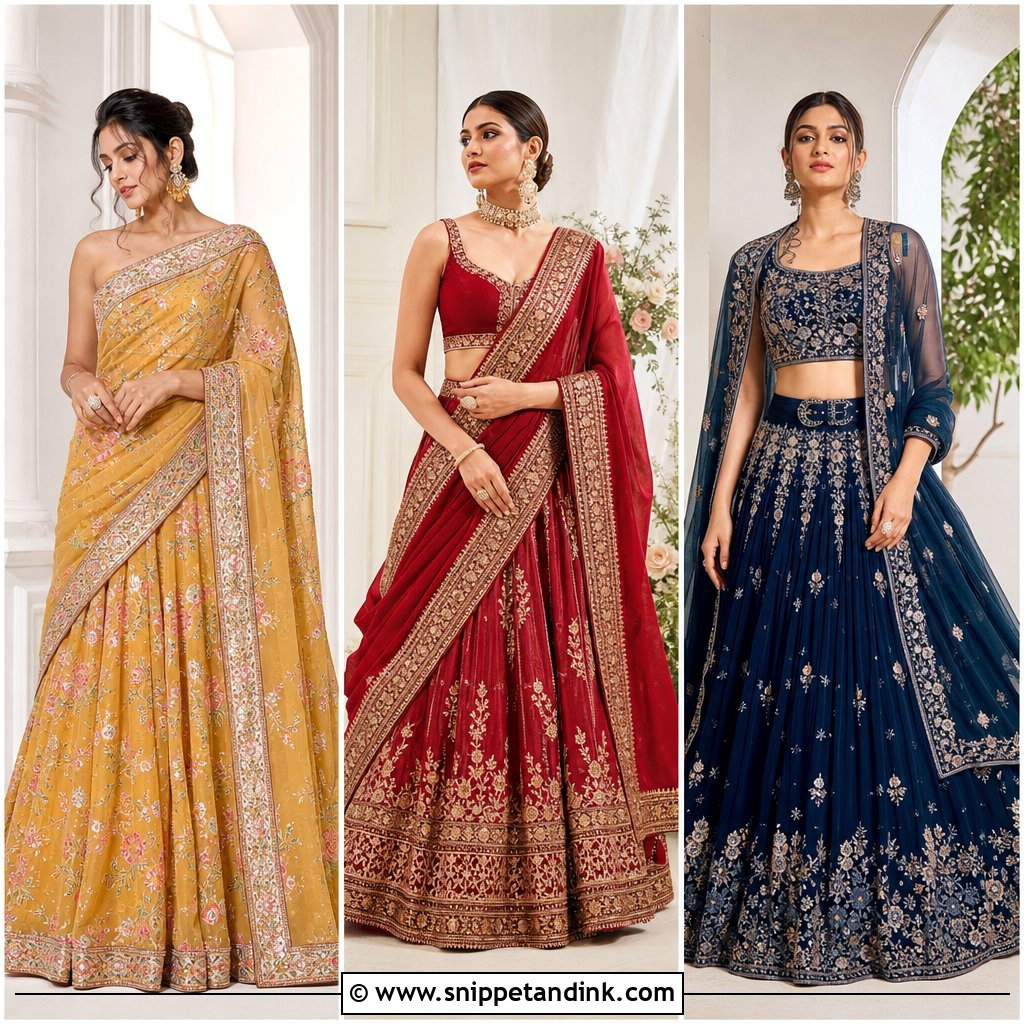
You'll Like These Ideas:





Leave a Reply