
A lengha choli no longer has to follow one bridal formula. The outfits I dress brides in now mix old embroidery traditions with lighter fabrics and sharper tailoring: pastel organza for a morning ceremony, velvet for a December reception, mirror work for the sangeet floor, a boned corset choli where a loose blouse once sat. What I care about at every fitting is whether you can sit, hug your aunts and climb into a car in it, because the photos only show the hours you spent comfortable. Below are 25 complete looks, from traditional red to near-minimal ivory, with the styling and fitting notes I’d give you for each.
Fitting a Choli That Survives Sitting, Eating and the Sangeet
Most lengha problems on the day are really choli problems. A skirt can hide under a dupatta; a blouse that gapes, rides up or digs in shows in every photo. Custom bridal pieces usually take a few months to make, and I plan at least two fittings, with the last one two to three weeks before the first function so small weight changes don’t throw it off.
Movements I ask for in the fitting room
- Raise both arms as if hugging someone taller. The choli hem should stay below the skirt waistband.
- Sit on a hard chair for two full minutes. Boning and side seams show where they press.
- Turn and look over your shoulder. Back ties and hooks should stay closed and flat.
- Walk in the exact shoes you’ll wear, because the skirt length is set to those heels, not to bare feet.
Ask the tailor to leave seam allowance in the choli side seams so it can be let out later and worn again. If you need bra cups, have them sewn in at the fitting rather than added afterwards; stitched-in cups sit at the right height and stop straps showing under a deep back.
1. Red Bridal Lengha Choli
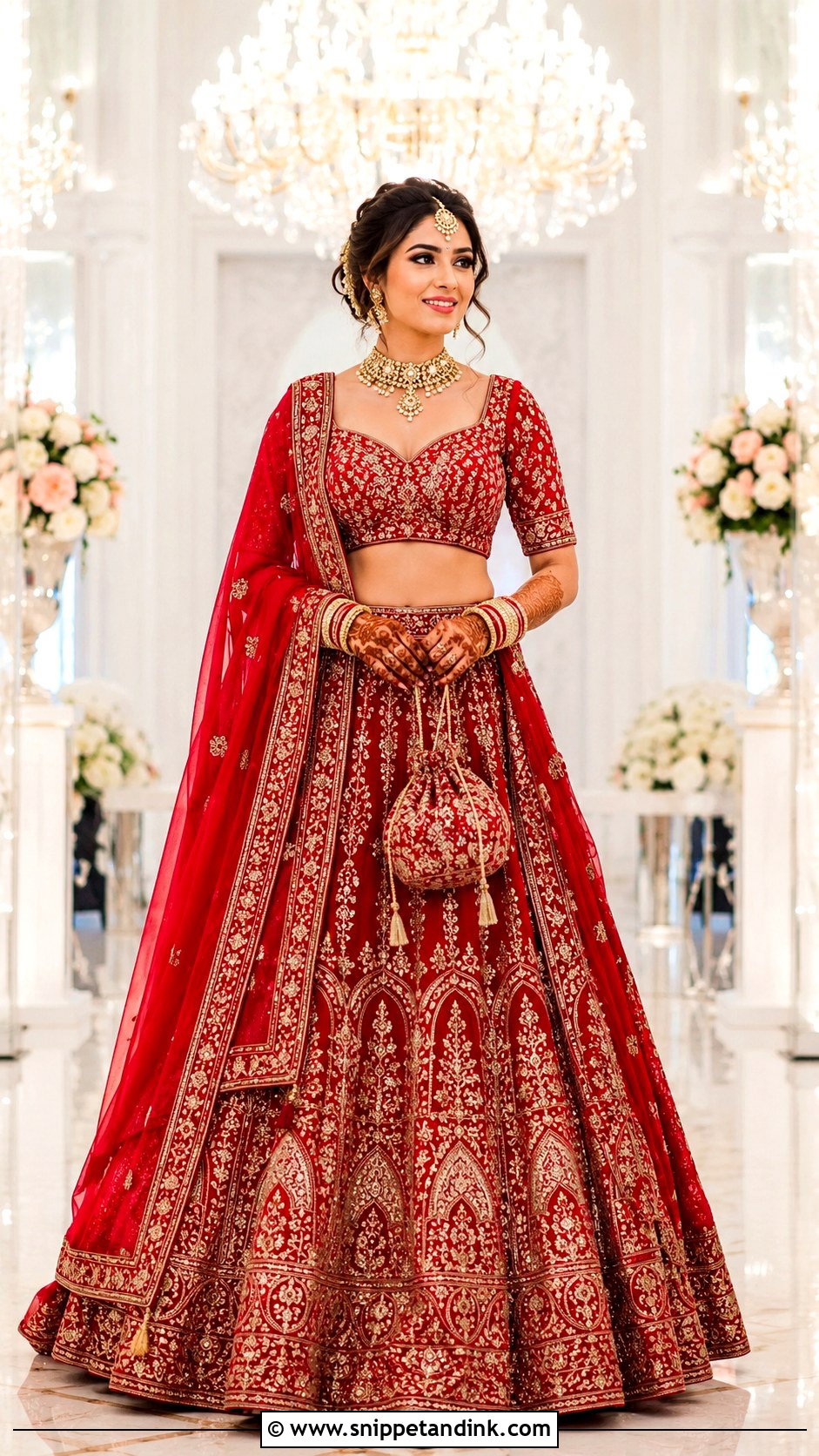
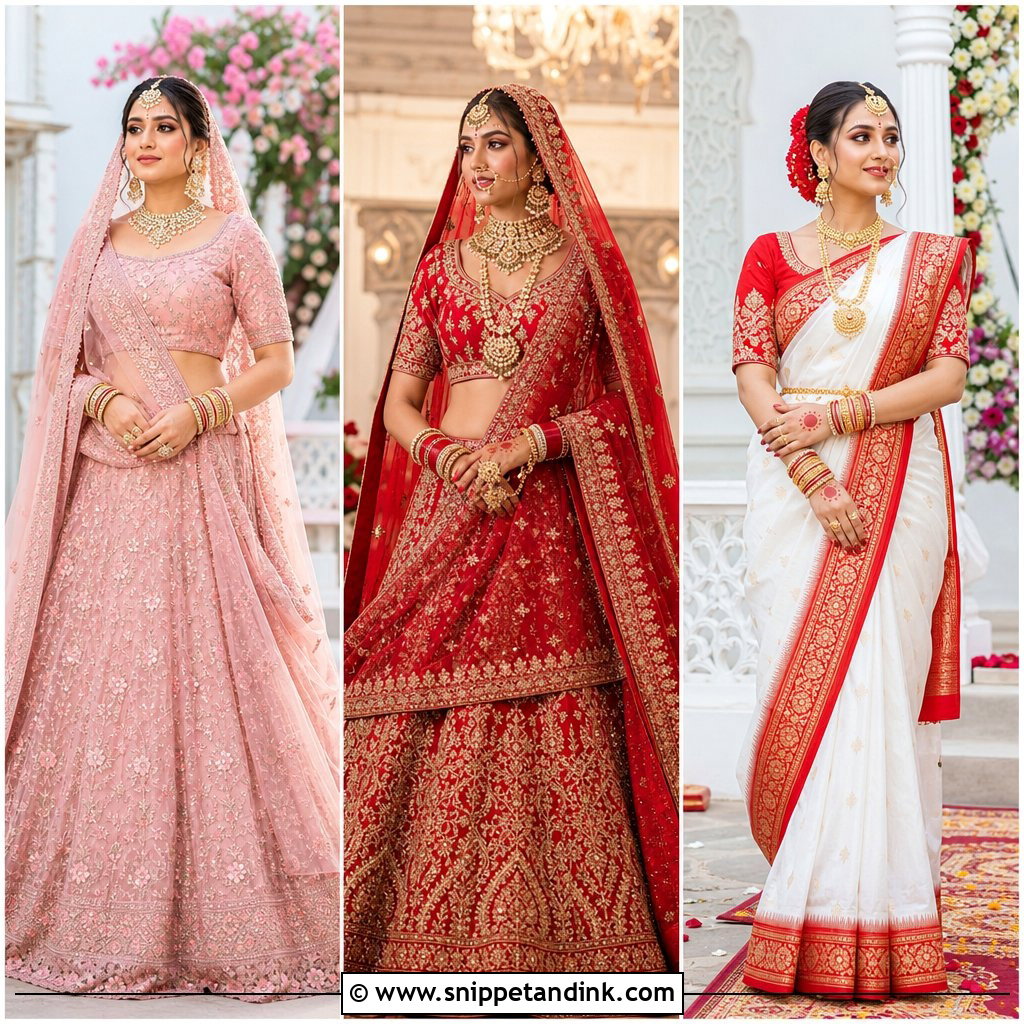
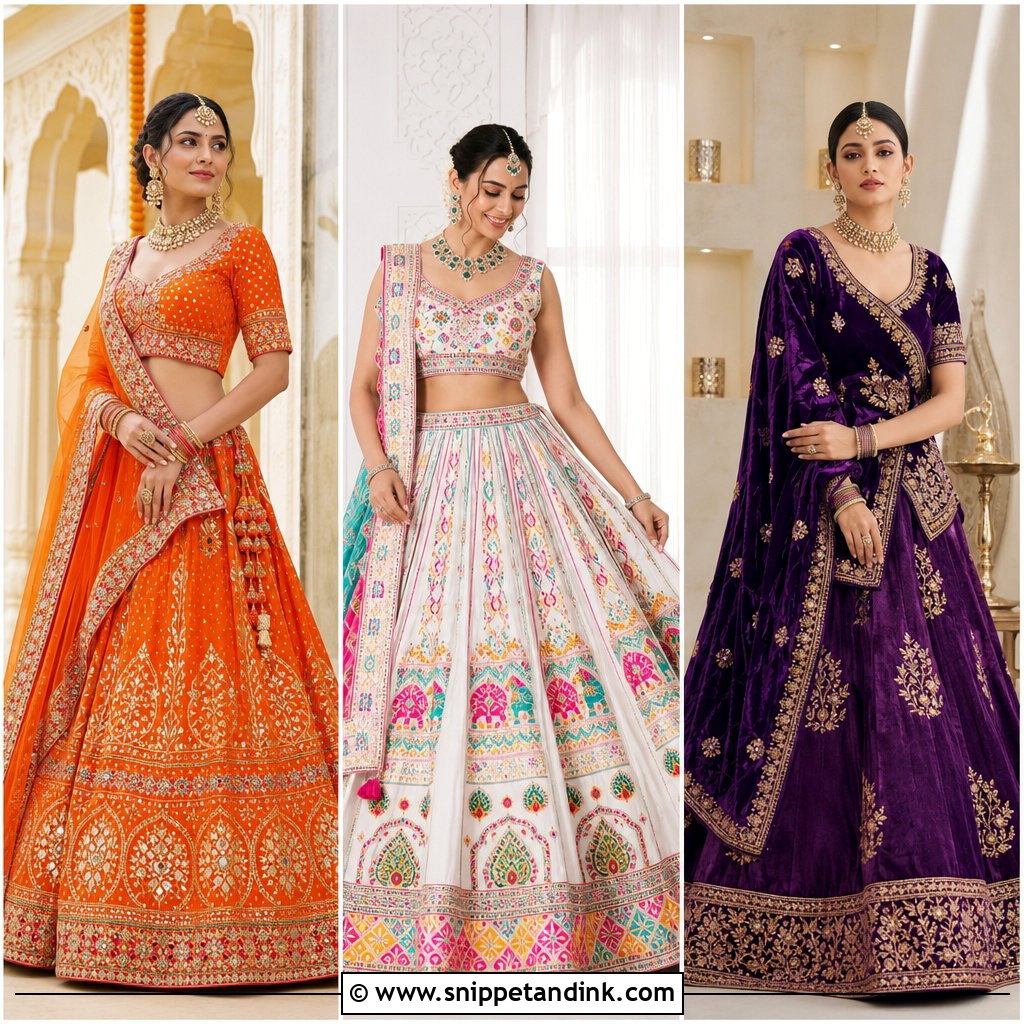
Red is still the color most of my brides wear for the ceremony itself, and the modern version is mostly about restraint. I put the heavy zari or sequin work on the skirt and keep the fitted choli cleaner, with a sweetheart or square neckline cut close to the body. A dupatta with a broad border frames it without the old head-to-toe crowding. One thing I check early: two reds from different dye lots rarely match under flash, so I ask for the dupatta border to come from the same bolt as the skirt. Gold jewelry, a structured potli and embroidered heels finish it.
2. Pastel Pink Lengha Choli
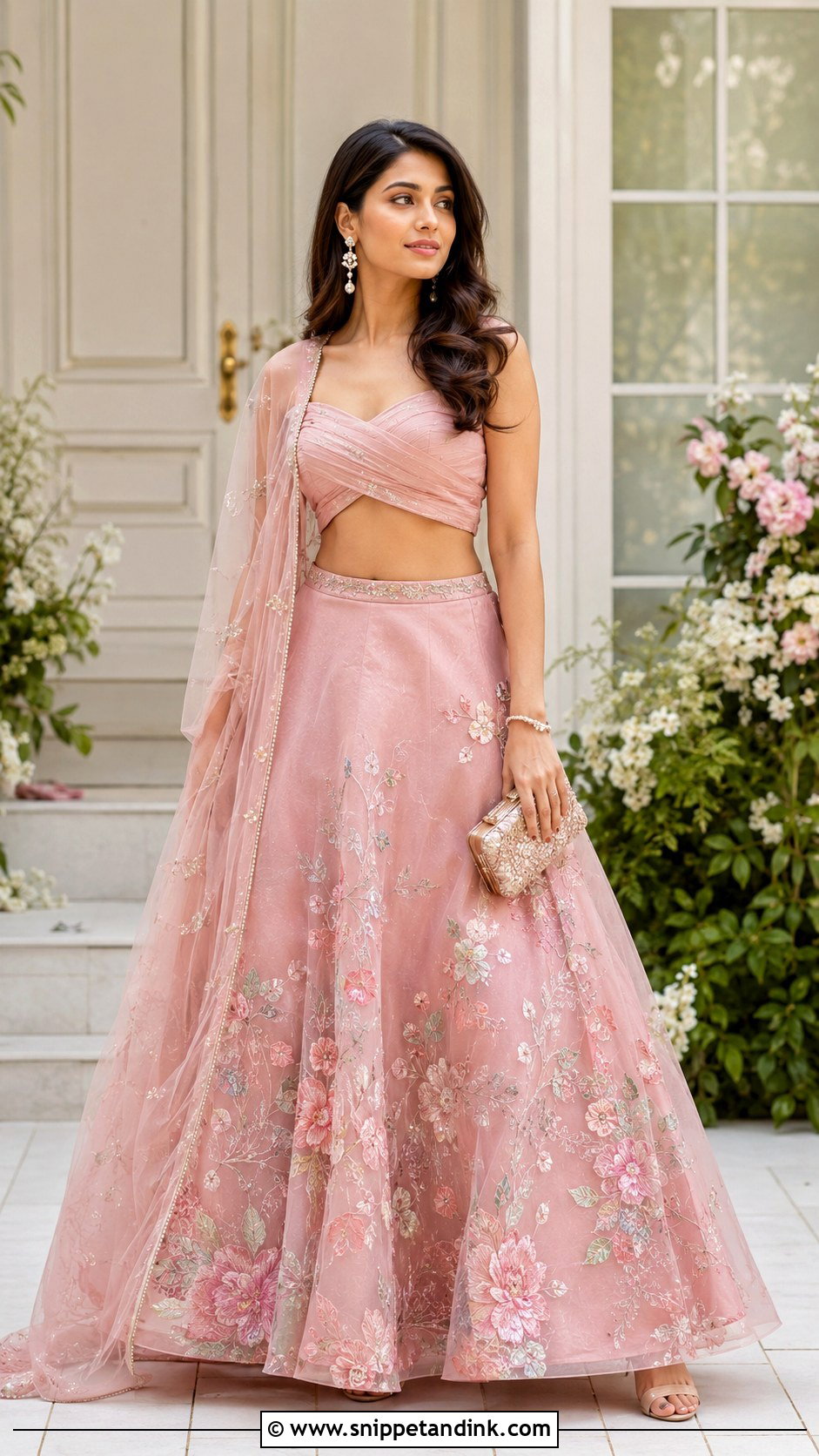
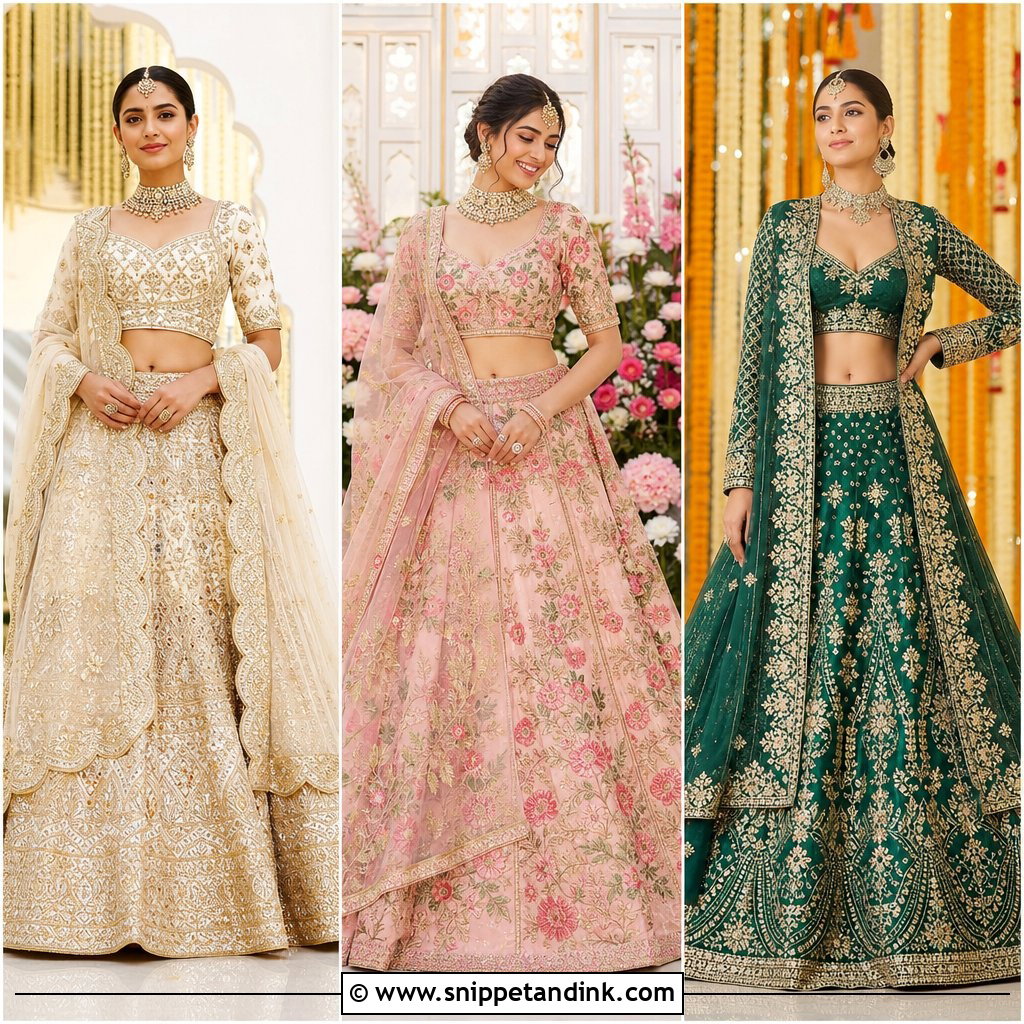
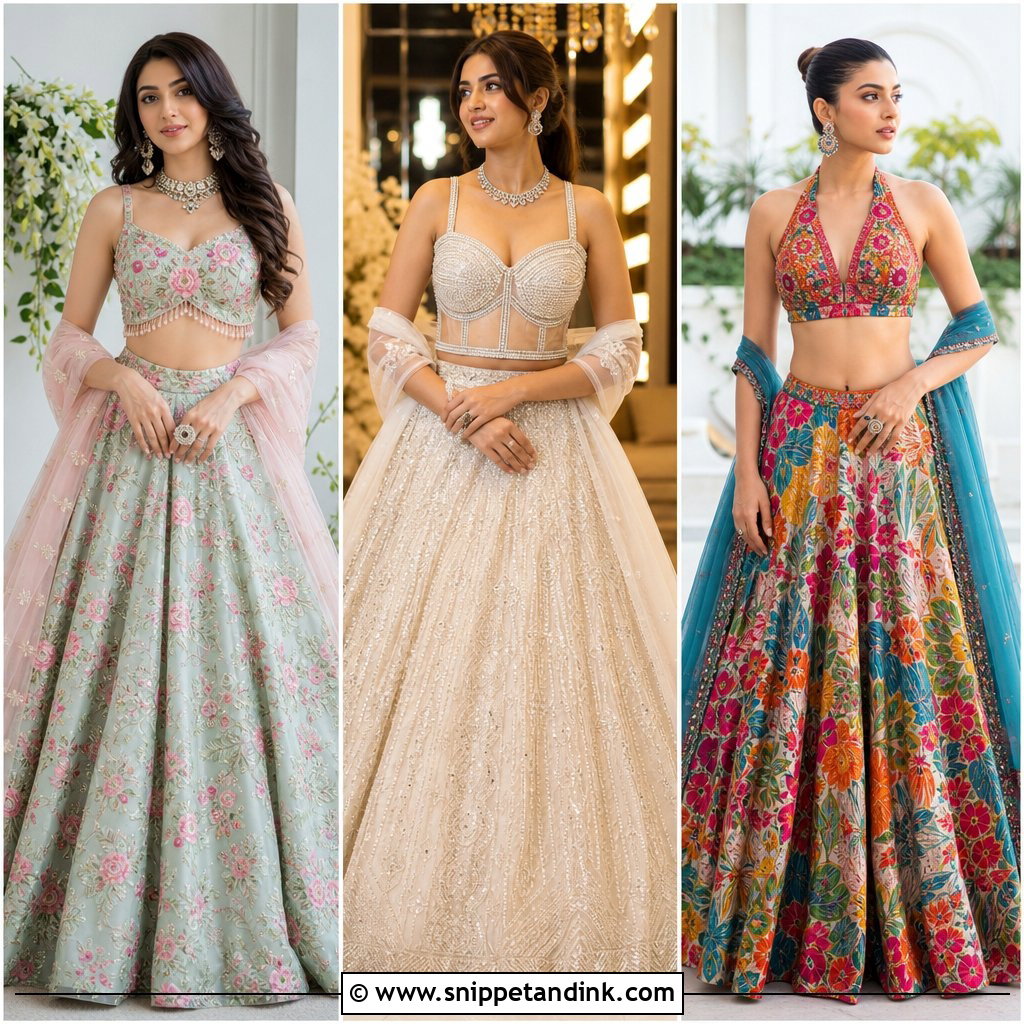
Pastel pink suits daytime events because it doesn’t fight sunlight the way a saturated shade does. I like it in organza or georgette with floral threadwork or seed pearls, and a skirt with moderate volume rather than a ballgown sweep, which can swallow a petite frame. Very pale pink on fair skin can read almost white outdoors, so I hold the fabric up to the face in daylight before anyone orders it. Diamond-look jewelry, nude heels and a small embellished clutch keep it light enough for brides, bridesmaids and sisters alike.
3. Ivory Lengha Choli
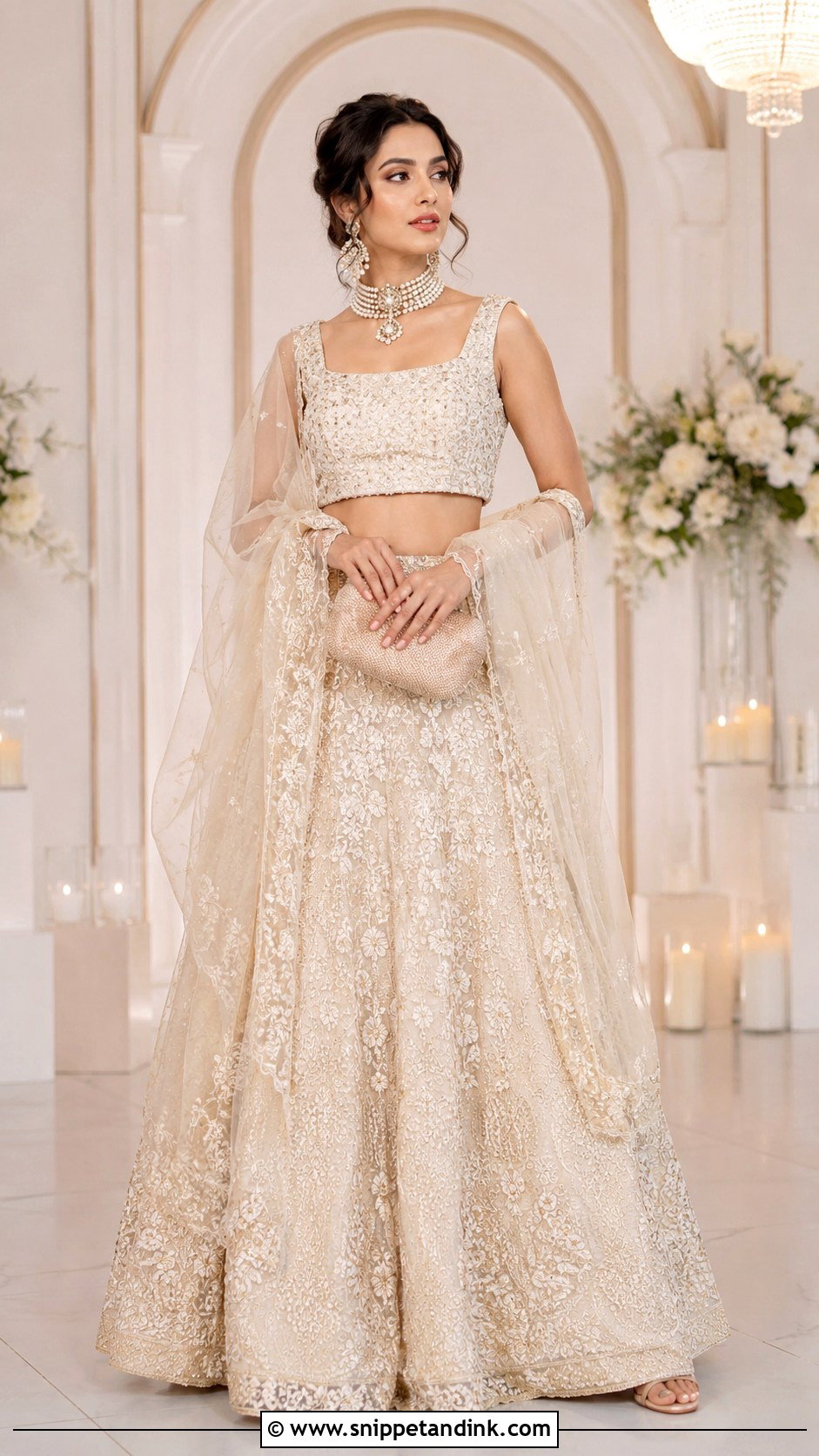
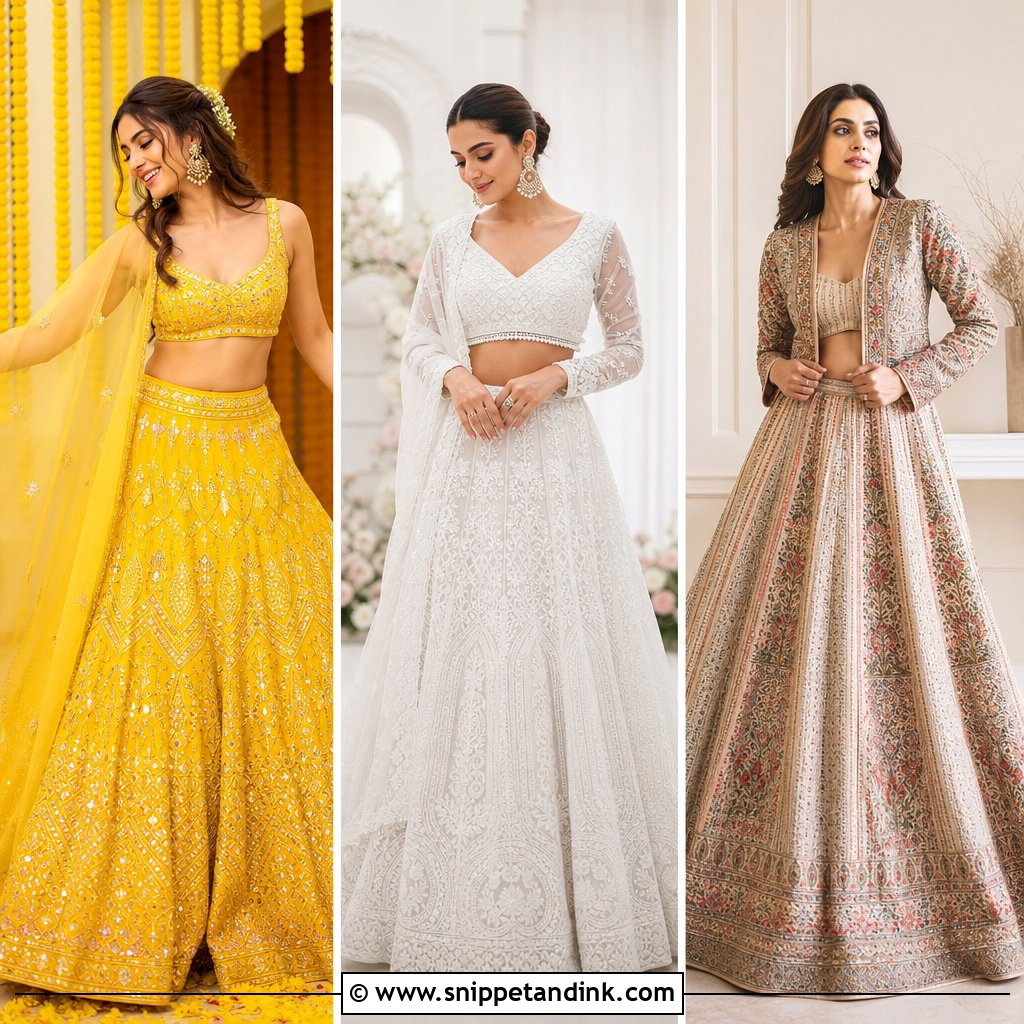
Ivory only works if it has texture. A plain white skirt goes flat in photographs, so I steer brides toward warm ivory with champagne embroidery, pearl work or tone-on-tone thread that catches light. A square-neck structured blouse, a flowing skirt and a sheer dupatta keep the line clean, and pearl, kundan or polki-style pieces soften it. In some families ivory still carries mourning associations for the main ceremony, so ask before choosing it for the pheras. For a reception or engagement it’s an easy yes.
4. Gold Lengha Choli
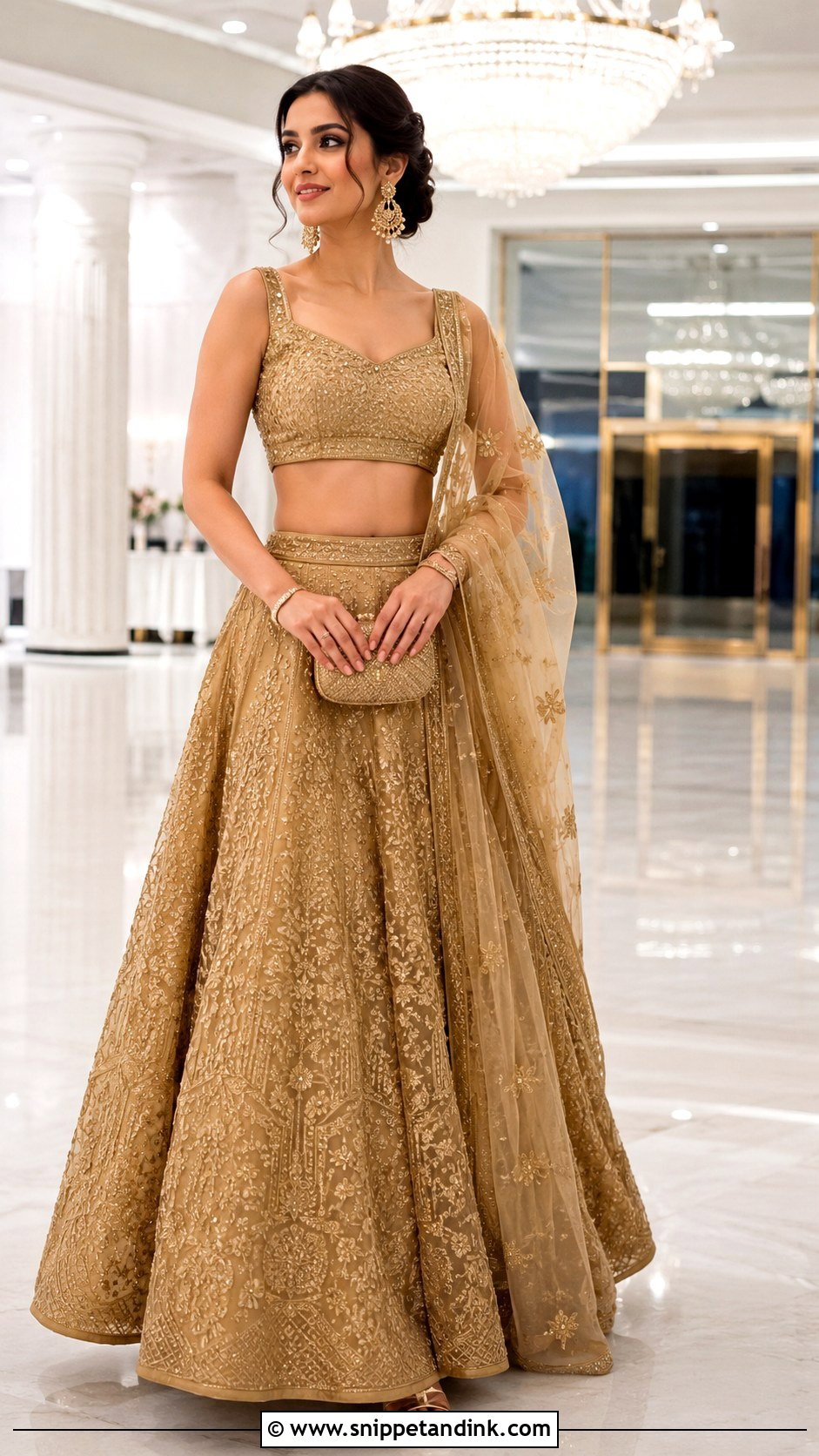
Gold is bright without being loud, which is why I reach for it at evening receptions. Antique gold looks regal under warm lighting; champagne gold is softer and suits cooler skin tones. With a heavily worked skirt I keep the choli sleek and the dupatta sheer, because metallic thread on every layer gets heavy fast and starts scratching the inner arms by the second hour. Gold heels, statement earrings and a compact clutch are plenty. It holds up under strong venue lights better than most pastels.
5. Mirror Work Lengha Choli
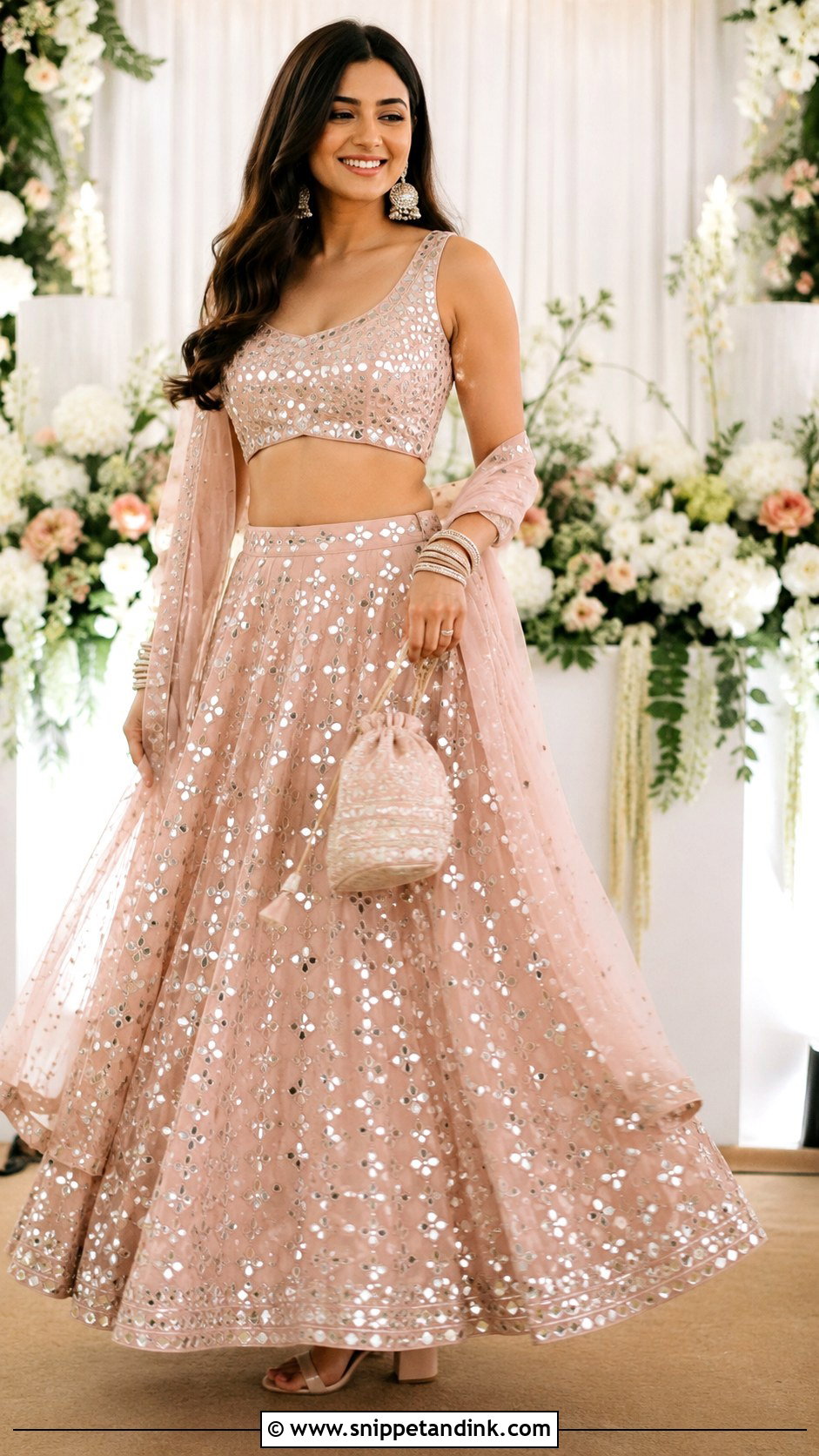
A mirror work lengha choli is my first suggestion for a sangeet or mehndi night, since the glass pieces throw light every time you move. On blush, mint or powder blue, the mirrors look fresher than on the usual hot pink. Keep the choli cropped and plainly cut, with a light dupatta so the mirrors stay the focus. Mirror work is heavier than it looks, and the edges snag net and lace, so I tack the dupatta in place instead of letting it slide across the skirt all evening. Jhumkas, bangles and block heels make it easy to dance in.
6. Velvet Lengha Choli
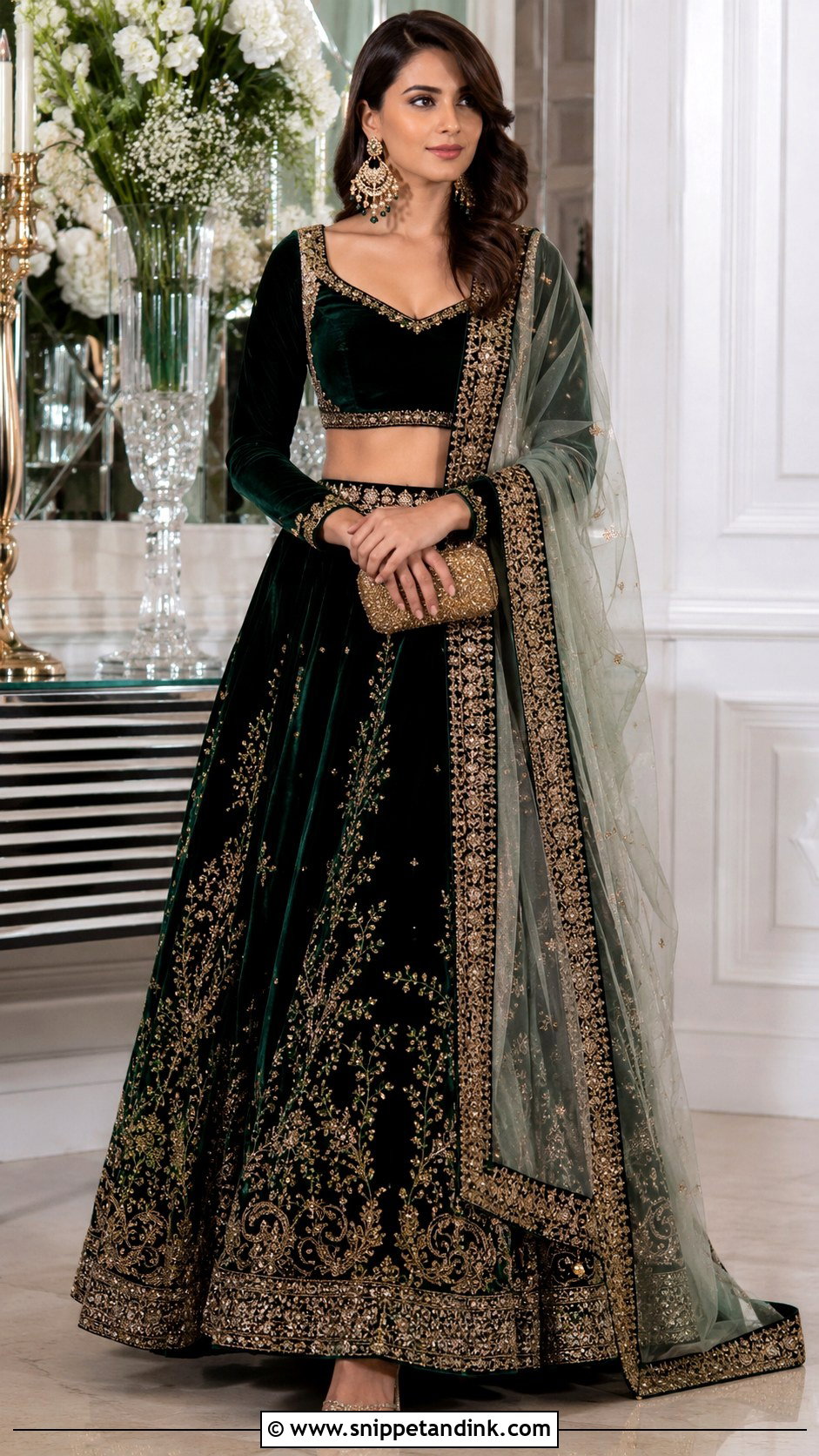
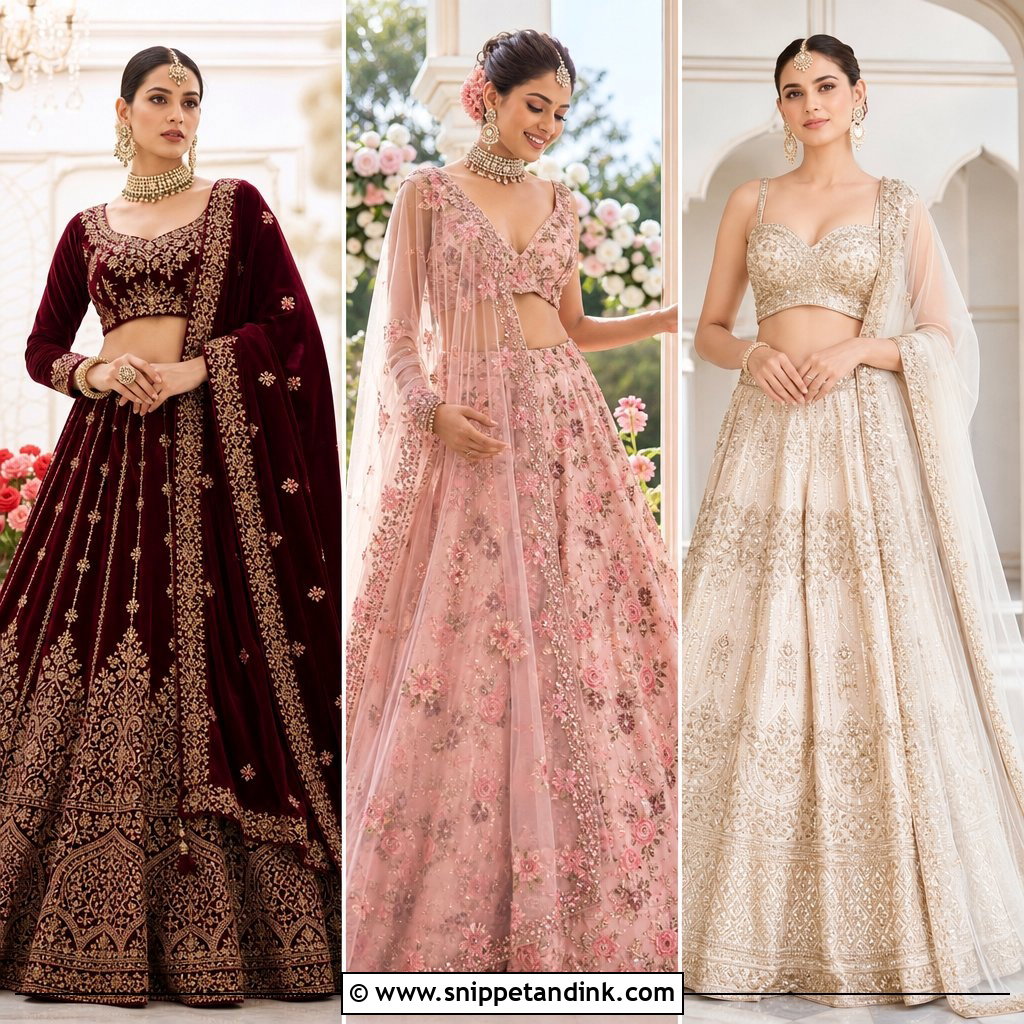
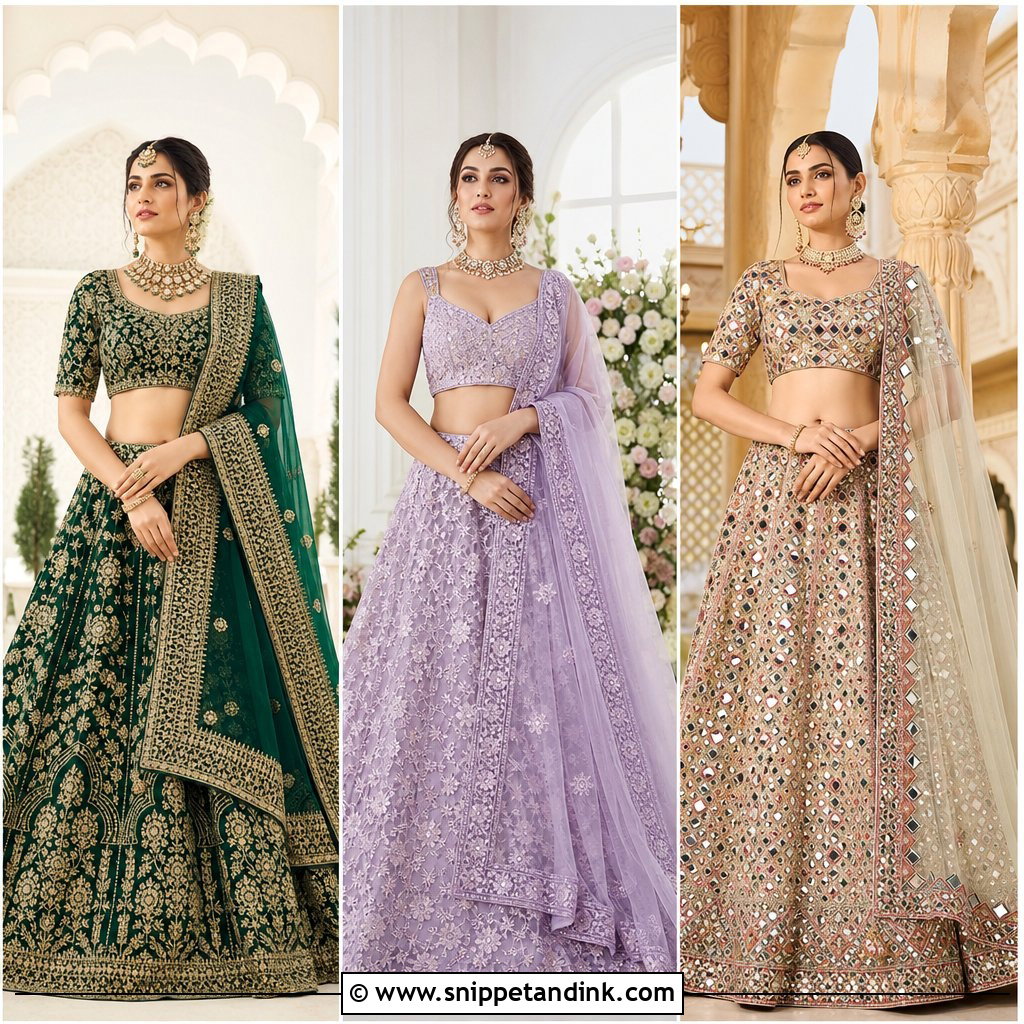
Velvet belongs at winter weddings; in a warm room it becomes uncomfortable within the hour. Maroon, emerald, navy and plum all look regal in it, especially with antique zari on the skirt and a fitted velvet choli to match. I pair it with a net or organza dupatta so the whole outfit doesn’t feel like a coat. Velvet shows every crush mark, so steam it from the inside and never press it flat on an ironing board. Since the fabric already has presence, stop at statement earrings, a sleek bun and embellished heels.
7. Floral Lengha Choli
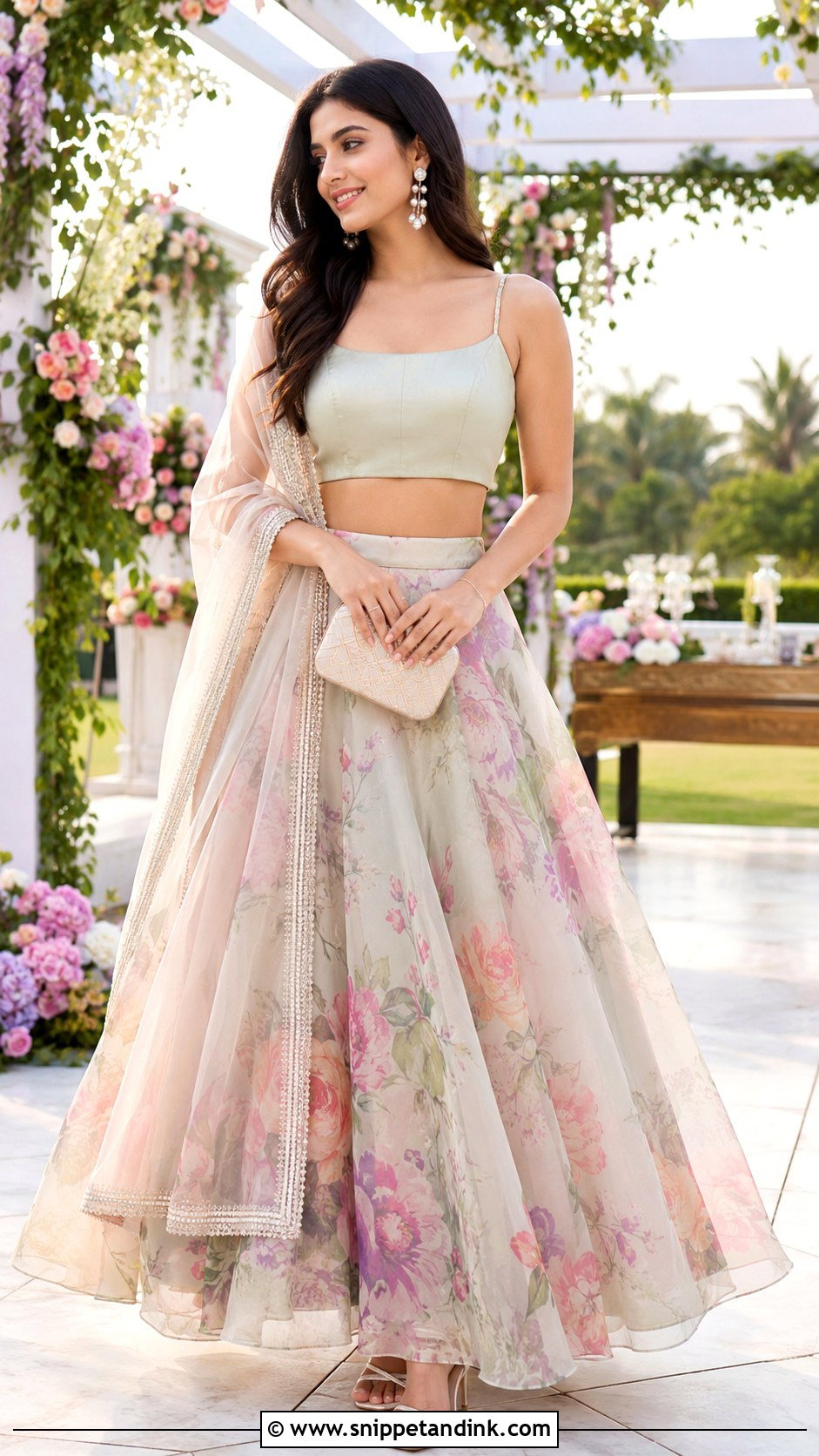
Florals feel right at spring and summer weddings, particularly at garden venues. Printed or embroidered flowers on organza, silk or georgette stay festive without weight. A pastel base with multicolor blooms needs a simple choli and a lightly bordered dupatta, or the print starts competing with itself. Honest note: very busy, small-scale prints turn to visual noise in group photos, so for a bridesmaid line I’d pick larger, well-spaced motifs. Pearl earrings, soft curls and strappy heels suit pre-wedding functions especially.
8. Cape Lengha Choli
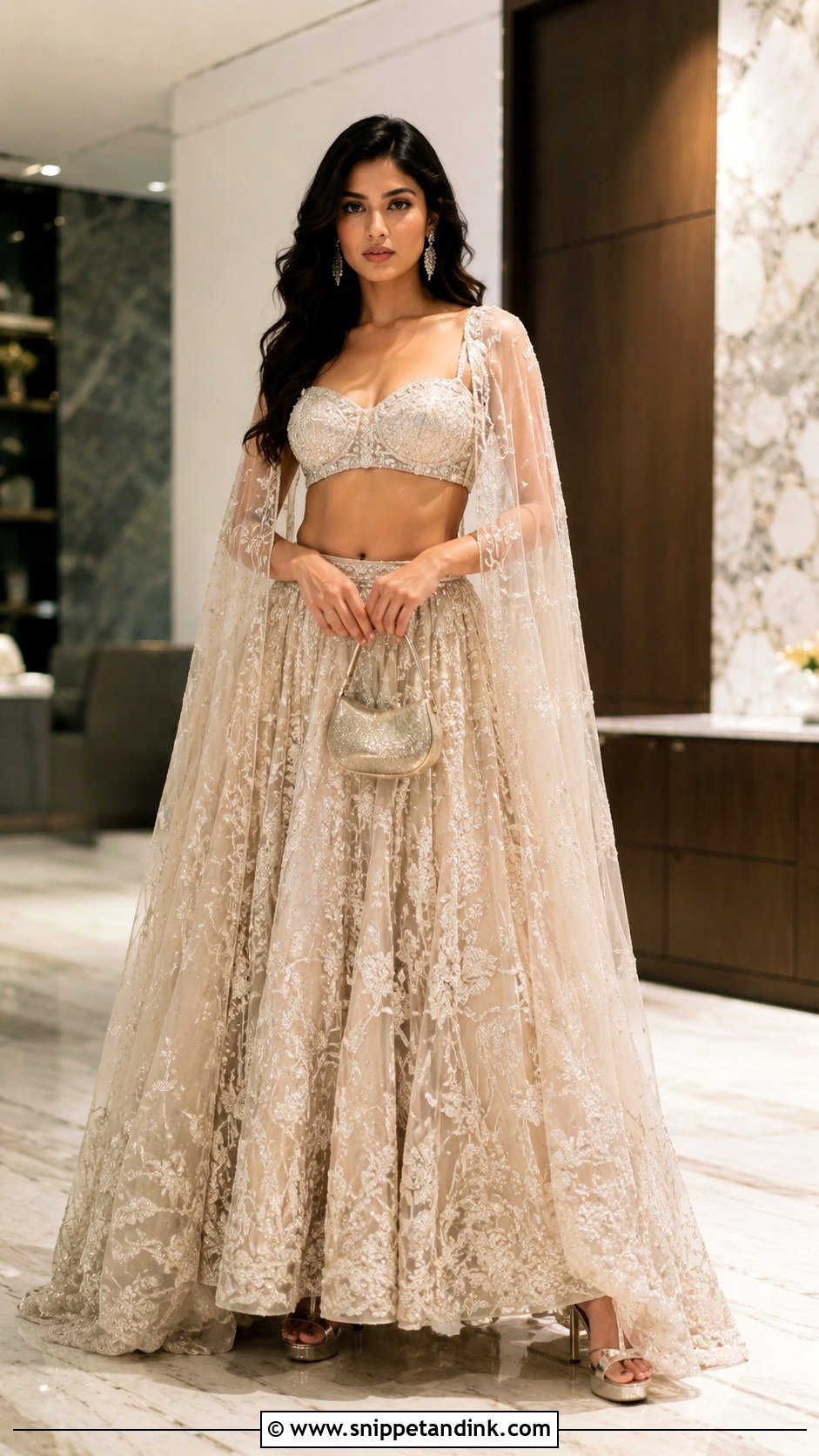
Brides who hate managing a dupatta usually love a cape. Sheer, embroidered, structured or softly draped, it moves when you walk and covers the arms with nothing to pin. I pair it with a fitted choli and a flowing skirt so the silhouette doesn’t widen at both ends, and I balance the work: a dramatic cape over a lighter skirt, or a plain cape over a detailed one. Raise your arms at the fitting. A cape stitched into the shoulder seam can drag the choli up every time you hug someone. Sleek earrings, a polished hairstyle and heels suit receptions and engagement parties.
9. Jacket Lengha Choli
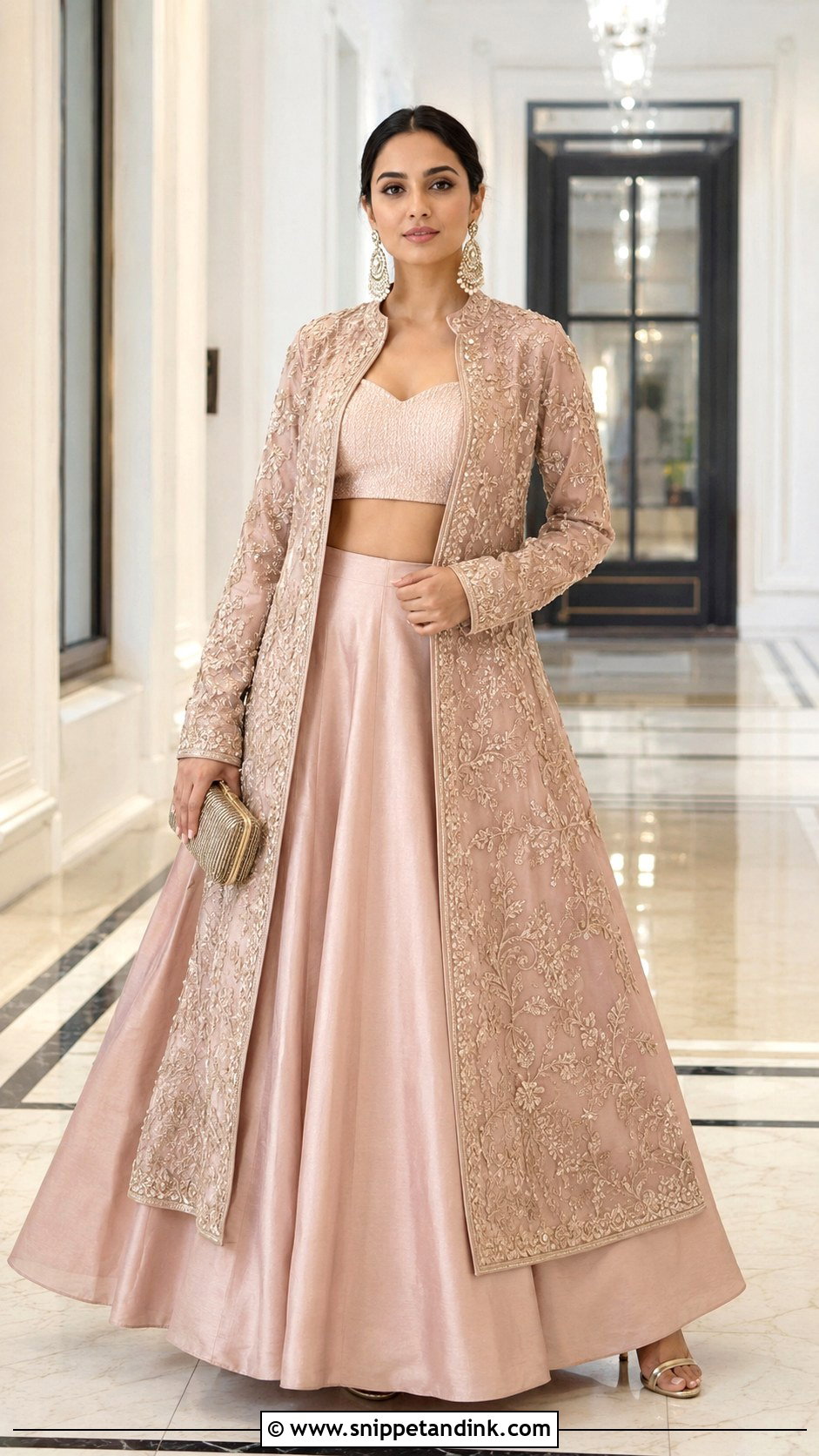
A jacket gives you coverage and a regal line without a heavy dupatta. Long embroidered jackets look formal, cropped structured ones feel current, and sheer ones with borders suit lighter events. Over a simple choli and flared skirt, silk or brocade with metallic work handles the formal functions while organza or net with threadwork covers the daytime ones. A long jacket adds real weight and warmth, though, and I wouldn’t put one on a bride marrying outdoors in summer heat. Statement earrings, a slim clutch and comfortable heels make it as wearable for mothers and sisters as for brides.
10. Corset Lengha Choli
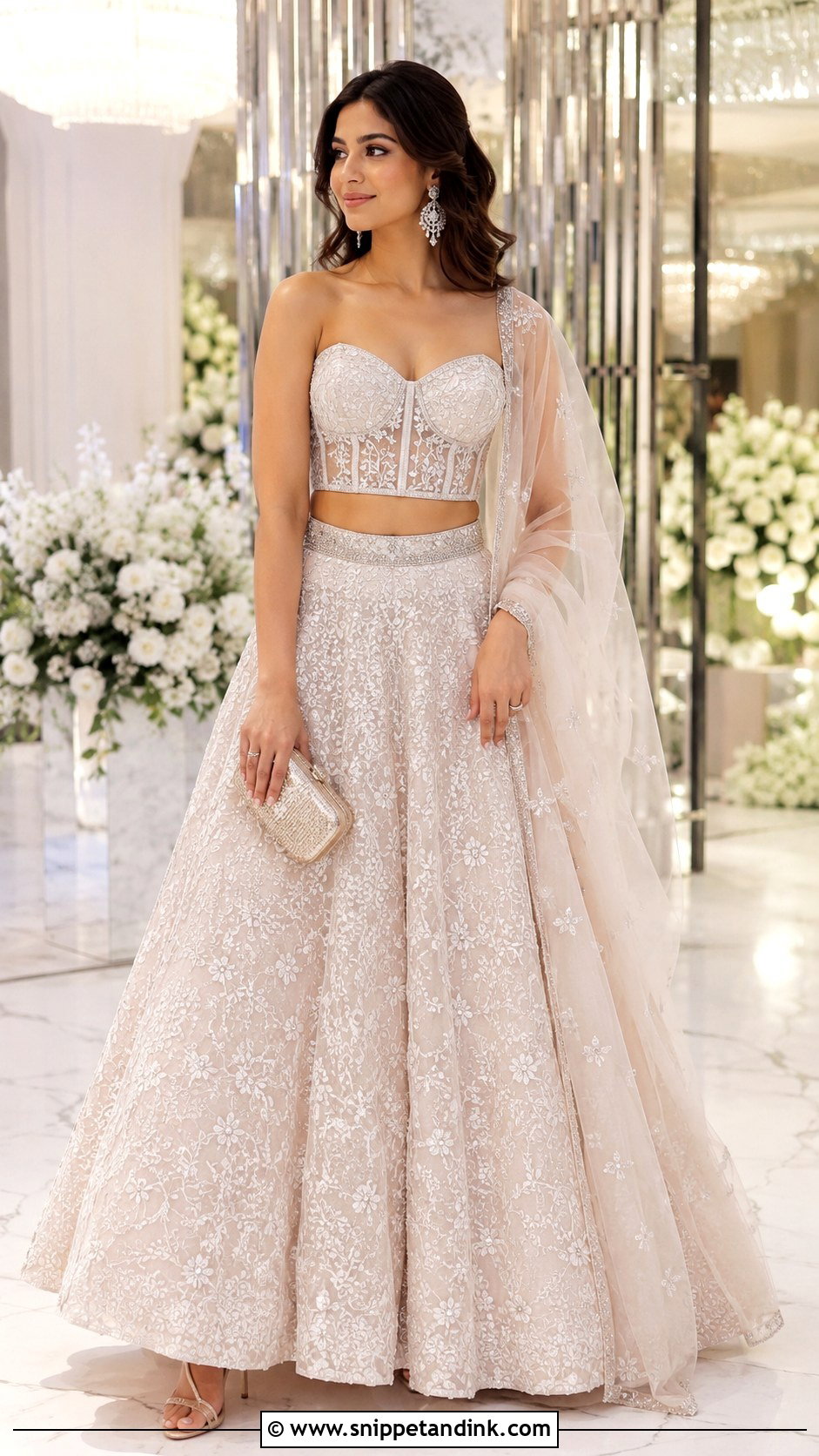
The corset choli is the most modern piece here and the one I fit most carefully. Boning gives shape and support, but if it’s cut too long or too tight you’ll feel it the moment you sit for the pheras, so every bride I fit in one has to sit, bend and eat something in it at the final fitting. A high-waisted skirt continues the line, and a sheer dupatta over one shoulder softens the structure. Modern earrings, a slim bracelet stack and heeled sandals keep it sharp, which is why bridesmaids ask for it too.
11. Organza Lengha Choli
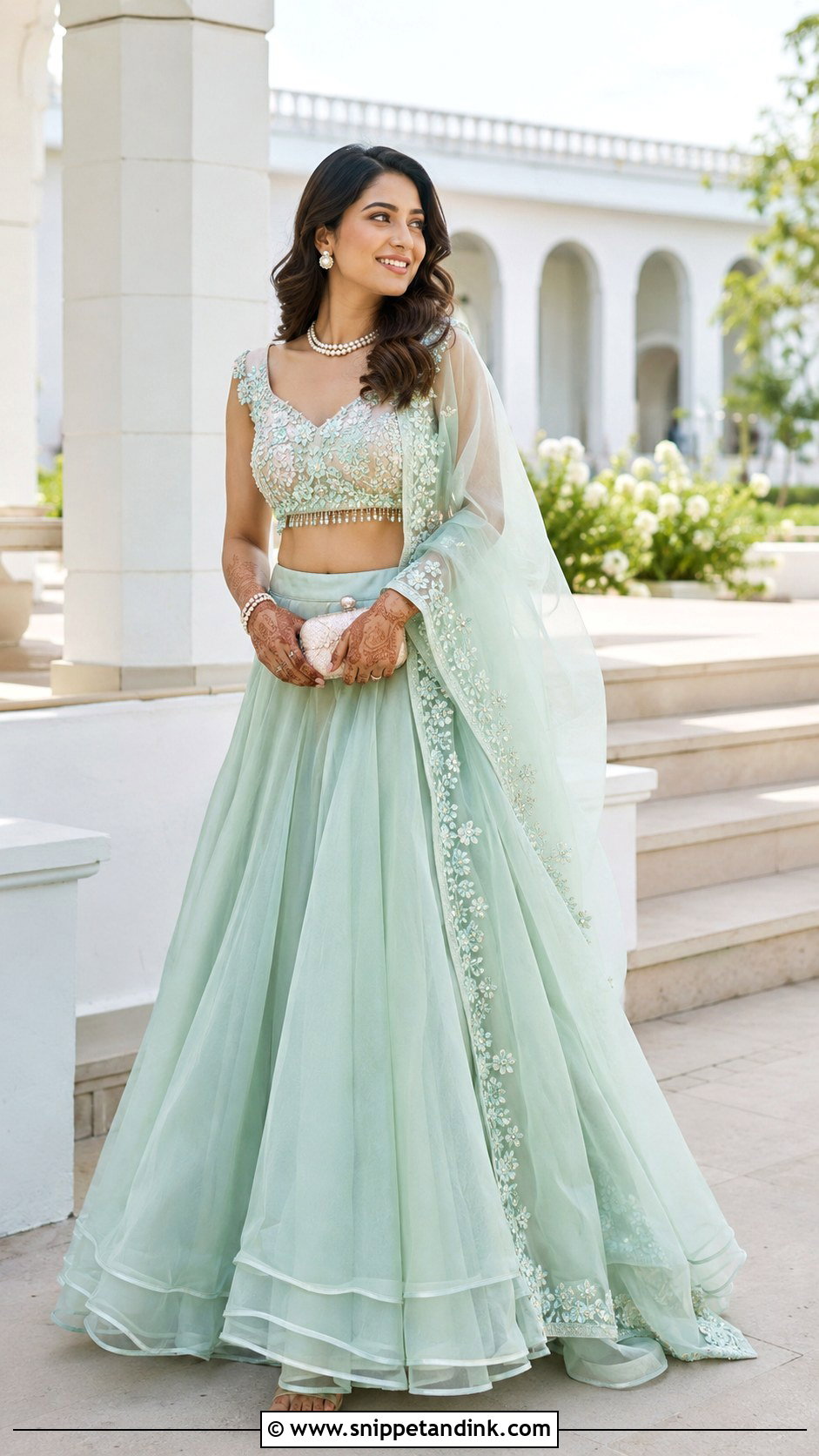
Organza is crisp enough to hold a full skirt without bulk, which makes it my default daytime fabric. Blush, lavender, mint, ivory and peach all suit it. The catch is that organza scratches bare skin and creases at the hip when you sit, so I insist on a proper soft lining and a can-can layer that doesn’t rub. Keep the choli delicate and add a sheer organza dupatta, pearl jewelry and neutral heels for an outdoor ceremony.
12. Sequin Lengha Choli
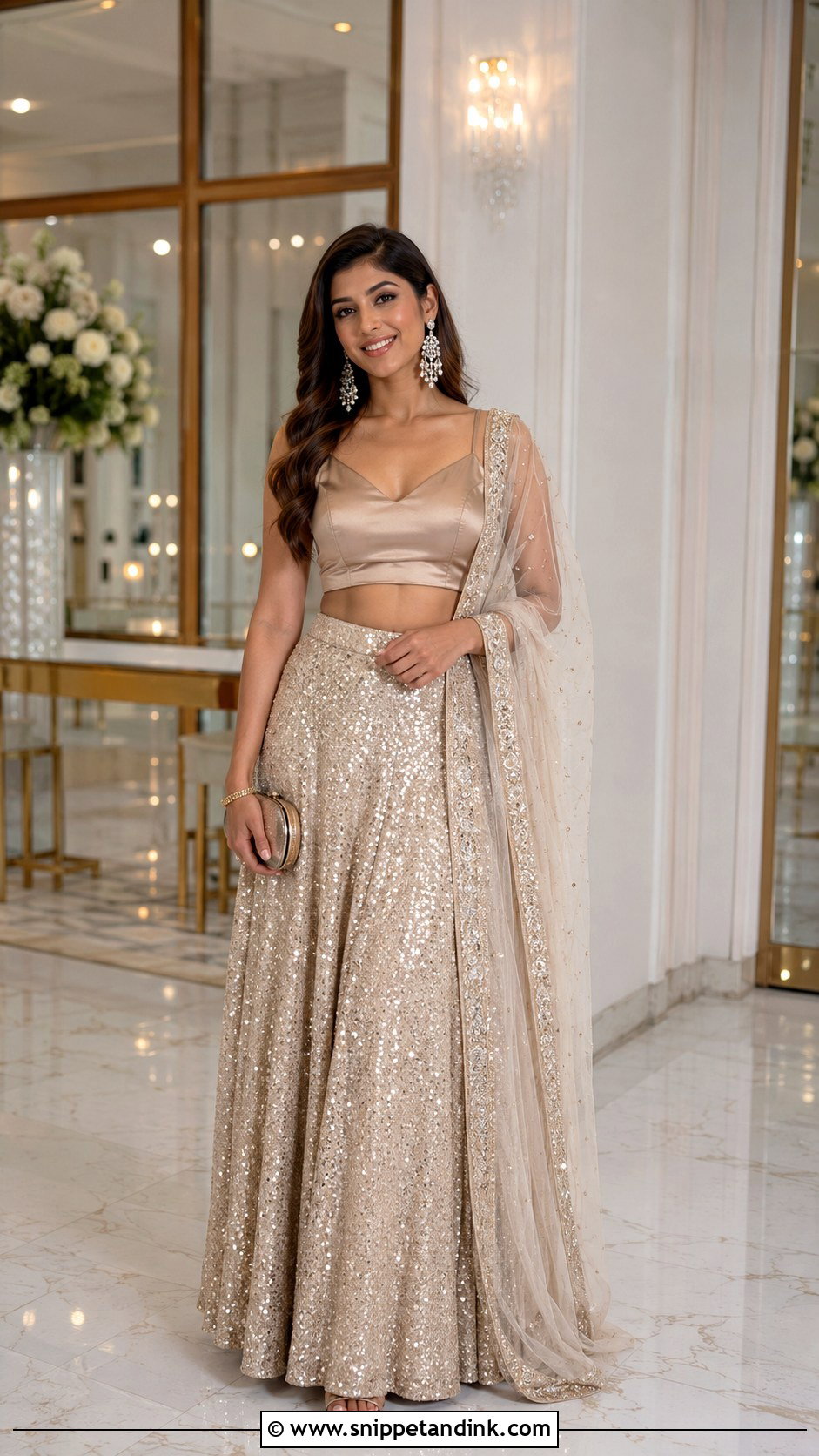
Sequins are for evening, and the current way to wear them is controlled shine. I’d rather see a sequin skirt with a plain satin or crepe choli than embellishment over every inch, though all-over micro sequins in champagne, rose gold or deep teal can carry a reception. Sequins have hard edges, so check the underarm and inner-arm seams; an unlined choli can rub skin raw over a long night of dancing. Keep jewelry quiet since the outfit already reflects light, and add metallic heels with soft waves or a polished bun.
13. Black Lengha Choli
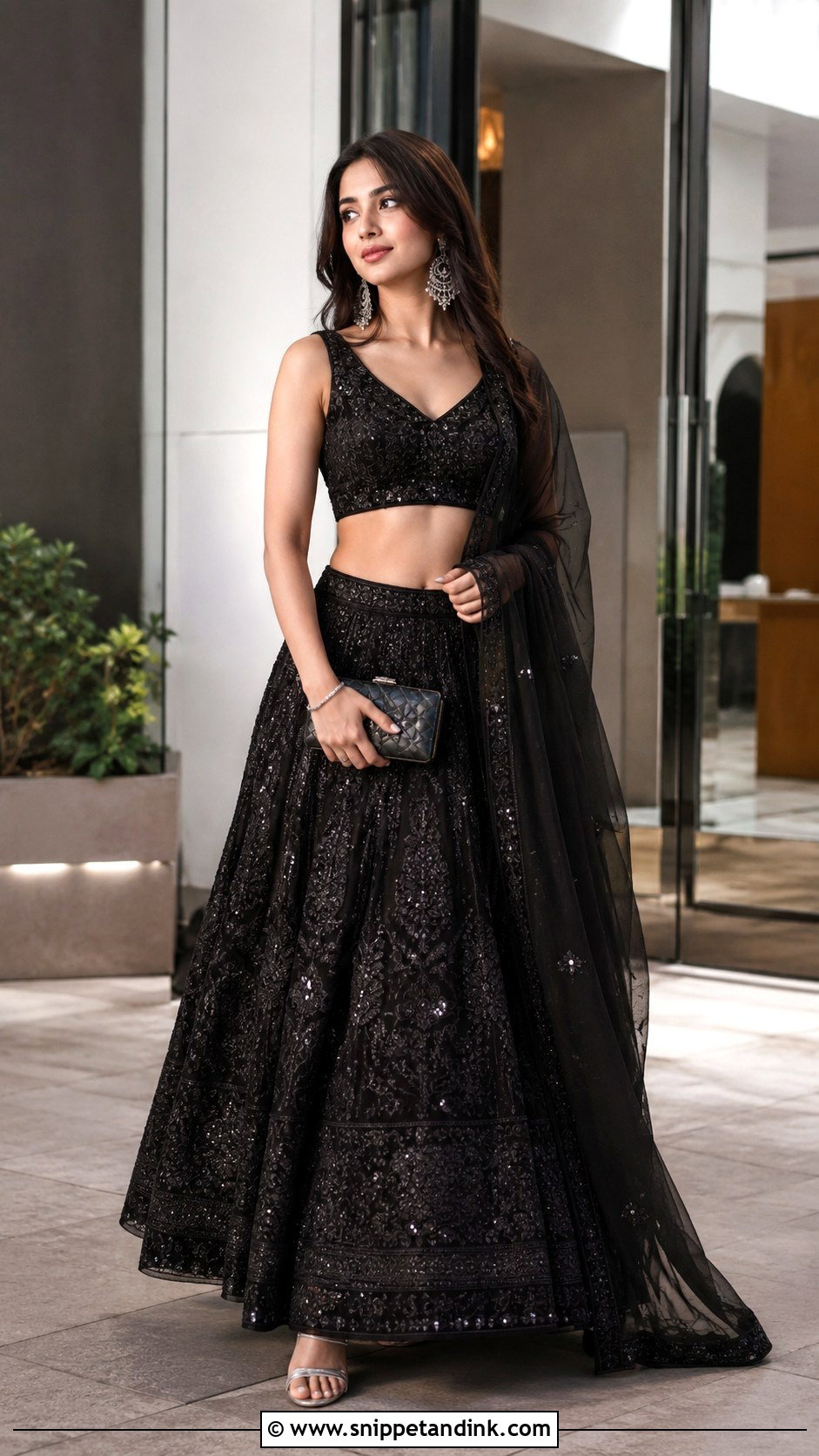
Black looks sleek at a reception, but only where the family welcomes it. Some communities still see it as unlucky at weddings, so ask first. Embroidery, sequins or mirror work keep it festive rather than severe, and gold, silver or multicolor threadwork on a black skirt looks striking with a fitted choli and sheer dupatta. Black also hides less than people expect: lint and dupatta shedding show clearly under flash, which is why a lint roller lives in my kit. Statement earrings, metallic heels, glowing skin and defined eyes balance it.
14. Green Lengha Choli
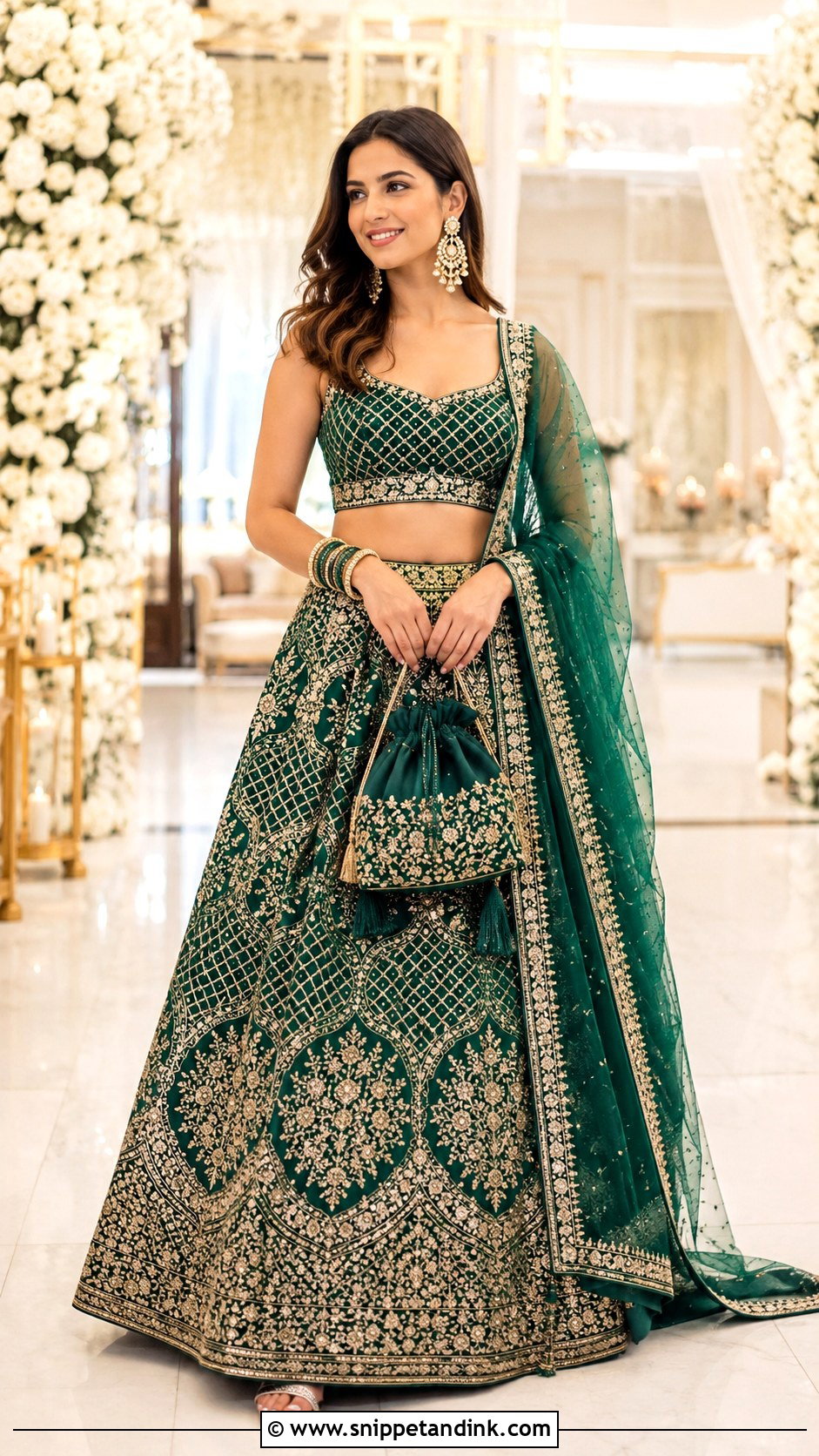
Emerald for evening, sage or mint for daytime: a green lengha choli covers more functions than people expect. Gold embroidery keeps it classic, while silver or pearl work makes it softer. A matching choli is the safe route; a contrast blouse in ivory or champagne looks more current. Green sits well with both warm and cool metals, which is why I suggest it for bridesmaid groups with mixed skin tones. Kundan-style earrings, bangles and embroidered heels finish it.
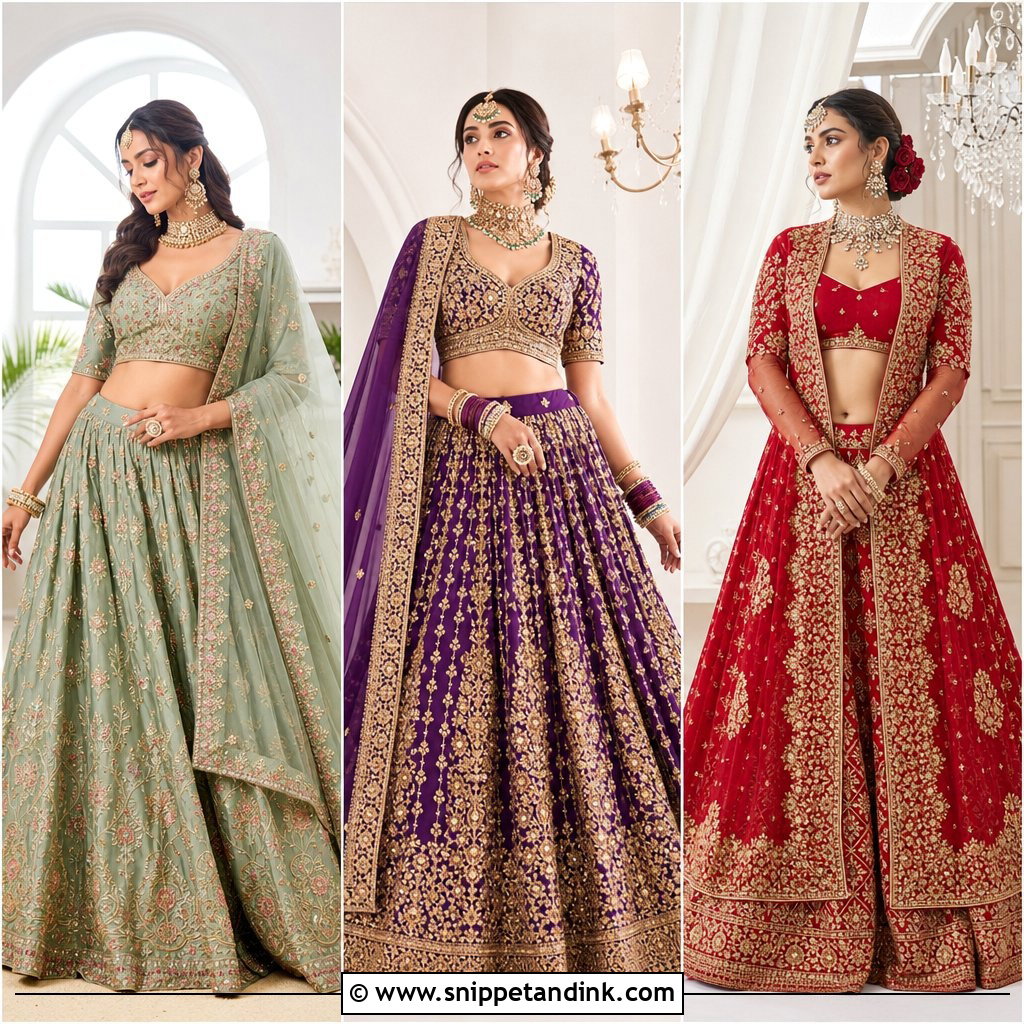

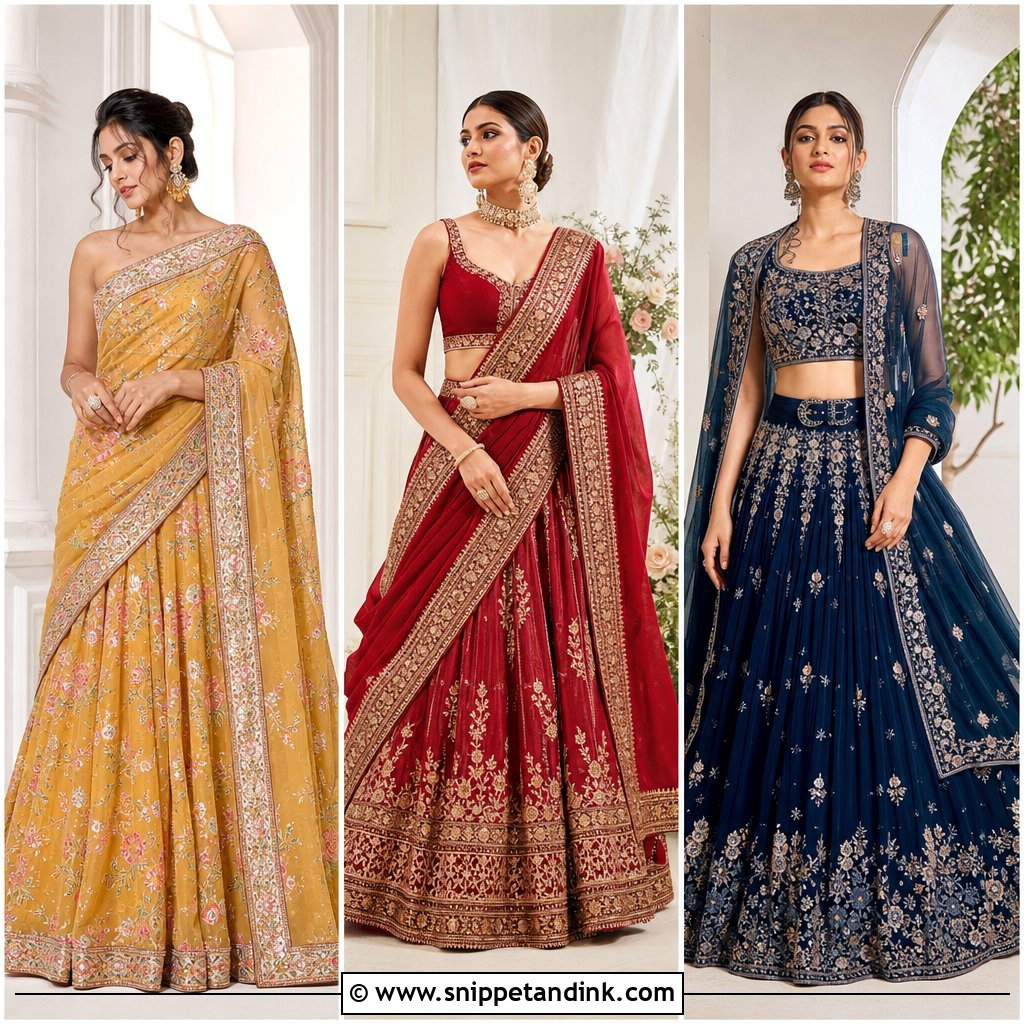
15. Blue Lengha Choli
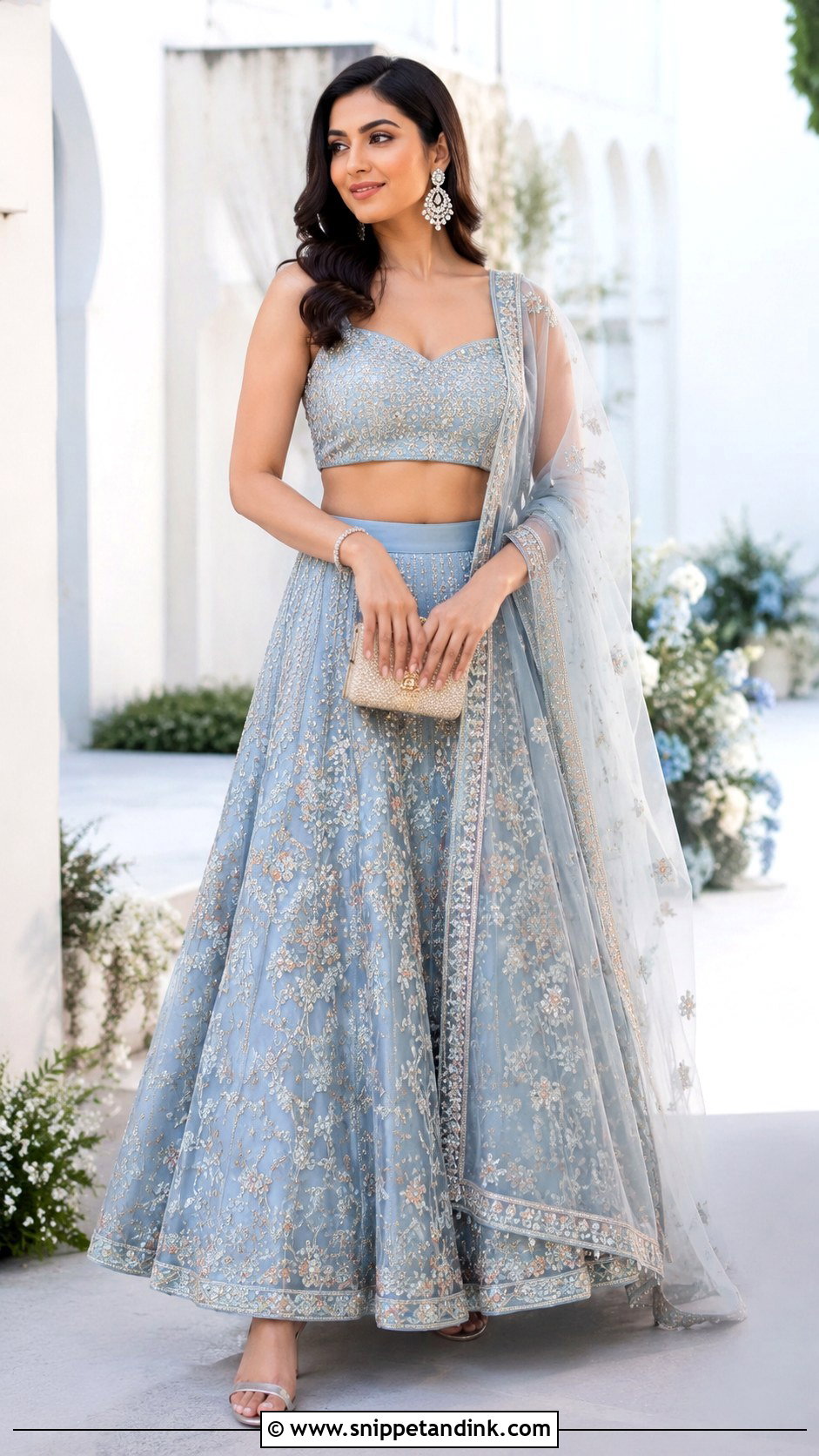
Blue is a welcome break from the red-and-pink default. Powder blue reads soft in daylight; navy and royal blue hold their own at night. Silver embroidery cools it, gold makes it more traditional. My rule for balance is simple: a heavily worked skirt gets a plain blouse, and a minimal skirt gets a beaded choli. Navy can look nearly black in dim reception lighting, so if the color matters to you, see the fabric under the venue’s own lights. Add a sheer dupatta, crystal earrings and metallic sandals.
16. Lavender Lengha Choli
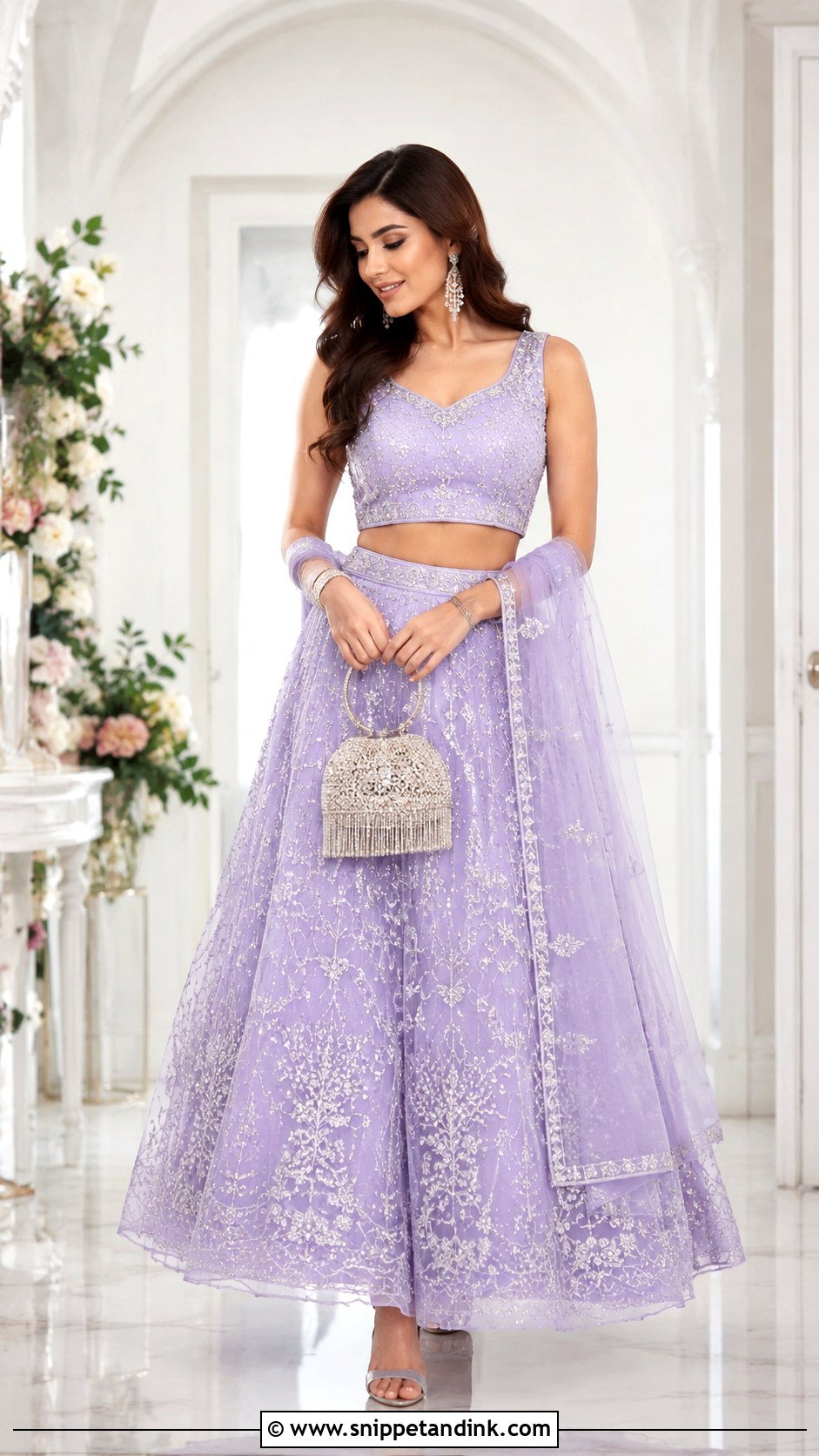
Lavender is the pastel I suggest when a bride is tired of seeing blush pink everywhere. It sits well in net, organza, georgette and tissue, especially with floral threadwork, pearl accents or silver embroidery, and a fitted choli with a light dupatta keeps it airy for daytime functions. Purples shift on camera more than most shades, sometimes going blue or grey, so I photograph the fabric in daylight on my phone before anyone orders. Silver heels, crystal earrings and mauve-toned makeup suit it.
17. Peach Lengha Choli
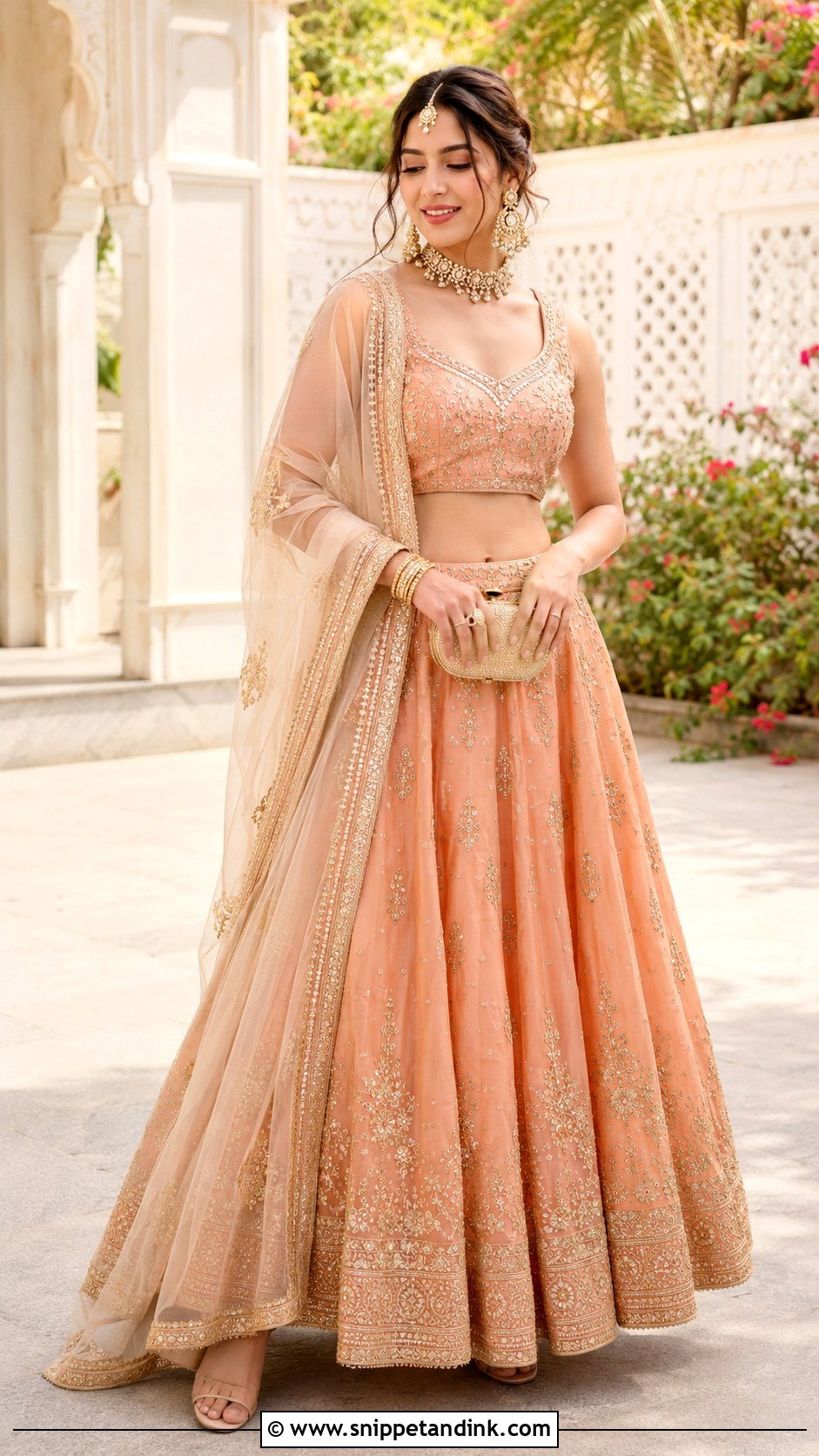
Peach is softer than orange and warmer than blush, and it makes most skin look rested in daylight. I like it in organza or georgette with gold threadwork, mirror accents or fine floral embroidery. A matching choli keeps it calm, while an ivory or champagne dupatta adds contrast. It’s a strong pick for daytime ceremonies and pre-wedding events, though I’d keep it well away from the haldi itself, because turmeric rarely comes out of light silk. Gold jewelry, nude heels and soft makeup suit an outdoor venue.
18. Silver Lengha Choli
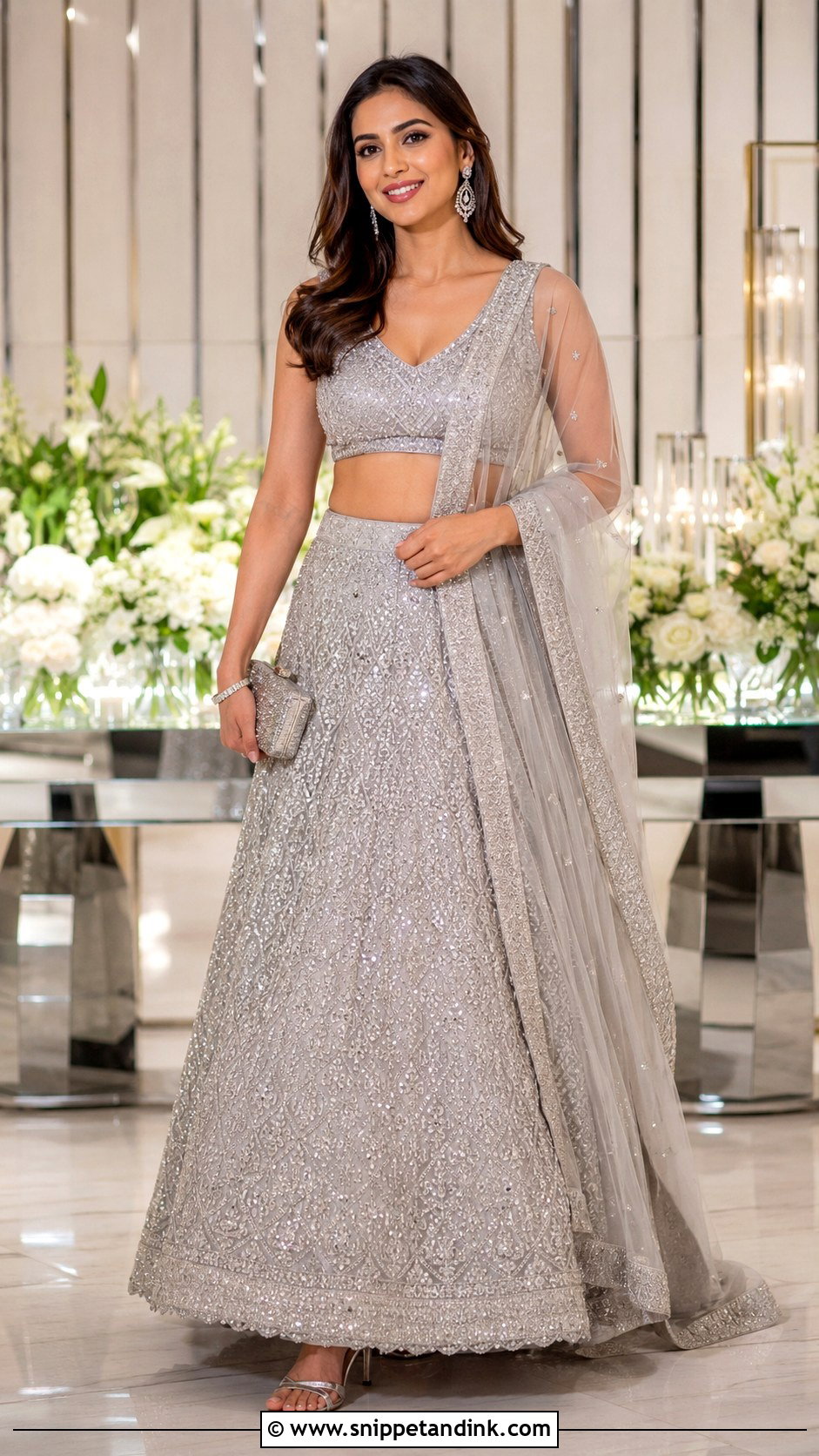
Silver gives a cool, polished finish for receptions and engagement evenings. A skirt with sequins, crystal work or metallic embroidery and a sleek choli keeps it modern, and a sheer dupatta with a fine border softens the shine without hiding it. Silver thread tarnishes faster than gold when stored damp, so anyone buying one should air it properly after the event before packing it away. Crystal earrings, silver heels, glowing skin and soft lips are all it needs.
19. Monochrome Lengha Choli
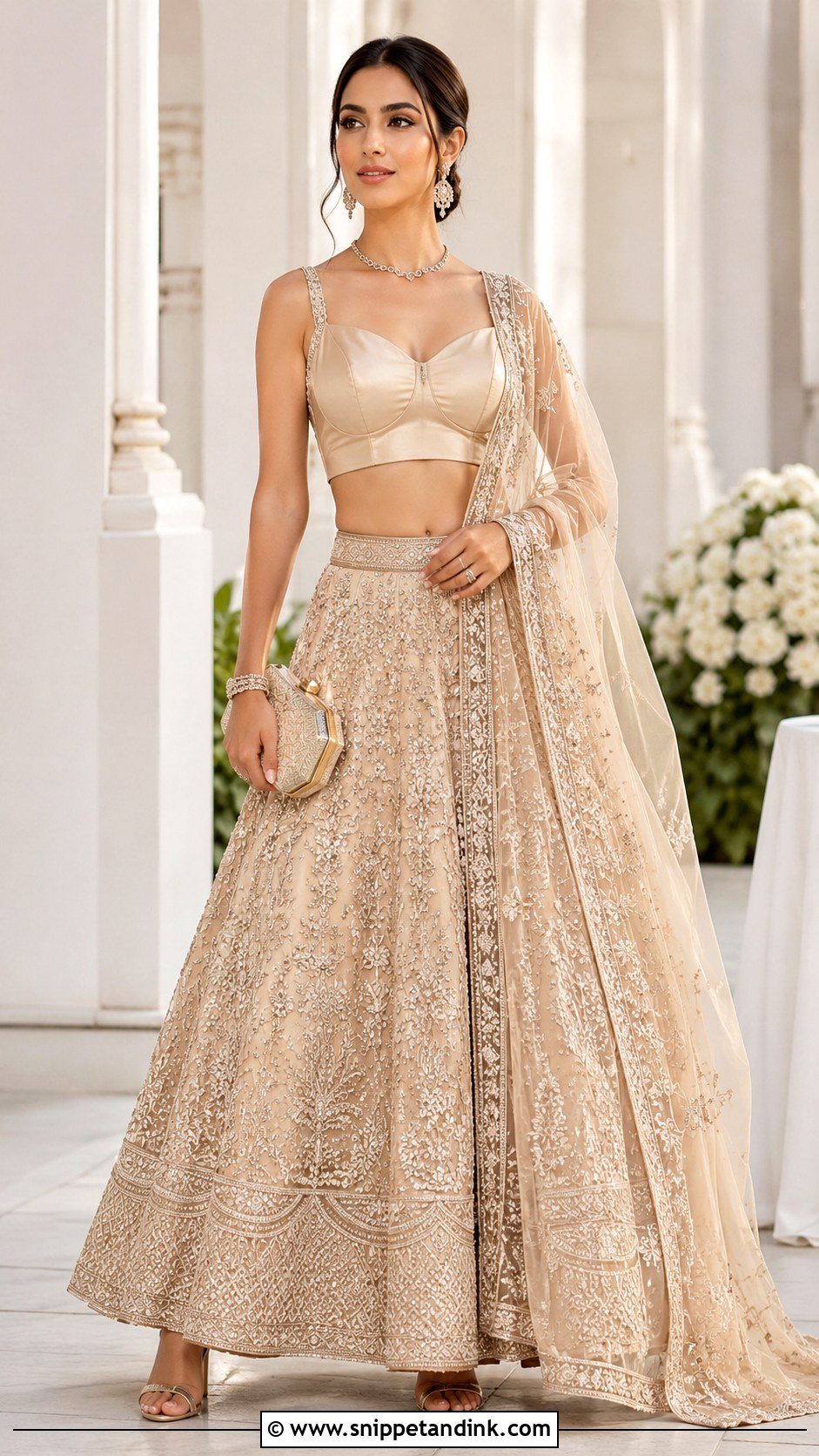
One color family from head to toe looks modern, but only if the textures change. All-ivory in a single flat fabric reads like a uniform; a satin choli with an embroidered skirt, or a net dupatta over a silk base, has depth. Tonal embroidery keeps it refined. I match metals to the color temperature, gold with warm shades and silver with cool ones. For bridesmaid groups it’s one of the calmest choices in large family portraits.


20. Printed Lengha Choli
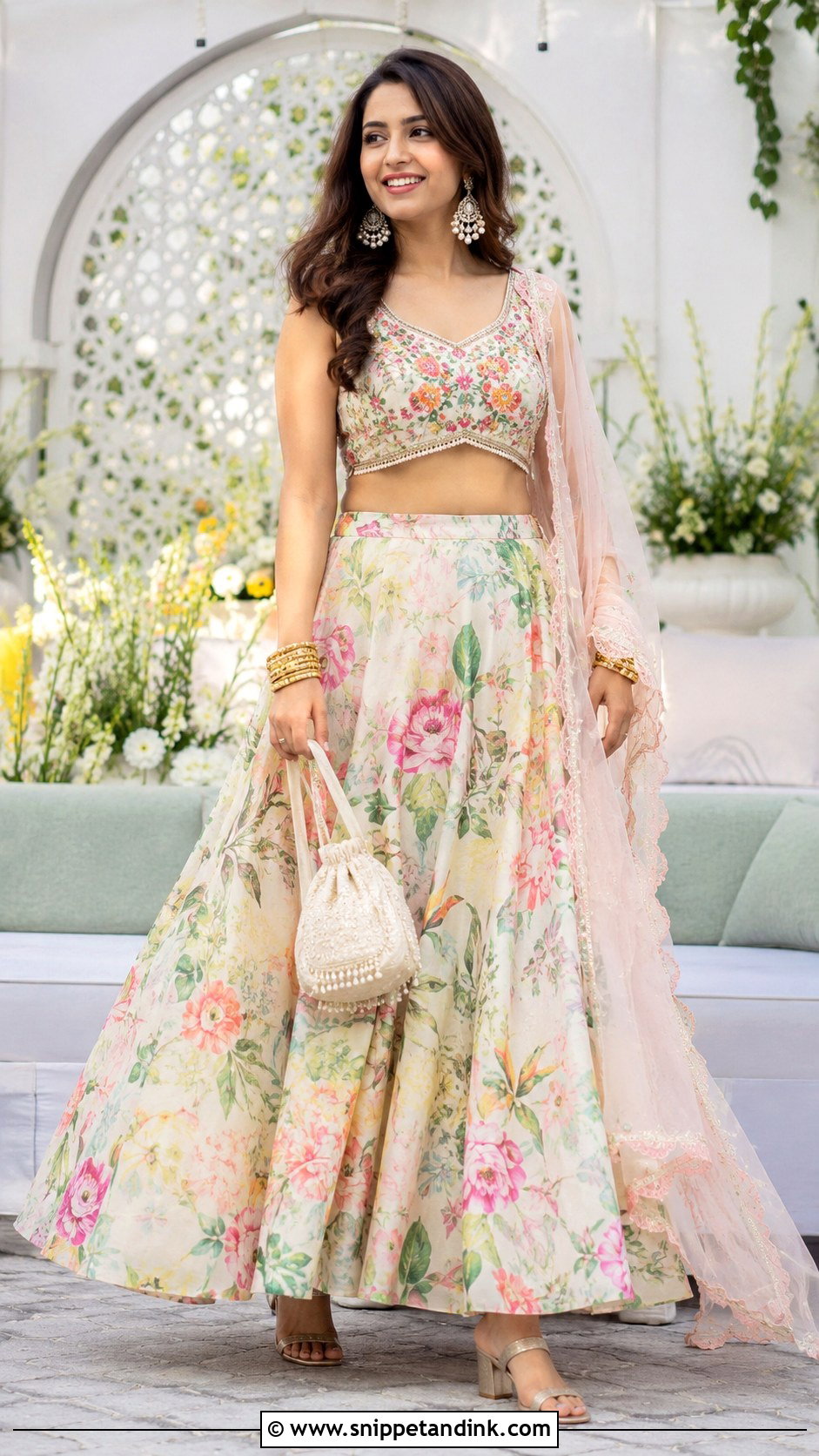
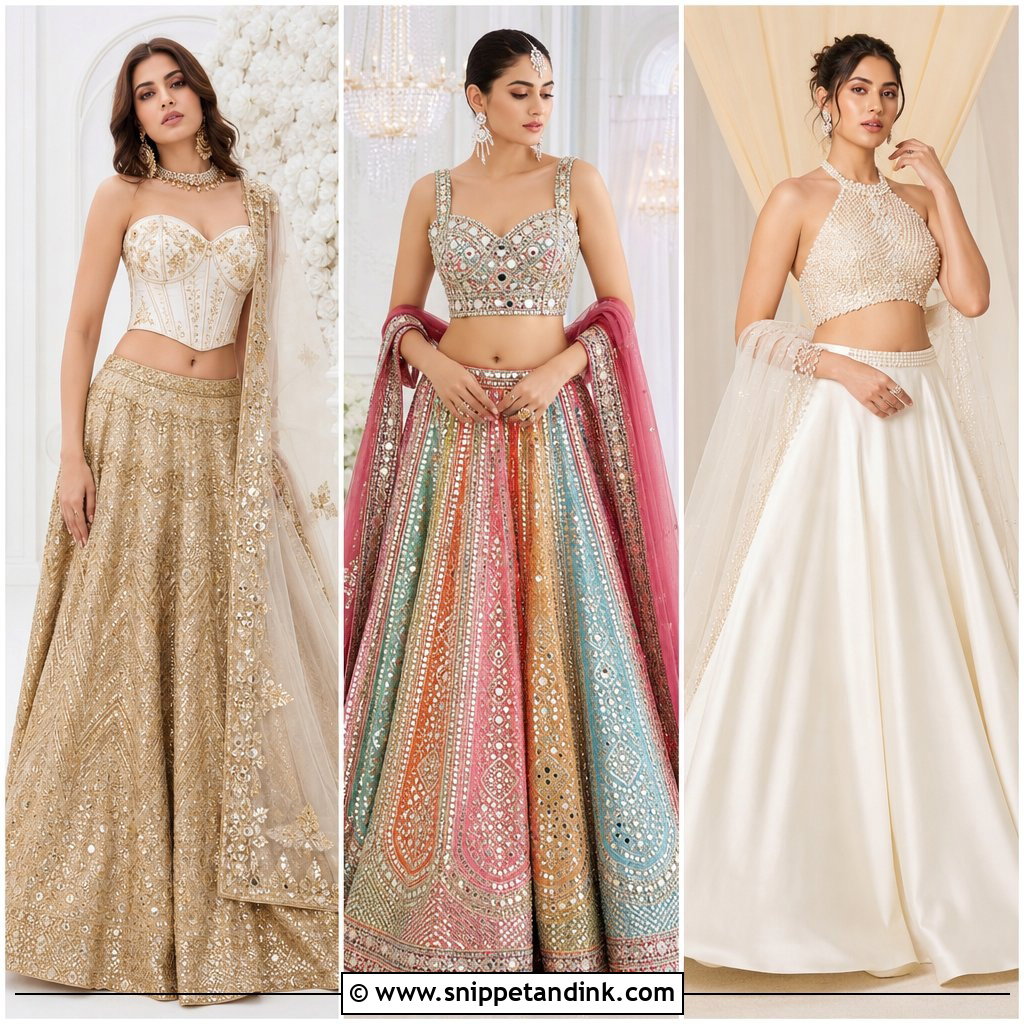
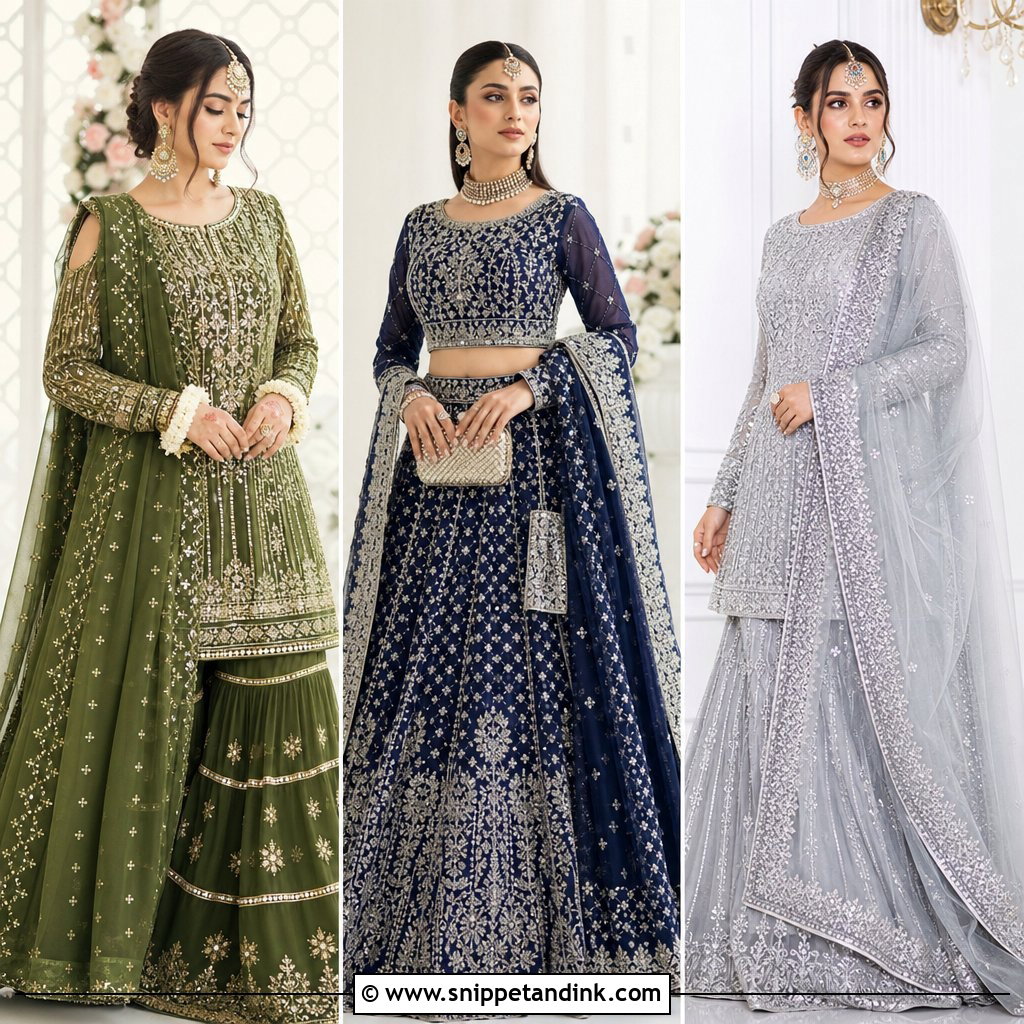
Prints are what I suggest for functions where heavy embroidery would be too much, especially daytime events and destination weddings. Floral, paisley, block-style and abstract prints all work with a festive choli and a light dupatta, and silk, georgette or organza dresses them up. An embroidered border or a scatter of mirrors adds sparkle. A print looks expensive when the fit is sharp and cheap when the pattern doesn’t line up at the side seams, so that is the first thing I inspect. Statement earrings, stacked bangles and block heels keep it easy to move in.
21. Mermaid Lengha Choli
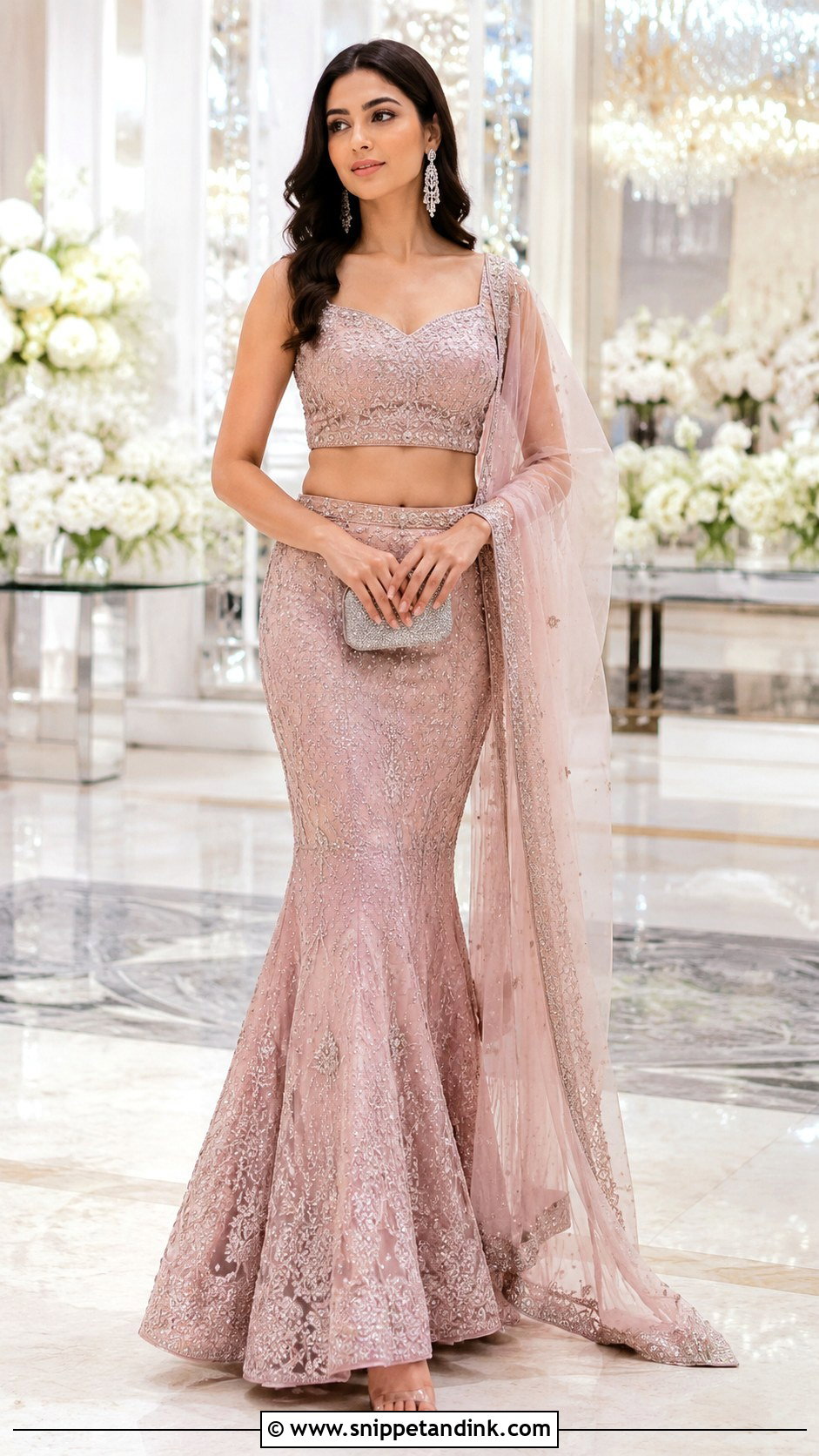
A mermaid skirt hugs through the hip and flares low, so it gives the most shape of anything here and the most restriction. Fabrics with good fall, such as silk blends, crepe or embellished net, let it move instead of stiffening. Embroidery along the hem or waist traces the line, and a structured choli keeps proportions clean. Before you commit, climb stairs and sit on a low chair in it at the fitting; if the flare starts above the knee you’ll be shuffling all night. Heels, sleek earrings and a clutch suit a formal reception.
22. Sharara Lengha Choli
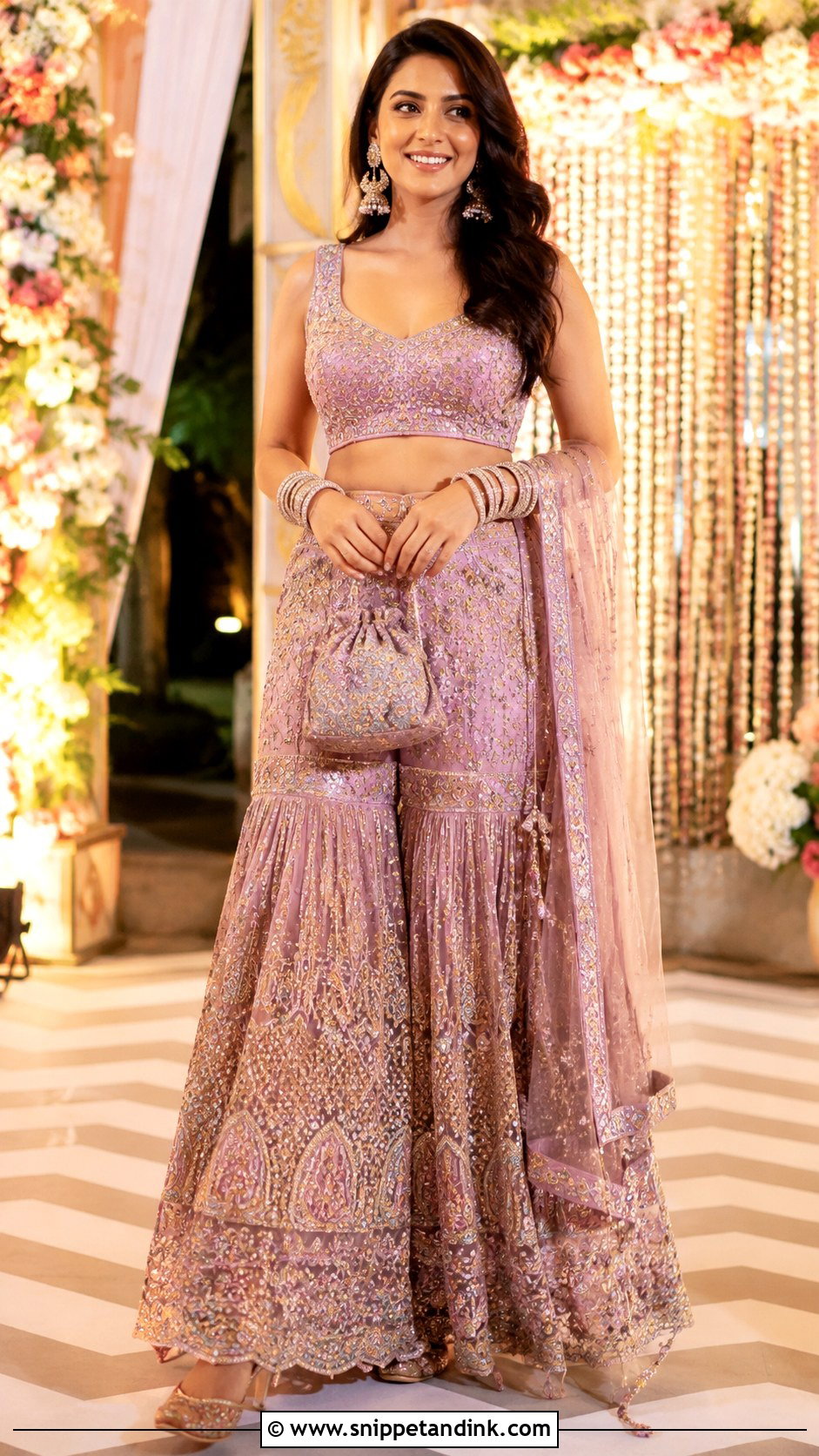
The sharara-inspired lengha choli gives you the shape of a lehenga with the freedom of wide legs, which is why I put dancers and busy sisters in it. A flared sharara with a short choli and a soft dupatta balances well, and embroidery at the hem swings as you walk. Pastels, jewel tones and metallics all suit it. Set the length with the actual shoes on, since a sharara hem that’s even slightly long gets stepped on far more often than a skirt. Juttis or block heels and a potli bag complete it.
23. Banarasi Lengha Choli
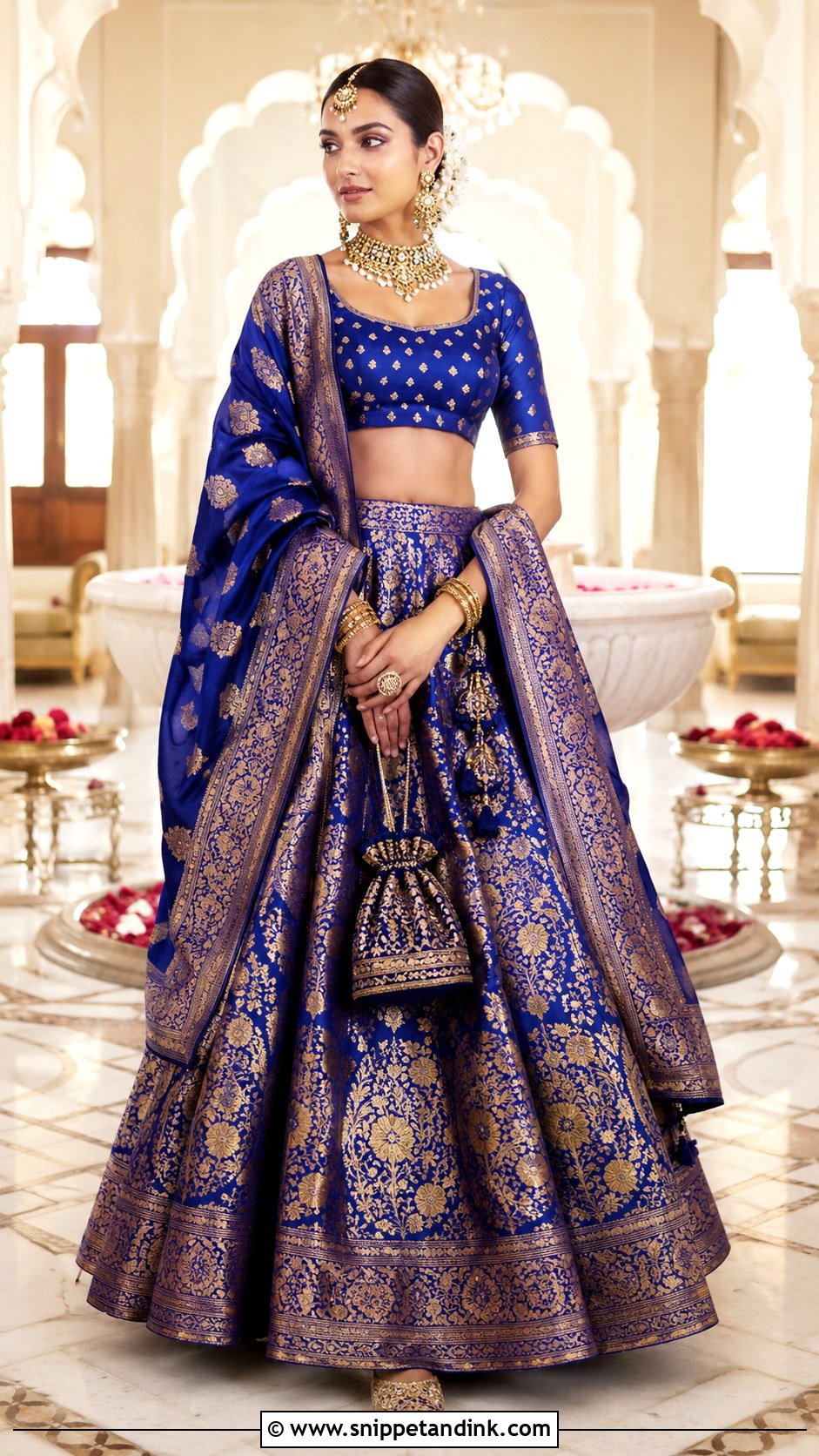
Woven brocade carries the outfit, so a Banarasi lengha choli rarely needs extra embroidery. Red, emerald, royal blue, magenta and antique gold all suit the weave. Let the skirt lead, with a simple fitted choli and a silk or organza dupatta. Real Banarasi silk is stiffer and heavier than it looks, so the waistband needs firm hooks or a strong drawstring to stop it dropping when you sit. Traditional jewelry, embroidered heels and a neat hairstyle are enough; with a clean cut, the fabric stays the point.
24. Minimal Lengha Choli
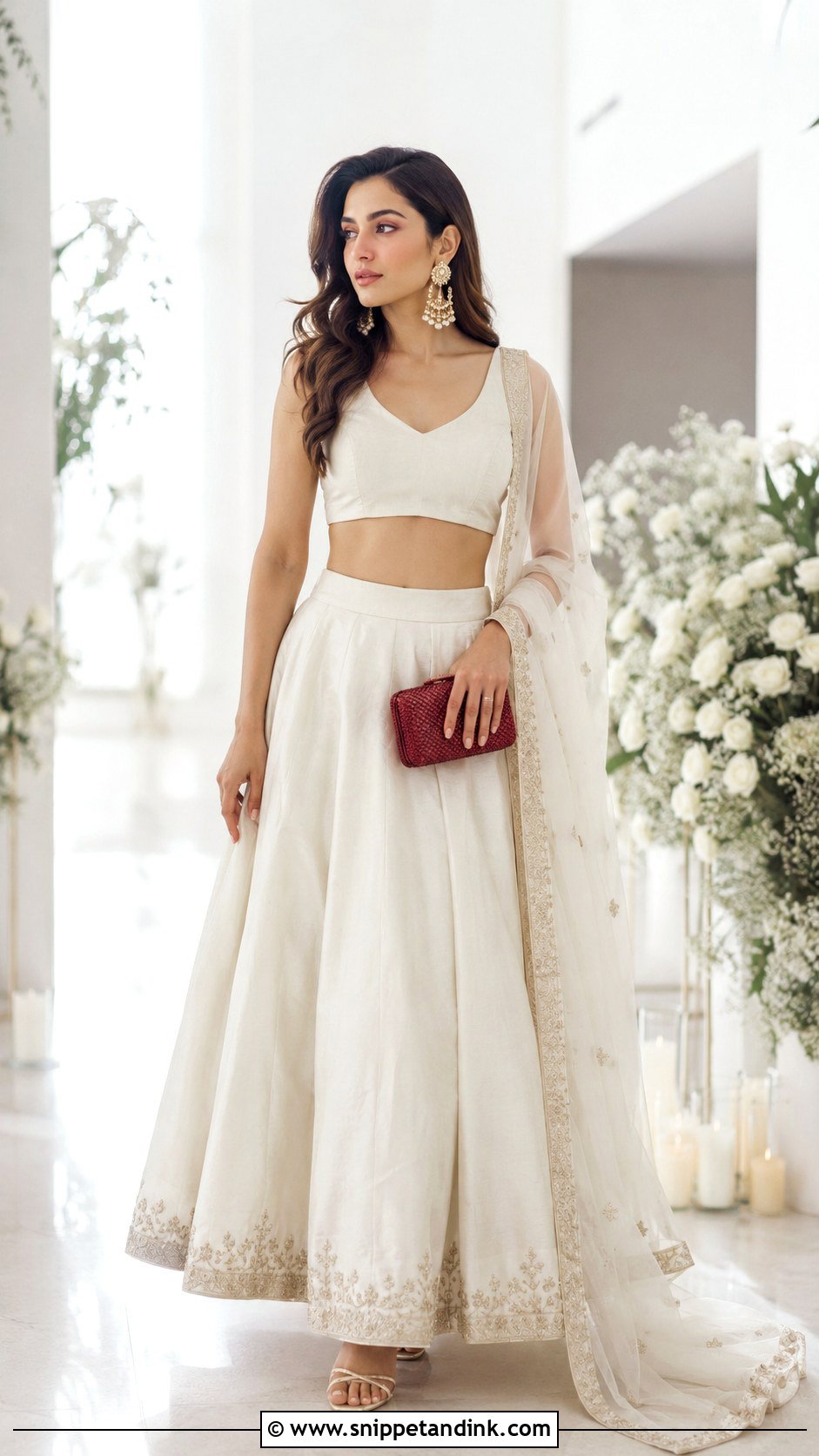
Minimal is harder to get right than heavy, because there’s nothing to hide behind. Pick a solid skirt in silk, satin, crepe or organza with small work at the border or waist, and put the interest in the choli instead: a neckline, a sleeve shape or a back detail. Wear one strong accessory, not three. With so little ornament, a puckered seam or a dupatta that won’t sit flat shows immediately, so this is the outfit where I’d spend the budget on tailoring. It suits intimate ceremonies and modern receptions.


25. Indo Western Lengha Choli
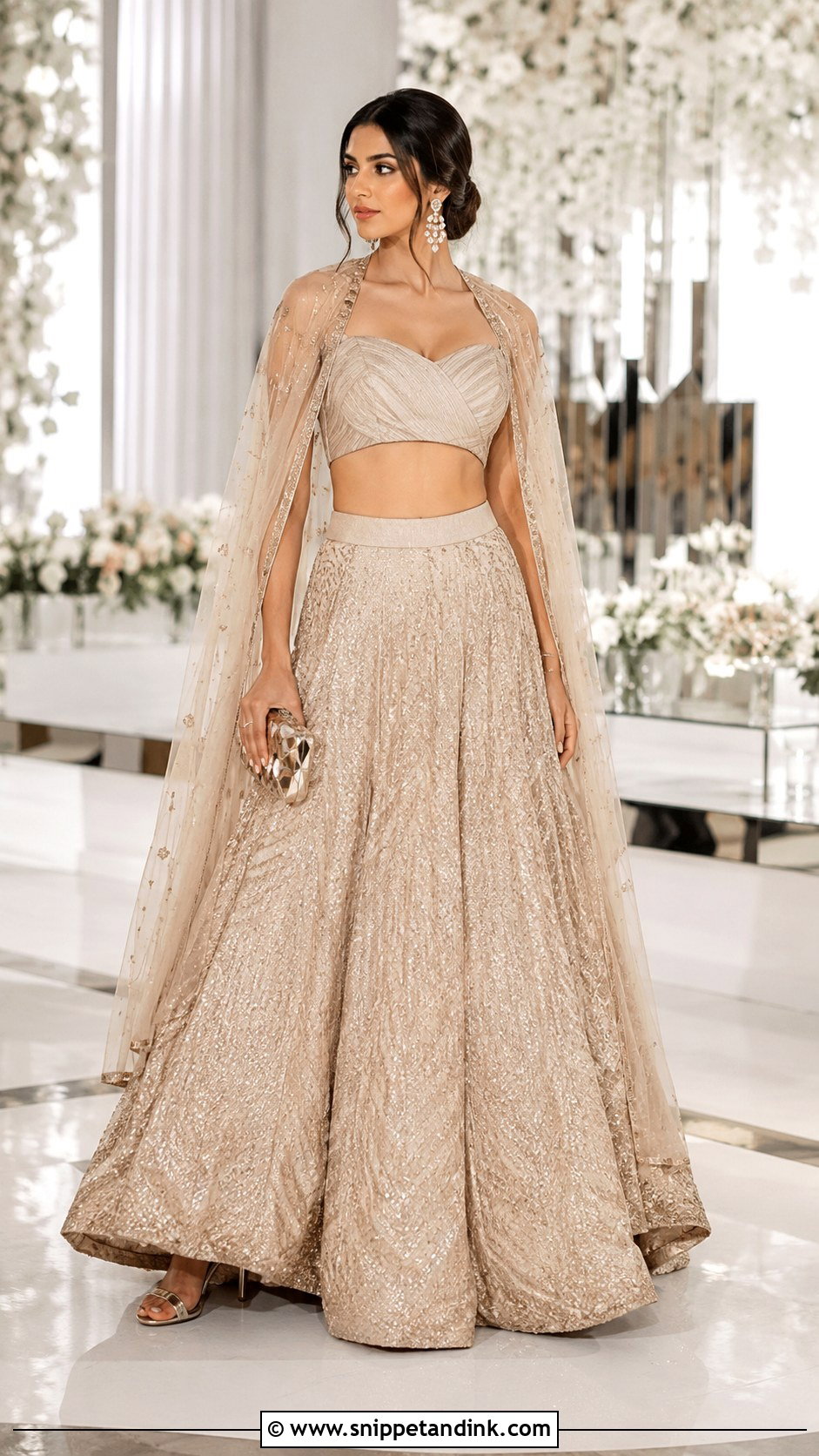
An Indo western lengha choli keeps the lehenga skirt and changes the top: a crop top, cape blouse, peplum, jacket or draped dupatta detail. Metallic fabric, an asymmetric hem or a structured blouse can carry the modern side. Keep the palette refined, ivory with gold, blush with silver, or a deep emerald or navy. The mistake I see most is stacking three trendy elements at once, so pick one statement and keep everything else clean. Modern earrings, a slim bag and comfortable heels suit receptions and engagements.
The Skirt Weight Nobody Warns You About
A heavily embroidered bridal lehenga can weigh several kilos, and nearly all of it hangs from the waistband. Brides who felt fine in a ten-minute trial are often aching by the end of a long ceremony. These small decisions make a real difference:
- A broad, padded waistband spreads the load far better than a thin drawstring.
- Can-can net gives volume, but several stiff layers add heat; for a daytime function, one soft layer plus lining is usually enough.
- Pin the dupatta to the choli at two or three hidden points under the border so its weight isn’t dragging at your neck.
- Plan a change. Plenty of brides wear the heaviest piece for the ceremony and switch to something lighter for dinner and dancing.
Wrapping It in Muslin Once the Last Function Ends
Zari and metallic thread tarnish when they meet moisture, perfume and plastic. After the wedding, let the outfit air for a day on a padded hanger out of direct sun, then take it to a dry cleaner who handles embroidered bridal wear. Don’t wash any part of it at home.
Fold it with acid-free tissue between the embroidered layers, wrap it in soft cotton muslin and store it flat rather than hanging, since the skirt’s weight will stretch the waistband over months. Refold along different lines every few months so the embroidery doesn’t crack along one permanent crease. And spray perfume on your skin before you dress, never on the fabric.
Matching the Lengha to the Function, Not the Trend
Red and Banarasi still carry the ceremony for most families, while organza, corset blouses, capes, sequins and pastels are where the modern pieces come in. Velvet, gold and mermaid shapes suit brides who like drama; lavender, peach, ivory and florals suit softer tastes. Start with the function, the venue and the season, then put your effort into fabric quality, secure tailoring and the ability to move. A well-fitted lengha you can dance in will always photograph better than a heavier one you’re fighting all night.
You'll Like These Ideas:






Leave a Reply