
In most bridal portraits the blouse fills more of the frame than the skirt does. It frames the face, carries the weight of the necklace and sets the proportion between lehenga and dupatta, which is why I spend more fitting time on it than on anything else in the outfit. Zardozi, velvet, corset shapes, sculpted and sheer necklines, longline cuts: all of them can look right, and all of them can fail on the day if the fit is loose or the sleeves don’t move. Statement necklines, detailed sleeves and corset-inspired shapes are popular with brides right now, alongside fine hand embroidery. Below are twenty blouse styles, each styled from head to toe, with the fit checks I’d make before approving any of them.
The Measurements Your Blouse Tailor Needs From You
Most blouse problems start with a rushed measuring session. A bridal blouse is close-fitted and often heavily worked, so there’s little room to let it out later. I go to measurements prepared, and I’d suggest you do the same.
- Wear the bra you’ll wear on the day, or decide now that the blouse will have built-in cups. Measurements taken over a different bra will be wrong.
- Bust, underbust and waist, plus the length from shoulder to the point where you want the blouse to end.
- Shoulder width and armhole round, taken with your arms relaxed, not lifted.
- Front and back neck depth. Bring a photo of the neckline you want and show the depth on your own body with a finger, not in centimetres from memory.
- Upper arm, elbow and wrist rounds if your sleeves are fitted, measured with the arm slightly bent.
Bring a photo of your bridal necklace too. A choker, a long rani haar and a collar each need a different neckline depth, and the tailor can only plan for what she knows about. If time allows, ask for a trial fitting in plain fabric before the embroidered piece is cut. It costs a few extra days and saves a ruined blouse.
1. Red Zardozi Bridal Lehenga Blouse
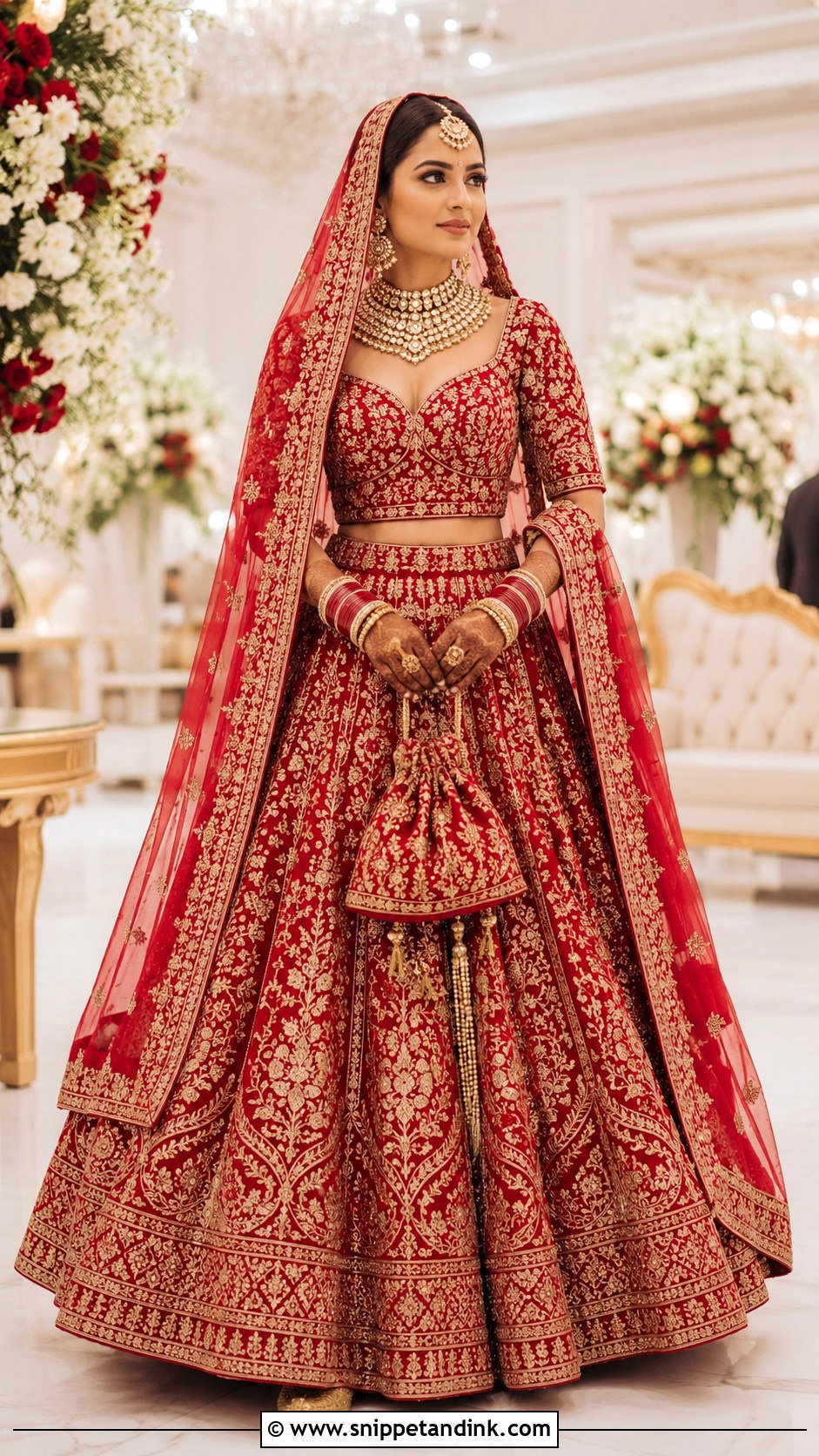
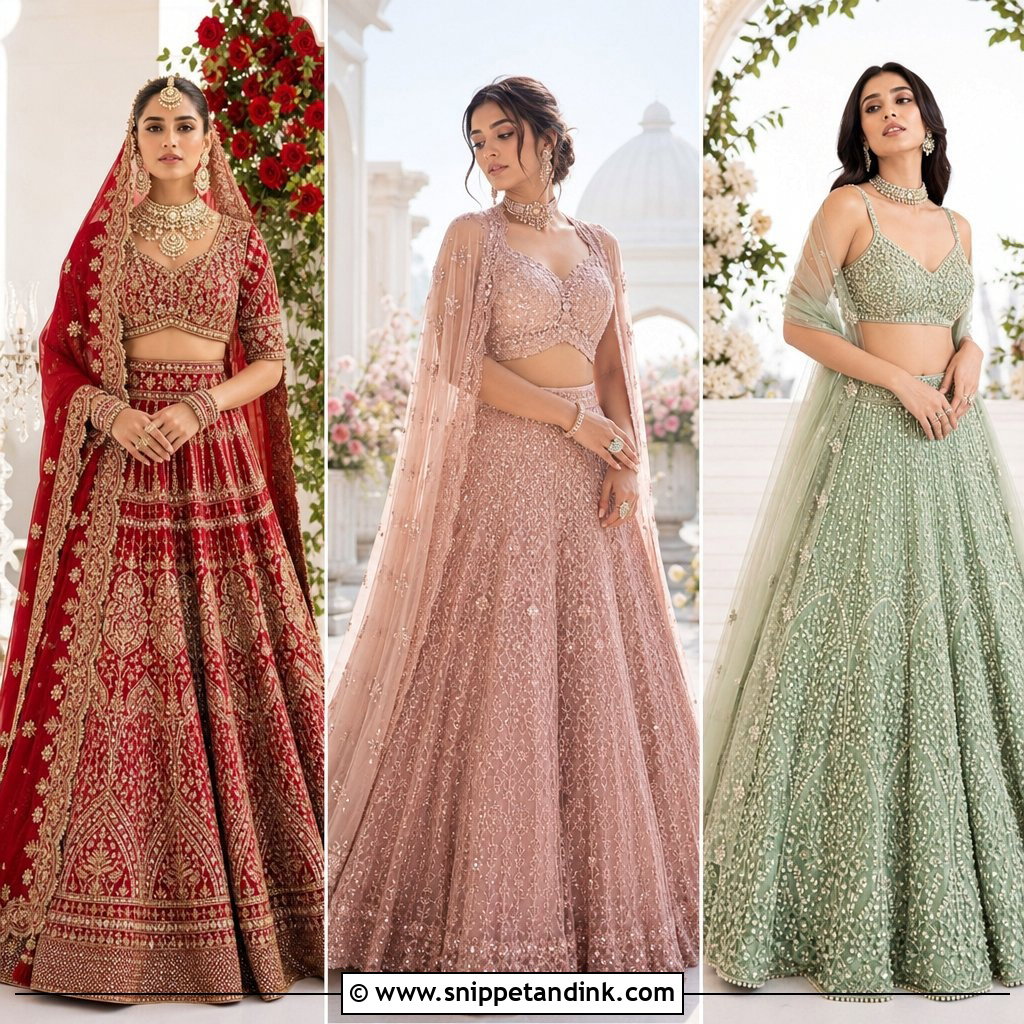
A red zardozi blouse is still the one most brides picture for the main ceremony. Choose a structured sweetheart or gently curved neckline with antique-gold threadwork, sequins, beads and small florals, over a high-waisted red lehenga with a wide border. A sheer red dupatta covers the head, with a lighter second one over the shoulder. Dense zardozi is heavy and stiff. I check the armholes first, because metal thread work around the arm scratches and pulls at the seam within an hour if the cut is tight. A properly fitted bodice holds the polki necklace up instead of letting it drag the neckline down. Matching earrings, a tikka, bridal bangles and embroidered juttis complete it.
2. Gold High-Neck Bridal Lehenga Blouse
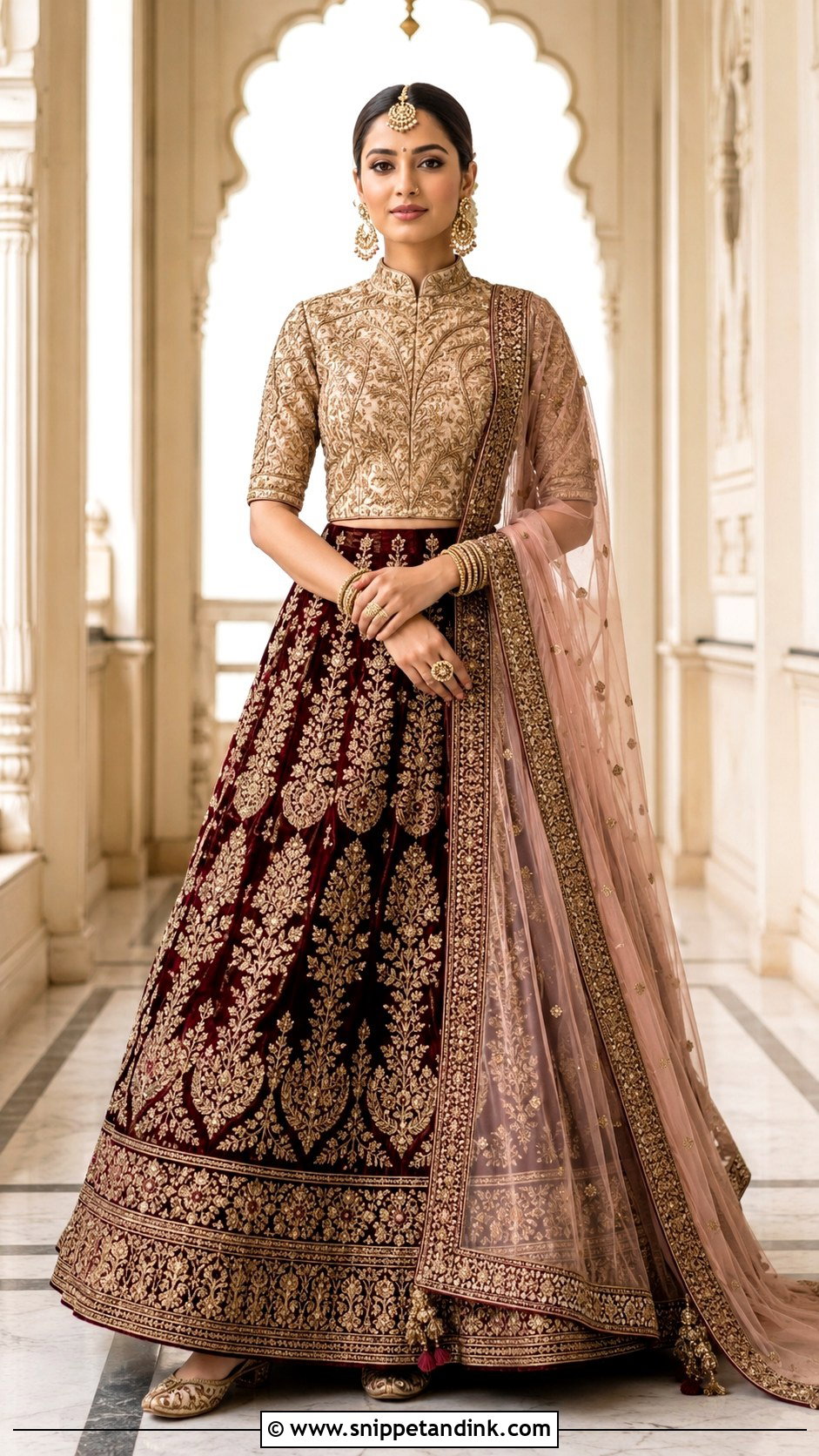
Want a regal look without a low neckline? A gold high-neck blouse in raw silk or brocade with zari, dabka or tonal beading does it, especially against a maroon, emerald, ivory or deep red skirt. Elbow sleeves add coverage without weight. High necks need an accurate neck measurement and a back opening long enough to get your head through without disturbing hair, so I ask for hooks or a concealed zip running well down the back. Drape the dupatta from one shoulder to keep the collar visible. Statement earrings, a slim tikka, stacked bangles and gold juttis are enough; skip the large necklace, or choose a collar that follows the neckline.
3. Velvet Full-Sleeve Bridal Lehenga Blouse
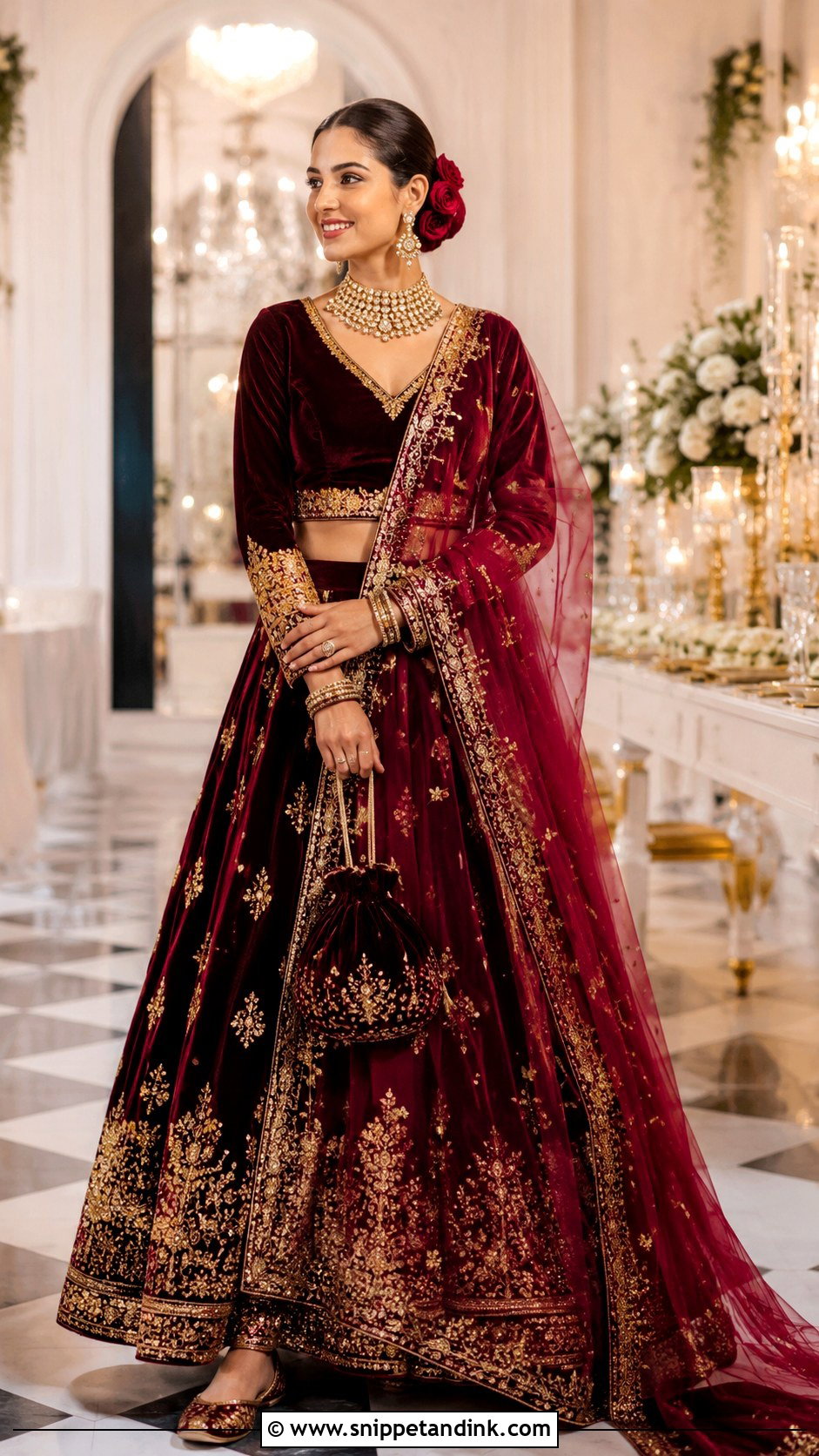
Velvet with full sleeves is for cool-weather weddings, and it’s honest about it: in a warm hall it gets hot fast. Select a burgundy, bottle-green, navy or deep plum blouse with a round or modest V-neck and gold embroidery kept to the neckline, cuffs and hem. Pair it with a velvet or raw-silk lehenga with a generous flare and, importantly, a light net dupatta; two heavy fabrics together become hard to manage. Velvet has no give, so I have the tailor add ease at the elbows and across the upper back. You’ll be greeting people, lifting your dupatta and joining rituals with those arms. Kundan, velvet juttis and a structured potli finish it.
4. Square-Neck Mirror Work Bridal Lehenga Blouse
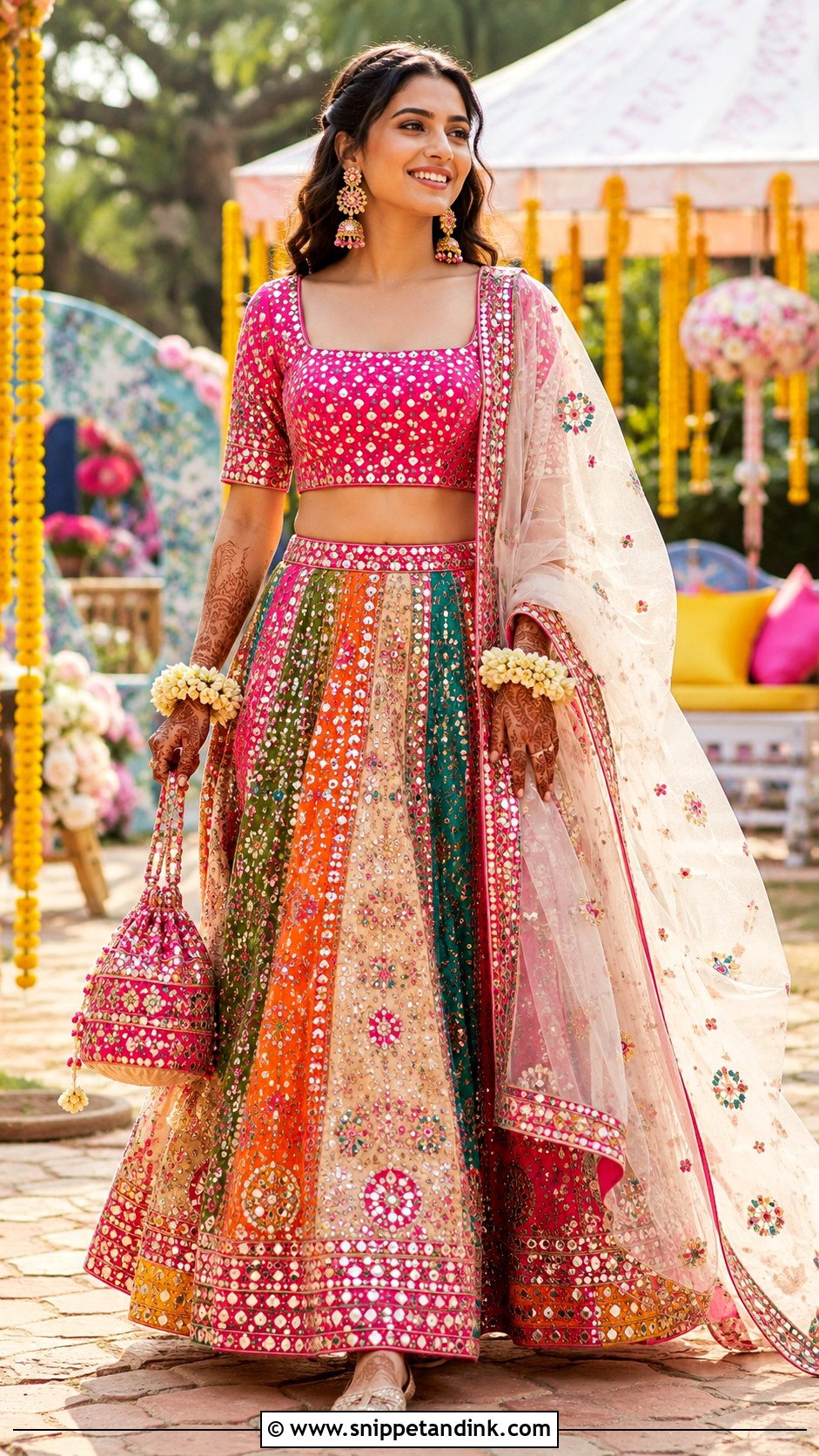
Square necks give mirror work a crisp frame, and this blouse belongs at a colorful mehndi, sangeet or daytime event. Choose a fitted blouse with small mirrors, thread embroidery and a finished border, over a vibrant fuchsia, yellow, turquoise, green or coral skirt. An organza dupatta with scattered mirrors echoes it lightly. Turn the blouse inside out before buying. Each mirror should be edged and backed smoothly, since rough backs scratch skin as soon as you start dancing. Keep the necklace short so it doesn’t crowd the square line, then add jhumkas, floral bangles, a small potli and cushioned juttis or low block heels.
5. Deep V-Neck Bridal Lehenga Blouse
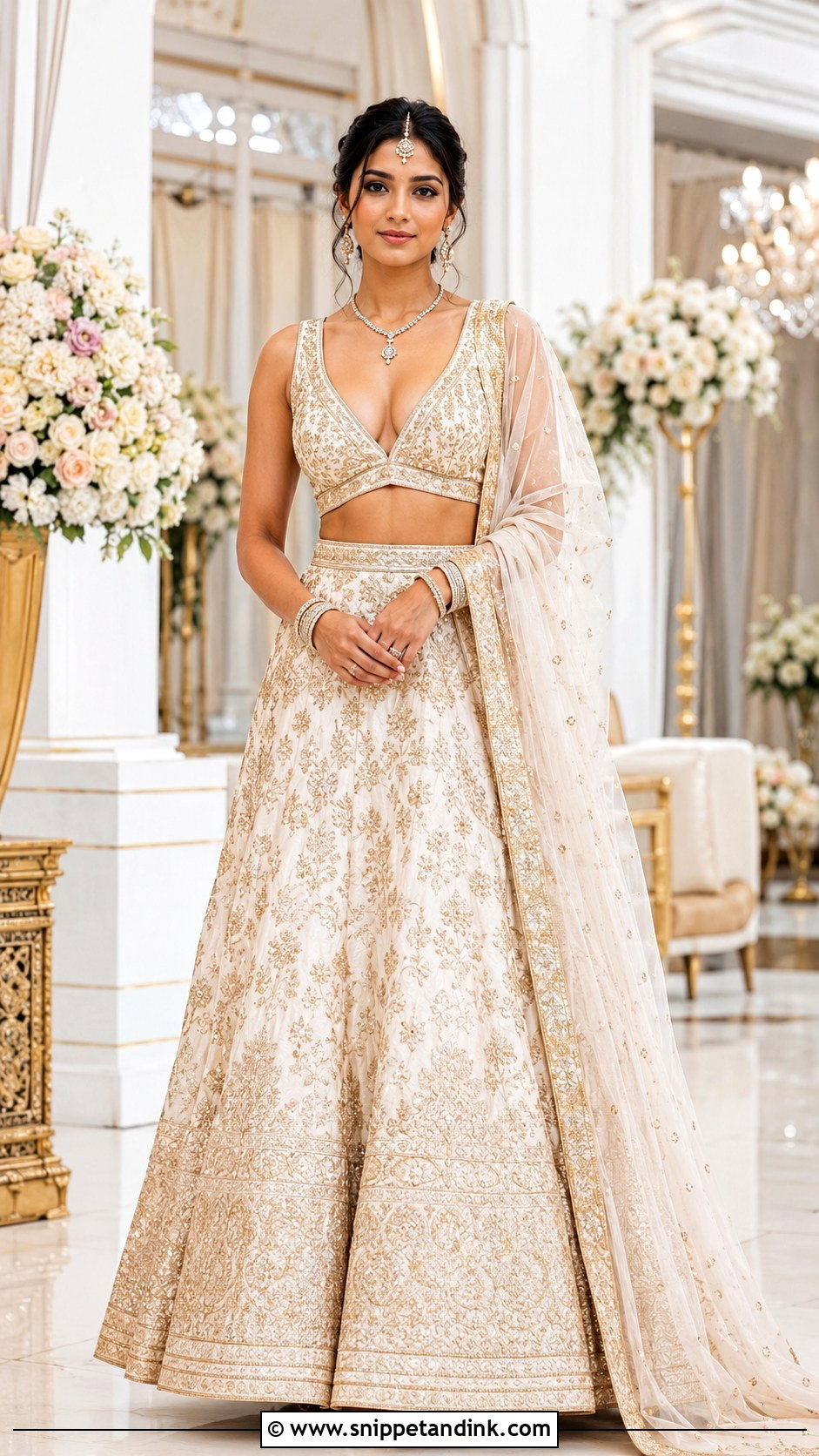
Deep V-necks lengthen the upper body, and they rely completely on construction. I want a structured bodice with concealed cups, wide straps and a reinforced center point where the V meets; that’s where a weak blouse gapes when you lean forward. Antique embroidery, crystals or tonal sequins make the neckline dramatic without extra accessories. A high-waisted lehenga balances the deep cut, and a matching dupatta across one shoulder gives optional cover. Choose a pendant that follows the V, medium earrings, a tikka, bangles and embellished heels. Sit, bend and reach in every fitting. Fashion tape is a backup, never the plan.
6. Corset Bridal Lehenga Blouse
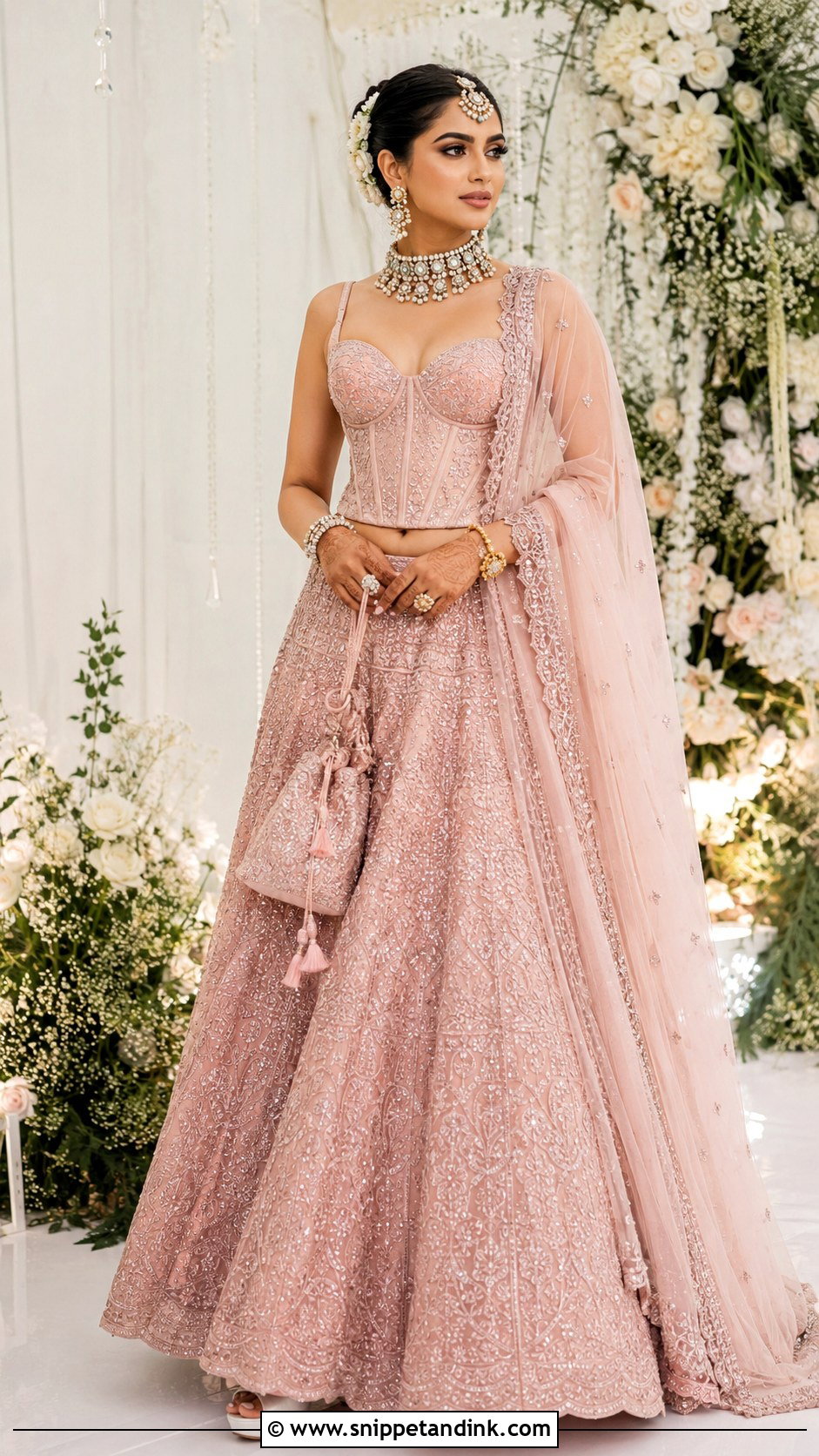
Corset blouses define the waist like nothing else, and the good ones are built, not just embroidered. Look for curved paneling, light boning, supportive cups and a straight or sweetheart neckline, with embroidery carried across the seams so the panels don’t look chopped up. Pair it with a full circular lehenga in the same color family; blush, ivory, champagne, red and dusty rose all suit the shape. Can you take a full breath and eat a little dinner in it? If not, it’s too tight, and I’ll send it back for adjustment. A secure zip or hook closure, a soft lining and a slightly higher back add stability. A sheer dupatta over one shoulder, crystal or polki jewelry and platform heels finish it.
7. Off-Shoulder Bridal Lehenga Blouse
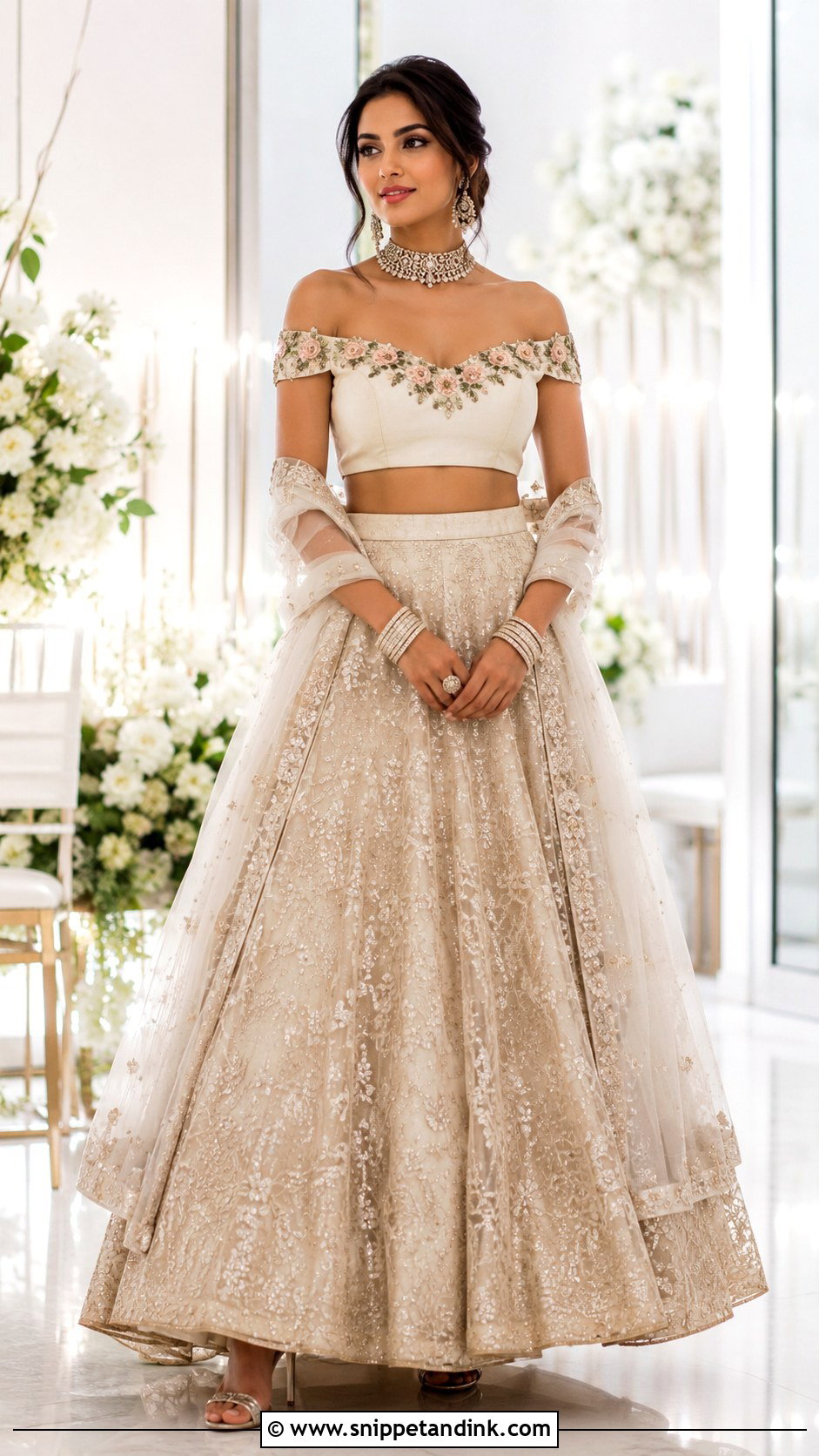
Off-shoulder blouses show the collarbones and jewelry, and they limit how high you can lift your arms. I ask for a structured, gently curved neckline rather than a tight elastic band, which digs in and leaves red marks visible in photos. A fold-over band, floral embroidery or scalloped border gives a couture finish. Pair it with a high-waisted lehenga and a dupatta draped low around the arms or fixed to one side so the neckline shows. A choker, matching earrings, a bracelet stack and metallic heels complete it. If you plan to dance hard, detachable straps or a supportive inner bodice will keep everything where it should be.
8. One-Shoulder Bridal Lehenga Blouse
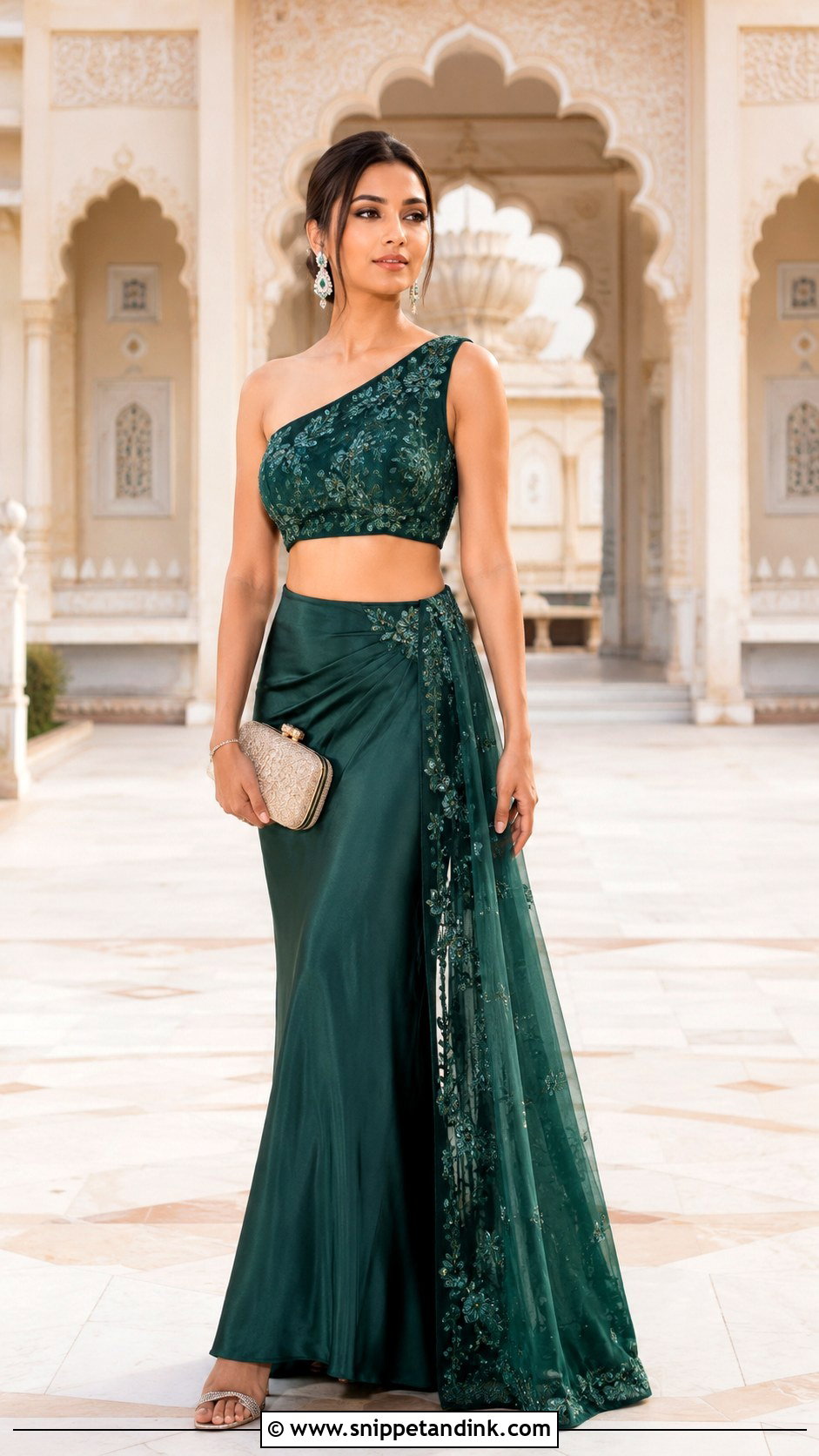
One-shoulder blouses are festive and asymmetric, with embroidered flowers, crystal tassels, a soft drape or a sculpted detail on the covered side. Balance it with a streamlined lehenga in matching silk, satin or embroidered net. A traditional two-shoulder dupatta would cover the whole idea, so attach a light dupatta at the waist and let it fall from the opposite side. The open side is the one I worry about. It needs internal grip tape or a hidden structured edge, or it creeps down every time you raise the strapped arm. Drop earrings, a sleek bracelet, an embellished clutch and comfortable block heels finish it; leave the heavy necklace out.
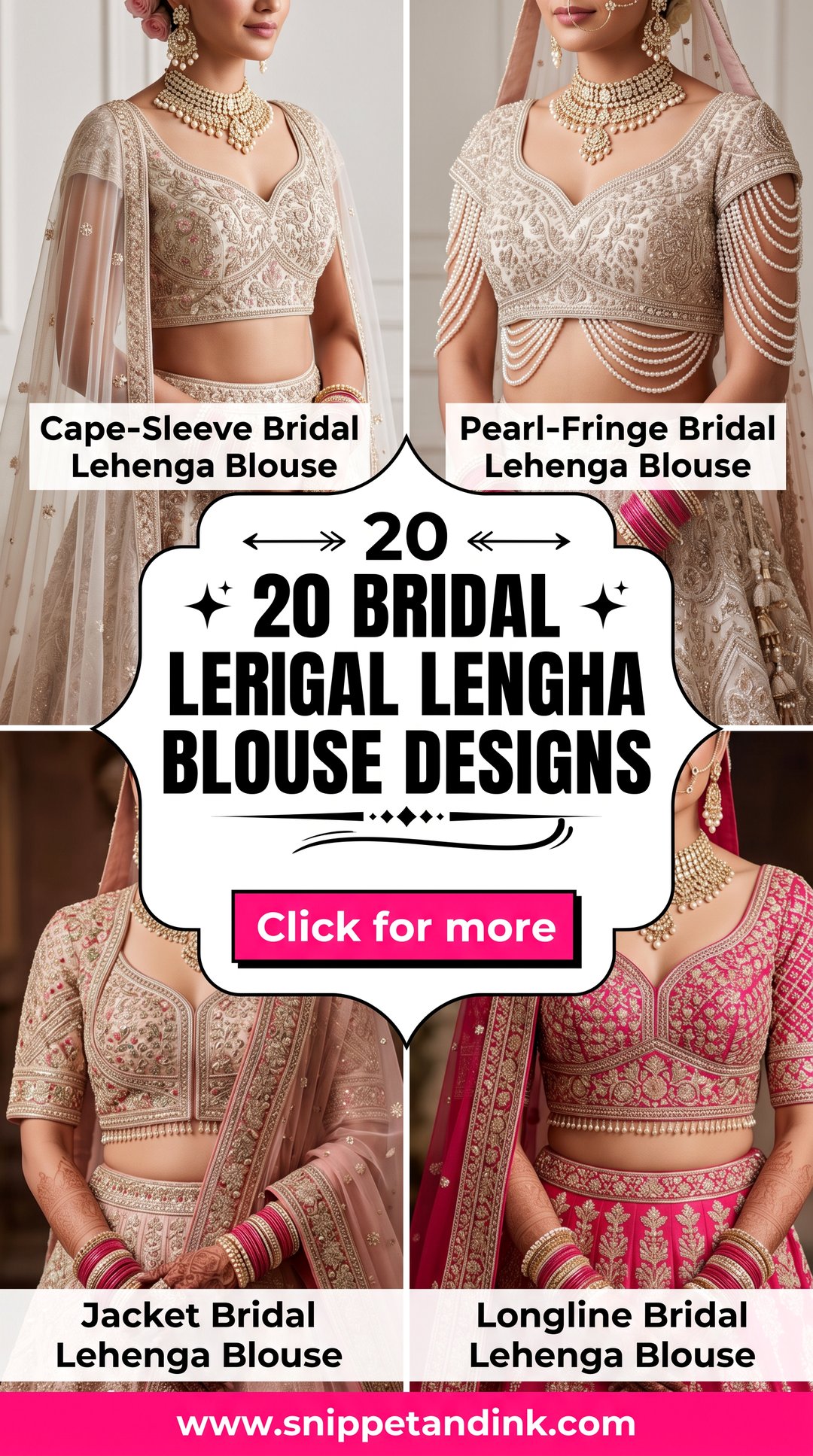
9. Cape-Sleeve Bridal Lehenga Blouse
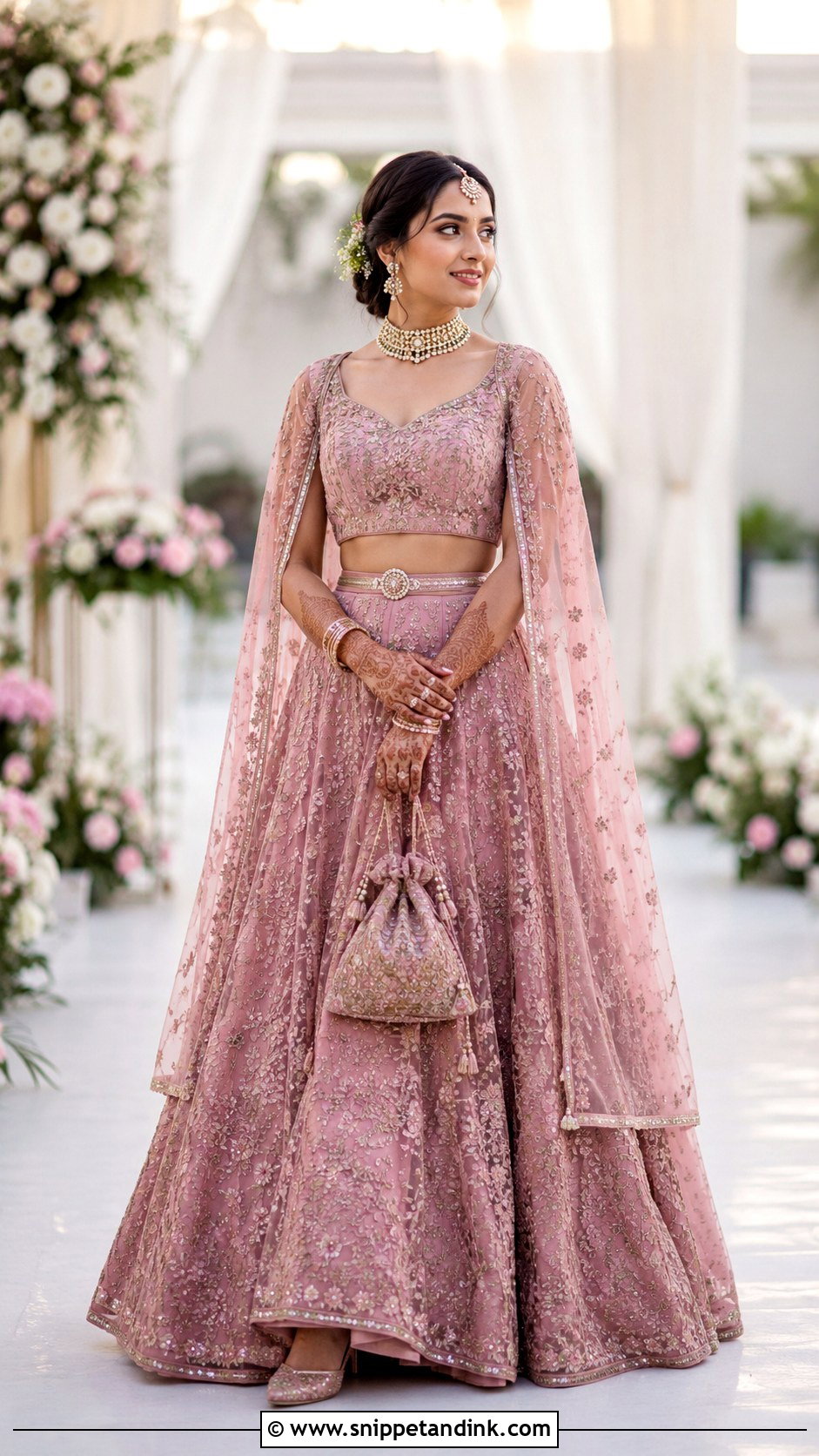
Cape sleeves give coverage and movement without the tight fit of a set-in sleeve. Choose net, chiffon or organza panels that fall from the shoulders to the elbow or wrist, with delicate edging for definition. A fitted waist and moderate flare keep the outfit balanced, and since the cape already flows, use a narrow dupatta or none over the shoulder. Keep the cape ending above your hands. Longer panels catch on bangles, trail through food at the dinner table and snag on embroidery, and I’ve learned to pin them up at the dining table as standard. A choker, studs or small drops, a decorative waist belt and heeled juttis complete it.
10. Peplum Bridal Lehenga Blouse
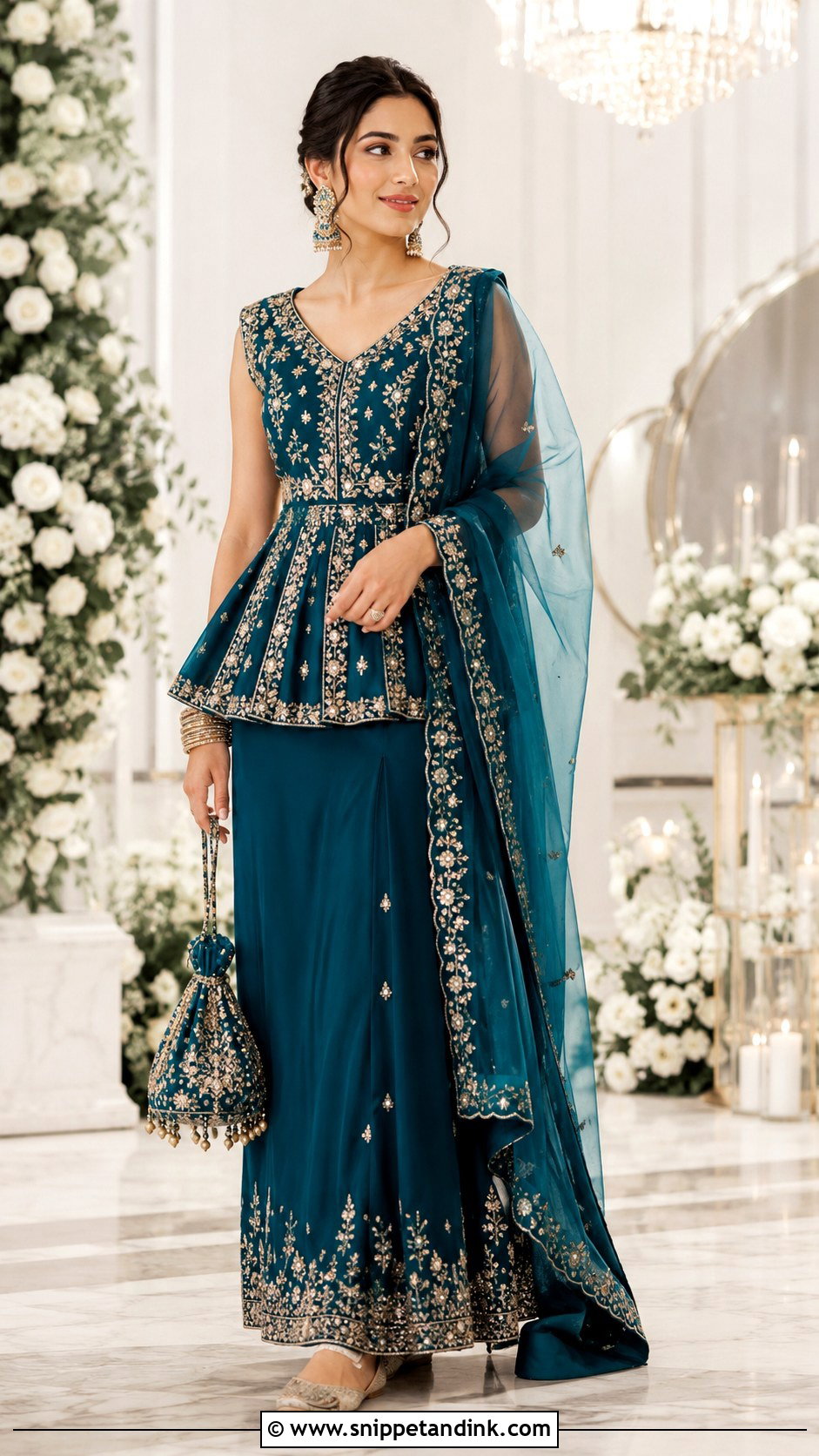
A peplum covers the waist comfortably and eases the line into the skirt. The fitted upper bodice should flare from the natural waist, short and structured or longer and softly layered. Pair it with a less bulky lehenga or the middle gets crowded. Tonal embroidery lengthens; a contrasting blouse separates the pieces. The peplum must end above the widest part of the skirt, and I check that with the bride seated, because a peplum that looks right standing can bunch up awkwardly in a chair. A light dupatta over one shoulder, medium earrings, stacked bangles, a potli and embroidered juttis finish it.
11. Sheer-Yoke Bridal Lehenga Blouse
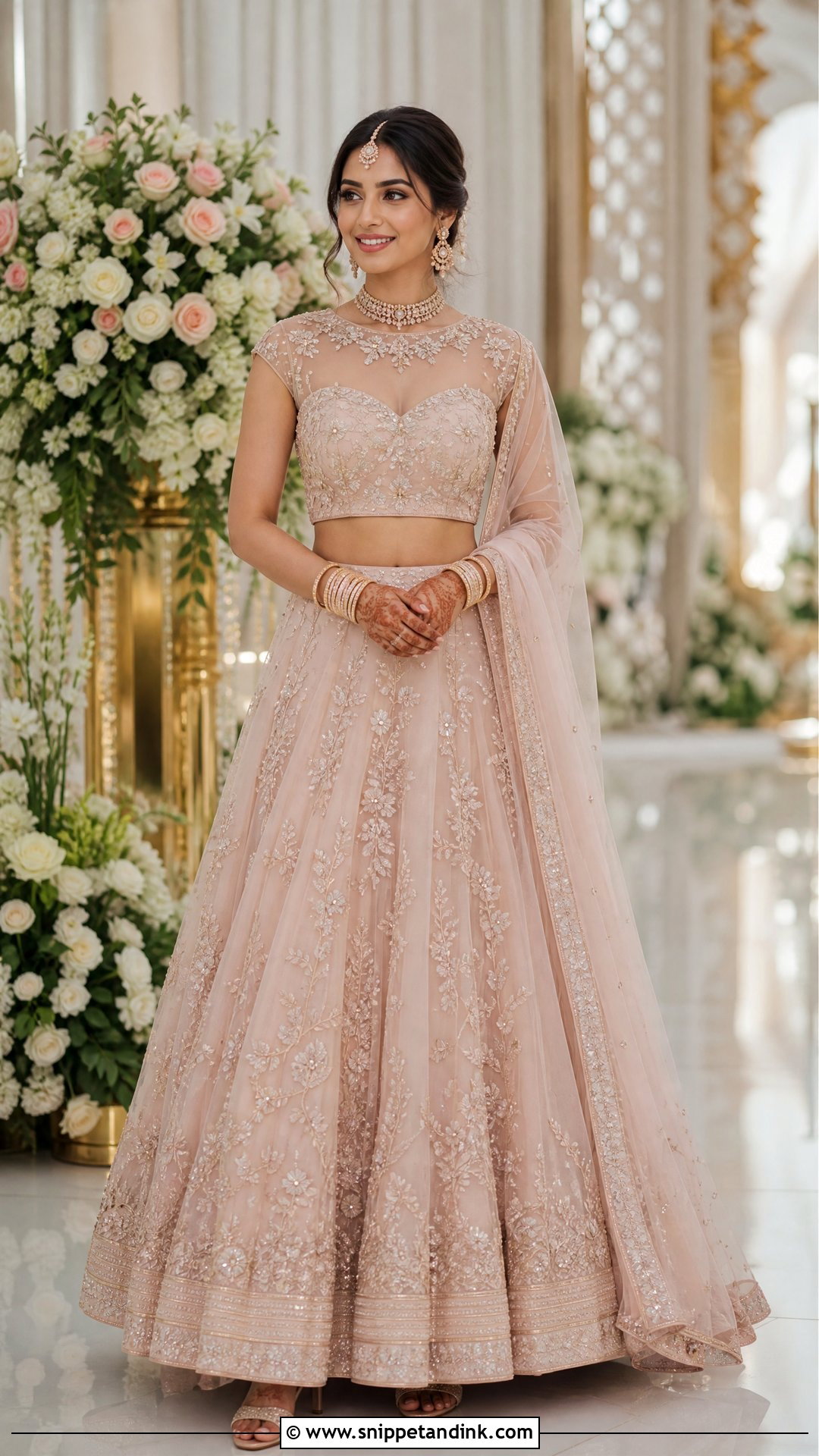
A sheer yoke gives the look of a delicate neckline with far more stability. Fine net runs from a sweetheart or curved bodice up to the collarbone, where floral embroidery, beads or tiny sequins soften the edge. The net color is the make-or-break detail. I hold swatches against the bride’s neck in daylight, not just against her wrist, because skin tone at the neck often differs, and a mismatch shows clearly in close-ups. Appliqués must be stitched so they don’t drag the mesh. A matching embroidered lehenga, a narrow dupatta over one arm, a slim choker below the yoke, statement earrings, a tikka and neutral heels finish it.
12. Scalloped Bridal Lehenga Blouse
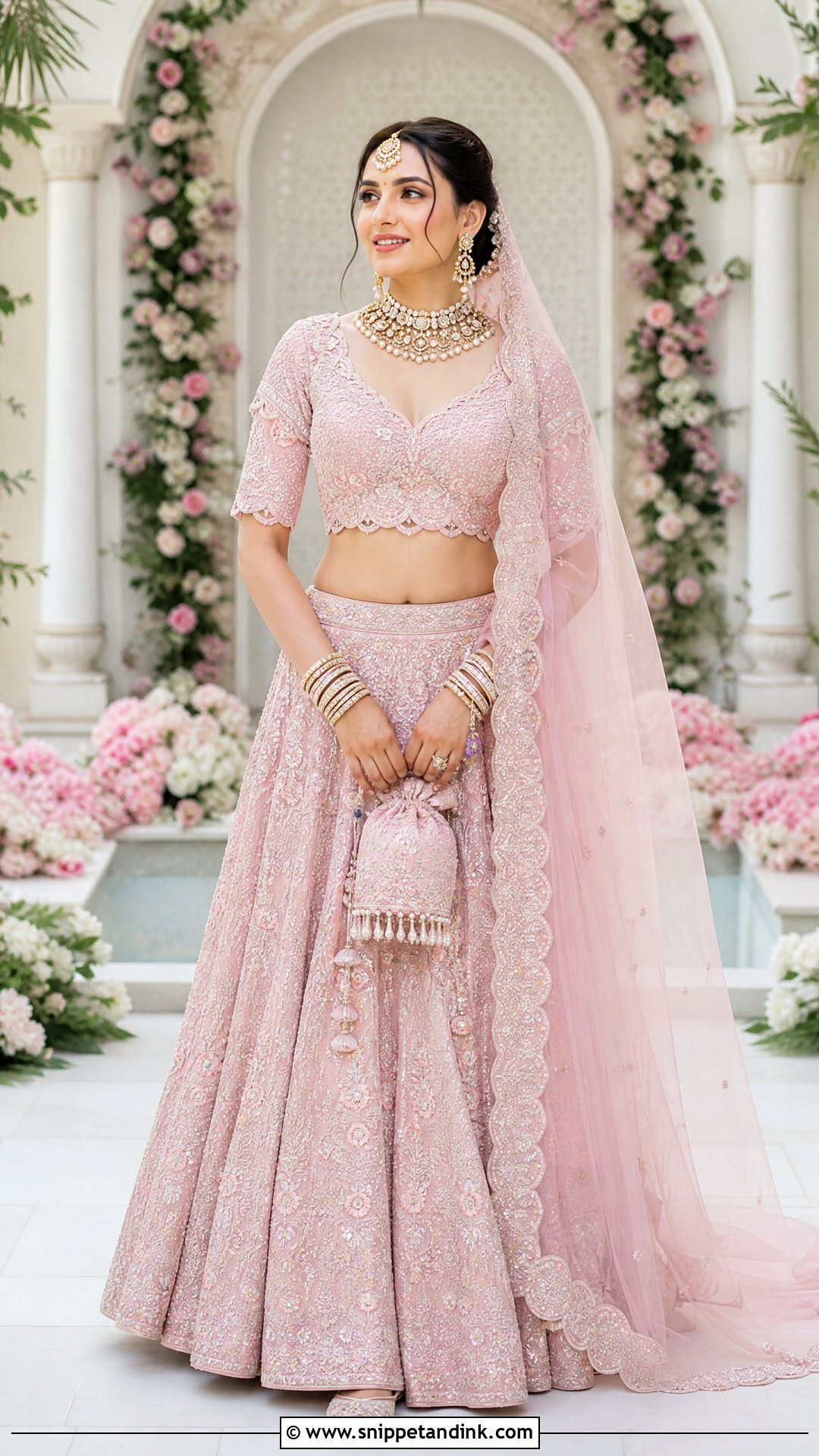
Scallops soften a fitted blouse without changing its structure. They can outline a sweetheart neckline, sleeves, hem or back, finished with pearls, zari, sequins or fine threadwork that matches the lehenga border. A dupatta with the same curved edging ties everything together. Pastel pink, ivory, powder blue, peach and red all suit this treatment. The scallops need to lie flat. Without interfacing behind them they curl outward after a few hours of body heat, so ask your tailor how the edge is backed and finished. Pearl or polki jewelry, a small potli, bangles and metallic juttis complete it.
13. Backless Tie-Up Bridal Lehenga Blouse
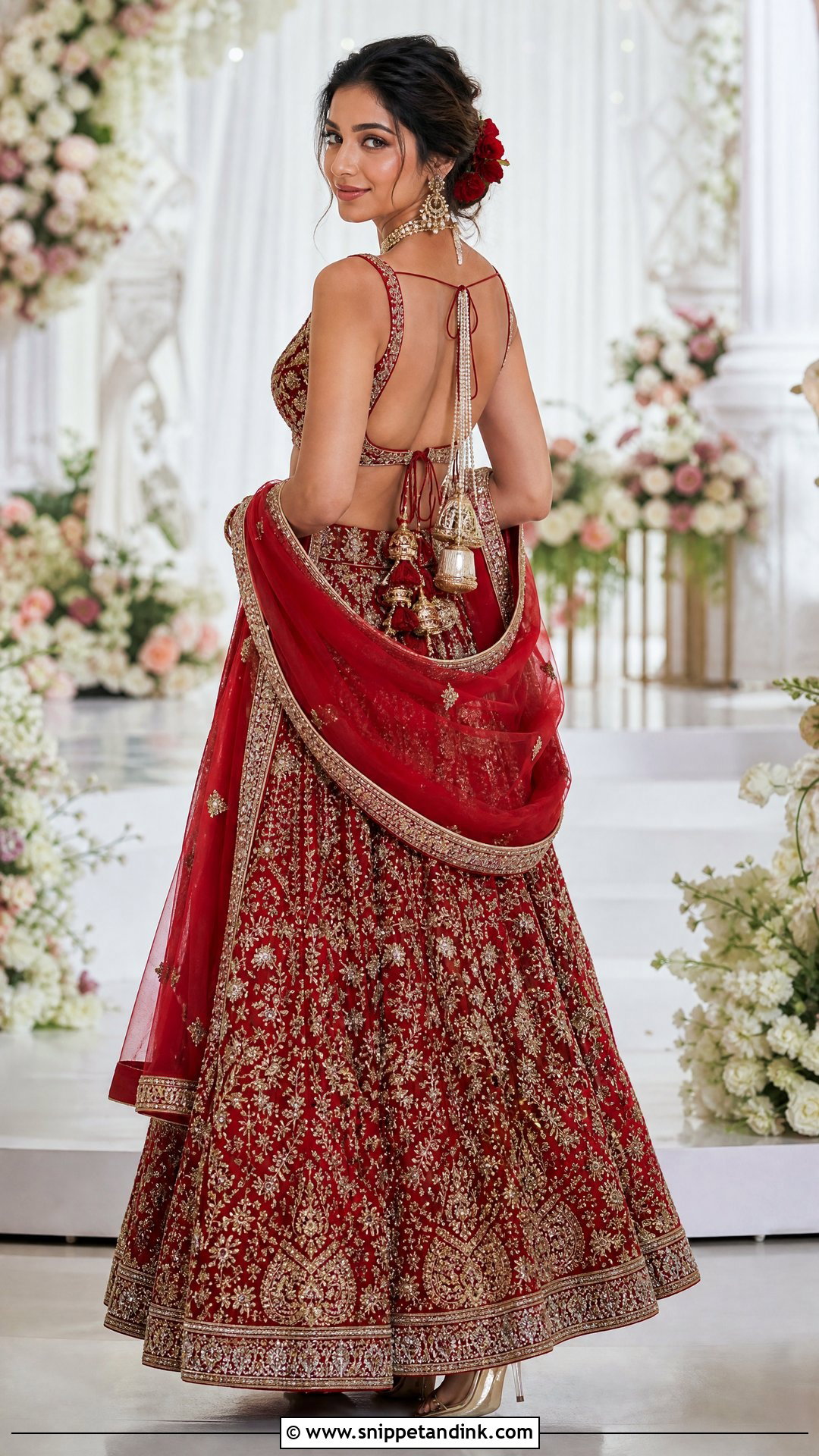
A backless tie-up is for portraits and evening events, and it’s only as secure as its side panels. Keep the front structured with a square, scoop or sweetheart neckline, then dress the back with embroidered ties, covered buttons, pearl tassels or latkans. The ties are decoration. Strong side panels and secure lower hooks must carry the blouse, which is why I tie a fitted blouse loosely at a trial and see if it still stays put. Pair it with a high-waisted lehenga, drape the dupatta over one shoulder or across the elbows to show the back, and add a choker, earrings, bangles and embellished heels. Keep tassels light enough that they don’t swing against your back while dancing.
14. Keyhole-Back Bridal Lehenga Blouse
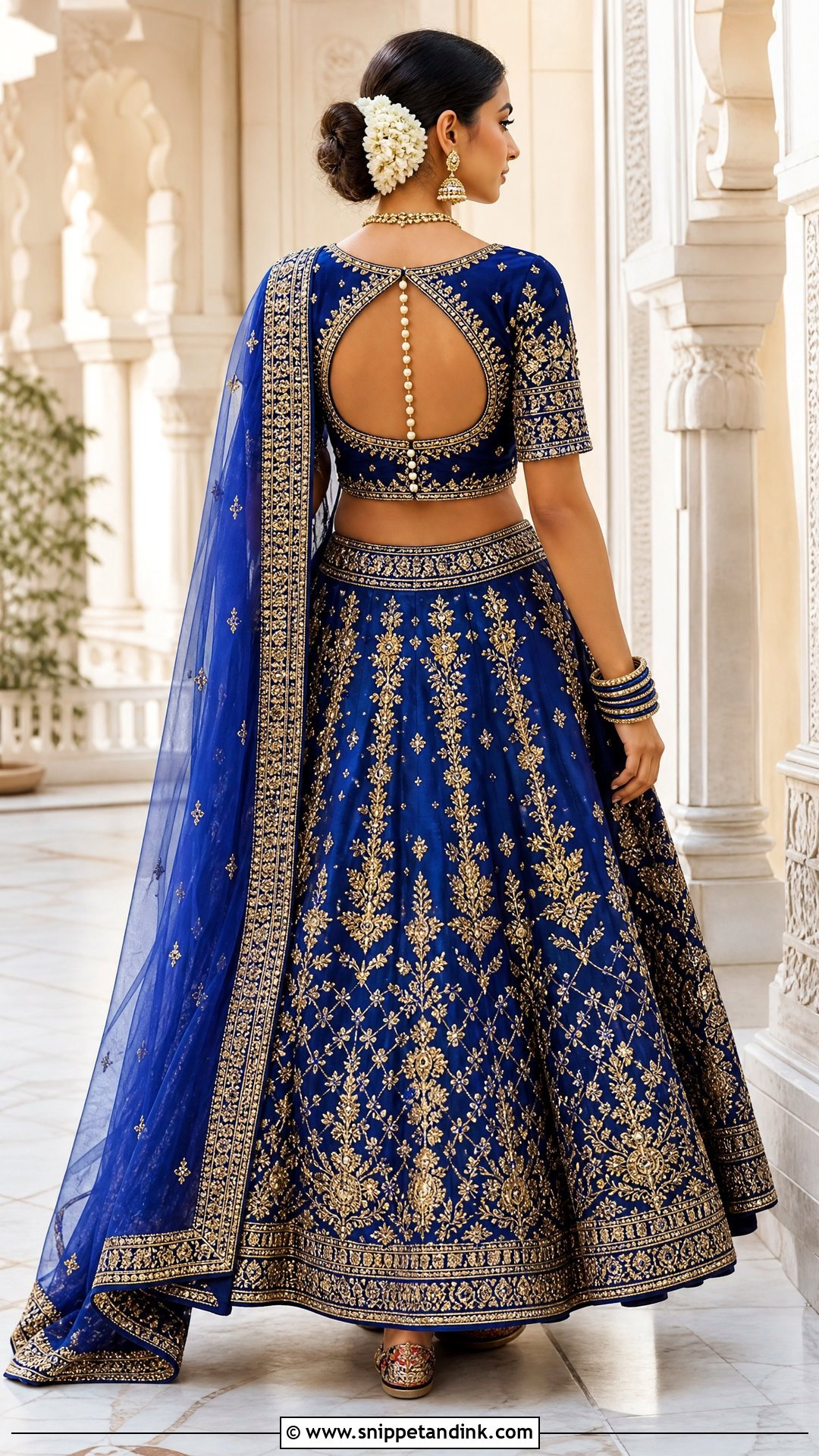
Keyhole backs show some skin while covering far more than an open back. Choose a round, oval, teardrop or diamond opening framed in embroidery, closed at the neck with pearl buttons or covered hooks. Drape the dupatta from the opposite shoulder and wear a neat bun with fresh flowers so the back shows in rear photos. A keyhole pulls open at the edges if the shoulder measurement is off even slightly, so I fit this one with the bride’s arms forward, as if she’s hugging, which is the position that stretches the back most. Jhumkas, a medium necklace, stacked bangles and embroidered juttis complete it.
15. Floral Embroidered Bridal Lehenga Blouse
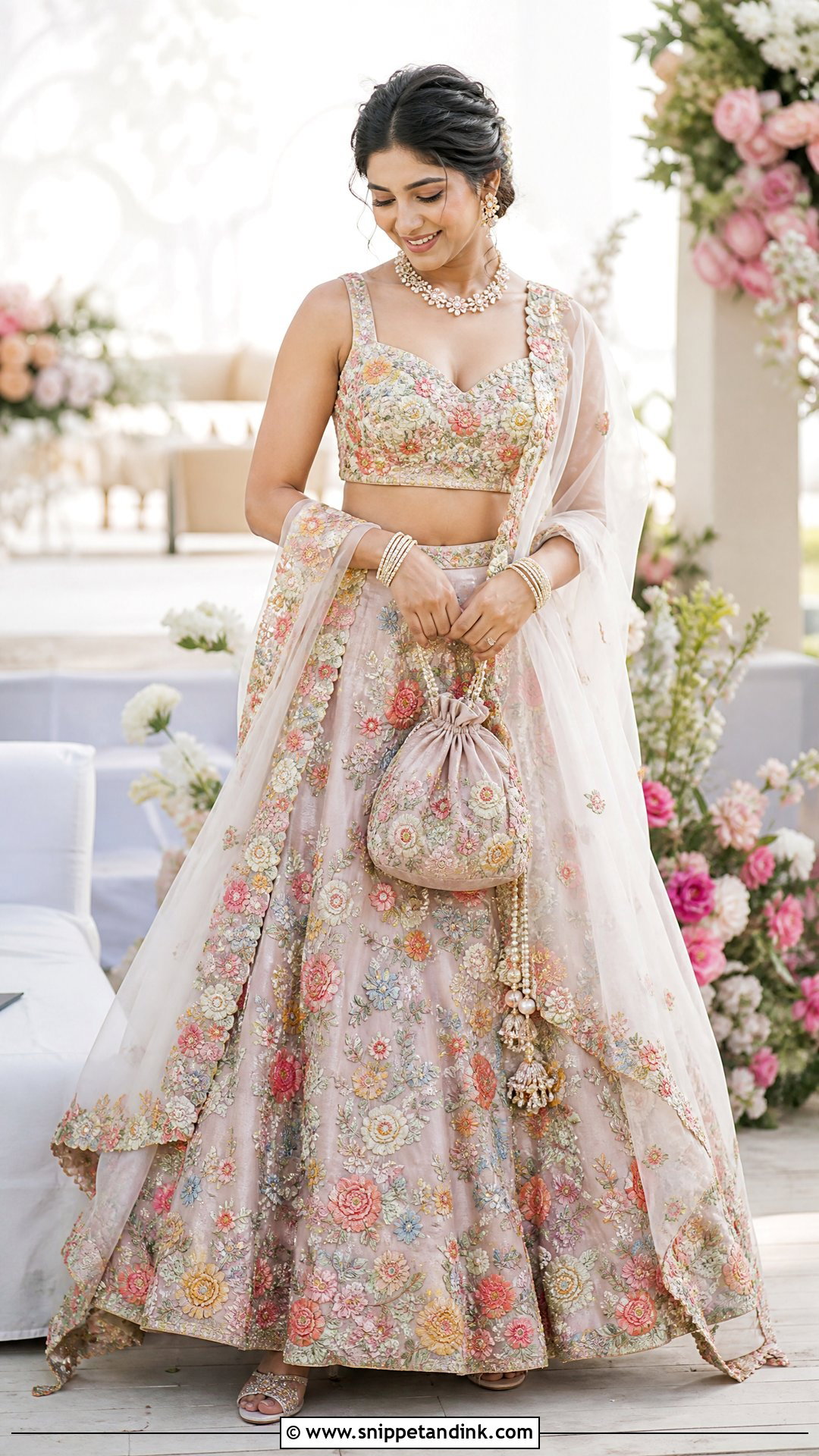
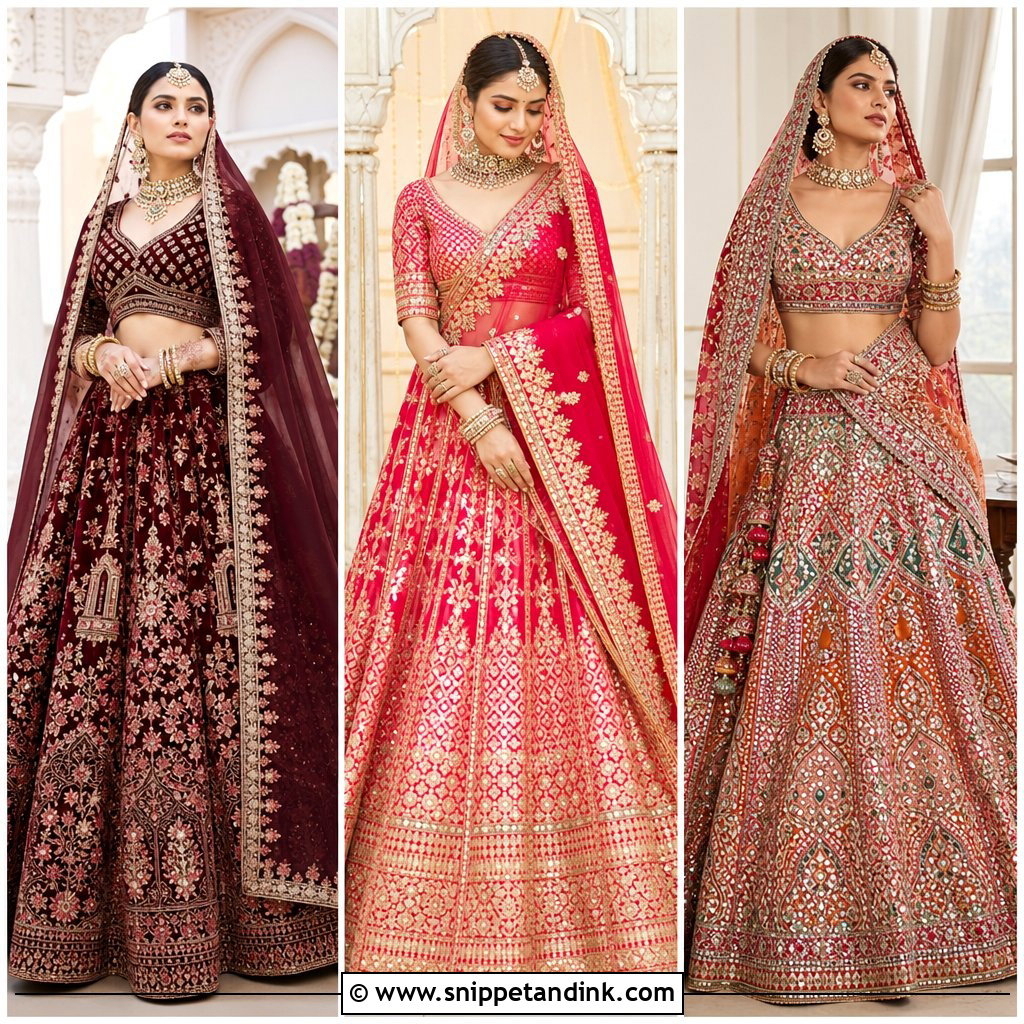
Floral work adds softness and dimension: threadwork, sequined flowers, bead petals or carefully placed three-dimensional appliqués. Multicolor suits a lively daytime ceremony; tonal reads more refined. Echo smaller versions of the motif on the lehenga so the outfit feels connected without matching exactly, and top it with a sheer organza dupatta with a floral border. Placement is my main concern. Raised flowers near the underarm or side seam rub with every arm movement and catch on necklaces and dupatta fabric, so I ask for them to be kept to the front and shoulders. Pearl jewelry, floral earrings, a pastel potli and embroidered heels finish it.
16. Pearl-Fringe Bridal Lehenga Blouse
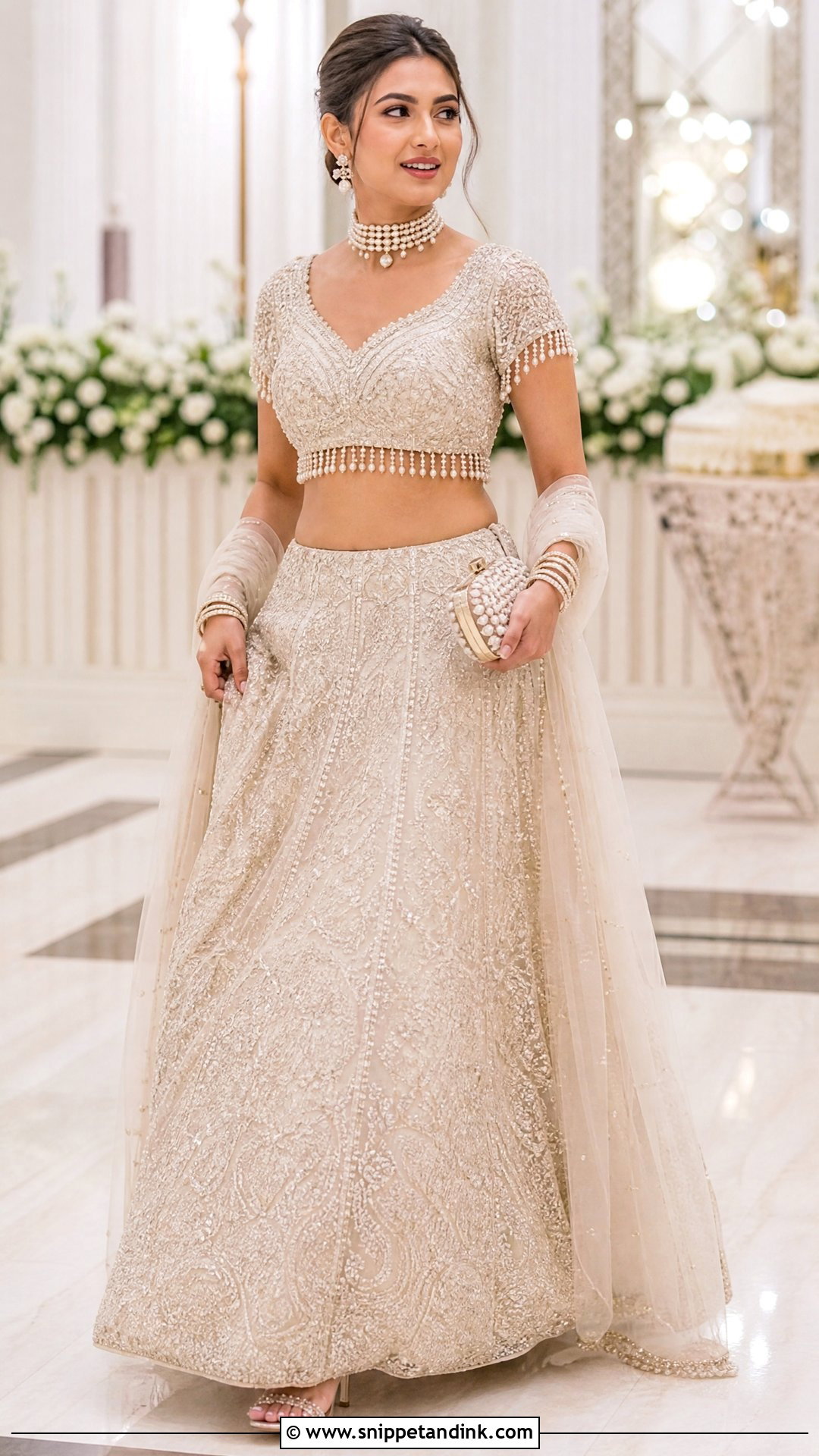
Pearl fringe moves every time you do, which is its charm and its risk. Use short strands at the sleeves, hem, neckline or back rather than on every edge, on a fitted ivory, champagne, blush or pale-gold blouse. Pair it with a lehenga carrying pearl accents, tonal sequins or delicate metallic work, and a plain sheer dupatta so the fringe stands out. Each strand needs its own secure knot. If one long thread holds several strands and breaks, pearls end up rolling across the floor. Keep fringe off the inner arm and side seam, where it tangles. Pearl drops, a slim choker, a jeweled clutch and crystal heels complete it.
17. Banarasi Silk Bridal Lehenga Blouse
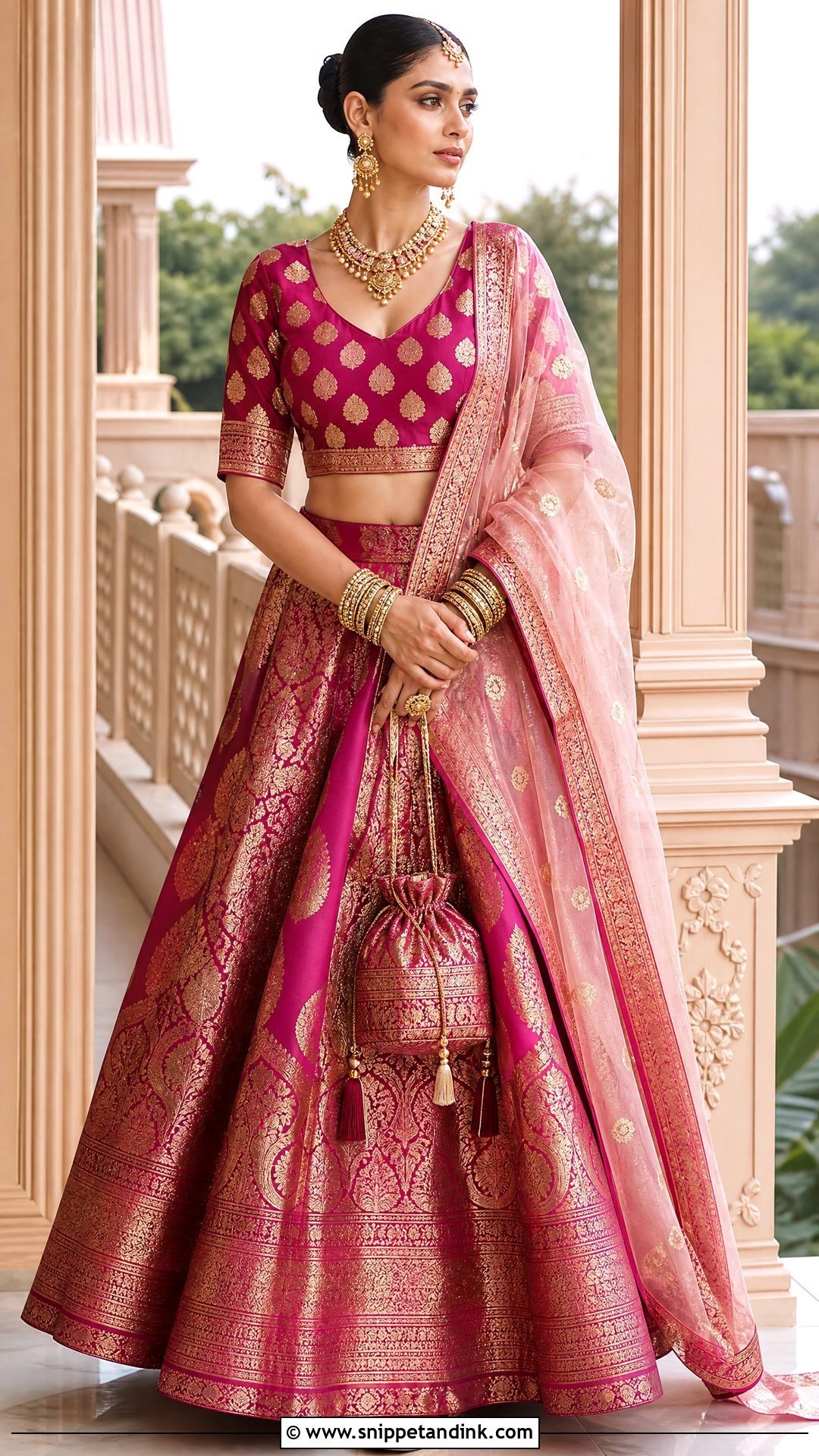
A Banarasi silk blouse gets its richness from woven pattern and color rather than surface embroidery. Choose a round, square or modest V-neck with elbow sleeves and a neat zari border, over a solid silk or coordinating brocade skirt. Deep red, magenta, emerald, mustard and royal blue all glow against gold weaving. An organza or tissue dupatta with a simple border keeps it from feeling dense. The tailoring test here is motif placement: large woven motifs should sit centered on the front and mirrored on both sleeves, and I mark them on the fabric before it’s cut. Temple-style earrings, gold jewelry, stacked bangles, a potli and brocade juttis complete it.
18. Jacket Bridal Lehenga Blouse
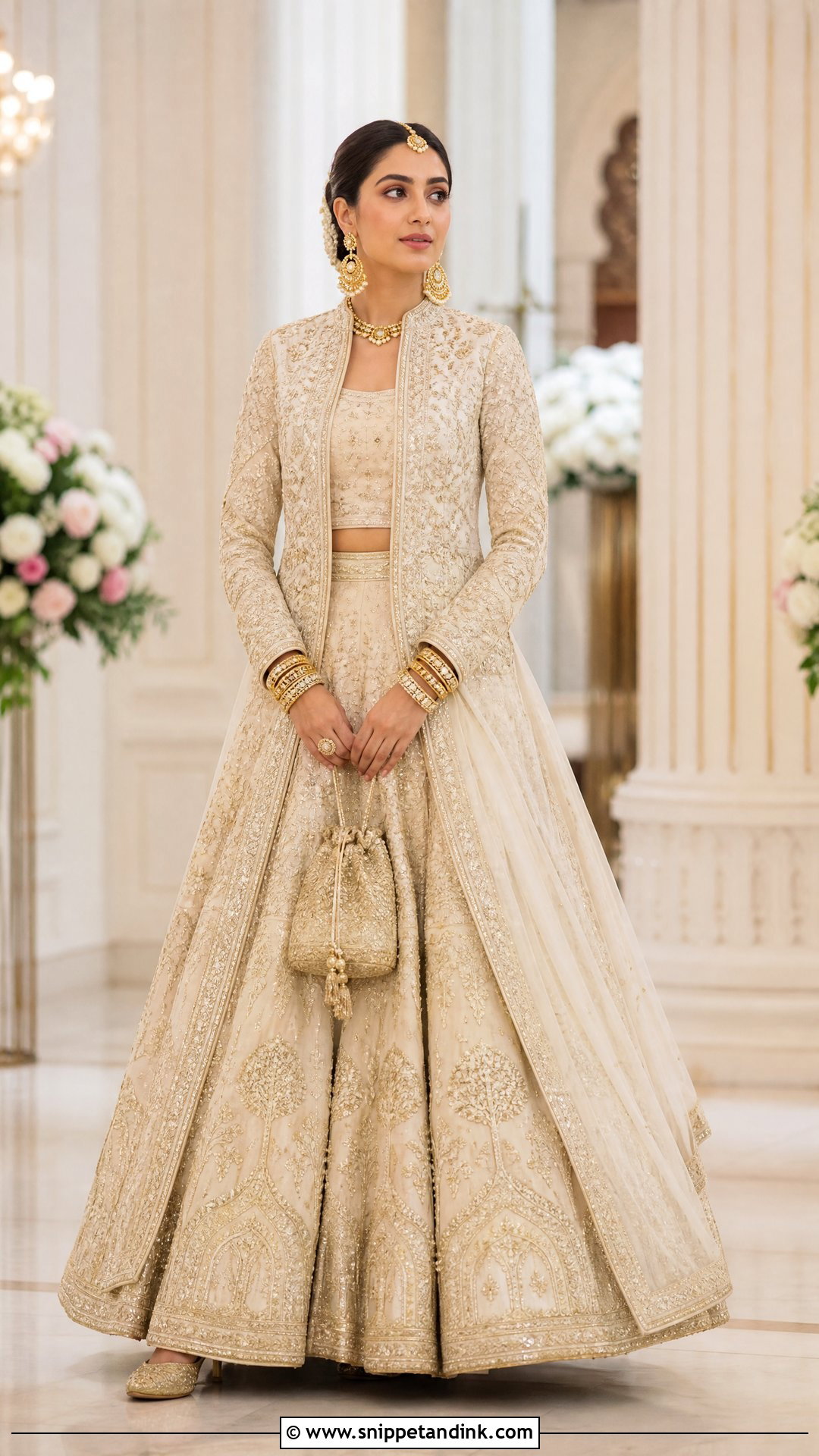
A jacket blouse layers coverage and drama together. Start with a fitted sleeveless or short-sleeve blouse, then add a cropped or waist-length embroidered jacket; a longer open jacket works over a streamlined skirt. Keep the inner blouse simple and repeat one motif across blouse, jacket and skirt. Try the jacket closed over the blouse and your actual necklace. Bulky jewelry under a fitted jacket pushes the front open or presses stones into your chest. A soft lining stops embroidery rubbing the arms. Attach a light dupatta at the waist or carry it over one arm, and add statement earrings, a compact necklace, bangles and heeled juttis.
19. Longline Bridal Lehenga Blouse
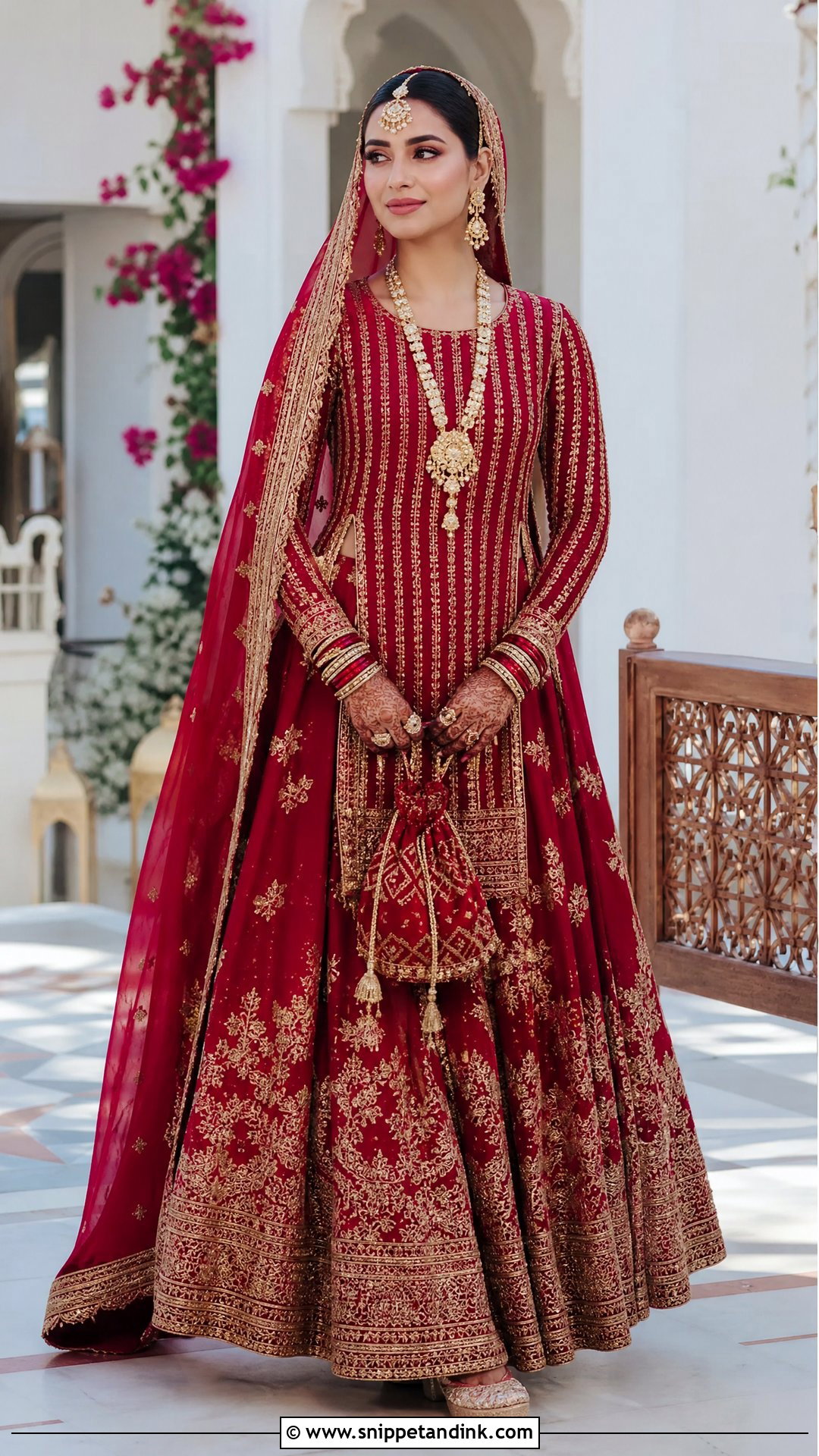
Longline blouses run below the natural waist and give a smooth line into the skirt. They can be corset-fitted, cut like a short kurti or finished with small side slits for movement. The skirt should sit comfortably beneath the hem, not overlap into a thick band. Vertical embroidery, narrow borders and evenly spaced motifs add length. Watch where the hem lands. Ending right at the fullest point of the hips widens them, and a longline hem tends to ride up when you sit, so I fit it seated and walking. Flexible lining and well-placed closures help. A light dupatta over one shoulder, a long necklace or drop earrings, stacked bangles and platform juttis complete it.
20. Boat-Neck Silk Bridal Lehenga Blouse
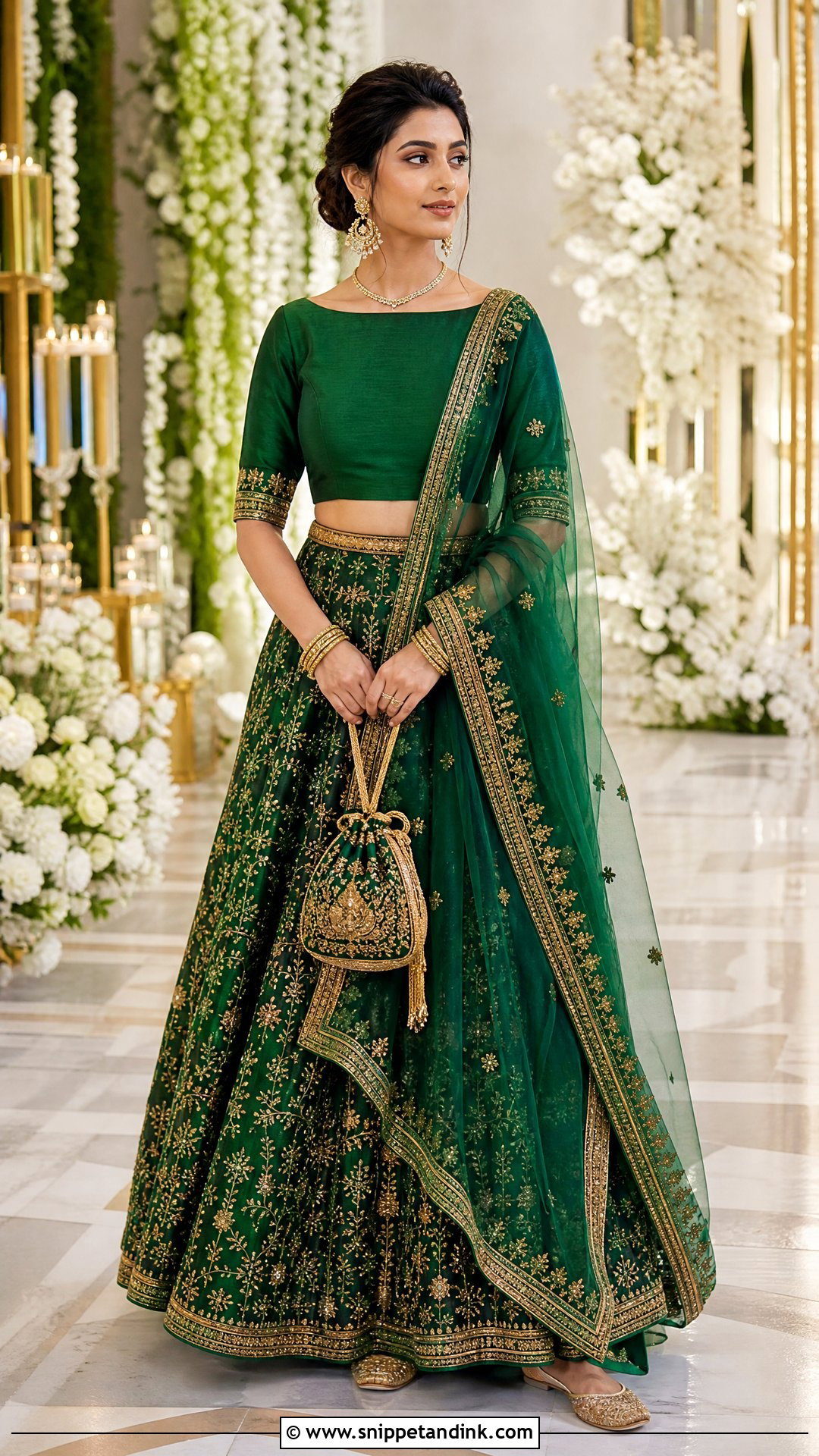
A boat-neck silk blouse is for the bride who prefers clean lines. The neckline runs wide across the collarbones and looks best with a neat bun and statement earrings. Choose raw silk, dupion or brocade with restrained zari at the neck, sleeves and hem, and pair it with a richly embroidered lehenga so the simple blouse balances it. Boat necks are notorious for slipping off one shoulder. Proper shoulder shaping, and sometimes a small lingerie strap keeper inside, stops the gaping. Elbow sleeves, a sheer dupatta from one shoulder, chandelier earrings, a slim necklace, bangles, a structured potli and classic juttis finish it.
Which Necklace Sits Right in Which Neckline
A blouse and a necklace bought separately often fight each other. These are the pairings I use as a starting point:
- Sweetheart and deep V: a pendant or layered haar that follows the V. A choker cuts across it and makes the neck look shorter.
- High neck and boat neck: earrings and a tikka do the work. If you want a necklace, a long one worn over the collar is better than anything at the throat.
- Square neck: a short necklace or choker that stays inside the square, leaving skin around it.
- Off-shoulder: a choker or collar, since the open shoulders already frame the neck.
- Sheer yoke: a choker sitting just below the embroidered edge, so the net doesn’t bunch under the stones.
Heavy kundan and polki sets pull down on the neckline, so bring them to the final fitting. The tailor can add a small loop or hidden hook to anchor a necklace if it keeps sliding.
A Hook Gives Way at the Reception: The Kit That Fixes It
On a long day, a hook or a tie can fail, and a beaded edge can catch. I hand one bridesmaid a small pouch with matching needles already threaded in the blouse color, a few spare hooks and eyes, small safety pins, double-sided fashion tape and nail scissors. A popped hook gets a safety pin from inside the blouse in seconds, and loose beads are snipped off rather than pulled. Ask your tailor for spare buttons, tassels or latkans when you collect the blouse, and keep them in that pouch.
Fit the Blouse Last, With Everything Else On
A good blouse flatters the lehenga and keeps you comfortable through every ritual, portrait and dance. Before approving the final design, think through the neckline, how the sleeves move, the fabric weight, where the embroidery sits and how it closes. Then try it with the jewelry, dupatta, shoes and undergarments you’ll actually wear, rather than fitting each piece on its own. That’s when proportion problems show up, while the tailor still has time to correct them. Zardozi, Banarasi, corsets, capes or pearl fringe, any of these can work. Secure construction is what lets you stop thinking about the blouse and enjoy the day.
You'll Like These Ideas:





Leave a Reply