
A gold skirt only looks finished once the blouse, dupatta and jewelry agree with it, and that agreement starts with the gold itself. Below are twenty pairings I’d happily put on a client, from classic bridal reds to colorful wedding guest looks, soft pastels and near-monochrome champagne. Before you fall for any of them, hold your skirt up to a window and work out which gold you actually own: bright yellow gold, muted antique gold or pale champagne. Most colors favor one of those and quietly fight the others. For each look I’ve noted the blouse, dupatta, footwear and jewelry I’d reach for, and where it tends to go wrong.
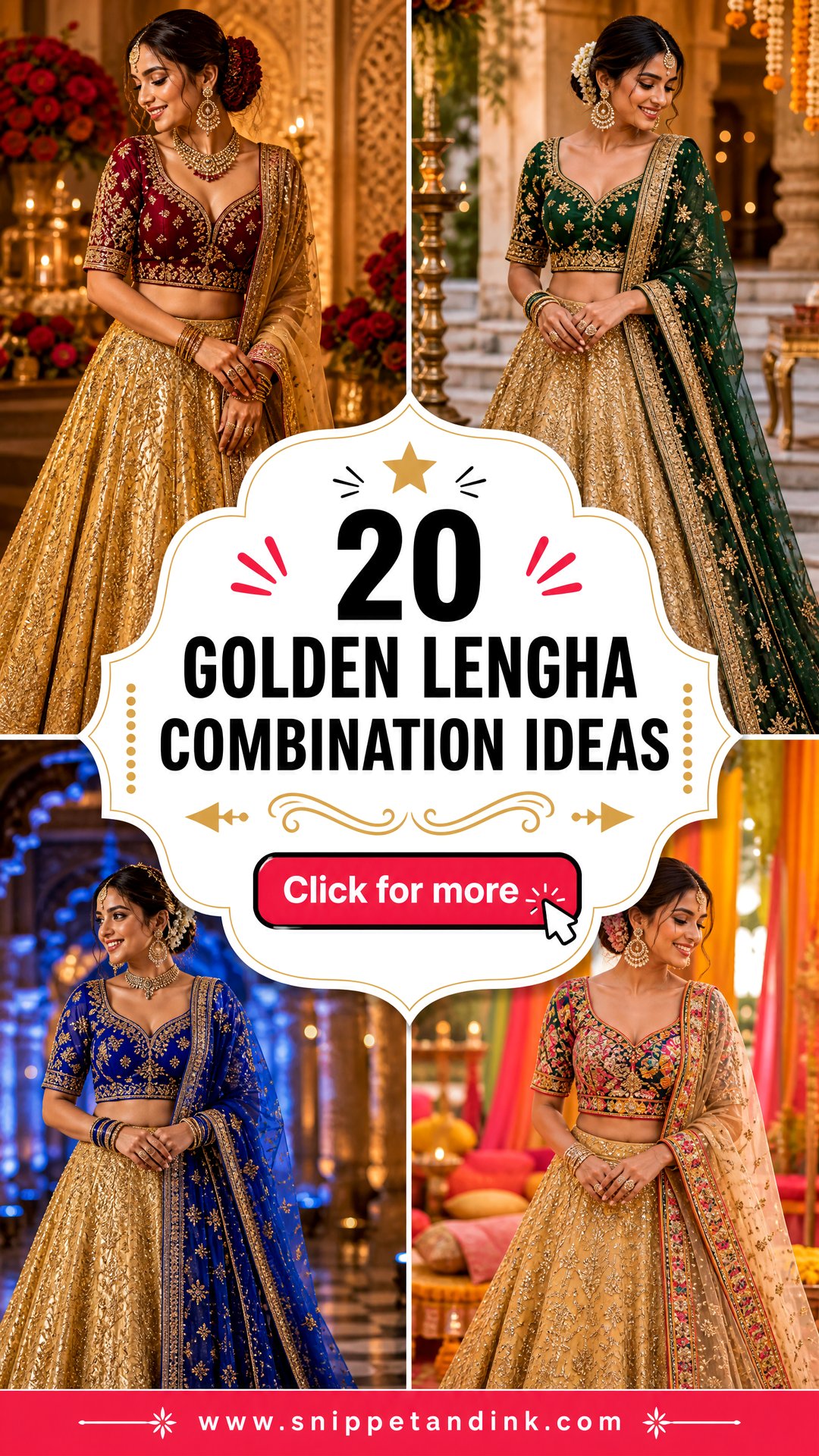
Reading the Gold in Your Skirt Before Shopping for Color
“Gold” covers a lot of ground. When a client brings me a lehenga, the first thing I do is take it to a window, because shop lighting flatters everything and tells you nothing about undertone. Once I know what I’m working with, the color choices narrow quickly.
- Yellow gold that looks almost buttery in daylight takes saturated colors well: red, rani, royal blue, emerald.
- Antique gold has a brown or bronze cast. Deep shades like maroon, bottle green and burgundy sit beside it more comfortably than bright ones.
- Champagne gold is pale and slightly cool, so pastels, ivory and true champagne suit it, while hot pink or orange can make it look washed out.
- Look at the embroidery thread as well as the base fabric. Plenty of skirts have warm zari on a cooler base, and the blouse should agree with whichever one covers more of the skirt.
If the skirt is being made, ask the tailor for an offcut from the hem allowance. A small square in your bag makes blouse and dupatta shopping much faster, and you stop guessing from memory.
1. Golden Lengha With Red Blouse
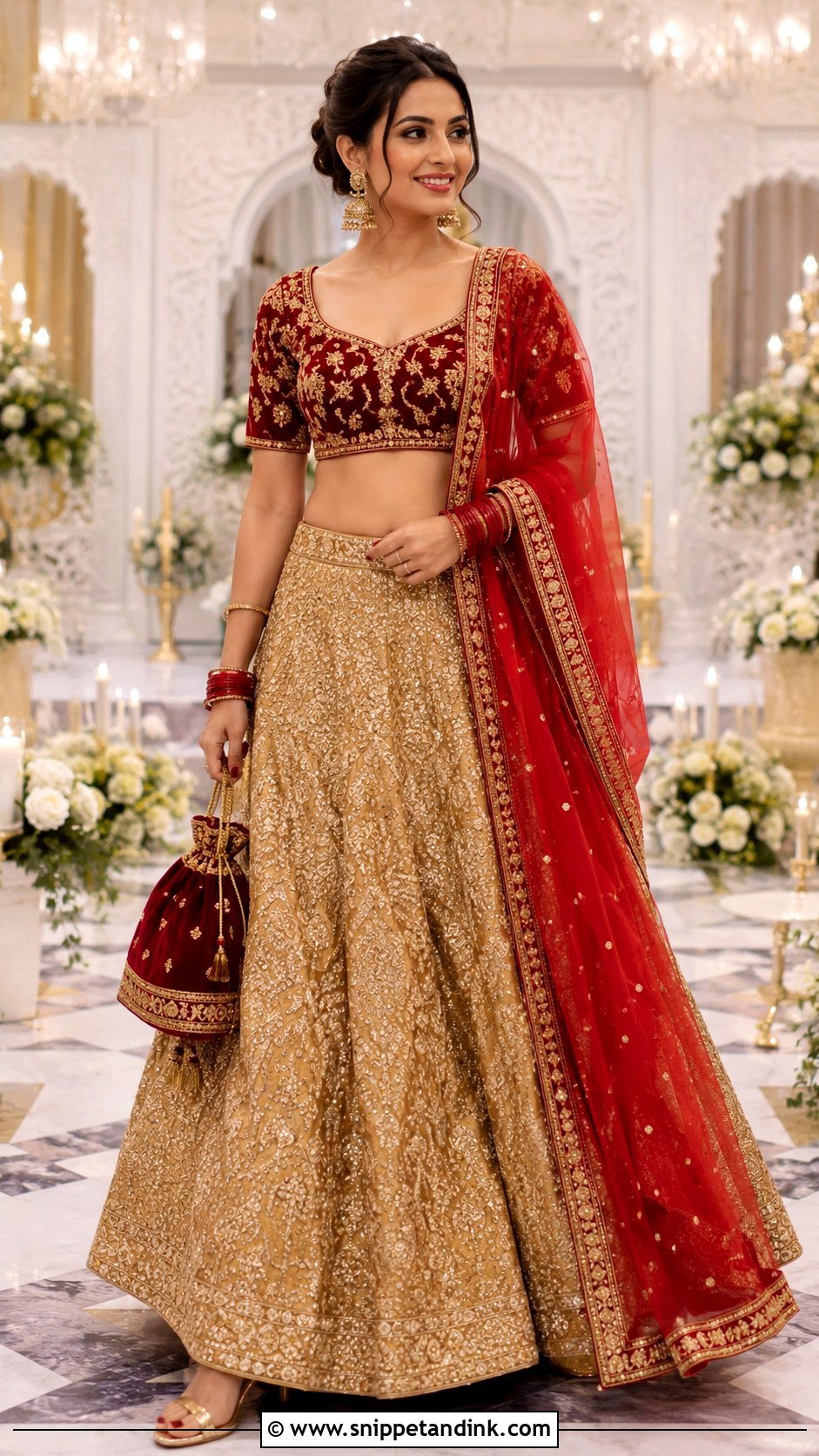
Red against gold is the pairing most families expect, and it’s hard to get wrong as long as the reds match each other. Velvet suits a winter function; raw silk holds its shape through a long day in any season. With an embroidered skirt I keep the neckline plain, a sweetheart or square cut, so the two don’t compete. A red net dupatta with a narrow gold border ties top to bottom. The mistake I see most is three different reds: blouse, dupatta and bangles bought on separate trips, each a shade apart, which reads as a mismatch the moment a camera flash hits it. Carry the blouse when you shop for the rest. Antique jhumkas, block heels and a sleek bun finish it, and the necklace stays small if the blouse is worked.
2. Golden Lengha With Maroon Blouse
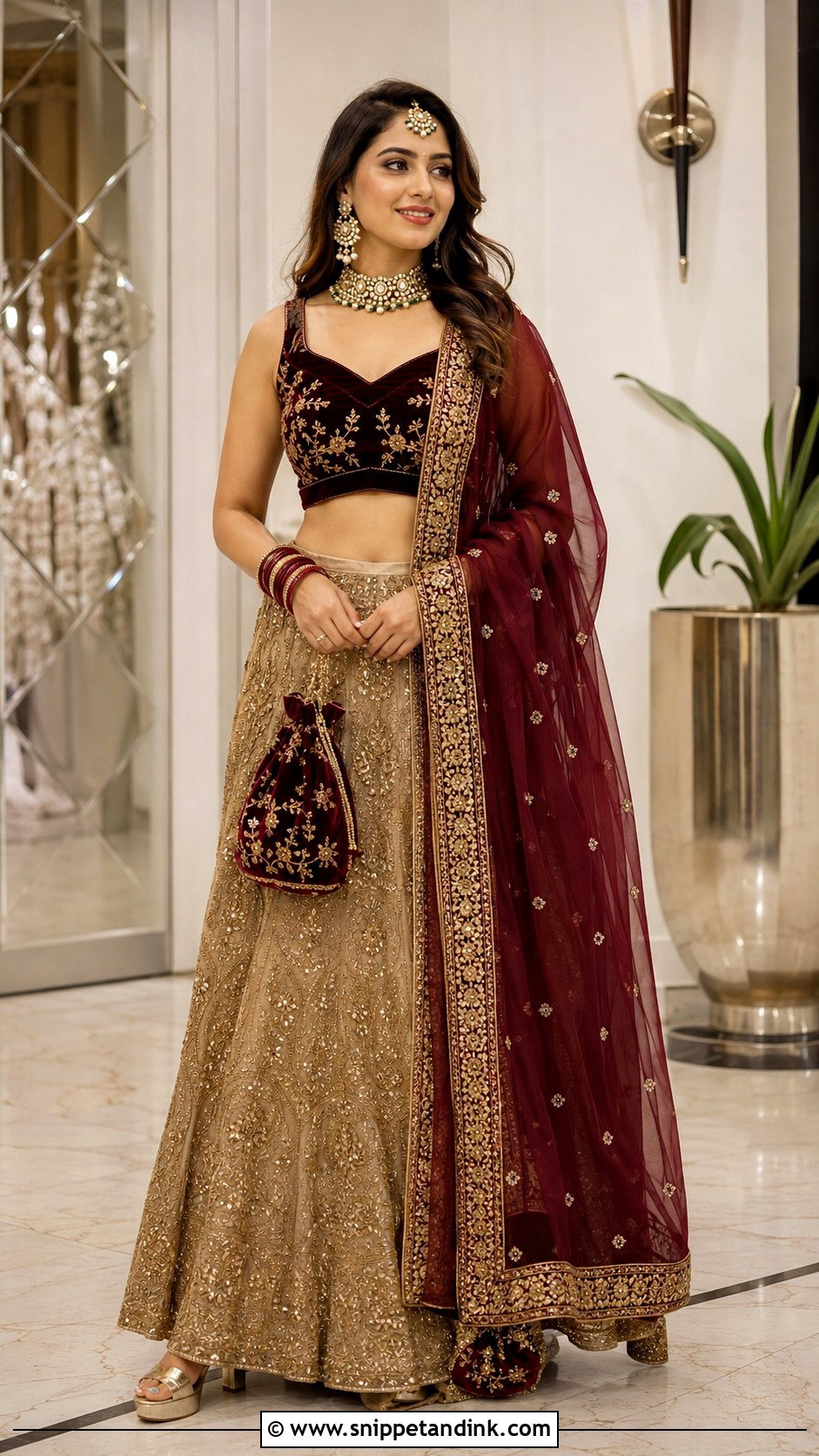
Maroon is my pick when the skirt is antique or bronze-toned gold, because bright red can make older-looking gold seem tired beside it. A fitted velvet blouse with elbow sleeves and a little zari keeps it regal. A sheer maroon dupatta with scattered motifs adds depth without hiding the skirt. Velvet is warm, so I’d only choose it for an evening or air-conditioned indoor event. Kundan jewelry, a velvet potli and platform sandals, which carry a heavy hem far better than slim heels, complete it. A berry lip sits more naturally here than a true red.
3. Golden Lengha With Emerald Green Blouse
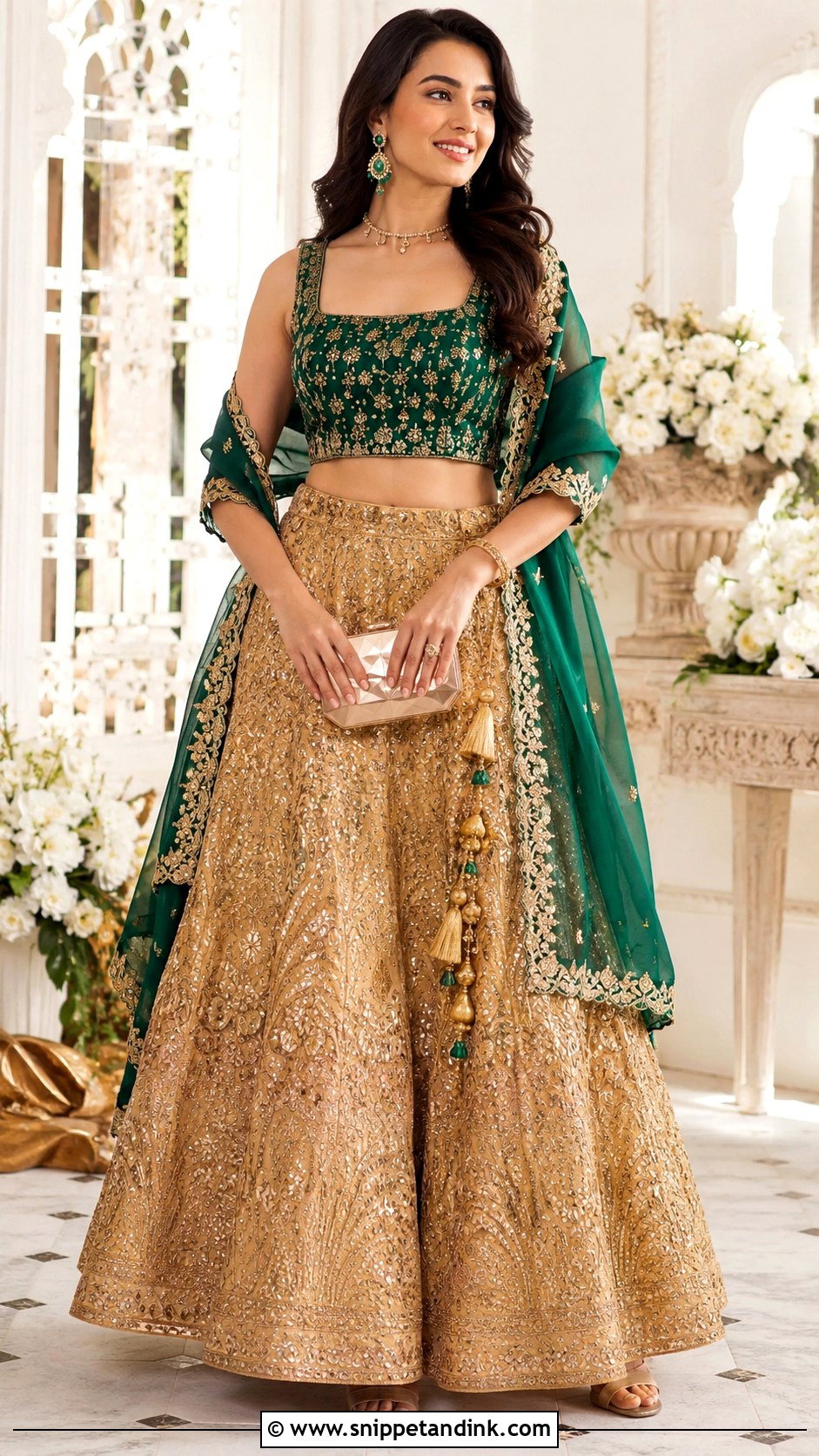
Emerald is the jewel tone I suggest most often to brides who don’t want red, because it flatters a wide range of skin tones. If the skirt is heavily worked, keep the blouse plain silk or velvet with a square neck and a little gold at the sleeves; the color does the contrasting for you. An organza dupatta in the same green keeps the story tidy. Check the fabric under warm indoor bulbs before you buy, since some emeralds go almost black at night. Emerald-and-gold earrings, a slim bracelet stack and a center-parted bun with small white flowers are all it needs.
4. Golden Lengha With Bottle Green Blouse
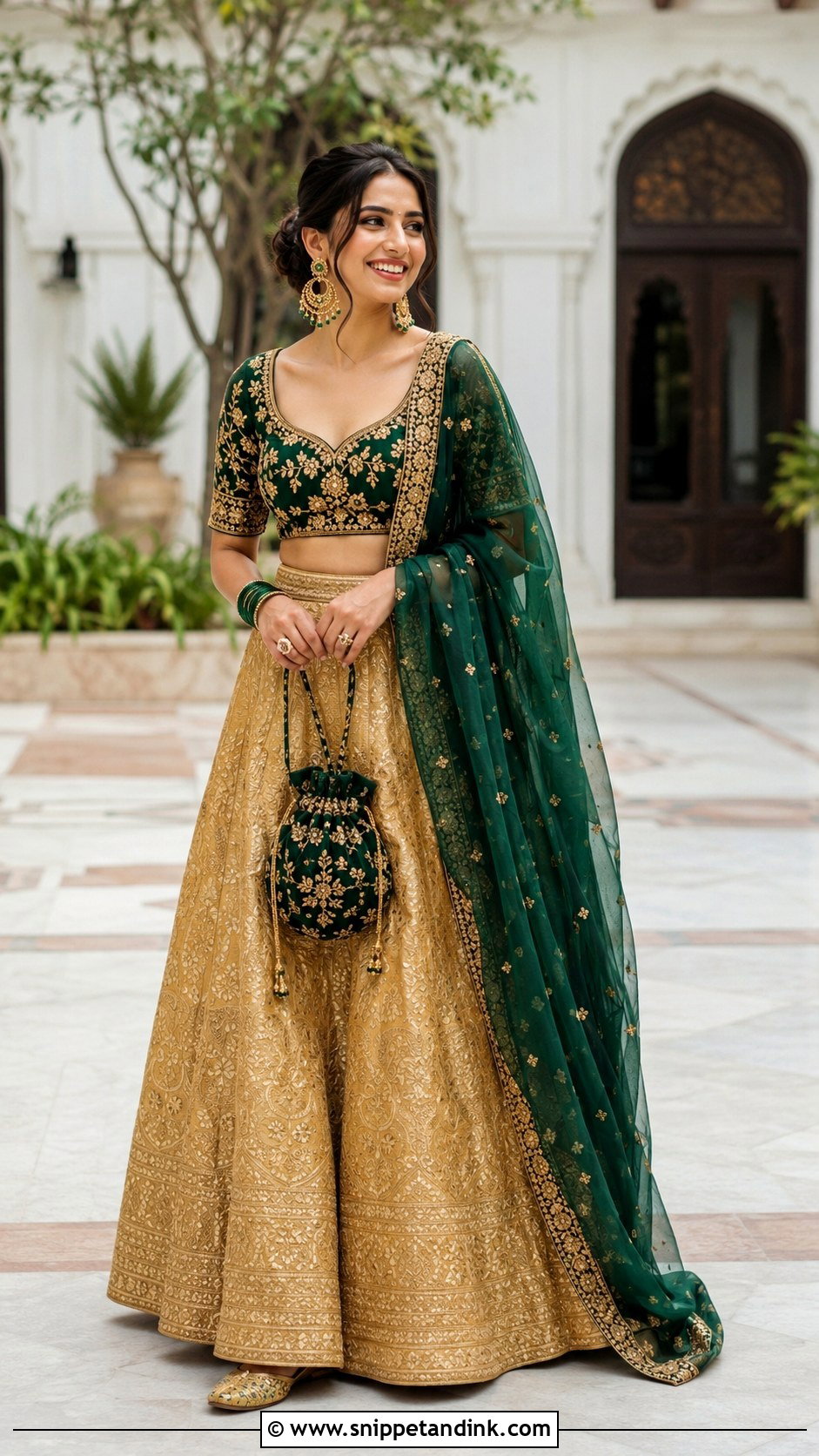
Bottle green is emerald’s quieter cousin, and it suits muted gold embroidery better than bright yellow gold. I like it as a structured blouse with three-quarter sleeves and a rounded neck. A plain chiffon dupatta over one shoulder balances an embellished skirt, and for a bridal event you can add a second, lighter gold dupatta over the head. Two dupattas need pinning at the shoulder, the back of the blouse and the hair, or the back one slides within the first couple of hours. Chandbalis, green glass bangles and embroidered juttis keep it traditional; a small potli beats a big handbag.
5. Golden Lengha With Royal Blue Blouse
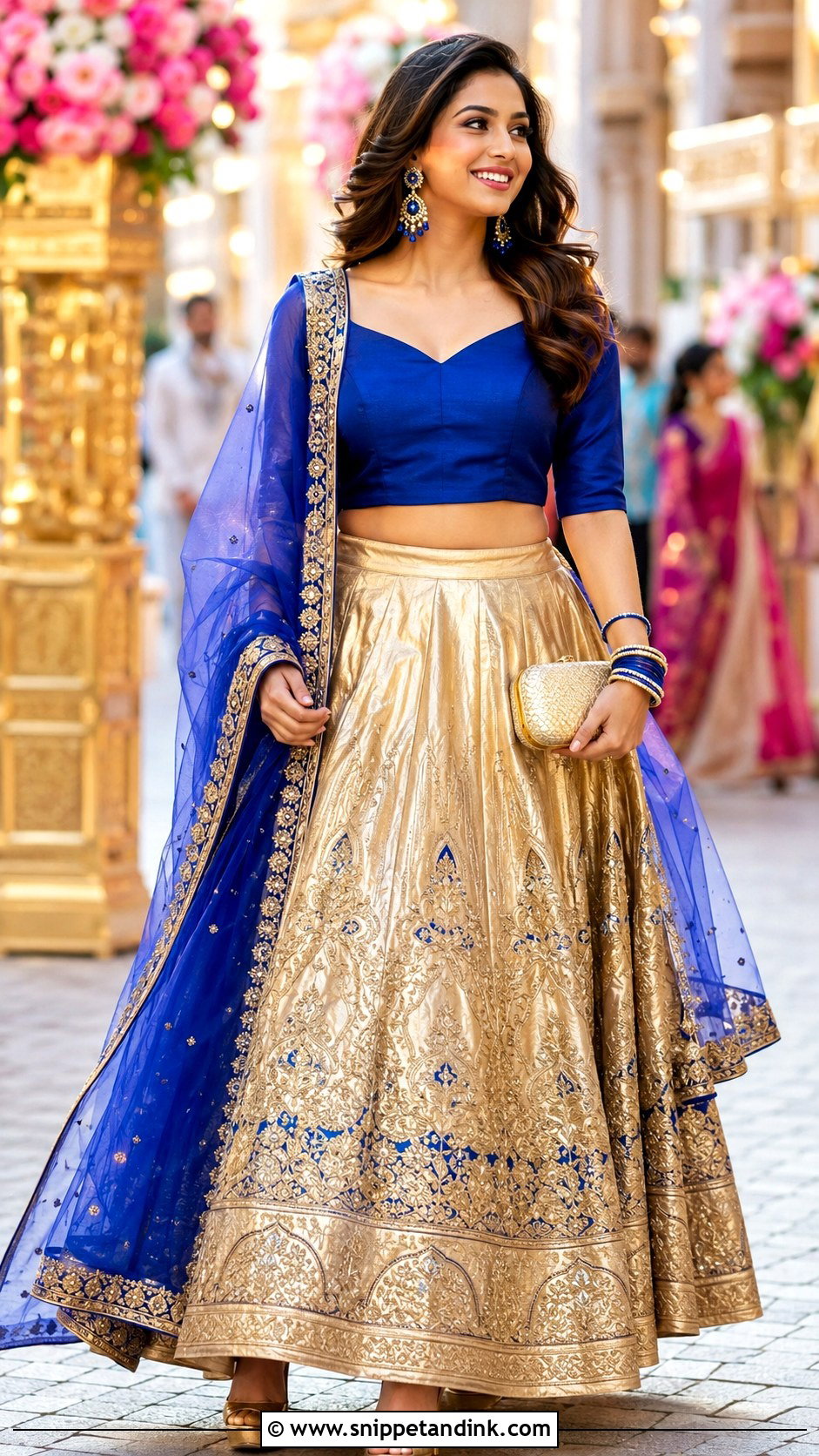
Royal blue against gold is the sharpest contrast on this list, which is exactly why it reads so clearly in photographs. A raw silk blouse with a boat neck or a structured sleeveless cut keeps it crisp. I drape the blue net dupatta diagonally across the torso so blue appears on both halves of the body; otherwise it looks like a blue top sitting on a gold skirt. Sapphire-toned earrings and blue-and-gold bangles tie it together. The heavier the hem, the lower I go on the heel. Save this one for lively functions, because it’s loud.
6. Golden Lengha With Navy Blue Blouse
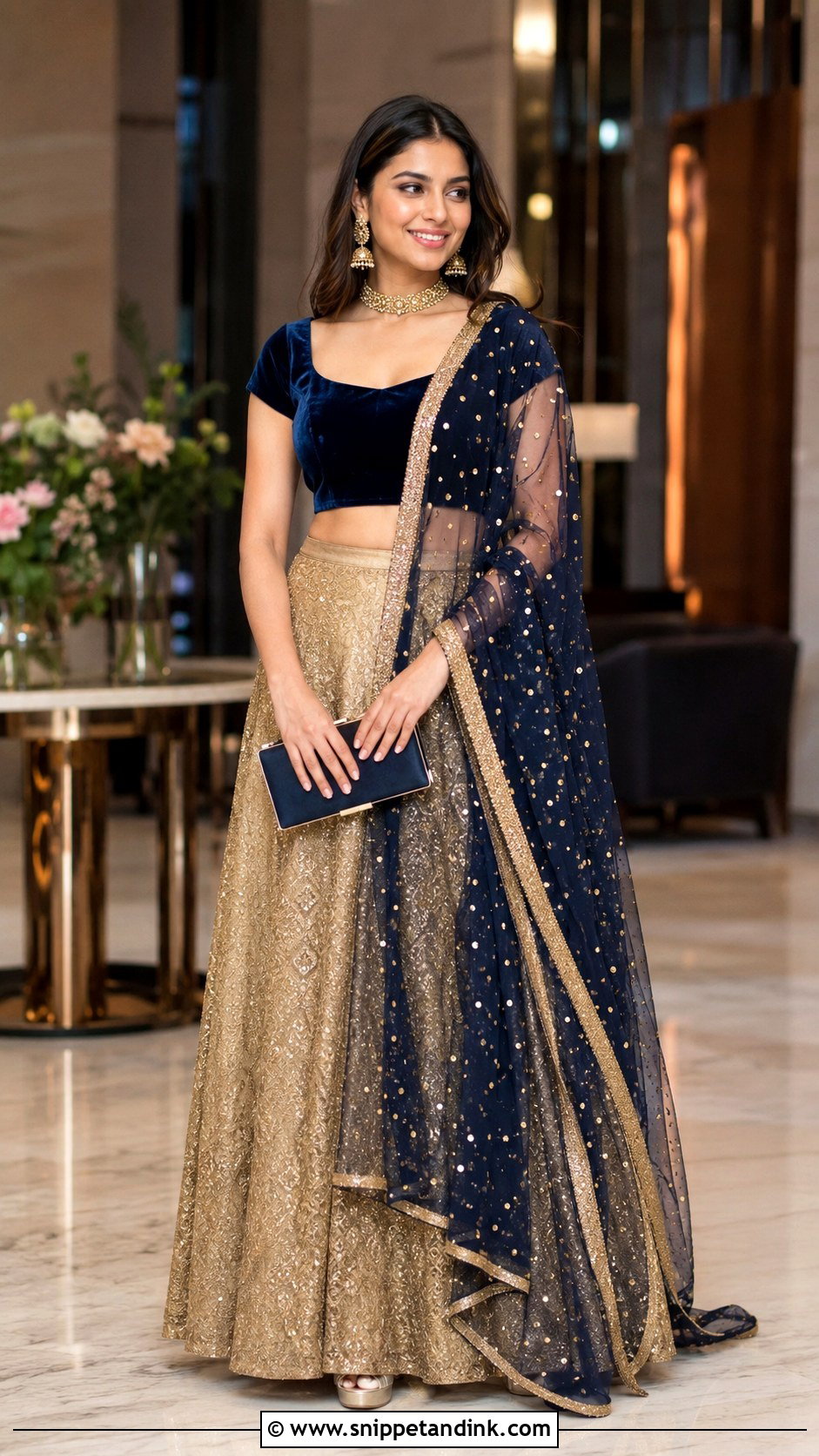
Navy is the grown-up version of royal blue: grounded, and a touch more contemporary. Keep the gold on the blouse to the neckline and cuffs, and let a dupatta dotted with tiny gold motifs carry the rest. If your neckline is dramatic, I’d skip the necklace and wear statement earrings instead. One honest warning: navy can photograph as black under dim reception lighting, so if you want it to read as blue at night, choose satin or silk with some sheen over matte velvet. A smooth low bun, bronze eyes and a soft rose lip keep it modern.
7. Golden Lengha With Black Blouse
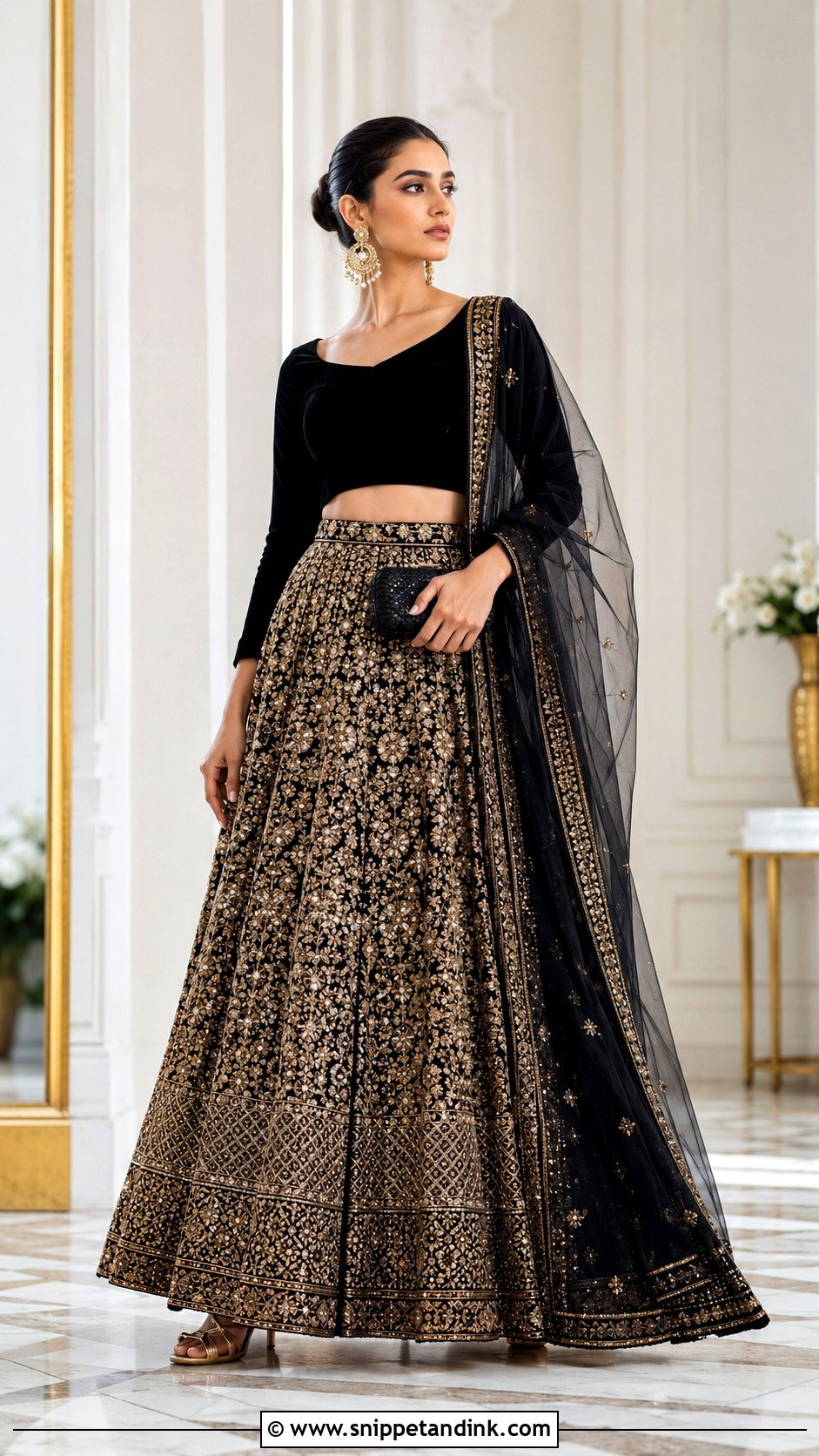
Black and gold need almost nothing else. A velvet or silk blouse with a square neck, full sleeves or a corset-style shape gives the structure, and restrained gold threadwork keeps it strictly two-tone. I drape the sheer black dupatta over one arm so the skirt stays visible. Some families avoid black at weddings altogether, so check with the hosts before you commit, especially as a guest. Sculptural earrings and a black clutch are enough. Very dark makeup next to black fabric makes the face look heavy, so I keep the eyes smoky brown and the lip neutral. Keep it for formal evening events.
8. Golden Lengha With Ivory Blouse
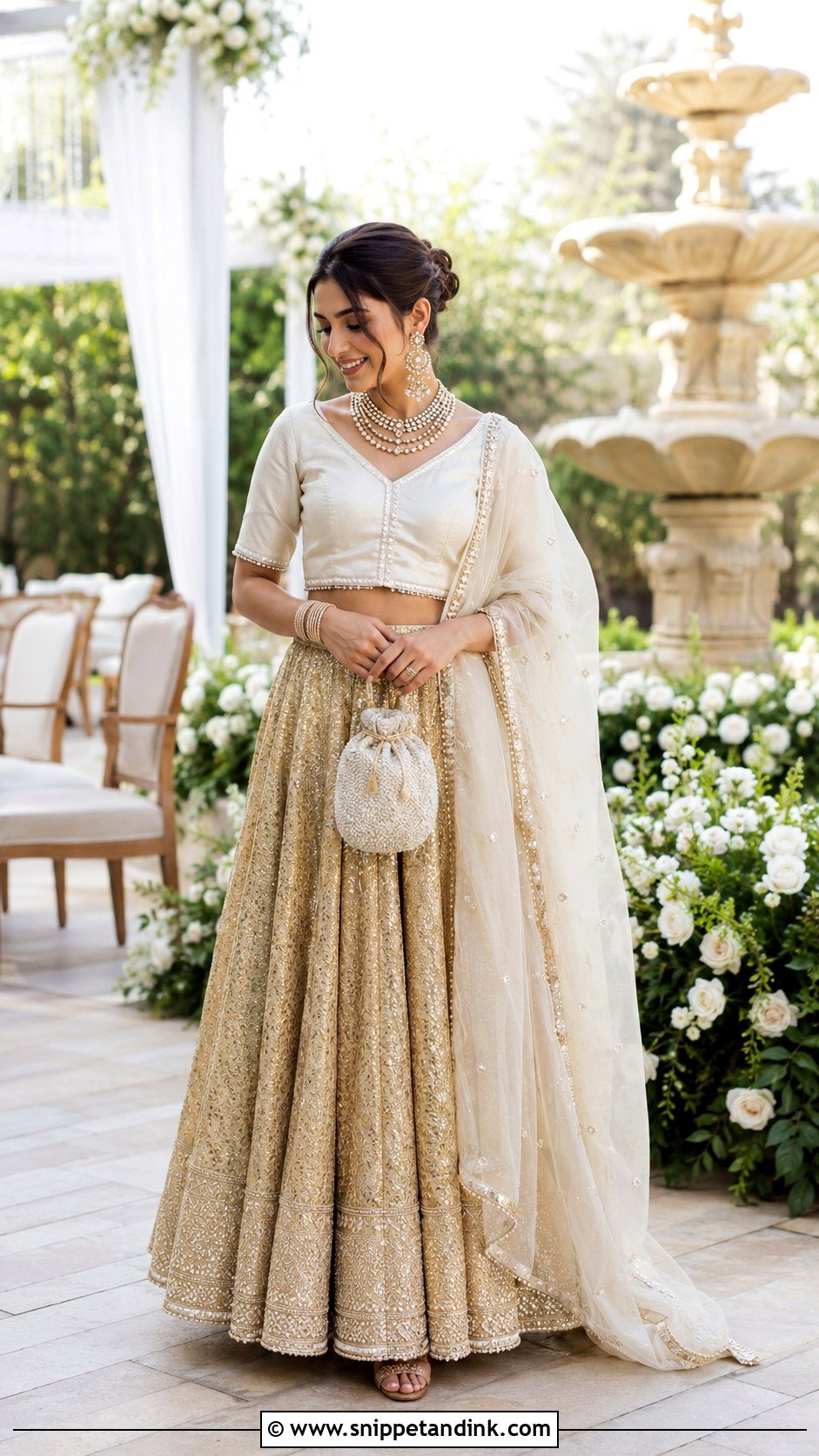
Ivory softens gold for daytime, and I reach for it with champagne or pale gold skirts. An ivory silk blouse with pearl details or a scalloped neckline does the work. Because the palette is neutral, texture has to carry it: silk against organza, pearls against zari. Ivory shows every mark, so I keep makeup wipes and a stick of white chalk in my kit for foundation transfer around the neckline. Pale gold sandals finish it, and it stays clear of looking bridal as long as the dupatta isn’t heavily worked.
9. Golden Lengha With White Blouse
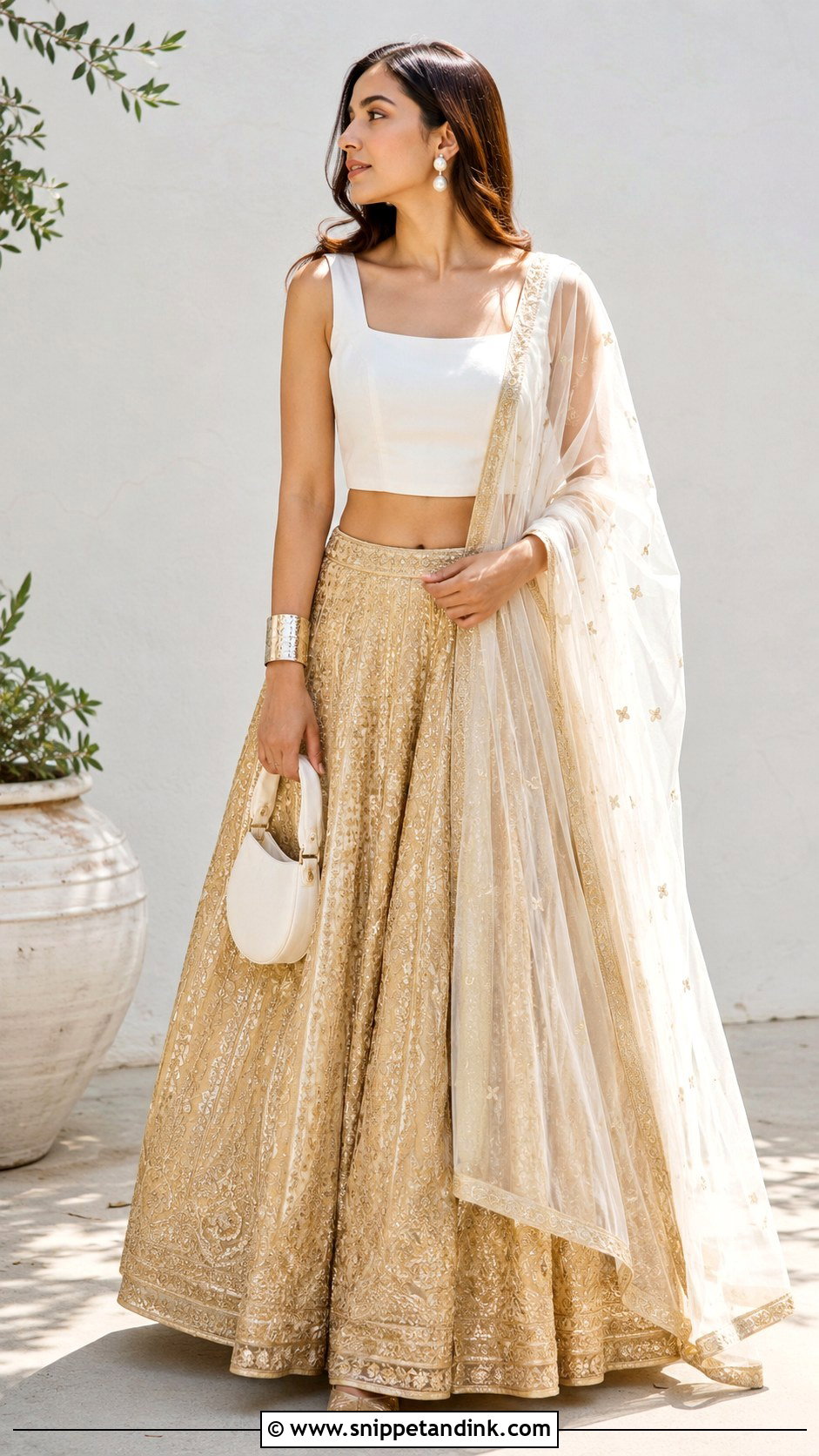
White is cooler and crisper than ivory, so I only pair it with skirts whose gold reads warm and bright. Cotton silk, satin or raw silk give the blouse enough body to stand up to a full skirt; thin cotton collapses against it. Go sleeveless with a square neck on hot days, elbow sleeves when you want coverage. Hold the white against the skirt’s embroidery thread, not just the base fabric, because a stark white can make cream thread look dingy. Pearl drops, a gold cuff and a low ponytail keep it fresh.
10. Golden Lengha With Blush Pink Blouse
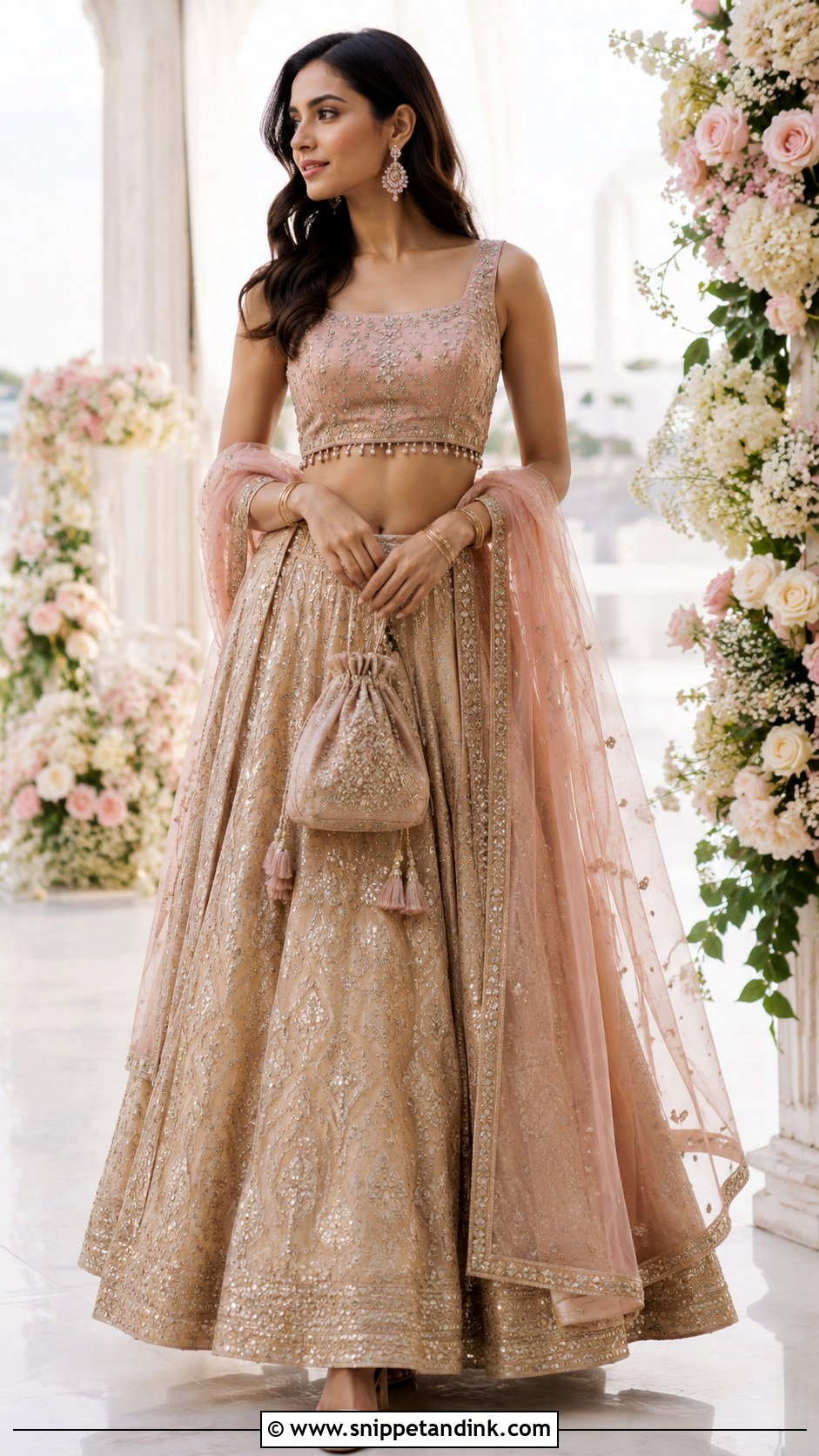
Blush adds color without pulling attention from detailed embroidery. A raw silk blouse with pearl work and short fitted sleeves is my usual pairing, with an organza dupatta carrying a narrow gold border and a scatter of sequins. I steer clients toward champagne heels here, because bright yellow gold shoes under a soft skirt look brassy. Blush can wash out very fair skin in harsh midday sun, so test it outdoors before you commit. Loose waves and a soft pink lip suit daytime weddings and engagements.
11. Golden Lengha With Rani Pink Blouse
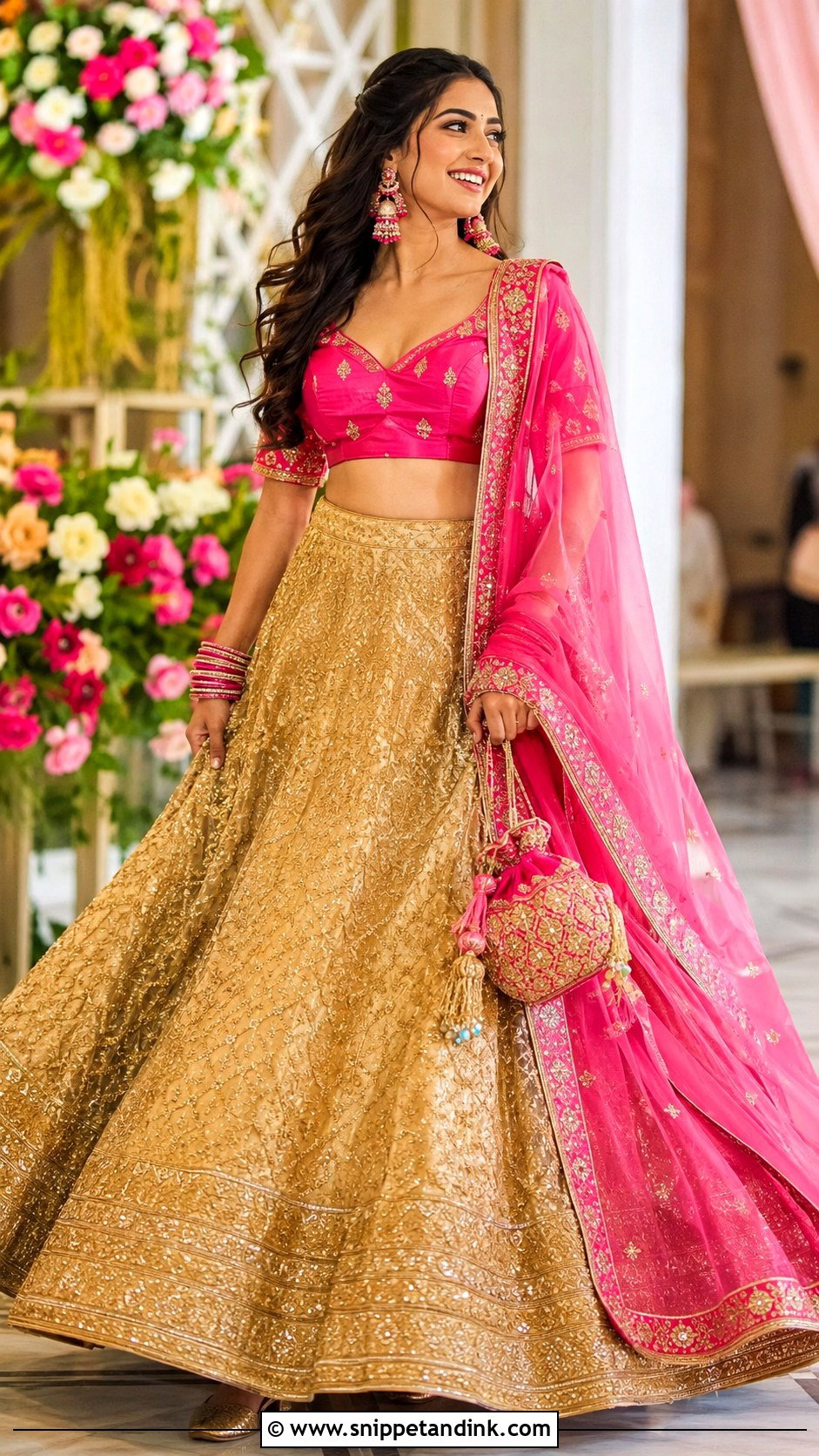
Rani pink is forgiving next to almost any gold, which makes it one of the safest bright choices. A fitted silk blouse with a deep square or rounded neck and placed embroidery is enough. Keep the net dupatta light with a thin trim: a heavy border plus rani plus an ornate skirt gets busy fast. If the skirt is highly worked, drop the big necklace and let the blouse color frame your face. Gold jhumkas with pink stones and stacked bangles complete it. If you’ll be dancing, a braided bun holds far better than loose curls.
12. Golden Lengha With Peach Blouse
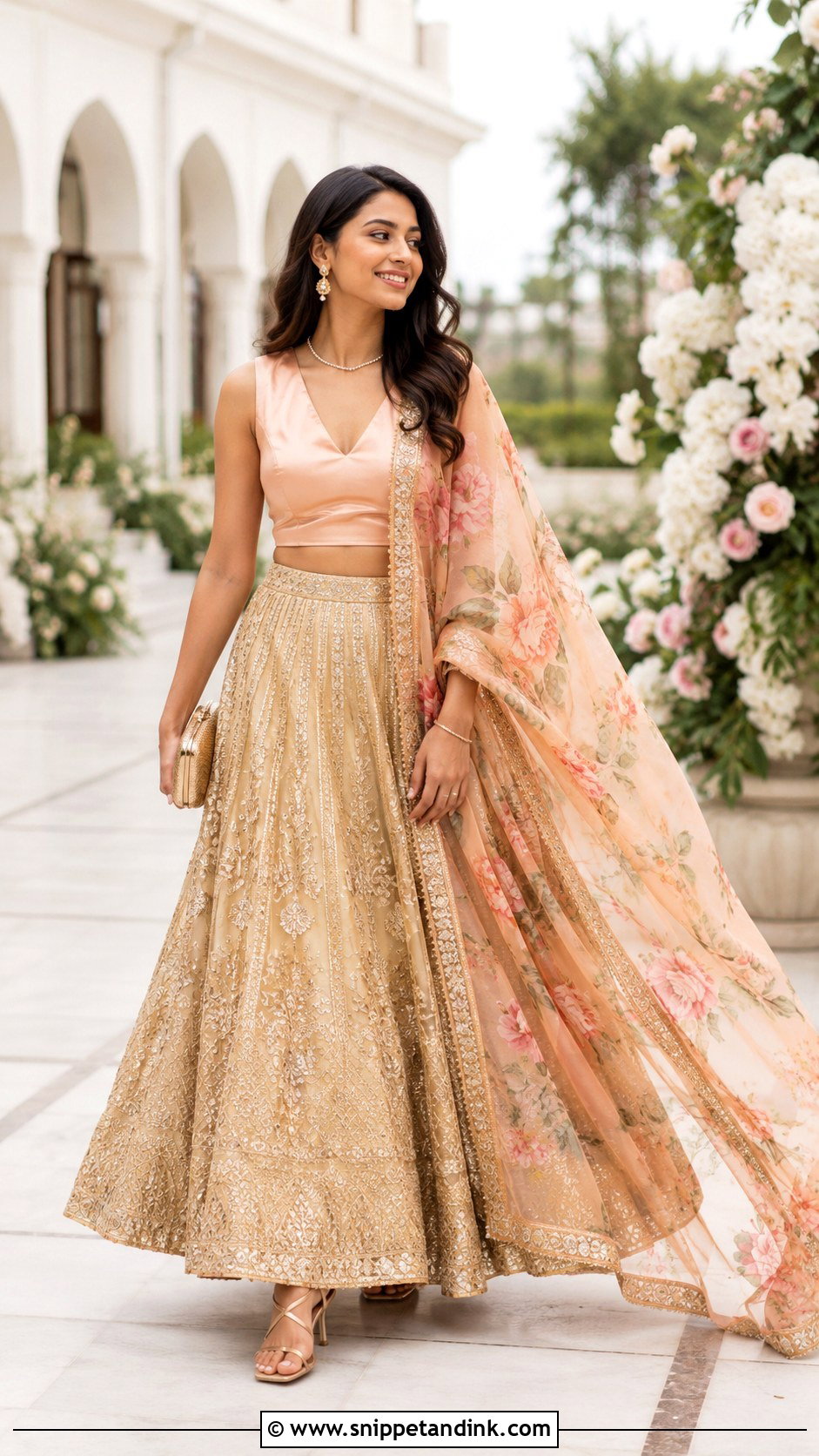
Peach looks best in natural daylight, which makes it a garden-wedding color for me rather than an evening one; under yellow indoor bulbs it can drift toward beige. Pair a peach silk blouse with a modest V-neck and champagne embroidery, then add a sheer dupatta with tonal florals. Dark shoes break the airy palette, so go champagne. Pearl earrings, a slim gold necklace and a nude lip are all it asks for.
13. Golden Lengha With Lavender Blouse
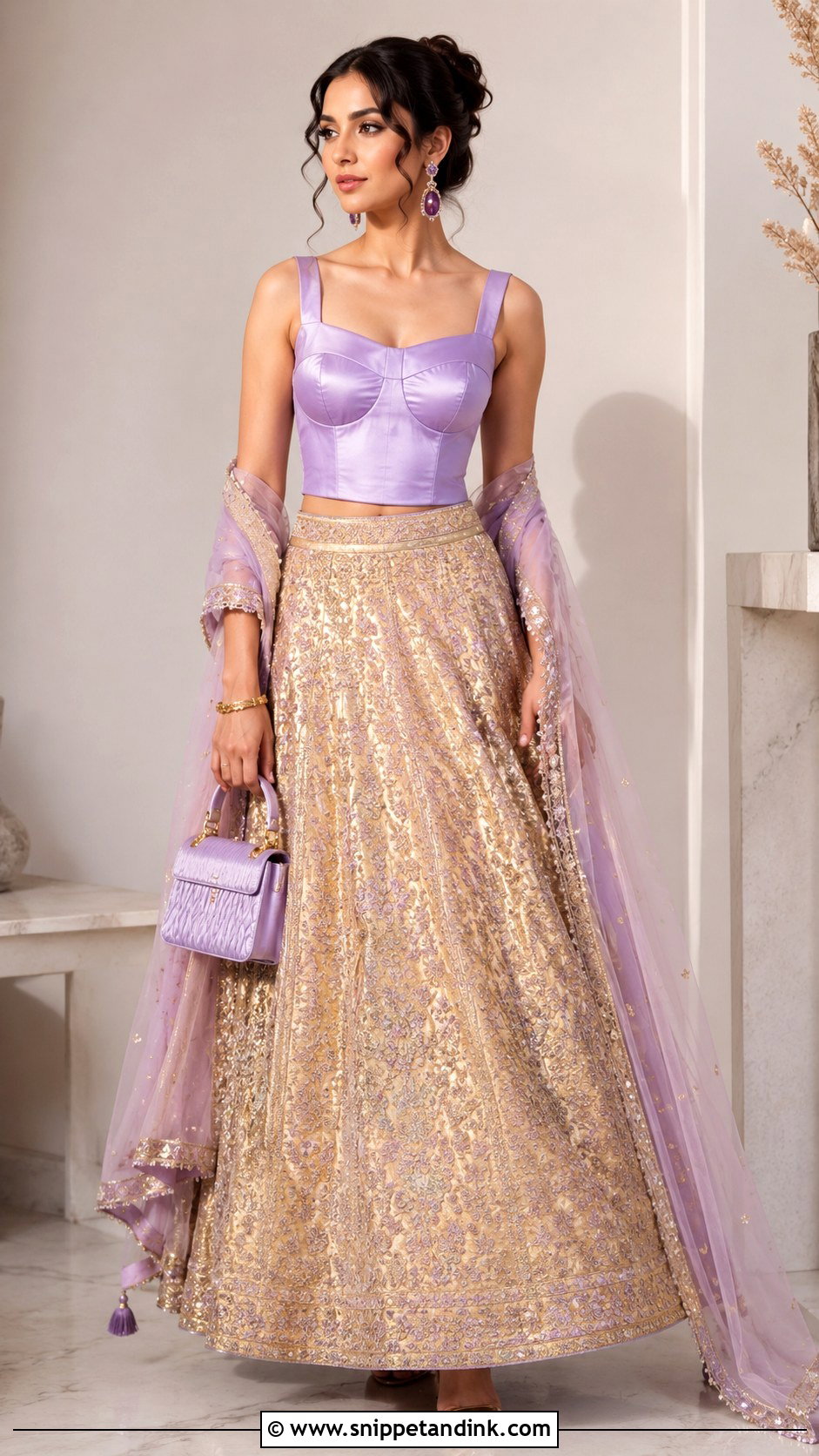
Lavender is the unexpected pastel here. It varies more than any other color on this list, from pinkish to grey-blue, so I always check it against the actual skirt: the pinker lavenders sit better with warm gold, the cooler ones with champagne. Whatever the fabric, give it a structured neckline and fitted sleeves so the pastel doesn’t look limp. A light organza dupatta with scattered gold detail, worn over one shoulder and pinned at the waist, looks current. Amethyst-toned earrings and lilac-grey eyeshadow keep the palette gentle.
14. Golden Lengha With Teal Blouse
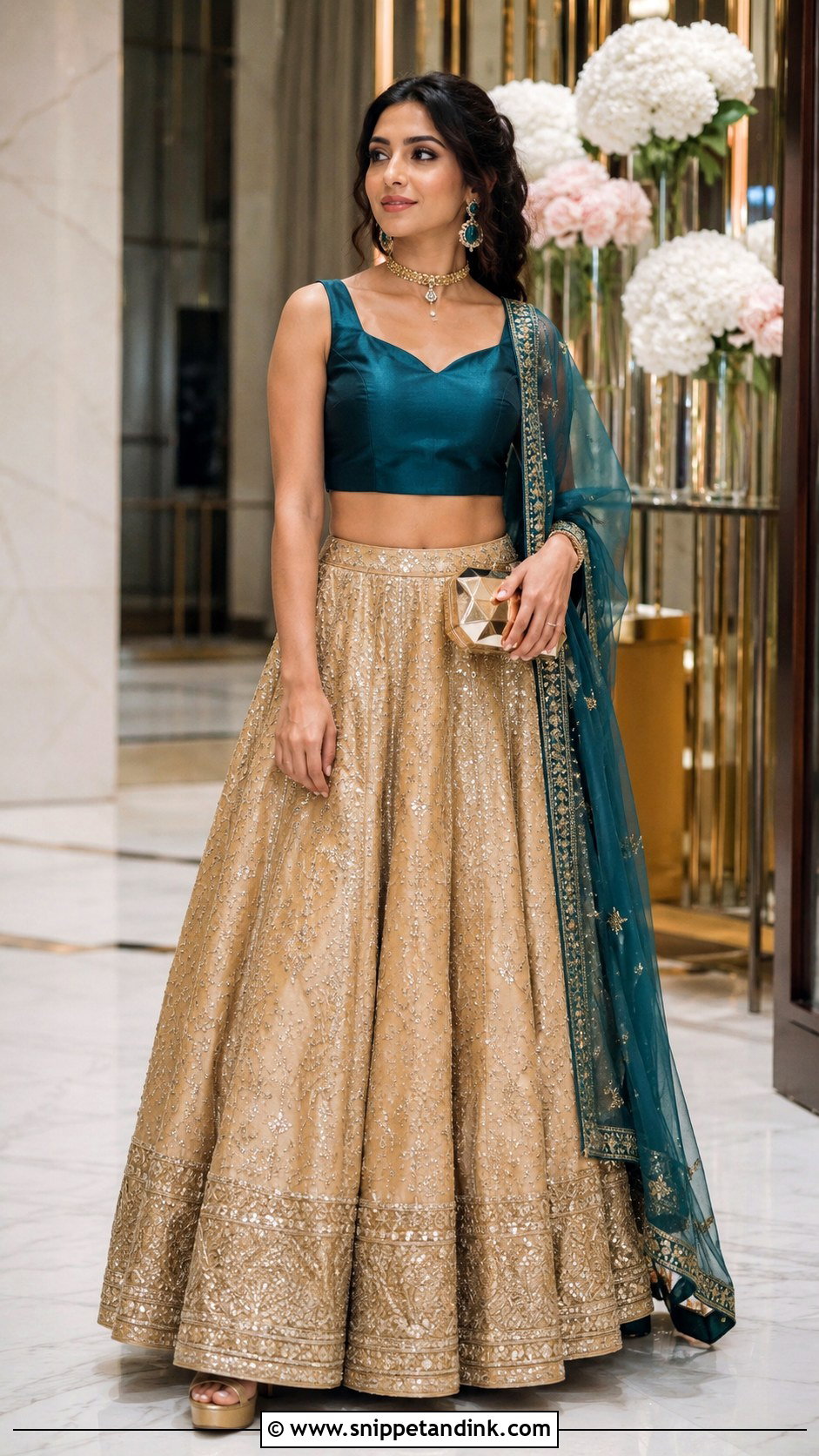
Teal sits between blue and green, so it’s one of the few colors that suits bright gold and antique gold equally. My reliable shape is a raw silk blouse with gold piping, a square neck and elbow sleeves. The sheer dupatta can go across one shoulder or loosely around the arms. Teal stone earrings and a small choker finish it, or statement earrings alone if you want less. Gold platform sandals stay hidden under the skirt and make several hours of standing far easier.

15. Golden Lengha With Turquoise Blouse
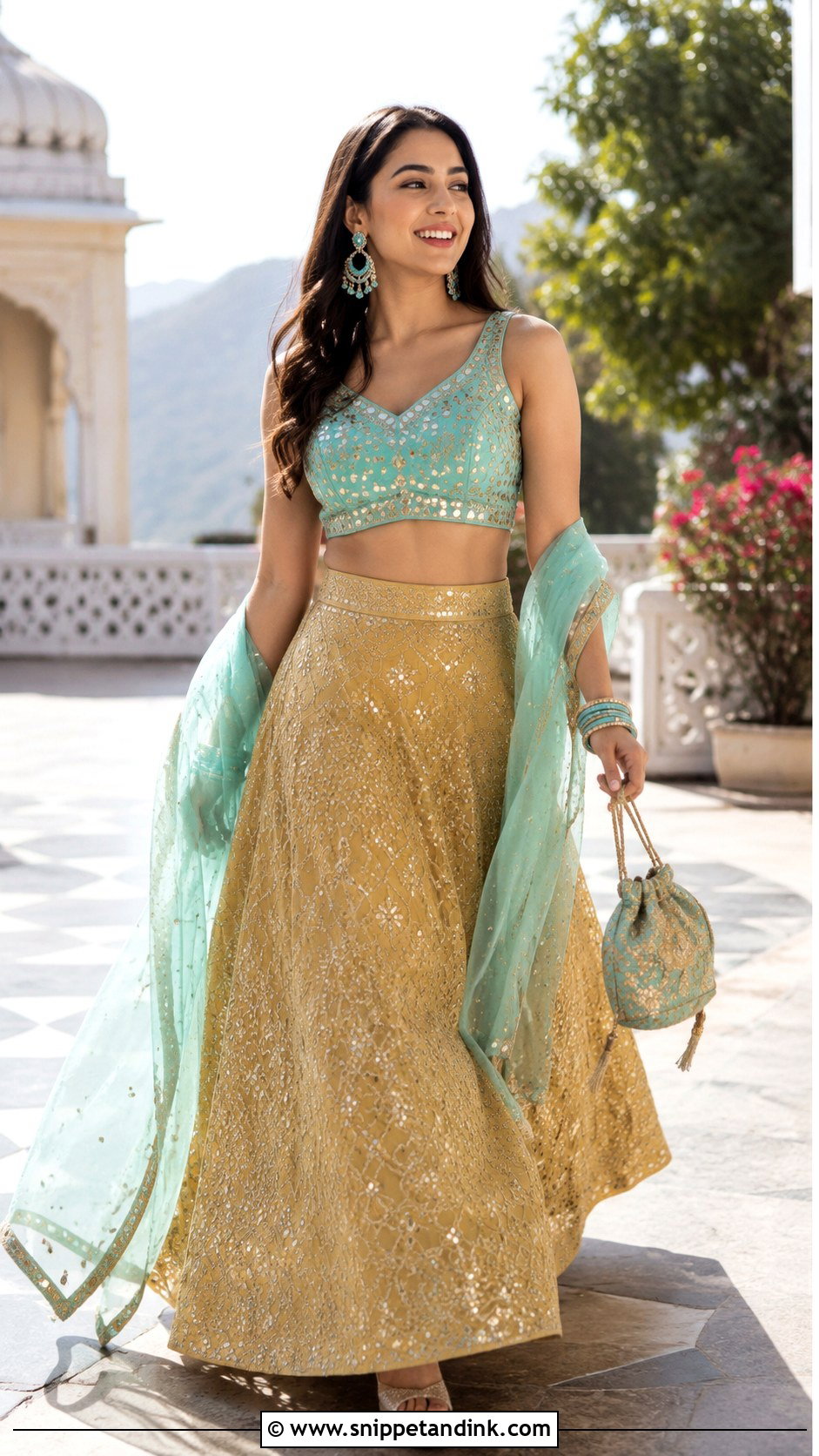
Turquoise is fresh enough for daytime and destination celebrations. A turquoise silk blouse featuring mirror accents or restrained gold work keeps it lively. Mirror work throws back flash and sunlight, so if the blouse already has plenty, I’d keep the jewelry modest or the photos turn into glare. A chiffon dupatta with a thin gold border goes in the same shade. On grass I choose nude-gold wedges, because narrow heels sink. A coral-nude lip suits turquoise better than a pink one.
16. Golden Lengha With Orange Blouse
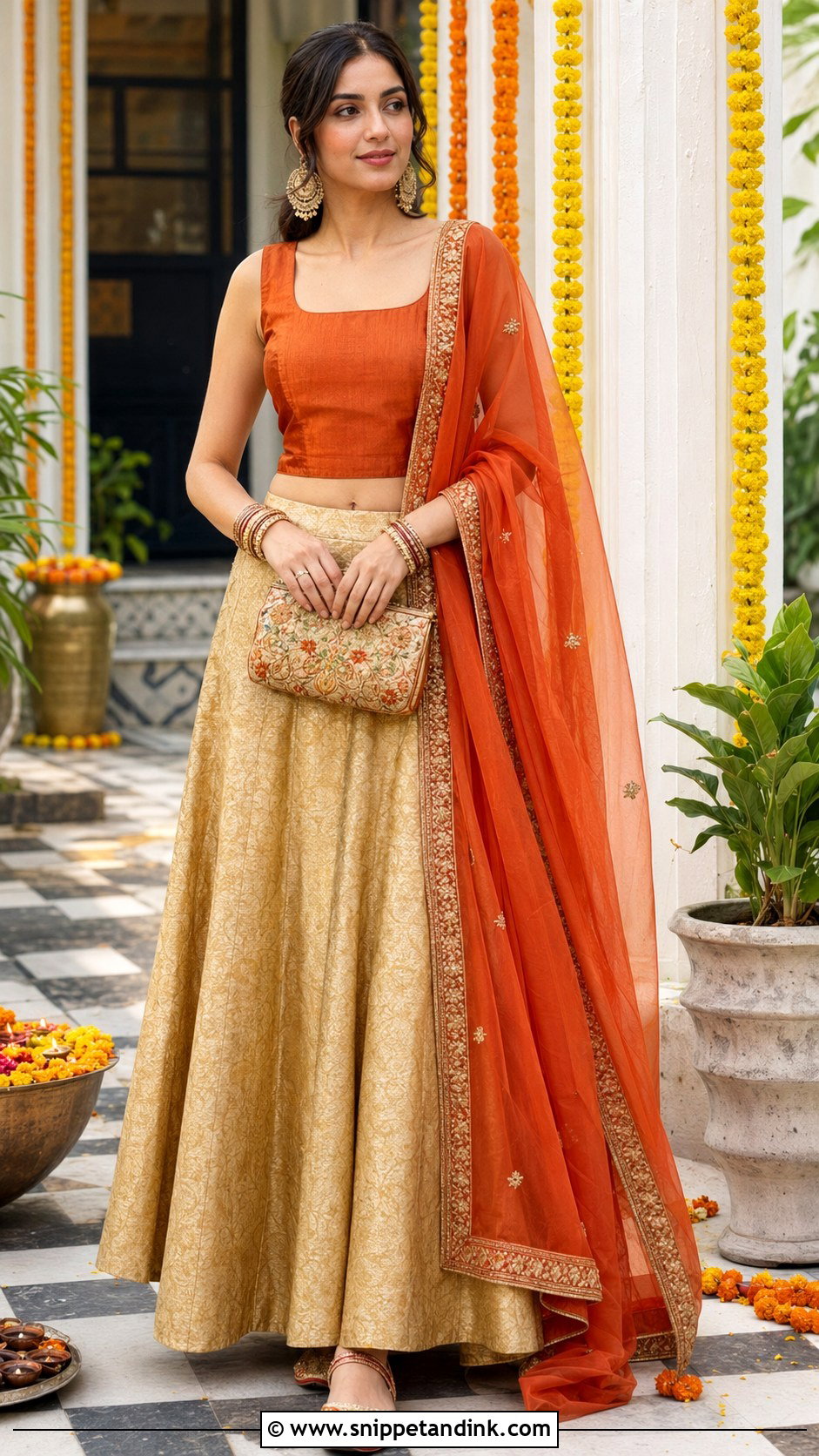
Burnt orange brings earthy warmth, and it’s the color I’d suggest for a daytime mehndi function. Raw silk or brocade with a rounded neck and antique gold motifs keeps it grounded, and with dense embroidery on the skirt the blouse should stay fitted and fairly plain. A soft chiffon dupatta draped loosely adds movement. Traditional juttis suit this palette more than heels do. Be careful not to drift into bright tangerine: next to yellow gold it can look like a costume. Bronze eyeshadow and a terracotta lip pull it together.
17. Golden Lengha With Mustard Yellow Blouse
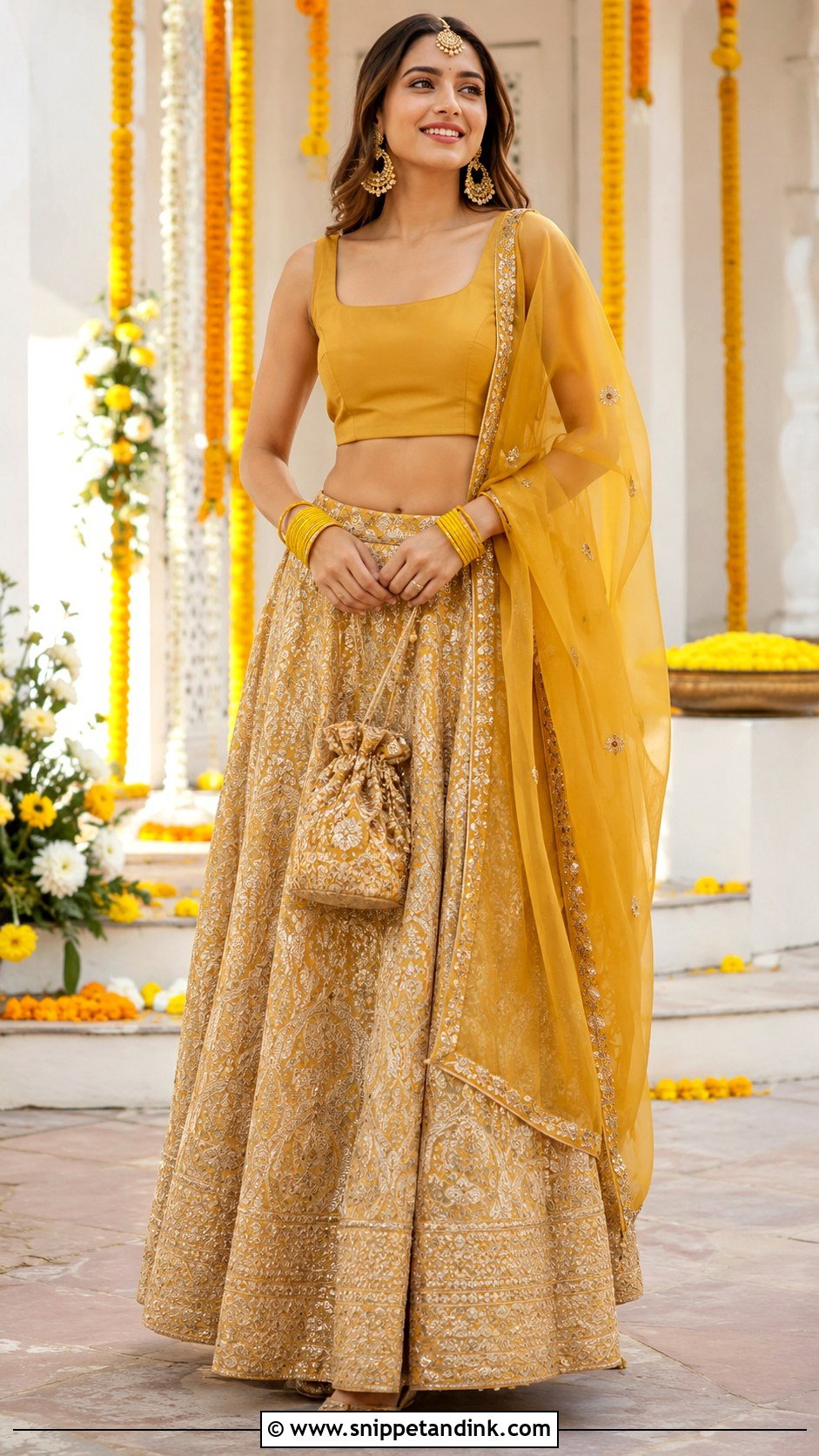
Mustard is a tonal choice, and the risk is the outfit going flat because mustard and gold sit so close together. The fix is finish, not color. I put a matte silk blouse against a shiny skirt, add a sheer organza dupatta, then bring in polished metal through the jewelry, so each layer reflects light differently. Keep the blouse threadwork light, mainly along the sleeves. Yellow glass bangles, an embroidered potli and a peach-brown lip stay in the warm palette for bright daytime ceremonies.
18. Golden Lengha With Burgundy Blouse
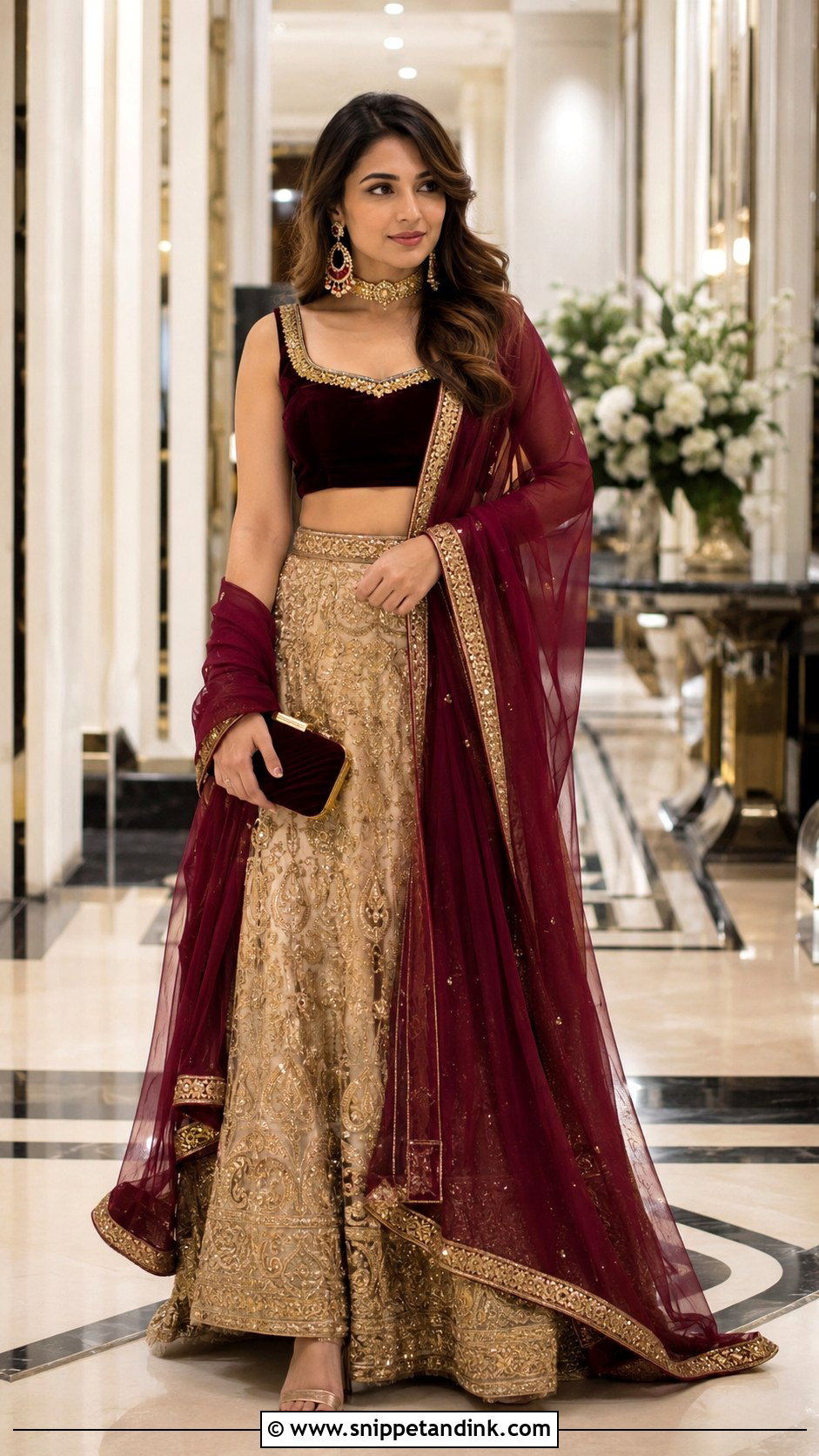
Burgundy is maroon with more wine in it, and I treat it as an evening color. With an antique gold skirt I’d go velvet, cut with a sweetheart neck or full sleeves. Drape the sheer burgundy dupatta neatly over one shoulder only; velvet is heavy enough that a second layer feels warm by the reception. Garnet earrings, a gold choker and a velvet clutch are plenty, since the deep blouse already draws the eye. A sleek bun, soft brown smoky eyes and a muted berry lip suit the palette.
19. Golden Lengha With Champagne Blouse
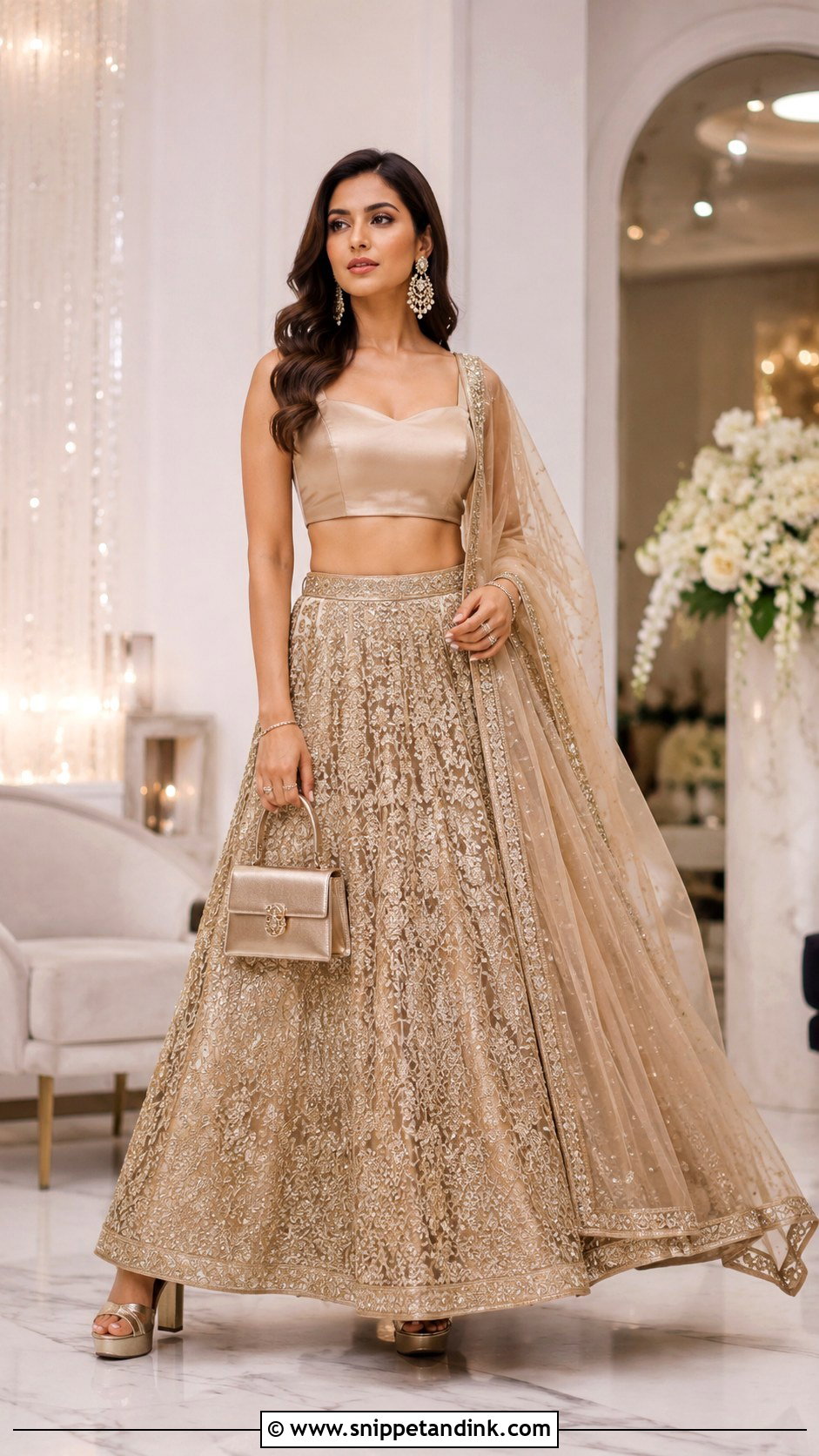
Champagne gives you a near-monochrome look, so the contrast has to come from fabric: satin or silk against an embroidered skirt, plus a sheer dupatta for movement. This is where the undertone check matters most. Very yellow gold beside cool champagne looks like two different outfits unless the embroidery contains both tones. A square neck with a little pearl detail, crystal-and-gold earrings and champagne platforms finish it. I like it for engagements and receptions where you want to look polished rather than bright.




20. Golden Lengha With Multicolor Blouse
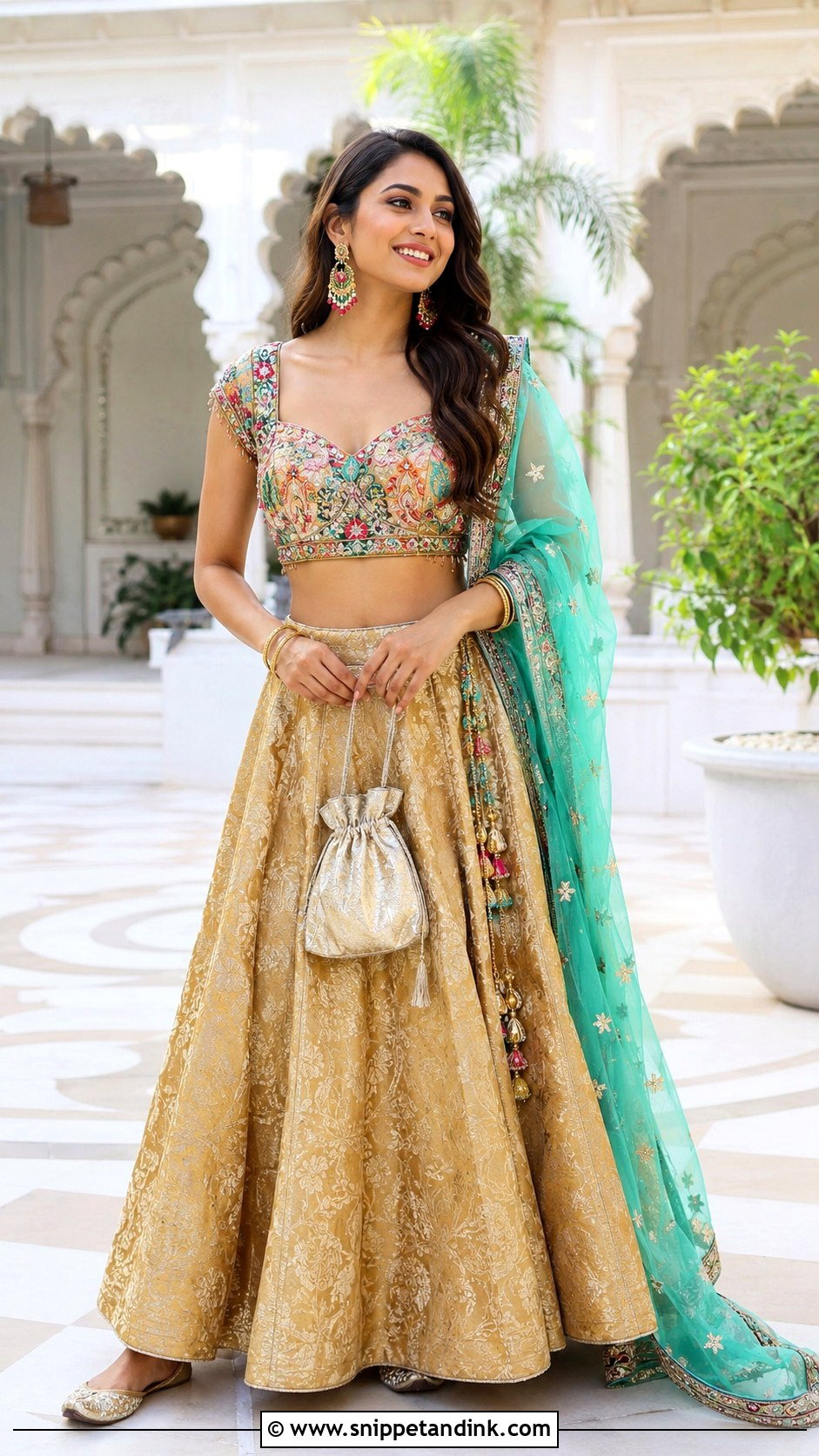
A multicolor embroidered blouse makes a plain gold skirt feel personal. Look for a pattern where gold thread links the colors. Then pick one shade from the blouse for the dupatta instead of adding a new one; that single repeat is what makes the outfit look planned. Stones in the jewelry should echo one or two blouse colors at most, with a plain metallic potli and juttis. Get the fit close, too. A busy pattern exaggerates every wrinkle on a loose blouse.
What a Heavy Lehenga Feels Like by Evening, and How I Plan for It
A fully embroidered skirt can feel light at the fitting and heavy by the reception. I plan the wearing as carefully as the colors.
- Get the skirt hemmed while wearing the exact shoes you’ll use on the day. Change heel height later and you’ll either trip on it or show ankle.
- Ask for the waistband to sit where you actually want it, at the waist or slightly lower, and wear it for an hour at home to see whether it digs in.
- Pin the dupatta at the shoulder from the underside of the blouse and again at the back, so the weight hangs from the blouse instead of pulling at your neck.
- A can-can or layered underskirt gives volume, but it also adds heat. In summer I’d ask for a lighter lining instead.
- Practise sitting down and using the bathroom before the day, ideally with someone who’ll be with you to help.
Packing Zari Away After the Wedding
Metallic embroidery dulls if it’s stored badly. Air the lehenga for a day before folding it, wrap it in soft cotton or muslin rather than plastic, and keep perfume and deodorant well away from the zari, since sprays can discolor the metallic thread. I tell clients to refold it along different lines every few months so the embroidery doesn’t crack at the same creases, and to send it only to a cleaner who handles heavy embellished work.
Two Checks Before the Blouse Goes to the Tailor
Most of what makes these combinations work comes down to two checks. First, match undertones by holding swatches against the skirt in daylight, because bright gold, antique gold and champagne behave like different colors. Second, edit: if the blouse and skirt are both heavily embroidered, the dupatta goes light, and if the neckline is worked, the necklace goes small. Red, emerald, royal blue and burgundy give you contrast; ivory, blush, peach and champagne soften it. None of that matters if you can’t walk or your dupatta keeps slipping, so I’d sort the shoes and the pinning before the jewelry.
You'll Like These Ideas:






Leave a Reply