
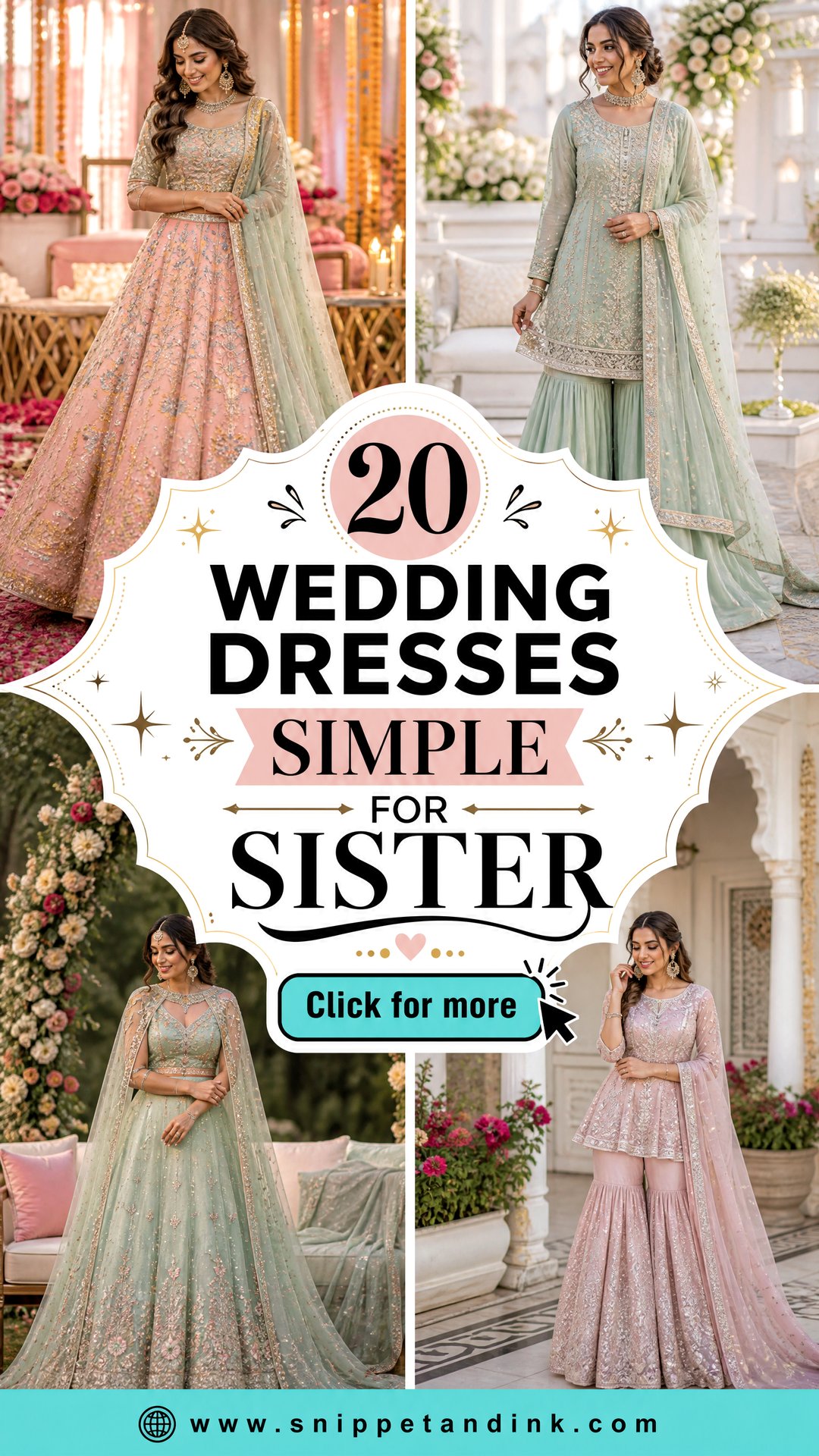
Planning an outfit for your sister’s wedding is a different brief from dressing a guest. You’ll be in more family photos than anyone except the couple, you’ll be on your feet fetching things and fixing her dupatta, and you still mustn’t look like a second bride. So when I style a sister, I start with fabrics that move and stay put, and I keep the embellishment light. The lehengas, sarees, Anarkalis and Indo-Western sets below were picked with that in mind. Check the venue, dress code, season and your sister’s color palette first, then plan shoes you can actually stand in and a bag big enough for her lipstick as well as yours.
One Outfit per Function, Not One for the Whole Week
Most South Asian weddings run over several events, and the bride’s sister is usually at every one of them. I plan each outfit around what you’ll be doing at that function, not only how formal it is.
- Mehndi: cotton or cotton silk, short or elbow sleeves, and nothing pale you’d mind getting henna paste on. If you’re having your own hands done, choose an outfit you can get into without help once the paste is on.
- Sangeet: the dancing night. Shararas, palazzos, dhoti sets and pre-draped sarees all let you move without a pleat coming loose.
- Wedding ceremony: your most formal look, usually a silk or Banarasi saree or a lehenga, in a color that steps back from the bride’s.
- Reception: the place for a gown, an organza or ruffle saree or a pantsuit, and the outfit most likely to appear in the couple’s framed photos.
If the budget only stretches to two new outfits, I’d spend on the ceremony and the reception, then restyle something you already own for the mehndi with new earrings and a different dupatta.
1. Pastel Lehenga for Sister Wedding
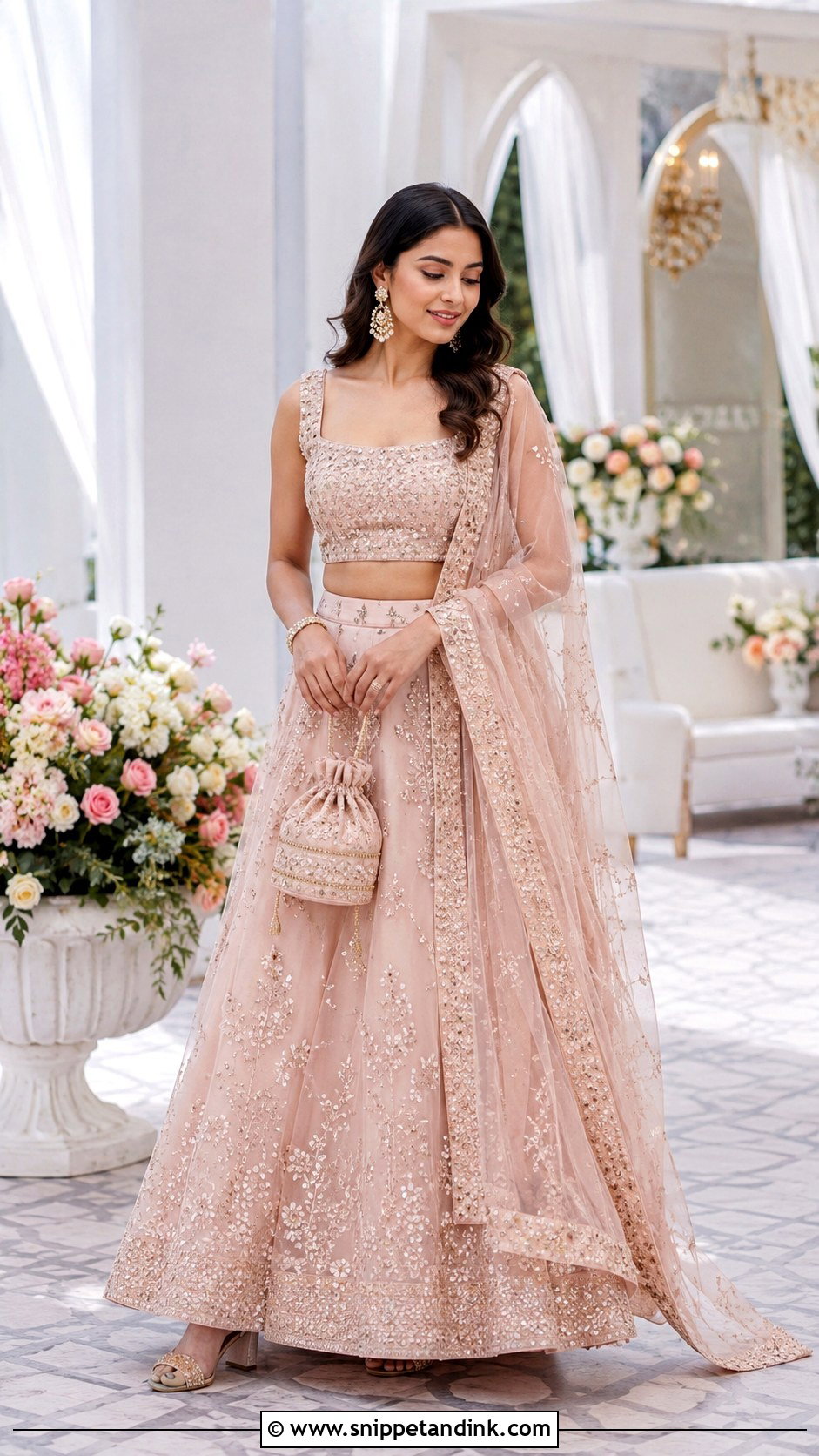
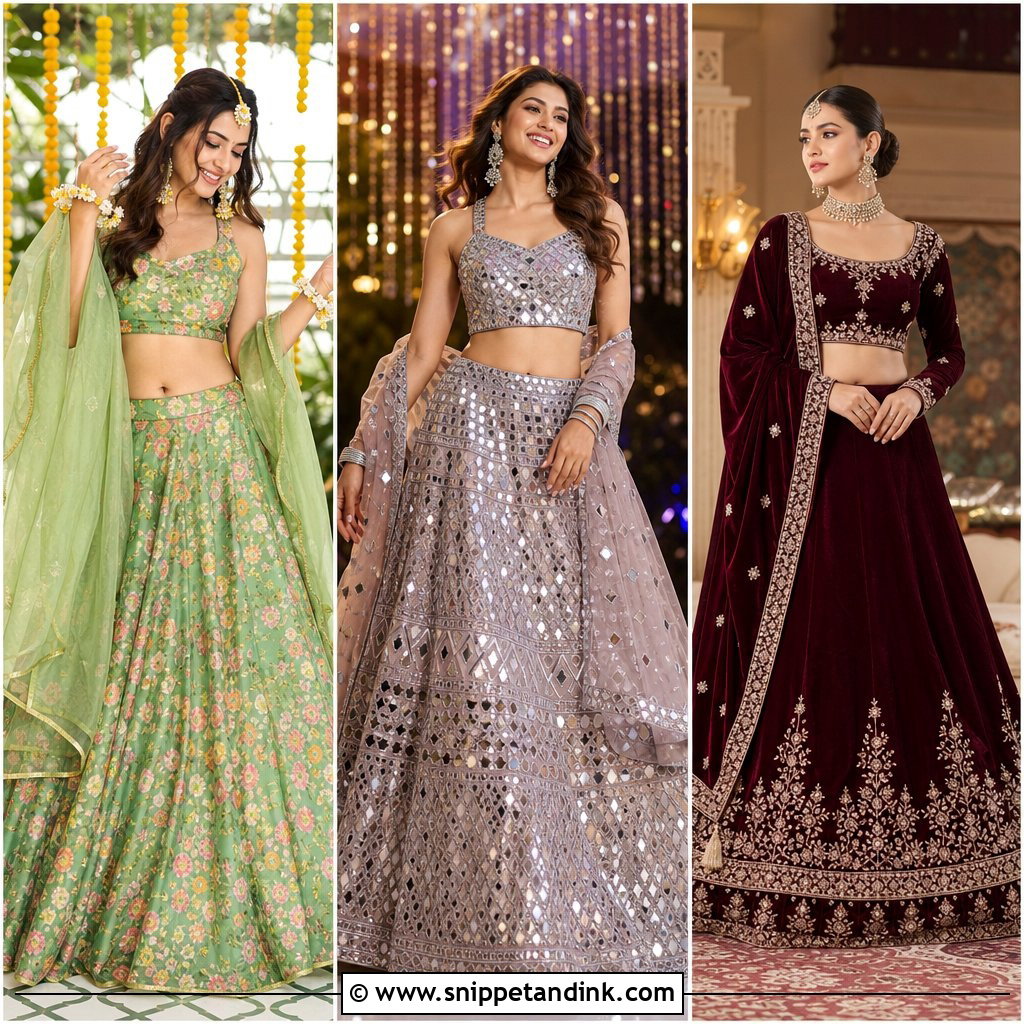
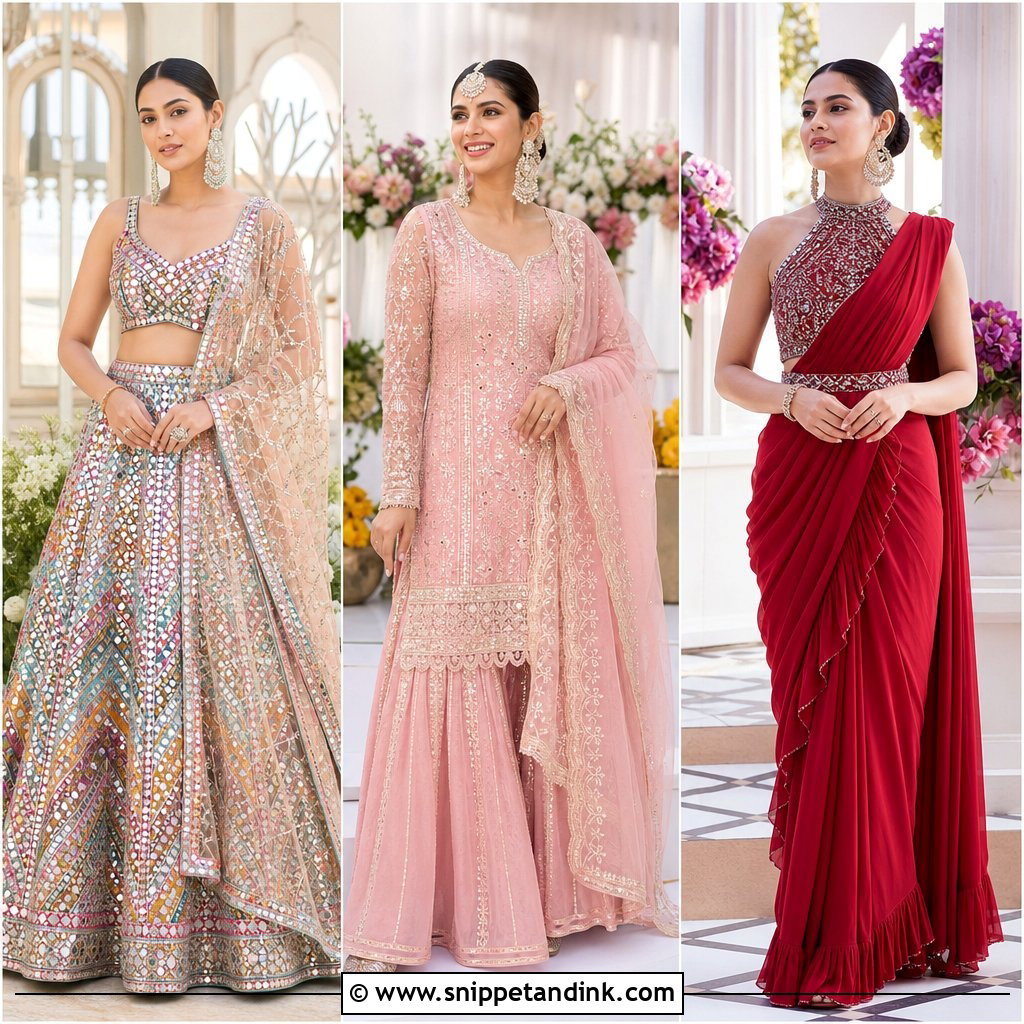
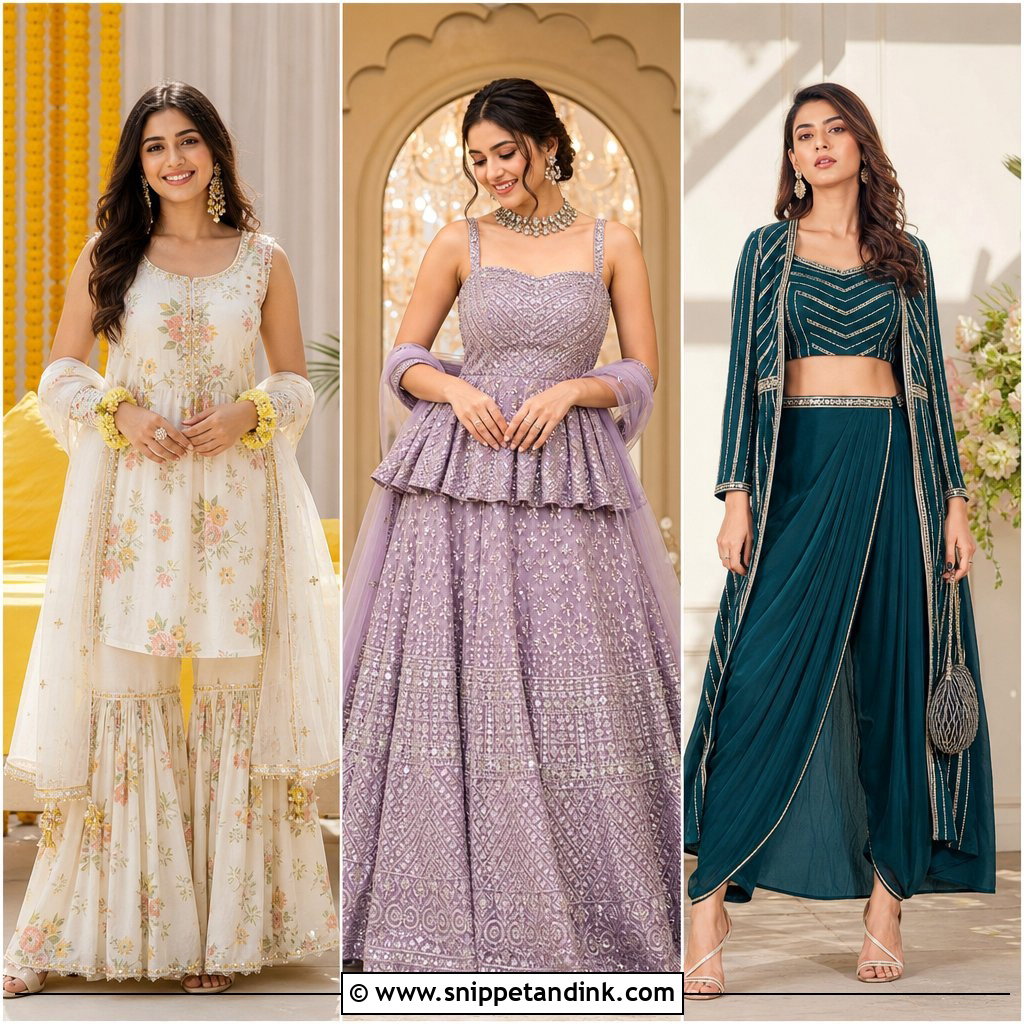
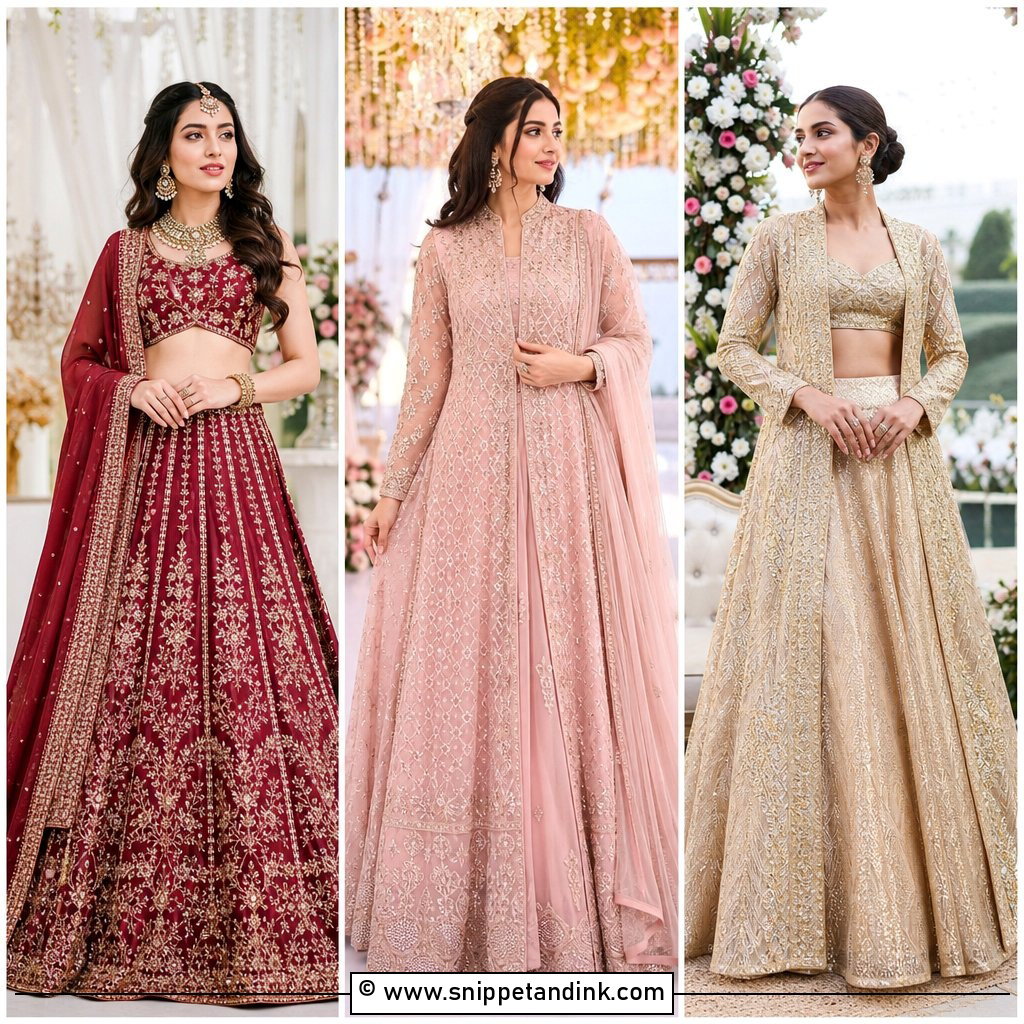
Pastels are the safest place to start if the bride is wearing a deep red or maroon, because they sit next to her in photos without competing. A georgette or organza skirt with light threadwork moves easily, and a fitted blouse with short sleeves and a square or modest V-neck keeps it current. I’d pin the sheer dupatta over one shoulder only. You’ll need both hands free for the dozen small jobs a sister ends up doing. Pearl earrings, a small potli and padded juttis or embroidered block heels finish it. Blush, powder blue, sage and lavender all read clearly on camera next to a stronger bridal color.
2. Silk Saree for Sister Wedding
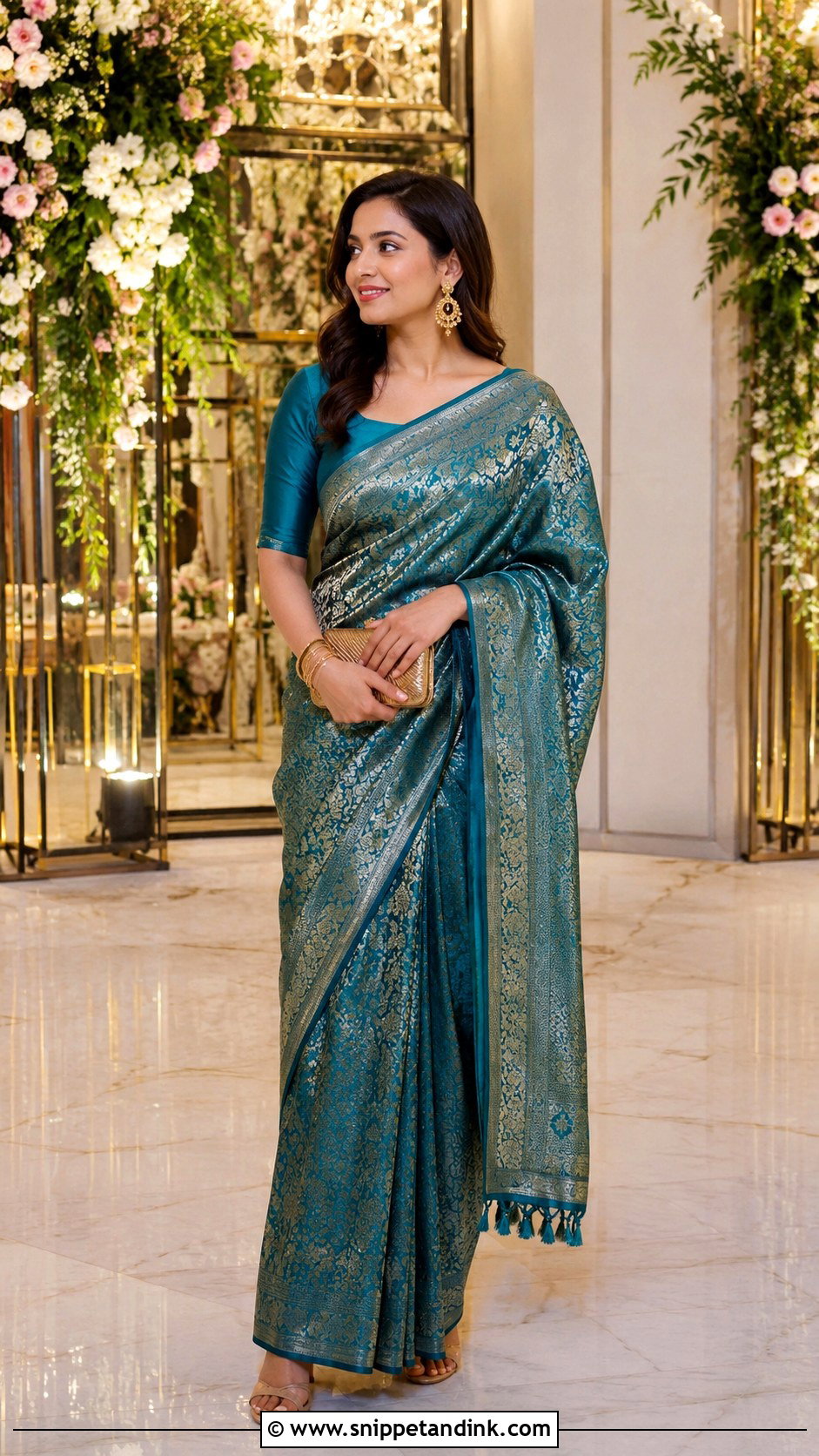
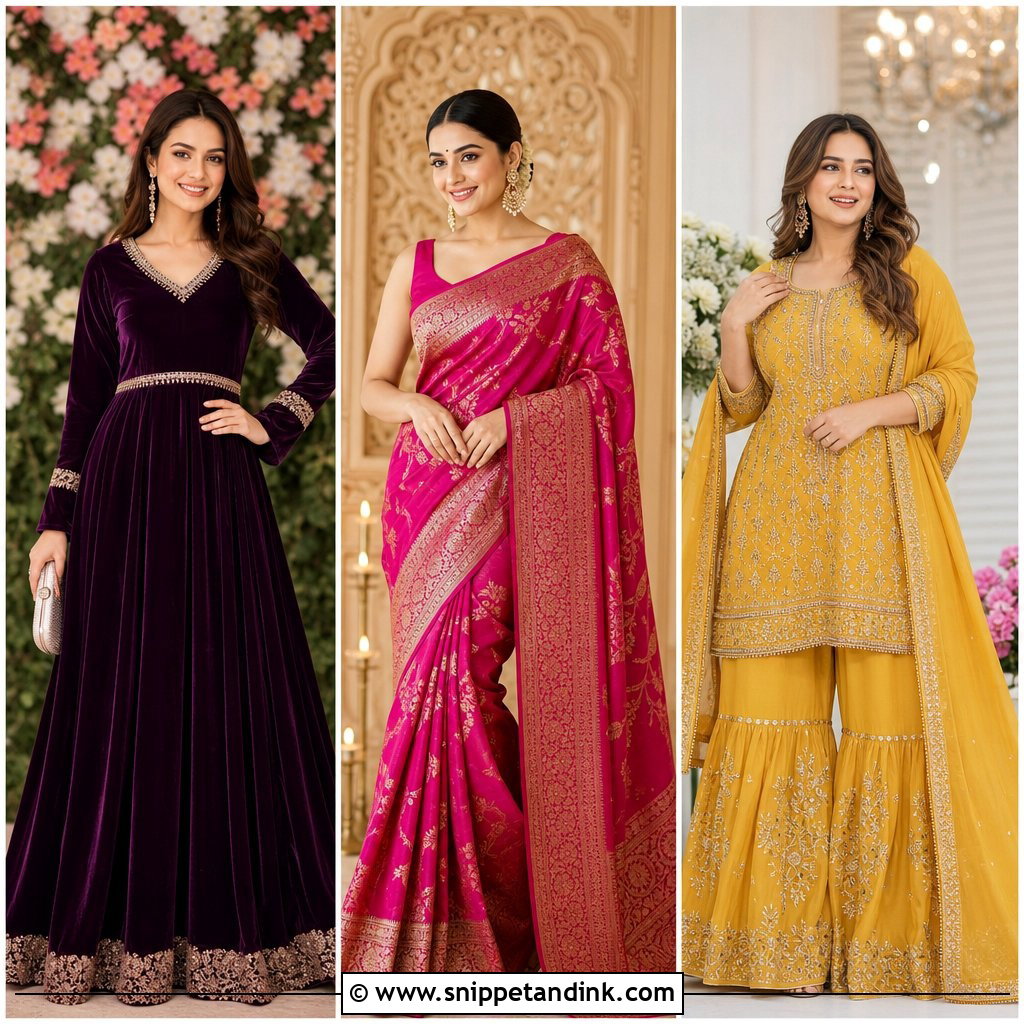
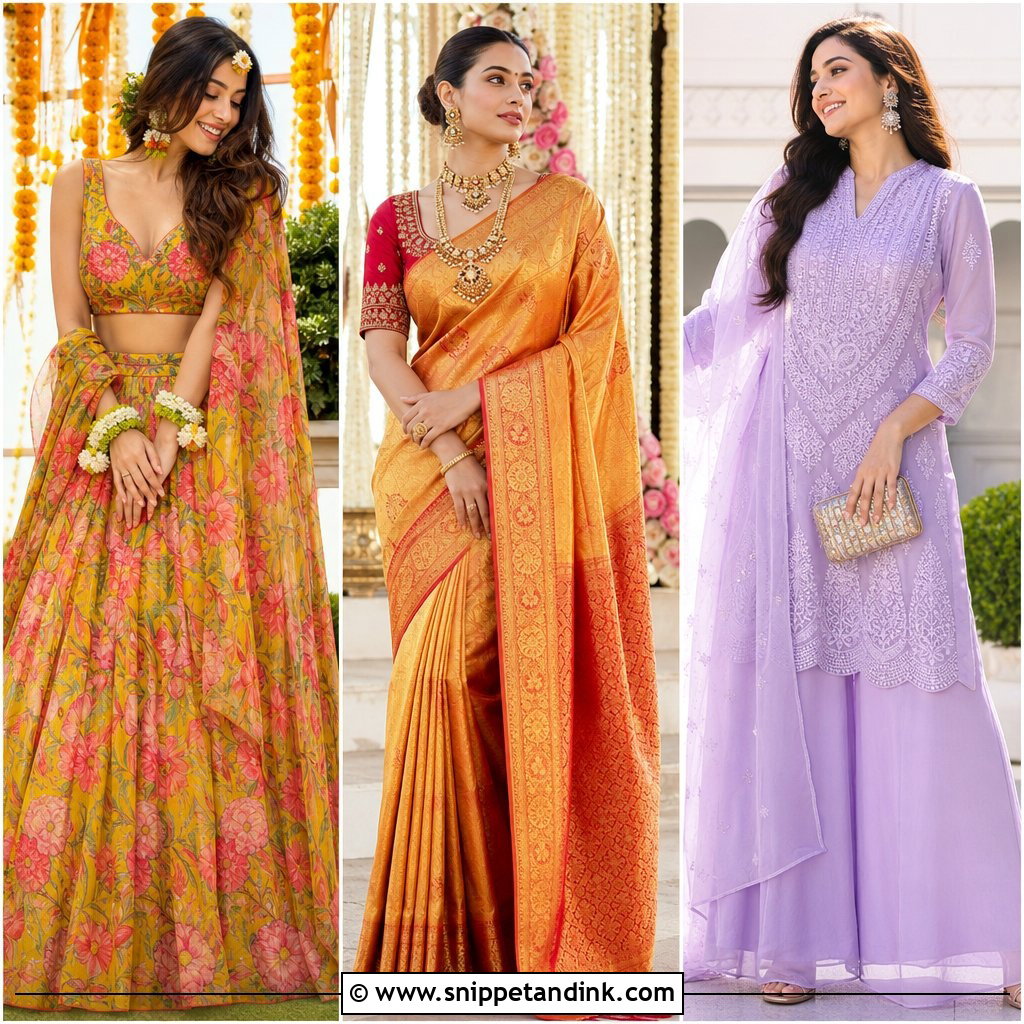
Choose a lightweight silk with a narrow woven border for a sister-of-the-bride outfit, not the heavy bridal weave. The difference shows in hour six, when a heavy silk saree starts dragging at the shoulder pin. Emerald, teal, plum and ruby glow under evening lighting; coral and soft gold suit daytime. Pair it with an elbow-sleeve blouse in a round or boat neck. When I drape a silk saree for someone who’ll be dancing, I stitch or safety-pin the pleats together at the waist so they don’t fan apart. Gold earrings, two slim bangles, low hidden block heels and a neat bun or soft waves.
3. Floral Anarkali for Sister Wedding
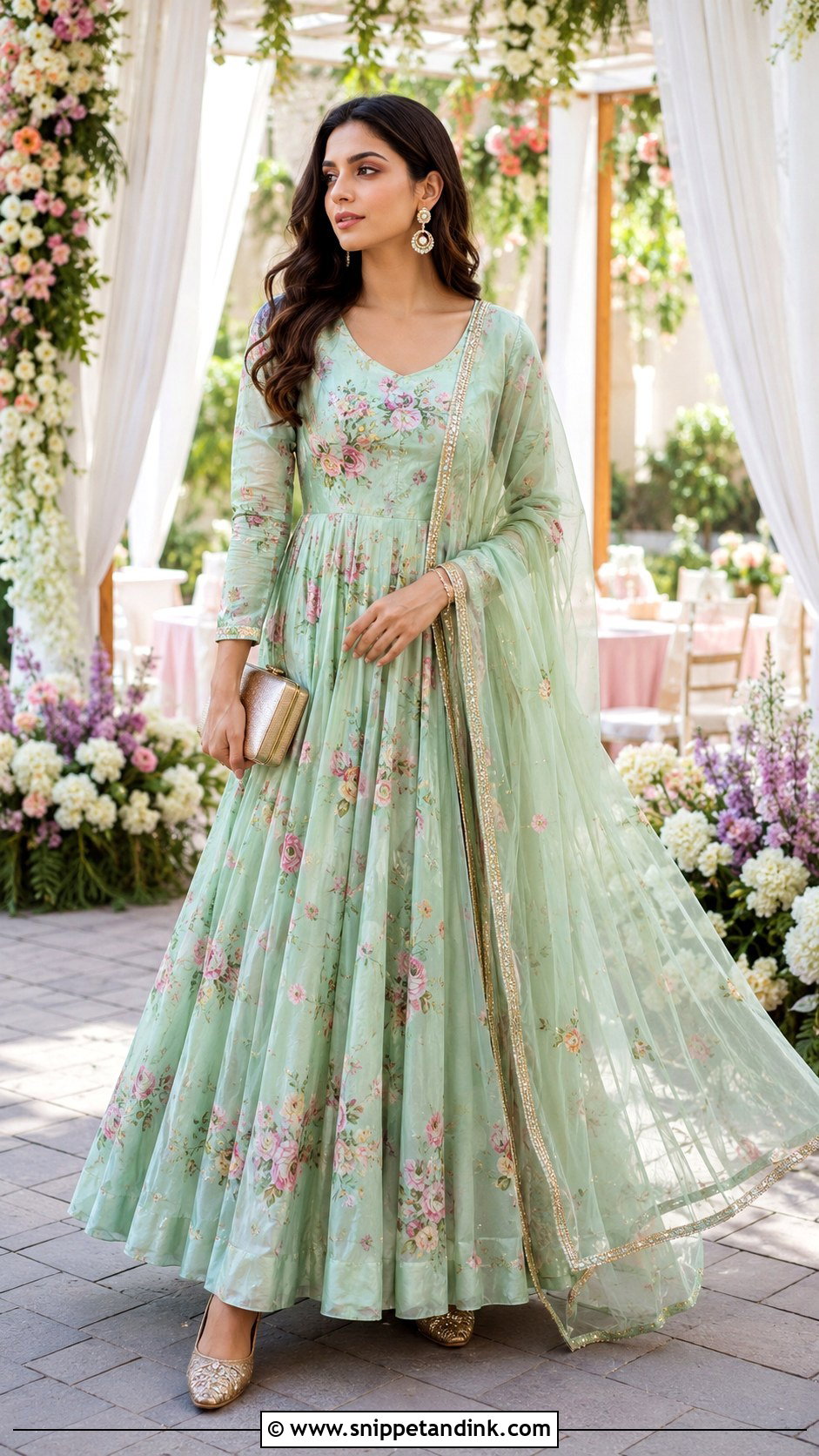
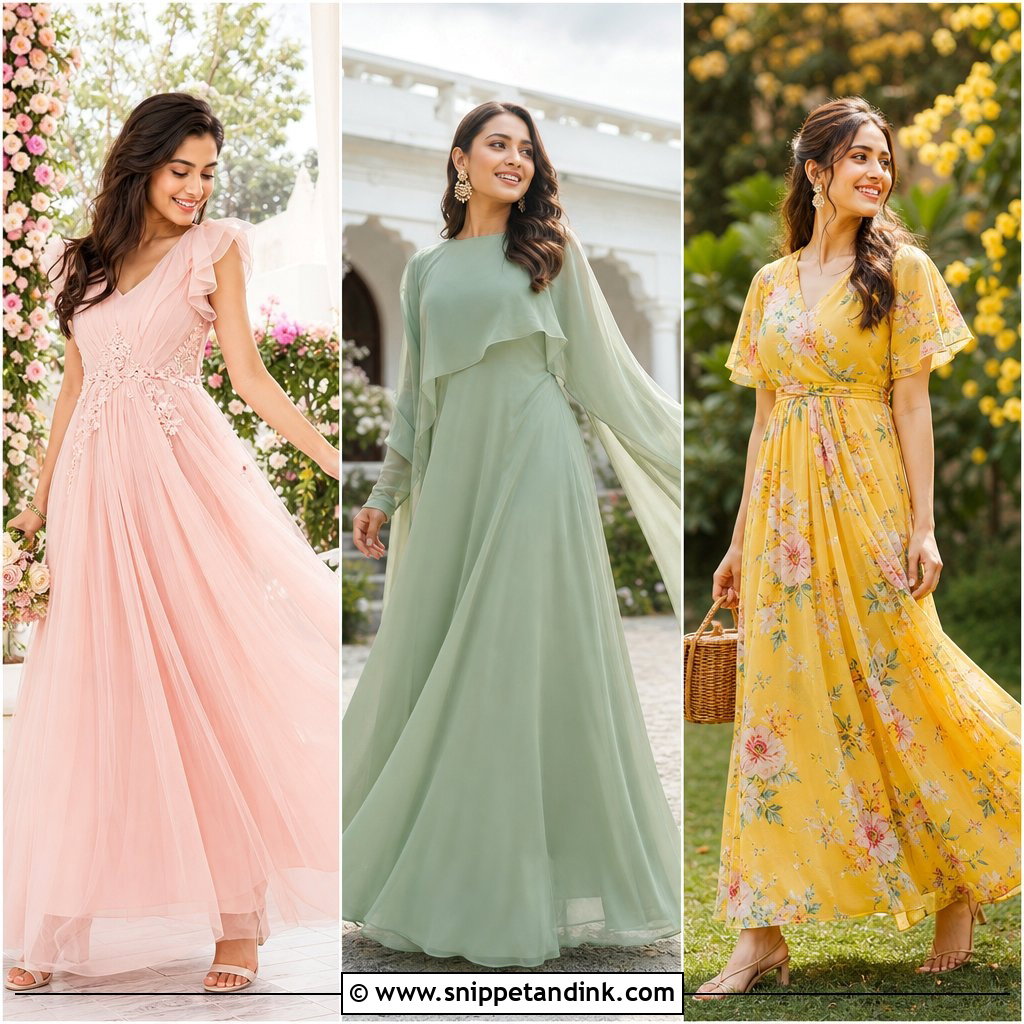
An Anarkali gives you the swing of a lehenga with one garment instead of a skirt, blouse and dupatta to manage. Chiffon, cotton silk and light georgette all flow well at floor or ankle length. The cut needs a clearly defined waist; without one, a flared kurta can look like it’s wearing you. A sheer dupatta with a slim embroidered edge, simple drops and pointed juttis keep it light for a long function. Peach, mint, lilac and yellow prints suit daytime, while navy or burgundy florals carry into the evening.
4. Sharara Suit for Sister Wedding
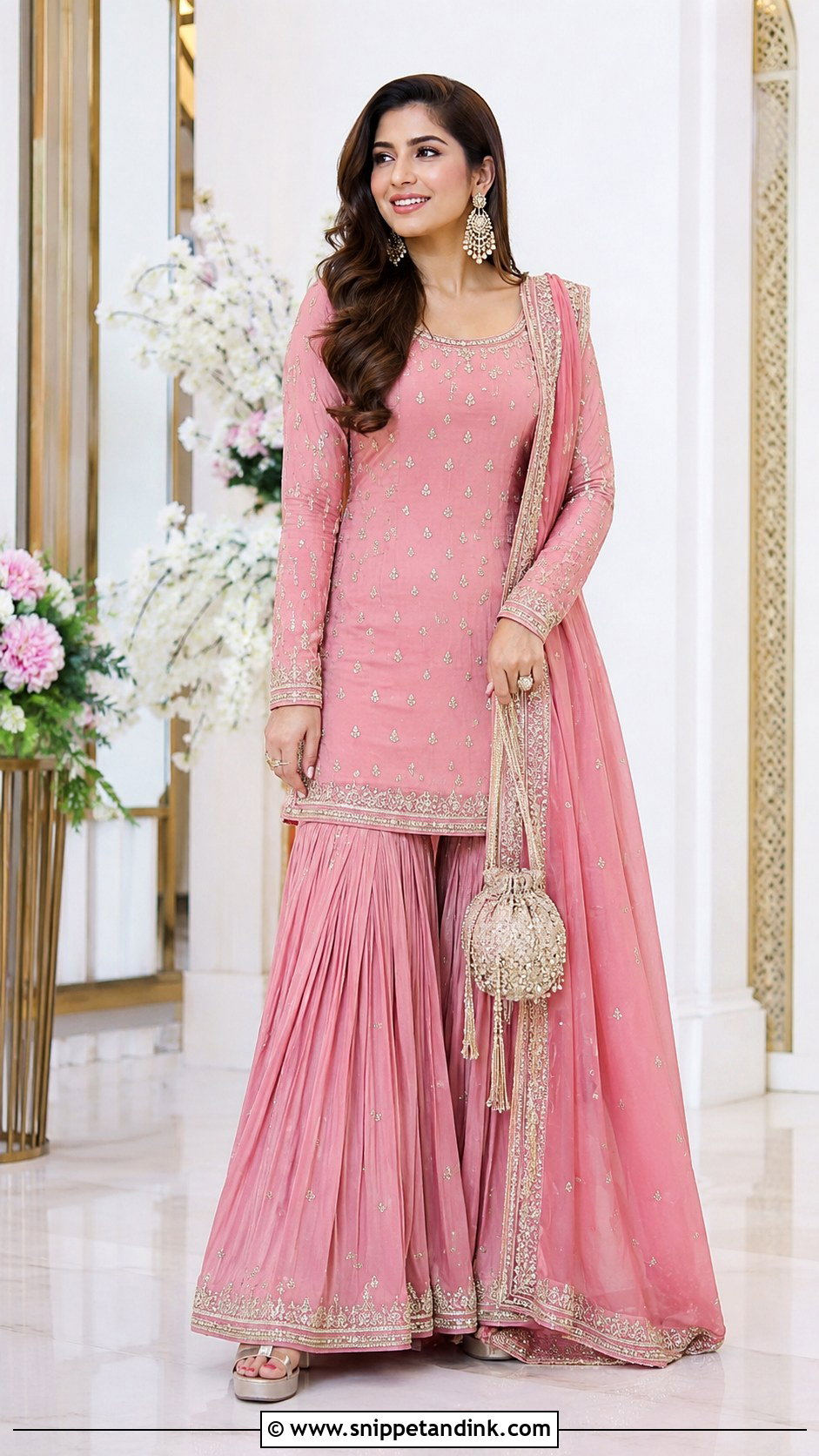
For the sangeet, a sharara suit is hard to beat, since the wide flared pants let you dance for hours without tripping on a hem. Pair them with a fitted hip-length kurti in georgette or crepe. Light sequin lines, gota trim or small embroidered motifs give it occasion without tipping into bridal territory. The dupatta can drape over both arms or pin on one shoulder. Statement earrings are usually enough, since the neckline and flare already do plenty. Stick to one main shade, perhaps rose, turquoise, marigold or mauve, and wear cushioned platforms with a sleek ponytail.
5. Organza Saree for Sister Wedding
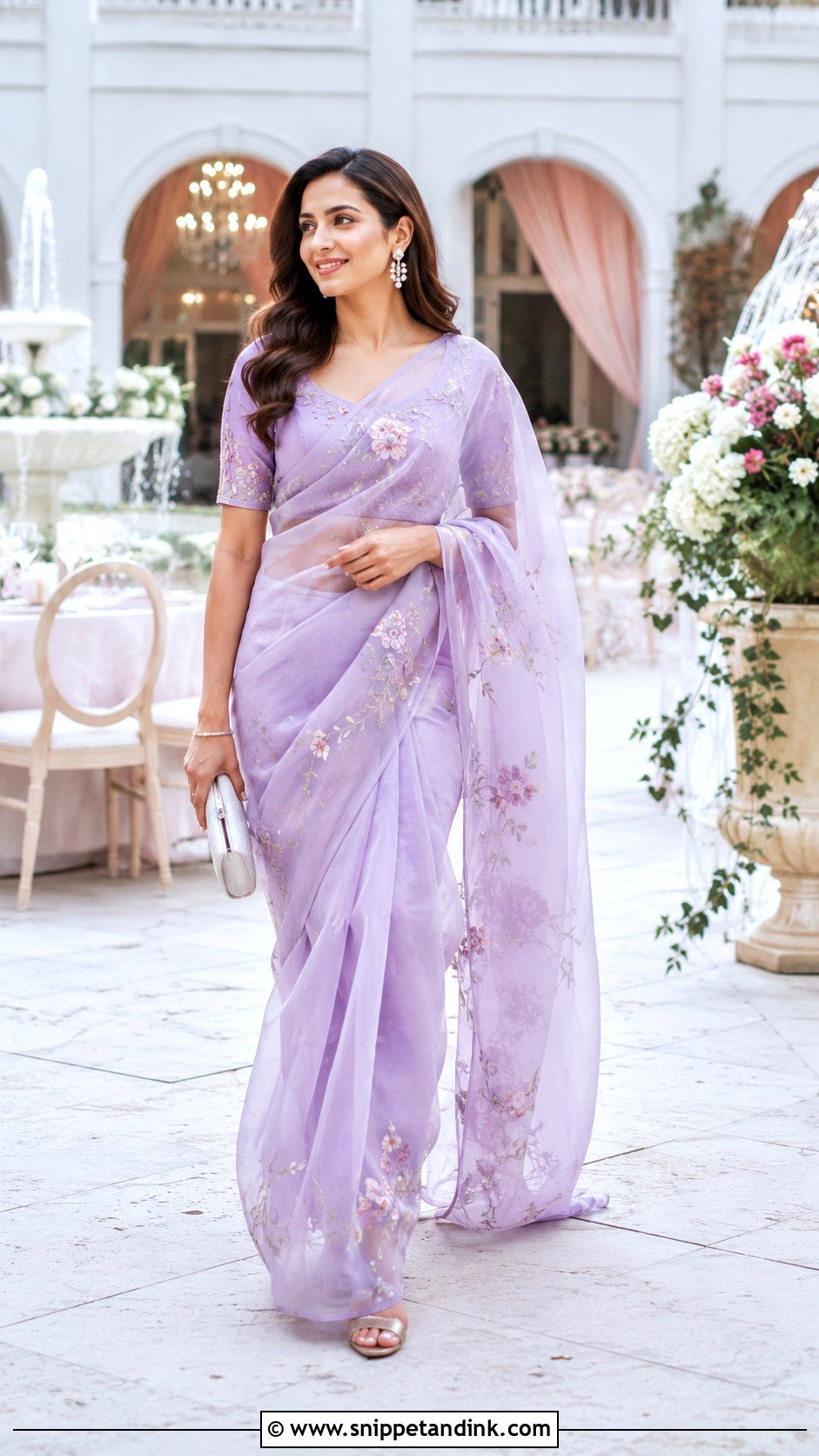
Organza holds its own shape, which is why a plain organza saree with a little floral embroidery or a fine metallic border still looks special. That stiffness is also the challenge. It springs back from pins, so the pleats need a few more than you’d use on silk, and the shoulder drape must be anchored firmly. A well-fitted blouse defines the waist against all that crisp volume; sleeveless suits warm weather, elbow sleeves give more coverage. Pearl or crystal earrings and low metallic heels. Pastels for day, navy, wine or forest green for evening.
6. Cape Lehenga for Sister Wedding
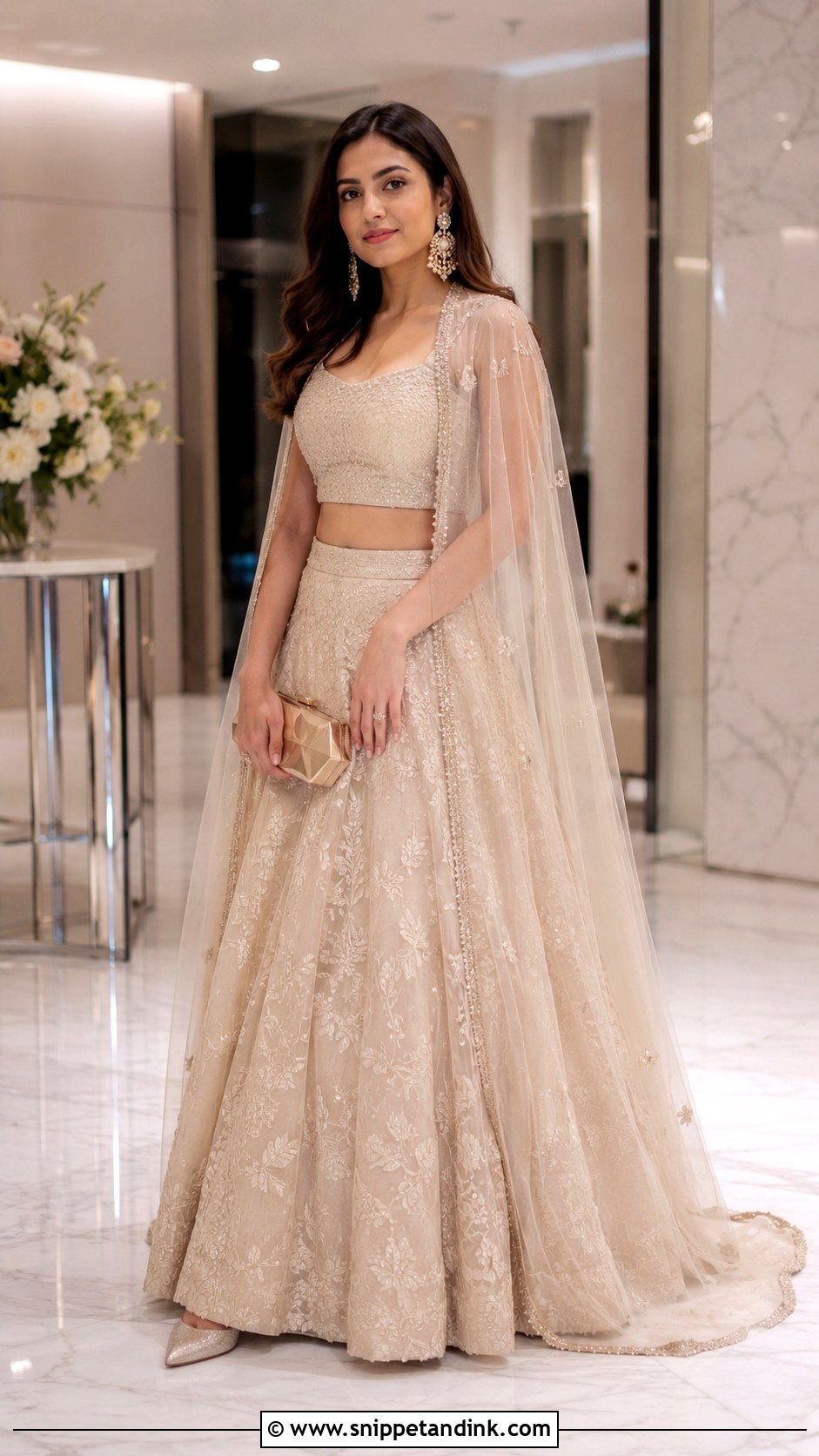
A cape replaces the dupatta, and for a sister that’s a real advantage: nothing to slip off your shoulder while you’re carrying a tray or holding the bride’s lehenga on the stairs. Wear a lightly embroidered skirt with a simple fitted blouse and a sheer cape falling to the waist or floor. Keep the skirt streamlined, because a full skirt plus a layered cape overwhelms most frames. Chandelier earrings, a slim ring and a hard-case clutch are enough. Monochrome in dusty rose, ice blue, champagne or deep green looks most polished, and a plain cape suits it better than a heavily worked one.
7. Pre-Draped Saree for Sister Wedding
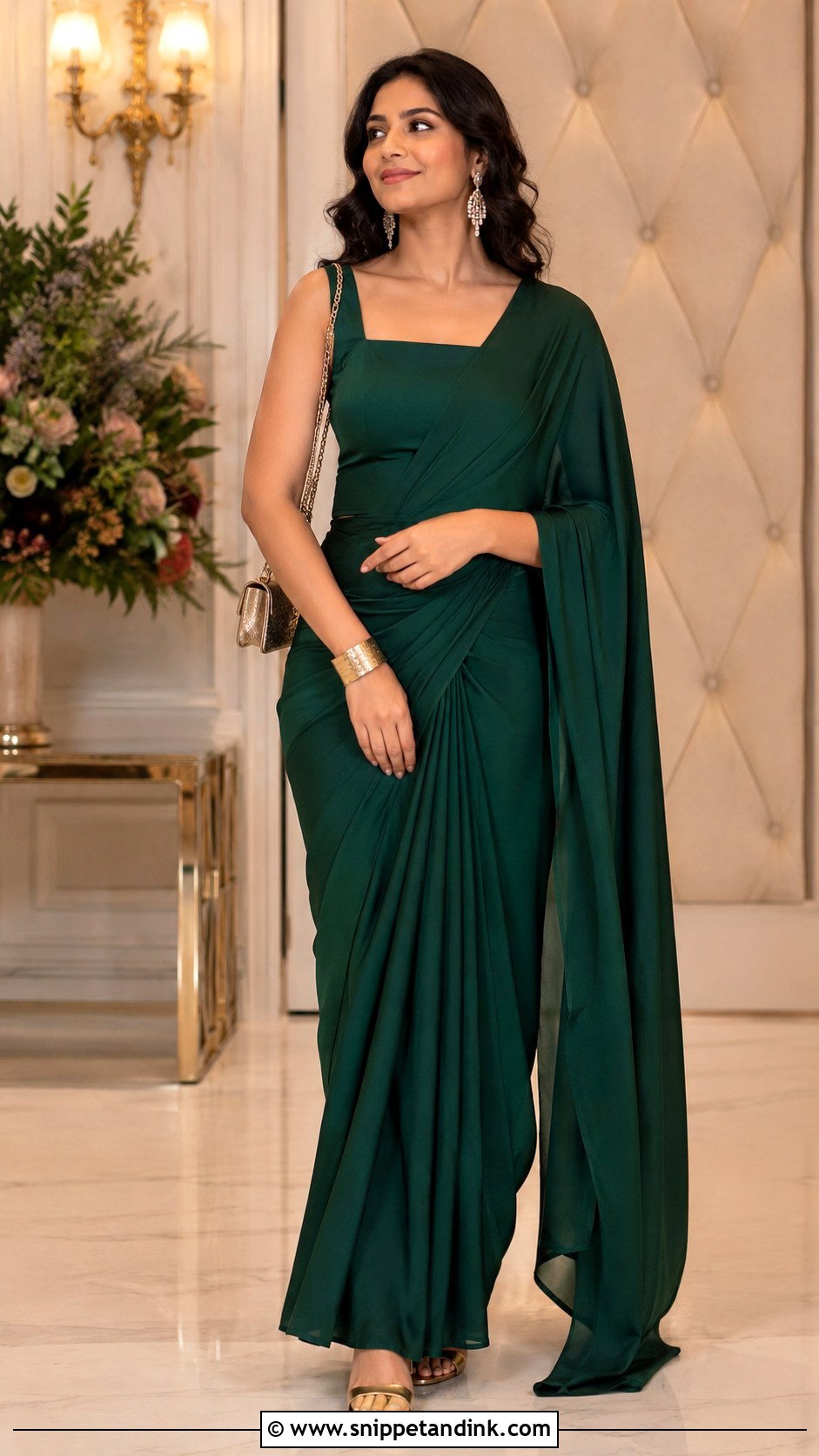
If draping a saree yourself makes you nervous, or you can’t get a draper booked on the morning, a pre-draped saree solves it. Pleats are stitched in place and the pallu is attached, so it zips on like a dress and stays put through dancing and running around. Choose a fluid crepe or georgette and pair it with a structured blouse in a square, sweetheart or asymmetric neckline. Statement earrings and one cuff are enough. Rich solids, ombré or a restrained metallic border keep it formal, and stable block heels make it practical.
8. Embroidered Gown for Sister Wedding
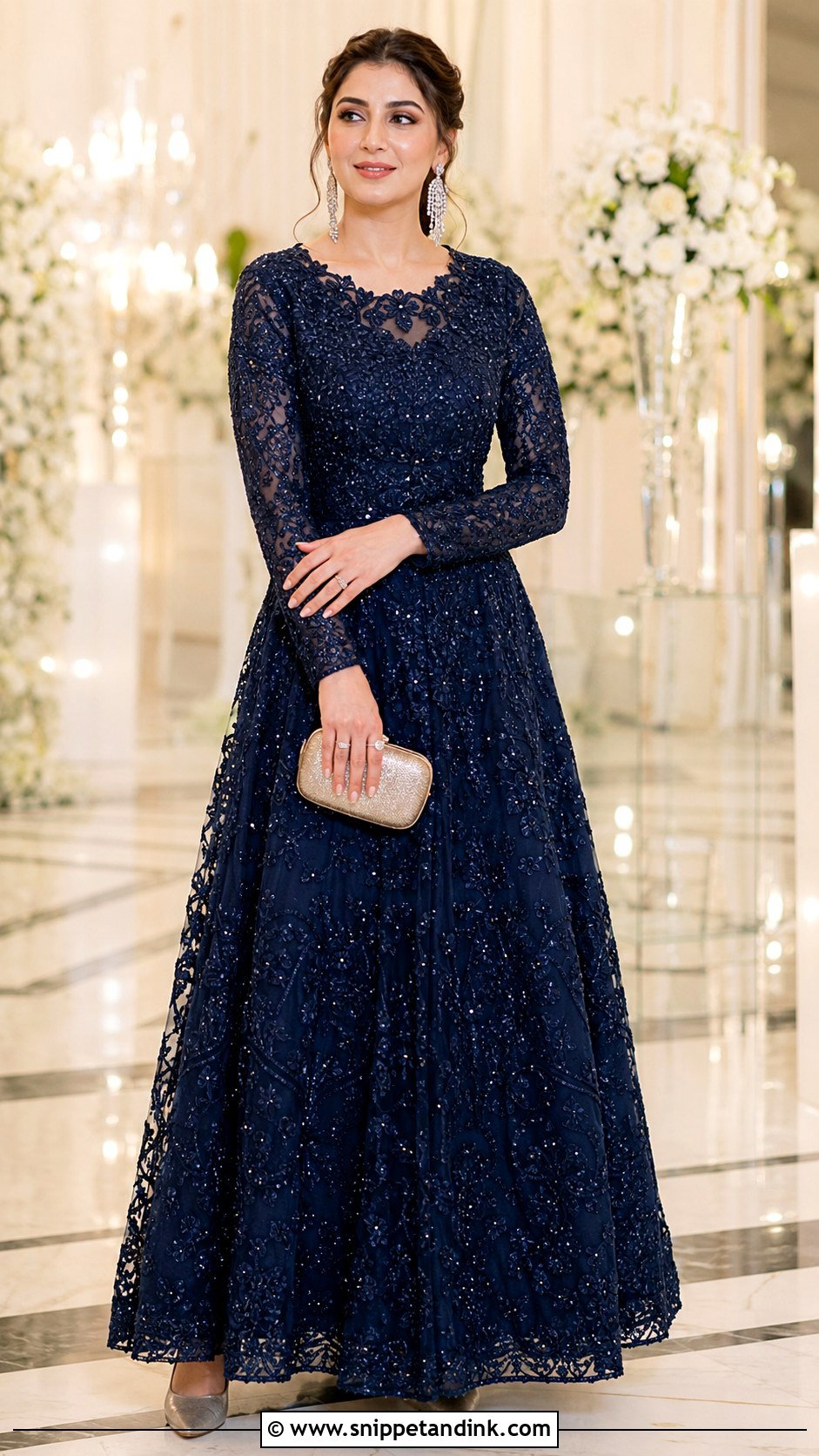
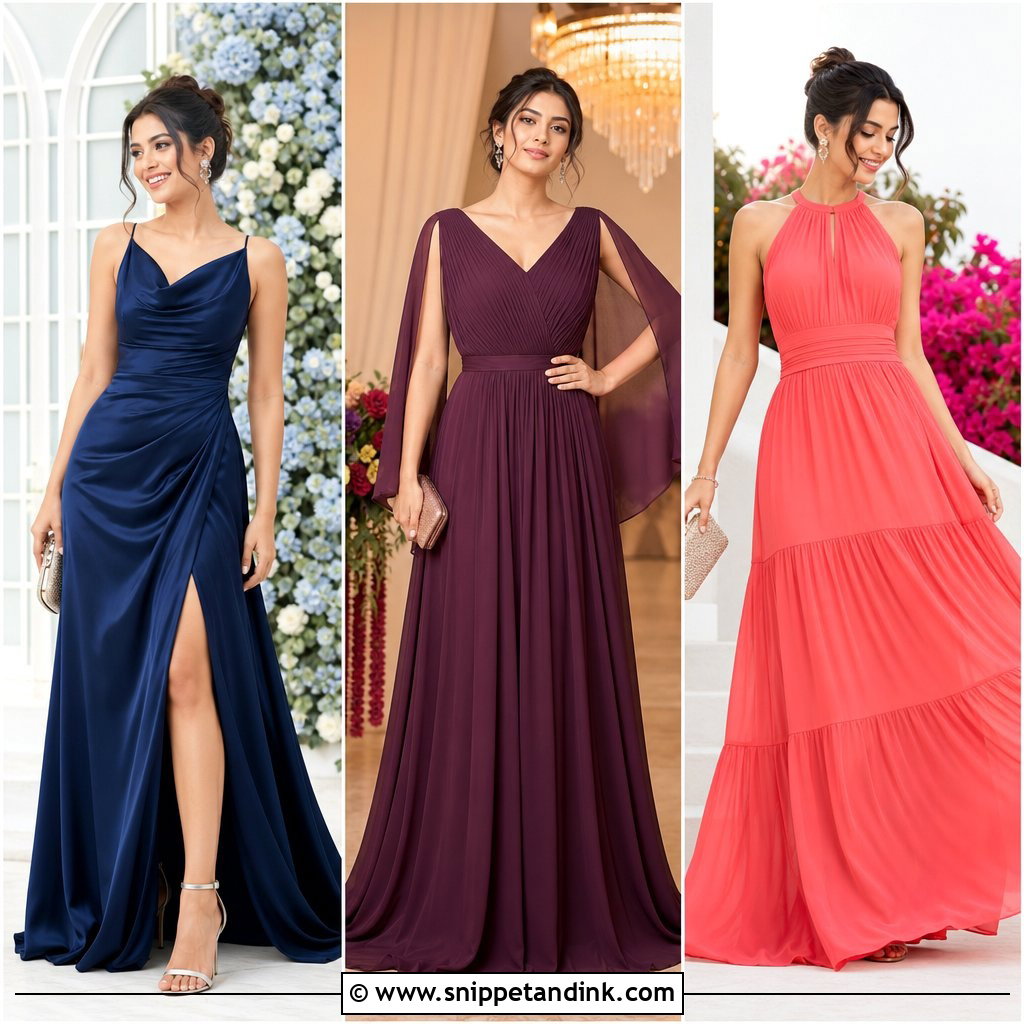
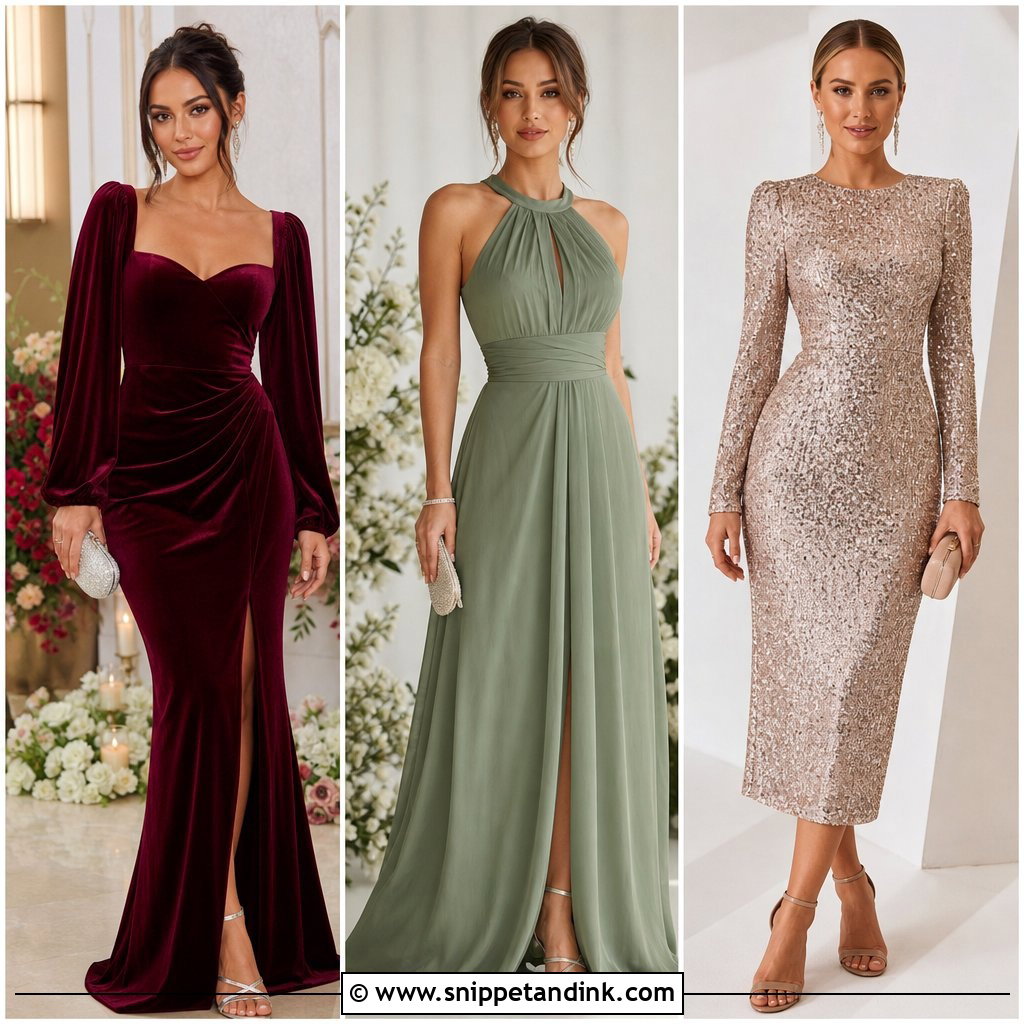
For a formal reception, a long embroidered gown skips the layering entirely. I steer sisters toward embroidery concentrated at the neckline, waist or sleeves rather than spread over every inch; it looks more expensive and weighs less. An A-line or softly fitted shape in chiffon, crepe or net overlay moves well. Crystal drops and closed-toe heels or supportive sandals pair with a low bun or polished ponytail. Midnight blue, emerald, mauve and deep rose all hold their color in evening light. Have the hem cleared slightly off the floor, since you’ll walk more than you expect.
9. Jacket Lehenga for Sister Wedding
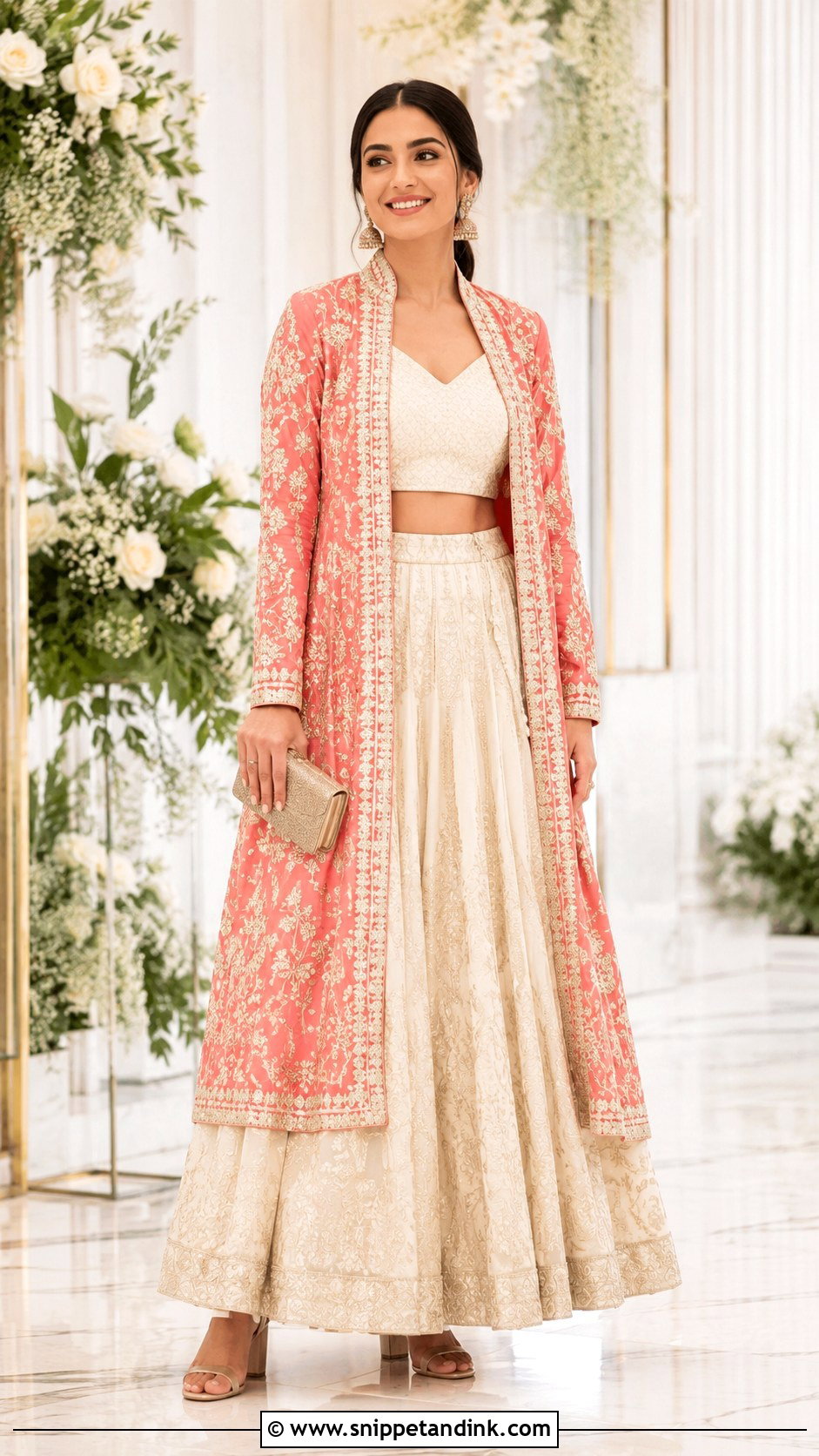
A jacket does the dupatta’s job with structure and coverage, which makes a jacket lehenga very practical on a busy wedding day. Build it on a plain or subtly patterned skirt and a fitted cropped blouse, then add a long open-front jacket with embroidery along the borders, cuffs and shoulders. Keep necklaces minimal, since the jacket already frames the upper body. Contrast works well, like a navy skirt with a powder-blue jacket or cream with coral. If you’re petite, a knee-length jacket keeps the proportions in balance. Medium earrings and block-heel sandals finish it.
10. Palazzo Suit for Sister Wedding
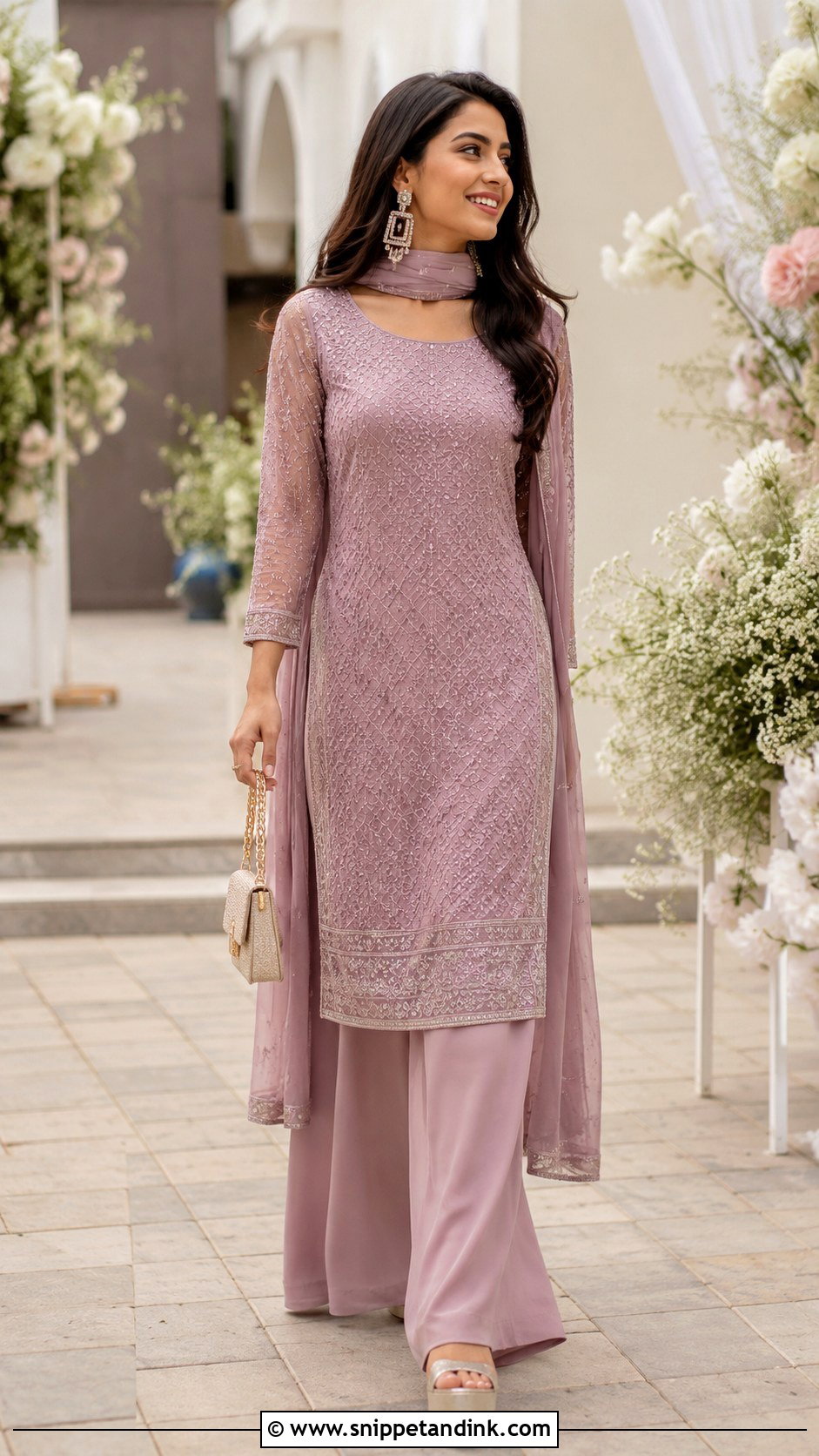
Wide-leg palazzo pants give you comfort and coverage while still looking dressed up. Pair them with a fitted waist-length kurti, or a longer side-slit tunic that lets the pants show as you move. Silk blend, crepe or georgette with light embroidery at the neckline and cuffs keeps it festive. Pin a narrow dupatta to one shoulder or swap it for a coordinated cape. Wide hems can swallow a flat shoe, so platform sandals balance the proportion better. Monochrome lengthens the body; a contrasting dupatta adds color for family photos. I’d especially consider this for an outdoor daytime function.
11. Banarasi Saree for Sister Wedding
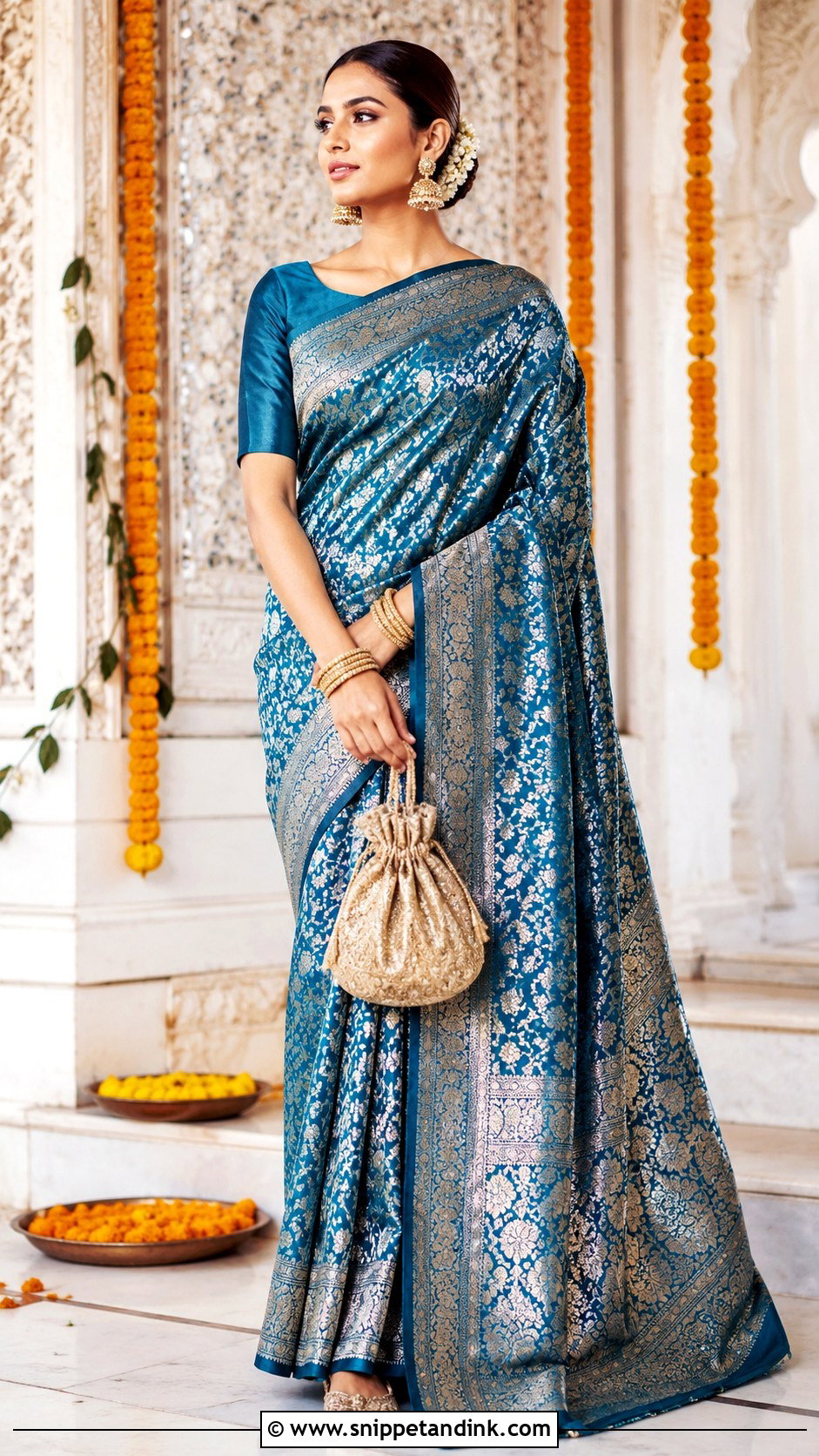
A Banarasi saree brings woven heritage with almost no extra effort. For a sister, look for smaller motifs and a medium border rather than the dense brocade brides wear, so there’s a clear step between the two of you. Pair it with a plain silk blouse that picks up one color from the weave. Jhumkas, two bangles and a structured potli complete it. Deep red needs care if it’s the bride’s main color. Peacock blue, magenta, purple and green are equally rich alternatives that won’t cause comparison. A smooth bun with one simple hair accessory and comfortable juttis.
12. Peplum Sharara for Sister Wedding
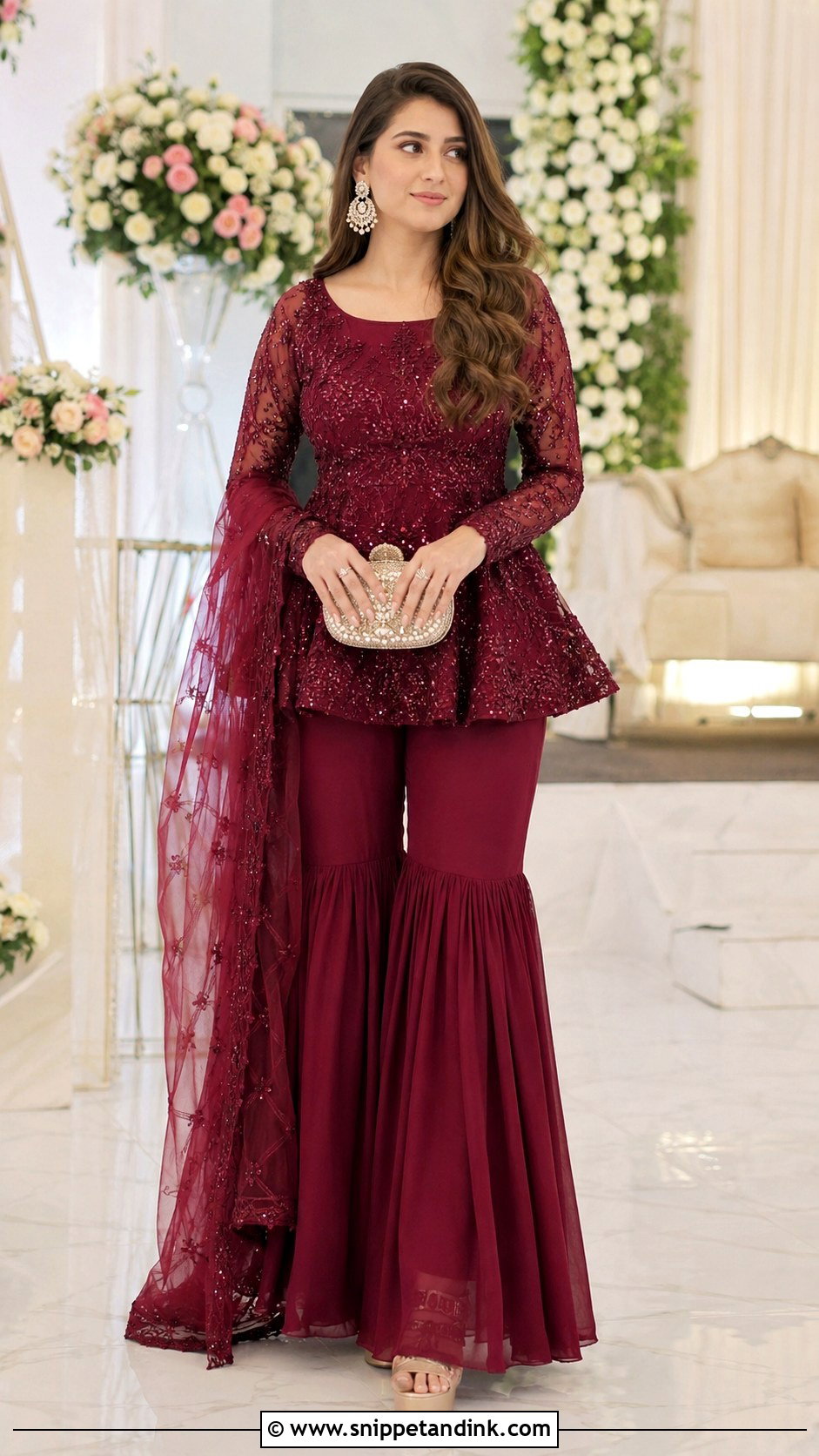
The peplum flares from the waist and gives shape, which means a peplum sharara flatters a wide range of body types. The top should end around the upper hip, with embroidery at the neckline or hem, over matching sharara pants in a soft fabric. Carry the dupatta over one arm or pin it at the shoulder. Because the peplum adds volume, keep the jewelry to statement earrings and a small ring. Single-color sets in berry, teal, lavender or mustard look neat and lengthen the line. Platform heels and a beaded clutch finish it.
13. Ruffle Saree for Sister Wedding
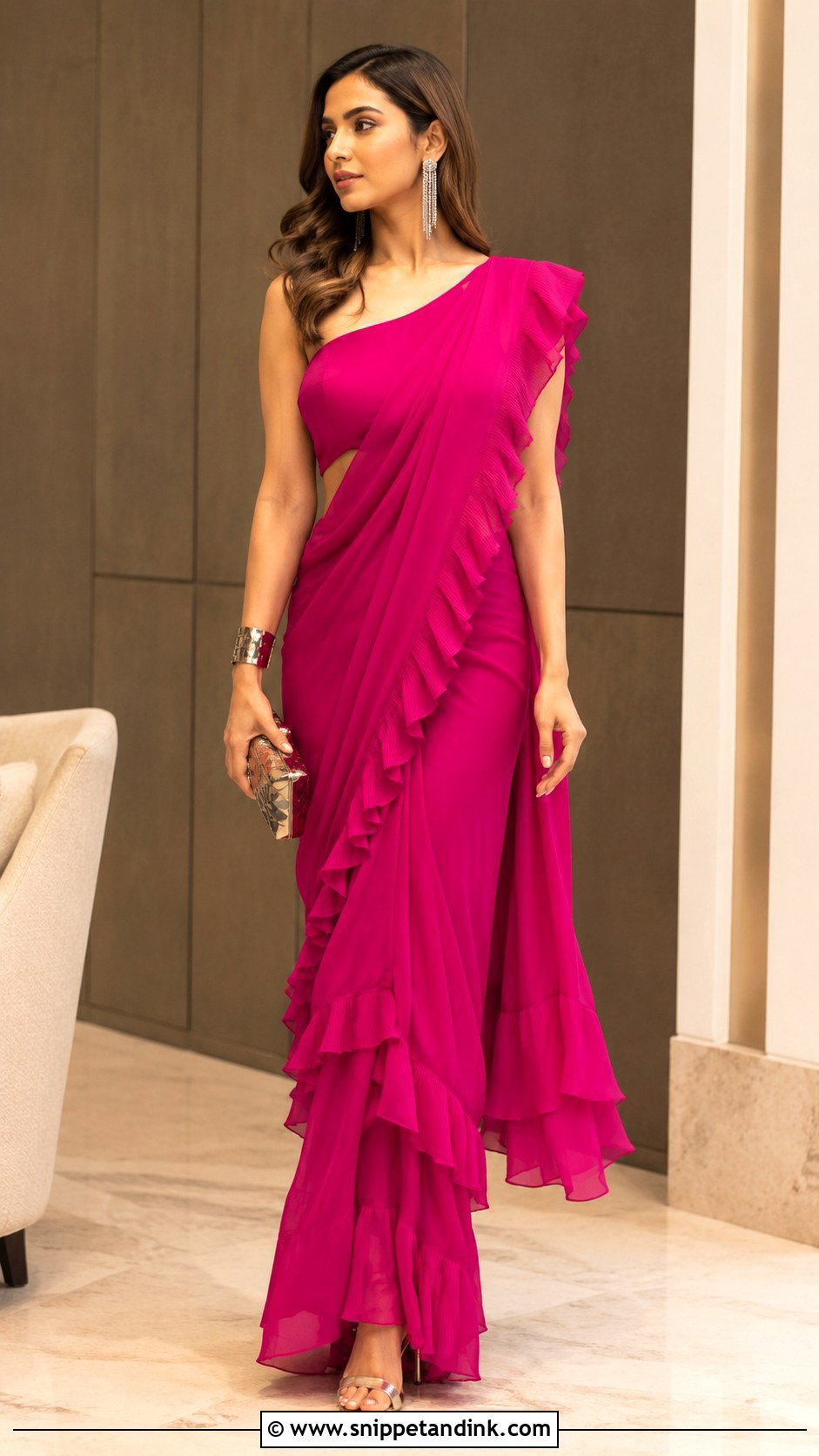
Ruffles along the pallu and hem make a saree feel fun for a reception without any heavy embroidery. Choose a pre-stitched or easy-drape version and keep the blouse clean and fitted in the same color. One-shoulder, short-sleeve and modest sleeveless blouses all work, depending on how formal the event is. The ruffled hem adds volume around the feet, which is why I always recommend stable heels here over stilettos. Fuchsia, cobalt, teal or plum keep it sophisticated. A sleek ponytail or simple waves keep the shoulder visible.
14. Floral Lehenga for Sister Wedding
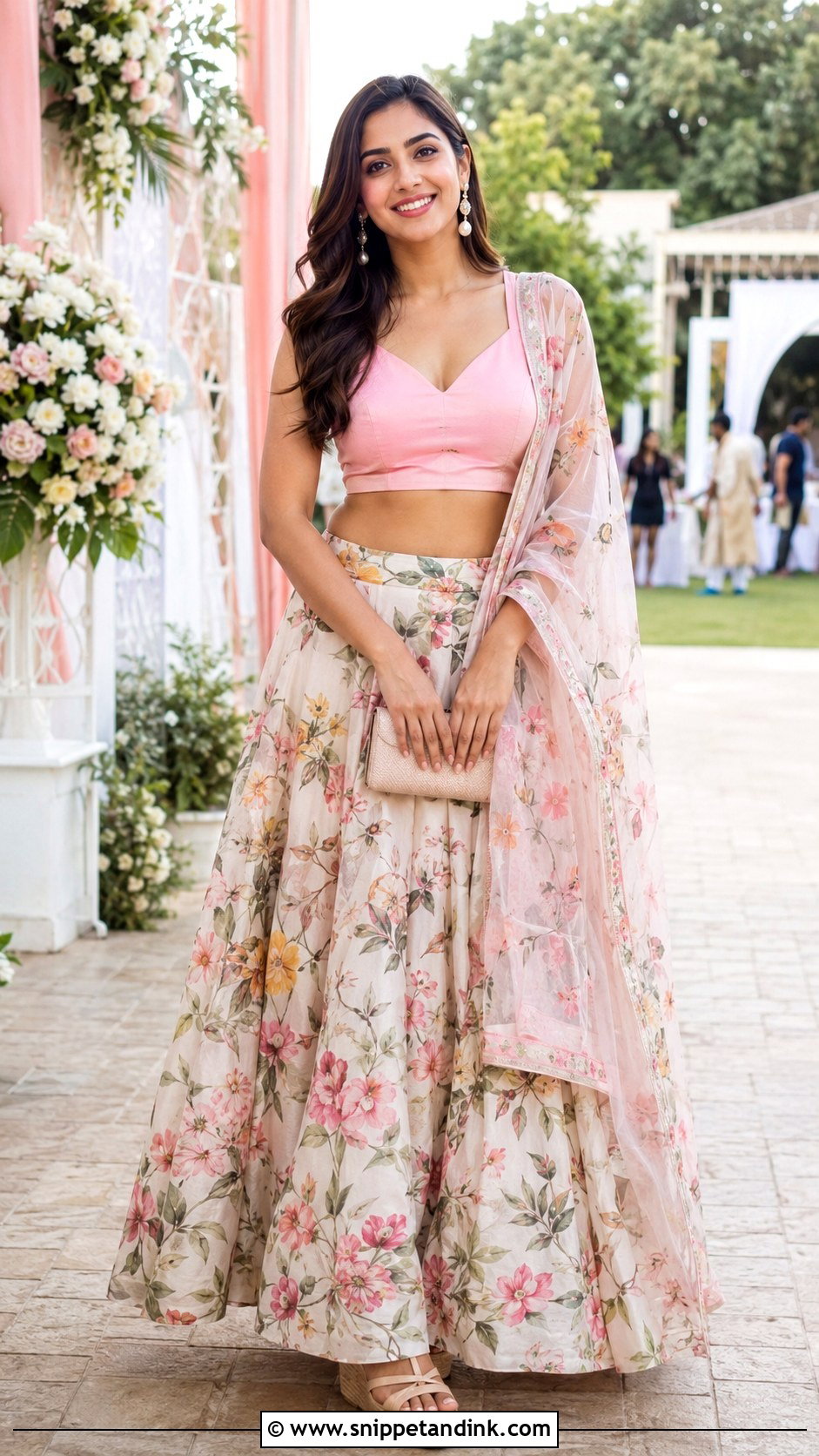
Outdoors in daylight, a printed floral skirt shows every flower. Pair a printed or lightly embroidered skirt with a solid cropped blouse and a sheer coordinating dupatta. Medium-scale prints are the ones I’d choose: small florals blur into texture in group photos, and very large ones overwhelm. Keep the blouse plain. Pearl drops and a plain clutch suit it, and on grass, wedges or block heels won’t sink. Pastel florals for daytime, darker botanicals for evening. It’s lighter to wear than a heavily embellished lehenga, which helps over a long outdoor function.
15. Velvet Lehenga for Sister Wedding
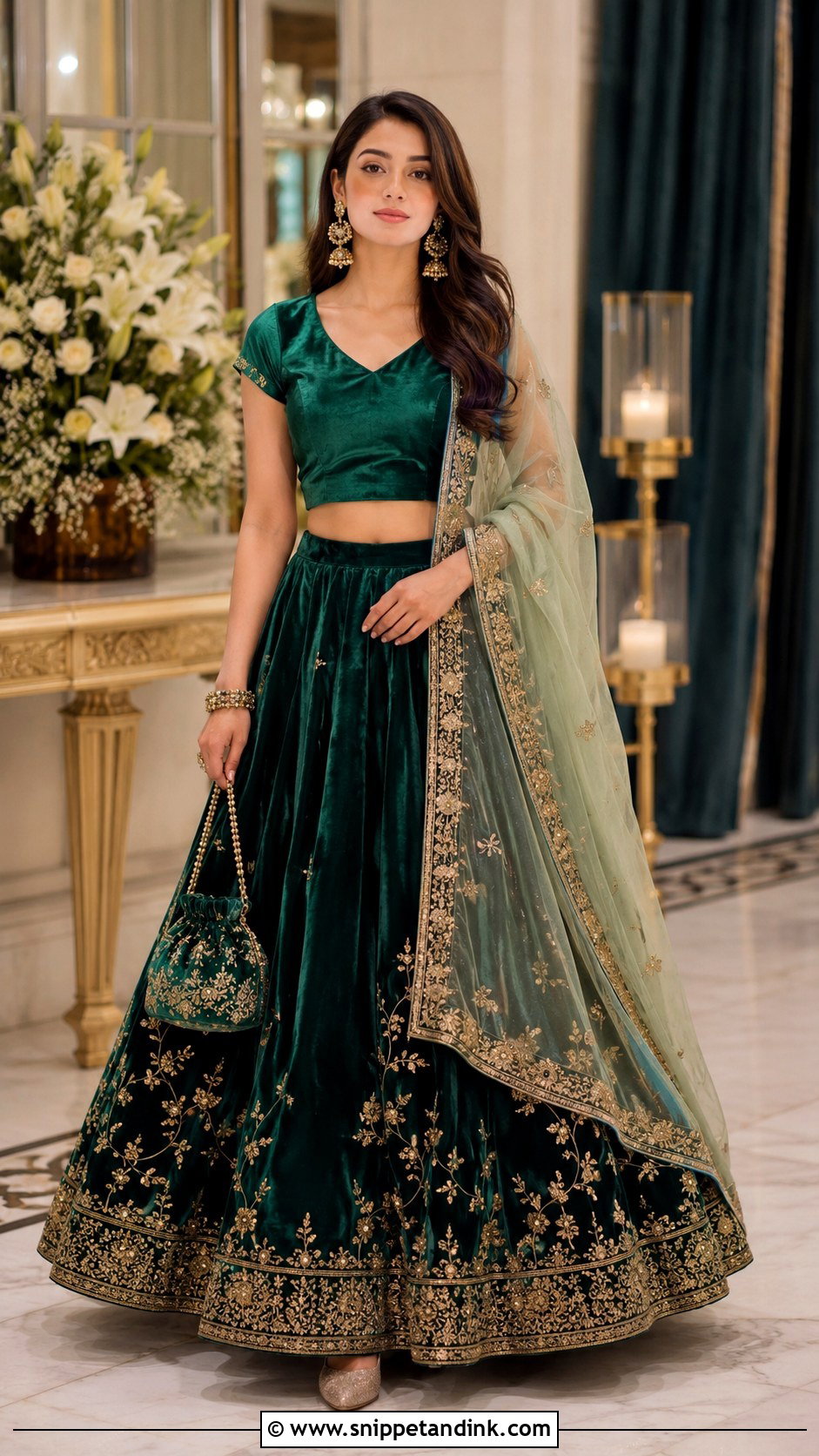
Velvet belongs to winter weddings. It carries rich color with very little decoration, but it’s warm and heavy, so balance a structured velvet skirt with a light net dupatta and keep the embroidery restrained to the hem. The blouse can be velvet, silk or satin. Sapphire, emerald, plum and burgundy suit the pile best. Antique-finish earrings, closed-toe block heels and a neat bun or brushed waves complete it. Skip the necklace if the blouse neckline is detailed, and avoid stacking extra layers, because velvet already has a lot of visual weight.
16. Kurta and Skirt for Sister Wedding
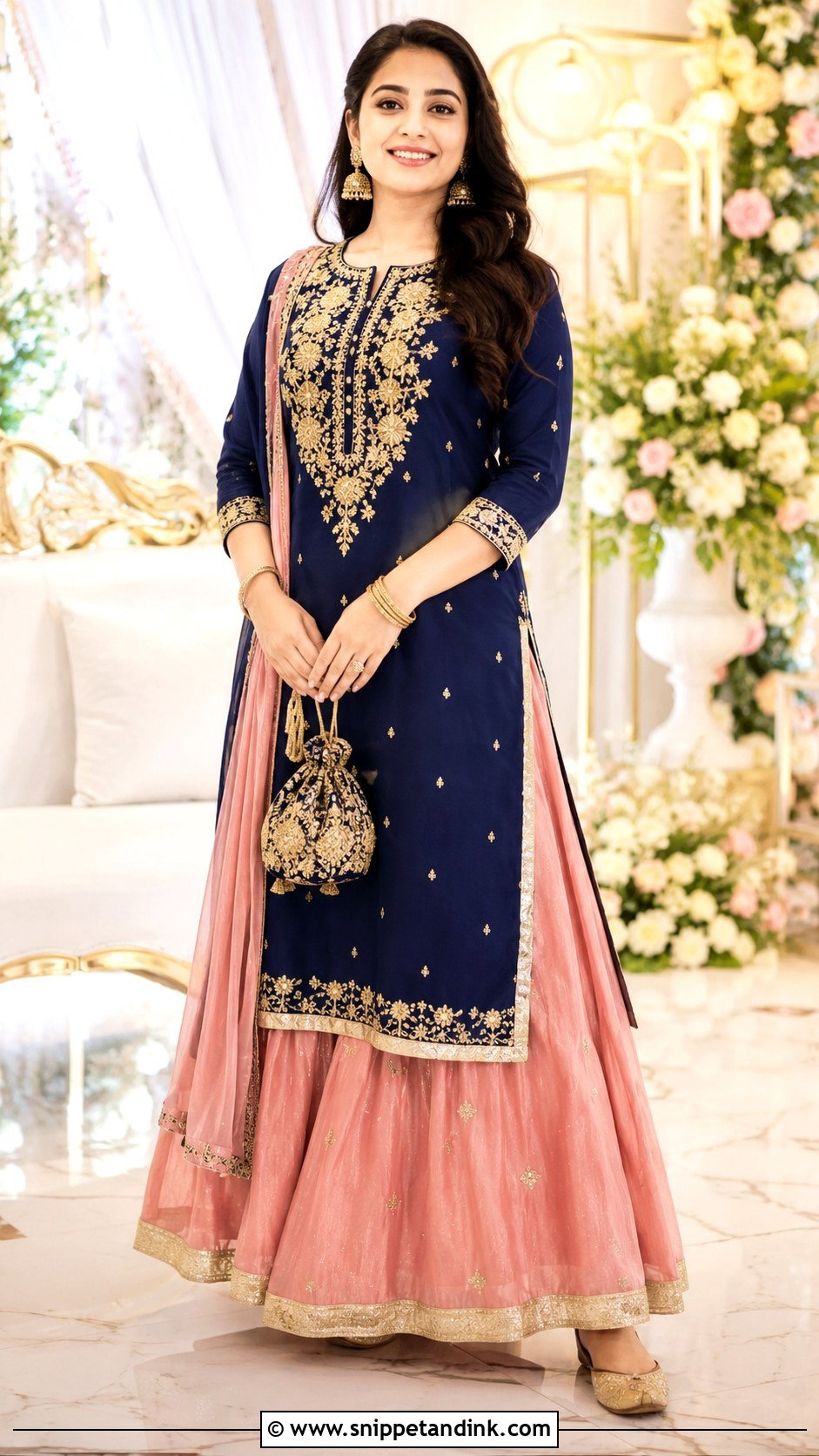
Easy to wear and easy to personalize, a kurta and skirt set works for a smaller ceremony or a daytime function. A knee-length straight kurta over an ankle-length skirt in silk blend, cotton silk or georgette is the base, with side slits letting the skirt show as you walk. Put the detail on one piece only: embroidered kurta with a simple skirt, or the reverse. Add a narrow dupatta for a formal ceremony, pinned at the shoulder. Jhumkas, slim stacked bangles, a potli and padded juttis finish it. Navy with pink or plum with blush are combinations that photograph well in groups.
17. Dhoti Pant Set for Sister Wedding
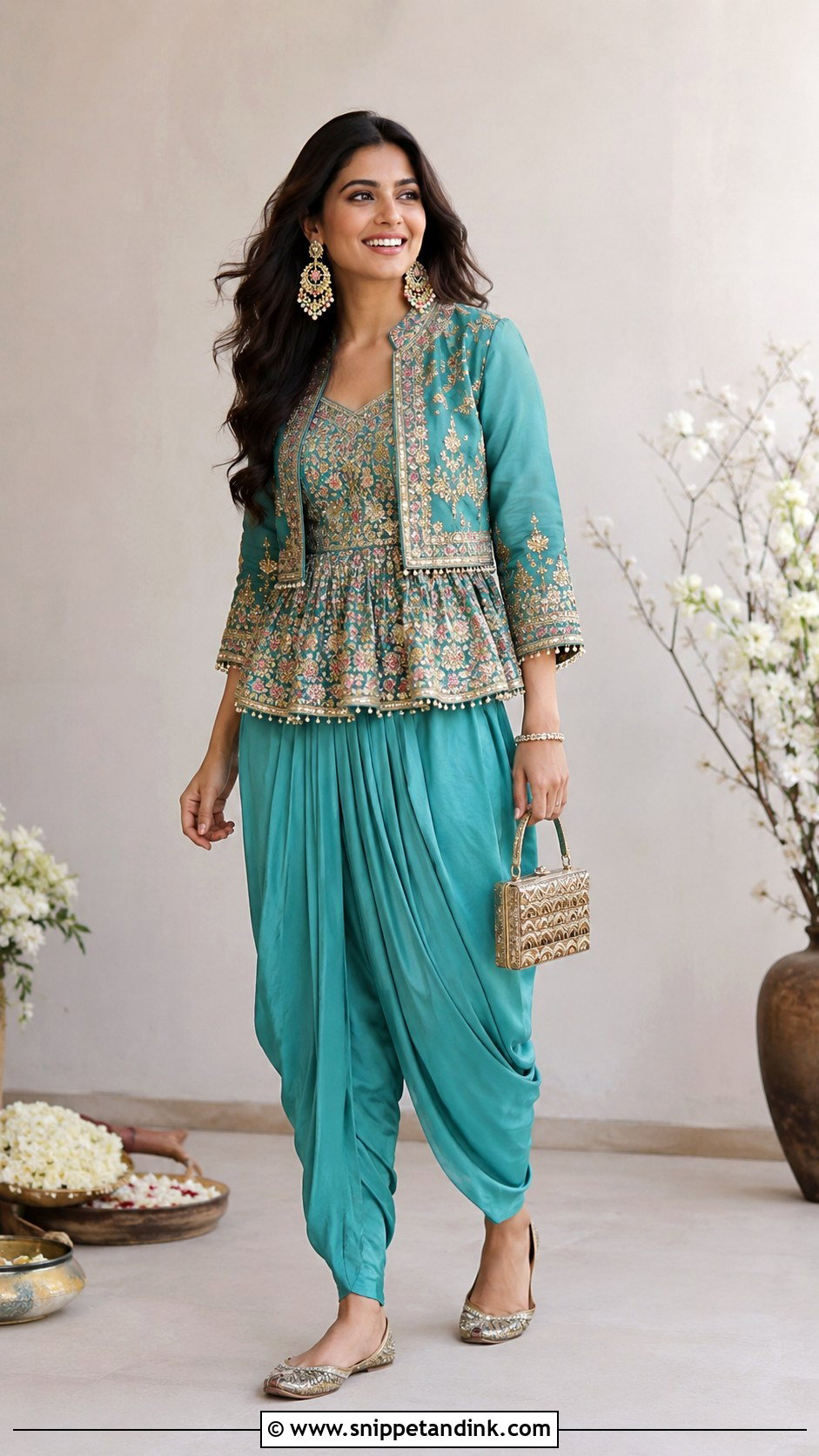
A dhoti pant set suits a lively pre-wedding function, since the draped pants allow big movement. The top needs structure to balance the soft folds below, so choose a fitted short kurti, peplum blouse or asymmetric tunic. A cropped jacket or single-shoulder drape adds dimension. One solid color with small metallic details keeps it refined; coral, turquoise, mustard and deep pink bring energy. Get the hem right at the ankle, because dhoti pants that are too long hide your shoes and look sloppy in full-length photos.
18. One-Shoulder Gown for Sister Wedding
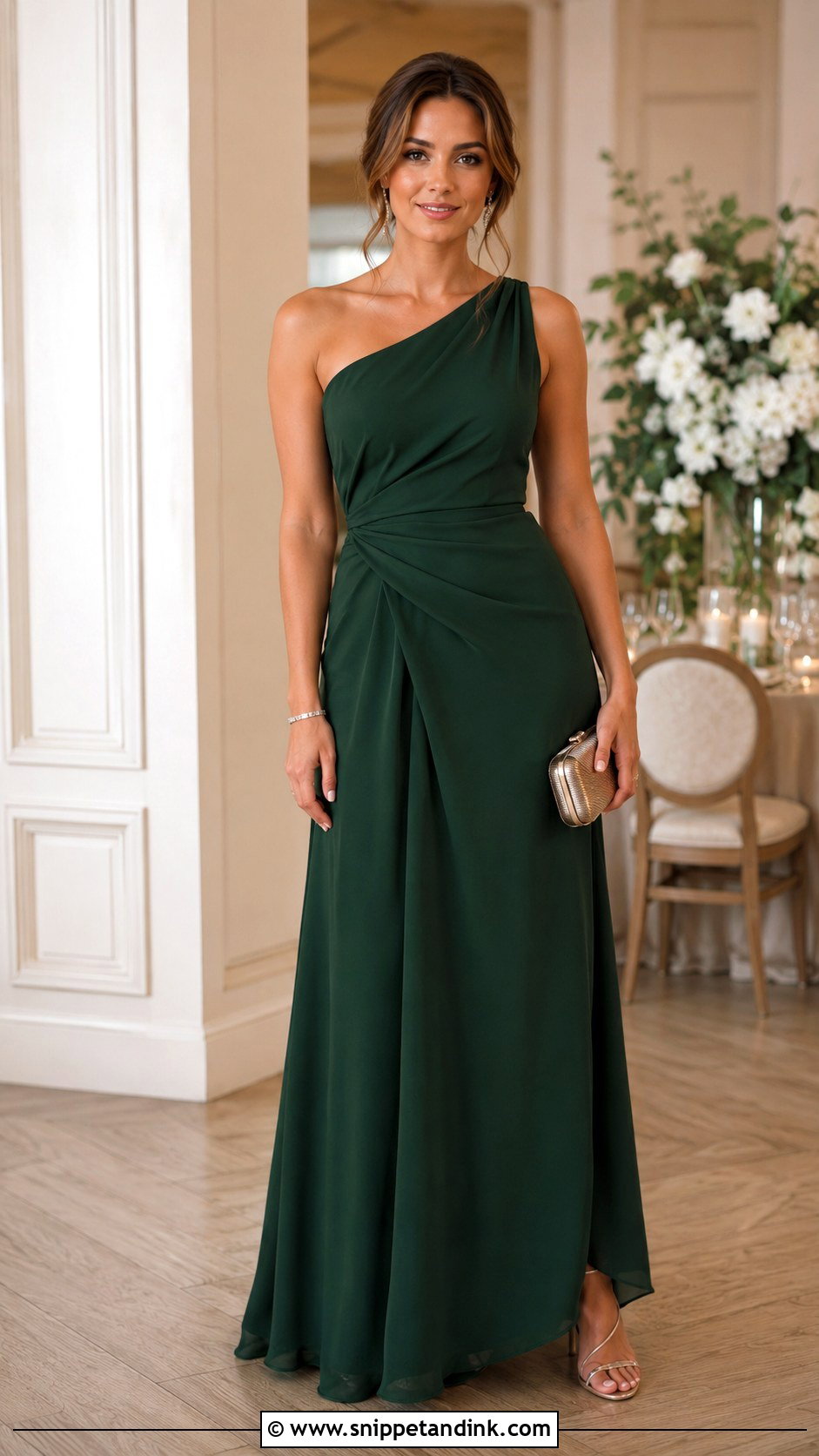
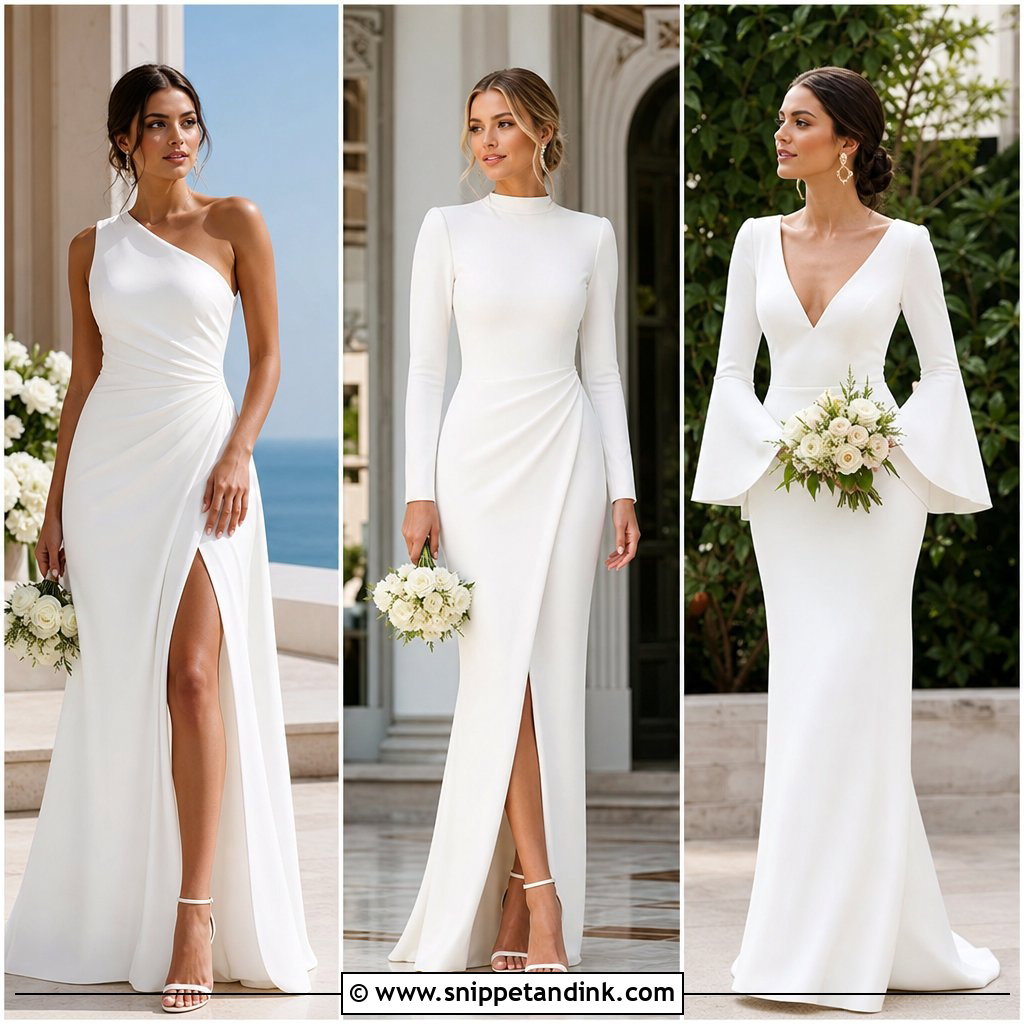
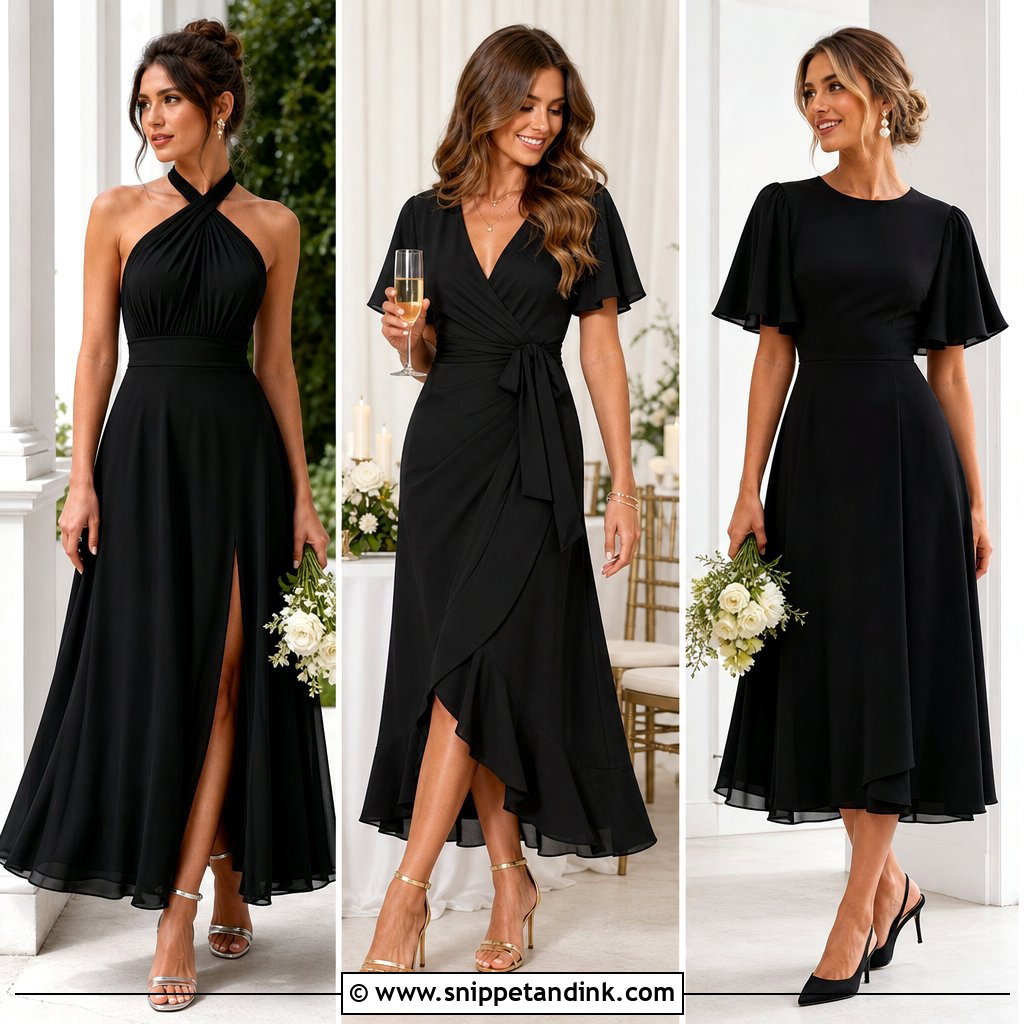
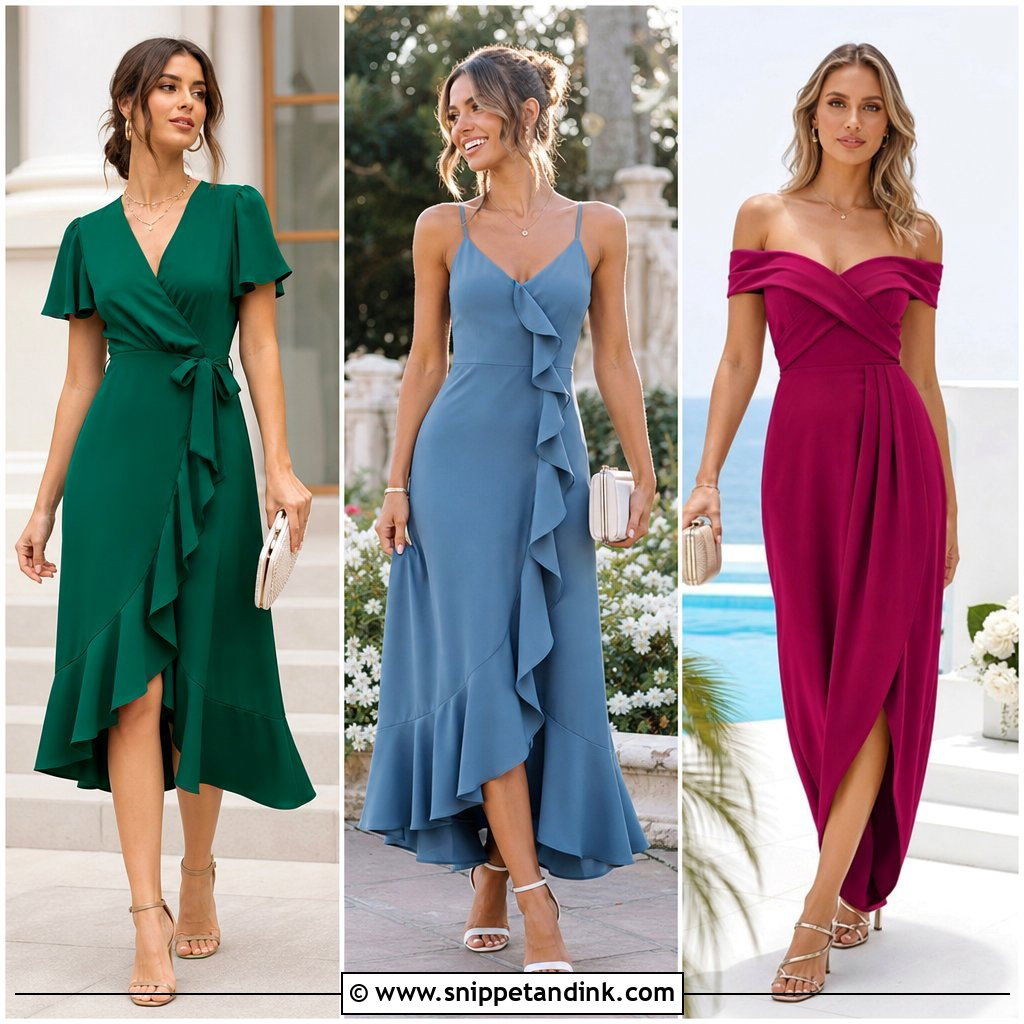
For a Western-style reception, a one-shoulder gown gives a clean formal line that stands out in family photos. A floor-length A-line or column in crepe, satin or chiffon works, with draping at the waist for shape. Leave the shoulder plain; the asymmetric neckline is already the detail. Drop earrings, one bracelet and a compact clutch are enough with strappy block heels. Forest green, navy, dusty blue and berry suit evening. Wear your hair low or swept to the opposite side so the shoulder stays visible.
19. Simple Saree With Statement Blouse
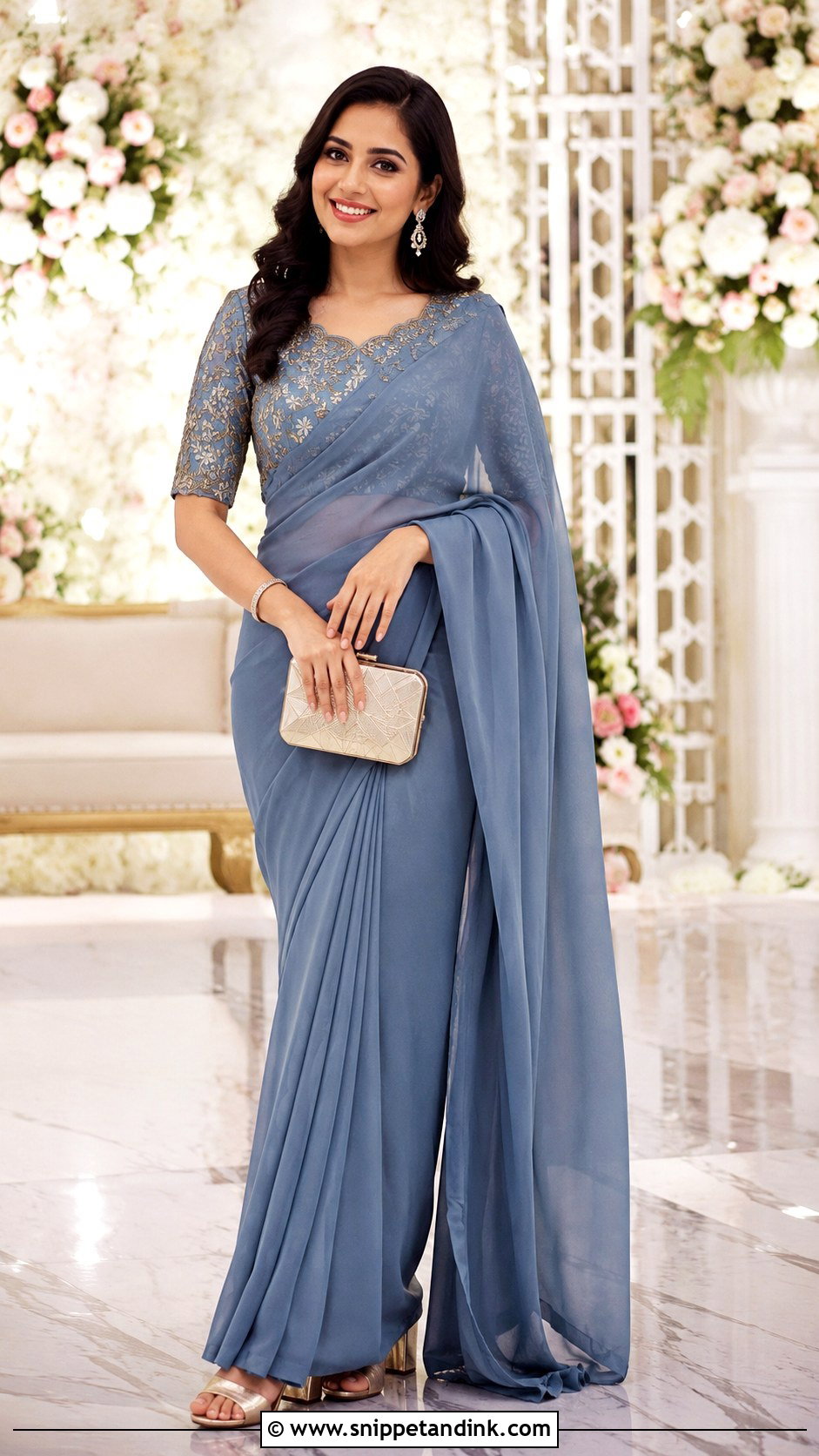
This is the outfit I suggest most to sisters on a budget. Put the money into the blouse and keep the saree plain. A solid georgette, chiffon or satin saree with a narrow border becomes wedding-ready with embroidered sleeves, a worked back or a textured neckline. Coordinate the blouse color rather than contrasting sharply. Pin neatly at waist and shoulder so the blouse stays visible. Medium earrings, a slim bangle and metallic block heels. Later, the plain saree can be worn again with several different blouses.
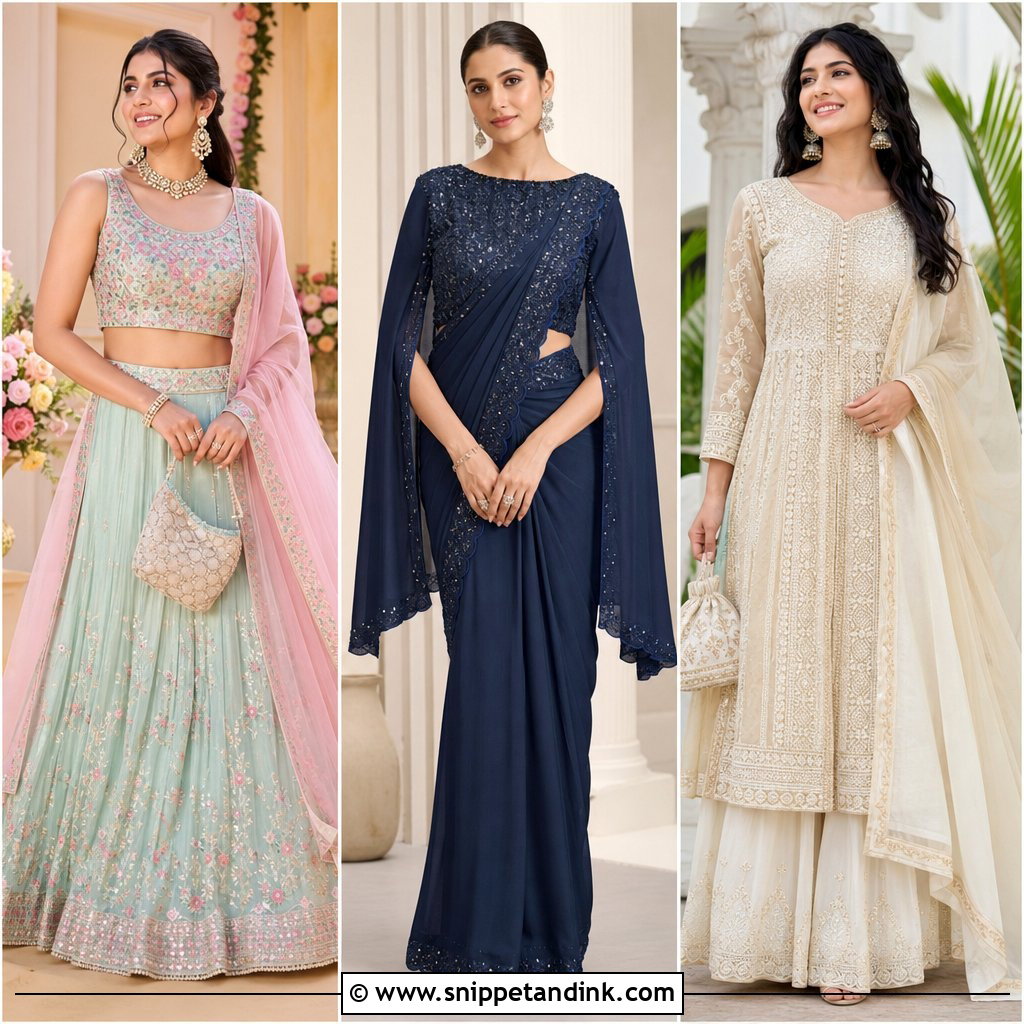
20. Indo-Western Pantsuit for Sister Wedding
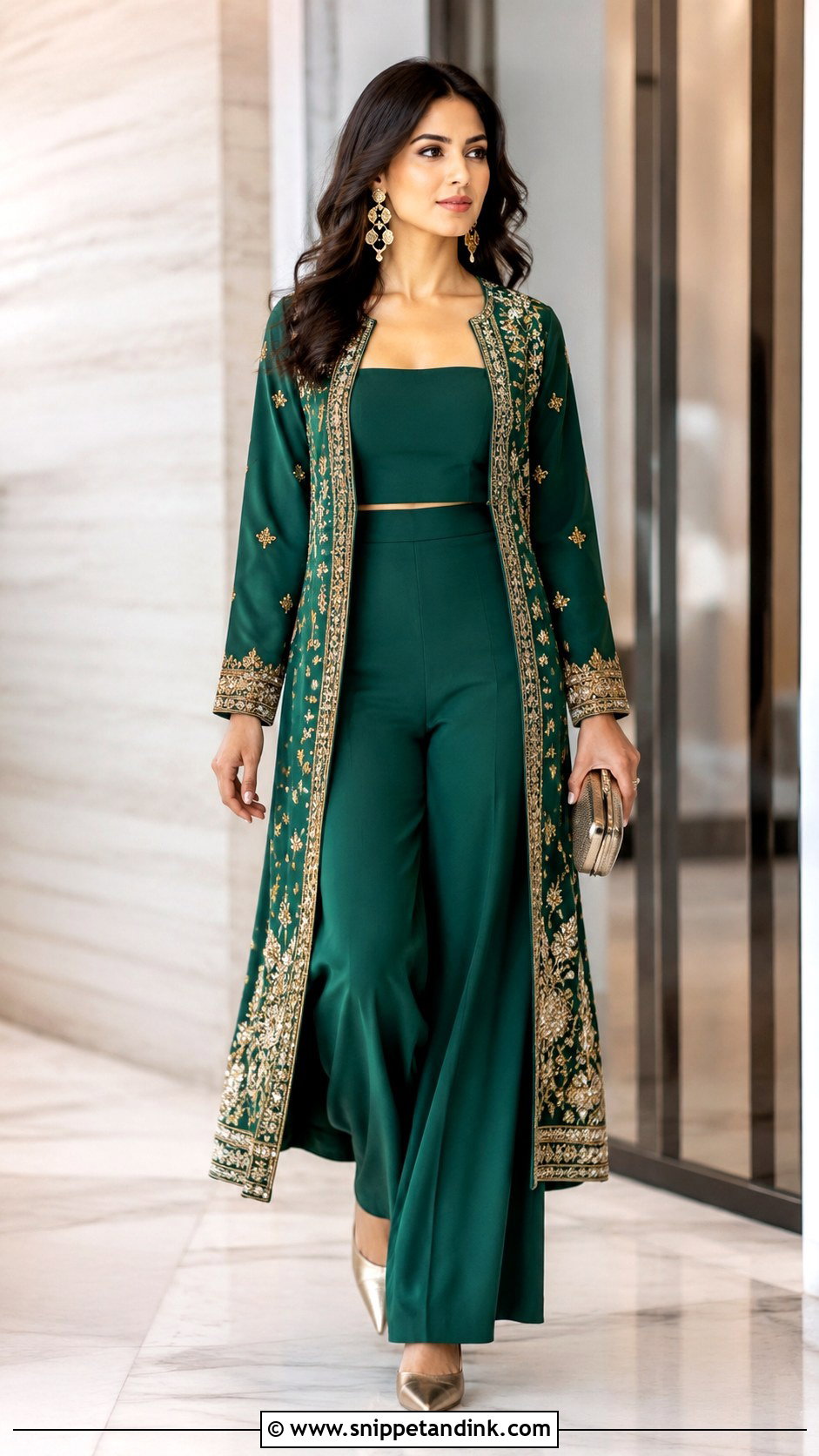
A tailored Indo-Western pantsuit is the confident choice if you don’t want a dress, lehenga or saree. Wide-leg or straight trousers, a fitted blouse and a long embroidered blazer, cape or open jacket should be coordinated in fabric and color so the three pieces read as one outfit. Keep the detail at the lapels, cuffs or shoulders. A softly fitted waist gives shape without restricting you. Jewel tones for evening, blush, sage or powder blue for day. Sculptural earrings, pointed block heels and a polished ponytail finish it, and it never competes with the bride’s traditional outfit.
A Sister’s Outfit Works Harder Than a Guest’s
Settle colors with the bride early
Ask your sister directly what she’s wearing to each function and whether the family is coordinating. Some brides want all the sisters in one shade; others want everyone in different colors so the group photos look lively. Either way, avoid her exact color and anything with as much embellishment as hers.
Give the blouse tailor real lead time
In wedding season, good blouse tailors book up quickly. Hand over fabric at least a month before the first function and leave time for a second fitting, because a blouse that’s even slightly loose lets a saree or dupatta slide all evening.
Dress for the jobs you’ll actually do
Sisters carry the bride’s bag, hold her lehenga on stairs and often join rituals with a lot of bending and sitting. Ask the tailor for a hidden pocket in the skirt or kurta for her lipstick, safety pins and your phone. Book your own saree draper slot early, before the bride’s team arrives, so you’re dressed and ready to help when she needs you.
Simple Doesn’t Have to Mean Plain
A good sister-of-the-bride outfit lets you work, dance and stand beside her in photos without either of you thinking about it. From light lehengas and silk sarees to gowns and pantsuits, the right one depends on the dress code, venue, weather and the colors your sister has chosen, so confirm those before you buy. Prioritize secure draping, breathable fabric and shoes you can wear for hours. One thoughtful detail, a quality fabric and a color that sits well next to the bride will carry you further than heavy embellishment.
You'll Like These Ideas:


Leave a Reply