
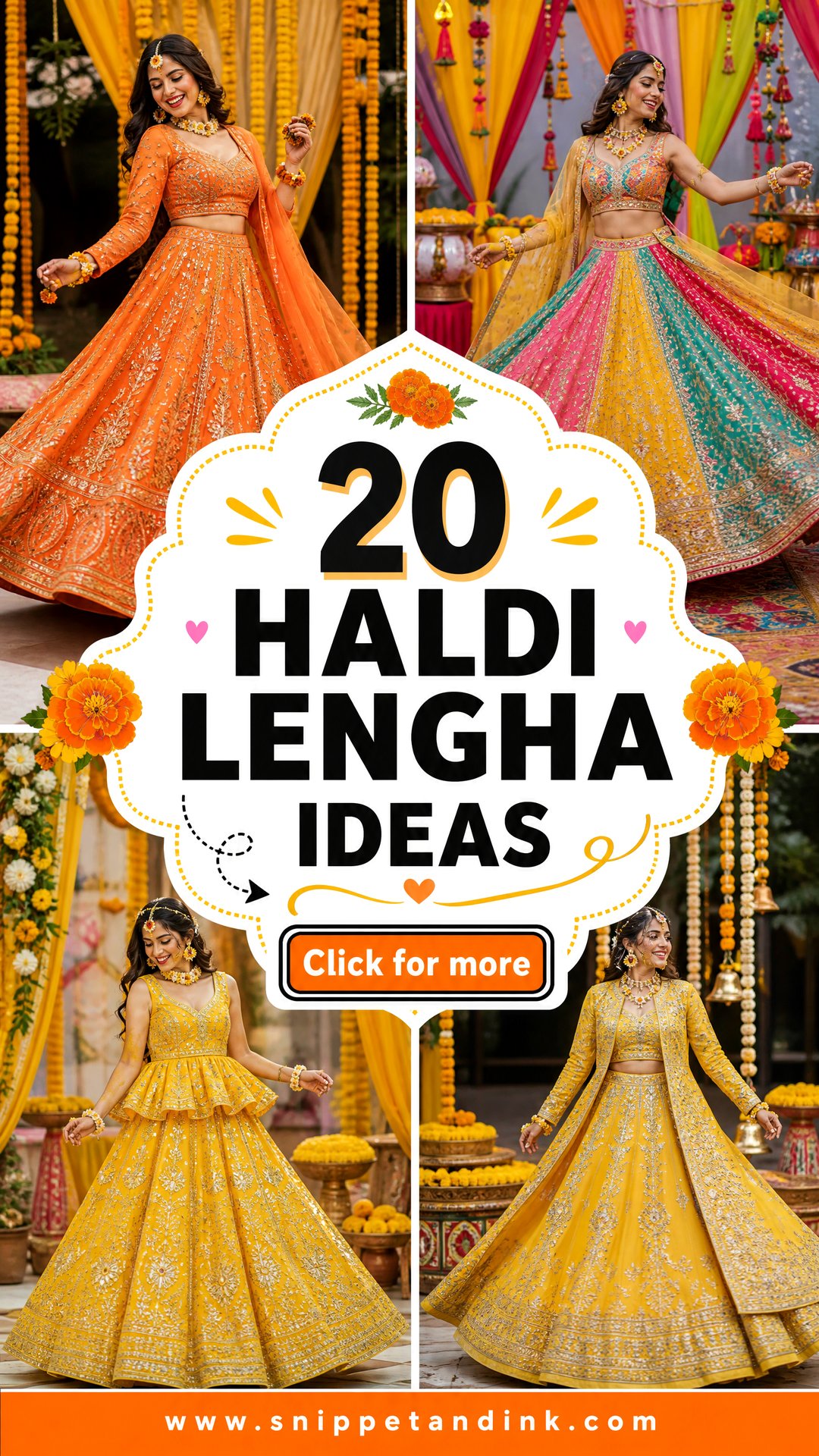
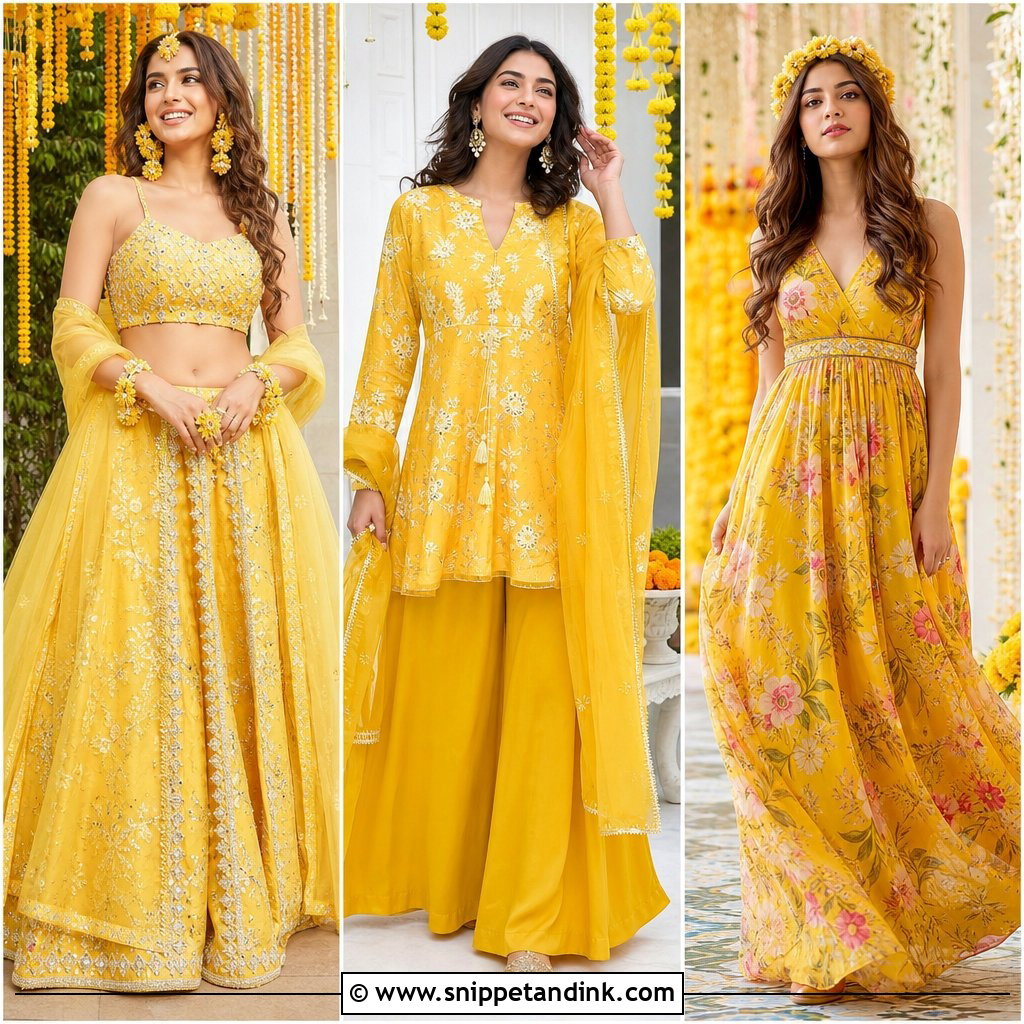
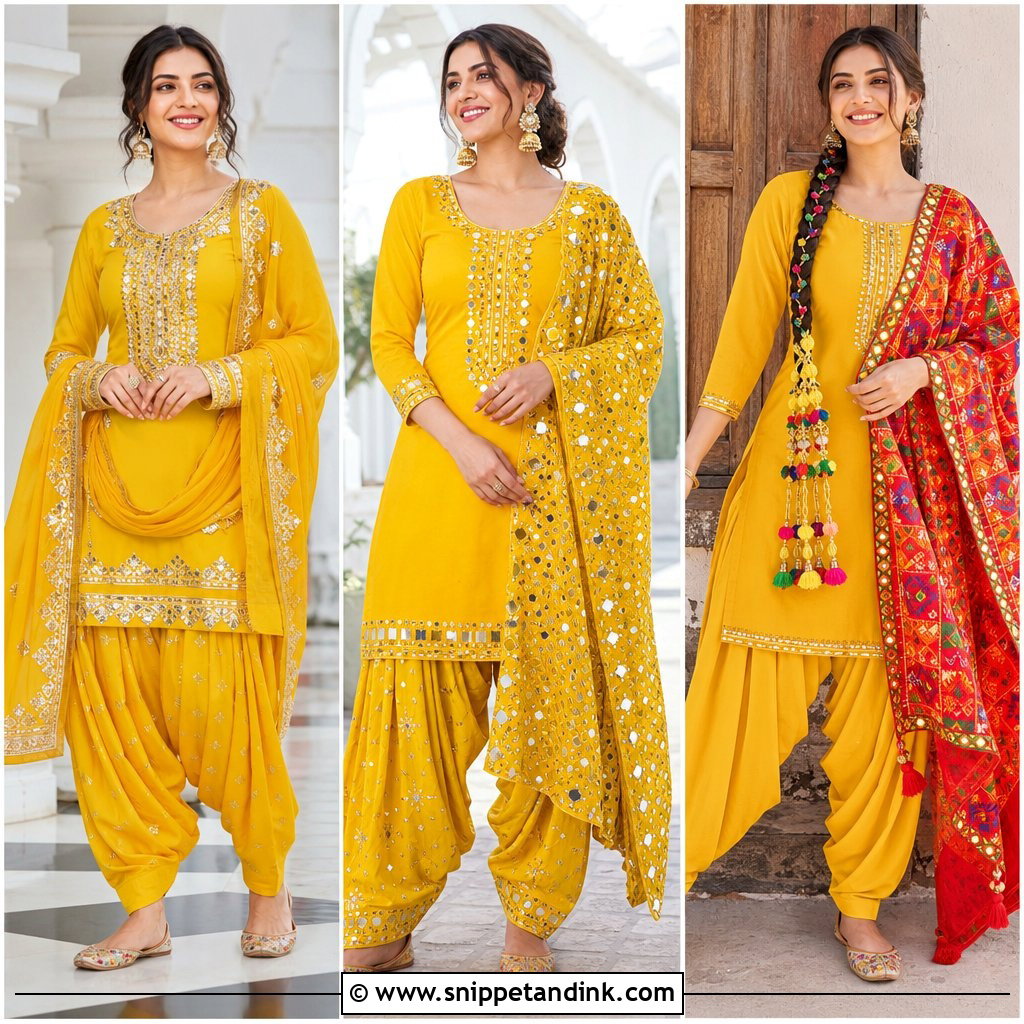
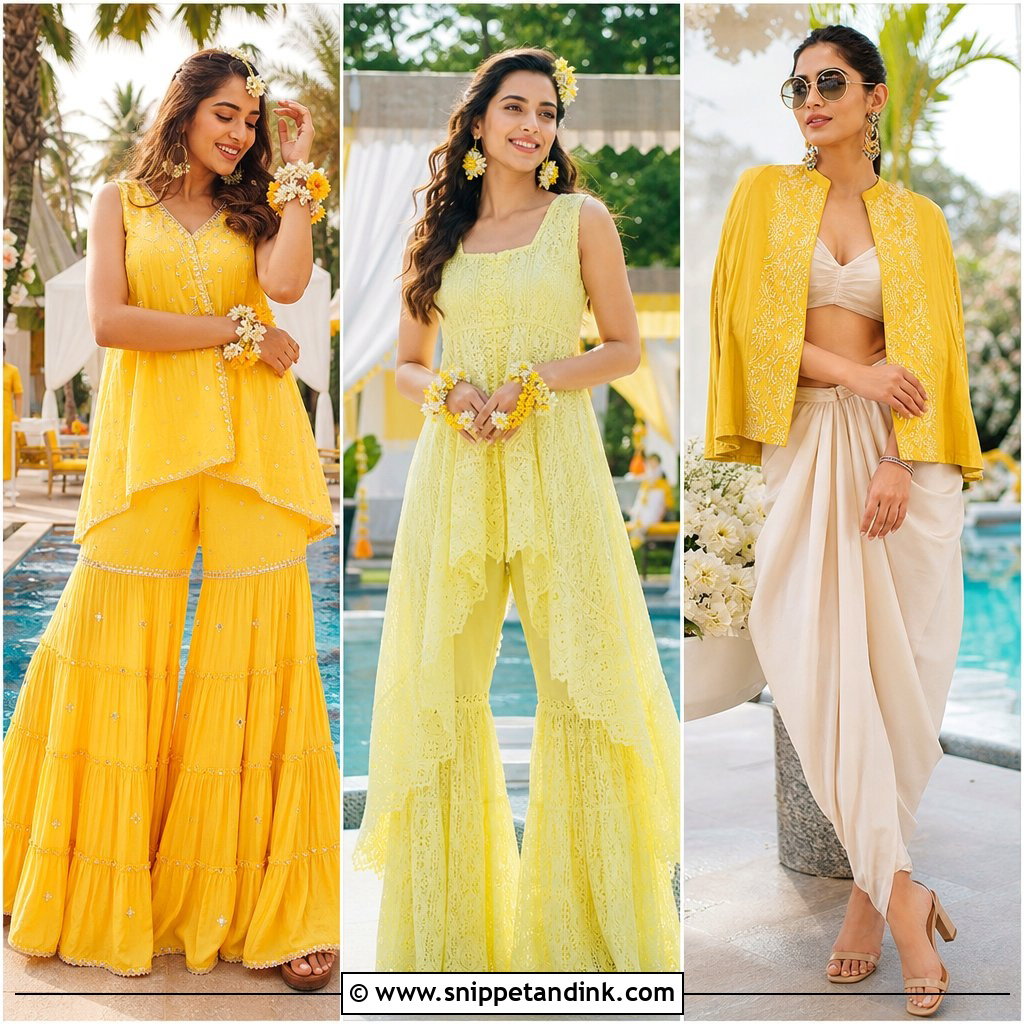
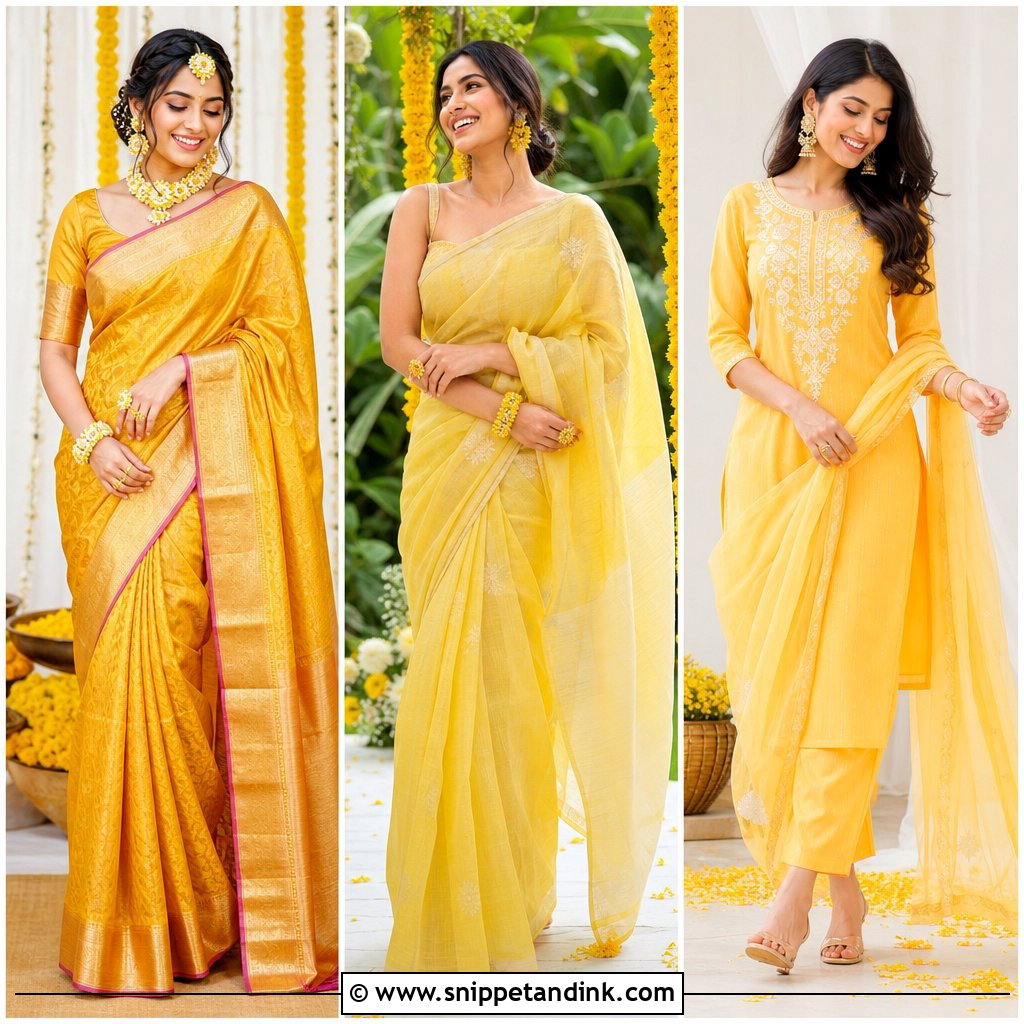
A lehenga for Haldi is a different garment from the one you’ll wear to the pheras. It needs to be light enough to sit in for an hour, washable or cheap enough to risk, and secure enough that nobody is re-pinning your dupatta while your aunt is mid-blessing. The twenty below run from classic yellow to pastels, florals, traditional crafts like Bandhani and gota patti, and modern blouse shapes. Cotton, georgette, chiffon and organza are the fabrics I keep coming back to for daytime, and yellow now shares the stage with ivory, pink, green, orange and multicolor. Brides, sisters, bridesmaids and guests will all find something here, at quite different budgets.
Turn the Skirt Inside Out Before You Pay
Most people judge a lehenga from the front, on a hanger. I learn much more from the inside. A few quick checks at the shop tell you how it will behave on a long, messy morning.
- The lining. Cotton or soft mul lining breathes; shiny polyester lining feels clammy within half an hour in heat.
- The waist closure. A hook-and-zip waistband sits flatter and stays put better than a drawstring alone, which loosens as you dance.
- The flare. Count the kalis, the vertical panels. More panels means more swing, but also more fabric to gather when you sit on the floor.
- The hem. A wide border or horsehair braid gives shape without a can-can; a can-can underneath adds volume and a lot of heat.
- The weight. Lift the skirt with one hand. If it feels heavy now, it will feel twice as heavy after two hours on a cushion.
If you’re ordering online, ask the seller for the fabric content of the lining and the skirt weight before checkout. A good seller will know both.
1. Yellow Floral Haldi Lehenga
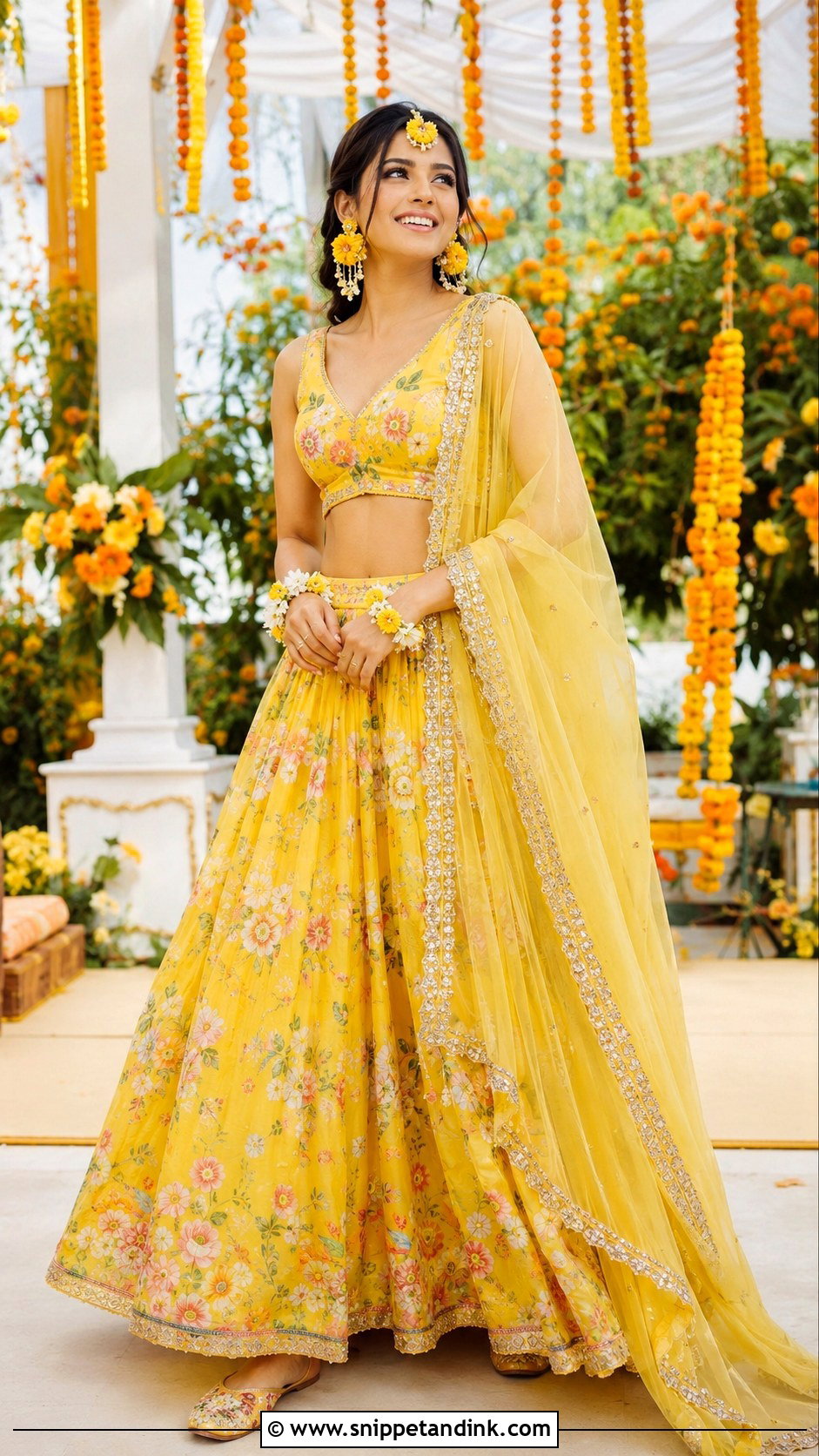
Small florals are friendlier than big ones at a Haldi, because a tiny repeat print hides stray turmeric in a way a large open bloom on plain ground can’t. I’d look for a light skirt scattered with pink, white or orange flowers, a sleeveless blouse and a sheer yellow dupatta with a narrow floral border. Leave the neckline open so floral earrings or a fresh-flower maang tikka have room. Nude block heels, embroidered juttis or flat sandals all work. A loose braid with fresh flowers suits the bride; guests can wear soft waves or a simple ponytail. Set against marigolds and greenery outdoors, the print feels completely at home.
2. Mustard Mirror Work Haldi Lehenga
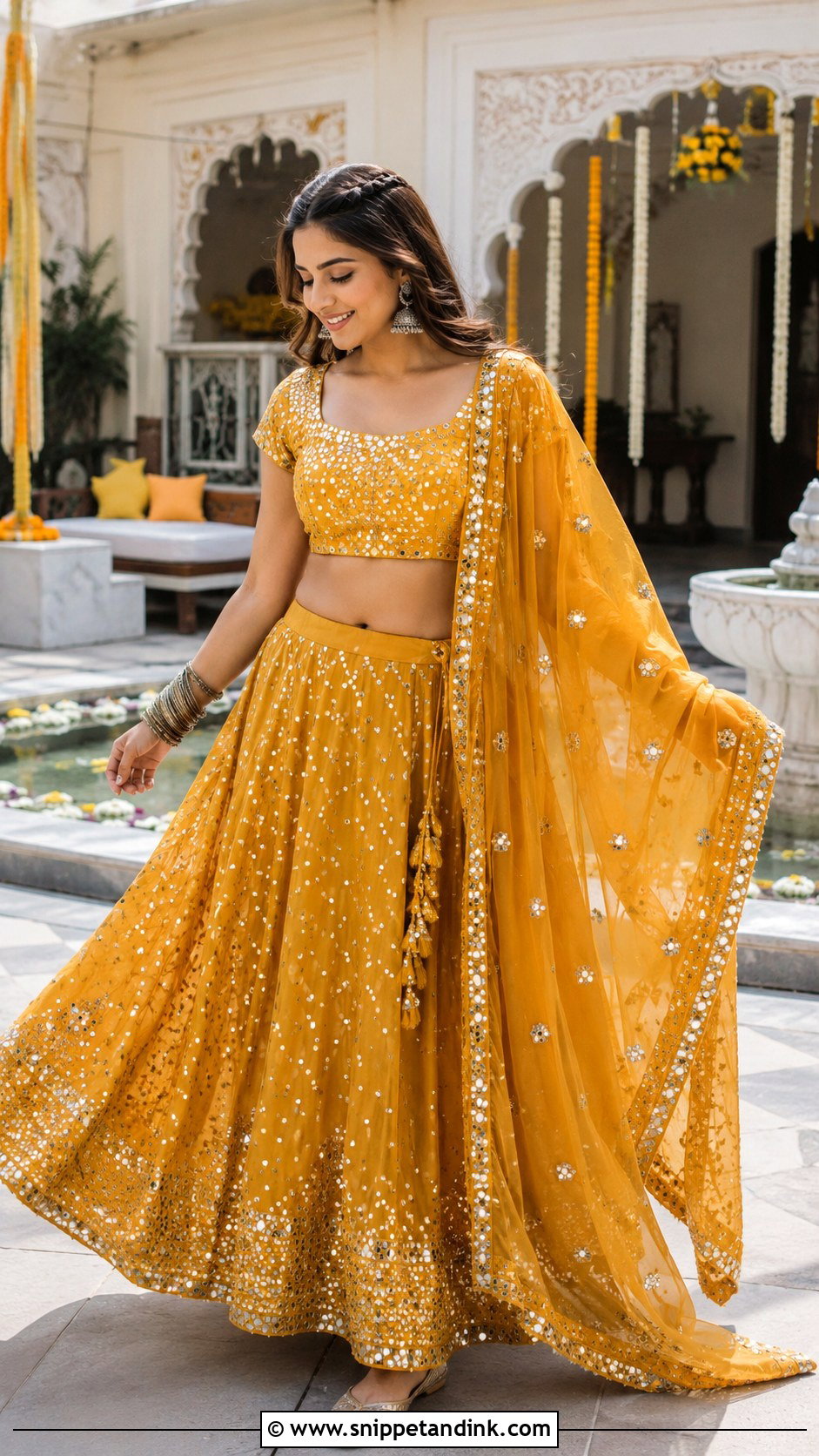
Mustard is the yellow I recommend when the décor leans earthy, with brass urlis, terracotta and banana leaves, because lemon yellow can look harsh against those tones. Choose a flowing georgette lehenga with scattered mirror work rather than dense embroidery, and a fitted short-sleeve blouse with a square neck for a clean shape. The matching dupatta with a thin mirror border should be pinned at one shoulder. Oxidized silver jhumkas are a smart contrast to mustard here, with stacked bangles and a small maang tikka. Metallic juttis and a sleek low bun or braided ponytail keep it neat. Sisters and bridesmaids look just as right in this as the bride.
3. Marigold Gota Patti Haldi Lehenga
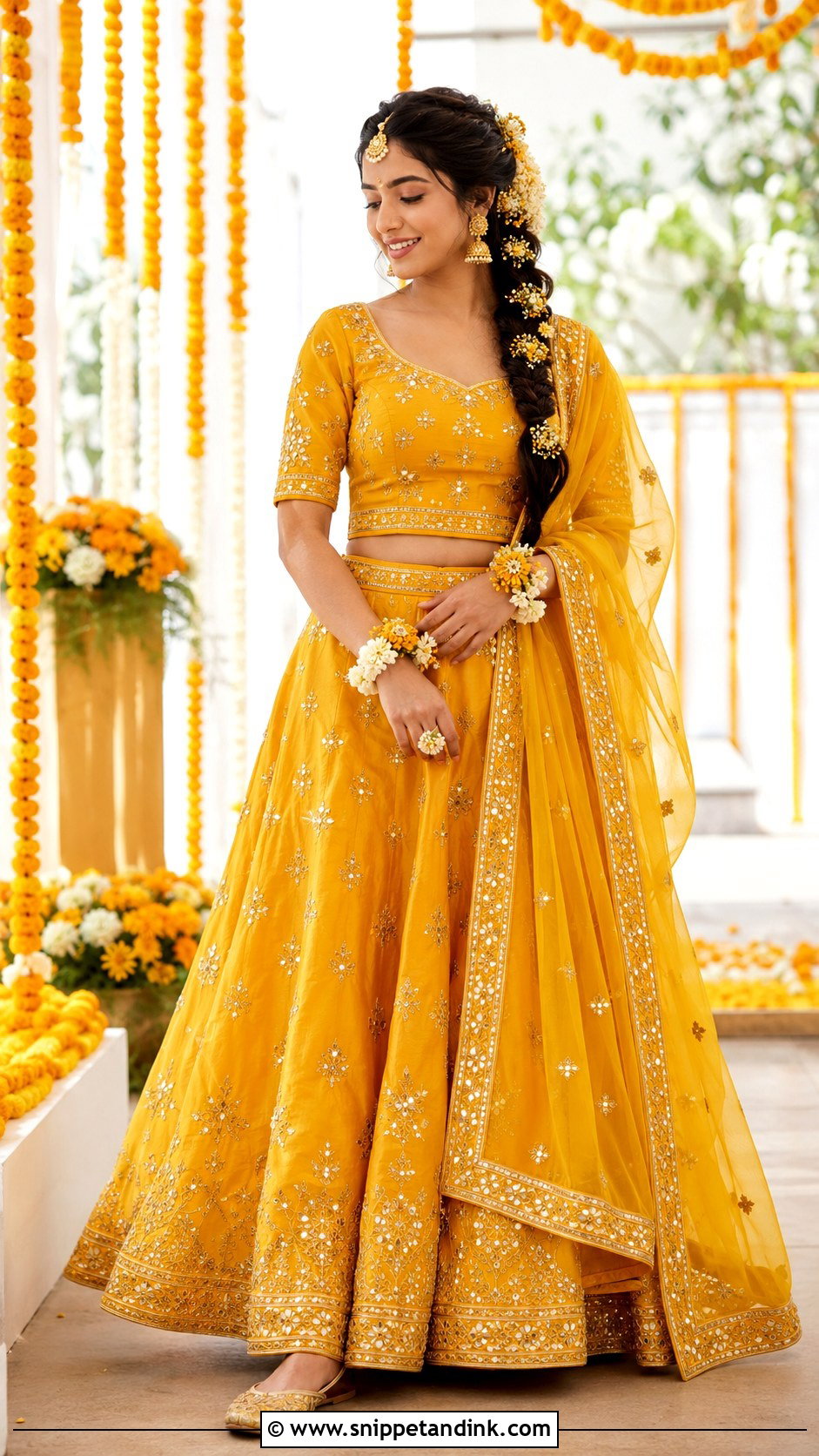
Gota patti is appliqué made from thin metallic ribbon folded and stitched into motifs, a Rajasthani technique that catches the light without the weight of zardozi. On a marigold A-line lehenga, I prefer the motifs spaced out with a broader band at the hem, which gives the skirt a little weight to swing. Elbow sleeves on the blouse add coverage; a soft net or organza dupatta with matching trim keeps the top light. Gold jhumkas, floral bangles and a small round bindi coordinate easily. Skip delicate heels in favor of cushioned juttis, because Haldi floors get wet and covered in petals. A low braid woven with small marigolds finishes it.
4. Pastel Yellow Organza Haldi Lehenga
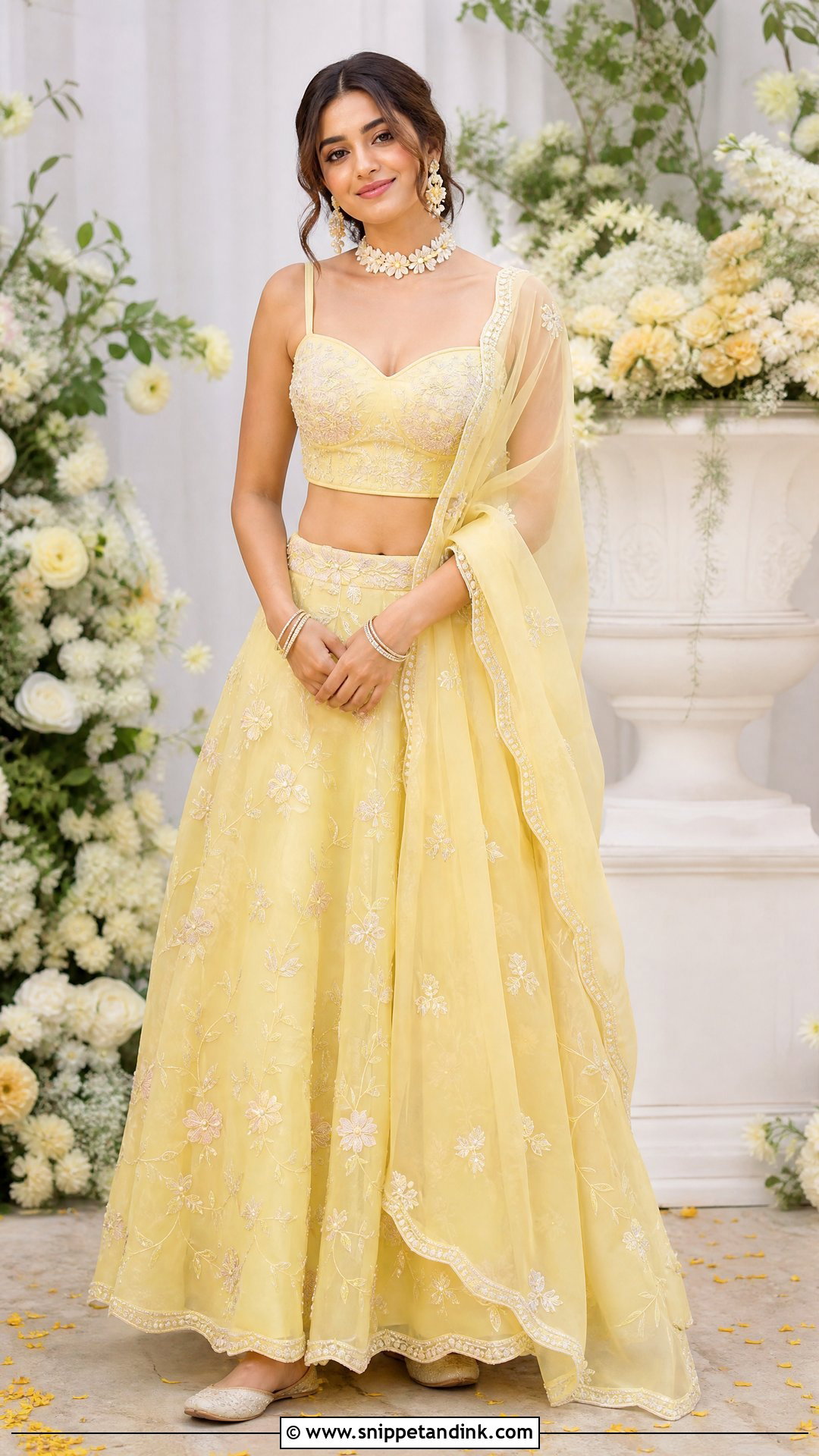
Pastel yellow organza is for the bride who wants color to whisper. The fabric is crisp, so embroidered flowers sit up off the surface and the skirt holds volume without a can-can. That crispness also means it creases where you sit, which I’d accept as part of the look rather than fight. A structured blouse with thin straps, a sweetheart neck or short sheer sleeves suits it, with the organza dupatta loose over one arm. Pearl earrings, a small floral choker and slim bangles stay in the same quiet register, as do ivory juttis. Polished waves or a half-up style with tiny white flowers suit an intimate indoor ceremony or pale garden décor.
5. Yellow Bandhani Haldi Lehenga
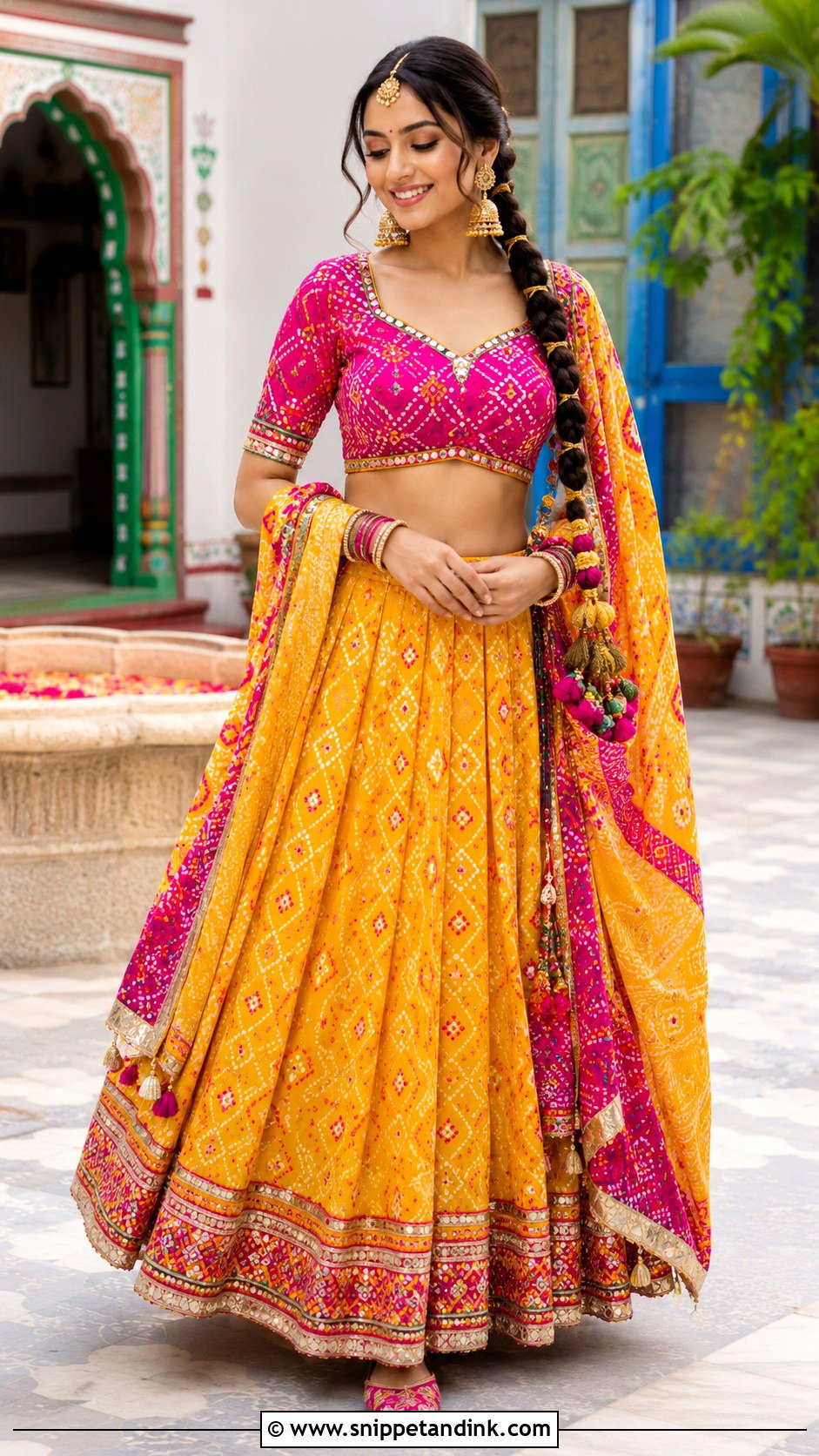
Bandhani carries its own celebration, so most of my styling work on it is subtraction. A light yellow Bandhani skirt with red, pink, green or white dots needs a solid blouse, either yellow or a contrasting rani pink shade. The matching dupatta can go across one shoulder, or over both arms just for photographs. Traditional jhumkas, glass bangles and a small gold-tone maang tikka are enough. Red or pink juttis pick up the dots, and a long braid with a paranda gives the whole thing a vibrant tail. No heavy necklace, no heavily embellished shoes. Real Bandhani cotton has a slightly crinkled texture that softens as it’s worn, so don’t iron it flat.
6. Yellow Chikankari Haldi Lehenga
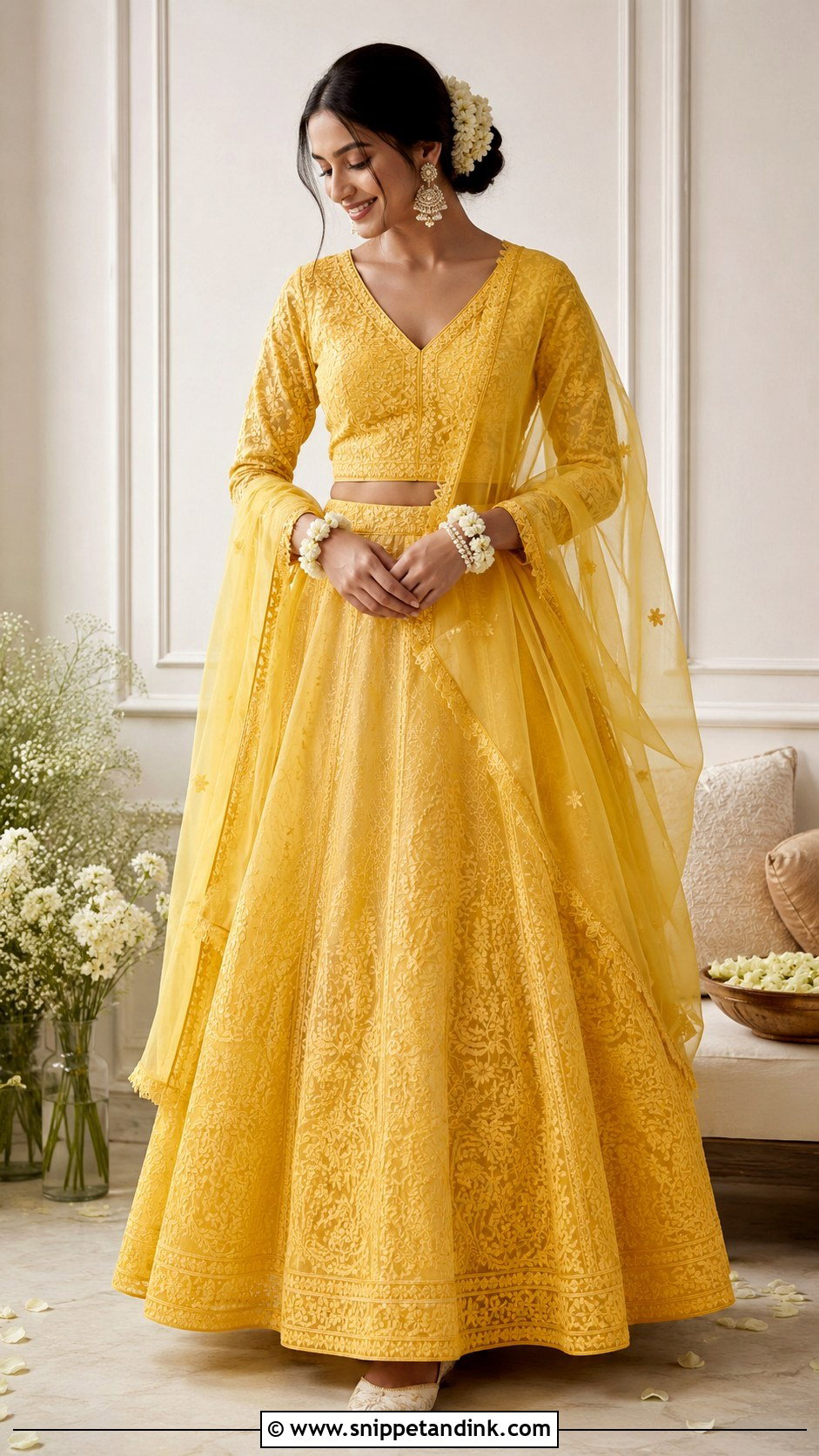
Chikankari is the craft I suggest for minimalist brides, since the embroidery is tonal and reads up close rather than across a room. Look for cotton, georgette or light organza with visible threadwork, a matching blouse with a modest V-neck and short sleeves, and a simple chiffon dupatta with embroidered edges. Pearl jhumkas, white floral bangles and a minimal maang tikka keep it calm, along with ivory juttis or flat sandals. Jasmine around a low bun adds scent and a traditional finish without another color. One honest note: fine chikankari stitches can pull if a ring or bangle catches them, so I keep bracelets smooth with this one.
7. Yellow Silk Haldi Lehenga
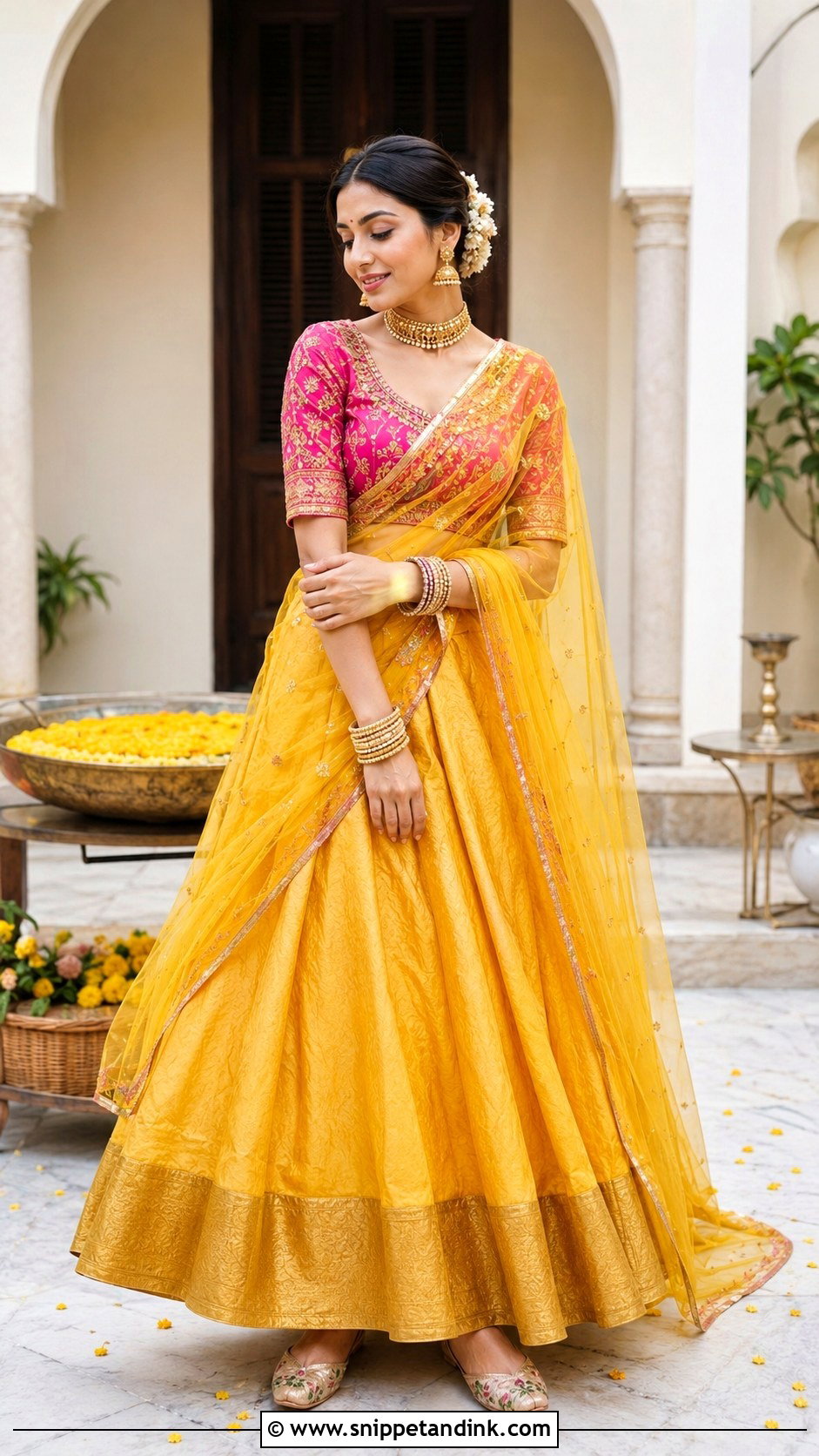
Silk gives you richness through the fabric itself, which means you can skip most of the embroidery. Choose a light raw silk or silk blend with a wide gold border and a controlled flare. Raw silk has a slubby, matte surface that photographs well in daylight and hides wrinkles from sitting better than smooth satin does. Match the blouse in elbow sleeves, or contrast it in pink, orange or green, and add a sheer dupatta to lighten the effect. Medium gold jhumkas, a simple choker and traditional bangles suit it, with juttis rather than narrow heels. A center-parted bun with white flowers finishes the look. Keep it lighter than your wedding lehenga so the two outfits don’t compete.
8. Yellow Printed Haldi Lehenga
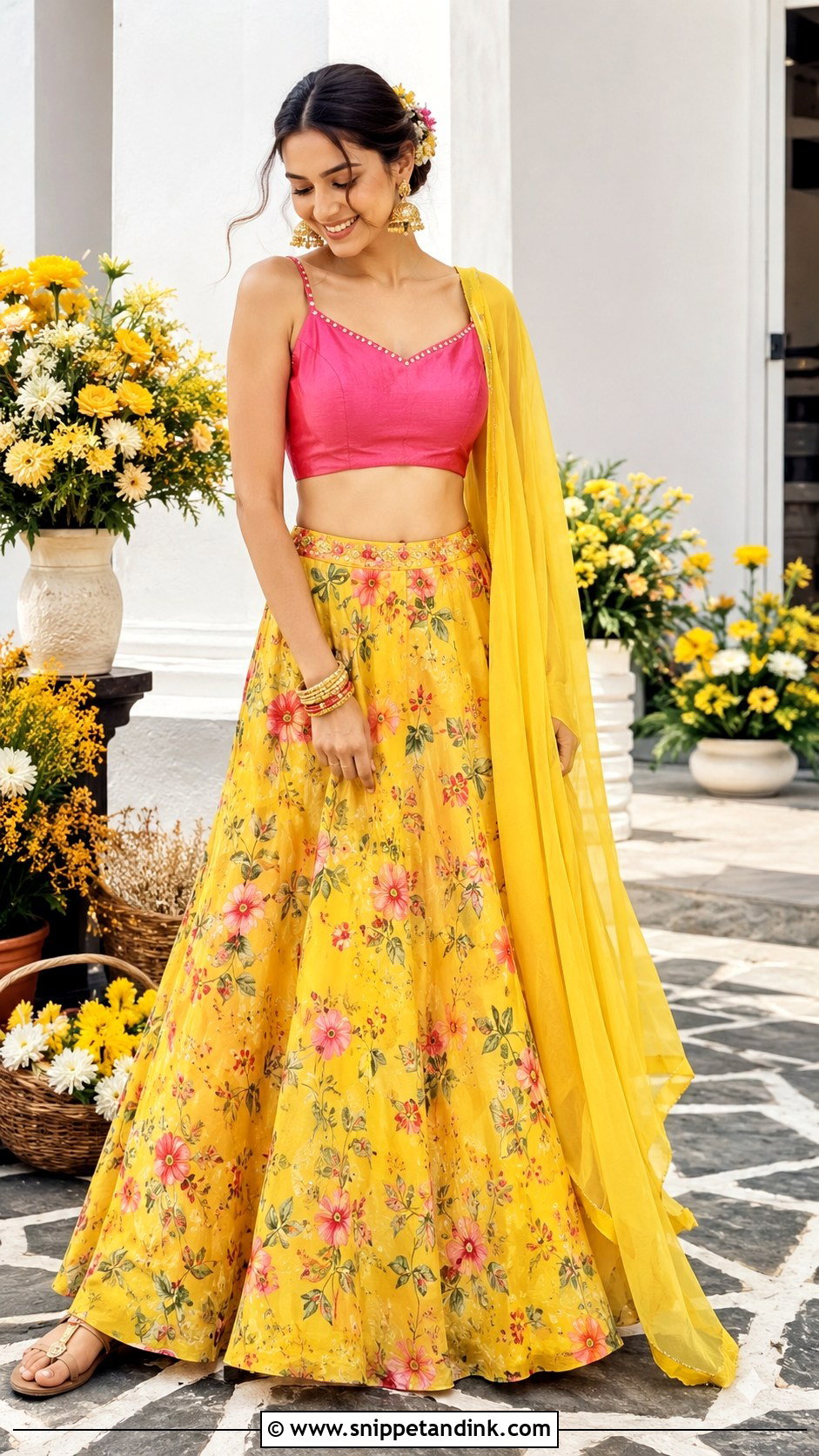
Printed lehengas are what I put on anyone who plans to dance, run around and get messy, because there’s no hand embellishment to lose. Botanical, paisley, geometric or block-printed motifs in pink, green, orange and white all suit Haldi. Repeat one color from the print in a solid cropped blouse and keep the chiffon dupatta plain with a narrow border. Hoop jhumkas, stacked bangles and a few floral hair pins finish it, with Kolhapuri sandals or simple juttis. Bridesmaids and guests can wear it as is; a bride can make it hers with a floral choker and a custom embroidered blouse.
9. Yellow Sequin Haldi Lehenga
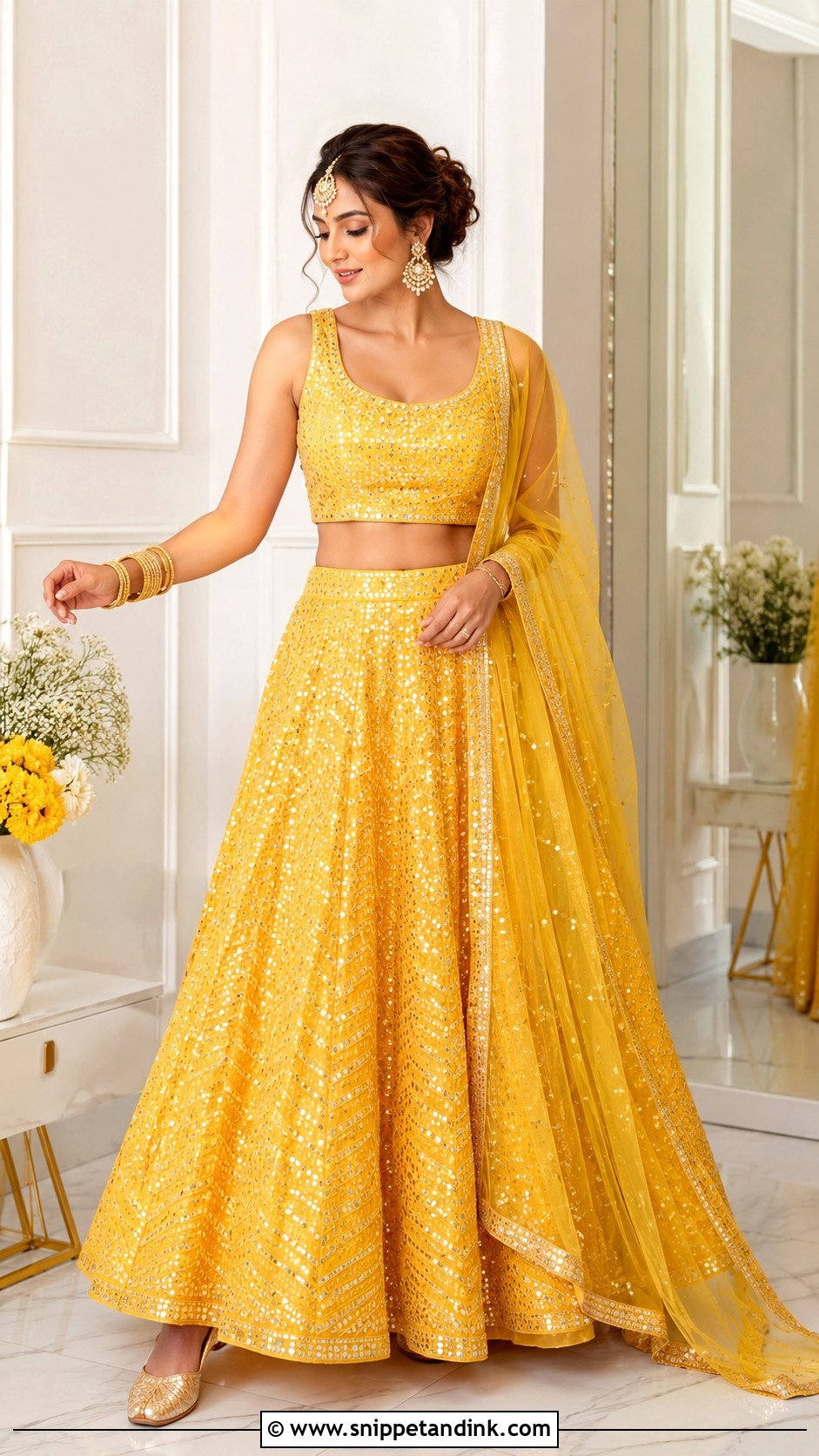
Sequins are a judgment call at Haldi. Under a covered venue or indoors with music they sparkle in every candid, but turmeric paste dries into the gaps around each sequin and is fiddly to clean out. If you want them, choose small sequins spaced apart; dense sequin work is heavy and can scratch the inner arm. A fitted scoop-neck blouse with lightly embellished straps and a plain net dupatta with a slim sequin border keep it modern. Crystal earrings, a fine maang tikka and a few gold bangles are plenty, with metallic flats or padded juttis. A soft ponytail or textured bun keeps hair off the blouse details. It carries well into an afternoon party after the ritual.
10. White And Yellow Haldi Lehenga
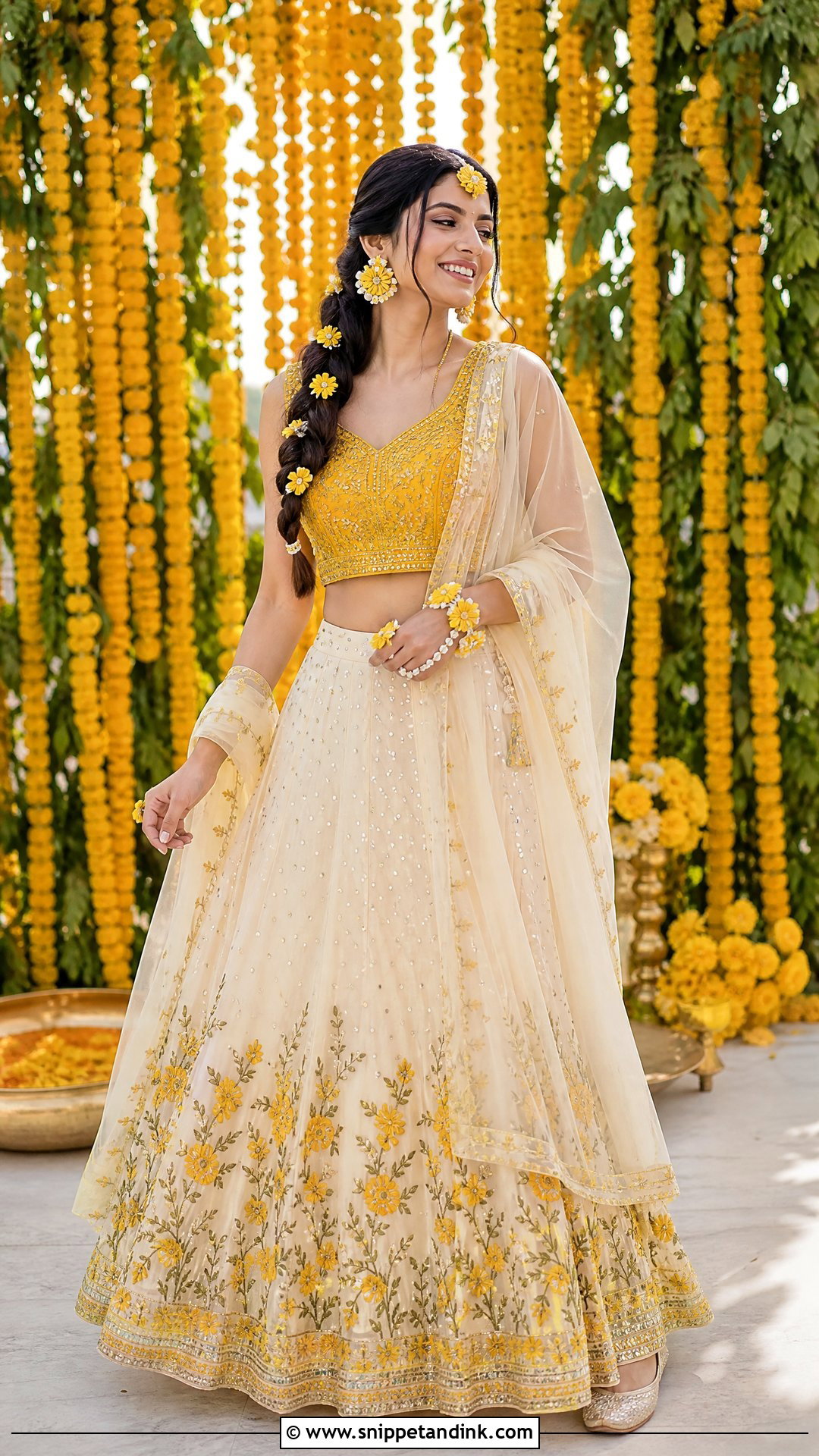
White and yellow look fresh against marigold décor, and the trick to this pairing is bringing yellow to the face. An ivory lehenga with yellow floral embroidery, printed borders or small appliqué needs a yellow blouse, with a sheer ivory dupatta edged in yellow linking the two. Floral jewelry in white and yellow is the most natural finish, with pearl juttis, ivory flats or low block heels. A loose braid with yellow flowers or a low bun with jasmine completes it. Ivory will show every turmeric mark, so I’d only use it where the paste is applied gently, or keep a removable shoulder wrap on hand for the messier part of the ritual.
11. Pink Floral Haldi Lehenga
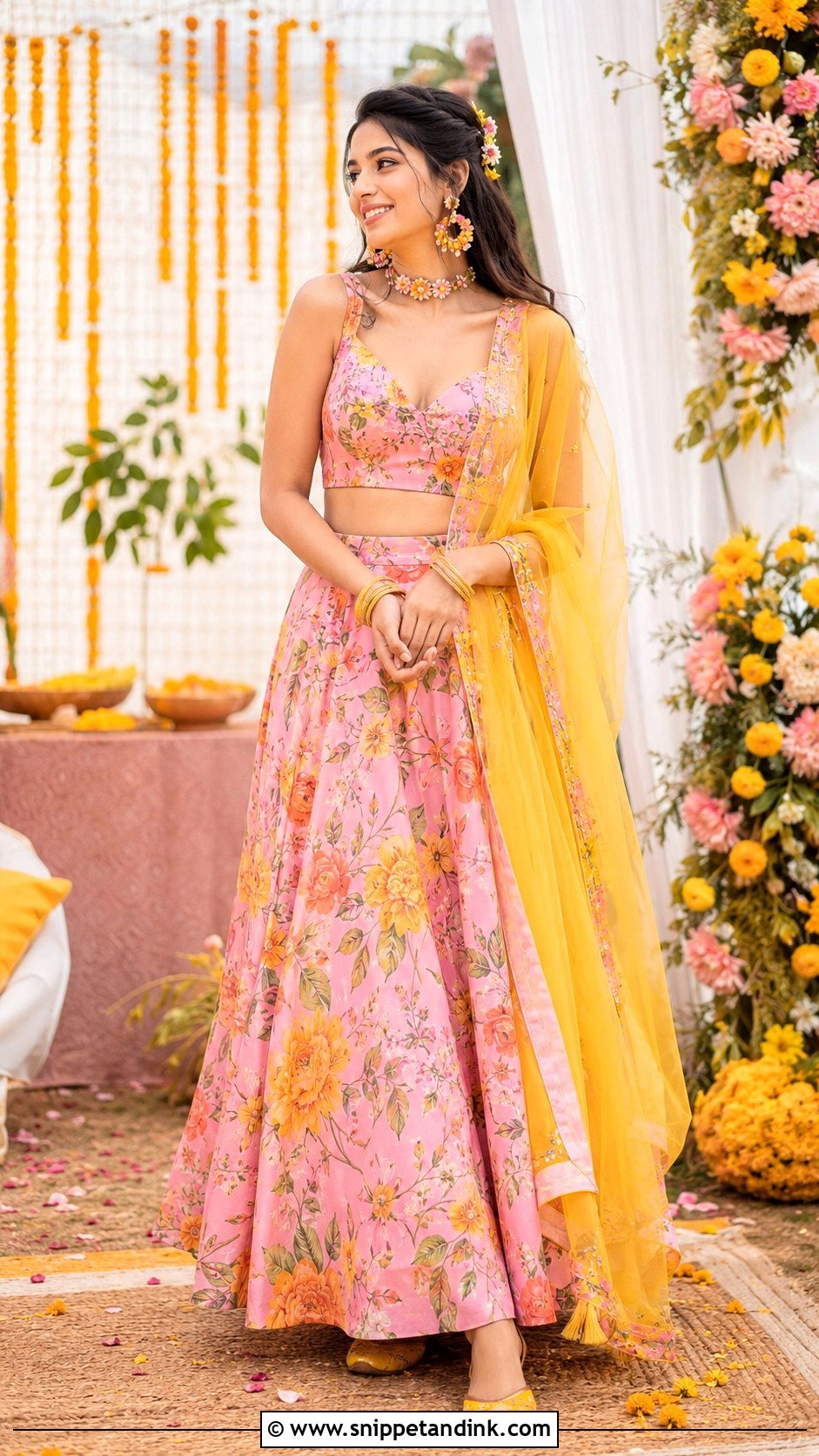
Who says a Haldi outfit must be yellow? A pink floral lehenga works especially well when the bride wants to stand apart from wall-to-wall yellow décor. Blush, rose or bright pink printed with yellow and orange flowers is the base, with a coordinating blouse and a light yellow dupatta as a nod to the ritual. Test the pink against your skin in daylight; cool pinks flatter some complexions and turn others grey next to turmeric. Floral earrings, a simple choker and slim bangles are enough, with yellow juttis or neutral sandals. Brides can add a maang tikka and floral wrist pieces; guests can keep it simpler.
12. Orange Haldi Lehenga
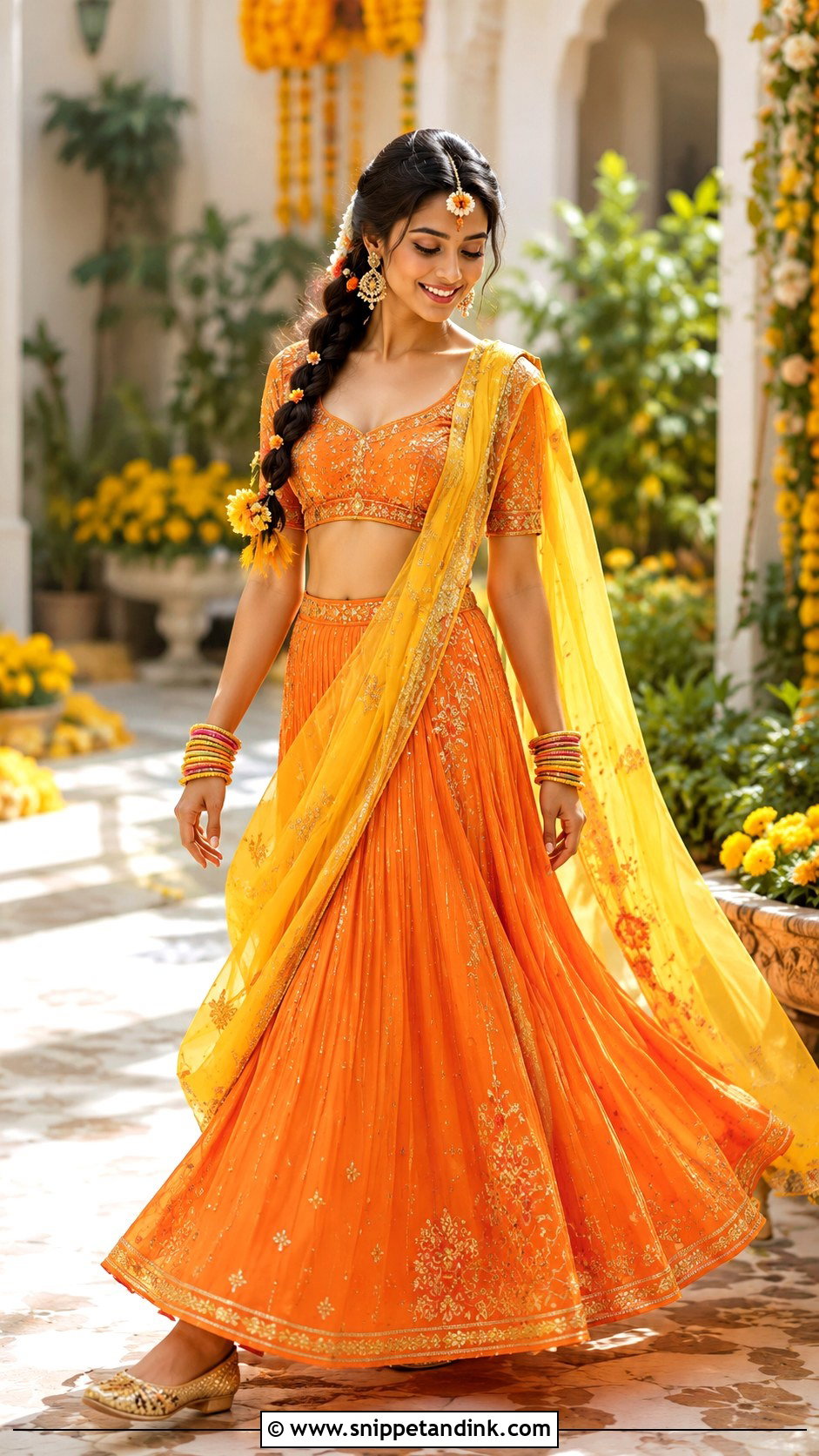
Orange runs warmer than yellow and pulls attention in a yellow-heavy setting. Tangerine, saffron or a burnt-orange lehenga in breathable georgette or cotton silk all work; burnt orange is kindest to cooler and fairer complexions, saffron to warmer ones. A matching blouse makes a monochrome base and a yellow dupatta adds a little contrast. Gota trim, thread embroidery or scattered mirrors beat heavy stonework. Gold-tone earrings, colorful bangles and a small floral maang tikka suit the shade, with gold juttis or tan flats for outdoor ground. A braided ponytail or flower-trimmed bun holds through dancing and paste. Next to yellow flowers and green leaves, orange looks rich in photos.
13. Lime Green Haldi Lehenga
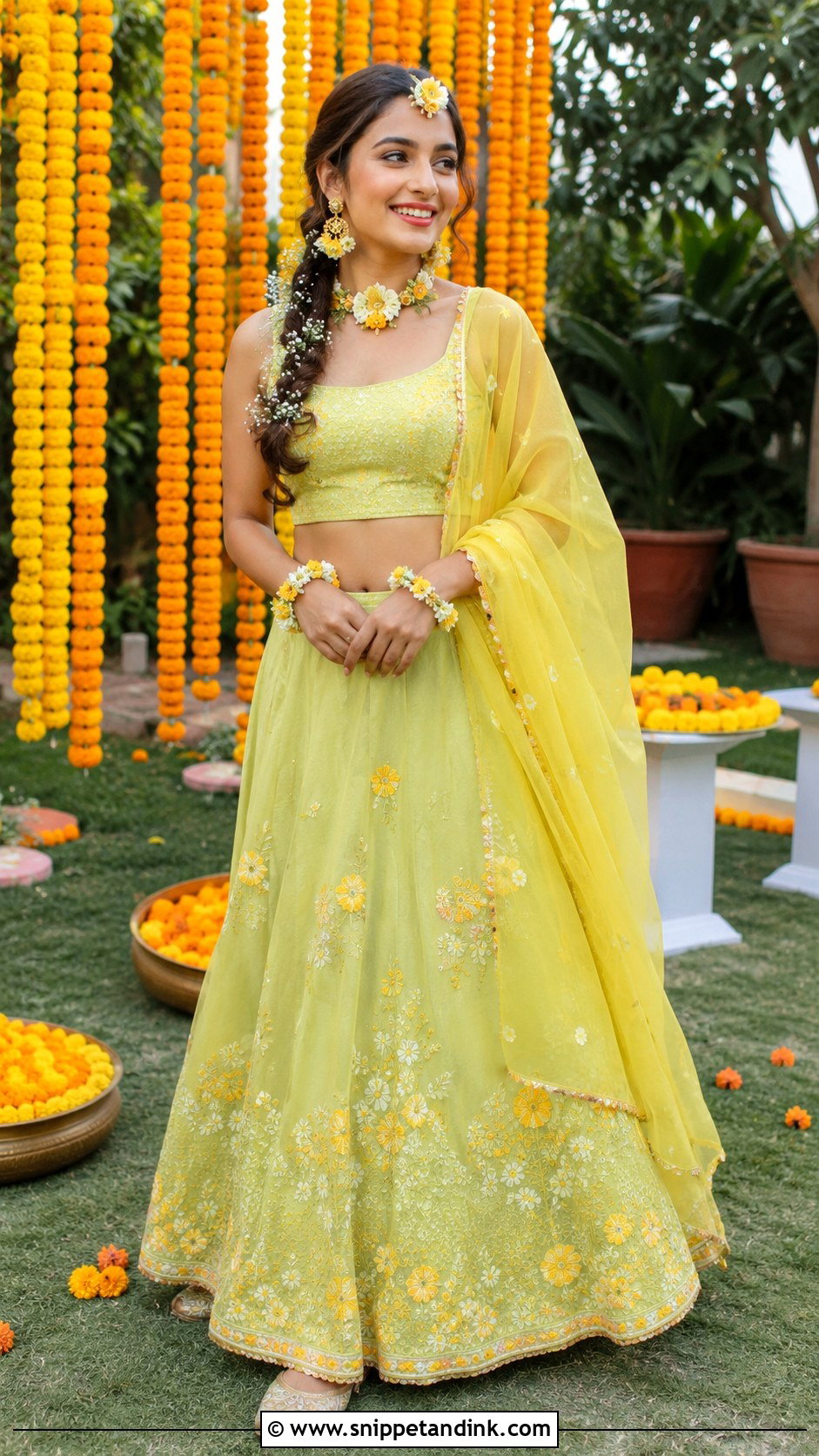
Lime green sits right next to yellow on the color wheel, which is why it feels connected to the ritual while still standing out. Look for a light lehenga with yellow floral embroidery, mirror details or a patterned border, a matching sleeveless blouse and a yellow organza dupatta. Let the embroidery decide the metal. Silver jhumkas suit cooler, silvery thread, and gold suits a warmer border. Floral jewelry in white, green and yellow ties the palette together, and neutral juttis stop it getting too colorful. A soft braid with small yellow flowers or a sleek ponytail both work.
14. Multicolor Haldi Lehenga
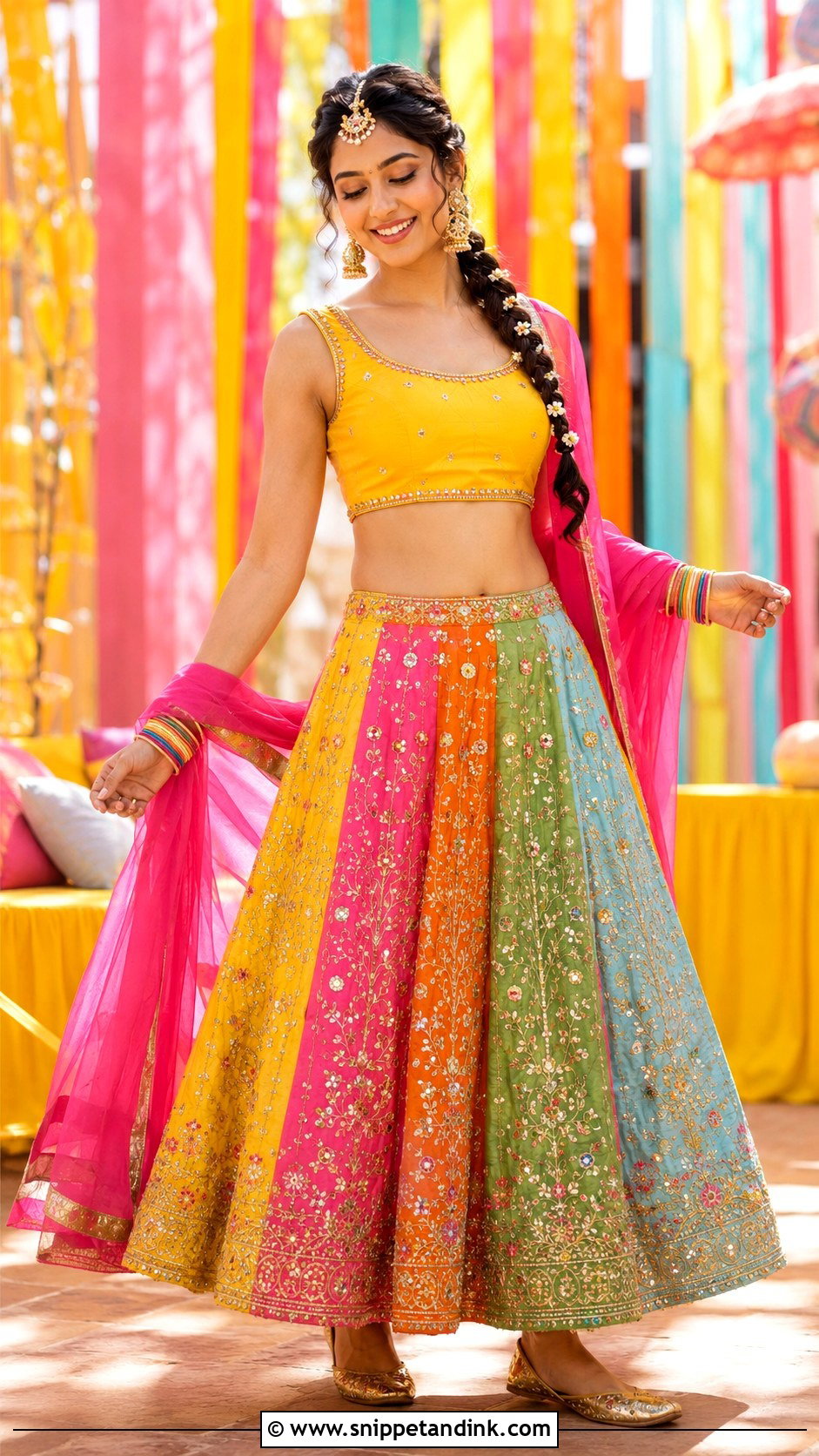
A multicolor Haldi lehenga is for the loud, joyful kind of Haldi with a dhol and a crowd. The skirt can mix yellow, pink, orange, green and blue in panels, prints or embroidered motifs, and that’s exactly why everything else should be simple: a solid blouse in yellow or pink and a plain dupatta in one dominant color from the skirt. Medium jhumkas, colorful bangles, a minimal maang tikka and neutral gold juttis balance it. A high braid or wavy ponytail stays practical. It suits carnival-style décor, and sisters and bridesmaids get plenty of rewear out of it at festivals afterwards.
15. Yellow Lehenga With Crop Top
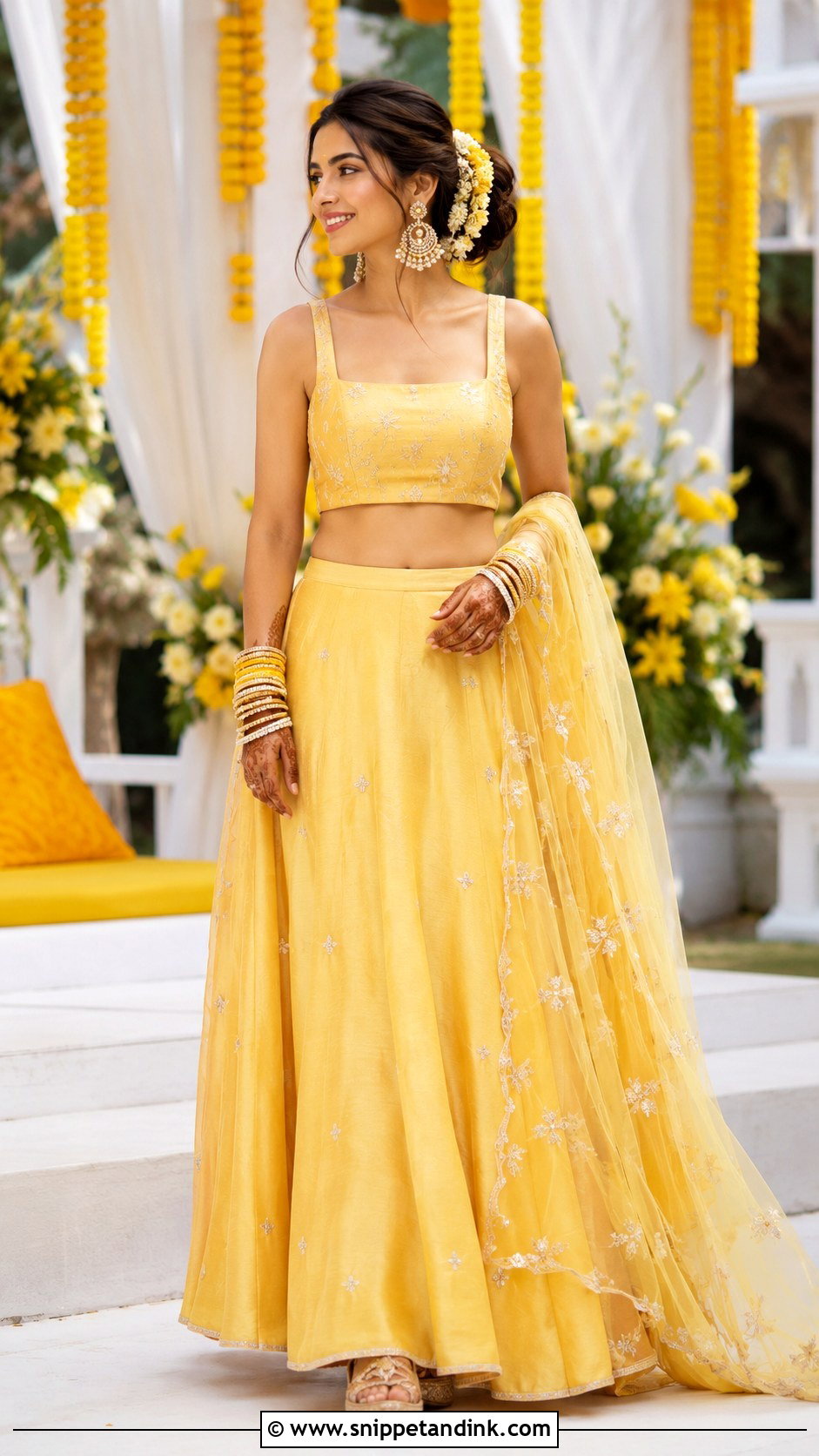
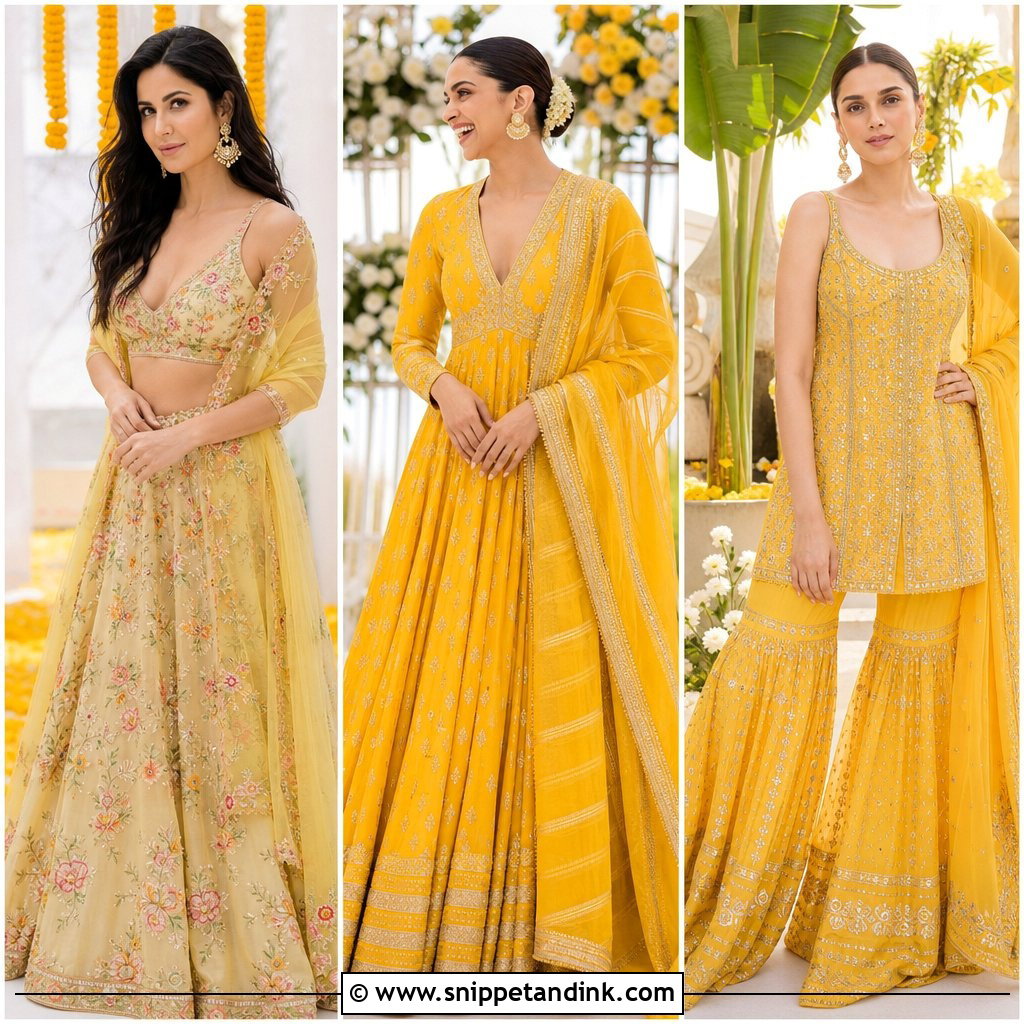
A structured crop top turns a yellow lehenga into clean fusion. Keep the skirt flowing with minimal embroidery, and choose a fitted top with a square neck, covered back and supportive straps or short sleeves. The key fitting point is the gap between top and skirt waistband. Sit down at your fitting and check it, because a gap that looks neat standing often widens when you’re cross-legged on a cushion. Match the top or contrast it in white, pink or orange, and drape a light dupatta across one arm. Statement earrings, stacked bangles and a small floral hair accessory are enough, with platform juttis or block heels and a sleek ponytail.
16. Yellow Lehenga With Peplum Blouse
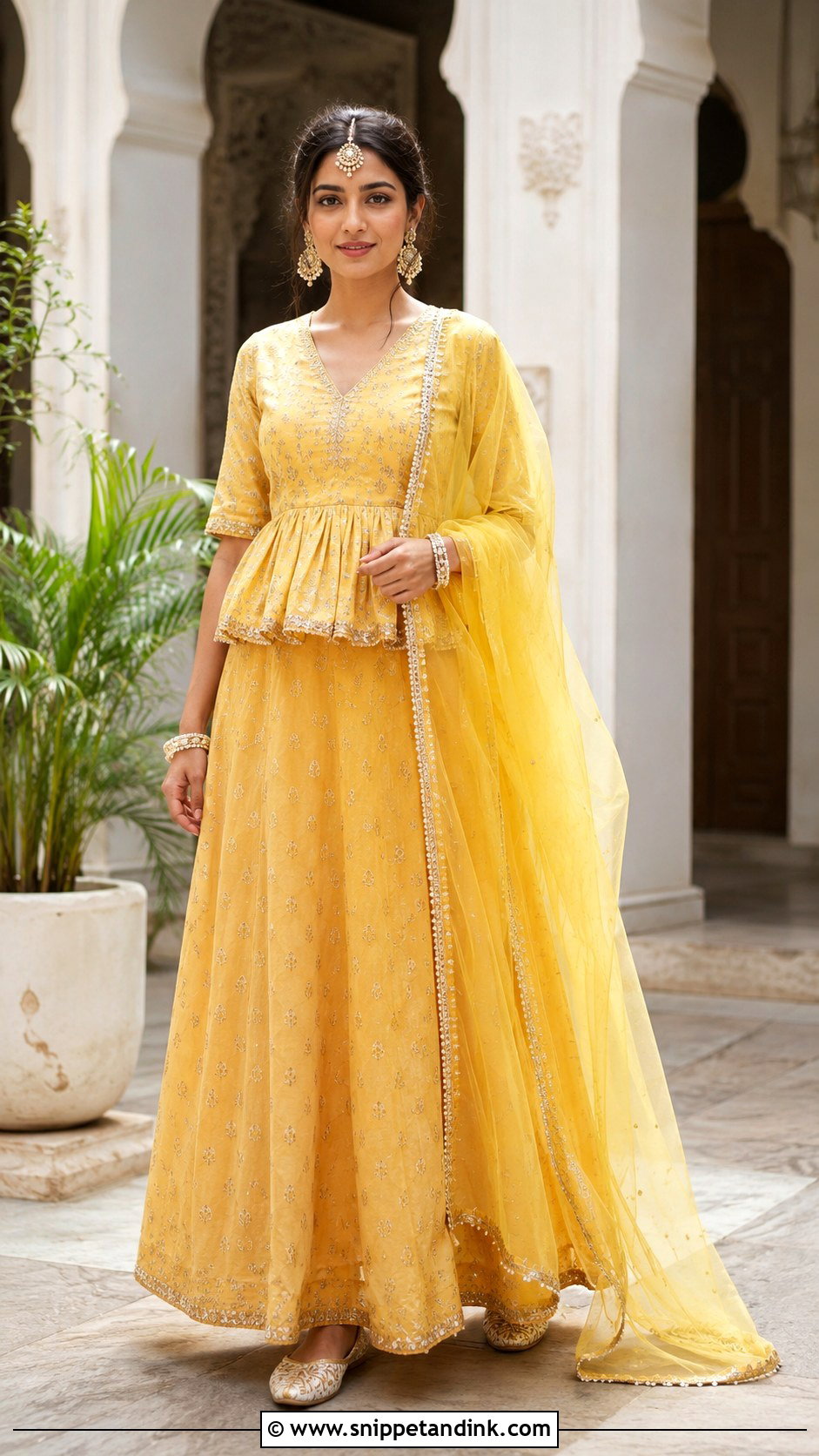
A peplum blouse covers the midriff and still defines the waist, which is why it’s the alteration I suggest most to brides who feel exposed in a cropped choli. Pair the gently flared peplum with a simple A-line skirt, since a very full skirt plus a peplum adds bulk at the hip. Embroidered cuffs, a V-neck or a gota-trimmed hem make the top festive. A light dupatta over one shoulder lengthens the line and leaves the peplum visible. Drop earrings, slim bangles and a fine maang tikka beat a large necklace here. Gold or ivory juttis and loose curls or a low ponytail balance the longer blouse.
17. Yellow Lehenga With Cape Blouse
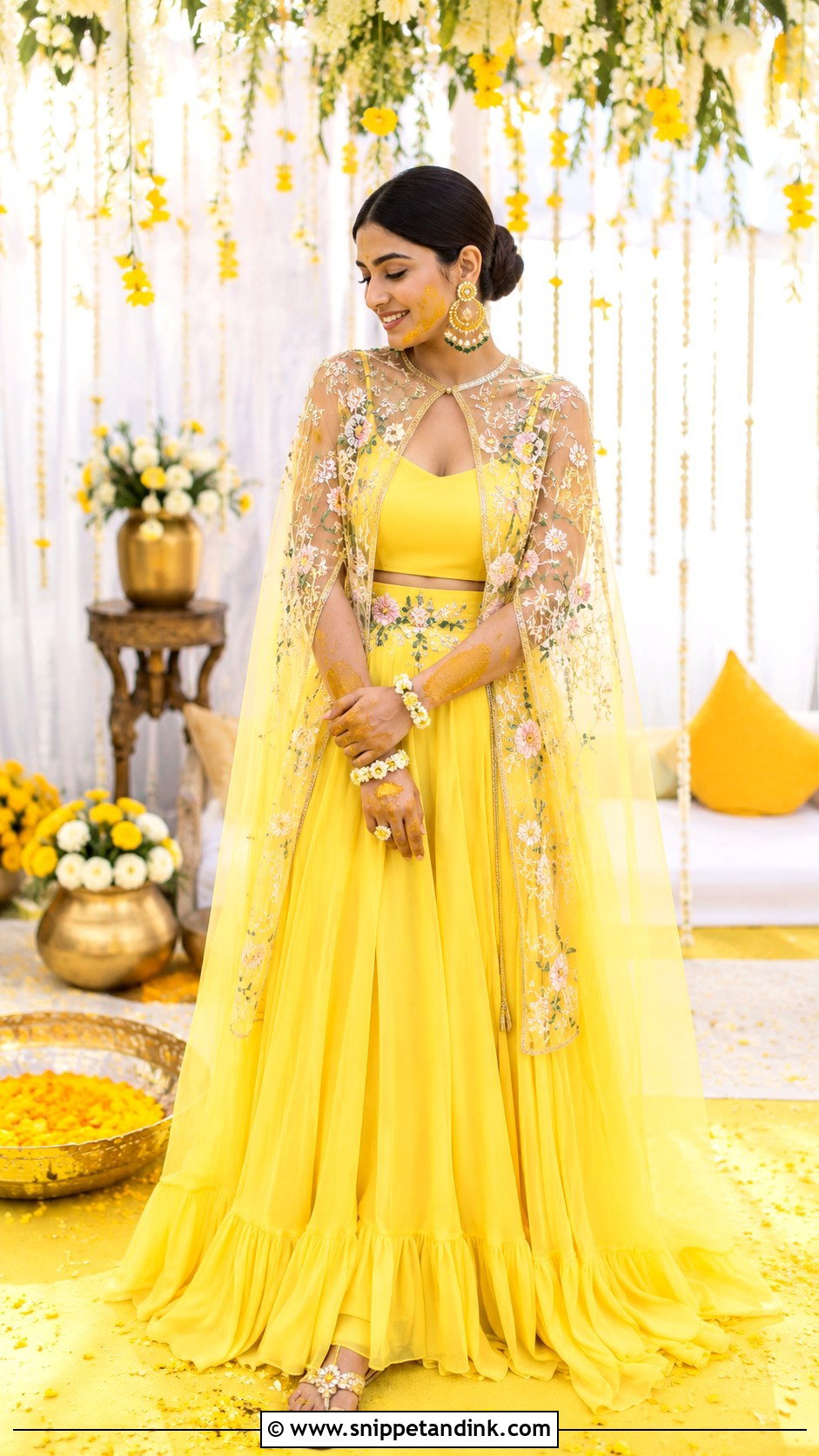
A cape blouse gives arm coverage without sleeves that dip into the paste bowl. Choose a fitted inner blouse attached to a sheer embroidered cape that falls to the waist or hip, over a clean, flowing chiffon, georgette or organza skirt. Because the cape moves on its own, you can skip the dupatta or carry a very narrow one for ceremonial photos. Ask for the cape to be attached at the shoulder seams as well as the neckline; capes held only at the neck swing round when you dance. Bold earrings, a small ring and minimal bangles keep the focus on it, with embellished flats or juttis and a low bun, ponytail or waves swept back.
18. Yellow Lehenga With Jacket
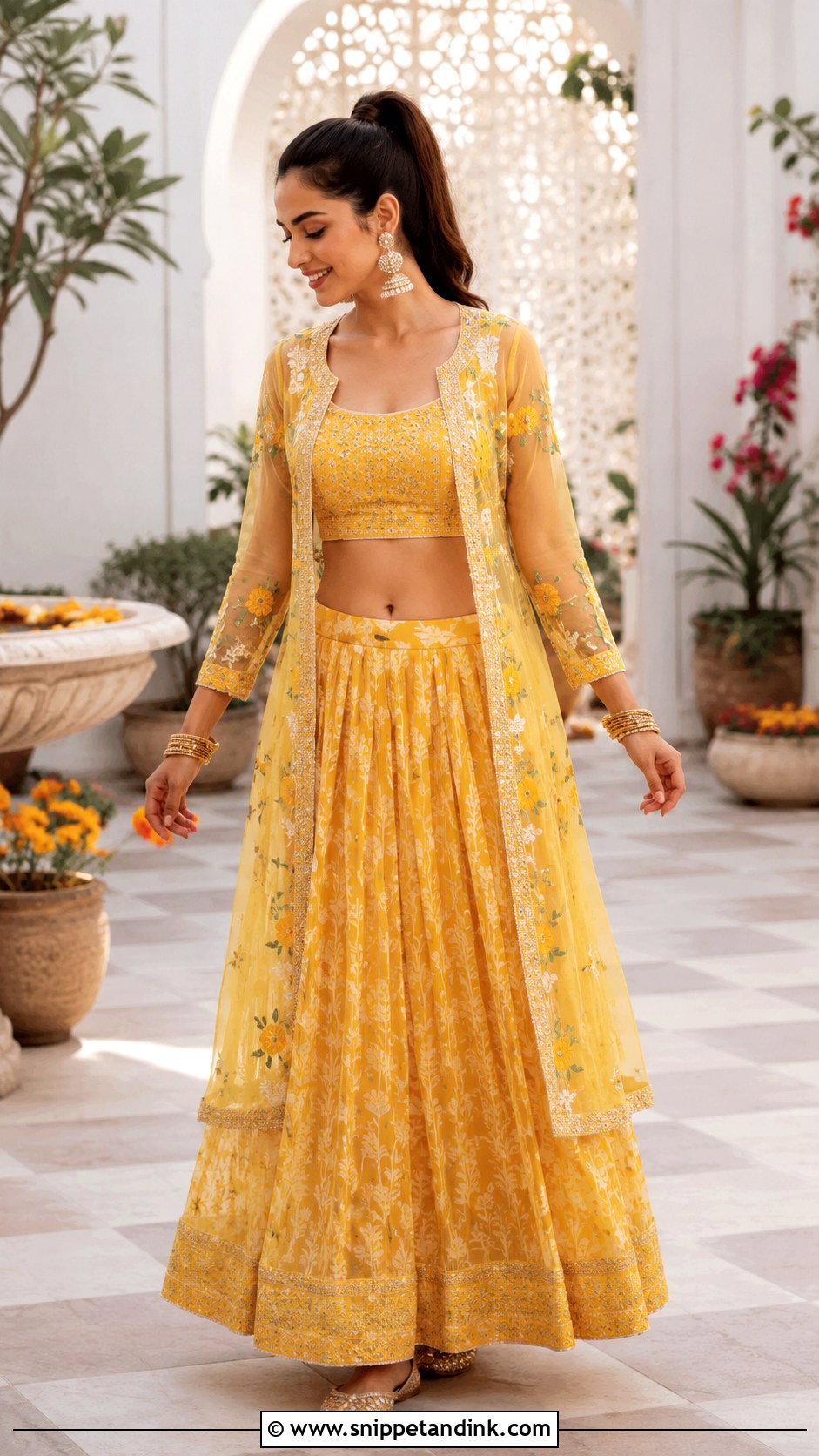
Layering a knee-length sheer jacket over a yellow lehenga gives the outfit structure and a long vertical line. Start with a plain or lightly printed skirt and a simple fitted blouse, then choose a jacket with floral embroidery, mirror work or gota borders. Wear it open so the blouse shows, and skip the dupatta if the jacket already gives enough detail. Statement jhumkas, stacked bangles and metallic juttis finish it, with a high ponytail or low bun to keep the neckline clear. On a mild morning, you can take the jacket off once the sun gets up and still look complete, and the separates restyle easily after the wedding.
19. Yellow Lehenga With Off-Shoulder Blouse
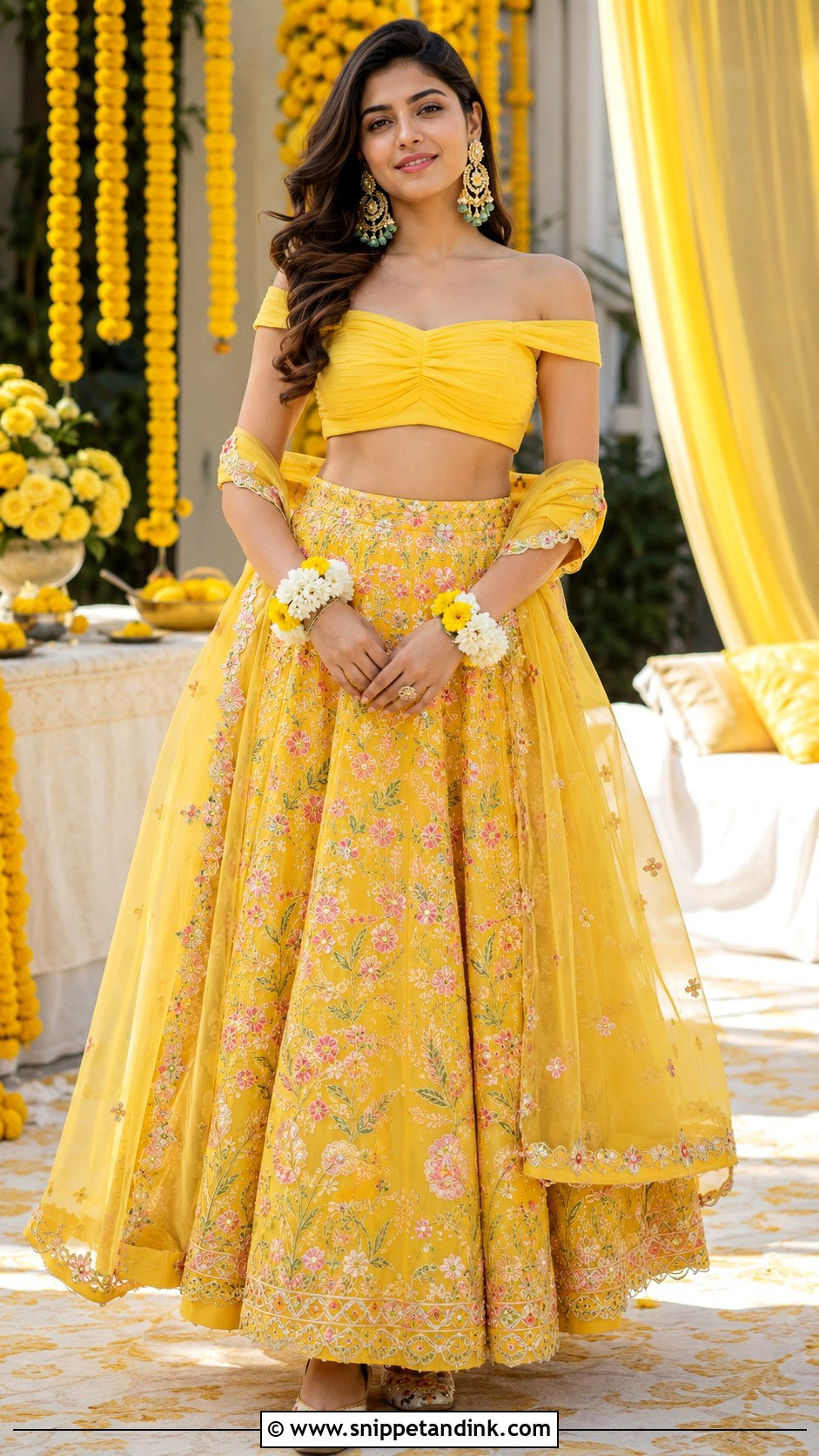
Off-shoulder blouses look fresh and young, and they’re also the style most likely to need hitching up mid-ritual. I’d only send a bride out in one with internal boning, silicone grip tape along the top edge and clear straps if she has any doubt. Pair it with a high-waisted skirt with floral embroidery, mirror details or a clean border, and a sheer dupatta draped around the elbows for photos, then pinned to one side. Statement earrings and no necklace keep the neckline open, with floral bangles, a small ring and stable juttis or block heels. A loose ponytail, side-swept waves or a textured bun shows off the shoulders.
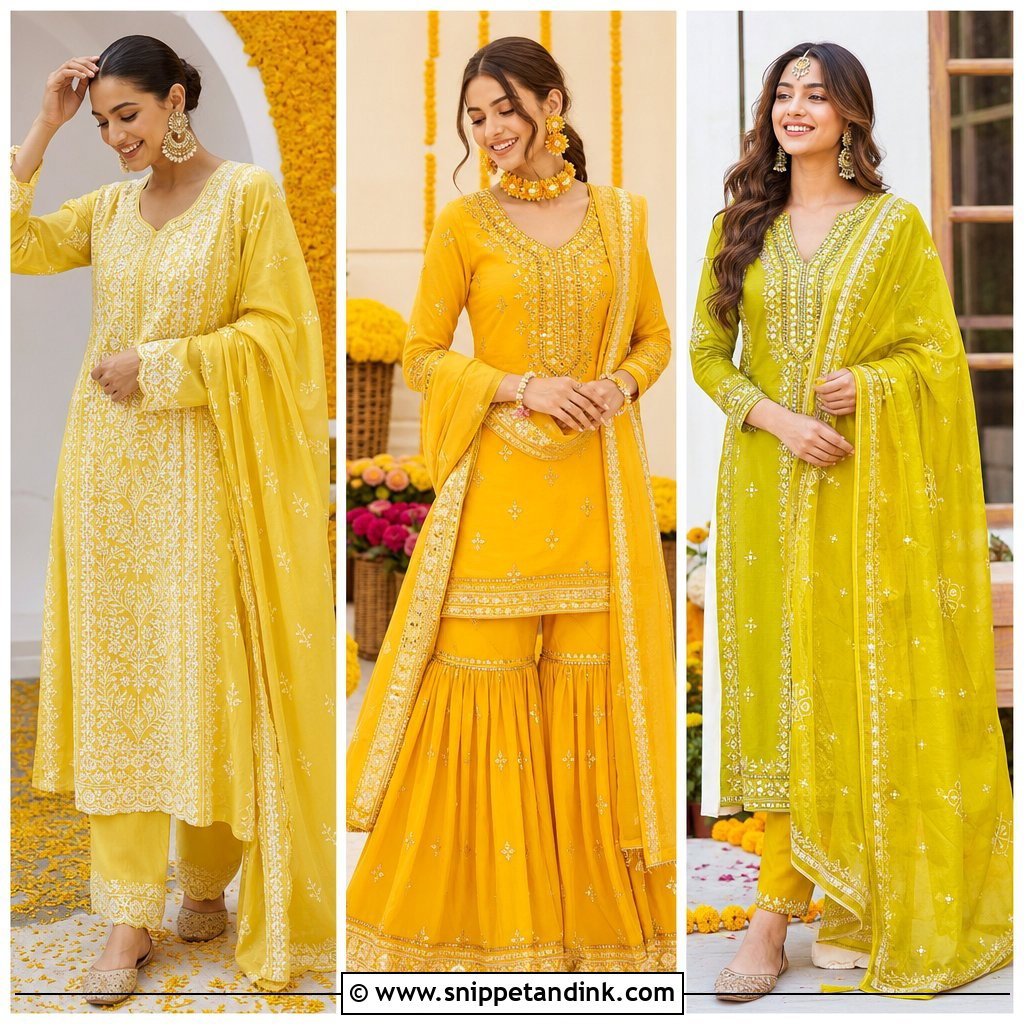
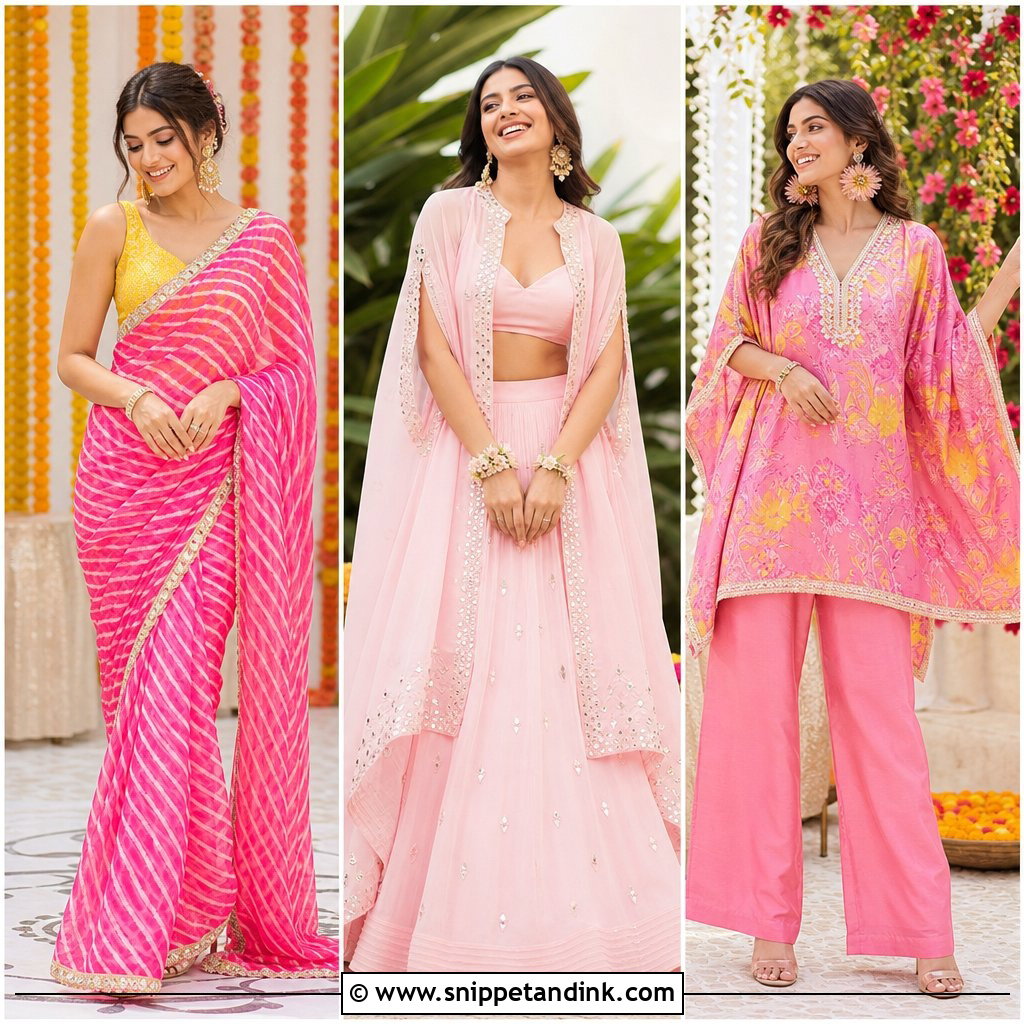
20. Minimal Yellow Cotton Haldi Lehenga
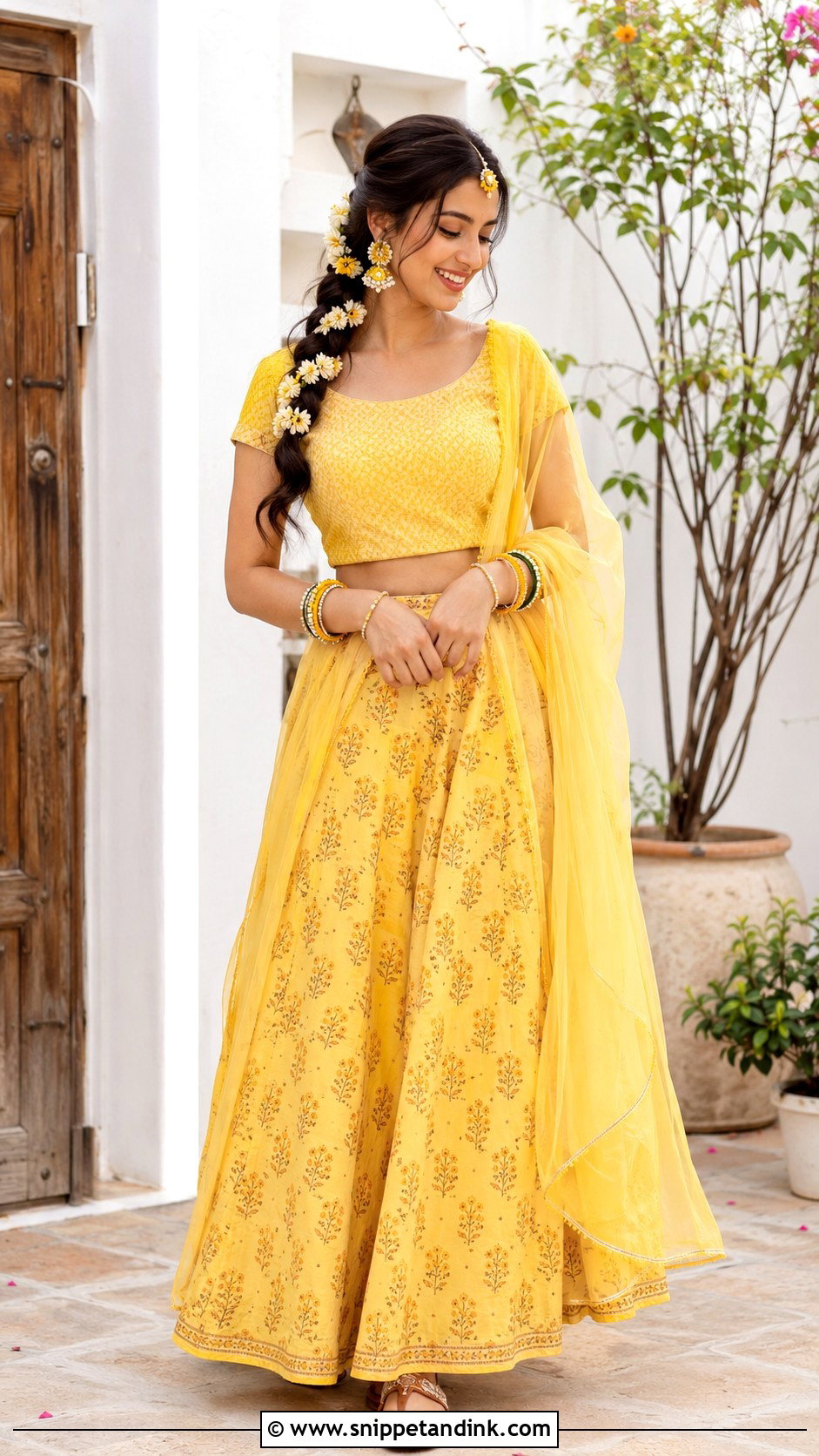
Sometimes the most practical Haldi outfit is also the one people remember. A minimal yellow cotton lehenga is light, breathable and easy to move in through a long morning. Choose a flared skirt with a block-printed border and a simple sleeveless or short-sleeve blouse, plus a washable cotton or chiffon dupatta pinned securely. Hand block prints use natural or vegetable dyes more often than not, so wash them separately in cold water the first time. Floral earrings, a small maang tikka and colorful bangles are enough, with Kolhapuris or plain juttis and a relaxed braid. For a warm-weather or home ceremony, it’s the sensible pick.
Three Dupatta Drapes That Hold Through the Ritual
The dupatta causes more mid-ceremony fussing than anything else in a lehenga outfit. Here are the drapes I use for Haldi, in order of how hands-free they are.
- Single shoulder, pinned twice: pleat one end, pin it at the shoulder, then pin the fall to the back of the blouse at the waist so it can’t swing forward into the paste.
- Diagonal across the torso: take it from one shoulder across to the opposite hip and tuck the end into the skirt waistband. Nothing hangs loose, which makes it the safest for dancing.
- Elbow drape for photographs only: let it rest behind your back and over both forearms for the portraits, then switch to the first drape before the paste starts.
Use small gold or skin-toned safety pins, and push them through the blouse lining rather than the outer fabric where possible. Net and organza tear around a pin that takes too much strain.
Giving a Yellow Lehenga a Second Life
Most Haldi lehengas get worn once and folded away, which is a shame, because the lighter ones are the easiest wedding pieces to rewear. The skirt works with a plain white shirt or a cropped kurti at a festival or mehndi, and the blouse can go under a sari. The dupatta alone dresses up a simple suit.
Before storing it, get any turmeric cleaned out within a few days, since it sets with time. Then fold the lehenga in soft cotton or muslin rather than plastic, which traps moisture. If it has gota or zari, keep it away from rubber bands and damp cupboards, because metallic trims tarnish. Refold it along different lines every few months so permanent creases don’t form across the embroidery.
Which Haldi Lehenga Will You Actually Sit Down In?
A Haldi lehenga earns its place by letting you sit, dance, walk and get messy without thinking about it. Across these twenty, from floral yellow skirts and Bandhani sets to cape blouses, jackets and pink or green alternatives, the right one depends on the venue, the weather, your décor colors, how heavy the fabric is and how much turmeric is coming your way. Pin the dupatta properly and pick shoes for the real ground, not the showroom floor. Wear the version that sounds like you rather than the newest trend. Considered jewelry, practical shoes and a hairstyle you don’t have to touch will finish even a simple lehenga.
You'll Like These Ideas:








Leave a Reply