
As the groom’s sister you’ll be in the baraat photos, at his side through the rituals and near the front of every family portrait, so your outfits carry more weight than a guest’s. The looks below are complete outfits for the ceremony, mehndi, haldi, sangeet, engagement and reception. Sarees and lehengas still anchor most wedding wardrobes, but shararas, pre-draped sarees, capes and fusion separates now sit comfortably beside them. When I plan a sister’s wardrobe, I start with the venue, the season, the dress code and the bride’s colors, then pick shapes she can move and sit in for hours. After that it’s about finishing each outfit through jewelry, shoes, makeup, and hairstyles.
Which Colors Belong to the Bride, and Which Are Yours?
The groom’s sister often stands in the same frames as the bride, at the ceremony and again when the family welcomes her home. That makes color the first conversation, before any shopping. In many North Indian weddings red and maroon stay with the bride for the main ceremony, while in other traditions a bride may wear rich silks in almost any shade, so never assume. Ask.
- Ask the bride, or your brother if that’s easier, for photos of her outfit for each function, taken in daylight rather than under shop lights.
- Stay off her exact shade but pick a neighbor that sits well beside it in a portrait: dusty rose next to her magenta, for example.
- Check whether the groom’s side is coordinating a color for any event, such as all the women in yellow for haldi, and lock that in early.
- Find out what your mother is wearing to the ceremony, since the two of you will share most of the family photographs.
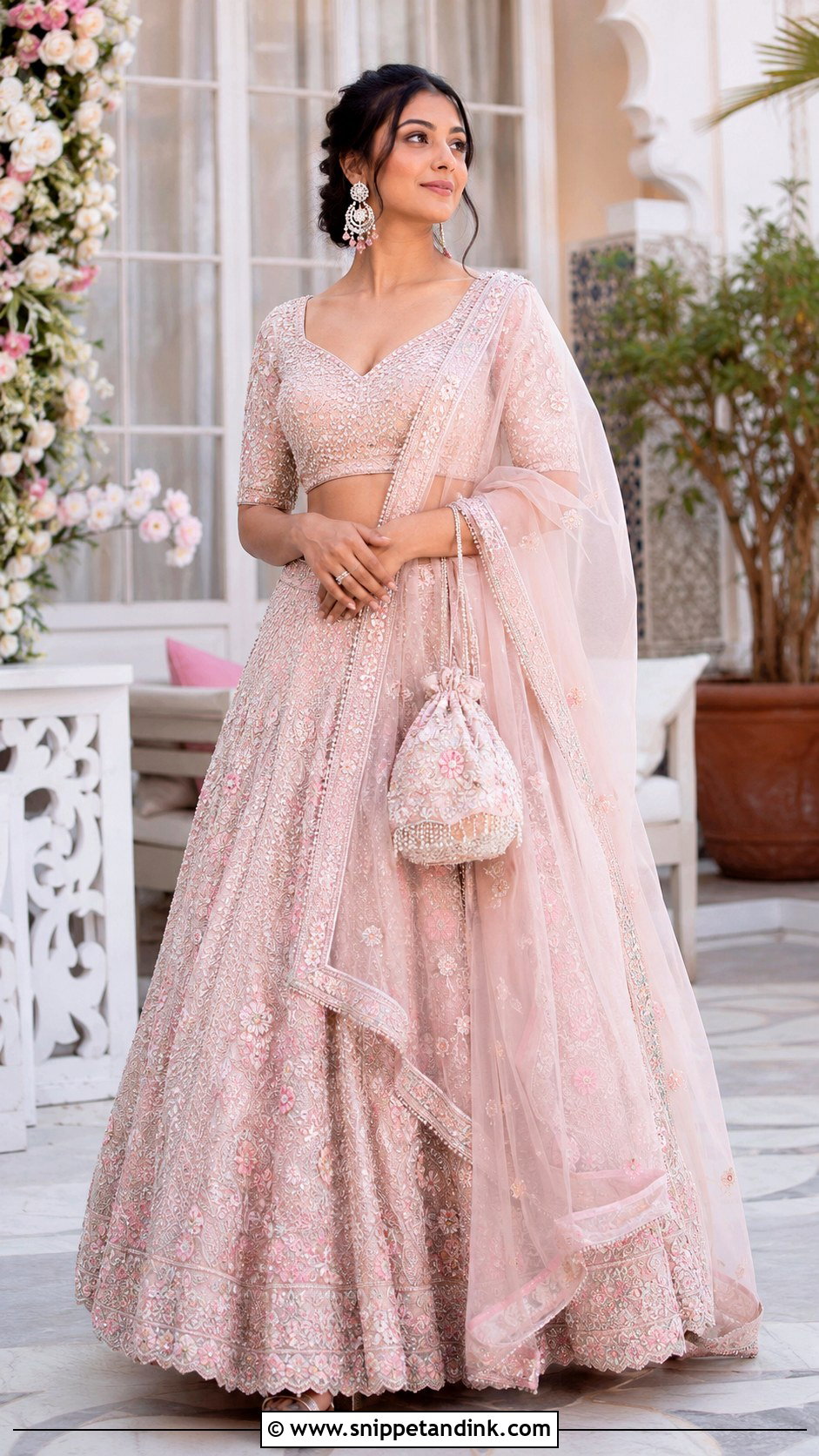
1. Pastel Embroidered Lehenga for Brother’s Wedding
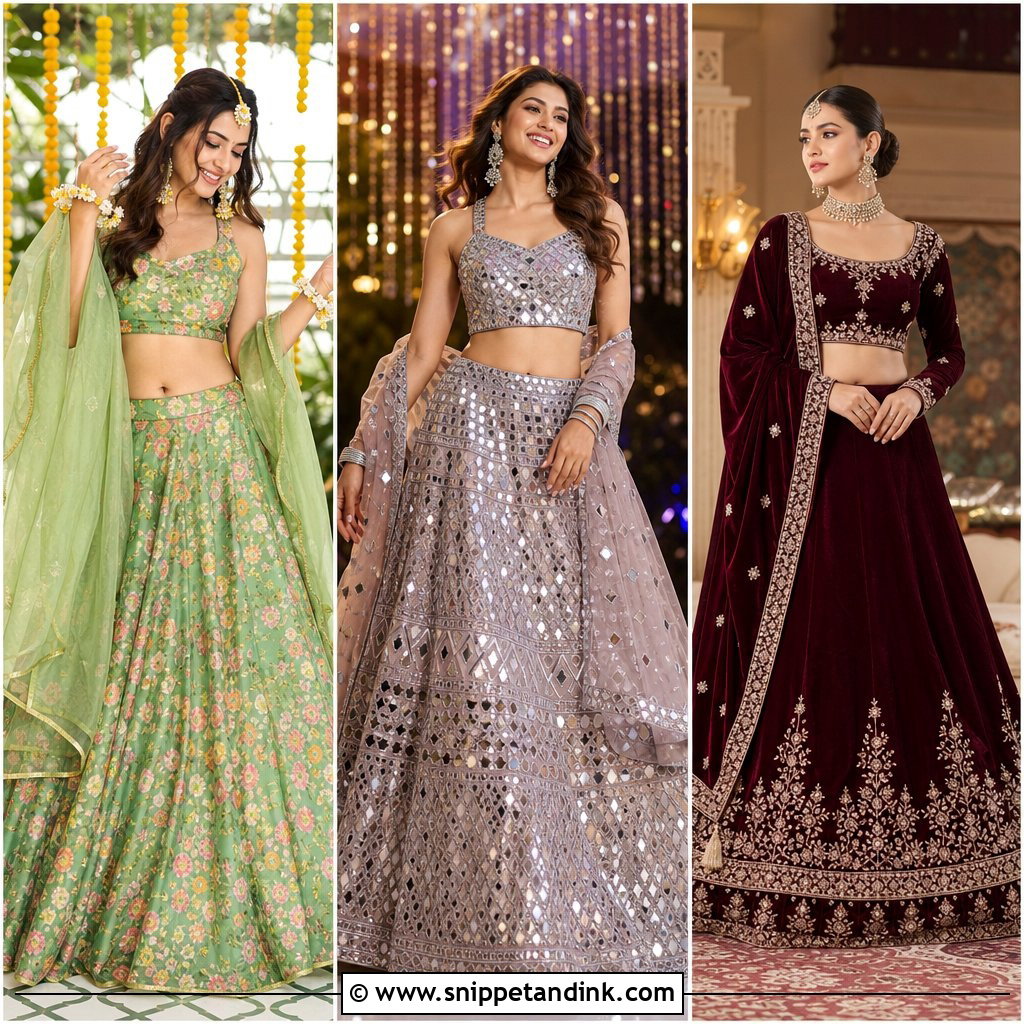
For a daytime ceremony, a pastel lehenga with threadwork, pearls or fine sequins looks soft and fresh in natural light. Blush, powder blue, mint, lilac and peach all work. I’d choose a blouse neckline you can forget about for six hours, and an organza dupatta, which gives movement without the weight of net with heavy borders. Kundan earrings, a slim bangle stack and a small embroidered potli finish it, with metallic block heels or cushioned juttis underneath. Soft waves or a low bun with fresh flowers suit it. One caution: if the bride is also in a soft palette, scale the jewelry right down, because a pastel lehenga with heavy kundan can read as bridal from across the mandap.
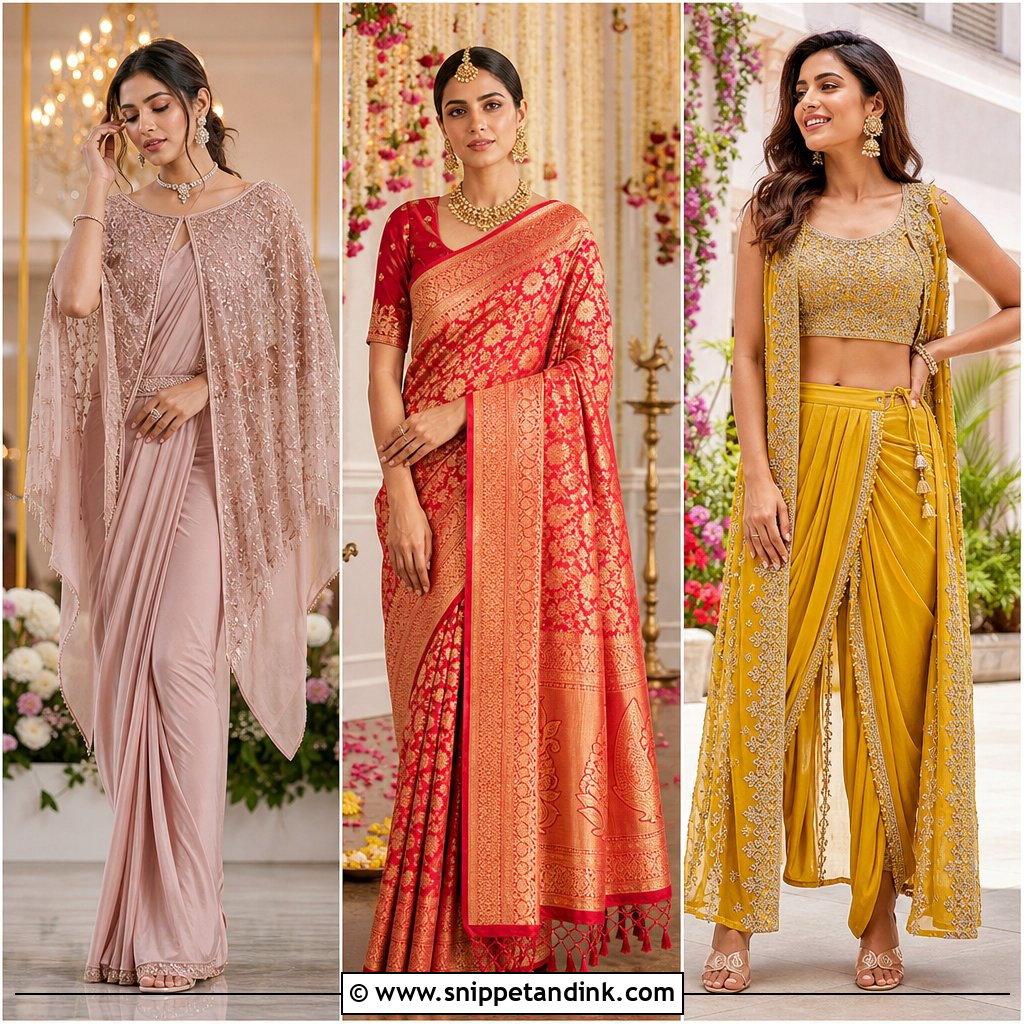
2. Banarasi Silk Saree for Brother’s Wedding
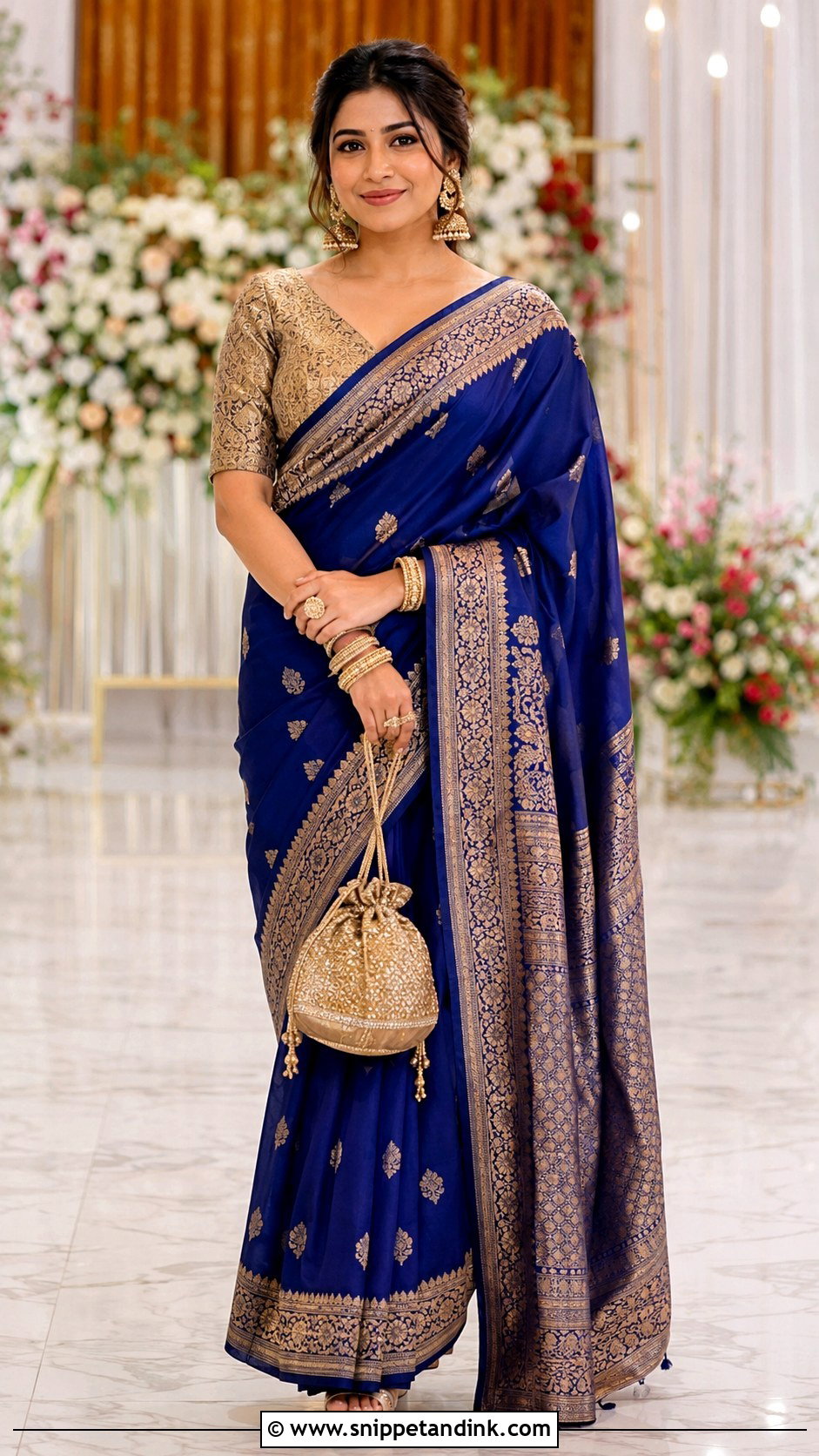
A Banarasi silk saree carries real weight at the main ceremony, and I mean that literally. Woven silk with dense zari is noticeably heavier than a georgette drape, so I pin the pleats firmly at the waist and the pallu at the shoulder before the first ritual starts. Emerald, royal blue, deep magenta or plum set you apart without borrowing bridal red. A fitted brocade blouse in gold or a contrasting jewel tone, antique gold jhumkas, a statement bangle and a structured potli complete it. Platform heels give height and keep the hem off the floor. A smooth bun with one hair ornament and softly defined eyes suit an evening ceremony at a traditional venue.
3. Mirror Work Lehenga for Brother’s Sangeet
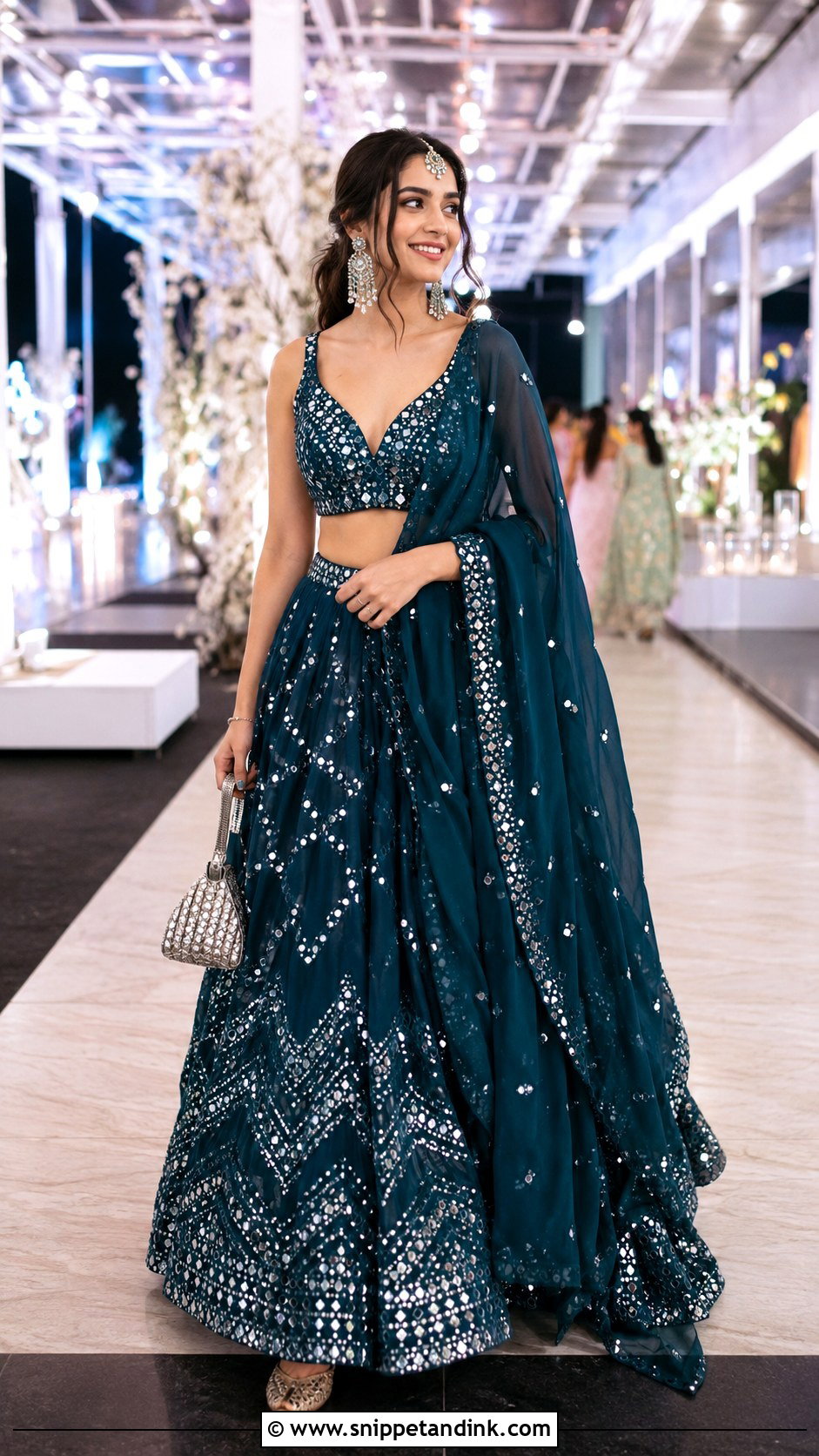
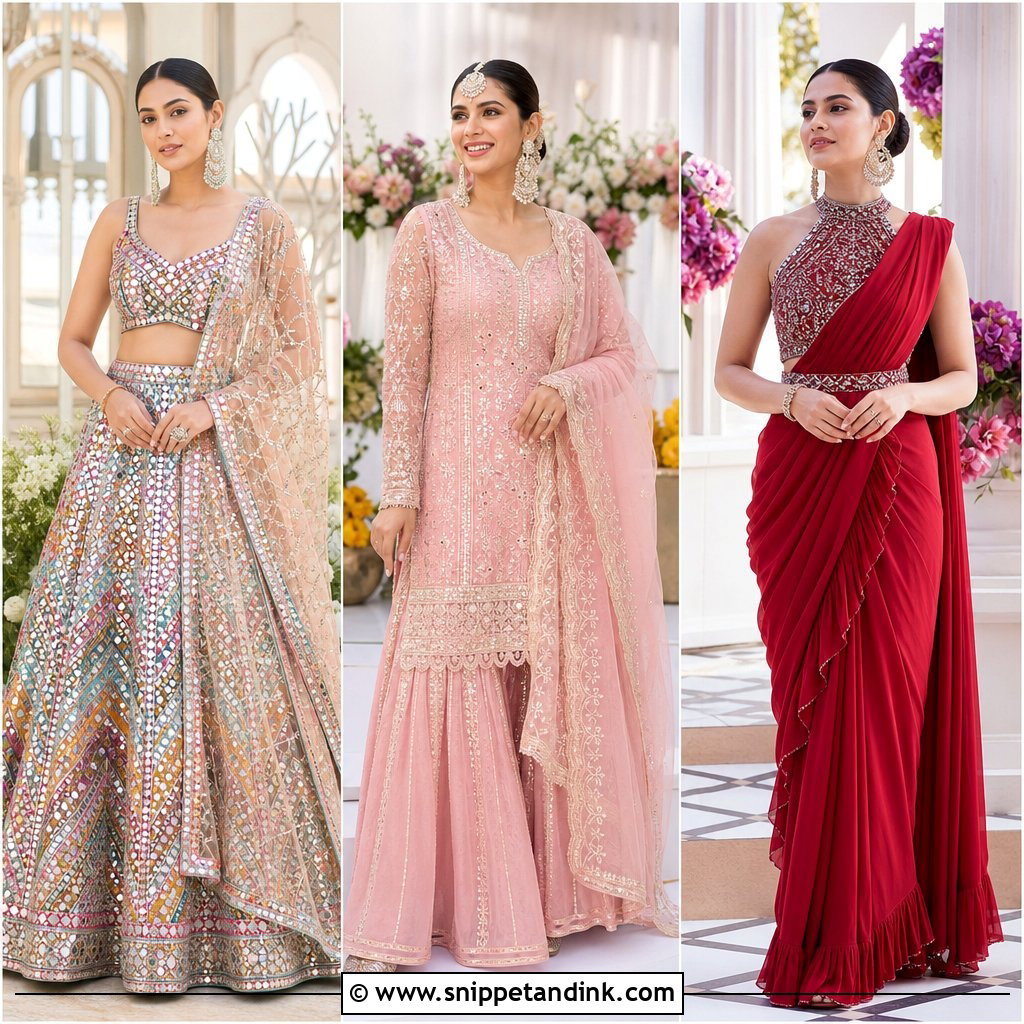
A mirror work lehenga comes alive once the sangeet dance floor fills and the lights hit it. Look for a lightweight skirt in navy, teal, fuchsia or deep purple, with mirrors spread evenly rather than clustered into heavy panels. The blouse has to stay put with your arms over your head, so ask the tailor for a slightly higher armhole and proper hooks at the back rather than tie strings alone. Pin a net or georgette dupatta at one shoulder and loop the other end around your wrist so it doesn’t swing into anyone mid-routine. Statement earrings, a small maang tikka and a compact metallic bag are enough. Block heels or embellished juttis beat stilettos on a stage, and a high ponytail or textured braid keeps hair off your face. Smudge-resistant makeup survives the heat of the dance floor.
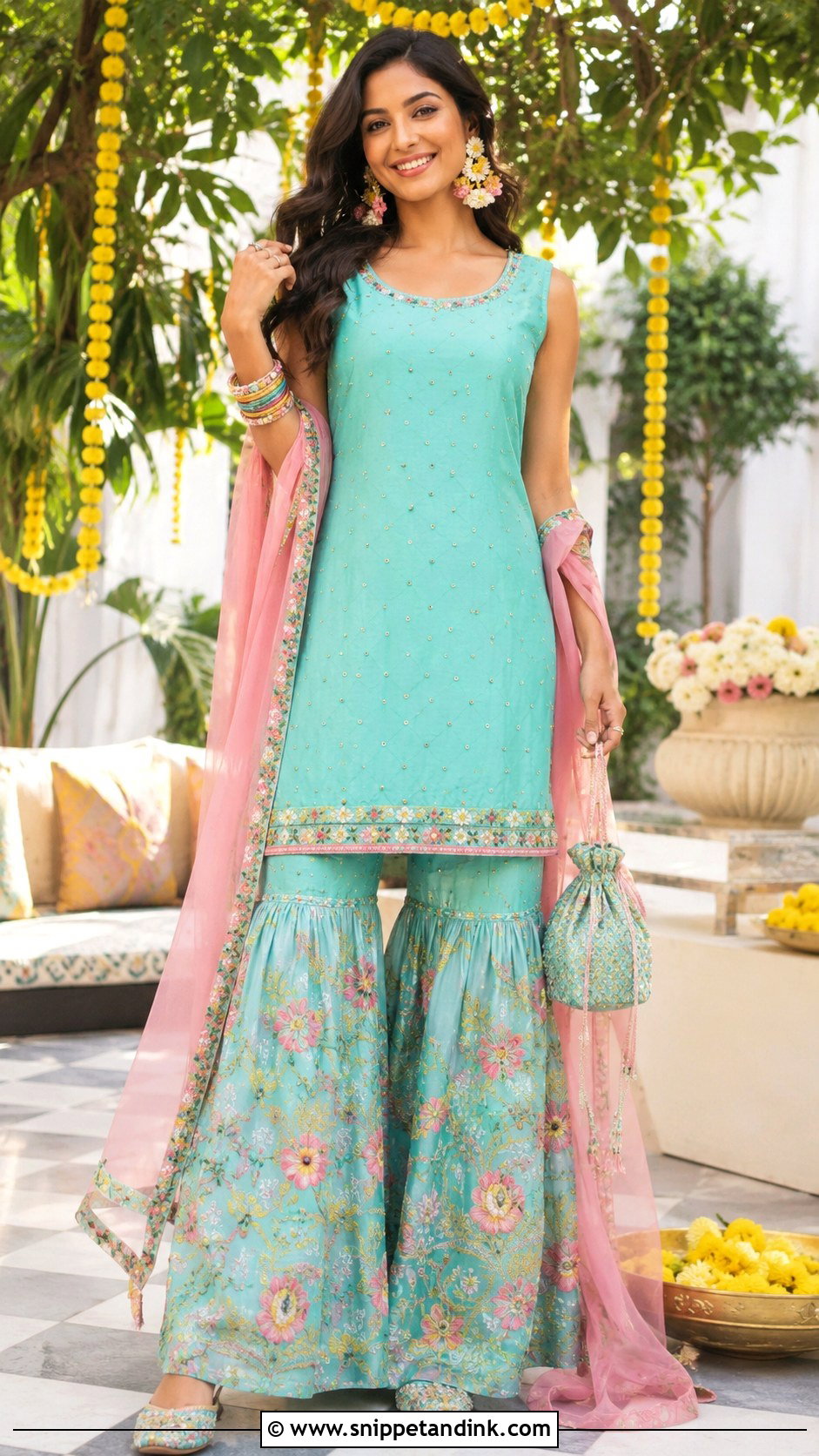
4. Sharara Set for Brother’s Mehndi
Shararas suit a mehndi because you’ll sit on low seating, get up to dance and sit again all evening. A short embroidered kurta with wide-legged sharara pants in lime, turquoise, coral or mustard keeps the color up, and gota patti or small mirrors add festivity without weight. If you’re getting henna yourself, choose the version with a short cape instead of a dupatta. Wet henna and a loose dupatta don’t mix. Floral earrings, colorful bangles and embroidered juttis finish it, with a crossbody potli for your phone. A loose braid threaded with tiny flowers and a bright lip suit the mood.
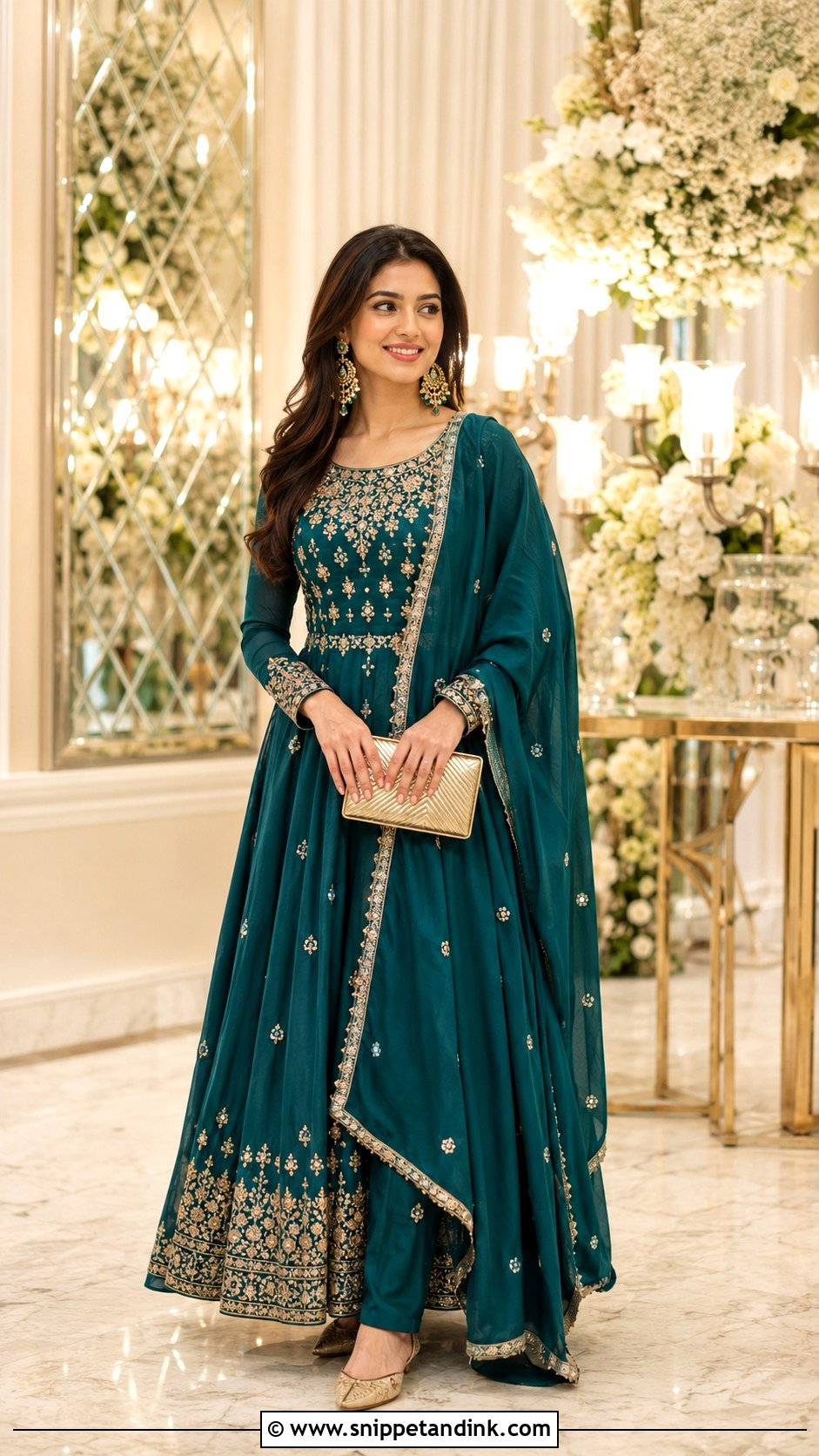
5. Floor-Length Anarkali for Brother’s Engagement
The engagement is often the first big formal event, and a floor-length Anarkali handles it well. The fitted bodice and full flare look formal, full or three-quarter sleeves keep it refined, and deep teal, dusty rose, midnight blue or mauve with resham embroidery all glow in evening light. I check the hem at the fitting with shoes on. A flare that brushes the ground when you stand will catch on every step. Chandelier earrings, one statement ring and a sleek clutch are plenty. Pick comfortable juttis or low heels, since the hem hides your feet anyway. A middle-parted low bun or polished waves, soft smoky eyes and a neutral lip keep it from tipping into bridal territory.
6. Organza Saree for Brother’s Day Wedding
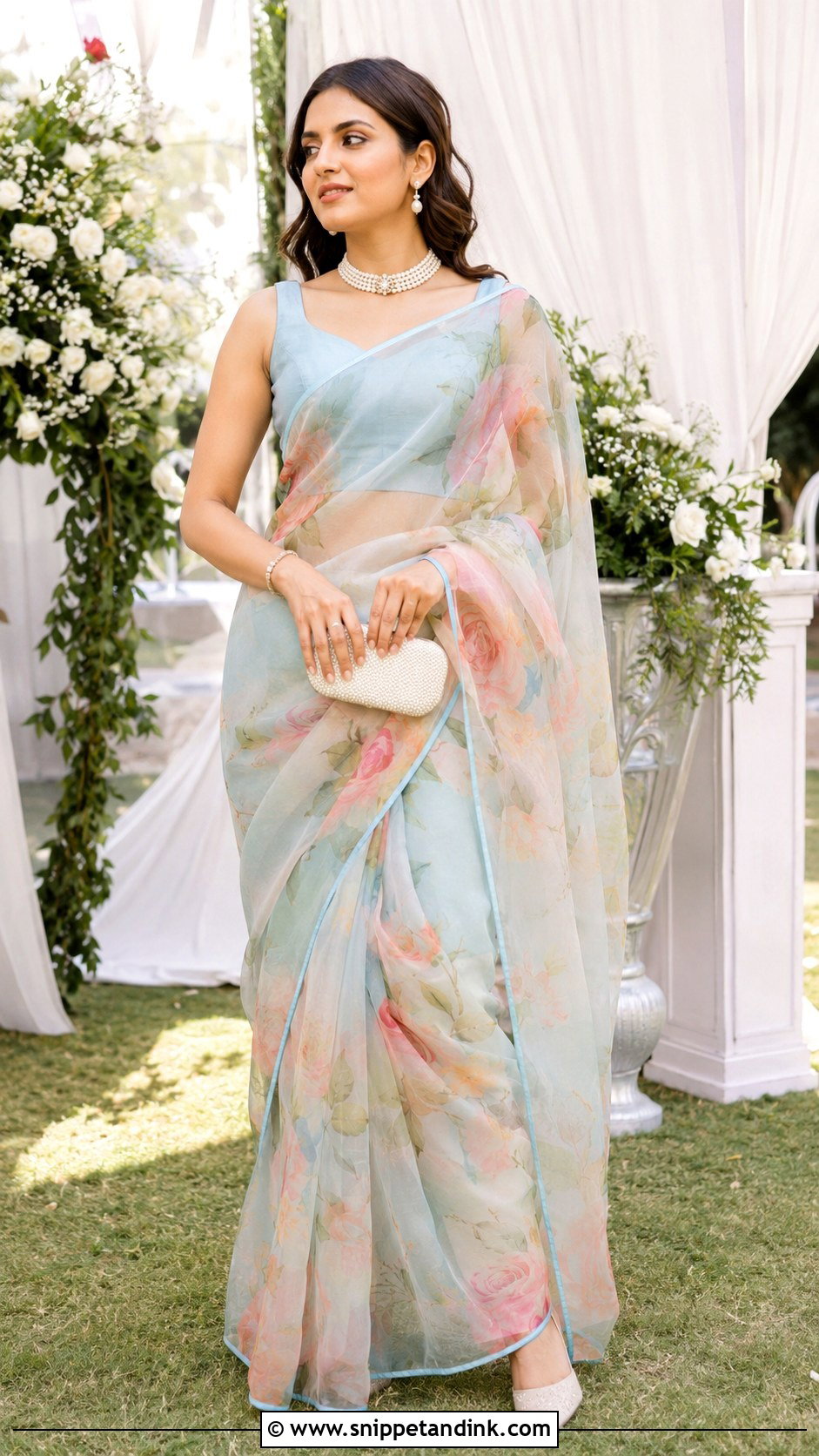
Organza loves soft daylight, which makes it a natural pick for a garden, resort or daytime wedding. A pastel floral print, scalloped border or fine embroidery all suit it. Pair it with a solid silk blouse in a coordinating shade to give the airy fabric some structure. Organza is crisp and slippery at the same time, so the pleats tend to spring open; I set them with a couple of extra safety pins on the inside and a light steam rather than trusting the tuck alone. Pearl earrings, a slim choker and a hard-case clutch keep it polished. Kitten heels help the fall without making walking difficult. Finish with a low ponytail or brushed-out waves, rosy cheeks and defined lashes.
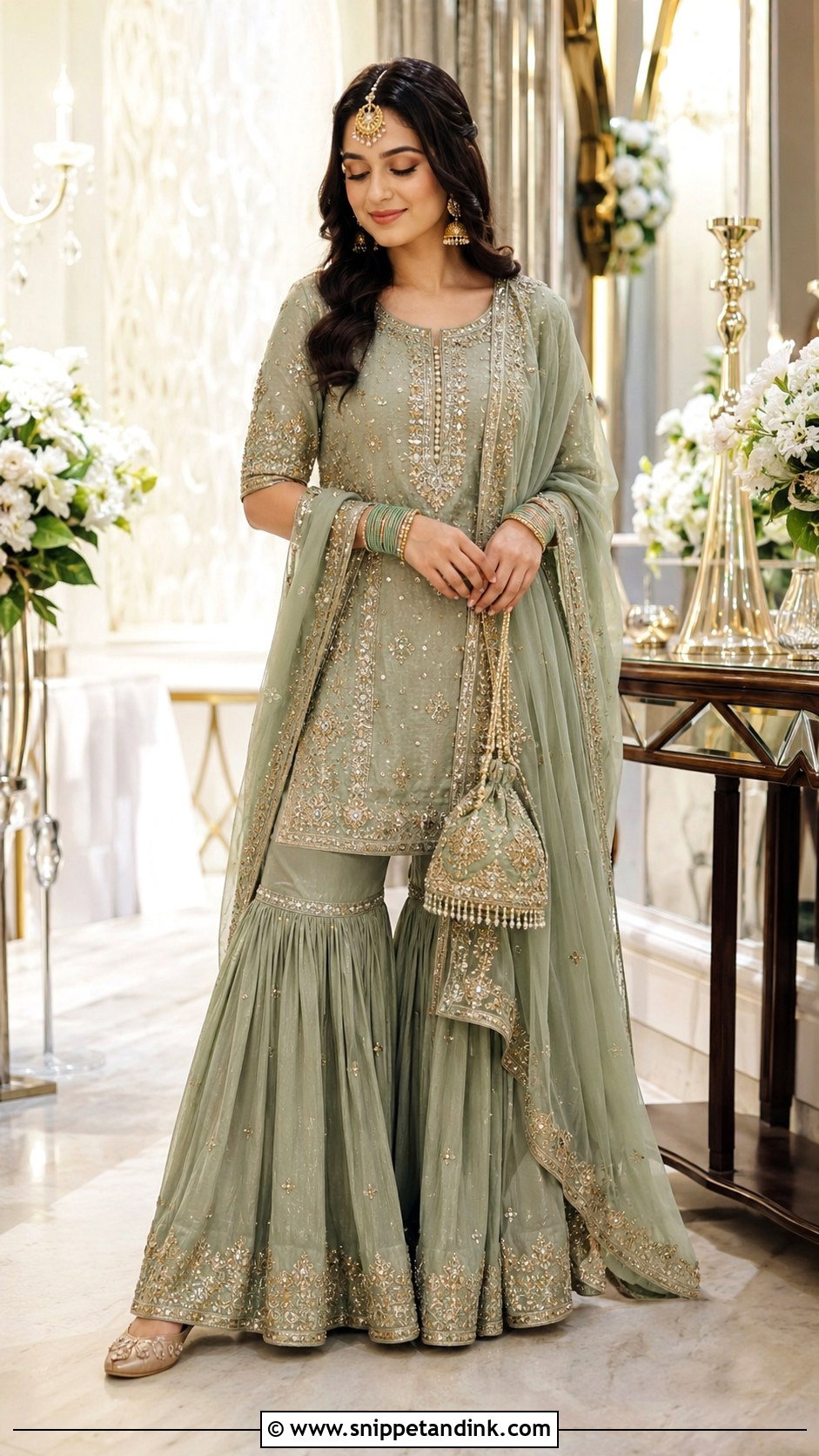
7. Gharara Set for Brother’s Nikah
At a nikah, coverage and grace matter as much as color. A knee-length kurta with ornate borders over flared gharara pants worked in gota, zari or fine zardozi fits the occasion, and I like ivory with emerald, sage with antique gold, or rose with champagne. If family custom calls for a covered head, choose a dupatta light enough to stay up with two small pins at the crown; heavy borders keep sliding back. A passa or maang tikka, medium jhumkas and stacked bangles complete it, with embellished flats for the long round of greetings. A sleek bun, defined eyes and a muted rose lip suit the modest, celebratory mood.
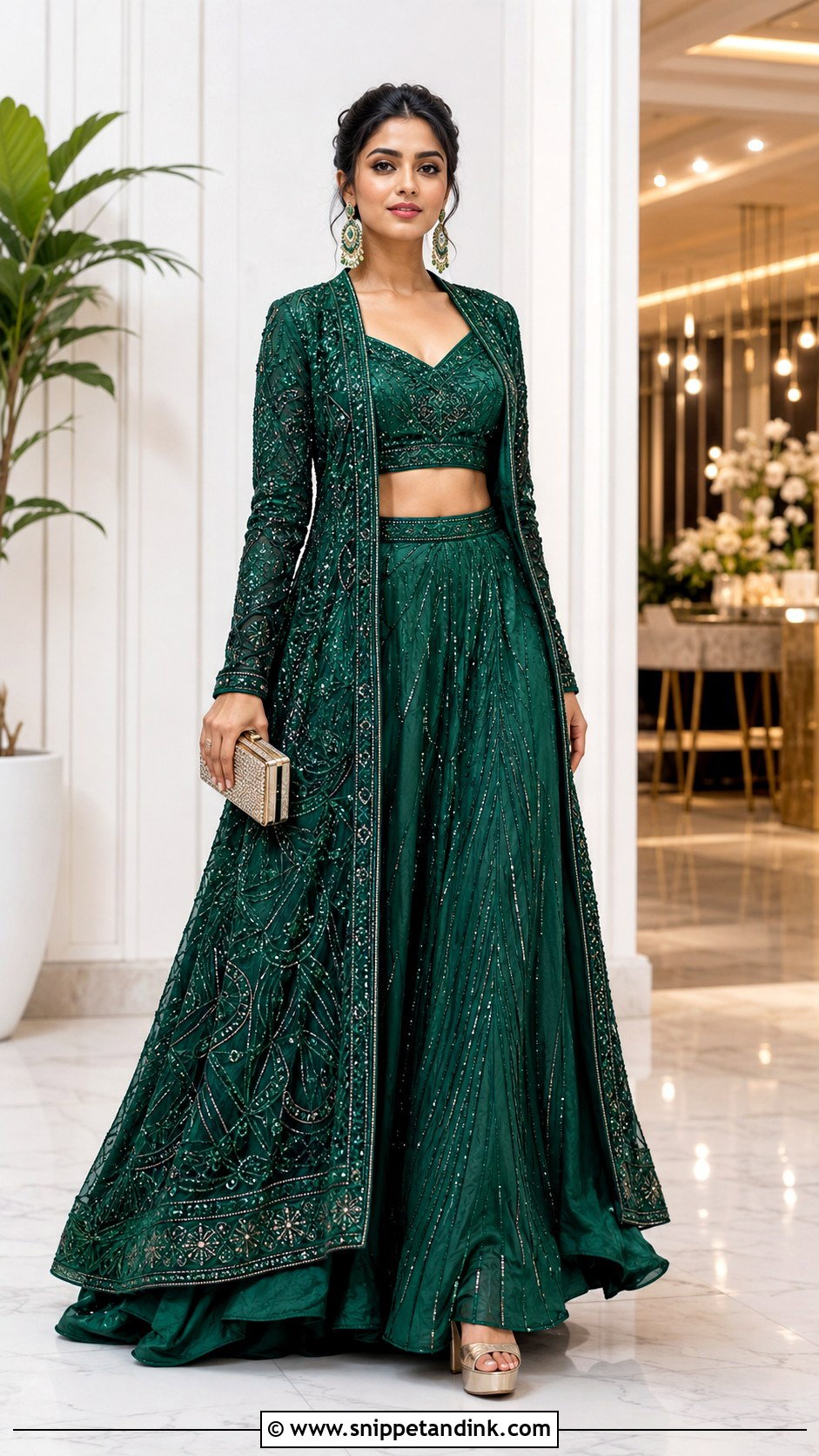
8. Jacket Lehenga for Brother’s Cocktail Party
A jacket lehenga gives coverage and evening drama with no draping to manage. Start with a crop top and flowing skirt in black, graphite, navy, emerald or berry, then add a long embroidered jacket that ends near the hem, which lengthens the whole figure. The jacket is the statement, so jewelry stays small: sculptural earrings and a cocktail ring. A box clutch and stable platform heels handle walking and dancing. A sleek ponytail or side-parted waves suit the clean line. The makeup rule I stick to with this much embroidery is smoky eyes or a deep lip, never both. Try sitting in it as well; long jackets bunch behind you on a chair, so get used to lifting the back panel as you sit.
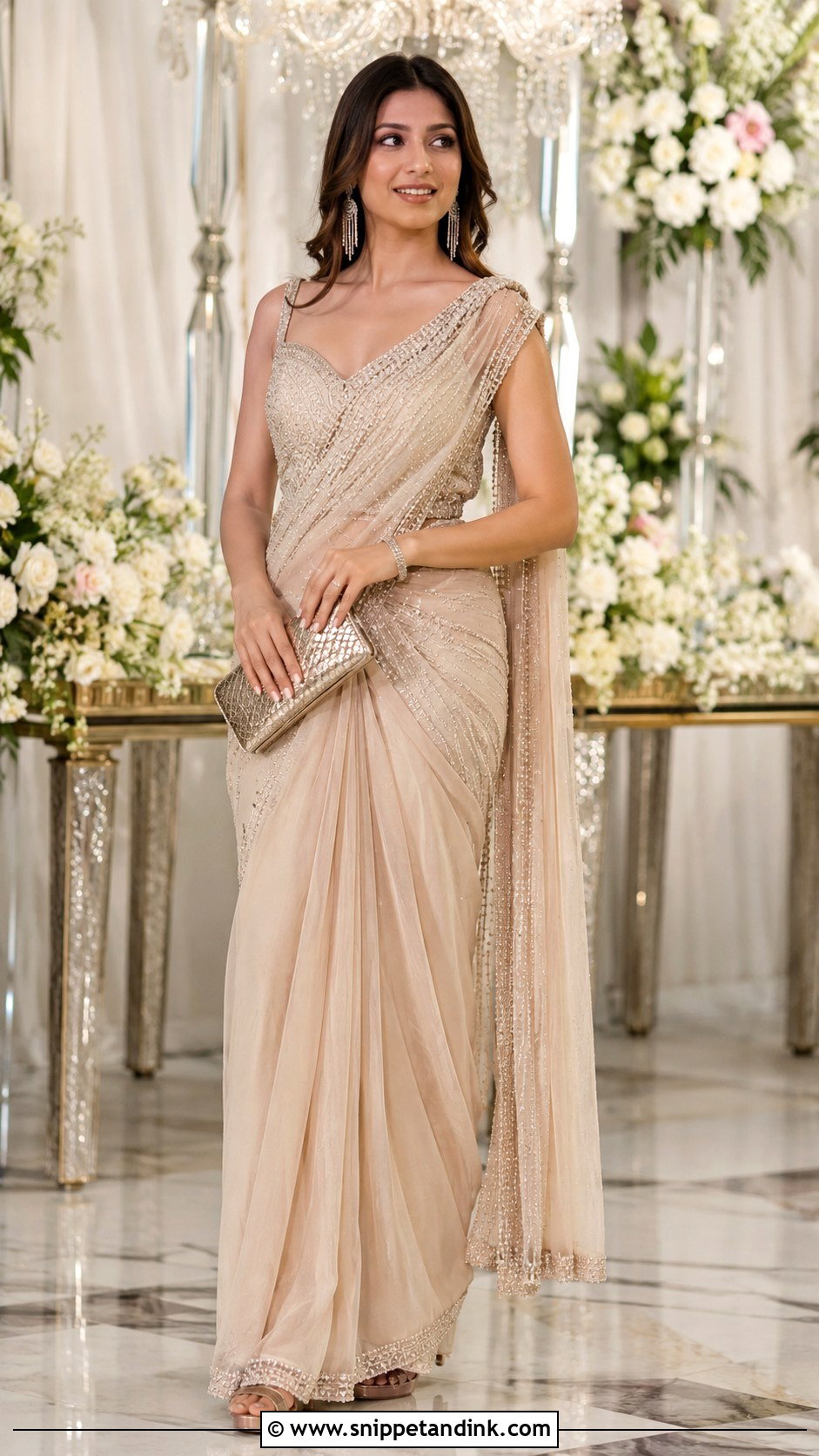
9. Pre-Draped Saree for Brother’s Reception
A pre-draped saree is the reception answer if you love the saree look but not the pleating. Look for fluid georgette or satin with stitched pleats and a securely attached pallu, in champagne, silver gray, deep green or sapphire for evening light. Pair it with a structured blouse with tasteful beadwork, an asymmetric neckline or a statement sleeve. Drop earrings, a slim bracelet and a compact clutch keep the line clean. Have the waist and length adjusted. Ready-made pre-drapes are cut for an average height, and a hem that pools on the floor ruins the whole effect. Cushioned heels, a sleek bun or glossy waves, defined eyes and luminous skin finish it for the cameras.
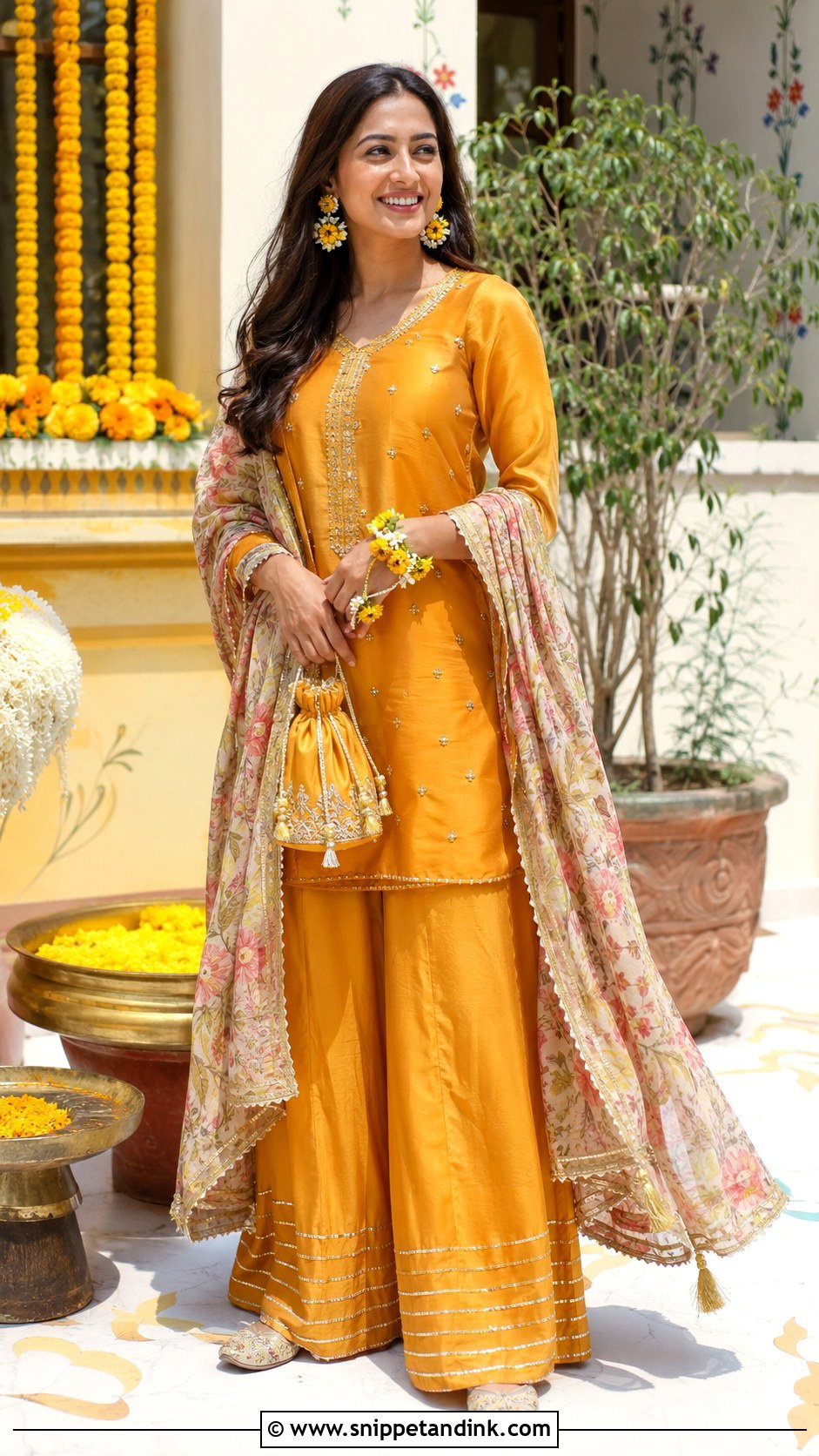
10. Silk Kurta Palazzo Set for Brother’s Haldi
Haldi is not the day for anything precious. A silk kurta and palazzo set in marigold, mango, coral or fresh green gives you color and lets you sit cross-legged for the rituals, and sleeveless or short sleeves keep the paste off your cuffs. Silk is the trade-off. It looks richer than cotton, but turmeric can stain it for good, so I’d choose a washable blend or accept that this may be a one-day outfit. Light earrings, flower bangles and simple juttis are enough. A braided ponytail keeps hair controlled, fresh minimal makeup survives a splash, and a small washable pouch holds your essentials.
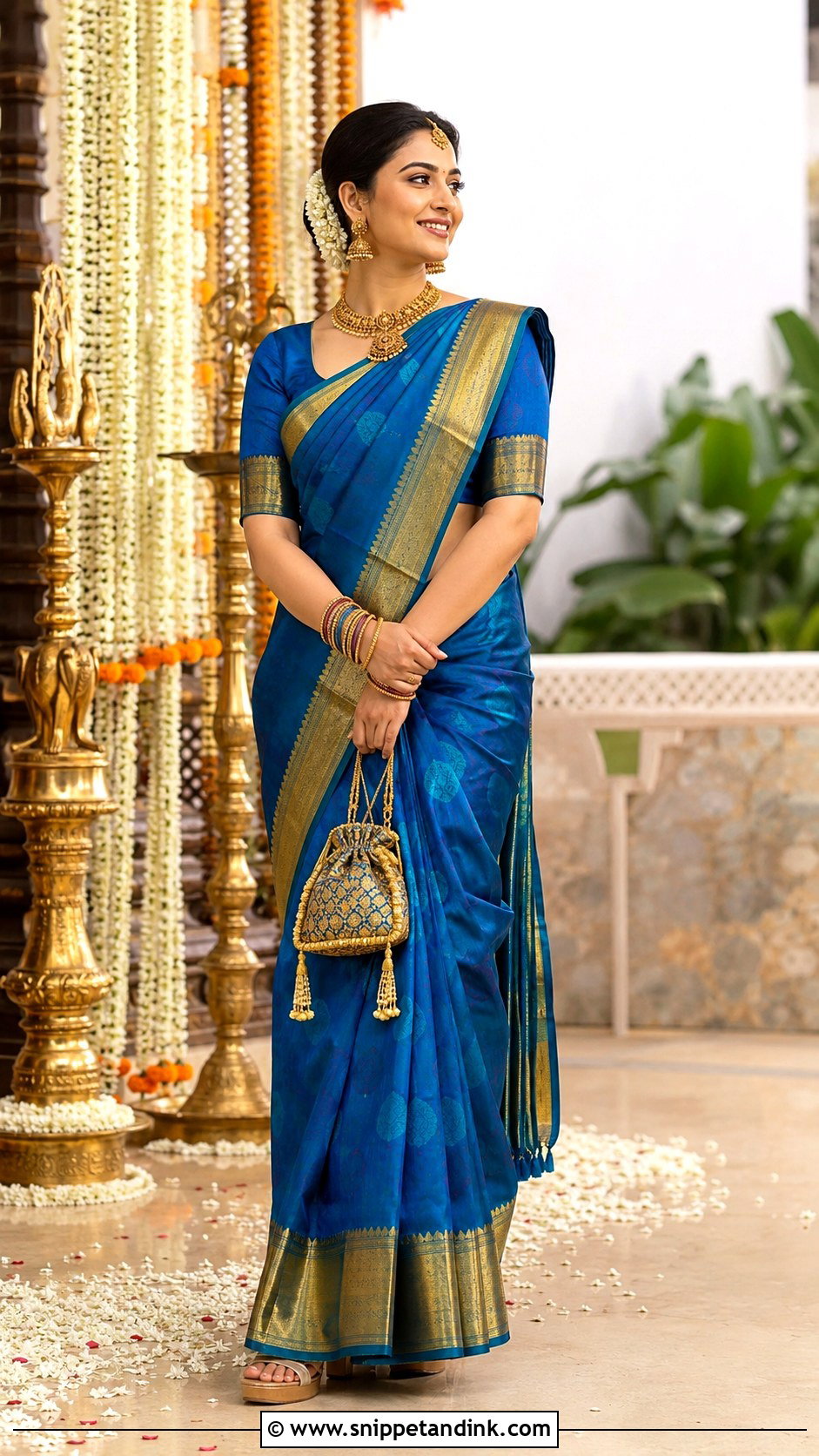
11. Kanjeevaram Saree for Brother’s Wedding
A Kanjeevaram is the most regal choice for a traditional ceremony, and its weight shapes every other decision. Peacock blue, purple, green or mustard with a contrasting zari border work well when the bride has claimed red or maroon. A tailored elbow-sleeve blouse balances the heavy silk. With temple jewelry, gold jhumkas and bangles, pick two hero pieces rather than wearing everything at once. A classic bun wrapped in fresh jasmine and a brocade potli finish it. Low platforms support the saree’s weight far better than thin heels through long rituals. Defined eyes, a small bindi and a rich rose lip complete the face. The border is the whole point of this saree, so the pleats need to be narrow and even for it to show down the front.
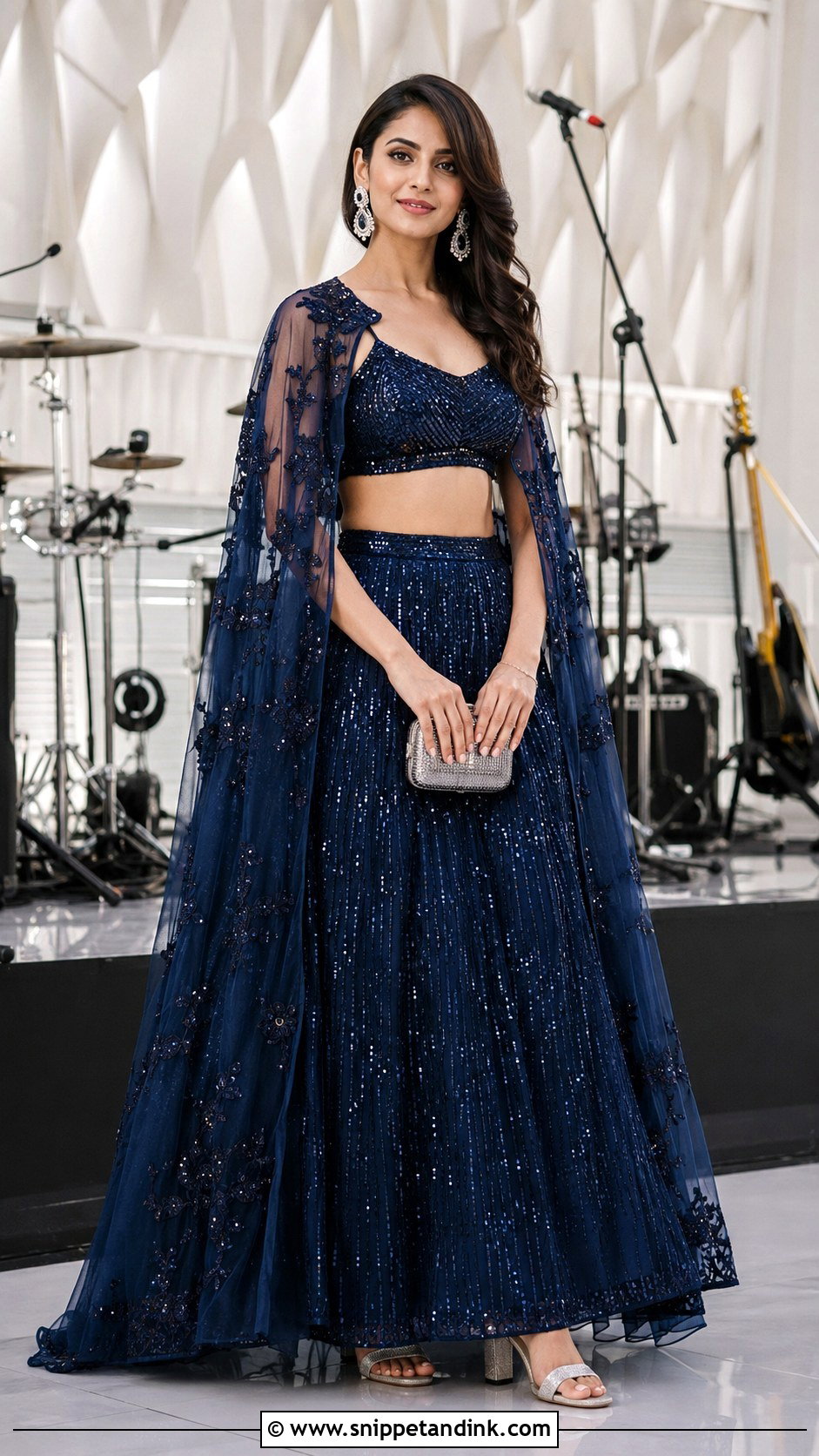
12. Cape Lehenga for Brother’s Sangeet
No loose dupatta, and still a big entrance. That’s why I suggest a cape lehenga to sisters performing at the sangeet. A fluid skirt, fitted blouse and sheer embroidered cape at waist, hip or ankle length, in jewel tones or metallics, with sequins or beadwork to catch the lights. The cape adds volume at the shoulders, so skip the necklace and let statement earrings and a tiny metallic clutch do the work. If you’re doing choreography, ask for the cape to be tacked to the blouse at the shoulders; a free-floating one flips up on every spin. Supportive block heels, a sleek ponytail, highlighted skin and defined eyes finish it.
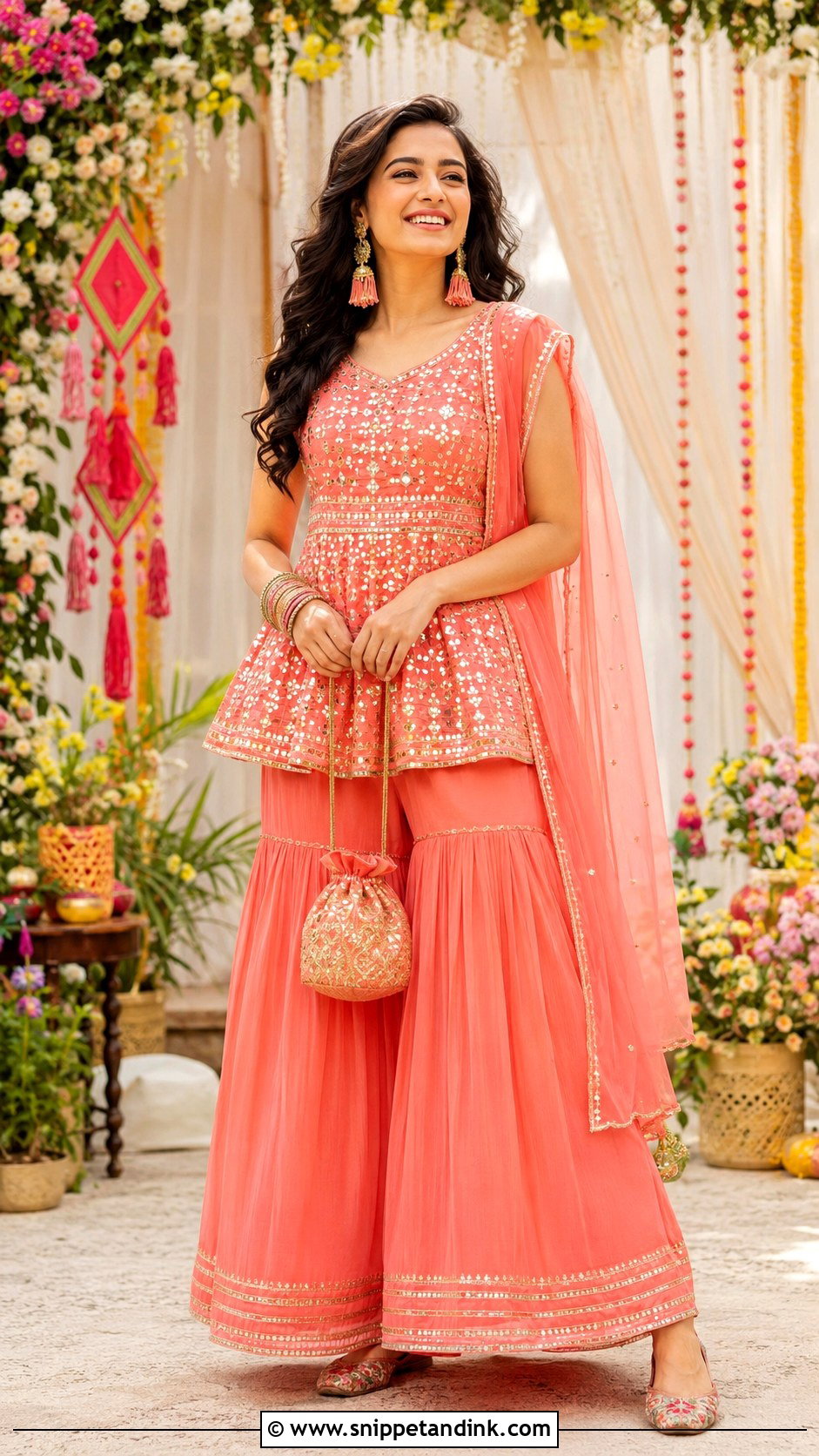
13. Peplum Sharara for Brother’s Mehndi
A fitted peplum top with a wide sharara is a modern mehndi option that suits a wide range of figures, since the peplum marks the waist and the flared pants balance the hips. Aqua, lime, orange, pink or a multicolor print with gota borders and light mirror work keep it festive. Pin a short chiffon dupatta behind the shoulders, or skip it if the top gives enough coverage. Tassel earrings, stacked bangles and embroidered flats complete it. If you’re getting henna, a potli with a wrist loop is worth more than any jewelry, because your palms are out of action for hours while the paste dries. A braided half-up style with flowers and makeup that stands up to heat finish the look.
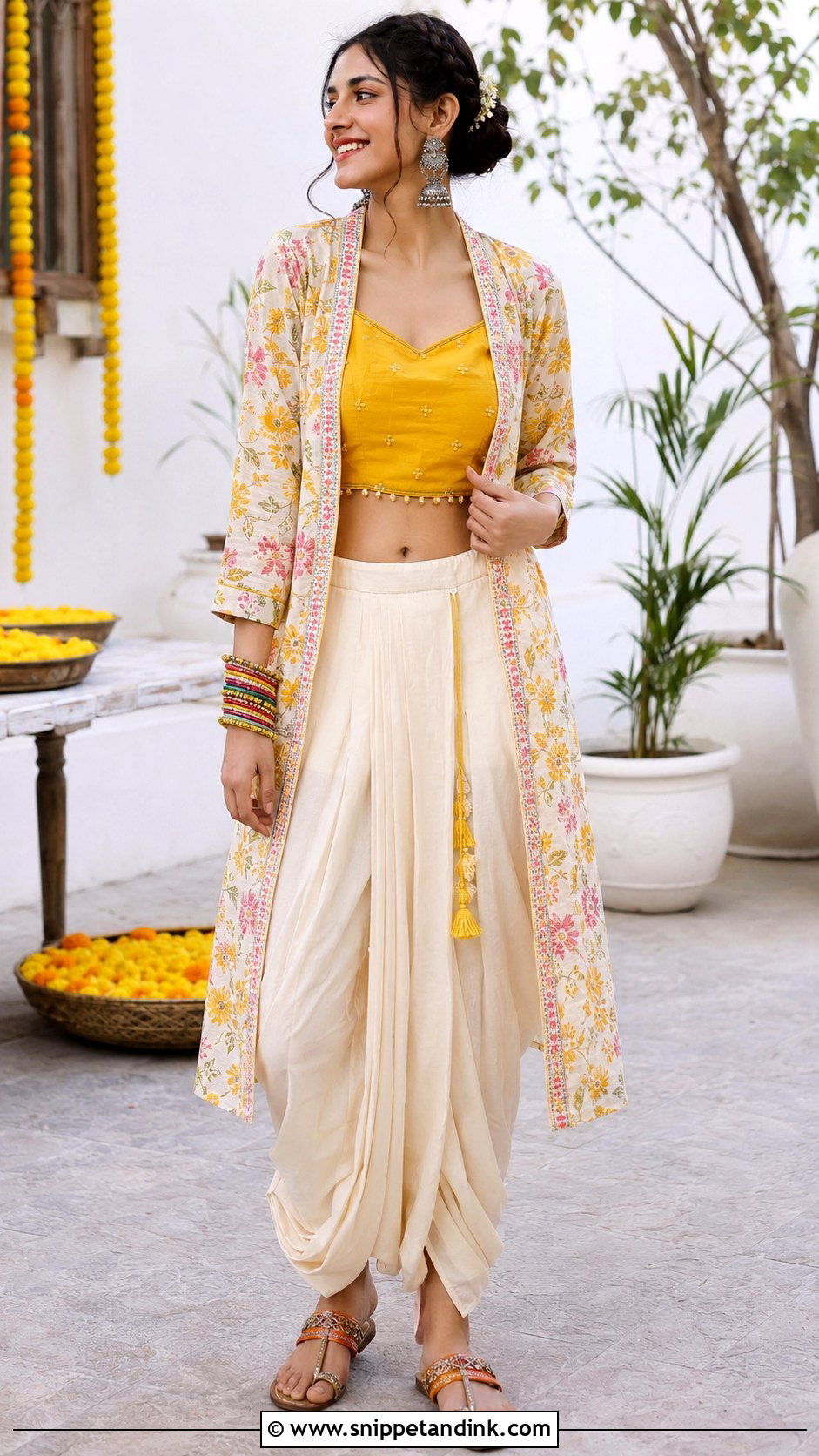
14. Dhoti Pant Crop Top for Brother’s Haldi
Would you rather skip long skirts and complicated drapes at an active haldi? A crop top and dhoti pant pairing gives you freedom of movement and still looks festive. Choose a structured blouse with comfortable straps or sleeves and high-waisted dhoti pants in yellow, ivory, green or orange, then add a light printed jacket or asymmetric cape for coverage. Oxidized earrings, colorful bangles and flat kolhapuri-style sandals finish it. Check the gap between crop top and waistband at the fitting. A little skin suits a younger sister at a casual destination celebration, but some families prefer it covered, and the jacket gives you that option. A high ponytail, light makeup and waterproof mascara handle the humidity.
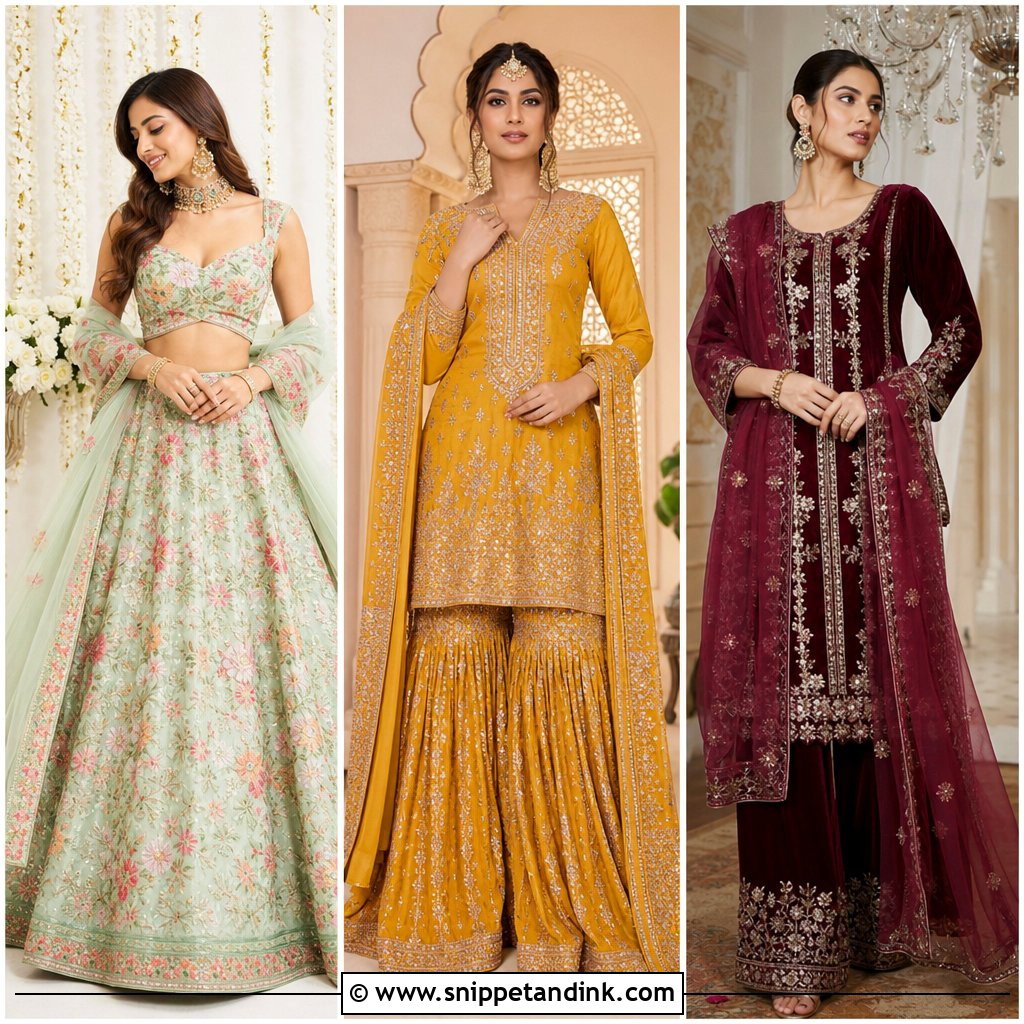
15. Velvet Lehenga for Brother’s Winter Wedding
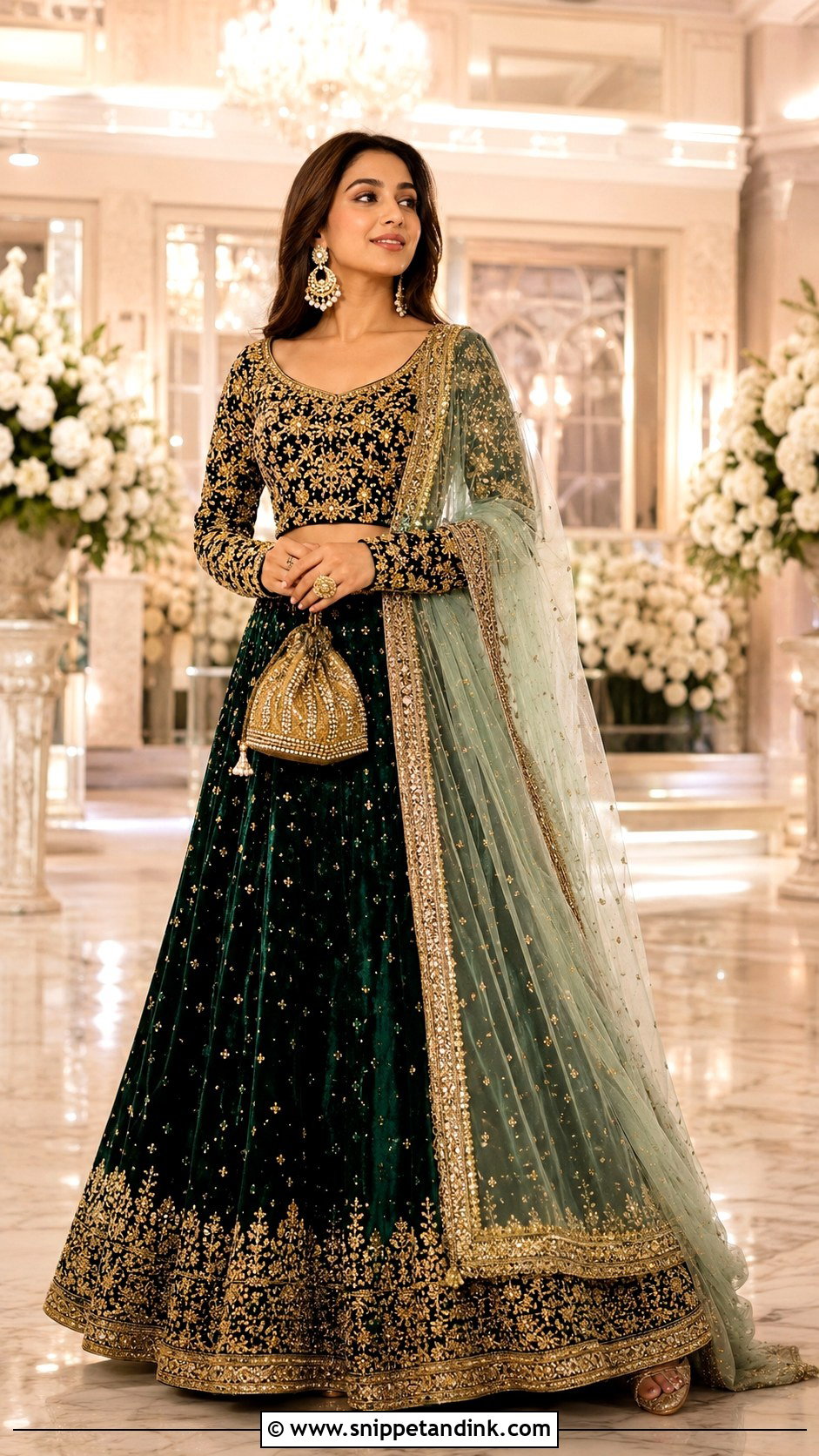
Velvet is a winter fabric, and a velvet lehenga in bottle green, navy, aubergine or berry with antique gold embroidery looks rich in cold-season light. A full or elbow-sleeve blouse adds warmth, and a light net dupatta stops the outfit looking heavy. Keep the skirt moderately flared. Velvet gets heavy fast, and a bridal-width velvet skirt is tiring to carry through a long evening. Kundan earrings, a matching ring and a structured velvet or brocade potli complete it, with closed-toe heels to keep your feet warm. Choose waves or a low bun depending on the neckline, then warm neutral makeup and a berry lip.
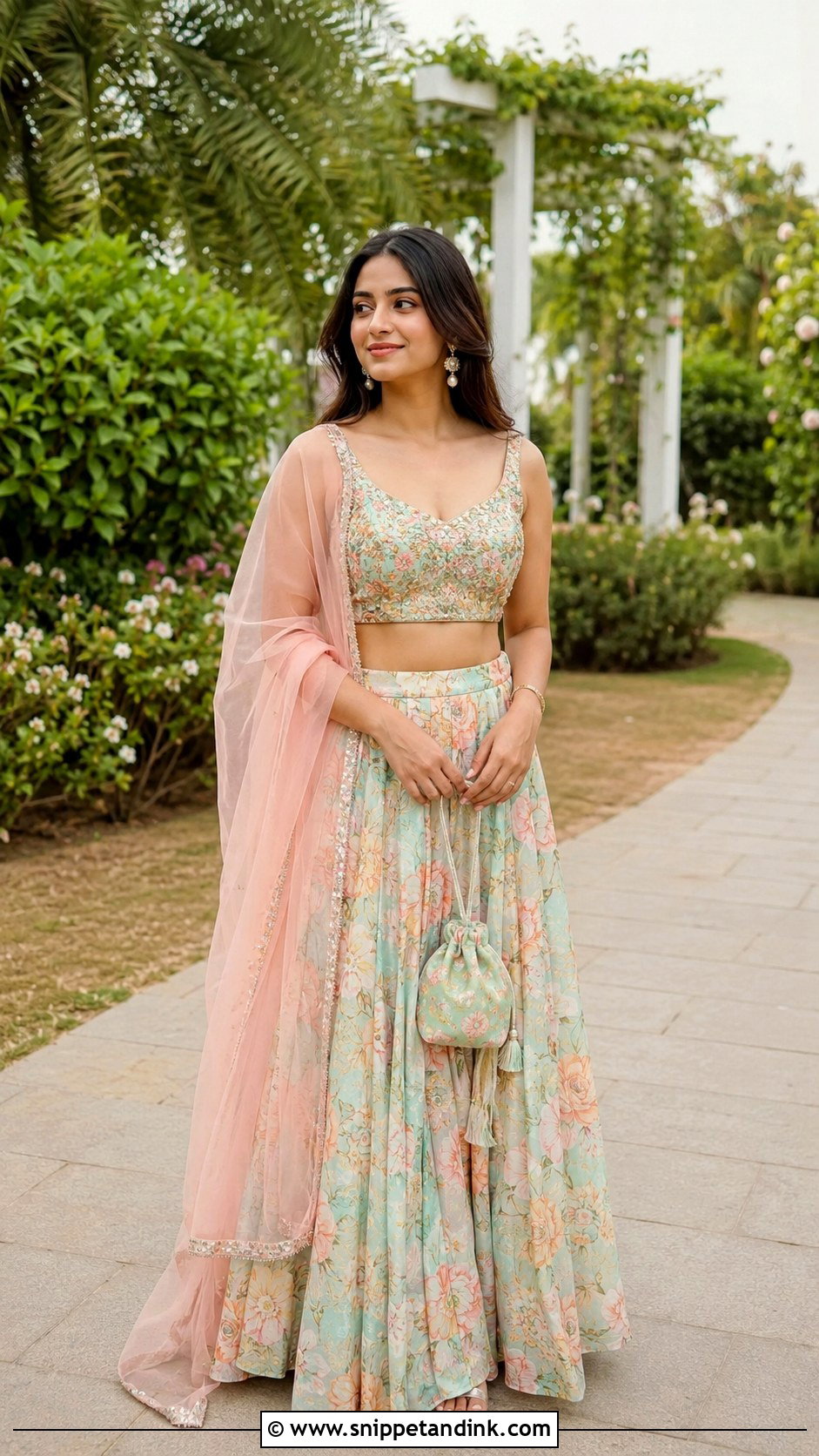
16. Floral Lehenga for Brother’s Day Function
For a daytime engagement, welcome lunch or garden party, a printed floral lehenga in peach, sky blue, mint, lavender or ivory keeps things relaxed. Match the blouse to one shade from the print and keep the dupatta plain organza with a narrow border so the outfit stays calm. A light, moderately flared skirt looks easy rather than bridal. Pearl drop earrings, a delicate bracelet and a pastel potli are enough. On a lawn, block heels are a practical call as much as a style one; stilettos sink. Soft waves or a loose floral bun, fresh skin and a pink lip complete it.
17. Chikankari Anarkali for Brother’s Pre-Wedding Function
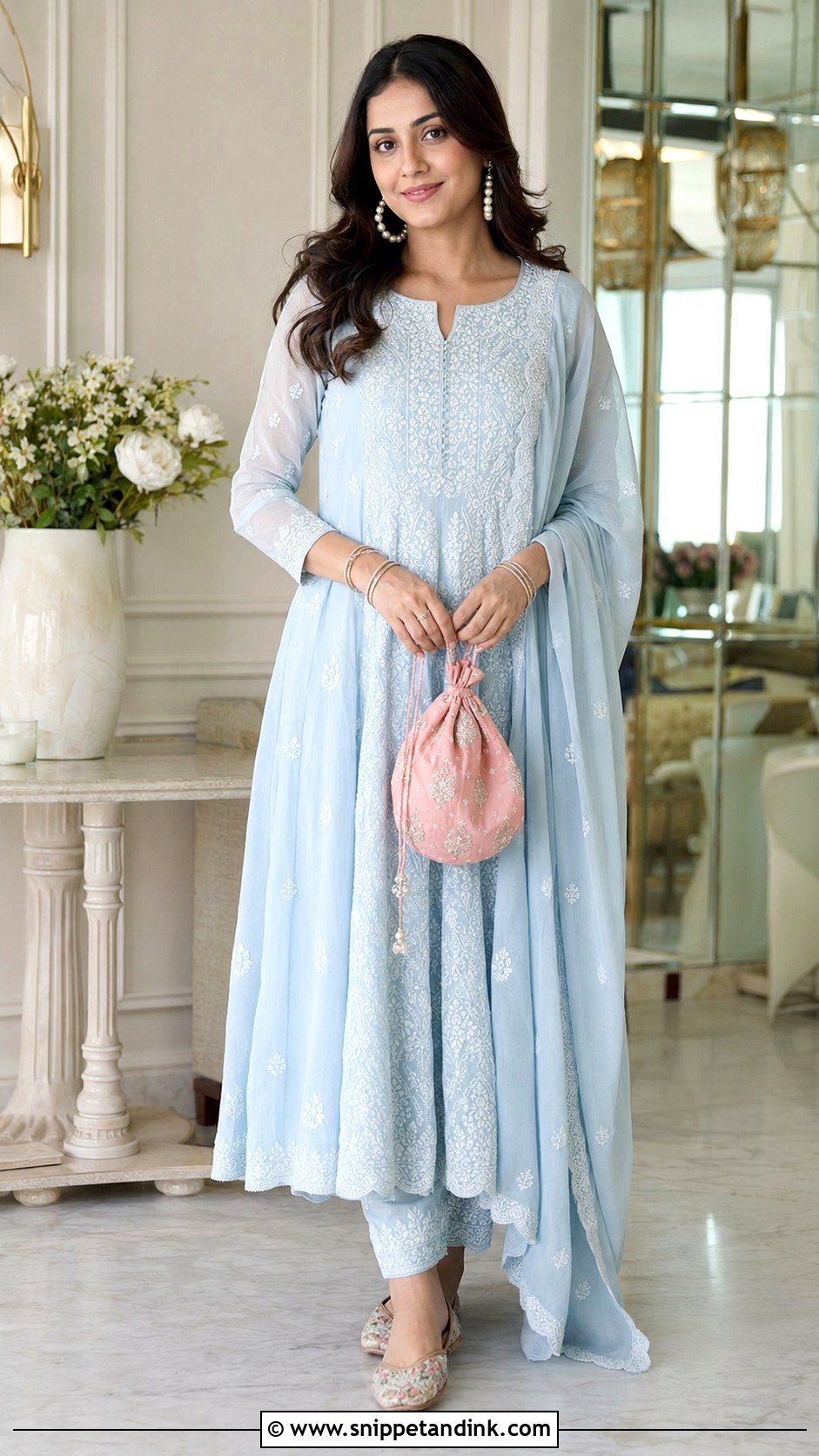
Chikankari is all about the hand embroidery, so the less you add, the better it looks. An Anarkali in ivory, powder blue, sage, butter yellow or blush suits a daytime puja, family lunch or intimate pre-wedding gathering. Choose a lined design, because fine chikan work on unlined georgette goes sheer in sunlight, with a defined waist, a soft flare, narrow pants and a light dupatta. Pearl earrings, slim bangles and embroidered juttis sit well with it. If the outfit is very pale, a contrasting potli in green, pink or gold stops it washing out in photos. A low bun or half-up style, natural makeup and a comfortable lip color keep the mood understated.
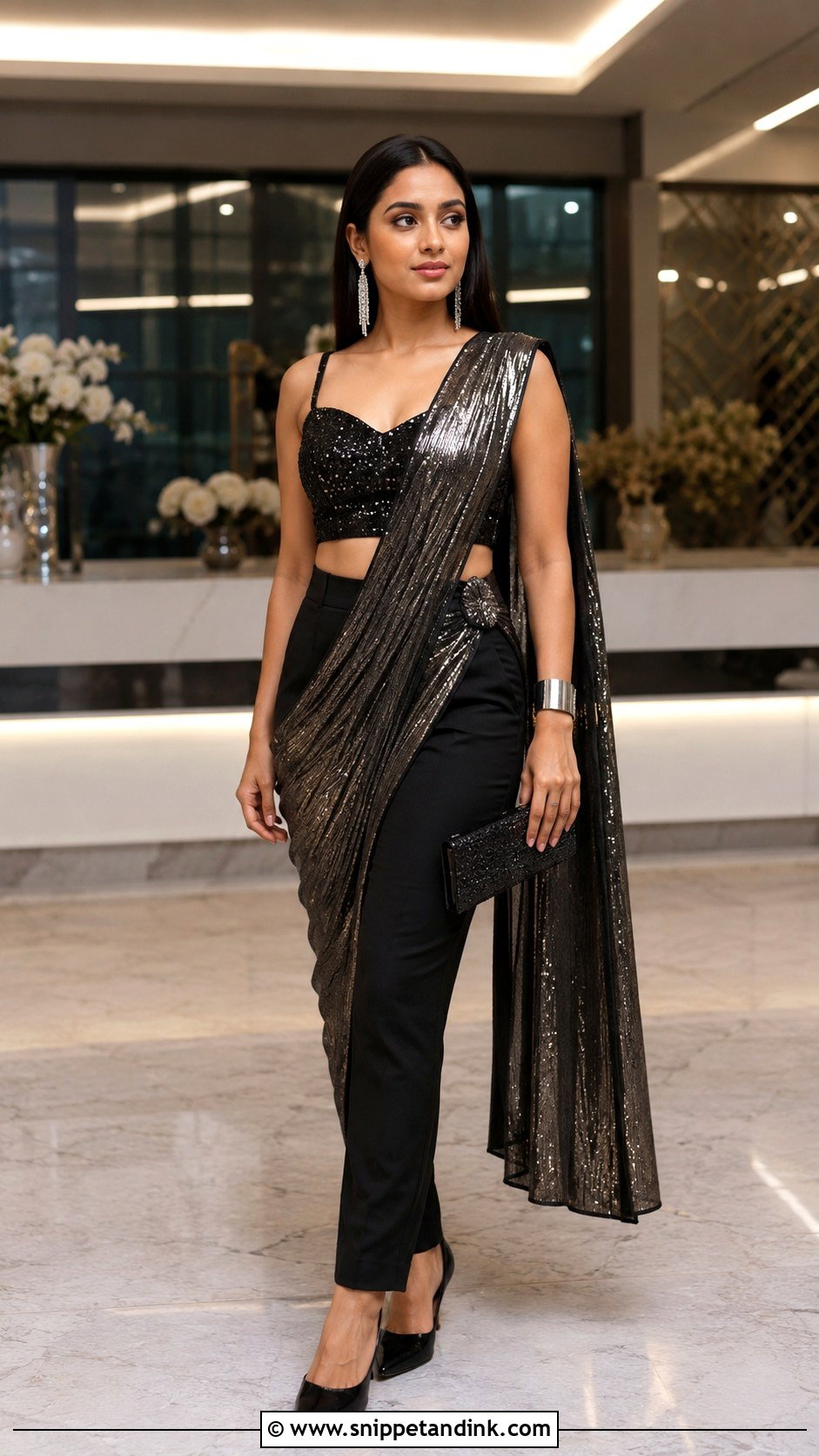
18. Pant Saree for Brother’s Cocktail Event
Sharp tailoring is what makes a pant saree work at a cocktail night or modern reception. Straight or tapered pants, a structured blouse and a pre-stitched drape that falls cleanly across the body, in black, midnight blue, metallic gray, emerald or plum. Choose one embellished element, beadwork or a sequined border, not several. Long earrings, a sleek cuff, pointed heels and a compact clutch finish it. A high ponytail or low bun keeps the drape visible. At the fitting I check four things in order: pant length with the heels on, the waist, blouse support, and exactly where the drape lands on the shoulder. Defined liner and luminous skin suit the clean lines.
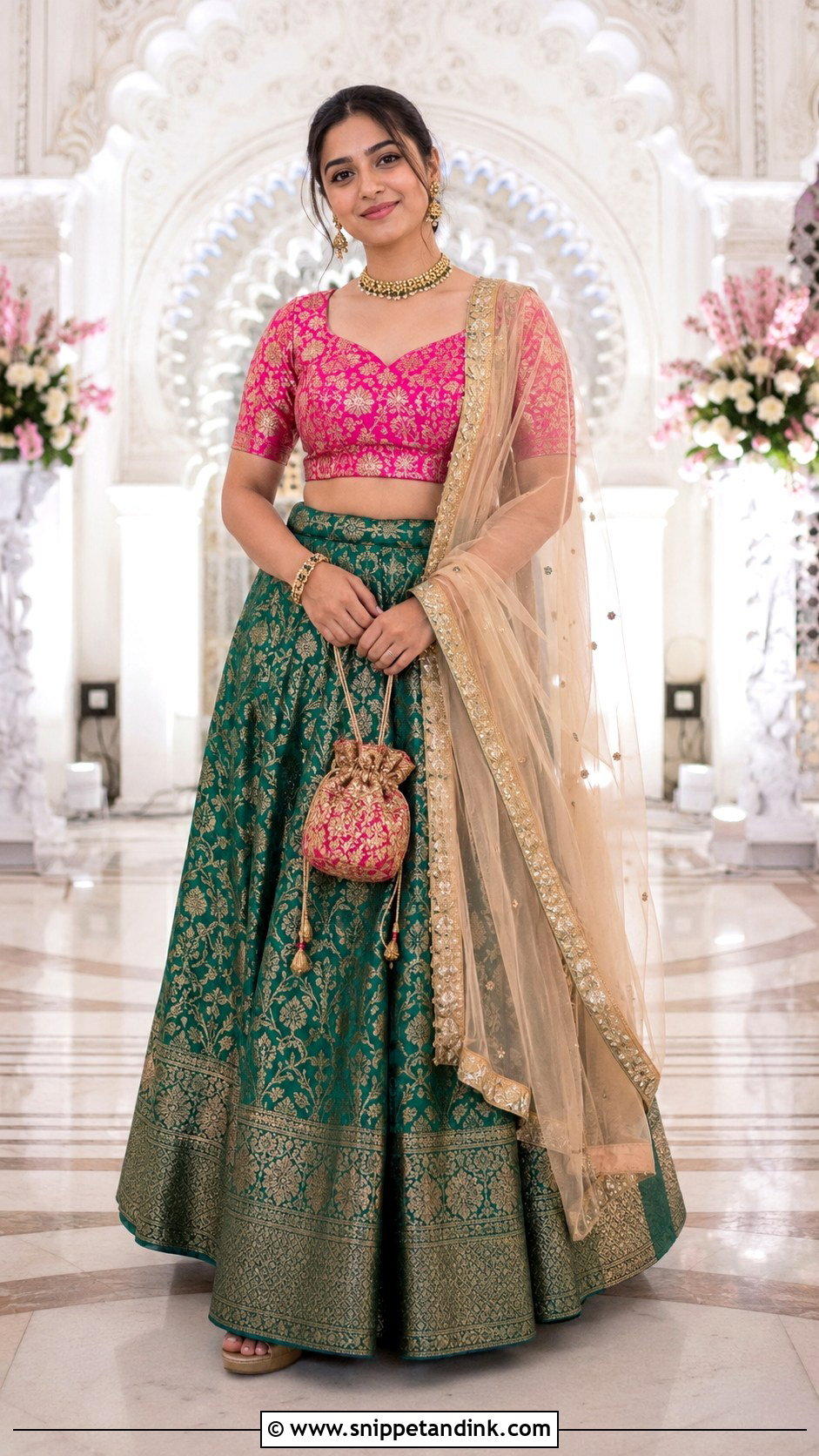
19. Brocade Skirt and Crop Top for Brother’s Wedding
A brocade skirt with a contrasting crop top is what I recommend most often to sisters who want pieces they’ll wear again. Pair a jewel-toned skirt woven with gold and a solid silk or velvet blouse in a complementary shade; emerald with pink, navy with gold and purple with mustard all work. A sheer dupatta with a narrow border ties the two together. A short choker, medium earrings, a brocade potli and cushioned heels complete it. A braid or low bun reads traditional, soft waves more contemporary. Later, the skirt goes with a plain silk shirt and the blouse goes under a saree. Keep the embroidery balanced so it never competes with the bride.
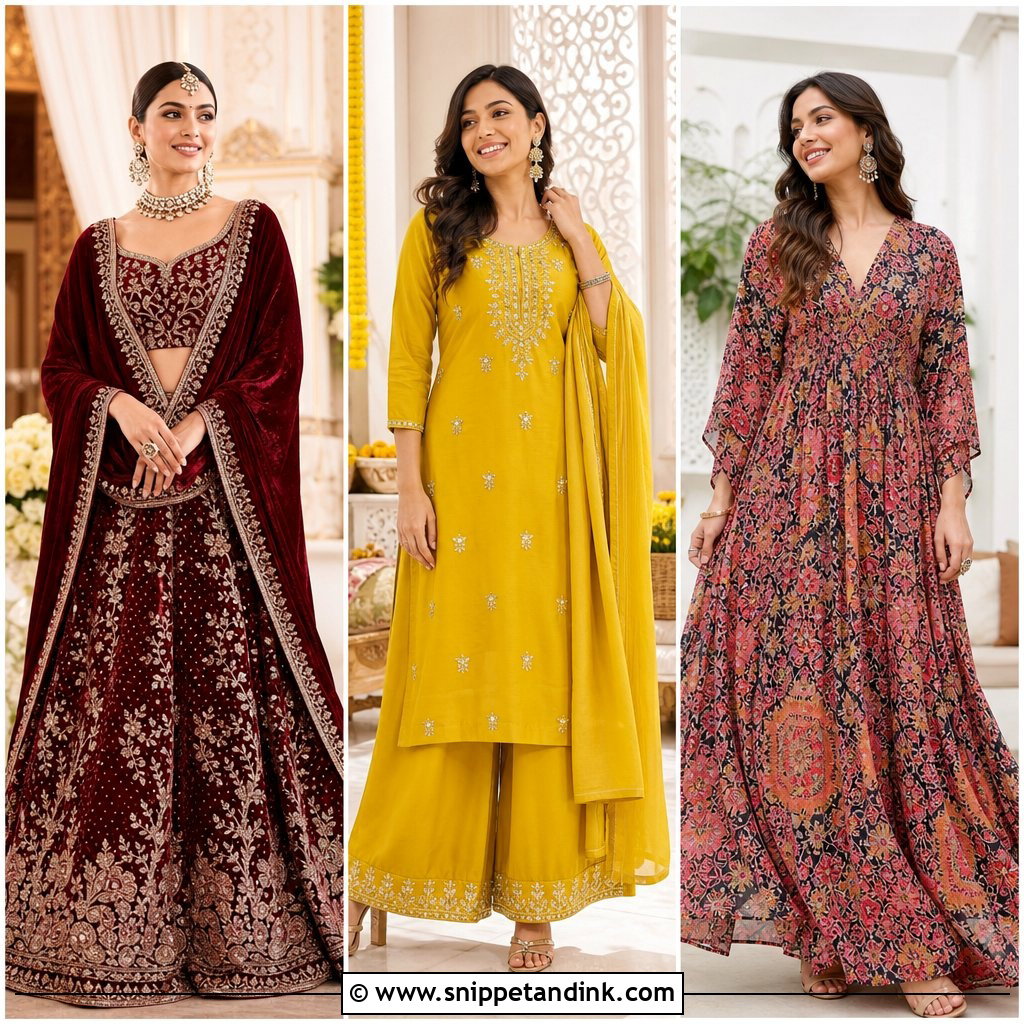
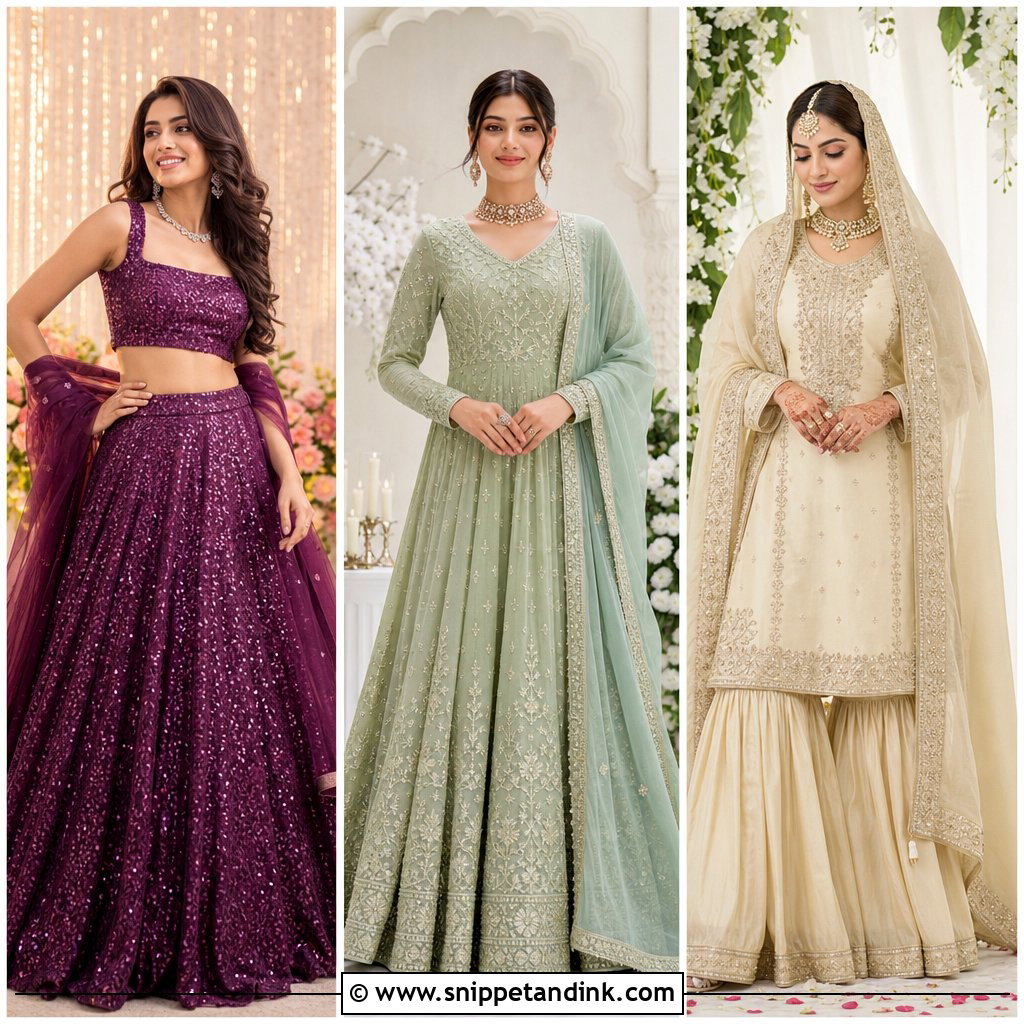
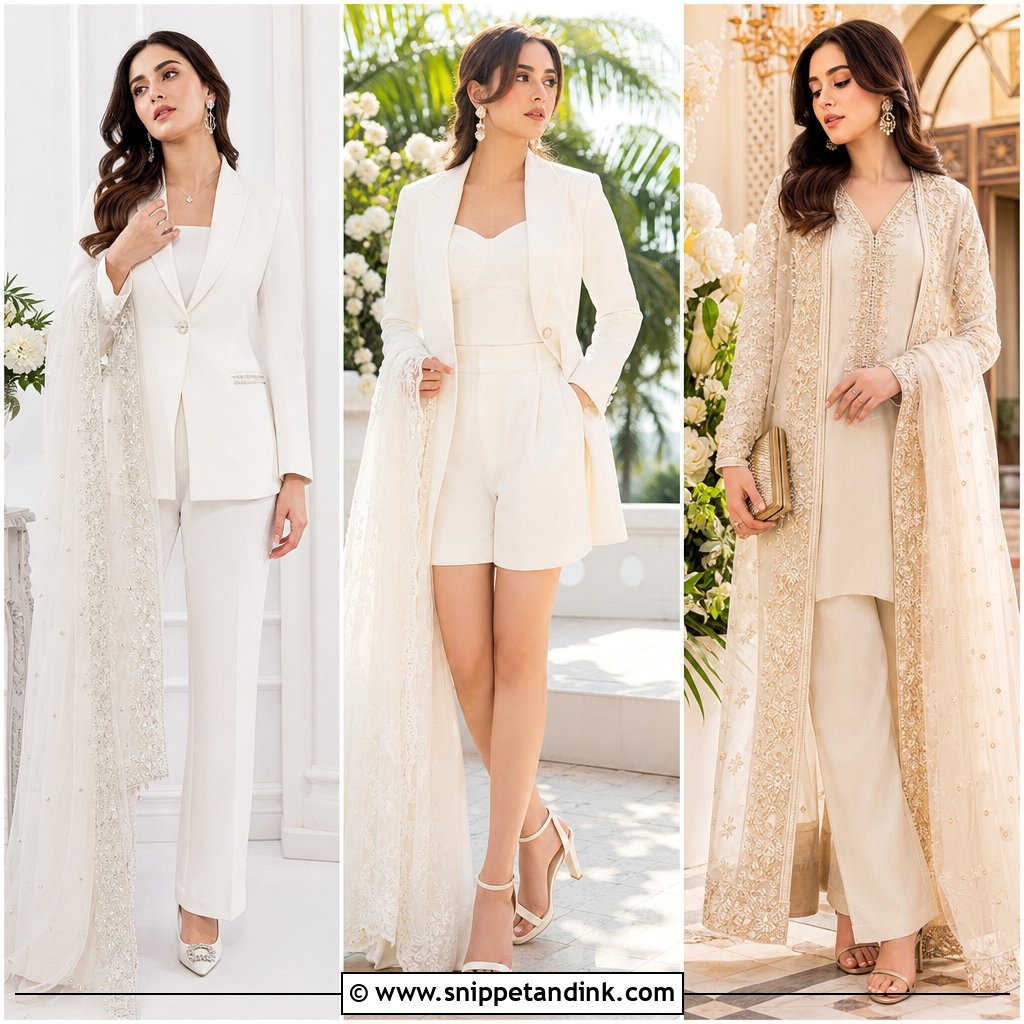
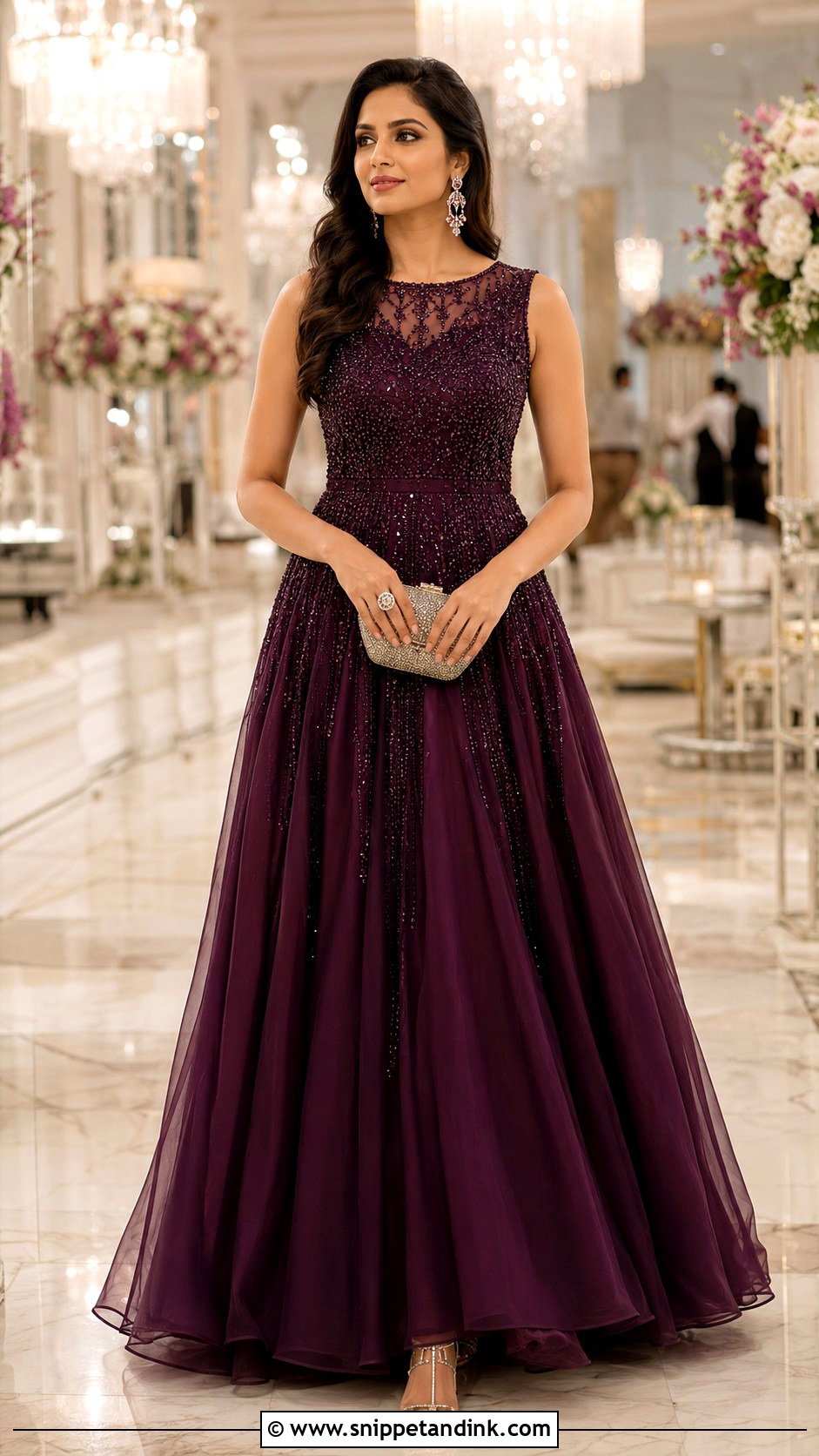
20. Embellished Gown for Brother’s Reception
A gown asks the least styling effort of anything at the reception. Choose an A-line, fit-and-flare or soft drape depending on how much structure you like, in navy, emerald, mauve, champagne or plum, all well away from typical bridal colors. Beadwork concentrated on the bodice, waist or sleeves sits better than all-over embellishment, which is heavy and scratchy when you’re hugging guests all night. Drop earrings, one statement ring, a hard-case clutch and comfortable heels finish it. An updo shows off the neckline; side-swept waves soften it. Have the gown hemmed to your exact shoe height so you can walk, greet and dance without hitching the skirt.
Blouse Fittings, Dupatta Pins and the Small Engineering of Indian Wear
Most outfit problems on a wedding day come from the blouse. Book at least two fittings and bring the exact bra you’ll wear, or ask for cups to be built in. At each fitting, raise both arms, sit down, bend to touch someone’s feet and dance a few steps in front of the mirror. If the back gapes or the neckline shifts, it will be worse after hours of movement.
Dupattas need engineering too. Small U-pins or brooch pins hold a lehenga dupatta at the shoulder and at the waist on the opposite side, and a can-can underskirt keeps a lehenga flare full all evening. Carry a few spare pins in your potli. Someone in the family will need one.
Planning the Getting-Ready Hours on the Wedding Morning
The groom’s sister is usually needed early, for pre-ceremony rituals at the groom’s house or to join the baraat, so work the schedule backward from that time, not from the ceremony itself.
- Do hair and makeup first, in a button-front shirt, so nothing gets pulled over your head afterward.
- Book a saree draper if you’re wearing a hand-draped saree, and ask how long each person takes. Drapers often dress several women in one morning.
- Put jewelry on last and earrings before the dupatta, so hooks don’t snag the fabric.
- Leave a cushion of time at the end. A broken hook or a stuck zip always appears when the car is waiting.
Enjoy the Wedding, Not the Safety Pins
A wardrobe for the groom’s sister has to work hard. Silk sarees, lehengas, shararas, Anarkalis and fusion pieces each have a function where they shine. Before you buy anything, confirm the dress code, venue, weather and the bride’s colors. Spend your fitting time on blouses that stay put, dupattas you can manage, shoes you can stand in and tailoring that lets you move. Jewelry and makeup should finish an outfit, never fight it. When everything fits, you stop adjusting and start enjoying your brother’s wedding.
You'll Like These Ideas:



Leave a Reply